Of a perfecting nature.
What it does: Adds DIVISION D--PUBLIC TRANSPORTATION at the end of the bill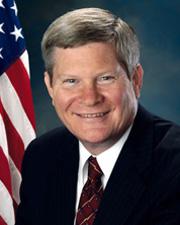 Sen. Tim Johnson (D-SD)
What it changes
1 change to S. 1813 · shown in the bill's text
Adds DIVISION D--PUBLIC TRANSPORTATION at the end of the bill
Adds a sectionIn S. 1813 · Reported to Senate
"7. Highway Spending Controls.............................. 701".
Inserted: DIVISION D--PUBLIC TRANSPORTATION
Inserted: SEC. 40001. SHORT TITLE; TABLE OF CONTENTS.
Inserted: (a) Short Title.--This division may be cited as the "Federal Public Transportation Act of 2012".
Inserted: (b) Table of Contents.--The table of contents for this division is as follows:
Inserted: Sec. 40001. Short title; table of contents.
Inserted: Sec. 40002. Repeals.
Inserted: Sec. 40003. Policies, purposes, and goals.
Inserted: Sec. 40004. Definitions.
Inserted: Sec. 40005. Metropolitan transportation planning.
Inserted: Sec. 40006. Statewide and nonmetropolitan transportation planning.
Inserted: Sec. 40007. Public Transportation Emergency Relief Program.
Inserted: Sec. 40008. Urbanized area formula grants.
Show 2,085 more inserted paragraphsShow less
Inserted: Sec. 40009. Clean fuel grant program.
Inserted: Sec. 40010. Fixed guideway capital investment grants.
Inserted: Sec. 40011. Formula grants for the enhanced mobility of seniors and individuals with disabilities.
Inserted: Sec. 40012. Formula grants for other than urbanized areas.
Inserted: Sec. 40013. Research, development, demonstration, and deployment projects.
Inserted: Sec. 40014. Technical assistance and standards development.
Inserted: Sec. 40015. Bus testing facilities.
Inserted: Sec. 40016. Public transportation workforce development and human resource programs.
Inserted: Sec. 40017. General provisions.
Inserted: Sec. 40018. Contract requirements.
Inserted: Sec. 40019. Transit asset management.
Inserted: Sec. 40020. Project management oversight.
Inserted: Sec. 40021. Public transportation safety.
Inserted: Sec. 40022. Alcohol and controlled substances testing.
Inserted: Sec. 40023. Nondiscrimination.
Inserted: Sec. 40024. Labor standards.
Inserted: Sec. 40025. Administrative provisions.
Inserted: Sec. 40026. National transit database.
Inserted: Sec. 40027. Apportionment of appropriations for formula grants.
Inserted: Sec. 40028. State of good repair grants.
Inserted: Sec. 40029. Authorizations.
Inserted: Sec. 40030. Apportionments based on growing States and high density States formula factors.
Inserted: Sec. 40031. Technical and conforming amendments.
Inserted: SEC. 40002. REPEALS.
Inserted: (a) Chapter 53.--Chapter 53 of title 49, United States Code, is amended by striking sections 5316, 5317, 5321, 5324, 5328, and 5339.
Inserted: (b) Transportation Equity Act for the 21st Century.--Section 3038 of the Transportation Equity Act for the 21st Century (49 U.S.C. 5310 note) is repealed.
Inserted: (c) SAFETEA-LU.--The following provisions are repealed:
Inserted: (1) Section 3009(i) of SAFETEA-LU (Public Law 109-59; 119 Stat. 1572).
Inserted: (2) Section 3011(c) of SAFETEA-LU (49 U.S.C. 5309 note).
Inserted: (3) Section 3012(b) of SAFETEA-LU (49 U.S.C. 5310 note).
Inserted: (4) Section 3045 of SAFETEA-LU (49 U.S.C. 5308 note).
Inserted: (5) Section 3046 of SAFETEA-LU (49 U.S.C. 5338 note).
Inserted: SEC. 40003. POLICIES, PURPOSES, AND GOALS.
Inserted: Section 5301 of title 49, United States Code, is amended to read as follows:
Inserted: "Sec. 5301. Policies, purposes, and goals
Inserted: "(a) Declaration of Policy.--It is in the interest of the United States, including the economic interest of the United States, to foster the development and revitalization of public transportation systems.
Inserted: "(b) General Purposes.--The purposes of this chapter are to--
Inserted: "(1) provide funding to support public transportation;
Inserted: "(2) improve the development and delivery of capital projects;
Inserted: "(3) initiate a new framework for improving the safety of public transportation systems;
Inserted: "(4) establish standards for the state of good repair of public transportation infrastructure and vehicles;
Inserted: "(5) promote continuing, cooperative, and comprehensive planning that improves the performance of the transportation network;
Inserted: "(6) establish a technical assistance program to assist recipients under this chapter to more effectively and efficiently provide public transportation service;
Inserted: "(7) continue Federal support for public transportation providers to deliver high quality service to all users, including individuals with disabilities, seniors, and individuals who depend on public transportation;
Inserted: "(8) support research, development, demonstration, and deployment projects dedicated to assisting in the delivery of efficient and effective public transportation service; and
Inserted: "(9) promote the development of the public transportation workforce.
Inserted: "(c) National Goals.--The goals of this chapter are to--
Inserted: "(1) increase the availability and accessibility of public transportation across a balanced, multimodal transportation network;
Inserted: "(2) promote the environmental benefits of public transportation, including reduced reliance on fossil fuels, fewer harmful emissions, and lower public health expenditures;
Inserted: "(3) improve the safety of public transportation systems;
Inserted: "(4) achieve and maintain a state of good repair of public transportation infrastructure and vehicles;
Inserted: "(5) provide an efficient and reliable alternative to congested roadways;
Inserted: "(6) increase the affordability of transportation for all users; and
Inserted: "(7) maximize economic development opportunities by--
Inserted: "(A) connecting workers to jobs;
Inserted: "(B) encouraging mixed-use, transit-oriented development; and
Inserted: "(C) leveraging private investment and joint development.".
Inserted: SEC. 40004. DEFINITIONS.
Inserted: Section 5302 of title 49, United States Code, is amended to read as follows:
Inserted: "Sec. 5302. Definitions "Except as otherwise specifically provided, in this chapter the following definitions apply:
Inserted: "(1) Associated transit improvement.--The term 'associated transit improvement' means, with respect to any project or an area to be served by a project, projects that are designed to enhance public transportation service or use and that are physically or functionally related to transit facilities. Eligible projects are--
Inserted: "(A) historic preservation, rehabilitation, and operation of historic public transportation buildings, structures, and facilities (including historic bus and railroad facilities) intended for use in public transportation service;
Inserted: "(B) bus shelters;
Inserted: "(C) landscaping and streetscaping, including benches, trash receptacles, and street lights;
Inserted: "(D) pedestrian access and walkways;
Inserted: "(E) bicycle access, including bicycle storage facilities and installing equipment for transporting bicycles on public transportation vehicles;
Inserted: "(F) signage; or
Inserted: "(G) enhanced access for persons with disabilities to public transportation.
Inserted: "(2) Bus rapid transit system.--The term 'bus rapid transit system' means a bus transit system--
Inserted: "(A) in which the majority of each line operates in a separated right-of-way dedicated for public transportation use during peak periods; and
Inserted: "(B) that includes features that emulate the services provided by rail fixed guideway public transportation systems, including--
Inserted: "(i) defined stations;
Inserted: "(ii) traffic signal priority for public transportation vehicles;
Inserted: "(iii) short headway bidirectional services for a substantial part of weekdays and weekend days; and
Inserted: "(iv) any other features the Secretary may determine are necessary to produce high-quality public transportation services that emulate the services provided by rail fixed guideway public transportation systems.
Inserted: "(3) Capital project.--The term 'capital project' means a project for--
Inserted: "(A) acquiring, constructing, supervising, or inspecting equipment or a facility for use in public transportation, expenses incidental to the acquisition or construction (including designing, engineering, location surveying, mapping, and acquiring rights-of-way), payments for the capital portions of rail trackage rights agreements, transit-related intelligent transportation systems, relocation assistance, acquiring replacement housing sites, and acquiring, constructing, relocating, and rehabilitating replacement housing;
Inserted: "(B) rehabilitating a bus;
Inserted: "(C) remanufacturing a bus;
Inserted: "(D) overhauling rail rolling stock;
Inserted: "(E) preventive maintenance;
Inserted: "(F) leasing equipment or a facility for use in public transportation, subject to regulations that the Secretary prescribes limiting the leasing arrangements to those that are more cost-effective than purchase or construction;
Inserted: "(G) a joint development improvement that--
Inserted: "(i) enhances economic development or incorporates private investment, such as commercial and residential development;
Inserted: "(ii)(I) enhances the effectiveness of public transportation and is related physically or functionally to public transportation; or
Inserted: "(II) establishes new or enhanced coordination between public transportation and other transportation;
Inserted: "(iii) provides a fair share of revenue that will be used for public transportation;
Inserted: "(iv) provides that a person making an agreement to occupy space in a facility constructed under this paragraph shall pay a fair share of the costs of the facility through rental payments and other means;
Inserted: "(v) may include--
Inserted: "(I) property acquisition;
Inserted: "(II) demolition of existing structures;
Inserted: "(III) site preparation;
Inserted: "(IV) utilities;
Inserted: "(V) building foundations;
Inserted: "(VI) walkways;
Inserted: "(VII) pedestrian and bicycle access to a public transportation facility;
Inserted: "(VIII) construction, renovation, and improvement of intercity bus and intercity rail stations and terminals;
Inserted: "(IX) renovation and improvement of historic transportation facilities;
Inserted: "(X) open space;
Inserted: "(XI) safety and security equipment and facilities (including lighting, surveillance, and related intelligent transportation system applications);
Inserted: "(XII) facilities that incorporate community services such as daycare or health care;
Inserted: "(XIII) a capital project for, and improving, equipment or a facility for an intermodal transfer facility or transportation mall; and
Inserted: "(XIV) construction of space for commercial uses; and
Inserted: "(vi) does not include outfitting of commercial space (other than an intercity bus or rail station or terminal) or a part of a public facility not related to public transportation;
Inserted: "(H) the introduction of new technology, through innovative and improved products, into public transportation;
Inserted: "(I) the provision of nonfixed route paratransit transportation services in accordance with section 223 of the Americans with Disabilities Act of 1990 (42 U.S.C. 12143), but only for grant recipients that are in compliance with applicable requirements of that Act, including both fixed route and demand responsive service, and only for amounts not to exceed 10 percent of such recipient's annual formula apportionment under sections 5307 and 5311;
Inserted: "(J) establishing a debt service reserve, made up of deposits with a bondholder's trustee, to ensure the timely payment of principal and interest on bonds issued by a grant recipient to finance an eligible project under this chapter;
Inserted: "(K) mobility management--
Inserted: "(i) consisting of short-range planning and management activities and projects for improving coordination among public transportation and other transportation service providers carried out by a recipient or subrecipient through an agreement entered into with a person, including a governmental entity, under this chapter (other than section 5309); but
Inserted: "(ii) excluding operating public transportation services; or
Inserted: "(L) associated capital maintenance, including--
Inserted: "(i) equipment, tires, tubes, and material, each costing at least .5 percent of the current fair market value of rolling stock comparable to the rolling stock for which the equipment, tires, tubes, and material are to be used; and
Inserted: "(ii) reconstruction of equipment and material, each of which after reconstruction will have a fair market value of at least .5 percent of the current fair market value of rolling stock comparable to the rolling stock for which the equipment and material will be used.
Inserted: "(4) Designated recipient.--The term 'designated recipient' means--
Inserted: "(A) an entity designated, in accordance with the planning process under sections 5303 and 5304, by the Governor of a State, responsible local officials, and publicly owned operators of public transportation, to receive and apportion amounts under section 5336 to urbanized areas of 200,000 or more in population; or
Inserted: "(B) a State or regional authority, if the authority is responsible under the laws of a State for a capital project and for financing and directly providing public transportation.
Inserted: "(5) Disability.--The term 'disability' has the same meaning as in section 3(1) of the Americans with Disabilities Act of 1990 (42 U.S.C. 12102).
Inserted: "(6) Emergency regulation.--The term 'emergency regulation' means a regulation--
Inserted: "(A) that is effective temporarily before the expiration of the otherwise specified periods of time for public notice and comment under section 5334(c); and
Inserted: "(B) prescribed by the Secretary as the result of a finding that a delay in the effective date of the regulation--
Inserted: "(i) would injure seriously an important public interest;
Inserted: "(ii) would frustrate substantially legislative policy and intent; or
Inserted: "(iii) would damage seriously a person or class without serving an important public interest.
Inserted: "(7) Fixed guideway.--The term 'fixed guideway' means a public transportation facility--
Inserted: "(A) using and occupying a separate right-of-way for the exclusive use of public transportation;
Inserted: "(B) using rail;
Inserted: "(C) using a fixed catenary system;
Inserted: "(D) for a passenger ferry system; or
Inserted: "(E) for a bus rapid transit system.
Inserted: "(8) Governor.--The term 'Governor'--
Inserted: "(A) means the Governor of a State, the mayor of the District of Columbia, and the chief executive officer of a territory of the United States; and
Inserted: "(B) includes the designee of the Governor.
Inserted: "(9) Local governmental authority.--The term 'local governmental authority' includes--
Inserted: "(A) a political subdivision of a State;
Inserted: "(B) an authority of at least 1 State or political subdivision of a State;
Inserted: "(C) an Indian tribe; and
Inserted: "(D) a public corporation, board, or commission established under the laws of a State.
Inserted: "(10) Low-income individual.--The term 'low-income individual' means an individual whose family income is at or below 150 percent of the poverty line, as that term is defined in section 673(2) of the Community Services Block Grant Act (42 U.S.C. 9902(2)), including any revision required by that section, for a family of the size involved.
Inserted: "(11) Net project cost.--The term 'net project cost' means the part of a project that reasonably cannot be financed from revenues.
Inserted: "(12) New bus model.--The term 'new bus model' means a bus model (including a model using alternative fuel)--
Inserted: "(A) that has not been used in public transportation in the United States before the date of production of the model; or
Inserted: "(B) used in public transportation in the United States, but being produced with a major change in configuration or components.
Inserted: "(13) Public transportation.--The term 'public transportation'--
Inserted: "(A) means regular, continuing shared-ride surface transportation services that are open to the general public or open to a segment of the general public defined by age, disability, or low income; and
Inserted: "(B) does not include--
Inserted: "(i) intercity passenger rail transportation provided by the entity described in chapter 243 (or a successor to such entity);
Inserted: "(ii) intercity bus service;
Inserted: "(iii) charter bus service;
Inserted: "(iv) school bus service;
Inserted: "(v) sightseeing service;
Inserted: "(vi) courtesy shuttle service for patrons of one or more specific establishments; or
Inserted: "(vii) intra-terminal or intra-facility shuttle services.
Inserted: "(14) Regulation.--The term 'regulation' means any part of a statement of general or particular applicability of the Secretary designed to carry out, interpret, or prescribe law or policy in carrying out this chapter.
Inserted: "(15) Secretary.--The term 'Secretary' means the Secretary of Transportation.
Inserted: "(16) Senior.--The term 'senior' means an individual who is 65 years of age or older.
Inserted: "(17) State.--The term 'State' means a State of the United States, the District of Columbia, Puerto Rico, the Northern Mariana Islands, Guam, American Samoa, and the Virgin Islands.
Inserted: "(18) State of good repair.--The term 'state of good repair' has the meaning given that term by the Secretary, by rule, under section 5326(b).
Inserted: "(19) Transit.--The term 'transit' means public transportation.
Inserted: "(20) Urban area.--The term 'urban area' means an area that includes a municipality or other built-up place that the Secretary, after considering local patterns and trends of urban growth, decides is appropriate for a local public transportation system to serve individuals in the locality.
Inserted: "(21) Urbanized area.--The term 'urbanized area' means an area encompassing a population of not less than 50,000 people that has been defined and designated in the most recent decennial census as an 'urbanized area' by the Secretary of Commerce.".
Inserted: SEC. 40005. METROPOLITAN TRANSPORTATION PLANNING.
Inserted: (a) In General.--Section 5303 of title 49, United States Code, is amended to read as follows:
Inserted: "Sec. 5303. Metropolitan transportation planning
Inserted: "(a) Policy.--It is in the national interest--
Inserted: "(1) to encourage and promote the safe, cost-effective, and efficient management, operation, and development of surface transportation systems that will serve efficiently the mobility needs of individuals and freight, reduce transportation-related fatalities and serious injuries, and foster economic growth and development within and between States and urbanized areas, while fitting the needs and complexity of individual communities, maximizing value for taxpayers, leveraging cooperative investments, and minimizing transportation-related fuel consumption and air pollution through the metropolitan and statewide transportation planning processes identified in this chapter;
Inserted: "(2) to encourage the continued improvement, evolution, and coordination of the metropolitan and statewide transportation planning processes by and among metropolitan planning organizations, State departments of transportation, regional planning organizations, interstate partnerships, and public transportation and intercity service operators as guided by the planning factors identified in subsection (h) of this section and section 5304(d);
Inserted: "(3) to encourage and promote transportation needs and decisions that are integrated with other planning needs and priorities; and
Inserted: "(4) to maximize the effectiveness of transportation investments.
Inserted: "(b) Definitions.--In this section and section 5304, the following definitions shall apply:
Inserted: "(1) Existing mpo.--The term 'existing MPO' means a metropolitan planning organization that was designated as a metropolitan planning organization as of the day before the date of enactment of the Federal Public Transportation Act of 2012.
Inserted: "(2) Local official.--The term 'local official' means any elected or appointed official of general purpose local government with responsibility for transportation in a designated area.
Inserted: "(3) Maintenance area.--The term 'maintenance area' means an area that was designated as an air quality nonattainment area, but was later redesignated by the Administrator of the Environmental Protection Agency as an air quality attainment area, under section 107(d) of the Clean Air Act (42 U.S.C. 7407(d)).
Inserted: "(4) Metropolitan planning area.--The term 'metropolitan planning area' means a geographical area determined by agreement between the metropolitan planning organization for the area and the applicable Governor under subsection (c).
Inserted: "(5) Metropolitan planning organization.--The term 'metropolitan planning organization' means the policy board of an organization established pursuant to subsection (c).
Inserted: "(6) Metropolitan transportation plan.--The term 'metropolitan transportation plan' means a plan developed by a metropolitan planning organization under subsection (i).
Inserted: "(7) Nonattainment area.--The term 'nonattainment area' has the meaning given the term in section 171 of the Clean Air Act (42 U.S.C. 7501).
Inserted: "(8) Nonmetropolitan area.--
Inserted: "(A) In general.--The term 'nonmetropolitan area' means a geographical area outside the boundaries of a designated metropolitan planning area.
Inserted: "(B) Inclusions.--The term 'nonmetropolitan area' includes a small urbanized area with a population of more than 50,000, but fewer than 200,000 individuals, as calculated according to the most recent decennial census, and a nonurbanized area.
Inserted: "(9) Nonmetropolitan planning organization.--The term 'nonmetropolitan planning organization' means an organization that--
Inserted: "(A) was designated as a metropolitan planning organization as of the day before the date of enactment of the Federal Public Transportation Act of 2012; and
Inserted: "(B) is not designated as a tier I MPO or tier II MPO.
Inserted: "(10) Regionally significant.--The term 'regionally significant', with respect to a transportation project, program, service, or strategy, means a project, program, service, or strategy that--
Inserted: "(A) serves regional transportation needs (such as access to and from the area outside of the region, major activity centers in the region, and major planned developments); and
Inserted: "(B) would normally be included in the modeling of a transportation network of a metropolitan area.
Inserted: "(11) Rural planning organization.--The term 'rural planning organization' means a voluntary organization of local elected officials and representatives of local transportation systems that--
Inserted: "(A) works in cooperation with the department of transportation (or equivalent entity) of a State to plan transportation networks and advise officials of the State on transportation planning; and
Inserted: "(B) is located in a rural area--
Inserted: "(i) with a population of not fewer than 5,000 individuals, as calculated according to the most recent decennial census; and
Inserted: "(ii) that is not located in an area represented by a metropolitan planning organization.
Inserted: "(12) Statewide transportation improvement program.--The term 'statewide transportation improvement program' means a statewide transportation improvement program developed by a State under section 5304(g).
Inserted: "(13) Statewide transportation plan.--The term 'statewide transportation plan' means a plan developed by a State under section 5304(f).
Inserted: "(14) Tier i mpo.--The term 'tier I MPO' means a metropolitan planning organization designated as a tier I MPO under subsection (e)(4)(A).
Inserted: "(15) Tier ii mpo.--The term 'tier II MPO' means a metropolitan planning organization designated as a tier II MPO under subsection (e)(4)(B).
Inserted: "(16) Transportation improvement program.--The term 'transportation improvement program' means a program developed by a metropolitan planning organization under subsection (j).
Inserted: "(17) Urbanized area.--The term 'urbanized area' means a geographical area with a population of 50,000 or more individuals, as calculated according to the most recent decennial census.
Inserted: "(c) Designation of Metropolitan Planning Organizations.--
Inserted: "(1) In general.--To carry out the metropolitan transportation planning process under this section, a metropolitan planning organization shall be designated for each urbanized area with a population of 200,000 or more individuals, as calculated according to the most recent decennial census--
Inserted: "(A) by agreement between the applicable Governor and local officials that, in the aggregate, represent at least 75 percent of the affected population (including the largest incorporated city (based on population), as calculated according to the most recent decennial census); or
Inserted: "(B) in accordance with procedures established by applicable State or local law.
Inserted: "(2) Small urbanized areas.--To carry out the metropolitan transportation planning process under this section, a metropolitan planning organization may be designated for any urbanized area with a population of 50,000 or more individuals, but fewer than 200,000 individuals, as calculated according to the most recent decennial census--
Inserted: "(A) by agreement between the applicable Governor and local officials that, in the aggregate, represent at least 75 percent of the affected population (including the largest incorporated city (based on population), as calculated according to the most recent decennial census); and
Inserted: "(B) with the consent of the Secretary, based on a finding that the resulting metropolitan planning organization has met the minimum requirements under subsection (e)(4)(B).
Inserted: "(3) Structure.--Not later than 1 year after the date of enactment of the Federal Public Transportation Act of 2012, a metropolitan planning organization shall consist of--
Inserted: "(A) elected local officials in the relevant metropolitan area;
Inserted: "(B) officials of public agencies that administer or operate major modes of transportation in the relevant metropolitan area, including providers of public transportation; and
Inserted: "(C) appropriate State officials.
Inserted: "(4) Effect of subsection.--Nothing in this subsection interferes with any authority under any State law in effect on December 18, 1991, of a public agency with multimodal transportation responsibilities--
Inserted: "(A) to develop the metropolitan transportation plans and transportation improvement programs for adoption by a metropolitan planning organization; or
Inserted: "(B) to develop capital plans, coordinate public transportation services and projects, or carry out other activities pursuant to State law.
Inserted: "(5) Continuing designation.--A designation of an existing MPO--
Inserted: "(A) for an urbanized area with a population of 200,000 or more individuals, as calculated according to the most recent decennial census, shall remain in effect--
Inserted: "(i) for the period during which the structure of the existing MPO complies with the requirements of paragraph (1); or
Inserted: "(ii) until the date on which the existing MPO is redesignated under paragraph (6); and
Inserted: "(B) for an urbanized area with a population of fewer than 200,000 individuals, as calculated according to the most recent decennial census, shall remain in effect until the date on which the existing MPO is redesignated under paragraph (6) unless--
Inserted: "(i) the existing MPO requests that its planning responsibilities be transferred to the State or to another planning organization designated by the State; or
Inserted: "(ii)(I) the applicable Governor determines not later than 3 years after the date on which the Secretary issues a rule pursuant to subsection (e)(4)(B)(i), that the existing MPO is not meeting the minimum requirements established by the rule; and
Inserted: "(II) the Secretary approves the Governor's determination.
Inserted: "(C) Designation as tier ii mpo.--If the Secretary determines the existing MPO has met the minimum requirements under the rule issued under subsection (e)(4)(B)(i), the Secretary shall designate the existing MPO as a tier II MPO.
Inserted: "(6) Redesignation.--
Inserted: "(A) In general.--The designation of a metropolitan planning organization under this subsection shall remain in effect until the date on which the metropolitan planning organization is redesignated, as appropriate, in accordance with the requirements of this subsection pursuant to an agreement between--
Inserted: "(i) the applicable Governor; and
Inserted: "(ii) affected local officials who, in the aggregate, represent at least 75 percent of the existing metropolitan planning area population (including the largest incorporated city (based on population), as calculated according to the most recent decennial census).
Inserted: "(B) Restructuring.--A metropolitan planning organization may be restructured to meet the requirements of paragraph (3) without undertaking a redesignation.
Inserted: "(7) Designation of multiple mpos.--
Inserted: "(A) In general.--More than 1 metropolitan planning organization may be designated within an existing metropolitan planning area only if the applicable Governor and an existing MPO determine that the size and complexity of the existing metropolitan planning area make the designation of more than 1 metropolitan planning organization for the metropolitan planning area appropriate.
Inserted: "(B) Service jurisdictions.--If more than 1 metropolitan planning organization is designated for an existing metropolitan planning area under subparagraph (A), the existing metropolitan planning area shall be split into multiple metropolitan planning areas, each of which shall be served by the existing MPO or a new metropolitan planning organization.
Inserted: "(C) Tier designation.--The tier designation of each metropolitan planning organization subject to a designation under this paragraph shall be determined based on the size of each respective metropolitan planning area, in accordance with subsection (e)(4).
Inserted: "(d) Metropolitan Planning Area Boundaries.--
Inserted: "(1) In general.--For purposes of this section, the boundaries of a metropolitan planning area shall be determined by agreement between the applicable metropolitan planning organization and the Governor of the State in which the metropolitan planning area is located.
Inserted: "(2) Included area.--Each metropolitan planning area--
Inserted: "(A) shall encompass at least the relevant existing urbanized area and any contiguous area expected to become urbanized within a 20-year forecast period under the applicable metropolitan transportation plan; and
Inserted: "(B) may encompass the entire relevant metropolitan statistical area, as defined by the Office of Management and Budget.
Inserted: "(3) Identification of new urbanized areas.--The designation by the Bureau of the Census of a new urbanized area within the boundaries of an existing metropolitan planning area shall not require the redesignation of the relevant existing MPO.
Inserted: "(4) Nonattainment and maintenance areas.--
Inserted: "(A) Existing metropolitan planning areas.--
Inserted: "(i) In general.--Except as provided in clause (ii), notwithstanding paragraph (2), in the case of an urbanized area designated as a nonattainment area or maintenance area as of the date of enactment of the Federal Public Transportation Act of 2012, the boundaries of the existing metropolitan planning area as of that date of enactment shall remain in force and effect.
Inserted: "(ii) Exception.--Notwithstanding clause (i), the boundaries of an existing metropolitan planning area described in that clause may be adjusted by agreement of the applicable Governor and the affected metropolitan planning organizations in accordance with subsection (c)(7).
Inserted: "(B) New metropolitan planning areas.--In the case of an urbanized area designated as a nonattainment area or maintenance area after the date of enactment of the Federal Public Transportation Act of 2012, the boundaries of the applicable metropolitan planning area--
Inserted: "(i) shall be established in accordance with subsection (c)(1);
Inserted: "(ii) shall encompass the areas described in paragraph (2)(A);
Inserted: "(iii) may encompass the areas described in paragraph (2)(B); and
Inserted: "(iv) may address any appropriate nonattainment area or maintenance area.
Inserted: "(e) Requirements.--
Inserted: "(1) Development of plans and tips.--To accomplish the policy objectives described in subsection (a), each metropolitan planning organization, in cooperation with the applicable State and public transportation operators, shall develop metropolitan transportation plans and transportation improvement programs for metropolitan planning areas of the State through a performance-driven, outcome-based approach to metropolitan transportation planning consistent with subsection (h).
Inserted: "(2) Contents.--The metropolitan transportation plans and transportation improvement programs for each metropolitan area shall provide for the development and integrated management and operation of transportation systems and facilities (including accessible pedestrian walkways, bicycle transportation facilities, and intermodal facilities that support intercity transportation) that will function as--
Inserted: "(A) an intermodal transportation system for the metropolitan planning area; and
Inserted: "(B) an integral part of an intermodal transportation system for the applicable State and the United States.
Inserted: "(3) Process of development.--The process for developing metropolitan transportation plans and transportation improvement programs shall--
Inserted: "(A) provide for consideration of all modes of transportation; and
Inserted: "(B) be continuing, cooperative, and comprehensive to the degree appropriate, based on the complexity of the transportation needs to be addressed.
Inserted: "(4) Tiering.--
Inserted: "(A) Tier i mpos.--
Inserted: "(i) In general.--A metropolitan planning organization shall be designated as a tier I MPO if--
Inserted: "(I) as certified by the Governor of each applicable State, the metropolitan planning organization operates within, and primarily serves, a metropolitan planning area with a population of 1,000,000 or more individuals, as calculated according to the most recent decennial census; and
Inserted: "(II) the Secretary determines the metropolitan planning organization--
Inserted: "(aa) meets the minimum technical requirements under clause (iv); and
Inserted: "(bb) not later than 2 years after the date of enactment of the Federal Public Transportation Act of 2012, will fully implement the processes described in subsections (h) though (j).
Inserted: "(ii) Absence of designation.--In the absence of designation as a tier I MPO under clause (i), a metropolitan planning organization shall operate as a tier II MPO until the date on which the Secretary determines the metropolitan planning organization can meet the minimum technical requirements under clause (iv).
Inserted: "(iii) Redesignation as tier i.--A metropolitan planning organization operating within a metropolitan planning area with a population of 200,000 or more and fewer than 1,000,000 individuals and primarily within urbanized areas with populations of 200,000 or more individuals, as calculated according to the most recent decennial census, that is designated as a tier II MPO under subparagraph (B) may request, with the support of the applicable Governor, a redesignation as a tier I MPO on a determination by the Secretary that the metropolitan planning organization has met the minimum technical requirements under clause (iv).
Inserted: "(iv) Minimum technical requirements.--Not later than 1 year after the date of enactment of the Federal Public Transportation Act of 2012, the Secretary shall issue a rule that establishes the minimum technical requirements necessary for a metropolitan planning organization to be designated as a tier I MPO, including, at a minimum, modeling, data, staffing, and other technical requirements.
Inserted: "(B) Tier ii mpos.--
Inserted: "(i) In general.--Not later than 1 year after the date of enactment of the Federal Public Transportation Act of 2012, the Secretary shall issue a rule that establishes minimum requirements necessary for a metropolitan planning organization to be designated as a tier II MPO.
Inserted: "(ii) Requirements.--The minimum requirements established under clause (i) shall--
Inserted: "(I) ensure that each metropolitan planning organization has the capabilities necessary to develop the metropolitan transportation plan and transportation improvement program under this section; and
Inserted: "(II) include--
Inserted: "(aa) only the staff resources necessary to operate the metropolitan planning organization; and
Inserted: "(bb) a requirement that the metropolitan planning organization has the technical capacity to conduct the modeling necessary, as appropriate to the size and resources of the metropolitan planning organization, to fulfill the requirements of this section, except that in cases in which a metropolitan planning organization has a formal agreement with a State to conduct the modeling on behalf of the metropolitan planning organization, the metropolitan planning organization shall be exempt from the technical capacity requirement.
Inserted: "(iii) Inclusion.--A metropolitan planning organization operating primarily within an urbanized area with a population of 200,000 or more individuals, as calculated according to the most recent decennial census, and that does not qualify as a tier I MPO under subparagraph (A)(i), shall--
Inserted: "(I) be designated as a tier II MPO; and
Inserted: "(II) follow the processes under subsection (k).
Inserted: "(C) Consolidation.--
Inserted: "(i) In general.--Metropolitan planning organizations operating within contiguous or adjacent urbanized areas may elect to consolidate in order to meet the population thresholds required to achieve designation as a tier I or tier II MPO under this paragraph.
Inserted: "(ii) Effect of subsection.--Nothing in this subsection requires or prevents consolidation among multiple metropolitan planning organizations located within a single urbanized area.
Inserted: "(f) Coordination in Multistate Areas.--
Inserted: "(1) In general.--The Secretary shall encourage each Governor with responsibility for a portion of a multistate metropolitan area and the appropriate metropolitan planning organizations to provide coordinated transportation planning for the entire metropolitan area.
Inserted: "(2) Coordination along designated transportation corridors.--The Secretary shall encourage each Governor with responsibility for a portion of a multistate metropolitan area and the appropriate metropolitan planning organizations to provide coordinated transportation planning for the entire designated transportation corridor.
Inserted: "(3) Coordination with interstate compacts.--The Secretary shall encourage metropolitan planning organizations to take into consideration, during the development of metropolitan transportation plans and transportation improvement programs, any relevant transportation studies concerning planning for regional transportation (including high-speed and intercity rail corridor studies, commuter rail corridor studies, intermodal terminals, and interstate highways) in support of freight, intercity, or multistate area projects and services that have been developed pursuant to interstate compacts or agreements, or by organizations established under section 5304.
Inserted: "(g) Engagement in Metropolitan Transportation Plan and TIP Development.--
Inserted: "(1) Nonattainment and maintenance areas.--If more than 1 metropolitan planning organization has authority within a metropolitan area, nonattainment area, or maintenance area, each metropolitan planning organization shall consult with all other metropolitan planning organizations designated for the metropolitan area, nonattainment area, or maintenance area and the State in the development of metropolitan transportation plans and transportation improvement programs under this section.
Inserted: "(2) Transportation improvements located in multiple metropolitan planning areas.--If a transportation improvement project funded under this chapter or title 23 is located within the boundaries of more than 1 metropolitan planning area, the affected metropolitan planning organizations shall coordinate metropolitan transportation plans and transportation improvement programs regarding the project.
Inserted: "(3) Coordination of adjacent planning organizations.--
Inserted: "(A) In general.--A metropolitan planning organization that is adjacent or located in reasonably close proximity to another metropolitan planning organization shall coordinate with that metropolitan planning organization with respect to planning processes, including preparation of metropolitan transportation plans and transportation improvement programs, to the maximum extent practicable.
Inserted: "(B) Nonmetropolitan planning organizations.--A metropolitan planning organization that is adjacent or located in reasonably close proximity to a nonmetropolitan planning organization shall consult with that nonmetropolitan planning organization with respect to planning processes, to the maximum extent practicable.
Inserted: "(4) Relationship with other planning officials.--
Inserted: "(A) In general.--The Secretary shall encourage each metropolitan planning organization to cooperate with Federal, State, tribal, and local officers and entities responsible for other types of planning activities that are affected by transportation in the relevant area (including planned growth, economic development, infrastructure services, housing, other public services, environmental protection, airport operations, high-speed and intercity passenger rail, freight rail, port access, and freight movements), to the maximum extent practicable, to ensure that the metropolitan transportation planning process, metropolitan transportation plans, and transportation improvement programs are developed in cooperation with other related planning activities in the area.
Inserted: "(B) Inclusion.--Cooperation under subparagraph (A) shall include the design and delivery of transportation services within the metropolitan area that are provided by--
Inserted: "(i) recipients of assistance under sections 202, 203, and 204 of title 23;
Inserted: "(ii) recipients of assistance under this title;
Inserted: "(iii) government agencies and nonprofit organizations (including representatives of the agencies and organizations) that receive Federal assistance from a source other than the Department of Transportation to provide nonemergency transportation services; and
Inserted: "(iv) sponsors of regionally significant programs, projects, and services that are related to transportation and receive assistance from any public or private source.
Inserted: "(5) Coordination of other federally required planning programs.--The Secretary shall encourage each metropolitan planning organization to coordinate, to the maximum extent practicable, the development of metropolitan transportation plans and transportation improvement programs with other relevant federally required planning programs.
Inserted: "(h) Scope of Planning Process.--
Inserted: "(1) In general.--The metropolitan transportation planning process for a metropolitan planning area under this section shall provide for consideration of projects and strategies that will--
Inserted: "(A) support the economic vitality of the metropolitan area, especially by enabling global competitiveness, productivity, and efficiency;
Inserted: "(B) increase the safety of the transportation system for motorized and nonmotorized users;
Inserted: "(C) increase the security of the transportation system for motorized and nonmotorized users;
Inserted: "(D) increase the accessibility and mobility of individuals and freight;
Inserted: "(E) protect and enhance the environment, promote energy conservation, improve the quality of life, and promote consistency between transportation improvements and State and local planned growth and economic development patterns;
Inserted: "(F) enhance the integration and connectivity of the transportation system, across and between modes, for individuals and freight;
Inserted: "(G) increase efficient system management and operation; and
Inserted: "(H) emphasize the preservation of the existing transportation system.
Inserted: "(2) Performance-based approach.--
Inserted: "(A) In general.--The metropolitan transportation planning process shall provide for the establishment and use of a performance-based approach to transportation decisionmaking to support the national goals described in section 5301(c) of this title and in section 150(b) of title 23.
Inserted: "(B) Performance targets.--
Inserted: "(i) Surface transportation performance targets.--
Inserted: "(I) In general.--Each metropolitan planning organization shall establish performance targets that address the performance measures described in sections 119(f), 148(h), 149(k) (where applicable), and 167(i) of title 23, to use in tracking attainment of critical outcomes for the region of the metropolitan planning organization.
Inserted: "(II) Coordination.--Selection of performance targets by a metropolitan planning organization shall be coordinated with the relevant State to ensure consistency, to the maximum extent practicable.
Inserted: "(ii) Public transportation performance targets.--Each metropolitan planning organization shall adopt the performance targets identified by providers of public transportation pursuant to sections 5326(c) and 5329(d), for use in tracking attainment of critical outcomes for the region of the metropolitan planning organization.
Inserted: "(C) Timing.--Each metropolitan planning organization shall establish or adopt the performance targets under subparagraph (B) not later than 90 days after the date on which the relevant State or provider of public transportation establishes the performance targets.
Inserted: "(D) Integration of other performance-based plans.--A metropolitan planning organization shall integrate in the metropolitan transportation planning process, directly or by reference, the goals, objectives, performance measures, and targets described in other State plans and processes, as well as asset management and safety plans developed by providers of public transportation, required as part of a performance-based program, including plans such as--
Inserted: "(i) the State National Highway System asset management plan;
Inserted: "(ii) asset management plans developed by providers of public transportation;
Inserted: "(iii) the State strategic highway safety plan;
Inserted: "(iv) safety plans developed by providers of public transportation;
Inserted: "(v) the congestion mitigation and air quality performance plan, where applicable;
Inserted: "(vi) the national freight strategic plan; and
Inserted: "(vii) the statewide transportation plan.
Inserted: "(E) Use of performance measures and targets.--The performance measures and targets established under this paragraph shall be used, at a minimum, by the relevant metropolitan planning organization as the basis for development of policies, programs, and investment priorities reflected in the metropolitan transportation plan and transportation improvement program.
Inserted: "(3) Failure to consider factors.--The failure to take into consideration 1 or more of the factors specified in paragraphs (1) and (2) shall not be subject to review by any court under this chapter, title 23, subchapter II of chapter 5 of title 5, or chapter 7 of title 5 in any matter affecting a metropolitan transportation plan, a transportation improvement program, a project or strategy, or the certification of a planning process.
Inserted: "(4) Participation by interested parties.--
Inserted: "(A) In general.--Each metropolitan planning organization shall provide to affected individuals, public agencies, and other interested parties notice and a reasonable opportunity to comment on the metropolitan transportation plan and transportation improvement program and any relevant scenarios.
Inserted: "(B) Contents of participation plan.--Each metropolitan planning organization shall establish a participation plan that--
Inserted: "(i) is developed in consultation with all interested parties; and
Inserted: "(ii) provides that all interested parties have reasonable opportunities to comment on the contents of the metropolitan transportation plan of the metropolitan planning organization.
Inserted: "(C) Methods.--In carrying out subparagraph (A), the metropolitan planning organization shall, to the maximum extent practicable--
Inserted: "(i) develop the metropolitan transportation plan and transportation improvement program in consultation with interested parties, as appropriate, including by the formation of advisory groups representative of the community and interested parties that participate in the development of the metropolitan transportation plan and transportation improvement program;
Inserted: "(ii) hold any public meetings at times and locations that are, as applicable--
Inserted: "(I) convenient; and
Inserted: "(II) in compliance with the Americans with Disabilities Act of 1990 (42 U.S.C. 12101 et seq.);
Inserted: "(iii) employ visualization techniques to describe metropolitan transportation plans and transportation improvement programs; and
Inserted: "(iv) make public information available in appropriate electronically accessible formats and means, such as the Internet, to afford reasonable opportunity for consideration of public information under subparagraph (A).
Inserted: "(i) Development of Metropolitan Transportation Plan.--
Inserted: "(1) Development.--
Inserted: "(A) In general.--Except as provided in subparagraph (B), not later than 5 years after the date of enactment of the Federal Public Transportation Act of 2012, and not less frequently than once every 5 years thereafter, each metropolitan planning organization shall prepare and update, respectively, a metropolitan transportation plan for the relevant metropolitan planning area in accordance with this section.
Inserted: "(B) Exceptions.--A metropolitan planning organization shall prepare or update, as appropriate, the metropolitan transportation plan not less frequently than once every 4 years if the metropolitan planning organization is operating within--
Inserted: "(i) a nonattainment area; or
Inserted: "(ii) a maintenance area.
Inserted: "(2) Other requirements.--A metropolitan transportation plan under this section shall--
Inserted: "(A) be in a form that the Secretary determines to be appropriate;
Inserted: "(B) have a term of not less than 20 years; and
Inserted: "(C) contain, at a minimum--
Inserted: "(i) an identification of the existing transportation infrastructure, including highways, local streets and roads, bicycle and pedestrian facilities, public transportation facilities and services, commuter rail facilities and services, high-speed and intercity passenger rail facilities and services, freight facilities (including freight railroad and port facilities), multimodal and intermodal facilities, and intermodal connectors that, evaluated in the aggregate, function as an integrated metropolitan transportation system;
Inserted: "(ii) a description of the performance measures and performance targets used in assessing the existing and future performance of the transportation system in accordance with subsection (h)(2);
Inserted: "(iii) a description of the current and projected future usage of the transportation system, including a projection based on a preferred scenario, and further including, to the extent practicable, an identification of existing or planned transportation rights-of-way, corridors, facilities, and related real properties;
Inserted: "(iv) a system performance report evaluating the existing and future condition and performance of the transportation system with respect to the performance targets described in subsection (h)(2) and updates in subsequent system performance reports, including--
Inserted: "(I) progress achieved by the metropolitan planning organization in meeting the performance targets in comparison with system performance recorded in previous reports;
Inserted: "(II) an accounting of the performance of the metropolitan planning organization on outlay of obligated project funds and delivery of projects that have reached substantial completion in relation to--
Inserted: "(aa) the projects included in the transportation improvement program; and
Inserted: "(bb) the projects that have been removed from the previous transportation improvement program; and
Inserted: "(III) when appropriate, an analysis of how the preferred scenario has improved the conditions and performance of the transportation system and how changes in local policies, investments, and growth have impacted the costs necessary to achieve the identified performance targets;
Inserted: "(v) recommended strategies and investments for improving system performance over the planning horizon, including transportation systems management and operations strategies, maintenance strategies, demand management strategies, asset management strategies, capacity and enhancement investments, State and local economic development and land use improvements, intelligent transportation systems deployment, and technology adoption strategies, as determined by the projected support of the performance targets described in subsection (h)(2);
Inserted: "(vi) recommended strategies and investments to improve and integrate disability-related access to transportation infrastructure, including strategies and investments based on a preferred scenario, when appropriate;
Inserted: "(vii) investment priorities for using projected available and proposed revenues over the short- and long-term stages of the planning horizon, in accordance with the financial plan required under paragraph (4);
Inserted: "(viii) a description of interstate compacts entered into in order to promote coordinated transportation planning in multistate areas, if applicable;
Inserted: "(ix) an optional illustrative list of projects containing investments that--
Inserted: "(I) are not included in the metropolitan transportation plan; but
Inserted: "(II) would be so included if resources in addition to the resources identified in the financial plan under paragraph (4) were available;
Inserted: "(x) a discussion (developed in consultation with Federal, State, and tribal wildlife, land management, and regulatory agencies) of types of potential environmental and stormwater mitigation activities and potential areas to carry out those activities, including activities that may have the greatest potential to restore and maintain the environmental functions affected by the metropolitan transportation plan; and
Inserted: "(xi) recommended strategies and investments, including those developed by the State as part of interstate compacts, agreements, or organizations, that support intercity transportation.
Inserted: "(3) Scenario development.--
Inserted: "(A) In general.--When preparing the metropolitan transportation plan, the metropolitan planning organization may, while fitting the needs and complexity of their community, develop multiple scenarios for consideration as a part of the development of the metropolitan transportation plan, in accordance with subparagraph (B).
Inserted: "(B) Components of scenarios.--The scenarios--
Inserted: "(i) shall include potential regional investment strategies for the planning horizon;
Inserted: "(ii) shall include assumed distribution of population and employment;
Inserted: "(iii) may include a scenario that, to the maximum extent practicable, maintains baseline conditions for the performance targets identified in subsection (h)(2);
Inserted: "(iv) may include a scenario that improves the baseline conditions for as many of the performance targets under subsection (h)(2) as possible;
Inserted: "(v) may include a revenue constrained scenario based on total revenues reasonably expected to be available over the 20-year planning period and assumed population and employment; and
Inserted: "(vi) may include estimated costs and potential revenues available to support each scenario.
Inserted: "(C) Metrics.--In addition to the performance targets identified in subsection (h)(2), scenarios developed under this paragraph may be evaluated using locally developed metrics for the following categories:
Inserted: "(i) Congestion and mobility, including transportation use by mode.
Inserted: "(ii) Freight movement.
Inserted: "(iii) Safety.
Inserted: "(iv) Efficiency and costs to taxpayers.
Inserted: "(4) Financial plan.--A financial plan referred to in paragraph (2)(C)(vii) shall--
Inserted: "(A) be prepared by each metropolitan planning organization to support the metropolitan transportation plan; and
Inserted: "(B) contain a description of--
Inserted: "(i) the projected resource requirements for implementing projects, strategies, and services recommended in the metropolitan transportation plan, including existing and projected system operating and maintenance needs, proposed enhancement and expansions to the system, projected available revenue from Federal, State, local, and private sources, and innovative financing techniques to finance projects and programs;
Inserted: "(ii) the projected difference between costs and revenues, and strategies for securing additional new revenue (such as by capture of some of the economic value created by any new investment);
Inserted: "(iii) estimates of future funds, to be developed cooperatively by the metropolitan planning organization, any public transportation agency, and the State, that are reasonably expected to be available to support the investment priorities recommended in the metropolitan transportation plan; and
Inserted: "(iv) each applicable project only if full funding can reasonably be anticipated to be available for the project within the time period contemplated for completion of the project.
Inserted: "(5) Coordination with clean air act agencies.--The metropolitan planning organization for any metropolitan area that is a nonattainment area or maintenance area shall coordinate the development of a transportation plan with the process for development of the transportation control measures of the State implementation plan required by the Clean Air Act (42 U.S.C. 7401 et seq.).
Inserted: "(6) Publication.--On approval by the relevant metropolitan planning organization, a metropolitan transportation plan involving Federal participation shall be, at such times and in such manner as the Secretary shall require--
Inserted: "(A) published or otherwise made readily available by the metropolitan planning organization for public review, including (to the maximum extent practicable) in electronically accessible formats and means, such as the Internet; and
Inserted: "(B) submitted for informational purposes to the applicable Governor.
Inserted: "(7) Consultation.--
Inserted: "(A) In general.--In each metropolitan area, the metropolitan planning organization shall consult, as appropriate, with Federal, State, tribal, and local agencies responsible for land use management, natural resources, environmental protection, conservation, and historic preservation concerning the development of a metropolitan transportation plan.
Inserted: "(B) Issues.--The consultation under subparagraph (A) shall involve, as available, consideration of--
Inserted: "(i) metropolitan transportation plans with Federal, State, tribal, and local conservation plans or maps; and
Inserted: "(ii) inventories of natural or historic resources.
Inserted: "(8) Selection of projects from illustrative list.--Notwithstanding paragraph (4), a State or metropolitan planning organization shall not be required to select any project from the illustrative list of additional projects included in the metropolitan transportation plan under paragraph (2)(C)(ix).
Inserted: "(j) Transportation Improvement Program.--
Inserted: "(1) Development.--
Inserted: "(A) In general.--In cooperation with the applicable State and any affected public transportation operator, the metropolitan planning organization designated for a metropolitan area shall develop a transportation improvement program for the metropolitan planning area that--
Inserted: "(i) contains projects consistent with the current metropolitan transportation plan;
Inserted: "(ii) reflects the investment priorities established in the current metropolitan transportation plan; and
Inserted: "(iii) once implemented, will make significant progress toward achieving the performance targets established under subsection (h)(2).
Inserted: "(B) Opportunity for participation.--In developing the transportation improvement program, the metropolitan planning organization, in cooperation with the State and any affected public transportation operator, shall provide an opportunity for participation by interested parties, in accordance with subsection (h)(4).
Inserted: "(C) Updating and approval.--The transportation improvement program shall be--
Inserted: "(i) updated not less frequently than once every 4 years, on a cycle compatible with the development of the relevant statewide transportation improvement program under section 5304; and
Inserted: "(ii) approved by the applicable Governor.
Inserted: "(2) Contents.--
Inserted: "(A) Priority list.--The transportation improvement program shall include a priority list of proposed federally supported projects and strategies to be carried out during the 4-year period beginning on the date of adoption of the transportation improvement program, and each 4-year period thereafter, using existing and reasonably available revenues in accordance with the financial plan under paragraph (3).
Inserted: "(B) Descriptions.--Each project described in the transportation improvement program shall include sufficient descriptive material (such as type of work, termini, length, and other similar factors) to identify the project or phase of the project and the effect that the project or project phase will have in addressing the performance targets described in subsection (h)(2).
Inserted: "(C) Performance target achievement.--The transportation improvement program shall include, to the maximum extent practicable, a description of the anticipated effect of the transportation improvement program on attainment of the performance targets established in the metropolitan transportation plan, linking investment priorities to those performance targets.
Inserted: "(D) Illustrative list of projects.--In developing a transportation improvement program, an optional illustrative list of projects may be prepared containing additional investment priorities that--
Inserted: "(i) are not included in the transportation improvement program; but
Inserted: "(ii) would be so included if resources in addition to the resources identified in the financial plan under paragraph (3) were available.
Inserted: "(3) Financial plan.--A financial plan referred to in paragraph (2)(D)(ii) shall--
Inserted: "(A) be prepared by each metropolitan planning organization to support the transportation improvement program; and
Inserted: "(B) contain a description of--
Inserted: "(i) the projected resource requirements for implementing projects, strategies, and services recommended in the transportation improvement program, including existing and projected system operating and maintenance needs, proposed enhancement and expansions to the system, projected available revenue from Federal, State, local, and private sources, and innovative financing techniques to finance projects and programs;
Inserted: "(ii) the projected difference between costs and revenues, and strategies for securing additional new revenue (such as by capture of some of the economic value created by any new investment);
Inserted: "(iii) estimates of future funds, to be developed cooperatively by the metropolitan planning organization, any public transportation agency, and the State, that are reasonably expected to be available to support the investment priorities recommended in the transportation improvement program; and
Inserted: "(iv) each applicable project, only if full funding can reasonably be anticipated to be available for the project within the time period contemplated for completion of the project.
Inserted: "(4) Included projects.--
Inserted: "(A) Projects under this chapter and title 23.--A transportation improvement program developed under this subsection for a metropolitan area shall include a description of the projects within the area that are proposed for funding under this chapter and chapter 1 of title 23.
Inserted: "(B) Projects under chapter 2.--
Inserted: "(i) Regionally significant.--Each regionally significant project proposed for funding under chapter 2 of title 23 shall be identified individually in the transportation improvement program.
Inserted: "(ii) Nonregionally significant.--A description of each project proposed for funding under chapter 2 of title 23 that is not determined to be regionally significant shall be contained in 1 line item or identified individually in the transportation improvement program.
Inserted: "(5) Opportunity for participation.--Before approving a transportation improvement program, a metropolitan planning organization, in cooperation with the State and any affected public transportation operator, shall provide an opportunity for participation by interested parties in the development of the transportation improvement program, in accordance with subsection (h)(4).
Inserted: "(6) Selection of projects.--
Inserted: "(A) In general.--Each tier I MPO and tier II MPO shall select projects carried out within the boundaries of the applicable metropolitan planning area from the transportation improvement program, in consultation with the relevant State and on concurrence of the affected facility owner, for funds apportioned to the State under section 104(b)(2) of title 23 and suballocated to the metropolitan planning area under section 133(d) of title 23.
Inserted: "(B) Projects under chapter 53.--In the case of projects under this chapter, the selection of federally funded projects in metropolitan areas shall be carried out, from the approved transportation improvement program, by the designated recipients of public transportation funding in cooperation with the metropolitan planning organization.
Inserted: "(C) Congestion mitigation and air quality projects.--Each tier I MPO shall select projects carried out within the boundaries of the applicable metropolitan planning area from the transportation improvement program, in consultation with the relevant State and on concurrence of the affected facility owner, for funds apportioned to the State under section 104(b)(4) of title 23 and suballocated to the metropolitan planning area under section 149(j) of title 23.
Inserted: "(D) Modifications to project priority.--Notwithstanding any other provision of law, approval by the Secretary shall not be required to carry out a project included in a transportation improvement program in place of another project in the transportation improvement program.
Inserted: "(7) Publication.--
Inserted: "(A) In general.--A transportation improvement program shall be published or otherwise made readily available by the applicable metropolitan planning organization for public review in electronically accessible formats and means, such as the Internet.
Inserted: "(B) Annual list of projects.--An annual list of projects, including investments in pedestrian walkways, bicycle transportation facilities, and intermodal facilities that support intercity transportation, for which Federal funds have been obligated during the preceding fiscal year shall be published or otherwise made available by the cooperative effort of the State, public transportation operator, and metropolitan planning organization in electronically accessible formats and means, such as the Internet, in a manner that is consistent with the categories identified in the relevant transportation improvement program.
Inserted: "(k) Planning Requirements for Tier II MPOs.--
Inserted: "(1) In general.--The Secretary may provide for the performance-based development of a metropolitan transportation plan and transportation improvement program for the metropolitan planning area of a tier II MPO, as the Secretary determines to be appropriate, taking into account--
Inserted: "(A) the complexity of transportation needs in the area; and
Inserted: "(B) the technical capacity of the metropolitan planning organization.
Inserted: "(2) Evaluation of performance-based planning.--In reviewing a tier II MPO under subsection (m), the Secretary shall take into consideration the effectiveness of the tier II MPO in implementing and maintaining a performance-based planning process that--
Inserted: "(A) addresses the performance targets described in subsection (h)(2); and
Inserted: "(B) demonstrates progress on the achievement of those performance targets.
Inserted: "(l) Certification.--
Inserted: "(1) In general.--The Secretary shall--
Inserted: "(A) ensure that the metropolitan transportation planning process of a metropolitan planning organization is being carried out in accordance with applicable Federal law; and
Inserted: "(B) subject to paragraph (2), certify, not less frequently than once every 4 years, that the requirements of subparagraph (A) are met with respect to the metropolitan transportation planning process.
Inserted: "(2) Requirements for certification.--The Secretary may make a certification under paragraph (1)(B) if--
Inserted: "(A) the metropolitan transportation planning process complies with the requirements of this section and other applicable Federal law;
Inserted: "(B) representation on the metropolitan planning organization board includes officials of public agencies that administer or operate major modes of transportation in the relevant metropolitan area, including providers of public transportation; and
Inserted: "(C) a transportation improvement program for the metropolitan planning area has been approved by the relevant metropolitan planning organization and applicable Governor.
Inserted: "(3) Delegation of authority.--The Secretary may--
Inserted: "(A) delegate to the appropriate State fact-finding authority regarding the certification of a tier II MPO under this subsection; and
Inserted: "(B) make the certification under paragraph (1) in consultation with the State.
Inserted: "(4) Effect of failure to certify.--
Inserted: "(A) Withholding of project funds.--If a metropolitan transportation planning process of a metropolitan planning organization is not certified under paragraph (1), the Secretary may withhold up to 20 percent of the funds attributable to the metropolitan planning area of the metropolitan planning organization for projects funded under this chapter and title 23.
Inserted: "(B) Restoration of withheld funds.--Any funds withheld under subparagraph (A) shall be restored to the metropolitan planning area on the date of certification of the metropolitan transportation planning process by the Secretary.
Inserted: "(5) Public involvement.--In making a determination regarding certification under this subsection, the Secretary shall provide for public involvement appropriate to the metropolitan planning area under review.
Inserted: "(m) Performance-based Planning Processes Evaluation.--
Inserted: "(1) In general.--The Secretary shall establish criteria to evaluate the effectiveness of the performance-based planning processes of metropolitan planning organizations under this section, taking into consideration the following:
Inserted: "(A) The extent to which the metropolitan planning organization has achieved, or is currently making substantial progress toward achieving, the performance targets specified in subsection (h)(2), taking into account whether the metropolitan planning organization developed meaningful performance targets.
Inserted: "(B) The extent to which the metropolitan planning organization has used proven best practices that help ensure transportation investment that is efficient and cost-effective.
Inserted: "(C) The extent to which the metropolitan planning organization--
Inserted: "(i) has developed an investment process that relies on public input and awareness to ensure that investments are transparent and accountable; and
Inserted: "(ii) provides regular reports allowing the public to access the information being collected in a format that allows the public to meaningfully assess the performance of the metropolitan planning organization.
Inserted: "(2) Report.--
Inserted: "(A) In general.--Not later than 5 years after the date of enactment of the Federal Public Transportation Act of 2012, the Secretary shall submit to Congress a report evaluating--
Inserted: "(i) the overall effectiveness of performance-based planning as a tool for guiding transportation investments; and
Inserted: "(ii) the effectiveness of the performance-based planning process of each metropolitan planning organization under this section.
Inserted: "(B) Publication.--The report under subparagraph (A) shall be published or otherwise made available in electronically accessible formats and means, including on the Internet.
Inserted: "(n) Additional Requirements for Certain Nonattainment Areas.--
Inserted: "(1) In general.--Notwithstanding any other provision of this chapter or title 23, Federal funds may not be advanced in any metropolitan planning area classified as a nonattainment area or maintenance area for any highway project that will result in a significant increase in the carrying capacity for single-occupant vehicles, unless the owner or operator of the project demonstrates that the project will achieve or make substantial progress toward achieving the performance targets described in subsection (h)(2).
Inserted: "(2) Applicability.--This subsection applies to any nonattainment area or maintenance area within the boundaries of a metropolitan planning area, as determined under subsection (d).
Inserted: "(o) Effect of Section.--Nothing in this section provides to any metropolitan planning organization the authority to impose any legal requirement on any transportation facility, provider, or project not subject to the requirements of this chapter or title 23.
Inserted: "(p) Funding.--Funds apportioned under section 104(b)(6) of title 23 and set aside under section 5305(g) of this title shall be available to carry out this section.
Inserted: "(q) Continuation of Current Review Practice.--
Inserted: "(1) In general.--In consideration of the factors described in paragraph (2), any decision by the Secretary concerning a metropolitan transportation plan or transportation improvement program shall not be considered to be a Federal action subject to review under the National Environmental Policy Act of 1969 (42 U.S.C. 4321 et seq.).
Inserted: "(2) Description of factors.--The factors referred to in paragraph (1) are that--
Inserted: "(A) metropolitan transportation plans and transportation improvement programs are subject to a reasonable opportunity for public comment;
Inserted: "(B) the projects included in metropolitan transportation plans and transportation improvement programs are subject to review under the National Environmental Policy Act of 1969 (42 U.S.C. 4321 et seq.); and
Inserted: "(C) decisions by the Secretary concerning metropolitan transportation plans and transportation improvement programs have not been reviewed under the National Environmental Policy Act of 1969 (42 U.S.C. 4321 et seq.) as of January 1, 1997.
Inserted: "(r) Schedule for Implementation.--The Secretary shall issue guidance on a schedule for implementation of the changes made by this section, taking into consideration the established planning update cycle for metropolitan planning organizations. The Secretary shall not require a metropolitan planning organization to deviate from its established planning update cycle to implement changes made by this section. Metropolitan planning organizations shall reflect changes made to their transportation plan or transportation improvement program updates not later than 2 years after the date of issuance of guidance by the Secretary.".
Inserted: (b) Pilot Program for Transit-oriented Development Planning.--
Inserted: (1) Definitions.--In this subsection the following definitions shall apply:
Inserted: (A) Eligible project.--The term "eligible project" means a new fixed guideway capital project or a core capacity improvement project, as those terms are defined in section 5309 of title 49, United States Code, as amended by this division.
Inserted: (B) Secretary.--The term "Secretary" means the Secretary of Transportation.
Inserted: (2) General authority.--The Secretary may make grants under this subsection to a State or local governmental authority to assist in financing comprehensive planning associated with an eligible project that seeks to--
Inserted: (A) enhance economic development, ridership, and other goals established during the project development and engineering processes;
Inserted: (B) facilitate multimodal connectivity and accessibility;
Inserted: (C) increase access to transit hubs for pedestrian and bicycle traffic;
Inserted: (D) enable mixed-use development;
Inserted: (E) identify infrastructure needs associated with the eligible project; and
Inserted: (F) include private sector participation.
Inserted: (3) Eligibility.--A State or local governmental authority that desires to participate in the program under this subsection shall submit to the Secretary an application that contains, at a minimum--
Inserted: (A) identification of an eligible project;
Inserted: (B) a schedule and process for the development of a comprehensive plan;
Inserted: (C) a description of how the eligible project and the proposed comprehensive plan advance the metropolitan transportation plan of the metropolitan planning organization;
Inserted: (D) proposed performance criteria for the development and implementation of the comprehensive plan; and
Inserted: (E) identification of--
Inserted: (i) partners;
Inserted: (ii) availability of and authority for funding; and
Inserted: (iii) potential State, local or other impediments to the implementation of the comprehensive plan.
Inserted: SEC. 40006. STATEWIDE AND NONMETROPOLITAN TRANSPORTATION PLANNING.
Inserted: Section 5304 of title 49, United States Code, is amended to read as follows:
Inserted: "Sec. 5304. Statewide and nonmetropolitan transportation planning
Inserted: "(a) Statewide Transportation Plans and STIPs.--
Inserted: "(1) Development.--
Inserted: "(A) In general.--To accomplish the policy objectives described in section 5303(a), each State shall develop a statewide transportation plan and a statewide transportation improvement program for all areas of the State in accordance with this section.
Inserted: "(B) Incorporation of metropolitan transportation plans and tips.--Each State shall incorporate in the statewide transportation plan and statewide transportation improvement program, without change or by reference, the metropolitan transportation plans and transportation improvement programs, respectively, for each metropolitan planning area in the State.
Inserted: "(C) Nonmetropolitan areas.--Each State shall coordinate with local officials in small urbanized areas with a population of 50,000 or more individuals, but fewer than 200,000 individuals, as calculated according to the most recent decennial census, and nonurbanized areas of the State in preparing the nonmetropolitan portions of statewide transportation plans and statewide transportation improvement programs.
Inserted: "(2) Contents.--The statewide transportation plan and statewide transportation improvement program developed for each State shall provide for the development and integrated management and operation of transportation systems and facilities (including accessible pedestrian walkways, bicycle transportation facilities, and intermodal facilities that support intercity transportation) that will function as--
Inserted: "(A) an intermodal transportation system for the State; and
Inserted: "(B) an integral part of an intermodal transportation system for the United States.
Inserted: "(3) Process.--The process for developing the statewide transportation plan and statewide transportation improvement program shall--
Inserted: "(A) provide for consideration of all modes of transportation; and
Inserted: "(B) be continuing, cooperative, and comprehensive to the degree appropriate, based on the complexity of the transportation needs to be addressed.
Inserted: "(b) Coordination and Consultation.--
Inserted: "(1) In general.--Each State shall--
Inserted: "(A) coordinate planning carried out under this section with--
Inserted: "(i) the transportation planning activities carried out under section 5303 for metropolitan areas of the State; and
Inserted: "(ii) statewide trade and economic development planning activities and related multistate planning efforts;
Inserted: "(B) coordinate planning carried out under this section with the transportation planning activities carried out by each nonmetropolitan planning organization in the State, as applicable;
Inserted: "(C) coordinate planning carried out under this section with the transportation planning activities carried out by each rural planning organization in the State, as applicable; and
Inserted: "(D) develop the transportation portion of the State implementation plan as required by the Clean Air Act (42 U.S.C. 7401 et seq.).
Inserted: "(2) Multistate areas.--
Inserted: "(A) In general.--The Secretary shall encourage each Governor with responsibility for a portion of a multistate metropolitan planning area and the appropriate metropolitan planning organizations to provide coordinated transportation planning for the entire metropolitan area.
Inserted: "(B) Coordination along designated transportation corridors.--The Secretary shall encourage each Governor with responsibility for a portion of a multistate transportation corridor to provide coordinated transportation planning for the entire designated corridor.
Inserted: "(C) Interstate compacts.--For purposes of this section, any 2 or more States--
Inserted: "(i) may enter into compacts, agreements, or organizations not in conflict with any Federal law for cooperative efforts and mutual assistance in support of activities authorized under this section, as the activities relate to interstate areas and localities within the States;
Inserted: "(ii) may establish such agencies (joint or otherwise) as the States determine to be appropriate for ensuring the effectiveness of the agreements and compacts; and
Inserted: "(iii) are encouraged to enter into such compacts, agreements, or organizations as are appropriate to develop planning documents in support of intercity or multistate area projects, facilities, and services, the relevant components of which shall be reflected in statewide transportation improvement programs and statewide transportation plans.
Inserted: "(D) Reservation of rights.--The right to alter, amend, or repeal any interstate compact or agreement entered into under this subsection is expressly reserved.
Inserted: "(c) Relationship With Other Planning Officials.--
Inserted: "(1) In general.--The Secretary shall encourage each State to cooperate with Federal, State, tribal, and local officers and entities responsible for other types of planning activities that are affected by transportation in the relevant area (including planned growth, economic development, infrastructure services, housing, other public services, environmental protection, airport operations, high-speed and intercity passenger rail, freight rail, port access, and freight movements), to the maximum extent practicable, to ensure that the statewide and nonmetropolitan planning process, statewide transportation plans, and statewide transportation improvement programs are developed with due consideration for other related planning activities in the State.
Inserted: "(2) Inclusion.--Cooperation under paragraph (1) shall include the design and delivery of transportation services within the State that are provided by--
Inserted: "(A) recipients of assistance under sections 202, 203, and 204 of title 23;
Inserted: "(B) recipients of assistance under this chapter;
Inserted: "(C) government agencies and nonprofit organizations (including representatives of the agencies and organizations) that receive Federal assistance from a source other than the Department of Transportation to provide nonemergency transportation services; and
Inserted: "(D) sponsors of regionally significant programs, projects, and services that are related to transportation and receive assistance from any public or private source.
Inserted: "(d) Scope of Planning Process.--
Inserted: "(1) In general.--The statewide transportation planning process for a State under this section shall provide for consideration of projects, strategies, and services that will--
Inserted: "(A) support the economic vitality of the United States, the State, nonmetropolitan areas, and metropolitan areas, especially by enabling global competitiveness, productivity, and efficiency;
Inserted: "(B) increase the safety of the transportation system for motorized and nonmotorized users;
Inserted: "(C) increase the security of the transportation system for motorized and nonmotorized users;
Inserted: "(D) increase the accessibility and mobility of individuals and freight;
Inserted: "(E) protect and enhance the environment, promote energy conservation, improve the quality of life, and promote consistency between transportation improvements and State and local planned growth and economic development patterns;
Inserted: "(F) enhance the integration and connectivity of the transportation system, across and between modes, for individuals and freight;
Inserted: "(G) increase efficient system management and operation; and
Inserted: "(H) emphasize the preservation of the existing transportation system.
Inserted: "(2) Performance-based approach.--
Inserted: "(A) In general.--The statewide transportation planning process shall provide for the establishment and use of a performance-based approach to transportation decisionmaking to support the national goals described in section 5301(c) of this title and in section 150(b) of title 23.
Inserted: "(B) Surface transportation performance targets.--
Inserted: "(i) In general.--Each State shall establish performance targets that address the performance measures described in sections 119(f), 148(h), and 167(i) of title 23 to use in tracking attainment of critical outcomes for the region of the State.
Inserted: "(ii) Coordination.--Selection of performance targets by a State shall be coordinated with relevant metropolitan planning organizations to ensure consistency, to the maximum extent practicable.
Inserted: "(C) Public transportation performance targets.--For providers of public transportation operating in urbanized areas with a population of fewer than 200,000 individuals, as calculated according to the most recent decennial census, and not represented by a metropolitan planning organization, each State shall adopt the performance targets identified by such providers of public transportation pursuant to sections 5326(c) and 5329(d), for use in tracking attainment of critical outcomes for the region of the metropolitan planning organization.
Inserted: "(D) Integration of other performance-based plans.--A State shall integrate into the statewide transportation planning process, directly or by reference, the goals, objectives, performance measures, and performance targets described in this paragraph in other State plans and processes, and asset management and safety plans developed by providers of public transportation in urbanized areas with a population of fewer than 200,000 individuals, as calculated according to the most recent decennial census, and not represented by a metropolitan planning organization, required as part of a performance-based program, including plans such as--
Inserted: "(i) the State National Highway System asset management plan;
Inserted: "(ii) asset management plans developed by providers of public transportation;
Inserted: "(iii) the State strategic highway safety plan;
Inserted: "(iv) safety plans developed by providers of public transportation; and
Inserted: "(v) the national freight strategic plan.
Inserted: "(E) Use of performance measures and targets.--The performance measures and targets established under this paragraph shall be used, at a minimum, by a State as the basis for development of policies, programs, and investment priorities reflected in the statewide transportation plan and statewide transportation improvement program.
Inserted: "(3) Failure to consider factors.--The failure to take into consideration 1 or more of the factors specified in paragraphs (1) and (2) shall not be subject to review by any court under this chapter, title 23, subchapter II of chapter 5 of title 5, or chapter 7 of title 5 in any matter affecting a statewide transportation plan, a statewide transportation improvement program, a project or strategy, or the certification of a planning process.
Inserted: "(4) Participation by interested parties.--
Inserted: "(A) In general.--Each State shall provide to affected individuals, public agencies, and other interested parties notice and a reasonable opportunity to comment on the statewide transportation plan and statewide transportation improvement program.
Inserted: "(B) Methods.--In carrying out subparagraph (A), the State shall, to the maximum extent practicable--
Inserted: "(i) develop the statewide transportation plan and statewide transportation improvement program in consultation with interested parties, as appropriate, including by the formation of advisory groups representative of the State and interested parties that participate in the development of the statewide transportation plan and statewide transportation improvement program;
Inserted: "(ii) hold any public meetings at times and locations that are, as applicable--
Inserted: "(I) convenient; and
Inserted: "(II) in compliance with the Americans with Disabilities Act of 1990 (42 U.S.C. 12101 et seq.);
Inserted: "(iii) employ visualization techniques to describe statewide transportation plans and statewide transportation improvement programs; and
Inserted: "(iv) make public information available in appropriate electronically accessible formats and means, such as the Internet, to afford reasonable opportunity for consideration of public information under subparagraph (A).
Inserted: "(e) Coordination and Consultation.--
Inserted: "(1) Metropolitan areas.--
Inserted: "(A) In general.--Each State shall develop a statewide transportation plan and statewide transportation improvement program for each metropolitan area in the State by incorporating, without change or by reference, at a minimum, as prepared by each metropolitan planning organization designated for the metropolitan area under section 5303--
Inserted: "(i) all regionally significant projects to be carried out during the 10-year period beginning on the effective date of the relevant existing metropolitan transportation plan; and
Inserted: "(ii) all projects to be carried out during the 4-year period beginning on the effective date of the relevant transportation improvement program.
Inserted: "(B) Projected costs.--Each metropolitan planning organization shall provide to each applicable State a description of the projected costs of implementing the projects included in the metropolitan transportation plan of the metropolitan planning organization for purposes of metropolitan financial planning and fiscal constraint.
Inserted: "(2) Nonmetropolitan areas.--With respect to nonmetropolitan areas in a State, the statewide transportation plan and statewide transportation improvement program of the State shall be developed in coordination with affected nonmetropolitan local officials with responsibility for transportation, including providers of public transportation.
Inserted: "(3) Indian tribal areas.--With respect to each area of a State under the jurisdiction of an Indian tribe, the statewide transportation plan and statewide transportation improvement program of the State shall be developed in consultation with--
Inserted: "(A) the tribal government; and
Inserted: "(B) the Secretary of the Interior.
Inserted: "(4) Federal land management agencies.--With respect to each area of a State under the jurisdiction of a Federal land management agency, the statewide transportation plan and statewide transportation improvement program of the State shall be developed in consultation with the relevant Federal land management agency.
Inserted: "(5) Consultation, comparison, and consideration.--
Inserted: "(A) In general.--A statewide transportation plan shall be developed, as appropriate, in consultation with Federal, State, tribal, and local agencies responsible for land use management, natural resources, infrastructure permitting, environmental protection, conservation, and historic preservation.
Inserted: "(B) Comparison and consideration.--Consultation under subparagraph (A) shall involve the comparison of statewide transportation plans to, as available--
Inserted: "(i) Federal, State, tribal, and local conservation plans or maps; and
Inserted: "(ii) inventories of natural or historic resources.
Inserted: "(f) Statewide Transportation Plan.--
Inserted: "(1) Development.--
Inserted: "(A) In general.--Each State shall develop a statewide transportation plan, the forecast period of which shall be not less than 20 years for all areas of the State, that provides for the development and implementation of the intermodal transportation system of the State.
Inserted: "(B) Initial period.--A statewide transportation plan shall include, at a minimum, for the first 10-year period of the statewide transportation plan, the identification of existing and future transportation facilities that will function as an integrated statewide transportation system, giving emphasis to those facilities that serve important national, statewide, and regional transportation functions.
Inserted: "(C) Subsequent period.--For the second 10-year period of the statewide transportation plan (referred to in this subsection as the 'outer years period'), a statewide transportation plan--
Inserted: "(i) may include identification of future transportation facilities; and
Inserted: "(ii) shall describe the policies and strategies that provide for the development and implementation of the intermodal transportation system of the State.
Inserted: "(D) Other requirements.--A statewide transportation plan shall--
Inserted: "(i) include, for the 20-year period covered by the statewide transportation plan, a description of--
Inserted: "(I) the projected aggregate cost of projects anticipated by a State to be implemented; and
Inserted: "(II) the revenues necessary to support the projects;
Inserted: "(ii) include, in such form as the Secretary determines to be appropriate, a description of--
Inserted: "(I) the existing transportation infrastructure, including an identification of highways, local streets and roads, bicycle and pedestrian facilities, public transportation facilities and services, commuter rail facilities and services, high-speed and intercity passenger rail facilities and services, freight facilities (including freight railroad and port facilities), multimodal and intermodal facilities, and intermodal connectors that, evaluated in the aggregate, function as an integrated transportation system;
Inserted: "(II) the performance measures and performance targets used in assessing the existing and future performance of the transportation system described in subsection (d)(2);
Inserted: "(III) the current and projected future usage of the transportation system, including, to the maximum extent practicable, an identification of existing or planned transportation rights-of-way, corridors, facilities, and related real properties;
Inserted: "(IV) a system performance report evaluating the existing and future condition and performance of the transportation system with respect to the performance targets described in subsection (d)(2) and updates to subsequent system performance reports, including--
Inserted: "(aa) progress achieved by the State in meeting performance targets, as compared to system performance recorded in previous reports; and
Inserted: "(bb) an accounting of the performance by the State on outlay of obligated project funds and delivery of projects that have reached substantial completion, in relation to the projects currently on the statewide transportation improvement program and those projects that have been removed from the previous statewide transportation improvement program;
Inserted: "(V) recommended strategies and investments for improving system performance over the planning horizon, including transportation systems management and operations strategies, maintenance strategies, demand management strategies, asset management strategies, capacity and enhancement investments, land use improvements, intelligent transportation systems deployment and technology adoption strategies as determined by the projected support of performance targets described in subsection (d)(2);
Inserted: "(VI) recommended strategies and investments to improve and integrate disability-related access to transportation infrastructure;
Inserted: "(VII) investment priorities for using projected available and proposed revenues over the short- and long-term stages of the planning horizon, in accordance with the financial plan required under paragraph (2);
Inserted: "(VIII) a description of interstate compacts entered into in order to promote coordinated transportation planning in multistate areas, if applicable;
Inserted: "(IX) an optional illustrative list of projects containing investments that--
Inserted: "(aa) are not included in the statewide transportation plan; but
Inserted: "(bb) would be so included if resources in addition to the resources identified in the financial plan under paragraph (2) were available;
Inserted: "(X) a discussion (developed in consultation with Federal, State, and tribal wildlife, land management, and regulatory agencies) of types of potential environmental and stormwater mitigation activities and potential areas to carry out those activities, including activities that may have the greatest potential to restore and maintain the environmental functions affected by the statewide transportation plan; and
Inserted: "(XI) recommended strategies and investments, including those developed by the State as part of interstate compacts, agreements, or organizations, that support intercity transportation; and
Inserted: "(iii) be updated by the State not less frequently than once every 5 years.
Inserted: "(2) Financial plan.--A financial plan referred to in paragraph (1)(D)(ii)(VII) shall--
Inserted: "(A) be prepared by each State to support the statewide transportation plan; and
Inserted: "(B) contain a description of--
Inserted: "(i) the projected resource requirements during the 20-year planning horizon for implementing projects, strategies, and services recommended in the statewide transportation plan, including existing and projected system operating and maintenance needs, proposed enhancement and expansions to the system, projected available revenue from Federal, State, local, and private sources, and innovative financing techniques to finance projects and programs;
Inserted: "(ii) the projected difference between costs and revenues, and strategies for securing additional new revenue (such as by capture of some of the economic value created by any new investment);
Inserted: "(iii) estimates of future funds, to be developed cooperatively by the State, any public transportation agency, and relevant metropolitan planning organizations, that are reasonably expected to be available to support the investment priorities recommended in the statewide transportation plan;
Inserted: "(iv) each applicable project, only if full funding can reasonably be anticipated to be available for the project within the time period contemplated for completion of the project; and
Inserted: "(v) aggregate cost ranges or bands, subject to the condition that any future funding source shall be reasonably expected to be available to support the projected cost ranges or bands, for the outer years period of the statewide transportation plan.
Inserted: "(3) Coordination with clean air act agencies.--For any nonmetropolitan area that is a nonattainment area or maintenance area, the State shall coordinate the development of the statewide transportation plan with the process for development of the transportation control measures of the State implementation plan required by the Clean Air Act (42 U.S.C. 7401 et seq.).
Inserted: "(4) Publication.--A statewide transportation plan involving Federal and non-Federal participation programs, projects, and strategies shall be published or otherwise made readily available by the State for public review, including (to the maximum extent practicable) in electronically accessible formats and means, such as the Internet, in such manner as the Secretary shall require.
Inserted: "(5) Selection of projects from illustrative list.--Notwithstanding paragraph (2), a State shall not be required to select any project from the illustrative list of additional projects included in the statewide transportation plan under paragraph (1)(D)(ii)(IX).
Inserted: "(g) Statewide Transportation Improvement Programs.--
Inserted: "(1) Development.--
Inserted: "(A) In general.--In cooperation with nonmetropolitan officials with responsibility for transportation and affected public transportation operators, the State shall develop a statewide transportation improvement program for the State that--
Inserted: "(i) includes projects consistent with the statewide transportation plan;
Inserted: "(ii) reflects the investment priorities established in the statewide transportation plan; and
Inserted: "(iii) once implemented, makes significant progress toward achieving the performance targets described in subsection (d)(2).
Inserted: "(B) Opportunity for participation.--In developing a statewide transportation improvement program, the State, in cooperation with affected public transportation operators, shall provide an opportunity for participation by interested parties in the development of the statewide transportation improvement program, in accordance with subsection (e).
Inserted: "(C) Other requirements.--
Inserted: "(i) In general.--A statewide transportation improvement program shall--
Inserted: "(I) cover a period of not less than 4 years; and
Inserted: "(II) be updated not less frequently than once every 4 years, or more frequently, as the Governor determines to be appropriate.
Inserted: "(ii) Incorporation of tips.--A statewide transportation improvement program shall incorporate any relevant transportation improvement program developed by a metropolitan planning organization under section 5303, without change.
Inserted: "(iii) Projects.--Each project included in a statewide transportation improvement program shall be--
Inserted: "(I) consistent with the statewide transportation plan developed under this section for the State;
Inserted: "(II) identical to a project or phase of a project described in a relevant transportation improvement program; and
Inserted: "(III) for any project located in a nonattainment area or maintenance area, carried out in accordance with the applicable State air quality implementation plan developed under the Clean Air Act (42 U.S.C. 7401 et seq.).
Inserted: "(2) Contents.--
Inserted: "(A) Priority list.--A statewide transportation improvement program shall include a priority list of proposed federally supported projects and strategies, to be carried out during the 4-year period beginning on the date of adoption of the statewide transportation improvement program, and during each 4-year period thereafter, using existing and reasonably available revenues in accordance with the financial plan under paragraph (3).
Inserted: "(B) Descriptions.--Each project or phase of a project included in a statewide transportation improvement program shall include sufficient descriptive material (such as type of work, termini, length, estimated completion date, and other similar factors) to identify--
Inserted: "(i) the project or project phase; and
Inserted: "(ii) the effect that the project or project phase will have in addressing the performance targets described in subsection (d)(2).
Inserted: "(C) Performance target achievement.--A statewide transportation improvement program shall include, to the maximum extent practicable, a discussion of the anticipated effect of the statewide transportation improvement program toward achieving the performance targets established in the statewide transportation plan, linking investment priorities to those performance targets.
Inserted: "(D) Illustrative list of projects.--An optional illustrative list of projects may be prepared containing additional investment priorities that--
Inserted: "(i) are not included in the statewide transportation improvement program; but
Inserted: "(ii) would be so included if resources in addition to the resources identified in the financial plan under paragraph (3) were available.
Inserted: "(3) Financial plan.--A financial plan referred to in paragraph (2)(D)(ii) shall--
Inserted: "(A) be prepared by each State to support the statewide transportation improvement program; and
Inserted: "(B) contain a description of--
Inserted: "(i) the projected resource requirements for implementing projects, strategies, and services recommended in the statewide transportation improvement program, including existing and projected system operating and maintenance needs, proposed enhancement and expansions to the system, projected available revenue from Federal, State, local, and private sources, and innovative financing techniques to finance projects and programs;
Inserted: "(ii) the projected difference between costs and revenues, and strategies for securing additional new revenue (such as by capture of some of the economic value created by any new investment);
Inserted: "(iii) estimates of future funds, to be developed cooperatively by the State and relevant metropolitan planning organizations and public transportation agencies, that are reasonably expected to be available to support the investment priorities recommended in the statewide transportation improvement program; and
Inserted: "(iv) each applicable project, only if full funding can reasonably be anticipated to be available for the project within the time period contemplated for completion of the project.
Inserted: "(4) Included projects.--
Inserted: "(A) Projects under this chapter and title 23.--A statewide transportation improvement program developed under this subsection for a State shall include the projects within the State that are proposed for funding under this chapter and chapter 1 of title 23.
Inserted: "(B) Projects under this chapter and chapter 2.--
Inserted: "(i) Regionally significant.--Each regionally significant project proposed for funding under this chapter and chapter 2 of title 23 shall be identified individually in the statewide transportation improvement program.
Inserted: "(ii) Nonregionally significant.--A description of each project proposed for funding under this chapter and chapter 2 of title 23 that is not determined to be regionally significant shall be contained in 1 line item or identified individually in the statewide transportation improvement program.
Inserted: "(5) Publication.--
Inserted: "(A) In general.--A statewide transportation improvement program shall be published or otherwise made readily available by the State for public review in electronically accessible formats and means, such as the Internet.
Inserted: "(B) Annual list of projects.--An annual list of projects, including investments in pedestrian walkways, bicycle transportation facilities, and intermodal facilities that support intercity transportation, for which Federal funds have been obligated during the preceding fiscal year shall be published or otherwise made available by the cooperative effort of the State, public transportation operator, and relevant metropolitan planning organizations in electronically accessible formats and means, such as the Internet, in a manner that is consistent with the categories identified in the relevant statewide transportation improvement program.
Inserted: "(6) Project selection for urbanized areas with populations of fewer than 200,000 not represented by designated mpos.--Projects carried out in urbanized areas with populations of fewer than 200,000 individuals, as calculated according to the most recent decennial census, and that are not represented by designated metropolitan planning organizations, shall be selected from the approved statewide transportation improvement program (including projects carried out under this chapter and projects carried out by the State), in cooperation with the affected nonmetropolitan planning organization, if any exists, and in consultation with the affected nonmetropolitan area local officials with responsibility for transportation.
Inserted: "(7) Approval by secretary.--
Inserted: "(A) In general.--Not less frequently than once every 4 years, a statewide transportation improvement program developed under this subsection shall be reviewed and approved by the Secretary, based on the current planning finding of the Secretary under subparagraph (B).
Inserted: "(B) Planning finding.--The Secretary shall make a planning finding referred to in subparagraph (A) not less frequently than once every 5 years regarding whether the transportation planning process through which statewide transportation plans and statewide transportation improvement programs are developed is consistent with this section and section 5303.
Inserted: "(8) Modifications to project priority.--Approval by the Secretary shall not be required to carry out a project included in an approved statewide transportation improvement program in place of another project in the statewide transportation improvement program.
Inserted: "(h) Certification.--
Inserted: "(1) In general.--The Secretary shall--
Inserted: "(A) ensure that the statewide transportation planning process of a State is being carried out in accordance with applicable Federal law; and
Inserted: "(B) subject to paragraph (2), certify, not less frequently than once every 5 years, that the requirements of subparagraph (A) are met with respect to the statewide transportation planning process.
Inserted: "(2) Requirements for certification.--The Secretary may make a certification under paragraph (1)(B) if--
Inserted: "(A) the statewide transportation planning process complies with the requirements of this section and other applicable Federal law; and
Inserted: "(B) a statewide transportation improvement program for the State has been approved by the Governor of the State.
Inserted: "(3) Effect of failure to certify.--
Inserted: "(A) Withholding of project funds.--If a statewide transportation planning process of a State is not certified under paragraph (1), the Secretary may withhold up to 20 percent of the funds attributable to the State for projects funded under this chapter and title 23.
Inserted: "(B) Restoration of withheld funds.--Any funds withheld under subparagraph (A) shall be restored to the State on the date of certification of the statewide transportation planning process by the Secretary.
Inserted: "(4) Public involvement.--In making a determination regarding certification under this subsection, the Secretary shall provide for public involvement appropriate to the State under review.
Inserted: "(i) Performance-based Planning Processes Evaluation.--
Inserted: "(1) In general.--The Secretary shall establish criteria to evaluate the effectiveness of the performance-based planning processes of States, taking into consideration the following:
Inserted: "(A) The extent to which the State has achieved, or is currently making substantial progress toward achieving, the performance targets described in subsection (d)(2), taking into account whether the State developed meaningful performance targets.
Inserted: "(B) The extent to which the State has used proven best practices that help ensure transportation investment that is efficient and cost-effective.
Inserted: "(C) The extent to which the State--
Inserted: "(i) has developed an investment process that relies on public input and awareness to ensure that investments are transparent and accountable; and
Inserted: "(ii) provides regular reports allowing the public to access the information being collected in a format that allows the public to meaningfully assess the performance of the State.
Inserted: "(2) Report.--
Inserted: "(A) In general.--Not later than 5 years after the date of enactment of the Federal Public Transportation Act of 2012, the Secretary shall submit to Congress a report evaluating--
Inserted: "(i) the overall effectiveness of performance-based planning as a tool for guiding transportation investments; and
Inserted: "(ii) the effectiveness of the performance-based planning process of each State.
Inserted: "(B) Publication.--The report under subparagraph (A) shall be published or otherwise made available in electronically accessible formats and means, including on the Internet.
Inserted: "(j) Funding.--Funds apportioned under section 104(b)(6) of title 23 and set aside under section 5305(g) shall be available to carry out this section.
Inserted: "(k) Continuation of Current Review Practice.--
Inserted: "(1) In general.--In consideration of the factors described in paragraph (2), any decision by the Secretary concerning a statewide transportation plan or statewide transportation improvement program shall not be considered to be a Federal action subject to review under the National Environmental Policy Act of 1969 (42 U.S.C. 4321 et seq.).
Inserted: "(2) Description of factors.--The factors referred to in paragraph (1) are that--
Inserted: "(A) statewide transportation plans and statewide transportation improvement programs are subject to a reasonable opportunity for public comment;
Inserted: "(B) the projects included in statewide transportation plans and statewide transportation improvement programs are subject to review under the National Environmental Policy Act of 1969 (42 U.S.C. 4321 et seq.); and
Inserted: "(C) decisions by the Secretary concerning statewide transportation plans and statewide transportation improvement programs have not been reviewed under the National Environmental Policy Act of 1969 (42 U.S.C. 4321 et seq.) as of January 1, 1997.
Inserted: "(l) Schedule for Implementation.--The Secretary shall issue guidance on a schedule for implementation of the changes made by this section, taking into consideration the established planning update cycle for States. The Secretary shall not require a State to deviate from its established planning update cycle to implement changes made by this section. States shall reflect changes made to their transportation plan or transportation improvement program updates not later than 2 years after the date of issuance of guidance by the Secretary under this subsection.".
Inserted: SEC. 40007. PUBLIC TRANSPORTATION EMERGENCY RELIEF PROGRAM.
Inserted: Section 5306 of title 49, United States Code, is amended to read as follows:
Inserted: "Sec. 5306. Public transportation emergency relief program
Inserted: "(a) Definition.--In this section the following definitions shall apply:
Inserted: "(1) Eligible operating costs.--The term 'eligible operating costs' means costs relating to--
Inserted: "(A) evacuation services;
Inserted: "(B) rescue operations;
Inserted: "(C) temporary public transportation service; or
Inserted: "(D) reestablishing, expanding, or relocating public transportation route service before, during, or after an emergency.
Inserted: "(2) Emergency.--The term 'emergency' means a natural disaster affecting a wide area (such as a flood, hurricane, tidal wave, earthquake, severe storm, or landslide) or a catastrophic failure from any external cause, as a result of which--
Inserted: "(A) the Governor of a State has declared an emergency and the Secretary has concurred; or
Inserted: "(B) the President has declared a major disaster under section 401 of the Robert T. Stafford Disaster Relief and Emergency Assistance Act (42 U.S.C. 5170).
Inserted: "(b) General Authority.--
Inserted: "(1) Capital assistance.--The Secretary may make grants and enter into contracts and other agreements (including agreements with departments, agencies, and instrumentalities of the Government) for capital projects to protect, repair, reconstruct, or replace equipment and facilities of a public transportation system operating in the United States or on an Indian reservation that the Secretary determines is in danger of suffering serious damage, or has suffered serious damage, as a result of an emergency.
Inserted: "(2) Operating assistance.--Of the funds appropriated to carry out this section, the Secretary may make grants and enter into contracts or other agreements for the eligible operating costs of public transportation equipment and facilities in an area directly affected by an emergency during--
Inserted: "(A) the 1-year period beginning on the date of a declaration described in subsection (a)(2); or
Inserted: "(B) if the Secretary determines there is a compelling need, the 2-year period beginning on the date of a declaration described in subsection (a)(2).
Inserted: "(c) Coordination of Emergency Funds.--
Inserted: "(1) Use of funds.--Funds appropriated to carry out this section shall be in addition to any other funds available--
Inserted: "(A) under this chapter; or
Inserted: "(B) for the same purposes as authorized under this section by any other branch of the Government, including the Federal Emergency Management Agency, or a State agency, local governmental entity, organization, or person.
Inserted: "(2) Notification.--The Secretary shall notify the Secretary of Homeland Security of the purpose and amount of any grant made or contract or other agreement entered into under this section.
Inserted: "(d) Interagency Transfers.--Amounts that are made available for emergency purposes to any other agency of the Government, including the Federal Emergency Management Agency, and that are eligible to be expended for purposes authorized under this section may be transferred to and administered by the Secretary under this section.
Inserted: "(e) Interagency Agreement.--
Inserted: "(1) In general.--The Secretary shall enter into an interagency agreement with the Secretary of Homeland Security which shall provide for the means by which the Department of Transportation, including the Federal Transit Administration, and the Department of Homeland Security, including the Federal Emergency Management Agency, shall cooperate in administering emergency relief for public transportation.
Inserted: "(2) Contents.--The interagency agreement under paragraph (1) shall provide that funds made available to the Federal Emergency Management Agency for emergency relief for public transportation shall be transferred to the Secretary to carry out this section, to the maximum extent possible.
Inserted: "(f) Grant Requirements.--A grant awarded under this section shall be subject to the terms and conditions the Secretary determines are necessary.
Inserted: "(g) Government Share of Costs.--
Inserted: "(1) Capital projects and operating assistance.--A grant, contract, or other agreement for a capital project or eligible operating costs under this section shall be, at the option of the recipient, for not more than 80 percent of the net project cost, as determined by the Secretary.
Inserted: "(2) Non-federal share.--The remainder of the net project cost may be provided from an undistributed cash surplus, a replacement or depreciation cash fund or reserve, or new capital.
Inserted: "(3) Waiver.--The Secretary may waive, in whole or part, the non-Federal share required under paragraph (2).".
Inserted: SEC. 40008. URBANIZED AREA FORMULA GRANTS.
Inserted: Section 5307 of title 49, United States Code, is amended to read as follows:
Inserted: "Sec. 5307. Urbanized area formula grants
Inserted: "(a) General Authority.--
Inserted: "(1) Grants.--The Secretary may make grants under this section for--
Inserted: "(A) capital projects;
Inserted: "(B) planning; and
Inserted: "(C) operating costs of equipment and facilities for use in public transportation in an urbanized area with a population of fewer than 200,000 individuals, as determined by the Bureau of the Census.
Inserted: "(2) Special rule.--The Secretary may make grants under this section to finance the operating cost of equipment and facilities for use in public transportation, excluding rail fixed guideway, in an urbanized area with a population of not fewer than 200,000 individuals, as determined by the Bureau of the Census--
Inserted: "(A) for public transportation systems that operate 75 or fewer buses during peak service hours, in an amount not to exceed 50 percent of the share of the apportionment which is attributable to such systems within the urbanized area, as measured by vehicle revenue hours; and
Inserted: "(B) for public transportation systems that operate a minimum of 76 buses and a maximum of 100 buses during peak service hours, in an amount not to exceed 25 percent of the share of the apportionment which is attributable to such systems within the urbanized area, as measured by vehicle revenue hours.
Inserted: "(3) Temporary and targeted assistance.--
Inserted: "(A) Eligibility.--The Secretary may make a grant under this section to finance the operating cost of equipment and facilities to a recipient for use in public transportation in an area that the Secretary determines has--
Inserted: "(i) a population of not fewer than 200,000 individuals, as determined by the Bureau of the Census; and
Inserted: "(ii) a 3-month unemployment rate, as reported by the Bureau of Labor Statistics, that is--
Inserted: "(I) greater than 7 percent; and
Inserted: "(II) at least 2 percentage points greater than the lowest 3-month unemployment rate for the area during the 5-year period preceding the date of the determination.
Inserted: "(B) Award of grant.--
Inserted: "(i) In general.--Except as otherwise provided in this subparagraph, the Secretary may make a grant under this section for not more than 2 consecutive fiscal years.
Inserted: "(ii) Additional year.--If, at the end of the second fiscal year following the date on which the Secretary makes a determination under subparagraph (A) with respect to an area, the Secretary determines that the 3-month unemployment rate for the area is at least 2 percentage points greater than the unemployment rate for the area at the time the Secretary made the determination under subparagraph (A), the Secretary may make a grant to a recipient in the area for 1 additional consecutive fiscal year.
Inserted: "(iii) Exclusion period.--Beginning on the last day of the last consecutive fiscal year for which a recipient receives a grant under this paragraph, the Secretary may not make a subsequent grant under this paragraph to the recipient for a number of fiscal years equal to the number of consecutive fiscal years in which the recipient received a grant under this paragraph.
Inserted: "(C) Limitation.--
Inserted: "(i) First fiscal year.--For the first fiscal year following the date on which the Secretary makes a determination under subparagraph (A) with respect to an area, not more than 25 percent of the amount apportioned to a designated recipient under section 5336 for the fiscal year shall be available for operating assistance for the area.
Inserted: "(ii) Second and third fiscal years.--For the second and third fiscal years following the date on which the Secretary makes a determination under subparagraph (A) with respect to an area, not more than 20 percent of the amount apportioned to a designated recipient under section 5336 for the fiscal year shall be available for operating assistance for the area.
Inserted: "(D) Period of availability for operating assistance.--Operating assistance awarded under this paragraph shall be available for expenditure to a recipient in an area until the end of the second fiscal year following the date on which the Secretary makes a determination under subparagraph (A) with respect to the area, after which time any unexpended funds shall be available to the recipient for other eligible activities under this section.
Inserted: "(E) Certification.--The Secretary may make a grant for operating assistance under this paragraph for a fiscal year only if the recipient certifies that--
Inserted: "(i) the recipient will maintain public transportation service levels at or above the current service level, which shall be demonstrated by providing an equal or greater number of vehicle hours of service in the fiscal year than the number of vehicle hours of service provided in the preceding fiscal year;
Inserted: "(ii) any non-Federal entity that provides funding to the recipient, including a State or local governmental entity, will maintain the tax rate or rate of allocations dedicated to public transportation at or above the rate for the preceding fiscal year;
Inserted: "(iii) the recipient has allocated the maximum amount of funding under this section for preventive maintenance costs eligible as a capital expense necessary to maintain the level and quality of service provided in the preceding fiscal year; and
Inserted: "(iv) the recipient will not use funding under this section for new capital assets except as necessary for the existing system to maintain or achieve a state of good repair, assure safety, or replace obsolete technology.
Inserted: "(b) Access to Jobs Projects.--
Inserted: "(1) In general.--A designated recipient shall expend not less than 3 percent of the amount apportioned to the designated recipient under section 5336 or an amount equal to the amount apportioned to the designated recipient in fiscal year 2011 to carry out section 5316 (as in effect for fiscal year 2011), whichever is less, to carry out a program to develop and maintain job access projects. Eligible projects may include--
Inserted: "(A) a project relating to the development and maintenance of public transportation services designed to transport eligible low-income individuals to and from jobs and activities related to their employment, including--
Inserted: "(i) a public transportation project to finance planning, capital, and operating costs of providing access to jobs under this chapter;
Inserted: "(ii) promoting public transportation by low-income workers, including the use of public transportation by workers with nontraditional work schedules;
Inserted: "(iii) promoting the use of public transportation vouchers for welfare recipients and eligible low-income individuals; and
Inserted: "(iv) promoting the use of employer-provided transportation, including the transit pass benefit program under section 132 of the Internal Revenue Code of 1986; and
Inserted: "(B) a transportation project designed to support the use of public transportation including--
Inserted: "(i) enhancements to existing public transportation service for workers with non-traditional hours or reverse commutes;
Inserted: "(ii) guaranteed ride home programs;
Inserted: "(iii) bicycle storage facilities; and
Inserted: "(iv) projects that otherwise facilitate the provision of public transportation services to employment opportunities.
Inserted: "(2) Project selection and plan development.--Each grant recipient under this subsection shall certify that--
Inserted: "(A) the projects selected were included in a locally developed, coordinated public transit-human services transportation plan;
Inserted: "(B) the plan was developed and approved through a process that included individuals with low incomes, representatives of public, private, and nonprofit transportation and human services providers, and participation by the public;
Inserted: "(C) services funded under this subsection are coordinated with transportation services funded by other Federal departments and agencies to the maximum extent feasible; and
Inserted: "(D) allocations of the grant to subrecipients, if any, are distributed on a fair and equitable basis.
Inserted: "(3) Competitive process for grants to subrecipients.--
Inserted: "(A) Areawide solicitations.--A recipient of funds apportioned under this subsection may conduct, in cooperation with the appropriate metropolitan planning organization, an areawide solicitation for applications for grants to the recipient and subrecipients under this subsection.
Inserted: "(B) Application.--If the recipient elects to engage in a competitive process, recipients and subrecipients seeking to receive a grant from apportioned funds shall submit to the recipient an application in the form and in accordance with such requirements as the recipient shall establish.
Inserted: "(c) Program of Projects.--Each recipient of a grant shall--
Inserted: "(1) make available to the public information on amounts available to the recipient under this section;
Inserted: "(2) develop, in consultation with interested parties, including private transportation providers, a proposed program of projects for activities to be financed;
Inserted: "(3) publish a proposed program of projects in a way that affected individuals, private transportation providers, and local elected officials have the opportunity to examine the proposed program and submit comments on the proposed program and the performance of the recipient;
Inserted: "(4) provide an opportunity for a public hearing in which to obtain the views of individuals on the proposed program of projects;
Inserted: "(5) ensure that the proposed program of projects provides for the coordination of public transportation services assisted under section 5336 of this title with transportation services assisted from other United States Government sources;
Inserted: "(6) consider comments and views received, especially those of private transportation providers, in preparing the final program of projects; and
Inserted: "(7) make the final program of projects available to the public.
Inserted: "(d) Grant Recipient Requirements.--A recipient may receive a grant in a fiscal year only if--
Inserted: "(1) the recipient, within the time the Secretary prescribes, submits a final program of projects prepared under subsection (c) of this section and a certification for that fiscal year that the recipient (including a person receiving amounts from a Governor under this section)--
Inserted: "(A) has or will have the legal, financial, and technical capacity to carry out the program, including safety and security aspects of the program;
Inserted: "(B) has or will have satisfactory continuing control over the use of equipment and facilities;
Inserted: "(C) will maintain equipment and facilities;
Inserted: "(D) will ensure that, during non-peak hours for transportation using or involving a facility or equipment of a project financed under this section, a fare that is not more than 50 percent of the peak hour fare will be charged for any--
Inserted: "(i) senior;
Inserted: "(ii) individual who, because of illness, injury, age, congenital malfunction, or other incapacity or temporary or permanent disability (including an individual who is a wheelchair user or has semiambulatory capability), cannot use a public transportation service or a public transportation facility effectively without special facilities, planning, or design; and
Inserted: "(iii) individual presenting a Medicare card issued to that individual under title II or XVIII of the Social Security Act (42 U.S.C. 401 et seq. and 1395 et seq.);
Inserted: "(E) in carrying out a procurement under this section, will comply with sections 5323 and 5325;
Inserted: "(F) has complied with subsection (c) of this section;
Inserted: "(G) has available and will provide the required amounts as provided by subsection (e) of this section;
Inserted: "(H) will comply with sections 5303 and 5304;
Inserted: "(I) has a locally developed process to solicit and consider public comment before raising a fare or carrying out a major reduction of transportation;
Inserted: "(J)(i) will expend for each fiscal year for public transportation security projects, including increased lighting in or adjacent to a public transportation system (including bus stops, subway stations, parking lots, and garages), increased camera surveillance of an area in or adjacent to that system, providing an emergency telephone line to contact law enforcement or security personnel in an area in or adjacent to that system, and any other project intended to increase the security and safety of an existing or planned public transportation system, at least 1 percent of the amount the recipient receives for each fiscal year under section 5336 of this title; or
Inserted: "(ii) has decided that the expenditure for security projects is not necessary;
Inserted: "(K) in the case of a recipient for an urbanized area with a population of not fewer than 200,000 individuals, as determined by the Bureau of the Census--
Inserted: "(i) will expend not less than 1 percent of the amount the recipient receives each fiscal year under this section for associated transit improvements, as defined in section 5302; and
Inserted: "(ii) will submit an annual report listing projects carried out in the preceding fiscal year with those funds; and
Inserted: "(L) will comply with section 5329(d); and
Inserted: "(2) the Secretary accepts the certification.
Inserted: "(e) Government Share of Costs.--
Inserted: "(1) Capital projects.--A grant for a capital project under this section shall be for 80 percent of the net project cost of the project. The recipient may provide additional local matching amounts.
Inserted: "(2) Operating expenses.--A grant for operating expenses under this section may not exceed 50 percent of the net project cost of the project.
Inserted: "(3) Remaining costs.--Subject to paragraph (4), the remainder of the net project costs shall be provided--
Inserted: "(A) in cash from non-Government sources other than revenues from providing public transportation services;
Inserted: "(B) from revenues from the sale of advertising and concessions;
Inserted: "(C) from an undistributed cash surplus, a replacement or depreciation cash fund or reserve, or new capital;
Inserted: "(D) from amounts appropriated or otherwise made available to a department or agency of the Government (other than the Department of Transportation) that are eligible to be expended for transportation; and
Inserted: "(E) from amounts received under a service agreement with a State or local social service agency or private social service organization.
Inserted: "(4) Use of certain funds.--For purposes of subparagraphs (D) and (E) of paragraph (3), the prohibitions on the use of funds for matching requirements under section 403(a)(5)(C)(vii) of the Social Security Act (42 U.S.C. 603(a)(5)(C)(vii)) shall not apply to Federal or State funds to be used for transportation purposes.
Inserted: "(f) Undertaking Projects in Advance.--
Inserted: "(1) Payment.--The Secretary may pay the Government share of the net project cost to a State or local governmental authority that carries out any part of a project eligible under subparagraph (A) or (B) of subsection (a)(1) without the aid of amounts of the Government and according to all applicable procedures and requirements if--
Inserted: "(A) the recipient applies for the payment;
Inserted: "(B) the Secretary approves the payment; and
Inserted: "(C) before carrying out any part of the project, the Secretary approves the plans and specifications for the part in the same way as for other projects under this section.
Inserted: "(2) Approval of application.--The Secretary may approve an application under paragraph (1) of this subsection only if an authorization for this section is in effect for the fiscal year to which the application applies. The Secretary may not approve an application if the payment will be more than--
Inserted: "(A) the recipient's expected apportionment under section 5336 of this title if the total amount authorized to be appropriated for the fiscal year to carry out this section is appropriated; less
Inserted: "(B) the maximum amount of the apportionment that may be made available for projects for operating expenses under this section.
Inserted: "(3) Financing costs.--
Inserted: "(A) In general.--The cost of carrying out part of a project includes the amount of interest earned and payable on bonds issued by the recipient to the extent proceeds of the bonds are expended in carrying out the part.
Inserted: "(B) Limitation on the amount of interest.--The amount of interest allowed under this paragraph may not be more than the most favorable financing terms reasonably available for the project at the time of borrowing.
Inserted: "(C) Certification.--The applicant shall certify, in a manner satisfactory to the Secretary, that the applicant has shown reasonable diligence in seeking the most favorable financing terms.
Inserted: "(g) Reviews, Audits, and Evaluations.--
Inserted: "(1) Annual review.--
Inserted: "(A) In general.--At least annually, the Secretary shall carry out, or require a recipient to have carried out independently, reviews and audits the Secretary considers appropriate to establish whether the recipient has carried out--
Inserted: "(i) the activities proposed under subsection (d) of this section in a timely and effective way and can continue to do so; and
Inserted: "(ii) those activities and its certifications and has used amounts of the Government in the way required by law.
Inserted: "(B) Auditing procedures.--An audit of the use of amounts of the Government shall comply with the auditing procedures of the Comptroller General.
Inserted: "(2) Triennial review.--At least once every 3 years, the Secretary shall review and evaluate completely the performance of a recipient in carrying out the recipient's program, specifically referring to compliance with statutory and administrative requirements and the extent to which actual program activities are consistent with the activities proposed under subsection (d) of this section and the planning process required under sections 5303, 5304, and 5305 of this title. To the extent practicable, the Secretary shall coordinate such reviews with any related State or local reviews.
Inserted: "(3) Actions resulting from review, audit, or evaluation.--The Secretary may take appropriate action consistent with a review, audit, and evaluation under this subsection, including making an appropriate adjustment in the amount of a grant or withdrawing the grant.
Inserted: "(h) Treatment.--For purposes of this section, the United States Virgin Islands shall be treated as an urbanized area, as defined in section 5302.
Inserted: "(i) Passenger Ferry Grant Program.--
Inserted: "(1) In general.--The Secretary may make grants under this subsection to recipients for passenger ferry projects that are eligible for a grant under subsection (a).
Inserted: "(2) Grant requirements.--Except as otherwise provided in this subsection, a grant under this subsection shall be subject to the same terms and conditions as a grant under subsection (a).
Inserted: "(3) Competitive process.--The Secretary shall solicit grant applications and make grants for eligible projects on a competitive basis.
Inserted: "(4) Geographically constrained areas.--Of the amounts made available to carry out this subsection, $10,000,000 shall be for capital grants relating to passenger ferries in areas with limited or no access to public transportation as a result of geographical constraints.".
Inserted: SEC. 40009. CLEAN FUEL GRANT PROGRAM.
Inserted: Section 5308 of title 49, United States Code, is amended to read as follows:
Inserted: "Sec. 5308. Clean fuel grant program
Inserted: "(a) Definitions.--In this section, the following definitions shall apply:
Inserted: "(1) Clean fuel bus.--The term 'clean fuel bus' means a bus that is a clean fuel vehicle.
Inserted: "(2) Clean fuel vehicle.--The term 'clean fuel vehicle' means a passenger vehicle used to provide public transportation that the Administrator of the Environmental Protection Agency has certified sufficiently reduces energy consumption or reduces harmful emissions, including direct carbon emissions, when compared to a comparable standard vehicle.
Inserted: "(3) Direct carbon emissions.--The term 'direct carbon emissions' means the quantity of direct greenhouse gas emissions from a vehicle, as determined by the Administrator of the Environmental Protection Agency.
Inserted: "(4) Eligible area.--The term 'eligible area' means an area that is--
Inserted: "(A) designated as a nonattainment area for ozone or carbon monoxide under section 107(d) of the Clean Air Act (42 U.S.C. 7407(d)); or
Inserted: "(B) a maintenance area, as defined in section 5303, for ozone or carbon monoxide.
Inserted: "(5) Eligible project.--The term 'eligible project' means a project or program of projects in an eligible area for--
Inserted: "(A) acquiring or leasing clean fuel vehicles;
Inserted: "(B) constructing or leasing facilities and related equipment for clean fuel vehicles;
Inserted: "(C) constructing new public transportation facilities to accommodate clean fuel vehicles; or
Inserted: "(D) rehabilitating or improving existing public transportation facilities to accommodate clean fuel vehicles.
Inserted: "(6) Recipient.--The term 'recipient' means--
Inserted: "(A) for an eligible area that is an urbanized area with a population of fewer than 200,000 individuals, as determined by the Bureau of the Census, the State in which the eligible area is located; and
Inserted: "(B) for an eligible area not described in subparagraph (A), the designated recipient for the eligible area.
Inserted: "(b) Authority.--The Secretary may make grants to recipients to finance eligible projects under this section.
Inserted: "(c) Grant Requirements.--
Inserted: "(1) In general.--A grant under this section shall be subject to the requirements of section 5307.
Inserted: "(2) Government share of costs for certain projects.--Section 5323(j) applies to projects carried out under this section, unless the grant recipient requests a lower grant percentage.
Inserted: "(d) Minimum Amounts.--Of amounts made available by or appropriated under section 5338(a)(2)(D) in each fiscal year to carry out this section--
Inserted: "(1) not less than 65 percent shall be made available to fund eligible projects relating to clean fuel buses; and
Inserted: "(2) not less than 10 percent shall be made available for eligible projects relating to facilities and related equipment for clean fuel buses.
Inserted: "(e) Competitive Process.--The Secretary shall solicit grant applications and make grants for eligible projects on a competitive basis.
Inserted: "(f) Availability of Funds.--Any amounts made available or appropriated to carry out this section--
Inserted: "(1) shall remain available to an eligible project for 2 years after the fiscal year for which the amount is made available or appropriated; and
Inserted: "(2) that remain unobligated at the end of the period described in paragraph (1) shall be added to the amount made available to an eligible project in the following fiscal year.".
Inserted: SEC. 40010. FIXED GUIDEWAY CAPITAL INVESTMENT GRANTS.
Inserted: (a) In General.--Section 5309 of title 49, United States Code, is amended to read as follows:
Inserted: "Sec. 5309. Fixed guideway capital investment grants
Inserted: "(a) Definitions.--In this section, the following definitions shall apply:
Inserted: "(1) Applicant.--The term 'applicant' means a State or local governmental authority that applies for a grant under this section.
Inserted: "(2) Bus rapid transit project.--The term 'bus rapid transit project' means a single route bus capital project--
Inserted: "(A) a majority of which operates in a separated right-of-way dedicated for public transportation use during peak periods;
Inserted: "(B) that represents a substantial investment in a single route in a defined corridor or subarea; and
Inserted: "(C) that includes features that emulate the services provided by rail fixed guideway public transportation systems, including--
Inserted: "(i) defined stations;
Inserted: "(ii) traffic signal priority for public transportation vehicles;
Inserted: "(iii) short headway bidirectional services for a substantial part of weekdays and weekend days; and
Inserted: "(iv) any other features the Secretary may determine are necessary to produce high-quality public transportation services that emulate the services provided by rail fixed guideway public transportation systems.
Inserted: "(3) Core capacity improvement project.--The term 'core capacity improvement project' means a substantial corridor-based capital investment in an existing fixed guideway system that adds capacity and functionality.
Inserted: "(4) New fixed guideway capital project.--The term 'new fixed guideway capital project' means--
Inserted: "(A) a new fixed guideway project that is a minimum operable segment or extension to an existing fixed guideway system; or
Inserted: "(B) a bus rapid transit project that is a minimum operable segment or an extension to an existing bus rapid transit system.
Inserted: "(5) Program of interrelated projects.--The term 'program of interrelated projects' means the simultaneous development of--
Inserted: "(A) 2 or more new fixed guideway capital projects or core capacity improvement projects; or
Inserted: "(B) 1 or more new fixed guideway capital projects and 1 or more core capacity improvement projects.
Inserted: "(b) General Authority.--The Secretary may make grants under this section to State and local governmental authorities to assist in financing--
Inserted: "(1) new fixed guideway capital projects, including the acquisition of real property, the initial acquisition of rolling stock for the system, the acquisition of rights-of-way, and relocation, for fixed guideway corridor development for projects in the advanced stages of project development or engineering; and
Inserted: "(2) core capacity improvement projects, including the acquisition of real property, the acquisition of rights-of-way, double tracking, signalization improvements, electrification, expanding system platforms, acquisition of rolling stock, construction of infill stations, and such other capacity improvement projects as the Secretary determines are appropriate.
Inserted: "(c) Grant Requirements.--
Inserted: "(1) In general.--The Secretary may make a grant under this section for new fixed guideway capital projects or core capacity improvement projects, if the Secretary determines that--
Inserted: "(A) the project is part of an approved transportation plan required under sections 5303 and 5304; and
Inserted: "(B) the applicant has, or will have--
Inserted: "(i) the legal, financial, and technical capacity to carry out the project, including the safety and security aspects of the project;
Inserted: "(ii) satisfactory continuing control over the use of the equipment or facilities; and
Inserted: "(iii) the technical and financial capacity to maintain new and existing equipment and facilities.
Inserted: "(2) Certification.--An applicant that has submitted the certifications required under subparagraphs (A), (B), (C), and (H) of section 5307(d)(1) shall be deemed to have provided sufficient information upon which the Secretary may make the determinations required under this subsection.
Inserted: "(3) Technical capacity.--The Secretary shall use an expedited technical capacity review process for applicants that have recently and successfully completed at least 1 new bus rapid transit project, new fixed guideway capital project, or core capacity improvement project, if--
Inserted: "(A) the applicant achieved budget, cost, and ridership outcomes for the project that are consistent with or better than projections; and
Inserted: "(B) the applicant demonstrates that the applicant continues to have the staff expertise and other resources necessary to implement a new project.
Inserted: "(4) Recipient requirements.--A recipient of a grant awarded under this section shall be subject to all terms, conditions, requirements, and provisions that the Secretary determines to be necessary or appropriate for purposes of this section.
Inserted: "(d) New Fixed Guideway Grants.--
Inserted: "(1) Project development phase.--
Inserted: "(A) Entrance into project development phase.--A new fixed guideway capital project shall enter into the project development phase when--
Inserted: "(i) the applicant--
Inserted: "(I) submits a letter to the Secretary describing the project and requesting entry into the project development phase; and
Inserted: "(II) initiates activities required to be carried out under the National Environmental Policy Act of 1969 (42 U.S.C. 4321 et seq.) with respect to the project; and
Inserted: "(ii) the Secretary responds in writing to the applicant within 45 days whether the information provided is sufficient to enter into the project development phase, including, when necessary, a detailed description of any information deemed insufficient.
Inserted: "(B) Activities during project development phase.--Concurrent with the analysis required to be made under the National Environmental Policy Act of 1969 (42 U.S.C. 4321 et seq.), each applicant shall develop sufficient information to enable the Secretary to make findings of project justification, policies and land use patterns that promote public transportation, and local financial commitment under this subsection.
Inserted: "(C) Completion of project development activities required.--
Inserted: "(i) In general.--Not later than 2 years after the date on which a project enters into the project development phase, the applicant shall complete the activities required to obtain a project rating under subsection (g)(2) and submit completed documentation to the Secretary.
Inserted: "(ii) Extension of time.--Upon the request of an applicant, the Secretary may extend the time period under clause (i), if the applicant submits to the Secretary--
Inserted: "(I) a reasonable plan for completing the activities required under this paragraph; and
Inserted: "(II) an estimated time period within which the applicant will complete such activities.
Inserted: "(2) Engineering phase.--
Inserted: "(A) In general.--A new fixed guideway capital project may advance to the engineering phase upon completion of activities required under the National Environmental Policy Act of 1969 (42 U.S.C. 4321 et seq.), as demonstrated by a record of decision with respect to the project, a finding that the project has no significant impact, or a determination that the project is categorically excluded, only if the Secretary determines that the project--
Inserted: "(i) is selected as the locally preferred alternative at the completion of the process required under the National Environmental Policy Act of 1969 (42 U.S.C. 4321 et seq.);
Inserted: "(ii) is adopted into the metropolitan transportation plan required under section 5303;
Inserted: "(iii) is justified based on a comprehensive review of the project's mobility improvements, environmental benefits, and cost-effectiveness, as measured by cost per rider;
Inserted: "(iv) is supported by policies and land use patterns that promote public transportation, including plans for future land use and rezoning, and economic development around public transportation stations; and
Inserted: "(v) is supported by an acceptable degree of local financial commitment (including evidence of stable and dependable financing sources), as required under subsection (f).
Inserted: "(B) Determination that project is justified.--In making a determination under subparagraph (A)(iii), the Secretary shall evaluate, analyze, and consider--
Inserted: "(i) the reliability of the forecasting methods used to estimate costs and utilization made by the recipient and the contractors to the recipient; and
Inserted: "(ii) population density and current public transportation ridership in the transportation corridor.
Inserted: "(e) Core Capacity Improvement Projects.--
Inserted: "(1) Project development phase.--
Inserted: "(A) Entrance into project development phase.--A core capacity improvement project shall be deemed to have entered into the project development phase if--
Inserted: "(i) the applicant--
Inserted: "(I) submits a letter to the Secretary describing the project and requesting entry into the project development phase; and
Inserted: "(II) initiates activities required to be carried out under the National Environmental Policy Act of 1969 (42 U.S.C. 4321 et seq.) with respect to the project; and
Inserted: "(ii) the Secretary responds in writing to the applicant within 45 days whether the information provided is sufficient to enter into the project development phase, including when necessary a detailed description of any information deemed insufficient.
Inserted: "(B) Activities during project development phase.--Concurrent with the analysis required to be made under the National Environmental Policy Act of 1969 (42 U.S.C. 4321 et seq.), each applicant shall develop sufficient information to enable the Secretary to make findings of project justification and local financial commitment under this subsection.
Inserted: "(C) Completion of project development activities required.--
Inserted: "(i) In general.--Not later than 2 years after the date on which a project enters into the project development phase, the applicant shall complete the activities required to obtain a project rating under subsection (g)(2) and submit completed documentation to the Secretary.
Inserted: "(ii) Extension of time.--Upon the request of an applicant, the Secretary may extend the time period under clause (i), if the applicant submits to the Secretary--
Inserted: "(I) a reasonable plan for completing the activities required under this paragraph; and
Inserted: "(II) an estimated time period within which the applicant will complete such activities.
Inserted: "(2) Engineering phase.--
Inserted: "(A) In general.--A core capacity improvement project may advance into the engineering phase upon completion of activities required under the National Environmental Policy Act of 1969 (42 U.S.C. 4321 et seq.), as demonstrated by a record of decision with respect to the project, a finding that the project has no significant impact, or a determination that the project is categorically excluded, only if the Secretary determines that the project--
Inserted: "(i) is selected as the locally preferred alternative at the completion of the process required under the National Environmental Policy Act of 1969;
Inserted: "(ii) is adopted into the metropolitan transportation plan required under section 5303;
Inserted: "(iii) is in a corridor that is--
Inserted: "(I) at or over capacity; or
Inserted: "(II) projected to be at or over capacity within the next 5 years;
Inserted: "(iv) is justified based on a comprehensive review of the project's mobility improvements, environmental benefits, and cost-effectiveness, as measured by cost per rider; and
Inserted: "(v) is supported by an acceptable degree of local financial commitment (including evidence of stable and dependable financing sources), as required under subsection (f).
Inserted: "(B) Determination that project is justified.--In making a determination under subparagraph (A)(iv), the Secretary shall evaluate, analyze, and consider--
Inserted: "(i) the reliability of the forecasting methods used to estimate costs and utilization made by the recipient and the contractors to the recipient;
Inserted: "(ii) whether the project will adequately address the capacity concerns in a corridor;
Inserted: "(iii) whether the project will improve interconnectivity among existing systems; and
Inserted: "(iv) whether the project will improve environmental outcomes.
Inserted: "(f) Financing Sources.--
Inserted: "(1) Requirements.--In determining whether a project is supported by an acceptable degree of local financial commitment and shows evidence of stable and dependable financing sources for purposes of subsection (d)(2)(A)(v) or (e)(2)(A)(v), the Secretary shall require that--
Inserted: "(A) the proposed project plan provides for the availability of contingency amounts that the Secretary determines to be reasonable to cover unanticipated cost increases or funding shortfalls;
Inserted: "(B) each proposed local source of capital and operating financing is stable, reliable, and available within the proposed project timetable; and
Inserted: "(C) local resources are available to recapitalize, maintain, and operate the overall existing and proposed public transportation system, including essential feeder bus and other services necessary to achieve the projected ridership levels without requiring a reduction in existing public transportation services or level of service to operate the project.
Inserted: "(2) Considerations.--In assessing the stability, reliability, and availability of proposed sources of local financing for purposes of subsection (d)(2)(A)(v) or (e)(2)(A)(v), the Secretary shall consider--
Inserted: "(A) the reliability of the forecasting methods used to estimate costs and revenues made by the recipient and the contractors to the recipient;
Inserted: "(B) existing grant commitments;
Inserted: "(C) the degree to which financing sources are dedicated to the proposed purposes;
Inserted: "(D) any debt obligation that exists, or is proposed by the recipient, for the proposed project or other public transportation purpose; and
Inserted: "(E) the extent to which the project has a local financial commitment that exceeds the required non-Government share of the cost of the project.
Inserted: "(g) Project Advancement and Ratings.--
Inserted: "(1) Project advancement.--A new fixed guideway capital project or core capacity improvement project proposed to be carried out using a grant under this section may not advance from the project development phase to the engineering phase, or from the engineering phase to the construction phase, unless the Secretary determines that--
Inserted: "(A) the project meets the applicable requirements under this section; and
Inserted: "(B) there is a reasonable likelihood that the project will continue to meet the requirements under this section.
Inserted: "(2) Ratings.--
Inserted: "(A) Overall rating.--In making a determination under paragraph (1), the Secretary shall evaluate and rate a project as a whole on a 5-point scale (high, medium-high, medium, medium-low, or low) based on--
Inserted: "(i) in the case of a new fixed guideway capital project, the project justification criteria under subsection (d)(2)(A)(iii), the policies and land use patterns that support public transportation, and the degree of local financial commitment; and
Inserted: "(ii) in the case of a core capacity improvement project, the capacity needs of the corridor, the project justification criteria under subsection (e)(2)(A)(iv), and the degree of local financial commitment.
Inserted: "(B) Individual ratings for each criterion.--In rating a project under this paragraph, the Secretary shall--
Inserted: "(i) provide, in addition to the overall project rating under subparagraph (A), individual ratings for each of the criteria established under subsection (d)(2)(A)(iii) or (e)(2)(A)(iv), as applicable; and
Inserted: "(ii) give comparable, but not necessarily equal, numerical weight to each of the criteria established under subsections (d)(2)(A)(iii) or (e)(2)(A)(iv), as applicable, in calculating the overall project rating under clause (i).
Inserted: "(C) Medium rating not required.--The Secretary shall not require that any single project justification criterion meet or exceed a 'medium' rating in order to advance the project from one phase to another.
Inserted: "(3) Warrants.--The Secretary shall, to the maximum extent practicable, develop and use special warrants for making a project justification determination under subsection (d)(2) or (e)(2), as applicable, for a project proposed to be funded using a grant under this section, if--
Inserted: "(A) the share of the cost of the project to be provided under this section does not exceed--
Inserted: "(i) $100,000,000; or
Inserted: "(ii) 50 percent of the total cost of the project;
Inserted: "(B) the applicant requests the use of the warrants;
Inserted: "(C) the applicant certifies that its existing public transportation system is in a state of good repair; and
Inserted: "(D) the applicant meets any other requirements that the Secretary considers appropriate to carry out this subsection.
Inserted: "(4) Letters of intent and early systems work agreements.--In order to expedite a project under this subsection, the Secretary shall, to the maximum extent practicable, issue letters of intent and enter into early systems work agreements upon issuance of a record of decision for projects that receive an overall project rating of medium or better.
Inserted: "(5) Policy guidance.--The Secretary shall issue policy guidance regarding the review and evaluation process and criteria--
Inserted: "(A) not later than 180 days after the date of enactment of the Federal Public Transportation Act of 2012; and
Inserted: "(B) each time the Secretary makes significant changes to the process and criteria, but not less frequently than once every 2 years.
Inserted: "(6) Rules.--Not later than 1 year after the date of enactment of the Federal Public Transportation Act of 2012, the Secretary shall issue rules establishing an evaluation and rating process for--
Inserted: "(A) new fixed guideway capital projects that is based on the results of project justification, policies and land use patterns that promote public transportation, and local financial commitment, as required under this subsection; and
Inserted: "(B) core capacity improvement projects that is based on the results of the capacity needs of the corridor, project justification, and local financial commitment.
Inserted: "(7) Applicability.--This subsection shall not apply to a project for which the Secretary issued a letter of intent, entered into a full funding grant agreement, or entered into a project construction agreement before the date of enactment of the Federal Public Transportation Act of 2012.
Inserted: "(h) Programs of Interrelated Projects.--
Inserted: "(1) Project development phase.--A federally funded project in a program of interrelated projects shall advance through project development as provided in subsection (d) or (e), as applicable.
Inserted: "(2) Engineering phase.--A federally funded project in a program of interrelated projects may advance into the engineering phase upon completion of activities required under the National Environmental Policy Act of 1969 (42 U.S.C. 4321 et seq.), as demonstrated by a record of decision with respect to the project, a finding that the project has no significant impact, or a determination that the project is categorically excluded, only if the Secretary determines that--
Inserted: "(A) the project is selected as the locally preferred alternative at the completion of the process required under the National Environmental Policy Act of 1969;
Inserted: "(B) the project is adopted into the metropolitan transportation plan required under section 5303;
Inserted: "(C) the program of interrelated projects involves projects that have a logical connectivity to one another;
Inserted: "(D) the program of interrelated projects, when evaluated as a whole, meets the requirements of subsection (d)(2) or (e)(2), as applicable;
Inserted: "(E) the program of interrelated projects is supported by a program implementation plan demonstrating that construction will begin on each of the projects in the program of interrelated projects within a reasonable time frame; and
Inserted: "(F) the program of interrelated projects is supported by an acceptable degree of local financial commitment, as described in subsection (f).
Inserted: "(3) Project advancement and ratings.--
Inserted: "(A) Project advancement.--A project receiving a grant under this section that is part of a program of interrelated projects may not advance from the project development phase to the engineering phase, or from the engineering phase to the construction phase, unless the Secretary determines that the program of interrelated projects meets the applicable requirements of this section and there is a reasonable likelihood that the program will continue to meet such requirements.
Inserted: "(B) Ratings.--
Inserted: "(i) Overall rating.--In making a determination under subparagraph (A), the Secretary shall evaluate and rate a program of interrelated projects on a 5-point scale (high, medium-high, medium, medium-low, or low) based on the criteria described in paragraph (2).
Inserted: "(ii) Individual rating for each criterion.--In rating a program of interrelated projects, the Secretary shall provide, in addition to the overall program rating, individual ratings for each of the criteria described in paragraph (2) and shall give comparable, but not necessarily equal, numerical weight to each such criterion in calculating the overall program rating.
Inserted: "(iii) Medium rating not required.--The Secretary shall not require that any single criterion described in paragraph (2) meet or exceed a 'medium' rating in order to advance the program of interrelated projects from one phase to another.
Inserted: "(4) Annual review.--
Inserted: "(A) Review required.--The Secretary shall annually review the program implementation plan required under paragraph (2)(E) to determine whether the program of interrelated projects is adhering to its schedule.
Inserted: "(B) Extension of time.--If a program of interrelated projects is not adhering to its schedule, the Secretary may, upon the request of the applicant, grant an extension of time if the applicant submits a reasonable plan that includes--
Inserted: "(i) evidence of continued adequate funding; and
Inserted: "(ii) an estimated time frame for completing the program of interrelated projects.
Inserted: "(C) Satisfactory progress required.--If the Secretary determines that a program of interrelated projects is not making satisfactory progress, no Federal funds shall be provided for a project within the program of interrelated projects.
Inserted: "(5) Failure to carry out program of interrelated projects.--
Inserted: "(A) Repayment required.--If an applicant does not carry out the program of interrelated projects within a reasonable time, for reasons within the control of the applicant, the applicant shall repay all Federal funds provided for the program, and any reasonable interest and penalty charges that the Secretary may establish.
Inserted: "(B) Crediting of funds received.--Any funds received by the Government under this paragraph, other than interest and penalty charges, shall be credited to the appropriation account from which the funds were originally derived.
Inserted: "(6) Non-federal funds.--Any non-Federal funds committed to a project in a program of interrelated projects may be used to meet a non-Government share requirement for any other project in the program of interrelated projects, if the Government share of the cost of each project within the program of interrelated projects does not exceed 80 percent.
Inserted: "(7) Priority.--In making grants under this section, the Secretary may give priority to programs of interrelated projects for which the non-Government share of the cost of the projects included in the programs of interrelated projects exceeds the non-Government share required under subsection (k).
Inserted: "(8) Non-government projects.--Including a project not financed by the Government in a program of interrelated projects does not impose Government requirements that would not otherwise apply to the project.
Inserted: "(i) Previously Issued Letter of Intent or Full Funding Grant Agreement.--Subsections (d) and (e) shall not apply to projects for which the Secretary has issued a letter of intent, entered into a full funding grant agreement, or entered into a project construction grant agreement before the date of enactment of the Federal Public Transportation Act of 2012.
Inserted: "(j) Letters of Intent, Full Funding Grant Agreements, and Early Systems Work Agreements.--
Inserted: "(1) Letters of intent.--
Inserted: "(A) Amounts intended to be obligated.--The Secretary may issue a letter of intent to an applicant announcing an intention to obligate, for a new fixed guideway capital project or core capacity improvement project, an amount from future available budget authority specified in law that is not more than the amount stipulated as the financial participation of the Secretary in the project. When a letter is issued for a capital project under this section, the amount shall be sufficient to complete at least an operable segment.
Inserted: "(B) Treatment.--The issuance of a letter under subparagraph (A) is deemed not to be an obligation under sections 1108(c), 1501, and 1502(a) of title 31, United States Code, or an administrative commitment.
Inserted: "(2) Full funding grant agreements.--
Inserted: "(A) In general.--A new fixed guideway capital project or core capacity improvement project shall be carried out through a full funding grant agreement.
Inserted: "(B) Criteria.--The Secretary shall enter into a full funding grant agreement, based on the evaluations and ratings required under subsection (d), (e), or (h), as applicable, with each grantee receiving assistance for a new fixed guideway capital project or core capacity improvement project that has been rated as high, medium-high, or medium, in accordance with subsection (g)(2)(A) or (h)(3)(B), as applicable.
Inserted: "(C) Terms.--A full funding grant agreement shall--
Inserted: "(i) establish the terms of participation by the Government in a new fixed guideway capital project or core capacity improvement project;
Inserted: "(ii) establish the maximum amount of Federal financial assistance for the project;
Inserted: "(iii) include the period of time for completing the project, even if that period extends beyond the period of an authorization; and
Inserted: "(iv) make timely and efficient management of the project easier according to the law of the United States.
Inserted: "(D) Special financial rules.--
Inserted: "(i) In general.--A full funding grant agreement under this paragraph obligates an amount of available budget authority specified in law and may include a commitment, contingent on amounts to be specified in law in advance for commitments under this paragraph, to obligate an additional amount from future available budget authority specified in law.
Inserted: "(ii) Statement of contingent commitment.--The agreement shall state that the contingent commitment is not an obligation of the Government.
Inserted: "(iii) Interest and other financing costs.--Interest and other financing costs of efficiently carrying out a part of the project within a reasonable time are a cost of carrying out the project under a full funding grant agreement, except that eligible costs may not be more than the cost of the most favorable financing terms reasonably available for the project at the time of borrowing. The applicant shall certify, in a way satisfactory to the Secretary, that the applicant has shown reasonable diligence in seeking the most favorable financing terms.
Inserted: "(iv) Completion of operable segment.--The amount stipulated in an agreement under this paragraph for a new fixed guideway capital project shall be sufficient to complete at least an operable segment.
Inserted: "(E) Before and after study.--
Inserted: "(i) In general.--A full funding grant agreement under this paragraph shall require the applicant to conduct a study that--
Inserted: "(I) describes and analyzes the impacts of the new fixed guideway capital project or core capacity improvement project on public transportation services and public transportation ridership;
Inserted: "(II) evaluates the consistency of predicted and actual project characteristics and performance; and
Inserted: "(III) identifies reasons for differences between predicted and actual outcomes.
Inserted: "(ii) Information collection and analysis plan.--
Inserted: "(I) Submission of plan.--Applicants seeking a full funding grant agreement under this paragraph shall submit a complete plan for the collection and analysis of information to identify the impacts of the new fixed guideway capital project or core capacity improvement project and the accuracy of the forecasts prepared during the development of the project. Preparation of this plan shall be included in the full funding grant agreement as an eligible activity.
Inserted: "(II) Contents of plan.--The plan submitted under subclause (I) shall provide for--
Inserted: "(aa) collection of data on the current public transportation system regarding public transportation service levels and ridership patterns, including origins and destinations, access modes, trip purposes, and rider characteristics;
Inserted: "(bb) documentation of the predicted scope, service levels, capital costs, operating costs, and ridership of the project;
Inserted: "(cc) collection of data on the public transportation system 2 years after the opening of a new fixed guideway capital project or core capacity improvement project, including analogous information on public transportation service levels and ridership patterns and information on the as-built scope, capital, and financing costs of the project; and
Inserted: "(dd) analysis of the consistency of predicted project characteristics with actual outcomes.
Inserted: "(F) Collection of data on current system.--To be eligible for a full funding grant agreement under this paragraph, recipients shall have collected data on the current system, according to the plan required under subparagraph (E)(ii), before the beginning of construction of the proposed new fixed guideway capital project or core capacity improvement project. Collection of this data shall be included in the full funding grant agreement as an eligible activity.
Inserted: "(3) Early systems work agreements.--
Inserted: "(A) Conditions.--The Secretary may enter into an early systems work agreement with an applicant if a record of decision under the National Environmental Policy Act of 1969 (42 U.S.C. 4321 et seq.) has been issued on the project and the Secretary finds there is reason to believe--
Inserted: "(i) a full funding grant agreement for the project will be made; and
Inserted: "(ii) the terms of the work agreement will promote ultimate completion of the project more rapidly and at less cost.
Inserted: "(B) Contents.--
Inserted: "(i) In general.--An early systems work agreement under this paragraph obligates budget authority available under this chapter and title 23 and shall provide for reimbursement of preliminary costs of carrying out the project, including land acquisition, timely procurement of system elements for which specifications are decided, and other activities the Secretary decides are appropriate to make efficient, long-term project management easier.
Inserted: "(ii) Contingent commitment.--An early systems work agreement may include a commitment, contingent on amounts to be specified in law in advance for commitments under this paragraph, to obligate an additional amount from future available budget authority specified in law.
Inserted: "(iii) Period covered.--An early systems work agreement under this paragraph shall cover the period of time the Secretary considers appropriate. The period may extend beyond the period of current authorization.
Inserted: "(iv) Interest and other financing costs.--Interest and other financing costs of efficiently carrying out the early systems work agreement within a reasonable time are a cost of carrying out the agreement, except that eligible costs may not be more than the cost of the most favorable financing terms reasonably available for the project at the time of borrowing. The applicant shall certify, in a way satisfactory to the Secretary, that the applicant has shown reasonable diligence in seeking the most favorable financing terms.
Inserted: "(v) Failure to carry out project.--If an applicant does not carry out the project for reasons within the control of the applicant, the applicant shall repay all Federal grant funds awarded for the project from all Federal funding sources, for all project activities, facilities, and equipment, plus reasonable interest and penalty charges allowable by law or established by the Secretary in the early systems work agreement.
Inserted: "(vi) Crediting of funds received.--Any funds received by the Government under this paragraph, other than interest and penalty charges, shall be credited to the appropriation account from which the funds were originally derived.
Inserted: "(4) Limitation on amounts.--
Inserted: "(A) In general.--The Secretary may enter into full funding grant agreements under this subsection for new fixed guideway capital projects and core capacity improvement projects that contain contingent commitments to incur obligations in such amounts as the Secretary determines are appropriate.
Inserted: "(B) Appropriation required.--An obligation may be made under this subsection only when amounts are appropriated for the obligation.
Inserted: "(5) Notification to congress.--At least 30 days before issuing a letter of intent, entering into a full funding grant agreement, or entering into an early systems work agreement under this section, the Secretary shall notify, in writing, the Committee on Banking, Housing, and Urban Affairs and the Committee on Appropriations of the Senate and the Committee on Transportation and Infrastructure and the Committee on Appropriations of the House of Representatives of the proposed letter or agreement. The Secretary shall include with the notification a copy of the proposed letter or agreement as well as the evaluations and ratings for the project.
Inserted: "(k) Government Share of Net Capital Project Cost.--
Inserted: "(1) In general.--Based on engineering studies, studies of economic feasibility, and information on the expected use of equipment or facilities, the Secretary shall estimate the net capital project cost. A grant for the project shall not exceed 80 percent of the net capital project cost.
Inserted: "(2) Adjustment for completion under budget.--The Secretary may adjust the final net capital project cost of a new fixed guideway capital project or core capacity improvement project evaluated under subsection (d), (e), or (h) to include the cost of eligible activities not included in the originally defined project if the Secretary determines that the originally defined project has been completed at a cost that is significantly below the original estimate.
Inserted: "(3) Maximum government share.--The Secretary may provide a higher grant percentage than requested by the grant recipient if--
Inserted: "(A) the Secretary determines that the net capital project cost of the project is not more than 10 percent higher than the net capital project cost estimated at the time the project was approved for advancement into the engineering phase; and
Inserted: "(B) the ridership estimated for the project is not less than 90 percent of the ridership estimated for the project at the time the project was approved for advancement into the engineering phase.
Inserted: "(4) Remainder of net capital project cost.--The remainder of the net capital project cost shall be provided from an undistributed cash surplus, a replacement or depreciation cash fund or reserve, or new capital.
Inserted: "(5) Limitation on statutory construction.--Nothing in this section shall be construed as authorizing the Secretary to require a non-Federal financial commitment for a project that is more than 20 percent of the net capital project cost.
Inserted: "(6) Special rule for rolling stock costs.--In addition to amounts allowed pursuant to paragraph (1), a planned extension to a fixed guideway system may include the cost of rolling stock previously purchased if the applicant satisfies the Secretary that only amounts other than amounts provided by the Government were used and that the purchase was made for use on the extension. A refund or reduction of the remainder may be made only if a refund of a proportional amount of the grant of the Government is made at the same time.
Inserted: "(7) Limitation on applicability.--This subsection shall not apply to projects for which the Secretary entered into a full funding grant agreement before the date of enactment of the Federal Public Transportation Act of 2012.
Inserted: "(l) Undertaking Projects in Advance.--
Inserted: "(1) In general.--The Secretary may pay the Government share of the net capital project cost to a State or local governmental authority that carries out any part of a project described in this section without the aid of amounts of the Government and according to all applicable procedures and requirements if--
Inserted: "(A) the State or local governmental authority applies for the payment;
Inserted: "(B) the Secretary approves the payment; and
Inserted: "(C) before the State or local governmental authority carries out the part of the project, the Secretary approves the plans and specifications for the part in the same way as other projects under this section.
Inserted: "(2) Financing costs.--
Inserted: "(A) In general.--The cost of carrying out part of a project includes the amount of interest earned and payable on bonds issued by the State or local governmental authority to the extent proceeds of the bonds are expended in carrying out the part.
Inserted: "(B) Limitation on amount of interest.--The amount of interest under this paragraph may not be more than the most favorable interest terms reasonably available for the project at the time of borrowing.
Inserted: "(C) Certification.--The applicant shall certify, in a manner satisfactory to the Secretary, that the applicant has shown reasonable diligence in seeking the most favorable financing terms.
Inserted: "(m) Availability of Amounts.--
Inserted: "(1) In general.--An amount made available or appropriated for a new fixed guideway capital project or core capacity improvement project shall remain available to that project for 5 fiscal years, including the fiscal year in which the amount is made available or appropriated. Any amounts that are unobligated to the project at the end of the 5-fiscal-year period may be used by the Secretary for any purpose under this section.
Inserted: "(2) Use of deobligated amounts.--An amount available under this section that is deobligated may be used for any purpose under this section.
Inserted: "(n) Reports on New Fixed Guideway and Core Capacity Improvement Projects.--
Inserted: "(1) Annual report on funding recommendations.--Not later than the first Monday in February of each year, the Secretary shall submit to the Committee on Banking, Housing, and Urban Affairs and the Committee on Appropriations of the Senate and the Committee on Transportation and Infrastructure and the Committee on Appropriations of the House of Representatives a report that includes--
Inserted: "(A) a proposal of allocations of amounts to be available to finance grants for projects under this section among applicants for these amounts;
Inserted: "(B) evaluations and ratings, as required under subsections (d), (e), and (h), for each such project that is in project development, engineering, or has received a full funding grant agreement; and
Inserted: "(C) recommendations of such projects for funding based on the evaluations and ratings and on existing commitments and anticipated funding levels for the next 3 fiscal years based on information currently available to the Secretary.
Inserted: "(2) Reports on before and after studies.--Not later than the first Monday in August of each year, the Secretary shall submit to the committees described in paragraph (1) a report containing a summary of the results of any studies conducted under subsection (j)(2)(E).
Inserted: "(3) Annual gao review.--The Comptroller General of the United States shall--
Inserted: "(A) conduct an annual review of--
Inserted: "(i) the processes and procedures for evaluating, rating, and recommending new fixed guideway capital projects and core capacity improvement projects; and
Inserted: "(ii) the Secretary's implementation of such processes and procedures; and
Inserted: "(B) report to Congress on the results of such review by May 31 of each year.".
Inserted: (b) Pilot Program for Expedited Project Delivery.--
Inserted: (1) Definitions.--In this subsection the following definitions shall apply:
Inserted: (A) Eligible project.--The term "eligible project" means a new fixed guideway capital project or a core capacity improvement project, as those terms are defined in section 5309 of title 49, United States Code, as amended by this section, that has not entered into a full funding grant agreement with the Federal Transit Administration before the date of enactment of the Federal Public Transportation Act of 2012.
Inserted: (B) Program.--The term "program" means the pilot program for expedited project delivery established under this subsection.
Inserted: (C) Recipient.--The term "recipient" means a recipient of funding under chapter 53 of title 49, United States Code.
Inserted: (D) Secretary.--The term "Secretary" means the Secretary of Transportation.
Inserted: (2) Establishment.--The Secretary shall establish and implement a pilot program to demonstrate whether innovative project development and delivery methods or innovative financing arrangements can expedite project delivery for certain meritorious new fixed guideway capital projects and core capacity improvement projects.
Inserted: (3) Limitation on number of projects.--The Secretary shall select 3 eligible projects to participate in the program, of which--
Inserted: (A) at least 1 shall be an eligible project requesting more than $100,000,000 in Federal financial assistance under section 5309 of title 49, United States Code; and
Inserted: (B) at least 1 shall be an eligible project requesting less than $100,000,000 in Federal financial assistance under section 5309 of title 49, United States Code.
Inserted: (4) Government share.--The Government share of the total cost of an eligible project that participates in the program may not exceed 50 percent.
Inserted: (5) Eligibility.--A recipient that desires to participate in the program shall submit to the Secretary an application that contains, at a minimum--
Inserted: (A) identification of an eligible project;
Inserted: (B) a schedule and finance plan for the construction and operation of the eligible project;
Inserted: (C) an analysis of the efficiencies of the proposed project development and delivery methods or innovative financing arrangement for the eligible project; and
Inserted: (D) a certification that the recipient's existing public transportation system is in a state of good repair.
Inserted: (6) Selection criteria.--The Secretary may award a full funding grant agreement under this subsection if the Secretary determines that--
Inserted: (A) the recipient has completed planning and the activities required under the National Environmental Policy Act of 1969 (42 U.S.C. 4321 et seq.); and
Inserted: (B) the recipient has the necessary legal, financial, and technical capacity to carry out the eligible project.
Inserted: (7) Before and after study and report.--
Inserted: (A) Study required.--A full funding grant agreement under this paragraph shall require a recipient to conduct a study that--
Inserted: (i) describes and analyzes the impacts of the eligible project on public transportation services and public transportation ridership;
Inserted: (ii) describes and analyzes the consistency of predicted and actual benefits and costs of the innovative project development and delivery methods or innovative financing for the eligible project; and
Inserted: (iii) identifies reasons for any differences between predicted and actual outcomes for the eligible project.
Inserted: (B) Submission of report.--Not later than 9 months after an eligible project selected to participate in the program begins revenue operations, the recipient shall submit to the Secretary a report on the results of the study under subparagraph (A).
Inserted: SEC. 40011. FORMULA GRANTS FOR THE ENHANCED MOBILITY OF SENIORS AND INDIVIDUALS WITH DISABILITIES.
Inserted: Section 5310 of title 49, United States Code, is amended to read as follows:
Inserted: "Sec. 5310. Formula grants for the enhanced mobility of seniors and individuals with disabilities
Inserted: "(a) Definitions.--In this section, the following definitions shall apply:
Inserted: "(1) Recipient.--The term 'recipient' means a designated recipient or a State that receives a grant under this section directly.
Inserted: "(2) Subrecipient.--The term 'subrecipient' means a State or local governmental authority, nonprofit organization, or operator of public transportation that receives a grant under this section indirectly through a recipient.
Inserted: "(b) General Authority.--
Inserted: "(1) Grants.--The Secretary may make grants under this section to recipients for--
Inserted: "(A) public transportation capital projects planned, designed, and carried out to meet the special needs of seniors and individuals with disabilities when public transportation is insufficient, inappropriate, or unavailable;
Inserted: "(B) public transportation projects that exceed the requirements of the Americans with Disabilities Act of 1990 (42 U.S.C. 12101 et seq.);
Inserted: "(C) public transportation projects that improve access to fixed route service and decrease reliance by individuals with disabilities on complementary paratransit; and
Inserted: "(D) alternatives to public transportation that assist seniors and individuals with disabilities with transportation.
Inserted: "(2) Limitations for capital projects.--
Inserted: "(A) Amount available.--The amount available for capital projects under paragraph (1)(A) shall be not less than 55 percent of the funds apportioned to the recipient under this section.
Inserted: "(B) Allocation to subrecipients.--A recipient of a grant under paragraph (1)(A) may allocate the amounts provided under the grant to--
Inserted: "(i) a nonprofit organization; or
Inserted: "(ii) a State or local governmental authority that--
Inserted: "(I) is approved by a State to coordinate services for seniors and individuals with disabilities; or
Inserted: "(II) certifies that there are no nonprofit organizations readily available in the area to provide the services described in paragraph (1)(A).
Inserted: "(3) Administrative expenses.--
Inserted: "(A) In general.--A recipient may use not more than 10 percent of the amounts apportioned to the recipient under this section to administer, plan, and provide technical assistance for a project funded under this section.
Inserted: "(B) Government share of costs.--The Government share of the costs of administering a program carried out using funds under this section shall be 100 percent.
Inserted: "(4) Eligible capital expenses.--The acquisition of public transportation services is an eligible capital expense under this section.
Inserted: "(5) Coordination.--
Inserted: "(A) Department of transportation.--To the maximum extent feasible, the Secretary shall coordinate activities under this section with related activities under other Federal departments and agencies.
Inserted: "(B) Other federal agencies and nonprofit organizations.--A State or local governmental authority or nonprofit organization that receives assistance from Government sources (other than the Department of Transportation) for nonemergency transportation services shall--
Inserted: "(i) participate and coordinate with recipients of assistance under this chapter in the design and delivery of transportation services; and
Inserted: "(ii) participate in the planning for the transportation services described in clause (i).
Inserted: "(6) Program of projects.--
Inserted: "(A) In general.--Amounts made available to carry out this section may be used for transportation projects to assist in providing transportation services for seniors and individuals with disabilities, if such transportation projects are included in a program of projects.
Inserted: "(B) Submission.--A recipient shall annually submit a program of projects to the Secretary.
Inserted: "(C) Assurance.--The program of projects submitted under subparagraph (B) shall contain an assurance that the program provides for the maximum feasible coordination of transportation services assisted under this section with transportation services assisted by other Government sources.
Inserted: "(7) Meal delivery for homebound individuals.--A public transportation service provider that receives assistance under this section or section 5311(c) may coordinate and assist in regularly providing meal delivery service for homebound individuals, if the delivery service does not conflict with providing public transportation service or reduce service to public transportation passengers.
Inserted: "(c) Apportionment and Transfers.--
Inserted: "(1) Formula.--The Secretary shall apportion amounts made available to carry out this section as follows:
Inserted: "(A) Large urbanized areas.--Sixty percent of the funds shall be apportioned among designated recipients for urbanized areas with a population of 200,000 or more individuals, as determined by the Bureau of the Census, in the ratio that--
Inserted: "(i) the number of seniors and individuals with disabilities in each such urbanized area; bears to
Inserted: "(ii) the number of seniors and individuals with disabilities in all such urbanized areas.
Inserted: "(B) Small urbanized areas.--Twenty percent of the funds shall be apportioned among the States in the ratio that--
Inserted: "(i) the number of seniors and individuals with disabilities in urbanized areas with a population of fewer than 200,000 individuals, as determined by the Bureau of the Census, in each State; bears to
Inserted: "(ii) the number of seniors and individuals with disabilities in urbanized areas with a population of fewer than 200,000 individuals, as determined by the Bureau of the Census, in all States.
Inserted: "(C) Other than urbanized areas.--Twenty percent of the funds shall be apportioned among the States in the ratio that--
Inserted: "(i) the number of seniors and individuals with disabilities in other than urbanized areas in each State; bears to
Inserted: "(ii) the number of seniors and individuals with disabilities in other than urbanized areas in all States.
Inserted: "(2) Areas served by projects.--
Inserted: "(A) In general.--Except as provided in subparagraph (B)--
Inserted: "(i) funds apportioned under paragraph (1)(A) shall be used for projects serving urbanized areas with a population of 200,000 or more individuals, as determined by the Bureau of the Census;
Inserted: "(ii) funds apportioned under paragraph (1)(B) shall be used for projects serving urbanized areas with a population of fewer than 200,000 individuals, as determined by the Bureau of the Census; and
Inserted: "(iii) funds apportioned under paragraph (1)(C) shall be used for projects serving other than urbanized areas.
Inserted: "(B) Exceptions.--A State may use funds apportioned to the State under subparagraph (B) or (C) of paragraph (1)--
Inserted: "(i) for a project serving an area other than an area specified in subparagraph (A)(ii) or (A)(iii), as the case may be, if the Governor of the State certifies that all of the objectives of this section are being met in the area specified in subparagraph (A)(ii) or (A)(iii); or
Inserted: "(ii) for a project anywhere in the State, if the State has established a statewide program for meeting the objectives of this section.
Inserted: "(C) Limited to eligible projects.--Any funds transferred pursuant to subparagraph (B) shall be made available only for eligible projects selected under this section.
Inserted: "(D) Consultation.--A recipient may transfer an amount under subparagraph (B) only after consulting with responsible local officials, publicly owned operators of public transportation, and nonprofit providers in the area for which the amount was originally apportioned.
Inserted: "(d) Government Share of Costs.--
Inserted: "(1) Capital projects.--A grant for a capital project under this section shall be in an amount equal to 80 percent of the net capital costs of the project, as determined by the Secretary.
Inserted: "(2) Operating assistance.--A grant made under this section for operating assistance may not exceed an amount equal to 50 percent of the net operating costs of the project, as determined by the Secretary.
Inserted: "(3) Remainder of net costs.--The remainder of the net costs of a project carried out under this section--
Inserted: "(A) may be provided from an undistributed cash surplus, a replacement or depreciation cash fund or reserve, a service agreement with a State or local social service agency or a private social service organization, or new capital; and
Inserted: "(B) may be derived from amounts appropriated or otherwise made available--
Inserted: "(i) to a department or agency of the Government (other than the Department of Transportation) that are eligible to be expended for transportation; or
Inserted: "(ii) to carry out the Federal lands highways program under section 204 of title 23, United States Code.
Inserted: "(4) Use of certain funds.--For purposes of paragraph (3)(B)(i), the prohibition under section 403(a)(5)(C)(vii) of the Social Security Act (42 U.S.C. 603(a)(5)(C)(vii)) on the use of grant funds for matching requirements shall not apply to Federal or State funds to be used for transportation purposes.
Inserted: "(e) Grant Requirements.--
Inserted: "(1) In general.--A grant under this section shall be subject to the same requirements as a grant under section 5307, to the extent the Secretary determines appropriate.
Inserted: "(2) Certification requirements.--
Inserted: "(A) Project selection and plan development.--Before receiving a grant under this section, each recipient shall certify that--
Inserted: "(i) the projects selected by the recipient are included in a locally developed, coordinated public transit-human services transportation plan;
Inserted: "(ii) the plan described in clause (i) was developed and approved through a process that included participation by seniors, individuals with disabilities, representatives of public, private, and nonprofit transportation and human services providers, and other members of the public; and
Inserted: "(iii) to the maximum extent feasible, the services funded under this section will be coordinated with transportation services assisted by other Federal departments and agencies.
Inserted: "(B) Allocations to subrecipients.--If a recipient allocates funds received under this section to subrecipients, the recipient shall certify that the funds are allocated on a fair and equitable basis.
Inserted: "(f) Competitive Process for Grants to Subrecipients.--
Inserted: "(1) Areawide solicitations.--A recipient of funds apportioned under subsection (c)(1)(A) may conduct, in cooperation with the appropriate metropolitan planning organization, an areawide solicitation for applications for grants under this section.
Inserted: "(2) Statewide solicitations.--A recipient of funds apportioned under subparagraph (B) or (C) of subsection (c)(1) may conduct a statewide solicitation for applications for grants under this section.
Inserted: "(3) Application.--If the recipient elects to engage in a competitive process, a recipient or subrecipient seeking to receive a grant from funds apportioned under subsection (c) shall submit to the recipient making the election an application in such form and in accordance with such requirements as the recipient making the election shall establish.
Inserted: "(g) Transfers of Facilities and Equipment.--A recipient may transfer a facility or equipment acquired using a grant under this section to any other recipient eligible to receive assistance under this chapter, if--
Inserted: "(1) the recipient in possession of the facility or equipment consents to the transfer; and
Inserted: "(2) the facility or equipment will continue to be used as required under this section.
Inserted: "(h) Performance Measures.--
Inserted: "(1) In general.--Not later than 1 year after the date of enactment of the Federal Public Transportation Act of 2012, the Secretary shall issue a final rule to establish performance measures for grants under this section.
Inserted: "(2) Targets.--Not later than 3 months after the date on which the Secretary issues a final rule under paragraph (1), and each fiscal year thereafter, each recipient that receives Federal financial assistance under this section shall establish performance targets in relation to the performance measures established by the Secretary.
Inserted: "(3) Reports.--Each recipient of Federal financial assistance under this section shall submit to the Secretary an annual report that describes--
Inserted: "(A) the progress of the recipient toward meeting the performance targets established under paragraph (2) for that fiscal year; and
Inserted: "(B) the performance targets established by the recipient for the subsequent fiscal year.".
Inserted: SEC. 40012. FORMULA GRANTS FOR OTHER THAN URBANIZED AREAS.
Inserted: Section 5311 of title 49, United States Code, is amended to read as follows:
Inserted: "Sec. 5311. Formula grants for other than urbanized areas
Inserted: "(a) Definitions.--As used in this section, the following definitions shall apply:
Inserted: "(1) Recipient.--The term 'recipient' means a State or Indian tribe that receives a Federal transit program grant directly from the Government.
Inserted: "(2) Subrecipient.--The term 'subrecipient' means a State or local governmental authority, a nonprofit organization, or an operator of public transportation or intercity bus service that receives Federal transit program grant funds indirectly through a recipient.
Inserted: "(b) General Authority.--
Inserted: "(1) Grants authorized.--Except as provided by paragraph (2), the Secretary may award grants under this section to recipients located in areas other than urbanized areas for--
Inserted: "(A) planning, provided that a grant under this section for planning activities shall be in addition to funding awarded to a State under section 5305 for planning activities that are directed specifically at the needs of other than urbanized areas in the State;
Inserted: "(B) public transportation capital projects;
Inserted: "(C) operating costs of equipment and facilities for use in public transportation; and
Inserted: "(D) the acquisition of public transportation services, including service agreements with private providers of public transportation service.
Inserted: "(2) State program.--
Inserted: "(A) In general.--A project eligible for a grant under this section shall be included in a State program for public transportation service projects, including agreements with private providers of public transportation service.
Inserted: "(B) Submission to secretary.--Each State shall submit to the Secretary annually the program described in subparagraph (A).
Inserted: "(C) Approval.--The Secretary may not approve the program unless the Secretary determines that--
Inserted: "(i) the program provides a fair distribution of amounts in the State, including Indian reservations; and
Inserted: "(ii) the program provides the maximum feasible coordination of public transportation service assisted under this section with transportation service assisted by other Federal sources.
Inserted: "(3) Rural transportation assistance program.--
Inserted: "(A) In general.--The Secretary shall carry out a rural transportation assistance program in other than urbanized areas.
Inserted: "(B) Grants and contracts.--In carrying out this paragraph, the Secretary may use not more than 2 percent of the amount made available under section 5338(a)(2)(F) to make grants and contracts for transportation research, technical assistance, training, and related support services in other than urbanized areas.
Inserted: "(C) Projects of a national scope.--Not more than 15 percent of the amounts available under subparagraph (B) may be used by the Secretary to carry out projects of a national scope, with the remaining balance provided to the States.
Inserted: "(4) Data collection.--Each recipient under this section shall submit an annual report to the Secretary containing information on capital investment, operations, and service provided with funds received under this section, including--
Inserted: "(A) total annual revenue;
Inserted: "(B) sources of revenue;
Inserted: "(C) total annual operating costs;
Inserted: "(D) total annual capital costs;
Inserted: "(E) fleet size and type, and related facilities;
Inserted: "(F) vehicle revenue miles; and
Inserted: "(G) ridership.
Inserted: "(c) Apportionments.--
Inserted: "(1) Public transportation on indian reservations.--Of the amounts made available or appropriated for each fiscal year pursuant to section 5338(a)(2)(F) to carry out this paragraph, the following amounts shall be apportioned each fiscal year for grants to Indian tribes for any purpose eligible under this section, under such terms and conditions as may be established by the Secretary:
Inserted: "(A) $10,000,000 shall be distributed on a competitive basis by the Secretary.
Inserted: "(B) $20,000,000 shall be apportioned as formula grants, as provided in subsection (k).
Inserted: "(2) Appalachian development public transportation assistance program.--
Inserted: "(A) Definitions.--In this paragraph--
Inserted: "(i) the term 'Appalachian region' has the same meaning as in section 14102 of title 40; and
Inserted: "(ii) the term 'eligible recipient' means a State that participates in a program established under subtitle IV of title 40.
Inserted: "(B) In general.--The Secretary shall carry out a public transportation assistance program in the Appalachian region.
Inserted: "(C) Apportionment.--Of amounts made available or appropriated for each fiscal year under section 5338(a)(2)(F) to carry out this paragraph, the Secretary shall apportion funds to eligible recipients for any purpose eligible under this section, based on the guidelines established under section 9.5(b) of the Appalachian Regional Commission Code.
Inserted: "(D) Special rule.--An eligible recipient may use amounts that cannot be used for operating expenses under this paragraph for a highway project if--
Inserted: "(i) that use is approved, in writing, by the eligible recipient after appropriate notice and an opportunity for comment and appeal are provided to affected public transportation providers; and
Inserted: "(ii) the eligible recipient, in approving the use of amounts under this subparagraph, determines that the local transit needs are being addressed.
Inserted: "(3) Remaining amounts.--
Inserted: "(A) In general.--The amounts made available or appropriated for each fiscal year pursuant to section 5338(a)(2)(F) that are not apportioned under paragraph (1) or (2) shall be apportioned in accordance with this paragraph.
Inserted: "(B) Apportionment based on land area and population in nonurbanized areas.--
Inserted: "(i) In general.--83.15 percent of the amount described in subparagraph (A) shall be apportioned to the States in accordance with this subparagraph.
Inserted: "(ii) Land area.--
Inserted: "(I) In general.--Subject to subclause (II), each State shall receive an amount that is equal to 20 percent of the amount apportioned under clause (i), multiplied by the ratio of the land area in areas other than urbanized areas in that State and divided by the land area in all areas other than urbanized areas in the United States, as shown by the most recent decennial census of population.
Inserted: "(II) Maximum apportionment.--No State shall receive more than 5 percent of the amount apportioned under subclause (I).
Inserted: "(iii) Population.--Each State shall receive an amount equal to 80 percent of the amount apportioned under clause (i), multiplied by the ratio of the population of areas other than urbanized areas in that State and divided by the population of all areas other than urbanized areas in the United States, as shown by the most recent decennial census of population.
Inserted: "(C) Apportionment based on land area, vehicle revenue miles, and low-income individuals in nonurbanized areas.--
Inserted: "(i) In general.--16.85 percent of the amount described in subparagraph (A) shall be apportioned to the States in accordance with this subparagraph.
Inserted: "(ii) Land area.--Subject to clause (v), each State shall receive an amount that is equal to 29.68 percent of the amount apportioned under clause (i), multiplied by the ratio of the land area in areas other than urbanized areas in that State and divided by the land area in all areas other than urbanized areas in the United States, as shown by the most recent decennial census of population.
Inserted: "(iii) Vehicle revenue miles.--Subject to clause (v), each State shall receive an amount that is equal to 29.68 percent of the amount apportioned under clause (i), multiplied by the ratio of vehicle revenue miles in areas other than urbanized areas in that State and divided by the vehicle revenue miles in all areas other than urbanized areas in the United States, as determined by national transit database reporting.
Inserted: "(iv) Low-income individuals.--Each State shall receive an amount that is equal to 40.64 percent of the amount apportioned under clause (i), multiplied by the ratio of low-income individuals in areas other than urbanized areas in that State and divided by the number of low-income individuals in all areas other than urbanized areas in the United States, as shown by the Bureau of the Census.
Inserted: "(v) Maximum apportionment.--No State shall receive--
Inserted: "(I) more than 5 percent of the amount apportioned under clause (ii); or
Inserted: "(II) more than 5 percent of the amount apportioned under clause (iii).
Inserted: "(d) Use for Local Transportation Service.--A State may use an amount apportioned under this section for a project included in a program under subsection (b) of this section and eligible for assistance under this chapter if the project will provide local transportation service, as defined by the Secretary of Transportation, in an area other than an urbanized area.
Inserted: "(e) Use for Administration, Planning, and Technical Assistance.--The Secretary may allow a State to use not more than 15 percent of the amount apportioned under this section to administer this section and
Inserted: provide technical assistance to a subrecipient, including project planning, program and management development, coordination of public transportation programs, and research the State considers appropriate to promote effective delivery of public transportation to an area other than an urbanized area.
Inserted: "(f) Intercity Bus Transportation.--
Inserted: "(1) In general.--A State shall expend at least 15 percent of the amount made available in each fiscal year to carry out a program to develop and support intercity bus transportation. Eligible activities under the program include--
Inserted: "(A) planning and marketing for intercity bus transportation;
Inserted: "(B) capital grants for intercity bus shelters;
Inserted: "(C) joint-use stops and depots;
Inserted: "(D) operating grants through purchase-of-service agreements, user-side subsidies, and demonstration projects; and
Inserted: "(E) coordinating rural connections between small public transportation operations and intercity bus carriers.
Inserted: "(2) Certification.--A State does not have to comply with paragraph (1) of this subsection in a fiscal year in which the Governor of the State certifies to the Secretary, after consultation with affected intercity bus service providers, that the intercity bus service needs of the State are being met adequately.
Inserted: "(g) Access to Jobs Projects.--
Inserted: "(1) In general.--Amounts made available under section 5338(a)(2)(F) may be used to carry out a program to develop and maintain job access projects. Eligible projects may include--
Inserted: "(A) projects relating to the development and maintenance of public transportation services designed to transport eligible low-income individuals to and from jobs and activities related to their employment, including--
Inserted: "(i) public transportation projects to finance planning, capital, and operating costs of providing access to jobs under this chapter;
Inserted: "(ii) promoting public transportation by low-income workers, including the use of public transportation by workers with nontraditional work schedules;
Inserted: "(iii) promoting the use of transit vouchers for welfare recipients and eligible low-income individuals; and
Inserted: "(iv) promoting the use of employer-provided transportation, including the transit pass benefit program under section 132 of the Internal Revenue Code of 1986; and
Inserted: "(B) transportation projects designed to support the use of public transportation including--
Inserted: "(i) enhancements to existing public transportation service for workers with non-traditional hours or reverse commutes;
Inserted: "(ii) guaranteed ride home programs;
Inserted: "(iii) bicycle storage facilities; and
Inserted: "(iv) projects that otherwise facilitate the provision of public transportation services to employment opportunities.
Inserted: "(2) Project selection and plan development.--Each grant recipient under this subsection shall certify that--
Inserted: "(A) the projects selected were included in a locally developed, coordinated public transit-human services transportation plan;
Inserted: "(B) the plan was developed and approved through a process that included participation by low-income individuals, representatives of public, private, and nonprofit transportation and human services providers, and the public;
Inserted: "(C) to the maximum extent feasible, services funded under this subsection are coordinated with transportation services funded by other Federal departments and agencies; and
Inserted: "(D) allocations of the grant to subrecipients, if any, are distributed on a fair and equitable basis.
Inserted: "(3) Competitive process for grants to subrecipients.--
Inserted: "(A) Statewide solicitations.--A State may conduct a statewide solicitation for applications for grants to recipients and subrecipients under this subsection.
Inserted: "(B) Application.--If the State elects to engage in a competitive process, recipients and subrecipients seeking to receive a grant from apportioned funds shall submit to the State an application in the form and in accordance with such requirements as the State shall establish.
Inserted: "(h) Government Share of Costs.--
Inserted: "(1) Capital projects.--
Inserted: "(A) In general.--Except as provided by subparagraph (B), a grant awarded under this section for a capital project or project administrative expenses shall be for 80 percent of the net costs of the project, as determined by the Secretary.
Inserted: "(B) Exception.--A State described in section 120(b) of title 23 shall receive a Government share of the net costs in accordance with the formula under that section.
Inserted: "(2) Operating assistance.--
Inserted: "(A) In general.--Except as provided by subparagraph (B), a grant made under this section for operating assistance may not exceed 50 percent of the net operating costs of the project, as determined by the Secretary.
Inserted: "(B) Exception.--A State described in section 120(b) of title 23 shall receive a Government share of the net operating costs equal to 62.5 percent of the Government share provided for under paragraph (1)(B).
Inserted: "(3) Remainder.--The remainder of net project costs--
Inserted: "(A) may be provided from an undistributed cash surplus, a replacement or depreciation cash fund or reserve, a service agreement with a State or local social service agency or a private social service organization, or new capital;
Inserted: "(B) may be derived from amounts appropriated or otherwise made available to a department or agency of the Government (other than the Department of Transportation) that are eligible to be expended for transportation; and
Inserted: "(C) notwithstanding subparagraph (B), may be derived from amounts made available to carry out the Federal lands highway program established by section 204 of title 23.
Inserted: "(4) Use of certain funds.--For purposes of paragraph (3)(B), the prohibitions on the use of funds for matching requirements under section 403(a)(5)(C)(vii) of the Social Security Act (42 U.S.C. 603(a)(5)(C)(vii)) shall not apply to Federal or State funds to be used for transportation purposes.
Inserted: "(5) Limitation on operating assistance.--A State carrying out a program of operating assistance under this section may not limit the level or extent of use of the Government grant for the payment of operating expenses.
Inserted: "(i) Transfer of Facilities and Equipment.--With the consent of the recipient currently having a facility or equipment acquired with assistance under this section, a State may transfer the facility or equipment to any recipient eligible to receive assistance under this chapter if the facility or equipment will continue to be used as required under this section.
Inserted: "(j) Relationship to Other Laws.--
Inserted: "(1) In general.--Section 5333(b) applies to this section if the Secretary of Labor utilizes a special warranty that provides a fair and equitable arrangement to protect the interests of employees.
Inserted: "(2) Rule of construction.--This subsection does not affect or discharge a responsibility of the Secretary of Transportation under a law of the United States.
Inserted: "(k) Formula Grants for Public Transportation on Indian Reservations.--
Inserted: "(1) Apportionment.--
Inserted: "(A) In general.--Of the amounts described in subsection (c)(1)(B)--
Inserted: "(i) 50 percent of the total amount shall be apportioned so that each Indian tribe providing public transportation service shall receive an amount equal to the total amount apportioned under this clause multiplied by the ratio of the number of vehicle revenue miles provided by an Indian tribe divided by the total number of vehicle revenue miles provided by all Indian tribes, as reported to the Secretary;
Inserted: "(ii) 25 percent of the total amount shall be apportioned equally among each Indian tribe providing at least 200,000 vehicle revenue miles of public transportation service annually, as reported to the Secretary; and
Inserted: "(iii) 25 percent of the total amount shall be apportioned among each Indian tribe providing public transportation on tribal lands on which more than 1,000 low-income individuals reside (as determined by the Bureau of the Census) so that each Indian tribe shall receive an amount equal to the total amount apportioned under this clause multiplied by the ratio of the number of low-income individuals residing on an Indian tribe's lands divided by the total number of low-income individuals on tribal lands on which more than 1,000 low-income individuals reside.
Inserted: "(B) Limitation.--No recipient shall receive more than $300,000 of the amounts apportioned under subparagraph (A)(iii) in a fiscal year.
Inserted: "(C) Remaining amounts.--Of the amounts made available under subparagraph (A)(iii), any amounts not apportioned under that subparagraph shall be allocated among Indian tribes receiving less than $300,000 in a fiscal year according to the formula specified in that clause.
Inserted: "(D) Low-income individuals.--For purposes of subparagraph (A)(iii), the term 'low-income individual' means an individual whose family income is at or below 100 percent of the poverty line, as that term is defined in section 673(2) of the Community Services Block Grant Act (42 U.S.C. 9902(2)), including any revision required by that section, for a family of the size involved.
Inserted: "(2) Non-tribal service providers.--A recipient that is an Indian tribe may use funds apportioned under this subsection to finance public transportation services provided by a non-tribal provider of public transportation that connects residents of tribal lands with surrounding communities, improves access to employment or healthcare, or otherwise addresses the mobility needs of tribal members.".
Inserted: SEC. 40013. RESEARCH, DEVELOPMENT, DEMONSTRATION, AND DEPLOYMENT PROJECTS.
Inserted: Section 5312 of title 49, United States Code, is amended to read as follows:
Inserted: "Sec. 5312. Research, development, demonstration, and
Inserted: deployment projects
Inserted: "(a) Research, Development, Demonstration, and Deployment Projects.--
Inserted: "(1) In general.--The Secretary may make grants and enter into contracts, cooperative agreements, and other agreements for research, development, demonstration, and deployment projects, and evaluation of research and technology of national significance to public transportation, that the Secretary determines will improve public transportation.
Inserted: "(2) Agreements.--In order to carry out paragraph (1), the Secretary may make grants to and enter into contracts, cooperative agreements, and other agreements with--
Inserted: "(A) departments, agencies, and instrumentalities of the Government;
Inserted: "(B) State and local governmental entities;
Inserted: "(C) providers of public transportation;
Inserted: "(D) private or non-profit organizations;
Inserted: "(E) institutions of higher education; and
Inserted: "(F) technical and community colleges.
Inserted: "(3) Application.--
Inserted: "(A) In general.--To receive a grant, contract, cooperative agreement, or other agreement under this section, an entity described in paragraph (2) shall submit an application to the Secretary.
Inserted: "(B) Form and contents.--An application under subparagraph (A) shall be in such form and contain such information as the Secretary may require, including--
Inserted: "(i) a statement of purpose detailing the need being addressed;
Inserted: "(ii) the short- and long-term goals of the project, including opportunities for future innovation and development, the potential for deployment, and benefits to riders and public transportation; and
Inserted: "(iii) the short- and long-term funding requirements to complete the project and any future objectives of the project.
Inserted: "(b) Research.--
Inserted: "(1) In general.--The Secretary may make a grant to or enter into a contract, cooperative agreement, or other agreement under this section with an entity described in subsection (a)(2) to carry out a public transportation research project that has as its ultimate goal the development and deployment of new and innovative ideas, practices, and approaches.
Inserted: "(2) Project eligibility.--A public transportation research project that receives assistance under paragraph (1) shall focus on--
Inserted: "(A) providing more effective and efficient public transportation service, including services to--
Inserted: "(i) seniors;
Inserted: "(ii) individuals with disabilities; and
Inserted: "(iii) low-income individuals;
Inserted: "(B) mobility management and improvements and travel management systems;
Inserted: "(C) data and communication system advancements;
Inserted: "(D) system capacity, including--
Inserted: "(i) train control;
Inserted: "(ii) capacity improvements; and
Inserted: "(iii) performance management;
Inserted: "(E) capital and operating efficiencies;
Inserted: "(F) planning and forecasting modeling and simulation;
Inserted: "(G) advanced vehicle design;
Inserted: "(H) advancements in vehicle technology;
Inserted: "(I) asset maintenance and repair systems advancement;
Inserted: "(J) construction and project management;
Inserted: "(K) alternative fuels;
Inserted: "(L) the environment and energy efficiency;
Inserted: "(M) safety improvements; or
Inserted: "(N) any other area that the Secretary determines is important to advance the interests of public transportation.
Inserted: "(c) Innovation and Development.--
Inserted: "(1) In general.--The Secretary may make a grant to or enter into a contract, cooperative agreement, or other agreement under this section with an entity described in subsection (a)(2) to carry out a public transportation innovation and development project that seeks to improve public transportation systems nationwide in order to provide more efficient and effective delivery of public transportation services, including through technology and technological capacity improvements.
Inserted: "(2) Project eligibility.--A public transportation innovation and development project that receives assistance under paragraph (1) shall focus on--
Inserted: "(A) the development of public transportation research projects that received assistance under subsection (b) that the Secretary determines were successful;
Inserted: "(B) planning and forecasting modeling and simulation;
Inserted: "(C) capital and operating efficiencies;
Inserted: "(D) advanced vehicle design;
Inserted: "(E) advancements in vehicle technology;
Inserted: "(F) the environment and energy efficiency;
Inserted: "(G) system capacity, including train control and capacity improvements; or
Inserted: "(H) any other area that the Secretary determines is important to advance the interests of public transportation.
Inserted: "(d) Demonstration, Deployment, and Evaluation.--
Inserted: "(1) In general.--The Secretary may, under terms and conditions that the Secretary prescribes, make a grant to or enter into a contract, cooperative agreement, or other agreement with an entity described in paragraph (2) to promote the early deployment and demonstration of innovation in public transportation that has broad applicability.
Inserted: "(2) Participants.--An entity described in this paragraph is--
Inserted: "(A) an entity described in subsection (a)(2); or
Inserted: "(B) a consortium of entities described in subsection (a)(2), including a provider of public transportation, that will share the costs, risks, and rewards of early deployment and demonstration of innovation.
Inserted: "(3) Project eligibility.--A project that receives assistance under paragraph (1) shall seek to build on successful research, innovation, and development efforts to facilitate--
Inserted: "(A) the deployment of research and technology development resulting from private efforts or federally funded efforts; and
Inserted: "(B) the implementation of research and technology development to advance the interests of public transportation.
Inserted: "(4) Evaluation.--Not later than 2 years after the date on which a project receives assistance under paragraph (1), the Secretary shall conduct a comprehensive evaluation of the success or failure of the projects funded under this subsection and any plan for broad-based implementation of the innovation promoted by successful projects.
Inserted: "(e) Annual Report on Research.--Not later than the first Monday in February of each year, the Secretary shall submit to the Committee on Banking, Housing, and Urban Affairs and the Committee on Appropriations of the Senate and the Committee on Transportation and Infrastructure and the Committee on Appropriations of the House of Representatives a report that includes--
Inserted: "(1) a description of each project that received assistance under this section during the preceding fiscal year;
Inserted: "(2) an evaluation of each project described in paragraph (1), including any evaluation conducted under subsection (d)(4) for the preceding fiscal year; and
Inserted: "(3) a proposal for allocations of amounts for assistance under this section for the subsequent fiscal year.
Inserted: "(f) Government Share of Costs.--
Inserted: "(1) In general.--The Government share of the cost of a project carried out under this section shall not exceed 80 percent.
Inserted: "(2) Non-government share.--The non-Government share of the cost of a project carried out under this section may be derived from in-kind contributions.
Inserted: "(3) Financial benefit.--If the Secretary determines that there would be a clear and direct financial benefit to an entity under a grant, contract, cooperative agreement, or other agreement under this section, the Secretary shall establish a Government share of the costs of the project to be carried out under the grant, contract, cooperative agreement, or other agreement that is consistent with the benefit.".
Inserted: SEC. 40014. TECHNICAL ASSISTANCE AND STANDARDS DEVELOPMENT.
Inserted: Section 5314 of title 49, United States Code, is amended to read as follows:
Inserted: "Sec. 5314. Technical assistance and standards development
Inserted: "(a) Technical Assistance and Standards Development.--
Inserted: "(1) In general.--The Secretary may make grants and enter into contracts, cooperative agreements, and other agreements (including agreements with departments, agencies, and instrumentalities of the Government) to carry out activities that the Secretary determines will assist recipients of assistance under this chapter to--
Inserted: "(A) more effectively and efficiently provide public transportation service;
Inserted: "(B) administer funds received under this chapter in compliance with Federal law; and
Inserted: "(C) improve public transportation.
Inserted: "(2) Eligible activities.--The activities carried out under paragraph (1) may include--
Inserted: "(A) technical assistance; and
Inserted: "(B) the development of standards and best practices by the public transportation industry.
Inserted: "(b) Technical Assistance Centers.--
Inserted: "(1) Definition.--In this subsection, the term 'eligible entity' means a nonprofit organization, an institution of higher education, or a technical or community college.
Inserted: "(2) In general.--The Secretary may make grants to and enter into contracts, cooperative agreements, and other agreements with eligible entities to administer centers to provide technical assistance, including--
Inserted: "(A) the development of tools and guidance; and
Inserted: "(B) the dissemination of best practices.
Inserted: "(3) Competitive process.--The Secretary may make grants and enter into contracts, cooperative agreements, and other agreements under paragraph (2) through a competitive process on a biennial basis for technical assistance in each of the following categories:
Inserted: "(A) Human services transportation coordination, including--
Inserted: "(i) transportation for seniors;
Inserted: "(ii) transportation for individuals with disabilities; and
Inserted: "(iii) coordination of local resources and programs to assist low-income individuals and veterans in gaining access to training and employment opportunities.
Inserted: "(B) Transit-oriented development.
Inserted: "(C) Transportation equity with regard to the impact that transportation planning, investment, and operations have on low-income and minority individuals.
Inserted: "(D) Financing mechanisms, including--
Inserted: "(i) public-private partnerships;
Inserted: "(ii) bonding; and
Inserted: "(iii) State and local capacity building.
Inserted: "(E) Any other activity that the Secretary determines is important to advance the interests of public transportation.
Inserted: "(4) Expertise of technical assistance centers.--In selecting an eligible entity to administer a center under this subsection, the Secretary shall consider--
Inserted: "(A) the demonstrated subject matter expertise of the eligible entity; and
Inserted: "(B) the capacity of the eligible entity to deliver technical assistance on a regional or nationwide basis.
Inserted: "(5) Partnerships.--An eligible entity may partner with another eligible entity to provide technical assistance under this subsection.
Inserted: "(c) Government Share of Costs.--
Inserted: "(1) In general.--The Government share of the cost of an activity under this section may not exceed 80 percent.
Inserted: "(2) Non-government share.--The non-Government share of the cost of an activity under this section may be derived from in-kind contributions.".
Inserted: SEC. 40015. BUS TESTING FACILITIES.
Inserted: Section 5318 of title 49, United States Code, is amended to read as follows:
Inserted: "Sec. 5318. Bus testing facilities
Inserted: "(a) Facilities.--The Secretary shall certify not more than 4 comprehensive facilities for testing new bus models for maintainability, reliability, safety, performance (including braking performance), structural integrity, fuel economy, emissions, and noise.
Inserted: "(b) Cooperative Agreement.--The Secretary shall enter into a cooperative agreement with not more than 4 qualified entities to test public transportation vehicles under subsection (a).
Inserted: "(c) Fees.--An entity that operates and maintains a facility certified under subsection (a) shall establish and collect reasonable fees for the testing of vehicles at the facility. The Secretary must approve the fees.
Inserted: "(d) Availability of Amounts To Pay for Testing.--
Inserted: "(1) In general.--The Secretary shall enter into a cooperative agreement with an entity that operates and maintains a facility certified under subsection (a), under which 80 percent of the fee for testing a vehicle at the facility may be available from amounts apportioned to a recipient under section 5336 or from amounts appropriated to carry out this section.
Inserted: "(2) Prohibition.--An entity that operates and maintains a facility described in subsection (a) shall not have a financial interest in the outcome of the testing carried out at the facility.
Inserted: "(e) Acquiring New Bus Models.--Amounts appropriated or made available under this chapter may be obligated or expended to acquire a new bus model only if--
Inserted: "(1) a bus of that model has been tested at a facility described in subsection (a); and
Inserted: "(2) the bus tested under paragraph (1) met--
Inserted: "(A) performance standards for maintainability, reliability, performance (including braking performance), structural integrity, fuel economy, emissions, and noise, as established by the Secretary by rule; and
Inserted: "(B) the minimum safety performance standards established by the Secretary pursuant to section 5329(b).".
Inserted: SEC. 40016. PUBLIC TRANSPORTATION WORKFORCE DEVELOPMENT AND HUMAN RESOURCE PROGRAMS.
Inserted: Section 5322 of title 49, United States Code, is amended to read as follows:
Inserted: "Sec. 5322. Public transportation workforce development and
Inserted: human resource programs
Inserted: "(a) In General.--The Secretary may undertake, or make grants or enter into contracts for, activities that address human resource needs as the needs apply to public transportation activities, including activities that--
Inserted: "(1) educate and train employees;
Inserted: "(2) develop the public transportation workforce through career outreach and preparation;
Inserted: "(3) develop a curriculum for workforce development;
Inserted: "(4) conduct outreach programs to increase minority and female employment in public transportation;
Inserted: "(5) conduct research on public transportation personnel and training needs;
Inserted: "(6) provide training and assistance for minority business opportunities;
Inserted: "(7) advance training relating to maintenance of alternative energy, energy efficiency, or zero emission vehicles and facilities used in public transportation; and
Inserted: "(8) address a current or projected workforce shortage in an area that requires technical expertise.
Inserted: "(b) Funding.--
Inserted: "(1) Urbanized area formula grants.--A recipient or subrecipient of funding under section 5307 shall expend not less than 0.5 percent of such funding for activities consistent with subsection (a).
Inserted: "(2) Waiver.--The Secretary may waive the requirement under paragraph (1) with respect to a recipient or subrecipient if the Secretary determines that the recipient or subrecipient--
Inserted: "(A) has an adequate workforce development program; or
Inserted: "(B) has partnered with a local educational institution in a manner that sufficiently promotes or addresses workforce development and human resource needs.
Inserted: "(c) Innovative Public Transportation Workforce Development Program.--
Inserted: "(1) Program established.--The Secretary shall establish a competitive grant program to assist the development of innovative activities eligible for assistance under subsection (a).
Inserted: "(2) Selection of recipients.--To the maximum extent feasible, the Secretary shall select recipients that--
Inserted: "(A) are geographically diverse;
Inserted: "(B) address the workforce and human resources needs of large public transportation providers;
Inserted: "(C) address the workforce and human resources needs of small public transportation providers;
Inserted: "(D) address the workforce and human resources needs of urban public transportation providers;
Inserted: "(E) address the workforce and human resources needs of rural public transportation providers;
Inserted: "(F) advance training related to maintenance of alternative energy, energy efficiency, or zero emission vehicles and facilities used in public transportation;
Inserted: "(G) target areas with high rates of unemployment; and
Inserted: "(H) address current or projected workforce shortages in areas that require technical expertise.
Inserted: "(d) Government's Share of Costs.--The Government share of the cost of a project carried out using a grant under this section shall be 50 percent.
Inserted: "(e) Report.--Not later than 2 years after the date of enactment of the Federal Public Transportation Act of 2012, the Secretary shall submit to the Committee on Banking, Housing, and Urban Affairs of the Senate and the Committee on Transportation and Infrastructure of the House of Representatives a report concerning the measurable outcomes and impacts of the programs funded under this section.".
Inserted: SEC. 40017. GENERAL PROVISIONS.
Inserted: Section 5323 of title 49, United States Code, is amended to read as follows:
Inserted: "Sec. 5323. General provisions
Inserted: "(a) Interests in Property.--
Inserted: "(1) In general.--Financial assistance provided under this chapter to a State or a local governmental authority may be used to acquire an interest in, or to buy property of, a private company engaged in public transportation, for a capital project for property acquired from a private company engaged in public transportation after July 9, 1964, or to operate a public transportation facility or equipment in competition with, or in addition to, transportation service provided by an existing public transportation company, only if--
Inserted: "(A) the Secretary determines that such financial assistance is essential to a program of projects required under sections 5303 and 5304;
Inserted: "(B) the Secretary determines that the program provides for the participation of private companies engaged in public transportation to the maximum extent feasible; and
Inserted: "(C) just compensation under State or local law will be paid to the company for its franchise or property.
Inserted: "(2) Limitation.--A governmental authority may not use financial assistance of the United States Government to acquire land, equipment, or a facility used in public transportation from another governmental authority in the same geographic area.
Inserted: "(b) Relocation and Real Property Requirements.--The Uniform Relocation Assistance and Real Property Acquisition Policies Act of 1970 (42 U.S.C. 4601 et seq.) shall apply to financial assistance for capital projects under this chapter.
Inserted: "(c) Consideration of Economic, Social, and Environmental Interests.--
Inserted: "(1) Cooperation and consultation.--In carrying out the goal described in section 5301(c)(2), the Secretary shall cooperate and consult with the Secretary of the Interior and the Administrator of the Environmental Protection Agency on each project that may have a substantial impact on the environment.
Inserted: "(2) Compliance with nepa.--The National Environmental Policy Act of 1969 (42 U.S.C. 4321 et seq.) shall apply to financial assistance for capital projects under this chapter.
Inserted: "(d) Corridor Preservation.--
Inserted: "(1) In general.--The Secretary may assist a recipient in acquiring right-of-way before the completion of the environmental reviews for any project that may use the right-of-way if the acquisition is otherwise permitted under Federal law. The Secretary may establish restrictions on such an acquisition as the Secretary determines to be necessary and appropriate.
Inserted: "(2) Environmental reviews.--Right-of-way acquired under this subsection may not be developed in anticipation of the project until all required environmental reviews for the project have been completed.
Inserted: "(e) Condition on Charter Bus Transportation Service.--
Inserted: "(1) Agreements.--Financial assistance under this chapter may be used to buy or operate a bus only if the applicant, governmental authority, or publicly owned operator that receives the assistance agrees that, except as provided in the agreement, the governmental authority or an operator of public transportation for the governmental authority will not provide charter bus transportation service outside the urban area in which it provides regularly scheduled public transportation service. An agreement shall provide for a fair arrangement the Secretary of Transportation considers appropriate to ensure that the assistance will not enable a governmental authority or an operator for a governmental authority to foreclose a private operator from providing intercity charter bus service if the private operator can provide the service.
Inserted: "(2) Violations.--
Inserted: "(A) Investigations.--On receiving a complaint about a violation of the agreement required under paragraph (1), the Secretary shall investigate and decide whether a violation has occurred.
Inserted: "(B) Enforcement of agreements.--If the Secretary decides that a violation has occurred, the Secretary shall correct the violation under terms of the agreement.
Inserted: "(C) Additional remedies.--In addition to any remedy specified in the agreement, the Secretary shall bar a recipient or an operator from receiving Federal transit assistance in an amount the Secretary considers appropriate if the Secretary finds a pattern of violations of the agreement.
Inserted: "(f) Bond Proceeds Eligible for Local Share.--
Inserted: "(1) Use as local matching funds.--Notwithstanding any other provision of law, a recipient of assistance under section 5307, 5309, or 5337 may use the proceeds from the issuance of revenue bonds as part of the local matching funds for a capital project.
Inserted: "(2) Maintenance of effort.--The Secretary shall approve of the use of the proceeds from the issuance of revenue bonds for the remainder of the net project cost only if the Secretary finds that the aggregate amount of financial support for public transportation in the urbanized area provided by the State and affected local governmental authorities during the next 3 fiscal years, as programmed in the State transportation improvement program under section 5304, is not less than the aggregate amount provided by the State and affected local governmental authorities in the urbanized area during the preceding 3 fiscal years.
Inserted: "(3) Debt service reserve.--The Secretary may reimburse an eligible recipient for deposits of bond proceeds in a debt service reserve that the recipient establishes pursuant to section 5302(3)(J) from amounts made available to the recipient under section 5309.
Inserted: "(g) Schoolbus Transportation.--
Inserted: "(1) Agreements.--Financial assistance under this chapter may be used for a capital project, or to operate public transportation equipment or a public transportation facility, only if the applicant agrees not to provide schoolbus transportation that exclusively transports students and school personnel in competition with a private schoolbus operator. This subsection does not apply--
Inserted: "(A) to an applicant that operates a school system in the area to be served and a separate and exclusive schoolbus program for the school system; and
Inserted: "(B) unless a private schoolbus operator can provide adequate transportation that complies with applicable safety standards at reasonable rates.
Inserted: "(2) Violations.--If the Secretary finds that an applicant, governmental authority, or publicly owned operator has violated the agreement required under paragraph (1), the Secretary shall bar a recipient or an operator from receiving Federal transit assistance in an amount the Secretary considers appropriate.
Inserted: "(h) Buying Buses Under Other Laws.--Subsections (e) and (g) of this section apply to financial assistance to buy a bus under sections 133 and 142 of title 23.
Inserted: "(i) Grant and Loan Prohibitions.--A grant or loan may not be used to--
Inserted: "(1) pay ordinary governmental or nonproject operating expenses; or
Inserted: "(2) support a procurement that uses an exclusionary or discriminatory specification.
Inserted: "(j) Government Share of Costs for Certain Projects.--A grant for a project to be assisted under this chapter that involves acquiring vehicle-related equipment or facilities required by the Americans with Disabilities Act of 1990 (42 U.S.C. 12101 et seq.) or vehicle-related equipment or facilities (including clean fuel or alternative fuel vehicle-related equipment or facilities) for purposes of complying with or maintaining compliance with the Clean Air Act, is for 90 percent of the net project cost of such equipment or facilities attributable to compliance with those Acts. The Secretary shall have discretion to determine, through practicable administrative procedures, the costs of such equipment or facilities attributable to compliance with those Acts.
Inserted: "(k) Buy America.--
Inserted: "(1) In general.--The Secretary may obligate an amount that may be appropriated to carry out this chapter for a project only if the steel, iron, and manufactured goods used in the project are produced in the United States.
Inserted: "(2) Waiver.--The Secretary may waive paragraph (1) of this subsection if the Secretary finds that--
Inserted: "(A) applying paragraph (1) would be inconsistent with the public interest;
Inserted: "(B) the steel, iron, and goods produced in the United States are not produced in a sufficient and reasonably available amount or are not of a satisfactory quality;
Inserted: "(C) when procuring rolling stock (including train control, communication, and traction power equipment) under this chapter--
Inserted: "(i) the cost of components and subcomponents produced in the United States is more than 60 percent of the cost of all components of the rolling stock; and
Inserted: "(ii) final assembly of the rolling stock has occurred in the United States; or
Inserted: "(D) including domestic material will increase the cost of the overall project by more than 25 percent.
Inserted: "(3) Written waiver determination and annual report.--
Inserted: "(A) Written determination.--Before issuing a waiver under paragraph (2), the Secretary shall--
Inserted: "(i) publish in the Federal Register and make publicly available in an easily identifiable location on the website of the Department of Transportation a detailed written explanation of the waiver determination; and
Inserted: "(ii) provide the public with a reasonable period of time for notice and comment.
Inserted: "(B) Annual report.--Not later than 1 year after the date of enactment of the Federal Public Transportation Act of 2012, and annually thereafter, the Secretary shall submit to the Committee on Banking, Housing, and Urban Affairs of the Senate and the Committee on Transportation and Infrastructure of the House of Representatives a report listing any waiver issued under paragraph (2) during the preceding year.
Inserted: "(4) Labor costs for final assembly.--In this subsection, labor costs involved in final assembly are not included in calculating the cost of components.
Inserted: "(5) Waiver prohibited.--The Secretary may not make a waiver under paragraph (2) of this subsection for goods produced in a foreign country if the Secretary, in consultation with the United States Trade Representative, decides that the government of that foreign country--
Inserted: "(A) has an agreement with the United States Government under which the Secretary has waived the requirement of this subsection; and
Inserted: "(B) has violated the agreement by discriminating against goods to which this subsection applies that are produced in the United States and to which the agreement applies.
Inserted: "(6) Penalty for mislabeling and misrepresentation.--A person is ineligible under subpart 9.4 of the Federal Acquisition Regulation, or any successor thereto, to receive a contract or subcontract made with amounts authorized under the Federal Public Transportation Act of 2012 if a court or department, agency, or instrumentality of the Government decides the person intentionally--
Inserted: "(A) affixed a 'Made in America' label, or a label with an inscription having the same meaning, to goods sold in or shipped to the United States that are used in a project to which this subsection applies but not produced in the United States; or
Inserted: "(B) represented that goods described in subparagraph (A) of this paragraph were produced in the United States.
Inserted: "(7) State requirements.--The Secretary may not impose any limitation on assistance provided under this chapter that restricts a State from imposing more stringent requirements than this subsection on the use of articles, materials, and supplies mined, produced, or manufactured in foreign countries in projects carried out with that assistance or restricts a recipient of that assistance from complying with those State-imposed requirements.
Inserted: "(8) Opportunity to correct inadvertent error.--The Secretary may allow a manufacturer or supplier of steel, iron, or manufactured goods to correct after bid opening any certification of noncompliance or failure to properly complete the certification (but not including failure to sign the certification) under this subsection if such manufacturer or supplier attests under penalty of perjury that such manufacturer or supplier submitted an incorrect certification as a result of an inadvertent or clerical error. The burden of establishing inadvertent or clerical error is on the manufacturer or supplier.
Inserted: "(9) Administrative review.--A party adversely affected by an agency action under this subsection shall have the right to seek review under section 702 of title 5.
Inserted: "(l) Participation of Governmental Agencies in Design and Delivery of Transportation Services.--Governmental agencies and nonprofit organizations that receive assistance from Government sources (other than the Department of Transportation) for nonemergency transportation services shall--
Inserted: "(1) participate and coordinate with recipients of assistance under this chapter in the design and delivery of transportation services; and
Inserted: "(2) be included in the planning for those services.
Inserted: "(m) Relationship to Other Laws.--
Inserted: "(1) Fraud and false statements.--Section 1001 of title 18 applies to a certificate, submission, or statement provided under this chapter. The Secretary may terminate financial assistance under this chapter and seek reimbursement directly, or by offsetting amounts, available under this chapter if the Secretary determines that a recipient of such financial assistance has made a false or fraudulent statement or related act in connection with a Federal public transportation program.
Inserted: "(2) Political activities of nonsupervisory employees.--The provision of assistance under this chapter shall not be construed to require the application of chapter 15 of title 5 to any nonsupervisory employee of a public transportation system (or any other agency or entity performing related functions) to whom such chapter does not otherwise apply.
Inserted: "(n) Preaward and Postdelivery Review of Rolling Stock Purchases.--The Secretary shall prescribe regulations requiring a preaward and postdelivery review of a grant under this chapter to buy rolling stock to ensure compliance with Government motor vehicle safety requirements, subsection (k) of this section, and bid specifications requirements of grant recipients under this chapter. Under this subsection, independent inspections and review are required, and a manufacturer certification is not sufficient. Rolling stock procurements of 20 vehicles or fewer made for the purpose of serving other than urbanized areas and urbanized areas with populations of 200,000 or fewer shall be subject to the same requirements as established for procurements of 10 or fewer buses under the post-delivery purchaser's requirements certification process under section 663.37(c) of title 49, Code of Federal Regulations.
Inserted: "(o) Submission of Certifications.--A certification required under this chapter and
Inserted: any additional certification or assurance required by law or regulation to be submitted to the Secretary may be consolidated into a single document to be submitted annually as part of a grant application under this chapter. The Secretary shall publish annually a list of all certifications required under this chapter with the publication required under section 5336(d)(2).
Inserted: "(p) Grant Requirements.--The grant requirements under sections 5307, 5309, and 5337 apply to any project under this chapter that receives any assistance or other financing under chapter 6 (other than section 609) of title 23.
Inserted: "(q) Alternative Fueling Facilities.--A recipient of assistance under this chapter may allow the incidental use of federally funded alternative fueling facilities and equipment by nontransit public entities and private entities if--
Inserted: "(1) the incidental use does not interfere with the recipient's public transportation operations;
Inserted: "(2) all costs related to the incidental use are fully recaptured by the recipient from the nontransit public entity or private entity;
Inserted: "(3) the recipient uses revenues received from the incidental use in excess of costs for planning, capital, and operating expenses that are incurred in providing public transportation; and
Inserted: "(4) private entities pay all applicable excise taxes on fuel.
Inserted: "(r) Fixed Guideway Categorical Exclusion.--
Inserted: "(1) Study.--Not later than 6 months after the date of enactment of the Federal Public Transportation Act of 2012, the Secretary shall conduct a study to determine the feasibility of providing a categorical exclusion for streetcar, bus rapid transit, and light rail projects located within an existing transportation right-of-way from the requirements of the National Environmental Policy Act of 1969 (42 U.S.C. 4321 et seq.) in accordance with the Council on Environmental Quality implementing regulations under parts 1500 through 1508 of title 40, Code of Federal Regulations, or any successor thereto.
Inserted: "(2) Findings and rules.--Not later than 1 year after the date of enactment of the Federal Public Transportation Act of 2012, the Secretary shall issue findings and, if appropriate, issue rules to provide categorical exclusions for suitable categories of projects.".
Inserted: SEC. 40018. CONTRACT REQUIREMENTS.
Inserted: Section 5325 of title 49, United States Code, is amended--
Inserted: (1) in subsection (h), by striking "Federal Public Transportation Act of 2005" and inserting "Federal Public Transportation Act of 2012";
Inserted: (2) in subsection (j)(2)(C), by striking ", including the performance reported in the Contractor Performance Assessment Reports required under section 5309(l)(2)"; and
Inserted: (3) by adding at the end the following:
Inserted: "(k) Veterans Employment.--Recipients and subrecipients of Federal financial assistance under this chapter shall ensure that contractors working on a capital project funded using such assistance give a hiring preference to veterans, as defined in section 2108 of title 5, who have the requisite skills and abilities to perform the construction work required under the contract.".
Inserted: SEC. 40019. TRANSIT ASSET MANAGEMENT.
Inserted: Section 5326 of title 49, United States Code, is amended to read as follows:
Inserted: "Sec. 5326. Transit asset management
Inserted: "(a) Definitions.--In this section the following definitions shall apply:
Inserted: "(1) Capital asset.--The term 'capital asset' includes equipment, rolling stock, infrastructure, and facilities for use in public transportation and owned or leased by a recipient or subrecipient of Federal financial assistance under this chapter.
Inserted: "(2) Transit asset management plan.--The term 'transit asset management plan' means a plan developed by a recipient of funding under this chapter that--
Inserted: "(A) includes, at a minimum, capital asset inventories and condition assessments, decision support tools, and investment prioritization; and
Inserted: "(B) the recipient certifies complies with the rule issued under this section.
Inserted: "(3) Transit asset management system.--The term 'transit asset management system' means a strategic and systematic process of operating, maintaining, and improving public transportation capital assets effectively throughout the life cycle of such assets.
Inserted: "(b) Transit Asset Management System.--The Secretary shall establish and implement a national transit asset management system, which shall include--
Inserted: "(1) a definition of the term 'state of good repair' that includes objective standards for measuring the condition of capital assets of recipients, including equipment, rolling stock, infrastructure, and facilities;
Inserted: "(2) a requirement that recipients and subrecipients of Federal financial assistance under this chapter develop a transit asset management plan;
Inserted: "(3) a requirement that each recipient of Federal financial assistance under this chapter report on the condition of the system of the recipient and provide a description of any change in condition since the last report;
Inserted: "(4) an analytical process or decision support tool for use by public transportation systems that--
Inserted: "(A) allows for the estimation of capital investment needs of such systems over time; and
Inserted: "(B) assists with asset investment prioritization by such systems; and
Inserted: "(5) technical assistance to recipients of Federal financial assistance under this chapter.
Inserted: "(c) Performance Measures and Targets.--
Inserted: "(1) In general.--Not later than 1 year after the date of enactment of the Federal Public Transportation Act of 2012, the Secretary shall issue a final rule to establish performance measures based on the state of good repair standards established under subsection (b)(1).
Inserted: "(2) Targets.--Not later than 3 months after the date on which the Secretary issues a final rule under paragraph (1), and each fiscal year thereafter, each recipient of Federal financial assistance under this chapter shall establish performance targets in relation to the performance measures established by the Secretary.
Inserted: "(3) Reports.--Each recipient of Federal financial assistance under this chapter shall submit to the Secretary an annual report that describes--
Inserted: "(A) the progress of the recipient during the fiscal year to which the report relates toward meeting the performance targets established under paragraph (2) for that fiscal year; and
Inserted: "(B) the performance targets established by the recipient for the subsequent fiscal year.
Inserted: "(d) Rulemaking.--Not later than 1 year after the date of enactment of the Federal Public Transportation Act of 2012, the Secretary shall issue a final rule to implement the transit asset management system described in subsection (b).".
Inserted: SEC. 40020. PROJECT MANAGEMENT OVERSIGHT.
Inserted: Section 5327 of title 49, United States Code, is amended--
Inserted: (1) in subsection (a)--
Inserted: (A) in the matter preceding paragraph (1), by striking "United States" and all that follows through "Secretary of Transportation" and inserting the following: "Federal financial assistance for a major capital project for public transportation under this chapter or any other provision of Federal law, a recipient must prepare a project management plan approved by the Secretary and carry out the project in accordance with the project management plan"; and
Inserted: (B) in paragraph (12), by striking "each month" and inserting "quarterly";
Inserted: (2) by striking subsections (c), (d), and (f);
Inserted: (3) by inserting after subsection (b) the following:
Inserted: "(c) Access to Sites and Records.--Each recipient of Federal financial assistance for public transportation under this chapter or any other provision of Federal law shall provide the Secretary and a contractor the Secretary chooses under section 5338(g) with access to the construction sites and records of the recipient when reasonably necessary.";
Inserted: (4) by redesignating subsection (e) as subsection (d); and
Inserted: (5) in subsection (d), as so redesignated--
Inserted: (A) in paragraph (1), by striking "subsection (c) of this section" and inserting "section 5338(g)"; and
Inserted: (B) in paragraph (2)--
Inserted: (i) by striking "preliminary engineering stage" and inserting "project development phase"; and
Inserted: (ii) by striking "another stage" and inserting "another phase".
Inserted: SEC. 40021. PUBLIC TRANSPORTATION SAFETY.
Inserted: (a) Public Transportation Safety Program.--Section 5329 of title 49, United States Code, is amended to read as follows:
Inserted: "Sec. 5329. Public transportation safety program
Inserted: "(a) Definition.--In this section, the term 'recipient' means a State or local governmental authority, or any other operator of a public transportation system, that receives financial assistance under this chapter.
Inserted: "(b) National Public Transportation Safety Plan.--
Inserted: "(1) In general.--The Secretary shall create and implement a national public transportation safety plan to improve the safety of all public transportation systems that receive funding under this chapter.
Inserted: "(2) Contents of plan.--The national public transportation safety plan under paragraph (1) shall include--
Inserted: "(A) safety performance criteria for all modes of public transportation;
Inserted: "(B) the definition of the term 'state of good repair' established under section 5326(b);
Inserted: "(C) minimum safety performance standards for public transportation vehicles used in revenue operations that--
Inserted: "(i) do not apply to rolling stock otherwise regulated by the Secretary or any other Federal agency; and
Inserted: "(ii) to the extent practicable, take into consideration--
Inserted: "(I) relevant recommendations of the National Transportation Safety Board; and
Inserted: "(II) recommendations of, and best practices standards developed by, the public transportation industry; and
Inserted: "(D) a public transportation safety certification training program, as described in subsection (c).
Inserted: "(c) Public Transportation Safety Certification Training Program.--
Inserted: "(1) In general.--The Secretary shall establish a public transportation safety certification training program for Federal and State employees, or other designated personnel, who conduct safety audits and examinations of public transportation systems and employees of public transportation agencies directly responsible for safety oversight.
Inserted: "(2) Interim provisions.--Not later than 90 days after the date of enactment of the Federal Public Transportation Act of 2012, the Secretary shall establish interim provisions for the certification and training of the personnel described in paragraph (1), which shall be in effect until the effective date of the final rule issued by the Secretary to implement this subsection.
Inserted: "(d) Public Transportation Agency Safety Plan.--
Inserted: "(1) In general.--Effective 1 year after the effective date of a final rule issued by the Secretary to carry out this subsection, each recipient shall certify that the recipient has established a comprehensive agency safety plan that includes, at a minimum--
Inserted: "(A) a requirement that the board of directors (or equivalent entity) of the recipient approve the agency safety plan and any updates to the agency safety plan;
Inserted: "(B) methods for identifying and evaluating safety risks throughout all elements of the public transportation system of the recipient;
Inserted: "(C) strategies to minimize the exposure of the public, personnel, and property to hazards and unsafe conditions;
Inserted: "(D) a process and timeline for conducting an annual review and update of the safety plan of the recipient;
Inserted: "(E) performance targets based on the safety performance criteria and state of good repair standards established under subparagraphs (A) and (B), respectively, of subsection (b)(2);
Inserted: "(F) assignment of an adequately trained safety officer who reports directly to the general manager, president, or equivalent officer of the recipient; and
Inserted: "(G) a comprehensive staff training program for the operations personnel and personnel directly responsible for safety of the recipient that includes--
Inserted: "(i) the completion of a safety training program; and
Inserted: "(ii) continuing safety education and training.
Inserted: "(2) Interim agency safety plan.--A system safety plan developed pursuant to part 659 of title 49, Code of Federal Regulations, as in effect on the date of enactment of the Federal Public Transportation Act of 2012, shall remain in effect until such time as this subsection takes effect.
Inserted: "(e) State Safety Oversight Program.--
Inserted: "(1) Applicability.--This subsection applies only to eligible States.
Inserted: "(2) Definition.--In this subsection, the term 'eligible State' means a State that has--
Inserted: "(A) a rail fixed guideway public transportation system within the jurisdiction of the State that is not subject to regulation by the Federal Railroad Administration; or
Inserted: "(B) a rail fixed guideway public transportation system in the engineering or construction phase of development within the jurisdiction of the State that will not be subject to regulation by the Federal Railroad Administration.
Inserted: "(3) In general.--In order to obligate funds apportioned under section 5338 to carry out this chapter, effective 3 years after the date on which a final rule under this subsection becomes effective, an eligible State shall have in effect a State safety oversight program approved by the Secretary under which the State--
Inserted: "(A) assumes responsibility for overseeing rail fixed guideway public transportation safety;
Inserted: "(B) adopts and enforces Federal law on rail fixed guideway public transportation safety;
Inserted: "(C) establishes a State safety oversight agency;
Inserted: "(D) determines, in consultation with the Secretary, an appropriate staffing level for the State safety oversight agency that is commensurate with the number, size, and complexity of the rail fixed guideway public transportation systems in the eligible State;
Inserted: "(E) requires that employees and other designated personnel of the eligible State safety oversight agency who are responsible for rail fixed guideway public transportation safety oversight are qualified to perform such functions through appropriate training, including successful completion of the public transportation safety certification training program established under subsection (c); and
Inserted: "(F) prohibits any public transportation agency from providing funds to the State safety oversight agency or an entity designated by the eligible State as the State safety oversight agency under paragraph (4).
Inserted: "(4) State safety oversight agency.--
Inserted: "(A) In general.--Each State safety oversight program shall establish a State safety oversight agency that--
Inserted: "(i) is an independent legal entity responsible for the safety of rail fixed guideway public transportation systems;
Inserted: "(ii) is financially and legally independent from any public transportation entity that the State safety oversight agency oversees;
Inserted: "(iii) does not fund, promote, or provide public transportation services;
Inserted: "(iv) does not employ any individual who is also responsible for the administration of public transportation programs;
Inserted: "(v) has the authority to review, approve, oversee, and enforce the implementation by the rail fixed guideway public transportation agency of the public transportation agency safety plan required under subsection (d);
Inserted: "(vi) has investigative and enforcement authority with respect to the safety of rail fixed guideway public transportation systems of the eligible State;
Inserted: "(vii) audits, at least once triennially, the compliance of the rail fixed guideway public transportation systems in the eligible State subject to this subsection with the public transportation agency safety plan required under subsection (d); and
Inserted: "(viii) provides, at least once annually, a status report on the safety of the rail fixed guideway public transportation systems the State safety oversight agency oversees to--
Inserted: "(I) the Federal Transit Administration;
Inserted: "(II) the Governor of the eligible State; and
Inserted: "(III) the board of directors, or equivalent entity, of any rail fixed guideway public transportation system that the State safety oversight agency oversees.
Inserted: "(B) Waiver.--At the request of an eligible State, the Secretary may waive clauses (i) and (iii) of subparagraph (A) for eligible States with 1 or more rail fixed guideway systems in revenue operations, design, or construction, that--
Inserted: "(i) have fewer than 1,000,000 combined actual and projected rail fixed guideway revenue miles per year; or
Inserted: "(ii) provide fewer than 10,000,000 combined actual and projected unlinked passenger trips per year.
Inserted: "(5) Enforcement.--Each State safety oversight agency shall have the authority to request that the Secretary take enforcement actions available under subsection (g) against a rail fixed guideway public transportation system that is not in compliance with Federal safety laws.
Inserted: "(6) Programs for multi-state rail fixed guideway public transportation systems.--An eligible State that has within the jurisdiction of the eligible State a rail fixed guideway public transportation system that operates in more than 1 eligible State shall--
Inserted: "(A) jointly with all other eligible States in which the rail fixed guideway public transportation system operates, ensure uniform safety standards and enforcement procedures that shall be in compliance with this section, and establish and implement a State safety oversight program approved by the Secretary; or
Inserted: "(B) jointly with all other eligible States in which the rail fixed guideway public transportation system operates, designate an entity having characteristics consistent with the characteristics described in paragraph (3) to carry out the State safety oversight program approved by the Secretary.
Inserted: "(7) Grants.--
Inserted: "(A) In general.--The Secretary may make a grant to an eligible State to develop or carry out a State safety oversight program, if the eligible State submits--
Inserted: "(i) a proposal for the establishment of a State safety oversight program to the Secretary for review and written approval before implementing a State safety oversight program; and
Inserted: "(ii) any amendment to the State safety oversight program of the eligible State to the Secretary for review not later than 60 days before the effective date of the amendment.
Inserted: "(B) Determination by secretary.--
Inserted: "(i) In general.--The Secretary shall transmit written approval to an eligible State that submits a State safety oversight program, if the Secretary determines the State safety oversight program meets the requirements of this subsection and the State safety oversight program is adequate to promote the purposes of this section.
Inserted: "(ii) Amendment.--The Secretary shall transmit to an eligible State that submits an amendment under subparagraph (A)(ii) a written determination with respect to the amendment.
Inserted: "(iii) No written decision.--If an eligible State does not receive a written decision from the Secretary with respect to an amendment submitted under subparagraph (A)(ii) before the end of the 60-day period beginning on the date on which the eligible State submits the amendment, the amendment shall be deemed to be approved.
Inserted: "(iv) Disapproval.--If the Secretary determines that a State safety oversight program does not meet the requirements of this subsection, the Secretary shall transmit to the eligible State a written explanation and allow the eligible State to modify and resubmit the State safety oversight program for approval.
Inserted: "(C) Government share.--
Inserted: "(i) In general.--The Government share of the reasonable cost of a State safety oversight program developed or carried out using a grant under this paragraph shall be 80 percent.
Inserted: "(ii) In-kind contributions.--Any calculation of the non-Government share of a State safety oversight program shall include in-kind contributions by an eligible State.
Inserted: "(iii) Non-government share.--The non-Government share of the cost of a State safety oversight program developed or carried out using a grant under this paragraph may not be met by--
Inserted: "(I) any Federal funds;
Inserted: "(II) any funds received from a public transportation agency; or
Inserted: "(III) any revenues earned by a public transportation agency.
Inserted: "(iv) Safety training program.--The Secretary may reimburse an eligible State or a recipient for the full costs of participation in the public transportation safety certification training program established under subsection (c) by an employee of a State safety oversight agency or a recipient who is directly responsible for safety oversight.
Inserted: "(8) Continual evaluation of program.--The Secretary shall continually evaluate the implementation of a State safety oversight program by a State safety oversight agency, on the basis of--
Inserted: "(A) reports submitted by the State safety oversight agency under paragraph (4)(A)(viii); and
Inserted: "(B) audits carried out by the Secretary.
Inserted: "(9) Inadequate program.--
Inserted: "(A) In general.--If the Secretary finds that a State safety oversight program approved by the Secretary is not being carried out in accordance with this section or has become inadequate to ensure the enforcement of Federal safety regulations, the Secretary shall--
Inserted: "(i) transmit to the eligible State a written explanation of the reason the program has become inadequate and inform the State of the intention to withhold funds, including the amount of funds proposed to be withheld under this section, or withdraw approval of the State safety oversight program; and
Inserted: "(ii) allow the eligible State a reasonable period of time to modify the State safety oversight program or implementation of the program and submit an updated proposal for the State safety oversight program to the Secretary for approval.
Inserted: "(B) Failure to correct.--If the Secretary determines that a modification by an eligible State of the State safety oversight program is not sufficient to ensure the enforcement of Federal safety regulations, the Secretary may--
Inserted: "(i) withhold funds available under this section in an amount determined by the Secretary; or
Inserted: "(ii) provide written notice of withdrawal of State safety oversight program approval.
Inserted: "(C) Temporary oversight.--In the event the Secretary takes action under subparagraph (B)(ii), the Secretary shall provide oversight of the rail fixed guideway systems in an eligible State until the State submits a State safety oversight program approved by the Secretary.
Inserted: "(D) Restoration.--
Inserted: "(i) Correction.--The eligible State shall address any inadequacy to the satisfaction of the Secretary prior to the Secretary restoring funds withheld under this paragraph.
Inserted: "(ii) Availability and reallocation.--Any funds withheld under this paragraph shall remain available for restoration to the eligible State until the end of the first fiscal year after the fiscal year in which the funds were withheld, after which time the funds shall be available to the Secretary for allocation to other eligible States under this section.
Inserted: "(10) Federal oversight.--The Secretary shall--
Inserted: "(A) oversee the implementation of each State safety oversight program under this subsection;
Inserted: "(B) audit the operations of each State safety oversight agency at least once triennially; and
Inserted: "(C) issue rules to carry out this subsection.
Inserted: "(f) Authority of Secretary.--In carrying out this section, the Secretary may--
Inserted: "(1) conduct inspections, investigations, audits, examinations, and testing of the equipment, facilities, rolling stock, and operations of the public transportation system of a recipient;
Inserted: "(2) make reports and issue directives with respect to the safety of the public transportation system of a recipient;
Inserted: "(3) in conjunction with an accident investigation or an investigation into a pattern or practice of conduct that negatively affects public safety, issue a subpoena to, and take the deposition of, any employee of a recipient or a State safety oversight agency, if--
Inserted: "(A) before the issuance of the subpoena, the Secretary requests a determination by the Attorney General of the United States as to whether the subpoena will interfere with an ongoing criminal investigation; and
Inserted: "(B) the Attorney General--
Inserted: "(i) determines that the subpoena will not interfere with an ongoing criminal investigation; or
Inserted: "(ii) fails to make a determination under clause (i) before the date that is 30 days after the date on which the Secretary makes a request under subparagraph (A);
Inserted: "(4) require the production of documents by, and prescribe recordkeeping and reporting requirements for, a recipient or a State safety oversight agency;
Inserted: "(5) investigate public transportation accidents and incidents and provide guidance to recipients regarding prevention of accidents and incidents;
Inserted: "(6) at reasonable times and in a reasonable manner, enter and inspect equipment, facilities, rolling stock, operations, and relevant records of the public transportation system of a recipient; and
Inserted: "(7) issue rules to carry out this section.
Inserted: "(g) Enforcement Actions.--
Inserted: "(1) Types of enforcement actions.--The Secretary may take enforcement action against a recipient that does not comply with Federal law with respect to the safety of the public transportation system, including--
Inserted: "(A) issuing directives;
Inserted: "(B) requiring more frequent oversight of the recipient by a State safety oversight agency or the Secretary;
Inserted: "(C) imposing more frequent reporting requirements;
Inserted: "(D) requiring that any Federal financial assistance provided under this chapter be spent on correcting safety deficiencies identified by the Secretary or the State safety oversight agency before such funds are spent on other projects;
Inserted: "(E) subject to paragraph (2), withholding Federal financial assistance, in an amount to be determined by the Secretary, from the recipient, until such time as the recipient comes into compliance with this section; and
Inserted: "(F) subject to paragraph (3), imposing a civil penalty, in an amount to be determined by the Secretary.
Inserted: "(2) Use or withholding of funds.--
Inserted: "(A) In general.--The Secretary may require the use of funds in accordance with paragraph (1)(D), or withhold funds under paragraph (1)(E), only if the Secretary finds that a recipient is engaged in a pattern or practice of serious safety violations or has otherwise refused to comply with Federal law relating to the safety of the public transportation system.
Inserted: "(B) Notice.--Before withholding funds from a recipient under paragraph (1)(E), the Secretary shall provide to the recipient--
Inserted: "(i) written notice of a violation and the amount proposed to be withheld; and
Inserted: "(ii) a reasonable period of time within which the recipient may address the violation or propose and initiate an alternative means of compliance that the Secretary determines is acceptable.
Inserted: "(C) Failure to address.--If the recipient does not address the violation or propose an alternative means of compliance that the Secretary determines is acceptable within the period of time specified in the written notice, the Secretary may withhold funds under paragraph (1)(E).
Inserted: "(D) Restoration.--
Inserted: "(i) Correction.--The recipient shall address any violation to the satisfaction of the Secretary prior to the Secretary restoring funds withheld under paragraph (1)(E).
Inserted: "(ii) Availability and reallocation.--Any funds withheld under paragraph (1)(E) shall remain available for restoration to the recipient until the end of the first fiscal year after the fiscal year in which the funds were withheld, after which time the funds shall be available to the Secretary for allocation to other eligible recipients.
Inserted: "(E) Notification.--Not later than 3 days before taking any action under subparagraph (C), the Secretary shall notify the Committee on Banking, Housing, and Urban Affairs of the Senate and the Committee on Transportation and Infrastructure of the House of Representatives of such action.
Inserted: "(3) Civil penalties.--
Inserted: "(A) Imposition of civil penalties.--
Inserted: "(i) In general.--The Secretary may impose a civil penalty under paragraph (1)(F) only if--
Inserted: "(I) the Secretary has exhausted the enforcement actions available under subparagraphs (A) through (E) of paragraph (1); and
Inserted: "(II) the recipient continues to be in violation of Federal safety law.
Inserted: "(ii) Exception.--The Secretary may waive the requirement under clause (i)(I) if the Secretary determines that such a waiver is in the public interest.
Inserted: "(B) Notice.--Before imposing a civil penalty on a recipient under paragraph (1)(F), the Secretary shall provide to the recipient--
Inserted: "(i) written notice of any violation and the penalty proposed to be imposed; and
Inserted: "(ii) a reasonable period of time within which the recipient may address the violation or propose and initiate an alternative means of compliance that the Secretary determines is acceptable.
Inserted: "(C) Failure to address.--If the recipient does not address the violation or propose an alternative means of compliance that the Secretary determines is acceptable within the period of time specified in the written notice, the Secretary may impose a civil penalty under paragraph (1)(F).
Inserted: "(D) Notification.--Not later than 3 days before taking any action under subparagraph (C), the Secretary shall notify the Committee on Banking, Housing, and Urban Affairs of the Senate and the Committee on Transportation and Infrastructure of the House of Representatives of such action.
Inserted: "(E) Deposit of civil penalties.--Any amounts collected by the Secretary under this paragraph shall be deposited into the Mass Transit Account of the Highway Trust Fund.
Inserted: "(4) Enforcement by the attorney general.--At the request of the Secretary, the Attorney General may bring a civil action--
Inserted: "(A) for appropriate injunctive relief to ensure compliance with this section;
Inserted: "(B) to collect a civil penalty imposed under paragraph (1)(F); and
Inserted: "(C) to enforce a subpoena, request for admissions, request for production of documents or other tangible things, or request for testimony by deposition issued by the Secretary under this section.
Inserted: "(h) Cost-benefit Analysis.--
Inserted: "(1) Analysis required.--In carrying out this section, the Secretary shall take into consideration the costs and benefits of each action the Secretary proposes to take under this section.
Inserted: "(2) Waiver.--The Secretary may waive the requirement under this subsection if the Secretary determines that such a waiver is in the public interest.
Inserted: "(i) Consultation by the Secretary of Homeland Security.--The Secretary of Homeland Security shall consult with the Secretary of Transportation before the Secretary of Homeland Security issues a rule or order that the Secretary of Transportation determines affects the safety of public transportation design, construction, or operations.
Inserted: "(j) Preemption of State Law.--
Inserted: "(1) National uniformity of regulation.--Laws, regulations, and orders related to public transportation safety shall be nationally uniform to the extent practicable.
Inserted: "(2) In general.--A State may adopt or continue in force a law, regulation, or order related to the safety of public transportation until the Secretary issues a rule or order covering the subject matter of the State requirement.
Inserted: "(3) More stringent law.--A State may adopt or continue in force a law, regulation, or order related to the safety of public transportation that is consistent with, in addition to, or more stringent than a regulation or order of the Secretary if the Secretary determines that the law, regulation, or order--
Inserted: "(A) has a safety benefit;
Inserted: "(B) is not incompatible with a law, regulation, or order, or the terms and conditions of a financial assistance agreement of the United States Government; and
Inserted: "(C) does not unreasonably burden interstate commerce.
Inserted: "(4) Actions under state law.--
Inserted: "(A) Rule of construction.--Nothing in this section shall be construed to preempt an action under State law seeking damages for personal injury, death, or property damage alleging that a party has failed to comply with--
Inserted: "(i) a Federal standard of care established by a regulation or order issued by the Secretary under this section;
Inserted: "(ii) its own program, rule, or standard that it created pursuant to a rule or order issued by the Secretary; or
Inserted: "(iii) a State law, regulation, or order that is not incompatible with paragraph (2).
Inserted: "(B) Effective date.--This paragraph shall apply to any cause of action under State law arising from an event or activity occurring on or after the date of enactment of the Federal Public Transportation Act of 2012.
Inserted: "(5) Jurisdiction.--Nothing in this section shall be construed to create a cause of action under Federal law on behalf of an injured party or confer Federal question jurisdiction for a State law cause of action.
Inserted: "(k) Annual Report.--The Secretary shall submit to the Committee on Banking, Housing, and Urban Affairs of the Senate and the Committee on Transportation and Infrastructure of the House of Representatives an annual report that--
Inserted: "(1) analyzes public transportation safety trends among the States and documents the most effective safety programs implemented using grants under this section; and
Inserted: "(2) describes the effect on public transportation safety of activities carried out using grants under this section.".
Inserted: (b) Bus Safety Study.--
Inserted: (1) Definition.--In this subsection, the term "highway route" means a route where 50 percent or more of the route is on roads having a speed limit of more than 45 miles per hour.
Inserted: (2) Study.--Not later than 180 days after the date of enactment of this Act, the Secretary of Transportation shall submit to the Committee on Banking, Housing, and Urban Affairs of the Senate and the Committee on Transportation and Infrastructure of the House of Representatives a report that--
Inserted: (A) examines the safety of public transportation buses that travel on highway routes;
Inserted: (B) examines laws and regulations that apply to commercial over-the-road buses; and
Inserted: (C) makes recommendations as to whether additional safety measures should be required for public transportation buses that travel on highway routes.
Inserted: SEC. 40022. ALCOHOL AND CONTROLLED SUBSTANCES TESTING.
Inserted: Section 5331(b)(2) of title 49, United States Code, is amended--
Inserted: (1) by redesignating subparagraphs (A) and (B) as subparagraphs (B) and (C), respectively; and
Inserted: (2) by inserting before subparagraph (B), as so redesignated, the following:
Inserted: "(A) shall establish and implement an enforcement program that includes the imposition of penalties for failure to comply with this section;".
Inserted: SEC. 40023. NONDISCRIMINATION.
Inserted: (a) Amendments.--Section 5332 of title 49, United States Code, is amended--
Inserted: (1) in subsection (b)--
Inserted: (A) by striking "creed" and inserting "religion"; and
Inserted: (B) by inserting "disability," after "sex,"; and
Inserted: (2) in subsection (d)(3), by striking "and" and inserting "or".
Inserted: (b) Evaluation and Report.--
Inserted: (1) Evaluation.--The Comptroller General of the United States shall evaluate the progress and effectiveness of the Federal Transit Administration in assisting recipients of assistance under chapter 53 of title 49, United States Code, to comply with section 5332(b) of title 49, including--
Inserted: (A) by reviewing discrimination complaints, reports, and other relevant information collected or prepared by the Federal Transit Administration or recipients of assistance from the Federal Transit Administration pursuant to any applicable civil rights statute, regulation, or other requirement; and
Inserted: (B) by reviewing the process that the Federal Transit Administration uses to resolve discrimination complaints filed by members of the public.
Inserted: (2) Report.--Not later than 1 year after the date of enactment of this Act, the Comptroller General shall submit to the Committee on Banking, Housing, and Urban Affairs of the Senate and the Committee on Transportation and Infrastructure of the House of Representatives a report concerning the evaluation under paragraph (1) that includes--
Inserted: (A) a description of the ability of the Federal Transit Administration to address discrimination and foster equal opportunities in federally funded public transportation projects, programs, and activities;
Inserted: (B) recommendations for improvements if the Comptroller General determines that improvements are necessary; and
Inserted: (C) information upon which the evaluation under paragraph (1) is based.
Inserted: SEC. 40024. LABOR STANDARDS.
Inserted: Section 5333(b) of title 49, United States Code, is amended--
Inserted: (1) in paragraph (1), by striking "sections 5307-5312, 5316, 5318, 5323(a)(1), 5323(b), 5323(d), 5328, 5337, and 5338(b)" each place that term appears and inserting "sections 5307, 5308, 5309, 5311, and 5337"; and
Inserted: (2) in paragraph (5), by inserting "of Labor" after "Secretary".
Inserted: SEC. 40025. ADMINISTRATIVE PROVISIONS.
Inserted: Section 5334 of title 49, United States Code, is amended--
Inserted: (1) in subsection (a)(1), by striking "under sections 5307 and 5309-5311 of this title" and inserting "that receives Federal financial assistance under this chapter";
Inserted: (2) in subsection (b)(1)--
Inserted: (A) by inserting after "emergency," the following: "or for purposes of establishing and enforcing a program to improve the safety of public transportation systems in the United States,"; and
Inserted: (B) by striking "chapter, nor may the Secretary" and inserting "chapter. The Secretary may not";
Inserted: (3) in subsection (c)(4), by striking "section (except subsection (i)) and sections 5318(e), 5323(a)(2), 5325(a), 5325(b), and 5325(f)" and inserting "subsection";
Inserted: (4) in subsection (h)(3), by striking "another" and inserting "any other";
Inserted: (5) in subsection (i)(1), by striking "title 23 shall" and inserting "title 23 may";
Inserted: (6) by striking subsection (j); and
Inserted: (7) by redesignating subsections (k) and (l) as subsections (j) and (k), respectively.
Inserted: SEC. 40026. NATIONAL TRANSIT DATABASE.
Inserted: Section 5335 of title 49, United States Code, is amended by adding at the end the following:
Inserted: "(c) Data Required To Be Reported.--The recipient of a grant under this chapter shall report to the Secretary, for inclusion in the National Transit Database, any information relating to--
Inserted: "(1) the causes of a reportable incident, as defined by the Secretary; and
Inserted: "(2) a transit asset inventory or condition assessment conducted by the recipient.".
Inserted: SEC. 40027. APPORTIONMENT OF APPROPRIATIONS FOR FORMULA GRANTS.
Inserted: Section 5336 of title 49, United States Code, is amended to read as follows:
Inserted: "Sec. 5336. Apportionment of appropriations for formula grants
Inserted: "(a) Based on Urbanized Area Population.--Of the amount apportioned under subsection (h)(4) to carry out section 5307--
Inserted: "(1) 9.32 percent shall be apportioned each fiscal year only in urbanized areas with a population of less than 200,000 so that each of those areas is entitled to receive an amount equal to--
Inserted: "(A) 50 percent of the total amount apportioned multiplied by a ratio equal to the population of the area divided by the total population of all urbanized areas with populations of less than 200,000 as shown in the most recent decennial census; and
Inserted: "(B) 50 percent of the total amount apportioned multiplied by a ratio for the area based on population weighted by a factor, established by the Secretary, of the number of inhabitants in each square mile; and
Inserted: "(2) 90.68 percent shall be apportioned each fiscal year only in urbanized areas with populations of at least 200,000 as provided in subsections (b) and (c) of this section.
Inserted: "(b) Based on Fixed Guideway Vehicle Revenue Miles, Directional Route Miles, and Passenger Miles.--(1) In this subsection, 'fixed guideway vehicle revenue miles' and 'fixed guideway directional route miles' include passenger ferry operations directly or under contract by the designated recipient.
Inserted: "(2) Of the amount apportioned under subsection (a)(2) of this section, 33.29 percent shall be apportioned as follows:
Inserted: "(A) 95.61 percent of the total amount apportioned under this subsection shall be apportioned so that each urbanized area with a population of at least 200,000 is entitled to receive an amount equal to--
Inserted: "(i) 60 percent of the 95.61 percent apportioned under this subparagraph multiplied by a ratio equal to the number of fixed guideway vehicle revenue miles attributable to the area, as established by the Secretary, divided by the total number of all fixed guideway vehicle revenue miles attributable to all areas; and
Inserted: "(ii) 40 percent of the 95.61 percent apportioned under this subparagraph multiplied by a ratio equal to the number of fixed guideway directional route miles attributable to the area, established by the Secretary, divided by the total number of all fixed guideway directional route miles attributable to all areas. An urbanized area with a population of at least 750,000 in which commuter rail transportation is provided shall receive at least .75 percent of the total amount apportioned under this subparagraph.
Inserted: "(B) 4.39 percent of the total amount apportioned under this subsection shall be apportioned so that each urbanized area with a population of at least 200,000 is entitled to receive an amount equal to--
Inserted: "(i) the number of fixed guideway vehicle passenger miles traveled multiplied by the number of fixed guideway vehicle passenger miles traveled for each dollar of operating cost in an area; divided by
Inserted: "(ii) the total number of fixed guideway vehicle passenger miles traveled multiplied by the total number of fixed guideway vehicle passenger miles traveled for each dollar of operating cost in all areas. An urbanized area with a population of at least 750,000 in which commuter rail transportation is provided shall receive at least .75 percent of the total amount apportioned under this subparagraph.
Inserted: "(C) Under subparagraph (A) of this paragraph, fixed guideway vehicle revenue or directional route miles, and passengers served on those miles, in an urbanized area with a population of less than 200,000, where the miles and passengers served otherwise would be attributable to an urbanized area with a population of at least 1,000,000 in an adjacent State, are attributable to the governmental authority in the State in which the urbanized area with a population of less than 200,000 is located. The authority is deemed an urbanized area with a population of at least 200,000 if the authority makes a contract for the service.
Inserted: "(D) A recipient's apportionment under subparagraph (A)(i) of this paragraph may not be reduced if the recipient, after satisfying the Secretary that energy or operating efficiencies would be achieved, reduces vehicle revenue miles but provides the same frequency of revenue service to the same number of riders.
Inserted: "(c) Based on Bus Vehicle Revenue Miles and Passenger Miles.--Of the amount apportioned under subsection (a)(2) of this section, 66.71 percent shall be apportioned as follows:
Inserted: "(1) 90.8 percent of the total amount apportioned under this subsection shall be apportioned as follows:
Inserted: "(A) 73.39 percent of the 90.8 percent apportioned under this paragraph shall be apportioned so that each urbanized area with a population of at least 1,000,000 is entitled to receive an amount equal to--
Inserted: "(i) 50 percent of the 73.39 percent apportioned under this subparagraph multiplied by a ratio equal to the total bus vehicle revenue miles operated in or directly serving the urbanized area divided by the total bus vehicle revenue miles attributable to all areas;
Inserted: "(ii) 25 percent of the 73.39 percent apportioned under this subparagraph multiplied by a ratio equal to the population of the area divided by the total population of all areas, as shown in the most recent decennial census; and
Inserted: "(iii) 25 percent of the 73.39 percent apportioned under this subparagraph multiplied by a ratio for the area based on population weighted by a factor, established by the Secretary, of the number of inhabitants in each square mile.
Inserted: "(B) 26.61 percent of the 90.8 percent apportioned under this paragraph shall be apportioned so that each urbanized area with a population of at least 200,000 but not more than 999,999 is entitled to receive an amount equal to--
Inserted: "(i) 50 percent of the 26.61 percent apportioned under this subparagraph multiplied by a ratio equal to the total bus vehicle revenue miles operated in or directly serving the urbanized area divided by the total bus vehicle revenue miles attributable to all areas;
Inserted: "(ii) 25 percent of the 26.61 percent apportioned under this subparagraph multiplied by a ratio equal to the population of the area divided by the total population of all areas, as shown by the most recent decennial census; and
Inserted: "(iii) 25 percent of the 26.61 percent apportioned under this subparagraph multiplied by a ratio for the area based on population weighted by a factor, established by the Secretary, of the number of inhabitants in each square mile.
Inserted: "(2) 9.2 percent of the total amount apportioned under this subsection shall be apportioned so that each urbanized area with a population of at least 200,000 is entitled to receive an amount equal to--
Inserted: "(A) the number of bus passenger miles traveled multiplied by the number of bus passenger miles traveled for each dollar of operating cost in an area; divided by
Inserted: "(B) the total number of bus passenger miles traveled multiplied by the total number of bus passenger miles traveled for each dollar of operating cost in all areas.
Inserted: "(d) Date of Apportionment.--The Secretary shall--
Inserted: "(1) apportion amounts appropriated under section 5338(a)(2)(C) of this title to carry out section 5307 of this title not later than the 10th day after the date the amounts are appropriated or October 1 of the fiscal year for which the amounts are appropriated, whichever is later; and
Inserted: "(2) publish apportionments of the amounts, including amounts attributable to each urbanized area with a population of more than 50,000 and amounts attributable to each State of a multistate urbanized area, on the apportionment date.
Inserted: "(e) Amounts Not Apportioned to Designated Recipients.--The Governor of a State may expend in an urbanized area with a population of less than 200,000 an amount apportioned under this section that is not apportioned to a designated recipient, as defined in section 5302(4).
Inserted: "(f) Transfers of Apportionments.--(1) The Governor of a State may transfer any part of the State's apportionment under subsection (a)(1) of this section to supplement amounts apportioned to the State under section 5311(c)(3). The Governor may make a transfer only after consulting with responsible local officials and publicly owned operators of public transportation in each area for which the amount originally was apportioned under this section.
Inserted: "(2) The Governor of a State may transfer any part of the State's apportionment under section 5311(c)(3) to supplement amounts apportioned to the State under subsection (a)(1) of this section.
Inserted: "(3) The Governor of a State may use throughout the State amounts of a State's apportionment remaining available for obligation at the beginning of the 90-day period before the period of the availability of the amounts expires.
Inserted: "(4) A designated recipient for an urbanized area with a population of at least 200,000 may transfer a part of its apportionment under this section to the Governor of a State. The Governor shall distribute the transferred amounts to urbanized areas under this section.
Inserted: "(5) Capital and operating assistance limitations applicable to the original apportionment apply to amounts transferred under this subsection.
Inserted: "(g) Period of Availability to Recipients.--An amount apportioned under this section may be obligated by the recipient for 5 years after the fiscal year in which the amount is apportioned. Not later than 30 days after the end of the 5-year period, an amount that is not obligated at the end of that period shall be added to the amount that may be apportioned under this section in the next fiscal year.
Inserted: "(h) Apportionments.--Of the amounts made available for each fiscal year under section 5338(a)(2)(C)--
Inserted: "(1) $35,000,000 shall be set aside to carry out section 5307(i);
Inserted: "(2) 3.07 percent shall be apportioned to urbanized areas in accordance with subsection (j); "(3) of amounts not apportioned under paragraphs (1) and (2), 1 percent shall be apportioned to urbanized areas with populations of less than 200,000 in accordance with subsection (i); and
Inserted: "(4) any amount not apportioned under paragraphs (1), (2), and (3) shall be apportioned to urbanized areas in accordance with subsections (a) through (c).
Inserted: "(i) Small Transit Intensive Cities Formula.--
Inserted: "(1) Definitions.--In this subsection, the following definitions apply:
Inserted: "(A) Eligible area.--The term 'eligible area' means an urbanized area with a population of less than 200,000 that meets or exceeds in one or more performance categories the industry average for all urbanized areas with a population of at least 200,000 but not more than 999,999, as determined by the Secretary in accordance with subsection (c)(2).
Inserted: "(B) Performance category.--The term 'performance category' means each of the following:
Inserted: "(i) Passenger miles traveled per vehicle revenue mile.
Inserted: "(ii) Passenger miles traveled per vehicle revenue hour.
Inserted: "(iii) Vehicle revenue miles per capita.
Inserted: "(iv) Vehicle revenue hours per capita.
Inserted: "(v) Passenger miles traveled per capita.
Inserted: "(vi) Passengers per capita.
Inserted: "(2) Apportionment.--
Inserted: "(A) Apportionment formula.--The amount to be apportioned under subsection (h)(3) shall be apportioned among eligible areas in the ratio that--
Inserted: "(i) the number of performance categories for which each eligible area meets or exceeds the industry average in urbanized areas with a population of at least 200,000 but not more than 999,999; bears to
Inserted: "(ii) the aggregate number of performance categories for which all eligible areas meet or exceed the industry average in urbanized areas with a population of at least 200,000 but not more than 999,999.
Inserted: "(B) Data used in formula.--The Secretary shall calculate apportionments under this subsection for a fiscal year using data from the national transit database used to calculate apportionments for that fiscal year under this section.
Inserted: "(j) Apportionment Formula.--The amounts apportioned under subsection (h)(2) shall be apportioned among urbanized areas as follows:
Inserted: "(1) 75 percent of the funds shall be apportioned among designated recipients for urbanized areas with a population of 200,000 or more in the ratio that--
Inserted: "(A) the number of eligible low-income individuals in each such urbanized area; bears to
Inserted: "(B) the number of eligible low-income individuals in all such urbanized areas.
Inserted: "(2) 25 percent of the funds shall be apportioned among designated recipients for urbanized areas with a population of less than 200,000 in the ratio that--
Inserted: "(A) the number of eligible low-income individuals in each such urbanized area; bears to
Inserted: "(B) the number of eligible low-income individuals in all such urbanized areas.".
Inserted: SEC. 40028. STATE OF GOOD REPAIR GRANTS.
Inserted: Section 5337 of title 49, United States Code, is amended to read as follows:
Inserted: "Sec. 5337. State of good repair grants
Inserted: "(a) Definitions.--In this section, the following definitions shall apply:
Inserted: "(1) Fixed guideway.--The term 'fixed guideway' means a public transportation facility--
Inserted: "(A) using and occupying a separate right-of-way for the exclusive use of public transportation;
Inserted: "(B) using rail;
Inserted: "(C) using a fixed catenary system;
Inserted: "(D) for a passenger ferry system; or
Inserted: "(E) for a bus rapid transit system.
Inserted: "(2) State.--The term 'State' means the 50 States, the District of Columbia, and Puerto Rico.
Inserted: "(3) State of good repair.--The term 'state of good repair' has the meaning given that term by the Secretary, by rule, under section 5326(b).
Inserted: "(4) Transit asset management plan.--The term 'transit asset management plan' means a plan developed by a recipient of funding under this chapter that--
Inserted: "(A) includes, at a minimum, capital asset inventories and condition assessments, decision support tools, and investment prioritization; and
Inserted: "(B) the recipient certifies that the recipient complies with the rule issued under section 5326(d).
Inserted: "(b) General Authority.--
Inserted: "(1) Eligible projects.--The Secretary may make grants under this section to assist State and local governmental authorities in financing capital projects to maintain public transportation systems in a state of good repair, including projects to replace and rehabilitate--
Inserted: "(A) rolling stock;
Inserted: "(B) track;
Inserted: "(C) line equipment and structures;
Inserted: "(D) signals and communications;
Inserted: "(E) power equipment and substations;
Inserted: "(F) passenger stations and terminals;
Inserted: "(G) security equipment and systems;
Inserted: "(H) maintenance facilities and equipment;
Inserted: "(I) operational support equipment, including computer hardware and software;
Inserted: "(J) development and implementation of a transit asset management plan; and
Inserted: "(K) other replacement and rehabilitation projects the Secretary determines appropriate.
Inserted: "(2) Inclusion in plan.--A recipient shall include a project carried out under paragraph (1) in the transit asset management plan of the recipient upon completion of the plan.
Inserted: "(c) High Intensity Fixed Guideway State of Good Repair Formula.--
Inserted: "(1) In general.--Of the amount authorized or made available under section 5338(a)(2)(M), $1,874,763,500 shall be apportioned to recipients in accordance with this subsection.
Inserted: "(2) Area share.--
Inserted: "(A) In general.--50 percent of the amount described in paragraph (1) shall be apportioned for fixed guideway systems in accordance with this paragraph.
Inserted: "(B) Share.--A recipient shall receive an amount equal to the amount described in subparagraph (A), multiplied by the amount the recipient would have received under this section, as in effect for fiscal year 2011, if the amount had been calculated in accordance with section 5336(b)(1) and using the definition of the term 'fixed guideway' under subsection (a) of this section, as such sections are in effect on the day after the date of enactment of the Federal Public Transportation Act of 2012, and divided by the total amount apportioned for all areas under this section for fiscal year 2011.
Inserted: "(C) Recipient.--For purposes of this paragraph, the term 'recipient' means an entity that received funding under this section, as in effect for fiscal year 2011.
Inserted: "(3) Vehicle revenue miles and directional route miles.--
Inserted: "(A) In general.--50 percent of the amount described in paragraph (1) shall be apportioned to recipients in accordance with this paragraph.
Inserted: "(B) Vehicle revenue miles.--A recipient in an urbanized area shall receive an amount equal to 60 percent of the amount described in subparagraph (A), multiplied by the number of fixed guideway vehicle revenue miles attributable to the urbanized area, as established by the Secretary, divided by the total number of all fixed guideway vehicle revenue miles attributable to all urbanized areas.
Inserted: "(C) Directional route miles.--A recipient in an urbanized area shall receive an amount equal to 40 percent of the amount described in subparagraph (A), multiplied by the number of fixed guideway directional route miles attributable to the urbanized area, as established by the Secretary, divided by the total number of all fixed guideway directional route miles attributable to all urbanized areas.
Inserted: "(4) Limitation.--
Inserted: "(A) In general.--Except as provided in subparagraph (B), the share of the total amount apportioned under this section that is apportioned to an area under this subsection shall not decrease by more than 0.25 percentage points compared to the share apportioned to the area under this subsection in the previous fiscal year.
Inserted: "(B) Special rule for fiscal year 2012.--In fiscal year 2012, the share of the total amount apportioned under this section that is apportioned to an area under this subsection shall not decrease by more than 0.25 percentage points compared to the share that would have been apportioned to the area under this section, as in effect for fiscal year 2011, if the share had been calculated using the definition of the term 'fixed guideway' under subsection (a) of this section, as in effect on the day after the date of enactment of the Federal Public Transportation Act of 2012.
Inserted: "(5) Use of funds.--Amounts made available under this subsection shall be available for the exclusive use of fixed guideway projects.
Inserted: "(6) Receiving apportionment.--
Inserted: "(A) In general.--Except as provided in subparagraph (B), for an area with a fixed guideway system, the amounts provided under this section shall be apportioned to the designated recipient for the urbanized area in which the system operates.
Inserted: "(B) Exception.--An area described in the amendment made by section 3028(a) of the Transportation Equity Act for the 21st Century (Public Law 105-178; 112 Stat. 366) shall receive an individual apportionment under this subsection.
Inserted: "(7) Apportionment requirements.--For purposes of determining the number of fixed guideway vehicle revenue miles or fixed guideway directional route miles attributable to an urbanized area for a fiscal year under this subsection, only segments of fixed guideway systems placed in revenue service not later than 7 years before the first day of the fiscal year shall be deemed to be attributable to an urbanized area.
Inserted: "(d) Fixed Guideway State of Good Repair Grant Program.--
Inserted: "(1) In general.--The Secretary may make grants under this section to assist State and local governmental authorities in financing fixed guideway capital projects to maintain public transportation systems in a state of good repair.
Inserted: "(2) Competitive process.--The Secretary shall solicit grant applications and make grants for eligible projects on a competitive basis.
Inserted: "(3) Priority consideration.--In making grants under this subsection, the Secretary shall give priority to grant applications received from recipients receiving an amount under this section that is not less than 2 percent less than the amount the recipient would have received under this section, as in effect for fiscal year 2011, if the amount had been calculated using the definition of the term 'fixed guideway' under subsection (a) of this section, as in effect on the day after the date of enactment of the Federal Public Transportation Act of 2012.
Inserted: "(e) High Intensity Motorbus State of Good Repair.--
Inserted: "(1) Definition.--For purposes of this subsection, the term 'fixed guideway motorbus' means public transportation that is provided on a facility with access for other high-occupancy vehicles.
Inserted: "(2) Apportionment.--Of the amount authorized or made available under section 5338(a)(2)(M), $112,500,000 shall be apportioned to urbanized areas for high intensity motorbus state of good repair in accordance with this subsection.
Inserted: "(3) Vehicle revenue miles and directional route miles.--
Inserted: "(A) In general.--$60,000,000 of the amount described in paragraph (2) shall be apportioned to each area in accordance with this paragraph.
Inserted: "(B) Vehicle revenue miles.--Each area shall receive an amount equal to 60 percent of the amount described in subparagraph (A), multiplied by the number of fixed guideway motorbus vehicle revenue miles attributable to the area, as established by the Secretary, divided by the total number of all fixed guideway motorbus vehicle revenue miles attributable to all areas.
Inserted: "(C) Directional route miles.--Each area shall receive an amount equal to 40 percent of the amount described in subparagraph (A), multiplied by the number of fixed guideway motorbus directional route miles attributable to the area, as established by the Secretary, divided by the total number of all fixed guideway motorbus directional route miles attributable to all areas.
Inserted: "(4) Special rule for fixed guideway motorbus.--
Inserted: "(A) In general.--$52,500,000 of the amount described in paragraph (2) shall be apportioned--
Inserted: "(i) in accordance with this paragraph; and
Inserted: "(ii) among urbanized areas within a State in the same proportion as funds are apportioned within a State under section 5336, except subsection (b), and shall be added to such amounts.
Inserted: "(B) Territories.--Of the amount described in subparagraph (A), $500,000 shall be distributed among the territories, as determined by the Secretary.
Inserted: "(C) States.--Of the amount described in subparagraph (A), each State shall receive $1,000,000.
Inserted: "(5) Use of funds.--A recipient may transfer any part of the apportionment under this subsection for use under subsection (c).
Inserted: "(6) Apportionment requirements.--For purposes of determining the number of fixed guideway motorbus vehicle revenue miles or fixed guideway motorbus directional route miles attributable to an urbanized area for a fiscal year under this subsection, only segments of fixed guideway motorbus systems placed in revenue service not later than 7 years before the first day of the fiscal year shall be deemed to be attributable to an urbanized area.".
Inserted: SEC. 40029. AUTHORIZATIONS.
Inserted: Section 5338 of title 49, United States Code, is amended to read as follows:
Inserted: "Sec. 5338. Authorizations
Inserted: "(a) Formula Grants.--
Inserted: "(1) In general.--There shall be available from the Mass Transit Account of the Highway Trust Fund to carry out sections 5305, 5307, 5308, 5310, 5311, 5312, 5313, 5314, 5315, 5322, 5335, and 5340, subsections (c) and (e) of section 5337, and section 40005(b) of the Federal Public Transportation Act of 2012, $8,360,565,000 for each of fiscal years 2012 and 2013.
Inserted: "(2) Allocation of funds.--Of the amounts made available under paragraph (1)--
Inserted: "(A) $124,850,000 for each of fiscal years 2012 and 2013 shall be available to carry out section 5305;
Inserted: "(B) $20,000,000 for each of fiscal years 2012 and 2013 shall be available to carry out section 40005(b) of the Federal Public Transportation Act of 2012;
Inserted: "(C) $4,756,161,500 for each of fiscal years 2012 and 2013 shall be allocated in accordance with section 5336 to provide financial assistance for urbanized areas under section 5307;
Inserted: "(D) $65,150,000 for each of fiscal years 2012 and 2013 shall be available to carry out section 5308, of which not less than $8,500,000 shall be used to carry out activities under section 5312;
Inserted: "(E) $248,600,000 for each of fiscal years 2012 and 2013 shall be available to provide financial assistance for services for the enhanced mobility of seniors and individuals with disabilities under section 5310;
Inserted: "(F) $591,190,000 for each of fiscal years 2012 and 2013 shall be available to provide financial assistance for other than urbanized areas under section 5311, of which not less than $30,000,000 shall be available to carry out section 5311(c)(1) and $20,000,000 shall be available to carry out section 5311(c)(2);
Inserted: "(G) $34,000,000 for each of fiscal years 2012 and 2013 shall be available to carry out research, development, demonstration, and deployment projects under section 5312;
Inserted: "(H) $6,500,000 for each of fiscal years 2012 and 2013 shall be available to carry out a transit cooperative research program under section 5313;
Inserted: "(I) $4,500,000 for each of fiscal years 2012 and 2013 shall be available for technical assistance and standards development under section 5314;
Inserted: "(J) $5,000,000 for each of fiscal years 2012 and 2013 shall be available for the National Transit Institute under section 5315;
Inserted: "(K) $2,000,000 for each of fiscal years 2012 and 2013 shall be available for workforce development and human resource grants under section 5322;
Inserted: "(L) $3,850,000 for each of fiscal years 2012 and 2013 shall be available to carry out section 5335;
Inserted: "(M) $1,987,263,500 for each of fiscal years 2012 and 2013 shall be available to carry out subsections (c) and (e) of section 5337; and
Inserted: "(N) $511,500,000 for each of fiscal years 2012 and 2013 shall be allocated in accordance with section 5340 to provide financial assistance for urbanized areas under section 5307 and other than urbanized areas under section 5311.
Inserted: "(b) Emergency Relief Program.--There are authorized to be appropriated such sums as are necessary to carry out section 5306.
Inserted: "(c) Capital Investment Grants.--There are authorized to be appropriated to carry out section 5309, $1,955,000,000 for each of fiscal years 2012 and 2013.
Inserted: "(d) Paul S. Sarbanes Transit in the Parks.--There are authorized to be appropriated to carry out section 5320, $26,900,000 for each of fiscal years 2012 and 2013.
Inserted: "(e) Fixed Guideway State of Good Repair Grant Program.--There are authorized to be appropriated to carry out section 5337(d), $7,463,000 for each of fiscal years 2012 and 2013.
Inserted: "(f) Administration.--
Inserted: "(1) In general.--There are authorized to be appropriated to carry out section 5334, $108,350,000 for each of fiscal years 2012 and 2013.
Inserted: "(2) Section 5329.--Of the amounts authorized to be appropriated under paragraph (1), not less than $10,000,000 shall be available to carry out section 5329.
Inserted: "(3) Section 5326.--Of the amounts made available under paragraph (2), not less than $1,000,000 shall be available to carry out section 5326.
Inserted: "(g) Oversight.--
Inserted: "(1) In general.--Of the amounts made available to carry out this chapter for a fiscal year, the Secretary may use not more than the following amounts for the activities described in paragraph (2):
Inserted: "(A) 0.5 percent of amounts made available to carry out section 5305.
Inserted: "(B) 0.75 percent of amounts made available to carry out section 5307.
Inserted: "(C) 1 percent of amounts made available to carry out section 5309.
Inserted: "(D) 1 percent of amounts made available to carry out section 601 of the Passenger Rail Investment and Improvement Act of 2008 (Public Law 110-432; 126 Stat. 4968).
Inserted: "(E) 0.5 percent of amounts made available to carry out section 5310.
Inserted: "(F) 0.5 percent of amounts made available to carry out section 5311.
Inserted: "(G) 0.5 percent of amounts made available to carry out section 5320.
Inserted: "(H) 0.75 percent of amounts made available to carry out section 5337(c).
Inserted: "(2) Activities.--The activities described in this paragraph are as follows:
Inserted: "(A) Activities to oversee the construction of a major capital project.
Inserted: "(B) Activities to review and audit the safety and security, procurement, management, and financial compliance of a recipient or subrecipient of funds under this chapter.
Inserted: "(C) Activities to provide technical assistance generally, and to provide technical assistance to correct deficiencies identified in compliance reviews and audits carried out under this section.
Inserted: "(3) Government share of costs.--The Government shall pay the entire cost of carrying out a contract under this subsection.
Inserted: "(4) Availability of certain funds.--Funds made available under paragraph (1)(C) shall be made available to the Secretary before allocating the funds appropriated to carry out any project under a full funding grant agreement.
Inserted: "(h) Grants as Contractual Obligations.--
Inserted: "(1) Grants financed from highway trust fund.--A grant or contract that is approved by the Secretary and financed with amounts made available from the Mass Transit Account of the Highway Trust Fund pursuant to this section is a contractual obligation of the Government to pay the Government share of the cost of the project.
Inserted: "(2) Grants financed from general fund.--A grant or contract that is approved by the Secretary and financed with amounts appropriated in advance from the General Fund of the Treasury pursuant to this section is a contractual obligation of the Government to pay the Government share of the cost of the project only to the extent that amounts are appropriated for such purpose by an Act of Congress.
Inserted: "(i) Availability of Amounts.--Amounts made available by or appropriated under this section shall remain available until expended.".
Inserted: SEC. 40030. APPORTIONMENTS BASED ON GROWING STATES AND HIGH DENSITY STATES FORMULA FACTORS.
Inserted: Section 5340 of title 49, United States Code, is amended to read as follows:
Inserted: "Sec. 5340. Apportionments based on growing States and high density States formula factors
Inserted: "(a) Definition.--In this section, the term 'State' shall mean each of the 50 States of the United States.
Inserted: "(b) Allocation.--Of the amounts made available for each fiscal year under section 5338(a)(2)(N), the Secretary shall apportion--
Inserted: "(1) 50 percent to States and urbanized areas in accordance with subsection (c); and
Inserted: "(2) 50 percent to States and urbanized areas in accordance with subsection (d).
Inserted: "(c) Growing State Apportionments.--
Inserted: "(1) Apportionment among states.--The amounts apportioned under subsection (b)(1) shall provide each State with an amount equal to the total amount apportioned multiplied by a ratio equal to the population of that State forecast for the year that is 15 years after the most recent decennial census, divided by the total population of all States forecast for the year that is 15 years after the most recent decennial census. Such forecast shall be based on the population trend for each State between the most recent decennial census and the most recent estimate of population made by the Secretary of Commerce.
Inserted: "(2) Apportionments between urbanized areas and other than urbanized areas in each state.--
Inserted: "(A) In general.--The Secretary shall apportion amounts to each State under paragraph (1) so that urbanized areas in that State receive an amount equal to the amount apportioned to that State multiplied by a ratio equal to the sum of the forecast population of all urbanized areas in that State divided by the total forecast population of that State. In making the apportionment under this subparagraph, the Secretary shall utilize any available forecasts made by the State. If no forecasts are available, the Secretary shall utilize data on urbanized areas and total population from the most recent decennial census.
Inserted: "(B) Remaining amounts.--Amounts remaining for each State after apportionment under subparagraph (A) shall be apportioned to that State and added to the amount made available for grants under section 5311.
Inserted: "(3) Apportionments among urbanized areas in each state.--The Secretary shall apportion amounts made available to urbanized areas in each State under paragraph (2)(A) so that each urbanized area receives an amount equal to the amount apportioned under paragraph (2)(A) multiplied by a ratio equal to the population of each urbanized area divided by the sum of populations of all urbanized areas in the State. Amounts apportioned to each urbanized area shall be added to amounts apportioned to that urbanized area under section 5336, and made available for grants under section 5307.
Inserted: "(d) High Density State Apportionments.--Amounts to be apportioned under subsection (b)(2) shall be apportioned as follows:
Inserted: "(1) Eligible states.--The Secretary shall designate as eligible for an apportionment under this subsection all States with a population density in excess of 370 persons per square mile.
Inserted: "(2) State urbanized land factor.--For each State qualifying for an apportionment under paragraph (1), the Secretary shall calculate an amount equal to--
Inserted: "(A) the total land area of the State (in square miles); multiplied by
Inserted: "(B) 370; multiplied by
Inserted: "(C)(i) the population of the State in urbanized areas; divided by
Inserted: "(ii) the total population of the State.
Inserted: "(3) State apportionment factor.--For each State qualifying for an apportionment under paragraph (1), the Secretary shall calculate an amount equal to the difference between the total population of the State less the amount calculated in paragraph (2).
Inserted: "(4) State apportionment.--Each State qualifying for an apportionment under paragraph (1) shall receive an amount equal to the amount to be apportioned under this subsection multiplied by the amount calculated for the State under paragraph (3) divided by the sum of the amounts calculated under paragraph (3) for all States qualifying for an apportionment under paragraph (1).
Inserted: "(5) Apportionments among urbanized areas in each state.--The Secretary shall apportion amounts made available to each State under paragraph (4) so that each urbanized area receives an amount equal to the amount apportioned under paragraph (4) multiplied by a ratio equal to the population of each urbanized area divided by the sum of populations of all urbanized areas in the State. For multistate urbanized areas, the Secretary shall suballocate funds made available under paragraph (4) to each State's part of the multistate urbanized area in proportion to the State's share of population of the multistate urbanized area. Amounts apportioned to each urbanized area shall be made available for grants under section 5307.".
Inserted: SEC. 40031. TECHNICAL AND CONFORMING AMENDMENTS.
Inserted: (a) Section 5305.--Section 5305 of title 49, United States Code, is amended--
Inserted: (1) in subsection (c), by striking "sections 5303, 5304, and 5306" and inserting "sections 5303 and 5304";
Inserted: (2) in subsection (d), by striking "sections 5303 and 5306" each place that term appears and inserting "section 5303";
Inserted: (3) in subsection (e)(1)(A), by striking "sections 5304, 5306, 5315, and 5322" and inserting "section 5304";
Inserted: (4) in subsection (f)--
Inserted: (A) in the heading, by striking "Government's" and inserting "Government"; and
Inserted: (B) by striking "Government's" and inserting "Government"; and
Inserted: (5) in subsection (g), by striking "section 5338(c) for fiscal years 2005 through 2011 and for the period beginning on October 1, 2011, and ending on March 31, 2012" and inserting "section 5338(a)(2)(A) for a fiscal year".
Inserted: (b) Section 5313.--Section 5313(a) of title 49, United States Code, is amended--
Inserted: (1) in the first sentence, by striking "subsections (a)(5)(C)(iii) and (d)(1) of section 5338" and inserting section "5338(a)(2)(H)"; and
Inserted: (2) in the second sentence, by striking "of Transportation".
Inserted: (c) Section 5319.--Section 5319 of title 49, United States Code, is amended, in the second sentence--
Inserted: (1) by striking "sections 5307(e), 5309(h), and 5311(g) of this title" and inserting "sections 5307(e), 5309(k), and 5311(h)"; and
Inserted: (2) by striking "of the United States" and inserting "made by the".
Inserted: (d) Section 5325.--Section 5325 of title 49, United States Code, is amended--
Inserted: (1) in subsection (b)(2)(A), by striking "title 48, Code of Federal Regulations (commonly known as the Federal Acquisition Regulation)" and inserting "the Federal Acquisition Regulation, or any successor thereto"; and
Inserted: (2) in subsection (e), by striking "Government financial assistance" and inserting "Federal financial assistance".
Inserted: (e) Section 5330.--Effective 3 years after the effective date of the final rules issued by the Secretary of Transportation under section 5329(e) of title 49, United States Code, as amended by this division, section 5330 of title 49, United States Code, is repealed.
Inserted: (f) Section 5331.--Section 5331 of title 49, United States Code, is amended by striking "Secretary of Transportation" each place that term appears and inserting "Secretary".
Inserted: (g) Section 5332.--Section 5332(c)(1) of title 49, United States Code, is amended by striking "of Transportation".
Inserted: (h) Section 5333.--Section 5333(a) of title 49, United States Code, is amended by striking "sections 3141-3144" and inserting "sections 3141 through 3144".
Inserted: (i) Section 5334.--Section 5334 of title 49, United States Code, is amended--
Inserted: (1) in subsection (c)--
Inserted: (A) by striking "Secretary of Transportation" each place that term appears and inserting "Secretary"; and
Inserted: (B) in paragraph (1), by striking "Committees on Transportation and Infrastructure and Appropriations of the House of Representatives and the Committees on Banking, Housing, and Urban Affairs and Appropriations of the Senate" and inserting "Committee on Banking, Housing, and Urban Affairs and the Committee on Appropriations of the Senate and the Committee on Transportation and Infrastructure and the Committee on Appropriations of the House of Representatives";
Inserted: (2) in subsection (d), by striking "of Transportation";
Inserted: (3) in subsection (e), by striking "of Transportation";
Inserted: (4) in subsection (f), by striking "of Transportation";
Inserted: (5) in subsection (g), in the matter preceding paragraph (1)--
Inserted: (A) by striking "of Transportation"; and
Inserted: (B) by striking "subsection (a)(3) or (4) of this section" and inserting "paragraph (3) or (4) of subsection (a)";
Inserted: (6) in subsection (h)--
Inserted: (A) in paragraph (1), in the matter preceding subparagraph (A), by striking "of Transportation"; and
Inserted: (B) in paragraph (2), by striking "of this section";
Inserted: (7) in subsection (i)(1), by striking "of Transportation"; and
Inserted: (8) in subsection (j), as so redesignated by section 40025 of this division, by striking "Committees on Banking, Housing, and Urban Affairs and Appropriations of the Senate and Committees on Transportation and Infrastructure and Appropriations of the House of Representatives" and inserting "Committee on Banking, Housing, and Urban Affairs and the Committee on Appropriations of the Senate and the Committee on Transportation and Infrastructure and the Committee on Appropriations of the House of Representatives".
Inserted: (j) Section 5335.--Section 5335(a) of title 49, United States Code, is amended by striking "of Transportation".
Inserted: (k) Table of Sections.--The table of sections for chapter 53 of title 49, United States Code, is amended to read as follows:
Inserted: "Sec.
Inserted: "5301. Policies, purposes, and goals.
Inserted: "5302. Definitions.
Inserted: "5303. Metropolitan transportation planning.
Inserted: "5304. Statewide and nonmetropolitan transportation planning.
Inserted: "5305. Planning programs.
Inserted: "5306. Public transportation emergency relief program.
Inserted: "5307. Urbanized area formula grants.
Inserted: "5308. Clean fuel grant program.
Inserted: "5309. Fixed guideway capital investment grants.
Inserted: "5310. Formula grants for the enhanced mobility of seniors and individuals with disabilities.
Inserted: "5311. Formula grants for other than urbanized areas.
Inserted: "5312. Research, development, demonstration, and deployment projects.
Inserted: "5313. Transit cooperative research program.
Inserted: "5314. Technical assistance and standards development.
Inserted: "5315. National Transit Institute.
Inserted: "[5316. Repealed.] "[5317. Repealed.] "5318. Bus testing facilities.
Inserted: "5319. Bicycle facilities.
Inserted: "5320. Alternative transportation in parks and public lands.
Inserted: "[5321. Repealed.] "5322. Public transportation workforce development and human resource programs.
Inserted: "5323. General provisions.
Inserted: "[5324. Repealed.] "5325. Contract requirements.
Inserted: "5326. Transit asset management.
Inserted: "5327. Project management oversight.
Inserted: "[5328. Repealed.] "5329. Public transportation safety program.
Inserted: "5330. State safety oversight.
Inserted: "5331. Alcohol and controlled substances testing.
Inserted: "5332. Nondiscrimination.
Inserted: "5333. Labor standards.
Inserted: "5334. Administrative provisions.
Inserted: "5335. National transit database.
Inserted: "5336. Apportionment of appropriations for formula grants.
Inserted: "5337. State of good repair grants.
Inserted: "5338. Authorizations.
Inserted: "[5339. Repealed.] "5340. Apportionments based on growing States and high density States formula factors.".
Original wording
At the end add the following:
Read automatically from the Congressional Record. Check the original before relying on it.
As printed
SA 1515. Mr. REID (for Mr. Johnson of South Dakota (for himself and Mr. Shelby)) proposed an amendment to the bill S. 1813, to reauthorize Federal-aid highway and highway safety construction programs, and for other purposes; as follows:
At the end add the following:
DIVISION D--PUBLIC TRANSPORTATION
SEC. 40001. SHORT TITLE; TABLE OF CONTENTS.
(a) Short Title.--This division may be cited as the “Federal Public Transportation Act of 2012”.
(b) Table of Contents.--The table of contents for this division is as follows:
Sec. 40001. Short title; table of contents.
Sec. 40002. Repeals.
Sec. 40003. Policies, purposes, and goals.
Sec. 40004. Definitions.
Sec. 40005. Metropolitan transportation planning.
Sec. 40006. Statewide and nonmetropolitan transportation planning.
Sec. 40007. Public Transportation Emergency Relief Program.
Sec. 40008. Urbanized area formula grants.
Sec. 40009. Clean fuel grant program.
Sec. 40010. Fixed guideway capital investment grants.
Sec. 40011. Formula grants for the enhanced mobility of seniors and individuals with disabilities.
Sec. 40012. Formula grants for other than urbanized areas.
Sec. 40013. Research, development, demonstration, and deployment projects.
Sec. 40014. Technical assistance and standards development.
Sec. 40015. Bus testing facilities.
Sec. 40016. Public transportation workforce development and human resource programs.
Sec. 40017. General provisions.
Sec. 40018. Contract requirements.
Sec. 40019. Transit asset management.
Sec. 40020. Project management oversight.
Sec. 40021. Public transportation safety.
Sec. 40022. Alcohol and controlled substances testing.
Sec. 40023. Nondiscrimination.
Sec. 40024. Labor standards.
Sec. 40025. Administrative provisions.
Sec. 40026. National transit database.
Sec. 40027. Apportionment of appropriations for formula grants.
Sec. 40028. State of good repair grants.
Sec. 40029. Authorizations.
Sec. 40030. Apportionments based on growing States and high density States formula factors.
Sec. 40031. Technical and conforming amendments.
SEC. 40002. REPEALS.
(a) Chapter 53.--Chapter 53 of title 49, United States Code, is amended by striking sections 5316, 5317, 5321, 5324, 5328, and 5339.
(b) Transportation Equity Act for the 21st Century.--Section 3038 of the Transportation Equity Act for the 21st Century (49 U.S.C. 5310 note) is repealed.
(c) SAFETEA-LU.--The following provisions are repealed:
(1) Section 3009(i) of SAFETEA-LU (Public Law 109-59; 119 Stat. 1572).
(2) Section 3011(c) of SAFETEA-LU (49 U.S.C. 5309 note).
(3) Section 3012(b) of SAFETEA-LU (49 U.S.C. 5310 note).
(4) Section 3045 of SAFETEA-LU (49 U.S.C. 5308 note).
(5) Section 3046 of SAFETEA-LU (49 U.S.C. 5338 note).
SEC. 40003. POLICIES, PURPOSES, AND GOALS.
Section 5301 of title 49, United States Code, is amended to read as follows:
“Sec. 5301. Policies, purposes, and goals
“(a) Declaration of Policy.--It is in the interest of the United States, including the economic interest of the United States, to foster the development and revitalization of public transportation systems.
“(b) General Purposes.--The purposes of this chapter are to--
“(1) provide funding to support public transportation;
“(2) improve the development and delivery of capital projects;
“(3) initiate a new framework for improving the safety of public transportation systems;
“(4) establish standards for the state of good repair of public transportation infrastructure and vehicles;
“(5) promote continuing, cooperative, and comprehensive planning that improves the performance of the transportation network;
“(6) establish a technical assistance program to assist recipients under this chapter to more effectively and efficiently provide public transportation service;
“(7) continue Federal support for public transportation providers to deliver high quality service to all users, including individuals with disabilities, seniors, and individuals who depend on public transportation;
“(8) support research, development, demonstration, and deployment projects dedicated to assisting in the delivery of efficient and effective public transportation service; and
“(9) promote the development of the public transportation workforce.
“(c) National Goals.--The goals of this chapter are to--
“(1) increase the availability and accessibility of public transportation across a balanced, multimodal transportation network;
“(2) promote the environmental benefits of public transportation, including reduced reliance on fossil fuels, fewer harmful emissions, and lower public health expenditures;
“(3) improve the safety of public transportation systems;
“(4) achieve and maintain a state of good repair of public transportation infrastructure and vehicles;
“(5) provide an efficient and reliable alternative to congested roadways;
“(6) increase the affordability of transportation for all users; and
“(7) maximize economic development opportunities by--
“(A) connecting workers to jobs;
“(B) encouraging mixed-use, transit-oriented development; and
“(C) leveraging private investment and joint development.”.
SEC. 40004. DEFINITIONS.
Section 5302 of title 49, United States Code, is amended to read as follows:
“Sec. 5302. Definitions
“Except as otherwise specifically provided, in this chapter the following definitions apply:
“(1) Associated transit improvement.--The term ‘associated transit improvement' means, with respect to any project or an area to be served by a project, projects that are designed to enhance public transportation service or use and that are physically or functionally related to transit facilities. Eligible projects are--
“(A) historic preservation, rehabilitation, and operation of historic public transportation buildings, structures, and facilities (including historic bus and railroad facilities) intended for use in public transportation service;
“(B) bus shelters;
“(C) landscaping and streetscaping, including benches, trash receptacles, and street lights;
“(D) pedestrian access and walkways;
“(E) bicycle access, including bicycle storage facilities and installing equipment for transporting bicycles on public transportation vehicles;
“(F) signage; or
“(G) enhanced access for persons with disabilities to public transportation.
“(2) Bus rapid transit system.--The term ‘bus rapid transit system' means a bus transit system--
“(A) in which the majority of each line operates in a separated right-of-way dedicated for public transportation use during peak periods; and
“(B) that includes features that emulate the services provided by rail fixed guideway public transportation systems, including--
“(i) defined stations;
“(ii) traffic signal priority for public transportation vehicles;
“(iii) short headway bidirectional services for a substantial part of weekdays and weekend days; and
“(iv) any other features the Secretary may determine are necessary to produce high-quality public transportation services that emulate the services provided by rail fixed guideway public transportation systems.
“(3) Capital project.--The term ‘capital project' means a project for--
“(A) acquiring, constructing, supervising, or inspecting equipment or a facility for use in public transportation, expenses incidental to the acquisition or construction (including designing, engineering, location surveying, mapping, and acquiring rights-of-way), payments for the capital portions of rail trackage rights agreements, transit-related intelligent transportation systems, relocation assistance, acquiring replacement housing sites, and acquiring, constructing, relocating, and rehabilitating replacement housing;
“(B) rehabilitating a bus;
“(C) remanufacturing a bus;
“(D) overhauling rail rolling stock;
“(E) preventive maintenance;
“(F) leasing equipment or a facility for use in public transportation, subject to regulations that the Secretary prescribes limiting the leasing arrangements to those that are more cost-effective than purchase or construction;
“(G) a joint development improvement that--
“(i) enhances economic development or incorporates private investment, such as commercial and residential development;
“(ii)(I) enhances the effectiveness of public transportation and is related physically or functionally to public transportation; or
“(II) establishes new or enhanced coordination between public transportation and other transportation;
“(iii) provides a fair share of revenue that will be used for public transportation;
“(iv) provides that a person making an agreement to occupy space in a facility constructed under this paragraph shall pay a fair share of the costs of the facility through rental payments and other means;
“(v) may include--
“(I) property acquisition;
“(II) demolition of existing structures;
“(III) site preparation;
“(IV) utilities;
“(V) building foundations;
“(VI) walkways;
“(VII) pedestrian and bicycle access to a public transportation facility;
“(VIII) construction, renovation, and improvement of intercity bus and intercity rail stations and terminals;
“(IX) renovation and improvement of historic transportation facilities;
“(X) open space;
“(XI) safety and security equipment and facilities (including lighting, surveillance, and related intelligent transportation system applications);
“(XII) facilities that incorporate community services such as daycare or health care;
“(XIII) a capital project for, and improving, equipment or a facility for an intermodal transfer facility or transportation mall; and
“(XIV) construction of space for commercial uses; and
“(vi) does not include outfitting of commercial space (other than an intercity bus or rail station or terminal) or a part of a public facility not related to public transportation;
“(H) the introduction of new technology, through innovative and improved products, into public transportation;
“(I) the provision of nonfixed route paratransit transportation services in accordance with section 223 of the Americans with Disabilities Act of 1990 (42 U.S.C. 12143), but only for grant recipients that are in compliance with applicable requirements of that Act, including both fixed route and demand responsive service, and only for amounts not to exceed 10 percent of such recipient's annual formula apportionment under sections 5307 and 5311;
“(J) establishing a debt service reserve, made up of deposits with a bondholder's trustee, to ensure the timely payment of principal and interest on bonds issued by a grant recipient to finance an eligible project under this chapter;
“(K) mobility management--
“(i) consisting of short-range planning and management activities and projects for improving coordination among public transportation and other transportation service providers carried out by a recipient or subrecipient through an agreement entered into with a person, including a governmental entity, under this chapter (other than section 5309); but
“(ii) excluding operating public transportation services; or
“(L) associated capital maintenance, including--
“(i) equipment, tires, tubes, and material, each costing at least .5 percent of the current fair market value of rolling stock comparable to the rolling stock for which the equipment, tires, tubes, and material are to be used; and
“(ii) reconstruction of equipment and material, each of which after reconstruction will have a fair market value of at least .5 percent of the current fair market value of rolling stock comparable to the rolling stock for which the equipment and material will be used.
“(4) Designated recipient.--The term ‘designated recipient' means--
“(A) an entity designated, in accordance with the planning process under sections 5303 and 5304, by the Governor of a State, responsible local officials, and publicly owned operators of public transportation, to receive and apportion amounts under section 5336 to urbanized areas of 200,000 or more in population; or
“(B) a State or regional authority, if the authority is responsible under the laws of a State for a capital project and for financing and directly providing public transportation.
“(5) Disability.--The term ‘disability' has the same meaning as in section 3(1) of the Americans with Disabilities Act of 1990 (42 U.S.C. 12102).
“(6) Emergency regulation.--The term ‘emergency regulation' means a regulation--
“(A) that is effective temporarily before the expiration of the otherwise specified periods of time for public notice and comment under section 5334(c); and
“(B) prescribed by the Secretary as the result of a finding that a delay in the effective date of the regulation--
“(i) would injure seriously an important public interest;
“(ii) would frustrate substantially legislative policy and intent; or
“(iii) would damage seriously a person or class without serving an important public interest.
“(7) Fixed guideway.--The term ‘fixed guideway' means a public transportation facility--
“(A) using and occupying a separate right-of-way for the exclusive use of public transportation;
“(B) using rail;
“(C) using a fixed catenary system;
“(D) for a passenger ferry system; or
“(E) for a bus rapid transit system.
“(8) Governor.--The term ‘Governor'--
“(A) means the Governor of a State, the mayor of the District of Columbia, and the chief executive officer of a territory of the United States; and
“(B) includes the designee of the Governor.
“(9) Local governmental authority.--The term ‘local governmental authority' includes--
“(A) a political subdivision of a State;
“(B) an authority of at least 1 State or political subdivision of a State;
“(C) an Indian tribe; and
“(D) a public corporation, board, or commission established under the laws of a State.
“(10) Low-income individual.--The term ‘low-income individual' means an individual whose family income is at or below 150 percent of the poverty line, as that term is defined in section 673(2) of the Community Services Block Grant Act (42 U.S.C. 9902(2)), including any revision required by that section, for a family of the size involved.
“(11) Net project cost.--The term ‘net project cost' means the part of a project that reasonably cannot be financed from revenues.
“(12) New bus model.--The term ‘new bus model' means a bus model (including a model using alternative fuel)--
“(A) that has not been used in public transportation in the United States before the date of production of the model; or
“(B) used in public transportation in the United States, but being produced with a major change in configuration or components.
“(13) Public transportation.--The term ‘public transportation'--
“(A) means regular, continuing shared-ride surface transportation services that are open to the general public or open to a segment of the general public defined by age, disability, or low income; and
“(B) does not include--
“(i) intercity passenger rail transportation provided by the entity described in chapter 243 (or a successor to such entity);
“(ii) intercity bus service;
“(iii) charter bus service;
“(iv) school bus service;
“(v) sightseeing service;
“(vi) courtesy shuttle service for patrons of one or more specific establishments; or
“(vii) intra-terminal or intra-facility shuttle services.
“(14) Regulation.--The term ‘regulation' means any part of a statement of general or particular applicability of the Secretary designed to carry out, interpret, or prescribe law or policy in carrying out this chapter.
“(15) Secretary.--The term ‘Secretary' means the Secretary of Transportation.
“(16) Senior.--The term ‘senior' means an individual who is 65 years of age or older.
“(17) State.--The term ‘State' means a State of the United States, the District of Columbia, Puerto Rico, the Northern Mariana Islands, Guam, American Samoa, and the Virgin Islands.
“(18) State of good repair.--The term ‘state of good repair' has the meaning given that term by the Secretary, by rule, under section 5326(b).
“(19) Transit.--The term ‘transit' means public transportation.
“(20) Urban area.--The term ‘urban area' means an area that includes a municipality or other built-up place that the Secretary, after considering local patterns and trends of urban growth, decides is appropriate for a local public transportation system to serve individuals in the locality.
“(21) Urbanized area.--The term ‘urbanized area' means an area encompassing a population of not less than 50,000 people that has been defined and designated in the most recent decennial census as an ‘urbanized area' by the Secretary of Commerce.”.
SEC. 40005. METROPOLITAN TRANSPORTATION PLANNING.
(a) In General.--Section 5303 of title 49, United States Code, is amended to read as follows:
“Sec. 5303. Metropolitan transportation planning
“(a) Policy.--It is in the national interest--
“(1) to encourage and promote the safe, cost-effective, and efficient management, operation, and development of surface transportation systems that will serve efficiently the mobility needs of individuals and freight, reduce transportation-related fatalities and serious injuries, and foster economic growth and development within and between States and urbanized areas, while fitting the needs and complexity of individual communities, maximizing value for taxpayers, leveraging cooperative investments, and minimizing transportation-related fuel consumption and air pollution through the metropolitan and statewide transportation planning processes identified in this chapter;
“(2) to encourage the continued improvement, evolution, and coordination of the metropolitan and statewide transportation planning processes by and among metropolitan planning organizations, State departments of transportation, regional planning organizations, interstate partnerships, and public transportation and intercity service operators as guided by the planning factors identified in subsection (h) of this section and section 5304(d);
“(3) to encourage and promote transportation needs and decisions that are integrated with other planning needs and priorities; and
“(4) to maximize the effectiveness of transportation investments.
“(b) Definitions.--In this section and section 5304, the following definitions shall apply:
“(1) Existing mpo.--The term ‘existing MPO' means a metropolitan planning organization that was designated as a metropolitan planning organization as of the day before the date of enactment of the Federal Public Transportation Act of 2012.
“(2) Local official.--The term ‘local official' means any elected or appointed official of general purpose local government with responsibility for transportation in a designated area.
“(3) Maintenance area.--The term ‘maintenance area' means an area that was designated as an air quality nonattainment area, but was later redesignated by the Administrator of the Environmental Protection Agency as an air quality attainment area, under section 107(d) of the Clean Air Act (42 U.S.C. 7407(d)).
“(4) Metropolitan planning area.--The term ‘metropolitan planning area' means a geographical area determined by agreement between the metropolitan planning organization for the area and the applicable Governor under subsection (c).
“(5) Metropolitan planning organization.--The term ‘metropolitan planning organization' means the policy board of an organization established pursuant to subsection (c).
“(6) Metropolitan transportation plan.--The term ‘metropolitan transportation plan' means a plan developed by a metropolitan planning organization under subsection (i).
“(7) Nonattainment area.--The term ‘nonattainment area' has the meaning given the term in section 171 of the Clean Air Act (42 U.S.C. 7501).
“(8) Nonmetropolitan area.--
“(A) In general.--The term ‘nonmetropolitan area' means a geographical area outside the boundaries of a designated metropolitan planning area.
“(B) Inclusions.--The term ‘nonmetropolitan area' includes a small urbanized area with a population of more than 50,000, but fewer than 200,000 individuals, as calculated according to the most recent decennial census, and a nonurbanized area.
“(9) Nonmetropolitan planning organization.--The term ‘nonmetropolitan planning organization' means an organization that--
“(A) was designated as a metropolitan planning organization as of the day before the date of enactment of the Federal Public Transportation Act of 2012; and
“(B) is not designated as a tier I MPO or tier II MPO.
“(10) Regionally significant.--The term ‘regionally significant', with respect to a transportation project, program, service, or strategy, means a project, program, service, or strategy that--
“(A) serves regional transportation needs (such as access to and from the area outside of the region, major activity centers in the region, and major planned developments); and
“(B) would normally be included in the modeling of a transportation network of a metropolitan area.
“(11) Rural planning organization.--The term ‘rural planning organization' means a voluntary organization of local elected officials and representatives of local transportation systems that--
“(A) works in cooperation with the department of transportation (or equivalent entity) of a State to plan transportation networks and advise officials of the State on transportation planning; and
“(B) is located in a rural area--
“(i) with a population of not fewer than 5,000 individuals, as calculated according to the most recent decennial census; and
“(ii) that is not located in an area represented by a metropolitan planning organization.
“(12) Statewide transportation improvement program.--The term ‘statewide transportation improvement program' means a statewide transportation improvement program developed by a State under section 5304(g).
“(13) Statewide transportation plan.--The term ‘statewide transportation plan' means a plan developed by a State under section 5304(f).
“(14) Tier i mpo.--The term ‘tier I MPO' means a metropolitan planning organization designated as a tier I MPO under subsection (e)(4)(A).
“(15) Tier ii mpo.--The term ‘tier II MPO' means a metropolitan planning organization designated as a tier II MPO under subsection (e)(4)(B).
“(16) Transportation improvement program.--The term ‘transportation improvement program' means a program developed by a metropolitan planning organization under subsection (j).
“(17) Urbanized area.--The term ‘urbanized area' means a geographical area with a population of 50,000 or more individuals, as calculated according to the most recent decennial census.
“(c) Designation of Metropolitan Planning Organizations.--
“(1) In general.--To carry out the metropolitan transportation planning process under this section, a metropolitan planning organization shall be designated for each urbanized area with a population of 200,000 or more individuals, as calculated according to the most recent decennial census--
“(A) by agreement between the applicable Governor and local officials that, in the aggregate, represent at least 75 percent of the affected population (including the largest incorporated city (based on population), as calculated according to the most recent decennial census); or
“(B) in accordance with procedures established by applicable State or local law.
“(2) Small urbanized areas.--To carry out the metropolitan transportation planning process under this section, a metropolitan planning organization may be designated for any urbanized area with a population of 50,000 or more individuals, but fewer than 200,000 individuals, as calculated according to the most recent decennial census--
“(A) by agreement between the applicable Governor and local officials that, in the aggregate, represent at least 75 percent of the affected population (including the largest incorporated city (based on population), as calculated according to the most recent decennial census); and
“(B) with the consent of the Secretary, based on a finding that the resulting metropolitan planning organization has met the minimum requirements under subsection (e)(4)(B).
“(3) Structure.--Not later than 1 year after the date of enactment of the Federal Public Transportation Act of 2012, a metropolitan planning organization shall consist of--
“(A) elected local officials in the relevant metropolitan area;
“(B) officials of public agencies that administer or operate major modes of transportation in the relevant metropolitan area, including providers of public transportation; and
“(C) appropriate State officials.
“(4) Effect of subsection.--Nothing in this subsection interferes with any authority under any State law in effect on December 18, 1991, of a public agency with multimodal transportation responsibilities--
“(A) to develop the metropolitan transportation plans and transportation improvement programs for adoption by a metropolitan planning organization; or
“(B) to develop capital plans, coordinate public transportation services and projects, or carry out other activities pursuant to State law.
“(5) Continuing designation.--A designation of an existing MPO--
“(A) for an urbanized area with a population of 200,000 or more individuals, as calculated according to the most recent decennial census, shall remain in effect--
“(i) for the period during which the structure of the existing MPO complies with the requirements of paragraph (1); or
“(ii) until the date on which the existing MPO is redesignated under paragraph (6); and
“(B) for an urbanized area with a population of fewer than 200,000 individuals, as calculated according to the most recent decennial census, shall remain in effect until the date on which the existing MPO is redesignated under paragraph (6) unless--
“(i) the existing MPO requests that its planning responsibilities be transferred to the State or to another planning organization designated by the State; or
“(ii)(I) the applicable Governor determines not later than 3 years after the date on which the Secretary issues a rule pursuant to subsection (e)(4)(B)(i), that the existing MPO is not meeting the minimum requirements established by the rule; and
“(II) the Secretary approves the Governor's determination.
“(C) Designation as tier ii mpo.--If the Secretary determines the existing MPO has met the minimum requirements under the rule issued under subsection (e)(4)(B)(i), the Secretary shall designate the existing MPO as a tier II MPO.
“(6) Redesignation.--
“(A) In general.--The designation of a metropolitan planning organization under this subsection shall remain in effect until the date on which the metropolitan planning organization is redesignated, as appropriate, in accordance with the requirements of this subsection pursuant to an agreement between--
“(i) the applicable Governor; and
“(ii) affected local officials who, in the aggregate, represent at least 75 percent of the existing metropolitan planning area population (including the largest incorporated city (based on population), as calculated according to the most recent decennial census).
“(B) Restructuring.--A metropolitan planning organization may be restructured to meet the requirements of paragraph (3) without undertaking a redesignation.
“(7) Designation of multiple mpos.--
“(A) In general.--More than 1 metropolitan planning organization may be designated within an existing metropolitan planning area only if the applicable Governor and an existing MPO determine that the size and complexity of the existing metropolitan planning area make the designation of more than 1 metropolitan planning organization for the metropolitan planning area appropriate.
“(B) Service jurisdictions.--If more than 1 metropolitan planning organization is designated for an existing metropolitan planning area under subparagraph (A), the existing metropolitan planning area shall be split into multiple metropolitan planning areas, each of which shall be served by the existing MPO or a new metropolitan planning organization.
“(C) Tier designation.--The tier designation of each metropolitan planning organization subject to a designation under this paragraph shall be determined based on the size of each respective metropolitan planning area, in accordance with subsection (e)(4).
“(d) Metropolitan Planning Area Boundaries.--
“(1) In general.--For purposes of this section, the boundaries of a metropolitan planning area shall be determined by agreement between the applicable metropolitan planning organization and the Governor of the State in which the metropolitan planning area is located.
“(2) Included area.--Each metropolitan planning area--
“(A) shall encompass at least the relevant existing urbanized area and any contiguous area expected to become urbanized within a 20-year forecast period under the applicable metropolitan transportation plan; and
“(B) may encompass the entire relevant metropolitan statistical area, as defined by the Office of Management and Budget.
“(3) Identification of new urbanized areas.--The designation by the Bureau of the Census of a new urbanized area within the boundaries of an existing metropolitan planning area shall not require the redesignation of the relevant existing MPO.
“(4) Nonattainment and maintenance areas.--
“(A) Existing metropolitan planning areas.--
“(i) In general.--Except as provided in clause (ii), notwithstanding paragraph (2), in the case of an urbanized area designated as a nonattainment area or maintenance area as of the date of enactment of the Federal Public Transportation Act of 2012, the boundaries of the existing metropolitan planning area as of that date of enactment shall remain in force and effect.
“(ii) Exception.--Notwithstanding clause (i), the boundaries of an existing metropolitan planning area described in that clause may be adjusted by agreement of the applicable Governor and the affected metropolitan planning organizations in accordance with subsection (c)(7).
“(B) New metropolitan planning areas.--In the case of an urbanized area designated as a nonattainment area or maintenance area after the date of enactment of the Federal Public Transportation Act of 2012, the boundaries of the applicable metropolitan planning area--
“(i) shall be established in accordance with subsection (c)(1);
“(ii) shall encompass the areas described in paragraph (2)(A);
“(iii) may encompass the areas described in paragraph (2)(B); and
“(iv) may address any appropriate nonattainment area or maintenance area.
“(e) Requirements.--
“(1) Development of plans and tips.--To accomplish the policy objectives described in subsection (a), each metropolitan planning organization, in cooperation with the applicable State and public transportation operators, shall develop metropolitan transportation plans and transportation improvement programs for metropolitan planning areas of the State through a performance-driven, outcome-based approach to metropolitan transportation planning consistent with subsection (h).
“(2) Contents.--The metropolitan transportation plans and transportation improvement programs for each metropolitan area shall provide for the development and integrated management and operation of transportation systems and facilities (including accessible pedestrian walkways, bicycle transportation facilities, and intermodal facilities that support intercity transportation) that will function as--
“(A) an intermodal transportation system for the metropolitan planning area; and
“(B) an integral part of an intermodal transportation system for the applicable State and the United States.
“(3) Process of development.--The process for developing metropolitan transportation plans and transportation improvement programs shall--
“(A) provide for consideration of all modes of transportation; and
“(B) be continuing, cooperative, and comprehensive to the degree appropriate, based on the complexity of the transportation needs to be addressed.
“(4) Tiering.--
“(A) Tier i mpos.--
“(i) In general.--A metropolitan planning organization shall be designated as a tier I MPO if--
“(I) as certified by the Governor of each applicable State, the metropolitan planning organization operates within, and primarily serves, a metropolitan planning area with a population of 1,000,000 or more individuals, as calculated according to the most recent decennial census; and
“(II) the Secretary determines the metropolitan planning organization--
“(aa) meets the minimum technical requirements under clause (iv); and
“(bb) not later than 2 years after the date of enactment of the Federal Public Transportation Act of 2012, will fully implement the processes described in subsections (h) though (j).
“(ii) Absence of designation.--In the absence of designation as a tier I MPO under clause (i), a metropolitan planning organization shall operate as a tier II MPO until the date on which the Secretary determines the metropolitan planning organization can meet the minimum technical requirements under clause (iv).
“(iii) Redesignation as tier i.--A metropolitan planning organization operating within a metropolitan planning area with a population of 200,000 or more and fewer than 1,000,000 individuals and primarily within urbanized areas with populations of 200,000 or more individuals, as calculated according to the most recent decennial census, that is designated as a tier II MPO under subparagraph (B) may request, with the support of the applicable Governor, a redesignation as a tier I MPO on a determination by the Secretary that the metropolitan planning organization has met the minimum technical requirements under clause (iv).
“(iv) Minimum technical requirements.--Not later than 1 year after the date of enactment of the Federal Public Transportation Act of 2012, the Secretary shall issue a rule that establishes the minimum technical requirements necessary for a metropolitan planning organization to be designated as a tier I MPO, including, at a minimum, modeling, data, staffing, and other technical requirements.
“(B) Tier ii mpos.--
“(i) In general.--Not later than 1 year after the date of enactment of the Federal Public Transportation Act of 2012, the Secretary shall issue a rule that establishes minimum requirements necessary for a metropolitan planning organization to be designated as a tier II MPO.
“(ii) Requirements.--The minimum requirements established under clause (i) shall--
“(I) ensure that each metropolitan planning organization has the capabilities necessary to develop the metropolitan transportation plan and transportation improvement program under this section; and
“(II) include--
“(aa) only the staff resources necessary to operate the metropolitan planning organization; and
“(bb) a requirement that the metropolitan planning organization has the technical capacity to conduct the modeling necessary, as appropriate to the size and resources of the metropolitan planning organization, to fulfill the requirements of this section, except that in cases in which a metropolitan planning organization has a formal agreement with a State to conduct the modeling on behalf of the metropolitan planning organization, the metropolitan planning organization shall be exempt from the technical capacity requirement.
“(iii) Inclusion.--A metropolitan planning organization operating primarily within an urbanized area with a population of 200,000 or more individuals, as calculated according to the most recent decennial census, and that does not qualify as a tier I MPO under subparagraph (A)(i), shall--
“(I) be designated as a tier II MPO; and
“(II) follow the processes under subsection (k).
“(C) Consolidation.--
“(i) In general.--Metropolitan planning organizations operating within contiguous or adjacent urbanized areas may elect to consolidate in order to meet the population thresholds required to achieve designation as a tier I or tier II MPO under this paragraph.
“(ii) Effect of subsection.--Nothing in this subsection requires or prevents consolidation among multiple metropolitan planning organizations located within a single urbanized area.
“(f) Coordination in Multistate Areas.--
“(1) In general.--The Secretary shall encourage each Governor with responsibility for a portion of a multistate metropolitan area and the appropriate metropolitan planning organizations to provide coordinated transportation planning for the entire metropolitan area.
“(2) Coordination along designated transportation corridors.--The Secretary shall encourage each Governor with responsibility for a portion of a multistate metropolitan area and the appropriate metropolitan planning organizations to provide coordinated transportation planning for the entire designated transportation corridor.
“(3) Coordination with interstate compacts.--The Secretary shall encourage metropolitan planning organizations to take into consideration, during the development of metropolitan transportation plans and transportation improvement programs, any relevant transportation studies concerning planning for regional transportation (including high-speed and intercity rail corridor studies, commuter rail corridor studies, intermodal terminals, and interstate highways) in support of freight, intercity, or multistate area projects and services that have been developed pursuant to interstate compacts or agreements, or by organizations established under section 5304.
“(g) Engagement in Metropolitan Transportation Plan and TIP Development.--
“(1) Nonattainment and maintenance areas.--If more than 1 metropolitan planning organization has authority within a metropolitan area, nonattainment area, or maintenance area, each metropolitan planning organization shall consult with all other metropolitan planning organizations designated for the metropolitan area, nonattainment area, or maintenance area and the State in the development of metropolitan transportation plans and transportation improvement programs under this section.
“(2) Transportation improvements located in multiple metropolitan planning areas.--If a transportation improvement project funded under this chapter or title 23 is located within the boundaries of more than 1 metropolitan planning area, the affected metropolitan planning organizations shall coordinate metropolitan transportation plans and transportation improvement programs regarding the project.
“(3) Coordination of adjacent planning organizations.--
“(A) In general.--A metropolitan planning organization that is adjacent or located in reasonably close proximity to another metropolitan planning organization shall coordinate with that metropolitan planning organization with respect to planning processes, including preparation of metropolitan transportation plans and transportation improvement programs, to the maximum extent practicable.
“(B) Nonmetropolitan planning organizations.--A metropolitan planning organization that is adjacent or located in reasonably close proximity to a nonmetropolitan planning organization shall consult with that nonmetropolitan planning organization with respect to planning processes, to the maximum extent practicable.
“(4) Relationship with other planning officials.--
“(A) In general.--The Secretary shall encourage each metropolitan planning organization to cooperate with Federal, State, tribal, and local officers and entities responsible for other types of planning activities that are affected by transportation in the relevant area (including planned growth, economic development, infrastructure services, housing, other public services, environmental protection, airport operations, high-speed and intercity passenger rail, freight rail, port access, and freight movements), to the maximum extent practicable, to ensure that the metropolitan transportation planning process, metropolitan transportation plans, and transportation improvement programs are developed in cooperation with other related planning activities in the area.
“(B) Inclusion.--Cooperation under subparagraph (A) shall include the design and delivery of transportation services within the metropolitan area that are provided by--
“(i) recipients of assistance under sections 202, 203, and 204 of title 23;
“(ii) recipients of assistance under this title;
“(iii) government agencies and nonprofit organizations (including representatives of the agencies and organizations) that receive Federal assistance from a source other than the Department of Transportation to provide nonemergency transportation services; and
“(iv) sponsors of regionally significant programs, projects, and services that are related to transportation and receive assistance from any public or private source.
“(5) Coordination of other federally required planning programs.--The Secretary shall encourage each metropolitan planning organization to coordinate, to the maximum extent practicable, the development of metropolitan transportation plans and transportation improvement programs with other relevant federally required planning programs.
“(h) Scope of Planning Process.--
“(1) In general.--The metropolitan transportation planning process for a metropolitan planning area under this section shall provide for consideration of projects and strategies that will--
“(A) support the economic vitality of the metropolitan area, especially by enabling global competitiveness, productivity, and efficiency;
“(B) increase the safety of the transportation system for motorized and nonmotorized users;
“(C) increase the security of the transportation system for motorized and nonmotorized users;
“(D) increase the accessibility and mobility of individuals and freight;
“(E) protect and enhance the environment, promote energy conservation, improve the quality of life, and promote consistency between transportation improvements and State and local planned growth and economic development patterns;
“(F) enhance the integration and connectivity of the transportation system, across and between modes, for individuals and freight;
“(G) increase efficient system management and operation; and
“(H) emphasize the preservation of the existing transportation system.
“(2) Performance-based approach.--
“(A) In general.--The metropolitan transportation planning process shall provide for the establishment and use of a performance-based approach to transportation decisionmaking to support the national goals described in section 5301(c) of this title and in section 150(b) of title 23.
“(B) Performance targets.--
“(i) Surface transportation performance targets.--
“(I) In general.--Each metropolitan planning organization shall establish performance targets that address the performance measures described in sections 119(f), 148(h), 149(k) (where applicable), and 167(i) of title 23, to use in tracking attainment of critical outcomes for the region of the metropolitan planning organization.
“(II) Coordination.--Selection of performance targets by a metropolitan planning organization shall be coordinated with the relevant State to ensure consistency, to the maximum extent practicable.
“(ii) Public transportation performance targets.--Each metropolitan planning organization shall adopt the performance targets identified by providers of public transportation pursuant to sections 5326(c) and 5329(d), for use in tracking attainment of critical outcomes for the region of the metropolitan planning organization.
“(C) Timing.--Each metropolitan planning organization shall establish or adopt the performance targets under subparagraph (B) not later than 90 days after the date on which the relevant State or provider of public transportation establishes the performance targets.
“(D) Integration of other performance-based plans.--A metropolitan planning organization shall integrate in the metropolitan transportation planning process, directly or by reference, the goals, objectives, performance measures, and targets described in other State plans and processes, as well as asset management and safety plans developed by providers of public transportation, required as part of a performance-based program, including plans such as--
“(i) the State National Highway System asset management plan;
“(ii) asset management plans developed by providers of public transportation;
“(iii) the State strategic highway safety plan;
“(iv) safety plans developed by providers of public transportation;
“(v) the congestion mitigation and air quality performance plan, where applicable;
“(vi) the national freight strategic plan; and
“(vii) the statewide transportation plan.
“(E) Use of performance measures and targets.--The performance measures and targets established under this paragraph shall be used, at a minimum, by the relevant metropolitan planning organization as the basis for development of policies, programs, and investment priorities reflected in the metropolitan transportation plan and transportation improvement program.
“(3) Failure to consider factors.--The failure to take into consideration 1 or more of the factors specified in paragraphs (1) and (2) shall not be subject to review by any court under this chapter, title 23, subchapter II of chapter 5 of title 5, or chapter 7 of title 5 in any matter affecting a metropolitan transportation plan, a transportation improvement program, a project or strategy, or the certification of a planning process.
“(4) Participation by interested parties.--
“(A) In general.--Each metropolitan planning organization shall provide to affected individuals, public agencies, and other interested parties notice and a reasonable opportunity to comment on the metropolitan transportation plan and transportation improvement program and any relevant scenarios.
“(B) Contents of participation plan.--Each metropolitan planning organization shall establish a participation plan that--
“(i) is developed in consultation with all interested parties; and
“(ii) provides that all interested parties have reasonable opportunities to comment on the contents of the metropolitan transportation plan of the metropolitan planning organization.
“(C) Methods.--In carrying out subparagraph (A), the metropolitan planning organization shall, to the maximum extent practicable--
“(i) develop the metropolitan transportation plan and transportation improvement program in consultation with interested parties, as appropriate, including by the formation of advisory groups representative of the community and interested parties that participate in the development of the metropolitan transportation plan and transportation improvement program;
“(ii) hold any public meetings at times and locations that are, as applicable--
“(I) convenient; and
“(II) in compliance with the Americans with Disabilities Act of 1990 (42 U.S.C. 12101 et seq.);
“(iii) employ visualization techniques to describe metropolitan transportation plans and transportation improvement programs; and
“(iv) make public information available in appropriate electronically accessible formats and means, such as the Internet, to afford reasonable opportunity for consideration of public information under subparagraph (A).
“(i) Development of Metropolitan Transportation Plan.--
“(1) Development.--
“(A) In general.--Except as provided in subparagraph (B), not later than 5 years after the date of enactment of the Federal Public Transportation Act of 2012, and not less frequently than once every 5 years thereafter, each metropolitan planning organization shall prepare and update, respectively, a metropolitan transportation plan for the relevant metropolitan planning area in accordance with this section.
“(B) Exceptions.--A metropolitan planning organization shall prepare or update, as appropriate, the metropolitan transportation plan not less frequently than once every 4 years if the metropolitan planning organization is operating within--
“(i) a nonattainment area; or
“(ii) a maintenance area.
“(2) Other requirements.--A metropolitan transportation plan under this section shall--
“(A) be in a form that the Secretary determines to be appropriate;
“(B) have a term of not less than 20 years; and
“(C) contain, at a minimum--
“(i) an identification of the existing transportation infrastructure, including highways, local streets and roads, bicycle and pedestrian facilities, public transportation facilities and services, commuter rail facilities and services, high-speed and intercity passenger rail facilities and services, freight facilities (including freight railroad and port facilities), multimodal and intermodal facilities, and intermodal connectors that, evaluated in the aggregate, function as an integrated metropolitan transportation system;
“(ii) a description of the performance measures and performance targets used in assessing the existing and future performance of the transportation system in accordance with subsection (h)(2);
“(iii) a description of the current and projected future usage of the transportation system, including a projection based on a preferred scenario, and further including, to the extent practicable, an identification of existing or planned transportation rights-of-way, corridors, facilities, and related real properties;
“(iv) a system performance report evaluating the existing and future condition and performance of the transportation system with respect to the performance targets described in subsection (h)(2) and updates in subsequent system performance reports, including--
“(I) progress achieved by the metropolitan planning organization in meeting the performance targets in comparison with system performance recorded in previous reports;
“(II) an accounting of the performance of the metropolitan planning organization on outlay of obligated project funds and delivery of projects that have reached substantial completion in relation to--
“(aa) the projects included in the transportation improvement program; and
“(bb) the projects that have been removed from the previous transportation improvement program; and
“(III) when appropriate, an analysis of how the preferred scenario has improved the conditions and performance of the transportation system and how changes in local policies, investments, and growth have impacted the costs necessary to achieve the identified performance targets;
“(v) recommended strategies and investments for improving system performance over the planning horizon, including transportation systems management and operations strategies, maintenance strategies, demand management strategies, asset management strategies, capacity and enhancement investments, State and local economic development and land use improvements, intelligent transportation systems deployment, and technology adoption strategies, as determined by the projected support of the performance targets described in subsection (h)(2);
“(vi) recommended strategies and investments to improve and integrate disability-related access to transportation infrastructure, including strategies and investments based on a preferred scenario, when appropriate;
“(vii) investment priorities for using projected available and proposed revenues over the short- and long-term stages of the planning horizon, in accordance with the financial plan required under paragraph (4);
“(viii) a description of interstate compacts entered into in order to promote coordinated transportation planning in multistate areas, if applicable;
“(ix) an optional illustrative list of projects containing investments that--
“(I) are not included in the metropolitan transportation plan; but
“(II) would be so included if resources in addition to the resources identified in the financial plan under paragraph (4) were available;
“(x) a discussion (developed in consultation with Federal, State, and tribal wildlife, land management, and regulatory agencies) of types of potential environmental and stormwater mitigation activities and potential areas to carry out those activities, including activities that may have the greatest potential to restore and maintain the environmental functions affected by the metropolitan transportation plan; and
“(xi) recommended strategies and investments, including those developed by the State as part of interstate compacts, agreements, or organizations, that support intercity transportation.
“(3) Scenario development.--
“(A) In general.--When preparing the metropolitan transportation plan, the metropolitan planning organization may, while fitting the needs and complexity of their community, develop multiple scenarios for consideration as a part of the development of the metropolitan transportation plan, in accordance with subparagraph (B).
“(B) Components of scenarios.--The scenarios--
“(i) shall include potential regional investment strategies for the planning horizon;
“(ii) shall include assumed distribution of population and employment;
“(iii) may include a scenario that, to the maximum extent practicable, maintains baseline conditions for the performance targets identified in subsection (h)(2);
“(iv) may include a scenario that improves the baseline conditions for as many of the performance targets under subsection (h)(2) as possible;
“(v) may include a revenue constrained scenario based on total revenues reasonably expected to be available over the 20-year planning period and assumed population and employment; and
“(vi) may include estimated costs and potential revenues available to support each scenario.
“(C) Metrics.--In addition to the performance targets identified in subsection (h)(2), scenarios developed under this paragraph may be evaluated using locally developed metrics for the following categories:
“(i) Congestion and mobility, including transportation use by mode.
“(ii) Freight movement.
“(iii) Safety.
“(iv) Efficiency and costs to taxpayers.
“(4) Financial plan.--A financial plan referred to in paragraph (2)(C)(vii) shall--
“(A) be prepared by each metropolitan planning organization to support the metropolitan transportation plan; and
“(B) contain a description of--
“(i) the projected resource requirements for implementing projects, strategies, and services recommended in the metropolitan transportation plan, including existing and projected system operating and maintenance needs, proposed enhancement and expansions to the system, projected available revenue from Federal, State, local, and private sources, and innovative financing techniques to finance projects and programs;
“(ii) the projected difference between costs and revenues, and strategies for securing additional new revenue (such as by capture of some of the economic value created by any new investment);
“(iii) estimates of future funds, to be developed cooperatively by the metropolitan planning organization, any public transportation agency, and the State, that are reasonably expected to be available to support the investment priorities recommended in the metropolitan transportation plan; and
“(iv) each applicable project only if full funding can reasonably be anticipated to be available for the project within the time period contemplated for completion of the project.
“(5) Coordination with clean air act agencies.--The metropolitan planning organization for any metropolitan area that is a nonattainment area or maintenance area shall coordinate the development of a transportation plan with the process for development of the transportation control measures of the State implementation plan required by the Clean Air Act (42 U.S.C. 7401 et seq.).
“(6) Publication.--On approval by the relevant metropolitan planning organization, a metropolitan transportation plan involving Federal participation shall be, at such times and in such manner as the Secretary shall require--
“(A) published or otherwise made readily available by the metropolitan planning organization for public review, including (to the maximum extent practicable) in electronically accessible formats and means, such as the Internet; and
“(B) submitted for informational purposes to the applicable Governor.
“(7) Consultation.--
“(A) In general.--In each metropolitan area, the metropolitan planning organization shall consult, as appropriate, with Federal, State, tribal, and local agencies responsible for land use management, natural resources, environmental protection, conservation, and historic preservation concerning the development of a metropolitan transportation plan.
“(B) Issues.--The consultation under subparagraph (A) shall involve, as available, consideration of--
“(i) metropolitan transportation plans with Federal, State, tribal, and local conservation plans or maps; and
“(ii) inventories of natural or historic resources.
“(8) Selection of projects from illustrative list.--Notwithstanding paragraph (4), a State or metropolitan planning organization shall not be required to select any project from the illustrative list of additional projects included in the metropolitan transportation plan under paragraph (2)(C)(ix).
“(j) Transportation Improvement Program.--
“(1) Development.--
“(A) In general.--In cooperation with the applicable State and any affected public transportation operator, the metropolitan planning organization designated for a metropolitan area shall develop a transportation improvement program for the metropolitan planning area that--
“(i) contains projects consistent with the current metropolitan transportation plan;
“(ii) reflects the investment priorities established in the current metropolitan transportation plan; and
“(iii) once implemented, will make significant progress toward achieving the performance targets established under subsection (h)(2).
“(B) Opportunity for participation.--In developing the transportation improvement program, the metropolitan planning organization, in cooperation with the State and any affected public transportation operator, shall provide an opportunity for participation by interested parties, in accordance with subsection (h)(4).
“(C) Updating and approval.--The transportation improvement program shall be--
“(i) updated not less frequently than once every 4 years, on a cycle compatible with the development of the relevant statewide transportation improvement program under section 5304; and
“(ii) approved by the applicable Governor.
“(2) Contents.--
“(A) Priority list.--The transportation improvement program shall include a priority list of proposed federally supported projects and strategies to be carried out during the 4-year period beginning on the date of adoption of the transportation improvement program, and each 4-year period thereafter, using existing and reasonably available revenues in accordance with the financial plan under paragraph (3).
“(B) Descriptions.--Each project described in the transportation improvement program shall include sufficient descriptive material (such as type of work, termini, length, and other similar factors) to identify the project or phase of the project and the effect that the project or project phase will have in addressing the performance targets described in subsection (h)(2).
“(C) Performance target achievement.--The transportation improvement program shall include, to the maximum extent practicable, a description of the anticipated effect of the transportation improvement program on attainment of the performance targets established in the metropolitan transportation plan, linking investment priorities to those performance targets.
“(D) Illustrative list of projects.--In developing a transportation improvement program, an optional illustrative list of projects may be prepared containing additional investment priorities that--
“(i) are not included in the transportation improvement program; but
“(ii) would be so included if resources in addition to the resources identified in the financial plan under paragraph (3) were available.
“(3) Financial plan.--A financial plan referred to in paragraph (2)(D)(ii) shall--
“(A) be prepared by each metropolitan planning organization to support the transportation improvement program; and
“(B) contain a description of--
“(i) the projected resource requirements for implementing projects, strategies, and services recommended in the transportation improvement program, including existing and projected system operating and maintenance needs, proposed enhancement and expansions to the system, projected available revenue from Federal, State, local, and private sources, and innovative financing techniques to finance projects and programs;
“(ii) the projected difference between costs and revenues, and strategies for securing additional new revenue (such as by capture of some of the economic value created by any new investment);
“(iii) estimates of future funds, to be developed cooperatively by the metropolitan planning organization, any public transportation agency, and the State, that are reasonably expected to be available to support the investment priorities recommended in the transportation improvement program; and
“(iv) each applicable project, only if full funding can reasonably be anticipated to be available for the project within the time period contemplated for completion of the project.
“(4) Included projects.--
“(A) Projects under this chapter and title 23.--A transportation improvement program developed under this subsection for a metropolitan area shall include a description of the projects within the area that are proposed for funding under this chapter and chapter 1 of title 23.
“(B) Projects under chapter 2.--
“(i) Regionally significant.--Each regionally significant project proposed for funding under chapter 2 of title 23 shall be identified individually in the transportation improvement program.
“(ii) Nonregionally significant.--A description of each project proposed for funding under chapter 2 of title 23 that is not determined to be regionally significant shall be contained in 1 line item or identified individually in the transportation improvement program.
“(5) Opportunity for participation.--Before approving a transportation improvement program, a metropolitan planning organization, in cooperation with the State and any affected public transportation operator, shall provide an opportunity for participation by interested parties in the development of the transportation improvement program, in accordance with subsection (h)(4).
“(6) Selection of projects.--
“(A) In general.--Each tier I MPO and tier II MPO shall select projects carried out within the boundaries of the applicable metropolitan planning area from the transportation improvement program, in consultation with the relevant State and on concurrence of the affected facility owner, for funds apportioned to the State under section 104(b)(2) of title 23 and suballocated to the metropolitan planning area under section 133(d) of title 23.
“(B) Projects under chapter 53.--In the case of projects under this chapter, the selection of federally funded projects in metropolitan areas shall be carried out, from the approved transportation improvement program, by the designated recipients of public transportation funding in cooperation with the metropolitan planning organization.
“(C) Congestion mitigation and air quality projects.--Each tier I MPO shall select projects carried out within the boundaries of the applicable metropolitan planning area from the transportation improvement program, in consultation with the relevant State and on concurrence of the affected facility owner, for funds apportioned to the State under section 104(b)(4) of title 23 and suballocated to the metropolitan planning area under section 149(j) of title 23.
“(D) Modifications to project priority.--Notwithstanding any other provision of law, approval by the Secretary shall not be required to carry out a project included in a transportation improvement program in place of another project in the transportation improvement program.
“(7) Publication.--
“(A) In general.--A transportation improvement program shall be published or otherwise made readily available by the applicable metropolitan planning organization for public review in electronically accessible formats and means, such as the Internet.
“(B) Annual list of projects.--An annual list of projects, including investments in pedestrian walkways, bicycle transportation facilities, and intermodal facilities that support intercity transportation, for which Federal funds have been obligated during the preceding fiscal year shall be published or otherwise made available by the cooperative effort of the State, public transportation operator, and metropolitan planning organization in electronically accessible formats and means, such as the Internet, in a manner that is consistent with the categories identified in the relevant transportation improvement program.
“(k) Planning Requirements for Tier II MPOs.--
“(1) In general.--The Secretary may provide for the performance-based development of a metropolitan transportation plan and transportation improvement program for the metropolitan planning area of a tier II MPO, as the Secretary determines to be appropriate, taking into account--
“(A) the complexity of transportation needs in the area; and
“(B) the technical capacity of the metropolitan planning organization.
“(2) Evaluation of performance-based planning.--In reviewing a tier II MPO under subsection (m), the Secretary shall take into consideration the effectiveness of the tier II MPO in implementing and maintaining a performance-based planning process that--
“(A) addresses the performance targets described in subsection (h)(2); and
“(B) demonstrates progress on the achievement of those performance targets.
“(l) Certification.--
“(1) In general.--The Secretary shall--
“(A) ensure that the metropolitan transportation planning process of a metropolitan planning organization is being carried out in accordance with applicable Federal law; and
“(B) subject to paragraph (2), certify, not less frequently than once every 4 years, that the requirements of subparagraph (A) are met with respect to the metropolitan transportation planning process.
“(2) Requirements for certification.--The Secretary may make a certification under paragraph (1)(B) if--
“(A) the metropolitan transportation planning process complies with the requirements of this section and other applicable Federal law;
“(B) representation on the metropolitan planning organization board includes officials of public agencies that administer or operate major modes of transportation in the relevant metropolitan area, including providers of public transportation; and
“(C) a transportation improvement program for the metropolitan planning area has been approved by the relevant metropolitan planning organization and applicable Governor.
“(3) Delegation of authority.--The Secretary may--
“(A) delegate to the appropriate State fact-finding authority regarding the certification of a tier II MPO under this subsection; and
“(B) make the certification under paragraph (1) in consultation with the State.
“(4) Effect of failure to certify.--
“(A) Withholding of project funds.--If a metropolitan transportation planning process of a metropolitan planning organization is not certified under paragraph (1), the Secretary may withhold up to 20 percent of the funds attributable to the metropolitan planning area of the metropolitan planning organization for projects funded under this chapter and title 23.
“(B) Restoration of withheld funds.--Any funds withheld under subparagraph (A) shall be restored to the metropolitan planning area on the date of certification of the metropolitan transportation planning process by the Secretary.
“(5) Public involvement.--In making a determination regarding certification under this subsection, the Secretary shall provide for public involvement appropriate to the metropolitan planning area under review.
“(m) Performance-based Planning Processes Evaluation.--
“(1) In general.--The Secretary shall establish criteria to evaluate the effectiveness of the performance-based planning processes of metropolitan planning organizations under this section, taking into consideration the following:
“(A) The extent to which the metropolitan planning organization has achieved, or is currently making substantial progress toward achieving, the performance targets specified in subsection (h)(2), taking into account whether the metropolitan planning organization developed meaningful performance targets.
“(B) The extent to which the metropolitan planning organization has used proven best practices that help ensure transportation investment that is efficient and cost-effective.
“(C) The extent to which the metropolitan planning organization--
“(i) has developed an investment process that relies on public input and awareness to ensure that investments are transparent and accountable; and
“(ii) provides regular reports allowing the public to access the information being collected in a format that allows the public to meaningfully assess the performance of the metropolitan planning organization.
“(2) Report.--
“(A) In general.--Not later than 5 years after the date of enactment of the Federal Public Transportation Act of 2012, the Secretary shall submit to Congress a report evaluating--
“(i) the overall effectiveness of performance-based planning as a tool for guiding transportation investments; and
“(ii) the effectiveness of the performance-based planning process of each metropolitan planning organization under this section.
“(B) Publication.--The report under subparagraph (A) shall be published or otherwise made available in electronically accessible formats and means, including on the Internet.
“(n) Additional Requirements for Certain Nonattainment Areas.--
“(1) In general.--Notwithstanding any other provision of this chapter or title 23, Federal funds may not be advanced in any metropolitan planning area classified as a nonattainment area or maintenance area for any highway project that will result in a significant increase in the carrying capacity for single-occupant vehicles, unless the owner or operator of the project demonstrates that the project will achieve or make substantial progress toward achieving the performance targets described in subsection (h)(2).
“(2) Applicability.--This subsection applies to any nonattainment area or maintenance area within the boundaries of a metropolitan planning area, as determined under subsection (d).
“(o) Effect of Section.--Nothing in this section provides to any metropolitan planning organization the authority to impose any legal requirement on any transportation facility, provider, or project not subject to the requirements of this chapter or title 23.
“(p) Funding.--Funds apportioned under section 104(b)(6) of title 23 and set aside under section 5305(g) of this title shall be available to carry out this section.
“(q) Continuation of Current Review Practice.--
“(1) In general.--In consideration of the factors described in paragraph (2), any decision by the Secretary concerning a metropolitan transportation plan or transportation improvement program shall not be considered to be a Federal action subject to review under the National Environmental Policy Act of 1969 (42 U.S.C. 4321 et seq.).
“(2) Description of factors.--The factors referred to in paragraph (1) are that--
“(A) metropolitan transportation plans and transportation improvement programs are subject to a reasonable opportunity for public comment;
“(B) the projects included in metropolitan transportation plans and transportation improvement programs are subject to review under the National Environmental Policy Act of 1969 (42 U.S.C. 4321 et seq.); and
“(C) decisions by the Secretary concerning metropolitan transportation plans and transportation improvement programs have not been reviewed under the National Environmental Policy Act of 1969 (42 U.S.C. 4321 et seq.) as of January 1, 1997.
“(r) Schedule for Implementation.--The Secretary shall issue guidance on a schedule for implementation of the changes made by this section, taking into consideration the established planning update cycle for metropolitan planning organizations. The Secretary shall not require a metropolitan planning organization to deviate from its established planning update cycle to implement changes made by this section. Metropolitan planning organizations shall reflect changes made to their transportation plan or transportation improvement program updates not later than 2 years after the date of issuance of guidance by the Secretary.”.
(b) Pilot Program for Transit-oriented Development Planning.--
(1) Definitions.--In this subsection the following definitions shall apply:
(A) Eligible project.--The term “eligible project” means a new fixed guideway capital project or a core capacity improvement project, as those terms are defined in section 5309 of title 49, United States Code, as amended by this division.
(B) Secretary.--The term “Secretary” means the Secretary of Transportation.
(2) General authority.--The Secretary may make grants under this subsection to a State or local governmental authority to assist in financing comprehensive planning associated with an eligible project that seeks to--
(A) enhance economic development, ridership, and other goals established during the project development and engineering processes;
(B) facilitate multimodal connectivity and accessibility;
(C) increase access to transit hubs for pedestrian and bicycle traffic;
(D) enable mixed-use development;
(E) identify infrastructure needs associated with the eligible project; and
(F) include private sector participation.
(3) Eligibility.--A State or local governmental authority that desires to participate in the program under this subsection shall submit to the Secretary an application that contains, at a minimum--
(A) identification of an eligible project;
(B) a schedule and process for the development of a comprehensive plan;
(C) a description of how the eligible project and the proposed comprehensive plan advance the metropolitan transportation plan of the metropolitan planning organization;
(D) proposed performance criteria for the development and implementation of the comprehensive plan; and
(E) identification of--
(i) partners;
(ii) availability of and authority for funding; and
(iii) potential State, local or other impediments to the implementation of the comprehensive plan.
SEC. 40006. STATEWIDE AND NONMETROPOLITAN TRANSPORTATION PLANNING.
Section 5304 of title 49, United States Code, is amended to read as follows:
“Sec. 5304. Statewide and nonmetropolitan transportation
planning
“(a) Statewide Transportation Plans and STIPs.--
“(1) Development.--
“(A) In general.--To accomplish the policy objectives described in section 5303(a), each State shall develop a statewide transportation plan and a statewide transportation improvement program for all areas of the State in accordance with this section.
“(B) Incorporation of metropolitan transportation plans and tips.--Each State shall incorporate in the statewide transportation plan and statewide transportation improvement program, without change or by reference, the metropolitan transportation plans and transportation improvement programs, respectively, for each metropolitan planning area in the State.
“(C) Nonmetropolitan areas.--Each State shall coordinate with local officials in small urbanized areas with a population of 50,000 or more individuals, but fewer than 200,000 individuals, as calculated according to the most recent decennial census, and nonurbanized areas of the State in preparing the nonmetropolitan portions of statewide transportation plans and statewide transportation improvement programs.
“(2) Contents.--The statewide transportation plan and statewide transportation improvement program developed for each State shall provide for the development and integrated management and operation of transportation systems and facilities (including accessible pedestrian walkways, bicycle transportation facilities, and intermodal facilities that support intercity transportation) that will function as--
“(A) an intermodal transportation system for the State; and
“(B) an integral part of an intermodal transportation system for the United States.
“(3) Process.--The process for developing the statewide transportation plan and statewide transportation improvement program shall--
“(A) provide for consideration of all modes of transportation; and
“(B) be continuing, cooperative, and comprehensive to the degree appropriate, based on the complexity of the transportation needs to be addressed.
“(b) Coordination and Consultation.--
“(1) In general.--Each State shall--
“(A) coordinate planning carried out under this section with--
“(i) the transportation planning activities carried out under section 5303 for metropolitan areas of the State; and
“(ii) statewide trade and economic development planning activities and related multistate planning efforts;
“(B) coordinate planning carried out under this section with the transportation planning activities carried out by each nonmetropolitan planning organization in the State, as applicable;
“(C) coordinate planning carried out under this section with the transportation planning activities carried out by each rural planning organization in the State, as applicable; and
“(D) develop the transportation portion of the State implementation plan as required by the Clean Air Act (42 U.S.C. 7401 et seq.).
“(2) Multistate areas.--
“(A) In general.--The Secretary shall encourage each Governor with responsibility for a portion of a multistate metropolitan planning area and the appropriate metropolitan planning organizations to provide coordinated transportation planning for the entire metropolitan area.
“(B) Coordination along designated transportation corridors.--The Secretary shall encourage each Governor with responsibility for a portion of a multistate transportation corridor to provide coordinated transportation planning for the entire designated corridor.
“(C) Interstate compacts.--For purposes of this section, any 2 or more States--
“(i) may enter into compacts, agreements, or organizations not in conflict with any Federal law for cooperative efforts and mutual assistance in support of activities authorized under this section, as the activities relate to interstate areas and localities within the States;
“(ii) may establish such agencies (joint or otherwise) as the States determine to be appropriate for ensuring the effectiveness of the agreements and compacts; and
“(iii) are encouraged to enter into such compacts, agreements, or organizations as are appropriate to develop planning documents in support of intercity or multistate area projects, facilities, and services, the relevant components of which shall be reflected in statewide transportation improvement programs and statewide transportation plans.
“(D) Reservation of rights.--The right to alter, amend, or repeal any interstate compact or agreement entered into under this subsection is expressly reserved.
“(c) Relationship With Other Planning Officials.--
“(1) In general.--The Secretary shall encourage each State to cooperate with Federal, State, tribal, and local officers and entities responsible for other types of planning activities that are affected by transportation in the relevant area (including planned growth, economic development, infrastructure services, housing, other public services, environmental protection, airport operations, high-speed and intercity passenger rail, freight rail, port access, and freight movements), to the maximum extent practicable, to ensure that the statewide and nonmetropolitan planning process, statewide transportation plans, and statewide transportation improvement programs are developed with due consideration for other related planning activities in the State.
“(2) Inclusion.--Cooperation under paragraph (1) shall include the design and delivery of transportation services within the State that are provided by--
“(A) recipients of assistance under sections 202, 203, and 204 of title 23;
“(B) recipients of assistance under this chapter;
“(C) government agencies and nonprofit organizations (including representatives of the agencies and organizations) that receive Federal assistance from a source other than the Department of Transportation to provide nonemergency transportation services; and
“(D) sponsors of regionally significant programs, projects, and services that are related to transportation and receive assistance from any public or private source.
“(d) Scope of Planning Process.--
“(1) In general.--The statewide transportation planning process for a State under this section shall provide for consideration of projects, strategies, and services that will--
“(A) support the economic vitality of the United States, the State, nonmetropolitan areas, and metropolitan areas, especially by enabling global competitiveness, productivity, and efficiency;
“(B) increase the safety of the transportation system for motorized and nonmotorized users;
“(C) increase the security of the transportation system for motorized and nonmotorized users;
“(D) increase the accessibility and mobility of individuals and freight;
“(E) protect and enhance the environment, promote energy conservation, improve the quality of life, and promote consistency between transportation improvements and State and local planned growth and economic development patterns;
“(F) enhance the integration and connectivity of the transportation system, across and between modes, for individuals and freight;
“(G) increase efficient system management and operation; and
“(H) emphasize the preservation of the existing transportation system.
“(2) Performance-based approach.--
“(A) In general.--The statewide transportation planning process shall provide for the establishment and use of a performance-based approach to transportation decisionmaking to support the national goals described in section 5301(c) of this title and in section 150(b) of title 23.
“(B) Surface transportation performance targets.--
“(i) In general.--Each State shall establish performance targets that address the performance measures described in sections 119(f), 148(h), and 167(i) of title 23 to use in tracking attainment of critical outcomes for the region of the State.
“(ii) Coordination.--Selection of performance targets by a State shall be coordinated with relevant metropolitan planning organizations to ensure consistency, to the maximum extent practicable.
“(C) Public transportation performance targets.--For providers of public transportation operating in urbanized areas with a population of fewer than 200,000 individuals, as calculated according to the most recent decennial census, and not represented by a metropolitan planning organization, each State shall adopt the performance targets identified by such providers of public transportation pursuant to sections 5326(c) and 5329(d), for use in tracking attainment of critical outcomes for the region of the metropolitan planning organization.
“(D) Integration of other performance-based plans.--A State shall integrate into the statewide transportation planning process, directly or by reference, the goals, objectives, performance measures, and performance targets described in this paragraph in other State plans and processes, and asset management and safety plans developed by providers of public transportation in urbanized areas with a population of fewer than 200,000 individuals, as calculated according to the most recent decennial census, and not represented by a metropolitan planning organization, required as part of a performance-based program, including plans such as--
“(i) the State National Highway System asset management plan;
“(ii) asset management plans developed by providers of public transportation;
“(iii) the State strategic highway safety plan;
“(iv) safety plans developed by providers of public transportation; and
“(v) the national freight strategic plan.
“(E) Use of performance measures and targets.--The performance measures and targets established under this paragraph shall be used, at a minimum, by a State as the basis for development of policies, programs, and investment priorities reflected in the statewide transportation plan and statewide transportation improvement program.
“(3) Failure to consider factors.--The failure to take into consideration 1 or more of the factors specified in paragraphs (1) and (2) shall not be subject to review by any court under this chapter, title 23, subchapter II of chapter 5 of title 5, or chapter 7 of title 5 in any matter affecting a statewide transportation plan, a statewide transportation improvement program, a project or strategy, or the certification of a planning process.
“(4) Participation by interested parties.--
“(A) In general.--Each State shall provide to affected individuals, public agencies, and other interested parties notice and a reasonable opportunity to comment on the statewide transportation plan and statewide transportation improvement program.
“(B) Methods.--In carrying out subparagraph (A), the State shall, to the maximum extent practicable--
“(i) develop the statewide transportation plan and statewide transportation improvement program in consultation with interested parties, as appropriate, including by the formation of advisory groups representative of the State and interested parties that participate in the development of the statewide transportation plan and statewide transportation improvement program;
“(ii) hold any public meetings at times and locations that are, as applicable--
“(I) convenient; and
“(II) in compliance with the Americans with Disabilities Act of 1990 (42 U.S.C. 12101 et seq.);
“(iii) employ visualization techniques to describe statewide transportation plans and statewide transportation improvement programs; and
“(iv) make public information available in appropriate electronically accessible formats and means, such as the Internet, to afford reasonable opportunity for consideration of public information under subparagraph (A).
“(e) Coordination and Consultation.--
“(1) Metropolitan areas.--
“(A) In general.--Each State shall develop a statewide transportation plan and statewide transportation improvement program for each metropolitan area in the State by incorporating, without change or by reference, at a minimum, as prepared by each metropolitan planning organization designated for the metropolitan area under section 5303--
“(i) all regionally significant projects to be carried out during the 10-year period beginning on the effective date of the relevant existing metropolitan transportation plan; and
“(ii) all projects to be carried out during the 4-year period beginning on the effective date of the relevant transportation improvement program.
“(B) Projected costs.--Each metropolitan planning organization shall provide to each applicable State a description of the projected costs of implementing the projects included in the metropolitan transportation plan of the metropolitan planning organization for purposes of metropolitan financial planning and fiscal constraint.
“(2) Nonmetropolitan areas.--With respect to nonmetropolitan areas in a State, the statewide transportation plan and statewide transportation improvement program of the State shall be developed in coordination with affected nonmetropolitan local officials with responsibility for transportation, including providers of public transportation.
“(3) Indian tribal areas.--With respect to each area of a State under the jurisdiction of an Indian tribe, the statewide transportation plan and statewide transportation improvement program of the State shall be developed in consultation with--
“(A) the tribal government; and
“(B) the Secretary of the Interior.
“(4) Federal land management agencies.--With respect to each area of a State under the jurisdiction of a Federal land management agency, the statewide transportation plan and statewide transportation improvement program of the State shall be developed in consultation with the relevant Federal land management agency.
“(5) Consultation, comparison, and consideration.--
“(A) In general.--A statewide transportation plan shall be developed, as appropriate, in consultation with Federal, State, tribal, and local agencies responsible for land use management, natural resources, infrastructure permitting, environmental protection, conservation, and historic preservation.
“(B) Comparison and consideration.--Consultation under subparagraph (A) shall involve the comparison of statewide transportation plans to, as available--
“(i) Federal, State, tribal, and local conservation plans or maps; and
“(ii) inventories of natural or historic resources.
“(f) Statewide Transportation Plan.--
“(1) Development.--
“(A) In general.--Each State shall develop a statewide transportation plan, the forecast period of which shall be not less than 20 years for all areas of the State, that provides for the development and implementation of the intermodal transportation system of the State.
“(B) Initial period.--A statewide transportation plan shall include, at a minimum, for the first 10-year period of the statewide transportation plan, the identification of existing and future transportation facilities that will function as an integrated statewide transportation system, giving emphasis to those facilities that serve important national, statewide, and regional transportation functions.
“(C) Subsequent period.--For the second 10-year period of the statewide transportation plan (referred to in this subsection as the ‘outer years period'), a statewide transportation plan--
“(i) may include identification of future transportation facilities; and
“(ii) shall describe the policies and strategies that provide for the development and implementation of the intermodal transportation system of the State.
“(D) Other requirements.--A statewide transportation plan shall--
“(i) include, for the 20-year period covered by the statewide transportation plan, a description of--
“(I) the projected aggregate cost of projects anticipated by a State to be implemented; and
“(II) the revenues necessary to support the projects;
“(ii) include, in such form as the Secretary determines to be appropriate, a description of--
“(I) the existing transportation infrastructure, including an identification of highways, local streets and roads, bicycle and pedestrian facilities, public transportation facilities and services, commuter rail facilities and services, high-speed and intercity passenger rail facilities and services, freight facilities (including freight railroad and port facilities), multimodal and intermodal facilities, and intermodal connectors that, evaluated in the aggregate, function as an integrated transportation system;
“(II) the performance measures and performance targets used in assessing the existing and future performance of the transportation system described in subsection (d)(2);
“(III) the current and projected future usage of the transportation system, including, to the maximum extent practicable, an identification of existing or planned transportation rights-of-way, corridors, facilities, and related real properties;
“(IV) a system performance report evaluating the existing and future condition and performance of the transportation system with respect to the performance targets described in subsection (d)(2) and updates to subsequent system performance reports, including--
“(aa) progress achieved by the State in meeting performance targets, as compared to system performance recorded in previous reports; and
“(bb) an accounting of the performance by the State on outlay of obligated project funds and delivery of projects that have reached substantial completion, in relation to the projects currently on the statewide transportation improvement program and those projects that have been removed from the previous statewide transportation improvement program;
“(V) recommended strategies and investments for improving system performance over the planning horizon, including transportation systems management and operations strategies, maintenance strategies, demand management strategies, asset management strategies, capacity and enhancement investments, land use improvements, intelligent transportation systems deployment and technology adoption strategies as determined by the projected support of performance targets described in subsection (d)(2);
“(VI) recommended strategies and investments to improve and integrate disability-related access to transportation infrastructure;
“(VII) investment priorities for using projected available and proposed revenues over the short- and long-term stages of the planning horizon, in accordance with the financial plan required under paragraph (2);
“(VIII) a description of interstate compacts entered into in order to promote coordinated transportation planning in multistate areas, if applicable;
“(IX) an optional illustrative list of projects containing investments that--
“(aa) are not included in the statewide transportation plan; but
“(bb) would be so included if resources in addition to the resources identified in the financial plan under paragraph (2) were available;
“(X) a discussion (developed in consultation with Federal, State, and tribal wildlife, land management, and regulatory agencies) of types of potential environmental and stormwater mitigation activities and potential areas to carry out those activities, including activities that may have the greatest potential to restore and maintain the environmental functions affected by the statewide transportation plan; and
“(XI) recommended strategies and investments, including those developed by the State as part of interstate compacts, agreements, or organizations, that support intercity transportation; and
“(iii) be updated by the State not less frequently than once every 5 years.
“(2) Financial plan.--A financial plan referred to in paragraph (1)(D)(ii)(VII) shall--
“(A) be prepared by each State to support the statewide transportation plan; and
“(B) contain a description of--
“(i) the projected resource requirements during the 20-year planning horizon for implementing projects, strategies, and services recommended in the statewide transportation plan, including existing and projected system operating and maintenance needs, proposed enhancement and expansions to the system, projected available revenue from Federal, State, local, and private sources, and innovative financing techniques to finance projects and programs;
“(ii) the projected difference between costs and revenues, and strategies for securing additional new revenue (such as by capture of some of the economic value created by any new investment);
“(iii) estimates of future funds, to be developed cooperatively by the State, any public transportation agency, and relevant metropolitan planning organizations, that are reasonably expected to be available to support the investment priorities recommended in the statewide transportation plan;
“(iv) each applicable project, only if full funding can reasonably be anticipated to be available for the project within the time period contemplated for completion of the project; and
“(v) aggregate cost ranges or bands, subject to the condition that any future funding source shall be reasonably expected to be available to support the projected cost ranges or bands, for the outer years period of the statewide transportation plan.
“(3) Coordination with clean air act agencies.--For any nonmetropolitan area that is a nonattainment area or maintenance area, the State shall coordinate the development of the statewide transportation plan with the process for development of the transportation control measures of the State implementation plan required by the Clean Air Act (42 U.S.C. 7401 et seq.).
“(4) Publication.--A statewide transportation plan involving Federal and non-Federal participation programs, projects, and strategies shall be published or otherwise made readily available by the State for public review, including (to the maximum extent practicable) in electronically accessible formats and means, such as the Internet, in such manner as the Secretary shall require.
“(5) Selection of projects from illustrative list.--Notwithstanding paragraph (2), a State shall not be required to select any project from the illustrative list of additional projects included in the statewide transportation plan under paragraph (1)(D)(ii)(IX).
“(g) Statewide Transportation Improvement Programs.--
“(1) Development.--
“(A) In general.--In cooperation with nonmetropolitan officials with responsibility for transportation and affected public transportation operators, the State shall develop a statewide transportation improvement program for the State that--
“(i) includes projects consistent with the statewide transportation plan;
“(ii) reflects the investment priorities established in the statewide transportation plan; and
“(iii) once implemented, makes significant progress toward achieving the performance targets described in subsection (d)(2).
“(B) Opportunity for participation.--In developing a statewide transportation improvement program, the State, in cooperation with affected public transportation operators, shall provide an opportunity for participation by interested parties in the development of the statewide transportation improvement program, in accordance with subsection (e).
“(C) Other requirements.--
“(i) In general.--A statewide transportation improvement program shall--
“(I) cover a period of not less than 4 years; and
“(II) be updated not less frequently than once every 4 years, or more frequently, as the Governor determines to be appropriate.
“(ii) Incorporation of tips.--A statewide transportation improvement program shall incorporate any relevant transportation improvement program developed by a metropolitan planning organization under section 5303, without change.
“(iii) Projects.--Each project included in a statewide transportation improvement program shall be--
“(I) consistent with the statewide transportation plan developed under this section for the State;
“(II) identical to a project or phase of a project described in a relevant transportation improvement program; and
“(III) for any project located in a nonattainment area or maintenance area, carried out in accordance with the applicable State air quality implementation plan developed under the Clean Air Act (42 U.S.C. 7401 et seq.).
“(2) Contents.--
“(A) Priority list.--A statewide transportation improvement program shall include a priority list of proposed federally supported projects and strategies, to be carried out during the 4-year period beginning on the date of adoption of the statewide transportation improvement program, and during each 4-year period thereafter, using existing and reasonably available revenues in accordance with the financial plan under paragraph (3).
“(B) Descriptions.--Each project or phase of a project included in a statewide transportation improvement program shall include sufficient descriptive material (such as type of work, termini, length, estimated completion date, and other similar factors) to identify--
“(i) the project or project phase; and
“(ii) the effect that the project or project phase will have in addressing the performance targets described in subsection (d)(2).
“(C) Performance target achievement.--A statewide transportation improvement program shall include, to the maximum extent practicable, a discussion of the anticipated effect of the statewide transportation improvement program toward achieving the performance targets established in the statewide transportation plan, linking investment priorities to those performance targets.
“(D) Illustrative list of projects.--An optional illustrative list of projects may be prepared containing additional investment priorities that--
“(i) are not included in the statewide transportation improvement program; but
“(ii) would be so included if resources in addition to the resources identified in the financial plan under paragraph (3) were available.
“(3) Financial plan.--A financial plan referred to in paragraph (2)(D)(ii) shall--
“(A) be prepared by each State to support the statewide transportation improvement program; and
“(B) contain a description of--
“(i) the projected resource requirements for implementing projects, strategies, and services recommended in the statewide transportation improvement program, including existing and projected system operating and maintenance needs, proposed enhancement and expansions to the system, projected available revenue from Federal, State, local, and private sources, and innovative financing techniques to finance projects and programs;
“(ii) the projected difference between costs and revenues, and strategies for securing additional new revenue (such as by capture of some of the economic value created by any new investment);
“(iii) estimates of future funds, to be developed cooperatively by the State and relevant metropolitan planning organizations and public transportation agencies, that are reasonably expected to be available to support the investment priorities recommended in the statewide transportation improvement program; and
“(iv) each applicable project, only if full funding can reasonably be anticipated to be available for the project within the time period contemplated for completion of the project.
“(4) Included projects.--
“(A) Projects under this chapter and title 23.--A statewide transportation improvement program developed under this subsection for a State shall include the projects within the State that are proposed for funding under this chapter and chapter 1 of title 23.
“(B) Projects under this chapter and chapter 2.--
“(i) Regionally significant.--Each regionally significant project proposed for funding under this chapter and chapter 2 of title 23 shall be identified individually in the statewide transportation improvement program.
“(ii) Nonregionally significant.--A description of each project proposed for funding under this chapter and chapter 2 of title 23 that is not determined to be regionally significant shall be contained in 1 line item or identified individually in the statewide transportation improvement program.
“(5) Publication.--
“(A) In general.--A statewide transportation improvement program shall be published or otherwise made readily available by the State for public review in electronically accessible formats and means, such as the Internet.
“(B) Annual list of projects.--An annual list of projects, including investments in pedestrian walkways, bicycle transportation facilities, and intermodal facilities that support intercity transportation, for which Federal funds have been obligated during the preceding fiscal year shall be published or otherwise made available by the cooperative effort of the State, public transportation operator, and relevant metropolitan planning organizations in electronically accessible formats and means, such as the Internet, in a manner that is consistent with the categories identified in the relevant statewide transportation improvement program.
“(6) Project selection for urbanized areas with populations of fewer than 200,000 not represented by designated mpos.--Projects carried out in urbanized areas with populations of fewer than 200,000 individuals, as calculated according to the most recent decennial census, and that are not represented by designated metropolitan planning organizations, shall be selected from the approved statewide transportation improvement program (including projects carried out under this chapter and projects carried out by the State), in cooperation with the affected nonmetropolitan planning organization, if any exists, and in consultation with the affected nonmetropolitan area local officials with responsibility for transportation.
“(7) Approval by secretary.--
“(A) In general.--Not less frequently than once every 4 years, a statewide transportation improvement program developed under this subsection shall be reviewed and approved by the Secretary, based on the current planning finding of the Secretary under subparagraph (B).
“(B) Planning finding.--The Secretary shall make a planning finding referred to in subparagraph (A) not less frequently than once every 5 years regarding whether the transportation planning process through which statewide transportation plans and statewide transportation improvement programs are developed is consistent with this section and section 5303.
“(8) Modifications to project priority.--Approval by the Secretary shall not be required to carry out a project included in an approved statewide transportation improvement program in place of another project in the statewide transportation improvement program.
“(h) Certification.--
“(1) In general.--The Secretary shall--
“(A) ensure that the statewide transportation planning process of a State is being carried out in accordance with applicable Federal law; and
“(B) subject to paragraph (2), certify, not less frequently than once every 5 years, that the requirements of subparagraph (A) are met with respect to the statewide transportation planning process.
“(2) Requirements for certification.--The Secretary may make a certification under paragraph (1)(B) if--
“(A) the statewide transportation planning process complies with the requirements of this section and other applicable Federal law; and
“(B) a statewide transportation improvement program for the State has been approved by the Governor of the State.
“(3) Effect of failure to certify.--
“(A) Withholding of project funds.--If a statewide transportation planning process of a State is not certified under paragraph (1), the Secretary may withhold up to 20 percent of the funds attributable to the State for projects funded under this chapter and title 23.
“(B) Restoration of withheld funds.--Any funds withheld under subparagraph (A) shall be restored to the State on the date of certification of the statewide transportation planning process by the Secretary.
“(4) Public involvement.--In making a determination regarding certification under this subsection, the Secretary shall provide for public involvement appropriate to the State under review.
“(i) Performance-based Planning Processes Evaluation.--
“(1) In general.--The Secretary shall establish criteria to evaluate the effectiveness of the performance-based planning processes of States, taking into consideration the following:
“(A) The extent to which the State has achieved, or is currently making substantial progress toward achieving, the performance targets described in subsection (d)(2), taking into account whether the State developed meaningful performance targets.
“(B) The extent to which the State has used proven best practices that help ensure transportation investment that is efficient and cost-effective.
“(C) The extent to which the State--
“(i) has developed an investment process that relies on public input and awareness to ensure that investments are transparent and accountable; and
“(ii) provides regular reports allowing the public to access the information being collected in a format that allows the public to meaningfully assess the performance of the State.
“(2) Report.--
“(A) In general.--Not later than 5 years after the date of enactment of the Federal Public Transportation Act of 2012, the Secretary shall submit to Congress a report evaluating--
“(i) the overall effectiveness of performance-based planning as a tool for guiding transportation investments; and
“(ii) the effectiveness of the performance-based planning process of each State.
“(B) Publication.--The report under subparagraph (A) shall be published or otherwise made available in electronically accessible formats and means, including on the Internet.
“(j) Funding.--Funds apportioned under section 104(b)(6) of title 23 and set aside under section 5305(g) shall be available to carry out this section.
“(k) Continuation of Current Review Practice.--
“(1) In general.--In consideration of the factors described in paragraph (2), any decision by the Secretary concerning a statewide transportation plan or statewide transportation improvement program shall not be considered to be a Federal action subject to review under the National Environmental Policy Act of 1969 (42 U.S.C. 4321 et seq.).
“(2) Description of factors.--The factors referred to in paragraph (1) are that--
“(A) statewide transportation plans and statewide transportation improvement programs are subject to a reasonable opportunity for public comment;
“(B) the projects included in statewide transportation plans and statewide transportation improvement programs are subject to review under the National Environmental Policy Act of 1969 (42 U.S.C. 4321 et seq.); and
“(C) decisions by the Secretary concerning statewide transportation plans and statewide transportation improvement programs have not been reviewed under the National Environmental Policy Act of 1969 (42 U.S.C. 4321 et seq.) as of January 1, 1997.
“(l) Schedule for Implementation.--The Secretary shall issue guidance on a schedule for implementation of the changes made by this section, taking into consideration the established planning update cycle for States. The Secretary shall not require a State to deviate from its established planning update cycle to implement changes made by this section. States shall reflect changes made to their transportation plan or transportation improvement program updates not later than 2 years after the date of issuance of guidance by the Secretary under this subsection.”.
SEC. 40007. PUBLIC TRANSPORTATION EMERGENCY RELIEF PROGRAM.
Section 5306 of title 49, United States Code, is amended to read as follows:
“Sec. 5306. Public transportation emergency relief program
“(a) Definition.--In this section the following definitions shall apply:
“(1) Eligible operating costs.--The term ‘eligible operating costs' means costs relating to--
“(A) evacuation services;
“(B) rescue operations;
“(C) temporary public transportation service; or
“(D) reestablishing, expanding, or relocating public transportation route service before, during, or after an emergency.
“(2) Emergency.--The term ‘emergency' means a natural disaster affecting a wide area (such as a flood, hurricane, tidal wave, earthquake, severe storm, or landslide) or a catastrophic failure from any external cause, as a result of which--
“(A) the Governor of a State has declared an emergency and the Secretary has concurred; or
“(B) the President has declared a major disaster under section 401 of the Robert T. Stafford Disaster Relief and Emergency Assistance Act (42 U.S.C. 5170).
“(b) General Authority.--
“(1) Capital assistance.--The Secretary may make grants and enter into contracts and other agreements (including agreements with departments, agencies, and instrumentalities of the Government) for capital projects to protect, repair, reconstruct, or replace equipment and facilities of a public transportation system operating in the United States or on an Indian reservation that the Secretary determines is in danger of suffering serious damage, or has suffered serious damage, as a result of an emergency.
“(2) Operating assistance.--Of the funds appropriated to carry out this section, the Secretary may make grants and enter into contracts or other agreements for the eligible operating costs of public transportation equipment and facilities in an area directly affected by an emergency during--
“(A) the 1-year period beginning on the date of a declaration described in subsection (a)(2); or
“(B) if the Secretary determines there is a compelling need, the 2-year period beginning on the date of a declaration described in subsection (a)(2).
“(c) Coordination of Emergency Funds.--
“(1) Use of funds.--Funds appropriated to carry out this section shall be in addition to any other funds available--
“(A) under this chapter; or
“(B) for the same purposes as authorized under this section by any other branch of the Government, including the Federal Emergency Management Agency, or a State agency, local governmental entity, organization, or person.
“(2) Notification.--The Secretary shall notify the Secretary of Homeland Security of the purpose and amount of any grant made or contract or other agreement entered into under this section.
“(d) Interagency Transfers.--Amounts that are made available for emergency purposes to any other agency of the Government, including the Federal Emergency Management Agency, and that are eligible to be expended for purposes authorized under this section may be transferred to and administered by the Secretary under this section.
“(e) Interagency Agreement.--
“(1) In general.--The Secretary shall enter into an interagency agreement with the Secretary of Homeland Security which shall provide for the means by which the Department of Transportation, including the Federal Transit Administration, and the Department of Homeland Security, including the Federal Emergency Management Agency, shall cooperate in administering emergency relief for public transportation.
“(2) Contents.--The interagency agreement under paragraph (1) shall provide that funds made available to the Federal Emergency Management Agency for emergency relief for public transportation shall be transferred to the Secretary to carry out this section, to the maximum extent possible.
“(f) Grant Requirements.--A grant awarded under this section shall be subject to the terms and conditions the Secretary determines are necessary.
“(g) Government Share of Costs.--
“(1) Capital projects and operating assistance.--A grant, contract, or other agreement for a capital project or eligible operating costs under this section shall be, at the option of the recipient, for not more than 80 percent of the net project cost, as determined by the Secretary.
“(2) Non-federal share.--The remainder of the net project cost may be provided from an undistributed cash surplus, a replacement or depreciation cash fund or reserve, or new capital.
“(3) Waiver.--The Secretary may waive, in whole or part, the non-Federal share required under paragraph (2).”.
SEC. 40008. URBANIZED AREA FORMULA GRANTS.
Section 5307 of title 49, United States Code, is amended to read as follows:
“Sec. 5307. Urbanized area formula grants
“(a) General Authority.--
“(1) Grants.--The Secretary may make grants under this section for--
“(A) capital projects;
“(B) planning; and
“(C) operating costs of equipment and facilities for use in public transportation in an urbanized area with a population of fewer than 200,000 individuals, as determined by the Bureau of the Census.
“(2) Special rule.--The Secretary may make grants under this section to finance the operating cost of equipment and facilities for use in public transportation, excluding rail fixed guideway, in an urbanized area with a population of not fewer than 200,000 individuals, as determined by the Bureau of the Census--
“(A) for public transportation systems that operate 75 or fewer buses during peak service hours, in an amount not to exceed 50 percent of the share of the apportionment which is attributable to such systems within the urbanized area, as measured by vehicle revenue hours; and
“(B) for public transportation systems that operate a minimum of 76 buses and a maximum of 100 buses during peak service hours, in an amount not to exceed 25 percent of the share of the apportionment which is attributable to such systems within the urbanized area, as measured by vehicle revenue hours.
“(3) Temporary and targeted assistance.--
“(A) Eligibility.--The Secretary may make a grant under this section to finance the operating cost of equipment and facilities to a recipient for use in public transportation in an area that the Secretary determines has--
“(i) a population of not fewer than 200,000 individuals, as determined by the Bureau of the Census; and
“(ii) a 3-month unemployment rate, as reported by the Bureau of Labor Statistics, that is--
“(I) greater than 7 percent; and
“(II) at least 2 percentage points greater than the lowest 3-month unemployment rate for the area during the 5-year period preceding the date of the determination.
“(B) Award of grant.--
“(i) In general.--Except as otherwise provided in this subparagraph, the Secretary may make a grant under this section for not more than 2 consecutive fiscal years.
“(ii) Additional year.--If, at the end of the second fiscal year following the date on which the Secretary makes a determination under subparagraph (A) with respect to an area, the Secretary determines that the 3-month unemployment rate for the area is at least 2 percentage points greater than the unemployment rate for the area at the time the Secretary made the determination under subparagraph (A), the Secretary may make a grant to a recipient in the area for 1 additional consecutive fiscal year.
“(iii) Exclusion period.--Beginning on the last day of the last consecutive fiscal year for which a recipient receives a grant under this paragraph, the Secretary may not make a subsequent grant under this paragraph to the recipient for a number of fiscal years equal to the number of consecutive fiscal years in which the recipient received a grant under this paragraph.
“(C) Limitation.--
“(i) First fiscal year.--For the first fiscal year following the date on which the Secretary makes a determination under subparagraph (A) with respect to an area, not more than 25 percent of the amount apportioned to a designated recipient under section 5336 for the fiscal year shall be available for operating assistance for the area.
“(ii) Second and third fiscal years.--For the second and third fiscal years following the date on which the Secretary makes a determination under subparagraph (A) with respect to an area, not more than 20 percent of the amount apportioned to a designated recipient under section 5336 for the fiscal year shall be available for operating assistance for the area.
“(D) Period of availability for operating assistance.--Operating assistance awarded under this paragraph shall be available for expenditure to a recipient in an area until the end of the second fiscal year following the date on which the Secretary makes a determination under subparagraph (A) with respect to the area, after which time any unexpended funds shall be available to the recipient for other eligible activities under this section.
“(E) Certification.--The Secretary may make a grant for operating assistance under this paragraph for a fiscal year only if the recipient certifies that--
“(i) the recipient will maintain public transportation service levels at or above the current service level, which shall be demonstrated by providing an equal or greater number of vehicle hours of service in the fiscal year than the number of vehicle hours of service provided in the preceding fiscal year;
“(ii) any non-Federal entity that provides funding to the recipient, including a State or local governmental entity, will maintain the tax rate or rate of allocations dedicated to public transportation at or above the rate for the preceding fiscal year;
“(iii) the recipient has allocated the maximum amount of funding under this section for preventive maintenance costs eligible as a capital expense necessary to maintain the level and quality of service provided in the preceding fiscal year; and
“(iv) the recipient will not use funding under this section for new capital assets except as necessary for the existing system to maintain or achieve a state of good repair, assure safety, or replace obsolete technology.
“(b) Access to Jobs Projects.--
“(1) In general.--A designated recipient shall expend not less than 3 percent of the amount apportioned to the designated recipient under section 5336 or an amount equal to the amount apportioned to the designated recipient in fiscal year 2011 to carry out section 5316 (as in effect for fiscal year 2011), whichever is less, to carry out a program to develop and maintain job access projects. Eligible projects may include--
“(A) a project relating to the development and maintenance of public transportation services designed to transport eligible low-income individuals to and from jobs and activities related to their employment, including--
“(i) a public transportation project to finance planning, capital, and operating costs of providing access to jobs under this chapter;
“(ii) promoting public transportation by low-income workers, including the use of public transportation by workers with nontraditional work schedules;
“(iii) promoting the use of public transportation vouchers for welfare recipients and eligible low-income individuals; and
“(iv) promoting the use of employer-provided transportation, including the transit pass benefit program under section 132 of the Internal Revenue Code of 1986; and
“(B) a transportation project designed to support the use of public transportation including--
“(i) enhancements to existing public transportation service for workers with non-traditional hours or reverse commutes;
“(ii) guaranteed ride home programs;
“(iii) bicycle storage facilities; and
“(iv) projects that otherwise facilitate the provision of public transportation services to employment opportunities.
“(2) Project selection and plan development.--Each grant recipient under this subsection shall certify that--
“(A) the projects selected were included in a locally developed, coordinated public transit-human services transportation plan;
“(B) the plan was developed and approved through a process that included individuals with low incomes, representatives of public, private, and nonprofit transportation and human services providers, and participation by the public;
“(C) services funded under this subsection are coordinated with transportation services funded by other Federal departments and agencies to the maximum extent feasible; and
“(D) allocations of the grant to subrecipients, if any, are distributed on a fair and equitable basis.
“(3) Competitive process for grants to subrecipients.--
“(A) Areawide solicitations.--A recipient of funds apportioned under this subsection may conduct, in cooperation with the appropriate metropolitan planning organization, an areawide solicitation for applications for grants to the recipient and subrecipients under this subsection.
“(B) Application.--If the recipient elects to engage in a competitive process, recipients and subrecipients seeking to receive a grant from apportioned funds shall submit to the recipient an application in the form and in accordance with such requirements as the recipient shall establish.
“(c) Program of Projects.--Each recipient of a grant shall--
“(1) make available to the public information on amounts available to the recipient under this section;
“(2) develop, in consultation with interested parties, including private transportation providers, a proposed program of projects for activities to be financed;
“(3) publish a proposed program of projects in a way that affected individuals, private transportation providers, and local elected officials have the opportunity to examine the proposed program and submit comments on the proposed program and the performance of the recipient;
“(4) provide an opportunity for a public hearing in which to obtain the views of individuals on the proposed program of projects;
“(5) ensure that the proposed program of projects provides for the coordination of public transportation services assisted under section 5336 of this title with transportation services assisted from other United States Government sources;
“(6) consider comments and views received, especially those of private transportation providers, in preparing the final program of projects; and
“(7) make the final program of projects available to the public.
“(d) Grant Recipient Requirements.--A recipient may receive a grant in a fiscal year only if--
“(1) the recipient, within the time the Secretary prescribes, submits a final program of projects prepared under subsection (c) of this section and a certification for that fiscal year that the recipient (including a person receiving amounts from a Governor under this section)--
“(A) has or will have the legal, financial, and technical capacity to carry out the program, including safety and security aspects of the program;
“(B) has or will have satisfactory continuing control over the use of equipment and facilities;
“(C) will maintain equipment and facilities;
“(D) will ensure that, during non-peak hours for transportation using or involving a facility or equipment of a project financed under this section, a fare that is not more than 50 percent of the peak hour fare will be charged for any--
“(i) senior;
“(ii) individual who, because of illness, injury, age, congenital malfunction, or other incapacity or temporary or permanent disability (including an individual who is a wheelchair user or has semiambulatory capability), cannot use a public transportation service or a public transportation facility effectively without special facilities, planning, or design; and
“(iii) individual presenting a Medicare card issued to that individual under title II or XVIII of the Social Security Act (42 U.S.C. 401 et seq. and 1395 et seq.);
“(E) in carrying out a procurement under this section, will comply with sections 5323 and 5325;
“(F) has complied with subsection (c) of this section;
“(G) has available and will provide the required amounts as provided by subsection (e) of this section;
“(H) will comply with sections 5303 and 5304;
“(I) has a locally developed process to solicit and consider public comment before raising a fare or carrying out a major reduction of transportation;
“(J)(i) will expend for each fiscal year for public transportation security projects, including increased lighting in or adjacent to a public transportation system (including bus stops, subway stations, parking lots, and garages), increased camera surveillance of an area in or adjacent to that system, providing an emergency telephone line to contact law enforcement or security personnel in an area in or adjacent to that system, and any other project intended to increase the security and safety of an existing or planned public transportation system, at least 1 percent of the amount the recipient receives for each fiscal year under section 5336 of this title; or
“(ii) has decided that the expenditure for security projects is not necessary;
“(K) in the case of a recipient for an urbanized area with a population of not fewer than 200,000 individuals, as determined by the Bureau of the Census--
“(i) will expend not less than 1 percent of the amount the recipient receives each fiscal year under this section for associated transit improvements, as defined in section 5302; and
“(ii) will submit an annual report listing projects carried out in the preceding fiscal year with those funds; and
“(L) will comply with section 5329(d); and
“(2) the Secretary accepts the certification.
“(e) Government Share of Costs.--
“(1) Capital projects.--A grant for a capital project under this section shall be for 80 percent of the net project cost of the project. The recipient may provide additional local matching amounts.
“(2) Operating expenses.--A grant for operating expenses under this section may not exceed 50 percent of the net project cost of the project.
“(3) Remaining costs.--Subject to paragraph (4), the remainder of the net project costs shall be provided--
“(A) in cash from non-Government sources other than revenues from providing public transportation services;
“(B) from revenues from the sale of advertising and concessions;
“(C) from an undistributed cash surplus, a replacement or depreciation cash fund or reserve, or new capital;
“(D) from amounts appropriated or otherwise made available to a department or agency of the Government (other than the Department of Transportation) that are eligible to be expended for transportation; and
“(E) from amounts received under a service agreement with a State or local social service agency or private social service organization.
“(4) Use of certain funds.--For purposes of subparagraphs (D) and (E) of paragraph (3), the prohibitions on the use of funds for matching requirements under section 403(a)(5)(C)(vii) of the Social Security Act (42 U.S.C. 603(a)(5)(C)(vii)) shall not apply to Federal or State funds to be used for transportation purposes.
“(f) Undertaking Projects in Advance.--
“(1) Payment.--The Secretary may pay the Government share of the net project cost to a State or local governmental authority that carries out any part of a project eligible under subparagraph (A) or (B) of subsection (a)(1) without the aid of amounts of the Government and according to all applicable procedures and requirements if--
“(A) the recipient applies for the payment;
“(B) the Secretary approves the payment; and
“(C) before carrying out any part of the project, the Secretary approves the plans and specifications for the part in the same way as for other projects under this section.
“(2) Approval of application.--The Secretary may approve an application under paragraph (1) of this subsection only if an authorization for this section is in effect for the fiscal year to which the application applies. The Secretary may not approve an application if the payment will be more than--
“(A) the recipient's expected apportionment under section 5336 of this title if the total amount authorized to be appropriated for the fiscal year to carry out this section is appropriated; less
“(B) the maximum amount of the apportionment that may be made available for projects for operating expenses under this section.
“(3) Financing costs.--
“(A) In general.--The cost of carrying out part of a project includes the amount of interest earned and payable on bonds issued by the recipient to the extent proceeds of the bonds are expended in carrying out the part.
“(B) Limitation on the amount of interest.--The amount of interest allowed under this paragraph may not be more than the most favorable financing terms reasonably available for the project at the time of borrowing.
“(C) Certification.--The applicant shall certify, in a manner satisfactory to the Secretary, that the applicant has shown reasonable diligence in seeking the most favorable financing terms.
“(g) Reviews, Audits, and Evaluations.--
“(1) Annual review.--
“(A) In general.--At least annually, the Secretary shall carry out, or require a recipient to have carried out independently, reviews and audits the Secretary considers appropriate to establish whether the recipient has carried out--
“(i) the activities proposed under subsection (d) of this section in a timely and effective way and can continue to do so; and
“(ii) those activities and its certifications and has used amounts of the Government in the way required by law.
“(B) Auditing procedures.--An audit of the use of amounts of the Government shall comply with the auditing procedures of the Comptroller General.
“(2) Triennial review.--At least once every 3 years, the Secretary shall review and evaluate completely the performance of a recipient in carrying out the recipient's program, specifically referring to compliance with statutory and administrative requirements and the extent to which actual program activities are consistent with the activities proposed under subsection (d) of this section and the planning process required under sections 5303, 5304, and 5305 of this title. To the extent practicable, the Secretary shall coordinate such reviews with any related State or local reviews.
“(3) Actions resulting from review, audit, or evaluation.--The Secretary may take appropriate action consistent with a review, audit, and evaluation under this subsection, including making an appropriate adjustment in the amount of a grant or withdrawing the grant.
“(h) Treatment.--For purposes of this section, the United States Virgin Islands shall be treated as an urbanized area, as defined in section 5302.
“(i) Passenger Ferry Grant Program.--
“(1) In general.--The Secretary may make grants under this subsection to recipients for passenger ferry projects that are eligible for a grant under subsection (a).
“(2) Grant requirements.--Except as otherwise provided in this subsection, a grant under this subsection shall be subject to the same terms and conditions as a grant under subsection (a).
“(3) Competitive process.--The Secretary shall solicit grant applications and make grants for eligible projects on a competitive basis.
“(4) Geographically constrained areas.--Of the amounts made available to carry out this subsection, $10,000,000 shall be for capital grants relating to passenger ferries in areas with limited or no access to public transportation as a result of geographical constraints.”.
SEC. 40009. CLEAN FUEL GRANT PROGRAM.
Section 5308 of title 49, United States Code, is amended to read as follows:
“Sec. 5308. Clean fuel grant program
“(a) Definitions.--In this section, the following definitions shall apply:
“(1) Clean fuel bus.--The term ‘clean fuel bus' means a bus that is a clean fuel vehicle.
“(2) Clean fuel vehicle.--The term ‘clean fuel vehicle' means a passenger vehicle used to provide public transportation that the Administrator of the Environmental Protection Agency has certified sufficiently reduces energy consumption or reduces harmful emissions, including direct carbon emissions, when compared to a comparable standard vehicle.
“(3) Direct carbon emissions.--The term ‘direct carbon emissions' means the quantity of direct greenhouse gas emissions from a vehicle, as determined by the Administrator of the Environmental Protection Agency.
“(4) Eligible area.--The term ‘eligible area' means an area that is--
“(A) designated as a nonattainment area for ozone or carbon monoxide under section 107(d) of the Clean Air Act (42 U.S.C. 7407(d)); or
“(B) a maintenance area, as defined in section 5303, for ozone or carbon monoxide.
“(5) Eligible project.--The term ‘eligible project' means a project or program of projects in an eligible area for--
“(A) acquiring or leasing clean fuel vehicles;
“(B) constructing or leasing facilities and related equipment for clean fuel vehicles;
“(C) constructing new public transportation facilities to accommodate clean fuel vehicles; or
“(D) rehabilitating or improving existing public transportation facilities to accommodate clean fuel vehicles.
“(6) Recipient.--The term ‘recipient' means--
“(A) for an eligible area that is an urbanized area with a population of fewer than 200,000 individuals, as determined by the Bureau of the Census, the State in which the eligible area is located; and
“(B) for an eligible area not described in subparagraph (A), the designated recipient for the eligible area.
“(b) Authority.--The Secretary may make grants to recipients to finance eligible projects under this section.
“(c) Grant Requirements.--
“(1) In general.--A grant under this section shall be subject to the requirements of section 5307.
“(2) Government share of costs for certain projects.--Section 5323(j) applies to projects carried out under this section, unless the grant recipient requests a lower grant percentage.
“(d) Minimum Amounts.--Of amounts made available by or appropriated under section 5338(a)(2)(D) in each fiscal year to carry out this section--
“(1) not less than 65 percent shall be made available to fund eligible projects relating to clean fuel buses; and
“(2) not less than 10 percent shall be made available for eligible projects relating to facilities and related equipment for clean fuel buses.
“(e) Competitive Process.--The Secretary shall solicit grant applications and make grants for eligible projects on a competitive basis.
“(f) Availability of Funds.--Any amounts made available or appropriated to carry out this section--
“(1) shall remain available to an eligible project for 2 years after the fiscal year for which the amount is made available or appropriated; and
“(2) that remain unobligated at the end of the period described in paragraph (1) shall be added to the amount made available to an eligible project in the following fiscal year.”.
SEC. 40010. FIXED GUIDEWAY CAPITAL INVESTMENT GRANTS.
(a) In General.--Section 5309 of title 49, United States Code, is amended to read as follows:
“Sec. 5309. Fixed guideway capital investment grants
“(a) Definitions.--In this section, the following definitions shall apply:
“(1) Applicant.--The term ‘applicant' means a State or local governmental authority that applies for a grant under this section.
“(2) Bus rapid transit project.--The term ‘bus rapid transit project' means a single route bus capital project--
“(A) a majority of which operates in a separated right-of-way dedicated for public transportation use during peak periods;
“(B) that represents a substantial investment in a single route in a defined corridor or subarea; and
“(C) that includes features that emulate the services provided by rail fixed guideway public transportation systems, including--
“(i) defined stations;
“(ii) traffic signal priority for public transportation vehicles;
“(iii) short headway bidirectional services for a substantial part of weekdays and weekend days; and
“(iv) any other features the Secretary may determine are necessary to produce high-quality public transportation services that emulate the services provided by rail fixed guideway public transportation systems.
“(3) Core capacity improvement project.--The term ‘core capacity improvement project' means a substantial corridor-based capital investment in an existing fixed guideway system that adds capacity and functionality.
“(4) New fixed guideway capital project.--The term ‘new fixed guideway capital project' means--
“(A) a new fixed guideway project that is a minimum operable segment or extension to an existing fixed guideway system; or
“(B) a bus rapid transit project that is a minimum operable segment or an extension to an existing bus rapid transit system.
“(5) Program of interrelated projects.--The term ‘program of interrelated projects' means the simultaneous development of--
“(A) 2 or more new fixed guideway capital projects or core capacity improvement projects; or
“(B) 1 or more new fixed guideway capital projects and 1 or more core capacity improvement projects.
“(b) General Authority.--The Secretary may make grants under this section to State and local governmental authorities to assist in financing--
“(1) new fixed guideway capital projects, including the acquisition of real property, the initial acquisition of rolling stock for the system, the acquisition of rights-of-way, and relocation, for fixed guideway corridor development for projects in the advanced stages of project development or engineering; and
“(2) core capacity improvement projects, including the acquisition of real property, the acquisition of rights-of-way, double tracking, signalization improvements, electrification, expanding system platforms, acquisition of rolling stock, construction of infill stations, and such other capacity improvement projects as the Secretary determines are appropriate.
“(c) Grant Requirements.--
“(1) In general.--The Secretary may make a grant under this section for new fixed guideway capital projects or core capacity improvement projects, if the Secretary determines that--
“(A) the project is part of an approved transportation plan required under sections 5303 and 5304; and
“(B) the applicant has, or will have--
“(i) the legal, financial, and technical capacity to carry out the project, including the safety and security aspects of the project;
“(ii) satisfactory continuing control over the use of the equipment or facilities; and
“(iii) the technical and financial capacity to maintain new and existing equipment and facilities.
“(2) Certification.--An applicant that has submitted the certifications required under subparagraphs (A), (B), (C), and (H) of section 5307(d)(1) shall be deemed to have provided sufficient information upon which the Secretary may make the determinations required under this subsection.
“(3) Technical capacity.--The Secretary shall use an expedited technical capacity review process for applicants that have recently and successfully completed at least 1 new bus rapid transit project, new fixed guideway capital project, or core capacity improvement project, if--
“(A) the applicant achieved budget, cost, and ridership outcomes for the project that are consistent with or better than projections; and
“(B) the applicant demonstrates that the applicant continues to have the staff expertise and other resources necessary to implement a new project.
“(4) Recipient requirements.--A recipient of a grant awarded under this section shall be subject to all terms, conditions, requirements, and provisions that the Secretary determines to be necessary or appropriate for purposes of this section.
“(d) New Fixed Guideway Grants.--
“(1) Project development phase.--
“(A) Entrance into project development phase.--A new fixed guideway capital project shall enter into the project development phase when--
“(i) the applicant--
“(I) submits a letter to the Secretary describing the project and requesting entry into the project development phase; and
“(II) initiates activities required to be carried out under the National Environmental Policy Act of 1969 (42 U.S.C. 4321 et seq.) with respect to the project; and
“(ii) the Secretary responds in writing to the applicant within 45 days whether the information provided is sufficient to enter into the project development phase, including, when necessary, a detailed description of any information deemed insufficient.
“(B) Activities during project development phase.--Concurrent with the analysis required to be made under the National Environmental Policy Act of 1969 (42 U.S.C. 4321 et seq.), each applicant shall develop sufficient information to enable the Secretary to make findings of project justification, policies and land use patterns that promote public transportation, and local financial commitment under this subsection.
“(C) Completion of project development activities required.--
“(i) In general.--Not later than 2 years after the date on which a project enters into the project development phase, the applicant shall complete the activities required to obtain a project rating under subsection (g)(2) and submit completed documentation to the Secretary.
“(ii) Extension of time.--Upon the request of an applicant, the Secretary may extend the time period under clause (i), if the applicant submits to the Secretary--
“(I) a reasonable plan for completing the activities required under this paragraph; and
“(II) an estimated time period within which the applicant will complete such activities.
“(2) Engineering phase.--
“(A) In general.--A new fixed guideway capital project may advance to the engineering phase upon completion of activities required under the National Environmental Policy Act of 1969 (42 U.S.C. 4321 et seq.), as demonstrated by a record of decision with respect to the project, a finding that the project has no significant impact, or a determination that the project is categorically excluded, only if the Secretary determines that the project--
“(i) is selected as the locally preferred alternative at the completion of the process required under the National Environmental Policy Act of 1969 (42 U.S.C. 4321 et seq.);
“(ii) is adopted into the metropolitan transportation plan required under section 5303;
“(iii) is justified based on a comprehensive review of the project's mobility improvements, environmental benefits, and cost-effectiveness, as measured by cost per rider;
“(iv) is supported by policies and land use patterns that promote public transportation, including plans for future land use and rezoning, and economic development around public transportation stations; and
“(v) is supported by an acceptable degree of local financial commitment (including evidence of stable and dependable financing sources), as required under subsection (f).
“(B) Determination that project is justified.--In making a determination under subparagraph (A)(iii), the Secretary shall evaluate, analyze, and consider--
“(i) the reliability of the forecasting methods used to estimate costs and utilization made by the recipient and the contractors to the recipient; and
“(ii) population density and current public transportation ridership in the transportation corridor.
“(e) Core Capacity Improvement Projects.--
“(1) Project development phase.--
“(A) Entrance into project development phase.--A core capacity improvement project shall be deemed to have entered into the project development phase if--
“(i) the applicant--
“(I) submits a letter to the Secretary describing the project and requesting entry into the project development phase; and
“(II) initiates activities required to be carried out under the National Environmental Policy Act of 1969 (42 U.S.C. 4321 et seq.) with respect to the project; and
“(ii) the Secretary responds in writing to the applicant within 45 days whether the information provided is sufficient to enter into the project development phase, including when necessary a detailed description of any information deemed insufficient.
“(B) Activities during project development phase.--Concurrent with the analysis required to be made under the National Environmental Policy Act of 1969 (42 U.S.C. 4321 et seq.), each applicant shall develop sufficient information to enable the Secretary to make findings of project justification and local financial commitment under this subsection.
“(C) Completion of project development activities required.--
“(i) In general.--Not later than 2 years after the date on which a project enters into the project development phase, the applicant shall complete the activities required to obtain a project rating under subsection (g)(2) and submit completed documentation to the Secretary.
“(ii) Extension of time.--Upon the request of an applicant, the Secretary may extend the time period under clause (i), if the applicant submits to the Secretary--
“(I) a reasonable plan for completing the activities required under this paragraph; and
“(II) an estimated time period within which the applicant will complete such activities.
“(2) Engineering phase.--
“(A) In general.--A core capacity improvement project may advance into the engineering phase upon completion of activities required under the National Environmental Policy Act of 1969 (42 U.S.C. 4321 et seq.), as demonstrated by a record of decision with respect to the project, a finding that the project has no significant impact, or a determination that the project is categorically excluded, only if the Secretary determines that the project--
“(i) is selected as the locally preferred alternative at the completion of the process required under the National Environmental Policy Act of 1969;
“(ii) is adopted into the metropolitan transportation plan required under section 5303;
“(iii) is in a corridor that is--
“(I) at or over capacity; or
“(II) projected to be at or over capacity within the next 5 years;
“(iv) is justified based on a comprehensive review of the project's mobility improvements, environmental benefits, and cost-effectiveness, as measured by cost per rider; and
“(v) is supported by an acceptable degree of local financial commitment (including evidence of stable and dependable financing sources), as required under subsection (f).
“(B) Determination that project is justified.--In making a determination under subparagraph (A)(iv), the Secretary shall evaluate, analyze, and consider--
“(i) the reliability of the forecasting methods used to estimate costs and utilization made by the recipient and the contractors to the recipient;
“(ii) whether the project will adequately address the capacity concerns in a corridor;
“(iii) whether the project will improve interconnectivity among existing systems; and
“(iv) whether the project will improve environmental outcomes.
“(f) Financing Sources.--
“(1) Requirements.--In determining whether a project is supported by an acceptable degree of local financial commitment and shows evidence of stable and dependable financing sources for purposes of subsection (d)(2)(A)(v) or (e)(2)(A)(v), the Secretary shall require that--
“(A) the proposed project plan provides for the availability of contingency amounts that the Secretary determines to be reasonable to cover unanticipated cost increases or funding shortfalls;
“(B) each proposed local source of capital and operating financing is stable, reliable, and available within the proposed project timetable; and
“(C) local resources are available to recapitalize, maintain, and operate the overall existing and proposed public transportation system, including essential feeder bus and other services necessary to achieve the projected ridership levels without requiring a reduction in existing public transportation services or level of service to operate the project.
“(2) Considerations.--In assessing the stability, reliability, and availability of proposed sources of local financing for purposes of subsection (d)(2)(A)(v) or (e)(2)(A)(v), the Secretary shall consider--
“(A) the reliability of the forecasting methods used to estimate costs and revenues made by the recipient and the contractors to the recipient;
“(B) existing grant commitments;
“(C) the degree to which financing sources are dedicated to the proposed purposes;
“(D) any debt obligation that exists, or is proposed by the recipient, for the proposed project or other public transportation purpose; and
“(E) the extent to which the project has a local financial commitment that exceeds the required non-Government share of the cost of the project.
“(g) Project Advancement and Ratings.--
“(1) Project advancement.--A new fixed guideway capital project or core capacity improvement project proposed to be carried out using a grant under this section may not advance from the project development phase to the engineering phase, or from the engineering phase to the construction phase, unless the Secretary determines that--
“(A) the project meets the applicable requirements under this section; and
“(B) there is a reasonable likelihood that the project will continue to meet the requirements under this section.
“(2) Ratings.--
“(A) Overall rating.--In making a determination under paragraph (1), the Secretary shall evaluate and rate a project as a whole on a 5-point scale (high, medium-high, medium, medium-low, or low) based on--
“(i) in the case of a new fixed guideway capital project, the project justification criteria under subsection (d)(2)(A)(iii), the policies and land use patterns that support public transportation, and the degree of local financial commitment; and
“(ii) in the case of a core capacity improvement project, the capacity needs of the corridor, the project justification criteria under subsection (e)(2)(A)(iv), and the degree of local financial commitment.
“(B) Individual ratings for each criterion.--In rating a project under this paragraph, the Secretary shall--
“(i) provide, in addition to the overall project rating under subparagraph (A), individual ratings for each of the criteria established under subsection (d)(2)(A)(iii) or (e)(2)(A)(iv), as applicable; and
“(ii) give comparable, but not necessarily equal, numerical weight to each of the criteria established under subsections (d)(2)(A)(iii) or (e)(2)(A)(iv), as applicable, in calculating the overall project rating under clause (i).
“(C) Medium rating not required.--The Secretary shall not require that any single project justification criterion meet or exceed a ‘medium' rating in order to advance the project from one phase to another.
“(3) Warrants.--The Secretary shall, to the maximum extent practicable, develop and use special warrants for making a project justification determination under subsection (d)(2) or (e)(2), as applicable, for a project proposed to be funded using a grant under this section, if--
“(A) the share of the cost of the project to be provided under this section does not exceed--
“(i) $100,000,000; or
“(ii) 50 percent of the total cost of the project;
“(B) the applicant requests the use of the warrants;
“(C) the applicant certifies that its existing public transportation system is in a state of good repair; and
“(D) the applicant meets any other requirements that the Secretary considers appropriate to carry out this subsection.
“(4) Letters of intent and early systems work agreements.--In order to expedite a project under this subsection, the Secretary shall, to the maximum extent practicable, issue letters of intent and enter into early systems work agreements upon issuance of a record of decision for projects that receive an overall project rating of medium or better.
“(5) Policy guidance.--The Secretary shall issue policy guidance regarding the review and evaluation process and criteria--
“(A) not later than 180 days after the date of enactment of the Federal Public Transportation Act of 2012; and
“(B) each time the Secretary makes significant changes to the process and criteria, but not less frequently than once every 2 years.
“(6) Rules.--Not later than 1 year after the date of enactment of the Federal Public Transportation Act of 2012, the Secretary shall issue rules establishing an evaluation and rating process for--
“(A) new fixed guideway capital projects that is based on the results of project justification, policies and land use patterns that promote public transportation, and local financial commitment, as required under this subsection; and
“(B) core capacity improvement projects that is based on the results of the capacity needs of the corridor, project justification, and local financial commitment.
“(7) Applicability.--This subsection shall not apply to a project for which the Secretary issued a letter of intent, entered into a full funding grant agreement, or entered into a project construction agreement before the date of enactment of the Federal Public Transportation Act of 2012.
“(h) Programs of Interrelated Projects.--
“(1) Project development phase.--A federally funded project in a program of interrelated projects shall advance through project development as provided in subsection (d) or (e), as applicable.
“(2) Engineering phase.--A federally funded project in a program of interrelated projects may advance into the engineering phase upon completion of activities required under the National Environmental Policy Act of 1969 (42 U.S.C. 4321 et seq.), as demonstrated by a record of decision with respect to the project, a finding that the project has no significant impact, or a determination that the project is categorically excluded, only if the Secretary determines that--
“(A) the project is selected as the locally preferred alternative at the completion of the process required under the National Environmental Policy Act of 1969;
“(B) the project is adopted into the metropolitan transportation plan required under section 5303;
“(C) the program of interrelated projects involves projects that have a logical connectivity to one another;
“(D) the program of interrelated projects, when evaluated as a whole, meets the requirements of subsection (d)(2) or (e)(2), as applicable;
“(E) the program of interrelated projects is supported by a program implementation plan demonstrating that construction will begin on each of the projects in the program of interrelated projects within a reasonable time frame; and
“(F) the program of interrelated projects is supported by an acceptable degree of local financial commitment, as described in subsection (f).
“(3) Project advancement and ratings.--
“(A) Project advancement.--A project receiving a grant under this section that is part of a program of interrelated projects may not advance from the project development phase to the engineering phase, or from the engineering phase to the construction phase, unless the Secretary determines that the program of interrelated projects meets the applicable requirements of this section and there is a reasonable likelihood that the program will continue to meet such requirements.
“(B) Ratings.--
“(i) Overall rating.--In making a determination under subparagraph (A), the Secretary shall evaluate and rate a program of interrelated projects on a 5-point scale (high, medium-high, medium, medium-low, or low) based on the criteria described in paragraph (2).
“(ii) Individual rating for each criterion.--In rating a program of interrelated projects, the Secretary shall provide, in addition to the overall program rating, individual ratings for each of the criteria described in paragraph (2) and shall give comparable, but not necessarily equal, numerical weight to each such criterion in calculating the overall program rating.
“(iii) Medium rating not required.--The Secretary shall not require that any single criterion described in paragraph (2) meet or exceed a ‘medium' rating in order to advance the program of interrelated projects from one phase to another.
“(4) Annual review.--
“(A) Review required.--The Secretary shall annually review the program implementation plan required under paragraph (2)(E) to determine whether the program of interrelated projects is adhering to its schedule.
“(B) Extension of time.--If a program of interrelated projects is not adhering to its schedule, the Secretary may, upon the request of the applicant, grant an extension of time if the applicant submits a reasonable plan that includes--
“(i) evidence of continued adequate funding; and
“(ii) an estimated time frame for completing the program of interrelated projects.
“(C) Satisfactory progress required.--If the Secretary determines that a program of interrelated projects is not making satisfactory progress, no Federal funds shall be provided for a project within the program of interrelated projects.
“(5) Failure to carry out program of interrelated projects.--
“(A) Repayment required.--If an applicant does not carry out the program of interrelated projects within a reasonable time, for reasons within the control of the applicant, the applicant shall repay all Federal funds provided for the program, and any reasonable interest and penalty charges that the Secretary may establish.
“(B) Crediting of funds received.--Any funds received by the Government under this paragraph, other than interest and penalty charges, shall be credited to the appropriation account from which the funds were originally derived.
“(6) Non-federal funds.--Any non-Federal funds committed to a project in a program of interrelated projects may be used to meet a non-Government share requirement for any other project in the program of interrelated projects, if the Government share of the cost of each project within the program of interrelated projects does not exceed 80 percent.
“(7) Priority.--In making grants under this section, the Secretary may give priority to programs of interrelated projects for which the non-Government share of the cost of the projects included in the programs of interrelated projects exceeds the non-Government share required under subsection (k).
“(8) Non-government projects.--Including a project not financed by the Government in a program of interrelated projects does not impose Government requirements that would not otherwise apply to the project.
“(i) Previously Issued Letter of Intent or Full Funding Grant Agreement.--Subsections (d) and (e) shall not apply to projects for which the Secretary has issued a letter of intent, entered into a full funding grant agreement, or entered into a project construction grant agreement before the date of enactment of the Federal Public Transportation Act of 2012.
“(j) Letters of Intent, Full Funding Grant Agreements, and Early Systems Work Agreements.--
“(1) Letters of intent.--
“(A) Amounts intended to be obligated.--The Secretary may issue a letter of intent to an applicant announcing an intention to obligate, for a new fixed guideway capital project or core capacity improvement project, an amount from future available budget authority specified in law that is not more than the amount stipulated as the financial participation of the Secretary in the project. When a letter is issued for a capital project under this section, the amount shall be sufficient to complete at least an operable segment.
“(B) Treatment.--The issuance of a letter under subparagraph (A) is deemed not to be an obligation under sections 1108(c), 1501, and 1502(a) of title 31, United States Code, or an administrative commitment.
“(2) Full funding grant agreements.--
“(A) In general.--A new fixed guideway capital project or core capacity improvement project shall be carried out through a full funding grant agreement.
“(B) Criteria.--The Secretary shall enter into a full funding grant agreement, based on the evaluations and ratings required under subsection (d), (e), or (h), as applicable, with each grantee receiving assistance for a new fixed guideway capital project or core capacity improvement project that has been rated as high, medium-high, or medium, in accordance with subsection (g)(2)(A) or (h)(3)(B), as applicable.
“(C) Terms.--A full funding grant agreement shall--
“(i) establish the terms of participation by the Government in a new fixed guideway capital project or core capacity improvement project;
“(ii) establish the maximum amount of Federal financial assistance for the project;
“(iii) include the period of time for completing the project, even if that period extends beyond the period of an authorization; and
“(iv) make timely and efficient management of the project easier according to the law of the United States.
“(D) Special financial rules.--
“(i) In general.--A full funding grant agreement under this paragraph obligates an amount of available budget authority specified in law and may include a commitment, contingent on amounts to be specified in law in advance for commitments under this paragraph, to obligate an additional amount from future available budget authority specified in law.
“(ii) Statement of contingent commitment.--The agreement shall state that the contingent commitment is not an obligation of the Government.
“(iii) Interest and other financing costs.--Interest and other financing costs of efficiently carrying out a part of the project within a reasonable time are a cost of carrying out the project under a full funding grant agreement, except that eligible costs may not be more than the cost of the most favorable financing terms reasonably available for the project at the time of borrowing. The applicant shall certify, in a way satisfactory to the Secretary, that the applicant has shown reasonable diligence in seeking the most favorable financing terms.
“(iv) Completion of operable segment.--The amount stipulated in an agreement under this paragraph for a new fixed guideway capital project shall be sufficient to complete at least an operable segment.
“(E) Before and after study.--
“(i) In general.--A full funding grant agreement under this paragraph shall require the applicant to conduct a study that--
“(I) describes and analyzes the impacts of the new fixed guideway capital project or core capacity improvement project on public transportation services and public transportation ridership;
“(II) evaluates the consistency of predicted and actual project characteristics and performance; and
“(III) identifies reasons for differences between predicted and actual outcomes.
“(ii) Information collection and analysis plan.--
“(I) Submission of plan.--Applicants seeking a full funding grant agreement under this paragraph shall submit a complete plan for the collection and analysis of information to identify the impacts of the new fixed guideway capital project or core capacity improvement project and the accuracy of the forecasts prepared during the development of the project. Preparation of this plan shall be included in the full funding grant agreement as an eligible activity.
“(II) Contents of plan.--The plan submitted under subclause (I) shall provide for--
“(aa) collection of data on the current public transportation system regarding public transportation service levels and ridership patterns, including origins and destinations, access modes, trip purposes, and rider characteristics;
“(bb) documentation of the predicted scope, service levels, capital costs, operating costs, and ridership of the project;
“(cc) collection of data on the public transportation system 2 years after the opening of a new fixed guideway capital project or core capacity improvement project, including analogous information on public transportation service levels and ridership patterns and information on the as-built scope, capital, and financing costs of the project; and
“(dd) analysis of the consistency of predicted project characteristics with actual outcomes.
“(F) Collection of data on current system.--To be eligible for a full funding grant agreement under this paragraph, recipients shall have collected data on the current system, according to the plan required under subparagraph (E)(ii), before the beginning of construction of the proposed new fixed guideway capital project or core capacity improvement project. Collection of this data shall be included in the full funding grant agreement as an eligible activity.
“(3) Early systems work agreements.--
“(A) Conditions.--The Secretary may enter into an early systems work agreement with an applicant if a record of decision under the National Environmental Policy Act of 1969 (42 U.S.C. 4321 et seq.) has been issued on the project and the Secretary finds there is reason to believe--
“(i) a full funding grant agreement for the project will be made; and
“(ii) the terms of the work agreement will promote ultimate completion of the project more rapidly and at less cost.
“(B) Contents.--
“(i) In general.--An early systems work agreement under this paragraph obligates budget authority available under this chapter and title 23 and shall provide for reimbursement of preliminary costs of carrying out the project, including land acquisition, timely procurement of system elements for which specifications are decided, and other activities the Secretary decides are appropriate to make efficient, long-term project management easier.
“(ii) Contingent commitment.--An early systems work agreement may include a commitment, contingent on amounts to be specified in law in advance for commitments under this paragraph, to obligate an additional amount from future available budget authority specified in law.
“(iii) Period covered.--An early systems work agreement under this paragraph shall cover the period of time the Secretary considers appropriate. The period may extend beyond the period of current authorization.
“(iv) Interest and other financing costs.--Interest and other financing costs of efficiently carrying out the early systems work agreement within a reasonable time are a cost of carrying out the agreement, except that eligible costs may not be more than the cost of the most favorable financing terms reasonably available for the project at the time of borrowing. The applicant shall certify, in a way satisfactory to the Secretary, that the applicant has shown reasonable diligence in seeking the most favorable financing terms.
“(v) Failure to carry out project.--If an applicant does not carry out the project for reasons within the control of the applicant, the applicant shall repay all Federal grant funds awarded for the project from all Federal funding sources, for all project activities, facilities, and equipment, plus reasonable interest and penalty charges allowable by law or established by the Secretary in the early systems work agreement.
“(vi) Crediting of funds received.--Any funds received by the Government under this paragraph, other than interest and penalty charges, shall be credited to the appropriation account from which the funds were originally derived.
“(4) Limitation on amounts.--
“(A) In general.--The Secretary may enter into full funding grant agreements under this subsection for new fixed guideway capital projects and core capacity improvement projects that contain contingent commitments to incur obligations in such amounts as the Secretary determines are appropriate.
“(B) Appropriation required.--An obligation may be made under this subsection only when amounts are appropriated for the obligation.
“(5) Notification to congress.--At least 30 days before issuing a letter of intent, entering into a full funding grant agreement, or entering into an early systems work agreement under this section, the Secretary shall notify, in writing, the Committee on Banking, Housing, and Urban Affairs and the Committee on Appropriations of the Senate and the Committee on Transportation and Infrastructure and the Committee on Appropriations of the House of Representatives of the proposed letter or agreement. The Secretary shall include with the notification a copy of the proposed letter or agreement as well as the evaluations and ratings for the project.
“(k) Government Share of Net Capital Project Cost.--
“(1) In general.--Based on engineering studies, studies of economic feasibility, and information on the expected use of equipment or facilities, the Secretary shall estimate the net capital project cost. A grant for the project shall not exceed 80 percent of the net capital project cost.
“(2) Adjustment for completion under budget.--The Secretary may adjust the final net capital project cost of a new fixed guideway capital project or core capacity improvement project evaluated under subsection (d), (e), or (h) to include the cost of eligible activities not included in the originally defined project if the Secretary determines that the originally defined project has been completed at a cost that is significantly below the original estimate.
“(3) Maximum government share.--The Secretary may provide a higher grant percentage than requested by the grant recipient if--
“(A) the Secretary determines that the net capital project cost of the project is not more than 10 percent higher than the net capital project cost estimated at the time the project was approved for advancement into the engineering phase; and
“(B) the ridership estimated for the project is not less than 90 percent of the ridership estimated for the project at the time the project was approved for advancement into the engineering phase.
“(4) Remainder of net capital project cost.--The remainder of the net capital project cost shall be provided from an undistributed cash surplus, a replacement or depreciation cash fund or reserve, or new capital.
“(5) Limitation on statutory construction.--Nothing in this section shall be construed as authorizing the Secretary to require a non-Federal financial commitment for a project that is more than 20 percent of the net capital project cost.
“(6) Special rule for rolling stock costs.--In addition to amounts allowed pursuant to paragraph (1), a planned extension to a fixed guideway system may include the cost of rolling stock previously purchased if the applicant satisfies the Secretary that only amounts other than amounts provided by the Government were used and that the purchase was made for use on the extension. A refund or reduction of the remainder may be made only if a refund of a proportional amount of the grant of the Government is made at the same time.
“(7) Limitation on applicability.--This subsection shall not apply to projects for which the Secretary entered into a full funding grant agreement before the date of enactment of the Federal Public Transportation Act of 2012.
“(l) Undertaking Projects in Advance.--
“(1) In general.--The Secretary may pay the Government share of the net capital project cost to a State or local governmental authority that carries out any part of a project described in this section without the aid of amounts of the Government and according to all applicable procedures and requirements if--
“(A) the State or local governmental authority applies for the payment;
“(B) the Secretary approves the payment; and
“(C) before the State or local governmental authority carries out the part of the project, the Secretary approves the plans and specifications for the part in the same way as other projects under this section.
“(2) Financing costs.--
“(A) In general.--The cost of carrying out part of a project includes the amount of interest earned and payable on bonds issued by the State or local governmental authority to the extent proceeds of the bonds are expended in carrying out the part.
“(B) Limitation on amount of interest.--The amount of interest under this paragraph may not be more than the most favorable interest terms reasonably available for the project at the time of borrowing.
“(C) Certification.--The applicant shall certify, in a manner satisfactory to the Secretary, that the applicant has shown reasonable diligence in seeking the most favorable financing terms.
“(m) Availability of Amounts.--
“(1) In general.--An amount made available or appropriated for a new fixed guideway capital project or core capacity improvement project shall remain available to that project for 5 fiscal years, including the fiscal year in which the amount is made available or appropriated. Any amounts that are unobligated to the project at the end of the 5-fiscal-year period may be used by the Secretary for any purpose under this section.
“(2) Use of deobligated amounts.--An amount available under this section that is deobligated may be used for any purpose under this section.
“(n) Reports on New Fixed Guideway and Core Capacity Improvement Projects.--
“(1) Annual report on funding recommendations.--Not later than the first Monday in February of each year, the Secretary shall submit to the Committee on Banking, Housing, and Urban Affairs and the Committee on Appropriations of the Senate and the Committee on Transportation and Infrastructure and the Committee on Appropriations of the House of Representatives a report that includes--
“(A) a proposal of allocations of amounts to be available to finance grants for projects under this section among applicants for these amounts;
“(B) evaluations and ratings, as required under subsections (d), (e), and (h), for each such project that is in project development, engineering, or has received a full funding grant agreement; and
“(C) recommendations of such projects for funding based on the evaluations and ratings and on existing commitments and anticipated funding levels for the next 3 fiscal years based on information currently available to the Secretary.
“(2) Reports on before and after studies.--Not later than the first Monday in August of each year, the Secretary shall submit to the committees described in paragraph (1) a report containing a summary of the results of any studies conducted under subsection (j)(2)(E).
“(3) Annual gao review.--The Comptroller General of the United States shall--
“(A) conduct an annual review of--
“(i) the processes and procedures for evaluating, rating, and recommending new fixed guideway capital projects and core capacity improvement projects; and
“(ii) the Secretary's implementation of such processes and procedures; and
“(B) report to Congress on the results of such review by May 31 of each year.”.
(b) Pilot Program for Expedited Project Delivery.--
(1) Definitions.--In this subsection the following definitions shall apply:
(A) Eligible project.--The term “eligible project” means a new fixed guideway capital project or a core capacity improvement project, as those terms are defined in section 5309 of title 49, United States Code, as amended by this section, that has not entered into a full funding grant agreement with the Federal Transit Administration before the date of enactment of the Federal Public Transportation Act of 2012.
(B) Program.--The term “program” means the pilot program for expedited project delivery established under this subsection.
(C) Recipient.--The term “recipient” means a recipient of funding under chapter 53 of title 49, United States Code.
(D) Secretary.--The term “Secretary” means the Secretary of Transportation.
(2) Establishment.--The Secretary shall establish and implement a pilot program to demonstrate whether innovative project development and delivery methods or innovative financing arrangements can expedite project delivery for certain meritorious new fixed guideway capital projects and core capacity improvement projects.
(3) Limitation on number of projects.--The Secretary shall select 3 eligible projects to participate in the program, of which--
(A) at least 1 shall be an eligible project requesting more than $100,000,000 in Federal financial assistance under section 5309 of title 49, United States Code; and
(B) at least 1 shall be an eligible project requesting less than $100,000,000 in Federal financial assistance under section 5309 of title 49, United States Code.
(4) Government share.--The Government share of the total cost of an eligible project that participates in the program may not exceed 50 percent.
(5) Eligibility.--A recipient that desires to participate in the program shall submit to the Secretary an application that contains, at a minimum--
(A) identification of an eligible project;
(B) a schedule and finance plan for the construction and operation of the eligible project;
(C) an analysis of the efficiencies of the proposed project development and delivery methods or innovative financing arrangement for the eligible project; and
(D) a certification that the recipient's existing public transportation system is in a state of good repair.
(6) Selection criteria.--The Secretary may award a full funding grant agreement under this subsection if the Secretary determines that--
(A) the recipient has completed planning and the activities required under the National Environmental Policy Act of 1969 (42 U.S.C. 4321 et seq.); and
(B) the recipient has the necessary legal, financial, and technical capacity to carry out the eligible project.
(7) Before and after study and report.--
(A) Study required.--A full funding grant agreement under this paragraph shall require a recipient to conduct a study that--
(i) describes and analyzes the impacts of the eligible project on public transportation services and public transportation ridership;
(ii) describes and analyzes the consistency of predicted and actual benefits and costs of the innovative project development and delivery methods or innovative financing for the eligible project; and
(iii) identifies reasons for any differences between predicted and actual outcomes for the eligible project.
(B) Submission of report.--Not later than 9 months after an eligible project selected to participate in the program begins revenue operations, the recipient shall submit to the Secretary a report on the results of the study under subparagraph (A).
SEC. 40011. FORMULA GRANTS FOR THE ENHANCED MOBILITY OF SENIORS AND INDIVIDUALS WITH DISABILITIES.
Section 5310 of title 49, United States Code, is amended to read as follows:
“Sec. 5310. Formula grants for the enhanced mobility of
seniors and individuals with disabilities
“(a) Definitions.--In this section, the following definitions shall apply:
“(1) Recipient.--The term ‘recipient' means a designated recipient or a State that receives a grant under this section directly.
“(2) Subrecipient.--The term ‘subrecipient' means a State or local governmental authority, nonprofit organization, or operator of public transportation that receives a grant under this section indirectly through a recipient.
“(b) General Authority.--
“(1) Grants.--The Secretary may make grants under this section to recipients for--
“(A) public transportation capital projects planned, designed, and carried out to meet the special needs of seniors and individuals with disabilities when public transportation is insufficient, inappropriate, or unavailable;
“(B) public transportation projects that exceed the requirements of the Americans with Disabilities Act of 1990 (42 U.S.C. 12101 et seq.);
“(C) public transportation projects that improve access to fixed route service and decrease reliance by individuals with disabilities on complementary paratransit; and
“(D) alternatives to public transportation that assist seniors and individuals with disabilities with transportation.
“(2) Limitations for capital projects.--
“(A) Amount available.--The amount available for capital projects under paragraph (1)(A) shall be not less than 55 percent of the funds apportioned to the recipient under this section.
“(B) Allocation to subrecipients.--A recipient of a grant under paragraph (1)(A) may allocate the amounts provided under the grant to--
“(i) a nonprofit organization; or
“(ii) a State or local governmental authority that--
“(I) is approved by a State to coordinate services for seniors and individuals with disabilities; or
“(II) certifies that there are no nonprofit organizations readily available in the area to provide the services described in paragraph (1)(A).
“(3) Administrative expenses.--
“(A) In general.--A recipient may use not more than 10 percent of the amounts apportioned to the recipient under this section to administer, plan, and provide technical assistance for a project funded under this section.
“(B) Government share of costs.--The Government share of the costs of administering a program carried out using funds under this section shall be 100 percent.
“(4) Eligible capital expenses.--The acquisition of public transportation services is an eligible capital expense under this section.
“(5) Coordination.--
“(A) Department of transportation.--To the maximum extent feasible, the Secretary shall coordinate activities under this section with related activities under other Federal departments and agencies.
“(B) Other federal agencies and nonprofit organizations.--A State or local governmental authority or nonprofit organization that receives assistance from Government sources (other than the Department of Transportation) for nonemergency transportation services shall--
“(i) participate and coordinate with recipients of assistance under this chapter in the design and delivery of transportation services; and
“(ii) participate in the planning for the transportation services described in clause (i).
“(6) Program of projects.--
“(A) In general.--Amounts made available to carry out this section may be used for transportation projects to assist in providing transportation services for seniors and individuals with disabilities, if such transportation projects are included in a program of projects.
“(B) Submission.--A recipient shall annually submit a program of projects to the Secretary.
“(C) Assurance.--The program of projects submitted under subparagraph (B) shall contain an assurance that the program provides for the maximum feasible coordination of transportation services assisted under this section with transportation services assisted by other Government sources.
“(7) Meal delivery for homebound individuals.--A public transportation service provider that receives assistance under this section or section 5311(c) may coordinate and assist in regularly providing meal delivery service for homebound individuals, if the delivery service does not conflict with providing public transportation service or reduce service to public transportation passengers.
“(c) Apportionment and Transfers.--
“(1) Formula.--The Secretary shall apportion amounts made available to carry out this section as follows:
“(A) Large urbanized areas.--Sixty percent of the funds shall be apportioned among designated recipients for urbanized areas with a population of 200,000 or more individuals, as determined by the Bureau of the Census, in the ratio that--
“(i) the number of seniors and individuals with disabilities in each such urbanized area; bears to
“(ii) the number of seniors and individuals with disabilities in all such urbanized areas.
“(B) Small urbanized areas.--Twenty percent of the funds shall be apportioned among the States in the ratio that--
“(i) the number of seniors and individuals with disabilities in urbanized areas with a population of fewer than 200,000 individuals, as determined by the Bureau of the Census, in each State; bears to
“(ii) the number of seniors and individuals with disabilities in urbanized areas with a population of fewer than 200,000 individuals, as determined by the Bureau of the Census, in all States.
“(C) Other than urbanized areas.--Twenty percent of the funds shall be apportioned among the States in the ratio that--
“(i) the number of seniors and individuals with disabilities in other than urbanized areas in each State; bears to
“(ii) the number of seniors and individuals with disabilities in other than urbanized areas in all States.
“(2) Areas served by projects.--
“(A) In general.--Except as provided in subparagraph (B)--
“(i) funds apportioned under paragraph (1)(A) shall be used for projects serving urbanized areas with a population of 200,000 or more individuals, as determined by the Bureau of the Census;
“(ii) funds apportioned under paragraph (1)(B) shall be used for projects serving urbanized areas with a population of fewer than 200,000 individuals, as determined by the Bureau of the Census; and
“(iii) funds apportioned under paragraph (1)(C) shall be used for projects serving other than urbanized areas.
“(B) Exceptions.--A State may use funds apportioned to the State under subparagraph (B) or (C) of paragraph (1)--
“(i) for a project serving an area other than an area specified in subparagraph (A)(ii) or (A)(iii), as the case may be, if the Governor of the State certifies that all of the objectives of this section are being met in the area specified in subparagraph (A)(ii) or (A)(iii); or
“(ii) for a project anywhere in the State, if the State has established a statewide program for meeting the objectives of this section.
“(C) Limited to eligible projects.--Any funds transferred pursuant to subparagraph (B) shall be made available only for eligible projects selected under this section.
“(D) Consultation.--A recipient may transfer an amount under subparagraph (B) only after consulting with responsible local officials, publicly owned operators of public transportation, and nonprofit providers in the area for which the amount was originally apportioned.
“(d) Government Share of Costs.--
“(1) Capital projects.--A grant for a capital project under this section shall be in an amount equal to 80 percent of the net capital costs of the project, as determined by the Secretary.
“(2) Operating assistance.--A grant made under this section for operating assistance may not exceed an amount equal to 50 percent of the net operating costs of the project, as determined by the Secretary.
“(3) Remainder of net costs.--The remainder of the net costs of a project carried out under this section--
“(A) may be provided from an undistributed cash surplus, a replacement or depreciation cash fund or reserve, a service agreement with a State or local social service agency or a private social service organization, or new capital; and
“(B) may be derived from amounts appropriated or otherwise made available--
“(i) to a department or agency of the Government (other than the Department of Transportation) that are eligible to be expended for transportation; or
“(ii) to carry out the Federal lands highways program under section 204 of title 23, United States Code.
“(4) Use of certain funds.--For purposes of paragraph (3)(B)(i), the prohibition under section 403(a)(5)(C)(vii) of the Social Security Act (42 U.S.C. 603(a)(5)(C)(vii)) on the use of grant funds for matching requirements shall not apply to Federal or State funds to be used for transportation purposes.
“(e) Grant Requirements.--
“(1) In general.--A grant under this section shall be subject to the same requirements as a grant under section 5307, to the extent the Secretary determines appropriate.
“(2) Certification requirements.--
“(A) Project selection and plan development.--Before receiving a grant under this section, each recipient shall certify that--
“(i) the projects selected by the recipient are included in a locally developed, coordinated public transit-human services transportation plan;
“(ii) the plan described in clause (i) was developed and approved through a process that included participation by seniors, individuals with disabilities, representatives of public, private, and nonprofit transportation and human services providers, and other members of the public; and
“(iii) to the maximum extent feasible, the services funded under this section will be coordinated with transportation services assisted by other Federal departments and agencies.
“(B) Allocations to subrecipients.--If a recipient allocates funds received under this section to subrecipients, the recipient shall certify that the funds are allocated on a fair and equitable basis.
“(f) Competitive Process for Grants to Subrecipients.--
“(1) Areawide solicitations.--A recipient of funds apportioned under subsection (c)(1)(A) may conduct, in cooperation with the appropriate metropolitan planning organization, an areawide solicitation for applications for grants under this section.
“(2) Statewide solicitations.--A recipient of funds apportioned under subparagraph (B) or (C) of subsection (c)(1) may conduct a statewide solicitation for applications for grants under this section.
“(3) Application.--If the recipient elects to engage in a competitive process, a recipient or subrecipient seeking to receive a grant from funds apportioned under subsection (c) shall submit to the recipient making the election an application in such form and in accordance with such requirements as the recipient making the election shall establish.
“(g) Transfers of Facilities and Equipment.--A recipient may transfer a facility or equipment acquired using a grant under this section to any other recipient eligible to receive assistance under this chapter, if--
“(1) the recipient in possession of the facility or equipment consents to the transfer; and
“(2) the facility or equipment will continue to be used as required under this section.
“(h) Performance Measures.--
“(1) In general.--Not later than 1 year after the date of enactment of the Federal Public Transportation Act of 2012, the Secretary shall issue a final rule to establish performance measures for grants under this section.
“(2) Targets.--Not later than 3 months after the date on which the Secretary issues a final rule under paragraph (1), and each fiscal year thereafter, each recipient that receives Federal financial assistance under this section shall establish performance targets in relation to the performance measures established by the Secretary.
“(3) Reports.--Each recipient of Federal financial assistance under this section shall submit to the Secretary an annual report that describes--
“(A) the progress of the recipient toward meeting the performance targets established under paragraph (2) for that fiscal year; and
“(B) the performance targets established by the recipient for the subsequent fiscal year.”.
SEC. 40012. FORMULA GRANTS FOR OTHER THAN URBANIZED AREAS.
Section 5311 of title 49, United States Code, is amended to read as follows:
“Sec. 5311. Formula grants for other than urbanized areas
“(a) Definitions.--As used in this section, the following definitions shall apply:
“(1) Recipient.--The term ‘recipient' means a State or Indian tribe that receives a Federal transit program grant directly from the Government.
“(2) Subrecipient.--The term ‘subrecipient' means a State or local governmental authority, a nonprofit organization, or an operator of public transportation or intercity bus service that receives Federal transit program grant funds indirectly through a recipient.
“(b) General Authority.--
“(1) Grants authorized.--Except as provided by paragraph (2), the Secretary may award grants under this section to recipients located in areas other than urbanized areas for--
“(A) planning, provided that a grant under this section for planning activities shall be in addition to funding awarded to a State under section 5305 for planning activities that are directed specifically at the needs of other than urbanized areas in the State;
“(B) public transportation capital projects;
“(C) operating costs of equipment and facilities for use in public transportation; and
“(D) the acquisition of public transportation services, including service agreements with private providers of public transportation service.
“(2) State program.--
“(A) In general.--A project eligible for a grant under this section shall be included in a State program for public transportation service projects, including agreements with private providers of public transportation service.
“(B) Submission to secretary.--Each State shall submit to the Secretary annually the program described in subparagraph (A).
“(C) Approval.--The Secretary may not approve the program unless the Secretary determines that--
“(i) the program provides a fair distribution of amounts in the State, including Indian reservations; and
“(ii) the program provides the maximum feasible coordination of public transportation service assisted under this section with transportation service assisted by other Federal sources.
“(3) Rural transportation assistance program.--
“(A) In general.--The Secretary shall carry out a rural transportation assistance program in other than urbanized areas.
“(B) Grants and contracts.--In carrying out this paragraph, the Secretary may use not more than 2 percent of the amount made available under section 5338(a)(2)(F) to make grants and contracts for transportation research, technical assistance, training, and related support services in other than urbanized areas.
“(C) Projects of a national scope.--Not more than 15 percent of the amounts available under subparagraph (B) may be used by the Secretary to carry out projects of a national scope, with the remaining balance provided to the States.
“(4) Data collection.--Each recipient under this section shall submit an annual report to the Secretary containing information on capital investment, operations, and service provided with funds received under this section, including--
“(A) total annual revenue;
“(B) sources of revenue;
“(C) total annual operating costs;
“(D) total annual capital costs;
“(E) fleet size and type, and related facilities;
“(F) vehicle revenue miles; and
“(G) ridership.
“(c) Apportionments.--
“(1) Public transportation on indian reservations.--Of the amounts made available or appropriated for each fiscal year pursuant to section 5338(a)(2)(F) to carry out this paragraph, the following amounts shall be apportioned each fiscal year for grants to Indian tribes for any purpose eligible under this section, under such terms and conditions as may be established by the Secretary:
“(A) $10,000,000 shall be distributed on a competitive basis by the Secretary.
“(B) $20,000,000 shall be apportioned as formula grants, as provided in subsection (k).
“(2) Appalachian development public transportation assistance program.--
“(A) Definitions.--In this paragraph--
“(i) the term ‘Appalachian region' has the same meaning as in section 14102 of title 40; and
“(ii) the term ‘eligible recipient' means a State that participates in a program established under subtitle IV of title 40.
“(B) In general.--The Secretary shall carry out a public transportation assistance program in the Appalachian region.
“(C) Apportionment.--Of amounts made available or appropriated for each fiscal year under section 5338(a)(2)(F) to carry out this paragraph, the Secretary shall apportion funds to eligible recipients for any purpose eligible under this section, based on the guidelines established under section 9.5(b) of the Appalachian Regional Commission Code.
“(D) Special rule.--An eligible recipient may use amounts that cannot be used for operating expenses under this paragraph for a highway project if--
“(i) that use is approved, in writing, by the eligible recipient after appropriate notice and an opportunity for comment and appeal are provided to affected public transportation providers; and
“(ii) the eligible recipient, in approving the use of amounts under this subparagraph, determines that the local transit needs are being addressed.
“(3) Remaining amounts.--
“(A) In general.--The amounts made available or appropriated for each fiscal year pursuant to section 5338(a)(2)(F) that are not apportioned under paragraph (1) or (2) shall be apportioned in accordance with this paragraph.
“(B) Apportionment based on land area and population in nonurbanized areas.--
“(i) In general.--83.15 percent of the amount described in subparagraph (A) shall be apportioned to the States in accordance with this subparagraph.
“(ii) Land area.--
“(I) In general.--Subject to subclause (II), each State shall receive an amount that is equal to 20 percent of the amount apportioned under clause (i), multiplied by the ratio of the land area in areas other than urbanized areas in that State and divided by the land area in all areas other than urbanized areas in the United States, as shown by the most recent decennial census of population.
“(II) Maximum apportionment.--No State shall receive more than 5 percent of the amount apportioned under subclause (I).
“(iii) Population.--Each State shall receive an amount equal to 80 percent of the amount apportioned under clause (i), multiplied by the ratio of the population of areas other than urbanized areas in that State and divided by the population of all areas other than urbanized areas in the United States, as shown by the most recent decennial census of population.
“(C) Apportionment based on land area, vehicle revenue miles, and low-income individuals in nonurbanized areas.--
“(i) In general.--16.85 percent of the amount described in subparagraph (A) shall be apportioned to the States in accordance with this subparagraph.
“(ii) Land area.--Subject to clause (v), each State shall receive an amount that is equal to 29.68 percent of the amount apportioned under clause (i), multiplied by the ratio of the land area in areas other than urbanized areas in that State and divided by the land area in all areas other than urbanized areas in the United States, as shown by the most recent decennial census of population.
“(iii) Vehicle revenue miles.--Subject to clause (v), each State shall receive an amount that is equal to 29.68 percent of the amount apportioned under clause (i), multiplied by the ratio of vehicle revenue miles in areas other than urbanized areas in that State and divided by the vehicle revenue miles in all areas other than urbanized areas in the United States, as determined by national transit database reporting.
“(iv) Low-income individuals.--Each State shall receive an amount that is equal to 40.64 percent of the amount apportioned under clause (i), multiplied by the ratio of low-income individuals in areas other than urbanized areas in that State and divided by the number of low-income individuals in all areas other than urbanized areas in the United States, as shown by the Bureau of the Census.
“(v) Maximum apportionment.--No State shall receive--
“(I) more than 5 percent of the amount apportioned under clause (ii); or
“(II) more than 5 percent of the amount apportioned under clause (iii).
“(d) Use for Local Transportation Service.--A State may use an amount apportioned under this section for a project included in a program under subsection (b) of this section and eligible for assistance under this chapter if the project will provide local transportation service, as defined by the Secretary of Transportation, in an area other than an urbanized area.
“(e) Use for Administration, Planning, and Technical Assistance.--The Secretary may allow a State to use not more than 15 percent of the amount apportioned under this section to administer this section and
provide technical assistance to a subrecipient, including project planning, program and management development, coordination of public transportation programs, and research the State considers appropriate to promote effective delivery of public transportation to an area other than an urbanized area.
“(f) Intercity Bus Transportation.--
“(1) In general.--A State shall expend at least 15 percent of the amount made available in each fiscal year to carry out a program to develop and support intercity bus transportation. Eligible activities under the program include--
“(A) planning and marketing for intercity bus transportation;
“(B) capital grants for intercity bus shelters;
“(C) joint-use stops and depots;
“(D) operating grants through purchase-of-service agreements, user-side subsidies, and demonstration projects; and
“(E) coordinating rural connections between small public transportation operations and intercity bus carriers.
“(2) Certification.--A State does not have to comply with paragraph (1) of this subsection in a fiscal year in which the Governor of the State certifies to the Secretary, after consultation with affected intercity bus service providers, that the intercity bus service needs of the State are being met adequately.
“(g) Access to Jobs Projects.--
“(1) In general.--Amounts made available under section 5338(a)(2)(F) may be used to carry out a program to develop and maintain job access projects. Eligible projects may include--
“(A) projects relating to the development and maintenance of public transportation services designed to transport eligible low-income individuals to and from jobs and activities related to their employment, including--
“(i) public transportation projects to finance planning, capital, and operating costs of providing access to jobs under this chapter;
“(ii) promoting public transportation by low-income workers, including the use of public transportation by workers with nontraditional work schedules;
“(iii) promoting the use of transit vouchers for welfare recipients and eligible low-income individuals; and
“(iv) promoting the use of employer-provided transportation, including the transit pass benefit program under section 132 of the Internal Revenue Code of 1986; and
“(B) transportation projects designed to support the use of public transportation including--
“(i) enhancements to existing public transportation service for workers with non-traditional hours or reverse commutes;
“(ii) guaranteed ride home programs;
“(iii) bicycle storage facilities; and
“(iv) projects that otherwise facilitate the provision of public transportation services to employment opportunities.
“(2) Project selection and plan development.--Each grant recipient under this subsection shall certify that--
“(A) the projects selected were included in a locally developed, coordinated public transit-human services transportation plan;
“(B) the plan was developed and approved through a process that included participation by low-income individuals, representatives of public, private, and nonprofit transportation and human services providers, and the public;
“(C) to the maximum extent feasible, services funded under this subsection are coordinated with transportation services funded by other Federal departments and agencies; and
“(D) allocations of the grant to subrecipients, if any, are distributed on a fair and equitable basis.
“(3) Competitive process for grants to subrecipients.--
“(A) Statewide solicitations.--A State may conduct a statewide solicitation for applications for grants to recipients and subrecipients under this subsection.
“(B) Application.--If the State elects to engage in a competitive process, recipients and subrecipients seeking to receive a grant from apportioned funds shall submit to the State an application in the form and in accordance with such requirements as the State shall establish.
“(h) Government Share of Costs.--
“(1) Capital projects.--
“(A) In general.--Except as provided by subparagraph (B), a grant awarded under this section for a capital project or project administrative expenses shall be for 80 percent of the net costs of the project, as determined by the Secretary.
“(B) Exception.--A State described in section 120(b) of title 23 shall receive a Government share of the net costs in accordance with the formula under that section.
“(2) Operating assistance.--
“(A) In general.--Except as provided by subparagraph (B), a grant made under this section for operating assistance may not exceed 50 percent of the net operating costs of the project, as determined by the Secretary.
“(B) Exception.--A State described in section 120(b) of title 23 shall receive a Government share of the net operating costs equal to 62.5 percent of the Government share provided for under paragraph (1)(B).
“(3) Remainder.--The remainder of net project costs--
“(A) may be provided from an undistributed cash surplus, a replacement or depreciation cash fund or reserve, a service agreement with a State or local social service agency or a private social service organization, or new capital;
“(B) may be derived from amounts appropriated or otherwise made available to a department or agency of the Government (other than the Department of Transportation) that are eligible to be expended for transportation; and
“(C) notwithstanding subparagraph (B), may be derived from amounts made available to carry out the Federal lands highway program established by section 204 of title 23.
“(4) Use of certain funds.--For purposes of paragraph (3)(B), the prohibitions on the use of funds for matching requirements under section 403(a)(5)(C)(vii) of the Social Security Act (42 U.S.C. 603(a)(5)(C)(vii)) shall not apply to Federal or State funds to be used for transportation purposes.
“(5) Limitation on operating assistance.--A State carrying out a program of operating assistance under this section may not limit the level or extent of use of the Government grant for the payment of operating expenses.
“(i) Transfer of Facilities and Equipment.--With the consent of the recipient currently having a facility or equipment acquired with assistance under this section, a State may transfer the facility or equipment to any recipient eligible to receive assistance under this chapter if the facility or equipment will continue to be used as required under this section.
“(j) Relationship to Other Laws.--
“(1) In general.--Section 5333(b) applies to this section if the Secretary of Labor utilizes a special warranty that provides a fair and equitable arrangement to protect the interests of employees.
“(2) Rule of construction.--This subsection does not affect or discharge a responsibility of the Secretary of Transportation under a law of the United States.
“(k) Formula Grants for Public Transportation on Indian Reservations.--
“(1) Apportionment.--
“(A) In general.--Of the amounts described in subsection (c)(1)(B)--
“(i) 50 percent of the total amount shall be apportioned so that each Indian tribe providing public transportation service shall receive an amount equal to the total amount apportioned under this clause multiplied by the ratio of the number of vehicle revenue miles provided by an Indian tribe divided by the total number of vehicle revenue miles provided by all Indian tribes, as reported to the Secretary;
“(ii) 25 percent of the total amount shall be apportioned equally among each Indian tribe providing at least 200,000 vehicle revenue miles of public transportation service annually, as reported to the Secretary; and
“(iii) 25 percent of the total amount shall be apportioned among each Indian tribe providing public transportation on tribal lands on which more than 1,000 low-income individuals reside (as determined by the Bureau of the Census) so that each Indian tribe shall receive an amount equal to the total amount apportioned under this clause multiplied by the ratio of the number of low-income individuals residing on an Indian tribe's lands divided by the total number of low-income individuals on tribal lands on which more than 1,000 low-income individuals reside.
“(B) Limitation.--No recipient shall receive more than $300,000 of the amounts apportioned under subparagraph (A)(iii) in a fiscal year.
“(C) Remaining amounts.--Of the amounts made available under subparagraph (A)(iii), any amounts not apportioned under that subparagraph shall be allocated among Indian tribes receiving less than $300,000 in a fiscal year according to the formula specified in that clause.
“(D) Low-income individuals.--For purposes of subparagraph (A)(iii), the term ‘low-income individual' means an individual whose family income is at or below 100 percent of the poverty line, as that term is defined in section 673(2) of the Community Services Block Grant Act (42 U.S.C. 9902(2)), including any revision required by that section, for a family of the size involved.
“(2) Non-tribal service providers.--A recipient that is an Indian tribe may use funds apportioned under this subsection to finance public transportation services provided by a non-tribal provider of public transportation that connects residents of tribal lands with surrounding communities, improves access to employment or healthcare, or otherwise addresses the mobility needs of tribal members.”.
SEC. 40013. RESEARCH, DEVELOPMENT, DEMONSTRATION, AND DEPLOYMENT PROJECTS.
Section 5312 of title 49, United States Code, is amended to read as follows:
“Sec. 5312. Research, development, demonstration, and
deployment projects
“(a) Research, Development, Demonstration, and Deployment Projects.--
“(1) In general.--The Secretary may make grants and enter into contracts, cooperative agreements, and other agreements for research, development, demonstration, and deployment projects, and evaluation of research and technology of national significance to public transportation, that the Secretary determines will improve public transportation.
“(2) Agreements.--In order to carry out paragraph (1), the Secretary may make grants to and enter into contracts, cooperative agreements, and other agreements with--
“(A) departments, agencies, and instrumentalities of the Government;
“(B) State and local governmental entities;
“(C) providers of public transportation;
“(D) private or non-profit organizations;
“(E) institutions of higher education; and
“(F) technical and community colleges.
“(3) Application.--
“(A) In general.--To receive a grant, contract, cooperative agreement, or other agreement under this section, an entity described in paragraph (2) shall submit an application to the Secretary.
“(B) Form and contents.--An application under subparagraph (A) shall be in such form and contain such information as the Secretary may require, including--
“(i) a statement of purpose detailing the need being addressed;
“(ii) the short- and long-term goals of the project, including opportunities for future innovation and development, the potential for deployment, and benefits to riders and public transportation; and
“(iii) the short- and long-term funding requirements to complete the project and any future objectives of the project.
“(b) Research.--
“(1) In general.--The Secretary may make a grant to or enter into a contract, cooperative agreement, or other agreement under this section with an entity described in subsection (a)(2) to carry out a public transportation research project that has as its ultimate goal the development and deployment of new and innovative ideas, practices, and approaches.
“(2) Project eligibility.--A public transportation research project that receives assistance under paragraph (1) shall focus on--
“(A) providing more effective and efficient public transportation service, including services to--
“(i) seniors;
“(ii) individuals with disabilities; and
“(iii) low-income individuals;
“(B) mobility management and improvements and travel management systems;
“(C) data and communication system advancements;
“(D) system capacity, including--
“(i) train control;
“(ii) capacity improvements; and
“(iii) performance management;
“(E) capital and operating efficiencies;
“(F) planning and forecasting modeling and simulation;
“(G) advanced vehicle design;
“(H) advancements in vehicle technology;
“(I) asset maintenance and repair systems advancement;
“(J) construction and project management;
“(K) alternative fuels;
“(L) the environment and energy efficiency;
“(M) safety improvements; or
“(N) any other area that the Secretary determines is important to advance the interests of public transportation.
“(c) Innovation and Development.--
“(1) In general.--The Secretary may make a grant to or enter into a contract, cooperative agreement, or other agreement under this section with an entity described in subsection (a)(2) to carry out a public transportation innovation and development project that seeks to improve public transportation systems nationwide in order to provide more efficient and effective delivery of public transportation services, including through technology and technological capacity improvements.
“(2) Project eligibility.--A public transportation innovation and development project that receives assistance under paragraph (1) shall focus on--
“(A) the development of public transportation research projects that received assistance under subsection (b) that the Secretary determines were successful;
“(B) planning and forecasting modeling and simulation;
“(C) capital and operating efficiencies;
“(D) advanced vehicle design;
“(E) advancements in vehicle technology;
“(F) the environment and energy efficiency;
“(G) system capacity, including train control and capacity improvements; or
“(H) any other area that the Secretary determines is important to advance the interests of public transportation.
“(d) Demonstration, Deployment, and Evaluation.--
“(1) In general.--The Secretary may, under terms and conditions that the Secretary prescribes, make a grant to or enter into a contract, cooperative agreement, or other agreement with an entity described in paragraph (2) to promote the early deployment and demonstration of innovation in public transportation that has broad applicability.
“(2) Participants.--An entity described in this paragraph is--
“(A) an entity described in subsection (a)(2); or
“(B) a consortium of entities described in subsection (a)(2), including a provider of public transportation, that will share the costs, risks, and rewards of early deployment and demonstration of innovation.
“(3) Project eligibility.--A project that receives assistance under paragraph (1) shall seek to build on successful research, innovation, and development efforts to facilitate--
“(A) the deployment of research and technology development resulting from private efforts or federally funded efforts; and
“(B) the implementation of research and technology development to advance the interests of public transportation.
“(4) Evaluation.--Not later than 2 years after the date on which a project receives assistance under paragraph (1), the Secretary shall conduct a comprehensive evaluation of the success or failure of the projects funded under this subsection and any plan for broad-based implementation of the innovation promoted by successful projects.
“(e) Annual Report on Research.--Not later than the first Monday in February of each year, the Secretary shall submit to the Committee on Banking, Housing, and Urban Affairs and the Committee on Appropriations of the Senate and the Committee on Transportation and Infrastructure and the Committee on Appropriations of the House of Representatives a report that includes--
“(1) a description of each project that received assistance under this section during the preceding fiscal year;
“(2) an evaluation of each project described in paragraph (1), including any evaluation conducted under subsection (d)(4) for the preceding fiscal year; and
“(3) a proposal for allocations of amounts for assistance under this section for the subsequent fiscal year.
“(f) Government Share of Costs.--
“(1) In general.--The Government share of the cost of a project carried out under this section shall not exceed 80 percent.
“(2) Non-government share.--The non-Government share of the cost of a project carried out under this section may be derived from in-kind contributions.
“(3) Financial benefit.--If the Secretary determines that there would be a clear and direct financial benefit to an entity under a grant, contract, cooperative agreement, or other agreement under this section, the Secretary shall establish a Government share of the costs of the project to be carried out under the grant, contract, cooperative agreement, or other agreement that is consistent with the benefit.”.
SEC. 40014. TECHNICAL ASSISTANCE AND STANDARDS DEVELOPMENT.
Section 5314 of title 49, United States Code, is amended to read as follows:
“Sec. 5314. Technical assistance and standards development
“(a) Technical Assistance and Standards Development.--
“(1) In general.--The Secretary may make grants and enter into contracts, cooperative agreements, and other agreements (including agreements with departments, agencies, and instrumentalities of the Government) to carry out activities that the Secretary determines will assist recipients of assistance under this chapter to--
“(A) more effectively and efficiently provide public transportation service;
“(B) administer funds received under this chapter in compliance with Federal law; and
“(C) improve public transportation.
“(2) Eligible activities.--The activities carried out under paragraph (1) may include--
“(A) technical assistance; and
“(B) the development of standards and best practices by the public transportation industry.
“(b) Technical Assistance Centers.--
“(1) Definition.--In this subsection, the term ‘eligible entity' means a nonprofit organization, an institution of higher education, or a technical or community college.
“(2) In general.--The Secretary may make grants to and enter into contracts, cooperative agreements, and other agreements with eligible entities to administer centers to provide technical assistance, including--
“(A) the development of tools and guidance; and
“(B) the dissemination of best practices.
“(3) Competitive process.--The Secretary may make grants and enter into contracts, cooperative agreements, and other agreements under paragraph (2) through a competitive process on a biennial basis for technical assistance in each of the following categories:
“(A) Human services transportation coordination, including--
“(i) transportation for seniors;
“(ii) transportation for individuals with disabilities; and
“(iii) coordination of local resources and programs to assist low-income individuals and veterans in gaining access to training and employment opportunities.
“(B) Transit-oriented development.
“(C) Transportation equity with regard to the impact that transportation planning, investment, and operations have on low-income and minority individuals.
“(D) Financing mechanisms, including--
“(i) public-private partnerships;
“(ii) bonding; and
“(iii) State and local capacity building.
“(E) Any other activity that the Secretary determines is important to advance the interests of public transportation.
“(4) Expertise of technical assistance centers.--In selecting an eligible entity to administer a center under this subsection, the Secretary shall consider--
“(A) the demonstrated subject matter expertise of the eligible entity; and
“(B) the capacity of the eligible entity to deliver technical assistance on a regional or nationwide basis.
“(5) Partnerships.--An eligible entity may partner with another eligible entity to provide technical assistance under this subsection.
“(c) Government Share of Costs.--
“(1) In general.--The Government share of the cost of an activity under this section may not exceed 80 percent.
“(2) Non-government share.--The non-Government share of the cost of an activity under this section may be derived from in-kind contributions.”.
SEC. 40015. BUS TESTING FACILITIES.
Section 5318 of title 49, United States Code, is amended to read as follows:
“Sec. 5318. Bus testing facilities
“(a) Facilities.--The Secretary shall certify not more than 4 comprehensive facilities for testing new bus models for maintainability, reliability, safety, performance (including braking performance), structural integrity, fuel economy, emissions, and noise.
“(b) Cooperative Agreement.--The Secretary shall enter into a cooperative agreement with not more than 4 qualified entities to test public transportation vehicles under subsection (a).
“(c) Fees.--An entity that operates and maintains a facility certified under subsection (a) shall establish and collect reasonable fees for the testing of vehicles at the facility. The Secretary must approve the fees.
“(d) Availability of Amounts To Pay for Testing.--
“(1) In general.--The Secretary shall enter into a cooperative agreement with an entity that operates and maintains a facility certified under subsection (a), under which 80 percent of the fee for testing a vehicle at the facility may be available from amounts apportioned to a recipient under section 5336 or from amounts appropriated to carry out this section.
“(2) Prohibition.--An entity that operates and maintains a facility described in subsection (a) shall not have a financial interest in the outcome of the testing carried out at the facility.
“(e) Acquiring New Bus Models.--Amounts appropriated or made available under this chapter may be obligated or expended to acquire a new bus model only if--
“(1) a bus of that model has been tested at a facility described in subsection (a); and
“(2) the bus tested under paragraph (1) met--
“(A) performance standards for maintainability, reliability, performance (including braking performance), structural integrity, fuel economy, emissions, and noise, as established by the Secretary by rule; and
“(B) the minimum safety performance standards established by the Secretary pursuant to section 5329(b).”.
SEC. 40016. PUBLIC TRANSPORTATION WORKFORCE DEVELOPMENT AND HUMAN RESOURCE PROGRAMS.
Section 5322 of title 49, United States Code, is amended to read as follows:
“Sec. 5322. Public transportation workforce development and
human resource programs
“(a) In General.--The Secretary may undertake, or make grants or enter into contracts for, activities that address human resource needs as the needs apply to public transportation activities, including activities that--
“(1) educate and train employees;
“(2) develop the public transportation workforce through career outreach and preparation;
“(3) develop a curriculum for workforce development;
“(4) conduct outreach programs to increase minority and female employment in public transportation;
“(5) conduct research on public transportation personnel and training needs;
“(6) provide training and assistance for minority business opportunities;
“(7) advance training relating to maintenance of alternative energy, energy efficiency, or zero emission vehicles and facilities used in public transportation; and
“(8) address a current or projected workforce shortage in an area that requires technical expertise.
“(b) Funding.--
“(1) Urbanized area formula grants.--A recipient or subrecipient of funding under section 5307 shall expend not less than 0.5 percent of such funding for activities consistent with subsection (a).
“(2) Waiver.--The Secretary may waive the requirement under paragraph (1) with respect to a recipient or subrecipient if the Secretary determines that the recipient or subrecipient--
“(A) has an adequate workforce development program; or
“(B) has partnered with a local educational institution in a manner that sufficiently promotes or addresses workforce development and human resource needs.
“(c) Innovative Public Transportation Workforce Development Program.--
“(1) Program established.--The Secretary shall establish a competitive grant program to assist the development of innovative activities eligible for assistance under subsection (a).
“(2) Selection of recipients.--To the maximum extent feasible, the Secretary shall select recipients that--
“(A) are geographically diverse;
“(B) address the workforce and human resources needs of large public transportation providers;
“(C) address the workforce and human resources needs of small public transportation providers;
“(D) address the workforce and human resources needs of urban public transportation providers;
“(E) address the workforce and human resources needs of rural public transportation providers;
“(F) advance training related to maintenance of alternative energy, energy efficiency, or zero emission vehicles and facilities used in public transportation;
“(G) target areas with high rates of unemployment; and
“(H) address current or projected workforce shortages in areas that require technical expertise.
“(d) Government's Share of Costs.--The Government share of the cost of a project carried out using a grant under this section shall be 50 percent.
“(e) Report.--Not later than 2 years after the date of enactment of the Federal Public Transportation Act of 2012, the Secretary shall submit to the Committee on Banking, Housing, and Urban Affairs of the Senate and the Committee on Transportation and Infrastructure of the House of Representatives a report concerning the measurable outcomes and impacts of the programs funded under this section.”.
SEC. 40017. GENERAL PROVISIONS.
Section 5323 of title 49, United States Code, is amended to read as follows:
“Sec. 5323. General provisions
“(a) Interests in Property.--
“(1) In general.--Financial assistance provided under this chapter to a State or a local governmental authority may be used to acquire an interest in, or to buy property of, a private company engaged in public transportation, for a capital project for property acquired from a private company engaged in public transportation after July 9, 1964, or to operate a public transportation facility or equipment in competition with, or in addition to, transportation service provided by an existing public transportation company, only if--
“(A) the Secretary determines that such financial assistance is essential to a program of projects required under sections 5303 and 5304;
“(B) the Secretary determines that the program provides for the participation of private companies engaged in public transportation to the maximum extent feasible; and
“(C) just compensation under State or local law will be paid to the company for its franchise or property.
“(2) Limitation.--A governmental authority may not use financial assistance of the United States Government to acquire land, equipment, or a facility used in public transportation from another governmental authority in the same geographic area.
“(b) Relocation and Real Property Requirements.--The Uniform Relocation Assistance and Real Property Acquisition Policies Act of 1970 (42 U.S.C. 4601 et seq.) shall apply to financial assistance for capital projects under this chapter.
“(c) Consideration of Economic, Social, and Environmental Interests.--
“(1) Cooperation and consultation.--In carrying out the goal described in section 5301(c)(2), the Secretary shall cooperate and consult with the Secretary of the Interior and the Administrator of the Environmental Protection Agency on each project that may have a substantial impact on the environment.
“(2) Compliance with nepa.--The National Environmental Policy Act of 1969 (42 U.S.C. 4321 et seq.) shall apply to financial assistance for capital projects under this chapter.
“(d) Corridor Preservation.--
“(1) In general.--The Secretary may assist a recipient in acquiring right-of-way before the completion of the environmental reviews for any project that may use the right-of-way if the acquisition is otherwise permitted under Federal law. The Secretary may establish restrictions on such an acquisition as the Secretary determines to be necessary and appropriate.
“(2) Environmental reviews.--Right-of-way acquired under this subsection may not be developed in anticipation of the project until all required environmental reviews for the project have been completed.
“(e) Condition on Charter Bus Transportation Service.--
“(1) Agreements.--Financial assistance under this chapter may be used to buy or operate a bus only if the applicant, governmental authority, or publicly owned operator that receives the assistance agrees that, except as provided in the agreement, the governmental authority or an operator of public transportation for the governmental authority will not provide charter bus transportation service outside the urban area in which it provides regularly scheduled public transportation service. An agreement shall provide for a fair arrangement the Secretary of Transportation considers appropriate to ensure that the assistance will not enable a governmental authority or an operator for a governmental authority to foreclose a private operator from providing intercity charter bus service if the private operator can provide the service.
“(2) Violations.--
“(A) Investigations.--On receiving a complaint about a violation of the agreement required under paragraph (1), the Secretary shall investigate and decide whether a violation has occurred.
“(B) Enforcement of agreements.--If the Secretary decides that a violation has occurred, the Secretary shall correct the violation under terms of the agreement.
“(C) Additional remedies.--In addition to any remedy specified in the agreement, the Secretary shall bar a recipient or an operator from receiving Federal transit assistance in an amount the Secretary considers appropriate if the Secretary finds a pattern of violations of the agreement.
“(f) Bond Proceeds Eligible for Local Share.--
“(1) Use as local matching funds.--Notwithstanding any other provision of law, a recipient of assistance under section 5307, 5309, or 5337 may use the proceeds from the issuance of revenue bonds as part of the local matching funds for a capital project.
“(2) Maintenance of effort.--The Secretary shall approve of the use of the proceeds from the issuance of revenue bonds for the remainder of the net project cost only if the Secretary finds that the aggregate amount of financial support for public transportation in the urbanized area provided by the State and affected local governmental authorities during the next 3 fiscal years, as programmed in the State transportation improvement program under section 5304, is not less than the aggregate amount provided by the State and affected local governmental authorities in the urbanized area during the preceding 3 fiscal years.
“(3) Debt service reserve.--The Secretary may reimburse an eligible recipient for deposits of bond proceeds in a debt service reserve that the recipient establishes pursuant to section 5302(3)(J) from amounts made available to the recipient under section 5309.
“(g) Schoolbus Transportation.--
“(1) Agreements.--Financial assistance under this chapter may be used for a capital project, or to operate public transportation equipment or a public transportation facility, only if the applicant agrees not to provide schoolbus transportation that exclusively transports students and school personnel in competition with a private schoolbus operator. This subsection does not apply--
“(A) to an applicant that operates a school system in the area to be served and a separate and exclusive schoolbus program for the school system; and
“(B) unless a private schoolbus operator can provide adequate transportation that complies with applicable safety standards at reasonable rates.
“(2) Violations.--If the Secretary finds that an applicant, governmental authority, or publicly owned operator has violated the agreement required under paragraph (1), the Secretary shall bar a recipient or an operator from receiving Federal transit assistance in an amount the Secretary considers appropriate.
“(h) Buying Buses Under Other Laws.--Subsections (e) and (g) of this section apply to financial assistance to buy a bus under sections 133 and 142 of title 23.
“(i) Grant and Loan Prohibitions.--A grant or loan may not be used to--
“(1) pay ordinary governmental or nonproject operating expenses; or
“(2) support a procurement that uses an exclusionary or discriminatory specification.
“(j) Government Share of Costs for Certain Projects.--A grant for a project to be assisted under this chapter that involves acquiring vehicle-related equipment or facilities required by the Americans with Disabilities Act of 1990 (42 U.S.C. 12101 et seq.) or vehicle-related equipment or facilities (including clean fuel or alternative fuel vehicle-related equipment or facilities) for purposes of complying with or maintaining compliance with the Clean Air Act, is for 90 percent of the net project cost of such equipment or facilities attributable to compliance with those Acts. The Secretary shall have discretion to determine, through practicable administrative procedures, the costs of such equipment or facilities attributable to compliance with those Acts.
“(k) Buy America.--
“(1) In general.--The Secretary may obligate an amount that may be appropriated to carry out this chapter for a project only if the steel, iron, and manufactured goods used in the project are produced in the United States.
“(2) Waiver.--The Secretary may waive paragraph (1) of this subsection if the Secretary finds that--
“(A) applying paragraph (1) would be inconsistent with the public interest;
“(B) the steel, iron, and goods produced in the United States are not produced in a sufficient and reasonably available amount or are not of a satisfactory quality;
“(C) when procuring rolling stock (including train control, communication, and traction power equipment) under this chapter--
“(i) the cost of components and subcomponents produced in the United States is more than 60 percent of the cost of all components of the rolling stock; and
“(ii) final assembly of the rolling stock has occurred in the United States; or
“(D) including domestic material will increase the cost of the overall project by more than 25 percent.
“(3) Written waiver determination and annual report.--
“(A) Written determination.--Before issuing a waiver under paragraph (2), the Secretary shall--
“(i) publish in the Federal Register and make publicly available in an easily identifiable location on the website of the Department of Transportation a detailed written explanation of the waiver determination; and
“(ii) provide the public with a reasonable period of time for notice and comment.
“(B) Annual report.--Not later than 1 year after the date of enactment of the Federal Public Transportation Act of 2012, and annually thereafter, the Secretary shall submit to the Committee on Banking, Housing, and Urban Affairs of the Senate and the Committee on Transportation and Infrastructure of the House of Representatives a report listing any waiver issued under paragraph (2) during the preceding year.
“(4) Labor costs for final assembly.--In this subsection, labor costs involved in final assembly are not included in calculating the cost of components.
“(5) Waiver prohibited.--The Secretary may not make a waiver under paragraph (2) of this subsection for goods produced in a foreign country if the Secretary, in consultation with the United States Trade Representative, decides that the government of that foreign country--
“(A) has an agreement with the United States Government under which the Secretary has waived the requirement of this subsection; and
“(B) has violated the agreement by discriminating against goods to which this subsection applies that are produced in the United States and to which the agreement applies.
“(6) Penalty for mislabeling and misrepresentation.--A person is ineligible under subpart 9.4 of the Federal Acquisition Regulation, or any successor thereto, to receive a contract or subcontract made with amounts authorized under the Federal Public Transportation Act of 2012 if a court or department, agency, or instrumentality of the Government decides the person intentionally--
“(A) affixed a ‘Made in America' label, or a label with an inscription having the same meaning, to goods sold in or shipped to the United States that are used in a project to which this subsection applies but not produced in the United States; or
“(B) represented that goods described in subparagraph (A) of this paragraph were produced in the United States.
“(7) State requirements.--The Secretary may not impose any limitation on assistance provided under this chapter that restricts a State from imposing more stringent requirements than this subsection on the use of articles, materials, and supplies mined, produced, or manufactured in foreign countries in projects carried out with that assistance or restricts a recipient of that assistance from complying with those State-imposed requirements.
“(8) Opportunity to correct inadvertent error.--The Secretary may allow a manufacturer or supplier of steel, iron, or manufactured goods to correct after bid opening any certification of noncompliance or failure to properly complete the certification (but not including failure to sign the certification) under this subsection if such manufacturer or supplier attests under penalty of perjury that such manufacturer or supplier submitted an incorrect certification as a result of an inadvertent or clerical error. The burden of establishing inadvertent or clerical error is on the manufacturer or supplier.
“(9) Administrative review.--A party adversely affected by an agency action under this subsection shall have the right to seek review under section 702 of title 5.
“(l) Participation of Governmental Agencies in Design and Delivery of Transportation Services.--Governmental agencies and nonprofit organizations that receive assistance from Government sources (other than the Department of Transportation) for nonemergency transportation services shall--
“(1) participate and coordinate with recipients of assistance under this chapter in the design and delivery of transportation services; and
“(2) be included in the planning for those services.
“(m) Relationship to Other Laws.--
“(1) Fraud and false statements.--Section 1001 of title 18 applies to a certificate, submission, or statement provided under this chapter. The Secretary may terminate financial assistance under this chapter and seek reimbursement directly, or by offsetting amounts, available under this chapter if the Secretary determines that a recipient of such financial assistance has made a false or fraudulent statement or related act in connection with a Federal public transportation program.
“(2) Political activities of nonsupervisory employees.--The provision of assistance under this chapter shall not be construed to require the application of chapter 15 of title 5 to any nonsupervisory employee of a public transportation system (or any other agency or entity performing related functions) to whom such chapter does not otherwise apply.
“(n) Preaward and Postdelivery Review of Rolling Stock Purchases.--The Secretary shall prescribe regulations requiring a preaward and postdelivery review of a grant under this chapter to buy rolling stock to ensure compliance with Government motor vehicle safety requirements, subsection (k) of this section, and bid specifications requirements of grant recipients under this chapter. Under this subsection, independent inspections and review are required, and a manufacturer certification is not sufficient. Rolling stock procurements of 20 vehicles or fewer made for the purpose of serving other than urbanized areas and urbanized areas with populations of 200,000 or fewer shall be subject to the same requirements as established for procurements of 10 or fewer buses under the post-delivery purchaser's requirements certification process under section 663.37(c) of title 49, Code of Federal Regulations.
“(o) Submission of Certifications.--A certification required under this chapter and
any additional certification or assurance required by law or regulation to be submitted to the Secretary may be consolidated into a single document to be submitted annually as part of a grant application under this chapter. The Secretary shall publish annually a list of all certifications required under this chapter with the publication required under section 5336(d)(2).
“(p) Grant Requirements.--The grant requirements under sections 5307, 5309, and 5337 apply to any project under this chapter that receives any assistance or other financing under chapter 6 (other than section 609) of title 23.
“(q) Alternative Fueling Facilities.--A recipient of assistance under this chapter may allow the incidental use of federally funded alternative fueling facilities and equipment by nontransit public entities and private entities if--
“(1) the incidental use does not interfere with the recipient's public transportation operations;
“(2) all costs related to the incidental use are fully recaptured by the recipient from the nontransit public entity or private entity;
“(3) the recipient uses revenues received from the incidental use in excess of costs for planning, capital, and operating expenses that are incurred in providing public transportation; and
“(4) private entities pay all applicable excise taxes on fuel.
“(r) Fixed Guideway Categorical Exclusion.--
“(1) Study.--Not later than 6 months after the date of enactment of the Federal Public Transportation Act of 2012, the Secretary shall conduct a study to determine the feasibility of providing a categorical exclusion for streetcar, bus rapid transit, and light rail projects located within an existing transportation right-of-way from the requirements of the National Environmental Policy Act of 1969 (42 U.S.C. 4321 et seq.) in accordance with the Council on Environmental Quality implementing regulations under parts 1500 through 1508 of title 40, Code of Federal Regulations, or any successor thereto.
“(2) Findings and rules.--Not later than 1 year after the date of enactment of the Federal Public Transportation Act of 2012, the Secretary shall issue findings and, if appropriate, issue rules to provide categorical exclusions for suitable categories of projects.”.
SEC. 40018. CONTRACT REQUIREMENTS.
Section 5325 of title 49, United States Code, is amended--
(1) in subsection (h), by striking “Federal Public Transportation Act of 2005” and inserting “Federal Public Transportation Act of 2012”;
(2) in subsection (j)(2)(C), by striking “, including the performance reported in the Contractor Performance Assessment Reports required under section 5309(l)(2)”; and
(3) by adding at the end the following:
“(k) Veterans Employment.--Recipients and subrecipients of Federal financial assistance under this chapter shall ensure that contractors working on a capital project funded using such assistance give a hiring preference to veterans, as defined in section 2108 of title 5, who have the requisite skills and abilities to perform the construction work required under the contract.”.
SEC. 40019. TRANSIT ASSET MANAGEMENT.
Section 5326 of title 49, United States Code, is amended to read as follows:
“Sec. 5326. Transit asset management
“(a) Definitions.--In this section the following definitions shall apply:
“(1) Capital asset.--The term ‘capital asset' includes equipment, rolling stock, infrastructure, and facilities for use in public transportation and owned or leased by a recipient or subrecipient of Federal financial assistance under this chapter.
“(2) Transit asset management plan.--The term ‘transit asset management plan' means a plan developed by a recipient of funding under this chapter that--
“(A) includes, at a minimum, capital asset inventories and condition assessments, decision support tools, and investment prioritization; and
“(B) the recipient certifies complies with the rule issued under this section.
“(3) Transit asset management system.--The term ‘transit asset management system' means a strategic and systematic process of operating, maintaining, and improving public transportation capital assets effectively throughout the life cycle of such assets.
“(b) Transit Asset Management System.--The Secretary shall establish and implement a national transit asset management system, which shall include--
“(1) a definition of the term ‘state of good repair' that includes objective standards for measuring the condition of capital assets of recipients, including equipment, rolling stock, infrastructure, and facilities;
“(2) a requirement that recipients and subrecipients of Federal financial assistance under this chapter develop a transit asset management plan;
“(3) a requirement that each recipient of Federal financial assistance under this chapter report on the condition of the system of the recipient and provide a description of any change in condition since the last report;
“(4) an analytical process or decision support tool for use by public transportation systems that--
“(A) allows for the estimation of capital investment needs of such systems over time; and
“(B) assists with asset investment prioritization by such systems; and
“(5) technical assistance to recipients of Federal financial assistance under this chapter.
“(c) Performance Measures and Targets.--
“(1) In general.--Not later than 1 year after the date of enactment of the Federal Public Transportation Act of 2012, the Secretary shall issue a final rule to establish performance measures based on the state of good repair standards established under subsection (b)(1).
“(2) Targets.--Not later than 3 months after the date on which the Secretary issues a final rule under paragraph (1), and each fiscal year thereafter, each recipient of Federal financial assistance under this chapter shall establish performance targets in relation to the performance measures established by the Secretary.
“(3) Reports.--Each recipient of Federal financial assistance under this chapter shall submit to the Secretary an annual report that describes--
“(A) the progress of the recipient during the fiscal year to which the report relates toward meeting the performance targets established under paragraph (2) for that fiscal year; and
“(B) the performance targets established by the recipient for the subsequent fiscal year.
“(d) Rulemaking.--Not later than 1 year after the date of enactment of the Federal Public Transportation Act of 2012, the Secretary shall issue a final rule to implement the transit asset management system described in subsection (b).”.
SEC. 40020. PROJECT MANAGEMENT OVERSIGHT.
Section 5327 of title 49, United States Code, is amended--
(1) in subsection (a)--
(A) in the matter preceding paragraph (1), by striking “United States” and all that follows through “Secretary of Transportation” and inserting the following: “Federal financial assistance for a major capital project for public transportation under this chapter or any other provision of Federal law, a recipient must prepare a project management plan approved by the Secretary and carry out the project in accordance with the project management plan”; and
(B) in paragraph (12), by striking “each month” and inserting “quarterly”;
(2) by striking subsections (c), (d), and (f);
(3) by inserting after subsection (b) the following:
“(c) Access to Sites and Records.--Each recipient of Federal financial assistance for public transportation under this chapter or any other provision of Federal law shall provide the Secretary and a contractor the Secretary chooses under section 5338(g) with access to the construction sites and records of the recipient when reasonably necessary.”;
(4) by redesignating subsection (e) as subsection (d); and
(5) in subsection (d), as so redesignated--
(A) in paragraph (1), by striking “subsection (c) of this section” and inserting “section 5338(g)”; and
(B) in paragraph (2)--
(i) by striking “preliminary engineering stage” and inserting “project development phase”; and
(ii) by striking “another stage” and inserting “another phase”.
SEC. 40021. PUBLIC TRANSPORTATION SAFETY.
(a) Public Transportation Safety Program.--Section 5329 of title 49, United States Code, is amended to read as follows:
“Sec. 5329. Public transportation safety program
“(a) Definition.--In this section, the term ‘recipient' means a State or local governmental authority, or any other operator of a public transportation system, that receives financial assistance under this chapter.
“(b) National Public Transportation Safety Plan.--
“(1) In general.--The Secretary shall create and implement a national public transportation safety plan to improve the safety of all public transportation systems that receive funding under this chapter.
“(2) Contents of plan.--The national public transportation safety plan under paragraph (1) shall include--
“(A) safety performance criteria for all modes of public transportation;
“(B) the definition of the term ‘state of good repair' established under section 5326(b);
“(C) minimum safety performance standards for public transportation vehicles used in revenue operations that--
“(i) do not apply to rolling stock otherwise regulated by the Secretary or any other Federal agency; and
“(ii) to the extent practicable, take into consideration--
“(I) relevant recommendations of the National Transportation Safety Board; and
“(II) recommendations of, and best practices standards developed by, the public transportation industry; and
“(D) a public transportation safety certification training program, as described in subsection (c).
“(c) Public Transportation Safety Certification Training Program.--
“(1) In general.--The Secretary shall establish a public transportation safety certification training program for Federal and State employees, or other designated personnel, who conduct safety audits and examinations of public transportation systems and employees of public transportation agencies directly responsible for safety oversight.
“(2) Interim provisions.--Not later than 90 days after the date of enactment of the Federal Public Transportation Act of 2012, the Secretary shall establish interim provisions for the certification and training of the personnel described in paragraph (1), which shall be in effect until the effective date of the final rule issued by the Secretary to implement this subsection.
“(d) Public Transportation Agency Safety Plan.--
“(1) In general.--Effective 1 year after the effective date of a final rule issued by the Secretary to carry out this subsection, each recipient shall certify that the recipient has established a comprehensive agency safety plan that includes, at a minimum--
“(A) a requirement that the board of directors (or equivalent entity) of the recipient approve the agency safety plan and any updates to the agency safety plan;
“(B) methods for identifying and evaluating safety risks throughout all elements of the public transportation system of the recipient;
“(C) strategies to minimize the exposure of the public, personnel, and property to hazards and unsafe conditions;
“(D) a process and timeline for conducting an annual review and update of the safety plan of the recipient;
“(E) performance targets based on the safety performance criteria and state of good repair standards established under subparagraphs (A) and (B), respectively, of subsection (b)(2);
“(F) assignment of an adequately trained safety officer who reports directly to the general manager, president, or equivalent officer of the recipient; and
“(G) a comprehensive staff training program for the operations personnel and personnel directly responsible for safety of the recipient that includes--
“(i) the completion of a safety training program; and
“(ii) continuing safety education and training.
“(2) Interim agency safety plan.--A system safety plan developed pursuant to part 659 of title 49, Code of Federal Regulations, as in effect on the date of enactment of the Federal Public Transportation Act of 2012, shall remain in effect until such time as this subsection takes effect.
“(e) State Safety Oversight Program.--
“(1) Applicability.--This subsection applies only to eligible States.
“(2) Definition.--In this subsection, the term ‘eligible State' means a State that has--
“(A) a rail fixed guideway public transportation system within the jurisdiction of the State that is not subject to regulation by the Federal Railroad Administration; or
“(B) a rail fixed guideway public transportation system in the engineering or construction phase of development within the jurisdiction of the State that will not be subject to regulation by the Federal Railroad Administration.
“(3) In general.--In order to obligate funds apportioned under section 5338 to carry out this chapter, effective 3 years after the date on which a final rule under this subsection becomes effective, an eligible State shall have in effect a State safety oversight program approved by the Secretary under which the State--
“(A) assumes responsibility for overseeing rail fixed guideway public transportation safety;
“(B) adopts and enforces Federal law on rail fixed guideway public transportation safety;
“(C) establishes a State safety oversight agency;
“(D) determines, in consultation with the Secretary, an appropriate staffing level for the State safety oversight agency that is commensurate with the number, size, and complexity of the rail fixed guideway public transportation systems in the eligible State;
“(E) requires that employees and other designated personnel of the eligible State safety oversight agency who are responsible for rail fixed guideway public transportation safety oversight are qualified to perform such functions through appropriate training, including successful completion of the public transportation safety certification training program established under subsection (c); and
“(F) prohibits any public transportation agency from providing funds to the State safety oversight agency or an entity designated by the eligible State as the State safety oversight agency under paragraph (4).
“(4) State safety oversight agency.--
“(A) In general.--Each State safety oversight program shall establish a State safety oversight agency that--
“(i) is an independent legal entity responsible for the safety of rail fixed guideway public transportation systems;
“(ii) is financially and legally independent from any public transportation entity that the State safety oversight agency oversees;
“(iii) does not fund, promote, or provide public transportation services;
“(iv) does not employ any individual who is also responsible for the administration of public transportation programs;
“(v) has the authority to review, approve, oversee, and enforce the implementation by the rail fixed guideway public transportation agency of the public transportation agency safety plan required under subsection (d);
“(vi) has investigative and enforcement authority with respect to the safety of rail fixed guideway public transportation systems of the eligible State;
“(vii) audits, at least once triennially, the compliance of the rail fixed guideway public transportation systems in the eligible State subject to this subsection with the public transportation agency safety plan required under subsection (d); and
“(viii) provides, at least once annually, a status report on the safety of the rail fixed guideway public transportation systems the State safety oversight agency oversees to--
“(I) the Federal Transit Administration;
“(II) the Governor of the eligible State; and
“(III) the board of directors, or equivalent entity, of any rail fixed guideway public transportation system that the State safety oversight agency oversees.
“(B) Waiver.--At the request of an eligible State, the Secretary may waive clauses (i) and (iii) of subparagraph (A) for eligible States with 1 or more rail fixed guideway systems in revenue operations, design, or construction, that--
“(i) have fewer than 1,000,000 combined actual and projected rail fixed guideway revenue miles per year; or
“(ii) provide fewer than 10,000,000 combined actual and projected unlinked passenger trips per year.
“(5) Enforcement.--Each State safety oversight agency shall have the authority to request that the Secretary take enforcement actions available under subsection (g) against a rail fixed guideway public transportation system that is not in compliance with Federal safety laws.
“(6) Programs for multi-state rail fixed guideway public transportation systems.--An eligible State that has within the jurisdiction of the eligible State a rail fixed guideway public transportation system that operates in more than 1 eligible State shall--
“(A) jointly with all other eligible States in which the rail fixed guideway public transportation system operates, ensure uniform safety standards and enforcement procedures that shall be in compliance with this section, and establish and implement a State safety oversight program approved by the Secretary; or
“(B) jointly with all other eligible States in which the rail fixed guideway public transportation system operates, designate an entity having characteristics consistent with the characteristics described in paragraph (3) to carry out the State safety oversight program approved by the Secretary.
“(7) Grants.--
“(A) In general.--The Secretary may make a grant to an eligible State to develop or carry out a State safety oversight program, if the eligible State submits--
“(i) a proposal for the establishment of a State safety oversight program to the Secretary for review and written approval before implementing a State safety oversight program; and
“(ii) any amendment to the State safety oversight program of the eligible State to the Secretary for review not later than 60 days before the effective date of the amendment.
“(B) Determination by secretary.--
“(i) In general.--The Secretary shall transmit written approval to an eligible State that submits a State safety oversight program, if the Secretary determines the State safety oversight program meets the requirements of this subsection and the State safety oversight program is adequate to promote the purposes of this section.
“(ii) Amendment.--The Secretary shall transmit to an eligible State that submits an amendment under subparagraph (A)(ii) a written determination with respect to the amendment.
“(iii) No written decision.--If an eligible State does not receive a written decision from the Secretary with respect to an amendment submitted under subparagraph (A)(ii) before the end of the 60-day period beginning on the date on which the eligible State submits the amendment, the amendment shall be deemed to be approved.
“(iv) Disapproval.--If the Secretary determines that a State safety oversight program does not meet the requirements of this subsection, the Secretary shall transmit to the eligible State a written explanation and allow the eligible State to modify and resubmit the State safety oversight program for approval.
“(C) Government share.--
“(i) In general.--The Government share of the reasonable cost of a State safety oversight program developed or carried out using a grant under this paragraph shall be 80 percent.
“(ii) In-kind contributions.--Any calculation of the non-Government share of a State safety oversight program shall include in-kind contributions by an eligible State.
“(iii) Non-government share.--The non-Government share of the cost of a State safety oversight program developed or carried out using a grant under this paragraph may not be met by--
“(I) any Federal funds;
“(II) any funds received from a public transportation agency; or
“(III) any revenues earned by a public transportation agency.
“(iv) Safety training program.--The Secretary may reimburse an eligible State or a recipient for the full costs of participation in the public transportation safety certification training program established under subsection (c) by an employee of a State safety oversight agency or a recipient who is directly responsible for safety oversight.
“(8) Continual evaluation of program.--The Secretary shall continually evaluate the implementation of a State safety oversight program by a State safety oversight agency, on the basis of--
“(A) reports submitted by the State safety oversight agency under paragraph (4)(A)(viii); and
“(B) audits carried out by the Secretary.
“(9) Inadequate program.--
“(A) In general.--If the Secretary finds that a State safety oversight program approved by the Secretary is not being carried out in accordance with this section or has become inadequate to ensure the enforcement of Federal safety regulations, the Secretary shall--
“(i) transmit to the eligible State a written explanation of the reason the program has become inadequate and inform the State of the intention to withhold funds, including the amount of funds proposed to be withheld under this section, or withdraw approval of the State safety oversight program; and
“(ii) allow the eligible State a reasonable period of time to modify the State safety oversight program or implementation of the program and submit an updated proposal for the State safety oversight program to the Secretary for approval.
“(B) Failure to correct.--If the Secretary determines that a modification by an eligible State of the State safety oversight program is not sufficient to ensure the enforcement of Federal safety regulations, the Secretary may--
“(i) withhold funds available under this section in an amount determined by the Secretary; or
“(ii) provide written notice of withdrawal of State safety oversight program approval.
“(C) Temporary oversight.--In the event the Secretary takes action under subparagraph (B)(ii), the Secretary shall provide oversight of the rail fixed guideway systems in an eligible State until the State submits a State safety oversight program approved by the Secretary.
“(D) Restoration.--
“(i) Correction.--The eligible State shall address any inadequacy to the satisfaction of the Secretary prior to the Secretary restoring funds withheld under this paragraph.
“(ii) Availability and reallocation.--Any funds withheld under this paragraph shall remain available for restoration to the eligible State until the end of the first fiscal year after the fiscal year in which the funds were withheld, after which time the funds shall be available to the Secretary for allocation to other eligible States under this section.
“(10) Federal oversight.--The Secretary shall--
“(A) oversee the implementation of each State safety oversight program under this subsection;
“(B) audit the operations of each State safety oversight agency at least once triennially; and
“(C) issue rules to carry out this subsection.
“(f) Authority of Secretary.--In carrying out this section, the Secretary may--
“(1) conduct inspections, investigations, audits, examinations, and testing of the equipment, facilities, rolling stock, and operations of the public transportation system of a recipient;
“(2) make reports and issue directives with respect to the safety of the public transportation system of a recipient;
“(3) in conjunction with an accident investigation or an investigation into a pattern or practice of conduct that negatively affects public safety, issue a subpoena to, and take the deposition of, any employee of a recipient or a State safety oversight agency, if--
“(A) before the issuance of the subpoena, the Secretary requests a determination by the Attorney General of the United States as to whether the subpoena will interfere with an ongoing criminal investigation; and
“(B) the Attorney General--
“(i) determines that the subpoena will not interfere with an ongoing criminal investigation; or
“(ii) fails to make a determination under clause (i) before the date that is 30 days after the date on which the Secretary makes a request under subparagraph (A);
“(4) require the production of documents by, and prescribe recordkeeping and reporting requirements for, a recipient or a State safety oversight agency;
“(5) investigate public transportation accidents and incidents and provide guidance to recipients regarding prevention of accidents and incidents;
“(6) at reasonable times and in a reasonable manner, enter and inspect equipment, facilities, rolling stock, operations, and relevant records of the public transportation system of a recipient; and
“(7) issue rules to carry out this section.
“(g) Enforcement Actions.--
“(1) Types of enforcement actions.--The Secretary may take enforcement action against a recipient that does not comply with Federal law with respect to the safety of the public transportation system, including--
“(A) issuing directives;
“(B) requiring more frequent oversight of the recipient by a State safety oversight agency or the Secretary;
“(C) imposing more frequent reporting requirements;
“(D) requiring that any Federal financial assistance provided under this chapter be spent on correcting safety deficiencies identified by the Secretary or the State safety oversight agency before such funds are spent on other projects;
“(E) subject to paragraph (2), withholding Federal financial assistance, in an amount to be determined by the Secretary, from the recipient, until such time as the recipient comes into compliance with this section; and
“(F) subject to paragraph (3), imposing a civil penalty, in an amount to be determined by the Secretary.
“(2) Use or withholding of funds.--
“(A) In general.--The Secretary may require the use of funds in accordance with paragraph (1)(D), or withhold funds under paragraph (1)(E), only if the Secretary finds that a recipient is engaged in a pattern or practice of serious safety violations or has otherwise refused to comply with Federal law relating to the safety of the public transportation system.
“(B) Notice.--Before withholding funds from a recipient under paragraph (1)(E), the Secretary shall provide to the recipient--
“(i) written notice of a violation and the amount proposed to be withheld; and
“(ii) a reasonable period of time within which the recipient may address the violation or propose and initiate an alternative means of compliance that the Secretary determines is acceptable.
“(C) Failure to address.--If the recipient does not address the violation or propose an alternative means of compliance that the Secretary determines is acceptable within the period of time specified in the written notice, the Secretary may withhold funds under paragraph (1)(E).
“(D) Restoration.--
“(i) Correction.--The recipient shall address any violation to the satisfaction of the Secretary prior to the Secretary restoring funds withheld under paragraph (1)(E).
“(ii) Availability and reallocation.--Any funds withheld under paragraph (1)(E) shall remain available for restoration to the recipient until the end of the first fiscal year after the fiscal year in which the funds were withheld, after which time the funds shall be available to the Secretary for allocation to other eligible recipients.
“(E) Notification.--Not later than 3 days before taking any action under subparagraph (C), the Secretary shall notify the Committee on Banking, Housing, and Urban Affairs of the Senate and the Committee on Transportation and Infrastructure of the House of Representatives of such action.
“(3) Civil penalties.--
“(A) Imposition of civil penalties.--
“(i) In general.--The Secretary may impose a civil penalty under paragraph (1)(F) only if--
“(I) the Secretary has exhausted the enforcement actions available under subparagraphs (A) through (E) of paragraph (1); and
“(II) the recipient continues to be in violation of Federal safety law.
“(ii) Exception.--The Secretary may waive the requirement under clause (i)(I) if the Secretary determines that such a waiver is in the public interest.
“(B) Notice.--Before imposing a civil penalty on a recipient under paragraph (1)(F), the Secretary shall provide to the recipient--
“(i) written notice of any violation and the penalty proposed to be imposed; and
“(ii) a reasonable period of time within which the recipient may address the violation or propose and initiate an alternative means of compliance that the Secretary determines is acceptable.
“(C) Failure to address.--If the recipient does not address the violation or propose an alternative means of compliance that the Secretary determines is acceptable within the period of time specified in the written notice, the Secretary may impose a civil penalty under paragraph (1)(F).
“(D) Notification.--Not later than 3 days before taking any action under subparagraph (C), the Secretary shall notify the Committee on Banking, Housing, and Urban Affairs of the Senate and the Committee on Transportation and Infrastructure of the House of Representatives of such action.
“(E) Deposit of civil penalties.--Any amounts collected by the Secretary under this paragraph shall be deposited into the Mass Transit Account of the Highway Trust Fund.
“(4) Enforcement by the attorney general.--At the request of the Secretary, the Attorney General may bring a civil action--
“(A) for appropriate injunctive relief to ensure compliance with this section;
“(B) to collect a civil penalty imposed under paragraph (1)(F); and
“(C) to enforce a subpoena, request for admissions, request for production of documents or other tangible things, or request for testimony by deposition issued by the Secretary under this section.
“(h) Cost-benefit Analysis.--
“(1) Analysis required.--In carrying out this section, the Secretary shall take into consideration the costs and benefits of each action the Secretary proposes to take under this section.
“(2) Waiver.--The Secretary may waive the requirement under this subsection if the Secretary determines that such a waiver is in the public interest.
“(i) Consultation by the Secretary of Homeland Security.--The Secretary of Homeland Security shall consult with the Secretary of Transportation before the Secretary of Homeland Security issues a rule or order that the Secretary of Transportation determines affects the safety of public transportation design, construction, or operations.
“(j) Preemption of State Law.--
“(1) National uniformity of regulation.--Laws, regulations, and orders related to public transportation safety shall be nationally uniform to the extent practicable.
“(2) In general.--A State may adopt or continue in force a law, regulation, or order related to the safety of public transportation until the Secretary issues a rule or order covering the subject matter of the State requirement.
“(3) More stringent law.--A State may adopt or continue in force a law, regulation, or order related to the safety of public transportation that is consistent with, in addition to, or more stringent than a regulation or order of the Secretary if the Secretary determines that the law, regulation, or order--
“(A) has a safety benefit;
“(B) is not incompatible with a law, regulation, or order, or the terms and conditions of a financial assistance agreement of the United States Government; and
“(C) does not unreasonably burden interstate commerce.
“(4) Actions under state law.--
“(A) Rule of construction.--Nothing in this section shall be construed to preempt an action under State law seeking damages for personal injury, death, or property damage alleging that a party has failed to comply with--
“(i) a Federal standard of care established by a regulation or order issued by the Secretary under this section;
“(ii) its own program, rule, or standard that it created pursuant to a rule or order issued by the Secretary; or
“(iii) a State law, regulation, or order that is not incompatible with paragraph (2).
“(B) Effective date.--This paragraph shall apply to any cause of action under State law arising from an event or activity occurring on or after the date of enactment of the Federal Public Transportation Act of 2012.
“(5) Jurisdiction.--Nothing in this section shall be construed to create a cause of action under Federal law on behalf of an injured party or confer Federal question jurisdiction for a State law cause of action.
“(k) Annual Report.--The Secretary shall submit to the Committee on Banking, Housing, and Urban Affairs of the Senate and the Committee on Transportation and Infrastructure of the House of Representatives an annual report that--
“(1) analyzes public transportation safety trends among the States and documents the most effective safety programs implemented using grants under this section; and
“(2) describes the effect on public transportation safety of activities carried out using grants under this section.”.
(b) Bus Safety Study.--
(1) Definition.--In this subsection, the term “highway route” means a route where 50 percent or more of the route is on roads having a speed limit of more than 45 miles per hour.
(2) Study.--Not later than 180 days after the date of enactment of this Act, the Secretary of Transportation shall submit to the Committee on Banking, Housing, and Urban Affairs of the Senate and the Committee on Transportation and Infrastructure of the House of Representatives a report that--
(A) examines the safety of public transportation buses that travel on highway routes;
(B) examines laws and regulations that apply to commercial over-the-road buses; and
(C) makes recommendations as to whether additional safety measures should be required for public transportation buses that travel on highway routes.
SEC. 40022. ALCOHOL AND CONTROLLED SUBSTANCES TESTING.
Section 5331(b)(2) of title 49, United States Code, is amended--
(1) by redesignating subparagraphs (A) and (B) as subparagraphs (B) and (C), respectively; and
(2) by inserting before subparagraph (B), as so redesignated, the following:
“(A) shall establish and implement an enforcement program that includes the imposition of penalties for failure to comply with this section;”.
SEC. 40023. NONDISCRIMINATION.
(a) Amendments.--Section 5332 of title 49, United States Code, is amended--
(1) in subsection (b)--
(A) by striking “creed” and inserting “religion”; and
(B) by inserting “disability,” after “sex,”; and
(2) in subsection (d)(3), by striking “and” and inserting “or”.
(b) Evaluation and Report.--
(1) Evaluation.--The Comptroller General of the United States shall evaluate the progress and effectiveness of the Federal Transit Administration in assisting recipients of assistance under chapter 53 of title 49, United States Code, to comply with section 5332(b) of title 49, including--
(A) by reviewing discrimination complaints, reports, and other relevant information collected or prepared by the Federal Transit Administration or recipients of assistance from the Federal Transit Administration pursuant to any applicable civil rights statute, regulation, or other requirement; and
(B) by reviewing the process that the Federal Transit Administration uses to resolve discrimination complaints filed by members of the public.
(2) Report.--Not later than 1 year after the date of enactment of this Act, the Comptroller General shall submit to the Committee on Banking, Housing, and Urban Affairs of the Senate and the Committee on Transportation and Infrastructure of the House of Representatives a report concerning the evaluation under paragraph (1) that includes--
(A) a description of the ability of the Federal Transit Administration to address discrimination and foster equal opportunities in federally funded public transportation projects, programs, and activities;
(B) recommendations for improvements if the Comptroller General determines that improvements are necessary; and
(C) information upon which the evaluation under paragraph (1) is based.
SEC. 40024. LABOR STANDARDS.
Section 5333(b) of title 49, United States Code, is amended--
(1) in paragraph (1), by striking “sections 5307-5312, 5316, 5318, 5323(a)(1), 5323(b), 5323(d), 5328, 5337, and 5338(b)” each place that term appears and inserting “sections 5307, 5308, 5309, 5311, and 5337”; and
(2) in paragraph (5), by inserting “of Labor” after “Secretary”.
SEC. 40025. ADMINISTRATIVE PROVISIONS.
Section 5334 of title 49, United States Code, is amended--
(1) in subsection (a)(1), by striking “under sections 5307 and 5309-5311 of this title” and inserting “that receives Federal financial assistance under this chapter”;
(2) in subsection (b)(1)--
(A) by inserting after “emergency,” the following: “or for purposes of establishing and enforcing a program to improve the safety of public transportation systems in the United States,”; and
(B) by striking “chapter, nor may the Secretary” and inserting “chapter. The Secretary may not”;
(3) in subsection (c)(4), by striking “section (except subsection (i)) and sections 5318(e), 5323(a)(2), 5325(a), 5325(b), and 5325(f)” and inserting “subsection”;
(4) in subsection (h)(3), by striking “another” and inserting “any other”;
(5) in subsection (i)(1), by striking “title 23 shall” and inserting “title 23 may”;
(6) by striking subsection (j); and
(7) by redesignating subsections (k) and (l) as subsections (j) and (k), respectively.
SEC. 40026. NATIONAL TRANSIT DATABASE.
Section 5335 of title 49, United States Code, is amended by adding at the end the following:
“(c) Data Required To Be Reported.--The recipient of a grant under this chapter shall report to the Secretary, for inclusion in the National Transit Database, any information relating to--
“(1) the causes of a reportable incident, as defined by the Secretary; and
“(2) a transit asset inventory or condition assessment conducted by the recipient.”.
SEC. 40027. APPORTIONMENT OF APPROPRIATIONS FOR FORMULA GRANTS.
Section 5336 of title 49, United States Code, is amended to read as follows:
“Sec. 5336. Apportionment of appropriations for formula
grants
“(a) Based on Urbanized Area Population.--Of the amount apportioned under subsection (h)(4) to carry out section 5307--
“(1) 9.32 percent shall be apportioned each fiscal year only in urbanized areas with a population of less than 200,000 so that each of those areas is entitled to receive an amount equal to--
“(A) 50 percent of the total amount apportioned multiplied by a ratio equal to the population of the area divided by the total population of all urbanized areas with populations of less than 200,000 as shown in the most recent decennial census; and
“(B) 50 percent of the total amount apportioned multiplied by a ratio for the area based on population weighted by a factor, established by the Secretary, of the number of inhabitants in each square mile; and
“(2) 90.68 percent shall be apportioned each fiscal year only in urbanized areas with populations of at least 200,000 as provided in subsections (b) and (c) of this section.
“(b) Based on Fixed Guideway Vehicle Revenue Miles, Directional Route Miles, and Passenger Miles.--(1) In this subsection, ‘fixed guideway vehicle revenue miles' and ‘fixed guideway directional route miles' include passenger ferry operations directly or under contract by the designated recipient.
“(2) Of the amount apportioned under subsection (a)(2) of this section, 33.29 percent shall be apportioned as follows:
“(A) 95.61 percent of the total amount apportioned under this subsection shall be apportioned so that each urbanized area with a population of at least 200,000 is entitled to receive an amount equal to--
“(i) 60 percent of the 95.61 percent apportioned under this subparagraph multiplied by a ratio equal to the number of fixed guideway vehicle revenue miles attributable to the area, as established by the Secretary, divided by the total number of all fixed guideway vehicle revenue miles attributable to all areas; and
“(ii) 40 percent of the 95.61 percent apportioned under this subparagraph multiplied by a ratio equal to the number of fixed guideway directional route miles attributable to the area, established by the Secretary, divided by the total number of all fixed guideway directional route miles attributable to all areas. An urbanized area with a population of at least 750,000 in which commuter rail transportation is provided shall receive at least .75 percent of the total amount apportioned under this subparagraph.
“(B) 4.39 percent of the total amount apportioned under this subsection shall be apportioned so that each urbanized area with a population of at least 200,000 is entitled to receive an amount equal to--
“(i) the number of fixed guideway vehicle passenger miles traveled multiplied by the number of fixed guideway vehicle passenger miles traveled for each dollar of operating cost in an area; divided by
“(ii) the total number of fixed guideway vehicle passenger miles traveled multiplied by the total number of fixed guideway vehicle passenger miles traveled for each dollar of operating cost in all areas. An urbanized area with a population of at least 750,000 in which commuter rail transportation is provided shall receive at least .75 percent of the total amount apportioned under this subparagraph.
“(C) Under subparagraph (A) of this paragraph, fixed guideway vehicle revenue or directional route miles, and passengers served on those miles, in an urbanized area with a population of less than 200,000, where the miles and passengers served otherwise would be attributable to an urbanized area with a population of at least 1,000,000 in an adjacent State, are attributable to the governmental authority in the State in which the urbanized area with a population of less than 200,000 is located. The authority is deemed an urbanized area with a population of at least 200,000 if the authority makes a contract for the service.
“(D) A recipient's apportionment under subparagraph (A)(i) of this paragraph may not be reduced if the recipient, after satisfying the Secretary that energy or operating efficiencies would be achieved, reduces vehicle revenue miles but provides the same frequency of revenue service to the same number of riders.
“(c) Based on Bus Vehicle Revenue Miles and Passenger Miles.--Of the amount apportioned under subsection (a)(2) of this section, 66.71 percent shall be apportioned as follows:
“(1) 90.8 percent of the total amount apportioned under this subsection shall be apportioned as follows:
“(A) 73.39 percent of the 90.8 percent apportioned under this paragraph shall be apportioned so that each urbanized area with a population of at least 1,000,000 is entitled to receive an amount equal to--
“(i) 50 percent of the 73.39 percent apportioned under this subparagraph multiplied by a ratio equal to the total bus vehicle revenue miles operated in or directly serving the urbanized area divided by the total bus vehicle revenue miles attributable to all areas;
“(ii) 25 percent of the 73.39 percent apportioned under this subparagraph multiplied by a ratio equal to the population of the area divided by the total population of all areas, as shown in the most recent decennial census; and
“(iii) 25 percent of the 73.39 percent apportioned under this subparagraph multiplied by a ratio for the area based on population weighted by a factor, established by the Secretary, of the number of inhabitants in each square mile.
“(B) 26.61 percent of the 90.8 percent apportioned under this paragraph shall be apportioned so that each urbanized area with a population of at least 200,000 but not more than 999,999 is entitled to receive an amount equal to--
“(i) 50 percent of the 26.61 percent apportioned under this subparagraph multiplied by a ratio equal to the total bus vehicle revenue miles operated in or directly serving the urbanized area divided by the total bus vehicle revenue miles attributable to all areas;
“(ii) 25 percent of the 26.61 percent apportioned under this subparagraph multiplied by a ratio equal to the population of the area divided by the total population of all areas, as shown by the most recent decennial census; and
“(iii) 25 percent of the 26.61 percent apportioned under this subparagraph multiplied by a ratio for the area based on population weighted by a factor, established by the Secretary, of the number of inhabitants in each square mile.
“(2) 9.2 percent of the total amount apportioned under this subsection shall be apportioned so that each urbanized area with a population of at least 200,000 is entitled to receive an amount equal to--
“(A) the number of bus passenger miles traveled multiplied by the number of bus passenger miles traveled for each dollar of operating cost in an area; divided by
“(B) the total number of bus passenger miles traveled multiplied by the total number of bus passenger miles traveled for each dollar of operating cost in all areas.
“(d) Date of Apportionment.--The Secretary shall--
“(1) apportion amounts appropriated under section 5338(a)(2)(C) of this title to carry out section 5307 of this title not later than the 10th day after the date the amounts are appropriated or October 1 of the fiscal year for which the amounts are appropriated, whichever is later; and
“(2) publish apportionments of the amounts, including amounts attributable to each urbanized area with a population of more than 50,000 and amounts attributable to each State of a multistate urbanized area, on the apportionment date.
“(e) Amounts Not Apportioned to Designated Recipients.--The Governor of a State may expend in an urbanized area with a population of less than 200,000 an amount apportioned under this section that is not apportioned to a designated recipient, as defined in section 5302(4).
“(f) Transfers of Apportionments.--(1) The Governor of a State may transfer any part of the State's apportionment under subsection (a)(1) of this section to supplement amounts apportioned to the State under section 5311(c)(3). The Governor may make a transfer only after consulting with responsible local officials and publicly owned operators of public transportation in each area for which the amount originally was apportioned under this section.
“(2) The Governor of a State may transfer any part of the State's apportionment under section 5311(c)(3) to supplement amounts apportioned to the State under subsection (a)(1) of this section.
“(3) The Governor of a State may use throughout the State amounts of a State's apportionment remaining available for obligation at the beginning of the 90-day period before the period of the availability of the amounts expires.
“(4) A designated recipient for an urbanized area with a population of at least 200,000 may transfer a part of its apportionment under this section to the Governor of a State. The Governor shall distribute the transferred amounts to urbanized areas under this section.
“(5) Capital and operating assistance limitations applicable to the original apportionment apply to amounts transferred under this subsection.
“(g) Period of Availability to Recipients.--An amount apportioned under this section may be obligated by the recipient for 5 years after the fiscal year in which the amount is apportioned. Not later than 30 days after the end of the 5-year period, an amount that is not obligated at the end of that period shall be added to the amount that may be apportioned under this section in the next fiscal year.
“(h) Apportionments.--Of the amounts made available for each fiscal year under section 5338(a)(2)(C)--
“(1) $35,000,000 shall be set aside to carry out section 5307(i);
“(2) 3.07 percent shall be apportioned to urbanized areas in accordance with subsection (j);
“(3) of amounts not apportioned under paragraphs (1) and (2), 1 percent shall be apportioned to urbanized areas with populations of less than 200,000 in accordance with subsection (i); and
“(4) any amount not apportioned under paragraphs (1), (2), and (3) shall be apportioned to urbanized areas in accordance with subsections (a) through (c).
“(i) Small Transit Intensive Cities Formula.--
“(1) Definitions.--In this subsection, the following definitions apply:
“(A) Eligible area.--The term ‘eligible area' means an urbanized area with a population of less than 200,000 that meets or exceeds in one or more performance categories the industry average for all urbanized areas with a population of at least 200,000 but not more than 999,999, as determined by the Secretary in accordance with subsection (c)(2).
“(B) Performance category.--The term ‘performance category' means each of the following:
“(i) Passenger miles traveled per vehicle revenue mile.
“(ii) Passenger miles traveled per vehicle revenue hour.
“(iii) Vehicle revenue miles per capita.
“(iv) Vehicle revenue hours per capita.
“(v) Passenger miles traveled per capita.
“(vi) Passengers per capita.
“(2) Apportionment.--
“(A) Apportionment formula.--The amount to be apportioned under subsection (h)(3) shall be apportioned among eligible areas in the ratio that--
“(i) the number of performance categories for which each eligible area meets or exceeds the industry average in urbanized areas with a population of at least 200,000 but not more than 999,999; bears to
“(ii) the aggregate number of performance categories for which all eligible areas meet or exceed the industry average in urbanized areas with a population of at least 200,000 but not more than 999,999.
“(B) Data used in formula.--The Secretary shall calculate apportionments under this subsection for a fiscal year using data from the national transit database used to calculate apportionments for that fiscal year under this section.
“(j) Apportionment Formula.--The amounts apportioned under subsection (h)(2) shall be apportioned among urbanized areas as follows:
“(1) 75 percent of the funds shall be apportioned among designated recipients for urbanized areas with a population of 200,000 or more in the ratio that--
“(A) the number of eligible low-income individuals in each such urbanized area; bears to
“(B) the number of eligible low-income individuals in all such urbanized areas.
“(2) 25 percent of the funds shall be apportioned among designated recipients for urbanized areas with a population of less than 200,000 in the ratio that--
“(A) the number of eligible low-income individuals in each such urbanized area; bears to
“(B) the number of eligible low-income individuals in all such urbanized areas.”.
SEC. 40028. STATE OF GOOD REPAIR GRANTS.
Section 5337 of title 49, United States Code, is amended to read as follows:
“Sec. 5337. State of good repair grants
“(a) Definitions.--In this section, the following definitions shall apply:
“(1) Fixed guideway.--The term ‘fixed guideway' means a public transportation facility--
“(A) using and occupying a separate right-of-way for the exclusive use of public transportation;
“(B) using rail;
“(C) using a fixed catenary system;
“(D) for a passenger ferry system; or
“(E) for a bus rapid transit system.
“(2) State.--The term ‘State' means the 50 States, the District of Columbia, and Puerto Rico.
“(3) State of good repair.--The term ‘state of good repair' has the meaning given that term by the Secretary, by rule, under section 5326(b).
“(4) Transit asset management plan.--The term ‘transit asset management plan' means a plan developed by a recipient of funding under this chapter that--
“(A) includes, at a minimum, capital asset inventories and condition assessments, decision support tools, and investment prioritization; and
“(B) the recipient certifies that the recipient complies with the rule issued under section 5326(d).
“(b) General Authority.--
“(1) Eligible projects.--The Secretary may make grants under this section to assist State and local governmental authorities in financing capital projects to maintain public transportation systems in a state of good repair, including projects to replace and rehabilitate--
“(A) rolling stock;
“(B) track;
“(C) line equipment and structures;
“(D) signals and communications;
“(E) power equipment and substations;
“(F) passenger stations and terminals;
“(G) security equipment and systems;
“(H) maintenance facilities and equipment;
“(I) operational support equipment, including computer hardware and software;
“(J) development and implementation of a transit asset management plan; and
“(K) other replacement and rehabilitation projects the Secretary determines appropriate.
“(2) Inclusion in plan.--A recipient shall include a project carried out under paragraph (1) in the transit asset management plan of the recipient upon completion of the plan.
“(c) High Intensity Fixed Guideway State of Good Repair Formula.--
“(1) In general.--Of the amount authorized or made available under section 5338(a)(2)(M), $1,874,763,500 shall be apportioned to recipients in accordance with this subsection.
“(2) Area share.--
“(A) In general.--50 percent of the amount described in paragraph (1) shall be apportioned for fixed guideway systems in accordance with this paragraph.
“(B) Share.--A recipient shall receive an amount equal to the amount described in subparagraph (A), multiplied by the amount the recipient would have received under this section, as in effect for fiscal year 2011, if the amount had been calculated in accordance with section 5336(b)(1) and using the definition of the term ‘fixed guideway' under subsection (a) of this section, as such sections are in effect on the day after the date of enactment of the Federal Public Transportation Act of 2012, and divided by the total amount apportioned for all areas under this section for fiscal year 2011.
“(C) Recipient.--For purposes of this paragraph, the term ‘recipient' means an entity that received funding under this section, as in effect for fiscal year 2011.
“(3) Vehicle revenue miles and directional route miles.--
“(A) In general.--50 percent of the amount described in paragraph (1) shall be apportioned to recipients in accordance with this paragraph.
“(B) Vehicle revenue miles.--A recipient in an urbanized area shall receive an amount equal to 60 percent of the amount described in subparagraph (A), multiplied by the number of fixed guideway vehicle revenue miles attributable to the urbanized area, as established by the Secretary, divided by the total number of all fixed guideway vehicle revenue miles attributable to all urbanized areas.
“(C) Directional route miles.--A recipient in an urbanized area shall receive an amount equal to 40 percent of the amount described in subparagraph (A), multiplied by the number of fixed guideway directional route miles attributable to the urbanized area, as established by the Secretary, divided by the total number of all fixed guideway directional route miles attributable to all urbanized areas.
“(4) Limitation.--
“(A) In general.--Except as provided in subparagraph (B), the share of the total amount apportioned under this section that is apportioned to an area under this subsection shall not decrease by more than 0.25 percentage points compared to the share apportioned to the area under this subsection in the previous fiscal year.
“(B) Special rule for fiscal year 2012.--In fiscal year 2012, the share of the total amount apportioned under this section that is apportioned to an area under this subsection shall not decrease by more than 0.25 percentage points compared to the share that would have been apportioned to the area under this section, as in effect for fiscal year 2011, if the share had been calculated using the definition of the term ‘fixed guideway' under subsection (a) of this section, as in effect on the day after the date of enactment of the Federal Public Transportation Act of 2012.
“(5) Use of funds.--Amounts made available under this subsection shall be available for the exclusive use of fixed guideway projects.
“(6) Receiving apportionment.--
“(A) In general.--Except as provided in subparagraph (B), for an area with a fixed guideway system, the amounts provided under this section shall be apportioned to the designated recipient for the urbanized area in which the system operates.
“(B) Exception.--An area described in the amendment made by section 3028(a) of the Transportation Equity Act for the 21st Century (Public Law 105-178; 112 Stat. 366) shall receive an individual apportionment under this subsection.
“(7) Apportionment requirements.--For purposes of determining the number of fixed guideway vehicle revenue miles or fixed guideway directional route miles attributable to an urbanized area for a fiscal year under this subsection, only segments of fixed guideway systems placed in revenue service not later than 7 years before the first day of the fiscal year shall be deemed to be attributable to an urbanized area.
“(d) Fixed Guideway State of Good Repair Grant Program.--
“(1) In general.--The Secretary may make grants under this section to assist State and local governmental authorities in financing fixed guideway capital projects to maintain public transportation systems in a state of good repair.
“(2) Competitive process.--The Secretary shall solicit grant applications and make grants for eligible projects on a competitive basis.
“(3) Priority consideration.--In making grants under this subsection, the Secretary shall give priority to grant applications received from recipients receiving an amount under this section that is not less than 2 percent less than the amount the recipient would have received under this section, as in effect for fiscal year 2011, if the amount had been calculated using the definition of the term ‘fixed guideway' under subsection (a) of this section, as in effect on the day after the date of enactment of the Federal Public Transportation Act of 2012.
“(e) High Intensity Motorbus State of Good Repair.--
“(1) Definition.--For purposes of this subsection, the term ‘fixed guideway motorbus' means public transportation that is provided on a facility with access for other high-occupancy vehicles.
“(2) Apportionment.--Of the amount authorized or made available under section 5338(a)(2)(M), $112,500,000 shall be apportioned to urbanized areas for high intensity motorbus state of good repair in accordance with this subsection.
“(3) Vehicle revenue miles and directional route miles.--
“(A) In general.--$60,000,000 of the amount described in paragraph (2) shall be apportioned to each area in accordance with this paragraph.
“(B) Vehicle revenue miles.--Each area shall receive an amount equal to 60 percent of the amount described in subparagraph (A), multiplied by the number of fixed guideway motorbus vehicle revenue miles attributable to the area, as established by the Secretary, divided by the total number of all fixed guideway motorbus vehicle revenue miles attributable to all areas.
“(C) Directional route miles.--Each area shall receive an amount equal to 40 percent of the amount described in subparagraph (A), multiplied by the number of fixed guideway motorbus directional route miles attributable to the area, as established by the Secretary, divided by the total number of all fixed guideway motorbus directional route miles attributable to all areas.
“(4) Special rule for fixed guideway motorbus.--
“(A) In general.--$52,500,000 of the amount described in paragraph (2) shall be apportioned--
“(i) in accordance with this paragraph; and
“(ii) among urbanized areas within a State in the same proportion as funds are apportioned within a State under section 5336, except subsection (b), and shall be added to such amounts.
“(B) Territories.--Of the amount described in subparagraph (A), $500,000 shall be distributed among the territories, as determined by the Secretary.
“(C) States.--Of the amount described in subparagraph (A), each State shall receive $1,000,000.
“(5) Use of funds.--A recipient may transfer any part of the apportionment under this subsection for use under subsection (c).
“(6) Apportionment requirements.--For purposes of determining the number of fixed guideway motorbus vehicle revenue miles or fixed guideway motorbus directional route miles attributable to an urbanized area for a fiscal year under this subsection, only segments of fixed guideway motorbus systems placed in revenue service not later than 7 years before the first day of the fiscal year shall be deemed to be attributable to an urbanized area.”.
SEC. 40029. AUTHORIZATIONS.
Section 5338 of title 49, United States Code, is amended to read as follows:
“Sec. 5338. Authorizations
“(a) Formula Grants.--
“(1) In general.--There shall be available from the Mass Transit Account of the Highway Trust Fund to carry out sections 5305, 5307, 5308, 5310, 5311, 5312, 5313, 5314, 5315, 5322, 5335, and 5340, subsections (c) and (e) of section 5337, and section 40005(b) of the Federal Public Transportation Act of 2012, $8,360,565,000 for each of fiscal years 2012 and 2013.
“(2) Allocation of funds.--Of the amounts made available under paragraph (1)--
“(A) $124,850,000 for each of fiscal years 2012 and 2013 shall be available to carry out section 5305;
“(B) $20,000,000 for each of fiscal years 2012 and 2013 shall be available to carry out section 40005(b) of the Federal Public Transportation Act of 2012;
“(C) $4,756,161,500 for each of fiscal years 2012 and 2013 shall be allocated in accordance with section 5336 to provide financial assistance for urbanized areas under section 5307;
“(D) $65,150,000 for each of fiscal years 2012 and 2013 shall be available to carry out section 5308, of which not less than $8,500,000 shall be used to carry out activities under section 5312;
“(E) $248,600,000 for each of fiscal years 2012 and 2013 shall be available to provide financial assistance for services for the enhanced mobility of seniors and individuals with disabilities under section 5310;
“(F) $591,190,000 for each of fiscal years 2012 and 2013 shall be available to provide financial assistance for other than urbanized areas under section 5311, of which not less than $30,000,000 shall be available to carry out section 5311(c)(1) and $20,000,000 shall be available to carry out section 5311(c)(2);
“(G) $34,000,000 for each of fiscal years 2012 and 2013 shall be available to carry out research, development, demonstration, and deployment projects under section 5312;
“(H) $6,500,000 for each of fiscal years 2012 and 2013 shall be available to carry out a transit cooperative research program under section 5313;
“(I) $4,500,000 for each of fiscal years 2012 and 2013 shall be available for technical assistance and standards development under section 5314;
“(J) $5,000,000 for each of fiscal years 2012 and 2013 shall be available for the National Transit Institute under section 5315;
“(K) $2,000,000 for each of fiscal years 2012 and 2013 shall be available for workforce development and human resource grants under section 5322;
“(L) $3,850,000 for each of fiscal years 2012 and 2013 shall be available to carry out section 5335;
“(M) $1,987,263,500 for each of fiscal years 2012 and 2013 shall be available to carry out subsections (c) and (e) of section 5337; and
“(N) $511,500,000 for each of fiscal years 2012 and 2013 shall be allocated in accordance with section 5340 to provide financial assistance for urbanized areas under section 5307 and other than urbanized areas under section 5311.
“(b) Emergency Relief Program.--There are authorized to be appropriated such sums as are necessary to carry out section 5306.
“(c) Capital Investment Grants.--There are authorized to be appropriated to carry out section 5309, $1,955,000,000 for each of fiscal years 2012 and 2013.
“(d) Paul S. Sarbanes Transit in the Parks.--There are authorized to be appropriated to carry out section 5320, $26,900,000 for each of fiscal years 2012 and 2013.
“(e) Fixed Guideway State of Good Repair Grant Program.--There are authorized to be appropriated to carry out section 5337(d), $7,463,000 for each of fiscal years 2012 and 2013.
“(f) Administration.--
“(1) In general.--There are authorized to be appropriated to carry out section 5334, $108,350,000 for each of fiscal years 2012 and 2013.
“(2) Section 5329.--Of the amounts authorized to be appropriated under paragraph (1), not less than $10,000,000 shall be available to carry out section 5329.
“(3) Section 5326.--Of the amounts made available under paragraph (2), not less than $1,000,000 shall be available to carry out section 5326.
“(g) Oversight.--
“(1) In general.--Of the amounts made available to carry out this chapter for a fiscal year, the Secretary may use not more than the following amounts for the activities described in paragraph (2):
“(A) 0.5 percent of amounts made available to carry out section 5305.
“(B) 0.75 percent of amounts made available to carry out section 5307.
“(C) 1 percent of amounts made available to carry out section 5309.
“(D) 1 percent of amounts made available to carry out section 601 of the Passenger Rail Investment and Improvement Act of 2008 (Public Law 110-432; 126 Stat. 4968).
“(E) 0.5 percent of amounts made available to carry out section 5310.
“(F) 0.5 percent of amounts made available to carry out section 5311.
“(G) 0.5 percent of amounts made available to carry out section 5320.
“(H) 0.75 percent of amounts made available to carry out section 5337(c).
“(2) Activities.--The activities described in this paragraph are as follows:
“(A) Activities to oversee the construction of a major capital project.
“(B) Activities to review and audit the safety and security, procurement, management, and financial compliance of a recipient or subrecipient of funds under this chapter.
“(C) Activities to provide technical assistance generally, and to provide technical assistance to correct deficiencies identified in compliance reviews and audits carried out under this section.
“(3) Government share of costs.--The Government shall pay the entire cost of carrying out a contract under this subsection.
“(4) Availability of certain funds.--Funds made available under paragraph (1)(C) shall be made available to the Secretary before allocating the funds appropriated to carry out any project under a full funding grant agreement.
“(h) Grants as Contractual Obligations.--
“(1) Grants financed from highway trust fund.--A grant or contract that is approved by the Secretary and financed with amounts made available from the Mass Transit Account of the Highway Trust Fund pursuant to this section is a contractual obligation of the Government to pay the Government share of the cost of the project.
“(2) Grants financed from general fund.--A grant or contract that is approved by the Secretary and financed with amounts appropriated in advance from the General Fund of the Treasury pursuant to this section is a contractual obligation of the Government to pay the Government share of the cost of the project only to the extent that amounts are appropriated for such purpose by an Act of Congress.
“(i) Availability of Amounts.--Amounts made available by or appropriated under this section shall remain available until expended.”.
SEC. 40030. APPORTIONMENTS BASED ON GROWING STATES AND HIGH DENSITY STATES FORMULA FACTORS.
Section 5340 of title 49, United States Code, is amended to read as follows:
“Sec. 5340. Apportionments based on growing States and high
density States formula factors
“(a) Definition.--In this section, the term ‘State' shall mean each of the 50 States of the United States.
“(b) Allocation.--Of the amounts made available for each fiscal year under section 5338(a)(2)(N), the Secretary shall apportion--
“(1) 50 percent to States and urbanized areas in accordance with subsection (c); and
“(2) 50 percent to States and urbanized areas in accordance with subsection (d).
“(c) Growing State Apportionments.--
“(1) Apportionment among states.--The amounts apportioned under subsection (b)(1) shall provide each State with an amount equal to the total amount apportioned multiplied by a ratio equal to the population of that State forecast for the year that is 15 years after the most recent decennial census, divided by the total population of all States forecast for the year that is 15 years after the most recent decennial census. Such forecast shall be based on the population trend for each State between the most recent decennial census and the most recent estimate of population made by the Secretary of Commerce.
“(2) Apportionments between urbanized areas and other than urbanized areas in each state.--
“(A) In general.--The Secretary shall apportion amounts to each State under paragraph (1) so that urbanized areas in that State receive an amount equal to the amount apportioned to that State multiplied by a ratio equal to the sum of the forecast population of all urbanized areas in that State divided by the total forecast population of that State. In making the apportionment under this subparagraph, the Secretary shall utilize any available forecasts made by the State. If no forecasts are available, the Secretary shall utilize data on urbanized areas and total population from the most recent decennial census.
“(B) Remaining amounts.--Amounts remaining for each State after apportionment under subparagraph (A) shall be apportioned to that State and added to the amount made available for grants under section 5311.
“(3) Apportionments among urbanized areas in each state.--The Secretary shall apportion amounts made available to urbanized areas in each State under paragraph (2)(A) so that each urbanized area receives an amount equal to the amount apportioned under paragraph (2)(A) multiplied by a ratio equal to the population of each urbanized area divided by the sum of populations of all urbanized areas in the State. Amounts apportioned to each urbanized area shall be added to amounts apportioned to that urbanized area under section 5336, and made available for grants under section 5307.
“(d) High Density State Apportionments.--Amounts to be apportioned under subsection (b)(2) shall be apportioned as follows:
“(1) Eligible states.--The Secretary shall designate as eligible for an apportionment under this subsection all States with a population density in excess of 370 persons per square mile.
“(2) State urbanized land factor.--For each State qualifying for an apportionment under paragraph (1), the Secretary shall calculate an amount equal to--
“(A) the total land area of the State (in square miles); multiplied by
“(B) 370; multiplied by
“(C)(i) the population of the State in urbanized areas; divided by
“(ii) the total population of the State.
“(3) State apportionment factor.--For each State qualifying for an apportionment under paragraph (1), the Secretary shall calculate an amount equal to the difference between the total population of the State less the amount calculated in paragraph (2).
“(4) State apportionment.--Each State qualifying for an apportionment under paragraph (1) shall receive an amount equal to the amount to be apportioned under this subsection multiplied by the amount calculated for the State under paragraph (3) divided by the sum of the amounts calculated under paragraph (3) for all States qualifying for an apportionment under paragraph (1).
“(5) Apportionments among urbanized areas in each state.--The Secretary shall apportion amounts made available to each State under paragraph (4) so that each urbanized area receives an amount equal to the amount apportioned under paragraph (4) multiplied by a ratio equal to the population of each urbanized area divided by the sum of populations of all urbanized areas in the State. For multistate urbanized areas, the Secretary shall suballocate funds made available under paragraph (4) to each State's part of the multistate urbanized area in proportion to the State's share of population of the multistate urbanized area. Amounts apportioned to each urbanized area shall be made available for grants under section 5307.”.
SEC. 40031. TECHNICAL AND CONFORMING AMENDMENTS.
(a) Section 5305.--Section 5305 of title 49, United States Code, is amended--
(1) in subsection (c), by striking “sections 5303, 5304, and 5306” and inserting “sections 5303 and 5304”;
(2) in subsection (d), by striking “sections 5303 and 5306” each place that term appears and inserting “section 5303”;
(3) in subsection (e)(1)(A), by striking “sections 5304, 5306, 5315, and 5322” and inserting “section 5304”;
(4) in subsection (f)--
(A) in the heading, by striking “Government's” and inserting “Government”; and
(B) by striking “Government's” and inserting “Government”; and
(5) in subsection (g), by striking “section 5338(c) for fiscal years 2005 through 2011 and for the period beginning on October 1, 2011, and ending on March 31, 2012” and inserting “section 5338(a)(2)(A) for a fiscal year”.
(b) Section 5313.--Section 5313(a) of title 49, United States Code, is amended--
(1) in the first sentence, by striking “subsections (a)(5)(C)(iii) and (d)(1) of section 5338” and inserting section “5338(a)(2)(H)”; and
(2) in the second sentence, by striking “of Transportation”.
(c) Section 5319.--Section 5319 of title 49, United States Code, is amended, in the second sentence--
(1) by striking “sections 5307(e), 5309(h), and 5311(g) of this title” and inserting “sections 5307(e), 5309(k), and 5311(h)”; and
(2) by striking “of the United States” and inserting “made by the”.
(d) Section 5325.--Section 5325 of title 49, United States Code, is amended--
(1) in subsection (b)(2)(A), by striking “title 48, Code of Federal Regulations (commonly known as the Federal Acquisition Regulation)” and inserting “the Federal Acquisition Regulation, or any successor thereto”; and
(2) in subsection (e), by striking “Government financial assistance” and inserting “Federal financial assistance”.
(e) Section 5330.--Effective 3 years after the effective date of the final rules issued by the Secretary of Transportation under section 5329(e) of title 49, United States Code, as amended by this division, section 5330 of title 49, United States Code, is repealed.
(f) Section 5331.--Section 5331 of title 49, United States Code, is amended by striking “Secretary of Transportation” each place that term appears and inserting “Secretary”.
(g) Section 5332.--Section 5332(c)(1) of title 49, United States Code, is amended by striking “of Transportation”.
(h) Section 5333.--Section 5333(a) of title 49, United States Code, is amended by striking “sections 3141-3144” and inserting “sections 3141 through 3144”.
(i) Section 5334.--Section 5334 of title 49, United States Code, is amended--
(1) in subsection (c)--
(A) by striking “Secretary of Transportation” each place that term appears and inserting “Secretary”; and
(B) in paragraph (1), by striking “Committees on Transportation and Infrastructure and Appropriations of the House of Representatives and the Committees on Banking, Housing, and Urban Affairs and Appropriations of the Senate” and inserting “Committee on Banking, Housing, and Urban Affairs and the Committee on Appropriations of the Senate and the Committee on Transportation and Infrastructure and the Committee on Appropriations of the House of Representatives”;
(2) in subsection (d), by striking “of Transportation”;
(3) in subsection (e), by striking “of Transportation”;
(4) in subsection (f), by striking “of Transportation”;
(5) in subsection (g), in the matter preceding paragraph (1)--
(A) by striking “of Transportation”; and
(B) by striking “subsection (a)(3) or (4) of this section” and inserting “paragraph (3) or (4) of subsection (a)”;
(6) in subsection (h)--
(A) in paragraph (1), in the matter preceding subparagraph (A), by striking “of Transportation”; and
(B) in paragraph (2), by striking “of this section”;
(7) in subsection (i)(1), by striking “of Transportation”; and
(8) in subsection (j), as so redesignated by section 40025 of this division, by striking “Committees on Banking, Housing, and Urban Affairs and Appropriations of the Senate and Committees on Transportation and Infrastructure and Appropriations of the House of Representatives” and inserting “Committee on Banking, Housing, and Urban Affairs and the Committee on Appropriations of the Senate and the Committee on Transportation and Infrastructure and the Committee on Appropriations of the House of Representatives”.
(j) Section 5335.--Section 5335(a) of title 49, United States Code, is amended by striking “of Transportation”.
(k) Table of Sections.--The table of sections for chapter 53 of title 49, United States Code, is amended to read as follows:
“Sec.
“5301. Policies, purposes, and goals.
“5302. Definitions.
“5303. Metropolitan transportation planning.
“5304. Statewide and nonmetropolitan transportation planning.
“5305. Planning programs.
“5306. Public transportation emergency relief program.
“5307. Urbanized area formula grants.
“5308. Clean fuel grant program.
“5309. Fixed guideway capital investment grants.
“5310. Formula grants for the enhanced mobility of seniors and individuals with disabilities.
“5311. Formula grants for other than urbanized areas.
“5312. Research, development, demonstration, and deployment projects.
“5313. Transit cooperative research program.
“5314. Technical assistance and standards development.
“5315. National Transit Institute.
“[5316. Repealed.]
“[5317. Repealed.]
“5318. Bus testing facilities.
“5319. Bicycle facilities.
“5320. Alternative transportation in parks and public lands.
“[5321. Repealed.]
“5322. Public transportation workforce development and human resource programs.
“5323. General provisions.
“[5324. Repealed.]
“5325. Contract requirements.
“5326. Transit asset management.
“5327. Project management oversight.
“[5328. Repealed.]
“5329. Public transportation safety program.
“5330. State safety oversight.
“5331. Alcohol and controlled substances testing.
“5332. Nondiscrimination.
“5333. Labor standards.
“5334. Administrative provisions.
“5335. National transit database.
“5336. Apportionment of appropriations for formula grants.
“5337. State of good repair grants.
“5338. Authorizations.
“[5339. Repealed.]
“5340. Apportionments based on growing States and high density States formula factors.”.
Legislative Activity
Stay on top of the latest movement without scrolling through every action
Considered by Senate. (consideration: CR S686)
February 15, 2012
View full timeline
Considered by Senate. (consideration: CR S686)
February 15, 2012
Proposed amendment SA 1515 withdrawn in Senate. (consideration: CR S686)
February 15, 2012
Senate amendment submitted
February 9, 2012
Senate amendment proposed (on the floor): Amendment SA 1515 proposed by Senator Reid for Senator Johnson SD.(consideration: CR S484-485)
February 9, 2012
Amendment SA 1515 proposed by Senator Reid for Senator Johnson SD. (consideration: CR S484-485) Of a perfecting nature.
February 9, 2012
Amendments
3 amendmentsOffered to this amendment
Amendments
3 amendmentsOffered to this amendment
No matches
Sponsored by Mark Begich · Amends S.Amdt. 1515
Adds SEC. __. CATEGORICAL EXCLUSION FOR STREETCAR PROJECTS at the appropriate place in division D
Sponsored by Jeff Merkley · Amends S.Amdt. 1515
Inserts new text on page 164, line 24
Sponsored by Carl Levin · Amends S.Amdt. 1515