To amend the Patient Protection and Affordable Care Act to protect rights of conscience with regard to requirements for coverage of specific items and services.
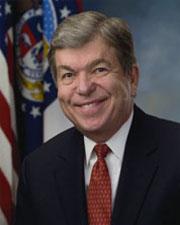 Sen. Roy Blunt (R-MO)
Legislative Activity
Stay on top of the latest movement without scrolling through every action
Roll call votes on amendments in Senate: Motion to table amendment SA 1520 agreed to in Senate by Yea-Nay Vote. 51 - 48. Record Vote Number: 24.
March 1, 2012
View full timeline
Roll call votes on amendments in Senate: Motion to table amendment SA 1520 agreed to in Senate by Yea-Nay Vote. 51 - 48. Record Vote Number: 24.
March 1, 2012
Considered by Senate. (consideration: CR S1162, S1162-1173)
March 1, 2012
Motion to table amendment SA 1520 agreed to in Senate by Yea-Nay Vote. 51 - 48. Record Vote Number: 24.
March 1, 2012
Considered by Senate. (consideration: CR S1106, S1112, S1115-1142)
February 29, 2012
Senate amendment proposed (on the floor): Amendment SA 1520 proposed by Senator Reid for Senator Blunt to Amendment SA 1730.(consideration: CR S1079-1082, S1082, S1083; text: CR S1079)
February 28, 2012
Amendment SA 1520 proposed by Senator Reid for Senator Blunt to Amendment SA 1730. (consideration: CR S1079-1082, S1082, S1083; text: CR S1079) To amend the Patient Protection and Affordable Care Act to protect rights of conscience with regard to requirements for coverage of specific items and services.
February 28, 2012
Senate amendment submitted
February 9, 2012
Votes
1 roll call on this amendment
Text
Proposed
MOVING AHEAD FOR PROGRESS IN THE 21ST CENTURY ACT--Resumed

Mr. REID. Mr. President, would you state the pending business.
The PRESIDING OFFICER. The pending business is S. 1813, which the
clerk will report.
The assistant legislative clerk read as follows:

A bill (S. 1813) to reauthorize Federal-aid highway and
highway safety construction programs, and for other purposes.

Pending:

Reid amendment No. 1730, of a perfecting nature.

Order of Procedure

Mr. REID. Mr. President, at the beginning of this month--in fact,
February 7--I moved to proceed to the surface transportation bill that
is before us today--an extremely important bill, a bipartisan bill.
This effort has been led by two fine Senators--one quite progressive
and the other very conservative--Senators Boxer and Inhofe, the
chairman and ranking member of the very important Environment and
Public Works Committee. This is a vital job-creating measure. The bill
would create and maintain up to 2.8 million jobs.
On February 9, 2 days after I moved to this bill, the Senate voted 85
to 11 to invoke cloture on the motion to proceed. The bill has broad
bipartisan support. But immediately after the Senate moved to the bill
on February 9, Senator Blunt asked unanimous consent that it be in
order to offer his amendment on contraception and women's health. I was
stunned. I couldn't believe this. I said, What is going on here? I
objected at the time. I didn't see why this surface transportation jobs
bill was the appropriate place for an amendment on contraception and
women's health.
But the Republican leader and others on the Republican side of the
aisle have made it very clear the Senate is not going to be able to
move forward on this important surface transportation bill unless we
vote on contraception and women's health. My friend the Republican
leader said it on national TV

[[Page S1079]]

on ``Face the Nation'' with Bob Schieffer. Senator McConnell said,
``The issue will not go away.''
So I believe it is vital to get this jobs bill done. What is standing
in the way is the Republicans' insistence on having a vote on a measure
that would deny women access to health services such as contraception
and even prenatal screenings. So after discussing it with numerous
Senators, I decided we should set up a vote on the one amendment, on
contraception and women's health. There has been enough delay on this
bill. So we will have a vote on this Blunt amendment on Thursday. After
that, we hope to be able to work out an agreement to have votes on a
number of nongermane amendments on each side. Maybe we will need to
have some side-by-sides, the Republicans may need some side-by-sides on
our amendments. That is fine, but let's move forth.
Meanwhile, the managers have made tremendous progress on clearing
more than 25 agreed-to amendments. I know the managers will want to
work on clearing even additional germane amendments. So I believe this
process will be the most constructive way to move the bill forward. I
hope this will help us be in a position to work through to completing
the transportation bill by the end of next week.
I ask unanimous consent that it be in order for the Blunt amendment
No. 1520 to be called up; that on Thursday, March 1, at a time to be
determined by the majority leader, after consultation with the
Republican leader, the Senate proceed to vote in relation to the Blunt
amendment; further, that no other amendments be in order prior to the
vote in relation to the Blunt amendment.
The PRESIDING OFFICER. Is there objection?
Without objection, it is so ordered.

Amendment No. 1520 to Amendment No. 1730

Mr. REID. Mr. President, I call up the Blunt amendment.
The PRESIDING OFFICER. The clerk will report.
The assistant legislative clerk read as follows:

The Senator from Nevada [Mr. Reid] for Mr. Blunt, for
himself and Mr. McConnell, Mr. Johanns, Mr. Wicker, Mr.
Hatch, Ms. Ayotte, Mr. Rubio, and Mr. Nelson of Nebraska,
proposes an amendment numbered 1520 to amendment No. 1730.

Mr. REID. I ask unanimous consent that further reading of the
amendment be waived.
The PRESIDING OFFICER. Without objection, it is so ordered.
The amendment is as follows:

(Purpose: To amend the Patient Protection and Affordable Care Act to
protect rights of conscience with regard to requirements for coverage
of specific items and services)

At the appropriate place, insert the following:

SEC.__. RESPECT FOR RIGHTS OF CONSCIENCE.

(a) Findings and Purposes.--
(1) Findings.--Congress finds the following:
(A) As Thomas Jefferson declared to New London Methodists
in 1809, ``[n]o provision in our Constitution ought to be
dearer to man than that which protects the rights of
conscience against the enterprises of the civil authority''.
(B) Jefferson's statement expresses a conviction on respect
for conscience that is deeply embedded in the history and
traditions of our Nation and codified in numerous State and
Federal laws, including laws on health care.
(C) Until enactment of the Patient Protection and
Affordable Care Act (Public Law 111 148, in this section
referred to as ``PPACA''), the Federal Government has not
sought to impose specific coverage or care requirements that
infringe on the rights of conscience of insurers, purchasers
of insurance, plan sponsors, beneficiaries, and other
stakeholders, such as individual or institutional health care
providers.
(D) PPACA creates a new nationwide requirement for health
plans to cover ``essential health benefits'' and ``preventive
services'' (including a distinct set of ``preventive services
for women''), delegating to the Department of Health and
Human Services the authority to provide a list of detailed
services under each category, and imposes other new
requirements with respect to the provision of health care
services.
(E) While PPACA provides an exemption for some religious
groups that object to participation in Government health
programs generally, it does not allow purchasers, plan
sponsors, and other stakeholders with religious or moral
objections to specific items or services to decline providing
or obtaining coverage of such items or services, or allow
health care providers with such objections to decline to
provide them.
(F) By creating new barriers to health insurance and
causing the loss of existing insurance arrangements, these
inflexible mandates in PPACA jeopardize the ability of
individuals to exercise their rights of conscience and their
ability to freely participate in the health insurance and
health care marketplace.
(2) Purposes.--The purposes of this section are--
(A) to ensure that health care stakeholders retain the
right to provide, purchase, or enroll in health coverage that
is consistent with their religious beliefs and moral
convictions, without fear of being penalized or discriminated
against under PPACA; and
(B) to ensure that no requirement in PPACA creates new
pressures to exclude those exercising such conscientious
objection from health plans or other programs under PPACA.
(b) Respect for Rights of Conscience.--
(1) In general.--Section 1302(b) of the Patient Protection
and Affordable Care Act (Public Law 111 148; 42 U.S.C.
18022(b)) is amended by adding at the end the following new
paragraph:
``(6) Respecting rights of conscience with regard to
specific items or services.--
``(A) For health plans.--A health plan shall not be
considered to have failed to provide the essential health
benefits package described in subsection (a) (or preventive
health services described in section 2713 of the Public
Health Service Act), to fail to be a qualified health plan,
or to fail to fulfill any other requirement under this title
on the basis that it declines to provide coverage of specific
items or services because--
``(i) providing coverage (or, in the case of a sponsor of a
group health plan, paying for coverage) of such specific
items or services is contrary to the religious beliefs or
moral convictions of the sponsor, issuer, or other entity
offering the plan; or
``(ii) such coverage (in the case of individual coverage)
is contrary to the religious beliefs or moral convictions of
the purchaser or beneficiary of the coverage.
``(B) For health care providers.--Nothing in this title (or
any amendment made by this title) shall be construed to
require an individual or institutional health care provider,
or authorize a health plan to require a provider, to provide,
participate in, or refer for a specific item or service
contrary to the provider's religious beliefs or moral
convictions. Notwithstanding any other provision of this
title, a health plan shall not be considered to have failed
to provide timely or other access to items or services under
this title (or any amendment made by this title) or to
fulfill any other requirement under this title because it has
respected the rights of conscience of such a provider
pursuant to this paragraph.
``(C) Nondiscrimination in exercising rights of
conscience.--No Exchange or other official or entity acting
in a governmental capacity in the course of implementing this
title (or any amendment made by this title) shall
discriminate against a health plan, plan sponsor, health care
provider, or other person because of such plan's, sponsor's,
provider's, or person's unwillingness to provide coverage of,
participate in, or refer for, specific items or services
pursuant to this paragraph.
``(D) Construction.--Nothing in subparagraph (A) or (B)
shall be construed to permit a health plan or provider to
discriminate in a manner inconsistent with subparagraphs (B)
and (D) of paragraph (4).
``(E) Private rights of action.--The various protections of
conscience in this paragraph constitute the protection of
individual rights and create a private cause of action for
those persons or entities protected. Any person or entity may
assert a violation of this paragraph as a claim or defense in
a judicial proceeding.
``(F) Remedies.--
``(i) Federal jurisdiction.--The Federal courts shall have
jurisdiction to prevent and redress actual or threatened
violations of this paragraph by granting all forms of legal
or equitable relief, including, but not limited to,
injunctive relief, declaratory relief, damages, costs, and
attorney fees.
``(ii) Initiating party.--An action under this paragraph
may be instituted by the Attorney General of the United
States, or by any person or entity having standing to
complain of a threatened or actual violation of this
paragraph, including, but not limited to, any actual or
prospective plan sponsor, issuer, or other entity offering a
plan, any actual or prospective purchaser or beneficiary of a
plan, and any individual or institutional health care
provider.
``(iii) Interim relief.--Pending final determination of any
action under this paragraph, the court may at any time enter
such restraining order or prohibitions, or take such other
actions, as it deems necessary.
``(G) Administration.--The Office for Civil Rights of the
Department of Health and Human Services is designated to
receive complaints of discrimination based on this paragraph
and coordinate the investigation of such complaints.
``(H) Actuarial equivalence.--Nothing in this paragraph
shall prohibit the Secretary from issuing regulations or
other guidance to ensure that health plans excluding specific
items or services under this paragraph shall have an
aggregate actuarial value at least equivalent to that of
plans at the same level of coverage that do not exclude such
items or services.''.
(2) Effective date.--The amendment made by paragraph (1)
shall be effective as if included in the enactment of Public
Law 111 148.

[[Page S1080]]

The PRESIDING OFFICER. The Senator from California.
Mrs. BOXER. Mr. President, as the majority leader is leaving the
floor, I wish to say I am pleased he has decided to take us forward on
this highway bill.
So where do we stand? We are in a situation, here in the 21st
century, where in order to move forward on a highway bill--a bill that
funds our highways, our roads, our bridges, and our transit systems--in
order to move forward on a jobs bill--where 2.8 million jobs are at
stake in this great Nation--we have to have a vote on birth control. I
want to say to my friends on the other side of the aisle, What are you
thinking? But if this is what you want to do, fine.
I want to make it clear to the people who are listening that the
Blunt amendment would say that any insurance company and any employer
for any reason could deny coverage to their employees. But it is not
just about birth control; it is any service.
Now, Mr. President, you serve proudly on the HELP Committee, and you
were very instrumental in working through the essential services that
are covered, the preventive services that are covered. It is very
important that we note what those are. We have a list of the essential
services and the preventive services, and what I am going to do is to
read them. As I read them, I want people who are listening to this to
think about whether these services are important, and to understand
that under the Blunt amendment any one of these services can be denied
by any employer, any insurance company, for any reason.
So I am going to list these services: Emergency services,
hospitalization, maternity and newborn care, mental health treatment,
preventive and wellness services, pediatric services, prescription
drugs, ambulatory patient services, rehabilitative services and
devices, and laboratory services.
Those are the categories of essential health benefits this Senate
voted to make sure are covered under insurance plans. That is the law.
The Blunt amendment would allow any insurer and any employer to deny
any of these services for any reason. All they have to say is they have
a moral objection.
Let's take maternity and newborn care. If somebody works for you, and
they are not married and they are pregnant and are having this child,
you can say: From now on, I am not covering anybody who works for me
who isn't married because I have a moral objection.
Mental health treatment. You could say: I don't consider this a
disease. I think if God decided that somebody has mental health
problems, that is just the way it is. I deny that.
It goes on and on.
Emergency services. If some employer believes if you have a heart
attack it is God's will, that is their moral belief. That is it. They
can deny that kind of coverage.
Now we go to preventive health, and I am going to read these. The
Blunt amendment would also say any employer, any insurance company can
deny any of these benefits to anybody at any time.
So listen to these services which came, again, out of your committee.
Breast cancer screenings. Maybe an employer doesn't believe that is
necessary. They could deny it. Cervical cancer screenings, hepatitis A
and B vaccines, measles, mumps vaccine--there is some controversy over
vaccines. Somebody could say: Well, I have a moral problem. I am not
going to offer these vaccines in my plan.
Colorectal cancer screenings. We found out those save lives, a huge
number of lives. They say the death rates are going down, because of
colorectal cancer screenings, by 50 percent. An employer or an
insurance company could deny that kind of screening.
Diabetes screening, cholesterol screening, blood pressure screening,
obesity screening, tobacco cessation, autism screening, hearing
screening for newborns, sickle cell screening for newborns, fluoride
supplements, tuberculosis testing, depression screening, osteoporosis
screening, flu vaccines for children and the elderly, contraception--
there. That is what started all of this, contraception.
By the way, 15 percent of women who take contraceptives take them to
prevent cancer, to prevent debilitating monthly pain, and it is even
taken to prevent serious skin problems that are very debilitating. But
there is no mention of that in the Blunt amendment. No, no.
HIV screening, STD screening, HPV testing, well woman visits, breast
feeding support, domestic violence screening, and gestational diabetes
screening, which is the kind of diabetes some women get when they are
pregnant.
So here is where we are. The Blunt amendment would take this list of
preventive health benefits, this list of essential health benefits, and
send a very clear, unequivocal message to every insurer in this country
and every employer that regardless of any other laws, if they decide
they have a moral objection or religious objection, they do not have to
offer this coverage.
Remember what we are talking about. We are talking about coverage. We
are not saying people have to do all of these things. If I have an
objection to doing any of these things, as an employee I don't have to
do it. But I have coverage if I decide to do it. That is the beauty of
the health care bill we passed. It says: Here are essential health
benefits; here are preventive health benefits. Employers and insurers,
you have to offer this coverage. If people want to take it, they can,
and what will happen is good.
Now, when we hear the other side describe the Blunt amendment, they
will not tell you what it is. But I have a very clear take on what it
is because I printed it out, and it says: A health plan shall not be
considered to have failed to provide the essential health benefits
package described in subsection (a) or preventive health services
described in section 2713 if they decide they have a moral or religious
objection.
That is the basis of it. So we take that and say: OK, here are the
essential health benefits. They no longer have any meaning. Here is the
list of preventive health benefits. Those are at the whim of the
employer, the whim of the insurance company, and it is really
disturbing.
Mr. President, you have some great career in your life, and you are a
great Senator now. Before that you told a lot of great stories and a
lot of great jokes. I have to tell you that Jon Stewart took this issue
on and said: Well, I will tell you something. I love the Blunt
amendment because I am an employer and I believe humor is the best
medicine. Humor is the best medicine, he said.
So he said: So that is what I am going to do. I have an example.
Then this guy comes on to the stage with a very bad cold and flu and
he is sneezing. He says: Mr. Stewart, do I have to have another
treatment now?
He says: Yes. And he takes a seltzer bottle and sprays it all over
the guy. That was his treatment because it was funny, and he was
supposed to laugh and that was supposed to cure this person.
He said: Not another treatment.
So in the darkest moments one finds consolation in humor. But just
think, there are people who believe and have a strong moral and
religious conviction that they don't want to take medicine. They just
believe they are in the hands of God. I personally respect it 100
percent, and people die for their right to have that view, and I think
that is appropriate. We should respect religion, everybody's religion.
So the way to deal with that is if that individual doesn't want to ever
be treated, that is their choice. But, frankly, if they put at risk a
child who has cancer--and we have had cases like this in America where
a parent said they didn't believe in medicine--a child could be cured
with some cancer treatment, people have stepped in and said: We are
going to make sure the child gets treatment.
So all we are saying in our health care bill is, here is a list of
essential health services and preventive health services that
scientists and doctors have told us will save our families pain and
suffering and cost and all the rest, and we make them available through
the insurer and the employer. That is all. People don't have to take
them, but they are available.
Under the Blunt amendment, if your boss happens to be a person who
doesn't believe in medicine, he can just say: Sorry, I am not a
believer. You can have an insurance plan that may have nothing behind
it--no services, none of these services that we worked so hard to put
into law.

[[Page S1081]]

So it is stunning that in this year we would be on a highway bill
anticipating a vote on Thursday on an amendment that has to do with
women's health. There is a lot of concern out there because we saw when
this whole thing started there was a hearing in the House of
Representatives where they had a panel on women's health that dealt
with, especially, access to birth control. Not one woman was on that
panel, and the men decided it was wrong that women should have access
to birth control without a copay even when the doctors and the
scientists have said it is so important.
When our families are planned, what happens? There are fewer
abortions. It is not even arguable. Fewer abortions. I would think we
could be in agreement on that. Fewer problems for our families, fewer
economic problems when they plan their families.
Now, if you don't want to plan your family, that is just fine. You
don't have to take that coverage. You don't have to take that
contraception.
So the President, in his decision, I thought, struck a great
compromise. What he said was, because the experts, the medical
experts--the Institute of Medicine told us contraception is a very
important choice for people because 15 percent of them use it not just
for birth control but to fight disease, cancer, and cysts on their
ovaries and such. Because that is important, we put it in this list of
essential benefits, preventive benefits. But if you are a church, you
don't have to offer it to your employees. That is what the President
said.
There are 335,000 religious institutions that are exempted from
having to offer this through insurance. The religious-affiliated
hospitals and universities were uncomfortable because they wanted to be
able to not be directly connected to the contraception, and the
President struck what I thought was a good compromise. He said to those
institutions: OK. It will be offered to your people, but it will be
done by a third party.
Almost everyone applauded it. Catholic Charities applauded it, the
Catholic Health Association applauded it. They represent thousands of
providers. Catholics United applauded it, and the bishops were still
unhappy. But the institutions that provide the service felt the
President struck a good bargain.
So we were all pleased. We thought this was fine because everybody's
religious freedom should be respected, and that is what the President
did. But now we have the Blunt amendment. Not only does this open a
Pandora's box, it opens a very dangerous policy. It allows insurers and
employers to simply say they have a moral problem with something and
they don't have to offer a list of services. Maybe they will do it
because they really have a moral conviction, but you can't really prove
it. Maybe they will do it because they want to save some money. We
don't know. But it opens a very bad situation. We have to table or beat
this Blunt amendment. It is very dangerous.
How about having it on a highway bill? I still can't get over it.
When I first heard about it, I thought: What does it have to do with
highways? Maybe it says you can't take a birth control pill when you
are driving on a highway. I mean, there was no connection, and there is
no connection.
But the majority leader is right to get a vote. I will tell you why:
It is holding up our highway bill. We can't get off dead center. We
have been on this bill days and we can't get off dead center because my
Republican friends want to vote on contraception and women's health
care on a highway bill.
So we are going to do it and, hopefully, that will signal our
goodwill to move forward with this bill. There are 2.8 million jobs at
stake. Our bridges are in desperate need of fixing. We have 70,000
bridges that are in very bad condition, and 50 percent of our roads are
not up to standard. We have had stories of bridges crumbling, and we
have had stories of highways in trouble. So we shouldn't be stuck on
this bill.
I could proudly say that Senator Inhofe and I worked in the most
remarkable bipartisan way to get a great bill out of our committee. The
Banking Committee did the same, Senators Johnson and Shelby. The
Commerce Committee got a little stuck, but they are getting unstuck,
and we are moving forward on that piece. Finance has done an excellent
job of finding the funds for us to fill the trust fund.
I want you to think in your mind's eye of a football stadium that
hosts the Super Bowl. Think of what it looks like when it is jam packed
with people. It is about 100,000 seats. Fifteen of those stadiums could
be filled with unemployed construction workers. So think about what
that would look like, 15 Super Bowl stadiums sold out, every seat
filled. That is how many unemployed construction workers we have
because of the housing crisis.
This bill will put them back to work. In a bipartisan fashion we have
protected the 1.8 million jobs, and we create up to another 1 million
jobs. So I can't believe we are discussing birth control on a highway
bill, but such is life. That is the way it is. If that is what we need
to move this bill forward, I am happy.
If we have to move on some other issues that are not germane to the
bill, I am even willing to do that, because that is really what is at
stake. What is at stake is construction jobs. What is at stake is
falling bridges. I do not have to tell my friend the effect of a
falling bridge. We know it happens. Senator Inhofe is eloquent on the
point. He lost a constituent who was taking a walk and a huge piece of
a bridge fell and killed her. This is not the way to run a country that
is the No. 1 economic power in the world.
I tell you, if we want to stay the No. 1 economic power in the world,
we cannot be stuck in traffic and have all that congestion. Billions of
hours and billions of dollars are lost because we are not keeping up
with the image that was painted for us by Dwight Eisenhower way back
when I was a kid when he said we need to have a network of highways
that run seamlessly across our Nation and connect us, one to the
other--a national highway system. We cannot lose that vision.
There are some people who say: Why do we need a national system?
Let's just have the States do it.
No. This is one Nation under God, indivisible. We need to be
connected. When the imports come in from all the various countries,
from the Asian nations into Los Angeles--and 40 percent of our imports
come in there--we take those, we put them on trains and trucks, and
they get shipped out all across America to every State in the Union.
That is commerce. That is called commerce, interstate commerce. We need
the roads to be ready and able to take that kind of traffic and not
have a situation where so much is added to the cost of transport
because there is so much congestion that we begin to lose our
effectiveness as an economic power. That, frankly, is where we are. Not
only do we import, we export, so we have to take the exports to the
coasts, the east coast and west coast. We have a lot of opportunity to
go to the gulf coast. If we do not keep up with this national system of
highways, we are in trouble.
This is a great bill. This bill is a reform bill. You take it down
from a lot of titles to just a couple dozen titles. We do not
overspend. We keep spending at current levels. The Finance Committee
has done its job to help us build a trust fund for 2 years.
The last point I would make before yielding the floor because I know
my friend from Georgia is here, and he is my very good friend--I know
he has some remarks he might have on this subject or another subject,
and he is going to talk to me as the chairman. We have some work we
want to do, so I am going to close it here.
What I want to say is that this is really close to an emergency, and
I do not overstate it. The entire transportation program expires on
March 31. That means all of our States are going to be hit with the end
of a program that is essential to their people, to their businesses.
That is why we have 1,000 organizations representing millions of
people--from the chambers of commerce, to the AFL CIO, to the granite
people, to the cement people, to the general contractors; seriously,
the AAA--it goes on and on from A to Z, 1,000 organizations that are
behind our bill. They are not going to look kindly on a situation we
could come to, which is that we do not have a bill. You cannot just
extend this bill because the money is not in the trust fund anymore. It
is not like past years where you could extend it. The money is not in
the trust fund. If we have to cut one-

[[Page S1082]]

third, we are talking about hundreds of thousands of workers who would
be laid off.
I again thank the majority leader, Senator Reid, because he is
getting us off center here. He is getting us off that line. We are
moving forward.
Mr. President, I ask unanimous consent that there be no motions in
order other than a motion to table prior to the vote in relation to
amendment No. 1520.
The PRESIDING OFFICER. Without objection, it is so ordered.
Mrs. BOXER. I yield the floor. I suggest the absence of a quorum.
The PRESIDING OFFICER. The clerk will call the roll.
The assistant editor of the Daily Digest proceeded to call the roll.
Mr. DURBIN. Mr. President, I ask unanimous consent that the order for
the quorum call be rescinded.
The PRESIDING OFFICER. Without objection, it is so ordered.
Mr. DURBIN. I ask unanimous consent to speak as in morning business.
The PRESIDING OFFICER. Without objection, it is so ordered.

Remembering Dr. Young Woo Kang

Mr. DURBIN. Mr. President, the march of progress in America can be
marked by the expansion of freedom. Slaves who were denied full
citizenship under our Constitution were given their rights with
amendments after our Civil War. Civil rights legislation in the 1960s
helped African Americans and others claim their rightful place in our
society. And women, denied a vote in America for generations, finally
won that right early in the 20th century.
Yet it took us until nearly the end of the 20th century to
acknowledge the rights of another group of Americans who have suffered
discrimination throughout history: people with disabilities. I would
like to take a moment to recognize one of the heroes of the disability
rights movement who passed away this past Thursday at the age of 68.
Dr. Young Woo Kang was a champion for people with disabilities in
America, his native South Korea, and throughout the world. Born in a
small farming village in South Korea under the shadow of the Korean
war, Young Woo Kang overcame adversity to become the first blind South
Korean to earn a Ph.D.
Dr. Kang's life reminds us that disability can happen to anyone at
anytime. When he was 14 years old, a soccer injury cost him his
eyesight. He spent the next 2 years in the hospital and endured several
surgeries before learning that he would never regain his sight.
That was in 1960. At that time, there were only two professions in
South Korea open to the blind: masseur and fortune teller. But Young
Woo Kang had other plans. When he was refused admission to college
because of his disability, he challenged the system and won. And when
he was allowed to take the college entrance exam, he scored in the top
ten--out of hundreds of students. Dr. Kang became the first blind
person to graduate--with highest honors--from Yonsei University, South
Korea's oldest and most prestigious university.
He planned to earn a post-graduate degree in special education from
the University of Pittsburgh. In fact, he had already been accepted at
the university when he learned that South Korean policy prohibited its
citizens with disabilities from studying abroad.
He lobbied successfully to have this policy changed--not only for
himself but also for the thousands of other South Koreans with
disabilities.
In 1976, after obtaining his Ph.D., Dr. Kang taught international
affairs at Taegu University in South Korea and became a disability
rights advocate.
He urged the passage of legislation in Korea similar to the Americans
with Disabilities Act and helped develop the first Braille alphabet for
the Korean language. He also founded Goodwill in Korea, which provides
job training and career services to people with disabilities.
Dr. Kang and his wife Kyoung, or ``Kay,'' as she is known, were
blessed with two sons, Paul and Chris. Dr. Kang and his wife both
worked in the Gary, Indiana, public school district for decades--he as
a supervisor for special education and she as a teacher for visually
impaired students. He also served as an adjunct professor for
Northeastern University in my home State of Illinois.
In 2002, Dr. Kang was nominated by President George W. Bush to serve
on the prestigious National Council on Disability, an independent
federal agency that advises the President and Congress on issues
affecting the 54 million Americans with disabilities.
A moment ago I mentioned Dr. Kang's sons. Dr. Paul Kang is an
ophthalmologist and has served as the President of the Washington, DC
Metropolitan Ophthalmological Society. Chris Kang, a familiar name to
many in this Chamber, was a member of my Senate staff for 7 years. Like
his father, Chris is brilliant and hard-working.

After graduating from the University of Chicago and the Duke
University Law School, Chris came to work for me answering
constituents' letters and emails. Chris says he was drawn to public
service by the example of his father, who taught him that government
can limit people, but it can also help people.
He rose quickly through the office ranks, moving from answering
letters to serving as one of my Judiciary counsels. He became my chief
floor counsel and served 4 years negotiating legislation, helping me
better understand Senate procedure, and conducting important whip
counts.
Three years ago, Chris Kang accepted a position as Special Assistant
to the President on the White House legislative affairs team. He has
made history in his own right by helping to pass such historic laws as
the American Recovery and Reinvestment Act, the Affordable Care Act,
and the Fair Sentencing Act. Last year, Chris moved into a new
position, a promotion, as senior counsel in the White House Counsel's
office, where he is now the President's top advisor on judicial
nominations.
How's that for an American success story--an immigrant father
appointed by a Republican president and his American-born sons, a
doctor and Senior Counsel to a Democratic President?
The great humanitarian Helen Keller, who lost her hearing and her
sight as a young child, was asked once whether she could imagine any
fate worse than losing one's sight. She replied, ``Yes, losing one's
vision.''
Like Helen Keller, Dr. Young Woo Kang lost his sight due to an
injury. But he was blessed with vision. That vision enabled him to
create a life for himself that was almost unimaginable in the world in
which he grew up. He had a vision of an America and a world in which
people were measured by their abilities, not their disabilities. His
vision and courage helped to expand our own vision and make us a better
nation.
I offer my deepest condolences to his wife Kay, his sons, Paul and
Chris, and his extended family, friends and colleagues. Dr. Kang lived
a life of accomplishment and inspiration. His legacy will live on
through his sons and four grandchildren, including 4-month-old Katie, a
source of great pride for Dr. Kang. And his mission will live on
through the good he achieved and the doors he opened for people with
disabilities in Korea and America and around the world.
I yield the floor and suggest the absence of a quorum.
The PRESIDING OFFICER. The clerk will call the roll.
The assistant editor of the Daily Digest proceeded to call the roll.
Mr. FRANKEN. Madam President, I ask unanimous consent that the order
for the quorum call be rescinded.
The PRESIDING OFFICER (Mrs. Shaheen). Without objection, it is so
ordered.

Amendment No. 1520

Mr. FRANKEN. Madam President, I would like to talk for a moment about
religious freedom. Our country was founded on the belief that all
Americans should have the right to practice their religious beliefs as
long as their faith does not infringe on the rights of others. This
concept, which is, I have the freedom to stretch out my hand as far as
I can unless I punch Hannah here in the face--I do not have the freedom
to do that; that is impinging on Hannah's rights--actually pertains to
more than just freedom of religion but our basic concepts of what
people's rights are, and this is an idea that is woven through our
Constitution and our Bill of Rights. I have the right to choose my
profession, where I live, and I have a right to choose my doctor
according to my own faith, but I do not have the right to choose yours.

[[Page S1083]]

When we wrote the health reform bill, we made sure to account for
this balance. The health reform law required insurance companies to
cover preventive health benefits without copays, and we asked the
Institute of Medicine to study which preventive health benefits should
be included. Last summer, the IOM--the Institute of Medicine--
recommended to the Department of Health and Human Services that
contraceptives should be covered, along with cancer screening,
screening for domestic violence, and many other services that have been
shown to improve women's health.
A number of religious institutions objected to being required to
cover contraceptive services as a preventive health benefit for their
employees. President Obama heeded their concerns, and he created an
exception for churches and other religious institutions. The President
went even further by saying that religiously affiliated organizations
will not have to pay for contraceptive coverage for their employees. I
will say that again. A religiously affiliated, nonprofit employer will
not have to pay for contraceptives for their employees--and that was
applauded by a lot of Catholic groups, for example--but the employees
would have the right to contraception, to exercise their religious
rights. And very often, contraception is used as a medical preventive--
I think 15 percent of all use of contraception is to prevent maladies
women have.
I believe all Americans should be able to freely and fully practice
their religious beliefs to the extent their practice does not infringe
on the freedom of others. I believe this freedom is at the heart of our
society in America.
I applaud the President for finding a solution that protects
religious freedoms while also providing health care to nearly all
women. However, my friend Senator Blunt, with whom I am actually
working on a separate transportation amendment, has filed a nongermane
amendment that goes much further than the President's accommodation of
religious employers.
His amendment says that any employer or health insurer could opt out
of any essential benefit or preventive service required by the
Affordable Care Act. All they have to do is say that their objection is
on religious or moral grounds. This amendment would upend how our
entire insurance system works. It would allow any employer to opt out
of covering any health care service guaranteed to Americans by the
Affordable Care Act. This is an unprecedented proposal, one that could
change the structure of health care in our country much for the worse.
The President found a balanced approach that maintains women's access
to health care, while allowing religiously affiliated organizations to
opt out of paying for it. On the other hand, Senator Blunt's amendment
would allow employers to prohibit health plans from providing
preventive health services guaranteed by the Affordable Care Act. For
example, under this amendment, an employer could object to covering
vaccines for children. There are people in this country--I am sure many
of them are employers--who have a moral objection to vaccines, so the
plan would not be required to cover it or an employer could choose not
to allow an insurer to cover maternity care for a single woman. There
are people with moral objections to people having children outside
marriage. So the woman would have to pay for her prenatal care and her
maternity care out of pocket, if the employer just says: Oh, nope. I
have a moral problem with that.
Of course, Senator Blunt's amendment ignores the religious freedom of
women to be able to access contraceptives. The President's
accommodation a couple weeks ago protected the religious freedom of
religious organizations, while also protecting the religious freedom of
the women who are their employees. Remember, the employees have
religious freedom too.
The Blunt amendment violates the freedom of women to receive the kind
of scientifically proven health care that she chooses--she chooses.
This proposal does not simply put women's access to birth control in
the hands of their employers, it does not simply allow politics to get
between women and their doctors, it changes the way health care is
provided in our country. It violates a core belief in our society that
our religious decisions are our own and that each of us, every woman
and man in our society, has the right to make decisions about our own
health for ourselves and for our families.
Over the last decade, we have seen proposal after proposal that would
politicize the decisions that women make with their doctors. Now we are
seeing an all-out attack on women's rights to protect their health by
using contraceptives, something that almost all women in this country
use at some point in their lives. These women choose to do that. It
conforms with their own beliefs about what is best for them.
I think we all believe, or almost all of us believe that women should
have that right. This seems to be a clear case of one person's
religious beliefs impinging on the rights of others. It is a deeply
worrying case of one person's hand meeting another's face.
I rise to urge my colleagues to fight back against these assaults. I
urge my friends on both sides of the aisle to think about this, to
respect the decisions that each woman makes about her health care, to
protect each woman's religious freedom, her liberty, and to oppose
Senator Blunt's amendment to undermine this basic freedom.
I yield the floor and suggest the absence of a quorum.
The PRESIDING OFFICER. The clerk will call the roll.
The assistant bill clerk proceeded to call the roll.
Mr. SANDERS. Madam President, I ask unanimous consent that the order
for the quorum call be rescinded.
The PRESIDING OFFICER. Without objection, it is so ordered.

Dental Crisis in America

Mr. SANDERS. Madam President, I am here for Senator Boxer, in terms
of the Transportation bill, but before I get into transportation, I
wanted to say a word on another issue that does not get the attention
it deserves, and that is why, as chairman of the Subcommittee on
Primary Health Care, I will be holding a hearing on the dental crisis
in America.
As I think many Americans know--although they do not hear a whole lot
about it--we as a Nation are in the midst of a very severe dental
crisis. More than 47 million Americans live in places where it is
difficult to get dental care. About 17 million low-income children
received no dental care in 2009. One quarter of adults in the United
States ages 65 or older have lost all of their teeth. Low-income adults
are almost twice as likely as higher income adults to have gone without
a dental checkup in the previous year.
I should tell you that bad dental health impacts overall health care.
When you talk about dental care, you are talking about health care in
general. If people have bad teeth or no teeth, they are unable to
digest their food, which causes digestive problems. People who have
poor teeth can get infections leading to very serious health problems.
And, in fact, there are instances where people have actually died
because of poor teeth and infections. Furthermore, the risk for
diabetes, heart disease, and poor birth outcomes are also significant
if people are not having their teeth well maintained.
Since 2006, there were over 830,000 visits to emergency rooms across
the country because we have a lot of low-income people who are in
severe pain and they can't find a dentist. So they go into an emergency
room, and I suspect maybe they get their tooth extracted or get some
pain killer. But that is certainly not an adequate substitute for
providing the dental care that all Americans need.
Almost 60 percent of children ages 5 to 17 have cavities, making
tooth decay 5 times more common than asthma among children of this age.
In fact, as I understand it, the single most prevalent reason for
children being absent from school is, in fact, dental problems.
In the midst of the severe need for more dentists, what is happening
is our dentists in our dental communities are becoming older and many
of them are retiring. In fact, we need a lot more new dentists to
replace those who are retiring. The sad truth is that more dentists
retire each year than there are dental school graduates to replace
them.
One of the other problems we are facing is that only 20 percent of
the Nation's practicing dentists provide care

[[Page S1084]]

to people with Medicaid. So that is a serious problem. We need more
dentists but, equally important, we need to make sure that dentists are
providing service to the people who need it the most. And one of the
sad realities of contemporary dental life is that only 20 percent of
the Nation's practicing dentists provide care to people who are on
Medicaid, and only an extremely small percentage devote a substantial
part of their practice to caring for those who are underserved.
The current access problem is exacerbated by the fact that private
practices are often located in middle-class and wealthy suburbs. What
we need is to bring dentists into those areas where people need dental
care the most. That is certainly something we need to do.
Further, we need to expand Medicaid and other dental insurance
coverage. One-third of Americans do not have dental coverage.
Traditional Medicare for seniors does not cover dental services. States
can choose whether their Medicaid Programs provide coverage for dental
care for adults, and the truth is many of them do not.
Let me give some good news, though, in terms of where we are making
some progress. Recently--and I have been active in this effort--there
has been an expansion of federally qualified community health centers.
Community health centers provide health and dental care to anybody in
the area regardless of their ability to pay. We now have a situation
where community health centers are providing dental services to over
3\1/2\ million people across the country.
I am happy to say in the State of Vermont, in recent years, we have
seen a very significant increase not only in community health centers
in general but in community health centers that are providing state-of-
the-art dental care. We have beautiful new facilities located in
Richford, in the northern part of our State; in Plainfield, VT, in the
central part of our State; and in Rutland. Burlington is just
developing a beautiful new dental facility.
Furthermore, one of the areas where I think we are seeing some
progress not only in Vermont but around the country--and which I think
has huge potential--is putting dental offices right in schools. I know
in Burlington, VT, we helped bring that about some years ago, and we
have kids from all over the city of Burlington getting their dental
care at one particular school. It is working phenomenally well, and we
have similar programs in Bennington and Richford.
I did want to mention that I think the time is now for the Congress
to begin addressing this issue. One of the things I have done recently
on my Web site--which is sanders.senate.gov--I have asked people in
Vermont and all over the country to tell us their stories in terms of
what happens if they do not or if members of their family don't have
access to dental care. We have received more than 1,200 stories from
Vermont and all over this country. Those stories are heartbreaking
because they tell the tales of people who are suffering every day
because they simply don't have the money to go to a dentist to take
care of their dental needs. These are parents who are worried about
their kids and pointing out how hard it is to find affordable dental
care in their communities. So if people want to write my office, they
can go to my Web site, sanders.senate.gov, and we would love to hear
from them. Because I think there are a lot of stories out there that
are not being told.
What I wish to do now is to read from a publication that we have just
produced called ``Dental Crisis in America: The Need to Expand
Access.'' This will be distributed and released tomorrow at our
hearing, but I did want to read a few stories which I think speak to
the experience that a whole lot of people from one end of this country
to the other are having regarding lack of access to dental care.
This is from a woman named Heather Getty, who lives in East
Fairfield, VT, in the northern part of our State. This is what she
says:

My husband and I and our four kids are the working poor. We
have to think about rent and electricity before we think
about dental care. My wisdom teeth have been a problem for
over a decade now. I take ibuprofen and just keep on going.
My husband has not seen a dentist since he was a teenager.
He's afraid of the costs if they find something. So it's been
20 years. Because of Vermont's Dr. Dynasaur program, at least
my children have been lucky enough to have regular cleanings,
but I have to comb through the Yellow Pages to find an office
who will accept their coverage. One time I missed an
appointment because my car broke down, and when I called to
reschedule, they told me that we had been blacklisted and
that no one from my family could be seen by that office
again. We've learned over the years how important dental care
is. If you get preventive care early, you are less likely to
have problems later on.

That is from Heather Getty in East Fairfield, VT.
Let me read a statement from Shawn Jones in Brattleboro, VT.

Last year, I had a toothache that was so painful, I had
trouble eating and sleeping. My girlfriend is also covered by
Medicaid so I called her dentist, but they wouldn't see me.
So I called 12 more dentists in the area, but they all said
the same thing: They weren't taking new Medicaid patients. A
few said to call back in three months, which seems like a
long time to live with a bad toothache. Finally, someone from
Office of Vermont Health Access helped me get an emergency
voucher to get my tooth pulled. I'm just grateful that my
girlfriend had a car to get me there.

That is just a couple of the statements that came from Vermont, and
in fact from all over the country. But let me read a statement from Dr.
David Nash, who is the William R. Willard Professor of Dental
Education, Professor of Pediatric Dentistry, College of Dentistry,
University of Kentucky in Lexington. Dr. Nash writes:

Society has granted the profession of dentistry the
exclusive right and privilege of caring for the oral health
of the nation's children. Unfortunately, the dental delivery
system in place today does not provide adequate access to
care for our children. In many instances it is because few
dentists will accept Medicaid payments. In other countries of
the world, children's oral health is cared for by dental
therapists, primarily in school-based programs. This results
in an overwhelming majority of children being able to receive
care. Dental therapists as utilized internationally do not
create a two-tiered system of care. They have extensive
training in caring for children, significantly more than the
typical graduate of our nation's dental
schools. International research supports the high quality
of care dental therapists provide. The time has arrived
for the United States to develop a new workforce model to
care for our children's oral health.

What Dr. Nash is talking about is another issue we will be discussing
tomorrow in the hearing; that is, it is clear from international
studies and, in fact, from some States in the United States that there
are well-trained people who can take care of certain types of dental
problems who are not dentists. I think that is an area we need to
explore--how can we expand the dental profession to include people who
do not graduate dental school but who have the qualifications to take
care of a variety of dental problems?
Let me read another story that comes from Vermont regarding what
happens if you don't have dental care. It is from Kiah Morris from
Bennington, VT.

When I was pregnant, I had a tooth infection that had
gotten into my lymph nodes and I needed a root canal, but
adult Medicaid has a $495 cap, which wasn't enough. Dental
care shouldn't be a luxury.

What she is saying is that in Vermont and in many other States where
you do have Medicaid helping out for dental care for low-income people,
there is often a cap, and that cap is much too low to provide the
services many folks need.
So the bottom line is that we have a crisis in terms of access to
dental care in this country. We lag behind many other countries around
the world in that regard. We have many people who have no dental
insurance at all. Some who do have dental insurance, such as my family,
have very limited coverage--I think it is about $1,000 a year.
Meanwhile, the cost of dental care is sky-high, and we are also going
to explore why that is so. I am not sure I understand or many people
understand why dental care is as expensive as it is. What I do know is
that there is a city in northern Mexico whose function in life is to
provide dental care for Americans who go down below the border because
they can't afford dental care in this country.
There is a serious problem. People don't have dental insurance. Low-
income people don't have access to dental care. We have many dentists
out there who are not accepting Medicaid patients or, if they are
accepting Medicaid patients, they are accepting very few of them.

[[Page S1085]]

The population of our dentists in general is getting older, and we
are losing more of them to retirement than we are seeing graduates of
dental school. Even the dentists who are graduating are often not
migrating to the areas where we need them the most. Many dentists are
involved in making our teeth white and shiny and our smiles very
beautiful, but meanwhile in those communities there are people who are
seeing the teeth in their mouth rot away, there are kids who have
dental problems, and they are not getting the treatment they need.
I hope that tomorrow at the hearing we are going to bring forth some
great panelists. We will be talking about the issue. I intend, as soon
as we can, to introduce comprehensive legislation to make sure every
person in this country has access to affordable and decent-quality
dental care.
Mr. President, I suggest the absence of a quorum.
The PRESIDING OFFICER (Mr. Casey). The clerk will call the roll.
The assistant bill clerk proceeded to call the roll.
Mr. SANDERS. Mr. President, I ask unanimous consent that the order
for the quorum call be rescinded.
The PRESIDING OFFICER. Without objection, it is so ordered.
Mr. SANDERS. Mr. President, we are debating the Transportation bill,
so let me say a few words about transportation.
I think everybody in this country--or at least anybody who gets into
an automobile and drives around--understands that we have a major
infrastructural crisis in this country and that it is becoming more
dire each passing year.
The American Society of Civil Engineers has reported that we should
be investing $2.2 trillion over the next 5 years simply to get our
roads, bridges, transit, and aviation to a passable condition. This is
more than eight times the annual rate of spending proposed in the bill
under consideration.
The first point I think we should acknowledge is that the legislation
before us, which I support and which is significantly a step forward,
is a very modest proposal going nowhere near as far as we should be
going.
Clearly, I see when I go home to Vermont, and I am sure you see when
you go home to Pennsylvania, the very apparent infrastructural needs we
as a nation face. In my State of Vermont, just under one-third of
Vermont's bridges are structurally deficient or functionally obsolete.
About one-third of Vermont's bridges are structurally deficient or
functionally obsolete. Thirty-six percent of our Federal aid roads are
in need of major repairs. In fact, a recent national report ranked
Vermont's rural roads as the worst in the Nation, and that was before
the very terrible storm we experienced, Tropical Storm Irene, which
caused hundreds of millions of additional dollars of damage to our
roads.
I think the point here is not a complicated point. I was a mayor for
8 years, and I had to deal with the roads and the water system in the
city of Burlington, and I think I speak for every mayor in the world
when I tell you that infrastructure does not get better all by itself.
I think we can all agree that if you do nothing, if you do not invest
in repairs, it is just not going to get better. In fact, it will get
worse.
It is really dumb that we as a nation end up spending a lot more
money than we should in repairing our roads and bridges and water
systems because we don't adequately fund maintenance. If you keep up
good repair, it will end up costing you less money. If you ignore them
and they deteriorate and you need to massively rebuild them, it ends up
being a much more expensive proposition.
So as a nation what we should be doing is properly maintaining our
infrastructure, investing a certain sum every single year. And I should
tell you that compared to the rest of the world, we do not do a
particularly good job of that. Right now, the United States invests
just 2.4 percent of our GDP on infrastructure. Europe invests twice
that amount, and China invests almost four times our rate. Roughly 9
percent of their GDP goes to infrastructure. So in terms of our own
needs, we are falling behind. Internationally, other countries are
doing a lot better than we are.

Equally important is that we are in the midst of the worst economic
downturn since the Great Depression. If you look at those people who
have given up looking for work, those people who are working part time
or want to work full time, real unemployment in this country is not
just the official 8.2 percent, it is closer to 15 percent. And what
economists tell us is that if we are serious about creating jobs,
investing in infrastructure is probably the best way to do that. It is
the easiest way to create meaningful, decent-paying jobs. For every $1
billion of Federal funds spent, we can create or maintain nearly 35,000
jobs. Given the economic crisis we face, that is exactly what we should
be doing.
In addition to preserving more than 1.8 million jobs, the legislation
we are dealing with today, which is being presented by Senators Boxer
and Inhofe, will create up to 1 million new jobs by expanding the TIFIA
Program--a measure championed by Chairperson Boxer. This is an
extremely important issue. It is important for our productivity because
when you have a crumbling infrastructure, productivity suffers. It is
important in terms of international competition. It is important in
terms of job creation. It is important in order to provide a basic need
for millions of Americans.
People do not want to drive on roads which are falling apart, that
have huge potholes. People want to make sure when they go over a
bridge, that bridge will not collapse. People want to make sure we have
a strong rail system, not a rail system which, in fact, is far behind
those of Europe, Japan, and China.
This bill, while modest in terms of our needs, is a step forward. It
is a bipartisan bill. I hope we can get to it and pass it as quickly as
possible because the infrastructure needs of this country are great,
and they must be addressed.
I yield the floor and suggest the absence of a quorum.
The PRESIDING OFFICER. The clerk will call the roll.
The assistant legislative clerk proceeded to call the roll.
The PRESIDING OFFICER. The Senator from Colorado.
Mr. BENNET. Mr. President, I ask unanimous consent that the order for
the quorum call be rescinded.
The PRESIDING OFFICER. Without objection, it is so ordered.

____________________