To amend the Patient Protection and Affordable Care Act to protect rights of conscience with regard to requirements for coverage of specific items and services.
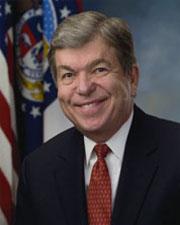 Sen. Roy Blunt (R-MO)
Legislative Activity
Stay on top of the latest movement without scrolling through every action
Roll call votes on amendments in Senate: Motion to table amendment SA 1520 agreed to in Senate by Yea-Nay Vote. 51 - 48. Record Vote Number: 24.
March 1, 2012
View full timeline
Roll call votes on amendments in Senate: Motion to table amendment SA 1520 agreed to in Senate by Yea-Nay Vote. 51 - 48. Record Vote Number: 24.
March 1, 2012
Considered by Senate. (consideration: CR S1162, S1162-1173)
March 1, 2012
Motion to table amendment SA 1520 agreed to in Senate by Yea-Nay Vote. 51 - 48. Record Vote Number: 24.
March 1, 2012
Considered by Senate. (consideration: CR S1106, S1112, S1115-1142)
February 29, 2012
Senate amendment proposed (on the floor): Amendment SA 1520 proposed by Senator Reid for Senator Blunt to Amendment SA 1730.(consideration: CR S1079-1082, S1082, S1083; text: CR S1079)
February 28, 2012
Amendment SA 1520 proposed by Senator Reid for Senator Blunt to Amendment SA 1730. (consideration: CR S1079-1082, S1082, S1083; text: CR S1079) To amend the Patient Protection and Affordable Care Act to protect rights of conscience with regard to requirements for coverage of specific items and services.
February 28, 2012
Senate amendment submitted
February 9, 2012
Votes
1 roll call on this amendment
Text
Submitted
SA 1520. Mr. BLUNT (for himself, Mr. McConnell, Mr. Johanns, Mr.
Wicker, Mr. Hatch, Ms. Ayotte, Mr. Rubio, Mr. Nelson of Nebraska, Mr.
Roberts, Mr. McCain, Mr. Kyl, Mr. Coats, Mr. Barrasso, Mr. Toomey, Mr.
Lugar, Mr. Cornyn, Mr. Boozman, Mr. Paul, Mr. Hoeven, and Mr. Graham)
submitted an amendment intended to be proposed by him to the bill S.
1813, to reauthorize Federal-aid highway and highway safety
construction programs, and for other purposes; which was ordered to lie
on the table; as follows:

At the appropriate place, insert the following:

SEC. __. RESPECT FOR RIGHTS OF CONSCIENCE.

(a) Findings and Purposes.--
(1) Findings.--Congress finds the following:
(A) As Thomas Jefferson declared to New London Methodists
in 1809, ``[n]o provision in our Constitution ought to be
dearer to man than that which protects the rights of
conscience against the enterprises of the civil authority''.
(B) Jefferson's statement expresses a conviction on respect
for conscience that is deeply embedded in the history and
traditions of our Nation and codified in numerous State and
Federal laws, including laws on health care.

[[Page S539]]

(C) Until enactment of the Patient Protection and
Affordable Care Act (Public Law 111-148, in this section
referred to as ``PPACA''), the Federal Government has not
sought to impose specific coverage or care requirements that
infringe on the rights of conscience of insurers, purchasers
of insurance, plan sponsors, beneficiaries, and other
stakeholders, such as individual or institutional health care
providers.
(D) PPACA creates a new nationwide requirement for health
plans to cover ``essential health benefits'' and ``preventive
services'' (including a distinct set of ``preventive services
for women''), delegating to the Department of Health and
Human Services the authority to provide a list of detailed
services under each category, and imposes other new
requirements with respect to the provision of health care
services.
(E) While PPACA provides an exemption for some religious
groups that object to participation in Government health
programs generally, it does not allow purchasers, plan
sponsors, and other stakeholders with religious or moral
objections to specific items or services to decline providing
or obtaining coverage of such items or services, or allow
health care providers with such objections to decline to
provide them.
(F) By creating new barriers to health insurance and
causing the loss of existing insurance arrangements, these
inflexible mandates in PPACA jeopardize the ability of
individuals to exercise their rights of conscience and their
ability to freely participate in the health insurance and
health care marketplace.
(2) Purposes.--The purposes of this section are--
(A) to ensure that health care stakeholders retain the
right to provide, purchase, or enroll in health coverage that
is consistent with their religious beliefs and moral
convictions, without fear of being penalized or discriminated
against under PPACA; and
(B) to ensure that no requirement in PPACA creates new
pressures to exclude those exercising such conscientious
objection from health plans or other programs under PPACA.
(b) Respect for Rights of Conscience.--
(1) In general.--Section 1302(b) of the Patient Protection
and Affordable Care Act (Public Law 111-148; 42 U.S.C.
18022(b)) is amended by adding at the end the following new
paragraph:
``(6) Respecting rights of conscience with regard to
specific items or services.--
``(A) For health plans.--A health plan shall not be
considered to have failed to provide the essential health
benefits package described in subsection (a) (or preventive
health services described in section 2713 of the Public
Health Service Act), to fail to be a qualified health plan,
or to fail to fulfill any other requirement under this title
on the basis that it declines to provide coverage of specific
items or services because--
``(i) providing coverage (or, in the case of a sponsor of a
group health plan, paying for coverage) of such specific
items or services is contrary to the religious beliefs or
moral convictions of the sponsor, issuer, or other entity
offering the plan; or
``(ii) such coverage (in the case of individual coverage)
is contrary to the religious beliefs or moral convictions of
the purchaser or beneficiary of the coverage.
``(B) For health care providers.--Nothing in this title (or
any amendment made by this title) shall be construed to
require an individual or institutional health care provider,
or authorize a health plan to require a provider, to provide,
participate in, or refer for a specific item or service
contrary to the provider's religious beliefs or moral
convictions. Notwithstanding any other provision of this
title, a health plan shall not be considered to have failed
to provide timely or other access to items or services under
this title (or any amendment made by this title) or to
fulfill any other requirement under this title because it has
respected the rights of conscience of such a provider
pursuant to this paragraph.
``(C) Nondiscrimination in exercising rights of
conscience.--No Exchange or other official or entity acting
in a governmental capacity in the course of implementing this
title (or any amendment made by this title) shall
discriminate against a health plan, plan sponsor, health care
provider, or other person because of such plan's, sponsor's,
provider's, or person's unwillingness to provide coverage of,
participate in, or refer for, specific items or services
pursuant to this paragraph.
``(D) Construction.--Nothing in subparagraph (A) or (B)
shall be construed to permit a health plan or provider to
discriminate in a manner inconsistent with subparagraphs (B)
and (D) of paragraph (4).
``(E) Private rights of action.--The various protections of
conscience in this paragraph constitute the protection of
individual rights and create a private cause of action for
those persons or entities protected. Any person or entity may
assert a violation of this paragraph as a claim or defense in
a judicial proceeding.
``(F) Remedies.--
``(i) Federal jurisdiction.--The Federal courts shall have
jurisdiction to prevent and redress actual or threatened
violations of this paragraph by granting all forms of legal
or equitable relief, including, but not limited to,
injunctive relief, declaratory relief, damages, costs, and
attorney fees.
``(ii) Initiating party.--An action under this paragraph
may be instituted by the Attorney General of the United
States, or by any person or entity having standing to
complain of a threatened or actual violation of this
paragraph, including, but not limited to, any actual or
prospective plan sponsor, issuer, or other entity offering a
plan, any actual or prospective purchaser or beneficiary of a
plan, and any individual or institutional health care
provider.
``(iii) Interim relief.--Pending final determination of any
action under this paragraph, the court may at any time enter
such restraining order or prohibitions, or take such other
actions, as it deems necessary.
``(G) Administration.--The Office for Civil Rights of the
Department of Health and Human Services is designated to
receive complaints of discrimination based on this paragraph
and coordinate the investigation of such complaints.
``(H) Actuarial equivalence.--Nothing in this paragraph
shall prohibit the Secretary from issuing regulations or
other guidance to ensure that health plans excluding specific
items or services under this paragraph shall have an
aggregate actuarial value at least equivalent to that of
plans at the same level of coverage that do not exclude such
items or services.''.
(2) Effective date.--The amendment made by paragraph (1)
shall be effective as if included in the enactment of Public
Law 111-148.
______