To permit emergency exemptions from compliance with certain laws for highway construction projects.
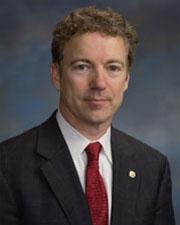 Sen. Rand Paul (R-KY)
Legislative Activity
Stay on top of the latest movement without scrolling through every action
Roll call votes on amendments in Senate: Motion to waive all applicable budgetary discipline with respect to amendment SA 1556 rejected in Senate by Yea-Nay Vote. 42 - 54. Record Vote Number: 47.
March 14, 2012
View full timeline
Roll call votes on amendments in Senate: Motion to waive all applicable budgetary discipline with respect to amendment SA 1556 rejected in Senate by Yea-Nay Vote. 42 - 54. Record Vote Number: 47.
March 14, 2012
Senate amendment proposed (on the floor): Amendment SA 1556 proposed by Senator Paul to Amendment SA 1761.(consideration: CR S1647, S1650; text: CR S1647)
March 14, 2012
Amendment SA 1556 proposed by Senator Paul to Amendment SA 1761. (consideration: CR S1647, S1650; text: CR S1647) To permit emergency exemptions from compliance with certain laws for highway construction projects.
March 14, 2012
Point of order raised in Senate with respect to amendment SA 1556.
March 14, 2012
Motion to waive all applicable budgetary discipline with respect to amendment SA 1556 rejected in Senate by Yea-Nay Vote. 42 - 54. Record Vote Number: 47.
March 14, 2012
Amendment SA 1556 ruled out of order by the chair.
March 14, 2012
Senate amendment submitted
February 13, 2012
Votes
1 roll call on this amendment
Text
Proposed
MOVING AHEAD FOR PROGRESS IN THE 21ST CENTURY ACT

The ACTING PRESIDENT pro tempore. Under the previous order, the
Senate will resume consideration of S. 1813. Under the previous order,
the time until 11:30 a.m. will be equally divided and controlled
between the two leaders or their designees. The clerk will state the
bill.
The legislative clerk read as follows:

A bill (S. 1813) to reauthorize Federal-aid highway and
safety construction programs, and for other purposes.

Pending:

McCain modified amendment No. 1669, to enhance the natural
quiet and safety of airspace of the Grand Canyon National
Park.
Corker amendment No. 1810, to ensure that the aggregate
amount made available for transportation projects for a
fiscal year does not exceed the estimated amount available
for those projects in the Highway Trust Fund for the fiscal
year.
Coats (for Alexander) amendment No. 1779, to make technical
corrections to certain provisions relating to overflights of
National Parks.

The ACTING PRESIDENT pro tempore. The Senator from Oregon.
Mr. MERKLEY. Madam President, I ask unanimous consent to speak as in
morning business for up to 10 minutes.
The ACTING PRESIDENT pro tempore. Without objection, it is so
ordered.

Judicial Nominations

Mr. MERKLEY. Madam President, I am rising to speak about the Senate's
constitutional duty of advice and consent on judicial nominations. This
power is enormously important. In no way did the writers of our
Constitution envision that this body would use their power of advice
and consent as a method of undermining the ability of the other two
branches to perform their responsibilities.
Indeed, throughout the history of the United States, Senators from
both sides of the aisle have taken this responsibility of advice and
consent very seriously. This duty requires us to put aside ideology and
partisanship because otherwise our constituents, through our inaction,
would be unable to obtain the speedy and public trial that is supposed
to be their birthright as Americans.
Americans are not thinking of their district courts in terms of red
courts and blue courts. They are not thinking of their circuit courts
in terms of red courts and blue courts. No, they are thinking about
Lady Justice, about justice being delivered in an evenhanded and swift
manner. When they see the obstruction of the judiciary that is
emanating from the Senate, they are frustrated. They are frustrated.
They recognize that when the judiciary is damaged and justices go
unappointed, indeed that means delays for cases and that means their
right to a speedy trial is taken away. They are thinking about the
chaos that results when a case remains in limbo for too long.

So why in the past few years have we allowed partisanship to overtake
our duty to maintain a functional judiciary? Simply put: Some Senators
in this body, motivated by misguided notions of partisan warfare, have
decided to abuse the supermajority power of this Chamber in order to
undermine the judiciary.
This bears little resemblance to the Senate of 1976 when I first came
here as an intern, when the power of the supermajority was recognized
as an exceptional act of conscience to be used only for the most
enormous issues, when a Senator would be willing to stand on the floor
of the Senate and make his or her case before the American people as to
why the simple majority envisioned in the Constitution for this body to
act should be obstructed. Now we see Senators exercising their power to
obstruct a simple majority and not coming to the floor to defend their
position. They are afraid of public reaction to their obstruction of
this body because they know the public expects us to be responsible in
reviewing and voting on nominees for the executive branch and for the
judiciary.
The Senate of 1976 would never have entertained the idea that well-
qualified nominees would be routinely subjected to filibusters. Indeed,
even throughout most of the last decade, this has not been the case. So
imagine my surprise when I came here as a new Senator in 2009,
revisiting the Chamber I came to as a youth in 1976, and I discovered
the two Senates bore little resemblance to each other; that the
reasonably responsive, bipartisan, collaborative body of 1976 had been
replaced with a Senate now paralyzed due to the abuse of the filibuster
and the supermajority.
Instead of debate and deliberation, followed by up-or-down votes,
Senators have even been blocking motions to proceed. In other words,
they have been blocking the ability to debate whether to get to a bill
in order to debate an issue--two levels removed from actual discussion
and decisionmaking.
In contrast to the image Americans have of the filibuster made famous
by Jimmy Stewart, who comes to Washington and stands in the well of the
Senate and carries on his fight and his argument in front of the
American people until he collapses from exhaustion, now the Senator who
filibusters can hide from the American people. They object to the
simple majority rule, go off and have a fancy wine dinner, while
American justice remains unfulfilled. That is not right.

[[Page S1646]]

There has been egregious abuse of the filibuster across all areas,
but it is particularly destructive in regard to judges. That is because
we are often talking about judges everyone agrees are well qualified--
judges who pass out of committee unanimously, and judges who, when they
reach a final vote, pass this Chamber with 80 or 90 or 95 Members
saying, yes, that person is the right person to fill that judicial
vacancy. So why on Earth--why on Earth--are we dragging our feet on
these nominees when we have courts in crisis?
Lest my colleagues on the other side of the aisle simply think we are
raising this now because we are in the majority and they are in the
minority, let us revisit the point in 2004, at the exact same point
into the administration of George W. Bush that we are now with this
administration.
Here is a chart that compares the two administrations. We have both
the circuit court and the district court. This far into the
administration of George W. Bush, the time it took to go from committee
to being confirmed was 29 days. The time now is 131 days for a circuit
court nominee, and getting longer with every delay we have. And for the
district court, at this time in the Bush administration, it took 22
days to go from committee to confirmation, whereas now, under the
dysfunction of our current Senate, with the abuse of this current
Senate, it is taking 93 days.
If these bars were reversed, my colleagues in the minority would come
to the floor and say, look what a good job we did previously and what a
terrible job is being done now, and I would agree with them, that we
have to be able to get folks out of committee and we have to be able to
vote on them. We need to work together to change this situation because
the result of these delays means there are more and more vacancies,
more and more judicial emergencies, and where it has been declared
those vacancies are having an emergency impact on the function of the
judiciary.
Let's take a look at that issue. Here we have judicial vacancies in
recent Presidencies. In March 1996, we had 53 vacancies at that time in
one administration. In March 2004, there were 47 vacancies under Bush.
Now here we are with 94 vacancies in district and circuit courts, so
virtually a doubling of those vacant positions that are preventing
speedy and responsive trials across our Nation. That is why our Chief
Justice has declared there is a judicial emergency in our country; that
justice delayed is justice denied; that we, the Senate, must do a
better job of fulfilling our responsibility under the Constitution.
In many cases, the home State Senators for a particular circuit or
district court nominee have done their job. They have vetted the
candidates, forwarded the names of nominees, and the administration has
picked one of them. Often this is a bipartisan deliberation. Yet here
we are, even after clearing the Judiciary Committee in a bipartisan
fashion, paralyzed on the floor of the Senate. So we have no one else
to blame. We can't blame the home State Senators, we can't blame the
Judiciary Committee. It is only the floor of this Chamber where there
is obstruction by those who are basically taking an arrow and aiming it
at the heart of justice across this Nation.
It is time for this body to do its job, and it is time for these
nominees to be voted on here on the floor of the Senate. It is time to
fill those vacancies and put justices into place in order to fulfill
our responsibility to advise and consent and to fulfill the judiciary's
responsibility to provide justice across our Nation.
Madam President, I yield the floor, and I suggest the absence of a
quorum.
The ACTING PRESIDENT pro tempore. The clerk will call the roll.
The legislative clerk proceeded to call the roll.
Mrs. GILLIBRAND. Mr. President, I ask unanimous consent that the
order for the quorum call be rescinded.
The PRESIDING OFFICER (Mr. Merkley). Without objection, it is so
ordered.
Mrs. GILLIBRAND. Mr. President, I ask unanimous consent to speak as
in morning business for such time as I may consume.
The PRESIDING OFFICER. Without objection, it is so ordered.

Abrams Nomination

Mrs. GILLIBRAND. Mr. President, I am honored to offer my support for
the nomination of Ronnie Abrams to the United States District Court for
the Southern District of New York. I also want to thank President Obama
for acting on my recommendation and nominating another superbly
qualified female jurist to the Federal bench.
I have had the privilege of knowing Ronnie for many years. I know her
as a fair-minded woman of great integrity. Throughout her distinguished
legal career she has proven herself as an exceptional attorney. As the
Deputy Chief of the Criminal Division at the U.S. Attorney's Office in
the Southern District of New York, she supervised 160 prosecutions of
violent crime, organized crime, white-collar crime, public corruption,
drug trafficking, and computer crime. She helped shape the policy and
management of the U.S. Attorney's Office, guiding its success in a
broad range of high-level, high-stakes cases. Her record shows her
commitment to justice. I can tell you she has a deep and sincere
commitment to public service.
There is no question that Ms. Abrams is extremely well qualified and
well suited to serve on the Federal judiciary. I strongly believe this
country needs women such as her serving in the Federal judiciary, an
institution that I believe needs more exceptional women. Ronnie Abrams
received bipartisan support among the Senate Judiciary Committee
members. Yet because of the political games we have today, she has
waited more than 227 days to be confirmed. As my colleague from Oregon
pointed out, that is far longer than any nominee had been waiting under
the George Bush administration.
I have traveled all across New York State, at event after event,
urging more women to enter public service. I am encouraged that women
now make up nearly half of all our law students and about 30 percent of
the Federal bench. For the first time in history, women also represent
nearly one-third of the seats on trial courts, courts of appeal, and--
after the confirmations of Justice Sotomayor and Justice Kagan to the
highest Court in the land--the Supreme Court.
The Obama administration has taken significant steps toward
maintaining and indeed increasing the representation of women in the
Federal judiciary. Forty-seven percent of President Obama's confirmed
nominees have been women, compared to only 22 percent of the judges
confirmed under his predecessor.
While it is true women have come a long way in filling the ranks of
the legal world, we still have a long way to go to achieve equality and
a Federal bench that is truly reflective of the American people. I
believe it is incredibly important we reach that point of equality
because it can bring us closer to full equality and justice throughout
our legal system and throughout our Nation. Not only is Ms. Abrams an
exceptional jurist, there is no doubt that having Ms. Abrams serving in
the Federal judiciary will bring us closer to that goal.
I ask my Republican colleagues to come together now around this
shared value that we believe as a Nation, as a body, that everyone
deserves justice.
We have to work together because, as it stands, there are not enough
judges right now to do the work our overloaded courts need them to do.
We have to be able to hand out justice in a timely manner.
Former Attorney General to President George W. Bush Michael Mukasey
recently remarked that the civil litigation system has ground to a
halt. That is not the kind of system the American people deserve, and
we cannot let partisan politics and political bickering get in the way
of allowing our judicial system to function properly.
I recommend Ms. Abrams because of her dedication to the law, her
commitment to fairness, and her ability to serve the people of the
great State of New York with dignity and integrity. I have been very
honored to recommend her for this position, and I urge my colleagues to
move forward to support her confirmation.
I suggest the absence of a quorum.
The PRESIDING OFFICER. The clerk will call the roll.
The legislative clerk proceeded to call the roll.
Mr. PAUL. Mr. President, I ask unanimous consent that the order for
the quorum call be rescinded.

[[Page S1647]]

The PRESIDING OFFICER. Without objection, it is so ordered.

Amendment No. 1556

Mr. PAUL. I ask unanimous consent to call up amendment No. 1556.
The ACTING PRESIDENT pro tempore. The clerk will report.
The legislative clerk read as follows:

The Senator from Kentucky [Mr. Paul] proposes amendment
numbered 1556.

Mr. PAUL. I ask unanimous consent that reading of the amendment be
dispensed with.
The ACTING PRESIDENT pro tempore. Without objection, it is so
ordered.
The amendment is as follows:

(Purpose: To permit emergency exemptions from compliance with certain
laws for highway construction projects)

At the appropriate place, insert the following:

SEC. ___. EMERGENCY EXEMPTIONS.

With respect to any road, highway, or bridge that is closed
or is operating at reduced capacity because of safety
reasons--
(1) the road, highway, or bridge may be reconstructed in
the same general location as before the disaster; and
(2) such reconstruction shall be exempt from any
environmental reviews, approvals, licensing, and permit
requirements.

Mr. PAUL. The question I have for Senate is, Has your government
gotten out of control? Have the regulators become so numerous and so
zealous that we can't even carry on the ordinary affairs of our
government?
We recently had a bridge where a boat ran into the bridge in Kentucky
and one could no longer cross the bridge because it is not there. We
have to wait for environmental regulations and environmental studies,
which sometimes can be 4 and 5 years, before we can repair our bridges
and our roads during an emergency. This is crazy. This goes on even in
regular affairs, such as trying to replace a sewage plant in our State
or throughout the United States. Do we want to live in a country where
we have to stop and count how many barnacles are on our bridge before
we decide whether to rebuild the bridge? Do we want to stop and count
how many mussels are attached to the pier before we rebuild the bridge?
In the end we are going to rebuild the bridge anyway, but we spend a
year's time or more wasted on these studies but in the end we are going
to rebuild the bridge. I will give an example.
We have a small town in Kentucky that has a sewage plant, and the
population of the town has outgrown the sewage plant. When it rains,
the raw sewage goes into the river. I don't know any Republican or
Democrat who wants raw sewage in the river. So we need a new sewage
plant in the town. But what does the EPA say? They want to count the
mussels. They want to count the mussels in the river and then they want
to estimate will there be more mussels or less mussels after we build a
new sewage plant. Guess what. When we build a new sewage plant, the raw
sewage would not go in the river, which is what we all intend and in
the end what will happen but, in the meantime, we waste time and money.
This small town of about 300 people is going to have to spend
$100,000 on an EPA study to hire someone to count the mussels. While
they are counting the mussels, they are going to have to hire someone
to count the Indian artifacts and look for Indian arrowheads. If they
find an arrowhead, it may delay it indefinitely. We have gone crazy as
a country. We all want some rules. We don't want anyone to pollute our
neighbor's property, but the EPA is out of control.
What we need to do is in emergencies or urgencies, when a bridge
collapses or a roadway is washed away, we don't need to spend 1 year or
2 or 4 or 5 years doing an EPA study, which basically enriches some
contractor that counts the mussels. We don't need to be counting the
mussels in this stream. We need to get to repairing the bridge, which
we are going to do anyway. We are just going to waste 1 year counting
the mussels and paying some contractor $100,000 a year.
So this amendment would allow States to opt out. The bridge we have
out in Kentucky has two communities. Many people live in one community
and have to drive to the other community. They can't get there because
of the bridge. Do we want to wait 1 year because they have to count how
many barnacles are on the bridge?
This is a commonsense resolution that should pass, but I will tell
you the way Washington works, the other side doesn't want my amendment
to pass, even though it has common sense, so they are going to offer an
alternative. Their alternative is to say something but do nothing. It
is called a sense-of-the-Senate resolution. They will proudly proclaim
we need to make it better, and, please, Mr. Regulator, make it better.
But they will not change the law.
Mine would actually change the law to allow communities to start
rebuilding their bridge or repairing their road almost immediately, in
the same location, free of the government regulations. We need to do
this at all levels. This is a very small incremental step forward. It
is something on which we should all agree. If we watch the vote later
on today, we will find out we don't all agree and, instead, the other
side is going to say: Say something; do nothing.
This is something we need to, as a society, get started on because we
are being killed by regulations. This is one small step on something
that should be bipartisan. There are many more steps that need to be
taken, because throughout our country millions of jobs are being lost
from overzealous regulators. Millions of people's privacy and private
property rights are being invaded by these regulators, and this is a
very small incremental stop of the encroachment of these regulators.
I urge support of my amendment 1556, and I yield back the balance of
my time.
I suggest the absence of a quorum.
The ACTING PRESIDENT pro tempore. The clerk will call the roll.
Mrs. BOXER. I ask my friend to withdraw the request.
The ACTING PRESIDENT pro tempore. Does the Senator withdraw his
request for a quorum call?
Mr. PAUL. Yes.
The ACTING PRESIDENT pro tempore. The Senator from California.

Amendment No. 1816

Mrs. BOXER. First of all, Madam President, I ask unanimous consent to
call up Boxer amendment No. 1816, and I ask the clerk report the
amendment by number.
The ACTING PRESIDENT pro tempore. Without objection, the clerk will
report the amendment by number.
The assistant legislative clerk read as follows:

The Senator from California [Mrs. Boxer] proposes an
amendment numbered 1816.

The amendment is as follows:

(Purpose: To express the sense of the Senate that Federal agencies
should ensure that all applicable environmental reviews, approvals,
licensing, and permit requirements under Federal law are completed on
an expeditious basis after a disaster or emergency)

At the end of subtitle E of title I of division A, add the
following:

SEC. 15__. SENSE OF SENATE CONCERNING EXPEDITIOUS COMPLETION
OF ENVIRONMENTAL REVIEWS, APPROVALS, LICENSING,
AND PERMIT REQUIREMENTS.

It is the sense of the Senate that Federal agencies
should--
(1) ensure that all applicable environmental reviews,
approvals, licensing, and permit requirements under Federal
law are completed on an expeditious basis following any
disaster or emergency declared under Federal law, including--
(A) a major disaster declared by the President under
section 401 of the Robert T. Stafford Disaster Relief and
Emergency Assistance Act (42 U.S.C. 5170); and
(B) an emergency declared by the President under section
501 of the Robert T. Stafford Disaster Relief and Emergency
Assistance Act (42 U.S.C. 5191); and
(2) use the shortest existing applicable process under
Federal law to complete each review, approval, licensing, and
permit requirement described in paragraph (1) following a
disaster or emergency described in that paragraph.

Mrs. BOXER. Madam President, I just have to say Senator Paul's
amendment is a broad overreach that would endanger the health and
safety of the people he represents, whom I represent, and every Senator
represents. What I have is essentially a side-by-side amendment that
encourages and tells the agencies the Senate supports a very speedy
process, which is already in the law, to review and approve health and
environmental protections when we have to rebuild.
The current law is flexible. If we look at the reconstruction of the
bridge in Minnesota, everybody knows what happened there. It collapsed
in August

[[Page S1648]]

2007, and the bridge was completely replaced by September 2008, without
these Draconian types of measures that my friend puts forward. In other
words, he is looking for a problem. The fact is we were able to see
that bridge rebuilt in 1 year. That is amazing. No environmental laws
were waived. People worked and made sure they all were expedited. So
there is a difference between expediting a review, which we support. As
a matter of fact, the underlying bill is very strong on that. We
expedite reviews without giving up anything for the people. They can
still make sure their rights are protected.
Let's say a highway is washed away in a flood. If we were to follow
Senator Paul's advice on his amendment, we would virtually have no
studies to take a look at whether it makes more sense to rebuild it
perhaps just a few feet away from where it washed out. It might avoid
then the cascade of water that washed away in the first place. We may
have a situation where they are rebuilding a bridge and as they put the
foundation in they find out, through these studies--because they
perhaps were never done before--these bridges are old, that there is a
drinking water aquifer right below so if you move that a few feet, you
resolve the problem. What is the point in not having information and
making a huge mistake and rebuilding?
We had a situation right here from an earthquake where we learned so
much after the bridge collapsed; that if we used different materials,
for example, it would withstand the next earthquake better. We do have
earthquakes all the time, unfortunately, in our great State of
California.
So it is an overreach. It is radical. We don't want to waive all the
protective laws that protect the drinking water of our people, that
protect the environment. So I hope we will vote against the Paul
amendment--I think it is very important to do that--and support my
amendment, which basically is very clear and tells agencies they should
use the most efficient and speedy process under the law to review and
approve health and environmental protections.
The bottom line is our underlying bill already includes significant
bipartisan reforms that will ensure accelerated project delivery,
including limiting the number of steps needed to clear a project for
construction, easy and early coordination between agencies to avoid
delays, incentives for accelerating the project delivery decisions.
Amendment 1556, this amendment by Rand Paul, walks away from this
bipartisan approach. It launches a sweeping attack on Federal and State
health and environmental safeguards.
When we need to rebuild a project and it involves toxic materials
such as lead and asbestos, they have to be handled and disposed of
properly to protect public health. Waiving all these Federal and State
reviews endangers our people, and I hope we will vote no on amendment
No. 1556 and yes on amendment No. 1816.
I suggest the absence of a quorum.
The PRESIDING OFFICER. The clerk will call the roll.
The assistant legislative clerk proceeded to call the roll.
Mrs. HUTCHISON. Madam President, I ask unanimous consent the order
for the quorum call be rescinded.
The ACTING PRESIDENT pro tempore. Without objection, it is so
ordered.
Mrs. HUTCHISON. Madam President, I am not going to call up my
amendment that would limit the tolling federal highways, and limit
tolling of Federal Interstates under the Pilot Program through which
three facilities have been conditionally approved by the Department of
Transportation. Senator Carper and I have talked, and his amendment,
which would have expanded that, is also filed but is not going to be
considered. Mine also was filed but it is not going to be considered.
Here is the point, though. It is time that we have a real discussion
and a debate about tolling. We need to bring this out. I ask the
chairman and ranking members of the committee to have a hearing. Let's
talk about this.
When President Eisenhower said we need a National Highway System it
was for the purpose of national security. That was his major purpose,
but it has also clearly been a huge help for commerce, the ease of
commerce and travel among our States. I don't think President
Eisenhower ever envisioned that a State would then put tolls across an
entire Federal highway and make the taxpayers--who have paid for 50
years to build these highways, and not just in their States--pay again
to use them. To me, that is not in keeping with the vision of President
Eisenhower to have a free system that supports national defense,
connectivity, and commerce.
I am not going to offer my amendment and Senator Carper is not going
to offer his amendment that would expand tolling. But I do think it is
essential that we have a new policy for our highways that have been
built for 50 years to give us the vision that President Eisenhower had
of a National Highway System. We have completed it, the skeleton has
been completed, now it is time to look at different ways of funding
these highways. No. 1, I agree with tolling on one lane where there is
at least the addition of a new free lane. That is fine so as long as
you have the same number of free lanes for the people of the United
States who have paid for these lanes and the truckers of the United
States who are using these lanes. I do not object to tolling that adds
new capacity, but to take all free lanes away and say we are going to
toll the truckers and the taxpayers who have built and used these
freeways is wrong. I think we should have a policy against it.
I see the distinguished chairman of the Environment and Public Works
Committee is here, Senator Boxer. I ask as we move through this--and I
do hope we have this 2-year bill, and I commend her and the ranking
member, Senator Inhofe, for a 2-year bill that does keep our
infrastructure going. But I hope in the future, as Congress considers a
long-term bill, that we would have a national discussion on tolling. I
think we should adopt a policy that says, No. 1, we are not going to
clog the freeways already built by taxpayers with toll lanes that make
Americans pay again; and, No. 2, that we will open up the possibility
that States that are donor States, that are giving their hard-earned
tax dollars to other States that now have equal ability to build out,
that they be allowed to opt out of the Federal-Aid Highway Program and
use their transportation dollars for their needs.
We are a fast-growing State, as is the State of California. We need
our highway dollars for our own priorities. I think that should be
considered in the future.
I yield the floor.
The ACTING PRESIDENT pro tempore. The Senator from Vermont.
Mr. SANDERS. Madam President, I ask unanimous consent to engage in a
colloquy with the chair of the Environment and Public Works Committee,
Senator Boxer.
The ACTING PRESIDENT pro tempore. Without objection, it is so
ordered.
Mr. SANDERS. Madam President, I wish to congratulate Chairman Boxer
and Ranking Member Inhofe for all of their hard work on this very
important bill. This legislation is a major step forward toward
addressing the significant infrastructure needs of our country and
creating desperately needed jobs. I appreciate the inclusion of an
amendment I offered which increases the Federal cost share for
emergency relief permanent repairs in extreme disasters. My intent is
that the provision will apply to all open disasters as of the date of
enactment of this bill.
Is this the chairman's understanding as well?
Mrs. BOXER. Madam President, I want to say to the Senator from
Vermont, first of all, thank you for all of his hard work on the
Environment and Public Works Committee. The Senator focuses on jobs
like a laser beam.
Yes, the Senator is correct. The intent is that this provision would
apply to all open disasters which would include the States which were
pummeled by Hurricane Irene last year.
Mr. SANDERS. I thank the chairman for her hard work and her success.
I yield the floor.
The ACTING PRESIDENT pro tempore. The Senator from California is
recognized.

Amendment No. 1669, As Modified, Withdrawn

Mrs. BOXER. I ask unanimous consent the McCain amendment No. 1669, as
modified, be withdrawn and the Shaheen amendment No. 1678 no longer be
in order, as these issues were resolved

[[Page S1649]]

in the managers' package last evening; further, that the Carper
amendment No. 1670 and the Hutchison amendment No. 1568 no longer be in
order as they no longer intend to offer these amendments.
The ACTING PRESIDENT pro tempore. Without objection, it is so
ordered.
Mrs. BOXER. Finally, I ask unanimous consent that there be 2 minutes
equally divided prior to each vote and all after the first vote be 10-
minute votes.
The ACTING PRESIDENT pro tempore. Without objection, it is so
ordered.
Mrs. BOXER. Madam President, can I ask, what is the amendment pending
before the body?

Amendment No. 1810

The ACTING PRESIDENT pro tempore. Under the previous order, the
question is on amendment No. 1810.
Mrs. BOXER. I suggest the absence of a quorum.
The ACTING PRESIDENT pro tempore. The clerk will call the roll.
The assistant legislative clerk proceeded to call the roll.
The ACTING PRESIDENT pro tempore. The Senator from California.
Mrs. BOXER. Madam President, I ask unanimous consent that the order
for the quorum call be rescinded.
The ACTING PRESIDENT pro tempore. Without objection, it is so
ordered.
If there is no further debate, the question is on agreeing to
amendment No. 1810.
The amendment (No. 1810) was rejected.

Amendment No. 1779

The ACTING PRESIDENT pro tempore. Under the previous order, there is
now 2 minutes of debate, equally divided, on amendment No. 1779.
Mrs. BOXER. Madam President, I yield back all time.
The ACTING PRESIDENT pro tempore. Without objection, it is so
ordered.
If there is no further debate, the question is on agreeing to the
amendment.
The amendment (No. 1779) was agreed to.
The ACTING PRESIDENT pro tempore. There is now 2 minutes of debate on
amendment No. 1816.
Mrs. BOXER. Madam President, I just wish to ask if it is possible, by
unanimous consent, to permit Senator Carper to speak for 2 minutes to
discuss an issue Senator Hutchison addressed before.
I would ask unanimous consent if we could take a break from the
voting.
The ACTING PRESIDENT pro tempore. Without objection, it is so
ordered.
Mr. CARPER. Madam President, before I say anything, I would like to
extend a heartfelt thanks to Senator Boxer, Senator Inhofe and to
members of our staff and your staff for their hard work. This is good
stuff. Thank you.
I wish to take 1 minute or so to talk about an amendment I have filed
to this legislation with Senator Kirk and Senator Warner, to whom I
offer my sincere thanks as well as a whole lot of organizations around
the country which supported this legislation.
Under current law a small number of States around the country now
enjoy the flexibility to implement tolls on interstate highways. Under
the amendment we filed, some additional States could choose to apply
for that same flexibility. States would only use the toll revenues--a
type of user fee--to pay for additional transportation investments
along those roads that are actually being tolled.
In Delaware and a handful of other States, interstate toll revenue is
an important part of the State's transportation budget. Senators Kirk,
Warner, and I believe other States should have the same option
available to them. However, in an effort to move this critical
transportation legislation forward, Senator Hutchison and I have both
agreed not to offer our competing amendments to the bill.
That being said, I filed this amendment, in part, because Congress
needs to face the facts when it comes to transportation funding and
declining gas tax revenues. If we are using less gas due to more
energy-efficient vehicles, the cost of roads, highways, bridges, and
transit continues to go up and we need to continue to pay for them. We
cannot just keep borrowing money from around the world to do that. If
we want to pass another Transportation bill when this legislation we
are debating expires in 2 years, we must address structural flaws in
the highway trust fund that are making long-term investments nearly
impossible.
Our respective amendments are at odds with one another, but I hope
they represent the beginning of an honest and important conversation
about our Nation's long-term transportation needs and how we pay for
them in a fiscally responsible way.
With that, I am pleased to yield the floor to whoever seeks
recognition.

Amendment No. 1816

The ACTING PRESIDENT pro tempore. There is now 2 minutes of debate,
equally divided, prior to a vote in relation to amendment No. 1816
offered by the Senator from California, Mrs. Boxer.
The ACTING PRESIDENT pro tempore. The Senator from California.
Mrs. BOXER. Madam President, we have two choices on how to handle
rebuilding and maintaining infrastructure, whether it occurs after an
emergency or is just in the stream of regular maintenance.
What we have done in this bill is extraordinary, and I think everyone
would admit we have speeded up the approval process for all
construction in the underlying bill. This was a hot issue. Senator
Inhofe and I were coming from different places, but we reached strong
agreement, and what we said in our amendment No. 1816 is that we
encourage and support what we have done in the underlying bill and tell
the agencies that after a disaster to move as fast as they can while
protecting the people.
What Senator Paul does in his amendment, it doesn't apply just after
a disaster, it is anytime. So you could be fixing any problem that
involves the most toxic materials and all the laws are waived. It is an
overreach. It is radical. I would urge an ``aye'' vote on the Boxer
amendment and a ``no'' vote on the Paul amendment.
The ACTING PRESIDENT pro tempore. Who yields time in opposition?
The Senator from Kentucky.
Mr. PAUL. Madam President, we have a bridge out between Marshall
County and Trigg County. It takes 1 hour to go around the lake. What we
are asking for is an exemption from onerous and overzealous regulations
that can slow the process of rebuilding a bridge or road by years. The
average time for an environmental review for a construction project is
4 years.
The other side wants to pay lip service. They want to say something
about it but do nothing to fix the problem. The people who live in
Marshall County and Trigg County want their bridge fixed. They want to
get to work and not take an hour and a half to get to work.
The way we fix this is we get rid of the redtape. The way we do that
is by changing the law. So what I propose is that we vote against the
say something, do nothing and vote for a reform that actually has teeth
and would take away the redtape and allow us to immediately begin to
repair our bridges without Big Brother obstructing the reconstruction.
Thank you.
I yield the floor.
Mrs. BOXER. I ask for the yeas and nays.
The ACTING PRESIDENT pro tempore. Is there a sufficient second?
There appears to be a sufficient second.
The question is on agreeing to the amendment.
The clerk will call the roll.
Mr. DURBIN. I announce that the Senator from New Jersey (Mr.
Lautenberg) is necessarily absent.
Mr. KYL. The following Senators are necessarily absent: the Senator
from Utah (Mr. Hatch), the Senator from Idaho (Mr. Crapo), and the
Senator from Illinois (Mr. Kirk).
Further, if present and voting, the Senator from Utah (Mr. Hatch)
would have voted ``yea.''
The PRESIDING OFFICER (Mr. Franken). Are there any other Senators in
the Chamber desiring to vote?
The result was announced--yeas 76, nays 20, as follows:

[[Page S1650]]

[Rollcall Vote No. 46 Leg.]

YEAS--76

Akaka
Ayotte
Barrasso
Baucus
Begich
Bennet
Bingaman
Blumenthal
Boozman
Boxer
Brown (MA)
Brown (OH)
Cantwell
Cardin
Carper
Casey
Chambliss
Coburn
Cochran
Collins
Conrad
Coons
Durbin
Enzi
Feinstein
Franken
Gillibrand
Graham
Hagan
Harkin
Heller
Hoeven
Hutchison
Inhofe
Inouye
Isakson
Johnson (SD)
Johnson (WI)
Kerry
Klobuchar
Kohl
Landrieu
Leahy
Levin
Lieberman
Manchin
McCaskill
Menendez
Merkley
Mikulski
Murkowski
Murray
Nelson (NE)
Nelson (FL)
Portman
Pryor
Reed
Reid
Rockefeller
Rubio
Sanders
Schumer
Sessions
Shaheen
Shelby
Snowe
Stabenow
Tester
Toomey
Udall (CO)
Udall (NM)
Vitter
Warner
Webb
Whitehouse
Wyden

NAYS--20

Alexander
Blunt
Burr
Coats
Corker
Cornyn
DeMint
Grassley
Johanns
Kyl
Lee
Lugar
McCain
McConnell
Moran
Paul
Risch
Roberts
Thune
Wicker

NOT VOTING--4

Crapo
Hatch
Kirk
Lautenberg
The amendment (No. 1816) was agreed to.

Amendment No. 1556

The PRESIDING OFFICER. There is now 2 minutes of debate equally
divided prior to a vote in relation to amendment No. 1556, offered by
the Senator from Kentucky, Mr. Paul.
The Senator from Kentucky.
Mr. PAUL. Mr. President, currently, the bridge between Marshall
County and Trigg County has been collapsed by a disaster. If you were
to repair your bridges or repair roads that have been washed out, there
is an enormous amount of government redtape that can slow the process
down. On average, to get an environmental study done, it can be 4 years
at times.
This amendment would remove government redtape and allow us to fix
our bridges when we have a disaster--such as a collapse--and fix our
roads when a road is washed out.
This is different than the alternative. The alternative we just voted
on was: say something; do nothing. This is something that will say
something and do something--an amendment that will get rid of
government redtape and allow us to repair our bridges in an expeditious
fashion.
Often we wait years to go through the government redtape. This cuts
through it and allows States to immediately repair and replace broken
or collapsed bridges and roads. I urge support for and adoption of
amendment No. 1556.
Thank you.
The PRESIDING OFFICER. The Senator from California.
Mrs. BOXER. Colleagues, I think we are now at the last amendment, so
please hear me out. If you care about your constituency, you have to
vote no on this amendment. The implication is that the Senator is
waiving environmental rules, health and safety rules, after a disaster.
It is not true. Read the amendment. It is any kind of reconstruction
for any safety purpose.
If you have a bridge in your great State that is over 50 years old,
it has lead and it has asbestos. Every health and safety reg that deals
with the safe disposal of just those two toxins--let alone PCBs and
others--they are waived. One little speck of asbestos in your lungs and
you know what could happen.
This is an overreach. In the base bill, in the underlying bill,
Senator Inhofe and I have expedited reviews dramatically. We came
together on it. It was tough negotiation. Stick with us and please vote
no on this dangerous amendment.
I suggest the absence of a quorum.
The PRESIDING OFFICER. The clerk will call the roll.
The assistant legislative clerk proceeded to call the roll.
Mrs. BOXER. Mr. President, I ask unanimous consent that the order for
the quorum call be rescinded.
The PRESIDING OFFICER. Without objection, it is so ordered.
Mrs. BOXER. Mr. President, I raise a point of order that the pending
amendment violates section 311(a)(2)(A) of the Congressional Budget Act
of 1974.
The PRESIDING OFFICER. Could the Senator restate her point of order?
Mrs. BOXER. Yes. I raise a point of order that the pending amendment
violates section 311(a)(2)(A) of the Congressional Budget Act of 1974.
The PRESIDING OFFICER. The Senator from Kentucky.
Mr. PAUL. Mr. President, pursuant to section 904 of the Congressional
Budget Act of 1974 and section 4(G)(3) of the Statutory Pay-As-You-Go
Act of 2010, I move to waive all applicable sections of those acts for
purposes of my amendment and ask for the yeas and nays.
The PRESIDING OFFICER. Is there a sufficient second?
There appears to be a sufficient second.
The question is on agreeing to the motion.
The clerk will call the roll.
The assistant legislative clerk called the roll.
Mr. DURBIN. I announce that the Senator from New Jersey (Mr.
Lautenberg) is necessarily absent.
Mr. KYL. The following Senators are necessarily absent: the Senator
from Idaho (Mr. Crapo), the Senator from Utah (Mr. Hatch), and the
Senator from Illinois (Mr. Kirk).
Further, if present and voting, the Senator from Utah (Mr. Hatch)
would have voted ``yea.''
The PRESIDING OFFICER. Are there any other Senators in the Chamber
desiring to vote?
The yeas and nays resulted--yeas 42, nays 54, as follows:

[Rollcall Vote No. 47 Leg.]

YEAS--42

Alexander
Ayotte
Barrasso
Blunt
Boozman
Burr
Chambliss
Coats
Coburn
Cochran
Corker
Cornyn
DeMint
Enzi
Graham
Grassley
Heller
Hoeven
Hutchison
Inhofe
Isakson
Johanns
Johnson (WI)
Kyl
Landrieu
Lee
Lugar
McCain
McConnell
Moran
Murkowski
Paul
Portman
Risch
Roberts
Rubio
Sessions
Shelby
Thune
Toomey
Vitter
Wicker

NAYS--54

Akaka
Baucus
Begich
Bennet
Bingaman
Blumenthal
Boxer
Brown (MA)
Brown (OH)
Cantwell
Cardin
Carper
Casey
Collins
Conrad
Coons
Durbin
Feinstein
Franken
Gillibrand
Hagan
Harkin
Inouye
Johnson (SD)
Kerry
Klobuchar
Kohl
Leahy
Levin
Lieberman
Manchin
McCaskill
Menendez
Merkley
Mikulski
Murray
Nelson (NE)
Nelson (FL)
Pryor
Reed
Reid
Rockefeller
Sanders
Schumer
Shaheen
Snowe
Stabenow
Tester
Udall (CO)
Udall (NM)
Warner
Webb
Whitehouse
Wyden

NOT VOTING--4

Crapo
Hatch
Kirk
Lautenberg
The PRESIDING OFFICER. On this vote, the yeas are 42, the nays are
54. Three-fifths of the Senators duly chosen and sworn having not voted
in the affirmative, the amendment is rejected. The point of order is
sustained and the amendment fails.
Mr. LIEBERMAN. Mr. President, I come to the floor to express my
opposition to the Roberts amendment No. 1826, which, among other
provisions, would have opened the Arctic National Wildlife Refuge for
drilling.
I should start by stating that there are several provisions in this
amendment that I would support, such as an extension of tax credits for
our short-line railroads or those for brownfields remediation expenses.
Unfortunately, these positives were outweighed by the negative
provisions, several of which we have already voted on, including
Keystone XL and offshore drilling.
I guess it is only fitting that, in my last year to serve in the
Senate, we should be faced with this challenge once again. In 1988, I
took up the protection of the Arctic Refuge in my first Senate
campaign; and since then, I have made it one of my missions to protect
this great unspoiled natural American treasure.
Throughout the years, many colleagues have joined together in this
important bipartisan endeavor. Today I am proud to continue the fight
to protect the refuge alongside my colleague from Washington, Senator
Cantwell, as well as with many others, including the chairman of the
Environment and Public Works Committee, Senator Boxer.
In keeping with Secretary of State George Schultz's dictum that
``nothing ever gets settled in this town,'' some of our colleagues have
found a new way to

[[Page S1651]]

try and open the Arctic Refuge to drilling. Yesterday, they proposed
that we tie the as yet unknown proceeds from drilling in the Arctic
Refuge to the transportation bill that the Senate is now debating. Is
there anyone in this chamber who believes that the purpose of this
amendment is to generate revenue to rebuild our Nation's
infrastructure? Of course not.
Instead, the true purpose of this amendment was to try and package
this provision, which has been defeated so many times already in the
chamber, with other issues that Members may be inclined to support, in
an attempt to finally jam it through.
Well, I can tell my colleagues that no matter how it is packaged, we
will remain steadfast in saying ``No'' to drilling in the Arctic
Refuge.
Proponents of drilling use two principle arguments: that drilling in
the Arctic Refuge will lower oil prices and that it will be minimal in
its disruption to the refuge. Let's look at these propositions more
closely.
With regard to the claim that drilling in ANWR could solve our
Nation's energy crisis, the Energy Information Agency tells us that
peak production in the Arctic Refuge would be fewer than 1 million
barrels per day, and that peak will not be reached until 2030 at the
earliest. At that point, if we continue our current oil consumption
trends, the refuge would only reduce our imports of foreign oil by 3
percent.
To put this level of production in context, the Department of Energy
reported in 2008 that: ``ANWR oil production is not projected to have a
large impact on world oil prices. . . . Additional oil production
resulting from the opening of ANWR would be only a small portion of
total world oil production, and would likely be offset in part by
somewhat lower production outside the United States.''
Destroying one of the greatest wilderness areas in the United States,
a region often referred to as ``America's Serengeti,'' under the banner
of energy security would be a dubious proposition under any
circumstances. But to do despoil this wilderness when doing so would
not really enhance our energy security would be truly senseless.
We have plenty of untapped or unused wells and leases on public lands
that have potential energy resources. In fact, of the 41 million acres
of Federal lands that are leased, oil and gas companies are only
drilling on about 12 million of those acres. Let's be sure the
remaining 29 million acres are used effectively before we irreversibly
ruin a beautiful natural treasure such as the Arctic Refuge.
Proponents of drilling in the Arctic Refuge argue that if we drill,
it will only be on this limited strip of land and will not alter the
landscape. But the effects of oil wells, pipelines, roads, airports,
housing, gravel mines, air pollution, industrial noise, seismic
exploration, and exploratory drilling would in fact radiate across the
entire coastal plain of the Arctic Refuge.
Look at the Prudhoe Bay oil field. When it was opened for development
in the 1970s, the oil industry argued that it could drill safely and in
an environmentally friendly manner. What happened? It is a sprawl of
industrialization, emits more air pollution than many cities in the
lower 48, and routinely sees oil and toxin spills.
And what about the wildlife, which the refuge was established to
protect? Crucial habitat for some of our Nation's most beloved wildlife
species would be destroyed, and sacred land for the Gwich'in people
would be forever lost.
It makes no sense to destroy this awe-inspiring landscape for oil
that won't lower prices for our consumers or give us true energy
security.
We all agree that we have an urgent energy problem in this country.
However, America can balance its energy needs with our conservation
heritage. We can implement a new, diverse energy policy--one that
creates jobs through clean and sustainable energy solutions, even while
protecting precious natural resources such as the Arctic Refuge.
As I have said every time I have come to the floor to speak about the
Arctic Refuge, the mark of greatness in a generation lies not just in
what it builds for itself, but also in what it preserves for the
generations to come.
I want to close by quoting President Theodore Roosevelt, one of our
Nation's greatest leaders: ``Our duty to the whole, including the
unborn generations, bids us restrain an unprincipled present-day
minority from wasting the heritage of these unborn generations. The
movement for the conservation of wildlife and the larger movement for
the conservation of all our natural resources are essentially
democratic in spirit, purpose, and method.'' His words are even more
relevant today; and as we consider the issue at hand, I am pleased my
colleagues recalled those visionary words and his legacy and voted no
on the Roberts amendment.
Mr. McCAIN. Mr. President, I voted for the Roberts amendment No. 1826
because we cannot make perfect the enemy of the good. Approving the
Keystone XL pipeline and increasing access to the Outer Continental
Shelf for drilling are practical steps we should be taking to not only
decrease our dependence on Middle East oil but help lower the price of
oil in the future.
Unfortunately, in addition to these provisions, this amendment
included several tax credit extensions that should not be extended. Tax
credits for energy efficient appliances, alternative fuels, and
alternative fuel vehicle refueling property should be eliminated
permanently. The alternative fuel vehicle refueling property tax credit
is particularly egregious. This credit would provide an additional
subsidy to build ethanol blender pumps at private fueling stations.
Taxpayers already gave over $20 billion to the ethanol industry through
VEETC alone; they do not need to continue the support of this industry
by financing its infrastructure build out.
Although amendment No. 1826 received my vote, I feel it necessary to
reiterate my opposition to the extension of these tax credits.
Alternatively, I support the principles behind amendment No. 1589 that
seeks to eliminate targeted subsides and lower corporate tax rates.
Mr. BAUCUS. Mr. President, I rise today to support our contract with
rural America for decent roads and explain an amendment the Senate
adopted last Thursday.
Counties lose local tax revenue due to large Federal landholding. So,
for over a century, Congress has supported payments to counties to make
up the difference. Secure Rural Schools and Payments in Lieu of Taxes--
known as PILT--continue that important commitment to these communities.
Rural counties that are home to large swaths of Federal lands rely on
these funds to keep schools warm and keep the lights on at the county
road department. These investments are rightfully due to rural counties
as part of their compact with the Federal Government. These funds
support jobs in Montana, education, and important county road projects.
For counties such as Lincoln, Beaverhead, and Ravalli in Montana, these
payments are a lifeline. My amendment keeps that lifeline intact, and
it does so without adding a dime to the debt.
We are considering a 2-year surface transportation bill in the
Senate. And let me make clear: county payments are about roads.
Secure Rural Schools requires payments to be spent either on roads or
on schools. Over the last decade, over 50 percent of payments went to
roads. In States like Idaho and Oregon, this makes up 20 percent of all
highway spending in those States.
U.S. Census survey data suggests that much of PILT is spent on
highways too. For example, in Nevada and Iowa, counties spend one in
six dollars on highways. In Alabama, Arkansas, and Missouri that figure
is one in five, and in the Dakotas and Oklahoma, it is nearly one in
three.
Each of my colleagues has a list of the payments that went to their
counties this year.
Last Thursday, I and Senators Murkowski, Bingaman, Crapo, Wyden,
Risch, Merkley, Tester, and Bennet offered an amendment to extend
Secure Rural Schools and PILT payments for 1 additional year. The
amendment was adopted by a vote of 82 to 16.
This amendment was paid for with commonsense offsets. One of the
provisions I wanted to highlight is the offset that establishes
reporting requirements for the sale of a life insurance contract. Even
though we know it needs a little fine tuning, it is a tax gap provision
that has the support of all the industries affected, and we look

[[Page S1652]]

forward to working with them to improve it.
A second offset provides a new tool for Federal agencies to manage
their workforce as well as for employees to manage their careers.
Currently, Federal employees who are eligible for retirement cannot
collect their retirement without quitting Federal service. This results
in a drain on experienced Federal workers. It also encourages employees
to leave government, even though they may want to stay.
This proposal will allow Federal employees to phase into retirement
by reducing their workload and receive a portion of their retirement
benefit. It allows Federal agencies to save money because they don't
have to hire new employees and it allows the Federal retirement trust
fund to save money by paying only a portion of retirement benefits. And
it is totally optional to the employee, so it is a win for the employee
and a win for American taxpayers.
Another offset in this proposal partially closes a loophole regarding
roll-your-own tobacco. Congress raised taxes on tobacco to pay for the
reauthorization of the Children's Health Insurance Program in 2009. Tax
rates on pipe tobacco were not increased as much as on roll-your-own
tobacco; therefore, tobacco companies are selling bags of roll-your-own
tobacco and labeling them as pipe tobacco. In other words, the pipe
tobacco is masquerading as tobacco to be rolled into cigarettes to
avoid the additional tax.
That isn't right. We should close this loophole. The abuse is so
prevalent that gas station owners now have cigarette rolling machines
to facilitate the loophole. A customer purchases a bag of pipe tobacco
and then uses the machine to roll cigarettes. This provision helps
close this loophole by treating establishments with cigarette rolling
machines as manufacturers and therefore subject to the Federal excise
taxes on tobacco manufacturers. This would raise $99 million.
This highway bill was the right place to extend Secure Rural Schools
and PILT for rural Americans who deserve decent roads.
I thank my colleagues for supporting my amendment. We have done great
work for rural America.
Mr. CASEY. Mr. President, I rise to state my strong support for this
important legislation.
In particular, I am pleased that the legislation corrects an
arbitrary requirement by the Federal Railroad Administration regarding
rolling stock for high-speed rail. As a strong supporter of American
manufacturing and high speed and intercity passenger rail service, I
have closely followed the grant awards that FRA has and continues to
make in this regard.
Seven months ago, the FRA awarded nearly $730 million to six States
to acquire new passenger diesel locomotives and bilevel passenger cars.
The new rolling stock will be used on State-supported regional
corridors that Amtrak operates in the Midwest, California, and Pacific
Northwest.
Under FRA's instructions, the States were to consider locomotives
with 125 mph capability--even though none of the States have the
infrastructure now or in the near term to operate service on these
corridors at speed beyond 110 mph.
While a 15-mph difference in train speeds may not seem like much, the
cost difference between 125 mph and 110 mph could be very significant.
First, new advanced 110 mph locomotives will burn less fuel and have
lower operating expenses. Second, Federal safety standards would
require substantially more funding for States to upgrade the
infrastructure needed to accommodate 125 mph trains.
With my amendment to S. 1813, States will now be able to fully and
fairly evaluate capital and operating costs of different U.S.
manufactured locomotives that are capable of meeting the statutory
definition of high-speed rail, e.g., operating at 110 mph. A full and
open process that fairly considers all locomotives that can operate at
110 mph will increase competition and ensure we maximize value for
taxpayers.
Mr. President, we need to bring successful high-speed rail service to
America soon, with trains built with American technology by American
workers. I want to thank the leadership of the Commerce Committee,
particularly Chairman Rockefeller for his support in working with me
and with my staff on this important issue.
Ms. SNOWE. Mr. President, it has now been more than 890 days since
the last long-term surface transportation bill, SAFETEA LU, expired.
And what has Congress accomplished since September 30, 2009, when it
comes to crafting a new Federal policy regime for our roads, bridges,
mass transit, and safety programs? Sadly, Congress has managed once
again to successfully abandon its responsibility to the American people
by adopting a series of eight short-term extensions since 2009. In
effect, Congress has placed our national transportation policy on
``Auto-Pilot'' for more than 2 years.
So my question is this: Why has the time for procrastination long
since passed and the time for urgent action finally arrived? First, we
face the March 31 expiration of the current, eighth short-term highway
bill extension. So, it is imperative that the Senate approve a new
highway bill promptly in order for us to extricate ourselves from this
vicious cycle of robotically approving short-term extension after
short-term extension. That is not legislating and it is not fair to the
American people. Not at all.
Secondly and more broadly, the Senate faces a larger and more serious
deadline: ensuring the solvency of the highway trust fund, which has
been the primary funding source for all Federal roads, bridges, mass
transit, and safety programs for decades. The trust fund is running out
of money, and rapidly.
In fact, the Congressional Budget Office, CBO, reports that the
highway trust fund will be bankrupt by October, barring action on a
comprehensive highway reauthorization bill. If this looming specter
does not signal a clarion call to move a bill, I don't know what does.
The legislation before us, Moving Ahead for Progress in the 21st
Century, or MAP 21, is a 2-year highway authorization that takes a
modest step in the right direction toward meeting the March expiration
deadline as well as the urgency of shoring up the trust fund. Now, is
this the bill I wish we were debating? Frankly, I would have preferred
a much stronger, 6-year highway bill--the kind of legislation which, I
would like to add, is the norm and not the exception. Indeed, Congress
has traditionally approved highway and mass transit bills not by
limited extensions or quick-fix panaceas but for the long-term. That
was true for the 2005 highway bill, it was true for the 1998 highway
bill, and it was true for the 1991 highway bill. All of these measures
were 6-year authorizations. All of them enjoyed bipartisan consensus.
And what was the result?
The longer time frames engendered greater certainty, especially for
those States whose expiration dates for construction seasons are much
shorter. Now, if only the past were actually prologue in this case. If
only today we were actually debating a multiyear authorization and not
putting more dents in the can that we are kicking further and further
down the road--a road that needs to be repaired, I might add. If only
we were deliberating policy that fostered more than a modicum of
predictability. But we are not, and that is a problem.
It is a problem for David Bernhardt, Maine's transportation
commissioner, who has observed that ``given the choice between a short-
term and a long-term extension, the long-term extension is preferable
as it provides more certainty and predictability for our construction
season.''
It is a problem for the Maine Better Transportation Association,
which has stated that ``Maine's rural transportation system--our roads,
rail, ports--are woven into the future viability of every Maine
business; the uncertainty created with no long-term reauthorization
creates uncertainty, impeding job creation and investment.''
What we have as a consolation prize is a ``accept a half a loaf or
get nothing'' proposition. So if this venerable Chamber can't muster
the will to produce a new long-term highway reauthorization bill--and
there is no reason, unfortunately, to think otherwise--then at the very
least, can there be any doubt whatsoever that we must break the current
cycle of short-term extensions and that a 2-year authorization will
have to suffice for now?

[[Page S1653]]

As far as the State of Maine is concerned, MAP 21 is a slight
improvement over present law. MAP 21's $109 billion in funding for 2012
2013 will provide Maine with $195 million this year and $198 million
next year, up from the $192 million Maine received last year. While I
would have preferred if Maine were receiving larger increases in
funding, because its transportation funding needs are serious, I am
nonetheless pleased to see Maine receive an increase in Federal
transportation funding.
A strong Federal highway reauthorization bill will help Maine
maintain our bridges and roads, while we wait to invest in the future
for the demands of the 21st century. We are considering this measure as
a stop-gap at a time when my State of Maine contains twice as many
miles of poor roads, 548 miles, as we have of very good roads, only 265
miles, and at a time when 369 bridges are currently classified as
structurally deficient, which means that 15.4 percent of our bridges
require significant repair, well above the 11.4 percent national
average.
Indisputably, the 2-year time frame of this bill is woefully short,
and in total, this bill fails to make the requisite investments
necessary to bolster our transportation infrastructure. That said,
working within the strictures of a 2-year authorization bill, there are
some elements of MAP 21 that I would like to briefly highlight--
provisions I was particularly pleased to see incorporated.
This bill reduces burdensome redtape and bureaucracy that represent
major speed bumps in streamlining. For example, it takes the more than
150 highway infrastructure programs and consolidates them into five
core programs that address highway and bridge construction and
maintenance, freight improvements, safety, and nonmotorized
transportation. These changes will eliminate the bottlenecking
emanating from Washington and will allow States to focus on their
individual areas of concern rather than Federal mandates. As ranking
member of the Senate Committee on Small Business and Entrepreneurship
and one who is fighting tooth and nail to curb meddlesome bureaucratic
rigamarole, this undertaking is welcomed indeed.
Furthermore, MAP 21 rightly places a premium on enhancing vehicle
safety by making significant, vital changes to vehicle standards. In
the 21st century, cars are no longer just mechanical machines, they are
high-tech, complex systems with the capacity to diagnose and
communicate critical problems and convey that information to drivers.
This bill takes this new reality into tremendous account and will
codify industry standards for electronic data, providing cars with
electronic data recorders that will serve as the black boxes of new
cars and help investigators determine the cause of crashes and prevent
future accidents.
I am also particularly proud of the leadership of the Senate
Committee on Commerce, Science, and Transportation evident in its
portions of MAP 21, and for that I want to express gratitude to my
longtime friend and colleague, our chairman, Senator Rockefeller, who
serves with me on both the Senate Commerce Committee and the Finance
Committee.
Specifically, I want to recognize Chairman Rockefeller for his
collaboration with me and for supporting my antifraud amendment, which
is included in the underlying bill. My amendment will ensure that
brokers of transportation services have the skills and knowledge
required to aid in transportation of shipments within the rules of the
law, marking a major reform of the brokering process which will ensure
that commercial truck drivers are paid for their work.
I want to publicly thank Barry Pottle, president of Pottle
Transportation in Maine, who brought to light that some fraudulent
brokers were successfully contracting commercial truck drivers to
deliver freight, but then these brokers would not pay the truck drivers
for the work they had performed. In effect, these fraudulent brokers
were repeatedly taking advantage of truck drivers. When Barry alerted
me to this deplorable outrage, I started drafting an amendment to end
this scam immediately. I am very pleased this common-sense solution has
been included in the MAP 21.
I would also like to thank the bill's managers, Chairman Boxer, and
Ranking Member Inhofe for accepting my three amendments to the bill.
The 2005 highway bill provided Maine's Department of Transportation
with the flexibility to draw upon Congestion Mitigation and Air Quality
program funds to cover the operating expenses of The Downeaster,
Amtrak's passenger rail service in Maine.
I am pleased that my amendment to continue this policy, which
enhances flexibility for States to focus funding on local priorities,
was accepted by the bill managers. At issue is an undertaking that
curtails congestion and improves air quality in a State that prizes the
outdoors for recreation and tourism. We certainly did not want to turn
away passengers coming to and from my State who patronized The
Downeaster to the tune of half a million trips in 2011--or equivalent
to nearly 40 percent of my State's population riding the train once in
a single year?
In addition, I was pleased to work with Senators Cardin, Klobuchar,
Rubio, Wicker, Rockefeller, and Tester to develop an amendment that has
been accepted by the bill managers that will streamline the process for
veterans with equivalent military driving experience to acquire
commercial driver's licenses, also known as CDLs. I should also thank
the many veterans service organizations, including the Air Force
Association, Military Order of the Purple Heart, Fleet Reserve
Association, and American Legion, which lent their expertise and
support to this effort. Furthermore, I would like to thank
Representative Randy Hultgren, whose leadership resulted in a similar
provision being included in the House version of this bill, which
provided the inspiration for the language before us today.
As my colleagues would undoubtedly agree, it is unconscionable that
our Nation's veterans, including those who have most recently returned
from service in Iraq and Afghanistan, find themselves facing
unnecessary bureaucratic hurdles as they seek to transition into a
civilian profession for which they have already received world-class
training provided by our Federal Government.
Instead, at a time when job creation is our No. 1 priority, our
government should be working to eliminate redtape, delays, costs, and
unnecessary testing--where it is prudent to do so--to allow veterans to
quickly pursue and secure employment in the private and public sectors.
Indisputably, Congress has made milestone strides over the past year,
including the passage of provisions in the National Defense
Authorization Act and the VOW to Hire Heroes Act that require the
Federal Government to identify equivalencies in military and civilian
job skills and to carry out a pilot program to reduce or curb barriers
to providing credentials, certifications, and licenses to qualified
veterans. These yeoman efforts are vital and timely, and they dovetail
with our amendment, which directly addresses one specific opportunity
to remove roadblocks to veteran licensing.
Over the past decade, many of our veterans safely drove large trucks
on some of the most dangerous roads in the world. They have also safely
operated these same vehicles on local, State, and national highways
during their service, demonstrating their capabilities and
qualifications to operate similar vehicles as civilian commercial
drivers. As such, our amendment requires the Secretary of
Transportation to immediately convene a joint study with the Secretary
of Defense, the States, and other stakeholders to assess the barriers
to obtaining a CDL faced by our current servicemembers and veterans who
possess the proper training and experience to operate commercial
vehicles. As part of this study, the Secretary of Transportation must
make recommendations for legislative, regulatory, and administrative
actions necessary to overcome these challenges, and, most important,
upon completion of the study, the Secretary must implement those
recommendations for which he has the legal authority.
Although specific CDL requirements are a responsibility of the
States, our amendment will ensure that the Secretary of Transportation
and the Secretary of Defense take a leadership role in helping States
to understand the extraordinary skills and experience driving large
vehicles that many of our

[[Page S1654]]

veterans bring to the table when they apply for a CDL. As a result, I
am very hopeful that our efforts here will soon eliminate unnecessary
barriers to CDL licensing for qualified veterans. And, perhaps of equal
importance, by adopting our amendment, we will have established a
template for legislation that this and future Congresses may follow for
streamlining licensing and certification processes for our Nation's
veterans.
Quite simply, our best and bravest deserve nothing less than our
Nation's unwavering support and gratitude upon their return home, in
order to rightly honor their enormous sacrifices. Frankly, who better
for any job than those trained to be the greatest fighting force on the
planet?
Mr. President, overall, I will agree that in the case of this highway
bill we cannot allow the perfect to be the enemy of the good--that a 2-
year authorization is preferable to yet another round of extensions.
But make no mistake, Congress has failed to do its due diligence in
addressing this highway bill over the last 2 years. It is because of
that negligence that we have placed ourselves in the unenviable
position of having to play beat the clock, as both the House and the
Senate must confront a fast-approaching March 31 deadline when the
current extension expires.
This bill represents the best we can offer the American people right
now, but it is not and I know my colleagues will agree--indicative of
the best this institution can offer. The American people deserve
better.
Mr. LEVIN. Mr. President, we are long overdue to reauthorize our
Nation's transportation programs. The last reauthorization, SAFETEA LU,
expired in September 2009. Since then there have been seven short-term
extensions, and the most current extension expires on March 31. I am
pleased the Senate is finally voting on a bill, S. 1831, Moving Ahead
for Progress in the 21st Century Act, or MAP 21. A path forward for
action on the House bill is still unclear so we may indeed need another
short-term extension.
MAP 21 enjoys the strong support of a broad cross-section of
organizations ranging from the AFL CIO, the U.S. Chamber of Commerce,
and the American Public Transportation Association.
This bill will improve the mobility of people and commerce while
reducing traffic congestion and improving air quality. Investing in the
construction and maintenance of our roads, bridges, public transit
systems, trails, and rail infrastructure means people and goods move
more efficiently and that improves our international competitiveness.
And investing in infrastructure will create badly needed jobs. It is
one of the most obvious things we can do to help boost the economy as
it struggles to emerge from the great recession.
So I will vote yes on final passage of S. 1813. MAP 21 is a
bipartisan, 2-year bill that provides level funding with increases to
account for inflation. The bill would provide $109 billion over 2 years
for surface transportation programs. Given the difficult budget climate
this has to be viewed as a victory.
Our State transportation agencies need to be able to do long-term
planning and a 2-year bill helps that cause, and is surely better than
the short-term extensions we have been living under. Given the negative
budget climate and the difficulty we had finding the revenue to offset
the highway trust fund shortfall, a 2-year bill is what is possible,
though I would have preferred a longer term bill.
Under MAP 21's highway title, Michigan will get more than $1.1
billion per year for 2 years, slightly more than under the current
bill. Under the transit formulas, Michigan is projected to get a little
over $131.3 million per year for 2 years, a little more than we got
last time in formula funds. When it comes to public transit, Michigan
is an all-bus State except for the People Mover in Detroit. Whereas the
highway title takes great pains to ensure that the distribution of
highway revenue among States is largely unchanged, the transit title
changes the distribution of transit revenue among States to favor those
States with rail transit infrastructure over States like Michigan that
do not yet have rail transit. In an effort to keep Michigan whole in
terms of transit funding, I cosponsored an amendment to restore funding
to both urban and rural bus programs. I am pleased provisions of that
amendment have been adopted in the managers' package.
My primary area of concern with this bill is in the formula for
distributing funds to States and a lack of true donor equity based on
contributions to the highway trust fund. Historically, about 20 States,
including Michigan, have been ``donor'' States, sending more gas tax
dollars to the trust fund in Washington than are returned in
transportation infrastructure spending. Each time the highway bill has
been reauthorized, I have joined Members from other donor States to try
to correct this inequity in highway funding and we have made progress.
In 1978, Michigan was getting around 75 cents back on our Federal gas
tax dollar. That went up to about 80 cents in 1991, 90.5 cents in 1998,
and 92 cents in 2005. Unfortunately, there simply isn't enough money
this time around to improve the rate of return for donor States without
taking funding from donee States, which we don't have the votes to do.
Further undermining donor State efforts is the trend starting in 2008
of nonuser-fee money going into the trust fund. Before that, the trust
fund was purely user-fee funded, primarily with gas taxes contributed
from each State. When gas tax revenues started declining with increases
in fuel economy and people driving less because of the recession,
billions of dollars were transferred from the general fund to keep the
trust fund solvent. Thus the blurring of the line between what was paid
into the trust fund by States versus what is given back to States in
Federal highway dollars which is now both gas taxes and general revenue
monies. This means when calculated in dollar terms, donor States,
including Michigan, are getting back more money than they put into the
trust fund, or well more than 100 cents on the dollar. When you look at
the percent, or share, contributed to the trust fund versus the
percent, or share, paid out compared to other States, an inequity among
donor and donee States remains.
Overall, Michigan Department of Transportation, MDOT, officials view
the bill favorably, particularly the program consolidation, increased
flexibility, realistic performance management, and provisions to
expedite project delivery. MDOT's director wrote to me that he is eager
to see a long-term transportation authorization bill enacted because it
is vital to providing the stability needed to improve transportation
planning and project development.
There are no earmarks in this bill and nearly all discretionary grant
programs allocated by the Federal Highway Administration would be
eliminated. The result is that most funding is allocated to the States
by formula.
MAP 21 proposes a new core program intended to direct funds to
infrastructure segments that are particularly critical to freight
movement. It allows the Wayne County Aerotropolis project to apply for
grants under the freight program by specifically identifying as
eligible an ``Aerotropolis'' transportation system defined as a planned
and coordinated multimodal freight and passenger transportation network
providing efficient, sustainable, and intermodal connectivity to a
defined region of economic significance centered around a major
airport.
MAP 21 makes substantial changes to transportation planning
requirements at all levels, including using performance management
through the planning process. It requires that State and metropolitan
planning organizations, MPOs, include performance measures and targets.
Along with these increased technical responsibilities, the bill raises
the designation threshold for MPOs from those serving a population of
50,000 to those serving a population of 200,000, unless the Governor
certifies certain technical criteria are met.
This could have been a problem for a number of Michigan mid-sized
MPOs, including those in Battle Creek, Jackson, Holland, Bay City, and
Saginaw. The MPOs in these cities have expressed concern to my office
that they could lose their MPO designation. They argue that their
organizations are comprised of local elected officials who are in the
best position to determine local transportation needs, and this
proposal could exclude local officials and their

[[Page S1655]]

constituents from participating in the transportation decisionmaking
process if the Governor does not certify them.
I agree that this local expertise in the planning process is valuable
and that it should be retained. The MDOT officials who work with and
rely on these organizations assured my office the State would want the
existing mid-sized MPOs in Michigan to retain their MPO designation. I
cosponsored an amendment to grandfather in existing MPOs so that they
are not at risk of losing their MPO designation and with it the
planning funds needed to operate, and I am pleased a modified version
of this amendment was accepted.
I am also pleased the bill includes an amendment I authored with
Senator Conrad which was adopted by voice vote. It would give Treasury
a discretionary power to fight against tax evasions. Under the PATRIOT
Act, Congress gave the Treasury the power to take a range of measures
against foreign financial institutions or jurisdictions that it finds
to be of ``primary money laundering concern.'' The Levin-Conrad
amendment would authorize Treasury to impose the same types of measures
on the same types of entities if Treasury finds them to be
``significantly impeding U.S. tax enforcement.'' Treasury could, for
example, prohibit U.S. banks from accepting wire transfers or honoring
credit cards from those foreign banks. This amendment, which is similar
to a provision that I introduced as part of a broad offshore tax bill
for several Congresses, has been scored as raising over $1 billion over
10 years.
I am pleased the bill managers worked with me to include language
regarding the need to fully use the Harbor Maintenance Trust Fund for
operating and maintaining our Federal navigation channels, including
the 69 Federal harbors and channels in Michigan. These ports and
harbors support jobs, advance economic activity, and bolster exports.
Maintaining these waterways is not only important for our economy and
international competitiveness, but properly maintaining these harbors
and ports keeps freight off of our highways and rails, relieving
congestion and improving the environment.
Somehow, keeping our ports and harbors in good repair has not been a
priority in budgeting and funding decisions. This sense of the Senate
on harbor maintenance acknowledges the shortfall, and states that ``the
amounts in the Harbor Maintenance Trust Fund should be fully expended
to operate and maintain the navigation channels of the United States.''
This affirmative statement puts the Senate on record in supporting full
funding for our Federal ports and harbors, and is a good step forward
in addressing this unfair situation. Every year, hundreds of millions
of dollars collected from shippers are deposited into the Harbor
Maintenance Trust Fund but never spent, despite the fact that our
Nation has a significant navigational maintenance backlog. Collecting
fees from shippers and not using these revenues for their intended
purpose is not only unfair, it threatens jobs and economic growth.
Including this important language in the Senate bill is an important
first step to correcting our harbor maintenance problem, yet much work
remains. I hope the House will take action on a transportation
reauthorization bill so that we can work out any differences in
conference committee. Along with my colleagues, I will be urging the
conferees to retain and strengthen the harbor maintenance language to
reflect S. 412, a bill I sponsored and which currently has 35
cosponsors, which would provide an enforcement mechanism to ensure that
all of the funds deposited into the Harbor Maintenance Trust Fund are
used for their intended purposes: for the operation and maintenance of
our Nation's harbors.
This bill takes some important steps to support green automotive
technology. I am pleased that the bill supports the expansion of
electric vehicle infrastructure by allowing highway funds to be used
for new charging stations at existing or new parking facilities funded
through the law. It also includes a provision authored by Senator
Carper to include vehicle charging and refueling infrastructure
improvement projects among the projects eligible to be carried out
under the congestion mitigation and air quality improvement program.
I am proud of the fact that Michigan has two fixed guideway projects
under development that will go through the Federal Transit
Administration's, FTA, New Starts Program which will provide Federal
funding to build them. These projects, one in Grand Rapids and a two-
part interconnected project in Detroit, will finally bring light rail
and bus rapid transit to Michigan to supplement our current all-bus
system. I have worked closely with the Banking Committee to secure
changes to the New Starts Program that will benefit Michigan's
initiatives. I am pleased to report that this bill modifies the New
Starts Program in a way that is favorable to these Michigan projects,
including the Detroit project which has a more complex set of
circumstances.
Michigan is developing two connected projects in Detroit: a streetcar
circulator that will distribute riders within the downtown core along
Woodward Avenue, built mostly with private funds, and a regional bus
rapid transit network on multiple corridors leading into downtown
Detroit, which will need Federal New Starts funds. Because it is
largely privately funded, the streetcar project will be able to advance
before everything is in place at both the State and Federal levels to
submit the New Starts application for the entire program. FTA officials
have told me they interpret the bill's ``Program of Interrelated
Projects'' language as providing ample opportunity for the streetcar
circulator project in Detroit's Woodward Avenue corridor and the
connected bus rapid transit project in the same corridor to meet the
New Starts requirements to apply as a single program and that one
project can be built before the other project within a reasonable
timeframe and still be eligible. This is reassuring as we work to
advance this important project through the New Starts Program.
In conclusion, MAP 21 is a consensus, bipartisan bill that represents
our best hope to get a longer term transportation bill enacted. I urge
my colleagues to support it and I hope the House of Representatives
will also adopt it.
Mr. ROCKEFELLER. Mr. President, given that the Commerce, Science, and
Transportation Committee was unable to mark up the National Rail System
Preservation, Expansion, and Development Act of 2012 prior to floor
consideration of S. 1813, I wanted to make a quick statement to thank
Ranking Member Hutchison for her help in reaching agreement on the bill
so the Senate could consider it as part of this measure. In my formal
floor statement, I mention the virtues of and the needs for this bill.
To provide more clarity about the Committee's intention with the
provisions, I ask unanimous consent that this section-by-section
analysis of the bill be printed in the Record.
There being no objection, the material was ordered to be printed in
the Record, as follows:

TITLE V--THE NATIONAL RAIL SYSTEM PRESERVATION, EXPANSION, AND
DEVELOPMENT ACT OF 2012

______

SECTION-BY-SECTION ANALYSIS

SEC. 35001. SHORT TITLE.

This section provides that the title may be cited as the
``National Rail System Preservation, Expansion, and
Development Act of 2012''.

SEC. 35002. REFERENCES TO TITLE 49, UNITED STATES CODE.

This section would stipulate that, except as otherwise
expressly provided, all amendments in this act would be made
to title 49, United States Code.

Subtitle A--Federal and State Roles in Rail Planning and Development
Tools

SEC. 35101. RAIL PLANS.

This section would require the Secretary of the Department
of Transportation (DOT) to develop a long-range national rail
plan within a year, with the input of Amtrak, the Federal
Railroad Administration (FRA), and Surface Transportation
Board (STB), and a broad range of industry stakeholders. The
national rail plan would implement a national policy and
strategy to support, improve, and further develop existing
and future high-speed and intercity passenger rail
transportation and freight rail transportation. The plan
would be subject to refinement by regional and State rail
plans.
This section would require the plan to have a national map
with prioritized designations of existing and developing
markets. This section would also require the plan to define
corridors and service categories. This section would also
specify the content the national rail plan is to address.

[[Page S1656]]

This section would require regional rail plans that would
serve to refine and implement the national rail plan, along
with a map and phasing plan for new corridors. This section
would specify the requirements for regional plans, and
require yearly updates to the plans.
This section would update state rail plan requirements to
require that state rail plans be consistent with regional and
national plans, while synching rail with other state planning
goals. The section would require state rail plans to refine
and advance the implementation of the national rail plan. The
section would require minimum standards for state rail plans,
along with procedures for review. The section would specify
the contents of the state plans. This section would require
state plans to identify rail capital projects, along with
their potential benefits and financing.
The section would institute state and federal transparency
requirements for all rail plans, to provide adequate and
reasonable notice to comment to the public, other agencies,
and stakeholders. The section would also define the terms
being used in the chapter.

SEC. 35102. IMPROVED DATA ON DELAY.

This section would require guidance from the Secretary
within a year for developing automated or improved means for
measuring on-time performance delays.

SEC. 35103. DATA AND MODELING.

This section would require the Secretary to conduct a data
needs assessment to determine what data is needed to support
the development of intercity passenger rail. The section
would specify the parameters of the assessment.
This section would require the Secretary to develop or
improve modeling capabilities to support intercity passenger
rail development. This section would also require the
Secretary to improve benefit-cost analysis guidance and
training for applicants to the intercity grant programs.

SEC. 35104. SHARED-USE CORRIDOR STUDY.

This section would require the Secretary to conduct a
shared-use corridor study to evaluate means to best support
the further development of high-speed and intercity passenger
rail. The section would specify the content of the study.

SEC. 35105. COOPERATIVE EQUIPMENT POOL.

This section would improve the Next Generation Corridor
Equipment Pool Committee created by section 305 of the
Passenger Rail Investment and Improvement Act of 2008 (PRIIA)
and require that it create an equipment pooling entity that
would lease or acquire, maintain, manage and allocate
equipment to support State-supported service. Amtrak would be
permitted to transfer equipment to the entity.
This section would permit the entity to be eligible for
intercity passenger rail capital grants.

SEC. 35106. PROJECT MANAGEMENT OVERSIGHT AND PLANNING.

This section would modify PRIIA to increase by \1/2\
percent the amount of appropriations available to the
Secretary for project management oversight and joint capital
planning.

SEC. 35107. IMPROVEMENTS TO THE CAPITAL ASSISTANCE PROGRAMS.

This section would make improvements and clarifications to
the intercity passenger rail, congestion, and high-speed rail
grants. This section would amend the cost-share requirements
for grants and otherwise prioritize grant funding pursuant to
the national, regional, and state rail plans. It would
require applicants and recipients to provide sufficient
information and justification to the Secretary to assist with
grant-making. This section would authorize grants to be
transferred to Amtrak if it would facilitate the completion
of the grant.

SEC. 35108. LIABILITY.

This section would clarify commuter railroads liability
standards. This section would require a study regarding
options for clarifying and improving liability requirements
and arrangements necessary for supporting intercity passenger
rail.

SEC. 35109. DISADVANTAGED BUSINESS ENTERPRISES.

This section would establish a disadvantaged business
enterprise program applicable to rail programs. It would
require the Secretary to make at least 10 percent of amounts
available from the rail grant programs available to small
business concerns owned and controlled by at least 1 or more
socially and economically disadvantaged individuals.
This section would also require each state to produce an
annual listing of disadvantaged small business concerns in
the state, along with details. This section would require the
Secretary to develop uniform criteria for State governments
to use in certifying whether a small business concern
qualifies under this section. States would be required to
fulfill minimum reporting requirements concerning
disadvantaged business enterprises.

SEC. 35110. WORKFORCE DEVELOPMENT.

This section would require the Secretary to complete a
study and provide recommendations relating to workforce
development needs in the passenger and freight rail industry.
The results would be due within a year of enactment and would
be submitted to the committees of jurisdiction.

SEC. 35111. VETERANS EMPLOYMENT.

This section would require the Secretary to conduct a study
and provide recommendations relating to the best means to
provide preference to veterans in the awarding of contracts
and subcontracts.

Subtitle B--Amtrak

SEC. 35201. STATE-SUPPORTED ROUTES.

This section would permit the Secretary to award grant
funds to States to cover operating costs that exceed those
that States paid prior to the implementation of the cost
allocation methodology required by section 209 of PRIIA. It
would also require the Secretary to provide transition
assistance guidance once the appropriate methodology is
completed by the Surface Transportation Board. This guidance
would include criteria to phase-out the operating support by
2017, a grant application process, and policies governing
financial terms. This section would also clarify the criteria
for grants, and stipulate that the federal share of costs can
be up to 100 percent.

SEC. 35202. NORTHEAST CORRIDOR INFRASTRUCTURE AND OPERATIONS
ADVISORY COMMITTEE.

This section would clarify the responsibilities of the
Northeast Corridor Infrastructure and Operations Advisory
Commission and establish a deadline for it to develop the
access cost methodology required by PRIIA. It would require
FRA to work with Amtrak and the Commission to develop a
service development plan and the Commission to develop a
long-range Northeast Corridor strategy. It would also
establish a deadline for the Commission to complete its
Northeast Corridor Economic Development report.

SEC. 35203. NORTHEAST CORRIDOR HIGH-SPEED RAIL IMPROVEMENT
PLAN.

This section would require Amtrak to complete a refined
vision for an integrated program of improvements on the
Northeast Corridor, along with a business and financing plan
to accompany it. This section would require the Secretary to
provide support, assistance, oversight, and guidance to
Amtrak in preparing the plan.
This section would require the submission of the plans the
Northeast Corridor Infrastructure and Operations Advisory
Commission and the FRA.

SEC. 35204. NORTHEAST CORRIDOR ENVIRONMENTAL REVIEW PROCESS.

This section would require the Secretary to complete a plan
and schedule for a programmatic environmental review for the
Northeast Corridor. This section would require the plan to be
completed within 90 days and the full environmental review be
completed within 3 years after enactment. It would also
clarify that the Secretary shall not preclude making funds
available for the purchase of high-speed rail equipment that
complies with Federal standards; however, it does not
override the Secretary's discretion to awards funds.

SEC. 35205 DELEGATION AUTHORITY.

This section would permit the Secretary to delegate to
Amtrak authority and responsibility for environmental
reviews.

SEC. 35206. AMTRAK INSPECTOR GENERAL.

This section would codify the existing Amtrak Inspector
General authorization of appropriations from PRIIA and
reaffirm the office's responsibilities. This section would
also clarify the Department of Transportation Inspector
General's and Amtrak Inspector General's ongoing duty to
assess the progress made by DOT and Amtrak in implementing
PRIIA.

SEC. 35207. COMPENSATION FOR PRIVATE-SECTOR USE OF FEDERALLY-
FUNDED ASSETS.

This section would affirm that the Secretary may require
that private entities taking exclusive use of capital assets
built or improved with federal funds provide compensation to
the United States. This section is intended to discourage the
practice of selling or leasing passenger rail infrastructure
built with Federal funding to a private entity so that it can
increase profits for its shareholders, rather than use
profits to further the public's demand for a better passenger
rail system. This section is intended to encourage
responsible public private partnerships that will help deploy
a more robust intercity and high-speed rail system in the
United States and protect taxpayer investment into this
system. Alternatively, the Committee feels that, instead of
always requiring the private entity to pay back funds to the
Treasury, at times it may be appropriate that the Secretary
require that the entity invest those funds back into the
passenger rail system to help expand capacity and
performance.

SEC. 35208. ON-TIME PERFORMANCE.

This section would prohibit Amtrak from paying host
railroads incentive payments where the on-time performance of
any intercity passenger rail train averages less than 80
percent for any two consecutive quarters and the failure to
meet such performance levels is solely the responsibility of
the host railroad.

SEC. 35208. BOARD OF DIRECTORS.

This section would make a technical correction to PRIIA to
ensure the proper political balance on the Amtrak Board of
Directors.

Subtitle C--Rail Safety Improvements

SEC. 35301. POSITIVE TRAIN CONTROL.

This section would clarify the Secretary is permitted to
review amendments to positive train control (PTC)
implementation plans and would establish time frames for
those review. This section would also require an annual
review of compliance with plan.

[[Page S1657]]

This section would require revise the deadline for the
Secretary to report on the progress of railroad carriers in
implementing PTC systems to June 30, 2012. This section would
also grant the Secretary authority to extend the
implementation deadline for a passenger rail service entity
in yearly increments after the Secretary makes a
determination that implementation is infeasible for reasons
beyond the entity's control, but in no case beyond December
31, 2018. This section requires that, in evaluating whether
to grant an extension, the Secretary consider the risk level
of the lines for which the rail carrier is seeking the
extension.

SEC. 35302. ADDITIONAL ELIGIBILITY FOR RAILROAD
REHABILITATION AND IMPROVEMENT FINANCING.

This section would make explicit that positive train
control system costs are eligible for Railroad Rehabilitation
and Improvement Financing (RRIF). It would also permit costs
of labor and materials associated with installing positive
train control to be considered collateral of the purposes of
the RRIF loan program.

SEC. 35303. FCC STUDY OF SPECTRUM AVAILABILITY.

This section would require the Secretary and Chairman of
the Federal Communications Commission to conduct an
assessment of the spectrum needs and availability for
implementing PTC systems, and issue recommendations to
resolve problems.

Subtitle D--Freight Rail

SEC. 35401. RAIL LINE RELOCATION.

This section would make improvements to the Rail Line
Relocation grant program.

SEC. 35402. COMPILATION OF COMPLAINTS.

This section would require the Surface Transportation Board
to establish and maintain a database of complaints received,
and post the list quarterly on the STB's website. This
section would require the Board to receive the permission of
those submitting informal complaints for them to be posted.

SEC. 35403. MAXIMUM RELIEF IN CERTAIN RATE CASES.

This section would revise the maximum amount of rate relief
available to railroad shippers. The section would also
establish periodic reviews by the Board and revise the
amounts as necessary.

SEC. 35404. RATE REVIEW TIMELINES.

This section would establish specific timelines for the STB
to follow in stand-alone rate challenges. The deadlines would
apply, unless a request from a party or due process issues
are an issue.

SEC. 35405. REVENUE ADEQUACY STUDY.

This section would require the STB to initiate a study to
provide further guidance on how to apply its revenue adequacy
constraint. It would require the STB to consider whether to
apply the revenue adequacy constraint using a replacement
costs to value the assets. The study would provide public
notice, comment, and an opportunity for hearings. The study
would be due within 180 days of enactment, and the results
would be reported to the committees of jurisdiction.

SEC. 35406. QUARTERLY REPORTS.

This section would require the STB to provide quarterly
reports to the committees of jurisdiction on its progress
toward addressing issues raised in unfinished regulatory
proceedings.

SEC. 35407. WORKFORCE REVIEW.

This section would require the Chairman of the STB to
conduct a review of the Surface Transportation Board
workforce, and would require the Chairman to use the review
to assist in the development of a comprehensive, long-term
human capital improvement plan.

SEC. 35408. RAILROAD REHABILITATION AND IMPROVEMENT
FINANCING.

This section would allow the Secretary to accept the net
present value of a future stream of state or local subsidy
income as collateral to secure a loan for railroad
rehabilitation and improvement. It would also require the
Secretary to submit a report to relevant Committees with
recommendations for improving the Railroad Rehabilitation and
Improvement Financing program.

Subtitle E--Technical Corrections

SEC. 35501. TECHNICAL CORRECTIONS.

This section would make numerous technical corrections to
PRIIA legislation, and to Title 49 of the U.S. Code.

SEC. 35502. CONDEMNATION AUTHORITY.

This section would correct an existing reference to the
Interstate Commerce Commission in statute.

Subtitle F--Licensing and Insurance Requirements for Passenger Rail
Carriers

SEC. 35601. CERTIFICATION OF PASSENGER RAIL CARRIERS.

This section would require the STB to establish a
certification process to authorize a person to provide
passenger rail transportation over a line subject to the
Board's jurisdiction. It would also grant the Board authority
to grant certificates and issue regulations relating to the
safety and insurance operations of passenger rail entities,
including Amtrak. It would not apply to freight railroads
providing or hosting passenger rail transportation over its
own line, tourist, historical, or excursion passenger rail
transportation, or other railroad that has obtained
construction or operating authority from the Board. The
provision is intended to make sure that passenger rail
operators, are sufficiently qualified, which is consistent
with the Federal government's authority in other
transportation industries.

Mr. ROCKEFELLER. Mr. President, every day tens of millions of
Americans take to the roads, board buses, use Amtrak, to get to work,
drop off their kids at school, or visit friends and family. Our
transportation system binds our vast and diverse Nation together.
All too often, our crumbling and inadequate transportation
infrastructure makes all of these daily trips nothing short of
unbearable. This issue is more than just a problem of personal
inconvenience. Our aging transportation system is costing our economy
with lost productivity. It is hurting our ability to export goods. It
is precluding us from generating the economic growth necessary to
create the jobs our economy needs.
There is no disagreement that we need to improve the efficiency and
capacity of our transportation system. We have heard a lot in the
debate over this bill about the need to rebuild our crumbling bridges
and expand our congested highways. But we also need to make sure that
we have the safest transportation system possible.
Safety is not an ancillary part of this debate. Reducing the number
of fatalities on our nation's roads and rails must be the focus of this
bill as it has been for previous transportation bills. It is one of the
most important responsibilities we have in Congress.
That is why I am here.
I am proud that the Commerce Committee plays the central role in
improving the safety of not only our transportation system, but the
vehicles that travel upon it.
Consider this: More than 90 Americans a day die on the road. This
bill aims to bring that number down. Horrific bus crashes, as my
colleague from Texas knows all too well, have happened in every State.
This bill includes provisions from Senator Hutchison that sets new
tough standards for their safety. Hazardous materials, including deadly
chemicals and explosives, move alongside minivans and motorcycles. This
bill sets standards to improve the safety of their transport to
minimize the risks to the public. The rail system has proven to be
relatively safe but all too avoidable accidents happen--both in
passenger and freight rail. This bill sets higher standards for safety.
The dangers and challenges never stop. And so we need to step up,
respond to what is happening and make our transportation system as safe
as it can be.
Let me offer some specifics about what exactly is in the Commerce
title of bill.
We have the safety programs of the National Highway Traffic Safety
Administration, or NHTSA, as we call it around here.
NHTSA has led the way in raising safety standards on our roads and
highways. Last year, highway deaths fell to their lowest levels in more
than 60 years. But by reasonably asking more, we can save more lives.
Some of NHTSA's most visible efforts center on reducing drunk driving
fatalities. Last year, they dropped 5 percent, which is good but again
we can do more. We can prevent more senseless deaths from drunk
driving. We can make sure fewer families have to suffer the agony of a
teenager's life cut short by a drunk driver.
This bill recognizes the success and builds on it with new grant
programs and help for States to reduce drunk driving and increase
seatbelt use.
It has an entire section on distracted driving, a growing crisis in
this country that killed 3,000 people last year. Think about that:
3,000 people across the country dead because drivers were not paying
attention to the road.
My State, West Virginia, is proactive on this. The General Assembly
has tackled the issue and things will get better. This bill follows the
same path: it creates grants so that States can fight this just as they
have with drunk driving and seatbelt use.
This bill also gives new authority for the government to control
imports of defective motor vehicles and motor vehicle equipment. Again,
our priority is safety and it is something that I am proud to
emphasize.
Let me tell you about another section in this bill. It's the Federal
Motor Carrier Safety Administration, FMCSA, which is aimed at reducing
truck and bus crashes.
Did you know truck crashes killed 3,675 people on our highways in
2010

[[Page S1658]]

alone? The death toll is going up even though overall traffic
fatalities are down. We need to reverse this trend.
In this bill, we work towards safer roads through the use of
modernized technology and data. For example, we can put electronic on-
board recorders on buses and trucks to cut back on fatigue-related
accidents. These ``black boxes'' will make our highways safer and we
must embrace the technology.
There is more to the Commerce Committee's title than just vehicle
safety provisions. Our bill includes the Hazardous Materials
Transportation Safety Improvement Act, which requires uniform standards
for the safe loading and unloading of hazardous materials on and off
rail tank cars and cargo tank trucks.
In this bill we make commonsense improvements to safety, such as
establishing a program where shippers can electronically share
information with carriers, emergency responders and enforcement
personnel.
Also, included is a provision to assist with the data collection that
will help DOT make smart investments; this authorizes DOT's Research
and Innovative Technology Administration, RITA, and enhances its
ability to spur innovation in transportation research.
I started my remarks by talking about how often our roads are
overlooked. We collectively drive on 90,000 miles of crumbling highways
and under and over 70,000 structurally damaged bridges. Our neglected
infrastructure costs us $130 billion a year. We deserve better and this
bill will get us there.
In closing, I want to make two final points.
First I would like thank all of my colleagues for their good word on
this effort. Senator Boxer, Senator Johnson, Senator Baucus, the
leadership, we all worked hard to get to this point.
Second, I want to note that the art of legislating is finding
compromise and common ground. I know some are unhappy with this bill,
there are parts of it I would like to change myself. But the final
product is good for West Virginia, good for the American people and an
important step forward.
Mr. President, I rise today to thank Chairman Baucus for the work he
did on the Finance title of the transportation bill which we have just
passed. He and his staff worked with me on a number of amendments both
in the committee and on the floor, and their hard work has made this a
better bill.
I am particularly pleased that Chairman Baucus chose to include a
provision of mine which closes the so-called ``Reverse Morris Trust''
loophole. This provision has allowed many profitable companies engaging
in reorganizations to avoid paying tens of millions of dollars in
corporate taxes, while loading up companies with debt and laying off
hardworking employees. This bill would finally stop that practice.
I also want to thank Senator Stabenow for graciously agreeing to
modify her amendment extending expiring energy tax credits and
deductions at my request so that the mine safety equipment and mine
rescue team training tax incentives I have long championed could be
included. These energy-related provisions should be a part of any tax
extenders package and Senator Stabenow and her staff worked closely
with me to try and advance mine safety through this bill and their
efforts are much appreciated. Though her amendment was defeated, we
will continue to work together to extend these important credits along
with the alternative fuels tax credits--which support coal based
fuels--and the refined coal tax credit which were also included in her
amendment.
I will also briefly mention two items that were not included in this
bill, both of which I filed as amendments at the Finance Committee's
mark-up, that I hope to see acted upon this year.
One is the Steel Industry Fuel Tax Credit which expired at the end of
2010. This credit, which I have worked with a number of members of this
body to enact and extend over the years, including the Finance
Committee's ranking member, Senator Hatch, provides an important
incentive to one our Nation's most important sectors, the steel
industry. This credit encourages companies engaged in steel production
to use a recycling process that both produces reliable energy and makes
each plant more environmentally sound. I intend to advocate for this
credit's reinstatement and hope that it will be included in a tax
extenders package later this year.
Finally, I want to mention an issue of great importance not only to
West Virginia but a number of States around the country. Multi-employer
pension plans have come under increased hardship in recent years due to
a combination of investment losses and business participants exiting
the plans. The victims, through no fault of their own, are retirees.
Ultimately Congress needs to address pension stability for all
retirees, but in the meantime, I have introduced S. 621, the Coalfield
Accountability and Retired Employee Act. This legislation would
safeguard the pensions of retired mineworkers--the hard working men and
women who have helped power this country.
If the government does not work with multi-employer plan participants
and employers, these retirees face the risk of reduced benefits down
the road, and the Federal Government risks assuming billions of dollars
of liabilities. This legislation is important to the people of my State
and I will continue to work to prevent these retirees from losing the
benefits they worked so hard to earn.
The PRESIDING OFFICER. The majority leader is recognized.
Mr. REID. Mr. President, I will take just a minute to talk about the
bill we are going to vote final passage on in just a few minutes. I
cannot say it enough--I have said it a lot, I will continue to say it--
this is a wonderful opportunity for the Senate and a great
accomplishment for our country. What I say just now I have said many
times because it feels so good to say it. One of the most progressive
Members of this body and one of the most conservative Members of this
body got together and said they wanted to do a bill that was good for
the American people, a bill that will save or create 2.8 million jobs.
We have had some scuffles along the way, but that is what the Senate is
all about. The rules of the Senate sometimes demand scuffles, as
difficult as they are. We now have a bill that will pass, and it will
have a significant bipartisan vote.

I so appreciate Senator Boxer and Senator Inhofe helping us work
through this bill. But for them we could not have done the bill.
Frankly, Senator McConnell and I could not have accomplished this. But
with these two fine Senators working to move some of the obstacles in
the path, we were able to do this. As late as yesterday, we were unable
to get this done. I so appreciate their hard and good work.
As everybody knows, I am a very good friend of Barbara Boxer's. We
came to Washington together 30 years ago. What a lot of people don't
know about is the very close personal relationship I have with Jim
Inhofe. One of the finest letters--and it brings tears to my eyes,
frankly--that I received during my wife's illness was a letter from him
expressing his friendship to me and, of course, saying they would say
prayers for my wife. So this is, for me, an opportunity to talk about
how good the Senate can be. I am proud of every one of you for working
our way through this.
Before propounding a unanimous consent request, I want to say that
Senator McConnell and I have reached an agreement on the judges. He
will explain it to his caucus, as I will to mine. It is something that
I feel is in keeping with what we do here. It is like all matters we do
here legislatively--it is an effort to work out a compromise.

Cloture Votes Vitiated

Mr. REID. Mr. President, I ask unanimous consent that all of the
cloture votes scheduled for 2:30 today be vitiated.
The PRESIDING OFFICER. Is there objection? Without objection, it is
so ordered.
The minority leader is recognized.
Mr. McCONNELL. Mr. President, I associate myself with the excellent
remarks of the majority leader about Senator Boxer and Senator Inhofe.
They have worked together in a collegial way to bring us to this point
on the highway bill.
The majority leader and I have worked out an agreement to go forward
and handle the judges. Also, I am pleased that he has agreed to turn to
the jobs bill next. I think that is something everybody in the Senate
will be pleased about. So I am happy to say we have reached an
understanding, which

[[Page S1659]]

we will have an opportunity to explain to our colleagues.
The PRESIDING OFFICER. The majority leader.
Mr. REID. Mr. President, I have learned in my years in the Senate,
especially since Senator Leahy took over the Judiciary Committee, that
I don't do anything with the Judiciary Committee--especially with
judges--that I don't clear first with Senator Leahy. He has been an
integral part of our agreement on the judges issue.
The PRESIDING OFFICER. The Senator from Vermont.
Mr. LEAHY. Mr. President, I have had very friendly conversations with
Senator Reid and Senator McConnell during the past couple of days.
Having served with both of them for a long time, I know that when an
agreement is made, it is an agreement we will stick to. I am aware of
the agreement. I compliment both the Democratic leader and the
Republican leader for their help in moving this forward.
The PRESIDING OFFICER. The Senator from California.
Mrs. BOXER. Mr. President, I simply want to thank both leaders for
their kind remarks. Really, I have to say that Senator Inhofe and I and
our staffs really became a close family as we worked through this bill.
I am so moved by the way we were able to come together, all of us. Even
those on the other side and this side who had amendments that were
tough, it was difficult, but we got through it.
I urge a resounding ``aye'' vote. I know you will not agree with
everything, but we tried to work with each one of you. I urge a strong
``aye'' vote. Let's get the House to pass our bill. This is a jobs
bill, and 2.8 million jobs hang in the balance.
The PRESIDING OFFICER. The question is on the engrossment and third
reading of the bill.
The bill was ordered to be engrossed for a third reading and was read
the third time.
The PRESIDING OFFICER. Under the previous order, there will now be 2
minutes of debate equally divided prior to the vote.
Mrs. BOXER. Mr. President, I yield back our time, but Senator Inhofe
has something to say.
The PRESIDING OFFICER. The Senator from Oklahoma.
Mr. INHOFE. Mr. President, first of all, I will make this very brief.
I appreciate the comments of the majority leader. It was not necessary,
but it is very meaningful to me personally.
Also, about Senator Boxer, she and I are at opposite extremes on many
issues. I have always said that conservatives should be big spenders in
two areas: national defense and infrastructure. We have to look at this
in the future so that we don't have to go through it again. I thank all
of those on her side and on my side who helped to move this forward.
I thank Ruth VanMark, who has been with me for 22 years. She is now
getting off of probation.
Again, I thank all of you for your cooperation.
The PRESIDING OFFICER. The bill having been read the third time, the
question is, Shall it pass?
Mrs. BOXER. Mr. President, I ask for the yeas and nays.
The PRESIDING OFFICER. Is there a sufficient second? There is a
sufficient second.
The clerk will call the roll.
The legislative clerk called the roll.
Mr. DURBIN. I announce that the Senator from New Jersey (Mr.
Lautenberg) is necessarily absent.
Mr. KYL. The following Senators are necessarily absent: the Senator
from Idaho (Mr. Crapo), the Senator from Utah (Mr. Hatch), and the
Senator from Illinois (Mr. Kirk).
Further, if present and voting, the Senator from Utah (Mr. Hatch)
would have voted ``nay.''
The PRESIDING OFFICER. Are there any other Senators in the Chamber
desiring to vote?
The result was announced--yeas 74, nays 22, as follows:

[Rollcall Vote No. 48 Leg.]

YEAS--74

Akaka
Alexander
Baucus
Begich
Bennet
Bingaman
Blumenthal
Blunt
Boozman
Boxer
Brown (MA)
Brown (OH)
Cantwell
Cardin
Carper
Casey
Chambliss
Cochran
Collins
Conrad
Coons
Durbin
Feinstein
Franken
Gillibrand
Grassley
Hagan
Harkin
Heller
Hoeven
Hutchison
Inhofe
Inouye
Isakson
Johnson (SD)
Kerry
Klobuchar
Kohl
Landrieu
Leahy
Levin
Lieberman
Manchin
McCaskill
Menendez
Merkley
Mikulski
Moran
Murkowski
Murray
Nelson (NE)
Nelson (FL)
Pryor
Reed
Reid
Roberts
Rockefeller
Sanders
Schumer
Sessions
Shaheen
Shelby
Snowe
Stabenow
Tester
Thune
Udall (CO)
Udall (NM)
Vitter
Warner
Webb
Whitehouse
Wicker
Wyden

NAYS--22

Ayotte
Barrasso
Burr
Coats
Coburn
Corker
Cornyn
DeMint
Enzi
Graham
Johanns
Johnson (WI)
Kyl
Lee
Lugar
McCain
McConnell
Paul
Portman
Risch
Rubio
Toomey

NOT VOTING--4

Crapo
Hatch
Kirk
Lautenberg
The bill (S. 1813) was passed.
(The bill will be printed in a future edition of the Record.)
Mrs. BOXER. Mr. President, I move to reconsider and to lay that
motion on the table.
The PRESIDING OFFICER. Without objection, it is so ordered.
Mr. BAUCUS. Mr. President, I am delighted that the surface
transportation bill that we just passed includes a very important
provision that will help to stabilize the level of contributions that
employers will have to make to their defined benefit pension plans.
When I talk with employers in Montana and throughout the country, one
of the biggest drawbacks they cite for sponsoring a pension plan for
their employers and the biggest reason most employers decide not to
sponsor a plan is the inability to predict how much it is going to
cost. Employers have to make a guess as to how much their benefits will
be in future years, discount that value to the present, and make a
contribution today that will meet that obligation. This is all in
addition to guessing other variables, such as how long their employees
will work for them and how long they will live after retirement.
We all worked hard in 2005 and 2006 to develop pension funding rules
that work, so that assets will be in the plan to meet the employer's
promise to its employees. However, the Pension Protection Act of 2006
did not, and could not, account for the unforeseeable slide in asset
values in 2008 and now the historically low interest rates that
employers have to use in valuing their obligations.
As a result of the artificially low interest rates today, employers
will have to put about twice as much into their plans this year as they
did last year, according to the Society of Actuaries, and that steep
increase in required contributions will continue until 2016. There is
nothing that will discourage an employer from keeping its plan or
creating a new one than this kind of steep and unexpected increase in
required contributions.
The bill we passed today provides significant stabilization in the
interest rates that employers have to use in determining their
contributions, and employers will be able to use the rules immediately.
I am pleased that we were able to do this for employers. More
important, the provision is good for employees because it helps to keep
pension plans viable. I remain open to other proposals that will help
employers to continue to provide a secure retirement for employees and
their families.
Mr. RUBIO. Today, I voted against final passage of the Transportation
bill that was considered in the Senate.
While modernizing America's infrastructure is an important goal that
government can play a role in advancing, S. 1813 crashes into our
Nation's hard fiscal realities and makes it impossible for me to
support. The bill spends too much, at a level of $109 billion over the
next two years. This is despite the fact that the Highway Trust Fund is
going broke, with the Congressional Budget Office estimating that the
fund will be insolvent sometime in 2013. Sadly, this is not a new
issue. Taxpayers have already spent $34.5 billion to bail out the trust
fund in recent years, and I see nothing in this bill that will prevent
this from happening again. With our national debt on course to exceed
$16 trillion by year's end and taxpayers already struggling under the
weight of Washington's fiscal policies, this legislation paves the way
toward yet another bailout.

[[Page S1660]]

Instead of making reforms that empower States instead of bureaucrats
in Washington, the bill relies on Washington-style accounting gimmicks
and proliferates costly mandates that sharply raise the cost of highway
spending to the American taxpayer. I agree with my colleagues that we
need to pass a transportation bill, but not when we cannot meet the
financial obligations that the bill requires. Therefore, I did not
support it.

____________________