To prevent a tax increase on American businesses and to provide certainty to job creators by extending certain expiring tax credits relating to energy.
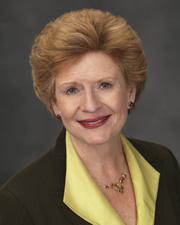 Sen. Debbie Stabenow (D-MI)
Legislative Activity
Stay on top of the latest movement without scrolling through every action
Roll call votes on amendments in Senate: Amendment SA 1812, under the order of 3/7/12, not having achieved 60 votes in the affirmative, not agreed to in Senate by Yea-Nay Vote. 49 - 49. Record Vote Number: 39.
March 13, 2012
View full timeline
Roll call votes on amendments in Senate: Amendment SA 1812, under the order of 3/7/12, not having achieved 60 votes in the affirmative, not agreed to in Senate by Yea-Nay Vote. 49 - 49. Record Vote Number: 39.
March 13, 2012
Senate amendment not agreed to: Amendment SA 1812, under the order of 3/7/12, not having achieved 60 votes in the affirmative, not agreed to in Senate by Yea-Nay Vote. 49 - 49. Record Vote Number: 39.
March 13, 2012
Senate amendment proposed (on the floor): Amendment SA 1812 proposed by Senator Stabenow.(consideration: CR S1597-1599; text: CR S1597-1599)
March 13, 2012
Amendment SA 1812 proposed by Senator Stabenow. (consideration: CR S1597-1599; text: CR S1597-1599) To prevent a tax increase on American businesses and to provide certainty to job creators by extending certain expiring tax credits relating to energy.
March 13, 2012
Amendment SA 1812, under the order of 3/7/12, not having achieved 60 votes in the affirmative, not agreed to in Senate by Yea-Nay Vote. 49 - 49. Record Vote Number: 39.
March 13, 2012
Senate amendment submitted
March 7, 2012
Votes
1 roll call on this amendment
Text
Proposed
MOVING AHEAD FOR PROGRESS IN THE 21st CENTURY--Continued

Amendment No. 1826, as Modified

The PRESIDING OFFICER. The Senator from Kansas.
Mr. ROBERTS. Mr. President, I would like to ask support for my
amendment that would approve the Keystone XL Pipeline. It would expand
oil and gas exploration on Federal lands and would extend certain tax
provisions that are utilized by a number of individuals and businesses
throughout the country.
The base of my amendment includes most but not all of the expired
energy tax incentives addressed in the amendment that will be offered
by my friends on the other side of the aisle. But there is a clear
difference in that my amendment addresses the supply side of the
equation and avoids extending some of the costly energy provisions that
were created under the failed American Recovery and Reinvestment Act of
2009; i.e., the stimulus.
While I support many of the tax provisions included in the Democrats'
counterproposal, the majority amendment fails to address the No. 1
issue facing Americans of every walk of life, from farmers to
manufacturers, to teachers, which is the rising cost of gasoline. My
amendment does just that, and it implements the important first steps
toward increasing domestic supplies of conventional energy that our
country will rely on for decades to come.
My amendment would cut redtape, open more Federal land for oil and
gas exploration and drilling; it would approve the Keystone XL
Pipeline, while also extending renewable tax provisions that benefit
domestic energy production, businesses, and individuals alike. It also
restores expired individual and business tax relief provisions.
The PRESIDING OFFICER. The Senator's time has expired.
Mr. ROBERTS. I ask unanimous consent for 1 additional minute.
The PRESIDING OFFICER. Without objection, it is so ordered.
Mr. ROBERTS. It also restores expired individual and business tax
relief provisions and, most of all, it promotes economic growth.
Lastly, my amendment does all this without adding to the deficit,
which, considering our more than $15 trillion debt, is something our
future generations certainly can appreciate.
I thank my colleagues if they would support this very commonsense,
progrowth amendment.
Mr. BENNET. Mr. President, I have come to the floor to discuss the
Roberts side-by-side amendment. I support several provisions in Senator
Roberts' amendment, but, crucially, others miss the mark.
One provision that gives me particular concern relates to the
development of oil shale resources in the Rocky Mountain West. I
believe we need to take a more cautious approach to oil shale
development.
This type of energy development could have enormous implications for
Colorado's scarce water supplies and our farming and ranching heritage.
That is why, over the years, a great diversity of voices--from the
Rocky Mountain Farmers Union to the Grand Junction Daily Sentinel
Editorial Board--have raised concerns over plans to accelerate oil
shale development on public land. Yet this amendment would do exactly
that.
Mr. President, there are other provisions in the Roberts amendment
that are certainly worthy of support. I hope to work with the Senator
from Kansas as we continue the discussion about where to make wise
investments in our Tax Code and elsewhere.
Ms. CANTWELL. Mr. President, I wish to raise my concerns about the
Roberts amendment.
This amendment is a disappointing attempt to play politics with what
should be a bipartisan issue: extending the State and local sales tax
deduction and other key tax policies. We need to move forward on a
serious bipartisan proposal to extend the State sales tax deduction. It
is a matter of tax fairness for Washington residents.
But we cannot afford to threaten Washington's coastal economy by
opening the West Coast and the Arctic National Wildlife Refuge for
drilling.
Therefore, I will not support the Roberts Amendment and I look
forward to serious legislation to extend the State sales tax deduction.
I yield the floor.
The PRESIDING OFFICER. The Senator from Michigan.
Ms. STABENOW. Mr. President, I rise to oppose the Roberts amendment
No. 1826.
My friend from Kansas and I work together in the Agriculture
Committee, and I appreciate the great bipartisan work we have been able
to do. But I stand to strongly oppose this amendment. I believe that
when it comes to energy, we should do it all. We need more domestic
production of wind, solar, electric vehicles, advanced batteries. We
absolutely need to stop our addiction to foreign oil and create jobs
here in America at the same time.
Unfortunately, that is not what this amendment does. It includes the

[[Page S1597]]

Hoeven language that we defeated earlier last week. We shouldn't be
building a pipeline from Canada to China. If we build a pipeline, we
should use the oil to lower gas prices for American families. It also
includes dangerous requirements for drilling in the Arctic and in
offshore locations without any safeguards. Worst of all, it ends tax
cuts for wind and clean energy manufacturing at a time when families
are paying so much at the pump. It doesn't make sense to raise taxes on
the businesses that are trying to reduce our dependence on foreign oil,
and it pays for all these changes by adding redtape to working families
when they file their taxes, adding more burdens to middle-class
families.
I urge my colleagues to vote no.
The PRESIDING OFFICER. The Senator from Maryland.
Mr. CARDIN. Mr. President, I ask unanimous consent for 1 additional
minute.
The PRESIDING OFFICER. Without objection, the Senator from Maryland
is recognized.
Mr. CARDIN. Mr. President, let me concur in everything Senator
Stabenow said in opposition to this amendment.
There are many reasons to oppose it, but let me add one additional
reason, in that it violates the agreement we reached on the debt
ceiling on the budget caps for this year and does it on the backs of
our Federal workers. Once again, the Republicans are coming forward
with another attack on the Federal workforce. Enough is enough. Every
amendment, they are picking on the Federal workforce.
I urge my colleagues to defeat this amendment.
The PRESIDING OFFICER. The question is on agreeing to amendment No.
1826, as modified.
Mr. KYL. Mr. President, I ask for the yeas and nays.
The PRESIDING OFFICER. Is there a sufficient second?
There appears to be a sufficient second.
The clerk will call the roll.
The assistant bill clerk called the roll.
Mr. KYL. The following Senators are necessarily absent: the Senator
from Illinois (Mr. Kirk) and the Senator from Utah (Mr. Hatch).
The PRESIDING OFFICER. Are there any other Senators in the Chamber
desiring to vote?
The result was announced--yeas 41, nays 57, as follows:

[Rollcall Vote No. 38 Leg.]

YEAS--41

Alexander
Ayotte
Barrasso
Begich
Blunt
Boozman
Burr
Chambliss
Coats
Coburn
Cochran
Cornyn
Crapo
Enzi
Graham
Grassley
Heller
Hoeven
Hutchison
Inhofe
Isakson
Johanns
Johnson (WI)
Kyl
Lugar
Manchin
McCain
McCaskill
McConnell
Moran
Murkowski
Paul
Portman
Risch
Roberts
Sessions
Shelby
Thune
Toomey
Vitter
Wicker

NAYS--57

Akaka
Baucus
Bennet
Bingaman
Blumenthal
Boxer
Brown (MA)
Brown (OH)
Cantwell
Cardin
Carper
Casey
Collins
Conrad
Coons
Corker
DeMint
Durbin
Feinstein
Franken
Gillibrand
Hagan
Harkin
Inouye
Johnson (SD)
Kerry
Klobuchar
Kohl
Landrieu
Lautenberg
Leahy
Lee
Levin
Lieberman
Menendez
Merkley
Mikulski
Murray
Nelson (NE)
Nelson (FL)
Pryor
Reed
Reid
Rockefeller
Rubio
Sanders
Schumer
Shaheen
Snowe
Stabenow
Tester
Udall (CO)
Udall (NM)
Warner
Webb
Whitehouse
Wyden

NOT VOTING--2

Hatch
Kirk
The PRESIDING OFFICER. Under the previous order requiring 60 votes
for the adoption of this amendment, the amendment is rejected.
Mr. KYL. Mr. President, I rise to explain the reasons I voted for
Roberts amendment No. 1826.
First, the amendment would increase America's energy supply by
approving the Keystone XL pipeline, opening lands in the Outer
Continental Shelf and the Alaska National Wildlife Refuge for drilling,
and implementing a commercial leasing program for oil shale.
The amendment would also extend a number of important temporary tax
provisions that expired at the end of 2011. Significantly, it would not
extend a number of provisions that are unsound policy or no longer
necessary.
However, the amendment did extend some provisions that I believe
should be ended because they are unwarranted subsidies that distort
markets. These include tax credits for energy-efficient homes,
alternative fuel vehicle refueling property, biodiesel, energy-
efficient appliances, and alternative fuels.
While I supported the Roberts amendment, I do not want this vote to
be interpreted as support for each and every provision that was
included. I hope that as the tax extenders package continues to be
considered by Congress, a number of unnecessary and harmful provisions
will be eliminated. Ideally, Congress will consider comprehensive tax
reform that lowers rates, eliminates special subsidies, and makes sound
tax policy permanent.
The PRESIDING OFFICER. The Senator from Michigan.

Amendment No. 1812, as Modified

Ms. STABENOW. Mr. President, I ask unanimous consent to call up
amendment No. 1812, as modified, and ask that the clerk report the
amendment.
The PRESIDING OFFICER. Without objection, it is so ordered.
The clerk will report the amendment.
The legislative clerk read as follows:

The Senator from Michigan [Ms. Stabenow] proposes an
amendment numbered 1812, as modified.

The amendment is as follows:

(Purpose: To prevent a tax increase on American businesses and to
provide certainty to job creators by extending certain expiring tax
credits relating to energy)

At the end of division D, insert the following:

SEC. ____. EXTENSION OF CREDIT FOR ENERGY-EFFICIENT EXISTING
HOMES.

(a) In General.--Paragraph (2) of section 25C(g) of the
Internal Revenue Code of 1986 is amended by striking
``December 31, 2011'' and inserting ``December 31, 2012''.
(b) Effective Date.--The amendment made by this section
shall apply to property placed in service after December 31,
2011.

SEC. ____. EXTENSION OF CREDIT FOR CERTAIN PLUG-IN ELECTRIC
VEHICLES.

(a) In General.--Subsection (f) of section 30 of the
Internal Revenue Code of 1986 is amended by striking
``December 31, 2011'' and inserting ``December 31, 2012''.
(b) Effective Date.--The amendment made by this section
shall apply to vehicles acquired after December 31, 2011.

SEC. ____. EXTENSION OF CREDIT FOR ALTERNATIVE FUEL VEHICLE
REFUELING PROPERTY.

(a) Extension.--Paragraph (2) of section 30C(g) of the
Internal Revenue Code of 1986 is amended by striking
``December 31, 2011.'' and inserting ``December 31, 2012''.
(b) Effective Date.--The amendment made by this section
shall apply to property placed in service after December 31,
2011.

SEC. ____. EXTENSION OF CELLULOSIC BIOFUEL PRODUCER CREDIT.

(a) In General.--Subparagraph (H) of section 40(b)(6) of
the Internal Revenue Code of 1986 is amended to read as
follows:
``(H) Application of paragraph.--
``(i) In general.--This paragraph shall apply with respect
to qualified cellulosic biofuel production after December 31,
2008, and before January 1, 2014.
``(ii) No carryover to certain years after expiration.--If
this paragraph ceases to apply for any period by reason of
clause (i), rules similar to the rules of subsection (e)(2)
shall apply.''.
(b) Conforming Amendment.--
(1) In general.--Paragraph (2) of section 40(e) of the
Internal Revenue Code of 1986 is amended by striking ``or
subsection (b)(6)(H)''.
(2) Effective date.--The amendment made by this subsection
shall take effect as if included in section 15321(b) of the
Heartland, Habitat, and Horticulture Act of 2008.

SEC. ____. ALGAE TREATED AS A QUALIFIED FEEDSTOCK FOR
PURPOSES OF THE CELLULOSIC BIOFUEL PRODUCER
CREDIT, ETC.

(a) In General.--Subclause (I) of section 40(b)(6)(E)(i) of
the Internal Revenue Code of 1986 is amended to read as
follows:

``(I) is derived by, or from, qualified feedstocks, and''.

(b) Qualified Feedstock; Special Rules for Algae.--
Paragraph (6) of section 40(b) of the Internal Revenue Code
of 1986 is amended by redesignating subparagraphs (F), (G),
and (H), as amended by this Act, as subparagraphs (H), (I),
and (J), respectively, and by inserting after subparagraph
(E) the following new subparagraphs:
``(F) Qualified feedstock.--For purposes of this paragraph,
the term `qualified feedstock' means--
``(i) any lignocellulosic or hemicellulosic matter that is
available on a renewable or recurring basis, and
``(ii) any cultivated algae, cyanobacteria, or lemna.
``(G) Special rules for algae.--In the case of fuel which
is derived by, or from, feedstock described in subparagraph
(F)(ii) and which is sold by the taxpayer to another

[[Page S1598]]

person for refining by such other person into a fuel which
meets the requirements of subparagraph (E)(i)(II) and the
refined fuel is not excluded under subparagraph (E)(iii)--
``(i) such sale shall be treated as described in
subparagraph (C)(i),
``(ii) such fuel shall be treated as meeting the
requirements of subparagraph (E)(i)(II) and as not being
excluded under subparagraph (E)(iii) in the hands of such
taxpayer, and
``(iii) except as provided in this subparagraph, such fuel
(and any fuel derived from such fuel) shall not be taken into
account under subparagraph (C) with respect to the taxpayer
or any other person.''.
(c) Algae Treated as a Qualified Feedstock for Purposes of
Bonus Depreciation for Biofuel Plant Property.--
(1) In general.--Subparagraph (A) of section 168(l)(2) of
the Internal Revenue Code of 1986 is amended by striking
``solely to produce cellulosic biofuel'' and inserting
``solely to produce second generation biofuel (as defined in
section 40(b)(6)(E))''.
(2) Conforming amendments.--Subsection (l) of section 168
of such Code is amended--
(A) by striking ``cellulosic biofuel'' each place it
appears in the text thereof and inserting ``second generation
biofuel'',
(B) by striking paragraph (3) and redesignating paragraphs
(4) through (8) as paragraphs (3) through (7), respectively,
(C) by striking ``Cellulosic'' in the heading of such
subsection and inserting ``Second Generation'', and
(D) by striking ``cellulosic'' in the heading of paragraph
(2) and inserting ``second generation''.
(d) Conforming Amendments.--
(1) Section 40 of the Internal Revenue Code of 1986, as
amended by subsection (b), is amended--
(A) by striking ``cellulosic biofuel'' each place it
appears in the text thereof and inserting ``second generation
biofuel'',
(B) by striking ``Cellulosic'' in the headings of
subsections (b)(6), (b)(6)(E), and (d)(3)(D) and inserting
``Second generation'', and
(C) by striking ``cellulosic'' in the headings of
subsections (b)(6)(C), (b)(6)(D), (b)(6)(H), (d)(6), and
(e)(3) and inserting ``second generation''.
(2) Clause (ii) of section 40(b)(6)(E) of such Code is
amended by striking ``Such term shall not'' and inserting
``The term `second generation biofuel' shall not''.
(3) Paragraph (1) of section 4101(a) of such Code is
amended by striking ``cellulosic biofuel'' and inserting
``second generation biofuel''.
(e) Effective Dates.--
(1) In general.--Except as provided in paragraph (2), the
amendments made by this section shall apply to fuels sold or
used after the date of the enactment of this Act.
(2) Application to bonus depreciation.--The amendments made
by subsection (c) shall apply to property placed in service
after the date of the enactment of this Act.

SEC. ____. EXTENSION OF INCENTIVES FOR BIODIESEL AND
RENEWABLE DIESEL.

(a) Credits for Biodiesel and Renewable Diesel Used as
Fuel.--Subsection (g) of section 40A of the Internal Revenue
Code of 1986 is amended by striking ``December 31, 2011'' and
inserting ``December 31, 2012''.
(b) Excise Tax Credits and Outlay Payments for Biodiesel
and Renewable Diesel Fuel Mixtures.--
(1) Paragraph (6) of section 6426(c) of the Internal
Revenue Code of 1986 is amended by striking ``December 31,
2011'' and inserting ``December 31, 2012''.
(2) Subparagraph (B) of section 6427(e)(6) of such Code is
amended by striking ``December 31, 2011'' and inserting
``December 31, 2012''.
(c) Effective Date.--The amendments made by this section
shall apply to fuel sold or used after December 31, 2011.

SEC. ____. EXTENSION OF PRODUCTION CREDIT FOR REFINED COAL.

(a) In General.--Subparagraph (B) of section 45(d)(8) of
the Internal Revenue Code of 1986 is amended by striking
``January 1, 2012'' and inserting ``January 1, 2013''.
(b) Effective Date.--The amendment made by this section
shall apply to facilities placed in service after December
31, 2011.

SEC. ____. EXTENSION OF PRODUCTION CREDIT.

(a) In General.--Section 45(d) of the Internal Revenue Code
of 1986 is amended by striking ``January 1, 2014'' each place
it appears in paragraphs (2), (3), (4), (6), (7), (9), and
(11) and inserting ``January 1, 2015''.
(b) Wind Facilities.--Paragraph (1) of section 45(d) of the
Internal Revenue Code of 1986 is amended by striking
``January 1, 2013'' and inserting ``January 1, 2014''.
(c) Increased Credit Amount for Indian Coal Facilities
Placed in Service Before 2009.--Subparagraph (A) of section
45(e)(10) of the Internal Revenue Code of 1986 is amended by
striking ``7-year period'' each place it appears and
inserting ``8-year period''.
(d) Conforming Amendments.--Subsection (e) of section 1603
of division B of the American Recovery and Reinvestment Act
of 2009 is amended--
(1) by striking ``January 1, 2013'' in paragraph (1) and
inserting ``January 1, 2014'', and
(2) by striking ``January 1, 2014'' in paragraph (2) and
inserting ``January 1, 2015''.
(e) Effective Dates.--
(1) In general.--Except as provided in paragraph (2), the
amendments made by this section shall apply to facilities
placed in service after December 31, 2012.
(2) Indian coal.--The amendment made by subsection (c)
shall take effect on the date of the enactment of this Act.

SEC. ____. EXTENSION OF CREDIT FOR ENERGY-EFFICIENT NEW
HOMES.

(a) In General.--Subsection (g) of section 45L of the
Internal Revenue Code of 1986 is amended by striking
``December 31, 2011'' and inserting ``December 31, 2012''.
(b) Effective Date.--The amendment made by this section
shall apply to homes acquired after December 31, 2011.

SEC. ____. EXTENSION OF CREDIT FOR ENERGY-EFFICIENT
APPLIANCES.

(a) In General.--Section 45M(b) of the Internal Revenue
Code of 1986 is amended by striking ``2011'' each place it
appears other than in the provisions specified in subsection
(b), and inserting ``2011 or 2012''.
(b) Provisions Specified.--The provisions of section 45M(b)
of the Internal Revenue Code of 1986 specified in this
subsection are subparagraph (C) of paragraph (1) and
subparagraph (E) of paragraph (2).
(c) Effective Date.--The amendments made by this section
shall apply to appliances produced after December 31, 2011.

SEC. ____. EXTENSION OF ELECTION OF INVESTMENT TAX CREDIT IN
LIEU OF PRODUCTION CREDIT.

(a) In General.--Clause (ii) of section 48(a)(5)(C) of the
Internal Revenue Code of 1986 is amended by striking ``or
2013'' and inserting ``2013, or 2014''.
(b) Wind Facilities.--Clause (i) of section 48(a)(5)(C) of
the Internal Revenue Code of 1986 is amended by striking
``Any qualified facility'' and all that follows and inserting
``Any facility which is--

``(I) a qualified facility (within the meaning of section
45) described in paragraph (1) of section 45(d) if such
facility is placed in service in 2009, 2010, 2011, 2012, or
2013, or
``(II) a qualifying offshore wind facility, if such
facility is placed in service in 2012, 2013, or 2014.''.

(c) Qualifying Offshore Wind Facility.--Paragraph (5) of
section 48(a) of the Internal Revenue Code of 1986 is amended
by adding at the end the following new subparagraph:
``(E) Qualifying offshore wind facility.--For purposes of
this paragraph--
``(i) In general.--The term `qualifying offshore wind
facility' means an offshore facility using wind to produce
electricity.
``(ii) Offshore facility.--The term `offshore facility'
means any facility located in the inland navigable waters of
the United States, including the Great Lakes, or in the
coastal waters of the United States, including the
territorial seas of the United States, the exclusive economic
zone of the United States, and the Outer Continental Shelf of
the United States. For purposes of the preceding sentence,
the term `United States' has the meaning given in section
638(1).''.
(d) Effective Date.--The amendments made by this section
shall apply to facilities placed in service after December
31, 2011.

SEC. ____. EXPANSION OF QUALIFYING ADVANCED ENERGY PROJECT
CREDIT.

(a) In General.--Subparagraph (B) of section 48C(d)(1) of
the Internal Revenue Code of 1986 is amended by striking
``$2,300,000,000'' and inserting ``$4,600,000,000''.
(b) Effective Date.--The amendment made by this section
shall take effect on the date of the enactment of this Act.

SEC. ____. EXTENSION OF SPECIAL ALLOWANCE FOR CELLULOSIC
BIOFUEL PLANT PROPERTY.

(a) In General.--Subparagraph (D) of section 168(l)(2) of
the Internal Revenue Code of 1986 is amended by striking
``January 1, 2013'' and inserting ``January 1, 2014''.
(b) Conforming Amendment.--Paragraph (4) of section 168(l)
of the Internal Revenue Code of 1986, as redesignated by this
Act, is amended--
(1) by striking ``and'' at the end of subparagraph (A),
(2) by redesignating subparagraph (B) as subparagraph (C),
and
(3) by inserting after subparagraph (A) the following new
subparagraph:
``(B) by substituting `January 1, 2014' for `January 1,
2013' in clause (i) thereof, and''.

SEC. ____. EXTENSION OF SUSPENSION OF LIMITATION ON
PERCENTAGE DEPLETION FOR OIL AND GAS FROM
MARGINAL WELLS.

(a) In General.--Clause (ii) of section 613A(c)(6)(H) of
the Internal Revenue Code of 1986 is amended by striking
``January 1, 2012'' and inserting ``January 1, 2013''.
(b) Effective Date.--The amendment made by this section
shall apply to taxable years beginning after December 31,
2011.

SEC. ____. EXTENSION OF ALTERNATIVE FUELS EXCISE TAX CREDITS.

(a) In General.--Sections 6426(d)(5), 6426(e)(3), and
6427(e)(6)(C) of the Internal Revenue Code of 1986 are each
amended by striking ``December 31, 2011'' and inserting
``December 31, 2012''.
(b) Effective Date.--The amendments made by this section
shall apply to fuel sold or used after December 31, 2011.

SEC. ____. EXTENSION OF GRANTS FOR SPECIFIED ENERGY PROPERTY
IN LIEU OF TAX CREDITS.

(a) In General.--Subsection (a) of section 1603 of division
B of the American Recovery and Reinvestment Act of 2009, as
amended by section 707 of the Tax Relief, Unemployment
Insurance Reauthorization, and Job Creation Act of 2010, is
amended--
(1) by striking ``or 2011'' in paragraph (1) and inserting
``2011, or 2012'', and

[[Page S1599]]

(2) in paragraph (2)--
(A) by striking ``after 2011'' and inserting ``after
2012'', and
(B) by striking ``or 2011'' and inserting ``2011, or
2012''.
(b) Conforming Amendment.--Subsection (j) of section 1603
of division B of such Act, as so amended, is amended by
striking ``2012'' and inserting ``2013''.
(c) Effective Date.--The amendments made by this section
shall apply to property placed in service after December 31,
2011.

SEC. ____. EXTENSION OF MINE RESCUE TEAM TRAINING CREDIT.

(a) In General.--Subsection (e) of section 45N of the
Internal Revenue Code of 1986 is amended by striking
``December 31, 2011'' and inserting ``December 31, 2012''.
(b) Effective Date.--The amendment made by this section
shall apply to taxable years beginning after December 31,
2011.

SEC. ____. EXTENSION OF ELECTION TO EXPENSE MINE SAFETY
EQUIPMENT.

(a) In General.--Subsection (g) of section 179E of the
Internal Revenue Code of 1986 is amended by striking
``December 31, 2011'' and inserting ``December 31, 2012''.

Ms. STABENOW. Mr. President, I urge my colleagues to support this
amendment to stop the tax increase on American businesses that are
creating clean-energy jobs. Especially now when gas prices are going up
and families are struggling more than ever to fill the tank, we
shouldn't be raising taxes on innovators and job creators who are
helping to lower America's energy bills. My amendment extends 19
different tax cuts for innovative businesses that account for 2.7
million jobs.
Let me also say that the oil industry has benefited from special tax
benefits for almost 100 years. The cost of this is not offset, it is
part of the Tax Code. Yet the tax cuts that will create American jobs
to get us off foreign oil have been extended only a year at a time, and
they have been subject to different budget rules. This makes no sense.
If we want to see ``Made in America'' again, I urge my colleagues to
support this amendment.
The PRESIDING OFFICER. Who yields time in opposition?
Mr. RISCH. I yield back our time.
The PRESIDING OFFICER. All time is yielded back. The question is on
agreeing to the amendment.
Mr. CONRAD. Mr. President, I ask for the yeas and nays.
The PRESIDING OFFICER. Is there a sufficient second?
There appears to be a sufficient second.
The clerk will call the roll.
The legislative clerk called the roll.
Mr. KYL. The following Senators are necessarily absent: the Senator
from Illinois (Mr. Kirk) and the Senator from Utah (Mr. Hatch).
Further, if present and voting, the Senator from Utah (Mr. Hatch)
would have voted ``nay.''
The PRESIDING OFFICER. Are there any other Senators in the Chamber
desiring to vote?
The result was announced--yeas 49, nays 49, as follows:

[Rollcall Vote No. 39 Leg.]

YEAS--49

Akaka
Baucus
Begich
Bennet
Bingaman
Blumenthal
Boxer
Brown (OH)
Cantwell
Cardin
Carper
Casey
Conrad
Coons
Durbin
Feinstein
Franken
Gillibrand
Hagan
Harkin
Inouye
Johnson (SD)
Kerry
Klobuchar
Kohl
Landrieu
Lautenberg
Leahy
Levin
Lieberman
Menendez
Merkley
Mikulski
Murray
Nelson (NE)
Nelson (FL)
Pryor
Reed
Reid
Rockefeller
Sanders
Schumer
Shaheen
Stabenow
Tester
Udall (CO)
Udall (NM)
Whitehouse
Wyden

NAYS--49

Alexander
Ayotte
Barrasso
Blunt
Boozman
Brown (MA)
Burr
Chambliss
Coats
Coburn
Cochran
Collins
Corker
Cornyn
Crapo
DeMint
Enzi
Graham
Grassley
Heller
Hoeven
Hutchison
Inhofe
Isakson
Johanns
Johnson (WI)
Kyl
Lee
Lugar
Manchin
McCain
McCaskill
McConnell
Moran
Murkowski
Paul
Portman
Risch
Roberts
Rubio
Sessions
Shelby
Snowe
Thune
Toomey
Vitter
Warner
Webb
Wicker

NOT VOTING--2

Hatch
Kirk

The PRESIDING OFFICER (Mr. Franken). Under the previous order
requiring 60 votes for the adoption of this amendment, the amendment is
not agreed to.

Amendment No. 1589

There will now be 2 minutes of debate equally divided prior to a vote
in relation to amendment No. 1589, offered by the Senator from South
Carolina Mr. DeMint.
Mr. DeMINT. Mr. President, we have all complained about the big
corporations that don't pay any taxes, only to find that many times
that is because we offer some tax subsidy that allows them to get out
of taxes. We have complained about subsidies for Big Oil, Big Natural
Gas. We have given subsidies to companies that go out of business
because we are trying to pick winners and losers. Temporary tax policy
for whatever we are trying to do does not work.
This amendment eliminates the tax subsidies, the loopholes we talk
about not just for Big Oil but for all of the energy tax credits.
Folks, if we let the market work, we are going to have wind, we are
going to have solar, but we are going to have it in a way that does not
waste the money of hard-working taxpayers.
So I encourage my colleagues' support. I know a lot of my colleagues
have new subsidies they are proposing, but it is no way to run a free
market economy, to try to run it from this room. Let's get rid of
subsidies, lower the corporate tax rate, and let our country work.
I reserve the remainder of my time.
The PRESIDING OFFICER. The Senator from Montana.
Mr. BAUCUS. Mr. President, this amendment does two things. First, it
increases taxes on business men and women trying to provide some
alternative energy for this country. It increases taxes on those men
and women.
Second, it eases out revenue by increasing taxes on individuals and
uses it to lower the corporate tax rate. That is one of the main things
this does.
Third, it repeals credits and deductions on one section of our energy
industry--the renewables, the alternatives--but it doesn't for
conventional oil and gas.
So, No. 1, this raises taxes on individuals and uses it to lower the
corporate rate; and, No. 2, it is unbalanced because it reduces credits
and deductions in the alternative area but not on the conventional
energy area. It is unbalanced and wrong. I urge my colleagues to vote
against this amendment.
The PRESIDING OFFICER. All time has expired.
The question is on agreeing to the amendment.
Mr. DeMINT. I ask for the yeas and nays.
The PRESIDING OFFICER. Is there a sufficient second? There appears to
be a sufficient second.
The clerk will call the roll.
The assistant legislative clerk called the roll.
Mr. KYL. The following Senators are necessarily absent: the Senator
from Illinois (Mr. Kirk) and the Senator from Utah (Mr. Hatch).
Further, if present and voting, the Senator from Utah (Mr. Hatch)
would have voted ``yea.''
The PRESIDING OFFICER. Are there any other Senators in the Chamber
desiring to vote?
The yeas and nays resulted--yeas 26, nays 72, as follows:

[Rollcall Vote No. 40 Leg.]

YEAS--26

Ayotte
Blunt
Burr
Chambliss
Coats
Coburn
Corker
Crapo
DeMint
Graham
Inhofe
Johanns
Johnson (WI)
Kyl
Lee
McCain
McConnell
Paul
Portman
Risch
Rubio
Sessions
Shelby
Toomey
Vitter
Wicker

NAYS--72

Akaka
Alexander
Barrasso
Baucus
Begich
Bennet
Bingaman
Blumenthal
Boozman
Boxer
Brown (MA)
Brown (OH)
Cantwell
Cardin
Carper
Casey
Cochran
Collins
Conrad
Coons
Cornyn
Durbin
Enzi
Feinstein
Franken
Gillibrand
Grassley
Hagan
Harkin
Heller
Hoeven
Hutchison
Inouye
Isakson
Johnson (SD)
Kerry
Klobuchar
Kohl
Landrieu
Lautenberg
Leahy
Levin
Lieberman
Lugar
Manchin
McCaskill
Menendez
Merkley
Mikulski
Moran
Murkowski
Murray
Nelson (NE)
Nelson (FL)
Pryor
Reed
Reid
Roberts
Rockefeller
Sanders
Schumer
Shaheen
Snowe
Stabenow
Tester
Thune
Udall (CO)
Udall (NM)
Warner
Webb
Whitehouse
Wyden

NOT VOTING--2

Hatch
Kirk
The PRESIDING OFFICER. Under the previous order requiring 60 votes

[[Page S1600]]

for the adoption of this amendment, the amendment is rejected.
The Senator from New Jersey.

Amendment No. 1782

(Purpose: To amend the Internal Revenue Code of 1986 to modify certain
tax credits relating to energy, and for other purposes)

Mr. MENENDEZ. Mr. President, I ask to set aside the pending amendment
and offer Menendez-Burr amendment No. 1782, which is at the desk.
The PRESIDING OFFICER. The clerk will report.
The legislative clerk read as follows:

The Senator from New Jersey [Mr. Menendez], for himself,
Mr. Burr, and Mr. Reid, proposes an amendment numbered 1782.

Mr. MENENDEZ. Mr. President, I ask unanimous consent that reading of
the amendment be dispensed with.
The PRESIDING OFFICER. Without objection, it is so ordered.
(The amendment is printed in the Record of Monday, March 5, 2012,
under ``Text of Amendments.'')
Mr. MENENDEZ. Mr. President, gas prices are skyrocketing. Meanwhile,
natural gas is $1.50 cheaper than gasoline. We have a 100-plus-year
supply of natural gas we can draw from. The only thing that is in our
way is we have so few natural gas vehicles and refueling stations on
the road.
The NAT GAS Act gives manufacturers and utilities the assurance that
the Federal Government will help jump-start this market, adding over
700,000 natural gas vehicles to our roads and displacing over 20
billion gallons of petroleum fuel, mostly from our bus and truck
fleets. It does all this while being paid for by a surcharge on the
users who will benefit from the amendment.
We know there are some industries that have concern. Instead of
exporting natural gas, which we are about to do in this country, let's
use it in America so we can give our drivers an option. I urge my
colleagues to vote for this bipartisan amendment.
The PRESIDING OFFICER. Who yields time?
Mr. BURR. Mr. President, I would like to be recognized.
The PRESIDING OFFICER. The Senator from North Carolina.
Mr. BURR. Mr. President, let me say to my colleagues, what this
simply does is to take something that is happening naturally--a
transition from diesel, in most cases, over to natural gas--and it
accelerates it. It gives it a 5-hour energy drink. We should take this
opportunity to accelerate it as fast as we can. It is paid for, as
Senator Menendez said.
This is essential if we want natural gas prices to stay down--
increase demand. If not, we are going to shut in wells, we are going to
find ways to sell it offshore.
If we want to keep historically low natural gas prices, then let's
increase demand so production increases and we can take advantage of
all these finds we have all over the United States of America.
Mr. CORNYN. Mr. President, today I come to the floor to express
concerns about the Menendez/Burr amendment, to include the NAT GAS Act
in the transportation bill.
This legislation would provide tax credits to promote natural gas
vehicles and refueling infrastructure by imposing a user fee on natural
gas fuel used as vehicle fuel. Although the tax credits are detailed in
the legislation, it is less certain whether the imposition of a new tax
applied to Liquefied Natural Gas (LNG) and Compressed Natural Gas (CNG)
used for transportation will cover the costs of the subsidies.
Instead of providing more directives from Washington to the
marketplace, Congress should be concerned with the overall access to
energy, and the President should work to alleviate the pain caused by
his policies which raise energy prices. Companies and consumers can
make their own choices about what fuel to use, and what kind of car to
drive. We should be out of the game of favoring one choice over
another, and ensure that fuel supplies are not unnecessarily
restricted.
Consumer choice should be the driver of technology in the
marketplace, not securing favor in Washington. In fact today consumers
can evaluate a myriad of vehicles that fit their needs, from hybrids to
traditional gasoline-powered vehicles. In addition, the high cost of
gasoline and lower cost of natural gas has already led General Motors
and Chrysler/Dodge to announce plans to build natural gas fueled pick-
up trucks.
While the market is already seeing some transition toward natural gas
vehicles, President Obama's policies to limit supplies of fossil fuels
could cause economic pain for natural gas users in the future.
President Obama's support of duplicative, unnecessary regulations at
the federal level, raising taxes on producers, and restricting access
to federal lands by keeping them off-limits or by slow-walking permits,
will result in raising natural gas prices by reducing supply.
Unfortunately, the Obama administration continues to enact policies
that harm oil and natural gas production. Consider the rising cost of
gasoline and the Obama administration's failure to take concrete
actions to alleviate the pain Americans are feeling at the pump. The
average U.S. price of a gallon of regular gasoline has more than
doubled since the week of his inauguration in January 2009, from $1.84
to $3.82.
I have great pride for my home state of Texas, and the countless
producers and operators who have made Texas the leading U.S. producer
of oil and natural gas, and we know that America has only just begun to
tap its vast resources. Unfortunately, the Obama administration's
proposed offshore oil and natural gas leasing plan for 2012 to 2017
eliminates 50 percent of lease sales provided for in the previous plan,
and imposes a moratorium on developing energy from 14 billion barrels
of oil and 55 trillion cubic feet of natural gas in the Atlantic and
Pacific oceans.
Expanding access to federal onshore and offshore lands, and
eliminating permit delays for leases, could help reduce prices and
strengthen our energy security while creating jobs and boosting tax
revenues. The moratorium on exploration in the Gulf of Mexico, and
persistent delays for permits in shallow and deep water leases, could
result in a 19 percent decrease in production in 2012 compared to 2010,
according to the Energy Information Administration.
At the same time the President highlights our Nation's vast natural
gas resources, his administration through the Environmental Protection
Agency (EPA) is considering burdensome new regulations on which would
make securing that fuel much more difficult. The U.S. Chamber of
Commerce reports that the EPA alone ``is moving forward with 31 major
economic rules and 172 major policy rules'' that affect our energy
supply. The Chamber rightly calls this ``an unprecedented level of
regulatory action.''
Given the Administration's track record with gasoline prices, it is
easy to see a similar direction for natural gas prices in the future--
particularly as the EPA continues to propose devastating regulations
that lead to the retirement of coal-fired electricity generation and
ensure greater demand for natural gas in power generation. American
energy producers are also deeply worried about the EPA's proposed
greenhouse gas regulations, which will serve as an energy tax on all
consumers.
I know there are natural gas producers and transit authorities in my
State who favor this legislation, however, instead of directing demand
for a product, I believe we should concern ourselves with ensuring
ample supplies of the fuels we need. We should promote access to our
Nation's natural gas, and discourage duplicative regulations, and stay
out of the business of manipulating demand for its use and leave that
to the marketplace.
Mr. BENNET. Mr. President, I rise to express my support for the
Menendez-Burr amendment, No. 1782, dealing with natural gas vehicles.
We have an opportunity today to reduce our dependence on foreign oil by
diversifying our vehicle fleet to run on a fuel that is not made from
crude oil.
The Menendez-Burr amendment--which I cosponsor-- would make smart
investments designed to spur greater production of vehicles that run on
natural gas. Advances in technology have unlocked new reserves of
natural gas in this country. And we ought to be using this resource--
which burns cleaner than any other fossil fuel--to power a greater
share of our economy.
Natural gas is a domestic resource that we now have in relative
abundance. Its development has driven economic growth in Colorado and
across the Nation. Passage of the Menendez-Burr amendment would create
even

[[Page S1601]]

more economic opportunities by building and retrofitting vehicles to
run on natural gas.
To be sure, natural gas alone is not going to solve our problems. We
need to focus on continued increases in vehicle efficiency. We have
recently made great strides in that arena.
We also need to be sure we are developing natural gas in an
environmentally responsible way. Colorado has been a leader on this
point--with the strongest rules in the Nation--in ensuring that natural
gas development protects communities and drinking water. Nationally
more needs to be done to protect those living adjacent to development.
I think all States should look to our rules in Colorado as a national
model.
In short, this amendment will diversify our vehicle fleet, drive
continued economic growth in the energy sector, and clean up our air--
all while reducing our dependence on foreign oil. I urge my colleagues
to support the Menendez-Burr amendment when it comes for a vote later
today.
I thank the Presiding Officer.
Mr. MENENDEZ. Mr. President, I ask for the yeas and nays.
The PRESIDING OFFICER. Is there a sufficient second?
There appears to be a sufficient second.
Is there debate in opposition?
If not, the question is on agreeing to amendment No. 1782.
The clerk will call the roll.
The legislative clerk called the roll.
Mr. KYL. The following Senators are necessarily absent: the Senator
from Utah (Mr. Hatch) and the Senator from Illinois (Mr. Kirk).
Further, if present and voting, the Senator from Utah (Mr. Hatch)
would have voted ``nay.''
The PRESIDING OFFICER. Are there any other Senators in the Chamber
desiring to vote?
The result was announced--yeas 51, nays 47, as follows:

[Rollcall Vote No. 41 Leg.]

YEAS--51

Akaka
Baucus
Begich
Bennet
Bingaman
Blumenthal
Boxer
Brown (OH)
Burr
Cantwell
Cardin
Carper
Casey
Chambliss
Coburn
Collins
Conrad
Coons
Durbin
Feinstein
Franken
Gillibrand
Hagan
Inouye
Isakson
Johnson (SD)
Kerry
Klobuchar
Kohl
Landrieu
Lautenberg
Lieberman
Manchin
McCaskill
Menendez
Merkley
Mikulski
Murray
Nelson (FL)
Reed
Reid
Rockefeller
Schumer
Shaheen
Snowe
Tester
Udall (CO)
Udall (NM)
Warner
Whitehouse
Wyden

NAYS--47

Alexander
Ayotte
Barrasso
Blunt
Boozman
Brown (MA)
Coats
Cochran
Corker
Cornyn
Crapo
DeMint
Enzi
Graham
Grassley
Harkin
Heller
Hoeven
Hutchison
Inhofe
Johanns
Johnson (WI)
Kyl
Leahy
Lee
Levin
Lugar
McCain
McConnell
Moran
Murkowski
Nelson (NE)
Paul
Portman
Pryor
Risch
Roberts
Rubio
Sanders
Sessions
Shelby
Stabenow
Thune
Toomey
Vitter
Webb
Wicker

NOT VOTING--2

Hatch
Kirk

The PRESIDING OFFICER. Under the previous order requiring 60 votes
for the adoption of the amendment, the amendment is rejected.

Amendment No. 1517

The PRESIDING OFFICER. There is now 2 minutes of debate equally
divided, prior to a vote in relation to amendment No. 1517, offered by
the Senator from Indiana Mr. Coats.
Mr. COATS. Mr. President, this amendment is very simple. It is a
matter of equity and fairness.
The reality is that a majority of States, such as Indiana, my State,
and many others do not receive their fair share of the distribution of
highway funds. This bill unfairly rewards a minority of States that
have collected earmarks in the past that go to establishing the
historical benchmark from which the distributions are made. This
amendment creates a new system by which everyone is treated equally and
treated fairly.
A system of winners and losers is not the way we should go forward
with distributing funds that are paid by our taxpayers for the building
of roads and bridges. So let's address the current inequity in this
bill and give each State its rightful share. I ask my colleagues for
their support.
The PRESIDING OFFICER. The Senator from California.
Mrs. BOXER. Mr. President, this is a killer amendment. Our committee
voted 18 to 0 on a bipartisan bill that set out the formulas in a very
fair way. What did we do? We didn't want to jolt the States in the
middle of a tough economic time, so we kept that funding in place.
Again, the distribution is very fair.
In contrast, we have a lot of drafting problems with my friend's
amendment. The Department of Transportation says it doesn't even
specify that the gas taxes will not be factored in as Federal gas
taxes. It just has a flaw in it. It is also very biased because
traditionally we have always distributed these funds to States based on
numerous factors, need-based factors: lane miles in a State, the cost
to repair or replace deficient bridges, the vehicle miles traveled.
So I would say to my friend, I appreciate the spirit with which he
offers this amendment. I understand the spirit is one that he can be
proud of.
The PRESIDING OFFICER. The Senator's time has expired.
Mrs. BOXER. But this, in fact, at the end of the day, ruins the bill,
and I urge a ``no'' vote.
The PRESIDING OFFICER. The Senator's time has expired.
The Senator from Indiana.
Mr. COATS. I urge my colleagues to take a look at getting fairness in
the distribution of funds. A majority of States are not treated fairly.
The PRESIDING OFFICER. The question is on agreeing to amendment No.
1517.
Mrs. BOXER. I ask for the yeas and nays.
The PRESIDING OFFICER. Is there a sufficient second?
There appears to be a sufficient second.
The clerk will call the roll.
The assistant legislative clerk called the roll.
Mr. KYL. The following Senators are necessarily absent: the Senator
from Utah (Mr. Hatch) and the Senator from Illinois (Mr. Kirk).
Further, if present and voting, the Senator from Utah (Mr. Hatch)
would have voted ``yea.''
The PRESIDING OFFICER (Mrs. Shaheen). Are there any other Senators in
the Chamber desiring to vote?
The result was announced--yeas 28, nays 70, as follows:

[Rollcall Vote No. 42 Leg.]

YEAS--28

Alexander
Brown (OH)
Burr
Chambliss
Coats
Corker
Cornyn
DeMint
Graham
Grassley
Hagan
Heller
Hutchison
Isakson
Johanns
Johnson (WI)
Kyl
Lee
Levin
Lugar
McCain
McConnell
Moran
Paul
Portman
Roberts
Rubio
Stabenow

NAYS--70

Akaka
Ayotte
Barrasso
Baucus
Begich
Bennet
Bingaman
Blumenthal
Blunt
Boozman
Boxer
Brown (MA)
Cantwell
Cardin
Carper
Casey
Coburn
Cochran
Collins
Conrad
Coons
Crapo
Durbin
Enzi
Feinstein
Franken
Gillibrand
Harkin
Hoeven
Inhofe
Inouye
Johnson (SD)
Kerry
Klobuchar
Kohl
Landrieu
Lautenberg
Leahy
Lieberman
Manchin
McCaskill
Menendez
Merkley
Mikulski
Murkowski
Murray
Nelson (NE)
Nelson (FL)
Pryor
Reed
Reid
Risch
Rockefeller
Sanders
Schumer
Sessions
Shaheen
Shelby
Snowe
Tester
Thune
Toomey
Udall (CO)
Udall (NM)
Vitter
Warner
Webb
Whitehouse
Wicker
Wyden

NOT VOTING--2

Hatch
Kirk

The amendment (No. 1517) was rejected.
The PRESIDING OFFICER (Mrs. Shaheen). The Senator from Ohio.

Amendment No. 1819

Mr. BROWN of Ohio. Madam President, I ask unanimous consent to set
aside the pending amendment and call up amendment No. 1819.
The PRESIDING OFFICER. Without objection, it is so ordered.
The clerk will report the amendment.
The assistant legislative clerk read as follows:

The Senator from Ohio [Mr. Brown], for himself and Mr.
Merkley, proposes an amendment numbered 1819.

Mr. BROWN of Ohio. Madam President, I ask unanimous consent that
reading of the amendment be dispensed with.
The PRESIDING OFFICER. Without objection, it is so ordered.
The amendment is as follows:

[[Page S1602]]

(Purpose: To close a loophole in current law which has allowed public
infrastructure projects to be outsourced, to standardize the process by
which the Secretary of Transportation responds to requests for waivers
to applicable Buy America provisions, and to require the Secretary to
report annually to Congress regarding such waivers)

On page 490, between lines 3 and 4, insert the following:

SEC. 1528. BUY AMERICA PROVISIONS.

Section 313 of title 23, United States Code, is amended by
adding at the end the following:
``(g) Application to Highway Programs.--The requirements
under this section shall apply to all contracts eligible for
assistance under this chapter for a project carried out
within the scope of the applicable finding, determination, or
decision under the National Environmental Policy Act of 1969
(42 U.S.C. 4321 et seq.), regardless of the funding source of
such contracts, if at least 1 contract for the project is
funded with amounts made available to carry out this
title.''.
On page 900, between lines 9 and 10, insert the following:
``(10) Application to transit programs.--The requirements
under this subsection shall apply to all contracts eligible
for assistance under this chapter for a project carried out
within the scope of the applicable finding, determination, or
decision under the National Environmental Policy Act of 1969
(42 U.S.C. 4321 et seq.), regardless of the funding source of
such contracts, if at least 1 contract for the project is
funded with amounts made available to carry out this chapter.
On page 904, between lines 6 and 7, insert the following:
On page 1314, after the matter following line 18, insert
the following:

SEC. 330__. BUY AMERICA WAIVER REQUIREMENTS.

(a) Notice and Comment Opportunities.--
(1) In general.--If the Secretary receives a request for a
waiver under section 313(b) of title 23, United States Code,
or under section 24305(f)(4) or 24405(a)(2) of title 49,
United States Code, the Secretary shall provide notice of,
and an opportunity for public comment on, the request not
later than 15 days before making a finding based on such
request.
(2) Notice requirements.--Each notice provided under
paragraph (1)--
(A) shall include the information available to the
Secretary concerning the request, including the requestor's
justification for such request; and
(B) shall be provided electronically, including on the
official public Internet website of the Department.
(3) Publication of detailed justification.--If the
Secretary issues a waiver pursuant to the authority granted
under a provision referenced in paragraph (1), the Secretary
shall publish, in the Federal Register, a detailed
justification for the waiver that--
(A) addresses the public comments received under paragraph
(1); and
(B) is published before the waiver takes effect.
(b) Consistency With International Agreements.--This
section shall be applied in a manner that is consistent with
United States obligations under relevant international
agreements.
(c) Review of Nationwide Waivers.--Not later than 1 year
after the date of the enactment of the Moving Ahead for
Progress in the 21st Century Act, and at least once every 5
years thereafter, the Secretary shall review each standing
nationwide waiver issued pursuant to the authority granted
under any of the provisions referenced in paragraph (1) to
determine whether continuing such waiver is necessary.
(d) Buy America Reporting.--Section 308 of title 49, United
States Code, is amended by inserting after subsection (c) the
following:
``(d) Not later than February 1, 2013, and annually
thereafter, the Secretary shall submit a report to Congress
that--
``(1) specifies each highway, public transportation, or
railroad project for which the Secretary issued a waiver from
a Buy America requirement pursuant to the authority granted
under section 313(b) of title 23, United States Code, or
under section 24305(f)(4) or 24405(a)(2) of title 49, United
States Code, during the preceding calendar year;
``(2) identifies the country of origin and product
specifications for the steel, iron, or manufactured goods
acquired pursuant to each of the waivers specified under
paragraph (1); and
``(3) summarizes the monetary value of contracts awarded
pursuant to each such waiver.''.
On page 1449, between lines 11 and 12, insert the
following:

SEC. 36210. AMTRAK.

Section 24305(f) of title 49, United States Code, is
amended by adding at the end the following:
``(5) The requirements under this subsection shall apply to
all contracts eligible for assistance under this chapter for
a project carried out within the scope of the applicable
finding, determination, or decision under the National
Environmental Policy Act of 1969 (42 U.S.C. 4321 et seq.),
regardless of the funding source of such contracts, if at
least 1 contract for the project is funded with amounts made
available to carry out this chapter.''.

The PRESIDING OFFICER. There will now be 2 minutes of debate equally
divided prior to a vote in relation to amendment No. 1819 offered by
the Senator from Ohio, Mr. Brown.
Mr. BROWN of Ohio. Madam President, our amendment requires DOT to
report annually on waivers, including analysis of taxpayer dollars that
are spent on foreign materials and infrastructure. It closes a loophole
that currently exists that allows the project to be split into several
pieces, thus evading ``Buy American'' requirements.
The San Francisco-Oakland Bay Bridge is the most outrageous example
of that. The $6 billion project was divided into 20 separate
construction contracts, resulting in a Chinese-owned company building a
520-foot steel tower and 28 steel bridge decks. That was not what this
was meant to do.
It is modeled on language House Republicans passed. It is consistent
with our international trade obligations.
I yield the remainder of my time to Senator Merkley, a cosponsor.
Mr. MERKLEY. Madam President, transportation projects financed by
American taxpayers should, to the maximum extent possible, be built
using American materials and American workers. But all too often
loopholes have crept in that have resulted in American transportation
projects paid for with American taxpayer money being built by Chinese
firms with Chinese workers and Chinese steel. It is wrong. Please
support this amendment.
The PRESIDING OFFICER. The Senator's time has expired.
Who yields time in opposition?
Mr. REID. I yield back.
The PRESIDING OFFICER. The time is yielded back.
The question is on agreeing to the amendment.
The amendment (No. 1819) was agreed to.

Amendment No. 1540

The PRESIDING OFFICER. There will now be 2 minutes of debate equally
divided on amendment No. 1540, offered by the Senator from Missouri,
Mr. Blunt.
The Senator from Missouri is recognized.
Mr. BLUNT. Madam President, this amendment would continue the current
practice in which 15 percent of the bridge money that goes to States
goes to local governments. If you have talked to a county commissioner
anywhere in the country about the highway bill, my guess is they
mentioned continuing the current policy on sharing some of this bridge
money with local governments. It doesn't increase the amount of money;
what it does is continue current policy. I think every county
commissioner in America would be relieved if they were going to
continue to maintain their bridges.
I urge a ``yes'' vote on this amendment.
The PRESIDING OFFICER. Who will yields time in opposition?
Mrs. BOXER. We yield back.
The PRESIDING OFFICER. All time is yielded back.
The question is on agreeing to the amendment.
The amendment (No. 1540) was agreed to.

Amendment No. 1814, as Modified

The PRESIDING OFFICER. The Senator from Oregon.
Mr. MERKLEY. Madam President, I ask to call up the Merkley-Toomey
amendment, as modified, that is at the desk.
The PRESIDING OFFICER. The clerk will report.
The assistant legislative clerk read as follows:

The Senator from Oregon [Mr. Merkley], for himself, Mr.
Toomey, and Mr. Blunt, proposes an amendment numbered 1814,
as modified.

The amendment is as follows:

(Purpose: To provide exemptions from requirements for certain farm
vehicles)

At the end of subtitle E of title I of division A, add the
following:

SEC. __. EXEMPTIONS FROM REQUIREMENTS FOR CERTAIN FARM
VEHICLES.

(a) Federal Requirements.--A covered farm vehicle,
including the individual operating that vehicle, shall be
exempt from the following:
(1) Any requirement relating to commercial driver's
licenses established under chapter 313 of title 49, United
States Code.
(2) Any requirement relating to medical certificates
established under--
(A) subchapter III of chapter 311 of title 49, United
States Code; or
(B) chapter 313 of title 49, United States Code.

[[Page S1603]]

(3) Any requirement relating to hours of service
established under--
(A) subchapter III of chapter 311 of title 49, United
States Code; or
(B) chapter 315 of title 49, United States Code.
(4) Any requirement relating to vehicle inspection, repair,
and maintenance established under--
(A) subchapter III of chapter 311 of title 49, United
States Code; or
(B) chapter 315 of title 49, United States Code.
(b) State Requirements.--
(1) In general.--Federal transportation funding to a State
may not be terminated, limited, or otherwise interfered with
as a result of the State exempting a covered farm vehicle,
including the individual operating that vehicle, from any
State requirement relating to the operation of that vehicle.
(2) Exception.--Paragraph (1) does not apply with respect
to a covered farm vehicle transporting hazardous materials
that require a placard.
(3) State requirements.--Notwithstanding section (a) or any
other provision of law, a State may enact and enforce safety
requirements related to covered farm vehicles.
(c) Covered Farm Vehicle Defined.--
(1) In general.--In this section, the term ``covered farm
vehicle'' means a motor vehicle (including an articulated
motor vehicle)--
(A) that--
(i) is traveling in the State in which the vehicle is
registered or another State;
(ii) is operated by--

(I) a farm owner or operator;
(II) a ranch owner or operator; or
(III) an employee or family member of an individual
specified in subclause (I) or (II);

(iii) is transporting to or from a farm or ranch--

(I) agricultural commodities;
(II) livestock; or
(III) machinery or supplies;

(iv) except as provided in paragraph (2), is not used in
the operations of a for-hire motor carrier; and
(v) is equipped with a special license plate or other
designation by the State in which the vehicle is registered
to allow for identification of the vehicle as a farm vehicle
by law enforcement personnel; and
(B) that has a gross vehicle weight rating or gross vehicle
weight, whichever is greater, that is--
(i) 26,001 pounds or less; or
(ii) greater than 26,001 pounds and traveling within the
State or within 150 air miles of the farm or ranch with
respect to which the vehicle is being operated.
(2) Inclusion.--In this section, the term ``covered farm
vehicle'' includes a motor vehicle that meets the
requirements of paragraph (1) (other than paragraph
(1)(A)(iv)) and is--
(A) operated pursuant to a crop share farm lease agreement;
(B) owned by a tenant with respect to that agreement; and
(C) transporting the landlord's portion of the crops under
that agreement.
(d) Safety Study.--The Secretary shall conduct a study of
the exemption required by section (a) as follows--
(1) Data and analysis of covered farm vehicles shall
include:
(A) the number of vehicles that are operated subject to
each of the regulatory exemptions permitted under section
(a);
(B) the number of drivers that operate covered farm
vehicles subject to each of the regulatory exemptions
permitted under section (a);
(C) the number of crashes involving covered farm vehicles;
(D) the number of occupants and non-occupants injured in
crashes involving covered farm vehicles;
(E) the number of fatalities of occupants and non-occupants
killed in crashes involving farm vehicles;
(F) crash investigations and accident reconstruction
investigations of all fatalities in crashes involving covered
farm vehicles;
(G) overall operating mileage of covered farm vehicles;
(H) numbers of covered farm vehicles that operate in
neighboring states; and
(I) any other data the Secretary deems necessary to analyze
and include.
(2) A listing of state regulations issued and maintained in
each state that are identical to the federal regulations that
are subject to exemption in section (a).
(3) The Secretary shall report the findings of the study to
the appropriate committees of the Congress not later than 18
months after enactment of MAP 21.

Mr. MERKLEY. Madam President, I first defer to my colleague across
the aisle to speak to the bill.
The PRESIDING OFFICER. There will now be 2 minutes of debate equally
divided prior to a vote on amendment No. 1814, offered by the Senator
from Oregon.
Mr. BLUNT. I thank the Senator for yielding. I am pleased to join him
on this amendment. This would allow family farmers to use their
vehicles within 150 miles of their farm without having to have a
commercial driver's license. It is a requirement that wouldn't make
sense for those businesses. I urge its passage.
I yield to Mr. Toomey.
The PRESIDING OFFICER. The Senator from Pennsylvania.
Mr. TOOMEY. I thank the Senator from Missouri and the Senator from
Oregon for working together on this amendment.
Under current regulations, the States are essentially required to
adopt rules that would force a family farmer who is driving a tractor
across the street to follow the same kinds of rules and regulations
that a cross-country long-haul truckdriver has to comply with in terms
of hours of service and regulations and logbooks. It is a solution in
search of a problem. It is costly. It is unnecessary.
I urge adoption of the amendment, and I yield back to the Senator
from Oregon.
Mr. MERKLEY. I ask unanimous consent for an additional 30 seconds.
The PRESIDING OFFICER. Without objection, it is so ordered.
Mr. MERKLEY. Madam President, I ask for an additional 30 seconds.
The PRESIDING OFFICER. Without objection, it is so ordered.
Mr. MERKLEY. Madam President, this is simple common sense, that you
can drive across your State, but if the place you drop off your food is
across the border, you have to put it into an interstate truck to go 1
mile down the road. That makes no sense for farmers, it makes no sense
for safety.
This is a sort of commonsense solution along borders, allowing
farmers to get their food from the farm to the depot, be that an
airplane depot, or put it on a barge, put it on a ship, be that put it
in an interstate truck. It is common sense. Let's do it.
The PRESIDING OFFICER. Is there any time to be used in opposition?
If not, the question is on agreeing to the amendment.
The amendment (No. 1814, as modified) was agreed to.

Amendment No. 1617

The PRESIDING OFFICER. The Senator from Minnesota.
Ms. KLOBUCHAR. Madam President, I ask unanimous consent to call up
amendment No. 1617, the Klobuchar-Roberts Agriculture Hours of Service
amendment and ask the clerk to report the amendment by number.
The PRESIDING OFFICER. The clerk will report.
The assistant bill clerk read as follows:

The Senator from Minnesota [Ms. Klobuchar], for herself and
Mr. Roberts, proposes an amendment numbered 1617.

The amendment is as follows:

(Purpose: To amend the Motor Carrier Safety Improvement Act of 1999 to
provide clarification regarding the applicability of exemptions
relating to the transportation of agricultural commodities and farm
supplies, and for other purposes)

In section 32101, add at the end the following:
(d) Transportation of Agricultural Commodities and Farm
Supplies.--Section 229(a)(1) of the Motor Carrier Safety
Improvement Act of 1999 (49 U.S.C. 31136 note) is amended to
read as follows:
``(1) Transportation of agricultural commodities and farm
supplies.--Regulations prescribed by the Secretary under
sections 31136 and 31502 regarding maximum driving and on-
duty time for drivers used by motor carriers shall not apply
during planting and harvest periods, as determined by each
State, to--
``(A) drivers transporting agricultural commodities in the
State from the source of the agricultural commodities to a
location within a 100 air-mile radius from the source;
``(B) drivers transporting farm supplies for agricultural
purposes in the State from a wholesale or retail distribution
point of the farm supplies to a farm or other location where
the farm supplies are intended to be used within a 100 air-
mile radius from the distribution point; or
``(C) drivers transporting farm supplies for agricultural
purposes in the State from a wholesale distribution point of
the farm supplies to a retail distribution point of the farm
supplies within a 100 air-mile radius from the wholesale
distribution point.''.

The PRESIDING OFFICER. There will now be 2 minutes of debate equally
divided.
Ms. KLOBUCHAR. Madam President, the Klobuchar-Roberts amendment would
clarify the way the Federal Motor Carriers Safety Administration
currently implements and enforces an exemption to hours of service
rules as they apply to the agriculture industry during spring planting
and fall harvesting. Our amendment reinforces existing law and brings
the exemption back to the way it was implemented from 1995 to 2009.
This is a commonsense change with broad support. It has the backing
of

[[Page S1604]]

the American Trucking Association as well as 50 agricultural
organizations which includes the American Farm Bureau Federation and
the National Farmers Union.
I thank Senator Roberts for his leadership on this important issue,
as well as Senators Nelson, McCaskill, Johanns, and Lugar for their
strong support and cosponsorship.
I ask my colleagues to vote for this amendment.
Mr. ROBERTS. Madam President, I would like to associate myself with
the comments made by my colleague from Minnesota and urge my colleagues
to vote in favor of Amendment No. 1617, the Klobuchar, Roberts, Ben
Nelson, McCaskill, Johanns, and Lugar amendment to clarify Hours of
Service--HOS--exemption for Ag transportation.
The Motor Carrier Safety Improvement Act expressly states:

Regulations prescribed by the Secretary regarding maximum
driving and on-duty time for drivers used by motor carriers
shall not apply during planting and harvest periods, as
determined by each State, to drivers transporting
agricultural commodities or farm supplies for agricultural
purposes in a State if such transportation is limited to an
area within a 100 air mile radius from the source of the
commodities or the distribution point for the farm supplies.

We believe this statute alone, not to mention clear Congressional
intent demonstrated in previous sessions, clearly allows the
transportation of all farm supplies from any distribution point to a
local farm retailer or to the ultimate consumer--in other words, from
source to retail, source to farm, and retail to farm.
Unfortunately, in 2009 the Federal Motor Carrier Safety
Administration--FMCSA--began to misinterpret both the statute and
Congressional intent.
Currently, FMCSA only allows for the transportation of a single farm
supply--anhydrous ammonia--from any distribution point to a local farm
retailer or to the ultimate consumer. While anhydrous ammonia is
perhaps the most widely used farm supply to be transported under the
AgHOS regulations, many other critical farm supplies have been excluded
because of the agency's interpretation. This severely hinders the
flexibility our farmers need during planting and harvesting seasons.
FMCSA, through several waivers granted over the past two years, has
recognized the need for an exemption to their motor carrier
regulations.
Therefore, our amendment will reinforce what we believe is existing
law by clarifying that a driver transporting farm supplies from source
to retail, source to farm, and retail to farm is included in the Ag
Hours of Service exemption.
This amendment is a commonsense approach to simply clarify what is
already existing law and will provide our Nation's farmers with the
flexibility they need to feed an ever-growing Nation and world.
I yield the floor and, again, strongly encourage my friends to vote
in favor of this commonsense amendment.
The PRESIDING OFFICER. Is there debate in opposition?
If not, the question is on agreeing to the amendment.
The amendment (No. 1617) was agreed to.

Amendment No. 1736

The PRESIDING OFFICER. There is now 2 minutes of debate equally
divided prior to a vote on amendment No. 1736, offered by the Senator
from Ohio, Mr. Portman.
Mr. PORTMAN. Madam President, I urge my colleagues to support this
amendment. This is similar to an amendment we voted on earlier today.
This is simply a State opt-out, giving States the discretion to be able
to opt out should they choose to. The highway trust fund has been
bailed out three times from the general fund to the tune of about $35
billion. This would enable us to put more money directly into roads and
bridges. The highway trust fund spent about $78 billion on projects not
related to that over the period 2004 to 2008.
Again, I encourage my colleagues to support this opportunity for us
to get back on a fiscally sustainable path, eliminate waste, allow the
States the flexibility they need to maintain our roads and bridges back
home.
I urge my colleagues to support it.
I yield my time.
The PRESIDING OFFICER. The Senator from California.
Mrs. BOXER. Madam President, could we have order?
First, thank you to all colleagues for your amazing cooperation. I
hope we vote this down because we already did vote down a similar
amendment.
This is another amendment that would devolve the Federal Aid Highway
Program back to the States. In closing, let me quote from the American
Road and Transportation Builders. This is what they say:

Allowing States to opt out of the Federal highway program
ignores the role of the U.S. highway network in supporting
the national economy and the reliance of each State's economy
on the ability to ship products efficiently across borders.

This is not good for our economy. I urge a ``no'' vote.
Mr. HARKIN. Will the Senator yield for a minute?
Mrs. BOXER. Sure.
Mr. HARKIN. I am also told this would exempt States from having to
meet their obligation under the Americans With Disabilities Act to
provide equal access to people with disabilities.
Mrs. BOXER. This would essentially devolve the whole program, go
against what Dwight Eisenhower had in mind when he started the National
Highway System.
I urge a ``no'' vote.
I ask for the yeas and nays.
The PRESIDING OFFICER. The Senator from Ohio has 14 seconds. Does he
wish to use them?
Mr. PORTMAN. This is simply an opt-out, it is not a mandate. It gives
the States the discretion to do it. The States would be required to
support the highway system. It is a different vote from the previous
amendment.
I urge my colleagues to support this commonsense approach to make
sure we get more money into our roads and bridges.
The PRESIDING OFFICER. The question is on agreeing to the amendment.
Mrs. BOXER. I ask for the yeas and nays.
The PRESIDING OFFICER. Is there a sufficient second?
There appears to be a sufficient second.
The clerk will call the roll.
The assistant bill clerk called the roll.
Mr. KYL. The following Senators are necessarily absent: the Senator
from Illinois (Mr. Kirk) and the Senator from Utah (Mr. Hatch).
Further, if present and voting, the Senator from Utah (Mr. Hatch)
would have voted ``yea.''
The PRESIDING OFFICER. Are there any other Senators in the Chamber
desiring to vote?
The result was announced--yeas 30, nays 68, as follows:

[Rollcall Vote No. 43 Leg.]

YEAS--30

Alexander
Ayotte
Boozman
Burr
Chambliss
Coats
Coburn
Cochran
Corker
Cornyn
DeMint
Graham
Grassley
Heller
Isakson
Johanns
Johnson (WI)
Kyl
Lee
Lugar
McCain
McConnell
Moran
Paul
Portman
Roberts
Rubio
Toomey
Vitter
Wicker

NAYS--68

Akaka
Barrasso
Baucus
Begich
Bennet
Bingaman
Blumenthal
Blunt
Boxer
Brown (MA)
Brown (OH)
Cantwell
Cardin
Carper
Casey
Collins
Conrad
Coons
Crapo
Durbin
Enzi
Feinstein
Franken
Gillibrand
Hagan
Harkin
Hoeven
Hutchison
Inhofe
Inouye
Johnson (SD)
Kerry
Klobuchar
Kohl
Landrieu
Lautenberg
Leahy
Levin
Lieberman
Manchin
McCaskill
Menendez
Merkley
Mikulski
Murkowski
Murray
Nelson (NE)
Nelson (FL)
Pryor
Reed
Reid
Risch
Rockefeller
Sanders
Schumer
Sessions
Shaheen
Shelby
Snowe
Stabenow
Tester
Thune
Udall (CO)
Udall (NM)
Warner
Webb
Whitehouse
Wyden

NOT VOTING--2

Hatch
Kirk

The amendment (No. 1736) was rejected.

Amendment No. 1785, as Modified

The PRESIDING OFFICER. There is now 2 minutes of debate, equally
divided, prior to a vote in relation to amendment No. 1785, as
modified, offered by the Senator from Tennessee, Mr. Corker.
The Senator from Tennessee.
Mr. CORKER. Madam President, the whole Nation watched last August as

[[Page S1605]]

our Nation almost shut down over a debt ceiling vote and a very good
law was put in place. Senator Reid has called it stronger than any
budget resolution we have ever had. We agreed during that vote that
what we would do is raise the debt ceiling but lower discretionary caps
over the next 10 years in order to lower the deficit. We had language
regarding a budget resolution. Unfortunately, last week we overrode
that, but the fact is this bill violates the Budget Control Act we put
in place just last August, 7 months ago. For this bill to be truly
budget neutral, as was outlined in the spirit of this bill as it was--
--
The PRESIDING OFFICER. The Senator's time has expired.
Mr. CORKER. We have to offset discretionary spending by $11 billion.
The PRESIDING OFFICER. The Senator from Hawaii.
Mr. INOUYE. Madam President, this amendment would lower the
nondefense discretionary cap established by the Budget Control Act by
$11 billion to offset transfers from the general fund necessary to
replenish the highway trust fund. This amendment is in clear violation
of the Budget Control Act we just agreed to 6 months ago. In the
simplest terms, the amendment would impose a 2-percent cut to
nondefense discretionary spending in order to pay for a shortfall in
mandatory spending. I would suggest if you want an offset for mandatory
spending, find a mandatory offset.
However, the pending amendment deals with matters within the Budget
Committee's jurisdiction; therefore, I raise a point of order that the
pending amendment violates section 306 of the Congressional Budget Act
of 1974.
The PRESIDING OFFICER. The Senator from Tennessee.
Mr. CORKER. This is the amendment, as modified; is that correct?
The PRESIDING OFFICER. The Senator is correct.
The amendment (No. 1785), as modified, is as follows:

At the end of division D, add the following:

SEC. __. DISCRETIONARY SPENDING CAP ADJUSTMENT FOR FISCAL
YEAR 2013.

Paragraph (2)(A)(ii) of section 251A of the Balanced Budget
and Emergency Deficit Control Act of 1985 (2 U.S.C. 901a) is
amended by striking ``$501,000,000,000'' and inserting
``$490,000,000,000''.

Mr. CORKER. Madam President, pursuant to section 904 of the
Congressional Budget Act of 1974 and 4G3 of the Statutory Pay-As-You-Go
Act of 2010, I move to waive all applicable sections of those acts and
applicable budget resolutions for purposes of my amendment and ask for
the yeas and nays.
The PRESIDING OFFICER. Is there a sufficient second?
There is a sufficient second.
The question is on agreeing to the motion.
The clerk will call the roll.
The assistant bill clerk called the roll.
Mr. KYL. The following Senators are necessarily absent: the Senator
from Utah (Mr. Hatch) and the Senator from Illinois (Mr. Kirk).
Further, if present and voting, the Senator from Utah (Mr. Hatch)
would have voted ``yea.''
The PRESIDING OFFICER (Mr. Casey). Are there any other Senators in
the Chamber desiring to vote?
The yeas and nays resulted--yeas 40, nays 58, as follows:

[Rollcall Vote No. 44 Leg.]

YEAS--40

Alexander
Ayotte
Barrasso
Blunt
Boozman
Burr
Chambliss
Coats
Coburn
Corker
Cornyn
Crapo
DeMint
Enzi
Graham
Grassley
Hoeven
Hutchison
Inhofe
Isakson
Johanns
Johnson (WI)
Kyl
Lee
Lugar
McCain
McConnell
Moran
Murkowski
Paul
Portman
Risch
Roberts
Rubio
Sessions
Shelby
Thune
Toomey
Vitter
Wicker

NAYS--58

Akaka
Baucus
Begich
Bennet
Bingaman
Blumenthal
Boxer
Brown (MA)
Brown (OH)
Cantwell
Cardin
Carper
Casey
Cochran
Collins
Conrad
Coons
Durbin
Feinstein
Franken
Gillibrand
Hagan
Harkin
Heller
Inouye
Johnson (SD)
Kerry
Klobuchar
Kohl
Landrieu
Lautenberg
Leahy
Levin
Lieberman
Manchin
McCaskill
Menendez
Merkley
Mikulski
Murray
Nelson (NE)
Nelson (FL)
Pryor
Reed
Reid
Rockefeller
Sanders
Schumer
Shaheen
Snowe
Stabenow
Tester
Udall (CO)
Udall (NM)
Warner
Webb
Whitehouse
Wyden

NOT VOTING--2

Hatch
Kirk
The PRESIDING OFFICER. On this vote, the yeas are 40, the nays are
58. Three-fifths of the Senators duly chosen and sworn not having voted
in the affirmative, the motion is rejected. The point of order is
sustained and the amendment fails.
Who yields time?
The Senator from California.
Mrs. BOXER. Mr. President, I ask unanimous consent that Shaheen
amendment No. 1678 be considered following Paul amendment No. 1556.
The PRESIDING OFFICER. Is there objection?
Without objection, it is so ordered.

Amendment No. 1742

There is now 2 minutes of debate equally divided prior to a vote in
relation to amendment No. 1742, offered by the Senator from Ohio, Mr.
Portman.
The Senator from Ohio.
Mr. PORTMAN. Mr. President, this amendment is about States being able
to control what happens at their rest areas. It is a very important
amendment. It is supported by a number of different groups: the
National Governors Association, the American Association of State
Highway and Transportation Officials, Citizens Against Government
Waste, a lot of private sector entities, as well as other
organizations.
It goes to a mandate that was put in place back in 1956 that is a
typical one-size-fits-all Federal mandate--unfunded--that does not
allow States the flexibility to decide what they do at their rest
areas. This amendment would lift that mandate from 1956. Incidentally,
26 of us represent States that already allow some commercial activity
at rest areas because those rest areas were grandfathered in before the
1956 mandate.
It makes a lot of sense, and it will save States hundreds of millions
of dollars a year. It takes that money and provides for the needs of
the State in the transportation areas, including putting more money
into roads and bridges.
This amendment does not direct or mandate States to do anything. They
do not have to commercialize a single rest area. They do not have to
change the way they are doing anything, but they would have the
opportunity to do so. It gives States the much needed flexibility they
want.
The PRESIDING OFFICER. Who yields time in opposition?
The Senator from California.
Mrs. BOXER. Mr. President, I hope we will oppose this amendment. It
is very controversial. It is opposed by a very broad and diverse group
of business and labor organizations.
It would overturn a 60-year prohibition on allowing commercial
services at interstate rest areas. The ban was enacted because Congress
recognized the importance of supporting businesses and commercial
activity along interstates. That decision has resulted in the
development of 97,000 businesses that employ over 2 million Americans
who provide services to travelers on our Nation's highways.
This amendment would allow commercial activities at existing
interstate rest areas, which would lead to devastating losses to those
businesses that are located near interstate interchanges.
So I urge my colleagues to oppose this amendment and support the
small businesses that exist across our country near highway exits. So I
urge a ``no'' vote.
The PRESIDING OFFICER. The question is on agreeing to the amendment.
Mr. PORTMAN. I ask for the yeas and nays.
The PRESIDING OFFICER. Is there a sufficient second?
There appears to be a sufficient second.
The clerk will call the roll.
The assistant bill clerk called the roll.
Mr. KYL. The following Senators are necessarily absent: the Senator
from Utah (Mr. Hatch) and the Senator from Illinois (Mr. Kirk).
Further, if present and voting, the Senator from Utah (Mr. Hatch)
would have voted ``nay.''
The PRESIDING OFFICER. Are there any other Senators in the Chamber
desiring to vote?

[[Page S1606]]

The result was announced--yeas 12, nays 86, as follows:

[Rollcall Vote No. 45 Leg.]

YEAS--12

Ayotte
Carper
Coats
Coons
Crapo
Kyl
Lieberman
McCain
Murkowski
Portman
Risch
Toomey

NAYS--86

Akaka
Alexander
Barrasso
Baucus
Begich
Bennet
Bingaman
Blumenthal
Blunt
Boozman
Boxer
Brown (MA)
Brown (OH)
Burr
Cantwell
Cardin
Casey
Chambliss
Coburn
Cochran
Collins
Conrad
Corker
Cornyn
DeMint
Durbin
Enzi
Feinstein
Franken
Gillibrand
Graham
Grassley
Hagan
Harkin
Heller
Hoeven
Hutchison
Inhofe
Inouye
Isakson
Johanns
Johnson (SD)
Johnson (WI)
Kerry
Klobuchar
Kohl
Landrieu
Lautenberg
Leahy
Lee
Levin
Lugar
Manchin
McCaskill
McConnell
Menendez
Merkley
Mikulski
Moran
Murray
Nelson (NE)
Nelson (FL)
Paul
Pryor
Reed
Reid
Roberts
Rockefeller
Rubio
Sanders
Schumer
Sessions
Shaheen
Shelby
Snowe
Stabenow
Tester
Thune
Udall (CO)
Udall (NM)
Vitter
Warner
Webb
Whitehouse
Wicker
Wyden

NOT VOTING--2

Hatch
Kirk

The amendment (No. 1742) was rejected.

Amendment No. 1830

Mrs. BOXER. Mr. President, I send a managers' package to the desk
which has been approved by both managers and both leaders. Under the
provisions of the previous order, I ask unanimous consent that it be
agreed to.
The PRESIDING OFFICER. Is there objection?
Without objection, it is so ordered.
(The amendment is printed in today's Record under ``Text of
Amendments.'')
Mrs. BOXER. Mr. President, I understand that Senator Shaheen no
longer intends to offer her amendment, so we can strike that from the
list.
I suggest the absence of a quorum.
The PRESIDING OFFICER. The clerk will call the roll.
The bill clerk proceeded to call the roll.
Mr. REID. Mr. President, I ask unanimous consent that the order for
the quorum call be rescinded.
The PRESIDING OFFICER. Without objection, it is so ordered.
Mr. REID. Mr. President, the Republican leader and I have had
discussions this afternoon, but I think it is fair to say he and I both
believe we should finish this bill tomorrow. There is a very important
event tonight--it may not mean much to anyone outside the Senate
family, but it is to us, being able to recognize Susan Collins on a
very special occasion in her life--and we are going to leave here so
people who want to go to that event can do so.
We will come in tomorrow, and we will have about three or four votes
to complete. We are having some other conversations, Senator McConnell
and I, about other matters, and we will discuss that later. There will
be no more votes tonight.
The PRESIDING OFFICER. For the information of the Senate, the
managers' package just agreed to is amendment No. 1830, offered by
Senator Boxer.
The Senator from California.
Mrs. BOXER. Mr. President, I just wanted to go on record tonight as
saying we have made just incredible progress on this bill, and I look
forward to tomorrow, where we will complete work on it. I think we are
showing bipartisan spirit here and bipartisan cooperation. It is
important to note that 2.8 million jobs hang in the balance.
So we will see everyone tomorrow. I feel very good we are going to
pass our bill, and with that I suggest the absence of a quorum--I
withdraw that.
The PRESIDING OFFICER. The Senator from Louisiana.

____________________