To express the sense of the Senate that Social Security benefits for current and future beneficiaries should not be cut and that the Social Security program should not be privatized as part of any legislation to reduce the Federal deficit.
What it does: Adds SEC. __. SENSE OF THE SENATE wherever appropriate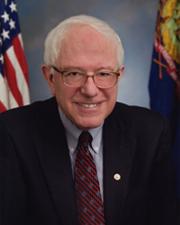 Sen. Bernard Sanders (I-VT)
What it changes
1 change to S. 493
Adds SEC. __. SENSE OF THE SENATE wherever appropriate
Adds a sectionInserted: SEC. __. SENSE OF THE SENATE.
Inserted: (a) Findings.--The Senate makes the following findings:
Inserted: (1) Social Security is the most successful and reliable social program in our Nation's history.
Inserted: (2) For 75 years, through good times and bad, Social Security has reliably kept millions of senior citizens, individuals with disabilities, and children out of poverty.
Inserted: (3) Before President Franklin Roosevelt signed the Social Security Act into law on August 14, 1935, approximately half of the senior citizens in the United States lived in poverty; less than 10 percent of seniors live in poverty today.
Inserted: (4) Social Security has succeeded in protecting working Americans and their families from devastating drops in household income due to lost wages resulting from retirement, disability, or the death of a spouse or parent.
Inserted: (5) More than 53,000,000 Americans receive Social Security benefits, including 36,500,000 retirees and their spouses, 9,200,000 veterans, 8,200,000 disabled individuals and their spouses, 4,500,000 surviving spouses of deceased workers, and 4,300,000 dependent children.
Inserted: (6) According to the Social Security Administration, the Social Security Trust Funds currently maintain a $2,600,000,000,000 surplus that is project to grow to $4,200,000,000,000 by 2023.
Inserted: (7) According to the Social Security Administration, even if no changes are made to the Social Security program, full benefits will be available to every recipient until 2037, with enough funding remaining after that date to pay about 78 percent of promised benefits.
Inserted: (8) According to the Social Security Administration, "money flowing into the [Social Security] trust funds is invested in U.S. Government securities . . . the investments held by the trust funds are backed by the full faith and credit of the U.S. Government. The Government has always repaid Social Security, with interest.".
Inserted: (9) Social Security provides the majority of income for two-thirds of the elderly population in the United States, with approximately one-third of elderly individuals receiving nearly all of their income from Social Security.
Inserted: (10) Overall, Social Security benefits for retirees currently average a modest $14,000 a year, with the average for women receiving benefits being less than $12,000 per year.
Show 6 more inserted paragraphsShow less
Inserted: (11) Nearly 1 out of every 4 adult Social Security beneficiaries has served in the United States military.
Inserted: (12) Proposals to privatize the Social Security program would jeopardize the security of millions of Americans by subjecting them to the ups-and-downs of the volatile stock market as the source of their retirement benefits.
Inserted: (13) Social Security is a promise that this Nation cannot afford to break.
Inserted: (b) Protection of Social Security Benefits.--It is the sense of the Senate that, as part of any legislation to reduce the Federal deficit--
Inserted: (1) Social Security benefits for current and future beneficiaries should not be cut; and
Inserted: (2) the Social Security program should not be privatized.
The amendment doesn't say where this goes; the clerk decides.
Original wording
At the appropriate place, insert the following:
Read automatically from the Congressional Record. Check the original before relying on it.
As printed
At the appropriate place, insert the following:
SEC. __. SENSE OF THE SENATE.
(a) Findings.--The Senate makes the following findings:
(1) Social Security is the most successful and reliable social program in our Nation's history.
(2) For 75 years, through good times and bad, Social Security has reliably kept millions of senior citizens, individuals with disabilities, and children out of poverty.
(3) Before President Franklin Roosevelt signed the Social Security Act into law on August 14, 1935, approximately half of the senior citizens in the United States lived in poverty; less than 10 percent of seniors live in poverty today.
(4) Social Security has succeeded in protecting working Americans and their families from devastating drops in household income due to lost wages resulting from retirement, disability, or the death of a spouse or parent.
(5) More than 53,000,000 Americans receive Social Security benefits, including 36,500,000 retirees and their spouses, 9,200,000 veterans, 8,200,000 disabled individuals and their spouses, 4,500,000 surviving spouses of deceased workers, and 4,300,000 dependent children.
(6) According to the Social Security Administration, the Social Security Trust Funds currently maintain a $2,600,000,000,000 surplus that is project to grow to $4,200,000,000,000 by 2023.
(7) According to the Social Security Administration, even if no changes are made to the Social Security program, full benefits will be available to every recipient until 2037, with enough funding remaining after that date to pay about 78 percent of promised benefits.
(8) According to the Social Security Administration, “money flowing into the [Social Security] trust funds is invested in U.S. Government securities . . . the investments held by the trust funds are backed by the full faith and credit of the U.S. Government. The Government has always repaid Social Security, with interest.”.
(9) Social Security provides the majority of income for two-thirds of the elderly population in the United States, with approximately one-third of elderly individuals receiving nearly all of their income from Social Security.
(10) Overall, Social Security benefits for retirees currently average a modest $14,000 a year, with the average for women receiving benefits being less than $12,000 per year.
(11) Nearly 1 out of every 4 adult Social Security beneficiaries has served in the United States military.
(12) Proposals to privatize the Social Security program would jeopardize the security of millions of Americans by subjecting them to the ups-and-downs of the volatile stock market as the source of their retirement benefits.
(13) Social Security is a promise that this Nation cannot afford to break.
(b) Protection of Social Security Benefits.--It is the sense of the Senate that, as part of any legislation to reduce the Federal deficit--
(1) Social Security benefits for current and future beneficiaries should not be cut; and
(2) the Social Security program should not be privatized.
Legislative Activity
Stay on top of the latest movement without scrolling through every action
Considered by Senate. (consideration: CR S2572)
May 2, 2011
View full timeline
Considered by Senate. (consideration: CR S2572)
May 2, 2011
Considered by Senate. (consideration: CR S2154; text as modified: CR S2157)
April 6, 2011
Considered by Senate. (consideration: CR S2111)
April 5, 2011
Considered by Senate. (consideration: CR S1962)
March 30, 2011
Considered by Senate. (consideration: CR S1913)
March 29, 2011
Considered by Senate. (consideration: CR S1884)
March 28, 2011
Considered by Senate. (consideration: CR S1780)
March 17, 2011
Senate amendment proposed (on the floor): Amendment SA 207 proposed by Senator Sanders.
March 16, 2011
Amendment SA 207 proposed by Senator Sanders. (consideration: CR S1723-1726; text: CR S1723) To express the sense of the Senate that Social Security benefits for current and future beneficiaries should not be cut and that the Social Security program should not be privatized as part of any legislation to reduce the Federal deficit.
March 16, 2011
Senate amendment submitted
March 15, 2011