To provide Debbie Smith grants for auditing sexual assault evidence backlogs.
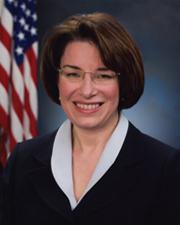 Sen. Amy Klobuchar (D-MN)
Legislative Activity
Stay on top of the latest movement without scrolling through every action
Senate amendment submitted
April 26, 2012
View full timeline
Senate amendment submitted
April 26, 2012
Roll call votes on amendments in Senate: Amendment SA 2094, under the order of 4/26/2012, not having achieved 60 votes in the affirmative, was not agreed to in Senate by Yea-Nay Vote. 57 - 41. Record Vote Number: 84.
April 26, 2012
Senate amendment not agreed to: Amendment SA 2094, under the order of 4/26/2012, not having achieved 60 votes in the affirmative, was not agreed to in Senate by Yea-Nay Vote. 57 - 41. Record Vote Number: 84.
April 26, 2012
Senate amendment proposed (on the floor): Amendment SA 2094 proposed by Senator Klobuchar to Amendment SA 2093.(consideration: CR S2795-2796; text: CR S2795-2796)
April 26, 2012
Amendment SA 2094 proposed by Senator Klobuchar to Amendment SA 2093. (consideration: CR S2795-2796; text: CR S2795-2796) To provide Debbie Smith grants for auditing sexual assault evidence backlogs.
April 26, 2012
Amendment SA 2094, under the order of 4/26/2012, not having achieved 60 votes in the affirmative, was not agreed to in Senate by Yea-Nay Vote. 57 - 41. Record Vote Number: 84.
April 26, 2012
Votes
1 roll call on this amendment
Text
Proposed
VIOLENCE AGAINST WOMEN REAUTHORIZATION ACT OF 2011--Continued

The PRESIDING OFFICER. The Senator from Connecticut.
Mr. BLUMENTHAL. I rise today to speak on an issue that is profoundly
important and meaningful to this body at this moment in history. We
face a critical juncture in our Nation's history, and we absolutely
must renew and strengthen the Violence Against Women Act, not only for
the sake of women but also our families around Connecticut and this
country.
I thank my colleagues for voting to proceed to consideration of S.
1925, the Violence Against Women Reauthorization Act. VAWA is
critically important. It is bipartisan legislation that gives victims
of domestic violence and sexual assault access to the services they so
desperately need. This crucial law supports both the organizations that
provide these services and the law enforcement agencies that assist the
victims as they pursue justice.
As a law enforcement official, I saw firsthand in my duties as State
attorney general for Connecticut how important and practical and
meaningful this law is. We have a responsibility to not only authorize
but also to strengthen VAWA right away.
Some 17 years have passed since the original Violence Against Women
Act. We have made great strides, but we cannot be complacent in our
efforts to protect our Nation's children and women. At a time when the
women of our great Nation face relentless attacks on their rights, we
cannot afford to lose the ground we have gained over the last 17 years.
We must address the grave concerns of domestic violence and sexual
assault which are in no way partisan. As Chairman Leahy so eloquently
and powerfully stated, there is nothing Republican or Democratic about
a victim who suffers from this grave ill.

[[Page S2762]]

S. 1925 is a bipartisan bill written over months of negotiations and
consultations with critical law enforcement and victims advocacy
groups, and it supports a number of organizations in my home State of
Connecticut with a mission to protect women who experience violence in
all forms. This bill provides resources to help a number of
organizations in Connecticut fulfill their vital mission to protect
more than 54,000--I am going to repeat that because that is a
staggering number--54,000 domestic violence victims in Connecticut
alone.
Organizations in Connecticut received nearly $5 million in fiscal
year 2011 from the Violence Against Women Act. But many domestic
programs in Connecticut and around the country are reporting huge staff
and resource shortages that are necessary to respond to the hundreds of
thousands of women in need. It is truly an epidemic in this country
that we must counter and fight just as we would an epidemic of
infectious bacteria or other kinds of insidious sources. VAWA would
give these service providers the resources they need to protect women,
men, and children who are victims of domestic and sexual violence. We
have the opportunity to renew and commit to end domestic violence with
updates and stronger measures in this act.
I am pleased that S. 1925 builds on the accountability provisions in
the current law so we can make sure VAWA grant money is used
effectively and efficiently to support victims. There is a new frontier
in the fight against domestic violence and sexual assault. We must
strengthen provisions dealing with Internet abuse to protect women and
others from those kinds of threats, intimidation, harassment, even
physical assaults facilitated by the Internet. Domestic violence,
sexual assault, and stalking can be even more dangerous and threatening
in the Internet age, requiring broader and stronger protection. We must
protect the thousands of women who fall victim every year to violent
crimes facilitated by cyber stalking and impersonation with
consequences that are truly horrific and reprehensible.
I am proud to introduce a companion bill to the Violence Against
Women Act that enhances current law for the Internet age. This
legislation, the Internet Abuse Act, expands the ability of law
enforcement to prosecute criminals who use the Internet to intimidate,
threaten, harass, and facilitate acts of sexual violence against women,
children, and others.
The VAWA proposal before us includes key concepts from the Internet
Abuse Act. One of the key provisions strengthens existing criminal
provisions against cyber stalking. We must take this act to the new
frontier of Internet abuse and make it real against the very pernicious
and reprehensible cyber stalking, cyber harassment, and cyber assault
that is as much a fact of life as the older forms of domestic abuse.
This provision gives law enforcement the ability to go after more real
instances of criminal harassment and abuse online, and I want to stress
at the same time the provision dramatically strengthens free speech
protections.
Currently, the government can prosecute individuals for merely
annoying online communications as well as communications that may be
generally offensive but not directed at a specific person. This
provision removes those authorities from the law so that prosecutors
will spend their limited resources focusing on real causes of harassing
and abusive conduct online.
The law also focuses on vulnerable populations. As we strengthen
VAWA, we must ensure that all victims of domestic violence are
protected and have access to the services they need.
Although VAWA has been strengthened and updated in every past
reauthorization, the needs of some of our most vulnerable communities
still have not been fully addressed. One example is elder abuse.
Although the VAWA reauthorization in 2000 included provisions to deal
with domestic abuse in later life, our Nation's elders continue to be
victims of domestic violence. I am pleased that the provisions I
drafted with my distinguished colleague, Senator Kohl, which improve
the protections for elder victims of domestic abuse, have been included
in this reauthorization of VAWA.
There are LGBT protections. It would simply be unconscionable to deny
any victim of domestic violence the support he or she needs. For that
reason, I strongly support the provisions that ensure all victims of
domestic violence, regardless of gender or sexual orientation, have
access to lifesaving services, and we are talking about lifesaving
services.
In my experience nobody ever asked what the sexual orientation of a
victim was when that person was, in fact, battered and brutalized.
There is no such question that gay, lesbian, bisexual, and transgender
individuals experience domestic violence at the same rate as the
general population. Yet these individuals face discrimination as they
attempt to access victims services. That should not be acceptable in
this country.
In fact, the survey found 45 percent of LGBT victims were turned away
when they sought help from a domestic violence shelter. Clearly, there
is a real need to improve the access and availability of services for
this vulnerable population, and I support measures in the act that
ensure victims of domestic and sexual violence, regardless of their
sexual orientation or gender identification, can access the services
they need.
In addition, there are broader protections for Native American
communities. S. 1925 makes great improvements to the law enforcement
tools available to Native American populations. Members of the Tribal
Council of the Mashantucket Pequot Tribal Nation, a great tribal nation
in Connecticut, have appealed to me to protect the tribal provisions in
S. 1925 and to make sure any amendments are barred if they weaken those
protections.

In short, all victims of domestic violence deserve access to the
services they need and many of my colleagues I know agree. In fact, 61
from both sides of the aisle have signed on to the Violence Against
Women Reauthorization Act, and I thank every single one of them for
stepping forward and speaking out on this profoundly meaningful and
important issue. We have the opportunity to work to eliminate domestic
and sexual violence, which is a scourge in our society, costly in
suffering as well as dollars, and I encourage my colleagues to keep
faith with the hundreds of thousands of victims who look to us for the
support they need. We must vote as soon as possible--hopefully today--
to reauthorize the Violence Against Women Act.
I thank the Presiding Officer, and I yield the floor.
The PRESIDING OFFICER (Mrs. Shaheen). The Senator from Iowa.
Mr. GRASSLEY. Madam President, I have seen the good the law called
the Violence Against Women Act has done in providing victim services in
my State of Iowa. We all recognize the harm that flows from domestic
violence. It is harmful to the victims as well as the families of
victims.
I have supported reauthorization of the Violence Against Women Act
each time it has come up. The Violence Against Women Reauthorization on
each of these occasions has been highly bipartisan. We have passed
consensus bills and we have not played politics with reauthorizing the
law; that is, until now. This time it seems to be different. I don't
know why it should be. The majority turned this issue into a partisan
issue.
In the Judiciary Committee, the majority gave no notice it would
inject new matters into the Violence Against Women Act. When the
committee held a hearing on this issue, these ideas were not discussed.
Their need has not been demonstrated. We do not know exactly how they
will work. It was clear committee Republicans would not be able to
agree to this new added material. Of course, the majority refused
during negotiations when we asked they be removed.
Republicans will be offering a substitute amendment to the Leahy
bill. Probably 80 to 85 percent of the substitute we are offering is
the same as the Leahy bill. This includes whole titles of the bill. We
could have again reached a near consensus bill to reauthorize the
Violence Against Women Act, but the majority intentionally decided not
to change the bill. They didn't want it to pass with an overwhelming
bipartisan majority.
Now the media has reported this was a deliberate strategy of the
majority. A recent Politico article quoted a prominent Democratic
Senator. The article

[[Page S2763]]

said he ``wants to fast track the bill to the floor, let the GOP block
it, then allow Democrats to accuse Republicans of waging a war against
women.'' This is the cynical, partisan game-playing Americans are sick
of. At every town meeting people say to me: When are you going to get
together and stop the partisanship? This is especially the case on this
bill.
Republicans aren't even blocking the bill. We have called for the
bill to be brought up. Instead, the majority has taken 6 months to
reauthorize this program that expired last October. That says something
about the priorities of the other party.
For instance, last week, we wasted time on political votes. That
seems to be the case in the Senate most of this year. The Senate can
pass a bill to reauthorize the Violence Against Women Act by an
overwhelming margin, but it seems as though the other party doesn't
want that to happen. When they say unfavorable things about Republicans
and women, they aren't being forthright. A few weeks ago, the
Democratic Congressional Campaign Committee sent out a fundraising e-
mail. The e-mail stated, in part:

Now, there are news reports that Republicans in Congress
will oppose re-authorizing the Violence Against Women Act.
Enough is enough! The Republican War on Women must stop NOW .
. . Will you chip in $3 by midnight tonight to hold
Republicans accountable for their War on Women?

The majority had a decision between raising money for campaigns or
trying to get the Violence Against Women Act reauthorization bill that
would actually help these victims. I say to my colleagues, there is no
war on women except the political one. It is a figment of the
imagination of Democratic strategists who don't want to remember health
care reform, unemployment or high gas prices. Instead of talking about
those issues--particularly high gas prices--they would rather make up a
war against women. All evidence points to the other side being more
interested in raising money.
The media has also reported the bill is coming out now because the
Democrats' desire to gin up a Republican so-called war on women was
derailed last week, I suppose by other issues. It should be clear at
the outset Republicans are not blocking, have not blocked, and never
threatened to block the Senate's consideration of this bill. The
Judiciary Committee only reported the bill to the Senate 2 months ago.
It was March before the committee filed its usual committee report to
the entire Senate. Democrats immediately came to the floor and urged
the bill to come up right now. It was up to the majority leader to
decide when the bill should be debated. He finally decided--not right
after the bill was reported out of committee or not right after the
committee report was filed--to do it now. Why not back then?
As long as there is a fair process for offering amendments, including
our alternative bill and pointing out the flaws in the majority's bill,
this should be a relatively short process. As the previous speaker
said, I hope we can get it done this very day.
There are several other important points I wish to establish. First,
I hope a consensus version of the Violence Against Women Act will be
reauthorized. If a consensus bill doesn't pass, no rights of women or
anyone else will be affected if the bill does not pass because,
contrary to the statements made, there would be no cutbacks of
services.
The Violence Against Women Act--the bill before us--is an
authorization bill only, not an appropriations bill. This bill does not
allow the expenditure of one dime because that result occurs through
the appropriations process. Appropriators can and will fund the
Violence Against Women Act programs regardless of whether this bill is
reauthorized. This is exactly what happened over the past year. We
think new issues have arisen since the last Violence Against Women Act
reauthorization. These issues should be addressed in a consensus
reauthorization. That can happen. We should give guidance to the
appropriators. That is what authorization committees, such as in this
case, the Judiciary Committee, is all about.

I support the appropriators continuing to fund the Violence Against
Women Act while we are trying to put together a consensus bill. The
Violence Against Women Act is being funded despite the expiration of
its previous authorization. No existing rights of anyone are affected
if the Violence Against Women Act is not reauthorized. No existing
rights of anyone are affected if we pass a consensus bill rather than
this partisan bill--I should say the majority's bill, not the partisan
bill.
Second, the majority controls how bills move in the Senate. As I
said, the current Violence Against Women Act reauthorization expired 6
months ago. If reauthorization was so important, I think the majority
party could have moved to reauthorize this bill months ago. They didn't
move a bill because no one's substantive rights or funding are at
stake. This is true, even though the prior reauthorization has expired
and a new reauthorization bill has not yet passed.
Third, nothing like the majority's bill, where it does not reflect
consensus, will become law. It is a political exercise. The other body,
meaning the House of Representatives, doesn't seem as though it is
going to pass it the way the majority party here wants it to pass. If
we want to pass a consensus violence against women reauthorization
bill, we ought to start with the alternative Senator Hutchison and I
are going to present to the Senate.
Fourth, the majority's bill, as reported out of committee, was and is
fiscally irresponsible. According to the Congressional Budget Office,
the majority's bill would have added more than $100 million in new
direct spending. That will increase the deficit by that same amount.
The reason is the immigration provisions that we said previously were
nonstarters. These were some of the provisions the majority refused to
take out. Those provisions are bad immigration policy. Nonetheless, I
am glad the majority has now found an offset for this spending.
The Republican alternative does more to protect the rights of victims
of domestic violence and sex crimes than does, in fact, the majority
bill. There are many ways in which this substitute does that. Under the
substitute amendment, more money goes to victims and less to
bureaucrats. It requires that 10 percent of the grantees be audited
every year. This is to ensure taxpayer funds are actually being used
for the purpose of the legislation--to combat domestic violence.
This is a very important point. The Justice Department inspector
general conducted a review of 22 grantees under this law between 1998
and 2010. Of these 22 audits, 21 were found to have some form of
violation of grant requirements. The violations range from unauthorized
and unallowable expenditures to sloppy recordkeeping and failure to
report in a timely manner. When this happens, the money is not getting
to the victims and the taxpayers' money is being wasted.
Let me give some examples. In 2010, one grantee was found by the
inspector general to have questionable costs for 93 percent of the
nearly $900,000 they received from the Justice Department. A 2009 audit
found that nearly $500,000 of a $680,000 grant was questionable.
The fiscal irregularities continue. An inspector general audit from
just this year found that this law's grant recipients in the Virgin
Islands engaged in almost $850,000 in questionable spending. Also, a
grant to an Indian tribe in Idaho found about $250,000 in improperly
spent funds. This included--can my colleagues believe it--$171,000 in
salary for an unapproved position.
In Michigan this year, a woman, at a VAWA grant recipient facility,
used grant funds to purchase goods and services for personal use.
We should make sure then that Violence Against Women Act money goes
to victims and not to waste such as this. That hasn't been the case,
obviously, under the current situation. So our Republican substitute
deals with this spending problem.
The substitute also prevents grantees from using taxpayer funds to
lobby for more taxpayer funds. That will ensure that more money is
available for victims' services. Money that goes to grantees and is
squandered helps no woman or other victims.

In addition, the Republican alternative limits the amount of Violence
Against Women Act funds that can go to administrative fees and salaries
to 7.5 percent. That means money that now is over the 7.5-percent
suggested

[[Page S2764]]

limit is going to bureaucrats and not to victims. Of course, the
underlying bill, the Leahy bill, contains no such limit. If you want
the money to go to victims and not bureaucrats, those overhead expenses
should be capped at this 7.5-percent level.
The Republican substitute amendment requires that 30 percent of the
STOP grants and grants for arrest policies and protective orders are
targeted to sexual assault. The Leahy-Crapo bill sets aside only 20
percent instead of that 30 percent to fight sexual assault.
The substitute Senator Hutchison and I offer--hopefully this
afternoon--requires that training materials be approved by an outside
accredited organization. This ensures that those who address domestic
violence help victims based on knowledge and not ideology. This will
result in more effective assistance to victims. The Leahy-Crapo bill
contains no such requirement.
The Hutchison-Grassley substitute protects due process rights that
the majority bill threatens. I will give you an instance. The majority
bill said that college campuses must provide for ``prompt and equitable
investigation and resolution'' of charges of violence or stalking. This
would have codified a proposed rule of the Department of Education that
would have required imposition of a civil standard or preponderance of
the evidence for what is essentially a criminal charge, one that, if
proved, rightly should harm reputation. But if established on a barely
``more probable than not'' standard, reputations can be ruined unfairly
and very quickly. The substitute eliminates this provision.
The majority has changed their own bill's language. I thank them for
that. I take that as an implicit recognition of the injustice of the
original language.
The substitute also eliminates a provision that allowed the victim
who could not prove such a charge to appeal if she lost, creating
double jeopardy.
The majority bill also would give Indian tribal courts the ability to
issue protection orders and full civil jurisdiction over non-Indians
based on actions allegedly taking place in Indian country.
Noting that the due process clause requires that courts exercise
jurisdiction over only those persons who have ``minimum contacts'' with
the forum, the Congressional Research Service has raised constitutional
questions about this provision. The administration and its supporters
in this body pursue their policy agendas headlong without bothering to
consider the Constitution. The substitute contains provisions that
would benefit tribal women and would not run afoul of the Constitution.
We have heard a lot of talk about how important the rape kit
provisions in the Judiciary Committee bill are. I strongly support
funds to reduce the backlog of testing rape kits. But that bill
provides that only 40 percent of the rape kit money actually be used to
reduce the backlog. The substitute requires that 70 percent of the
funding would go for that purpose and get rid of the backlog sooner.
It requires that 1 percent of the Debbie Smith Act funds be used to
create a national database to track the rape kit backlog. It also
mandates that 7 percent of the existing Debbie Smith Act funds be used
to pay for State and local audits of the backlog.
Debbie Smith herself has endorsed these provisions. The majority bill
has no such provisions. Making sure that money that is claimed to
reduce the rape kit backlog actually does so is provictim. True reform
in the Violence Against Women Act reauthorization should further that
goal.
Combating violence against women also means tougher penalties for
those who commit these terrible crimes. The Hutchison-Grassley
substitute creates a 10-year mandatory minimum sentence for Federal
convictions for forcible rape. The majority bill establishes a 5-year
mandatory minimum sentence. That provision is only in there because
Republicans offered it and we won that point in our committee.
Child pornography is an actual record of a crime scene of violence
against women. Our alternative establishes a 1-year mandatory minimum
sentence for possession of child pornography where the victim depicted
is under 12 years of age.
I believe the mandatory minimum for this crime should be higher. In
light of the lenient sentences many Federal judges hand out, there
should be a mandatory minimum sentence for all child pornography
possession convictions. But the substitute is at least a start. This is
especially true because the majority bill takes no action against child
pornography.
The alternative also imposes a 5-year mandatory minimum sentence for
the crime of aggravated sexual assault. This crime involves sexual
assault through the use of drugs or by otherwise rendering the victim
unconscious. The Leahy bill does nothing about aggravated sexual
assault. The status quo appears to be fine for the people who are going
to vote for the underlying bill if the Hutchison-Grassley amendment is
not adopted.
Instead, the Hutchison-Grassley amendment establishes a 10-year
mandatory minimum sentence for the crime of interstate domestic
violence that results in the death of the victim.
It increases from 20 to 25 years the statutory maximum sentence for a
crime where it results in life-threatening bodily injury to, or the
permanent disfigurement of, the victim.
It increases from 10 to 15 years the statutory maximum sentence for
this crime when serious bodily injury to the victim results.
The Leahy bill contains none of these important protections for
domestic violence victims.
The substitute grants administrative subpoena power to the U.S.
Marshals Service to help them discharge their duty of tracking and
apprehending unregistered sex offenders. The Leahy bill does nothing to
help locate and apprehend unregistered sex offenders.
And the substitute cracks down on abuse in the award of U visas for
illegal aliens and the fraud in the Violence Against Women Act self-
petitioning process. The majority bill does not include any reforms of
these benefits, despite actual evidence of fraud in the program.
One of the Senators who recently came to the floor complained that
there had never been controversy in reauthorizing the Violence Against
Women Act. But in the past there were no deliberate efforts to create
partisan divisions. We always proceeded in the past in a consensus
fashion.

Domestic violence is an important issue, serious problem. We all
recognize that. In the past, we put victims ahead of politics in
addressing it. When the other side says this should not be about
politics and partisanship, why, heavens, we obviously agree. It is the
majority that has now decided they want to score political points above
assisting victims. They want to portray a phony war on women because
this is an election year. They are raising campaign money by trying to
exploit this issue, and I demonstrated that in one of the e-mails that
came to our attention.
There could have been a consensus bill before us today, as in the
past. There is controversy now because that is what the majority seems
to want. We look forward to a fair debate on this bill and the chance
to offer and vote on our substitute amendment. That amendment contains
much that is in agreement with the Leahy bill. The substitute also is
much closer to what can actually be enacted into law to protect victims
of domestic violence.
I yield the floor.
The PRESIDING OFFICER (Mrs. McCaskill). The Senator from Hawaii.
Mr. AKAKA. Madam President, I rise today in support of S. 1925, the
Violence Against Women Act reauthorization of 2011.
Since its enactment in 1994, VAWA has enhanced the investigation and
prosecution of incidents of domestic and sexual violence and provided
critical services to victims and their advocates in court. It has truly
been a lifeline for women across the country, regardless of location,
race, or socioeconomic status.
For these reasons, VAWA's two prior reauthorizations were
overwhelmingly bipartisan. This year, however, a number of my
colleagues are opposing the Violence Against Women Act reauthorization
because they object to, among other things, the authority that it
restores to Native American tribes to prosecute those who commit
violent crimes against Native women.
This bill's tribal provisions address the epidemic rates of violence
against Native women by enabling VAWA programs to more directly and
promptly

[[Page S2765]]

respond to their concerns and needs. These tribal provisions are
critical to the lives of Native women and doubly important to me as
chairman of the Senate Committee on Indian Affairs and a Native
Hawaiian.
Native women are 2\1/2\ times more likely than other U.S. women to be
battered or raped. These are extremely disturbing statistics: 34
percent of Native women will be raped in their lifetimes and 39 percent
will suffer domestic violence. That is more than one out of every three
Native women. We must come together to put a stop to this.
Last summer I chaired an oversight hearing entitled ``Native Women--
Protecting, Shielding, and Safeguarding Our Sisters, Mothers, and
Daughters.'' I heard the heartbreaking stories that lie behind the grim
and troubling statistics on violence against American Indian, Alaska
Native, and Native Hawaiian women.
My committee heard from the chief of the Catawba Nation, who gave a
moving account of his experience growing up with domestic violence and
the impact it had on the women and children in his community. He also
spoke of the importance of reauthorizing VAWA.
We heard from officials who described how existing laws are failing
Native women. We heard, for example, that women in tribal communities
live in a confusing and dangerous jurisdictional maze, in which the
absence of clear lines of authority often leads to offenders, many of
whom are non-Native men, escaping investigation and prosecution, to say
nothing of punishment. This outrageous and unacceptable situation has
led to repeated offenses against Native women that too often spiral
into violence with tragic consequences for the women, their children,
and their communities.
My committee also heard that Native women are being increasingly
targeted by the sex-trafficking industry and that many have, according
to police reports in tribal communities across the country, simply
vanished into this terrible underworld. The draft bill to address
violence against Native women was circulated to a wide range of
stakeholders for feedback. This led to strengthened provisions in the
draft bill which I introduced as S. 1763, the Stand Against Violence
and Empower Native Women Act.
The Senate Committee on Indian Affairs held a legislative hearing on
my bill the following month and then reported it out of the committee
in December.
Since then, I have worked closely with my good friend and colleague
Senator Leahy, chairman of the Judiciary Committee, as we developed S.
1925, which now includes the SAVE Native American Women Act. S. 1925's
tribal provisions empower tribal courts to prosecute crimes of domestic
violence, dating violence, or violations of protection orders
regardless of the race of the alleged abuser. This bill also
strengthens research and programs to address sex trafficking. Since
VAWA was enacted 18 years ago and reauthorized twice since then, a
hallmark of the law is that it has expanded its protections to classes
of once neglected victims. Accordingly, S. 1925's tribal provisions are
consistent with VAWA's history as well as its intent and purpose, which
past Congresses have embraced.
Last week 50 law professors from leading institutions across the
country sent a letter to Congress expressing their ``full confidence in
the constitutionality of the legislation and in its necessity to
protect the safety of Native women.'' Just this week the White House
released a Statement of Administration Policy stating that it strongly
supports these provisions, which will ``bring justice to Native
American victims.''
I commend Chairman Leahy for his dedicated leadership in developing
this bill. He has truly worked in the spirit of aloha by partnering
with the Indian Affairs Committee and other offices to craft a VAWA
reauthorization bill that reasserts VAWA's intent, purpose, and
history.
I would also like to say mahalo--thank you--to each of this bill's
other bipartisan cosponsors. As we all know, domestic and sexual
violence continues to occur, and far too many women across the country
are victims of these horrible acts. We have heard from victims, from
service providers, and from law enforcement that these crimes can leave
victims with lasting emotional and physical scars, while endangering
their security, their families, and their lives.
This bill will strengthen the Violence Against Women Act and extend
its protections to include Native women who are underserved in the
current system.
This is not an issue that should divide us along partisan lines. On
the contrary, it should unite us to take a stand against these awful
crimes. So I urge you to join me and the rest of S. 1925's cosponsors
to protect our sisters, mothers, and daughters and pass this bill.
I yield the floor.
The PRESIDING OFFICER. The Senator from Utah.
Mr. LEE. Madam President, I rise to speak about our Constitution's
Federalist structure and the real danger of the Federal Government
unduly interfering with the ability of States and localities to address
activities and concerns in their communities.
Everyone agrees that violence against women is reprehensible. The
Violence Against Women Act reauthorization had the honorable goal of
assisting victims of domestic violence, but it oversteps the
Constitution's rightful limits on Federal power. It interferes with the
flexibility of States and localities that they should have in tailoring
programs to meet particular needs of individual communities, and it
fails to address problems of duplication and inefficiency.
First, violent crimes are regulated and enforced almost exclusively
by State governments. In fact, domestic violence is one of the few
activities that the Supreme Court of the United States has specifically
said Congress may not regulate under the commerce clause. As a matter
of constitutional policy, Congress should not seek to impose rules and
standards as conditions for Federal funding in areas where the Federal
Government lacks constitutional authority to regulate directly.
Second, the strings Congress attaches to Federal funding in the VAWA
reauthorization restrict each State's ability to govern itself. Rather
than interfering with State and local programs under the guise of
spending Federal tax dollars, Congress should allow States and
localities to exercise their rightful responsibility over domestic
violence. State and local leaders should have flexibility in enforcing
State law and tailoring victim services to the individualized needs of
their communities, rather than having to comply with one-size-fits-all
Federal requirements.
Third, even if the Federal Government had a legitimate role in
administering VAWA grant programs, the current reauthorization fails to
address many instances of duplication and overlap among VAWA and other
programs operated by the Department of Justice and by the Department of
Health and Human Services, nor does it address the grant management
failings by the Government Accountability Office.
My opposition to the current VAWA reauthorization is a vote against
big government and inefficient spending and a vote in favor of State
autonomy and local control. We must not allow a desire by some to score
political points and an appetite for Federal spending to prevent States
and localities from efficiently and effectively serving women and other
victims of domestic violence.
The PRESIDING OFFICER. The Senator from Minnesota.
Mr. FRANKEN. Madam President, when my wife Frannie and I decided that
I should run for the Senate, we were greatly influenced by the example
set by Senator Paul Wellstone and his wife Sheila. The Wellstone
example serves as a constant reminder of what public service is all be
about. It is about helping others. It is about giving a voice to those
who otherwise might go unheard. It is about making the law more just
and more fair, especially for those who need its protections the most.
Frannie and I have a personal responsibility to carry on the
Wellstones' legacy. We all do. And you know what, I think Paul and
Sheila would be proud of what we are doing here today. We are on the
verge of reauthorizing the Violence Against Women Act.
Paul and Sheila were extraordinary people. An unlikely couple, Sheila
was born in Kentucky to Southern Baptist

[[Page S2766]]

parents. Paul was born here in Washington, the son of Russian-Jewish
immigrants. But love and fate--they work in mysterious ways--brought
Paul and Sheila together.
Sheila's family moved to Washington, where she and Paul became high
school sweethearts. Paul went to North Carolina for college, and Sheila
went back to Kentucky. But a freshman year apart was more than they
could bear. Sheila moved to North Carolina to be with Paul. They got
married. A year later they were proud parents. They eventually would
have two more children. The Wellstones were a big happy family.

After Paul earned his Ph.D. in political science, the Wellstones
moved to Minnesota, where Paul had a successful teaching career at
Carleton College. Sheila, meanwhile, worked two jobs: She was a full-
time mother and a part-time library aide.
A happy family life in Minnesota would have been enough for most
people but not for Paul and Sheila. Their compassion knew no limits.
They wanted to make the world a better place for others, and they set
out to do just that. Paul ran for public office. He and Sheila worked
as a team during Paul's Senate campaign, as they did in all aspects of
their lives. Paul's opponent outspent him by a large margin, but what
Paul and Sheila lacked in resources they made up for in grassroots
support, a tireless work ethic, and an unparalleled commitment to the
people of Minnesota, and also quite a bit of charm. Improbable as it
must have seemed at the outset, Paul won. He was elected to the Senate
in 1990. So the Wellstones went to Washington, the city where they
first fell in love.
At the time, Sheila was not really a public figure--at least she did
not view herself as such. In fact, Sheila was a bit shy, and she
avoided public speaking when she could. But Sheila started spending
time at women's shelters in Minnesota and elsewhere, listening to
painful stories about domestic violence and assault. She realized there
were a lot of women across the country who needed a voice, who needed
someone to speak up for them. Sheila set out to become that person.
Here is what she said:

I have chosen to focus on domestic violence because I find
it appalling that a woman's home can be the most dangerous,
the most violent, and, in fact, the most deadly place for
her. And if she is a mother, it is dangerous for her
children. It is time that we tell the secret. It is time that
we all come together to work toward ending the violence.

Sheila matched her words with action. She became a champion for
survivors of domestic violence in Minnesota and throughout the country.
Each year, she hosted an event in the Capitol to raise awareness about
that issue. That annual event continues to this day. And as I said,
Sheila and Paul were a team, so Sheila worked very closely with Paul to
champion the Violence Against Women Act, a landmark Federal law that
affirmed our Nation's commitment to women's safety.
Signed into law in 1994, VAWA increased the number of beds and
shelters that were available to women who needed refuge. It provided
critical support to law enforcement officers and prosecutors so they
could respond more effectively to incidents of domestic violence. It
funded support services and crisis centers for victims. And perhaps
most importantly, VAWA sent a message: Domestic violence no longer will
be tolerated in America. Since VAWA was enacted, incidents of domestic
violence have been reduced significantly. VAWA has improved lives. It
has saved lives. It is part of the Wellstones' proud legacy.
VAWA is part of this institution's legacy too. When it comes to
violence against women, Members of the Senate always have been able to
come together. VAWA has been reauthorized twice. Both times it had
unanimous support in the Senate--unanimous support. The VAWA
reauthorization bill we are considering today is in keeping with VAWA's
bipartisan tradition. Its 61 cosponsors come from across the country
and across the aisle.
I am grateful to Senators Leahy and Crapo for their leadership on
this bill.
The VAWA Reauthorization Act renews our national commitment to
prevent responsive incidents of sexual assault, a heinous crime that
remains all too common in America, even while domestic violence is
becoming less common.
The VAWA Reauthorization Act addresses the alarming rates of violence
against women in Indian Country by giving tribes jurisdiction to
prosecute acts of domestic violence in their communities. The VAWA
Reauthorization Act cuts redtape and spending by consolidating grant
programs and improving accountability measures.
This is a good bill, and I am proud to support it. I am also proud to
have written two of its provisions. I thank Chairman Leahy for inviting
me to do so and for including those provisions in the final bill.
First, the VAWA reauthorization bill includes the provision from the
Justice for Survivors of Sexual Assault Act, one of the first bills I
wrote after being sworn into the Senate. When this bill becomes law,
survivors of sexual assault never again will suffer the indignity of
paying for forensic medical exams. VAWA provides State and local
governments with funding to administer these exams, which also are
known as rape kits, and are used to collect evidence in sexual assault
cases. The problem is that under current law, grant recipients can
charge the survivor for the upfront cost of administering the exam,
leaving the survivor to seek reimbursement later. Too often survivors
are not reimbursed. They get lost in the maze of paperwork or are left
high and dry when funds run out.
Can you imagine if we required crime victims to pay for the police to
gather evidence such as fingerprints from a crime scene? Of course not.
We should not require victims of sexual assault to pay for rape kits.
This isn't a partisan issue; it is common sense.
I am grateful to Senator Charles Grassley, the Judiciary Committee's
ranking member, for his ongoing support for this bill. He was an
original cosponsor when I introduced it in 2009 and when I reintroduced
it last year.
Survivors of sexual violence have endured enough already. They should
not have to pay for rape kits. They will not have to once this bill
becomes law.
The VAWA reauthorization bill also includes the Housing Rights for
Victims of Domestic and Sexual Violence Act, legislation that I
introduced with Senators Collins and Mikulski last fall. This bill will
help women stay in their homes when they are most vulnerable, when they
need a roof over their heads the most.
The link between violence and homelessness is undeniable. By one
account, nearly 40 percent of women who experience domestic violence
will become homeless at some point in their lives--nearly 40 percent.
Once a woman becomes homeless, she becomes even more vulnerable to
physical or sexual abuse.
In my State nearly one in three homeless women is fleeing domestic
violence, and half of those women have children with them. That is not
the world that Sheila Wellstone envisioned. Nobody should have to
choose between safety and shelter. While the link between violence and
homelessness is undeniable, it is not unbreakable. We need shelters and
transitional housing programs for women who are fleeing danger. The
VAWA reauthorization bill provides continued support for those
programs.
There is also much we can do to prevent women from becoming homeless
in the first place, such as housing rights legislation, which will make
it unlawful to evict from federally subsidized housing a woman just
because she is a victim of domestic violence, dating violence, sexual
assault, or stalking. This bill is for every woman who has hesitated to
call the police to enforce a protective order because she was afraid
she would be evicted from her home if she did so.
I am grateful to the many wonderful organizations that have worked
with me on this bill. They include women's victims advocacy groups such
as the Minnesota Coalition Against Sexual Assault, the MNCASA, and the
Minnesota Domestic Abuse Project. They include tenant advocacy groups
such as the National Low-Income Housing Coalition. They include the
Legal Aid Society, Minnesota Legal Assistance, and they include leaders
of the housing industry too. In fact, I recently received a letter from
the National Association of Realtors, the Institute for Real Estate
Management, and other housing industry representatives expressing their
support for this bill.

[[Page S2767]]

They wrote that they ``believe that preserving housing for victims of
domestic violence, dating violence, sexual assault, and stalking is
critically important.''
I could not agree more. That is exactly what this bill does.
Sheila Wellstone isn't with us today. Sheila and Paul and their
daughter Marcia were tragically taken from us too soon. But Sheila's
example is with us, her legacy is with us, and her words are with us. I
would like to close with those. Here is what Sheila said:

We really have to look at the values that guide us. We have
to work toward the ethic that expects every individual to be
physically and emotionally safe. No one, regardless of age,
color, gender, background, any other factor, deserves to be
physically or emotionally unsafe. In a just society, we
pledge to act together to ensure that each individual is safe
from harm. In a just society, I think we have to say this
over and over and over: We are not going to tolerate the
violence.

Madam President, the VAWA reauthorization bill is another step toward
a more just society, as Sheila was describing. I look forward to it
becoming law.
The PRESIDING OFFICER. The Senator from West Virginia.
Mr. MANCHIN. Madam President, I rise today with the surest conviction
that this body--united as a group of Democrats and Republicans--can and
will vote to ensure the women and children of this country are free
from domestic abuse. I believe that opposing the bill before us would
defy every ounce of common sense I have in my body.
I am a proud sponsor of the Violence Against Women Act, as are most
of my colleagues in this body, because it is unfathomable that any
individual could oppose efforts to ensure women and children are free
from violence.
The bill we are currently considering would reauthorize several
essential grant programs that have made a tremendous difference in my
State of West Virginia and across this Nation. Here is what I have
heard from the West Virginia Coalition Against Domestic Violence Team
Coordinators Sue Julian and Tonia Thomas:

The Violence Against Women Act is the most critical piece
of federal legislation affecting the safety of survivors of
domestic violence and their children in every county of West
Virginia. [The law] supports cost-effective responses to the
pervasive and insidious crimes of domestic violence. VAWA
funds innovative, successful programs that are at the core of
our nation's response to domestic violence, sexual assault,
dating violence and stalking. Action taken at the
congressional level to end violence against women,
children, and men echoes through the hills and hollows of
the most remote communities in this state. Without VAWA,
the collaborative efforts of law enforcement, prosecution,
victim advocates, and judicial personnel would be
fragmented, compartmentalized, and at worse
counterproductive to each other. VAWA saves lives, changes
communities, offers safety and creates channels of hope.

We know since it first passed in 1994, the Violence Against Women Act
has reduced domestic violence by more than 50 percent through the
critical programs it funds. Still, violence against women and children
is a terrifying reality in this country.
Let me share with you some startling statistics that illustrate the
scope of the problem.
According to the West Virginia Foundation for Rape Information and
Services--our State's sexual assault coalition--one in six women in
West Virginia will be a victim of attempted or completed rape.
According to the West Virginia Coalition Against Domestic Violence,
on any given day, licensed domestic violence programs in West Virginia
provide services to nearly 600 women, children, and men.
Every 7 minutes a call is made to a domestic violence hotline in West
Virginia. One-third of homicides in West Virginia are related to
domestic violence. More than two-thirds of women murdered in West
Virginia are killed by a member of their family or their household.
In 2010, there were 11,174 investigations into domestic violence
allegations in West Virginia, which required 272,450 hours of law
enforcement involvement. This legislation is a fight on behalf of the
women whose stories are contained in those numbers but whose lives are
invaluable and more important than any statistic could ever hope to
portray. No one can better speak to the importance of the Violence
Against Women Act than the groups whose work each and every day is
improved because of the programs supported by the law.
Growing up in a small community, as I did in Farmington, WV, in a
loving family, violence against women and children was unfathomable. I
would not even have thought it. The most beautiful people in my life
were my mother, my grandmother, my sister, my aunts, and my cousins.
They were the most beautiful people I could have hoped to grow up with.
My grandmother--we call her Mama Kay--had been the glue to our family
and kept it together, and she really kept the community together. She
was a symbol of strength to whom others would turn for a place to stay
or a hot meal in times of trouble.
We celebrated and admired the women who raised us and those around
us. We thanked them and loved them and showed them appreciation and
respect. So it is incomprehensible to me how anybody could make a
decision to inflict physical pain on a woman or a child or even a man.
Truly, life is tough enough without involving violence.
Once again, for each and every Member of the Senate who will cast a
vote on this bill, the question comes down to this: What is it that we
truly value? What are our priorities?
Ensuring that women and children have adequate protection against
violence just makes common sense. To the people of West Virginia, I
know this is the highest of priorities. Of course, these atrocities are
not unique to my State. Nationally, domestic violence accounts for 22
percent of the violent crimes experienced by women and 3 percent of the
violent crimes against men.
Approximately 37 percent of the women seeking injury-related
treatment in hospital emergency rooms were there because of injuries
inflicted by a current or former spouse or partner. In tough economic
times--like those we are experiencing now--women are more likely to
become a victim of domestic violence.
According to the National Network to End Domestic Violence, domestic
violence is more than three times as likely to occur when couples are
experiencing high levels of financial strain as when they are
experiencing low levels of financial strain. Women whose male partners
experienced two or more periods of unemployment over a 5-year study
were almost three times as likely to be victims of intimate violence as
were women whose partners had stable jobs.
Seventy-three percent of shelters attributed the rise in abuse to
``financial issues.'' ``Stress'' and ``job loss'' were also frequently
cited as causing the increase of victims seeking shelter. It goes on
and on.
All we are asking for is to make this a nonpartisan issue--come
together as Americans, as Senators, not worrying about political
differences. This is one bill that brings us all together for a common
cause--a most decent cause--and something that is needed in America.
I urge the support of all of my colleagues. Please support this.
Let's come back together as Americans.
I yield the floor.
The PRESIDING OFFICER. The Senator from North Carolina.
Mrs. HAGAN. Madam President, I rise to join my colleagues in calling
for passage of the Violence Against Women Reauthorization Act. I am
disheartened that in the last several months petty, partisan
gamesmanship has held up this legislation.
Since VAWA originally passed on a bipartisan basis in 1994, the
annual incidence of domestic violence has decreased by 53 percent. Many
victims are now reporting incidents of abuse rather than hiding in
fear. Reports of abuse have increased by 51 percent. This law has
transformed our criminal justice system and victim support services.
The law has worked well because it encourages collaboration among law
enforcement, health and housing professionals, and community
organizations to help prevent and respond to intimate partner violence.
In one recent instance in my State, a man was on pretrial release
after being charged with stalking his wife. Thanks to the STOP grants
funding--which provide services and training for our officers and
prosecutors--he was being

[[Page S2768]]

monitored. This individual was being electronically monitored and was
caught violating the conditions of his release when he went to his
estranged wife's home. The supervising officer was immediately notified
of this violation and police officers found the man with the help of
the GPS and arrested him in his estranged wife's driveway.
Thank goodness this woman was protected and this incident did not add
another victim to the 73 deaths caused by domestic violence each year
in North Carolina.
Unfortunately, though, the well-being of women in North Carolina and
around the country hangs in the balance until we in Congress take
action on this act.
Domestic violence also hurts our economy. It costs our health care
system $8.3 billion each year. The reauthorization of this act
streamlines crucial existing programs that protect women while
recognizing the difficult fiscal decisions facing the Federal
Government today. Thirteen existing programs would be consolidated to
four, which will reduce administrative costs and avoid duplication. New
accountability provisions will also require strict audits and
enforcement mechanisms aimed at ensuring these funds are used wisely
and efficiently.
In fact, title V of this bill includes one of my bills--the Violence
Against Women Health Initiative. My bill provides vital training and
education to help health care providers better identify the signs of
domestic violence and sexual assault. It helps medical professionals
assess violence and then refer patients to the appropriate victim
services.
This training would have helped Yolanda Haywood, a woman who, as a
young mother of three, found herself in an abusive marriage. Her
husband abused her regularly and one night punched her in the face and
split her lip, which sent her to the emergency room. She obviously
needed stitches. As she sat on the examination table, the physician who
was sewing her lip back asked: Who did this to you? Yolanda quietly
said: My husband. The physician responded by telling her she needs to
learn how to duck better.
Yolanda spent the next several years learning how to duck before
finally leaving that abusive relationship. Empowered by her experience,
she went to medical school and now teaches students at a prestigious
university the importance of identifying and treating domestic violence
and sexual assault, as well as working in an ER.
In a recent visit to a woman's domestic shelter in Charlotte, I met a
counselor who shared this story with me. A young boy had just spent his
first night at the shelter. The next morning the counselor was talking
to him and he said he slept with both eyes shut last night. The
counselor asked the young boy: Well, how do you usually sleep? He said:
I usually sleep with one eye open and one eye closed because the last
time I slept with both eyes closed my mommy and I both got hurt.
This is the kind of experience this bill will help with. It will
protect women and children. For all the progress we have made combating
violence against women, this must continue to be a priority. I urge
each of my colleagues to support the reauthorization of the Violence
Against Women Act because it literally saves lives in North Carolina
and around the country, while ensuring a better future for our
children.
I thank the Chair, and I yield the floor.
The PRESIDING OFFICER. The Senator from Louisiana.

National Flood Insurance Program

Mr. VITTER. Madam President, I rise to talk about another vital
program we must reauthorize and continue before it expires; that is,
the National Flood Insurance Program. Right now, that is due to
completely expire at the end of May. So I wanted to bring this to
everyone's attention, particularly that of the majority leader, so we
take this up in time--as soon as possible--and put it in line
absolutely as soon as possible so this can be extended and there will
be no interruption.
This is an important program for the country. It provides vital flood
insurance for millions of Americans. Many properties cannot have a real
estate closing on them. They cannot be transferred without that
important flood insurance. It is particularly important in my home
State of Louisiana, where the risks of flooding--coastal and
otherwise--are even greater than the national average.
Unfortunately, we have been on a path the last few years of just
barely hobbling along, using a bandaid approach to extend this
necessary program just a little bit at a time. This got to its worst
state in 2010, when we not only extended it just a little bit at a
time, but we actually allowed it to lapse, to expire, for several days
at a time on four different occasions, for a total of 53 days. What
happened? Each of those times the program expired, many real estate
closings--tens of thousands of real estate closings around the
country--came to a screeching halt. They were cancelled. They were put
off.
So here we are, in a very soft economy and trying to eke out of a
real estate-led recession. Yet for no good reason--because of our
inability to, frankly, get our act together and organize ourselves and
extend this noncontroversial program--we had lapses in the program so
that thousands of real estate closings were put off. That lapse
occurred, as I said, in 2010, four different times, for a total of 53
days.
Since then, we have improved a little bit. We have extended the
program for 6 months at a time under legislation I have introduced. But
now we need to take the next step and not just continue to hobble along
but have a full reauthorization, with important bipartisan reforms, of
this National Flood Insurance Program.
There has been a lot of work done in that regard. The House of
Representatives has done a complete reauthorization bill, and they
adopted that bill by an overwhelming vote of 406 to 22 last July 2. So
they have acted. They have done their part going back going almost 1
year ago--about 9 months ago. On the Senate side, we have made
important bipartisan progress in the Banking Committee, which is the
committee of jurisdiction. We have worked hard to put together a full
5-year reauthorization bill with reforms on a bipartisan process.

As ranking member of the relevant subcommittee, I have put a lot of
work into this with many others, including my subcommittee chairman Jon
Tester. We reported that bill through the entire committee. It got a
strong report out of committee and is ready for action on the Senate
floor. So now we need to take that next step. We need to get it on the
Senate floor, pass it through, and reconcile it with the House bill.
There are no major substantive obstacles. This is a true bipartisan
effort. We have worked well together and through a number of issues.
The only issue is getting time on the Senate floor and moving this
forward so we can do this full-scale, 5-year reauthorization before the
program expires this May 31.
Again, I just come to the floor to urge all of us, and in particular
the majority leader who sets the schedule, to schedule this, to find
that time, to put it in line as soon as possible. We are now on the
Violence Against Women Act, which we support being on. I believe next
we are moving to student loans. I have no problem with that. But let's
put this important measure in line right after that, as soon as
possible, so we can take it up and accomplish this task well before the
May 31 deadline.
We can get this done. As I said, there are few, if any, substantive
hurdles. We can get this done. We can produce a long-term
reauthorization, we can produce good reforms in that bill, as we have
in the Senate committee bill and as the House has. We just need to move
it through the process. I certainly commit to everyone, starting with
the majority leader, that if we get that minimal amount of time on the
Senate floor, we will certainly work to have that process run as
smoothly and as quickly as possible. I have worked with Senator Tester
in that regard, toward that end, and we will continue to work through
the remaining Senate proceedings.
Finally, in support of this plea, I have a letter, dated February 13
of this year, addressed to the majority and minority leaders from a
long list of Senators, both parties, urging that we take this action,
urging that we schedule this for the Senate floor absolutely as soon as
possible so we can get this job

[[Page S2769]]

done. As I said, this letter was dated February 13. Obviously, a few
months have passed since then and the clock is ticking and that clock
runs out on May 31.
Again, I urge us, particularly the majority leader, to please put
this necessary and important and bipartisan legislation in line for
floor consideration as soon as possible. We can get this done. We can
get this done by the current deadline. We can get this done for the
good of the American people and on a bipartisan basis and I urge us all
to work toward that end, as Jon Tester and I have been doing and as the
committee chair and ranking member have been doing. I certainly know
the ranking member of the committee, Senator Shelby, strongly supports
this plea.
At this time, I ask unanimous consent to have printed in the Record
the letter to which I have just referred.
There being no objection, the material was ordered to be printed in
the Record, as follows:

U.S. Senate,

Washington, DC, February 13, 2012.
Hon. Harry Reid,
Majority Leader, U.S. Senate, Washington, DC.
Hon. Mitch McConnell,
Minority Leader, U.S. Senate, Washington, DC.
Dear Leaders Reid and McConnell: As we begin the Second
Session of the 112th Congress, we the undersigned urge you to
bring legislation to the floor to provide for a long-term
reauthorization and meaningful reform of the National Flood
Insurance Program (NFIP) as expeditiously as possible in
February or very soon thereafter.
The National Flood Insurance Program was first established
in 1968, and has since that time been instrumental in
protecting America's families, homes and businesses from
financial ruin when flooding occurs. The program was last
reauthorized in 2004. That reauthorization expired in 2008,
and since then the program has been extended through a series
of short-term measures. In fact, the program expired four
times in 2010 resulting in lapses totaling 53 days. It has
been estimated that those program lapses resulted in the
delay or cancellation of more than 1,400 home closings per
day, further damaging an already fragile housing market.
As you know, the House of Representatives passed its
version of a long-term reauthorization on July 12, by an
overwhelming vote of 406 22. The Senate Banking Committee has
reported a committee print with overwhelming bipartisan
support which is currently awaiting floor action. This bill
makes essential changes to the program in an attempt to
protect taxpayers and restore its solvency. We sincerely
believe that, with a concerted effort on the part of Senate
and Banking Committee leadership, as well as interested
Senators, the bill can be brought to the floor of the Senate,
debated and passed as soon as possible in order to ensure
this process is completed before the NFIP expires at the end
of May.
The Senate should take this opportunity to capitalize on
the bipartisan efforts by both the Senate Banking Committee
and the House of Representatives thus far to make major
improvements to this important program. We believe that
passage of a comprehensive, bipartisan flood reauthorization
bill is within reach, and we respectfully urge you to
schedule such a debate.
Sincerely,
Senator Jon Tester, Senator David Vitter, Senator Ben
Nelson, Senator Kay Hagan, Senator Daniel Akaka, Senator
Michael Bennet, Senator Thomas Carper, Senator Amy Klobuchar,
Senator Jeff Merkley, Senator Mark Warner, Senator Herb Kohl,
Senator Mike Crapo, Senator Scott Brown, Senator Johnny
Isakson, Senator Mike Johanns, Senator John Boozman, Senator
Bob Corker, Senator Saxby Chambliss, Senator Pat Roberts,
Senator Susan Collins.
Senator Joseph Lieberman, Senator Robert Menendez, Senator
Richard Blumenthal, Senator John Kerry, Senator Daniel
Inouye, Senator Bernard Sanders, Senator Jeanne Shaheen,
Senator Sherrod Brown, Senator Al Franken, Senator
Christopher Coons, Senator Daniel Coats, Senator Jerry Moran,
Senator Lamar Alexander, Senator Olympia Snowe, Senator James
Inhofe, Senator Jack Reed, Senator Claire McCaskill, Senator
Patrick Leahy, Senator Sheldon Whitehouse, Senator Mark
Begich, Senator Richard Burr.

Mr. VITTER. Again, I hope we all come together in plenty of time to
take care of this important business. I bring it up now, well before
the deadline, because the clock is ticking. A Senate bill would have to
be reconciled with the House. We need to get floor time absolutely as
soon as possible and I look forward to that happening and I look
forward to working with Senator Tester and others on the Senate floor.
I yield the floor.
The PRESIDING OFFICER (Mr. Sanders). The Senator from Colorado.
Mr. UDALL of Colorado. Mr. President, I rise, as do my Democratic
colleagues and quite a few of my Republican colleagues, in support of
the Violence Against Women Act.
My remarks will extend beyond the time we have left, so I will ask
the Chair to advise me when 2 minutes have passed, and I will try to
conclude over a 3-minute timeframe so other colleagues can speak on
this very important piece of legislation.
The PRESIDING OFFICER. The Chair will so advise.
Mr. UDALL of Colorado. Mr. President, the Violence Against Women
Act--known as VAWA--has been in effect for 18 years and it has saved
lives and strengthened families all over the country. I speak as a
Coloradoan, and I will cite statistics that will point to the concrete
effects the Violence Against Women Act has had in my State.
This was a landmark piece of legislation and it changed the way we
think about and respond to domestic violence. It has made a difference
in the lives of literally millions of women all over the country by
bringing the perpetrators of domestic violence, sexual assault, and
child abuse to justice. It has made a difference by providing safe and
secure support services to victims of crimes. It has established a
National Domestic Violence Hotline and so much more. It is little
wonder such a commonsense and far-reaching concept in legislation has
found support from Members of both sides of the aisle.
I mentioned Colorado. Let me cite some numbers. In 2010 alone, 60,000
victims of domestic violence contacted State crisis hotlines seeking
help. The funding that VAWA provides not only gives our law enforcement
beefed up resources and tools for catching and then prosecuting
perpetrators, but it also supports critical services for victims and
survivors.
The PRESIDING OFFICER. The Senator has used 2 minutes.
Mr. UDALL of Colorado. I thank the Chair.
These resources have literally saved the lives of women from Durango
to Craig and from Pueblo to Denver, and I wish to commend all the
important organizations in my State that make it all possible.
The great news is that today--right now--we have the opportunity to
make this an even better piece of legislation.
This reauthorization builds upon and strengthens the current act,
expanding access to the resources so many victims desperately need. It
also contains important reforms that will increase accountability in
the use of VAWA resources, ensuring these federal dollars are going to
serve the victims who need them most. Taxpayers demand that we spend
their monies wisely especially during tough economic times and this
VAWA bill meets that high standard they expect of us.
Moreover, it is worth noting this bill makes college campuses safer
by requiring that schools develop comprehensive plans to combat and
prevent crimes against women.
It also takes the imperative step of strengthening the Federal
Government's response to domestic and dating violence on tribal lands,
which has climbed to near epidemic levels across the country.
Furthermore, it increases protections and outreach for LGBT victims,
because the right to live free from domestic violence should not depend
on gender identity or sexual orientation.
The most recent reauthorization of the Violence Against Women Act
expired in September of last year. The bottom line is that it is past
time to get this done. The legislation before us today has 61
cosponsors, is broadly bipartisan, and has the support of countless
women and men around the country.
I believe there is an alternative version of this bill that may come
before us for a vote as well. I know this is an election year, and the
increasingly partisan climate in Congress has made it tempting to take
truly bipartisan legislation such as this and inject division into the
debate. But the issues addressed by VAWA are not partisan to the people
back in Colorado and around the country. So let is resist that path.
The bipartisan legislation drafted by Senator Leahy and Senator Crapo
is the only bill that truly provides the resources necessary in the
most effective way to help end violence against women.
I know my colleagues in the Senate share my commitment to reaching
this goal, so I am glad this bipartisan bill is finally receiving a
vote.

[[Page S2770]]

When I served in the House of Representatives, I worked with a
bipartisan group of colleagues to reauthorize VAWA both in 2000 and
2006, so I know we can come together and pass this reauthorization as
well.
We all agree that violence against women is unacceptable. This is a
necessary and carefully constructed bill that will protect the lives of
women in Colorado and throughout the country.
In concluding, we all agree violence against women is flatout
unacceptable, and this is a necessary and carefully constructed bill
that will protect the lives of women in Colorado and throughout the
country. So let's come together in the Senate, put aside our
differences, and pass what is a strong and important bipartisan bill.
The families and the communities of my State and our country are
counting on us.
I yield the floor.
The PRESIDING OFFICER. The Senator from Idaho.
Mr. CRAPO. Mr. President, I too rise today to discuss the incredible
importance of the Violence Against Women Act.
For nearly 18 years, the Violence Against Women Act has been the
centerpiece of our Nation's commitment to end domestic violence, dating
violence, and sexual violence. Congress authorized the Violence Against
Women Act in 2000 and again in 2005 with overwhelming bipartisan
support.
I am a longtime champion of the prevention of domestic violence
because I have seen the impact of this abuse firsthand in Idaho. The
act provides critical services to victims of violent crime as well as
agencies and organizations that provide important aid to those victims.
The Violence Against Women Act has been called by the American Bar
Association ``the single most effective federal effort to respond to
the epidemic of domestic violence, dating violence, sexual assault and
stalking in our country.''
This legislation provides access to legal and social services for
survivors. It provides training to law enforcement, prosecutors,
judges, attorneys, and advocates to address these crimes in our
Nation's communities. It provides intervention for those who have
witnessed abuse and are more likely to be involved in this type of
violence. It provides shelter and resources for victims who have
nowhere else to turn, who are literally victims in their own homes.
There is significant evidence that these programs are working. In
Idaho, the number of high school students reporting that they have
experienced violence by a dating partner has dropped since the Center
for Healthy Teen Relationships began its work in 2006. The U.S.
Department of Justice reported that the number of women killed by an
intimate partner decreased by 35 percent between 1993 and 2008.
The legislation is working and our collective efforts across this
country to respond to this epidemic are working, but our fight against
domestic violence is far from over. Last year in my State 22 people
were killed by a domestic partner. Approximately one in three
adolescent girls in the United States is a victim of physical,
emotional, or verbal abuse from a dating partner. Nearly 1 in 10 high
school students Nationwide was hit, slapped, or physically hurt on
purpose by their boyfriend or girlfriend.
Future tragedies of the kinds we have seen in Idaho and across this
country have to be prevented. And while we may not all agree on the
specifics of this reauthorization, all of us agree on one very
important aspect; that is, we must end domestic violence, dating
violence, sexual assault, and stalking in the United States.
No bill is ever perfect. As we go through the process of working
through this bill on the floor, we will see amendments brought seeking
to perfect and improve it. I will support some of those amendments,
others will support some of those amendments, and the bill will be
addressed, as all bills should be, on the floor of the Senate. But when
we are done and the debate is over and the voting on the amendments is
concluded, I urge all my colleagues to join me in supporting the
reauthorization of this critical program. We must continue the life-
changing work this legislation helps us accomplish.
Mr. President, I yield the floor.
The PRESIDING OFFICER. The Senator from Alaska.
Ms. MURKOWSKI. Mr. President, as we speak, the Alaska Network on
Domestic Violence and Sexual Assault's 24-hour hotline that allows
folks to seek assistance--their numbers are ringing. This evening, 363
Alaskans will spend the night in an emergency domestic violence shelter
or in transitional housing provided by an Alaskan domestic violence
program, programs such as the Lee Shore Center in Kenai, the Safe
Shelter in Dillingham, the WISH shelter in Ketchikan, and the AWAIC
shelter in Anchorage. The number of Alaskans seeking shelter is rising
on the order of over 5 percent per year. These programs and the
Alaskans who benefit from them are all supported by the Violence
Against Women Act.
As we debate and deliberate on the reauthorization of VAWA, the
Violence Against Women Act, we express our respect for the volunteers
and the professionals who support and who constantly advocate on behalf
of these victims. These are Alaskans such as Peggy Brown and Katie
TePas, who lead the effort across my State, and others like them
throughout Alaskan communities. It is important that as we again
reauthorize the Violence Against Women Act, we do so as a tangible
display of our support for their very important work.
Let me share some statistics with you, as others have shared from
their respective States. In Alaska, somewhere between 25 and 40 percent
of all domestic violence assaults are witnessed by children. On a
national scale, more than 90 percent of abusers are people whom
children know, love, and trust.
I come to the floor today to express my support for the Leahy bill,
S. 1925. I have proudly cosponsored this effort and came on very early
in the effort. It is the product of literally thousands of hours of
work by domestic violence advocates and dedicated Senate staff members.
I do believe it represents a real improvement in the services that are
offered to victims even in a difficult budget environment. I would like
to give a few illustrations.
Back in 2010, there were more than 800 Alaskans who sought pro bono
legal assistance from the Alaska Legal Services Corporation and the
Alaska Network on Domestic Violence and Sexual Assault. A little over
500 of these victims could be served. Another 300 had to be turned away
due to the lack of resources--turning people away who are victims
because we don't have the resources to provide the help. This bill
establishes a new pro bono legal program within VAWA to ensure that
victims of domestic violence have access to lawyers.
Back in 2011, 12 percent of Alaska high school students reported they
were hit, slapped, or physically hurt on purpose by their boyfriend or
their girlfriend, and 9 percent reported they had been physically
forced to have sexual intercourse when they did not want it. This bill
focuses resources on the protection of our young people--and rightfully
so--because 70 percent of all reported sexual crimes in the United
States involve children. This legislation devotes needed resources to
protect our children, and it also devotes increasing resources to
protect our elders, who are increasingly victims of sexual assault and
domestic violence--again, a side that most people don't want to
acknowledge or talk about, but our statistics cannot be denied.
In addition, S. 1925 sends a strong message to offenders that they
will be held accountable. In the remote Native villages of Alaska,
where the victims of domestic violence literally have no place to hide,
reauthorization of VAWA will mean there will be more funds to hire
village public safety officers who are first responders in the last
frontier.
I would like to express my appreciation to the Judiciary Committee
for including a provision I have requested concerning the Alaska Rural
Justice and Law Enforcement Commission. The Rural Justice Commission is
a joint Federal, State, and tribal planning body that was created by
the late Senator Ted Stevens back in 2004 to coordinate the public
safety efforts in our remote rural villages. It is in danger of
shutting its doors at this point in time, and the legislation before us
establishes the framework for the Rural Justice Commission to continue
its very important work.

[[Page S2771]]

Last weekend there was a great deal of concern that arose
particularly amongst Alaska tribes that the version of S. 1925 that
came out of the Judiciary Committee diminished the ability of the
Alaska tribes to issue domestic violence protection orders that would
enjoy full faith and credit from the State of Alaska. The concern we
had was the result of an inadvertent technical drafting error that
expanded certain tribal powers within Indian Country, but it appeared
to repeal other existing tribal powers that are currently held by
Alaska tribes. Our State has very little Indian Country. We do not have
reservations, with the small exception of one reservation down in
southeastern Alaska. So for the past couple days, I have been working,
along with Senator Begich, to address this issue and have worked on a
technical correction to address the concern in a way that ensures that
Alaska tribes lose none of the jurisdiction or the authority they
presently have to issue and to enforce their domestic violence
protection orders.
It was just this morning that I received a copy of a letter from Ed
Thomas, who is president of the Central Council Tlingit and Haida
Tribes of the State, and he has come out clearly endorsing the
amendment.
I would note that Senator Leahy has included these technical
corrections in the substitute amendment he intends to bring forward,
and I would certainly urge that it be adopted.
As my colleague from Idaho just mentioned, there is a divergence of
views within this Chamber on what the reauthorization of VAWA should
say. It is important to point out that we are in agreement on the vast
majority--well over 80 percent--of the provisions in S. 1925. The
disagreement is in a few smaller areas. There are Senators whose ideas
were not incorporated in the Leahy bill and who wish to be heard, and I
think it is appropriate that they be heard.
Again, I would concur with my colleague, the Senator from Idaho, in
stating that when the Violence Against Women Act was first initiated
back in 1994, it was a bipartisan effort. It was a collaborative
effort. The effort this year with the reauthorization should be no
less. I have every confidence that this body will once again act in a
bipartisan fashion to reauthorize this very critical piece of
legislation.
Mr. President, I yield the floor.
The PRESIDING OFFICER. The Senator from Missouri.
Mrs. McCASKILL. Mr. President, 35 years ago I was a very young
assistant prosecutor. There weren't any other women who were assistant
prosecutors in Kansas City, and I got assigned a lot of cases that the
men in the office used to jokingly call women's work, which meant that
I got a lot of cases on welfare fraud and food stamp fraud. And then,
as I spent more time in the office, I got sexual assaults and I got
domestic violence.
I remember as if it were yesterday the feeling of helplessness as I
sat across the desk from a woman who had been beaten to within an inch
of her life, and I remember calling the police department and asking
for help and them saying: You know, hon, let it go. Tell her to go
home.
I remember her asking me: What do I do about my children? I have no
money. I don't really want to prosecute him--I don't think he will
leave me alone.
I remember not being able to sleep at night because I was so worried
about the women who had really no place to go, no one to guide them
through the terrifying journey the criminal justice system can be, much
less the terrifying journey their lives were. That was 35 years ago.
When I ran for prosecutor in 1992, I said: I am going to start a
domestic violence unit, because since then I had spent time working on
the laws in Jefferson City, and I had also spent time on the board of a
domestic violence shelter--one of the first in Kansas City--and then I
became prosecutor, and we started a domestic violence unit.
The police department still pushed back and said: These aren't real
crimes. If the victim doesn't want to testify, we have no evidence to
go forward.
And I said to them: Wait a minute. We go forward on homicides when
the victims can't testify. We should build these cases around the facts
and circumstances regardless of the mental state of the victim.
I remember feeling so helpless that we had no resources. And then I
remember, as the Jackson County prosecutor in Kansas City, when the
Violence Against Women Act passed. I remember reviewing our grant
application for the victim advocate in our office, and I remember all
of a sudden thinking, you know, we are going to turn the corner.
Is it still a huge problem? Yes. But if you were there 35 years ago
on the front lines and you knew the progress we have made to date, you
wouldn't be voting no in the Judiciary Committee on the reauthorization
of the Violence Against Women Act. You wouldn't be doing that.
So let's move forward. Let's make sure the victim advocates who
arrive on the scene as a result of this important piece of
legislation--let's make sure they stay on the job. Let's make sure
there are not any young prosecutors today who are going home sleepless,
much less victims who look at someone who claims they love them, claims
they are their protector, but at the same time knowing that person is
capable of taking their life. Let's make sure those women have
someplace to turn to, their children have someplace to turn to. Let's
reauthorize this act today and make sure all the women out there have
that help and assistance they need in their time of need.

I yield the floor.
The PRESIDING OFFICER. The Senator from Washington.
Mrs. MURRAY. Mr. President, it is a shame it has taken so long to get
to this point, but I am very glad to see we are close to having this
body move forward on this legislation.
The Violence Against Women Act has helped provide lifesaving
assistance to hundreds and thousands of women and families, and it was
certainly a no-brainer to make sure that all women had access to that
assistance. I was proud to have been here serving in the Senate in 1994
when we first passed VAWA. Along with its bipartisan support, it
received praise from law enforcement officers, prosecutors, judges,
victims, service providers, faith leaders, health professionals,
advocates, and survivors. It obtained that broad support because it has
worked.
Since it became law 18 years ago, domestic violence has decreased by
53 percent. We have made a lot of progress since 1994, and I am glad we
are continuing on that path today on behalf of all women. In fact,
Deborah, is here with us today.
Deborah is the Vice Chairwoman of the Tulalip Tribe in my home State
of Washington.
Yesterday she joined Senators Boxer, Klobuchar and me to tell her
emotional story about the devastating effects violence can have on
women--especially Native women.
Deborah was repeatedly abused, starting at a very young age, by a
non-tribal man who lived on her reservation. Not until after the abuse
stopped around the 4th grade did Deborah realize she wasn't the only
child suffering at the hands of her assailant--at least a dozen other
young girls had fallen victim to this man.
This is a man who was never arrested for these crimes; never brought
to justice; and still walks free today. All because he committed these
heinous acts on the reservation--and as someone who is not a member of
a tribe, it is an unfortunate reality that he is unlikely to be held
liable for his crimes.
The debate we had over the provisions in this legislation was a
matter of fairness.
Deborah's experience--and the experience of the other victims of this
man--does not represent an isolated incident.
In fact 34 percent of Native Women will be raped; 39 percent of
Native Women will be subjected to domestic violence; and 56 percent of
Native Women will marry a non-Indian who most likely would not be held
liable for any violent crimes committed if these protections hadn't
been included in this legislation.
Where people live and who they marry should not determine whether or
not perpetrators of domestic violence are brought to justice.
With this bill today, we are taking a major step to uphold our
government's promise to protect its citizens.

[[Page S2772]]

This bill builds on what works in the current law, improves what
doesn't, and it continues on the path of reducing violence toward
women.
It certainly should not have been controversial.
It is time for us to come together and support this bill so women and
families across America can get the resources and support they need.
I particularly want to thank the courageous work of this wonderful
tribal woman to help explain to all of us why the bill we have put
before the Senate is so critical today.
I yield the floor.
The PRESIDING OFFICER. The majority leader.
Mr. REID. I ask unanimous consent the committee-reported substitute
be withdrawn, that a Leahy substitute amendment which is at the desk be
made pending, and the only amendments in order to the Leahy substitute
or the underlying bill be the following: Klobuchar No. 2094, Cornyn No.
2086, and Hutchison No. 2095; that there be 60 minutes of debate
equally divided between the two leaders or their designees for
consideration of the amendments and the bill; that there be no
amendment in order to any of these amendments; that there be no motions
or points of order to the amendments or the bill other than budget
points of order or the applicable motions to waive; that the amendments
be subject to a 60-affirmative vote threshold; that upon disposition of
the three amendments, the Leahy substitute amendment, as amended, if
amended, be agreed to and the Senate proceed to vote on passage of the
bill, as amended; that all after the first vote be 10-minute votes and
there be 2 minutes equally divided between the two votes.
The PRESIDING OFFICER. Is there objection?
Without objection, it is so ordered.
Mr. REID. Mr. President, I will briefly say--I know everyone is
anxious to get to work--we have had some pretty good work in recent
days. The postal bill was extremely difficult to get done. We had the
highway bill; that was difficult to get done. Those are bipartisan in
nature. It took a while to get through this matter that is before us,
but now we are there. It is an effort on everyone's behalf. On my side,
I am grateful for the work done by Senators Patty Murray and Pat Leahy
and many others, but I am glad we are at the point where we are today.
Mr. McCONNELL. Mr. President, I add I agree entirely with the remarks
of the majority leader. This is the way the Senate ought to operate--on
both these bills, both the postal bill, which was challenging for
everyone to get through, and the Violence Against Women Act, on which
there is broad, probably unanimous agreement. In fact, the last time it
passed the Senate it did pass on a voice vote. We are proceeding to
handle it in a way entirely consistent with the Senate's past and
procedures, with some amendments but limited debate time on each of
them. We will be able to finish this bill today.
I commend Senator Hutchison and others on our side who have been
deeply involved in this--Senator Cornyn--in bringing us to the place we
are now.

Amendment No. 2093

The PRESIDING OFFICER. The clerk will report the substitute.
The assistant legislative clerk read as follows:

The Senator from Nevada [Mr. Reid], for Mr. Leahy, proposes
an amendment numbered 2093.

(The text of the amendment is printed in today's Record under ``Text
of amendments.'')
The PRESIDING OFFICER. The Senator from Arizona.
Mr. KYL. Mr. President, I note my colleague from New Jersey was also
standing. I have about 5 minutes of remarks. Did the Senator from New
Jersey wish also to speak?
Mr. LAUTENBERG. I plan to, but I will defer, if the Senator is in a
rush.
Mr. KYL. I appreciate that very much and I perhaps will ask unanimous
consent the Senator from New Jersey follow my remarks?
Mr. LEAHY. Mr. President, reserving the right to object--I will not
object--and I know we will be getting back onto this matter and I will
be seeking time, I certainly do not object to my two friends taking
time now.
The PRESIDING OFFICER. Without objection, it is so ordered.
Mr. KYL. Mr. President, I support reauthorization of the Violence
Against Women Act. Throughout my career, I have worked on a number of
crime victims' rights measures that, taken together, provide the mosaic
of protections for all crime victims.
As a member of the House of Representatives, I cosponsored the Sexual
Assault Prevention Act--SAPA--which was incorporated into the Omnibus
Crime Control Act signed into law by President Clinton in 1994. Among a
number of reforms, SAPA increased penalties for stalking and sexual
assault, and it changed the Federal Rules of Evidence to allow
admission of prior sexual offenses in sexual assault cases. In 1997, I
successfully petitioned the Arizona Supreme Court to adopt this change
to Arizona's rules of evidence.
In 2004, I co-authored the Crime Victims' Rights Act with Senator
Feinstein. This legislation included a bill of rights for victims of
Federal crimes, including the right to be informed, present, and heard
at critical stages of the proceedings. That bill was signed into law by
President Bush.
I also supported the 2005 reauthorization of the Violence Against
Women Act, which included a section Senator Cornyn and I wrote that
expanded the Federal DNA collection program.
Today, I am pleased to support the Hutchison/Grassley bill
reauthorizing the Violence Against Women Act. I regret that there are
competing versions of reauthorization, especially since I believe that
virtually all of us support the current law.
I cannot, however, vote for the Leahy version for a number of
reasons. First, a new section, 904, is blatantly unconstitutional. This
new section would give Indian tribes criminal jurisdiction to arrest,
prosecute, and imprison non-Indians under tribal law for certain
domestic-violence offenses.
Adding this language to the existing law violates basic principles of
equal protection and due process. All tribes require either Indian
ancestry or a specific quantum of Indian blood in order to be a tribal
member. Even a person who has lived his entire life on the reservation
cannot be a tribal member if he does not have Indian blood. Such a
person, no matter how long he has lived in the area, cannot vote in
tribal elections and would have no say in crafting the laws that would
be applied against him by section 904.
Section 904 breaks with 200 years of American legal tradition that
tribes cannot exercise criminal jurisdiction over non-Indians. By doing
so, it creates a clear violation of the Constitution's equal protection
and due process guarantees.
I also take issue with the new Section 905 of the Leahy bill, which
would allow Indian tribes to issue ``exclusion orders'' barring non-
Indians from lands within the tribes' ``Indian country.'' ``Indian
country'' is a term of art in Federal Indian law. It is meant to
include lands that were allotted and sold to non-Indians, or allotted
to Indians who later sold the land to non-Indians, but that are within
the exterior boundaries of a historic Indian reservation. Many non-
Indian families have lived on such lands for generations. Other such
residents include people with Indian blood, but who have been expelled
from membership in the tribe for various reasons. Section 905 would
literally allow the tribes to issue orders that bar these individuals
from entering their own land, land which they own in fee simple
absolute.
The primary rationale for these proposed additions to VAWA was to
provide protection for tribal members. The Hutchison/Grassley
alternative does that by replacing the unconstitutional provisions of
the Leahy bill with an authorization for tribes to seek protection
orders to prevent domestic violence, issued directly by a Federal
court, upon a showing that the target of the order has assaulted an
Indian spouse or girlfriend, or a child in the custody or care of such
person, and that a protection order is reasonably necessary to protect
the well-being of the victim. Violations of the order would be subject
to criminal prosecution in Federal court.
While punishing an offender for any underlying crime is important,
preventing harm is critical; and it is often easier to prosecute
violations of the terms of a protection order. For example, parties who
are not in a romantic relationship with the defendant typically will be
available to testify that the defendant entered areas from which

[[Page S2773]]

he is excluded under the order. Protection orders, thus, tend to
provide an effective means for preventing acts of domestic violence.
And because orders would be issued by a Federal court, we can be
reasonably certain that such orders will comply with basic principles
of due process and will be enforced.
The Hutchison/Grassley reauthorization of the Violence Against Women
Act contains other improvements on the Leahy version, and I urge its
adoption.
The PRESIDING OFFICER. The Senator from New Jersey.
Mr. LAUTENBERG. Mr. President, on this floor we talk a lot about the
critical importance of family. I frequently speak about my family, my
10 grandchildren and 4 children, who are the foundation and inspiration
for everything I do. But for some Americans, the family is instead a
source of fear.
Domestic violence wreaks havoc in our homes and our communities
across the country. The statistics are shocking. Every year 12 million
women and men in our country are victims of rape, physical violence,
and stalking. The numbers are shocking. They represent a national
tragedy. But these are not just numbers, they are lives. In 2010, 38 of
New Jersey's domestic violence incidents ended in death. I have visited
women's shelters in New Jersey, and I have seen fear in the faces of
women holding their children. It takes a lot of courage for a woman to
stand up and leave her abuser. As a society, we have to be able to tell
these women they will have a safe place to go, they will have resources
to help them, and they will see justice for their abuser.
Today we are debating legislation to reauthorize the Violence Against
Women Act, which for almost 18 years has provided women with support
programs they need to escape abusive situations. Make no mistake, VAWA
is working for women. Since its passage, occurrences of domestic
violence have decreased by more than 50 percent. But despite this
incredible progress, these horrible acts continue.
In fact, our progress should inspire us to work harder. Domestic
violence programs in our communities are on the front line, and they
are starved for resources. More than one-third of New Jersey's domestic
violence programs report not having enough funding to provide needed
services, and approximately one-quarter report not having enough beds
available for women and children trying to escape violent situations.
Since 2006, more than 40 programs in New Jersey alone have received
almost $30 million in funding through the Violence Against Women Act.
Let me be clear. It would be tragic to turn our backs on victims and
the people who dedicate their lives to supporting them. While we cannot
stop all malicious acts, we can do more to keep women and their
families safe.
In 1996, I wrote the domestic violence gun ban, which forbids anyone
convicted of domestic violence from getting a gun. Since the law's
inception, we have kept guns from falling into violent hands on over
200,000 occasions. For instance, our gun laws allow domestic abusers to
sidestep the ban on getting a gun. The loophole allows a convicted
abuser to walk into a gun show and walk out with a gun, no questions
asked. That is because background checks are not required for private
sellers at gun shows.
Since 1999, I have introduced legislation to close the gun show
loophole and keep guns from falling into the wrong hands, and it passed
in the Senate with the vote of the Vice President to break the tie.
Thirteen years later, this gap in our law remains in place, and people
can go to the gun show, walk up to an unlicensed dealer, put the money
down, and walk out with a gun. It is an outrage. If we want to protect
victims from domestic abuse, we ought to commit ourselves to closing
the gun show loophole for the safety of women, their families, and
other victims of abuse. Saving the lives of women should be above
politics.
The Violence Against Women Reauthorization Act passed the Senate
unanimously in 2000 and 2005, and it is incomprehensible that we would
turn our back on those who are so abused. I ask those who would vote
against passing this bill to think about their own families, think
about their spouses, think about their daughters, think about their
children.
Every Republican in the committee voted against reauthorizing the
VAWA in committee. Every one of them voted against the bill that
primarily protects women. They walked away.
Today they have taken a different approach. They presented an
amendment, and it is a sham. It actually removes the word ``women''
from a key part of the bill. It also fails to protect some of our most
vulnerable victims. Apparently, some of our colleagues would vote
against protecting women if it means they also have to protect
immigrants and people in the gay and lesbian community.
I call on our colleagues on the other side of the aisle to join us
and our families. We know they care. Show it. Show it in this vote we
are about to take. Send a clear message that this country does not
tolerate brutality against anyone, and show it with a little bit of
courage. Stand and say: No, I want to protect my family, I want to
protect those who are abused routinely in our society. That is the
plea. I just hope each one of them will look at a picture of their kids
and their families and say: I owe you that protection.
We worked hard here with the premise that we are protecting people,
so let's show it.
Mr. NELSON of Florida. Mr. President, I am here today to speak in
support of S. 1925, the Reauthorization of the Violence Against Women
Act, and I want to thank Senator Leahy and Senator Crapo for their
leadership on this important issue.
Originally passed in 1994, the Violence Against Women Act has
improved the criminal justice system's ability to hold perpetrators
accountable and protect victims of domestic violence. The Violence
Against Women Act also provides important services to women who have
been victims of domestic violence to help them get their lives back on
track.
Now, the data tells us that the Violence Against Women's Act has been
effective and is needed: In my State of Florida in 2010, according to
the Florida Department of Law Enforcement, there were 113,378 reported
domestic violence offenses. This includes domestic violence crimes of
stalking, threats and intimidations, assaults, rapes, and murders.
(SOURCE: Florida Department of Law Enforcement. (2011). Crime in
Florida, 2010 Florida Uniform Crime Report. Tallahassee, FL: DLE.)
Those reports resulted in 67,810 arrests. That's about 60%.
Unfortunately, we may not ever fully know the full extent of domestic
violence. Many victims do not report the abuse that they experience to
the police or request domestic violence services out of fear and
embarrassment.
Since 1994, studies estimate that reporting of domestic violence has
increased as much as 51%. Across the Nation we are seeing more victims
of domestic violence step out of the shadows, and come forward to ask
for help. And we are seeing more prosecution of domestic violence
perpetrators. And, this is a trend that we want to see continue.
So, Mr. President, I urge my colleagues to swiftly pass this
important legislation.
I yield the floor.
Mr. WARNER. Mr. President, I rise to add my voice in support of the
reauthorization of the Violence Against Women Act, of which I am proud
to say I am a cosponsor.
In Virginia, this act has doubled the resources available for
prevention and intervention of sexual violence in communities and on
campus. The funding provides crisis services in nearly every locality
in Virginia. Funds have helped develop State databases like the
protective order registry in the Virginia Criminal Information Network,
VCIN, and the I-CAN system housed with the Virginia Supreme Court.
These databases have helped improve responses across the Commonwealth
to sexual and domestic violence.
Some startling Virginia domestic and sexual violence incidence
statistics highlight just how critical this legislation is to anyone in
my State and across the country who may find themselves in need of
help.
Virginia has seen a 12 percent increase over the past 2 years in the
number of men, women and children staying in domestic violence
emergency shelters on an average night.
Nearly 1 million women and more than 600,000 men in Virginia have
experienced rape, physical violence, and/or stalking by an intimate
partner.

[[Page S2774]]

According to the State's medical examiner, one in three homicides in
Virginia is due to family or intimate partner violence.
As these statistics show, the services authorized through VAWA
continue to be a necessity. It is important that we continue to support
access to these vital services that will provide significant benefits
to those most in need of assistance.
For the Violence Against Women Act to truly work as intended, we must
have effective accountability. Particularly in times of tight budgets,
it is important to ensure that taxpayer dollars are spent wisely. It is
critically important that we continue to advance effective,
comprehensive policies that will provide appropriate preventive and
supportive services that many in my State, as well as across the
country, will benefit from.
The accountability measures included in this bill are patterned after
proposals offered by my Republican colleagues for other grant programs,
and these accountability measures have been tailored to VAWA to make
sure that funds are efficiently spent and effectively monitored.
The bill authorizes the Department of Justice's inspector general to
audit grantees to prevent waste, fraud and abuse. It gives grantees a
reasonable amount of time to correct any problems that were not solved
during the audit process, but imposes severe penalties on grantees that
refuse to address the problems identified by the inspector general.
Rather than Congress mandating a set number of audits, the Office of
Inspector General will have the ability to set the appropriate number.
This will give the experts in the inspector general's office the
ability to more effectively perform important oversight. The Department
of Justice has also taken significant steps to improve monitoring of
VAWA grant awards by updating grant monitoring policies and
incorporating accounting training for all grantees.
The bill has taken the important step of holding the Department of
Justice accountable when using Federal funds to host or support
conferences. These new accountability provisions are an integral piece
in this process and a meaningful additional check to ensure the
appropriate use of taxpayer dollars for these important programs.
I encourage my colleagues to join me in support of the
reauthorization of the Violence Against Women Act.
Mr. KOHL. Mr. President, I am proud to rise today in support of the
bipartisan Violence Against Women Reauthorization Act. I cosponsored
the Violence Against Women Act (VAWA) when it was originally enacted in
1994, and have cosponsored every reauthorization since then. The
Violence Against Women Act continues to be as important today as it was
in 1994. The programs VAWA supports have gone a long way to help stop
batterers in their tracks and provide victims with the support they
need to recover and rebuild their lives. This reauthorizing legislation
builds upon proven prevention and support strategies and includes new
provisions to address the changing and still unmet needs of victims.
VAWA has been a success story over the past 18 years because it
encourages communities to more effectively and efficiently respond to
domestic violence. Working together, law enforcement, judges, domestic
violence shelters, victim advocates, healthcare providers, and faith-
based advocates are able to better prosecute abusers and protect and
aid the women, men and children who find themselves in dangerous and
potentially life threatening domestic relationships. Programs
authorized by VAWA also provide victims with critical services,
including transitional housing and legal assistance, and address the
unique issues faced by elderly, rural, and disabled victims. No one
should have to choose between staying in a harmful relationship and
losing their home or job.
Yet, the Violence Against Women Reauthorization Act of 2011 makes
needed reforms and changes that will strengthen and streamline existing
programs, while also consolidating programs and reducing authorizations
to recognize the difficult fiscal situation we face. The bill also
incorporates new accountability provisions, to ensure that VAWA funds
are used effectively and efficiently. Our bill implements cuts that
will save $135 million each year.
As Chairman of the Subcommittee on Retirement and Aging, we have seen
far too many instances of physical, mental, and financial abuse of our
nation's seniors. So I thank Senator Leahy for including provisions
from my End Abuse in Later Life Act. Those provisions ensure that
appropriate enforcement tools are available to combat sexual assault
and domestic violence against the elderly, and that older victims
receive victim services.
We commend Senator Leahy for his work on this important, bipartisan
bill. VAWA reauthorizations passed the Senate unanimously in 2000 and
2005, and I look forward to the long overdue passage of S. 1925 today.
Mr. WHITEHOUSE. Mr. President, I wish to speak in favor of the
Violence Against Women Reauthorization Act, which I am proud to
cosponsor. As attorney general of Rhode Island, I saw firsthand the
good work that the Violence Against Women Act has done to protect
victims of domestic violence, to provide crucial services to those who
have been harmed, and to hold batterers accountable for their crimes.
It is vital that we reauthorize this important law.
In Rhode Island and across the country, the Violence Against Women
Act continues to support essential tools for preventing and responding
to domestic violence. The Rhode Island Coalition Against Domestic
Violence reports, for example, that we now have 23 transitional housing
units in our State, helping victims of violence become safe and self-
sufficient as they escape a batterer. VAWA's law enforcement and legal
assistance programs have also proven essential, especially in light of
difficult State and local budgets. VAWA supports seven law enforcement
advocates in Rhode Island, who work in local police departments to
provide immediate assistance to victims of domestic violence, sexual
assault, and stalking. These and other VAWA programs have improved the
criminal justice response to violence against women and ensured victims
and their families the services they need.
The Violence Against Women Reauthorization Act builds on that record
of success. It makes important updates to strengthen the law, while
remaining cognizant of the challenging budget circumstances we face.
The bill includes an increased focus on sexual assault prevention,
enforcement, and services. It provides new measures to prevent
homicides through programs to manage high-risk offenders. It also
consolidates programs to reduce administrative costs and add
efficiency. And it incorporates new accountability provisions to ensure
that VAWA funds are used effectively and efficiently.
Senators Leahy and Crapo led a fair and open process in crafting this
bill. They have carefully studied these issues, consulted with a great
number of experts and stakeholders, and as a result have achieved a
bill with 60 cosponsors in this body.
I would particularly like to thank Senators Leahy and Crapo for
including in this bill a measure I authored to help prevent teen dating
violence. Far too many teens suffer abuse at the hands of a dating
partner. The Centers for Disease Control report that one in ten
teenagers was hit or physically hurt on purpose by a boyfriend or
girlfriend in the past year. The Saving Money and Reducing Tragedies
through Prevention, or SMART Prevention Act, which I introduced last
year and is included in this bill, will support innovative and
effective programs to prevent this dangerous abuse.
At a subcommittee field hearing I chaired last year on strategies for
protecting teens from dating violence, each of the expert witnesses
testified that prevention programs can help address this serious
problem. Ann Burke, a leading national advocate, explained that school-
based teen dating violence prevention programs have proven effective in
changing behaviors. For example, in 2 years following the passage of
Rhode Island's Lindsay Ann Burke Act, named in memory of Ann's
daughter, a victim of dating violence, the number of teenagers
physically abused by a dating partner in our State decreased from 14
percent to 10.8 percent.
Prevention programs are most effective when part of a community
approach. Kate Reilly, the executive director of the Start Strong Rhode
Island

[[Page S2775]]

Project, testified that effective prevention programming should ``meet
kids where they live and play.'' That requires involving parents,
coaches, mentors, and community leaders--men and women--as well as
innovative uses of technology and social media.
One group of children needs particular attention: those who have
witnessed abuse in their home. Deborah DeBare, executive director of
the Rhode Island Coalition Against Domestic Violence, explained at our
hearing that ``growing up in a violent home may lead to higher risks of
repeating the cycle of abuse as teens and young adults.'' By supporting
robust services for children exposed to domestic violence, we can help
to lift the emotional burden on children who witness their parents'
violence and break the intergenerational cycle of violence.
The VAWA Reauthorization Act's SMART Prevention provisions build on
Ann and Kate and Deb's insights. The bill supports educational programs
warning young people about dating violence, as well as programs to
train those with influence on youth. To save costs, the new program is
consolidated with existing grant programs, including a program directed
at children who have witnessed violence and abuse. Coordinating and
focusing prevention resources will save money, and abuse that is
prevented reduces the strain on our overburdened health, education, and
criminal justice systems.
I again congratulate Senators Leahy and Crapo for their strong
bipartisan leadership in helping us extend our longstanding bipartisan
commitment to preventing domestic violence. I urge all of my colleagues
to support reauthorizing the Violence Against Women Act, so that we can
keep working toward a country that is free of this scourge.
Ms. SNOWE. Mr. President, I rise today in strong support of The
Violence Against Women Act. This consequential measure reauthorizes a
landmark federal law and, once the Senate has finished a free and open
debate including a full range of amendments, we should pass this bill
with a strong, bipartisan majority. Approving this measure offers the
Senate an opportunity to demonstrate to the American people that we
still have the capacity to meet the challenge of forging effective
solutions to monumental matters affecting Americans in their daily
lives.
For far too long, domestic violence has been an extremely serious and
common crime that devastated families and silently took a great toll on
our society. Decades ago, domestic violence went largely unreported, in
part because the victim viewed the violence as personal, or because of
they were afraid of retribution, or they were embarrassed and did not
want family members, friends, or neighbors to know.
I well recall in 1990, when I was serving as the co-chair of the
House Congressional Caucus on Women's Issues with Pat Schroeder, and
Congress started to focus greater attention on these kinds of heinous
transgressions and those who perpetrate them. Just as we fought
vigorously for women's health equity, as well as economic security for
women, the Caucus was a driving force for change in combating domestic
violence, with then-Congresswoman Boxer taking a leadership role in
authoring legislation, along with Connie Morella. As we were building
legislative momentum in the House, then-Senator Joe Biden was
shepherding this initiative through the Senate.
This culminated in the original Violence Against Women Act, enacted
in 1994, a truly landmark piece of legislation. For the first time,
Congress enacted legislation that sought to comprehensively address the
problem of violence against women. We provided assistance to States to
improve law enforcement and prosecution efforts, and funded shelters
and services to help women and their families extricate themselves out
of these violent and abusive situations and into safety.
Here we are, 18 years later, and yes, we can feel fortunate for the
progress we have made on this critical issue. The evidence clearly
bears this out.
According to the National Network to End Domestic Violence, reporting
of domestic violence has increased as much as 51 percent. Reporting is
an instrumental first step to ensuring that women receive the support
they want, need, and deserve. As a result, hundreds of thousands of
women have been helped through VAWA-supported programs such as
hotlines, individual and court advocacy, emergency shelters,
transitional housing and housing assistance. Furthermore, the annual
incidence of domestic violence has fallen by more than 50 percent.
While women are the most frequent targets of domestic violence,
children are also too often victims in these tragedies as well. For
this reason, the best approach must be comprehensive in scope and the
urgent necessity for action, such as early intervention, is paramount.
Earlier this month, researchers at Boston Children's Hospital and the
Institute of Child Development at the University of Minnesota released
a study--the first of its kind--that prospectively examined the effects
of interpersonal trauma on children--particularly young children. On
average, children exposed to such trauma had cognitive scores that were
the equivalent of 7 IQ points fewer, with the most significant and
enduring cognitive deficits appearing in children exposed to trauma
between birth and 2 years of age. As study leader Dr. Michelle Bosquet
Enlow observed, ``If we wait until children are identified by the
school . . . a lot of the damage will have already been done.''
Well, I could not agree more, and that is why along with early
intervention, we must also increase access to quality early childhood
health and education programs. The challenge in 2012 is to understand
and act upon the systemic, reverberative consequences of this violence.
Consider the reality that domestic violence does not merely occur at
home. In fact, the one place where an abuser can be confident to find
his victim is at work. In a survey conducted by the Maine Department of
Labor, 74 percent of abusers had easy access to their partner's
workplace, with 21 percent of offenders reporting that they contacted
the victim at the workplace in violation of a no contact order.
At the same time, among female employees who experienced domestic
violence, 87 percent received harassing phone calls at work; 78 percent
reported being late to work because of abuse; and, incredibly, 60
percent lost their jobs due to domestic abuse. As Ranking Member of the
Senate Committee on Small Business and Entrepreneurship, I find these
facts chilling, because not only do these alarming invasions of privacy
threaten women's financial independence, they can also erode elements
of a woman's critical support system that can often be found in the
workplace as well.
Turning now to my own State of Maine where approximately half of all
homicides each year stem from domestic violence, I want to begin with
the tragic case of Amy Lake. A kindergarten teacher from Dexter, ME,
Amy, and her two children, Coty and Monica, were killed last year by
her abusive husband before he killed himself.
Domestic violence experts and law enforcement authorities contend
that Amy did everything possible to protect herself and her two
children. Amy and her children lived in seven different places the year
before their deaths. Amy sought and received a protective order, which
her husband proceeded to violate five times. This wrenching incident
has galvanized the local community and the entire state of Maine at
large to redouble our efforts to end domestic violence. And frankly it
is cases like Amy's that tell us in no uncertain terms our work is far
from finished. Our job is NOT completed. And our task remains for us
all to strive to solve.
In fighting domestic violence, engaging men is a fundamental part of
the answer. I salute the efforts of Maine's Governor, Paul LePage, who
himself has overcome tragedy as a child and has courageously and
aggressively pursued changes aimed at protecting victims, such as
reforming bail rules, and strengthening notification requirements.
Additionally, Black Bears Against Domestic Violence--an initiative
involving male athletes from all of the sports teams from the
University of Maine--has done an outstanding job in speaking out
against dating violence both on campus and at local high schools.
This bill before us today, which I am pleased to cosponsor,
successfully

[[Page S2776]]

builds upon past strides at both the State and Federal levels. We
include a number of judicial improvements, such as encouraging the use
of best practices among law enforcement and court personnel to better
assess the risk of domestic violence homicide and to provide immediate,
crisis intervention services for those at risk of escalating violence.
Maine is already moving in that direction in light of the tragedy that
befell Amy Lake, which is vividly emblematic of the imperative to get
the right information to the right people at the right time.
Our legislation also reauthorizes grants to encourage arrest policies
and enforce protection orders. At the same time, it explicitly calls on
law enforcement to identify and inventory backlogs of sexual assault
evidence collection kits and to develop protocols for responding to and
addressing such backlogs in the purpose area of Services -Training--
Officers--Prosecutors, STOP, grants and Grants to Encourage Arrest
Policies and Enforce Protection Orders, GTEAP. Human Rights Watch
points out two astounding facts--first, that the arrest rate for rape,
which stands at 24 percent, has not changed since the late 1970s.
Second, it estimates that the number of untested rape kits reaches the
hundreds of thousands. Indeed, a recent Newsweek article profiled
Detroit prosecutor Kym Worthy, who was attacked at law school while on
a run but never reported it, is spearheading an effort to ensure that
more than 11,000 police rape kits are tested in Detroit. As she
rightfully surmises, ``when victims go through a 3-hour plus rape kit
exam, they expect the police to use the evidence to catch the rapist.''
Now, I am cognizant that some of my colleagues--especially those who
have enthusiastically supported the original law and past
reauthorizations--are fully committed to fighting violence against
women but have concerns about the version before us. I hope we can
cooperatively work through these issues in an effort to ensure that at
the end of the day the overall passage of a significant reauthorization
is NOT jeopardized.
Let me be clear, quelling domestic violence is too vital, too urgent,
and too necessary a challenge to countenance division along party
lines. Our answer must be to counter the impulse to create a political
wedge with a desire to legislate in good faith. What is effective
fodder for campaign vitriol has no place in a measure like this
endeavor to reauthorize The Violence Against Women Act.
Time is of the essence when it comes to legislation with life and
death ramifications. Politically, this law has a strong bipartisan
pedigree, which has been crucial to its success and enduring legacy. In
deference to that tradition, rather than focusing on how to parlay our
differences into political advantage, I urge my colleagues try to
bridge the divide first.
As someone who has dedicated her life in public service to empowering
women, I know this much to be true we can adopt measures that promote
and enhance women's health, but if we achieve those noble goals, yet
fail to ensure women's security, the victory is pyrrhic at best. If we
make strides in education and economic opportunity, but jettison
efforts to protect women from abuse, the gains we make will have come
at a steep price.
The opportunities to rally around a common cause have been
regrettably rare in this chamber so far this Congress. Let us seize
this moment and send the strongest signal possible to the nation that
on our watch women will receive the protections they require and
deserve.
Mr. COONS. Mr. President, every single American should be able to
count on the law to protect them from domestic violence and sexual
assault, regardless of who they are, where they live, or whom they
love. That means giving law enforcement the tools they need to
investigate and prosecute these crimes while investing in a community-
based approach, like we have in Delaware. In reauthorizing the Violence
Against Women Act today, the Senate is taking an important step in the
ongoing effort to rid domestic abuse from our communities and our
Nation.
The Violence Against Women Act has been an unqualified success at
reducing domestic violence and bringing this once-hidden crime into the
light. Yet there is no question that the need for this legislation
persists.
Just last month, a 26-year-old male was placed under arrest in New
Castle County, DE, after assaulting his ex-girlfriend in front of her
five children. The assault involved dragging the victim by her hair
into the kitchen, where the violence continued. The victim's teenage
son was forced to make the call to 9 1-1--another stark and horrifying
example of how not all victims of domestic violence have bruises.
Like many aspects of modern law enforcement, the best strategies for
fighting domestic violence and sexual assault change over time. What
Congress and experts understood to be effective in 1994 may not be the
best or most comprehensive approach today. That is why the original
authors of this act provided for reauthorization every 5 years. Twice
each decade, we must take a hard look at where we are failing and where
we are succeeding in this important fight.
In this year's reauthorization, we made changes that generally fall
into two categories: reducing bureaucracy and strengthening
accountability to ensure taxpayer dollars are spent wisely; and
ensuring that every victim of abuse in this country is able to count on
the law to protect them, regardless of who they are, where they live or
whom they love.
Sometimes it takes an extra step on our part to make sure underserved
communities, like those in the LGBTQ community, receive the same
protection under the law as everyone else. I believe it is a step worth
taking.
The reauthorization we are considering today takes that step, moving
us forward by adding protections for victims of domestic violence
regardless of their sexual orientation. Lesbian, gay, bisexual and
transgendered Americans experience domestic violence in the same
percentage of relationships as the general population--a shocking 25 35
percent--yet these victims often don't have access to the same services
as their straight friends and neighbors.
Nearly half of LGBTQ victims are turned away from domestic violence
shelters, and a quarter are often unjustly arrested as if they were the
perpetrators.
In Delaware and across this country, our law enforcement officers are
doing an incredible job responding to domestic violence cases, due in
part to the training they receive from VAWA programs. Providing the
resources necessary to help ensure officers treat all victims equally
is essential to keeping our communities safe.
Today's reauthorization makes plain that discrimination is not the
policy of the United States of America. It says no program funded by
Federal VAWA dollars can turn away a domestic violence victim because
of their sexual orientation or gender identity.
That is it. That is all this part of the bill does, and I can't
believe any of my distinguished colleagues would want to let
discrimination persist in the laws of this country.
Every single American should be able to count on the law to protect
them from domestic violence and sexual assault. Whether the victim is
gay or straight, American Indian, white, black or Latino, they deserve
protection from abuse and justice for their abusers. The amendment
offered by Senator Hutchison removes these key provisions and would
allow the denial of VAWA assistance to victims solely because of their
LGBT status.
I opposed the Hutchison amendment for this reason, and because it
eliminates improvements that will help law enforcement conduct
investigations of the crimes targeted by VAWA.
As cochair of the Senate Law Enforcement Caucus, I convened a
roundtable discussion in New Castle, DE, earlier this year to hear from
leaders across the spectrum of law enforcement, the nonprofit sector,
and the judiciary.
One thing the roundtable made absolutely clear is that law
enforcement agencies use VAWA funding to hold training and share
information they can't get anywhere else.
Chief Jeffrey Horvath of the Lewes Police Department explained that
in a small police unit such as the one he leads, marshaling the funds
to provide officer training on domestic violence would be impossible
without VAWA assistance.

[[Page S2777]]

These local experts also stressed the critical need for ongoing and
continued training. MAJ Nathaniel McQueen of the Delaware State Police
noted that because the research continues to evolve, trainings must be
given every year.
Patricia Dailey Lewis, representing the Family Division of the
Delaware Attorney General's Office, explained that VAWA provides the
social workers that are critical to ushering victims through the
criminal justice system. Without a social worker as a guide, the
complications and frustrations of the justice system can be
overwhelming--ultimately deterring victims from coming forward and
pushing domestic violence back into the shadows.
VAWA funds the Victims Advocate Office in the Delaware State Police
Department, which LT Teresa Williams reported has served over 6,000
Delawareans in 2 years. As that number suggests, the prevalence of
domestic and sexual violence cases remains a huge concern. Chief James
Hosfelt of the Dover Police Department estimated that one-third of his
case files relate to incidents of domestic violence.
Once law enforcement and prosecutors have secured a court order, VAWA
plays a pivotal role in reducing recidivism. As Leann Summa, director
of Legal Affairs of the Family Court in Delaware, explained to me, VAWA
funds through STOP grants provide the only method by which the Delaware
Family Court can ensure that individuals comply with court orders of
treatment and counseling. For victims, VAWA also provides the support
groups that reach those who might otherwise fall back into dangerous
conditions. Maria Matos, executive director of the Latin American
Community Center, explained to me that, while members of the Latino
community do not often join in support groups, VAWA has helped create
one that has worked successfully in Delaware.
So if we are to tackle a problem this large, this pervasive, and this
dangerous, we need well-trained, dedicated law enforcement officers but
we also need support from a whole community providing a broad range of
services. And in Delaware, that is exactly what we have. VAWA has
fostered a community of those dedicated to reducing violence, allowing
each group to serve as a force multiplier for others and adding value
that individual programs alone would not create.
Another participant in our roundtable, Bridget Poulle, executive
director of the Domestic Violence Coordinating Council, told me that
even though the council she represented receives no VAWA funds, that,
``VAWA has allowed all systems to work at a higher level.''
Tim Brandau, executive director of CHILD, Inc., agreed that it is the
broad community created by VAWA that is most important to sustain.
Commissioner Carl Danberg of the Department of Corrections, who also
joined us at the roundtable, reminded us how, in the early days of
addressing domestic violence, the typical response was to ``lock them
both up,'' revictimizing the innocent party. What seemed an appropriate
or sufficient response at one time sounds appalling to our ears today--
reinforcing the need to reevaluate these programs regularly.
VAWA makes the whole system better by bringing together the necessary
pieces of a fully functioning justice system. At the roundtable,
Patricia Dailey Lewis, representing the Family Division of the Delaware
Attorney General's Office, explained that VAWA provides the social
workers that are critical to ushering victims through the criminal
justice system. Without a social worker as a guide, the complications
and frustrations of the justice system can be overwhelming--ultimately
deterring victims from coming forward and pushing domestic violence
back into the shadows.
The breadth of the VAWA community is key to its success. This was
emphasized at the roundtable by Carol Post, executive director of the
Delaware Coalition Against Domestic Violence, and by Deanee Moran,
Director of the Sexual Assault Network of Delaware. They reported how
VAWA touches everything from transitional housing to the national
hotline, from the safe exchange of children to increased awareness on
college campuses; from STOP grants in rural neighborhoods to SASP
funding in urban communities. Not only for women, but also for men, and
for children.
My colleagues who opposed this reauthorization were willing to put
all of this progress at risk. Their insistence on excluding some of our
friends and neighbors because of their background or sexual orientation
is unconscionable.
I am proud to represent a State that has taken a leadership role in
the fight against domestic violence, and I thank Joe Biden, the former
Senator from Delaware, for his leadership in advancing the first VAWA
statute.
It is my pleasure, honor, and great responsibility to do all that I
can to secure VAWA reauthorization this year--the safety of our
communities depends on it.
Mr. COBURN. Mr. President, I write today to explain my vote in
opposition to S. 1925, Violence Against Women Reauthorization Act,
VAWA. I have several outstanding concerns with this legislation, some
of which were reflected in the amendments I circulated during the
Senate Judiciary Committee's February 2012 markup of this legislation.
In particular, I believe this legislation violates the principles of
federalism outlined in the Constitution, fails to completely address
duplication and overlap both within VAWA programs and with non-VAWA
programs administered by both the Department of Justice, DOJ, and the
Department of Health and Human Services, HHS, ignores the continuing
problem of grant management and waste, fraud and abuse at the Office of
Violence Against Women, OVW, and disregards our country's fragile
financial condition, which has worsened significantly since the last
VAWA reauthorization in 2005.
First and foremost, I do not think anyone would disagree with the
fact that violence of any type against women, domestic, dating or
sexual violence, is reprehensible and should not be tolerated. However,
regardless of the extent of this or any other problem, we must
carefully weigh the proper role of the Federal Government so Congress
does not violate its limited authority under the Constitution. Domestic
violence laws, like most other criminal laws, are State laws, and
nowhere in the Constitution is the Federal Government tasked with
providing basic funding to States, localities, and private
organizations to operate programs aimed at victims of State crimes such
as domestic violence. Far too often, Congress infringes upon the rights
of the people and the States by overreaching in its legislative
efforts.
Although many VAWA programs are laudable, they are not the Federal
Government's responsibility. In fact, the entire purpose of this
legislation is to provide funding for State, local, non-profit, and
victim services grantees to serve victims of State crimes, such as
domestic violence, stalking, and sexual violence. These crimes and the
treatment of its victims are appropriately in the jurisdiction of the
States, not the Federal Government. In light of our current economic
crisis, Congress must evaluate each and every program to determine if
it is constitutional, whether it is a Federal responsibility, and
whether it is a priority. Combating violence against women is certainly
a priority, but it is not a Federal responsibility.
Second, this legislation fails to completely address the duplication
and overlap within VAWA programs and with non-VAWA programs operated by
both the DOJ and HHS. At the beginning of every Congress, I send to
each Senator my letter outlining the criteria he will use to evaluate
legislation. This Congress, it was also signed by seven other Members.
The VAWA reauthorization violates several of those criteria, including
elimination and consolidation of duplicative programs prior to
reauthorization.
While I recognize the legislation does consolidate some programs, it
has not eliminated all duplication. There are several VAWA grant
programs that are so broad that they duplicate one another, providing
multiple opportunities for grantees to double dip into Federal funds.
In addition, the Family Violence Prevention and Services Act, FVPSA,
which predates the original VAWA legislation, authorized several HHS
programs aimed at reducing domestic violence and helping victims.
Several of those programs fund the same types of

[[Page S2778]]

services as those authorized by the VAWA grants in this legislation.
Furthermore, in the Government Accountability Office, GAO Duplication
Report released at the end of February 2012, GAO found the DOJ
administers more than 250 grant programs to provide crime prevention,
law enforcement, and victims' services, totaling approximately $30
billion since 2005. Specifically, GAO noted more than 20 percent of the
253 grants reviewed by GAO are for victims' assistance.
In addition, according to GAO, this June that office will be
releasing yet another duplication report specifically on the OVW,
Office of Justice Programs, OJP, and Community Oriented Policing
Services, COPS Program. Before moving forward with a VAWA
reauthorization, Congress should evaluate this report on OVW to
determine how we can streamline the victims' services DOJ already
provides. Reauthorizing VAWA programs now, without taking into account
the recent and forthcoming work of GAO, is premature.
As a result, I am very disappointed the Democrats refused to allow a
vote on the amendment No. 2085 I filed to eliminate unnecessary
duplication within DOJ, especially since the savings would have been
largely directed to helping bring justice to rape cases. This amendment
would have provided at least $600 million in additional funds to
support efforts to use DNA to solve crimes.
This amendment would have required the Department of Justice to
identify every program its administers, consolidate unnecessary
duplication, and apply savings towards resolving rape cases and
reducing the deficit.
Specifically, the amendment directed the Attorney General to develop
a plan that would result in financial cost savings of at least 20
percent of the nearly $3.9 billion in duplicative grant programs
identified by the Government Accountability Office.
According to GAO, since 2005, Congress has spent $30 billion in
overlapping Department of Justice grants for crime prevention police
and victims services from more than 250 DOJ grant programs, and $3.9
billion in grants just in 2010.
As much as 75 percent of the savings, nearly $600 million, may be
directed towards alleviating any backlogs of analysis and placement of
DNA samples from rape, sexual assault, homicide, kidnapping and other
criminal cases, including casework sample and convicted offender
backlogs, into the Combined DNA Index System. The remainder of the
savings will be returned to the Treasury for the purpose of deficit
reduction.
By requiring the consolidation and elimination of duplication at DOJ,
Congress will free Federal funding which can be more appropriately
dedicated to bringing justice to rape victims, while also reducing the
deficit.
DNA testing provides a powerful criminal justice tool to convicting
rapists and exonerating the innocent--DNA, deoxyribonucleic acid,
testing has become a powerful criminal justice tool in recent years.
``DNA can be used to identify criminals with incredible accuracy when
biological evidence exists. By the same token, DNA can be used to clear
suspects and exonerate persons mistakenly accused or convicted of
crimes. In all, DNA technology is increasingly vital to ensuring
accuracy and fairness in the criminal justice system,'' according to
the Department of Justice.
``Each person's DNA is unique (with the exception of identical
twins). Therefore, DNA evidence collected from a crime scene can
implicate or eliminate a suspect, similar to the use of fingerprints.
It also can analyze unidentified remains through comparisons with DNA
from relatives. Additionally, when evidence from one crime scene is
compared with evidence from another using the Combined DNA Index
System, those crime scenes can be linked to the same perpetrator
locally, statewide, and nationally.''
``When biological evidence from crime scenes is collected and stored
properly, forensically valuable DNA can be found on evidence that may
be decades old. Therefore, old cases that were previously thought
unsolvable may contain valuable DNA evidence capable of identifying the
perpetrator.''
In New York authorities used DNA evidence to link a man to at least
22 sexual assaults and robberies. Authorities in Philadelphia, PA, and
Fort Collins, CO, used DNA evidence to link and then solve a series of
crimes--rapes and a murder--perpetrated by the same individual.
DNA is generally used to solve crimes in one of two ways. First, in
cases where a suspect is identified, a sample of that person's DNA can
be compared to evidence from the crime scene. The results of this
comparison may help establish whether the suspect committed the crime.
Second, in cases where a suspect has not yet been identified,
biological evidence from the crime scene can be analyzed and compared
to offender profiles in DNA databases to help identify the perpetrator.
Crime scene evidence can also be linked to other crime scenes through
the use of DNA databases.
DNA evidence is generally linked to DNA offender profiles through DNA
databases. In the late 1980s, the Federal Government laid the
groundwork for a system of national, State, and local DNA databases for
the storage and exchange of DNA profiles. This system, called the
Combined DNA Index System, CODIS, maintains DNA profiles obtained under
the Federal, State, and local systems in a set of databases that are
available to law enforcement agencies across the country for law
enforcement purposes. CODIS can compare crime scene evidence to a
database of DNA profiles obtained from convicted offenders. CODIS can
also link DNA evidence obtained from different crime scenes, thereby
identifying serial criminals.
In order to take advantage of the investigative potential of CODIS,
in the late 1980s and early 1990s, States began passing laws requiring
offenders convicted of certain offenses to provide DNA samples.
Currently all 50 states and the Federal Government have laws requiring
that DNA samples be collected from some categories of offenders.
When used to its full potential, DNA evidence will help solve and may
even prevent some of the Nation's most serious violent crimes. However,
the current Federal and State DNA collection and analysis system needs
improvement, according to the Department of Justice: In many instances,
public crime labs are overwhelmed by backlogs of unanalyzed DNA
samples. In addition, these labs may be ill-equipped to handle the
increasing influx of DNA samples and evidence. The problems of backlogs
and lack of up-to-date technology result in significant delays in the
administration of justice. More research is needed to develop faster
methods for analyzing DNA evidence. Professionals working in the
criminal justice system need additional training and assistance in
order to ensure the optimal use of DNA evidence to solve crimes and
assist victims.
Thousands of sexual assault DNA kits are still not tested--``The
demand for DNA testing continues to outstrip the capacity of crime
laboratories to process these cases,'' according to a National
Institute of Justice report. ``The bottom line: crime laboratories are
processing more cases than ever before, but their expanded capacity has
not been able to meet the increased demand.''
The DNA casework backlog, consisting of forensic evidence collected--
from crime scenes, victims and suspects in criminal cases--has more
than doubled from less than 50,000 in 2005 to more than 100,000 in
2009.
There are thousands of rape kits ``sitting waiting to be tested'' in
Houston, TX alone. The Houston Police Department may have up to 7,000
sexual assault kits that have not been tested. Houston recently
accepted an $821,000 Federal grant to study the backlog of untested
kits, but ``the bulk of the money has to be spent on figuring out the
reasons rape kits have gone untested'' and less than half of the money
``will go towards dealing with the actual backlog.''
This amendment provides roughly $600 million to help resolve more
than 340,000 rape and other criminal cases with DNA testing--This
amendment would have provided at least $600 million in additional funds
to support efforts to use DNA to solve crimes.
The amendment would have directed the Attorney General to develop a
plan that would result in financial cost savings of at least 20 percent
of the nearly $3.9 billion in duplicative grant programs identified by
the Government

[[Page S2779]]

Accountability Office. As much as 75 percent of the savings, nearly
$600 million, may be directed towards alleviating any backlogs of
analysis and placement of DNA samples from rape, sexual assault,
homicide, kidnapping, and other criminal cases, including casework
sample and convicted offender backlogs, into the Combined DNA Index
System. The remainder of the savings will be returned to the Treasury
for the purpose of deficit reduction.
In 2010, National Institute of Justice's DNA Backlog Reduction
Program provided more than $64.8 million which allowed more than 37,000
cases to be tested. The $600 million provided by this amendment could
therefore be enough to provide testing for over 342,000 cases.
No list of Justice Department programs exists, yet GAO found more
than 250 overlapping DOJ grant programs--As with many other agencies,
the Justice Department cannot fully account for each program in its
purview. In fact, in its review of DOJ programs for their annual report
on duplication, even the GAO could not fully account for every program
at the agency.
The number of Justice programs detailed by GAO, 253, may actually be
an understatement. The report explains Justice grant programs can
continue for up to 5 years, and as such, ``the total number of active
justice grant programs can be higher than what is presented,'' which is
only a one year snapshot of the Department's programs.
This amendment would require the Department to provide a full listing
of every single program administered under their jurisdiction, which
will assist in Congress's work to address this extensive overlap when
making funding decisions.
In their duplication report, GAO revealed that ``overlap and
fragmentation among government programs or activities can be harbingers
of unnecessary duplication. Reducing or eliminating duplication,
overlap, or fragmentation could potentially save billions of taxpayer
dollars annually and help agencies provide more efficient and effective
services.''
This amendment would have addressed this overlap and unnecessary
duplication at the Department of Justice by also requiring the
following: a listing of other programs within the Federal Government
with duplicative or overlapping missions and services; the latest
performance reviews for the program, including the metrics used to
review the program; the latest improper payment rate for the program,
including fraudulent payments; and the total amount of unspent and
unobligated program funds held by the agency and grant recipients.
This information would be updated annually and posted on-line, along
with recommendations from the agency to consolidate duplicative and
overlapping programs, eliminate waste and inefficiency, and terminate
lower priority, outdated and unnecessary programs.
According to GAO, since 2005 Congress has spent $30 billion in
overlapping Department of Justice grants for crime prevention, police,
and victims services through more than 250 programs, and $3.9 billion
in grants in 2010.--In February, the Government Accountability Office,
GAO, released its second annual report addressing duplication and areas
for cost savings throughout the Federal Government. The report,
``Opportunities to Reduce Duplication, Overlap and Fragmentation,
Achieve Savings, and Enhance Revenue,'' exposed 51 specific examples of
government duplication and areas of Federal spending with potential for
significant cost savings.
Included in this year's report are some very troubling findings of
extensive duplication in a large portion of Department of Justice, DOJ,
programs. GAO found the Justice Department administers more than 250
duplicative programs to provide ``crime prevention, law enforcement,
and crime victim services,'' costing taxpayers roughly $30 billion in
the last 6 years.
Their report details the widespread duplication in the Department,
enumerating at least 56 victims' assistance programs, 33 juvenile
justice efforts, more than 40 technology and forensics grant
solicitations, and 16 community crime prevention strategy programs, to
name a handful of the many identified.
In 1 year alone, three primary offices--the Office of Justice
Programs, the Office on Violence Against Women, and the Community
Oriented Policing Services Office--awarded $3.9 billion through 11,000
grants, many of which the GAO found to be duplicative and in need of
review and coordination.
GAO attributes much of the duplication among these 253 grant programs
to the fact Justice officials do not conduct a full cross reference
check to ensure applicants have not applied for or received overlapping
grants from the Department.
In fact, Justice employees contend they simply do not have enough
time before providing a grant to ensure recipients have not already
received funding. GAO observed, ``Justice officials stated that the
timeline for reviewing applications, making recommendations on their
merit, and processing awards each year is compressed and that it would
be difficult to build in the extra time and level of coordination
required to complete an intradepartmental review for potentially
unnecessary duplication of funding prior to making awards.''
This amendment would direct DOJ to use their own authority to
eliminate and consolidate overlapping programs as identified by GAO and
develop a plan that would result in financial cost savings of no less
than 20 percent of the nearly $3.9 billion in duplicative grant
programs identified by the Government Accountability Office.
Addressing duplication at GAO is one step in addressing our nearly
$16 trillion debt--With the release of the GAO report, combined with
last year's recommendations, Congress and the administration have been
given extensive details in 132 areas of government duplication and
opportunities for significant cost savings, with dozens of
recommendations for how to address the duplication and find these
savings.
The problem in Congress today is not an issue of ignorance--it is one
of indifference and incompetence. We know we have a problem. We know we
have cancer. Yet we refuse to stop making it worse, we refuse to apply
the treatment, and we refuse to take the pain of the medication for the
long-term benefit of a cure.
The report provides a clear listing of dozens of areas ripe for
reform and in need of collaboration from members on both sides of the
aisle, to find solutions to address these issues.
We are looking into a future of trillion dollar deficits and a
national debt quickly headed toward $20 trillion. Our Nation is not on
the verge of bankruptcy, it is already bankrupt. Over the last 2 years,
there have been countless discussions and bipartisan talks about how to
address our debt and deficit. Yet there has been little agreement, and
at the end of this year we will be faced with another tax extenders
package and another increase in the debt limit, all while sequestration
will be poised to kick in and achieve the savings Congress has been
unable to muster the courage to pass.
But, before us, we have part of the answer. GAO's work presents
Washington with literally hundreds of options for areas in which we
could make a decision now to start finding savings, potentially
hundreds of billions of dollars. If we are unable to agree on
eliminating even one small duplicative program or tax credit when
clearly we know there are hundreds, we have little hope of ever coming
to a comprehensive compromise for fixing our floundering budget.
Congress should require the Department of Justice to provide a full
listing of every program in their jurisdiction. Further, the Department
can find savings from consolidating the overlap outlined by the GAO,
freeing up Federal funding to dedicate toward solving unresolved rape
cases, while also reducing the deficit.
As a Nation, we simply cannot afford to reauthorize programs that
waste taxpayer dollars by duplicating programs operated by other
Federal agencies for the same purposes. To be clear, addressing
duplication and overlap is not a matter of refusing to provide services
to victims of domestic violence but, rather, it is to ensure they are
properly served by programs that are efficient, effective and not
bogged down in Federal Government bureaucracy.
Third, both the Government Accountability Office, GAO, and the DOJ

[[Page S2780]]

Office of the Inspector General, DOJ OIG, have repeatedly documented
the failure of OVW to manage its grants and monitor its grantees
effectively. Following this statement, I have included in the Record
summaries of both GAO and DOJ OIG reports on OVW and VAWA grants.
Overall, DOJ has long had problems with its grant management. The DOJ
OIG has published for more than a decade a list of the Top 10
Management Challenges at the DOJ. Grant management, unfortunately, has
appeared on that list ever since the inception of this evaluation, with
OVW being called out as particularly problematic.
Since 2001, GAO has noted various problems at OVW and with particular
VAWA grants. With regard to OVW grant management, GAO noted grants
awarded by OVW ``often lacked the documentation necessary to ensure
that the required monitoring activities occurred.'' As a result OVW
``was not positioned to systematically determine staff compliance with
monitoring requirements and assess overall performance.''
Furthermore, since 1998, the DOJ IG has issued audit after audit
noting unallowable expenditures, questioned grant costs, weak internal
reporting, and poor oversight in numerous VAWA grants across the
country. For example, a 2011 DOJ IG audit of a Boston grantee
questioned over half $638,298 of its $1.3 million grant. The questioned
costs were used for unsupportable conferences, bonus payments, and
consultant fees.
Even my constituents have directly experienced OVW mismanagement. For
example, the Oklahoma District Attorneys Council, OK DAC, which is the
Oklahoma State administrative agency for many Federal grants, has had
specific, documented problems with the poor job OVW has been doing in
its grant management and oversight. OVW does not answer or return phone
calls in a timely manner and has consistently been unavailable to
answer grantees' questions in the middle of the work week. Moreover,
according to the OK DAC, in the last 4 years that Oklahoma has received
one particular VAWA grant, OVW has failed to perform even one site
visit to check on the implementation of the grant and the grantee's use
of Federal funds.
After more than a decade of significant challenges, it is my hope the
DOJ OIG will be able to remove grant management from DOJ's top 10
management challenges. However, until that occurs, it is the job of
Congress to ensure we are not turning a blind eye to DOJ's failure to
properly administer taxpayer funds through Federal grant programs,
including those authorized by VAWA.
Fourth, the fiscal condition of our country has worsened dramatically
since the original passage of this bill in 1994 and the last
reauthorization in 2005. In fact, at the end of 2005, our national debt
was approximately $8.1 trillion. It is now over $15.6 trillion--a
growth of over $7.5 trillion, or 92.6 percent, in just over 6 years.
The Federal Government is in no position to spend more money on any
grant programs without offsets. We simply cannot afford it.
Although Chairman Leahy recognized the inordinately high
authorization levels in the last VAWA reauthorization by reducing some
of those amounts, S. 1925 continues to inflate the actual funding we
know Congress will provide to VAWA grantees. The bill authorizes
approximately $660 million in grants each year for 5 years, totaling
$3.3 billion. None of these funds are offset. The 2005 VAWA
reauthorization provided approximately $779 million per year for 5
years, totaling $3.89 billion. Thus, while S. 1925 reauthorizes a total
of $590 million less than the 2005 VAWA reauthorization, this total is
still much higher than actual past appropriations.
In fact, from 2007 to 2011, Congress appropriated a total of $2.71
billion for VAWA grant programs, which is $590 million less than this
bill's authorized funding. From 2007 to 2011, although Congress
authorized a total of $3.89 billion, it actually appropriated $1.18
billion less than that figure, 2.71 billion. Thus, while S. 1925 may
reduce authorizations, it still provides a total authorization that is
significantly higher than total VAWA appropriations over the past 5
years. If we know, based on past funding history, it is highly unlikely
Congress will ever provide to VAWA grantees the level of funding
authorized in this legislation, why would we send a false message to
grantees by retaining such inflated estimates in VAWA?
Fifth, I also have concerns about a section of this bill that allows
a tribal court to have jurisdiction over non-Indians who commit a
domestic violence crime in Indian country or against an Indian. The
language explicitly provides that the self-governance of a tribe
includes the right ``to exercise special domestic violence criminal
jurisdiction over all persons.'' To my knowledge, this is the first
time the Federal Government has given Indian courts jurisdiction over
``all persons.'' While I recognize domestic violence is a serious
problem in Indian Country, this change could cause particular problems
with tribes in Oklahoma. Oklahoma has no reservations, but it does have
39 separate Indian governments. The individual allotment lands and
trust lands are small and dispersed within Oklahoma communities and
counties. The tribes do not have large continuous land bases, and
because of its unique history, many Oklahomans claim Indian enrollment
but have no relationship to the tribe or a tribal community.
Further, the Bill of Rights does not apply in Indian courts. Instead,
most of the protections are preserved because of the Indian Civil
Rights Act, but it does not preserve all rights. For example, the
Indian Civil Rights Act only guarantees right to counsel at an
individual's own expense. If the ``all persons'' language is as
absolute as it appears, it could allow a non-Indian to be tried in
tribal court without the full protection of the Constitution. S. 1925
includes language that says: ``In a criminal proceeding in which a
participating tribe exercises special domestic violence criminal
jurisdiction, the participating tribe shall provide to the defendant .
. . all other rights whose protection is necessary under the
Constitution of the United States in order for Congress to recognize
and affirm the inherent power of the participating tribe to exercise
special domestic violence criminal jurisdiction over the defendant.''
Still, I am not certain this is enough and am afraid it will be subject
to future court challenges.
Proponents of this provision argue that such allowances to tribal
courts are necessary because no one is prosecuting non-Indian
offenders, and that may be true in some cases. But, instead of creating
a conflict between Indian country and the Federal Government's
jurisdiction over American citizens who commit crimes, we believe we
should deal with the bigger problem by holding the Department of
Justice and local U.S. attorneys accountable for not prosecuting these
cases.
Finally, while I applaud and support Senator Grassley's effort to
increase accountability at the DOJ and to address problematic
definitions, immigration provisions, and criminal statutes in his
substitute amendment, for many of the same reasons I outline above, I
must also oppose his substitute. Although Senator Grassley's
alternative is, in several areas, likely a better alternative than S.
1925, it fails to reduce authorizations or offset those amounts, does
not fully address grant management problems at OVW or program
duplication, and still runs counter to my basic constitutional concerns
with VAWA programs.
As a result, I cannot support S. 1925 or Senator Grassley's
substitute.
I ask unanimous consent to have the attached documents supporting my
statement on the Violence Against Women Act of 2011 in the Record.
There being no objection, the material was ordered to be printed in
the Record, as follows:

Summary of Government Accountability Office (GAO) Reports Addressing
Violence Against Women Act (VAWA) Grants and/or the Office of Violence
Against Women

``Justice Impact Evaluations: One Byrne Evaluation Was Rigorous; All
Reviewed Violence Against Women Office Evaluations Were Problematic,''
United States Government Accountability Office, GA0 02 309, March 2002

The title of this report summarizes the VAWA program well--
``all reviewed Violence Against Women Office evaluations were
problematic.''
From 1995 2001, NIJ awarded $6 million for five Byrne grant
evaluations and five VAWA grant evaluations. VAWA funds
provided all

[[Page S2781]]

of the funding for NIJ's evaluation of its grants ($4
million). GAO reviewed in depth three of the VAWA
evaluations, ``all of which . . . had methodological problems
that raise concerns about whether the evaluations will
produce definitive results.''
``With more up-front attention to design and implementation
issues, there is a greater likelihood that NIJ evaluations
provide meaningful results for policymakers.''
While OVW provides grantees flexibility to develop projects
to fit their communities, ``the resulting project variation
makes it more difficult to design and implement definitive
impact evaluations of the program. Instead of assessing a
single, homogeneous program with multiple grantees, the
evaluation must assess multiple configurations of a program,
thereby making it difficult to generalize about the entire
program.''
All three VAWA evaluations were designed ``without
comparison groups [which] hinders the evaluator's ability to
isolate and minimize external factors that could influence
the results of the study.'' As a result, ``lack of comparison
groups . . . makes it difficult to conclude that a reduction
in violence against women and children . . . can be
attributed entirely, or in part, to the . . . program. Other
external factors may be operating.''

Statement of Laurie Ekstrand, Director of Justice Issues, United States
Government Accountability Office, Testimony Before the Subcommittee on
Crime and Drugs, Committee on the Judiciary, United States Senate,
``Leading the Fight: The Violence Against Women Office,'' GAO 02 641T,
April 16, 2002

The primary conclusion of Ms. Ekstrand's testimony was the
following: ``Our recent work has shown a need for improvement
in [OVW] grant monitoring and in the evaluations that are
intended to assess the impacts of [OVW] programs.''
VAWA programs have grown significantly since its 1995
inception. Between 1995 and 2000, the number of VAWA
discretionary grants ``increased about 362%--from 92 in FY
1996 . . . to 425 in FY 2000.'' During the same time period,
the dollar amount of all VAWA discretionary grants
``increased about 940%--from just over $12 million in FY 1996
. . . to about $125 million in FY 2000.''
Ms. Ekstrand referenced the March 2002 report by stating
``grant files for discretionary grants awarded by [OVW] often
lacked the documentation necessary to ensure that the
required monitoring activities occurred.'' As a result OVW
``was not positioned to systematically determine staff
compliance with monitoring requirements and assess overall
performance.''

Report to The Honorable Eleanor Holmes Norton, House of
Representatives, ``Violence Against Women: Data on Pregnant Victims and
Effectiveness of Prevention Strategies Are Limited,'' United States
Government Accountability Office, GA0 02 530, May 2002

This report was requested by Eleanor Holmes Norton due to
her concern about pregnant women being victims of homicide
and other types of violence.
GAO concluded the data was incomplete on the number of
pregnant women who are victims of violence and that data
``lacks comparability.''
``Research findings on whether women are at increased risk
for violence during pregnancy are inconclusive.'' A report by
the CDC noted, ``the risk of physical violence does not seem
to increase during pregnancy.''
Little information is available on the effectiveness of
strategies to prevent and reduce violence against women . .
.''

``Prevalence of Domestic Violence, Dating Violence, Sexual Assault, and
Stalking,'' United States Government Accountability Office, in Response
to a Report Mandated by the Violence Against Women and DOJ
Reauthorization Act of 2005, GAO 07 148R, November 2006

VAWA advocates attempt to highlight how many (incidence) of
these crimes occur and how many people are victimized
(prevalence) as evidence of why we need to pay for additional
services to victims of domestic violence. However, this GAO
report notes there is not an accurate nationwide estimate of
the prevalence of domestic violence, sexual assault, dating
violence, and stalking.
That is not to say it does not occur. Rather, that is to
note, as policymakers, we really do not have adequate
information to make decisions on what grants are necessary,
if any, to address this problem because we do not know its
scope. GAO notes ``no single, comprehensive effort currently
exists that provides nationwide statistics on the prevalence
of these four categories of crime [domestic violence, sexual
assault, dating violence, and stalking].'' In fact, ``since
2001, the amount of national research that has been conducted
on the prevalence of domestic violence and sexual assault has
been limited, and even less research has been conducted on
dating violence and stalking.'' Yet, in the 2000
reauthorization of VAWA, language was added to put greater
emphasis on dating violence.
While it could be costly to design a single, nationwide
effort, DOJ has not even performed a cost-benefit analysis to
determine if such a national effort should move forward.
In addition, while there have been some analysis by
individual subdivisions of agencies (approximately 11
collection efforts focusing on various aspects of domestic
violence), even their work has not produced results that can
be extrapolated nationally. For example, the CDC and OJP have
taken some steps at providing consistency in some of their
data collection and definitions of terms such as ``dating
violence'' or ``domestic violence,'' however, GAO notes even
agencies like these ``encourage but do not require grantees
to use these definitions as part of their research efforts
and cannot always use these definitions in their own work.''
GAO concludes, ``the absence of comprehensive nationwide
prevalence information somewhat limits the ability to make
informed policy and resource allocation decisions about the
statutory requirements and programs create to help address
these four categories of crime and victims.''

``Services Provided to Victims of Domestic Violence, Sexual Assault,
Dating Violence, and Stalking,'' United States Government
Accountability Office, in Response to a Report Mandated by the Violence
Against Women and DOJ Reauthorization Act of 2005, GAO 07 846R, July
2007

This is the second part of the mandate to GAO from the 2005
VAWA Reauthorization. The first part was completed in the
November 2006 report mentioned above.
This report focused on eleven federal grant programs and
how each collected and reported data to the respective
agencies (OVW/OVC/HHS ACF) on the services they provide.
While information is reported, ``data are not available on
the extent to which men, women, youth, and children receive
each type of service for all services.'' GAO notes this
``occurs primarily because the statutes governing these
programs do not require the collection of such data.''
Even if such data were available, GAO notes, among several
concerns, the data may not be reliable because ``recipients
of grants administered by all three agencies use varying data
collection practices.''
While I understand concerns for victims' confidentiality
and safety, there are clearly improvements that can be made
in improving the uniformity and reliability of data
collection.
In addition, due to Congress placing different requirements
on different grants and having a complicated maze of grant
programs we cannot keep track of, we have not provided the
appropriate consistency to grantees to make data collection
requirements easy to understand and perform. Better drafting
on our part could also improve the data we receive, which, in
turn, would greatly improve and inform our policymaking
efforts.

Statement of Eileen Larence, Director of Homeland Security and Justice,
United States Government Accountability Office, Testimony Before the
Committee on the Judiciary, United States Senate, ``The Violence
Against Women Act: Building on 17 Years of Accomplishments,'' GAO 11
833T, July 13, 2011

This testimony focused on a review of the 2006 and 2007
reports above and updates to those recommendations conducted
in July 2011.
Of the eleven national data collection efforts mentioned in
the 2006 report, four only focused on incidence (the number
of times a crime is committed), not the prevalence (how many
individuals are actually victimized).
GAO reports DOJ's OJJDP completed a nationwide survey in
2009 of incidence and prevalence of children's exposure to
violence. This should help in the area of teen dating
violence. While CDC has begun a teen dating violence
prevention initiative, it just began implementing the first
phase in four high risk areas in September 2011, and results
are not expected until 2016. Thus, GAO says ``it is too early
to tell the extent to which this effort will fully address
the information gap related to prevalence of stalking victims
under the age of 18.''
In 2006, GAO reported different agencies used different
definitions related to different types of domestic violence,
which led to problems collecting accurate national
statistics. This report notes HHS still continues to
encourage the use of uniform definitions, but it does not
require grantees to do so. In 2010, CDC convened a panel to
update and revise its definitions. CDC is reviewing those
results and plans another panel in 2012.
DOJ has reported its juvenile justice division created
common definitions for use in a national survey of children's
exposure to violence. This is encouraging, but clearly
significant divisions of DOJ, such as OVW, which are
responsible for a large portion of VAWA grants, have not
reported advances in developing common definitions.
A CDC/NIJ Report on the prevalence of domestic violence was
released mid-December 2011.
As a result of the 2007 report, HHS and DOJ stated ``they
modified their grant recipient forms to improve the quality
of the recipient data collected and to reflect statutory
changes to the programs and reporting requirements.''
Officials stated this resulted in an increase in the quality
of data received.
Overall, GAO's testimony concluded ``having better and more
complete data on the prevalence of domestic violence, sexual
assault, dating violence and stalking as well as related
services provided to victims . . . can without doubt better
inform and shape the federal programs intended to meet the
needs of these victims.''

Mrs. FEINSTEIN. Mr. President, I rise today to express support for
the reauthorization of the Violence Against

[[Page S2782]]

Women Act--VAWA. VAWA is a critical piece of legislation that protects
American women from the plague of domestic violence, stalking, dating
violence and sexual assault. The Violence Against Women Act is the
centerpiece of the federal government's efforts to combat domestic
violence and sexual assault and has transformed the response to these
crimes at the local, State and federal levels.
As my colleagues know, VAWA was signed into law in 1994. This body
reauthorized it in 2000 and again in 2005 on an overwhelming bipartisan
basis. And it is my hope that we can repeat this bipartisan cooperation
with the current reauthorization bill. I applaud those on both sides of
the aisle for coming together to support this legislation. The measure
today has a total of 61 cosponsors, including eight Republicans. VAWA
has always been bipartisan, is bipartisan today, and needs to come to a
vote.
During my days as the mayor of San Francisco, law enforcement
officers most worried about responding to domestic abuse calls. That is
where things got really rough. Tragically, I saw it happen over and
over again. It was a big problem then, and it remains a big problem
today.
To address these problems, the bill reauthorizes a number of grant
programs administered by the Departments of Justice and Health and
Human Services to provide funding for emergency shelter, counseling,
and legal services for victims of domestic violence, sexual assault and
stalking. It also provides support for State agencies, rape crisis
centers, and organizations that provide services to vulnerable women.
And American women are safer because we took action.
Today, more victims report incidents of domestic violence to the
police, and the rate of non-fatal partner violence against women has
decreased by 53 percent since 1994, according to the Department of
Justice. Because of VAWA, States have the funding to implement
``evidence-based'' anti-domestic violence programs, including
``lethality screens,'' which law enforcement uses to predict when a
person is at risk of becoming the victim of deadly abuse.
In my home state of California, with the help of VAWA funds, we
reduced the number of domestic violence homicides committed annually by
30% between 1994, the year in which VAWA was enacted, and 2010. Simply
put, VAWA funding saves lives.
An extremely noteworthy example of VAWA's success came to my office
from the Alameda County District Attorney.
In 1997, Alameda County, CA reported 27 deaths as a result of
domestic violence. That was about the normal rate at that time. But by
last year, 2011, the district attorney reported just three deaths. The
district attorney credits VAWA for reducing the number of domestic
violence homicides in Alameda County. This is a clear example of why we
need to reauthorize VAWA.
Through the use of VAWA funding, Alameda County created the Family
Justice Center in 2005 to provide comprehensive services to adults and
children who experience domestic violence or sexual assault. Today, the
center is a national model of how communities can bring service
professionals together to serve crime victims.
During these tough economic times, the demand for the Family Justice
Center's services has grown--as has its need for VAWA funding. In the
center's first year, they treated approximately 8,000 clients,
including an estimated 1,000 children. In 2010, the center treated
12,000 clients. Last year, the center treated more than 18,000 women,
men, children and teens who were victims of interpersonal violent
crimes.
During a recent visit to my office, the Alameda County District
Attorney noted that without VAWA funding it would not be possible for
the Family Justice Center to continue to serve this growing population
of crime victims.
The vital need for domestic violence prevention services was
highlighted in a recent survey by the Centers for Disease Control and
Prevention--CDC--which found that on average, 24 people per minute are
victims of rape, physical violence, or stalking by an intimate partner
in the United States. Over the course of a year, that equals more than
12 million women and men.
In California, about 30,000 people accessed crisis intervention
services from one of California's 63 rape crisis centers in 2010 and
2011. These centers primarily rely on federal VAWA funding--not State
funding--to provide services to victims in their communities.
In 2009 alone, there were more than 167,000 cases in California in
which local county or State police officers were called to the scene of
a domestic violence complaint according to the California Department of
Justice.
The bill we are are considering today gives increased attention to
victims of sexual violence. This form of violence is particularly
destructive because, for many years, our society viewed sexual violence
as the fault of the victim, not the perpetrator.
Although VAWA has always addressed the crime of sexual assault, a
smaller percentage of the bill's grant funding goes to sexual assault
victims than is proportional to their rates of victimization. The bill
does three things to address this imbalance: No. 1, it provides an
increased focus on training for law enforcement and prosecutors to
address the ongoing needs of sexual assault victims; No. 2, the bill
extends VAWA's housing protections to these victims; No. 3, and the
bill ensures that those who are living with, but not married to, an
abuser qualify for housing assistance available under VAWA.
The bill also updates the federal criminal code to clarify that
cyberstalking is a crime. With increasing frequency, victims are being
stalked over the Internet through e-mail, blogs, and Facebook. When
stalking is done online, the message sent by the perpetrator is
memorialized forever, making it more difficult for victims to put the
painful experience in the past and move forward in their lives.
Despite the fact that the underlying bill has 61 cosponsors from both
parties, not a single Republican member of the Judiciary Committee--of
which I am a longtime member--voted to advance the legislation.
The bill considered in the Judiciary Committee includes several
changes that I believe improve the underlying bill.
For example: It creates one very modest new grant program,
consolidates 13 existing programs, and reduces authorization levels for
all other programs by 17 percent. The new bill would decrease the total
authorization level of $795 million in fiscal year 2011 to $659 million
in fiscal year 2012. And it places emphasis on preventing domestic
homicides and reduces the national backlog of untested rape kits.
Yet, there are some who refuse to support it because it now includes
expanded protections for victims. Specifically, VAWA was expanded to
include additional protections for gay and lesbian individuals,
undocumented immigrants who are victims of domestic abuse, and
authority for Native American tribes to prosecute crimes.
In my view, these are improvements. Domestic violence is domestic
violence. I ask those who oppose the bill: If the victim is in a same-
sex relationship, is the violence and danger any less real? If a family
comes to this country and the husband beats his wife to a bloody pulp,
do we say, well, you are illegal; I am sorry, you don't deserve any
protection?
911 operators and police officers don't refuse to help a victim
because of their sexual orientation or the country where they were
born. When you call the police in America, they come.
VAWA will help ensure that all victims have access to life-saving
services, regardless of sexual orientation or gender identity. Lesbian,
gay, bisexual and transgendered victims experience domestic violence in
25 percent to 35 percent of relationships--the same rate as
heterosexual couples. Yet, these victims are often turned away when
they seek help from shelters and professional service providers and
they do not receive the help they need.
VAWA would improve the LGBT community's ability to access services by
explicitly prohibiting grant recipients from discriminating based on
sexual orientation or gender identity and by clarifying that gay and
lesbian victims are included in the definition of underserved
populations.
Domestic and sexual violence in Tribal communities is a problem of
epidemic proportions. Studies indicate that nearly three out of five
Native

[[Page S2783]]

American women have been assaulted by their spouses or intimate
partners. The VAWA Reauthorization bill provides law enforcement with
additional tools to take on the plague of violence affecting Native
women. The bill adds new Federal crimes--including a 10-year offense
for assaulting a spouse or intimate partner by strangling or
suffocation--the two types of assault that are frequently committed
against women in Indian Country. And it closes loopholes to ensure that
those who commit domestic violence in Indian Country do not escape
justice.
The Chairman of the San Manuel Band of Mission Indians in Highland,
CA recently wrote to me to emphasize the importance of closing the
jurisdictional loophole. According to the chairman, the rampant
violence against Native women can in part be attributed to the absence
of tribal criminal jurisdiction over non-Indian perpetrators.
Crimes of domestic violence or dating violence that would typically
lead to convictions and sentences of anywhere between 6 months and 5
years in U.S. courts are too often falling through the cracks in the
legal system when identical crimes occur in Indian Country.
The Violence Against Women Reauthorization Act of 2011 is supported
by over 50 national religious organizations including the Presbyterian
Church, the Episcopal Church, the Evangelical Lutheran Church, the
National Council of Jewish Women, National Council of Catholic Women,
the United Church of Christ and the United Methodist Church.
As I mentioned earlier, law enforcement officers are at particular
risk when they respond to domestic violence incidents. According to the
Law Enforcement Officer Deaths Memorial Fund, in 2009, 23 percent of
firearms-related deaths involved domestic disturbance calls. In 2010,
eight officers were killed responding to domestic violence calls.
VAWA provides needed training to decrease the risk to law enforcement
when responding to domestic violence calls. The legislation includes
grants to develop and strengthen policies and training for law
enforcement to recognize and effectively respond to instances of
domestic abuse.
To me, this bill is a no-brainer. To stand in the way of this bill is
almost to say we don't consider violence against women an important
issue.
Let me repeat: this bill protects American women. It has support on
both sides of the aisle. It saves lives. It is a lifeline for women and
children who are in distress.
We need to show our commitment to end domestic violence and sexual
violence. I hope that all senators will support this important effort
to reauthorize the Violence Against Women Act with strong bipartisan
support as we always have. This has always been a bipartisan effort.
Let's vote and let's get it done.
I yield the floor.
Mr. LEVIN. Mr. President, in 1994 and again in 2000 and 2005, the
Senate took a strong, bipartisan stance against acts of domestic and
sexual violence that alter the lives of far too many American families
and especially American women. With the passage and later
reauthorizations of the Violence Against Women Act, Congress provided
invaluable aid--sometimes lifesaving aid--to hundreds of thousands of
Americans. There is no reason we cannot reauthorize this legislation
again this year with overwhelming bipartisan support, and I urge my
colleagues on both sides of the aisle and in both chambers of Congress
to support this bill.
Since its passage, the Violence Against Women Act has provided
comprehensive support to survivors of domestic and sexual violence and
to the Federal, State, and local agencies that confront this scourge
every day. The original legislation passed in 1994 laid a strong
foundation that helped establish a coordinated response to violence
against women. Reauthorizations in 2000 and 2005 strengthened that
foundation. Today, through violence prevention grants, services to
survivors of sexual assault, legal assistance, transitional housing
grants, assistance to law enforcement agencies and prosecutors, and
other efforts, VAWA has made an enormous difference.
Deaths due to violent acts by intimate partners have decreased
significantly. And according to a cost-benefit analysis, VAWA saved
nearly $15 billion in its first 6 years of existence by avoiding the
high social costs violence against women exacts on our Nation. William
T. Robinson, the president of the American Bar Association, calls VAWA
``the single most effective federal effort to respond to the epidemic
of domestic violence, dating violence, sexual assault and stalking in
this country.''
For all its successes, VAWA has not ended our responsibility to act
against violence. Domestic and sexual violence remain far too common
for us to abandon our efforts. And just as we have in past
authorizations, the legislation before us would strengthen our ability
to confront violence in new ways.
Now, some of these new efforts have become controversial. Some of our
Republican colleagues have questioned provisions that extend VAWA's
antidiscrimination protections. Some have questioned extending the
umbrella of this Nation's protections to immigrants. And some have
questioned provisions designed to protect Native American women from
sexual and domestic violence. In fact, some of my colleagues have
denied that these provisions are necessary, and some have criticized
them as ``political.''
I certainly do not consider extending the successful protections of
this legislation to all Americans as ``political.'' I consider it
common sense. I consider it our duty to help these survivors get the
assistance they need. I strongly support these important extensions of
the act's protections, and I encourage my colleagues to support them as
well.
This is not a partisan issue. I hope the Senate can, as it has in the
past, send a strong bipartisan message of support to survivors of
domestic or sexual violence. And I hope our colleagues in the House of
Representatives will quickly take up and approve legislation that will
make an enormous positive difference in the lives of so many.
Ms. KLOBUCHAR. Mr. President, I want to briefly comment on an issue
that has been raised by some with respect to the stalking provisions in
the bill.
Some outside observers have questioned whether the language in the
bill would chill free speech or even criminalize constitutionally
protected speech. Obviously, that was not the intent of the language
and I do not believe that would be the impact.
In fact, a statute cannot criminalize constitutionally protected
speech. If it is protected under the Constitution, then it is
protected, plain and simple.
The stalking provision is intended to make our anti-stalking laws
more effective. The problem with current law is that we require a
victim to actually suffer from substantial emotional distress in order
for the perpetrator to be prosecuted.
But sometimes victims are not even aware that they are being stalked,
especially if the stalker is using electronic surveillance, video
surveillance, or other technology that is specifically designed for
spying.
So a stalker who is using technology to stalk his victim can escape
prosecution simply because he goes undetected by the victim. That does
not make sense to me.
With the provision in the bill, we allow law enforcement and
prosecutors to focus on the stalker's actions, and not just the
victim's emotions.
This will allow prosecutions if the perpetrator is caught before the
victim has suffered the necessary level of emotional distress. Under
current law, law enforcement has to wait until that harm has occurred,
even though the stalker has already committed terrible invasions of the
victim's privacy.
But I understand the concerns of those who are worried about free
speech. I am willing to work with them to address their concerns as we
move forward.
I have no desire to inhibit free speech. This is not about speech, it
is about video surveillance, tracking devices, and other secretive
methods of stalking. It is about truly dangerous and despicable
behavior.
Mr. DURBIN. According to a recent survey, 24 people every minute
become victims of rape, physical violence, or stalking by an intimate
partner in the United States. That means that just in the time it takes
me to finish this statement, dozens will have been victimized.

[[Page S2784]]

Since it was passed by Congress in 1994, the Violence Against Women
Act has provided valuable, even life-saving, assistance to these
hundreds of thousands of individuals. The impact of this bipartisan
legislation has been profound. According to the Bureau of Justice
Statistics, the rate of domestic violence against women has dropped by
53 percent since VAWA's passage. This legislation is critical.
There is no question that we are making tremendous progress. But
there are so many who urgently need help. Let's look at incidence of
physical violence: The Centers for Disease Control tell us that nearly
one in four women reports experiencing severe physical violence by an
intimate partner. And the consequences can be severe. For example,
according to one report, in 2007, 45 percent of the women killed in the
United States died at the hands of an intimate partner.
Sexual assault statistics are just as alarming: The CDC tells us that
nearly one in five women in the United States has been raped. And more
than half of female rape victims report being raped by an intimate
partner. One in six women in the United States has experienced
stalking. Each one of these statistics, and every person who has
suffered domestic and sexual violence, shows us that we need to
reauthorize this legislation, and we need to do it now.
This legislation is supported by victims, experts, and advocates. It
is supported by service providers, faith leaders, and health care
professionals. And it is supported by prosecutors, judges, and law
enforcement officials. It should be supported by all of us here in
Congress.
The last two VAWA reauthorizations have appropriately--and
carefully--expanded the scope of the law and improved it. This
reauthorization is no exception. It applies the important lessons we
have learned from those working in the field and renews our commitment
to reducing domestic and sexual violence. Here is what the
reauthorization does:
It ensures that funding will continue to go to the organizations and
individuals who need help most. It places increased emphasis on
responding to sexual assault, in addition to domestic violence. It does
things like encourage jurisdictions to evaluate their rape kit
inventories and reduce existing backlogs.
The reauthorization incorporates important accountability mechanisms.
It consolidates programs to reduce duplication and unnecessary
bureaucracy. And it reduces spending. Total annual authorization has
been cut by 17 percent. The reauthorization also helps meet the needs
of victims from communities that have had difficulty accessing
traditional services, for example, because of their religion, sexual
orientation, or gender identity. It helps tribal communities. It helps
abused immigrants.
The reauthorization helps ensure that law enforcement officials have
access to the tools they need by allowing for the ``recapture'' of a
modest number of U visas. U Visas, for victims of crimes, are an
important law enforcement tool. They may be granted only after law
enforcement certification and only if a non-citizen is the victim of
enumerated--and serious--crimes. Law enforcement officials across the
country have advocated for increased accessibility to U Visas: In my
home State of Illinois, Cook County State's Attorney Anita Alvarez
said: ``Increasing the accessibility to U Visas will provide to
prosecutors like me an important tool in protecting public safety.''
The Fraternal Order of Police wrote: ``The expansion of the U Visa
program will provide incalculable benefits to our citizens and our
communities at a negligible cost.''
I want to take a moment to discuss an important provision in this
reauthorization that I authored, working with Senator Leahy, to address
an appalling situation taking place in our immigration detention
facilities. We have heard about truly horrific instances of sexual
assault occurring in immigration detention facilities.
A troubling episode of Frontline, the PBS program, detailed one
woman's story in great detail recently. But that was hardly an isolated
incident. As the National Prison Rape Elimination Commission has said:
``[A]ccounts of abuse by staff and by detainees have been coming to
light for more than 20 years. As a group, immigration detainees are
especially vulnerable to sexual abuse and its effects while detained .
. . .''
The Prison Rape Elimination Act of 2003--``PREA''--aimed to eliminate
the sexual abuse of those in custody. This was legislation, championed
by Senator Sessions, that I cosponsored. Our goal, together, was to
create a ``zero-tolerance'' policy for this intolerable behavior.
Nobody behind bars should have to fear abuse from others in detention
or from those meant to protect them. Simply put: sexual abuse is not,
and cannot be, part of the punishment for those accused of violating
our laws.
We are waiting on the Department of Justice's final National
Standards to Prevent, Detect, and Respond to Prison Rape. But it is
unclear to what extent those standards will be interpreted to apply to
immigration detention facilities--as opposed to, say, facilities under
the Bureau of Prisons. When we drafted and passed PREA, it was always
our intent that it would apply to all those in detention--including
immigration detainees.
It was important to me to have a provision that clarifies that
standards to prevent prison rape must apply to immigration detainees.
This provision requires that, in the absence of other steps, the
Department of Homeland Security and the Department of Health and Human
Services quickly adopt standards for the prevention and punishment of
sexual assault in all facilities with immigration detainees.
Custodial sexual assault is just one of the many issues addressed by
the Violence Against Women Act. I urge my colleagues to work with me to
reauthorize this legislation. Previous VAWA reauthorizations have
always had broad bipartisan support. This legislation is not Democratic
or Republican. It is about protecting our communities from abuse and
violence. This reauthorization that we are passing is an impressive
product that carefully incorporates the expert feedback from those in
the field.
The dozens of individuals who have been victimized since I stood up
here today need our help now. Let's give it to them.
I yield the floor.
The PRESIDING OFFICER. The Senator from Vermont.
Mr. LEAHY. Mr. President, I appreciate the work the leadership has
done, and I know Senator Murray has been very involved with that too,
and I appreciate her help in getting us to a point where we now have a
unanimous consent to get to votes and we can finally pass this bill.
I think sometimes a bill like this is an abstract matter. It is not
an abstract matter to the women's organizations that support it. It is
not abstract to law enforcement who support it. And if I might speak
personally for a moment, it is not an abstract matter to me.
The distinguished Presiding Officer and I come from probably the
safest, lowest crime State in the country, but we both know that crimes
do happen. We also know that in a rural State, oftentimes domestic
violence is not reported. We don't talk about this outside the family.
And I know that in some of those instances, when I had the privilege of
serving as a prosecutor in Vermont, they didn't talk about it. I first
heard about it usually in the morgue or at the great Fletcher Hospital.
I learned about it because when the body was picked up, either the
undertaker or the police or the ambulance driver realized this was not
a natural cause, and then we would sort of roll the clock back. In
rolling the clock back, we found that all these warning signals were
there. There was nowhere for the victim to go. The things we now have
were not there then.
I was able to prosecute a number of these people. In fact, I probably
brought some of the first successful domestic violence prosecutions we
had. But police and prosecutors will say that those are always after
the fact.
So how do we stop this from happening in the first place? That is
what the Leahy-Crapo Violence Against Women Reauthorization Act is
about. It is there to stop the crime before the crime happens. This
bill is based on months of work with survivors, advocates, and law
enforcement officers from all across the country, of all political
persuasions. I never knew a time

[[Page S2785]]

when somebody would come to a crime scene and say: Is this victim a
Democrat or Republican, gay or straight, immigrant or not? We would
say: How do we catch the person who did this?
We listened to what the survivors, advocates, and law enforcement
officers told us. They told us what worked, what did not work, and what
could be improved. Then we carefully drafted the legislation to fit
these needs, and that is why our bill is supported by more than 1,000
Federal, State, and local organizations, service providers, law
enforcement, religious organizations, and many more.
There is one purpose, and one purpose only, for the bill Senator
Crapo and I introduced and others cosponsored: It is to help and
protect victims of domestic and sexual violence. Our legislation
represents the voice of millions of survivors and advocates across the
country. The same cannot be said with the Republican proposal brought
forward in the last couple of days. That is why that proposal is
opposed by such a wide spectrum of people and organizations.
Domestic and sexual violence knows no race, gender, ethnicity, or
religion. Its victims can be your next door neighbor, your colleague, a
fellow church member, or your child's teacher at school. The Violence
Against Women Reauthorization Act seeks to ensure that services to help
victims of domestic violence reach all victims, no matter who they are.
That is why civil and human rights organizations like the NAACP, the
Leadership Conference on Civil and Human Rights, Human Rights Watch,
and End Violence Against Women International have urged Congress to act
to reauthorize VAWA. I ask consent that these letters be printed in the
Record.
There being no objection, the material was ordered to be printed in
the Record, as follows:

National Association for the

Advancement of Colored People,

Washington, DC, April 25, 2012.
Re: NAACP Support for S. 1925, the reauthorization of the
Violence Against Women Act (VAWA) and our opposition to
weakening amendments

Members,
U.S. Senate,
Washington, DC.
Dear Senator: On behalf of the NAACP, our nation's oldest,
largest and most widely-recognized grassroots-based civil
rights organization, I strongly urge you to support the
speedy reauthorization of the Violence Against Women Act
(VAWA), S. 1925. As you consider this legislation on the
Senate floor, I further urge you to oppose any weakening
amendments. Since it was first enacted in 1994, this
important legislation has sought to improve community-based
and criminal justice system responses to domestic violence,
dating violence, sexual assault and stalking in the United
States.
The NAACP strongly supported passage of the original VAWA
in 1994, and since that time no other law has done more to
stop domestic and sexual violence in our communities. The
resources and training provided by VAWA have changed
attitudes toward these reprehensible crimes, improved the
response of law enforcement and the justice system, and
provided essential services for victims struggling to rebuild
their lives. It is a law that has saved and improved
countless lives, and should clearly be reauthorized and
strengthened. Within the United States, domestic violence
related homicides have dropped significantly since the
passage of VAWA.
On Wednesday, November 30, 2011 Senators Patrick Leahy (VT)
and Mike Crapo (ID) introduced S. 1925, a bipartisan bill to
reauthorize and improve VAWA. The NAACP has, through its
Washington Bureau and in collaboration with the National Task
Force to End Sexual and Domestic Violence Against Women,
worked closely with these Senators to ensure that under S.
1925 VAWA will continue to fund programs which have proven
themselves to be effective and that key changes will be made
to streamline VAWA and make sure that even more Americans
have access to safety, stability and justice.
In addition to supporting enactment of the VAWA in 1994,
the NAACP has joined bipartisan supporters in reauthorizing
this important legislation in 2000 and 2005. We have seen the
VAWA change the landscape for victims in the United States
who once suffered in silence. Victims of domestic violence,
dating violence, sexual assault and stalking have now been
able to access services, and a new generation of families and
justice system professionals have come to understand that
domestic violence, dating violence, sexual assault and
stalking are crimes that our society will no longer tolerate.
I look forward to working with you to pass a strong
reauthorization of the Violence Against Women Act to honor
the memory of the women that have lost their lives and
endured these atrocities and for the hope that this bill will
continue to protect future generations of women. Thank you in
advance for your attention to the NAACP position. Should you
have any questions or comments, please do not hesitate to
contact me at my office at (202) 463 2940.
Sincerely,
Hilary O. Shelton,
Director, NAACP Washington Bureau & Senior Vice President,
Advocacy and Policy.

Mr. LEAHY. These organizations recognize the impact VAWA has in
reducing incidences of sexual and domestic violence in our country.
Since its initial passage in 1994, no law has done more to combat
domestic violence and sexual assault. Because of VAWA, victims have
access to life-saving services. It is time that we ensure that all
victims have access to these resources.
The National Task Force to End Sexual and Domestic Violence Against
Women, which represents dozens of organizations across the country,
says the substitute was drafted without input or consultation from the
thousands of professionals engaged in this work every day.
The substitute includes damaging, nonworkable provisions that will
harm victims, increase costs, and create unnecessary inefficiencies. I
know it may be well-intentioned, but it is no substitute for the months
of work we have done in a bipartisan way with the people across the
country to bring this bill that is before us. Unfortunately, it
undermines the core principles of the Violence Against Women Act. It
resolves in abandoning some of the most vulnerable victims and strips
out key provisions that are critically necessary to protect all
victims, including immigrants, Native women, and victims in same-sex
relationships. Again, a victim is a victim is a victim. We don't say:
We can help you if you fit in this category. But sorry, battered woman,
you are on your own because you fit in the wrong category. That is not
the America I know and love.
The improvements in the bipartisan Leahy-Crapo Violence Against Women
Reauthorization Act are taken out, and the Republican proposal is no
substitute. It does nothing to meet the needs of victims. It undermines
the focus of protecting women. It literally calls for removing the word
``women'' from the largest VAWA grant program. They are still
victimized at far higher rates and with far greater impact on their
lives than men. Shifting this focus away from women is unnecessary and
harmful, and it could send a terrible message. There is no reason to
turn the Violence Against Women Act inside out, to eliminate the focus
on the victims the bill has always been intended to protect.
By contrast, our bipartisan bill does not eliminate the focus against
women but increases our focus to include all victims of domestic
violence and sexual assault.
I see others on the floor. I have far more I am going to say about
this, and I am about to yield the floor in case others wish to speak.
Remember, this bill is the Violence Against Women Act. Let's not go
away from that. It has been carefully put together with the best input
we could get from law enforcement, from victims organizations, and, I
must say, from some victims themselves. This is to protect those
people. I have seen some crime scenes that I still have nightmares
about decades later, and I can guarantee my colleagues that every
prosecutor in this country and every police officer in this country who
deals with these matters probably have the same kinds of nightmares.

Are we going to stop all violence against women with this act? Of
course not. But as a result of having had this legislation in effect
for years, the numbers have come down because there is a place to go,
there are people to help, and there are people to stop the violence.
That is what we want to do--not to be, as I was during those nights in
the morgue, saying to the police: Let's find out who did this so we can
catch them, but, rather, to stop them before it happens and to protect
the people so they live. That is what we are trying to do. That is what
this bill does.
I yield the floor.
Mr. GRASSLEY. Mr. President, I wish to commend my colleague from
Texas, Senator Hutchison, for offering her substitute amendment to the
Violence Against Women Act reauthorization bill. I am pleased to
cosponsor her amendment. This amendment is vitally needed.

[[Page S2786]]

The Violence Against Women Act has always been reauthorized in the
past on a bipartisan, consensus basis.
It would have been so easy to do so again.
All of us who support the amendment of the Senator from Texas are in
agreement with 80 percent of the bill that is before us.
But the majority has decided to place a higher priority on scoring
political points than on passing another consensus reauthorization of
the law.
Recently, Vice President Biden asked what kind of message it would
send to women if VAWA were allowed to expire.
He implied that a crisis would be at hand that must be avoided at all
costs.
But the actual answer to his question is clear.
The majority party has already allowed VAWA to expire.
VAWA's reauthorization expired last October.
There has been no crisis of any kind because the appropriations for
VAWA programs have kept flowing.
It is the majority, not us, that is responsible for the lapse in
VAWA's authorization.
The way that the Judiciary Committee handled reauthorization this
time has been very disappointing.
The majority insisted on including--and retaining--provisions that
appear designed to provoke partisan opposition.
For instance, the majority insisted on giving Indian tribal courts
criminal jurisdiction over non-Indian Americans for the first time in
our country's history.
The committee held one hearing on reauthorizing this bill, and it
devoted no attention to exploring how this provision would operate.
As a result, the committee described this provision in only four
sentences in its report on the legislation.
We all recognize that domestic violence rates in Indian country are
too high.
Both the committee-reported bill and the Hutchison-Grassley
substitute contain provisions to address the problem.
But the majority cannot explain why expanding the power of tribal
courts would be effective or how this would work.
Do the tribes have the resources and expertise and resources to
comply with the Constitution?
How would the Federal courts' caseload be affected by all the new
habeas petitions that would necessarily be filed if this became law?
What changes would occur in the existing relationships between
Federal, State, and tribal law enforcement?
The majority has no idea whether this provision would help matters or
not because it simply did not give this issue any careful attention.
Moreover, the Congressional Research Service has raised several
constitutional issues that would be posed by this provision as it was
reported from the committee.
These include due process, equal protection, fifth amendment grand
jury and double jeopardy issues, as well as sixth amendment rights to
counsel and a jury trial by one's peers.
At the eleventh hour before floor consideration, the majority has
recognized the serious constitutional issues that were raised by the
committee language.
It has changed the language in an effort to respond to the
constitutional questions it had denied existed.
If we had had a hearing on these questions, matters could have
proceeded differently.
These changes do not address the constitutional questions CRS posed
about congressional power to recognize the inherent power of tribes to
prosecute non-Indians, nor do they affect the inability of a defendant
to appeal his conviction.
And, of course, they do not address the practical concerns that I
have raised all along.
CRS also raises constitutional due process concerns regarding another
section in the bill that would give tribal courts the authority to
enforce protective orders. That section remains unchanged.
Ironically, the constitutional concerns about the criminal provisions
are made more severe because the majority refused to eliminate language
we asked them to omit.
Constitutional problems are made worse because the bill gives tribes
criminal jurisdiction as part of their claimed inherent sovereignty.
Our substitute strikes the provisions.
Mr. President, I ask unanimous consent to have printed in the Record
the relevant portions of the CRS analysis.
There being no objection, the material was ordered to be printed in
the Record, as follows:

[From the Congressional Research Service, Apr. 13, 2012]

MEMORANDUM

To: Senate Judiciary Committee.
From: Jane M. Smith, Legislative Attorney, 7 7202.
Subject: State Jurisdiction over Indian country; Public Law
280; S. 1925's Provision for Tribal Court Jurisdiction to
Issue Protection Orders and Due Process.

This memorandum is in response to your request for an
explanation of state jurisdiction over Indian country; an
explanation of how Public Law 280 affects that jurisdiction;
and an analysis of whether the provision in S. 1925, the
Violence Against Women Act Reauthorization Act (VAWA
Reauthorization), concerning the jurisdiction of tribal
courts to issue protection orders against ``all persons''
comports with the requirements of due process under the
Constitution.

State Jurisdiction Over Indian Country

In the absence of congressional authorization, state
jurisdiction in Indian country depends on whether the conduct
at issue involves non-Indians or Indians only.

Civil Jurisdiction Over Non-Indians

Generally, states have civil jurisdiction over non-Indians
in Indian country, unless that jurisdiction is preempted by
federal law or is incompatible with the right of Indian
tribes to govern themselves. In order to determine whether
federal law preempts state jurisdiction over non-Indians,
courts engage in ``a particularized inquiry into the nature
of the state, federal, and tribal interests at stake, an
inquiry designed to determine whether, in the specific
context, the exercise of state authority would violate
federal law.''
The courts:
examine[] the language of the relevant federal treaties and
statutes in terms of both the broad policies that underlie
them and the notions of sovereignty that have developed from
historical traditions of tribal independence. This inquiry is
not dependent on mechanical or absolute conceptions of state
or tribal sovereignty, but has called for a particularized
inquiry into the nature of the state, federal, and tribal
interests at stake, an inquiry designed to determine whether,
in the specific context, the exercise of state authority
would violate federal law.
In order to determine whether state law applies to non-
Indian conduct in Indian country, therefore, courts engage in
a particularized weighing of the federal, tribal, and state
interests at stake.
In Bracker, the Court considered whether the state could
impose motor vehicle license and fuel taxes on the logging
and hauling operations of a non-Indian contractor working for
the tribe exclusively within the reservation. Finding that
federal control over tribal timber was pervasive (``the
Bureau of Indian Affairs exercises literally daily
supervision over the harvesting and management of tribal
timber''), the Court held that the state taxes were preempted
by federal law. Preemption of state law can occur, therefore,
not only when the state law violates federal law, but also
when federal involvement with the activity is pervasive.
There is very little case law on when state jurisdiction
interferes with the right of Indians to govern themselves. In
Washington v. Confederated Tribes of the Colville Indian
Reservation, the Supreme Court rejected the tribes' argument
that because the tribal government generated substantial
revenues from selling cigarettes without state taxes that
imposing the state cigarette tax would infringe on their
right to govern themselves. The Court noted the tribes'
interest in governing themselves was strongest when the
conduct at issue involved tribal members only and determined
that the tribes did not have a legitimate interest in
marketing an exception to state taxation. Because there is so
little case law, it is not clear under what circumstances
application of state law to non-Indians would interfere with
a tribe's ability to govern itself.

Criminal Jurisdiction Over Non-Indians

Most states only have criminal jurisdiction over non-
Indians committing crimes against other non-Indians in Indian
country. The federal government has exclusive jurisdiction
over non-Indians who commit crimes against Indians.

The Effect of Public Law 280 on State Jurisdiction Over Indian Country

Public Law 280 gave to certain states criminal jurisdiction
and civil adjudicatory jurisdiction over Indian country.
``[W]hen a State seeks to enforce a law within an Indian
reservation under the authority of Pub. L. 280, it must be
determined whether the law is criminal in nature, and thus
fully applicable to the reservation . . ., or civil in nature
and applicable only as it may be relevant to private civil
litigation in state court.''
Whether a law is criminal or civil does not depend on
whether the law carries criminal penalties. Rather, a law is
criminal in nature if it prohibits an activity outright, and
it is civil in nature if it allows the activity but regulates
it. Thus, in California v. Cabazon

[[Page S2787]]

Band of Mission Indians, the Supreme Court held that even
though California's gaming laws carried criminal penalties,
they were civil in nature because they allowed certain kinds
of gaming, but regulated them. Thus, states that have
criminal jurisdiction over Indian country under Public Law
280 have criminal jurisdiction over all conduct by Indians
and non-Indians which violates a state law that is
prohibitory.

Tribal Court Jurisdiction to Issue Civil Protection Orders Under S.
1925 and Due Process

Section 905 of S. 1925 provides: ``a court of an Indian
tribe shall have full civil jurisdiction to issue and enforce
protection orders involving any person . . . in matters
arising anywhere in the Indian country of the Indian tribe
(as defined in section 1151) or otherwise within the
authority of the Indian tribe.'' According to the Senate
Report, this section is intended to make clear that tribal
court jurisdiction covers all persons within the tribe's
jurisdiction, including non-Indians.

The Intent Behind Section 905

Under current law, the general rule is that ``the inherent
sovereign powers of an Indian tribe do not extend to the
activities of nonmembers of the tribe.'' However, there are
two exceptions to this rule. First ``[a] tribe may regulate,
through taxation, licensing, or other means, the activities
of nonmembers who enter consensual relationships with the
tribe or its members through commercial dealing, contracts,
leases, other arrangements.'' Second, ``[a] tribe may also
retain inherent power to exercise civil authority over the
conduct of non-Indians on fee lands within its reservation
when that conduct threatens or has some direct effect on the
political integrity, the economic security, or the health or
welfare of the tribe.''
It appears that section 905 would expand a tribe's civil
authority over non-Indians to enter protective orders.
According to the Senate Report, section 905 is intended to
ensure that the result in Martinez v. Martinez is not
repeated. In Martinez, Mrs. Martinez, an Alaska Native who
was not a member of the Suquamish Tribe, obtained from the
Suquamish tribal court a protection order against her
husband, a non-Indian. The Martinez family lived on non-
Indian fee land located within the tribe's reservation. Mr.
Martinez objected to the court's jurisdiction and sought an
injunction against the tribal court in federal district
court. The district court granted the injunction, finding the
tribal court lacked jurisdiction over Mr. Martinez.
The federal court rejected the tribe's and Mrs. Martinez's
argument that Congress had granted the tribal court
jurisdiction to issue protection orders against non-Indians
in 18 U.S.C. 2265(e). That section, which was in the Violence
Against Women Act (VAWA), provides: ``Tribal court
jurisdiction.--. . . a tribal court shall have full civil
jurisdiction to enforce protection orders . . . in matters
arising within the authority of the tribe.'' The court wrote:
The Court does not construe the provisions of the VAWA as a
grant of jurisdiction to the Suquamish Tribe to enter
domestic violence protection orders as between two non-
members of the Tribe that reside on fee land within the
reservation. There is nothing in this language that
explicitly confers upon the Tribe jurisdiction to regulate
non-tribal member domestic relations. The grant of authority
simply provides jurisdiction ``in matters arising within the
authority of the tribe.''
Tribal jurisdiction over non-members is highly disfavored
and there exists a presumption against tribal jurisdiction.
There must exist ``express authorization'' by federal statute
of tribal jurisdiction over the conduct of non-members. For
there to be an express delegation of jurisdiction over non-
members there must be a ``clear statement'' of express
delegation of jurisdiction.
Section 905, therefore, is apparently intended to provide
such a delegation of authority to tribal courts to issue
protection orders over non-members within the tribes'
reservations or jurisdictions.

Due Process and Personal Jurisdiction

The Supreme Court has held that due process requires that a
defendant have ``minimum contacts'' with a jurisdiction
``such that the maintenance of the suit [in the jurisdiction]
does not offend traditional notions of fair play and
substantial justice.'' There may be an issue with section 905
in that it would delegate to tribal courts jurisdiction over
``all persons,'' regardless of their contacts with the Indian
tribe.
Taking section 905 literally, it does not appear to require
that a person have minimum contacts with the tribe in order
for the tribe to exercise jurisdiction over him or her to
issue protection orders. Under section 905, the outcome of
the Martinez case arguably would have been different: the
tribal court would have had jurisdiction over Martinez, a
non-Indian, even though he appears to lack contacts with the
tribe--he was not married to a member of the tribe, did not
work for the tribe, and lived on non-Indian fee land. There
is an argument that the tribal court's exercise of
jurisdiction over Mr. Martinez would ``offend traditional
notions of fair play and substantial justice,'' because he
may not have minimum connections to the tribe, and thus
violate the due process clause of the Fifth Amendment.
Advocates of tribal jurisdiction would probably argue that
because Mr. Martinez lived within the tribe's reservation he
had sufficient minimum contacts with the tribe. However, Mr.
Martinez lived on non-Indian fee land. Under United States v.
Montana, as a matter of federal common law, tribes generally
do not have jurisdiction over non-Indians on non-Indian fee
land within the reservation, subject to the two exceptions.
Therefore, it appears that residence by a non-Indian on non-
Indian fee land within a tribe's reservation does not connect
the resident to the tribe in a way to support tribal
jurisdiction under the federal common law. It is not clear
whether it would be sufficient to establish minimum contacts
for the purposes of due process.
____

[From the Congressional Research Service, Apr. 18, 2012]

Tribal Criminal Jurisdiction over Non-Indians in the Violence Against
Women Act (VAWA) Reauthorization and the SAVE Native Women Act

(By Jane M. Smith, Legislative Attorney; Richard M. Thompson II,
Legislative Attorney)

Domestic and dating violence in Indian country are at
epidemic proportions. However, there is a practical
jurisdictional issue when the violence involves a non-Indian
perpetrator and an Indian victim. Indian tribes only have
criminal jurisdiction over crimes involving Indian
perpetrators within their jurisdictions. Most states only
have jurisdiction over crimes involving a non-Indian
perpetrator and a non-Indian victim within Indian country
located in the state. Although the federal government has
jurisdiction over non-Indian-on-Indian crimes in Indian
country, offenses such as domestic and dating violence tend
to be prosecuted with less frequency than other crimes. This
creates a practical jurisdictional problem.
Legislation introduced in the 112th Congress, the Violence
Against Women Reauthorization Act (S. 1925 and H.R. 4271) and
the SAVE Native Women Act (S. 1763 and H.R. 4154), would
recognize and affirm participating tribes' inherent sovereign
authority to exercise special domestic violence jurisdiction
over domestic violence involving non-Indian perpetrators and
Indian victims occurring within the tribe's jurisdiction. It
is not clear whether Congress has authority to restore the
tribes' inherent sovereignty over non-members, or whether
such authority would have to be a delegation of federal
authority.
In a series of cases, the Supreme Court outlined the
contours of tribal criminal jurisdiction. In United States v.
Wheeler, the Court held that tribes have inherent sovereign
authority to try their own members. In Oliphant v. Suquamish
Indian Tribe, the Court held the tribes had lost inherent
sovereignty to try non-Indians. The Court in Duro v. Reina
determined that the tribes had also lost the inherent
authority to try non-member Indians. In response to Duro,
Congress passed an amendment to the Indian Civil Rights Act
that recognized the inherent tribal power (not federal
delegated power) to try non-member Indians. The Violence
Against Women Reauthorization and the SAVE Native Women Act,
would apparently abrogate the Oliphant ruling and ``recognize
and affirm the inherent power'' of the tribes to try non-
Indians for domestic violence offenses.
The Supreme Court stated in United States v. Lara that
Congress has authority to relax the restrictions on a tribe's
inherent sovereignty to allow it to exercise inherent
authority to try non-member Indians. However, because of
changes on the Court and, as Justice Thomas stated, the
``schizophrenic'' nature of Indian policy and the confused
state of Indian law, it is not clear that today's Supreme
Court would hold that Congress has authority to expand the
tribes' inherent sovereignty. It may be that Congress can
only delegate federal power to the tribes to try non-Indians.
The dichotomy between delegated and inherent power of
tribes has important constitutional implications. If Congress
is deemed to delegate its own power to the tribes to
prosecute crimes, all the protections accorded criminal
defendants in the Bill of Rights will apply. If, on the other
hand, Congress is permitted to recognize the tribes' inherent
sovereignty, the Constitution will not apply. Instead,
criminal defendants must rely on statutory protections under
the Indian Civil Rights Act. Although the protections found
in these statutory and constitutional sources are similar,
there are several important distinctions between them. Most
importantly, if inherent sovereignty is recognized and only
statutory protections are triggered, defendants may be
subjected to double jeopardy for the same act; may have no
right to counsel in misdemeanor cases if they cannot afford
one; may have no right to prosecution by a grand jury
indictment; may not have access to a representative jury of
their peers; and may have limited federal appellate review of
their cases.

Mr. GRASSLEY. Mr. President, to address the real problems of domestic
violence among Native Americans, our substitute would permit tribes to
petition for protective orders against non-Indians in Federal court.
The committee-reported bill did not respect due process in the area
of accusations against college students.
Of course, allegations of sexual assault on campus should be taken as
seriously as anywhere else.

[[Page S2788]]

But reputations can be ruined by false charges, so it is important
that fairness in adjudications occur.
As a practical matter, the committee-reported bill imposed on these
campus proceedings the standards of proof issued in a controversial
proposed regulation by the Department of Education.
They were very weak and unfair.
Additionally, under the committee-reported bill, if the campus
disciplinary authority exonerated the innocent even under the weak
standard of proof, the accuser could appeal for another round of
proceedings.
That just is not fair.
At the last minute, the majority has changed the first but not the
second of these provisions.
Now, the investigation must be fair and impartial.
That is progress.
This change should have been made much earlier.
But the bill still allows a person who has been found innocent after
a fair investigation to be pursued again at the victim's request.
Our substitute eliminates that unfairness.
The committee bill also mishandles immigration issues.
The one hearing the Judiciary Committee held presented testimony that
fraud exists in the VAWA-self petitioning process.
We heard from victims who fell in love with foreign nationals,
sponsored them for residency in the United States, only to be accused
of abuse so that the foreign national could get a green card.
The chairman promised at the hearing to include language in the bill
that would address this immigration fraud, but his bill fails to
include anything of the sort.
Our substitute contains language that will reduce fraud and abuse by
requiring an in person interview whenever possible with the applicant
who alleges abuse.
We cannot allow people to misuse the VAWA self-petitioning process to
obtain a green card.
The committee-reported bill also expands the number of U visas by
tens of thousands without changing the rules by which they are issued.
Under current law, an individual may be eligible for a U visa if he
or she has been or is likely to be helpful to the investigation or
prosecution of a crime.
However, the requirements for a U visa are generous.
There is no requirement that an investigation be commenced as a
result of the alien reporting the crime; there is no time period within
which an alien has to report the crime; the crime could have occurred
years before it is reported and there could be no way to identify the
perpetrator; the alien seeking the ``U'' visa could even have a
criminal record of their own.
Our substitute includes commonsense, best practices to ensure that U
visas are truly used as a tool to fight crime.
The Hutchison-Grassley substitute amendment will better protect
victims of domestic violence than does the underlying bill.
Hundreds of millions of dollars in grant money for domestic violence
programs are distributed every year.
For that money to be effective, it must actually reach victims.
But too much of the money does not reach victims.
Excess amounts are spent on administrative expenses, conferences, and
lobbying, and some is lost to waste, fraud, and abuse.
For example, since 1998, the inspector general has audited 22
individual VAWA grantees.
In those random audits, 21 were found to have unallowable costs,
unsupported expenditures, or other serious deficiencies in how they
expended taxpayer dollars.
That is millions of dollars that could have helped an untold number
of victims but instead were lost.
Although some good accountability measures were included in the
committee-reported bill, more are necessary.
The substitute amendment requires audits and includes mandatory
exclusions for those who are found to have violated program rules.
It limits conference expenditures at the Justice Department and
Health and Human Services Department unless there is proper oversight.
It prohibits lobbying by grantees, and it limits administrative
expenses in the government's management of the grants.
Our substitute directs more money to victims of the most serious
crimes than the committee bill by requiring 30 percent--not 20
percent--of the funds go toward sexual assault.
It directs that 70 percent of the funds for reducing rape kit
backlogs actually be used for that purpose, not the mere 40 percent in
the committee-reported bill.
The substitute protects victims in other ways that are not contained
in the underlying bill.
It contains a 10-year mandatory minimum sentence for aggravated
sexual abuse.
It imposes a mandatory minimum sentence of 1 year for possession of
child pornography where the child depicted is under 12.
That does not go far enough, but it is a step in the right direction.
It is a consensus item that has passed the Judiciary Committee in the
past with a strong bipartisan vote.
The alternative also creates a mandatory minimum sentence of 15 years
for interstate domestic violence that results in death.
There are opponents of mandatory minimum sentences.
The leniency-industrial complex is active in this area as in others.
But we should not take too seriously the claims of opponents of the
mandatory minimums that they take away judicial discretion.
They think that judges should be able to give any sentence they want
on these crimes, even potentially no jail time at all.
Contrary to victims' groups, they fear that any requirement of jail
time for these crimes will be counterproductive and lead to lower
sentences.
But those same opponents support the grants for arrest in the
committee-reported bill.
Unlike sentences, mandatory arrest policies tie the hands of law
enforcement to take action against people who have not been convicted
of anything.
They may reduce the likelihood that the police may be called in
actual cases of domestic violence.
They may result in calls to the police by one person for leverage
against another.
They may cause other negative unintended consequences as well.
Our substitute also gives the Marshals Service administrative
subpoena authority to pursue unregistered sex offenders.
These are individuals who are required by law to register as sex
offenders but fail to comply.
This is another provision that has enjoyed wide bipartisan support in
the Judiciary Committee.
Victims will also be helped by the substitute's requirement of an
audit of the Justice Department's use of the Crime Victims Fund.
When criminals are convicted and made to pay fines, these fines are
placed in a fund for the sole purpose of assisting victims.
However, there are questions whether the Justice Department is
spending these funds only for their one permitted use.
An audit is in order.
And the bill also includes a bipartisan provision to enable victims
to receive restitution that is owed to them but has not been paid.
The IRS would be permitted to deduct the money from payments it would
otherwise make to the perpetrator.
Mr. President, there is broad bipartisan support for reauthorizing
the Violence Against Women Act.
The Hutchison-Grassley substitute would of the underlying bill
reauthorize the 80 percent that enjoys that consensus.
It eliminates provisions that are not consensus and would not pass
the other body and become law.
And it adds other provisions that are widely supported and would
provide real benefits to victims of domestic violence.
I urge my colleagues to support it.
The PRESIDING OFFICER. The Senator from Texas.
Mr. CORNYN. Mr. President, may I inquire as to how much time remains
on this side of the aisle?
The PRESIDING OFFICER. There is 24 minutes remaining.

[[Page S2789]]

Mr. CORNYN. I ask unanimous consent to reserve 15 minutes for my
remarks out of the 24 available, and if I could get some notice from
the chair when we approach that. I may not use that much; I may yield
it back.
The PRESIDING OFFICER. Without objection, it is so ordered.
Mr. CORNYN. Thank you, Mr. President. The Violence Against Women Act
will be reauthorized, at least in the Senate, by bipartisan consensus
today. There are some different versions that will be offered. I am
sure each side thinks theirs is an improvement over the alternative,
and I will leave to Senator Hutchison and Senator Grassley to address
the improvements they have made over the bill that came out of the
Judiciary Committee and the alternative they have proposed.

Amendment No. 2086

(Purpose: To amend title 18 of the United States Code and
other provisions of law to strengthen provisions of the
Violence Against Women Act and improve justice for crime
victims)

Mr. CORNYN. Mr. President, I rise to speak on an amendment I have
offered, and I ask unanimous consent at this time to call up amendment
No. 2086 and ask for its immediate consideration.
The PRESIDING OFFICER. The Senator from Vermont.
Mr. LEAHY. Mr. President, reserving the right to object, and I do not
believe I will object, is this based on the unanimous consent agreement
that was entered into by the two leaders? I ask, through the Chair, the
Senator from Texas, is this amendment No. 2086?
Mr. CORNYN. That is correct.
Mr. LEAHY. I do not object.
The PRESIDING OFFICER. Without objection, it is so ordered.
The clerk will report.
The assistant legislative clerk read as follows:

The Senator from Texas [Mr. Cornyn], for himself, Mr. Kirk,
Mr. Bennet, Mr. McConnell, and Mr. Vitter, proposes an
amendment numbered 2086.

Mr. CORNYN. I ask unanimous consent that the reading of the amendment
be dispensed with.
The PRESIDING OFFICER. Without objection, it is so ordered.
(The amendment is printed in the Record of Wednesday, April 25, 2012,
under ``Text of Amendments.'')
Mr. CORNYN. This amendment I have offered in conjunction with Senator
Vitter, Senator McConnell, Senator Michael Bennet from Colorado, and
others is a bipartisan amendment which will make sure that more of the
money contained in the funds the Congress appropriates to the
Department of Justice will be used to test backlogged rape kit evidence
that has not been tested. I know the jargon may be a little confusing,
but basically what happens is when the law enforcement officials
investigate a sexual assault, they take a rape kit to collect physical
evidence and bodily fluids for DNA testing, among other types of tests.
It is a national scandal that we don't know how many untested rape
kits there may be. In other words, criminal investigations take place
where this critical evidence is acquired, but it never goes to a
laboratory to be tested to identify the perpetrator of that sexual
assault. It is estimated that there are as many as 400,000 untested
rape kits across the country sitting either in laboratories or in
police lockers, evidence lockers, that have not yet been forwarded for
testing at a laboratory--400,000.
I heard a chilling statistic this morning from a young woman, Camille
Cooper, who is the legislative director of an organization called
PROTECT out of Knoxville, TN. This is an organization that commits
itself to combating child sex crimes and to helping those victims get
justice.
She said this morning in my presence that before law enforcement
identifies a child sex crime perpetrator, on average they project as
many as 27 children have already been sexually assaulted by this same
person before law enforcement gets them on their radar. I mention that
number--I can't vouch for the number, but I do trust her--I mention
that because the reason these 400,000 estimated rape kits--critical
evidence in a child or in an adult sexual assault case--if they are
untested, that evidence cannot be used to then match up against the DNA
data bank to get a hit to identify the perpetrator of the crime. By the
nature of the crime, these are not one-time events. These are people
who for some unknown reason tend to commit serial assaults against
children and women. So it is even more necessary, more compelling, to
identify them early because if we wait too long, we may either run into
a statute of limitations and not be able to prosecute them for that
crime but, even worse, in the interim, they are committing additional
sexual assaults against other victims.
So it is absolutely critical that we get these rape kits tested--this
physical evidence from sexual assault cases--as soon as we can and
match it up against the DNA in these DNA data banks that are maintained
by the FBI so we can identify the people who are committing these
heinous crimes and get them off the streets sooner, so that future
victims will be protected from those assaults. It is also important
that a person who is suspected of one of these heinous crimes be
exonerated if, in fact, the physical evidence will rule them out from
having committed the crime.
My amendment to the underlying bill is included in the Hutchison-
Grassley version. But in the event the Hutchison-Grassley version does
not prevail today, I offer my amendment that will redirect more of the
money--the $100 million that is appropriated by Congress under the
Debbie Smith Act--to make sure this critical evidence is tested on a
timely basis for the reasons I mentioned.
My amendment requires that at least 75 percent of the funds given out
through grant programs by the Department of Justice be used for the
core purpose of testing those rape kits. Also, 7 percent of those funds
would be used to inventory the backlog.
To me, it is a scandal that we don't even know what the backlog
consists of because there are actually two kinds of backlog cases: One
is the case where the kit is already at the laboratory and it is a part
of the backlog of the laboratory. But the hidden backlog consists of
the rape test kits that are maintained in police lockers and have never
been forwarded to the laboratory in the first place. Those are not
typically part of this estimate of the backlog. The experts--the people
who watch this area closely--estimate that if we count all of the
untested kits that are evidence waiting for a laboratory to test them
to match up with a perpetrator of these crimes, there could be as many
as 400,000 of them untested by the labs in the backlog.

I know my colleague, Senator Klobuchar, will be offering an
alternative to my amendment. I ask unanimous consent to have printed in
the Record at the end of my present remarks a letter from the Rape,
Abuse and Incest National Network on those two competing amendments.
The PRESIDING OFFICER. Without objection, it is so ordered.
(See exhibit 1.)
Mr. CORNYN. I will not read the whole letter, which is addressed to
me, but I will read parts of it:

I am writing to express RAINN's concern with the draft VAWA
amendment by Sen. Klobuchar. Unlike the Cornyn amendment, we
do not believe this draft amendment will make effective or
positive improvements to the Debbie Smith Act.

Indeed, they conclude later in the letter:

Overall, we believe this amendment is largely symbolic and
will not have the impact in reducing the backlog that we find
in the Cornyn amendment.

Very quickly, there is no requirement in the Klobuchar amendment that
audits actually have to be conducted. So, to me, that seems like a case
of willful blindness to the size and scope of the backlogs and the
problems.
There is no requirement in the Klobuchar alternative for a registry.
In other words, there is no way the Department of Justice can make sure
the money granted to law enforcement is actually used for the purpose
for which the grant was intended, by creating a registry. In fact, the
Klobuchar amendment actually diverts some of the funds from the core
purpose of the Debbie Smith Act for the purpose of testing this
critical evidence. It takes out a provision for administrative
subpoenas to track unregistered sex offenders. It cuts some of the
sentencing provisions in my amendment for people guilty of interstate
child sex trafficking--children under 12 years of age--and it
eliminates the sense-of-the-

[[Page S2790]]

Senate provision that I worked on with Senator Mark Kirk of Illinois
condemning a Web site known as backpage.com, which has been identified
in the New York Times and other places as a source of advertising for
underage prostitution--something certainly worthy of our condemnation
as a Senate.
So I will come back to talk about other aspects of this, but I hope
my colleagues will look at the letter from RAINN, the largest
antisexual violence organization in the United States, which says they
believe the Klobuchar amendment is largely symbolic and does not do as
much as the Cornyn amendment would to get at these perpetrators and to
identify them for what they are.

Exhibit 1

Rape, Abuse & Incest

National Network,

Washington, DC, April 26, 2012.
Hon. John Cornyn,
U.S. Senate,
Washington, DC.
Dear Sen. Cornyn: I am writing to express RAINN's concern
with the draft VAWA amendment by Sen. Klobuchar. Unlike the
Cornyn amendment, we do not believe that this draft amendment
will make effective or positive improvements to the Debbie
Smith Act.
The Klobuchar amendment adds an additional purpose area to
the Debbie Smith Act promoting inter-agency communication,
potentially at the expense of reducing the backlog. Funds
used for this section have the potential to be used for
radios and other communication tools. While we can't speak to
the need for such spending, we do know that this would not
have a direct impact on the backlog and would not aid in
solving cases. Unlike the Cornyn amendment, which nearly
doubles the percentage of Debbie Smith funds that are spent
on casework, this provision would divert money from labs and
go against the congressional intent of the original bill.
In addition, this draft would allow the Justice Department
to fund backlog audits, but would not designate funds
specifically for that purpose. It would not establish a
registry to allow the collection of data; would not establish
any process for transparency; and would not provide the kind
of comprehensive information that is needed to efficiently
target Debbie Smith funds to the areas of greatest need.
Finally, it strips out a number of provisions that were
included at the request of law enforcement agencies, in order
to ensure that their compliance would not be burdensome. The
SAFER Act section of the Cornyn amendment has none of these
defects, and has safeguards to ensure that funds spent on an
audit and registry will not take away from funds spent on
testing DNA evidence. Overall, we believe this amendment is
largely symbolic and will not have the impact in reducing the
backlog that we find in the Cornyn amendment.
RAINN is the nation's largest anti-sexual violence
organization. RAINN created and operates the National Sexual
Assault Hotlines (800.656.HOPE and rainn.org), which have
helped more than 1.7 million people since 1994. RAINN also
carries out programs to prevent sexual assault, help victims,
and ensure that rapists are brought to justice. For more
information about RAINN, please visit <a href='http://www.rainn.org.
'>www.rainn.org.
</a> I appreciate your work on this issue, and encourage you to
continue to push for adoption of the Cornyn amendment, which
will make real, positive changes in the lives of victims.
Sincerely,
Scott Berkowitz,
President and Founder.

Mr. CORNYN. With that, Mr. President, I reserve the remainder of my
time and yield the floor.
Mrs. HUTCHISON. Mr. President, what is the time allotment at present?
The PRESIDING OFFICER. The minority has 12\1/2\ minutes total.
Mrs. HUTCHISON. I thank the Chair.
The PRESIDING OFFICER. The majority has 12 minutes.
The Senator from New Hampshire.
Mrs. SHAHEEN. Mr. President, I am pleased to be here to join those of
my colleagues who are urging that we come together this afternoon, and
I am pleased we are going to see votes on the Violence Against Women
Act to reauthorize the legislation as it has passed through the
Judiciary Committee.
As we all know, domestic violence continues to be a serious problem
across our country. In New Hampshire, nearly one in four women has been
sexually assaulted. At least one-third of New Hampshire women have been
victims of a physical assault by an intimate partner. More than one-
half of all women in my State have experienced sexual or physical
assault over the course of their lifetimes.
All of us share in an obligation to stop this epidemic, and VAWA is a
proven tool in this fight. The real importance of this legislation lies
not in the statistics but in hearing about those women who have been
helped by the services that are provided by the Violence Against Women
Act.
I have had a chance to visit several crisis centers around New
Hampshire in the past few weeks, and I have met with the survivors and
the advocates who depend on this funding. I went to a crisis center
called Bridges in Nashua where I spoke with a survivor of domestic
violence. She told me: When you are a victim of domestic violence, you
think you are worthless. She said: There are so many times that I would
have gone back to my abuser, except that I had the ability to call
Bridges crisis line at 2 o'clock in the morning and talk to somebody
who could help me so that I knew I was supported.
Because of the Violence Against Women Act, the Bridges program can
operate and have a crisis line for 24 hours a day, 7 days a week.
Because of the support she got through the Bridges program, this
survivor is going back to college, she is free from abuse, and she is
going to have a life that is saved because of programs that are
supported by the Violence Against Women Act.
The law enforcement community has been very supportive of this
legislation. They need this bill too. In New Hampshire, half of all
murders are domestic violence related. I spoke to the chief of police
in Nashua, our State's second largest city. He gets just $68,000 from
the Violence Against Women Act funding, but that allows him to have a
dedicated unit within the police department that can respond to
domestic violence and sexual assault cases.
I heard from retired Henniker police chief Timothy Russell. He is a
37-year veteran in law enforcement, and he now travels around the State
teaching police officers how to respond to domestic violence cases. It
is funds from the Violence Against Women Act that allow him to conduct
the specialized training so police officers can identify patterns of
domestic abuse and prevent those situations from escalating. Officers
are taught to maintain good relationships with crisis centers, and
Chief Russell tells them: If you see a victim in trouble, get a
counselor on the phone to talk to them. Tell them what their options
are. Again, thanks to funding from the Violence Against Women Act, he
has resources to bring this training throughout New Hampshire to police
officers so they can help the victims.
I saw just this kind of cooperation and action when I visited the
Family Justice Center in Rochester, NH, this week. They have made a
multitude of services accessible in one place so victims do not have to
go all over town or all over the county to get the help they need. They
can see a counselor, get childcare assistance, and fill out an
application for a protective order; women can even get their injuries
treated and officially documented. They can get free legal help--all in
this Family Justice Center, made possible by a Violence Against Women
Act grant.
If we do not support this because it is the right thing to do--and I
think it is--we should also support this legislation because it saves
money. It is a cost-effective approach because, in addition to reducing
crime, victims are less reliant on emergency rooms. They are less
likely to need State assistance when they can connect with resources.
They can get help with childcare and housing and get back on their feet
and become productive citizens. This is the type of help every citizen
deserves and ultimately makes us all safer.
I am also pleased to see there is particular language in this
legislation that requires service providers to help any victim of
domestic violence regardless of their race, religion, sexual
orientation, or immigration status.
I think Sergeant Jill Rockey, whom I met when I was in Rochester at
the Family Justice Center, put it best when she said:

When someone calls for help in a domestic or sexual
violence case, we don't ask if they are an immigrant or gay.
We just go.

Well, hopefully, today we will respond in passing this bill with that
same sense of urgency. Let's make sure we do not let victims, first
responders, or our communities down. Let's give everyone the help they
need and deserve. Let's pass this legislation today.
I yield the floor.
Mr. LEAHY. Mr. President, one of the hallmarks of the Violence
Against

[[Page S2791]]

Women Act is the success it has had reducing violence against women
across the country. Because we have made much progress over the past 18
years on domestic violence but have had less success with combating
sexual assault, our bipartisan Leahy-Crapo bill takes important steps
to increase the focus on sexual violence. As we were writing this
bipartisan legislation, we consulted with the men and women who work
with victims every day to develop a consensus bill that will help
emphasize the need to further reduce the incidence of sexual assault.
The administration and law enforcement groups like the National
Association of Attorneys General, the National District Attorneys
Association, the National Sheriffs' Association, and the International
Association of Chiefs of Police understand and support our goals.
Unfortunately, while I do not doubt that Senator Cornyn shares our
goals, the amendment he is offering can have the perverse affect of
hindering progress on these issues. That is why there will be an
amendment offering a better approach and a better way forward together.
The alternative to the Cornyn amendment will allow us to make progress
on to reduce the backlog in the testing of rape kits and other DNA
samples, as I have always supported in the Debbie Smith Act.
Accordingly, I will urge all Senators to reject the Cornyn amendment
and support the alternative, which will complement the work we are
doing by reauthorizing the Violence Against Women Act.
I point out that the provisions in the Cornyn amendment are
duplicative of provisions in the Republican proposal offered by
Senators Hutchison and Grassley. The Senate is already voting on those
provisions.
Further, Senator Cornyn, who is a member of the Judiciary Committee,
did not offer his current amendment when the VAWA reauthorization was
considered earlier this year. I offered an amendment on his behalf that
the committee adopted on another issue.
Moreover, the separate issue of the Debbie Smith Act is part of a
larger effort on which the Judiciary Committee is considering as we
move to reauthorize the Justice for All Act that we passed with
bipartisan support several years ago. Although we have made reduction
of rape kit backlogs an additional use for which VAWA STOP grants
funding may be used by State and local jurisdictions, this matter is on
a separate legislative track.
I am not insisting or formality in this regard and have worked with
other Senators on the alternative amendment that should be helpful to
our goal of reducing the rape kit testing backlog. To make sure our
work is successful, we will also need to pay careful attention to the
standards for testing and the controversies surrounding those matters,
however. Moreover, there is a risk of making money available that
swamps the capacities for accurate testing. This is not as simply as
throwing money at the problem. I have worked and remain hard at work on
forensic reforms to ensure that our criminal justice system takes
advantage of scientific advancements while remaining fair.
A concern with the Cornyn amendment is its mandating the diversion of
7 percent of Debbie Smith Act funding to create an unwieldy national
database of rape kits. The amendment would also compel jurisdictions to
undergo a burdensome process of entering information into that database
without procedural safeguards to ensure its accuracy. These
requirements would force state and local law enforcement to invest time
and resources to comply with onerous and illogical reporting
requirements and divert their focus from their core law enforcement
mission of actually responding to calls and investigating sexual
assault cases. It is no wonder that the National Association of Police
Organizations opposes the Cornyn amendment.
The amendment also contains a number of criminal sentencing mandates
that have no place in our VAWA bill. Victims' advocates like the
National Task Force to End Sexual and Domestic Violence Against Women
say its provisions ``would have a chilling effect on victim reporting
and would not help hold perpetrators accountable.'' Victim advocates
tell us that, particularly in cases where the perpetrator is known to
the victim, these kinds of mandated sentences can deter victims from
reporting the crimes and actually contribute to continuing abuse.
Mandatory minimum sentences such as these also worsen prison
overcrowding and budget crises at the Federal, State, and local level,
and undermine our effective Federal sentencing system. The National
Network to End Domestic Violence, the National Association to End
Sexual Violence, the National Council Against Domestic Violence, and
the National Congress of American Indians Task Force oppose these
sentencing provisions.
There could be an extended Senate debate about whether mandatory
minimums are good policy and the unintended consequence they may have
of worsening abuse in domestic violence situations. That would be a
long debate with strongly held views. That is not what the Violence
Against Women Act is about. We should not complicate passage of this
bipartisan measure with such matters beyond the scope and purpose of
the bill. Such debates are for another time and other bills.
Our VAWA reauthorization bill should not be seen as a catch-all for
all criminal proposals or sentencing mandates. There are other bills
and other packages of bills that we are working on and hope to pass
this year. Some may come up in the Justice for All Act is we are able
to get Senate floor time for that measure. Some have come up on
separate bills that are awaiting Republican clearance for Senate
passage. Among those are a package of bills including the Strengthening
Investigations of Sex Offenders and Missing Children Act, the
Investigative Assistance for Violent Crimes Act, the Dale Long Public
Safety Officers' Benefits Improvements Act, along with Finding
Fugitives Sex Offenders Act from which the Cornyn Amendment takes its
administrative subpoena provisions.
Let me turn to the Debbie Smith Act and a woman I admire very much.
Debbie Smith is a survivor of a terrible crime who had to wait in
terror for far too long before evidence was tested and the perpetrator
was caught. She has worked tirelessly to make sure that other victims
of sexual assault do not have to endure similar ordeals. I have been a
proud supporter of the Debbie Smith DNA Backlog Grant Program since its
creation, and I have worked with Senators of both parties, including
Senators Mikulski and Hutchison on the Appropriations Committee, to see
that it receives as much funding as possible each year. As I noted,
although its authorization does not expire until 2014, I included an
extension of its reauthorization in the Justice For All Reauthorization
Act I introduced earlier this year. The Debbie Smith DNA Backlog Grant
Program has been very successful in reducing evidence backlogs in crime
labs, particularly in sexual assault cases. That is why I am glad that
the alternative amendment will allow us to ensure that the program is
authorized through 2017 at a level of $151 million a year.
Unfortunately, disturbing reports have emerged of continuing
backlogs, with some cities finding thousands of untested rape kits on
police department shelves. That means that there is more need than ever
for the Debbie Smith Act but also that there must be increased emphasis
on reducing law enforcement backlogs, where there has been less
progress. That is why it is so important that alternative to the Cornyn
amendment expands the Debbie Smith Act to allow law enforcement to
obtain funding for the collection and processing of DNA evidence. Law
enforcement burden is one of the key bottlenecks in the process at
present. In contrast to the Cornyn amendment, the alternative calls for
new national best practices and protocols for law enforcement handling
of rape kits and for Justice Department assistance to law enforcement
in addressing this continuing problem. This will help to make real
progress in overcoming the last major hurdles in reducing backlogs of
rape kits.
The amendment takes steps to ensure that more of the Debbie Smith Act
funds are used directly for DNA evidence testing to reduce backlogs.
That will make this key program even quicker and more effective in
reducing backlogs. The Debbie Smith program is an important tool in the
fight against sexual assault, and I hope all Senators will join us in
reauthorizing and

[[Page S2792]]

strengthening it by rejecting the Cornyn amendment in favor of the
alternative.
As I have said during this debate, we must do more to reduce sexual
assault, and the bipartisan Leahy-Crapo bill focuses on that goal. I
believe that Senator Cornyn's amendment will distract from the progress
that is most helpful to victims, despite his good intentions. I urge
Senators to vote against the Cornyn amendment and support the
alternative to expedite improvements to the Debbie Smith Act to reduce
the backlog of untested rape kits and other DNA evidence.
The PRESIDING OFFICER (Mrs. Shaheen). The Senator from Texas.

Amendment No. 2095

(Purpose: In the nature of a substitute)

Mrs. HUTCHISON. Madam President, I rise to speak on behalf of my
substitute amendment along with Senator Grassley and other cosponsors,
and I call up the amendment, No. 2095.
The PRESIDING OFFICER. The clerk will report.
The assistant legislative clerk read as follows:

The Senator from Texas [Mrs. Hutchison], for herself, Mr.
Grassley, Mr. McConnell, Mr. Cornyn, Mr. Kyl, Mr. Alexander,
Mr. Moran, and Mr. Corker, proposes an amendment numbered
2095.

Mrs. HUTCHISON. Madam President, I ask unanimous consent that reading
of the amendment be dispensed with.
The PRESIDING OFFICER. Without objection, it is so ordered.
(The amendment is printed in today's Record under ``Text of
Amendments.'')
Mrs. HUTCHISON. Madam President, the substitute amendment is a bill
that takes the good parts and the important parts of the
reauthorization of the Violence Against Women Act that I think are
universal--the parts that have passed unanimously through Congress in
recent years, starting 16 years ago--but the substitute also
strengthens the bill. I am glad we are going to get a chance to vote on
something that will strengthen it because there are some areas where
the underlying bill is not as strong as our substitute bill, amendment
No. 2095, would be, especially in the area of abuse of children and
child pornography and child sex trafficking. This is our most
vulnerable victim: the child who is abused.
I want to read from some of the national organizations for victims as
they write about this important aspect which is included in our bill
but not covered as well in the underlying bill.
The National Center for Missing and Exploited Children, with whom I
have worked to try to get the AMBER Alert system to be relevant across
State lines--where we have actually saved, we believe, 550 children who
have been abducted and taken across State lines--because of the quick
action of the AMBER Alert system, they have been able to be safely
brought back home. The National Center for Missing and Exploited
Children says:

. . . possession of child pornography is a serious crime
that deserves a serious sentence. Therefore, we support a
reasonable mandatory minimum sentence for this offense.
As we have . . . testified, child protection measures must
also include the ability to locate non-compliant registered
sex offenders. . . . The U.S. Marshals Service is the lead
federal law enforcement agency for tracking these fugitives.
Their efforts would be greatly enhanced if they had the
authority to serve administrative subpoenas. . . .

Now, that is key because it is covered in our substitute. It is
covered in Senator Cornyn's amendment. It is not covered in either the
underlying Leahy bill nor in Senator Klobuchar's side-by-side. So this
is a major area of strengthening that this very important victims'
rights organization is supporting.
Shared Hope International is another children's advocate organization
that says:

Child pornography is one form of child sex trafficking and
is too often intertwined with the other forms of sexual
exploitation, which include prostitution and sexual
performance. Stiffer penalties will bring greater deterrence
and justice for the victims.

Then, RAINN, which is the largest victims' rights organization for
sexual assault, says:

Thank you . . . for including the SAFER Act--

Which is Senator Cornyn's amendment.

. . . . We are grateful for your leadership in the battle
to prevent sexual violence and prosecute its perpetrators.

Then, PROTECT also says:

. . . the apologists for child pornography traffickers deny
the pain and harm done by possessors of these images.

They go on further to say:

. . . ``simple processors''--

Which would mean people who have this and have it on their computers
and sell it--

fuel the market for more and more crime scene recordings of
children being raped, tortured and degraded.

Now, these are people who are for the Cornyn amendment, and they are
for the protection we have in the substitute.
It is so important we strengthen this area to try to protect our most
vulnerable victims. That is one area where strengthening can make such
a difference. The Marshals Service being able to have administrative
subpoenas will allow them to track even known sexual predators who have
fled and you have a hard time finding them.
I gave an illustration this morning of two children who were abducted
by a known sexual predator, but they did not have the administrative
ability to find that sexual predator, and he ended up killing one of
the children, the children's mother, the mother's boyfriend, and
another relative.
In the underlying bill, the mandatory sentences are days. We have a
minimum mandatory 1-year sentence for a crime of having pornography
that shows 8- to 10-year-old girls being raped. Now, I would think a 1-
year minimum sentence for that kind of promotion of this degradation of
children would be something all of us could support.
I heard people on the floor say our substitute does not fully cover
some areas, such as Indian women. Well, our bill assures that Indian
women are going to have the protections in a constitutional way so the
bill is not thrown out. Indian women on reservations are particularly
vulnerable, and my colleague, Senator Murkowski, has told me that in
Alaska they do not have reservations to a great extent, but they do
have a record of abuse of Indian women, and we need to protect them.
We do it in a constitutional way in our substitute, and I think that
protection is very important. It has been determined by several
organizations--criminal justice organizations--that the underlying bill
is not constitutional and would not work for Indian women.
It has been asserted on the Senate floor that we do not protect
victims of same-sex sexual violence, but we do. We neutralize in our
bill any reference or discrimination. In fact, I will read the language
of our bill:

No person in the United States shall on the basis of actual
or perceived race, color, religion, national origin, sex, or
disability be excluded from participation in, be denied the
benefits of, or be subjected to discrimination under any
program or activity funded in whole or in part with funds
made available under [this act].

We cover every person who is a victim under this bill. I have been
made aware through very sad stories of the need to protect men as well,
as victims of same-sex domestic violence. Men who have been gang raped
are less likely to report it because of a shame they feel, and it is a
different aspect than we have dealt with in previous Violence Against
Women Act bills. But it is real and we do need to cover that. We do in
the substitute bill, absolutely fully. We cover victims of domestic
violence in our bill, and that is what is important to all of us.
Immigrant women who are illegal have the same protections they have
had in every Violence Against Women Act that has been passed over the
last 16 years. So we do not change that. We do not change the
authorization levels.
So all of these--along with our strengthening of the bill with the
Marshals Service's ability to get administrative subpoenas, as well as
the minimum sentences that are so very important--make our bill the
right alternative.
I have said before that I feel so strongly about this issue that I
intend to vote for, of course, my amendment, which I think is
strengthening; most certainly for Senator Cornyn's amendment, which is
a strengthening amendment to the underlying bill--it is included in our
substitute as well; Senator Cornyn is another cosponsor, as is

[[Page S2793]]

Senator McConnell, of the substitute--but I intend to vote for the
underlying bill even with its flaws because I wish to make sure there
is no cutting off of the aspect of this most important legislation
because of the time limit of our action.

The PRESIDING OFFICER. The minority has 3 minutes remaining reserved
for the junior Senator from Texas.
Mrs. HUTCHISON. If the Senator wishes to speak further, I am happy to
yield.
Mr. CORNYN. I will be glad to yield to Senator Hutchison 2 of these 3
minutes remaining.
Mrs. HUTCHISON. I thank the Senator. I would just say I have had a
long record in this area. When I was a member of the State legislature,
Texas passed the most far-reaching protection for victims of rape in
the whole country. I was the lead sponsor of that bill. When we passed
it in 1975, it then became the model other States used to strengthen
the laws to help these victims.
One day, just in this last year, I was at a grocery store in Dallas,
TX. A woman came up to my truck I was driving, knocked on the window. I
had no idea what she was going to say, but I rolled down the window.
She said: Senator Hutchison, thank you for the bill you passed in Texas
in 1975--because I was a victim of rape, and I would not have gone
forward without your protections. But I did and that man was sent to
prison.
That is what we are here for, and that is why I have this strong
substitute.
The PRESIDING OFFICER. The junior Senator from Texas.
Mr. CORNYN. Madam President, I have letters in support of the
legislation we have talked about, the SAFER amendment, the alternative
to the Klobuchar amendment, from the National Center for Missing and
Exploited Children, from Arrow Child and Family Ministries, from the
Rape, Abuse and Incest National Network, and from PROTECT. I ask
unanimous consent that all those letters be printed in the Record
following my remarks.
The PRESIDING OFFICER. Without objection, it is so ordered.
(See exhibit 1.)
Mr. CORNYN. I wish to talk about one aspect of Senator Hutchison's
legislation that is also included in my stand-alone amendment. This is
the administrative subpoena authority. Because this has been taken out
of the Klobuchar alternative, it is not in underlying Leahy bill.
What happens is sex offenders are required to register. If they do
not register, they are much more likely to commit future acts of sexual
assault and abuse, particularly against children. As a matter of fact,
one of the biggest indicators that someone is likely to reoffend is
when they do not register. So what the Hutchison bill does, what my
bill does, is give U.S. marshals the administrative subpoenas to
collect records and information to help identify these unregistered sex
offenders and to protect future victims from their sexual assault.
Because if they are registered, if they are identified, they are much
less likely to reoffend and commit further acts of sexual abuse. We all
want to see this legislation pass. But I would just reiterate for my
colleagues' benefit, the letter we received from the Rape, Abuse and
Incest National Network that said the alternative to my amendment that
will be offered--that the alternative is largely symbolic and will not
have the impact of reducing the impact we find in the Cornyn amendment.
I would ask my colleagues to support the amendment and to support
certainly Senator Hutchison's amendment. I commend her for her great
work on this subject.

Exhibit 1

National Center for Missing

& Exploited Children,

Alexandria, VA, April 26, 2012.
Hon. Kay Bailey Hutchison,
U.S. Senate,
Washington, DC.
Dear Senator Hutchison: As you know, the National Center
for Missing & Exploited Children (NCMEC) addressed the issue
of sentencing for federal child pornography crimes in our
testimony before the Senate Judiciary Committee in March
2011. The 1.4 million reports to NCMEC's CyberTipline, the
Congressionally-authorized reporting mechanism for online
crimes against children, indicate the scope of the problem.
These child sex abuse images are crime scene photos that
memorialize the sexual abuse of a child. Those who possess
them create a demand for new images, which drives their
production and, hence, the sexual abuse of more child victims
to create the images.
Despite the heinous nature of this crime, the federal
statute criminalizing the possession of child pornography has
no mandatory minimum sentence. This, combined with the
advisory nature of the federal sentencing guidelines, allows
judges to impose light sentences for possession. Congress
passed mandatory minimum sentences for the crimes of receipt,
distribution, and production of child pornography. We don't
believe that Congress intended to imply that possession of
child pornography is less serious than these other offenses.
NCMEC feels strongly that possession of child pornography is
a serious crime that deserves a serious sentence. Therefore,
we support a reasonable mandatory minimum sentence for this
offense.
As we have previously testified, child protection measures
must also include the ability to locate non-compliant
registered sex offenders--offenders who have been convicted
of crimes against children yet fail to comply with their
registration duties. The U.S. Marshals Service is the lead
federal law enforcement agency for tracking these fugitives.
Their efforts would be greatly enhanced if the had the
authority to serve administrative subpoenas in order to
obtain Internet subscriber information to help determine the
fugitives' physical location and apprehend them.
Thank you for your efforts to protect our nation's
children.
Sincerely,
Ernie Allen,
President and CEO.
____

Arrow Child & Family Ministries,

April 25, 2012.
Dear Senator Cornyn: Arrow Child & Family Ministries
supports the proposed ``Justice for Victims Amendment'' to S.
1925. VAWA Reauthorization is of critical importance to
victims of sexual assault, stalking, domestic and dating
violence and your proposed amendment will provide additional
protections and accountability to victims.
As a provider of foster care services in Texas, California,
Pennsylvania and Maryland, Arrow sees first-hand the impact
domestic and sexual violence has on families and society's
youngest victims--children. Arrow is also engaged in helping
victims of child sex trafficking with the opening of Freedom
Place, a long-term comprehensive care facility located in
Texas for underage American girls who have been bought and
sold as sex slaves. The average age of these girls is 12 to
13 years old. Once they become victims, their life expectancy
is only seven years. This is not just an international
problem. Thousands of girls and boys from towns and cities
across America are victims. In fact, according to the
National Incidence Studies of Missing, Abducted, Runaway and
Throwaway Children, an estimated 1 out of every 3 children
who run away is lured into sex trafficking within 48 hours of
leaving home.
Our children are in crisis and we thank Senator Cornyn for
his willingness to toughen sentencing for some of the worst
sex offenders, and call on Backpage.com to remove part of its
website that has been linked to child sex trafficking.
Respectfully,
Mark Tennant,
Founder and CEO.
____

Rape, Abuse & Incest

National Network,

Washington, DC, March 23, 2012.
Hon. John Cornyn,
U.S. Senate,
Washington, DC.
Dear Sen. Cornyn: I am writing to express RAINN's strong
support for the Justice for Victims Amendment, which will
strengthen the Violence Against Women Reauthorization Act and
have a tremendously positive impact on how our nation's
criminal justice system responds to--and prevents--sexual
violence.
One out of every six women and one in 33 men are victims of
sexual assault--20 million Americans in all, according to the
Department of Justice. Rapists tend to be serial criminals,
often committing many crimes before they are finally caught;
and only about 3% of rapists will ever spend a single day in
prison.
First, this amendment will help eliminate the DNA evidence
backlog by ensuring that 75% of DNA spending goes directly to
solve cases, a big improvement over current practice. It will
also establish the Sexual Assault Forensic Evidence Registry,
which will bring transparency, efficiency and accountability
to the DNA backlog problem and allow policymakers to closely
track local backlogs and prioritize testing. The amendment
will also ensure that criminals convicted of severe crimes of
violence against women receive a just punishment, and ensure
that fugitive sex offenders are swiftly identified and
located. If enacted, these provisions will lead to more
successful prosecutions, more violent criminals behind bars,
and safer communities.
RAINN is the nation's largest anti-sexual violence
organization. RAINN created and operates the National Sexual
Assault Hotlines (800.656.HOPE and rainn.org), which have
helped more than 1.6 million people since 1994. RAINN also
carries out programs

[[Page S2794]]

to prevent sexual assault, help victims, and ensure that
rapists are brought to justice. For more information about
RAINN, please visit <a href='http://www.rainn.org.
'>www.rainn.org.
</a> Thank you for introducing the Justice for Victims
Amendment. We believe this amendment will greatly enhance
VAWA and result in a stronger, more effective bill. We are
grateful for your unflagging leadership in the battle to
prevent sexual violence and prosecute its perpetrators, and
we look forward to working with you to encourage passage of
this important amendment and to reauthorize VAWA.
Sincerely,
Scott Berkowitz,
President and Founder.
____

Protect,
Knoxville, TN, April 16, 2012.
Hon. John Cornyn,
517 Hart Senate Office Bldg.,
Washington, DC.
Dear Senator Cornyn: I am writing to express PROTECT's
strong support for the Justice for Victims Amendment.
This amendment to the Violence Against Women Act will
create needed penalty enhancements for several crimes,
including child trafficking and domestic violence. It would
also begin to address the nation's outrageous and
unacceptable backlog of rape kits, by reforming how the
Justice Department allocates existing resources.
PROTECT has members in all 50 states and around the world.
As you know, we have focused on addressing the magnitude of
online child exploitation. The PROTECT our Children Act of
2008, which we initiated (and which had 61 Senate sponsors)
exposed the magnitude of this problem both domestically and
abroad and mandated increased transparency and accountability
by the U.S. Department of Justice and the agencies it funds.
We also want to thank you for including an important
provision granting the US Marshals Service administrative
subpoena power to track unregistered sex offenders. Since
1993, the national trend to use public registration in lieu
of meaningful containment and supervision has threatened
community safety. Aggressively pursuing those who fail to
comply is thus an especially valuable public safety strategy.
PROTECT is intimately familiar with the work of the Service
and can attest to the hard work and success that office has
tracking and apprehending child predators.
We thank you for continued leadership in the battle to
protect American Children. The Justice for Victims Amendment
is a much-needed advance in this battle. We look forward to
working with you to secure passage of this amendment to
champion the re-authorization of VAWA.
Sincerely,
Grier Weeks,
Executive Director.

The PRESIDING OFFICER. The Senator from Vermont.
Mr. LEAHY. Madam President, how much time is remaining on each side?
The PRESIDING OFFICER. There is 6 minutes 20 seconds for the
majority.
Mr. LEAHY. How much on the other side?
The PRESIDING OFFICER. Zero.
Mr. LEAHY. Mr. President, the Leahy-Crapo Violence Against Women
Reauthorization Act is based on months of work with survivors,
advocates, and law enforcement officers from all across the country.
We listened when they told us what was working and what could be
improved. We took their input seriously, and we carefully drafted our
legislation to respond to those needs.
Our bill is supported by more than 1,000 Federal, State, and local
organizations. They include service providers, law enforcement,
religious organizations, and many, many more.
There is one purpose and one purpose only for the bill that Senator
Crapo and I introduced, and that is to help and protect victims of
domestic and sexual violence. Our legislation represents the voices of
millions of survivors and their advocates all over the country.
The same cannot be said for the Republican proposal brought forward
in these last couple of days. That is why the Republican proposal is
opposed by so many and such a wide spectrum of people and
organizations.
The National Task Force to End Sexual and Domestic Violence Against
Women, which represents dozens of organizations from across the country
says: ``The Grassley-Hutchison substitute was drafted without input or
consultation from the thousands of professionals engaged in this work
every day.
The substitute includes damaging and unworkable provisions that will
harm victims, increase costs, and create unnecessary inefficiencies.''
Although well-intentioned, the Republican proposal is no substitute for
the months of work we have done in a bipartisan way with victims and
advocates from all over the country.
I regret to say that the Republican proposal undermines core
principles of the Violence Against Women Act. It would result in
abandoning some of the most vulnerable victims and strips out key
provisions that are critically necessary to protect all victims--
including battered immigrants, Native women, and victims in same sex
relationships.
The improvements in the bipartisan Leahy-Crapo Violence Against Women
Reauthorization Act are gone from the Republican proposal. It is no
substitute and does nothing to meet the unmet needs of victims.
The Republican proposal fundamentally undermines VAWA's historic
focus on protecting women. It literally calls for removing the word
``women'' from the largest VAWA grant program. Women are still
victimized at far higher rates, and with a far greater impact on their
lives, than men. Shifting VAWA's focus away from women is unnecessary
and harmful.
The Republican proposal would send a terrible message. There is no
reason to turn the Violence Against Women Act inside out and eliminate
the focus on the victims the bill has always been intended to protect.
Our Leahy-Crapo bipartisan bill, by contrast, does not eliminate the
focus on violence against women, but increases our focus to include all
victims of domestic violence and sexual assault.
The Republican proposal strips out critical protections for gay and
lesbian victims. The rate of violence in same sex relationships is the
same as the general population, and we know that victims in that
community are having difficulty accessing services.
To strip out these critical provisions is to turn our backs on
victims of violence. That is not the spirit of VAWA. We understand that
a victim is a victim is a victim, and none of them should be excluded
or discriminated against.
The Republican proposal would extend and institutionalize that
discrimination. The Republican proposal should be rejected.
The Republican proposal also fails to adequately protect Tribal
victims. Domestic violence in tribal communities is an epidemic. Four
out of five perpetrators of domestic or sexual violence on Tribal lands
are non-Indian and currently cannot be prosecuted by tribal
governments.
If you need more convincing of this problem, listen to the senior
Senator from Washington and the Senators from New Mexico, Montana,
Alaska and Hawaii who have spoken so compellingly to the Senate about
these concerns and who strongly support the provisions in the
bipartisan Leahy-Crapo bill.
The Republican proposal is no real alternative to fix the
jurisdictional loophole that is allowing the domestic and sexual
violence against Native women to go undeterred and unremedied. Its
proposal offers a false hope, a provision that purports to allow a
tribe to petition a Federal court for a protective order to exclude
individuals from tribal land. It does not even allow the victim herself
to request the order, and it does nothing to ensure that a violent
offender is held accountable.
This is a false alternative. It is not what the Justice Department
has suggested. It is not what the Indian Affairs Committee has
supported. It will do next to nothing and is no answer to the epidemic
of violence against Native women.
The Republican proposal also abandons immigrant victims and
disregards law enforcement requests for additional U visas, a law
enforcement tool that encourages immigrants to report and help
prosecute crime. To the contrary, the Republican proposal would add
dangerous restrictions on current U visa requirements that could result
in that tool being less effective.
The U visa process already has fraud protections. For law enforcement
to employ U visas, law enforcement officers must personally certify
that the victim is cooperating with a criminal investigation. The new
restrictions the Republican proposal seeks to add will discourage
victims from coming forward and will hinder law enforcement's ability
to take violent criminals off the street.
I will be offering an amendment to offset the minimal additional
costs associated with our increasing the number of U visas that can be
used. With

[[Page S2795]]

that amendment the bipartisan Leahy-Crapo bill will not ``score'' and
will be deficit neutral.
The Republican proposal also would add burdensome, unnecessary and
counterproductive requirements that would compromise the ability of
service providers to maximize their ability to reach victims. In
contrast, the bipartisan Leahy-Crapo accountability provisions ensure
the appropriate use of taxpayer dollars without unnecessary regulatory
burdens.
It is all the more ironic that the Republican proposal would add
massive, new bureaucratic requirements to service providers who are
understaffed and operating on shoestring budgets like most small
businesses and nonprofits. These requirements are unnecessary and would
add significant costs to victim service providers, undercutting their
ability to help victims.
It is easy to call for audits, but without proper resources and
focus, such demands could be counterproductive and lead to decreased
accountability. The bipartisan Leahy-Crapo bill, by contrast, includes
targeted accountability provisions.
While I have been willing to accommodate improvements to this
legislation from day one, I have also been clear that I will not
abandon core principles of fairness. Regrettably, that is what the
Republican proposal would result in doing. It would undermine the core
principle of VAWA to protect victims--all victims--the best way we know
how. Our bill is focused on VAWA and improvements to meet the unmet
needs of victims.
It is not a catch-all for all proposals for criminal law reform, for
sentencing modifications. There are other bills and other packages of
bills that we are working on and hope to pass this year. We should not
complicate passage of this bipartisan measure with such matters beyond
the scope and purpose of the bill. Such debates are for another time
and other bills.
I urge all Senators to join together to protect the most vulnerable
victims of violence, including battered immigrant women assisting law
enforcement, Native American women who suffer in record numbers, and
those who have traditionally had trouble accessing services.
A victim is a victim is a victim. They all deserve our attention and
the protection and access to services the bipartisan Leahy-Crapo bill
provides.
The path forward is to reject the Republican proposal, which is no
alternative to the bipartisan Leahy-Crapo bill. Let us move forward
together to meet the unmet needs of victims.
I would just say that the Leahy-Crapo bill does not eliminate the
focus on violence against women; it protects women, unlike the
Republican proposal which strips out so many aspects.
Our bill is inclusive. Theirs is exclusive. A victim is a victim is a
victim. We do not exclude anybody. As the distinguished Senator from
New Hampshire said earlier today: They do not ask who the victim is
when there is a victim.
With my remaining time, I yield 2 minutes to the Senator from New
Jersey and the remaining time to the Senator from Minnesota, Ms.
Klobuchar.
The PRESIDING OFFICER. The Senator from New Jersey.
Mr. MENENDEZ. Madam President, I wish to salute the distinguished
chairman of the Judiciary Committee for the incredible work he has done
to bring us to this moment.
I held a roundtable in New Jersey with about 35 organizations that
deal with the challenge of violence against women. They unequivocally
expressed their support for what we are doing here today and the
importance in the lives of women whom they deal with every day.
I know my friends on the other side of the aisle are trying to strip
provisions that protect women from discrimination and abuse in certain
categories. In my view, violence against any woman is still violence.
The Nation has been outraged about violence against women for almost
two decades. We have seen the violence. We continue to fight against
it. We have tried to end it. In my mind, there is no doubt--and I would
find it very hard to understand why anyone would stand in the way of
denouncing violence against any woman, no matter who they are, no
matter what their class is.
I am hard-pressed to understand why anyone would choose to exclude
violence against certain women; turn back the clock to a time when such
violence was not recognized, was not a national disgrace, and make a
distinction when and against whom such violence meets our threshold of
outrage. In my mind, there can be no such threshold, no such
distinction. Violence against any woman is an outrage, plain and
simple.
The reauthorization of the Violence Against Women Act does not just
affect those who are here or might become victims of sexual violence or
domestic violence; it affects all of us. Nearly one in five women
report being the victim of a rape or an attempted rape. One in six
report being stalked. One in four women report having been beaten by
their partner. Of those who report being raped, 80 percent report being
raped before the age of 25.
The short-term physical and emotional trauma of such an event cannot
be overstated. That is why it is critical we pass VAWA as the committee
has moved forward.
I yield the floor.
The PRESIDING OFFICER. The Senator from Minnesota.

Amendment No. 2094 to Amendment No. 2093

Ms. KLOBUCHAR. Madam President, I call up amendment No. 2094.
The PRESIDING OFFICER. The clerk will report.
The assistant legislative clerk read as follows:

The Senator from Minnesota [Ms. Klobuchar] proposes an
amendment numbered 2094 to amendment No. 2093.

Ms. KLOBUCHAR. I ask unanimous consent that the reading of the
amendment be dispensed with.
The PRESIDING OFFICER. Without objection, it is so ordered.
The amendment is as follows:

(Purpose: To provide Debbie Smith grants for auditing sexual assault
evidence backlogs)

At the appropriate place, insert the following:

SEC. __. DEBBIE SMITH GRANTS FOR AUDITING SEXUAL ASSAULT
EVIDENCE BACKLOGS.

Section 2 of the DNA Analysis Backlog Elimination Act of
2000 (42 U.S.C. 14135) is amended--
(1) in subsection (a), by adding at the end the following:
``(6) To conduct an audit consistent with subsection (n) of
the samples of sexual assault evidence that are in the
possession of the State or unit of local government and are
awaiting testing.
``(7) To ensure that the collection and processing of DNA
evidence from crimes, including sexual assault and other
serious violent crimes, is carried out in an appropriate and
timely manner.
``(8) To ensure effective communication among emergency
response providers, law enforcement personnel, prosecutors,
courts, defense counsel, crime laboratory personnel, and
crime victims regarding the status of crime scene evidence to
be tested.'';
(2) in subsection (c)(3)(B)--
(A) by striking ``2014'' and inserting ``2017''; and
(B) by striking ``40'' and inserting ``70'';
(3) by striking subsection (j) and inserting the following:
``(j) Authorization of Appropriations.--There are
authorized to be appropriated to the Attorney General for
grants under this section $151,000,000 for each of fiscal
years 2013 through 2017.''; and
(4) by adding at the end the following:
``(n) Use of Funds for Auditing Sexual Assault Evidence
Backlogs.--
``(1) Eligibility.--The Attorney General may award a grant
under this section to a State or unit of local government for
the purpose described in subsection (a)(6) only if the State
or unit of local government--
``(A) submits a plan for performing the audit of samples
described in such subsection; and
``(B) includes in such plan a good-faith estimate of the
number of such samples.
``(2) Grant conditions.--A State or unit of local
government receiving a grant for the purpose described in
subsection (a)(6) shall, not later than 1 year after
receiving such grant, complete the audit described in
paragraph (1)(A) in accordance with the plan submitted under
such paragraph.
``(3) Extension of initial deadline.--The Attorney General
may grant an extension of the deadline under paragraph (2)(A)
to a State or unit of local government that demonstrates that
more time is required for compliance with such paragraph.
``(4) Definitions.--In this subsection:
``(A) Awaiting testing.--The term `awaiting testing' means,
with respect to a sample of sexual assault evidence, that--
``(i) the sample has been collected and is in the
possession of a State or unit of local government;
``(ii) DNA and other appropriate forensic analyses have not
been performed on such sample; and
``(iii) the sample is related to a criminal case or
investigation in which final disposition has not yet been
reached.
``(B) Possession.--

[[Page S2796]]

``(i) In general.--The term `possession', used with respect
to possession of a sample of sexual assault evidence by a
State or unit of local government, includes possession by an
individual who is acting as an agent of the State or unit of
local government for the collection of the sample.
``(ii) Rule of construction.--Nothing in clause (i) shall
be construed to create or amend any Federal rights or
privileges for non-governmental vendor laboratories described
in regulations promulgated under section 210303 of the DNA
Identification Act of 1994 (42 U.S.C. 14131).
``(o) Development of Protocols and Practices.--
``(1) Protocols and practices.--Not later than 18 months
after the date of enactment of the Violence Against Women
Reauthorization Act of 2011 the Director of the National
Institute of Justice, in consultation with Federal, State,
and local government laboratories and law enforcement
agencies, shall develop and publish a description of
protocols and practices the Director considers appropriate
for the accurate, timely, and effective collection and
processing of DNA evidence, including protocols and practices
specific to sexual assault cases, which shall address
appropriate steps in the investigation of cases that might
involve DNA evidence.
``(2) Technical assistance and training.--The Director
shall make available technical assistance and training to
support States and units of local government in adopting and
implementing the protocols and practices developed under
paragraph (1) on and after the date on which the protocols
and practices are published.
``(3) Definition of backlog for dna case work.--The
Director shall develop and publish a definition of the term
`backlog for DNA case work' for purposes of this section--
``(A) taking into consideration the different stages at
which a backlog may develop, including the investigation and
prosecution of a crime by law enforcement personnel,
prosecutors, and others, and the laboratory analysis of crime
scene samples; and
``(B) which may include different criteria or thresholds
for the different stages.''.

Ms. KLOBUCHAR. I thank Senator Cornyn and Senator Hutchison for their
words and their work. I rise to discuss my amendment that would respond
to the problems we are seeing with rape kit backlogs, which Senator
Cornyn has identified, while also reforming what we know is working
well on this issue.
This amendment would amend the Debbie Smith Act, which, similar to
the Violence Against Women Act, has a history of bipartisan support.
The Debbie Smith Act, as you know, was enacted in 2004. It was named
after a courageous survivor of sexual assault.
What this amendment does is to basically increase the percentage of
Debbie Smith grant funds that are available for use in testing the
backlog of rape kits. We raise the current percentage of 40 percent up
to 70 percent. So it is a significant change.
The amendment also asks the National Institute of Justice to develop
protocols to help law enforcement with sexual assault cases and to
provide technical assistance and training to law enforcement and local
governments. The amendment also allows funds to be used for auditing
rape kit backlogs, which is one of the important issues Senator
Cornyn's amendment addresses.
The difference between Senator Cornyn's amendment and my amendment is
that mine does not mandate that a minimum percentage of funds be used
for audit. Senator Cornyn's amendment also has provisions such as
subpoena authority for U.S. marshals who are tracking fugitive sex
offenders that I have supported in the past and I will continue to
support in the future. I will be glad to work with Senator Cornyn and
Chairman Leahy and others to get this done and to look for an
appropriate vehicle to address this issue.
But today is about passing VAWA without delay. We have worked on the
Judiciary Committee for 1 month with every group that wanted to have a
say in the reauthorization of VAWA, and we have worked closely with all
on the committee. As you know, Senator Crapo has been the long-time
Republican coauthor of this bill. We have a number of Republican
supporters. I wish to end with the words of Paul Wellstone, who once
served in the Senate on behalf of the State of the Minnesota, who was a
fierce advocate for the Violence Against Women Act.
He said this:

What are we waiting for? Too many have spoken with their
voices and with their lives, and this violence must end.

Let's get the Violence Against Women Act done.
I yield the floor.
Mr. LEAHY. Madam President, we are about to vote. This is a time for
both Republicans and Democrats to come together and say what we all
know in our heart: We oppose violence against women. Let's say it not
just in our heart, let's say it in legislation--good legislation.
Have the yeas and nays been ordered?
The PRESIDING OFFICER. They have not.
Mr. LEAHY. Madam President, which is the first amendment to be
considered?
The PRESIDING OFFICER. The question is on agreeing to the Klobuchar
amendment, No. 2094.
Mr. LEAHY. I ask for the yeas and nays.
The PRESIDING OFFICER. Is there a sufficient second?
There is a sufficient second.
The clerk will call the roll.
The legislative clerk called the roll.
Mr. DURBIN. I announce that the Senator from Virginia (Mr. Webb) is
necessarily absent.
Mr. KYL. The following Senator is necessarily absent: the Senator
from Illinois (Mr. Kirk).
The PRESIDING OFFICER. Are there any other Senators in the Chamber
desiring to vote?
The result was announced--yeas 57, nays 41, as follows:

[Rollcall Vote No. 84 Leg.]

YEAS--57

Akaka
Baucus
Begich
Bennet
Bingaman
Blumenthal
Boxer
Brown (MA)
Brown (OH)
Cantwell
Cardin
Carper
Casey
Collins
Conrad
Coons
Durbin
Feinstein
Franken
Gillibrand
Hagan
Harkin
Heller
Inouye
Johnson (SD)
Kerry
Klobuchar
Kohl
Landrieu
Lautenberg
Leahy
Levin
Lieberman
Manchin
McCaskill
Menendez
Merkley
Mikulski
Murkowski
Murray
Nelson (NE)
Nelson (FL)
Pryor
Reed
Reid
Rockefeller
Sanders
Schumer
Shaheen
Snowe
Stabenow
Tester
Udall (CO)
Udall (NM)
Warner
Whitehouse
Wyden

NAYS--41

Alexander
Ayotte
Barrasso
Blunt
Boozman
Burr
Chambliss
Coats
Coburn
Cochran
Corker
Cornyn
Crapo
DeMint
Enzi
Graham
Grassley
Hatch
Hoeven
Hutchison
Inhofe
Isakson
Johanns
Johnson (WI)
Kyl
Lee
Lugar
McCain
McConnell
Moran
Paul
Portman
Risch
Roberts
Rubio
Sessions
Shelby
Thune
Toomey
Vitter
Wicker

NOT VOTING--2

Kirk
Webb

The PRESIDING OFFICER. Under the previous order requiring 60 votes
for the adoption of this amendment, the amendment is rejected.

Amendment No. 2086

Under the previous order, there will now be 2 minutes of debate
equally divided prior to a vote in relation to amendment No. 2086,
offered by the Senator from Texas, Mr. Cornyn.
The Senator from Texas.
Mr. CORNYN. Madam President, for those who supported the Klobuchar
amendment, here is your last chance to make sure more money under the
Debbie Smith Act is appropriated and directed toward solving the
400,000 untested rape kits backlogged in this country that is nothing
short of a national scandal.
We know the people who commit these sexual assault crimes are serial
offenders. If we don't catch them early, more people are going to get
hurt. The best way to catch them is to collect this DNA, match it
against banked DNA, and take them off the street, and to exonerate
those who may be under suspicion but who are innocent.
I hope my colleagues will support this amendment. It has the support
of the Rape Abuse and Incest National Network, and it has
administrative subpoenas to track down unregistered sex offenders who
are more likely to commit crimes against children and other innocent
victims. Please vote for this amendment. It will strengthen the
Violence Against Women Act and you can be proud of your vote.
The PRESIDING OFFICER. The Senator from Vermont.
Mr. LEAHY. Madam President, we have been able to get very good
progress on the rape kit backlogs in the Leahy-Crapo bill. I wish we
had passed the Klobuchar amendment. The Cornyn amendment is well
intentioned, but it will undermine, rather than enhance, the progress
we have made.

[[Page S2797]]

The Cornyn amendment will divert funding from the Debbie Smith rape
kit backlog reduction program. Let me repeat: It will divert funding
from the Debbie Smith rape kit backlog reduction program to create an
unwieldy national database of rape kits. It could force State and local
law enforcement to invest time and resources to comply with onerous and
illogical reporting requirements instead of actually responding to
calls and investigating sexual assault cases.
Key victims' groups have opposed it, saying all the things it adds in
here--the things we have taken care of to help victims--would actually
hurt them. It creates new mandatory minimum penalties that victims'
groups say will have the opposite effect of what we want by deterring
abused women from reporting violence and sexual assault crimes. And I
strongly oppose it.
The PRESIDING OFFICER. The question is on agreeing to the amendment.
Mr. MENENDEZ. I ask for the yeas and nays.
Mr. CORNYN. I ask for the yeas and nays.
The PRESIDING OFFICER. Is there a sufficient second?
There appears to be a sufficient second.
There is a sufficient second.
The clerk will call the roll.
The assistant legislative clerk called the roll.
Mr. DURBIN. I announce that the Senator from Virginia (Mr. Webb) is
necessarily absent.
Mr. KYL. The following Senator is necessarily absent: the Senator
from Illinois (Mr. Kirk).
The result was announced--yeas 50, nays 48, as follows:

[Rollcall Vote No. 85 Leg.]

YEAS--50

Alexander
Ayotte
Barrasso
Bennet
Blunt
Boozman
Brown (MA)
Burr
Chambliss
Coats
Coburn
Cochran
Collins
Corker
Cornyn
Crapo
DeMint
Enzi
Graham
Grassley
Hatch
Heller
Hoeven
Hutchison
Inhofe
Isakson
Johanns
Johnson (WI)
Kyl
Lee
Lieberman
Lugar
McCain
McCaskill
McConnell
Moran
Murkowski
Paul
Portman
Risch
Roberts
Rubio
Sessions
Shelby
Snowe
Tester
Thune
Toomey
Vitter
Wicker

NAYS--48

Akaka
Baucus
Begich
Bingaman
Blumenthal
Boxer
Brown (OH)
Cantwell
Cardin
Carper
Casey
Conrad
Coons
Durbin
Feinstein
Franken
Gillibrand
Hagan
Harkin
Inouye
Johnson (SD)
Kerry
Klobuchar
Kohl
Landrieu
Lautenberg
Leahy
Levin
Manchin
Menendez
Merkley
Mikulski
Murray
Nelson (NE)
Nelson (FL)
Pryor
Reed
Reid
Rockefeller
Sanders
Schumer
Shaheen
Stabenow
Udall (CO)
Udall (NM)
Warner
Whitehouse
Wyden

NOT VOTING--2

Kirk
Webb
The PRESIDING OFFICER (Mr. Blumenthal). Under the previous order
requiring 60 votes for the adoption of this amendment, the amendment is
rejected.

Amendment No. 2095

The PRESIDING OFFICER. Under the previous order, there will now be 2
minutes of debate, equally divided, prior to a vote on amendment No.
2095, offered by the Senator from Texas.
Mrs. HUTCHISON. Mr. President, No. 2095 takes the part of the bill
that reauthorizes the Violence Against Women Act and continues those,
but it does important things that are not in the underlying bill:
No. 1, a mandatory minimum sentence of 5 years for aggravated sexual
assault through the use of drugs or otherwise rendering the victim
unconscious is not in the underlying bill. It is in our substitute.
No. 2, it grants administrative subpoena power to U.S. Marshals so
they can have the ability to quickly find a known sexual predator. This
has been cited by the National Center for Missing and Exploited
Children as a key part of the need to help get these offenders when
they are going to prey on children. It is not in the underlying bill;
it is in ours.
It protects Indian women on reservations in a constitutional way. The
underlying bill has been questioned as to constitutionality by the
Congressional Research Service.
The PRESIDING OFFICER. The Senator's time has expired.
Mrs. HUTCHISON. And it also does what the Cornyn and Klobuchar
amendments attempted to do and assure that we get this backlog of
people who have committed rape off the streets.
Please support this amendment.
The PRESIDING OFFICER. The Senator from Vermont.
Mr. LEAHY. Mr. President, the reason why so many people across the
political spectrum support the Leahy-Crapo bill and the reason they
oppose this amendment is it is going to remove the historic emphasis of
women in VAWA. The improvements we have made in the bipartisan Leahy-
Crapo bill are gone from the Republican proposal. There is only one
real Violence Against Women Act reauthorization, and this is not it. It
undermines core principles. It abandons some of the most vulnerable
victims. It strips key provisions that are critically necessary to
protect all victims, including battered immigrants, Native women, and
victims of same-sex relationships.
I hope my colleagues will strongly and roundly defeat this
alternative. It guts the Violence Against Women Act reauthorization.
The PRESIDING OFFICER. The question is on agreeing to the amendment.
Mrs. HUTCHISON. Mr. President, I ask for the yeas and nays.
The PRESIDING OFFICER. Is there a sufficient second?
There appears to be a sufficient second.
The clerk will call the roll.
The legislative clerk called the roll.
Mr. KYL. The following Senator is necessarily absent: the Senator
from Illinois (Mr. Kirk).
The PRESIDING OFFICER. Are there any other Senators in the Chamber
desiring to vote?
The result was announced--yeas 37, nays 62, as follows:

[Rollcall Vote No. 86 Leg.]

YEAS--37

Alexander
Ayotte
Barrasso
Blunt
Boozman
Burr
Chambliss
Coats
Cochran
Corker
Cornyn
Crapo
Enzi
Graham
Grassley
Hatch
Heller
Hoeven
Hutchison
Inhofe
Isakson
Johanns
Johnson (WI)
Kyl
Lugar
McCain
McConnell
Moran
Portman
Risch
Roberts
Sessions
Shelby
Thune
Toomey
Vitter
Wicker

NAYS--62

Akaka
Baucus
Begich
Bennet
Bingaman
Blumenthal
Boxer
Brown (MA)
Brown (OH)
Cantwell
Cardin
Carper
Casey
Coburn
Collins
Conrad
Coons
DeMint
Durbin
Feinstein
Franken
Gillibrand
Hagan
Harkin
Inouye
Johnson (SD)
Kerry
Klobuchar
Kohl
Landrieu
Lautenberg
Leahy
Lee
Levin
Lieberman
Manchin
McCaskill
Menendez
Merkley
Mikulski
Murkowski
Murray
Nelson (NE)
Nelson (FL)
Paul
Pryor
Reed
Reid
Rockefeller
Rubio
Sanders
Schumer
Shaheen
Snowe
Stabenow
Tester
Udall (CO)
Udall (NM)
Warner
Webb
Whitehouse
Wyden

NOT VOTING--1

Kirk

The PRESIDING OFFICER. Under the previous order requiring 60 votes
for the adoption of this amendment, the amendment is rejected.
Mr. LEAHY. Mr. President, I wish to commend and thank Senator
Klobuchar, Senator Mikulski, Senator Boxer, and Senator Cantwell for
their outstanding statements earlier today in support of our bipartisan
Violence Against Women Reauthorization Act. Their contributions to the
bill and their leadership have been essential. They have spoken often
and consistently about this legislative priority. They bring their
experiences and years of work on these matters to this effort.
I also wish to commend the statements made by Senators from both
sides of the aisle yesterday as the Senate began consideration of the
bill. I have always enjoyed working with the senior Senator from Texas
and recall how we worked together to pass our Amber Alert legislation
in record time. As I have said, we have included the Klobuchar-
Hutchison provision updating Federal antistalking legislation in our
bill from the outset. I appreciate her saying that she ``is going to
support'' the Leahy-Crapo bill. Likewise, I

[[Page S2798]]

have supported giving the Republican proposal a Senate vote, although I
have explained why I will vote against it.
I thought the statements by the majority leader, Senator Begich,
Senator Udall of New Mexico, Senator Tester, Senator Gillibrand,
Senator Schumer, as well as Senator Heller were strong and compelling.
We now have the opportunity to consider our amendment to improve upon
the bill. Our amendment continues to focus on protecting victims. By
way of our amendment, we can fix a ``scoring'' problem by adding an
offset for the measures in the bill that the Congressional Budget
Office determined after its technical analysis would result in
affecting budget. That amendment should keep the measure budget
neutral. We also are pleased to include provisions suggested by
Senators Murkowski and Begich to correct the manner in which Alaska is
affected by the tribal provisions in the bill. We worked with them on
the initial language and are pleased to continue that bipartisan
cooperation. These are additional steps we can take to make sure we
pass the best possible legislation we can.
It has been a pleasure to work with Senator Crapo over the last many
months to reauthorize and improve the Violence Against Women Act. We
have been committed to an open, bipartisan process for this legislation
from the beginning. This amendment I am offering continues that process
and incorporates further important suggestions we have received from
both sides of the aisle.
The substitute makes modest changes to the tribal provisions to
further protect the rights of defendants. These changes are in response
to concerns raised by Senator Kyl and others, and I am happy to make
them. The substitute also responds to concerns raised by Senator
Murkowski and Senator Begich about the legislation's impact on Alaska
Native villages. Again, I am pleased to be able to address those
concerns. The bill is stronger for it.
The substitute also incorporates national security protections at the
request of Senator Feinstein.
We also add a small fee for applications for diversity visas that
will more than cover the modest costs of protecting additional battered
immigrants who assist law enforcement. This addition renders the bill
deficit neutral and alleviates budget concerns. It, too, makes the
legislation stronger.
The amendment strengthens the campus provision of the legislation
while responding to concerns that the bill might have inadvertently
affected burdens of proof in campus proceedings. I thank Senator Casey
for working with us on this aspect of the amendment.
These are very modest changes, but every one reflects our continued
commitment to listening to those who work with victims of domestic and
sexual violence every day and to working with Senators of both parties
to make the legislation stronger. The legislation came to the floor
with 61 Senators, including 8 Republicans, as cosponsors. These
adjustments should make it even more of a consensus bill.
I have been heartened by the constructive tone of debate on the floor
of the Senate and the near universal support for reauthorizing VAWA.
Let's continue this consensus, bipartisan process by passing this
amendment and then adopting the bill with these improvements. Let's
pass this reauthorization. As Congress faces unrelenting criticism for
gridlock and dysfunction, our reauthorizing VAWA in a bipartisan way
that helps all victims of domestic and sexual violence is an example of
the Senate at its best. I hope all Senators will join us in this
effort.
The PRESIDING OFFICER. Under the previous order, amendment No. 2093,
the Leahy substitute amendment, is agreed to.
The question is on the engrossment and third reading of the bill.
The bill was ordered to be engrossed for a third reading and was read
the third time.
The PRESIDING OFFICER. Under the previous order, there will now be 2
minutes of debate equally divided prior to the vote on S. 1925.
The Senator from Vermont.
Mr. LEAHY. As we proceed to vote to reauthorize the Violence Against
Women Act, I look forward to a strong bipartisan vote. I thank the
majority leader and the Republican leader for their work to bring us to
this point. I commend the Senators from both sides of the aisle who
have worked so hard to bring us to this. In particular I thank my
partner in this effort, Senator Crapo, and our bipartisan cosponsors. I
also commend Senator Murray and Senator Murkowski who have been so
instrumental in helping both sides arrive at a fair process for
considering amendments and proceeding without unnecessary delays.
The Violence Against Women Act continues to send a powerful message
that violence against women is a crime, and it will not be tolerated.
It is helping transform the law enforcement response and provide
services to victims all across the country. We are right to renew our
commitment to the victims who are helped by this critical legislation
and to extend a hand to those whose needs have remained unmet.
As we have done in every VAWA authorization, this bill takes steps to
improve the law and meet unmet needs. We recognize those victims who we
have not yet reached and find ways to help them. This is what we have
always done. As I have said many times the past several weeks, a victim
is a victim is a victim. We are reaching out to help all victims. I am
proud that the legislation Senator Crapo and I introduced seeks to
protect all victims--women, children, and men, immigrants and native
born, gay and straight, Indian and non-Indian. They all deserve our
attention and the protection and access to services our bill provides.
I have said since we started the process of drafting this legislation
that the Violence Against Women Act is an example of what the Senate
can accomplish when we work together. I have worked hard to make this
reauthorization process open and democratic. Senator Crapo and I have
requested input from both sides of the aisle, and we have incorporated
many changes to this legislation suggested by Republican as well as
Democratic Senators.
Our bill is based on months of work with survivors, advocates, and
law enforcement officers from all across the country and from all
political persuasions. We worked with them to craft a bill that
responds to the needs they see in the field. That is why every one of
the provisions in the bill has such widespread support. That is why
more than 1000 national, State, and local organizations support our
bill.
I appreciate the bipartisan support this bill has had from the
beginning, and I want to commend our 61 cosponsors. I commend our eight
Republicans for their willingness to work across party lines.
I cannot overstate the important role played by Senators Murray,
Murkowski, Mikulski, Feinstein, Klobuchar, Boxer, Hagan, Shaheen,
Cantwell, Gillibrand, Collins, Snowe, and Ayotte in this process. The
work these women Senators have done in shaping the legislation, and
supporting it here on the Senate floor, as well as back home in their
States, has helped create the urgency needed to get a bill passed. They
are among the strongest supporters of our bill, and the bill is better
for their efforts. I also appreciate the gracious comments Senator
Hutchison made about the Leahy-Crapo bill, and I am encouraged by her
now joining with us to pass the bill.
I also want to thank the many members of the Judiciary Committee who
helped draft various provisions in the bill. Senators Kohl, Durbin,
Schumer, Franken, Klobuchar, Whitehouse, Coons, and Blumenthal offered
significant contributions.
The Senate's action today could not have been accomplished without
the hard work of many dedicated staffers. I would like to thank in
particular Anya McMurray, Noah Bookbinder, Ed Chung, Erica Chabot, Liz
Aloi, Matt Smith, Kelsey Kobelt, Tara Magner, Ed Pagano, John Dowd and
Bruce Cohen from my staff.
I know the staff of Senator Grassley has put in significant time on
this legislation as well. I thank Kolan Davis, Fred Ansell, and Kathy
Neubel for their efforts.
I also commend the hardworking Senate floor staff, Tim Mitchell and
Trish Engle, and the staffs of other Senators who I know have worked
hard on this legislation, including Erik Stegman, Wendy Helgemo, Josh
Riley, Ken Flanz, Susan Stoner, Nate Bergerbest, Kristi Williams, Stacy

[[Page S2799]]

Rich, Mike Spahn, Serena Hoy, Bill Dauster, and Gary Myrick.
Most importantly, I thank the many individuals, organizations, and
coalitions that have helped with this effort. I thank the Vermonters
who have helped inform me and this legislation, Karen Tronsgard-Scott
of the Vermont Network to End Domestic and Sexual Violence and Jane Van
Buren with Women Helping Battered Women. And I thank all those involved
with the National Task Force to End Sexual and Domestic Violence
Against Women, American Bar Association Commission on Domestic
Violence, Asian & Pacific Islander Institute on Domestic Violence,
Break the Cycle, Casa de Esperanza, Futures Without Violence, Jewish
Women International, Legal Momentum, National Alliance to End Sexual
Violence, National Center for Victims of Crime, National Coalition
Against Domestic Violence, National Coalition of Anti-Violence
Programs, National Congress of American Indians Taskforce on Violence
Against Women, National Council of Jewish Women, National Domestic
Violence Hotline, National Network to End Domestic Violence, National
Organization of Sisters of Color Ending Sexual Assault, SCESA, National
Resource Center on Domestic Violence, National Sexual Violence Resource
Center, Resource Sharing Project of the Iowa Coalition Against Sexual
Assault, YWCA USA, Human Rights Campaign, Human Rights Watch, NAACP,
Mayors of Los Angeles, New York, and Chicago, the National Sheriff's
Association, Federal Law Enforcement Officers Association, FLEOA,
National Center for State Courts, National Association of Attorneys
General, National Association of Women Judges, Leadership Conference on
Civil and Human Rights, National Faith Groups, and so many more for
their focus on the victims and their unmet needs.
This is an example of what the Senate can do when we put aside
rhetoric and partisanship. I believe that if Senators, Members of the
House, Americans from across the country take an honest look at the
provisions in our bipartisan VAWA reauthorization bill, they will find
them to be commonsense measures that we all can support. Sixty-one
Senators have already reached this conclusion. I hope more will join us
and the Senate can promptly pass and Congress can promptly enact the
Leahy-Crapo Violence Against Women Reauthorization Act.
I thank the bipartisan coalition that has come together on this. Most
importantly, the coalition across the political spectrum that is so
opposed to violence against women will thank us for passing this bill.
I ask for the yeas and nays.
The PRESIDING OFFICER. Is there a sufficient second?
There appears to be a sufficient second.
The yeas and nays were ordered.
Mr. LEAHY. I yield back all time on our side.
Mrs. HUTCHISON. I yield back time on our side.
The PRESIDING OFFICER. All time has been yielded back.
The bill having been read the third time, the question is, Shall the
bill pass?
The yeas and nays have been ordered.
The clerk will call the roll.
Mr. KYL. The following Senator is necessarily absent: the Senator
from Illinois (Mr. Kirk).
The PRESIDING OFFICER (Mr. Franken). Are there any other Senators in
the Chamber desiring to vote?
The result was announced--yeas 68, nays 31, as follows:

[Rollcall Vote No. 87 Leg.]

YEAS--68

Akaka
Alexander
Ayotte
Baucus
Begich
Bennet
Bingaman
Blumenthal
Boxer
Brown (MA)
Brown (OH)
Cantwell
Cardin
Carper
Casey
Coats
Collins
Conrad
Coons
Corker
Crapo
Durbin
Feinstein
Franken
Gillibrand
Hagan
Harkin
Heller
Hoeven
Hutchison
Inouye
Johnson (SD)
Kerry
Klobuchar
Kohl
Landrieu
Lautenberg
Leahy
Levin
Lieberman
Manchin
McCain
McCaskill
Menendez
Merkley
Mikulski
Murkowski
Murray
Nelson (NE)
Nelson (FL)
Portman
Pryor
Reed
Reid
Rockefeller
Sanders
Schumer
Shaheen
Snowe
Stabenow
Tester
Udall (CO)
Udall (NM)
Vitter
Warner
Webb
Whitehouse
Wyden

NAYS--31

Barrasso
Blunt
Boozman
Burr
Chambliss
Coburn
Cochran
Cornyn
DeMint
Enzi
Graham
Grassley
Hatch
Inhofe
Isakson
Johanns
Johnson (WI)
Kyl
Lee
Lugar
McConnell
Moran
Paul
Risch
Roberts
Rubio
Sessions
Shelby
Thune
Toomey
Wicker

NOT VOTING--1

Kirk

The bill (S. 1925), as amended, was passed.
(The bill will be printed in a future edition of the Record.)
Mr. LEAHY. I move to reconsider the vote.
Mr. KERRY. I move to lay that motion on the table.
The motion to lay on the table was agreed to.

____________________