To phase out the authority of the Export-Import Bank of the United States and to require the President to initiate negotiations with other major exporting countries to end subsidized export financing programs.
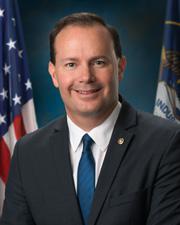 Sen. Mike Lee (R-UT)
Legislative Activity
Stay on top of the latest movement without scrolling through every action
Senate amendment not agreed to: Amendment SA 2100, under the order of 5/14/2012, not having achieved 60 votes in the affirmative, was not agreed to in Senate by Yea-Nay Vote. 12 - 86. Record Vote Number: 91.
May 15, 2012
View full timeline
Senate amendment not agreed to: Amendment SA 2100, under the order of 5/14/2012, not having achieved 60 votes in the affirmative, was not agreed to in Senate by Yea-Nay Vote. 12 - 86. Record Vote Number: 91.
May 15, 2012
Roll call votes on amendments in Senate: Amendment SA 2100, under the order of 5/14/2012, not having achieved 60 votes in the affirmative, was not agreed to in Senate by Yea-Nay Vote. 12 - 86. Record Vote Number: 91.
May 15, 2012
Senate amendment proposed (on the floor): Amendment SA 2100 proposed by Senator Lee.(consideration: CR S3146-3148, S3155; text: CR S3146)
May 15, 2012
Amendment SA 2100 proposed by Senator Lee. (consideration: CR S3146-3148, S3155; text: CR S3146) To phase out the authority of the Export-Import Bank of the United States and to require the President to initiate negotiations with other major exporting countries to end subsidized export financing programs.
May 15, 2012
Amendment SA 2100, under the order of 5/14/2012, not having achieved 60 votes in the affirmative, was not agreed to in Senate by Yea-Nay Vote. 12 - 86. Record Vote Number: 91.
May 15, 2012
Senate amendment submitted
May 10, 2012
Votes
1 roll call on this amendment
Text
Proposed
EXPORT-IMPORT BANK REAUTHORIZATION ACT OF 2012--MOTION TO PROCEED

Mr. REID. Mr. President, I move that the Senate proceed to Calendar
No. 396, H.R. 2072.
The ACTING PRESIDENT pro tempore. The clerk will report the motion.
The legislative clerk read as follows:

Motion to proceed to calendar No. 396, H.R. 2072, a bill to
reauthorize the Export-Import Bank of the United States, and
for other purposes.

Mr. REID. Mr. President, we are now on the motion to proceed to the
Export-Import Bank reauthorization bill. I ask unanimous consent that
the hour following my remarks and those of the Republican leader be
equally divided and controlled between the two leaders or their
designees, with the majority controlling the first half and the
Republicans the final half.
The ACTING PRESIDENT pro tempore. Without objection, it is so
ordered.
Mr. REID. Mr. President, at 11:15 today the motion to proceed to the
Export-Import Bank will be adopted, and there will be up to 2 hours of
debate on the bill, and there will be up to five amendments. At 12:30
the Senate will recess until 2:15 for our weekly caucus meetings. As
early as 2:15 there will be up to six rollcall votes in order to
complete action on the Export-Import Bank. There could possibly be five
votes as part of the order--I have been told they may not all be
offered--and then we will have final passage on the bill.

Measure Placed on Calendar

Mr. REID. Mr. President, H.R. 5652 is at the desk and due for a
second reading.
The ACTING PRESIDENT pro tempore. The clerk will read the bill by
title for the second time.
The legislative clerk read as follows:

A bill (H.R. 5652) to provide for reconciliation pursuant
to section 201 of the concurrent resolution on the budget for
fiscal year 2013.

Mr. REID. Mr. President, I would object to any further proceedings on
this issue at this time.
The ACTING PRESIDENT pro tempore. Objection having been heard, the
item shall be placed on the calendar.
Mr. REID. Mr. President, I am happy to announce that Democrats and
Republicans have reached an agreement to move forward with
reauthorization of the Ex-Im Bank legislation.
This bank helps American companies sell their products overseas and
hire workers here at home. It helped private companies add almost
300,000 jobs last year in more than 2,000 American communities. That is
why the labor groups, manufacturers, U.S. Chamber of Commerce, and many
other organizations have urged the Senate to move quickly to
reauthorize this bank, whose lending limit is just about to expire.
The second ranking officer at the chamber of commerce wrote to all
Senators yesterday.

Failure to enact this legislation would put at risk . . .
American jobs at 3,600 companies that depend on Ex-Im to
compete in global markets. . . . Because other countries are
providing their own exporters with an estimated $1 trillion
in export finance--often on terms more generous than Ex-Im
can provide--failure to reauthorize Ex-Im would amount to
unilateral disarmament and cost

[[Page S3138]]

tens of thousands of American jobs. China, for instance, has
three export credit agencies that last year provided $300
billion in export finance to its exporters--ten times more
than Ex-Im provided. This bill would help level the financial
playing field in export markets and ensure transparency in
Ex-Im's operations.

This is directly from the chamber of commerce.
This legislation helps American businesses export their products
instead of exporting jobs. Reauthorizing this important legislation is
the kind of consensus proposal that should not result in any kind of a
partisan fight. I spoke to Senator McConnell yesterday, and we made the
decision that this is the best way to move forward. I am hopeful that
the Senate will pass it overwhelmingly, signaling to American
businesses that Congress will do what it takes to help them compete in
the global market. But while Republicans say publicly that they support
this important measure, they have instead insisted on votes on a number
of amendments that would gut or even kill the bill.

The chamber of commerce will consider votes on this measure--and any
amendments that would weaken the bank--to be keys to determine whether
Senators are business-friendly. The extreme amendments offered by my
Republican colleagues would certainly weaken the bank. One amendment
just eliminates the bank. These kinds of amendments are unacceptable to
the business community.
The National Association of Manufacturers issued a similar warning
yesterday, which I read here on the floor. We agree, we can't afford to
give an inch to our global competitors. Canada, France, and India
already provide seven times the assistance to their exporters that
America does. China and Brazil provide 10 times the support.
So Senate Republicans are faced with a choice: They can continue to
support these extreme amendments that would effectively kill the
Export-Import Bank and risk the wrath of the American business
community or they can work with the Democrats to reauthorize this bank
without adding amendments that would undermine its ability to help
businesses grow. We have been told that the House is going to accept no
amendments. It was very hard for them to get done what they did. I
admire and appreciate what they did do. I am optimistic that my
Republican colleagues will make the right choice and help us defeat
these vexatious amendments.

Recognition of the Republican Leader

The ACTING PRESIDENT pro tempore. The Republican leader is
recognized.
Mr. McCONNELL. Mr. President, there is a lot of talk on the left
these days about the Senate being a dysfunctional institution. And they
are right. For the past few years, the Senate hasn't functioned as it
should. The question is, Why? In my view, the answer is quite clear: a
majority party that believes it should be able to dictate from above
the shape of every single piece of legislation we take up.
The common complaint from the other side, as I understand it, is that
because Republicans insist on playing a role in the legislative process
around here, we are somehow violating some unspoken rule that says
Democrats should always get their way, that we are somehow disturbing
the legislative harmony by suggesting we do the kinds of things our
constituents want. We have been dealing with this strange view of the
Senate in some form or fashion for 5 years but particularly over the
past 3.
Here is how it works. Following the lead of our very liberal
President, Democratic leaders in the Senate propose some piece of
legislation without any Republican input at all. Then Republican
amendments are blocked from even being considered. The point in most
cases is to draw Republican opposition and ensure that the legislation
fails. Democrats then cry obstruction as a way of distracting people
from the fact that they basically have given up on governing and done
nothing to ensure that our most pressing national problems actually get
addressed. Rather than working with us on bipartisan solutions that
reflect the concerns and input of our constituents and that therefore
have a good chance of actually passing, Democrats blame the other side
for obstruction--not only avoiding their own responsibilities as the
majority party but handing the President a useful election-year theme
on which to run.
What my colleagues and I have been saying for 3 years is that it
doesn't have to be this way. Give us an opportunity to play a role in
the process and we will work together on bipartisan solutions. Just
look at the record. When Democrats blocked all debate and amendments on
the Export-Import Bank legislation, it went nowhere. When they agreed
to our reasonable requests for input on the bill, that changed. They
could have accepted this offer, actually, much earlier, but they didn't
because it didn't fit the story line. The same thing on the postal
bill--when Democrats blocked all amendments and debate, the bill
stalled. When they agreed to a reasonable list of amendments, it
passed. The same could be said about trade adjustment assistance,
patent reform, FAA reauthorization, the highway bill, unemployment
insurance, the doc fix, the payroll tax holiday, and others. It is the
same story every time: Poisoned pills are removed, Republican input is
allowed, and then things happen.
Republicans have been crystal clear that the Export-Import Bank
reauthorization needed some work. Remember, Democrats tried to add it
as an amendment to the JOBS Act before the House reached the agreement
that enabled it to pass on a bipartisan basis over in the House. But,
again, they wanted to do it without giving Senate Republicans a chance
to debate or amend on the floor, so it didn't go anywhere. Now that we
are being allowed to offer further improvements to the bill, there is a
path forward. Republicans fought for the right to make this bill more
responsive to the concerns of the American people, who, understandably,
want proof that we take our fiscal problems seriously. This is how the
Senate is supposed to work, and it has been all too rare over the past
several years.
The Founders established the Senate as a place where issues would be
resolved through consensus and considered bipartisan debate, so that
once that consensus is actually reached, our laws would be stable and
we could move on, confident that we had done the right thing.
The Social Security Act of 1935 was approved by all but six Members
of the Senate. The Medicare and Medicaid acts of 1965 were approved by
all but 21. All but eight Senators voted for the Americans With
Disabilities Act of 1990. The idea in all these cases--and many
others--was that on issues of broad national importance, on issues that
affect all of us, one party shouldn't be allowed to force its will on
the other half of the Nation. Yet, over the past few years, Democrats
have felt quite differently.
So I am pleased today to see a departure from the Democratic standard
operating procedure on this particular piece of legislation before us.
Because they have agreed to allow a reasonable amendment process on
this bill--something they objected to last month and then objected
again even as recently as last week--this bill will be considered today
after debate and votes on amendments aimed at improving it.
There is a lesson here: When both sides have a chance to debate and
amend, legislation tends to move. But when the majority refuses any
ideas that they didn't come up with, things slow down. Let's hope this
new process will stick.

National Police Week

Mr. President, this week we commemorate National Police Week 2012 and
pay tribute to the men and women in the law enforcement community for
their service and their sacrifice.
In 1962 President Kennedy signed a proclamation which designated May
15 as Peace Officers Memorial Day and the week in which it falls as
Police Week.
During National Police Week, the Nation's Capital welcomes tens of
thousands of law enforcement officers to honor those who have fallen in
the line of duty. Among those visiting Washington are hundreds of
police officers from my home State of Kentucky, and I want to
personally welcome them and extend a special-thank you for their
service and sacrifice that they make to keep Kentucky's communities and
families safe. Your hard work and dedication is unmatched and does not
go unnoticed.

[[Page S3139]]

Today we honor the approximately 900,000 peace officers across the
country as well as the more than 19,000 officers who have lost their
lives dating back to the first known line-of-duty death in 1791,
including 163 officers who died in 2011 and 36 officers who have been
killed thus far in 2012. In addition, this year we are paying tribute
to 199 officers who died in previous years but whose acts of courage
and sacrifice were not discovered until recently.
It is with great sadness that one of those officers we lost last year
was from the Commonwealth--Officer James Philip ``Stumpy'' Stricklen of
the Alexandria, KY Police Department.
Officer Stricklen was well respected amongst his peers and a leader
within the community. He will be sorely missed.
This week the Nation honors Officer Stricklen, as well as all those
police officers that have fallen. I would also like to take a moment to
remember the families of the fallen. It is only through supportive
families that these men and women were able to dedicate their lives to
protecting others. May God continue to look after them and may God
continue to protect all those, whose daily work is to protect us.
I hope paying tribute to those who serve and especially those who
have paid the ultimate sacrifice reminds all of us of the heroes we
have all around us, keeping us safe, each day. I encourage everyone to
take a moment this week and going forward to extend a thank you to law
enforcement officers who have sworn to protect us and keep our
communities safe.
On behalf of myself and my Senate colleagues, thank you to all
members of the law enforcement community for your service. You have our
deepest admiration and respect.
I yield the floor.

Reservation Of Leader Time

The ACTING PRESIDENT pro tempore. Under the previous order, the
leadership time is reserved.
Under the previous order, there will now be 1 hour of debate equally
divided and controlled between the two leaders or their designees, with
the majority controlling the first 30 minutes and the Republicans
controlling the second 30 minutes.
The Senator from Illinois.
Mr. DURBIN. Mr. President, before I say a word about the Export-
Import Bank, I wish to speak as in morning business. I ask unanimous
consent to speak as in morning business.
The ACTING PRESIDENT pro tempore. Without objection, it is so
ordered.

Senate Procedure

Mr. DURBIN. Mr. President, the comments made by the Republican Senate
leader about the procedures in the Senate are comments I wish to speak
to directly.
First, perhaps to his surprise, let me say I agree with him. The
Senate is not what it should be. It is an important part of this
government, it is an important part of this Nation, and it should be an
important forum for the deliberation of critical issues that face us.
Historically that is the role it has played.
But what we have found over the last several years is that we have
lapsed into a new Senate--and not a very good one, from my point of
view. It is a Senate that is overrun with filibusters. Filibusters used
to be so rare, one or two a year in the early days and then maybe a few
more in the last 50 years, but now virtually every single week. The
filibuster is basically shutting down the Senate, saying that we will
not go forward to vote on a measure. It has been abused, overused and,
frankly, has denigrated the reputation of this important institution.
What are the points of view? The point of view of the minority was
well stated by the Republican leader. The minority wants an opportunity
to offer amendments. I know the feeling. I have been in the minority in
the Senate. It is your only opportunity to have a voice on the floor of
the Senate and to express a point of view that may not be reflected by
the President or the Senate majority. That is an understandable
impulse. The majority in the Senate is usually trying to move an
agenda--many times, in this case, the President's agenda--and, frankly,
does not want to see this slowed down by an onslaught of amendments.
There has to be a happy medium, and that is what we need to see.
The suggestion of the Senate Republican leader that the problem we
have with filibusters has to do with the fact, as he said it, that the
Republicans insist on playing a role in offering amendments is correct
to a point. But I might remind the minority leader, what happened last
week? We brought up the college student loan bill. The object was to
make sure the interest rate on college student loans did not double
July 1, from 3.4 percent to 6.8 percent--widely accepted, widely
endorsed by President Obama and by Governor Romney. How about that?
Both leading contenders for the Presidency said don't let this interest
rate double. You would think that would be an easy thing to accomplish.
What we offered on the floor to the Republicans was an opportunity to
bring up the measure and they could bring up their amendments to the
measure. That, I think, is what the Senate Republican leader just asked
for. How many Republican Senators voted with us to bring up the student
loan measure, subject to amendment? None. Not one. So this suggestion
that we are in filibuster because we do not offer an opportunity for
amendment overlooks what happened last week. The college student loan
bill offered ample opportunity to the Republicans to offer an
amendment, but they still refused to allow us to proceed to that
measure.
Here is what I suggest--perhaps a cooling-off period; perhaps that
both sides do sit down and try to work out something that is
reasonable.
Some can argue--and perhaps at times I have argued--that the Senate
should be an open forum, open debate of many different issues. But in
the interest of achieving things here in a reasonable period of time, I
suggest what Senator Reid, the Democratic leader, did on postal reform
was a good-faith effort to come to some kind of compromise with the
minority. If you will remember, Senator Reid came to the floor and said
we will accept relevant amendments to postal reform. We had quite a few
of them, if you remember. I think it was a healthy time. It was a rare
occasion, unfortunately, on the Senate floor, but it was a good-faith
offer by the Democratic leader. It gave the Republicans opportunity to
debate amendments. We debated them, we voted on them, and we passed
postal reform.
I think we need to find some commonality here, where we can offer to
the minority, whichever party is in the minority, the opportunity to
offer relevant amendments to a bill. That means, of course, it is an
amendment that relates to the subject matter of the bill. Two recent
examples show how far afield you can reach. Senator Blunt of Missouri
offered an amendment to the transportation bill on the subject of birth
control. Maybe there is some way you can link up transportation and
birth control but I will not go there. I will just say that was a
stretch to bring that issue to that bill, but he was given the chance.
The junior Senator from Kentucky tried on bill after bill, totally
unrelated to foreign policy, to offer an amendment on foreign aid to
Egypt. That shows how far you can stretch the opportunity to offer a
floor amendment.
As I said, there can be moments where we want to do that but as a
matter of course around here I hope we will try to find some common
ground. Wouldn't it be refreshing if the Senate floor was actually a
floor where amendments were offered, debate ensued, and a matter moved
to final passage instead of watching us lurch from one mind-numbing
filibuster to another? I have said it on the floor before, but a lot of
people with cable TV are complaining to the cable TV providers that
there must by something wrong with C SPAN, nothing is happening on C
SPAN. It is the Senate. And many times nothing happens because we are
lurching through filibusters.
Today we are going to move to the Export-Import bill.
President Obama challenged us back in 2010 to create jobs by doubling
exports of American-made products by 2015. It is a challenge to create
and develop new technology, to tap into new markets and create new
relationships, to more efficiently ship overseas our agricultural
products and manufactured goods. In 2010, exports supported more than
9.2 million American jobs. Every $1 billion in new exports sales
supports 6,000 additional jobs. By doubling exports, we have the
opportunity

[[Page S3140]]

to create millions of new jobs right here at home, jobs that could put
the millions of Americans still unemployed or underemployed back to
work.
Last year, Congress passed free trade agreements that will increase
exports and provide access to markets in South Korea and Panama for US
exporters. The South Korea Free Trade Agreement alone is estimated to
support 70,000 additional jobs by opening up Korea's $560 billion
market to U.S. companies.
Earlier this year, I introduced a bill with Senators Boozman and
Coons in the Senate and Congressmen Chris Smith and Bobby Rush in the
House that would boost U.S. jobs by increasing American exports to
Africa by 200 percent in real dollars over the next ten years. This
broadly bipartisan legislation takes common sense steps. The bill would
coordinate the various U.S. Government export efforts aimed at Africa,
make sure our Foreign Service Officers have appropriate training on
helping U.S. companies understand new markets, and ensure that our
Department of Commerce keeps a focus on Africa. And the bill makes a
change at the Export Import Bank--a bank which actually makes hundreds
of millions of dollars in profits for the American taxpayer.
Our bill empowers the Export Import Bank to be more aggressive in
countering concessional--or below market--loans being offered by China
and others to help their businesses crack into African markets.
You see this is a global economy and the competition from other
nations and industry is fierce. Our government should be helping our
businesses--and our workers--crack through to new markets where
American quality and standards are in high demand. This isn't corporate
welfare, it is smart business. It doesn't cost the American taxpayer
anything--in fact it generates jobs and funding. These are all steps
that will get us closer to meeting President Obama's challenge.
We have another opportunity to help U.S. businesses export more by
reauthorizing the Export-Import Bank that is set to expire at the end
of this month. The Export-Import Bank makes loans to firms exporting
American-made products. These loans allow businesses--including a large
number of small businesses--across the U.S. sell their goods to
businesses all over the world. The Bank makes money off of these loans,
money that is returned to the U.S. Treasury year after year. The bank
has a loan loss rate of less than 2 percent--a figure most banks would
envy.
It is estimated that the Export-Import Bank will return $359 million
to the United States Treasury in fiscal year 2013 alone, and according
to CBO the bank will return almost $1 billion over the next 5 years.
This money is used directly to reduce the deficit. The Export-Import
Bank is responsible for supporting 288,000 jobs at more than 2,700 U.S.
companies. Mr. President, 113 of these companies are located in my home
State of Illinois, and 80 of those are small businesses.
One of these companies is NOW Health Group in Bloomingdale, IL. This
company is a natural food and supplement manufacturer with more than
640 employees, 35 of which are supported by assistance from the Export-
Import Bank. According to NOW's Chief Operating Officer Jim Emme, ``The
flexibility in the payment terms we can offer through our Export Import
Bank policy has allowed us to grow our business in existing markets as
well as open new ones.'' NOW has grown its exports from 2 percent of
their overall business to more than 10 percent. They could not have
done this without the Export Import bank. There are thousands of
stories just like this all over the U.S.
The reauthorization increases the Bank's lending cap from $100
billion to $140 billion and authorizes the Bank through 2014.
Legislation reauthorizing the Export-Import Bank has received
overwhelming bipartisan support in the past. Similar legislation
reauthorizing the Bank received bipartisan support in the Banking
Committee and was reported out of Committee by a voice vote, and a
similar Export-Import Bank reauthorization was introduced by a
Republican back in 2006 and passed the Senate by unanimous consent.
I hope we can come to an agreement soon to quickly pass a bill to
reauthorize the Export Import Bank, a bill the House has already passed
with broad bipartisan support. This bill has support from labor
organizations such as the AFL CIO and the Machinists as well as the
U.S. Chamber of Commerce and the National Association of Manufacturers.
Mr. President, this is a bill that gives American corporations, large
and small, a fighting chance to build the products here in America and
sell them overseas, creating jobs right here at home. We live in a
world where China--most important China, but many other nations, have
government support for their businesses' exporting. This is our
government's support for our businesses to export. Boeing has its
national headquarters in Chicago and most of their manufacturing
operations in the State of Washington. Boeing is competing with Airbus.
Airbus is a product, a plane that is created by a conglomerate of
European nations which do their best to make sure that Airbus wins a
contract. I think it is not unfair that Boeing have the same
opportunity, nor Caterpillar in my State, nor many businesses much
smaller.
So the Export-Import Bank reauthorization is a good idea. It will
create jobs. The amendments being offered on the Republican side, by
and large, limit the opportunities to help American businesses. I will
be resisting those amendments. I hope we can move to passage of this
measure in a timely fashion.
I yield for Senator Lautenberg.
The ACTING PRESIDENT pro tempore. The Senator from New Jersey.

Confirming Judicial Nominees

Mr. LAUTENBERG. Mr. President, I rise to join with my colleagues on
this side to urge our colleagues on the other side of the aisle to move
quickly to confirm highly qualified judicial nominees. They passed
review by the Judiciary Committee. They passed all kinds of scrutiny.
We are on the verge of serious economic improvements. As that takes
place, we have a lot of parts to keep moving. We must do everything we
can to fill the positions that can help, directly and indirectly, to
resolve disputes or problems, to help Americans across the country to
find work, stay in their homes, provide their children with health care
and education. We have to cooperate on all fronts to accelerate the
pace of the recovery we see ahead of us.
One of the places both sides benefit is to keep our justice system
moving efficiently. People need to know they can get disputes resolved,
hopefully quickly, but heard and decided. One of the things that looms
large is the trial of those who are charged with felonious deeds,
criminal acts. Let's get those who are convicted finally punished if it
is called for. But let's make sure that part of our judiciary
functioning is moving as rapidly as it can be.
Property rights are at risk. Businesses need certainty about rights
and responsibilities. Unfortunately, delays in confirming qualified
judicial nominees who have passed the scrutiny of the Judiciary
Committee are threatening to grind the wheels of justice to a halt when
there are vacancies around. Nearly 1 in 11 judgeships across the
country is awaiting the position to be filled. If these positions were
physicians, firemen, cops, and 1 out of 11, almost 10 percent of these
jobs, were not filled, we would do something as rapidly as we could to
get them resolved. At this point in President George Bush's Presidency,
the Senate had confirmed 25 more judges than have been confirmed since
President Obama took office. These are seriously needed nominees who
have been forced to wait nearly four times as long as the Bush nominees
to be confirmed after being favorably reported, as I mentioned, by the
Judiciary Committee.
As a result, the vacancy rate is nearly twice what it was at this
point in President Bush's first term. These vacancies are not some
remote problems that only lawyers and academics care about. Judicial
vacancies affect the ability of everyday Americans and businesses to
see justice served, and countless of them have had their cases delayed.
I am encouraged that we have been able to confirm a number of
nominees lately, including two last evening. It is my hope that for the
good of the country we will pick up the pace in confirming nominees--
particularly as I see

[[Page S3141]]

it from our State's point of view. In our State of New Jersey we have
three distinguished nominees who have been approved by the Judiciary
Committee and are awaiting votes by the full Senate so they can get to
work fulfilling their obligation to dispense justice.
One of these people is magistrate judge Patty Shwartz, who has been
nominated to serve on the Third Circuit Court of Appeals. She passed
with flying colors with an examination of her background. She would be
the only woman from New Jersey serving as an active Third Circuit judge
and only the second woman ever to represent New Jersey on that court.
Her presence would tell women something important about our
understanding of where women are in our society. Since 2003 Patty
Shwartz has served as a U.S. magistrate judge in the District of New
Jersey, where she has handled 4,000 criminal and civil cases. She spent
almost 14 years as an assistant U.S. attorney, supervising hundreds of
criminal cases, including civil rights, violent crime, drug
trafficking, and fraud cases.

I review her qualifications only to make the case that this is a
person eminently qualified to sit on the bench. We need her presence
there to move the volume of cases that are awaiting review, and she is
bottled up here by reluctance on the other side. She passed the test.
Let's let her go to work.
John Lacey, past president of the Association of the New Jersey
Federal Bar, said that Judge Shwartz is ``thoughtful, intelligent, and
has an extraordinarily high level of common sense.''
Thomas Curtin, chairman of the Lawyers Advisory Committee for the
U.S. District Court of New Jersey, said:

Every lawyer in the world will tell you that she's
extraordinarily qualified, a decent person, and an excellent
judge.

The American Bar Association clearly agrees. They gave her the
highest rating of unanimously ``well qualified.''
Judge Shwartz graduated from Rutgers University with the highest
honors. She received her law degree from the University of Pennsylvania
Law School, where she was editor of the Law Review and was named her
class's Outstanding Woman Law Graduate.
The two nominees for New Jersey's district court are similarly well
qualified.
Kevin McNulty currently leads an appellate practice group in New
Jersey. He spent more than a decade in the U.S. Attorney's Office in
New Jersey, rising to the Deputy Chief of the Criminal Division and
Chief of the Appeals Division.
Mr. McNulty clerked for U.S. district judge Frederick B. Lacey after
receiving his law degree from New York University, where he was a
member of the Law Review, and his undergraduate degree came from Yale
University. He was named Lawyer of the Year in 2008 by the New Jersey
Law Journal, and the ABA rated him unanimously ``well qualified.'' I am
confident that his work as a judge will earn him similar praise.
Judge Michael Shipp, yet another appointee, has equally impressive
credentials. As a U.S. magistrate judge in the District of New Jersey
since 2007, he has conducted proceedings in both civil and criminal
cases, including ruling on motions, issuing recommendations to district
court judges, and performing district court judge duties in cases with
magistrate jurisdiction.
Judge Shipp previously worked in the New Jersey Attorney General's
Office as assistant attorney general in charge of consumer protection
and then as counsel to the attorney general, where he ran a department
of 10,000 employees.
He has also worked as a litigator at a distinguished law firm,
Skadden Arps, and as a law clerk to New Jersey Supreme Court Justice
James Coleman, Jr.
Judge Shipp is a graduate of Rutgers University and Seton Hall
University Law School, where he continues to teach as an adjunct law
professor--a position he has held for more than a decade.
I review the qualifications of these judges to remove any doubt about
whether they could do a good job. They can do a great job. Their
backgrounds say they are ready to go to work, and here we are, frankly,
seeing them held up, in my view, unnecessarily. Let's get this behind
us. There are things on which we can cross the aisle without invading
the province of the other Members, and I think we just ought to
cooperate on judges. I think I can speak for the Democrats here that we
will cooperate. We will consider the judges who are presented from
their side, but we want to just get going with judges altogether.
I thank Chairman Leahy and Ranking Member Grassley for moving these
nominees through the Judiciary Committee, but now it is time to bring
them to the floor and confirm them. Judge Shwartz, Mr. McNulty, and
Judge Shipp have brought honor to New Jersey and to our country, and
they deserve to be confirmed. More importantly, the American people
deserve to see these vacancies filled so the promise of justice for all
can truly be fulfilled.
I yield the floor.
The ACTING PRESIDENT pro tempore. The Senator from Ohio.
Mr. BROWN of Ohio. Mr. President, I wish to continue to emphasize the
remarks Senator Lautenberg made. I have not been here that long, but
what I have seen happen in the last 2 or 3 years where judges appointed
by the President of the United States are slow-walked or just ignored
or blocked in this body is just outrageous.
In 2007, during my first month in office, I was presented with a
Republican judge, coming from a Republican President, approved by my
predecessor, Senator DeWine, and my colleague, Senator Voinovich. I met
with her, talked with her, and I sent my approval to the Judiciary
Committee. She was confirmed in the second or third month I was here,
because I believe the President of the United States should have the
right to choose judges as long as they are qualified. That is why I ask
that we move forward on these judicial nominations.
In June 2010 U.S. district judge James Carr took senior status,
creating a vacancy in the Northern District Court in Toledo, OH. That
means that Ohioans seeking criminal or civil justice have to wait,
which creates a backlog of too many cases. That is what we have seen
happen.
In 2007 Senator Voinovich, a Republican, and I assembled a commission
of distinguished Ohio lawyers to find the best candidate for the job.
It wasn't in 2007; it was later than that. In 2009 there was a
President from a different party, so we updated the commission. This
commission, appointed by Senator Voinovich and myself, consisted of
legal professionals from the Southern District of the State to suggest
nominations for the vacant judgeships for the Northern District of the
State. We did the reverse, with lawyers from the north choosing for the
Southern District, to make sure there was not a conflict of interest.
This commission was very bipartisan. One of them had a Republican
majority, one of them had a Democratic majority.

Following Judge Carr's retirement, the commission made a selection. I
interviewed three nominees, sent those names to the President, and then
the President nominated Jeffery Helmick. Jeffery Helmick is a Toledo
native, a brilliant and distinguished lawyer who has earned the respect
of his colleagues for doing his job well. Yet for nearly 2 years his
nomination has languished. For nearly 2 years he has had to place his
defense practice and life on hold, awaiting Senate confirmation. This
is no way to treat a public servant.
According to the U.S. Constitution, it is our job to confirm
qualified nominees to serve on our Nation's highest court. But as of
April of 2012--Senator Lautenberg mentioned this, and Senator Nelson
from Florida will in a moment--there are 81 judicial vacancies
throughout the United States. In my State of Ohio, the court is saying
there is a judicial emergency. The nonpartisan Administrative Office of
the Courts, the nonpartisan agency charged with running our Federal
courts, recently declared a judicial emergency for the Northern
District of Ohio.
Mr. Helmick has the enthusiastic support of all of the Federal judges
in Toledo, including those appointed by Republican Presidents, was
recommended by a bipartisan process created by Senator Voinovich and
me, and yet his nomination is still stuck even though there is a
judicial emergency and even though he was approved in a bipartisan
manner by the Judiciary

[[Page S3142]]

Committee. The result is that litigants in the Northern District are
experiencing delays in having their cases resolved. In too many cases,
justice conferred--as the saying goes--can be just denied.
Our Nation's courts have been a beacon of hope--sometimes, not
always--for the vulnerable and the powerless, but this confirmation
delay clogs our courts, obstructs justice, and damages our democracy.
Maybe some people are playing political games by slow-walking these
judges. In the end, they might think it is cute, funny, and they might
think they gain politically from it, but it does obstruct justice, it
does clog our courts, and it does damage our democracy. So it is not
cute, it is not funny, and it is not worthy of any political gains in
this Chamber.
Jeffrey Helmick will make an outstanding judge on the U.S. District
Court for the Northern District of Ohio. We need to confirm him, and we
need to confirm him this month before Congress breaks.
I yield the floor.
The ACTING PRESIDENT pro tempore. The Senator from Florida.
Mr. NELSON of Florida. Mr. President, I ask unanimous consent that
the time on the Democratic side be equally controlled by myself and
Senator Levin.
The ACTING PRESIDENT pro tempore. Without objection, it is so
ordered.
Mr. NELSON of Florida. That would mean how many minutes?
The ACTING PRESIDENT pro tempore. There is 6\1/2\ minutes remaining
for the majority.
Mr. NELSON of Florida. For the total?
The ACTING PRESIDENT pro tempore. That is correct.
Mr. NELSON of Florida. Then I will speed up my remarks until I see
Senator Levin come in.
Mr. President, I, too, wish to talk about the vacancies. There is no
sense for all of this slow-walking. Fortunately in Florida we have a
process that takes the politics out of the selection of judges. The two
Senators appoint a judicial nominating commission of prominent people
all over the State, and they do the interviews and they do the
selections of at least three for each vacancy. Because they do this in
a nonpartisan way--notice what I said. I didn't say ``bipartisan,'' I
said ``nonpartisan way,'' which is the way the selection of the
judiciary ought to be done. Because they do that in a nonpartisan way,
all three of the nominees who come to the two Senators--any one of them
can be a Federal judge because they are all so qualified.
Fortunately, with the agreement we have with the White House, the
President can name whomever he wants. He agrees to accept the nominee
and make his pick from among the three we send him if we approve all
three after the two Senators have, in fact, gone through and
interviewed them. So we have a process. Why should there be a delay on
judges like that? There absolutely shouldn't.
For example, take one of our Federal judges. Judge Jordan was
elevated by the President to the Eleventh Circuit Court of Appeals
unanimously out of the Judiciary Committee. At the end of the day, he
won on this Senate floor 94 to 5, but he was held up for 4 months. Why?
There is too much gamesmanship and partisanship in the process, and
particularly coming out of a State such as Florida where it is
nonpartisan in the selection of judges.
We have two vacancies in the Southern District and two vacancies in
the Middle District of Florida right now. One of the judges is up on
the docket. Two others have just come through and had their hearing in
committee. The fourth is being vetted by the White House. Let's go on
and get approved these judges where there is no controversy.
I see my colleague from Michigan is here. I will turn the remainder
of my time to him.
I yield the floor.
The ACTING PRESIDENT pro tempore. The Senator from Michigan.
Mr. LEVIN. Mr. President, Members of the Senate have a duty and
obligation to carefully consider the votes we take on nominations to
the Federal courts. Our Constitution has established a judicial branch
with vitally important responsibilities and with considerable
independence from the other branches of government. The Founders were
right to do so. They were also right to give this body a say on
nominations to that independent branch. It is the one chance that the
people, through their elected representatives, have to influence the
makeup of the Federal courts.
I do not begrudge any Senator the right to carefully question
judicial nominees, to carefully weigh their qualifications, and to
exercise their best judgment as they exercise their responsibilities
that the Founders assigned to the Senate.
The question we must all answer is this: When do careful
consideration and the exercise of good judgment become damaging delay?
For just as we can fail to serve our constituents by failing to
properly scrutinize judicial nominees, we can fail to serve them by
failing to act on these nominations after there has been sufficient
time for the Judiciary Committee and the Senate to scrutinize them.
Today nearly 1 in 10 Federal judgeships is vacant. Roughly half of
all Americans live in judicial districts or circuits in which the
Federal courts have declared a judicial emergency, meaning according to
the standards established by the Supreme Court, residents face the
prospect of unacceptable delays in having cases heard because vacancies
have led to a troubling backlog of cases.
It is a precept of Western judicial thought that justice delayed is
justice denied; that even a correct verdict can be without justice if
it comes too late to matter to the parties involved, especially if that
delay is not justified by the circumstances or the complexity of the
case.
The dangers for our Nation in these judicial emergencies are great:
First, that Americans may be robbed of justice by unjustified delay;
second, that Americans may come to doubt that the courts are capable of
dispensing justice because they cannot function effectively; and,
third, that in seeking to clear the growing backlog of cases the courts
may rush to judgment and may fail to apply the rigor that Americans
expect and deserve.
Mr. President, I ask unanimous consent I be allowed to proceed for an
additional minute.
The ACTING PRESIDENT pro tempore. Without objection, it is so
ordered.
Mr. LEVIN. The Judiciary Committee has favorably reported 17 judicial
nominations that are now awaiting votes on the floor of the Senate.
There is no question that the wait for many of the judicial nominees of
President Obama has been unacceptable. Under the previous President, at
this point in his term the average district court nominee waited 22
days from favorable report by the Judiciary Committee to Senate
confirmation. The average circuit court nominee waited 28 days.
By contrast, the average district court nominee under President Obama
has faced a wait of 97 days, and the average for circuit court nominees
is 138 days. Yet the vast majority of these nominees are not
controversial. They enjoy bipartisan support. We should move quickly to
confirm these nominees who have been receiving bipartisan backing,
particularly, and to review, debate, and act as expeditiously as we can
on the small number of nominations about which there is some debate.
There is a great deal of discussion about which party is to blame
about the ever-slower pace of judicial nominations. I have my own
strong beliefs on that question. Our constituents are best served not
by arguing over blame, but by our exercise of the responsibility the
Constitution bestows upon us. I simply ask all of my colleagues to
consider on each of these nominations the damage done by delay and
inaction, and to carefully consider the threat to justice from the
growing crisis of delay in our courts. We can and should act promptly
on the 17 nominees on the calendar.
I yield the floor.
The ACTING PRESIDENT pro tempore. The Senator from Nebraska.
Mr. JOHANNS. Mr. President, I ask unanimous consent to enter into a
colloquy with my Republican colleagues: Senators Kyl, Coburn, Isakson,
and Heller for up to 30 minutes.
The ACTING PRESIDENT pro tempore. Is there objection?
Without objection, it is so ordered.

[[Page S3143]]

The Budget

Mr. JOHANNS. Mr. President, I rise today with my colleagues to talk
about something I think is an issue that without a solution will affect
every single aspect of life in our country. I am speaking about our
debt crisis, the impending fiscal cliff, and the lack of a budget to
address those issues. As I said, I am very pleased to be joined by my
colleagues to talk about this issue.
Unfortunately, for whatever reason, the Senate has lacked the will
and the leadership to fulfill what I consider its most basic
legislative function: writing and adopting a budget resolution. That
has gone on for more than 3 years.
While I understand we are rapidly approaching the time where
Presidential politics will consume the entire agenda, the U.S. national
debt is also rapidly approaching a significant milestone: $16 trillion
worth of debt. We should look no further than Greece or Spain to see
what this level of debt would do to an economy if it goes unchecked.
There are so many frightening statistics, but here is one: America's
per capita national debt already significantly outpaces that of Greece
or Spain. So as we watch them spiral further into crisis, we should be
jolted into action by the very suggestion that our debt is equally as
alarming. Yet we are unable to pass a basic budget resolution to get
our spending in check. That constitutes a lack of leadership.
As I said, I have many colleagues here today who can talk about a
better approach. I would like to start today with Senator Johnny
Isakson.
Senator Isakson has spent his career working on budget issues.
I say to Senator Isakson, what is the impact of no budget resolution
for 3 years? Is there a better way? Is there a better way to approach
the budgeting process than what we are dealing with now?
Mr. ISAKSON. I thank the Senator from Nebraska for the question and
for his service. As a former Governor of the State of Nebraska, he
knows full well the responsibility we have in terms of budgets. But I
will tell you what the impact of no budget for 3 years is, no
discipline for 3 years. The result of no discipline for 3 years is we
spend $10.4 trillion without a budget.
I do not know how good you are with your memory, I do not know how
good I am with mine, but if I do not have a budget or a guidepost to go
by, and I am spending $10.4 trillion, I am making big mistakes. I am
making big mistakes not with my money but with the money of the people
of the United States of America.
Last night I did a telephone townhall back to Georgia. At one time we
had a little over 3,200 callers on the line. Question after question,
with a very simple question: How can you guys operate without a budget?
Why can't you get a budget? Why can't you bring a budget to the floor.
The fact is it is because our budget requirements cast out 10 years
of planning for taxes, 10 years of planning for expenditures, 10 years
of planning for the government. A lot of people just do not want us to
know what their plans are for the next 10 years.
But every American family in this county has had to sit around their
kitchen table, reprioritize their expenditures, and budget what income
they have because of difficult economic times. The government should
ask of itself only what it forces upon all of its people.
I have a suggestion to consider, a suggestion that 20 of our 50
States practice. Forty percent of our State governments now have a
biennial budget. It is a proposal that has been before this body for
years. I am proud to be the cosponsor with Senator Jeanne Shaheen from
New Hampshire. It is a budget process and a discipline that ends this
no budget and also memorializes the most important thing we need to do
and the least thing we do in this body; that is, oversight.
The biennial budget proposes we would do our budgeting in odd-
numbered years and our appropriating in odd-numbered years and do it
for a 2-year period rather than a 1-year period. Then, in the even-
numbered year--an election year--we would do oversight of spending. We
do not ever do any oversight.
The best oversight person in the Senate sits to my right. His name is
Tom Coburn. He is going to be the closing act in this colloquy. He is
going to show some pictures that cast a lot more than 1,000 words about
the duplication of expenditures in this government, primarily because
we have no oversight and we have no discipline. We go back at
appropriations year after year after year but never look at justifying
what we spent in the year before.
So to the Senator from Nebraska, I say to the people of Georgia and
the people of the United States, I want to expect of myself and our
government at least what is mandated upon you. I want us to begin to be
accountable for our spending and hold accountable those who spend that
money. I want us to do our appropriations in a balanced way, in a
disciplined way, and never again go 1,000 days without a budget, never
again have $10.4 trillion of spending without a budget, never again
look the American people in the eye and say: I, as your government, am
not willing to do what you must do.
It is absolutely time we stop the redundancy, start prioritizing, and
start conducting oversight. When we do that, America will be better
off, our fiscal policy will be better off, our debt and deficit will
come down, and we will return to those days all of us yearn for, with
better prosperity and absolute accountability.
I thank the Senator from Nebraska for giving me the opportunity to
expound on the biennial budget.
Mr. JOHANNS. Mr. President, I thank Senator Isakson.
Senator Isakson referenced my time as Governor of Nebraska. But I
speak on behalf of all Governors. The Governor has to deliver a budget.
In Nebraska, we used a 2-year budget, and that is what makes me proud
to cosponsor the Senator's idea. It is the right approach. It simply
says we are going to do our very best to get a budget passed and do the
oversight necessary to make sure that budget is working.
So I compliment the Senator on his idea. It is definitely a better
way forward.
Let me, if I might, now turn to Senator Kyl.
I say to Senator Kyl, when I was Governor I always had the first shot
at delivering a budget. I would deliver it. I would do the State of the
State Address. It was not that much different from the way it is done
in Washington, with the President's February budget proposal. The State
of the Union Address coincides with that.
With my budget--and I think most Governors would say this--even when
there was real arm wrestling with the legislative process, I always
believed I would get about 90 to 95 percent of my budget proposals
across the finish line. It was a serious proposal. There were no
gimmicks. It was a balanced budget. It did not borrow money to balance
the budget.
I say to the Senator, how do you regard the President's budget
submission these last years, and why isn't it getting more support in a
bipartisan sort of way?
Mr. KYL. Mr. President, I say to my colleague, first of all, I will
repeat what Senator Isakson said. As a Governor, you had to balance the
budget. You know how to do it. You understand the importance of it. I
appreciate the Senator's work on this colloquy today in that regard.
I would note that my own State of Arizona just concluded its work on
a budget. It was hard. The Governor had her proposals. The State
legislature did its work. It was hard slogging because they had to make
tough decisions, but they did. Just last week, they finished the budget
in the legislative session.
Families have to do it, States have to do it, but here in the
Congress now, under the Democratic control of the Senate, for 3
straight years there has not been a budget.
As the Senator knows, however, the President submits a budget each
year. Last year, his budget was, frankly, met with derision from
pundits, from experts, and from economists who said it was not a
serious proposal. I looked up the number. Last year his budget was
rejected 97 to 0 in the Senate.
So what about this year? Well, the same thing. It was not a serious
effort. It was a political document. Everybody could see it. So they
put it to a vote in the House of Representatives. It was defeated 414
to 0. Not a single Democrat voted for the President's budget. They
understood it was not serious.
Well, we will have an opportunity to vote on the President's budget
again

[[Page S3144]]

this afternoon, and I expect the same fate. Why? Well, three quick
points.
First of all, it accelerates our path to national bankruptcy. It
fails to address entitlement spending. It has a slew of job-killing tax
hikes. And it does nothing to effectuate even the President's own
deficit reduction committee plan for reducing the deficit.
Just a couple of numbers: It contains a whopping $1.8 trillion tax
hike on individuals, small businesses, investment, and family-owned
farms. Think about the job-killing nature, the wet blanket that puts
over our economy--a $1.8 trillion tax hike. This comes on top of the
tax hikes that are already embedded in ObamaCare, which will extract an
additional $4 trillion from the private sector by 2035 according to the
Joint Economic Committee. Even with this tax hike, the President's
budget would increase deficits by nearly $6.4 trillion over the next
decade.
Now, you stop and think: Wait. Aren't the tax hikes supposed to be
there in order to balance the budget? Well, you would think so. But
under the President's budget, notwithstanding all of the new revenue
from taxes, it increases the deficit by nearly $6.4 trillion, and it
would spend a staggering $45.4 trillion during the period of the
budget, which is $1.2 trillion higher than the Congressional Budget
Office baseline from last March.
I know these statistics are mind boggling, and I hate to cite them.
But you do need to back up what you are saying with the actual data.
That is the point. The President's budget is a job killer, it increases
taxes, and it still never balances.
I would point out that under his budget, while spending would reach
23.5 percent of the economy this year, and never get below 22 percent
of GDP over the next decade, the historical average is much lower: 20.8
percent of GDP.
So bottom line, the President's budget would lock in the fourth
straight year of deficits above $1 trillion, and even though the
President--and here is what the President said--he promised to ``cut
the deficit in half by the end of my first term. . . . ''
Well, the President's budget would never balance notwithstanding the
huge tax increases. That is what is wrong with the President's budget.
It is why it is not going to pass today. It is why it did not pass last
year.
Mr. JOHANNS. Very clearly this body is saying, the Senate and the
House of Representatives, when they vote on the President's budget,
they are saying very clearly: The President's budget spends too much,
it taxes too much, and it borrows too much. It does not solve any
problems.
I think actually that is the very clear unanimous message at this
point from these bodies. This is not a serious budget proposal.
Mr. KYL. If I could add one other item to what my colleague said, we
all know the big problem is spending on entitlements, the so-called
mandatory spending. Well, the only thing mandatory about it is that it
has to be spent unless we say something different. But we do not have
the courage around here to reform our entitlement programs to the point
that they are going to be available for at least our kids by the time
they retire, and in some cases they may not even be available for some
of us.
The other thing I would want to say about the President's budget is
it continues this glidepath to insolvency for Medicare, which the
recent Trustees Report says has an unfunded liability of $26.4
trillion. So in addition to spending too much, taxing too much, and
borrowing too much, it does not do anything about the biggest problem
we have, which is the broken entitlement programs that are not going to
work for the people who are currently anticipating they will be there
for them when they retire.
Mr. JOHANNS. Senator Kyl makes an excellent point. If I could call on
my colleague, Senator Coburn, who, as much as any Member of the Senate,
has been the watchdog when it comes to spending and programs that
duplicate each other, he has been the person who oftentimes has stood
on the Senate floor alone and pointed out to everybody how much waste
there is in the Federal Government.
Senator Coburn has been a great leader. He was on the fiscal
commission, a member of the original Gang of 6. I would like to hear
his views on the budgetary mess we find ourselves in now.
Mr. COBURN. Well, let me, first of all, I thank my colleague. I have
a couple of charts that are oversized. The reason they are oversized is
because we cannot get it all on one chart. I would ask unanimous
consent to display those charts.
The ACTING PRESIDENT pro tempore. Without objection, it is so
ordered.
Mr. COBURN. What most people do not realize is the Federal Government
is now twice the size it was in 2001. Think about that. We are spending
twice as much money as we did in 2001. As a matter of fact, if we go
back 15 years, our deficit this year is bigger than what our entire
budget was. That is how out of control the Federal Government is.
There is a political reason we are not having a budget. Everybody
understands that. Nobody is going to say that. The political reason no
budget was proposed and run through the Senate to create a conference
committee with the House is because we do not want to make the hard
choices in an election year.
Budgets for families are about making hard choices, and yet here we
are supposed to represent leadership in our country. We refuse to make
hard choices about the direction.
I had the great opportunity to speak with some members in the War
College class not long ago. We got into talking about budgets. They
said: Do you realize how difficult it is for us to try to spend money
when you send us a continuing resolution, and we do not know about it
until 10 days before it is going to take effect, how difficult it is
for us to try to manage in a prudent way the money that the Federal
Government spends when we have no budgetary guidelines? There is waste
out the kazoo when you ask us to do that.
So regardless of the fact that there is a law that says we will pass
a budget, which has been totally ignored by the majority leader, the
consequences of that are tremendous. What most people talk about is how
do we get out of the problem. What I would put forward in terms of our
budget, there is not a problem in front of our country we cannot solve.
What we lack is leadership to pull us together as Americans to say:
Here is the problem. Here are the solutions. Let's find a compromise in
the middle for the solution, and let's solve our problem. We have
refused to do that. But, most importantly, we refuse to look at
ourselves.
I have a couple of examples. The GAO put out its second annual
report--- the first one was last year, the second annual report this
year--in terms of duplicative programs. We have had amendments on this
floor fail routinely that said we ought to know what we are doing
before we pass another bill. We ought to know what is already out
there. That has been rejected by my colleagues.
But I am going to show charts that show how ridiculous we are in
terms of how we are well meaning but absolutely stupid in terms of how
we address problems that we perceive is the Federal Government's role.
The GAO put out a list of duplications. I am just going to read a few
of them. I have given speeches on the floor on others, but there are
209 different programs--209 different programs in the Federal
Government for science, technology, engineering, and math initiatives
for our educational system. We spend $3 billion a year on that.
The overlap is unbelievable. Here is the chart that shows all of the
different programs with all of the different agencies involved, all of
them overlapping, most of the money wasted in terms of how we spend it
because there is no concentration, there is no coordination, and what
we have is a ridiculous array--not that it is wrong to want to have
more science, more technology, more engineering, and more math
students. But we are spending all the money on the bureaucracy when we
could have five programs: one for upper level, one for lower level, one
for minorities, one for disadvantaged, and one for others. Here is the
complex. It is mind boggling how many programs we have, and there is
not a metric to measure whether any one of these is effective. That is
$3 billion a year.
We could have one-tenth as many programs and spend one-half as much

[[Page S3145]]

money and have more students come out with science, technology,
engineering, and math backgrounds. But we have decided to do it
piecemeal and never do the oversight and never consolidate. If we
wanted to get out of a $1 trillion deficit, we do it $1 billion at a
time, not do it with $1 trillion at a time.

The other program, which is even more difficult to ascertain, is in
the Department of Justice grants. Let me go through those just for a
second. There are 253 duplicative programs in the Department of
Justice. We spend a total of $3.9 billion a year, and here is what the
GAO tells us. People who apply for one grant in DOJ--for one thing--
turn around and apply for it somewhere else for exactly the same thing.
The Department of Justice does not know they just gave them two grants
for exactly the same thing because there are so many different grant
programs and nobody is watching the store.
So the point is nobody would run their household this way. No
business would operate this way. States that are successful do not
operate this way. The reason we do this is because we do not have a
budget and we do not have any oversight and we are not minding the
store. The way to change what is coming for our country is to start
doing everything that is necessary to address the problem.
And the problem is this: We are spending money we do not have on
things we do not need, and nobody in Congress wants to do the hard work
of ferreting out what works and what does not and making the hard
choices because every one of these programs has a constituency.
So the parochialism and the constituency and short-term thinking we
are now bound up in keeps us from saving ourselves. Last quote, and I
will finish with this: John Adams said, ``There has yet to be a
democracy that did not murder itself.'' We are on that way if we do not
change direction. It is not a Democrat-Republican problem. It is all
our problem. It will not matter what our political persuasion is when
we face the very difficult coming times if we do not respond with a
cogent budget for this country.
Mr. JOHANNS. I thank the Senator. We look at those charts and reach
the conclusion, inescapably, if we do not start doing oversight and
start figuring this out, we are not going to solve this problem. My
colleague's reputation as a watchdog of the Federal Government is well
earned.
Let me now turn to my colleague, Senator Heller. Senator Heller
brings great experience. He might be the newest Member of the Senate--I
think he is--but he has great experience on the House side. He has seen
how the budget process works there. He now has some experience on the
Senate side. The Senator sees the lack of a budget process.
I would like him to offer some thoughts on what is broken and what we
might do to fix this.
Mr. HELLER. I thank the Senator from Nebraska for yielding time and
also those from Oklahoma and Arizona for this colloquy that we are
having today and the ability to talk about issues that, frankly, the
other side will not talk about--in fact, their conspicuous absence
today on the other side is clear of the depth of their budget.
As we have heard, we have not had a budget for the last 3 years. So I
rise today in support of a serious debate concerning the direction of
our Nation. Three years have passed since Congress adopted a binding
budget resolution. In this light, I respectfully submit that the
American people do not believe that today's debate is serious. They
know the Senate is not going to adopt a budget; once again it will
ignore one of the most basic and important jobs of Congress.
What the Senate is doing this week could be considered political
comedy if the stakes were not so high. In fact, the fact is this is not
a serious discussion.
In May of last year, the majority leader stated: There is no need to
have a Democratic budget, in my opinion. It would be foolish for us to
do a budget at this stage. As early as February of this year, it was
stated by the majority leader that there is no need to bring a budget
to the Senate floor this year.
If that is the case, this week's debate is nothing more than a
political sideshow, and the American people are tired of it. Ever
wonder why the approval rating of Congress is so low? They hate
Washington because it spends its time on stunts like this instead of
working together for the good of the country; pushing votes for
campaign press releases instead of solving problems.
The bottom line is if Congress does not do its job, then its Members
should not get paid. That is exactly what I have proposed with the No
Budget, No Pay Act. The American people know in an election year too
many of their representatives in Washington are afraid of the tough
choices that would help get our Nation on a path of fiscal sanity.
Most of the people watching the so-called budget debate will witness
exactly what they have come to expect from Washington: the Republicans
blaming Democrats, Democrats blaming Republicans. At the end of the
day, all we will have accomplished is filling another page in the
Congressional Record.
Unfortunately, Americans will face the same fiscal disasters they did
before this debate. Unless we change course, Federal spending per
household is projected to rise to $34,602 by the year 2022, a 15-
percent increase in one decade.
The government's own actuaries tell us Medicare is going bankrupt in
10 years, Social Security one decade later. Both sides should be
willing to come together to strengthen and preserve these programs for
future generations instead of simply ignoring the problems because it
is inconvenient in an election year.
Our national debt will reach $16 trillion before the end of the year.
The Federal Government's unfunded obligations will total some $100
trillion. Yet there will be no budget this year, just like there has
been no budget for the past 3 years. We cannot look beyond the beltway
and say this failure of leadership has not had tremendous impact on the
people we represent.
National unemployment has registered above 8 percent for the last 38
months. Nevada has led the Nation in unemployment for more than 2
years. Almost everyone I speak to in Nevada--businesses, job creators,
elected officials, and families--speaks of the uncertainty that has
characterized their lives in this economy.
We are not moving forward as a Nation, and it is no surprise to these
no-nonsense folks. They know from everyday life in their businesses and
in their households that you cannot move forward without a plan. When
Americans look to Washington, they see no meaningful proposal, no
viable plan, and no progress.
There are those who claim the Budget Control Act is a budget, and I
strongly disagree. This bill does not establish priorities or a path
forward for our Nation as a real budget should. It does not provide
certainty, nor does it address many of the pressing fiscal problems we
have today. If the Budget Control Act were truly a budget, there would
be no need for this discussion today. It is past time for Congress to
hold itself accountable.
That is why I have advocated my No Budget, No Pay Act for nearly a
year. My legislation calls on the House and Senate to pass a concurrent
budget resolution and the regular appropriations bills before the
beginning of each fiscal year. Failure to do so would result in the
loss of pay until we take our jobs seriously and make these bills our
legislative priority.
The Congressional Budget Act of 1974 already requires Congress to
pass a budget by April 15. My bill creates an enforcement mechanism to
further encourage Members of Congress to do their constitutional duty.
I have spoken on this floor previously about No Budget, No Pay, but I
believe now is the time to consider whether we are willing to make this
promise to our constituents. I believe it is more important now than
ever because the American people are increasingly losing confidence in
Congress and its ability to deliver solutions.
No Budget, No Pay is not a silver-bullet solution to our Nation's
fiscal challenges, but it would indicate that we are hearing the
concerns of the American people and are willing to participate in the
dialog necessary to get our country moving again.

[[Page S3146]]

I am pleased that 10 of my Senate colleagues have cosponsored this
important effort, and others have expressed support for No Budget, No
Pay on the Senate floor. I am especially grateful to Senators Lieberman
and Collins for holding a hearing to discuss No Budget, No Pay as a
meaningful proposal that would help hold Congress accountable to the
American people. This bipartisan bicameral proposal is worthy of the
Senate's time if we are serious about regaining the trust of the
American people whom we are supposed to be representing.
My colleagues, our Nation can literally no longer afford to survive
on sound bites and press releases about the importance of budgeting. We
need to engage in the serious business of budgeting for our Nation's
future. That work should start today. Sadly, I simply don't believe we
will make the tough choices necessary until Members of Congress have
more skin in the game. I will continue calling for the adoption of the
No Budget, No Pay Act.
The PRESIDING OFFICER (Mr. Manchin). The Republican time has expired.
The PRESIDING OFFICER. Under the previous order, the Senate agrees to
the motion to proceed to H.R. 2072, which the clerk will report.
The assistant legislative clerk read as follows:

A bill (H.R. 2072) to reauthorize the Export-Import Bank of
the United States, and for other purposes.

The PRESIDING OFFICER. Under the previous order, there will be 2
hours of debate equally divided between the two leaders or their
designees.
The Senator from Utah is recognized.

Amendment No. 2100

Mr. LEE. Mr. President, I ask unanimous consent that we move to
amendment No. 2100 to H.R. 2072.
The PRESIDING OFFICER. Without objection, it is so ordered.
The clerk will report.
The assistant legislative clerk read as follows:

The Senator from Utah [Mr. Lee] proposes an amendment
numbered 2100.

Mr. LEE. Mr. President, I ask unanimous consent that reading of the
amendment be dispensed with.
The PRESIDING OFFICER. Without objection, it is so ordered.
The amendment is as follows:

(Purpose: To phase out the authority of the Export-Import Bank of the
United States and to require the President to initiate negotiations
with other major exporting countries to end subsidized export financing
programs)

At the appropriate place, insert the following:

SEC. __. TERMINATION OF EXPORT-IMPORT BANK OF THE UNITED
STATES.

(a) One-year Extension of Authority.--Notwithstanding any
other provision of this Act or any other provision of law,
the authority of the Export-Import Bank of the United States
under section 7 of the Export-Import Bank Act of 1945 (12
U.S.C. 635f) terminates on May 31, 2013.
(b) Termination of Authority.--Notwithstanding any other
provision of this Act or any other provision of law, on and
after June 1, 2013--
(1) the Export-Import Bank of the United States may not
enter into any new agreement for the provision of a loan, a
loan guarantee, or insurance, the extension of credit, or any
other form of financing;
(2) the Bank shall continue to operate only to the extent
necessary to fulfill the obligations of the Bank pursuant to
agreements described in paragraph (1) entered into before
June 1, 2013; and
(3) the President of the Bank shall take such measures as
are necessary to wind up the affairs of the Bank, including
by reducing the operations of the Bank and the number of
employees of the Bank as the number of remaining agreements
described in paragraph (1) decreases.
(c) Repeal of Export-Import Bank Act of 1945.--
Notwithstanding any other provision of this Act or any other
provision of law, effective on the date on which the Export-
Import Bank of the United States has fulfilled all
outstanding obligations of the Bank pursuant to agreements
described in subsection (b)(1) entered into before June 1,
2013, the Export-Import Bank Act of 1945 (12 U.S.C. 635 et
seq.) is repealed.

SEC. __. NEGOTIATIONS TO END EXPORT CREDIT FINANCING.

(a) In General.--The President shall initiate and pursue
negotiations with other major exporting countries, including
members of the Organisation for Economic Co-operation and
Development and countries that are not members of that
Organisation, to end subsidized export financing programs and
other forms of export subsidies.
(b) Report Required.--Not later than 180 days after the
date of the enactment of this Act, and annually thereafter,
the President shall submit to the Committee on Banking,
Housing, and Urban Affairs of the Senate and the Committee on
Financial Services of the House of Representatives a report
on the progress of the negotiations described in subsection
(a) until the President certifies in writing to those
committees that all countries that support subsidized export
financing programs have agreed to end the support.

Mr. LEE. Mr. President, it is time that we wind down the Export-
Import Bank. My amendment, No. 2100, would do precisely that. The
American people cannot be the world's financial backstop. The
government should not be picking winners and losers. Businesses in Utah
and across the country are not receiving government help and are
shutting their doors after decades of serving their communities. We
should not, through this government, be adding insult to injury by
using the tax money they contributed to prop up companies overseas.
We need to end the corporate welfare that distorts the market and
feeds crony capitalism. The corporations that largely benefit from the
Ex-Im Bank should have no trouble marshaling their resources to compete
in today's economy. If they are struggling, then they are most likely
not deserving of taxpayer help; and if they are turning billions in
profit, then they clearly do not need taxpayer-subsidized loans.
Further, government subsidies breed undue favoritism from government
bureaucrats who control where the money goes. Unless we want more
Solyndras, we should end the practice immediately.
Some have suggested that the Ex-Im Bank is good for businesses. What
is best for American businesses is getting the Federal Government out
of their way, letting them operate without burdensome government
regulations and without a complex tax system.
Having the government pick winners and losers does not make
industries stronger, it makes them more dependent on subsidies. When
government is picking who wins, the loser is always the taxpayer.
We have an opportunity today to reverse the status quo and defend the
American taxpayer. My amendment winds down the Ex-Im Bank. I urge my
colleagues to support amendment No. 2100.
I yield the floor and suggest the absence of a quorum.
The PRESIDING OFFICER. The clerk will call the roll.
The assistant legislative clerk proceeded to call the roll.
Ms. CANTWELL. Mr. President, I ask unanimous consent that the order
for the quorum call be rescinded.
The PRESIDING OFFICER. Without objection, it is so ordered.
Ms. CANTWELL. Mr. President, I rise today to urge my colleagues in
the Senate to pass the Export-Import Bank legislation now before us.
This debate this morning is about jobs, it is about manufacturing jobs,
and it is about U.S. manufacturing jobs. That is because this bank is
one of the most powerful tools we have for manufacturing jobs in
America.
This is a debate about whether the Members in this Chamber believe
access to financing is a key tool for U.S. companies to compete on an
international basis when they are trying to get U.S. manufactured
products sold overseas. In fiscal year 2011 alone, the bank supported
nearly 290,000 export-created jobs in America. Those are the jobs that
are going to be threatened if the Senate does not act.
This authority expires on May 31. That is right, 16 days from now.
And between now and then, the House is in session for only 5 days, so
we can't afford to take this to the brink one more time with amendments
passed by the Senate that are gutting amendments. These five amendments
that will be considered would basically lapse the bank's authority and
this would put into the debate more uncertainty about our economy.
We need to act now to renew the bank's charter, and businesses can't
wait. They need the planning and certainty to hire more people. Failing
to act will stifle U.S. economic opportunity. That is why nearly two
dozen Governors, Democrats and Republicans alike, have urged the bank's
extension, and so has the Chamber of Commerce, the National Association
of Manufacturers, and the Small Business Association.
Mr. President, I ask unanimous consent to have printed in the Record
a

[[Page S3147]]

chart reflecting the jobs supported in each State by Ex-Im financing so
that Members, if they wish to, can come and look at both the revenue
that was generated and the jobs that were supported.
There being no objection, the material was ordered to be printed in
the Record, as follows:

JOBS SUPPORTED THROUGH EX-IM FINANCING BY STATE, FY2011
------------------------------------------------------------------------
Jobs
State                    Export Value \1\   Supported
\2\
------------------------------------------------------------------------
Alabama.................................        $72,192,614          523
Alaska..................................         $3,793,545           28
Arizona.................................       $170,943,313        1,239
Arkansas................................       $108,584,180          787
California..............................     $3,468,983,437       25,150
Colorado................................       $150,993,779        1,095
Connecticut.............................       $345,097,326        2,502
Delaware................................        $33,517,187          243
District of Columbia....................       $222,874,472        1,616
Florida.................................     $1,054,197,361        7,643
Georgia.................................       $487,633,648        3,535
Hawaii..................................           $201,600            1
Idaho...................................        $12,843,584           93
Illinois................................     $2,322,581,920       16,839
Indiana.................................       $248,668,941        1,803
Iowa....................................        $42,914,160          311
Kansas..................................       $779,197,432        5,649
Kentucky................................        $38,186,699          277
Louisiana...............................       $209,979,110        1,522
Maine...................................        $20,673,669          150
Maryland................................       $220,489,400        1,599
Massachusetts...........................       $565,960,139        4,103
Michigan................................       $320,510,673        2,324
Minnesota...............................       $299,186,062        2,169
Mississippi.............................        $25,040,065          182
Missouri................................       $414,499,691        3,005
Montana.................................         $2,304,000           17
Nebraska................................        $57,942,908          420
Nevada..................................        $31,910,400          231
New Hampshire...........................        $39,842,746          289
New Jersey..............................       $360,580,503        2,614
New Mexico..............................         $5,055,359           37
New York................................       $804,093,389        5,830
North Carolina..........................       $456,429,400        3,309
North Dakota............................        $18,708,353          136
Ohio....................................       $398,413,384        2,888
Oklahoma................................       $235,300,682        1,706
Oregon..................................       $213,921,302        1,551
Pennsylvania............................     $1,353,113,343        9,810
Puerto Rico.............................        $10,555,200           77
Rhode Island............................        $11,877,600           86
South Carolina..........................       $158,092,961        1,146
South Dakota............................        $13,468,905           98
Tennessee...............................       $126,161,932          915
Texas...................................     $4,865,359,960       35,274
Utah....................................        $50,424,234          366
Vermont.................................        $14,406,062          104
Virginia................................       $349,933,601        2,537
Washington..............................    $11,469,897,102       83,157
West Virginia...........................         $5,712,000           41
Wisconsin...............................       $645,545,956        4,680
Wyoming.................................         $1,512,000           11
-------------------------------
Subtotal by State...................    $33,340,307,290      241,717
-------------------------------
Not Allocated by State \3\..............     $6,307,692,710       45,731
-------------------------------
TOTAL...........................    $39,648,000,000      287,448
------------------------------------------------------------------------
\1\ Export value has been adjusted for inflation.
\2\ Figure based on analysis completed for FY2011 Annual Report, which
used formula of 7,250 jobs supported by $1 billion in export value.
\3\ Programs such as short-term multi-buyer insurance in which exporter
not identified at time of authorization.

Ms. CANTWELL. Mr. President, the default rate on the bank is
consistently less than 2 percent lower than most commercial lending. I
am sure we will hear a lot about that during the debate today. But
since 2005, the Export-Import Bank has returned $3.7 billion to the
U.S. Treasury, above and beyond the cost of operation. So, yes, my
colleagues, this is actually something that is making money for the
Federal Government. Not only is it helping U.S. manufacturers sell
their products overseas--financing in a way I think is equivalent to
what the Small Business Administration does; helping to provide a
certain level of financing that makes deals come through--I think it is
why we find banks are supportive.
The money comes back into U.S. taxpayers' pockets and it supports our
winning in a global situation by getting our products sold. It has been
incredibly helpful to our economy, with zero cost to the taxpayers,
and, in fact, the nonpartisan Congressional Budget Office concluded a
4-year reauthorization of the bank would reduce the deficit by up to
$900 million over 5 years. So the bank works for businesses and it
works for U.S. taxpayers.
There is a compromise that is before us. I know it may not be the
compromise that I or the Senator from South Carolina--who I see is on
the floor--would have written into the legislation, but nonetheless it
is a compromise and it is time to act. The reason I say that is because
so many States also are counting on the Export-Import Bank, just as
Washington State is.
Pennsylvania, for example, has over $1.4 billion in exports and 9,800
jobs related to the Export-Import Bank; Massachusetts, with $566
million. This is from the annual report of the Ex-Im Bank in 2011. So
they had $566 million of economic revenue generated in Massachusetts
and over 4,000 jobs. Why? Because we helped Massachusetts exporters get
access to capital so they could sell their products overseas and win in
the international marketplace. Texas, another example, with $4.9
billion in exports, and 35,274 jobs.
These are jobs America needs. This is a global economy in which
America needs to be able to compete, and getting access to capital so
that products can be sold is a critically important issue.
Florida, another great example of the support of the Ex-Im Bank, had
$1.1 billion in exports and over 7,643 jobs. So that State has been
another big winner; the State of North Carolina, $456 million in
exports and 3,309 jobs; and Ohio, another example of manufacturers and
businesses, with $398 million in exports and 2,888 jobs.
While there are many people who would like to say this program should
be discontinued--and I am sure some of my colleagues are not in favor
of it because there are many programs they wish to get rid of--I would
say this is a program that is good for the U.S. taxpayers. The Ex-Im
Bank has generated $3.7 billion for U.S. taxpayers since 2005.
Again, what is this debate about? The underlying amendments my
colleagues are offering are trying to gut the Ex-Im Bank. They simply
don't like it, and they want to get rid of it or say it is not a viable
tool. I guess because one in four jobs in Washington State is based on
trade, I know how critically important it is. Whether we are talking
about agricultural products or selling airplanes or selling music
stands, as one company we saw, or selling grain silos, companies need
to be able to compete in the international marketplace and they need to
be able to get sales for their products. This has been a very viable
and important tool for them.
Some of my colleagues have previously raised concerns about the
bank's transparency and oversight, and these concerns have been heard
and addressed in this legislation. I wish to talk about the five ways
this new compromise bill addresses those concerns.
There is more oversight. Under the amended bill, we would have a
quarterly report on its default rate, and the first of these reports
would be due September of this year. The bank has historically
maintained a low default rate of less than 2 percent, but under this
provision, if the default rate reaches 2 percent or higher, the bank
will have to develop a plan to fix the problem and report to Congress
within 1 month. If the default rate stays above 2 percent for more than
6 months, they will be subject to a review of an independent auditor.
These are very viable and important additions to the legislation. Not
only would the auditor be there to help fix what was going on, he would
have the oversight for anything that was involved with the bank they
needed to report on. So there is less risk.
The second change to the underlying bill is the Government
Accountability Office must study and report back to the bank safeguards
that prevent it from taking loans that are too risky. Again, since the
bank has had a historically low default rate, we are happy to add this
language, but it is another layer of protection on something that is
performing and performing well. But as I say, we are happy to add that
to the legislation.
More public input. The bank will have to open a public comment period
for transactions greater than $100 million and it will have to notify
Congress about these transactions so there is more transparency on what
some consider the bigger financial loans in which the bank is involved.
Fourth, we have added more accountability. There is an annual report
where the bank has to justify the need of every transaction--every
transaction. That way the public will know if the bank has acted
because a private lender would not have or if it acted in response to
foreign export credit agencies.
And then fifth, the Treasury must engage nations in discussions about
the need for export financing worldwide. I know some of my colleagues
on the other side of the aisle would hope the President would end all
export financing and leave that discussion at the World Trade
Organization. But I would ask my colleagues, what is the difference
between this and the Small Business Administration that provides an
opportunity, a bridging of capital between small businesses and the
opportunities to join with private financing to make deals happen.
As I said earlier, I live in a State where we know how beneficial
export markets are to our products--whether we are speaking of cherries
or apples or

[[Page S3148]]

airplanes or a variety of new technologies--and these products are
winning the day in the international marketplace. They are also
creating jobs. So for my colleagues on the other side of the aisle who
wish to end this program or say it ought to be ended on an
international basis, we are happy to hear what the world community
wants to debate and discuss on this basis, but I would ask why, in the
moment of crisis in our financial institutions, when one of the
supposedly most risk-averse institutions can't figure out why it lost
$2 billion, would we want small businesses across America to pay the
price for the fact they can't get financing of their products sold in
an international marketplace? We have to wake up and understand this is
about helping small businesses and helping them win the day for
products that are created in the United States--created in the United
States and sold abroad.
This compromise legislation that is offered today is the best path
forward. These amendments are an attempt to gut the underlying bill and
to stop the authorization of the bank and have it curtailed. As I said,
we only have about 5 legislative days, given the House's schedule, to
get this done. Some of my colleagues want to tell all those businesses
I mentioned in all those States--Ohio, Pennsylvania, Florida, and
others--that we don't know anymore whether this program exists and so
let's actually stop the funding and lose jobs.
I know there are people in my State--such as Lawrence Stone from
SCAFCO or Bill Perdue from Sonico--who gave me the message the American
people want us to focus on creating jobs and supporting businesses.
They want a program like this to continue and they want the jobs it
creates for their communities.
I thank the Chair, and I yield the floor.
The PRESIDING OFFICER. The Senator from South Carolina.
Mr. GRAHAM. Mr. President, I will gladly yield and let Senator Corker
go ahead of me--I understand the Senator has an amendment to offer--
with the understanding I be allowed to speak for 5 minutes after he is
done.
The PRESIDING OFFICER. Without objection, it is so ordered.
The Senator from Tennessee.

Amendment No. 2102

Mr. CORKER. I thank the Senator from South Carolina and certainly the
Senator from Washington State. I want to say I put my credentials for
supporting exports up against anybody here, and I think the purpose of
our being in this body is to try to create good policies.
I have an amendment I wish to call up. It is amendment No. 2102,
which is at the desk.
The PRESIDING OFFICER. The clerk will report the amendment.
The assistant legislative clerk read as follows:

The Senator from Tennessee [Mr. Corker] proposes an
amendment numbered 2102.

Mr. CORKER. I ask unanimous consent to dispense with the reading of
the amendment.
The PRESIDING OFFICER. Without objection, it is so ordered.
The amendment is as follows:

(Purpose: To require the Export-Import Bank of the United States to
provide financing only for transactions subsidized by export credit
agencies of other countries or for which private sector financing is
unavailable or prohibitively expensive and to require the Bank to
maintain a ratio of capital to the outstanding principal balance of
loans and loan guarantees of not less than 10 percent)

Strike section 25 and insert the following:

SEC. 25. LIMITATION ON FINANCING BY THE EXPORT-IMPORT BANK OF
THE UNITED STATES TO TRANSACTIONS SUBSIDIZED BY
OTHER COUNTRIES OR FOR WHICH PRIVATE SECTOR
FINANCING IS UNAVAILABLE OR PROHIBITIVELY
EXPENSIVE.

(a) In General.--Notwithstanding any provision of the
Export-Import Bank Act of 1945 (12 U.S.C. 635 et seq.) or any
other provision of law, the Export-Import Bank of the United
States may not provide any financing (including any
guarantee, insurance, or extension of credit, or
participation in any extension of credit) for the exportation
of any article unless the Bank certifies to Congress in
writing that--
(1) an export credit agency of a foreign country is
providing financing for the exportation of a substantially
similar article from that country; or
(2) private sector financing for the exportation of the
article is not available or is prohibitively expensive.
(b) Additional Information Required.--If the Export-Import
Bank of the United States certifies under subsection (a)(2)
that private sector financing for the exportation of an
article is not available or is prohibitively expensive, the
Bank shall also include in the certification the following:
(1) An explanation of why private sector financing is not
available or is prohibitively expensive.
(2) An explanation of how financing by the Bank for the
exportation of the article does not put the United States at
a substantial risk of loss.
(3) If private sector financing is available but
prohibitively expensive, an assessment of the difference
between the cost of private sector financing and the cost of
financing provided by the Bank.
(c) Report on Regulatory Barriers.--For any transaction
relating to the exportation of an article financed by the
Export-Import Bank of the United States after certifying
under subsection (a)(2) that private sector financing is
unavailable, the Secretary of the Treasury shall submit to
Congress a report that--
(1) assesses the extent to which private sector financing
is unavailable as a result of excessive regulation of
domestic financial institutions by the Federal Government or
the obligations of the United States under international
agreements relating to risk management by financial
institutions; and
(2) makes recommendations for eliminating the barriers to
private sector financing identified under paragraph (1).

SEC. 26. CAPITAL RATIO REQUIREMENT FOR THE EXPORT-IMPORT BANK
OF THE UNITED STATES.

(a) In General.--Notwithstanding any other provision of
law, the Export-Import Bank of the United States shall
maintain a capital ratio of not less than 10 percent.
(b) Capital Ratio Defined.--In this section, the term
``capital ratio'' means the ratio of the capital of the
Export-Import Bank of the United States to the total
outstanding principal balance of all loans made or guaranteed
by the Bank.

SEC. 27. EFFECTIVE DATE.

Except as provided in section 9(b), this Act and the
amendments made by this Act shall take effect on the earlier
of June 1, 2012, or the date of the enactment of this Act.

Mr. CORKER. Mr. President, I will be very brief. Again, this
amendment is very simple and it does two things I would think the
Senator from Washington especially would support, after all we have
gone through, and especially after her alluding to some of the most
recent developments in the financial system. I hope this amendment will
receive broad support in this body.
The Ex-Im Bank is set up to finance transactions that cannot be
financed in the private sector. That is the purpose for its existence.
So, No. 1, what this amendment will do is to cause the Ex-Im Bank to
certify there is no private sector financing--or at least no private
sector financing at a reasonable cost--before any loan goes through the
Ex-Im Bank.
The second piece I think is very important. The way the Ex-Im Bank is
set up right now, there are no capital requirements. The Senator from
Washington was just talking about something that happened at JPMorgan.
Fortunately, we have put in place since the financial crisis very
strong capital requirements at our financial institutions, and what
that has done is to make them healthy and to cause them to be able to
withstand things that may happen as relates to default rates or other
failures.
The Ex-Im Bank, believe it or not, is set up to finance things that
no other bank will finance, and yet it has no capital requirements
other than having to maintain $1 billion. So they are able to loan, per
this new legislation, $140 billion but they only have to have $1
billion in capital reserves, which means you are creating with this
mechanism 140-to-1 leverage ratios.
What we have gone through with our entire financial system is a
process to make sure we have adequate capital. What our amendment does
is to require that the Ex-Im Bank adhere to the normal sound financial
practices we want our financial institutions across our country to
adhere to by establishing a 10-percent capital base.
Again, I think this is a very goodgovernment amendment. We don't want
to see the same happen with Ex-Im Bank that we have seen happen with
Fannie, with Freddie, with so many of our institutions in this country
that did not have proper capital reserves.
I urge strong support for this amendment which will make the Ex-Im
Bank something that ensures--or hopefully helps ensure--that our U.S.
taxpayers are never in a situation where we have to come to the aid of
this institution because it hasn't reserved properly, it doesn't have
the proper capital standards in place, that I think people in

[[Page S3149]]

this body on both sides of the aisle have overwhelmingly supported for
the private sector.
I would hate to see us be in a situation where we want to create
something in government that risks taxpayers' money, when we have just
gone through a process of understanding that it is very important for
the financial institutions of our country to have appropriate capital
standards. Here we are getting ready to pass legislation on this floor
which, I am sorry, has almost no capital standards in place because you
only have to have $1 billion--that is all--at the Ex-Im Bank, $1
billion against a $140 billion loan base. I think anybody here thinking
about this understands those standards are not nearly appropriate, and
I hope this amendment will receive overwhelming support.
It is my sense that if we pass this, the House would easily pass
this. Contrary to what the Senator from Washington was saying, I think
this would make the legislation better and, my sense is, receive
overwhelming support in the House if added to it.
I yield the floor, and I thank the Senator from South Carolina for
his tremendous courtesy.
The PRESIDING OFFICER. The Senator from South Carolina.
Mr. GRAHAM. Mr. President, I rise in support of the compromise that
was outlined by Senator Cantwell.
Basically, 6 years ago the Congress of the United States by voice
vote reauthorized the Export-Import Bank. If you are in business, like
Boeing and GE, and thousands of other companies out there that are
making products in the United States and selling them overseas, the
idea that the Congress would, by voice vote, reauthorize the bank had
to make you believe that this model of doing business would be made
available to you. Here we are, later down the road, a lot of concern
about the bank, and some people actually want to do away with it.
I understand free markets pretty well, and I would love to live in a
world where no country interfered in the marketplace at all and the
best products would win based on a level playing field. But why do we
have the Export-Import Bank? It is about 70 years old. There is a long
record here. Products made in America and sold overseas--sometimes
because of the volatile nature of the region in question traditional
banks won't lend money. What happened is about 70 years ago we created
a bank to help us export products, and that bank, the Export-Import
Bank, as Senator Cantwell said, makes money, doesn't lose money, and it
has been a sound way to get American-made products into the
international marketplace.
Here is the reality: Canada, France, Germany, Italy, Japan, Britain,
Brazil, China, and India all have export banks of their own. The G 7
countries we competed against between 2006 and 2010 doubled the amount
of ex-im financing available in their countries. This is what American
businesses are competing against.
Our good friend up North, Canada, is one-tenth our size. The Canadian
Ex-Im Bank did $100 billion worth of financing for Canadian-made
products last year, compared to $32 billion in support of American
manufacturers.
The only area of our economy that has been strong lately is exports.
So imagine this: America does away with the Export-Import Bank. All of
the countries I just described have their banks available to their
manufacturers. Boeing makes planes in Washington and in South Carolina.
Eight out of ten planes being manufactured in Charleston, SC, by
Boeing, the 787s, are sold based on export-import financing, 8 out of
10. That is why they needed a second line of production. They are
competing against Airbus. France has three Export-Import Banks. China's
Export-Import Bank is larger than those of the United States, Germany,
Canada, and Britain combined.
It is one thing to do reform; it is another to unilaterally
surrender. It is one thing to lead the world; it is another to put the
people who make products in America at risk unnecessarily. The
legislation in the House did compel the President, the Department of
Commerce, and Treasury to try to get these Export-Import Banks wound
down over time. If we could do that, great, because I think the
American workers and the American companies can compete anywhere in the
world on a level playing field. At the end of the day, this is about
whether we are going to unilaterally surrender. We are weeks away.
Senator Corker has a good amendment, a decent amendment, but it
doesn't quite get us to where we need to be at this late hour. One part
of this amendment is that you can't make a loan under the Export-Import
Bank until the company proves that the other countries in question are
not offering loans in that area. That is pretty hard to do when
countries such as China are not very transparent.
This amendment is billed as good government, and I know his
motivations are sound. He is not ideologically against the bank. But at
this late hour, it will bring the legislation down. And, quite frankly,
the second prong of what he is proposing I think is a real burden to
put on American businesses at a time when it is hard enough already to
create jobs in America.
To those who want to end the bank without other countries doing so, I
think you would be doing a great disservice to people in this country
who are selling products overseas. In my State alone, you would be
destroying the ability of Boeing Company to grow in South Carolina. GE
makes gas turbines in Greenville, SC. One-third of those turbines made
in Greenville are sold through ex-im financing. If you can get the
other parts of the world to do this, count me in. Until we do it
together, I am going to allow this bank to stay in business because it
makes money, it doesn't lose money. There is a difference between
leading the world and putting your companies at risk in a world based
on reality, and the reality is that export-import financing by our
competitive nations is growing, it is not being reduced.
This bill that passed the House was 330 votes. We live in a time in
Congress where you can hardly declare Sunday as a holiday, but 330
Members of the House voted to extend this bank for 3 years with
reforms. Count me in the reform camp.

Some people say this bank has kind of gotten out of its lane and is
making loans that are not traditionally export-import loans. I agree
with that. Some say the bank is not transparent enough. I agree with
that. The bottom line is it has been reformed; not as much as some
would wish, but it definitely has been reformed.
Sixty-two percent of the Republican Conference in the House voted to
reauthorize this, so I want to acknowledge Representative Cantor,
Representative Hoyer, Tim Scott, and my delegation, who have tried to
bring about reform. At the end of the day, the Senate now is receiving
a product that went through the House, a lot of giving and taking. They
produced a compromise, as Senator Cantwell said, that would be
different than I would have written, but it truly is reform. It allows
a 3-year extension of the bank at $140 billion with reforms that are,
quite frankly, I think common sense, and 62 percent of the House
Republicans supported this. The tea party was split.
At the end of the day we have a decision to make as a Senate: Are we
going to allow this bank to fail, or are we going to allow the bank to
stay in business under a new way of doing business? I think it would be
a travesty and a detrimental event to the economy of this country if
this bank were to go out of business and the banks of everybody we
compete with are doubling in size. If you want to grow the footprint in
America of selling products made in America overseas, this bank has a
niche. Where you cannot find traditional financing, this bank allows
American products to be sold, and I think it is a very sound business
practice. The bank is making money.
The bank has been around for 70 years and there are no subprime
mortgages here. This is about selling American products to a willing
buyer overseas where you can't find traditional financing. Our friends
in China--sometimes they are not our friends; they manipulate their
currency, they steal intellectual property--their bank is going like
gangbusters. The last thing I am going to do with my vote is take
American companies that are struggling to make it, creating jobs in
America through selling products overseas, and put them at a
disadvantage against the Chinese or any other country that is doing
business. We will wind

[[Page S3150]]

down these things together or we will stay in business to allow those
in America to make products and sell them overseas.
From a South Carolina perspective, this is a very big deal. It was a
big deal to get Boeing to come to South Carolina. This is a request by
Boeing, and many other small businesses such as Mount Vernon Mills, to
keep the program around.
I will end where I started. Six years ago, those people in the
manufacturing community had the bank reauthorized by voice vote. They
set up a business model assuming the bank was going to be around,
because nobody even objected to it enough to get a rollcall. Six years
later, we can't make wild, radical changes. We have made reforms. But
the worst thing we can do is to have told the community 6 years ago by
voice vote this bank will be in place and 6 years later do away with it
when no one else is doing away with their banks. That makes no sense to
me. That is not good government. That, to me, is unilateral surrender.
I didn't want to unilaterally disarm when we were competing against the
Soviets in the Cold War, and I sure as heck don't want to unilaterally
disarm in a world economy very much interconnected.
These amendments, most of them, are designed to wind down the bank.
They are ideologically driven. Senator Corker is trying to make it
better, but there is a component of his amendment that I think would
make it very difficult for our companies to get a loan. At the end of
the day, we need to vote these amendments down and pass the House
product.
To the Members of the House, Republicans and Democrats, you worked
this out among yourselves in a way that I think the Senate should
embrace and endorse.
And to Senator Reid and Senator McConnell, we are allowing votes on
an important piece of legislation. The Senate is operating in the best
traditions of the Senate; people have their say, people get to vote.
Here is my say: Bring your amendments to the floor. I respect your
ideological position. I respect the idea of the free markets and where
we want to go. But I am asking my colleagues not to put American
businesses at risk at a time when our economy is on its knees. Do not
destroy this bank at a time when competitor nations are doubling the
size of theirs.
I yield the floor.
The PRESIDING OFFICER. The Senator from Washington.
Ms. CANTWELL. Mr. President, I appreciate my colleague from South
Carolina coming down to talk about his important tool for U.S.
manufacturers and why it is important in his State and why we need to
get on to the business of passing this House legislation that was a
compromise that involved many people and, as my colleague from South
Carolina stated, a very robust vote out of the House of
Representatives.
I also wish to say a few words about my colleague's amendment,
Senator Corker. I will trust what my colleague from South Carolina
says, that the amendment may be seen as a reform of the system, well
intended, but I can tell you, it will have very adverse effects.
The Corker amendment basically is calling for a 10-percent capital
ratio requirement. It is not based on any fact or reason. The bank has
had a default rate of less than 2 percent--1.5 percent. So raising the
reserve ratio would have a very adverse effect on the bank itself, and
it would quadruple the reserves and basically cause problems with the
bank and how it is leveraged.
If this is an issue about reform, there are many reforms in the
underlying bill. To the provision that would say you would have to
verify, if you are an individual business, that you can't get
financing, I have read the Senator's amendment. I am not sure how you
would prove that. It is not clear from the legislation. Does that mean
you would have to survey every time the ex-im program was implemented
for a business?
Let's say SCAFCO in Spokane, WA, which is a grain silo producer that
is selling silos in many different parts of the world--every time they
wanted to get financing for one of those silos, what would they do?
Would they petition five banks in a region? Would they petition 100
banks in a region? I want people to understand what that competition is
like.
Let's pretend that SCAFCO, as I said, which makes large grain
elevators and is selling products all over the world and is one of the
world leaders, and we have an Ex-Im Bank requirement that says they
have to prove there is no financing available, and they are selling a
lot of product in South America, in Africa, in Asia. Now somebody else
says, You know what. I can get financing for the product out of Russia
or I can get financing for the product out of China and I don't have
that same requirement, so I am not going to buy from you, I am going to
buy from them.
That is what you are doing. You are basically hamstringing American
competitors in an international marketplace by not allowing them the
financing tools. Of course the bank has to show they can't get
financing, but this new provision puts an undue burden on these
individuals--because of the language and how vague it is, how are they
ever going to prove that there isn't someone there?
Instead of hamstringing American businesses, why not allow those
American businesses to continue under this legislation that, as my
colleague from South Carolina said, has been around for decades and
been very effective? And we are including more transparency.
I urge my colleagues to defeat the Corker amendment because of its
requirements on capital ratio that they do not need and, second, on an
ability to prohibit the financing based on a clause that I don't even
know how it can be met. My colleagues from States that are using this
program will understand that it will be very hard for our businesses to
continue to compete with such a requirement.
I know my colleague Senator Lee was here earlier. The Lee amendment
basically would out-and-out defund the Export-Import financing program.
I get that some of my colleagues on the other side of the aisle believe
we should not have this program. I think it has been a very important
tool for U.S. companies to win in their sales of U.S. products overseas
and, as I said, creates thousands of jobs. I do not think the amendment
of Senator Lee, which would basically abolish the bank as of September
30, 2013, is a good way to go.
I yield the floor.
The PRESIDING OFFICER (Mr. Tester). The Senator from Louisiana.

Amendment No. 2103

Mr. VITTER. Mr. President, I now call up Vitter amendment No. 2103,
which is at the desk.
The PRESIDING OFFICER. The clerk will report.
The bill clerk read as follows:

The Senator from Louisiana [Mr. Vitter] proposes an
amendment numbered 2103.

Mr. VITTER. I ask unanimous consent that the reading of the amendment
be dispensed with.
The PRESIDING OFFICER. Without objection, it is so ordered.
The amendment is as follows:

(Purpose: To clarify the requirement that the Export-Import Bank of the
United States not make or guarantee loans that are subordinate to other
loans, to restrict financing of certain fossil fuel projects in foreign
countries, and to prohibit financing of renewable energy products
manufactured in foreign countries)

Strike section 8 and insert the following:

SEC. 8. NONSUBORDINATION REQUIREMENT.

Section 2 of the Export-Import Bank Act of 1945 (12 U.S.C.
635), as amended by section 7 of this Act, is further amended
by adding at the end the following:
``(j) Nonsubordination Requirement.--Notwithstanding any
other provision of law, the Bank shall not make or guarantee
a loan that is subordinate to any other loan.''.

SEC. 8A. PROHIBITION ON FINANCING OF FOSSIL FUEL PROJECTS IN
FOREIGN COUNTRIES THAT ARE SUBSTANTIALLY
SIMILAR TO CERTAIN FOSSIL FUEL PROJECTS IN THE
UNITED STATES.

(a) Identification of Certain Domestic Fossil Fuel
Projects.--Not later than 90 days after the date of the
enactment of this Act, the Export-Import Bank of the United
States shall identify projects involving the production,
refining, or transportation of fossil fuels in the United
States that could benefit from the provision of a loan, loan
guarantee, or other form of financing by a Federal agency.
(b) Prohibition on Financing of Certain Fossil Fuel
Projects.--
(1) In general.--Notwithstanding any other provision of
law, on and after the date that is 90 days after the date of
the enactment of this Act, the Bank shall not provide any
guarantee, insurance, or extension of credit (or participate
in the extension of

[[Page S3151]]

credit) with respect to any project in a foreign country that
the Bank determines is substantially similar to a project
identified under subsection (a).
(2) Certification required.--If, on and after the date that
is 90 days after the date of the enactment of this Act, the
Export-Import Bank of the United States provides financing
with respect to a project involving the production, refining,
or transportation of fossil fuels in a foreign country, the
Bank shall certify to Congress that to the knowledge of the
Bank there are no projects in the United States that are
substantially similar to the project in the foreign country
that could benefit from the provision of a loan, loan
guarantee, or other form of financing by a Federal agency.
(c) Definition of Fossil Fuel.--In this section, the term
``fossil fuel'' means natural gas, petroleum, coal, or any
form of solid, liquid, or gaseous fuel derived from natural
gas, petroleum, or coal.

SEC. 8B. PROHIBITION ON, AND REPEAL OF MINIMUM INVESTMENT
GOALS FOR, FINANCING OF RENEWABLE ENERGY
PROJECTS.

(a) Prohibition on Financing of Certain Renewable Energy
Projects.--Notwithstanding any other provision of law, the
Export-Import Bank of the United States shall not provide any
guarantee, insurance, or extension of credit (or participate
in the extension of credit) with respect to any project that
involves the manufacture of renewable energy products in a
foreign country.
(b) Repeal of Minimum Investment Goal for Financing of
Renewable Energy Projects.--Section 534(d) of the Foreign
Operations, Export Financing, and Related Programs
Appropriations Act, 1990 (12 U.S.C. 635g note) is repealed.

Mr. VITTER. Mr. President, this amendment is borne of real
frustration that a lot of folks have faced over the last few years,
particularly in my State of Louisiana. As you know, we have had a rough
time, particularly following the BP disaster.
First there was that real environmental disaster, which was a shock
to our system and our ecology. But second, and of perhaps even more
lasting impact, there was the economic hit that was magnified
enormously when the Obama administration, in my opinion, overreacted
and instituted a full-blown moratorium on production drilling--drilling
in the Gulf of Mexico. That formal moratorium was ended in late 2010,
but a de facto moratorium continued for many months. Even now there is
a permanent logjam that has permitting at a much lower pace than before
the BP disaster.
This is a broader problem because, at least off the coast of
Louisiana, we are producing some energy. In many other places of the
country where we have an abundance of energy, we are not allowed to get
it because this Federal Government, particularly under this Obama
administration, puts well over 90 percent of our domestic resources off
limits.
In the midst of everything that was going on in the gulf, in the
midst of that moratorium shutting down jobs in the Gulf of Mexico,
President Obama traveled to Brazil and he said that the United States
wanted to be a tremendous partner and cheerleader of the development of
Brazil's offshore industry. I have to tell you, that was like rubbing
salt in the wounds of tens of thousands of oilfield workers and others
who were suffering because of the Obama administration policy here in
this country really discouraging energy development. The way President
Obama proposed to be a strong supporter and partner and cheerleader of
Brazilian offshore development was through an Export-Import Bank loan.
There are many of these sorts of loans. In August 2009--talking about
Brazil, the case I mentioned--the Wall Street Journal reported in an
editorial that ``the U.S. is going to lend billions of dollars to
Brazil's State owned oil company, Petrobras, to finance exploration of
the huge offshore discovery in Brazil's Tupi oil field in the Santos
Basin near Rio de Janeiro.'' Again, the Export-Import Bank approved a
$2 billion loan to aid Brazilian oil production. That is what President
Obama was cheering and encouraging and making happen. It has happened
other places as well. Again, the Ex-Im Bank specifically approved a
$2.84 billion loan and loan guarantee to a subsidiary of Colombia's
national oil company. This money was intended to expand and upgrade an
oil refinery in Cartagena, Colombia. In 2011 the Ex-Im Bank again
authorized $1 billion for Pemex, Mexico's national oil and gas company.
Here we have this Federal Government, through the Ex-Im Bank,
financing energy production overseas at the same time as this Federal
Government tries to shut down and make difficult a lot of that activity
here at home. That is the frustration that produced this amendment, No.
2103. This amendment is simple. It simply says that Ex-Im Bank is not
going to provide those loans or loan guarantees related to fossil fuel
development in foreign countries if there are similar projects in this
country that are not getting comparable help. It is not suggesting that
the Ex-Im Bank is going to participate directly in projects in this
country. It simply says first things first--American jobs, American
energy, American production. So we are not going to finance the world
to produce energy when we create obstacles right here at home to do the
same.
The last several years have proved the need for this sort of
commonsense provision, in my opinion. President Obama traveling to
Brazil, ballyhooing the development of their industry while his
moratorium and other policies substantially shut down our own here in
the United States, proves the need for this commonsense amendment.
I urge all my colleagues, Republicans and Democrats, to support this
Vitter amendment No. 2103. Again, it is very simple, very logical, and
pure common sense. Before the Ex-Im Bank uses U.S. taxpayer money to
fund, to finance the guarantee of oil and gas and other energy
development overseas in foreign countries, we are going to look here at
home to see if similar projects exist and are they getting any similar
help or inducement from the Federal Government.
I urge support of this amendment as a way to move forward in a
commonsense way on this reauthorization.
I yield the floor and suggest the absence of a quorum.
The PRESIDING OFFICER. The clerk will call the roll.
The bill clerk proceeded to call the roll.
Ms. CANTWELL. Mr. President, I ask unanimous consent that the order
for the quorum call be rescinded.
The PRESIDING OFFICER. Without objection, it is so ordered.
Ms. CANTWELL. Mr. President, I rise to address the Vitter amendment,
No. 2103. In speaking in opposition to that amendment, as I said, like
all these amendments that are up for us to vote on today, I believe
they are detrimental not only to the Export-Import financing program
but to the compromise that has been worked out by Republicans and
Democrats in the House of Representatives in the legislation that is
being supported by the chamber of commerce, U.S. manufacturers, a
bipartisan list of Governors, and many businesses across America.
The reason the Vitter amendment is a horrible idea, actually, is that
the amendment would basically cut off or curtail American companies in
their ability to compete on energy projects on a worldwide basis; that
is, it would eliminate the bank's current 10 percent goal for renewable
energy projects. This is a longstanding requirement that has been
incorporated into the Senate Foreign Operations bill. Why someone would
oppose it here I am not sure.
As somebody who knows a lot about energy and works on energy all the
time, I can tell you that one of the goals we have as a country should
be for the United States to win in the energy debate. Look at what a
tremendous market opportunity new energy solutions are for our economy,
for the worldwide economy. It is somewhere from $4 trillion to $6
trillion. A lot of people like to talk about the Internet and the great
things on the Internet. By comparison, it was somewhere between $2 and
$4 trillion. This is an economic opportunity way beyond that.
When you look at what China is doing, they need to invest $3.7
trillion by 2030 in order to build 1,300 gigawatts of new electricity-
generating capacity. The Chinese Government alone needs to spend $3.7
trillion on energy. My colleague from Louisiana wants to say: Let's
hamstring U.S. companies--those that might have a solution to some of
China's energy needs--from getting the appropriate financing so they
can be successful in this program. To me, it is wrongheaded in the fact
that we want to be selling to China, as I said, just because in the
Northwest we already know what China is as a market. We sell them
software, we sell them airplanes, we sell them coffee--we sell

[[Page S3152]]

them lots of things. We understand they are a market. To curtail the
solutions U.S. companies are working on, whether it is battery
technology or smart grid technology or solutions for a whole range of
products--you could even say nuclear power solutions or other clean
energy source solutions--all of these things would be curtailed under
the Vitter amendment.
We do not want to go backward. Not only does the United States want
to be a leader in energy solutions in the United States, the United
States should have the goal of being an energy winner in the
international marketplace, growing jobs through selling solutions that
we think can be quite successful in and around the developing world and
in China.
I ask my colleagues to defeat this amendment and to make sure we get
this bank. As I said regarding the Export-Import financing program, we
have about 5 legislative days to give the predictability and certainty
American businesses would like to see in making sure U.S. manufacturers
win in a global marketplace.
I yield the floor.
The PRESIDING OFFICER. The Senator from South Dakota.
Mr. JOHNSON of South Dakota. I rise today in support of H.R. 2072,
the Export-Import Bank Reauthorization Act of 2012. After too much
delay, it is time for the Senate to pass this bill.
The Export-Import Bank supports nearly 290,000 jobs a year, assists
thousands of American businesses, and helps reduce the Federal budget
deficit. It shouldn't be surprising, then, to hear that the bank has
the approval of labor unions, the chamber of commerce, the Business
Roundtable, and the National Association of Manufacturers.
Indeed, the bank is supported by a wide majority in both Houses of
Congress. The bill before us today passed with an overwhelming vote of
330 to 93 in the House of Representatives last week as Republicans and
Democrats came together in support of truly bipartisan legislation.
When we passed a similar bill out of the Senate Banking Committee last
year, it had unanimous bipartisan support.
Despite the urgent need for passage of the bill, there are several
Republican amendments. I urge all of my colleagues to vote against
those amendments and pass this bill without delay. We are at the finish
line today with a bill that has already been approved in the House and
has bipartisan support in the Senate. Unless we pass this bill, the Ex-
Im Bank's authorization will lapse on May 31 and nearly 300,000
American jobs will be at risk. Unless we pass this bill, American
exporters will be put at a disadvantage with their foreign competitors,
who, in many cases, receive far greater assistance from their own
nations' export credit agencies.
Let's come together and pass this bipartisan bill and score a victory
for the hundreds of thousands of American workers whose jobs are
supported by the Ex-Im Bank.
I urge my colleagues to oppose the amendments and support
reauthorization of the Export-Import Bank today so we can send this
bill to the President and have it signed into law without delay.
I yield the floor and note the absence of a quorum.
The PRESIDING OFFICER. The clerk will call the roll.
The bill clerk proceeded to call the roll.
The PRESIDING OFFICER. The Senator from Pennsylvania.
Mr. TOOMEY. Mr. President, I ask unanimous consent that the order for
the quorum call be rescinded.
The PRESIDING OFFICER. Without objection, it is so ordered.

Amendment No. 2104

Mr. TOOMEY. Mr. President, I call up my amendment No. 2104, which is
at the desk.
The PRESIDING OFFICER. The clerk will report.
The bill clerk read as follows:

The Senator from Pennsylvania, Mr. Toomey, for himself, Mr.
DeMint and Mr. Lee, proposes an amendment numbered 2104.

Mr. TOOMEY. Mr. President, I ask that the reading of the amendment be
dispensed with.
The PRESIDING OFFICER. Without objection, it is so ordered.
The amendment is as follows:

(Purpose: To prohibit an increase in the lending authority of the
Export-Import Bank of the United States to more than $100,000,000,000
until the Secretary of the Treasury certifies that the Secretary has
initiated international negotiations to eliminate export financing
programs and to prohibit an increase in that lending authority to more
than $120,000,000,000 until a multilateral agreement to eliminate
export financing programs has been completed)

Strike section 3 and insert the following:

SEC. 3. LIMITATIONS ON OUTSTANDING LOANS, GUARANTEES, AND
INSURANCE.

Section 6(a)(2) of the Export-Import Bank Act of 1945 (12
U.S.C. 635e(a)(2)) is amended--
(1) in subparagraph (D), by striking ``and'';
(2) in subparagraph (E), by striking the comma at the end
and inserting ``; and''; and
(3) by adding at the end the following:
``(F) during fiscal year 2012 and each succeeding fiscal
year, $100,000,000,000, except that--
``(i) the applicable amount for each of fiscal years 2013
and 2014 shall be $120,000,000,000 if--

``(I) the Bank has submitted a report as required by
section 4(a) of the Export-Import Bank Reauthorization Act of
2012;
``(II) the rate calculated under section 8(g)(1) of this
Act is less than 2 percent for the quarter ending with the
beginning of the fiscal year, or for any quarter in the
fiscal year; and
``(III) the Secretary of the Treasury has certified in
writing to the Committee on Banking, Housing, and Urban
Affairs of the Senate and the Committee on Financial Services
of the House of Representatives that the Secretary has
initiated the negotiations required by section 11(a) of the
Export-Import Bank Reauthorization Act of 2012; and

``(ii) notwithstanding clause (i), the applicable amount
for fiscal year 2014 shall be $140,000,000,000 if--

``(I) the rate calculated under section 8(g)(1) of this Act
is less than 2 percent for the quarter ending with the
beginning of the fiscal year, or for any quarter in the
fiscal year;
``(II) the Bank has submitted a report as required by
subsection (b) of section 5 of the Export-Import Bank
Reauthorization Act of 2012, except that the preceding
provisions of this subclause shall not apply if the
Comptroller General has not submitted the report required by
subsection (a) of such section 5 on or before July 1, 2013;
and
``(III) the Secretary of the Treasury has submitted to the
Committee on Banking, Housing, and Urban Affairs of the
Senate and the Committee on Financial Services of the House
of Representatives the text of a multilateral agreement to
eliminate subsidized export financing programs (including
aircraft export credit financing) agreed to by--

``(aa) each country that is a member of the Organisation
for Economic Co-operation and Development; and
``(bb) each country that is not a member of that
Organisation that, during fiscal year 2012 or any fiscal year
thereafter, provided export financing in excess of
$50,000,000,000.''.

Mr. TOOMEY. Mr. President, this is an amendment that deals with the
reauthorization of the Ex-Im Bank. I urge my colleagues to support this
amendment. I think it is a very important measure to begin the process
of phasing out a very unfortunate practice that we participate in, as
do many of our trading partners, which is the active taxpayer
subsidization of exports.
I want to be very clear. There is a very real risk that is carried by
American taxpayers, and that risk is systematically underpriced. The
fact is the Ex-Im Bank extends loans and provides guarantees to
countries and companies buying American exports. It provides those
loans and those loan guarantees under terms that are not available in
the private sector.
There is a reason those terms are not available in the private
sector. It is because the private sector necessarily requires full
compensation for whatever risks they take, and there is a risk in any
loan. The Ex-Im Bank underprices these loans systematically, and that
is why it is important, that is why it exists, and that is why it does
business that the private sector cannot win away from the Ex-Im Bank.
The Ex-Im Bank necessarily and systematically underprices the risks
that taxpayers are on the hook for. This is what many of us object to,
the risk that the taxpayers are forced to bear.
In addition to enforcing taxpayers to incur this risk, it is quite
unfair to American companies that have to compete with the foreign
companies that get the subsidized financing. This isn't just
theoretical. This happens all the time. Some years ago I was involved
in a dispute because the Ex-Im Bank was going to finance the
acquisition of equipment by a foreign--I think it was a Chinese
steelmaker--which would enable them to make steel at lower prices than
American steelmakers could make because the American companies wouldn't
be able to obtain this equipment with the subsidy that the Chinese

[[Page S3153]]

companies could obtain through the Ex-Im Bank.
More recently is the case of Delta Airlines, which has observed that
the price they have to pay for jets is higher than the price paid by
other countries that are operating competing routes but buying their
aircraft through the subsidies of the Ex-Im Bank.
In 2008 President Obama, referring to Ex-Im Bank, said this is
``little more than a fund for corporate welfare.'' I think that is a
little bit harsh. I understand how this has come to be, I understand
why it has been extended, and I understand why people believe we have
to subsidize our exports. It is because other countries around the
world subsidize theirs. In other words, if our German and French and
Chinese and Russian taxpayers are made to take a risk in subsidizing
the sales of their manufacturers, then our taxpayers ought to take a
similar risk.
I think there is a logical solution. Let's require the administration
to sit down with our trading competitors and negotiate a mutual
phaseout of all of these export subsidies. Frankly, it is in
everybody's interest. We could have a level playing field on which no
taxpayers are subject to this risk, no taxpayers are asked to subsidize
the sales of private companies, and I think that is what we ought to
do. This is what my amendment would accomplish.
My amendment says we will go ahead with the reauthorization of the
Ex-Im Bank, but the first increase in the lending limit we are
currently at--the bump-up of $20 billion that is contemplated in this
bill that has passed the House--would be contingent upon the
administration informing Congress that they have begun the process of
negotiating a phaseout of all export subsidies.
I recognize this phaseout would not occur immediately but would be a
gradual process that would happen over time. So under my amendment the
second increase would only occur when the administration came back and
informed Congress that they had, in fact, reached an agreement with our
leading trading partners on a framework that would phase out
subsidization of exports.
I think this is a very sensible way to deal with the only compelling
argument I have heard in favor of forcing taxpayers to continue to take
this risk; that is, well, everyone does it, so we must. Since that is
the only reason, then let's start the process of persuading everyone
else not to do it. We have tremendous leverage in both bilateral and
multinational trade negotiations of all sorts. There are ways that the
administration--if it makes this issue a priority--can persuade our
trading partners that this is the right direction to go.
Each of our trading partners has their own constituency of taxpayers
who would probably rather not be forced to subsidize this process just
as we do. I think this amendment does it in a careful fashion that
allows businesses to continue for now provided we start in a different
direction, a direction that will avoid continuing to put taxpayers at
risk.
I urge my colleagues to support my amendment numbered 2104.
I yield the floor.
The PRESIDING OFFICER. The Senator from South Carolina.
Mr. DeMINT. Mr. President, I would like to speak in support of
Senator Toomey's amendment and to point out some of the things about
the Ex-Im Bank that are important for the taxpayers to know.
As a businessman I know if I can get a guaranteed loan, I would take
it in a second. I don't blame companies that are interested in lower
rate financing. But as Congressmen and Senators and as the President of
the United States, our job is to protect taxpayers. We are forgetting
in this debate that when we guarantee a loan, we are signing the
taxpayers' names to a loan guarantee. In the real world if an
individual or a business guarantees a loan, that is a very real
liability to them, and we are not just talking about the Ex-Im Bank.
The taxpayers of this country are now liable for about $1 trillion
for student loans, trillions of dollars for mortgages and other loan
guarantees and insurance.

We cannot continue to pass these bills without realizing someday
these bills are going to come due and the folks across the country are
going to have to pay them.
We were promised, when Fannie Mae and Freddie Mac were making all
these loans, that it was good for the taxpayer, that we were making
money, we could not lose. But the taxpayers have lost billions of
dollars. And now as we continue to guarantee loans around the world,
some of the countries these loans are going to are on the watch list by
Moody's and other ratings services because of the financial situation
in Europe and all across the world, which is more and more strained. We
cannot assume this money is coming back to the taxpayer.
We probably heard already from some of the speakers that the Export-
Import Bank was started many decades ago during Franklin Roosevelt's
administration, and there was a limit on how much could be lent. It was
$3.5 billion. But we know how government works and how government
grows. The bill we are considering this week is not in the millions; it
is in the billions; and it is not $3 billion or $4 billion, it is $140
billion of loan guarantees to American companies that are selling
overseas.
Unfortunately, that does not help American companies that want to
sell here in America, which means much of the domestic market for our
products is financed at a higher rate. It is only the rest of the
world. And we are the biggest consuming market in the world. This is
not an idea we should continue in America. We are in a bidding war with
China and Europe to see who can subsidize the most loans at a time when
all of us are broke.
We need to bring this to a close. Senator Toomey's amendment is a
logical way to proceed. The World Trade Organization is set up to make
sure there is a level playing field and that we are not subsidizing
imports and exports. But this is a very real subsidy and a very real
risk to the American people.
Let's begin the process of taking away this excuse of why we need to
subsidize them. The excuse is always: We have to do it because they are
doing it. But as a world trading organization, we need to take down
these subsidies and phase them out. We can do that and decrease the
amount of money the American taxpayer is liable for. It is common
sense. Hopefully, my colleagues will support it today.
Mr. LEVIN. Mr. President, I am pleased the Senate is voting on H.R.
2072, the Export-Import Bank Reauthorization Act of 2012. This bill
will reauthorize the Export-Import Bank, which has been operating under
temporary extensions. We are overdue to reauthorize and expand this
important agency.
The Export-Import Bank is an important tool U.S. companies can use to
promote the export of American-made manufactured goods, particularly
exports of small- and medium-sized manufacturers which make up the
largest portion of the Export-Import Bank's transactions. The Export-
Import Bank provides financing to foreign purchasers of U.S. goods when
private financing is not available. That financing allows U.S.
businesses to sell more U.S. goods abroad, which means we create more
jobs here at home. And the reality is that many of our trading partners
that compete against us in the global marketplace use aggressive export
financing to advantage their companies. We need to offer the same type
of support to American manufacturers so that they can compete in
overseas markets on a level playing field.
Over the last 5 years the Export-Import Bank helped 148 Michigan
companies export $2.7 billion worth of goods overseas, supporting and
creating jobs in Michigan. Over 100 of these Michigan, companies were
small businesses selling a broad range of products manufactured in
Michigan, including fabricated metal products, machinery, auto parts,
chemicals, wood products, paper, and food. The three top export
destinations for these Michigan exports were Mexico, Turkey, and
Canada.
The Export-Import Bank is self-financing and in fact contributes
money to the U.S. Treasury every year. This is a win-win situation to
reauthorize the Export-Import Bank and increase its authorization level
at no cost to the government so that we can export more American-made
goods and create and support U.S. jobs here at home.
Mr. President, I yield back.
The PRESIDING OFFICER. The Senator from Washington.

[[Page S3154]]

Ms. CANTWELL. Mr. President, I ask unanimous consent to speak for the
next 10 minutes.
The PRESIDING OFFICER. Without objection, it is so ordered.
Ms. CANTWELL. I have enjoyed listening to my colleagues on the other
side of the aisle talk about Senator Toomey's amendment and all about
subsidies. Well, it is hard to argue about subsidies when we are
talking about the Ex-Im Bank generating $3.7 billion for U.S. taxpayers
since 2005.
So if this is a subsidy, we need a lot more of it because you are
winning in producing jobs and you are actually producing money for the
Treasury. This is a very important tool for us to win in a global
economy. I think my colleague from South Carolina who spoke earlier
said it best when he talked about the manufacturing jobs that are now
in that State and what an important tool it is.
I am not one of those who basically says: Oh, we should do it because
other countries do it. I am saying, you should recognize that is going
on, but that the United States needs to understand there is a global
marketplace for its products. If you believe in U.S. manufacturers, as
I do--and I have seen them in my State--they are winning the day in
producing products and services that can beat the competition in
international marketplaces. They can.
I have seen grain silos, I have seen music stands, and, yes, I have
seen airplanes. So the question is, are we going to let U.S. products
that can beat the competition in an international marketplace lose
because the purchaser of those products is looking for financing
mechanisms that will help them secure financing and purchase of those
products? That is the question.
Does the United States want to do those kinds of activities? I say we
should be even more aggressive. Why? Because the global development of
many countries that are now buying U.S. products is going to continue
to grow. In my State, in southwest Washington, in Vancouver, I saw the
second largest grain elevator in the entire world--the second largest
grain elevator. I said: Why do we have the second largest grain
elevator in the entire world right here at the Port of Vancouver? They
said to me: Because as the Asian middle class rises, they want to eat
beef. And if they want to eat beef, they have to have grain.
What is wrong with the United States selling grain to Asian markets
because they want our product--or all these other products we have been
talking about today? These are examples of products in the United
States where we are actually building a product that many countries and
many end customers want. We should celebrate that, and we should
realize, as the growing middle class around the globe increases, there
is even more opportunity for the United States to sell products and win
the day in the marketplace. So I do not know what they are talking
about when they say ``subsidies,'' because this has been good for the
U.S. taxpayers, and it has been good for our economy.
Specifically to the Toomey amendment, this amendment would require
unnecessary conditions for helping the bank in the future. Basically,
it would put a hold on the financing of the Export-Import Bank until we
negotiated on an international basis to terminate this kind of
financing.
As I said, for many States, they have had great benefits. In
Pennsylvania, they have had the economic benefit--this is in just
2011--of $1.4 billion in exports and over 9,000 jobs. So here is
something that has actually created jobs, created money for the U.S.
economy--basically money back to U.S. taxpayers that we have used to
help pay down the deficit. So how is it that is bad for us? In the
meantime, that manufacturer in Pennsylvania is winning and getting his
product out on an international basis and, hopefully, expanding his
business to many different countries.
We had numbers on some of the other examples of companies that have
been helped in various States. These are products and services like
many in my State. We have visited a grain silo producer in Spokane, WA,
that is winning in selling its product. We visited a music stands
company, Manhasset Music Stands. You would think somebody might be able
to compete with them and beat them in the international marketplace,
but, in fact, they are winning the day in the international
marketplace, and the Export-Import Bank helps them in doing so.
There are many examples of how this particular program is a win for
taxpayers, is a win for manufacturers, and is a win for the U.S.
economy. These amendments that are all trying to gut the Export-Import
Bank would send this back to the House, when we need to be sending it
to the President's desk, giving certainty and predictability to our
economy, giving certainty and predictability to a program that has
existed for decades, for which often there has been a voice vote--
instead of holding it up, actually making sure manufacturers have the
opportunity and know where the financing is.
I yield the floor.

____________________