To eliminate biorefinery, renewable chemical, and biobased product manufacturing assistance.
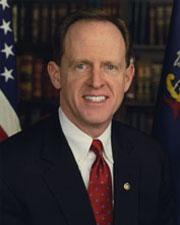 Sen. Patrick J. Toomey (R-PA)
Legislative Activity
Stay on top of the latest movement without scrolling through every action
Senate amendment proposed (on the floor): Amendment SA 2226 proposed by Senator Toomey.(consideration: CR S4348; text: CR S4348)
June 20, 2012
View full timeline
Senate amendment proposed (on the floor): Amendment SA 2226 proposed by Senator Toomey.(consideration: CR S4348; text: CR S4348)
June 20, 2012
Senate amendment not agreed to: Amendment SA 2226 not agreed to in Senate by Yea-Nay Vote. 36 - 63. Record Vote Number: 150.
June 20, 2012
Roll call votes on amendments in Senate: Amendment SA 2226 not agreed to in Senate by Yea-Nay Vote. 36 - 63. Record Vote Number: 150.
June 20, 2012
Amendment SA 2226 proposed by Senator Toomey. (consideration: CR S4348; text: CR S4348) To eliminate biorefinery, renewable chemical, and biobased product manufacturing assistance.
June 20, 2012
Amendment SA 2226 not agreed to in Senate by Yea-Nay Vote. 36 - 63. Record Vote Number: 150.
June 20, 2012
Senate amendment submitted
June 7, 2012
Votes
1 roll call on this amendment
Text
Submitted
TEXT OF AMENDMENTS

SA 2190. Ms. SNOWE (for herself and Mrs. Gillibrand) submitted an
amendment intended to be proposed by her to the bill S. 3240, to
reauthorize agricultural programs through 2017, and for other purposes;
which was ordered to lie on the table; as follows:

On page 115, strikes lines 12 and 13 and insert the
following:

PART IV--FEDERAL MILK MARKETING ORDER REFORM

SEC. 1481. REQUIRED AMENDMENTS TO FEDERAL MILK MARKETING
ORDERS.

(a) Amendments Required.--
(1) In general.--The Secretary shall amend each Federal
milk marketing order issued under section 8c of the
Agricultural Adjustment Act (7 U.S.C. 608c), reenacted with
amendments by the Agricultural Marketing Agreement Act of
1937 (in this part referred to as a ``milk marketing
order''), as required by this section.
(2) Relation to other laws.--Except as provided in section
1482, the Secretary shall execute the amendments required by
this section without regard to any provision of section 8c of
the Agricultural Adjustment Act (7 U.S.C. 608c), reenacted
with amendments by the Agricultural Marketing Agreement Act
of 1937, as in effect on the day before the date of enactment
of this Act.
(b) Use of End-product Price Formulas.--The Secretary shall
eliminate the use of end-product price formulas for setting
prices for Class III milk.
(c) Administrative Authority.--In addition to and
notwithstanding the authority provided under section 8d of
the Agricultural Adjustment Act (7 U.S.C. 608d), reenacted
with amendments by the Agricultural Marketing Agreement Act
of 1937, the Secretary may--
(1) require handlers to report, maintain, and make
available all information and records that the Secretary
considers necessary for the administration of any milk
marketing order; and
(2) adopt only such conforming amendments to milk marketing
orders as the Secretary determines to be necessary to
implement the amendments required by this section.

SEC. 1482. AMENDMENT PROCESS.

(a) Process.--
(1) In general.--Except as otherwise provided in this
subsection, the amendments to milk marketing orders required
to be made by section 1481 shall be subject to subsections
(17) and (19) of section 8c of the Agricultural Adjustment
Act (7 U.S.C. 608c), reenacted with amendments by the
Agricultural Marketing Agreement Act of 1937.
(2) Notice of final decision on proposed amendments.--Not
later than 270 days after the date of enactment of this Act,
the Secretary shall publish in the Federal Register notice of
a final decision on the proposed amendments to be made to
milk marketing orders in order to comply with section 1481.
(3) Producer referendum.--
(A) Referendum required.--As soon as practicable after
publication of the final decision on the proposed amendments
under paragraph (2), the Secretary shall conduct a producer
referendum regarding the final decision on the proposed
amendments.
(B) Terms of referendum.--
(i) In general.--Except as provided in clauses (ii) and
(iii), the producer referendum shall be conducted in the
manner provided by section 8c(19) of the Agricultural
Adjustment Act (7 U.S.C. 608c(19)), reenacted with amendments
by the Agricultural Marketing Agreement Act of 1937.
(ii) Single referendum.--The referendum shall be a single
referendum upon which approval or failure of the proposed
amendments to all milk marketing orders shall depend.
(iii) Approval requirements.--The proposed amendments shall
require approval by \1/2\ of participating producers or by
volume of production (rather than \2/3\) in order for the
referendum to pass and the proposed amendments to take
effect.
(C) Effect of failure.--If the referendum fails, the milk
marketing orders shall remain in force as in effect before
the proposed amendments were published.
(b) Effect of Court Order.--If the Secretary is enjoined or
otherwise restrained by a court order from executing the
amendments to milk marketing orders required by section 1481,
the length of time for which that injunction or other
restraining order is effective shall be added to any time
limitation in effect under paragraph (2) or (3) of subsection
(a), so as to extend those time limitations by a period of
time equal to the

[[Page S3846]]

period of time for which the injunction or other restraining
order is in effect.
(c) Relation to Other Amendment Authority.--Nothing in this
part affects the authority of the Secretary to subsequently
amend milk marketing orders, or the ability of producers or
other persons to seek such amendments, in accordance with the
rulemaking process provided by section 8c(17) of the
Agricultural Adjustment Act (7 U.S.C. 608c(17)), reenacted
with amendments by the Agricultural Marketing Agreement Act
of 1937.

PART V--EFFECTIVE DATE

SEC. 1491. EFFECTIVE DATE.

______

SA 2191. Mr. ALEXANDER submitted an amendment intended to be proposed
by him to the bill S. 3240, to reauthorize agricultural programs
through 2017, and for other purposes; which was ordered to lie on the
table; as follows:

On page 596, between lines 12 and 13, insert the following:
``(12) Other federal benefits.--Notwithstanding any other
provision of law, any cooperative organization or other
entity that receives a loan or loan guarantee under this
subsection for a wind energy project shall be ineligible for
any other Federal benefit, assistance, or incentive for the
project under any other provision of law.
______

SA 2192. Ms. AYOTTE (for herself and Mr. Coburn) submitted an
amendment intended to be proposed by her to the bill S. 3240, to
reauthorize agricultural programs through 2017, and for other purposes;
which was ordered to lie on the table; as follows:

Beginning on page 568, strike line 6 and all that follows
through page 574, line 11, and insert the following:
``(b) Value-added Agricultural Producer Grants.--
``(1) Definitions.--In this subsection:
``(A) Mid-tier value chain.--The term `mid-tier value
chain' means a local and regional supply network that links
independent producers with businesses and cooperatives that
market value-added agricultural products in a manner that--
``(i) targets and strengthens the profitability and
competitiveness of small- and medium-sized farms that are
structured as family farms; and
``(ii) obtains agreement from an eligible agricultural
producer group, farmer cooperative, or majority-controlled
producer-based business venture that is engaged in the value
chain on a marketing strategy.
``(B) Producer.--The term `producer' means a farmer.
``(C) Value-added agricultural product.--The term `value-
added agricultural product' means any agricultural commodity
or product--
``(i) that--

``(I) has undergone a change in physical state;
``(II) was produced in a manner that enhances the value of
the agricultural commodity or product, as demonstrated
through a business plan that shows the enhanced value, as
determined by the Secretary;
``(III) is physically segregated in a manner that results
in the enhancement of the value of the agricultural commodity
or product; or
``(IV) is aggregated and marketed as a locally produced
agricultural food product; and

``(ii) for which, as a result of the change in physical
state or the manner in which the agricultural commodity or
product was produced, marketed, or segregated--

``(I) the customer base for the agricultural commodity or
product is expanded; and
``(II) a greater portion of the revenue derived from the
marketing, processing, or physical segregation of the
agricultural commodity or product is available to the
producer of the commodity or product.

``(2) Grants.--
``(A) In general.--The Secretary may make grants under this
subsection to--
``(i) independent producers of value-added agricultural
products; and
``(ii) an agricultural producer group, farmer cooperative,
or majority-controlled producer-based business venture, as
determined by the Secretary.
``(B) Grants to a producer.--A grantee under subparagraph
(A)(i) shall use the grant--
``(i) to develop a business plan or perform a feasibility
study to establish a viable marketing opportunity (including
through mid-tier value chains) for value-added agricultural
products; or
``(ii) to provide capital to establish alliances or
business ventures that allow the producer to better compete
in domestic or international markets.
``(C) Grants to an agricultural producer group, cooperative
or producer-based business venture.--A grantee under
subparagraph (A)(ii) shall use the grant--
``(i) to develop a business plan for viable marketing
opportunities in emerging markets for a value-added
agricultural product; or
``(ii) to develop strategies that are intended to create
marketing opportunities in emerging markets for the value-
added agricultural product.
``(D) Award selection.--
``(i) Priority.--In awarding grants under this subsection,
the Secretary shall give priority to projects--

``(I) carried out by an applicant that has not previously
received a grant under this subsection;
``(II) carried out by an applicant that has not received
any Federal assistance for the prior fiscal year;
``(III) that contribute to increasing opportunities for
operators of small- and medium-sized farms that are
structured as family farms; or
``(IV) at least \1/4\ of the recipients of which are
beginning farmers or socially disadvantaged farmers.

``(ii) Ranking.--In evaluating and ranking proposals under
this subsection, the Secretary shall provide substantial
weight to the priorities described in clause (i).
``(E) Amount of grant.--
``(i) In general.--The total amount provided to a grant
recipient under this subsection shall not exceed $150,000.
``(ii) Majority-controlled, producer-based business
ventures.--The total amount of all grants provided to
majority-controlled, producer-based business ventures under
this subsection for a fiscal year shall not exceed 10 percent
of the amount of funds used to make all grants for the fiscal
year under this subsection.
``(F) Term.--The term of a grant under this paragraph shall
not exceed 3 years.
``(G) Simplified application.--The Secretary shall offer a
simplified application form and process for project proposals
requesting less than $50,000 under this subsection.
``(H) Application requirements.--As a condition of the
receipt of a grant under this subsection, an applicant shall
disclose or provide to the Secretary in the application for
the grant--
``(i) the average adjusted gross income (as defined in
section 1001D(a) of the Food Security Act of 1985 (7 U.S.C.
1308 3a(a))) of the applicant;
``(ii) an estimate of the number of jobs and increased
revenue expected to be created if a grant is awarded and
implemented;
``(iii) all other Federal assistance received by the
applicant for the previous fiscal year;
``(iv) all previous grants received by the applicant under
this subsection; and
``(v) all previous loans, loan guarantees, and grants
received by the applicant from the Secretary.
``(I) Recipient requirements.--As a condition of the
receipt of a grant under this subsection, a recipient shall
disclose to the Secretary the adjusted gross income of the
recipient for the previous year (as determined by the
Secretary)--
``(i) on the completion of a grant agreement, in the final
report of the recipient for the grant agreement; and
``(ii) on the date that is 3 years after the date of the
submission of the final report described in clause (i).
``(J) Limitations.--
``(i) In general.--The Secretary shall not provide a grant
under this subsection to any producer that, during the 3-year
period preceding the date of receipt of the application of
the producer, has submitted a final grant report for another
value-added agricultural producer grant.
``(ii) No grants to producers of alcoholic beverages.--The
Secretary shall not provide a grant under this subsection to
any producer of an alcoholic beverage.
``(3) Retention of records.--In carrying out the program
under this subsection, the Secretary shall--
``(A) retain all records associated with the program under
this subsection until the date on which the Office of the
Inspector General of the Department determines which records
need to be retained so as to conduct an audit of the program
for the prior 10 years; and
``(B) after that date, continue to retain all records so
determined by the Office of the Inspector General to be
necessary for the audit.
``(4) Audit requirements.--
``(A) In general.--Not later than 180 days after the date
of enactment of the Agriculture Reform, Food, and Jobs Act of
2012, the Office of the Inspector General of the Department
and the Comptroller General of the United States shall
initiate audits of the program under this subsection.
``(B) Requirement.--Audits under this paragraph shall
include a determination of the percentage of entities
continuing in operation 3 years after the date on which the
projects of the entities under this subsection were
completed, beginning with grants awarded in fiscal year 2006.
``(C) Prohibition on use of funds.--
``(i) In general.--None of the funds made available to
carry out this subsection may be used to initiate or carry
out any application or review process for any fiscal year
under this subsection prior to the completion and publication
of audits conducted by the Office of the Inspector General of
the Department and the Comptroller General of the United
States in accordance with this paragraph.
``(ii) Lack of program success.--None of the funds made
available to carry out this subsection may be used to
initiate or carry out any application or review process for
any fiscal year under this subsection if a determination is
made under subparagraph (B) that less than 60 percent of
grant recipients are continuing in operation 3 years after
date on which the projects of the grant recipients were
completed.
``(5) Website.--Notwithstanding any other provision of law,
for each fiscal year for which grants are awarded under this
subsection, the Secretary shall publish in an electronically
searchable format and clearly

[[Page S3847]]

identify on the rural development website of the Department--
``(A) the total number of grants awarded;
``(B) the total dollar amount of grants awarded;
``(C) the amount awarded to each grantee;
``(D) the name of each grant recipient;
``(E) a description of each grant; and
``(F) beginning on the date of enactment of the Agriculture
Reform, Food, and Jobs Act of 2012--
``(i) an anonymous list of the average adjusted gross
income (as defined in section 1001D(a) of the Food Security
Act of 1985 (7 U.S.C. 1308-3a(a)) of each grant recipient;
``(ii) an anonymous list of each grant recipient who filed
final reports under paragraph (2)(I)(i), including--

``(I) the average adjusted gross income disclosed on the
grant application of the grant recipient; and
``(II) the average adjusted gross income disclosed on the
final report submitted by the grant recipient;

``(iii) an anonymous list of each grant recipient who
reported average adjusted gross income 3 years after the date
of the submission of a final report under paragraph
(2)(I)(ii), including--

``(I) the average adjusted gross income disclosed on the
grant application of the grant recipient;
``(II) the average adjusted gross income disclosed on the
final report submitted by the grant recipient; and
``(III) the average adjusted gross income disclosed 3 years
after the date of the submission of the final report; and

``(iv) the percentage of grant recipients in operation 3
years after the date on which the grant recipients submitted
final reports, as determined using the average adjusted gross
income information submitted under paragraph (2)(I)(ii).
``(6) Adjusted gross income limitation.--Notwithstanding
any other provision of law, a person or legal entity shall
not be eligible to receive a grant under this subsection if
the average adjusted gross income of the person or legal
entity exceeds $1,000,000, as those terms are defined in
sections 1001(a) and 1001D(a) of the Food Security Act of
1985 (7 U.S.C. 1308(a), 1308-3a(a)).
``(7) Funding.--
``(A) Authorization of appropriations.--There is authorized
to be appropriated to carry out this subsection $20,000,000
for each of fiscal years 2013 through 2017.
``(B) Reservation of funds for projects to benefit
beginning farmers, socially disadvantaged farmers, and mid-
tier value chains.--
``(i) In general.--The Secretary shall reserve 10 percent
of the amounts made available for each fiscal year under this
subsection to fund projects that benefit beginning farmers or
socially disadvantaged farmers.
``(ii) Mid-tier value chains.--The Secretary shall reserve
10 percent of the amounts made available for each fiscal year
under this subsection to fund applications of eligible
entities described in paragraph (2) that propose to develop
mid-tier value chains.
``(iii) Unobligated amounts.--Any amounts in the reserves
for a fiscal year established under clauses (i) and (ii) that
are not obligated by June 30 of the fiscal year shall be
available to the Secretary to make grants under this
subsection to eligible entities in any State, as determined
by the Secretary.
``(8) Sense of senate.--It is the sense of the Senate
that--
``(A) the free flow of information from Federal agencies is
critical to enable Congress to perform its constitutionally
required oversight obligations; and
``(B) the Department of Agriculture should endeavor to
achieve transparency, cooperation, and expediency in
interactions with Members of Congress.
______

SA 2193. Ms. AYOTTE submitted an amendment intended to be proposed by
her to the bill S. 3240, to reauthorize agricultural programs through
2017, and for other purposes; which was ordered to lie on the table; as
follows:

At the appropriate place, insert the following:

SEC. __. LIMITATIONS ON BONUS AUTHORITY; REPORTS ON TRAVEL
EXPENSES.

(a) Limitations on Bonus Authority for Employees Under
Investigation.--
(1) In general.--Chapter 45 of title 5, United States Code,
is amended by adding at the end the following:

``SUBCHAPTER IV--LIMITATIONS ON BONUS AUTHORITY

``Sec.  4531. Employees under investigation

``(a) Definitions.--In this section--
``(1) the term `adverse finding' relating to an employee of
an agency means a determination that the conduct of the
employee--
``(A) violated a policy of the agency; and
``(B) subjects the employee to removal;
``(2) the term `agency' means--
``(A) an Executive department, as that term is defined
under section 101; and
``(B) an independent establishment, as that term is defined
under section 104; and
``(3) the term `bonus' means any bonus or cash award,
including--
``(A) an award under this chapter;
``(B) an award under section 5384; and
``(C) a retention bonus under section 5754.
``(b) Ongoing Investigations.--
``(1) In general.--If an employee of an agency is the
subject of an ongoing investigation by the Inspector General
of the agency that may result in the removal of the employee,
the head of the agency may determine to award a bonus to the
employee, but may not pay a bonus to the employee.
``(2) Conclusion of investigation.--At the conclusion of an
investigation described in paragraph (1) relating to an
employee of an agency to whom the head of the agency
determined during the period the investigation was ongoing to
award a bonus--
``(A) if the Inspector General does not make an adverse
finding relating to the employee, the head of the agency may
pay the bonus to the employee; and
``(B) if the Inspector General makes an adverse finding
relating to the employee--
``(i) that results in the removal of the employee, the head
of the agency may not pay the bonus to the employee; and
``(ii) that results in an adverse action against the
employee that is less severe than removal, the head of the
agency may not pay the bonus, or award any bonus, to the
employee during the 2-year period beginning on the date on
which the Inspector General makes the adverse finding.
``(3) Notice.--The Inspector General of an agency shall
notify the head of the agency if the Inspector General is
conducting an investigation of an employee of the agency that
may result in the removal of the employee.''.
(2) Technical and conforming amendment.--The table of
sections for chapter 45 of title 5, United States Code, is
amended by adding at the end the following:

``subchapter iv--limitations on bonus authority

``4531. Employees under investigation.''.
(b) Reports on Travel Expenses.--Section 6506 of title 5,
United States Code, is amended by adding at the end the
following:
``(e) Reports on Travel Expenses of Teleworkers.--
``(1) Definition.--In this subsection, the term `agency'
means--
``(A) an Executive department, as that term is defined
under section 101; and
``(B) an independent establishment, as that term is defined
under section 104.
``(2) Reports to comptroller general.--Not later than
December 31, 2012, and each year thereafter, the head of each
agency, and the head of each part of an agency, shall submit
to the Comptroller General a report that certifies that all
travel expenses that the agency (or part thereof) paid for
teleworking employees during the most recent full fiscal year
accurately reflect the actual travel expenses incurred by the
employees while teleworking.''.
______

SA 2194. Ms. AYOTTE submitted an amendment intended to be proposed by
her to the bill S. 3240, to reauthorize agricultural programs through
2017, and for other purposes; which was ordered to lie on the table; as
follows:

On page 1009, after line 11, add the following:

SEC. 12207. FIDUCIARY EXCLUSION UNDER ERISA.

Section 3(21)(A) of the Employee Retirement Income and
Security Act of 1974 (29 U.S.C. 1002(21)(A)) is amended by
inserting ``and except to the extent a person is providing an
appraisal or fairness opinion with respect to qualifying
employer securities (as defined in section 407(d)(5))
included in an employee stock ownership plan (as defined in
section 407(d)(6)),'' after ``subparagraph (B),''.
______

SA 2195. Ms. AYOTTE submitted an amendment intended to be proposed by
her to the bill S. 3240, to reauthorize agricultural programs through
2017, and for other purposes; which was ordered to lie on the table; as
follows:

At the appropriate place, insert the following:

SEC. ____. GAO CROP INSURANCE FRAUD REPORT.

Section 515(d) of the Federal Crop Insurance Act (7 U.S.C.
1515(d)) is amended by adding at the end the following:
``(6) GAO crop insurance fraud report.--As soon as
practicable after the date of enactment of this paragraph,
the Comptroller General of the United States shall conduct,
and submit to Congress a report describing the results of, a
study regarding fraudulent claims filed, and benefits
provided, under this subtitle.''.
______

SA 2196. Mr. McCAIN submitted an amendment intended to be proposed by
him to the bill S. 3240, to reauthorize agricultural programs through
2017, and for other purposes; which was ordered to lie on the table; as
follows:

On page 38, strike line 13.
______

SA 2197. Mr. McCAIN (for himself and Ms. Ayotte) submitted an
amendment intended to be proposed by him to the bill S. 3240, to
reauthorize agricultural programs through 2017, and for other purposes;
which was ordered to lie on the table; as follows:

On page 14, strike lines 3 through 9.
______

SA 2198. Mr. McCAIN (for himself, Mr. Paul, and Ms. Ayotte) submitted
an amendment intended to be proposed by him to the bill S. 3240, to
reauthorize agricultural programs through 2017,

[[Page S3848]]

and for other purposes; which was ordered to lie on the table; as
follows:

Beginning on page 68, strike line 16 and all that follows
through page 69, line 18, and insert the following:

Subtitle C--Sugar Program Repeal

SEC. 1301. REPEAL OF SUGAR PROGRAM.

Section 156 of the Federal Agriculture Improvement and
Reform Act of 1996 (7 U.S.C. 7272) is repealed.

SEC. 1302. ELIMINATION OF SUGAR PRICE SUPPORT AND PRODUCTION
ADJUSTMENT PROGRAMS.

(a) In General.--Notwithstanding any other provision of
law--
(1) a processor of any of the 2013 or subsequent crops of
sugarcane or sugar beets shall not be eligible for a loan
under any provision of law with respect to the crop; and
(2) the Secretary of Agriculture may not make price support
available, whether in the form of a loan, payment, purchase,
or other operation, for any of the 2013 and subsequent crops
of sugar beets and sugarcane by using the funds of the
Commodity Credit Corporation or other funds available to the
Secretary.
(b) Termination of Marketing Quotas and Allotments.--
(1) In general.--Part VII of subtitle B of title III of the
Agricultural Adjustment Act of 1938 (7 U.S.C. 1359aa et seq.)
is repealed.
(2) Conforming amendment.--Section 344(f)(2) of the
Agricultural Adjustment Act of 1938 (7 U.S.C. 1344(f)(2)) is
amended by striking ``sugar cane for sugar, sugar beets for
sugar,''.
(c) General Powers.--
(1) Section 32 activities.--Section 32 of the Act of August
24, 1935 (7 U.S.C. 612c), is amended in the second sentence
of the first paragraph--
(A) in paragraph (1), by inserting ``(other than sugar
beets and sugarcane)'' after ``commodities''; and
(B) in paragraph (3), by inserting ``(other than sugar
beets and sugarcane)'' after ``commodity''.
(2) Powers of commodity credit corporation.--Section 5(a)
of the Commodity Credit Corporation Charter Act (15 U.S.C.
714c(a)) is amended by inserting ``, sugar beets, and
sugarcane'' after ``tobacco''.
(3) Price support for nonbasic agricultural commodities.--
Section 201(a) of the Agricultural Act of 1949 (7 U.S.C.
1446(a)) is amended by striking ``milk, sugar beets, and
sugarcane'' and inserting ``, and milk''.
(4) Commodity credit corporation storage payments.--Section
167 of the Federal Agriculture Improvement and Reform Act of
1996 (7 U.S.C. 7287) is repealed.
(5) Suspension and repeal of permanent price support
authority.--Section 171(a)(1) of the Federal Agriculture
Improvement and Reform Act of 1996 (7 U.S.C. 7301(a)(1)) is
amended--
(A) by striking subparagraph (E); and
(B) by redesignating subparagraphs (F) through (I) as
subparagraphs (E) through (H), respectively.
(6) Storage facility loans.--Section 1402(c) of the Farm
Security and Rural Investment Act of 2002 (7 U.S.C. 7971) is
repealed.
(d) Transition Provisions.--This section and the amendments
made by this section shall not affect the liability of any
person under any provision of law as in effect before the
application of this section and the amendments made by this
section.

SEC. 1303. ELIMINATION OF SUGAR TARIFF AND OVER-QUOTA TARIFF
RATE.

(a) Elimination of Tariff on Raw Cane Sugar.--Chapter 17 of
the Harmonized Tariff Schedule of the United States is
amended by striking subheadings 1701.13 through 1701.14.50
and inserting in numerical sequence the following new
subheading, with the article description for such subheading
having the same degree of indentation as the article
description for subheading 1701.13, as in effect on the day
before the date of the enactment of this section:

``      1701.13.00       Cane sugar           Free                 ...................  39.85 cents/kg      ....
specified in
subheading note 2
to this chapter...
1701.14.00       Other cane sugar...  Free                 ...................  39.85 cents/kg      ''.

(b) Elimination of Tariff on Beet Sugar.--Chapter 17 of the
Harmonized Tariff Schedule of the United States is amended by
striking subheadings 1701.12 through 1701.12.50 and inserting
in numerical sequence the following new subheading, with the
article description for such subheading having the same
degree of indentation as the article description for
subheading 1701.12, as in effect on the day before the date
of the enactment of this section:

``       1701.12.00       Beet sugar.........  Free                 ...................  42.05 cents/kg       ''
.

(c) Elimination of Tariff on Certain Refined Sugar.--
Chapter 17 of the Harmonized Tariff Schedule of the United
States is amended--
(1) by striking the superior text immediately preceding
subheading 1701.91.05 and by striking subheadings 1701.91.05
through 1701.91.30 and inserting in numerical sequence the
following new subheading, with the article description for
such subheading having the same degree of indentation as the
article description for subheading 1701.12.05, as in effect
on the day before the date of the enactment of this section:

``       1701.91.02       Containing added     Free                 ...................  42.05 cents/kg       ''
coloring but not                                                                    ;
containing added
flavoring matter..

(2) by striking subheadings 1701.99 through 1701.99.50 and
inserting in numerical sequence the following new subheading,
with the article description for such subheading having the
same degree of indentation as the article description for
subheading 1701.99, as in effect on the day before the date
of the enactment of this section:

``       1701.99.00       Other..............  Free                 ...................  42.05 cents/kg       ''
;

(3) by striking the superior text immediately preceding
subheading 1702.90.05 and by striking subheadings 1702.90.05
through 1702.90.20 and inserting in numerical sequence the
following new subheading, with the article description for
such subheading having the same degree of indentation as the
article description for subheading 1702.60.22:

``       1702.90.02       Containing soluble   Free                                      42.05 cents/kg       ''
non-sugar solids                                                                    ;
(excluding any
foreign
substances,
including but not
limited to
molasses, that may
have been added to
or developed in
the product) equal
to 6 percent or
less by weight of
the total soluble
solids............

and
(4) by striking the superior text immediately preceding
subheading 2106.90.42 and by striking subheadings 2106.90.42
through 2106.90.46 and inserting in numerical sequence the
following new subheading, with the article description for
such subheading having the same degree of indentation as the
article description for subheading 2106.90.39:

``       2106.90.40       Syrups derived from  Free                                      42.50 cents/kg       ''
cane or beet                                                                        .
sugar, containing
added coloring but
not added
flavoring matter..

(d) Conforming Amendment.--Chapter 17 of the Harmonized
Tariff Schedule of the United States is amended by striking
additional U.S. note 5.
(e) Administration of Tariff-Rate Quotas.--Section
404(d)(1) of the Uruguay Round Agreements Act (19 U.S.C.
3601(d)(1)) is amended--
(1) by inserting ``or'' at the end of subparagraph (B);
(2) by striking ``; or'' at the end of subparagraph (C) and
inserting a period; and
(3) by striking subparagraph (D).
(f) Effective Date.--The amendments made by this section
apply with respect to goods entered, or withdrawn from
warehouse for consumption, on or after the 15th day after the
date of the enactment of this Act.

SEC. 1304. APPLICATION.

Except as otherwise provided in this subtitle, this
subtitle and the amendments made by this subtitle shall apply
beginning with the 2013 crop of sugar beets and sugarcane.
______

SA 2199. Mr. McCAIN (for himself, Mr. Kerry, Mr. Coburn, Mrs.
Shaheen, Mr. Crapo, and Mr. Nelson of Florida) submitted an amendment
intended to be proposed by him to the bill S. 3240, to reauthorize
agricultural programs through 2017, and for other purposes; which was
ordered to lie on the table; as follows:

At the end, add the following:

SEC. 12207. REPEAL OF DUPLICATIVE PROGRAM.

(a) In General.--Effective on the date of enactment of the
Food, Conservation, and Energy Act (7 U.S.C. 8701 et seq.),
section 11016 of that Act (Public Law 110 246; 122

[[Page S3849]]

Stat. 2130) and the amendments made by that section are
repealed.
(b) Application.--The Agricultural Marketing Act of 1946 (7
U.S.C. 1621 et seq.) and the Federal Meat Inspection Act (21
U.S.C. 601 et seq.) shall be applied and administered as if
section 11016 of the Food, Conservation, and Energy Act
(Public Law 110 246; 122 Stat. 2130) and the amendments made
by that section had not been enacted.
______

SA 2200. Mr. LEAHY submitted an amendment intended to be proposed by
him to the bill S. 3240, to reauthorize agricultural programs through
2017, and for other purposes; which was ordered to lie on the table; as
follows:

On page 338, between lines 6 and 7 insert the following:
(c) State Option for Cash Equivalents for Purchase of
Locally Produced Commodities.--Section 203B(a) of the
Emergency Food Assistance Act of 1983 (7 U.S.C. 7505(a)) is
amended--
(1) by designating the first and second sentences as
paragraphs (1) and (2), respectively; and
(2) by adding at the end the following:
``(3) State option for cash equivalents for purchase of
locally produced commodities.--The Secretary shall allow a
State the option of receiving a cash payment that is equal to
15 percent of the value of the commodities that the State
would otherwise receive for a fiscal year under this Act, in
lieu of receiving the commodities, to purchase locally
produced commodities for use in accordance with this Act.''.
______

SA 2201. Mrs. SHAHEEN (for herself and Mr. Toomey) submitted an
amendment intended to be proposed by her to the bill S. 3240, to
reauthorize agricultural programs through 2017, and for other purposes;
which was ordered to lie on the table; as follows:

On page 944, after line 23, add the following:

SEC. 11005. LIMITATION ON PAYMENT OF PORTION OF PREMIUM BY
CORPORATION.

Section 508(e) of the Federal Crop Insurance Act (7 U.S.C.
1508(e)) is amended by adding at the end the following:
``(8) Limitation.--
``(A) In general.--Notwithstanding any other provision of
this title, the total amount of premium paid by the
Corporation on behalf of a person or legal entity, directly
or indirectly, with respect to all policies issued to the
person or legal entity under this title for a crop year shall
be limited to a maximum of $40,000.
``(B) Relationship to other law.--To the maximum extent
practicable, the Corporation shall carry out this paragraph
in accordance with section 1001 of the Food Security Act of
1985 (7 U.S.C. 1308).''.
______

SA 2202. Mr. BENNET (for himself and Mr. Crapo) submitted an
amendment intended to be proposed by him to the bill S. 3240, to
reauthorize agricultural programs through 2017, and for other purposes;
which was ordered to lie on the table; as follows:

On page 205, line 4, insert ``by eligible entities'' after
``purchase''.
On page 207, lines 10 and 11, strike ``contiguous acres''
and insert ``areas''.
On page 208, line 24, insert ``if terms of the easement are
not enforced by the holder of the easement'' before the
semicolon at the end.
______

SA 2203. Mr. BENNET (for himself and Mr. Crapo) submitted an
amendment intended to be proposed by him to the bill S. 3240, to
reauthorize agricultural programs through 2017, and for other purposes;
which was ordered to lie on the table; as follows:

On page 206, line 17, strike ``50 percent'' and insert
``\1/3\''.
On page 206, line 19, strike ``In the case of'' and insert
the following:
``(i) Cost share.--In the case of''.
On page 206, between lines 23 and 24 insert the following:
``(ii) Source of contribution.--The Secretary may enter
into an agreement with an eligible entity that waives the
requirements of subparagraph (B)(ii) for a project of special
environmental significance.''.
______

SA 2204. Mr. LEAHY submitted an amendment intended to be proposed by
him to the bill S. 3240, to reauthorize agricultural programs through
2017, and for other purposes; which was ordered to lie on the table; as
follows:

On page 652, between lines 12 and 13, insert the following:

``SEC. 3707. STATE RURAL DEVELOPMENT PARTNERSHIP.

``(a) Definitions.--In this section:
``(1) Agency with rural responsibilities.--The term `agency
with rural responsibilities' means any executive agency (as
defined in section 105 of title 5, United States Code) that
implements a Federal law, or administers a program, targeted
at or having a significant impact on rural areas.
``(2) Partnership.--The term `Partnership' means the State
Rural Development Partnership continued by subsection (b).
``(3) State rural development council.--The term `State
rural development council' means a State rural development
council that meets the requirements of subsection (c).
``(b) Partnership.--
``(1) In general.--The Secretary shall support the State
Rural Development Partnership comprised of State rural
development councils.
``(2) Purposes.--The purposes of the Partnership are to
empower and build the capacity of States, regions, and rural
communities to design flexible and innovative responses to
their rural development needs in a manner that maximizes
collaborative public- and private-sector cooperation and
minimizes regulatory redundancy.
``(3) Coordinating panel.--A panel consisting of
representatives of State rural development councils shall be
established--
``(A) to lead and coordinate the strategic operation and
policies of the Partnership; and
``(B) to facilitate effective communication among the
members of the Partnership, including the sharing of best
practices.
``(4) Role of federal government.--The role of the Federal
Government in the Partnership may be that of a partner and
facilitator, with Federal agencies authorized--
``(A) to cooperate with States to implement the
Partnership;
``(B) to provide States with the technical and
administrative support necessary to plan and implement
tailored rural development strategies to meet local needs;
``(C) to ensure that the head of each agency with rural
responsibilities directs appropriate field staff to
participate fully with the State rural development council
within the jurisdiction of the field staff; and
``(D) to enter into cooperative agreements with, and to
provide grants and other assistance to, State rural
development councils.
``(c) State Rural Development Councils.--
``(1) Establishment.--Notwithstanding chapter 63 of title
31, United States Code, each State may elect to participate
in the Partnership by entering into an agreement with the
Secretary to recognize a State rural development council.
``(2) Composition.--A State rural development council
shall--
``(A) be composed of representatives of Federal, State,
local, and tribal governments, nonprofit organizations,
regional organizations, the private sector, and other
entities committed to rural advancement; and
``(B) have a nonpartisan and nondiscriminatory membership
that--
``(i) is broad and representative of the economic, social,
and political diversity of the State; and
``(ii) shall be responsible for the governance and
operations of the State rural development council.
``(3) Duties.--A State rural development council shall--
``(A) facilitate collaboration among Federal, State, local,
and tribal governments and the private and nonprofit sectors
in the planning and implementation of programs and policies
that have an impact on rural areas of the State;
``(B) monitor, report, and comment on policies and programs
that address, or fail to address, the needs of the rural
areas of the State;
``(C) as part of the Partnership, facilitate the
development of strategies to reduce or eliminate conflicting
or duplicative administrative or regulatory requirements of
Federal, State, local, and tribal governments; and
``(D)(i) provide to the Secretary an annual plan with goals
and performance measures; and
``(ii) submit to the Secretary an annual report on the
progress of the State rural development council in meeting
the goals and measures.
``(4) Federal participation in state rural development
councils.--
``(A) In general.--A State Director for Rural Development
of the Department of Agriculture, other employees of the
Department, and employees of other Federal agencies with
rural responsibilities shall fully participate as voting
members in the governance and operations of State rural
development councils (including activities related to grants,
contracts, and other agreements in accordance with this
section) on an equal basis with other members of the State
rural development councils.
``(B) Conflicts.--Participation by a Federal employee in a
State rural development council in accordance with this
paragraph shall not constitute a violation of section 205 or
208 of title 18, United States Code.
``(d) Administrative Support of the Partnership.--
``(1) Detail of employees.--
``(A) In general.--In order to provide experience in
intergovernmental collaboration, the head of an agency with
rural responsibilities that elects to participate in the
Partnership may, and is encouraged to, detail to the
Secretary for the support of the Partnership 1 or more
employees of the agency with rural responsibilities without
reimbursement for a period of up to 1 year.
``(B) Civil service status.--The detail shall be without
interruption or loss of civil service status or privilege.
``(2) Additional support.--The Secretary may provide for
any additional support staff to the Partnership as the
Secretary determines to be necessary to carry out the duties
of the Partnership.
``(3) Intermediaries.--The Secretary may enter into a
contract with a qualified intermediary under which the
intermediary shall

[[Page S3850]]

be responsible for providing administrative and technical
assistance to a State rural development council, including
administering the financial assistance available to the State
rural development council.
``(e) Matching Requirements for State Rural Development
Councils.--
``(1) In general.--Except as provided in paragraph (2), a
State rural development council shall provide matching funds,
or in-kind goods or services, to support the activities of
the State rural development council in an amount that is not
less than 33 percent of the amount of Federal funds received
from a Federal agency under subsection (f)(2).
``(2) Exceptions to matching requirement for certain
federal funds.--Paragraph (1) shall not apply to funds,
grants, funds provided under contracts or cooperative
agreements, gifts, contributions, or technical assistance
received by a State rural development council from a Federal
agency that are used--
``(A) to support 1 or more specific program or project
activities; or
``(B) to reimburse the State rural development council for
services provided to the Federal agency providing the funds,
grants, funds provided under contracts or cooperative
agreements, gifts, contributions, or technical assistance.
``(3) Department's share.--The Secretary shall develop a
plan to decrease, over time, the share of the Department of
Agriculture of the cost of the core operations of State rural
development councils.
``(f) Funding.--
``(1) Authorization of appropriations.--There is authorized
to be appropriated to carry out this section $5,000,000 for
each of fiscal years 2013 through 2017.
``(2) Federal agencies.--
``(A) In general.--Notwithstanding any other provision of
law limiting the ability of an agency, along with other
agencies, to provide funds to a State rural development
council in order to carry out the purposes of this section, a
Federal agency may make grants, gifts, or contributions to,
provide technical assistance to, or enter into contracts or
cooperative agreements with, a State rural development
council.
``(B) Assistance.--Federal agencies are encouraged to use
funds made available for programs that have an impact on
rural areas to provide assistance to, and enter into
contracts with, a State rural development council, as
described in subparagraph (A).
``(3) Contributions.--A State rural development council may
accept private contributions.
``(g) Termination.--The authority provided under this
section shall terminate on September 30, 2017.''.
______

SA 2205. Ms. MURKOWSKI (for herself and Mr. Begich) submitted an
amendment intended to be proposed by her to the bill S. 3240, to
reauthorize agricultural programs through 2017, and for other purposes;
which was ordered to lie on the table; as follows:

Beginning on page 548, strike line 5 and all that follows
through page 553, line 11 and insert the following:
``(B) Loans and grants to persons other than individuals.--
``(i) In general.--The Secretary shall make or guarantee
loans and make grants to provide for the conservation,
development, use, and control of water (including the
extension or improvement of existing water supply systems)
and the installation or improvement of drainage or waste
disposal facilities and essential community facilities,
including necessary related equipment, training, and
technical assistance to--

``(I) rural water supply corporations, cooperatives, or
similar entities;
``(II) Indian tribes on Federal or State reservations and
other federally recognized Indian tribes;
``(III) rural or native villages in the State of Alaska;
``(IV) native tribal health consortiums;
``(V) public agencies; and
``(VI) Native Hawaiian Home Lands.

``(ii) Eligible projects.--Loans and grants described in
clause (i) shall be available only to provide the described
water and waste facilities and services to communities whose
residents face significant health risks, as determined by the
Secretary, due to the fact that a significant proportion of
the residents of the community do not have access to, or are
not served by, adequate affordable--

``(I) water supply systems; or
``(II) waste disposal facilities.

``(iii) Matching requirements.--For entities described
under subclauses (III), (IV), or (V) of clause (i) to be
eligible to receive a grant for water supply systems or waste
disposal facilities, the State in which the project will
occur shall provide 25 percent in matching funds from non-
Federal sources.
``(iv) Certain areas targeted.--

``(I) In general.--Loans and grants under clause (i) shall
be made only if the loan or grant funds will be used
primarily to provide water or waste services, or both, to
residents of a county or census area--

``(aa) the per capita income of the residents of which is
not more than 70 percent of the national average per capita
income, as determined by the Department of Commerce; and
``(bb) the unemployment rate of the residents of which is
not less than 125 percent of the national average
unemployment rate, as determined by the Bureau of Labor
Statistics.

``(II) Exceptions.--Notwithstanding subclause (I), loans
and grants under clause (i) may also be made if the loan or
grant funds will be used primarily to provide water or waste
services, or both, to residents of--

``(aa) a rural area that was recognized as a colonia as of
October 1, 1989; or
``(bb) areas described under subclauses (III) and (VI) of
clause (i).
``(C) Loans and grants to individuals.--
``(i) In general.--The Secretary shall make or guarantee
loans and make grants to individuals who reside in a
community described in subparagraph (B)(i) for the purpose of
extending water supply and waste disposal systems, connecting
the systems to the residences of the individuals, or
installing plumbing and fixtures within the residences of the
individuals to facilitate the use of the water supply and
waste disposal systems.
``(ii) Interest.--Loans described in clause (i) shall be at
a rate of interest no greater than the Federal Financing Bank
rate on loans of a similar term at the time the loans are
made.
``(iii) Amortization.--The repayment of loans described in
clause (i) shall be amortized over the expected life of the
water supply or waste disposal system to which the residence
of the borrower will be connected.
``(iv) Manner in which loans and grants are to be made.--
Loans and grants to individuals under clause (i) shall be
made--

``(I) directly to the individuals by the Secretary; or
``(II) to the individuals through the rural water supply
corporation, cooperative, or similar entity, or public
agency, providing the water supply or waste disposal
services, pursuant to regulations issued by the Secretary.

``(D) Preference.--The Secretary shall give preference in
the awarding of loans and grants under subparagraphs (B) and
(C) to entities described in clause (i) of subparagraph (B)
that propose to provide water supply or waste disposal
services to the residents of Indian reservations, rural or
native villages in the State of Alaska, Native Hawaiian Home
Lands, and those rural subdivisions commonly referred to as
colonias, that are characterized by substandard housing,
inadequate roads and drainage, and a lack of adequate water
or waste facilities.
``(E) Authorization of appropriations.--There are
authorized to be appropriated--
``(i) for grants under this paragraph, $60,000,000 for each
fiscal year;
``(ii) for loans under this paragraph, $60,000,000 for each
fiscal year; and
``(iii) in addition to grants provided under clause (i),
for grants under this section to benefit Indian tribes,
$20,000,000 for each fiscal year.
``(F) Relationship to other authority.--Notwithstanding any
other provision of law, the Secretary or any other Federal
agency may enter into interagency agreements with Federal,
State, tribal, and other entities to share resources,
including transferring and accepting funds, equipment, or
other supplies, to carry out the activities described in this
section.
______

SA 2206. Ms. MURKOWSKI (for herself, Mr. Kerry, and Mr. Brown of
Massachusetts) submitted an amendment intended to be proposed by her to
the bill S. 3240, to reauthorize agricultural programs through 2017,
and for other purposes; which was ordered to lie on the table; as
follows:

Beginning on page 522, strike line 15 and all that follows
through page 523, line 2, and insert the following:
(12) Farm.--The term ``farm'' means an operation involved
in--
``(A) the production of an agricultural commodity;
``(B) ranching;
``(C) aquaculture; or
``(D) in the case of chapter 2 of subtitle A, commercial
fishing.
``(13) Farmer.--The term `farmer' means an individual or
entity engaged primarily and directly in--
``(A) the production of an agricultural commodity;
``(B) ranching;
``(C) aquaculture; or
``(D) in the case of chapter 2 of subtitle A, commercial
fishing.
______

SA 2207. Ms. MURKOWSKI (for herself and Mr. Begich) submitted an
amendment intended to be proposed by her to the bill S. 3240, to
reauthorize agricultural programs through 2017, and for other purposes;
which was ordered to lie on the table; as follows:

On page 1009, after line 11, add the following:

SEC. 12___. REAUTHORIZATION OF DENALI COMMISSION.

Subsection (a) of the first section 310 of the Denali
Commission Act of 1998 (42 U.S.C. 3121 note; Public Law 105
277) (relating to authorization of appropriations) is
amended--
(1) by striking ``section 4 under this Act'' and inserting
``section 304''; and
(2) by striking ``for fiscal years 2000, 2001, 2002, and
2008'' and inserting ``for each of fiscal years 2012 through
2017.''.
______

SA 2208. Ms. MURKOWSKI (for herself and Mr. Begich) submitted an
amendment intended to be proposed by her to the bill S. 3240, to
reauthorize agricultural programs through 2017,

[[Page S3851]]

and for other purposes; which was ordered to lie on the table; as
follows:

At the end of subtitle C of title VI, add the following:

SEC. 6203. LOANS UNDER SECTION 502 OF THE HOUSING ACT OF 1949
FOR DWELLINGS WITH WATER CATCHMENT OR CISTERN
SYSTEMS.

Section 502(a) of the Housing Act of 1949 (42 U.S.C.
1472(a)) is amended by adding at the end the following:
``(4) The Secretary may not deny an application for a loan
under this section solely on the basis that the application
relates to a dwelling with a water catchment or cistern
system.''.
______

SA 2209. Ms. MURKOWSKI (for herself and Mr. Begich) submitted an
amendment intended to be proposed by her to the bill S. 3240, to
reauthorize agricultural programs through 2017, and for other purposes;
which was ordered to lie on the table; as follows:

Beginning on page 548, strike line 5 and all that follows
through page 553, line 11 and insert the following:
``(B) Loans and grants to persons other than individuals.--
``(i) In general.--The Secretary shall make or guarantee
loans and make grants to provide for the conservation,
development, use, and control of water (including the
extension or improvement of existing water supply systems)
and the installation or improvement of drainage or waste
disposal facilities and essential community facilities,
including necessary related equipment, training, and
technical assistance to--

``(I) rural water supply corporations, cooperatives, or
similar entities;
``(II) Indian tribes on Federal or State reservations and
other federally recognized Indian tribes;
``(III) rural or native villages in the State of Alaska;
``(IV) native tribal health consortiums;
``(V) public agencies; and
``(VI) Native Hawaiian Home Lands.

``(ii) Eligible projects.--Loans and grants described in
clause (i) shall be available only to provide the described
water and waste facilities and services to communities whose
residents face significant health risks, as determined by the
Secretary, due to the fact that a significant proportion of
the residents of the community do not have access to, or are
not served by, adequate affordable--

``(I) water supply systems; or
``(II) waste disposal facilities.

``(iii) Matching requirements.--For entities described
under subclauses (III), (IV), or (V) of clause (i) to be
eligible to receive a grant for water supply systems or waste
disposal facilities, the State in which the project will
occur shall provide 25 percent in matching funds from non-
Federal sources.
``(iv) Certain areas targeted.--

``(I) In general.--Loans and grants under clause (i) shall
be made only if the loan or grant funds will be used
primarily to provide water or waste services, or both, to
residents of a county or census area--

``(aa) the per capita income of the residents of which is
not more than 70 percent of the national average per capita
income, as determined by the Department of Commerce; and
``(bb) the unemployment rate of the residents of which is
not less than 125 percent of the national average
unemployment rate, as determined by the Bureau of Labor
Statistics.

``(II) Exceptions.--Notwithstanding subclause (I), loans
and grants under clause (i) may also be made if the loan or
grant funds will be used primarily to provide water or waste
services, or both, to residents of--

``(aa) a rural area that was recognized as a colonia as of
October 1, 1989; or
``(bb) areas described under subclauses (II), (III), and
(VI) of clause (i).
``(C) Loans and grants to individuals.--
``(i) In general.--The Secretary shall make or guarantee
loans and make grants to individuals who reside in a
community described in subparagraph (B)(i) for the purpose of
extending water supply and waste disposal systems, connecting
the systems to the residences of the individuals, or
installing plumbing and fixtures within the residences of the
individuals to facilitate the use of the water supply and
waste disposal systems.
``(ii) Interest.--Loans described in clause (i) shall be at
a rate of interest no greater than the Federal Financing Bank
rate on loans of a similar term at the time the loans are
made.
``(iii) Amortization.--The repayment of loans described in
clause (i) shall be amortized over the expected life of the
water supply or waste disposal system to which the residence
of the borrower will be connected.
``(iv) Manner in which loans and grants are to be made.--
Loans and grants to individuals under clause (i) shall be
made--

``(I) directly to the individuals by the Secretary; or
``(II) to the individuals through the rural water supply
corporation, cooperative, or similar entity, or public
agency, providing the water supply or waste disposal
services, pursuant to regulations issued by the Secretary.

``(D) Preference.--The Secretary shall give preference in
the awarding of loans and grants under subparagraphs (B) and
(C) to entities described in clause (i) of subparagraph (B)
that propose to provide water supply or waste disposal
services to the residents of Indian reservations, rural or
native villages in the State of Alaska, Native Hawaiian Home
Lands, and those rural subdivisions commonly referred to as
colonias, that are characterized by substandard housing,
inadequate roads and drainage, and a lack of adequate water
or waste facilities.
``(E) Authorization of appropriations.--There are
authorized to be appropriated--
``(i) for grants under this paragraph, $60,000,000 for each
fiscal year;
``(ii) for loans under this paragraph, $60,000,000 for each
fiscal year; and
``(iii) in addition to grants provided under clause (i),
for grants under this section to benefit Indian tribes,
$20,000,000 for each fiscal year.
``(F) Relationship to other authority.--Notwithstanding any
other provision of law, the Secretary or any other Federal
agency may enter into interagency agreements with Federal,
State, tribal, and other entities to share resources,
including transferring and accepting funds, equipment, or
other supplies, to carry out the activities described in this
section.
______

SA 2210. Mr. JOHANNS submitted an amendment intended to be proposed
by him to the bill S. 3240, to reauthorize agricultural programs
through 2017, and for other purposes; which was ordered to lie on the
table; as follows:

On page 1009, after line 11, add insert the following:

SEC. 122___. USE AND DISCHARGE OF PESTICIDES.

(a) Short Title.--This section may be cited as the
``Reducing Regulatory Burdens Act of 2012''.
(b) Use of Authorized Pesticides.--Section 3(f) of the
Federal Insecticide, Fungicide, and Rodenticide Act (7 U.S.C.
136a(f)) is amended by adding at the end the following:
``(5) Use of authorized pesticides.--Except as provided in
section 402(s) of the Federal Water Pollution Control Act (33
U.S.C. 1342(s)), the Administrator or a State may not require
a permit under that Act for a discharge from a point source
into navigable waters of--
``(A) a pesticide authorized for sale, distribution, or use
under this Act; or
``(B) the residue of such a pesticide that results from the
application of the pesticide.''.
(c) Discharges of Pesticides.--Section 402 of the Federal
Water Pollution Control Act (33 U.S.C. 1342) is amended by
adding at the end the following:
``(s) Discharges of Pesticides.--
``(1) No permit requirement.--Except as provided in
paragraph (2), a permit shall not be required by the
Administrator or a State under this Act for a discharge from
a point source into navigable waters of--
``(A) a pesticide authorized for sale, distribution, or use
under the Federal Insecticide, Fungicide, and Rodenticide Act
(7 U.S.C. 136 et seq.); or
``(B) the residue of such a pesticide that results from the
application of the pesticide.
``(2) Exceptions.--Paragraph (1) shall not apply to the
following discharges of a pesticide or pesticide residue:
``(A) A discharge resulting from the application of a
pesticide in violation of a provision of the Federal
Insecticide, Fungicide, and Rodenticide Act (7 U.S.C. 136 et
seq.) that is relevant to protecting water quality, if--
``(i) the discharge would not have occurred but for the
violation; or
``(ii) the amount of pesticide or pesticide residue in the
discharge is greater than would have occurred without the
violation.
``(B) Stormwater discharges subject to regulation under
subsection (p).
``(C) Manufacturing or industrial effluent.
``(D) Treatment works effluent.
``(E) Discharges incidental to the normal operation of a
vessel, including a discharge resulting from ballasting
operations or vessel biofouling prevention.''.
______

SA 2211. Mr. JOHANNS submitted an amendment intended to be proposed
by him to the bill S. 3240, to reauthorize agricultural programs
through 2017, and for other purposes; which was ordered to lie on the
table; as follows:

On page 334, after line 22, insert the following:

SEC. 4010. EMPLOYMENT AND TRAINING.

(a) Administrative Costs.--Section 16(a) of the Food and
Nutrition Act of 2008 (7 U.S.C. 2025(a)) is amended in the
matter preceding paragraph (1), by inserting ``(other than a
program carried out under section 6(d)(4) or 20)'' after
``supplemental nutrition assistance program'' the first place
it appears.
(b) Funding of Employment and Training Programs.--
(1) In general.--Section 16(h) of the Food and Nutrition
Act of 2008 (7 U.S.C. 2025(h)) is amended--
(A) in paragraph (1)--
(i) in subparagraph (A), by striking ``$90,000,000'' and
inserting ``$187,000,000''; and
(ii) in subparagraph (E)(i), by striking ``$20,000,000''
and inserting ``$30,000,000'';
(B) by striking paragraphs (2) and (3); and
(C) by redesignating paragraphs (4) and (5) as paragraphs
(2) and (3), respectively.
(2) Conforming amendments.--
(A) Section 17(b)(1)(B)(iv)(III)(hh) of the Food and
Nutrition Act of 2008 (7 U.S.C. 2026(b)(1)(B)(iv)(III)(hh))
is amended by striking ``, (g), (h)(2), or (h)(3)'' and
inserting ``or (g)''.

[[Page S3852]]

(B) Section 22(d)(1)(B)(ii) of the Food and Nutrition Act
of 2008 (7 U.S.C. 2031(d)(1)(B)(ii)) is amended by striking
``, (g), (h)(2), and (h)(3)'' and inserting ``and (g)''.
(c) Workfare.--Section 20 of the Food and Nutrition Act of
2008 (7 U.S.C. 2029) is amended by striking subsection (g).
______

SA 2212. Mr. JOHANNS (for himself and Mr. Grassley) submitted an
amendment intended to be proposed by him to the bill S. 3240, to
reauthorize agricultural programs through 2017, and for other purposes;
which was ordered to lie on the table; as follows:

On page 1009, after line 11, add the following:

SEC. 122___. FARM DUST REGULATION PREVENTION.

(a) Short Title.--This section may be cited as the ``Farm
Dust Regulation Prevention Act of 2012''.
(b) Nuisance Dust.--Part A of title I of the Clean Air Act
(42 U.S.C. 7401 et seq.) is amended by adding at the end the
following:

``SEC. 132. REGULATION OF NUISANCE DUST PRIMARILY BY STATE,
TRIBAL, AND LOCAL GOVERNMENTS.

``(a) Definition of Nuisance Dust.--
``(1) In general.--In this section, the term `nuisance
dust' means particulate matter that--
``(A) is generated primarily from natural sources, unpaved
roads, agricultural activities, earth moving, or other
activities typically conducted in rural areas;
``(B) consists primarily of soil, other natural or
biological materials, or any combination of soil or other
natural or biological materials;
``(C) is not emitted directly into the ambient air from
combustion, such as exhaust from combustion engines and
emissions from stationary combustion processes; and
``(D) is not comprised of residuals from the combustion of
coal.
``(2) Exclusions.--The term `nuisance dust' does not
include radioactive particulate matter produced from uranium
mining or processing.
``(b) Applicability.--Except as provided in subsection (c),
any reference in this Act to particulate matter dos not
include nuisance dust.
``(c) Exception.--Subsection (b) does not apply to any
geographical area in which nuisance dust is not regulated
under State, tribal, or local law if the Administrator, in
consultation with the Secretary of Agriculture, finds that--
``(1) nuisance dust (or any subcategory of nuisance dust)
causes substantial adverse public health and welfare effects
at ambient concentrations; and
``(2) the benefits of applying standards and other
requirements of this Act to nuisance dust (or any subcategory
of nuisance dust) outweigh the costs (including local and
regional economic and employment impacts) of applying those
standards and other requirements to nuisance dust (or any
subcategory of nuisance dust).''.
(c) Sense of Congress.--It is the sense of Congress that
the Administrator of the Environmental Protection Agency
should implement an approach to excluding exceptional events,
or events that are not reasonably controllable or
preventable, from determinations of whether an area is in
compliance with any national ambient air quality standard
applicable to coarse particulate matter that--
(1) maximizes transparency and predictability for States,
tribes, and local governments; and
(2) minimizes the regulatory and cost burdens States,
tribes, and local governments bear in excluding exceptional
events.
______

SA 2213. Mr. HELLER submitted an amendment intended to be proposed by
him to the bill S. 3240, to reauthorize agricultural programs through
2017, and for other purposes; which was ordered to lie on the table; as
follows:

At the appropriate place, insert the following:

SEC. __. PROHIBITION OF PARTICIPATION BY MEMBERS OF CONGRESS
IN AGRICULTURAL PROGRAMS.

No Member of Congress, spouse of a Member of Congress, or
immediate family member of a Member of Congress shall
participate in a program authorized under this Act or an
amendment made by this Act.
______

SA 2214. Mr. COBURN (for himself, Mr. Udall of Colorado, Mr. Burr,
Mr. McCain, Ms. Ayotte, and Mr. Moran) submitted an amendment intended
to be proposed by him to the bill S. 3240, to reauthorize agricultural
programs through 2017, and for other purposes; which was ordered to lie
on the table; as follows:

At the appropriate place, insert the following:

SEC. ___. PROHIBITING USE OF PRESIDENTIAL ELECTION CAMPAIGN
FUNDS FOR PARTY CONVENTIONS.

(a) In General.--
(1) In general.--Chapter 95 of the Internal Revenue Code of
1986 is amended by striking section 9008.
(2) Clerical amendment.--The table of sections of chapter
95 of such Code is amended by striking the item relating to
section 9008.
(b) Conforming Amendments.--
(1) Availability of payments to candidates.--The third
sentence of section 9006(c) of the Internal Revenue Code of
1986 is amended by striking ``, section 9008(b)(3),''.
(2) Reports by federal election commission.--Section
9009(a) of such Code is amended--
(A) by adding ``and'' at the end of paragraph (2);
(B) by striking the semicolon at the end of paragraph (3)
and inserting a period; and
(C) by striking paragraphs (4), (5), and (6).
(3) Penalties.--Section 9012 of such Code is amended--
(A) in subsection (a)(1), by striking the second sentence;
and
(B) in subsection (c), by striking paragraph (2) and
redesignating paragraph (3) as paragraph (2).
(4) Availability of payments from presidential primary
matching payment account.--The second sentence of section
9037(a) of such Code is amended by striking ``and for
payments under section 9008(b)(3)''.
(c) Return of Previously Submitted Money for Deficit
Reduction.--Any amount which is returned by the national
committee of a major party or a minor party to the general
fund of the Treasury from an account established under
section 9008 of the Internal Revenue Code of 1986 after the
date of the enactment of this Act shall be dedicated to the
sole purpose of deficit reduction.
(d) Effective Date.--The amendments made by this section
shall apply with respect to elections occurring after
December 31, 2012.
______

SA 2215. Mr. TOOMEY submitted an amendment intended to be proposed by
him to the bill S. 3240, to reauthorize agricultural programs through
2017, and for other purposes; which was ordered to lie on the table; as
follows:

Beginning on page 915, strike line 10, and all that follows
through page 919, line 6.
______

SA 2216. Mr. TOOMEY submitted an amendment intended to be proposed by
him to the bill S. 3240, to reauthorize agricultural programs through
2017, and for other purposes; which was ordered to lie on the table; as
follows:

Beginning on page 969, strike line 1, and all that follows
through page 970, line 5.
______

SA 2217. Mr. TOOMEY submitted an amendment intended to be proposed by
him to the bill S. 3240, to reauthorize agricultural programs through
2017, and for other purposes; which was ordered to lie on the table; as
follows:

Beginning on page 980, strike line 13, and all that follows
through page 983, line 20.
______

SA 2218. Mr. TOOMEY submitted an amendment intended to be proposed by
him to the bill S. 3240, to reauthorize agricultural programs through
2017, and for other purposes; which was ordered to lie on the table; as
follows:

Beginning on page 736, strike line 6, and all that follows
through page 738, line 18.
______

SA 2219. Mr. CARDIN submitted an amendment intended to be proposed by
him to the bill S. 3240, to reauthorize agricultural programs through
2017, and for other purposes; which was ordered to lie on the table; as
follows:

On page 271, between lines 4 and 5, insert the following:

SEC. 2609. HIGHLY ERODIBLE LAND AND WETLAND CONSERVATION FOR
CROP INSURANCE.

(a) Highly Erodible Land Program Ineligibility.--
(1) In general.--Section 1211(a)(1) of the Food Security
Act of 1985 (16 U.S.C. 3811(a)(1)) is amended--
(A) in subparagraph (C), by striking ``or'' at the end;
(B) in subparagraph (D), by adding ``or'' at the end; and
(C) by adding at the end the following:
``(E) any portion of premium paid by the Federal Crop
Insurance Corporation for a plan or policy of insurance under
the Federal Crop Insurance Act (7 U.S.C. 1501 et seq.);''.
(2) Exemptions.--Section 1212(a)(2) of the Food Security
Act of 1985 (16 U.S.C. 3812(a)(2)) is amended--
(A) in the first sentence, by striking ``(2) If,'' and
inserting the following:
``(2) Eligibility based on compliance with conservation
plan.--
``(A) In general.--If,'';
(B) in the second sentence, by striking ``In carrying'' and
inserting the following:
``(B) Minimization of documentation.--In carrying''; and
(C) by adding at the end the following:
``(C) Crop insurance.--In the case of payments that are
subject to section 1211 for the first time due to the
amendment made by section 2609(a) of the Agriculture Reform,
Food, and Jobs Act of 2012, any person who produces an
agricultural commodity on the land that is the basis of the
payments shall have until January 1 of the fifth year after
the date on which the payments became subject to section 1211
to develop and comply with an approved conservation plan.''.

[[Page S3853]]

(b) Wetland Conservation Program Ineligibility.--Section
1221(b) of the Food Security Act of 1985 (16 U.S.C. 3821) is
amended by adding at the end the following:
``(4) Any portion of premium paid by the Federal Crop
Insurance Corporation for a plan or policy of insurance under
the Federal Crop Insurance Act (7 U.S.C. 1501 et seq.).''.
______

SA 2220. Mr. WYDEN (for himself and Mr. Paul) submitted an amendment
intended to be proposed by him to the bill S. 3240, to reauthorize
agricultural programs through 2017, and for other purposes; which was
ordered to lie on the table; as follows:

On page 1009, after line 11, insert the following:

SEC. 12207. INDUSTRIAL HEMP.

(a) Exclusion of Industrial Hemp From Definition of
Marihuana.--Section 102 of the Controlled Substances Act (21
U.S.C. 802) is amended--
(1) in paragraph (16)--
(A) by striking ``(16) The'' and inserting ``(16)(A) The'';
and
(B) by adding at the end the following:
``(B) The term `marihuana' does not include industrial
hemp.''; and
(2) by adding at the end the following:
``(57) The term `industrial hemp' means the plant Cannabis
sativa L. and any part of such plant, whether growing or not,
with a delta-9 tetrahydrocannabinol concentration of not more
than 0.3 percent on a dry weight basis.''.
(b) Industrial Hemp Determination.--Section 201 of the
Controlled Substances Act (21 U.S.C. 811) is amended by
adding at the end the following:
``(i) Industrial Hemp Determination.--If a person grows or
processes Cannabis sativa L. for purposes of making
industrial hemp in accordance with State law, the Cannabis
sativa L. shall be deemed to meet the concentration
limitation under section 102(57).''.
______

SA 2221. Mr. WYDEN (for himself and Mr. Lugar) submitted an amendment
intended to be proposed by him to the bill S. 3240, to reauthorize
agricultural programs through 2017, and for other purposes; which was
ordered to lie on the table; as follows:

On page 361, between lines 8 and 9, insert the following:

SEC. 42__. TASK FORCE TO PROMOTE NATIONAL SECURITY BY
REDUCING CHILDHOOD OBESITY.

(a) Findings.--Congress finds that, as of the date of
enactment of this Act--
(1) the obesity epidemic has reached a crisis point that
threatens the national security of the United States;
(2) in the past 3 decades, obesity rates have quadrupled
for children ages 6 to 11;
(3)(A) Department of Defense data indicates that an
alarming 75 percent of all young people in the United States
ages 17 to 24 are unable to join the military; and
(B) obesity is the leading medical reason why applicants
fail to qualify for military service;
(4) in April 2010, more than 100 of the top retired
generals, admirals, and senior military leaders in the United
States released a report entitled ``Too Fat to Fight'', which
urgently called on Congress to pass new child nutrition
legislation that would--
(A) get junk food out of schools; and
(B) support increased funding to improve nutritional
standards and the quality of meals served in schools;
(5) in May 2012, the Institute of Medicine released a
report entitled ``Accelerating Progress in Obesity
Prevention: Solving the Weight of the Nation'', which called
for the establishment of a task force to examine evidence on
the relationship between agricultural policy, the diet of the
average American, and childhood obesity;
(6) a cooperative national effort by experts in
agriculture, security, and health in the form of a
scientifically rigorous task force is needed;
(7)(A) properly managed, the school environment can be
instrumental in fostering healthful eating habits that will
last a lifetime;
(B) unfortunately, some of the agricultural food and
nutrition policies of the United States contribute to the
obesity epidemic;
(C) Federal food and nutrition programs are woven into the
fabric of the lives of children in the United States;
(D) every day, millions of children buy breakfast, lunch,
and snacks in school; and
(E) funding for the supplemental nutrition assistance
program established under the Food and Nutrition Act of 2008
(7 U.S.C. 2011 et seq.) accounts for nearly 75 percent of the
total cost of this Act;
(8) since the enactment of the Food, Conservation, and
Energy Act of 2008 (7 U.S.C. 8701 et seq.), there has been a
sea change of interest and focus on the obesity epidemic in
the United States;
(9) Congress should have the very best information when
making policy decisions; and
(10) establishment of a task force will help to focus on
the relationship between agricultural policies and obesity.
(b) Purposes.--The purposes of the Task Force established
under this section are--
(1) to facilitate the next round of fact-based solutions to
the obesity epidemic; and
(2) to build the foundation for evaluating and considering
the very best available scientific evidence on the
relationship between agriculture policies, the diet of the
average American, childhood nutrition, and childhood obesity.
(c) Establishment.--
(1) In general.--There is established a task force to be
known as the ``Task Force to Promote National Security by
Reducing Childhood Obesity'' (referred to in this section as
the ``Task Force'').
(2) Membership.--
(A) Eligibility.--Members of the Task Force shall--
(i) have specialized training or significant experience in
matters under the jurisdiction of the Task Force; and
(ii) represent, at a minimum--

(I) national security interests;
(II) national agricultural interests; and
(III) national health interests.

(B) Composition.--
(i) In general.--The Task Force shall be composed of 15
members, in a manner that ensures fair and balanced
representation of the national security, agriculture, and
health sectors of the United States.
(ii) Appointment.--As soon as practicable after the date on
which funds are first made available to carry out this
section, members shall be appointed to the Task Force in
accordance with the following requirements:

(I) 1 member shall be--

(aa) appointed by the Secretary to represent the Department
of Agriculture; and
(bb) an expert in the field of agricultural policy as that
field relates to childhood nutrition and childhood obesity.

(II) 1 member shall be--

(aa) appointed by the Secretary; and
(bb) an expert in the field of nutrition as that field
relates to agricultural policy, childhood nutrition, and
childhood obesity.

(III) 1 member shall be--

(aa) appointed by the Secretary to represent the Economic
Research Service of the Department of Agriculture; and
(bb) an expert in the field of economics as that field
relates to agricultural policy, childhood nutrition, and
childhood obesity.

(IV) 3 members shall be appointed by the Secretary to
represent the private agriculture industry, of whom--

(aa) all shall be experts in the respective fields of the
members as those fields relate to agricultural policy,
childhood nutrition, and childhood obesity;
(bb) 1 shall be a representative of the fruit and vegetable
industry;
(cc) 1 shall be a representative of the grain-growing
industry; and
(dd) 1 shall be a representative of the animal food
products industry.

(V) 3 members shall be appointed by the Secretary of
Defense to represent the Department of Defense, of whom--

(aa) all shall be experts in national security as that
field relates to childhood nutrition and childhood obesity;
and
(bb) 1 shall be a current or former senior noncommissioned
officer with at least 2 years of experience in the physical
training and conditioning of new recruits.

(VI) 2 members shall be appointed by the Secretary of
Defense on the nomination of Mission: Readiness (or a
successor entity).
(VII) 1 member shall be--

(aa) appointed by the Secretary of Health and Human
Services on the nomination of the Institute of Medicine of
the National Academy of Sciences; and
(bb) an expert in the field of public health as that field
relates to childhood nutrition and childhood obesity.

(VIII) 1 member shall be--

(aa) appointed by the Secretary of Health and Human
Services on the nomination of the American Academy of
Pediatrics; and
(bb) an expert in the field of pediatric public health as
that field relates to childhood nutrition and childhood
obesity.

(IX) 1 member shall be--

(aa) appointed by the Secretary of Health and Human
Services on the nomination of the American College of
Occupational and Environmental Medicine; and
(bb) an expert in the field of adult public health (as that
field relates to childhood nutrition and childhood obesity)
that has expertise in leveraging employer resources to
improve the health of the children of the employees.

(X) 1 member shall be--

(aa) appointed by the Secretary of Health and Human
Services on the nomination of the American College of
Preventive Medicine; and
(bb) an expert in the field of preventative medicine as
that field relates to childhood nutrition and childhood
obesity.
(C) Chairperson.--The Secretary shall appoint 1 member of
the Task Force to serve as chairperson for the duration of
the proceedings of the Task Force.
(D) Vice chairperson.--The Secretary of Defense shall
appoint 1 member of the Task Force to serve as vice
chairperson for the duration of the proceedings of the Task
Force.
(3) Date of appointments.--The appointment of a member of
the Task Force shall be made not later than 90 days after the
date of enactment of this Act.
(4) Term; vacancies.--
(A) Term.--A member shall be appointed for the life of the
Task Force.
(B) Vacancies.--A vacancy on the Task Force--
(i) shall not affect the powers of the Task Force; and
(ii) shall be filled in the same manner as the original
appointment was made.

[[Page S3854]]

(5) Initial meeting.--Not later than 30 days after the date
on which all members of the Task Force have been appointed,
the Task Force shall hold the initial meeting of the Task
Force.
(6) Meetings.--The Task Force shall meet at the call of the
Chairperson.
(7) Quorum.--A majority of the members of the Task Force
shall constitute a quorum, but a lesser number of members may
hold hearings.
(d) Duties.--
(1) In general.--The Task Force shall evaluate--
(A) the implications of agricultural policies on the diet
of the average American and childhood obesity; and
(B) how agricultural policy can be used to reduce childhood
obesity to promote national security.
(2) Requirements.--The Task Force shall--
(A) evaluate the evidence on the relationship between
agricultural policies of the United States (including
agricultural subsidies and the management of commodities) and
the diet of the people of the United States, specifically the
relationship between agricultural policies and childhood
obesity;
(B) consider the current understanding and degree of
implementation of using an optimal mix of crops and
agricultural production methods so as to meet the most recent
Dietary Guidelines for Americans published under section 301
of the National Nutrition Monitoring and Related Research Act
of 1990 (7 U.S.C. 5341);
(C) develop recommendations for future policy options and
policy-related research to address agricultural policies that
are identified as potential contributors to childhood
obesity;
(D) develop recommendations on how agricultural policy can
be used to reduce childhood obesity to promote national
security; and
(E) develop recommendations for establishing a formal
process by which Federal food, agriculture, national
security, and health officials would review and report on the
possible implications of agricultural policies of the United
States for obesity prevention, to ensure that this issue is
fully taken into account each and every time that
policymakers consider the Farm Bill reauthorization and other
legislation affecting agricultural and nutrition policies.
(3) Report.--Not later than 1 year after the date on which
all members of the Task Force are appointed, the Task Force
shall submit to the Secretaries of Agriculture, Defense, and
Health and Human Services, and to the appropriate committees
of Congress, a report that contains--
(A) a detailed statement of the findings and conclusions of
the Task Force; and
(B) the recommendations of the Task Force for such
legislation and administrative actions as the Task Force
considers appropriate.
(e) Powers.--
(1) Hearings.--The Task Force may hold such hearings, meet
and act at such times and places, take such testimony, and
receive such evidence as the Task Force considers advisable
to carry out this section.
(2) Information from federal agencies.--
(A) In general.--The Task Force may secure directly from a
Federal agency such information (other than classified or
confidential information) as the Task Force considers
necessary to carry out this section.
(B) Provision of information.--On request of the
Chairperson of the Task Force, the head of the agency shall
provide the information to the Task Force.
(3) Postal services.--The Task Force may use the United
States mails in the same manner and under the same conditions
as other agencies of the Federal Government.
(f) Task Force Personnel Matters.--
(1) Compensation of members.--
(A) Non-federal employees.--A member of the Task Force who
is not an officer or employee of the Federal Government shall
be compensated at a rate equal to the daily equivalent of the
annual rate of basic pay prescribed for level IV of the
Executive Schedule under section 5315 of title 5, United
States Code, for each day (including travel time) during
which the member is engaged in the performance of the duties
of the Task Force.
(B) Federal employees.--A member of the Task Force who is
an officer or employee of the Federal Government shall serve
without compensation in addition to the compensation received
for the services of the member as an officer or employee of
the Federal Government.
(2) Travel expenses.--A member of the Task Force shall be
allowed travel expenses, including per diem in lieu of
subsistence, at rates authorized for an employee of an agency
under subchapter I of chapter 57 of title 5, United States
Code, while away from the home or regular place of business
of the member in the performance of the duties of the Task
Force.
(3) Staff.--
(A) In general.--The Chairperson of the Task Force may,
without regard to the civil service laws (including
regulations), appoint and terminate an executive director and
such other additional personnel as are necessary to enable
the Task Force to perform the duties of the Task Force.
(B) Confirmation of executive director.--The employment of
an executive director shall be subject to confirmation by the
Task Force.
(C) Compensation.--
(i) In general.--Except as provided in clause (ii), the
Chairperson of the Task Force may fix the compensation of the
executive director and other personnel without regard to the
provisions of chapter 51 and subchapter III of chapter 53 of
title 5, United States Code, relating to classification of
positions and General Schedule pay rates.
(ii) Maximum rate of pay.--The rate of pay for the
executive director and other personnel shall not exceed the
rate payable for level V of the Executive Schedule under
section 5316 of title 5, United States Code.
(4) Detail of federal government employees.--
(A) In general.--An employee of the Federal Government may
be detailed to the Task Force without reimbursement.
(B) Civil service status.--The detail of the employee shall
be without interruption or loss of civil service status or
privilege.
(5) Procurement of temporary and intermittent services.--
The Chairperson of the Task Force may procure temporary and
intermittent services in accordance with section 3109(b) of
title 5, United States Code, at rates for individuals that do
not exceed the daily equivalent of the annual rate of basic
pay prescribed for level V of the Executive Schedule under
section 5316 of that title.
(g) Authorization of Appropriations.--
(1) In general.--There are authorized to be appropriated
such sums as are necessary to carry out this section.
(2) Limitation.--No payment may be made under subsection
(f) except to the extent provided for in advance in an
appropriations Act.
(h) Termination of Task Force.--The Task Force shall
terminate 90 days after the date on which the Task Force
submits the report of the Task Force under subsection (d)(3).
______

SA 2222. Mrs. McCASKILL submitted an amendment intended to be
proposed by her to the bill S. 3240, to reauthorize agricultural
programs through 2017, and for other purposes; which was ordered to lie
on the table; as follows:

On page 769, strike lines 12 through 16 and insert the
following:
``section;
``(D) may establish additional reporting and information
requirements for any recipient of any assistance under this
section so as to ensure compliance with this section; and
``(E) with respect to an application for assistance under
this section, shall--
``(i) promptly post on the website of the Rural Utilities
Service--

``(I) an announcement that identifies--

``(aa) each applicant; and
``(bb) the amount and type of support requested by each
applicant; and

``(II) a list of the census block groups or tracts that the
applicant proposes to serve; and

``(ii) provide not less than 15 days for broadband service
providers to voluntarily submit information about the
broadband services that the providers offer in the groups or
tracts listed under clause (i)(II) so that the Secretary may
assess whether the applications submitted meet the
eligibility requirements under this section; and
``(iii) if no broadband service provider submits
information under clause (ii), consider the number of
providers in the group or tract to be established by
reference to--

``(I) the most current National Broadband Map of the
National Telecommunications and Information Administration;
or
``(II) any other data regarding the availability of
broadband service that the Secretary may collect or obtain
through reasonable efforts.''.

______

SA 2223. Mrs. McCASKILL (for herself and Mrs. Gillibrand) submitted
an amendment intended to be proposed by her to the bill S. 3240, to
reauthorize agricultural programs through 2017, and for other purposes;
which was ordered to lie on the table; as follows:

On page 1009, after line 11, add the following:

SEC. 12207. DRIVING DISTANCE FOR PURPOSES OF PROHIBITION ON
CLOSURE OR RELOCATION OF COUNTY OFFICES FOR THE
FARM SERVICE AGENCY.

Section 14212(b)(1) of the Food, Conservation, and Energy
Act of 2008 (7 U.S.C. 6932a(b)(1)) is amended by inserting
``driving'' after ``20'' each place it appears.
______

SA 2224. Mr. THUNE submitted an amendment intended to be proposed by
him to the bill S. 3240, to reauthorize agricultural programs through
2017, and for other purposes; which was ordered to lie on the table; as
follows:

At the appropriate place, insert the following:

SEC. __. RULE RELATING TO CHILD LABOR.

Notwithstanding any other provision of law, the Secretary
of Labor shall not promulgate any regulation, including under
the authority provided to enforce section 12 of the Fair
Labor Standards Act of 1938 (29 U.S.C. 212), that addresses
child labor as it relates to agriculture, without first
consulting with and obtaining the approval of the Chairman
and Ranking Member of Committee on Agriculture of the House
of Representatives, the Chairman and Ranking Member of the
Committee on Agriculture of the Senate, and the Secretary of
Agriculture.

[[Page S3855]]

______

SA 2225. Mr. COBURN submitted an amendment intended to be proposed by
him to the bill S. 3240, to reauthorize agricultural programs through
2017, and for other purposes; which was ordered to lie on the table; as
follows:

At the appropriate place, insert the following:

SEC. __. PROHIBITION ON FEDERAL FINANCIAL ASSISTANCE BY
PERSONS HAVING SERIOUSLY DELINQUENT TAX DEBTS.

(a) Definition of Seriously Delinquent Tax Debt.--In this
section:
(1) In general.--The term ``seriously delinquent tax debt''
means an outstanding debt under the Internal Revenue Code of
1986 for which a notice of lien has been filed in public
records pursuant to section 6323 of that Code.
(2) Exclusions.--The term ``seriously delinquent tax debt''
does not include--
(A) a debt that is being paid in a timely manner pursuant
to an agreement under section 6159 or 7122 of Internal
Revenue Code of 1986; and
(B) a debt with respect to which a collection due process
hearing under section 6330 of that Code, or relief under
subsection (a), (b), or (f) of section 6015 of that Code, is
requested or pending.
(b) Prohibition.--Notwithstanding any other provision of
this Act or an amendment made by this Act, an individual or
entity who has a seriously delinquent tax debt shall be
ineligible to receive financial assistance (including any
payment, loan, grant, contract, or subsidy) under this Act or
an amendment made by this Act during the pendency of such
seriously delinquent tax debt.
(c) Regulations.--The Secretary of Agriculture, in
conjunction with the Secretary of the Treasury, shall issue
such regulations as the Secretary considers necessary to
carry out this section.
______

SA 2226. Mr. TOOMEY submitted an amendment intended to be proposed by
him to the bill S. 3240, to reauthorize agricultural programs through
2017, and for other purposes; which was ordered to lie on the table; as
follows:

Beginning on page 888, strike line 5, and all that follows
through page 890, line 21.
______

SA 2227. Mr. LAUTENBERG submitted an amendment intended to be
proposed by him to the bill S. 3240, to reauthorize agricultural
programs through 2017, and for other purposes; which was ordered to lie
on the table; as follows:

On page 361, between lines 8 and 9, insert the following:

SEC. 4208. STUDY ON SUGAR-SWEETENED BEVERAGES.

Not later than 180 days after the date of enactment of this
Act, the Secretary shall submit to Congress a report that
describes--
(1) the impact of sugar-sweetened beverages on obesity and
human health in the United States; and
(2) the impact on obesity and human health of public health
proposals that affect the cost and size of sugar-sweetened
beverages.
______

SA 2228. Ms. CANTWELL submitted an amendment intended to be proposed
by her to the bill S. 3240, to reauthorize agricultural programs
through 2017, and for other purposes; which was ordered to lie on the
table; as follows:

On page 361, between lines 8 and 9, insert the following:

SEC. 4208. PULSE CROP PRODUCTS.

(a) Purpose.--The purpose of this section is to encourage
greater awareness and interest in the number and variety of
pulse crop products available to schoolchildren, as
recommended by the most recent Dietary Guidelines for
Americans published under section 301 of the National
Nutrition Monitoring and Related Research Act of 1990 (7
U.S.C. 5341).
(b) Definitions.--In this section:
(1) Eligible pulse crop.--The term ``eligible pulse crop''
means dry beans, dry peas, lentils, and chickpeas.
(2) Pulse crop product.--The term ``pulse crop product''
means a food product derived in whole or in part from an
eligible pulse crop.
(c) Purchase of Pulse Crops and Pulse Crop Products.--In
addition to the commodities delivered under section 6 of the
Richard B. Russell National School Lunch Act (42 U.S.C.
1755), the Secretary shall purchase eligible pulse crops and
pulse crop products for use in--
(1) the school lunch program established under the Richard
B. Russell National School Lunch Act (42 U.S.C. 1751 et
seq.); and
(2) the school breakfast program established by section 4
of the Child Nutrition Act of 1966 (42 U.S.C. 1773).
(d) Evaluation.--Not later than September 30, 2016, the
Secretary shall conduct an evaluation of the activities
conducted under subsection (c), including--
(1) an evaluation of whether children participating in the
school lunch and breakfast programs described in subsection
(c) increased overall consumption of eligible pulse crops as
a result of the activities;
(2) an evaluation of which eligible pulse crops and pulse
crop products are most acceptable for use in the school lunch
and breakfast programs;
(3) any recommendations of the Secretary regarding the
integration of the use of pulse crop products in carrying out
the school lunch and breakfast programs;
(4) an evaluation of any change in the nutrient composition
in the school lunch and breakfast programs due to the
activities; and
(5) an evaluation of any other outcomes determined to be
appropriate by the Secretary.
(e) Report.--As soon as practicable after the completion of
the evaluation under subsection (d), the Secretary shall
submit to the Committee on Agriculture, Nutrition, and
Forestry of the Senate and the Committee on Education and the
Workforce of the House of Representative a report describing
the results of the evaluation.
(f) Funding.--
(1) In general.--On October 1, 2012, out of any funds in
the Treasury not otherwise appropriated, the Secretary of the
Treasury shall transfer to the Secretary to carry out this
section $5,000,000.
(2) Receipt and acceptance.--The Secretary shall be
entitled to receive, shall accept, and shall use to carry out
this section the funds transferred under paragraph (1),
without further appropriation.
______

SA 2229. Mr. BEGICH submitted an amendment intended to be proposed by
him to the bill S. 3240, to reauthorize agricultural programs through
2017, and for other purposes; which was ordered to lie on the table; as
follows:

At the end of subtitle D of title VII, add the following:

SEC. 7409. AGRICULTURAL RESEARCH SERVICE FACILITIES.

(a) In General.--Subtitle F of the Department of
Agriculture Reorganization Act of 1994 (7 U.S.C. 6971 et
seq.) is amended by adding at the end the following:

``SEC. 253. AGRICULTURAL RESEARCH SERVICE FACILITIES.

``The Agricultural Research Service shall operate at least
1 facility in each State.''.
(b) Conforming Amendment.--Section 296(b) of the Department
of Agriculture Reorganization Act of 1994 (7 U.S.C. 7014(b))
(as amended by sections 4206(b) and 12201(b)) is amended--
(1) in paragraph (9), by striking ``or'' at the end;
(2) in paragraph (10), by striking the period at the end
and inserting ``; or''; and
(3) by adding at the end the following:
``(11) the authority of the Secretary to operate facilities
under section 253.''.
______

SA 2230. Mr. BEGICH submitted an amendment intended to be proposed by
him to the bill S. 3240, to reauthorize agricultural programs through
2017, and for other purposes; which was ordered to lie on the table; as
follows:

On page 564, between lines 10 and 11, insert the following:
``(h) Grants and Loan Guarantees to Provide Housing for
Educators, Public Safety Officers, and Medical Providers.--
``(1) Definitions.--In this subsection:
``(A) Educator.--The term `educator' means an individual
who--
``(i) is employed full-time as a teacher, principal, or
administrator by--

``(I) a public elementary school or secondary school that
provides direct services to students in grades
prekindergarten through grade 12, or a Head Start program;
and
``(II) meets the appropriate teaching certification or
licensure requirements of the State for the position in which
the individual is employed; or

``(ii) is employed full-time as a librarian, a career
guidance or counseling provider, an education aide, or in
another instructional or administrative position for a public
elementary school or secondary school.
``(B) Medical provider.--The term `medical provider'
means--
``(i) a licensed doctor of medicine or osteopathy;
``(ii) an American Indian, Alaska Native, or Native
Hawaiian recognized as a traditional healing practitioner;
``(iii) a health care provider that--

``(I) is licensed or certified under Federal or State law,
as applicable; and
``(II) is providing services that are eligible for coverage
under a plan under the Federal Employees Health Benefits
Program under chapter 89 of title 5, United States Code;

``(iv) a provider authorized under section 119 of the
Indian Health Care Improvement Act (25 U.S.C. 1616l); or
``(v) any other individual that the Secretary determines is
capable of providing health care services.
``(C) Public safety officer.--The term `public safety
officer' means an individual who is employed full-time--
``(i) as a law enforcement officer by a law enforcement
agency of the Federal Government, a State, a unit of general
local government, or an Indian tribe; or
``(ii) as a firefighter by a fire department of the Federal
Government, a State, a unit of general local government, or
an Indian tribe.
``(D) Qualified community.--The term `qualified community'
means any open country, or any place, town, village, or
city--
``(i) that is not part of or associated with an urban area;
and
``(ii) that--

``(I) has a population of not more than 2,500; or
``(II)(aa) has a population of not more than 10,000; and

[[Page S3856]]

``(bb) is not accessible by a motor vehicle, as defined in
section 30102 of title 49, United States Code.

``(E) Qualified housing.--The term `qualified housing'
means housing for educators, public safety officers, or
medical providers that is located in a qualified community.
``(F) Qualified project.--The term `qualified project'
means--
``(i) the construction, modernization, renovation, or
repair of qualified housing;
``(ii) the payment of interest on bonds or other financing
instruments (excluding instruments used for refinancing) that
are issued for the construction, modernization, renovation,
or repair of qualified housing;
``(iii) the repayment of a loan used--

``(I) for the construction, modernization, renovation, or
repair of qualified housing; or
``(II) to purchase real property on which qualified housing
will be constructed;

``(iv) purchasing or leasing real property on which
qualified housing will be constructed, renovated, modernized,
or repaired; or
``(v) any other activity normally associated with the
construction, modernization, renovation, or repair of
qualified housing, as determined by the Secretary.
``(G) Educational service agency, elementary school, local
educational agency, secondary school, state educational
agency.--The terms `educational service agency', `elementary
school', `local educational agency', `secondary school', and
`State educational agency' have the meanings given those
terms in section 9101 of the Elementary and Secondary
Education Act of 1965 (20 U.S.C. 7801).
``(2) Grants.--The Secretary may make a grant to an
applicant to carry out a qualified project.
``(3) Loan guarantees.--The Secretary may guarantee a loan
made to an applicant for the construction, modernization,
renovation, or repair of qualified housing.
``(4) Financing mechanisms.--The Secretary may make
payments of interest on bonds, loans, or other financial
instruments (other than financial instruments used for
refinancing) that are issued to an applicant for a qualified
project.
``(5) Application.--An applicant that desires a grant, loan
guarantee, or payment of interest under this subsection shall
submit to the Secretary an application that--
``(A) indicates whether the qualified housing for which the
grant, loan guarantee, or payment of interest is sought is
located in a qualified community;
``(B) identifies the applicant;
``(C) indicates whether the applicant prefers to receive a
grant, loan guarantee, or payment of interest under this
subsection;
``(D) describes how the applicant would ensure the adequate
maintenance of qualified housing assisted under this
subsection;
``(E) demonstrates a need for qualified housing in a
qualified community, which may include a deficiency of
affordable housing, a deficiency of habitable housing, or the
need to modernize, renovate, or repair housing;
``(F) describes the expected impact of the grant, loan
guarantee, or payment of interest on--
``(i) educators, public safety officers, and medical
providers in a qualified community, including the impact on
recruitment and retention of educators, public safety
officers, and medical providers; and
``(ii) the economy of a qualified community, including--

``(I) any plans to use small business concerns for the
construction, modernization, renovation, or repair of
qualified housing; and
``(II) the short- and long-term impact on the rate of
employment in the qualified community; and

``(G) describes how the applicant would ensure that
qualified housing assisted under this subsection is used for
educators, public safety officers, and medical providers.
``(6) Input from state director of rural development.--The
State Director of Rural Development for a State may submit to
the Secretary an evaluation of any application for a
qualified project in the State for which an application for
assistance under this subsection is submitted and the
Secretary shall take into consideration the evaluation in
determining whether to provide assistance.
``(7) Priority.--In awarding grants and making loan
guarantees and payments of interest under this subsection,
the Secretary shall give priority to an applicant that is--
``(A) a State educational agency or local educational
agency;
``(B) an educational service agency;
``(C) a State or local housing authority;
``(D) an Indian tribe or tribal organization, as those
terms are defined in section 4 of the Indian Self-
Determination and Education Assistance Act (25 U.S.C. 450b);
``(E) a tribally designated housing entity;
``(F) a local government; or
``(G) a consortium of any of the entities described in
subparagraphs (A) through (F).
``(8) Limitation.--The Secretary may provide assistance to
the same applicant under only 1 of paragraphs (2), (3), and
(4).
``(9) Requirement.--As a condition of eligibility for a
grant, loan guarantee, or payment of interest under this
subsection, at least 1 named applicant shall be required to
maintain ownership of the qualified housing that is the
subject of the grant, loan guarantee, or payment of interest
during the greater of--
``(A) 15 years; or
``(B) the period of the loan for which a loan guarantee or
payment of interest is made under this subsection.
``(10) Reporting.--
``(A) By applicants.--Not later than 2 years after the date
on which an applicant receives a grant, loan guarantee, or
payment of interest under this subsection, the applicant
shall submit to the Secretary a report that--
``(i) describes how the grant, loan guarantee, or payment
of interest was used; and
``(ii) contains an estimate of the number of jobs created
or maintained by use of the grant, loan guarantee, or payment
of interest .
``(B) By gao.--Not later than 2 years after the date of
enactment of this subsection, the Comptroller General of the
United States shall submit to Congress a report evaluating
the program under this subsection.
``(11) Authorization of appropriations.--
``(A) In general.--There is authorized to be appropriated
to the Secretary to carry out this subsection$50,000,0000 for
fiscal year 2012, and each fiscal year thereafter.
``(B) Availability.--Any amounts appropriated to carry out
this subsection shall remain available for obligation by the
Secretary during the 3-year period beginning on the date of
the appropriation.
``(C) Use of funds.--Of any amounts appropriated for a
fiscal year to carry out this subsection, the Secretary shall
use--
``(i) not less than 50 percent to make grants under this
subsection;
``(ii) not more than 5 percent to carry out national
activities under this subsection, including providing
technical assistance and conducting outreach to qualified
communities; and
``(iii) any amounts not expended in accordance with clauses
(i) and (ii) to make loan guarantees and payments of interest
under this subsection.
______

SA 2231. Mr. WARNER submitted an amendment intended to be proposed by
him to the bill S. 3240, to reauthorize agricultural programs through
2017, and for other purposes; which was ordered to lie on the table; as
follows:

On page 764, strike lines 9 through 15 and insert the
following:
``(A) In general.--In making grants, loans, or loan
guarantees under paragraph (1), the Secretary shall--
``(i) establish not less than 2, and not more than 4,
evaluation periods for each fiscal year to compare grant,
loan, and loan guarantee applications and to prioritize
grants, loans, and loan guarantees to all or part of rural
communities that do not have residential broadband service
that meets the minimum acceptable level of broadband service
established under subsection (e);
``(ii) give the highest priority to applicants that offer
to provide broadband service to the greatest proportion of
unserved rural households or rural households that do not
have residential broadband service that meets the minimum
acceptable level of broadband service established under
subsection (e), as--

``(I) certified by the affected community, city, county, or
designee; or
``(II) demonstrated on--

``(aa) the broadband map of the affected State if the map
contains address-level data; or
``(bb) the National Broadband Map if address-level data is
unavailable; and
``(iii) give a higher priority to applicants that have not
previously received grants, loans, or loan guarantees under
paragraph (1) and that are seeking to build out unserved
areas or to upgrade rural households to the minimum
acceptable level of broadband service established under
subsection (e).
On page 765, line 22, strike ``and'' after the semicolon at
the end.
On page 766, line 7, strike the period at the end and
insert ``; and''.
On page 766, between lines 7 and 8, insert the following:
``(v) targeted funding to provide the minimum acceptable
level of broadband service established under subsection (e)
in all or part of an unserved community that is below that
minimum acceptable level of broadband service.
On page 766, between lines 21 and 22, insert the following:
(i) by striking clause (i) and inserting the following:
``(i) demonstrate the ability to furnish, improve in order
to meet the minimum acceptable level of broadband service
established under subsection (e), or extend broadband service
to all or part of an unserved rural area or an area below the
minimum acceptable level of broadband service established
under subsection (e);'';
On page 766, line 22, strike ``(ii)'' the first place it
appears and insert ``(iii)''.
On page 766, line 25, strike ``(iii)'' the first place it
appears and insert ``(iv)''.
On page 767, strike lines 8 through 18 and insert the
following:
(B) in paragraph (2)--
(i) in subparagraph (A)--

(I) in the matter preceding clause (i)--

(aa) by striking ``the proceeds of a loan made or
guaranteed'' and inserting ``assistance''; and
(bb) by striking ``for the loan or loan guarantee'' and
inserting ``of the eligible entity'';

(II) in clause (i), by striking ``is offered broadband
service by not more than 1 incumbent service provider'' and
inserting ``are

[[Page S3857]]

unserved or have service levels below the minimum acceptable
level of broadband service established under subsection
(e)''; and
(III) in clause (ii), by striking ``3'' and inserting
``2'';

(ii) by striking subparagraph (B);
(iii) by redesignating subparagraph (C) as subparagraph
(B); and
(iv) in subparagraph (B) (as so redesignated)--

(I) in the subparagraph heading, by striking ``3'' and
inserting ``2''; and
(II) in clause (i), by inserting ``the minimum acceptable
level of broadband service established under subsection (e)
in'' after ``service to'';

(C) in paragraph (3)--
(i) in subparagraph (A), by striking ``loan or'' and
inserting ``grant, loan, or''; and
(ii) in subparagraph (B), by adding at the end the
following:
``(iii) Information.--Information submitted under this
subparagraph shall be--

``(I) certified by the affected community, city, county, or
designee; and
``(II) demonstrated on--

``(aa) the broadband map of the affected State if the map
contains address-level data; or
``(bb) the National Broadband Map if address-level data is
unavailable.'';
(D) in paragraph (4)--
(i) by striking ``Subject to paragraph (1),'' and inserting
the following:
``(A) In general.--Subject to paragraph (1) and
subparagraph (B),'';
(ii) by striking ``loan or'' and inserting ``grant, loan,
or''; and
(iii) by adding at the end the following:
``(B) Pilot programs.--The Secretary may carry out pilot
programs in conjunction with interested entities described in
subparagraph (A) (which may be in partnership with other
entities, as determined appropriate by the Secretary) to
address areas that are unserved or have service levels below
the minimum acceptable level of broadband service established
under subsection (e).'';
(E) in paragraph (5)--
(i) in the matter preceding subparagraph (A), by striking
``loan or'' and inserting ``grant, loan, or''; and
(ii) in subparagraph (C), by inserting ``, and proportion
relative to the service territory,'' after ``estimated
number'';
(F) in paragraph (6), by striking ``loan or'' and inserting
``grant, loan, or'';
On page 767, line 19, strike ``(D)'' and insert ``(G)''.
On page 767, line 22, strike ``(E)'' and insert ``(H)''.
On page 768, line 6, before the semicolon, insert the
following: ``, including new equipment and capacity
enhancements that support high-speed broadband access for
educational institutions, health care providers, and public
safety service providers (including the estimated number of
end users who are currently using or forecasted to use the
new or upgraded infrastructure)''.
On page 768, line 9, before the semicolon, insert the
following: ``, including--

``(I) the number and location of residences and businesses
that will receive new broadband service, existing network
service improvements, and facility upgrades resulting from
the Federal assistance;
``(II) the speed of broadband service;
``(III) the price of broadband service;
``(IV) any changes in broadband service adoption rates,
including new subscribers generated from demand-side
projects; and
``(V) any other metrics the Secretary determines to be
appropriate

On page 769, strike lines 5 through 12 and insert the
following:
``(C) shall, in addition to other authority under
applicable law, establish written procedures for all
broadband programs administered by the Secretary that, to the
maximum extent practicable--
``(i) recover funds from loan defaults;
``(ii)(I) deobligate awards to grantees that demonstrate an
insufficient level of performance (including failure to meet
build-out requirements, service quality issues, or other
metrics determined by the Secretary) or wasteful or
fraudulent spending; and
``(II) award those funds, on a competitive basis, to new or
existing applicants consistent with this section; and
``(iii) consolidate and minimize overlap among the
programs; and''.
On page 769, between lines 16 and 17, insert the following:
(5) in subsection (e)--
(A) by redesignating paragraph (2) as paragraph (3); and
(B) by striking paragraph (1) and inserting the following:
``(1) In general.--Subject to paragraph (2), for purposes
of this section, the minimum acceptable level of broadband
service for a rural area shall be at least--
``(A) a 4-Mbps downstream transmission capacity; and
``(B) a 1-Mbps upstream transmission capacity.
``(2) Adjustments.--At least once every 2 years, the
Secretary shall adjust the minimum acceptable level of
broadband service established under paragraph (1) to ensure
that high quality, cost-effective broadband service is
provided to rural areas over time.'';
On page 769, line 17, strike ``(5)'' and insert ``(6)''.
On page 769, between lines 19 and 20, insert the following:
(7) in subsection (g), by striking paragraph (2) and
inserting the following:
``(2) Terms.--In determining the term and conditions of a
loan or loan guarantee, the Secretary may--
``(A) consider whether the recipient would be serving an
area that is unserved; and
``(B) if the Secretary makes a determination in the
affirmative under subparagraph (A), establish a limited
initial deferral period or comparable terms necessary to
achieve the financial feasibility and long-term
sustainability of the project.'';
On page 769, line 20, strike ``(6)'' and insert ``(8)''.
On page 769, strike lines 23 and 24 and insert the
following:
(B) in paragraph (1)--
(i) by inserting ``grants and'' after ``number of''; and
(ii) by inserting ``, including any loan terms or
conditions for which the Secretary provided additional
assistance to unserved areas'' before the semicolon at the
end;
On page 770, line 5, strike ``and''
On page 770, between lines 6 and 7, insert the following:
(E) in paragraph (5), by striking ``and'' at the end;
(F) in paragraph (6), by striking the period at the end and
inserting ``; and'';
(G) by adding at the end the following:
``(7) the overall progress towards fulfilling the goal of
improving the quality of rural life by expanding rural
broadband access, as demonstrated by metrics, including--
``(A) the number of residences and businesses receiving new
broadband services;
``(B) network improvements, including facility upgrades and
equipment purchases;
``(C) average broadband speeds and prices on a local and
statewide basis;
``(D) any changes in broadband adoption rates; and
``(E) any specific activities that increased high speed
broadband access for educational institutions, health care
providers. and public safety service providers.''; and
On page 770, strike line 7 and insert the following:
(9) by redesignating subsections (k) and (l) as subsections
(l) and (m), respectively;
(10) by inserting after subsection (j) the following:
``(k) Broadband Buildout Data.--
``(1) In general.--As a condition of receiving a grant,
loan, or loan guarantee under this section, a recipient of
assistance shall provide to the Secretary address-level
broadband buildout data that indicates the location of new
broadband service that is being provided or upgraded within
the service territory supported by the grant, loan, or loan
guarantee--
``(A) for purposes of inclusion in the semiannual updates
to the National Broadband Map that is managed by the National
Telecommunications and Information Administration (referred
to in this subsection as the `Administration'); and
``(B) not later than 30 days after the earlier of--
``(i) the date of completion of any project milestone
established by the Secretary; or
``(ii) the date of completion of the project.
``(2) Address-level data.--Effective beginning on the date
the Administration receives data described in paragraph (1),
the Administration shall use only address-level broadband
buildout data for the National Broadband Map.
``(3) Corrections.--
``(A) In general.--The Secretary shall submit to the
Administration any correction to the National Broadband Map
that is based on the actual level of broadband coverage
within the rural area, including any requests for a
correction from an elected or economic development official.
``(B) Incorporation.--Not later than 30 days after the date
on which the Administration receives a correction submitted
under subparagraph (A), the Administration shall incorporate
the correction into the National Broadband Map.
``(C) Use.--If the Secretary has submitted a correction to
the Administration under subparagraph (A), but the National
Broadband Map has not been updated to reflect the correct by
the date on which the Secretary is making a grant or loan
award decision under this section, the Secretary may use the
correction submitted under that subparagraph for purposes of
make the grant or loan award decision.'';
(11) in paragraph (1) of subsection (l) (as redesignated by
paragraph (9))--
On page 770, strike line 12 and insert the following:
(12) in subsection (m) (as redesignated by paragraph (9))--
______

SA 2232. Mr. TESTER (for himself and Mr. Thune) submitted an
amendment intended to be proposed by him to the bill S. 3240, to
reauthorize agricultural programs through 2017, and for other purposes;
which was ordered to lie on the table; as follows:

At the end of the bill, add the following:

TITLE XIII--RECREATIONAL HUNTING, FISHING, AND SHOOTING

SEC. 13001. SHORT TITLE.

This title may be cited as the ``Sportsmen's Act of 2012''.

Subtitle A--Hunting, Fishing, and Recreational Shooting

PART I--HUNTING AND RECREATIONAL SHOOTING

SEC. 13101. MAKING PUBLIC LAND PUBLIC.

(a) In General.--Section 3 of the Land and Water
Conservation Fund Act of 1965 (16 U.S.C. 460l 6) is amended
to read as follows:

[[Page S3858]]

``SEC. 3. AVAILABILITY OF FUNDS FOR CERTAIN PROJECTS.

``(a) In General.--Notwithstanding any other provision of
this Act, the Secretary of the Interior and the Secretary of
Agriculture shall ensure that, of the amounts requested for
the fund for each fiscal year, not less than 1.5 percent of
the amounts shall be made available for projects identified
on the priority list developed under subsection (b).
``(b) Priority List.--The Secretary of the Interior and the
Secretary of Agriculture, in consultation with the head of
each affected Federal agency, shall annually develop a
priority list for the sites under the jurisdiction of the
applicable Secretary.
``(c) Criteria.--Projects identified on the priority list
developed under subsection (b) shall secure recreational
public access to Federal public land in existence as of the
date of enactment of this section that has significantly
restricted access for hunting, fishing, and other
recreational purposes through rights-of-way or acquisition of
land (or any interest in land) from willing sellers.''.
(b) Conforming Amendments.--
(1) Land and water conservation fund act.--The Land and
Water Conservation Fund Act of 1965 (16 U.S.C. 460l 4 et
seq.) is amended--
(A) in the proviso at the end of section 2(c)(2) (16 U.S.C.
460l 5(c)(2)), by striking ``notwithstanding the provisions
of section 3 of this Act'';
(B) in the first sentence of section 9 (16 U.S.C. 460l
10a), by striking ``by section 3 of this Act''; and
(C) in the third sentence of section 10 (16 U.S.C. 460l
10b), by striking ``by section 3 of this Act''.
(2) Federal land transaction facilitation act.--Section
206(f)(2) of the Federal Land Transaction Facilitation Act
(43 U.S.C. 2305(f)(2)) is amended by striking ``section 3 of
the Land and Water Conservation Fund Act (16 U.S.C. 460l 6)''
and inserting ``the Land and Water Conservation Fund Act of
1965 (16 U.S.C. 460l 4 et seq.)''.

SEC. 13102. PERMITS FOR IMPORTATION OF POLAR BEAR TROPHIES
TAKEN IN SPORT HUNTS IN CANADA.

Section 104(c)(5) of the Marine Mammal Protection Act of
1972 (16 U.S.C. 1374(c)(5)) is amended by striking
subparagraph (D) and inserting the following:
``(D)(i) The Secretary of the Interior shall, expeditiously
after the expiration of the applicable 30-day period under
subsection (d)(2), issue a permit for the importation of any
polar bear part (other than an internal organ) from a polar
bear taken in a sport hunt in Canada to any person who
submits, with the permit application, proof that the polar
bear--
``(I) was legally harvested by the person before February
18, 1997; or
``(II) was legally harvested by the person before May 15,
2008, from a polar bear population from which a sport-hunted
trophy could be imported before that date in accordance with
section 18.30(i) of title 50, Code of Federal Regulations (or
a successor regulation).
``(ii) The Secretary shall issue permits under clause
(i)(I) without regard to subparagraphs (A) and (C)(ii) of
this paragraph, subsection (d)(3), and sections 101 and 102.
``(iii) The Secretary shall issue permits under clause
(i)(II) without regard to subparagraph (C)(ii) of this
paragraph, subsection (d)(3), and sections 101 and 102.''.

SEC. 13103. PROTECTING THE RIGHT OF INDIVIDUALS TO BEAR ARMS
AT WATER RESOURCES DEVELOPMENT PROJECTS.

The Secretary of the Army shall not promulgate or enforce
any regulation that prohibits an individual from possessing a
firearm, including an assembled or functional firearm, at a
water resources development project covered under part 327 of
title 36, Code of Federal Regulations (as in effect on the
date of enactment of this Act), if--
(1) the individual is not otherwise prohibited by law from
possessing the firearm; and
(2) the possession of the firearm is in compliance with the
law of the State in which the water resources development
project is located.

SEC. 13104. TRANSPORTING BOWS THROUGH NATIONAL PARKS.

(a) Findings.--Congress finds that--
(1) bowhunters are known worldwide as among the most
skilled, ethical, and conservation-minded of all hunters;
(2) bowhunting organizations at the Federal, State, and
local level contribute significant financial and human
resources to wildlife conservation and youth education
programs throughout the United States; and
(3) bowhunting contributes $38,000,000,000 each year to the
economy of the United States.
(b) Possession of Bows in Units of National Park System or
National Wildlife Refuge System.--Section 512(b) of the
Credit CARD Act of 2009 (16 U.S.C. 1a 7b(b)) is amended--
(1) in the matter preceding paragraph (1), by striking
``firearm including an assembled or functional firearm'' and
inserting ``firearm (including an assembled or functional
firearm) or bow''; and
(2) in paragraphs (1) and (2), by inserting ``or bow or
crossbow'' after ``firearm'' each place it appears.

PART II--TARGET PRACTICE AND MARKSMANSHIP TRAINING SUPPORT

SEC. 13201. TARGET PRACTICE AND MARKSMANSHIP TRAINING.

This part may be cited as the ``Target Practice and
Marksmanship Training Support Act''.

SEC. 13202. FINDINGS; PURPOSE.

(a) Findings.--Congress finds that--
(1) the use of firearms and archery equipment for target
practice and marksmanship training activities on Federal land
is allowed, except to the extent specific portions of that
land have been closed to those activities;
(2) in recent years preceding the date of enactment of this
Act, portions of Federal land have been closed to target
practice and marksmanship training for many reasons;
(3) the availability of public target ranges on non-Federal
land has been declining for a variety of reasons, including
continued population growth and development near former
ranges;
(4) providing opportunities for target practice and
marksmanship training at public target ranges on Federal and
non-Federal land can help--
(A) to promote enjoyment of shooting, recreational, and
hunting activities; and
(B) to ensure safe and convenient locations for those
activities;
(5) Federal law in effect on the date of enactment of this
Act, including the Pittman-Robertson Wildlife Restoration Act
(16 U.S.C. 669 et seq.), provides Federal support for
construction and expansion of public target ranges by making
available to States amounts that may be used for
construction, operation, and maintenance of public target
ranges; and
(6) it is in the public interest to provide increased
Federal support to facilitate the construction or expansion
of public target ranges.
(b) Purpose.--The purpose of this part is to facilitate the
construction and expansion of public target ranges, including
ranges on Federal land managed by the Forest Service and the
Bureau of Land Management.

SEC. 13203. DEFINITION OF PUBLIC TARGET RANGE.

In this part, the term ``public target range'' means a
specific location that--
(1) is identified by a governmental agency for recreational
shooting;
(2) is open to the public;
(3) may be supervised; and
(4) may accommodate archery or rifle, pistol, or shotgun
shooting.

SEC. 13204. AMENDMENTS TO PITTMAN-ROBERTSON WILDLIFE
RESTORATION ACT.

(a) Definitions.--Section 2 of the Pittman-Robertson
Wildlife Restoration Act (16 U.S.C. 669a) is amended--
(1) by redesignating paragraphs (2) through (8) as
paragraphs (3) through (9), respectively; and
(2) by inserting after paragraph (1) the following:
``(2) the term `public target range' means a specific
location that--
``(A) is identified by a governmental agency for
recreational shooting;
``(B) is open to the public;
``(C) may be supervised; and
``(D) may accommodate archery or rifle, pistol, or shotgun
shooting;''.
(b) Expenditures for Management of Wildlife Areas and
Resources.--Section 8(b) of the Pittman-Robertson Wildlife
Restoration Act (16 U.S.C. 669g(b)) is amended--
(1) by striking ``(b) Each State'' and inserting the
following:
``(b) Expenditures for Management of Wildlife Areas and
Resources.--
``(1) In general.--Except as provided in paragraph (2),
each State'';
(2) in paragraph (1) (as so designated), by striking
``construction, operation,'' and inserting ``operation'';
(3) in the second sentence, by striking ``The non-Federal
share'' and inserting the following:
``(3) Non-federal share.--The non-Federal share'';
(4) in the third sentence, by striking ``The Secretary''
and inserting the following:
``(4) Regulations.--The Secretary''; and
(5) by inserting after paragraph (1) (as designated by
paragraph (1) of this subsection) the following:
``(2) Exception.--Notwithstanding the limitation described
in paragraph (1), a State may pay up to 90 percent of the
cost of acquiring land for, expanding, or constructing a
public target range.''.
(c) Firearm and Bow Hunter Education and Safety Program
Grants.--Section 10 of the Pittman-Robertson Wildlife
Restoration Act (16 U.S.C. 669h 1) is amended--
(1) in subsection (a), by adding at the end the following:
``(3) Allocation of additional amounts.--Of the amount
apportioned to a State for any fiscal year under section
4(b), the State may elect to allocate not more than 10
percent, to be combined with the amount apportioned to the
State under paragraph (1) for that fiscal year, for acquiring
land for, expanding, or constructing a public target
range.'';
(2) by striking subsection (b) and inserting the following:
``(b) Cost Sharing.--
``(1) In general.--Except as provided in paragraph (2), the
Federal share of the cost of any activity carried out using a
grant under this section shall not exceed 75 percent of the
total cost of the activity.
``(2) Public target range construction or expansion.--The
Federal share of the cost of acquiring land for, expanding,
or constructing a public target range in a State on Federal
or non-Federal land pursuant to this section or section 8(b)
shall not exceed 90 percent of the cost of the activity.'';
and
(3) in subsection (c)(1)--

[[Page S3859]]

(A) by striking ``Amounts made'' and inserting the
following:
``(A) In general.--Except as provided in subparagraph (B),
amounts made''; and
(B) by adding at the end the following:
``(B) Exception.--Amounts provided for acquiring land for,
constructing, or expanding a public target range shall remain
available for expenditure and obligation during the 5-fiscal-
year period beginning on October 1 of the first fiscal year
for which the amounts are made available.''.

SEC. 13205. SENSE OF CONGRESS REGARDING COOPERATION.

It is the sense of Congress that, consistent with
applicable laws (including regulations), the Chief of the
Forest Service and the Director of the Bureau of Land
Management should cooperate with State and local authorities
and other entities to implement best practices for waste
management and removal and carry out other related activities
on any Federal land used as a public target range to
encourage continued use of that land for target practice or
marksmanship training.

PART III--FISHING

SEC. 13301. MODIFICATION OF DEFINITION OF TOXIC SUBSTANCE TO
EXCLUDE SPORT FISHING EQUIPMENT.

(a) In General.--Section 3(2)(B) of the Toxic Substances
Control Act (15 U.S.C. 2602(2)(B)) is amended--
(1) in clause (v), by striking ``, and'' and inserting ``,
or any component of any such article including, without
limitation, shot, bullets and other projectiles, propellants,
and primers,'';
(2) in clause (vi) by striking the period at the end and
inserting ``, and''; and
(3) by inserting after clause (vi) the following:
``(vii) any sport fishing equipment (as such term is
defined in section 4162(a) of the Internal Revenue Code of
1986, without regard to paragraphs (6) through (9) thereof)
the sale of which is subject to the tax imposed by section
4161(a) of such Code (determined without regard to any
exemptions from such tax as provided by section 4162 or 4221
or any other provision of such Code), and sport fishing
equipment components.''.
(b) Relationship to Other Law.--Nothing in this section or
any amendment made by this section affects or limits the
application of or obligation to comply with any other
Federal, State or local law.

SEC. 13302. PROHIBITION ON SALE OF BILLFISH.

(a) Prohibition.--No person shall offer for sale, sell, or
have custody, control, or possession of for purposes of
offering for sale or selling billfish or products containing
billfish.
(b) Penalty.--For purposes of section 308(a) of the
Magnuson-Stevens Fishery Conservation and Management Act (16
U.S.C. 1858(a)), a violation of this section shall be treated
as an act prohibited by section 307 of that Act (16 U.S.C.
1857).
(c) Exemption for Traditional Fisheries and Markets.--
Subsection (a) does not apply to the State of Hawaii and
Pacific Insular Area as defined in section 3(35) of the
Magnuson-Stevens Fishery Conservation and Management Act (16
U.S.C. 1802(35)), except that billfish may be sold under this
exemption only in the United States and the Pacific Insular
Area.
(d) Billfish Defined.--In this section, the term
``billfish''--
(1) means any fish of the species--
(A) Makaira nigricans (blue marlin);
(B) Kajikia audax (striped marlin);
(C) Istiompax indica (black marlin);
(D) Istiophorus platypterus (sailfish);
(E) Tetrapturus angustirostris (shortbill spearfish);
(F) Kajikia albida (white marlin);
(G) Tetrapturus georgii (roundscale spearfish);
(H) Tetrapturus belone (Mediterranean spearfish); and
(I) Tetrapturus pfluegeri (longbill spearfish); and
(2) does not include the species Xiphias gladius
(swordfish).

SEC. 13303. REPORT ON ARTIFICIAL REEFS IN THE GULF OF MEXICO.

(a) Initial Report.--Not later than 90 days after the date
of enactment of this Act, the Secretary of the Interior, in
coordination with the Secretary of Commerce and the heads of
other Federal and State agencies, shall submit to the
Committee on Energy and Natural Resources of the Senate and
the Committee on Natural Resources of the House of
Representatives a plan to assess how best to integrate the
goals of the National Fishing Enhancement Act of 1984 (33
U.S.C. 2101 et seq.) and the Outer Continental Shelf Lands
Act (43 U.S.C. 1331 et seq.).
(b) Contents of Plan.--The plan required under subsection
(a) shall include--
(1) an assessment of the capability of the Department of
the Interior to identify and issue a public notice of
platforms and related structures scheduled to be removed in
2012 and 2013 pursuant to sections 250.1700 through 250.1754
of title 30, Code of Federal Regulations (as in effect on the
date of enactment of this Act), and the timeframe set out in
the notice to lessees on the decommissioning for platforms
and related structures in the Gulf of Mexico OCS Region (NTL
No. 2010 G05) of the Department of the Interior;
(2) strategies for coordination with relevant Federal and
State agencies and accredited marine research institutes and
university marine biology departments to assess the
biodiversity and critical habitat present at platforms and
related structures subject to removal pursuant to sections
250.1700 through 250.1754 of title 30, Code of Federal
Regulations (as in effect on the date of enactment of this
Act), and the timeframe set out in NTL No. 2010 G05;
(3) an assessment of the potential impacts of the removal
of the platforms and related structures pursuant to sections
250.1700 through 250.1754 of title 30, Code of Federal
Regulations (as in effect on the date of enactment of this
Act), and the timeframe set out in NTL No. 2010 G05 on the
Gulf of Mexico ecosystem and marine habitat;
(4) an assessment of the potential impacts of not removing
the platforms and related structures pursuant to sections
250.1700 through 250.1754 of title 30, Code of Federal
Regulations (as in effect on the date of enactment of this
Act), and the timeframe set out in NTL NO. 2010 G05,
including potential damage as a result of hurricanes and
other incidents; and
(5) an assessment of the potential impacts of the removal
of platforms and related structures on the rebuilding plans
for Gulf reef fish and habitat, as developed by the National
Marine Fisheries Service of the Department of Commerce.
(c) Final Report.--Not later than 18 months after the date
of submission of the plan developed under subsection (a), the
Secretary shall submit to the Committee on Energy and Natural
Resources of the Senate and the Committee on Natural
Resources of the House of Representatives a final report that
includes--
(1) a description of public comments from regional
stakeholders, including recreational anglers, divers,
offshore oil and gas companies, marine biologists, and
commercial fisherman; and
(2) findings relative to comments developed under this
subsection, including options to mitigate potential adverse
impacts on marine habitat associated with the removal of
platforms and related structures pursuant to sections
250.1700 through 250.1754 of title 30, Code of Federal
Regulations (as in effect on the date of enactment of this
Act), and the timeframe set out in NTL No. 2010 G05.
(d) Authorization of Appropriations.--There are authorized
to be appropriated to the Secretary of the Interior to carry
out this section such sums as are necessary.

Subtitle B--National Fish Habitat

PART I--NATIONAL FISH HABITAT

SEC. 13401. DEFINITIONS.

In this part:
(1) Appropriate congressional committees.--The term
``appropriate congressional committees'' means--
(A) the Committee on Commerce, Science, and Transportation
and the Committee on Environment and Public Works of the
Senate; and
(B) the Committee on Natural Resources of the House of
Representatives.
(2) Aquatic habitat.--
(A) In general.--The term ``aquatic habitat'' means any
area on which an aquatic organism depends, directly or
indirectly, to carry out the life processes of the organism,
including an area used by the organism for spawning,
incubation, nursery, rearing, growth to maturity, food
supply, or migration.
(B) Inclusions.--The term ``aquatic habitat'' includes an
area adjacent to an aquatic environment, if the adjacent
area--
(i) contributes an element, such as the input of detrital
material or the promotion of a planktonic or insect
population providing food, that makes fish life possible;
(ii) protects the quality and quantity of water sources;
(iii) provides public access for the use of fishery
resources; or
(iv) serves as a buffer protecting the aquatic environment.
(3) Assistant administrator.--The term ``Assistant
Administrator'' means the Assistant Administrator for
Fisheries of the National Oceanic and Atmospheric
Administration.
(4) Board.--The term ``Board'' means the National Fish
Habitat Board established by section 13402(a)(1).
(5) Conservation; conserve; manage; management.--The terms
``conservation'', ``conserve'', ``manage'', and
``management'' mean to protect, sustain, and, where
appropriate, restore and enhance, using methods and
procedures associated with modern scientific resource
programs (including protection, research, census, law
enforcement, habitat management, propagation, live trapping
and transplantation, and regulated taking)--
(A) a healthy population of fish, wildlife, or plant life;
(B) a habitat required to sustain fish, wildlife, or plant
life; or
(C) a habitat required to sustain fish, wildlife, or plant
life productivity.
(6) Director.--The term ``Director'' means the Director of
the United States Fish and Wildlife Service.
(7) Fish.--
(A) In general.--The term ``fish'' means any freshwater,
diadromous, estuarine, or marine finfish or shellfish.
(B) Inclusions.--The term ``fish'' includes the egg, spawn,
spat, larval, and other juvenile stages of an organism
described in subparagraph (A).
(8) Fish habitat conservation project.--
(A) In general.--The term ``fish habitat conservation
project'' means a project that--
(i) is submitted to the Board by a Partnership and approved
by the Secretary under section 13404; and

[[Page S3860]]

(ii) provides for the conservation or management of an
aquatic habitat.
(B) Inclusions.--The term ``fish habitat conservation
project'' includes--
(i) the provision of technical assistance to a State,
Indian tribe, or local community by the National Fish Habitat
Conservation Partnership Office or any other agency to
facilitate the development of strategies and priorities for
the conservation of aquatic habitats; or
(ii) the obtaining of a real property interest in land or
water, including water rights, in accordance with terms and
conditions that ensure that the real property will be
administered for the long-term conservation of--

(I) the land or water; and
(II) the fish dependent on the land or water.

(9) Indian tribe.--The term ``Indian tribe'' has the
meaning given the term in section 4 of the Indian Self-
Determination and Education Assistance Act (25 U.S.C. 450b).
(10) National fish habitat action plan.--The term
``National Fish Habitat Action Plan'' means the National Fish
Habitat Action Plan dated April 24, 2006, and any subsequent
revisions or amendments to that plan.
(11) Partnership.--The term ``Partnership'' means an entity
designated by the Board as a Fish Habitat Conservation
Partnership pursuant to section 13403(a).
(12) Real property interest.--The term ``real property
interest'' means an ownership interest in--
(A) land;
(B) water (including water rights); or
(C) a building or object that is permanently affixed to
land.
(13) Secretary.--The term ``Secretary'' means the Secretary
of the Interior.
(14) State agency.--The term ``State agency'' means--
(A) the fish and wildlife agency of a State;
(B) any department or division of a department or agency of
a State that manages in the public trust the inland or marine
fishery resources or the habitat for those fishery resources
of the State pursuant to State law or the constitution of the
State; or
(C) the fish and wildlife agency of the Commonwealth of
Puerto Rico, Guam, the Virgin Islands, or any other territory
or possession of the United States.

SEC. 13402. NATIONAL FISH HABITAT BOARD.

(a) Establishment.--
(1) In general.--There is established a board, to be known
as the ``National Fish Habitat Board''--
(A) to promote, oversee, and coordinate the implementation
of this part and the National Fish Habitat Action Plan;
(B) to establish national goals and priorities for aquatic
habitat conservation;
(C) to designate Partnerships; and
(D) to review and make recommendations regarding fish
habitat conservation projects.
(2) Membership.--The Board shall be composed of 27 members,
of whom--
(A) 1 shall be the Director;
(B) 1 shall be the Assistant Administrator;
(C) 1 shall be the Chief of the Natural Resources
Conservation Service;
(D) 1 shall be the Chief of the Forest Service;
(E) 1 shall be the Assistant Administrator for Water of the
Environmental Protection Agency;
(F) 1 shall be the President of the Association of Fish and
Wildlife Agencies;
(G) 1 shall be the Secretary of the Board of Directors of
the National Fish and Wildlife Foundation appointed pursuant
to section 3(g)(2)(B) of the National Fish and Wildlife
Foundation Establishment Act (16 U.S.C. 3702(g)(2)(B));
(H) 4 shall be representatives of State agencies, 1 of whom
shall be nominated by a regional association of fish and
wildlife agencies from each of the Northeast, Southeast,
Midwest, and Western regions of the United States;
(I) 1 shall be a representative of the American Fisheries
Society;
(J) 2 shall be representatives of Indian tribes, of whom--
(i) 1 shall represent Indian tribes from the State of
Alaska; and
(ii) 1 shall represent Indian tribes from the other States;
(K) 1 shall be a representative of the Regional Fishery
Management Councils established under section 302 of the
Magnuson-Stevens Fishery Conservation and Management Act (16
U.S.C. 1852);
(L) 1 shall be a representative of the Marine Fisheries
Commissions, which is composed of--
(i) the Atlantic States Marine Fisheries Commission;
(ii) the Gulf States Marine Fisheries Commission; and
(iii) the Pacific States Marine Fisheries Commission;
(M) 1 shall be a representative of the Sportfishing and
Boating Partnership Council; and
(N) 10 shall be representatives selected from each of the
following groups:
(i) The recreational sportfishing industry.
(ii) The commercial fishing industry.
(iii) Marine recreational anglers.
(iv) Freshwater recreational anglers.
(v) Terrestrial resource conservation organizations.
(vi) Aquatic resource conservation organizations.
(vii) The livestock and poultry production industry.
(viii) The land development industry.
(ix) The row crop industry.
(x) Natural resource commodity interests, such as petroleum
or mineral extraction.
(3) Compensation.--A member of the Board shall serve
without compensation.
(4) Travel expenses.--A member of the Board shall be
allowed travel expenses, including per diem in lieu of
subsistence, at rates authorized for an employee of an agency
under subchapter I of chapter 57 of title 5, United States
Code, while away from the home or regular place of business
of the member in the performance of the duties of the Board.
(b) Appointment and Terms.--
(1) In general.--Except as otherwise provided in this
subsection, a member of the Board described in any of
subparagraphs (H) through (N) of subsection (a)(2) shall
serve for a term of 3 years.
(2) Initial board membership.--
(A) In general.--Not later than 180 days after the date of
enactment of this Act, the representatives of the board
established by the National Fish Habitat Action Plan shall
appoint the initial members of the Board described in
subparagraphs (H) through (I) and (K) through (N) of
subsection (a)(2).
(B) Tribal representatives.--Not later than 180 days after
the enactment of this Act, the Secretary shall provide to the
board established by the National Fish Habitat Action Plan a
recommendation of not less than 4 tribal representatives,
from which that board shall appoint 2 representatives
pursuant to subparagraph (J) of subsection (a)(2).
(3) Transitional terms.--Of the members described in
subsection (a)(2)(N) initially appointed to the Board--
(A) 4 shall be appointed for a term of 1 year;
(B) 4 shall be appointed for a term of 2 years; and
(C) 3 shall be appointed for a term of 3 years.
(4) Vacancies.--
(A) In general.--A vacancy of a member of the Board
described in any of subparagraphs (H) through (I) or (K)
through (N) of subsection (a)(2) shall be filled by an
appointment made by the remaining members of the Board.
(B) Tribal representatives.--Following a vacancy of a
member of the Board described in subparagraph (J) of
subsection (a)(2), the Secretary shall recommend to the Board
not less than 4 tribal representatives, from which the
remaining members of the Board shall appoint a representative
to fill the vacancy.
(5) Continuation of service.--An individual whose term of
service as a member of the Board expires may continue to
serve on the Board until a successor is appointed.
(6) Removal.--If a member of the Board described in any of
subparagraphs (H) through (N) of subsection (a)(2) misses 3
consecutive regularly scheduled Board meetings, the members
of the Board may--
(A) vote to remove that member; and
(B) appoint another individual in accordance with paragraph
(4).
(c) Chairperson.--
(1) In general.--The Board shall elect a member of the
Board to serve as Chairperson of the Board.
(2) Term.--The Chairperson of the Board shall serve for a
term of 3 years.
(d) Meetings.--
(1) In general.--The Board shall meet--
(A) at the call of the Chairperson; but
(B) not less frequently than twice each calendar year.
(2) Public access.--All meetings of the Board shall be open
to the public.
(e) Procedures.--
(1) In general.--The Board shall establish procedures to
carry out the business of the Board, including--
(A) a requirement that a quorum of the members of the Board
be present to transact business;
(B) a requirement that no recommendations may be adopted by
the Board, except by the vote of \2/3\ of all members present
and voting;
(C) procedures for establishing national goals and
priorities for aquatic habitat conservation for the purposes
of this part;
(D) procedures for designating Partnerships under section
13403; and
(E) procedures for reviewing, evaluating, and making
recommendations regarding fish habitat conservation projects.
(2) Quorum.--A majority of the members of the Board shall
constitute a quorum.

SEC. 13403. FISH HABITAT PARTNERSHIPS.

(a) Authority To Designate.--The Board may designate Fish
Habitat Partnerships in accordance with this section.
(b) Purposes.--The purposes of a Partnership shall be--
(1) to coordinate the implementation of the National Fish
Habitat Action Plan at a regional level;
(2) to identify strategic priorities for fish habitat
conservation;
(3) to recommend to the Board fish habitat conservation
projects that address a strategic priority of the Board; and
(4) to develop and carry out fish habitat conservation
projects.
(c) Applications.--An entity seeking to be designated as a
Partnership shall submit to the Board an application at such
time, in such manner, and containing such information as the
Board may reasonably require.
(d) Approval.--The Board may approve an application for a
Partnership submitted under subsection (c) if the Board
determines that the applicant--

[[Page S3861]]

(1) includes representatives of a diverse group of public
and private partners, including Federal, State, or local
governments, nonprofit entities, Indian tribes, and private
individuals, that are focused on conservation of aquatic
habitats to achieve results across jurisdictional boundaries
on public and private land;
(2) is organized to promote the health of important aquatic
habitats and distinct geographical areas, keystone fish
species, or system types, including reservoirs, natural
lakes, coastal and marine environments, and estuaries;
(3) identifies strategic fish and aquatic habitat
priorities for the Partnership area in the form of
geographical focus areas or key stressors or impairments to
facilitate strategic planning and decisionmaking;
(4) is able to address issues and priorities on a
nationally significant scale;
(5) includes a governance structure that--
(A) reflects the range of all partners; and
(B) promotes joint strategic planning and decisionmaking by
the applicant;
(6) demonstrates completion of, or significant progress
toward the development of, a strategic plan to address the
causes of system decline in fish populations, rather than
simply treating symptoms in accordance with the National Fish
Habitat Action Plan; and
(7) ensures collaboration in developing a strategic vision
and implementation program that is scientifically sound and
achievable.

SEC. 13404. FISH HABITAT CONSERVATION PROJECTS.

(a) Submission to Board.--Not later than March 31 of each
calendar year, each Partnership shall submit to the Board a
list of fish habitat conservation projects recommended by the
Partnership for annual funding under this part.
(b) Recommendations by Board.--Not later than July 1 of
each calendar year, the Board shall submit to the Secretary a
description, including estimated costs, of each fish habitat
conservation project that the Board recommends that the
Secretary approve and fund under this part, in order of
priority, for the following fiscal year.
(c) Considerations.--The Board shall select each fish
habitat conservation project to be recommended to the
Secretary under subsection (b)--
(1) based on a recommendation of the Partnership that is,
or will be, participating actively in carrying out the fish
habitat conservation project; and
(2) after taking into consideration--
(A) the extent to which the fish habitat conservation
project fulfills a purpose of this part or a goal of the
National Fish Habitat Action Plan;
(B) the extent to which the fish habitat conservation
project addresses the national priorities established by the
Board;
(C) the availability of sufficient non-Federal funds to
match Federal contributions for the fish habitat conservation
project, as required by subsection (e);
(D) the extent to which the fish habitat conservation
project--
(i) increases fishing opportunities for the public;
(ii) will be carried out through a cooperative agreement
among Federal, State, and local governments, Indian tribes,
and private entities;
(iii) increases public access to land or water;
(iv) advances the conservation of fish and wildlife species
that are listed, or are candidates to be listed, as
threatened species or endangered species under the Endangered
Species Act of 1973 (16 U.S.C. 1531 et seq.);
(v) where appropriate, advances the conservation of fish
and fish habitats under the Magnuson-Stevens Act (16 U.S.C.
1801 et seq.) and other relevant Federal law and State
wildlife action plans; and
(vi) promotes resilience such that desired biological
communities are able to persist and adapt to environmental
stressors such as climate change; and
(E) the substantiality of the character and design of the
fish habitat conservation project.
(d) Limitations.--
(1) Requirements for evaluation.--No fish habitat
conservation project may be recommended by the Board under
subsection (b) or provided financial assistance under this
part unless the fish habitat conservation project includes an
evaluation plan designed--
(A) to appropriately assess the biological, ecological, or
other results of the habitat protection, restoration, or
enhancement activities carried out using the assistance;
(B) to reflect appropriate changes to the fish habitat
conservation project if the assessment substantiates that the
fish habitat conservation project objectives are not being
met; and
(C) to require the submission to the Board of a report
describing the findings of the assessment.
(2) Acquisition of real property interests.--
(A) In general.--No fish habitat conservation project that
will result in the acquisition by the State, local
government, or other non-Federal entity, in whole or in part,
of any real property interest may be recommended by the Board
under subsection (b) or provided financial assistance under
this part unless the project meets the requirements of
subparagraph (B).
(B) Requirements.--
(i) In general.--A real property interest may not be
acquired pursuant to a fish habitat conservation project by a
State, public agency, or other non-Federal entity unless the
State, agency, or other non-Federal entity is obligated to
undertake the management of the property being acquired in
accordance with the purposes of this part.
(ii) Additional conditions.--Any real property interest
acquired by a State, local government, or other non-Federal
entity pursuant to a fish habitat conservation project shall
be subject to terms and conditions that ensure that the
interest will be administered for the long-term conservation
and management of the aquatic ecosystem and the fish and
wildlife dependent on that ecosystem.
(e) Non-Federal Contributions.--
(1) In general.--Except as provided in paragraph (2), no
fish habitat conservation project may be recommended by the
Board under subsection (b) or provided financial assistance
under this part unless at least 50 percent of the cost of the
fish habitat conservation project will be funded with non-
Federal funds.
(2) Projects on federal land or water.--Notwithstanding
paragraph (1), Federal funds may be used for payment of 100
percent of the costs of a fish habitat conservation project
located on Federal land or water.
(3) Non-federal share.--The non-Federal share of the cost
of a fish habitat conservation project--
(A) may not be derived from a Federal grant program; but
(B) may include in-kind contributions and cash.
(4) Special rule for indian tribes.--Notwithstanding
paragraph (1) or any other provision of law, any funds made
available to an Indian tribe pursuant to this part may be
considered to be non-Federal funds for the purpose of
paragraph (1).
(f) Approval.--
(1) In general.--Not later than 180 days after the date of
receipt of the recommendations of the Board for fish habitat
conservation projects under subsection (b), and based, to the
maximum extent practicable, on the criteria described in
subsection (c)--
(A) the Secretary shall approve, reject, or reorder the
priority of any fish habitat conservation project recommended
by the Board that is not within a marine or estuarine
habitat; and
(B) the Secretary and the Secretary of Commerce shall
jointly approve, reject, or reorder the priority of any fish
habitat conservation project recommended by the Board that is
within a marine or estuarine habitat.
(2) Funding.--If the Secretary, or the Secretary and the
Secretary of Commerce jointly, approves a fish habitat
conservation project under paragraph (1), the Secretary, or
the Secretary and the Secretary of Commerce jointly, shall
use amounts made available to carry out this part to provide
funds to carry out the fish habitat conservation project.
(3) Notification.--If the Secretary, or the Secretary and
the Secretary of Commerce jointly, rejects or reorders the
priority of any fish habitat conservation project recommended
by the Board under subsection (b), the Secretary, or the
Secretary and the Secretary of Commerce jointly, shall
provide to the Board and the appropriate Partnership a
written statement of the reasons that the Secretary, or the
Secretary and the Secretary of Commerce jointly, rejected or
modified the priority of the fish habitat conservation
project.
(4) Limitation.--If the Secretary, or the Secretary and the
Secretary of Commerce jointly, has not approved, rejected, or
reordered the priority of the recommendations of the Board
for fish habitat conservation projects by the date that is
180 days after the date of receipt of the recommendations,
the recommendations shall be considered to be approved.

SEC. 13405. NATIONAL FISH HABITAT CONSERVATION PARTNERSHIP
OFFICE.

(a) Establishment.--Not later than 1 year after the date of
enactment of this Act, the Director shall establish an
office, to be known as the ``National Fish Habitat
Conservation Partnership Office'', within the United States
Fish and Wildlife Service.
(b) Functions.--The National Fish Habitat Conservation
Partnership Office shall--
(1) provide funding for the operational needs of the
Partnerships, including funding for activities such as
planning, project development and implementation,
coordination, monitoring, evaluation, communication, and
outreach;
(2) provide funding to support the detail of State and
tribal fish and wildlife staff to the Office;
(3) facilitate the cooperative development and approval of
Partnerships;
(4) assist the Secretary and the Board in carrying out this
part;
(5) assist the Secretary in carrying out the requirements
of sections 13406 and 13408;
(6) facilitate communication, cohesiveness, and efficient
operations for the benefit of Partnerships and the Board;
(7) facilitate, with assistance from the Director, the
Assistant Administrator, and the President of the Association
of Fish and Wildlife Agencies, the consideration of fish
habitat conservation projects by the Board;
(8) provide support to the Director regarding the
development and implementation of the interagency operational
plan under subsection (c);

[[Page S3862]]

(9) coordinate technical and scientific reporting as
required by section 13409;
(10) facilitate the efficient use of resources and
activities of Federal departments and agencies to carry out
this part in an efficient manner; and
(11) provide support to the Board for national
communication and outreach efforts that promote public
awareness of fish habitat conservation.
(c) Interagency Operational Plan.--Not later than 1 year
after the date of enactment of this Act, and every 5 years
thereafter, the Director, in cooperation with the Assistant
Administrator and the heads of other appropriate Federal
departments and agencies, shall develop an interagency
operational plan for the National Fish Habitat Conservation
Partnership Office that describes--
(1) the functional, operational, technical, scientific, and
general staff, administrative, and material needs of the
Office; and
(2) any interagency agreements between or among Federal
departments and agencies to address those needs.
(d) Staff and Support.--
(1) Departments of interior and commerce.--The Director and
the Assistant Administrator shall each provide appropriate
staff to support the National Fish Habitat Conservation
Partnership Office, subject to the availability of funds
under section 13413.
(2) States and indian tribes.--Each State and Indian tribe
is encouraged to provide staff to support the National Fish
Habitat Conservation Partnership Office.
(3) Detailees and contractors.--The National Fish Habitat
Conservation Partnership Office may accept staff or other
administrative support from other entities--
(A) through interagency details; or
(B) as contractors.
(4) Qualifications.--The staff of the National Fish Habitat
Conservation Partnership Office shall include members with
education and experience relating to the principles of fish,
wildlife, and aquatic habitat conservation.
(5) Waiver of requirement.--The Secretary may waive all or
part of the non-Federal contribution requirement under
section 13404(e)(1) if the Secretary determines that--
(A) no reasonable means are available through which the
affected applicant can meet the requirement; and
(B) the probable benefit of the relevant fish habitat
conservation project outweighs the public interest in meeting
the requirement.
(e) Reports.--Not less frequently than once each year, the
Director shall provide to the Board a report describing the
activities of the National Fish Habitat Conservation
Partnership Office.

SEC. 13406. TECHNICAL AND SCIENTIFIC ASSISTANCE.

(a) In General.--The Director, the Assistant Administrator,
and the Director of the United States Geological Survey, in
coordination with the Forest Service and other appropriate
Federal departments and agencies, shall provide scientific
and technical assistance to the Partnerships, participants in
fish habitat conservation projects, and the Board.
(b) Inclusions.--Scientific and technical assistance
provided pursuant to subsection (a) may include--
(1) providing technical and scientific assistance to
States, Indian tribes, regions, local communities, and
nongovernmental organizations in the development and
implementation of Partnerships;
(2) providing technical and scientific assistance to
Partnerships for habitat assessment, strategic planning, and
prioritization;
(3) supporting the development and implementation of fish
habitat conservation projects that are identified as high
priorities by Partnerships and the Board;
(4) supporting and providing recommendations regarding the
development of science-based monitoring and assessment
approaches for implementation through Partnerships;
(5) supporting and providing recommendations for a national
fish habitat assessment; and
(6) ensuring the availability of experts to conduct
scientifically based evaluation and reporting of the results
of fish habitat conservation projects.

SEC. 13407. CONSERVATION OF AQUATIC HABITAT FOR FISH AND
OTHER AQUATIC ORGANISMS ON FEDERAL LAND.

To the extent consistent with the mission and authority of
the applicable department or agency, the head of each Federal
department and agency responsible for acquiring, managing, or
disposing of Federal land or water shall cooperate with the
Assistant Administrator and the Director to conserve the
aquatic habitats for fish and other aquatic organisms within
the land and water of the department or agency.

SEC. 13408. COORDINATION WITH STATES AND INDIAN TRIBES.

The Secretary shall provide a notice to, and coordinate
with, the appropriate State agency or tribal agency, as
applicable, of each State and Indian tribe within the
boundaries of which an activity is planned to be carried out
pursuant to this part by not later than 30 days before the
date on which the activity is implemented.

SEC. 13409. ACCOUNTABILITY AND REPORTING.

(a) Implementation Reports.--
(1) In general.--Not later than 2 years after the date of
enactment of this Act, and every 2 years thereafter, the
Board shall submit to the appropriate congressional
committees a report describing the implementation of--
(A) this part; and
(B) the National Fish Habitat Action Plan.
(2) Contents.--Each report submitted under paragraph (1)
shall include--
(A) an estimate of the number of acres, stream miles, or
acre-feet (or other suitable measure) of aquatic habitat that
was protected, restored, or enhanced under the National Fish
Habitat Action Plan by Federal, State, or local governments,
Indian tribes, or other entities in the United States during
the 2-year period ending on the date of submission of the
report;
(B) a description of the public access to aquatic habitats
protected, restored, or established under the National Fish
Habitat Action Plan during that 2-year period;
(C) a description of the opportunities for public fishing
established under the National Fish Habitat Action Plan
during that period; and
(D) an assessment of the status of fish habitat
conservation projects carried out with funds provided under
this part during that period, disaggregated by year,
including--
(i) a description of the fish habitat conservation projects
recommended by the Board under section 13404(b);
(ii) a description of each fish habitat conservation
project approved by the Secretary under section 13404(f), in
order of priority for funding;
(iii) a justification for--

(I) the approval of each fish habitat conservation project;
and
(II) the order of priority for funding of each fish habitat
conservation project;

(iv) a justification for any rejection or reordering of the
priority of each fish habitat conservation project
recommended by the Board under section 13404(b) that was
based on a factor other than the criteria described in
section 13404(c); and
(v) an accounting of expenditures by Federal, State, or
local governments, Indian tribes, or other entities to carry
out fish habitat conservation projects.
(b) Status and Trends Report.--Not later than December 31,
2012, and every 5 years thereafter, the Board shall submit to
the appropriate congressional committees a report describing
the status of aquatic habitats in the United States.
(c) Revisions.--Not later than December 31, 2013, and every
5 years thereafter, the Board shall revise the goals and
other elements of the National Fish Habitat Action Plan,
after consideration of each report required by subsection
(b).

SEC. 13410. REGULATIONS.

The Secretary may promulgate such regulations as the
Secretary determines to be necessary to carry out this part.

SEC. 13411. EFFECT OF PART.

(a) Water Rights.--Nothing in this part--
(1) establishes any express or implied reserved water right
in the United States for any purpose;
(2) affects any water right in existence on the date of
enactment of this Act;
(3) preempts or affects any State water law or interstate
compact governing water; or
(4) affects any Federal or State law in existence on the
date of enactment of the Act regarding water quality or water
quantity.
(b) State Authority.--Nothing in this part--
(1) affects the authority, jurisdiction, or responsibility
of a State to manage, control, or regulate fish and wildlife
under the laws and regulations of the State; or
(2) authorizes the Secretary to control or regulate within
a State the fishing or hunting of fish and wildlife.
(c) Effect on Indian Tribes.--Nothing in this part
abrogates, abridges, affects, modifies, supersedes, or alters
any right of an Indian tribe recognized by treaty or any
other means, including--
(1) an agreement between the Indian tribe and the United
States;
(2) Federal law (including regulations);
(3) an Executive order; or
(4) a judicial decree.
(d) Adjudication of Water Rights.--Nothing in this part
diminishes or affects the ability of the Secretary to join an
adjudication of rights to the use of water pursuant to
subsection (a), (b), or (c) of section 208 of the Department
of Justice Appropriation Act, 1953 (43 U.S.C. 666).
(e) Effect on Other Authorities.--
(1) Acquisition of land and water.--Nothing in this part
alters or otherwise affects the authorities,
responsibilities, obligations, or powers of the Secretary to
acquire land, water, or an interest in land or water under
any other provision of law.
(2) Private property protection.--Nothing in this part
permits the use of funds made available to carry out this
part to acquire real property or a real property interest
without the written consent of each owner of the real
property or real property interest.
(3) Mitigation.--Nothing in this part permits the use of
funds made available to carry out this part for fish and
wildlife mitigation purposes under--
(A) the Federal Water Pollution Control Act (33 U.S.C. 1251
et seq.);
(B) the Fish and Wildlife Coordination Act (16 U.S.C. 661
et seq.);
(C) the Water Resources Development Act of 1986 (Public Law
99 662; 100 Stat. 4082); or
(D) any other Federal law or court settlement.

SEC. 13412. NONAPPLICABILITY OF FEDERAL ADVISORY COMMITTEE
ACT.

The Federal Advisory Committee Act (5 U.S.C. App.) shall
not apply to--
(1) the Board; or

[[Page S3863]]

(2) any Partnership.

SEC. 13413. FUNDING.

(a) Authorization of Appropriations.--
(1) Fish habitat conservation projects.--There is
authorized to be appropriated to the Secretary $7,200,000 for
each of fiscal years 2012 through 2016 to provide funds for
fish habitat conservation projects approved under section
13404(f), of which 5 percent shall be made available for each
fiscal year for projects carried out by Indian tribes.
(2) National fish habitat conservation partnership
office.--
(A) In general.--There is authorized to be appropriated to
the Secretary for each of fiscal years 2012 through 2016 for
the National Fish Habitat Conservation Partnership Office,
and to carry out section 13409, an amount equal to 5 percent
of the amount appropriated for the applicable fiscal year
pursuant to paragraph (1).
(B) Required transfers.--The Secretary shall annually
transfer to other Federal departments and agencies such
percentage of the amounts made available pursuant to
subparagraph (A) as is required to support participation by
those departments and agencies in the National Fish Habitat
Conservation Partnership Office pursuant to the interagency
operational plan under section 13405(c).
(3) Technical and scientific assistance.--There are
authorized to be appropriated for each of fiscal years 2012
through 2016 to carry out, and provide technical and
scientific assistance under, section 13406--
(A) $500,000 to the Secretary for use by the United States
Fish and Wildlife Service;
(B) $500,000 to the Assistant Administrator for use by the
National Oceanic and Atmospheric Administration; and
(C) $500,000 to the Secretary for use by the United States
Geological Survey.
(4) Planning and administrative expenses.--There is
authorized to be appropriated to the Secretary for each of
fiscal years 2012 through 2016 for use by the Board, the
Director, and the Assistant Administrator for planning and
administrative expenses an amount equal to 3 percent of the
amount appropriated for the applicable fiscal year pursuant
to paragraph (1).
(b) Agreements and Grants.--The Secretary may--
(1) on the recommendation of the Board, and notwithstanding
sections 6304 and 6305 of title 31, United States Code, and
the Federal Financial Assistance Management Improvement Act
of 1999 (31 U.S.C. 6101 note; Public Law 106 107), enter into
a grant agreement, cooperative agreement, or contract with a
Partnership or other entity for a fish habitat conservation
project or restoration or enhancement project;
(2) apply for, accept, and use a grant from any individual
or entity to carry out the purposes of this part; and
(3) make funds available to any Federal department or
agency for use by that department or agency to provide grants
for any fish habitat protection project, restoration project,
or enhancement project that the Secretary determines to be
consistent with this part.
(c) Donations.--
(1) In general.--The Secretary may--
(A) enter into an agreement with any organization described
in section 501(c)(3) of the Internal Revenue Code of 1986
that is exempt from taxation under section 501(a) of that
Code to solicit private donations to carry out the purposes
of this part; and
(B) accept donations of funds, property, and services to
carry out the purposes of this part.
(2) Treatment.--A donation accepted under this section--
(A) shall be considered to be a gift or bequest to, or
otherwise for the use of, the United States; and
(B) may be--
(i) used directly by the Secretary; or
(ii) provided to another Federal department or agency
through an interagency agreement.

PART II--DUCK STAMPS

SEC. 13501. FINDINGS.

Congress finds that--
(1) Federal Migratory Bird Hunting and Conservation Stamps
(commonly known as ``duck stamps'') were created in 1934 as
Federal licenses required for hunting migratory waterfowl;
(2)(A) duck stamps are a vital tool for wetland
conservation;
(B) 98 percent of the receipts from duck stamp sales are
used to acquire important migratory bird breeding, migration,
and wintering habitat, which are added to the National
Wildlife Refuge System; and
(C) those benefits extend to all wildlife, not just ducks;
(3) since inception, the Federal duck stamp program--
(A) has generated more than $750,000,000;
(B) has preserved more than 5,000,000 acres of wetland and
wildlife habitat; and
(C) is considered among the most successful conservation
programs ever initiated;
(4)(A) since 1934, when duck stamps cost $1, the price has
been increased 7 times to the price in effect on the date of
enactment of this Act of $15, which took effect in 1991; and
(B) the price of the duck stamp has not increased since
1991, the longest single period without an increase in
program history; and
(5) with the price unchanged during the 20-year period
ending on the date of enactment of this Act, duck stamps have
lost 40 percent of the value of the duck stamps based on the
consumer price index, while the United States Fish and
Wildlife Service reports the price of land in targeted
wetland areas has tripled from an average of $306 to $1,091
per acre.

SEC. 13502. COST OF STAMPS.

Section 2 of the Migratory Bird Hunting and Conservation
Stamp Act (16 U.S.C. 718b) is amended by striking subsection
(b) and inserting the following:
``(b) Cost of Stamps.--
``(1) In general.--For the 3-calendar-year period beginning
with calendar year 2013, and for each 3-calendar-year period
thereafter, the Secretary, in consultation with the Migratory
Bird Conservation Commission, shall establish the amount to
be collected under paragraph (2) for each stamp sold under
this section.
``(2) Collection of amounts.--The United States Postal
Service, the Department of the Interior, or any other agent
approved by the Department of the Interior shall collect the
amount established under paragraph (1) for each stamp sold
under this section for a hunting year if the Secretary
determines, at any time before February 1 of the calendar
year during which the hunting year begins, that all amounts
described in paragraph (3) have been obligated for
expenditure.
``(3) Amounts.--The amounts described in this paragraph are
amounts in the Migratory Bird Conservation Fund that are
available for obligation and attributable to--
``(A) amounts appropriated pursuant to this Act for the
fiscal year ending in the immediately preceding calendar
year; and
``(B) the sale of stamps under this section during that
fiscal year.''.

SEC. 13503. WAIVERS.

Section 1(a) of the Migratory Bird Hunting and Conservation
Stamp Act (16 U.S.C. 718a(a)) is amended--
(1) in paragraph (1), by inserting ``and subsection (d)''
after ``paragraph (2)''; and
(2) by adding at the end the following:
``(d) Waivers.--
``(1) In general.--The Secretary, in consultation with the
Migratory Bird Conservation Commission, may waive
requirements under this section for such individuals as the
Secretary, in consultation with the Migratory Bird
Conservation Commission, determines to be appropriate.
``(2) Limitation.--In making the determination described in
paragraph (1), the Secretary shall grant only those waivers
the Secretary determines will have a minimal adverse effect
on funds to be deposited in the Migratory Bird Conservation
Fund established under section 4(a)(3).''.

SEC. 13504. PERMANENT ELECTRONIC DUCK STAMPS.

(a) Definitions.--In this section:
(1) Actual stamp.--The term ``actual stamp'' means a
Federal migratory-bird hunting and conservation stamp
required under the Act of March 16, 1934 (16 U.S.C. 718a et
seq.) (popularly known as the ``Duck Stamp Act''), that is
printed on paper and sold through the means established by
the authority of the Secretary immediately before the date of
enactment of this Act.
(2) Automated licensing system.--
(A) In general.--The term ``automated licensing system''
means an electronic, computerized licensing system used by a
State fish and wildlife agency to issue hunting, fishing, and
other associated licenses and products.
(B) Inclusion.--The term ``automated licensing system''
includes a point-of-sale, Internet, telephonic system, or
other electronic applications used for a purpose described in
subparagraph (A).
(3) Electronic stamp.--The term ``electronic stamp'' means
an electronic version of an actual stamp that--
(A) is a unique identifier for the individual to whom it is
issued;
(B) can be printed on paper or produced through an
electronic application with the same indicators as the State
endorsement provides;
(C) is issued through a State automated licensing system
that is authorized, under State law and by the Secretary
under this section, to issue electronic stamps;
(D) is compatible with the hunting licensing system of the
State that issues the electronic stamp; and
(E) is described in the State application approved by the
Secretary under subsection (c).
(4) Secretary.--The term ``Secretary'' means the Secretary
of the Interior.
(b) Authority to Issue Electronic Duck Stamps.--
(1) In general.--The Secretary may authorize any State to
issue electronic stamps in accordance with this section.
(2) Consultation.--The Secretary shall implement this
subsection in consultation with State management agencies.
(c) State Application.--
(1) Approval of application required.--The Secretary may
not authorize a State to issue electronic stamps under this
section unless the Secretary has received and approved an
application submitted by the State in accordance with this
subsection.
(2) Number of new states.--The Secretary may determine the
number of new States per year to participate in the
electronic stamp program.
(3) Contents of application.--The Secretary may not approve
a State application unless the application contains--
(A) a description of the format of the electronic stamp
that the State will issue under this section, including
identifying features

[[Page S3864]]

of the licensee that will be specified on the stamp;
(B) a description of any fee the State will charge for
issuance of an electronic stamp;
(C) a description of the process the State will use to
account for and transfer to the Secretary the amounts
collected by the State that are required to be transferred to
the Secretary under the program;
(D) the manner by which the State will transmit electronic
stamp customer data to the Secretary;
(E) the manner by which actual stamps will be delivered;
(F) the policies and procedures under which the State will
issue duplicate electronic stamps; and
(G) such other policies, procedures, and information as may
be reasonably required by the Secretary.
(d) Publication of Deadlines, Eligibility Requirements, and
Selection Criteria.--Not later than 30 days before the date
on which the Secretary begins accepting applications under
this section, the Secretary shall publish--
(1) deadlines for submission of applications;
(2) eligibility requirements for submitting applications;
and
(3) criteria for approving applications.
(e) State Obligations and Authorities.--
(1) Delivery of actual stamp.--The Secretary shall require
that each individual to whom a State sells an electronic
stamp under this section shall receive an actual stamp--
(A) by not later than the date on which the electronic
stamp expires under subsection (f)(3); and
(B) in a manner agreed on by the State and Secretary.
(2) Collection and transfer of electronic stamp revenue and
customer information.--
(A) Requirement to transmit.--The Secretary shall require
each State authorized to issue electronic stamps to collect
and submit to the Secretary in accordance with this
subsection--
(i) the first name, last name, and complete mailing address
of each individual that purchases an electronic stamp from
the State;
(ii) the face value amount of each electronic stamp sold by
the State; and
(iii) the amount of the Federal portion of any fee required
by the agreement for each stamp sold.
(B) Time of transmittal.--The Secretary shall require the
submission under subparagraph (A) to be made with respect to
sales of electronic stamps by a State according to the
written agreement between the Secretary and the State agency.
(C) Additional fees not affected.--This subsection shall
not apply to the State portion of any fee collected by a
State under paragraph (3).
(3) Electronic stamp issuance fee.--A State authorized to
issue electronic stamps may charge a reasonable fee to cover
costs incurred by the State and the Department of the
Interior in issuing electronic stamps under this section,
including costs of delivery of actual stamps.
(4) Duplicate electronic stamps.--A State authorized to
issue electronic stamps may issue a duplicate electronic
stamp to replace an electronic stamp issued by the State that
is lost or damaged.
(5) Limitation on authority to require purchase of state
license.--A State may not require that an individual purchase
a State hunting license as a condition of issuing an
electronic stamp under this section.
(f) Electronic Stamp Requirements; Recognition of
Electronic Stamp.--
(1) Stamp requirements.--The Secretary shall require an
electronic stamp issued by a State under this section--
(A) to have the same format as any other license,
validation, or privilege the State issues under the automated
licensing system of the State; and
(B) to specify identifying features of the licensee that
are adequate to enable Federal, State, and other law
enforcement officers to identify the holder.
(2) Recognition of electronic stamp.--Any electronic stamp
issued by a State under this section shall, during the
effective period of the electronic stamp--
(A) bestow on the licensee the same privileges as are
bestowed by an actual stamp;
(B) be recognized nationally as a valid Federal migratory
bird hunting and conservation stamp; and
(C) authorize the licensee to hunt migratory waterfowl in
any other State, in accordance with the laws of the other
State governing that hunting.
(3) Duration.--An electronic stamp issued by a State shall
be valid for a period agreed to by the State and the
Secretary, which shall not exceed 45 days.
(g) Termination of State Participation.--The authority of a
State to issue electronic stamps under this section may be
terminated--
(1) by the Secretary, if the Secretary--
(A) finds that the State has violated any of the terms of
the application of the State approved by the Secretary under
subsection (c); and
(B) provides to the State written notice of the termination
by not later than the date that is 30 days before the date of
termination; or
(2) by the State, by providing written notice to the
Secretary by not later than the date that is 30 days before
the termination date.

PART III--JOINT VENTURES TO PROTECT MIGRATORY BIRD POPULATIONS

SEC. 13601. PURPOSES.

The purpose of this part is to authorize the Secretary of
the Interior, acting through the Director, to carry out a
partnership program called the ``Joint Ventures Program'', in
coordination with other Federal agencies with management
authority over fish and wildlife resources and the States, to
develop, implement, and support innovative, voluntary,
cooperative, and effective conservation strategies and
conservation actions--
(1) to promote, primarily, sustainable populations of
migratory birds, and, secondarily, the fish and wildlife
species associated with their habitats;
(2) to encourage stakeholder and government partnerships
consistent with the goals of protecting, improving, and
restoring habitat;
(3) to establish, implement, and improve science-based
migratory bird conservation plans and promote and facilitate
broader landscape-level conservation of fish and wildlife
habitat; and
(4) to support the goals and objectives of the North
American Waterfowl Management Plan and other relevant
national and regional, multipartner conservation initiatives,
treaties, conventions, agreements, or strategies entered into
by the United States, and implemented by the Secretary, that
promote the conservation of migratory birds and the habitats
of migratory birds.

SEC. 13602. DEFINITIONS.

In this part:
(1) Conservation action.--The term ``conservation action''
means activities that--
(A) support the protection, restoration, adaptive
management, conservation, or enhancement of migratory bird
populations, their terrestrial, wetland, marine, or other
habitats, and other wildlife species supported by those
habitats, including--
(i) biological and geospatial planning;
(ii) landscape and conservation design;
(iii) habitat protection, enhancement, and restoration;
(iv) monitoring and tracking;
(v) applied research; and
(vi) public outreach and education; and
(B) incorporate adaptive management and science-based
monitoring, where applicable, to improve outcomes and ensure
efficient and effective use of Federal funds.
(2) Director.--The term ``Director'' means the Director of
the United States Fish and Wildlife Service.
(3) Implementation plan.--The term ``Implementation Plan''
means an Implementation Plan approved by the Director under
section 13602.
(4) Indian tribe.--The term ``Indian tribe'' has the
meaning given that term in section 4 of the Indian Self-
Determination and Education Assistance Act (25 U.S.C. 450b).
(5) Joint venture.--The term ``Joint Venture'' means a
self-directed, voluntary partnership, established and
conducted for the purposes described in section 13601 and in
accordance with section 13603.
(6) Management board.--The term ``Management Board'' means
a Joint Venture Management Board established in accordance
with section 13603.
(7) Migratory birds.--The term ``migratory birds'' means
those species included in the list of migratory birds that
appears in section 10.13 of title 50, Code of Federal
Regulations, under the authority of the Migratory Bird Treaty
Act.
(8) Program.--The term ``Program'' means the Joint Ventures
Program conducted in accordance with this part.
(9) Secretary.--The term ``Secretary'' means the Secretary
of the Interior.
(10) Service.--The term ``Service'' means the United States
Fish and Wildlife Service.
(11) State.--The term ``State'' means--
(A) any State of the United States, the District of
Columbia, the Commonwealth of Puerto Rico, Guam, the Virgin
Islands, American Samoa, and the Commonwealth of the Northern
Mariana Islands; and
(B) one or more agencies of a State government responsible
under State law for managing fish or wildlife resources.

SEC. 13603. JOINT VENTURES PROGRAM.

(a) In General.--The Secretary, acting through the
Director, shall carry out a Joint Ventures Program that--
(1) provides financial and technical assistance to support
regional migratory bird conservation partnerships;
(2) develops and implements plans to protect and enhance
migratory bird populations throughout their range, that are
focused on regional landscapes and habitats that support
those populations; and
(3) complements and supports activities by the Secretary
and the Director to fulfill obligations under--
(A) the Migratory Bird Treaty Act (16 U.S.C. 701 et seq.);
(B) the Migratory Bird Conservation Act (16 U.S.C. 715 et
seq.);
(C) the Neotropical Migratory Bird Conservation Act (16
U.S.C. 6101 et seq.);
(D) the North American Wetlands Conservation Act (16 U.S.C.
4401 et seq.);
(E) the Fish and Wildlife Conservation Act of 1980 (16
U.S.C. 2901 et seq.); and
(F) the Partners for Fish and Wildlife Act (16 U.S.C. 3771
et seq.).
(b) Coordination With States.--In the administration of the
program authorized under this section, the Director shall
coordinate and cooperate with the States to fulfill the
purposes of this part.

[[Page S3865]]

SEC. 13604. ADMINISTRATION.

(a) Partnership Agreements.--
(1) In general.--The Director may enter into an agreement
with eligible partners to achieve the purposes described in
section 13601.
(2) Eligible partners.--The eligible partners referred to
in paragraph (1) are the following:
(A) Federal and State agencies and Indian tribes.
(B) Affected regional and local governments, private
landowners, land managers, and other private stakeholders.
(C) Nongovernmental organizations with expertise in bird
conservation or fish and wildlife conservation or natural
resource and landscape management generally.
(D) Other relevant stakeholders, as determined by the
Director.
(b) Management Board.--
(1) In general.--A partnership agreement for a Joint
Venture under this section shall establish a Management Board
in accordance with this subsection.
(2) Membership.--The Management Board shall include a
diversity of members representing stakeholder interests from
the appropriate geographic region, including, as appropriate,
representatives from the Service and other Federal agencies
that have management authority over fish and wildlife
resources on public lands or in the marine environment, or
that implement programs that affect migratory bird habitats,
and representatives from the States, Indian tribes, and other
relevant stakeholders, and may include--
(A) regional governments and Indian tribes;
(B) academia or the scientific community;
(C) nongovernmental landowners or land managers;
(D) nonprofit conservation or other relevant organizations
with expertise in migratory bird conservation, or in fish and
wildlife conservation generally; and
(E) private organizations with a dedicated interest in
conserving migratory birds and their habitats.
(3) Functions and responsibilities.--Subject to applicable
Federal and State law, the Management Board shall--
(A) appoint a coordinator for the Joint Venture in
consultation with the Director;
(B) identify other full- or part-time administrative and
technical non-Federal employees necessary to perform the
functions of the Joint Venture and meet objectives specified
in the Implementation Plan; and
(C) establish committees or other organizational entities
necessary to implement the Implementation Plan in accordance
with subsection (c).
(4) Use of service and federal agency employees.--Subject
to the availability of appropriations and upon the request
from a Management Board, and after consultation with and
approval of the Director, the head of any Federal agency may
detail to the Management Board, on a reimbursable or
nonreimbursable basis, any agency personnel to assist the
Joint Venture in performing its functions under this part.
(c) Implementation Plan.--
(1) In general.--Each Joint Venture Management Board shall
develop and maintain an Implementation Plan that shall
contain, at a minimum, the following elements:
(A) A strategic framework for migratory bird conservation.
(B) Provisions for effective communication among member
participants within the Joint Venture.
(C) A long-term strategy to conduct public outreach and
education regarding the purposes and activities of the Joint
Venture and activities to regularly communicate to the
general public information generated by the Joint Venture.
(D) Coordination with laws and conservation plans that are
relevant to migratory birds, and other relevant regional,
national, or international initiatives identified by the
Director to conserve migratory birds, their habitats,
ecological functions, and associated populations of fish and
wildlife.
(E) An organizational plan that--
(i) identifies the representative membership of the
Management Board and includes procedures for updating the
membership of the Management Board as appropriate;
(ii) describes the organizational structure of the Joint
Venture, including proposed committees and subcommittees, and
procedures for revising and updating the structure, as
necessary; and
(iii) provides a strategy to increase stakeholder
participation or membership in the Joint Venture.
(F) Procedures to coordinate the development,
implementation, oversight, monitoring, tracking, and
reporting of conservation actions approved by the Management
Board and an evaluation process to determine overall
effectiveness of activities undertaken by the Joint Venture.
(2) Review.--A Joint Venture Implementation Plan shall be
submitted to the Director for approval.
(3) Approval.--The Director shall approve an Implementation
Plan submitted by the Management Board for a Joint Venture if
the Director finds that--
(A) implementation of the plan would promote the purposes
of this part described in section 13601;
(B) the members of the Joint Venture have demonstrated the
capacity to implement conservation actions identified in the
Implementation Plan; and
(C) the plan includes coordination with other relevant and
active conservation plans or programs within the geographic
scope of the Joint Venture.

SEC. 13605. GRANTS AND OTHER ASSISTANCE.

(a) In General.--Except as provided in subsection (b), and
subject to the availability of appropriations, the Director
may award financial assistance to implement a Joint Venture
through--
(1) support of the activities of the Management Board of
the Joint Venture and to pay for necessary administrative
costs and services, personnel, and meetings, travel, and
other business activities; and
(2) support for specific conservation actions and other
activities necessary to carry out the Implementation Plan.
(b) Limitation.--A Joint Venture is not eligible for
assistance or support authorized in this section unless the
Joint Venture is operating under an Implementation Plan
approved by the Director under section 13604.
(c) Technical Assistance.--The Secretary, through the
Director, may provide technical and administrative assistance
for implementation of Joint Ventures and the expenditure of
financial assistance under this subsection.
(d) Acceptance and Use of Donations.--The Secretary,
through the Director, may accept and use donations of funds,
gifts, and in-kind contributions to provide assistance under
this section.

SEC. 13606. REPORTING.

(a) Annual Reports by Management Boards.--The Secretary,
acting through the Director, shall--
(1) require each Management Board to submit annual reports
for all approved Joint Ventures of the Management Board; and
(2) establish guidance for Joint Venture annual reports,
including contents and any necessary processes or procedures.
(b) Joint Venture Program 5-Year Reviews.--
(1) In general.--The Secretary, acting through the
Director, shall at 5 years after the date of enactment of
this Act and at 5-year intervals thereafter, complete an
objective and comprehensive review and evaluation of the
Program.
(2) Review contents.--Each review under this subsection
shall include--
(A) an evaluation of the effectiveness of the Program in
meeting the purpose of this part specified in section 13601;
(B) an evaluation of all approved Implementation Plans,
especially the effectiveness of existing conservation
strategies, priorities, and methods to meet the objectives of
such plans and fulfill the purpose of this part; and
(C) recommendations to revise the Program or to amend or
otherwise revise Implementation Plans to ensure that
activities undertaken pursuant to this part address the
effects of climate change on migratory bird populations and
their habitats, and fish and wildlife habitats, in general.
(3) Consultation.--The Secretary, acting through the
Director, in the implementation of this subsection--
(A) shall consult with other appropriate Federal agencies
with responsibility for the conservation or management of
fish and wildlife habitat and appropriate State agencies; and
(B) may consult with appropriate, Indian tribes, Flyway
Councils, or regional conservation organizations, public and
private landowners, members of academia and the scientific
community, and other nonprofit conservation or private
stakeholders.
(4) Public comment.--The Secretary, through the Director,
shall provide for adequate opportunities for general public
review and comment of the Program as part of the 5-year
evaluations conducted pursuant to this subsection.

SEC. 13607. RELATIONSHIP TO OTHER AUTHORITIES.

(a) Authorities, etc. of Secretary.--Nothing in this part
affects authorities, responsibilities, obligations, or powers
of the Secretary under any other Act.
(b) State Authority.--Nothing in this part preempts any
provision or enforcement of a State statute or regulation
relating to the management of fish and wildlife resources
within such State.

SEC. 13608. FEDERAL ADVISORY COMMITTEE ACT.

The Federal Advisory Committee Act (5 U.S.C. App.) shall
not apply to any boards, committees, or other groups
established under this part.

PART IV--REAUTHORIZATIONS

SEC. 13701. NORTH AMERICAN WETLANDS CONSERVATION ACT.

Section 7(c)(5) of the North American Wetlands Conservation
Act (16 U.S.C. 4406(c)(5)) is amended by striking ``2012''
and inserting ``2017''.

SEC. 13702. PARTNERS FOR FISH AND WILDLIFE ACT.

Section 5 of the Partners for Fish and Wildlife Act (16
U.S.C. 3774) is amended by striking ``2011'' and inserting
``2017''.

SEC. 13703. NATIONAL FISH AND WILDLIFE FOUNDATION
REAUTHORIZATION.

(a) Board of Directors of the Foundation.--
(1) In general.--Section 3 of the National Fish and
Wildlife Foundation Establishment Act (16 U.S.C. 3702) is
amended--
(A) in subsection (b)--
(i) by striking paragraph (2) and inserting the following:
``(2) In general.--After consulting with the Secretary of
Commerce and considering the recommendations submitted by the
Board, the Secretary of the Interior shall appoint 28
Directors who, to the maximum extent practicable, shall--

[[Page S3866]]

``(A) be knowledgeable and experienced in matters relating
to conservation of fish, wildlife, or other natural
resources; and
``(B) represent a balance of expertise in ocean, coastal,
freshwater, and terrestrial resource conservation.''; and
(ii) by striking paragraph (3) and inserting the following:
``(3) Terms.--Each Director (other than a Director
described in paragraph (1)) shall be appointed for a term of
6 years.''; and
(B) in subsection (g)(2)--
(i) in subparagraph (A), by striking ``(A) Officers and
employees may not be appointed until the Foundation has
sufficient funds to pay them for their service. Officers''
and inserting the following:
``(A) In general.--Officers''; and
(ii) by striking subparagraph (B) and inserting the
following:
``(B) Executive director.--The Foundation shall have an
Executive Director who shall be--
``(i) appointed by, and serve at the direction of, the
Board as the chief executive officer of the Foundation; and
``(ii) knowledgeable and experienced in matters relating to
fish and wildlife conservation.''.
(2) Conforming amendment.--Section 4(a)(1)(B) of the North
American Wetlands Conservation Act (16 U.S.C. 4403(a)(1)(B))
is amended by striking ``Secretary of the Board'' and
inserting ``Executive Director of the Board''.
(b) Rights and Obligations of the Foundation.--Section 4 of
the National Fish and Wildlife Foundation Establishment Act
(16 U.S.C. 3703) is amended--
(1) in subsection (c)--
(A) by striking ``(c) Powers.--To carry out its purposes
under'' and inserting the following:
``(c) Powers.--
``(1) In general.--To carry out the purposes described
in'';
(B) by redesignating paragraphs (1) through (11) as
subparagraphs (A) through (K), respectively, and indenting
appropriately;
(C) in subparagraph (D) (as redesignated by subparagraph
(B)), by striking ``that are insured by an agency or
instrumentality of the United States'' and inserting ``at 1
or more financial institutions that are members of the
Federal Deposit Insurance Corporation or the Securities
Investment Protection Corporation'';
(D) in subparagraph (E) (as redesignated by subparagraph
(B)), by striking ``paragraph (3) or (4)'' and inserting
``subparagraph (C) or (D)'';
(E) in subparagraph (J) (as redesignated by subparagraph
(B)), by striking ``; and'' and inserting a semicolon;
(F) by striking subparagraph (K) (as redesignated by
subparagraph (B)) and inserting the following:
``(K) to receive and administer restitution and community
service payments, amounts for mitigation of impacts to
natural resources, and other amounts arising from legal,
regulatory, or administrative proceedings, subject to the
condition that the amounts are received or administered for
purposes that further the conservation and management of
fish, wildlife, plants, and other natural resources; and
``(L) to do any and all acts necessary and proper to carry
out the purposes of the Foundation.''; and
(G) by striking the undesignated matter at the end and
inserting the following:
``(2) Treatment of real property.--
``(A) In general.--For purposes of this Act, an interest in
real property shall be treated as including easements or
other rights for preservation, conservation, protection, or
enhancement by and for the public of natural, scenic,
historic, scientific, educational, inspirational, or
recreational resources.
``(B) Encumbered real property.--A gift, devise, or bequest
may be accepted by the Foundation even though the gift,
devise, or bequest is encumbered, restricted, or subject to
beneficial interests of private persons if any current or
future interest in the gift, devise, or bequest is for the
benefit of the Foundation.
``(3) Savings clause.--The acceptance and administration of
amounts by the Foundation under paragraph (1)(K) does not
alter, supersede, or limit any regulatory or statutory
requirement associated with those amounts.'';
(2) by striking subsections (f) and (g); and
(3) by redesignating subsections (h) and (i) as subsections
(f) and (g), respectively.
(c) Authorization of Appropriations.--Section 10 of the
National Fish and Wildlife Foundation Establishment Act (16
U.S.C. 3709) is amended--
(1) in subsection (a), by striking paragraph (1) and
inserting the following:
``(1) In general.--There are authorized to be appropriated
to carry out this Act for each of fiscal years 2012 through
2017--
``(A) $20,000,000 to the Secretary of the Interior;
``(B) $5,000,000 to the Secretary of Agriculture; and
``(C) $5,000,000 to the Secretary of Commerce.'';
(2) in subsection (b)--
(A) by striking paragraph (1) and inserting the following:
``(1) Amounts from federal agencies.--
``(A) In general.--In addition to the amounts authorized to
be appropriated under subsection (a), Federal departments,
agencies, or instrumentalities may provide funds to the
Foundation, subject to the condition that the amounts are
used for purposes that further the conservation and
management of fish, wildlife, plants, and other natural
resources in accordance with this Act.
``(B) Advances.--Federal departments, agencies, or
instrumentalities may advance amounts described in
subparagraph (A) to the Foundation in a lump sum without
regard to when the expenses for which the amounts are used
are incurred.
``(C) Management fees.--The Foundation may assess and
collect fees for the management of amounts received under
this paragraph.'';
(B) in paragraph (2)--
(i) in the paragraph heading, by striking ``funds'' and
inserting ``amounts'';
(ii) by striking ``shall be used'' and inserting ``may be
used''; and
(iii) by striking ``and State and local government
agencies'' and inserting ``, State and local government
agencies, and other entities''; and
(C) by adding at the end the following:
``(3) Administration of amounts.--
``(A) In general.--In entering into contracts, agreements,
or other partnerships pursuant to this Act, a Federal
department, agency, or instrumentality shall have discretion
to waive any competitive process of that department, agency,
or instrumentality for entering into contracts, agreements,
or partnerships with the Foundation if the purpose of the
waiver is--
``(i) to address an environmental emergency resulting from
a natural or other disaster; or
``(ii) as determined by the head of the applicable Federal
department, agency, or instrumentality, to reduce
administrative expenses and expedite the conservation and
management of fish, wildlife, plants, and other natural
resources.
``(B) Reports.--The Foundation shall include in the annual
report submitted under section 7(b) a description of any use
of the authority under subparagraph (A) by a Federal
department, agency, or instrumentality in that fiscal
year.''; and
(3) by adding at the end the following:
``(d) Use of Gifts, Devises, or Bequests of Money or Other
Property.--Any gifts, devises, or bequests of amounts or
other property, or any other amounts or other property,
transferred to, deposited with, or otherwise in the
possession of the Foundation pursuant to this Act, may be
made available by the Foundation to Federal departments,
agencies, or instrumentalities and may be accepted and
expended (or the disposition of the amounts or property
directed), without further appropriation, by those Federal
departments, agencies, or instrumentalities, subject to the
condition that the amounts or property be used for purposes
that further the conservation and management of fish,
wildlife, plants, and other natural resources.''.
(d) Limitation on Authority.--Section 11 of the National
Fish and Wildlife Foundation Establishment Act (16 U.S.C.
3710) is amended by inserting ``exclusive'' before
``authority''.

SEC. 13704. MULTINATIONAL SPECIES CONSERVATION FUNDS
SEMIPOSTAL STAMP.

Section 2(c) of the Multinational Species Conservation
Funds Semipostal Stamp Act of 2010 (Public Law 111 241; 39
U.S.C. 416 note) is amended--
(1) in paragraph (2), by striking ``2 years'' and inserting
``6 years''; and
(2) by adding at the end the following:
``(5) Stamp depictions.--Members of the public shall be
offered a choice of 5 stamps under this Act, depicting an
African elephant or an Asian elephant, a rhinoceros, a tiger,
a marine turtle, and a great ape, respectively.''.

SEC. 13705. MULTINATIONAL SPECIES CONSERVATION FUNDS
REAUTHORIZATIONS.

(a) African Elephants.--Section 2306(a) of the African
Elephant Conservation Act (16 U.S.C. 4245(a)) is amended by
striking ``2007 through 2012'' and inserting ``2012 through
2017''.
(b) Asian Elephants.--Section 8(a) of the Asian Elephant
Conservation Act of 1997 (16 U.S.C. 4266(a)) is amended by
striking ``2007 through 2012'' and inserting ``2012 through
2017''.
(c) Rhinoceros and Tigers.--Section 10(a) of the Rhinoceros
and Tiger Conservation Act of 1994 (16 U.S.C. 5306(a)) is
amended by striking ``2007 through 2012'' and inserting
``2012 through 2017''.
(d) Great Apes.--Section 6 of the Great Ape Conservation
Act of 2000 (16 U.S.C. 6305) is amended by striking ``2006
through 2010'' and inserting ``2012 through 2017''.
(e) Marine Turtles.--Section 7 of the Marine Turtle
Conservation Act of 2004 (16 U.S.C. 6606) is amended by
striking ``2005 through 2009'' and inserting ``2012 through
2017''.

SEC. 13706. NEOTROPICAL MIGRATORY BIRD CONSERVATION ACT.

Section 10 of the Neotropical Migratory Bird Conservation
Act (16 U.S.C. 6109) is amended to read as follows:

``SEC. 10. AUTHORIZATION OF APPROPRIATIONS.

``(a) In General.--There is authorized to be appropriated
to carry out this Act $6,500,000 for each of fiscal years
2012 through 2017.
``(b) Use of Funds.--Of the amounts made available under
subsection (a) for each fiscal year, not less than 75 percent
shall be expended for projects carried out at a location
outside of the United States.''.

[[Page S3867]]

SEC. 13707. FEDERAL LAND TRANSACTION FACILITATION ACT.

The Federal Land Transaction Facilitation Act is amended--
(1) in section 203(2) (43 U.S.C. 2302(2)), by striking ``on
the date of enactment of this Act was'' and inserting ``is'';
(2) in section 205 (43 U.S.C. 2304)--
(A) in subsection (a), by striking ``this Act'' and
inserting ``the Sportsmen's Act of 2012''; and
(B) in subsection (d), by striking ``11'' and inserting
``21'';
(3) in section 206 (43 U.S.C. 2305), by striking subsection
(f); and
(4) in section 207(b) (43 U.S.C. 2306(b))--
(A) in paragraph (1)--
(i) by striking ``96 568'' and inserting ``96 586''; and
(ii) by striking ``; or'' and inserting a semicolon;
(B) in paragraph (2)--
(i) by inserting ``Public Law 105 263;'' before ``112
Stat.''; and
(ii) by striking the period at the end and inserting a
semicolon; and
(C) by adding at the end the following:
``(3) the White Pine County Conservation, Recreation, and
Development Act of 2006 (Public Law 109 432; 120 Stat. 3028);
``(4) the Lincoln County Conservation, Recreation, and
Development Act of 2004 (Public Law 108 424; 118 Stat. 2403);
``(5) subtitle F of title I of the Omnibus Public Land
Management Act of 2009 (16 U.S.C. 1132 note; Public Law 111
11);
``(6) subtitle O of title I of the Omnibus Public Land
Management Act of 2009 (16 U.S.C. 460www note, 1132 note;
Public Law 111 11);
``(7) section 2601 of the Omnibus Public Land Management
Act of 2009 (Public Law 111 11; 123 Stat. 1108); or
``(8) section 2606 of the Omnibus Public Land Management
Act of 2009 (Public Law 111 11; 123 Stat. 1121).''.
______

SA 2233. Mrs. FEINSTEIN submitted an amendment intended to be
proposed by her to the bill S. 3240, to reauthorize agricultural
programs through 2017, and for other purposes; which was ordered to lie
on the table; as follows:

On page 953, strike line 8 and insert the following:
cy.
``(G) Reference prices.--Beginning with the 2014
reinsurance year, the Corporation shall, through the Standard
Reinsurance Agreement, calculate the reimbursement of
administrative and operating costs using reference prices for
covered commodities (as defined in section 1104 of the
Agriculture Reform, Food, and Jobs Act of 2012) based on the
average prices for the 1999 through 2008 crop years, as
determined by the Corporation, in a manner that is budget
neutral.''.
______

SA 2234. Mr. TESTER submitted an amendment intended to be proposed by
him to the bill S. 3240, to reauthorize agricultural programs through
2017, and for other purposes; which was ordered to lie on the table; as
follows:

On page 829, strike lines 16 through 18 and insert the
following:
(1) in subsection (a), by adding at the end the following:
``(3) Definitions.--In this section:
``(A) Conventional breeding.--The term `conventional
breeding' means the development of new varieties of an
organism through controlled mating and selection without the
use of transgenic methods.
``(B) Public breed.--The term `public breed' means a breed
that is the commercially available uniform end product of a
publicly funded breeding program that--
``(i) has been sufficiently tested to demonstrate improved
characteristics and stable performance; and
``(ii) remains in the public domain for research purposes.
``(C) Public cultivar.--The term `public cultivar' means a
cultivar that is the commercially available uniform end
product of a publicly funded breeding program that--
``(i) has been sufficiently tested to demonstrate improved
characteristics and stable performance; and
``(ii) remains in the public domain for research
purposes.'';
(2) in subsection (b)--
(A) in paragraph (2)--
(i) in subparagraph (A)(iii), by striking ``conventional
breeding, including cultivar and breed development,'' and
inserting ``public cultivar development through conventional
breeding with no requirement or preference for the use of
marker-assisted or genomic selection methods, including'';
and
(ii) in subparagraph (B)(iv), by striking ``conventional
breeding, including breed development,'' and inserting
``public breed development through conventional breeding with
no requirement or preference for the use of marker-assisted
or genomic selection methods, including''; and
(B) in paragraph (11)(A)--
(i) in the matter preceding clause (i), by striking
``2012'' and inserting ``2017'';
(ii) in clause (i), by striking ``and'' at the end;
(iii) in clause (ii), by striking the period at the end and
inserting ``; and''; and
(iv) by adding at the end the following:
``(iii) not less than 5 percent shall be made available to
make grants for research on conventional plant and animal
breeding as described in paragraph (2).''; and
On page 829, line 19, strike ``(2)'' and insert ``(3)''.
______

SA 2235. Mr. WYDEN submitted an amendment intended to be proposed by
him to the bill S. 3240, to reauthorize agricultural programs through
2017, and for other purposes; which was ordered to lie on the table; as
follows:

On page 335, between lines 8 and 9, insert the following:

SEC. 4011. IMPROVING NUTRITION PILOT PROJECTS.

Section 17(b) of the Food and Nutrition Act of 2008 (7
U.S.C. 2026(b)) is amended by adding at the end the
following:
``(4) Improving nutrition pilot projects.--
``(A) In general.--As soon as practicable after the date of
enactment of this paragraph, after providing notice but
without regard to subchapter II of chapter 5, and chapter 7,
of title 5, United States Code (commonly known as the
`Administrative Procedure Act'), the Secretary shall carry
out on a trial basis in 5 or more States pilot projects to
test program changes designed--
``(i) to improve the nutrition of supplemental nutrition
assistance program beneficiaries; or
``(ii) to assist the beneficiaries in meeting Federal
nutrition guidelines.
``(B) Project approval requirements.--In selecting pilot
projects under this paragraph, the Secretary shall give
priority to projects--
``(i) that provide a reasonable expectation that--

``(I) under the project, the nutritional value of food
purchased with supplemental nutritional assistance program
benefits will increase; or
``(II) the project will assist supplemental nutritional
assistance program beneficiaries in meeting Federal nutrition
guidelines;

``(ii) that will be developed using a public process that
shall include--

``(I) representatives of agricultural producers, program
beneficiaries, anti-hunger advocates, and public health
groups; and
``(II) solicitation of substantial public input for a
period of not less than 90 days; and

``(iii) for which the responsible State or local authority
guarantees that the State or local authority will maintain
cost neutrality for the duration of the project.
``(C) Duration.--
``(i) In general.--Subject to clauses (ii) and (iii), a
pilot project under this paragraph shall be authorized for
not more than 5 years.
``(ii) Report.--As soon as practicable after the end of the
3-calendar-year period beginning on the date of
implementation of a pilot project under this paragraph, the
Secretary shall issue a comprehensive report that assesses
whether or not the pilot project has met or will meet the
stated goals of the project.
``(iii) Positive determination.--Only if the Secretary
makes a positive determination in the report described in
clause (ii) shall the pilot program continue for the
remainder of the 5-year authorization.
``(D) Waiver.--
``(i) In general.--Except as provided in clause (ii), the
Secretary may waive any requirement of this Act to the extent
necessary to carry out a project under this paragraph.
``(ii) Limitation.--A waiver granted under clause (i) shall
not reduce the eligibility for, or amount of, benefits
available to recipients under this Act.
``(iii) Requirement.--The Secretary shall approve or deny
any waiver request made by a State for a project under this
paragraph not later than 60 days after the date on which the
Secretary receives the request.''.
______

SA 2236. Ms. MURKOWSKI (for herself and Mr. Begich) submitted an
amendment intended to be proposed by her to the bill S. 3240, to
reauthorize agricultural programs through 2017, and for other purposes;
which was ordered to lie on the table; as follows:

At the end of subtitle C of title VI, add the following:

SEC. 6203. LOANS UNDER SECTION 502 OF THE HOUSING ACT OF 1949
FOR DWELLINGS WITH WATER CATCHMENT OR CISTERN
SYSTEMS.

Section 502(a) of the Housing Act of 1949 (42 U.S.C.
1472(a)) is amended by adding at the end the following:
``(4) The Secretary may not deny an application for a loan
under this section solely on the basis that the application
relates to a dwelling with a holding tank, water catchment or
cistern system.''.
______

SA 2237. Mr. CASEY submitted an amendment intended to be proposed by
him to the bill S. 3240, to reauthorize agricultural programs through
2017, and for other purposes; which was ordered to lie on the table; as
follows:

On page 387, strike lines 4 through 6 and insert the
following:
``(2) Exclusions.--In this subsection, the term ``direct
operating loan'' shall not include--
``(A) a loan made to a youth under subsection (d); or
``(B) a local market loan, as defined by the Secretary.

[[Page S3868]]

On page 389, line 18, insert ``(including a local market
loan, as defined by the Secretary)'' after ``A direct loan''.
On page 393, line 7, strike ``The Secretary'' and insert
``Except as provided in paragraph (3), the Secretary''.
On page 394, between lines 6 and 7, insert the following:
``(3) Local market loans.--The Secretary shall not make or
guarantee a local market loan (as defined by the Secretary)
under this title if the local market loan would result in the
total principal indebtedness outstanding at any 1 time for a
local market loan made under this title to any 1 borrower to
exceed $50,000.
On page 395, line 22, insert ``(including a local market
loan)'' after ``a direct loan''.
On page 488, between lines 13 and 14, insert the following:
``(3) Local Market Loans.--In the case of a local market
loan made or granted under this title, the Secretary shall
contract with community-based nongovernmental organizations
or other appropriate partners, as determined by the
Secretary--
``(A) to assist borrowers in successfully identifying and
meeting local market opportunities;
``(B) to provide technical assistance to borrowers; and
``(C) to provide business management and credit counseling
services to borrowers.
On page 523, line 9, insert ``(including a local market
loan, as defined by the Secretary)'' before ``under section
3201''.
______

SA 2238. Mr. CASEY submitted an amendment intended to be proposed by
him to the bill S. 3240, to reauthorize agricultural programs through
2017, and for other purposes; which was ordered to lie on the table; as
follows:

On page 110, line 7, strike ``no less'' and insert
``more''.
On page 110, line 22, strike ``no less'' and insert
``more''.
On page 112, after line 21, add the following:
(c) Study.--
(1) In general.--The Secretary shall conduct a study of the
feasibility of establishing 2 classes of milk, a fluid class
and a manufacturing class, to replace the 4-class system in
effect on the date of enactment of this Act in administering
Federal milk marketing orders.
(2) Federal milk market order review commission.--The
Secretary may elect to use the Federal Milk Market Order
Review Commission established under section 1509(a) of the
Food, Conservation, and Energy Act of 2008 (Public Law 110
246; 122 Stat. 1726), or documents of the Commission, to
conduct all or part of the study.
(3) Report.--Not later than 180 days after the date of
enactment of this Act, the Secretary shall submit to the
Committee on Agriculture of the House of Representatives and
the Committee on Agriculture, Nutrition, and Forestry of the
Senate a report that describes the results of the study
required under this subsection, including any
recommendations.
______

SA 2239. Mr. HARKIN submitted an amendment intended to be proposed by
him to the bill S. 3240, to reauthorize agricultural programs through
2017, and for other purposes; which was ordered to lie on the table; as
follows:

On page 832, line 6, strike ``$50,000,000'' and insert
``$100,000,000''.
______

SA 2240. Mr. THUNE (for himself, Mr. Graham, Mr. Rubio, and Mr.
Boozman) submitted an amendment intended to be proposed by him to the
bill S. 3240, to reauthorize agricultural programs through 2017, and
for other purposes; which was ordered to lie on the table; as follows:

At the appropriate place, insert the following:

SEC. ____. PERMANENT ESTATE TAX REPEAL.

(a) In General.--
(1) Estate tax repeal.--Subchapter C of chapter 11 of
subtitle B of the Internal Revenue Code of 1986 is amended by
adding at the end the following new section:

``SEC. 2210. TERMINATION.

``(a) In General.--Except as provided in subsection (b),
this chapter shall not apply to the estates of decedents
dying on or after the date of the enactment of the
Agriculture Reform, Food, and Jobs Act of 2012.
``(b) Certain Distributions From Qualified Domestic
Trusts.--In applying section 2056A with respect to the
surviving spouse of a decedent dying before the date of the
enactment of the Agriculture Reform, Food, and Jobs Act of
2012--
``(1) section 2056A(b)(1)(A) shall not apply to
distributions made after the 10-year period beginning on such
date, and
``(2) section 2056A(b)(1)(B) shall not apply on or after
such date.''.
(2) Generation-skipping transfer tax repeal.--Subchapter G
of chapter 13 of subtitle B of such Code is amended by adding
at the end the following new section:

``SEC. 2664. TERMINATION.

``This chapter shall not apply to generation-skipping
transfers on or after the date of the enactment of the
Agriculture Reform, Food, and Jobs Act of 2012.''.
(3) Conforming amendments.--
(A) The table of sections for subchapter C of chapter 11 of
such Code is amended by adding at the end the following new
item:

``Sec. 2210. Termination.''.
(B) The table of sections for subchapter G of chapter 13 of
such Code is amended by adding at the end the following new
item:
``Sec. 2664. Termination.''.
(4) Restoration of pre-egtrra provisions not applicable.--
(A) In general.--Section 301 of the Tax Relief,
Unemployment Insurance Reauthorization, and Job Creation Act
of 2010 shall not apply to estates of decedents dying, and
transfers made, on or after the date of the enactment of this
Act.
(B) Exception for stepped-up basis.--Paragraph (1) shall
not apply to the provisions of law amended by subtitle E of
title V of the Economic Growth and Tax Relief Reconciliation
Act of 2001 (relating to carryover basis at death; other
changes taking effect with repeal).
(5) Sunset not applicable.--
(A) Section 901 of the Economic Growth and Tax Relief
Reconciliation Act of 2001 shall not apply to title V of such
Act in the case of estates of decedents dying, and transfers
made, on or after the date of the enactment of this Act.
(B) Section 304 of the Tax Relief, Unemployment Insurance
Reauthorization, and Job Creation Act of 2010 is hereby
repealed.
(6) Effective date.--The amendments made by this subsection
shall apply to the estates of decedents dying, and
generation-skipping transfers, after the date of the
enactment of this Act.
(b) Modifications of Gift Tax.--
(1) Computation of gift tax.--Subsection (a) of section
2502 of the Internal Revenue Code of 1986 is amended to read
as follows:
``(a) Computation of Tax.--
``(1) In general.--The tax imposed by section 2501 for each
calendar year shall be an amount equal to the excess of--
``(A) a tentative tax, computed under paragraph (2), on the
aggregate sum of the taxable gifts for such calendar year and
for each of the preceding calendar periods, over
``(B) a tentative tax, computed under paragraph (2), on the
aggregate sum of the taxable gifts for each of the preceding
calendar periods.
``(2) Rate schedule.--

...............................
``If the amount with respect to which    The tentative tax is:
the tentative tax to be computed is:.
Not over $10,000.......................  18% of such amount.
Over $10,000 but not over $20,000......  $1,800, plus 20% of the excess
over $10,000.
Over $20,000 but not over $40,000......  $3,800, plus 22% of the excess
over $20,000.
Over $40,000 but not over $60,000......  $8,200, plus 24% of the excess
over $40,000.
Over $60,000 but not over $80,000......  $13,000, plus 26% of the excess
over $60,000.
Over $80,000 but not over $100,000.....  $18,200, plus 28% of the excess
over $80,000.
Over $100,000 but not over $150,000....  $23,800, plus 30% of the excess
over $100,000.
Over $150,000 but not over $250,000....  $38,800, plus 32% of the excess
of $150,000.
Over $250,000 but not over $500,000....  $70,800, plus 34% of the excess
over $250,000.
Over $500,000..........................  $155,800, plus 35% of the
excess of $500,000.''.

[[Page S3869]]

(2) Treatment of certain transfers in trust.--Section 2511
of such Code is amended by adding at the end the following
new subsection:
``(c) Treatment of Certain Transfers in Trust.--
Notwithstanding any other provision of this section and
except as provided in regulations, a transfer in trust shall
be treated as a taxable gift under section 2503, unless the
trust is treated as wholly owned by the donor or the donor's
spouse under subpart E of part I of subchapter J of chapter
1.''.
(3) Lifetime gift exemption.--Paragraph (1) of section
2505(a) of such Code is amended to read as follows:
``(1) the amount of the tentative tax which would be
determined under the rate schedule set forth in section
2502(a)(2) if the amount with respect to which such tentative
tax is to be computed were $5,000,000, reduced by''.
(4) Conforming amendments.--
(A) Section 2505(a) of such Code is amended by striking the
last sentence.
(B) The heading for section 2505 of such Code is amended by
striking ``unified''.
(C) The item in the table of sections for subchapter A of
chapter 12 of such Code relating to section 2505 is amended
to read as follows:
``Sec. 2505. Credit against gift tax.''.
(5) Effective date.--The amendments made by this subsection
shall apply to gifts made on or after the date of the
enactment of this Act.
(6) Transition rule.--
(A) In general.--For purposes of applying sections 1015(d),
2502, and 2505 of the Internal Revenue Code of 1986, the
calendar year in which this Act is enacted shall be treated
as 2 separate calendar years one of which ends on the day
before the date of the enactment of this Act and the other of
which begins on such date of enactment.
(B) Application of section 2504(b).--For purposes of
applying section 2504(b) of the Internal Revenue Code of
1986, the calendar year in which this Act is enacted shall be
treated as one preceding calendar period.
______

SA 2241. Mr. NELSON of Nebraska submitted an amendment intended to be
proposed by him to the bill S. 3240, to reauthorize agricultural
programs through 2017, and for other purposes; which was ordered to lie
on the table; as follows:

At the appropriate place, insert the following:

SEC. ___. HAZARDOUS MATERIAL ENDORSEMENT EXEMPTION.

(a) Exclusion.--Section 5117(d)(1) of title 49, United
States Code, is amended--
(1) in subparagraph (B), by striking ``and'' at the end;
(2) in subparagraph (C), by striking the period at the end
and inserting ``; and''; and
(3) by adding at the end the following:
``(D) a service vehicle carrying diesel fuel in quantities
of 3,785 liters (1,000 gallons) or less that is--
``(i) driven by a Class A commercial driver's license
holder who is a custom harvester, an agricultural retailer,
an agricultural business employee, an agricultural
cooperative employee, or an agricultural producer; and
``(ii) clearly marked with a placard reading `Diesel
Fuel'.''.
(b) Exemption.--Section 31315(b) of title 49, United States
Code, is amended by adding at the end the following:
``(8) Hazardous materials endorsement exemption.--The
Secretary shall exempt all Class A commercial driver's
license holders who are custom harvesters, agricultural
retailers, agricultural business employees, agricultural
cooperative employees, or agricultural producers from the
requirement to obtain a hazardous material endorsement under
part 383 of title 49, Code of Federal Regulations, while
operating a service vehicle carrying diesel fuel in
quantities of 3,785 liters (1,000 gallons) or less if the
tank containing such fuel is clearly marked with a placard
reading `Diesel Fuel'.''.
______

SA 2242. Mr. NELSON of Nebraska (for himself, Mr. Johanns, Mr.
Johnson of South Dakota, and Mr. Moran) submitted an amendment intended
to be proposed by him to the bill S. 3240, to reauthorize agricultural
programs through 2017, and for other purposes; which was ordered to lie
on the table; as follows:

At the end of subtitle C of title XII, add the following:

SEC. 12207. DEFINITION OF RURAL AREA FOR PURPOSES OF THE
HOUSING ACT OF 1949.

The second sentence of section 520 of the Housing Act of
1949 (42 U.S.C. 1490) is amended--
(1) by striking ``1990 or 2000 decennial census shall
continue to be so classified until the receipt of data from
the decennial census in the year 2010'' and inserting ``1990,
2000, or 2010 decennial census, and any area deemed to be a
`rural area' for purposes of this title under any other
provision of law at any time during the period beginning
January 1, 2000, and ending December 31, 2010, shall continue
to be so classified until the receipt of data from the
decennial census in the year 2020''; and
(2) by striking ``25,000'' and inserting ``35,000''.
______

SA 2243. Mr. NELSON of Nebraska submitted an amendment intended to be
proposed by him to the bill S. 3240, to reauthorize agricultural
programs through 2017, and for other purposes; which was ordered to lie
on the table; as follows:

On page 335, between lines 8 and 9, insert the following:

SEC. 4011. PERFORMANCE BONUS PAYMENTS.

Section 16(d) of the Food and Nutrition Act of 2008 (7
U.S.C. 2025(d)) is amended by adding at the end the
following:
``(5) Use of performance bonus payments.--A State agency
may use a performance bonus payment received under this
subsection only to carry out the program established under
this Act, including investments in--
``(A) technology;
``(B) improvements in administration and distribution; and
``(C) actions to prevent fraud, waste, and abuse.''.
______

SA 2244. Mr. FRANKEN submitted an amendment intended to be proposed
by him to the bill S. 3240, to reauthorize agricultural programs
through 2017, and for other purposes; which was ordered to lie on the
table; as follows:

On page 312, between lines 3 and 4, insert the following:

SEC. 4001. ENHANCING SERVICES TO ELDERLY AND INDIVIDUALS WITH
DISABILITIES SUPPLEMENTAL NUTRITION ASSISTANCE
PROGRAM RECIPIENTS.

(a) In General.--Section 3(p) of the Food and Nutrition Act
of 2008 (7 U.S.C. 2012(p)) is amended--
(1) in paragraph (3), by striking ``and'' at the end;
(2) in paragraph (4), by striking the period at the end and
inserting ``; and''; and
(3) by inserting after paragraph (4) the following:
``(5) a public or private nonprofit food purchasing and
delivery service that--
``(A) purchases food for, and delivers the food to,
individuals who are--
``(i) unable to shop for food; and
``(ii)(I) not less than 60 years of age; or
``(II) individuals with disabilities;
``(B) clearly notifies the participating household at the
time the household places a food order--
``(i) of any delivery fee associated with the food purchase
and delivery provided to the household by the service; and
``(ii) that a delivery fee cannot be paid with benefits
provided under the supplemental nutrition assistance program;
and
``(C) sells food purchased for the household at the price
paid by the service for the food without any additional cost
markup.''.
(b) Issuance of Regulations.--Not later than 1 year after
the date of enactment of this Act, the Secretary shall issue
regulations that--
(1) establish criteria to identify a food purchasing and
delivery service described in section 3(p)(5) of the Food and
Nutrition Act of 2008 (as added by subsection (a)(3)); and
(2) establish procedures to ensure that the service--
(A) does not charge more for a food item than the price
paid by the service for the food item;
(B) offers food delivery service at no or low cost to
households under that Act;
(C) ensures that benefits provided under the supplemental
nutrition assistance program are used only to purchase food,
as defined in section 3 of that Act (7 U.S.C. 2012);
(D) limits the purchase of food, and the delivery of the
food, to households eligible to receive services described in
section 3(p)(5) of that Act (as added by subsection (a)(3));
(E) has established adequate safeguards against fraudulent
activities, including unauthorized use of electronic benefit
cards issued under that Act; and
(F) such other requirements as the Secretary considers
appropriate.
(c) Limitation.--Before the issuance of regulations under
subsection (b), the Secretary may not approve more than 20
food purchasing and delivery services described in section
3(p)(5) of the Food and Nutrition Act of 2008 (as added by
subsection (a)(3)) to participate as retail food stores under
the supplemental nutrition assistance program.
(d) Effective Date.--This section and the amendments made
by this section take effect on the date that is 30 days after
the date of the enactment of this Act.
______

SA 2245. Mr. HARKIN (for himself and Mr. Casey) submitted an
amendment intended to be proposed by him to the bill S. 3240, to
reauthorize agricultural programs through 2017, and for other purposes;
which was ordered to lie on the table; as follows:

On page 387, strike lines 4 through 6, and insert the
following:
``(2) Exceptions.--In this subsection, the term `direct
operating loan' shall not include--
``(A) a loan made to a youth under subsection (d); or
``(B) a microloan made to a young beginning farmer or
rancher or a military veteran farmer, as defined by the
Secretary.''.
On page 389, line 18, insert ``(including a microloan, as
defined by the Secretary)'' after ``A direct loan''.
On page 393, line 7, strike ``The Secretary'' and insert
``Except as provided in subsection (c), the Secretary''.

[[Page S3870]]

On page 394, between lines 16 and 17, insert the following:
``(c) Microloans.--
``(1) In general.--Subject to paragraph (2), the Secretary
may establish a program to make or guarantee microloans.
``(2) Limitation.--The Secretary shall not make or
guarantee a microloan under this chapter that would cause the
total principal indebtedness outstanding at any 1 time for
microloans made under this chapter to any 1 borrower to
exceed $35,000.
``(3) Applications.--To the maximum extent practicable, the
Secretary shall limit the administrative burdens and
streamline the application and approval process for
microloans under this subsection.
``(4) Cooperative lending projects.--
``(A) In general.--Subject to subparagraph (B), the
Secretary may contract with community-based and
nongovernmental organizations, State entities, or other
intermediaries, as the Secretary determines appropriate--
``(i) to make or guarantee a microloan under this
subsection; and
``(ii) to provide business, financial, marketing, and
credit management services to borrowers.
``(B) Requirements.--Before contracting with an entity
described in subparagraph (A), the Secretary--
``(i) shall review and approve--

``(I) the loan loss reserve fund for microloans established
by the entity; and
``(II) the underwriting standards for microloans of the
entity; and

``(ii) establish such other requirements for contracting
with the entity as the Secretary determines necessary.
On page 395, line 22, insert ``a microloan to a beginning
farmer or rancher or military veteran farmer or'' before ``a
direct loan''.

____________________