S.Amdt. 2668
What it does: Replaces “of the United States, including” through line 23 with new text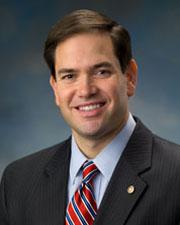 Sen. Marco Rubio (R-FL)
What it changes
1 change to S. 3414
We couldn't read part of this amendment. That part is shown as written below.
Replaces “of the United States, including” through line 23 with new text
Struck: of the United States, including …
Inserted: (b) Additional Sense of Congress.--
Inserted: (1) Findings.--Congress finds the following:
Inserted: (A) Given the importance of the Internet to the global economy, it is essential that the Internet remain stable, secure, and free from government control.
Inserted: (B) The world deserves the access to knowledge, services, commerce, and communication, the accompanying benefits to economic development, education, and health care, and the informed discussion that is the bedrock of democratic self-government that the Internet provides.
Inserted: (C) The structure of Internet governance has profound implications for competition and trade, democratization, free expression, and access to information.
Inserted: (D) Countries have obligations to protect human rights, which are advanced by online activity as well as offline activity.
Inserted: (E) The ability to innovate, develop technical capacity, grasp economic opportunities, and promote freedom of expression online is best realized in cooperation with all stakeholders.
Inserted: (F) Proposals have been put forward for consideration at the 2012 World Conference on International Telecommunications that would fundamentally alter the governance and operation of the Internet.
Inserted: (G) The proposals, in international bodies such as the United Nations General Assembly, the United Nations Commission on Science and Technology for Development, and the International Telecommunication Union, would attempt to justify increased government control over the Internet and would undermine the current multistakeholder model that has enabled the Internet to flourish and under which the private sector, civil society, academia, and individual users play an important role in charting its direction.
Inserted: (H) The proposals would diminish the freedom of expression on the Internet in favor of government control over content.
Inserted: (I) The position of the United States Government has been and is to advocate for the flow of information free from government control.
Inserted: (J) This and past Administrations have made a strong commitment to the multistakeholder model of Internet governance and the promotion of the global benefits of the Internet.
Show 1 more inserted paragraphShow less
Inserted: (2) Sense of congress.--It is the sense of Congress that the Secretary of State, in consultation with the Secretary of Commerce, should continue working to implement the position of the United States on Internet governance that clearly articulates the consistent and unequivocal policy of the United States to promote a global Internet free from government control and preserve and advance the successful multistakeholder model that governs the Internet today.
Original wording
On page 165, line 21, strike “of the United States, including” and all that follows through line 23 and insert the following:
Shown as written
of the United States.
Read automatically from the Congressional Record. Check the original before relying on it.
As printed
SA 2668. Mr. RUBIO (for himself, Mrs. McCaskill, Mr. Toomey, Mr. Barrasso, Ms. Ayotte, Mrs. Shaheen, and Mr. Udall of New Mexico) submitted an amendment intended to be proposed by him to the bill S. 3414, to enhance the security and resiliency of the cyber and communications infrastructure of the United States; which was ordered to lie on the table; as follows:
On page 165, line 21, strike “of the United States, including” and all that follows through line 23 and insert the following: of the United States.
(b) Additional Sense of Congress.--
(1) Findings.--Congress finds the following:
(A) Given the importance of the Internet to the global economy, it is essential that the Internet remain stable, secure, and free from government control.
(B) The world deserves the access to knowledge, services, commerce, and communication, the accompanying benefits to economic development, education, and health care, and the informed discussion that is the bedrock of democratic self-government that the Internet provides.
(C) The structure of Internet governance has profound implications for competition and trade, democratization, free expression, and access to information.
(D) Countries have obligations to protect human rights, which are advanced by online activity as well as offline activity.
(E) The ability to innovate, develop technical capacity, grasp economic opportunities, and promote freedom of expression online is best realized in cooperation with all stakeholders.
(F) Proposals have been put forward for consideration at the 2012 World Conference on International Telecommunications that would fundamentally alter the governance and operation of the Internet.
(G) The proposals, in international bodies such as the United Nations General Assembly, the United Nations Commission on Science and Technology for Development, and the International Telecommunication Union, would attempt to justify increased government control over the Internet and would undermine the current multistakeholder model that has enabled the Internet to flourish and under which the private sector, civil society, academia, and individual users play an important role in charting its direction.
(H) The proposals would diminish the freedom of expression on the Internet in favor of government control over content.
(I) The position of the United States Government has been and is to advocate for the flow of information free from government control.
(J) This and past Administrations have made a strong commitment to the multistakeholder model of Internet governance and the promotion of the global benefits of the Internet.
(2) Sense of congress.--It is the sense of Congress that the Secretary of State, in consultation with the Secretary of Commerce, should continue working to implement the position of the United States on Internet governance that clearly articulates the consistent and unequivocal policy of the United States to promote a global Internet free from government control and preserve and advance the successful multistakeholder model that governs the Internet today.
Legislative Activity
Stay on top of the latest movement without scrolling through every action
Senate amendment submitted
July 31, 2012