In the nature of a substitute.
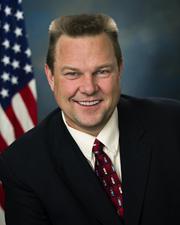 Sen. Jon Tester (D-MT)
Legislative Activity
Stay on top of the latest movement without scrolling through every action
Roll call votes on amendments in Senate: Motion to waive all applicable budgetary discipline with respect to amendment SA 2875 rejected in Senate by Yea-Nay Vote. 50 - 44. Record Vote Number: 204.
November 26, 2012
View full timeline
Roll call votes on amendments in Senate: Motion to waive all applicable budgetary discipline with respect to amendment SA 2875 rejected in Senate by Yea-Nay Vote. 50 - 44. Record Vote Number: 204.
November 26, 2012
Considered by Senate. (consideration: CR S6890)
November 26, 2012
Point of order that the amendment violates section 302(f) of the CBA raised in Senate with respect to amendment SA 2875.
November 26, 2012
Motion to waive all applicable budgetary discipline with respect to amendment SA 2875 made in Senate.
November 26, 2012
Motion to waive all applicable budgetary discipline with respect to amendment SA 2875 rejected in Senate by Yea-Nay Vote. 50 - 44. Record Vote Number: 204.
November 26, 2012
Amendment SA 2875 ruled out of order by the chair. (consideration: CR S6890)
November 26, 2012
Considered by Senate. (consideration: CR S6830)
November 15, 2012
Senate amendment submitted
November 13, 2012
Senate amendment proposed (on the floor): Amendment SA 2875 proposed by Senator Reid for Senator Tester.(consideration: CR S6727)
November 13, 2012
Amendment SA 2875 proposed by Senator Reid for Senator Tester. (consideration: CR S6727) In the nature of a substitute.
November 13, 2012
Votes
1 roll call on this amendment
Amendments
27 amendmentsOffered to this amendment
Amendments
27 amendmentsOffered to this amendment
No matches
To change the enactment date.
SA 2876 fell when SA 2875 was ruled out of order. (consideration: CR S6890) · Sponsored by Harry Reid · Amends S.Amdt. 2875
Sponsored by John Barrasso · Amends S.Amdt. 2875
Sponsored by John Barrasso · Amends S.Amdt. 2875
Sponsored by John Barrasso · Amends S.Amdt. 2875
Sponsored by John Barrasso · Amends S.Amdt. 2875
Sponsored by Mark L. Pryor · Amends S.Amdt. 2875
Sponsored by Lisa Murkowski · Amends S.Amdt. 2875
Sponsored by Tom Coburn · Amends S.Amdt. 2875
Sponsored by Orrin G. Hatch · Amends S.Amdt. 2875
Sponsored by Orrin G. Hatch · Amends S.Amdt. 2875
Sponsored by Orrin G. Hatch · Amends S.Amdt. 2875
Sponsored by Orrin G. Hatch · Amends S.Amdt. 2875
Sponsored by Orrin G. Hatch · Amends S.Amdt. 2875
Sponsored by Orrin G. Hatch · Amends S.Amdt. 2875
Sponsored by Orrin G. Hatch · Amends S.Amdt. 2875
Sponsored by Orrin G. Hatch · Amends S.Amdt. 2875
Sponsored by Mary L. Landrieu · Amends S.Amdt. 2875
Sponsored by Barbara Boxer · Amends S.Amdt. 2875
Sponsored by Benjamin L. Cardin · Amends S.Amdt. 2875
Sponsored by Benjamin L. Cardin · Amends S.Amdt. 2875
Sponsored by Benjamin L. Cardin · Amends S.Amdt. 2875
Sponsored by Benjamin L. Cardin · Amends S.Amdt. 2875
Sponsored by Mike Lee · Amends S.Amdt. 2875
Sponsored by Mike Lee · Amends S.Amdt. 2875
Sponsored by Mike Lee · Amends S.Amdt. 2875
Sponsored by Mike Lee · Amends S.Amdt. 2875
Sponsored by Michael F. Bennet · Amends S.Amdt. 2875
Text
Submitted
SA 2875. Mr. REID (for Mr. Tester) proposed an amendment to the bill
S. 3525, to protect and enhance opportunities for recreational hunting,
fishing, and shooting, and for other purposes; as follows:

Strike all after the enacting clause and insert the
following:

SECTION 1. SHORT TITLE; TABLE OF CONTENTS.

(a) Short Title.--This Act may be cited as the
``Sportsmen's Act of 2012''.
(b) Table of Contents.--The table of contents of this Act
is as follows:

Sec. 1. Short title; table of contents.

TITLE I--HUNTING, FISHING, AND RECREATIONAL SHOOTING

Subtitle A--Hunting and Recreational Shooting

Sec. 101. Making public land public.
Sec. 102. Permits for importation of polar bear trophies taken in sport
hunts in Canada.
Sec. 103. Transporting bows through National Parks.

Subtitle B--Target Practice and Marksmanship Training Support

Sec. 111. Target practice and marksmanship training.
Sec. 112. Findings; purpose.
Sec. 113. Definition of public target range.
Sec. 114. Amendments to Pittman-Robertson Wildlife Restoration Act.
Sec. 115. Sense of Congress regarding cooperation.

Subtitle C--Fishing

Sec. 121. Modification of definition of toxic substance to exclude
sport fishing equipment.

TITLE II--NATIONAL FISH HABITAT

Subtitle A--National Fish Habitat

Sec. 201. Definitions.
Sec. 202. National Fish Habitat Board.
Sec. 203. Fish habitat partnerships.
Sec. 204. Fish habitat conservation projects.
Sec. 205. National Fish Habitat Conservation Partnership Office.
Sec. 206. Technical and scientific assistance.
Sec. 207. Conservation of aquatic habitat for fish and other aquatic
organisms on Federal land.
Sec. 208. Coordination with States and Indian tribes.
Sec. 209. Accountability and reporting.
Sec. 210. Regulations.
Sec. 211. Effect of subtitle.
Sec. 212. Nonapplicability of Federal Advisory Committee Act.
Sec. 213. Funding.

Subtitle B--Duck Stamps

Sec. 221. Findings.
Sec. 222. Cost of stamps.
Sec. 223. Waivers.
Sec. 224. Permanent electronic duck stamps.

Subtitle C--Joint Ventures to Protect Migratory Bird Populations

Sec. 231. Purposes.
Sec. 232. Definitions.
Sec. 233. Joint Ventures Program.
Sec. 234. Administration.
Sec. 235. Grants and other assistance.
Sec. 236. Reporting.
Sec. 237. Relationship to other authorities.
Sec. 238. Federal Advisory Committee Act.

Subtitle D--Reauthorizations

Sec. 241. North American Wetlands Conservation Act.
Sec. 242. Partners for Fish and Wildlife Act.
Sec. 243. National Fish and Wildlife Foundation reauthorization.
Sec. 244. Multinational Species Conservation Funds Semipostal Stamp.
Sec. 245. Multinational species conservation funds reauthorizations.
Sec. 246. Neotropical Migratory Bird Conservation Act.
Sec. 247. Federal Land Transaction Facilitation Act.
Sec. 248. Nutria eradication and control.
TITLE I--HUNTING, FISHING, AND RECREATIONAL SHOOTING
Subtitle A--Hunting and Recreational Shooting

SEC. 101. MAKING PUBLIC LAND PUBLIC.

(a) In General.--Section 3 of the Land and Water
Conservation Fund Act of 1965 (16 U.S.C. 460l-6) is amended--
(1) by striking ``Sec. 3. Appropriations.--Moneys'' and
inserting the following:

``SEC. 3. FUNDING.

``(a) In General.--Amounts''; and
(2) by adding at the end the following:
``(b) Priority List.--
``(1) In general.--Subject to the availability of
appropriations and notwithstanding any other provision of
this Act, the Secretary of the Interior and the Secretary of
Agriculture shall ensure that, of the amounts made available
for the fund for each fiscal year, not less than 1.5 percent
of the amounts shall be made available for projects
identified on the priority list developed under paragraph
(2).
``(2) Priority list.--The Secretary of the Interior and the
Secretary of Agriculture, in consultation with the head of
each affected Federal agency, shall annually develop a
priority list for the sites under the jurisdiction of the
applicable Secretary.

[[Page S6750]]

``(3) Criteria.--Projects identified on the priority list
developed under paragraph (2) shall secure recreational
public access to Federal public land in existence as of the
date of enactment of this subsection that has significantly
restricted access for hunting, fishing, and other
recreational purposes through rights-of-way or acquisition of
land (or any interest in land) from willing sellers.''.
(b) Conforming Amendments.--
(1) Land and water conservation fund act.--The Land and
Water Conservation Fund Act of 1965 (16 U.S.C. 460l-4 et
seq.) is amended--
(A) in the proviso at the end of section 2(c)(2) (16 U.S.C.
460l-5(c)(2)), by striking ``notwithstanding the provisions
of section 3 of this Act'';
(B) in the first sentence of section 9 (16 U.S.C. 460l-
10a), by striking ``by section 3 of this Act''; and
(C) in the third sentence of section 10 (16 U.S.C. 460l-
10b), by striking ``by section 3 of this Act''.
(2) Federal land transaction facilitation act.--Section
206(f)(2) of the Federal Land Transaction Facilitation Act
(43 U.S.C. 2305(f)(2)) is amended by striking ``section 3 of
the Land and Water Conservation Fund Act (16 U.S.C. 460l-6)''
and inserting ``the Land and Water Conservation Fund Act of
1965 (16 U.S.C. 460l-4 et seq.)''.

SEC. 102. PERMITS FOR IMPORTATION OF POLAR BEAR TROPHIES
TAKEN IN SPORT HUNTS IN CANADA.

Section 104(c)(5) of the Marine Mammal Protection Act of
1972 (16 U.S.C. 1374(c)(5)) is amended by striking
subparagraph (D) and inserting the following:
``(D)(i) The Secretary of the Interior shall, expeditiously
after the expiration of the applicable 30-day period under
subsection (d)(2), issue a permit for the importation of any
polar bear part (other than an internal organ) from a polar
bear taken in a sport hunt in Canada to any person--
``(I) who submits, with the permit application, proof that
the polar bear was legally harvested by the person before
February 18, 1997; or
``(II) who has submitted, in support of a permit
application submitted before May 15, 2008, proof that the
polar bear was legally harvested by the person before May 15,
2008, from a polar bear population from which a sport-hunted
trophy could be imported before that date in accordance with
section 18.30(i) of title 50, Code of Federal Regulations.
``(ii) The Secretary shall issue permits under clause
(i)(I) without regard to subparagraphs (A) and (C)(ii) of
this paragraph, subsection (d)(3), and sections 101 and 102.
Sections 101(a)(3)(B) and 102(b)(3) shall not apply to the
importation of any polar bear part authorized by a permit
issued under clause (i)(I). This clause shall not apply to
polar bear parts that were imported before June 12, 1997.
``(iii) The Secretary shall issue permits under clause
(i)(II) without regard to subparagraph (C)(ii) of this
paragraph or subsection (d)(3). Sections 101(a)(3)(B) and
102(b)(3) shall not apply to the importation of any polar
bear part authorized by a permit issued under clause (i)(II).
This clause shall not apply to polar bear parts that were
imported before the date of enactment of the Sportsmen's Act
of 2012.''.

SEC. 103. TRANSPORTING BOWS THROUGH NATIONAL PARKS.

(a) Findings.--Congress finds that--
(1) bowhunters are known worldwide as among the most
skilled, ethical, and conservation-minded of all hunters;
(2) bowhunting organizations at the Federal, State, and
local level contribute significant financial and human
resources to wildlife conservation and youth education
programs throughout the United States; and
(3) bowhunting contributes $38,000,000,000 each year to the
economy of the United States.
(b) Possession of Bows in Units of National Park System or
National Wildlife Refuge System.--
(1) In general.--Subject to paragraph (2), the Secretary of
the Interior shall permit individuals carrying bows and
crossbows to traverse national park land if the traverse is--
(A) for the sole purpose of hunting on adjacent public or
private land; and
(B) the most direct means of access to the adjacent land.
(2) Use.--Nothing in this section authorizes the use of the
bows or crossbows that are being carried while on national
park land.
Subtitle B--Target Practice and Marksmanship Training Support

SEC. 111. TARGET PRACTICE AND MARKSMANSHIP TRAINING.

This subtitle may be cited as the ``Target Practice and
Marksmanship Training Support Act''.

SEC. 112. FINDINGS; PURPOSE.

(a) Findings.--Congress finds that--
(1) in recent years preceding the date of enactment of this
Act, portions of Federal land have been closed to target
practice and marksmanship training for many reasons;
(2) the availability of public target ranges on non-Federal
land has been declining for a variety of reasons, including
continued population growth and development near former
ranges;
(3) providing opportunities for target practice and
marksmanship training at public target ranges on Federal and
non-Federal land can help--
(A) to promote enjoyment of shooting, recreational, and
hunting activities; and
(B) to ensure safe and convenient locations for those
activities;
(4) Federal law in effect on the date of enactment of this
Act, including the Pittman-Robertson Wildlife Restoration Act
(16 U.S.C. 669 et seq.), provides Federal support for
construction and expansion of public target ranges by making
available to States amounts that may be used for
construction, operation, and maintenance of public target
ranges; and
(5) it is in the public interest to provide increased
Federal support to facilitate the construction or expansion
of public target ranges.
(b) Purpose.--The purpose of this subtitle is to facilitate
the construction and expansion of public target ranges,
including ranges on Federal land managed by the Forest
Service and the Bureau of Land Management.

SEC. 113. DEFINITION OF PUBLIC TARGET RANGE.

In this subtitle, the term ``public target range'' means a
specific location that--
(1) is identified by a governmental agency for recreational
shooting;
(2) is open to the public;
(3) may be supervised; and
(4) may accommodate archery or rifle, pistol, or shotgun
shooting.

SEC. 114. AMENDMENTS TO PITTMAN-ROBERTSON WILDLIFE
RESTORATION ACT.

(a) Definitions.--Section 2 of the Pittman-Robertson
Wildlife Restoration Act (16 U.S.C. 669a) is amended--
(1) by redesignating paragraphs (2) through (8) as
paragraphs (3) through (9), respectively; and
(2) by inserting after paragraph (1) the following:
``(2) the term `public target range' means a specific
location that--
``(A) is identified by a governmental agency for
recreational shooting;
``(B) is open to the public;
``(C) may be supervised; and
``(D) may accommodate archery or rifle, pistol, or shotgun
shooting;''.
(b) Expenditures for Management of Wildlife Areas and
Resources.--Section 8(b) of the Pittman-Robertson Wildlife
Restoration Act (16 U.S.C. 669g(b)) is amended--
(1) by striking ``(b) Each State'' and inserting the
following:
``(b) Expenditures for Management of Wildlife Areas and
Resources.--
``(1) In general.--Except as provided in paragraph (2),
each State'';
(2) in paragraph (1) (as so designated), by striking
``construction, operation,'' and inserting ``operation'';
(3) in the second sentence, by striking ``The non-Federal
share'' and inserting the following:
``(3) Non-federal share.--The non-Federal share'';
(4) in the third sentence, by striking ``The Secretary''
and inserting the following:
``(4) Regulations.--The Secretary''; and
(5) by inserting after paragraph (1) (as designated by
paragraph (1) of this subsection) the following:
``(2) Exception.--Notwithstanding the limitation described
in paragraph (1), a State may use the funds apportioned to
the State under section 4(d) to pay up to 90 percent of the
cost of acquiring land for, expanding, or constructing a
public target range.''.
(c) Firearm and Bow Hunter Education and Safety Program
Grants.--Section 10 of the Pittman-Robertson Wildlife
Restoration Act (16 U.S.C. 669h-1) is amended--
(1) in subsection (a), by adding at the end the following:
``(3) Allocation of additional amounts.--Of the amount
apportioned to a State for any fiscal year under section
4(b), the State may elect to allocate not more than 10
percent, to be combined with the amount apportioned to the
State under paragraph (1) for that fiscal year, for acquiring
land for, expanding, or constructing a public target
range.'';
(2) by striking subsection (b) and inserting the following:
``(b) Cost Sharing.--
``(1) In general.--Except as provided in paragraph (2), the
Federal share of the cost of any activity carried out using a
grant under this section shall not exceed 75 percent of the
total cost of the activity.
``(2) Public target range construction or expansion.--The
Federal share of the cost of acquiring land for, expanding,
or constructing a public target range in a State on Federal
or non-Federal land pursuant to this section or section 8(b)
shall not exceed 90 percent of the cost of the activity.'';
and
(3) in subsection (c)(1)--
(A) by striking ``Amounts made'' and inserting the
following:
``(A) In general.--Except as provided in subparagraph (B),
amounts made''; and
(B) by adding at the end the following:
``(B) Exception.--Amounts provided for acquiring land for,
constructing, or expanding a public target range shall remain
available for expenditure and obligation during the 5-fiscal-
year period beginning on October 1 of the first fiscal year
for which the amounts are made available.''.
(d) Technical and Conforming Amendments to the Pittman-
Robertson Wildlife Restoration Act.--
(1) Technical amendments.--Section 4 of the Pittman-
Robertson Wildlife Restoration Act (16 U.S.C. 669c) is
amended--
(A) by redesignating subsection (d) as subsection (e); and

[[Page S6751]]

(B) by striking ``(c) Apportionment'' and inserting ``(d)
Apportionment''.
(2) Conforming amendments.--
(A) Definitions.--Section 2(6) of the Pittman-Robertson
Wildlife Restoration Act (16 U.S.C. 669a(6)) is amended by
striking ``section 4(d)'' and inserting ``section 4(e)''.
(B) Authorization of appropriations.--Section 3(c)(2) of
the Pittman-Robertson Wildlife Restoration Act (16 U.S.C.
669b(c)(2)) is amended by striking ``sections 4(d) and (e)''
and inserting ``section 4(e)''.

SEC. 115. SENSE OF CONGRESS REGARDING COOPERATION.

It is the sense of Congress that, consistent with
applicable laws (including regulations), the Chief of the
Forest Service and the Director of the Bureau of Land
Management should cooperate with State and local authorities
and other entities to implement best practices for waste
management and removal and carry out other related activities
on any Federal land used as a public target range to
encourage continued use of that land for target practice or
marksmanship training.
Subtitle C--Fishing

SEC. 121. MODIFICATION OF DEFINITION OF TOXIC SUBSTANCE TO
EXCLUDE SPORT FISHING EQUIPMENT.

(a) In General.--Section 3(2)(B) of the Toxic Substances
Control Act (15 U.S.C. 2602(2)(B)) is amended--
(1) in clause (v), by striking ``, and'' and inserting ``,
or any component of any such article when included in the
article including, without limitation, shot, bullets and
other projectiles, propellants, and primers,'';
(2) in clause (vi) by striking the period at the end and
inserting ``, and''; and
(3) by inserting after clause (vi) the following:
``(vii) any sport fishing equipment (as such term is
defined in section 4162(a) of the Internal Revenue Code of
1986, without regard to paragraphs (6) through (9) thereof)
the sale of which is subject to the tax imposed by section
4161(a) of such Code (determined without regard to any
exemptions from such tax as provided by section 4162 or 4221
or any other provision of such Code), and sport fishing
equipment components.''.
(b) Relationship to Other Law.--Nothing in this section or
any amendment made by this section affects or limits the
application of or obligation to comply with any other
Federal, State or local law.
TITLE II--NATIONAL FISH HABITAT
Subtitle A--National Fish Habitat

SEC. 201. DEFINITIONS.

In this subtitle:
(1) Appropriate congressional committees.--The term
``appropriate congressional committees'' means--
(A) the Committee on Commerce, Science, and Transportation
and the Committee on Environment and Public Works of the
Senate; and
(B) the Committee on Natural Resources of the House of
Representatives.
(2) Aquatic habitat.--
(A) In general.--The term ``aquatic habitat'' means any
area on which an aquatic organism depends, directly or
indirectly, to carry out the life processes of the organism,
including an area used by the organism for spawning,
incubation, nursery, rearing, growth to maturity, food
supply, or migration.
(B) Inclusions.--The term ``aquatic habitat'' includes an
area adjacent to an aquatic environment, if the adjacent
area--
(i) contributes an element, such as the input of detrital
material or the promotion of a planktonic or insect
population providing food, that makes fish life possible;
(ii) protects the quality and quantity of water sources;
(iii) provides public access for the use of fishery
resources; or
(iv) serves as a buffer protecting the aquatic environment.
(3) Assistant administrator.--The term ``Assistant
Administrator'' means the Assistant Administrator for
Fisheries of the National Oceanic and Atmospheric
Administration.
(4) Board.--The term ``Board'' means the National Fish
Habitat Board established by section 202(a)(1).
(5) Conservation; conserve; manage; management.--The terms
``conservation'', ``conserve'', ``manage'', and
``management'' mean to protect, sustain, and, where
appropriate, restore and enhance, using methods and
procedures associated with modern scientific resource
programs (including protection, research, census, law
enforcement, habitat management, propagation, live trapping
and transplantation, and regulated taking)--
(A) a healthy population of fish, wildlife, or plant life;
(B) a habitat required to sustain fish, wildlife, or plant
life; or
(C) a habitat required to sustain fish, wildlife, or plant
life productivity.
(6) Director.--The term ``Director'' means the Director of
the United States Fish and Wildlife Service.
(7) Fish.--
(A) In general.--The term ``fish'' means any freshwater,
diadromous, estuarine, or marine finfish or shellfish.
(B) Inclusions.--The term ``fish'' includes the egg, spawn,
spat, larval, and other juvenile stages of an organism
described in subparagraph (A).
(8) Fish habitat conservation project.--
(A) In general.--The term ``fish habitat conservation
project'' means a project that--
(i) is submitted to the Board by a Partnership and approved
by the Secretary under section 204; and
(ii) provides for the conservation or management of an
aquatic habitat.
(B) Inclusions.--The term ``fish habitat conservation
project'' includes--
(i) the provision of technical assistance to a State,
Indian tribe, or local community by the National Fish Habitat
Conservation Partnership Office or any other agency to
facilitate the development of strategies and priorities for
the conservation of aquatic habitats; or
(ii) the obtaining of a real property interest in land or
water, including water rights, in accordance with terms and
conditions that ensure that the real property will be
administered for the long-term conservation of--

(I) the land or water; and
(II) the fish dependent on the land or water.

(9) Indian tribe.--The term ``Indian tribe'' has the
meaning given the term in section 4 of the Indian Self-
Determination and Education Assistance Act (25 U.S.C. 450b).
(10) National fish habitat action plan.--The term
``National Fish Habitat Action Plan'' means the National Fish
Habitat Action Plan dated April 24, 2006, and any subsequent
revisions or amendments to that plan.
(11) Partnership.--The term ``Partnership'' means an entity
designated by the Board as a Fish Habitat Conservation
Partnership pursuant to section 203(a).
(12) Real property interest.--The term ``real property
interest'' means an ownership interest in--
(A) land;
(B) water (including water rights); or
(C) a building or object that is permanently affixed to
land.
(13) Secretary.--The term ``Secretary'' means the Secretary
of the Interior.
(14) State agency.--The term ``State agency'' means--
(A) the fish and wildlife agency of a State;
(B) any department or division of a department or agency of
a State that manages in the public trust the inland or marine
fishery resources or the habitat for those fishery resources
of the State pursuant to State law or the constitution of the
State; or
(C) the fish and wildlife agency of the Commonwealth of
Puerto Rico, Guam, the Virgin Islands, or any other territory
or possession of the United States.

SEC. 202. NATIONAL FISH HABITAT BOARD.

(a) Establishment.--
(1) In general.--There is established a board, to be known
as the ``National Fish Habitat Board''--
(A) to promote, oversee, and coordinate the implementation
of this subtitle and the National Fish Habitat Action Plan;
(B) to establish national goals and priorities for aquatic
habitat conservation;
(C) to designate Partnerships; and
(D) to review and make recommendations regarding fish
habitat conservation projects.
(2) Membership.--The Board shall be composed of 27 members,
of whom--
(A) 1 shall be the Director;
(B) 1 shall be the Assistant Administrator;
(C) 1 shall be the Chief of the Natural Resources
Conservation Service;
(D) 1 shall be the Chief of the Forest Service;
(E) 1 shall be the Assistant Administrator for Water of the
Environmental Protection Agency;
(F) 1 shall be the President of the Association of Fish and
Wildlife Agencies;
(G) 1 shall be the Secretary of the Board of Directors of
the National Fish and Wildlife Foundation appointed pursuant
to section 3(g)(2)(B) of the National Fish and Wildlife
Foundation Establishment Act (16 U.S.C. 3702(g)(2)(B));
(H) 4 shall be representatives of State agencies, 1 of whom
shall be nominated by a regional association of fish and
wildlife agencies from each of the Northeast, Southeast,
Midwest, and Western regions of the United States;
(I) 1 shall be a representative of the American Fisheries
Society;
(J) 2 shall be representatives of Indian tribes, of whom--
(i) 1 shall represent Indian tribes from the State of
Alaska; and
(ii) 1 shall represent Indian tribes from the other States;
(K) 1 shall be a representative of the Regional Fishery
Management Councils established under section 302 of the
Magnuson-Stevens Fishery Conservation and Management Act (16
U.S.C. 1852);
(L) 1 shall be a representative of the Marine Fisheries
Commissions, which is composed of--
(i) the Atlantic States Marine Fisheries Commission;
(ii) the Gulf States Marine Fisheries Commission; and
(iii) the Pacific States Marine Fisheries Commission;
(M) 1 shall be a representative of the Sportfishing and
Boating Partnership Council; and
(N) 10 shall be representatives selected from each of the
following groups:
(i) The recreational sportfishing industry.
(ii) The commercial fishing industry.
(iii) Marine recreational anglers.
(iv) Freshwater recreational anglers.
(v) Terrestrial resource conservation organizations.
(vi) Aquatic resource conservation organizations.

[[Page S6752]]

(vii) The livestock and poultry production industry.
(viii) The land development industry.
(ix) The row crop industry.
(x) Natural resource commodity interests, such as petroleum
or mineral extraction.
(3) Compensation.--A member of the Board shall serve
without compensation.
(4) Travel expenses.--A member of the Board shall be
allowed travel expenses, including per diem in lieu of
subsistence, at rates authorized for an employee of an agency
under subchapter I of chapter 57 of title 5, United States
Code, while away from the home or regular place of business
of the member in the performance of the duties of the Board.
(b) Appointment and Terms.--
(1) In general.--Except as otherwise provided in this
subsection, a member of the Board described in any of
subparagraphs (H) through (N) of subsection (a)(2) shall
serve for a term of 3 years.
(2) Initial board membership.--
(A) In general.--Not later than 180 days after the date of
enactment of this Act, the representatives of the board
established by the National Fish Habitat Action Plan shall
appoint the initial members of the Board described in
subparagraphs (H) through (I) and (K) through (N) of
subsection (a)(2).
(B) Tribal representatives.--Not later than 180 days after
the enactment of this Act, the Secretary shall provide to the
board established by the National Fish Habitat Action Plan a
recommendation of not less than 4 tribal representatives,
from which that board shall appoint 2 representatives
pursuant to subparagraph (J) of subsection (a)(2).
(3) Transitional terms.--Of the members described in
subsection (a)(2)(N) initially appointed to the Board--
(A) 4 shall be appointed for a term of 1 year;
(B) 4 shall be appointed for a term of 2 years; and
(C) 3 shall be appointed for a term of 3 years.
(4) Vacancies.--
(A) In general.--A vacancy of a member of the Board
described in any of subparagraphs (H) through (I) or (K)
through (N) of subsection (a)(2) shall be filled by an
appointment made by the remaining members of the Board.
(B) Tribal representatives.--Following a vacancy of a
member of the Board described in subparagraph (J) of
subsection (a)(2), the Secretary shall recommend to the Board
not less than 4 tribal representatives, from which the
remaining members of the Board shall appoint a representative
to fill the vacancy.
(5) Continuation of service.--An individual whose term of
service as a member of the Board expires may continue to
serve on the Board until a successor is appointed.
(6) Removal.--If a member of the Board described in any of
subparagraphs (H) through (N) of subsection (a)(2) misses 3
consecutive regularly scheduled Board meetings, the members
of the Board may--
(A) vote to remove that member; and
(B) appoint another individual in accordance with paragraph
(4).
(c) Chairperson.--
(1) In general.--The Board shall elect a member of the
Board to serve as Chairperson of the Board.
(2) Term.--The Chairperson of the Board shall serve for a
term of 3 years.
(d) Meetings.--
(1) In general.--The Board shall meet--
(A) at the call of the Chairperson; but
(B) not less frequently than twice each calendar year.
(2) Public access.--All meetings of the Board shall be open
to the public.
(e) Procedures.--
(1) In general.--The Board shall establish procedures to
carry out the business of the Board, including--
(A) a requirement that a quorum of the members of the Board
be present to transact business;
(B) a requirement that no recommendations may be adopted by
the Board, except by the vote of \2/3\ of all members present
and voting;
(C) procedures for establishing national goals and
priorities for aquatic habitat conservation for the purposes
of this subtitle;
(D) procedures for designating Partnerships under section
203; and
(E) procedures for reviewing, evaluating, and making
recommendations regarding fish habitat conservation projects.
(2) Quorum.--A majority of the members of the Board shall
constitute a quorum.

SEC. 203. FISH HABITAT PARTNERSHIPS.

(a) Authority To Designate.--The Board may designate Fish
Habitat Partnerships in accordance with this section.
(b) Purposes.--The purposes of a Partnership shall be--
(1) to coordinate the implementation of the National Fish
Habitat Action Plan at a regional level;
(2) to identify strategic priorities for fish habitat
conservation;
(3) to recommend to the Board fish habitat conservation
projects that address a strategic priority of the Board; and
(4) to develop and carry out fish habitat conservation
projects.
(c) Applications.--An entity seeking to be designated as a
Partnership shall submit to the Board an application at such
time, in such manner, and containing such information as the
Board may reasonably require.
(d) Approval.--The Board may approve an application for a
Partnership submitted under subsection (c) if the Board
determines that the applicant--
(1) includes representatives of a diverse group of public
and private partners, including Federal, State, or local
governments, nonprofit entities, Indian tribes, and private
individuals, that are focused on conservation of aquatic
habitats to achieve results across jurisdictional boundaries
on public and private land;
(2) is organized to promote the health of important aquatic
habitats and distinct geographical areas, keystone fish
species, or system types, including reservoirs, natural
lakes, coastal and marine environments, and estuaries;
(3) identifies strategic fish and aquatic habitat
priorities for the Partnership area in the form of
geographical focus areas or key stressors or impairments to
facilitate strategic planning and decisionmaking;
(4) is able to address issues and priorities on a
nationally significant scale;
(5) includes a governance structure that--
(A) reflects the range of all partners; and
(B) promotes joint strategic planning and decisionmaking by
the applicant;
(6) demonstrates completion of, or significant progress
toward the development of, a strategic plan to address the
causes of system decline in fish populations, rather than
simply treating symptoms in accordance with the National Fish
Habitat Action Plan; and
(7) ensures collaboration in developing a strategic vision
and implementation program that is scientifically sound and
achievable.

SEC. 204. FISH HABITAT CONSERVATION PROJECTS.

(a) Submission to Board.--Not later than March 31 of each
calendar year, each Partnership shall submit to the Board a
list of fish habitat conservation projects recommended by the
Partnership for annual funding under this subtitle.
(b) Recommendations by Board.--Not later than July 1 of
each calendar year, the Board shall submit to the Secretary a
description, including estimated costs, of each fish habitat
conservation project that the Board recommends that the
Secretary approve and fund under this subtitle, in order of
priority, for the following fiscal year.
(c) Considerations.--The Board shall select each fish
habitat conservation project to be recommended to the
Secretary under subsection (b)--
(1) based on a recommendation of the Partnership that is,
or will be, participating actively in carrying out the fish
habitat conservation project; and
(2) after taking into consideration--
(A) the extent to which the fish habitat conservation
project fulfills a purpose of this subtitle or a goal of the
National Fish Habitat Action Plan;
(B) the extent to which the fish habitat conservation
project addresses the national priorities established by the
Board;
(C) the availability of sufficient non-Federal funds to
match Federal contributions for the fish habitat conservation
project, as required by subsection (e);
(D) the extent to which the fish habitat conservation
project--
(i) increases fishing opportunities for the public;
(ii) will be carried out through a cooperative agreement
among Federal, State, and local governments, Indian tribes,
and private entities;
(iii) increases public access to land or water;
(iv) advances the conservation of fish and wildlife species
that are listed, or are candidates to be listed, as
threatened species or endangered species under the Endangered
Species Act of 1973 (16 U.S.C. 1531 et seq.);
(v) where appropriate, advances the conservation of fish
and fish habitats under the Magnuson-Stevens Act (16 U.S.C.
1801 et seq.) and other relevant Federal law and State
wildlife action plans; and
(vi) promotes resilience such that desired biological
communities are able to persist and adapt to environmental
stressors such as climate change; and
(E) the substantiality of the character and design of the
fish habitat conservation project.
(d) Limitations.--
(1) Requirements for evaluation.--No fish habitat
conservation project may be recommended by the Board under
subsection (b) or provided financial assistance under this
subtitle unless the fish habitat conservation project
includes an evaluation plan designed--
(A) to appropriately assess the biological, ecological, or
other results of the habitat protection, restoration, or
enhancement activities carried out using the assistance;
(B) to reflect appropriate changes to the fish habitat
conservation project if the assessment substantiates that the
fish habitat conservation project objectives are not being
met; and
(C) to require the submission to the Board of a report
describing the findings of the assessment.
(2) Acquisition of real property interests.--
(A) In general.--No fish habitat conservation project that
will result in the acquisition by the State, local
government, or other non-Federal entity, in whole or in part,
of any real property interest may be recommended by the Board
under subsection (b) or provided financial assistance under
this

[[Page S6753]]

subtitle unless the project meets the requirements of
subparagraph (B).
(B) Requirements.--
(i) In general.--A real property interest may not be
acquired pursuant to a fish habitat conservation project by a
State, public agency, or other non-Federal entity unless the
State, agency, or other non-Federal entity is obligated to
undertake the management of the property being acquired in
accordance with the purposes of this subtitle.
(ii) Additional conditions.--Any real property interest
acquired by a State, local government, or other non-Federal
entity pursuant to a fish habitat conservation project shall
be subject to terms and conditions that ensure that the
interest will be administered for the long-term conservation
and management of the aquatic ecosystem and the fish and
wildlife dependent on that ecosystem.
(e) Non-Federal Contributions.--
(1) In general.--Except as provided in paragraph (2), no
fish habitat conservation project may be recommended by the
Board under subsection (b) or provided financial assistance
under this subtitle unless at least 50 percent of the cost of
the fish habitat conservation project will be funded with
non-Federal funds.
(2) Projects on federal land or water.--Notwithstanding
paragraph (1), Federal funds may be used for payment of 100
percent of the costs of a fish habitat conservation project
located on Federal land or water.
(3) Non-federal share.--The non-Federal share of the cost
of a fish habitat conservation project--
(A) may not be derived from a Federal grant program; but
(B) may include in-kind contributions and cash.
(4) Special rule for indian tribes.--Notwithstanding
paragraph (1) or any other provision of law, any funds made
available to an Indian tribe pursuant to this subtitle may be
considered to be non-Federal funds for the purpose of
paragraph (1).
(f) Approval.--
(1) In general.--Not later than 180 days after the date of
receipt of the recommendations of the Board for fish habitat
conservation projects under subsection (b), and based, to the
maximum extent practicable, on the criteria described in
subsection (c)--
(A) the Secretary shall approve, reject, or reorder the
priority of any fish habitat conservation project recommended
by the Board that is not within a marine or estuarine
habitat; and
(B) the Secretary and the Secretary of Commerce shall
jointly approve, reject, or reorder the priority of any fish
habitat conservation project recommended by the Board that is
within a marine or estuarine habitat.
(2) Funding.--If the Secretary, or the Secretary and the
Secretary of Commerce jointly, approves a fish habitat
conservation project under paragraph (1), the Secretary, or
the Secretary and the Secretary of Commerce jointly, shall
use amounts made available to carry out this subtitle to
provide funds to carry out the fish habitat conservation
project.
(3) Notification.--If the Secretary, or the Secretary and
the Secretary of Commerce jointly, rejects or reorders the
priority of any fish habitat conservation project recommended
by the Board under subsection (b), the Secretary, or the
Secretary and the Secretary of Commerce jointly, shall
provide to the Board and the appropriate Partnership a
written statement of the reasons that the Secretary, or the
Secretary and the Secretary of Commerce jointly, rejected or
modified the priority of the fish habitat conservation
project.
(4) Limitation.--If the Secretary, or the Secretary and the
Secretary of Commerce jointly, has not approved, rejected, or
reordered the priority of the recommendations of the Board
for fish habitat conservation projects by the date that is
180 days after the date of receipt of the recommendations,
the recommendations shall be considered to be approved.

SEC. 205. NATIONAL FISH HABITAT CONSERVATION PARTNERSHIP
OFFICE.

(a) Establishment.--Not later than 1 year after the date of
enactment of this Act, the Director shall establish an
office, to be known as the ``National Fish Habitat
Conservation Partnership Office'', within the United States
Fish and Wildlife Service.
(b) Functions.--The National Fish Habitat Conservation
Partnership Office shall--
(1) provide funding to support the detail of State and
tribal fish and wildlife staff to the Office;
(2) facilitate the cooperative development and approval of
Partnerships;
(3) assist the Secretary and the Board in carrying out this
subtitle;
(4) assist the Secretary in carrying out the requirements
of sections 206 and 208;
(5) facilitate communication, cohesiveness, and efficient
operations for the benefit of Partnerships and the Board;
(6) facilitate, with assistance from the Director, the
Assistant Administrator, and the President of the Association
of Fish and Wildlife Agencies, the consideration of fish
habitat conservation projects by the Board;
(7) provide support to the Director regarding the
development and implementation of the interagency operational
plan under subsection (c);
(8) coordinate technical and scientific reporting as
required by section 209;
(9) facilitate the efficient use of resources and
activities of Federal departments and agencies to carry out
this subtitle in an efficient manner; and
(10) provide support to the Board for national
communication and outreach efforts that promote public
awareness of fish habitat conservation.
(c) Interagency Operational Plan.--Not later than 1 year
after the date of enactment of this Act, and every 5 years
thereafter, the Director, in cooperation with the Assistant
Administrator and the heads of other appropriate Federal
departments and agencies, shall develop an interagency
operational plan for the National Fish Habitat Conservation
Partnership Office that describes--
(1) the functional, operational, technical, scientific, and
general staff, administrative, and material needs of the
Office; and
(2) any interagency agreements between or among Federal
departments and agencies to address those needs.
(d) Staff and Support.--
(1) Departments of interior and commerce.--The Director and
the Assistant Administrator shall each provide appropriate
staff to support the National Fish Habitat Conservation
Partnership Office, subject to the availability of funds
under section 213.
(2) States and indian tribes.--Each State and Indian tribe
is encouraged to provide staff to support the National Fish
Habitat Conservation Partnership Office.
(3) Detailees and contractors.--The National Fish Habitat
Conservation Partnership Office may accept staff or other
administrative support from other entities--
(A) through interagency details; or
(B) as contractors.
(4) Qualifications.--The staff of the National Fish Habitat
Conservation Partnership Office shall include members with
education and experience relating to the principles of fish,
wildlife, and aquatic habitat conservation.
(5) Waiver of requirement.--The Secretary may waive all or
part of the non-Federal contribution requirement under
section 204(e)(1) if the Secretary determines that--
(A) no reasonable means are available through which the
affected applicant can meet the requirement; and
(B) the probable benefit of the relevant fish habitat
conservation project outweighs the public interest in meeting
the requirement.
(e) Reports.--Not less frequently than once each year, the
Director shall provide to the Board a report describing the
activities of the National Fish Habitat Conservation
Partnership Office.

SEC. 206. TECHNICAL AND SCIENTIFIC ASSISTANCE.

(a) In General.--The Director, the Assistant Administrator,
and the Director of the United States Geological Survey, in
coordination with the Forest Service and other appropriate
Federal departments and agencies, shall provide scientific
and technical assistance to the Partnerships, participants in
fish habitat conservation projects, and the Board.
(b) Inclusions.--Scientific and technical assistance
provided pursuant to subsection (a) may include--
(1) providing technical and scientific assistance to
States, Indian tribes, regions, local communities, and
nongovernmental organizations in the development and
implementation of Partnerships;
(2) providing technical and scientific assistance to
Partnerships for habitat assessment, strategic planning, and
prioritization;
(3) supporting the development and implementation of fish
habitat conservation projects that are identified as high
priorities by Partnerships and the Board;
(4) supporting and providing recommendations regarding the
development of science-based monitoring and assessment
approaches for implementation through Partnerships;
(5) supporting and providing recommendations for a national
fish habitat assessment; and
(6) ensuring the availability of experts to conduct
scientifically based evaluation and reporting of the results
of fish habitat conservation projects.

SEC. 207. CONSERVATION OF AQUATIC HABITAT FOR FISH AND OTHER
AQUATIC ORGANISMS ON FEDERAL LAND.

To the extent consistent with the mission and authority of
the applicable department or agency, the head of each Federal
department and agency responsible for acquiring, managing, or
disposing of Federal land or water shall cooperate with the
Assistant Administrator and the Director to conserve the
aquatic habitats for fish and other aquatic organisms within
the land and water of the department or agency.

SEC. 208. COORDINATION WITH STATES AND INDIAN TRIBES.

The Secretary shall provide a notice to, and coordinate
with, the appropriate State agency or tribal agency, as
applicable, of each State and Indian tribe within the
boundaries of which an activity is planned to be carried out
pursuant to this subtitle by not later than 30 days before
the date on which the activity is implemented.

SEC. 209. ACCOUNTABILITY AND REPORTING.

(a) Implementation Reports.--
(1) In general.--Not later than 2 years after the date of
enactment of this Act, and every 2 years thereafter, the
Board shall submit to the appropriate congressional
committees a report describing the implementation of--
(A) this subtitle; and
(B) the National Fish Habitat Action Plan.

[[Page S6754]]

(2) Contents.--Each report submitted under paragraph (1)
shall include--
(A) an estimate of the number of acres, stream miles, or
acre-feet (or other suitable measure) of aquatic habitat that
was protected, restored, or enhanced under the National Fish
Habitat Action Plan by Federal, State, or local governments,
Indian tribes, or other entities in the United States during
the 2-year period ending on the date of submission of the
report;
(B) a description of the public access to aquatic habitats
protected, restored, or established under the National Fish
Habitat Action Plan during that 2-year period;
(C) a description of the opportunities for public fishing
established under the National Fish Habitat Action Plan
during that period; and
(D) an assessment of the status of fish habitat
conservation projects carried out with funds provided under
this subtitle during that period, disaggregated by year,
including--
(i) a description of the fish habitat conservation projects
recommended by the Board under section 204(b);
(ii) a description of each fish habitat conservation
project approved by the Secretary under section 204(f), in
order of priority for funding;
(iii) a justification for--

(I) the approval of each fish habitat conservation project;
and
(II) the order of priority for funding of each fish habitat
conservation project;

(iv) a justification for any rejection or reordering of the
priority of each fish habitat conservation project
recommended by the Board under section 204(b) that was based
on a factor other than the criteria described in section
204(c); and
(v) an accounting of expenditures by Federal, State, or
local governments, Indian tribes, or other entities to carry
out fish habitat conservation projects.
(b) Status and Trends Report.--Not later than December 31,
2012, and every 5 years thereafter, the Board shall submit to
the appropriate congressional committees a report describing
the status of aquatic habitats in the United States.
(c) Revisions.--Not later than December 31, 2013, and every
5 years thereafter, the Board shall revise the goals and
other elements of the National Fish Habitat Action Plan,
after consideration of each report required by subsection
(b).

SEC. 210. REGULATIONS.

The Secretary may promulgate such regulations as the
Secretary determines to be necessary to carry out this
subtitle.

SEC. 211. EFFECT OF SUBTITLE.

(a) Water Rights.--Nothing in this subtitle--
(1) establishes any express or implied reserved water right
in the United States for any purpose;
(2) affects any water right in existence on the date of
enactment of this Act;
(3) preempts or affects any State water law or interstate
compact governing water; or
(4) affects any Federal or State law in existence on the
date of enactment of the Act regarding water quality or water
quantity.
(b) State Authority.--Nothing in this subtitle--
(1) affects the authority, jurisdiction, or responsibility
of a State to manage, control, or regulate fish and wildlife
under the laws and regulations of the State; or
(2) authorizes the Secretary to control or regulate within
a State the fishing or hunting of fish and wildlife.
(c) Effect on Indian Tribes.--Nothing in this subtitle
abrogates, abridges, affects, modifies, supersedes, or alters
any right of an Indian tribe recognized by treaty or any
other means, including--
(1) an agreement between the Indian tribe and the United
States;
(2) Federal law (including regulations);
(3) an Executive order; or
(4) a judicial decree.
(d) Adjudication of Water Rights.--Nothing in this subtitle
diminishes or affects the ability of the Secretary to join an
adjudication of rights to the use of water pursuant to
subsection (a), (b), or (c) of section 208 of the Department
of Justice Appropriation Act, 1953 (43 U.S.C. 666).
(e) Effect on Other Authorities.--
(1) Acquisition of land and water.--Nothing in this
subtitle alters or otherwise affects the authorities,
responsibilities, obligations, or powers of the Secretary to
acquire land, water, or an interest in land or water under
any other provision of law.
(2) Private property protection.--Nothing in this subtitle
permits the use of funds made available to carry out this
subtitle to acquire real property or a real property interest
without the written consent of each owner of the real
property or real property interest.
(3) Mitigation.--Nothing in this subtitle permits the use
of funds made available to carry out this subtitle for fish
and wildlife mitigation purposes under--
(A) the Federal Water Pollution Control Act (33 U.S.C. 1251
et seq.);
(B) the Fish and Wildlife Coordination Act (16 U.S.C. 661
et seq.);
(C) the Water Resources Development Act of 1986 (Public Law
99-662; 100 Stat. 4082); or
(D) any other Federal law or court settlement.

SEC. 212. NONAPPLICABILITY OF FEDERAL ADVISORY COMMITTEE ACT.

The Federal Advisory Committee Act (5 U.S.C. App.) shall
not apply to--
(1) the Board; or
(2) any Partnership.

SEC. 213. FUNDING.

(a) Authorization of Appropriations.--
(1) Fish habitat conservation projects.--There is
authorized to be appropriated to the Secretary $7,200,000 for
each of fiscal years 2012 through 2016 to provide funds for--
(A) fish habitat conservation projects approved under
section 204(f), of which 5 percent shall be made available
for each fiscal year for projects carried out by Indian
tribes; and
(B) the operational needs of the Partnerships, including
funding for activities such as planning, project development
and implementation, coordination, monitoring, evaluation,
communication, and outreach.
(2) National fish habitat conservation partnership
office.--
(A) In general.--There is authorized to be appropriated to
the Secretary for each of fiscal years 2012 through 2016 for
the National Fish Habitat Conservation Partnership Office,
and to carry out section 209, an amount equal to 5 percent of
the amount appropriated for the applicable fiscal year
pursuant to paragraph (1).
(B) Required transfers.--The Secretary shall annually
transfer to other Federal departments and agencies such
percentage of the amounts made available pursuant to
subparagraph (A) as is required to support participation by
those departments and agencies in the National Fish Habitat
Conservation Partnership Office pursuant to the interagency
operational plan under section 205(c).
(3) Technical and scientific assistance.--There are
authorized to be appropriated for each of fiscal years 2012
through 2016 to carry out, and provide technical and
scientific assistance under, section 206--
(A) $500,000 to the Secretary for use by the United States
Fish and Wildlife Service;
(B) $500,000 to the Assistant Administrator for use by the
National Oceanic and Atmospheric Administration; and
(C) $500,000 to the Secretary for use by the United States
Geological Survey.
(4) Planning and administrative expenses.--There is
authorized to be appropriated to the Secretary for each of
fiscal years 2012 through 2016 for use by the Board, the
Director, and the Assistant Administrator for planning and
administrative expenses an amount equal to 4 percent of the
amount appropriated for the applicable fiscal year pursuant
to paragraph (1).
(b) Agreements and Grants.--The Secretary may--
(1) on the recommendation of the Board, and notwithstanding
sections 6304 and 6305 of title 31, United States Code, and
the Federal Financial Assistance Management Improvement Act
of 1999 (31 U.S.C. 6101 note; Public Law 106-107), enter into
a grant agreement, cooperative agreement, or contract with a
Partnership or other entity for a fish habitat conservation
project or restoration or enhancement project;
(2) apply for, accept, and use a grant from any individual
or entity to carry out the purposes of this subtitle; and
(3) make funds available to any Federal department or
agency for use by that department or agency to provide grants
for any fish habitat protection project, restoration project,
or enhancement project that the Secretary determines to be
consistent with this subtitle.
(c) Donations.--
(1) In general.--The Secretary may--
(A) enter into an agreement with any organization described
in section 501(c)(3) of the Internal Revenue Code of 1986
that is exempt from taxation under section 501(a) of that
Code to solicit private donations to carry out the purposes
of this subtitle; and
(B) accept donations of funds, property, and services to
carry out the purposes of this subtitle.
(2) Treatment.--A donation accepted under this section--
(A) shall be considered to be a gift or bequest to, or
otherwise for the use of, the United States; and
(B) may be--
(i) used directly by the Secretary; or
(ii) provided to another Federal department or agency
through an interagency agreement.
Subtitle B--Duck Stamps

SEC. 221. FINDINGS.

Congress finds that--
(1) Federal Migratory Bird Hunting and Conservation Stamps
(commonly known as ``duck stamps'') were created in 1934 as
Federal licenses required for hunting migratory waterfowl;
(2)(A) duck stamps are a vital tool for wetland
conservation;
(B) 98 percent of the receipts from duck stamp sales are
used to acquire important migratory bird breeding, migration,
and wintering habitat, which are added to the National
Wildlife Refuge System; and
(C) those benefits extend to all wildlife, not just ducks;
(3) since inception, the Federal duck stamp program--
(A) has generated more than $750,000,000;
(B) has preserved more than 5,000,000 acres of wetland and
wildlife habitat; and
(C) is considered among the most successful conservation
programs ever initiated;
(4)(A) since 1934, when duck stamps cost $1, the price has
been increased 7 times to the price in effect on the date of
enactment of this Act of $15, which took effect in 1991; and

[[Page S6755]]

(B) the price of the duck stamp has not increased since
1991, the longest single period without an increase in
program history; and
(5) with the price unchanged during the 20-year period
ending on the date of enactment of this Act, duck stamps have
lost 40 percent of the value of the duck stamps based on the
consumer price index, while the United States Fish and
Wildlife Service reports the price of land in targeted
wetland areas has tripled from an average of $306 to $1,091
per acre.

SEC. 222. COST OF STAMPS.

Section 2 of the Migratory Bird Hunting and Conservation
Stamp Act (16 U.S.C. 718b) is amended by striking subsection
(b) and inserting the following:
``(b) Cost of Stamps.--
``(1) In general.--For the 3-calendar-year period beginning
with calendar year 2013, and for each 3-calendar-year period
thereafter, the Secretary, in consultation with the Migratory
Bird Conservation Commission, shall establish the amount to
be collected under paragraph (2) for each stamp sold under
this section.
``(2) Collection of amounts.--The United States Postal
Service, the Department of the Interior, or any other agent
approved by the Department of the Interior shall collect the
amount established under paragraph (1) for each stamp sold
under this section for a hunting year if the Secretary
determines, at any time before February 1 of the calendar
year during which the hunting year begins, that all amounts
described in paragraph (3) have been obligated for
expenditure.
``(3) Amounts.--The amounts described in this paragraph are
amounts in the Migratory Bird Conservation Fund that are
available for obligation and attributable to--
``(A) amounts appropriated pursuant to this Act for the
fiscal year ending in the immediately preceding calendar
year; and
``(B) the sale of stamps under this section during that
fiscal year.''.

SEC. 223. WAIVERS.

Section 1(a) of the Migratory Bird Hunting and Conservation
Stamp Act (16 U.S.C. 718a(a)) is amended--
(1) in paragraph (1), by inserting ``and subsection (d)''
after ``paragraph (2)''; and
(2) by adding at the end the following:
``(d) Waivers.--
``(1) In general.--The Secretary, in consultation with the
Migratory Bird Conservation Commission, may waive
requirements under this section for such individuals as the
Secretary, in consultation with the Migratory Bird
Conservation Commission, determines to be appropriate.
``(2) Limitation.--In making the determination described in
paragraph (1), the Secretary shall grant only those waivers
the Secretary determines will have a minimal adverse effect
on funds to be deposited in the Migratory Bird Conservation
Fund established under section 4(a)(3).''.

SEC. 224. PERMANENT ELECTRONIC DUCK STAMPS.

(a) Definitions.--In this section:
(1) Actual stamp.--The term ``actual stamp'' means a
Federal migratory-bird hunting and conservation stamp
required under the Act of March 16, 1934 (16 U.S.C. 718a et
seq.) (popularly known as the ``Duck Stamp Act''), that is
printed on paper and sold through the means established by
the authority of the Secretary immediately before the date of
enactment of this Act.
(2) Automated licensing system.--
(A) In general.--The term ``automated licensing system''
means an electronic, computerized licensing system used by a
State fish and wildlife agency to issue hunting, fishing, and
other associated licenses and products.
(B) Inclusion.--The term ``automated licensing system''
includes a point-of-sale, Internet, telephonic system, or
other electronic applications used for a purpose described in
subparagraph (A).
(3) Electronic stamp.--The term ``electronic stamp'' means
an electronic version of an actual stamp that--
(A) is a unique identifier for the individual to whom it is
issued;
(B) can be printed on paper or produced through an
electronic application with the same indicators as the State
endorsement provides;
(C) is issued through a State automated licensing system
that is authorized, under State law and by the Secretary
under this section, to issue electronic stamps;
(D) is compatible with the hunting licensing system of the
State that issues the electronic stamp; and
(E) is described in the State application approved by the
Secretary under subsection (c).
(4) Secretary.--The term ``Secretary'' means the Secretary
of the Interior.
(b) Authority to Issue Electronic Duck Stamps.--
(1) In general.--The Secretary may authorize any State to
issue electronic stamps in accordance with this section.
(2) Consultation.--The Secretary shall implement this
subsection in consultation with State management agencies.
(c) State Application.--
(1) Approval of application required.--The Secretary may
not authorize a State to issue electronic stamps under this
section unless the Secretary has received and approved an
application submitted by the State in accordance with this
subsection.
(2) Number of new states.--The Secretary may determine the
number of new States per year to participate in the
electronic stamp program.
(3) Contents of application.--The Secretary may not approve
a State application unless the application contains--
(A) a description of the format of the electronic stamp
that the State will issue under this section, including
identifying features of the licensee that will be specified
on the stamp;
(B) a description of any fee the State will charge for
issuance of an electronic stamp;
(C) a description of the process the State will use to
account for and transfer to the Secretary the amounts
collected by the State that are required to be transferred to
the Secretary under the program;
(D) the manner by which the State will transmit electronic
stamp customer data to the Secretary;
(E) the manner by which actual stamps will be delivered;
(F) the policies and procedures under which the State will
issue duplicate electronic stamps; and
(G) such other policies, procedures, and information as may
be reasonably required by the Secretary.
(d) Publication of Deadlines, Eligibility Requirements, and
Selection Criteria.--Not later than 30 days before the date
on which the Secretary begins accepting applications under
this section, the Secretary shall publish--
(1) deadlines for submission of applications;
(2) eligibility requirements for submitting applications;
and
(3) criteria for approving applications.
(e) State Obligations and Authorities.--
(1) Delivery of actual stamp.--The Secretary shall require
that each individual to whom a State sells an electronic
stamp under this section shall receive an actual stamp--
(A) by not later than the date on which the electronic
stamp expires under subsection (f)(3); and
(B) in a manner agreed on by the State and Secretary.
(2) Collection and transfer of electronic stamp revenue and
customer information.--
(A) Requirement to transmit.--The Secretary shall require
each State authorized to issue electronic stamps to collect
and submit to the Secretary in accordance with this
subsection--
(i) the first name, last name, and complete mailing address
of each individual that purchases an electronic stamp from
the State;
(ii) the face value amount of each electronic stamp sold by
the State; and
(iii) the amount of the Federal portion of any fee required
by the agreement for each stamp sold.
(B) Time of transmittal.--The Secretary shall require the
submission under subparagraph (A) to be made with respect to
sales of electronic stamps by a State according to the
written agreement between the Secretary and the State agency.
(C) Additional fees not affected.--This subsection shall
not apply to the State portion of any fee collected by a
State under paragraph (3).
(3) Electronic stamp issuance fee.--A State authorized to
issue electronic stamps may charge a reasonable fee to cover
costs incurred by the State and the Department of the
Interior in issuing electronic stamps under this section,
including costs of delivery of actual stamps.
(4) Duplicate electronic stamps.--A State authorized to
issue electronic stamps may issue a duplicate electronic
stamp to replace an electronic stamp issued by the State that
is lost or damaged.
(5) Limitation on authority to require purchase of state
license.--A State may not require that an individual purchase
a State hunting license as a condition of issuing an
electronic stamp under this section.
(f) Electronic Stamp Requirements; Recognition of
Electronic Stamp.--
(1) Stamp requirements.--The Secretary shall require an
electronic stamp issued by a State under this section--
(A) to have the same format as any other license,
validation, or privilege the State issues under the automated
licensing system of the State; and
(B) to specify identifying features of the licensee that
are adequate to enable Federal, State, and other law
enforcement officers to identify the holder.
(2) Recognition of electronic stamp.--Any electronic stamp
issued by a State under this section shall, during the
effective period of the electronic stamp--
(A) bestow on the licensee the same privileges as are
bestowed by an actual stamp;
(B) be recognized nationally as a valid Federal migratory
bird hunting and conservation stamp; and
(C) authorize the licensee to hunt migratory waterfowl in
any other State, in accordance with the laws of the other
State governing that hunting.
(3) Duration.--An electronic stamp issued by a State shall
be valid for a period agreed to by the State and the
Secretary, which shall not exceed 45 days.
(g) Termination of State Participation.--The authority of a
State to issue electronic stamps under this section may be
terminated--
(1) by the Secretary, if the Secretary--

[[Page S6756]]

(A) finds that the State has violated any of the terms of
the application of the State approved by the Secretary under
subsection (c); and
(B) provides to the State written notice of the termination
by not later than the date that is 30 days before the date of
termination; or
(2) by the State, by providing written notice to the
Secretary by not later than the date that is 30 days before
the termination date.
Subtitle C--Joint Ventures to Protect Migratory Bird Populations

SEC. 231. PURPOSES.

The purpose of this subtitle is to authorize the Secretary
of the Interior, acting through the Director, to carry out a
partnership program called the ``Joint Ventures Program'', in
coordination with other Federal agencies with management
authority over fish and wildlife resources and the States, to
develop, implement, and support innovative, voluntary,
cooperative, and effective conservation strategies and
conservation actions--
(1) to promote, primarily, sustainable populations of
migratory birds, and, secondarily, the fish and wildlife
species associated with their habitats;
(2) to encourage stakeholder and government partnerships
consistent with the goals of protecting, improving, and
restoring habitat;
(3) to establish, implement, and improve science-based
migratory bird conservation plans and promote and facilitate
broader landscape-level conservation of fish and wildlife
habitat; and
(4) to support the goals and objectives of the North
American Waterfowl Management Plan and other relevant
national and regional, multipartner conservation initiatives,
treaties, conventions, agreements, or strategies entered into
by the United States, and implemented by the Secretary, that
promote the conservation of migratory birds and the habitats
of migratory birds.

SEC. 232. DEFINITIONS.

In this subtitle:
(1) Conservation action.--The term ``conservation action''
means activities that--
(A) support the protection, restoration, adaptive
management, conservation, or enhancement of migratory bird
populations, their terrestrial, wetland, marine, or other
habitats, and other wildlife species supported by those
habitats, including--
(i) biological and geospatial planning;
(ii) landscape and conservation design;
(iii) habitat protection, enhancement, and restoration;
(iv) monitoring and tracking;
(v) applied research; and
(vi) public outreach and education; and
(B) incorporate adaptive management and science-based
monitoring, where applicable, to improve outcomes and ensure
efficient and effective use of Federal funds.
(2) Director.--The term ``Director'' means the Director of
the United States Fish and Wildlife Service.
(3) Implementation plan.--The term ``Implementation Plan''
means an Implementation Plan approved by the Director under
section 232.
(4) Indian tribe.--The term ``Indian tribe'' has the
meaning given that term in section 4 of the Indian Self-
Determination and Education Assistance Act (25 U.S.C. 450b).
(5) Joint venture.--The term ``Joint Venture'' means a
self-directed, voluntary partnership, established and
conducted for the purposes described in section 231 and in
accordance with section 233.
(6) Management board.--The term ``Management Board'' means
a Joint Venture Management Board established in accordance
with section 233.
(7) Migratory birds.--The term ``migratory birds'' means
those species included in the list of migratory birds that
appears in section 10.13 of title 50, Code of Federal
Regulations, under the authority of the Migratory Bird Treaty
Act.
(8) Program.--The term ``Program'' means the Joint Ventures
Program conducted in accordance with this subtitle.
(9) Secretary.--The term ``Secretary'' means the Secretary
of the Interior.
(10) Service.--The term ``Service'' means the United States
Fish and Wildlife Service.
(11) State.--The term ``State'' means--
(A) any State of the United States, the District of
Columbia, the Commonwealth of Puerto Rico, Guam, the Virgin
Islands, American Samoa, and the Commonwealth of the Northern
Mariana Islands; and
(B) one or more agencies of a State government responsible
under State law for managing fish or wildlife resources.

SEC. 233. JOINT VENTURES PROGRAM.

(a) In General.--The Secretary, acting through the
Director, shall carry out a Joint Ventures Program that--
(1) provides financial and technical assistance to support
regional migratory bird conservation partnerships;
(2) develops and implements plans to protect and enhance
migratory bird populations throughout their range, that are
focused on regional landscapes and habitats that support
those populations; and
(3) complements and supports activities by the Secretary
and the Director to fulfill obligations under--
(A) the Migratory Bird Treaty Act (16 U.S.C. 701 et seq.);
(B) the Migratory Bird Conservation Act (16 U.S.C. 715 et
seq.);
(C) the Neotropical Migratory Bird Conservation Act (16
U.S.C. 6101 et seq.);
(D) the North American Wetlands Conservation Act (16 U.S.C.
4401 et seq.);
(E) the Fish and Wildlife Conservation Act of 1980 (16
U.S.C. 2901 et seq.); and
(F) the Partners for Fish and Wildlife Act (16 U.S.C. 3771
et seq.).
(b) Coordination With States.--In the administration of the
program authorized under this section, the Director shall
coordinate and cooperate with the States to fulfill the
purposes of this subtitle.

SEC. 234. ADMINISTRATION.

(a) Partnership Agreements.--
(1) In general.--The Director may enter into an agreement
with eligible partners to achieve the purposes described in
section 231.
(2) Eligible partners.--The eligible partners referred to
in paragraph (1) are the following:
(A) Federal and State agencies and Indian tribes.
(B) Affected regional and local governments, private
landowners, land managers, and other private stakeholders.
(C) Nongovernmental organizations with expertise in bird
conservation or fish and wildlife conservation or natural
resource and landscape management generally.
(D) Other relevant stakeholders, as determined by the
Director.
(b) Management Board.--
(1) In general.--A partnership agreement for a Joint
Venture under this section shall establish a Management Board
in accordance with this subsection.
(2) Membership.--The Management Board shall include a
diversity of members representing stakeholder interests from
the appropriate geographic region, including, as appropriate,
representatives from the Service and other Federal agencies
that have management authority over fish and wildlife
resources on public lands or in the marine environment, or
that implement programs that affect migratory bird habitats,
and representatives from the States, Indian tribes, and other
relevant stakeholders, and may include--
(A) regional governments and Indian tribes;
(B) academia or the scientific community;
(C) nongovernmental landowners or land managers;
(D) nonprofit conservation or other relevant organizations
with expertise in migratory bird conservation, or in fish and
wildlife conservation generally; and
(E) private organizations with a dedicated interest in
conserving migratory birds and their habitats.
(3) Functions and responsibilities.--Subject to applicable
Federal and State law, the Management Board shall--
(A) appoint a coordinator for the Joint Venture in
consultation with the Director;
(B) identify other full- or part-time administrative and
technical non-Federal employees necessary to perform the
functions of the Joint Venture and meet objectives specified
in the Implementation Plan; and
(C) establish committees or other organizational entities
necessary to implement the Implementation Plan in accordance
with subsection (c).
(4) Use of service and federal agency employees.--Subject
to the availability of appropriations and upon the request
from a Management Board, and after consultation with and
approval of the Director, the head of any Federal agency may
detail to the Management Board, on a reimbursable or
nonreimbursable basis, any agency personnel to assist the
Joint Venture in performing its functions under this
subtitle.
(c) Implementation Plan.--
(1) In general.--Each Joint Venture Management Board shall
develop and maintain an Implementation Plan that shall
contain, at a minimum, the following elements:
(A) A strategic framework for migratory bird conservation.
(B) Provisions for effective communication among member
participants within the Joint Venture.
(C) A long-term strategy to conduct public outreach and
education regarding the purposes and activities of the Joint
Venture and activities to regularly communicate to the
general public information generated by the Joint Venture.
(D) Coordination with laws and conservation plans that are
relevant to migratory birds, and other relevant regional,
national, or international initiatives identified by the
Director to conserve migratory birds, their habitats,
ecological functions, and associated populations of fish and
wildlife.
(E) An organizational plan that--
(i) identifies the representative membership of the
Management Board and includes procedures for updating the
membership of the Management Board as appropriate;
(ii) describes the organizational structure of the Joint
Venture, including proposed committees and subcommittees, and
procedures for revising and updating the structure, as
necessary; and
(iii) provides a strategy to increase stakeholder
participation or membership in the Joint Venture.
(F) Procedures to coordinate the development,
implementation, oversight, monitoring, tracking, and
reporting of conservation actions approved by the Management
Board and an evaluation process to determine overall
effectiveness of activities undertaken by the Joint Venture.
(2) Review.--A Joint Venture Implementation Plan shall be
submitted to the Director for approval.

[[Page S6757]]

(3) Approval.--The Director shall approve an Implementation
Plan submitted by the Management Board for a Joint Venture if
the Director finds that--
(A) implementation of the plan would promote the purposes
of this subtitle described in section 231;
(B) the members of the Joint Venture have demonstrated the
capacity to implement conservation actions identified in the
Implementation Plan; and
(C) the plan includes coordination with other relevant and
active conservation plans or programs within the geographic
scope of the Joint Venture.

SEC. 235. GRANTS AND OTHER ASSISTANCE.

(a) In General.--Except as provided in subsection (b), and
subject to the availability of appropriations, the Director
may award financial assistance to implement a Joint Venture
through--
(1) support of the activities of the Management Board of
the Joint Venture and to pay for necessary administrative
costs and services, personnel, and meetings, travel, and
other business activities; and
(2) support for specific conservation actions and other
activities necessary to carry out the Implementation Plan.
(b) Limitation.--A Joint Venture is not eligible for
assistance or support authorized in this section unless the
Joint Venture is operating under an Implementation Plan
approved by the Director under section 234.
(c) Technical Assistance.--The Secretary, through the
Director, may provide technical and administrative assistance
for implementation of Joint Ventures and the expenditure of
financial assistance under this subsection.
(d) Acceptance and Use of Donations.--The Secretary,
through the Director, may accept and use donations of funds,
gifts, and in-kind contributions to provide assistance under
this section.

SEC. 236. REPORTING.

(a) Annual Reports by Management Boards.--The Secretary,
acting through the Director, shall--
(1) require each Management Board to submit annual reports
for all approved Joint Ventures of the Management Board; and
(2) establish guidance for Joint Venture annual reports,
including contents and any necessary processes or procedures.
(b) Joint Venture Program 5-Year Reviews.--
(1) In general.--The Secretary, acting through the
Director, shall at 5 years after the date of enactment of
this Act and at 5-year intervals thereafter, complete an
objective and comprehensive review and evaluation of the
Program.
(2) Review contents.--Each review under this subsection
shall include--
(A) an evaluation of the effectiveness of the Program in
meeting the purpose of this subtitle specified in section
231;
(B) an evaluation of all approved Implementation Plans,
especially the effectiveness of existing conservation
strategies, priorities, and methods to meet the objectives of
such plans and fulfill the purpose of this subtitle; and
(C) recommendations to revise the Program or to amend or
otherwise revise Implementation Plans to ensure that
activities undertaken pursuant to this subtitle address the
effects of climate change on migratory bird populations and
their habitats, and fish and wildlife habitats, in general.
(3) Consultation.--The Secretary, acting through the
Director, in the implementation of this subsection--
(A) shall consult with other appropriate Federal agencies
with responsibility for the conservation or management of
fish and wildlife habitat and appropriate State agencies; and
(B) may consult with appropriate, Indian tribes, Flyway
Councils, or regional conservation organizations, public and
private landowners, members of academia and the scientific
community, and other nonprofit conservation or private
stakeholders.
(4) Public comment.--The Secretary, through the Director,
shall provide for adequate opportunities for general public
review and comment of the Program as part of the 5-year
evaluations conducted pursuant to this subsection.

SEC. 237. RELATIONSHIP TO OTHER AUTHORITIES.

(a) Authorities, etc. of Secretary.--Nothing in this
subtitle affects authorities, responsibilities, obligations,
or powers of the Secretary under any other Act.
(b) State Authority.--Nothing in this subtitle preempts any
provision or enforcement of a State statute or regulation
relating to the management of fish and wildlife resources
within such State.

SEC. 238. FEDERAL ADVISORY COMMITTEE ACT.

The Federal Advisory Committee Act (5 U.S.C. App.) shall
not apply to any boards, committees, or other groups
established under this subtitle.
Subtitle D--Reauthorizations

SEC. 241. NORTH AMERICAN WETLANDS CONSERVATION ACT.

Section 7(c)(5) of the North American Wetlands Conservation
Act (16 U.S.C. 4406(c)(5)) is amended by striking ``2012''
and inserting ``2017''.

SEC. 242. PARTNERS FOR FISH AND WILDLIFE ACT.

Section 5 of the Partners for Fish and Wildlife Act (16
U.S.C. 3774) is amended by striking ``2011'' and inserting
``2017''.

SEC. 243. NATIONAL FISH AND WILDLIFE FOUNDATION
REAUTHORIZATION.

(a) Board of Directors of the Foundation.--
(1) In general.--Section 3 of the National Fish and
Wildlife Foundation Establishment Act (16 U.S.C. 3702) is
amended--
(A) in subsection (b)--
(i) by striking paragraph (2) and inserting the following:
``(2) In general.--After consulting with the Secretary of
Commerce and considering the recommendations submitted by the
Board, the Secretary of the Interior shall appoint 28
Directors who, to the maximum extent practicable, shall--
``(A) be knowledgeable and experienced in matters relating
to conservation of fish, wildlife, or other natural
resources; and
``(B) represent a balance of expertise in ocean, coastal,
freshwater, and terrestrial resource conservation.''; and
(ii) by striking paragraph (3) and inserting the following:
``(3) Terms.--Each Director (other than a Director
described in paragraph (1)) shall be appointed for a term of
6 years.''; and
(B) in subsection (g)(2)--
(i) in subparagraph (A), by striking ``(A) Officers and
employees may not be appointed until the Foundation has
sufficient funds to pay them for their service. Officers''
and inserting the following:
``(A) In general.--Officers''; and
(ii) by striking subparagraph (B) and inserting the
following:
``(B) Executive director.--The Foundation shall have an
Executive Director who shall be--
``(i) appointed by, and serve at the direction of, the
Board as the chief executive officer of the Foundation; and
``(ii) knowledgeable and experienced in matters relating to
fish and wildlife conservation.''.
(2) Conforming amendment.--Section 4(a)(1)(B) of the North
American Wetlands Conservation Act (16 U.S.C. 4403(a)(1)(B))
is amended by striking ``Secretary of the Board'' and
inserting ``Executive Director of the Board''.
(b) Rights and Obligations of the Foundation.--Section 4 of
the National Fish and Wildlife Foundation Establishment Act
(16 U.S.C. 3703) is amended--
(1) in subsection (c)--
(A) by striking ``(c) Powers.--To carry out its purposes
under'' and inserting the following:
``(c) Powers.--
``(1) In general.--To carry out the purposes described
in'';
(B) by redesignating paragraphs (1) through (11) as
subparagraphs (A) through (K), respectively, and indenting
appropriately;
(C) in subparagraph (D) (as redesignated by subparagraph
(B)), by striking ``that are insured by an agency or
instrumentality of the United States'' and inserting ``at 1
or more financial institutions that are members of the
Federal Deposit Insurance Corporation or the Securities
Investment Protection Corporation'';
(D) in subparagraph (E) (as redesignated by subparagraph
(B)), by striking ``paragraph (3) or (4)'' and inserting
``subparagraph (C) or (D)'';
(E) in subparagraph (J) (as redesignated by subparagraph
(B)), by striking ``; and'' and inserting a semicolon;
(F) by striking subparagraph (K) (as redesignated by
subparagraph (B)) and inserting the following:
``(K) to receive and administer restitution and community
service payments, amounts for mitigation of impacts to
natural resources, and other amounts arising from legal,
regulatory, or administrative proceedings, subject to the
condition that the amounts are received or administered for
purposes that further the conservation and management of
fish, wildlife, plants, and other natural resources; and
``(L) to do any and all acts necessary and proper to carry
out the purposes of the Foundation.''; and
(G) by striking the undesignated matter at the end and
inserting the following:
``(2) Treatment of real property.--
``(A) In general.--For purposes of this Act, an interest in
real property shall be treated as including easements or
other rights for preservation, conservation, protection, or
enhancement by and for the public of natural, scenic,
historic, scientific, educational, inspirational, or
recreational resources.
``(B) Encumbered real property.--A gift, devise, or bequest
may be accepted by the Foundation even though the gift,
devise, or bequest is encumbered, restricted, or subject to
beneficial interests of private persons if any current or
future interest in the gift, devise, or bequest is for the
benefit of the Foundation.
``(3) Savings clause.--The acceptance and administration of
amounts by the Foundation under paragraph (1)(K) does not
alter, supersede, or limit any regulatory or statutory
requirement associated with those amounts.'';
(2) by striking subsections (f) and (g); and
(3) by redesignating subsections (h) and (i) as subsections
(f) and (g), respectively.
(c) Authorization of Appropriations.--Section 10 of the
National Fish and Wildlife Foundation Establishment Act (16
U.S.C. 3709) is amended--
(1) in subsection (a), by striking paragraph (1) and
inserting the following:

[[Page S6758]]

``(1) In general.--There are authorized to be appropriated
to carry out this Act for each of fiscal years 2012 through
2017--
``(A) $20,000,000 to the Secretary of the Interior;
``(B) $5,000,000 to the Secretary of Agriculture; and
``(C) $5,000,000 to the Secretary of Commerce.'';
(2) in subsection (b)--
(A) by striking paragraph (1) and inserting the following:
``(1) Amounts from federal agencies.--
``(A) In general.--In addition to the amounts authorized to
be appropriated under subsection (a), Federal departments,
agencies, or instrumentalities may provide funds to the
Foundation, subject to the condition that the amounts are
used for purposes that further the conservation and
management of fish, wildlife, plants, and other natural
resources in accordance with this Act.
``(B) Advances.--Federal departments, agencies, or
instrumentalities may advance amounts described in
subparagraph (A) to the Foundation in a lump sum without
regard to when the expenses for which the amounts are used
are incurred.
``(C) Management fees.--The Foundation may assess and
collect fees for the management of amounts received under
this paragraph.'';
(B) in paragraph (2)--
(i) in the paragraph heading, by striking ``funds'' and
inserting ``amounts'';
(ii) by striking ``shall be used'' and inserting ``may be
used''; and
(iii) by striking ``and State and local government
agencies'' and inserting ``, State and local government
agencies, and other entities''; and
(C) by adding at the end the following:
``(3) Administration of amounts.--
``(A) In general.--In entering into contracts, agreements,
or other partnerships pursuant to this Act, a Federal
department, agency, or instrumentality shall have discretion
to waive any competitive process of that department, agency,
or instrumentality for entering into contracts, agreements,
or partnerships with the Foundation if the purpose of the
waiver is--
``(i) to address an environmental emergency resulting from
a natural or other disaster; or
``(ii) as determined by the head of the applicable Federal
department, agency, or instrumentality, to reduce
administrative expenses and expedite the conservation and
management of fish, wildlife, plants, and other natural
resources.
``(B) Reports.--The Foundation shall include in the annual
report submitted under section 7(b) a description of any use
of the authority under subparagraph (A) by a Federal
department, agency, or instrumentality in that fiscal
year.''; and
(3) by adding at the end the following:
``(d) Use of Gifts, Devises, or Bequests of Money or Other
Property.--Any gifts, devises, or bequests of amounts or
other property, or any other amounts or other property,
transferred to, deposited with, or otherwise in the
possession of the Foundation pursuant to this Act, may be
made available by the Foundation to Federal departments,
agencies, or instrumentalities and may be accepted and
expended (or the disposition of the amounts or property
directed), without further appropriation, by those Federal
departments, agencies, or instrumentalities, subject to the
condition that the amounts or property be used for purposes
that further the conservation and management of fish,
wildlife, plants, and other natural resources.''.
(d) Limitation on Authority.--Section 11 of the National
Fish and Wildlife Foundation Establishment Act (16 U.S.C.
3710) is amended by inserting ``exclusive'' before
``authority''.

SEC. 244. MULTINATIONAL SPECIES CONSERVATION FUNDS SEMIPOSTAL
STAMP.

Section 2(c) of the Multinational Species Conservation
Funds Semipostal Stamp Act of 2010 (Public Law 111-241; 39
U.S.C. 416 note) is amended--
(1) in paragraph (2), by striking ``2 years'' and inserting
``6 years''; and
(2) by adding at the end the following:
``(5) Stamp depictions.--Members of the public shall be
offered a choice of 5 stamps under this Act, depicting an
African elephant or an Asian elephant, a rhinoceros, a tiger,
a marine turtle, and a great ape, respectively.''.

SEC. 245. MULTINATIONAL SPECIES CONSERVATION FUNDS
REAUTHORIZATIONS.

(a) African Elephants.--Section 2306(a) of the African
Elephant Conservation Act (16 U.S.C. 4245(a)) is amended by
striking ``2007 through 2012'' and inserting ``2012 through
2017''.
(b) Asian Elephants.--Section 8(a) of the Asian Elephant
Conservation Act of 1997 (16 U.S.C. 4266(a)) is amended by
striking ``2007 through 2012'' and inserting ``2012 through
2017''.
(c) Rhinoceros and Tigers.--Section 10(a) of the Rhinoceros
and Tiger Conservation Act of 1994 (16 U.S.C. 5306(a)) is
amended by striking ``2007 through 2012'' and inserting
``2012 through 2017''.
(d) Great Apes.--Section 6 of the Great Ape Conservation
Act of 2000 (16 U.S.C. 6305) is amended by striking ``2006
through 2010'' and inserting ``2012 through 2017''.
(e) Marine Turtles.--Section 7 of the Marine Turtle
Conservation Act of 2004 (16 U.S.C. 6606) is amended by
striking ``2005 through 2009'' and inserting ``2012 through
2017''.

SEC. 246. NEOTROPICAL MIGRATORY BIRD CONSERVATION ACT.

Section 10 of the Neotropical Migratory Bird Conservation
Act (16 U.S.C. 6109) is amended to read as follows:

``SEC. 10. AUTHORIZATION OF APPROPRIATIONS.

``(a) In General.--There is authorized to be appropriated
to carry out this Act $6,500,000 for each of fiscal years
2012 through 2017.
``(b) Use of Funds.--Of the amounts made available under
subsection (a) for each fiscal year, not less than 75 percent
shall be expended for projects carried out at a location
outside of the United States.''.

SEC. 247. FEDERAL LAND TRANSACTION FACILITATION ACT.

The Federal Land Transaction Facilitation Act is amended--
(1) in section 203(2) (43 U.S.C. 2302(2)), by striking ``on
the date of enactment of this Act was'' and inserting ``is'';
(2) in section 205 (43 U.S.C. 2304)--
(A) in subsection (a), by striking ``this Act'' and
inserting ``the Sportsmen's Act of 2012''; and
(B) in subsection (d), by striking ``11'' and inserting
``22'';
(3) in section 206 (43 U.S.C. 2305), by striking subsection
(f); and
(4) in section 207(b) (43 U.S.C. 2306(b))--
(A) in paragraph (1)--
(i) by striking ``96-568'' and inserting ``96-586''; and
(ii) by striking ``; or'' and inserting a semicolon;
(B) in paragraph (2)--
(i) by inserting ``Public Law 105-263;'' before ``112
Stat.''; and
(ii) by striking the period at the end and inserting a
semicolon; and
(C) by adding at the end the following:
``(3) the White Pine County Conservation, Recreation, and
Development Act of 2006 (Public Law 109-432; 120 Stat. 3028);
``(4) the Lincoln County Conservation, Recreation, and
Development Act of 2004 (Public Law 108-424; 118 Stat. 2403);
``(5) subtitle F of title I of the Omnibus Public Land
Management Act of 2009 (16 U.S.C. 1132 note; Public Law 111-
11);
``(6) subtitle O of title I of the Omnibus Public Land
Management Act of 2009 (16 U.S.C. 460www note, 1132 note;
Public Law 111-11);
``(7) section 2601 of the Omnibus Public Land Management
Act of 2009 (Public Law 111-11; 123 Stat. 1108); or
``(8) section 2606 of the Omnibus Public Land Management
Act of 2009 (Public Law 111-11; 123 Stat. 1121).''.

SEC. 248. NUTRIA ERADICATION AND CONTROL.

(a) Findings; Purpose.--Section 2 of the Nutria Eradication
and Control Act of 2003 (Public Law 108-16; 117 Stat. 621) is
amended--
(1) in subsection (a)--
(A) in paragraph (1), by striking ``and in Louisiana'' and
inserting ``, the State of Louisiana, and other coastal
States'';
(B) in paragraph (2), by striking ``in Maryland and
Louisiana on Federal, State, and private land'' and inserting
``on Federal, State, and private land in the States of
Maryland and Louisiana and in other coastal States''; and
(C) by striking paragraphs (3) and (4) and inserting the
following:
``(3) This Act authorizes the Maryland Nutria Project,
which has successfully eradicated nutria from more than
130,000 acres of Chesapeake Bay wetlands in the State of
Maryland and facilitated the creation of voluntary, public-
private partnerships and more than 406 cooperative landowner
agreements.
``(4) This Act and the Coastal Wetlands Planning,
Protection, and Restoration Act (16 U.S.C. 3951 et seq.)
authorize the Coastwide Nutria Control Program, which has
reduced nutria-impacted wetland acres in the State of
Louisiana from 80,000 acres to 23,141 acres.
``(5) The proven techniques developed under this Act that
are eradicating nutria in the State of Maryland and reducing
the acres of nutria-impacted wetlands in the State of
Louisiana should be applied to nutria eradication or control
programs in other nutria-infested coastal States''; and
(2) by striking subsection (b) and inserting the following:
``(b) Purpose.--The purpose of this Act is to authorize the
Secretary of the Interior to provide financial assistance to
the States of Delaware, Louisiana, Maryland, North Carolina,
Oregon, Virginia, and Washington to carry out activities--
``(1) to eradicate or control nutria; and
``(2) to restore nutria damaged wetlands.''.
(b) Definitions.--The Nutria Eradication and Control Act of
2003 (Public Law 108-16; 117 Stat. 621) is amended--
(1) by redesignating sections 3 and 4 as sections 4 and 5,
respectively; and
(2) by inserting after section 2 the following:

``SEC. 3. DEFINITIONS.

``In this Act:
``(1) Coastal state.--The term `coastal State' means each
of the States of Delaware, Oregon, North Carolina, Virginia,
and Washington.
``(2) Program.--The term `program' means the nutria
eradication program established by section 4(a).
``(3) Public-private partnership.--The term `public-private
partnership' means a voluntary, cooperative project
undertaken by governmental entities or public officials and
affected communities, local citizens, nongovernmental
organizations, or other entities or persons in the private
sector.

[[Page S6759]]

``(4) Secretary.--The term `Secretary' means the Secretary
of the Interior.''.
(c) Nutria Eradication Program.--Section 4 of the Nutria
Eradication and Control Act of 2003 (Public Law 108-16; 117
Stat. 621) (as redesignated by subsection (b)) is amended--
(1) by striking subsection (a) and inserting the following:
``(a) In General.--The Secretary may, subject to the
availability of appropriations, provide financial assistance
to the States of Maryland and Louisiana and the coastal
States to implement measures--
``(1) to eradicate or control nutria; and
``(2) to restore wetlands damaged by nutria.'';
(2) in subsection (b)--
(A) in paragraph (1), by inserting ``the State of'' before
``Maryland'';
(B) in paragraph (2), by striking ``other States'' and
inserting ``the coastal States''; and
(C) in paragraph (3), by striking ``marshland'' and
inserting ``wetlands'';
(3) in subsection (c)--
(A) by striking ``(c) Activities'' and inserting ``(c)
Activities in the State of Maryland''; and
(B) by inserting ``, and updated in March 2009'' before the
period at the end;
(4) in subsection (e), by striking ``financial assistance
provided by the Secretary under this section'' and inserting
``the amounts made available under subsection (f) to carry
out the program''; and
(5) by striking subsection (f) and inserting the following:
``(f) Authorization of Appropriations.--Subject to
subsection (e), there is authorized to be appropriated to the
Secretary to carry out the program $6,000,000 for each of
fiscal years 2012 through 2016, of which--
``(1) $2,000,000 shall be used to provide financial
assistance to the State of Maryland;
``(2) $2,000,000 shall be used to provide financial
assistance to the State of Louisiana; and
``(3) $2,000,000 shall be used to provide financial
assistance, on a competitive basis, to other coastal
States.''.
(d) Report.--Section 5 of the Nutria Eradication and
Control Act of 2003 (Public Law 108-16; 117 Stat. 621) (as
redesignated by subsection (b)) is amended--
(1) in paragraph (1), by striking ``2002 document entitled
`Eradication Strategies for Nutria in the Chesapeake and
Delaware Bay Watersheds'; and'' and inserting ``March 2009
update of the document entitled `Eradication Strategies for
Nutria in the Chesapeake and Delaware Bay Watersheds' and
originally dated March 2002;'';
(2) in paragraph (2)--
(A) by striking ``develop'' and inserting ``continue''; and
(B) by striking the period at the end and inserting ``;
and''; and
(3) by adding after paragraph (2) the following:
``(3) develop, in cooperation with the State of Delaware
Department of Natural Resources and Environmental Control,
the State of Virginia Department of Game and Inland
Fisheries, the State of Oregon Department of Fish and
Wildlife, the State of North Carolina Department of
Environment and Natural Resources, and the State of
Washington Department of Fish and Wildlife, long-term nutria
control or eradication programs, as appropriate, with the
objective of--
``(A) significantly reducing and restoring the damage
nutria cause to coastal wetlands in the coastal States; and
``(B) promoting voluntary, public-private partnerships to
eradicate or control nutria and restoring nutria-damaged
wetlands in the coastal States.''.
______