S.Amdt. 2893Senate112th Congress (2011-2013)2nd degree
S.Amdt. 2893
Sponsored by 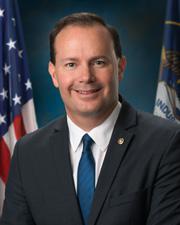 Sen. Mike Lee (R-UT)
Sen. Mike Lee (R-UT)Submitted November 14, 2012
Legislative Activity
Stay on top of the latest movement without scrolling through every action
Floor
Latest Action
Senate amendment submitted
November 14, 2012
Text
Submitted
TEXT OF AMENDMENTS

SA 2890. Mrs. GILLIBRAND submitted an amendment intended to be
proposed by her to the bill S. 3525, to

[[Page S6807]]

protect and enhance opportunities for recreational hunting, fishing,
and shooting, and for other purposes; which was ordered to lie on the
table; as follows:

At the end, add the following:

TITLE III--NATIONAL HERITAGE AREA REAUTHORIZATION

SEC. 301. REAUTHORIZATION OF HUDSON RIVER VALLEY NATIONAL
HERITAGE AREA.

Section 910 of the Hudson River Valley National Heritage
Area Act of 1996 (16 U.S.C. 461 note; Public Law 104-333) is
amended by striking ``2012'' and inserting ``2022''.
______

SA 2891. Mr. BENNET submitted an amendment intended to be proposed to
amendment SA 2875 proposed by Mr. Reid (for Mr. Tester) to the bill S.
3525, to protect and enhance opportunities for recreational hunting,
fishing, and shooting, and for other purposes; which was ordered to lie
on the table; as follows:

Strike section 103 and insert the following:

SEC. 103. TRANSPORTING BOWS THROUGH NATIONAL PARKS.

(a) Findings.--Congress finds that--
(1) bowhunters are known worldwide as among the most
skilled, ethical, and conservation-minded of all hunters;
(2) bowhunting organizations at the Federal, State, and
local level contribute significant financial and human
resources to wildlife conservation and youth education
programs throughout the United States; and
(3) bowhunting contributes $38,000,000,000 each year to the
economy of the United States.
(b) Possession of Bows in Units of National Park System.--
(1) In general.--Subject to paragraph (2), the Secretary of
the Interior shall issue a permit to individuals carrying
bows and crossbows to traverse National Park System land if--
(A) the traverse is--
(i) for the sole purpose of hunting on adjacent public or
private land during a legally established hunting season; and
(ii) the most direct means of access to the adjacent land;
and
(B) the individual possesses a valid hunting permit for
adjacent public or private land.
(2) Use.--Nothing in this section authorizes the use of the
bows or crossbows that are being carried while on National
Park System land.
______

SA 2892. Mr. LEE submitted an amendment intended to be proposed to
amendment SA 2875 proposed by Mr. Reid (for Mr. Tester) to the bill S.
3525, to protect and enhance opportunities for recreational hunting,
fishing, and shooting, and for other purposes; which was ordered to lie
on the table; as follows:

At the end, add the following:

TITLE III--FEDERAL LAND DESIGNATIONS

SEC. 301. STATE APPROVAL REQUIRED FOR FEDERAL LAND
DESIGNATIONS.

(a) Definition of Covered Unit.--In this section, the term
``covered unit'' means--
(1) a unit of the National Forest System, National Park
System, National Wildlife Refuge System, National Wild and
Scenic Rivers System, National Trails System, National
Wilderness Preservation System, or any other system
established by Federal law;
(2) a national monument; or
(3) any national conservation or national recreation area.
(b) Prohibition.--A covered unit shall not be established
unless the legislature of the State in which the proposed
covered unit is located has approved the establishment of the
covered unit.
______

SA 2893. Mr. LEE (for himself and Mr. McCain submitted an amendment
intended to be proposed to amendment SA 2875 proposed by Mr. Reid (for
Mr. Tester) to the bill S. 3525, to protect and enhance opportunities
for recreational hunting, fishing, and shooting, and for other
purposes; which was ordered to lie on the table; as follows:

At the end, add the following:

TITLE III--FEDERAL LAND DESIGNATIONS

SEC. 301. SALE OF CERTAIN FEDERAL LAND PREVIOUSLY IDENTIFIED
AS SUITABLE FOR DISPOSAL.

(a) Definitions.--In this section:
(1) Identified federal lands.--The term ``identified
Federal lands'' means the parcels of Federal land under the
administrative jurisdiction of the Secretary that were
identified as suitable for disposal in the report submitted
to Congress by the Secretary on May 27, 1997, pursuant to
section 390(g) of the Federal Agriculture Improvement and
Reform Act of 1996 (Public Law 104-127; 110 Stat. 1024),
except the following:
(A) Lands not identified for disposal in the applicable
land use plan.
(B) Lands subject to a Recreation and Public Purpose
conveyance application.
(C) Lands identified for State selection.
(D) Lands identified for Indian tribe allotments.
(E) Lands identified for local government use.
(F) Lands that the Secretary chooses to dispose under the
Federal Land Transaction Facilitation Act (43 U.S.C. 2301 et
seq.).
(G) Lands that are segregated for exchange or under
agreements for exchange.
(H) Lands subject to exchange as authorized or directed by
Congress.
(I) Lands that the Secretary determines contain significant
impediments for disposal including--
(i) high disposal costs;
(ii) the presence of significant natural or cultural
resources;
(iii) land survey problems or title conflicts;
(iv) habitat for threatened or endangered species; and
(v) mineral leases and mining claims.
(2) Secretary.--The term ``Secretary'' means the Secretary
of the Interior.
(b) Competitive Sale of Lands.--The Secretary shall offer
the identified Federal lands for disposal by competitive sale
for not less than fair market value as determined by an
independent appraiser.
(c) Existing Rights.--The sale of identified Federal lands
under this section shall be subject to valid existing rights.
(d) Proceeds of Sale of Lands.--All net proceeds from the
sale of identified Federal lands under this section shall be
deposited directly into the Treasury for reduction of the
public debt.
(e) Report.--Not later than 4 years after the date of
enactment of this Act, the Secretary shall submit to the
Committee on Natural Resources of the House of
Representatives and the Committee on Energy and Natural
Resources of the Senate--
(1) a list of any identified Federal lands that have not
been sold under subsection (b) and the reasons such lands
were not sold; and
(2) an update of the report submitted to Congress by the
Secretary on May 27, 1997, pursuant to section 390(g) of the
Federal Agriculture Improvement and Reform Act of 1996
(Public Law 104-127; 110 Stat. 1024), including a current
inventory of the Federal lands under the administrative
jurisdiction of the Secretary that are suitable for disposal.
______

SA 2894. Mr. LEE submitted an amendment intended to be proposed to
amendment SA 2875 proposed by Mr. Reid (for Mr. Tester) to the bill S.
3525, to protect and enhance opportunities for recreational hunting,
fishing, and shooting, and for other purposes; which was ordered to lie
on the table; as follows:

Strike section 246.
______

SA 2895. Mr. LEE submitted an amendment intended to be proposed to
amendment SA 2875 proposed by Mr. Reid (for Mr. Tester) to the bill S.
3525, to protect and enhance opportunities for recreational hunting,
fishing, and shooting, and for other purposes; which was ordered to lie
on the table; as follows:

Strike section 245.
______

SA 2896. Mr. CARDIN submitted an amendment intended to be proposed to
amendment SA 2875 proposed by Mr. Reid (for Mr. Tester) to the bill S.
3525, to protect and enhance opportunities for recreational hunting,
fishing, and shooting, and for other purposes; which was ordered to lie
on the table; as follows:

At the end of the bill, add the following:

TITLE III--NATIONAL HISTORICAL PARKS

SEC. 301. HARRIET TUBMAN UNDERGROUND RAILROAD NATIONAL
HISTORICAL PARK, MARYLAND.

(a) Definitions.--In this section:
(1) Historical park.--The term ``historical park'' means
the Harriet Tubman Underground Railroad National Historical
Park established by subsection (b)(1)(A).
(2) Map.--The term ``map'' means the map entitled
``Authorized Acquisition Area for the Proposed Harriet Tubman
Underground Railroad National Historical Park'', numbered
T20/80,001, and dated July 2010.
(3) Secretary.--The term ``Secretary'' means the Secretary
of the Interior.
(4) State.--The term ``State'' means the State of Maryland.
(b) Harriet Tubman Underground Railroad National Historical
Park.--
(1) Establishment.--
(A) In general.--Subject to subparagraph (B), there is
established the Harriet Tubman Underground Railroad National
Historical Park in Caroline, Dorchester, and Talbot Counties,
Maryland, as a unit of the National Park System.
(B) Determination by secretary.--The historical park shall
not be established until the date on which the Secretary
determines that a sufficient quantity of land, or interests
in land, has been acquired to constitute a manageable park
unit.
(C) Notice.--Not later than 30 days after the date on which
the Secretary makes a determination under subparagraph (B),
the Secretary shall publish in the Federal Register notice of
the establishment of the historical park, including an
official boundary map for the historical park.
(D) Availability of map.--The official boundary map
published under subparagraph (C) shall be on file and
available for public inspection in appropriate offices of the
National Park Service.
(2) Purpose.--The purpose of the historical park is to
preserve and interpret for the benefit of present and future
generations the

[[Page S6808]]

historical, cultural, and natural resources associated with
the life of Harriet Tubman and the Underground Railroad.
(3) Land acquisition.--
(A) In general.--The Secretary may acquire land and
interests in land within the areas depicted on the map as
``Authorized Acquisition Areas'' by purchase from willing
sellers, donation, or exchange.
(B) Boundary adjustment.--On acquisition of land or an
interest in land under subparagraph (A), the boundary of the
historical park shall be adjusted to reflect the acquisition.
(c) Administration.--
(1) In general.--The Secretary shall administer the
historical park in accordance with this section and the laws
generally applicable to units of the National Park System,
including--
(A) the National Park System Organic Act (16 U.S.C. 1 et
seq.); and
(B) the Act of August 21, 1935 (16 U.S.C. 461 et seq.).
(2) Interagency agreement.--Not later than 1 year after the
date on which the historical park is established, the
Director of the National Park Service and the Director of the
United States Fish and Wildlife Service shall enter into an
agreement to allow the National Park Service to provide for
public interpretation of historic resources located within
the boundary of the Blackwater National Wildlife Refuge that
are associated with the life of Harriet Tubman, consistent
with the management requirements of the Refuge.
(3) Interpretive tours.--The Secretary may provide
interpretive tours to sites and resources located outside the
boundary of the historical park in Caroline, Dorchester, and
Talbot Counties, Maryland, relating to the life of Harriet
Tubman and the Underground Railroad.
(4) Cooperative agreements.--
(A) In general.--The Secretary may enter into a cooperative
agreement with the State, political subdivisions of the
State, colleges and universities, non-profit organizations,
and individuals--
(i) to mark, interpret, and restore nationally significant
historic or cultural resources relating to the life of
Harriet Tubman or the Underground Railroad within the
boundaries of the historical park, if the agreement provides
for reasonable public access; or
(ii) to conduct research relating to the life of Harriet
Tubman and the Underground Railroad.
(B) Visitor center.--The Secretary may enter into a
cooperative agreement with the State to design, construct,
operate, and maintain a joint visitor center on land owned by
the State--
(i) to provide for National Park Service visitor and
interpretive facilities for the historical park; and
(ii) to provide to the Secretary, at no additional cost,
sufficient office space to administer the historical park.
(C) Cost-sharing requirement.--
(i) Federal share.--The Federal share of the total cost of
any activity carried out under this paragraph shall not
exceed 50 percent.
(ii) Form of non-federal share.--The non-Federal share of
the cost of carrying out an activity under this paragraph may
be in the form of in-kind contributions or goods or services
fairly valued.
(d) General Management Plan.--
(1) In general.--Not later than 3 years after the date on
which funds are made available to carry out this section, the
Secretary shall prepare a general management plan for the
historical park in accordance with section 12(b) of the
National Park Service General Authorities Act (16 U.S.C. 1a-
7(b)).
(2) Consultation.--The general management plan shall be
prepared in consultation with the State (including political
subdivisions of the State).
(3) Coordination.--The Secretary shall coordinate the
preparation and implementation of the management plan with--
(A) the Blackwater National Wildlife Refuge;
(B) the Harriet Tubman National Historical Park established
by section 302(b)(1)(A); and
(C) the National Underground Railroad Network to Freedom.
(e) Authorization of Appropriations.--There are authorized
to be appropriated such sums as are necessary to carry out
this section.

SEC. 302. HARRIET TUBMAN NATIONAL HISTORICAL PARK, AUBURN,
NEW YORK.

(a) Definitions.--In this section:
(1) Historical park.--The term ``historical park'' means
the Harriet Tubman National Historical Park established by
subsection (b)(1)(A).
(2) Home.--The term ``Home'' means The Harriet Tubman Home,
Inc., located in Auburn, New York.
(3) Map.--The term ``map'' means the map entitled ``Harriet
Tubman National Historical Park'', numbered T18/80,000, and
dated March 2009.
(4) Secretary.--The term ``Secretary'' means the Secretary
of the Interior.
(5) State.--The term ``State'' means the State of New York.
(b) Harriet Tubman National Historical Park.--
(1) Establishment.--
(A) In general.--Subject to subparagraph (B), there is
established the Harriet Tubman National Historical Park in
Auburn, New York, as a unit of the National Park System.
(B) Determination by secretary.--The historical park shall
not be established until the date on which the Secretary
determines that a sufficient quantity of land, or interests
in land, has been acquired to constitute a manageable park
unit.
(C) Notice.--Not later than 30 days after the date on which
the Secretary makes a determination under subparagraph (B),
the Secretary shall publish in the Federal Register notice of
the establishment of the historical park.
(D) Map.--The map shall be on file and available for public
inspection in appropriate offices of the National Park
Service.
(2) Boundary.--The historical park shall include the
Harriet Tubman Home, the Tubman Home for the Aged, the
Thompson Memorial AME Zion Church and Rectory, and associated
land, as identified in the area entitled ``National
Historical Park Proposed Boundary'' on the map.
(3) Purpose.--The purpose of the historical park is to
preserve and interpret for the benefit of present and future
generations the historical, cultural, and natural resources
associated with the life of Harriet Tubman.
(4) Land acquisition.--The Secretary may acquire land and
interests in land within the areas depicted on the map by
purchase from a willing seller, donation, or exchange.
(c) Administration.--
(1) In general.--The Secretary shall administer the
historical park in accordance with this section and the laws
generally applicable to units of the National Park System,
including--
(A) the National Park System Organic Act (16 U.S.C. 1 et
seq.); and
(B) the Act of August 21, 1935 (16 U.S.C. 461 et seq.).
(2) Interpretive tours.--The Secretary may provide
interpretive tours to sites and resources located outside the
boundary of the historical park in Auburn, New York, relating
to the life of Harriet Tubman.
(3) Cooperative agreements.--
(A) In general.--The Secretary may enter into a cooperative
agreement with the owner of any land within the historical
park to mark, interpret, or restore nationally significant
historic or cultural resources relating to the life of
Harriet Tubman, if the agreement provides that--
(i) the Secretary shall have the right of access to any
public portions of the land covered by the agreement to allow
for--

(I) access at reasonable times by historical park visitors
to the land; and
(II) interpretation of the land for the public; and

(ii) no changes or alterations shall be made to the land
except by mutual agreement of the Secretary and the owner of
the land.
(B) Research.--The Secretary may enter into a cooperative
agreement with the State, political subdivisions of the
State, institutions of higher education, the Home and other
nonprofit organizations, and individuals to conduct research
relating to the life of Harriet Tubman.
(C) Cost-sharing requirement.--
(i) Federal share.--The Federal share of the total cost of
any activity carried out under this paragraph shall not
exceed 50 percent.
(ii) Form of non-federal share.--The non-Federal share may
be in the form of in-kind contributions or goods or services
fairly valued.
(D) Attorney general.--
(i) In general.--The Secretary shall submit to the Attorney
General for review any cooperative agreement under this
paragraph involving religious property or property owned by a
religious institution.
(ii) Finding.--No cooperative agreement subject to review
under this subparagraph shall take effect until the date on
which the Attorney General issues a finding that the proposed
agreement does not violate the Establishment Clause of the
first amendment to the Constitution.
(d) General Management Plan.--
(1) In general.--Not later than 3 years after the date on
which funds are made available to carry out this section, the
Secretary shall prepare a general management plan for the
historical park in accordance with section 12(b) of the
National Park Service General Authorities Act (16 U.S.C. 1a-
7(b)).
(2) Coordination.--The Secretary shall coordinate the
preparation and implementation of the management plan with--
(A) the Harriet Tubman Underground Railroad National
Historical Park established by section 301(b)(1); and
(B) the National Underground Railroad Network to Freedom.
(e) Authorization of Appropriations.--There are authorized
to be appropriated such sums as are necessary to carry out
this section, except that not more than $7,500,000 shall be
available to provide financial assistance under subsection
(c)(3).
______

SA 2897. Mr. CARDIN submitted an amendment intended to be proposed to
amendment SA 2875 proposed by Mr. Reid (for Mr. Tester) to the bill S.
3525, to protect and enhance opportunities for recreational hunting,
fishing, and shooting, and for other purposes; which was ordered to lie
on the table; as follows:

At the end of subtitle D of title II, add the following:

[[Page S6809]]

SEC. 2__. CHESAPEAKE AND OHIO CANAL NATIONAL HISTORICAL PARK
COMMISSION.

Section 6(g) of the Chesapeake and Ohio Canal Development
Act (16 U.S.C. 410y-4(g)) is amended by striking ``40'' and
inserting ``50''.
______

SA 2898. Mr. CARDIN submitted an amendment intended to be proposed to
amendment SA 2875 proposed by Mr. Reid (for Mr. Tester) to the bill S.
3525, to protect and enhance opportunities for recreational hunting,
fishing, and shooting, and for other purposes; which was ordered to lie
on the table; as follows:

At the end of subtitle D of title II, add the following:

SEC. 2__. CHESAPEAKE BAY GATEWAYS AND WATERTRAILS NETWORK.

Section 502(c) of the Chesapeake Bay Initiative Act of 1998
(16 U.S.C. 461 note; Public Law 105-312) is amended by
striking ``fiscal years'' and all that follows through the
period at the end and inserting ``fiscal years 2013 through
2017.''.
______

SA 2899. Mr. CARDIN submitted an amendment intended to be proposed by
him to the bill S. 3525, to protect and enhance opportunities for
recreational hunting, fishing, and shooting, and for other purposes;
which was ordered to lie on the table; as follows:

At the end, add the following:

SEC. ____. WATER RESOURCES RESEARCH ACT AMENDMENTS.

(a) Congressional Findings and Declarations.--Section 102
of the Water Resources Research Act of 1984 (42 U.S.C. 10301)
is amended--
(1) by redesignating paragraphs (7) through (9) as
paragraphs (8) through (10), respectively;
(2) in paragraph (8) (as so redesignated), by striking
``and'' at the end; and
(3) by inserting after paragraph (6) the following:
``(7) additional research is required into increasing the
effectiveness and efficiency of new and existing treatment
works through alternative approaches, including--
``(A) nonstructural alternatives;
``(B) decentralized approaches;
``(C) water use efficiency; and
``(D) actions to reduce energy consumption or extract
energy from wastewater;''.
(b) Clarification of Research Activities.--Section
104(b)(1) of the Water Resources Research Act of 1984 (42
U.S.C. 10303(b)(1)) is amended--
(1) in subparagraph (B)(ii), by striking ``water-related
phenomena'' and inserting ``water resources''; and
(2) in subparagraph (D), by striking the period at the end
and inserting ``; and''.
(c) Compliance Report.--Section 104(c) of the Water
Resources Research Act of 1984 (42 U.S.C. 10303(c)) is
amended--
(1) by striking ``From the'' and inserting ``(1) In
general.--From the''; and
(2) by adding at the end the following:
``(2) Report.--Not later than December 31 of each fiscal
year, the Secretary shall submit to the Committee on
Environment and Public Works of the Senate, the Committee on
the Budget of the Senate, the Committee on Transportation and
Infrastructure of the House of Representatives, and the
Committee on the Budget of the House of Representatives a
report regarding the compliance of each funding recipient
with this subsection for the immediately preceding fiscal
year.''.
(d) Evaluation of Water Resources Research Program.--
Section 104 of the Water Resources Research Act of 1984 (42
U.S.C. 10303) is amended by striking subsection (e) and
inserting the following:
``(e) Evaluation of Water Resources Research Program.--
``(1) In general.--The Secretary shall conduct a careful
and detailed evaluation of each institute at least once every
5 years to determine--
``(A) the quality and relevance of the water resources
research of the institute;
``(B) the effectiveness of the institute at producing
measured results and applied water supply research; and
``(C) whether the effectiveness of the institute as an
institution for planning, conducting, and arranging for
research warrants continued support under this section.
``(2) Prohibition on further support.--If, as a result of
an evaluation under paragraph (1), the Secretary determines
that an institute does not qualify for further support under
this section, no further grants to the institute may be
provided until the qualifications of the institute are
reestablished to the satisfaction of the Secretary.''.
(e) Authorization of Appropriations.--Section 104(f)(1) of
the Water Resources Research Act of 1984 (42 U.S.C.
10303(f)(1)) is amended by striking ``$12,000,000 for each of
fiscal years 2007 through 2011'' and inserting ``$7,500,000
for each of fiscal years 2012 through 2017''.
(f) Additional Appropriations Where Research Focused on
Water Problems of Interstate Nature.--Section 104(g)(1) of
the Water Resources Research Act of 1984 (42 U.S.C.
10303(g)(1)) is amended by striking ``$6,000,000 for each of
fiscal years 2007 through 2011'' and inserting ``$1,500,000
for each of fiscal years 2012 through 2017''.
______

SA 2900. Mr. CARDIN submitted an amendment intended to be proposed to
amendment SA 2875 proposed by Mr. Reid (for Mr. Tester) to the bill S.
3525, to protect and enhance opportunities for recreational hunting,
fishing, and shooting, and for other purposes; which was ordered to lie
on the table; as follows:

At the end, add the following:

TITLE III--WATER INFRASTRUCTURE

SEC. 301. DEFINITIONS.

In this title:
(1) Administrator.--The term ``Administrator'' means the
Administrator of the Environmental Protection Agency.
(2) Hydrologic condition.--The term ``hydrologic
condition'' means the quality, quantity, or reliability of
the water resources of a region of the United States.
(3) Owner or operator of a water system.--
(A) In general.--The term ``owner or operator of a water
system'' means an entity (including a regional, State,
tribal, local, municipal, or private entity) that owns or
operates a water system.
(B) Inclusions.--The term ``owner or operator of a water
system'' includes--
(i) a non-Federal entity that has operational
responsibilities for a federally-, tribally-, or State-owned
water system; and
(ii) an entity established by an agreement between--

(I) an entity that owns or operates a water system; and
(II) at least 1 other entity.

(4) Water system.--The term ``water system'' means--
(A) a community water system (as defined in section 1401 of
the Safe Drinking Water Act (42 U.S.C. 300f));
(B) a treatment works (as defined in section 212 of the
Federal Water Pollution Control Act (33 U.S.C. 1292)),
including a municipal separate storm sewer system (as such
term is used in that Act (33 U.S.C. 1251 et seq.));
(C) a decentralized wastewater treatment system for
domestic sewage;
(D) a groundwater storage and replenishment system;
(E) a system for transport and delivery of water for
irrigation or conservation; or
(F) a natural or engineered system that manages floodwater.

SEC. 302. WATER INFRASTRUCTURE RESILIENCY AND SUSTAINABILITY.

(a) Program.--The Administrator shall establish and
implement a program, to be known as the ``Water
Infrastructure Resiliency and Sustainability Program'', under
which the Administrator shall award grants for each of fiscal
years 2013 through 2017 to owners or operators of water
systems for the purpose of increasing the resiliency or
adaptability of the water systems to any ongoing or
forecasted changes (based on the best available research and
data) to the hydrologic conditions of a region of the United
States.
(b) Use of Funds.--As a condition on receipt of a grant
under this title, an owner or operator of a water system
shall agree to use the grant funds exclusively to assist in
the planning, design, construction, implementation,
operation, or maintenance of a program or project that meets
the purpose described in subsection (a) by--
(1) conserving water or enhancing water use efficiency,
including through the use of water metering and electronic
sensing and control systems to measure the effectiveness of a
water efficiency program;
(2) modifying or relocating existing water system
infrastructure made or projected to be significantly impaired
by changing hydrologic conditions;
(3) preserving or improving water quality, including
through measures to manage, reduce, treat, or reuse municipal
stormwater, wastewater, or drinking water;
(4) investigating, designing, or constructing groundwater
remediation, recycled water, or desalination facilities or
systems to serve existing communities;
(5) enhancing water management by increasing watershed
preservation and protection, such as through the use of
natural or engineered green infrastructure in the management,
conveyance, or treatment of water, wastewater, or stormwater;
(6) enhancing energy efficiency or the use and generation
of renewable energy in the management, conveyance, or
treatment of water, wastewater, or stormwater;
(7) supporting the adoption and use of advanced water
treatment, water supply management (such as reservoir
reoperation and water banking), or water demand management
technologies, projects, or processes (such as water reuse and
recycling, adaptive conservation pricing, and groundwater
banking) that maintain or increase water supply or improve
water quality;
(8) modifying or replacing existing systems or constructing
new systems for existing communities or land that is being
used for agricultural production to improve water supply,
reliability, storage, or conveyance in a manner that--
(A) promotes conservation or improves the efficiency of use
of available water supplies; and
(B) does not further exacerbate stresses on ecosystems or
cause redirected impacts by degrading water quality or
increasing net greenhouse gas emissions;

[[Page S6810]]

(9) supporting practices and projects, such as improved
irrigation systems, water banking and other forms of water
transactions, groundwater recharge, stormwater capture,
groundwater conjunctive use, and reuse or recycling of
drainage water, to improve water quality or promote more
efficient water use on land that is being used for
agricultural production;
(10) reducing flood damage, risk, and vulnerability by--
(A) restoring floodplains, wetland, and upland integral to
flood management, protection, prevention, and response;
(B) modifying levees, floodwalls, and other structures
through setbacks, notches, gates, removal, or similar means
to facilitate reconnection of rivers to floodplains, reduce
flood stage height, and reduce damage to properties and
populations;
(C) providing for acquisition and easement of flood-prone
land and properties in order to reduce damage to property and
risk to populations; or
(D) promoting land use planning that prevents future
floodplain development;
(11) conducting and completing studies or assessments to
project how changing hydrologic conditions may impact the
future operations and sustainability of water systems; or
(12) developing and implementing measures to increase the
resilience of water systems and regional and hydrological
basins, including the Colorado River Basin, to rapid
hydrologic change or a natural disaster (such as tsunami,
earthquake, flood, or volcanic eruption).
(c) Application.--To seek a grant under this title, the
owner or operator of a water system shall submit to the
Administrator an application that--
(1) includes a proposal for the program, strategy, or
infrastructure improvement to be planned, designed,
constructed, implemented, or maintained by the water system;
(2) provides the best available research or data that
demonstrate--
(A) the risk to the water resources or infrastructure of
the water system as a result of ongoing or forecasted changes
to the hydrological system of a region, including rising sea
levels and changes in precipitation patterns; and
(B) the manner in which the proposed program, strategy, or
infrastructure improvement would perform under the
anticipated hydrologic conditions;
(3) describes the manner in which the proposed program,
strategy, or infrastructure improvement is expected--
(A) to enhance the resiliency of the water system,
including source water protection for community water
systems, to the anticipated hydrologic conditions; or
(B) to increase efficiency in the use of energy or water of
the water system; and
(4) describes the manner in which the proposed program,
strategy, or infrastructure improvement is consistent with an
applicable State, tribal, or local climate adaptation plan,
if any.
(d) Priority.--
(1) Water systems at greatest and most immediate risk.--In
selecting grantees under this title, subject to section
303(b), the Administrator shall give priority to owners or
operators of water systems that are, based on the best
available research and data, at the greatest and most
immediate risk of facing significant negative impacts due to
changing hydrologic conditions.
(2) Goals.--In selecting among applicants described in
paragraph (1), the Administrator shall ensure that, to the
maximum extent practicable, the final list of applications
funded for each year includes a substantial number that
propose to use innovative approaches to meet 1 or more of the
following goals:
(A) Promoting more efficient water use, water conservation,
water reuse, or recycling.
(B) Using decentralized, low-impact development
technologies and nonstructural approaches, including
practices that use, enhance, or mimic the natural
hydrological cycle or protect natural flows.
(C) Reducing stormwater runoff or flooding by protecting or
enhancing natural ecosystem functions.
(D) Modifying, upgrading, enhancing, or replacing existing
water system infrastructure in response to changing
hydrologic conditions.
(E) Improving water quality or quantity for agricultural
and municipal uses, including through salinity reduction.
(F) Providing multiple benefits, including to water supply
enhancement or demand reduction, water quality protection or
improvement, increased flood protection, and ecosystem
protection or improvement.
(e) Cost-sharing Requirement.--
(1) Federal share.--The share of the cost of any program,
strategy, or infrastructure improvement that is the subject
of a grant awarded by the Administrator to the owner or
operator of a water system under subsection (a) paid through
funds distributed under this title shall not exceed 50
percent of the cost of the program, strategy, or
infrastructure improvement.
(2) Calculation of non-federal share.--In calculating the
non-Federal share of the cost of a program, strategy, or
infrastructure improvement proposed by a water system in an
application submitted under subsection (c), the Administrator
shall--
(A) include the value of any in-kind services that are
integral to the completion of the program, strategy, or
infrastructure improvement, including reasonable
administrative and overhead costs; and
(B) not include any other amount that the water system
involved receives from the Federal Government.
(f) Report to Congress.--Not later than 3 years after the
date of enactment of this Act, and every 3 years thereafter,
the Administrator shall submit to Congress a report that--
(1) describes the progress in implementing this title; and
(2) includes information on project applications received
and funded annually under this title.

SEC. 303. AUTHORIZATION OF APPROPRIATIONS.

(a) In General.--There is authorized to be appropriated to
carry out this title $50,000,000 for each of fiscal years
2013 through 2017.
(b) Reduction of Flood Damage, Risk, and Vulnerability.--Of
the amount made available to carry out this title for a
fiscal year, not more than 20 percent may be made available
to grantees for activities described in section 302(b)(10).
______

SA 2901. Mrs. BOXER submitted an amendment intended to be proposed by
her to the bill S. 3525, to protect and enhance opportunities for
recreational hunting, fishing, and shooting, and for other purposes;
which was ordered to lie on the table; as follows:

Strike section 121.
______

SA 2902. Mrs. BOXER submitted an amendment intended to be proposed to
amendment SA 2875 proposed by Mr. Reid (for Mr. Tester) to the bill S.
3525, to protect and enhance opportunities for recreational hunting,
fishing, and shooting, and for other purposes; which was ordered to lie
on the table; as follows:

Strike section 121 and insert the following:

SEC. 121. NO REGULATION OF AMMUNITION OR FISHING TACKLE
PENDING STUDY OF HEALTH AND ENVIRONMENTAL
EFFECTS.

(a) No Regulation of Ammunition or Fishing Tackle.--The
Administrator of the Environmental Protection Agency shall
not issue any proposed or final rule or guidance to regulate
any chemical substance or mixture in ammunition or fishing
tackle under the Toxic Substances Control Act (15 U.S.C. 2601
et seq.) during the period beginning on the date of enactment
of this Act and ending on the date of the publication of the
study required by subsection (b).
(b) Study of Potential Human Health and Environmental
Effects.--
(1) In general.--Not later than December 31, 2014, the
Secretary of Health and Human Services, the Commissioner of
Food and Drugs, the Administrator of the Environmental
Protection Agency, and the Secretary of the Interior shall
jointly prepare and publish a study that describes the
potential threats to human health (including to pregnant
women, children, and other vulnerable populations) and to the
environment from the use of--
(A) lead and toxic substances in ammunition and fishing
tackle; and
(B) commercially available and less toxic alternatives to
lead and toxic substances in ammunition and fishing tackle.
(2) Use.--The Administrator of the Environmental Protection
Agency shall use, as appropriate, the findings of the report
required by paragraph (1) when considering any potential
future decision related to a chemical substance or mixture
when the substance or mixture is used in ammunition or
fishing tackle.
______

SA 2903. Ms. LANDRIEU submitted an amendment intended to be proposed
to amendment SA 2875 proposed by Mr. Reid (for Mr. Tester) to the bill
S. 3525, to protect and enhance opportunities for recreational hunting,
fishing, and shooting, and for other purposes; which was ordered to lie
on the table; as follows:

At the end of subtitle A of title I, add the following:

SEC. 1__. HUNTING IN KISATCHIE NATIONAL FOREST.

(a) In General.--Consistent with the eleventh undesignated
paragraph under the heading ``SURVEYING THE PUBLIC LANDS'' of
the Act of June 4, 1897 (16 U.S.C. 551), the Secretary of
Agriculture (referred to in this section as the
``Secretary'') may not impose restrictions on the use of dogs
in deer hunting activities in Kisatchie National Forest,
unless the restrictions--
(1) apply to the smallest practicable portions of the unit;
and
(2) are necessary to reduce or control trespass onto land
adjacent to the unit.
(b) Prior Restrictions Void.--Any restrictions regarding
the use of dogs in deer hunting activities in Kisatchie
National Forest in force on the date of enactment of this Act
shall be void and have no force or effect.
(c) Adjacent Landowners.--
(1) In general.--The owner of land that is adjacent to a
unit of the Kisatchie National Forest may submit to the
Secretary a petition to restrict the use of dogs in deer
hunting activities that take place on the unit that is
adjacent to the land.
(2) Restrictions.--If the Secretary receives a petition
from an adjacent landowner

[[Page S6811]]

under paragraph (2), the Secretary, after notice and
opportunity for a hearing, may impose restrictions on the use
of dogs in deer hunting that are--
(A) limited to units of the Kisatchie National Forest
within 300 yards of the boundary of the land of the
petitioning landowner; and
(B) consistent with subsection (a).
______

SA 2904. Mr. HATCH submitted an amendment intended to be proposed to
amendment SA 2875 proposed by Mr. Reid (for Mr. Tester) to the bill S.
3525, to protect and enhance opportunities for recreational hunting,
fishing, and shooting, and for other purposes; which was ordered to lie
on the table; as follows:

At the end of the bill, add the following:

TITLE III--ENDANGERED OR THREATENED SPECIES

SEC. 301. REMOVAL OF GRAY WOLF IN THE STATE OF UTAH FROM THE
LIST OF ENDANGERED OR THREATENED SPECIES.

(a) Definitions.--In this section:
(1) Gray wolf.--The term ``gray wolf'' means any taxonomic
group traditionally associated with the gray wolf, including
Canus lupus baileyi, regardless of specific taxonomy of any
particular gray wolf variety as a species, subspecies, or
other designation.
(2) Secretary.--The term ``Secretary'' has the meaning
given the term in section 3 of the Endangered Species Act of
1973 (16 U.S.C. 1532).
(b) Removal of Gray Wolf in the State of Utah From the List
of Endangered or Threatened Species.--Notwithstanding any
other provision of law, not later than 60 days after the date
of enactment of this section, the Secretary shall promulgate
regulations removing from the list of endangered or
threatened species under section 4(c) of the Endangered
Species Act of 1973 (16 U.S.C. 1533(c)) the gray wolf within
the borders of the State of Utah.
______

SA 2905. Mr. HATCH submitted an amendment intended to be proposed to
amendment SA 2875 proposed by Mr. Reid (for Mr. Tester) to the bill S.
3525, to protect and enhance opportunities for recreational hunting,
fishing, and shooting, and for other purposes; which was ordered to lie
on the table; as follows:

At the end, add the following:

TITLE III--LAND CONVEYANCE

SEC. 301. DEFINITIONS.

In this title:
(1) Federal land.--The term ``Federal land'' means any land
(including mineral rights) under the jurisdiction of the
Secretary in the State, including any public land in the
State (as defined in section 103 of the Federal Land Policy
And Management Act of 1976 (43 U.S.C. 1702)).
(2) Secretary.--The term ``Secretary'' means the Secretary
of the Interior.
(3) State.--The term ``State'' means the state of Utah.

SEC. 302. CONVEYANCE OF FEDERAL LAND TO THE STATE OF UTAH.

(a) In General.--Not later than December 31, 2014, the
Secretary shall convey to the State all right, title, and
interest of the United States in and to the Federal land.
(b) Reconveyance.--If the State reconveys any Federal land
conveyed to the State under subsection (a), the State shall,
as soon as practicable after the date of the reconveyance,
pay to the Secretary concerned an amount equal to 95 percent
of the amount received by the State in consideration for the
Federal land reconveyed.
______

SA 2906. Mr. HATCH submitted an amendment intended to be proposed to
amendment SA 2875 proposed by Mr. Reid (for Mr. Tester) to the bill S.
3525, to protect and enhance opportunities for recreational hunting,
fishing, and shooting, and for other purposes; which was ordered to lie
on the table; as follows:

At the end, add the following:

TITLE III--LAND CONVEYANCE

SEC. 301. DEFINITIONS.

In this title:
(1) City.--The term ``City'' means the city of Fruit
Heights, Utah.
(2) Map.--The term ``map'' means the map entitled
``Proposed Fruit Heights City Conveyance'' and dated 2012.
(3) National forest system land.--The term ``National
Forest System land'' means the approximately 100 acres of
National Forest System land, as depicted on the map.
(4) Secretary.--The term ``Secretary'' means the Secretary
of Agriculture.

SEC. 302. CONVEYANCE OF CERTAIN LAND TO THE CITY OF FRUIT
HEIGHTS, UTAH.

(a) In General.--The Secretary shall convey to the City,
without consideration, all right, title, and interest of the
United States in and to the National Forest System land.
(b) Survey.--
(1) In general.--If determined by the Secretary to be
necessary, the exact acreage and legal description of the
National Forest System land shall be determined by a survey
approved by the Secretary.
(2) Costs.--The City shall pay the reasonable survey and
other administrative costs associated with a survey conducted
under paragraph (1).
(c) Use of National Forest System Land.--As a condition of
the conveyance under subsection (a), the City shall use the
National Forest System land only for public purposes.
(d) Reversionary Interest.--In the quitclaim deed to the
City for the National Forest System land, the Secretary shall
provide that the National Forest System land shall revert to
the Secretary, at the election of the Secretary, if the
National Forest System land is used for other than a public
purpose.
______

SA 2907. Mr. HATCH submitted an amendment intended to be proposed to
amendment SA 2875 proposed by Mr. Reid (for Mr. Tester) to the bill S.
3525, to protect and enhance opportunities for recreational hunting,
fishing, and shooting, and for other purposes; which was ordered to lie
on the table; as follows:

At the end, add the following:

TITLE III--CLARIFICATION OF AUTHORITY, UINTAH AND OURAY INDIAN
RESERVATION

SEC. 301. CLARIFICATION OF AUTHORITY.

The Act entitled ``An Act to define the exterior boundary
of the Uintah and Ouray Indian Reservation in the State of
Utah, and for other purposes'', approved March 11, 1948 (62
Stat. 72), as amended by the Act entitled ``An Act to amend
the Act extending the exterior boundary of the Uintah and
Ouray Indian Reservation in the State of Utah so as to
authorize such State to exchange certain mineral lands for
other lands mineral in character'' approved August 9, 1955,
(69 Stat. 544), is further amended by adding at the end the
following:
``Sec. 5.  In order to further clarify authorizations under
this Act, the State of Utah is hereby authorized to
relinquish to the United States, for the benefit of the Ute
Indian Tribe of the Uintah and Ouray Reservation, State
school trust or other State-owned subsurface mineral lands
located beneath the surface estate delineated in Public Law
440 (approved March 11, 1948) and south of the border between
Grand County, Utah, and Uintah County, Utah, and select in
lieu of such relinquished lands, on an acre-for-acre basis,
any subsurface mineral lands of the United States located
beneath the surface estate delineated in Public Law 440
(approved March 11, 1948) and north of the border between
Grand County, Utah, and Uintah County, Utah, subject to the
following conditions:
``(1) Reservation by united states.--The Secretary of the
Interior shall reserve an overriding interest in that portion
of the mineral estate comprised of minerals subject to
leasing under the Mineral Leasing Act (30 U.S.C. 171 et seq)
in any mineral lands conveyed to the State.
``(2) Extent of overriding interest.--The overriding
interest reserved by the United States under paragraph (1)
shall consist of--
``(A) 50 percent of any bonus bid or other payment received
by the State as consideration for securing any lease or
authorization to develop such mineral resources;
``(B) 50 percent of any rental or other payments received
by the State as consideration for the lease or authorization
to develop such mineral resources;
``(C) a 6.25 percent overriding royalty on the gross
proceeds of oil and gas production under any lease or
authorization to develop such oil and gas resources; and
``(D) an overriding royalty on the gross proceeds of
production of such minerals other than oil and gas, equal to
50 percent of the royalty rate established by the Secretary
of the Interior by regulation as of October 1, 2011.
``(3) Reservation by state of utah.--The State of Utah
shall reserve, for the benefit of its State school trust, an
overriding interest in that portion of the mineral estate
comprised of minerals subject to leasing under the Mineral
Leasing Act (30 U.S.C. 181 et seq) in any mineral lands
relinquished by the State to the United States.
``(4) Extent of overriding interest.--The overriding
interest reserved by the State under paragraph (3) shall
consist of--
``(A) 50 percent of any bonus bid or other payment received
by the United States as consideration for securing any lease
or authorization to develop such mineral resources on the
relinquished lands;
``(B) 50 percent of any rental or other payments received
by the United States as consideration for the lease or
authorization to develop such mineral resources;
``(C) a 6.25 percent overriding royalty on the gross
proceeds of oil and gas production under any lease or
authorization to develop such oil and gas resources; and
``(D) an overriding royalty on the gross proceeds of
production of such minerals other than oil and gas, equal to
50 percent of the royalty rate established by the Secretary
of the Interior by regulation as of October 1, 2011.
``(5) No obligation to lease.--Neither the United States
nor the State shall be obligated to lease or otherwise
develop oil and gas resources in which the other party
retains an overriding interest under this section.
``(6) Cooperative agreements.--The Secretary of the
Interior is authorized to enter into cooperative agreements
with the State and the Ute Indian Tribe of the Uintah and

[[Page S6812]]

Ouray Reservation to facilitate the relinquishment and
selection of lands to be conveyed under this section, and the
administration of the overriding interests reserved
hereunder.
``(7) Termination.--The overriding interest reserved by the
Secretary of the Interior under paragraph (1), and the
overriding interest reserved by the State under paragraph
(3), shall automatically terminate 30 years after the date of
enactment of this section.''.
______

SA 2908. Mr. HATCH submitted an amendment intended to be proposed to
amendment SA 2875 proposed by Mr. Reid (for Mr. Tester) to the bill S.
3525, to protect and enhance opportunities for recreational hunting,
fishing, and shooting, and for other purposes; which was ordered to lie
on the table; as follows:

At the end, add the following:

TITLE III--NATIONAL MONUMENTS IN UTAH

SEC. 301. LIMITATION ON FURTHER EXTENSION OR ESTABLISHMENT OF
NATIONAL MONUMENTS IN UTAH.

This proviso of the last sentence of the first section of
the Act of September 14, 1950 (64 Stat. 849, chapter 950; 16
U.S.C. 431a), is amended by inserting ``or Utah'' after
``Wyoming''.
______

SA 2909. Mr. HATCH submitted an amendment intended to be proposed to
amendment SA 2875 proposed by Mr. Reid (for Mr. Tester) to the bill S.
3525, to protect and enhance opportunities for recreational hunting,
fishing, and shooting, and for other purposes; which was ordered to lie
on the table; as follows:

At the end, add the following:

TITLE III--LAND CONVEYANCE

SEC. 301. LAND CONVEYANCE, UINTA-WASATCH-CACHE NATIONAL
FOREST, UTAH.

(a) Conveyance Required.--On the request of Brigham Young
University submitted to the Secretary of Agriculture not
later than one year after the date of the enactment of this
Act, the Secretary shall convey, not later than one year
after receiving the request, to Brigham Young University all
right, title, and interest of the United States in and to an
approximately 80-acre parcel of National Forest System land
in the Uinta-Wasatch-Cache National Forest in the State of
Utah consisting of the SE\1/4\SE\1/4\ of section 32, T. 6 S.,
R. 3 E., and the NE\1/4\NE\1/4\ of section 5, T. 7 S., R. 3
E., Salt Lake Base & Meridian. The conveyance shall be
subject to valid existing rights and shall be made by
quitclaim deed.
(b) Consideration.--
(1) Consideration required.--As consideration for the land
conveyed under subsection (a), Brigham Young University shall
pay to the Secretary an amount equal to the fair market value
of the land, as determined by an appraisal approved by the
Secretary and conducted in conformity with the Uniform
Appraisal Standards for Federal Land Acquisitions and section
206 of the Federal Land Policy and Management Act of 1976 (43
U.S.C. 1716).
(2) Deposit.--The consideration received by the Secretary
under paragraph (1) shall be deposited in the general fund of
the Treasury to reduce the Federal deficit.
(c) Guaranteed Public Access to Y Mountain Trail.--After
the conveyance under subsection (a), Brigham Young University
represents that it will--
(1) continue to allow the same reasonable public access to
the trailhead and portion of the Y Mountain Trail already
owned by Brigham Young University as of the date of the
enactment of this Act that Brigham Young University has
historically allowed; and
(2) allow that same reasonable public access to the portion
of the Y Mountain Trail and the ``Y'' symbol located on the
land described in subsection (a).
(d) Survey and Administrative Costs.--The exact acreage and
legal description of the land to be conveyed under subsection
(a) shall be determined by a survey satisfactory to the
Secretary. Brigham Young University shall pay the reasonable
costs of survey, appraisal, and any administrative analyses
required by law.
______

SA 2910. Mr. HATCH submitted an amendment intended to be proposed to
amendment SA 2875 proposed by Mr. Reid (for Mr. Tester) to the bill S.
3525, to protect and enhance opportunities for recreational hunting,
fishing, and shooting, and for other purposes; which was ordered to lie
on the table; as follows:

At the end, add the following:

TITLE III--TIMBER SALE CONTRACTS

SEC. 301. EXTENDING NATIONAL FOREST SYSTEM TIMBER SALE
CONTRACTS.

(a) Definitions.--In this section:
(1) Qualifying contract.--The term ``qualifying contract''
means a contract (including an integrated resource timber
contract) for the sale of timber on National Forest System
land--
(A) that was awarded before January 1, 2010;
(B) for which the original contract term was for 2 or more
years;
(C) for which there is unharvested volume of timber
remaining;
(D) for which, not later than 90 days after the date of
enactment of this Act, the contract awardee makes a written
request to the Secretary for an extension of time;
(E) for which the Secretary determines there is not an
urgent need to harvest due to deteriorating timber
conditions;
(F) for which the Secretary determines there is not an
urgent need to harvest to accomplish fuel reduction
objectives in wildland-urban interface areas; and
(G) that is not in breach or default.
(2) Secretary.--The term ``Secretary'' means the Secretary
of Agriculture, acting through the Chief of the Forest
Service.
(3) Wildland-urban interface.--The term ``wildland-urban
interface'' has the meaning given the term in section 101 of
the Healthy Forests Restoration Act of 2003 (16 U.S.C. 6511).
(b) Extension of Time.--
(1) In general.--Notwithstanding any other provision of law
and subject to the conditions described in paragraph (2), the
Secretary may extend the term of a qualifying contract for
not more than 2 years after the applicable contract
termination date.
(2) Conditions.--An extension of a qualifying contract
under paragraph (1) shall be subject to the following
conditions:
(A) The total contract term shall not exceed 10 years,
including the extension granted under this section.
(B) A qualifying contract that receives a 1-year
substantial overriding public interest extension authorized
by the Chief of the Forest Service in 2012 may only receive
an extension of 1 year under this section.
(C) Periodic payment dates that have not been reached as of
the date of a request by a contract awardee under this
section shall be adjusted in accordance with applicable law
and policies.
(c) Effect.--
(1) No surrender of claims.--Nothing in this section shall
result in the surrendering of any claim by the United States
against any contract awardee that arose under a qualifying
contract before the date on which the Secretary extends the
qualifying contract term under this section.
(2) Release of liability.--Before receiving an extension of
a contract term under this section, the contract awardee
shall release the United States from all liability, including
further consideration or compensation, resulting from--
(A) the extension of the qualifying contract term; or
(B) a determination by the Secretary under this section to
not extend the contract term.
(3) Future administrative actions.--Nothing in this section
precludes the Secretary from modifying a qualifying contract
extended under this section to grant administrative relief
consistent with applicable law (including regulations) and
policy.
______

SA 2911. Mr. HATCH submitted an amendment intended to be proposed to
amendment SA 2875 proposed by Mr. Reid (for Mr. Tester) to the bill S.
3525, to protect and enhance opportunities for recreational hunting,
fishing, and shooting, and for other purposes; which was ordered to lie
on the table; as follows:

At the end, add the following:

TITLE III--PUTTING THE GULF OF MEXICO BACK TO WORK

SEC. 301. SHORT TITLE.

This title may be cited as the ``Putting the Gulf of Mexico
Back to Work Act''.

SEC. 302. DEFINITIONS.

In this title:
(1) Covered civil action.--The term ``covered civil
action'' means a civil action containing a claim under
section 702 of title 5, United States Code, regarding agency
action (as defined for the purposes of that section)
affecting a covered energy project in the Gulf of Mexico.
(2) Covered energy project.--
(A) In general.--The term ``covered energy project'' means
the leasing of Federal land of the outer Continental Shelf
for the exploration, development, production, processing, or
transmission of oil, natural gas, wind, or any other source
of energy in the Gulf of Mexico, and any action under a
lease.
(B) Exclusion.--The term ``covered energy project'' does
not include any dispute between the parties to a lease
regarding the obligations under the lease, including any
alleged breach of the lease.
(3) Secretary.--The term ``Secretary'' means the Secretary
of the Interior.

Subtitle A--Outer Continental Shelf Land

SEC. 311. DRILLING PERMITS.

Section 11 of the Outer Continental Shelf Lands Act (43
U.S.C. 1340) is amended by striking subsection (d) and
inserting the following:
``(d) Drilling Permits.--
``(1) In general.--The Secretary shall by regulation
require that any lessee operating under an approved
exploration plan--
``(A) obtain a permit before drilling any well in
accordance with the plan; and
``(B) obtain a new permit before drilling any well of a
design that is significantly different than the design for
which the existing permit was issued.
``(2) Safety review required.--The Secretary shall not
issue a permit under paragraph (1) without ensuring that the
proposed drilling operations meet all--
``(A) critical safety system requirements, including
blowout prevention; and

[[Page S6813]]

``(B) oil spill response and containment requirements.
``(3) Timeline.--
``(A) In general.--The Secretary shall determine whether to
issue a permit under paragraph (1) not later than 30 days
after the date on which the Secretary receives the
application for a permit.
``(B) Extension of time.--
``(i) In general.--The Secretary may extend the period in
which to consider an application for a permit for up to 2
periods of 15 days each if the Secretary has given written
notice of the delay to the applicant.
``(ii) Notice.--The notice described in clause (i) shall--

``(I) be in the form of a letter from the Secretary or a
designee of the Secretary; and
``(II) include--

``(aa) the name and title of each individual processing the
application;
``(bb) the reason for the delay; and
``(cc) the date on which the Secretary expects to make a
final decision on the application.
``(4) Denial of application.--If the Secretary denies the
application, the Secretary shall provide the applicant--
``(A) a written statement that provides clear and
comprehensive reasons why the application was not accepted
and detailed information concerning any deficiency; and
``(B) an opportunity to remedy any deficiencies.
``(5) Failure to make decision within 60 days.--If the
Secretary does not make a decision on the application by the
date that is 60 days from the date on which the Secretary
receives the application, the application shall be considered
approved.''.

Subtitle B--Judicial Review of Agency Actions Relating to Outer
Continental Shelf Activities in Gulf of Mexico

SEC. 322. EXCLUSIVE VENUE FOR CERTAIN CIVIL ACTIONS RELATING
TO COVERED ENERGY PROJECTS IN GULF OF MEXICO.

A covered civil action shall be brought only in a judicial
district in the Fifth Circuit unless there is no district in
that circuit in which the action may be brought.

SEC. 323. TIME LIMITATION ON FILING.

A covered civil action is barred unless the action is filed
not later than the date that is 60 days after the date of the
final Federal agency action.

SEC. 324. EXPEDITION IN HEARING AND DETERMINING ACTION.

A court shall endeavor to hear and determine any covered
civil action as expeditiously as practicable.

SEC. 325. STANDARD OF REVIEW.

(a) In General.--In any judicial review of a covered civil
action, administrative findings and conclusions relating to
the challenged Federal action or decision shall be presumed
to be correct.
(b) Standard.--The presumption described in subsection (a)
may be rebutted only by a preponderance of the evidence
contained in the administrative record.

SEC. 326. LIMITATION ON PROSPECTIVE RELIEF.

In a covered civil action, a court shall not grant or
approve any prospective relief unless the court finds that
the relief is narrowly drawn, extends no further than
necessary to correct the violation of a legal requirement,
and is the least intrusive means necessary to correct that
violation.

SEC. 327. LIMITATION ON ATTORNEYS' FEES.

(a) In General.--Sections 504 of title 5 and 2412 of title
28, United States Code, do not apply to a covered civil
action.
(b) Payment From Federal Government.--No party to a covered
civil action shall receive from the Federal Government
payment for attorneys' fees, expenses, and other court costs.

TITLE IV--RESTARTING AMERICAN OFFSHORE LEASING NOW

SEC. 401. SHORT TITLE.

This title may be cited as the ``Restarting American
Offshore Leasing Now Act''.

SEC. 402. DEFINITIONS.

In this title:
(1) Environmental impact statement for the 2007-2012 5-year
ocs plan.--The term ``environmental impact statement for the
2007-2012 5-Year OCS plan'' means the final environmental
impact statement prepared by the Secretary entitled ``Outer
Continental Shelf Oil and Gas Leasing Program: 2007-2012'',
and dated April 2007.
(2) Multisale environmental impact statement.--The term
``multisale environmental impact statement'' means the
environmental impact statement prepared by the Secretary
relating to proposed Western Gulf of Mexico OCS Oil and Gas
Lease Sales 204, 207, 210, 215, and 218, and proposed Central
Gulf of Mexico OCS Oil and Gas Lease Sales 205, 206, 208,
213, 216, and 222, and dated September 2008.
(3) Secretary.--The term ``Secretary'' means the Secretary
of the Interior.

SEC. 403. REQUIREMENT TO CONDUCT PROPOSED OIL AND GAS LEASE
SALE 216 IN CENTRAL GULF OF MEXICO.

(a) In General.--As soon as practicable, but not later than
60 days after the date of enactment of this Act, the
Secretary shall conduct offshore oil and gas Lease Sale 216
under section 8 of the Outer Continental Shelf Lands Act (33
U.S.C. 1337) .
(b) Environmental Review.--For the purposes of the lease
sale described in subsection (a), the environmental impact
statement for the 2007-2012 5-Year OCS plan and the multisale
environmental impact statement shall be considered to satisfy
the requirements of the National Environmental Policy Act of
1969 (42 U.S.C. 4321 et seq.).

SEC. 404. REQUIREMENT TO CONDUCT PROPOSED OIL AND GAS LEASE
SALE 220 ON OUTER CONTINENTAL SHELF OFFSHORE
VIRGINIA.

(a) In General.--As soon as practicable, but not later than
1 year after the date of enactment of this Act, the Secretary
shall conduct offshore oil and gas Lease Sale 220 under
section 8 of the Outer Continental Shelf Lands Act (33 U.S.C.
1337).
(b) Environmental Review.--For the purposes of the lease
sale described in subsection (a), the environmental impact
statement for the 2007-2012 5-Year OCS plan and the multisale
environmental impact statement shall be considered to satisfy
the requirements of the National Environmental Policy Act of
1969 (42 U.S.C. 4321 et seq.).

SEC. 405. REQUIREMENT TO CONDUCT PROPOSED OIL AND GAS LEASE
SALE 222 IN CENTRAL GULF OF MEXICO.

(a) In General.--As soon as practicable, but not later than
60 days after the date of enactment of this Act, the
Secretary shall conduct offshore oil and gas Lease Sale 222
under section 8 of the Outer Continental Shelf Lands Act (33
U.S.C. 1337).
(b) Environmental Review.--For the purposes of the lease
sale described in subsection (a), the environmental impact
statement for the 2007-2012 5-Year OCS plan and the multisale
environmental impact statement shall be considered to satisfy
the requirements of the National Environmental Policy Act of
1969 (42 U.S.C. 4321 et seq.).

TITLE V--REVERSING PRESIDENT OBAMA'S OFFSHORE MORATORIUM

SEC. 501. SHORT TITLE.

This title may be cited as the ``Reversing President
Obama's Offshore Moratorium Act''.

SEC. 502. OUTER CONTINENTAL SHELF LEASING PROGRAM.

Section 18(a) of the Outer Continental Shelf Lands Act (43
U.S.C. 1344(a)) is amended by adding at the end the
following:
``(5)(A) In each oil and gas leasing program under this
section, the Secretary shall make available for leasing and
conduct lease sales that include--
``(i) at least 50 percent of the available unleased acreage
within each outer Continental Shelf planning area considered
to have the largest undiscovered, technically recoverable oil
and gas resources (on a total btu basis) based upon the most
recent national geological assessment of the outer
Continental Shelf, with an emphasis on offering the most
geologically prospective parts of the planning area; and
``(ii) any State subdivision of an outer Continental Shelf
planning area that the Governor of the State that represents
that subdivision requests be made available for leasing.
``(B) In this paragraph, the term `available unleased
acreage' means that portion of the outer Continental Shelf
that is not under lease at the time of a proposed lease sale,
and that has not otherwise been made unavailable for leasing
by law.
``(6)(A) For the 2012-2017 5-year oil and gas leasing
program, the Secretary shall make available for leasing any
outer Continental Shelf planning areas that are estimated to
contain more than--
``(i) 2,500,000,000 barrels of oil; or
``(ii) 7,500,000,000,000 cubic feet of natural gas.
``(B) To determine the planning areas described in
subparagraph (A), the Secretary shall use the document
entitled `Minerals Management Service Assessment of
Undiscovered Technically Recoverable Oil and Gas Resources of
the Nation's Outer Continental Shelf, 2006'.''.

SEC. 503. DOMESTIC OIL AND NATURAL GAS PRODUCTION GOAL.

Section 18 of the Outer Continental Shelf Lands Act (43
U.S.C. 1344) is amended by striking subsection (b) and
inserting the following:
``(b) Domestic Oil and Natural Gas Production Goal.---
``(1) In general.--In developing a 5-year oil and gas
leasing program, subject to paragraph (2), the Secretary
shall determine a domestic strategic production goal for the
development of oil and natural gas as a result of that
program, which goal shall be--
``(A) the best estimate of the practicable increase in
domestic production of oil and natural gas from the outer
Continental Shelf;
``(B) focused on meeting domestic demand for oil and
natural gas and reducing the dependence of the United States
on foreign energy; and
``(C) focused on the production increases achieved by the
leasing program at the end of the 15-year period beginning on
the effective date of the program.
``(2) 2012-2017 program goal.--For purposes of the 2012-
2017 5-year oil and gas leasing program, the production goal
referred to in paragraph (1) shall be an increase by 2027 of
not less than--
``(A) 3,000,000 barrels in the quantity of oil produced per
day; and
``(B) 10,000,000,000 cubic feet in the quantity of natural
gas produced per day.
``(3) Reporting.--Beginning at the end of the 5-year period
for which the program applies and annually thereafter, the
Secretary shall submit to the Committee on Natural Resources
of the House of Representatives and the Committee on Energy
and Natural Resources of the Senate a report on the

[[Page S6814]]

progress of the program in meeting the production goal that
includes an identification of projections for production and
any problems with leasing, permitting, or production that
will prevent meeting the goal.''.

TITLE VI--JOBS AND ENERGY PERMITTING

SEC. 601. SHORT TITLE.

This title may be cited as the ``Jobs and Energy Permitting
Act of 2012''.

SEC. 602. AIR QUALITY MEASUREMENT.

Section 328(a)(1) of the Clean Air Act (42 U.S.C.
7627(a)(1)) is amended in the second sentence by inserting
before the period at the end the following: ``, except that
any air quality impact of any OCS source shall be measured or
modeled, as appropriate, and determined solely with respect
to the impacts in the corresponding onshore area''.

SEC. 603. OCS SOURCE.

Section 328(a)(4)(C) of the Clean Air Act (42 U.S.C.
7627(a)(4)(C)) is amended in the second sentence of the
matter following clause (iii) by striking ``shall be
considered direct emissions from the OCS source'' and
inserting ``shall be considered direct emissions from the OCS
source but shall not be subject to any emission control
requirement applicable to the source under subpart 1 of part
C of title I of this Act. For platform or drill ship
exploration, an OCS source is established at the point in
time when drilling commences at a location and ceases to
exist when drilling activity ends at the location or is
temporarily interrupted because the platform or drill ship
relocates for weather or other reasons''.

SEC. 604. PERMITS.

(a) Permits.--Section 328 of the Clean Air Act (42 U.S.C.
7627) is amended by adding at the end the following:
``(d) Permit Application.--In the case of a completed
application for a permit under this Act for platform or drill
ship exploration for an OCS source--
``(1) final agency action (including any reconsideration of
the issuance or denial of such a permit) shall be taken not
later than 180 days after the date on which the completed
application is filed;
``(2) the Environmental Appeals Board of the Environmental
Protection Agency shall have no authority to consider any
matter regarding the consideration, issuance, or denial of
the permit;
``(3) no administrative stay of the effectiveness of the
permit may extend beyond the date that is 180 days after the
date on which the completed application is filed;
``(4) that final agency action shall be considered to be
nationally applicable under section 307(b); and
``(5) judicial review of that final agency action shall be
available only in accordance with section 307(b) without
additional administrative review or adjudication.''.
(b) Conforming Amendment.--Section 328(a)(4) of the Clean
Air Act (42 U.S.C. 7627(a)(4)) is amended by striking ``For
purposes of subsections (a) and (b) of this section--'' and
inserting ``For purposes of subsections (a), (b), and (d):''.

TITLE VII--SACRAMENTO-SAN JOAQUIN VALLEY WATER RELIABILITY

SEC. 701. SHORT TITLE.

This title may be cited as the ``Sacramento-San Joaquin
Valley Water Reliability Act''.

Subtitle A--Central Valley Project Water Reliability

SEC. 711. AMENDMENT TO PURPOSES.

Section 3402 of the Central Valley Project Improvement Act
(Public Law 102-575; 106 Stat. 4706) is amended--
(1) in subsection (f), by striking the period at the end;
and
(2) by adding at the end the following:
``(g) to ensure that water dedicated to fish and wildlife
purposes by this title is replaced and provided to Central
Valley Project water contractors not later than December 31,
2016, at the lowest cost reasonably achievable; and
``(h) to facilitate and expedite water transfers in
accordance with this title.''.

SEC. 712. AMENDMENT TO DEFINITION.

Section 3403 of the Central Valley Project Improvement Act
(Public Law 102-575; 106 Stat. 4707) is amended--
(1) by striking subsection (a) and inserting the following:
``(a) the term `anadromous fish' means those native stocks
of salmon (including steelhead) and sturgeon that--
``(1) as of October 30, 1992, were present in the
Sacramento and San Joaquin Rivers and the tributaries of the
Sacramento and San Joaquin Rivers; and
``(2) ascend those rivers and tributaries to reproduce
after maturing in San Francisco Bay or the Pacific Ocean;'';
(2) by redesignating subsections (i) through (m) as
subsections (j) through (n), respectively; and
(3) by inserting after subsection (h) the following:
``(i) the term `reasonable flows' means water flows capable
of being maintained taking into account competing consumptive
uses of water and economic, environmental, and social
factors.''.

SEC. 713. CONTRACTS.

Section 3404 of the Central Valley Project Improvement Act
(Public Law 102-575; 106 Stat. 4708) is amended to read as
follows:

``SEC. 3404. CONTRACTS.

``(a) Renewal of Existing Long-term Contracts.--On request
of the contractor, the Secretary shall renew any existing
long-term repayment or water service contract that provides
for the delivery of water from the Central Valley Project for
a period of 40 years.
``(b) Administration of Contracts.--Except as expressly
provided by this title, any existing long-term repayment or
water service contract for the delivery of water from the
Central Valley Project shall be administered pursuant to the
Act of July 2, 1956 (chapter 492; 70 Stat. 483).
``(c) Delivery Charge.--Beginning on the date of enactment
of this Act, a contract entered into or renewed pursuant to
this section shall include a provision that requires the
Secretary to charge any other party to the contract only for
water actually delivered by the Secretary.''.

SEC. 714. WATER TRANSFERS, IMPROVED WATER MANAGEMENT, AND
CONSERVATION.

Section 3405 of the Central Valley Project Improvement Act
(Public Law 102-575; 106 Stat. 4709) is amended--
(1) in subsection (a)--
(A) in the second sentence, by striking ``Except as
provided herein'' and inserting ``The Secretary shall take
all actions necessary to facilitate and expedite transfers of
Central Valley Project water in accordance with this title or
any other provision of Federal reclamation law and the
National Environmental Policy Act of 1969 (42 U.S.C. 4321 et
seq.). Except as provided in this subsection,'';
(B) in paragraph (1)(A), by striking ``to combination'' and
inserting ``or combination'';
(C) in paragraph (2), by adding at the end the following:
``(E) Written transfer proposals.--
``(i) In general.--The contracting district from which the
water is supplied, the agency, or the Secretary, as
applicable, shall determine whether a written transfer
proposal is complete not later than 45 days after the date on
which the proposal is submitted.
``(ii) Determination.--If the contracting district, the
agency, or the Secretary determines that the proposal
described in clause (i) is incomplete, the contracting
district, agency, or Secretary shall state, in writing and
with specificity, the conditions under which the proposal
would be considered complete.
``(F) No mitigation requirements.--
``(i) In general.--Except as provided in this section, the
Secretary shall not impose mitigation or other requirements
on a proposed transfer.
``(ii) Applicability.--This section shall have no effect on
the authority of the contracting district from which the
water is supplied or the agency under State law to approve or
condition a proposed transfer.''; and
(D) by adding at the end the following:
``(4) Applicability.--Notwithstanding any other provision
of Federal reclamation law--
``(A) the authority to transfer, exchange, bank, or make
recharging arrangements using Central Valley Project water
that could have been carried out before October 30, 1992, is
valid, and those transfers, exchanges, or arrangements shall
not be subject to, limited, or conditioned by this title; and
``(B) this title does not supersede or revoke the authority
to transfer, exchange, bank, or recharge Central Valley
Project water in effect before October 30, 1992.'';
(2) in subsection (b)--
(A) in the heading, by striking ``METERING'' and inserting
``MEASUREMENT'';
(B) in the first sentence, by striking ``All Central
Valley'' and inserting the following:
``(1) In general.--All Central Valley'';
(C) in the second sentence, by striking ``The contracting
district'' and inserting the following:
``(3) Annual report.--The contracting district''; and
(D) by inserting after paragraph (1) (as designated by
subparagraph (B)) the following:
``(2) Measurement requirements.--The contracting district
or agency, not including contracting districts serving
multiple agencies with separate governing boards, shall
ensure that all contractor-owned water delivery systems
within the boundaries of the contracting district or agency
measure surface water at the facilities of the contracting
district or agency up to the point at which the surface water
is commingled with other water supplies.'';
(3) by striking subsection (d);
(4) by redesignating subsections (e) and (f) as subsections
(d) and (e), respectively; and
(5) by striking subsection (e) (as redesignated by
paragraph (4)) and inserting the following:
``(e) Increased Revenues.--All revenues received by the
Secretary that exceed the cost-of-service rates applicable to
the delivery of water transferred from irrigation use to
municipal and industrial use under subsection (a) shall be
covered to the Restoration Fund.''.

SEC. 715. FISH, WILDLIFE, AND HABITAT RESTORATION.

Section 3406 of the Central Valley Project Improvement Act
(Public Law 102-575; 106 Stat. 4714) is amended--
(1) in subsection (b)--
(A) by striking paragraph (1)(B) and inserting the
following:
``(B) Administration.--
``(i) In general.--As needed to carry out the goals of the
Central Valley Project, the Secretary may modify Central
Valley Project operations to provide reasonable flows of
suitable quality, quantity, and timing to protect all life
stages of anadromous fish.

[[Page S6815]]

``(ii) Requirements.--The flows under clause (i) shall be
provided from the quantity of water dedicated to fish,
wildlife, and habitat restoration purposes under paragraph
(2) from the water supplies acquired pursuant to paragraph
(3) and from other sources which do not conflict with
fulfillment of the remaining contractual obligations of the
Secretary to provide Central Valley Project water for other
authorized purposes.
``(iii) Determination of needs.--The Secretary shall
determine the instream reasonable flow needs for all Central
Valley Project controlled streams and rivers based on
recommendations of the United States Fish and Wildlife
Service and the National Marine Fisheries Service after
consultation with the United States Geological Survey.''; and
(B) in paragraph (2)--
(i) in the matter preceding subparagraph (A)--

(I) in the first sentence, by striking ``primary purpose''
and inserting ``purposes'';
(II) by striking ``but not limited to additional
obligations under the Federal Endangered Species Act'' and
inserting ``additional obligations under the Endangered
Species Act of 1973 (16 U.S.C. 1531 et seq.)''; and
(III) by adding at the end the following: ``All Central
Valley Project water used for the purposes specified in this
paragraph shall be credited to the quantity of Central Valley
Project yield dedicated and managed under this paragraph by
determining how the dedication and management of that water
would affect the delivery capability of the Central Valley
Project yield. To the maximum extent practicable and in
accordance with section 3411, Central Valley Project water
dedicated and managed pursuant to this paragraph shall be
reused to fulfill the remaining contractual obligations of
the Secretary to provide Central Valley Project water for
agricultural or municipal and industrial purposes.''; and

(ii) by striking subparagraph (C) and inserting the
following:
``(C) Mandatory reduction.--If on March 15 of a given year,
the quantity of Central Valley Project water forecasted to be
made available to water service or repayment contractors in
the Delta Division of the Central Valley Project is less than
75 percent of the total quantity of water to be made
available under those contracts, the quantity of Central
Valley Project yield dedicated and managed for that year
under this paragraph shall be reduced by 25 percent.''; and
(2) by adding at the end the following:
``(i) Satisfaction of Purposes.--In carrying out this
section, the Secretary shall be considered to have met the
mitigation, protection, restoration, and enhancement purposes
of this title.''.

SEC. 716. RESTORATION FUND.

(a) In General.--Section 3407(a) of the Central Valley
Project Improvement Act (Public Law 102-575; 106 Stat. 4726)
is amended--
(1) by striking ``There is hereby'' and inserting the
following:
``(1) Establishment.--
``(A) In general.--There is'';
(2) in paragraph (1)(A) (as designated by paragraph (1)),
by striking ``Not less than 67 percent'' and all that follows
through ``Monies'' and inserting the following:
``(B) Use of donated amounts.--Amounts''; and
(3) by adding at the end the following:
``(2) Restrictions.--The Secretary may not directly or
indirectly require a donation or other payment (including
environmental restoration or mitigation fees not otherwise
provided by law) to the Restoration Fund--
``(A) as a condition of--
``(i) providing for the storage or conveyance of non-
Central Valley Project water pursuant to Federal reclamation
laws; or
``(ii) the delivery of water pursuant to section 215 of the
Reclamation Reform Act of 1982 (Public Law 97-293; 96 Stat.
1270); or
``(B) for any water that is delivered with the sole intent
of groundwater recharge.''.
(b) Certain Payments.--Section 3407(c)(1) of the Central
Valley Project Improvement Act (Public Law 102-575; 106 Stat.
4726) is amended--
(1) by striking ``mitigation and restoration payments, in
addition to charges provided for or'' and inserting
``payments, in addition to charges''; and
(2) by striking ``of fish, wildlife'' and all that follows
through the period and inserting ``of carrying out this
title.''.
(c) Adjustment and Assessment of Mitigation and Restoration
Payments.--Section 3407(d) of the Central Valley Project
Improvement Act (Public Law 102-575; 106 Stat. 4727) is
amended--
(1) in paragraph (2)(A)--
(A) by striking ``, and $12 per acre-foot (October 1992
price levels) for municipal and industrial water sold and
delivered by the Central Valley Project'' and inserting ``$12
per acre-foot (October 1992 price levels) for municipal and
industrial water sold and delivered by the Central Valley
Project, and after October 1, 2013, $4 per megawatt-hour for
Central Valley Project power sold to power contractors
(October 2013 price levels)''; and
(B) by inserting `` but not later than December 31, 2020,''
after ``That upon the completion of the fish, wildlife, and
habitat mitigation and restoration actions mandated under
section 3406 of this title,''; and
(2) by adding at the end the following:
``(g) Report on Expenditure of Funds.--
``(1) In general.--For each fiscal year, the Secretary, in
consultation with the Advisory Board, shall submit to
Congress a plan for the expenditure of all of the funds
deposited in the Restoration Fund during the preceding fiscal
year.
``(2) Contents.--The plan shall include an analysis of the
cost-effectiveness of each expenditure.
``(h) Advisory Board.--
``(1) Establishment.--There is established the Restoration
Fund Advisory Board (referred to in this section as the
`Advisory Board'), which shall be composed of 12 members
appointed by the Secretary.
``(2) Membership.--
``(A) In general.--The Secretary shall appoint members to
the Advisory Board that represent the various Central Valley
Project stakeholders, of whom--
``(i) 4 members shall be agricultural users of the Central
Valley Project;
``(ii) 3 members shall be municipal and industrial users of
the Central Valley Project;
``(iii) 3 members shall be power contractors of the Central
Valley Project; and
``(iv) 2 members shall be appointed at the discretion of
the Secretary.
``(B) Observers.--The Secretary and the Secretary of
Commerce may each designate a representative to act as an
observer of the Advisory Board.
``(C) Chairman.--The Secretary shall appoint 1 of the
members described in subparagraph (A) to serve as Chairman of
the Advisory Board.
``(3) Terms.--The term of each member of the Advisory Board
shall be for a period of 4 years.
``(4) Duties.--The duties of the Advisory Board are--
``(A) to meet not less frequently than semiannually to
develop and make recommendations to the Secretary regarding
priorities and spending levels on projects and programs
carried out under this title;
``(B) to ensure that any advice given or recommendation
made by the Advisory Board reflects the independent judgment
of the Advisory Board;
``(C) not later than December 31, 2013, and annually
thereafter, to submit to the Secretary and Congress the
recommendations under subparagraph (A); and
``(D) not later than December 31, 2013, and biennially
thereafter, to submit to Congress a report that details the
progress made in achieving the actions required under section
3406.
``(5) Administration.--With the consent of the appropriate
agency head, the Advisory Board may use the facilities and
services of any Federal agency.''.

SEC. 717. ADDITIONAL AUTHORITIES.

(a) Authority for Certain Activities.--Section 3408 of the
Central Valley Project Improvement Act (Public Law 102-575;
106 Stat. 4728) is amended by striking subsection (c) and
inserting the following:
``(c) Contracts for Additional Storage and Delivery of
Water.--
``(1) In general.--The Secretary may enter into contracts
under the reclamation laws and this title with any Federal
agency, California water user or water agency, State agency,
or private organization for the exchange, impoundment,
storage, carriage, and delivery of nonproject water for
domestic, municipal, industrial, fish and wildlife, and any
other beneficial purpose.
``(2) Limitation.--Nothing in this subsection supersedes
section 2(d) of the Act of August 26, 1937 (chapter 832; 50
Stat. 850; 100 Stat. 3051).
``(3) Authority for certain activities.--The Secretary
shall use the authority granted by this subsection in
connection with requests to exchange, impound, store, carry,
or deliver nonproject water using Central Valley Project
facilities for any beneficial purpose.
``(4) Rates.--
``(A) In general.--The Secretary shall develop rates not to
exceed the amount required to recover the reasonable costs
incurred by the Secretary in connection with a beneficial
purpose under this subsection.
``(B) Administration.--The rates shall be charged to a
party using Central Valley Project facilities for a
beneficial purpose, but the costs described in subparagraph
(A) shall not include any donation or other payment to the
Restoration Fund.
``(5) Construction.--This subsection shall be construed and
implemented to facilitate and encourage the use of Central
Valley Project facilities to exchange, impound, store, carry,
or deliver nonproject water for any beneficial purpose.''.
(b) Reporting Requirements.--Section 3408(f) of the Central
Valley Project Improvement Act (Public Law 102-575; 106 Stat.
4729) is amended--
(1) in the first sentence, by striking ``Interior and
Insular Affairs and the Committee on Merchant Marine and
Fisheries'' and inserting ``Natural Resources'';
(2) in the second sentence, by inserting ``, including
progress on the plan under subsection (j)'' before the period
at the end; and
(3) by adding at the end the following: ``The filing and
adequacy of the report shall be personally certified to the
Committees by the Regional Director of the Mid-Pacific Region
of the Bureau of Reclamation.''.
(c) Project Yield Increase.--Section 3408(j) of the Central
Valley Project Improvement Act (Public Law 102-575; 106 Stat.
4730) is amended--
(1) by redesignating paragraphs (1) through (7) as
subparagraphs (A) through (G), respectively, and indenting
appropriately;

[[Page S6816]]

(2) by striking ``In order to minimize adverse effects, if
any, upon'' and inserting the following:
``(1) In general.--In order to minimize adverse effects
upon'';
(3) in the second sentence, by striking ``The plan'' and
all that follows through ``options:'' and inserting the
following:
``(2) Contents.--The plan shall include recommendations on
appropriate cost-sharing arrangements and authorizing
legislation or other measures needed to implement the intent,
purposes, and provisions of this subsection, as well as a
description of how the Secretary intends to use--'';
(4) in paragraph (1) (as designated by paragraph (2))--
(A) by striking ``needs, the Secretary, shall'' and all
that follows through ``to the Congress,'' and inserting
``needs, the Secretary, on a priority basis and not later
than September 30, 2013, shall submit to Congress''; and
(B) by striking ``increase,'' and all that follows through
``under this title'' and inserting ``increase, as soon as
practicable, but not later than September 30, 2016 (except
that the construction of new facilities shall not be limited
by that deadline), the water of the Central Valley Project by
the quantity dedicated and managed for fish and wildlife
purposes under this title and otherwise required to meet the
purposes of the Central Valley Project, including satisfying
contractual obligations'';
(5) in paragraph (2)(A) (as designated by paragraph (1)),
by inserting ``and construction of new water storage
facilities'' before the semicolon;
(6) in paragraph (2)(F) (as designated by paragraph (1)),
by striking ``and'' at the end;
(7) in paragraph (2)(G) (as designated by paragraph (1)),
by striking the period and all that follows through the end
of the subsection and inserting ``; and''; and
(8) by adding after paragraph (2)(G) the following:
``(H) water banking and recharge.
``(3) Implementation of plan.--
``(A) In general.--The Secretary shall implement the plan
under paragraph (1) beginning on October 1, 2013.
``(B) Coordination.--In carrying out this subsection, the
Secretary shall coordinate with the State of California in
implementing measures for the long-term resolution of
problems in the San Francisco Bay/Sacramento-San Joaquin
Delta Estuary.
``(4) Failure of plan.--Notwithstanding any other provision
of the reclamation laws, if by September 30, 2016, the plan
under paragraph (1) fails to increase the annual delivery
capability of the Central Valley Project by 800,000 acre-
feet, implementation of any nonmandatory action under section
3406(b)(2) shall be suspended until the date on which the
plan achieves an increase in the annual delivery capability
of the Central Valley Project of 800,000 acre-feet.''.
(d) Technical Corrections.--Section 3408(h) of the Central
Valley Project Improvement Act (Public Law 102-575; 106 Stat.
4729) is amended--
(1) in paragraph (1), by striking ``paragraph (h)(2)'' and
inserting ``paragraph (2)''; and
(2) in paragraph (2), by striking ``paragraph (h)(i)'' and
inserting ``paragraph (1)''.
(e) Water Storage Project Construction.--
(1) In general.--The Secretary of the Interior, acting
through the Commissioner of Reclamation, may partner or enter
into an agreement relating to the water storage projects
described in section 103(d)(1) of the Water Supply,
Reliability, and Environmental Improvement Act (Public Law
108-361; 118 Stat. 1684) with local joint powers authorities
formed under State law by irrigation districts and other
local governments or water districts within the applicable
hydrological region to advance those water storage projects.
(2) No additional federal amounts.--
(A) In general.--Subject to subparagraph (B), no additional
Federal amounts are authorized to be appropriated to carry
out the activities described in clauses (i) through (iii) of
sections 103(d)(1)(A) of the Water Supply, Reliability, and
Environmental Improvement Act (Public Law 108-361; 118 Stat.
1684) Public Law 108-361.
(B) Exception.--Additional Federal amounts may be
appropriated for construction of a project described in
subparagraph (A) if non-Federal amounts are used to finance
and construct the project.

SEC. 718. BAY-DELTA ACCORD.

(a) Congressional Direction Regarding Central Valley
Project and California State Water Project Operations.--
(1) In general.--The Central Valley Project and the
California State Water Project shall be operated strictly in
accordance with the water quality standards and operational
constraints described in the ``Principles for Agreement on
the Bay-Delta Standards Between the State of California and
the Federal Government'' dated December 15, 1994.
(2) Applicability of other law.--The Endangered Species Act
of 1973 (16 U.S.C. 1531 et seq.) and other applicable law
shall not apply to operations described in paragraph (1).
(3) Implementation.--Implementation of the ``Principles for
Agreement on the Bay-Delta Standards Between the State of
California and the Federal Government'' dated December 15,
1994, shall be in strict compliance with the water rights
priority system and statutory protections for areas of
origin.
(b) Application of Laws to Others.--
(1) In general.--As a condition of the receipt of Federal
amounts for the Central Valley Project and the California
State Water Project, the State of California (including any
agency or board of the State of California), on any water
right obtained pursuant to State law, including a pre-1914
appropriative right, shall not--
(A) impose any condition that restricts the exercise of
that water right that is affected by operations of the
Central Valley Project or California State Water Project;
(B) restrict under the Public Trust Doctrine any public
trust value imposed in order to conserve, enhance, recover,
or otherwise protect any species.
(2) Federal agencies.--The prohibition under paragraph
(1)(A) shall apply to Federal agencies.
(c) Costs.--No cost associated with the implementation of
this section shall be imposed directly or indirectly on any
Central Valley Project contractor, or any other person or
entity, unless those costs are incurred on a voluntary basis.
(d) Native Species Protection.--This section preempts any
law of the State California law restricting the quantity or
size of a nonnative fish that is taken or harvested that
preys on 1 or more native fish species that occupy the
Sacramento and San Joaquin Rivers and the tributaries of
those rivers or the Sacramento-San Joaquin Rivers Delta.

SEC. 719. NATURAL AND ARTIFICIALLY SPAWNED SPECIES.

After the date of enactment of this Act, and regardless of
the date of listing, the Secretaries of the Interior and
Commerce shall not distinguish between natural-spawned and
hatchery-spawned (or otherwise artificially propagated
strains of a species) in making any determination under the
Endangered Species Act of 1973 (16 U.S.C. 1531 et seq.) that
relates to an anadromous fish species present in the
Sacramento and San Joaquin Rivers or the tributaries of those
rivers and that ascends those rivers and tributaries to
reproduce after maturing in San Francisco Bay or the Pacific
Ocean.

SEC. 720. AUTHORIZED SERVICE AREA.

(a) In General.--The Secretary of the Interior, acting
through the Commissioner of Reclamation, shall include in the
service area of the Central Valley Project authorized under
the Central Valley Project Improvement Act (Public Law 102-
575; 106 Stat. 4706) the area within the boundaries of the
Kettleman City Community Services District, California, as
those boundaries are defined as of the date of enactment of
this Act.
(b) Long-term Contract.--
(1) In general.--Notwithstanding the Central Valley Project
Improvement Act (Public Law 102-575; 106 Stat. 4706) and
subject to paragraph (2), the Secretary, in accordance with
the reclamation laws, shall enter into a long-term contract
with the Kettleman City Community Services District or the
delivery of not more than 900 acre-feet of Central Valley
Project water for municipal and industrial use.
(2) Reduction in contract.--The Secretary may temporarily
reduce deliveries of the quantity of water made available
under paragraph (1) by not more than 25 percent of the total
whenever reductions due to hydrologic circumstances are
imposed on agricultural deliveries of Central Valley Project
water.
(c) Additional Cost.--If any additional infrastructure or
related costs are needed to implement this section, those
costs shall be the responsibility of the non-Federal entity.

SEC. 721. REGULATORY STREAMLINING.

(a) Definitions.--In this section:
(1) CVP.--The term ``CVP'' means the Central Valley
Project.
(2) Project.--The term ``project''--
(A) means an activity that--
(i) is undertaken by a public agency, funded by a public
agency, or requires the issuance of a permit by a public
agency;
(ii) has a potential to result in a physical change to the
environment; and
(iii) may be subject to several discretionary approvals by
governmental agencies;
(B) may include construction activities, clearing or
grading of land, improvements to existing structures, and
activities or equipment involving the issuance of a permit;
or
(C) has the meaning given the term defined in section 21065
of the California Public Resource Code.
(b) Applicability of Certain Laws.--The filing of a notice
of determination or a notice of exemption for any project,
including the issuance of a permit under State law, for any
project of the CVP or the delivery of water from the CVP in
accordance with the California Environmental Quality Act
shall be considered to meet the requirements for that project
or permit under section 102(2)(C) of the National
Environmental Protection Act of 1969 (42 U.S.C. 4332(2)(C)).
(c) Continuation of Project.--The Bureau of Reclamation
shall not be required to cease or modify any major Federal
action or other activity for any project of the CVP or the
delivery of water from the CVP pending completion of judicial
review of any determination made under the National
Environmental Protection Act of 1969 (42 U.S.C. 4321 et
seq.).

Subtitle B--San Joaquin River Restoration

SEC. 731. REPEAL OF THE SAN JOAQUIN RIVER SETTLEMENT.

As of the date of enactment of this Act, the Secretary
shall cease any action to implement the Stipulation of
Settlement, Natural Resources Defense Council, Inc. v.
Rodgers, No. Civ. S-88-1658 LKK/GGH (E.D. Cal. Sept. 13,
2006).

[[Page S6817]]

SEC. 732. PURPOSE.

Section 10002 of the San Joaquin River Restoration
Settlement Act (Public Law 111-11; 123 Stat. 1349) is amended
by striking ``implementation of the Settlement'' and
inserting ``restoration of the San Joaquin River''.

SEC. 733. DEFINITIONS.

Section 10003 of the San Joaquin River Restoration
Settlement Act (Public Law 111-11; 123 Stat. 1349) is
amended--
(1) by redesignating paragraphs (2) and (3) as paragraphs
(3) and (4), respectively;
(2) by striking paragraph (1) and inserting the following:
``(1) Critical water year.--The term `critical water year'
means a year in which the total unimpaired runoff at Friant
Dam is less than 400,000 acre-feet, as forecasted as of March
1 of that water year by the California Department of Water
Resources.
``(2) Restoration flows.--The term `Restoration Flows'
means the additional water released or bypassed from Friant
Dam to ensure that the target flow entering Mendota Pool,
located approximately 62 river miles downstream from Friant
Dam, does not fall below a speed of 50 cubic feet per
second.''; and
(3) by striking paragraph (4) (as redesignated by paragraph
(1)) and inserting the following:
``(4) Water year.--The term `water year' means the period
beginning March 1 of a given year and ending on the last day
of February of the following calendar year.''.

SEC. 734. IMPLEMENTATION OF RESTORATION.

Section 10004 of the San Joaquin River Restoration
Settlement Act (Public Law 111-11; 123 Stat. 1350) is
amended--
(1) in subsection (a)--
(A) by striking ``hereby authorized and directed'' and all
that follows through ``in the Settlement:'' and inserting
``may carry out the following:'';
(B) by striking paragraphs (1), (2), (4), and (5);
(C) by redesignating paragraph (3) as paragraph (1);
(D) in paragraph (1) (as redesignated by subparagraph (C)),
by striking ``paragraph 13 of the Settlement'' and inserting
``this part''; and
(E) by adding at the end the following :
``(2) In each water year, beginning in the water year
commencing on March 1, 2013, the Secretary--
``(A) shall modify Friant Dam operations to release the
Restoration Flows for that water year, unless the year is a
critical water year;
``(B) shall ensure that--
``(i) the release of Restoration Flows are maintained at
the level prescribed by this part; and
``(ii) Restoration Flows do not reach downstream of Mendota
Pool;
``(C) shall release the Restoration Flows in a manner that
improves the fishery in the San Joaquin River below Friant
Dam and upstream of Gravelly Ford, Nevada, as in existence on
the date of the enactment of the Sacramento and San Joaquin
Valleys Water Reliability Act, including the associated
riparian habitat; and
``(D) may, without limiting the actions required under
subparagraphs (A) and (C) and subject to paragraph (3) and
subsection (l), use the Restoration Flows to enhance or
restore a warm water fishery downstream of Gravelly Ford,
Nevada, including to Mendota Pool, if the Secretary
determines that the action is reasonable, prudent, and
feasible.
``(3) Not later than 1 year after the date of enactment of
the Sacramento and San Joaquin Valleys Water Reliability Act,
the Secretary shall develop and implement, in cooperation
with the State of California, a reasonable plan--
``(A) to fully recirculate, recapture, reuse, exchange, or
transfer all Restoration Flows; and
``(B) to provide the recirculated, recaptured, reused,
exchanged, or transferred flows to those contractors within
the Friant Division, Hidden Unit, and Buchanan Unit of the
Central Valley Project that relinquished the Restoration
Flows that were recirculated, recaptured, reused, exchanged,
or transferred.
``(4) The plan described in paragraph (3) shall--
``(A) address any impact on groundwater resources within
the service area of the Friant Division, Hidden Unit, and
Buchanan Unit of the Central Valley Project and mitigation
may include groundwater banking and recharge projects;
``(B) not impact the water supply or water rights of any
entity outside the Friant Division, Hidden Unit, and Buchanan
Unit of the Central Valley Project; and
``(C) be subject to applicable provisions of California
water law and the use by the Secretary of the Interior of
Central Valley Project facilities to make Project water
(other than water released from Friant Dam under this part)
and water acquired through transfers available to existing
south of Delta Central Valley Project contractors.'';
(2) in subsection (b)--
(A) in paragraph (1), by striking ``the Settlement'' and
inserting ``this part''; and
(B) in paragraph (2), by striking ``the Settlement'' and
inserting ``this part'';
(3) in subsection (c), by striking ``the Settlement'' and
inserting ``this part'';
(4) by striking subsection (d) and inserting the following:
``(d) Mitigation of Impacts.--
``(1) In general.--Not later than October 1, 2013 and
subject to paragraph (2), the Secretary shall identify--
``(A) the impacts associated with the release of
Restoration Flows prescribed in this part; and
``(B) the measures to be implemented to mitigate impacts on
adjacent and downstream water users, landowners, and agencies
as a result of Restoration Flows.
``(2) Mitigation measures.--Before implementing a decision
or agreement to construct, improve, operate, or maintain a
facility that the Secretary determines is necessary to
implement this part, the Secretary shall implement all
mitigation measures identified in paragraph (1)(B) before the
date on which Restoration Flows are commenced.'';
(5) in subsection (e), by striking ``the Settlement'' and
inserting ``this part'';
(6) in subsection (f), by striking ``the Settlement and
section 10011'' and inserting ``this part'';
(7) in subsection (g)--
(A) by striking ``the Settlement and''; and
(B) by striking ``or exchange contract'' and inserting
``exchange contract, water rights settlement, or holding
contract'';
(8) in subsection (h)--
(A) by striking ``Interim'' in the header;
(B) in paragraph (1)--
(i) in the matter preceding subparagraph (A), by striking
``Interim Flows under the Settlement'' and inserting
``Restoration Flows under this part'';
(ii) in subparagraph (C)--

(I) in clause (i), by striking ``Interim'' and inserting
``Restoration''; and
(II) in clause (ii), by inserting ``and'' after the
semicolon;

(iii) in subparagraph (D), by striking ``and'' at the end;
and
(iv) by striking subparagraph (E);
(C) by striking paragraph (2) and inserting the following:
``(2) Conditions for release.--The Secretary may release
Restoration Flows to the extent that the flows would not
exceed existing downstream channel capacities.'';
(D) in paragraph (3), by striking ``Interim'' and inserting
``Restoration''; and
(E) by striking paragraph (4) and inserting the following:
``(4) Claims.--Not later than 60 days after the date of
enactment of the Sacramento and San Joaquin Valleys Water
Reliability Act, the Secretary shall issue, by regulation, a
claims process to address claims, including groundwater
seepage, flooding, or levee instability damages caused as a
result of, arising out of, or related to implementation of
this subtitle.'';
(9) in subsection (i)--
(A) in paragraph (1)--
(i) in the matter preceding subparagraph (A), by striking
``the Settlement and parts I and III'' and inserting ``this
part'';
(ii) in subparagraph (A), by inserting ``and'' after the
semicolon;
(iii) in subparagraph (B)--

(I) by striking ``additional amounts authorized to be
appropriated, including the''; and
(II) by striking ``; and'' and inserting a period; and

(iv) by striking subparagraph (C); and
(B) by striking paragraph (3); and
(10) by adding at the end the following:
``(k) No Impacts on Other Interests.--
``(1) In general.--No Central Valley Project or other water
(other than San Joaquin River water impounded by or bypassed
from Friant Dam) shall be used to implement subsection (a)(2)
unless the use is on a voluntary basis.
``(2) Involuntary costs.--No cost associated with the
implementation of this section shall be imposed directly or
indirectly on any Central Valley Project contractor, or any
other person or entity, outside the Friant Division, the
Hidden Unit, or the Buchanan Unit, unless the cost is
incurred on a voluntary basis.
``(3) Reduction in water supplies.--The implementation of
this part shall not directly or indirectly reduce any water
supply or water reliability on any Central Valley Project
contractor, any State Water Project contractor, or any other
person or entity, outside the Friant Division, the Hidden
Unit, or the Buchanan Unit, unless the reduction or cost is
incurred on a voluntary basis.
``(l) Priority.--Each action taken under this part shall be
subordinate to the use by the Secretary of Central Valley
Project facilities to make Project water available to Project
contractors, other than water released from the Friant Dam
under this part.
``(m) Applicability.--
``(1) In general.--Notwithstanding section 8 of the Act of
June 17, 1902 (32 Stat. 390, chapter 1093), except as
provided in this part and subtitle D of the Sacramento and
San Joaquin Valleys Water Reliability Act, this part--
``(A) preempts and supersedes any State law, regulation, or
requirement that imposes more restrictive requirements or
regulations on the activities authorized under this part; and
``(B) does not alter or modify any obligation of the Friant
Division, Hidden Unit, and Buchanan Unit of the Central
Valley Project, or other water users on the San Joaquin
River, or tributaries of the San Joaquin River, under any
order issued by the State Water Resources Control Board under
the Porter-Cologne Water Quality Control Act (California
Water Code section 13000 et seq.).
``(2) Applicability.--An order described in paragraph
(1)(B) shall be consistent with any

[[Page S6818]]

congressional authorization for any affected Federal facility
relating to the Central Valley Project.
``(n) Project Implementation.--Any project to implement
this part shall be phased such that each project shall
include--
``(1) the project purpose and need;
``(2) identification of mitigation measures;
``(3) appropriate environmental review; and
``(4) prior to releasing Restoration Flows under this part
the completion of the any required mitigation measures and
the completion of the project.''.

SEC. 735. DISPOSAL OF PROPERTY; TITLE TO FACILITIES.

Section 10005 of the San Joaquin River Restoration
Settlement Act (Public Law 111-11; 123 Stat. 1353) is
amended--
(1) in subsection (a), by striking ``the Settlement
authorized by this part'' and inserting ``this part'';
(2) in subsection (b)--
(A) in paragraph (1)--
(i) by striking ``(1) In general.--The Secretary'' and
inserting ``The Secretary''; and
(ii) by striking ``the Settlement authorized by this part''
and inserting ``this part''; and
(B) by striking paragraph (2); and
(3) in subsection (c)--
(A) in paragraph (1), by striking ``the Settlement'' and
inserting ``this part'';
(B) in paragraph (2)--
(i) by striking ``through the exercise of its eminent
domain authority''; and
(ii) by striking ``the Settlement'' and inserting ``this
part''; and
(C) in paragraph (3), by striking ``section 10009(c)'' and
inserting ``section 10009''.

SEC. 736. COMPLIANCE WITH APPLICABLE LAW.

Section 10006 of the San Joaquin River Restoration
Settlement Act (Public Law 111-11; 123 Stat. 1354) is
amended--
(1) in subsection (a)--
(A) in paragraph (1), by inserting ``, unless otherwise
provided by this part'' before the period at the end; and
(B) in paragraph (2), by striking ``the Settlement'' and
inserting ``this part'';
(2) in subsection (b), by inserting ``, unless otherwise
provided by this part'' before the period at the end;
(3) in subsection (c)--
(A) in paragraph (2), by striking ``section 10004'' and
inserting ``this part''; and
(B) in paragraph (3), by striking ``the Settlement'' and
inserting ``this part''; and
(4) in subsection (d)--
(A) by inserting ``, including, without limitation, the
costs of implementing subsections (d) and (h)(4) of section
10004,'' after ``implementing this part''; and
(B) by striking ``for implementation of the Settlement,''.

SEC. 737. COMPLIANCE WITH CENTRAL VALLEY PROJECT IMPROVEMENT
ACT.

Section 10007 of the San Joaquin River Restoration
Settlement Act (Public Law 111-11; 123 Stat. 1354) is
amended--
(1) in the matter preceding paragraph (1)--
(A) by striking ``the Settlement'' and inserting ``the
enactment of this part''; and
(B) by inserting: ``and the obligations of the Secretary
and all other parties to protect and keep in good condition
any fish that may be planted or exist below Friant Dam,
including any obligations under section 5937 of the
California Fish and Game Code and the public trust doctrine,
and those of the Secretary and all other parties under the
Endangered Species Act of 1973 (16 U.S.C. 1531 et seq.)''
before ``, provided''; and
(2) in paragraph (1), by striking ``, as provided in the
Settlement''.

SEC. 738. NO PRIVATE RIGHT OF ACTION.

Section 10008(a) of the San Joaquin River Restoration
Settlement Act (Public Law 111-11; 123 Stat. 1355) is
amended--
(1) by striking ``not a party to the Settlement''; and
(2) by striking ``or the Settlement'' and inserting
``unless otherwise provided by this part, but any Central
Valley Project long-term water service or repayment
contractor within the Friant Division, Hidden unit, or
Buchanan unit adversely affected by the failure of the
Secretary to comply with section 10004(a)(3) may bring an
action against the Secretary for injunctive relief, damages,
or both.''.

SEC. 739. IMPLEMENTATION.

Section 10009 of the San Joaquin River Restoration
Settlement Act (Public Law 111-11; 123 Stat. 1355) is
amended--
(1) in the section heading, by striking ``; SETTLEMENT
FUND'';
(2) in subsection (a)--
(A) in paragraph (1)--
(i) by striking ``the Settlement'' the first place it
appears and inserting ``this part'';
(ii) by striking ``, estimated to total'' and all that
follows through ``subsection (b)(1),''; and
(iii) by striking ``; provided however,'' and all that
follows through ``$110,000,000 of State funds'';
(B) in paragraph (2)--
(i) in subparagraph (A), by striking ``(A) In general.--The
Secretary'' and inserting ``The Secretary''; and
(ii) by striking subparagraph (B); and
(C) in paragraph (3)--
(i) by striking ``Except as provided in the Settlement,
to'' and inserting ``To''; and
(ii) by striking ``this Settlement'' and inserting ``this
part'';
(3) in subsection (b)(1)--
(A) by striking ``In addition'' and all that follows
through ``however, that the'' and inserting ``The'';
(B) by striking ``such additional appropriations only in
amounts equal to''; and
(C) by striking ``or the Settlement'';
(4) in subsection (c)--
(A) in paragraph (1)--
(i) in the matter preceding subparagraph (A), by striking
``the Settlement'' and inserting ``this part'';
(ii) in subparagraph (C), by striking ``from the sale of
water pursuant to the Settlement, or''; and
(iii) in subparagraph (D), by striking ``the Settlement''
and inserting ``this part'';
(B) in paragraph (2), by striking ``the Settlement and'';
and
(5) by striking subsections (d) through (f).

SEC. 740. REPAYMENT CONTRACTS AND ACCELERATION OF REPAYMENT
OF CONSTRUCTION COSTS.

Section 10010 of the San Joaquin River Restoration
Settlement Act (Public Law 111-11; 123 Stat. 1358) is
amended--
(1) in paragraphs (3)(D) and (4)(C) of subsection (a), by
striking ``the Settlement and'' each place it appears;
(2) in subsection (c), by striking paragraph (3);
(3) in subsection (d)(1), by striking ``the Settlement''
each place it appears and inserting ``this part'';
(4) in subsection (e)--
(A) in paragraph (1)--
(i) by striking ``Interim Flows or Restoration Flows,
pursuant to paragraphs 13 or 15 of the Settlement'' and
inserting ``Restoration Flows, pursuant to this part'';
(ii) by striking ``Interim Flows or'' before ``Restoration
Flows''; and
(iii) by striking ``the Interim Flows or Restoration Flows
or is intended to otherwise facilitate the Water Management
Goal, as described in the Settlement'' and inserting
``Restoration Flows''; and
(B) in paragraph (2)--
(i) by striking ``except as provided in paragraph 16(b) of
the Settlement''; and
(ii) by striking ``the Interim Flows or Restoration Flows
or to facilitate the Water Management Goal'' and inserting
``Restoration Flows''.

SEC. 741. REPEAL.

Section 10011 of the San Joaquin River Restoration
Settlement Act (Public Law 111-11; 123 Stat. 1362) is
repealed.

SEC. 742. WATER SUPPLY MITIGATION.

Section 10202(b) of the San Joaquin River Restoration
Settlement Act (Public Law 111-11; 123 Stat. 1365) is
amended--
(1) in paragraph (1), by striking ``the Interim or
Restoration Flows authorized in part I of this subtitle'' and
inserting ``Restoration Flows authorized in this part'';
(2) in paragraph (2), by striking ``the Interim or
Restoration Flows authorized in part I of this subtitle'' and
inserting ``Restoration Flows authorized in this part''; and
(3) in paragraph (3)--
(A) in subparagraph (A), by striking ``meet the Restoration
Goal as described in part I of this subtitle'' and inserting
``recover Restoration Flows as described in this part'';
(B) in subparagraph (C)--
(i) by striking ``the Interim or Restoration Flows
authorized in part I of this subtitle'' and inserting
``Restoration Flows authorized in this part''; and
(ii) by striking ``, and for ensuring appropriate
adjustment in the recovered water account pursuant to section
10004(a)(5)''.

SEC. 743. ADDITIONAL AUTHORITIES.

Section 10203 of the San Joaquin River Restoration
Settlement Act (Public Law 111-11; 123 Stat. 1367) is
amended--
(1) in subsection (b)--
(A) by striking ``section 10004(a)(4)'' and inserting
``section 10004(a)(3)''; and
(B) by striking ``, provided'' and all that follows through
``section 10009(f)(2)''; and
(2) by striking subsection (c).

Subtitle C--Repayment Contracts and Acceleration of Repayment of
Construction Costs

SEC. 751. REPAYMENT CONTRACTS AND ACCELERATION OF REPAYMENT
OF CONSTRUCTION COSTS.

(a) Conversion of Contracts.--
(1) Certain contracts.--
(A) In general.--Not later than 1 year after the date
enactment of this Act, the Secretary of the Interior, on the
request of a contractor, shall convert all existing long-term
Central Valley Project contracts entered into under section
9(e) of the Act of August 4, 1939 (53 Stat. 1196, chapter
418), to a contract under section 9(d) of that Act (53 Stat.
1195), under mutually agreeable terms and conditions.
(B) Restrictions.--A contract converted under subparagraph
(A) shall--
(i) require the repayment, either in lump sum or by
accelerated prepayment, of the remaining amount of
construction costs identified in the most current version of
the Central Valley Project Schedule of Irrigation Capital
Allocations by Contractor, as adjusted to reflect payments
not reflected in that schedule and properly assignable for
ultimate return by the contractor, not later than January 31,
2013 (or if made in approximately equal annual installments,
not later than January 31, 2016), which amount shall be
discounted by the Treasury rate (defined as the 20-year
Constant Maturity Treasury rate published by the Department
of the Treasury as of October 1, 2012);
(ii) require that, notwithstanding subsection (c)(2),
construction costs or other capitalized costs incurred after
the effective date of the converted contract or not reflected
in the schedule described in clause (i) and properly
assignable to that contractor, shall be repaid--

[[Page S6819]]

(I) in not more than 5 years after the date on which the
contractor is notified of the allocation if that amount is a
result of a collective annual allocation of capital costs to
the contractors exercising contract conversions under this
subsection of less than $5,000,000; or
(II) if the allocation of capital costs described in
subclause (I) equal $5,000,000 or more, as provided by
applicable reclamation law, subject to the condition that the
reference to the amount of $5,000,000 shall not be a
precedent in any other context; and

(iii) provide that power revenues will not be available to
aid in the repayment of construction costs allocated to
irrigation under the contract.
(C) Estimate.--Not later than 180 days after the date of
enactment of this Act, the Secretary of the Interior shall
provide to each contractor an estimate of the remaining
amount of construction costs under subparagraph (B)(i) as of
January 31, 2013, as adjusted.
(2) Other contracts.--
(A) In general.--Not later than 1 year after the date of
enactment of this Act, on the request of a contractor, the
Secretary may convert any Central Valley Project long-term
contract entered into under section 9(c)(2) of the Act of
August 4, 1939 (chapter 418; 53 Stat. 1194) to a contract
under section 9(c)(1) of that Act, under mutually agreeable
terms and conditions.
(B) Restrictions.--A contract converted under subparagraph
(A) shall--
(i) require the repayment in lump sum of the remaining
amount of construction costs identified in the most current
version of the Central Valley Project Schedule of Municipal
and Industrial Water Rates, as adjusted to reflect payments
not reflected in that schedule and properly assignable for
ultimate return by the contractor, not later than January 31,
2016; and
(ii) require that, notwithstanding subsection (c)(2),
construction costs or other capitalized costs incurred after
the effective date of the contract or not reflected in the
Schedule described in clause (i), and properly assignable to
that contractor, shall be repaid--

(I) in not more than 5 years after the date on which the
contractor is notified of the allocation if the amount is a
result of a collective annual allocation of capital costs to
the contractors exercising contract conversions under this
subsection of less than $5,000,000; or
(II) if the allocation of capital costs described in
subclause (I) equal $5,000,000 or more, as provided by
applicable reclamation law, subject to the condition that the
reference to the amount of $5,000,000 shall not be a
precedent in any other context.

(C) Estimate.--Not later than 180 days after the date of
enactment of this Act, the Secretary of the Interior shall
provide to each contractor an estimate of the remaining
amount of construction costs under subparagraph (B)(i) as of
January 31, 2016, as adjusted.
(b) Final Adjustment.--
(1) In general.--The amounts paid pursuant to subsection
(a) shall be subject to adjustment following a final cost
allocation by the Secretary of the Interior on completion of
the construction of the Central Valley Project.
(2) Repayment obligation.--
(A) In general.--If the final cost allocation indicates
that the costs properly assignable to the contractor are
greater than the amount that has been paid by the contractor,
the contractor shall pay the remaining allocated costs.
(B) Terms.--The term of an additional repayment contract
described in subparagraph (A) shall be--
(i) for not less than 1 year and not more than 10 years;
and
(ii) based on mutually agreeable provisions regarding the
rate of repayment of the amount developed by the parties.
(3) Credits.--If the final cost allocation indicates that
the costs properly assignable to the contractor are less than
the amount that the contractor has paid, the Secretary of the
Interior shall credit the amount of the overpayment as an
offset against any outstanding or future obligation of the
contractor.
(c) Applicability of Certain Provisions.--
(1) In general.--Notwithstanding any repayment obligation
under subsection (a)(1)(B)(ii) or subsection (b), on the
compliance of a contractor with and discharge of the
obligation of repayment of the construction costs under that
subsection, the ownership and full-cost pricing limitations
of any provision of the reclamation laws shall not apply to
land in that district.
(2) Other contracts.--Notwithstanding any repayment
obligation under paragraph (1)(B)(ii) or (2)(B)(ii) of
subsection (a) or subsection (b), on the compliance of a
contractor with and discharge of the obligation of repayment
of the construction costs under that subsection, the
contractor shall continue to pay applicable operation and
maintenance costs and other charges applicable to the
repayment contracts pursuant to then-current rate-setting
policy and applicable law.
(d) Certain Repayment Obligations Not Altered.--This
section does not--
(1) alter the repayment obligation of any other long-term
water service or repayment contractor receiving water from
the Central Valley Project; or
(2) shift any costs that would otherwise have been properly
assignable to a contractor absent this section, including
operations and maintenance costs, construction costs, or
other capitalized costs incurred after the date of enactment
of this Act, to other contractors.
(e) Statutory Interpretation.--Nothing in this subtitle
affects the right of any long-term contractor to use a
particular type of financing to make the payments required in
paragraph (1)(B)(i) or (2)(B)(i) of subsection (a).

Subtitle D--Bay-Delta Watershed Water Rights Preservation and
Protection

SEC. 761. WATER RIGHTS AND AREA-OF-ORIGIN PROTECTIONS.

Notwithstanding the provisions of this title, Federal
reclamation law, or the Endangered Species Act of 1973 (16
U.S.C. 1531 et seq.)--
(1) the Secretary of the Interior shall, in the operation
of the Central Valley Project--
(A) strictly adhere to State water rights law governing
water rights priorities by honoring water rights senior to
those belonging to the Central Valley Project, regardless of
the source of priority; and
(B) strictly adhere to and honor water rights and other
priorities that are obtained or exist pursuant to the
California Water Code, including sections 10505, 10505:5,
11128, 11460, 11463, and 12220; and
(2) any action that affects the diversion of water or
involves the release of water from any Central Valley Project
water storage facility taken by the Secretary of the Interior
or the Secretary of Commerce to conserve, enhance, recover,
or otherwise protect any species listed under the Endangered
Species Act of 1973 (16 U.S.C. 1531 et seq.) shall be applied
in a manner that is consistent with water right priorities
established by State law.

SEC. 762. SACRAMENTO RIVER SETTLEMENT CONTRACTS.

(a) In General.--In carrying out the Endangered Species Act
of 1973 (16 U.S.C. 1531 et seq.) in the Bay-Delta and on the
Sacramento River, the Secretary of the Interior and the
Secretary of Commerce shall apply any limitations on the
operation of the Central Valley Project or relating to the
formulation of any reasonable prudent alternative associated
with the operation of the Central Valley Project in a manner
that strictly adheres to and applies the water rights
priorities for project water and base supply as provided in
the Sacramento River Settlement Contracts.
(b) Applicability.--Article 3(i) of the Sacramento River
Settlement Contracts shall not be used by the Secretary of
the Interior or any other Federal agency head as means to
provide shortages that are different from those provided for
in Article 5(a) of the Sacramento River Settlement Contracts.

SEC. 763. SACRAMENTO RIVER WATERSHED WATER SERVICE
CONTRACTORS.

(a) Existing Central Valley Project Agricultural Water
Service Contractors Within Sacramento River Watershed.--In
this section, the term ``existing Central Valley Project
agricultural water service contractors within the Sacramento
River Watershed'' means water service contractors within the
Shasta, Trinity, and Sacramento River Divisions of the
Central Valley Project that have a water service contract in
effect on the date of enactment of this Act that provides
water for irrigation.
(b) Allocation of Water.--Subject to subsection (c) and the
absolute priority of the Sacramento River Settlement
Contractors to Sacramento River supplies over Central Valley
Project diversions and deliveries to other contractors, the
Secretary of the Interior shall, in the operation of the
Central Valley Project, allocate water provided for
irrigation purposes to existing Central Valley Project
agricultural water service contractors within the Sacramento
River Watershed as follows:
(1) Not less than 100 percent of the contract quantities in
a ``Wet'' year (as that term is defined in the Sacramento
Valley Water Year Type (40-30-30) Index).
(2) Not less than 100 percent of the contract quantities in
an ``Above Normal'' year (as that term is defined in the
Sacramento Valley Water Year Type (40-30-30) Index).
(3) Not less than 100 percent of the contract quantities in
a ``Below Normal'' year (as that term is defined in the
Sacramento Valley Water Year Type (40-30-30) Index).
(4) Not less than 75 percent of the contract quantities in
a ``Dry'' year (as that term is defined in the Sacramento
Valley Water Year Type (40-30-30) Index).
(5) Not less than 50 percent of the contract quantities in
a ``Critically Dry'' year (as that term is defined in the
Sacramento Valley Water Year Type (40-30-30) Index).
(c) Protection of Municipal and Industrial Supplies.--
(1) In general.--Nothing in this section--
(A) modifies any provision of a water service contract that
addresses municipal and industrial water shortage policies of
the Secretary of the Interior;
(B) affects or limits the authority of the Secretary of the
Interior--
(i) to adopt or modify municipal and industrial water
shortage policies; or
(ii) to implement municipal and industrial water shortage
policies; or
(C) affects allocations to Central Valley Project municipal
and industrial contractors pursuant to the water shortage
policies of the Secretary of the Interior.

[[Page S6820]]

(2) Applicability.--This section does not constrain,
govern, or affect, directly or indirectly, the operations of
the American River Division of the Central Valley Project or
any deliveries from that Division, including the units and
facilities of that Division.

SEC. 764. NO REDIRECTED ADVERSE IMPACTS.

The Secretary of the Interior shall ensure that there are
no redirected adverse water supply or fiscal impacts to the
State Water Project or to individuals within the Sacramento
River or San Joaquin River watershed arising from the
operation of the Secretary of the Central Valley Project to
meet legal obligations imposed by or through any Federal or
State agency, including--
(1) the Endangered Species Act of 1973 (16 U.S.C. 1531 et
seq.);
(2) this title; and
(3) actions or activities implemented to meet the twin
goals of improving water supply and addressing the
environmental needs of the Bay-Delta.

Subtitle E--Miscellaneous

SEC. 771. PRECEDENT.

Congress finds that--
(1) coordinated operations between the Central Valley
Project and the State Water Project, as consented to and
requested by the State of California and the Federal
Government, require the assertion of Federal supremacy to
protect existing water rights throughout the system, a
circumstance that is unique to the State of California; and
(2) this title should not serve as precedent for similar
operations in any other State.

TITLE VIII--REDUCING REGULATORY BURDENS

SEC. 801. SHORT TITLE.

This title may be cited as the ``Reducing Regulatory
Burdens Act of 2012''.

SEC. 802. USE OF AUTHORIZED PESTICIDES.

Section 3(f) of the Federal Insecticide, Fungicide, and
Rodenticide Act (7 U.S.C. 136a(f)) is amended by adding at
the end the following:
``(5) Use of authorized pesticides.--Except as provided in
section 402(s) of the Federal Water Pollution Control Act (33
U.S.C. 1342(s)), the Administrator or a State may not require
a permit under that Act for a discharge from a point source
into navigable waters of a pesticide authorized for sale,
distribution, or use under this Act, or the residue of the
pesticide, resulting from the application of the
pesticide.''.

SEC. 803. DISCHARGES OF PESTICIDES.

Section 402 of the Federal Water Pollution Control Act (33
U.S.C. 1342) is amended by adding at the end the following:
``(s) Discharges of Pesticides.--
``(1) No permit requirement.--Except as provided in
paragraph (2), a permit shall not be required by the
Administrator or a State under this Act for a discharge from
a point source into navigable waters of a pesticide
authorized for sale, distribution, or use under the Federal
Insecticide, Fungicide, and Rodenticide Act (7 U.S.C. 136 et
seq.), or the residue of the pesticide, resulting from the
application of the pesticide.
``(2) Exceptions.--Paragraph (1) shall not apply to the
following discharges of a pesticide or pesticide residue:
``(A) A discharge resulting from the application of a
pesticide in violation of a provision of the Federal
Insecticide, Fungicide, and Rodenticide Act (7 U.S.C. 136 et
seq.) that is relevant to protecting water quality, if--
``(i) the discharge would not have occurred but for the
violation; or
``(ii) the quantity of a pesticide or pesticide residue in
the discharge is greater than would have occurred without the
violation.
``(B) Stormwater discharges subject to regulation under
subsection (p).
``(C) The following discharges subject to regulation under
this section:
``(i) Manufacturing or industrial effluent.
``(ii) Treatment works effluent.
``(iii) Discharges incidental to the normal operation of a
vessel, including a discharge resulting from ballasting
operations or vessel biofouling prevention.''.

TITLE IX--FARM DUST REGULATION PREVENTION

SEC. 901. SHORT TITLE.

This title may be cited as the ``Farm Dust Regulation
Prevention Act of 2012''.

SEC. 902. TEMPORARY PROHIBITION AGAINST REVISING ANY NATIONAL
AMBIENT AIR QUALITY STANDARD APPLICABLE TO
COARSE PARTICULATE MATTER.

Before the date that is 1 year after the date of enactment
of this Act, the Administrator of the Environmental
Protection Agency (referred to in this title as the
``Administrator'') may not propose, finalize, implement, or
enforce any regulation revising the national primary ambient
air quality standard or the national secondary ambient air
quality standard applicable to particulate matter with an
aerodynamic diameter greater than 2.5 micrometers under
section 109 of the Clean Air Act (42 U.S.C. 7409).

SEC. 903. NUISANCE DUST.

Part A of title I of the Clean Air Act (42 U.S.C. 7401 et
seq.) is amended by adding at the end the following:

``SEC. 132. REGULATION OF NUISANCE DUST PRIMARILY BY STATE,
TRIBAL, AND LOCAL GOVERNMENTS.

``(a) Definition of Nuisance Dust.--In this section:
``(1) In general.--The term `nuisance dust' means
particulate matter that--
``(A) is generated primarily from natural sources, unpaved
roads, agricultural activities, earth moving, or other
activities typically conducted in rural areas;
``(B) consists primarily of soil, other natural or
biological materials, or some combination of those materials;
``(C) is not emitted directly into the ambient air from
combustion, such as exhaust from combustion engines and
emissions from stationary combustion processes; and
``(D) is not comprised of residuals from the combustion of
coal.
``(2) Exclusion.--The term `nuisance dust' does not include
radioactive particulate matter produced from uranium mining
or processing.
``(b) Applicability.--Except as provided in subsection (c),
this Act does not apply to, and references in this Act to
particulate matter are deemed to exclude, nuisance dust.
``(c) Exception.--Subsection (a) does not apply with
respect to any geographical area in which nuisance dust is
not regulated under State, tribal, or local law insofar as
the Administrator, in consultation with the Secretary of
Agriculture, finds that--
``(1) nuisance dust (or any subcategory of nuisance dust)
causes substantial adverse public health and welfare effects
at ambient concentrations; and
``(2) the benefits of applying standards and other
requirements of this Act to nuisance dust (or a subcategory
of nuisance dust) outweigh the costs (including local and
regional economic and employment impacts) of applying those
standards and other requirements to nuisance dust (or a
subcategory).''.

SEC. 904. SENSE OF CONGRESS.

It is the sense of Congress that the Administrator should
implement an approach to excluding so-called ``exceptional
events'', or events that are not reasonably controllable or
preventable, from determinations of whether an area is in
compliance with any national ambient air quality standard
applicable to coarse particulate matter that--
(1) maximizes transparency and predictability for States,
Indian tribes, and local governments; and
(2) minimizes the regulatory and cost burdens States,
Indian tribes, and local governments bear in excluding those
events.

SEC. 905. IMPACTS OF EPA REGULATORY ACTIVITY ON EMPLOYMENT
AND ECONOMIC ACTIVITY IN AGRICULTURE COMMUNITY.

(a) Definitions.--In this section:
(1) Covered action.--The term ``covered action'' means any
of the following actions taken by the Administrator under the
Clean Air Act (42 U.S.C. 7401 et seq.) relating to
agriculture and the national primary ambient air quality
standard or the national secondary ambient air quality
standard for particulate matter:
(A) Promulgating or issuing a regulation, policy statement,
guidance, response to a petition, or other requirement.
(B) Implementing a new or substantially altered program.
(2) More than a de minimis negative impact.--The term
``more than a de minimis negative impact'' means--
(A) with respect to employment levels, a loss of more than
100 jobs relating to the agriculture industry, as calculated
by excluding consideration of any offsetting job gains that
result from the hypothetical creation of new jobs through new
technologies or government employment; and
(B) with respect to economic activity, a decrease in
agricultural economic activity of more than $1,000,000 over
any calendar year, as calculated by excluding consideration
of any offsetting economic activity that results from the
hypothetical creation of new economic activity through new
technologies or government employment.
(b) Analysis of Impacts of Actions on Employment and
Economic Activity in the Agriculture Community.--
(1) Analysis.--Before taking a covered action, the
Administrator shall analyze the impact, disaggregated by
State, of the covered action on--
(A) employment levels in the agriculture industry; and
(B) agricultural economic activity, including estimated job
losses and decreased economic activity relating to
agriculture.
(2) Economic models.--
(A) In general.--In carrying out paragraph (1), the
Administrator shall use the best available economic models.
(B) Annual gao report.--Not later than December 31 of each
year, the Comptroller General of the United States shall
submit to Congress a report on the economic models used by
the Administrator to carry out this subsection.
(3) Availability of information.--With respect to any
covered action, the Administrator shall--
(A) post the analysis under paragraph (1) as a link on the
main page of the public Internet website of the Environmental
Protection Agency;
(B) request the Secretary of Agriculture to post the
analysis under paragraph (1) as a link on the main page of
the public Internet website of the Department of Agriculture;
and
(C) request that the Governor of any State experiencing
more than a de minimis negative impact post the analysis on
the main page of the public Interest website of the State.
(c) Public Hearings.--
(1) In general.--If the Administrator concludes under
subsection (a)(1) that a covered action will have more than a
de minimis negative impact on agricultural employment

[[Page S6821]]

levels or agricultural economic activity in a State, the
Administrator shall hold a public hearing in each such State
at least 30 days before the effective date of the covered
action.
(2) Time, location, and selection.--A public hearing
required under paragraph (1) shall be held at--
(A) a convenient time and location for impacted residents;
and
(B) at such location selected by the Administrator as shall
give priority to locations in the State that will experience
the greatest number of job losses.
(d) Notification.--If the Administrator concludes under
subsection (b)(1) that a covered action will have more than a
de minimis negative impact on agricultural employment levels
or agricultural economic activity in any State, the
Administrator shall give notice of the impact to the
congressional delegation, Governor, and legislature of the
State at least 45 days before the effective date of the
covered action.

TITLE X--ENERGY TAX PREVENTION

SEC. 1001. SHORT TITLE.

This title may be cited as the ``Energy Tax Prevention Act
of 2012''.

SEC. 1002. NO REGULATION OF EMISSIONS OF GREENHOUSE GASES.

Title III of the Clean Air Act (42 U.S.C. 7601 et seq.) is
amended by adding at the end the following:

``SEC. 330. NO REGULATION OF EMISSIONS OF GREENHOUSE GASES.

``(a) Definition.--In this section, the term `greenhouse
gas' means any of the following:
``(1) Water vapor.
``(2) Carbon dioxide.
``(3) Methane.
``(4) Nitrous oxide.
``(5) Sulfur hexafluoride.
``(6) Hydrofluorocarbons.
``(7) Perfluorocarbons.
``(8) Any other substance subject to, or proposed to be
subject to, regulation, action, or consideration under this
Act to address climate change.
``(b) Limitation on Agency Action.--
``(1) Limitation.--
``(A) In general.--The Administrator may not, under this
Act, promulgate any regulation concerning, take action
relating to, or take into consideration the emission of a
greenhouse gas to address climate change.
``(B) Air pollutant definition.--The definition of the term
`air pollutant' in section 302(g) does not include a
greenhouse gas. Notwithstanding the previous sentence, such
definition may include a greenhouse gas for purposes of
addressing concerns other than climate change.
``(2) Exceptions.--Paragraph (1) does not prohibit the
following:
``(A) Notwithstanding paragraph (4)(B), implementation and
enforcement of the rule entitled `Light-Duty Vehicle
Greenhouse Gas Emission Standards and Corporate Average Fuel
Economy Standards' (75 Fed. Reg. 25324 (May 7, 2010) and
without further revision) and finalization, implementation,
enforcement, and revision of the proposed rule entitled
`Greenhouse Gas Emissions Standards and Fuel Efficiency
Standards for Medium- and Heavy-Duty Engines and Vehicles'
published at 75 Fed. Reg. 74152 (November 30, 2010).
``(B) Implementation and enforcement of section 211(o).
``(C) Statutorily authorized Federal research, development,
and demonstration programs addressing climate change.
``(D) Implementation and enforcement of title VI to the
extent such implementation or enforcement only involves one
or more class I or class II substances (as such terms are
defined in section 601).
``(E) Implementation and enforcement of section 821 (42
U.S.C. 7651k note) of Public Law 101-549 (commonly referred
to as the `Clean Air Act Amendments of 1990').
``(3) Inapplicability of provisions.--Nothing listed in
paragraph (2) shall cause a greenhouse gas to be subject to
part C of title I (relating to prevention of significant
deterioration of air quality) or considered an air pollutant
for purposes of title V (relating to air permits).
``(4) Certain prior agency actions.--The following rules,
and actions (including any supplement or revision to such
rules and actions) are repealed and shall have no legal
effect:
``(A) `Mandatory Reporting of Greenhouse Gases', published
at 74 Fed. Reg. 56260 (October 30, 2009).
``(B) `Endangerment and Cause or Contribute Findings for
Greenhouse Gases under section 202(a) of the Clean Air Act'
published at 74 Fed. Reg. 66496 (Dec. 15, 2009).
``(C) `Reconsideration of the Interpretation of Regulations
That Determine Pollutants Covered by Clean Air Act Permitting
Programs' published at 75 Fed. Reg. 17004 (April 2, 2010) and
the memorandum from Stephen L. Johnson, Environmental
Protection Agency (EPA) Administrator, to EPA Regional
Administrators, concerning `EPA's Interpretation of
Regulations that Determine Pollutants Covered by Federal
Prevention of Significant Deterioration (PSD) Permit Program'
(Dec. 18, 2008).
``(D) `Prevention of Significant Deterioration and Title V
Greenhouse Gas Tailoring Rule', published at 75 Fed. Reg.
31514 (June 3, 2010).
``(E) `Action To Ensure Authority To Issue Permits Under
the Prevention of Significant Deterioration Program to
Sources of Greenhouse Gas Emissions: Finding of Substantial
Inadequacy and SIP Call', published at 75 Fed. Reg. 77698
(December 13, 2010).
``(F) `Action To Ensure Authority To Issue Permits Under
the Prevention of Significant Deterioration Program to
Sources of Greenhouse Gas Emissions: Finding of Failure to
Submit State Implementation Plan Revisions Required for
Greenhouse Gases', published at 75 Fed. Reg. 81874 (December
29, 2010).
``(G) `Action To Ensure Authority To Issue Permits Under
the Prevention of Significant Deterioration Program to
Sources of Greenhouse Gas Emissions: Federal Implementation
Plan', published at 75 Fed. Reg. 82246 (December 30, 2010).
``(H) `Action To Ensure Authority To Implement Title V
Permitting Programs Under the Greenhouse Gas Tailoring Rule',
published at 75 Fed. Reg. 82254 (December 30, 2010).
``(I) `Determinations Concerning Need for Error Correction,
Partial Approval and Partial Disapproval, and Federal
Implementation Plan Regarding Texas Prevention of Significant
Deterioration Program', published at 75 Fed. Reg. 82430
(December 30, 2010).
``(J) `Limitation of Approval of Prevention of Significant
Deterioration Provisions Concerning Greenhouse Gas Emitting-
Sources in State Implementation Plans; Final Rule', published
at 75 Fed. Reg. 82536 (December 30, 2010).
``(K) `Determinations Concerning Need for Error Correction,
Partial Approval and Partial Disapproval, and Federal
Implementation Plan Regarding Texas Prevention of Significant
Deterioration Program; Proposed Rule', published at 75 Fed.
Reg. 82365 (December 30, 2010).
``(L) Except for action listed in paragraph (2), any other
Federal action under this Act occurring before the date of
enactment of this section that applies a stationary source
permitting requirement or an emissions standard for a
greenhouse gas to address climate change.
``(5) State action.--
``(A) No limitation.--This section does not limit or
otherwise affect the authority of a State to adopt, amend,
enforce, or repeal State laws and regulations pertaining to
the emission of a greenhouse gas.
``(B) Exception.--
``(i) Rule.--Notwithstanding subparagraph (A), any
provision described in clause (ii)--

``(I) is not federally enforceable;
``(II) is not deemed to be a part of Federal law; and
``(III) is deemed to be stricken from the plan described in
clause (ii)(I) or the program or permit described in clause
(ii)(II), as applicable.

``(ii) Provisions defined.--For purposes of clause (i), the
term `provision' means any provision that--

``(I) is contained in a State implementation plan under
section 110 and authorizes or requires a limitation on, or
imposes a permit requirement for, the emission of a
greenhouse gas to address climate change; or
``(II) is part of an operating permit program under title
V, or a permit issued pursuant to title V, and authorizes or
requires a limitation on the emission of a greenhouse gas to
address climate change.

``(C) Action by administrator.--The Administrator may not
approve or make federally enforceable any provision described
in subparagraph (B)(ii).''.

SEC. 1003. PRESERVING ONE NATIONAL STANDARD FOR AUTOMOBILES.

Section 209(b) of the Clean Air Act (42 U.S.C. 7543) is
amended by adding at the end the following:
``(4) With respect to standards for emissions of greenhouse
gases (as defined in section 330) for model year 2017 or any
subsequent model year for new motor vehicles and new motor
vehicle engines--
``(A) the Administrator may not waive application of
subsection (a); and
``(B) no waiver granted prior to the date of enactment of
this paragraph may be considered to waive the application of
subsection (a).''.
______

SA 2912. Mr. LAUTENBERG submitted an amendment intended to be
proposed by him to the bill S. 3525, to protect and enhance
opportunities for recreational hunting, fishing, and shooting, and for
other purposes; which was ordered to lie on the table; as follows:

Strike section 121 and insert the following:

SEC. 121. MODIFICATION OF DEFINITION OF TOXIC SUBSTANCE TO
EXCLUDE LEAD USED HUNTING AMMUNITION AND SPORT
FISHING EQUIPMENT.

(a) In General.--Section 3(2)(B) of the Toxic Substances
Control Act (15 U.S.C. 2602(2)(B)) is amended--
(1) in clause (v), by striking ``, and'' and inserting ``,
or any lead or lead compound that is used in an article that
is intended for hunting, including shot, bullets and other
projectiles, propellants, and primers;'';
(2) in clause (vi), by striking the period at the end and
inserting ``; and''; and
(3) by adding at the end the following:
``(vii) lead or a lead compound that is used in any sport
fishing equipment (as defined in section 4162(a) of the
Internal Revenue Code of 1986, without regard to paragraphs
(6) through (9) thereof), the sale of which is subject to the
tax imposed by section 4161(a) of such Code (determined
without regard to any exemptions from such tax as provided by
section 4162 or 4221 or any other provision of

[[Page S6822]]

such Code), and sport fishing equipment components.''.
(b) Relationship to Other Law.--Nothing in this section or
any amendment made by this section affects or limits the
application of, or obligation to comply with, any other
Federal, State, or local law.
______

SA 2913. Mr. LAUTENBERG submitted an amendment intended to be
proposed by him to the bill S. 3525, to protect and enhance
opportunities for recreational hunting, fishing, and shooting, and for
other purposes; which was ordered to lie on the table; as follows:

Strike section 121.
______

SA 2914. Mr. COBURN (for himself, Mr. Webb, Mr. Wicker, Mr. Inhofe,
Mr. Roberts, Mr. Blunt, Mr. Enzi, Mr. Boozman, Mr. Burr, Mr. Crapo, Mr.
Hatch, and Ms. Collins) submitted an amendment intended to be proposed
by him to the bill S. 3525, to protect and enhance opportunities for
recreational hunting, fishing, and shooting, and for other purposes;
which was ordered to lie on the table; as follows:

At the end of title I, add the following:

Subtitle D--Other Matters

SEC. 131. CONDITIONS FOR TREATMENT OF CERTAIN PERSONS AS
ADJUDICATED MENTALLY INCOMPETENT FOR CERTAIN
PURPOSES.

(a) In General.--Chapter 55 of title 38, United States
Code, is amended by adding at the end the following new
section:

``Sec. 5511. Conditions for treatment of certain persons as
adjudicated mentally incompetent for certain purposes

``In any case arising out of the administration by the
Secretary of laws and benefits under this title, a person who
is mentally incapacitated, deemed mentally incompetent, or
experiencing an extended loss of consciousness shall not be
considered adjudicated as a mental defective under subsection
(d)(4) or (g)(4) of section 922 of title 18 without the order
or finding of a judge, magistrate, or other judicial
authority of competent jurisdiction that such person is a
danger to himself or herself or others.''.
(b) Clerical Amendment.--The table of sections at the
beginning of chapter 55 of such title is amended by adding at
the end the following new item:

``5511. Conditions for treatment of certain persons as adjudicated
mentally incompetent for certain purposes.''.
______

SA 2915. Mr. COBURN submitted an amendment intended to be proposed by
him to the bill S. 3525, to protect and enhance opportunities for
recreational hunting, fishing, and shooting, and for other purposes;
which was ordered to lie on the table; as follows:

On page 93, strike lines 8 through 16 and insert the
following:
(2) in section 204 (43 U.S.C. 2303), by striking subsection
(a) and inserting the following:
``(a) In General.--The Secretary and the Secretary of
Agriculture shall establish a procedure to identify, by
State, inholdings for which the landowner has indicated a
desire to sell the land or interest therein to the United
States.''.
(3) in section 205 (43 U.S.C. 2304)--
(A) in subsection (a)--
(i) by striking ``, using funds made available under
section 206,''; and
(ii) by striking ``this Act'' and inserting ``the
Sportsmen's Act of 2012''; and
(B) in subsection (d), by striking ``11'' and inserting
``22'';
(4) in section 206 (43 U.S.C. 2305), by striking
subsections (b) through (f) and inserting the following:
``(b) Availability.--Of the amounts in the Federal Land
Disposal Account--
``(1) 50 percent shall be made available to the Secretary
of the Treasury, without further appropriation, for Federal
budget deficit reduction; and
``(2) 50 percent shall be made available to the Secretary
and the Secretary of Agriculture, without further
appropriation, to address the maintenance backlog on Federal
land.''; and
(5) in section 207(b) (43 U.S.C. 2306(b))--
______

SA 2916. Mr. COBURN submitted an amendment intended to be proposed to
amendment SA 2875 proposed by Mr. Reid (for Mr. Tester) to the bill S.
3525, to protect and enhance opportunities for recreational hunting,
fishing, and shooting, and for other purposes; which was ordered to lie
on the table; as follows:

Strike section 246 and insert the following:

SEC. 246. NEOTROPICAL MIGRATORY BIRD CONSERVATION ACT.

Section 10 of the Neotropical Migratory Bird Conservation
Act (16 U.S.C. 6109) is amended to read as follows:

``SEC. 10. AUTHORIZATION OF APPROPRIATIONS.

``There is authorized to be appropriated to carry out this
Act $6,500,000 for each of fiscal years 2012 through 2017.''.
______

SA 2917. Mr. COBURN submitted an amendment intended to be proposed by
him to the bill S. 3525, to protect and enhance opportunities for
recreational hunting, fishing, and shooting, and for other purposes;
which was ordered to lie on the table; as follows:

Strike subtitle A of title II.
______

SA 2918. Mr. COBURN (for himself and Mr. Boozman) submitted an
amendment intended to be proposed by him to the bill S. 3525, to
protect and enhance opportunities for recreational hunting, fishing,
and shooting, and for other purposes; which was ordered to lie on the
table; as follows:

At the end of subtitle A of title I, add the following:

SEC. 104. PROTECTING AMERICANS FROM VIOLENT CRIME.

(a) Findings.--Congress finds that--
(1) the Second Amendment of the Constitution provides that
``the right of the people to keep and bear arms shall not be
infringed'';
(2) section 327.13 of title 36, Code of Federal Regulations
provides that, except in special circumstances, ``possession
of loaded firearms, ammunition, loaded projectile firing
devices, bows and arrows, crossbows, or other weapons is
prohibited'' at water resources development projects
administered by the Secretary of the Army;
(3) the regulations described in paragraph (2) prevent
individuals complying with Federal and State laws from
exercising the Second Amendment rights of the individuals
while at the water resources development projects; and
(4) Federal laws should make it clear that the Second
Amendment rights of an individual at a water resources
development project should not be infringed.
(b) Protecting the Right of Individuals To Bear Arms at
Water Resources Development Projects.--The Secretary of the
Army shall not promulgate or enforce any regulation that
prohibits an individual from possessing a firearm, including
an assembled or functional firearm, at a water resources
development project covered under part 327 of title 36, Code
of Federal Regulations (as in effect on the date of enactment
of this Act), if--
(1) the individual is not otherwise prohibited by law from
possessing the firearm; and
(2) the possession of the firearm is in compliance with the
law of the State in which the water resources development
project is located.
______

SA 2919. Ms. MURKOWSKI submitted an amendment intended to be proposed
to amendment SA 2875 proposed by Mr. Reid (for Mr. Tester) to the bill
S. 3525, to protect and enhance opportunities for recreational hunting,
fishing, and shooting, and for other purposes; which was ordered to lie
on the table; as follows:

At the end of subtitle A of title I, add the following:

SEC. 104. HERITAGE OF RECREATIONAL FISHING, HUNTING, AND
RECREATIONAL SHOOTING ON FEDERAL LAND.

(a) Definitions.--In this section:
(1) Federal public land.--
(A) In general.--Except as provided in subparagraph (B),
the term ``Federal public land'' means any land or water that
is--
(i) owned by the United States; and
(ii) managed by a Federal agency (including the Department
of the Interior and the Forest Service) for purposes that
include the conservation of natural resources.
(B) Exclusions.--The term ``Federal public land'' does not
include--
(i) land or water held or managed in trust for the benefit
of Indians or other Native Americans;
(ii) land managed by the Director of the National Park
Service or the Director of the United States Fish and
Wildlife Service;
(iii) fish hatcheries; or
(iv) conservation easements on private land.
(2) Hunting.--
(A) In general.--Except as provided in subparagraph (B),
the term ``hunting'' means use of a firearm, bow, or other
authorized means in the lawful--
(i) pursuit, shooting, capture, collection, trapping, or
killing of wildlife; or
(ii) attempt to pursue, shoot, capture, collect, trap, or
kill wildlife.
(B) Exclusion.--The term ``hunting'' does not include the
use of skilled volunteers to cull excess animals (as defined
by other Federal law).
(3) Recreational fishing.--The term ``recreational
fishing'' means--
(A) an activity for sport or for pleasure that involves--
(i) the lawful catching, taking, or harvesting of fish; or
(ii) the lawful attempted catching, taking, or harvesting
of fish; or
(B) any other activity for sport or pleasure that can
reasonably be expected to result in the lawful catching,
taking, or harvesting of fish.
(4) Recreational shooting.--The term ``recreational
shooting'' means any form of sport, training, competition, or
pastime, whether formal or informal, that involves the
discharge of a rifle, handgun, or shotgun, or the use of a
bow and arrow.
(b) Recreational Fishing, Hunting, and Recreational
Shooting.--
(1) In general.--Subject to valid existing rights, and in
cooperation with the respective State and fish and wildlife
agency, a

[[Page S6823]]

Federal public land management official shall exercise the
authority of the official under existing law (including
provisions regarding land use planning) to facilitate use of
and access to Federal public land for recreational fishing,
hunting, and recreational shooting except as limited by--
(A) any law that authorizes action or withholding action
for reasons of national security, public safety, or resource
conservation;
(B) any other Federal law that precludes recreational
fishing, hunting, or recreational shooting on specific
Federal public land or water or units of Federal public land;
and
(C) discretionary limitations on recreational fishing,
hunting, and recreational shooting determined to be necessary
and reasonable as supported by the best scientific evidence
and advanced through a transparent public process.
(2) Management.--Consistent with paragraph (1), the head of
each Federal public land management agency shall exercise the
land management discretion of the head--
(A) in a manner that supports and facilitates recreational
fishing, hunting, and recreational shooting opportunities;
(B) to the extent authorized under applicable State law;
and
(C) in accordance with applicable Federal law.
(3) Planning.--
(A) Effects of plans and activities.--
(i) Evaluation of effects on opportunities to engage in
recreational fishing, hunting, or recreational shooting.--
Federal public land planning documents (including land
resources management plans, resource management plans, travel
management plans, and energy development plans) shall include
a specific evaluation of the effects of the plans on
opportunities to engage in recreational fishing, hunting, or
recreational shooting.
(ii) Other activity not considered.--

(I) In general.--Federal public land management officials
shall not be required to consider the existence or
availability of recreational fishing, hunting, or
recreational shooting opportunities on private or public land
that is located adjacent to, or in the vicinity of, Federal
public land for purposes of--

(aa) planning for or determining which units of Federal
public land are open for recreational fishing, hunting, or
recreational shooting; or
(bb) setting the levels of use for recreational fishing,
hunting, or recreational shooting on Federal public land.

(II) Enhanced opportunities.--Federal public land
management officials may consider the opportunities described
in subclause (I) if the combination of those opportunities
would enhance the recreational fishing, hunting, or shooting
opportunities available to the public.

(B) Use of volunteers.--If hunting is prohibited by law,
all Federal public land planning document described in
subparagraph (A)(i) of an agency shall, after appropriate
coordination with State fish and wildlife agencies, allow the
participation of skilled volunteers in the culling and other
management of wildlife populations on Federal public land
unless the head of the agency demonstrates, based on the best
scientific data available or applicable Federal law, why
skilled volunteers should not be used to control
overpopulation of wildlife on the land that is the subject of
the planning document.
(4) Bureau of land management and forest service land.--
(A) Land open.--
(i) In general.--Land under the jurisdiction of the Bureau
of Land Management or the Forest Service (including a
component of the National Wilderness Preservation System,
land designated as a wilderness study area or
administratively classified as wilderness eligible or
suitable, and primitive or semiprimitive areas, but excluding
land on the outer Continental Shelf) shall be open to
recreational fishing, hunting, and recreational shooting
unless the managing Federal public land agency acts to close
the land to such activity.
(ii) Motorized access.--Nothing in this subparagraph
authorizes or requires motorized access or the use of
motorized vehicles for recreational fishing, hunting, or
recreational shooting purposes within land designated as a
wilderness study area or administratively classified as
wilderness eligible or suitable.
(B) Closure or restriction.--Land described in subparagraph
(A) may be subject to closures or restrictions if determined
by the head of the agency to be necessary and reasonable and
supported by facts and evidence for purposes including
resource conservation, public safety, energy or mineral
production, energy generation or transmission infrastructure,
water supply facilities, protection of other permittees,
protection of private property rights or interests, national
security, or compliance with other law, as determined
appropriate by the Director of the Bureau of Land Management
or the Chief of the Forest Service, as applicable.
(C) Shooting ranges.--
(i) In general.--Except as provided in clause (iii), the
head of each Federal public land agency may use the
authorities of the head, in a manner consistent with this
section and other applicable law--

(I) to lease or permit use of land under the jurisdiction
of the head for shooting ranges; and
(II) to designate specific land under the jurisdiction of
the head for recreational shooting activities.

(ii) Limitation on liability.--Any designation under clause
(i)(II) shall not subject the United States to any civil
action or claim for monetary damages for injury or loss of
property or personal injury or death caused by any
recreational shooting activity occurring at or on the
designated land.
(iii) Exception.--The head of each Federal public land
agency shall not lease or permit use of Federal public land
for shooting ranges or designate land for recreational
shooting activities within including a component of the
National Wilderness Preservation System, land designated as a
wilderness study area or administratively classified as
wilderness eligible or suitable, and primitive or
semiprimitive areas.
(5) Report.--Not later than October 1 of every other year,
beginning with the second October 1 after the date of
enactment of this Act, the head of each Federal public land
agency who has authority to manage Federal public land on
which recreational fishing, hunting, or recreational shooting
occurs shall submit to the Committee on Natural Resources of
the House of Representatives and the Committee on Energy and
Natural Resources of the Senate a report that describes--
(A) any Federal public land administered by the agency head
that was closed to recreational fishing, hunting, or
recreational shooting at any time during the preceding year;
and
(B) the reason for the closure.
(6) Closures or significant restrictions of 1,280 or more
acres.--
(A) In general.--Other than closures established or
prescribed by land planning actions referred to in paragraph
(4)(B) or emergency closures described in subparagraph (C), a
permanent or temporary withdrawal, change of classification,
or change of management status of Federal public land or
water that effectively closes or significantly restricts
1,280 or more contiguous acres of Federal public land or
water to access or use for recreational fishing or hunting or
activities relating to fishing or hunting shall take effect
only if, before the date of withdrawal or change, the head of
the Federal public land agency that has jurisdiction over the
Federal public land or water--
(i) publishes appropriate notice of the withdrawal or
change, respectively;
(ii) demonstrates that coordination has occurred with a
State fish and wildlife agency; and
(iii) submits to the Committee on Natural Resources of the
House of Representatives and the Committee on Energy and
Natural Resources of the Senate written notice of the
withdrawal or change, respectively.
(B) Aggregate or cumulative effects.--If the aggregate or
cumulative effect of separate withdrawals or changes
effectively closes or significant restrictions affects 1,280
or more acres of land or water, the withdrawals and changes
shall be treated as a single withdrawal or change for
purposes of subparagraph (A).
(C) Emergency closures.--
(i) In general.--Nothing in this section prohibits a
Federal public land management agency from establishing or
implementing emergency closures or restrictions of the
smallest practicable area of Federal public land to provide
for public safety, resource conservation, national security,
or other purposes authorized by law.
(ii) Termination.--An emergency closure under clause (i)
shall terminate after a reasonable period of time unless the
temporary closure is converted to a permanent closure
consistent with this subsection.
(7) No priority.--Nothing in this section requires a
Federal agency to give preference to recreational fishing,
hunting, or recreational shooting over other uses of Federal
public land or over land or water management priorities
established by other Federal law.
(8) Consultation with councils.--In carrying out this
section, the heads of Federal public land agencies shall
consult with the appropriate advisory councils established
under Executive Order 12962 (16 U.S.C. 1801 note; relating to
recreational fisheries) and Executive Order 13443 (16 U.S.C.
661 note; relating to facilitation of hunting heritage and
wildlife conservation).
(9) Authority of states.--
(A) In general.--Nothing in this section interferes with,
diminishes, or conflicts with the authority, jurisdiction, or
responsibility of any State to manage, control, or regulate
fish and wildlife under State law (including regulations) on
land or water within the State, including on Federal public
land.
(B) Federal licenses.--
(i) In general.--Except as provided in clause (ii), nothing
in this section authorizes the head of a Federal public land
agency head to require a license, fee, or permit to fish,
hunt, or trap on land or water in a State, including on
Federal public land in the State.
(ii) Migratory bird stamps.--This subparagraph shall not
affect any migratory bird stamp requirement of the Migratory
Bird Hunting and Conservation Stamp Act (16 U.S.C. 718a et
seq.).
______

SA 2920. Ms. SNOWE submitted an amendment intended to be proposed by
her to the bill S. 3525, to protect and enhance opportunities for
recreational hunting, fishing, and shooting, and for other purposes;
which was ordered to lie on the table; as follows:

[[Page S6824]]

At the end, add the following:

TITLE III--HARMFUL ALGAL BLOOMS AND HYPOXIA RESEARCH AND CONTROL

SECTION 301. SHORT TITLE.

This title may be cited as the ``Harmful Algal Blooms and
Hypoxia Research and Control Amendments Act of 2012''.

SEC. 302. AMENDMENT OF HARMFUL ALGAL BLOOM AND HYPOXIA
RESEARCH AND CONTROL ACT OF 1998.

Except as otherwise expressly provided, whenever in this
title an amendment or repeal is expressed in terms of an
amendment to, or repeal of, a section or other provision, the
reference shall be considered to be made to a section or
other provision of the Harmful Algal Bloom and Hypoxia
Research and Control Act of 1998 (16 U.S.C. 1451 note).

SEC. 303. FINDINGS.

Section 602 is amended to read as follows:

``Sec. 602. Findings

``Congress finds the following:
``(1) Harmful algal blooms and hypoxia--
``(A) are increasing in frequency and intensity in the
Nation's coastal waters and Great Lakes;
``(B) pose a threat to the health of coastal and Great
Lakes ecosystems;
``(C) are costly to coastal economies; and
``(D) threaten the safety of seafood and human health.
``(2) Excessive nutrients in coastal waters have been
linked to the increased intensity and frequency of hypoxia
and some harmful algal blooms. There is a need to identify
more workable and effective actions to reduce the negative
impacts of harmful algal blooms and hypoxia on coastal
waters.
``(3) The National Oceanic and Atmospheric Administration,
through its ongoing research, monitoring, observing,
education, grant, and coastal resource management programs
and in collaboration with the other Federal agencies on the
Inter-Agency Task Force on Harmful Algal Blooms and Hypoxia,
along with States, Indian tribes, and local governments,
possesses the capabilities necessary to support a near and
long-term comprehensive effort to prevent, reduce, and
control the human and environmental costs of harmful algal
blooms and hypoxia.
``(4) Increases in nutrient loading from point and nonpoint
sources can trigger and exacerbate harmful algal blooms and
hypoxia. Since much of the increases originate in upland
areas and are delivered to marine and freshwater bodies via
river discharge, integrated and landscape-level research and
control strategies are required.
``(5) Harmful algal blooms and hypoxia affect many sectors
of the coastal economy, including tourism, public health, and
recreational and commercial fisheries. According to a recent
report produced by the National Oceanic and Atmospheric
Administration, the United States seafood, restaurant, and
tourism industries suffer estimated annual losses of at least
$82,000,000 due to the economic impacts of harmful algal
blooms.
``(6) The proliferation of harmful and nuisance algae can
occur in all United States waters, including coastal areas
(such as estuaries), the Great Lakes, and inland waterways,
crossing political boundaries and necessitating regional
coordination for research, monitoring, mitigation, response,
and prevention efforts.
``(7) Federally funded and other research has led to
several technological advances, including remote sensing,
molecular and optical tools, satellite imagery, and coastal
and ocean observing systems, that--
``(A) provide data for forecast models;
``(B) improve the monitoring and prediction of these
events; and
``(C) provide essential decision making tools for managers
and stakeholders.''.

SEC. 304. PURPOSES.

The Act is amended by inserting after section 602 the
following:

``Sec. 602A. Purposes

``The purposes of this title are--
``(1) to provide for the development and coordination of a
comprehensive and integrated national program to address
harmful algal blooms and hypoxia through baseline research,
monitoring, prevention, mitigation, and control;
``(2) to provide for the assessment of environmental,
socioeconomic, and human health impacts of harmful algal
blooms and hypoxia on a regional and national scale, and to
integrate this assessment into marine and freshwater resource
decisions; and
``(3) to facilitate regional, State, tribal, and local
efforts to develop and implement appropriate harmful algal
bloom and hypoxia response plans, strategies, and tools,
including outreach programs and information dissemination
mechanisms.''.

SEC. 305. INTER-AGENCY TASK FORCE ON HARMFUL ALGAL BLOOMS AND
HYPOXIA.

Section 603(a) is amended--
(1) by striking ``the following representatives from'' and
inserting ``a representative from'';
(2) in paragraph (11), by striking ``and'';
(3) by redesignating paragraph (12) as paragraph (13);
(4) by inserting after paragraph (11) the following:
``(12) the Centers for Disease Control; and''; and
(5) in paragraph (13), as redesignated, by striking
``such''.

SEC. 306. NATIONAL HARMFUL ALGAL BLOOM AND HYPOXIA PROGRAM.

The Act is amended by inserting after section 603 the
following:

``Sec. 603A. National harmful algal bloom and hypoxia program

``(a) Establishment.--Except as provided in subsection (d),
the Under Secretary, acting through the Task Force
established under section 603, shall establish and maintain a
national harmful algal bloom and hypoxia program.
``(b) Action Strategy.--
``(1) In general.--Not later than 1 year after the date of
enactment of the Harmful Algal Blooms and Hypoxia Research
and Control Amendments Act of 2012, the Task Force shall
develop a national harmful algal blooms and hypoxia action
strategy that--
``(A) is consistent with the purposes under section 602A;
``(B) includes a statement of goals and objectives; and
``(C) includes an implementation plan.
``(2) Publication.--Not later than 30 days after the date
that the action strategy is developed, the Task Force shall--
``(A) submit the action strategy to Congress; and
``(B) publish the action strategy in the Federal Register.
``(3) Periodic revision.--The Task Force shall periodically
review and revise the action strategy, as necessary.
``(c) Task Force Functions.--The Task Force shall--
``(1) coordinate interagency review of plans and policies
of the Program;
``(2) assess interagency work and spending plans for
implementing the activities of the Program;
``(3) review the Program's distribution of Federal grants
and funding to address research priorities;
``(4) support the implementation of the actions and
strategies identified in the regional research and action
plans under section 603B;
``(5) support the development of institutional mechanisms
and financial instruments to further the goals of the
Program;
``(6) coordinate and integrate the research of all Federal
programs, including ocean and Great Lakes science and
management programs and centers, that address the chemical,
biological, and physical components of marine and freshwater
harmful algal blooms and hypoxia;
``(7) expedite the interagency review process by ensuring
timely review and dispersal of required reports and
assessments under this title;
``(8) promote the development of new technologies for
predicting, monitoring, and mitigating harmful algal blooms
and hypoxia conditions; and
``(9) establish such interagency working groups as it
considers necessary.
``(d) Lead Federal Agency.--The National Oceanic and
Atmospheric Administration shall have primary responsibility
for administering the Program.
``(e) Program Duties.--In administering the Program, the
Under Secretary shall--
``(1) develop and promote a national strategy to
understand, detect, predict, control, mitigate, and respond
to marine and freshwater harmful algal bloom and hypoxia
events;
``(2) prepare work and spending plans for implementing the
activities of the Program and developing and implementing the
regional research and action plans;
``(3) administer merit-based, competitive grant funding--
``(A) to support the projects maintained and established by
the Program; and
``(B) to address the research and management needs and
priorities identified in the regional research and action
plans;
``(4) coordinate and work cooperatively with regional,
State, tribal, and local government agencies and programs
that address marine and freshwater harmful algal blooms and
hypoxia;
``(5) coordinate with the Secretary of State to support
international efforts on marine and freshwater harmful algal
bloom and hypoxia information sharing, research, mitigation,
control, and response activities;
``(6) identify additional research, development, and
demonstration needs and priorities relating to monitoring,
prevention, control, mitigation, and response to marine and
freshwater harmful algal blooms and hypoxia, including
methods and technologies to protect the ecosystems affected
by marine and freshwater harmful algal blooms and hypoxia;
``(7) integrate, coordinate, and augment existing education
programs to improve public understanding and awareness of the
causes, impacts, and mitigation efforts for marine and
freshwater harmful algal blooms and hypoxia;
``(8) facilitate and provide resources to train State and
local coastal and water resource managers in the methods and
technologies for monitoring, controlling, and mitigating
marine and freshwater harmful algal blooms and hypoxia;
``(9) support regional efforts to control and mitigate
outbreaks through--
``(A) communication of the contents of the regional
research and action plans and maintenance of online data
portals for other information about harmful algal blooms and
hypoxia to State and local stakeholders within the region for
which each plan is developed; and
``(B) overseeing the development, review, and periodic
updating of regional research and action plans;
``(10) convene at least 1 meeting of the Task Force each
year; and

[[Page S6825]]

``(11) perform such other tasks as may be delegated by the
Task Force.
``(f) National Oceanic and Atmospheric Administration
Activities.--The Under Secretary shall--
``(1) maintain and enhance the existing competitive
programs at the National Oceanic and Atmospheric
Administration relating to marine and freshwater algal blooms
and hypoxia;
``(2) carry out marine and Great Lakes harmful algal bloom
and hypoxia events response activities;
``(3) establish new programs and infrastructure, as
necessary, to develop and enhance the critical observations,
monitoring, modeling, data management, information
dissemination, and operational forecasts required to meet the
purposes under section 602A;
``(4) enhance communication and coordination among Federal
agencies carrying out marine and freshwater harmful algal
bloom and hypoxia activities;
``(5) to the greatest extent practicable, leverage existing
resources and expertise available from local research
universities and institutions to meet the purposes under
section 602A; and
``(6) increase the availability to appropriate public and
private entities of--
``(A) analytical facilities and technologies;
``(B) operational forecasts; and
``(C) reference and research materials.
``(g) Cooperative Efforts.--The Under Secretary shall work
cooperatively and avoid duplication of effort with other
offices, centers, and programs within the National Oceanic
and Atmospheric Administration, other agencies on the Task
Force, and States, tribes, and nongovernmental organizations
concerned with marine and freshwater issues to coordinate
harmful algal blooms and hypoxia (and related) activities and
research.
``(h) Freshwater Program.--With respect to the freshwater
aspects of the Program, except for those aspects occurring in
the Great Lakes, the Administrator of the Environmental
Protection Agency, in consultation with the Under Secretary,
through the Task Force, shall--
``(1) carry out the duties assigned to the Under Secretary
under this section and section 603B, including the activities
under subsection (g);
``(2) research the ecology of freshwater harmful algal
blooms;
``(3) monitor and respond to freshwater harmful algal
blooms events in lakes (except for the Great Lakes), rivers,
and reservoirs;
``(4) mitigate and control freshwater harmful algal blooms;
and
``(5) recommend the amount of funding required to carry out
subsection (g) for inclusion in the President's annual budget
request to Congress.
``(i) Integrated Coastal and Ocean Observation System.--The
collection of monitoring and observation data under this
title shall comply with all data standards and protocols
developed pursuant to the Integrated Coastal and Ocean
Observation System Act of 2009 (33 U.S.C. 3601 et seq.). Such
data shall be made available through the system established
under that Act.''.

SEC. 307. REGIONAL RESEARCH AND ACTION PLANS.

The Act, as amended by section 306, is further amended by
inserting after section 603A the following:

``Sec. 603B. Regional research and action plans

``(a) In General.--In administering the Program, the Under
Secretary shall--
``(1) identify appropriate regions and subregions to be
addressed by each regional research and action plan; and
``(2) oversee the development and implementation of the
regional research and action plans.
``(b) Plan Development.--The Under Secretary shall--
``(1) develop and submit to the Task Force for approval a
regional research and action plan for each region, that
builds upon any existing State or regional plans the Under
Secretary considers appropriate; and
``(2) identify appropriate elements for each region,
including--
``(A) baseline ecological, social, and economic research
needed to understand the biological, physical, and chemical
conditions that cause, exacerbate, and result from harmful
algal blooms and hypoxia;
``(B) regional priorities for ecological and socio-economic
research on issues related to and impacts of harmful algal
blooms and hypoxia;
``(C) research, development, and demonstration activities
needed to develop and advance technologies and techniques--
``(i) for minimizing the occurrence of harmful algal blooms
and hypoxia; and
``(ii) for improving capabilities to predict, monitor,
prevent, control, and mitigate harmful algal blooms and
hypoxia;
``(D) State, tribal, and local government actions that may
be implemented--
``(i) to support long-term monitoring efforts and emergency
monitoring as needed;
``(ii) to minimize the occurrence of harmful algal blooms
and hypoxia;
``(iii) to reduce the duration and intensity of harmful
algal blooms and hypoxia in times of emergency;
``(iv) to address human health dimensions of harmful algal
blooms and hypoxia; and
``(v) to identify and protect vulnerable ecosystems that
could be, or have been, affected by harmful algal blooms and
hypoxia;
``(E) mechanisms by which data, information, and products
are transferred between the Program and State, tribal, and
local governments and research entities;
``(F) communication, outreach and information dissemination
efforts that State, tribal, and local governments and
stakeholder organizations can take to educate and inform the
public about harmful algal blooms and hypoxia and alternative
coastal resource-utilization opportunities that are
available; and
``(G) the roles that Federal agencies can play to
facilitate implementation of the regional research and action
plan for that region.
``(c) Consultation.--In developing a regional research and
action plan under this section, the Under Secretary shall--
``(1) coordinate with State coastal management and planning
officials;
``(2) coordinate with tribal resource management officials;
``(3) coordinate with water management and watershed
officials from coastal States and noncoastal States with
water sources that drain into water bodies affected by
harmful algal blooms and hypoxia;
``(4) in matters relating to the Gulf of Mexico, coordinate
with the Gulf of Mexico Alliance;
``(5) coordinate with the Administrator and other Federal
agencies as the Under Secretary considers appropriate; and
``(6) consult with--
``(A) public health officials;
``(B) emergency management officials;
``(C) science and technology development institutions;
``(D) economists;
``(E) industries and businesses affected by marine and
freshwater harmful algal blooms and hypoxia;
``(F) scientists, with expertise concerning harmful algal
blooms or hypoxia, from academic or research institutions;
and
``(G) other stakeholders.
``(d) Building on Available Studies and Information.--In
developing a regional research and action plan under this
section, the Under Secretary shall--
``(1) utilize and build on existing research, assessments,
reports, including those carried out under existing law, and
other relevant sources; and
``(2) consider the impacts, research, and existing program
activities of all United States coastlines and fresh and
inland waters, including the Great Lakes, the Chesapeake Bay,
estuaries, and tributaries.
``(e) Schedule.--The Under Secretary shall--
``(1) begin developing the regional research and action
plans for at least a third of the regions not later than 9
months after the date of the enactment of the Harmful Algal
Blooms and Hypoxia Research and Control Amendments Act of
2012;
``(2) begin developing the regional research and action
plans for at least another third of the regions not later
than 21 months after the date of the enactment of the Harmful
Algal Blooms and Hypoxia Research and Control Amendments Act
of 2012;
``(3) begin developing the regional research and action
plans for the remaining regions not later than 33 months
after the date of the enactment of the Harmful Algal Blooms
and Hypoxia Research and Control Amendments Act of 2012; and
``(4) ensure that each regional research and action plan
developed under this section is--
``(A) completed and approved by the Task Force not later
than 12 months after the date that development of the
regional research and action plan begins; and
``(B) updated not less than once every 5 years after the
completion of the regional research and action plan.
``(f) Prioritization.--In developing the regional research
and action plans pursuant to subsection (e), the Under
Secretary shall begin with regions that historically have the
greatest record of harmful algal blooms or the largest
perennial hypoxic zones.
``(g) Funding.--
``(1) In general.--Subject to available appropriations, the
Under Secretary shall make funding available to eligible
organizations to implement the research, monitoring,
forecasting, modeling, and response actions included under
each approved regional research and action plan. The Program
shall select recipients through a merit-based, competitive
process and seek to fund research proposals that most
effectively align with the research priorities identified in
the relevant regional research and action plan.
``(2) Application; assurances.--An organization seeking
funding under this subsection shall submit an application to
the Program at such time, in such form and manner, and
containing such information and assurances as the Program may
require. The Program shall require each eligible organization
receiving funds under this subsection to utilize the
mechanisms under subsection (b)(2)(E) to ensure the transfer
of data and products developed under the regional research
and action plan.
``(3) Eligible organization.--In this subsection, the term
`eligible organization' means--
``(A) an institution of higher education, other non-profit
organization, State, tribal, or local government, commercial
organization, or Federal agency that meets the requirements
of this section and such other requirements as may be
established by the Under Secretary; and

[[Page S6826]]

``(B) with respect to nongovernmental organizations, an
organization that is subject to regulations promulgated or
guidelines issued to carry out this section, including United
States audit requirements that are applicable to
nongovernmental organizations.''.

SEC. 308. REPORTING.

Section 603 is amended by adding at the end the following:
``(j) Report.--Not later than 2 years after the submission
of the action strategy under section 603A, the Under
Secretary shall submit a report to the appropriate
congressional committees that describes--
``(1) the proceedings of the annual Task Force meetings;
``(2) the activities carried out under the Program and the
regional research and action plans, and the budget related to
the activities;
``(3) the progress made on implementing the action
strategy; and
``(4) any need to revise or terminate activities or
projects under the Program.
``(k) Program Report.--Not later than 5 years after the
date of enactment of the Harmful Algal Blooms and Hypoxia
Research and Control Amendments Act of 2012, the Task Force
shall submit a report on harmful algal blooms and hypoxia in
marine and freshwater systems to Congress that--
``(1) evaluates the state of scientific knowledge of
harmful algal blooms and hypoxia in marine and freshwater
systems, including their causes and ecological consequences;
``(2) evaluates the social and economic impacts of harmful
algal blooms and hypoxia, including their impacts on coastal
communities, and reviews those communities' efforts and
associated economic costs related to event forecasting,
planning, mitigation, response, public outreach, and
education;
``(3) examines and evaluates the human health impacts of
harmful algal blooms and hypoxia, including any gaps in
existing research;
``(4) describes advances in capabilities for monitoring,
forecasting, modeling, control, mitigation, and prevention of
harmful algal blooms and hypoxia, including techniques for
integrating landscape- and watershed-level water quality
information into marine and freshwater harmful algal bloom
and hypoxia prevention and mitigation strategies at Federal
and regional levels;
``(5) evaluates progress made by, and the needs of,
Federal, regional, State, tribal, and local policies and
strategies for forecasting, planning, mitigating, preventing,
and responding to harmful algal blooms and hypoxia, including
the economic costs and benefits of the policies and
strategies;
``(6) includes recommendations for integrating, improving,
and funding future Federal, regional, State, tribal, and
local policies and strategies for preventing and mitigating
the occurrence and impacts of harmful algal blooms and
hypoxia;
``(7) describes communication, outreach, and education
efforts to raise public awareness of harmful algal blooms and
hypoxia, their impacts, and the methods for mitigation and
prevention;
``(8) describes extramural research activities carried out
under section 605(b); and
``(9) specifies how resources were allocated between
intramural and extramural research and management activities,
including a justification for each allocation.''.

SEC. 309. NORTHERN GULF OF MEXICO HYPOXIA.

Section 604 is amended to read as follows:

``SEC. 604. NORTHERN GULF OF MEXICO HYPOXIA.

``(a) Task Force Initial Progress Reports.--Beginning not
later than 12 months after the date of enactment of the
Harmful Algal Blooms and Hypoxia Research and Control
Amendments Act of 2012, and every 2 years thereafter, the
Administrator, through the Mississippi River/Gulf of Mexico
Watershed Nutrient Task Force, shall submit a progress report
to the appropriate congressional committees and the President
that describes the progress made by Task Force-directed
activities carried out or funded by the Environmental
Protection Agency and other State and Federal partners toward
attainment of the goals of the Gulf Hypoxia Action Plan 2008.
``(b) Contents.--Each report required under this section
shall--
``(1) assess the progress made toward nutrient load
reductions, the response of the hypoxic zone and water
quality throughout the Mississippi/Atchafalaya River Basin,
and the economic and social effects;
``(2) evaluate lessons learned; and
``(3) recommend appropriate actions to continue to
implement or, if necessary, revise the strategy set forth in
the Gulf Hypoxia Action Plan 2008.''.

SEC. 310. INTERAGENCY FINANCING.

The Act, as amended by section 309, is further amended by
inserting after section 604 the following:

``SEC. 604A. INTERAGENCY FINANCING.

``The departments and agencies represented on the Task
Force may participate in interagency financing and share,
transfer, receive, obligate, and expend funds appropriated to
any member of the Task Force for the purposes of carrying out
any administrative or programmatic project or activity under
this title, including support for the Program, a common
infrastructure, information sharing, and system integration
for harmful algal bloom and hypoxia research, monitoring,
forecasting, prevention, and control. Funds may be
transferred among such departments and agencies through an
appropriate instrument that specifies the goods, services, or
space being acquired from another Task Force member and the
costs of the goods, services, and space. The amount of funds
transferrable under this section for any fiscal year may not
exceed 5 percent of the account from which such transfer was
made.''.

SEC. 311. AUTHORIZATION OF APPROPRIATIONS.

Section 605 is amended to read as follows:

``Sec. 605. Authorization of appropriations

``(a) In General.--There are authorized to be appropriated,
for each of the fiscal years 2011 through 2015 to the Under
Secretary to carry out sections 603A and 603B, $15,000,000.
``(b) Extramural Research Activities.--The Under Secretary
shall ensure that a substantial portion of funds appropriated
pursuant to subsection (a) that are used for research
purposes are allocated to extramural research activities.''.

SEC. 312. DEFINITIONS; CONFORMING AMENDMENT.

(a) In General.--The Act is amended by inserting after
section 605 the following:

``Sec. 605A. Definitions

``In this title:
``(1) Administrator.--The term `Administrator' means the
Administrator of the National Oceanic and Atmospheric
Administration.
``(2) Harmful algal bloom.--The term `harmful algal bloom'
means marine and freshwater phytoplankton that proliferate to
high concentrations, resulting in nuisance conditions or
harmful impacts on marine and aquatic ecosystems, coastal
communities, and human health through the production of toxic
compounds or other biological, chemical, and physical impacts
of the algae outbreak.
``(3) Hypoxia.--The term `hypoxia' means a condition where
low dissolved oxygen in aquatic systems causes stress or
death to resident organisms.
``(4) Program.--The term `Program' means the National
Harmful Algal Bloom and Hypoxia Program established under
section 603A.
``(5) Regional research and action plan.--The term
`regional research and action plan' means a plan established
under section 603B.
``(6) State.--The term `State' means each of the several
States of the United States, the District of Columbia, the
Commonwealth of Puerto Rico, the Virgin Islands, Guam,
American Samoa, the Commonwealth of the Northern Mariana
Islands, any other territory or possession of the United
States, and any Indian tribe.
``(7) Task force.--The term `Task Force' means the Inter-
Agency Task Force established by section 603(a).
``(8) Under secretary.--The term `Under Secretary' means
the Under Secretary of Commerce for Oceans and Atmosphere.
``(9) United states coastal waters.--The term `United
States coastal waters' includes the Great Lakes.''.
(b) Conforming Amendment.--Section 603(a) is amended by
striking ``(hereinafter referred to as the `Task Force')''.

SEC. 313. APPLICATION WITH OTHER LAWS.

The Act is amended by adding after section 606 the
following:

``SEC. 607. EFFECT ON OTHER FEDERAL AUTHORITY.

``Nothing in this title supersedes or limits the authority
of any agency to carry out its responsibilities and missions
under other laws.''.
______

SA 2921. Mr. PRYOR (for himself and Mr. Boozman) submitted an
amendment intended to be proposed by him to the bill S. 3525, to
protect and enhance opportunities for recreational hunting, fishing,
and shooting, and for other purposes; which was ordered to lie on the
table; as follows:

At the end, add the following:

SEC. ___. CERTAIN EXEMPTIONS RELATING TO THE TAKING OF
MIGRATORY GAME BIRDS.

(a) Short Title.--This section may be cited as the
``Farmer's Protection Act of 2012''.
(b) Exemptions on Certain Land.--Section 3 of the Migratory
Bird Treaty Act (16 U.S.C. 704) is amended by adding at the
end the following:
``(c) Exemptions on Certain Land.--
``(1) In general.--Nothing in this section prohibits the
taking of any migratory game bird, including waterfowl,
coots, and cranes, on or over land that--
``(A) is not a baited area; and
``(B) contains--
``(i) a standing crop or flooded standing crop, including
an aquatic crop;
``(ii) standing, flooded, or manipulated natural
vegetation;
``(iii) flooded harvested cropland; or
``(iv) based on the determination of the applicable State
office of the Cooperative Extension System of the Department
of Agriculture at the request of the Secretary of the
Interior, an area on which seed or grain has been scattered
solely as the result of a normal agricultural planting,
harvesting, post-harvest manipulation, or normal soil
stabilization practice.
``(2) Determinations.--
``(A) In general.--For purposes of making a determination
under paragraph (1)(B)(iv), each State office of the
Cooperative Extension System of the Department of Agriculture
shall determine the activities in that

[[Page S6827]]

State that the State office considers to be a normal
agricultural practice in the State, such as mowing,
shredding, discing, rolling, chopping, trampling, flattening,
burning, or carrying out herbicide treatment.
``(B) Revisions.--A State office may revise a report
described in subparagraph (A) as the State office determines
to be necessary to reflect changing agricultural
practices.''.
______

SA 2922. Mr. PRYOR (for himself and Mr. Boozman) submitted an
amendment intended to be proposed to amendment SA 2875 proposed by Mr.
Reid (for Mr. Tester) to the bill S. 3525, to protect and enhance
opportunities for recreational hunting, fishing, and shooting, and for
other purposes; which was ordered to lie on the table; as follows:

At the end of section 233, add the following:
(c) Exemptions on Certain Land.--Section 3 of the Migratory
Bird Treaty Act (16 U.S.C. 704) is amended by adding at the
end the following:
``(c) Exemptions on Certain Land.--
``(1) In general.--Nothing in this section prohibits the
taking of any migratory game bird, including waterfowl,
coots, and cranes, on or over land that--
``(A) is not a baited area; and
``(B) contains--
``(i) a standing crop or flooded standing crop, including
an aquatic crop;
``(ii) standing, flooded, or manipulated natural
vegetation;
``(iii) flooded harvested cropland; or
``(iv) based on the determination of the applicable State
office of the Cooperative Extension System of the Department
of Agriculture at the request of the Secretary of the
Interior, an area on which seed or grain has been scattered
solely as the result of a normal agricultural planting,
harvesting, post-harvest manipulation, or normal soil
stabilization practice.
``(2) Determinations.--
``(A) In general.--For purposes of making a determination
under paragraph (1)(B)(iv), each State office of the
Cooperative Extension System of the Department of Agriculture
shall determine the activities in that State that the State
office considers to be a normal agricultural practice in the
State, such as mowing, shredding, discing, rolling, chopping,
trampling, flattening, burning, or carrying out herbicide
treatment.
``(B) Revisions.--A State office may revise a report
described in subparagraph (A) as the State office determines
to be necessary to reflect changing agricultural
practices.''.

____________________