To express the sense of the Senate concerning the conflict-induced Afghan refugee situation.
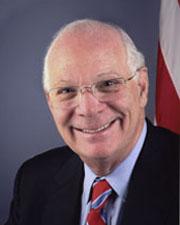 Sen. Benjamin L. Cardin (D-MD)
Text
Proposed
This amendment's own text couldn't be picked out of its Congressional Record passage, so the passage is shown in full.
NATIONAL DEFENSE AUTHORIZATION ACT FOR FISCAL YEAR 2013
The ACTING PRESIDENT pro tempore. Under the previous order, the
Senate will resume consideration of S. 3254, which the clerk will
report.
The legislative clerk read as follows:
A bill (S. 3254) to authorize appropriations for fiscal
year 2013 for military activities of the Department of
Defense, for military construction, and for defense
activities of the Department of Energy, to prescribe military
personnel strengths for such fiscal year, and for and for
other purposes.
Pending:
Kyl modified amendment No. 3123, to require briefings on
dialogue between the United States and the Russian Federation
on nuclear arms, missile defense, and long-range conventional
strike systems.
The ACTING PRESIDENT pro tempore. The Senator from Michigan.
Mr. LEVIN. Mr. President, first let me thank the majority leader
while he is still here on the floor for the support he has given to
Senator McCain and myself and all of us who are working so hard to get
a Defense authorization bill passed for the 52nd straight time, I
believe. We haven't missed a year in 51, and I think this will be the
51st and 52nd.
I want to thank Senator McCain and his staff and all of my staff for
the extraordinarily hard work they have put in on the bill, both in
committee and here on the floor. I thank all of my colleagues for the
cooperation which has been shown to allow us to dispose of somewhere
now in the area of 100 amendments.
There will be even more amendments that can be cleared this
afternoon. We, I believe, have a package that is ready, or almost
ready, of amendments. I believe that after that, this afternoon there
could be a second package of amendments which has been cleared for
action by the body.
We will be here this afternoon. I haven't had a chance to talk yet
with Senator McCain today, but I am sure it is his plan, as it is mine,
to be here with our staffs this afternoon to work with colleagues to
see if we can't clear additional amendments.
The cloture vote is scheduled. There has been more than adequate
time. I want to thank the leader, again, for giving this time. We are
now into our fourth day where we are able to address the issues on this
bill.
I hope cloture will pass this afternoon when the vote is taken, and
that early tomorrow, since I am hopeful there won't be a need for
postcloture time, we can perhaps adopt even a third package of cleared
amendments tomorrow morning at some point, and then move to final
passage at some time as determined by the leader, of course.
I want to again urge colleagues who have amendments that we have been
working on to keep working with our staffs so we can hopefully clear as
many amendments as possible prior to cloture. I think that would be
beneficial to all of us. We have worked together well as a body.
There have been a number of accommodations which have been made by
many of our colleagues to each other and to us as managers which has
made it possible for us to have a smooth passage at least until this
point.
With that, again, I give thanks to my ranking member.
I yield the floor.
Mr. McCAIN. I want to thank Senator Levin and also the majority
leader for giving us this time. Also I am in agreement that the time
has come for cloture to be invoked, unfortunately. The total time of
debate for this bill up to now has been 27 hours of debate and 371
amendments have been filed. We have disposed of 94 amendments, some by
voice vote, some by rollcall vote.
Of those amendments, many of them were offered by members of the
committee, but a majority of them were offered by nonmembers of the
Senate Armed Services Committee. So I think we have had a very
inclusive and interesting debate and voting.
I tell my friend Senator Levin, I have just been informed that the
Senator from Kentucky has objected, voiced an objection to taking up
any further unanimous consent agreements or votes. That means that
there will be many amendments which have been approved by both sides
which will now not be allowed to be offered or acted upon. It also
means that if cloture is invoked, and I anticipate that cloture will be
invoked--I understand that will be the second vote we have today--a
number of those amendments that are nongermane, which we have cleared
and would have been passed, will now be put aside.
I will have a reading of a number of those amendments. There are 15
to 16 amendments that we would be ready shortly to approve. I am not
exactly sure how many of them are nongermane in nature, which will fall
when cloture is invoked.
All I can say to my friend the chairman is that, again, I find it
disappointing that one Member of the Senate feels his particular agenda
is so important that it affects the lives, the readiness, and the
capabilities of the men and women who are serving in the military and
our ability to defend this Nation. I think it is hard to answer to the
men and women in the military with this kind of behavior, but I will
leave that up to the Senator from Kentucky to do so.
In the meantime, I guess postcloture, we will continue with the
legislation and try to get it completed. I have some guarded optimism
that we may be able to do so.
Mr. Chairman, I again apologize for what seems to have happened. Much
to my dismay, it lends some credence to the argument that maybe we
ought not to do business the way we are doing here in the Senate.
I yield the floor.
The ACTING PRESIDENT pro tempore. The Senator from Michigan.
[[Page S7313]]
Mr. LEVIN. Mr. President, first of all, let me tell my dear friend
from Arizona that I am sorry to hear about that objection that
apparently is going to be placed against the unanimous consent
agreement to adopt amendments which had been cleared by both sides. But
perhaps during the afternoon we could hear from the Senator from
Kentucky. Perhaps he can come over and talk to us about what the
problem is. But in the meantime, we are going to continue to try to
line up cleared amendments in the chance he will relent from his
position.
Sometimes with these packages, when they are put together and someone
says they object at the last minute, that objection can be addressed in
some way or another. So I hope our staffs will continue to try to find
ways to clear amendments--subject, of course, to there being an
objection. If there is an objection, then that, of course, given the
fact that we are late in the day here now and having a cloture vote
late this afternoon, would be able to thwart the will of the rest of
the body.
But I hope the Senator from Kentucky can personally come over and let
us know what the problem is. Perhaps my friend from Arizona knows what
it is, but I don't. I would like to get involved in it.
I yield.
Mr. McCAIN. In the meantime, I would ask my friend if he agrees that
colleagues with amendments they would like to debate or wish to come
and talk about them--we are certainly open to that.
Mr. LEVIN. The floor is open.
Mr. President, I suggest the absence of a quorum.
The ACTING PRESIDENT pro tempore. The clerk will call the roll.
The legislative clerk proceeded to call the roll.
Mr. McCONNELL. Mr. President, I ask unanimous consent that the order
for the quorum call be rescinded.
The ACTING PRESIDENT pro tempore. Without objection, it is so
ordered.
Mr. McCONNELL. Mr. President, I will proceed under my leader time.
RECOGNITION OF THE MINORITY LEADER
The ACTING PRESIDENT pro tempore. The Republican leader is
recognized.
Rules Changes
Mr. McCONNELL. Mr. President, we have been discussing the plans of
the Democratic majority to repudiate its clear commitment to respect
the rights of the minority, which is a hallmark of the Senate, and
instead to break the rules to change the rules. That is how my friend
from Nevada repeatedly described it when Republicans were considering
doing something similar several years ago. Of course, Republicans never
did break the rules to change the rules, but Democrats are
contemplating doing so in the name of ``efficiency.''
Last week I noted how my Democratic colleagues seek to minimize this
major change in how the Senate governs itself by calling this
heavyhanded power play ``tiny'' and a ``minor change'' and adjusting
the Senate rules just ``a little bit.'' But this eleventh-hour rhetoric
stands in stark contrast to what they have previously said and what
they have systematically done.
My friend the majority leader told one of my new Members, in essence,
that even if this new so-called ``tiny'' rules change removed all
chance that this new Member would have any recourse to get an amendment
to a bill, that new Member could simply ``vote against the bill.'' And
my friend told Senator McCain this fall that ``the amendment days are
over'' in the Senate. That was the majority leader to Senator McCain
earlier this year.
But, of course, it is much more than what has been said that is at
issue, it is what the Democratic leadership has systematically done to
marginalize the voice of the minority. As I noted, it has used, to an
unprecedented extent, Senate rule XIV. This rule allows the majority to
bypass committees and write bills behind closed doors--doing so, of
course, to deprive all of us, Republicans and Democrats, of the chance
to have their committee work matter.
According to the Congressional Research Service, the majority has
used this rule to bypass committees nearly 70 times. When Republicans
were last in the majority under Senator Frist, we used that rule less
than half as often--only 30 times. And when a bill that has bypassed
committee goes straight to the floor, under the current majority there
often isn't an opportunity to participate there either. Again,
according to the Congressional Research Service, the current Democratic
leadership has blocked Senators from both sides of the aisle from
offering amendments on the floor 68 times--68 times. No amendments at
all. This is 70 percent greater than the number of times the six prior
majority leaders combined--combined--shut their colleagues out of the
amendment process.
Now, the majority leader dismissed this unprecedented practice,
saying it ``has no bearing on what is going on around here.'' Well,
maybe it doesn't to him, but he is the only one who, under this
unprecedented amendment blockage, is picking amendments. It is a little
bit bigger deal to the other 99 of us who are shut out from
representing our constituents by having our ability to offer any
amendments on their behalf blocked.
By the way, that is not how the majority leader viewed this practice
when he was in the minority. When Senator Frist, as majority leader,
blocked his colleagues from offering amendments a relatively modest 15
times in 4 years--15 times in 4 years--my friend from Nevada said it
was ``a bad way to run the Senate'' and a ``very bad practice'' and it
ran ``against the basic nature of the Senate.'' That is when Senator
Frist did it 15 times over 4 years. This majority leader has done it
nearly 70 times in his tenure. What would be a fair way to describe
that record?
But the current Democratic leadership hasn't been content to stop
there in marginalizing the minority. They have prevented the minority
from offering amendments in committee, they have prevented them from
offering amendments on the floor before cloture, and then they changed
Senate procedure with a heavyhanded majoritarian motion to stop the
minority from offering motions after cloture was invoked. Since such
motions to suspend the rules require 67 votes to be successful, I
gather that having even to deal with such motions interfered with
``efficiency,'' as did allowing bills to be marked up in committee, as
did allowing Senators of both parties to have amendments on the floor.
So our Democratic colleagues have shut out the minority there too.
But even that is not enough. Now the same Democratic leadership wants
to take away the right to extend a debate on motions to proceed to a
measure. Throughout its history, the unique role of the Senate has been
to protect the voice of the minority, expressed through the equal
rights of all Senators to debate and amend legislation. This has stood
in contrast with the House of Representatives, where a simple majority
rules. So it should be startling--literally startling--to every Senator
and to the people who elected us to represent them to look at the
facts.
How does the Senate compare with the House of Representatives? This
is something we have not discussed before in this debate. How does the
Senate compare with the House of Representatives? At the same time the
current Senate majority is finding every way it can to marginalize the
minority, the majority in the House is moving in the opposite
direction--in exactly the opposite direction.
The Wall Street Journal reported last year that the majority in the
House was ``giving lawmakers more opportunity to amend bills on the
floor'' and that ``even some Democrats acknowledged that the GOP
leaders have done a better job than their predecessors.'' According to
the article, last year the House held more votes on amendments on the
floor than the two previous years combined when congressional Democrats
were in the majority. How does that compare to the Senate? According to
the Congressional Research Service, this year the majority in the House
has given the minority in the House 214 occasions to affect legislation
on the House floor through amendments and motions to commit or
recommit. That is what they have done in the House this year. By
contrast, the majority in the Senate has only allowed the minority in
the Senate 67 occasions to affect legislation on the Senate floor in
the same way.
So listen to this, Mr. President. This is astonishing. The minority
in the House has had more than three times
[[Page S7314]]
the opportunity to express its views and to represent its constituents
than the minority in the Senate. The minority in the House has had more
than three times as many opportunities to record its views than the
minority in the Senate. It appears that in terms of respect for
minority rights and the constituents the minority represents, the House
is becoming more like the Senate and, unfortunately, the Senate is
becoming more like the House.
Now, it doesn't have to be this way in the Senate, of course.
Senators Levin and McCain are reminding those of us who have been here
a while and showing those who haven't that it is possible for the
Senate to actually legislate. We are in the process of doing that right
now.
Despite the fact that the Senate has devoted much less floor time to
the Defense authorization bill than is historically the practice and
many fewer amendments than are historically the practice, the majority
is allowing amendments to receive votes and the minority, for our part,
is not insisting that we get to vote on every single amendment we want.
We need to get back to conducting business that way again, and the
majority leader and I need to discuss how to achieve that.
But what the Democratic majority must not do is change the Senate by
using a bare majority to ram through a rules change as if this were the
House. Such a rules change will not do them any good in the short
term--the House is in the hands of the Republicans. But it will do the
institution irreparable damage in the long term and will establish
precedent in the Senate for breaking the rules to change the rules that
our Democratic colleagues will have to endure when they are in the
minority again, which will certainly happen.
We should work together, instead, to resolve our differences. As I
said last week, that is what the Standing Rules of the Senate
anticipate and that has been how changes to the Senate rules have
occurred in our history.
I yield the floor and I suggest the absence of a quorum.
The ACTING PRESIDENT pro tempore. The clerk will call the roll.
The bill clerk proceeded to call the roll.
Mr. ALEXANDER. Mr. President, I ask unanimous consent the order for
the quorum call be rescinded.
The ACTING PRESIDENT pro tempore. Without objection, it is so
ordered.
Mr. ALEXANDER. Mr. President, I ask unanimous consent to speak as in
morning business for 20 minutes.
The ACTING PRESIDENT pro tempore. Without objection, it is so
ordered.
Mr. ALEXANDER. Will the Chair please let me know when 5 minutes
remains?
The ACTING PRESIDENT pro tempore. Certainly. The Senator is
recognized.
The Filibuster
Mr. ALEXANDER. Mr. President, I want to speak this afternoon about
the Senate as an institution; about its majority leader, Senator Reid,
who is my friend; about various conversations we have been having in
the Senate and discussions about what the majority leader has said
about how the Senate should operate. I know the majority leader cares
about this institution. I believe it. He has said it. He shows it. He
has one of the most difficult jobs anybody could possibly have.
One time he told me: My job is to make everybody mad. In many ways it
is, when you have a body of 100 that operates by unanimous consent and
every one of us is equal. It is a very difficult job to be the minority
leader, which the Republican leader is today. It is a more difficult
job to be the majority leader.
I emphasize this because I know Senator Reid cares about this
institution, and I know Senator Reid does not want to go down in
history as the man who ended the Senate. But if he persists in doing
what he says he will do--which is to break the rules of the Senate to
change the filibuster rules--that will be his legacy. He will go down
in history as the Senator who ended the Senate.
You might say: Senator Alexander, that is a very serious charge to
make about a majority leader whom you know and respect and who you just
said cares about this institution. It is a serious charge to make. The
only reason I would say it is because Senator Reid said it himself.
Shortly after I came to the Senate, in 2005, we Republicans,
including this Senator, were very upset about what we believed were
unfair efforts by Democrats to keep President Bush from securing an up-
or-down vote on his judicial nominees. We were in the majority, we
Republicans. We had a Republican President of the United States. We
believed that attacks on the President's nominees were extraordinarily
unfair, and the other side was using the rules of the Senate to prevent
an up-or-down vote. They were filibustering President Bush's nominees.
We could not change their minds, so a number of Senators persuaded
Senator Frist, my colleague from Tennessee who was then the majority
leader, that we should then change the filibuster rules in order to get
an up-or-down vote on the judges. We knew our goal was right, so we
were going to, if we had to, break the rules to change the rules.
As you might guess, the minority, the Democrats at the time, erupted
in indignation. They said this has not been done in the 240 or 250
years of the Senate. They pointed out the differences between the
Senate and the House of Representatives. Almost every distinguished
Member of the Democratic side of the Senate--the majority leader;
Senator Biden, now the Vice President of the United States; Senator
Obama, now the President of the United States; Senator Clinton, now the
Secretary of State of the United States--denounced this evil Republican
plan to change the rules of the Senate, to in effect break the rules of
the Senate--because the rule says we can only change the rules with 67
votes--in order to change the filibuster rule.
Here is what the majority leader said in his book, ``The Good
Fight.''
The storm had been gathering all year and word from
conservative columnists and in conservative circles was that
Senator Frist of Tennessee, who was the majority leader, had
decided to pursue a rules change that would kill the
filibuster for judicial nominations. And once you opened that
Pandora's box it was just a matter of time before a Senate
leader who couldn't get his way on something moved to
eliminate the filibuster for regular business as well. And
that, simply put, would be the end of the United States
Senate.
That is Senator Reid when he was the minority leader of the Senate.
Today another storm is gathering, and the shoes are reversed. The
majority leader is the one who wants to invoke what he then called the
nuclear option. That was the Democrats' name for what the Republicans
were trying to do, and we are the ones who are saying: Please don't do
that; stop and think about this; this is not what you want to do to the
Senate.
People who are listening might say: Wait a minute. This filibuster
business has gotten out of hand. What is wrong with having a majority
vote in the Senate? Don't we learn in the first grade--at least we did
in Maryville, TN--if we have an election for the class president
everyone raises their hands and whoever gets the majority wins. That is
the American way.
That is the American way except it is not the way of the Senate from
the beginning of our country. We had a Frenchman who wandered through
this country in the 1830s, a young man called de Tocqueville. He wrote
a book called ``Democracy In America,'' which is still the finest
exposition of our democracy that we have because it was an outsider's
look at us. He saw two great dangers to the United States at the time.
One was Russia. He was prescient about that. But the second was what he
called the tyranny of the majority--that in a great, big, complicated
country like this that somehow the majority, in its passions and
suddenness and enthusiasm, would run over the minorities. Somehow he
must have known we would be a nation filled with minorities; that we
would be almost a minority nation, and somehow those minorities needed
protection.
What has happened over all those years is that the Senate has stood,
as Senator Byrd used to say, as the necessary fence that protected
minorities in America from the tyranny of the majority. That is why we
have a Senate, so if a freight train runs through the House it cannot
run through here.
[[Page S7315]]
It has to slow down and stop and we have to think about it.
That is why we have a tradition in the Senate of unlimited amendment
and unlimited debate on any subject until 60 of us decide that is
enough--which is what we are about to do with the Defense authorization
bill. We have had, under the leadership of Senator McCain and Senator
Levin, the chairman--and I give Senator Reid great credit for this as
well--I think it is 90 amendments that have been dealt with. We will
have a cloture vote tomorrow. It will probably pass. I will vote for
it. That means it is time to end the debate, time to limit the
discussion and come to a conclusion. That is the way the Senate is
supposed to work.
Here is an image of the difference between the House and the Senate.
Most of us know of the work of Robert Caro, who has written the book on
Lyndon Johnson. When I first came to the Senate 10 years ago I read
that first chapter in Caro's book, the chapter called ``The Desks Of
The Senate.'' I imagine the Presiding Officer has had a chance to read
that as well. I still say to new Senators or anybody else interested in
this body, if they really want to understand the Senate, read Robert
Caro's chapter ``The Desks Of The Senate.''
He talked about all these desks and how after an election--just as
they will this time--they move two from over here to over there because
Democrats won a couple of seats, and that is the way this works. This
is the image of the Senate where everybody is equal, and it takes 60 to
get a result. The idea is unlimited debate and consideration to protect
the minority. It also reminds us that the people who are out of the
majority right now may not be out tomorrow.
What is the image of the House? The image of the House is that all
legislation goes to the House Rules Committee. I have been there. David
Dreier took me there. He is the chairman of the House Rules Committee.
It is an ornate office. Every piece of legislation in the House has to
go through the Rules Committee. Republicans have a narrow majority in
the House of Representatives but, guess what, the composition of the
Rules Committee is eight Republicans, four Democrats. What if the
Democrats gained a one-vote majority in the House? Eight Democrats and
four Republicans.
What would happen is any piece of legislation the majority wants to
push would run through the House like a freight train. That is not what
the U.S. Senate is about. That is why Senator Dodd, in his farewell
address, said to those who have never been the minority in the Senate,
please be careful before changing these filibuster rules.
In January, we will have 30 Democratic Members of the U.S. Senate who
have never been in the minority. They have not had a chance to
experience what some of us have had a chance to experience. While I
have not been in the Senate all that long by Senate standards--I have
been here 10 years--I have watched the Senate for a long time. I first
came here in 1967 as a legislative aide to Howard Baker. Everett
Dirksen was the Republican leader and Mike Mansfield was the Democratic
leader. The Senate has never worked perfectly. Every majority and
minority leader will say that.
In the 1960s it was Senator Williams from Delaware who would object
and slow down things. In the 1970s it was Senator Allen from Alabama.
He would tie up the Senate in complete knots. Because of the individual
rights a Senator has, it was just one Senator. In the 1980s it was
Senator Metzenbaum. He held up my own nomination to be U.S. Education
Secretary for 3 or 4 months, and there was nothing I could do about it.
I thought that was very unfair, but it was part of this process whereby
a Senator can slow down things.
How do leaders respond to that? Well, in 2005 I was as angry as
anyone about the Bush judges who were not getting an up-or-down vote,
but I did not think it was right to break or change the rules of the
U.S. Senate. I didn't want to turn the Senate into the House of
Representatives.
I made two speeches on the floor and suggested what became, in
effect, the Gang of 14. I didn't participate in the gang because my
colleague Senator Frist was the Republican leader, and out of respect
to him I didn't want to undermine him. Fourteen Senators, including
Senator Pryor and Senator McCain on this side, got together and said we
cannot let this happen. They met and worked and agreed they would not
change the rules and would not filibuster. So when that happened, that
meant there could not be a change of the rules by the Republicans and
there could not be a filibuster by the Democrats if these 14 Senators
agreed with one another. They then created a compromise solution which
is where we are today.
There have been other ways that leaders have responded. During the
Panama Canal debates in 1978 and 1979, I believe Senator Byrd and
Senator Baker were the leaders. I believe Senator Byrd was the majority
leader. The opponents of the Panama Canal--and this was a time when the
Panama Canal was very unpopular with a lot of people. According to
Senator Byrd, opponents centered their efforts of winning approval of
killer amendments. We all know what those are. I believe one of the
main reasons the majority leader does not like bills to come to the
floor is because he thinks some of the amendments offered by the
minority are going to be unpleasant for Democrats, or even Republicans,
to vote for. Well, my feeling about that is: Why would you join the
Grand Ole Opry if you don't want to sing? We come here to debate,
amend, and vote.
Here is what Senator Byrd said: Opponents centered their efforts on
winning approval of killer amendments. I made it clear that only the
leadership amendments and certain clarifying reservations and
understandings would be acceptable. Opponents attempted to circumvent
this strategy by offering amendments that were phrased in such a way
that Senators would find them difficult to turn down.
At first glance many of the amendments seemed innocuous and pro-
American. Had they succeeded, however, they would have effectively
killed the treaty--this is Senator Byrd. In all 145 amendments, 26
reservations, 18 understandings, 3 declarations--for a total of 192
changes--were proposed. 88 of these were voted on. In the final
analysis, nothing passed that was not acceptable to the joint
leadership.
In other words, the joint leadership sat up there, let everybody
vote, let them ventilate, have their say, do their job, and then they
defeated them. They either tabled their amendment or they beat them.
That is what they were able to do. That is very different from way we
are operating today, and that is the way I respectfully suggest we
should operate.
In the 1980s--and I mentioned it was never perfect--during the Byrd-
Baker era, basically the leaders would put a bill on the floor. If it
was a bill like the one we are currently considering--the Defense
authorization bill--and it had the support of the chairman and ranking
minority member, they would simply open the bill for amendments. They
might get 300 amendments. They would then ask for unanimous consent to
close off amendments and, of course, they would get it because if
anybody objected, they would tell them to throw their amendment in
there and then they would start voting.
The ACTING PRESIDENT pro tempore. The Senator has 5 minutes
remaining.
Mr. ALEXANDER. For example, during the Panama Canal debate, they
would table a lot and vote a lot. They would stay up on Monday,
Tuesday, Wednesday, and Thursday nights. Pretty soon Senators would be
thinking about going home or seeing their grandchildren or maybe their
amendment was not so important and their bill would either be passed or
defeated, but everybody went home thinking: I have had a chance to be a
U.S. Senator. I may be in the minority, I may be in the majority, but I
have given voice to the feelings of the people of my State which is
what I was elected to do.
So is the filibuster rule a problem? No, the filibuster rule is not
the problem. The problem is if I come down to the floor with an
amendment, the majority leader uses a procedural motion to cut me off
and I don't get to vote on it. I don't get to talk about it and I don't
get to vote on it.
To his great credit, he is not doing that with the Defense
authorization bill. He did not do that with the postal reform bill.
There have been a number of other bills this year that proved the
Senate can work. There is even an
[[Page S7316]]
amendment by the Senator from Kentucky that Members of both sides did
not want to vote on. It had to do with cutting off aid to three Middle
Eastern countries. The administration did not want to vote, but we
finally voted and what happened? We had a huge, great debate. Many
Senators spoke their feelings, and in the end the vote was 81-10 and
the amendment failed. It did not do any damage to anybody. In fact, it
made the Senate look more like what it should be.
The filibuster is and has been democracy's greatest show: the right
to talk your head off. We need to get back to the situation where we
have committee bills like the Defense authorization bill where we bring
them to the floor and the majority leader asks for amendments. Let us
all put our amendments in and let us start voting. Let's get back to
the time where the majority leader and the minority leader, or the
committee chairman and the ranking member, have a product they are
invested in and they work together to keep it intact. If they do that,
they usually defeat Republican amendments or Democratic amendments, or
occasionally an amendment will come along that has so much support that
it seems like an improvement to the bill, and it is adopted.
My purpose today is not to make a hard job harder. I said at the
beginning the majority leader has the toughest job in town and maybe
one of the toughest in the country. My hope is that maybe if he has a
few minutes tonight, he would go back home and reread his own book. He
and I agreed at that time that that would be a bad result. And remember
the words he said in 2005 about the value of the filibuster, the value
of having a body that protected the minority rights and how damaging it
would be to make the Senate like the House.
I hope the majority leader and the Republican leader could quietly
meet and talk this through. Senator Schumer and I and many others spent
a lot of time on this 2 years ago. It took 6 months and we thought we
had an agreement, but somehow it broke down. There is no reason it
should break down. We can operate the Senate under the rules we have.
We can get bills through committee. We can get them to the floor. We
can let anybody have an amendment and we can talk about it, vote on it,
and pass it or defeat it. That is what we should be doing.
I know the majority leader cares about this institution. I know he
cares about it deeply. He spent his life here devoted to it. I know he
is responding to a variety of suggestions from Members of his caucus as
to what is best to do. I think it is the responsibility of the leaders
of both sides and people who have seen this body for a while to remind
everyone, particularly those who have never been in the minority, that
this is a body to protect the minority. Any of us can be in the
minority at some time. I know he does not want to destroy the U.S.
Senate, but in his words: If we change the filibuster rule, it would be
the end of the United States Senate. I don't want that to happen. I
don't want that to be the majority leader's legacy, and I don't believe
he wants that. I, as one Senator, am willing to encourage the
Republican leader and the majority leader to work together, solve this
problem, and get our attention focused back on the big problem facing
our country, which is how to get a budget agreement that gets our
economy moving again.
Mr. President, I ask unanimous consent to put into the Record a few
articles: a excerpt from the majority leader's book, an article from
The Hill by Martin Paone--who used to work here and makes the points I
have been making--an article by Richard Arenberg, who worked on Senate
and House staffs for 30 or 40 years. We find that people who have
worked in the Senate and leave it, whether they are Republicans or
Democrats, seem to have the same view.
I wish also to put in Senator Byrd's statement which he made during
his last appearance before the Senate Rules Committee before he died. I
was there and he urged us not to break down this fence. His comments go
hand in hand with those of Senator Chris Dodd's final address to the
Senate on November 30, 2010. And finally, I include a copy of an
address I gave at the Heritage Foundation on this subject 2 years ago.
There being no objection, the material was ordered to be printed in
the Record, as follows:
The Nuclear Option
Peaceable and productive are not two words I would use to
describe Washington in 2005.
I just couldn't believe that Bill Frist was going to do
this.
The storm had been gathering all year and word from
conservative columnists and in conservative circles was that
Senator Frist of Tennessee, who was the Majority Leader, bad
decided to pursue a rules change that would kill the
filibuster for judicial nominations. And once you opened that
Pandora's box, it was just a matter of time before a Senate
leader who couldn't get his way on something moved to
eliminate the filibuster for regular business as well. And
that, simply put, would be the end of the United States
Senate.
It is the genius of the founders that they conceived the
Senate as a solution to the small state/big state problem.
And central to that solution was the protection of the rights
of the minority. A filibuster is the minority's way of not
allowing the majority to shut off debate, and without robust
debate, the Senate is crippled. Such a move would transform
the body into an institution that looked just like the House
of Representatives, where everything passes with a simple
majority. And it would tamper dangerously with the Senate's
advise-and-consent function as enshrined in the Constitution.
If even the most controversial nominee could simply be
rubber-stamped by a simple majority, advise-and-consent would
be gutted. Trent Lott of Mississippi knew what he was talking
about when he coined a name for what they were doing: the
nuclear option.
And that was their point. They knew--Lott knew--if they
trifled with the basic framework of the Senate like that it
would be nuclear. They knew that it would be a very radical
thing to do, They knew that it would shut the Senate down.
United States senators can be a self-regarding bunch
sometimes, and I include myself in that description, but
there will come a time when we will all be gone, and the
institutions that we now serve will be run by men and women
not yet living, and those institutions will either function
well because we've taken care with them, or they will be in
disarray and someone else's problem to solve. Well, because
the Republicans couldn't get their way getting some radical
judges confirmed to the federal bench, they were threatening
to change the Senate so fundamentally that it would never be
the same again. In a fit of partisan fury they were trying to
blow up the Senate. Senate rules can only be changed by a
two-thirds vote of the Senate, or sixty-seven senators. The
Republicans were going to do it illegally with a simple
majority, or fifty-one, Vice President Cheney was prepared to
overrule the Senate parliamentarian. Future generations be
damned.
Given that the filibuster is a perfectly reasonable tool to
effect, compromise, we had been resorting to the filibuster
on a few judges. And that's just the way it was. For 230
years, the U.S. Senate had been known as the world's greatest
deliberative body--not always efficient, but ultimately
effective.
____
[From The Hill, May 14, 2012]
Senate Rule Changes Come With Risk
(By Martin P. Paone)
It's an election year, and the Senate can't agree on how to
keep the student loan interest rate from doubling on July 1
from 3.4 percent to 6.8. While both sides agree that it
should be done, how to pay for it is the stumbling block. A
party-line cloture vote failure has once again brought calls
for changing the Senate's rules by majority vote at the
beginning of the next Congress, bypassing the two-thirds
cloture requirement if there's opposition.
The Senate's membership has changed considerably in the
last decade, but the Senate rules, with the exception of some
changes that were enacted in the Ethics in Government Act,
have not undergone any major changes since the Senate went on
TV in 1986. While the House has its Rules Committee, which
allows the majority to exert its will and control the flow of
legislation, the Senate has a tradition of protecting the
rights of the minority and of unfettered debate. Its own
website describes ``[t]he legislative process on the Senate
floor [as] a balance between the rights guaranteed to
Senators under the standing rules and the need for senators
to forgo some of these rights in order to expedite
business.''
The Senate has for centuries functioned by this compact of
selectively forgoing one's rights, but now that compact, to
some, seems to have broken down--hence the call to enact
rules changes at the beginning of the next Congress by
majority vote. These calls have come from Democrats, but they
are quick to admit that it should apply regardless of who is
in the majority at the time.
Such changes can certainly quicken the process and allow
for the majority to pass legislation and confirm presidential
nominees with little hindrance. While the initial rules
reforms will probably be limited to restricting debate on a
motion to proceed and other less dramatic changes, eventually
such majority rules changes at the beginning of a Congress
will result in a majority-controlled body similar to the
House. Once the Pandora's Box of granting the majority the
unfettered ability to change the rules every
[[Page S7317]]
two years has been opened, having seen how the current
situation has escalated, tit for tat over the last 30 years,
it is difficult to believe that strict majority rule would
not be the ultimate result. Thereafter, a member of the
minority in the Senate will be just as impotent as his or her
House counterparts.
Filibusters and the forcing of a cloture vote have been
repeatedly used to stop legislation and nominations and to
waste time. This is why the number of successful cloture
votes, many on noncontroversial nominations and on motions to
proceed to bills, has gone up dramatically in recent years.
By requiring the cloture vote and then voting for it, the
minority has been able to waste considerable time and thus
reduce the amount of time available to act on other items of
the president's agenda.
The call for changing the Senate's rules by majority vote
at the beginning of a Congress is not new; it was attempted
without success in 1953 and 1957 and in 1959. When faced with
such an effort, then-Majority Leader Lyndon Johnson
negotiated a cloture change back down two-thirds of those
present and voting, but as part of the compromise he had to
add Paragraph 2 to Senate Rule V, which states ``The rules of
the Senate shall continue from one Congress to the next
Congress unless they are changed as provided in these
rules.''
So is it time to ignore the existing rules and change them
at the beginning of the next Congress by a majority vote?
Perhaps it is time--so many other changes have occurred in
our lives in the recent past, why shouldn't the Senate change
the way it does business? However, should that occur, one
must be prepared to live with the eventual outcome of a
Senate where the majority rules and the rights of the
minority have been severely curtailed.
While I can sympathize with those demanding such changes,
it's the manner of their implementation that keeps reminding
me of the exchange between Sir Thomas Moore and his son-in-
law, William Roper, in the movie ``A Man For All Seasons'':
Roper: ``So, now you give the devil the benefit of law!''
Moore: ``Yes! What would you do? Cut a great road through
the law to get after the devil?'' Roper: ``Yes, I'd cut down
every law in England to do that!''
Moore: ``Oh? And when the last law was down, and the devil
turned `round on you, where would you hide, Roper, the laws
all being flat? . . . Yes, I'd give the devil benefit of law,
for my own safety's sake!''
____
[From the Washington Post, Nov. 14, 2012]
Filibuster Reform: Avoid the `Nuclear Option'
(By Richard A. Arenberg)
Richard A. Arenberg, who worked on Senate and House staffs
for 34 years, is co-author of ``Defending the Filibuster: The
Soul of the Senate.'' He is an adjunct professor at Brown
University, Northeastern University and Suffolk University.
Majority Leader Harry Reid, frustrated by abuse of the
filibuster, has vowed to change the Senate's rule on the
first day of the new Congress.
If he chooses to invoke the ``constitutional option''--the
assertion that the Senate can, on the first day of a session,
change its rules by a majority vote--he will be heading down
a slippery slope that the current president of the Senate,
Vice President Biden, once excoriated as an abuse of power by
a majority party.
The argument over the constitutional option is more than
200 years old. The Senate has consistently held that it is a
continuing body since at least two-thirds of its members are
always in office. That's why it uses a rule book written in
1789 by the first Senate and does not adopt rules on the
first day of a new Congress, as the House of Representatives
does. To underscore the point, the Senate adopted in 1965
Rule V, which states, ``The rules of the Senate shall
continue from one Congress to the next Congress unless they
are changed as provided in these rules.''
Senate Rule XXII requires a two-thirds vote to end a
filibuster against a rules change. This means that changing
Senate rules must be a bipartisan matter. The danger is that
the majority party will attempt to use the ``constitutional
option'' and ignore the Senate's rules. Republicans
threatened this in 2005 when Democrats were filibustering 10
of President George W. Bush's judicial nominations. Because
Democrats vowed to respond by bringing the Senate to a near-
halt, the tactic was widely referred to as the ``nuclear
option.''
The ``constitutional option'' could be accomplished in
January (or, really, any time) if the Senate's presiding
officer decides to ignore the rules and the advice of the
parliamentarian--which presiding officers usually rely upon--
and declares that debate can be ended by majority vote.
Republicans would appeal, but if 51 Democrats hold the line
they can table the appeal, which would allow the ruling to
stand as the new precedent of the Senate.
No one should be fooled. Once the majority can change the
rules by majority vote, the Senate will soon be like the
House, where the majority doesn't consult the minority but
simply controls the process. Gone would be the Senate's
historic protection of the minority's right to speak and
amend. In the House, the majority tightly controls which
bills will be considered; what amendments, if any, will be in
order; how much time is allotted for debate; and when and
under what rules votes occur. Often, no amendments are
permitted.
Since the Senate's presiding officer is likely to be the
vice president, it is instructive to remember what Biden said
about this ploy from the floor of the Senate in 2005:
``This nuclear option is ultimately an example of the
arrogance of power. It is a fundamental power grab by the
majority party . . . to eliminate one of the procedural
mechanisms designed for the express purpose of guaranteeing
individual rights and they also, as a consequence, would
undermine the protections of the minority point of view. . .
.
``[Q]uite frankly it's the ultimate act of unfairness to
alter the unique responsibility of the United States Senate
and to do so by breaking the very rules of the United States
Senate. . . . But the Senate is not meant to be a place of
pure majoritarianism. . . . At its core, . . . the filibuster
is not about stopping a nominee or a bill. It's about
compromise and moderation.''
He went on to call the constitutional option ``a lie about
the rule.''
Reid said at the time, ``If there were ever an example of
an abuse of power, this is it. The filibuster is the last
check we have against the abuse of power in Washington.''
In 2005, crisis was averted by the bipartisan ``Gang of
14'' senators who forged a compromise. Perhaps it's time for
a new gang. Five of the original 14 will be in the 113th
Congress. They would no doubt be joined by others of both
parties. A critical mass of senators who revere the
institution can arrive at a bipartisan approach, reshaping
the filibuster rule while retaining it as a protection for
minority rights.
In recent days President Obama and the leaders of the House
and Senate have called for bipartisan cooperation. Imposing
rules changes by partisan fiat would be just the opposite and
would destroy the fabric of the Senate. Now is a good time
for a new gang of senators to rise above partisan bickering
and negotiate changes based on what's best for the Senate and
our democracy, not just what's best for the majority.
____
Statement of Senator Robert C. Byrd (D-W.Va.), Senate Rules and
Administration Committee, May 19, 2010
``the filibuster and its consequences''
On September 30, 1788, Pennsylvania became the first state
to elect its United States senators, one of whom was William
Maclay. In his 1789 journal Senator Maclay wrote, ``I gave my
opinion in plain language that the confidence of the people
was departing from us, owing to our unreasonable delays. The
design of the Virginians and of the South Carolina gentlemen
was to talk away the time, so that we could not get the bill
passed.''
Our Founding Fathers intended the Senate to be a continuing
body that allows for open and unlimited debate and the
protection of minority rights. Senators have understood this
since the Senate first convened.
In his notes of the Constitutional Convention on June 26,
1787, James Madison recorded that the ends to be served by
the Senate were ``first, to protect the people against their
rulers, secondly, to protect the people against the transient
impressions into which they themselves might be led. . . They
themselves, as well as a numerous body of Representatives,
were liable to err also, from fickleness and passion. A
necessary fence against this danger would be to select a
portion of enlightened citizens, whose limited number, and
firmness might seasonably interpose against impetuous
councils.'' That ``fence'' was the United States Senate.
The right to filibuster anchors this necessary fence. But
it is not a right intended to be abused.
During this 111th Congress in particular the minority has
threatened to filibuster almost every matter proposed for
Senate consideration. I find this tactic contrary to each
Senator's duty to act in good faith.
I share the profound frustration of my constituents and
colleagues as we confront this situation. The challenges
before our nation are far too grave, and too numerous, for
the Senate to be rendered impotent to address them, and yet
be derided for inaction by those causing the delay.
There are many suggestions as to what we should do. I know
what we must not do.
We must never, ever, tear down the only wall--the necessary
fence--this nation has against the excesses of the Executive
Branch and the resultant haste and tyranny of the majority.
The path to solving our problem lies in our thoroughly
understanding it. Does the difficulty reside in the construct
of our rules or in the ease of circumventing them?
A true filibuster is a fight, not a threat or a bluff. For
most of the Senate's history, Senators motivated to extend
debate had to hold the floor as long as they were physically
able. The Senate was either persuaded by the strength of
their arguments or unconvinced by either their commitment or
their stamina. True filibusters were therefore less frequent,
and more commonly discouraged, due to every Senator's
understanding that such undertakings required grueling
personal sacrifice, exhausting preparation, and a willingness
to be criticized for disrupting the nation's business.
Now, unbelievably, just the whisper of opposition brings
the ``world's greatest deliberative body'' to a grinding
halt. Why?
Because this once highly respected institution has become
overwhelmingly consumed by a fixation with money and media.
Gone are the days when Senators Richard Russell and Lyndon
Johnson, and Speaker
[[Page S7318]]
Sam Rayburn gathered routinely for working weekends and
couldn't wait to get back to their chambers on Monday
morning.
Now every Senator spends hours every day, throughout the
year and every year, raising funds for re-election and
appearing before cameras and microphones. Now the Senate
often works three-day weeks, with frequent and extended
recess periods, so Senators can rush home to fundraisers
scheduled months in advance.
Forceful confrontation to a threat to filibuster is
undoubtedly the antidote to the malady. Most recently, Senate
Majority Leader Reid announced that the Senate would stay in
session around-the-clock and take all procedural steps
necessary to bring financial reform legislation before the
Senate. As preparations were made and cots rolled out, a deal
was struck within hours and the threat of filibuster was
withdrawn.
I heartily commend the Majority Leader for this progress,
and I strongly caution my colleagues as some propose to alter
the rules to severely limit the ability of a minority to
conduct a filibuster. I know what it is to be Majority
Leader, and wake up on a Wednesday morning in November, and
find yourself a Minority Leader.
I also know that current Senate Rules provide the means to
break a filibuster. I employed them in 1977 to end the post-
cloture filibuster of natural gas deregulation legislation.
This was the roughest filibuster I have experienced during my
fifty-plus years in the Senate, and it produced the most-
bitter feelings. Yet some important new precedents were
established in dealing with post-cloture obstruction. In
1987, I successfully used Rules 7 and 8 to make a non-
debatable motion to proceed during the morning hour. No
leader has attempted this technique since, but this procedure
could be and should be used.
Over the years, I have proposed a variety of improvements
to Senate Rules to achieve a more sensible balance allowing
the majority to function while still protecting minority
rights. For example, I have supported eliminating debate on
the motion to proceed to a matter (except for changes to
Senate rules), or limiting debate to a reasonable time on
such motions, with Senators retaining the right to unlimited
debate on the matter once before the Senate. I have authored
several other proposals in the past, and I look forward to
our committee work ahead as we carefully examine other
suggested changes. The Committee must, however, jealously
guard against efforts to change or reinterpret the Senate
rules by a simple majority, circumventing Rule XXII where a
two-thirds majority is required.
As I have said before, the Senate has been the last
fortress of minority rights and freedom of speech in this
Republic for more than two centuries. I pray that Senators
will pause and reflect before ignoring that history and
tradition in favor of the political priority of the moment.
____
The Filibuster: ``Democracy's Finest Show . . . The Right To Talk Your
Head Off''
(Address by Senator Lamar Alexander, Heritage Foundation, Jan. 4, 2011)
Voters who turned out in November are going to be pretty
disappointed when they learn the first thing some Democrats
want to do is cut off the right of the people they elected to
make their voices heard on the floor of the U.S. Senate.
In the November elections, voters showed that they remember
the passage of the health care law on Christmas Eve, 2009:
midnight sessions, voting in the midst of a snow storm, back
room deals, little time to read, amend or debate the bill,
passage by a straight party line vote.
It was how it was done as much as what was done that
angered the American people. Minority voices were silenced.
Those who didn't like it were told, ``You can read it after
you pass it.'' The majority's attitude was, ``We won the
election. We'll write the bill. We don't need your votes.''
And of course the result was a law that a majority of
voters consider to be an historic mistake and the beginning
of an immediate effort to repeal and replace it.
Voters remembered all this in November, but only 6 weeks
later Democratic senators seemed to have forgotten it. I say
this because on December 18, every returning Democratic
senator sent Senator Reid a letter asking him to ``take steps
to bring [Republican] abuses of our rules to an end.''
When the United States Senate convenes tomorrow, some have
threatened to try to change the rules so it would be easier
to do with every piece of legislation what they did with the
health care bill: ram it through on a partisan vote, with
little debate, amendment, or committee consideration, and
without listening to minority voices.
The brazenness of this proposed action is that Democrats
are proposing to use the very tactics that in the past almost
every Democratic leader has denounced, including President
Obama and Vice President Biden, who has said that it is ``a
naked power grab'' and destructive of the Senate as a
protector of minority rights.
The Democratic proposal would allow the Senate to change
its rules with only 51 votes, ending the historical practice
of allowing any senator at any time to offer any amendment
until sixty senators decide it is time to end debate.
As Investor's Business Daily wrote, ``The Senate Majority
Leader has a plan to deal with Republican electoral success.
When you lose the game, you simply change the rules. When you
only have 53 votes, you lower the bar to 51.'' This is called
election nullification.
Now there is no doubt the Senate has been reduced to a
shadow of itself as the world's greatest deliberative body, a
place which, as Sen. Arlen Specter said in his farewell
address, has been distinctive because of ``the ability of any
Senator to offer virtually any amendment at any time.''
But the demise of the Senate is not because Republicans
seek to filibuster. The real obstructionists have been the
Democratic majority which, for an unprecedented number of
times, used their majority advantage to limit debate, not to
allow amendments and to bypass the normal committee
consideration of legislation.
To be specific, according to the Congressional Research
Service:
1. the majority leader has used his power to cut off all
amendments and debate 44 times--more than the last six
majority leaders combined;
2. the majority leader has moved to shut down debate the
same day measures are considered (same-day cloture) nearly
three times more, on average, than the last six majority
leaders;
3. the majority leader has set the record for bypassing the
committee process, bringing a measure directly to the floor
43 times during the 110th and 111th Congresses.
Let's be clear what we mean when we say the word
``filibuster.'' Let's say the majority leader brings up the
health care bill. I go down to the floor to offer an
amendment and speak on it. The majority leader says ``no''
and cuts off my amendment. I object. He calls what I tried to
do a filibuster. I call what he did cutting off my right to
speak and amend which is what I was elected to do. So the
problem is not a record number of filibusters; the problem is
a record number of attempts to cut off amendments and debate
so that minority voices across America cannot be heard on the
floor of the Senate.
So the real ``party of no'' is the majority party that has
been saying ``no'' to debate, and ``no'' to voting on
amendments that minority members believe improve legislation
and express the voices of the people they represent. In fact,
the reason the majority leader can claim there have been so
many filibusters is because he actually is counting as
filibusters the number of times he filed cloture--or moved to
cut off debate.
Instead of this power grab, as the new Congress begins, the
goal should be to restore the Senate to its historic role
where the voices of the people can be heard, rather than
silenced, where their ideas can be offered as amendments,
rather than suppressed, and where those amendments can be
debated and voted upon rather than cut off.
To accomplish this, the Senate needs to change its
behavior, not to change its rules. The majority and minority
leaders have been in discussion on steps that might help
accomplish this. I would like to discuss this afternoon why
it is essential to our country that cooler heads prevail
tomorrow when the Senate convenes.
One good example Democrats might follow is the one
established by Republicans who gained control of both the
Senate and House of Representatives in 1995. On the first day
of the new Republican majority, Sen. Harkin proposed a rule
change diluting the filibuster. Every single Republican
senator voted against the change even though supporting it
clearly would have provided at least a temporary advantage to
the Republican agenda.
Here is why Republicans who were in the majority then, and
Democrats who are in the majority today, should reject a
similar rules change:
First, the proposal diminishes the rights of the minority.
In his classic Democracy in America, Alexis de Tocqueville
wrote that one of his two greatest fears for our young
democracy was the ``tyranny of the majority,'' the
possibility that a runaway majority might trample minority
voices.
Second, diluting the right to debate and vote on amendments
deprives the nation of a valuable forum for achieving
consensus on difficult issues. The founders knew what they
were doing when they created two very different houses in
Congress. Senators have six-year terms, one-third elected
every two years. The Senate operates largely by unanimous
consent. There is the opportunity, unparalleled in any other
legislative body in the world, to debate and amend until a
consensus finally is reached. This procedure takes longer,
but it usually produces a better result--and a result the
country is more likely to accept. For example, after the
Civil Rights Act of 1964 was enacted, by a bipartisan
majority over a filibuster led by Sen. Russell of Georgia,
Sen. Russell went home to Georgia and said that, though he
had fought the legislation with everything he had, ``As long
as it is there, it must be obeyed.'' Compare that to the
instant repeal effort that was the result of jamming the
health care law through in a partisan vote.
Third, such a brazen power grab by Democrats this year will
surely guarantee a similar action by Republicans in two years
if Republicans gain control of the Senate as many believe is
likely to happen. We have seen this happen with Senate
consideration of judges. Democrats began the practice of
filibustering President Bush's judges even though they were
well-qualified; now Democrats are unhappy because many
Republicans regard that as a precedent and have threatened to
do the same to President Obama's nominees. Those who want to
create a freight train
[[Page S7319]]
running through the Senate today, as it does in the House,
might think about whether they will want that freight train
in two years if it is the Tea Party Express.
Finally, it is hard to see what partisan advantage
Democrats gain from destroying the Senate as a forum for
consensus and protection of minority rights since any
legislation they jam through without bipartisan support will
undoubtedly die in the Republican-controlled House during the
next two years.
The reform the Senate needs is a change in its behavior,
not a change in its rules. I have talked with many senators,
on both sides of the aisle, and I believe most of us want the
same thing: a Senate where most bills are considered by
committee, come to the floor as a result of bipartisan
cooperation, are debated and amended and then voted upon.
It was not so long ago that this was the standard operating
procedure. I have seen the Senate off and on for more than
forty years, from the days in 1967 when I came to the Senate
as Sen. Howard Baker's legislative assistant. That was when
each senator had only one legislative assistant. I came back
to help Sen. Baker set up his leadership office in 1977 and
watched the way that Sen. Baker and Sen. Byrd led the Senate
from 1977 to 1985, when Democrats were in the majority for
the first four years and Republicans were the second four
years.
Then, most pieces of legislation that came to the floor had
started in committee. Then that legislation was open for
amendment. There might be 300 amendments filed and, after a
while, the majority would ask for unanimous consent to cut
off amendments. Then voting would begin. And voting would
continue.
The leaders would work to persuade senators to limit their
amendments but that didn't always work. So the leaders kept
the Senate in session during the evening, during Fridays, and
even into the weekend. Senators got their amendments
considered and the legislation was fully vetted, debated and
finally passed or voted down.
Sen. Byrd knew the rules. I recall that when Republicans
won the majority in 1981, Sen. Baker went to see Sen. Byrd
and said, ``Bob I know you know the rules better than I ever
will. I'll make a deal with you. You don't surprise me and I
won't surprise you.''
Sen. Byrd said, ``Let me think about it.''
And the next day Sen. Byrd said yes and the two leaders
managed the Senate effectively together for eight years.
What would it take to restore today's Senate to the Senate
of the Baker-Byrd era?
Well, we have the answer from the master of the Senate
rules himself, Sen. Byrd, who in his last appearance before
the Rules Committee on May 19, 2010 said: ``Forceful
confrontation to a threat to filibuster is undoubtedly the
antidote to the malady [abuse of the filibuster ]. Most
recently, Senate Majority Leader Reid announced that the
Senate would stay in session around-the-clock and take all
procedural steps necessary to bring financial reform
legislation before the Senate. As preparations were made and
cots rolled out, a deal was struck within hours and the
threat of filibuster was withdrawn . . . I also know that
current Senate Rules provide the means to break a
filibuster.''
Sen. Byrd also went on to argue strenuously in that last
speech that ``our Founding Fathers intended the Senate to be
a continuing body that allows for open and unlimited debate
and the protection of minority rights. Senators,'' he said,
``have understood this since the Senate first convened.''
Sen. Byrd then went on: ``In his notes of the
Constitutional Convention on June 26, 1787, James Madison
recorded that the ends to be served by the Senate were
`first, to protect the people against their rulers, secondly,
to protect the people against the transient impressions into
which they themselves might be led. . . . They themselves, as
well as a numerous body of Representatives, were liable to
err also, from fickleness and passion. A necessary fence
against this danger would be to select a portion of
enlightened citizens, whose limited number, and firmness
might seasonably interpose against impetuous councils. ``That
fence,'' Sen. Byrd said in that last appearance, ``was the
United States Senate. The right to filibuster anchors this
necessary fence. But it is not a right intended to be
abused.''
``There are many suggestions as to what we should do. I
know what we must not do. We must never, ever, ever, ever
tear down the only wall--the necessary fence--this nation has
against the excess of the Executive Branch and the resultant
haste and tyranny of the majority.''
What would it take to restore the years of Sens. Baker and
Byrd, when most bills that came to the floor were first
considered in committee, when more amendments were
considered, debated and voted upon?
1. Recognize that there has to be bipartisan cooperation
and consensus on important issues. The day of ``we won the
election, we jam the bill through'' will have to be over.
Sen. Baker would not bring a bill to the floor when
Republicans were in the majority unless it had the support of
the ranking Democratic committee member.
2. Recognize that senators are going to have to vote. This
may sound ridiculous to say to an outsider, but every Senate
insider knows that a major reason why the majority cuts off
amendments and debate is because Democratic members don't
want to vote on controversial issues. That's like
volunteering to be on the Grand Ole Opry but then claiming
you don't want to sing. We should say, if you don't want to
vote, then don't run for the Senate.
3. Finally, according to Sen. Byrd, it will be the end of
the three-day work week. The Senate convenes on most Mondays
for a so-called bed-check vote at 5:30. The Senate during
2010 did not vote on one single Friday. It is not possible
either for the minority to have the opportunity to offer,
debate and vote on amendments or for the majority to
forcefully confront a filibuster if every senator knows there
will never be a vote on Friday.
There are some other steps that can be taken to help the
Senate function better without impairing minority rights.
One bipartisan suggestion has been to end the practice of
secret holds. It seems reasonable to expect a senator who
intends to hold up a bill or a nomination to allow his
colleagues and the world know who he or she is so that the
merits of the hold can be evaluated and debated.
Second, there is a crying need to make it easier for any
President to staff his government with key officials within a
reasonable period of time. One reason for the current delay
is the President's own fault, taking an inordinately long
time to vet his nominees. Another is a shared responsibility:
the maze of conflicting forms, FBI investigations, IRS
audits, ethics requirements and financial disclosures
required both by the Senate and the President of nominees. I
spoke on the Senate floor on this, titling my speech
``Innocent until Nominated.'' The third obstacle is the
excessive number of executive branch appointments requiring
Senate confirmation. There have been bipartisan efforts to
reduce these obstacles. With the support the majority and
minority leaders, we might achieve some success.
Of course, even if all of these efforts succeed there still
will be delayed nominations, bills that are killed before
they come to the floor and amendments that never see the
light of day. But this is nothing new. I can well remember
when Sen. Metzenbaum of Ohio put a secret hold on my
nomination when President George H.W. Bush appointed me
education secretary. He held up my nomination for three
months, never really saying why.
I asked Sen. Rudman of New Hampshire what I could do about
Sen. Metzenbaum, and he said, ``Nothing.'' And then he told
me how President Ford had appointed him to the Federal
Communications Commission when he, Rudman, was Attorney
General of New Hampshire. The Democratic senator from New
Hampshire filibustered Rudman's appointment until Rudman
finally asked the president to withdraw his name.
``Is that the end of the story?'' I asked Rudman.
``No,'' he said. ``I ran against the [so-and -so] and won,
and that's how I got into the Senate.''
During his time here Sen. Metzenbaum would sit at a desk at
the front of the Senate and hold up almost every bill going
through until its sponsor obtained his approval. Sen. Allen
of Alabama did the same before Metzenbaum. And Sen. John
Williams of Delaware during the 1960's was on the floor
regularly objecting to federal spending when I first came
here forty years ago.
I have done my best to make the argument that the Senate
and the country will be served best if cooler heads prevail
and Democrats don't make their power grab tomorrow to make
the Senate like the House, to permit them to do with any
legislation what they did with the health care law. I have
said that to do so will destroy minority rights, destroy the
essential forum for consensus that the Senate now provides
for difficult issues, and surely guarantee that Republicans
will try to do the same to Democrats in two years. More than
that, it is hard to see how Democrats can gain any partisan
advantage from this destruction of the Senate and invitation
for retribution since any bill they force through the Senate
in a purely partisan way during the next two years will
surely be stopped by the Republican-controlled House of
Representatives.
But I am not the most persuasive voice against the wisdom
of tomorrow's proposed action. Other voices are. And I have
collected some of them, mostly Democratic leaders who wisely
argued against changing the institution of the Senate in a
way that would deprive minority voices in America of their
right to be heard:
Quotes from Members and Mr. Smith Goes to Washington
Senator Robert Byrd: We must never, ever, ever, ever, tear
down the only wall, the necessary fence, that this nation has
against the excesses of the Executive Branch.
Sen. Byrd: That's why we have a Senate, is to amend and
debate freely.
Congressional Record, January 4, 1995, S40-41
The filibuster has become a target for rebuke in this
efficiency-obsessed age in which we live. We have instant
coffee, instant potatoes to mix, instant this and instant
that. So everything must be done in an instant; must be done
in a hurry. . . .
Anyhow, everything has to be done in a hurry. We have to
bring efficiency to this Senate. That was not what the
Framers had in mind.
Recently, much of the talk of abolishing filibusters was
coming from the other body, but apparently the criticism has
begun to seep in the Senate Chamber, as well.
The filibuster is one of the easier targets in this town.
It does not take much imagination to decry long-winded
speeches and to deplore delay by a small number of determined
[[Page S7320]]
zealots as getting in the way of the greater good.
It does, however, take more than a little thought to
understand the true purpose of the tactic known as
filibustering and to appreciate its historic importance in
protecting the viewpoint of the minority.
In many ways, the filibuster is the single most important
device ever employed to ensure that the Senate remains truly
the unique protector of the rights of the people that it has
been throughout our history.
Byrd did voice support for limiting debate on the motion to proceed
though
So we have had unlimited debate in the Senate now for 200
years, and surely with 200 years of trial and testing, we
should know by now it is something to be prized beyond
measure.
And so it is not a matter of pride and prerogative and
privilege and power with this Senator. It is a matter not
only of protecting this institution, it is a matter of
protecting the liberties of free men under our Constitution.
And as long as I can stand on this floor and speak, I can
protect the liberties of my people. If I abuse the power by
threatening to filibuster on motions to proceed, take away
that power of mine to abuse. Let us change the rule and allow
a motion to proceed under a debate limitation of 2 hours, 1
hour, or whatever, except on motions to proceed to a rules
change. I am for that.
Sen. Dodd: I'm totally opposed to the idea of changing the
filibuster rules. I think that's foolish in my view.
Sen. Dodd: I can understand the temptation to change the
rules that make the Senate so unique and simultaneously so
terribly frustrating. But whether such temptation is
motivated by a noble desire to speed up the legislative
process or by pure political expediency, I believe such
changes would be unwise.
Sen. Dodd: Therefore to my fellow Senators, who have never
served a day in the minority, I urge you to pause in your
enthusiasm to change Senate rules.
Sen. Reid: The Filibuster is far from A `Procedural
Gimmick.' It's part of the fabric of this institution that we
call the Senate. For 200 years we've had the right to extend
the debate. It's not procedural gimmick. Some in this chamber
want to throw out 214 years of Senate history in the quest
for absolute power. They want to do away with Mr. Smith, as
depicted in that great movie, being able to come to
Washington. They want to do away with the filibuster. They
think they're wiser than our Founding Fathers, I doubt that's
true.
SEN Reid: In a fit of partisan fury, they were trying to
blow up the Senate. Senate rules can only be changed by a
two-thirds vote of the Senate, or sixty-seven senators. The
Republicans were going to do it illegally with a simple
majority, or fifty-one. Vice President Cheney was prepared to
overrule the Senate parliamentarian. Future generations be
damned.
Sen. Reid: Given that the filibuster is a perfectly
reasonable tool to effect compromise, we had been resorting
to the filibuster on a few judges. And that's just the way it
was. For 230 years, the U.S. Senate had been known as the
world's greatest deliberative body--not always efficient, but
ultimately effective.
Former Sen. Obama: Then if the Majority chooses to end the
filibuster, if they choose to change the rules and put an end
to Democratic debate, then the fighting and the bitterness
and the gridlock will only get worse.
Former Sen. Clinton: You've got majority rule. Then you've
got the Senate over here where people can slow things down
where they can debate where they have something called the
filibuster. You know it seems like it's a little less than
efficient, well that's right, it is. And deliberately
designed to be so.
Sen. Chuck Schumer: The checks and balances which have been
at the core of this Republic are about to be evaporated. The
checks and balances which say that if you get 51% of the
vote, you don't get your way 100% of the time.
Sen. Gregg: You just can't have good governance if you
don't have discussion and different ideas brought forward.
Sen. Roberts: The Senate is the only place in government
where the rights of a numerical minority are so protected. A
minority can be right, and minority views can certainly
improve legislation.
From Mr. Smith Goes to Washington
Jimmy Stewart: Wild horses aren't going to drag me off this
floor until those people have heard everything I've got to
say, even if it takes all winter.
Reporter: H.V. Kaltenborn speaking, half of official
Washington is here to see democracy's finest show. The
filibuster--the right to talk your head off.
Mr. ALEXANDER. Thank you, Mr. President. I yield the floor and
suggest the absence of a quorum.
The ACTING PRESIDENT pro tempore. The clerk will call the roll.
The bill clerk proceeded to call the roll.
The ACTING PRESIDENT pro tempore. The Senator from Illinois.
Mr. DURBIN. I ask unanimous consent that the order for the quorum
call be rescinded.
The ACTING PRESIDENT pro tempore. Without objection, it is so
ordered.
Mr. DURBIN. I ask consent to speak as in morning business.
The PRESIDING OFFICER. Without objection, it is so ordered.
U.S.-CUBA RELATIONS
Mr. DURBIN. Mr. President, I recently had an opportunity to visit
Cuba for the first time. I have been frustrated for many years about
the impasse between the United States and Cuba. I believed, and
continue to believe, that the best way to change the Castro regime in
Cuba is to open Cuba. As we learned in Eastern Europe, once those who
have lived under a controlled economy and autocratic rule are exposed
to the real world and the opportunities of that world, they start
pushing for change.
I went to Cuba hoping that with the transitional leadership from
Fidel Castro to his brother Raul, there might be an opportunity to turn
a new page. President Raul Castro has taken a number of small but
notable steps to opening his country's economy. He has also released a
number of political prisoners, albeit forcing many of them to leave
Cuba if they wish to be released.
Yet a genuine start to turning the page with the United States would
also have to include the release of a detained U.S. citizen, Alan
Gross, a man with whom the Presiding Officer and I have met. Today
marks the third full year in prison in Cuba for Alan Gross. What was
Alan Gross's crime? He provided Internet equipment to some of the Cuban
population. That is right, Internet equipment.
The Presiding Officer may have read that in war-torn Syria under the
ruthless dictator Bashar al Assad, the Internet was recently turned off
for a few days but was restored. In fact, Internet access in Cuba is
between 1 percent to 3 percent, making it among the lowest rates in the
world. The Cubans have tried to exclude news from the outside world to
those living on the island.
In 2011, the Cuban and Venezuelan Governments--two governments not
known for political freedoms--launched a much ballyhooed project to lay
an undersea fiber optic cable between the two countries to help improve
Cuba's phone and Internet services.
The $70 million project was expected to be in operation for the
entire Nation by the summer of 2011, but as of May 2012 reports
indicate that use has been restricted to only Cuban and Venezuelan
Government entities, and Internet access by the general public still
remains slow and very expensive. It is no wonder that trying to use the
Internet in Cuba can land a person in jail, but 15 years in jail for
American Alan Gross?
I have come to this floor many times to plead for his freedom, and I
will continue to do so. Gross's incarceration is a tragic reminder of
the stale and tired policies from another era. It is difficult to
imagine how relationships between the United States and Cuba can
improve while Alan Gross continues to be held as a hostage to the
contrived grievances of the Cuban Government.
Today, December 3, marks the third anniversary of Alan's detention--3
long, painful, and damaging years--3 years. However, that is only a
small fraction of his 15-year sentence. Alan is a 63-year-old man from
Maryland who simply wanted to give basic communication tools--just a
shadow of what average Americans enjoy every day--to the Cuban people.
When he arrived in Cuba, he went through their customs with all of
his equipment and handed over everything he brought in, which they
dutifully inspected. They proceeded to allow him to leave with the
equipment and then turned around and arrested him for being a spy
trying to sneak something into the country. He fully disclosed
everything he brought in. He didn't believe he was violating the law.
It is a mere technicality that has him sitting in prison today.
Now he is fighting for his life, trying to sustain his emotional and
physical health, and that is a growing concern. When I met with Alan
Gross, he explained to me his daily routine. It is the only thing that
keeps him sane. He gets up and marches around his room, pacing off the
feet as he goes, trying to make sure he walks a certain distance
[[Page S7321]]
each day. They let him outside in the sunlight for a little while each
day, and he tries to do exercises outside to maintain his physical
condition.
Recently, they found a mass on his shoulders. The Cuban doctors
diagnosed it as hematoma and said it would go away, but it hasn't. It
is a source of growing concern. His family is worried that it may be
worse than a hematoma--perhaps even a tumor--and Alan Gross repeatedly
has asked for a doctor of his own to examine him, but Cuba has refused.
Facing outside pressure, Cuban doctors recently took another biopsy
of the mass and made a big effort to publicly announce last week that
their tests concluded it wasn't cancerous, but Alan and his doctor in
the United States are not satisfied with the methods the Cubans used
and don't trust the results.
Just last week, Judy Gross, Alan's wife, came to see me again. She
has been in before. She talked about her worry and the worry of her
family about her husband's condition. Who can blame them. Alan's
daughter and mother are both battling cancer. He has reason to fear
that he could have it too. Alan deserves a medical evaluation from a
doctor he knows and believes in. Cuba should at least give him that.
Furthermore, they should allow the examination to take place in the
United States so he can visit his ailing mother and daughter.
I have pleaded with them to give him a chance to come home. One of
the Cuban Five, a group of five Cubans who were arrested for espionage,
was given that opportunity to return to Cuba so they could visit a sick
brother. During my visit to Cuba, I had the privilege of meeting with
Alan in person, and I thank the Cuban Government for that visit. I was
moved by our conversation and impressed by the sincerity of Alan's
affection for the Cuban people.
This is a picture that was taken during the course of my visit with
Alan. Alan Gross is not a threat to the sovereignty of the Cuban
Government as they claim. He is a good man with good intentions, an
honest man who just wants to come home to his family. Instead, he is
trapped in Cuba, now for 3 years, being used by a regime as a pawn in a
standoff with the United States. Holding Alan Gross as a political
hostage is the wrong way to solve any problem between our countries.
I am no fan of this Cuban regime. Its disregard for human rights and
basic freedoms trouble me greatly. The recent suspicious death of Cuban
democracy leader Owaldo Paya and continued harassment of blogger Yoani
Sanchez are deeply troubling, but I believe in the Cuban people and in
their right for economic and political expression. I am inspired by the
passionate and courageous activists on the island--those who follow the
example of Paya and Sanchez--and I am hopeful they will break through
the repression and bring real change to that country.
Today Senators Cardin and Moran submitted a resolution calling for
the immediate and unconditional release of Alan Gross. I support it and
join them as a cosponsor, and I call on my colleagues to do the same.
Last week when I met with Alan's wife Judy, it almost broke my heart.
She has fought tirelessly for her husband's release and her pain is
palpable. As is Alan, she is frustrated, but she continues to fight for
his freedom and works hard to ensure he is not forgotten.
Judy Gross, I assure you, Alan is not forgotten. I hope the Cuban
Government takes note of the same. Alan Gross deserves to come home,
and we will continue to fight for him until he does.
Mr. President, I yield the floor and suggest the absence of a quorum.
The ACTING PRESIDENT pro tempore. The clerk will call the roll.
The bill clerk proceeded to call the roll.
The ACTING PRESIDENT pro tempore. The Senator from Arkansas.
Mr. BOOZMAN. Mr. President, I ask unanimous consent that the order
for the quorum call be rescinded.
The ACTING PRESIDENT pro tempore. Without objection, it is so
ordered.
Honoring Our Armed Forces
Sergeant Joseph Richardson
Mr. BOOZMAN. Mr. President, the men and women who wear our Nation's
uniform are selfless heroes who embody the American spirit, courage,
honor, and patriotism. We must always remember to honor those who risk
their lives to protect our country because our troops have given the
greatest sacrifice in defense of our freedoms.
Today I am here to pay my respects to Army SGT Joseph A. Richardson,
an Arkansas soldier who sacrificed his life for his country while in
support of Operation Enduring Freedom.
As a student at Booneville High School in Booneville, AR, Sergeant
Richardson took an interest in the military. His guidance counselor
told Arkansas media outlets that during his sophomore year he became
interested in military service and was anxious to take the necessary
entrance exams even before he could qualify. His counselor said, ``He
felt like it was going to be an honor to serve his country.'' In 2008,
he joined the Army.
His passion for his service to his country remained constant.
Sergeant Richardson's family said he loved his job, he loved fighting
for his country and our freedom. He liked it so much he recently
reenlisted for 6 more years of service in the Army.
While Sergeant Richardson's desire to serve his country was well
known, so was his enthusiasm for life. His family and friends describe
Sergeant Richardson as a kind-hearted man who always put others first
and made those around him laugh.
As a member of A Company, 1st Battalion, 28th Infantry Regiment,
First Infantry Division, Fort Riley, Kansas, 23-year-old Sergeant
Richardson gave his life for his country on November 16, 2012, while on
patrol in Afghanistan.
SGT Joseph Richardson is a true American hero who paid the ultimate
sacrifice. I ask my colleagues to keep his wife Ashley and the rest of
his family and friends in their thoughts and prayers during this very
difficult time. On behalf of a grateful nation, I humbly offer my
sincerest gratitude for his patriotism and selfless service.
With that, I yield the floor.
I suggest the absence of a quorum.
The ACTING PRESIDENT pro tempore. The clerk will call the roll.
The bill clerk proceeded to call the roll.
Mr. GRASSLEY. Mr. President, I ask unanimous consent that the order
for the quorum call be rescinded.
The ACTING PRESIDENT pro tempore. Without objection, it is so
ordered.
Mr. GRASSLEY. Mr. President, I ask unanimous consent to speak as in
morning business.
The ACTING PRESIDENT pro tempore. Without objection, it is so
ordered.
Medicare and Medicaid
Mr. GRASSLEY. Mr. President, today, America faces no greater threat
to its growth and prosperity than our uncontrolled national debt.
Currently, the country's debt exceeds $16 trillion. We are passing this
amount of money on to our children and grandchildren to pay off. It is
simply far too large a burden to be placing on them.
As we move forward, it is clear that we must discuss spending.
I know that President Obama is hyper-focused on increasing taxes as
part of a deficit-reduction proposal. However, if we are serious about
reducing our debt, we must talk about spending--not sometime next year,
not only after we talk about taxes. We must talk about our spending
Now.
We need to have a thoughtful conversation that focuses on where our
Federal spending most calls for control and containment.
I would like to begin by drawing your attention to this chart I have
in the Chamber.
This chart from the Congressional Budget Office details noninterest
spending as a percentage of GDP.
We already know the significant role health care spending plays in
our budget.
Over the next decade, the Federal Government will spend over $7
trillion on Medicare and $4.5 trillion on Medicaid. Together these two
programs account for one-quarter of the entire Federal Government's
spending throughout the next 10 years. But look closely at the even
longer term projections of our spending.
According to the Congressional Budget Office, this middle graph--
Social Security, as a percentage of GDP--will remain relatively stable
over the next 25 years.
[[Page S7322]]
Noninterest spending, the bottom graph, as a percentage of GDP will
also remain relatively stable over the same period.
Now, look at this top graph. Over the next 25 years, spending on
health care entitlements will basically double as a percentage of GDP.
Unless we take a serious look at health care spending, we aren't
genuinely acting to reduce our country's debt.
Twenty-five years is not a lot of time. We need to be talking about
health care spending now--not sometime next year, not just once we have
discussed taxes; now.
In Washington, we can get all wrapped up over semantic terms. Do we
need Medicare and Medicaid reform? Should we call it restructuring,
reorganization, improving and strengthening?
To me, the terms are irrelevant and the conclusion is undeniable. We
must gain control of health care spending.
As we move forward in debt talks, I know a lot of attention will be
devoted to taxes and revenue. Those conversations are important and
should conclude with tax policy that fosters economic growth. But
conversations about the health care entitlements should not be
postponed or relegated to second-tier status, and they certainly should
not be confined to cost reduction exercises that ignore the fundamental
cost drivers.
I have read reports of the savings in Medicare and Medicaid that
President Obama has proposed. In my mind, they do little more than take
cash out of the system without making fundamental changes necessary to
bend the growth curve. Let's take a look at a few of those in the
President's 2013 budget.
There is increasing income-relating of Medicare premiums. That one
takes more money from rich seniors. There is increasing copays for home
health. That will increase costs for all seniors. There is getting
bigger rebates from drug companies, even if it harms Part D. That one
takes money from drug companies. There is cutting provider taxes in
Medicaid. That one will take money from States at a time when the
administration is encouraging them to expand Medicaid to cover
childless adults. As an aside, I notice that the Washington Post had a
banner editorial last Friday supporting a reduction in Medicaid
provider taxes. I wish that the Post had been so helpful in 2006 when
the Bush administration made a similar proposal.
There is also something called a ``blended rate'' for State
reimbursement under Medicaid.
That breaks the promise to pay for 100 percent of the costs of those
made eligible under Obamacare.
These proposals will certainly reduce the Federal outlay in Medicare
and Medicaid. However, these proposals will not solve the larger
problem of health care spending growth. Instead, we should also focus
on where our spending really is.
I am fully aware that there is significant opposition from Democrats
to Republican ideas like premium support for Medicare and block grants
for Medicaid. I am not here promoting either of those ideas. But
opposition to those ideas should not allow Democrats to walk away from
the issue. We must address the growth of health care entitlements.
I believe our Medicare and Medicaid spending problems can be
explained in three straightforward charts. This chart I have in the
Chamber is the first one.
Here we look at the Federal Medicare and Federal and State Medicaid
spending divided into three groups.
On the left is spending by the Federal Government for people who are
eligible only for Medicare.
On the right is Federal and State spending for people only eligible
for Medicaid.
In the middle is Federal and State spending for people eligible for
both Medicare and Medicaid, also known as dual eligibles or duals.
This middle group, the duals, accounts for just over 10 percent of
the entire Medicare and Medicaid population. However, there is more
spending on duals than on the Medicare-only beneficiaries or the
Medicaid-only beneficiaries.
When we talk about the need to find ways to control spending on
duals, it is for good reason. We must find ways to realign the
disparate incentives of the federally run Medicare Program and the
State-run Medicaid Programs.
However, focusing on solutions exclusive to duals misses the fullness
of the problem. For one, the duals are not a homogeneous population.
While most people consider people on Medicare to be typically elderly,
fully 38 percent of the duals are nonelderly. Also, while many of the
duals are clearly high-cost, there are a large number of duals who
utilize very few services.
So while improvements to the care model that we use for duals are
necessary, they are far from sufficient in reducing the totality of the
growth driving health care costs.
Consider this next chart, I have in the Chamber.
In this chart, we see the most expensive individuals in the Medicare
program. This is a population who has two to three chronic conditions
and functional impairments. Among the most expensive Medicare
beneficiaries, more than half--57 percent--qualify only for Medicare.
Providing better coordinated care and reducing costs for high-cost
beneficiaries is critical for the future of Medicare and Medicaid. I
have strong reservations about splitting these two groups based solely
on individuals' income.
Proposals that give the States greater control of acute care services
for the 43 percent who are duals, essentially, divide two similarly
situated, expensive individuals between one Federal model and 50 States
models based solely on their income. That makes no sense to me. A
Medicare-only beneficiary may exhaust income and assets and become
dually eligible. The separation between the two populations is
arbitrary and artificial.
Whatever we do to find a better model to coordinate care and reduce
costs for high-cost beneficiaries, it needs to address all
beneficiaries, not just duals.
To find rational solutions to our health care spending, we must first
accurately target the populations who incur the most significant
expenditures. This includes individuals who are not only the duals but
also those Medicare-only seniors with multiple chronic conditions and
functional impairments.
Finally I would like to draw attention to this chart I have in the
Chamber.
This final chart details spending on long-term services and supports
in 2010. Two years ago, a total of $208 billion--8 percent of all U.S.
personal health care spending--was spent on long-term services and
supports. Among this spending, Medicaid, the single largest payer of
such services, picked up 62.2 percent of the cost, while the private
market paid for just over a third of it.
With 80 million baby boomers entering retirement age, and 7 out of
every 10 seniors needing long-term care at a certain point in their
lives, the demand for those services will only increase and further
drive health care spending if we don't take action. We must find ways
to increase private spending and decrease public spending on long-term
services and supports.
If we are going to argue that we are reducing the growth of health
care costs, we must actually do it.
In closing, we have an opportunity before us. We can either make real
changes to our health care entitlements that will impact the growth
curve for years to come, or we can simply take cash out of the system
and call it reform. We have to be willing to re-examine the
effectiveness of our current overall Medicare and Medicaid structure.
We should not be afraid to ask tough questions.
Should Medicare and Medicaid be structured in a way that provides
benefits to individuals in the most efficient and effective way
possible?
Are Medicare and Medicaid, in fact, structured in a way that
guarantees we will spend Federal and State dollars inefficiently or
ineffectively?
When you look at the spending on duals, the spending on high-cost
beneficiaries and the spending on long-term supports and services, I
believe the answer to both questions is yes.
Medicare and Medicaid proposals must address these three areas.
President Obama hasn't come to the table yet. I know there are people
telling us we shouldn't talk about health care entitlements now. We
don't have a choice. Look at the numbers. Look at
[[Page S7323]]
the spending. We only make the problem worse by putting it off. We can
save Federal dollars by extracting more from beneficiaries, providers,
and States, but that won't bend the long-term growth curve. We have to
talk about solutions to actually lower the growth curve now.
We are $16 trillion in debt. One of every four dollars we will spend
in this next decade will be on Medicare and Medicaid. We will see
health care entitlements double as a percentage of GDP in the next 25
years. If we want Medicare and Medicaid to not only survive but also
thrive for the next generation, we need to be willing to ask
fundamental questions and seek solutions that can affect the growth
curve.
I sincerely hope we are willing to look for solutions that can make a
real difference.
Mr. President, I suggest the absence of a quorum
The PRESIDING OFFICER (Mr. Manchin). The clerk will call the roll.
The assistant bill clerk proceeded to call the roll.
The PRESIDING OFFICER. The Senator from New Hampshire.
Ms. AYOTTE. I ask unanimous consent that the order for the quorum
call be rescinded.
The PRESIDING OFFICER. Without objection, it is so ordered.
Ms. AYOTTE. Mr. President, as a member of the Senate Armed Services
Committee--and I appreciate your leadership in that role as well on
that committee--I would like to speak for a few minutes on the National
Defense Authorization Act.
In the midst of an ongoing war, with our brave sons and daughters,
husbands and wives fighting in Afghanistan, our country continues to
face a very serious threat from radical Islamist terrorists and other
challenges and threats throughout the world. With increased threats
posed by rogue states such as Iran and North Korea, it is so important
that we pass the Defense Authorization Act.
I would like to take a minute to thank Chairman Levin and Ranking
Member McCain for their leadership and for the hard work and dedication
they have shown in bringing us together around this Defense
authorization. In a place where we typically have seen many times that
things have come down on party lines, I can tell you that the Senate
Armed Services Committee is a welcome exception to the gridlock and
partisanship in Washington, and both of them have brought us together.
In fact, the Defense authorization bill passed out of the Senate Armed
Services Committee unanimously. It reflects the committee's bipartisan
commitment to making sure our troops and their families have what they
need to ensure our Nation is protected.
As the ranking member of the readiness subcommittee, I have had the
pleasure of working with Chairman McCaskill to ensure that our men and
women in uniform have the resources they need to protect themselves and
our country. At the same time, the readiness subcommittee has also
worked very hard to achieve significant reforms that save taxpayer
dollars without endangering our military readiness. I look forward to
continuing to work with the chairman to seek additional efficiencies
within the Department of Defense budget, while guarding against
irresponsible cuts that would leave our troops and our Nation less
prepared for future contingencies and increase the likelihood of
conflict.
I also wish to recognize the work I have had the opportunity to do
with my colleagues on both sides of the aisle that further supports our
troops, our veterans, and their families. I am proud to have worked
with my colleagues across the aisle to include several very important
provisions in this year's Defense Authorization Act.
During the markup, Senator Begich, Senator McCain, Senator Shaheen,
Senator Vitter, and Senator Udall joined me--three Republicans and
three Democrats working together--to introduce and successfully
incorporate an amendment to the Defense authorization that would save
$400 million by cutting off funding to the over-cost and behind-
schedule Medium Extended Air Defense System, or MEADS. This is a
weapons program that the Pentagon has said it will never procure, it
will never happen. Yet we continue to put taxpayer dollars into this
weapons system. I know that in the President's comments about the bill,
he has expressed concern about this--his administration has--but at a
time when we are facing grave fiscal challenges in this country, we
cannot afford to spend $400 million on a weapons system that will never
come to be when there are so many other needs that need to be
addressed.
In another bipartisan effort, more than a dozen of my colleagues
joined Senator Begich and me in ensuring that veterans buried at the
Clark Veterans Cemetery in the Philippines will have the dignified and
final resting place they deserve. There is still more work we have to
do on this issue.
What this comes down to is when the Air Force abandoned Clark Air
Force Base in 1991 in the wake of a volcanic eruption, Clark Veterans
Cemetery was abandoned and the tombstones and the remains of 8,300 U.S.
servicemembers and their dependents were left buried in ash and
overgrown weeds. That is completely unacceptable for those who have
served our Nation, that we would not ensure that this cemetery would be
kept in a way that is dignified and consistent with the respect they
deserve, having served our Nation.
To prevent this from ever happening again, I am pleased that the
Defense authorization includes my provision, which would require the
Secretary of Defense to provide Congress a plan to ensure that an
appropriate Federal or private agency assumes responsibility for the
continued maintenance and oversight of cemeteries located on overseas
military bases after they close.
What happened here is that we left, and there was nothing in place to
ensure that we would take responsibility to make sure this cemetery was
maintained with dignity and respect. This provision will make sure that
if we are in that position again, this will not happen.
Additionally, Senator Jack Reed and I worked together to include a
provision aimed at enhancing the Department's research, treatment,
education, and outreach initiatives focused on addressing the mental
health needs of members of the National Guard and Reserve.
In addition to the provisions I have just mentioned which we have
been able to put in this bill on a bipartisan basis, I would also like
to talk about some additional amendments that have already been
included in the Defense authorization. Here are some of the provisions
or reporting requirements that are included within this bill:
First, requiring the Pentagon to complete a full statement of budget
resources by 2014 to improve financial stewardship at the Pentagon.
This has been an issue we have been working on for too long. It is
time that the Pentagon is able to undergo an audit, and this
requirement that is contained within the Defense Authorization Act is
consistent with what Secretary Panetta has said he is seeking to do, to
make sure the Pentagon can complete a full statement of budget
resources by 2014.
When we are at a time when we are $16 trillion in debt, the fact that
we are not able to audit the Pentagon, aren't able to really take that
information and make critical decisions on what we need versus what we
would want to do and what we can afford to do, this is very important,
that the Pentagon get to a position where it can be audited. This
provision ensures that this critical step is in this bill, and I am
hopeful it will get passed.
Additional provisions that will save millions of dollars in
acquisitions by prohibiting the Department of Defense from using cost-
type contracts for the production of major defense acquisition programs
are in this bill.
We can't afford the years where we are paying much more for weapons
systems than we can afford and it takes much longer to produce them. We
can improve our acquisition systems, and by prohibiting the Department
of Defense from using cost-type contracts for the production of major
defense acquisition programs, this is a very important step.
There are also provisions in this bill to ensure that our nuclear
deterrent remains strong as we modernize our nuclear arsenal.
Without a nuclear deterrent, if you look at what is happening around
the world, with Iran trying to acquire the
[[Page S7324]]
capability of having a nuclear weapon, with North Korea having that
capability, it is very important that we have that deterrent in our
country and that it remains modern and able if, God forbid--we hope we
will never have to use that, but it is a very strong deterrent to rogue
actors around the world that are seeking this capability.
In addition, there are provisions that increase oversight of the
Department of Defense's proposed reduction in the number of soldiers
and marines and looks at the issue of minimizing involuntary
separations.
This is one of the things we are facing right now. With the defense
cuts, some of our men and women in uniform who have served multiple
tours on our behalf are now in a position where they may receive a pink
slip. We owe it to them to make sure we minimize the situation where
they come home, they are given a pink slip, and then they are put in a
situation where they are looking for a job. We need to make sure we do
this in a way that they can assimilate into the civilian society
without being left unemployed, given the sacrifices they have made for
our country.
There are other provisions I would like to highlight briefly. There
is a provision to ensure that military amputees have access to top-
quality prostheses and prosthetic sockets. Whether servicemembers who
require prosthesis choose to leave the military or continue to serve,
they deserve the best, top-quality prostheses and prosthetic sockets,
and included in this mark is a provision that will ensure there are
standards to make certain they receive the best. They deserve it.
In addition, there is a provision that will require that the Navy let
us know what our current military capabilities require in terms of the
number of ships and submarines that are in our fleet. The Chief of
Naval Operations testified last year the Navy needs 313 ships and
submarines to meet its strategic requirements. Right now we only have
285. If sequestration goes forward, we are going to have dramatically
less. Right now, we can only meet 61 percent of attack submarine
requirements set by our combatant commanders. The administration has
said we are going to shift to the Asia Pacific region given the rise in
investments China is making in its navy, so I am simply asking that the
Navy tell us what they need to make sure our country is protected.
We have conflicting information, and it is important that we have a
strong and robust Navy to make sure America is protected from the
threats we face around the world.
In conclusion, I want to just thank Chairman Levin and Ranking Member
McCain for all their hard work and leadership on the Armed Services
Committee. This is a bill of which we can be proud. I am pleased that
last week the Senate adopted my amendment to ban terrorists who are
being held at Guantanamo Bay from being transferred to U.S. soil. I
know that is something the American people feel strongly about.
I know the bill, overall, will continue to have debate on a number of
amendments, but it is a bill that is very important to our
servicemembers--the men and women in uniform who serve us--and their
families. They deserve the very best. They deserve to know we will pass
this bill to make sure they have the equipment and the support they
need given the sacrifices they have made for our country.
Again, I thank Chairman Levin and Ranking Member McCain for all their
hard work.
I thank the Chair, and I suggest the absence of a quorum.
The PRESIDING OFFICER. The clerk will call the roll.
The assistant bill clerk proceeded to call the roll.
Mr. LEVIN. Mr. President, I ask unanimous consent that the order for
the quorum call be rescinded.
The PRESIDING OFFICER. Without objection, it is so ordered.
Amendments Nos. 2954, 2978, 3015, 3022, 3024, 3028, 3042, as Modified,
3054, as Modified, 3066, 3091, as Modified, 3160, 3164, 3176, as
Modified, 3188, 3208, 3218, 3227, 3268, 3289, and 3119
Mr. LEVIN. Mr. President, I now call up a list of 20 amendments which
have been cleared by myself and Senator McCain: Begich amendment No.
2954; Inhofe amendment No. 2978; Blumenthal amendment No. 3015; Cardin
amendment No. 3022; Cardin amendment No. 3024; Tester amendment No.
3028; Collins amendment No. 3042, as modified by the changes at the
desk; McCain amendment No. 3054, as modified by the changes at the
desk; Toomey amendment No. 3066; McCain amendment No. 3091, as modified
by the changes at the desk; Brown of Massachusetts amendment No. 3160;
Levin amendment No. 3164; Rubio amendment No. 3176, as modified by the
changes at the desk; Warner amendment No. 3188; Bingaman amendment No.
3208; Snowe amendment No. 3218; Conrad amendment No. 3227; Hatch
amendment No. 3268; Coons amendment No. 3289; and Paul amendment No.
3119.
Mr. McCAIN. The amendments have been cleared by our side.
The PRESIDING OFFICER. Is there further debate on the amendments en
bloc?
If not, the question is on agreeing to the amendments?
The amendments were agreed to, as follows:
AMENDMENT NO. 2954
(Purpose: To authorize space-available travel on Department of Defense
aircraft of certain unremarried spouses of members and former members
of the Armed Forces)
On page 187, between lines 15 and 16, insert the following:
``(4) The unremarried spouses of members of the armed
forces who were killed on active duty or otherwise died in
the line of duty, and the unremarried spouses of former
members of the armed forces who died of a combat-related
illness or injury, who hold a valid Uniformed Services
Identification and Privilege Card.
AMENDMENT NO. 2978
(Purpose: To require the Secretary of the Air Force to submit to
Congress a plan to increase the number of contractors eligible to be
awarded contracts under the Air Force's Network-Centric Solution-2
(NETCENTS-2) indefinite-delivery, indefinite-quantity (IDIQ) contract)
At the end of subtitle E of title VIII, add the following:
SEC. 888. PLAN TO INCREASE NUMBER OF CONTRACTORS ELIGIBLE FOR
CONTRACTS UNDER AIR FORCE NETCENTS-2 CONTRACT.
(a) Plan Required.--Not later than 180 days after the date
of the enactment of this Act, the Secretary of Defense shall
submit to the congressional defense committees a plan to
increase the number of contractors eligible to be awarded
contracts under the Air Force's Network-Centric Solutions-2
(NETCENTS-2) indefinite-delivery, indefinite-quantity (IDIQ)
contract.
(b) Content.--The plan required under subsection (a) shall
include the following elements:
(1) A recommendation and rationale for a maximum number of
contractors to be eligible for contract awards under
NETCENTS-2 to foster competition and reduce overall costs
associated with hardware and operation and maintenance of Air
Networks.
(2) The methodology used to periodically review existing
eligible NETCENTS-2 contractors and contracts.
(3) A timeline to increase the current number of eligible
contractors under NETCENTS-2 and dates of future ``on-ramps''
under NETCENTS-2 to assess current eligible contractors and
add additional eligible contractors.
AMENDENT NO. 3015
(Purpose: To extend the stolen goods offense to cover all veterans'
memorials)
At the end of subtitle H of title X, add the following:
SEC. 1084. PROTECTION OF VETERANS' MEMORIALS.
(a) Transportation of Stolen Memorials.--Section 2314 of
title 18, United States Code, is amended by adding at the end
the following:
``In the case of an offense under the first paragraph of
this section, if the goods, wares, or merchandise consist of
or include a veterans' memorial, the requirement of that
paragraph that the goods, wares, or merchandise have a value
of $5,000 or more does not apply. In this paragraph, the term
`veterans' memorial' means a grave marker, headstone,
monument, or other object, intended to permanently honor a
veteran or mark a veteran's grave, or any monument that
signifies an event of national military historical
significance.''.
(b) Sale or Receipt of Stolen Memorials.--Section 2315 of
such title is amended by adding at the end the following:
``In the case of an offense under the first paragraph of
this section, if the goods, wares, or merchandise consist of
or include a veterans' memorial, the requirement of that
paragraph that the goods, wares, or merchandise have a value
of $5,000 or more does not apply. In this paragraph, the term
`veterans' memorial' means a grave marker, headstone,
monument, or other object, intended to permanently honor a
veteran or mark a veteran's grave, or any monument that
signifies an event of national military historical
significance.''.
AMENDENT NO. 3022
(Purpose: To express the sense of the Senate concerning the conflict-
induced Afghan refugee situation)
On page 405, line 4, strike ``Section'' and insert the
following:
[[Page S7325]]
(a) Sense of the Senate.--It is the sense of the Senate
that--
(1) the Senate is deeply concerned with the dramatic rise
in conflict-induced displacement in Afghanistan and the
corresponding increase in humanitarian need, especially as
winter approaches;
(2) there have been several reports of children freezing to
death in various refugee settlements in Afghanistan during
the winter of 2011-12;
(3) the Bureau of Population, Refugees, and Migration of
the Department of State and the Special Representative for
Afghanistan and Pakistan should jointly develop a
comprehensive strategy to address the displacement and human
suffering referred to in paragraphs (1) and (2), which shall
include--
(A) an assessment of the capacity of the Government of
Afghanistan--
(i) to prevent, mitigate, and respond to forced
displacement; and
(ii) to provide durable solutions for internally displaced
Afghans and Afghan refugees; and
(B) a coherent plan to strengthen the capacity of the
Government of Afghanistan to address the causes and
consequences of displacement within Afghanistan.
(b) Extension of Authority.--Section
AMENDMENT No. 3024
(Purpose: To include the Coast Guard in the requirements for the
achievement of diversity in the Armed Forces)
On page 124, between lines 6 and 7, insert the following:
(f) Applicability to Coast Guard.--The Secretary of
Homeland Security shall apply the provisions of this section
(other than subsection (d)) to the Coast Guard when it is not
operating as a service in the Navy in order to achieve
diversity in the Coast Guard in the same manner, under the
same schedule, and subject to the same conditions as
diversity is achieved in the other Armed Forces under this
section. The Secretary shall submit to the congressional
defense committees the reports required by subsection (e)
with respect to the implementation of the provisions of this
section regarding the Coast Guard when it is not operating as
a service in the Navy.
AMENDMENT NO. 3028
(Purpose: To authorize appropriations for fiscal year 2013 for military
activities of the Department of Defense, for military construction, and
for defense activities of the Department of Energy, to prescribe
military personnel strengths for such fiscal year, and for other
purposes)
At the end of subtitle H of title X, add the following:
SEC. 1084. TRANSPORTATION OF INDIVIDUALS TO AND FROM
FACILITIES OF DEPARTMENT OF VETERANS AFFAIRS.
(a) In General.--Chapter 1 of title 38, United States Code,
is amended by inserting after section 111 the following new
section:
``Sec. 111A. Transportation of individuals to and from
Department facilities
``(a) Transportation by Secretary.--The Secretary may
transport any person to or from a Department facility or
other place in connection with vocational rehabilitation,
counseling required by the Secretary pursuant to chapter 34
or 35 of this title, or for the purpose of examination,
treatment, or care.''.
(b) Conforming Amendment.--Subsection (h) of section 111 of
such title is--
(1) transferred to section 111A of such title, as added by
subsection (a);
(2) redesignated as subsection (b);
(3) inserted after subsection (a) of such section; and
(4) amended by inserting ``Transportation by Third-
Parties.--'' before ``The Secretary''.
(c) Clerical Amendment.--The table of sections at the
beginning of chapter 1 of such title is amended by inserting
after the item relating to section 111 the following new
item:
``111A. Transportation of individuals to and from
Department facilities.''.
AMENDMENT NO. 3042, as Modified
At the end of subtitle C of title XV, add the following:
SEC. 1536. REPORT ON INSIDER ATTACKS IN AFGHANISTAN AND THEIR
EFFECT ON THE UNITED STATES TRANSITION STRATEGY
FOR AFGHANISTAN.
(a) Report.--Not later than 180 days after the date of the
enactment of this Act, the Secretary of Defense shall, in
consultation with the Secretary of State and the Commander of
North Atlantic Treaty Organization/International Security
Assistance Force forces in Afghanistan, submit to Congress a
report on the attacks and associated threats by Afghanistan
National Security Forces personnel, Afghanistan National
Security Forces impersonators, and private security
contractors against United States, Afghanistan, and coalition
military and civilian personnel (``insider attacks'') in
Afghanistan, and the effect of these attacks on the overall
transition strategy in Afghanistan.
(b) Elements.--The report required by subsection (a) shall
include the following:
(1) A description of the nature and proximate causes of the
attacks described in subsection (a), including the following:
(A) An estimate of the number of such attacks on United
States, Afghanistan, and coalition military personnel since
January 1, 2007.
(B) An estimate of the number of United States,
Afghanistan, and coalition personnel killed or wounded in
such attacks.
(C) The circumstances or conditions that may have
influenced such attacks.
(D) An assessment of the threat posed by infiltration, and
a best assessment of the extent of infiltration by insurgents
into the Afghanistan National Security Forces.
(E) A description of trends in the prevalence of such
attacks, including where such attacks occur, the political
and ethnic affiliation of attackers, and the targets of
attackers.
(2) A description of the restrictions and other actions
taken by the United States and North Atlantic Treaty
Organization/International Security Assistance Force forces
to protect military and civilian personnel from future
insider attacks, including measures in predeployment
training.
(3) A description of the actions taken by the Government of
Afghanistan to prevent and respond to insider attacks,
including improved vetting practices.
(4) A description of the insider threat-related factors
that will influence the size and scope of the post-2014
training mission for the Afghanistan National Security
Forces.
(5) An assessment of the impact of the insider attacks in
Afghanistan in 2012 on the overall transition strategy in
Afghanistan and its prospects for success, including an
assessment how such insider attacks impact--
(A) partner operations between North Atlantic Treaty
Organization/International Security Assistance Force forces
and Afghanistan National Security Forces;
(B) training programs for the Afghanistan National Security
Forces, including proposed training plans to be executed
during the post-2014 training mission for the Afghanistan
National Security Forces;
(C) United States Special Forces training of the Afghan
Local Police and its integration into the Afghanistan
National Security Forces; and
(D) the willingness of North Atlantic Treaty Organization/
International Security Assistance Force allies to maintain
forces in Afghanistan or commit to the post-2014 training
mission for the Afghanistan National Security Forces.
(6) An assessment of the impact that a reduction in
training and partnering would have on the independent
capabilities of the Afghanistan National Security Forces, and
whether the training of the Afghanistan National Security
Forces should remain a key component of the United States and
North Atlantic Treaty Organization strategy in Afghanistan.
(c) Unclassified Executive Summary.--The report submitted
under subsection (b) shall include an executive summary of
the contents of the report in unclassified form.
AMENDMENT NO. 3054, as Modified
In lieu of the matter proposed to be inserted, insert the
following:
SEC. 1024. NOTICE TO CONGRESS FOR THE REVIEW OF PROPOSALS TO
NAME NAVAL VESSELS.
(a) Findings.--Congress makes the following findings:
(1) The Navy traces its ancestry to October 13, 1775, when
an Act of the Continental Congress authorized the first
vessel of a navy for the United Colonies. Vessels of the
Continental Navy were named for early patriots and military
heroes, Federal institutions, colonial cities, and positive
character traits representative of naval and military
virtues.
(2) An Act of Congress on March 3, 1819, made the Secretary
of the Navy responsible for assigning names to vessels of the
Navy. Traditional sources for vessel names customarily
encompassed such categories as geographic locations in the
United States; historic sites, battles, and ships; naval and
military heroes and leaders; and noted individuals who made
distinguished contributions to United States national
security.
(3) These customs and traditions provide appropriate and
necessary standards for the naming of vessels of the Navy.
(b) Notice to Congress.--Section 7292 of title 10, United
States Code, is amended by adding at the end the following
new subsection:
``(d)(1) The Secretary of the Navy may not announce or
implement any proposal to name a vessel of the Navy until 30
days after the date on which the Secretary submits to the
Committees on Armed Services of the Senate and the House of
Representatives a report setting forth such proposal.
``(2) Each report under this subsection shall describe the
justification for the proposal covered by such report in
accordance with the standards referred to in section 1024(a)
of the National Defense Authorization Act for Fiscal Year
2013.''.
(c) Effective Date.--This section and the amendment made by
this section shall go into effect on the date that is 30 days
after the date of the enactment of this Act.
AMENDMENT NO. 3066
(Purpose: To require an independent study and report on simulated
tactical flight training in a sustained gravity environment)
At the end of subtitle F of title X, add the following:
SEC. 1064. REPORT ON SIMULATED TACTICAL FLIGHT TRAINING IN A
SUSTAINED GRAVITY ENVIRONMENT.
(a) Independent Study Required.--The Secretary of Defense
shall provide for the conduct by an appropriate federally
funded research and development center (FFRDC) of a study on
the effectiveness of simulated tactical flight training in a
sustained gravity environment.
[[Page S7326]]
(b) Elements.--The study conducted pursuant to subsection
(a) shall include the following:
(1) An assessment of the effectiveness of high fidelity
simulated tactical flight training in a sustained gravity
environment generally, and, in particular, the effectiveness
of such training in preparing pilots to withstand and
tolerate the high-gravity forces associated with the
operation of high-performance combat aircraft (commonly
referred to as ``G readiness'' and ``G tolerance'').
(2) An assessment of the cost savings to be achieved
through the use of simulated tactical flight training in a
sustained gravity environment, including cost savings
associated with operation and maintenance and life cycle
savings associated with aircraft and airframe usage.
(3) An assessment of the safety benefits to be achieved
through the use of simulated tactical flight training in a
sustained gravity environment.
(4) An identification and assessment of other benefits to
be achieved through the use of simulated tactical flight
training in a sustained gravity environment, including
benefits relating to physiological research and benefits
relating to reductions in carbon emissions.
(5) An evaluation and comparison of tactical flight
simulators that could be used for simulated tactical flight
training in a sustained gravity environment.
(6) Such other matters relating to the use of simulated
tactical flight training in a sustained gravity environment
as the Secretary shall specify for purposes of the study.
(c) Report.--In providing for study pursuant to subsection
(a), the Secretary shall require the federally funded
research and development center conducting the study to
submit to the Secretary a report on the results of the study,
including the matters specified in subsection (b), by not
later than 18 months after the date of the enactment of this
Act.
(d) Transmittal to Congress.--Not later than 90 days after
the submittal to the Secretary of the report required by
subsection (c), the Secretary shall transmit the report to
the congressional defense committees, together with any
comments of the Secretary in light of the report and such
recommendations for legislative or administrative action as
the Secretary considers appropriate regarding the use of
simulated tactical flight training in a sustained gravity
environment in light of the report.
AMENDMENT NO. 3091, as Modified
(Purpose: To authorize additional amounts for new programs identified
and requested by the Department of Defense as unforeseen, urgent, and
high priority requirements, and to provide an offset)
At the end of subtitle C of title I, add the following:
SEC. 132. SPIDERNET/SPECTRAL WARRIOR HARDWARE.
(a) Additional Amount for Other Procurement, Navy.--The
amount authorized to be appropriated for fiscal year 2013 by
section 101 is hereby increased by $2,000,000, with the
amount of the increase to be available for amounts authorized
to be appropriated by that section and available for other
procurement, Navy, Satellite Communications, line 085,
Satellite Communications Systems, as specified in the funding
table in section 4101.
(b) Availability of Amount.--To the extent provided in
appropriations Acts, the amount authorized and made available
by subsection (a) may be obligated and expended for a new
program to procure SPIDERNet/Spectral Warrior Hardware and
installation in order to provide a cloud network for Spectral
Warrior terminals in support of requirements of the
commanders of the combatant commands.
At the end of subtitle E of title I, add the following:
SEC. 154. AC-130 AIRCRAFT ELECTRO-OPTICAL AND INFRARED
SENSORS.
(a) Additional Amount for Procurement, Defense-wide.--The
amount authorized to be appropriated for fiscal year 2013 by
section 101 is hereby increased by $6,000,000, with the
amount of the increase to be available for amounts authorized
to be appropriated by that section and available for
procurement, Defense-wide, other procurement programs, line
079, Combat mission requirements, as specified in the funding
table in section 4101.
(b) Availability of Amount.--To the extent provided in
appropriations Acts, the amount authorized and made available
by subsection (a) may be obligated and expended for a new
program to procure color electro-optical and infrared imaging
sensors for AC-130 aircraft used by the United States Special
Operations Command in ongoing contingency operations.
At the end of subtitle B of title II, add the following:
SEC. 216. RELOCATION OF C-BAND RADAR FROM ANTIGUA TO H.E.
HOLT STATION IN WESTERN AUSTRALIA TO ENHANCE
SPACE SITUATIONAL AWARENESS CAPABILITIES.
To the extent provided in appropriations Acts, of the
amounts authorized to be appropriated for fiscal year 2013 by
section 201 and available for research, development, test,
and evaluation for Space Situation Awareness Systems (PE
0604425F) for System Development and Demonstration as
specified in the funding table in section 4201, $3,000,000
may be obligated and expended for a new program for the
relocation and research and development activities to enhance
Space Situational Awareness capabilities through--
(1) the repurposing of the C-Band Radar at Antigua;
(2) the relocation of that radar to the H.E. Holt Station
in Western Australia;
(3) upgrades of the hardware and software of that radar to
meet Space Situational Awareness mission needs;
(4) operational testing of that radar; and
(5) transfer of jurisdiction of that radar to the Air Force
Space Command for operations and sustainment by September 30,
2016.
SEC. 217. DETAILED DIGITAL RADIO FREQUENCY MODULATION
COUNTERMEASURES STUDIES AND SIMULATIONS.
(a) Additional Amount for RDT&E, Army.--The amount
authorized to be appropriated for fiscal year 2013 by section
201 is hereby increased by $38,000,000, with the amount of
the increase to be available for amounts authorized to be
appropriated by that section and available for research,
development, test, and evaluation, Army, for system
development and demonstration (PE 0605457A) Army Integrated
Air and Missile Defense (AIAMD), as specified in the funding
table in section 4201.
(b) Availability of Amount.--To the extent provided in
appropriations Acts, the amount authorized and made available
by subsection (a) may be obligated and expended for a new
program to conduct detailed digital radio frequency
modulation (DRFM) countermeasures studies and simulations to
develop algorithms to address this threat change in support
of the accelerated fielding of a new capability in Patriot,
Sentinel, and Integrated Air and Missile Defense (IAMD) for
the requirements of the commanders of the combatant commands.
At the end of subtitle A of title X, add the following:
SEC. 1005. TRANSFER OF CERTAIN FISCAL YEAR 2012 AND 2013
FUNDS.
(a) Transfer Authorized.--To the extent provided in
appropriations Acts, the Secretary of Defense may transfer
from fiscal year 2012 and 2013 procurement or research,
development, test, and evaluation accounts an aggregate of
$46,000,000 to be available for the additional authorizations
in sections 132, 154, and 217.
(b) Covered Funds.--In subsection (a), the term ``fiscal
year 2012 and 2013 procurement or research, development,
test, and evaluation accounts'' means--
(1) amounts authorized to be appropriated for fiscal year
2012 by sections 101 and 201 of the National Defense
Authorization Act for Fiscal Year 2012 (Public Law 112-81)
and available as specified in the funding tables in sections
4101 and 4201 of that Act for Army tactical bridging, BLIN-
133, $12.5 million; Army C-RAM, BLIN-90, 158 million; Army
non-system training devices, BLIN-182, $9.8 million; Defense
wide 12/14 VSSOCOM C-150 modifications, $4.0 million; Defense
wide 12/14 combat mission requirements, $4.2 million.
(c) Effect on Authorization Amounts.--A transfer made from
one account to another under the authority of this section
shall be deemed to change the amount authorized for the
account to which the amount is transferred by an amount equal
to the amount transferred.
(d) Construction of Authority.--The transfer authority in
this section is in addition to any other transfer authority
provided in this Act.
AMENDMENT NO. 3160
(Purpose: To improve the authorities relating to rates of basic
allowance for housing for National Guard members on full-time National
Guard duty)
On page 176, line 8, insert before the period the
following: ``, unless the transition results in a permanent
change of station and shipment of household goods''.
AMENDMENT NO. 3164
(Purpose: To authorize the transfer of defense articles and the
provision of defense services to the military and security forces of
Afghanistan and certain other countries)
At the end of subtitle B of title XII, add the following:
SEC. 1221. AUTHORITY TO TRANSFER DEFENSE ARTICLES AND PROVIDE
DEFENSE SERVICES TO THE MILITARY AND SECURITY
FORCES OF AFGHANISTAN AND CERTAIN OTHER
COUNTRIES.
(a) Nonexcess Articles and Related Services.--The Secretary
of Defense may, with the concurrence of the Secretary of
State, transfer nonexcess defense articles from the stocks of
the Department of Defense, without reimbursement from the
government of the recipient country, and provide defense
services in connection with the transfer of such defense
articles, as follows:
(1) To the military and security forces of Afghanistan to
support the efforts of those forces to restore and maintain
peace and security in that country.
(2) To the military and security forces of Yemen to support
the efforts of those forces to conduct counterterrorism
operations and counter al Qaeda in the Arabian Peninsula.
(3) To the military and security forces of Somalia and
other countries in the East Africa region to support the
efforts of those forces to conduct counterterrorism and
postconflict stability operations in Somalia.
(b) Limitations.--
(1) Value.--The aggregate replacement value of all defense
articles transferred and defense services provided in
connection with such defense articles under subsection (a) in
any fiscal year may not exceed $250,000,000.
[[Page S7327]]
(2) Source of transferred articles.--The authority under
subsection (a) may only be used for defense articles that--
(A) were present in Afghanistan as of the date of the
enactment of this Act;
(B) immediately before transfer were in use to support
operations in Afghanistan; and
(C) are no longer required by United States forces in
Afghanistan.
(c) Applicable Law.--Any defense articles transferred or
defense services provided under the authority of subsection
(a) shall be subject to the authorities and limitations
applicable to excess defense articles under section 516 of
the Foreign Assistance Act of 1961 (22 U.S.C. 2321j), other
than the authorities and limitations in subsections
(b)(1)(B), (e), (f), and (g) of such section.
(d) Report Required Before Exercise of Authority.--
(1) In general.--The Secretary of Defense may not exercise
the authority under subsection (a) until 15 days after the
Secretary submits to the appropriate committees of Congress a
report on the equipment and other property of the Department
of Defense in Afghanistan.
(2) Elements.--The report required under paragraph (1)
shall include the following:
(A) A description of the process for inventorying equipment
and property, including defense articles, in Afghanistan
owned by the Department of Defense, including equipment and
property owned by the Department and under the control of
contractors in Afghanistan.
(B) An estimate of the types and quantities of equipment
and property of the Department of Defense, including defense
articles, anticipated to be withdrawn from Afghanistan in
connection with the drawdown of United States military forces
from Afghanistan between the date of the enactment of this
Act and December 31, 2014, including equipment and property
owned by the Department and under the control of contractors
in Afghanistan.
(e) Notice on Exercise of Authority.--
(1) In general.--The Secretary of Defense may not transfer
defense articles or provide defense services under subsection
(a) until 15 days after the date on which the Secretary of
Defense, with the concurrence of the Secretary of State,
submits to the appropriate committees of Congress notice of
the proposed transfer of defense articles and provision of
defense services.
(2) Elements.--A notice under paragraph (1) shall include
the following:
(A) A description of the amount and types of defense
articles to be transferred and defense services to be
provided.
(B) A statement describing the current value of the defense
articles to be transferred and the estimated replacement
value of such articles.
(C) An identification of the element of the military or
security force that is the proposed recipient of the defense
articles to be transferred and defense service to be
provided.
(D) An identification of the military department from which
the defense articles to be transferred are to be drawn.
(E) An assessment of the impact, if any, of the transfer of
defense articles on the readiness of units from which the
defense articles are to be transferred, and the plan, if any,
for mitigating such impact or reimbursing the military
department of such units for such defense articles.
(F) An assessment of the ability of the recipient
government to sustain the costs associated with receiving,
possessing, and using the defense articles to be transferred.
(G) A determination and certification by the Secretary of
Defense that--
(i) the proposed transfer of the defense articles to be
transferred and the provision of defense services to be
provided in connection with such transfer is in the national
interest of the United States;
(ii) for the transfer of defense articles under the
authority in subsection (a)(1), such defense articles are
required by the military and security forces of Afghanistan
to build their capacity to restore and maintain peace and
security in that country;
(iii) for the transfer of defense articles and provision of
defense services under the authority in subsection (a)(2),
the transfer of such defense articles and provision of such
defense services will contribute significantly to building
key capacities of the military and security forces of Yemen
required to conduct counterterrorism operations and counter
al Qaeda in the Arabian Peninsula; and
(iv) for the transfer of defense articles and provision of
defense services under the authority in subsection (a)(3),
the transfer of such defense articles and provision of such
defense services will contribute significantly to building
key capabilities of the military and security forces of the
recipient country to conduct counterterrorism and
postconflict stability operations in Somalia.
(f) Quarterly Reports.--
(1) In general.--Not later than 90 days after the date of
the first transfer of defense articles and provision of
defense services under the authority in subsection (a), and
at the end of each calendar quarter, if any, thereafter
through March 31, 2015, in which the authority in subsection
(a) is exercised, the Secretary of Defense shall submit to
the appropriate committees of Congress a report on the
implementation of the authority in subsection (a). Each
report shall include the replacement value of the defense
articles transferred pursuant to subsection (a), both in the
aggregate and by military department, and defense services
provided to recipient countries, during the 90-day period
ending on the date of such report.
(2) Inclusion in other report.--A report required under
paragraph (1) may be included in the report required under
section 9204 of the Supplemental Appropriations Act, 2008
(Public Law 110-252; 122 Stat. 2410) or any follow on report
to such other report.
(g) Definitions.--In this section:
(1) Appropriate committees of congress.--The term
``appropriate committees of Congress'' means--
(A) the Committee on Armed Services, the Committee on
Foreign Relations, and the Committee on Appropriations of the
Senate; and
(B) the Committee on Armed Services, the Committee on
Foreign Affairs, and the Committee on Appropriations of the
House of Representatives.
(2) Defense articles.--The term ``defense articles'' has
the meaning given the term in section 644(d) of the Foreign
Assistance Act of 1961 (22 U.S.C. 2403(d)).
(3) Defense services.--The term ``defense services'' has
the meaning given the term in section 644(f) of the Foreign
Assistance Act of 1961 (22 U.S.C. 2403(f)).
(4) Military and security forces.--The term ``military and
security forces'' means national armies, national air forces,
national navies, national guard forces, police forces, and
border security forces, but does not include nongovernmental
or irregular forces (such as private militias).
(5) East africa region.--The term ``East Africa region''
means Burundi, Djibouti, Ethiopia, Kenya, Somalia, and
Uganda.
(h) Expiration.--The authority provided in subsection (a)
may not be exercised after December 31, 2014.
(i) Excess Defense Articles.--
(1) Additional authority.--The authority provided by
subsection (a) is in addition to the authority provided by
section 516 of the Foreign Assistance Act of 1961.
(2) Exemptions.--(A) During fiscal years 2013 and 2014, the
value of excess defense articles transferred from the stocks
of the Department of Defense in Afghanistan to Afghanistan,
Yemen, Somalia, or other countries in the East Africa region
pursuant to section 516 of the Foreign Assistance Act of 1961
shall not be counted against the limitation on the aggregate
value of excess defense articles transferred contained in
subsection (g) of such section.
(B) During fiscal years 2013 and 2014, any excess defense
articles specified in subparagraph (A) shall not be subject
to the authorities and limitations applicable to excess
defense articles under section 516 of the Foreign Assistance
Act of 1961 contained in subsections (b)(1)(B) and (e) of
such section.
(3) Construction equipment.--Notwithstanding section 644(g)
of the Foreign Assistance Act of 1961 (22 U.S.C. 2403(g)) and
section 2562 of title 10, United States Code, construction
equipment from the stocks of the Department of Defense in
Afghanistan may be transferred as excess defense articles
under section 516 of the Foreign Assistance Act of 1961 and
subject to the provisions of this subsection.
AMENDMENT NO. 3176, as Modified
At the end of title XXVII, add the following:
SEC. 2705. REPORT ON REORGANIZATION OF AIR FORCE MATERIEL
COMMAND ORGANIZATIONS.
(a) In General.--Not later than 180 days after the date of
the enactment of this Act, the Secretary of Defense shall
submit to the congressional defense committees a report on
the reorganization of Air Force Materiel Command
organizations.
(b) Content.--The report required under subsection (a)
shall include the following elements:
(1) An assessment of the efficiencies and effectiveness
associated with the reorganization of Air Force Materiel
Command organizations.
(2) An assessment of the organizational construct to
determine how institutional synergies that were previously
available in a collocated center can be replicated in the new
Air Force Materiel Command Center reorganization, including
an assessment of the following Air Force Materiel Command
capabilities:
(A) Science and Technology, Acquisition.
(B) Developmental Test and Evaluation.
(3) An assessment of synergistic efficiencies associated
with capabilities of collocated organizations of other
commands, including an assessment of the impact of the Air
Force Materiel Command's reorganization on other commands'
responsibilities for--
(A) Operational Test and Evaluation; and
(B) Follow-on Operational Test and Evaluation.
(4) An assessment of how the Air Force reorganization of
Air Force Materiel Command is in adherence with section 2687
of title 10, United States Code.
(5) An analysis of the extent to which the proposed changes
in the Air Force management structure were coordinated with
the Office of the Secretary of Defense and the Director, Test
Resource Management Center and the degree to which their
concerns, if any, were addressed in the approach selected by
the Air Force.
[[Page S7328]]
AMENDMENT NO. 3188
(Purpose: To express the sense of Congress on the Joint Warfighting
Analysis Center)
At the end of subtitle E of title X, add the following:
SEC. 1048. SENSE OF CONGRESS ON THE JOINT WARFIGHTING
ANALYSIS CENTER.
It is the sense of Congress that the Joint Warfighting
Analysis Center (JWAC) should have adequate resources to meet
the continuing requirements of the combatant commands.
Amendment No. 3208
(Purpose: To promote the production of molybdenum-99 in the United
States for medical isotope production, and to condition and phase out
the export of highly enriched uranium for the production of medical
isotopes.)
(The amendment is printed in the Record of Thursday, November 29,
2012, under ``Text of Amendments.'')
Amendment No. 3218
(Purpose: To remove the limit on the anticipated award price for
contracts awarded under the procurement program for women-owned small
business concerns)
At the end of subtitle C of title VIII, add the following:
SEC. 847. CONTRACTING WITH SMALL BUSINESS CONCERNS OWNED AND
CONTROLLED BY WOMEN.
(a) Procurement Program for Women-owned Small Business
Concerns.--Section 8(m)(2) of the Small Business Act (15
U.S.C. 637(m)(2)) is amended--
(1) in subparagraph (A), by striking ``who are economically
disadvantaged'';
(2) in subparagraph (C), by striking ``paragraph (3)'' and
inserting ``paragraph (4)'';
(3) by striking subparagraph (D); and
(4) by redesignating subparagraphs (E) and (F) as
subparagraphs (D) and (E), respectively.
(b) Study and Report on Representation of Women.--Section
29 of the Small Business Act (15 U.S.C. 656) is amended by
adding at the end the following:
``(o) Study and Report on Representation of Women.--
``(1) Study.--The Administrator shall periodically conduct
a study to identify industries, as defined under the North
American Industry Classification System, underrepresented by
small business concerns owned and controlled by women.
``(2) Report.--Not later than 5 years after the date of
enactment of this subsection, and every 5 years thereafter,
the Administrator shall submit to the Committee on Small
Business and Entrepreneurship of the Senate and the Committee
on Small Business of the House of Representatives a report on
the results of each study under paragraph (1) conducted
during the 5-year period ending on the date of the report.''.
Amendment No. 3227
(Purpose: To require the Director of the American Folklife Center at
the Library of Congress to carry out a national public awareness and
participation campaign for the Veterans' History Project of the
American Folklife Center)
At the end of subtitle H of title X, add the following:
SEC. 1084. NATIONAL PUBLIC AWARENESS AND PARTICIPATION
CAMPAIGN FOR VETERANS' HISTORY PROJECT OF
AMERICAN FOLKLIFE CENTER.
(a) In General.--The Director of the American Folklife
Center at the Library of Congress shall carry out a national
public awareness and participation campaign for the program
required by section 3(a) of the Veterans' Oral History
Project Act (20 U.S.C. 2142(a)). Such campaign shall provide
for the following:
(1) Encouraging the people of the United States, veterans
organizations, community groups, and national organizations
to participate in such program.
(2) Ensuring greater awareness and participation throughout
the United States in such program.
(3) Providing meaningful opportunities for learning about
the experiences of veterans.
(4) Complementing the efforts supporting the readjustment
and successful reintegration of veterans into civilian life
after service in the Armed Forces.
(b) Coordination and Cooperation.--To the degree
practicable, the Director shall, in carrying out the campaign
required by subsection (a), coordinate and cooperate with
veterans service organizations.
(c) Veterans Service Organization Defined.--In this
section, the term ``veterans service organization'' means any
organization recognized by the Secretary of Veterans Affairs
for the representation of veterans under section 5902 of
title 38, United States Code.
Amendment No. 3268
(Purpose: To modify the age and retirement treatment under the Federal
Employees Retirement System for certain retirees of the Armed Forces)
At the end of title XI, add the following:
SEC. 1104. FEDERAL EMPLOYEES RETIREMENT SYSTEM AGE AND
RETIREMENT TREATMENT FOR CERTAIN RETIREES OF
THE ARMED FORCES.
(a) Increase in Maximum Age Limit for Positions Subject to
FERS.--
(1) Law enforcement officers.--Section 3307(e) of title 5,
United States Code, is amended--
(A) in paragraph (1), by inserting ``or (3)'' after
``paragraph (2)''; and
(B) by adding at the end the following:
``(3) The maximum age limit for an original appointment to
a position as a law enforcement officer (as defined in
section 8401(17)) shall be 47 years of age, in the case of an
individual who on the effective date of such appointment is
eligible to receive retired pay or retainer pay for military
service, or pension or compensation from the Department of
Veterans Affairs instead of such retired or retainer pay.''.
(2) Other positions.--The maximum age limit for an original
appointment to a position as a member of the Capitol Police
or Supreme Court Police, nuclear materials courier (as
defined under section 8401(33) of such title), or customs and
border protection officer (as defined in section 8401(36) of
such title) shall be 47 years of age, in the case of an
individual who on the effective date of such appointment is
eligible to receive retired pay or retainer pay for military
service, or pension or compensation from the Department of
Veterans Affairs instead of such retired or retainer pay.
(b) Eligibility for Annuity.--Section 8412(d) of such title
is amended--
(1) in paragraph (1), by striking ``or'' at the end;
(2) in paragraph (2), by adding ``or'' at the end; and
(3) by inserting after paragraph (2) the following:
``(3) after becoming 57 years of age and completing 10
years of service as a law enforcement officer, member of the
Capitol Police or Supreme Court Police, nuclear materials
courier, customs or border protection officer, or any
combination of such service totaling 10 years, if such
employee--
``(A) is originally appointed to a position as a law
enforcement officer, member of the Capitol Police or Supreme
Court Police, nuclear materials courier, or customs and
border protection officer on or after the effective date of
this paragraph under section 1104(e) of the National Defense
Authorization Act for Fiscal Year 2013, and
``(B) on the date that original appointment met the
requirements of section 3307(e)(2) of this title or section
1104(a)(2) of the National Defense Authorization Act for
Fiscal Year 2013,''.
(c) Mandatory Separation.--Section 8425 of such title is
amended--
(1) in subsection (b)(1), in the first sentence, by
inserting ``, except that a law enforcement officer, nuclear
materials courier, or customs and border protection officer
eligible for retirement under section 8412(d)(3) shall be
separated from the service on the last day of the month in
which that employee becomes 57 years of age'' before the
period;
(2) in subsection (c), in the first sentence, by inserting
``, except that a member of the Capitol Police eligible for
retirement under section 8412(d)(3) shall be separated from
the service on the last day of the month in which that
employee becomes 57 years of age'' before the period; and
(3) in subsection (d), in the first sentence, by inserting
``, except that a member of the Supreme Court Police eligible
for retirement under section 8412(d)(3) shall be separated
from the service on the last day of the month in which that
employee becomes 57 years of age'' before the period.
(d) Computation of Basic Annuity.--Section 8415(e) of such
title is amended--
(1) by redesignating paragraphs (1) and (2) as
subparagraphs (A) and (B), respectively;
(2) by striking ``The annuity of an employee'' and
inserting ``(1) Except as provided in paragraph (2), the
annuity of an employee''; and
(3) by adding at the end the following:
``(2)(A) The annuity of an employee retiring under
subsection (d) or (e) of section 8412 or under subsection
(a), (b), or (c) of section 8425 who is an employee described
in subparagraph (B) is--
``(i) 1 7/10 percent of that individual's average pay
multiplied by so much of such individual's civilian service
as a law enforcement officer, member of the Capitol Police or
Supreme Court Police, nuclear materials courier, customs and
border protection officer, or air traffic controller that, in
the aggregate, does not exceed 20 years; plus
``(ii) 1 percent of that individual's average pay
multiplied by the remainder of such individual's total
service.
``(B) An employee described in this subparagraph is an
employee who--
``(i) is originally appointed to a position as a law
enforcement officer, member of the Capitol Police or Supreme
Court Police, nuclear materials courier, or customs and
border protection officer on or after the effective date of
this paragraph under section 1104(e) of the National Defense
Authorization Act for Fiscal Year 2013; and
``(ii) on the date that original appointment met the
requirements of section 3307(e)(2) of this title or section
1104(a)(2) of the National Defense Authorization Act for
Fiscal Year 2013.''.
(e) Effective Date.--This section (including the amendments
made by this section) shall take effect 60 days after the
date of enactment of this Act and shall apply to appointments
made on or after that effective date.
Amendment No. 3289
(Purpose: To make technical amendments relating to the termination of
the Armed Forces Institute of Pathology under defense base closure and
realignment)
At the end of subtitle H of title X, add the following:
[[Page S7329]]
SEC. 1084. TECHNICAL AMENDMENTS RELATING TO THE TERMINATION
OF THE ARMED FORCES INSTITUTE OF PATHOLOGY
UNDER DEFENSE BASE CLOSURE AND REALIGNMENT.
Section 177 of title 10, United States Code, is amended--
(1) in subsection (a)--
(A) in paragraph (2)--
(i) by striking ``those professional societies'' and all
that follows through ``the Armed Forces Institute of
Pathology'' and inserting ``the professional societies and
organizations that support the activities of the American
Registry of Pathology''; and
(ii) by striking the second sentence; and
(B) in paragraph (3), by striking ``with the concurrence of
the Director of the Armed Forces Institute of Pathology'';
(2) in subsection (b)--
(A) by striking paragraph (1);
(B) by redesignating paragraphs (2), (3), (4), and (5) as
paragraphs (1), (2), (3), and (4), respectively; and
(C) in paragraph (2), as redesignated by subparagraph (B)--
(i) by striking ``accept gifts and grants from and''; and
(ii) by inserting ``and accept gifts and grants from such
entities'' before the semicolon; and
(3) in subsection (d), by striking ``to the Director'' and
all that follows through ``it deems desirable,'' and
inserting ``annually to its Board and supporting
organizations referred to in subsection (a)(2)''.
Amendment No. 3119
(Purpose: To provide for the more accurate and complete enumeration of
members of the Armed Forces in any tabulation of total population by
the Secretary of Commerce)
At the end of subtitle H of title X, add the following:
SEC. 1084. IMPROVED ENUMERATION OF MEMBERS OF THE ARMED
FORCES IN ANY TABULATION OF TOTAL POPULATION BY
SECRETARY OF COMMERCE.
(a) In General.--Section 141 of title 13, United States
Code, is amended--
(1) by redesignating subsection (g) as subsection (h); and
(2) by inserting after subsection (f) the following:
``(g) Effective beginning with the 2020 decennial census of
population, in taking any tabulation of total population by
States, the Secretary shall take appropriate measures to
ensure, to the maximum extent practicable, that all members
of the Armed Forces deployed abroad on the date of taking
such tabulation are--
``(1) fully and accurately counted; and
``(2) properly attributed to the State in which their
residence at their permanent duty station or homeport is
located on such date.''.
(b) Construction.--The amendments made by subsection (a)
shall not be construed to affect the residency status of any
member of the Armed Forces under any provision of law other
than title 13, United States Code.
Mr. LEVIN. Mr. President, I move to reconsider that vote.
Mr. McCAIN. I move to lay the motion on the table.
The motion to lay on the table was agreed to.
Amendment No. 3124, as Further Modified
Mr. LEVIN. Mr. President, I ask unanimous consent that
notwithstanding the adoption of the Blumenthal amendment No. 3124, as
modified, the amendment be modified further with the changes that are
at the desk.
The PRESIDING OFFICER. Is there objection?
Without objection, it is so ordered.
The amendment, as further modified, is as follows:
AMENDMENT NO. 3124, as further modified
At the end of title VIII, add the following:
Subtitle F--Ending Trafficking in Government Contracting
SEC. 891. SHORT TITLE.
This subtitle may be cited as the ``End Trafficking in
Government Contracting Act of 2012''.
SEC. 892. DEFINITIONS.
In this subtitle:
(1) Commercial sex act.--The term ``commercial sex act''
has the meaning given the term in section 22.1702 of the
Federal Acquisition Regulation (or any similar successor
regulation) .
(2) Executive agency.--The term ``executive agency'' has
the meaning given the term in section 133 of title 41, United
States Code.
(3) Subcontractor.--The term ``subcontractor'' means a
recipient of a contract at any tier under a grant, contract,
or cooperative agreement.
(4) Subgrantee.--The term ``subgrantee'' means a recipient
of a grant at any tier under a grant or cooperative
agreement.
(5) United states.--The term ``United States'' has the
meaning provided in section 103(12) of the Trafficking
Victims Protection Act of 2000 (22 U.S.C. 7102(12)).
SEC. 893. CONTRACTING REQUIREMENTS.
(a) In General.--Section 106(g) of the Trafficking Victims
Protection Act of 2000 (22 U.S.C. 7104(g)) is amended by
striking ``if the grantee or any subgrantee,'' and all that
follows through the period at the end and inserting the
following: ``or take any of the other remedial actions
authorized under section 895(c) of the End Trafficking in
Government Contracting Act of 2012, if the grantee or any
subgrantee, or the contractor or any subcontractor, engages
in, or uses labor recruiters, brokers, or other agents who
engage in--
``(i) severe forms of trafficking in persons;
``(ii) the procurement of a commercial sex act during the
period of time that the grant, contract, or cooperative
agreement is in effect;
``(iii) the use of forced labor in the performance of the
grant, contract, or cooperative agreement, or
``(iv) acts that directly support or advance trafficking in
persons, including the following acts:
``(I) Destroying, concealing, removing, confiscating, or
otherwise denying an employee access to that employee's
identity or immigration documents.
``(II) Failing to pay return transportation costs to an
employee upon the end of employment, unless--
``(aa) exempted from the duty to repatriate by the Federal
department or agency providing or entering into the grant,
contract, or cooperative agreement; or
``(bb) the employee is a victim of human trafficking
seeking victim services or legal redress in the country of
employment or a witness in a human trafficking enforcement
action.
``(III) Soliciting a person for the purpose of employment,
or offering employment, by means of materially false or
fraudulent pretenses, representations, or promises regarding
that employment.
``(IV) Charging recruited employees unreasonable placement
or recruitment fees, such as fees equal to or greater than
the employee's monthly salary, or recruitment fees that
violate the laws of the country from which an employee is
recruited.
``(V) Providing or arranging housing that fails to meet the
host country housing and safety standards.''.
(b) Effective Date.--The amendment made by subsection (a)
shall take effect 90 days after the date of the enactment of
this Act.
SEC. 894. COMPLIANCE PLAN AND CERTIFICATION REQUIREMENT.
(a) Requirement.--The head of an executive agency may not
provide or enter into a grant, contract, or cooperative
agreement if the estimated value of the services required to
be performed under the grant, contract, or cooperative
agreement outside the United States exceeds $500,000, unless
a duly designated representative of the recipient of such
grant, contract, or cooperative agreement certifies to the
contracting or grant officer prior to receiving an award and
on an annual basis thereafter, after having conducted due
diligence, that--
(1) the recipient has implemented a plan to prevent the
activities described in section 106(g) of the Trafficking
Victims Protection Act of 2000 (22 U.S.C. 7104(g)), as
amended by section 3, and is in compliance with that plan;
(2) the recipient has implemented procedures to prevent any
activities described in such section 106(g) and to monitor,
detect, and terminate any subcontractor, subgrantee, or
employee of the recipient engaging in any activities
described in such section; and
(3) to the best of the representative's knowledge, neither
the recipient, nor any subcontractor or subgrantee of the
recipient or any agent of the recipient or of such a
subcontractor or subgrantee, is engaged in any of the
activities described in such section.
(b) Limitation.--Any plan or procedures implemented
pursuant to subsection (a) shall be appropriate to the size
and complexity of the grant, contract, or cooperative
agreement and to the nature and scope of its activities,
including the number of non-United States citizens expected
to be employed.
(c) Disclosure.--The recipient shall provide a copy of the
plan to the contracting or grant officer upon request, and as
appropriate, shall post the useful and relevant contents of
the plan or related materials on its website and at the
workplace.
(d) Guidance.--The President, in consultation with the
Secretary of State, the Attorney General, the Secretary of
Defense, the Secretary of Labor, the Secretary of Homeland
Security, the Administrator for the United States Agency for
International Development, and the heads of such other
executive agencies as the President deems appropriate, shall
establish minimum requirements for contractor plans and
procedures to be implemented pursuant to this section.
(e) Regulations.--Not later than 270 days after the date of
the enactment of this Act, the Federal Acquisition Regulation
shall be amended to carry out the purposes of this section.
(f) Effective Date.--The requirements under subsection (a)
and (c) shall apply to grants, contracts, and cooperative
agreements entered into on or after the date that is 90 days
after the Federal Acquisition Regulation is amended pursuant
to subsection (e).
SEC. 895. MONITORING AND INVESTIGATION OF TRAFFICKING IN
PERSONS.
(a) Referral and Investigation.--
(1) Referral.--If the contracting or grant officer of an
executive agency for a grant, contract, or cooperative
agreement receives credible information that a recipient of
the grant, contract, or cooperative agreement; any subgrantee
or subcontractor of the recipient; or any agent of the
recipient or of
[[Page S7330]]
such a subgrantee or subcontractor, has engaged in an
activity described in section 106(g) of the Trafficking
Victims Protection Act of 2000 (22 U.S.C. 7104(g)), as
amended by section 893, including a report from a contracting
officer representative, an auditor, an alleged victim or
victim's representative, or any other credible source, the
contracting or grant officer shall promptly refer the matter
to the agency's Office of Inspector General for
investigation. The contracting officer may also direct the
contractor to take specific steps to abate an alleged
violation or enforce the requirements of a compliance plan
implemented pursuant to section 894.
(2) Investigation.--Where appropriate, an Inspector General
who receives credible information that a recipient of the
grant, contract, or cooperative agreement; any subgrantee or
subcontractor of the recipient; or any agent of the recipient
or of such a subgrantee or subcontractor, has engaged in an
activity described in section 106(g) of the Trafficking
Victims Protection Act of 2000 (22 U.S.C. 7104(g)), as
amended by section 893, pursuant to a referral under
paragraph (1) or otherwise, shall promptly initiate an
investigation of the matter. In the event that an Inspector
General does not initiate an investigation, the Inspector
General shall provide an explanation for the decision not to
investigate.
(3) Criminal investigation.--If the matter is referred to
the Department of Justice for criminal prosecution, the
Inspector General may suspend any investigation under this
subsection pending the outcome of the criminal prosecution.
If the criminal investigation results in an indictment of the
recipient of a contract, grant, or cooperative agreement; any
subgrantee or subcontractor of the recipient; or any agent of
the recipient or of a subgrantee or subcontractor, the
Inspector General shall notify the head of the executive
agency that awarded the contract, grant, or cooperative
agreement of the indictment. If the criminal investigation
results in a decision not to prosecute, the Inspector General
shall resume any investigation that was suspended pursuant to
this paragraph.
(b) Report and Determination.--
(1) Report.--Upon completion of an investigation under
subsection (a), the Inspector General shall submit a report
on the investigation, including conclusions about whether the
recipient of a grant, contract, or cooperative agreement; any
subcontractor or subgrantee of the recipient; or any agent of
the recipient or of such a subcontractor or subgrantee,
engaged in any of the activities described in section 106(g)
of the Trafficking Victims Protection Act of 2000 (22 U.S.C.
7104(g)), as amended by section 893, to the head of the
executive agency that awarded the contract, grant, or
cooperative agreement.
(2) Determination.--Upon receipt of an Inspector General's
report pursuant to paragraph (1), the head of the executive
agency shall make a written determination whether the
recipient of a contract, grant, or cooperative agreement; any
subgrantee or subcontractor of the recipient; or any agent of
the recipient or of a subgrantee or subcontractor, engaged in
any of the activities described in section 106(g) of the
Trafficking Victims Protection Act of 2000 (22 U.S.C.
7104(g)), as amended by section 893.
(c) Remedial Actions.--
(1) In general.--If the head of an executive agency
determines pursuant to subsection (b)(2) that the recipient
of a contract, grant, or cooperative agreement; any
subgrantee or subcontractor of the recipient; or any agent of
the recipient or of a subgrantee or subcontractor, engaged in
any of the activities described in section 106(g) of the
Trafficking Victims Protection Act of 2000 (22 U.S.C.
7104(g)), as amended by section 893, or is notified of an
indictment for an offense under subsection (a)(3), the head
of agency shall consider taking one or more of the following
remedial actions:
(A) Requiring the recipient to remove an employee from the
performance of work under the grant, contract, or cooperative
agreement.
(B) Requiring the recipient to terminate a subcontract or
subgrant.
(C) Suspending payments under the grant, contract, or
cooperative agreement until such time as the recipient of the
grant, contract, or cooperative agreement has taken
appropriate remedial action.
(D) Withholding award fees, consistent with the award fee
plan, for the performance period in which the agency
determined the contractor or subcontractor engaged in any of
the activities described in such section 106(g).
(E) Declining to exercise available options under the
contract.
(F) Terminating the contract for default or cause, in
accordance with the termination clause for the contract.
(G) Referring the matter to the agency suspension and
debarment official.
(2) Savings clause.--Nothing in this subsection shall be
construed as limiting the scope of applicable remedies
available to the Federal Government.
(3) Mitigating factor.--Where applicable, the head of an
executive agency may consider whether the contractor or
grantee had a plan in place under section 894, and was in
compliance with that plan at the time of the violation, as a
mitigating factor in determining which remedies, if any,
should apply.
(4) Aggravating factor.--Where applicable, the head of an
executive agency may consider the failure of a contractor or
grantee to abate an alleged violation or enforce the
requirements of a compliance plan when directed by a
contracting officer pursuant to subsection (a)(1) as an
aggravating factor in determining which remedies, if any,
should apply.
(d) Inclusion of Report Conclusions in FAPIIS.--
(1) In general.--The head of an executive agency shall
ensure that any written determination under subsection (b) is
included in the Federal Awardee Performance and Integrity
Information System (FAPIIS).
(2) Amendment to title 41, united states code.--Section
2313(c)(1)(E) of title 41, United States Code, is amended to
read as follows:
``(E) In an administrative proceeding--
``(i) a final determination of contractor fault by the
Secretary of Defense pursuant to section 823(d) of the
National Defense Authorization Act for Fiscal Year 2010 (10
U.S.C. 2302 note; Public Law 111-84); or
``(ii) a final determination, pursuant to section 895(b)(2)
of the End Trafficking in Government Contracting Act of 2012,
that the contractor, a subcontractor, or an agent of the
contractor or subcontractor engaged in any of the activities
described in section 106(g) of the Trafficking Victims
Protection Act of 2000 (22 U.S.C. 7104(g)).''.
SEC. 896. NOTIFICATION TO INSPECTORS GENERAL AND COOPERATION
WITH GOVERNMENT.
(a) In General.--The head of an executive agency making or
awarding a grant, contract, or cooperative agreement shall
require that the recipient of the grant, contract, or
cooperative agreement--
(1) immediately inform the Inspector General of the
executive agency of any information it receives from any
source that alleges credible information that the recipient;
any subcontractor or subgrantee of the recipient; or any
agent of the recipient or of such a subcontractor or
subgrantee, has engaged in conduct described in section
106(g) of the Trafficking in Victims Protection Act of 2000
(22 U.S.C. 7104(g)), as amended by section 3 of this Act; and
(2) fully cooperate with any Federal agencies responsible
for audits, investigations, or corrective actions relating to
trafficking in persons.
(b) Effective Date.--The amendment made by subsection (a)
shall take effect 90 days after the date of the enactment of
this Act.
SEC. 897. EXPANSION OF FRAUD IN FOREIGN LABOR CONTRACTING TO
INCLUDE ATTEMPTED FRAUD AND WORK OUTSIDE THE
UNITED STATES.
(a) In General.--Section 1351 of title 18, United States
Code, is amended--
(1) by striking ``Whoever knowingly and with the intent to
defraud recruits, solicits or hires a person outside the
United States'' and inserting ``(a) Work Inside the United
States.--Whoever knowingly and with the intent to defraud
recruits, solicits, or hires a person outside the United
States, or attempts to do so,''; and
(2) by adding at the end the following new subsection:
``(b) Work Outside the United States.--Whoever knowingly
and with intent to defraud recruits, solicits, or hires a
person outside the United States, or attempts to do so, for
purposes of employment performed on a United States
Government contract performed outside the United States, or
on a United States military installation or mission outside
the United States or other property or premises outside the
United States owned or controlled by the United States
Government, by means of materially false or fraudulent
pretenses, representations, or promises regarding that
employment, shall be fined under this title or imprisoned for
not more than 5 years, or both.''.
(b) Special Rule for Alien Victims.--No alien may be
admitted to the United States pursuant to subparagraph (U) of
section 101(a)(15) of the Immigration and Nationality Act (8
U.S.C. 1101(a)(15)) as a result of the alien being a victim
of a crime described in subsection (b) of section 1351 of
title 18, United States Code, as added by subsection (a).
SEC. 898. IMPROVING DEPARTMENT OF DEFENSE ACCOUNTABILITY FOR
REPORTING TRAFFICKING IN PERSONS CLAIMS AND
VIOLATIONS.
Section 105(d)(7)(H) of the Trafficking Victims Protection
Act of 2000 (22 U.S.C. 7103(d)(7)(H)) is amended--
(1) in clause (ii), by striking ``and'' at the end;
(2) by redesignating clause (iii) as clause (iv);
(3) by inserting after clause (ii) the following new
clause:
``(iii) all known trafficking in persons cases reported to
the Under Secretary of Defense for Personnel and
Readiness;'';
(4) in clause (iv), as redesignated by paragraph (2), by
inserting ``and'' at the end after the semicolon; and
(5) by adding at the end the following new clause:
``(v) all trafficking in persons activities of contractors
reported to the Under Secretary of Defense for Acquisition,
Technology, and Logistics;''.
SEC. 899. RULES OF CONSTRUCTION.
(a) Liability.--Excluding section 897, nothing in this
subtitle shall be construed to supersede, enlarge, or
diminish the common law or statutory liabilities of any
grantee, subgrantee, contractor, subcontractor, or other
party covered by section 106(g) of the Trafficking Victims
Protection Act of 2000 (22 U.S.C. 7104(g)), as amended by
section 893.
[[Page S7331]]
(b) Authority of Department of Justice.--Nothing in this
subtitle shall be construed as diminishing or otherwise
modifying the authority of the Attorney General to
investigate activities covered by this subtitle.
(c) Prospective Effect.--Nothing in this subtitle, or the
amendments made by this subtitle, shall be construed to apply
to a contract or grant entered into or renewed before the
date of the enactment of this subtitle.
Mr. LEVIN. Mr. President, we are making some very important progress.
We are hopeful there may be another package of cleared amendments even
before the vote on cloture later this afternoon. If not, we will
nonetheless be offering that list of cleared amendments postcloture.
Mr. McCAIN. Mr. President, the previous hold objection has been
lifted, which has allowed us now to continue with this process. We lost
3 hours or so due to that, but we are still pleased to be able to make
this progress. We will be having further cleared amendments, and
hopefully we will have the end in sight after the cloture vote around
5:30.
I thank my friend from Michigan.
Mr. LEVIN. I join in Senator McCain's thanks to our staff, which he
invariably remembers, because they are critically important. They are
helping us to clear additional amendments, and the progress is real. I
think we are right at just about 100 amendments now that have been
either adopted by rollcall vote, voice vote or by cleared unanimous
consent.
So I thank all our colleagues for working so closely with us and for
their cooperation.
I yield the floor and I suggest the absence of a quorum.
The PRESIDING OFFICER. The clerk will call the roll.
The legislative clerk proceeded to call the roll.
Mrs. HUTCHISON. Mr. President, I ask unanimous consent the order for
the quorum call be rescinded.
The PRESIDING OFFICER. Without objection, it is so ordered. The
Senator from Texas.
Mrs. HUTCHISON. Mr. President, I rise to talk about the Casey-
Hutchison amendment which was added to the bill before us last week. I
did not speak before the amendment was agreed to, but I think it is
important to highlight it, particularly in light of things that
happened just last week in Afghanistan.
The amendment that was agreed to is an amendment that would focus on
women and girls in Afghanistan and their plight. Sadly, the day before
Senator Casey and I filed our amendment--with many wonderful cosponsors
from the Senate--to help address the plight of women and girls, a
tragedy was reported in the newspaper. A 14-year-old girl from a
village in Afghanistan was beheaded by two men. The justification for
beheading this child--who was going to fetch water--was that she, with
the support of her family, had declined to marry one of the men.
Gasitina was a student--a brave act in itself for a girl in
Afghanistan--and she was butchered while fetching water because she
would not, at the age of 14, marry one of the men.
In October, another young woman's throat was slashed because she
refused to work as a prostitute. Honestly, some of the women who are
forced into prostitution are killed because of what they do.
In September, three young women, two of them sisters, were attacked
by six men because they were television actors and the six
fundamentalists believed their dress was immodest. The sisters barely
survived, but their friend bled to death from horrific stab wounds
outside a mosque.
This is life in a situation that has improved for women since the
fall of the Taliban rule. Clearly, there are still entrenched cultural
and societal ills that will take much more work to cure. Despite the
strides that have been made, Afghanistan is still ranked as the most
dangerous country for women in the world. Afghanistan falls behind the
Democratic Republic of Congo, Pakistan, and Somalia.
Women and girls are constantly under attack, particularly if they try
to go to school in some areas where there are still police who do not
believe girls should be able to do so. If they teach others, there is a
price to pay, and if they want to participate or speak out, there is
another price to pay.
Women are frequently incarcerated for moral crimes--such as leaving
home. It is estimated that half the country's imprisoned women and
girls are incarcerated for such offenses.
The life of many women in Afghanistan is, of course, incomprehensible
to us. Here are a few statistics: An estimated 70 to 80 percent of
marriages are forced; 87 percent of women face at least one form of
physical, sexual or psychological violence or forced marriages in their
lifetimes; women in Afghanistan have a 1 in 11 chance of dying in child
birth and roughly 87 percent of women are illiterate.
The Afghan Women and Girls Security Promotion Act--which Senator
Casey and I cosponsored, along with many others in this body--will help
improve the lives of these women and make Afghanistan a safer place,
where our goal and their goal would be that they could freely
participate in public life, get an education, raise their families
without fear of retaliation for fully realizing their full potential
and making their own life choices.
Here is what the bill does. It requires the Department of Defense to
produce a three-part plan to support the security of women and girls
during and after the transition process. It is monitoring and
responding to changes in women's security during and after the
transition. If it appears there is a deterioration in women's security,
the bill would require the DOD and our partners that will remain there
to take concrete action to support the women in these situations.
It also will improve their opportunities and treatment by the Afghan
National Security Forces personnel, and it would increase the
recruitment and retention of women in the Afghan National Security
Forces.
Last week, I read in the Washington Post about a 17-year-old Afghan
girl who had dreamed of becoming a doctor. If she had been in America,
we would have been speaking about her now as an example of success.
Instead, I am speaking of a child so desperate to escape an arranged
marriage that she had been promised to since she was 9 years old she
jumped off the roof of her house. Killing herself was the outlet she
could see. She survived this suicide attempt, though she is now
paralyzed. While her story is tragic in every way, there is a glimmer
of hope because, in fact, her family has backed her, now petitioned to
annul her engagement. Her family stood with her after she took such a
bold step. Even that would never have happened under Taliban rule.
We know change will be slow, but if it is encouraged and if progress
is protected it can come.
I wish to say Secretary of State Hillary Clinton, when she was a
Senator, and myself, were the honorary co-chairs of Vital Voices, which
is an organization that looked for the women in Third World countries
who are so mistreated yet still looked for things to celebrate in those
countries. We have honored the women who have stood up in those
countries and achieved great success, either in economics or in humane
treatment for women in those countries. I think we have begun to raise
the awareness in many areas.
Our former First Lady Laura Bush, also reading of this amendment that
was adopted last week, reached out to say what a great thing we are
doing. I know Secretary of State Clinton also will be supportive of
keeping this amendment in conference.
I am very pleased we have been able to have the agreement of the
managers who are on the floor to unanimously accept the Casey-Hutchison
amendment. I am going to implore them or twist their arms to assure
that this amendment stays in conference so there will be clear support
and that the women and girls of Afghanistan will know they do not have
to do such drastic things as try to kill themselves or be in harm's way
such that a rejected suitor would actually murder his 14-year-old
intended because she said she would not marry him. This is a human
rights issue if there ever was one.
I am very proud to cosponsor the amendment with Senator Casey,
Senator Mikulski, Senator Feinstein, Senator Gillibrand, Senator
Murkowski, Senator Snowe, Senator Lautenberg, Senator Cardin, Senator
Boxer and Senator Franken. We must keep this as one of the things we
wish to achieve
[[Page S7332]]
for the Afghan people as we exit militarily. We must keep the
transition force to assure that all the lives of our brave military
that have been lost in Afghanistan will not have been in vain.
I yield the floor.
The PRESIDING OFFICER. The Senator from Michigan.
Mr. LEVIN. I ask unanimous consent a vote on or in relation to the
Kyl-Kerry amendment No. 3123, as modified, which has been cleared by
both managers, will occur at a time to be determined by the managers in
consultation with the leaders following the vote on cloture on the
bill.
The PRESIDING OFFICER. Without objection, it is so ordered.
Amendments Nos. 3291, 3282, 3292, 3165 en bloc
Mr. LEVIN. Mr. President I call up amendments en bloc: Pryor No.
3291, Collins No. 3282, Reed No. 3292, and Reed No. 3165.
The PRESIDING OFFICER. Is there objection? Without objection, the
amendments are pending en bloc.
Mr. LEVIN. I know of no further debate on the amendments.
The PRESIDING OFFICER. Is there further debate? If not, the question
is on agreeing to the amendments.
The amendments were agreed to, as follows:
Amendment No. 3291
(Purpose: To require, as a condition on the receipt by a State of
certain funds for veterans employment and training, that the State
ensures that training received by a veteran while on active duty is
taken into consideration in granting certain State certifications or
licenses)
At the end of subtitle of subtitle H of title X, add the
following:
SEC. 1084. STATE CONSIDERATION OF MILITARY TRAINING IN
GRANTING CERTAIN STATE CERTIFICATIONS AND
LICENSES AS A CONDITION ON THE RECEIPT OF FUNDS
FOR VETERANS EMPLOYMENT AND TRAINING.
(a) In General.--Section 4102A(c) of title 38, United
States Code, is amended by adding at the end the following:
``(9)(A) As a condition of a grant or contract under which
funds are made available to a State in order to carry out
section 4103A or 4104 of this title for any program year, the
Secretary may require the State--
``(i) to demonstrate that when the State approves or denies
a certification or license described in subparagraph (B) for
a veteran the State takes into consideration any training
received or experience gained by the veteran while serving on
active duty in the Armed Forces; and
``(ii) to disclose to the Secretary in writing the
following:
``(I) Criteria applicants must satisfy to receive a
certification or license described in subparagraph (B) by the
State.
``(II) A description of the standard practices of the State
for evaluating training received by veterans while serving on
active duty in the Armed Forces and evaluating the documented
work experience of such veterans during such service for
purposes of approving or denying a certification or license
described in subparagraph (B).
``(III) Identification of areas in which training and
experience described in subclause (II) fails to meet criteria
described in subclause (I).''
``(B) A certification or license described in this
subparagraph is any of the following:
``(i) A license to be a State tested nursing assistant or a
certified nursing assistant.
``(ii) A commercial driver's license.
``(iii) An emergency medical technician license EMT-B or
EMT-I.
``(iv) An emergency medical technician-paramedic license.
``(C) The Secretary shall share the information the
Secretary receives under subparagraph (A)(ii) with the
Secretary of Defense to help the Secretary of Defense improve
training for military occupational specialties so that
individuals who receive such training are able to receive a
certification or license described in subparagraph (B) from a
State.''.
(b) Effective Date.--The amendment made by subsection (a)
shall apply with respect to a program year beginning on or
after the date of the enactment of this Act.
Amendment No. 3282
(Purpose: To provide for a prescription drug take-back program for
members of the Armed Forces and their dependents)
At the end of subtitle D of title VII, add the following:
SEC. 735. PRESCRIPTION DRUG TAKE-BACK PROGRAM FOR MEMBERS OF
THE ARMED FORCES AND THEIR DEPENDENTS.
(a) Program Required.--The Secretary of Defense and the
Attorney General shall jointly carry out a program (commonly
referred to as a ``prescription drug take-back program'')
under which members of the Armed Forces and dependents of
members of the Armed Forces may deliver controlled substances
to such facilities as may be jointly determined by the
Secretary of Defense and the Attorney General to be disposed
of in accordance with section 302(g) of the Controlled
Substances Act (21 U.S.C. 822(g)).
(b) Program Elements.--The program required by subsection
(a) shall provide for the following:
(1) The delivery of controlled substances under the program
to such members of the Armed Forces, medical professionals,
and other employees of the Department of Defense, and to such
other acceptance mechanisms, as the Secretary and the
Attorney General jointly specify for purposes of the program.
(2) Appropriate guidelines and procedures to prevent the
diversion, misuse, theft, or loss of controlled substances
delivered under the program.
Amendment No. 3292
(Purpose: To provide for the enforcement of protections on consumer
credit for members of the Armed Forces and their dependents)
At the end of subtitle E of title VI, add the following:
SEC. 655. ENFORCEMENT OF PROTECTIONS ON CONSUMER CREDIT FOR
MEMBERS OF THE ARMED FORCES AND THEIR
DEPENDENTS.
Section 987(f) of title 10, United States Code, as amended
by section 653 of this Act, is further amended by adding at
the end the following new paragraph:
``(6) Enforcement.--The provisions of this section (other
than paragraph (1) of this subsection) shall be enforced by
the agencies specified in section 108 of the Truth in Lending
Act (15 U.S.C. 1607) in the manner set forth in that section
or as set forth under any other applicable authorities
available to such agencies by law.''.
Amendment No. 3165
(Purpose: To establish a pilot program to authorize the Secretary of
Housing and Urban Development to make grants to nonprofit organizations
to rehabilitate and modify homes of disabled and low-income veterans)
(The text of the amendment is printed in the Record of Wednesday,
November 28, 2012, under ``Text of Amendments.'')
Mr. LEVIN. Mr. President, I move to reconsider the vote.
Mr. McCAIN. I move to lay that motion on the table.
The motion to lay on the table was agreed to.
Amendment No. 3292
Senator Reed's amendment, amendment No. 3292, to the National Defense
Authorization Act, seeks to further address the problem of predatory
lenders taking advantage of members of our Armed Forces. Predatory
lending practices are a serious problem for members of the Armed
Services throughout the country, and I know it has impacted Vermonters
serving in our Nation's military.
This amendment further strengthens the Military Lending Act by
extending enforcement authority to certain Federal Agencies. Senator
Reed's amendment seeks to expand the universe of parties who can bring
enforcement actions against predatory lenders, and therefore provide
additional protections to the members of our Armed Services. Allowing
additional Federal Agencies to bring enforcement actions helps ensure
that fewer instances of predatory lending in the Armed Services
community go unprosecuted. It is important to me, as it is to Senator
Reed, that members of our Armed Services be free from harmful and
deceptive lending practices.
I am glad Senator Reed reached out to me on this amendment regarding
the expansion of enforcement authority, and I thank him for his
leadership on this issue.
Mr. LEVIN. Mr. President, I suggest the absence of a quorum.
The PRESIDING OFFICER. The clerk will call the roll.
The legislative clerk proceeded to call the roll.
Mr. CARDIN. Mr. President, I ask unanimous consent that the order for
the quorum call be rescinded.
The PRESIDING OFFICER. Without objection, it is so ordered.
____________________Legislative Activity
Stay on top of the latest movement without scrolling through every action
Senate amendment proposed (on the floor): Amendment SA 3022 proposed by Senator Levin for Senator Cardin.(consideration: CR S7324-7329; text: CR S7324-7325)
December 3, 2012
View full timeline
Senate amendment proposed (on the floor): Amendment SA 3022 proposed by Senator Levin for Senator Cardin.(consideration: CR S7324-7329; text: CR S7324-7325)
December 3, 2012
Senate amendment agreed to: Amendment SA 3022 agreed to in Senate by Voice Vote.
December 3, 2012
Amendment SA 3022 proposed by Senator Levin for Senator Cardin. (consideration: CR S7324-7329; text: CR S7324-7325) To express the sense of the Senate concerning the conflict-induced Afghan refugee situation.
December 3, 2012
Amendment SA 3022 agreed to in Senate by Voice Vote.
December 3, 2012
Senate amendment submitted
November 28, 2012