To enhance accountability and transparency among various Executive agencies.
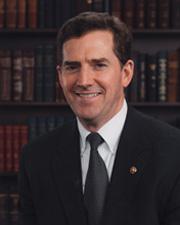 Sen. Jim DeMint (R-SC)
Legislative Activity
Stay on top of the latest movement without scrolling through every action
Roll call votes on amendments in Senate: Amendment SA 511 not agreed to in Senate by Yea-Nay Vote. 25 - 74. Record Vote Number: 100.
June 29, 2011
View full timeline
Roll call votes on amendments in Senate: Amendment SA 511 not agreed to in Senate by Yea-Nay Vote. 25 - 74. Record Vote Number: 100.
June 29, 2011
Senate amendment not agreed to: Amendment SA 511 not agreed to in Senate by Yea-Nay Vote. 25 - 74. Record Vote Number: 100.
June 29, 2011
Considered by Senate. (consideration: CR S4174, S4176)
June 29, 2011
Amendment SA 511 not agreed to in Senate by Yea-Nay Vote. 25 - 74. Record Vote Number: 100.
June 29, 2011
Considered by Senate. (consideration: CR S4144)
June 28, 2011
Considered by Senate. (consideration: CR S4046)
June 23, 2011
Senate amendment proposed (on the floor): Amendment SA 511 proposed by Senator DeMint.
June 22, 2011
Senate amendment submitted
June 22, 2011
Amendment SA 511 proposed by Senator DeMint. (consideration: CR S4008; text: CR S4008) To enhance accountability and transparency among various Executive agencies.
June 22, 2011
Votes
1 roll call on this amendment
Text
Proposed
PRESIDENTIAL APPOINTMENT EFFICIENCY AND STREAMLINING ACT OF 2011

Mr. REID. Madam President, I ask unanimous consent that the cloture
motion with respect to the motion to proceed to Calendar No. 75 be
vitiated and the Senate adopt the motion to proceed to Calendar No. 75,
S. 679, the Presidential Appointment Efficiency and Streamlining Act.
The ACTING PRESIDENT pro tempore. Without objection, it is so
ordered.
Mr. REID. Will the clerk report the bill, please.
The ACTING PRESIDENT pro tempore. The clerk will report the bill by
title.
The assistant legislative clerk read as follows:

A bill (S. 679) to reduce the number of executive positions
subject to Senate confirmation.

The Senate proceeded to consider the bill, which had been reported
from the Committee on Homeland Security and Governmental Affairs, with
an amendment to strike all after the enacting clause and insert in lieu
thereof the following:

SECTION 1. SHORT TITLE.

This Act may be cited as the ``Presidential Appointment
Efficiency and Streamlining Act of 2011''.

SEC. 2. PRESIDENTIAL APPOINTMENTS NOT SUBJECT TO SENATE
APPROVAL.

(a) Agriculture.--
(1) Assistant secretary of agriculture for congressional
relations and assistant secretary of agriculture for
administration.--Section 218(b) of the Department of
Agriculture Reorganization Act of 1994 (7 U.S.C. 6918(b)) is
amended--
(A) by striking ``subsection (a)'' and inserting
``subsection (a)(3)'';
(B) by striking subsection (c); and
(C) by redesignating subsection (d) as subsection (c).
(2) Rural utilities service administrator.--Section
232(b)(1) of the Department of Agriculture Reorganization Act
of 1994 (7 U.S.C. 6942(b)(1)) is amended--
(A) by striking ``, by and with the advice and consent of
the Senate'';
(B) by striking paragraph (2); and
(C) by redesignating paragraph (3) as paragraph (2).
(3) Commodity credit corporation.--Section 9(a) of the
Commodity Credit Corporation

[[Page S3992]]

Charter Act (15 U.S.C. 714g(a)) is amended in the third
sentence by striking ``by and with the advice and consent of
the Senate''.
(b) Commerce.--
(1) Assistant secretary for legislative affairs.--The
provisions of the Act entitled ``An Act to provide for the
appointment of one additional Assistant Secretary of
Commerce, and for other purposes'', approved July 15, 1947
(15 U.S.C. 1505), section 304 of title III of the Departments
of State, Justice, and Commerce and the United States
Information Agency Appropriation Act, 1955 (15 U.S.C. 1506),
and the Act entitled ``An Act to authorize an additional
Assistant Secretary of Commerce'', approved February 16, 1962
(15 U.S.C. 1507), that require the advice and consent of the
Senate shall not apply with respect to the appointment of the
Assistant Secretary for Congressional Relations.
(2) Chief scientist; national oceanic and atmospheric
administration.--Section 2(d) of Reorganization Plan No. 4 of
1970 (5 U.S.C. App. 1) is amended by striking ``, by and with
the advice and consent of the Senate,''.
(c) Department of Defense.--
(1) Assistant secretaries of defense for legislative
affairs, public affairs, and networks and information
integration.--Section 138(a) of title 10, United States Code,
as amended by section 901(b)(4)(A) of the Ike Skelton
National Defense Authorization Act for Fiscal Year 2011, is
further amended by striking paragraph (2) and inserting the
following:
``(2)(A) Except as provided in subparagraph (B), the
Assistant Secretaries of Defense shall be appointed from
civilian life by the President, by and with the advice and
consent of the Senate.
``(B) The Assistant Secretary of Defense referred to in
subsection (b)(5), the Assistant Secretary of Defense for
Public Affairs, and the Assistant Secretary of Defense for
Networks and Information Integration shall each be appointed
from civilian life by the President.''.
(2) Comptroller of the army.--
(A) In general.--Section 3016 of title 10, United States
Code, is amended--
(i) by striking the section heading and inserting the
following:

``Sec. 3016. Assistant Secretaries of the Army; Comptroller
of the Army'';

(ii) in subsection (a), by striking ``five'' and inserting
``four'';
(iii) in subsection (b)--

(I) by striking paragraph (4); and
(II) by redesignating paragraph (5) as paragraph (4); and

(iv) by adding at the end the following:
``(c) There is a Comptroller of the Army, who shall be
appointed from civilian life by the President. The
Comptroller shall perform such duties and exercise such
powers as the Secretary of the Army may prescribe. The
Comptroller shall have as his principal responsibility the
exercise of the comptroller functions of the Department of
the Army, including financial management functions. The
Comptroller shall be responsible for all financial management
activities and operations of the Department of the Army and
shall advise the Secretary of the Army on financial
management.''.
(B) Technical and conforming amendments.--
(i) Table of sections.--The table of sections for chapter
303 of title 10, United States Code, is amended by striking
the item relating to section 3016 and inserting the
following:

``3016. Assistant Secretaries of the Army; Comptroller of the Army.''.

(ii) Financial management.--Section 3022 of title 10,
United States Code, is amended--

(I) in subsection (a), by striking ``Assistant Secretary of
the Army for Financial Management'' and inserting
``Comptroller of the Army''; and
(II) in subsection (d), by striking ``Assistant Secretary
of the Army for Financial Management'' and inserting
``Comptroller of the Army''.

(3) Comptroller of the navy.--
(A) In general.--Section 5016 of title 10, United States
Code, is amended--
(i) by striking the section heading and inserting the
following:

``Sec. 5016. Assistant Secretaries of the Navy; Comptroller
of the Navy'';

(ii) in subsection (a), by striking ``four'' and inserting
``three'';
(iii) in subsection (b)--

(I) by striking paragraph (3); and
(II) by redesignating paragraph (4) as paragraph (3); and

(iv) by adding at the end the following:
``(c) There is a Comptroller of the Navy, who shall be
appointed from civilian life by the President. The
Comptroller shall perform such duties and exercise such
powers as the Secretary of the Navy may prescribe. The
Comptroller shall have as his principal responsibility the
exercise of the comptroller functions of the Department of
the Navy, including financial management functions. The
Comptroller shall be responsible for all financial management
activities and operations of the Department of the Navy and
shall advise the Secretary of the Navy on financial
management.''.
(B) Technical and conforming amendments.--
(i) Table of sections.--The table of sections for chapter
503 of title 10, United States Code, is amended by striking
the item relating to section 5016 and inserting the
following:

``5016. Assistant Secretaries of the Navy; Comptroller of the Navy.''.

(ii) Financial management.--Section 5025 of title 10,
United States Code, is amended--

(I) in subsection (a), by striking ``Assistant Secretary of
the Navy for Financial Management'' and inserting
``Comptroller of the Navy''; and
(II) in subsection (d), by striking ``Assistant Secretary
of the Navy for Financial Management'' and inserting
``Comptroller of the Navy''.

(4) Comptroller of the air force.--
(A) In general.--Section 8016 of title 10, United States
Code, is amended--
(i) by striking the section heading and inserting the
following:

``Sec. 8016. Assistant Secretaries of the Air Force;
Comptroller of the Air Force'';

(ii) in subsection (a), by striking ``four'' and inserting
``three'';
(iii) in subsection (b)--

(I) by striking paragraph (3); and
(II) by redesignating paragraph (4) as paragraph (3); and

(iv) by adding at the end the following:
``(c) There is a Comptroller of the Air Force, who shall be
appointed from civilian life by the President. The
Comptroller shall perform such duties and exercise such
powers as the Secretary of the Air Force may prescribe. The
Comptroller shall have as his principal responsibility the
exercise of the comptroller functions of the Department of
the Air Force, including financial management functions. The
Comptroller shall be responsible for all financial management
activities and operations of the Department of the Air Force
and shall advise the Secretary of the Air Force on financial
management.''.
(B) Technical and conforming amendments.--
(i) Table of sections.--The table of sections for chapter
803 of title 10, United States Code, is amended by striking
the item relating to section 8016 and inserting the
following:

``8016. Assistant Secretaries of the Air Force; Comptroller of the Air
Force.''.

(ii) Financial management.--Section 8022 of title 10,
United States Code, is amended--

(I) in subsection (a), by striking ``Assistant Secretary of
the Air Force for Financial Management'' and inserting
``Comptroller of the Air Force''; and
(II) in subsection (d), by striking ``Assistant Secretary
of the Air Force for Financial Management'' and inserting
``Comptroller of the Air Force''.

(5) Technical and conforming amendments relating to level
iv positions on the executive schedule.--Section 5315 of
title 5, United States Code, is amended as follows--
(A) by striking the item relating to Assistant Secretaries
of the Air Force (4) and inserting the following:
``Assistant Secretaries of the Air Force (3)'';
(B) by striking the item relating to Assistant Secretaries
of the Army (5) and inserting the following:
``Assistant Secretaries of the Army (4)'';
(C) by striking the item relating to Assistant Secretaries
of the Navy (4) and inserting the following:
``Assistant Secretaries of the Navy (3)''; and
(D) by inserting at the end the following:
``Comptroller of the Air Force
``Comptroller of the Army
``Comptroller of the Navy''.
(6) Inapplicability to certain individuals serving on date
of enactment.--
(A) In general.--Notwithstanding the amendments made by
this subsection, the individual serving in a position
described in subparagraph (B) on the date of enactment of
this Act may continue to serve in such position as if such
amendments had not been enacted.
(B) Positions.--The positions specified in this
subparagraph are the following:
(i) The Assistant Secretary of the Army for Financial
Management.
(ii) The Assistant Secretary of the Navy for Financial
Management.
(iii) The Assistant Secretary of the Air Force for
Financial Management.
(7) Members of national security education board.--Section
803(b)(7) of the David L. Boren National Security Education
Act of 1991 (50 U.S.C. 1903(b)(7)) is amended by striking
``by and with the advice and consent of the Senate,''.
(8) Director, office of selective service records.--The
first section of the Act entitled ``An Act to establish an
Office of Selective Service Records to liquidate the
Selective Service System following the termination of its
functions on March 31, 1947, and to preserve and service the
Selective Service records, and for other purposes'', approved
March 31, 1947 (50 U.S.C. 321; 61 Stat. 31) is amended by
striking ``, by and with the advice and consent of the
Senate''.
(d) Department of Education.--
(1) Assistant secretary for legislation and congressional
affairs and assistant secretary for management.--Section
202(e) of the Department of Education Organization Act (20
U.S.C. 3412(e)) is amended by inserting after the first
sentence the following: ``Notwithstanding the previous
sentence, the appointments of individuals to serve as the
Assistant Secretary for Legislation and Congressional Affairs
and the Assistant Secretary for Management shall not be
subject to the advice and consent of the Senate.''.
(2) Commissioner, rehabilitation services administration.--
Section 3(a) of the Rehabilitation Act of 1973 (29 U.S.C.
702(a)) is amended by striking ``by and with the advice and
consent of the Senate''.
(3) Commissioner, education statistics.--Section 117(b) of
the Education Sciences Reform Act of 2002 (20 U.S.C. 9517(b))
is amended by striking ``, by and with the advice and consent
of the Senate,''.
(e) Department of Energy.--Section 203(a) of the Department
of Energy Organization Act (42 U.S.C. 7133(a)) is amended in
the first sentence by striking ``Senate;'' and inserting
``Senate (except that the Assistant Secretary for
Congressional and Intergovernmental Affairs of the Department
may be appointed by the President without the advice and
consent of the Senate);''.
(f) Department of Health and Human Services.--

[[Page S3993]]

(1) Assistant secretary for public affairs.--
Notwithstanding any other provision of law, the appointment
of an individual to serve as the Assistant Secretary for
Public Affairs within the Department of Health and Human
Services shall not be subject to the advice and consent of
the Senate.
(2) Assistant secretary for legislation.--Notwithstanding
any other provision of law, the appointment of an individual
to serve as the Assistant Secretary for Legislation within
the Department of Health and Human Services shall not be
subject to the advice and consent of the Senate.
(3) Commissioner, administration for children, youth and
families.--Section 915(b)(2) of the Claude Pepper Young
Americans Act of 1990 (42 U.S.C. 12311(b)(2)) is amended by
striking ``, by and with the advice and consent of the
Senate,''.
(4) Commissioner, administration for native americans.--
Section 803B(c) of the Native American Programs Act of 1974
(42 U.S.C. 2991b-2(c)) is amended by striking ``, by and with
the advice and consent of the Senate''.
(g) Department of Homeland Security.--
(1) Director of the office for domestic preparedness;
assistant administrator of the federal emergency management
agency, grant programs.--Section 430(b) of the Homeland
Security Act of 2002 (6 U.S.C. 238(b)) is amended by striking
``, by and with the advice and consent of the Senate''.
(2) Administrator of the united states fire
administration.--Section 5(b) of the Federal Fire Prevention
and Control Act of 1974 (15 U.S.C. 2204(b)) is amended by
striking ``, by and with the advice and consent of the
Senate,''.
(3) Director of the office of counternarcotics
enforcement.--Section 878(a) of the Homeland Security Act of
2002 (6 U.S.C. 458(a)) is amended by striking ``, by and with
the advice and consent of the Senate''.
(4) Chief medical officer.--Section 516(a) of the Homeland
Security Act of 2002 (6 U.S.C. 321e(a)) is amended by
striking ``, by and with the advice and consent of the
Senate''.
(h) Housing and Urban Development; Assistant Secretary for
Congressional and Intergovernmental Relations, and Assistant
Secretary for Public Affairs.--Section 4(a) of the Department
of Housing and Urban Development Act (42 U.S.C. 3533(a)) is
amended--
(1) by inserting ``(1)'' after ``(a)'';
(2) by striking ``eight'' and inserting ``6''; and
(3) by adding at the end the following:
``(2) There shall be in the Department an Assistant
Secretary for Congressional and Intergovernmental Relations,
and an Assistant Secretary for Public Affairs, each of whom
shall be appointed by the President and shall perform such
functions, powers, and duties as the Secretary shall
prescribe from time to time.''.
(i) Department of Justice.--
(1) Assistant attorney general, legislative affairs.--
(A) In general.--Chapter 31 of title 28, United States
Code, is amended--
(i) in section 506, by striking ``11 Assistant Attorneys
General'' and inserting ``10 Assistant Attorneys General'';
and
(ii) by inserting after section 507A the following:

``Sec. 507B. Assistant Attorney General for Legislative
Affairs

``The President shall appoint an Assistant Attorney General
for Legislative Affairs to assist the Attorney General in the
performance of the duties of the Attorney General.''.
(B) Technical and conforming amendment.--The table of
sections for chapter 31 of title 28, United States Code, is
amended by inserting after the item relating to section 507A
the following:

``507B. Assistant Attorney General for Legislative Affairs.''.

(2) Director, bureau of justice statistics.--Section 302(b)
of title I of the Omnibus Crime Control and Safe Streets Act
of 1968 (42 U.S.C. 3732(b)) is amended by striking ``, by and
with the advice and consent of the Senate''.
(3) Director, bureau of justice assistance.--Section 401(b)
of title I of the Omnibus Crime Control and Safe Streets Act
of 1968 (42 U.S.C. 3741(b)) is amended by striking ``, by and
with the advice and consent of the Senate''.
(4) Director, national institute of justice.--Section
202(b) of title I of the Omnibus Crime Control and Safe
Streets Act of 1968 (42 U.S.C. 3722(b)) is amended by
striking ``, by and with the advice and consent of the
Senate''.
(5) Administrator, office of juvenile justice and
delinquency prevention.--Section 201(b) of the Juvenile
Justice and Delinquency Prevention Act of 1974 (42 U.S.C.
5611(b)) is amended by striking ``, by and with the advice
and consent of the Senate,''.
(6) Director, office for victims of crime.--Section 1411(b)
of the Victims of Crime Act of 1984 (42 U.S.C. 10605(b)) is
amended by striking ``, by and with the advice and consent of
the Senate''.
(j) Department of Labor.--
(1) Assistant secretaries for administration and
management, congressional affairs, and public affairs.--
Notwithstanding section 2 of the Act of April 17, 1946 (29
U.S.C. 553), the appointment of individuals to serve as the
Assistant Secretary for Administration and Management, the
Assistant Secretary for Congressional Affairs, and the
Assistant Secretary for Public Affairs within the Department
of Labor, shall not be subject to the advice and consent of
the Senate.
(2) Director of the women's bureau.--Section 2 of the Act
of June 5, 1920 (29 U.S.C. 12) is amended by striking ``, by
and with the advice and consent of the Senate''.
(k) Department of State; Assistant Secretary for
Legislative and Intergovernmental Affairs, Assistant
Secretary for Public Affairs, and Assistant Secretary for
Administration.--Section 1(c)(1) of the State Department
Basic Authorities Act of 1956 (22 U.S.C. 2651a(c)(1)) is
amended--
(1) by striking ``, each of whom shall be appointed by the
President, by and with the advice and consent of the Senate,
and''; and
(2) by adding at the end the following: ``Each Assistant
Secretary of State shall be appointed by the President, by
and with the advice and consent of the Senate, except that
the appointments of the Assistant Secretary for Legislative
and Intergovernmental Affairs, the Assistant Secretary for
Public Affairs, and the Assistant Secretary for
Administration shall not be subject to the advice and consent
of the Senate.''.
(l) Department of Transportation.--
(1) Assistant secretaries.--Section 102(e) of title 49,
United States Code, is amended--
(A) by striking ``(e) The Department'' and all that follows
through ``An Assistant Secretary'' and inserting the
following:
``(e) Assistant Secretaries; General Counsel.--
``(1) Appointment.--The Department has 5 Assistant
Secretaries and a General Counsel, including--
``(A) an Assistant Secretary for Aviation and International
Affairs and an Assistant Secretary for Transportation Policy,
who shall each be appointed by the President, with the advice
and consent of the Senate;
``(B) an Assistant Secretary for Budget and Programs and
Chief Financial Officer and an Assistant Secretary for
Governmental Affairs, who shall each be appointed by the
President;
``(C) an Assistant Secretary for Administration, who shall
be appointed in the competitive service by the Secretary,
with the approval of the President; and
``(D) a General Counsel, who shall be appointed by the
President, with the advice and consent of the Senate.
``(2) Duties and powers.--The officers set forth in
paragraph (1) shall carry out duties and powers prescribed by
the Secretary. An Assistant Secretary''.
(2) Deputy administrator, federal aviation
administration.--Section 106 of title 49, United States Code,
is amended--
(A) in subsection (b), by striking ``. The Administration
has a Deputy Administrator. They are appointed'' and
inserting ``, who shall be appointed''; and
(B) in subsection (d)(1), by striking ``The Deputy
Administrator must'' and inserting ``The Administration has a
Deputy Administrator, who shall be appointed by the
President. In making an appointment, the President shall
consider the fitness of the appointee to efficiently carry
out the duties and powers of the office. The Deputy
Administrator shall''.
(m) Department of the Treasury.--
(1) Assistant secretaries for legislative affairs, public
affairs, and management.--Section 301(e) of title 31, United
States Code, is amended--
(A) by striking ``10 Assistant Secretaries'' and inserting
``7 Assistant Secretaries''; and
(B) by inserting ``The Department shall have 3 Assistant
Secretaries not subject to the advice and consent of the
Senate who shall be the Assistant Secretary for Legislative
Affairs, the Assistant Secretary for Public Affairs, and the
Assistant Secretary for Management.'' after the first
sentence.
(2) Treasurer of the united states.--Section 301(d) of
title 31, United States Code, is amended--
(A) by striking ``2 Deputy Under Secretaries, and a
Treasurer of the United States'' and inserting ``and 2 Deputy
Under Secretaries'', and
(B) by inserting ``and a Treasurer of the United States
appointed by the President'' after ``Fiscal Assistant
Secretary appointed by the Secretary''.
(3) Director of the mint.--Section 304(b)(1) of title 31,
United States Code, is amended--
(A) by striking ``, by and with the advice and consent of
the Senate''; and
(B) by striking ``On removal, the President shall send a
message to the Senate giving the reasons for removal.''.
(n) Department of Veterans Affairs.--Section 308(a) of
title 38, United States Code, is amended--
(1) by striking ``There shall'' and inserting ``(1) There
shall'';
(2) in paragraph (1), as designated by paragraph (1) of
this subsection, by striking ``Each Assistant'' and all that
follows through the period at the end; and
(3) by adding at the end the following new paragraphs:
``(2) Except as provided in paragraph (3), each Assistant
Secretary appointed under paragraph (1) shall be appointed by
the President, by and with the advice and consent of the
Senate.
``(3) The following Assistant Secretaries may be appointed
without the advice and consent of the Senate:
``(A) The Assistant Secretary for Management.
``(B) The Assistant Secretary for Human Resources and
Administration.
``(C) The Assistant Secretary for Public and
Intergovernmental Affairs.
``(D) The Assistant Secretary for Congressional and
Legislative Affairs.
``(E) The Assistant Secretary for Operations, Security and
Preparedness.''.
(o) Appalachian Regional Commission; Alternate Federal Co-
Chairman.--Section 14301(b)(1) of title 40, United States
Code, is amended by striking ``by and with the advice and
consent of the Senate''.
(p) Council of Economic Advisers, Members.--Section 10 of
the Employment Act of 1946 (15 U.S.C. 1023) is amended by
striking subsection (a) and inserting the following:
``(a) Creation; Composition; Qualifications; Chairman and
Vice Chairman.--

[[Page S3994]]

``(1) Creation.--There is created in the Executive Office
of the President a Council of Economic Advisers (hereinafter
called the `Council').
``(2) Composition.--The Council shall be composed of three
members, of whom--
``(A) 1 shall be the chairman who shall be appointed by the
President by and with the advice and consent of the Senate;
and
``(B) 2 shall be appointed by the President.
``(3) Qualifications.--Each member shall be a person who,
as a result of training, experience, and attainments, is
exceptionally qualified to analyze and interpret economic
developments, to appraise programs and activities of the
Government in the light of the policy declared in section 2,
and to formulate and recommend national economic policy to
promote full employment, production, and purchasing power
under free competitive enterprise.
``(4) Vice chairman.--The President shall designate 1 of
the members of the Council as vice chairman, who shall act as
chairman in the absence of the chairman.''.
(q) Corporation for National and Community Service;
Managing Director.--Section 194(a)(1) of the National and
Community Service Act of 1990 (42 U.S.C. 12651e(a)(1)) is
amended by striking ``, by and with the advice and consent of
the Senate''.
(r) National Council on Disability Members, Including
Chairperson.--Section 400(a)(1)(A) of the Rehabilitation Act
of 1973 (29 U.S.C. 780(a)(1)(A)) is amended by striking ``,
by and with the advice and consent of the Senate''.
(s) National Foundation on the Arts and the Humanities;
National Museum and Library Services Board; Members.--Section
207(b)(1) of the Museum and Library Services Act (20 U.S.C.
9105a(b)(1)) is amended--
(1) in subparagraph (D), by striking ``, by and with the
advice and consent of the Senate''; and
(2) in subparagraph (E), by striking ``, by and with the
advice and consent of the Senate''.
(t) National Science Foundation; Board Members.--Section
4(a) of the National Science Foundation Act of 1950 (42
U.S.C. 1863(a)) is amended by striking ``, by and with the
advice and consent of the Senate,''.
(u) Office of Management and Budget; Controller, Office of
Federal Financial Management.--Section 504(b) of title 31,
United States Code, is amended by striking ``, by and with
the advice and consent of the Senate,''.
(v) Office of National Drug Control Policy; Deputy
Directors.--Section 704(a)(1) of the Office of National Drug
Control Policy Reauthorization Act of 1998 (21 U.S.C.
1703(a)(1)) is amended to read as follows:
``(1) In general.--
``(A) Director.--The Director shall be appointed by the
President, by and with the advice and consent of the Senate,
and shall serve at the pleasure of the President.
``(B) Deputy directors.--The Deputy Director of National
Drug Control Policy, Deputy Director for Demand Reduction,
the Deputy Director for Supply Reduction, and the Deputy
Director for State and Local Affairs shall each be appointed
by the President and serve at the pleasure of the President.
``(C) Deputy director for demand reduction.--In appointing
the Deputy Director for Demand Reduction under this
paragraph, the President shall take into consideration the
scientific, educational, or professional background of the
individual, and whether the individual has experience in the
fields of substance abuse prevention, education, or
treatment.''.
(w) Office of Navajo and Hopi Relocation; Commissioner.--
Section 12(b)(1) of Public Law 93-531 (25 U.S.C. 640d-
11(b)(1)) is amended by striking ``by and with the advice and
consent of the Senate''.
(x) United States Agency for International Development.--
(1) Assistant administrator for legislative and public
affairs.--Notwithstanding section 624(a) of the Foreign
Assistance Act of 1961 (22 U.S.C. 2384(a)), the appointment
by the President of the Assistant Administrator for
Legislative and Public Affairs at the United States Agency
for International Development shall not be subject to the
advice and consent of the Senate.
(2) Assistant administrator for management.--
Notwithstanding section 624(a) of the Foreign Assistance Act
of 1961 (22 U.S.C. 2384(a)), the appointment by the President
of the Assistant Administrator for Management at the United
States Agency for International Development shall not be
subject to the advice and consent of the Senate.
(y) Community Development Financial Institution Fund;
Administrator.--Section 104(b)(1) of the Community
Development Banking and Financial Institutions Act of 1994
(12 U.S.C. 4703(b)(1)) is amended by striking ``, by and with
the advice and consent of the Senate''.
(z) Department of Transportation; St. Lawrence Seaway
Development Corporation; Administrator.--Subsection (a) of
section 2 of the Act of May 13, 1954, referred to as the
Saint Lawrence Seaway Act (33 U.S.C. 982(a)) is amended by
striking ``, by and with the advice and consent of the
Senate,''.
(aa) Mississippi River Commission; Commissioner.--Section 2
of the Act of June 28, 1879 (33 U.S.C. 642), is amended in
the first sentence by striking ``, by and with the advice and
consent of the Senate,''.
(bb) Governor and Alternate Governor of the African
Development Bank.--
(1) In general.--Section 1333(a) of the African Development
Bank Act (22 U.S.C. 290i-1(a)) is amended by striking ``, by
and with'' and all that follows through ``Bank'' and
inserting ``shall appoint a Governor and an Alternate
Governor''.
(2) Conforming amendments.--Section 1334 of such Act (22
U.S.C. 290i-2) is amended--
(A) by striking ``The Director or Alternate Director'' and
inserting the following:
``(b) The Director or Alternate Director''; and
(B) by inserting before subsection (b), as redesignated,
the following:
``(a) The President, by and with the advice and consent of
the Senate, shall appoint a Director of the Bank.''.
(cc) Governor and Alternate Governor of the Asian
Development Bank.--Section 3(a) of the Asian Development Bank
Act (22 U.S.C. 285a(a)) is amended by striking ``, by and
with'' and all that follows through the end period and
inserting ``shall appoint--''
``(1) a Governor of the Bank and an alternate for the
Governor; and
``(2) by and with the advice and consent of the Senate, a
Director of the Bank.''.
(dd) Governors and Alternate Governors of the International
Monetary Fund and the International Bank for Reconstruction
and Development.--Section 3 of the Bretton Woods Agreements
Act (22 U.S.C. 286a) is amended--
(1) in subsection (a), by striking ``, by and with the
advice and consent of the Senate, shall appoint a governor of
the Fund who shall also serve as governor of the Bank, and an
executive director'' and inserting ``shall appoint a governor
of the Fund who shall also serve as governor of the Bank and,
by and with the advice and consent of the Senate, an
executive director''; and
(2) in subsection (b), by striking ``, by and with the
advice and consent of the Senate,'' the first place it
appears.
(ee) Governor and Alternate Governor of the African
Development Fund.--Section 203(a) of the African Development
Fund Act (22 U.S.C. 290g-1(a)) is amended by striking ``, by
and with the advice and consent of the Senate,''.
(ff) National Board for Education Sciences; Members.--
Section 116(c)(1) of the Education Sciences Reform Act of
2002 (20 U.S.C. 9516(c)(1)) is amended by striking ``, by and
with the advice and consent of the Senate''.
(gg) National Institute for Literacy Advisory Board;
Members.--Section 242(e)(1)(A) of the Adult Education and
Family Literacy Act (20 U.S.C. 9252(e)(1)(A)) is amended by
striking ``with the advice and consent of the Senate''.
(hh) Institute of American Indian and Alaska Native Culture
and Arts Development; Member, Board of Trustees.--Section
1505 of the American Indian, Alaska Native, and Native
Hawaiian Culture and Art Development Act (20 U.S.C.
4412(a)(1)(A)) is amended by striking ``by and with the
advice and consent of the Senate''.
(ii) Federal Coordinator for Alaska Natural Gas
Transportation Projects.--Section 106(b)(1) of the Alaska
Natural Gas Pipeline Act (division C of Public Law 108-324;
15 U.S.C. 720d(b)(1)) is amended by striking ``, by and with
the advice and consent of the Senate,''.
(jj) Public Health Service Commissioned Officer Corps.--
(1) Appointment.--Section 203(a)(3) of the Public Health
Service Act (42 U.S.C. 204(a)(3)) is amended by striking
``with the advice and consent of the Senate''.
(2) Promotions.--Section 210(a) of the Public Health
Service Act (42 U.S.C. 211(a)) is amended by striking ``, by
and with the advice and consent of the Senate''.
(kk) National Oceanic and Atmospheric Administration
Commissioned Officer Corps.--
(1) Appointments and promotions to permanent grades.--
Section 226 of the National Oceanic and Atmospheric
Administration Commissioned Officer Corps Act of 2002 (33
U.S.C. 3026) is amended by striking ``, by and with the
advice and consent of the Senate''.
(2) Positions of importance and responsibility.--Section
228(d)(1) of such Act (33 U.S.C. 3028(d)(1)) is amended by
striking ``, by and with the advice and consent of the
Senate''.
(3) Temporary appointments and promotions generally.--
Section 229 of such Act (33 U.S.C. 3029) is amended--
(A) by striking ``alone'' each place it appears; and
(B) in subsection (a), in the second sentence, by striking
``unless the Senate sooner gives its advice and consent to
the appointment''.
(ll) Chief Financial Officer Positions.--Section 901 of
title 31, United States Code, is amended--
(1) in subsection(a)(1), by striking subparagraphs (A) and
(B) and inserting the following:
``(A) be appointed by the President; or
``(B) be designated by the President, in consultation with
the head of the agency, from among officials of the agency
who are required by law to be appointed by the President,
whether or not by and with the advice and consent of the
Senate;'';
(2) in subsection (b)(1), striking subparagraph (Q); and
(3) in subsection (b)(2), inserting at the end:
``(H) The National Aeronautics and Space Administration.''.

SEC. 3. APPOINTMENT OF THE DIRECTOR OF THE CENSUS.

(a) In General.--Section 21 of the title 13, United States
Code, is amended to read as follows:

``Sec. 21. Director of the Census; duties

``(a) Appointment.--
``(1) In general.--The Bureau shall be headed by a Director
of the Census, appointed by the President, by and with the
advice and consent of the Senate, without regard to political
affiliation.
``(2) Qualifications.--Such appointment shall be made from
individuals who have a demonstrated ability in managing large
organizations and experience in the collection, analysis, and
use of statistical data.
``(b) Term of Office.--

[[Page S3995]]

``(1) In general.--The term of office of the Director shall
be 5 years, and shall begin on January 1, 2012, and every
fifth year thereafter. An individual may not serve more than
2 full terms as Director.
``(2) Vacancies.--Any individual appointed to fill a
vacancy in such position, occurring before the expiration of
the term for which such individual's predecessor was
appointed, shall be appointed for the remainder of that term.
The Director may serve after the end of the Director's term
until reappointed or until a successor has been appointed,
but in no event longer than 1 year after the end of such
term.
``(3) Removal.--An individual serving as Director may be
removed from office by the President. The President shall
communicate in writing the reasons for any such removal to
both Houses of Congress not later than 60 days before the
removal.
``(c) Duties.--The Director shall perform such duties as
may be imposed upon the Director by law, regulations, or
orders of the Secretary.''.
(b) Transition Rules.--
(1) Appointment of initial director.--The initial Director
of the Bureau of the Census shall be appointed in accordance
with the provisions of section 21(a) of title 13, United
States Code, as amended by subsection (a).
(2) Interim role of current director of the census after
date of enactment.--If, as of January 1, 2012, the initial
Director of the Bureau of the Census has not taken office,
the officer serving on December 31, 2011, as Director of the
Census (or Acting Director of the Census, if applicable) in
the Department of Commerce--
(A) shall serve as the Director of the Bureau of the
Census; and
(B) shall assume the powers and duties of such Director for
one term beginning January 1, 2012, as described in section
21(b) of such title, as so amended.
(c) Technical and Conforming Amendments.--Not later than
January 1, 2012, the Secretary of Commerce, in consultation
with the Director of the Census, shall submit to each House
of the Congress draft legislation containing any technical
and conforming amendments to title 13, United States Code,
and any other provisions which may be necessary to carry out
the purposes of this section.

SEC. 4. WORKING GROUP ON STREAMLINING PAPERWORK FOR EXECUTIVE
NOMINATIONS.

(a) Establishment.--There is established the Working Group
on Streamlining Paperwork for Executive Nominations (in this
section referred to as the ``Working Group'').
(b) Membership.--
(1) Composition.--The Working Group shall be composed of--
(A) the chairperson who shall be--
(i) except as provided under clause (ii), the Director of
the Office of Presidential Personnel; or
(ii) a Federal officer designated by the President;
(B) representatives designated by the President from--
(i) the Office of Personnel Management;
(ii) the Office of Government Ethics; and
(iii) the Federal Bureau of Investigation; and
(C) individuals appointed by the chairperson of the Working
Group who have experience and expertise relating to the
Working Group, including--
(i) individuals from other relevant Federal agencies; and
(ii) individuals with relevant experience from previous
presidential administrations.
(c) Streamlining of Paperwork Required for Executive
Nominations.--
(1) In general.--Not later than 90 days after the date of
enactment of this Act, the Working Group shall conduct a
study and submit a report on the streamlining of paperwork
required for executive nominations to--
(A) the President;
(B) the Committee on Homeland Security and Governmental
Affairs of the Senate; and
(C) the Committee on Rules and Administration of the
Senate.
(2) Consultation with committees of the senate.--In
conducting the study under this section, the Working Group
shall consult with the chairperson and ranking member of the
committees referred to under paragraph (1) (B) and (C).
(3) Contents.--
(A) In general.--The report submitted under this section
shall include--
(i) recommendations for the streamlining of paperwork
required for executive nominations; and
(ii) a detailed plan for the creation and implementation of
an electronic system for collecting and distributing
background information from potential and actual Presidential
nominees for positions which require appointment by and with
the advice and consent of the Senate.
(B) Electronic system.--The electronic system described
under subparagraph (A)(ii) shall--
(i) provide for--

(I) less burden on potential nominees for positions which
require appointment by and with the advice and consent of the
Senate;
(II) faster delivery of background information to Congress,
the White House, the Federal Bureau of Investigation,
Diplomatic Security, and the Office of Government Ethics; and
(III) fewer errors of omission; and

(ii) ensure the existence and operation of a single,
searchable form which shall be known as a ``Smart Form'' and
shall--

(I) be free to a nominee and easy to use;
(II) make it possible for the nominee to answer all vetting
questions one way, at a single time;
(III) secure the information provided by a nominee;
(IV) allow for multiple submissions over time, but always
in the format requested by the vetting agency or entity;
(V) be compatible across different computer platforms;
(VI) make it possible to easily add, modify, or subtract
vetting questions;
(VII) allow error checking; and
(VIII) allow the user to track the progress of a nominee in
providing the required information.

(d) Review of Background Investigation Requirements.--
(1) In general.--The Working Group shall conduct a review
of the impact of background investigation requirements on the
appointments process.
(2) Conduct of review.--In conducting the review, the
Working Group shall--
(A) assess the feasibility of using personnel other than
Federal Bureau of Investigation personnel, in appropriate
circumstances, to conduct background investigations of
individuals under consideration for positions appointed by
the President, by and with the advice and consent of the
Senate; and
(B) consider the extent to which the scope of the
background investigation conducted for an individual under
consideration for a position appointed by the President, by
and with the advice and consent of the Senate, should be
varied depending on the nature of the position for which the
individual is being considered.
(3) Report.--Not later than 270 days after the date of
enactment of this Act, the Working Group shall submit a
report of the findings of the review under this subsection
to--
(A) the President;
(B) the Committee on Homeland Security and Governmental
Affairs of the Senate; and
(C) the Committee on Rules and Administration of the
Senate.
(e) Personnel Matters.--
(1) Compensation of members.--
(A) Federal officers and employees.--Each member of the
Working Group who is a Federal officer or employee shall
serve without compensation in addition to that received for
their services as a Federal officer or employee.
(B) Members not federal officers and employees.--Each
member of the Working Group who is not a Federal officer or
employee shall not be compensated for services performed for
the Working Group.
(2) Travel expenses.--The members of the Working Group
shall be allowed travel expenses, including per diem in lieu
of subsistence, at rates authorized for employees of agencies
under subchapter I of chapter 57 of title 5, United States
Code, while away from their homes or regular places of
business in the performance of services for the Working
Group.
(3) Staff.--
(A) In general.--The President may designate Federal
officers and employees to provide support services for the
Working Group.
(B) Detail of federal employees.--Any Federal employee may
be detailed to the Working Group without reimbursement, and
such detail shall be without interruption or loss of civil
service status or privilege.
(f) Non-Applicability of Federal Advisory Committee Act.--
The Federal Advisory Committee Act (5 U.S.C. App.) shall not
apply to the Working Group established under this section.
(g) Termination of the Working Group.--The Working Group
shall terminate 60 days after the date on which the Working
Group submits the latter of the 2 reports under this section.

SEC. 5. EFFECTIVE DATE.

(a) Presidential Appointments Not Subject to Senate
Approval.--The amendments made by section 2 shall take effect
60 days after the date of enactment of this Act and apply to
appointments made on and after that effective date, including
any nomination pending in the Senate on that date.
(b) Director of the Census and Working Group.--The
provisions of sections 3 and 4 (including any amendments made
by those sections) shall take effect on the date of enactment
of this Act.

Mr. REID. Madam President, I ask unanimous consent that the committee
substitute amendment be agreed to and considered original text for the
purpose of further amendment; that there be a period of debate only on
the bill until 3 p.m. today; that following the debate-only time, it be
in order for any Senator to call up any relevant filed amendment,
including a managers' amendment to be offered by Senators Alexander and
Schumer; that no amendment offered to the bill be divisible; further,
that in addition to relevant amendments offered to the bill, the
amendments listed here also be in order: Vitter, relating to czars;
DeMint, which relates to IMF bailouts; and Coburn, which relates to
duplications; further, that the DeMint and Vitter amendments be subject
to a 60-vote threshold and the Coburn amendment be subject to a two-
thirds vote threshold; that upon the disposition of the amendments, the
bill be read a third time and the Senate proceed to vote on passage of
the bill, as amended, if amended; that the vote on passage be subject
to a 60-vote threshold; and that if the bill does not achieve that
threshold, the bill be returned to the calendar; that upon disposition
of this matter, the Senate proceed to the immediate consideration of
Calendar No. 45, S. Res. 116, a resolution providing for expedited
consideration of certain

[[Page S3996]]

nominations; that only relevant amendments be in order; and that upon
disposition of the amendments to the resolution, the Senate proceed to
vote on the adoption of the resolution, as amended, if amended.
The ACTING PRESIDENT pro tempore. Without objection, it is so
ordered.
Mr. REID. Madam President, this means Senators will not need to
obtain unanimous consent prior to setting aside the pending amendments
for amendments to be called up.
I would also say--I wanted to hold up saying anything about this
until we got this agreement--the work done on this bill by Senators
Schumer and Alexander has been work that has been ongoing for years and
took their partnership, working together as the two men who run the
Rules Committee, to move this forward. It has been very hard to get
from here to there. I have every bit of confidence that we are going to
move forward and do, for the first time in decades, a streamlining of
how Presidential nominations are approved. This is good. This is what
we talked about doing at the beginning of this year, and we need to
continue doing that.
I also express my appreciation to the chairman and ranking member of
the Homeland Security Committee, Senators Lieberman and Collins, for
doing additional hard work in sorting through what the committees
should do in approving nominations. They have done a good job because
virtually every committee chair says: Are you sure you want to do all
these? If we were back where we had been in years past, we would wind
up getting nothing done because the chairs simply thought they needed
to have a hand in everything that went on with all these nominations.
Senators Lieberman and Collins did a good job getting us to this point.
When this is done, we will move to some rules changes that Senators
Schumer and Alexander have approved.
I see my friend, the Senator from Tennessee, on the floor. Again, as
he does on virtually everything--he is a very thoughtful person--he is
always trying to work for the betterment of this body. I am grateful he
and Senator Schumer have been able to do the good work they have on
this legislation.
The ACTING PRESIDENT pro tempore. The Senator from Tennessee.
Mr. ALEXANDER. Madam President, I thank the majority leader and the
Republican leader, Senator McConnell, for the way they worked on this
legislation. Not just on this bill, but when they were the respective
whips of their parties several years ago, each of them working on
trying to help improve the Senate's ability to do its oversight by
doing a better job with our advice-and-consent responsibility. That is
one of our better known responsibilities. It is a constitutional
responsibility. It is in Article II, Section 2. But as a part of that
advice-and-consent responsibility, the Senate has the opportunity to
define which other positions the President may appoint. That is what
this is about.
Senator Collins and Senator Lieberman have also worked for many
years, and they will be here in a few minutes to open the debate.
Senator Schumer and I will come to the floor about at 2:40 and make our
statements on behalf of the Rules Committee.
I thank the majority leader and Republican leader for doing this
because this is not the most glamorous piece of legislation. What I am
about to say is not so glamorous either. But this bill has come to the
floor by unanimous consent. That means there were 100 Members of this
body who could have objected, and none have.
I thank the Senators--many of whom have very different views on this
bill--for agreeing to this agreement by which we are proceeding. We are
not proceeding under a cloture vote; we are proceeding the way the
Senate really ought to work day-in and day-out. Members have the
opportunity to offer relevant amendments. I am sure many will. I thank
the Republican leader and the majority leader for their forbearance in
that way. We have to have an element of trust for each other.
I am going to do my best to make sure the relevant amendments that
come before us, Democratic or Republican, are voted on.
I thank all those involved. I hope Senators will be preparing their
relevant amendments if they are not already filed and were not already
enumerated in the agreement.
I will refrain from making my remarks until my colleague, Senator
Schumer, the chairman of the Rules Committee, comes to the floor at
2:40. We will await the arrival of Senator Collins and Senator
Lieberman, who are the chairman and ranking member of the committee
that reported the bill to the Senate.
I yield the floor.
I suggest the absence of a quorum.
The ACTING PRESIDENT pro tempore. The clerk will call the roll.
The bill clerk proceeded to call the roll.
The PRESIDING OFFICER (Mr. Franken). The Senator from Connecticut.
Mr. LIEBERMAN. Mr. President, I ask unanimous consent that the order
for the quorum call be rescinded.
The PRESIDING OFFICER. Without objection, it is so ordered.
Mr. LIEBERMAN. Mr. President, it is my honor now to rise as chairman
of the Homeland Security and Governmental Affairs Committee to speak on
behalf of S. 679, the Presidential Appointment Efficiency and
Streamlining Act of 2011, and I do so with great gratitude toward
Senator Alexander, who is now on the Senate floor, Senator Schumer, and
others who worked together to clear away procedural obstacles to focus
on this piece of legislation.
This is a noble effort that has been tried before and failed, but I
am confident this time, with the support of our leaders--really our
bipartisan leadership, Senator Reid, Senator McConnell, Senator
Alexander, Senator Schumer, not to mention Senator Collins and me--we
are going to, in our committee role, get this passed. This is a
bipartisan effort to solve a problem, or at least help solve part of a
problem, that has been growing for a long time in Washington in our
government--certainly since the Kennedy administration--which is, it
takes too long for an incoming President and a sitting President to get
their team in place, and there are too many vacancies throughout the
course of an administration, as I will indicate during my remarks.
The average is 25 percent, one-quarter of the positions in the
administration, are empty at any one time because of the length of the
process, the delays that occur in the executive branch, the White
House, and in the Senate, and this is a direct attempt to try to lessen
that problem. One of my favorite descriptions of our current nomination
and confirmation process--I have used this so often I forgot who said
it; the gentleman in the chair might have said it--described the
current confirmation and nomination process as ``nasty and brutish
without being short.'' So, hopefully, this will make the process at
least less nasty and brutish and shorter as well.
Mr. President, 100 days into President Obama's administration only 14
percent of the full-time Senate-confirmed positions had been filled--
only 14 percent. After 18 months, 25 percent of key policymaking
positions were still vacant. This is not an unusual circumstance.
Presidents Clinton and George W. Bush faced similar difficulties. It is
a problem that does have, however, a serious national and economic
security implication because crucial offices go unfilled for months and
months.
President Bush actually did not have his national security team,
including critical subcabinet officials, confirmed and on the job until
at least 6 months after he took office. The 9/11 Commission pointed out
how dangerous this was and recommended steps to speed up the process
for national security appointments, some of which were adopted as part
of the 9/11 Commission Act of 2004.
At the height of the financial crisis, which we are still working our
way out of, Secretary of the Treasury Geithner was actually home alone,
with no other Senate-confirmed positions at the Treasury Department
filled for over 3 months. That is an outrageous result.
So what would the bill before the Senate now do? It would eliminate
the need for Senate confirmation for about 200 positions out of about
1,200 that now need Senate confirmation. Of these 200 positions, most
of them are in the areas of legislative and public affairs, internal
management positions,

[[Page S3997]]

such as, chief financial officers who report to others up the chain of
command, directors, commissioners, or administrators at or below the
Assistant Secretary level who, again, will report to another Senate-
confirmed official, and the members of a number of part-time advisory
boards which, under the current state of the law, have to go through
full vetting and then full Senate consideration and confirmation.
The proposal before us is not by any means a radical proposal.
Removing these positions from the need for Senate confirmation would
free up both the Senate and future administrations to concentrate more
fully on the nominations for those key positions where public policy is
made. I want to note, again, the bipartisan nature of these proposals.
In January, Majority Leader Reid and Minority Leader McConnell
decided the nomination and confirmation process had become too slow and
cumbersome. That was in January of this year. They established a
working group on executive nominations and asked leaders Schumer and
Alexander to be in charge of that. Chairman and ranking member,
respectively, of the Rules Committee, Senator Collins and I were also
privileged to be part of that group as chair and ranking member of the
Homeland Security and Governmental Affairs Committee.
The reforms proposed by Senators Schumer and Alexander in our group
have really been carefully crafted, and I cannot thank them enough for
both their legislative intellectual work on this but also for sticking
with it right to this moment. They introduced their legislation on
March 30; that is, Schumer and Alexander, with a bipartisan group of 15
cosponsors. On April 13, our Homeland Security and Governmental Affairs
Committee, again, on a bipartisan vote, reported the bill favorably to
the Senate.
Senators Schumer and Alexander are also proposing an important Senate
Resolution, S. Res. 116, that would streamline the confirmation process
for approximately 200 other Presidential appointments that receive
Senate confirmation by allowing their nominations to bypass the
committee process and come directly to the Senate floor as long as no
Senator objects. This is an important companion proposal.
So if all goes well, we will have 400 of the current 1,200
positions--that is about one-third of the current nominations requiring
full Senate consideration, Senate proposal, committee consideration, et
cetera--to be in a different status. These 200 positions that will be
the subject of S. Res. 116 come from 30 bipartisan Federal advisory
groups and councils, such as the Social Security Advisory Board and the
IRS Advisory Board.
This is the way the Senate should work. A problem is identified, both
sides of the aisle work together to craft a solution, then bring it to
the floor for debate. Hopefully, it is a model for what we can and
should do in a lot of other areas that are pressing not just on the
Senate but on the country and the people of the country.
On March 2, Senator Collins and I--just speaking a bit more in
detail--held a hearing which we called ``Eliminating the Bottlenecks:
Streamlining the Nominations Process.'' We heard from a group of former
executives, really White House officials, both parties, and from some
experts in the private sector. They made a compelling case for change,
and here is some of what we learned.
When President Kennedy entered office in 1961, there were 850 Senate-
confirmed positions that the President had to fill. By the time
President George W. Bush took office, that had increased to 1,143. When
President Obama was sworn in just 8 years later, that was already up to
1,215. Not surprisingly, with more positions it takes longer to fill
them. The delay is not, fortunately, at the Cabinet level. Between 1987
and 2005, it took Presidents an average of only 17 days from the time
of a vacancy to nominate a Cabinet Secretary, and the Senate took an
average of just 16 days to confirm the nominee. But it is at the
critical subcabinet level where things slow to a crawl.
It took Presidents an average of 95 days--that is, of course, more
than 3 months--to nominate Deputy Cabinet Secretaries, and the Senate
took 62 days to confirm them, another 2 months. Now we are up to more
than 5 months for Deputy Cabinet Members which are critical to the
functioning of their departments. Noncabinet agency heads waited an
average of 173 days for nomination and 63 additional days for
confirmation. So we are up to over 230 days, over 7 months, approaching
8 months. Noncabinet agency deputy heads fared even worse, an average
of 301 days before nomination and 82 days before confirmation. That is
more than a year to go through this process while those offices are
effectively unfilled, and the people's business is not being done.
Part of the problem is a large number of appointments that need to be
made at the outset of an administration can overwhelm the resources
available within the executive branch and the Senate to review and vet
these nominees. So eliminating the requirement for Senate confirmation
for nonpolicymaking or lower level positions should allow an incoming
administration and the Senate, as well as the FBI and the Office of
Government Ethics, which do the vetting, to focus on more important
policymaking positions, speeding up the process.
Other problems contributing to the delay are the numerous duplicative
and time-consuming forms that potential nominees are required to fill
out. Most nominees actually submit to at least four reviews, each
represented by a separate packet of government forms, including a White
House personnel data statement, questionnaires from the FBI, Office of
Government Ethics, and at least one questionnaire from the Senate
committee of jurisdiction.
There is a very interesting study done by Professor Terry Sullivan at
the University of North Carolina that found half the questions asked in
those four reviews for each nominee are redundant. They are repetitive.
This act would establish, therefore, an executive branch working group
to study and report to the President and the Congress the best ways to
streamline all this paperwork, along with a detailed plan for creating
and implementing a smart reform. An example would be an electronic
system for collecting and distributing background information for
nominees requiring Senate confirmation. With a ``smart form'' such as
this, a nominee could answer a question once and the information would
be filled in for all of the relevant forms.

The need for reforms in the Federal appointments process is not a new
topic. Over the past three decades, an abundance of commissions, think
tanks, good government groups, and individual academics have turned
their sights on this problem.
I will not list them all, but here are just a few: the National
Academy of Public Administration in 1983 and 1985; the President's
Commission on the Federal Appointments Process in 1990; the Twentieth
Century Fund in 1996; the Brookings Institution's Presidential
Appointee Initiative, cochaired by former Senator Nancy Kassebaum and
former Director of the Office of Management and Budget Franklin Raines
in 2001; and the bipartisan National Commission on the Public Service,
headed by Paul Volcker, in 1989 and 2003.
The Senate has looked into making changes as well. In 2001, our
committee--then called the Governmental Affairs Committee and chaired
by former Senator Fred Thompson--held a 2-day hearing titled ``The
State of the Presidential Appointment Process,'' which looked at many
of the ideas we are considering today.
The committee also reported out a bill--``The Presidential
Appointments Improvement Act of 2002''--that sought to make modest
improvements to the appointments process, including streamlining
financial disclosure requirements. But the full Senate never considered
it.
Then, as I mentioned, Congress passed the 2004 Intelligence Reform
and Terrorism Prevention Act, which included some improvements to help
speed up the consideration of critical members of a new President's
national security team.
Now it is time to take a modest next step. We have reasonable,
bipartisan legislation in front of us and it is time--in fact, past
time--to act.
Now let me address the question that seems to be of concern to some
of our colleagues, which is: Is the Senate, in limiting by 200, and in
some sense limiting another 200, giving away its

[[Page S3998]]

power to advise and consent? I say the answer is a resounding no, and I
wish to explain why. Let me read directly from article 2 of the
Constitution:

[The President] shall nominate, and by and with the Advice
and Consent of the Senate, shall appoint Ambassadors, other
public Ministers and Consuls, Judges of the Supreme Court,
and all other Officers of the United States, whose
appointments are not herein otherwise provided for, and which
shall be established by Law.

This part of the quote is crucial:

But the Congress may by Law vest the Appointment of such
inferior Officers, as they think proper, in the President
alone, in the Courts of Law, or in the Heads of Departments.

The very first Congress, in which, of course, many of the Framers of
our Constitution sat, did precisely what they authorized in the
Constitution when they created the State Department, which was then
called the Department of Foreign Affairs. The Secretary--a man by the
name of Thomas Jefferson--was subject to Senate confirmation, but the
legislation creating the Department also called for the hiring of a
``chief clerk'' who would be second in command--essentially the deputy.
That position was not subject to confirmation and Jefferson hired a man
named Henry Remsen, who had held the same job under the previous
Articles of Confederation.
So right from the beginning--from the Founding Fathers, the drafters
of the Constitution--it was clear they understood there had to be
limits on the number of offices the Senate would be called on to advise
and consent to.
Incidentally, I think it is also worth noting that in that first
Congress, on a single day in 1789, the Senate took up 102 nominations
sent to it by President Washington 2 days earlier and approved them all
but one. Needless to say, President Washington complained about the one
nominee whom the Senate did not confirm. But Washington, obviously
acknowledged as the Father of our Country, was unique, and no
President--appropriately, I would say--has received exactly that kind
of deference since. The nominations process can be a rough and tumble
one, and that is to be expected under our separation of powers.
This legislation, however, I wish to emphasize, does nothing to
change that. In fact, I would argue this legislation enhances the
Senate's authority regarding advice and consent by enabling us to focus
our energies on the qualifications of those who would shape national
policy. If we don't fix this system, which almost everybody regards as
broken, I think we risk what has already begun to happen, which is that
some of our Nation's most talented people will simply not accept
nominations for these important positions because of the time involved,
the redundancy involved, and they will go unfilled.
There has been a lot of work done to support this effort, some of
which was done by some of our former colleagues, including Senator Bill
Frist and Chuck Robb and former White House officials Clay Johnson from
the Bush administration and Mack McLarty from the Clinton
administration. For the past year, the four of them have headed up a
bipartisan commission to reform the Federal appointments process and
they have all endorsed this bill as well as S. Res. 116, and so too has
the Partnership for Public Service.
I know there is a natural tendency--notwithstanding all the reasons
everybody understands to limit the number of nominees that come before
the Senate for advice and consent--when we come to that moment where
individual chairs of committees and ranking members don't want to yield
what seems to be any authority. But, honestly, this is not an authority
worth fighting to retain, and it works against the general functioning
of the Senate, against the functioning of our government and, in my
opinion, actually undercuts the vitality of the advice and consent
clause.
I call on my fellow chairmen, ranking members, and of course all of
our colleagues on both sides of the aisle to vote yes on this
legislation so future Presidents can recruit the best nominees to serve
us and the Senate can make sure it does its full job under the advice
and consent clause to investigate and confirm them before they take
office and deal with the Nation's business.
As always, I have been privileged on the committee to be working with
Senator Collins as my ranking member, and I yield to her at this time.
The PRESIDING OFFICER. The Senator from Maine.
Ms. COLLINS. Mr. President, I suggest the absence of a quorum.
The PRESIDING OFFICER. The clerk will call the roll.
The legislative clerk proceeded to call the roll.
Ms. COLLINS. Mr. President, I ask unanimous consent that the order
for the quorum call be rescinded.
The PRESIDING OFFICER. Without objection, it is so ordered.
Ms. COLLINS. Mr. President, I am delighted to join with the chairman
of the Homeland Security Committee, my dear friend Senator Lieberman,
in rising today in support of the Presidential Appointment Efficiency
and Streamlining Act of 2011.
First, let me join Senator Lieberman in commending Senators Schumer
and Alexander for their leadership on this bill. Senator Alexander, in
particular, has worked so hard on this issue. In fact, I am convinced
we would not be where we are today without his persistent leadership.
He deserves great credit for his patience and his dogged determination
to bring this bill and this issue to the floor. Senators Reid and
McConnell also deserve great credit. They made the commitment in
January to make reform of the nominations process a priority.
Finally, I wish to recognize Senator Lieberman, the chairman of the
committee, on which I have the privilege of being the ranking member.
He and I have also been part of what has truly been a bipartisan effort
to craft this bill. It is an effort we need to see more often in this
Senate if we are to tackle and actually solve the many problems facing
our Nation.
This bill before us addresses shortcomings in the process of
confirming Presidential appointees without diminishing the
constitutional roles of the President or of the Senate. The fact is
this is a very modest bill that takes limited but much needed steps to
reform the confirmation process. When we look at the full-time
positions that now require Senate confirmation, this bill would
eliminate only approximately 85 full-time positions, a truly modest
number. These positions were selected because either they do not have
significant policymaking authority or funding responsibilities or
report directly to a Senate-confirmed official.
To be clear, not included in these numbers are almost 3,000 officer
corps positions that would no longer require Senate confirmation under
this bill. But let me quickly explain exactly what those officer
positions are, because when many people hear the words ``officer
positions,'' they are going to think the Department of Defense and that
would raise the issue of civilian control of the military. Let me say
these are not military or Department of Defense positions. Rather, they
are members of the Public Health Service and the National Oceanic and
Atmospheric Administration Corps of the Department of Commerce.
Apart from these officer corps positions, more than 83 percent of all
currently confirmed positions and more than 90 percent of all the full-
time positions will continue to require Senate approval under this
bill. Let me emphasize that again because, unfortunately, there is some
misinformation about this bill. More than 90 percent of the full-time
positions in the Federal Government that have required Senate
confirmation will continue to require Senate approval under our bill.
Furthermore, nothing in this bill limits the ability of Congress to
create new Senate-confirmed positions in the future. It may be that
there is a new department created someday or a new position that is
very important. The Senate can choose to exercise its will to make
those new positions subject to Senate confirmation.
The companion standing order reported by the Rules Committee proposes
that some additional 240 positions go through a new expedited
confirmation process. Although that resolution is not now before us, it
will be, I hope, shortly after we conclude our work on this bill. So I
wish to explain briefly what the process would be under that
resolution.
That expedited process would still require nominees to respond to all
committee questionnaires and would still

[[Page S3999]]

provide the opportunity for closer scrutiny of a nominee if requested
by a single Senator--any Senator. The confirmation process must be
thorough enough for the Senate to exercise its constitutional duty, but
it should not be so onerous as to deter qualified people from public
service, particularly when they are being asked to serve as a part-time
member of an advisory board.
A letter from three of our former colleagues, one House Member and
two Senators, put it well. The bipartisan Policy Center in endorsing
this bill sent us a letter that is signed by former Congressmen and
Secretary of Agriculture Dan Glickman, Senator Pete Domenici, and
Senator Trent Lott, who of course served as the majority leader of the
Senate. Here is what they said, and here is what we heard over and over
at the hearing Senator Lieberman and I conducted before our committee.
This is the bipartisan Policy Center's conclusion:

Many public spirited people are discouraged from serving in
appointed office because of the length and the extreme
adversarial nature of the confirmation process.

This is an issue the Committee on Homeland Security and Governmental
Affairs has been working to address for a long time. In fact, in 2001,
when Senator Fred Thompson chaired the committee, we held two hearings
focusing on the state of the Presidential appointment process. As a
result of those hearings, the committee reported favorably reform
legislation. A few of the provisions of that bill were later
incorporated into the Intelligence Reform and Terrorism Prevention Act
of 2004, which I, along with Senator Lieberman, authored.

Let me give our colleagues some more background, some of which has
been covered by the chairman of the committee but I think is important
to repeat to counter some misimpressions about this bill that somehow
it undermines our constitutional obligations. In fact, the
Constitution, in the appointments clause, makes the appointment of
senior Federal executive officers a joint responsibility of the
President and the Senate. The President determines who in his judgment
is best qualified to serve in the most senior and critical positions
across the executive branch of our government. Then we, the Senate,
exercise our independent judgment to determine if these nominees have
the necessary qualifications and character to serve our Nation in these
important positions of public trust. But at the same time, the
Constitution envisions the appointment of lesser officers by the
President alone. Specifically, the Constitution provides that
``Congress may by Law vest the Appointment of such inferior officers,
as they think proper, in the President alone, in the Courts of Law, or
in the Heads of Departments.'' So that process is spelled out in the
Constitution.
The National Commission on the Public Service, commonly known as the
Volcker Commission, gathered some very illuminating statistics. They
differ a bit from some of the statistics the chairman has given because
he is using CRS, but what they show is the enormous increase in the
number of positions that are now subject to Senate confirmation and
approval.
When President Kennedy came to office, he had just 286 positions to
fill that had the titles of Secretary, Deputy Secretary, Under
Secretary, Assistant Secretary, and Administrator. But using those
titles, there were only 286 when President Kennedy assumed office. By
the end of the Clinton administration, there were 914 positions with
those titles. Today, according to the Congressional Research Service,
there are between 1,200 and 1,400 positions in total that are appointed
by the President that require the advice and consent of the Senate. Too
often, that large number of positions requiring confirmation leads to
long delays in vetting, nominating, and confirming these appointees.
I would also point out that there is a great expense that goes along
with this process. Having an FBI background check is expensive. Having
our congressional investigators do their own vetting process is
expensive. And many a nominee will tell you how expensive it is for the
nominee to go through this process. The result of the length of this
process is that administrations can go for months without key officials
in these many agencies. That is why you will find there is bipartisan
support from previous administrations urging us to finally tackle this
issue.
The 9/11 Commission found that ``[a]t the sub-cabinet level, there
were significant delays in the confirmation of key officials,
particularly at the Department of Defense,'' in 2001. It was not until
6 months after President Bush took office that he had his national
security team in place. Our enemies take note of that fact. That is
what the 9/11 Commission found. And it creates a national security
vulnerability that terrorists can and have exploited. We have seen that
in the United States, we have seen that in Madrid, that when there is a
change in administration, it is a particularly difficult time,
particularly if we do not have our appointees in place.
As I have mentioned, Senators Schumer and Alexander have been the
bipartisan authors of this bill, which has been cosponsored not only by
Senator Lieberman and myself but by members of the leadership of the
Senate on both sides of the aisle. But I believe, of all members of the
working group, Senator Alexander may have the best perspective. In
fact, I believe he does have the best perspective because he is one of
the few Members of the Senate who have served as a Cabinet Secretary
and as a Senator. He has endured the nominations process himself, and I
am sure he will explain what he went through in his comments later, but
he will talk about how long it was, that it was 9 months before he had
a chief financial officer. It took him 6 months, I believe, to be
confirmed, and he could not get his team in place because the process
was so bogged down.
The nominations reform bill we take up today removes only 203
positions out of an estimated 1,200 to 1,400 from the Senate
confirmation requirement, and most of those positions are part-time
advisory board members. I would ask my colleagues, should the Senate
really spend its time and its resources confirming 10 part-time members
of the National Institute for Literacy Advisory Board? I am not in any
way denigrating the work of this board or the people who are willing to
serve on it. I am just suggesting that I do not think that board
requires our confirmation. What about the National Board of Education
Sciences or the National Museum and Library Sciences Board, which has
20 part-time members, all of whom have to be confirmed by the Senate?
Again, I would point out there is a cost involved for my colleagues,
and that involves everyone here who is concerned about the amount of
money we are spending in the Federal Government. There is a cost to an
FBI background investigation. There is a cost to having a sufficient
number of staff to go out and do the kinds of background checks and
vetting that we do. There is a cost to the nominees involved, who have
to fill out all these forms, who have to be very careful that they are
divesting themselves of certain assets. And it makes sense for the
Office of Government Ethics, which already has a system in place to
check for those kinds of conflicts, to not have its work duplicated,
and that is what happens now far too often.
This legislation will free the Senate and enable us to focus on those
nominees whose jobs are absolutely critical to our Nation, who do have
significant policy responsibility, who do have significant control over
Federal funds, and that will make a difference. It will also enable the
Senate to spend more time on the critical work of how can we best
create more jobs in this country, how can we reduce our unsustainable
$14 trillion debt, how can we strengthen our homeland security, and how
can we conduct more effective oversight of the executive branch. Isn't
it a better use of our time to be holding oversight hearings to examine
the enormous duplication the Government Accountability Office has found
across government that wastes hundreds of millions, perhaps billions of
taxpayer dollars, rather than spending our time worrying about the
confirmation of 20 part-time members of the National Museum and Library
Services Board?
Over the years, our committee has continued to hear from experts on
the executive nominations process. In April of this year, we received a
letter from the bipartisan Commission to Reform the Federal
Appointments Process, which is chaired by our former colleagues,
Senators Frist and Robb, as

[[Page S4000]]

well as we have heard from the former Director of Presidential
Personnel for the Bush administration, Clay Johnson, and the former
Chief of Staff for the Clinton administration, Mack McLarty. They
wrote--and I think this puts it well--that ``[m]ost everyone agrees the
federal appointments process is broken.'' They underscored that the
bill before us will help the next administration ``to put in place very
early in its first year the . . . people that the new Department heads
need to get off to a fast start . . . working effectively with
Congress.''
I hope we can agree to undertake the modest reforms we have included
in this bill. I hope we do not let this legislation and the Rules
Committee resolution get caught up in the turf battles and the power
struggles that too often sink good government initiatives in this body.
This bill is a step in the right direction and a step we should take
together by an overwhelming margin.
Mr. President, I ask unanimous consent, if they have not already been
printed in the Record, that letters endorsing the bill from the
Bipartisan Policy Center, the Partnership for Public Service, Senator
Fred Thompson, former Defense Secretary Frank Carlucci, and former
Senators Bill Frist and Chuck Robb be printed in the Record.
There being no objection, the material was ordered to be printed in
the Record, as follows:

Bipartisan Policy Center,

Washington, DC, June 21, 2011.
Re S. 679 and S. Res. 116--Support.

To Legislative Directors: As former senators and
presidential appointees of both parties, we fully support the
Senate's efforts to improve the nomination and confirmation
process by reducing the number of political appointees who
require senate confirmation, forming a commission to make
recommendations for a more efficient financial disclosure and
background check process, and streamlining the senate
confirmation process for nominees to advisory boards and
commissions.
The problem and the solution are truly bipartisan.
Presidents of both parties and senates controlled by both
parties have seen the increasing difficulties in the
presidential appointment and senate confirmation process.
With each recent presidency, the length of time to select,
nominate and confirm appointees has lengthened. [Many public
spirited people are discouraged from serving in appointive
office because of the length and extreme adversarial nature
of the process.]
In S. 679 and S. Res. 116, the Senate proposes modest
improvements in the system. These bills will not alter the
fundamental character of the appointment and confirmation
process. The president will continue to make nominations and
the senate will exercise its advise and consent role for
hundreds of appointments. But for some lower level nominees,
the senate confirmation process will be eliminated or
streamlined and the financial disclosure and background check
process will be simplified and improved.
Beyond these immediate measures, we hope that in the future
the Senate will continue to work to improve the confirmation
process by coordinating senate committee financial disclosure
forms with executive branch disclosure forms. And we
encourage consultation between the executive and legislative
branches to find ways to limit the use of the recess
appointment power.
S. 679 and S. Res. 116 are small and important steps in the
right direction. We encourage the Senate to pass these two
measures.
Best Regards,
Secretary Dan Glickman,
Senior Fellow, BPC.
Senator Pete Domenici,
Senior Fellow, BPC.
Senator Trent Lott,
Senior Fellow, BPC.
____

Partnership For Public Service,

Washington, DC, June 20, 2011.
Hon. Joseph Lieberman,
Hart Senate Office Building, Washington, DC.
Hon. Susan Collins,
Dirksen Senate Office Building, Washington, DC.
Dear Senators Lieberman and Collins: I commend you, as
Chairman and Ranking Member of the Homeland Security and
Governmental Affairs Committee, for your leadership in moving
forward legislation to streamline the presidential
appointments process. S. 679, the Presidential Appointment
Efficiency and Streamlining Act, and S. Res. 116 will
contribute to better, more effective government by reducing
the number of presidential appointees subject to Senate
confirmation and doing much to fix a broken nominations
process that takes too long, is too complex and discourages
some of our nation's best talent from serving.
This legislation is urgently needed, and I applaud you for
your efforts to ensure our federal government has the right
talent in place to face our nation's many challenges. The
Partnership for Public Service strongly supports S. 679 and
S. Res. 116 and urges their swift passage.
Very best wishes.
Sincerely,
Max Stier,
President and CEO.
____

Hermitage, TN, April 12, 2011.
Hon. Joseph Lieberman,
Chairman, Committee on Homeland Security and Governmental
Affairs, U.S. Senate, Washington, DC.
Hon. Susan Collins,
Ranking Republican Member, Committee on Homeland Security and
Governmental Affairs, U.S. Senate, Washington, DC.
Dear Joe and Susan: In 2001, when I was Chairman of the
Senate Committee on Governmental Affairs, we held hearings
reviewing the nominations process and potential options for
reforms. President George W. Bush had been in office 10
months and only about 60 percent of the government's top
political jobs had been filled--which created national
security concerns.
That's why I want to commend you for your work on the
Presidential Appointment Efficiency and Streamlining Act of
2011 which would eliminate the need for Senate confirmation
of approximately 200 relatively low level positions. We tried
to fix this problem when I was chairman, and it still needs
to be done.
My experience was that our confirmation process led to
substantial delay and extraordinary expense for nominees as
they are vetted beyond what is necessary even for the least
sensitive positions. I believe that this will result in an
increasingly narrow pool of potential public servants who are
more likely to be wealthy, and already live in the
Washington, DC, area.
In 1960, President Kennedy had 286 positions to fill in the
ranks of Secretary, Deputy Secretary, Under Secretary,
Assistant Secretary, and Administrator and by the end of the
Clinton Administration there were 914 positions with these
titles. Reform would not diminish oversight. It would make
oversight more effective.
Comprehensive reforms throughout the presidential
appointment process are needed so that the Senate can spend
its time focusing on senior nominations and on major
priorities such as national defense and tackling our budget
problems.
The Senate should take its advice and consent powers
seriously, but the number of nominations have grown and
expanded over time--much like the rest of the federal
government. I hope your committee will take quick action on
this legislation and send the bill to the full Senate for its
consideration.
Sincerely,
U.S. Senator Fred Thompson.
____

Frank C. Carlucci,

McLean, VA, June 1, 2011.
Hon. Harry Reid,
U.S. Senate, Hart Senate Office Bldg., Washington, DC.
Hon. Mitch McConnell,
U.S. Senate, Russell Senate Office Bldg., Washington, DC.
Hon. Charles Schumer,
U.S. Senate, Hart Senate Office Bldg., Washington, DC.
Hon. Lamar Alexander,
U.S. Senate, Dirksen Senate Office Bldg., Washington, DC.
Dear Senators Reid, McConnell, Schumer and Alexander: I am
writing to commend you for your leadership and bipartisan
approach to tackling one of the great challenges facing our
government--presidential appointments and nominations reform.
There is little dispute that the current nominations process
has grown too cumbersome and complicated, and the number of
political appointees is too large. S. 679, the Presidential
Appointment Efficiency and Streamlining Act, and S. Res. 116
are a promising show of progress, and I encourage all
Senators to support this bipartisan legislation.
As former Secretary of Defense (under President Reagan), I
know the importance of having high quality leaders in place
within an agency. Leaving positions vacant indefinitely as
appointees wait to be confirmed is not smart management, and
is frankly a threat to our national security. We need strong
leaders installed quickly in agencies to ensure our
government is ready to meet the many challenges it faces. S.
679 and S. Res. 116 together present a common-sense solution
that preserves the important role of the Senate in confirming
key nominees, but unburdens the process by relieving the
advice and consent requirement for less critical positions.
Congress would be wise to act now, before the politics of
the next election cycle get in the way of practical reforms
to improve the efficiency and effectiveness of our federal
government. I urge the Senate to swiftly pass both S. 679 and
S. Res. 116 to ensure our government has its senior leaders
in place within agencies to carry out critical missions.
Sincerely,
Frank Carlucci.
____

June 17, 2011.
Senator Susan Collins,
U.S. Senate,
Washington, DC.
Dear Senator Collins: We write today to encourage your
support for the Presidential Appointment Efficiency and
Streamlining Act of 2011 (S. 679). Having served in the
Senate and participated in this process firsthand, we believe
this bill would constructively improve the federal
appointments process, which we all know is broken.

[[Page S4001]]

We believe that this bill will dramatically improve
government operations, especially in the first months of a
new administration. S. 679 will make it possible for a new
administration to more quickly put into place the roughly 70
vital communication and operations personnel needed by
department heads to effectively work and communicate with
Congress, the public, and federal employees.
S. 679 will create more time and capacity for the Senate
within an administration's early months to confirm or deny
the appointment of senior-most, operational and policy-making
officials, whose qualifications clearly warrant Senate
scrutiny.
Importantly, S. 679 will create a working group to develop
a specific plan to improve the efficiency, manner and speed
with which background data are collected from potential
nominees. The goal is to streamline and better coordinate the
now cumbersome process whereby the FBI, Office of Government
Ethics, and the Senate receive and consider a nominees'
information; vetting would begin sooner, critical especially
in the first few months of a new administration. Furthermore,
the unnecessary and duplicative data-gathering burden on the
individual nominee can be reduced significantly. The
Executive Branch will similarly develop a plan to accelerate
the process by which they receive nominees' background
information, so that nominees can be submitted for Senate
approval in a more timely fashion.
We believe the Act does not diminish the institutional
influence or Constitutional duties of the Senate, as it will
retain the power to advise on and consent to the appointment
of some 1200 policy-making and senior officials, including
those officials to whim the subject positions of S. 679
report. Through the use of hearings, reports to congress,
Inspector General and GAO reports, the Senate will continue
to hold responsible offices accountable for performance
expectations, regardless of whether or not the appointed
individuals in those offices are confirmed by the Senate. The
Senate will still maintain the high performance standards
sought for all government functions and programs.
Moreover, in no way does the Act diminish the stature of
appointed positions that will no longer require Senate
confirmation, a process which we all know makes it more
difficult to attract highly qualified candidates. Currently a
number of comparable positions are Senate confirmed in one
agency, yet not in another. We believe there is no evidence
to suggest those appointees requiring Senate confirmation are
more qualified and talented than those having the same job at
other agencies only not requiring Senate confirmation.
It is noteworthy that leaders from both parties have come
together to develop this legislation to improve the working
of the Senate confirmation process and markedly improve
government operations, especially in the first year of a new
administration. We highly encourage you to join Senators
Reid, McConnell, Schumer, Alexander, Lieberman and Collins to
pass S. 679 to make the Senate confirmation process more
effective.
Respectfully yours,
William H. Frist, M.D.
Charles S. Robb.

Ms. COLLINS. I thank my colleagues.
The PRESIDING OFFICER. The Senator from Tennessee.
Mr. ALEXANDER. Mr. President, I thank the distinguished Senators from
Maine and Connecticut not just for their comments today but for their
work for nearly a decade on this issue. This is hard, slogging work in
the Senate. It is not easy to do. As I mentioned earlier, it is not one
bit glamorous, but it helps make the Senate a more effective
institution. If we are more effective, then we can deal better with our
debt, then we can deal better with Libya, then we can deal better with
creating jobs, then we can earn more respect from the people who elect
us. So I thank them for their leadership.
I thank Senator McConnell and Senator Reid for creating the
environment in which this can happen.
I thank all my colleagues, many of whom did not exercise all their
rights, and allowed the bill to come to the floor in this agreement by
unanimous consent. We have not had this privilege very often in the
Senate. It is a good way for the Senate to work. It is the right way
for the Senate to work. What it means is, over the next day or two,
however long it takes, Senators may bring their relevant amendments to
the floor and they may call them up without asking unanimous consent to
set aside a pending amendment.
Then we will have a debate, and then we will vote on them. When we
are through voting, we will vote on the bill. I would encourage my
colleagues to prepare to bring their amendments to the floor. I am
going to defer my remarks until this afternoon, when Senator Schumer,
the chairman of the Rules Committee, will come to the floor at 2:40. I
will speak following him. We will talk about the resolution, which is
the other half of the bill.
But this is legislation about making Senate oversight, as Senator
Lieberman said, more effective, not less effective. It is about putting
a stop to the trivializing of our constitutional duty for advice and
consent. It is about ending the phenomenon of innocent until nominated,
which is what happens to distinguished citizens of this country who are
asked to serve in the Federal Government and, to their great horror,
discover they are heading through a maze of conflicting forms and
questionnaires, until finally they are dragged before a tribunal in the
Senate and caught in an inadvertent error and made out to be a
criminal, when they thought they were an upstanding citizen, having
served in their hometowns for a long time.
We should stop that business, and every administration in recent
years has asked us to do it. So this is the right thing to do. It is a
modest step but an important step. It is a signal that we can do our
business well, that we can treat American citizens with respect, that
we can focus our attention where it needs to be focused and not focus
our attention where it is not.
Senator Collins mentioned there are several thousand public health
officers and others who are now confirmed by the Senate. That is the
rough equivalent of confirming forest rangers or staff members of the
Senate or agricultural extension officers. I mean, they are all
valuable positions, but did our Founders expect that we would be
sending the FBI to ask whether they lived beyond their means before
they took their job and then conduct diligent inquiries there and
before some committee of the Senate?
Well, of course not. So we are going to end up with about 1,200
nominations from the President, to whom we need to devote advice and
consent. One indication of why it is so necessary to do this is, nobody
can tell us how many Presidential appointments there are that need
advice and consent. The Congressional Research Service at first said
1,200, and then when our staffs began looking at it, it is more like
1,400.
In the last Congress, how many of these important advice-and-consent
positions actually deserved a rollcall vote? Three percent. So we only
had time to give a rollcall vote to 3 percent of the men and women whom
we have decided need the extraordinary constitutional process of advice
and consent. We need to elevate the advice-and-consent process back to
where it ought to be, do our jobs correctly, treat people who are
nominated by the President with dignity and hope the President can
staff his government appropriately so we do not have to. As Senator
Collins said, it has been 6 months while we wait to get the President's
defense team in place.
That is partly the President's own fault, but it is partly our fault,
and we need to work together. We have a process in this bill where we
will work together to try to speed that up. So I am glad I had the
opportunity to hear Senator Lieberman and Senator Collins. This is not
the first time they have tried to do this. But they will succeed in
doing this because they have broad bipartisan support and an era of
cooperation within the Senate.
We will have some debate. We still have some disagreements about
which positions should be in and which positions should be out. That is
why we have relevant amendments. That is why we bring them up. That is
why we vote on them. That is why we will eventually come to a final
result on the bill.
I thank them for their leadership, for their eloquence, and for their
public spiritedness.
The PRESIDING OFFICER. The Senator from Connecticut.
Mr. LIEBERMAN. Mr. President, I thank our friend and colleague from
Tennessee for his statement and even more for the hard work he has
done, along with Senator Schumer--the hard work, the steadfast work,
without which we would not be on the floor right now.
Senator Collins and I both agree this is one of those rare cases
where I would not say we gave up, but we were beginning to grow
pessimistic about our capability to achieve these reforms. It is
unusual for us because we are usually so stubbornly persistent.
But Senator Alexander and Senator Schumer, working with the
encouragement and blessing of the two leaders,

[[Page S4002]]

Senators Reid and McConnell, have put us in a position to get this
done. It would be a real step forward. So I thank the Senator.
Obviously, the work begins now.
The floor is open for debate, as of 3 o'clock, for amendment. If
either of my colleagues do not have anything more to say, I would
suggest the absence of a quorum.
The PRESIDING OFFICER (Mr. Udall of New Mexico). The clerk will call
the roll.
The legislative clerk proceeded to call the roll.
Mr. HOEVEN. Mr. President, I ask unanimous consent the order for the
quorum call be rescinded.
The PRESIDING OFFICER. Without objection, it is so ordered.

North Dakota Flooding

Mr. HOEVEN. Mr. President, I rise today to call attention to my home
State of North Dakota where we have terrible flooding occurring. We
have flooding today on the Souris River and the community of Minot is
now in the process of evacuating more than 11,000 people from their
homes. In truth, we have had tremendous challenges with flooding all
spring, throughout the State of North Dakota--the Red River Valley,
Cheyenne River Valley, James River Valley around Devil's Lake, the
Missouri River, Bismarck, Mandan area, up and down Missouri, all the
points throughout western North Dakota and today it is in north central
North Dakota. The Souris River is flooding, not only in the community
of Minot but also in communities upstream to the north, small
communities, counties, rural areas, and downstream as well, creating
real hardship for citizens.
Even as I speak, more than 11,000 people are leaving their homes in
and around the community of Minot. The Minot community is something
over 40,000 people, so somewhere between a third and a fourth of our
citizens in that community and the region will be displaced from their
homes and their businesses. Our thoughts and our prayers go out to all
of them.
At the same time we must do all we can to help them, both now at this
time of need but also in the days coming as we go forward. Minot and
the region have been in this flood fight for some time. In fact,
together with the Corps of Engineers, with the National Guard, with
local contractors, with the local officials, State support, the Federal
agencies, the citizens have been fighting a battle against flooding for
months this spring. They have built up their defenses. They have built
levees along the river, the Souris River that flows through the Minot
community and through the region. They built those levees up to an
elevation of 1556. They built levees and dikes along the river.
In addition, years ago the community in fact levied a sales tax on
itself to help build dams in Canada, Rafferty Dam and Alameda Dam, to
try to have permanent flood control in place. This is a community and
this is a region of our State that has worked very hard, using its own
local dollars along with State and Federal sources, to build permanent
flood protection--dams in Canada, as well as levees along the river.
Those defenses have stood for more than 30 years and protected the
community and the region from flooding but this time they are not
enough. As I say, the elevation is about 1556 on those levees along the
river and it looks as though the crest will be 1563, 7 to maybe 10 feet
higher than the levees provide defense. That means people have to leave
their homes and their businesses and their property.
Ironically, 3 weeks ago with the projections that we had at that
time, roughly 10,000 to 11,000 people were forced to leave their homes
at that time. But fortunately the crest came in lower than was
projected and, with the work they were able to do on the levees,
raising the levees yet again, they were able to keep the water within
the banks of the Souris River so people were able to return to their
homes and their property was not damaged. But unfortunately that is not
the case now. Already the water is rising to the very tops of the
levees and, as I say, the crest is projected to be well above those
levees.
The first priority must be to keep people safe, to protect lives and
protect people. The mayor, Mayor Zimbelman, is working with local
officials and our Governor, Governor Jack Dalrymple. The National Guard
is there. On the order of 500 National Guardsmen are helping with this
evacuation process. Local law enforcement, fire emergency responders,
they are all engaged. We truly appreciate their help and their efforts.
Minot Air Force base, a major Air Force base for our Nation, is
located right near the community. I think there are on the order of
12,000 more people who live at that Air Force base. Some of the air men
and women who are stationed at the base of course live in the
community. Those men and women of the Air Force are helping the
community. Minot Air Force base is providing a place for shelter for
our citizens and providing help. I have spoken with the Air Force
officials and we truly appreciate their help with manpower, with
transportation, and with shelter.
Also Minot State University, our local university, is providing
shelter for people who need it in the community. We have the relief
organizations there as well, the Red Cross, the Salvation Army, and
others.
Of course, in addition to all of that, we have citizens helping each
other. That is truly the North Dakota way and they are doing a fine
job. As a matter of fact, in the recent evacuation I mentioned several
weeks ago, even though more than 10,000 people were evacuated, very few
ended up staying in the shelters because friends and family, caring
people in the community and in the region, provided a place for so many
to stay. Of course, we know that will happen again as people open their
homes to help others in a time of need. But clearly more help will be
needed and help with recovery will be needed as well. That means
Homeland Security, that means FEMA, that means the other Federal
agencies as well. Many homes and many businesses will be flooded and
those homes and businesses will be likely in floodwaters until into
July. That assistance will be very much needed, very much required.
That means programs such as public assistance and individual
assistance through FEMA to help with public infrastructure that is
damaged, to help individual homeowners with damage to their homes, will
be necessary, along with flood insurance, SBA disaster assistance for
businesses--because this flood is right through the very central part
of the community so it affects not just homes and property but many
businesses as well. Of course, it will affect public infrastructure.
To that end, I am already meeting with the Director of FEMA Craig
Fugate this afternoon. We must be committed to that process, to help
all we can, both in this flood fight and in the ensuing recovery.
It has been a real challenge this year. As you look around the
country, look around our State, the flooding I described, not just here
in Minot but throughout the State, and as you look around the country
with flooding up and down the Missouri, up and down the Mississippi,
and you look at the tornadoes and now look at fires occurring in the
Southwest--this has been a tough year. It is a challenging year. So we
need to pull together and we need to help each other. I know we will,
because that is the American way. That is the way we have always done
it and I know we will be there to help each other, to help our citizens
in Minot, in the Minot region, throughout the State of North Dakota,
but in other places around the country as well. As I say, that is the
American way. We will prevail in this endeavor.
Mr. President, I yield the floor. I suggest the absence of a quorum.
The PRESIDING OFFICER (Mr. Cardin). The clerk will call the roll.
The assistant legislative clerk proceeded to call the roll.
Mr. ENZI. Mr. President, I ask unanimous consent that the order for
the quorum call be rescinded.
The PRESIDING OFFICER. Without objection, it is so ordered.
Mr. ENZI. Mr. President, I know the issue before us is to change the
way the nominations are handled. I wish to express my appreciation for
that act and ask my colleagues to support it. A number of the
nominations come through the Health, Education, Labor, and Pensions
Committee. I have been the chairman of that committee, and am now the
ranking member. There have been times when nearly 350 appointments have
come through at one

[[Page S4003]]

time, none of which are accompanied by any paperwork. This situation
relates to the Public Health Service Corps nominees, which the
Committee is required to report and confirm. However, there is no way
to check on any of them because HELP Committee rules specifically state
that routine paperwork does not need to be filed for these nominees. So
it is a waste of time to take these nominees through the committee
process and then to the floor. This bill would eliminate that need.
Now, under the proposal, there are about 250 positions where any
Senator can call for a nominee to go through regular order. So for
these nominees, anybody who has a concern about a nominee the President
appoints has the leverage to be able to take a look at that person, to
voice their comments, and to have it considered in the regular order.
I do see a great capability for us to be more productive under this
new system, and that is what I would like to see. I would like to ask
everybody to support the bill.
I yield the floor and suggest the absence of a quorum.
The PRESIDING OFFICER. The clerk will call the roll.
The legislative clerk proceeded to call the roll.
Mr. SCHUMER. Mr. President, I ask unanimous consent that the order
for the quorum call be rescinded.
The PRESIDING OFFICER. Without objection, it is so ordered.
Mr. SCHUMER. Mr. President, first, I rise in support of S. 679, a
bipartisan effort that will streamline Presidential appointments and
reduce the number of Senate confirmations for certain types of
positions, and I urge my colleagues to support this bill.
First, I want to praise my colleague and friend, Senator Alexander,
who has been a leading, if not the leading, force in this effort. We
have worked together well in a bipartisan way to try to come up with a
proposal that meets the agreement of the Chamber. He has done a great
job, and it has been a pleasure, I would say to my friend from
Tennessee, to work with him, as it always is.
I also want to thank, of course, Senator Reid, who has encouraged us
to get involved in this process and has been right there with us all
the way, as well as Republican Leader McConnell, who, again, has from
the beginning been on our side and agreed that this is a worthwhile
endeavor.
So we formed a bipartisan working group at the behest of Senator Reid
and Senator McConnell to try to figure out how to try to reduce the
number of Presidential appointments that require Senate confirmation
and to create new procedures to improve the pace of confirmation for
executive branch nominees, as part of an overall reform of the Senate
rules.
Senators Alexander, Lieberman, Collins and I, in conjunction with the
leaders, worked closely to develop this bill and the accompanying
resolution, which we will turn to immediately after the bill, to
improve how the Senate deals with executive nominations.
Throughout this entire process, we have partnered with folks from
both sides of the aisle, and many have significantly contributed to
this process. This package is an essential piece of the bipartisan
rules reform we began at the start of Congress, and Senators Lieberman
and Collins have had a lot of experience in this regard. They have
tried it before, and their advice to us has been invaluable as well.
The Senate was designed to be a thoughtful and deliberative body. But
the confirmation process is often slowed to a near standstill. This
legislation will clear some of the more noncontroversial positions so
the Senate can focus on its constitutional advise and consent power as
it was intended, to confirm the most important positions.
The bill is not intended to take away or diminish the Senate's advise
and consent power. The power will remain and still be used for the
confirmation of senior policymaking appointments. The purpose of this
legislation is to help the Senate function better and more efficiently.
Rather than spending time in committee and on the floor confirming
nominees who have part-time appointments, nonpolicymaking
responsibilities, or who directly report to Senate-confirmed
individuals, we can alleviate ourselves of this burden and make these
individuals nonconfirmable.
With that said, I recognize that some of our chairmen would like to
see certain positions remain confirmable. We are continuing to work
with them on their concerns, and we want to be flexible. We will be
working with some of those Senators from both sides of the aisle who
have voiced some objections and think the list is too large.
However, we also want to avoid the hollowing out of this bill so it
no longer represents real reform. Over the past few decades, hundreds
of these positions have been created which have contributed to a
clogging of the Senate and a delay in getting good mid-level candidates
in place to help the government function effectively.
The bill will eliminate from Senate confirmation 200 executive
nomination positions. It covers several categories of positions,
including legislative and public affairs positions, information
technology administrators, internal management and administrative
positions, and deputies or nonpolicy-related assistant secretaries who
report to individuals who are Senate confirmable.
Additionally, we have removed thousands of positions from the Public
Health Service Officer Corps and the National Oceanic and Atmospheric
Administration Officer Corps from the confirmation process. These
positions are noncontroversial and their removal will further prevent
the possibility of gridlock. Removing those positions from the Senate
confirmation process will allow a new administration to be set up with
more efficiency and speed, thus making government work better for the
people.
The public should not be harmed because we are not able to get
qualified people confirmed in a timely manner. The bill will also
create a working group that will provide recommendations to the
President and the Senate to further improve the confirmation process.
The group will focus on offering guidance on the paperwork process for
nominees through examining the creation of a single searchable
electronic smart form and will also conduct a review of the current
background investigation requirements.
In conclusion, this will help make the confirmation process less
tedious for nominees by preventing them from having to submit the same
information in several different forms to several entities. The bill
was successfully passed by the Homeland Security and Government Affairs
Committee, and S. Res. 116, which we will turn to immediately after
this bill, was marked up in the Rules Committee unanimously.
We are confident that this bill, in conjunction with the resolution,
will eliminate many of the delays in the current confirmation process.
In conclusion, these delays are very detrimental to the efficient
operation of government and to the efforts to recruit the most
qualified people to these Federal jobs.
The public deserves a focus of our deliberation on confirming the
most important positions and not to hold up those generally
noncontroversial positions which more closely resemble appointments
that are currently made without Senate approval.
I yield the floor, and I know my colleague, Senator Alexander will
speak next.
The PRESIDING OFFICER (Mr. Merkley). The Senator from Tennessee is
recognized.
Mr. ALEXANDER. Mr. President, I congratulate Senator Schumer for his
diligent work on this effort to help the Senate do a better job with
its responsibilities of advice and consent.
As the chairman of the Rules Committee, he and I have been working
together at the direction of Senator Reid and Senator McConnell to come
up with a consensus about how to do this. Our colleagues, all 100, have
agreed that we can move on to the bill and debate any relevant
amendment, which has not happened very often around here, and is
exactly the way the Senate ought to work.
So I thank Senator Schumer for taking on this difficult task. It is
not a glamorous task, but it is one that hopefully will make the Senate
more effective. If we are more effective, we can do a better job of
dealing with the debt, of helping to make it easier and cheaper to
create private sector jobs, of

[[Page S4004]]

coming up with an energy policy that helps us find more American energy
and use less, and regain respect from the American people who have
given us the privilege of serving here.
I start this discussion with our Constitution, which, as the late
Senator Byrd used to suggest, we should all carry around with us.
Perhaps the most celebrated constitutional duty of the United States
Senate is our responsibility to provide advice and consent. It is in
article II, section 2, of the Constitution. It talks about the
President there, but it says: ``He shall nominate, and by and with the
Advice and Consent of the Senate'' and among other things--to appoint a
number of people. But it also says:

. . . the Congress may by Law vest the Appointment of such
inferior Officers, as they think proper, in the President
alone, in the Courts of Law, or in the Heads of Departments.

So this discussion is about that part of our constitutional
responsibility, deciding what inferior officers should be vested--the
appointment of which should be vested in the President alone or in
heads of departments. I will talk more about that in a moment. But
there are really three major goals of this legislation.
One is to stop the trivializing of the constitutional duty of advice
and consent. We are providing our advice and consent on so many
Presidential nominations that the President is not able to spend as
much time as he should on getting them to us rapidly.
It is slowing down the organization of government. We, in turn, are
not able to spend as much time as we should reviewing the
qualifications of the important officers of the government that the
President needs to appoint, and we are not serving ourselves well. We
are trivializing the constitutional duty of advice and consent.
The second thing we are doing--and in this, the Executive, the
President and the Congress, are equally to blame--is creating an
environment that I would describe as being ``innocent until
nominated'' in which we take some self-respecting U.S. citizen, and the
President invites them to come take a position in the Federal
Government of honor and dignity, and suddenly they find themselves
immersed in a series of duplicative interrogations from all directions
in which they must fill out forms that define words such as ``income''
in different ways, all of which is designed to lead them before a
committee, not to really assess their qualifications but to see if they
can be trapped and turned into an apparent criminal. In other words,
they are innocent until nominated.

Every former administration's officials in recent memory have come to
us and said we need to work together. No. 1, we need to stop the
trivializing of the Senate's advice and consent responsibility; No. 2,
we need to do something about this environment of innocent until
nominated.
Finally, this legislation--which, as I said, has been moved to the
floor for debate with the consent of all 100 Members of the Senate--is
really the third step in the discussion that began in January about
what steps we can take to make the Senate a more effective place. One
step was to get rid of secret holds. Another step was to limit the
reading of the minutes as a dilatory tactic.
This is the third step, appointed by the majority leader, Senator
Reid, and the Republican leader, Senator McConnell. They asked Senator
Schumer and I to form a working group. We have come forward with a bill
and a resolution, which we will debate today and tomorrow--until we
finish--and it will streamline executive nominations and hopefully give
us a chance to do more oversight on the positions that need the
oversight and not waste our time with positions that don't. At the same
time, it will make it easier for the next President to staff his or her
government promptly so that they can deal with questions of war and the
economy as they come up and not have to wait 6 months or 9 months after
they have taken office to deal with those questions. And it will make
it more inviting for good citizens of this country to accept a
President's invitation to come serve in the Federal Government.
As I mentioned, this came about earlier this year when we were about
to have a showdown over the filibuster. The Senator from Oregon was
part of that debate. I hope he feels some credit for moving this
discussion to where it is today. This is not all that the Senator from
Oregon or the Senator from New Mexico or others want, but I think what
we quickly learn in the Senate is that a few small steps in the right
direction is one good way to get where you want to go. This will be a
third step.
Basically, this is what we will be doing. We are affecting about 451
Presidential appointments. This represents about one-third of all
Senate-confirmed positions. That sounds like a lot, and it is a lot.
Let me qualify it in this way. Here is what has happened over the last
several years.
In 1960, President Kennedy had to fill 286 positions in the ranks of
Secretary, Deputy Secretary, Under Secretary, Assistant Secretary, and
Administrator.
By the time President Clinton came into office, there were 914
positions with those titles. That is according to the Volcker
Commission Report, which recommended the kinds of things we are
considering today.
Since then, CRS has counted more than 1,200 Presidential appointments
requiring the advice and consent of the Senate, and our staffs on the
Rules Committee and the Homeland Security Committee found more than
1,400. So we are in the embarrassing position of having to answer the
question--if somebody were to say: Here is this enormously important
position of the Senate, this constitutional duty to provide advice and
consent, and how many Presidential appointments are subject to advice
and consent? The answer would be that we don't know. CRS says it is
1,200. Our staffs say it is 1,410.
Another indication that we are not giving them sufficient attention--
at least to the ones we should--is the number of rollcall votes on
Presidential appointments requiring advice and consent. You would think
that if a Presidential appointment were important enough to require a
full FBI check, which is very expensive, time consuming, and takes
several months; and then a nomination by the President and all of the
vetting that goes with that; and then the work of the White House
personnel office and all the time spent with that; and then it comes to
the Senate and goes to our committees, and our committees have their
own questionnaire and their own investigator and their own schedule for
hearings and their own schedule for voting, and then they report it to
the floor--you would think if it were important enough to go through
all of that in order to get our advice and consent, we would take time
to vote on it, would you not? Well, in the last Congress, this Senate
voted on 3 percent of the nominations that require advice and consent.
That is one indication that we are doing too many--we are trivializing
the duty. So not only do we not know how many there are--we think, now
that our staffs have worked through this, there are about 1,410--97
percent of them are not important enough to vote on; we just pass them
by unanimous consent.
As Senator Enzi said earlier today in another setting, and I don't
think he minds my bringing this up, sometimes we approve these
nominations in blocks--280 at a time--without knowing anything about
them. So we are pretending we are giving advice and consent when we are
not.
An example of that would be the positions of the several thousand
members of the Public Health Service Officer Corps and the National
Oceanic Atmospheric Administration Officer Corps. They are all subject
to advice and consent. They come through in the box loads. They are all
very valuable public servants, I am sure, but to subject the Public
Health Service Officer Corps and the National Oceanic Administration
Officer Corps to a full Senate advice and consent would be the
approximate equivalent of requiring advice and consent of agricultural
extension officers or forest rangers or members of the Senate staff.
They all have important jobs, but they are not supposed to rise to the
level of advice and consent, which is why the U.S. Constitution
specifically said that we should select ``inferior officers,'' in its
words, whom the President himself--the President alone--or heads of
departments may appoint.
Now, what is an ``inferior officer''? Well, words have meaning, and
Justice

[[Page S4005]]

Scalia gave a definition to the words ``inferior officer'' in the case
of Edmund v. United States in 1997. Justice Scalia said:

We think it is evident that inferior officers are officers
whose work is directed and supervised at some level by others
who were appointed by the Presidential nomination with the
advice and consent of the Senate.

That makes pretty good sense. If you are working for someone who is
appointed by the President and subject to the advice and consent of the
Senate, then you are accountable to the Senate and the people of the
United States through your superior. That makes you an inferior
officer. You may be important, but you are subordinate to someone else
whose appointment was subject to advice and consent.
Here is what we have done in the legislation.
First, we have a bill from the Homeland Security Committee, and then
we have a resolution that comes from our Rules Committee. Of the 451
positions that are affected, in addition to the thousands of members of
the officer corps I mentioned, 248 are part-time board and commission
positions that could be expedited and would keep their advice and
consent rolls and remain Senate-confirmed. I will talk more about that
in a minute. Then 118 other part-time board and commission positions
will no longer require Senate confirmation. And then 85 positions that
are full-time would not require advice and consent for confirmation.
After all is said and done, when you include the fact that 248
positions we affected are merely expedited and still subject to advice
and consent if a single U.S. Senator says it is necessary--they are
still subject to it under any event and to the full investigation if a
single Senator says it is necessary--we will still have more than 1,200
Senate-confirmed executive branch nominations. So, as Senator Collins
said on the floor today, after this is done, if our bill and resolution
are passed, more than 90 percent of the full-time positions that now
are subject to advice and consent will still be subject to it, as will
more than 85 percent of the part-time positions.
Why is it important that we have so many positions that are subject
to advice and consent? One could argue, why don't you narrow it simply
to the Cabinet members or the Cabinet members and their deputies? Why
slow the President down in his work by requiring so many to come over,
because even after we are through this, after everything Senators
Schumer, Collins, Lieberman, and I recommended to the Senate was
adopted, the Senate will have 1,200 persons it could put through this
gauntlet of advice and consent and make its point.
Many Senators choose to use these confirmation proceedings to
exercise our prerogative as elected Members of Congress to get
information, to assert our views or to influence the direction of
government. For example, Senator McConnell has been holding President
Obama's trade nominees until President Obama sends his free-trade
agreements to Congress. Senator Grassley and Senator Chambliss held up
the Solicitor General's nomination because it had been 2 years and
their request for documents from the Department of Justice had not been
forthcoming. After they held up the Solicitor General's nomination in
the advice and consent process, they got their documents.
I suggest that having 1,200 opportunities to hold a Presidential
nominee hostage is enough for any Senator to work his or her will in
order to make a point and that to go beyond that is to begin to
trivialize the whole process.
As I mentioned earlier, our legislation has two parts. In the first
part--the part we are debating now, the bill--there are approximately
200 positions that now are subject to Presidential confirmation that
would not be subject to Presidential confirmation. These would be 85
full-time positions, including legislative affairs and public affairs
positions, chief financial officers, information technology positions,
and others. These are all important positions, but let's think of it
this way:
I was once a Cabinet member. It took me about 3 months--well, 4 or 5,
from December through March--after I was announced and confirmed by the
Senate, and then I had the opportunity to ask the President to send to
the Senate all of the subordinate officials who required Senate
confirmation. That means the President had to vet those people. That
means the Senate had to go through its whole process, once information
got here, and vet those people. It had to schedule a hearing. It had to
report out the name. That had to come to the Senate. That had to be
voted on on the floor.

So there I was, sitting--confirmed in March or April, after I had
been announced in December as the President's Education Secretary--but
it took me until toward the end of the year to get most of the
President's team in place in the Department of Education. Who does that
serve? Who does that serve well? Wouldn't it be better if I could
appoint my own legislative affairs officer who could then come up and
deal with Congress from April on instead of having to wait until later?
This is important for citizens to know. If you are in a position
subject to advice and consent, you are not to go to the Department
until you are confirmed or you will not be confirmed because it would
be considered to be an insult to the Senate. So you have Cabinet
members, particularly at the beginning of an administration, sitting
there almost alone, without any new members of the President's team to
help them implement policy.
That affects the voters in a bad way. Let's say all the voters in a
country get upset with President Obama and elect a Republican President
whose job it is to bring the deficit down. Let us pose a hypothetical.
In comes the new Republican President and it takes 2 or 3 months to
confirm the Secretaries of the Treasury, the Office of Management and
Budget, and then with other key people it might take 6 or 8 months. The
people of this country are saying: Wait, I voted in November and here
we are coming into the next summer and the government still isn't
formed and the deficit is still bad. I am very frustrated with my
government.
This legislation is set to deal with that. The bill itself takes
about 200 positions and removes advice and consent, with 118 of those
being part-time advisory commission members.
The second part of the bill we will be discussing takes 248
nominations and expedites them. These are all part time. This might be
the Goldwater Scholarship Foundation or the National Council on the
Arts. What it does is create a new procedure in the Senate, where the
President's nomination simply comes to the desk--the President has
already vetted this person; the person has to answer the questions of
the relevant committee in the Senate--and unless some Senator objects,
once that is done, the vote can come to the floor within 10 days. Yet,
if one Senator objects, all 248 of those nominations can go through the
full process. So with those we believe we are, at least, speeding up
things.
To summarize, for 451 nominations in this bill, we take about 118
part-time positions and remove them from advice and consent. These
include, for example, 15 members of the National Board of Education
Sciences, 20 members of the National Museum and Library Services Board,
and 7 Commissioners of the Mississippi River Commission.
I am sure the National Museum and Library Services part-time advisory
board does good work for us and for this country, but is it necessary
for the Senate to spend its time providing advice and consent on these
part-time advisory members of the National Museum and Library Services
Board when we ought to be reducing the debt, inquiring into the
policies of a Cabinet member or working on some other legislation?
Then, in the resolution, 248 part-time positions are expedited. As I
mentioned earlier, nearly 3,000 members of the Public Health Service
Corps are taken out of the process of advice and consent.
Let me speak for just a moment about the other part of the
legislation. I talked about how the bill and the resolution will take
451 of approximately 1,410 Presidential nominees subject to advice and
consent and take about half of those and expedite them and take the
other half and take away the advice and consent requirement, leaving
1,200 persons whose nominations actually require advice and consent.
What happens to those persons? Let me give an example, and it is a
personal example I have repeated on the Senate floor before.

[[Page S4006]]

In December of 1990, President Bush announced in the White House that
he was going to nominate me to be the U.S. Education Secretary. I was
excited about that. I was then the President of the University of
Tennessee. I sold my house, my wife and I packed up, and we moved our
children to schools in Washington. I came up here prepared to serve and
help the President be the education President, but I forgot about
Senate confirmation. I should have known. I should have known because I
used to work in the Senate years ago. But I forgot about the Senate
confirmation and all its splendor. So when I got up here, I was, after
a while, summoned before the Health, Education, Labor, and Pensions
Committee--on which I now serve--and with my family sitting there, the
Senator from Ohio, the late Senator Metzenbaum, said: Well, Governor
Alexander, I have heard some very disturbing things about you, but I
don't think I will bring them up here.
Well, Senator Kassebaum from Kansas turned around and said: Howard,
you did just bring it up so why don't you go ahead and talk about it. I
said: Senator, if you have heard any disturbing things, I would like to
know about them because I would like to answer the question. But he
decided not to do that, and in his wisdom--and it was his right--
Senator Metzenbaum held my nomination up for 3\1/2\ months. I didn't
know what to do about that so I went around and finally saw Senator
Warren Rudman of New Hampshire and told him the story of what had
happened. I said: What is your advice? He said: Keep your mouth shut.
You have no cards to play. I said: What do you mean? He said: Let me
tell you my story. He said President Ford had nominated him to be on--I
think it was the Federal Trade Commission in the 1970s. Warren Rudman
was then the attorney general of New Hampshire, a well-respected
citizen. The Senator from New Hampshire put a secret hold on Warren
Rudman's nomination and so days and weeks went by and no action was
taken in the Senate on the attorney general of New Hampshire. He was
greatly embarrassed by the whole thing. I said: Well, what did you
finally do? He said: Well, I asked the President to withdraw my name. I
said: Is that the end of the story? He said: No. I then ran against the
so-and-so in the next election and beat him, and that is how I got in
the Senate.
Well, not every citizen can run for the Senate and defeat the Senator
who they think doesn't treat them fairly in the confirmation process.
But there is a lot about the confirmation process that can be fixed and
still leave all of us with the right to hold up, to vote against, and
to defeat 1,200 different nominations by the President.
Take, for example, what happened in President Obama's first year.
According to news accounts, in March of 2009, there were key vacant
positions at the Treasury Department--an Assistant Secretary for Tax
Policy, the Deputy Assistant Secretary for Tax Policy, the Deputy
Assistant Secretary for Tax Analysis, the Deputy Assistant Secretary
for Tax, Trade and Tariff Policy, and the Deputy Assistant Secretary
for International Tax Affairs. The first choice for Deputy Secretary of
the Treasury withdrew her name from consideration 4 months after the
President's selection in the biggest economic crisis we had had since
the Great Depression.
According to one news source, the list of vacancies on the Treasury
Department Web site showed:

The Main Treasury building is a lonely place, conjuring up
visions of Geithner signing dollar bills one by one . . .
watering the plants, and answering the phones when he is not
crafting a bank rescue plan.

Of course, there are other career employees available--at least one
holdover Assistant Secretary and various Czars in the White House. This
kind of delay actually encourages the unhealthy appointment of Czars in
the White House because the President can just do that, but even one of
the Czars expressed concern about the slow filling up of the Treasury
Department.
Of course, whether you are a Republican or a Democrat and voted for
President Obama or not, you certainly don't want a President whose
Treasury Secretary isn't equipped to deal with the biggest economic
crisis since the Great Depression.
The President brought some of this difficulty on himself, and our
legislation recognizes that--not just this President but previous
Presidents and the next President. Part of the President's difficulty
in filling jobs--and this is one that has afflicted every President
since Watergate--is the maze of investigations and forms that
prospective senior officials must complete and the risk they run of
then being trapped and humiliated and disqualified by an unintentional
and harmless mistake.
I voted against Secretary Geithner's nomination because I thought it
was a bad example for the man in charge of collecting taxes not to have
paid them, and I didn't think his excuse for not paying them was
plausible. But that doesn't mean I think that every minor tax
discrepancy in our Byzantine Tax Code--that reaches 3.7 million words
and is badly in need of reform--should disqualify any citizen for
public office. I think very few Americans with complex tax forms can
make their way through our maze of investigations and come out without
a single change in what they did.
Take the case of the former mayor of Dallas, Ron Kirk. He was
President Obama's nominee to be the U.S. Trade Representative.
Headlines in the newspaper said Kirk paid back taxes. Why? Primarily
because he had failed to list his income and then take a charitable
deduction on speaking fees he gave away to charity. Let me say that
again. He failed to list his income and then take a charitable
deduction on speaking fees he gave away to charity.
Common sense suggests Mr. Kirk and his tax adviser did what was
appropriate. After all, he didn't keep the money. The IRS apparently
has a more convoluted rule for dealing with such things. In any event,
the matter is so trivial as to be irrelevant to his suitability to be
the Trade Representative.
Tax audits are only the beginning. There is an FBI full field
investigation. Should we be having FBI field investigations for part-
time advisory board members on the Museum Library Corporation? Instead
of investigating terrorists or catching bank robbers, should we be
paying FBI agents to go out and ask your neighbors: Does he or she live
beyond their means--all this in order to serve on a part-time advisory
board for the Federal Government?
Then there is the Federal financial disclosures, the White House
questionnaire, and of course the questions from the confirming Senate
committee. All these are different, and the definitions they ask for
are different. An unsuspecting nominee, as I mentioned earlier, might
actually fill out a form that says what is your income in the same way
each time, but the question might have been different each time. It is
easy to make a mistake. Then, when you finally appear before the
confirming committee, you are innocent until nominated.
Washington, DC, has become the only place where you should hire a
lawyer, an accountant and an ethics officer before you find a house and
put your child in school. The motto around here has become ``innocent
until nominated.'' Every legal counsel in the White House since
President Nixon agrees with what I have just said.
In the name of effective government, this process ought to be
changed. There are some limits as to what we can do in the Senate. We
have to respect separation of powers. In the end, the President has to
conduct his own vetting process and, in the end, the Senate must
conduct its own investigations. But we might work together to look at
possible ways of reducing burdens and delays in the appointment
process, and that is what the executive branch working group provided
for in our legislation says. It will be chaired by the Director of the
Office of Presidential Personnel, and members would include
representatives from the Office of Personnel Management, the Office of
Government Ethics, the FBI, individuals appointed by the chair who have
experience and expertise, individuals from other agencies, and other
individuals from previous administrations, and they would report to us
in 90 days on a smart form. A smart form would simply be a single form
that would make it possible for a nominee to answer duplicative vetting
questions one time.
That makes pretty good common sense. Why can't the government do
that? It would submit those findings within 90 days to the President
for his

[[Page S4007]]

consideration and to our relevant Senate committees for our
consideration.
In addition, Senator Collins has asked the working group within the
next 270 days to take a look at the background investigations. A big
part of the delay in forming a government is the President's own
background investigations.
We wish to know if somebody used to be a member of al-Qaida or has
some other serious problem before they come into a government, but
there are gradations of that. Whether you are Secretary of the Treasury
or a member of the part-time advisory board might have a little
different level of vetting, I would think. But in any event, Senator
Collins wants the working group to report back to the President and to
us the feasibility, in appropriate circumstances, of using non-FBI
personnel to conduct background investigations for Senate-confirmed
positions.
These will simply be reports, an effort between the Senate and the
Executive to take a look at streamlining the process so that we can
staff the government more quickly, so we can stop wasting so much time
here in duplicative ways, so we can stop the expense of that wasted
time, and so we can treat with respect the men and women any President
invites to become a member of the administration.
Since our bill was first drafted, we have made a number of changes in
response to suggestions by our colleagues both on the Democrat and
Republican sides of the aisle. I suspect that is one reason why all 100
Senators have agreed to allow this bill to come to the floor and to be
debated with any relevant amendment, because we are open to that. We
have made some changes.
For example, I mentioned the 248 expedited part-time appointments.
The concern was that while there is a Democratic President, there is a
requirement in the law that a minority of those appointees be
Republican members of the part-time advisory board. Well, what if a
Democratic President said, I am going to appoint Republican members who
I define as Republicans? We Republicans didn't like that very much. The
Democrats wouldn't like it very much if they were on the other side of
the fence in another administration. So the solution was this expedited
process whereby we can send those 248 nominations through the Senate
much more quickly; and if a single Senator thinks the President is
playing games with minority nominations, he or she can insist that the
nominee go through the whole advice and consent process. In fact, for
any reason a single Senator can do that.
Another change we have made is to say all relevant amendments are
open for debate and for voting. I am hopeful my colleagues will bring
some of those to the floor this afternoon and we will begin to debate
them, perhaps to vote on them today; if not vote on them today, start
voting on them tomorrow.
We have also agreed that Senator DeMint, Senator Vitter, and Senator
Coburn can each offer a specific amendment. I know Senator Schumer has
been meeting with Democratic Senators, just as I have been meeting with
Republican Senators, to see if there are any other changes. We will
have the amendments. I may oppose them all, I may support them all, but
at least we will be doing what the Senate ought to do, which is to
bring them up. If they are good amendments and the majority of us agree
or 60 of us agree, then we will change the bill and eventually vote on
them.
Senator Collins mentioned earlier the amount of support we have
gotten from outside groups who worked on this, and especially from
those who once served in the Senate or once served in the White House
in positions that had to do with personnel. My work with the White
House goes back a long time. I was a young staff aide in the Nixon
administration and I was a Cabinet member in the first Bush
administration. So I know a lot of the men and women who have been the
general counsels to Presidents, who have been the personnel directors
who watched the process closely.
I think it was Boyden Gray who was counsel of the first President
Bush who gave me the phrase ``innocent until nominated.'' But every
single one of those men and women--I don't know of one, without
exception, who doesn't think the system is broken, who doesn't think we
are trivializing the advice and consent process of the Senate, who
doesn't think we are doing a great disservice to our country and to
individuals when we allow this ``innocent until nominated'' syndrome to
persevere, and they have watched over the last 10 years as very good
Senators have tried to change this without success.
Senator Reid and Senator McConnell, when they were whips, tried to do
it, and they didn't succeed. Senator Lieberman and Senator Collins
tried a few years ago. They didn't succeed. Senator Thompson tried to
do it when he was chairman of the Homeland Security Committee, and he
got a few changes made but not very many. It is only this year in
response to our general discussion about how to make the Senate a more
effective place, and because of the strong support of Senator Reid and
Senator McConnell, and because of the battle scars Senator Lieberman
and Senator Collins have, having tried before and their willingness to
try again, that we have gotten to this place. I think we will get to
where we need to go, but I want to make sure that in this debate we
don't succumb to the desire to say, oh, well, my committee wants to
have this person go through the process of advice and consent for the
prestige of it.
I think it is more important for a new Cabinet member to have an
appointee who can serve the President and serve the country and do his
or her job, and then let the Secretary and the Deputy Secretary and the
Under Secretary be the ones who are accountable to the President. At
least that is the recommendation of former Senator Fred Thompson who
was chairman of the Committee on Governmental Affairs. That is the
recommendation of a task force formed by the Aspen Institute, which
included Senator Bill Frist, our former majority leader, Chuck Robb, a
Democratic Senator, Clay Johnson, who was George W. Bush's Director of
Presidential Personnel, Mack McLarty, who was the White House Chief of
Staff for Bill Clinton. They all said this urgently needs to be done.
Frank Carlucci, the former Secretary of Defense, weighed in with his
support. The Bipartisan Policy Center, including former Secretary of
Agriculture Dan Glickman, a Democrat, Trent Lott, our former whip and
majority leader, Pete Domenici, our former Senator, and Dirk
Kempthorne, former Governor, Cabinet member, and Senator, all urged us
to do this.
Senator Collins asked that all these letters of support be placed in
the Record, and so I will not.
I would simply conclude by saying there has been a little information
around that somehow this is legislation to reduce oversight. This is
legislation to make oversight more effective. If we were to propose
using advice and consent for every Senate staff member, for every
agricultural extension servicemember, and every forest ranger, that
would be less oversight because we wouldn't have time to do anything.
That, in effect, is what we are doing now with advice and consent by
the bucketload of officer corps members and of part-time advisory
commission members whom the President can vet and appoint, and all of
whom report to somebody over whom we do have advice and consent
control.
I look forward to this discussion and this debate. I am very grateful
to my Republican colleagues, some of whom have questions about the
bill, who have allowed the bill to come forward in the way the Senate
should operate. Senators can bring their relevant amendments to the
floor as long as they and the Parliamentarian agree they are relevant.
They can call it up, we will debate it, and we will either vote on it
then or set a time for a vote in the near future.
I expect there to be several amendments. I would urge Senators to
come to the floor, and hope at the end of the day that we complete
these modest but important steps toward making the Senate more
effective by reducing the trivializing of advice and consent, our
constitutional duty, and by reducing the syndrome that Presidential
nominees are innocent until nominated.
Mr. President, I thank the Chair.
I yield the floor and I suggest the absence of a quorum.
The PRESIDING OFFICER. The clerk will call the roll.
The assistant editor of the Daily Digest proceeded to call the roll.

[[Page S4008]]

Mr. DeMINT. Mr. President, I ask unanimous consent the order for the
quorum call be rescinded.
The PRESIDING OFFICER. Without objection, it is so ordered.

Amendment No. 501

Mr. DeMINT. Mr. President, I would like to call up three amendments
and speak on them at another time. First, I would like to call up
amendment No. 501.
The PRESIDING OFFICER. The clerk will report.
The assistant legislative clerk read as follows:

The Senator from South Carolina [Mr. DeMint] proposes an
amendment numbered 501.

Mr. DeMINT. I ask unanimous consent that further reading of the
amendment be dispensed with.
The PRESIDING OFFICER. Without objection, it is so ordered.
The amendment is as follows:

(Purpose: To repeal the authority to provide certain loans to the
International Monetary Fund, the increase in the United States quota to
the Fund, and certain other related authorities, and to rescind related
appropriated amounts)

On page 63, strike lines 3 through 18, and insert the
following:
(dd) Repeal of Authority to Provide Certain Loans to the
International Monetary Fund, the Increase in the United
States Quota, and Certain Other Authorities, and Rescission
of Related Appropriated Amounts.--
(1) Repeal of authorities.--The Bretton Woods Agreements
Act (22 U.S.C. 286 et seq.) is amended--
(A) in section 17--
(i) in subsection (a)--

(I) by striking ``(1) In order'' and inserting ``In
order''; and
(II) by striking paragraphs (2), (3), and (4); and

(ii) in subsection (b)--

(I) by striking ``(1) For the purpose'' and inserting ``For
the purpose'';
(II) by striking ``subsection (a)(1)'' and inserting
``subsection (a)''; and
(III) by striking paragraph (2);

(B) by striking sections 64, 65, 66, and 67; and
(C) by redesignating section 68 as section 64.
(2) Rescission of amounts.--
(A) In general.--The unobligated balance of the amounts
specified in subparagraph (B)--
(i) is rescinded;
(ii) shall be deposited in the General Fund of the Treasury
to be dedicated for the sole purpose of deficit reduction;
and
(iii) may not be used as an offset for other spending
increases or revenue reductions.
(B) Amounts specified.--The amounts specified in this
paragraph are the amounts appropriated under the heading
``United States Quota, International Monetary Fund'', and
under the heading ``Loans to International Monetary Fund'',
under the heading ``INTERNATIONAL MONETARY PROGRAMS'' under
the heading ``INTERNATIONAL ASSISTANCE PROGRAMS'' in title
XIV of the Supplemental Appropriations Act, 2009 (Public Law
111-32; 123 Stat. 1916).

Amendment No. 510

Mr. DeMINT. Mr. President, I call up amendment No. 510.
The PRESIDING OFFICER. The clerk will report.
The assistant legislative clerk read as follows:

The Senator from South Carolina [Mr. DeMint] proposes an
amendment numbered 510.

Mr. DeMINT. I ask unanimous consent further reading of the amendment
be dispensed with.
The PRESIDING OFFICER. Without objection, it is so ordered.
The amendment is as follows:

(Purpose: To strike the provision relating to the Director, Bureau of
Justice Statistics)

On page 50, strike lines 19 through 23.

Amendment No. 511

Mr. DeMINT. Mr. President, I call up amendment No. 511.
The PRESIDING OFFICER. The clerk will report.
The assistant legislative clerk read as follows:

The Senator from South Carolina [Mr. DeMint] proposes an
amendment numbered 511.

Mr. DeMINT. I ask further reading of the amendment be dispensed with.
The PRESIDING OFFICER. Without objection, it is so ordered.
The amendment is as follows:

(Purpose: To enhance accountability and transparency among various
Executive agencies)

On page 36, lines 7 and 8, strike ``Assistant secretary of
agriculture for congressional relations and''.
On page 36, line 14, insert ``(a)(1) or'' after
``subsection''.
On page 37, beginning on line 7, strike all through line
20.
On page 38, lines 2 and 3, strike ``Assistant secretaries
of defense for legislative affairs, public affairs, and'' and
insert ``Assistant secretary of defense for''.
On page 38, line 14 through line 16, strike ``Assistant
Secretary of Defense referred to in subsection (b)(5), the
Assistant Secretary of Defense for Public Affairs, and the''.
On page 38, line 17, strike ``each''.
On page 46, lines 7 and 8, strike ``Assistant secretary for
legislation and congressional affairs and''.
On page 46, lines 14 and 15, strike ``Assistant Secretary
for Legislation and Congressional Affairs and the''.
On page 47, strike lines 3 through 9.
On page 47, strike lines 12 through 23.
On page 49, strike lines 7 through 21.
On page 49, beginning on line 23, strike all through page
50, line 18.
On page 50, strike the item between lines 18 and 19.
On page 51, line 20 through line 22, strike ``Assistant
secretaries for administration and management, congressional
affairs, and public affairs'' and insert ``Assistant
secretary for administration and management''.
On page 51, beginning on line 25 through page 52, line 2,
strike ``, the Assistant Secretary for Congressional Affairs,
and the Assistant Secretary for Public Affairs''.
On page 52, line 9 through line 11, strike ``Assistant
secretary for legislative and intergovernmental affairs,
assistant secretary for public affairs, and''.
On page 52, line 21 through line 24, strike ``Assistant
Secretary for Legislative and Intergovernmental Affairs, the
Assistant Secretary for Public Affairs, and the''.
On page 53, lines 17 and 18, strike ``and an Assistant
Secretary for Governmental Affairs''.
On page 54, lines 24 and 25, strike ``Assistant secretaries
for legislative affairs, public affairs, and'' and insert
``Assistant secretary for''.
On page 55, line 4, strike ``7'' and insert ``9''.
On page 55, line 6, strike ``3 Assistant Secretaries'' and
insert ``1 Assistant Secretary''.
On page 55, strike lines 8 through 9.
On page 57, strike lines 1 through 4.
On page 60, beginning on line 22, strike all through page
61, line 4.

Mr. DeMINT. Mr. President, I yield the floor and suggest the absence
of a quorum.
The PRESIDING OFFICER. The clerk will call the roll.
The assistant editor of the Daily Digest proceeded to call the roll.
Mr. VITTER. Mr. President, I ask unanimous consent the order for the
quorum call be rescinded.
The PRESIDING OFFICER. Without objection, it is so ordered.

Amendment No. 499

Mr. VITTER. Mr. President, I call up and would make pending amendment
No. 499, which is part of the agreement in terms of the debate on this
bill.
The PRESIDING OFFICER. The clerk will report.
The assistant legislative clerk read as follows:

The Senator from Louisiana [Mr. Vitter], for himself, Mr.
Paul, Mr. Heller and Mr. Grassley, proposes an amendment
numbered 499.

Mr. VITTER. I ask unanimous consent further reading of the amendment
be dispensed with.
The PRESIDING OFFICER. Without objection, it is so ordered.
The amendment is as follows:

(Purpose: To end the appointments of presidential Czars who have not
been subject to the advice and consent of the Senate and to prohibit
funds for any salaries and expenses for appointed Czars)

On page 75, between lines 20 and 21, insert the following:

SEC. 5. PROHIBITION OF FUNDS FOR OFFICES HEADED BY CZARS.

(a) Definition.--In this section, the term ``Czar''--
(1) means the head of any task force, council, policy
office, or similar office established by or at the direction
of the President who--
(A) is appointed to such position (other than on an interim
basis) without the advice and consent of the Senate;
(B) is excepted from the competitive service by reason of
such position's confidential, policy-determining, policy-
making, or policy-advocating character; and
(C) performs or delegates functions which (but for the
establishment of such task force, council, policy office, or
similar office) would be performed or delegated by an
individual in a position that the President appoints by and
with the advice and consent of the Senate; and
(2) does not include--
(A) any individual who, before the date of the enactment of
this Act, was serving in the position of Assistant Secretary,
or an equivalent position, that requires confirmation by and
with the advice and consent of the Senate, or a designee; or
(B) the Assistant to the President for National Security
Affairs.
(b) Prohibition of Funds.--Appropriated funds may not be
used to pay for any salaries or expenses of any task force,
council, policy office within the Executive Office of the
President, or similar office--

[[Page S4009]]

(1) that is established by or at the direction of the
President; and
(2) the head of which is a Czar.

Mr. VITTER. Mr. President, I thank Senators Paul and Heller and
Grassley for cosponsoring this amendment, which is about czars--this
administration, any administration, usurping the appropriate role and
authority of the Senate in the advice and consent process. This is,
obviously, directly relevant to this legislation.
As we debate this legislation designed to reduce the number of
positions in the government that require Senate confirmation, we should
also ensure that the Senate's role is not eroded by unconfirmed Federal
czars in very significant positions which should be subject to advice
and consent. That is what my amendment is about. That is what my
amendment would correct.
This amendment would ensure that any administration--not just this
one, any administration, Republican, Democrat, other--is prevented from
using so-called czars for similar positions to perform duties that are
the responsibility of those positions subject to confirmation by
prohibiting funding of those so-called czar positions. Specifically,
the amendment would prohibit funding for these czar positions.
The amendment does not unduly restrict Presidential advisory staff.
We all agree the President is entitled to direct advisers. Instead, it
focuses on ``the head of any task force, council, policy office or
similar office established by or at the direction of the President.''
It is aimed squarely at positions created in order to circumvent the
advice and consent role of the Senate. Unfortunately, that is exactly
what has happened at greatly increasing frequency over the last several
years.
It also carves out of the prohibition and allows two things: No. 1,
any individuals who are serving in the position of Assistant Secretary
or the equivalent position that requires Senate confirmation, that
situation is living by the normal, appropriate advice and consent
requirement. It also carves out the assistant to the President for
National Security Affairs, and we include this carve-out simply to
ensure that national security concerns are not impacted.

As a result of these carefully crafted exemptions, my amendment would
not remove the President's ability to have advisory staff and keeps the
focus on the intended targets and the real abuses--czars created to
circumvent the scrutiny of the Senate and the advice and consent and
the confirmation process.
Under the current administration, we have seen dramatic increases in
this practice--in the amount of power given to these so-called czars
appointed directly by the President and not subject to advice and
consent and confirmation by the Senate.
Politico has written that President Obama ``is taking the notion of a
powerful White House staff to new heights'' and he is creating
``perhaps the most powerful staff in modern history.''
President Obama has created many of these new czar positions. Some
include a climate czar, a health care czar, a pay czar, and more.
The power of implementing policy and directing Federal agencies was
never meant to be put in these czar positions, subject only to the
control of the President. That was always meant to be put in high-level
administration positions, subject to the advice and consent role of the
Senate and subject to Senate confirmation.
So in this bill, which is all about advice and consent and which is
all about the confirmation process, we should certainly address the
single biggest problem with that process in the eyes of the American
people, which is recent administrations--particularly the current
administration--just doing a straight end run around the Constitution,
trying to ignore the genius of the Constitution, trying to ignore one
of the fundamental balances created by the Constitution through Senate
confirmation.
With that in mind, I urge all my colleagues, Democratic and
Republican, to support this Vitter amendment. This isn't an amendment
against the Obama administration; this is an amendment for the advice
and consent role of the Senate. This is an amendment in support of
balance of powers. This is an amendment to preserve the significance of
the confirmation process. Every Member of this Senate should be for
that, no matter whose administration it is. Unfortunately, this czar
practice has reached new heights recently, which is all the more reason
we need to act. But we need to act to preserve and defend the
Constitution, to preserve and defend the appropriate role of the Senate
under the Constitution, advice and consent and confirmation.
With that, I suggest the absence of a quorum.
The PRESIDING OFFICER (Mrs. Hagan). The clerk will call the roll.
The assistant legislative clerk proceeded to call the roll.
Mr. COBURN. Madam President, I ask unanimous consent that the order
for the quorum call be rescinded.
The PRESIDING OFFICER. Without objection, it is so ordered.

Enumerated Powers Act of 2011

Mr. COBURN. Madam President, in a few minutes, I will offer an
amendment, but first I wish to speak about a bill that myself and 26
other Senators have introduced today, and it is called The Enumerated
Powers Act. Our Founding Fathers understood the only way to preserve
our freedom for future generations was to limit Federal authority. They
understood the tendency of government to seize increasing power, and
thus they created protections in our Constitution for posterity.
Earlier this year, newly elected and returning Members of the Senate
took an oath to support and defend the Constitution of the United
States. In my case, that oath never mentioned the State of Oklahoma or
any other State an individual Senator might represent. Rather, the oath
each of us took was to uphold the Constitution for the betterment of
the country as a whole.
Yet every day, Members of Congress ignore their oath and the
protective principles embodied in the Constitution, trampling both the
freedom and the prosperity of the American people. This has never been
as evident as in the congressional spending spree we have seen over the
last 3\1/2\ to 4 years.
At the beginning of the 111th Congress, our national debt stood at
$10.6 trillion. Today it is over $14.4 trillion, an increase of nearly
$4 trillion in the last 3-plus years. How did we get there? How did we
get into such deep debt? How did we shackle our children and
grandchildren to an increasing deficit and an inevitable decreased
standard of living? It doesn't lie with any President having done that.
Where it lies is with the Congress of the United States.
Today, along with the Senator from Kentucky, Dr. Rand Paul, and 23
other cosponsors, I am introducing the Enumerated Powers Act. This
legislation ensures Members of Congress truly follow article I, section
8 of the Constitution. That section plainly lists the enumerated powers
given to Congress, of which there are 18, and they are very well
defined.
One of the major reasons why we are facing such tough economic times
and such tough fiscal challenges is because Congress routinely in the
recent past has ignored this aspect of the Constitution. Until we
reconnect Congress with its limited and enumerated powers, we will
never put our Nation back on a sustainable basis.
James Madison stated in Federalist 51:

If men were angels, no government would be necessary. If
angels were to govern men, neither external nor internal
controls on government would be necessary. In framing a
government which is to be administered by men over men, the
great difficulty lies in this: you must first enable the
government to control the governed; and in the next place,
oblige it to control itself.

Clearly, we have a government administered by men over men, and the
government has failed to control itself. The best way for the Federal
Government to appropriately restrain itself is for Congress to abide by
the enumerated powers of the Constitution.
The Supreme Court noted at the beginning of the 21st century:

Every law enacted by Congress must be based on one or more
of its powers enumerated in the Constitution. ``The powers of
the legislature are defined and limited; and that those
limits may not be mistaken or forgotten, the constitution is
written.''

In an 1831 letter, James Madison also stated:

With respect to the words ``general welfare''--

Which is what is so often used to justify new government programs--

[[Page S4010]]

I have always regarded them as qualified by the detail of
[enumerated] powers connected with them. To take them in a
literal and unlimited sense would be a metamorphosis of the
Constitution into a character which there is a host of proofs
was not contemplated by its creators.

Moreover, the 10th amendment states:

The powers not delegated to the United States by the
Constitution, nor prohibited by it to the States, are
reserved to the States respectively, or to the people.

In other words, everything outside of those 18 enumerated powers are
reserved for the States and the people. They are not ours to deal with.
Our Founding Fathers intended for the Federal Government to be one of
limited powers that cannot encroach on the powers reserved to the
States or to the people. What this bill does is highlight the
importance of those principles embodied in our Constitution and gives
Members of Congress a new procedural tool to stop unconstitutional
legislation.
A former Representative from Arizona, Congressman John Shadegg, took
the lead on this issue starting in 1994, and introduced it every year
up until he left Congress this last year. I joined Representative
Shadegg in offering this bill, starting in the 110th Congress, and
again in the 111th. Today I am delighted, along with these 24
cosponsors--and many other Republicans joining me--to reintroduce an
updated version of this important legislation.
The Enumerated Powers Act requires each act of Congress, bill, and
resolution to contain a concise explanation of the specific authority
in the Constitution under which the measure would be enacted. It also
states Members cannot merely mindlessly invoke subsections of article
I, section 8, such as the Commerce, General Welfare, or Necessary and
Proper Clauses to meet that test.
The goal of this legislation is to ensure Congress is accountable to
the American people for its actions. The very least we can do--if we
are going to violate article I, section 8--is explain our
constitutional basis to the American people for that.
With a sufficient two-thirds vote of the Senate, a point of order
raised against a bill for failure to cite specific constitutional
authority for the legislation can still be overcome. However, the
Enumerated Powers Act requires both Houses of Congress to debate that
point of order. The American people need to see the transparency when
we violate the Constitution and what our basis is for doing that.
As I mentioned earlier, as Members of the Senate, we have each taken
an oath to uphold the Constitution, not to put our individual States
first. If each of us abides by that oath, we will improve our country
as a whole. For Oklahoma, Kentucky, Maine, or any other State to fare
well in our country, they cannot do so if the country as a whole is not
faring well.

Amendment No. 500

Madam President, let me take a moment and use as an example one of
the reasons I would like the Enumerated Powers Act passed, but also why
I am going to discuss the amendment I have at the desk.
Here is what we know right now from the first third of the Federal
Government that was studied by the Government Accountability Office.
They just looked at the first third of the Federal Government. We asked
them in the last debt limit increase to give us the list of
duplications of programs that do essentially the same thing across that
first third. We will get the next third about 6 months from now, and
the final third a year from then.
But what you see and what they came up with is we have more than 100
different Federal programs for surface transportation. That is 100 sets
of agencies. That is 100 sets of bureaucracies. That is mindless and
thousands upon hundreds of thousands of rules and regulations just on
surface transportation. Nobody in Congress knew we had 100 agencies.
Teacher quality. We have 82 separate teacher quality programs across
6 different government agencies. One question is whether that is a
responsibility of the Federal Government under the Enumerated Powers
Act. But to have 82?
Or how about economic development. Eighty-eight programs, eighty of
which are under four different agencies. We just had a bill on the
floor, the Economic Development Act, and it is one of 80 programs run
by those four agencies. None of them have metrics to see if they are
effective. They have anecdotal evidence, but there are no metrics to
see if they are. Again, 88 sets of bureaucracies within all these
agencies--duplication after duplication after duplication.
Transportation assistance. Eighty different programs.
Financial literacy. A government that is $14 trillion in debt,
running a $1.6 trillion deficit, has no business telling anybody about
financial literacy. Yet we have 56 programs across multiple agencies
teaching the American people about financial literacy. I think the
source of that wisdom is somewhat questionable.
We have 47 different job training programs that cost $18 billion a
year, run across 9 different agencies. Not one of them has a metric,
and all but 3 duplicate what the other 44 are doing. Why would we do
that? Why would we have all that?
Homeless prevention and assistance. We have 20 programs out of the
Federal Government for homeless prevention and assistance.
Food for the hungry. We have 18 separate programs.
Disaster response and preparedness through FEMA. We have 17 different
programs.
So the point is, we got there for two reasons. No. 1, we did not look
at the enumerated powers; and, No. 2, too often we are trying to fix a
problem with great intent, with the right heart, even when it is
constitutional and would meet the demands of article I, section 8, and
we have no idea what else is out there, so when we see a problem,
rather than go see what we are doing now, we create a new program.
I would ask consideration of my amendment, which is amendment No.
500, which is an amendment to change the Standing Rules of the Senate.
What it does is it mandates a rule in the Senate that every report that
comes to the Senate on every bill or joint resolution shall contain
``an analysis by the Congressional Research Service to determine if the
bill or joint resolution creates any new Federal program, office, or
initiative that would duplicate or overlap any existing Federal
program, office, or initiative with similar mission, purpose, goals, or
activities along with a listing of all of the overlapping or
[duplication]. . . . '' and ``an explanation provided by the committee
as to why the creation of each new program, office, or initiative is
necessary if a similar program or programs, office or offices, or
initiative or initiatives already exist.''

So it is a rule change. The reason I bring it to this bill is because
this is a bill for rule changes. It requires 67 votes for this to pass.
I understand we have heard some concerns from the Congressional
Research Service. But with the work the Government Accountability
Office has done, and will do, it will be very easy for them to look at
the results of the Government Accountability Office and their list of
duplications. It is very straightforward. It is less than 100 pages.
They can see, and then they can advise the Congress on what we have.
If we cannot depend on the Congressional Research Service to tell us
where we have multiple programs when that is available from the
Government Accountability Office, and list what their intentions and
what their budgets are, then we need to relook at the congressional
office and what it does.
They do great work for me. We ask them for things all the time, and
they do great. This is something they can accomplish. It is going to
get easier as we go forward. But without this knowledge of what we are
already doing, we will never solve our problems.
I know my chairman has some concerns with this initiative in terms of
how it might affect this bill, but I plan on going right back to the
Congressional Research Service to have a discussion with them after I
have been on the floor. But if we cannot do this, we cannot do
anything. If we cannot change the rules so we actually know what we are
doing, so we can actually know if a new bill duplicates something that
is already operating, when we have this tremendous list--and this shown
on the chart is just a small set of the list. I picked some of the
obvious

[[Page S4011]]

ones. There are hundreds of thousands of duplicate programs in the
Federal Government, wasting billions if not trillions of dollars every
year. So if we cannot do something like this, then what can we do to
solve our problems?
Knowledge is power. Not knowing what programs are intended to do now
before we create another new program to me is the height of insanity.
We should be aggressively asking for as much information as we can get,
so we know what we are doing when we pass new pieces of legislation.
With that, I yield the floor.
The PRESIDING OFFICER. The Senator from Maine.
Ms. COLLINS. Madam President, I am not going to take long at this
point. I absolutely support the policy behind the amendment offered by
my friend and colleague Senator Coburn. In fact, I am a cosponsor of a
stand-alone bill he has on this issue. My concern is that it is a rules
change, and the bill before us is not a rules change. It is not a
resolution. It is not a rules change. It is legislation.
Coming up after this bill is the second half of the nominations
reform package, and that is a rules change that is coming from the
Rules Committee.
My suggestion to my colleague and friend from Oklahoma is that his
amendment would be better directed to the second half than to this
bill. But, again, I am a cosponsor of his stand-alone bill, so it is
not that I object to the policy.
I would note for the information of my colleagues, the Congressional
Research Service does have concerns about whether it has the resources
and the ability to carry out the task the Senator would assign it.
From my many years of working both with GAO and CRS, this sounds to
me like a job for GAO, which has the auditors and the experience to do
this kind of review and, indeed, has already started due to the good
Senator's farsighted amendment which became law to identify
duplication.
The PRESIDING OFFICER (Mr. Bingaman). The Senator from Oklahoma.
Mr. COBURN. Mr. President, I will call up my amendment No. 500. I
also tell the Senator from Maine, I will very much consider her
recommendation in terms of trying to put it on the second half of this.
But I wish to call it up now, and then maybe ask that we withdraw it.
The PRESIDING OFFICER. The clerk will report the amendment.
The legislative clerk read as follows:

The Senator from Oklahoma [Mr. Coburn], for himself, Mr.
McCain, Mr. Burr, and Mr. Paul, proposes an amendment
numbered 500.

Mr. COBURN. Mr. President, I ask unanimous consent that reading of
the amendment be dispensed with.
The PRESIDING OFFICER. Without objection, it is so ordered.
The amendment is as follows:

(Purpose: To prevent the creation of duplicative and overlapping
Federal programs)

At the appropriate place, insert the following:

AMENDMENT TO THE STANDING RULES OF THE SENATE.

Paragraph 11 of rule XXVI of the Standing Rules of the
Senate is amended--
(1) in subparagraph (c), by striking ``and (b)'' and
inserting ``(b), and (c)'';
(2) by redesignating subparagraph (c) and subparagraph (d);
and
(3) by inserting after subparagraph (b) the following:
``(c) Each such report shall also contain--
``(1) an analysis by the Congressional Research Service to
determine if the bill or joint resolution creates any new
Federal program, office, or initiative that would duplicate
or overlap any existing Federal program, office, or
initiative with similar mission, purpose, goals, or
activities along with a listing of all of the overlapping or
duplicative Federal program or programs, office or offices,
or initiative or initiatives; and
``(2) an explanation provided by the committee as to why
the creation of each new program, office, or initiative is
necessary if a similar program or programs, office or
offices, or initiative or initiatives already exist.''.

Mr. DURBIN. Mr. President, I suggest the absence of a quorum.
The PRESIDING OFFICER. The clerk will call the roll.
The legislative clerk proceeded to call the roll.
Mr. KERRY. Mr. President, I ask unanimous consent that the order for
the quorum call be rescinded.
The PRESIDING OFFICER. Without objection, it is so ordered.
Mr. KERRY. Mr. President, I ask unanimous consent that I be permitted
to speak as in morning business.
The PRESIDING OFFICER. Without objection, it is so ordered.

Libya

Mr. KERRY. Mr. President, yesterday Senator McCain and I introduced a
resolution with respect to our engagement in a support role in Libya. I
think the majority leader is making a determination about exactly when
the Senate might consider this. But a number of colleagues on our side
have sort of expressed some questions about it, and because of those
questions, I thought it was important that we clarify for the record,
as Senators consider this over the course of the next days, the answers
to their questions.
With that in mind, I am happy to engage in a colloquy now with both
the Senator from California, Mrs. Boxer, and the Senator from Illinois,
Mr. Durbin. I think Senator Boxer wishes to lead off.
The PRESIDING OFFICER. The Senator from California is recognized.
Mrs. BOXER. Mr. President, is it in order for me to ask some
questions of the distinguished chairman of the Foreign Relations
Committee at this time?
The PRESIDING OFFICER. Without objection, the Senators may engage in
a colloquy.
Mrs. BOXER. I want to say to my chairman, whom I sit next to on the
Foreign Relations Committee, how much I admire his work in the arena of
foreign policy, and everything he has given to become one of the most
informed human beings on the planet in terms of the challenges this
country faces.
I want to thank him so much for his hard work on a resolution
regarding Libya. I also want to make sure today, by asking him a couple
of questions, that the clear intent of this resolution, S. J. Res. 20
regarding our engagement in Libya, is that it does not authorize
whatsoever, any troops on the ground, any boots on the ground, any
ground forces of America in Libya. So I am going to ask him a couple of
questions, and assuming those questions are answered the way I hope
they will be, I will be much at peace with this resolution.
My understanding from reading this resolution is that while it does
not explicitly prohibit the use of U.S. ground forces in Libya, it also
does nothing to authorize the use of U.S. ground forces in Libya. Is
that correct?
Mr. KERRY. Mr. President, I would say to the Senator from California,
first of all, I am very appreciative for her generous comments at the
beginning of this colloquy. I thank her. I thank her for her support
and involvement on the committee, which is critical.
Secondly, I fully understand and am very sympathetic with the
concerns of a lot of Senators, given our engagement in Afghanistan,
Pakistan, the Middle East, Yemen, Africa, and elsewhere. People are
deeply concerned about the question of where we are heading. So I would
answer her question very directly with respect to the authorization.
Unequivocally, this resolution does not authorize ground troops with
respect to Libya operations. There is no affirmative language in this
resolution authorizing the use of U.S. ground forces.
Mrs. BOXER. I thank the Senator. I also wish to ask this: Although
there is no authorization in this resolution for the use of ground
forces in Libya, for which I am pleased, are there any circumstances
where ground forces could be deployed?
Mr. KERRY. Mr. President, the resolution states that Congress opposes
the use of forces on the ground in Libya, except in the exceptional
case where they might be needed for the immediate personal defense of
U.S. government officials or for rescuing a member of the NATO forces
from imminent danger. Those are the only circumstances in which it
might be contemplated.
The intent of this resolution is to authorize only the very limited
mission--the continuation of the very limited mission--in Libya that is
a support role, and that does not include the use of U.S. ground
forces.
Mrs. BOXER. I have two more questions. If the President decides to
change the mission and order the use of U.S. ground forces for reasons
other

[[Page S4012]]

than the circumstances previously mentioned, does the chairman agree
that nothing in this resolution would authorize him to take that step?
Mr. KERRY. I agree.
Mrs. BOXER. It is my understanding that the authorization provided
for under this resolution would expire 1 year after its enactment; is
that correct?
Mr. KERRY. Mr. President, the Senator from California is correct.
Mrs. BOXER. I want to say thank you very much to Chairman John Kerry
for his work on this. I also want to thank the others who helped work
on it. I know other Senators did, in addition to Senator McCain. On our
side, I know Senator Durbin, Senator Cardin, and others had a lot to
say. This is important. I so appreciate the Senator's willingness and
his staff's willingness to work with us, because words matter, intent
matters, and I think we have cleared it up. I am feeling a lot better
about this resolution.
I yield back my time to Senator Kerry.
The PRESIDING OFFICER. The Senator from Illinois.
Mr. DURBIN. Mr. President, first let me thank my colleague from
California, Senator Boxer. I want to associate myself with her remarks
and her colloquy with Senator Kerry, because I believe we are making a
clear record in the debate of this important resolution relative to
America's role in Libya. The pointed questions asked by Senator Boxer
and the responses given by Senator Kerry are consistent with what he
has described to me as the legislative intent of this resolution.
I am a newcomer to the Senate Foreign Relations Committee. This is my
first year serving. I sit way at the end of the table, even though I
have been around Congress for a number of years. I want to salute the
chairman of that committee. I do not think the American people can
appreciate the hard work Senator Kerry puts into that committee and to
his responsibilities with this administration. It is an indication of
the trust which he has earned with the President and the Secretary of
State that he has been called on often to visit important places around
the world at very critical moments to represent the United States and
the Congress.
The trip he made to Pakistan a few weeks ago could not have come at a
more important moment. He returned to not only brief the administration
but also his colleagues in Congress. I know he will be taking other
journeys in his capacity with the Senate Foreign Relations Committee. I
want to tell him how much I appreciate it, as all Americans should. I
also want to tell him how much I appreciate the effort he put into this
resolution relative to our assistance to NATO in Libya.
If you look back in terms of this debate on the floor of the Senate,
you realize it goes back to the origins of America, when the Founding
Fathers sat down and defined what this Congress had the power to do. I
do not think they wasted words. Those who will look at article I,
section 8, clause 11, will see that Congress is given the authority to
declare war. It is one of the most awesome responsibilities given to
Congress. But it was clearly given to Congress so, the Founding Fathers
said, we would represent the feelings of the people of America, the
people whose children, sons and daughters, and husband and wives would
be called into combat, and we would make the decision: Will this
America go to war?
The President as Commander in Chief certainly has authority to defend
America and Americans, but when it came to involvement in war, Congress
was given the constitutional responsibility.
Throughout history, many Presidents have honored that clause and have
come to Congress asking for the authority to proceed to war. Probably
one of the most notable and historic was Franklin Roosevelt who came
the day after Pearl Harbor, in December of 1941, hobbled up to the
rostrum in the House of Representatives, and declared ``a day that
would live in infamy'' and asked for a declaration of war against those
who had attacked the United States. It was a clear exercise of
constitutional responsibility given to Congress and exercised
accordingly.
After that, though, there was a long period of uncertainty. The so-
called Korean conflict, where two of my brothers served in the U.S.
Navy, was characterized as a ``police action,'' some action that was
inspired and authorized by the United Nations. Many men and women died
in that conflict, but it was not an official declaration of war that
led to it.
Then came the war in Vietnam, where Senator Kerry served with such
distinction in the U.S. Navy, literally risking his life in a conflict
where there was no official declaration of war. The controversy that
came out of that Vietnam conflict led to proposed legislation called
the War Powers Act. The War Powers Act set out to describe in statute
what we believe the Constitution said in its clear language. That is,
at some point, a President must step forward and say to Congress: We
need your authority to go forward with this conflict involving
hostilities.
There have been debates back and forth about whether it was to be
applied. Some Presidents came here asking for authority. President
George Herbert Walker Bush did before our invasion of Kuwait. George W.
Bush did before the invasions of Iraq and Afghanistan. But there were
exceptions also--in Panama, Grenada, Bosnia, and other places.
This has been an ongoing battle between the White House--or executive
branch--and the Congress about when the President, as Commander in
Chief, has to come to Congress and ask for a declaration of war. It has
become even more complicated because war has changed. There was a time
in history when the onset of war was very visible: the marching of
troops, the weighing of anchors, planes lifting off in flight. You knew
a war was underway. Now we live in a different age--an age of no-fly
zones, embargoes, predatory drones, and cyber security. The definition
of war is one we need to look at in this new context.
I have felt from the beginning that President Obama handled this
right in Libya. Senator Kerry and others, like me, were privy to early
conversations before the decision was made, when the President briefed
us on what we were setting out to do--stop Qadhafi from massacring his
own individual citizens in that country, particularly as he said he
will march into Benghazi and kill the people of Libya like rats in the
street. President Obama said to us: We cannot let this massacre of
innocent people continue.
But the President went on to say that the United States will play a
specific and limited role in this conflict. First, we come to it at the
invitation of the Arab League. This is significant because before the
United States gets involved in anything of a military nature in a
Muslim nation, we are looking for at least an invitation or cooperation
from Arab nations. In this case, the President had it. Then, he went on
to say we will use the NATO alliance in Europe to initiate this action,
and we will support this. We may play a larger role in the beginning of
the conflict but a more diminished role as it continues.
The President went on to say there will be no ground troops from the
United States committed to Libya. That was the early briefing. Of
course, it has gone on for several months and the question is where it
goes from here.
I salute Senator Kerry. He has used the War Powers Act to authorize
what the President is doing in Libya. That way there is no question
about the authority of the President to go forward, and he has done
more. Chairman Kerry has reached out, in a bipartisan fashion, to bring
in Senators McCain, Kyl, Graham, and others from the Republican side of
the aisle, in a bipartisan approval of what we are doing in Libya.
I think this is consistent with the Constitution, with the War Powers
Act, and with the finest traditions of the Senate, where we can fight
like cats and dogs night and day on many things, but when it comes to
the use of our military and our commitment to the men and women in
uniform, we do our very best to come together in a bipartisan fashion.
What Senator Kerry offers is consistent with that. The answers he
gave earlier to the questions by Senator Boxer satisfy my concerns that
there is no authorization in this resolution for the use of ground
troops, other than in the specific example given by Senator Kerry when
it comes to rescuing government officials and military personnel of the
NATO alliance. He goes

[[Page S4013]]

on to say, in answers to Senator Boxer, that if this President wanted
to use ground troops, it would take an additional passage of
legislation authorizing the President to do so.
For the record, President Obama has been clear in his statements. On
March 18, he said:

I also want to be clear about what we will not be doing.
The United States is not going to deploy ground troops into
Libya.

On March 28, he reiterated that point in an address to America when
he said:

I said that America's role would be limited; that we would
not put ground troops into Libya; that we would focus our
unique capabilities on the front end of the operation and
that we would transfer responsibility to our allies and
partners. Tonight, we are fulfilling that pledge.

Finally, the administration's communication with Congress last week
summarizes the President's clear public statements against the
deployment of U.S. ground troops. That report, entitled ``United States
Activities in Libya,'' reads, in part:

As President Obama has clearly stated, our contributions do
not include deploying U.S. military ground forces into Libya,
with the exception of personnel recovery operations as may be
necessary.

I will close by thanking Senator Kerry for those direct answers to
Senator Boxer, and I will make one last point before I yield the floor.
First, I thank my colleague from Maryland, Senator Cardin, who has led
the way. I was happy to partner with him in this effort to use the War
Powers Act for approval of this action.
There are rumors afloat on Capitol Hill that some on the other side
of the Rotunda are going to try to stop funding for our military
operations that are supportive of the NATO alliance in Libya. I
sincerely hope that does not occur. If that occurs, it will,
unfortunately, give hope to this dictator, Qadhafi, that he can somehow
survive. It will, unfortunately, undermine the efforts of innocent
people in Libya from risking their lives to end his administration and
bring a new day to that poor, beleaguered country.
Finally, it would strike a blow at the NATO alliance, which is
critically important for the security of America, Europe, and the
world. So I hope the House will follow suit, in a bipartisan fashion,
and follow this resolution Senator Kerry has authored and brought
others together on a bipartisan basis.
I yield the floor.
The PRESIDING OFFICER. The Senator from Massachusetts.
Mr. KERRY. Mr. President, I wish to begin by thanking the Senator
from Illinois, and I thank him for his generous comments. Much more
important to this effort, I thank him for the serious and entirely
appropriate consideration he has given this very important issue. He
has been a leader in our caucus on making certain the Constitution,
which he read from and cited, has been properly adhered to and lived up
to by this body, which is our solemn responsibility. After all, we all
take an oath when we are sworn in to promise to uphold it. That is
first and foremost.
This tension that has existed, as he rightly points out, going back
to the Vietnam war, is real. President after President has declared
that they simply believe the law is unconstitutional, and they don't
follow it. President Obama, to his credit, has not asserted that. He
has, in fact, written a letter to the Congress in which he said he
would not assert that but, rather, he asked us for the appropriate
authorization. He did that, I might add, before the 60 days that
expired. So it is up to us to be responsible and to do our duty.
I thank Senator Durbin for the careful way in which he has taken the
past slippages or problems, whether inadvertent or advertent, that have
followed the War Powers Act through its history, and we have either
seen the law not applied or simply ignored. He has been diligent in
insisting we have a responsibility we need to live up to. Together with
Senator Cardin, they have been important voices in helping to structure
this resolution and together with Senator McCain, Senator Graham,
Senator Kyl, and others on the other side of the aisle who have been
equally committed to making certain we live up to our responsibilities.
This has been a bipartisan effort. That is when the Senate works best.
That is when our foreign policy, I might add, is strongest.
I hope the Senate will have some impact, perhaps, on the thinking in
the House. But no matter what, I hope the Senate will have its
opportunity to be able to be heard with respect to this issue.
In response to the remarks of the Senator from Illinois, I wish to
make it clear that I agree with the statements he has made. It is the
clear understanding of the Senate, based on the President's repeated
statements, as reflected in the resolution, that U.S. operatives, with
respect to Libya operations, will not involve the introduction of
ground troops, with the very narrow exception that I cited earlier to
the Senator from California with respect to rescue or grievous,
immediate danger to American Government officials--not military but
government officials. That language is very carefully structured in the
resolution, where in section 2(a) it says:

The President is authorized to continue [by virtue of
raising the word ``continue,'' we are embracing the current
status] the limited use of the United States Armed Forces in
Libya, in support of U.S. national security policy interests,
as part of the NATO mission to enforce United Nations
Security Council resolution 1973, as requested by the
Transitional National Council, the Gulf Cooperation Council,
and the Arab League.

This resolution simply authorizes the President to continue the
limited support operations in which we are currently engaged in Libya.
I think the resolution is explicit about what it entails, just as I
think it is explicit about what it does not entail.
The second to last whereas clause quotes the President in his letter
to the Senate leadership on May 20 as describing exactly what we are
doing in Libya: ``Since April 4, U.S. participation has consisted of:
(1) Non-kinetic support to the NATO-led operation, including
intelligence, logistical support, and search and rescue assistance; (2)
aircraft that have assisted in the suppression and destruction of air
defenses in support of the no-fly zone; and (3) since April 23,
precision strikes by unmanned aerial vehicles against a limited set of
clearly defined targets in support of the NATO-led coalition's
efforts;''
Listen to those words: Non-kinetic support of the NATO operation and
support of the no-fly zone. Folks, we are not in the lead here--we are
playing a supporting role to the NATO mission that is being led by the
British and French.
And there is obviously no mention of ground troops in that
description of the U.S. role, because the President has been crystal
clear that there are not--and will not--be U.S. ground troops deployed
in Libya.
But just so there is not the shadow of doubt on this point, the
resolution quotes the President from his March 18 address as saying
that: The United States ``is not going to deploy ground troops into
Libya.''
And the Senator from Illinois rightly points out, the President made
the same point in an address to the Nation on March 28, saying that
``we would not put ground troops into Libya.''
Finally, the materials provided by the administration last week
unequivocally reiterated this position, saying ``As President Obama has
clearly stated, our contributions do not include deploying U.S.
military ground forces into Libya, with the exception of personnel
recovery operations as may be necessary.''
So I think it should be absolutely clear to Senators that is the
limited use of U.S. Armed Forces--with no involvement of ground troops,
except in clearly defined circumstances--that the President authorized
to continue under this resolution. And moreover, it should be
absolutely clear that the President has no intention whatsoever of
putting ground troops into Libya.
But in fact, the resolution actually goes further in reinforcing this
point in section 3, which is entitled: Opposition, to the Use of United
States Ground Troops. It reads:

(a) Consistent with the policy and statements of the
President of the United States, the Senate does not support
deploying, establishing or maintaining the presence of units
and members of the United States Armed Forces on the ground
in Libya unless the purpose of the presence is limited to the
immediate personal defense of United States Government
officials (including diplomatic representatives) or to
rescuing members of NATO forces from imminent danger.

So I appreciate the opportunity to make sure Senators are clear on my
understanding of what is being authorized here.

[[Page S4014]]

Unless the Senator has additional questions, I think we are crystal
clear about what the resolution says.
The PRESIDING OFFICER. The Senator from Maryland is recognized.
Mr. CARDIN. Mr. President, I wish to join in the comments of Senator
Durbin and Senator Kerry. First--and I think Senator Kerry will agree--
Senator Durbin may be a new member of the Foreign Relations Committee,
but he is one of the most thoughtful Members of the Senate on foreign
policy issues and many other issues. He has been extremely helpful in
working our way through what is the proper responsibility of the Senate
and the Congress relating to the deployment of our troops.
I concur completely in Senator Durbin's comments about Senator Kerry.
We are proud of the work Senator Kerry does. He has traveled around the
world representing our Nation and advancing the cause and issues of
freedom and democracy, giving hope to so many people. We have seen the
universality of democratic aspirations springing up around the world.
They look to the United States as a facilitator to make those
aspirations real. He has been an incredible voice in their hopes. We
thank him for the personal commitment he has made.
I thank Senator Kerry and Senator Durbin for their colloquy on this
issue. I join in their view that we have a responsibility to act
whenever our military is placed in harm's way, when the President
commits our troops. I think we have a responsibility to act under the
War Powers Act. I understand there may be different views about this.
But I think most of us agree there is a responsibility for us to pass
the resolution.
I think the resolution brought forward by Senator Kerry clearly
complies with that responsibility, first and foremost, making it clear
we are acting under the authority given to us by the War Powers Act.
Second, I appreciate the clarification the Senator made on the record
about how this resolution limits the authority of the President,
consistent with the current mission, which I think is very important. I
agree with Senator Durbin that President Obama did the right thing in
calling on our military to join the international community. This was a
matter in which there was a clear will internationally to stop the
atrocities being committed by Qadhafi on his own innocent people. The
U.N. Security Council acted by resolution. Many other countries stepped
forward, and NATO was prepared to take the lead. The United States was
not going to have to take the lead. It is required of us to give some
air support, which we are, in fact, doing.
I think the President did the right thing. We want to make sure our
resolution not only complies with the War Powers Act but makes it
clear--and it is consistent on the authority given under the U.N.
Resolution--that we are limiting our involvement. Senator Kerry has
made that point very clear. It is limited in time, limited to the fact
that U.S. ground troops cannot be deployed, except for the limited
causes Senator Kerry pointed out. It is clear our authorization is
consistent with the NATO mission to enforce Security Council Resolution
1973, as requested by the Transitional National Council. We have made
it clear it is continuing the current mission, it is limited in time,
it is limited in scope, and it is the right and responsible thing for
us to do as Members of the Senate.
I thank Senator Kerry and Senator Durbin for taking the time to
explain the intent of the legislation. I think we could not be more
clear. The President has been very clear, as it relates to the use of
ground troops, and the Senate is very clear that ground troops cannot
be interjected into this conflict under the authorization we are given.
With that, Mr. President, I yield to Senator Kerry.
The PRESIDING OFFICER. The Senator from Massachusetts.
Mr. KERRY. Mr. President, I thank the Chair and, for the purpose of
my colleagues, I will say we will wrap up very quickly.
Again, I think I said it earlier, but I want to thank the Senator
from Maryland, whose thoughtful involvement in this and his leadership
in the caucus has been critical to helping us build a consensus. He
heads up our Helsinki Commission, travels himself significantly in the
cause of human rights and carrying America's flag with respect to that,
and I think he does a superb job. So I am grateful to him for his
cosponsorship together with Senator Durbin in this initiative, and my
hope is the Senate will be able to proceed to this relatively rapidly.
Mr. President, I yield the floor.
Mr. HATCH. Mr. President, when Thomas Jefferson wrote the Declaration
of Independence, he produced an argumentative masterpiece. He announced
to a candid world that all people--regardless of their circumstances--
are created free and equal in their natural God-given rights to life,
liberty, and the pursuit of happiness.
After announcing these fundamental principles, this great lawyer then
turned to proving his case--that King George III and Parliament had
violated these principles so repeatedly, and so extensively, that
Americans were justified in a revolution that would secure us as a free
nation committed to the principles of the Declaration.
Though it does not compare to the ringing rhetoric of the
philosophical commitment to rights in the Declaration, we should not
forget Jefferson's listing of the colonists' grievances--the long train
of abuses that justified our revolution against King George.
Among those grievances, Jefferson and the Second Continental Congress
claimed that the King ``has erected a Multitude of new Offices, and
sent hither Swarms of Officers to harass our People, and eat out their
Substance.'' Since 1776, even before our Constitution was conceived of,
much less written, Americans have resented their subjugation to
unelected and unaccountable bureaucrats. Americans strove to establish
an accountable government that left them free to build their own
families and livelihoods.
King George had fair warning. A government that views the people as a
draft horse to be exploited for power and resources will be bucked off,
and that is what the colonists did.
Following the Revolution, our Founding Fathers sought to construct a
government consistent with the principles of the Declaration of
Independence. In an effort to keep their new republic accountable to
the people, and to provide for the balance of powers between our three
branches of government, our forefathers were careful in their
assignment of powers regarding executive branch personnel in article
II, Section 2 of our Constitution. In speaking of the powers of the
President, that section reads in part, ``he shall nominate, and by and
with the Advice and Consent of the Senate, shall appoint Ambassadors,
other public Ministers and Consuls, Judges of the supreme Court, and
all other Officers of the United States, whose Appointments are not
herein otherwise provided for, and which shall be established by Law:''
Let me repeat that.
By and with the advice and consent of the Senate.
In our country, the people are sovereign, and that sovereignty is
reflected in the accountability of executive branch officials not only
to the President but to the people's elected representatives in
Congress.
Even with these constitutional safeguards, we have met with only
mixed success in making sure that government officials are accountable
to the people. In remarks originally delivered in 1980, former-Senator
James L. Buckley--who also went on to be one of our Nation's great
appellate court judges here on the DC Circuit--issued the following
lament about the growing power of government bureaucrats. ``We have, in
short, managed to vest these individuals with a degree of authority
over others that the Founders of the Republic went to great pains to
prevent anyone from acquiring.''
Things have only gotten worse since Senator Buckley gave that
warning, and I think that in no small measure this growing lack of
accountability is reflected in citizens' growing despair, and
occasional anger, about the responsiveness of their government.
That is why I am very surprised that this body is considering
legislation that would further eliminate the accountability of roughly
200 powerful executive branch positions.

[[Page S4015]]

I can tell you that I am hearing from my constituents on this. For
them, this is more than an academic separation of powers, or checks and
balances, issue, where Congress further delegates authority to the
executive branch. For them, it is another example of Congress
permitting the government bureaucracy to operate with less and less
public accountability.
Quite simply, the Federal Government is massive.
And for all of the increases in its size since the founding, for all
of the traditional powers of the States that it has displaced, the
increases of the last few years stand out as historic.
Congress passed a $1 trillion stimulus, on a largely partisan basis.
It has passed Dodd-Frank, massively burdening our financial and
banking sectors with new government mandates.
And the icing on the cake was ObamaCare, a $2.6 trillion spending
bill that has resulted in tens of thousands of pages of regulations
drafted secretively by unaccountable Washington bureaucrats.
And in this environment, we are urging legislation that would
decrease oversight of the executive branch?
With a national debt of more than $14 trillion and deficits that have
topped $1 trillion in each of the last 3 years, we are ready to give
the President greater discretion?
We are going to give the administration more freedom to act without
the oversight of the people's elected representatives?
It is little wonder that the American people are increasingly
concluding that no matter what they say or do, Washington won't listen
to them.
Commensurate with the increase in the size of government is the
employment by the executive branch of unelected and unconfirmed special
assistants and advisers with substantial power. These positions are
commonly referred to as czars. President Obama is not the first
President to appoint these so-called czars, but over the past few years
their numbers seems to have increased. In a 2009 Washington Post
editorial, current House Majority Leader Eric Cantor discussed his
concerns with the administration's reliance on 32 identified czars who
have not been examined by the legislative branch.
The legislation before us will only increase the number of executive
branch staff that are beyond the scope of effective congressional
oversight.
I appreciate the arguments of my colleagues who are promoting this
legislation, but I respectfully disagree with their conclusions.
Proponents believe that many of the positions where advice and consent
is eliminated do not exercise a substantive policy role, have
responsibilities that are managerial in nature, or have
responsibilities that overlap or are duplicative of those of another
confirmed officeholder. I am not able to speak on behalf of other
committees, but as ranking member of the Finance Committee I can say
that the Finance Committee was not consulted on this legislation until
less than a week before the Committee on Homeland Security and
Government Reform reported its bill.
I am concerned that, though well-intentioned, the architects of this
bill did not have the detailed knowledge of the positions being
impacted to determine fully the appropriateness of advice and consent.
A list of the positions that was circulated by the Rules Committee
prior to the Homeland Security markup actually misidentified several
Finance Committee nominees as falling within the jurisdiction of the
Committee on Health, Education, Labor, and Pensions, and to my
knowledge an updated list has not been made available.
Chairman Baucus and I sent a letter to the leadership of the Homeland
Security Committee before their markup, and I will ask that the letter
be printed in the Record. That letter discusses the impact of this
legislation on seven positions currently subject to the Finance
Committees jurisdiction, and we both oppose this bill's removal of our
constitutional power of advice and consent with respect to these
nominees.
However, the fundamental matter of accountability that we raise in
that letter is an issue far broader than the Finance Committee's
jurisdiction. I would like to highlight the position of Assistant
Secretary for Legislation, and Assistant Secretary for Public Affairs
at the Department of Health and Human Services. In light of the
controversial passage, and now implementation, of ObamaCare, does it
really make sense to relinquish direct oversight over the Assistant
Secretary of Legislation, a position which, according to the HHS Web
page, ``is responsible for the development and implementation of the
Department's legislative agenda''? Regardless of how one voted on the
passage of the health care law, does anyone in this body really think
that it makes sense for Congress to deliberately minimize oversight of
its implementation?
Additionally, I know some Members of this body have been concerned
with how HHS has publicly discussed health care reform and have taken
issue with the accuracy of information provided to the public.
Regardless of whether this applies to any particular Senators, don't
all of us want to ensure that HHS provides accurate and substantive
information to the public regarding health reform?
The Constitution in general terms provides Congress with the vital
function of exercising oversight over the executive branch to ensure
that our laws are carried out appropriately.
Let me put that another way.
The people, in ratifying their Constitution, gave to their elected
representatives in Congress the solemn duty of supervising the
administration of the law.
And the constitutional power that guarantees this critical
responsibility is the power of Senate confirmation.
Some justify the legislation before us on the grounds that the Senate
takes too long to process nominations for various reasons. I'm not here
to say that these claims are totally without merit.
However, I am confident that eliminating the constitutional
requirement for advice and consent for hundreds of positions is the
wrong solution. Any issues with the nomination process could and should
be handled at the committee level, if not by the Senate as a whole,
through the rules adopted by this Chamber. If some of us believe that
we could carry out our responsibilities better, I am open to those
ideas. However, I do believe that each Senate Committee should be able
to determine how that committee will handle nominees, and then
reexamine that decision as time passes. Enacting this legislation would
significantly diminish, if not completely destroy, the possibility for
reexamination of our decisions. If we surrender our jurisdiction over
hundreds of executive branch positions and turn them into czars, that
decision will likely be permanent.
The choice we have to make now is whether we will abdicate part of
our constitutional responsibilities or gives ourselves the opportunity
to examine how we exercise those responsibilities. Will we share in the
madness of King George?
Or will we follow the trail blazed by or forefathers, like Thomas
Jefferson?
I think it is critical that we recommit ourselves to a government of
the people, one that guarantees the representative character of
executive branch officials.
For that reason, I will be voting against cloture on the motion to
proceed to this bill, and I urge my colleagues to do the same.
Mr. President, I ask unanimous cnosent to have printed in the Record
the letter to which I referred.
There being no objection, the material was ordered to be printed in
the Record, as follows:

U.S. Senate,

Committee on Finance,

Washington, DC, April 13, 2011.
Hon. Joseph I. Lieberman,
Chairman, Committee on Homeland Security and Government
Affairs, Dirksen Senate Office Building, Washington, DC.
Hon. Susan M. Collins,
Ranking Member, Committee on Homeland Security and Government
Affairs, Dirksen Senate Office Building, Washington, DC.
Dear Chairman Lieberman and Ranking Member Collins: We are
writing to express our concerns with S. 679, the Presidential
Appointment Efficiency and Streamlining Act of 2011, which we
understand the Committee on Homeland Security and Government
Affairs will consider at a business meeting on April 13. We
understand that if enacted, this bill would eliminate the
requirement of Senate confirmation for seven positions
appointed by the President that fall within the jurisdiction
of the Senate Committee on Finance (Finance Committee).

[[Page S4016]]

We respectfully request that S. 679 be amended to remove
reference to these seven positions, which are: (1) the Deputy
Under Secretary/Assistant Secretary for Legislative Affairs,
Department of Treasury; (2) the Assistant Secretary for
Public Affairs and Director of Policy Planning, Department of
Treasury; (3) the Assistant Secretary for Management and
Chief Financial Officer, Department of Treasury; (4) the
Treasurer of the United States; (5) the Assistant Secretary
for Public Affairs, Department of Health and Human Services
(HHS); (6) the Assistant Secretary for Legislation,
Department of HHS; and (7) the Commissioner, Administration
for Children, Youth, and Families at HHS.
While we fully support the bill's goal of ensuring timely
confirmation of qualified Presidential nominees, we believe
that the seven positions described above fulfill important
policy roles that warrant continued Senate confirmation of
nominees chosen to fulfill those roles. And maintaining
Senate advice and consent for the seven nominees listed above
is important to ensure that the Finance Committee can
continue to exercise its robust oversight of two cabinet
agencies that directly impact the lives of hundreds of
millions of Americans.
The Treasury Department is responsible for implementing
numerous economic programs and collecting revenues on behalf
of the United States. HHS is responsible for administering
several health-related programs for millions of Americans.
Exempting the seven positions covered by S. 679 from Senate
confirmation would make it more difficult to exercise
effective oversight over the Treasury Department and HHS for
the reasons we describe below.
First, the Assistant Secretaries of Treasury and HHS for
Legislative Affairs advise the Secretaries of these agencies
on Congressional input to help formulate policy for their
respective agencies. These Assistant Secretaries serve as
Congress' conduit to the Treasury Department and HHS. And
they are the primary point of contact for Congressional
Members and staff, collect Congressional inquiries, and
coordinate agency responses. As such, Congress has a direct
interest in ensuring that the nominees who fulfill these
roles remain accountable to not only the Secretaries of the
Treasury and HHS, but also to Congress.
Second, the Assistant Secretaries of Treasury and HHS for
Public Affairs are responsible for communicating to the media
and the public information about the myriad policies and
programs implemented by these agencies. It is imperative that
these Assistant Secretaries carry out this role in an
objective and transparent manner that adequately provides
essential information to the public. Given the importance of
the media in communicating policy options and shaping public
opinion, it is appropriate for the Senate to continue to
provide its advice and consent on this position.
Third, the job description of the Assistant Secretary of
Treasury for Management and Chief Financial Officer notes
that the position ``is the principal policy advisor to the
Secretary and Deputy Secretary on the development and
execution of the budget for the Department of the Treasury
and the internal management of the Department and its
bureaus.'' Although it may appear that the Assistant
Secretary for Management has responsibility for matters that
impact only the inner workings of the Treasury Department,
this responsibility inherently impacts critical policy
decisions. For example, just last week the Assistant
Secretary for Management was involved in determining how
Treasury would continue essential operations, including the
administration of tax collection and tax refunds, in the
event of a government shutdown. These decisions immediately
impact Treasury's most vital functions and the Senate should
continue to confirm a position that carries out this
substantive role.
Fourth, the Treasurer of the United States also ``serves as
a senior advisor and representative of the Treasury on behalf
of the Secretary in the areas of community development and
public engagement.'' The Treasurer has effective oversight
over the U.S. Mint which creates U.S. coins and the Bureau of
Engraving and Printing, which prints U.S. currency. And the
Treasurer advises the Secretary on important policy decisions
such as when the United States should print a new currency.
As such, the Treasurer plays a policy role that warrants
Senate confirmation.
Fifth, S. 679 removes the requirement for Senate
confirmation from the Commissioner of the Administration on
Children, Youth and Families (Commissioner) at HHS. Although
the Commissioner is overseen by the Assistant Secretary of
HHS for Children and Families, the Commissioner has direct
responsibility for policies and programs dealing with child
welfare. These programs are critical not only to Members of
the Finance Committee, but also to Members of the Senate as
whole. The Members of the Senate have an interest in
confirming a position that oversees substantive policy
programs affecting millions of American children.
For the reasons discussed above, we hope that you will
modify any product reported by your Committee such that the
seven positions that fall within the jurisdiction Finance
Committee are not implicated. If you have any further
questions pertaining to this issue, we are ready to help you
in any way possible.
Sincerely,
Max Baucus,
Chairman.
Orrin G. Hatch,
Ranking Member.

The PRESIDING OFFICER (Mr. Whitehouse). The Senator from Ohio.

Amendment No. 509

Mr. PORTMAN. Mr. President, I ask unanimous consent to set aside the
pending amendment and call up amendment No. 509.
The PRESIDING OFFICER. Without objection, it is so ordered.
The clerk will report the amendment.
The legislative clerk read as follows:

The Senator from Ohio [Mr. Portman], for himself, Mr. Udall
of New Mexico, and Mr. Cornyn, proposes an amendment numbered
509.

Mr. PORTMAN. Mr. President, I ask unanimous consent that the reading
of the amendment be dispensed with.
The PRESIDING OFFICER. Without objection, it is so ordered.
The amendment is as follows:

(Purpose: To provide that the provisions relating to the Assistant
Secretary (Comptroller) of the Navy, the Assistant Secretary
(Comptroller) of the Army, and the Assistant Secretary (Comptroller) of
the Air Force, the chief financial officer positions, and the
Controller of the Office of Management and Budget shall not take
effect)

On page 76, after line 6, add the following:
(c) Provisions Not Taking Effect.--Notwithstanding any
other provision of this Act, the amendments made by section
2(c)(2) through (6), (u), and (ll) shall not take effect.

Mr. PORTMAN. Mr. President, I rise today to offer amendment No. 509
to the underlying bill, S. 679, which is the Presidential Appointment
Efficiency and Streamlining Act of 2011. I am pleased to have Senator
Tom Udall and other cosponsors of this bipartisan amendment.
The aim of the amendment is very simple and straightforward. It would
preserve the Senate-confirmed status of our Nation's major chief
financial officers. I appreciate very much the thoughtful efforts
behind the underlying legislation that is before us today. I want to
particularly commend my colleague, Senator Collins, who is on the
Senate floor, Senator Lieberman, as well as Senator Alexander and
Senator Schumer, for their hard work in being sure the nomination
process is streamlined. Having been through the process twice myself,
it could use some streamlining, and I know they will continue in their
efforts to reduce even more some of the barriers to public service so
many people feel, and I look forward to working with them.
Having said that, in terms of the specific issue of the chief
financial officers, I think it would be a mistake to take them out of
the confirmation process and a very unwise thing to do at this point in
our Nation's history when we are facing such serious financial
challenges. These are, after all, the chief financial management people
and the chief budget people in our agencies and departments. We need
them right now to be at the highest level possible.
Some of my colleagues will recall the Chief Financial Officers Act of
1990 created or consolidated the financial or executive positions
across 23 Federal agencies. It specifically requires Senate
confirmation for the 16 most important departmental CFO positions, as
well as for the Controller of the Office of Federal Financial
Management in the Office of Management and Budget. As Director of the
Office of Management and Budget, I worked closely with that individual.
It also, by separate law, requires Senate confirmation of the Assistant
Secretaries of the Army, Navy, and Air Force who serve as Comptrollers
for those military services.
In its current form, the legislation before us today would eliminate
the statutory requirement that those positions be Senate confirmed. The
basic principle behind the CFO Act of 1990 is that an agency's top
financial officer should be a key influential figure in the agency's
top management. I believe that principle is more true and urgent today
than ever.
With our Federal deficits expected to reach over $1.4 trillion this
year, diligent and skillful stewardship of taxpayer dollars is more
critical than ever, and these CFOs are at the front lines of that
effort. The nominations reform bill now pending would weaken the
institutional accountability that is currently in law by denying the
Senate a say and by lowering the stature of these individuals in their
departments. The practical importance of Senate

[[Page S4017]]

confirmation is that it gives individuals the stature and credibility
they often need to do their jobs effectively.
I don't believe we want to have a situation in which, for example,
the Energy Department's Assistant Secretary for Electricity Delivery
and Energy Reliability is a Senate-confirmed appointee. Yet the CFO
down the hall--who is supposed to be working with this person on his
budget, and, frankly, directing this person in terms of financial
management--is not a Senate-confirmed individual or the Interior
Assistant Secretary for Water and Science would be a Senate-confirmed
appointee but not the Interior CFO down the hall.
When I served as the Director of OMB, I made it a point to meet
regularly and personally with the CFOs of our major Cabinet
departments. Their roles are critical, and we should be empowering
those individuals and giving them not less but more responsibility.
These officials do one of the most important jobs in our government.
They are responsible for ensuring the integrity of multibillion-dollar
agency budgets.
I have spoken to CFOs about this amendment, and they make some very
good points. In fact, earlier today I spoke to the CFO of one of the
major Cabinet agencies, and he was passionate and very articulate in
talking about this issue. As he told me, by law, CFOs oversee the
financial management activities relating to all the programs and
operations of their agencies, but they also play a lead role in
preparing the agency budgets and presenting and explaining those
budgets to the Congress. Often this is a more political or strategic
role than many realize. During program execution, they are responsible
for cost management and auditing to detect and eliminate wasteful
spending, and they are closely involved in determining which programs
are effective and which programs should be terminated--a tough decision
in an agency. You want to be sure that person has the stature to make
that argument and to be heard.
These duties are at the heart of sound financial management but also
budget policy and strategy, and I believe we should seek to strengthen
these positions not weaken them, particularly given the situation we
are in with our fiscal problems.
I urge my colleagues to support this amendment, which simply
preserves the stature of chief financial officers within Federal
agencies and the accountability that is made possible through Senate
advice and consent.
Mr. President, I see one of my colleagues on the Senate floor, and so
I yield the floor and again urge support of this amendment.
The PRESIDING OFFICER. The Senator from Maine.
Ms. COLLINS. Mr. President, I suggest the absence of a quorum.
The PRESIDING OFFICER. The clerk will call the roll.
The assistant legislative clerk proceeded to call the roll.
The PRESIDING OFFICER. The Senator from Idaho.
Mr. BARRASSO. Mr. President, I ask unanimous consent that the quorum
call be rescinded.
The PRESIDING OFFICER. Without objection, it is so ordered.
Mr. BARRASSO. I ask unanimous consent to speak for up to 10 minutes
as if in morning business.
The PRESIDING OFFICER. Without objection, it is so ordered.

Second Opinion

Mr. BARRASSO. I come to the floor, as I have each week since the
health care law was signed, with a doctor's second opinion about the
health care law because it does seem that each week there is more
information that comes out about this health care law that is
bothersome to the people of this great country. The more they learn
about it, the more concerned they are. And, as Nancy Pelosi said last
year: First, you must pass it before you get to find out what is in it.
Well, the people of this country continue to learn what is in this
health care law, and they continue to be opposed to it.
Last Friday, the administration released another round of waivers
from the President's health care law. They issued waivers to another
117,000 people, a total of 62 new waivers, which brings the total
waivers to well over 1,400 covering 3.2 million individuals. What does
that mean if they have a waiver? That means they don't have to live
under the specifics of the law the President signed.
Over 49 percent of these waivers have gone to union employees, to
people who get their insurance through union plans. These are many of
the people who actually lobbied to support the health care law. So
isn't it interesting that these are the same people who have come out
and, after they have read it and found out what is in it, have said: We
don't want this to apply to us. And it is interesting because that many
union members have gotten these waivers when the number of people in
this country who work as members of the union is actually a much
smaller percentage.
But then let's not forget how the President said in a radio interview
while the 2010 elections were going on that he would remember and would
reward our friends, he said, and punish our enemies. Well, by issuing
these waivers each month, this administration has reminded the American
people how flawed the President's health care law is. Waivers have
turned into a nightmare for this administration.
In May, I explained that the waiver recipients got a waiver for 1
year, and they would have to then apply again for a waiver year after
year, all the way through 2014 when ObamaCare fully kicks in. We just
learned last Friday that the administration is switching course. In
fact, the Centers for Medicare and Medicare Services just announced
that employers and unions, even those with the 1-year waivers, must now
apply again by September of this year for a long-term waiver to take
them all the way to 2014. It seems to me this new scheme is designed so
the administration can dodge issuing more waivers leading up to the
2012 Presidential election so the American people aren't reminded month
after month of the significant flaws of the health care law. It is
clear that continuing to issue waivers in 2012 was going to be an
embarrassment for the President.

It is also clear that this new change in policy means that even the
administration admits that the new health care law does not work. The
President promised--promised all of us in Congress--that if we like the
health insurance plan we have we can keep it. But what he meant was
that to keep the coverage that we have today we will need a waiver from
Washington mandates. We will need to get permission from the Obama
administration to keep the insurance we like.
Companies and businesses across the country must apply before
September if they want to avoid the health care law's crushing costs.
In my opinion, I think we are going to see a tidal wave of waivers
before this deadline in September. In fact, I predict that 5 million
people will eventually have to get waivers from this top-down
government mandate. There is going to be increased demand for waivers
as more and more people see that they will lose what they have today.
As business owners look into this and see how the health care law will
cause their cost of providing insurance to go up over the next 2 years,
they are going to be lining up for waivers over the next few months.
Once again, we are witnessing the horrible economic impacts of this new
law.
I also want to talk for a minute about what happens after this
September deadline, after the door closes on waivers. Let's take a look
at the economy--9.1 percent unemployment and job creators sitting on
the sidelines due to the significant expenses of trying to open a
business. Hard-working Americans who want to start a new business are
going to be forced to choose between two less desirable choices. No. 1,
they can offer high-cost, government-approved health insurance, making
it much more expensive for them to try to open a new business and hire
workers or, No. 2, they will not offer any health coverage because they
cannot afford the health care law's out-of-touch and expensive
insurance mandates.
With the skyrocketing debt we are facing in this country and 9.1
percent unemployment, this administration's signature piece of
legislation, the President's health care law, discourages America's
best and brightest from starting new businesses and providing for their
employees. That is what the

[[Page S4018]]

President's health care law does. It stifles innovation, strangles the
free market, and saddles the American people with more debt.
Once again, this is another example of how the President's health
care policies are making things worse. His policies are making the
economy in America worse. His policies are making the standard of
living in America worse. His policies are making health care in America
worse. And his policies are making America's debt worse.
Just this week we learned of another enormously expensive error in
the law. This has to be what Nancy Pelosi meant when she said: First,
you have to pass the bill before you find out what's in it. It turns
out now the President's health care law will let several million
middle-class people get insurance meant for people with low income. It
would allow 3 million, by the estimates--3 million members of the
middle class to receive Medicaid. The Associated Press reported that
this would be like letting middle-class families get food stamps. The
Medicare Chief Actuary, Richard Foster, said the situation keeps him up
at night.
This health care law is not fixable. This health care law is bad for
patients, it is bad for providers--the nurses and doctors who take care
of those patients--and it is terrible for the taxpayers of this
country. This health care law needs to be repealed and replaced. That
is why I come to the Senate floor week after week with a doctor's
second opinion about the President's health care law.
I yield the floor.
The PRESIDING OFFICER. The Senator from Texas.

Amendment No. 504

Mr. CORNYN. Mr. President, I ask unanimous consent to set aside the
pending amendment and call up my amendment No. 504. I ask for its
immediate consideration.
The PRESIDING OFFICER. The clerk will report.
The assistant legislative clerk read as follows:

The Senator from Texas [Mr. Cornyn] proposes an amendment
numbered 504.

Mr. CORNYN. I ask unanimous consent that further reading of the
amendment be dispensed with.
The PRESIDING OFFICER. Without objection, it is so ordered.
The amendment is as follows:

(Purpose: To strike the provisions relating to the Comptroller of the
Army, the Comptroller of the Navy, and the Comptroller of the Air
Force)

On page 38, line 19, strike all through page 45, line 16.

Mr. CORNYN. Mr. President, I congratulate Senators Schumer and
Alexander and Collins and others for working through this bipartisan
legislation. It is nice to actually have a piece of legislation we can
work on together, in this case to help streamline the appointment
process for some of these lower level positions. I congratulate them
for their work.
I do, however, have an amendment that I think makes an important
correction. I have discussed this with both Senator Alexander and
others. I think they understand and they tend to agree that this
amendment is important.
Under this bill, the Presidential Appointment Efficiency and
Streamlining Act of 2011, three important Presidential appointments
within the Department of Defense that are currently Senate-confirmed
positions would no longer be subject to Senate confirmation. These
positions within our military departments are aimed at a very important
goal; that is, to attain better stewardship of taxpayer dollars by our
military. I am talking about specifically the Assistant Secretaries of
Financial Management for the Army, the Navy, and the Air Force.
It is no secret that during these tough budgetary times, when 43
cents out of every dollar that the Federal Government spends is
borrowed money, and we are looking at an impending debt ceiling vote
sometime probably in July where we are going to be asked to vote to
increase the debt ceiling because we have maxed out the Nation's credit
card, there is no doubt in my mind we are going to be looking at all
sources for budgetary cuts and elimination of waste and overspending. I
do not suggest for a minute the Department of Defense should be exempt
from that kind of scrutiny. In fact, I think it should be scrutinized.
But it is important, if we are going to make sure that every dollar of
taxpayer money being spent by the Department of Defense for our
security is being spent efficiently and well, that the best way we can
do that is assure that professionals who are skilled in financial
management at the various departments of the Navy, Army, and Air Force
are in place and subject to appropriate oversight by the Senate.
These officials oversee financial management processes that involve
more than $300 billion in taxpayer money. These are, in fact, the
budgets of the military services themselves. None of the military
services are currently able to render a clean audit opinion, something
that Congress has said must change and will change by the year 2017.
But we have been working on the sad reality that, frankly, the
Department of Defense has been spending so much money that it doesn't
even know where all the money is. We need to change that. We need to
increase transparency and accountability.
The only way we are going to be able to do that and to put them in a
position to produce that clean financial audit is by making sure that
the correct type of professionals, well-qualified professionals, are in
place.
Under the fiscal year 2000 Defense authorization bill, the Department
of Defense is going to be required to produce those auditable financial
statements no later than September 30, 2017. I think most people are
going to be shocked to find out that the Department of Defense cannot
do that today, but in fact that is the sad reality. Yet it is my
understanding the Department of Defense is not currently on track to
meet this requirement of the law despite the fact that we are 6 years
away from that deadline. Removing the officials in charge of
accomplishing this objective from Senate oversight would make it even
less likely to happen.
In accordance with the Chief Financial Officer and Federal Financial
Reform Act of 1990, the so-called CFO Act, these three Assistant
Secretaries have been designated as the chief financial officers for
their respective branches of the military service. As such, this law
invests them with certain financial management functions.
These Secretaries formulate, submit, and defend the budgets of these
military branches to Congress. They also oversee the proper and
effective use of appropriated funds to accomplish missions and provide
timely, accurate, and reliable financial information to enable leaders
to incorporate cost considerations into their decisionmaking and
provide reporting to Congress on the use of appropriated resources.
This is a high standard and, unfortunately, one that is not being met
today, but one that Congress must, in the exercise of our stewardship
over tax dollars and making sure that every dollar is spent efficiently
in a nonwasteful way--this is a high standard we must insist is met.
I believe removing these key positions from the Senate confirmation
process will inadvertently undermine the effort to reform financial
management at the Department of Defense. I am not alone. We received
informal comments from the Department of Defense Comptroller saying
that while they agree in principle with S. 679, this underlying
legislation with which I also agree in principle goes too far by
eroding the status and ability of these financial managers to manage
these dollars.
I ask unanimous consent that the comments received from the DOD
Comptroller be printed in the Record at the conclusion of my remarks.
The PRESIDING OFFICER. Without objection, it is so ordered.
(See exhibit 1.)
Mr. CORNYN. Let me conclude by saying these three Assistant
Secretaries should remain Senate-confirmed, Presidential appointees. I
ask my colleagues to support my amendment to ensure they remain Senate
confirmable and subject to robust and much needed congressional
oversight.

Exhibit 1

DOD Feedback on Schumer-Alexander Bill (S. 679)

(From DoD Comptroller Office)

The Department of Defense believes that it would be
appropriate to reduce the number of government positions
subject to Senate confirmation. We therefore agree in
principle with Senate Bill 679, which makes such reductions.
We disagree, however, with the provision of S. 679 which
eliminates Senate confirmation

[[Page S4019]]

for the Assistant Secretaries (Financial Management and
Comptroller) in the Departments of the Army, Navy, and Air
Force. By downgrading these financial management positions,
we believe that S. 679 will erode civilian control of the
military with regard to resources. Each of the military
departments manages huge amounts of federal dollars, ranging
from $166 billion to $216 billion in FY 2012. These sums far
exceed the funding for any non-defense federal agency. In the
military services, these dollars are managed by the most
senior military officers, and the Service Secretaries need to
have a Senate-confirmed political appointee to provide
appropriate civilian control. This legislation would be a
significant step back from the landmark Goldwater-Nichols
legislation, which sought to increase civilian control of the
military.
We also believe that downgrading these three Assistant
Secretary positions is inappropriate in view of the focus
being placed on improving financial management and achieving
auditable financial statements. Congress has established a
deadline for achieving auditable financials in each military
department and has indicated a strong desire to have the
departments comply. The three departmental Assistant
Secretaries have the lead responsibility for this challenging
task. Downgrading the positions may well slow down efforts to
achieve auditable financial statements, an outcome that seems
to contradict Congressional priorities.
Overall, the Assistant Secretaries have substantial policy
making authority over key aspects of defense financial
management. For all these reasons, we believe that the three
Assistant Secretaries should remain as Senate-confirmed
political appointees.

Mr. CORNYN. I yield the floor and suggest the absence of a quorum.
The PRESIDING OFFICER. The clerk will call the roll.
The assistant legislative clerk proceeded to call the roll.
Mr. REID. Mr. President, I ask unanimous consent the order for the
quorum call be rescinded.
The PRESIDING OFFICER (Mr. Begich). Without objection, it is so
ordered.
Mr. REID. Mr. President, I ask unanimous consent that at 11:30 a.m.
tomorrow, Thursday, June 23, the Senate resume consideration of S. 679;
that the Vitter amendment No. 499 regarding czars and the DeMint
amendment No. 510 regarding Bureau of Justice Statistics be debated
concurrently; that there be up to 30 minutes of debate with Senators
Vitter, DeMint, Reid or designee and McConnell or designee, each
controlling 7\1/2\ minutes; that upon the use or yielding back of time
the Senate proceed to vote in relation to the Vitter amendment and the
DeMint amendment in that order; that there be no amendments, motions,
or points of order in order to either amendment prior to the votes
other than budget points of order on each and the applicable motions to
waive; further, that the motions to reconsider be considered made and
laid upon the table; finally, that provisions of the previous order
regarding amendments remain in effect.
The PRESIDING OFFICER. Without objection, it is so ordered.

____________________