S.Amdt. 85Senate112th Congress (2011-2013)2nd degree
To improve the amendment.
Sponsored by 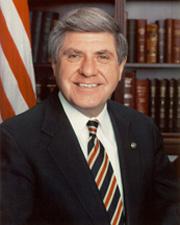 Sen. Ben Nelson (D-NE)
Submitted February 14, 2011
Legislative Activity
Stay on top of the latest movement without scrolling through every action
Floor
Latest Action
Senate amendment agreed to: Amendment SA 85 as modified agreed to in Senate by Unanimous Consent.
February 15, 2011
View full timeline
Floor
Senate amendment agreed to: Amendment SA 85 as modified agreed to in Senate by Unanimous Consent.
February 15, 2011
Floor
Senate amendment proposed (on the floor): Amendment SA 85 proposed by Senator Nelson NE to Amendment SA 58.
February 15, 2011
Floor
Amendment SA 85 proposed by Senator Nelson NE to Amendment SA 58. (consideration: CR S714-715) To improve the amendment.
February 15, 2011
Floor
Amendment SA 85 as modified agreed to in Senate by Unanimous Consent. (text as modified: CR S714)
February 15, 2011
Floor
Senate amendment submitted
February 14, 2011
Text
Modified
FAA AIR TRANSPORTATION MODERNIZATION AND SAFETY IMPROVEMENT ACT

The ACTING PRESIDENT pro tempore. Under the previous order, the
Senate will resume consideration of S. 223, which the clerk will
report.
The legislative clerk read as follows:

A bill (S. 223) to modernize the air traffic control
system, improve the safety, reliability, and availability of
transportation by air in the United States, provide
modernization of the air traffic control system, reauthorize
the Federal Aviation Administration, and for other purposes.

Pending:

Wicker modified amendment No. 14, to exclude employees of
the Transportation Security Administration from the
collective bargaining rights of Federal employees and provide
employment rights and an employee engagement mechanism for
passenger and property screeners.
Blunt amendment No. 5, to require the Under Secretary of
Transportation for Security to approve applications from
airports to authorize passenger and property screening to be
carried out by a qualified private screening company.
Paul amendment No. 21, to reduce the total amount
authorized to be appropriated for the Federal Aviation
Administration for fiscal year 2011 to the total amount
authorized to be appropriated for the Administration for
fiscal year 2008.
Rockefeller (for Wyden) amendment No. 27, to increase the
number of test sites in the National Airspace System used for
unmanned aerial vehicles and to require one of those test
sites to include a significant portion of public lands.
Inhofe amendment No. 7, to require the Administrator of the
Federal Aviation Administration to initiate a new rulemaking
proceeding with respect to the flight time limitations and
rest requirements for supplemental operations before any of
such limitations or requirements be altered.
Rockefeller (for Ensign) amendment No. 32, to improve
provisions relating to certification and flight standards for
military remotely piloted aerial systems in the National
Airspace System.
McCain amendment No. 4, to repeal the Essential Air Service
Program.
Rockefeller (for Leahy) amendment No. 50, to amend title 1
of the Omnibus Crime Control and Safe Streets Act of 1968 to
include

[[Page S710]]

nonprofit and volunteer ground and air ambulance crew members
and first responders for certain benefits, and to clarify the
liability protection for volunteer pilots that fly for public
benefit.
Reid amendment No. 54, to allow airports that receive
airport improvement grants for the purchase of land to lease
the land and develop the land in a manner compatible with
noise buffering purposes.
Reid amendment No. 55, to require the Secretary of the
Interior to convey certain Federal land to the city of
Mesquite, NV.
Udall (NM)/Bingaman amendment No. 49, to authorize Dona Ana
County, NM, to exchange certain land conveyed to the county
for airport purposes.
Udall (NM) amendment No. 51, to require that all advanced
imaging technology used as a primary screening method for
passengers be equipped with automatic target recognition
software.
Nelson (NE) amendment No. 58, to impose a criminal penalty
for unauthorized recording or distribution of images produced
using advanced imaging technology during screenings of
individuals at airports and upon entry to Federal buildings.
Paul amendment No. 18, to strike the provisions relating to
clarifying a memorandum of understanding between the Federal
Aviation Administration and the Occupational Safety and
Health Administration.
Rockefeller (for Baucus) modified amendment No. 75, of a
perfecting nature.

The ACTING PRESIDENT pro tempore. I understand the Senator from
Montana wants to make a modification?
Mr. BAUCUS. That is correct.

Amendment No. 75, as Further Modified

The ACTING PRESIDENT pro tempore. The Senator from Montana.
Mr. BAUCUS. Madam President, I ask that my amendment No. 75 be
modified further with the changes that are at the desk.
The ACTING PRESIDENT pro tempore. Is there objection? Without
objection, it is so ordered.
The amendment, as further modified, is as follows:

Strike title VIII and insert the following:

TITLE VIII--AIRPORT AND AIRWAY TRUST FUND PROVISIONS AND RELATED TAXES

SEC. 800. AMENDMENT OF 1986 CODE.

Except as otherwise expressly provided, whenever in this
title an amendment or repeal is expressed in terms of an
amendment to, or repeal of, a section or other provision, the
reference shall be considered to be made to a section or
other provision of the Internal Revenue Code of 1986.

SEC. 801. EXTENSION OF TAXES FUNDING AIRPORT AND AIRWAY TRUST
FUND.

(a) Fuel Taxes.--Subparagraph (B) of section 4081(d)(2) is
amended by striking ``March 31, 2011'' and inserting
``September 30, 2013''.
(b) Ticket Taxes.--
(1) Persons.--Clause (ii) of section 4261(j)(1)(A) is
amended by striking ``March 31, 2011'' and inserting
``September 30, 2013''.
(2) Property.--Clause (ii) of section 4271(d)(1)(A) is
amended by striking ``March 31, 2011'' and inserting
``September 30, 2013''.
(c) Effective Date.--The amendments made by this section
shall take effect on April 1, 2011.

SEC. 802. EXTENSION OF AIRPORT AND AIRWAY TRUST FUND
EXPENDITURE AUTHORITY.

(a) In General.--Paragraph (1) of section 9502(d) is
amended--
(1) by striking ``April 1, 2011'' in the matter preceding
subparagraph (A) and inserting ``October 1, 2013'', and
(2) by striking the semicolon at the end of subparagraph
(A) and inserting ``or the FAA Air Transportation
Modernization and Safety Improvement Act;''.
(b) Conforming Amendment.--Paragraph (2) of section 9502(e)
is amended by striking ``April 1, 2011'' and inserting
``October 1, 2013''.
(c) Effective Date.--The amendments made by this section
shall take effect on April 1, 2011.

SEC. 803. MODIFICATION OF EXCISE TAX ON KEROSENE USED IN
AVIATION.

(a) Rate of Tax on Aviation-grade Kerosene.--
(1) In general.--Subparagraph (A) of section 4081(a)(2) is
amended by striking ``and'' at the end of clause (ii), by
striking the period at the end of clause (iii) and inserting
``, and'', and by adding at the end the following new clause:
``(iv) in the case of aviation-grade kerosene, 35.9 cents
per gallon.''.
(2) Fuel removed directly into fuel tank of airplane used
in noncommercial aviation.--Subparagraph (C) of section
4081(a)(2) is amended to read as follows:
``(C) Taxes imposed on fuel used in commercial aviation.--
In the case of aviation-grade kerosene which is removed from
any refinery or terminal directly into the fuel tank of an
aircraft for use in commercial aviation by a person
registered for such use under section 4101, the rate of tax
under subparagraph (A)(iv) shall be 4.3 cents per gallon.''.
(3) Exemption for aviation-grade kerosene removed into an
aircraft.--Subsection (e) of section 4082 is amended--
(A) by striking ``kerosene'' and inserting ``aviation-grade
kerosene'',
(B) by striking ``section 4081(a)(2)(A)(iii)'' and
inserting ``section 4081(a)(2)(A)(iv)'', and
(C) by striking ``Kerosene'' in the heading and inserting
``Aviation-Grade Kerosene''.
(4) Conforming amendments.--
(A) Clause (iii) of section 4081(a)(2)(A) is amended by
inserting ``other than aviation-grade kerosene'' after
``kerosene''.
(B) The following provisions are each amended by striking
``kerosene'' and inserting ``aviation-grade kerosene'':
(i) Section 4081(a)(3)(A)(ii).
(ii) Section 4081(a)(3)(A)(iv).
(iii) Section 4081(a)(3)(D).
(C) Subparagraph (D) of section 4081(a)(3) is amended--
(i) by striking ``paragraph (2)(C)(i)'' in clause (i) and
inserting ``paragraph (2)(C)'', and
(ii) by striking ``paragraph (2)(C)(ii)'' in clause (ii)
and inserting ``paragraph (2)(A)(iv)''.
(D) Paragraph (4) of section 4081(a) is amended--
(i) by striking ``kerosene'' in the heading and inserting
``aviation-grade kerosene'', and
(ii) by striking ``paragraph (2)(C)(i)'' and inserting
``paragraph (2)(C)''.
(E) Paragraph (2) of section 4081(d) is amended by striking
``(a)(2)(C)(ii)'' and inserting ``(a)(2)(A)(iv)''.
(b) Retail Tax on Aviation Fuel.--
(1) Exemption for previously taxed fuel.--Paragraph (2) of
section 4041(c) is amended by inserting ``at the rate
specified in subsection (a)(2)(A)(iv) thereof'' after
``section 4081''.
(2) Rate of tax.--Paragraph (3) of section 4041(c) is
amended to read as follows:
``(3) Rate of tax.--The rate of tax imposed by this
subsection shall be the rate of tax in effect under section
4081(a)(2)(A)(iv) (4.3 cents per gallon with respect to any
sale or use for commercial aviation).''.
(c) Refunds Relating to Aviation-grade Kerosene.--
(1) Aviation-grade kerosene used in commercial aviation.--
Clause (ii) of section 6427(l)(4)(A) is amended by striking
``specified in section 4041(c) or 4081(a)(2)(A)(iii), as the
case may be,'' and inserting ``so imposed''.
(2) Kerosene used in aviation.--Paragraph (4) of section
6427(l) is amended by striking subparagraphs (B) and (C) and
inserting the following new subparagraph:
``(B) Payments to ultimate, registered vendor.--With
respect to any kerosene used in aviation (other than kerosene
to which paragraph (6) applies), if the ultimate purchaser of
such kerosene waives (at such time and in such form and
manner as the Secretary shall prescribe) the right to payment
under paragraph (1) and assigns such right to the ultimate
vendor, then the Secretary shall pay (without interest) the
amount which would be paid under paragraph (1) to such
ultimate vendor, but only if such ultimate vendor--
``(i) is registered under section 4101, and
``(ii) meets the requirements of subparagraph (A), (B), or
(D) of section 6416(a)(1).''.
(3) Aviation-grade kerosene not used in aviation.--
Subsection (l) of section 6427 is amended by redesignating
paragraph (5) as paragraph (6) and by inserting after
paragraph (4) the following new paragraph:
``(5) Refunds for aviation-grade kerosene not used in
aviation.--If tax has been imposed under section 4081 at the
rate specified in section 4081(a)(2)(A)(iv) and the fuel is
used other than in an aircraft, the Secretary shall pay
(without interest) to the ultimate purchaser of such fuel an
amount equal to the amount of tax imposed on such fuel
reduced by the amount of tax that would be imposed under
section 4041 if no tax under section 4081 had been
imposed.''.
(4) Conforming amendments.--
(A) Subparagraph (B) of section 4082(d)(2) is amended by
striking ``6427(l)(5)(B)'' and inserting ``6427(l)(6)(B)''.
(B) Paragraph (4) of section 6427(i) is amended--
(i) by striking ``(4)(C) or (5)'' and inserting ``(4)(B) or
(6)'', and
(ii) by striking ``, (l)(4)(C)(ii), and (l)(5)'' and
inserting ``and (l)(6)''.
(C) Subsection (l) of section 6427 is amended by striking
``Diesel Fuel and Kerosene'' in the heading and inserting
``Diesel Fuel, Kerosene, and Aviation Fuel''.
(D) Paragraph (1) of section 6427(l) is amended by striking
``paragraph (4)(C)(i)'' and inserting ``paragraph (4)(B)''.
(E) Paragraph (4) of section 6427(l) is amended--
(i) by striking ``kerosene used in aviation'' in the
heading and inserting ``aviation-grade kerosene used in
commercial aviation'', and
(ii) in subparagraph (A)--

(I) by striking ``kerosene'' and inserting ``aviation-grade
kerosene'',
(II) by striking ``Kerosene used in commercial aviation''
in the heading and inserting ``In general''.

(d) Transfers to the Airport and Airway Trust Fund.--
(1) In general.--Subparagraph (C) of section 9502(b)(1) is
amended to read as follows:
``(C) section 4081 with respect to aviation gasoline and
aviation-grade kerosene, and''.
(2) Transfers on account of certain refunds.--
(A) In general.--Subsection (d) of section 9502 is
amended--
(i) by striking ``(other than subsection (l)(4) thereof)''
in paragraph (2), and
(ii) by striking ``(other than payments made by reason of
paragraph (4) of section 6427(l))'' in paragraph (3).
(B) Conforming amendments.--

[[Page S711]]

(i) Paragraph (4) of section 9503(b) is amended by striking
``or'' at the end of subparagraph (C), by striking the period
at the end of subparagraph (D) and inserting a comma, and by
inserting after subparagraph (D) the following new
subparagraphs:
``(E) section 4081 to the extent attributable to the rate
specified in clause (ii) or (iv) of section 4081(a)(2)(A), or
``(F) section 4041(c).''.
(ii) Subsection (c) of section 9503 is amended by striking
paragraph (5).
(iii) Subsection (a) of section 9502 is amended--

(I) by striking ``appropriated, credited, or paid into''
and inserting ``appropriated or credited to'', and
(II) by striking ``, section 9503(c)(5),''.

(e) Effective Date.--The amendments made by this section
shall apply to fuels removed, entered, or sold after March
31, 2011.
(f) Floor Stocks Tax.--
(1) Imposition of tax.--In the case of aviation-grade
kerosene fuel which is held on April 1, 2011, by any person,
there is hereby imposed a floor stocks tax on aviation-grade
kerosene equal to--
(A) the tax which would have been imposed before such date
on such kerosene had the amendments made by this section been
in effect at all times before such date, reduced by
(B) the tax imposed before such date on such kerosene under
section 4081 of the Internal Revenue Code of 1986, as in
effect on such date.
(2) Liability for tax and method of payment.--
(A) Liability for tax.--A person holding aviation-grade
kerosene on April 1, 2011, shall be liable for such tax.
(B) Time and method of payment.--The tax imposed by
paragraph (1) shall be paid at such time and in such manner
as the Secretary of the Treasury shall prescribe.
(3) Transfer of floor stock tax revenues to trust funds.--
For purposes of determining the amount transferred to the
Airport and Airway Trust Fund, the tax imposed by this
subsection shall be treated as imposed by section
4081(a)(2)(A)(iv) of the Internal Revenue Code of 1986.
(4) Definitions.--For purposes of this subsection--
(A) Aviation-grade kerosene.--The term ``aviation-grade
kerosene'' means aviation-grade kerosene as such term is used
within the meaning of section 4081 of the Internal Revenue
Code of 1986.
(B) Held by a person.--Aviation-grade kerosene shall be
considered as held by a person if title thereto has passed to
such person (whether or not delivery to the person has been
made).
(C) Secretary.--The term ``Secretary'' means the Secretary
of the Treasury or the Secretary's delegate.
(5) Exception for exempt uses.--The tax imposed by
paragraph (1) shall not apply to any aviation-grade kerosene
held by any person exclusively for any use to the extent a
credit or refund of the tax is allowable under the Internal
Revenue Code of 1986 for such use.
(6) Exception for certain amounts of aviation-grade
kerosene.--
(A) In general.--No tax shall be imposed by paragraph (1)
on any aviation-grade kerosene held on April 1, 2011, by any
person if the aggregate amount of such aviation-grade
kerosene held by such person on such date does not exceed
2,000 gallons. The preceding sentence shall apply only if
such person submits to the Secretary (at the time and in the
manner required by the Secretary) such information as the
Secretary shall require for purposes of this subparagraph.
(B) Exempt aviation-grade kerosene.--For purposes of
subparagraph (A), there shall not be taken into account any
aviation-grade kerosene held by any person which is exempt
from the tax imposed by paragraph (1) by reason of paragraph
(5).
(C) Controlled groups.--For purposes of this subsection--
(i) Corporations.--

(I) In general.--All persons treated as a controlled group
shall be treated as 1 person.
(II) Controlled group.--The term ``controlled group'' has
the meaning given to such term by subsection (a) of section
1563 of the Internal Revenue Code of 1986; except that for
such purposes the phrase ``more than 50 percent'' shall be
substituted for the phrase ``at least 80 percent'' each place
it appears in such subsection.

(ii) Nonincorporated persons under common control.--Under
regulations prescribed by the Secretary, principles similar
to the principles of subparagraph (A) shall apply to a group
of persons under common control if 1 or more of such persons
is not a corporation.
(7) Other laws applicable.--All provisions of law,
including penalties, applicable with respect to the taxes
imposed by section 4081 of the Internal Revenue Code of 1986
on the aviation-grade kerosene involved shall, insofar as
applicable and not inconsistent with the provisions of this
subsection, apply with respect to the floor stock taxes
imposed by paragraph (1) to the same extent as if such taxes
were imposed by such section.

SEC. 804. AIR TRAFFIC CONTROL SYSTEM MODERNIZATION ACCOUNT.

(a) In General.--Section 9502 is amended by adding at the
end the following new subsection:
``(f) Establishment of Air Traffic Control System
Modernization Account.--
``(1) Creation of account.--There is established in the
Airport and Airway Trust Fund a separate account to be known
as the `Air Traffic Control System Modernization Account'
consisting of such amounts as may be transferred or credited
to the Air Traffic Control System Modernization Account as
provided in this subsection or section 9602(b).
``(2) Transfers to air traffic control system modernization
account.--On October 1, 2011, and annually thereafter the
Secretary shall transfer $400,000,000 to the Air Traffic
Control System Modernization Account from amounts
appropriated to the Airport and Airway Trust Fund under
subsection (b) which are attributable to taxes on aviation-
grade kerosene.
``(3) Expenditures from account.--Amounts in the Air
Traffic Control System Modernization Account shall be
available subject to appropriation for expenditures relating
to the modernization of the air traffic control system
(including facility and equipment account expenditures).''.
(b) Conforming Amendment.--Paragraph (1) of section 9502(d)
is amended by striking ``Amounts'' and inserting ``Except as
provided in subsection (f), amounts''.
(c) Effective Date.--The amendments made by this section
shall take effect on the date of the enactment of this Act.

SEC. 805. TREATMENT OF FRACTIONAL AIRCRAFT OWNERSHIP
PROGRAMS.

(a) Fuel Surtax.--
(1) In general.--Subchapter B of chapter 31 is amended by
adding at the end the following new section:

``SEC. 4043. SURTAX ON FUEL USED IN AIRCRAFT PART OF A
FRACTIONAL OWNERSHIP PROGRAM.

``(a) In General.--There is hereby imposed a tax on any
liquid used during any calendar quarter by any person as a
fuel in an aircraft which is--
``(1) registered in the United States, and
``(2) part of a fractional ownership aircraft program.
``(b) Amount of Tax.--The rate of tax imposed by subsection
(a) is 14.1 cents per gallon.
``(c) Fractional Ownership Aircraft Program.--For purposes
of this section--
``(1) In general.--The term `fractional ownership aircraft
program' means a program under which--
``(A) a single fractional ownership program manager
provides fractional ownership program management services on
behalf of the fractional owners,
``(B) 2 or more airworthy aircraft are part of the program,
``(C) there are 1 or more fractional owners per program
aircraft, with at least 1 program aircraft having more than 1
owner,
``(D) each fractional owner possesses at least a minimum
fractional ownership interest in 1 or more program aircraft,
``(E) there exists a dry-lease aircraft exchange
arrangement among all of the fractional owners, and
``(F) there are multi-year program agreements covering the
fractional ownership, fractional ownership program management
services, and dry-lease aircraft exchange aspects of the
program.
``(2) Minimum fractional ownership interest.--
``(A) In general.--The term `minimum fractional ownership
interest' means, with respect to each type of aircraft--
``(i) a fractional ownership interest equal to or greater
than \1/16\ of at least 1 subsonic, fixed wing or powered
lift program aircraft, or
``(ii) a fractional ownership interest equal to or greater
than \1/32\ of a least 1 rotorcraft program aircraft.
``(B) Fractional ownership interest.--The term `fractional
ownership interest' means--
``(i) the ownership of an interest in a program aircraft,
``(ii) the holding of a multi-year leasehold interest in a
program aircraft, or
``(iii) the holding of a multi-year leasehold interest
which is convertible into an ownership interest in a program
aircraft.
``(3) Dry-lease aircraft exchange.--The term `dry-lease
aircraft exchange' means an agreement, documented by the
written program agreements, under which the program aircraft
are available, on an as needed basis without crew, to each
fractional owner.
``(d) Termination.--This section shall not apply to liquids
used as a fuel in an aircraft after September 30, 2013.''.
(2) Conforming amendment.--Subsection (e) of section 4082
is amended by inserting ``(other than an aircraft described
in section 4043(a))'' after ``an aircraft''.
(3) Transfer of revenues to airport and airway trust
fund.--Subsection (1) of section 9502(b) is amended by
redesignating subparagraphs (B) and (C) as subparagraphs (C)
and (D), respectively, and by inserting after subparagraph
(A) the following new subparagraph:
``(B) section 4043 (relating to surtax on fuel used in
aircraft part of a fractional ownership program),''.
(4) Clerical amendment.--The table of sections for
subchapter B of chapter 31 is amended by adding at the end
the following new item:

``Sec. 4043. Surtax on fuel used in aircraft part of a fractional
ownership program.''.

(b) Fractional Ownership Programs Treated as Non-commercial
Aviation.--Subsection (b) of section 4083 is amended by
adding at the end the following new sentence: ``For uses of
aircraft before October 1, 2013, such term shall not include
the use of any aircraft which is part of a fractional

[[Page S712]]

ownership aircraft program (as defined by section
4043(c)).''.
(c) Exemption From Tax on Transportation of Persons.--
Section 4261, as amended by this Act, is amended by
redesignating subsection (j) as subsection (k) and by
inserting after subsection (i) the following new subsection:
``(j) Exemption for Aircraft in Fractional Ownership
Aircraft Programs.--No tax shall be imposed by this section
or section 4271 on any air transportation provided before
October 1, 2013, by an aircraft which is part of a fractional
ownership aircraft program (as defined by section
4043(c)).''.
(d) Effective Dates.--
(1) Subsection (a).--The amendments made by subsection (a)
shall apply to fuel used after March 31, 2011.
(2) Subsection (b).--The amendment made by subsection (b)
shall apply to uses of aircraft after March 31, 2011.
(3) Subsection (c).--The amendments made by subsection (c)
shall apply to taxable transportation provided after March
31, 2011.

SEC. 806. TERMINATION OF EXEMPTION FOR SMALL JET AIRCRAFT ON
NONESTABLISHED LINES.

(a) In General.--the first sentence of section 4281 is
amended by inserting ``or when such aircraft is a turbine
engine powered aircraft'' after ``an established line''.
(b) Effective Date.--The amendment made by this section
shall apply to taxable transportation provided after March
31, 2011.

SEC. 807. TRANSPARENCY IN PASSENGER TAX DISCLOSURES.

(a) In General.--Section 7275 (relating to penalty for
offenses relating to certain airline tickets and advertising)
is amended--
(1) by redesignating subsection (c) as subsection (d),
(2) by striking ``subsection (a) or (b)'' in subsection
(d), as so redesignated, and inserting ``subsection (a), (b),
or (c)'', and
(3) by inserting after subsection (b) the following new
subsection:
``(c) Non-tax Charges.--
``(1) In general.--In the case of transportation by air for
which disclosure on the ticket or advertising for such
transportation of the amounts paid for passenger taxes is
required by subsection (a)(2) or (b)(1)(B), if such amounts
are separately disclosed, it shall be unlawful for the
disclosure of such amounts to include any amounts not
attributable to such taxes.
``(2) Inclusion in transportation cost.--Nothing in this
subsection shall prohibit the inclusion of amounts not
attributable to the taxes imposed by subsection (a), (b), or
(c) of section 4261 in the disclosure of the amount paid for
transportation as required by subsection (a)(1) or (b)(1)(A),
or in a separate disclosure of amounts not attributable to
such taxes.''.
(b) Effective Date.--The amendments made by this section
shall apply to taxable transportation provided after March
31, 2011.

SEC. 808. TAX-EXEMPT BOND FINANCING FOR FIXED-WING EMERGENCY
MEDICAL AIRCRAFT.

(a) In General.--Subsection (e) of section 147 is amended
by adding at the end the following new sentence: ``The
preceding sentence shall not apply to any fixed-wing aircraft
equipped for, and exclusively dedicated to providing, acute
care emergency medical services (within the meaning of
4261(g)(2)).''
(b) Effective Date.--The amendment made by this section
shall apply to obligations issued after the date of the
enactment of this Act.

SEC. 809. PROTECTION OF AIRPORT AND AIRWAY TRUST FUND
SOLVENCY.

(a) In General.--Paragraph (1) of section 9502(d) is
amended by adding at the end the following new sentence:
``Unless otherwise provided by this section, for purposes of
this paragraph for fiscal year 2012 or 2013, the amount
available for making expenditures for such fiscal year shall
not exceed 90 percent of the receipts of the Airport and
Airway Trust Fund plus interest credited to such Trust Fund
for such fiscal year as estimated by the Secretary of the
Treasury.''.
(b) Effective Date.--The amendment made by this section
shall apply to fiscal years beginning after September 30,
2011.

Mr. BAUCUS. I thank my friend from West Virginia. He is a good man.
Mr. ROCKEFELLER. I suggest the absence of a quorum.
The ACTING PRESIDENT pro tempore. The clerk will call the roll.
The legislative clerk proceeded to call the roll.
Mrs. SHAHEEN. I ask unanimous consent that the order for the quorum
call be rescinded.
The PRESIDING OFFICER (Mr. Tester.) Without objection, it is so
ordered.
Mrs. SHAHEEN. Mr. President, I am here to speak on the legislation
that is pending before us. We all know this country faces big
challenges. We face a declining infrastructure that is critical to our
business. We need safe, reliable transportation if we are going to keep
the flow of commerce moving. But as President Obama mentioned in his
State of the Union Address, when American engineers took a look at our
transportation infrastructure, they gave us a ``D'' grade. That is not
quite failing, but it is certainly not very good.
Our declining infrastructure threatens not only our safety but also
our global economic competitiveness. America is falling behind economic
competitors such as Europe and China which are making significantly
more robust investments in their infrastructure. In the United States,
we currently spend about 2 percent of our GDP on infrastructure. That
is a 50-percent decline since 1960. China and Europe, on the other
hand, spend close to 9 percent for China and 5 percent for Europe of
their GDP respectively on infrastructure. We need to make the kind of
smart investments that will help keep America competitive.
That is why I am very glad we are moving forward with this bipartisan
FAA reauthorization bill. It has been almost 4 years since Congress
passed an FAA bill, and in that time our economic competitors have
continued to invest in their 21st century aviation systems.
Airports are critical to commerce and economic activity in all of our
States. The major airport in my home State of New Hampshire, Manchester
Airport, generates over $1.2 billion in economic activity every year.
Much of that comes from out-of-State residents and foreign travelers.
Without that airport, without that air infrastructure, we would not be
able to generate that kind of economic activity. The aviation industry
in New Hampshire and across the country also provides good jobs for
pilots, flight attendants, mechanics, air travel controllers, and so
many others. Manchester Airport alone provides over 1,900 jobs.
The FAA legislation that is now before us will accomplish the long
overdue task of upgrading one critical component of our aviation
infrastructure, the air traffic control system. It will upgrade the
system to an efficient 21st-century system called NextGen.
I do not think very many people realize that when they get into an
airplane, the pilots and the air traffic controllers are using 20th-
century technology to navigate the skies. I was just at a meeting of
the High Tech Council in New Hampshire and having this conversation
with them. They did not realize that that is the kind of aviation
system we use to fly our planes.
So although our cell phones and cars have GPS systems, our
multimillion-dollar airplanes use World War II era radar systems. The
system we have now is inefficient. It wastes the time and money of
everyone involved in the aviation industry. As Chairman Rockefeller has
pointed out so many times, even Mongolia has a more advanced air
traffic control system than we do. That is unacceptable.

Not surprisingly, our outdated system is at capacity. According to
the FAA, delays resulting from the constraints on the system cost the
United States over $9 billion every year. That number is going to
continue to rise if we do nothing.
We need to take action. The FAA forecasts that the aviation system
will carry more than 1 billion airline passengers annually by 2023. We
cannot afford to let such an important part of our 21st-century economy
languish with 20th-century technology.
By investing in NextGen, our air traffic controllers will finally
have the 21st-century technologies they need to make our system more
efficient. Let me give an example of the progress NextGen would make.
Right now, air traffic controllers give all of their commands to pilots
over the radio. They tell them when and where they will be landing.
Now, because all of the pilots in the area are listening, there is the
potential for miscommunication sometimes. Our pilots and controllers
are very professional. They do their jobs well. But sometimes people
talk over each other and pilots hear the wrong information. This system
we currently have wastes time, and it puts the flying public in
jeopardy. Once NextGen is in place, controllers will be able to type a
command and send it directly to the plane. To all of us who use e-mail,
this sounds pretty basic, but it is an example of the kinds of upgrades
that are needed to make our aviation system more efficient and safer.
By funding NextGen, this bill will bring our air traffic control
system into the 21st century. NextGen will reduce congestion by
allowing planes to fly more direct routes, it will conserve energy, and
it will make flying safer for everyone.

[[Page S713]]

Of course, some flight delays are unavoidable. We cannot control the
weather, as we all know. But when delays cannot be avoided, we can make
sure airlines are treating their customers fairly. That is another
critical component of this legislation. That is why this bill includes
the passengers' bill of rights.
I cosponsored the passengers' bill of rights after a businesswoman
from Bedford, NH--a woman named Jennifer Shirkani--told me her stories
of being stuck on tarmacs for hours without access to food or water.
These experiences were so frustrating to Jennifer that she became a
leader in the movement to get this legislation passed. Unfortunately,
her stories have been all too common in recent years. According to the
Department of Transportation, hundreds of thousands of passengers have
been stuck on a tarmac for more than 3 hours. This bill will codify
protections put in place last year by the Department of Transportation
so we will not go back to the days when airlines left travelers on the
tarmac.
I wish to commend Chairman Rockefeller and Ranking Member Hutchison
for producing a strong bill, and I look forward to being able to
support this legislation with all of my colleagues and pass it very
soon so we can upgrade our transportation system to compete with the
rest of the world.
Mr. President, I yield the floor.
Mr. ROCKEFELLER. Mr. President, I suggest the absence of a quorum.
The PRESIDING OFFICER. The clerk will call the roll.
The assistant legislative clerk proceeded to call the roll.
Mrs. HUTCHISON. Mr. President, I ask unanimous consent that the order
for the quorum call be rescinded.
The PRESIDING OFFICER. Without objection, it is so ordered.
Mrs. HUTCHISON. Mr. President, we are working very hard to have an
amendment on the perimeter rule that would accommodate all the concerns
of western Senators who do not have easy access to Reagan Washington
National Airport and the concerns of the Virginia Senators who are
concerned about congestion and other Senators from the Far West who
want to try to have a better chance at a direct flight.
Senator Rockefeller and I have filed an amendment that we think is a
fair approach. We did this because we did not have enough consensus,
and we are trying to drive that consensus. So I would like to ask that
the amendment be brought up. It is our intention then to set it aside
for Senator Nelson's amendment, which is scheduled for a vote. I have
informed everyone that I am going to ask the Chair to call up amendment
No. 84, the Rockefeller-Hutchison amendment on the perimeter rule.
The PRESIDING OFFICER. Is there objection?
Ms. CANTWELL. Mr. President, reserving the right to object, I know my
colleagues, the ranking member and the chairman of the committee, have
been working diligently to try to resolve this issue. It certainly is a
thorny one, given the history of the Commerce Committee and previous
votes on this issue.
For me, the issue is that I certainly do want access to the West, and
I certainly want to make sure the Nation's Capital is accessible to all
parts of the country, but we also want to make sure there is a fair
process, that a decision to open access to National Airport is run
through the Department of Transportation in an FAA process, that we do
not handpick here on the Senate floor any of the people who would be
winners in this process but that we make the decision on how much
access is available.
I would say to my colleagues that the whole issue here about airports
is that anytime you have a limited footprint, you have had discussion
about how to give access to that through a process of the FAA.
So I would say to my colleague, let's keep dialoguing and working on
this issue. But a process and an amendment that includes conversion;
that is to say, that a predominant carrier out of National Airport can
continue to hold that dominance in the marketplace, I think is the
wrong approach. I look at what is happening now with what the
Department of Justice has said about the Delta-US Air swap between New
York and DCA. It basically said they have too much market share and
they ought to divest if they want to engage in that kind of swap
behavior. So any kind of conversion process that would allow slots to
be converted is like saying, if you own real estate around the Capitol,
then you can buy more real estate around the Capitol.
So I hope we can come up with a process that puts the FAA in charge
of this, opens up how much access, but not make the decision here on
the Senate floor; allow the FAA and DOT to do their job, as they have
on this issue in the past. So at this point in time, I object to the
Senator's proposal.
The PRESIDING OFFICER. Objection is heard.
The Senator from Texas.
Mrs. HUTCHISON. Mr. President, I ask unanimous consent to have 1
minute to respond to the objection.
The PRESIDING OFFICER. Is there objection?
Without objection, it is so ordered.
Mrs. HUTCHISON. Mr. President, the reason for the conversions was to
accommodate the needs of the Washington National Airport people and to
also understand that the incumbent carriers--of which there are four--
have mostly paid the lion's share of the cost of the additions to
Washington National Airport.
We do want a fair process. That is why we have separated the new
entrants, which would be five, to accommodate carriers that have no
presence but also have conversions of flights that are already in
place, so there would be fewer new flights into Washington National and
there would be a fair process with the incumbent carriers who have paid
such a lion's share of the cost at the airport to keep it competitive
and fair.
So, with that, we will continue to discuss. We hope we will have an
amendment that can be voted on, and I think it is imperative that we
vote on this issue so there is a Senate position.
Mr. President, I yield the floor.

Amendment No. 58

The PRESIDING OFFICER. Under the previous order, there will now be 20
minutes of debate equally divided on the Nelson amendment No. 58.
The Senator from Nebraska.
Mr. NELSON of Nebraska. Mr. President, the amendment which Senators
Schumer, Akaka, Shaheen, Tester--our Presiding Officer--Whitehouse,
Menendez, Bill Nelson of Florida, and I have offered, which we will be
voting on shortly, is a commonsense approach to addressing the serious
issue of protecting an individual's privacy when they pass through
security checkpoints at airports and public buildings.
Nebraskans and Americans understand that every step must be taken to
keep Federal buildings and air travel safe in America, particularly
after the 9/11 attacks. However, as we promote security, safeguards are
necessary to protect everybody's privacy from misuse of images
generated by body scanning machines.
Our legislation sends a commonsense message: We will not ignore
people's privacy as we make sure air travel and Federal buildings are
safe. The amendment is very straightforward.
It would, No. 1, make it a crime to photograph or record a body scan
image or distribute a body scan image, taken at either an airport or
any Federal building, without express authorization to do so either by
law or regulation.
Second, it imposes a penalty of up to 1 year in prison and $100,000
fine on violators.
Third, we provide an exception from prosecution if the actions taken
occur while an individual is engaged in their official duties during
the course of an authorized intelligence investigation or criminal
prosecution. This language, which was worked out with officials at the
FBI and DNI, is important. This is not an abstract concern. There has
already been a case where these images have been taken and posted on
line inappropriately. So it is my hope that by creating a very strong
deterrent and establishing criminal penalties for those who take and
distribute body scan images inappropriately, we will help prevent that
from occurring again.

By adopting this amendment, we are telling our constituents we are
not going to ignore their privacy in the process of making sure we have
safe airports and Federal buildings.
I ask my colleagues to support our amendment.

[[Page S714]]

Amendment No. 85, As Modified, to Amendment No. 58

Mr. NELSON of Nebraska. Mr. President, I call up my second-degree
amendment No. 85 which is at the desk and ask unanimous consent that it
be modified with the changes that are at the desk.
The amendment is as follows:

Beginning on page 2 of the amendment, strike line 18 and
all that follows through page 3, line 21, and insert the
following:
``(b) Exception.--The prohibition under subsection (a)
shall not apply to an individual who, while engaged in or on
account of the performance of official duties, distributes,
photographs, or otherwise records an image described in
subsection (a) during the course of authorized intelligence
activities, a Federal, State, or local criminal investigation
or prosecution, or other lawful activities by Federal, State,
or local authorities, including training for intelligence or
law enforcement purposes.
``(c) Penalty.--An individual who violates the prohibition
in subsection (a) shall be fined under this title, imprisoned
for not more than 1 year, or both.
``(d) Advanced Imaging Technology Defined.--In this
section, the term `advanced imaging technology'--
``(1) means a device that creates a visual image of an
individual showing the surface of the skin beneath clothing
and revealing other objects on the body that are covered by
clothing;
``(2) may include devices using backscatter x-rays or
millimeter waves and devices referred to as `whole-body
imaging technology' or `body scanning'; and
``(3) does not include a device equipped with software that
produces a generic representation of the human form instead
of a visual image of an individual.''.

The PRESIDING OFFICER. Under the previous order, the second-degree
amendment, as modified, is agreed to.
(The amendment (No. 85), as modified, was agreed to.
Mr. NELSON of Nebraska. Mr. President, I ask my colleagues to support
our amendment, and I ask for the yeas and nays. I believe other
colleagues are here to respond.
The PRESIDING OFFICER. Is there a sufficient second?
There appears to be a sufficient second.
The yeas and nays were ordered.
Mr. NELSON of Nebraska. Mr. President, I believe other colleagues are
here to speak. I notice Senator Schumer is here. I appreciate very much
his support. Working together very carefully with total collaboration,
we have been able to, with our colleagues, bring about what I think is
important privacy legislation.
I yield the floor.
The PRESIDING OFFICER. The Senator from New York.
Mr. SCHUMER. Thank you, Mr. President.
First I wish to congratulate my good friend and hunting buddy, the
Senator from Nebraska, for the great work he has done. It has been a
pleasure to work with him. We have had parallel interests and his
amendment hopefully will solve a problem that has arisen lately because
of the full-body scanners that are being installed at airports.
As everyone knows, late last year the TSA began installing full-body
advanced imaging scanners at airports across the country. These new
scanners are better able to quickly and accurately detect explosives
than the older scanners and would likely have thwarted the Christmas
Day bomber before he had even gotten on the plane.
But from the get-go, legitimate questions popped up about the
potential for privacy violations from the use of these scanners. What
happens if a rogue TSA employee disseminates your full-body image? What
happens if a fellow passenger or reporter takes pictures of body scan
images with his phone and e-mails it to his friends or places the
pictures on a Web site or in a newspaper? Are there safeguards to
prevent such abuses? If it happens, what are the consequences?
Obviously, airline safety is our paramount concern. We can
oftentimes, by carefully legislating, have our cake and eat it too--to
make sure safety stays No. 1, but to also make sure, as the Senator
from Nebraska and I are trying to do, that privacy is protected
whenever possible. That is why Senator Nelson and I teamed up to work
with TSA and privacy advocates to devise a sensible solution to the
problem--a solution that would protect privacy without sacrificing
safety.
The legislation we came up with, which Senator Nelson is now offering
as an amendment to the FAA bill, strikes just the right balance. First
and foremost, the amendment makes it a Federal crime to record and
disseminate images from airport scanners. It provides a sentence of up
to 1 year in prison and a fine of up to $100,000 per violation to
anyone who is convicted of violating the law.
I should note the amendment not only covers the misuse of the
original images recorded from the scanners but also photographs of
scans taken by security personnel, airline employees, passengers, or
anybody else.
Americans want to know when they take to the skies that every
possible precaution has been taken for their safety. At the same time,
they want to know that precautions have been taken to ensure their
privacy. The amendment would offer the flying public that much-needed
assistance.
Again, I applaud Senator Nelson, who is a member of the Emerging
Threats and Capabilities Subcommittee, for his leadership on this
issue. I urge my colleagues to support the smart, practical amendment
we are offering today, and I urge that it be passed as quickly as
possible by this body.
Mr. President, I yield the floor, and I note the absence of a quorum.
The PRESIDING OFFICER. The clerk will call the roll.
The assistant legislative clerk proceeded to call the roll.
The PRESIDING OFFICER. The Senator from Nebraska.
Mr. NELSON of Nebraska. Mr. President, I ask unanimous consent that
the order for the quorum call be rescinded.
The PRESIDING OFFICER. Without objection, it is so ordered.
Mr. NELSON of Nebraska. Mr. President, I ask unanimous consent to add
Senator Bill Nelson of Florida to amendment No. 58 as an original
cosponsor.
The PRESIDING OFFICER. Without objection, it is so ordered.
Mr. NELSON of Nebraska. I note the absence of a quorum.
The PRESIDING OFFICER. The clerk will call the roll.
The assistant legislative clerk proceeded to call the roll.
Mr. ROCKEFELLER. Mr. President, I ask unanimous consent that the
order for the quorum call be rescinded.
The PRESIDING OFFICER. Without objection, it is so ordered.
Mr. ROCKEFELLER. Mr. President, I wish to say, very briefly, that I
strongly support the Nelson amendment for a whole variety of reasons,
all of which are very logical, extremely well ordered, and which I do
not have time to give.
The yeas and nays have been ordered. Perhaps we can proceed with the
vote.
The PRESIDING OFFICER. The Senator from Texas.
Mrs. HUTCHISON. Mr. President, I too wish to say I support the Nelson
amendment and appreciate his working with the Intelligence Committee
and the Judiciary Committee to assure all the bases are covered. I will
be supporting it as well.
The PRESIDING OFFICER. The question is on agreeing to amendment No.
58, as amended. The yeas and nays have been ordered.
The clerk will call the roll.
The legislative clerk called the roll.
Mr. DURBIN. I announce that the Senator from Massachusetts (Mr.
Kerry) and the Senator from Arkansas (Mr. Pryor) are necessarily
absent.
The PRESIDING OFFICER. Are there any other Senators in the Chamber
desiring to vote?
The result was announced--yeas 98, nays 0, as follows:

[Rollcall Vote No. 16 Leg.]

YEAS--98

Akaka
Alexander
Ayotte
Barrasso
Baucus
Begich
Bennet
Bingaman
Blumenthal
Blunt
Boozman
Boxer
Brown (MA)
Brown (OH)
Burr
Cantwell
Cardin
Carper
Casey
Chambliss
Coats
Coburn
Cochran
Collins
Conrad
Coons
Corker
Cornyn
Crapo
DeMint
Durbin
Ensign
Enzi
Feinstein
Franken
Gillibrand
Graham
Grassley
Hagan
Harkin
Hatch
Hoeven
Hutchison
Inhofe
Inouye
Isakson
Johanns
Johnson (SD)
Johnson (WI)
Kirk
Klobuchar
Kohl
Kyl
Landrieu
Lautenberg
Leahy
Lee
Levin
Lieberman
Lugar
Manchin
McCain
McCaskill
McConnell
Menendez
Merkley
Mikulski
Moran
Murkowski
Murray
Nelson (NE)
Nelson (FL)
Paul
Portman
Reed
Reid
Risch
Roberts
Rockefeller
Rubio
Sanders
Schumer
Sessions
Shaheen

[[Page S715]]

Shelby
Snowe
Stabenow
Tester
Thune
Toomey
Udall (CO)
Udall (NM)
Vitter
Warner
Webb
Whitehouse
Wicker
Wyden

NOT VOTING--2

Kerry
Pryor

The amendment (No. 58), as amended, was agreed to.
The PRESIDING OFFICER. Under the previous order, the motion to
reconsider is considered made and laid upon the table.

VOTE EXPLANATION

<bullet> Mr. KERRY. Mr. President, I was necessarily absent for the
vote on Nelson of Nebraska amendment No. 58, as amended, to the FAA
reauthorization bill. If I had attended today's session, I would have
voted in support of that amendment.<bullet>
The PRESIDING OFFICER. The Senator from West Virginia.
Mr. ROCKEFELLER. Mr. President, I ask unanimous consent that at 2:15
p.m. on this day there be 20 minutes of debate equally divided in the
usual form on the Wicker amendment prior to the vote in relation to the
Wicker amendment, and that the remaining provisions of the previous
order remain in effect.
The PRESIDING OFFICER. Is there objection?
Without objection, it is so ordered.

____________________