To increase funding for the emergency conservation program and the emergency watershed protection program.
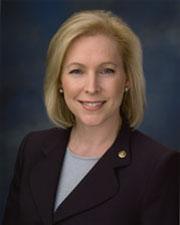 Sen. Kirsten E. Gillibrand (D-NY)
Legislative Activity
Stay on top of the latest movement without scrolling through every action
Roll call votes on amendments in Senate: Amendment SA 869 agreed to in Senate by Yea-Nay Vote. 58 - 41. Record Vote Number: 181.
October 20, 2011
View full timeline
Roll call votes on amendments in Senate: Amendment SA 869 agreed to in Senate by Yea-Nay Vote. 58 - 41. Record Vote Number: 181.
October 20, 2011
Senate amendment agreed to: Amendment SA 869 agreed to in Senate by Yea-Nay Vote. 58 - 41. Record Vote Number: 181.
October 20, 2011
Considered by Senate. (consideration: CR S6792, S6843)
October 20, 2011
Amendment SA 869 agreed to in Senate by Yea-Nay Vote. 58 - 41. Record Vote Number: 181.
October 20, 2011
Senate amendment submitted
October 19, 2011
Senate amendment proposed (on the floor): Amendment SA 869 proposed by Senator Gillibrand to Amendment SA 738.
October 19, 2011
Amendment SA 869 proposed by Senator Gillibrand to Amendment SA 738. (consideration: CR S6753-6755; text: CR S6754) To increase funding for the emergency conservation program and the emergency watershed protection program.
October 19, 2011
Votes
1 roll call on this amendment
Text
Proposed
AGRICULTURE, RURAL DEVELOPMENT, FOOD AND DRUG ADMINISTRATION, AND
RELATED AGENCIES APPROPRIATIONS ACT OF 2012--Continued

Mr. REID. Mr. President, as I indicated earlier, we have tried most
all day to have some votes. We were unable to do that. We are not going
to have any more votes tonight. I have spoken with the Republican
leader. We have done the best we can for today. There will be more
business on the floor this evening; hopefully, we will be able to set
up some votes tomorrow. So I apologize to everyone for not being able
to have some votes or to have some way of moving forward, but we have
done, as I indicated, the best we can.
I guess the good news is some people will be able to watch the World
Series.
I suggest the absence of a quorum.
The PRESIDING OFFICER. The clerk will call the roll.
The assistant legislative clerk proceeded to call the roll.
The PRESIDING OFFICER. The Senator from New York.
Mrs. GILLIBRAND. Mr. President, I ask unanimous consent that the
order for the quorum call be rescinded.
The PRESIDING OFFICER. Without objection, it is so ordered.

Amendment No. 869

Mrs. GILLIBRAND. As you know, Mr. President, Hurricane Irene and

[[Page S6754]]

Tropical Storm Lee left a trail of devastation all across New York. I
saw firsthand the impact that they left on our communities: complete
homes ruined, entire streets 7 feet of water, all people's belongings
on their front yard, small businesses basically uncertain as to whether
they could rebuild, whether they could rehire employees, crumbling
bridges, washed-out roads, heating oil soaking into buildings and into
the ground, farms with no feed for livestock, crops and livelihoods
vanishing in a single day.
This farm in Middleburgh is just a snapshot of what our farmers are
facing. Debris covers the land, most crops washed away. Whatever was
left, contaminated. The Van Allers, who own this farm, told me that the
worst sound they had ever heard was their cows suffering as the water
rose.
This year has been unprecedented disasters striking agricultural
regions all across the United States, not just in New York. In order to
help these rural agricultural communities rebuild in my State and
across the country, I am offering an amendment No. 869 to fund the
backlog of State applications for the Emergency Conservation Program
and the Emergency Watershed Program.
I call up this amendment now. This funding will help more than half
the States in this Nation with the disasters they have experienced so
far this year, from the flooding in the Midwest to the droughts in
Texas to the devastation that happened all across New York State. This
is emergency funding that will help our farmers and our businesses
survive. I urge my colleagues to support this amendment to reduce the
backlog of eligible projects that are needed desperately right now by
these families and these farms to rebuild.
We wish to bring up amendment No. 869.
The PRESIDING OFFICER. The clerk will report.
The bill clerk read as follows:

The Senator from New York [Mrs. Gillibrand], for herself
and Mr. Schumer, proposes an amendment numbered 869.

Mrs. GILLIBRAND. I ask unanimous consent the reading of the amendment
be dispensed with.
The PRESIDING OFFICER. Without objection, it is so ordered.
The amendment is as follows:

(Purpose: To increase funding for the emergency conservation program
and the emergency watershed protection program)

On page 83, between lines 9 and 10, insert the following:
Sec. __. (a) Notwithstanding any other provision of this
Act--
(1) the amount provided under section 732 for the emergency
conservation program for expenses resulting from a major
disaster designation pursuant to the Robert T. Stafford
Disaster Relief and Emergency Assistance Act (42 U.S.C.
5122(2)) is increased by $48,700,000; and
(2) the amount provided under section 732 for the emergency
watershed protection program for expenses resulting from a
major disaster designation pursuant to the Robert T. Stafford
Disaster Relief and Emergency Assistance Act (42 U.S.C.
5122(2)) is increased by $61,200,000.
(b) The additional amounts provided under subsection (a)--
(1) are designated by Congress as being for disaster relief
pursuant to section 251(b)(2)(D) of the Balanced Budget and
Emergency Deficit Control Act of 1985 (2 U.S.C.
901(b)(2)(D));
(2) are subject to the same terms and conditions as any
other amounts provided under section 732 for the same
purposes; and
(3) shall remain available until expended.

Mrs. GILLIBRAND. I wish to add Senators Leahy, Casey, and Sanders as
cosponsors to this amendment, along with Senator Schumer and myself.
The PRESIDING OFFICER. Without objection, it is so ordered.
Mrs. GILLIBRAND. Mr. President, I yield the floor.
Mr. CONRAD. Mr. President, I wish to offer for the Record the Budget
Committee's official scoring of H.R. 2112, the Department of
Agriculture, Rural Development, Food and Drug Administration, and
Related Agencies Appropriations Act for fiscal year 2012, as reported.
The bill, as considered by the Senate, includes the text of two other
committee-reported appropriations bills: S. 1572, the Departments of
Commerce, Justice, and Science and Related Agencies Appropriations Act
for fiscal year 2012; and S. 1596, the Departments of Transportation,
Housing and Urban Development, and Related Agencies Appropriations Act
for fiscal year 2012.
The bill is divided into three divisions, each representing the
reported legislative text from a subcommittee. Each division,
therefore, will be considered separately for budget enforcement
purposes.
Division A of the bill--Agriculture, Rural Development, Food and Drug
Administration, and related agencies appropriations--provides $1.8
billion in security discretionary budget authority and $18.3 billion in
nonsecurity discretionary budget authority for fiscal year 2012, which
will result in new outlays of $14.7 billion. When outlays from prior-
year budget authority are taken into account, discretionary outlays for
division A will total $23 billion.
Division A of the bill includes a total of $266 million in budget
authority designated as being for disaster relief for the Emergency
Conservation Program, the Emergency Forest Restoration Program, and the
Emergency Watershed Protection Program. Pursuant to section 106(d) of
the Budget Control Act, an adjustment to the Appropriations Committee's
302(a) allocation has been made for this amount in budget authority and
for the outlays flowing therefrom.
Funding in division A of the bill matches the subcommittee's section
302(b) allocation for security and nonsecurity budget authority and for
overall outlays. No budget points of order lie against division A of
the bill.
Division B of the bill--Commerce, Justice, Science and related
agencies appropriations--provides $78 million in security discretionary
budget authority and $52.8 billion in nonsecurity discretionary budget
authority for fiscal year 2012, which will result in new outlays of
$37.7 billion. When outlays from prior-year budget authority are taken
into account, discretionary outlays for division B will total $63.5
billion.
Division B of the bill includes a total of $135 million in budget
authority designated as being for disaster relief for the Economic
Development Administration. Pursuant to section 106(d) of the Budget
Control Act, an adjustment to the Appropriations Committee's 302(a)
allocation has been made for this amount in budget authority and for
the outlays flowing therefrom.
Funding in division B of the bill is $6 million below the
subcommittee's section 302(b) allocation for security budget authority
but matches the allocation for nonsecurity budget authority and for
overall outlays. No budget points of order lie against division B of
the bill.
Division C of the bill--Transportation, Housing and Urban
Development, and related agencies appropriations--provides $57.6
billion in nonsecurity discretionary budget authority for fiscal year
2012, which, when combined with transportation obligation limitations
in the bill, will result in new outlays of $46.4 billion. When outlays
from prior-year budget authority and transportation obligation
limitations are taken into account, discretionary outlays for the
division C will total $122.7 billion.
Division C of the bill includes a total of $2.3 billion in budget
authority designated as being for disaster relief including $1.9
billion for the Federal Highway Administration's Emergency Relief
Program and $400 million for the Community Development Block Grant
Program. Pursuant to section 106(d) of the Budget Control Act, an
adjustment to the Appropriations Committee's 302(a) allocation has been
made for this amount in budget authority and for the outlays flowing
therefrom.
Funding in Division C of the bill matches the subcommittee's section
302(b) allocation for nonsecurity budget authority and is $196 million
below the subcommittee's allocation for overall outlays. No budget
points of order lie against division C of the bill.
I ask unanimous consent that the table displaying the Budget
Committee scoring of the bill be printed in the Record.
There being no objection, the material was ordered to be printed in
the Record, as follows:

H.R. 2112, 2012--AGRICULTURE, COMMERCE-JUSTICE-SCIENCE, AND
TRANSPORTATION-HUD APPROPRIATIONS 1
[Spending comparisons--Senate-Reported Bill (in millions of dollars)]
------------------------------------------------------------------------
Non-
Security  Security-    Total
------------------------------------------------------------------------
Division A: Department of Agriculture,
and Rural Development, Food and Drug
Administration, and Related Agencies
Act, 2012
Senate-Reported Bill:
Budget Authority.....................     1,750     18,296    20,046

[[Page S6755]]

Outlays..............................        --         --    23,038
Senate 302(b) Allocation:
Budget Authority.....................     1,750     18,296        --
Outlays..............................        --         --    23,038
Division A Compared To:
Senate 302(b) allocation:
Budget Authority.....................         0          0        --
Outlays..............................        --         --         0
Division B: Departments of Commerce and
Justice, and Science and Related
Agencies Appropriations Act, 2012
Senate-Reported Bill:
Budget Authority.....................        78     52,752    52,830
Outlays..............................        --         --    63,517
Senate 302(b) Allocation:
Budget Authority.....................        84     52,752        --
Outlays..............................        --         --    63,517
Division B Compared To:
Senate 302(b) allocation:
Budget Authority.....................        -6          0        --
Outlays..............................        --         --         0
Division C: Departments of
Transportation, Housing and Urban
Development and Related Agencies
Appropriations Act, 2012
Senate-Reported Bill:
Budget Authority.....................        --     57,550    57,550
Outlays..............................        --         --   122,721
Senate 302(b) Allocation:
Budget Authority.....................        --     57,550        --
Outlays..............................        --         --   122,917
Division C Compared To: Senate 302(b)
allocation:
Budget Authority.....................        --          0        --
Outlays..............................        --         --      -196
------------------------------------------------------------------------
1 Divisions A, B, and C of Senate amendment 738 to H.R. 2122 include the
Senate-reported legislative text of the respective Appropriations
bills listed above.

The PRESIDING OFFICER. The Senator from Alabama.

amendment no. 812

Mr. SESSIONS. Mr. President, I would like to speak on amendment
number 812, which would prohibit the Patent and Trademark Office from
using funds to implement Section 37 of the America Invents Act, more
commonly known as the ``Medco Fix.''
The Medco fix was a bailout for a well-connected law firm--
WilmerHale--and its malpractice insurer to the tune of $214 million,
and the essence of special interest legislation that will result in
increased costs for the government, hospitals and consumers. I offered
an amendment to the America Invents Act to strike this special interest
fix and it was narrowly defeated by a vote of 51 to 47.
This saga began in 2001, when WilmerHale apparently missed a routine
deadline for submitting to the PTO a patent term extension (PTE)
application on behalf of its client Medco. The PTO denied the
application, concluding it was not filed in a timely manner. Legal
deadlines like this exist for a reason. They provide certainty not only
to the litigants in a particular matter but also to the public. Every
day in courts across America where a deadline is missed the result is
the same. Claim is dismissed the remedy available to the harmed party
is a malpractice claim against the offending attorney.
Yet, in the 10 years since WilmerHale's malpractice, Medco never sued
the law firm. Instead, in February 2011, the parties agreed to a
settlement whereby the firm would pay Medco $214 million, of which $99
million will be paid by the firm's malpractice insurer.

WilmerHale also immediately paid $18 million up front to cover
Medco's litigation and lobbying expenses over the past decade. The
settlement was tied to their success in getting either the PTO or
Congress to grant an extension of Medco's patent term before June 2015,
when the extension period overturning the PTO decision would otherwise
expire.
Both the company and its law firm have spent millions of dollars and
many years lobbying Congress to change the rules and to politically fix
their legal mistake. Unfortunately--in my view--they succeeded.
One of the many reasons I oppose this special interest fix is because
I believe it is unnecessary, unwise and dangerous for Congress to
interfere with ongoing litigation, which is what happened here. It goes
against historical precedent and sound policy for Congress to directly
interfere with active judicial proceedings on behalf of one party over
another. Here, the U.S. District Court for the Eastern District of
Virginia had already ordered the PTO to ``consider''
Medco's application timely filed and adopt an interpretation of the
word ``date'' in the statute that includes a ``next business day''
construction rather than ``calendar day'' as the PTO argued. Although
the PTO did not appeal the decision, a generic company, APP
Pharmaceuticals, intervened in the case with an appeal to the Federal
Circuit Court of Appeals. At the time that Congress was considering the
America Invents Act, oral arguments before the appeals court already
had been scheduled for just a few weeks later. The court had not even
had the chance to hear arguments when some of my colleagues were
arguing that the Medco fix merely enshrined in statute the holdings of
the courts.

However, it is my understanding that APP--the intervening party--
pointed out to the appeals court that even if the Medco fix applied to
this appeal, according to the language of the America Invents Act, it
would not take effect for one year from the date of enactment. Indeed,
the America Invents Act provides that, unless otherwise specified, all
provisions are to take effect one year after the date of enactment and
no special effective date is provided for the Medco fix. Should we now
expect them to come to Congress for a fix for lobbying malpractice?

Given this, the Federal Circuit postponed oral argument, ordered the
parties to file briefs regarding the impact of the effective date, and
then rescheduled the argument for November 15th. I would point out to
my colleagues who so forcefully insisted on this fix that the Federal
Circuit's actions demonstrate that this is by no means merely
technical. The court is reviewing this very question of law, both for
effectiveness and to determine whether Congress has the power to revive
a patent once it has expired and entered the public domain.
As I have said many times before, this body should not be intruding
on the jurisdiction of the judicial branch. Today, I am offering an
amendment to right this wrong and to allow the Federal Circuit, without
interruption, to fulfill its constitutional role in deciding a pure
question of law.
Mr. President, there is no unanimous consent, I know, to bring up
amendment No. 812, which I have submitted. It is a very important
amendment. It is something I will insist on through every appropriate
power an individual Senator has to get an amendment to be voted on.
Hopefully it will be coming up tomorrow or the next day. Let me again
summarize it briefly.
Amendment 812 would prohibit the Patent and Trademark Office from
using funds to implement section 37 of the America Invents Act, more
commonly known as the Medco fix. When the patent bill moved through the
Senate and the House--that took a decade--efforts were made to reverse
a decision by the Patent and Trademark Office that had declared a major
Boston law firm had failed to file a document in time to preserve a
patent for their client Medco and, as a result of that, Medco was to
lose its patent sooner than otherwise would be the case. Generic
manufacturers would be able to manufacture the drug and it was asserted
that it would cost $214 million as a result of this error.
If a doctor makes an error, the doctor gets sued for malpractice. If
lawyers make errors, they get sued for malpractice. They have
malpractice insurance. Apparently they had some insurance.
At any rate, it appears millions of dollars, or hundreds of millions
of dollars, were set aside for lobbying and other efforts to
politically reverse the patent office during a time while the matter
was litigated in court. When the patent bill came up a few months ago
it was contended that this is the only vehicle to fix this problem and
we needed to fix it. The House voted not to put it in their bill. Then
somehow a new vote was obtained, and by the narrowest of margins the
House put it in and it came to the Senate.
I had been objecting for a decade, and I objected and others
objected, and we had a vote and by the margin of 51 to 47 it was
decided not to amend the patent bill that the House had passed and to
pass it just as the House did, although many people told me they agreed
with me that this Medco fix intervening in ongoing litigation should
not occur, but changing the patent bill would send it back to the House
and endanger the passage of the bill.
I was disappointed then. But what we discovered is that the
litigation continues. It is now before the U.S. Court of Appeals. The
Court of Appeals is taking arguments on a number of issues that relate
to this. It is a very real problem. It is a matter that ought

[[Page S6756]]

to be decided by the courts, not politicians. If some special relief
act is to be utilized--and sometimes those can be--it can't be utilized
while a party still has litigation ongoing. Only after the litigation
is exhausted can someone appeal for a special relief act. In essence,
that is what Medco is asking for.
I do not think it is right. I practiced law for a long time. I know
how the system works. I know at this fine law firm in Boston, every day
the first thing they look at when somebody sues one of their clients
is: Did the person file a lawsuit too late? If they did, they will
dismiss it. Every judge who sees a motion to dismiss for lack of timely
filing objectively looks at it. If it is 1 day, 1 hour, 1 minute late,
you are out. That is the rule of law in America. It doesn't make any
difference if you are the widow lady or if you are the head of some
company or if you are a big drug company or a big law firm. That is
justice in America.
I do not think this is a good thing for us to do. Now that we have
this legislation before us, it is germane and appropriate, because it
has patent language in it, for us to fix this decision we sort of got
forced into making and to have a vote on it as part of this bill. What
we know is that the language of the patent act that we passed, the
America Invents Act, would not take effect for 1 year from the date of
enactment. During that time the litigation continues. Congress ought
not intervene. Congress ought to let the courts decide. Then if the
only remedy in Congress would be to file for a special relief act,
Congress could consider it or not based on the circumstances of the
case.
I do believe it is a very important issue. I truly believe Congress
is unwise, very unwise, to begin to step into ongoing litigation
involving highly competent parties with large amounts of money and
start taking sides in that litigation. I believe it would be wrong.
I suggest the absence of a quorum.
The PRESIDING OFFICER. The clerk will call the roll.
The bill clerk proceeded to call the roll.
Mr. SESSIONS. Mr. President, I ask unanimous consent that the order
for the quorum call be rescinded.
The PRESIDING OFFICER. Without objection, it is so ordered.

Nomination of Heather Higginbottom

Mr. SESSIONS. Mr. President, time has been set aside for the Heather
Higginbottom nomination. I hadn't intended to speak tonight, but it has
been suggested that we might get started on that to provide more time
tomorrow for other business in the Senate. So I will share my remarks
tonight for the record, and hopefully we can have more of a good
discussion tomorrow.
The Constitution makes it very clear that it is the President who
nominates. Confirmation does not occur, however, without the consent of
the Senate. In Federalist No. 76, Alexander Hamilton wrote:

To what purpose then require the cooperation of the Senate?
I answer, that the necessity of their concurrence would have
a powerful, though, in general, silent operation. It would be
an excellent check upon a spirit of favoritism in the
President, and would tend greatly to prevent the appointment
of unfit characters from State prejudice, from family
connection, from personal attachment, or from a view to
popularity.

In other words, the Senate does have a duty to evaluate the
President's nominees.
Unfortunately, the situation we face today with the nomination of
Heather Higginbottom to be the Deputy Director for the Office of
Management and Budget is one of those cases. I do not know her
personally, but let me state from the outset that I have no questions
about her character. She has many admirers. Senator Kerry, for whom she
worked, is an admirer, and I respect that. The President certainly
seeks her appointment and has asked me to try to see that the
appointment moves along. I respect his desire to have an up-or-down
vote and have agreed that we would have this vote and have so agreed
for some time. But my concern is with the nominee's budgetary
experience. It is the lack of experience that causes me to voice my
opposition.
Let me first mention that the Office of Management and Budget has the
primary responsibility to assist the President in overseeing the
preparation of the Federal budget. This is a huge responsibility. In
helping the President formulate his spending plan, OMB must evaluate
the effectiveness of agency programs, policies, and procedures, assess
competing funding demands among all of these agencies, and set the
priorities and help the President.
OMB is not in charge--the President is--but in reality OMB is the
agency that raises the concerns with overspending with the various
Federal agencies. They submit their requests, and then the OMB says yea
or nay. It is a very serious matter because very important people are
asking for money. Sometimes you just have to say no to very prominent
Cabinet people. The Cabinet people can appeal to the President, but
they don't do it often. They recognize that OMB is the place where most
of these matters have to be decided. OMB speaks on behalf of the
President.
Ms. Higginbottom's experience points to someone who has been on the
wrong side, however, of fiscal restraint. Instead of crafting policies
to decrease spending, she has been focused on new programs to increase
spending.
In her Budget Committee questionnaire, she was asked about her
qualifications for the job. She cited her legislative and political
experience. I believe she worked in a Presidential campaign at one
point but cited no direct budgetary knowledge and provided no examples
of developing a budget.
In one prehearing question, I asked Ms. Higginbottom:

Your background is in education and public policy. Outside
of your legislative and political experience, have you
acquired any budget training, including classes or continuing
education?

She responded with one sentence:

I have not taken any formal continuing education classes on
the budget.

I asked her whether she was the primary budget staffer during her
tenure in the Senate. She essentially gave a nonanswer to that. It
doesn't appear that she was deeply involved as a general office Senate
staffer in budgetary matters, not the primary staffer and not a staffer
whose Senator served on the Budget Committee.
In another prehearing question, she was asked whether, as a nation,
we needed to focus on deficit reduction rather than new spending. She
responded by deferring to the President's fiscal year 2012 budget,
stating that it ``begins the challenging but essential process of
adjusting spending to achieve fiscal sustainability immediately with a
5-year freeze of nonsecurity discretionary spending.'' Now, this is the
same budget that adds to the debt every single year and has substantial
deficits every single year.
During her confirmation hearing before the Budget Committee, on which
I was the ranking Republican, she continued to use President Obama's
incorrect formulations. I use that phrase kindly. She testified that
President Obama's fiscal year 2012 budget--the one he submitted in
January--would pay down the debt and ``puts us on a path to stabilize
our debt.'' But this is the same budget proposal that, by OMB's own
estimate, has a deficit of approximately $800 billion in year 10 of the
10-year budget, and not a single deficit in the 10 years of this budget
that was submitted to us falls below $600 billion. I would just note
that, for example, $600 billion is larger than any deficit President
Bush ever had. So in the 10 years, the lowest budget deficit projected
by President Obama's own Office of Management and Budget is $600
billion--the lowest.
Surely a more experienced, skilled, and serious nominee, one who is
acquainted with the great debt threat we have in America, would
recognize that these deficits are irresponsible, and one can't say we
are living within our means or we are on a path to stabilize our debt.
You cannot say that. Even Treasury Secretary Geithner, when he
testified before the Budget Committee, said the President's budget
would be ``unsustainable'' if Congress passed it as written.
But the Senate Budget Committee was not the only forum in which Ms.
Higginbottom was given an opportunity to highlight her experience. She
had a hearing before the Homeland Security and Governmental Affairs
Committee. They asked about her qualifications also, which they
indicated were lacking.
Senator Collins said in her opening statement:

The nominee's background, while impressive in many
respects, does not include a

[[Page S6757]]

great deal of experience in budget process or financial
analysis.

Senator Scott Brown used his first question to deal with her
experience. He said:

I notice from your resume you have some great political
experience and some really good policy experience. I was
wondering if you'd share with the committee, you know, what
type of accounting and budgetary experience you have.

Well, she first attempted to avoid the question, talking about her
general legislative and policy experience. Senator Brown interrupted
her and got to the heart of the matter:

So I guess my original question is, what type of budgetary
and accounting experience do you have?

Ms. Higginbottom responded that she was not an accountant and that
her goal was to implement the President's policy agenda through the
budgetary process. I would note that the President's policy agenda
seems to be primarily to continue extraordinary new and expanded
``investments''--spending--in many, many areas of our government.
After opportunities to prove she was qualified through prehearing
questions and through testimony at two confirmation hearings, she was
reported out of the Homeland Security and Governmental Affairs
Committee and the Budget Committee on a party-line vote. Our Democratic
colleagues in both committees voted her out with the majorities they
had. Because of her lack of experience, not one Republican voted for
her.
So now a number of my colleagues have argued that the criticism is
based not on a lack of experience but on her age, that somehow she is
being unfairly treated because of that. She is young--young for this
job--but the age allegation is not correct.
After her confirmation hearing in the Budget hearing, I sent her a
followup question:

Some of my Democratic colleagues, during your confirmation
hearing before the Budget Committee, indicated that when some
of us questioned your experience, that we were using
``experience'' as a code word for age. The experience I am
concerned about is actual budget experience. In a prehearing
question, I asked you the following:
``Your background is in education and public policy. . . .
have you acquired any budget training, including classes or
continuing education?''
You responded in this way:
``I have not taken any formal continuing education classes
on the budget.''

I asked if these facts had changed, and she basically said no. She
said:

``For over a decade, I have worked at the highest levels of
policymaking in the United States Senate and the White House.
This work has included, but was not limited to, the budgetary
implications of those policies.''

Not budget but policy issues and budgetary implications of those
policies.
So the answer to the question I asked is no, clearly. She simply does
not have the kind of serious budgetary experience to be the Deputy
Director at an office that manages a government that is spending $3,700
billion this year and taking in about $2.3 trillion--borrowing 40 cents
of every $1 we spend.
This is a most august position, and it requires a person who can have
the confidence and judgment to say no to people who always want to
spend more.
Arguably, she would be the least qualified Deputy Director in
decades. The last two nominees in this position had a combined 21 years
of budget and finance experience. For example, Rob Nabors, the most
recent nominee before her, served 8 years on the House Appropriations
Committee and 6 years at the Office of Management and Budget. Steve
McMillin, the nominee before him, served 3 years on the Senate Banking
Committee and 4 years at the Office of Management and Budget. You learn
something operating out of the Office of Management and Budget. That
prepares you to have a leadership role there. Combined, Ms.
Higginbottom does not have 1 year of budget or finance experience. Over
the last 20 years, nominees for this position have had an average of
6.5 years of experience. Well, in certain circumstances, in certain
times, maybe less experience is OK. But at a time when this Nation has
never faced a more serious debt threat, we need real, august, serious
leadership.
Mr. Erskine Bowles, who cochaired President Obama's fiscal
commission, which issued a most serious report to us, warned that if
the United States fails to take significant action on debt reduction,
the country would face ``the most predictable economic crisis in its
history.''
We are borrowing 40 cents of every $1 we spend. Our Nation's gross
debt is larger than our entire economy. The last thing we need now is
someone who does not have the gravitas to say no to those who always
tend to want to spend more. That is just one of the jobs OMB has--to
say no.
When the Secretary of the Interior or the Secretary of Energy comes
before the department, asking for approval of their budget which calls
for more spending, a responsible OMB Director or his Deputy must be
able to say no. Looking at President Obama's fiscal year 2012 budget, I
am sorry to say this duty has not been met by Mr. Lew, the Director.
And I cannot see he is going to get much strength and support for doing
the right thing from this nominee.
I supported Director Lew, but I have been disappointed in his
leadership. When the President submitted his budget to Congress,
Director Lew came before the Budget Committee and made some of the most
indefensible claims I have heard in public life. He did. Director Lew
said the President's budget would allow us to live within our means,
begin to pay down our debts, and spend only money we are taking in each
year. Not one of those claims was true. Multiple fact-check
organizations checked them and found them to be false. Even by OMB's
own reckoning, the deficit would never be smaller than $600 billion at
any point in the 10-year budget window. We would not be paying down our
debt. We are not going to be spending only money we are taking in each
year under the President's budget.

What would happen to a CEO of a corporation if they told potential
investors: Well, we are living within our means. We will begin to pay
down our debt. We are going to only spend money we are taking in each
year. Invest in our company. And people invested in the company, and
they found out that there was no budget plan in place that showed
anything less than huge deficits for the entire next decade and that
the company was borrowing 40 cents of every $1 that it was spending?
What would happen then? I am telling you, he would be sued, if not
prosecuted for fraud.
So this is the kind of leadership we have. I am not happy with it.
The American people should not be happy with it. They came in to spend,
not look the American people in the eye and tell them of the grave
financial crisis we are facing in America.
Erskine Bowles, heading the commission appointed by President Obama,
told us. He told us we are on an unsustainable path. It threatens our
economic future; that we are facing the most predictable financial
crisis in our history. When asked when that crisis might occur, when
might we have economic damage arising from our debt, he said 2 years,
maybe a little less, maybe a little more. Alan Simpson, his Cochairman,
said: I think it could be less--less than 1 year.
This is not a game we are playing here. We do not need government
officials spinning that we are living within our means and paying down
our debt. We are running up debt in a fashion never, ever, ever before
done in this Nation. It is unsustainable, and it is so dangerous
because it is systemic, and it is hard to get off this trend. It is
demographics. It is a lot of different reasons. But it is very serious,
and we need leaders in OMB who are watching every single dime that is
being spent, looking for every effort and place that savings can be
effected. That is what we need, and I just do not feel as though this
nominee fits that bill. She is a good person. She is, apparently, a
good staffer, has a lot of friends. But the position of Deputy Director
of OMB is a grave position. It has august responsibilities. It requires
a most serious person who is willing to take strong stands and say no
to people who, all too often, want to spend more and more.
When asked about our financial situation, in one of her answers she
made reference to the first stimulus bill, the Recovery Act, so-called.
This is what the nominee said:
Fortunately, Recovery Act spending has been extraordinarily
transparent,

[[Page S6758]]

enabling the public to assess the job impacts of the various programs
funded. Overall, the data demonstrate that the Recovery Act has
delivered as promised by creating and saving millions of jobs across
the country, and has been an essential factor in rescuing the American
economy.
Well, I know the nominee is a friend and ally of the President, and I
am willing to give her a vote, and I suppose she will be confirmed. But
I just want to say that I think that is a bit of a Pollyannaish
description of the success of the stimulus bill. It just did not meet
those standards, and I do feel as though she has been less than
rigorous in her understanding of these difficult financial issues that
our Nation faces. So I encourage my colleagues to join me in opposing
the nomination.
I yield the floor and suggest the absence of a quorum.
The PRESIDING OFFICER. The clerk will call the roll.
The legislative clerk proceeded to call the roll.
Mr. REID. Mr. President, I ask unanimous consent that the order for
the quorum call be rescinded.
The PRESIDING OFFICER. Without objection, it is so ordered.
Mr. REID. Mr. President, I ask unanimous consent that at a time to be
determined by the majority leader, after consultation with the
Republican leader, the Senate proceed to a series of votes in relation
to the following amendments: Vitter No. 769, as modified; Webb No. 750;
Merkley No. 879, as modified with the changes that are at the desk;
Brown of Ohio No. 874, as modified with the changes that are at the
desk; Moran No. 815; and Grassley No. 860; that there be no amendments
or points of order against any of the amendments prior to the votes
other than budget points of order; that there be 2 minutes equally
divided in the usual form prior to each vote; that the Vitter, Webb,
Merkley, Brown, and Grassley amendments be subject to a 60 affirmative
vote threshold; and that all after the first vote be 10 minutes;
further, that the following amendments be considered agreed to this
evening: Sanders No. 816, Coburn No. 793, and Coburn No. 798, as
modified with the changes that are at the desk; finally, that the
following first-degree amendments filed by Senator Coburn be in order
to be called up and made pending during tomorrow's session: Nos. 794
through 797; 799 through 801; and 833.
The PRESIDING OFFICER. Without objection, it is so ordered.
The amendment (No. 816) was agreed to.
The amendments (Nos. 793 and 798), as modified, were agreed to, as
follows:

amendment no. 793

(Purpose: To ensure transparency in federally attended and funded
conferences, including the cost to taxpayers for food, drinks, and
hotel stays associated with federally funded conferences of more than
$20,000)

On page 209, after line 2 insert the following:
Sec. ___.  The provisions of sections 517(c), 531, and 538
shall apply to all agencies and departments funded by
divisions A, B, and C.

amendment no. 798, as modified

At the appropriate place, insert the following:
Sec. __.  Notwithstanding section 701, none of the funds
made available by this Act may be used to purchase new
passenger motor vehicles, except for national security, law
enforcement needs, public transit, safety, and research:
Provided further, all agencies and departments funded by
divisions A, B, and C of this Act shall send to Congress at
the end of the fiscal year a report containing a complete
inventory of the total number of vehicles owned, permanently
retired, and purchased during fiscal year 2012 as well as the
total cost of the vehicle fleet, including maintenance, fuel,
storage, purchasing, and leasing.

Cloture Motion

Mr. REID. Mr. President, I have a cloture motion at the desk.
The PRESIDING OFFICER. The cloture motion having been presented under
rule XXII, the Chair directs the clerk to read the motion.
The legislative clerk read as follows:

Cloture Motion

We, the undersigned Senators, in accordance with the
provisions of rule XXII of the Standing Rules of the Senate,
hereby move to bring to a close the debate on amendment No.
738 to H.R. 2112, an Act making appropriations for
Agriculture, Rural Development, Food and Drug Administration,
and Related Agencies programs for the fiscal year ending
September 30, 2012, and for other purposes.
Harry Reid, Herb Kohl, Daniel Inouye, Sheldon Whitehouse,
Jack Reed, Robert Menendez, Jeff Bingaman, Barbara
Mikulski, Patty Murray, Debbie Stabenow, Richard
Durbin, Sherrod Brown, Richard Blumenthal, Bernard
Sanders, Robert Casey, Jr., Jeff Merkley, Patrick
Leahy, Tom Harkin.

Cloture Motion

Mr. REID. Mr. President, I have another cloture motion at the desk.
The PRESIDING OFFICER. The cloture motion having been presented under
rule XXII, the Chair directs the clerk to read the motion.
The legislative clerk read as follows:

Cloture Motion

We, the undersigned Senators, in accordance with the
provisions of rule XXII of the Standing Rules of the Senate,
hereby move to bring to a close the debate on H.R. 2112, an
Act making appropriations for Agriculture, Rural Development,
Food and Drug Administration, and Related Agencies programs
for the fiscal year ending September 30, 2012, and for other
purposes.
Harry Reid, Herb Kohl, Daniel Inouye, Sheldon Whitehouse,
Jack Reed, Robert Menendez, Jeff Bingaman, Barbara
Mikulski, Patty Murray, Debbie Stabenow, Richard
Durbin, Sherrod Brown, Richard Blumenthal, Bernard
Sanders, Robert Casey, Jr., Jeff Merkley, Patrick
Leahy, Tom Harkin.

Mr. REID. Mr. President, I ask unanimous consent that the mandatory
quorum call under rule XXII be waived with regard to both cloture
motions.
The PRESIDING OFFICER. Without objection, it is so ordered.

____________________