To decrease the Federal share of project costs under the airport improvement program for non-primary airports.
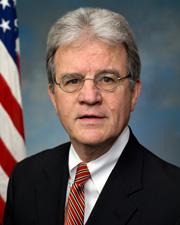 Sen. Tom Coburn (R-OK)
Legislative Activity
Stay on top of the latest movement without scrolling through every action
Roll call votes on amendments in Senate: Motion to table amendment SA 91 agreed to in Senate by Yea-Nay Vote. 59 - 40. Record Vote Number: 24.
February 17, 2011
View full timeline
Roll call votes on amendments in Senate: Motion to table amendment SA 91 agreed to in Senate by Yea-Nay Vote. 59 - 40. Record Vote Number: 24.
February 17, 2011
Senate amendment proposed (on the floor): Amendment SA 91 proposed by Senator Coburn.
February 17, 2011
Amendment SA 91 proposed by Senator Coburn. (consideration: CR S826-827, S828; text: CR S827) To decrease the Federal share of project costs under the airport improvement program for non-primary airports.
February 17, 2011
Motion to table amendment SA 91 agreed to in Senate by Yea-Nay Vote. 59 - 40. Record Vote Number: 24.
February 17, 2011
Senate amendment submitted
February 15, 2011
Votes
1 roll call on this amendment
Text
Submitted
TEXT OF AMENDMENTS

SA 86. Mr. INHOFE submitted an amendment intended to be proposed by
him to the bill S. 223, to modernize the air traffic control system,
improve the safety, reliability, and availability of transportation by
air in the United States, provide modernization of the air traffic
control system, reauthorize the Federal Aviation Administration, and
for other purposes; which was ordered to lie on the table; as follows:

On page 245, between lines 7 and 8, insert the following:
(g) Special Rule for Model Aircraft.--
(1) In general.--Notwithstanding any other provision of law
relating to the incorporation of unmanned aircraft systems
into FAA plans and policies,, including this section, the
Administrator shall not promulgate any rules or regulations
regarding model aircraft or aircraft being developed as model
aircraft if such aircraft is--
(A) flown strictly for recreational, sport, competition, or
academic purposes;
(B) operated in accordance with a community-based set of
safety guidelines and within the programming of a nationwide
community-based organization; and
(C) limited to not more than 55 pounds unless otherwise
certified through a design, construction, inspection, flight
test, and operational safety program currently administered
by a community-based organization.
(2) Model aircraft defined.--For purposes of this
subsection, the term ``model aircraft'' means a nonhuman-
carrying (unmanned) radio-controlled aircraft capable of
sustained flight in the atmosphere, navigating the airspace
and flown within visual line-of-sight of the operator for the
exclusive and intended use for sport, recreation,
competition, or academic purposes.
______

SA 87. Mr. BEGICH (for himself and Ms. Murkowski) submitted an
amendment intended to be proposed by him to the bill S. 223, to
modernize the air traffic control system, improve the safety,
reliability, and availability of transportation by air in the United
States, provide modernization of the air traffic control system,
reauthorize the Federal Aviation Administration, and for other
purposes; which was ordered to lie on the table; as follows:

Beginning on page 307, strike line 1 and all that follows
through page 310, line 10, and insert the following:

SEC. 730. TRANSPORTATION OF COMPRESSED OXYGEN AND OXIDIZING
GASES WITHIN ALASKA.

(a) Authorization.--Subject to subsection (b), in
circumstances in which it is impracticable to transport
compressed oxygen and other oxidizing gases within the State
of Alaska through transportation modes other than by
aircraft, the transport of such gases within Alaska shall not
be subject to the requirements under--
(1) paragraphs (3), (4), and (5) of section 173.302(f) of
title 49, Code of Federal Regulations;
(2) paragraphs (3), (4), and (5) of section 173.304(f) of
such title; and
(3) appendices D and E of part 178 of such title.
(b) Limitation on Cylinder Size.--The regulatory exemptions
set forth in subsection (a) shall not apply to the transport
of individual cylinders of compressed oxygen or other
oxidizing gases with a capacity greater than 281 cubic feet
unless such transport takes place on cargo only aircraft.
______

SA 88. Mr. McCAIN (for himself, Mr. Kyl, and Mr. Ensign) submitted an
amendment intended to be proposed by him to the bill S. 223, to
modernize the air traffic control system, improve the safety,
reliability, and availability of transportation by air in the United

[[Page S760]]

States, provide modernization of the air traffic control system,
reauthorize the Federal Aviation Administration, and for other
purposes; which was ordered to lie on the table; as follows:

At the end of title VII, add the following:

SEC. 733. DETERMINATIONS WITH RESPECT TO SUBSTANTIAL
RESTORATION OF NATURAL QUIET AND EXPERIENCE IN
GRAND CANYON NATIONAL PARK.

(a) In General.--Notwithstanding any other provision of
law, for purposes of section 3(b)(1) of Public Law 100-91 (16
U.S.C. 1a-1 note), the substantial restoration of the natural
quiet and experience of the Grand Canyon National Park (in
this subsection referred to as the ``Park'') shall be
considered to be achieved in the Park if, for at least 75
percent of each day, 50 percent of the Park is free of sound
produced by commercial air tour operations that have an
allocation to conduct commercial air tours in the Park as of
the date of the enactment of this Act.
(b) Considerations.--
(1) In general.--For purposes of determining whether
substantial restoration of the natural quiet and experience
of the Park has been achieved in accordance with subsection
(a), the Secretary of the Interior (in this section referred
to as the ``Secretary'') shall use--
(A) the 2-zone system for the Park in effect on the date of
the enactment of this Act to assess impacts relating to
subsectional restoration of natural quiet at the Park,
including--
(i) the thresholds for noticeability and audibility; and
(ii) the distribution of land between the 2 zones; and
(B) noise modeling science that is--
(i) developed for use at the Park, specifically Integrated
Noise Model Version 6.2;
(ii) validated by reasonable standards for conducting field
observations of model results; and
(iii) accepted and validated by the Federal Interagency
Committee on Aviation Noise.
(2) Sound from other sources.--The Secretary shall not
consider sound produced by sources other than commercial air
tour operations, including sound emitted by other types of
aircraft operations or other noise sources, for purposes of--
(A) making recommendations, developing a final plan, or
issuing regulations relating to commercial air tour
operations in the Park; or
(B) determining under subsection (a) whether substantial
restoration of the natural quiet and experience of the Park
has been achieved.
(c) Continued Monitoring.--The Secretary shall continue
monitoring noise from aircraft operating over the Park below
17,999 feet MSL to ensure continued compliance with the
substantial restoration of natural quiet and experience in
the Park.
(d) Day Defined.--For purposes of this section, the term
``day'' means the hours between 7:00 a.m. and 7:00 p.m.
______

SA 89. Ms. CANTWELL submitted an amendment intended to be proposed by
her to the bill S. 223, to modernize the air traffic control system,
improve the safety; reliability, and availability of transportation by
air in the United States, provide modernization of the air traffic
control system, reauthorize the Federal Aviation Administration, and
for other purposes; which was ordered to lie on the table; as follows:

At the appropriate place insert the following:

SEC. __. ADS-B OVERSIGHT.

(a) Cost Benefit Analysis.--
(1) In general.--The Administrator of the Federal Aviation
Administration shall contract with an independent third party
to conduct an updated cost benefit analysis of acquisition
approaches for the Automatic Dependent Surveillance-Broadcast
program (referred to in this section as the ADS-B program).
(2) Parameters.--The analysis must include a comparison of
the service-based contract approach with more traditional
acquisition approaches, both for the entire contract and for
each individual phase of the program.
(3) Independence.--The independent third party selected to
conduct the analysis may not have a financial interest in the
ADS-B program, and may not have any significant financial
ties with either the contractor or subcontractors involved
with the program.
(4) Review by dotig.--The Department of Transportation
Inspector General shall conduct a review of the final Cost
Benefit Analysis.
(5) Report.--The final analysis and accompanying Inspector
General review shall be provided to the appropriate
Congressional Committees.
(6) Restrictions.--Until the requirements of this
subsection have been fulfilled, the Administrator may not
exercise any additional contract options for the ADS-B
Program. This restriction shall not apply to execution of a
specific contract option if the Administrator certifies to
Congress in writing and with explanation that a delay in
exercising the option would be harmful and not in the best
interest of the Federal government.
(b) Performance and Financial Audit.--Within 270 days after
the date of enactment of this Act, the Department of
Transportation Inspector General shall conduct a performance
and financial audit of the ADS-B program and issue a report
on the audit's findings. At a minimum, the audit and report
shall--
(1) identify all cost overruns that have occurred or are
highly likely to occur;
(2) review the factors used by the Administration to
measure contractor performance;
(3) identify all incentive fees, award fees, and other
financial performance rewards that have been awarded to the
contractor, including the specific performance merits upon
which those financial rewards were granted;
(4) identify all requirements changes, contract
modifications, and change orders, including the costs of such
changes and the extent to which each change was subject to
review to identify, analyze, and document the associated
needs, risks, costs, and benefits; and
(5) make specific recommendations that would allow the
Administration to more accurately track both capital and
operating costs and ensure timely and accurate disclosure of
cost overruns.
(c) Acquisition Management and Oversight.--
(1) Plan.--The Administrator shall develop and submit to
Congress an acquisition management and oversight plan for the
ADS-B program. The plan shall--
(A) contain an assessment of current Administration
acquisition, management, oversight, and contracting resources
and capabilities devoted to the ADS-B program;
(B) identify actions that the Administration will take to
improve its acquisition management and oversight of the ADS-B
program;
(C) include staffing predictions, human capital needs, and
training needs;
(D) identify specific processes and procedures for
developing clear contract performance requirements and
analyzing, approving, and managing requirements changes,
contract modifications, and change orders; and
(E) address specifically the question of whether the
Administration can better leverage acquisitions oversight and
management expertise from other agencies within the Federal
government.
(2) DOTIG review.--The Department of Transportation's
Inspector General shall conduct a review of the plan
submitted under paragraph (1).
(3) Restrictions.--Until the requirements of paragraph (1)
have been fulfilled, the Administrator shall not execute any
additional contracts, contract changes, requirements changes,
task orders, or work orders for the ADS-B Program whose value
exceeds $1,000,000. This restriction shall not apply to a
specific contract, contract change, requirements change, task
order, or work order if the Administrator certifies to
Congress in writing and with explanation that a delay in
execution of that specific action would be harmful and not in
the best interest of the Federal government.
(4) Technical requirements.--The Administration shall
maintain the technical authority to establish, approve, and
maintain technical requirements for the ADS-B program.
(5) Self-certification prohibited.--All certifications for
capability and performance of ADS-B systems shall be
conducted by the Administration. Self-certification by a
contractor or subcontractor is not allowed.
(d) Contract Review.--Within 270 days after the date of
enactment of this Act, the Comptroller General shall conduct
an audit and review of the ADS-B contracts, and issue a
report to Congress which, at a minimum, identifies and
analyzes--
(1) any terms and structural features of the contract that
may put the Federal government at a financial, legal,
technical, or negotiating disadvantage, both during contract
execution and throughout the life-cycle of the ADS-B system;
(2) specific risks and management challenges that can be
expected to arise from specific contract terms or from the
overall contract and acquisition structure;
(3) unclear performance and contract requirements that may
increase costs, risks, and the probability of inadequate
system performance;
(4) the procedures that Administration and the contractor
used to write the contract, including who was tasked with
both writing and reviewing contract language;
(5) contract terms or structures that may prevent or
discourage financial transparency;
(6) benefits, risks, management challenges, and potential
conflicts of interest associated with allowing the contractor
to sell value added services, including recommendations for
how to protect the public interest under such an arrangement;
(7) risks associated with utilizing a performance-based
contract for the ADS-B program; and
(8) the short and long term advantages, disadvantages, and
risks of--
(A) utilizing a cost plus incentive fee structure for
development of the ADS-B ground system; and
(B) Ownership of the ground systems by the contractor
instead of the Administration.
______

SA 90. Mr. REID of Nevada (for himself and Mr. McConnell) proposed an
amendment to the bill H.R. 514, to extend expiring provisions of the
USA

[[Page S761]]

PATRIOT Improvement and Reauthorization Act of 2005 and Intelligence
Reform and Terrorism Prevention Act of 2004 relating to access to
business records, individual terrorists as agents of foreign powers,
and roving wiretaps until December 8, 2011; as follows:

Strike all after the enacting clause and insert the
following:

SECTION 1. SHORT TITLE.

This Act may be cited as the ``FISA Sunsets Extension Act
of 2011''.

SEC. 2. EXTENSION OF SUNSETS OF PROVISIONS RELATING TO ACCESS
TO BUSINESS RECORDS, INDIVIDUAL TERRORISTS AS
AGENTS OF FOREIGN POWERS, AND ROVING WIRETAPS.

(a) USA PATRIOT Improvement and Reauthorization Act of
2005.--Section 102(b)(1) of the USA PATRIOT Improvement and
Reauthorization Act of 2005 (Public Law 109-177; 50 U.S.C.
1805 note, 50 U.S.C. 1861 note, and 50 U.S.C. 1862 note) is
amended by striking ``February 28, 2011'' and inserting ``May
27, 2011''.
(b) Intelligence Reform and Terrorism Prevention Act of
2004.--Section 6001(b)(1) of the Intelligence Reform and
Terrorism Prevention Act of 2004 (Public Law 108-458; 118
Stat. 3742; 50 U.S.C. 1801 note) is amended by striking
``February 28, 2011'' and inserting ``May 27, 2011''.
______

SA 91. Mr. COBURN submitted an amendment intended to be proposed by
him to the bill S. 223, to modernize the air traffic control system,
improve the safety, reliability, and availability of transportation by
air in the United States, provide modernization of the air traffic
control system, reauthorize the Federal Aviation Administration, and
for other purposes; which was ordered to lie on the table; as follows:

Strike section 207 and insert the following:

SEC. 207. FEDERAL SHARE OF AIRPORT IMPROVEMENT PROJECT COSTS
FOR NON-PRIMARY AIRPORTS.

Notwithstanding section 47109(a) of title 49, United States
Code, section 47109(e) of such title (as added by section
204(a)(2) of this Act), or any other provision of law, the
United States Government's share of allowable project costs
for a grant made under chapter 471 of title 49, United States
Code, for an airport improvement project for an airport that
is not a primary airport is--
(1) for fiscal year 2012, 85 percent;
(2) for fiscal year 2013, 80 percent; and
(3) for fiscal year 2014, 75 percent.
______

SA 92. Mr. REED of Rhode Island submitted an amendment intended to be
proposed by him to the bill S. 223, to modernize the air traffic
control system, improve the safety, reliability, and availability of
transportation by air in the United States, provide modernization of
the air traffic control system, reauthorize the Federal Aviation
Administration, and for other purposes; which was ordered to lie on the
table; as follows:

On page 54, between lines 3 and 4, insert the following:

SEC. 224. ISSUANCE OF LETTERS OF INTENT FOR AIRPORT
IMPROVEMENT PROJECTS IN STATES WITH HIGH RATES
OF UNEMPLOYMENT.

Upon request of a sponsor for a letter of intent under
section 47110(e) of title 49, United States Code, relating to
an airport development project at a primary or reliever
airport, the Secretary of Transportation shall issue a letter
of intent under such section that covers 80 percent of the
Government's share of allowable project costs for the project
if--
(1) the project is conducted in a State that had an average
monthly unemployment rate on the day before the date of the
enactment of this Act that was in the highest quartile of
average monthly unemployment rates for States;
(2) the record of decision for the project is issued in
calendar year 2011; and
(3) all other requirements under section 47110 of such
title are satisfied.
______

S 93. Mrs. HUTCHISON proposed an amendment to amendment SA 7 proposed
by Mr. Inhofe to the bill S. 223, to modernize the air traffic control
system, improve the safety, reliability, and availability of
transportation by air in the United States, provide modernization of
the air traffic control system, reauthorize the Federal Aviation
Administration, and for other purposes; as follows:

Strike all after the word ``sec'' and add the following:

. __. RONALD REAGAN WASHINGTON NATIONAL AIRPORT SLOTS.

(a) Increase in Number of Slot Exemptions.--Section 41718
is amended by adding at the end thereof the following:
``(g) Additional Slots.--
``(1) Initial increase in exemptions.--Within 95 days after
the date of enactment of the FAA Air Transportation
Modernization and Safety Improvement Act, the Secretary shall
grant, by order, 24 slot exemptions from the application of
sections 49104(a)(5), 49109, 49111(e), and 41714 of this
title to air carriers to operate limited frequencies and
aircraft on routes between Ronald Reagan Washington National
Airport and airports located beyond the perimeter described
in section 49109 or, as provided in paragraph (2)(C),
airports located within that perimeter, and exemptions from
the requirements of subparts K and S of part 93, Code of
Federal Regulations, if the Secretary finds that the
exemptions will--
``(A) provide air transportation with domestic network
benefits in areas beyond the perimeter described in section
49109;
``(B) increase competition in multiple markets;
``(C) not reduce travel options for communities served by
small hub airports and medium hub airports within the
perimeter described in section 49109;
``(D) not result in meaningfully increased travel delays;
``(E) enhance options for nonstop travel to and from the
beyond-perimeter airports that will be served as a result of
those exemptions;
``(F) have a positive impact on the overall level of
competition in the markets that will be served as a result of
those exemptions; and
``(G) produce public benefits, including the likelihood
that the service to airports located beyond the perimeter
described in section 49109 will result in lower fares, higher
capacity, and a variety of service options.
``(2) New entrants and limited incumbents.--
``(A) Distribution.--Of the exemptions made available under
paragraph (1), the Secretary shall make 10 available to
limited incumbent air carriers or new entrant air carriers
and 14 available to other incumbent air carriers.
``(B) Network connectivity.--In allocating exemptions to
incumbent air carriers under this paragraph, the Secretary
shall afford a preference to carriers offering significant
domestic network benefits within the perimeter described in
section 49109.
``(C) Use.--Only a limited incumbent air carrier or new
entrant air carrier may use an additional exemption granted
under this subsection to provide service between Ronald
Reagan Washington National Airport and an airport located
within the perimeter described in section 49109.
``(3) Improved network slots.--If an incumbent air carrier
(other than a limited incumbent air carrier) that uses a slot
for service between Ronald Reagan Washington National Airport
and a large hub airport located within the perimeter
described in section 49109 is granted an additional exemption
under this subsection, it shall, upon receiving the
additional exemption, discontinue the use of that slot for
such within-perimeter service and operate, in place of such
service, service between Ronald Reagan Washington National
Airport and an airport located beyond the perimeter described
in section 49109.
``(4) Conditions.--Beyond-perimeter flight operations
carried out by an air carrier using an exemption granted
under this subsection shall be subject to the following
conditions:
``(A) An air carrier may not operate a multi-aisle or
widebody aircraft in conducting such operations.
``(B) An air carrier granted an exemption under this
subsection is prohibited from selling, trading, leasing, or
otherwise transferring the rights to its beyond-perimeter
exemptions, except through an air carrier merger or
acquisition.
``(5) Operations deadline.--An air carrier granted a slot
exemption under this subsection shall commence operations
using that slot within 60 days after the date on which the
exemption was granted.
``(6) Impact study.--Within 17 months after granting the
additional exemptions authorized by paragraph (1) the
Secretary shall complete a study of the direct effects of the
additional exemptions, including the extent to which the
additional exemptions have--
``(A) caused congestion problems at the airport;
``(B) had a negative effect on the financial condition of
the Metropolitan Washington Airports Authority;
``(C) affected the environment in the area surrounding the
airport; and
``(D) resulted in meaningful loss of service to small and
medium markets within the perimeter described in section
49109.
``(7) Additional exemptions.--
``(A) Determination.--The Secretary shall determine, on the
basis of the study required by paragraph (6), whether--
``(i) the additional exemptions authorized by paragraph (1)
have had a substantial negative effect on Ronald Reagan
Washington National Airport, Washington Dulles International
Airport, or Baltimore/Washington Thurgood Marshall
International Airport; and
``(ii) the granting of additional exemptions under this
paragraph may, or may not, reasonably be expected to have a
substantial negative effect on any of those airports.
``(B) Authority to grant additional exemptions.--Beginning
6 months after the date on which the impact study is
concluded, the Secretary may grant up to 8 slot exemptions to
incumbent air carriers, in addition to those granted under
paragraph (1) of this subsection, if the Secretary determines
that--
``(i) the additional exemptions authorized by paragraph (1)
have not had a substantial negative effect on any of those
airports; and
``(ii) the granting of additional exemptions under this
subparagraph may not reasonably

[[Page S762]]

be expected to have a negative effect on any of those
airports.
``(C) Network connectivity.--In allocating exemptions to
incumbent air carriers under subparagraph (B), the Secretary
shall afford a preference to carriers offering significant
domestic network benefits within the perimeter described in
section 49109.
``(D) Improved network slots.--If an incumbent air carrier
(other than a limited incumbent air carrier) that uses a slot
for service between Ronald Reagan Washington National Airport
and a large hub airport located within the perimeter
described in section 49109 is granted an additional exemption
under subparagraph (B), it shall, upon receiving the
additional exemption, discontinue the use of that slot for
such within-perimeter service and operate, in place of such
service, service between Ronald Reagan Washington National
Airport and an airport located beyond the perimeter described
in section 49109.
``(E) Conditions.--Beyond-perimeter flight operations
carried out by an air carrier using an exemption granted
under subparagraph (B) shall be subject to the following
conditions:
``(i) An air carrier may not operate a multi-aisle or
widebody aircraft in conducting such operations.
``(ii) An air carrier granted an exemption under this
subsection is prohibited from selling, trading, leasing, or
otherwise transferring the rights to its beyond-perimeter
exemptions, except through an air carrier merger or
acquisition.
``(F) Additional exemptions not permitted.--The Secretary
may not grant exemptions in addition to those authorized by
paragraph (1) if the Secretary determines that--
``(i) the additional exemptions authorized by paragraph (1)
have had a substantial negative effect on any of those
airports; or
``(ii) the granting of additional exemptions under
subparagraph (B) of this paragraph may reasonably be expected
to have a substantial negative effect on 1 or more of those
airports.
``(h) Scheduling Priority.--In administering this section,
the Secretary shall afford a scheduling priority to
operations conducted by new entrant air carriers and limited
incumbent air carriers over operations conducted by other air
carriers granted additional slot exemptions under subsection
(g) for service to airports located beyond the perimeter
described in section 49109.''.
(b) Hourly Limitation.--Section 41718(c)(2) is amended--
(1) by striking ``3 operations'' and inserting ``4
operations''; and
(2) by striking ``subsections (a) and (b)'' and inserting
``under this section''.
(c) Limited Incumbent Definition.--Section 41714(h)(5) is
amended--
(1) by inserting ``not'' after ``shall'' in subparagraph
(B);
(2) by striking ``and'' after the semicolon in subparagraph
(B);
(3) by striking ``Administration.'' in subparagraph (C) and
inserting ``Administration; and''; and
(4) by adding at the end the following:
``(D) for purposes of section 41718, an air carrier that
holds only slot exemptions''.
(d) Revenues and Fees at the Metropolitan Washington
Airports.--Section 49104(a) is amended by striking paragraph
(9) and inserting the following:
``(9) Notwithstanding any other provision of law, revenues
derived at either of the Metropolitan Washington Airports,
regardless of source, may be used for operating and capital
expenses (including debt service, depreciation and
amortization) at the other airport.''.
This section shall become effective 1 day after enactment.
______

SA 94. Mrs. BOXER (for herself and Ms. Snowe) submitted an amendment
intended to be proposed by her to the bill S. 223, to modernize the air
traffic control system, improve the safety, reliability, and
availability of transportation by air in the United States, provide
modernization of the air traffic control system, reauthorize the
Federal Aviation Administration, and for other purposes; which was
ordered to lie on the table; as follows:

On page 128, between lines 2 and 3, insert the following:

SEC. 408. DISCLOSURE OF SEAT DIMENSIONS TO FACILITATE THE USE
OF CHILD SAFETY SEATS ON AIRCRAFT.

Not later than 180 days after the date of the enactment of
this Act, the Administrator of the Federal Aviation
Administration shall prescribe regulations requiring each air
carrier operating under part 121 of title 14, Code of Federal
Regulations, to post on the website of the air carrier the
maximum dimensions of a child safety seat that can be used on
each aircraft operated by the air carrier to enable
passengers to determine which child safety seats can be used
on those aircraft.

____________________