To prohibit earmarks.
What it does: Adds SEC. ____. SENATE POINT OF ORDER AGAINST LEGISLATION THAT CONTAINS EARMARKS wherever appropriate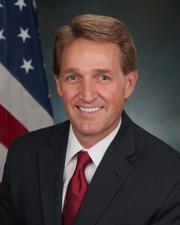 Sen. Jeff Flake (R-AZ)
What it changes
1 change to S.Con.Res. 8
Adds SEC. ____. SENATE POINT OF ORDER AGAINST LEGISLATION THAT CONTAINS EARMARKS wherever appropriate
Adds a sectionInserted: SEC. ____. SENATE POINT OF ORDER AGAINST LEGISLATION THAT CONTAINS EARMARKS.
Inserted: (a) In General.--It shall not be in order in the Senate to consider a bill or resolution introduced in the Senate or the House of Representatives, amendment, amendment between the Houses, or conference report that includes an earmark.
Inserted: (b) Supermajority Waiver and Appeal in the Senate.--
Inserted: (1) Waiver.--This section may be waived or suspended in the Senate only by an affirmative vote of two-thirds of the Members, duly chosen and sworn.
Inserted: (2) Appeal.--An affirmative vote of two-thirds of the Members of the Senate, duly chosen and sworn, shall be required in the Senate to sustain an appeal of the ruling of the Chair on a point of order raised under this section.
Inserted: (c) Consideration.--
Inserted: (1) Procedure.--Upon a point of order being made by any Senator pursuant to subsection (a) against an earmark, and such point of order being sustained, such earmark shall be deemed stricken.
Inserted: (2) Conference report and amendment between the houses procedure.--When the Senate is considering a conference report on, or an amendment between the Houses, upon a point of order being made by any Senator pursuant to subsection (a), and such point of order being sustained, such material contained in such conference report shall be deemed stricken, and the Senate shall proceed to consider the question of whether the Senate shall recede from its amendment and concur with a further amendment, or concur in the House amendment with a further amendment, as the case may be, which further amendment shall consist of only that portion of the conference report or House amendment, as the case may be, not so stricken. Any such motion in the Senate shall be debatable under the same conditions as was the conference report. In any case in which such point of order is sustained against a conference report (or Senate amendment derived from such conference report by operation of this subsection), no further amendment shall be in order.
Inserted: (d) Definitions.--
Inserted: (1) Earmark.--For the purpose of this section, the term "earmark" means a provision or report language included primarily at the request of a Senator or Member of the House of Representatives as certified under paragraph 1(a)(1) of rule XLIV of the Standing Rules of the Senate--
Inserted: (A) providing, authorizing, or recommending a specific amount of discretionary budget authority, credit authority, or other spending authority for a contract, loan, loan guarantee, grant, loan authority, or other expenditure with or to an entity, or targeted to a specific State, locality or Congressional district, other than through a statutory or administrative formula-driven or competitive award process; or
Inserted: (B) that--
Show 5 more inserted paragraphsShow less
Inserted: (i)(I) provides a Federal tax deduction, credit, exclusion, or preference to a particular beneficiary or limited group of beneficiaries under the Internal Revenue Code of 1986; and
Inserted: (II) contains eligibility criteria that are not uniform in application with respect to potential beneficiaries of such provision; or
Inserted: (ii) modifies the Harmonized Tariff Schedule of the United States in a manner that benefits 10 or fewer entities.
Inserted: (2) Determination by the senate.--In the event the Chair is unable to ascertain whether or not the offending provision constitutes an earmark as defined in this subsection, the question of whether the provision constitutes an earmark shall be submitted to the Senate and be decided without debate by an affirmative vote of two-thirds of the Members, duly chosen and sworn.
Inserted: (e) Application.--This section shall not apply to any authorization of appropriations to a Federal entity if such authorization is not specifically targeted to a State, locality or congressional district.
The amendment doesn't say where this goes; the clerk decides.
Original wording
At the appropriate place, insert the following:
Read automatically from the Congressional Record. Check the original before relying on it.
As printed
SA 225. Mr. FLAKE (for himself, Mr. Toomey, Mrs. McCaskill, Mr. Portman, Ms. Ayotta, Mr. Rubio, Mr. Johanns, and Mr. Udall, of Colorado) submitted an amendment intended to be proposed by him to the concurrent resolution S. Con. Res. 8, setting forth the congressional budget for the United States Government for fiscal year 2014, revising the appropriate budgetary levels for fiscal year 2013, and setting forth the appropriate budgetary levels for fiscal years 2015 through 2023; which was ordered to lie on the table; as follows:
At the appropriate place, insert the following:
SEC. ____. SENATE POINT OF ORDER AGAINST LEGISLATION THAT CONTAINS EARMARKS.
(a) In General.--It shall not be in order in the Senate to consider a bill or resolution introduced in the Senate or the House of Representatives, amendment, amendment between the Houses, or conference report that includes an earmark.
(b) Supermajority Waiver and Appeal in the Senate.--
(1) Waiver.--This section may be waived or suspended in the Senate only by an affirmative vote of two-thirds of the Members, duly chosen and sworn.
(2) Appeal.--An affirmative vote of two-thirds of the Members of the Senate, duly chosen and sworn, shall be required in the Senate to sustain an appeal of the ruling of the Chair on a point of order raised under this section.
(c) Consideration.--
(1) Procedure.--Upon a point of order being made by any Senator pursuant to subsection (a) against an earmark, and such point of order being sustained, such earmark shall be deemed stricken.
(2) Conference report and amendment between the houses procedure.--When the Senate is considering a conference report on, or an amendment between the Houses, upon a point of order being made by any Senator pursuant to subsection (a), and such point of order being sustained, such material contained in such conference report shall be deemed stricken, and the Senate shall proceed to consider the question of whether the Senate shall recede from its amendment and concur with a further amendment, or concur in the House amendment with a further amendment, as the case may be, which further amendment shall consist of only that portion of the conference report or House amendment, as the case may be, not so stricken. Any such motion in the Senate shall be debatable under the same conditions as was the conference report. In any case in which such point of order is sustained against a conference report (or Senate amendment derived from such conference report by operation of this subsection), no further amendment shall be in order.
(d) Definitions.--
(1) Earmark.--For the purpose of this section, the term “earmark” means a provision or report language included primarily at the request of a Senator or Member of the House of Representatives as certified under paragraph 1(a)(1) of rule XLIV of the Standing Rules of the Senate--
(A) providing, authorizing, or recommending a specific amount of discretionary budget authority, credit authority, or other spending authority for a contract, loan, loan guarantee, grant, loan authority, or other expenditure with or to an entity, or targeted to a specific State, locality or Congressional district, other than through a statutory or administrative formula-driven or competitive award process; or
(B) that--
(i)(I) provides a Federal tax deduction, credit, exclusion, or preference to a particular beneficiary or limited group of beneficiaries under the Internal Revenue Code of 1986; and
(II) contains eligibility criteria that are not uniform in application with respect to potential beneficiaries of such provision; or
(ii) modifies the Harmonized Tariff Schedule of the United States in a manner that benefits 10 or fewer entities.
(2) Determination by the senate.--In the event the Chair is unable to ascertain whether or not the offending provision constitutes an earmark as defined in this subsection, the question of whether the provision constitutes an earmark shall be submitted to the Senate and be decided without debate by an affirmative vote of two-thirds of the Members, duly chosen and sworn.
(e) Application.--This section shall not apply to any authorization of appropriations to a Federal entity if such authorization is not specifically targeted to a State, locality or congressional district.
Legislative Activity
Stay on top of the latest movement without scrolling through every action
Senate amendment proposed (on the floor): Amendment SA 225 proposed by Senator Murray for Senator Flake.(consideration: CR S2303-2307; text: CR S2304)
March 23, 2013
View full timeline
Senate amendment proposed (on the floor): Amendment SA 225 proposed by Senator Murray for Senator Flake.(consideration: CR S2303-2307; text: CR S2304)
March 23, 2013
Amendment SA 225 proposed by Senator Murray for Senator Flake. (consideration: CR S2303-2307; text: CR S2304) To prohibit earmarks.
March 23, 2013
Proposed amendment SA 225 withdrawn in Senate. (consideration: CR S2305)
March 23, 2013
Senate amendment submitted
March 21, 2013