S.Amdt. 2621
What it does: Adds SEC. 7. UNFUNDED MANDATES ACCOUNTABILITY at the end of the bill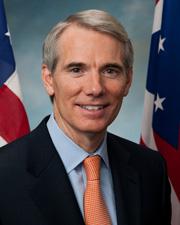 Sen. Rob Portman (R-OH)
What it changes
1 change to S. 1845 · shown in the bill's text
Adds SEC. 7. UNFUNDED MANDATES ACCOUNTABILITY at the end of the bill
Adds a sectionIn S. 1845 · Placed on Calendar Senate
(b) Permitting a Subsequent Agreement.--Nothing in such title IV shall preclude a State whose agreement under such title was terminated from entering into a subsequent agreement under such title on or after the date of the enactment of this Act if the State, taking into account the application of subsection (a), would otherwise meet the requirements for an agreement under such title.
Inserted: SEC. 7. UNFUNDED MANDATES ACCOUNTABILITY.
Inserted: (a) Findings.--Congress finds the following:
Inserted: (1) The public has a right to know the benefits and costs of regulation. Effective regulatory programs provide important benefits to the public, including protecting the environment, worker safety, and human health. Regulations also impose significant costs on individuals, employers, State, local, and tribal governments, diverting resources from other important priorities.
Inserted: (2) Better regulatory analysis and review should improve the quality of agency decisions, increasing the benefits and reducing unwarranted costs of regulation.
Inserted: (3) Disclosure and scrutiny of key information underlying agency decisions should make Government more accountable to the public it serves.
Inserted: (b) Regulatory Impact Analyses for Certain Rules.--
Inserted: (1) Regulatory impact analyses for certain rules.--Section 202 of the Unfunded Mandates Reform Act of 1995 (2 U.S.C. 1532) is amended--
Inserted: (A) by striking the section heading and inserting the following:
Inserted: "SEC. 202. REGULATORY IMPACT ANALYSES FOR CERTAIN RULES.";
Inserted: (B) by redesignating subsections (b) and (c) as subsections (d) and (e), respectively;
Inserted: (C) by striking subsection (a) and inserting the following:
Inserted: "(a) Definition.--In this section, the term 'cost' means the cost of compliance and any reasonably foreseeable indirect costs, including revenues lost as a result of an agency rule subject to this section.
Show 36 more inserted paragraphsShow less
Inserted: "(b) In General.--Before promulgating any proposed or final rule that may have an annual effect on the economy of $100,000,000 or more (adjusted for inflation), or that may result in the expenditure by State, local, and tribal governments, in the aggregate, of $100,000,000 or more (adjusted for inflation) in any 1 year, each agency shall prepare and publish in the Federal Register an initial and final regulatory impact analysis. The initial regulatory impact analysis shall accompany the agency's notice of proposed rulemaking and shall be open to public comment. The final regulatory impact analysis shall accompany the final rule.
Inserted: "(c) Content.--The initial and final regulatory impact analysis under subsection (b) shall include--
Inserted: "(1)(A) an analysis of the anticipated benefits and costs of the rule, which shall be quantified to the extent feasible;
Inserted: "(B) an analysis of the benefits and costs of a reasonable number of regulatory alternatives within the range of the agency's discretion under the statute authorizing the rule, including alternatives that--
Inserted: "(i) require no action by the Federal Government; and
Inserted: "(ii) use incentives and market-based means to encourage the desired behavior, provide information upon which choices can be made by the public, or employ other flexible regulatory options that permit the greatest flexibility in achieving the objectives of the statutory provision authorizing the rule; and
Inserted: "(C) an explanation that the rule meets the requirements of section 205;
Inserted: "(2) an assessment of the extent to which--
Inserted: "(A) the costs to State, local and tribal governments may be paid with Federal financial assistance (or otherwise paid for by the Federal Government); and
Inserted: "(B) there are available Federal resources to carry out the rule;
Inserted: "(3) estimates of--
Inserted: "(A) any disproportionate budgetary effects of the rule upon any particular regions of the Nation or particular State, local, or tribal governments, urban or rural or other types of communities, or particular segments of the private sector; and
Inserted: "(B) the effect of the rule on job creation or job loss, which shall be quantified to the extent feasible; and
Inserted: "(4)(A) a description of the extent of the agency's prior consultation with elected representatives (under section 204) of the affected State, local, and tribal governments;
Inserted: "(B) a summary of the comments and concerns that were presented by State, local, or tribal governments either orally or in writing to the agency; and
Inserted: "(C) a summary of the agency's evaluation of those comments and concerns.";
Inserted: (D) in subsection (d) (as redesignated by subparagraph (B)), by striking "subsection (a)" and inserting "subsection (b)"; and
Inserted: (E) in subsection (e) (as redesignated by subparagraph (B)), by striking "subsection (a)" each place that term appears and inserting "subsection (b)".
Inserted: (2) Technical and conforming amendment.--The table of sections for the Unfunded Mandates Reform Act of 1995 is amended by striking the item relating to section 202 and inserting the following:
Inserted: "Sec. 202. Regulatory impact analyses for certain rules.".
Inserted: (c) Least Burdensome Option or Explanation Required.--Section 205 of the Unfunded Mandates Reform Act of 1995 (2 U.S.C. 1535) is amended by striking section 205 and inserting the following:
Inserted: "SEC. 205. LEAST BURDENSOME OPTION OR EXPLANATION REQUIRED.
Inserted: "Before promulgating any proposed or final rule for which a regulatory impact analysis is required under section 202, the agency shall--
Inserted: "(1) identify and consider a reasonable number of regulatory alternatives within the range of the agency's discretion under the statute authorizing the rule, including alternatives required under section 202(b)(1)(B); and
Inserted: "(2) from the alternatives described under paragraph (1), select the least costly, most cost-effective, or least burdensome alternative that achieves the objectives of the statute.".
Inserted: (d) Inclusion of Application to Independent Regulatory Agencies.--
Inserted: (1) In general.--Section 421(1) of the Congressional Budget and Impoundment Control Act of 1974 (2 U.S.C. 658(1)) is amended by striking ", but does not include independent regulatory agencies".
Inserted: (2) Exemption for monetary policy.--The Unfunded Mandates Reform Act of 1995 (2 U.S.C. 1501 et seq.) is amended by inserting after section 5 the following:
Inserted: "SEC. 6. EXEMPTION FOR MONETARY POLICY.
Inserted: "Nothing in title II, III, or IV shall apply to rules that concern monetary policy proposed or implemented by the Board of Governors of the Federal Reserve System or the Federal Open Market Committee.".
Inserted: (e) Judicial Review.--The Unfunded Mandates Reform Act of 1995 is amended by striking section 401 (2 U.S.C. 1571) and inserting the following:
Inserted: "SEC. 401. JUDICIAL REVIEW.
Inserted: "(a) In General.--For any rule subject to section 202, a party aggrieved by final agency action is entitled to judicial review of an agency's analysis under and compliance with subsections (b)and (c)(1) of section 202 and section 205. The scope of review shall be governed by chapter 7 of title 5, United States Code.
Inserted: "(b) Jurisdiction.--Each court having jurisdiction to review a rule subject to section 202 for compliance with section 553 of title 5, United States Code, or under any other provision of law, shall have jurisdiction to review any claims brought under subsection (a) of this section.
Inserted: "(c) Relief Available.--In granting relief in an action under this section, the court shall order the agency to take remedial action consistent with chapter 7 of title 5, United States Code, including remand and vacatur of the rule.".
Inserted: (f) Effective Date.--This section shall take effect 90 days after the date of enactment of this Act.
Original wording
At the end, add the following:
Read automatically from the Congressional Record. Check the original before relying on it.
As printed
SA 2621. Mr. PORTMAN submitted an amendment intended to be proposed by him to the bill S. 1845, to provide for the extension of certain unemployment benefits, and for other purposes; which was ordered to lie on the table; as follows:
At the end, add the following:
SEC. 7. UNFUNDED MANDATES ACCOUNTABILITY.
(a) Findings.--Congress finds the following:
(1) The public has a right to know the benefits and costs of regulation. Effective regulatory programs provide important benefits to the public, including protecting the environment, worker safety, and human health. Regulations also impose significant costs on individuals, employers, State, local, and tribal governments, diverting resources from other important priorities.
(2) Better regulatory analysis and review should improve the quality of agency decisions, increasing the benefits and reducing unwarranted costs of regulation.
(3) Disclosure and scrutiny of key information underlying agency decisions should make Government more accountable to the public it serves.
(b) Regulatory Impact Analyses for Certain Rules.--
(1) Regulatory impact analyses for certain rules.--Section 202 of the Unfunded Mandates Reform Act of 1995 (2 U.S.C. 1532) is amended--
(A) by striking the section heading and inserting the following:
“SEC. 202. REGULATORY IMPACT ANALYSES FOR CERTAIN RULES.”;
(B) by redesignating subsections (b) and (c) as subsections (d) and (e), respectively;
(C) by striking subsection (a) and inserting the following:
“(a) Definition.--In this section, the term ‘cost' means the cost of compliance and any reasonably foreseeable indirect costs, including revenues lost as a result of an agency rule subject to this section.
“(b) In General.--Before promulgating any proposed or final rule that may have an annual effect on the economy of $100,000,000 or more (adjusted for inflation), or that may result in the expenditure by State, local, and tribal governments, in the aggregate, of $100,000,000 or more (adjusted for inflation) in any 1 year, each agency shall prepare and publish in the Federal Register an initial and final regulatory impact analysis. The initial regulatory impact analysis shall accompany the agency's notice of proposed rulemaking and shall be open to public comment. The final regulatory impact analysis shall accompany the final rule.
“(c) Content.--The initial and final regulatory impact analysis under subsection (b) shall include--
“(1)(A) an analysis of the anticipated benefits and costs of the rule, which shall be quantified to the extent feasible;
“(B) an analysis of the benefits and costs of a reasonable number of regulatory alternatives within the range of the agency's discretion under the statute authorizing the rule, including alternatives that--
“(i) require no action by the Federal Government; and
“(ii) use incentives and market-based means to encourage the desired behavior, provide information upon which choices can be made by the public, or employ other flexible regulatory options that permit the greatest flexibility in achieving the objectives of the statutory provision authorizing the rule; and
“(C) an explanation that the rule meets the requirements of section 205;
“(2) an assessment of the extent to which--
“(A) the costs to State, local and tribal governments may be paid with Federal financial assistance (or otherwise paid for by the Federal Government); and
“(B) there are available Federal resources to carry out the rule;
“(3) estimates of--
“(A) any disproportionate budgetary effects of the rule upon any particular regions of the Nation or particular State, local, or tribal governments, urban or rural or other types of communities, or particular segments of the private sector; and
“(B) the effect of the rule on job creation or job loss, which shall be quantified to the extent feasible; and
“(4)(A) a description of the extent of the agency's prior consultation with elected representatives (under section 204) of the affected State, local, and tribal governments;
“(B) a summary of the comments and concerns that were presented by State, local, or tribal governments either orally or in writing to the agency; and
“(C) a summary of the agency's evaluation of those comments and concerns.”;
(D) in subsection (d) (as redesignated by subparagraph (B)), by striking “subsection (a)” and inserting “subsection (b)”; and
(E) in subsection (e) (as redesignated by subparagraph (B)), by striking “subsection (a)” each place that term appears and inserting “subsection (b)”.
(2) Technical and conforming amendment.--The table of sections for the Unfunded Mandates Reform Act of 1995 is amended by striking the item relating to section 202 and inserting the following:
“Sec. 202. Regulatory impact analyses for certain rules.”.
(c) Least Burdensome Option or Explanation Required.--Section 205 of the Unfunded Mandates Reform Act of 1995 (2 U.S.C. 1535) is amended by striking section 205 and inserting the following:
“SEC. 205. LEAST BURDENSOME OPTION OR EXPLANATION REQUIRED.
“Before promulgating any proposed or final rule for which a regulatory impact analysis is required under section 202, the agency shall--
“(1) identify and consider a reasonable number of regulatory alternatives within the range of the agency's discretion under the statute authorizing the rule, including alternatives required under section 202(b)(1)(B); and
“(2) from the alternatives described under paragraph (1), select the least costly, most cost-effective, or least burdensome alternative that achieves the objectives of the statute.”.
(d) Inclusion of Application to Independent Regulatory Agencies.--
(1) In general.--Section 421(1) of the Congressional Budget and Impoundment Control Act of 1974 (2 U.S.C. 658(1)) is amended by striking “, but does not include independent regulatory agencies”.
(2) Exemption for monetary policy.--The Unfunded Mandates Reform Act of 1995 (2 U.S.C. 1501 et seq.) is amended by inserting after section 5 the following:
“SEC. 6. EXEMPTION FOR MONETARY POLICY.
“Nothing in title II, III, or IV shall apply to rules that concern monetary policy proposed or implemented by the Board of Governors of the Federal Reserve System or the Federal Open Market Committee.”.
(e) Judicial Review.--The Unfunded Mandates Reform Act of 1995 is amended by striking section 401 (2 U.S.C. 1571) and inserting the following:
“SEC. 401. JUDICIAL REVIEW.
“(a) In General.--For any rule subject to section 202, a party aggrieved by final agency action is entitled to judicial review of an agency's analysis under and compliance with subsections (b)and (c)(1) of section 202 and section 205. The scope of review shall be governed by chapter 7 of title 5, United States Code.
“(b) Jurisdiction.--Each court having jurisdiction to review a rule subject to section 202 for compliance with section 553 of title 5, United States Code, or under any other provision of law, shall have jurisdiction to review any claims brought under subsection (a) of this section.
“(c) Relief Available.--In granting relief in an action under this section, the court shall order the agency to take remedial action consistent with chapter 7 of title 5, United States Code, including remand and vacatur of the rule.”.
(f) Effective Date.--This section shall take effect 90 days after the date of enactment of this Act.
Legislative Activity
Stay on top of the latest movement without scrolling through every action
Senate amendment submitted
January 8, 2014