To adjust phase-ins of flood insurance rate increases.
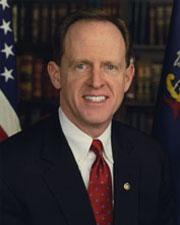 Sen. Patrick J. Toomey (R-PA)
Legislative Activity
Stay on top of the latest movement without scrolling through every action
Senate amendment not agreed to: Amendment SA 2707 not agreed to in Senate by Yea-Nay Vote. 34 - 65. Record Vote Number: 16.
January 30, 2014
View full timeline
Senate amendment not agreed to: Amendment SA 2707 not agreed to in Senate by Yea-Nay Vote. 34 - 65. Record Vote Number: 16.
January 30, 2014
Roll call votes on amendments in Senate: Amendment SA 2707 not agreed to in Senate by Yea-Nay Vote. 34 - 65. Record Vote Number: 16.
January 30, 2014
Considered by Senate. (consideration: CR S613, S615-617)
January 30, 2014
Amendment SA 2707 not agreed to in Senate by Yea-Nay Vote. 34 - 65. Record Vote Number: 16.
January 30, 2014
Senate amendment proposed (on the floor): Amendment SA 2707 proposed by Senator Toomey.(consideration: CR S577-579, S579-581; text as modified: CR S577-579)
January 29, 2014
Amendment SA 2707 proposed by Senator Toomey. (consideration: CR S577-579, S579-581; text as modified: CR S577-579) To adjust phase-ins of flood insurance rate increases.
January 29, 2014
Senate amendment submitted
January 28, 2014
Votes
1 roll call on this amendment
Text
Modified
HOMEOWNER FLOOD INSURANCE AFFORDABILITY ACT OF 2014

The PRESIDING OFFICER. Under the previous order, the Senate will
resume consideration of the motion to proceed to S. 1926, which the
clerk will report.
The assistant legislative clerk read as follows:

Motion to proceed to S. 1926, a bill to delay the
implementation of certain provisions of the Biggert-Waters
Flood Insurance Reform Act of 2012 and to reform the National
Association of Registered Agents and Brokers, and for other
purposes.

The PRESIDING OFFICER. Under the previous order, all postcloture time
is yielded back and the motion to proceed is agreed to.
The clerk will report the bill by title.
The assistant legislative clerk read as follows:

A bill (S. 1926) to delay the implementation of certain
provisions of the Biggert-Waters Flood Insurance Reform Act
of 2012 and to reform the National Association of Registered
Agents and Brokers, and for other purposes.

Amendments Nos. 2702, 2704, 2705, and 2698

The PRESIDING OFFICER. Under the previous order, Amendments Nos.
2702, 2704, 2705, and 2698 are considered proposed and agreed to.
The amendments are as follows:

amendment no. 2702

(Purpose: To exempt certain loans from the escrow requirement under
section 102(d)(1) of the Flood Disaster Protection Act of 1973)

At the end of title I, add the following:

SEC. 1__. EXCEPTIONS TO ESCROW REQUIREMENT FOR FLOOD
INSURANCE PAYMENTS.

(a) In General.--Section 102(d)(1) of the Flood Disaster
Protection Act of 1973 (42 U.S.C. 4012a(d)(1)) is amended--
(1) in subparagraph (A), in the second sentence, by
striking ``subparagraph (C)'' and inserting ``subparagraph
(B)''; and
(2) in subparagraph (B)--
(A) in clause (ii), by redesignating subclauses (I) and
(II) as items (aa) and (bb), respectively, and adjusting the
margins accordingly;
(B) by redesignating clauses (i) and (ii) as subclauses (I)
and (II), respectively, and adjusting the margins
accordingly;
(C) in the matter preceding subclause (I), as redesignated
by subparagraph (B), by striking ``(A) or (B), if--'' and
inserting the following: ``(A)--
``(i) if--'';
(D) by striking the period at the end and inserting ``;
or''; and
(E) by adding at the end the following
``(ii) in the case of a loan that--

``(I) is in a junior or subordinate position to a senior
lien secured by the same residential improved real estate or
mobile home for which flood insurance is being provided at
the time of the origination of the loan;
``(II) is secured by residential improved real estate or a
mobile home that is part of a condominium, cooperative, or
other project development, if the residential improved real
estate or mobile home is covered by a flood insurance policy
that--

``(aa) meets the requirements that the regulated lending
institution is required to enforce under subsection (b)(1);
``(bb) is provided by the condominium association,
cooperative, homeowners association, or other applicable
group; and
``(cc) the premium for which is paid by the condominium
association, cooperative, homeowners association, or other
applicable group as a common expense;

``(III) is secured by residential improved real estate or a
mobile home that is used as collateral for a business
purpose;
``(IV) is a home equity line of credit;
``(V) is a nonperforming loan; or
``(VI) has a term of not longer than 12 months.''.

(b) Applicability.--
(1) In general.--
(A) Required application.--The amendments to section
102(d)(1) of the Flood Disaster Protection Act of 1973 (42
U.S.C. 4012a(d)(1)) made by section 100209(a) of the Biggert-
Waters Flood Insurance Reform Act of 2012 (Public Law 112-
141; 126 Stat. 920) and by subsection (a) of this section
shall apply to any loan that is originated, refinanced,
increased, extended, or renewed on or after January 1, 2016.
(B) Optional application.--
(i) Definitions.--In this subparagraph--

(I) the terms ``Federal entity for lending regulation'',
``improved real estate'', ``regulated lending institution'',
and ``servicer'' have the meanings given the terms in section
3 of the Flood Disaster Protection Act of 1973 (42 U.S.C.
4003);
(II) the term ``outstanding loan'' means a loan that--

(aa) is outstanding as of January 1, 2016;
(bb) is not subject to the requirement to escrow premiums
and fees for flood insurance under section 102(d)(1) of the
Flood Disaster Protection Act of 1973 (42 U.S.C. 4012a(d)(1))
as in effect on July 5, 2012; and
(cc) would, if the loan had been originated, refinanced,
increased, extended, or renewed on or after January 1, 2016,
be subject to the requirements under section 102(d)(1)(A) of
the Flood Disaster Protection Act of 1973, as amended; and

(III) the term ``section 102(d)(1)(A) of the Flood Disaster
Protection Act of 1973, as amended'' means section
102(d)(1)(A) of the Flood Disaster Protection Act of 1973 (42
U.S.C. 4012a(d)(1)(A)), as amended by--

(aa) section 100209(a) of the Biggert-Waters Flood
Insurance Reform Act of 2012 (Public Law 112-141; 126 Stat.
920); and
(bb) subsection (a) of this section.
(ii) Option to escrow flood insurance payments.--Each
Federal entity for lending regulation (after consultation and
coordination with the Federal Financial Institutions
Examination Council) shall, by regulation, direct that each
regulated lending institution or servicer of an outstanding
loan shall offer and make available to a borrower the option
to have the borrower's payment of premiums and fees for flood
insurance under the National Flood Insurance Act of 1968 (42
U.S.C. 4001 et seq.), including the escrow of such payments,
be treated in the same manner provided under section
102(d)(1)(A) of the Flood Disaster Protection Act of 1973, as
amended.
(2) Repeal of 2-year delay on applicability.--Subsection
(b) of section 100209 of the Biggert-Waters Flood Insurance
Reform Act of 2012 (Public Law 112-141; 126 Stat. 920) is
repealed.
(3) Rule of construction.--Nothing in this section or the
amendments made by this section shall be construed to
supersede, during the period beginning on July 6, 2012 and
ending on December 31, 2015, the requirements under section
102(d)(1) of the Flood Disaster Protection Act of 1973 (42
U.S.C. 4012a(d)(1)), as in effect on July 5, 2012.

amendment no. 2704

(Purpose: To require the Administrator of the Federal Emergency
Management Agency to make publicly available data that provide the
basis for risk premium rates for flood insurance, to allow monthly
installment payments for premiums, and to ensure that mitigation
activities completed by an owner or lessee of real property are
accounted for when determining risk premium rates for flood insurance)

At the end of section 103, add the following:
(h) Disclosure.--
(1) Change in rates under biggert-waters.--Not later than
the date that is 6 months before the date on which any change
in risk premium rates for flood insurance coverage under the
National Flood Insurance Program resulting from the amendment
made by section 100207 of the Biggert-Waters Flood Insurance
Reform Act of 2012 (Public Law 112-141; 126 Stat. 919) is
implemented, the Administrator shall make publicly available
the rate tables and underwriting guidelines that provide the
basis for the change.
(2) Change in rates under this act.--Not later than the
date that is 6 months before the date on which any change in
risk premium rates for flood insurance coverage under the
National Flood Insurance Program resulting from this Act or
any amendment made by this Act is implemented, the
Administrator shall make publicly available the rate tables
and underwriting guidelines that provide the basis for the
change.
(3) Report on policy and claims data.--
(A) In general.--Not later than 90 days after the date of
enactment of this Act, the Administrator shall submit to
Congress a report on the feasibility of--
(i) releasing property-level policy and claims data for
flood insurance coverage under the National Flood Insurance
Program; and
(ii) establishing guidelines for releasing property-level
policy and claims data for flood insurance coverage under the
National Flood Insurance Program in accordance with section
552a of title 5, United States Code (commonly known as the
``Privacy Act of 1974'').
(B) Contents.--The report submitted under subparagraph (A)
shall include--
(i) an analysis and assessment of how releasing property-
level policy and claims data for flood insurance coverage
under the National Flood Insurance Program will aid policy
holders and insurers to understand how the Administration
determines actuarial premium rates and assesses flood risks;
and
(ii) recommendations for protecting personal information in
accordance with section 552a of title 5, United States Code
(commonly known as the ``Privacy Act of 1974'').
At the end of title I, add the following:

SEC. 110. MONTHLY INSTALLMENT PAYMENTS FOR PREMIUMS.

Section 1308(g) of the National Flood Insurance Act of 1968
(42 U.S.C. 4015(g)) is amended by striking ``either annually
or in more frequent installments'' and inserting ``annually,
monthly, or in other installments that are more frequent than
annually''.

[[Page S566]]

SEC. 111. ACCOUNTING FOR FLOOD MITIGATION ACTIVITIES IN
ESTIMATES OF PREMIUM RATES.

Section 1307(a)(1) of the National Flood Insurance Act of
1968 (42 U.S.C. 4014(a)(1)) is amended by amending
subparagraph (A) to read as follows:
``(A) based on consideration of--
``(i) the risk involved and accepted actuarial principles;
and
``(ii) the flood mitigation activities that an owner or
lessee has undertaken on a property, including differences in
the risk involved due to land use measures, floodproofing,
flood forecasting, and similar measures,''.

amendment no. 2705

(Purpose: To clarify that communities that successfully appeal flood
elevation determinations based on errors by the Federal Emergency
Management Agency through the Scientific Resolution Panel are eligible
for reimbursements for expenses incurred in such appeals)

In section 106, strike subsection (a) and insert the
following:
(a) In General.--Section 1363(f) of the National Flood
Insurance Act of 1968 (42 U.S.C. 4104(f)) is amended--
(1) in the first sentence, by inserting after ``as the case
may be,'' the following: ``or, in the case of an appeal that
is resolved by submission of conflicting data to the
Scientific Resolution Panel provided for in section 1363A,
the community,''; and
(2) by striking the second sentence and inserting the
following: ``The Administrator may use such amounts from the
National Flood Insurance Fund established under section 1310
as may be necessary to carry out this subsection.''.

amendment no. 2698

(Purpose: To increase the amount of substantial improvement to a
property that triggers the loss of flood insurance subsidies)

Purpose: To increase the amount of substantial improvement to a
property that triggers the loss of flood insurance subsidies.

At the end of title I, add the following:

SEC. 1__. HOME IMPROVEMENT FAIRNESS.

Section 1307(a)(2)(E)(ii) of the National Flood Insurance
Act of 1968 (42 U.S.C. 4014(a)(2)(E)(ii)) is amended by
striking ``30 percent'' and inserting ``50 percent''.

The PRESIDING OFFICER. The Senator from New York.

Amendment No. 2708

Mrs. GILLIBRAND. Mr. President, I ask unanimous consent to call up my
amendment No. 2708 and ask for its consideration.
The PRESIDING OFFICER. Without objection, it is so ordered.
The clerk will report.
The assistant legislative clerk read as follows:

The Senator from New York [Mrs. Gillibrand] proposes an
amendment numbered 2708.

Mrs. GILLIBRAND. Mr. President, I ask unanimous consent that the
reading of the amendment be dispensed with.
The PRESIDING OFFICER. Without objection, it is so ordered.
The amendment is as follows:

(Purpose: To require the Administrator of the Federal Emergency
Management Agency to issue guidelines for methods, other than building
elevation, that owners of certain urban residential buildings may
implement to mitigate against flood risk)

At the end of title I, add the following:

SEC. 1__. FLOOD MITIGATION METHODS FOR URBAN BUILDINGS.

(a) In General.--Not later than 1 year after the date of
enactment of this Act, the Administrator shall issue
guidelines for property owners that--
(1) provide alternative methods of mitigation, other than
building elevation, to reduce flood risk to urban residential
buildings that cannot be elevated due to their structural
characteristics, including--
(A) types of building materials; and
(B) types of floodproofing; and
(2) inform property owners about how the implementation of
mitigation methods described in paragraph (1) may affect risk
premium rates for flood insurance coverage under the National
Flood Insurance Program.
(b) Calculation of Risk Premium Rates.--In calculating the
risk premium rate charged for flood insurance for a property
under section 1308 of the National Flood Insurance Act of
1968 (42 U.S.C. 4015), the Administrator shall take into
account the implementation of any mitigation method
identified by the Administrator in the guidance issued under
subsection (a) of this section.

Mrs. GILLIBRAND. Mr. President, I first wish to thank Senator
Menendez, Senator Landrieu, and Senator Isakson for their tremendous
leadership on the Homeowner Flood Insurance Affordability Act, of which
I am a very proud cosponsor, and for working with me and my staff on an
amendment that is so critical to so many New Yorkers who are still
recovering from Superstorm Sandy.
My amendment is quite simple and common sense. It is aimed to help
homeowners who are currently stuck in a bureaucratic ditch that is
impossible for them to climb out of due to the immovable reality of the
buildings in which they live.
Under today's FEMA policy, flood insurance premium rates are based on
the elevation of the house relative to the base flood elevation, which
is the elevation that FEMA calculates that floodwaters have a 1-percent
chance of rising to in any given year.
Under normal circumstances, homes can be elevated to avoid high
insurance rates that are assessed on homes that are built below the
base flood elevation in special flood hazard areas, but in places such
as New York and New Jersey this is impossible for owners of older urban
homes, such as brownstones, row houses, and multifamily buildings,
which can predate the Civil War, which in many instances cannot be
raised due to structural characteristics and were built before flood
maps were in place.
When their homes are mapped in a flood zone, they are simply left
without any option to lower their flood insurance premiums, which can
be as high as tens of thousands of dollars each year. To fix this, my
amendment would require FEMA to provide a uniform set of guidance that
provides FEMA-approved methods of mitigation for homeowners who simply
cannot elevate their homes. This amendment would require FEMA to look
at whether a homeowner has implemented any of the prescribed
alternatives and take that into consideration when calculating a home's
flood insurance risk premium. By providing a clear set of mitigation
alternatives to these homeowners, this amendment will help New Yorkers
and homeowners across the country who cannot elevate their homes to
reduce their flood risk. It will help homeowners prevent costly damage
to their homes during the next storm or flood and save money and
potential disaster recovery costs in the long term.
I suggest the absence of a quorum.
The PRESIDING OFFICER. The clerk will call the roll.
The assistant legislative clerk proceeded to call the roll
Mr. VITTER. Mr. President, I ask unanimous consent that the order for
the quorum call be rescinded.
The PRESIDING OFFICER. Without objection, it is so ordered.
Mr. VITTER. Mr. President, I rise in strong support of the flood
insurance fix bill on the floor today. I urge my colleagues on a
bipartisan basis to come together and pass this first crucial step
toward getting it right with the National Flood Insurance Program. It
is important for America. It is important for millions upon millions of
American homeowners, not just in Louisiana, not just in Florida, but in
every State. Every State in the country is absolutely affected.
I also specifically urge my colleagues to defeat the Toomey
amendment, which I think is very well intended but will not get the job
done, and to waive the budget point of order, which is a largely
technical point of order. I will explain each of those in turn.
First of all, I will explain the need for this bill to get things
right. All of us came together over a year ago and passed the so-called
Biggert-Waters Act, to reauthorize the National Flood Insurance Program
and to reform it in important ways. We needed to do that broad-brush.
The program needed to be continued, and not just in short-term fits and
starts, which had been the pattern for many years. In fact, in 2010 it
was so bad that we actually let the program lapse four different times
by inaction, shutting down thousands upon thousands of real estate
closings that we needed to build our economy, shutting those down every
time. So we needed that reauthorization. We needed and still need
reforms of the program. We need to build up the program to make it
fiscally sustainable, to make sure that over time we get revenues,
premiums coming in that cover the full cost of the program. There is no
debate about that. That is why we passed that bill.
What was not foreseen was that in some significant number of cases,
those reforms, once they were put into effect, would actually lead to
completely unaffordable rate increases--a completely unsustainable path
forward that would not even get us toward the goal of building up the
fund and building up the program to make it fiscally sustainable. No
expert predicted that beforehand. No one from FEMA said:

[[Page S567]]

You will have some rates that are completely unaffordable. No outside
insurance experts said that. But once the details of the
reauthorization began to be put in place, that became very apparent. We
do not know exactly how many cases we would have like this, but we know
they are not just isolated cases. We know they are not just in coastal
communities. They are in every State, to some extent or another, around
the country. Over time, Members of both parties from every State have
begun to understand that, which brings us together hopefully in a
constructive way on the floor today.
Certainly, that situation is dire and the threat is very real in
Louisiana. Months ago, for instance, I visited a neighborhood in St.
Charles Parish, which is part of southeast Louisiana, right on the
Mississippi River. I visited a very nice, solid middle-class
neighborhood. I met with many homeowners there. They presented me with
a box--a box this big, at least--full of keys, house keys. They were
these folks' actual house keys. They were saying: If this is not fixed,
if this is not done right in time, we are going to have to turn these
keys in to the banks, to the government, to whomever, because we would
face not only premium increases. We had all accepted premium increases
as part of the reform and as part of the reauthorization, but these
would be completely unaffordable, unsustainable increases--literally
going to $12,000, $18,000 or $27,000 a year--not on a millionaire's
home but on a modest middle-class home. That just doesn't work.

These folks were saying very sincerely, very directly: Here are my
home keys because that is where this is headed.
That is not right on so many different levels. First and foremost, it
is not right for those Americans who have lived by the rules every step
of the way, who built to the right elevation when they built their
home, who got the flood insurance required by law, required by
prudence, and paid all of their premiums. They went through mitigation
programs, if they could, to raise their homes in many cases.
These are folks who are not living right on the coast, who are not
choosing highly dangerous areas, and who do not have second homes,
beach homes. We are not talking about that at all. We are talking about
a solid middle-class neighborhood way off the gulf coast.
These are people who followed the rules every step of the way who
still failed the prospect of those completely unaffordable increases.
That is not right, and it is not fair.
On a second level, that reality threatens whole communities and it
threatens our economy because if that were allowed to happen in any
significant number of cases, it would be an economic spiral downward.
Banks would be burdened with foreclosures. Local businesses would be
hurt significantly. Whole communities would be in an economic spiral
downward.
We are not just talking about second homes on a beach. We are not
talking about that at all in Louisiana. This bill does not give any
relief regarding second homes, for instance. We are talking about a lot
of communities and a real and unsustainable hit to our economy.
On a third and final level, that reality would ensure we don't even
get to the goal of these reforms, which is to make the system whole and
fiscally sustainable. To do that we need more folks in the National
Flood Insurance Program, not folks leaving and turning in their keys.
That will kill any effort to make the program solid fiscally and
sustainable fiscally. So on every level we cannot allow this to happen.
The Menendez-Isakson bill, with the help of many other Members,
including myself, was put together to get us to the right place. It
takes the important first step to make sure we get it right, FEMA does
the mapping correctly--which they are not doing in some cases now--and
FEMA does the affordability study mandated in the original Biggert-
Waters, but which FEMA has not even begun yet. We do all those things
to get this right and avoid completely unaffordable rate increases.
I urge my colleagues on a bipartisan basis to support this good bill.
We also need your support in defeating the Toomey amendment and in
waiving the budget point of order. Let me speak about those briefly.
Senator Toomey's amendment is very well intended, but it falls short,
in my opinion. It limits any delay in rate increases to 2 years, and
some rate increases continue for those 2 years. Most importantly, it
doesn't mandate and ensure that FEMA ever gets through this
affordability study, ever makes recommendations to Congress for the
ultimate fix, and doesn't give us any time to react and legislate in
that area. It doesn't ensure in any way that FEMA gets its mapping
right based on true sound science and engineering methodologies.
That is just kicking the can down the road and not ensuring in any
meaningful way that we are going to get it right. That simply isn't
good enough.
We need to tie in any delay to figuring out the ultimate fix by
having FEMA complete its affordability study, by making FEMA make
recommendations to us, by giving us 6 months to act on those
recommendations, by mandating that FEMA do its mapping correctly and
not have rate increases before it rushes forward with incorrect
mapping, which is going on right now in some cases.
That is what the underlying bill does. That is what the Toomey
amendment does not do--as well intended as it is.
Secondly, there will be a budget point-of-order vote, and we do need
60 votes to waive that budget point of order. I will vote ``yes'' to
waive it--as a strong fiscal conservative--because this is necessary to
get this national flood insurance system right and to make it fiscally
sustainable.
In fact, over the 10-year budget window that we normally use in
scoring, this bill has no score over those 10 years. It only has some
scores in some intermediate periods of time, which gives rise to the
budget point of order.
I urge my colleagues to vote to waive that point of order, knowing
there is no score over 10 years and also knowing that, quite frankly,
the fiscal assumptions about the current law are enormously flawed. The
notion that we are going to make the National Flood Insurance Program
more stable and more fiscally sustainable by having a bunch of premiums
go up to $27,000 a year on a modest middle-class home is crazy. That is
not going to get us to a better place. That is going to get to us a
worse place. That is going to shrink the program and have people leave
the program--paying no premiums, not paying higher premiums.
Yet raising insurance premiums has to be part of the solution, but
unaffordable premium increases aren't part of the solution because
people can't afford to pay them. So they will pay zero instead of
something substantial. They will leave the program instead of putting
more homeowners and properties in the program, which is essential to
get to a strong and stable fiscal situation.
Again, on a bipartisan basis, I urge my colleagues to support this
bill--it is a very important step to stabilize and fix the situation--
to defeat the Toomey amendment and to waive the budget point of order,
which is absolutely necessary in this process to support a good bill.
I yield the floor.
The PRESIDING OFFICER. The Senator from New Jersey.
Mr. MENENDEZ. I thank the Senator from Louisiana for his input into
the legislation, his work, and his advocacy. I agree with him on the
other underlying statements that he made, particularly as it relates to
the necessity for the legislation, as well as the opposition to the
Toomey amendment.
I understand what Senator Toomey is trying to do, but I agree it
doesn't meet the ultimate challenge. I agree as well on the budget
point of order for the reason Senator Vitter says.
I thank the Senator for his support.
I yield the floor, and I suggest the absence of a quorum.
The PRESIDING OFFICER. The clerk will call the roll.
The assistant legislative clerk proceeded to call the roll.
Mr. MENENDEZ. I ask unanimous consent that the order for the quorum
call be rescinded.
The PRESIDING OFFICER. Without objection, it is so ordered.
Mr. MENENDEZ. Mr. President, I ask unanimous consent that the time
that takes place during any subsequent quorum calls--or the subsequent
quorum call that I am going to ask

[[Page S568]]

for--be equally divided on the Gillibrand amendment.
The PRESIDING OFFICER. Without objection, it is so ordered.
Mr. MENENDEZ. I suggest the absence of a quorum.
The PRESIDING OFFICER. The clerk will call the roll.
The assistant legislative clerk proceeded to call the roll.
Mr. DURBIN. I ask unanimous consent that the order for the quorum
call be rescinded.
The PRESIDING OFFICER. Without objection, it is so ordered.

Tribute to Hadiya Pendleton

Mr. DURBIN. Mr. President, I rise today to pay tribute to Hadiya
Pendleton, lost to gunfire 1 year ago today, January 29, 2013. She was
15 years old. She was gunned down while she was standing with friends
at a park in Chicago's South Side.
She was a very talented, caring girl with a bright future. She was a
sophomore at King College Prep, an honor student, and a majorette in
the school band. This is her photograph. Those who knew her talk about
her warm heart, her big smile, and what a great friend she was to all
of those around her.
A week before her death, Hadiya was in Washington, DC, performing
with her school band for President Barack Obama's inaugural
celebration. She was absolutely thrilled that as a high school student
she could come out and perform for the President she loved.
Days afterwards she was gunned down, murdered by men who allegedly
mistook Hadiya and her friends for members of a rival street gang. I
join with those in Chicago and across America who mourn this grim
anniversary and I extend my condolences to her family.

This last week or two--even longer now--it has been pretty cold in
Chicago, bitter cold: snow, ice, with people not going outside much.
But I wanted to make a trip Saturday morning to visit Hadiya's mom and
dad on the occasion of this sad anniversary. Her mom Cleo, her father
Nate, and her 11-year-old brother Nate, Jr., as well as the extended
family, are mourning her loss.
We sat in their apartment Saturday morning and talked a little about
her. We talked about what it meant, what the reaction had been. The
parents were heartened that King College Prep had not forgotten their
daughter, that today they were having a special observance and ceremony
to remember her. It meant a lot to her mom and dad.
They have been here before my judiciary subcommittee when we
discussed issues involving gun violence. They have been on television.
They have made the rounds. But when you are there with them in their
apartment, you know that after the cameras are gone and all the
visitors are gone, it is still a sad remembrance of a beautiful young
girl whose life was cut short.
No family should have to experience what they went through, but like
so many families who have lost loved ones to sudden violence, the
Pendletons have decided to dedicate themselves to turning their pain
into purpose. They are working to reduce the scourge of gun violence so
that other families can be spared. They have established the Hadiya
Pendleton Foundation in Chicago to create a safe space for city youth
and provide afterschool enrichment programs to help kids avoid the
violence on the streets.
Incidentally, Hadiya was once featured in a public service
announcement video where she said: It is your job as students to say no
to gangs and yes to a great future. The foundation named after her will
help other students reach that goal. I commend the family for their
work on this foundation. I believe it will make a difference.
Hadiya's family, as I mentioned, traveled to Washington to talk about
our laws and how to change them to avoid future violence. In
particular, they have spoken out about the need to crack down on the
gun supply to gang members. The current Federal laws on what we call
straw purchasing and gun trafficking are an embarrassment. They are too
weak. They need to be strengthened. I have joined with my colleague
Senator Mark Kirk, my Republican colleague, in a bipartisan effort, and
a number of our colleagues have joined us to introduce tough
legislation to crack down on the straw purchasing and trafficking. We
call this bill the ``Stop Illegal Trafficking in Firearms Act.'' Mark
Kirk likes to call it the Hadiya Pendleton Act. We agreed to name that
key section after her since we believe this legislation just might
reduce the senseless gang shootings such as the one that took her life.
Straw purchasing, for any who don't understand it, is when a thug's
girlfriend, who has no criminal record, goes to buy the gun and then
hands it to him to commit a crime. He can't buy it. He couldn't walk in
the store and buy it. He could never pass the background check, but she
does. And when she passes it, she hands him the gun, and unfortunately
violence and death can be the result.
Last April, our antitrafficking legislation got 58 votes on the floor
of the Senate--58 votes--to stop the trafficking of guns into the hands
of criminals. That was a few votes short of what we needed. We are
close. Our job is to convince just two or three more Senators to join
us.
The Pendleton family understands that even though this law seems so
obvious, so reasonable, and can save the lives of innocent people, it
is going to be hard to come by. There is a gun lobby here in this town.
They are very powerful. Their allies will do everything they can to
fight even the most popular commonsense reform, such as cracking down
on illegal gun trafficking.
The gun lobby says we shouldn't pass any new gun laws and that we
should just enforce the laws already on the books. Actually, the gun
lobby is in court every day trying to strike down the laws already on
the books. But the bottom line is the gun lobby always seems to oppose
laws that might reduce gun sales. They just want volume--volume of
firearms sold. If they had their way, no questions would be asked.
It is time to crack down on the sale of guns that end up in the hands
of criminals and gang members. We need to push forward in Congress and
statehouses and in the law enforcement community with strong efforts to
cut off the supply of straw-purchased, illegally trafficked guns. The
path may not be easy but it is the right path. And if we succeed, we
will prevent crimes and save lives.
I want to commend the Pendleton family for the courage they have
shown in the face of their tragic loss. I commend them for their
efforts to try to spare other families. I hope lawmakers will reflect
for one brief moment about this good family, who lost this great
daughter and now has dedicated a big part of their lives to preventing
shootings in the future. We owe Hadiya and her mom and dad and her
memory our best efforts to make this a safer America.
Mr. President, I yield the floor, and I suggest the absence of a
quorum.
The PRESIDING OFFICER. The clerk will call the roll.
The assistant legislative clerk proceeded to call the roll.
Mr. HELLER. Mr. President, I ask unanimous consent that the order for
the quorum call be rescinded.
The PRESIDING OFFICER. Without objection, it is so ordered.

Amendment No. 2700

Mr. HELLER. Mr. President, I ask unanimous consent that the pending
amendment be set aside and that I be allowed to call up amendment No.
2700.
The PRESIDING OFFICER. Without objection, it is so ordered.
The clerk will report the amendment.
The assistant legislative clerk read as follows:

The Senator from Nevada [Mr. Heller] proposes amendment
numbered 2700.

Mr. HELLER. I ask unanimous consent that the reading of the amendment
be dispensed with.
The PRESIDING OFFICER. Without objection, it is so ordered.
The amendment is as follows:

(Purpose: To clarify that any private flood insurance policy accepted
by a State shall satisfy the mandatory purchase requirement under the
Flood Disaster Protection Act of 1973)

At the end of title I, add the following:

SEC. 1__. AUTHORITY OF STATES TO REGULATE PRIVATE FLOOD
INSURANCE.

Section 102(b)(7) of the Flood Disaster Protection Act of
1973 (42 U.S.C. 4012a(b)(7)) is amended to read as follows:
``(7) Private flood insurance defined.--In this subsection,
the term `private flood insurance' means an insurance policy
that--
``(A) provides flood insurance coverage;
``(B) is issued by an insurance company that is--

[[Page S569]]

``(i) licensed, admitted, or otherwise approved to engage
in the business of insurance in the State or jurisdiction in
which the insured building is located, by the insurance
regulator of that State or jurisdiction; or
``(ii) eligible as a nonadmitted insurer to provide
insurance in the State or jurisdiction where the property to
be insured is located, in accordance with section 524 of the
Dodd-Frank Wall Street Reform and Consumer Protection Act (15
U.S.C. 8204); and
``(C) is issued by an insurance company that is not
otherwise disapproved as a surplus lines insurer by the
insurance regulator of the State or jurisdiction where the
property to be insured is located.''.

Mr. HELLER. Mr. President, I am here today to talk about the Heller-
Lee amendment to the flood insurance legislation we are currently
considering. One of my core beliefs is that in order for Americans to
succeed, regardless of the issue, we need more choices, we need higher
competition, and we also need less cost. So let us talk about the NFIP.
Right now, the National Federal Insurance Program has a near monopoly
on the flood insurance market. In fact, I think if you ask most
Americans if they knew there were other flood insurance policies other
than through NFIP, you would probably get a blank stare. What most
people don't know is that since the passage of the National Flood
Insurance Act of 1968, private flood insurance has been understood to
satisfy requirements and mandates to purchase flood insurance. In fact,
when Congress passed the last flood insurance reform package under
Biggert-Waters, Congress reaffirmed the intent that private primary
flood insurance should satisfy requirements and those of mandatory
purchase.
Unfortunately, due to the lack of legislative language, there have
been pervasive rejections of private primary flood insurance by most
lenders. This is due to the fact that lenders are unsure about the
validity of private-issue flood insurance, despite the fact this
insurance has been issued and accepted in the past. For this reason, I,
along with Senator Lee, have worked on an amendment that would provide
clarification and hopefully eliminate this uncertainty.
The Heller-Lee amendment provides a simple and clear definition of
what is acceptable private flood insurance. Our amendment would define
acceptable private flood insurance as a policy that provides flood
insurance coverage issued by an insurance company that is licensed,
admitted, or otherwise approved to engage in the business of insurance
in the State or jurisdiction in which the insured building is located.
Private insurers are already subject to statutes and regulations in
each and every State. State insurance commissioners are the best
regulators to allow and disallow any policy they deem proper or
improper, and they have significant ability to assure fair and
equitable settlements of claims.
Further encouragement of private sector participation in the flood
insurance market will help reduce the risks to which U.S. taxpayers are
currently exposed. In fact, I would like to share some statements I
just received from FEMA, after I asked FEMA if private flood insurance
is a viable tool for some consumers to find lower cost options. FEMA
stated:

Private flood insurance would create competition. It is
possible some homeowners could find lower-cost options for
flood insurance as a result of privatized market competition.

So I ask my colleagues to support the Heller-Lee amendment so we can
give the American public more choices, higher competition, and less
cost when it comes to flood insurance.
Mr. President, I yield the floor, and I suggest the absence of a
quorum.
The PRESIDING OFFICER. The clerk will call the roll.
The assistant legislative clerk proceeded to call the roll.
Mrs. FISCHER. Madam President, I ask unanimous consent that the order
for the quorum call be rescinded.
The PRESIDING OFFICER (Ms. Baldwin). Without objection, it is so
ordered.
Mrs. FISCHER. I ask to speak in morning business.
The PRESIDING OFFICER. The Senator has the floor.

obamacare

Mrs. FISCHER. Madam President, I rise today on behalf of the 18,000
Nebraskans who have contacted me to express their concerns with the
negative impacts of Obamacare.
Rather than addressing these problems in last night's State of the
Union address, the President doubled down on the failed policy.
Well, the President has had his chance to speak. Now it is time for
my constituents to have their voices heard.
The law is hurting my constituents. It is hurting middle class
families. We now know that millions of Americans have lost their
private health insurance.
Many who have successfully enrolled in the exchange have been forced
into plans that do not meet their families' needs. These plans often
cost more but cover less.
Treatments, even for those battling cancer, have been delayed.
We learned this month that a woman named Josie Gracchi--who was
diagnosed with breast cancer--recently lost her doctors. She was forced
to postpone her scheduled biopsy and follow-up treatment. The reason:
Josie's insurance rolled over into a new plan in an exchange under
Obamacare at the start of the New Year.
Seniors are losing their trusted doctors, too.
Americans are disclosing deeply personal information--including their
health care histories and Social Security numbers--to a flawed website
ripe for hacking.
If truth in advertising rules applied to Obamacare, it would be
banned as an unfair and unreliable product. Let me give you an example.
We were all told that this massive law would dramatically expand
coverage for the uninsured. Yet a recent Wall Street Journal article
cites a McKinsey study that undermined this promise.

Only 11 percent of consumers who bought new coverage under
the law were previously uninsured, according to a McKinsey &
Co. survey of consumers thought to be eligible for the
health-law marketplaces.
One reason for people declining to purchase plans was
affordability. That was cited by 52% of those who had shopped
for a new plan but not purchased one in McKinsey's most
recent sampling, performed in January.

As it turns out, the ``Affordable Care'' Act is hardly affordable,
and the vast majority of those who purchased insurance through the
exchanges already had health insurance.
Last week the CEO of Aetna, a major insurance company, said Obamacare
was not attracting enough uninsured people to work. He said more
premium increases are on the horizon.
``Are they going to be double-digit,'' he said, ``or are we going to
get beat up because they're double-digit or are we just going to have
to pull out of the program?''
And recently Moody's downgraded health insurers from stable to
negative based on uncertainty related to Obamacare. The downgrade is a
result of the administration's series of unilateral changes, which only
invite even more uncertainty.
This pervasive uncertainty is also plaguing our small business
owners, who are struggling with the onslaught of new regulations.
Americans see selective delays for some, but not all. Hardworking men
and women--our entrepreneurs--are the backbone of our economy. Any sort
of meaningful economic recovery will only come when they have the
confidence to grow and expand their businesses and that requires
certainty.
Obamacare robs them of that certainty, and as a result the unemployed
are robbed of jobs.
It's not just those searching for work who suffer from Obamacare's
heavy regulatory hand. Our senior citizens are at a loss as well. The
Washington Post recently described challenges facing Medicare Advantage
patients because of Obamacare.
Obamacare has cut over half a trillion dollars from Medicare. Now,
insurers are terminating physician networks.
According to The Post:

Insurers say they must shrink their physician networks
because they face billions of dollars in government-payment
cuts over the next decade--reductions that are being used
partly to fund insurance coverage for millions of people
under the federal Affordable Care Act.

And it is not just our seniors, it is also the young.
A recent study by the American Action Forum found that it would be
cheaper for 86 percent of young adults to forgo coverage.
The study concluded:

[[Page S570]]

Even after mandate penalty is fully implemented, a majority
of young adult households will find that it is financially
advantageous for them to forgo health insurance, pay the
mandate penalty, and personally cover their own health care
expenses.

Without the participation of young, healthy people, we are told the
whole system will collapse. Then what?
To add insult to injury, some Obamacare proponents want taxpayers to
pick up the tab for insurance companies assuming the whole system
might, in fact, collapse.
Instead of calling this a ``bailout''--which is what it is--they use
terms that could only be coined in Washington--terms like ``risk-
corridors,'' ``reinsurance funds,'' or ``risk-sharing protection.''
The White House may even preemptively alter portions of this program
for big insurance companies before the law falls apart. I believe
American taxpayers have paid enough. That is why I cosponsored Senator
Marco Rubio's Obamacare Bailout Prevention Act.
The President and big insurance companies should not be permitted to
force taxpayers to pay for the mess they created. Nebraskans have no
interest in any more bailouts. And they certainly cannot afford to pay
for these sky-rocketing premium spikes. Just ask my constituent from
Lincoln, who wrote me recently to share her story.
She said:

I spent 2 hours on the phone with Healthcare.gov. The
Supervisor said she was going to try and reapply and
reinstate my plan beginning January 1, 2014. . .
After an hour long process everyone but my 15 year old son
was approved for healthcare. So, then she tried to apply
again. . . An hour later the system `crashed' and she asked
me to call back later.
So I called back yesterday. I had to go through an hour
long process again for signing up. . . at that point, all
THREE of my children were completely denied coverage.
My husband and I are seriously scared. . . if something
catastrophic happens our family will be ruined without
healthcare for our children.

These hardworking middle class families need relief. They are over-
taxed and over-burdened. People are scared. The law has not brought
what the President promised. The cost of this flawed law is depriving
Nebraskans the opportunities to build their own futures and pursue
their dreams. Scrapping this law should be a priority for the Senate,
the White House, and the country. It certainly is a top priority for
me. We must repeal and replace this failed law now. Anything short of
that is just irresponsible. Our constituents are counting on us--let's
not disappoint them.
I yield the floor.
I suggest the absence of a quorum.
The PRESIDING OFFICER. The clerk will call the roll.
The legislative clerk proceeded to call the roll.
Mr. NELSON. Madam President, I ask unanimous consent that the order
for the quorum call be rescinded.
The PRESIDING OFFICER. Without objection, it is so ordered.
Mr. NELSON. Madam President, I am here to say hallelujah, that it
looks as if we are finally coming to the point at which we can grant
the homeowners and businesses of America some relief from the huge,
gargantuan--tenfold sometimes--increases in flood insurance premiums.
We are going to be able to pass this legislation today, with a vote
cutting off debate yesterday of over 80 votes. I mean, there were times
we were just hoping to get to 60 votes. I think that overwhelming
number finally tells the story Senator Landrieu has told. She has told
this story from the housetops, from the basements, from the riverbanks,
and from the gulf shores: Enough. She has told this story along with
Senator Menendez, who has shouted it from Cape May, NJ, all the way to
the Port of New Jersey at the mouth of the Hudson. This Senator has
shouted this from the State with the longest coastline of any State--
save for Alaska--a State whose highest point in the entire State is
about 350 feet, along riverbanks and lakes, as well as the coastal
waters. Therefore, naturally, it is something we have to be concerned
with, the flood protection, and therefore protecting the financial
assets of folks--their homes and their businesses. They simply cannot
take a tenfold increase all at once.
Now we are going to pass it. Unfortunately, there are still some
folks who are trying to do us in. They are trying to do us in with
subtle amendments that are going to try to seduce some Senators: Oh,
doesn't this sound good? But they are going to cut the heart out of it,
and we have to reject those amendments.
At the end of the day, we will have the votes here in the Senate and
we will pass it. The question is, What will happen down there at the
other end of the Capitol? Let's just get a real big vote here, and that
will send a message to our colleagues in the House of Representatives
that this is ``no fooling'' time, that these rate increases are already
in effect as of January 1, and we need to stop the rate increases in
order to have time for FEMA to do the affordability study and therefore
to see what is consumable among consumers, homeowners, business owners,
and then have that be a consideration along with the actuarial
soundness.
I will conclude my remarks, before I thank Senator Landrieu, by
saying that one of the toughest jobs I have ever had in public
service--and I have been blessed with a lifetime of public service--was
the elected insurance commissioner of Florida. I learned something
about insurance during those years. This thing called actuarial
soundness is a mathematical proposition whereby the expected risk and
the expected loss--you want to charge enough, if you are an insurance
company, to handle that. That is the theory of actuarial soundness.
We know that part of the angst here about the Federal Flood Insurance
Program is that it, in essence, has been subsidized by American
taxpayers because it was never charging enough. But the question is:
What is the real risk? The 2005 flood losses in the Flood Insurance
Program as a result of Katrina--which was not the garden variety
category 3 hurricane because the counterclockwise winds came on to
Mississippi, not on to Louisiana.
The back end of the hurricane on the counterclockwise rotation came
across Lake Pontchartrain and filled the canals in New Orleans. The
water pressure became so great as the water level rose, and what you
had were some faulty dikes. When the dikes were breached, part of New
Orleans flooded, which caused massive financial loss.
The other unusual event, which Senator Menendez can tell you about,
happened 1 year ago as a result of Hurricane Sandy. Again, that was a
very unusual occurrence. We could talk about climate change, but that
is an issue for another day. It is very unusual for a category 1
hurricane to hit the northeast coast of the United States in the late
months when it is cold. Because the water is cold, it is not hot enough
to fuel a hurricane, but this one did.
The northeastern coast is not exactly as accustomed to hurricanes as
we are in Florida, and as a result we saw massive losses not so much
from the wind but from floods.
The damage was not just along the coast. Look at what happened on the
inland areas all the way through New England. So those were two unusual
climatic events which resulted in huge losses.
As you are calculating the actuarial soundness in order to adjust a
flood insurance premium, should those be considered in what ordinary
people--over 2 million policies just in my State alone, 40 percent of
all the flood insurance policies in the State of Florida. That is why
we also need that recalibrated and calculated so we can find out what
is affordable in the affordability study.
Finally, I can't say enough about Senator Landrieu. This would not
have happened without her. She has been dogged in her determination.
She has been unyielding in her attempts to get this to where we are
actually going to pass it in the Senate. I just want to express my
personal appreciation for Senator Landrieu on behalf of the people of
Florida, and, indeed, on behalf of the people of the United States.
I yield the floor.
The PRESIDING OFFICER. The Senator from Maine.
Ms. COLLINS. I ask unanimous consent that I be permitted to proceed
for up to 10 minutes as if in morning business.
The PRESIDING OFFICER. Without objection, it is so ordered.
(The remarks of Ms. Collins and Mr. Nelson pertaining to the
introduction of S. 1970 are printed in today's Record under
``Statements on Introduced Bills and Joint Resolutions.'')
Mr. NELSON. Madam President, I yield the floor, and if no one else is

[[Page S571]]

seeking recognition, I suggest the absence of a quorum.
The PRESIDING OFFICER. The clerk will call the roll.
The legislative clerk proceeded to call the roll.
The PRESIDING OFFICER. The Senator from Rhode Island.
Mr. WHITEHOUSE. Madam President, I ask unanimous consent that the
order for the quorum call be rescinded.
The PRESIDING OFFICER. Without objection, it is so ordered.

Amendment No. 2706

Mr. WHITEHOUSE. Madam President, I ask unanimous consent that the
pending amendment be set aside so I may call up amendment No. 2706.
The PRESIDING OFFICER. Without objection, it is so ordered.
The clerk will report.
The legislative clerk read as follows:

The Senator from Rhode Island [Mr. Whitehouse] proposes an
amendment numbered 2706.

The amendment is as follows:

(Purpose: To exempt natural resource agencies from fees for flood
insurance rate map change requests)

At the appropriate place, insert the following:

SEC. __. EXEMPTION FROM FEES FOR CERTAIN MAP CHANGE REQUESTS.

Notwithstanding any other provision of law, a requester
shall be exempt from submitting a review or processing fee
for a request for a flood insurance rate map change based on
a habitat restoration project that is funded in whole or in
part with Federal or State funds, including dam removal,
culvert redesign or installation, or the installation of fish
passage.

Mr. WHITEHOUSE. Madam President, I wish to say a few words about this
amendment which I hope we can pass. I think it is an amendment that
will find strong bipartisan support.
I am from New England and across New England--and I suspect in
Wisconsin and across the country as well--communities are trying to
restore old rivers to their healthy state. What we see in New England,
particularly in Rhode Island with our history of the Industrial
Revolution, is that our early industrial history was powered by
hydropower. It was powered by damming rivers and then diverting some of
the flow through a wheel that then drove the engines of industry--the
mills, for instance, that were so important to Rhode Island's
industrial history. That is not true just of Rhode Island; it is true
across New England, and I suspect it is true in a lot of places across
the country.
As local communities are restoring these old rivers--they tend to be
small rivers, particularly in New England, and these tend to be old
dams--what we want to do is remove the old dams so the original flow is
restored or we want to rebuild or maybe even redesign culverts so the
flow of the river through the culvert permits the passage of fish. In
some cases, we want to fully keep the dam but build a fish passage, so
the fish that are working their way upstream to their traditional
breeding grounds find a passage and aren't blocked by dams. Again, this
is part of bringing these old rivers back to life. When we do that, in
my State, it is usually towns--small towns often--and local community
organizations that have to apply in order to make those changes.
Part of the application process is a flood map revision to show what
a change--removing the dam or changing the culvert or adding the fish
ladder--will make on downstream conditions and so the flood map gets
redone. The flood map gets filed with FEMA, and FEMA requires a
processing fee of more than $5,000 in order to review and accept the
flood map revision.
What actually happens in practice is that the town or the local
organization that is filing the flood map revision, because they are
repairing or replacing the dam or providing fish passage for it, will
apply to waive that fee. Virtually always--at least in Rhode Island,
and I think around the country--FEMA is willing to waive that fee.

But the problem is, these are small organizations and these are small
towns, and it takes actually a considerable effort to put together the
fee waiver application. So you may save $5,500 in the form of the FEMA
fee, but you will spend maybe close to that much on your lawyers and
engineers and on time and trouble in working together to get that
application done.
So since these fees usually get waived anyway, this amendment would
just cut to the chase and say there is no fee. And because there is no
fee, now you do not have to apply for a fee waiver. That will help the
small towns and the small organizations that are often behind these
small projects; and I mean dams that are only just 4 or 5 feet tall
sometimes. The redesign of a culvert is not a major effort. It is very
important to local communities, very important to local fishermen, very
important to local canoers and outdoorsmen, but not a terrifically big
deal.
I hope we can agree to eliminate that bureaucratic requirement.
Neither NOAA nor FEMA have expressed any objection whatsoever to this
amendment.
If I can close, I will read a statement by Chris Fox, who is
executive director of the Wood-Pawcatuck Watershed Association. The
Wood River and Pawcatuck River run through western Rhode Island, and
they are wonderful rivers. I have actually canoed and kayaked them both
and enjoyed it immensely. He had to go through this fee waiver process
for a set of projects on the Upper Pawcatuck River, and he writes:

This Amendment will avert lengthy project delays and reduce
the cost of these environmentally beneficial projects
nationwide. . . . On behalf of the wildlife, water, and
people who reside in, and depend upon the health of the Wood-
Pawcatuck Watershed, I thank you and all those who support
this Amendment.

I hope all my colleagues will join together to earn Chris Fox's
thanks for this, I hope, noncontroversial and beneficial amendment.
I thank the Presiding Officer.
I yield the floor and suggest the absence of a quorum.
The PRESIDING OFFICER. The clerk will call the roll.
The legislative clerk proceeded to call the roll.
Mr. SHELBY. Madam President, I ask unanimous consent that the order
for the quorum call be rescinded.
The PRESIDING OFFICER. Without objection, it is so ordered.
Mr. SHELBY. Madam President, I rise today in opposition to S. 1926.
In July of 2012, after over 7 years of negotiations in the Congress,
the Congress finally passed the Biggert-Waters Act, the first
significant flood insurance reauthorization bill since the creation of
the National Flood Insurance Program in 1968.
One of the goals of the reform at that time was to ensure--yes, to
ensure--that the 5.6 million flood insurance policyholders in this
country could collect on their policies if they were ever to suffer a
flood loss, something that cannot be guaranteed by the Flood Insurance
Program that is currently $25 billion in debt.
The program basically is bankrupt and only operating by the grace of
the American taxpayer. Historically, the flood insurance premiums have
not covered costs because the program was not designed to be
actuarially sound. Essentially, it was flawed from the beginning when
it was created in 1968.
The National Flood Insurance Act of 1968 authorized subsidized rates
to encourage participation in the Flood Insurance Program, especially
for properties in high-risk locations. The Biggert-Waters legislation
changed all this by requiring that the program be actuarially sound,
that flood insurance rates reflect actual risk, and that the program
eliminate its debt.
The sponsors of the legislation before us now have said that the
moment Biggert-Waters was signed into law by the President they began
working to roll back the reforms. Before they had any clear knowledge
of how the changes in that legislation would be implemented, how
mapping would affect homeowners, how flood insurance rates would change
or whom might be pulled into the program and whom might be pulled out.
If my colleagues are hoping to dismantle the Flood Insurance Program,
then they should support this legislation because that is exactly what
it will do. However, if they are looking to address the unintended
consequences of Biggert-Waters, then we should take a more measured
approach like we do on most legislation. If there are affordability
concerns that they are seeking to address, then I think we should find
a way to address them.
If they are attempting to address economic impacts that were not
contemplated in the Biggert-Waters Act, then we should find alternative
approaches that minimize those impacts.

[[Page S572]]

If they believe that the rate at which Biggert-Waters phases in risk-
based premiums needs to be reconsidered, then we should discuss
alternative increases.
Unfortunately, this legislation does not specifically address those
issues. S. 1926, coupled with the provisions that the sponsors included
in the recently passed omnibus appropriations act, will stop all
changes in the Federal Flood Insurance Program. Those efforts will
ensure that mapping revisions which we desperately need do not move
forward, that premium increases are halted, and, even more disturbing,
that homeowners never truly learn their real flood insurance risk.
I believe people in America deserve to know the cost and risk of
where they live. Taxpayers deserve to have those who choose to live in
harm's way assume their own risk. The proponents of this legislation
want to continue to burden, I believe, an already over-burdened and
bankrupt Federal insurance program. They are not seeking to address a
few discrete problems with the flood insurance reforms passed in 2012.
Make no mistake, they want to stop it all. I concede, like any
legislation, there were issues with the implementation of Biggert-
Waters that were not anticipated. But those can be addressed in other
ways that do not require the ``stop everything'' approach that the
proponents of this legislation are basically advocating.
Congress is often criticized for being unable to fix anything. In
2012, we took a very significant step toward fixing the National Flood
Insurance Program after 7 years of work. Now we have a bill before us
that will undo virtually every reform that was enacted less than 2
years ago.
I urge the proponents of the bill today to follow regular order and
to take this bill through the committee process where it can be debated
and amended and where people can be heard. Absent that, I urge my
colleagues to join me in voting against this legislation in favor of a
more measured approach which will preserve what is needed in the
Biggert-Waters legislation and change only that which needs to be
changed.
I yield the floor, and I suggest the absence of a quorum.
The PRESIDING OFFICER. The clerk will call the roll.
The assistant legislative clerk proceeded to call the roll.
Mr. TESTER. I ask unanimous consent that the order for the quorum
call be rescinded.
The PRESIDING OFFICER. Without objection, it is so ordered.
Mr. TESTER. Madam President, I ask unanimous consent that at the
conclusion of my speech, Senator Reed of Rhode Island be the next
Democratic speaker.
The PRESIDING OFFICER. Without objection, it is so ordered.
Mr. TESTER. I come to the floor to speak against the Coburn
amendment.
I know the good Senator from Oklahoma hasn't brought up this
amendment yet, but this is the time I have available to speak about it.
If he doesn't bring it up, God bless him, but if he does bring it up,
hopefully these comments will be able to impact some of the Members of
this body.
Before I talk about the Coburn amendment, I thank Senators Menendez,
Landrieu, and Isakson for including legislation that is very important
to Senator Johanns and me in this important flood insurance bill.
Title II of the underlying bill is actually the National Association
of Registered Agents and Brokers Reform Act or, as I refer to it,
NARAB. NARAB is legislation Senator Johanns and I introduced last year.
It creates a nonprofit association to provide one-stop licensing for
insurance agents and brokers operating outside of their home States,
while also fully preserving the authority of the State insurance
regulators to supervise these markets.
Currently, an insurance agent or broker seeking to operate in
multiple States must meet different State-specific licensing
requirements for each State and seek approval for each State's
jurisdiction. This process can be time-consuming, costly, redundant,
and sometimes contradictory--without providing any greater consumer
protection. That is a big disincentive for agents and brokers who try
to grow their business.
This is not a new issue for the insurance industry. Congress
recognized the need to reform the insurance licensing system 15 years
ago in 1999 when it incorporated the National Association of Registered
Agents and Brokers subtitle into the Gramm-Leach-Bliley Act.
Unfortunately, during consideration of the act, Congress did not
provide for the immediate establishment of NARAB. Instead, it included
provisions to simply encourage State reciprocity for licensing. As a
result, Gramm-Leach-Bliley wasn't able to achieve the level of
reciprocity and uniformity Congress had hoped for, and these efforts
became something of a dead end. That is why we are considering this
important legislation today.
Title II would provide insurance agents and brokers with the option
of becoming a member of NARAB, provided that they meet the professional
standards set by the association and undergo a criminal background
check.
NARAB will streamline the licensing process for agents and brokers,
enabling them to be licensed once under a single high national
licensing standard rather than follow different State standards. This
will save time, and it will save money. The association will set
rigorous professional and consumer protection standards, including the
requirement that all association members undergo criminal background
checks, and, for the first time, continuing education standards for
nonresident producers. In addition to setting rigorous professional
standards, the association will let agents and brokers renew their
licenses all at once and fully preserve the ability of regulators to
protect consumers, supervise and discipline agents and brokers.
Currently, on average, insurance agents sell their products in eight
States, with many of them serving even more. A one-stop licensing
compliance mechanism will benefit all agents and brokers but
particularly the smaller agents and brokers who must spend time and
money dealing with different standards in different States. A one-stop
shop for insurance licensing will help smaller players compete against
their larger competitors. More opportunity is good for small
businesses, and more competition is good for consumers. However, the
amendment I referred to in my opening that may be offered by the good
Senator from Oklahoma would render NARAB meaningless by giving States
the ability to ignore NARAB's cross-State licensing abilities.
The concept of NARAB was first developed when Congress passed Gramm-
Leach-Bliley in 1999, but, again, the measure wasn't able to achieve
the measure of uniformity and reciprocity it hoped for. Title II
represents decades of efforts and will finally achieve the goals laid
out in Gramm-Leach-Bliley in a way that ensures that regulators can
continue to protect consumers.
I appreciate and understand the concerns of my friend from Oklahoma,
and I share his interest in making sure we preserve States rights, but
I also want to make clear that we tried to provide an opt-out for
States when Gramm-Leach-Bliley was implemented 14 years ago. With all
due respect, it simply did not work. That is why we are debating this
bill today.
I would like to take a minute and talk about how this legislation
protects States rights. Every State would retain all authority to
license its resident agents and brokers. The association would be
required to notify States when agents and brokers apply for membership,
letting States notify NARAB of any reason membership should not be
granted for a producer.

Additionally, because the association would be in communication with
all State insurance regulators, this notification measure will prevent
bad actors with violations in one State from simply moving to another
State because their record would now follow them.
States will also have significant control over NARAB. The nonprofit
association would be governed by a board of directors dominated by
State insurance regulators and chaired by a State insurance regulator.
The amendment of the Senator from Oklahoma also implies this
legislation somehow imposes unfunded mandates on States or compels
States to take some action, and this simply isn't the case.
The legislation also ensures States remain responsible for the
oversight

[[Page S573]]

and day-to-day regulation of the insurance marketplace. States will
maintain exclusive control over the regulation and marketplace
activities, consumer protection requirements, unfair trade practices,
and other important areas.
Under this bill, we preserve the longstanding authority of States to
supervise insurance producers. Any agent or broker who obtains the
authority to operate in a jurisdiction through NARAB is still subject
to the full regulatory authority of that State and must comply with all
marketplace requirements.
Under our proposal we ensure States will continue to receive
insurance licensing fees, which will be collected by NARAB and remitted
to the States.
This legislation is strongly supported by the National Association of
State Insurance Commissioners, the National Association of Insurance
and Financial Advisers, the Council of Insurance Agents and Brokers,
and the Independent Insurance Agents and Brokers of America. Its
purpose is thwarted if the amendment of the good Senator from Oklahoma
is adopted.
If NARAB cannot offer producers the ability to fulfill their
licensing obligations in all jurisdictions, then NARAB offers very
little value for those agents and brokers who would otherwise
participate and would create uncertainty about whether individual
States might opt out in the future.
So I urge my colleagues, if the good Senator from Oklahoma decides to
bring up his amendment, to oppose that amendment.
With that, Madam President, I yield the floor.
The PRESIDING OFFICER. The Senator from Oklahoma.

Amendment No. 2697

Mr. COBURN. Madam President, I am waiting on Senator Menendez to come
to the floor on a point of order, but I do ask unanimous consent that
we temporarily set aside the pending amendment so I may call up my
amendment No. 2697.
The PRESIDING OFFICER. Is there objection?
Without objection, it is so ordered.
The clerk will report the amendment.
The assistant legislative clerk read as follows:

The Senator from Oklahoma [Mr. COBURN] for himself and Mr.
McCain, proposes an amendment numbered 2697.

Mr. COBURN. I ask unanimous consent that the amendment be considered
as read.
The PRESIDING OFFICER. Without objection, it is so ordered.
The amendment is as follows:

(Purpose: To allow States to opt-out of participation in the National
Association of Registered Agents and Brokers)

At the end of section 330 of subtitle C of title III of the
Gramm-Leach-Bliley Act, as added by section 202(a), insert
the following:
``(c) State Opt-out-rights.--
``(1) In general.--Any State, as described in section
333(9)(A), may elect not to participate in the Association,
and insurance producers doing business in that State shall be
subject to all otherwise applicable insurance-related laws,
rules, and regulations of that State.
``(2) Procedure.--A State, as described in section
333(9)(A), that elects not to participate in the Association
under paragraph (1) shall do so by enacting legislation
indicating such election.
``(3) Effective date of opt-out.--
``(A) In general.--Except as provided in subparagraph (B),
the effective date of an election by a State, as described in
section 333(9)(A), not to participate in the Association
under paragraph (1) is 2 years after the date on which the
State enacts legislation under paragraph (2).
``(B) Immediately effective opt-out.--An election by a
State, as described in section 333(9)(A), not to participate
in the Association under paragraph (1) shall take effect upon
the enactment of legislation under paragraph (2) if such
legislation is enacted not later than 180 days after the date
of enactment of this Act.
``(4) Exclusion of insurance producers.--No insurance
producer, the home State, as described in section 333(9)(A),
of which has made an election not to participate in the
Association under paragraph (1), may become a member of the
Association.
``(5) Notification of opt-out.--A State, as described in
section 333(9)(A), that elects not to participate in the
Association under paragraph (1) shall notify the Board and
the primary insurance regulatory authority of each State of
such election.
``(6) Change in election.--
``(A) Opt-in.--A State, as described in section 333(9)(A),
that has elected not to participate in the Association under
paragraph (1) may elect to participate in the Association by
enacting legislation indicating such election.
``(B) Effective date of opt-in.--An election by a State, as
described in section 333(9)(A), to participate in the
Association under subparagraph (A) shall take effect upon the
enactment of the legislation indicating such election.
``(C) Notification of opt-in.--A State, as described in
section 333(9)(A), that has elected to participate in the
Association under subparagraph (A) shall notify the Board and
the primary insurance regulatory authority of each State of
such election.
In section 334 of subtitle C of title III of the Gramm-
Leach-Bliley Act, as added by section 202(a), strike
paragraph (9) and insert the following:
``(9) State.--The term `State'--
``(A) means any State, the District of Columbia, any
territory of the United States, Puerto Rico, Guam, American
Samoa, the Trust Territory of the Pacific Islands, the Virgin
Islands, and the Northern Mariana Islands; and
``(B) does not include any State (as described in
subparagraph (A)) that has made an election not to
participate in the Association under section 330(c)(1).

Mr. COBURN. I see Senator Menendez is now on the floor, and what I
wish to do is talk a little about this bill.
This bill is going to add $900 million in additional budget authority
and outlays over the next 5 years with no offsets, period. The sponsors
claim the bill is offset over 10 years but relies on a budget gimmick
that assumes Congress would not raise the NFIP borrowing authority once
it hits the cap. That has never happened. And in the absence of
sufficient borrowing authority, the program would delay payments of
insurance claims until additional resources became available. So in
reality this bill will add another $2.1 billion in debt to the NFIP
while making no substantive changes to address affordability issues.
Even the administration states that delaying implementation of these
reforms would further erode the financial position of the NFIP, which
is already $24 billion in debt. This delay would also reduce FEMA's
ability to pay future claims made by all policyholders. NFIP is
unaffordable to the American people as the program is currently already
more than $24 billion in debt.
The pending measure, S. 1926, a bill to delay the implementation of
certain provisions of the Biggert-Waters Flood Insurance Reform Act of
2012, and to reform the National Association of Registered Agents and
Brokers, and for other purposes, would violate the Senate pay-go rule
and increase the deficit. Therefore, I raise a point of order on this
measure, pursuant to sections 201(a) of S. Con. Res. 21, the concurrent
resolution on the budget for fiscal year 2008.
The PRESIDING OFFICER. The Senator from New Jersey.
Mr. MENENDEZ. Madam President, pursuant to section 904 of the
Congressional Budget Act of 1974 and the waiver provisions of
applicable budget resolutions, I move to waive all applicable sections
of that Act and applicable budget resolutions for purposes of the
pending bill, and I ask for the yeas and nays.
The PRESIDING OFFICER. Is there a sufficient second?
There appears to be a sufficient second.
The yeas and nays are ordered.
The motion to waive is debatable.
The Senator from Oklahoma.
Mr. COBURN. Madam President, this country is in serious trouble with
its debt, its unfunded liabilities, and its continual habit by its
elected representatives to not live within its means.
Waiving the Budget Act so that we can delay a reform on something
that needs to be reformed does not make sense. I have no doubt I won't
win this budget point of order, but the American people need to be
paying attention. Here we go again, not doing the hard, tough work of
making choices about priorities.
We passed a bill, the Biggert-Waters bill, it was signed into law,
and now, because it is starting to come into effect, we are going to
delay it for 4 years. It is going to cost billions. Then we are not
going to solve the problem. And don't forget, this is not about keeping
Biggert-Waters intact, it is about making it go away. That is what it
is about.
I am adamantly opposed to the waiver of the Budget Act and I will
await the call of the Chair on the vote.
I yield the floor.
The PRESIDING OFFICER. The Senator from New Jersey.

[[Page S574]]

Mr. MENENDEZ. Madam President, briefly, I appreciate the longstanding
views of my colleague from Oklahoma on a variety of fiscal issues, but
on this one I must say I have a disagreement with him. This isn't about
doing away with Biggert-Waters, because the reality is that of the 1
percent of properties that equal 33 percent of all claims, there is
nothing set aside for that 1 percent that creates 33 percent of all the
claims. It remains as it existed in Biggert-Waters.
As a matter of fact, overwhelmingly, we keep most of the Biggert-
Waters reforms in the legislation. The one thing we are doing is
creating a pause for those property owners who have obeyed the rules,
followed their responsibilities, built in new standards and now find
themselves, notwithstanding having done all those things, in the midst
of a lot of hurt and rate shock.
In fact, some of us foresaw this, evidenced by the fact that I raised
these issues as a member of the Senate banking committee, where this
bill was heard, and when I couldn't achieve any affordability elements,
I got an affordability study included, which study should be completed
before we actually put into force skyrocketing premiums that are going
to what, create greater stability for the fund? No.
What is insurance about? Insurance is about spreading risk over a
wider pool. So what happens when people simply can't meet those
skyrocketing premiums, as evidenced by the many stories our colleagues
on both sides of the aisle have come to talk about on the floor? What
happens when they, in essence, have to say: I can't have insurance or I
am going to turn my house over to the mortgage company because I can't
sustain that policy or I will have to sell the property at a fire sale?
What happens then? The pool grows smaller. What are the consequences of
the risk pool growing smaller? Prices rise. And when prices rise even
more for everybody else, what happens again? The risk pool grows
smaller. And when the risk pool grows smaller, the prices rise again.
So this isn't about undoing Biggert-Waters. On the contrary, this is
about getting it right. This is about fulfilling the element of the law
that said there must be an affordability study so we can determine what
type of affordability mechanism would exist in the law so that
ultimately we make sure we have a solvent program and, at the same
time, be able to keep the single most significant asset any family has
in this country, which is their home.
That is what we are trying do here, and that is why I urge my
colleagues on both sides of the aisle to support the waiver of the
budget point of order.
I yield the floor.
The PRESIDING OFFICER. The Senator from Louisiana.
Ms. LANDRIEU. Madam President, I understand Senator Reed has been
waiting to speak about his amendment and the unanimous consent
agreement allows for that. I would like 30 seconds to respond to the
Coburn amendment. I see the Senator from Tennessee, and I am not sure
what brings him to the floor, but if I can have 30 seconds to respond
to the Coburn amendment.
The PRESIDING OFFICER. Is there objection?
Without objection, it is so ordered.
Ms. LANDRIEU. I want to underscore what the Senator from New Jersey
just said. If our efforts were to repeal the Biggert-Waters bill, we
would have drafted one to do so. This is not repealing Biggert-Waters.
This is an honest, good-faith attempt to make the flood insurance
program work. So we are insisting the affordability study be done
first, we are insisting the maps be accurate, and we are insisting that
FEMA recognize levees that taxpayers have built with their own money.
Is that too much to ask? I mean, think about that: An affordability
study, to recognize levees that are built, and to make sure people can
afford these rates.
I know my 30 seconds is up. I urge my colleagues to vote against the
Coburn point of order and to help us move this important bill to the
House of Representatives with a strong vote.
The PRESIDING OFFICER. The Senator from Rhode Island.

Amendment No. 2703

Mr. REED. Madam President, I ask unanimous consent that the pending
amendment be set aside and that I be permitted to call up my amendment
No. 2703.
The PRESIDING OFFICER. Is there objection?
Without objection, it is so ordered.
The clerk will report the amendment.
The assistant legislative clerk read as follows:

The Senator from Rhode Island [Mr. Reed] proposes an
amendment numbered 2703.

Mr. REED. I ask unanimous consent that the reading of the amendment
be waived.
The PRESIDING OFFICER. Without objection, it is so ordered.
The amendment is as follows:

(Purpose: To require the Administrator of the Federal Emergency
Management Agency to conduct a study to assess voluntary community-
based flood insurance options)

At the end, add the following:

SEC. __. STUDY OF VOLUNTARY COMMUNITY-BASED FLOOD INSURANCE
OPTIONS.

(a) Study.--
(1) Study required.--The Administrator shall conduct a
study to assess options, methods, and strategies for making
available voluntary community-based flood insurance policies
through the National Flood Insurance Program.
(2) Considerations.--The study conducted under paragraph
(1) shall--
(A) take into consideration and analyze how voluntary
community-based flood insurance policies--
(i) would affect communities having varying economic bases,
geographic locations, flood hazard characteristics or
classifications, and flood management approaches; and
(ii) could satisfy the applicable requirements under
section 102 of the Flood Disaster Protection Act of 1973 (42
U.S.C. 4012a); and
(B) evaluate the advisability of making available voluntary
community-based flood insurance policies to communities,
subdivisions of communities, and areas of residual risk.
(3) Consultation.--In conducting the study required under
paragraph (1), the Administrator may consult with the
Comptroller General of the United States, as the
Administrator determines is appropriate.
(b) Report by the Administrator.--
(1) Report required.--Not later than 18 months after the
date of enactment of this Act, the Administrator shall submit
to the Committee on Banking, Housing, and Urban Affairs of
the Senate and the Committee on Financial Services of the
House of Representatives a report that contains the results
and conclusions of the study conducted under subsection (a).
(2) Contents.--The report submitted under paragraph (1)
shall include recommendations for--
(A) the best manner to incorporate voluntary community-
based flood insurance policies into the National Flood
Insurance Program; and
(B) a strategy to implement voluntary community-based flood
insurance policies that would encourage communities to
undertake flood mitigation activities, including the
construction, reconstruction, or improvement of levees, dams,
or other flood control structures.
(c) Report by Comptroller General.--Not later than 6 months
after the date on which the Administrator submits the report
required under subsection (b), the Comptroller General of the
United States shall--
(1) review the report submitted by the Administrator; and
(2) submit to the Committee on Banking, Housing, and Urban
Affairs of the Senate and the Committee on Financial Services
of the House of Representatives a report that contains--
(A) an analysis of the report submitted by the
Administrator;
(B) any comments or recommendations of the Comptroller
General relating to the report submitted by the
Administrator; and
(C) any other recommendations of the Comptroller General
relating to community-based flood insurance policies.

Mr. REED. Madam President, my amendment would require the Federal
Emergency Management Agency--FEMA--to study and report on the
advisability of establishing voluntary community-based flood insurance
policies under the National Flood Insurance Program--NFIP. The
Government Accountability Office would be required to review and
comment on FEMA's study.
The study will help answer important questions about how such
voluntary community-based policies could be implemented within the
National Flood Insurance Program. It does not commit FEMA, the
Congress, or local communities to take any action. It simply calls for
fact-finding and analysis that could provide the basis for improvements
to the flood insurance program.
The idea of community-based flood insurance is to assess the risk for
all properties within a community and collect premiums from the
community rather than from individual property owners. By purchasing
insurance at the community level, willing local governments--and I
emphasize willing and

[[Page S575]]

voluntary--may be able to spread the cost of premiums equitably among
property owners. In addition, they may be able to increase
participation in the flood insurance program, including among property
owners who are within the 100-year flood plain but who are not subject
to the mandatory purchase requirement because they do not carry a
federally backed mortgage. Expanding participation would ensure that
all properties in the flood plain have coverage from risk.
Beyond increasing coverage and participation, community-based
insurance may also offer new opportunities and incentives for
communities to deal with affordability, including by undertaking
mitigation efforts that will reduce risk and insurance costs. Indeed,
the amendment specifically requires FEMA to develop a strategy that
incorporates mitigation into its recommendations for community-based
policies.
For communities in Rhode Island and along the east coast that are
dealing with the aftermath of Hurricane Sandy and the reality of sea
level rise and climate change, this could offer another tool to
prepare.
There are important questions to be answered about the feasibility of
such an option and how it might be offered. That is what this amendment
seeks to do. A study of this option has been included in separate
amendments and bills sponsored by proponents and opponents of the
underlying bill, and it has been approved by the House twice as a
freestanding bill.
Indeed, it has been part of bills or amendments sponsored or
cosponsored by Chairman Johnson, Senator Crapo, Senator Shelby, and
Senator Landrieu.
I thank the managers and authors of the underlying bill--Senators
Menendez, Landrieu, and Isakson--for their work. They have done an
extraordinary job in working to ensure my amendment could be
considered. I believe this amendment will add to the goals of the
underlying bill of which I am a cosponsor. Given the bipartisan support
for this concept, I hope it could be adopted by a voice vote.
Before I yield the floor, one point. We have another emergency that
is facing us, not only floods and rising waters, but unemployment
insurance. I ask if we could continue the bipartisan dialog we have
had. I salute my colleagues on the other side of the aisle who have
been principled in their pursuit of this objective, and we can move on
that issue also.
Madam President, I yield the floor.
The PRESIDING OFFICER. The Senator from Pennsylvania.
Mr. TOOMEY. Madam President, I rise to address the amendment I have.
I will formally ask to call it up in a few moments, but I wish to say a
few words about it. I would like to start with a little bit of
background and a reminder of how we got here and the circumstances that
brought us to this point.
It all started, of course, with a completely unsustainable National
Flood Insurance Program. I don't think there is any dispute that this
program is massively in debt, it has been completely under water, it
was insolvent, and there was no prospect for this to right itself
because of the massive subsidies for homeowners of all stripes.
By the way, in addition to being fiscally insolvent and therefore a
huge drain for taxpayers, it has a lot of very bad incentives. When you
subsidize homes built in dangerous places, you subsidize and encourage
homes to be rebuilt there, homes to be bought in places that are
dangerous and costly. So there are problems inherent. The CBO was very
clear about this. This program was not going to be able to honor its
commitments. That is what happens when a program like this is insolvent
and is unreformed: People who think they have insurance for their home
end up discovering one day that they don't because of its insolvency.
So along came the Biggert-Waters approach to reform the National
Flood Insurance Program and to put it in a position where it would
actually be solvent and would actually be able to honor the policies
people are paying for.
It was September of 2011 that the Senate banking committee took up
the reforms, and they passed it with a voice vote. In other words,
there was no dissent. There was no objection to the Biggert-Waters
reforms. That was, of course, after many hearings. This had been
discussed at length for many years before we got to that point. But we
did. We passed it in the banking committee.
In June of 2012--so less than 2 years ago--Biggert-Waters, the flood
insurance reform program--was wrapped into another bill. It was wrapped
into the MAP-21 Transportation bill and it passed--and it passed with
overwhelming support. As a matter of fact, as it happens, every single
Democratic Senator who was in the Chamber voted in favor of the
Biggert-Waters reforms I think in part because they understood this
program needed to be reformed, and I think we all believe this program
needs to be in a fiscally sustainable place.
So the final passage of that bill less than 2 years ago required the
reforms of Biggert-Waters, which includes as central to those reforms
that over time everybody who participates in the National Flood
Insurance Program will eventually be paying actuarially sound rates--
rates that actually reflect the risk of their home, so taxpayers
wouldn't be on the hook and they wouldn't be subject to the worry about
whether this program is going to go away altogether.
That is where we were when, lo and behold, we start to discover that
for some people premium increases are going to be very dramatic. I have
heard a lot from Pennsylvanians. This is a problem with the Biggert-
Waters reform.
One of the problems I suspect a lot of folks did not anticipate was
that the premium spikes would be quite substantial and happen over a
pretty short period of time. There is a phase-in under the Biggert-
Waters reforms, but it is quick, and it is very problematic for that
relatively small handful of people who would be adversely affected,
because it turns out that the remapping determines that they are in a
higher risk profile than had previously been understood or, if they had
built their home prior to the initial mappings, they wouldn't be
subject to the premium increase. But upon sale of their homes, the
premium increase would go into effect, and it would go into effect
immediately. And that of course can have a devastating impact on the
value of a person's home.
I want to be very clear. There is no question in my mind that if we
don't do anything, if we simply leave Biggert-Waters alone, that has an
unacceptable impact on people who are adversely affected in the form of
premium increases that are way too big way too quickly. And that is not
the right outcome. We shouldn't settle for that.
I know cases in Pennsylvania where people are facing thousands of
dollars in increase. In some cases it is immediate. In a case where
they are going to be selling their home, the new buyer would face that
immediately. In other cases, it is phased in quickly.
The Menendez approach--the underlying bill we are debating today--
deals with this, but it deals with this in the wrong way. It deals with
this by completely suspending all the reforms. It completely dispenses
with the idea that we should move toward an actuarially sound program.
It says for 4 years there will be no change in premiums.
It is hard not to see this as a measure designed to kill the reform.
I understand it is painful to have any premium increase, but to say
that the response should be to abandon any effort to move to a fiscally
sound, actuarially based program can't be right. To do that is to
completely throw out the reforms that took so many years to get.
And, by the way, it doesn't provide any certainty for the homeowners
it is meant to protect--where for 4 years nothing happens, and after
the fourth year nobody knows what happens. I know it is the intent of
some to continue indefinitely without making any changes, but that is
not a solution. This is an insolvent program.
What that means is we will get to the day--relatively soon, according
to CBO--when the National Flood Insurance Program will simply be unable
to honor the commitments it has made. It will not have the resources.
It will not have the borrowing authority. It will run out of money. And
people who then get their homes flooded will find it of little comfort
that their premium was a little lower when it turns out there is no
benefit to be paid, there are no resources for them to rebuild.

[[Page S576]]

So this doesn't work. And it is not just me who observes this problem
with the underlying Menendez bill. As a matter of fact, the President
of the United States has weighed in on this. I have a quote here from a
Statement of Administrative Policy they put out 2 days ago directly
referring to this bill, identifying it by number. This is the bill they
are talking about, the Menendez bill. One of the things they say is:

Delaying implementation of these reforms would further
erode the financial position of the NFIP, which is already
$24 billion in debt. This delay would also reduce FEMA's
ability to pay future claims made by all policyholders.

This is the President of the United States. His administration has
looked at the Menendez bill, and this is their conclusion: This doesn't
work. This doesn't work for the policyholders. It doesn't work for
taxpayers. It doesn't work for anybody.
There is another problem I would point out with the Menendez bill: It
wouldn't work if it were to become law for these reasons, but it is not
going to become law. The administration has made it clear they don't
support it. The Speaker of the House has made it abundantly clear he
will not put a bill on the House floor that guts the reforms of
Biggert-Waters. The House chairman of the banking committee, who has
jurisdiction over this, has made it abundantly clear: He is not going
to move a bill that does away with these fiscal reforms.
If your goal is to do something to help homeowners who are facing
premium increases, a vote for the Menendez bill does nothing, because
that bill is going nowhere. The administration doesn't support it. They
have said so. The House is not even going to take it up. So if your
goal is to do something for constituents who are facing a big premium
increase--and, frankly, that is a big part of my goal--the Menendez
bill doesn't cut it. That is going nowhere.
What the administration said would work and what House leadership is
willing to work with us on would be to phase in these premium increases
more gradually, because everybody acknowledges the premium increases
are occurring too quickly, and that needs to change.
This is another quote from that same Statement of Administration
Policy on the same bill. What they said was:

The administration strongly supports a phased transition to
actuarially sound flood insurance rates.

They didn't refer to my amendment, but this is exactly what my
amendment does. It phases this in gradually so as to minimize the pain,
allow people an opportunity to adjust, allow people the time to maybe
mitigate the risk and still maintain the integrity--the fiscal
integrity--of the program so it actually can pay the claims that surely
will be submitted.
Let me run through quickly exactly what the amendment does and
doesn't do, because there has been some confusion about this.
Our amendment actually retains very significant portions of the
underlying Menendez bill because parts of it made a lot of sense.
Section 1 is the title. Section 2, definitions. Unchanged. Section 3 is
where we phased the premium increases in gradually rather than
suspending them altogether. That is the big difference. Section 4 of
the Menendez bill is an affordability study and report, requires FEMA
to complete this study--as Biggert-Waters does--within 2 years of the
enactment of the bill. We leave that intact. I think that is a good
idea. We need that. My amendment would not affect that whatsoever.
The Mendendez bill also provides some additional funding for the
affordability study. It lifts the cap that was set before. My amendment
wouldn't change that. I think we need to lift that cap.
Section 6. This is a measure that provides funds to reimburse
homeowners when they challenge the redraw. So when a new map comes out
and someone's house is deemed to be in a more risky place and therefore
the premium is higher, a homeowner can challenge that. If the homeowner
wins, under the Menendez language--which I support and stays in this
bill under my amendment--the homeowner would be reimbursed the cost of
that challenge.
Senator King from Maine had a very good suggestion, which is: If a
community chooses to challenge the mapping because they think there was
a mistake made, they think it was inaccurate and it adversely affects
them, that community too would be reimbursed for its costs if it turns
out to be successful in its challenge. I agree with that. We have
incorporated that into our amendment.
Section 7 addresses the flood protection system. This is a very
important part of what the Menendez bill does and I fully support it,
and that is this: Under current law, one of the problems is in order
for a community or a homeowner to fully benefit from risk mitigation
that they may have done--a levee that may have been built or a dam or
some other risk mitigation. In order to fully benefit from that, the
Federal Government has to have paid for some portion of it. That is
ridiculous. What difference does it make who paid for it? If it has
been built and it is providing protection, that is all that should
matter. This language would achieve that, the Menendez bill achieves
that, and my amendment incorporates that. We keep that intact as well.
Section 8 addresses floodproofed residential basements, addresses
that. Our amendment doesn't change that.
Section 9 creates a designation of a flood insurance advocate. Again,
my amendment makes no change to that.
Section 10. Senator Blunt had an amendment that would change the
remodeling trigger for loss subsidies from 30 percent to 50 percent of
a home's value. We incorporate Senator Blunt's amendment into our own,
so that is there.
Senator Hagan had an amendment to exempt escrow requirements for
flood insurance payments. We fully incorporate that into my amendment
as well.
Senator Rubio had an amendment also that was accepted by the
managers. It is in ours.
What it comes down to, the difference between my amendment and the
Menendez approach is one keeps us on a path of reform, keeps us on a
path to an actuarially sound, fiscally responsible flood insurance
program, whereby the flood insurance program is actually able to pay
its claims, and the Menendez bill dispenses with it. It dispenses with
the most important, most fundamental reform. The other part that we do
is we soften the blow. If your concern is with these homeowners who are
facing these huge premiums, my amendment is the only way we are
actually going to achieve that help for those folks because this is the
only legislative approach that has a chance of actually legislatively
becoming law.

By the way, in addition to its problems with the other body and the
administration, the Menendez bill is subject to a budget point of order
because it increases our deficit and forces more government borrowing.
It is subject to a point of order. I don't know that it can sustain
that. I don't know it can defeat a budget point of order and that is an
important issue.
Because our approach is fiscally sound, we are not subject to a
budget point of order. What we do is we say the longer delay in the
phase-in of the premium increases costs the flood insurance program
some money until you get to the point where people have reached the
level where they are paying actuarially sound rates, but we fully
offset that with a very modest surcharge on all flood insurance
policies in the country. It is about $40 per year in the first year,
the most expensive year, unless your income is over one-half million
dollars a year, in which case it is about $80, and that is it. It goes
down after that because over time, when the higher premiums phase in,
the loss to the program is diminished and therefore the surcharge goes
down with it.
But let's be very clear. The maximum that anybody would be paying is
about $40 a year unless their income is over one-half million dollars a
year, in which case it would be $80 a year.
I will wrap up. I think we cannot continue to ignore all of the
fundamental mandatory spending problems we have. When we actually go
through a long and painful and deliberative systematic process to
reform a program, for us to then walk away within 2 years and say never
mind, we are not going to have any reform, is just so disappointing and
irresponsible. We have bigger challenges facing us. If we cannot deal
with this, I don't know what we are going to do.

[[Page S577]]

I fully acknowledge we have to soften the blow for people who are
going to face much higher premiums and my amendment does that. The way
we do that is by ensuring nobody's premium could go up by more than 25
percent. In the case of people who would face a big increase, under my
approach it will take many years of gradual phasing in before they
would actually be forced to pay that higher actuarially sound rate. If
they think the rate is unfairly high, they can challenge it or they can
leave the program and buy private insurance. They can do that. But to
suggest we are going to just do nothing after having put the reforms in
place I think would be a big mistake.
There are a lot of groups that are supporting my amendment. I have a
list I am going to run through quickly:
Natural Resources Defense Council, National Wildlife Federation, The
Nature Conservancy, Taxpayers for Common Sense, National Association of
Mutual Insurance Companies, Reinsurance Association of America,
American Rivers, National Fire Protection Association, National Leased
Housing Association, the R Street Institute, American Consumer
Institute, Americans for Prosperity, Americans for Tax Reform, the
Coalition to Reduce Spending, the Cost of Government Center, Council
for Citizens Against Government Waste, Freedom Works, National
Taxpayers Union, Taxpayers for Common Sense, Taxpayers Protection
Alliance.
You can see there is a combination of fiscal watchdogs, folks who are
very concerned about fiscal prudence, as well as people who are
concerned about environmental integrity. There are other groups coming
on continuously.
As I mentioned, every Democrat who voted on the Biggert-Waters reform
voted in favor of it. What my amendment does is it preserves the
integrity of the reform while softening the blow for the people who
will be affected by it.
I think this is a very important, although modest, step in doing
these two things.

Amendment No. 2707, as Modified

I ask unanimous consent to set aside the pending amendment so I may
call up my amendment, No. 2707, with the modification at the desk.
The PRESIDING OFFICER (Mr. Coons). Without objection, it is so
ordered. The clerk will report.
The legislative clerk read as follows.

The Senator from Pennsylvania [Mr. Toomey] proposes an
amendment, No. 2707, as modified.

The amendment is as follows:

(Purpose: To adjust phase-ins of flood insurance rate increases)

Strike sections 103 through 109 and insert the following:

SEC. 103. PHASE-IN OF FLOOD INSURANCE RATE INCREASES.

(a) Map Changes.--Section 1308(h) of the National Flood
Insurance Act of 1968 (42 U.S.C. 4015(h)) is amended--
(1) in the second sentence, by striking ``shall be phased
in over a 5-year period'' and all that follows and inserting
the following: ``shall be implemented by increasing the risk
premium rate by 25 percent each year following such effective
date until the risk premium rate accurately reflects the
current risk of flood to such property.''; and
(2) in the third sentence, by striking ``shall be phased in
over a 5-year period'' and all that follows and inserting the
following: ``shall be phased in by increasing the risk
premium rate by 25 percent each year following the effective
date of such issuance, revision, updating, or change.''.
(b) Home Sale Trigger.--
(1) Phase-in.--Section 1308(e) of the National Flood
Insurance Act of 1968 (42 U.S.C. 4015(e)) is amended--
(A) in paragraph (1), by striking ``and'' at the end;
(B) in paragraph (2), by striking the period at the end and
inserting ``; and''; and
(C) by adding at the end the following:
``(3) described in section 1307(g)(2) that are principal
residences shall be increased by 25 percent each year,
beginning in the year after the first sale of such a property
that occurs after the date of enactment of the Biggert-Waters
Flood Insurance Reform Act of 2012 and continuing in each
successive year regardless of any further sale or resale of
the property, until the risk premium rate charged for the
property accurately reflects the current risk of flood to the
property.''.
(2) Application of phase-in to principal residences
purchased between july 7, 2012 and april 1, 2013.--
(A) Definition.--In this paragraph, the term ``eligible
policy'' means a flood insurance policy--
(i) that covers a principal residence that was purchased
during the period beginning on July 7, 2012 and ending on
April 1, 2013; and
(ii) for which the risk premium rate charged was increased,
after the purchase described in clause (i), to the full risk
premium rate estimated under subsection (a)(1) of section
1307 of the National Flood Insurance Act of 1968 (42 U.S.C.
4014) as required under subsection (g)(2) of such section (as
in effect on the day before the date of enactment of this
Act).
(B) Application of phase-in to risk premium rate upon
policy renewal.--The risk premium rate charged for an
eligible policy shall--
(i) on the date on which the policy is first renewed after
the date of enactment of this Act, be adjusted to be the rate
that would have been charged as of that date if the phase-in
provision under paragraph (3) of section 1308(e) of the
National Flood Insurance Act of 1968 (42 U.S.C. 4015(e)), as
added by paragraph (1) of this subsection, had been in effect
when the property covered by the eligible policy was
purchased; and
(ii) be increased by 25 percent each year thereafter, in
accordance with paragraph (3) of section 1308(e) of the
National Flood Insurance Act of 1968 (42 U.S.C. 4015(e)), as
added by paragraph (1) of this subsection.
(c) Promulgation of Regulations and Rate Tables.--
(1) In general.--The Administrator shall promulgate such
regulations and make available such rate tables as necessary
to implement subsections (a) and (b) and the amendments made
by those subsections, as though those subsections were
enacted as part of the Biggert-Waters Flood Insurance Reform
Act of 2012 (Public Law 112-141; 126 Stat. 916).
(2) Public participation.--To ensure community,
stakeholder, and expert participation in the promulgation of
regulations and the establishment of rate tables under this
subsection, the Administrator shall--
(A) publish the regulations and rate tables in the Federal
Register; and
(B) before promulgating final regulations and making
available final rate tables, provide a period for public
comment on the regulations and rate tables published under
subparagraph (A) that is not shorter than 45 days.
(3) Timing of premium changes.--To allow for appropriate
implementation of subsections (a) and (b) and the amendments
made by those subsections, the Administrator may not
implement any premium changes with respect to policy holders,
including charges or rebates, that are necessary to implement
subsections (a) and (b) and the amendments made by those
subsections until the date that is 6 months after the date on
which the Administrator promulgates final regulations and
makes available final rate tables under this subsection.
(d) Flood Insurance Fee.--
(1) In general.--Section 1308 of the National Flood
Insurance Act of 1968 (42 U.S.C. 4015) is amended by adding
at the end the following:
``(j) Fee to Offset Phase-in of Certain Premium Rate
Increases.--
``(1) In general.--The Administrator shall charge an annual
fee to each holder of a flood insurance policy issued under
this Act to offset the costs of the Homeowner Flood Insurance
Affordability Act of 2014 and the amendments made by that
Act.
``(2) Amount.--In establishing an amount of the fee to be
charged under paragraph (1), the Administrator shall charge a
policyholder with an annual household income that is not less
than $500,000 twice the amount that the Administrator charges
a policyholder with an annual household income that is less
than $500,000.''.
(2) Applicability.--The Administrator shall charge the fee
required under section 1308(j) of the National Flood
Insurance Act of 1968, as added by paragraph (1), with
respect to any flood insurance policy that is issued or
renewed on or after the date of enactment of this Act.
(e) Disclosure.--
(1) Change in rates under biggert-waters.--Not later than
the date that is 6 months before the date on which any change
in risk premium rates for flood insurance coverage under the
National Flood Insurance Program resulting from the amendment
made by section 100207 of the Biggert-Waters Flood Insurance
Reform Act of 2012 (Public Law 112-141; 126 Stat. 919) is
implemented, the Administrator shall make publicly available
the rate tables and underwriting guidelines that provide the
basis for the change.
(2) Change in rates under this act.--Not later than the
date that is 6 months before the date on which any change in
risk premium rates for flood insurance coverage under the
National Flood Insurance Program resulting from this Act or
any amendment made by this Act is implemented, the
Administrator shall make publicly available the rate tables
and underwriting guidelines that provide the basis for the
change.
(3) Report on policy and claims data.--
(A) In general.--Not later than 90 days after the date of
enactment of this Act, the Administrator shall submit to
Congress a report on the feasibility of--
(i) releasing property-level policy and claims data for
flood insurance coverage under the National Flood Insurance
Program; and
(ii) establishing guidelines for releasing property-level
policy and claims data for flood insurance coverage under the
National Flood Insurance Program in accordance with section
552a of title 5, United States Code (commonly known as the
``Privacy Act of 1974'').

[[Page S578]]

(B) Contents.--The report submitted under subparagraph (A)
shall include--
(i) an analysis and assessment of how releasing property-
level policy and claims data for flood insurance coverage
under the National Flood Insurance Program will aid policy
holders and insurers to understand how the Administration
determines actuarial premium rates and assesses flood risks;
and
(ii) recommendations for protecting personal information in
accordance with section 552a of title 5, United States Code
(commonly known as the ``Privacy Act of 1974'').

SEC. 104. AFFORDABILITY STUDY AND REPORT.

Notwithstanding the deadline under section 100236(c) of the
Biggert-Waters Flood Insurance Reform Act of 2012 (Public Law
112-141; 126 Stat. 957), not later than 2 years after the
date of enactment of this Act, the Administrator shall submit
to the full Committee on Banking, Housing, and Urban Affairs
and the full Committee on Appropriations of the Senate and
the full Committee on Financial Services and the full
Committee on Appropriations of the House of Representatives
the affordability study and report required under such
section.

SEC. 105. AFFORDABILITY STUDY FUNDING.

Section 100236(d) of the Biggert-Waters Flood Insurance
Reform Act of 2012 (Public Law 112-141; 126 Stat. 957) is
amended by striking ``not more than $750,000'' and inserting
``such amounts as may be necessary''.

SEC. 106. FUNDS TO REIMBURSE HOMEOWNERS AND COMMUNITIES FOR
SUCCESSFUL MAP APPEALS.

(a) In General.--Section 1363(f) of the National Flood
Insurance Act of 1968 (42 U.S.C. 4104(f)) is amended--
(1) in the first sentence, by inserting after ``as the case
may be,'' the following: ``or, in the case of an appeal that
is resolved by submission of conflicting data to the
Scientific Resolution Panel provided for in section 1363A,
the community,''; and
(2) by striking the second sentence and inserting the
following: ``The Administrator may use such amounts from the
National Flood Insurance Fund established under section 1310
as may be necessary to carry out this subsection.''.
(b) Conforming Amendment.--Section 1310(a) of the National
Flood Insurance Act of 1968 (42 U.S.C. 4017(a)) is amended--
(1) in paragraph (6), by striking ``and'' at the end;
(2) in paragraph (7), by striking the period at the end and
inserting ``; and''; and
(3) by adding at the end the following:
``(8) for carrying out section 1363(f).''.

SEC. 107. FLOOD PROTECTION SYSTEMS.

(a) Adequate Progress on Construction of Flood Protection
Systems.--Section 1307(e) of the National Flood Insurance Act
of 1968 (42 U.S.C. 4014(e)) is amended--
(1) in the first sentence, by inserting ``or
reconstruction'' after ``construction'';
(2) by striking the second sentence and inserting the
following: ``The Administrator shall find that adequate
progress on the construction or reconstruction of a flood
protection system, based on the present value of the
completed flood protection system, has been made only if (1)
100 percent of the cost of the system has been authorized,
(2) at least 60 percent of the cost of the system has been
appropriated, (3) at least 50 percent of the cost of the
system has been expended, and (4) the system is at least 50
percent completed.''; and
(3) by adding at the end the following: ``Notwithstanding
any other provision of law, in determining whether a
community has made adequate progress on the construction,
reconstruction, or improvement of a flood protection system,
the Administrator shall consider all sources of funding,
including Federal, State, and local funds.''.
(b) Communities Restoring Disaccredited Flood Protection
Systems.--Section 1307(f) of the National Flood Insurance Act
of 1968 (42 U.S.C. 4014(f)) is amended by striking the first
sentence and inserting the following: ``Notwithstanding any
other provision of law, this subsection shall apply to
riverine and coastal levees that are located in a community
which has been determined by the Administrator of the Federal
Emergency Management Agency to be in the process of restoring
flood protection afforded by a flood protection system that
had been previously accredited on a Flood Insurance Rate Map
as providing 100-year frequency flood protection but no
longer does so, and shall apply without regard to the level
of Federal funding of or participation in the construction,
reconstruction, or improvement of the flood protection
system.''.

SEC. 108. TREATMENT OF FLOODPROOFED RESIDENTIAL BASEMENTS.

In implementing section 1308(h) of the National Flood
Insurance Act of 1968 (42 U.S.C. 4015(h)), the Administrator
shall rate a covered structure using the elevation difference
between the floodproofed elevation of the covered structure
and the adjusted base flood elevation of the covered
structure.

SEC. 109. DESIGNATION OF FLOOD INSURANCE ADVOCATE.

(a) In General.--The Administrator shall designate a Flood
Insurance Advocate to advocate for the fair treatment of
policy holders under the National Flood Insurance Program and
property owners in the mapping of flood hazards, the
identification of risks from flood, and the implementation of
measures to minimize the risk of flood.
(b) Duties and Responsibilities.--The duties and
responsibilities of the Flood Insurance Advocate designated
under subsection (a) shall be to--
(1) educate property owners and policyholders under the
National Flood Insurance Program on--
(A) individual flood risks;
(B) flood mitigation;
(C) measures to reduce flood insurance rates through
effective mitigation; and
(D) the flood insurance rate map review and amendment
process;
(2) assist policy holders under the National Flood
Insurance Program and property owners to understand the
procedural requirements related to appealing preliminary
flood insurance rate maps and implementing measures to
mitigate evolving flood risks;
(3) assist in the development of regional capacity to
respond to individual constituent concerns about flood
insurance rate map amendments and revisions;
(4) coordinate outreach and education with local officials
and community leaders in areas impacted by proposed flood
insurance rate map amendments and revisions; and
(5) aid potential policy holders under the National Flood
Insurance Program in obtaining and verifying accurate and
reliable flood insurance rate information when purchasing or
renewing a flood insurance policy.
(c) Authorization of Appropriations.--There are authorized
to be appropriated for each fiscal year such sums as may be
necessary to carry out the duties and responsibilities of the
Flood Insurance Advocate.

SEC. 110. HOME IMPROVEMENT FAIRNESS.

Section 1307(a)(2)(E)(ii) of the National Flood Insurance
Act of 1968 (42 U.S.C. 4014(a)(2)(E)(ii)) is amended by
striking ``30 percent'' and inserting ``50 percent''.

SEC. 111. EXCEPTIONS TO ESCROW REQUIREMENT FOR FLOOD
INSURANCE PAYMENTS.

(a) In General.--Section 102(d)(1) of the Flood Disaster
Protection Act of 1973 (42 U.S.C. 4012a(d)(1)) is amended--
(1) in subparagraph (A), in the second sentence, by
striking ``subparagraph (C)'' and inserting ``subparagraph
(B)''; and
(2) in subparagraph (B)--
(A) in clause (ii), by redesignating subclauses (I) and
(II) as items (aa) and (bb), respectively, and adjusting the
margins accordingly;
(B) by redesignating clauses (i) and (ii) as subclauses (I)
and (II), respectively, and adjusting the margins
accordingly;
(C) in the matter preceding subclause (I), as redesignated
by subparagraph (B), by striking ``(A) or (B), if--'' and
inserting the following: ``(A)--
``(i) if--'';
(D) by striking the period at the end and inserting ``;
or''; and
(E) by adding at the end the following
``(ii) in the case of a loan that--

``(I) is in a junior or subordinate position to a senior
lien secured by the same residential improved real estate or
mobile home for which flood insurance is being provided at
the time of the origination of the loan;
``(II) is secured by residential improved real estate or a
mobile home that is part of a condominium, cooperative, or
other project development, if the residential improved real
estate or mobile home is covered by a flood insurance policy
that--

``(aa) meets the requirements that the regulated lending
institution is required to enforce under subsection (b)(1);
``(bb) is provided by the condominium association,
cooperative, homeowners association, or other applicable
group; and
``(cc) the premium for which is paid by the condominium
association, cooperative, homeowners association, or other
applicable group as a common expense;

``(III) is secured by residential improved real estate or a
mobile home that is used as collateral for a business
purpose;
``(IV) is a home equity line of credit;
``(V) is a nonperforming loan; or
``(VI) has a term of not longer than 12 months.''.

(b) Applicability.--
(1) In general.--
(A) Required application.--The amendments to section
102(d)(1) of the Flood Disaster Protection Act of 1973 (42
U.S.C. 4012a(d)(1)) made by section 100209(a) of the Biggert-
Waters Flood Insurance Reform Act of 2012 (Public Law 112-
141; 126 Stat. 920) and by subsection (a) of this section
shall apply to any loan that is originated, refinanced,
increased, extended, or renewed on or after January 1, 2016.
(B) Optional application.--
(i) Definitions.--In this subparagraph--

(I) the terms ``Federal entity for lending regulation'',
``improved real estate'', ``regulated lending institution'',
and ``servicer'' have the meanings given the terms in section
3 of the Flood Disaster Protection Act of 1973 (42 U.S.C.
4003);
(II) the term ``outstanding loan'' means a loan that--

(aa) is outstanding as of January 1, 2016;
(bb) is not subject to the requirement to escrow premiums
and fees for flood insurance under section 102(d)(1) of the
Flood Disaster Protection Act of 1973 (42 U.S.C. 4012a(d)(1))
as in effect on July 5, 2012; and
(cc) would, if the loan had been originated, refinanced,
increased, extended, or renewed on or after January 1, 2016,
be subject to the requirements under section 102(d)(1)(A) of
the Flood Disaster Protection Act of 1973, as amended; and

(III) the term ``section 102(d)(1)(A) of the Flood Disaster
Protection Act of 1973, as amended'' means section
102(d)(1)(A) of the Flood Disaster Protection Act of 1973 (42
U.S.C. 4012a(d)(1)(A)), as amended by--

[[Page S579]]

(aa) section 100209(a) of the Biggert-Waters Flood
Insurance Reform Act of 2012 (Public Law 112-141; 126 Stat.
920); and
(bb) subsection (a) of this section.
(ii) Option to escrow flood insurance payments.--Each
Federal entity for lending regulation (after consultation and
coordination with the Federal Financial Institutions
Examination Council) shall, by regulation, direct that each
regulated lending institution or servicer of an outstanding
loan shall offer and make available to a borrower the option
to have the borrower's payment of premiums and fees for flood
insurance under the National Flood Insurance Act of 1968 (42
U.S.C. 4001 et seq.), including the escrow of such payments,
be treated in the same manner provided under section
102(d)(1)(A) of the Flood Disaster Protection Act of 1973, as
amended.
(2) Repeal of 2-year delay on applicability.--Subsection
(b) of section 100209 of the Biggert-Waters Flood Insurance
Reform Act of 2012 (Public Law 112-141; 126 Stat. 920) is
repealed.
(3) Rule of construction.--Nothing in this section or the
amendments made by this section shall be construed to
supersede, during the period beginning on July 6, 2012 and
ending on December 31, 2015, the requirements under section
102(d)(1) of the Flood Disaster Protection Act of 1973 (42
U.S.C. 4012a(d)(1)), as in effect on July 5, 2012.

SEC. 112. MONTHLY INSTALLMENT PAYMENTS FOR PREMIUMS.

Section 1308(g) of the National Flood Insurance Act of 1968
(42 U.S.C. 4015(g)) is amended by striking ``either annually
or in more frequent installments'' and inserting ``annually,
monthly, or in other installments that are more frequent than
annually''.

SEC. 113. ACCOUNTING FOR FLOOD MITIGATION ACTIVITIES IN
ESTIMATES OF PREMIUM RATES.

Section 1307(a)(1) of the National Flood Insurance Act of
1968 (42 U.S.C. 4014(a)(1)) is amended by amending
subparagraph (A) to read as follows:
``(A) based on consideration of--
``(i) the risk involved and accepted actuarial principles;
and
``(ii) the flood mitigation activities that an owner or
lessee has undertaken on a property, including differences in
the risk involved due to land use measures, floodproofing,
flood forecasting, and similar measures,''.

Mr. TOOMEY. Mr. President, I suggest the absence of a quorum.
The PRESIDING OFFICER. The clerk will call the roll.
The legislative clerk proceeded to call the roll.
Mr. MERKLEY. I ask unanimous consent that the order for the quorum
call be rescinded.
The PRESIDING OFFICER. Without objection, it is so ordered.

Amendment No. 2709, As Modified

Mr. MERKLEY. Mr. President, I ask unanimous consent that the pending
amendment be set aside so I may call up amendment No. 2709, and that
the amendment be modified to correct a typographical error.
The PRESIDING OFFICER. Without objection, it is so ordered.
The clerk will report the amendment.
The legislative clerk read as follows:

The Senator from Oregon [Mr. Merkley] proposes an amendment
numbered 2709, as modified.

The amendment is as follows:

(Purpose: To establish limitations on force-placed insurance)

At the end of title I, add the following:

SEC. 110. LIMITATIONS ON FORCE-PLACED INSURANCE.

Section 102(e) of the Flood Disaster Protection Act of 1973
(42 U.S.C. 4012a(e)) is amended--
(1) by redesignating paragraphs (3) through (6) as
paragraphs (4) through (7), respectively; and
(2) by inserting after paragraph (2) the following:
``(3) Limitations on lenders and servicers.--
``(A) Payments from insurance companies.--An lender or
servicer, or an affiliate of a lender or servicer, may not
receive a commission or any other payment from an insurance
company in connection with securing business under paragraph
(2) from the insurance company.
``(B) Purchase from affiliated insurance companies.--
``(i) In general.--Except as provided in clause (ii), a
lender or servicer, or an affiliate of a lender or servicer,
that purchases insurance under paragraph (2) may not purchase
the insurance from an insurance company that is affiliated
with the lender or servicer.
``(ii) Exception.--Clause (i) shall not apply to the
purchase of insurance under paragraph (2) by a lender or
servicer, or an affiliate of a lender or servicer, that is a
bank, or a Federal credit union or State credit union (as
those terms are defined in section 101 of the Federal Credit
Union Act (12 U.S.C. 1752)), with assets of not more than
$10,000,000,000.''.

Mr. MERKLEY. Mr. President, I will take this occasion to make a
couple of remarks about the content of this amendment.
This amendment is about a predatory practice that is involved in the
flood insurance world, and that predatory practice occurs when a
servicer of mortgages places flood insurance on a property--be it a
home or a business. They sometimes arrange a very expensive policy to
be placed on the property. The reason they do this is that the
insurer--the insurance company that has prepared the policy--is
charging many times the market rate, but in exchange they pay the
servicer a large bonus.
We remember how bonuses in the subprime world were used to steer
families from prime mortgages into subprime mortgages. In this case the
bonus is being paid to the servicer so the servicer will steer the
family into an expensive insurance policy rather than a fair market
rate policy.
My amendment takes a very simple approach and says that these bonus
payments or incentive payments--or whatever name you would like to give
to them--from the insurer to the servicer in order to utilize their
very expensive, above market rate product rather than a fair market
rate product will not be allowed. That eliminates this conflict of
interest and will enable the servicer to provide a fair service of
placing flood insurance on a property if it is required under the terms
of the mortgage, but not to do so in a predatory manner.
I hope that all of our colleagues on both sides of the aisle will
take a look at this practice and realize that the overall scope of this
bill is about a fair deal for families who are in the situation of
being required under their mortgage to obtain flood insurance. Part of
that fair deal should involve ending this particular predatory premium
practice on force-placed flood insurance.
I note the absence of a quorum.
The PRESIDING OFFICER. The clerk will call the roll.
The legislative clerk proceeded to call the roll.
The PRESIDING OFFICER. The Senator from Tennessee.
Mr. CORKER. Mr. President, I ask unanimous consent that the order for
the quorum call be rescinded.
The PRESIDING OFFICER. Without objection, it is so ordered.

Amendment No. 2707

Mr. CORKER. Mr. President, I wish to speak very briefly on the Toomey
amendment. I know we have on the floor a bill that basically, let's
face it, puts off for about 4 years reforms we put into the Flood
Insurance Program. It is a $24 billion program. It is a very small, in
essence, entitlement program we have in this country.
I am very despondent over the fact that we passed these reforms
unanimously out of the Banking Committee in 2011. That took place in
October of 2013.
Our Nation is facing incredible entitlement problems, and we all know
it. People on both sides of the aisle have been down here ad nauseam
talking about the fact that as a Nation, the No. 1 threat we have is
our inability to deal with the fiscal issues we know we have throughout
the entitlement programs we have in this country. Here we have a
situation where, unanimously, out of the Banking Committee, we passed
reforms to deal with the flood insurance program which we know is
moving quickly towards insolvency.
So what do we do? Maybe instead of being the most deliberative body
in the world, we might be described as the most pandering body in the
world. What we are doing instead is punting on these reforms. I am
discouraged by that. It is amazing. I think we have not shown the
ability to really address any of the bigger issues that our Nation has
to deal with.
Obviously, I would be more responsive to a bill that maybe made
tweaks or did some things to make this work in a way that was not quite
as draconian. But the fact is we all know the way the program works. It
is just not sustainable, and we know that, in essence, taxpayers all
across this country are subsidizing folks who are participating in a
national program that called for them to have insurance relative to
their own property.
So in an effort to try to deal with this in a more thoughtful way,
Pat Toomey from Pennsylvania has offered an amendment to ensure that
the increases in premiums people are facing

[[Page S580]]

are done in a way that obviously dramatically reduces the impact on
people. Again, I applaud that. I appreciate that. I think there are
some homeowners in this country, as well as property owners, who are
having--the way the program now works, these increases would take place
over the next 4 to 5 years. Instead, the Toomey amendment causes them
to not increase--especially for those who make under a certain amount
of money--more than 25 percent a year. So if someone has a $200 bill
for flood insurance next year, it would go up 50 percent.
I think it is a thoughtful effort to try to cause this bill to still
be actuarially sound. It has no negative impact on our deficits. I
think it is a way for us to deal with this in a much better way than,
let's face it, putting our heads in the sand and not taking on this
issue.
I want to go back one more time and say this is one of the few
reforms--it may be the only reform that I am aware of--that has
actually become law that has come out of the Banking Committee in
several years. It did so unanimously. This is in essence an entitlement
program. It is a small entitlement program. I understand it is very
important to some property owners around our country. But if we as a
body are going to turn away from reforms and not replace those reforms
with other reforms but instead delay--in essence what most people
believe because of the way FEMA operates--delay this for 4 years, then
I think it speaks to a body that just really has no desire whatsoever
to take on the issues that are so important to our Nation's citizens.
So I think the Toomey amendment is a thoughtful approach to try to
deal with the issue, which I think is affecting many people in this
body who have people they represent who are going through substantial
increases in a way that they feel to be too draconian. So if that is a
Senator's issue, I urge people to strongly support the Toomey
amendment.
By the way, with the passage of the Toomey amendment, which leaves
the rest of the reforms in place, I will then believe we have done
something in this body that is thoughtful. We will have attempted to
make this Flood Insurance Program actuarially sound and, at the same
time, we will have solved the issue that I think so many people here
are concerned about. Without the passage of the Toomey amendment as a
part of this bill, I wish to say one more time, this body will have
failed once again. With a very, very, very small entitlement program,
we will have failed to rise to the occasion, to put our country,
minimally, on a course toward solvency, and instead turned away from
this effort which speaks to the fact that there is almost no likelihood
that we will ever, within the short period of the midterm anyway, be
able to address the bigger issues we all know are looming and are
affecting our country in such a big way.
I urge strong support for the Toomey amendment. Without the Toomey
amendment, I hope this body will vote down this bill which undoes the
only real reforms the Banking Committee has put in place in the last
several years.
With that, I yield the floor, and I thank the Presiding Officer for
the time.
The PRESIDING OFFICER. The Senator from New York.
Mr. SCHUMER. Mr. President, I thank my colleague and friend from
Tennessee for his, as usual, thoughtful presentation, even though I
disagree with it. His positions are always thoughtful, carefully
thought out, and I appreciate his thoughts and efforts.
The need to pass the Menendez-Isakson-Landrieu bill is extremely
important. In New York we have seen the follies of the present flood
insurance law. We have seen follies in a variety of ways. Most of all,
we have seen homeowners charged a fortune which they can't afford. We
have seen homeowners told that even if they are not going to be
charged, immediately when they sell their home, the rate will go up so
high that they can't sell their home, so the value of the home
decreases.
We have seen people--victims of Sandy--whose homes were destroyed or
badly damaged, rebuild their homes and then be perhaps forced to lose
them because of ridiculous flood insurance rates. We have seen the
problems with the maps--areas 5 miles from the nearest flood somehow
get called a flood zone and they have to pay more insurance.
We have seen FEMA overreaching in terms of drawing maps. In fact, in
my State, they used Suffolk County's flood maps and flood levels and
just transposed them on Nassau County--a different place with different
elevations and different tides, and we had to get that undone. So a
moratorium, going back to the drawing board and holding rates in place
while that happens, makes eminent sense.
It is true it will cost the government some money. But what is our
job here? Is it to let thousands, tens of thousands, hundreds of
thousands default, lose their homes while we stand here and twiddle our
thumbs? I don't think so. I don't think the vast majority of Americans
think that. We have to figure out how to deal with flood insurance and
the Menendez-Isakson-Landrieu bill does that. But while we are doing
it, we have to make sure people don't lose their homes. There are many
more storms out there. We know that. We have had a Katrina and a Sandy,
creating unprecedented damage. It certainly means that the old flood
insurance program probably has to be changed. But to just eliminate it,
basically, by not passing this bill or by passing the Toomey amendment
which, in effect, would eliminate it, makes no sense and would cause
huge damage.
I rise in opposition to the Toomey amendment. If a person believes
there should be some level of affordability before we impose rates,
then a person can't vote for the Toomey bill. Because the Toomey bill
basically has mandatory rate increases before any affordability study
is concluded. It repeats the mistake of Biggert-Waters. Biggert-Waters
actually called for an affordability study. FEMA didn't complete the
affordability study and still had the rates go into effect.
If affordability is one of our hallmarks, and I believe it is, then
it certainly makes no sense to do what FEMA has done under Biggert-
Waters, which is put rate increases in effect before affordability is
studied or do what Toomey does, which actually explicitly says rate
increases shall go into effect before the affordability study is
completed.
Furthermore, the Toomey amendment, in my judgment, means we may as
well have nothing at all; we might as well go back to the old, because
it establishes an uncapped annual fee on all 5.6 million NFIP
policyholders for an unspecified period of time until the identified
costs of this bill are offset.
There is no guarantee that homeowners would be protected from a
$30,000 premium, if that is what the actuaries think. Speaking for my
State of New York, they say it is people on the water. It is second
homes. It is rich people. Not in New York, it is not. We have all seen
the pictures of homes damaged in Staten Island, in the Rockaways,
Queens, in southern Brooklyn, on the southern shore of Long Island--
modest homes, some of them even called bungalows, where people live
full-time. In Long Beach, average folks--firefighters, teachers, cops,
clerks, secretaries, small business people who struggle--double or
triple or quadruple their insurance rates, their flood insurance rates,
and they can't get by.
One other point I wish to make. Some of my colleagues said: This
doesn't effect me. It is going to because FEMA is remapping across the
country. They have done a lot of the remapping in New York. I have
talked about how irresponsible what they have done is. Once they come
to other Members' States and maps, they will see that the mapping is
almost nonsensical, mapping people into flood zones who have never had
a flood, charging rates that average folks cannot afford. From what I
am told, Pennsylvania is the State with the highest percentage of new
mapping activity; 14 percent of all new mapping activity, 1,400 maps.
So I think even for my good friend from Pennsylvania--and I know he is
a true believer in these things and I don't doubt that and I respect
his integrity, but it is sure going to affect the people of
Pennsylvania.
Guess which State is second in terms of new maps? New York: 625. That
is why I feel so strongly and have worked so hard with Senators
Menendez and Isakson and Landrieu, who have done such a fabulous job on
this legislation to get it passed.

[[Page S581]]

So I urge defeat of the Toomey amendment. The Toomey amendment is
almost a mirror image of the bill itself, the Biggert-Waters bill,
which we are tying to counteract and because FEMA did not implement it
correctly.
If the Toomey amendment is defeated, and if our flood insurance bill,
which I am a proud cosponsor of, is passed, homeowners will be able to
breathe a sigh of real relief while FEMA goes back to the drawing
boards and figures out a way to have a flood insurance program that
does not bankrupt thousands of middle-class, working-class people.
I yield the floor.
I suggest the absence of a quorum.
The PRESIDING OFFICER. The clerk will call the roll.
The legislative clerk proceeded to call the roll.
Mr. COBURN. Mr. President, I ask unanimous consent that the order for
the quorum call be rescinded.
The PRESIDING OFFICER. Without objection, it is so ordered.

Amendment No. 2697

Mr. COBURN. Mr. President, I believe when I left the floor my
amendment was pending, amendment No. 2697. I would like to spend a few
minutes to talk about that amendment. I know somebody else has come to
the floor here rather quickly and I have about 5 minutes, I have been
told by the cloakroom.
Congressional creation of the National Association of Registered
Agents and Brokers, the bill that has been attached to the flood bill,
usurps the rights of States' authority over insurance licensing and
regulations.
Congress established the McCarran-Ferguson Act that States should
retain the regulatory authority over insurance laws.
While NARAB II was crafted to retain primacy of insurance regulations
and enforcement actions within the States, this bill will nevertheless
compel States to accept a national license within their jurisdictions.
The nonpartisan Congressional Budget Office stated:

. . . the association's authority would exist only through
a preemption of states' power to regulate the licensing of
insurance producers. This preemption would stem from an
exercise of the sovereign power of the federal government.

NARAB II provides the President and his or her appointee the
authority to nullify the decisions made by the NARAB board but does not
extend any of the same rights to the individual States.
My amendment will provide a State the opportunity to opt out of
participation in NARAB only through the passage of legislation by the
State legislature and signature of the Governor, and it will not allow
State insurance commissioners to opt out on a whim.
To prevent a disruptive transition, this amendment requires a 2-year
delay between passage of State legislation and the effective date of an
opt-out. So you cannot get out just like that. It is 2 years.
In order to maintain the foundation of reciprocity and prevent States
from gaming the provision for a competitive advantage, insurance
producers located within a State that opts out of NARAB would be
ineligible from participating in the NARAB system. So if your State
opts out, you lose the privilege of going to other States.
The inclusion of this provision would accomplish the bill's goal of
streamlining and cost-savings without the continuation of Congress
infringing on activities that should be left to the States.
The amendment will still allow for the benefits provided by a
multistate licensing process to reduce the bureaucracy involved for
producers to access customers in other States, which will help increase
competition and lower consumer costs--things I am totally for.
Actually, I am for this bill, but only with preserving the Tenth
Amendment rights of States.
The provision will also provide a safeguard from NARAB if 10 years
from now it is not working as well as the current consensus has hoped
and a State or States no longer wish to participate.
As the bill's proponents have already pointed out, NARAB has the
support of every State and every insurance producer. They all agree. If
that is the case, and this is so popular and such a needed reform, then
no State will opt out, and the opt-out provision would be mute, while
still protecting the States' rights.
I understand the opposition to this, that they think this will not
get off the ground. But the very statements that have been made both in
the committee and on the floor--that everybody wants this, all the
insurance industry wants this, all the State insurance commissioners
want this--if that is the case, nobody will opt out and we will have
met our constitutional duty of protecting the Bill of Rights for the
States.
I finish by saying this: One of the reasons we are in extreme
difficulty--what physicians would call extremis--is that we have
ignored States rights, we have ignored the Bill of Rights, and we have
said we are primal.
So as CBO said, we are stepping all over this. I understand I
probably will not be able to stop it, but it is another indication of
why we need the Enumerated Powers Act. That is simply a bill sponsored
by 44 Senators that says if you bring a bill to the floor, you have to
give the authority under which the enumerated powers would justify you
bringing this bill to the floor--to make us pause, just to think about
it.
I do not think it is unreasonable. People may disagree about whether
States ought to have the right to opt out, but if the program is such
as has been designed by the authors of this bill and the statements by
the people who have spoken on this bill on the floor--if that is the
case--putting this amendment in will not harm it at all; it will not
ever be used.
So it is simply saying, if they want to opt out, it is 2 years after
they vote in their legislature and it is signed by the Governor before
they can, so there is no disruption. Nobody is going to do that, if it
is true what everybody who is supporting this bill has said.
It is peculiar and curious to me why anybody would oppose this
amendment if, in fact, the facts are as stated by those supporting
NARAB II. And I support it. But I think we ought to protect the States'
constitutional rights.
With that, I yield the floor.
The PRESIDING OFFICER. The Senator from New Jersey.
Mr. MENENDEZ. Mr. President, I know the distinguished Senator from
North Dakota is going to speak, but if she would withhold for 1 moment,
I ask unanimous consent that the time until 4:45 p.m. be equally
divided between the two leaders or their designees; that at 4:45 p.m.
today the Senate proceed to votes in relation to the following:
Menendez motion to waive budget points of order against S. 1926, Reed
amendment No. 2703, Whitehouse amendment No. 2706, and Gillibrand
amendment No. 2708--I would expect those amendments would go by voice--
and, finally, there be 2 minutes of debate in between the votes,
equally divided in the usual form.
The PRESIDING OFFICER. Is there objection?
Without objection, it is so ordered.
Mr. MENENDEZ. Mr. President, I yield the floor.
The PRESIDING OFFICER. The Senator from North Dakota.
Ms. HEITKAMP. Mr. President, thank you so much for this opportunity
to stand and support a bill that has taken a long time to get to the
floor of the U.S. Senate. I remember back when Members such as Senator
Mary Landrieu stood and sounded the alarm--sounded the alarm even
before we saw the problem coming. As a result of that initial effort,
and as a result of the great effort of the gentleman who just left the
floor, Mr. Menendez, we now have a bill on the floor where we can truly
say we are actually listening to the middle class.
How many times do you think in this body we talk about the working
folks, who go to work every day, doing everything they can to put food
on the table, and they just need us to not cause more problems for
them? We hear about the middle class, and last night during the State
of the Union speech, again more discussion about the need to pay
attention to the financial struggles and the challenges of working
families.
Well, let me tell you, this is a bill that for so many working
families in North Dakota and across the country can mean the difference
between home ownership or no home ownership, can mean the difference
between actually having equity in their home or having a house that is
under water.

[[Page S582]]

I am not exaggerating. This is a critical part of the housing market.
It has created uncertainty in the housing market while we are trying to
achieve some success and some continuing momentum. Housing is 20
percent of what we do in this country in our economy, but yet this is
throwing a monkey wrench into the housing market for so many families
and for so many States.
I want to not tell anything new here maybe but to kind of give a
different perspective because I think all too often people think flood
insurance is about the coast or it is about the gulf or it is about
what is happening maybe along a major river, whether it is the
Mississippi. But let me tell you, in my State flooding is a reality for
way too many people. It is a problem we have experienced during these
wet cycles that has led to devastation, has led to loss of equity in
folks' homes, and it has led to uncertainty.
I want to talk a little bit about two places you may not think of
because you have all heard about the massive Grand Forks flood, and
you, of course, watched television as we were looking at what could
have potentially happened in our largest city, the city of Fargo, ND.
But what you may not know is we have a city called Minot, ND, that
experienced a devastating flood, an absolutely devastating flood, to a
tremendous amount of affordable housing--that housing that was along
the bodyway. They thought they were protected from a hundred-year
flood. Many did not have flood insurance, and the hundred-year flood
came and devastated and wiped out literally hundreds and hundreds of
good, hard-working families and retired folks.
They are looking to rebuild, but right now the uncertainty of flood
insurance and what is going to happen with the new flood maps has
slowed down that effort. It has created uncertainty. I just had a
meeting in the city of Minot, where I talked to the mayor, talked to
the city officials, and asked the questions about whether they were
seeing this uncertainty. They certainly are getting lots of questions.
I would love to tell those hard-working North Dakotans that we
actually, in Washington, DC, can hear what they are saying.
I also wish to talk about another place way off from Minot. It is in
the Red River Valley. It is a place called Grafton, ND, where a great
North Dakota family, Allison and Kyle, purchased their home 1 year ago.
At the time, the flood insurance rate on their home was $900 a year.
They knew that when they bought the house.
They said: OK. Fine. We have this extra expenditure in order to meet
our mortgage requirement. They built that into their budget. This is
coverage for $100,000. It seemed reasonable. It seemed like they were
paying their fair share. But when the policy recently came up after the
changes in the Biggert-Waters law, their flood insurance rate
skyrocketed to $4,200 a year--$4,200 a year. That is a 375-percent
increase.
In an email to me, Allison expressed a desire to raise their children
in Grafton, but unfortunately they no longer can afford to live there
with those rates because in Grafton we do not have flood protection. As
a result, the entire community is probably in the 100-year flood plain.
You are going to buy a house. You are going to get a mortgage. You are
going to be required to get flood insurance.
So not only is Allison devastated by this news, the whole community
of Grafton is now struggling with this increase in flood insurance. In
the community of Valley City, a home has a flood insurance bill that
just went from $700 to more than $10,000 a year. Think about that. A
lot of people who hear that amount would say: Is that your mortgage
payment? No. They say: It is flood insurance. Get this. That flood
insurance is for $60,000 worth of coverage.
We have an opportunity here to act as a body that actually listens to
the challenges of the American people and actually reforms and looks
back when we make decisions, decisions such as Biggert-Waters, and as
Senator Menendez has so often said, the concerns about affordability
were raised at the time. They assumed those would be taken into
consideration as they moved forward with the rate reduction. It did not
happen and these rates went up.
But we also have a unique issue in North Dakota; it is called the
basement exemption. When you think about at what level your house is
protected, you think about your foundation, to that level where your
yard basically meets your foundation. Because we waterproofed our
basements along the Red River Valley in a lot of our communities we
were given an exemption. Lots of money went into waterproofing and
making those basements flood-proof.
One might ask: Why do you need a basement? Just put it on a slab.
North Dakota, unbeknownst to a lot of people, suffers from tornados. In
fact, Fargo was devastated in the 1950s by a tornado. So people take
very seriously that emergency shelter that is provided in basements,
and frequently those basements get rehabbed and as a result were used
as flood control back when those homes were built.
But now we have a basement exemption. People have made the
investment. FEMA has, in fact, suggested that the basement exemptions
will no longer be valid for all of those communities that have relied
on that to provide affordable housing in their communities. So this
bill retains and says clearly that the basement exemption, after people
made investments and reliance on the government--reliance on the
government's word, that we will, in fact, have protection. Without this
provision, without the basement exemption, flood insurance rates in
these areas that rely on basements could go up again $10,000 a year.
The Homeowner Flood Insurance Affordability Act provides a balanced,
targeted approach. This bill gives FEMA the authority needed to
implement reforms included in Biggert-Waters in a thoughtful way, to
improve the program's solvency, and phase out certain subsidies without
pricing people out of their homes and out of the program.
It delays the premium increases until FEMA completes that all-
important affordability study required under Biggert-Waters and
proposes regulations that allow time for Congress to review. There have
been some positive steps since many of my colleagues have come to the
floor, including myself, to sound the alarm so many months ago. But we
need still to pass this bill.
I think the time is now. What better way--what better way for us to
respond to the call of looking at and improving the condition of the
middle class than to say: We heard. We listened. We understood the
challenges and today we acted. We heard that you want to own your home.
We heard that the Federal Government ought not get in the way of you
owning your home.
I would encourage all of my colleagues--all of my colleagues--to send
a message, send a message that we are putting our votes where our
mouths are; that we are, in fact, voting to improve the condition of
very many working-class and middle-class American citizens who have had
great uncertainty created as a result of flood insurance.
I yield the floor and suggest the absence of a quorum.
The PRESIDING OFFICER. The clerk will call the roll.
The assistant legislative clerk proceeded to call the roll.
Mr. CORNYN. Mr. President, I ask unanimous consent that the order for
the quorum call be rescinded.
The PRESIDING OFFICER. Without objection, it is so ordered.

State of the Union Address

Mr. CORNYN. Mr. President, last night during the President's State of
the Union speech, I felt as though I was watching another rerun of one
of my favorite movies, ``Groundhog Day'' with Bill Murray. Of course,
we all remember that movie. Bill Murray, the principal character,
relives exactly the same 24 hours over and over and over again.
Of course, that is what the President's State of the Union reminded
me of, because what we heard is a replay of a lot of the ideas we have
heard in previous State of the Union speeches. But, unfortunately, the
President's speech and his claims in many respects did not reflect
reality for most people.
It is apparent the President has not changed in this respect. He
still thinks slow economic growth and high unemployment, that the
answer to that is

[[Page S583]]

more government spending and more government control over the economy.
I would say in the debates we have had in this Chamber and elsewhere
and that Americans have had throughout the course of our history since
our country's founding about the size and the role of the Federal
Government, usually we end up debating philosophy, ideology, and
theory.
But the last 5 years have given us the proof we need that big
government does not work; not to deny that people do not have the best
of intentions, but we know promise after promise has been made, whether
it is for the trillion-dollar stimulus--what it would do to
unemployment. The President later said, in a moment of candor: Well, I
guess shovel ready was not all that shovel ready. Nancy Pelosi talked
about timely, targeted, and temporary stimulus. Again, this was
borrowed money. This is money we did not have which was added to our
debt, which simply did not work. Then of course there is the example of
ObamaCare. But let's just review. For the last 5 years, the President
pushed through this trillion-dollar stimulus, a $1.8 trillion dollar
health care law, a $1.7 trillion increase in new taxes, and about one-
half trillion dollars in new regulations.
That is what happens, for example, when I go home to Texas. My
community bankers and credit unions say: We have hired new people, but
the people we have hired are the ones to fill out the paperwork that is
required by the new regulations that are the result of Dodd-Frank.
This is another example of where Wall Street perhaps was the target
but Main Street was the collateral damage. So all these new regulations
have a cost to them because businesses, if they are going to be in
business, are going to have to hire people to comply with those
regulations, but that doesn't help grow the economy. That doesn't help
make us more productive, and it doesn't put as many people back to work
as we would hope would be going back to work in productive jobs.
Let us consider some of the results of some of these items: the
stimulus, the health care bill, the new regulations, and new taxes.
Between 2009 and 2013, we have seen median household income fall by
more than $2,500, so that is $2,500 less than an average family has to
spend on everything from their food to their heating or air-
conditioning bill--$2,500 less.
Then we know that the labor participation rate--that is a fancy name
for the percentage of people actually in the workforce--has fallen to a
three-decade low. It has fallen by 3 percentage points since 2009,
meaning that many fewer people are actually in the workforce looking
for work. If they were still in the workforce looking for work, the
employment rate would actually be much higher, but they aren't counted
once they drop out of the workforce. Then we know that long-term
unemployment has increased dramatically as a total share of
unemployment.
Of course, all of this happened after the recession was over. The
technical definition of a recession, I believe, is two consecutive
terms of negative economic growth. But amazingly a poll conducted only
last week reflected that 74 percent of the respondents thought we were
still in a recession. Whether it is a technical recession, people still
feel as if we are in one. That is a remarkable number, an unfortunate
but yet scathing indictment of the President's economic policies which
have not delivered what he had hoped and had promised to deliver.
What is the big idea that the President has to solve this problem or
to address these concerns of average hard-working American families?
The big idea is let's raise the minimum wage. Superficially, I admit
raising the minimum wage has some appeal, but the fact is, when
employers have to pay more for their workers, overall that is less
money to hire new people. One study estimated that raising the minimum
wage to $9.50 an hour--that is less than the $10.10 the President has
proposed--would destroy no fewer than 468,000 jobs. Think about it.
There is some money with which to hire people, but rather than hire
more people, the government sets the wages, meaning they can't hire
these other people. That is how it has an either/or effect in terms of
jobs. One study calculated that raising the minimum wage to $10 an hour
could potentially destroy as many as 2.3 million jobs.
The President chose to ignore this reality last night in his speech.
He was eloquent, as always, and gives a great speech. But he said once
again--or reiterated once again--if he can't get what he wants from
Congress, he is prepared to go it alone.
Last night he said he was going to issue an executive order giving a
40-percent pay raise to Federal contractors, even though the White
House cannot tell us how many workers would actually be affected
because they don't know.
But who will end up paying more? The Federal Government.
We are talking about raising spending by the Federal Government by 40
percent for these Federal contractors. Somebody has to pay that money,
so it is either going to be the taxpayers or it is going to be added to
our deficits and debt.
I don't want to be a wet blanket, so let me end on a more positive
note, something we could actually do together that would actually make
a difference on those long-term unemployed, on people stuck in jobs
that are dead end or which they are frustrated with because they are
not able to earn the income they want for their family and to live
their dream.
One of the debates we should have had earlier but for the majority
leader denying us an opportunity to offer any amendments, debate, and
vote on the unemployment insurance extension--but I believe we will see
that again--is how could we help people learn the skills they need to
qualify for the good, high-paying jobs that exist. But there is not
enough trained workforce with the skills they need in order to pay for
those good, high-paying jobs.
We know there are a lot of workforce training initiatives. Our friend
and colleague from Oklahoma tells us there are some 40 different worker
training programs, and he has proposed they ought to be consolidated
and perhaps streamlined so more of that money could be focused on
giving people the education and the tools they need in order to qualify
for these good jobs.
I saw a glimpse of what could happen, and thankfully is happening
back in Houston, TX, at San Jacinto College, where I had the
opportunity to meet some of these inspiring Texans, people who are
pursuing their dream.
I met an Iraq war veteran named Jordan Chauvette, who went back to
school with the help of the Hazlewood Act. The Hazlewood Act is a State
law that provides tuition benefits to veterans and their families. His
goal was to learn the skills he would need in order to live a better
life and earn a better income for his wife and family.
He recently graduated from San Jacinto College and now is working at
an engineering and construction company based in the city of La Porte.
If I might interject, one of the reasons there is so much construction,
manufacturing--an economic boom taking place in this part of our
State--is because of the shale gas revolution. This is one of the
brightest spots in our economy, our energy sector, domestic production
producing cleaner natural gas. The President talked about that a little
bit last night. It is creating these manufacturing jobs because natural
gas happens to be feedstock necessary for the petrochemical industry.
Many of the jobs that exist that need these technical skills are the
sorts of jobs these young men and women are training for at San Jacinto
College. Everything is connected to everything else, but this is how
domestic energy production--some of which the President talked about
last night--is so important in terms of bringing that manufacturing
back on shore. Then we need to have the job training in order to teach
people the skills they need in order to qualify for these good, high-
paying jobs.
Let's look at the case of Deanna Harper, who received a cosmetology
degree from San Jacinto and then went back to school and earned a
degree in something called process technology. I don't pretend to
understand everything that process technology involves, but all I know
is she is a wife, a mother, and she is earning a six-figure salary
working in the energy industry. It is a terrific story.

I remember a few years ago in Amarillo, TX, meeting a young Hispanic

[[Page S584]]

woman, a single mother, who had been working as a prison guard--a
dangerous, tough job. But thanks to the degree she received from
Amarillo College, she was able to go to work on the B-22 Osprey
assembly line making in excess of, I believe, $25 an hour and with a
great career ahead of her.
What it took was the opportunity for her to go back to school, learn
those skills, match those skills with the job, and lift herself up by
her own bootstraps.
So many other Texans--Jordan, Deanna, and this young woman I
mentioned from Amarillo--have benefited from the recent surge of
private investment into petrochemicals and manufacturing, which I
mentioned a moment ago. The skills they acquired and the job training
they had at San Jacinto prepared them not only for a good job but for
an upwardly mobile career in a fast-growing industry.
At a time of stubbornly high national unemployment and people giving
up and dropping out of the workforce, we should be doing everything we
possibly can to ensure that such jobs and careers are available to all
Americans who want them. In that sense we should be doing everything
possible to bring this sort of example to Washington, DC, and to spread
it nationally.
The truth is there are stories such as this occurring everywhere, but
there is more we could do. Certainly, one is take up one of the
suggestions of our friend from Oklahoma when he talks about the
duplication, the waste, the inefficiency built into our job-training
programs--to make them more efficient, to deliver it more streamlined,
and to deliver better value to the people who need that training so
they can qualify for these kinds of good, high-paying jobs.
That is a much better idea than the Federal Government trying to make
a political fix by fixing wages between an employer and a worker that
artificially elevates those wages beyond what the market will bear and,
in the process, limit the number of new people whom that employer can
hire.
These are only some of the ideas I think any reasonable person would
say are not completely over the top, are not a crazy ideas, that kind
of make sense. But that is exactly the sort of debate we are not having
as a result of the restrictive way under which the majority leader is
letting us take up consideration of some of this legislation such as
the unemployment insurance bill.
Soon, I predict, he will bring a minimum-wage increase bill to the
floor. The question is, Is he going to allow amendments from this side
of the aisle and the Democratic side of the aisle too? When he cuts off
amendments from the floor of the Senate, it doesn't only hurt the
minority. We don't like it, but it doesn't only hurt us. It hurts our
friends on the other side of the aisle because they are not allowed to
offer their constructive suggestions for what could improve the
legislation. I thought that is why we are in the Senate, to try to
produce the best product we can for the American people.
We don't do it by writing bills in the majority leader's conference
room, bringing them out here, and then trying to shove them on through.
That is why we have the debate, the checks, the balances, and the
deliberative process we have in the Senate. That is what we have not
been having.
I wished to raise a few examples of what we could be doing that would
be enormously constructive and would help a lot of these struggling
workers during a time of high unemployment and low labor participation
to help them get back on track.
I came away from that experience at San Jacinto College rejuvenated
and encouraged that there is a lot we can do. We do know that people
don't want to collect unemployment--maybe some do, but most people, the
vast majority of people, want a job.
Again, to repeat what the President talked about last night, he
talked about the dignity of work. That is what the vast majority of
people want; they want a good job. If we give them the opportunity to
learn the skills and we give them a growing economy that is creating
jobs, not fewer jobs, then they will be able to find that. I came away
even more committed to adopting progrowth economic policies that will
make it easier for all Americans to find work when they finish school.
I close on this note. The press leading into the President's speech
last night sounded as if it was going to be a whole lot more like he
was going to go it alone. But he did at least offer an olive branch of
trying to do things more constructively in the legislative branch,
recognizing that our Constitution doesn't authorize the executive to do
this all by himself. That is what checks and balances are all about,
and that is what doesn't happen when he tries to ``go it alone.'' There
is danger in trying to go it alone when things are poorly thought out
and rammed through without adequate legislation.
But there is one area where that President can use that phone and pen
he talked about. He could use that pen to sign the authorization for
the Keystone XL Pipeline and connect the pipeline to Canadian oil
reserves that would extend from Canada all the way through the United
States down to Port Arthur, TX, into what we call the Golden Triangle,
where we have a lot of refineries that would turn that crude oil into
jet fuel and gasoline. In the process a lot of jobs would be created.

For those of my friends who say: Oh my gosh, we can't build another
pipeline, I would invite them to go on Google or Bing or any other
search engine and just type in oil and gas pipelines and see what they
get. You will be astonished at the number of pipelines that crisscross
this country and that safely transmit their product without our even
knowing about it, by and large.
I realize occasionally there are accidents, and those are to be
deplored and regretted, and we should try to prevent those. But the
idea should not be to cut our nose off to spite our face and deny
ourselves this safe source of energy from a friendly country such as
Canada, so we don't have to get it from dangerous volatile regions of
the world and also take with it the jobs that are created as a result
of this great renaissance in American and North American energy.
So I would say to the President, in conclusion, after listening to
him last night, and really trying to listen to his words: Look at the
States that actually are the successful laboratories of democracy. That
is the phrase Louis Brandeis coined. That is the great thing about our
Federal system, where we have 50 States that are sovereign. They
conduct their own business, subject to those matters that are delegated
to the Federal Government under the Constitution. But the States are a
great place to see what works and what doesn't work. I might add that
the two lowest unemployment rates in the United States are Bismark, ND,
and Midland, TX, and not unrelated to the shale gas renaissance I
mentioned a moment ago.
We should look at what works, from the Tax Code--making it less
burdensome, more logical and more conducive to economic growth--to how
we address the unkept promises of things such as ObamaCare, which has
created uncertainty, increased cost, and caused a lot of disruption in
the lives of Americans, and replacing it with patient-centered reforms
that actually reduce the cost, expand quality coverage, and improve
access to care.
I believe that is the kind of debate we should be having, and that is
the type of agenda the American people are asking for and the type of
agenda they deserve.
Mr. President, I yield floor.
The PRESIDING OFFICER. The Senator from Minnesota.
Ms. KLOBUCHAR. Mr. President, I come to the floor of the Senate today
to speak on the importance of passing the Homeowner Flood Insurance
Affordability Act. I am a cosponsor of this legislation because without
it millions of homeowners across the country will see significant
increases in their flood insurance premiums.
Homeowner insurance protects a family's investments from damages and
losses that come as a result of accidents or tornadoes or burglaries,
but that same homeowner policy, as we all know, does not cover damage
resulting from floods. Sadly, too many Americans learn of this gap in
their policy after it is too late.
In recognition of this major gap in coverage, Congress created the
National Flood Insurance Program in 1968 to give homeowners and
businesses protection in the event of a flood, and this program has
helped them to protect their property, their families, and their
livelihoods.

[[Page S585]]

All regions of America are susceptible to flooding. We see it with
seasonal rains, hurricanes, and thunderstorms, and it is a powerful
force of nature we cannot escape. When you have flood insurance, you
have the peace of mind that the tools to help you rebuild will be there
for you. For Minnesotans who live in areas susceptible to flooding, the
flood insurance program is absolutely vital.
Each spring in northwestern Minnesota, we know the Red River of the
North will top its banks and the flood waters will threaten Moorhead,
MN, and Fargo, ND. Leading up to the flood event last spring, I visited
the region twice to watch the flood preparations, to urge on our
volunteers, and to ensure the residents were receiving the Federal
assistance and cooperation they needed. Just as I have seen each and
every year since 2007, I saw once again how hard friends and neighbors
work to prepare for the potential flood.
These people aren't idly sitting by. In fact, I would bet that if
towns and other areas of the country saw the kind of floods these folks
have faced in certain years of the last decade, I am not sure they
would have been saved. In this case, the residents of Moorhead and
Fargo incessantly would create sandbags. They have huge warehouses
filled with volunteers. Everyone from teenagers to seniors to inmates
would be stuffing those bags full of sand. Residents fought heroically
to save not only their homes but their businesses and their families.
Across the Red River, we always say the rising river doesn't divide
the two States of Minnesota and North Dakota, it unites us. This is not
the first time the Red River has risen, and it certainly won't be the
last. As honorable, tireless, and commendable as these efforts are,
homeowners can't do it alone, and they deserve our help. That is why we
need a National Flood Insurance Program that offers affordable premiums
for homeowners who are trying to do the right thing.
I would say that on the Minnesota side, many homeowners have
relocated--dozens and dozens. In fact, across our State, hundreds of
houses have literally been moved or been destroyed because they are too
close to flooded areas, but still the need for flood insurance remains.
So what are these people seeing? FEMA is increasing premiums to
levels that do not fairly reflect the risks associated with the flood
coverage that is being provided, and the consequences of these
increases can't be understated. There are 1.1 million homes and
businesses across the country that were built before FEMA published a
flood map of their community, and now they might not be able to sell
their property. Another 2.9 million homes and business owners across
the country who have followed the rules but were remapped into a
higher-risk area are now seeing significant spikes in their premiums.
Rate increases are not just numbers. They can have a substantial
impact on real families and even price them out of their homes. Sharp
increases in premiums are devastating for a place such as Roseau, MN,
where 75 percent of the homes are located in the floodplain. One Roseau
resident who recently wanted to purchase flood insurance for a home
valued at $75,000, was shocked with the changes in the premiums. This
individual's new annual policy would cost $3,726, not the $985 it had
been previously. That is nearly four times as much, and that is sticker
shock. When calculated for 30 years, the length of a typical home loan,
the flood policy on that $75,000 home would cost more than $110,000--
more than the value of the home itself.
Crookston, MN, residents are similarly seeing premiums they can't
afford. One resident, who recently purchased a home for around
$100,000, was stunned to learn his annual flood insurance program would
be $5,800, not the $800 he had anticipated based on the past.
This isn't the way the National Flood Insurance Program is supposed
to work. Our National Flood Insurance Program should provide peace of
mind, but, instead, these changes create a disincentive for families
and businesses in flood-prone areas to do the right thing.
Roseau recovered from a flood in 2002 that caused widespread damage
and is working on permanent flood protection to reduce the flood stages
in the city. Once complete, the project will include a restriction
structure to the city from the 100-year regulatory flood plain and
reduce future flood damages by nearly 86 percent.
It makes no sense that FEMA would be pushing these premium increases
on consumers before the congressionally required study on affordability
has even begun. The bill the Senate is considering today, and which I
support, supports these priorities. It stops the proposed rate
increases until the affordability study is done and the flood maps
being used are verified as being accurate. Only after all of this
critical information is reviewed should FEMA move forward and consider
the cost of premiums that encourage participation in the flood
insurance program while ensuring its long-term stability.
The National Flood Insurance Program has given protection to
homeowners and businesses from catastrophic flood losses for more than
45 years. We shouldn't hit them now with an outrageous premium
increase.
I commend Senators Menendez, Isakson, and Landrieu on their great
work on this legislation and urge my colleagues to support it.

The Farm Bill

Now, Mr. President, I would like to discuss another critical priority
for my home State of Minnesota, and that is the farm bill.
I rise today to speak in support of the farm bill conference
agreement. I was a member of the conference committee. This bill is
good for farmers, it is good for rural economies, and it is good for
taxpayers, which the House recognized earlier today when they voted to
pass the farm bill by a strong vote of 251 to 166. Now it is the
Senate's turn to pass this critical legislation and get it to the
President's desk as soon as possible.
I thank Chairwoman Stabenow for her determination to get us to this
point. She has been tireless in her advocacy for America's farmers and
ranchers and has made it a priority to work in a bipartisan way with
Ranking Member Cochran to put together a farm bill that strengthens the
safety net for our Nation's family farmers, ranchers, and preserves
critical food and nutrition programs and brings down the deficit.
Senator Stabenow couldn't have been a better partner in this effort,
and the same goes for Senator Cochran. I greatly appreciate the
expertise they both bring to agricultural policy, and I thank them for
their leadership.
I thank the ranking member of the House Agriculture Committee, Collin
Peterson. No one knows more about agriculture than Collin Peterson, who
serves as a representative from my State. He has the longest district
in the United States of America, stretching literally from the Canadian
border nearly down to the Iowa border. I guess that is why he flies his
own plane when he visits the towns. There is no other way to visit many
places in one day. It has been a privilege for me to work with
Congressman Peterson on this issue. It is the second farm bill we have
worked on together.
I also want to thank my other Congressman Tim Walz for his service on
the conference committee. We worked hard to make sure this bill is
strong for our country, for our State, and for the people of America.
Farmers, ranchers, and rural communities in Minnesota have been
waiting for this farm bill for more than 2 years. It is a good bill for
our State, and it is a good bill for the country. It provides the
certainty family farmers need to succeed and thrive, and that is why it
has the strong support of both the National Farmers Union and the
American Farm Bureau.
That is not to say everyone got everything they wanted in this bill.
Some concerns remain about potentially retaliatory actions regarding
exports. As the Senator from the State that is first in turkey, second
in pork, and sixth in agricultural exports, I will continue to work
with the administration and producers to ensure our agricultural
policies are implemented in a manner that avoids potential disruptions
and ensures agricultural exports remain an American success story.
As a member of the conference committee, I worked with colleagues on
both sides of the aisle in the House and the Senate to build on the
strong farm bill the Senate passed last year. In the

[[Page S586]]

conference report, we first of all eliminated direct payments and
transitioned to crop insurance to help manage risk. We provided $880
million in mandatory funding to promote homegrown energy. We maintained
the successful sugar program that is so important to the sugar beet
producers in the Red River Valley. We reduced the deficit by $23
billion, making this an important bill for all Americans. We kept
nutrition programs strong for Minnesota families. We provided permanent
disaster relief for our Nation's livestock producers. We streamlined
the conservation programs and still managed to come out with a
proconservation bill that is supported by environmental and
conservation groups across the country.
I wanted to focus on the disaster provisions of the bill. The
disaster provisions are all the more critical when we consider just how
much our farmers and ranchers have been through recently--the worst
drought since 1956, a devastating blizzard that killed thousands of
cattle in my neighboring State of South Dakota, and a wet spring that
led to a shortage of alfalfa that hurt beef and dairy producers in
Minnesota.
In this farm bill, we ensure that permanent disaster relief will be
there for livestock producers that were left stranded when the farm
bill expired last September. This assistance will be there for
producers when they face the next disaster.
The farm bill also includes an amendment that I led with Senators
Hoeven and Heitkamp that addresses critical priorities by providing an
additional $300 million. This came out of our committee in the Senate
before we passed it in the Senate. This $300 million will boost
agricultural research, address the backlog of water and wastewater
projects, and support energy projects in rural areas.
The amendment also supported funding for conservation projects that
can help reduce flooding while protecting wildlife habitat.
The farm bill authorizes a joint study by the U.S. Departments of
Agriculture and Transportation to examine rural transportation issues,
including captive shipping, something I pushed for--seeing what I am
seeing with some of our producers, with our agricultural producers,
with our manufacturers that are at the end of the line and are finding
they don't have a lot of choice over what rail rates are for that last
leg. They many times are being charged outrageously high rates, which
makes it difficult for them to produce goods.
Today families and farmers are facing a severe propane shortage in my
State. I believe it is more important than ever that we understand the
vulnerabilities and shortcomings of our transportation infrastructure
so we can ensure that the fuels we need to keep our homes and barns
warm are available and affordable.
I fought to include each of these provisions because I believe that
if we want to recruit a new generation of farmers and ranchers, then we
must take action to improve the quality of life in rural communities.
That is why I authored a number of the provisions specifically to
recruit beginning farmers and ranchers.
The first would reduce the cost of crop insurance for beginning
farmers by 10 percent. The second would make it easier for beginning
producers to graze livestock on Conservation Reserve Program acres.
In this bill we put in place a new dairy program that helps dairy
farmers in Minnesota and across the country who have struggled with low
milk prices and high feed costs. We have probably seen that sector of
the agriculture community hit harder than any other. Crops have had
their droughts. We have seen wet springs that have hurt many of our
farmers. We have seen the blizzard I mentioned in South Dakota which
killed our cattle. We have seen trade barriers put up in other
countries which shut down the markets. But I would still say the
hardest hit of any sector of our agricultural economy in the last few
years has been our dairy producers, specifically our small dairy
producers. Anyone who has driven through the backroads of Minnesota or
Wisconsin understands how important that is to our economy and our way
of life.
While this compromise wasn't exactly the deal we had reached in the
Senate, it is still a strong deal. It still contains new protections
for dairy farmers. I specifically thank Collin Peterson for his
leadership in being the architect of this change, as well as the work
in the Senate by specifically Senator Leahy and Senator Stabenow.
The farm bill also streamlines conservation programs from 23 to 13,
including the provisions I worked on to help communities in the Red
River Valley address flooding. It extends conservation compliance rules
to the Crop Insurance Program--something that came out of the Senate
bill--and also includes the sodsaver provision that I worked on with
Senator Thune in South Dakota for five or six States--really, the
Prairie Pothole States. It protects native lands, native prairie, and
helps to preserve our conservation efforts for hunting and for our way
of life, particularly in the upper Midwest.
These critical provisions, with the conservation compliance and our
sodsaver amendment, are the reason the bill is supported by wildlife
organizations including Ducks Unlimited and Pheasants Forever, and
environmental groups such as the Natural Resources Defense Council and
The Nature Conservancy.
I believe we do right by ourselves when we work to strengthen the
farms and rural communities which sustain us every day. Our prosperity
depends on it, and this farm bill helps us to do just that. I urge my
colleagues to support this very bipartisan farm bill.
I yield the floor and I suggest the absence of a quorum.
The PRESIDING OFFICER. The clerk will call the roll.
The assistant bill clerk proceeded to call the roll.
Mr. COONS. Mr. President, I ask unanimous consent that the order for
the quorum call be rescinded.
The PRESIDING OFFICER (Mr. Brown). Without objection, it is so
ordered.
(The remarks of Mr. Coons pertaining to the introduction of S. 1973
are printed in today's Record under ``Statements on Introduced Bills
and Joint Resolutions.'')
Mr. COONS. I yield the floor and suggest the absence of a quorum.
The PRESIDING OFFICER. The clerk will call the roll.
The assistant bill clerk proceeded to call the roll.
Mr. BROWN. Mr. President, I ask unanimous consent the order for the
quorum call be rescinded.
The PRESIDING OFFICER (Mr. Coons). Without objection, it is so
ordered.

State of the Union Address

Mr. BROWN. Mr. President, yesterday at the State of the Union Address
by the President, I asked to join me--each Member of the Senate gets a
pass, a gallery pass for a spouse or constituent or someone--I asked
Elizabeth Dandridge, a Head Start teacher from Cincinnati, to join me
and she sat in the gallery--the first time she had actually been in the
Capitol. She taught at Head Start for 10 years.
Mrs. Dandridge isn't paid a lot of money. Unfortunately, we don't pay
Head Start teachers and Head Start teaching assistants a whole lot more
than minimum wage. It is important that people understand that there
are a number of low-wage workers in this country.
There is one thing I want to say before I yield to Senator Sessions.
One of the reasons to increase the minimum wage is that it matters so
much to those families who work so hard and get so little for it.
President Obama said no one who works full time in this country should
live in poverty, and he is absolutely right.
The lesson of history is that 100 years ago this month Henry Ford
made an announcement that he would pay every one of his workers--from
the sweeper of the factory floor to the worker who assembles the
autos--$5 a day. A lot of his business friends were outraged. They
couldn't believe he was doing this. He wasn't necessarily doing it out
of the goodness of his heart. I certainly don't know his heart. It was
a good business decision.
He knew that if he would put $5 a day into his workers' pockets, they
would begin to spend that money, it would create more prosperity for
the community, a number of those workers might be able to buy cars that
Ford assembled, and we would all be better off. That is really what the
minimum wage debate is about. It is not only about increasing the
minimum wage for those

[[Page S587]]

hundreds of thousands of families in my State who work at such low-
income levels. It is also going to help the economy in the State of
Delaware, the State of Alabama, and the State of Ohio.
I yield the floor.
The PRESIDING OFFICER. The Senator from Alabama.
Mr. SESSIONS. Mr. President, the flood insurance program is important
to a lot of Americans. It is important for my constituents in Alabama,
and they are concerned about it. The reform that has been passed into
law is fundamentally the right approach to fixing the difficulties that
we have, in my opinion. It moves this program from a big subsidy to a
program that is actuarially sound and self-sustaining. I think that is
the appropriate goal.
I think at some point a person living in the interior of the United
States should not be required to have money extracted from him or her
or from their family to pay for somebody who built their house on
shifting sands on a beach somewhere. That is my view of it. There are
people who might find themselves unexpectedly in a dangerous
circumstance where floods may occur rapidly or may not occur for
decades.
In my hometown of Mobile, a number of years ago they had a big flood
problem. A lot of homes were damaged. They said it was the 100-year
flood, and there was a lot of concern for everybody. I think a lot of
people didn't have flood insurance. The next year it flooded again so
they had two 100-year floods in two consecutive years. I say that
because it is very difficult to manage a program like this in a sound
way and to fully anticipate all of the dangers.
What I am hearing from my constituents is that premiums are going up
rapidly--very high for some people. It has gone up multiple times from
what the present premiums are currently. There is little time to
protest or get a clear review of it, and they think this ought to be
more thoughtfully done and phased in in a more effective way.
I tend to believe that, but I do not intend to support legislation
that would fundamentally undo, reverse or retreat from the principle
that was established when we passed legislation in 2012 that provided
for the sustainability of this government program--the Flood Insurance
Program. I think that is the right principle. It doesn't have to be
done overnight. But, it does have to be done more carefully. It doesn't
need to be done in a way that hard-working Americans who are struggling
to get by find their flood insurance premiums--which they must have
before they can get a loan to buy a house in a flood-prone area--
doubles, triples or quadruples, and it can be virtually as much as
their house payment. This is the problem we are facing.
My colleague Senator Coburn has raised a budget point of order
against the legislation, and I think the budget point of order is well
taken. The chairman of the Budget Committee, Senator Patty Murray, and
her staff, have agreed that the legislation violates the budget, and I,
as the ranking Republican on the Budget Committee, certainly agree with
that.
There are two aspects of the budget point of order. Maybe I can
summarize it. There is probably more to it than this, but in essence we
can say two things about it. One, the bill spends more than the Banking
Committee was authorized to spend; that creates a violation of the
budget in itself. The other violation is that the underlying bill adds
to the debt. It spends more money than we have, and the result would be
to add to the debt of the United States.
What the bill's supporters have done is come before the Presiding
Officer and moved to waive all budget violations. They say this
legislation is so important that we should just waive the violations
and not worry about it. I believe we need to worry about the budget,
and we need to think about it. There may be occasions when the budget
point of order should be waived when we go forward, and there will be
points in time when it should not be waived.
My view is that we should not waive all budget points of order. I do
not believe that is the appropriate vote at this time. We imposed a
budget. We promised to limit spending to certain amounts, and we should
stay within that and not add to the debt. I feel strongly that we ought
to adhere to the budget and not go around waiving it any time somebody
wants to spend more money and thereby weaken the commitment we made to
the American people when we established certain limits on spending.
Both Houses of Congress have adopted it, and we passed it by law. The
President signed the legislation that sets spending limits. This bill
violates those limits.
I have given thought to this, and maybe good people will disagree.
This is my view of it. We should not spend more on the flood insurance
program than was projected and agreed to and add to the debt of the
United States of America. We absolutely should not do that.
We should not reduce the constraints we placed on the Federal flood
program so we can spend more money and then borrow the money to pay for
that extra cost. That is not what we should do. This budget point of
order would allow that to happen. The motion to waive the budget
objection raised by Senator Coburn--waiving that and all objections to
the bill would waive that.
There appears to be a second violation, and that violation is that it
spends more than the Banking Committee was authorized to spend. I think
that is a somewhat different issue. Some might disagree under these
circumstances. I think that aspect of a budget point of order could be
waived, and this is why. Under the law adopted by this body in 2012,
the flood insurance program is to be moved to a fully self-sustaining
actuarially sound program where all the premiums that come in are
sufficient to pay all of the claims that go out--like any other
insurance company in America tries to operate. That is the principle
that Congress--both Houses--established when they passed the reform in
2012.
I don't think it is necessarily to be considered a tax increase or a
violation of the budget if this insurance program, which is part of the
Banking Committee's jurisdiction, results in increased premiums to
ensure that the program, while it is transitioning, remains sound and
is ultimately paid for. I think that is the kind of waiver that may be
justified.
I am really impressed with Senator Toomey and how hard he has worked
on his legislation to create an alternative to the base legislation
that is before us today, which I don't think can be justified because
it adds to the debt of the United States. We don't need to add to the
debt. Every time somebody has a problem and then proposes a solution,
the tendency is to not find reductions in spending somewhere to fix the
problem that they have. They look around and see if they can just
borrow the money and not pay for the extension.
I support Senator Toomey's approach to solving this problem. I mean,
his amendment would require a surcharge on all new NFIP policies, but
it would not add to the debt because the additional spending is paid
for by the surcharges that are in turn paid for by NFIP policy
beneficiaries. It is not taxing the American citizens to subsidize a
group of people who have flood insurance when the general citizenry
does not have flood insurance.
It is an increased fee on the people who benefit from flood insurance
in the short term to transition this flood insurance program to the
more rigorous self-sustaining program from the one that is not self-
sustaining or is rather draconian in the way it is being implemented.
I think Senator Toomey's legislation may not be perfect, but I
believe his legislation is actuarially sound. It raises sufficient
revenue from the people who benefit from the flood insurance program to
transition in a more gentle and logical and reasonable way to the new
program. It would transition it in an effective way.
It does not--according to the people who really understand this--
threaten the integrity of the reforms that have been voted into law.
I think a good case can be made that the base legislation before us
today violates several budget points of order and is drafted in a way
that threatens the very integrity of the reforms we approved in 2012.
We should not do that. We should not weaken the commitment we made as a
Congress in any way that would lead us in a situation in which we don't
follow through on the commitment we had to make sure that flood
insurance becomes actuarially sound and self-sufficient.

[[Page S588]]

For what it is worth, I will share with my colleagues my belief that
we should not waive all budget points of order, although there may be a
possibility that we can waive the budget point of order with regard to
the spending limit because, should we adopt the Toomey amendment, the
flood insurance program's indebtedness would be alleviated by placing a
fee on the insurance policies which benefit the very people who receive
the flood insurance subsidies.
I appreciate my colleagues Senator Menendez and others who are
striving to alleviate some of the harsh results of the transition of
the current law, but I think their proposal runs a risk of abandoning
the commitments that we made, and I believe their plan would add to the
debt.
I think the Toomey amendment would be the preferable way for us to
meet the problems of this very rough transition period we are in
without adding to the debt and without threatening to abandon the good
goal of an actuarially sound flood insurance program.
I yield the floor.

lower rates

Mr. LEVIN. Mr. President, the State of Michigan has traditionally
been a donor State with regard to the National Flood Insurance Program.
Over the life of the program, Michigan residents have paid far more in
premiums than they have received in benefits. It was my understanding
that the flood insurance reform measure that was passed last year was
designed to make the program more appropriately reflect the true flood
risks for insured properties. With the phaseout of subsidies for some
high-risk properties, many Michigan residents expected last year's
reforms to lead to a better balance between donor and recipient States
and potentially lower rates for Michigan residents whose properties are
lower risk.
I ask, is it correct that the bill before us, S. 1926, if passed,
would not prevent rates from decreasing if that rate would have
decreased under current law?
Mr. MENENDEZ. Yes, the Senator is correct. This bill will freeze the
eligibility for some subsidized properties that are required, under
current law, to move to risk-based rates. But freezing the eligibility
for some properties will not prevent any property owner from obtaining
an elevation certificate and having their rate lowered to account for a
lower risk reflected in the elevation certificate.
Mr. LEVIN. Thank you for your assurances.
The PRESIDING OFFICER (Mr. Brown). Under the previous order, the
question is on agreeing to the motion to waive.
The yeas and nays were previously ordered.
The clerk will call the roll.
The legislative clerk called the roll.
Mr. CORNYN. The following Senator is necessarily absent: The Senator
from Indiana (Mr. Coats).
The PRESIDING OFFICER (Mr. Blumenthal). Are there any other Senators
in the Chamber desiring to vote?
The yeas and nays resulted--yeas 64, nays 35, as follows:

[Rollcall Vote No. 15 Leg.]

YEAS--64

Baldwin
Baucus
Begich
Bennet
Blumenthal
Blunt
Booker
Boxer
Brown
Cantwell
Cardin
Carper
Casey
Cochran
Collins
Coons
Donnelly
Durbin
Feinstein
Franken
Gillibrand
Hagan
Harkin
Heinrich
Heitkamp
Hirono
Hoeven
Isakson
Johnson (SD)
Kaine
King
Klobuchar
Landrieu
Leahy
Levin
Manchin
Markey
McCaskill
Menendez
Merkley
Mikulski
Murkowski
Murphy
Murray
Nelson
Pryor
Reed
Reid
Rockefeller
Sanders
Schatz
Schumer
Scott
Shaheen
Stabenow
Tester
Udall (CO)
Udall (NM)
Vitter
Warner
Warren
Whitehouse
Wicker
Wyden

NAYS--35

Alexander
Ayotte
Barrasso
Boozman
Burr
Chambliss
Coburn
Corker
Cornyn
Crapo
Cruz
Enzi
Fischer
Flake
Graham
Grassley
Hatch
Heller
Inhofe
Johanns
Johnson (WI)
Kirk
Lee
McCain
McConnell
Moran
Paul
Portman
Risch
Roberts
Rubio
Sessions
Shelby
Thune
Toomey

NOT VOTING--1

Coats

The PRESIDING OFFICER. On this vote, the yeas are 64, the nays are
35. Three-fifths of the Senators duly chosen and sworn having voted in
the affirmative, the motion to waive is agreed to.
Mr. REID. Mr. President, we are going to have three more votes
tonight. I understand they are going to be voice votes. We have made
significant progress with this important piece of legislation. The next
vote will be at 11:15 tomorrow. We expect to have the final vote on
this bill tomorrow at 2 o'clock.

Vote on Amendment No. 2703

The PRESIDING OFFICER. There is now 2 minutes equally divided on
amendment No. 2703 offered by the Senator from Rhode Island, Mr. Reed.
Mr. REID. Mr. President, I understand pending amendment is the Reed
amendment. I also understand it will be accepted by voice vote. I yield
back my time.
The PRESIDING OFFICER. Is there further debate?
If not, the question is on agreeing to the amendment.
The amendment (No. 2703) was agreed to.
Mr. MENENDEZ. Mr. President, I move to reconsider the vote and to lay
that motion on the table.
The motion to lay on the table was agreed to.

Vote on Amendment No. 2706

The PRESIDING OFFICER. There is now 2 minutes equally divided on
amendment No. 2706 offered by the Senator from Rhode Island, Mr.
Whitehouse.
Mr. WHITEHOUSE. Mr. President, I hope my colleagues will vote
enthusiastically for this amendment. Across the country, communities
and local organizations are trying to revive rivers that have been
dammed and blocked. When they go forward to remove a dam, when they go
forward to put in a fish ladder, when they redesign a culvert to allow
for water passage, they have to file a flood plan.
FEMA requires them to pay a fee to have that flood plan assessed. The
fee is almost always waived. But they still have to go through the
waiver process, which costs money and frankly can be as burdensome as
simply paying the fee. This eliminates that fee. It eliminates that
part of the process and allows towns and small organizations more
readily to come to the aid of our old small rivers.
I think this is something we should be able to agree on with great
strength. It is noncontroversial. I urge my colleagues to vote yea.
The PRESIDING OFFICER. Is there further debate? If not, the question
is on agreeing to the amendment.
The amendment (No. 2706) was agreed to.
Mr. MENENDEZ. Mr. President, I move to reconsider the vote and to lay
that motion on the table.
The motion to lay on the table was agreed to.
Mrs. GILLIBRAND. Mr. President, I call up my amendment.
The PRESIDING OFFICER. The amendment is pending.

Vote on Amendment No. 2708

Mrs. GILLIBRAND. Mr. President, my amendment is very simple and
common sense. Many homeowners who live across the United States live in
homes that simply cannot be elevated in order to protect or reduce
flood risk because of their inherent structure. This is a problem that
is true for cities in New York, cities in New Jersey. In reality, if
you live in a brownstone or you live in an apartment building, you
cannot raise them to protect against flood damage.
To fix this problem, all my amendment does is require FEMA to provide
a uniform set of guidelines describing FEMA-approved methods of
mitigation such as flood-proofing or using flood-proof building
materials to help those homeowners reduce their risk of flood damage.
For example, do not leave computers and electrical equipment in your
basement. Bring them to the first and second floor.
Those kind of simple flood mitigation changes can easily save
enormous amounts of money and the risk of flood damage from flooding.
The amendment also requires FEMA to consider any actions taken by
homeowners to implement the methods identified in those

[[Page S589]]

guidelines when calculating flood insurance premium risk rates. By
providing a clear set of mitigation guidance for homeowners, this
amendment will help homeowners with more options to reduce their flood
risk.
I urge my colleagues to support this amendment. I believe it is
noncontroversial.
The PRESIDING OFFICER. Is there further debate?
If not, the question is on agreeing to the amendment.
The amendment (No. 2708) was agreed to.
Mr. MENENDEZ. Mr. President, I move to reconsider and move to lay
that motion on the table.
The motion to lay on the table was agreed to.
The PRESIDING OFFICER. The Senator from Louisiana.
Ms. LANDRIEU. Mr. President, I know we are scheduled to take the
final votes on this bill tomorrow morning and final passage at 2. I
just wish to thank all of the colleagues who were so cooperative today
discussing and moving through these amendments. I appreciate the
cooperation--bipartisan cooperation, open debate process. I think it
has been very helpful. I think we are building a better flood insurance
program for the country, which is our aim.
I thank Senator Menendez and Senator Isakson for their leadership
today.
I yield the floor.
The PRESIDING OFFICER. The Senator from Rhode Island.
Mr. WHITEHOUSE. Mr. President, I ask unanimous consent to speak for
15 minutes as in morning business.
The PRESIDING OFFICER. Without objection, it is so ordered.

Climate Change

Mr. WHITEHOUSE. Mr. President, this is the 56th time, the 56th
consecutive week that we have been in session in the Senate that I have
come to the floor to sound an alarm about carbon pollution and the harm
it is causing to our oceans and to our coastal communities--the 56th
time. Frankly, I am getting a little sick of it. I am getting sick of
the Republican Party being completely the tool of the polluters. I am
sick of the phony denial and of not getting anything done. I am sick of
what it is going to say about American democracy if we keep failing at
this.
But I am going to keep pounding away because it is so vital to my
ocean State. We are a little State with a lot of coast. Our sea level
is rising, driven by faraway melting glaciers and everywhere expanding
sea water. As oceans warm, the water expands. That is what liquids do.
Deniers look up thermal expansion of liquids and deny that.
The most recent Intergovernmental Panel on Climate Change report
projected that sea level will likely rise 1\1/2\ to 3 feet by 2100 if
we do what the polluters prefer and ignore the clear scientific
evidence. By the way, that is a conservative number.
These rising sea levels hit coasts hard, particularly when storms
beat those seas against our shores. It is not just me saying that, we
are supposed to listen to the nonpartisan Government Accountability
Office around here. A 2013 GAO report on climate change effects said
this:

Storm surge, combined with sea level rise, is projected to
generate a wide range of negative impacts on roads and
bridges. For example, storm surges are projected to
increasingly inundate coastal roads, cause more frequent or
severe flooding of low lying infrastructure, erode road
bases, and ``scour'' bridges by eroding riverbeds and
exposing bridge foundations.

People from polluting States may think that is funny, may think that
does not matter, but to a coastal State such as mine this is a serious
threat. This chart shows the worldwide measured change in sea level.
This is not some theory--measured change in sea level--as well as a
number of different models projecting future sea levels.
We can see that sea level has been steadily rising over the past 130
years, generally consistent with human fossil fuel use. Between 1901
and 2010, sea level rise was estimated at 1.7 millimeters per year.
Recently updated satellite measurements from the University of Colorado
Sea Level Research Group show a rise of 3.2 millimeters per year from
1993 to 2013.
The rate of increase has already nearly doubled. According to the
IPCC, that rate is likely to accelerate. In Rhode Island, our tide
gauge in Newport shows an increase in average sea level of nearly 10
inches since 1930. Consistent with the global trends, measurements at
our Newport tide gauge show that the rate of sea level rise has also
increased in the past two decades.
Local coastal erosion rates have doubled from 1990 to 2006, and some
freshwater coastal wetlands are already transitioning to salt marsh
from freshwater as they are inundated by the sea.
Our Rhode Island Coastal Resources Management Council has documented
160 feet of shoreline lost to erosion in the town of South Kingstown
since 1951, a rate of 3 feet per year. A steady 3 feet per year is one
thing, add a storm and surges can wipe up whole swaths of land at once,
as we saw with Superstorm Sandy.
We can see the erosion here. Back in 1994, this beach pavilion was
set back a good way from the water. By 2012, here, the ocean was just a
few feet from the structure. This is the roof that is here. This is the
framing that is here. This is the very beginning of this walkway back
here. There is the ocean. The ocean has moved from here essentially to
there. Roads and other infrastructure that were once a safe distance
from the shoreline were also battered by this terrible storm surge and
wind.
The small, vibrant coastal town of Matunuck, RI, is under siege from
the advancing ocean. This chart shows how far the shoreline has shifted
since 1951. Here is the 1951 shoreline. This is the 2012 photo, showing
how much the sea has risen and eaten against the shores. In the last
dozen years, beaches have eroded 20 feet.
The community now faces difficult decisions. The only road connecting
Matunuck to neighboring towns is protected by only about 10 feet of
sand now. The road provides access for emergency vehicles residents may
need. Underneath it lies their water main. If carbon dioxide emissions
continue unchecked, another 5 feet of projected sea level rise is a
real possibility after the year 2100.
Matunuck's projected coastline with 5 feet of sea level rise can be
seen in red. These are all houses. This is Roy Carpenter's Beach. These
houses have been here in some cases for generations and they are
tumbling into the sea as the ocean encroaches on them.
This is famous Newport Harbor. In Newport, 5 feet of sea level rise
would inundate large portions of our vibrant downtown area, including
America's Cup Avenue, right here; including the Long Wharf Shopping
Center, which would be about here; and including the famous and
historic Cardines Field, a great old baseball field.
Goat Island will be only a few specks of land. This is what 3 feet of
sea-level rise would look like in Newport. Perrotti Park is gone. The
Ann Street Pier is gone, not to mention the Newport Harbor Master's
office. He will be a lot closer to the harbor when it is pouring
through his windows than he is right now. Wherever Rhode Island meets
the sea, our homes, communities, and our very economy are at stake.
Yet in Congress we sleepwalk, lulled by the narcotic influence of the
polluting special interests. No wonder I am frustrated.
When my colleagues say they are worried about job loss in the
polluting coal and oil industries, I am willing to listen. I am even
willing to help, but I am not willing to stand by while this is
happening in my home State and have us pretend it is not even real.
Rhode Island, of course, is not the only region experiencing sea-
level rise, coastal erosion, and economic disruption. Rising seas
concern coastal regions across the country. With over 1,000 miles of
coastline, Florida is at grave risk from sea-level rise.
According to the World Resources Institute and an article published
in ``Environmental Research Letters,'' of all the people and housing in
America threatened by sea-level rise, 40 percent is in Florida. That is
because in Florida the flooding won't just be along the coast; low-
lying inland areas are also at risk. That is because Florida is built
on porous limestone.
In New England, on our rocky shores, we could perhaps build levees
and dams in some places to hold the oceans back. In Miami, they would
be building those structures on geological sponge. The water will seep
right under. Using the best available science, the Southeast

[[Page S590]]

Florida Regional Climate Change Compact assessed the risk to four south
Florida counties of sea-level rise. In those counties, 1 foot of sea-
level rise would endanger approximately $4 billion in property. In
Monroe County, three of the four hospitals, two-thirds of the schools,
and 71 percent of emergency shelters are endangered by a 1-foot sea-
level rise.
Go to 3 feet of sea-level rise in these counties. That would endanger
approximately $31 billion worth of property. That is a lot of
infrastructure at risk.
This map shows 3 feet of sea-level rise in Miami-Dade County. The map
on the left shows current elevation in southern Miami-Dade compared to
3 feet of sea-level rise on the right. These blue regions go
underwater. They have lost acres upon acres of that city.
This nuclear power station, Turkey Point, and this sewage treatment
plant are virtually cut off from dry land. Yet what do we hear from our
Republican colleague from Florida? Denial, right along the polluter
party line.
Louisiana is teed up for the worst storm surge by the warming, rising
waters of the Gulf of Mexico. According to a U.S. Geological Survey-led
study, between 1985 and 2010, Louisiana lost a football field an hour
of land and wetlands to coastal erosion.
A recent poll shows that Louisiana voters understand and want action
on climate change. Seventy-two percent of Louisianans believe climate
change is a serious problem that threatens everyone. It is hitting
their lives and yet our Republican colleague from Louisiana offers
streams of denial.
The State with the most coastline is Alaska. Another U.S. Geological
Survey study shows that coastal erosion of a 40-mile stretch along the
Beaufort Sea has climbed from 20 feet per year between the mid-fifties
and late seventies to 28 feet per year between the late seventies and
two thousands and now has doubled to more than 45 feet per year between
2002 and 2007.
Climate change is one of several factors at play and is contributing
to this accelerating loss.
Earlier this month our Bicameral Task Force on Climate Change, which
I lead with Chairman Waxman, welcomed Alaskans from the town of
Shishmaref, an Inupiat Eskimo village located on a small barrier island
5 miles from mainland Alaska, to hear from them how climate change is
affecting their homes. Their houses are literally falling into the sea
thanks to sea-level rise and coastal erosion. Their centuries-old
culture is crumbling away with each wave. This is a house in
Shishmaref. This is a house at Roy Carpenter's Beach in Rhode Island.
We can see how we sympathize with the town of Shishmaref.
In Alaska, Shishmaref is not alone. A recent GAO report showed that
31 Alaskan villages are at risk. The 12 red dots shown are villages
that are now considering relocating completely. According to the U.S.
Corps of Engineers, relocation costs are estimated at $100 million to
$200 million for Shishmaref, and other villages could face similar
costs.
Stanley Tocktoo is the former mayor of Shishmaref. He came to our
hearing and said:

No matter your politics, you can't ignore the facts. The
facts are that our village is being impacted by climate
change on a daily basis. And we need you to do something
about it.

He said:

No matter your politics, you can't ignore facts.

The painful truth, Mayor Tocktoo, is that in Congress, if you have
certain politics, you are actually obliged to ignore the facts. You are
required to ignore the facts. Your big-money people--the big polluters,
the Koch brothers--insist on it. They demand that you ignore the facts.
Citizens United, that God-awful Supreme Court decision, means that
the big polluters' big money can drown out in elections--particularly
in Republican primary elections--every reasonable person, Republican,
Independent, or Democrat, who understands that we need to act. The
party on the other side is stuck, trapped by the campaign finance rules
and the big money of the big polluters.
We could, in Congress, be awake, helping and meeting the call of
duty. We could be working with the President to implement his climate
action plan.
The Environment and Public Works Committee, under the strong
leadership of Chairman Barbara Boxer, recently held an oversight
hearing on the President's climate action plan. What did we get in that
hearing from our Republican colleagues? Denial, quarreling, and
obfuscation--the polluter party line.
They actually brought in, as a Republican witness, a person whose
organization took money from the Koch brothers, Exxon, and from other
far-right and denier foundations, including the notorious Donors Trust
and Donors Capital Fund, which launders money from big donors who want
to remain anonymous.
If people have not heard of this Donors Trust and Donors Capital
group, a recent report out of Drexel University described this group as
the ``black box that conceals the identity of contributors,'' the
``central component,'' and ``dominant funder'' of the denier apparatus.
This was who they chose as their witness.
We could, in Congress, be figuring out how a carbon pollution fee--
one that returns all of its proceeds back to the American people--could
best boost our economy, as some prominent Republicans have suggested.
But I sent a letter to my Republican colleagues summarizing the
Republican case for a carbon fee and not one responded.
The polluters have the Republican Party at their heels. It is a
tragic state of affairs for a great political party.
Carbon pollution from the burning of fossil fuels is altering the
atmosphere and oceans. It is changing our climate. The scientific
consensus around this fact is overwhelming. Denial at this point is
propped-up polluter-paid nonsense. Where carbon pollution hits the
oceans, denial requires people not only to reject science but to reject
measurement. We measure sea-level rise. We measure ocean warming. We
measure ocean acidification. It is not complicated. We measure sea-
level rise, more or less, with a yardstick. We measure ocean warming
with a thermometer; we measure ocean acidification with simple litmus
tests that everyone with an aquarium is familiar with.
Yet despite that incontrovertible evidence from our oceans, we
sleepwalk on in Congress, thanks to a great political party's captivity
by polluters. It is a disgrace. It will go down in history as a
disgrace.
We could strengthen our economy, we could save our great coastal
cities and our age-old island villages, and we can leave things better,
not worse, for the generations that will follow us, but we have to pay
attention to reality. We have to pay attention to the real evidence. We
can't be swept up in the toxic polluter-paid politics that infect
Washington.
This matters immensely to Alaska. It matters immensely to the
citizens of Shishmaref. It matters immensely to the residents of
Florida who are looking at their cities; and it matters immensely to
Rhode Island, the Ocean State, because the undeniable changes from sea-
level rise and warming are upon us and will only worsen. For once and
for all, it is time for us to wake up.
Mrs. BOXER. Would the Senator yield through the Chair for a colloquy?
Mr. WHITEHOUSE. I yield to the Senator.
The PRESIDING OFFICER. The Senator from California.
Mrs. BOXER. First I wish to say how proud I am to listen to the
Senator's words, to have him on the committee I am so honored to chair.
To learn today that the Senator made over 50----
Mr. WHITEHOUSE. Fifty-six.
Mrs. BOXER. Fifty-six presentations on the floor of the Senate,
regardless of the hour, regardless of his other pressing needs, the
Senator is making the record that we must act to prevent the worst and
most catastrophic occurrences from climate change.
I wish to ask of the Senator a few questions because we have gone
through a lot of these battles in the committee, and I think it is time
that people knew what happened. I am going to see if we can put
something in the Record.
The Senator pointed out putting a price on carbons as the way we need
to move. The Senator also pointed out that many countries outside of
the United States support it. Would the Senator please tell us, because
he has mentioned this before, who are some of the leaders of the
Republican Party?

[[Page S591]]

Mr. WHITEHOUSE. One of the most prominent ones is George Shultz, who
served with great distinction, I believe, under three Republican
Presidents.
Mrs. BOXER. True.
Mr. WHITEHOUSE. I ran into him in the last 10 days and I said: Thank
you for your work on carbon. It is important. He said: It is important.
I said: We have to do a carbon fee. He said: Revenue neutral. I said:
Yes, we have to do a revenue-neutral carbon fee.
Revenue-neutral carbon fee means that the money that is generated by
the polluters pays for the harm they do to do to all the rest of us,
which they otherwise get away with for free, and it goes back to the
American people. It is revenue neutral. It doesn't go into the
government and raise the size of government. It goes right back. We
could do it by lowering taxes, by paying off every student loan in the
country. We could do it by giving seniors on Social Security a raise.
What a good discussion that would be, to be having right here. But we
can't have that discussion because the other party is trapped by the
polluters--trapped in their politics, trapped by their money.

Mrs. BOXER. The point I am making is the Senator points out one very
prominent Republican, but there are many more. I remember when I
started out in politics, I was a county supervisor. The environment was
the one issue--one or two, the other one was a woman's right to choose.
Those two issues were so bipartisan that we all came together. When we
ran for county supervisor, we didn't have a label. We ran just as an
independent person. But everyone backed the constitutionally protected
right to choose and everyone backed cleaning up the environment.
So the Senator has described what has happened and he has used some
very colorful language from time to time, but I thought one of the
things he recently said--and I want to make sure I quote it right--is
that it is like this Capitol is surrounded by the lies of the polluters
and we can't get the truth into this Chamber.
The Senator actually says it better.
Mr. WHITEHOUSE. They have erected a barricade of lies, Madam
Chairman. They have erected a barricade of lies, and it is supported by
an avalanche of money. If you go outside that barricade, you see
enormous support for getting something done about climate.
Just to give the example of our corporate community--Coke and Pepsi,
the Mars corporation, which makes M&Ms and Mars bars, Ford and GM,
Apple, Nike, Walmart, on and on--we can go through the signal American
corporations, the heraldry of the American corporate world, and they
are ready to get something done. But there is enough money that gets
thrown by the polluters and enough threats made by them in Republican
primaries that our colleagues are trapped. Unless we build a coalition
that gets them a way out, that barricade will continue to inhibit
progress on this issue in this building.
Mrs. BOXER. Right. The dilemma we face is the window to act is
closing in on us. The Senator showed some extraordinary photos. One is
up there now. We see that already climate change is creating climate
refugees.
There was a movie done called ``Climate Refugees,'' and it went out
to the island nations of the world that many people never even knew
existed. The folks there, because of the sea level change and the
change in the weather and the fact that they can't grow the crops they
used to and they can't rely on water, et cetera, have to be leaving
their homes they have lived in for generations.
What the Senator is saying is so sad and shocking. It looks to me as
though he is having that in his own State.
Mr. WHITEHOUSE. My colleague's point, that this used to be a
bipartisan issue, is actually illustrated by this photograph. This is
Roy Carpenter's Beach. It is a beach that got probably hit the hardest.
There were some bigger, older houses that got washed away down the
shore, but this has a lot of these smaller houses that families have
held onto for generations. After Sandy, with the sea level rise and
then the storm, together, they knocked them into the water this way.
This individual right here is Lincoln Chafee. That is Governor
Chafee. He served in this body as a Republican, and he was one of the
staunchest environmentalists in this body. If you go back further, his
father John Chafee served as the chairman of the Environment and Public
Works Committee. He was one of my colleague's predecessors, and he
helped lead the passage of the Clean Air Act and the Clean Water Act, a
Republican, and he was proud of it. He didn't hide from it.
It wasn't something the Republican Party had to run away from in
those days. Try to find that in the modern Republican Party. It is
embarrassing what has happened to a great political party.
Mrs. BOXER. Senator Whitehouse raises the name of John Chafee and
Lincoln Chafee. I was friendly with both of those Chafees, John being
my chairman, a role model for me. I literally learned from him. Not
only was he a leader on the environment, he was a leader on so many
other issues: sensible gun laws--sensible gun laws.
Something has happened to the Grand Old Party. Somebody once said
maybe they are the formerly Grand Old Party. But I have hope they will
return and be the Grand Old Party, because I was here when we had
leadership on the other side for a climate bill. We fell just a few
votes short. If we hadn't had a filibuster, we would have nailed it.
Putting a price on carbon is the only way to go, and my colleague
makes the case because there is a cost. What is the cost? We see it.
This is the cost. Yet those who are putting this dangerous pollution in
the air don't pay anything for it. As a matter of fact, they get
subsidies still.
The Senator and I sometimes talk offline here, and we say we are very
calm when we speak here because we know we have to have a sense of
decorum, but inside a lot of us are churning, because we love our
children and we love our grandchildren and we love this Nation and we
want to be leaders and we want our Nation to lead. Yet we are having a
terrible time. We have a situation where 97 percent of scientists say
climate change is happening and we know exactly why. It is human
behavior.
Our friend Angus King gave a remarkable presentation to the caucus
the other day, making the point that Senator Whitehouse made, which is
that this isn't conjecture, this is science. This is measurement. You
measure it. You see it. You know what is happening. This isn't like
when you are hit with a tragedy and you don't want to look at it; you
lose somebody and you are in denial about it. We understand that, how
the human mind would do that. But this is science, and it is very
difficult.

I wanted to ask a couple more questions. I am truly enjoying this
colloquy. It reminds me of the old days when this used to happen more
in the Senate.
My friend mentioned the President's Climate Action Plan, and he
talked a little bit about it yesterday. He said some very good
important things about it. But I want to know if my friend is aware
there has already been filed by the minority leader here, the
Republican leader, a CRA--that is the Congressional Review Act--to
overturn a rule that would in fact put in place some very important
pollution controls on new powerplants.
Does my friend, A, know he has filed this? Does my friend also know
the rule isn't even finalized, yet the Republican leader has filed
this? What does the Senator make of that?
Mr. WHITEHOUSE. If the underlying problem weren't so serious, it
would be laughable that they are already challenging a rule that has
not even been promulgated yet. They are sort of prechallenging it. It
just shows what a pell-mell tumble our Republican colleagues will
subject themselves to in order to keep in the good graces of the
polluting industries. Again, it is embarrassing. It ought to be
embarrassing.
But I think there is hope. One of the signs of hope is the polling
information among young Republican voters. Young Republican voters
under the age of 35--not very young but young Republican voters under
the age of 35--when asked about climate denial and asked what their
view is of people who espouse climate denial say they think they are
ignorant, out of touch or crazy. That is the young cohort of the
Republican Party. That is what it believes.

[[Page S592]]

So time, obviously, is on the side of reason and science and the
plain evidence people see in front of their noses across this country,
whether they are farmers, fishermen, hikers or skiers. Anybody who has
contact with the outdoors understands this is absolutely real. It is
only people in this little hot house of polluter-paid intrigue that the
denial strategy still stands up, and it is our job to knock it back
down.
Mrs. BOXER. Absolutely. I think the other point the Senator made is
tying this all to Citizens United and the fact that these polluters are
only focused on this: They do not want competition. Let us be clear.
These multinationals do not want competition. The fact is they see
solar on the horizon, wind, geothermal, clean energy. They even see
natural gas, which has, if it is done right, half of the carbon
pollution, and they are holding on through this ride of the century.
They will not work with us. It is more than sad.
But I will say this in closing my remarks tonight. We have a new
energy, if you will, in this body. We have more than 20 percent of this
Senate that has formed together in our action task force that Senator
Whitehouse and I are heading. We are going to take action. We are going
to be heard. We are going to wake the Congress, which is what has to
happen.
I want to say to my friend how much it means to me--someone who felt
pretty much isolated on these issues for a while--and how important it
is that even though my colleague said--and I quote him--you were sick
of coming down and speaking, I hope you will not get sick of it. I hope
you will not get tired of it. I will predict, and the Senator knows I
am right, a lot of us are going to be joining him pretty soon. So not
only will my colleague's voice be heard but many other voices will be
heard and that will echo around this Nation.
There are so many issues we have to deal with. Lord knows, we so
agree with the President on strengthening the middle class. We so agree
that we need to confront the challenges of deficits and jobs and
education and health care. By the way, from my State, that is going
gang busters--the Affordable Care Act, ObamaCare. We are signing up
thousands of people a day. It is moving the country forward. But with
all these issues we have to deal with, we have to save the planet. We
have to save the planet.
I do have another question for my friend. Some of our colleagues say:
Oh, you see this freezing cold and all the snow, this proves there is
no climate change. There is no global warming. It is freezing. Of
course, the scientists I talk to are telling me they predicted extreme
weather. That is what they predicted.
Look at what happened in poor Atlanta today, where there is this
schoolbus that has been sitting out on the road, somebody said, from 4
yesterday until 8 this morning. These people are stuck because of an
unexpected icy snowfall. Here is the thing. It is called a vortex. The
reason it happens, as explained to me by the scientists--and one of
them just came onto the floor now--is that the jet stream has changed
so much because of the warming in the Arctic so that instead of holding
up that cold air in the Arctic, the cold air is turning around and
coming back down, and we haven't seen that in a while.
So you can't just say it is cold today, there is no climate change.
If there is extreme weather--and we have it in California. We have a
drought we have never, ever, ever seen. I went through the one in the
1970s. I remember that, where we used the water in the tub to flush the
toilets and we tried to recycle the water from our dishwashers and
washing machines. But we have a worse situation, and it was predicted.
So I wish to ask my friend, because he has done so much reading, is
it not true this extreme weather was predicted in the U.N. reports and
in many other reports?
Mr. WHITEHOUSE. Absolutely. Indeed, years ago one expert in this area
wrote that, in terms of the experience that people would have--yes, the
planet is warming--but the experience that people would have wouldn't
be just of warming. It would be of weirding weather--weird weather--and
truly the better name would be not global warming, but it would be
global weirding. That is because, very simply, when you add energy--
heat energy in this case--to a closed system by trapping it with more
carbon dioxide in the atmosphere, you speed things up. You make storms
stronger, you change weather patterns, and you see things that you have
not seen before.
So the things people are seeing now--not specifically and not that
storm, but the patterns that people would see more extreme weather of
various kinds--were indeed predicted. The fact that it is happening is
exactly consistent with what the scientists have been warning us about.
Mrs. BOXER. It is so because it was 7 years ago when I took the
panel. I think it was 7 years ago that I took the gavel--I don't even
remember; time goes so fast when you are having fun--I took that gavel
and the first thing we did is we had a hearing on climate.
By the way, I urge my colleague, you should see--we put together a
Green Book of all of my colleagues' statements--how many Republicans
were with us then. Olympia Snowe had a great piece in there. John
McCain had a great piece in there. Judd Gregg had a great piece.
Mr. WHITEHOUSE. John Warner.
Mrs. BOXER. John Warner had a great piece in there, and others. It
made me so proud.
At that hearing we had all these experts talk about the fact that,
over time, temperatures would go up. But in between, as you say, it is
not a matter of the weather that day, but it is the pattern over time
and what happens over time. You have these extremes but over time the
warmth kicks in. We are seeing it happening. The American people are
smart. They get it.
We are just not going to let up. As calm as we sound now, that belies
what we feel inside and the obligation that we have to act. I guess
this is as good a time as any to tell the American people they will see
more of us, and more colleagues will work on this.
I thank Senator Reid because Senator Reid has elevated this issue in
our caucus, devoting more time to this issue. He cares about this. He
is a wonderful family man with a lot of grandchildren. He wants to give
them what so many of us have had--the beauty of this country, the
livability of this country. There will be more of this to follow.
I ask my colleague if he wants to close, and I yield to him.
Mr. WHITEHOUSE. I thank the chair for her staunch leadership. She is
such an ally and leader for us. It really is very exciting, and, yes,
you will see considerably more activity.
I will close by telling one personal story because very often you are
dealing with statistics, and you are dealing with figures, and you are
dealing with things that are happening on a large scale when you talk
about climate change.
I remember this day. I remember this day, walking along and meeting
with these homeowners whose houses these were. I remember talking to
the lady whose house--I think this one was right here--the Governor is
looking into.
She remembers, as a child, being in that house. In front of this
house she had a lawn, a lawn where they could throw Frisbees and play
Wiffle ball.
On the other side of the lawn was a road that gave access along the
shoreline, a sand road. On the other side of the road was a parking lot
where people would come and bring their cars, and on the other side of
the parking lot was the beach that was so long down to the water, and
she could remember running as a kid. You know, when the summer Sun
beats down on the beach and the sand gets so hot that it hurts your
feet, and you have to dash to get your feet into the water because they
are hot, hot, hot as you run when you are a little kid? And she would
make that long run and think what a long run it was to get down that
hot sand and into the cool, clear waters of Narragansett Bay.
That beach is gone. That parking lot is gone. That road is gone. Her
lawn is gone, and this is what has happened to her house.
If people want to know why we are not going to give up--yes, I am
sick of it. I am sick of having to come here and do this. It is
tiresome to have no progress and have people not listen and have it be
because of, frankly, scandalous polluter-paid interference and
influence in this building. Yes, I am

[[Page S593]]

sick of it. But I am not going to stop, not while this is happening to
my home State of Rhode Island.
I yield the floor.
Mrs. BOXER. Mr. President, I suggest the absence of a quorum.
The PRESIDING OFFICER. The clerk will call the roll.
The assistant legislative clerk proceeded to call the roll.
Mr. WHITEHOUSE. Mr. President, I ask unanimous consent that the
quorum call be rescinded.
The PRESIDING OFFICER. Without objection, it is so ordered.

Unanimous Consent Agreement--S. 1926

Mr. WHITEHOUSE. Mr. President, I ask unanimous consent that following
leader remarks on Thursday, January 30, the Senate resume consideration
of S. 1926, with the time until 11:15 a.m. equally divided between the
two leaders or their designees, with the final 10 minutes equally
divided between Senator Menendez or his designee, and Senator Toomey or
his designee, with Senator Toomey controlling the final 5 minutes; that
at 11:15 a.m., the Senate proceed to votes in relation to the following
amendments: Toomey amendment No. 2707, as modified; Coburn amendment
No. 2697; Merkley amendment No. 2709, as modified; and Heller amendment
No. 2700; further, that upon disposition of the Heller amendment, the
Senate recess until 2 p.m.; at 2 p.m. when the Senate reconvenes, the
Senate proceed to vote on passage of the bill, as amended; finally,
there be 2 minutes of debate prior to each vote, equally divided in the
usual form; and that all after the first vote be 10-minute votes.
The PRESIDING OFFICER. Is there objection?
Without objection, it is so ordered.

____________________