To establish the Advisory Committee on Risk-Sharing Mechanisms.
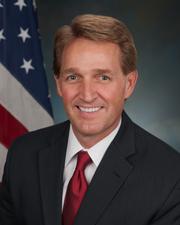 Sen. Jeff Flake (R-AZ)
Legislative Activity
Stay on top of the latest movement without scrolling through every action
Senate amendment agreed to: Amendment SA 3551 agreed to in Senate by Yea-Nay Vote. 97 - 0. Record Vote Number: 230.
July 17, 2014
View full timeline
Senate amendment agreed to: Amendment SA 3551 agreed to in Senate by Yea-Nay Vote. 97 - 0. Record Vote Number: 230.
July 17, 2014
Roll call votes on amendments in Senate: Amendment SA 3551 agreed to in Senate by Yea-Nay Vote. 97 - 0. Record Vote Number: 230.
July 17, 2014
Senate amendment proposed (on the floor): Amendment SA 3551 proposed by Senator Flake.
July 17, 2014
Amendment SA 3551 proposed by Senator Flake. (consideration: CR S4582-4584, S4588-4589; text: CR S4582) To establish the Advisory Committee on Risk-Sharing Mechanisms.
July 17, 2014
Amendment SA 3551 agreed to in Senate by Yea-Nay Vote. 97 - 0. Record Vote Number: 230.
July 17, 2014
Senate amendment submitted
July 10, 2014
Votes
1 roll call on this amendment
Text
Submitted
TEXT OF AMENDMENTS

______

SA 3531. Mr. PRYOR submitted an amendment intended to be proposed by
him to the bill S. 2363, to protect and enhance opportunities for
recreational hunting, fishing, and shooting, and for other purposes;
which was ordered to lie on the table; as follows:

At the end of title I, add the following:

SEC. 1____. OVERNIGHT PARKING AT UNITS OF THE NATIONAL
WILDLIFE REFUGE SYSTEM.

(a) In General.--Notwithstanding any other provision of law
(including regulations), the Secretary of the Interior shall
issue to covered individuals described in subsection (b)
permits to park for a period of not more than 72 consecutive
hours unattended off-highway vehicles in any area of a unit
of the National Wildlife Refuge System in which parking is
permitted.
(b) Covered Individual.--A covered individual referred to
in subsection (a) is an individual that is--
(1) at least 65 years of age;
(2) a veteran with a service-connected disability (as
defined in section 101 of title 38, United States Code); or
(3) entitled to benefits under section 223 of the Social
Security Act (42 U.S.C. 423).
______

SA 3532. Ms. STABENOW (for herself and Mr. Grassley) submitted an
amendment intended to be proposed by her to the bill S. 2363, to
protect and enhance opportunities for recreational hunting, fishing,
and shooting, and for other purposes; which was ordered to lie on the
table; as follows:

At the end, insert the following:

TITLE III--RURAL HERITAGE CONSERVATION EXTENSION ACT OF 2014

SEC. 301. SPECIAL RULE FOR CONTRIBUTIONS OF QUALIFIED
CONSERVATION CONTRIBUTIONS MADE PERMANENT.

(a) In General.--
(1) Individuals.--Subparagraph (E) of section 170(b)(1) of
the Internal Revenue Code of 1986 is amended by striking
clause (vi).
(2) Corporations.--Subparagraph (B) of section 170(b)(2) of
such Code is amended by striking clause (iii).
(b) Effective Date.--The amendments made by this section
shall apply to contributions made in taxable years beginning
after December 31, 2013.

SEC. 302. ELIMINATION OF CHARITABLE DEDUCTION FOR EASEMENTS
ON GOLF COURSES.

(a) In General.--Section 170(h) of the Internal Revenue
Code of 1986 is amended by adding at the end the following
new paragraph:
``(7) Exception for easements for golf courses.--For
purposes of this section, the term `qualified conservation
contribution' shall not include any contribution of an
easement for use on, or intended for use on, a golf
course.''.
(b) Effective Date.--The amendment made by this section
shall apply to contributions made after the date of the
enactment of this Act.
______

SA 3533. Mr. VITTER submitted an amendment intended to be proposed by
him to the bill S. 2363, to protect and enhance opportunities for
recreational hunting, fishing, and shooting, and for other purposes;
which was ordered to lie on the table; as follows:

At the end of title I, add the following:

SEC. 1____. MIGRATORY BIRD HUNTING AND CONSERVATION STAMP.

(a) Increase in Price of Migratory Bird Hunting and
Conservation Stamp to Fund Acquisition of Conservation
Easements for Migratory Birds.--The Migratory Bird Hunting
and Conservation Stamp Act is amended--
(1) in section 2(b) (16 U.S.C. 718b(b))--
(A) by striking ``1990, and'' and inserting ``1990,''; and
(B) by striking ``for each hunting year thereafter'' and
inserting ``for hunting years 1991 through 2013, and $25 for
each hunting year thereafter'';
(2) by adding at the end of section 2 (16 U.S.C. 718b) the
following:
``(c) Reduction in Price of Stamp.--The Secretary may
reduce the price of each stamp sold under the provisions of
this section for a hunting year if the Secretary determines
that the increase in the price of the stamp after hunting
year 2013 resulted in a reduction in revenues deposited into
the fund;''; and
(3) in section 4 (16 U.S.C. 718d)--
(A) in subsection (a)(3), by inserting before the period
the following: ``, in which there shall be a subaccount to
which the Secretary of the Treasury shall transfer all
amounts in excess of $15 that are received from the sale of
each stamp sold for each hunting year after hunting year
2013'';
(B) in subsection (b)(1), by striking ``So much'' and
inserting ``except as provided in paragraph (4), so much'';
(C) in subsection (b)(2), by striking ``paragraph (3)'' and
inserting ``paragraphs (3) and (4)''; and
(D) by adding at the end of subsection (b) the following:
``(4) Conservation easements.--Amounts in the subaccount
referred to in subsection (a)(3) shall be used by the
Secretary solely to acquire easements in real property for
conservation of migratory birds.''.
(b) Annual Report on Expenditures.--Section 4 of the
Migratory Bird Hunting and Conservation Stamp Act (16 U.S.C.
718d) is further amended--
(1) in subsection (c)--
(A) by striking so much as precedes ``The Secretary may''
and inserting the following:
``(c) Promotion of Stamp Sales.--''; and
(B) by striking paragraph (2); and
(2) by adding at the end the following:
``(e) Annual Report.--The Secretary shall include in each
annual report of the Commission under section 3 of the
Migratory Bird Conservation Act (16 U.S.C. 715b)--
``(1) a description of activities conducted under
subsection (c) in the year covered by the report; and
``(2) an annual assessment of the status of wetlands
conservation projects for migratory bird conservation
purposes, including a clear and accurate accounting of--
``(A) all expenditures by Federal and State agencies under
this section;
``(B) all expenditures made for fee-simple acquisition of
Federal lands in the United States, including the amount paid
and acreage of each parcel acquired in each acquisition.''.
______

SA 3534. Ms. COLLINS (for herself, Mr. Udall of Colorado, Mr. Burr,
Mrs. Shaheen, Mr. Graham, Mr. Wyden, Mr. Alexander, Mr. Walsh, Mr.
Portman, Mr. Leahy, Mr. Heinrich, and Ms. Ayotte) submitted an
amendment intended to be proposed by her to the bill S. 2363, to
protect and enhance opportunities for recreational hunting, fishing,
and shooting, and for other purposes; which was ordered to lie on the
table; as follows:

At the end of the bill, add the following:

SEC. ___. SENSE OF THE SENATE ON THE LAND AND WATER
CONSERVATION FUND.

(a) Findings.--The Senate finds the following:
(1) The year 2014 marks the 50th anniversary of the
establishment of the Land and Water Conservation Fund under
section 2 of the Land and Water Conservation Act of 1965 (16
U.S.C. 460l-5) (referred to in this subsection as the
``Fund''), the most successful and enduring conservation and
outdoor recreation program of the United States.
(2) The Fund will expire in 2015 unless Congress takes
action to renew this important program.
(3) The Fund has protected outdoor recreation sites in
every State and nearly every county in the United States by
ensuring access to hunting and fishing areas, protecting the
most historic sites of the United States, supporting working
forests and ranches, creating national scenic and historic
trails, and conserving critical habitats.
(4) The Land and Water Conservation Fund Act of 1965 (16
U.S.C. 460l-4 et seq.) has a 50-year history of bipartisan
support as, with the overwhelming support of Congress--
(A) support for the Act began during the Eisenhower
Administration;

[[Page S4420]]

(B) the Act was proposed to Congress by President Kennedy;
and
(C) the Act was signed into law by President Johnson.
(5) The Land and Water Conservation Fund Act of 1965 (16
U.S.C. 460l-4 et seq.) is fully funded, without relying on
tax dollars, through the annual collection of $900,000,000 by
the Treasury of the United States from a small percentage of
royalties from offshore drilling and other Federal energy
revenue sources.
(6) The Fund honors the principles of fiscal conservatism
by reinvesting revenues from the sale of 1 national resource
to protect other natural resources and ensure outdoor
recreation for all people of the United States.
(7) Over the 50-year history of the Fund, more than half
the amount credited to the Fund account has been diverted for
other purposes.
(8) Continued investments in the Fund will stimulate the
economy of the United States, create jobs, and strengthen
infrastructure.
(9) Outdoor recreation and conservation activities are
important economic contributors and support jobs in
communities across the United States.
(10) The Fund drives local economies by growing
recreational land to match increases in population and
development pressure while also creating and protecting jobs
in working forests and on working farms and ranches.
(b) Sense of the Senate.--It is the sense of the Senate
that--
(1) the Land and Water Conservation Fund Act of 1965 (16
U.S.C. 460l-4 et seq.) should be reauthorized; and
(2) full, permanent, and dedicated funding for the Land and
Water Conservation Fund would keep the promise that was made
to the people of the United States in 1964 to invest a small
portion of the proceeds from natural resource development in
conservation and outdoor recreation.
______

SA 3535. Ms. COLLINS (for herself, Mr. Udall of Colorado, Mr. Burr,
Mrs. Shaheen, Mr. Graham, Mr. Wyden, and Mr. Alexander) submitted an
amendment intended to be proposed by her to the bill S. 2363, to
protect and enhance opportunities for recreational hunting, fishing,
and shooting, and for other purposes; which was ordered to lie on the
table; as follows:

At the end of the bill, add the following:

SEC. ___. SENSE OF THE SENATE ON THE LAND AND WATER
CONSERVATION FUND.

(a) Findings.--The Senate finds the following:
(1) The year 2014 marks the 50th anniversary of the
establishment of the Land and Water Conservation Fund under
section 2 of the Land and Water Conservation Act of 1965 (16
U.S.C. 460l-5) (referred to in this subsection as the
``Fund''), the most successful and enduring conservation and
outdoor recreation program of the United States.
(2) The Fund will expire in 2015 unless Congress takes
action to renew this important program.
(3) The Fund has protected outdoor recreation sites in
every State and nearly every county in the United States by
ensuring access to hunting and fishing areas, protecting the
most historic sites of the United States, supporting working
forests and ranches, creating national scenic and historic
trails, and conserving critical habitats.
(4) The Land and Water Conservation Fund Act of 1965 (16
U.S.C. 460l-4 et seq.) has a 50-year history of bipartisan
support as, with the overwhelming support of Congress--
(A) support for the Act began during the Eisenhower
Administration;
(B) the Act was proposed to Congress by President Kennedy;
and
(C) the Act was signed into law by President Johnson.
(5) The Land and Water Conservation Fund Act of 1965 (16
U.S.C. 460l-4 et seq.) is fully funded, without relying on
tax dollars, through the annual collection of $900,000,000 by
the Treasury of the United States from a small percentage of
royalties from offshore drilling and other Federal energy
revenue sources.
(6) The Fund honors the principles of fiscal conservatism
by reinvesting revenues from the sale of 1 national resource
to protect other natural resources and ensure outdoor
recreation for all people of the United States.
(7) Over the 50-year history of the Fund, more than half
the amount credited to the Fund account has been diverted for
other purposes.
(8) Continued investments in the Fund will stimulate the
economy of the United States, create jobs, and strengthen
infrastructure.
(9) Outdoor recreation and conservation activities are
important economic contributors and support jobs in
communities across the United States.
(10) The Fund drives local economies by growing
recreational land to match increases in population and
development pressure while also creating and protecting jobs
in working forests and on working farms and ranches.
(b) Sense of the Senate.--It is the sense of the Senate
that--
(1) the Land and Water Conservation Fund Act of 1965 (16
U.S.C. 460l-4 et seq.) should be reauthorized; and
(2) full, permanent, and dedicated funding for the Land and
Water Conservation Fund would keep the promise that was made
to the people of the United States in 1964 to invest a small
portion of the proceeds from natural resource development in
conservation and outdoor recreation.
______

SA 3536. Mr. TOOMEY submitted an amendment intended to be proposed by
him to the bill S. 2363, to protect and enhance opportunities for
recreational hunting, fishing, and shooting, and for other purposes;
which was ordered to lie on the table; as follows:

Strike section 203 and insert the following:

SEC. 203. NORTH AMERICAN WETLANDS CONSERVATION ACT.

(a) Authorization of Appropriations.--Section 7(c) of the
North American Wetlands Conservation Act (16 U.S.C. 4406(c))
is amended--
(1) in paragraph (4), by striking ``and'';
(2) in paragraph (5), by striking the period at the end and
inserting ``; and''; and
(3) by adding at the end the following:
``(6) $50,000,000 for each of fiscal years 2014 through
2019.''.
(b) Certain Proposed Rule.--For the purposes of
implementing this Act, during the period of fiscal years 2014
through 2019, the proposed rule entitled ``Definition of
`Waters of the United States' Under the Clean Water Act'' (79
Fed. Reg. 22188 (April 21, 2014)) shall not apply.
______

SA 3537. Mr. LEE submitted an amendment intended to be proposed by
him to the bill S. 2363, to protect and enhance opportunities for
recreational hunting, fishing, and shooting, and for other purposes;
which was ordered to lie on the table; as follows:

At the appropriate place, insert the following:

SEC. __. STATE AND TRIBAL MANAGEMENT AND PROTECTION OF WILD
FREE-ROAMING HORSES AND BURROS.

Public Law 92-195 (16 U.S.C. 1331 et seq.) (commonly known
as the ``Wild Free-Roaming Horses and Burros Act'') is
amended by adding at the end the following:

``SEC. 12. STATE AND TRIBAL MANAGEMENT AND PROTECTION.

``(a) In General.--Except as provided in subsection (c), at
the request of a State legislature, Governor of a State, or
the governing body of a federally recognized Indian tribe,
the Secretary shall allow the State or federally recognized
Indian tribe to assume all management and protection
functions under this Act with respect to wild free-roaming
horses and burros on land within the boundaries of the State
or federally recognized Indian tribe.
``(b) Management.--Beginning on the date on which a State
or federally recognized Indian tribe assumes the functions
under subsection (a), the State or federally recognized
Indian tribe shall manage wild free-roaming horses and burros
on land within the boundaries of the State or federally
recognized Indian tribe--
``(1) in accordance with this Act; and
``(2) in the same manner as any other non-federally
regulated species with respect to functions not specified in
this Act.
``(c) Inventory.--Notwithstanding the assumption of
functions by a State or federally recognized Indian tribe
under subsections (a) and (b), the Secretary shall continue
to maintain the inventory required by section 3(b)(1).''.
______

SA 3538. Mr. JOHANNS (for himself and Mrs. Fischer) submitted an
amendment intended to be proposed by him to the bill S. 2363, to
protect and enhance opportunities for recreational hunting, fishing,
and shooting, and for other purposes; which was ordered to lie on the
table; as follows:

At the end of title II, add the following:

SEC. 2____. PROHIBITION ON USE OF FUNDS FOR CERTAIN
CONSERVATION AREAS.

No funds made available under section 101 or the amendments
made by section 201 or 203 shall be used by the Secretary of
the Interior to acquire any land or interests in land for the
Niobrara Confluence and Ponca Bluffs Conservation Areas
unless the Secretary of the Interior solicits input from, and
receives the consent of, the Governor and legislature of the
State in which the land is located with respect to the
acquisition.
______

SA 3539. Mr. HOEVEN submitted an amendment intended to be proposed by
him to the bill S. 2363, to protect and enhance opportunities for
recreational hunting, fishing, and shooting, and for other purposes;
which was ordered to lie on the table; as follows:

At the end of title I, add the following:

SEC. 1____. NATIONAL FISH HATCHERY SYSTEM.

In administering the National Fish Hatchery System, the
Secretary of the Interior (acting through the Director of the
United States Fish and Wildlife Service) shall give priority
to increasing recreational fishing opportunities for the
public.
______

SA 3540. Mrs. GILLIBRAND submitted an amendment intended to be
proposed by her to the bill S. 2363, to protect and enhance
opportunities for recreational hunting, fishing, and

[[Page S4421]]

shooting, and for other purposes; which was ordered to lie on the
table; as follows:

At the end, add the following:

TITLE III--ILLEGAL TRAFFICKING IN FIREARMS

SEC. 301. SHORT TITLE.

This title may be cited as the ``Stop Illegal Trafficking
in Firearms Act of 2014''.

SEC. 302. ANTI-STRAW PURCHASING AND FIREARMS TRAFFICKING
AMENDMENTS.

(a) In General.--Chapter 44 of title 18, United States
Code, is amended by adding at the end the following:

``Sec. 932. Straw purchasing of firearms

``(a) For purposes of this section--
``(1) the term `crime of violence' has the meaning given
that term in section 924(c)(3);
``(2) the term `drug trafficking crime' has the meaning
given that term in section 924(c)(2); and
``(3) the term `purchase' includes the receipt of any
firearm by a person who does not own the firearm--
``(A) by way of pledge or pawn as security for the payment
or repayment of money; or
``(B) on consignment.
``(b) It shall be unlawful for any person (other than a
licensed importer, licensed manufacturer, licensed collector,
or licensed dealer) to knowingly purchase, or attempt or
conspire to purchase, any firearm in or otherwise affecting
interstate or foreign commerce--
``(1) from a licensed importer, licensed manufacturer,
licensed collector, or licensed dealer for, on behalf of, or
at the request or demand of any other person, known or
unknown; or
``(2) from any person who is not a licensed importer,
licensed manufacturer, licensed collector, or licensed dealer
for, on behalf of, or at the request or demand of any other
person, known or unknown, knowing or having reasonable cause
to believe that such other person--
``(A) is under indictment for, or has been convicted in any
court of, a crime punishable by imprisonment for a term
exceeding 1 year;
``(B) is a fugitive from justice;
``(C) is an unlawful user of or addicted to any controlled
substance (as defined in section 102 of the Controlled
Substances Act (21 U.S.C. 802));
``(D) has been adjudicated as a mental defective or has
been committed to any mental institution;
``(E) is an alien who--
``(i) is illegally or unlawfully in the United States; or
``(ii) except as provided in section 922(y)(2), has been
admitted to the United States under a nonimmigrant visa (as
that term is defined in section 101(a)(26) of the Immigration
and Nationality Act (8 U.S.C. 1101(a)(26));
``(F) has been discharged from the Armed Forces under
dishonorable conditions;
``(G) having been a citizen of the United States, has
renounced his or her citizenship;
``(H) is subject to a court order that restrains such
person from harassing, stalking, or threatening an intimate
partner of such person or child of such intimate partner or
person, or engaging in other conduct that would place an
intimate partner in reasonable fear of bodily injury to the
partner or child, except that this subparagraph shall only
apply to a court order that--
``(i) was issued after a hearing of which such person
received actual notice, and at which such person had the
opportunity to participate; and
``(ii)(I) includes a finding that such person represents a
credible threat to the physical safety of such intimate
partner or child; or
``(II) by its terms explicitly prohibits the use, attempted
use, or threatened use of physical force against such
intimate partner or child that would reasonably be expected
to cause bodily injury;
``(I) has been convicted in any court of a misdemeanor
crime of domestic violence;
``(J) intends to--
``(i) use, carry, possess, or sell or otherwise dispose of
the firearm or ammunition in furtherance of a crime of
violence or drug trafficking crime; or
``(ii) export the firearm or ammunition in violation of
law;
``(K)(i) does not reside in any State; and
``(ii) is not a citizen of the United States; or
``(L) intends to sell or otherwise dispose of the firearm
or ammunition to a person described in any of subparagraphs
(A) through (K).
``(c)(1) Except as provided in paragraph (2), any person
who violates subsection (b) shall be fined under this title,
imprisoned for not more than 15 years, or both.
``(2) If a violation of subsection (b) is committed knowing
or with reasonable cause to believe that any firearm involved
will be used to commit a crime of violence, the person shall
be sentenced to a term of imprisonment of not more than 25
years.
``(d) Subsection (b)(1) shall not apply to any firearm that
is lawfully purchased by a person--
``(1) to be given as a bona fide gift to a recipient who
provided no service or tangible thing of value to acquire the
firearm, unless the person knows or has reasonable cause to
believe such recipient is prohibited by Federal law from
possessing, receiving, selling, shipping, transporting,
transferring, or otherwise disposing of the firearm; or
``(2) to be given to a bona fide winner of an organized
raffle, contest, or auction conducted in accordance with law
and sponsored by a national, State, or local organization or
association, unless the person knows or has reasonable cause
to believe such recipient is prohibited by Federal law from
possessing, purchasing, receiving, selling, shipping,
transporting, transferring, or otherwise disposing of the
firearm.

``Sec. 933. Trafficking in firearms

``(a) It shall be unlawful for any person to--
``(1) ship, transport, transfer, cause to be transported,
or otherwise dispose of a firearm to another person in or
otherwise affecting interstate or foreign commerce, if the
transferor knows or has reasonable cause to believe that the
use, carrying, or possession of a firearm by the transferee
would be in violation of, or would result in a violation of,
any Federal law punishable by a term of imprisonment
exceeding 1 year;
``(2) receive from another person a firearm in or otherwise
affecting interstate or foreign commerce, if the recipient
knows or has reasonable cause to believe that such receipt
would be in violation of, or would result in a violation of,
any Federal law punishable by a term of imprisonment
exceeding 1 year; or
``(3) attempt or conspire to commit the conduct described
in paragraph (1) or (2).
``(b)(1) Except as provided in paragraph (2), any person
who violates subsection (a) shall be fined under this title,
imprisoned for not more than 15 years, or both.
``(2) If a violation of subsection (a) is committed by a
person in concert with 5 or more other persons with respect
to whom such person occupies a position of organizer, leader,
supervisor, or manager, the person shall be sentenced to a
term of imprisonment of not more than 25 years.

``Sec. 934. Forfeiture and fines

``(a)(1) Any person convicted of a violation of section 932
or 933 shall forfeit to the United States, irrespective of
any provision of State law--
``(A) any property constituting, or derived from, any
proceeds the person obtained, directly or indirectly, as the
result of such violation; and
``(B) any of the person's property used, or intended to be
used, in any manner or part, to commit, or to facilitate the
commission of, such violation.
``(2) The court, in imposing sentence on a person convicted
of a violation of section 932 or 933, shall order, in
addition to any other sentence imposed pursuant to section
932 or 933, that the person forfeit to the United States all
property described in paragraph (1).
``(b) A defendant who derives profits or other proceeds
from an offense under section 932 or 933 may be fined not
more than the greater of--
``(1) the fine otherwise authorized by this part; and
``(2) the amount equal to twice the gross profits or other
proceeds of the offense under section 932 or 933.''.
(b) Title III Authorization.--Section 2516(1)(n) of title
18, United States Code, is amended by striking ``sections 922
and 924'' and inserting ``section 922, 924, 932, or 933''.
(c) Racketeering Amendment.--Section 1961(1)(B) of title
18, United States Code, is amended by inserting ``section 932
(relating to straw purchasing), section 933 (relating to
trafficking in firearms),'' before ``section 1028''.
(d) Money Laundering Amendment.--Section 1956(c)(7)(D) of
title 18, United States Code, is amended by striking
``section 924(n)'' and inserting ``section 924(n), 932, or
933''.
(e) Directive to Sentencing Commission.--Pursuant to its
authority under section 994 of title 28, United States Code,
and in accordance with this section, the United States
Sentencing Commission shall review and amend its guidelines
and policy statements to ensure that persons convicted of an
offense under section 932 or 933 of title 18, United States
Code, and other offenses applicable to the straw purchases
and trafficking of firearms are subject to increased
penalties in comparison to those currently provided by the
guidelines and policy statements for such straw purchasing
and firearms trafficking offenses. The Commission shall also
review and amend its guidelines and policy statements to
reflect the intent of Congress that a person convicted of an
offense under section 932 or 933 of title 18, United States
Code, who is affiliated with a gang, cartel, organized crime
ring, or other such enterprise should be subject to higher
penalties than an otherwise unaffiliated individual.
(f) Technical and Conforming Amendment.--The table of
sections of chapter 44 of title 18, United States Code, is
amended by adding at the end the following:

``932. Straw purchasing of firearms.
``933. Trafficking in firearms.
``934. Forfeiture and fines.''.

SEC. 303. AMENDMENTS TO SECTION 922(D).

Section 922(d) of title 18, United States Code, is
amended--
(1) in paragraph (8), by striking ``or'' at the end;
(2) in paragraph (9), by striking the period at the end and
inserting a semicolon; and
(3) by striking the matter following paragraph (9) and
inserting the following:
``(10) intends to sell or otherwise dispose of the firearm
or ammunition to a person described in any of paragraphs (1)
through (9); or
``(11) intends to sell or otherwise dispose of the firearm
or ammunition in furtherance of a crime of violence or drug
trafficking offense or to export the firearm or ammunition in
violation of law.

[[Page S4422]]

This subsection shall not apply with respect to the sale or
disposition of a firearm or ammunition to a licensed
importer, licensed manufacturer, licensed dealer, or licensed
collector who pursuant to subsection (b) of section 925 is
not precluded from dealing in firearms or ammunition, or to a
person who has been granted relief from disabilities pursuant
to subsection (c) of section 925.''.

SEC. 304. AMENDMENTS TO SECTION 924(A).

Section 924(a) of title 18, United States Code, is
amended--
(1) in paragraph (2), by striking ``(d), (g),''; and
(2) by adding at the end the following:
``(8) Whoever knowingly violates subsection (d) or (g) of
section 922 shall be fined under this title, imprisoned not
more than 15 years, or both.''.

SEC. 305. AMENDMENTS TO SECTION 924(H).

Section 924 of title 18, United States Code, is amended by
striking subsection (h) and inserting the following:
``(h)(1) Whoever knowingly receives or transfers a firearm
or ammunition, or attempts or conspires to do so, knowing or
having reasonable cause to believe that such firearm or
ammunition will be used to commit a crime of violence (as
defined in subsection (c)(3)), a drug trafficking crime (as
defined in subsection (c)(2)), or a crime under the Arms
Export Control Act (22 U.S.C. 2751 et seq.), the
International Emergency Economic Powers Act (50 U.S.C. 1701
et seq.), the Foreign Narcotics Kingpin Designation Act (21
U.S.C. 1901 et seq.), or section 212(a)(2)(C) of the
Immigration and Nationality Act (8 U.S.C. 1182(a)(2)(C))
shall be imprisoned not more than 25 years, fined in
accordance with this title, or both.
``(2) No term of imprisonment imposed on a person under
this subsection shall run concurrently with any term of
imprisonment imposed on the person under section 932.''.

SEC. 306. AMENDMENTS TO SECTION 924(K).

Section 924 of title 18, United States Code, is amended by
striking subsection (k) and inserting the following:
``(k)(1) A person who, with intent to engage in or to
promote conduct that--
``(A) is punishable under the Controlled Substances Act (21
U.S.C. 801 et seq.), the Controlled Substances Import and
Export Act (21 U.S.C. 951 et seq.), or chapter 705 of title
46;
``(B) violates any law of a State relating to any
controlled substance (as defined in section 102 of the
Controlled Substances Act, 21 U.S.C. 802); or
``(C) constitutes a crime of violence (as defined in
subsection (c)(3)),
smuggles or knowingly brings into the United States, a
firearm or ammunition, or attempts or conspires to do so,
shall be imprisoned not more than 15 years, fined under this
title, or both.
``(2) A person who, with intent to engage in or to promote
conduct that--
``(A) would be punishable under the Controlled Substances
Act (21 U.S.C. 801 et seq.), the Controlled Substances Import
and Export Act (21 U.S.C. 951 et seq.), or chapter 705 of
title 46, if the conduct had occurred within the United
States; or
``(B) would constitute a crime of violence (as defined in
subsection (c)(3)) for which the person may be prosecuted in
a court of the United States, if the conduct had occurred
within the United States,

smuggles or knowingly takes out of the United States, a
firearm or ammunition, or attempts or conspires to do so,
shall be imprisoned not more than 15 years, fined under this
title, or both.''.
______

SA 3541. Mr. COBURN (for himself and Mr. Warner) submitted an
amendment intended to be proposed by him to the bill S. 2363, to
protect and enhance opportunities for recreational hunting, fishing,
and shooting, and for other purposes; which was ordered to lie on the
table; as follows:

At the end, add the following:

TITLE III--NATIONAL PARK SYSTEM DONOR CONTRIBUTION ACKNOWLEDGMENT

SEC. 301. SHORT TITLE.

This title may be cited as the ``National Park System Donor
Contribution Acknowledgment Act of 2014''.

SEC. 302. DEFINITIONS.

In this title:
(1) Donor acknowledgment.--
(A) In general.--The term ``donor acknowledgment'' means a
statement, logo, trademark, proper legal name, or other
reasonable form of credit acknowledging a contribution by a
donor.
(B) Exclusions.--The term ``donor acknowledgment'' does not
include--
(i) a sign or other fixture that would block or obstruct a
natural or historic site or view; or
(ii) a statement or credit that promotes a political
candidate or issue.
(2) Eligible structure.--
(A) In general.--The term ``eligible structure'' means a
structure at a unit of the National Park System.
(B) Inclusions.--The term ``eligible structure'' includes--
(i) a visitor center;
(ii) an administrative structure; and
(iii) a specific room or section of a visitor center or an
administrative structure.
(C) Exclusion.--The term ``eligible structure'' does not
include a commemorative work (as defined in section 8902(a)
of title 40, United States Code).
(3) Landscape feature.--
(A) In general.--The term ``landscape feature'' means a
component that conveys the historic character or significance
of a landscape.
(B) Inclusions.--The term ``landscape feature'' includes--
(i) an original component of, a replacement of an original
component of, a compatible alteration to, or a new addition
to the landscape;
(ii) a component that ranges in scale from a single
specimen tree to--

(I) a group of plantings (such as a hedge or an allee of
trees); and
(II) an entire orchard; and

(iii) a pathway, stairway, or plaza.
(4) Secretary.--The term ``Secretary'' means the Secretary
of the Interior.

SEC. 303. DONOR CONTRIBUTION ACKNOWLEDGMENTS AT NON-HISTORIC
STRUCTURES IN UNITS OF THE NATIONAL PARK
SYSTEM.

(a) In General.--Subject to subsections (b) and (c), the
Secretary shall allow the display of donor acknowledgments at
eligible structures, fixtures, and landscape fixtures within
the National Park System.
(b) Eligible Fixtures.--
(1) In general.--Donor acknowledgments under subsection (a)
may be affixed to benches, furnishings, bricks, and vehicles.
(2) Limitation.--Any donor acknowledgment under subsection
(a) associated with a landscape feature, an item in a museum
collection, or a historic structure shall--
(A) be freestanding; and
(B) not be affixed to the landscape feature, item, or
structure.
(c) Requirements.--Donor acknowledgments under subsection
(a) shall be displayed--
(1) in a manner that is approved by the Secretary, in
consultation with the Superintendent at the unit of the
National Park System in which the eligible structure is
located, after taking into account any input from the
donating entity; and
(2) for a period of time, as determined by the Secretary,
in consultation with the Superintendent at the unit of the
National Park System in which the eligible structure is
located, that is commensurate with the amount of the
contribution and the life of the eligible structure.
(d) Expansion of Donor Acknowledgments.--The Secretary may
authorize the use of donor acknowledgments under this section
to include donor acknowledgments on digital and media
platforms, including online applications and web-based
product downloads relating to a specific unit of the National
Park System.
(e) Implementation.--Not later than 180 days after the date
of enactment of this Act, the Secretary shall implement this
section.
(f) Effect of Section.--Nothing in this section requires
the Secretary to accept a donation.

SEC. 304. DONOR CONTRIBUTION ACKNOWLEDGMENTS TO BE DISPLAYED
AT COMMEMORATIVE WORKS.

Section 8905 of title 40, United States Code, is amended--
(1) in subsection (b), by striking paragraph (7); and
(2) by adding at the end the following:
``(c) Donor Contributions.--
``(1) Acknowledgment of donor contribution.--Except as
otherwise provided in this subsection, the Secretary of the
Interior or Administrator of General Services, as applicable,
may permit a sponsor to acknowledge donor contributions at
the commemorative work.
``(2) Requirements.--An acknowledgment under paragraph (1)
shall--
``(A) be displayed inside an ancillary structure associated
with the commemorative work; and
``(B) conform to applicable National Park Service or
General Services Administration guidelines for donor
recognition, as applicable.
``(3) Limitations.--An acknowledgment under paragraph (1)
shall--
``(A) be limited to an appropriate statement or credit
recognizing the contribution;
``(B) be displayed in a form approved by the National Mall
and Memorial Parks Donor Recognition Plan and General
Services Administration guidelines;
``(C) be displayed for a period of up to 10 years, with the
display period to be commensurate with the level of the
contribution, as determined in accordance with the plan and
guidelines described in subparagraph (B);
``(D) be freestanding; and
``(E) not be affixed to--
``(i) any landscape feature at the commemorative work; or
``(ii) any object in a museum collection.
``(4) Cost.--The sponsor shall bear all expenses related to
the display of donor acknowledgments under paragraph (1).
``(5) Applicability.--This subsection shall apply to any
commemorative work dedicated after January 1, 2010.''.
______

SA 3542. Mr. VITTER (for himself, Mr. Cruz, Mr. Barrasso, and Mr.
Crapo) submitted an amendment intended to be proposed by him to the
bill S. 2363, to protect and enhance opportunities for recreational
hunting, fishing, and shooting, and for other purposes; which was
ordered to lie on the table; as follows:

At the end, add the following:

[[Page S4423]]

TITLE III--TERMINATION OF OPERATION CHOKE POINT

SECTION 301. TERMINATION OF OPERATION CHOKE POINT.

(a) In General.--No agency of the Federal Government may
initiate, undertake, or continue--
(1) any investigation pursuant to section 951 of the
Financial Institutions Reform, Recovery, and Enforcement Act
of 1989 (12 U.S.C. 1833a) for the purpose of carrying out
Operation Choke Point;
(2) any industry-wide investigation of nondepository
lenders, payment processors, or persons licensed pursuant to
chapter 44 of title 18, United States Code, that are
regulated by the Federal Government or a State government to
engage in lawful activities, as such investigations were
described in a presentation made by the Department of Justice
to the Federal Financial Institutions Examination Council on
September 17, 2013; and
(3) any enforcement action under section 8(a) of the
Federal Deposit Insurance Act (12 (U.S.C. 1818(a)), any cease
and desist order, or any bank examination for the purpose of
terminating the relationship between a bank and any legally
authorized business based on the products or services
provided by that business.
(b) Definition of State.--For purposes of this section, the
term ``State'' means any State, territory, or possession of
the United States, the District of Columbia, the Commonwealth
of Puerto Rico, the Commonwealth of the Northern Mariana
Islands, Guam, American Samoa, or the United States Virgin
Islands or any Indian tribe included on the list published by
the Secretary of the Interior in accordance with section 104
of the Federally Recognized Indian Tribe List Act of 1994 (25
U.S.C. 479a-1).
______

SA 3543. Mr. McCAIN submitted an amendment intended to be proposed by
him to the bill S. 2363, to protect and enhance opportunities for
recreational hunting, fishing, and shooting, and for other purposes;
which was ordered to lie on the table; as follows:

At the end, add the following:

TITLE III--FOREST MANAGEMENT

Subtitle A--FLAME Act Amendment

SEC. 301. FINDINGS.

Congress finds that--
(1) over the past 2 decades, wildfires have increased
dramatically in size and costs;
(2) existing budget mechanisms for estimating the costs of
wildfire suppression are not keeping pace with the actual
costs for wildfire suppression due in part to improper budget
estimation methodology;
(3) the FLAME Funds have not been adequate in supplementing
wildland fire management funds in cases in which wildland
fire management accounts are exhausted; and
(4) the practice of transferring funds from other agency
funds (including the hazardous fuels treatment accounts) by
the Secretary of Agriculture or the Secretary of the Interior
to pay for wildfire suppression activities, commonly known as
``fire-borrowing'', does not support the missions of the
Forest Service and the Department of the Interior with
respect to protecting human life and property from the threat
of wildfires.

SEC. 302. FLAME ACT AMENDMENT.

(a) Funding.--Section 502(d) of the FLAME Act of 2009 (43
U.S.C. 1748a(d)) is amended--
(1) in paragraph (1)--
(A) by striking ``shall consist of'' and all that follows
through ``appropriated to'' in subparagraph (A) and inserting
``shall consist of such amounts as are appropriated to''; and
(B) by striking subparagraph (B); and
(2) by striking paragraphs (4) and (5).
(b) Use of Flame Fund.--Section 502(e) of the FLAME Act of
2009 (43 U.S.C. 1748a(e)) is amended by striking paragraphs
(1) and (2) and inserting the following:
``(1) In general.--Amounts appropriated to a FLAME Fund, in
accordance with section 251(b)(2)(E) of the Balanced Budget
and Emergency Deficit Control Act of 1985 (2 U.S.C.
902(b)(2)(E)), shall be available to the Secretary concerned
for wildfire suppression operations if the Secretary
concerned issues a declaration and notifies the relevant
congressional committees that a wildfire suppression event is
eligible for funding from the FLAME Fund.
``(2) Declaration criteria.--A declaration by the Secretary
concerned under paragraph (1) may be issued only if--
``(A) an individual wildfire incident meets the objective
indicators of an extraordinary wildfire situation,
including--
``(i) a wildfire that the Secretary concerned determines
has required an emergency Federal response based on the
significant complexity, severity, or threat posed by the fire
to human life, property, or a resource;
``(ii) a wildfire that covers 1,000 or more acres; or
``(iii) a wildfire that is within 10 miles of an urbanized
area (as defined in section 134(b) of title 23, United States
Code); or
``(B) the cumulative costs of wildfire suppression and
Federal emergency response activities, as determined by the
Secretary concerned, would exceed, within 30 days, all of the
amounts otherwise previously appropriated (including amounts
appropriated under an emergency designation, but excluding
amounts appropriated to the FLAME Fund) to the Secretary
concerned for wildfire suppression and Federal emergency
response.''.
(c) Treatment of Anticipated and Predicted Activities.--
Section 502(f) of the FLAME Act of 2009 (43 U.S.C. 1748a(f))
is amended by striking ``(e)(2)(B)(i)'' and inserting
``(e)(2)(A)''.
(d) Prohibition on Other Transfers.--Section 502 of the
FLAME Act of 2009 (43 U.S.C. 1748a) is amended by striking
subsection (g) and inserting the following:
``(g) Prohibition on Other Transfers.--The Secretary
concerned shall not transfer funds provided for activities
other than wildfire suppression operations to pay for any
wildfire suppression operations.''.
(e) Accounting and Reports.--Section 502(h) of the FLAME
Act of 2009 (43 U.S.C. 1748a(h)) is amended by striking
paragraphs (2) and (3) and inserting the following:
``(2) Estimates of wildfire suppression operations costs to
improve budgeting and funding.--
``(A) Budget submission.--Consistent with section 1105(a)
of title 31, United States Code, the President shall include
in each budget for the Department of Agriculture and the
Department of the Interior information on estimates of
appropriations for wildfire suppression costs based on an
out-year forecast that uses a statistically valid regression
model.
``(B) Requirements.--The estimate of anticipated wildfire
suppression costs under subparagraph (A) shall be developed
using the best available--
``(i) climate, weather, and other relevant data; and
``(ii) models and other analytic tools.
``(C) Independent review.--The methodology for developing
the estimates of wildfire suppression costs under
subparagraph (A) shall be subject to periodic independent
review to ensure compliance with subparagraph (B).
``(D) Submission to congress.--
``(i) In general.--Consistent with the schedule described
in clause (ii) and in accordance with subparagraphs (B) and
(C), the Secretary concerned shall submit to the Committee on
Energy and Natural Resources of the Senate and the Committee
on Natural Resources of the House of Representatives an
updated estimate of wildfire suppression costs for the
applicable fiscal year.
``(ii) Schedule.--The Secretary concerned shall submit the
updated estimates under clause (i) during--

``(I) March of each year;
``(II) May of each year;
``(III) July of each year; and
``(IV) if a bill making appropriations for the Department
of the Interior and the Forest Service for the following
fiscal year has not been enacted by September 1, September of
each year.

``(3) Reports.--Annually, the Secretary of Agriculture and
the Secretary of the Interior shall jointly submit to the
Committee on Energy and Natural Resources of the Senate, the
Committee on Natural Resources of the House of
Representatives, and the Committees on Appropriations of the
Senate and the House of Representatives a report that--
``(A) provides a summary of the amount of appropriations
made available during the previous fiscal year, which
specifies the source of the amounts and the commitments and
obligations made under this section;
``(B) describes the amounts obligated to individual
wildfire events that meet the criteria specified in
subsection (e)(2); and
``(C) includes any recommendations that the Secretary of
Agriculture or the Secretary of the Interior may have to
improve the administrative control and oversight of the FLAME
Fund.''.

SEC. 303. WILDFIRE DISASTER FUNDING AUTHORITY.

(a) In General.--Section 251(b)(2) of the Balanced Budget
and Emergency Deficit Control Act of 1985 (2 U.S.C.
901(b)(2)) is amended by adding at the end the following:
``(E) Flame wildfire suppression.--
``(i)(I) The adjustments for a fiscal year shall be in
accordance with clause (ii) if--

``(aa) a bill or joint resolution making appropriations for
a fiscal year is enacted that--

``(AA) specifies an amount for wildfire suppression
operations in the Wildland Fire Management accounts at the
Department of Agriculture or the Department of the Interior;
and
``(BB) specifies a total amount to be used for the purposes
described in subclause (II) in the Wildland Fire Management
accounts at the Department of Agriculture or the Department
of the Interior that is not less than 50 percent of the
amount described in subitem (AA); and

``(bb) as of the day before the date of enactment of the
bill or joint resolution all amounts in the FLAME Fund
established under section 502 of the FLAME Act of 2009 (43
U.S.C. 1748a) have been expended.

``(II) The purposes described in this subclause are--

``(aa) hazardous fuels reduction projects and other
activities of the Secretary of the Interior, as authorized
under the Healthy Forests Restoration Act of 2003 (16 U.S.C.
6501 et seq.) and the Tribal Forest Protection Act of 2004
(25 U.S.C. 3115a); and
``(bb) forest restoration and fuel reduction activities
carried out outside of the wildland urban interface that are
on condition class 3 Federal land or condition class 2
Federal land located within fire regime I, fire regime II, or
fire regime III.

``(ii) If the requirements under clause (i)(I) are met for
a fiscal year, the adjustments for

[[Page S4424]]

that fiscal year shall be the amount of additional new budget
authority provided in the bill or joint resolution described
in clause (i)(I)(aa) for wildfire suppression operations for
that fiscal year, but shall not exceed $1,000,000,000 in
additional new budget authority in each of fiscal years 2015
through 2021.
``(iii) As used in this subparagraph--

``(I) the term `additional new budget authority' means the
amount provided for a fiscal year in an appropriation Act and
specified to pay for the costs of wildfire suppression
operations that is equal to the greater of the amount in
excess of--

``(aa) 100 percent of the average costs for wildfire
suppression operations over the previous 5 years; or
``(bb) the estimated amount of anticipated wildfire
suppression costs at the upper bound of the 90 percent
confidence interval for that fiscal year calculated in
accordance with section 502(h)(3) the FLAME Act of 2009 (43
U.S.C. 1748a(h)(3)); and

``(II) the term `wildfire suppression operations' means the
emergency and unpredictable aspects of wildland firefighting
including support, response, and emergency stabilization
activities; other emergency management activities; and funds
necessary to repay any transfers needed for these costs.

``(iv) The average costs for wildfire suppression
operations over the previous 5 years shall be calculated
annually and reported in the President's Budget submission
under section 1105(a) of title 31, United States Code, for
each fiscal year.''.
(b) Disaster Funding.--Section 251(b)(2)(D) of the Balanced
Budget and Emergency Deficit Control Act of 1985 (2 U.S.C.
901(b)(2)(D)) is amended--
(1) in clause (i)--
(A) in subclause (I), by striking ``and'' and inserting
``plus'';
(B) in subclause (II), by striking the period and inserting
``; less''; and
(C) by adding the following:

``(III) the additional new budget authority provided in an
appropriation Act for wildfire suppression operations
pursuant to subparagraph (E) for the preceding fiscal
year.''; and

(2) by adding at the end the following:
``(v) Beginning in fiscal year 2016 and in subsequent
fiscal years, the calculation of the `average funding
provided for disaster relief over the previous 10 years'
shall not include the additional new budget authority
provided in an appropriation Act for wildfire suppression
operations pursuant to subparagraph (E).''.

Subtitle B--Forest Treatment Projects

SEC. 311. DEFINITIONS.

In this subtitle:
(1) Covered project.--The term ``covered project'' means a
project that involves the management or sale of national
forest material within a Forest Management Emphasis Area.
(2) Forest management emphasis area.--
(A) In general.--The term ``Forest Management Emphasis
Area'' means National Forest System land identified as
suitable for timber production in a forest management plan in
effect on the date of enactment of this Act.
(B) Exclusions.--The term ``Forest Management Emphasis
Area'' does not include National Forest System land--
(i) that is a component of the National Wilderness
Preservation System; or
(ii) on which removal of vegetation is specifically
prohibited by Federal law.
(3) National forest material.--The term ``national forest
material'' means trees, portions of trees, or forest
products, with an emphasis on sawtimber and pulpwood, derived
from National Forest System land.
(4) National forest system.--
(A) In general.--The term ``National Forest System'' has
the meaning given the term in section 11(a) of the Forest and
Rangeland Renewable Resources Planning Act of 1974 (16 U.S.C.
1609(a)).
(B) Exclusion.--The term ``National Forest System'' does
not include--
(i) the national grasslands and land utilization projects
administered under title III of the Bankhead-Jones Farm
Tenant Act (7 U.S.C. 1010 et seq.); or
(ii) National Forest System land east of the 100th
meridian.
(5) Secretary.--The term ``Secretary'' means the Secretary
of Agriculture.

SEC. 312. PROJECTS IN FOREST MANAGEMENT EMPHASIS AREAS.

(a) Conduct of Covered Projects Within Forest Management
Emphasis Areas.--
(1) In general.--The Secretary may conduct covered projects
in Forest Management Emphasis Areas, subject to paragraphs
(2) through (4).
(2) Designating timber for cutting.--
(A) In general.--Notwithstanding section 14(g) of the
National Forest Management Act of 1976 (16 U.S.C. 472a(g)),
the Secretary may use designation by prescription or
designation by description in conducting covered projects
under this subtitle.
(B) Requirement.--The designation methods authorized under
subparagraph (A) shall be used in a manner that ensures that
the quantity of national forest material that is removed from
the Forest Management Emphasis Area is verifiable and
accountable.
(3) Contracting methods.--
(A) In general.--Timber sale contracts under section 14 of
the National Forest Management Act of 1976 (16 U.S.C. 472a)
shall be the primary means of carrying out covered projects
under this subtitle.
(B) Record.--If the Secretary does not use a timber sale
contract under section 14 of the National Forest Management
Act of 1976 (16 U.S.C. 472a) to carry out a covered project
under this subtitle, the Secretary shall provide a written
record specifying the reasons that different contracting
methods were used.
(4) Acreage treatment requirements.--
(A) Total acreage requirements.--The Secretary shall
identify, prioritize, and carry out covered projects in
Forest Management Emphasis Areas that mechanically treat a
total of at least 7,500,000 acres in the Forest Management
Emphasis Areas during the 15-year period beginning on the
date that is 60 days after the date on which the Secretary
assigns the acreage treatment requirements under subparagraph
(B).
(B) Assignment of acreage treatment requirements to
individual units of the national forest system.--
(i) In general.--Not later than 60 days after the date of
enactment of this Act and subject to clause (ii), the
Secretary, in the sole discretion of the Secretary, shall
assign the acreage treatment requirements that shall apply to
the Forest Management Emphasis Areas of each unit of the
National Forest System.
(ii) Limitation.--Notwithstanding clause (i), the acreage
treatment requirements assigned to a specific unit of the
National Forest System under that clause may not apply to
more than 25 percent of the acreage to be treated in any unit
of the National Forest System in a Forest Management Emphasis
Area during the 15-year period described in subparagraph (A).
(b) Environmental Analysis and Public Review Process for
Covered Projects in Forest Management Emphasis Areas.--
(1) Environmental assessment.--The Secretary shall comply
with the National Environmental Policy Act of 1969 (42 U.S.C.
4321 et seq.) by completing an environmental assessment that
assesses the direct environmental effects of each covered
project proposed to be conducted within a Forest Management
Emphasis Area, except that the Secretary shall not be
required to study, develop, or describe more than the
proposed agency action and 1 alternative to the proposed
agency action for purposes of that Act.
(2) Public notice and comment.--In preparing an
environmental assessment for a covered project under
paragraph (1), the Secretary shall provide--
(A) public notice of the covered project; and
(B) an opportunity for public comment on the covered
project.
(3) Length.--The environmental assessment prepared for a
covered project under paragraph (1) shall not exceed 100
pages in length.
(4) Inclusion of certain documents.--The Secretary may
incorporate, by reference, into an environmental assessment
any documents that the Secretary, in the sole discretion of
the Secretary, determines are relevant to the assessment of
the environmental effects of the covered project.
(5) Deadline for completion.--Not later than 180 days after
the date on which the Secretary has published notice of a
covered project in accordance with paragraph (2), the
Secretary shall complete the environmental assessment for the
covered project.
(c) Compliance With Endangered Species Act.--To comply with
the Endangered Species Act of 1973 (16 U.S.C. 1531 et seq.),
the Secretary shall use qualified professionals on the staff
of the Forest Service to make determinations required under
section 7 of that Act (16 U.S.C. 1536).
(d) Limitation on Revision of National Forest Plans.--The
Secretary may not, during a revision of a forest plan under
section 6 of the Forest and Rangeland Renewable Resources
Planning Act of 1974 (16 U.S.C. 1604), reduce the acres
designated as suitable for timber harvest under a covered
project, unless the Secretary determines, in consultation
with the Secretary of the Interior, that the reduction in
acreage is necessary to prevent a jeopardy finding under
section 7(b) of the Endangered Species Act of 1973 (16 U.S.C.
1536(b)).

SEC. 313. ADMINISTRATIVE REVIEW; ARBITRATION.

(a) Administrative Review.--Administrative review of a
covered project shall occur only in accordance with the
special administrative review process established by section
105 of the Healthy Forests Restoration Act of 2003 (16 U.S.C.
6515).
(b) Arbitration.--
(1) In general.--There is established in the Department of
Agriculture a pilot program that--
(A) authorizes the use of arbitration instead of judicial
review of a decision made following the special
administrative review process for a covered project described
in subsection (a); and
(B) shall be the sole means to challenge a covered project
in a Forest Management Emphasis Area during the 15-year
period beginning on the date that is 60 days after the date
on which the Secretary assigns the acreage treatment
requirements under section 312(a)(4)(B).
(2) Arbitration process procedures.--
(A) In general.--Any person who sought administrative
review for a covered project in accordance with subsection
(a) and who is not satisfied with the decision made under the
administrative review process may file a demand for
arbitration in accordance with--
(i) chapter 1 of title 9, United States Code; and
(ii) this paragraph.

[[Page S4425]]

(B) Requirements for demand.--A demand for arbitration
under subparagraph (A) shall--
(i) be filed not more than 30 days after the date on which
the special administrative review decision is issued under
subsection (a); and
(ii) include a proposal containing the modifications sought
to the covered project.
(C) Intervening parties.--
(i) Deadline for submission; requirements.--Any person that
submitted a public comment on the covered project subject to
the demand for arbitration may intervene in the arbitration
under this subsection by submitting a proposal endorsing or
modifying the covered project by the date that is 30 days
after the date on which the demand for arbitration is filed
under subparagraph (A).
(ii) Multiple parties.--Multiple objectors or intervening
parties that meet the requirements of clause (i) may submit a
joint proposal under that clause.
(D) Appointment of arbitrator.--The United States District
Court in the district in which a covered project subject to a
demand for arbitration filed under subparagraph (A) is
located shall appoint an arbitrator to conduct the
arbitration proceedings in accordance with this subsection.
(E) Selection of proposals.--
(i) In general.--An arbitrator appointed under subparagraph
(D)--

(I) may not modify any of the proposals submitted under
this paragraph; and
(II) shall select to be conducted--

(aa) a proposal submitted by an objector under subparagraph
(B)(ii) or an intervening party under subparagraph (C); or
(bb) the covered project, as approved by the Secretary.
(ii) Selection criteria.--An arbitrator shall select the
proposal that best meets the purpose and needs described in
the environmental assessment conducted under section
312(b)(1) for the covered project.
(iii) Effect.--The decision of an arbitrator with respect
to a selection under clause (i)(II)--

(I) shall not be considered a major Federal action;
(II) shall be binding; and
(III) shall not be subject to judicial review.

(F) Deadline for completion.--Not later than 90 days after
the date on which a demand for arbitration is filed under
subparagraph (A), the arbitration process shall be completed.

SEC. 314. DISTRIBUTION OF REVENUE.

(a) Payments to Counties.--
(1) In general.--Effective for fiscal year 2015 and each
fiscal year thereafter until the termination date under
section 316, the Secretary shall provide to each county in
which a covered project is carried out annual payments in an
amount equal to 25 percent of the amounts received for the
applicable fiscal year by the Secretary from the covered
project.
(2) Limitation.--A payment made under paragraph (1) shall
be in addition to any payments the county receives under the
payment to States required by the sixth paragraph under the
heading ``Forest service'' in the Act of May 23, 1908 (35
Stat. 260; 16 U.S.C. 500), and section 13 of the Act of March
1, 1911 (36 Stat. 963; 16 U.S.C. 500).
(b) Deposit in Knutson-Vandenberg and Salvage Sale Funds.--
After compliance with subsection (a), the Secretary shall use
amounts received by the Secretary from covered projects
during each of the fiscal years during the period described
in subsection (a) to make deposits into the fund established
under section 3 of the Act of June 9, 1930 (commonly known as
the ``Knutson-Vandenberg Act'') (16 U.S.C. 576b) and the fund
established under section 14(h) of the National Forest
Management Act of 1976 (16 U.S.C. 472a(h)) in contributions
equal to the amounts otherwise collected under those Acts for
projects conducted on National Forest System land.
(c) Deposit in General Fund of the Treasury.--After
compliance with subsections (a) and (b), the Secretary shall
deposit into the general fund of the Treasury any remaining
amounts received by the Secretary for each of the fiscal
years referred to in those subsections from covered projects.

SEC. 315. PERFORMANCE MEASURES; REPORTING.

(a) Performance Measures.--The Secretary shall develop
performance measures that evaluate the degree to which the
Secretary is achieving--
(1) the purposes of this subtitle; and
(2) the minimum acreage requirements established under
section 312(a)(4).
(b) Annual Reports.--Annually, the Secretary shall submit
to the Committee on Energy and Natural Resources of the
Senate and the Committee on Natural Resources of the House of
Representatives--
(1) a report that describes the results of evaluations
using the performance measures developed under subsection
(a); and
(2) a report that describes--
(A) the number and substance of the covered projects that
are subject to administrative review and arbitration under
section 313; and
(B) the outcomes of the administrative review and
arbitration under that section.

SEC. 316. TERMINATION.

The authority of this subtitle terminates on the date that
is 15 years after the date of enactment of this Act.

Subtitle C--Forest Stewardship Contracting

SEC. 321. CANCELLATION CEILINGS.

Section 604(d) of the Healthy Forests Restoration Act of
2003 (16 U.S.C. 6591c(d)) is amended--
(1) by redesignating paragraphs (5), (6), and (7) as
paragraphs (6), (7), and (8), respectively; and
(2) by inserting after paragraph (4) the following:
``(5) Cancellation ceilings.--
``(A) In general.--The Chief and the Director may obligate
funds to cover any potential cancellation or termination
costs for an agreement or contract under subsection (b) in
stages that are economically or programmatically viable.
``(B) Notice.--
``(i) Submission to congress.--Not later than 30 days
before entering into a multiyear agreement or contract under
subsection (b) that includes a cancellation ceiling in excess
of $25,000,000, but does not include proposed funding for the
costs of cancelling the agreement or contract up to the
cancellation ceiling established in the agreement or
contract, the Chief and the Director shall submit to the
Committee on Energy and Natural Resources of the Senate and
the Committee on Natural Resources of the House of
Representatives a written notice that includes--

``(I)(aa) the cancellation ceiling amounts proposed for
each program year in the agreement or contract; and
``(bb) the reasons for the cancellation ceiling amounts
proposed under item (aa);
``(II) the extent to which the costs of contract
cancellation are not included in the budget for the agreement
or contract; and
``(III) a financial risk assessment of not including
budgeting for the costs of agreement or contract
cancellation.

``(ii) Transmittal to omb.--At least 14 days before the
date on which the Chief and Director enter into an agreement
or contract under subsection (b), the Chief and Director
shall transmit to the Director of the Office of Management
and Budget a copy of the written notice submitted under
clause (i).''.
______

SA 3544. Mr. HEINRICH (for himself and Mr. Tester) submitted an
amendment intended to be proposed by him to the bill S. 2363, to
protect and enhance opportunities for recreational hunting, fishing,
and shooting, and for other purposes; which was ordered to lie on the
table; as follows:

At the end of the bill, add the following:

TITLE III--PROTECTION OF TREATIES AND RIGHTS OF INDIAN TRIBES

SEC. 3____. PROTECTION OF TREATIES AND RIGHTS OF INDIAN
TRIBES.

(a) Definition of Indian Tribe.--In this section, the term
``Indian tribe'' has the meaning given the term in section 4
of the Indian Self-Determination and Education Assistance Act
(25 U.S.C. 450b).
(b) Effect of Act.--Notwithstanding any other provision of
law, nothing in this Act or the amendments made by this Act
affects or modifies any treaty or other right of any Indian
tribe, including the protection of sacred and cultural areas.
(c) Duties of the Secretaries With Respect to Treaty
Rights.--In carrying out this Act or the amendments made by
this Act, the Secretary of the Interior and the Secretary of
Agriculture shall take appropriate measures to uphold treaty
and other rights of Indian tribes, including protecting and
preserving sacred and cultural areas of Indian tribes located
on Federal public land.
______

SA 3545. Mr. CORNYN (for himself, Mr. Vitter, Mr. Thune, Mr. Blunt,
and Mr. Barrasso) submitted an amendment intended to be proposed by him
to the bill S. 2363, to protect and enhance opportunities for
recreational hunting, fishing, and shooting, and for other purposes;
which was ordered to lie on the table; as follows:

At the appropriate place, insert the following:

SEC. __. CONSTITUTIONAL CONCEALED CARRY RECIPROCITY ACT OF
2014.

(a) Short Title.--This section may be cited as the
``Constitutional Concealed Carry Reciprocity Act of 2014''.
(b) Reciprocity for the Carrying of Certain Concealed
Firearms.--
(1) In general.--Chapter 44 of title 18, United States
Code, is amended by inserting after section 926C the
following:

``Sec. 926D. Reciprocity for the carrying of certain
concealed firearms

``(a) In General.--Notwithstanding any provision of the law
of any State or political subdivision thereof to the
contrary--
``(1) an individual who is not prohibited by Federal law
from possessing, transporting, shipping, or receiving a
firearm, and who is carrying a government-issued photographic
identification document and a valid license or permit which
is issued pursuant to the law of a State and which permits
the individual to carry a concealed firearm, may possess or
carry a concealed handgun (other than a machinegun or
destructive device) that has been shipped or transported in
interstate or foreign commerce in any State other than the
State of residence of the individual that--
``(A) has a statue that allows residents of the State to
obtain licenses or permits to carry concealed firearms; or
``(B) does not prohibit the carrying of concealed firearms
by residents of the State for lawful purposes; and

[[Page S4426]]

``(2) an individual who is not prohibited by Federal law
from possessing, transporting, shipping, or receiving a
firearm, and who is carrying a government-issued photographic
identification document and is entitled and not prohibited
from carrying a concealed firearm in the State in which the
individual resides otherwise than as described in paragraph
(1), may possess or carry a concealed handgun (other than a
machinegun or destructive device) that has been shipped or
transported in interstate or foreign commerce in any State
other than the State of residence of the individual that--
``(A) has a statute that allows residents of the State to
obtain licenses or permits to carry concealed firearms; or
``(B) does not prohibit the carrying of concealed firearms
by residents of the State for lawful purposes.
``(b) Conditions and Limitations.--The possession or
carrying of a concealed handgun in a State under this section
shall be subject to the same conditions and limitations,
except as to eligibility to possess or carry, imposed by or
under Federal or State law or the law of a political
subdivision of a State, that apply to the possession or
carrying of a concealed handgun by residents of the State or
political subdivision who are licensed by the State or
political subdivision to do so, or not prohibited by the
State from doing so.
``(c) Unrestricted License or Permit.--In a State that
allows the issuing authority for licenses or permits to carry
concealed firearms to impose restrictions on the carrying of
firearms by individual holders of such licenses or permits,
an individual carrying a concealed handgun under this section
shall be permitted to carry a concealed handgun according to
the same terms authorized by an unrestricted license of or
permit issued to a resident of the State.
``(d) Rule of Construction.--Nothing in this section shall
be construed to preempt any provision of State law with
respect to the issuance of licenses or permits to carry
concealed firearms.''.
(2) Clerical amendment.--The table of sections for chapter
44 of title 18, United States Code, is amended by inserting
after the item relating to section 926C the following:

``926D. Reciprocity for the carrying of certain concealed firearms.''.
(3) Severability.--Notwithstanding any other provision of
this Act, if any provision of this section, or any amendment
made by this section, or the application of such provision or
amendment to any person or circumstance is held to be
unconstitutional, this section and amendments made by this
section and the application of such provision or amendment to
other persons or circumstances shall not be affected thereby.
(4) Effective date.--The amendments made by this section
shall take effect 90 days after the date of enactment of this
Act.
______

SA 3546. Mr. WALSH (for himself, Mr. Udall of Colorado, and Mr.
Heinrich) submitted an amendment intended to be proposed to amendment
SA 3456 submitted by Mr. Cruz and intended to be proposed to the bill
S. 2363, to protect and enhance opportunities for recreational hunting,
fishing, and shooting, and for other purposes; which was ordered to lie
on the table; as follows:

In lieu of the matter proposed to be added, add the
following:

SEC. ___. POINT OF ORDER AGAINST SELLING FEDERAL LAND IN
ORDER TO REDUCE THE DEFICIT.

(a) In General.--Except as provided in subsection (b), it
shall not be in order in the Senate to consider any bill,
joint resolution, amendment, motion, amendment between the
houses, or conference report that sells any Federal land and
uses the proceeds of the sale to reduce the Federal deficit.
(b) Exception.--Subsection (a) shall not apply to the sale
of Federal land as part of a program that acquires land in
the same State that is of comparable value or contains
exceptional resources.
(c) Supermajority Waiver and Appeal in the Senate.--
(1) Waiver.--This section may be waived or suspended only
by the affirmative vote of three-fifths of the Members, duly
chosen and sworn.
(2) Appeal.--An affirmative vote of three-fifths of the
Members, duly chosen and sworn, shall be required to sustain
an appeal of the ruling of the Chair on a point of order
raised under this section.
______

SA 3547. Mr. REED submitted an amendment intended to be proposed by
him to the bill S. 2410, to authorize appropriations for fiscal year
2015 for military activities of the Department of Defense, for military
construction, and for defense activities of the Department of Energy,
to prescribe military personnel strengths for such fiscal year, and for
other purposes; which was ordered to lie on the table; as follows:

At the end of subtitle B of title V, add the following:

SEC. 515. RIGHTS OF APPEAL IN CERTAIN ADVERSE PERSONNEL
ACTIONS FOR MILITARY TECHNICIANS.

(a) Rights of Grievance, Arbitration, Appeal, and Review
Beyond AG.--Section 709 of title 32, United States Code, is
amended--
(1) in subsection (f)--
(A) in the matter preceding paragraph (1), by striking
``Notwithstanding any other provision of law and under'' and
inserting ``Under''; and
(B) in paragraph (4), by striking ``a right of appeal'' and
inserting ``subject to subsection (j), a right of appeal'';
and
(2) by adding at the end the following new subsection:
``(j)(1) Notwithstanding subsection (f)(4) or any other
provision of law, a technician and a labor organization that
is the exclusive representative of a bargaining unit
including the technician shall have the rights of grievance,
arbitration, appeal, and review extending beyond the adjutant
general of the jurisdiction concerned and to the Merit
Systems Protection Board and thereafter to the United States
Court of Appeals for the Federal Circuit, in the same manner
as provided in sections 4303, 7121, and 7701-7703 of title 5,
with respect to a performance-based or adverse action
imposing removal, suspension for more than 14 days, furlough
for 30 days or less, or reduction in pay or pay band (or
comparable reduction).
``(2) This subsection does not apply to a technician who is
serving under a temporary appointment or in a trial or
probationary period.''.
(b) Adverse Actions Covered.--Subsection (g) of such
section is amended by striking ``, 3502, 7511, and 7512'' and
inserting ``and 3502''.
(c) Conforming Amendments.--Section 7511(b) of title 5,
United States Code, is amended--
(1) by striking paragraph (5); and
(2) by redesignating paragraphs (6) through (10) as
paragraphs (5) through (9), respectively.
______

SA 3548. Mr. MURPHY submitted an amendment intended to be proposed by
him to the bill S. 2410, to authorize appropriations for fiscal year
2015 for military activities of the Department of Defense, for military
construction, and for defense activities of the Department of Energy,
to prescribe military personnel strengths for such fiscal year, and for
other purposes; which was ordered to lie on the table; as follows:

At the end of subtitle H of title X, add the following:

SEC. 1087. METHODS FOR VALIDATING CERTAIN SERVICE CONSIDERED
TO BE ACTIVE SERVICE BY THE SECRETARY OF
VETERANS AFFAIRS.

(a) Findings.--Congress makes the following findings:
(1) The Merchant Marine Act, 1936 established the United
States Maritime Commission, and stated as a matter of policy
that the United States should have a merchant marine that is
``capable of serving as a naval and military auxiliary in
time of war or national emergency''.
(2) The Social Security Act Amendments of 1939 (Public Law
76-379) expanded the definition of employment to include
service ``on or in connection with an American vessel under
contract of service which is entered into within the United
States or during the performance of which the vessel touches
at a port in the United States, if the employee is employed
on and in connection with such vessel''.
(3) The Joint Resolution to repeal sections 2, 3, and 6 of
the Neutrality Act of 1939, and for other purposes (Public
Law 77-294; 55 Stat. 764) repealed section 6 of the
Neutrality Act of 1939 (related to the arming of United
States vessels) and authorized the President during the
national emergency to arm or permit to arm any United States
vessel.
(4) On February 7, 1942, President Franklin D. Roosevelt,
through Executive Order Number 9054, established the War
Shipping Administration that was charged with building or
purchasing, and operating the civilian shipping vessels
needed for the war effort.
(5) During World War II, United States merchant mariners
transported goods and materials through ``contested waters''
to the various combat theaters.
(6) At the conclusion of World War II, United States
merchant mariners were responsible for transporting several
million members of the United States Armed Forces back to the
United States.
(7) The GI Bill Improvement Act of 1977 (Public Law 95-202)
provided that the Secretary of Defense could determine that
service for the Armed Forces by organized groups of
civilians, or contractors, be considered ``active service''
for benefits administered by the Veterans Administration.
(8) Department of Defense Directive 1000.20 directed that
the determination be made by the Secretary of the Air Force,
and established the Civilian/Military Service Review Board
and Advisory Panel.
(9) In 1987, three merchant mariners along with the AFL-CIO
sued Edward C. Aldridge, Secretary of the Air Force,
challenging the denial of their application for veterans
status. In Schumacher v. Aldridge (665 F. Supp. 41 (D.D.C.
1987)), the Court determined that Secretary Aldridge had
failed to ``articulate clear and intelligible criteria for
the administration'' of the application approval process.
(10) During World War II, women were repeatedly denied
issuance of official documentation affirming their merchant
marine seamen status by the War Shipping Administration.

[[Page S4427]]

(11) Coast Guard Information Sheet #77 (April 1992)
identifies the following acceptable forms of documentation
for eligibility meeting the requirements set forth in GI Bill
Improvement Act of 1977 (Public Law 95-202) and Veterans
Programs Enhancement Act of 1998 (Public Law 105-368):
(A) Certificate of shipping and discharge forms.
(B) Continuous discharge books (ship's deck or engine
logbooks).
(C) Company letters showing vessel names and dates of
voyages.
(12) Coast Guard Commandant Order of 20 March, 1944,
relieved masters of tugs, towboats, and seagoing barges of
the responsibility of submitting reports of seamen shipped or
discharged on forms, meaning certificates of shipping and
discharge forms are not available to all eligible individuals
seeking to document their eligibility.
(13) Coast Guard Information Sheet #77 (April 1992) states
that ``deck logs were traditionally considered to be the
property of the owners of the ships. After World War II,
however, the deck and engine logbooks of vessels operated by
the War Shipping Administration were turned over to that
agency by the ship owners, and were destroyed during the
1970s'', meaning that continuous discharge books are not
available to all eligible individuals seeking to document
their eligibility.
(14) Coast Guard Information Sheet #77 (April 1992) states
``some World War II period log books do not name ports
visited during the voyage due to wartime security
restrictions'', meaning that company letters showing vessel
names and dates of voyages are not available to all eligible
individuals seeking to document their eligibility.
(b) In General.--For the purposes of verifying that an
individual performed service under honorable conditions that
satisfies the requirements of a coastwise merchant seaman who
is recognized pursuant to section 401 of the GI Bill
Improvement Act of 1977 (Public Law 95-202; 38 U.S.C. 106
note) as having performed active duty service for the
purposes described in subsection (d)(1), the Secretary of
Homeland Security shall accept the following:
(1) In the case of an individual who served on a coastwise
merchant vessel seeking such recognition for whom no
applicable Coast Guard shipping or discharge form, ship
logbook, merchant mariner's document or Z-card, or other
official employment record is available, the Secretary shall
provide such recognition on the basis of applicable Social
Security Administration records submitted for or by the
individual, together with validated testimony given by the
individual or the primary next of kin of the individual that
the individual performed such service during the period
beginning on December 7, 1941, and ending on December 31,
1946.
(2) In the case of an individual who served on a coastwise
merchant vessel seeking such recognition for whom the
applicable Coast Guard shipping or discharge form, ship
logbook, merchant mariner's document or Z-card, or other
official employment record has been destroyed or otherwise
become unavailable by reason of any action committed by a
person responsible for the control and maintenance of such
form, logbook, or record, the Secretary shall accept other
official documentation demonstrating that the individual
performed such service during period beginning on December 7,
1941, and ending on December 31, 1946.
(3) For the purpose of determining whether to recognize
service allegedly performed during the period beginning on
December 7, 1941, and ending on December 31, 1946, the
Secretary shall recognize masters of seagoing vessels or
other officers in command of similarly organized groups as
agents of the United States who were authorized to document
any individual for purposes of hiring the individual to
perform service in the merchant marine or discharging an
individual from such service.
(c) Treatment of Other Documentation.--Other documentation
accepted by the Secretary of Homeland Security pursuant to
subsection (b)(2) shall satisfy all requirements for
eligibility of service during the period beginning on
December 7, 1941, and ending on December 31, 1946.
(d) Benefits Allowed.--
(1) Burial benefits eligibility.--Service of an individual
that is considered active duty pursuant to subsection (b)
shall be considered as active duty service with respect to
providing burial benefits under chapters 23 and 24 of title
38, United States Code, to the individual.
(2) Medals, ribbons, and decorations.--An individual whose
service is recognized as active duty pursuant to subsection
(b) may be awarded an appropriate medal, ribbon, or other
military decoration based on such service.
(3) Status of veteran.--An individual whose service is
recognized as active duty pursuant to subsection (b) shall be
honored as a veteran but shall not be entitled by reason of
such recognized service to any benefit that is not described
in this subsection.
(e) Determination of Coastwise Merchant Seaman.--The
Secretary of Homeland Security shall verify that an
individual performed service under honorable conditions that
satisfies the requirements of a coastwise merchant seaman
pursuant to this section without regard to the sex, age, or
disability of the individual during the period in which the
individual served as such a coastwise merchant seaman.
(f) Definition of Primary Next of Kin.--In this section,
the term ``primary next of kin'' with respect to an
individual seeking recognition for service under this section
means the closest living relative of the individual who was
alive during the period of such service.
(g) Effective Date.--This section shall take effect 90 days
after the date of the enactment of this Act.
______

SA 3549. Mr. COBURN submitted an amendment intended to be proposed by
him to the bill S. 2244, to extend the termination date of the
Terrorism Insurance Program established under the Terrorism Risk
Insurance Act of 2002, and for other purposes; which was ordered to lie
on the table; as follows:
On page 4, line 21, strike ``(i)''.
On page 4, between lines 21 and 22, insert the following:
(i) in clause (i)--
On page 4, line 22, strike ``(i)'' and insert ``(I)'' and
move such subclause 2 ems to the right.
On page 4, line 23, strike ``(I)'' and insert ``(aa)''and
move such item 2 ems to the right.
On page 5, line 1, strike ``(II)'' and insert ``(bb)'' and
move such item 2 ems to the right.
On page 5, line 3, strike ``(ii)'' and insert ``(II)'' and
move such subclause 2 ems to the right.
On page 5, line 4, strike ``(I)'' and insert ``(aa)'' and
move such item 2 ems to the right.
On page 5, line 6, strike ``(II)'' and insert ``(bb)'' and
move such item 2 ems to the right.
On page 5, line 8, strike ``(III)'' and insert ``(cc)'' and
move such item 2 ems to the right.
On page 5, line 10, strike ``(iii)'' and insert ``(III)''
and move such subclause 2 ems to the right.
On page 5, line 11, strike ``(I)'' and insert ``(aa)'' and
move such item 2 ems to the right.
On page 5, line 13, strike ``(II)'' and insert ``(bb)'' and
move such item 2 ems to the right.
On page 5, line 14, strike the period at the end and insert
``; and''.
On page 5, between lines 14 and 15, insert the following:
(ii) by adding at the end the following:
``(iii) Deadline extensions.--

``(I) In general.--If the mandatory recoupment amount under
subparagraph (A) is more than $1,000,000,000 in any given
calendar year, the Secretary may extend the applicable
deadline for collecting terrorism loss risk-spreading
premiums under clause (i) for a period not to exceed more
than 10 years after the date on which such act of terrorism
occurred.
``(II) Determination.--Any determination by the Secretary
to grant an extension under subclause (I) shall be based on--

``(aa) the economic conditions in the commercial
marketplace, including the capitalization, profitability, and
investment returns of the insurance industry and the current
cycle of the insurance markets;
``(bb) the affordability of commercial insurance for small-
and medium-sized businesses; and
``(cc) such other factors as the Secretary considers
appropriate.

``(III) Report.--If the Secretary grants an extension under
subclause (I), the Secretary shall promptly submit to
Congress a report--

``(aa) justifying the reason for such extension; and
``(bb) detailing a plan for the collection of the required
terrorism loss risk-spreading premiums.''.
______

SA 3550. Mr. VITTER submitted an amendment intended to be proposed by
him to the bill S. 2244, to extend the termination date of the
Terrorism Insurance Program established under the Terrorism Risk
Insurance Act of 2002, and for other purposes; which was ordered to lie
on the table; as follows:

On page 13, after line 22, add the following:

SEC. 8. MEMBERSHIP OF BOARD OF GOVERNORS OF THE FEDERAL
RESERVE SYSTEM.

(a) In General.--The first undesignated paragraph of
section 10 of the Federal Reserve Act (12 U.S.C. 241) is
amended by inserting after the second sentence the following:
``In selecting members of the Board, the President shall
appoint at least 1 member with demonstrated primary
experience working in or supervising community banks having
less than $10,000,000,000 in total assets.''.
(b) Effective Date.--The amendment made by this section
shall take effect on the date of enactment of this Act and
apply to appointments made on and after that effective date,
excluding any nomination pending in the Senate on that date.
______

SA 3551. Mr. FLAKE submitted an amendment intended to be proposed by
him to the bill S. 2244, to extend the termination date of the
Terrorism Insurance Program established under the Terrorism Risk
Insurance Act of 2002, and for other purposes; which was ordered to lie
on the table; as follows:

On page 13, after line 22, insert the following:

SEC. 8. ADVISORY COMMITTEE ON RISK-SHARING MECHANISMS.

(a) Finding; Rule of Construction.--
(1) Finding.--Congress finds that it is desirable to
encourage the growth of nongovernmental, private market
reinsurance

[[Page S4428]]

capacity for protection against losses arising from acts of
terrorism.
(2) Rule of construction.--Nothing in this Act, any
amendment made by this Act, or the Terrorism Risk Insurance
Act of 2002 (15 U.S.C. 6701 note) shall prohibit insurers
from developing risk-sharing mechanisms to voluntarily
reinsure terrorism losses between and among themselves.
(b) Advisory Committee on Risk-Sharing Mechanisms.--
(1) Establishment.--The Secretary of the Treasury shall
establish and appoint an advisory committee to be known as
the ``Advisory Committee on Risk-Sharing Mechanisms''
(referred to in this subsection as the ``Advisory
Committee'').
(2) Duties.--The Advisory Committee shall provide advice,
recommendations, and encouragement with respect to the
creation and development of the nongovernmental risk-sharing
mechanisms described under subsection (a).
(3) Membership.--The Advisory Committee shall be composed
of 9 members who are directors, officers, or other employees
of insurers, reinsurers, or capital market participants that
are participating or that desire to participate in the
nongovernmental risk-sharing mechanisms described under
subsection (a), and who are representative of the affected
sectors of the insurance industry, including commercial
property insurance, commercial casualty insurance,
reinsurance, and alternative risk transfer industries.
(c) Effective Date.--The provisions of this section shall
take effect on January 1, 2015.
______

SA 3552. Mr. TESTER (for himself and Mr. Johanns) submitted an
amendment intended to be proposed by him to the bill S. 2244, to extend
the termination date of the Terrorism Insurance Program established
under the Terrorism Risk Insurance Act of 2002, and for other purposes;
which was ordered to lie on the table; as follows:

At the end, add the following:

TITLE II--NATIONAL ASSOCIATION OF REGISTERED AGENTS AND BROKERS

SEC. 201. SHORT TITLE.

This title may be cited as the ``National Association of
Registered Agents and Brokers Reform Act of 2014''.

SEC. 202. REESTABLISHMENT OF THE NATIONAL ASSOCIATION OF
REGISTERED AGENTS AND BROKERS.

(a) In General.--Subtitle C of title III of the Gramm-
Leach-Bliley Act (15 U.S.C. 6751 et seq.) is amended to read
as follows:

``Subtitle C--National Association of Registered Agents and Brokers

``SEC. 321. NATIONAL ASSOCIATION OF REGISTERED AGENTS AND
BROKERS.

``(a) Establishment.--There is established the National
Association of Registered Agents and Brokers (referred to in
this subtitle as the `Association').
``(b) Status.--The Association shall--
``(1) be a nonprofit corporation;
``(2) not be an agent or instrumentality of the Federal
Government;
``(3) be an independent organization that may not be merged
with or into any other private or public entity; and
``(4) except as otherwise provided in this subtitle, be
subject to, and have all the powers conferred upon, a
nonprofit corporation by the District of Columbia Nonprofit
Corporation Act (D.C. Code, sec. 29-301.01 et seq.) or any
successor thereto.

``SEC. 322. PURPOSE.

``The purpose of the Association shall be to provide a
mechanism through which licensing, continuing education, and
other nonresident insurance producer qualification
requirements and conditions may be adopted and applied on a
multi-state basis without affecting the laws, rules, and
regulations, and preserving the rights of a State, pertaining
to--
``(1) licensing, continuing education, and other
qualification requirements of insurance producers that are
not members of the Association;
``(2) resident or nonresident insurance producer
appointment requirements;
``(3) supervising and disciplining resident and nonresident
insurance producers;
``(4) establishing licensing fees for resident and
nonresident insurance producers so that there is no loss of
insurance producer licensing revenue to the State; and
``(5) prescribing and enforcing laws and regulations
regulating the conduct of resident and nonresident insurance
producers.

``SEC. 323. MEMBERSHIP.

``(a) Eligibility.--
``(1) In general.--Any insurance producer licensed in its
home State shall, subject to paragraphs (2) and (4), be
eligible to become a member of the Association.
``(2) Ineligibility for suspension or revocation of
license.--Subject to paragraph (3), an insurance producer is
not eligible to become a member of the Association if a State
insurance regulator has suspended or revoked the insurance
license of the insurance producer in that State.
``(3) Resumption of eligibility.--Paragraph (2) shall cease
to apply to any insurance producer if--
``(A) the State insurance regulator reissues or renews the
license of the insurance producer in the State in which the
license was suspended or revoked, or otherwise terminates or
vacates the suspension or revocation; or
``(B) the suspension or revocation expires or is
subsequently overturned by a court of competent jurisdiction.
``(4) Criminal history record check required.--
``(A) In general.--An insurance producer who is an
individual shall not be eligible to become a member of the
Association unless the insurance producer has undergone a
criminal history record check that complies with regulations
prescribed by the Attorney General of the United States under
subparagraph (K).
``(B) Criminal history record check requested by home
state.--An insurance producer who is licensed in a State and
who has undergone a criminal history record check during the
2-year period preceding the date of submission of an
application to become a member of the Association, in
compliance with a requirement to undergo such criminal
history record check as a condition for such licensure in the
State, shall be deemed to have undergone a criminal history
record check for purposes of subparagraph (A).
``(C) Criminal history record check requested by
association.--
``(i) In general.--The Association shall, upon request by
an insurance producer licensed in a State, submit
fingerprints or other identification information obtained
from the insurance producer, and a request for a criminal
history record check of the insurance producer, to the
Federal Bureau of Investigation.
``(ii) Procedures.--The board of directors of the
Association (referred to in this subtitle as the `Board')
shall prescribe procedures for obtaining and utilizing
fingerprints or other identification information and criminal
history record information, including the establishment of
reasonable fees to defray the expenses of the Association in
connection with the performance of a criminal history record
check and appropriate safeguards for maintaining
confidentiality and security of the information. Any fees
charged pursuant to this clause shall be separate and
distinct from those charged by the Attorney General pursuant
to subparagraph (I).
``(D) Form of request.--A submission under subparagraph
(C)(i) shall include such fingerprints or other
identification information as is required by the Attorney
General concerning the person about whom the criminal history
record check is requested, and a statement signed by the
person authorizing the Attorney General to provide the
information to the Association and for the Association to
receive the information.
``(E) Provision of information by attorney general.--Upon
receiving a submission under subparagraph (C)(i) from the
Association, the Attorney General shall search all criminal
history records of the Federal Bureau of Investigation,
including records of the Criminal Justice Information
Services Division of the Federal Bureau of Investigation,
that the Attorney General determines appropriate for criminal
history records corresponding to the fingerprints or other
identification information provided under subparagraph (D)
and provide all criminal history record information included
in the request to the Association.
``(F) Limitation on permissible uses of information.--Any
information provided to the Association under subparagraph
(E) may only--
``(i) be used for purposes of determining compliance with
membership criteria established by the Association;
``(ii) be disclosed to State insurance regulators, or
Federal or State law enforcement agencies, in conformance
with applicable law; or
``(iii) be disclosed, upon request, to the insurance
producer to whom the criminal history record information
relates.
``(G) Penalty for improper use or disclosure.--Whoever
knowingly uses any information provided under subparagraph
(E) for a purpose not authorized in subparagraph (F), or
discloses any such information to anyone not authorized to
receive it, shall be fined not more than $50,000 per
violation as determined by a court of competent jurisdiction.
``(H) Reliance on information.--Neither the Association nor
any of its Board members, officers, or employees shall be
liable in any action for using information provided under
subparagraph (E) as permitted under subparagraph (F) in good
faith and in reasonable reliance on its accuracy.
``(I) Fees.--The Attorney General may charge a reasonable
fee for conducting the search and providing the information
under subparagraph (E), and any such fee shall be collected
and remitted by the Association to the Attorney General.
``(J) Rule of construction.--Nothing in this paragraph
shall be construed as--
``(i) requiring a State insurance regulator to perform
criminal history record checks under this section; or
``(ii) limiting any other authority that allows access to
criminal history records.
``(K) Regulations.--The Attorney General shall prescribe
regulations to carry out this paragraph, which shall
include--
``(i) appropriate protections for ensuring the
confidentiality of information provided under subparagraph
(E); and
``(ii) procedures providing a reasonable opportunity for an
insurance producer to contest the accuracy of information
regarding the insurance producer provided under subparagraph
(E).
``(L) Ineligibility for membership.--

[[Page S4429]]

``(i) In general.--The Association may, under reasonably
consistently applied standards, deny membership to an
insurance producer on the basis of criminal history record
information provided under subparagraph (E), or where the
insurance producer has been subject to disciplinary action,
as described in paragraph (2).
``(ii) Rights of applicants denied membership.--The
Association shall notify any insurance producer who is denied
membership on the basis of criminal history record
information provided under subparagraph (E) of the right of
the insurance producer to--

``(I) obtain a copy of all criminal history record
information provided to the Association under subparagraph
(E) with respect to the insurance producer; and
``(II) challenge the denial of membership based on the
accuracy and completeness of the information.

``(M) Definition.--For purposes of this paragraph, the term
`criminal history record check' means a national background
check of criminal history records of the Federal Bureau of
Investigation.
``(b) Authority to Establish Membership Criteria.--The
Association may establish membership criteria that bear a
reasonable relationship to the purposes for which the
Association was established.
``(c) Establishment of Classes and Categories of
Membership.--
``(1) Classes of membership.--The Association may establish
separate classes of membership, with separate criteria, if
the Association reasonably determines that performance of
different duties requires different levels of education,
training, experience, or other qualifications.
``(2) Business entities.--The Association shall establish a
class of membership and membership criteria for business
entities. A business entity that applies for membership shall
be required to designate an individual Association member
responsible for the compliance of the business entity with
Association standards and the insurance laws, rules, and
regulations of any State in which the business entity seeks
to do business on the basis of Association membership.
``(3) Categories.--
``(A) Separate categories for insurance producers
permitted.--The Association may establish separate categories
of membership for insurance producers and for other persons
or entities within each class, based on the types of
licensing categories that exist under State laws.
``(B) Separate treatment for depository institutions
prohibited.--No special categories of membership, and no
distinct membership criteria, shall be established for
members that are depository institutions or for employees,
agents, or affiliates of depository institutions.
``(d) Membership Criteria.--
``(1) In general.--The Association may establish criteria
for membership which shall include standards for personal
qualifications, education, training, and experience. The
Association shall not establish criteria that unfairly limit
the ability of a small insurance producer to become a member
of the Association, including imposing discriminatory
membership fees.
``(2) Qualifications.--In establishing criteria under
paragraph (1), the Association shall not adopt any
qualification less protective to the public than that
contained in the National Association of Insurance
Commissioners (referred to in this subtitle as the `NAIC')
Producer Licensing Model Act in effect as of the date of
enactment of the National Association of Registered Agents
and Brokers Reform Act of 2014, and shall consider the
highest levels of insurance producer qualifications
established under the licensing laws of the States.
``(3) Assistance from states.--
``(A) In general.--The Association may request a State to
provide assistance in investigating and evaluating the
eligibility of a prospective member for membership in the
Association.
``(B) Authorization of information sharing.--A submission
under subsection (a)(4)(C)(i) made by an insurance producer
licensed in a State shall include a statement signed by the
person about whom the assistance is requested authorizing--
``(i) the State to share information with the Association;
and
``(ii) the Association to receive the information.
``(C) Rule of construction.--Subparagraph (A) shall not be
construed as requiring or authorizing any State to adopt new
or additional requirements concerning the licensing or
evaluation of insurance producers.
``(4) Denial of membership.--The Association may, based on
reasonably consistently applied standards, deny membership to
any State-licensed insurance producer for failure to meet the
membership criteria established by the Association.
``(e) Effect of Membership.--
``(1) Authority of association members.--Membership in the
Association shall--
``(A) authorize an insurance producer to sell, solicit, or
negotiate insurance in any State for which the member pays
the licensing fee set by the State for any line or lines of
insurance specified in the home State license of the
insurance producer, and exercise all such incidental powers
as shall be necessary to carry out such activities, including
claims adjustments and settlement to the extent permissible
under the laws of the State, risk management, employee
benefits advice, retirement planning, and any other
insurance-related consulting activities;
``(B) be the equivalent of a nonresident insurance producer
license for purposes of authorizing the insurance producer to
engage in the activities described in subparagraph (A) in any
State where the member pays the licensing fee; and
``(C) be the equivalent of a nonresident insurance producer
license for the purpose of subjecting an insurance producer
to all laws, regulations, provisions or other action of any
State concerning revocation, suspension, or other enforcement
action related to the ability of a member to engage in any
activity within the scope of authority granted under this
subsection and to all State laws, regulations, provisions,
and actions preserved under paragraph (5).
``(2) Violent crime control and law enforcement act of
1994.--Nothing in this subtitle shall be construed to alter,
modify, or supercede any requirement established by section
1033 of title 18, United States Code.
``(3) Agent for remitting fees.--The Association shall act
as an agent for any member for purposes of remitting
licensing fees to any State pursuant to paragraph (1).
``(4) Notification of action.--
``(A) In general.--The Association shall notify the States
(including State insurance regulators) and the NAIC when an
insurance producer has satisfied the membership criteria of
this section. The States (including State insurance
regulators) shall have 10 business days after the date of the
notification in order to provide the Association with
evidence that the insurance producer does not satisfy the
criteria for membership in the Association.
``(B) Ongoing disclosures required.--On an ongoing basis,
the Association shall disclose to the States (including State
insurance regulators) and the NAIC a list of the States in
which each member is authorized to operate. The Association
shall immediately notify the States (including State
insurance regulators) and the NAIC when a member is newly
authorized to operate in one or more States, or is no longer
authorized to operate in one or more States on the basis of
Association membership.
``(5) Preservation of consumer protection and market
conduct regulation.--
``(A) In general.--No provision of this section shall be
construed as altering or affecting the applicability or
continuing effectiveness of any law, regulation, provision,
or other action of any State, including those described in
subparagraph (B), to the extent that the State law,
regulation, provision, or other action is not inconsistent
with the provisions of this subtitle related to market entry
for nonresident insurance producers, and then only to the
extent of the inconsistency.
``(B) Preserved regulations.--The laws, regulations,
provisions, or other actions of any State referred to in
subparagraph (A) include laws, regulations, provisions, or
other actions that--
``(i) regulate market conduct, insurance producer conduct,
or unfair trade practices;
``(ii) establish consumer protections; or
``(iii) require insurance producers to be appointed by a
licensed or authorized insurer.
``(f) Biennial Renewal.--Membership in the Association
shall be renewed on a biennial basis.
``(g) Continuing Education.--
``(1) In general.--The Association shall establish, as a
condition of membership, continuing education requirements
which shall be comparable to the continuing education
requirements under the licensing laws of a majority of the
States.
``(2) State continuing education requirements.--A member
may not be required to satisfy continuing education
requirements imposed under the laws, regulations, provisions,
or actions of any State other than the home State of the
member.
``(3) Reciprocity.--The Association shall not require a
member to satisfy continuing education requirements that are
equivalent to any continuing education requirements of the
home State of the member that have been satisfied by the
member during the applicable licensing period.
``(4) Limitation on the association.--The Association shall
not directly or indirectly offer any continuing education
courses for insurance producers.
``(h) Probation, Suspension and Revocation.--
``(1) Disciplinary action.--The Association may place an
insurance producer that is a member of the Association on
probation or suspend or revoke the membership of the
insurance producer in the Association, or assess monetary
fines or penalties, as the Association determines to be
appropriate, if--
``(A) the insurance producer fails to meet the applicable
membership criteria or other standards established by the
Association;
``(B) the insurance producer has been subject to
disciplinary action pursuant to a final adjudicatory
proceeding under the jurisdiction of a State insurance
regulator;
``(C) an insurance license held by the insurance producer
has been suspended or revoked by a State insurance regulator;
or
``(D) the insurance producer has been convicted of a crime
that would have resulted in the denial of membership pursuant
to subsection (a)(4)(L)(i) at the time of application, and
the Association has received a copy of the final disposition
from a court of competent jurisdiction.
``(2) Violations of association standards.--The Association
shall have the power to investigate alleged violations of
Association standards.

[[Page S4430]]

``(3) Reporting.--The Association shall immediately notify
the States (including State insurance regulators) and the
NAIC when the membership of an insurance producer has been
placed on probation or has been suspended, revoked, or
otherwise terminated, or when the Association has assessed
monetary fines or penalties.
``(i) Consumer Complaints.--
``(1) In general.--The Association shall--
``(A) refer any complaint against a member of the
Association from a consumer relating to alleged misconduct or
violations of State insurance laws to the State insurance
regulator where the consumer resides and, when appropriate,
to any additional State insurance regulator, as determined by
standards adopted by the Association; and
``(B) make any related records and information available to
each State insurance regulator to whom the complaint is
forwarded.
``(2) Telephone and other access.--The Association shall
maintain a toll-free number for purposes of this subsection
and, as practicable, other alternative means of communication
with consumers, such as an Internet webpage.
``(3) Final disposition of investigation.--State insurance
regulators shall provide the Association with information
regarding the final disposition of a complaint referred
pursuant to paragraph (1)(A), but nothing shall be construed
to compel a State to release confidential investigation
reports or other information protected by State law to the
Association.
``(j) Information Sharing.--The Association may--
``(1) share documents, materials, or other information,
including confidential and privileged documents, with a
State, Federal, or international governmental entity or with
the NAIC or other appropriate entity referenced in paragraphs
(3) and (4), provided that the recipient has the authority
and agrees to maintain the confidentiality or privileged
status of the document, material, or other information;
``(2) limit the sharing of information as required under
this subtitle with the NAIC or any other non-governmental
entity, in circumstances under which the Association
determines that the sharing of such information is
unnecessary to further the purposes of this subtitle;
``(3) establish a central clearinghouse, or utilize the
NAIC or another appropriate entity, as determined by the
Association, as a central clearinghouse, for use by the
Association and the States (including State insurance
regulators), through which members of the Association may
disclose their intent to operate in 1 or more States and pay
the licensing fees to the appropriate States; and
``(4) establish a database, or utilize the NAIC or another
appropriate entity, as determined by the Association, as a
database, for use by the Association and the States
(including State insurance regulators) for the collection of
regulatory information concerning the activities of insurance
producers.
``(k) Effective Date.--The provisions of this section shall
take effect on the later of--
``(1) the expiration of the 2-year period beginning on the
date of enactment of the National Association of Registered
Agents and Brokers Reform Act of 2014; and
``(2) the date of incorporation of the Association.

``SEC. 324. BOARD OF DIRECTORS.

``(a) Establishment.--There is established a board of
directors of the Association, which shall have authority to
govern and supervise all activities of the Association.
``(b) Powers.--The Board shall have such of the powers and
authority of the Association as may be specified in the
bylaws of the Association.
``(c) Composition.--
``(1) In general.--The Board shall consist of 13 members
who shall be appointed by the President, by and with the
advice and consent of the Senate, in accordance with the
procedures established under Senate Resolution 116 of the
112th Congress, of whom--
``(A) 8 shall be State insurance commissioners appointed in
the manner provided in paragraph (2), 1 of whom shall be
designated by the President to serve as the chairperson of
the Board until the Board elects one such State insurance
commissioner Board member to serve as the chairperson of the
Board;
``(B) 3 shall have demonstrated expertise and experience
with property and casualty insurance producer licensing; and
``(C) 2 shall have demonstrated expertise and experience
with life or health insurance producer licensing.
``(2) State insurance regulator representatives.--
``(A) Recommendations.--Before making any appointments
pursuant to paragraph (1)(A), the President shall request a
list of recommended candidates from the States through the
NAIC, which shall not be binding on the President. If the
NAIC fails to submit a list of recommendations not later than
15 business days after the date of the request, the President
may make the requisite appointments without considering the
views of the NAIC.
``(B) Political affiliation.--Not more than 4 Board members
appointed under paragraph (1)(A) shall belong to the same
political party.
``(C) Former state insurance commissioners.--
``(i) In general.--If, after offering each currently
serving State insurance commissioner an appointment to the
Board, fewer than 8 State insurance commissioners have
accepted appointment to the Board, the President may appoint
the remaining State insurance commissioner Board members, as
required under paragraph (1)(A), of the appropriate political
party as required under subparagraph (B), from among
individuals who are former State insurance commissioners.
``(ii) Limitation.--A former State insurance commissioner
appointed as described in clause (i) may not be employed by
or have any present direct or indirect financial interest in
any insurer, insurance producer, or other entity in the
insurance industry, other than direct or indirect ownership
of, or beneficial interest in, an insurance policy or annuity
contract written or sold by an insurer.
``(D) Service through term.--If a Board member appointed
under paragraph (1)(A) ceases to be a State insurance
commissioner during the term of the Board member, the Board
member shall cease to be a Board member.
``(3) Private sector representatives.--In making any
appointment pursuant to subparagraph (B) or (C) of paragraph
(1), the President may seek recommendations for candidates
from groups representing the category of individuals
described, which shall not be binding on the President.
``(4) State insurance commissioner defined.--For purposes
of this subsection, the term `State insurance commissioner'
means a person who serves in the position in State
government, or on the board, commission, or other body that
is the primary insurance regulatory authority for the State.
``(d) Terms.--
``(1) In general.--Except as provided under paragraph (2),
the term of service for each Board member shall be 2 years.
``(2) Exceptions.--
``(A) 1-year terms.--The term of service shall be 1 year,
as designated by the President at the time of the nomination
of the subject Board members for--
``(i) 4 of the State insurance commissioner Board members
initially appointed under paragraph (1)(A), of whom not more
than 2 shall belong to the same political party;
``(ii) 1 of the Board members initially appointed under
paragraph (1)(B); and
``(iii) 1 of the Board members initially appointed under
paragraph (1)(C).
``(B) Expiration of term.--A Board member may continue to
serve after the expiration of the term to which the Board
member was appointed for the earlier of 2 years or until a
successor is appointed.
``(C) Mid-term appointments.--A Board member appointed to
fill a vacancy occurring before the expiration of the term
for which the predecessor of the Board member was appointed
shall be appointed only for the remainder of that term.
``(3) Successive terms.--Board members may be reappointed
to successive terms.
``(e) Initial Appointments.--The appointment of initial
Board members shall be made no later than 90 days after the
date of enactment of the National Association of Registered
Agents and Brokers Reform Act of 2014.
``(f) Meetings.--
``(1) In general.--The Board shall meet--
``(A) at the call of the chairperson;
``(B) as requested in writing to the chairperson by not
fewer than 5 Board members; or
``(C) as otherwise provided by the bylaws of the
Association.
``(2) Quorum required.--A majority of all Board members
shall constitute a quorum.
``(3) Voting.--Decisions of the Board shall require the
approval of a majority of all Board members present at a
meeting, a quorum being present.
``(4) Initial meeting.--The Board shall hold its first
meeting not later than 45 days after the date on which all
initial Board members have been appointed.
``(g) Restriction on Confidential Information.--Board
members appointed pursuant to subparagraphs (B) and (C) of
subsection (c)(1) shall not have access to confidential
information received by the Association in connection with
complaints, investigations, or disciplinary proceedings
involving insurance producers.
``(h) Ethics and Conflicts of Interest.--The Board shall
issue and enforce an ethical conduct code to address
permissible and prohibited activities of Board members and
Association officers, employees, agents, or consultants. The
code shall, at a minimum, include provisions that prohibit
any Board member or Association officer, employee, agent or
consultant from--
``(1) engaging in unethical conduct in the course of
performing Association duties;
``(2) participating in the making or influencing the making
of any Association decision, the outcome of which the Board
member, officer, employee, agent, or consultant knows or had
reason to know would have a reasonably foreseeable material
financial effect, distinguishable from its effect on the
public generally, on the person or a member of the immediate
family of the person;
``(3) accepting any gift from any person or entity other
than the Association that is given because of the position
held by the person in the Association;
``(4) making political contributions to any person or
entity on behalf of the Association; and
``(5) lobbying or paying a person to lobby on behalf of the
Association.
``(i) Compensation.--
``(1) In general.--Except as provided in paragraph (2), no
Board member may receive

[[Page S4431]]

any compensation from the Association or any other person or
entity on account of Board membership.
``(2) Travel expenses and per diem.--Board members may be
reimbursed only by the Association for travel expenses,
including per diem in lieu of subsistence, at rates
consistent with rates authorized for employees of Federal
agencies under subchapter I of chapter 57 of title 5, United
States Code, while away from home or regular places of
business in performance of services for the Association.

``SEC. 325. BYLAWS, STANDARDS, AND DISCIPLINARY ACTIONS.

``(a) Adoption and Amendment of Bylaws and Standards.--
``(1) Procedures.--The Association shall adopt procedures
for the adoption of bylaws and standards that are similar to
procedures under subchapter II of chapter 5 of title 5,
United States Code (commonly known as the `Administrative
Procedure Act').
``(2) Copy required to be filed.--The Board shall submit to
the President, through the Department of the Treasury, and
the States (including State insurance regulators), and shall
publish on the website of the Association, all proposed
bylaws and standards of the Association, or any proposed
amendment to the bylaws or standards of the Association,
accompanied by a concise general statement of the basis and
purpose of such proposal.
``(3) Effective date.--Any proposed bylaw or standard of
the Association, and any proposed amendment to the bylaws or
standards of the Association, shall take effect, after notice
under paragraph (2) and opportunity for public comment, on
such date as the Association may designate, unless suspended
under section 329(c).
``(4) Rule of construction.--Nothing in this section shall
be construed to subject the Board or the Association to the
requirements of subchapter II of chapter 5 of title 5, United
States Code (commonly known as the `Administrative Procedure
Act').
``(b) Disciplinary Action by the Association.--
``(1) Specification of charges.--In any proceeding to
determine whether membership shall be denied, suspended,
revoked, or not renewed, or to determine whether a member of
the Association should be placed on probation (referred to in
this section as a `disciplinary action') or whether to assess
fines or monetary penalties, the Association shall bring
specific charges, notify the member of the charges, give the
member an opportunity to defend against the charges, and keep
a record.
``(2) Supporting statement.--A determination to take
disciplinary action shall be supported by a statement setting
forth--
``(A) any act or practice in which the member has been
found to have been engaged;
``(B) the specific provision of this subtitle or standard
of the Association that any such act or practice is deemed to
violate; and
``(C) the sanction imposed and the reason for the sanction.
``(3) Ineligibility of private sector representatives.--
Board members appointed pursuant to section 324(c)(3) may
not--
``(A) participate in any disciplinary action or be counted
toward establishing a quorum during a disciplinary action;
and
``(B) have access to confidential information concerning
any disciplinary action.

``SEC. 326. POWERS.

``In addition to all the powers conferred upon a nonprofit
corporation by the District of Columbia Nonprofit Corporation
Act, the Association shall have the power to--
``(1) establish and collect such membership fees as the
Association finds necessary to impose to cover the costs of
its operations;
``(2) adopt, amend, and repeal bylaws, procedures, or
standards governing the conduct of Association business and
performance of its duties;
``(3) establish procedures for providing notice and
opportunity for comment pursuant to section 325(a);
``(4) enter into and perform such agreements as necessary
to carry out the duties of the Association;
``(5) hire employees, professionals, or specialists, and
elect or appoint officers, and to fix their compensation,
define their duties and give them appropriate authority to
carry out the purposes of this subtitle, and determine their
qualification;
``(6) establish personnel policies of the Association and
programs relating to, among other things, conflicts of
interest, rates of compensation, where applicable, and
qualifications of personnel;
``(7) borrow money; and
``(8) secure funding for such amounts as the Association
determines to be necessary and appropriate to organize and
begin operations of the Association, which shall be treated
as loans to be repaid by the Association with interest at
market rate.

``SEC. 327. REPORT BY THE ASSOCIATION.

``(a) In General.--As soon as practicable after the close
of each fiscal year, the Association shall submit to the
President, through the Department of the Treasury, and the
States (including State insurance regulators), and shall
publish on the website of the Association, a written report
regarding the conduct of its business, and the exercise of
the other rights and powers granted by this subtitle, during
such fiscal year.
``(b) Financial Statements.--Each report submitted under
subsection (a) with respect to any fiscal year shall include
audited financial statements setting forth the financial
position of the Association at the end of such fiscal year
and the results of its operations (including the source and
application of its funds) for such fiscal year.

``SEC. 328. LIABILITY OF THE ASSOCIATION AND THE BOARD
MEMBERS, OFFICERS, AND EMPLOYEES OF THE
ASSOCIATION.

``(a) In General.--The Association shall not be deemed to
be an insurer or insurance producer within the meaning of any
State law, rule, regulation, or order regulating or taxing
insurers, insurance producers, or other entities engaged in
the business of insurance, including provisions imposing
premium taxes, regulating insurer solvency or financial
condition, establishing guaranty funds and levying
assessments, or requiring claims settlement practices.
``(b) Liability of Board Members, Officers, and
Employees.--No Board member, officer, or employee of the
Association shall be personally liable to any person for any
action taken or omitted in good faith in any matter within
the scope of their responsibilities in connection with the
Association.

``SEC. 329. PRESIDENTIAL OVERSIGHT.

``(a) Removal of Board.--If the President determines that
the Association is acting in a manner contrary to the
interests of the public or the purposes of this subtitle or
has failed to perform its duties under this subtitle, the
President may remove the entire existing Board for the
remainder of the term to which the Board members were
appointed and appoint, in accordance with section 324 and
with the advice and consent of the Senate, in accordance with
the procedures established under Senate Resolution 116 of the
112th Congress, new Board members to fill the vacancies on
the Board for the remainder of the terms.
``(b) Removal of Board Member.--The President may remove a
Board member only for neglect of duty or malfeasance in
office.
``(c) Suspension of Bylaws and Standards and Prohibition of
Actions.--Following notice to the Board, the President, or a
person designated by the President for such purpose, may
suspend the effectiveness of any bylaw or standard, or
prohibit any action, of the Association that the President or
the designee determines is contrary to the purposes of this
subtitle.

``SEC. 330. RELATIONSHIP TO STATE LAW.

``(a) Preemption of State Laws.--State laws, regulations,
provisions, or other actions purporting to regulate insurance
producers shall be preempted to the extent provided in
subsection (b).
``(b) Prohibited Actions.--
``(1) In general.--No State shall--
``(A) impede the activities of, take any action against, or
apply any provision of law or regulation arbitrarily or
discriminatorily to, any insurance producer because that
insurance producer or any affiliate plans to become, has
applied to become, or is a member of the Association;
``(B) impose any requirement upon a member of the
Association that it pay fees different from those required to
be paid to that State were it not a member of the
Association; or
``(C) impose any continuing education requirements on any
nonresident insurance producer that is a member of the
Association.
``(2) States other than a home state.--No State, other than
the home State of a member of the Association, shall--
``(A) impose any licensing, personal or corporate
qualifications, education, training, experience, residency,
continuing education, or bonding requirement upon a member of
the Association that is different from the criteria for
membership in the Association or renewal of such membership;
``(B) impose any requirement upon a member of the
Association that it be licensed, registered, or otherwise
qualified to do business or remain in good standing in the
State, including any requirement that the insurance producer
register as a foreign company with the secretary of state or
equivalent State official;
``(C) require that a member of the Association submit to a
criminal history record check as a condition of doing
business in the State; or
``(D) impose any licensing, registration, or appointment
requirements upon a member of the Association, or require a
member of the Association to be authorized to operate as an
insurance producer, in order to sell, solicit, or negotiate
insurance for commercial property and casualty risks to an
insured with risks located in more than one State, if the
member is licensed or otherwise authorized to operate in the
State where the insured maintains its principal place of
business and the contract of insurance insures risks located
in that State.
``(3) Preservation of state disciplinary authority.--
Nothing in this section may be construed to prohibit a State
from investigating and taking appropriate disciplinary
action, including suspension or revocation of authority of an
insurance producer to do business in a State, in accordance
with State law and that is not inconsistent with the
provisions of this section, against a member of the
Association as a result of a complaint or for any alleged
activity, regardless of whether the activity occurred before
or after the insurance producer commenced doing business in
the State pursuant to Association membership.

``SEC. 331. COORDINATION WITH FINANCIAL INDUSTRY REGULATORY
AUTHORITY.

``The Association shall coordinate with the Financial
Industry Regulatory Authority in

[[Page S4432]]

order to ease any administrative burdens that fall on members
of the Association that are subject to regulation by the
Financial Industry Regulatory Authority, consistent with the
requirements of this subtitle and the Federal securities laws
.

``SEC. 332. RIGHT OF ACTION.

``(a) Right of Action.--Any person aggrieved by a decision
or action of the Association may, after reasonably exhausting
available avenues for resolution within the Association,
commence a civil action in an appropriate United States
district court, and obtain all appropriate relief.
``(b) Association Interpretations.--In any action under
subsection (a), the court shall give appropriate weight to
the interpretation of the Association of its bylaws and
standards and this subtitle.

``SEC. 333. FEDERAL FUNDING PROHIBITED.

``The Association may not receive, accept, or borrow any
amounts from the Federal Government to pay for, or reimburse,
the Association for, the costs of establishing or operating
the Association.

``SEC. 334. DEFINITIONS.

``For purposes of this subtitle, the following definitions
shall apply:
``(1) Business entity.--The term `business entity' means a
corporation, association, partnership, limited liability
company, limited liability partnership, or other legal
entity.
``(2) Depository institution.--The term `depository
institution' has the meaning as in section 3 of the Federal
Deposit Insurance Act (12 U.S.C. 1813).
``(3) Home state.--The term `home State' means the State in
which the insurance producer maintains its principal place of
residence or business and is licensed to act as an insurance
producer.
``(4) Insurance.--The term `insurance' means any product,
other than title insurance or bail bonds, defined or
regulated as insurance by the appropriate State insurance
regulatory authority.
``(5) Insurance producer.--The term `insurance producer'
means any insurance agent or broker, excess or surplus lines
broker or agent, insurance consultant, limited insurance
representative, and any other individual or entity that
sells, solicits, or negotiates policies of insurance or
offers advice, counsel, opinions or services related to
insurance.
``(6) Insurer.--The term `insurer' has the meaning as in
section 313(e)(2)(B) of title 31, United States Code.
``(7) Principal place of business.--The term `principal
place of business' means the State in which an insurance
producer maintains the headquarters of the insurance producer
and, in the case of a business entity, where high-level
officers of the entity direct, control, and coordinate the
business activities of the business entity.
``(8) Principal place of residence.--The term `principal
place of residence' means the State in which an insurance
producer resides for the greatest number of days during a
calendar year.
``(9) State.--The term `State' includes any State, the
District of Columbia, any territory of the United States, and
Puerto Rico, Guam, American Samoa, the Trust Territory of the
Pacific Islands, the Virgin Islands, and the Northern Mariana
Islands.
``(10) State law.--
``(A) In general.--The term `State law' includes all laws,
decisions, rules, regulations, or other State action having
the effect of law, of any State.
``(B) Laws applicable in the district of columbia.--A law
of the United States applicable only to or within the
District of Columbia shall be treated as a State law rather
than a law of the United States.

``SEC. 335. SUNSET.

``The provisions of this subtitle, and any program or
authorities established or granted therein or derived
therefrom, shall terminate on the date that is 2 years after
the date on which the Association approves its first member
pursuant to section 323.''.
(b) Technical Amendment.--The table of contents for the
Gramm-Leach-Bliley Act is amended by striking the items
relating to subtitle C of title III and inserting the
following new items:

``Subtitle C--National Association of Registered Agents and Brokers

``Sec. 321. National Association of Registered Agents and Brokers.
``Sec. 322. Purpose.
``Sec. 323. Membership.
``Sec. 324. Board of directors.
``Sec. 325. Bylaws, standards, and disciplinary actions.
``Sec. 326. Powers.
``Sec. 327. Report by the Association.
``Sec. 328. Liability of the Association and the Board members,
officers, and employees of the Association.
``Sec. 329. Presidential oversight.
``Sec. 330. Relationship to State law.
``Sec. 331. Coordination with Financial Industry Regulatory Authority.
``Sec. 332. Right of action.
``Sec. 333. Federal funding prohibited.
``Sec. 334. Definitions.
``Sec. 335. Sunset.''.
______

SA 3553. Mr. REID (for Mr. Menendez) proposed an amendment to the
resolution S. Res. 412, reaffirming the strong support of the United
States Government for freedom of navigation and other internationally
lawful uses of sea and airspace in the Asia-Pacific region, and for the
peaceful diplomatic resolution of outstanding territorial and maritime
claims and disputes; as follows:

On page 13, line 24, strike ``HD-981'' and insert ``Hai
Yang Shi You 981 (HD-981)''.
______

SA 3554. Mr. REID (for Mr. Paul) proposed an amendment to the
resolution S. Res. 412, reaffirming the strong support of the United
States Government for freedom of navigation and other internationally
lawful uses of sea and airspace in the Asia-Pacific region, and for the
peaceful diplomatic resolution of outstanding territorial and maritime
claims and disputes; as follows:

At the end, add the following:

SEC. 3. RULE OF CONSTRUCTION.

Nothing in this resolution shall be construed as a
declaration of war or authorization to use force.
______

SA 3555. Mr. REID (for Mr. Menendez) proposed an amendment to the
resolution S. Res. 412, reaffirming the strong support of the United
States Government for freedom of navigation and other internationally
lawful uses of sea and airspace in the Asia-Pacific region, and for the
peaceful diplomatic resolution of outstanding territorial and maritime
claims and disputes; as follows:

Beginning in the thirteenth whereas clause of the preamble,
strike ``Organization's'' and all that follows through ``Law
of the Sea'' in the forty-seventh whereas clause and insert
the following: ``Organization and thereby are a departure
from accepted practice;
Whereas the Chicago Convention of the International Civil
Aviation Organization distinguishes between civilian aircraft
and state aircraft and provides for the specific obligations
of state parties, consistent with customary law, to ``refrain
from resorting to the use of weapons against civil aircraft
in flight and . . . in case of interception, the lives of
persons on board and the safety of aircraft must not be
endangered'';
Whereas international civil aviation is regulated by
international agreements, including standards and regulations
set by ICAO for aviation safety, security, efficiency and
regularity, as well as for aviation environmental protection;
Whereas, in accordance with the norm of airborne innocent
passage, the United States does not recognize the right of a
coastal nation to apply its ADIZ procedures to foreign state
aircraft not intending to enter national airspace nor does
the United States apply its ADIZ procedures to foreign state
aircraft not intending to enter United States airspace;
Whereas the United States Government expressed profound
concerns with China's unilateral, provocative, dangerous, and
destabilizing declaration of such a zone, including the
potential for misunderstandings and miscalculations by
aircraft operating lawfully in international airspace;
Whereas the People's Republic of China's declaration of an
ADIZ in the East China Sea will not alter how the United
States Government conducts operations in the region or the
unwavering United States commitment to peace, security and
stability in the Asia-Pacific region;
Whereas the Government of Japan expressed deep concern
about the People's Republic of China's declaration of such a
zone, regarding it as an effort to unduly infringe upon the
freedom of flight in international airspace and to change the
status quo that could escalate tensions and potentially cause
unintentional consequences in the East China Sea;
Whereas the Government of the Republic of Korea has
expressed concern over China's declared ADIZ, and on December
9, 2013, announced an adjustment to its longstanding Air
Defense Identification Zone, which does not encompass
territory administered by another country, and did so only
after undertaking a deliberate process of consultations with
the United States, Japan, and China;
Whereas the Government of the Philippines has stressed that
China's declared ADIZ seeks to transfer an entire air zone
into Chinese domestic airspace, infringes on freedom of
flight in international airspace, and compromises the safety
of civil aviation and the national security of affected
states, and has called on China to ensure that its actions do
not jeopardize regional security and stability;
Whereas, on November 26, 2013, the Government of Australia
made clear in a statement its opposition to any coercive or
unilateral actions to change the status quo in the East China
Sea;
Whereas, on March 10, 2014, the United States Government
and the Government of Japan jointly submitted a letter to the
ICAO Secretariat regarding the issue of freedom of overflight
by civil aircraft in international airspace and the effective
management of civil air traffic within allocated Flight
Information Regions (FIR);
Whereas Indonesia Foreign Minister Marty Natalegawa, in a
hearing before the Committee on Defense and Foreign Affairs
on February 18, 2014, stated, ``We have firmly told China we
will not accept a similar [Air Defense Identification] Zone
if it is adopted in the South China Sea. And the signal we

[[Page S4433]]

have received thus far is, China does not plan to adopt a
similar Zone in the South China Sea.'';
Whereas over half the world's merchant tonnage flows
through the South China Sea, and over 15,000,000 barrels of
oil per day transit the Strait of Malacca, fueling economic
growth and prosperity throughout the Asia-Pacific region;
Whereas the increasing frequency and assertiveness of
patrols and competing regulations over disputed territory and
maritime areas and airspace in the South China Sea and the
East China Sea are raising tensions and increasing the risk
of confrontation;
Whereas the Association of Southeast Asian Nations (ASEAN)
has promoted multilateral talks on disputed areas without
settling the issue of sovereignty, and in 2002 joined with
China in signing a Declaration on the Conduct of Parties in
the South China Sea that committed all parties to those
territorial disputes to ``reaffirm their respect for and
commitment to the freedom of navigation in and over flight
above the South China Sea as provided for by the universally
recognized principles of international law'' and to ``resolve
their territorial and jurisdictional disputes by peaceful
means, without resorting to the threat or use of force'';
Whereas ASEAN and China committed in 2002 to develop an
effective Code of Conduct when they adopted the Declaration
on the Conduct of Parties in the South China Sea, yet
negotiations are irregular and little progress has been made;
Whereas, in recent years, there have been numerous
dangerous and destabilizing incidents in waters near the
coasts of the Philippines, China, Malaysia, and Vietnam;
Whereas the United States Government is deeply concerned
about unilateral actions by any claimant seeking to change
the status quo through the use of coercion, intimidation, or
military force, including the continued restrictions on
access to Scarborough Reef and pressure on long-standing
Philippine presence at the Second Thomas Shoal by the
People's Republic of China; actions by any state to prevent
any other state from exercising its sovereign rights to the
resources of the exclusive economic zone (EEZ) and
continental shelf by making claims to those areas that have
no support in international law; declarations of
administrative and military districts in contested areas in
the South China Sea; and the imposition of new fishing
regulations covering disputed areas, which have raised
tensions in the region;
Whereas international law is important to safeguard the
rights and freedoms of all states in the Asia-Pacific region,
and the lack of clarity in accordance with international law
by claimants with regard to their South China Sea claims can
create uncertainty, insecurity, and instability;
Whereas the United States Government opposes the use of
intimidation, coercion, or force to assert a territorial
claim in the South China Sea;
Whereas claims in the South China Sea must accord with
international law, and those that are not derived from land
features are fundamentally flawed;
Whereas ASEAN issued Six-Point Principles on the South
China Sea on July 20, 2012, whereby ASEAN's Foreign Ministers
reiterated and reaffirmed ``the commitment of ASEAN Member
States to: . . . 1. the full implementation of the
Declaration on the Conduct of Parties in the South China Sea
(2002); . . . 2. the Guidelines for the Implementation of the
Declaration on the Conduct of Parties in the South China Sea
(2011); . . . 3. the early conclusion of a Regional Code of
Conduct in the South China Sea; . . . 4. the full respect of
the universally recognized principles of International Law,
including the 1982 United Nations Convention on the Law of
the Sea (UNCLOS); . . . 5. the continued exercise of self-
restraint and non-use of force by all parties; and . . . 6.
the peaceful resolution of disputes, in accordance with
universally recognized principles of International Law,
including the 1982 United Nations Convention on the Law of
the Sea (UNCLOS).'';
Whereas, in 2013, the Republic of the Philippines properly
exercised its rights to peaceful settlement mechanisms with
the filing of arbitration case under Article 287 and Annex
VII of the Convention on the Law of the Sea in order to
achieve a peaceful and durable solution to the dispute, and
the United States hopes that all parties in any dispute
ultimately abide by the rulings of internationally recognized
dispute-settlement bodies;
Whereas China and Japan are the world's second and third
largest economies, and have a shared interest in preserving
stable maritime domains to continue to support economic
growth;
Whereas there has been an unprecedented increase in
dangerous activities by Chinese maritime agencies in areas
near the Senkaku islands, including between 6 and 25 ships of
the Government of China intruding into the Japanese
territorial sea each month since September 2012, between 26
and 124 ships entering the ``contiguous zone'' in the same
time period, and 9 ships intruding into the territorial sea
and 33 ships entering in the contiguous zone in February
2014;
Whereas, although the United States Government does not
take a position on the ultimate sovereignty of the Senkaku
Islands, the United States Government acknowledges that they
are under the administration of Japan and opposes any
unilateral actions that would seek to undermine such
administration;
Whereas the United States Senate has previously affirmed
that the unilateral actions of a third party will not affect
the United States acknowledgment of the administration of
Japan over the Senkaku Islands;
Whereas the United States remains committed under the
Treaty of Mutual Cooperation and Security to respond to any
armed attack in the territories under the administration of
Japan, has urged all parties to take steps to prevent
incidents and manage disagreements through peaceful means,
and commends the Government of Japan for its restrained
approach in this regard;
Whereas both the United States and the People's Republic of
China are parties to and are obligated to observe the rules
of the Convention on the International Regulations for
Preventing Collisions at Sea, done at London October 12, 1972
(COLREGs);
Whereas, on December 5, 2013, the USS Cowpens was lawfully
operating in international waters in the South China Sea when
a People's Liberation Army Navy vessel reportedly crossed its
bow at a distance of less than 500 yards and stopped in the
water, forcing the USS Cowpens to take evasive action to
avoid a collision;
Whereas the reported actions taken by the People's
Liberation Army Navy vessel in the USS Cowpens' incident, as
publicly reported, appear contrary to the international legal
obligations of the People's Republic of China under COLREGs;
Whereas, on May 1, 2014, the People's Republic of China's
state-owned energy company, CNOOC, placed its deepwater semi-
submersible drilling rig Hai Yang Shi You 981 (HD-981),
accompanied by over 25 Chinese ships, in Block 143, 120
nautical miles off Vietnam's coastline;
Whereas, from May 1 to May 9, 2014, the number of Chinese
vessels escorting Hai Yang Shi You 981 (HD-981) increased to
more than 80, including seven military ships, which
aggressively patrolled and intimidated Vietnamese Coast Guard
ships in violation of COLREGS, reportedly intentionally
rammed multiple Vietnamese vessels, and used helicopters and
water cannons to obstruct others;
Whereas, on May 5, 2014, vessels from the Maritime Safety
Administration of China (MSAC) established an exclusion zone
with a radius of three nautical miles around Hai Yang Shi You
981 (HD-981), which undermines maritime safety in the area
and is in violation of universally recognized principles of
international law;
Whereas China's territorial claims and associated maritime
actions in support of the drilling activity that Hai Yang Shi
You 981 (HD-981) commenced on May 1, 2014, have not been
clarified under international law
SA 3556. Mr. REID (for Mr. Blunt) proposed an amendment to the bill
S. 653, to provide for the establishment of the Special Envoy to
Promote Religious Freedom of Religious Minorities in the Near East and
South Central Asia; as follows:

On page 1, line 5, strike ``2013'' and insert ``2014''.
On page 5, strike line 6 and insert the following:

SEC. 6. SUNSET.

This Act shall cease to be effective beginning on October
1, 2019.

SEC. 7. FUNDING.

On page 5, line 9, strike ``2013 through 2017'' and insert
``2015 through 2019''.

____________________