To establish consideration of the conditions relating to religious freedom of parties to trade negotiations as an overall negotiating objective of the United States.
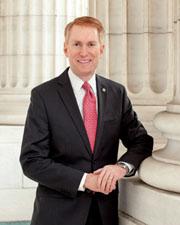 Sen. James Lankford (R-OK)
Legislative Activity
Stay on top of the latest movement without scrolling through every action
Roll call votes on amendments in Senate: Amendment SA 1237 as modified, under the order of 5/14/15, having achieved 60 votes in the affirmative, was agreed to in Senate by Yea-Nay Vote. 92 - 0. Record Vote Number: 182.
May 18, 2015
View full timeline
Roll call votes on amendments in Senate: Amendment SA 1237 as modified, under the order of 5/14/15, having achieved 60 votes in the affirmative, was agreed to in Senate by Yea-Nay Vote. 92 - 0. Record Vote Number: 182.
May 18, 2015
Senate amendment agreed to: Amendment SA 1237 as modified, under the order of 5/14/15, having achieved 60 votes in the affirmative, was agreed to in Senate by Yea-Nay Vote. 92 - 0. Record Vote Number: 182.
May 18, 2015
Considered by Senate. (consideration: CR S2951, S2960-2961; text as modified: CR S2961)
May 18, 2015
Amendment SA 1237 as modified, under the order of 5/14/15, having achieved 60 votes in the affirmative, was agreed to in Senate by Yea-Nay Vote. 92 - 0. Record Vote Number: 182.
May 18, 2015
Senate amendment submitted
May 14, 2015
Senate amendment proposed (on the floor): Amendment SA 1237 proposed by Senator Hatch for Senator Lankford to Amendment SA 1221.(consideration: CR S2926; text: CR S2926)
May 14, 2015
Senate amendment submitted
May 14, 2015
Amendment SA 1237 proposed by Senator Hatch for Senator Lankford to Amendment SA 1221. (consideration: CR S2926; text: CR S2926) To establish consideration of the conditions relating to religious freedom of parties to trade negotiations as an overall negotiating objective of the United States.
May 14, 2015
Votes
1 roll call on this amendment
Text
Modified
ENSURING TAX EXEMPT ORGANIZATIONS THE RIGHT TO APPEAL ACT

The PRESIDING OFFICER. Under the previous order, the Senate will
resume consideration of H.R. 1314, which the clerk will report.
The legislative clerk read as follows:

A bill (H.R. 1314) to amend the Internal Revenue Code of
1986 to provide for a right to an administrative appeal
relating to adverse determinations of tax-exempt status of
certain organizations.

Pending:

Hatch amendment No. 1221, in the nature of a substitute.
Hatch (for Flake) amendment No. 1243 (to amendment No.
1221), to strike the extension of the trade adjustment
assistance program.
Hatch (for Lankford) amendment No. 1237 (to amendment No.
1221), to establish consideration of the conditions relating
to religious freedom of parties to trade negotiations as an
overall negotiating objective of the United States.
Brown amendment No. 1242 (to amendment No. 1221), to
restore funding for the trade adjustment assistance program
to the level established by the Trade Adjustment Assistance
Extension Act of 2011.

The PRESIDING OFFICER. Under the previous order, the time until 5:30
p.m. will be equally divided between the two managers or their
designees.
The Senator from Utah.
Mr. HATCH. Thank you, Madam President.
Finally, at long last, the Senate has begun its debate on the
Bipartisan Trade Priorities and Accountability Act of 2015, a
bipartisan and bicameral bill to renew trade promotion authority or
TPA. As one of the authors of this legislation, I am glad we have
gotten to this point and look forward to a spirited and fulsome debate
on the floor.
This legislation has been in the works for a long time. As we all
know, the previous iteration of TPA expired in 2007. The original
version was originally enacted in 2002. In other words, it has been 13
years since Congress seriously considered legislation to renew trade
promotion authority. I think it is safe to say that at least for those
who focus on trade policy, the debate and discussion surrounding what
would go into the next TPA bill has been going on that entire time.
For me, while I have long been a supporter of free trade and TPA, the
real work on this bill began in earnest in the spring of 2013. I worked
for the better part of a year with former Chairman Max Baucus and Dave
Camp on legislation to renew TPA for a 21st century economy. We
introduced our bill--which, in many ways, formed the basis for the
legislation we are debating now--in January of last year.
This year, when I became chairman of the Senate Finance Committee, I
sought to work with my colleagues on both sides of the aisle to make
improvements to the bill in order to broaden its support. Most notably,
I worked closely with my colleagues on the Finance Committee and with
chairman Paul Ryan of the House Ways and Means Committee to craft an
improved TPA bill. Senator Wyden and I work well together, and we were
able to bring this bill to fruition. I think we were successful.
Indeed, we were able to build upon the efforts of last Congress to
make important changes that will enhance Congress's role in crafting
our trade policy and improve overall transparency and accountability.
We introduced our bill on April 16, and on April 22, the Finance
Committee reported

[[Page S2952]]

the bill along with a few other important trade bills you may have
heard about.
The vote on our TPA bill was 20 to 6. The last time the Senate
Finance Committee reported a TPA bill on the Senate floor was 1988.
While we passed other TPA bills in the nearly three decades since that
time, this is the first to go through regular order, including a full
committee process and original consideration on the floor.
I want to thank my colleagues, in both the House and the Senate, who
have worked with me to get us to this point, especially Senator Wyden
and others on the Democratic side as well and certainly everybody on
the Republican side. The fact that we are now on the floor debating
this bill is, in and of itself, a milestone. In fact, I would call it
historic, but let's not fool ourselves. We still have a long way to go.
Let's talk about the bill for just a moment. I would like to begin by
addressing the most basic question: What is TPA or trade promotion
authority? Put simply, TPA is the most important tool Congress has to
advance our Nation's trade agenda. Specifically, TPA represents a
compact between the Senate, the House, and the administration. Under
this arrangement, the administration agrees to pursue objectives
specified by Congress and agrees to consult with Congress as it
negotiates trade agreements. In return, both the House and Senate agree
to allow for time-specific consideration of trade agreements without
amendments. This ensures that Congress leads the way in setting our
Nation's trade agenda while giving our trade negotiators in the
administration the tools necessary to reach high-standard trade
agreements.
Why is this compact so important? There are a number of reasons, but
for now I will just focus on two. First, the TPA compact ensures that
Congress has a voice in setting trade priorities before a trade
agreement is finalized. By setting clear negotiating objectives in a
TPA bill, Congress is able to specify what a potential trade agreement
must contain in order to gain passage.
Second, the compact allows our trade negotiators to deliver on an
agreement. As our negotiators work with our trading partners on trade
agreements, they need to be able to give assurance that the deal they
sign will be the one Congress votes on. They cannot do that without
TPA. In a sense, without TPA, our trading partners are negotiating not
only with the professionals at USTR but also with all 535 Members of
Congress, whose views and priorities may be unknown or unknowable.
Under this scenario, our partners will not put their best efforts on
the table because many will have no guarantees that the agreement they
reach will remain intact once it goes through Congress. In short, TPA
is essential for both the conclusion and passage of strong trade
agreements.
I would like to take a few minutes to talk about some of the
specifics of our bill. First of all, our TPA bill updates the
congressional negotiating objectives to focus trade agreements on
setting fair rules and tearing down barriers to trade. In fact, the TPA
bill we are now debating now contains the clearest articulation of
congressional trade priorities in our Nation's history, including
nearly 150 ambitious, high-standard negotiating objectives, most of
them designed to break down barriers that American exporters face in
the 21st century economy.
Under the bill, future trade agreements must include strong
international rules to counter unfair trade practices, including those
related to currency, digital piracy, cross-border data flows, cyber
theft of trade secrets, localization barriers, nonscientific sanitary
and phytosanitary practices, state-owned enterprises, and labor and
environmental policies.
Our bill also requires that U.S. trade agreements reflect a standard
of intellectual property rights protection similar to that found in
U.S. law. We also call for an end to the theft of U.S. intellectual
property by foreign governments, including piracy and the theft of
trade secrets and for the elimination of measures that require U.S.
companies to locate their intellectual property abroad in return for
market access.
Finally, the TPA bill expands congressional engagement in ongoing and
future negotiations by ensuring that Members can review proposals and
discuss them with our trade negotiators. The bill also creates new
congressional oversight mechanisms to ensure that the administration--
whichever administration it is--closely adheres to the objectives set
by Congress, including a new procedure that Congress can employ if our
trade negotiators fail to consult or make progress toward meeting the
negotiating objectives. As you can see, this bill addresses the needs
of our modern economy, and it fully takes into account the concerns
expressed by Members of Congress and the American public about the
trade negotiating process.
The legislation before us also contains the Finance Committee's bill
to reauthorize trade adjustment assistance or TAA. I think I have made
it pretty clear that I am not TAA's biggest fan. I oppose the program
in general and voted against the TAA bill in committee, but from the
outset of this process, it was clear to us on the Republican side that
we would have to swallow hard and allow TAA to pass in order to get TPA
across the finish line. Toward that end, we joined the two bills
together on the floor.
In short, this is a good bill and one that Members of both parties
should be able to support.
As I mentioned, the vote in the Finance Committee in favor of TPA was
20 to 6. I hope we will get a similar bipartisan result on the floor. I
think we can.
To conclude, I just want to make it clear that I am not naive. I am
well aware not everyone agrees with me on these issues. There are
some--including a few of our colleagues in the Senate--who oppose what
we are trying to do with this legislation. They oppose TPA and
virtually all free-trade agreements. In essence, though they usually
deny it, they oppose trade in general.
Of course, I respect the views of my colleagues on these matters as
well as any others on which we happen to disagree, but let's be clear
about a few things. When you oppose TPA and trade agreements, you stand
against the creation of new, higher paying jobs for American workers.
You stand against American farmers, ranchers, manufacturers,
entrepreneurs, and the workers they employ who need access to foreign
markets, and you stand against the advancement of American values and
interests on the world stage.
I will have more to say on the floor about these issues in the coming
days about how TPA and trade agreements can help small businesses
agriculture and how important our trade policies are to our national
security. I plan to do all I can to make the case that U.S. trade with
foreign countries is a good thing and that this legislation represents
our best opportunity to advance a trade agenda that works for America.
For now, I will just say once again that while I am pleased--very
pleased, in fact--that we made it this far on TPA, I will not be
satisfied until we have a bill on the President's desk--a President who
is behind this bill, strongly supportive of it, and has encouraged us
every step of the way.
As I have stated, we need to have a fair and open debate on these
issues. I am committed to hearing arguments, considering amendments,
and demonstrating how a functioning Senate is supposed to operate. I
hope my colleagues will join me in that type of discussion.
I yield the floor.
The PRESIDING OFFICER. The Senator from Oregon.
Mr. WYDEN. Madam President, first, let me thank Chairman Hatch for
our partnership over these many months, and let me be clear at the
outset that I agree with much of what Chairman Hatch has said. What I
would like to start with is what I think is the bedrock principle of
this debate about trade and put it all straightforward and upfront;
that is, this is about trade done right. This is not the trade policy
of the 1990s. This is not the NAFTA playbook. It is not even the 2002
TPA package. I realize the Presiding Officer was not in the Senate at
that time. After my opening remarks, I am going to start outlining the
30 progressive changes in the 2015 TPA package that were not in the
2002 program to show how different this trade policy will be.
The point of what I have started with--this focus on trade done
right--is to drive home the potential for more good-paying jobs for our
workers. This

[[Page S2953]]

would be true in Oregon, Utah, Iowa, and across the land. In my State,
one out of five jobs revolves around exports. The export jobs often pay
better than do the nontrade jobs.
The reason I bring this up is I do not think there is any more
pressing economic issue in our country than finding ways to increase
wages for Americans and particularly the middle class and those who
aspire to be middle class. The facts demonstrate clearly that the
export jobs often pay better than do the nonexport jobs. The reason
that is the case is because there is often a very large value-added
component. There is increased productivity. The fact is, when we grow
things in Iowa or Oregon or any other part of the country and make
things in America and we add value to them, then we can ship them
somewhere.
What the Department of Commerce has found in a number of their
analyses is that those export-related jobs often pay better than do the
nonexport jobs.
The reason I am starting with this is that this is particularly
relevant given the potential market that is out there for the people of
Oregon, Iowa, and every other part of our country. The analysis shows
that by 2025, there are going to be about 1 billion middle-class
consumers in the developing world--1 billion people with a significant
amount of disposable income. I think they want to buy the Oregon brand,
they want to buy the American brand. They are going to be interested in
buying our computers. They are going to want to buy our wine and
agricultural products. They are going to buy our helicopters. They are
going to buy our planes. They are going to buy a whole host of
products. The question is, Are Americans going to reap the fruit of
those export opportunities? That, fundamentally, is what this is all
about with respect to exports and particularly employment
opportunities.
The reality is that our markets are basically open, but a lot of the
countries that are part of the region we are looking at for the first
agreement--what is called the Trans-Pacific Partnership--have markets
that are much more closed. They have double- and triple-digit tariffs.
I suspect the Presiding Officer is very concerned about the double- and
triple-digit tariffs on agricultural commodities. Certainly, the people
of Oregon are very concerned about the consequences of those huge
tariffs on our agricultural goods.
So, as we start this discussion, right at the center is this focus on
what I call trade done right and my view that trade done right can
create an enormous array of economic opportunities for hard-working
middle-class Americans who deserve to have us come up with policies
that shape a better future for them rather than the alternative.
Make no mistake about the alternative. If we walk off the field,
China comes onto the field and China says: Fine; we are happy to write
the rules.
To me--I am going to outline this--what Chairman Hatch and I and
others have produced is a policy that will force standards up as
opposed to much of what critics say about past trade policies, that
they drive--it is a race to the bottom, that it drives standards down.
This is a piece of legislation which is going to drive up standards.
With that, I am going to start outlining the differences between the
2015 TPA package and the 2002 TPA package. I am going to start with the
requirement for labor, the environment, and affordable medicines.
In 2002, there was no requirement for trading partners' laws to
comply with core international labor standards. Let me repeat that. In
2002--more than a dozen years ago--there was no requirement for trading
partners' laws to comply with core international labor standards. Under
the package Chairman Hatch and our colleagues and I on the Finance
Committee have produced, trading partners must adopt and maintain core
international labor standards, and there are trade sanctions if they do
not comply. It could not be more different--the rules from 2002 TPA and
the rules for 2015 under what Chairman Hatch and I and others on the
Finance Committee insisted on.
Let's talk about the environment. I mentioned labor first. Let's talk
about the environment. In 2002, there was no requirement for trading
partners' laws to comply with common multilateral environmental
agreements. In 2015, under the bipartisan Finance package, trading
partners must adopt and maintain common multilateral environmental
agreements, and there are trade sanctions if they do not comply. Again,
2002 and 2015--the differences could not be more stark with respect to
environmental protection.
With respect to affordable medicines, in 2002, there were no
provisions balancing intellectual property protections to ensure access
to medicines for developing countries. In 2015, there are directives
for trade agreements to promote access to medicine and foster
innovation.
I do want to yield to the distinguished majority leader, but I wanted
to begin this debate--particularly when Chairman Hatch is on the
floor--by highlighting the differences between 2002 and 2015,
particularly in areas so important to the American people, such as
labor, environmental protection, and access to medicines.
I know we all want to hear from the distinguished majority leader.
I yield the floor.
The PRESIDING OFFICER. The majority leader is recognized.

Order of Business

Mr. McCONNELL. Madam President, I thank my good friend from Oregon,
and I congratulate both the Senator from Oregon and the chairman of the
Finance Committee, Senator Hatch, for moving this important legislation
forward.
Thursday's vote to open this debate on trade was very important for
our country. It brought middle-class families one step closer to the
increased American exports and American trade jobs our economy needs.
It took a lot of work to get us this far. It is going to take a lot
more of that kind of work to bring these American jobs over the finish
line. Cooperation from both sides of the aisle will be critical to
doing so. For instance, we were ready to be in session on Friday to get
more of our work done on trade and allow Senators from both parties the
chance to offer amendments. All the unnecessary delaying and
filibustering we have seen has left us with less time for debate and
amendments on this bill--less time for debate and amendments on this
bill. It cost the Senate over a week in lost time.
We have been hearing some interesting suggestions from our friends
about their level of cooperation over on the minority side. I would
certainly agree that putting these words into action would be very good
news for our country. This week, our colleagues will have the perfect
opportunity to prove they are serious. They will have a chance to turn
the page completely from the far left's strategy of wasting time on
trade for its own sake, on an issue we all know is President Obama's
top domestic legislative priority.
I want to be very clear. The Senate will finish its work on trade
this week. We will remain in session as long as it takes to do so. I
know we became used to hearing these types of statements in the past,
but Senators should know that I am quite serious. I would advise
against making any sort of travel arrangements until the path forward
becomes clear. It is also my intention this week to address the
highways issue and to responsibly extend the expiring provisions of
FISA. The quickest way to get there would be to cooperate across the
aisle so we can pass the trade bill in a thoughtful but efficient
manner. I know Members on both sides are going to want a chance to
offer amendments to the bill. They should offer amendments. I am for
that. I encourage them to do so, both Republicans and Democrats. Now is
the time for Senators from both parties to offer those amendments and
work with the bill managers to set up the vote.
This is where our Democratic friends' rhetoric about working
cooperatively in the minority will be put to the test. The more our
colleagues across the aisle try to throw sand in the gears this week,
the less opportunity Members--including Members of their own party--
will have for amendments. So I hope they will not do that.
We have a lot to get accomplished. We have 1 less week to do so. That
is why I would encourage Members of both parties to bring their
amendments to the bill managers and work to get them pending. Let's
process amendments from both sides--both sides--and then let's pass
this bill so we can boost American jobs and exports by knocking down
unfair barriers to the things we make and grow right here in America.

[[Page S2954]]

Let me be clear again. This week, we will finish the trade promotion
authority bill. We will act on a highway extension and we will act on
FISA before we leave for the Memorial Day recess.
I yield the floor.
The PRESIDING OFFICER. Whole yields time?
The Senator from Ohio.
Mr. BROWN. Madam President, I appreciate the majority leader's
comments. I know Senator Sessions will be speaking in a moment.
Madam President, I ask unanimous consent that Senator Sessions
succeed me after I speak for up to 10 minutes.
The PRESIDING OFFICER. Without objection, it is so ordered.
Mr. BROWN. Madam President, I would remind the majority leader that
the last time he used the term, ``We shouldn't waste our time on
trade,'' meaning not that we shouldn't pass this trade agreement--of
course he supports that--but that we should not spend so much time on
trade--the last time, 13 years ago, when Congress debated a trade
issue, it led to much smaller trade agreements; most immediately, the
Central America Free Trade Agreement. That was the one President Bush
most wanted to negotiate at that time, if I recall. That debate lasted
for 3 weeks. I am not suggesting this debate last 3 weeks, but I am
suggesting that to say we are wasting our time on trade, on a long
debate, on a thorough debate with a number of amendments, is a bit of a
reach.
I would add that this trade agreement, this fast-track, speaks to,
ultimately, at least 60 percent of the world's GDP; first, the Trans-
Pacific Partnership, which is pretty much already negotiated, even
though the USTR will not let much of this trade agreement actually see
the light of day prior to voting on fast-track; and, second, once
TTIP--the United States-European Union agreement--is brought to the
Senate and House for approval, that will mean 60 percent of the world's
GDP will be included.
So to say we can only debate this for 3 days and squeeze the number
of amendments, when I know that at least a dozen Senators, at least a
dozen more, probably like a dozen and a half on the Democratic side
alone--I know a number of Republicans have amendments too--want to
offer amendments, want them debated on, and want them voted on.

Amendment No. 1242

So the first amendment that I believe we will vote on tonight is my
amendment on trade adjustment assistance. Everyone acknowledges--from
those who oppose TPA and oppose TPP to its most vehement cheerleaders,
the Wall Street Journal editorial board, a number of conservative think
tanks, and a number of free-trade advocates--that trade agreements
result in winners and losers because they bring dislocation in the
economy. We can debate whether the winners outweigh the losers--I don't
think they do. I think the losers outweigh the winners in what happens
in trade.
I know that the wealthiest 5 percent in this country, by and large,
gain from these trade agreements, but the broad middle and below
typically lose from these trade agreements. I know what they have done
to my State. I know what they have done to the Presiding Officer's
State, and I know what they have done especially to manufacturing.
What is not debatable is some industries are going to get hurt, some
communities will be hollowed out, some worker jobs will be lost. We
know that. We owe it to workers who are going to have their lives
upended, through no fault of their own, to do everything we can to ease
the transition.
Think about that. We make a decision--President Obama asks us to pass
this, the Republican leadership asks us to pass this, and the Senate
Republican leadership in the House, joining President Obama--to pass
this. So the decisions we make here--the President of the United States
and Members of Congress--will cost people their jobs. We know that
whether you are for TPA or not.
We know some people will lose their jobs because of these trade
agreements. We owe it to them, to those workers who have lost jobs, to
those communities that experience devastation, small towns that have
seen plants close. That creates devastation in those towns. We owe it
to provide training and assistance to help those communities, to help
those workers get back on their feet.
That is why I am calling on all my colleagues--regardless of how you
feel about the Trans-Pacific Partnership, regardless of how you are
going to vote on fast-track--to support this amendment, which restores
trade adjustment assistance funding levels to $575 million a year. This
is the same level that was included in the bipartisan TAA bill in 2011.
One-quarter of current Senate Republicans--sitting Senate Republicans,
one-quarter of them--voted for that higher number.
This amendment is fully paid for. I know some of you think that $450
million, the amount included in the underlying bill, is sufficient, but
it is not. The truth is that $450 million likely will not be enough. In
2009 and 2010, TAA cost $685 million each year.
If you take the average of funding levels for the 3 years when
program eligibility was nearly the same as the one we are considering
today, TAA expenditures averaged $571 million a year. Put on top of
that what has happened with the South Korea trade agreement--
predictions of job growth, almost identical numbers, except it was job
loss--that means more people eligible for TAA. Put on top of that the
Trans-Pacific Partnership.
We know there will be winners and losers. The losers need help. Add
that to the dollar figures we need for Trade adjustment assistance. TAA
helps workers retrain for new jobs so they can compete. We have clear
evidence that TAA works. It helps workers develop the skills they need
to find work and stay employed.
If we are going to compete, we need to invest in these workers to
make sure they are ready to meet that global competition.
Right now, this body considers fast-track authority for trade
agreements that encompass 60 percent of the world's economy. Now is
exactly the wrong time to underinvest in training workers. If we don't
support my amendment, that is what we are doing. Make no mistake, if
you go home after voting no on this dollar figure, of putting it back
to where this Congress voted on it only 4 years ago, you are leaving
workers behind. You are underinvesting in workers. You are showing that
these workers who lose their jobs because of South Korea, these workers
who lose their jobs because of NAFTA, CAFTA or what has happened with
PNTR or the South Korea trade agreement, you are saying to those
workers: Sorry. We don't have enough money to take care of you--even
though it was our actions in the House, the Senate, and this President
who caused those workers to lose their jobs.
This is the same level that, in 2011, 70 Senators supported,
including 14 current Republican Senators who sit in this body today. In
2011, 307 Members of the House of Representatives also supported the
dollar figure that this amendment calls for. I ask my colleagues,
including the nearly one-quarter--the fully one-quarter of Senate
Republicans who supported it at this level--to support it again today.
If we are going to pursue aggressive trade promotion, an aggressive
trade promotion agenda, we owe it to our workers, we owe it to our
businesses, we owe it to our communities to make sure they are ready
for the competition that is about to come their way.
We have a moral obligation to help the families whose livelihoods
will be yanked out from under them, not from something they did wrong,
not from a decision they made but from a decision we in this body made
to change the rules.
We know that will happen. We saw it with NAFTA. We saw it with CAFTA.
We are seeing it with Korea. We know we will see it again with TPP.
There is no question that potential new trade agreements we are
considering will create economic loss. There is no question that
Americans will lose jobs. There is no question. Nobody disputes that.
Are we not to take care of those workers who lose their jobs? Again,
it wasn't their decision. It was our decision, in this body, to vote
for these trade agreements and then not to fund those workers'
comebacks, not to help those workers get back on their feet, not to
retrain those workers who lost their jobs because of what we did in
this body. Talk about a moral issue.
It is our duty to look out for those workers who end up on the losing
end

[[Page S2955]]

of our defined trade policy. That is why I ask my colleagues to join me
in supporting trade adjustment assistance today at levels that this
Congress overwhelmingly agreed to in a bipartisan manner 4 years ago.
The PRESIDING OFFICER. The Senator from Alabama.
Mr. SESSIONS. Madam President, I thank the Senator from Ohio for
allowing me to speak, for suggesting I speak next, which was my
understanding I would be able to do.
We have good people on both sides of this issue, but Senator Brown is
an advocate, and I think he has made some good points with regard to
the questions facing America.
Our colleagues earlier said this is a trade deal done right. Well, in
a way that seems to say: don't pay attention to previous trade deals
that haven't done so well.
We have a number of people who live in the business world, who trade
internationally regularly, and they say this is not a good trade deal,
and it will not work. We also hear it said frequently that we want
increased wages for Americans by everybody on both sides of this issue.
But the proponents of the legislation--if you watch carefully what
they have been saying--they are only saying it will only increase wages
in export industries, not across the economy. And we know that in this
Nation our exports amount to only 13 percent of GDP, which is the
lowest in the developed world. We don't have a lot of exports. Perhaps,
if we export more, maybe wages will go up a little bit, but if we
import more in other industries in the 87 percent, we might see a
decline in wages and jobs.
So what are the facts? More exports are good, but if increased
imports dwarf increased exports, it is not so good as a result of this
agreement, especially when we have had virtually a six-year-record
trade deficit in March and one of the worst quarters in years--the
first quarter of this year--in importing more than we export.
So the Korea agreement didn't live up to the promises we had for it.
I supported it. I voted for it. But will this one be any better? Don't
we need to know?
So I asked five questions of the President more than 10 days ago.
First, regarding jobs and wages. On net, will TPP increase the total
number of manufacturing jobs in the United States, generally, or reduce
them and auto manufacturing jobs, specifically.
Will hourly wages for U.S. workers go up or down? Don't you have that
information? Shouldn't that be shared with us before we vote?
Regarding trade deficits, I ask: Will TPP reduce or increase our
cumulative trade deficit with TPP countries overall?
And with the big, new members, it will be significantly impacted--
Japan and Vietnam, specifically.
Regarding China, could TPP member countries add new countries--
including China--to the agreement without future congressional
approval?
Some have tried to say it can't be done. You have to go down in the
secret room here, read it, and you are very limited in what you can
find out. But as I have read the agreement, I don't think there is any
doubt that under WTO rules which will be adopted, new members can be
added without a vote of Congress.
Regarding the phrase, the ``living agreement'' that is in this deal,
the fact that the agreement itself said this is unprecedented. It is
the first time we have ever had language like ``living agreement'' in a
trade deal.
What does that mean? Can the agreement be changed after adoption
without congressional action? It appears so.
So I have asked, Mr. President, make this living agreement language--
it is not much--public, and let's discuss and analyze just what it
means. Does it mean the President can meet with other countries, even
vote against a change in trade policy or an agreement with them, lose
the vote and have law of Congress overridden or us be in violation of
the agreement, subject to sanctions by the Commission or international
body.
And will the President state, explicitly, and accept language that
would mean that rules regarding immigration would not be changed? I
hope we can do that.
I will just say I see my colleague and admired chairman of the
Finance Committee on the floor. He has been willing to meet with my
staff, talk respectfully about these issues, and consider how to
wrestle through them. I hope we can make some progress, but I am
concerned we might not make sufficient progress.
We need to think about these things. It can no longer be denied that
wages for American workers have been flat or even falling for decades.
One analysis says that real hourly wages today are lower than they were
in 1973. At the same time, the share of Americans actually working--the
percentage of Americans in their working years who are actually
working--has steadily declined to its lowest level in four decades.
The middle class is shrinking. I wish it were not so.
CNN recently summarized the results of a Pew study which found:

Most states saw median incomes fall between 2000 and 2013,
an ominous sign for the well-being of the middle class. . . .

That is really a catastrophe. So in 13 years we have seen a steady
decline in wages for the middle class.
A separate Pew Research Center study shows that the share of adults
in middle-income households has fallen from 61 percent in 1970 to 51
percent in 2013. The erosion over the past four decades has been sure
and steady. That is the Pew research.
They continue:

If past trends continue to hold, there is little reason to
believe the recovery from the Great Recession will eventually
lead to a rebound in the share of adults in middle-income
households.

In other words, they are going to be below a middle-income level. And
that is not good. Don't we, colleagues, have a responsibility to
honestly say: What is causing this?
We have had Democratic Presidents and Republican Presidents during
this time. Trends are occurring out there. Some of them may be
difficult to overcome. But don't we need to talk about it more
comprehensively?
Pew further finds that while middle-income families--who are the
majority of Americans by far--earned 62 percent of the Nation's
household income in 1970, today they earn only 44 percent of the
Nation's household income. So the sad fact is that the middle class is
getting smaller. This has enormous implications not just economically
but socially. The size and strength of a middle class impacts the
health of a community and a nation in many ways. What are we here for
in the Senate if not to address, consider, and deal with these kinds of
issues? We need to ask some tough questions about why the middle class
is shrinking and why pay isn't rising.
I have no doubt that bigger government, more regulations, more taxes,
our huge $18 trillion debt and the interest we pay on it, and, lately,
ObamaCare are important factors in weakening American economic growth
and the wages of Americans. I truly believe those are significant
factors. But is that all there is? I am afraid there is more. It
appears there are two other factors of significance that are not being
sufficiently recognized or seriously discussed by any of our political,
corporate, and academic leaders, or the media establishment. So it is
time for us to begin a vigorous analysis of our conduct of trade. I
believe that is one of the factors that may be impacting the wages and
income of Americans.
Over a number of years, I have pointed out that I believe immigration
actions are also containing the growth of wages, as economic studies
repeatedly show. But what about trade? Do our policies like the Trans-
Pacific Partnership concede too much to our mercantilist competitor
allies? These are good countries--Japan, Vietnam. We want to see
Vietnam develop and move into the world orbit. There are other
countries, but those are the two big ones that would be most impacted
by this agreement.
We already have trade agreements with Canada, Mexico, Australia,
Chile, and others. What about those that have a different philosophy on
trade than we do--the mercantilist ideas? Do their actions over the
years establish that they have developed trade and nontrade barrier
systems that provide their workers and manufacturers substantial
advantages in the world marketplace? Have they figured out how to
utilize other barriers--other than just

[[Page S2956]]

tariffs--to advantage their manufacturers and jobs?
It is astounding to me how little serious discussion there has been
on these issues.
For some trade advocates, even bad trade deals are good. Truly, this
is so. Many advocates are quite open in their belief that as long as
the consumer gets a lower price for their product, there should be no
concern if American plants close, workers are laid off, and wages fall.
They say that in their writings. The politicians don't say it; they
have to answer to the people. Many of the theorists for open borders
and utterly free trade say that often. So I fear we have almost an
obsession with trade agreements and that this is so strong that many
TPP advocates don't concern themselves with anything but that we admit
more cheaper goods, that lower prices are good for consumers.
That we are all consumers, there can be no doubt. That is a valuable
thing, for consumers to have products at lower prices. I don't dispute
that. I know some do, but I don't. But is any trade agreement good
because it creates more low-cost imports, especially if we are
competing against partners who know how to cheat the system and gain
manipulative advantage and we don't stand up and try to correct that?
Are trade deficits, which are at all-time-high levels, immaterial?
Some say trade deficits don't make much of a difference. They do. Is
the continuing shuttering of American manufacturing of no concern? I
think it is of great concern. Fundamentally, can America be strong
without a manufacturing base? Can we be secure without a steel
industry, which is getting hammered through unfair trade and dumping
and other actions by our trading competitors?
At bottom, we must ask whether our aggressive trading partners, using
a mercantilist philosophy, may be gaining unfair advantage over the
American manufacturing base and workers in America.
These nations--good nations, good allies--are not religious about
free trade. In general, while they assert their desire for expanded
free trade, their actual policies seek fewer U.S. exports to them using
nontariff as well as tariff barriers, and our trade competitors use
currency manipulation, subsidies, and other actions to expand their
exports to us. Their goal is naturally to seek full employment in their
countries while exporting their unemployment to our country.
This refusal by many to acknowledge the mercantilist policies of our
trading competitors has gone, it seems to me, from promoting healthy
trading relationships, to some sort of ideology, even to the nature--I
have said, and others have as well--of a religion. If you just knock
down all trade barriers, allow our competitors to use whatever tactics
they want to use, accept any product that comes in that is cheaper,
somehow we will have world peace, cancer will be cured, and the economy
will boom. But forgive me if I am not willing to buy into that.
Cheaper products are good, is what our promoters say. That is all you
need to know. Don't ask too many questions about facts. You are going
to get cheaper products. That is the only thing that counts.
Well, I don't dismiss the advantage of cheaper products. It is a
serious issue. This issue deserves everybody's serious discussion. But
I have to tell you, I am having my doubts. I have voted for other trade
agreements, and I am uneasy about this.
Conservatism is not an ideology; it is, as my friend Bob Tyrrell at
the American Spectator likes to say, a cast of mind. It lives in the
real world. And certainly the real world is not working so well for
Middle America today. It is not. Their financial status continues to
decline.
The conservative thing to do at this point in time is to avoid any
dramatic and sudden changes that destabilize families and communities
further, to not accelerate the problem that exists. And let's dig in
deeply to the questions I ask: Will wages go up? Will trade deficits be
reduced?
By the way, the Korea Free Trade Agreement didn't work so well. We
were promised a number of things. President Obama promised the Korea
Free Trade Agreement would increase U.S. goods exported by $10 billion
to $11 billion. However, since the deal was ratified several years ago,
our exports have risen only $0.8 billion--less than $1 billion--while
Korean exports to the United States increased by more than $12 billion,
widening our trade gap substantially, almost doubling it. I am just
telling you that is what was promised, and the reality didn't match the
promises. So is it any wonder the American people are uneasy about
these agreements? And I think all of us should be. We should look to be
more careful about them.
Capital is mobile. People can move money and invest anywhere in the
world almost with the click of a computer button. But many times
workers are not mobile like that. So when a company closes its plant in
the United States and shifts production to a lower wage country, the
company may make more money, but the workers in their communities, who
cannot move overseas, suddenly don't have jobs, and they are hurt.
Of course we can't stop globalization in this economy. We can't
reverse the effects of trade. But we can work for trade agreements that
create a more level playing field against our good but mercantilist,
aggressive trading partners who look for advantages every day and who
lust after access to the American marketplace. That is what they want,
but we don't have to give that access unless they treat our products
with respect and allow access to their marketplaces.
So many in our country have an inflexible ideology that the United
States and the American people should allow for the completely
unrestricted movement of goods and labor into the United States, even
when our trading partners manipulate rules for their advantage. Those
truest believers are most adamant about passing this fast-track
legislation as fast as possible, with the least discussion possible.
But the United States is a country, colleagues, not an economy, and a
country's job is first and foremost to protect its citizens from
military attacks and also from unfair trade policies that threaten our
economic well-being.
Any trade agreement we enter into should have a mutually beneficial
impact on all parties, not just our country but other countries that
enter into the agreement. It should be mutually beneficial. That is
what contracts do every day. It must not continue or further the
decline of manufacturing in the United States. It should seek to end
trade unfairness and to increase, not reduce, wages in the United
States.
We cannot afford to lose a single job nowadays to unfair competition
or unfair trade agreements. We are experiencing a decline in wages, a
decline in employment. We need to fight for every single job. And that
means fair trade--you open your markets before you demand that we open
ours. They haven't done so, while we have maintained open markets here.
But the fast-track procedures ensure that any trade deal--which is
yet unseen--can pass through Congress with a minimum of actual scrutiny
after years of soaring trade deficits. Shouldn't we apply more scrutiny
to trade agreements, not less? Are we afraid to ask tough questions?
Take the issue of currency manipulation. This President has refused
to confront this practice that provides a clear advantage for certain
foreign competitors. His negotiations have refused to put any
provisions in the Trans-Pacific Partnership that address this issue.
And if Congress were to force it in, I am not sure he would even then
enforce it.
The people pushing for this trade agreement, my colleagues have to
know, don't want to confront the currency manipulation. They think it
is all right. They do not think it is a problem. It reduces the price
of imports, so we should be thankful, they say. And under fast-track,
there will be nothing we can do to amend or stop it.
Finally, the reality is that this fast-track legislation is a
significant vote. No fast-track deal, once passed, has ever been
blocked. So if we want to confront currency manipulation and other
unfair practices, our best bet is to have trade bills come before
Congress through the regular order--not as a fast-track deal. Then
Congress can properly exercise its responsibilities that have been
delegated to us under the Constitution of the United States.

[[Page S2957]]

I appreciate the able leaders of the committee who are advancing this
legislation. I respect them and many of the arguments they have made.
There is much value to them. But I am uneasy about where we are going
today. I think we need to spend more time analyzing the actual impact--
not the theoretical impact--of trade agreements--the actual results of
our ability to penetrate the foreign markets. If we do that, maybe we
can figure a way to actually improve the financial condition of
mainstream America.
I thank the Chair, and I yield the floor.
The PRESIDING OFFICER. The Senator from Oregon.
Mr. WYDEN. Madam President, before he leaves the floor, I just wish
to respond to a couple of the points made by our colleague from
Alabama, because he brings up issues that Chairman Hatch and I talked a
great deal about during the discussion of this proposal. I would just
like to respond very specifically to some of the concerns raised by the
Senator, my friend from Alabama.
My friend from Alabama said there would be no scrutiny--those were
his words--of this particular agreement, and that it would be passed
through as quickly as possible without any discussions.
Now, that certainly is an area where I have been very concerned.
Chairman Hatch has been concerned that there hasn't been enough
discussion in the past. So Chairman Hatch and I have changed this, and
I want to be very clear what is going to happen now.
First, for a full 60 days before the President of the United States
signs an agreement--starting with TPP, the Trans-Pacific Partnership--
it would have to be made public for those full 60 days before the
President signs it. Then after that, there would be close to 2
additional months when the American people would have the Trans-Pacific
Partnership Agreement, or any other, in their hands before anyone casts
a vote on an actual agreement on the floor of the Senate or in the
other body, in the House of Representatives.
So as to this idea that my friend from Alabama has said, that there
wouldn't be any scrutiny of anything, we are starting to get a little
flack that it would be out there for too long before people started
voting. But what this----
Mr. SESSIONS. Will the Senator yield for a question?
Mr. WYDEN. If I could just finish my statement.
Mr. SESSIONS. OK.
Mr. WYDEN. I was happy to listen to my colleague.
What this means is the people of Alabama, Iowa, Oregon, and
everywhere else could come to one of our townhall meetings, have the
Trans-Pacific Partnership Agreement in our lap, and ask questions of
their elected representatives about a trade agreement for close to 4
months before it was voted on here or in the other body.
I am going to have to leave for a meeting to talk again about how we
are going to see if we can find some common ground, but I do want to
address one other point that my colleague made, and that deals with
this question of middle-class wages.
My colleague and I agree completely that middle-class people are
hurting. There is no question about it. We have millions of middle-
class people in this country walking an economic tightrope, balancing
their food bill against their fuel bill and their fuel bill against
their housing bill--no question about that.
The difference of opinion here, between two Senators who enjoy each
other's company, is that my colleague from Alabama says the principal
problem is trade--that trade is the reason for this. Respectfully, the
data from the Department of Commerce shows that export jobs--which is
the focus of this bill and the focus of trade done right--pay better
than do the nontrade jobs because they have a value-added kind of
benefit to them. That is why--and I note for my friend from Alabama,
who cares a great deal about the steel industry--the steel industry
sent a letter to Chairman Hatch and me saying they were for this. The
American steel industry sent a letter to Chairman Hatch and me saying
they were for this because they know this is connected to producing
more high-skilled, high-wage jobs, particularly in manufacturing, where
my State is a leader.
So the question then becomes this: What are the big challenges?
Certainly, technology is one, and globalization is one. Chairman Hatch
and I have talked about flawed tax policy. I think it is particularly
ominous that the tax breaks go for shipping jobs overseas rather than
rewarding the manufacturers and those who produce what I call ``red,
white, and blue'' jobs.
But during the time that I have here on the floor, I am going to be
talking about the differences between this trade promotion act proposal
and the last one of 2002. Nothing could illustrate the differences more
than the new requirements for transparency and opportunity for the
American people to weigh in. The facts are that, as a result of what
Chairman Hatch and the Finance Committee have put together, the
American people, before a vote is cast--before a vote is cast on a
trade agreement here on the floor of the Senate or on the floor of the
other body, the American people are going to have those trade
agreements in their hands for pretty close to 4 months.
If my colleague wants to ask a question, I am happy to yield my time
to him.
Mr. SESSIONS. Madam President, I thank Senator Wyden. He is so
principled, and I know his heart is right on all these issues. But
there are some disagreements.
I do think the Senator gives a little more time between the actual
agreement being adopted and its passage, which is preferable. But the
truth is that none of our fast-track agreements have ever been
defeated. There seems to be a majority in both Houses that would vote
for that, and once it is here, it is up or down. There is no other
deal. We can't have any amendments and little input from rank-and-file
Senators, although the Finance Committee chairman and a few others get
some enhanced powers under this agreement--not the average Senator.
So it is not the kind of--if we pass the fast-track, I think with 60
votes, I think we are on a path to adopt an agreement, if history is
true.
I noticed again my colleague said it would enhance salaries in export
job areas. That might be so. Hopefully, we would have some increase in
exports. In Korea, we had about a $1 billion increase or a little less,
instead of 10. But it was a little increase. So maybe that would help a
few jobs and a few salaries.
But what about the others, the imports that are coming in, imports
that are coming in competing with American manufacturing in whole
massive areas of the economy? Isn't that likely to close some
factories? Isn't it likely to put downward pressure on wages? I think
so.
Finally, I think the steel industry and some others are saying they
cannot support this trade deal unless we do something about nontariff
barriers, currency being one of them. That is what people have told me:
If there isn't a fix on currency, we can't go forward with a deal.
So there is no full-fledged support, that I am aware of, from the
steel industry for the agreement as it is likely to pass, which is not
going to include any currency fix with teeth in it, I am afraid. Then,
finally, my concern about not having an adequate debate is less. We
have to get into some of these constitutional issues--the ability of
two-thirds of the members of this so-called new commission, this
transnational commission that will be established, who can add new
members without our approval. We have to talk about that some.
But I asked five questions. I would ask them to Senator Hatch.
What would it do to wages? What does the living agreement mean? Does
it override American law? What about trade deficits and other issues?
I think those are the issues that are not being discussed that need
to be.
So again, with the greatest respect, I thank my colleagues for the
hard work they have put into this. There is no committee that has more
to do around here than the Finance Committee. I understand their
interest in this. I am raising questions. I don't pretend to know all
the answers. But I do think the American people are concerned about it,
and we should be sure that what we do advances the interests of Middle
America as well as corporate America.
I yield the floor.

[[Page S2958]]

The PRESIDING OFFICER. The Senator from Utah.
Mr. HATCH. Madam President, I have been very interested in the
debate, especially between the distinguished Senator from Alabama and
the distinguished Senator from Oregon.
I have to say that it is very interesting that almost every business
in this country wants this bill. Let me just start with mentioning that
all the chairs of the President's Council of Economic Advisers under
Presidents Gerald Ford, Jimmy Carter, Ronald Reagan, George H.W. Bush,
William Clinton, George W. Bush, and Barack Obama have all said:

We believe that agreements to foster greater international
trade are in our national economic and security interests,
and support a renewal of Trade Promotion Authority.

This is from Alan Greenspan, Michael Boskin, R. Glenn Hubbard, Ben
Bernanke, Austan Goolsbee, Charles Schultze, Laura D'Andrea Tyson, N.
Gregory Mankiw, Edward B. Lazear, Alan B. Krueger, Martin Feldstein,
Martin Baily, Harvey S. Rosen, and Christina D. Romer, just to mention
a few.
They say, in a letter to Senator McConnell and Harry Reid, and to the
leaders in the House, John Boehner and Nancy Pelosi that virtually
every chamber of commerce in the country has come behind this bill. To
read one paragraph:

TPA is a longstanding and proven partnership between
Congress and the President that enables Congress to set
negotiating objectives and requires the executive branch to
consult extensively with legislators during negotiations. We
urge you to act on this essential legislation. . . .

I think these chambers of commerce know what is best for business. I
think they know what is best for the economy. In fact, U.S. Chamber of
Commerce President Thomas J. Donohue issued the following statement
hailing the introduction of the ``Bipartisan Congressional Trade
Priorities and Accountability Act of 2015, which will renew Trade
Promotion Authority.''
These are people who take these things seriously. Take the Business
Roundtable:

Washington--Business Roundtable, representing CEOs of U.S.
companies from every sector of the economy, today commended
Senators Orrin Hatch (R-UT) and Ron Wyden (D-OR) and
Representative Paul Ryan (R-WI) for their introduction of a
bipartisan bill to update and renew Trade Promotion Authority
(TPA). Approval of legislation to modernize TPA is a top
priority for Business Roundtable.

We can go on and on. Jim Greenwood of the Biotechnology Industry
Organization has come out in favor of it. Even Gabe Horwitz of the
Third Way has come out in favor of it. Tom Linebarger of the Business
Roundtable has come out in favor. Thomas Donohue, as I said, has come
out in favor of it. David Thomas of Trade Benefits America has come out
for this. Matthew Shay of the National Retail Federation says: We urge
Congress to quickly pass TPA legislation. Peter Allgeier, from the
Coalition of Service Industries, has come out for it.
If we start to look at businesses throughout the country, they don't
seem to be a bit concerned with some of the issues that have been
raised by my friend from Alabama because we have covered them in this
bill.
Think about it. The tech companies--these are America's moviemakers,
software developers, computer manufacturers, the people who drive
America's innovation--understand that promoting American trade requires
protecting American intellectual property. ``That's the only way to
keep our competitive edge in the 21st century. And that's exactly what
TPA will do.'' That is quoting them. TPA lays out almost 150
negotiating objectives for the administration to pursue in trade deals.

Chris Dodd, the head of the Motion Picture Association of America,
praised TPA.
Microsoft's general counsel, Brad Smith came out and said:

Passage of renewed TPA, with its updated objectives for
digital trade, is critical for America to be able to pursue
its interests. And passage is important for Microsoft and our
network of more than 400,000 partners--the majority of which
are small businesses--to compete in the global economy.

Chris Padilla, the vice president of IBM, also spoke in favor: ``TPA
is a critical step in preserving the transformative role of data, and
in strengthening America's economy and competitiveness.''
Victoria Espinell, CEO of BSA, the software alliance, said: ``This
legislation will help ensure that pending trade agreements include
necessary rules to promote cross-border data flows.''
Gary Shapiro, CEO of the Consumer Electronics Association, said:
``TPA takes a modern approach to trade agreements to ensure a robust
digital economy and growth of the Internet,'' which are ``vital to
American innovation.''
Dean Garfield, CEO of the Information Technology Industry Council,
said: ``Tech's message to Congress is simple: supporting TPA will
promote job creation and propel us forward in building a strong 21st
century economy.''
John Neuffer, CEO of the Semiconductor Industry Association, said:
``TPA represents a much-needed shot in the arm for free trade, which is
critical to the U.S. semiconductor industry, to American jobs, and to
our economy.''
We are talking about real jobs here. We are talking about a potential
to raise the average pay by as much as 18 percent.
Carl Guardino, CEO of the Silicon Valley Leadership Group, said:
``Our businesses rely on a robust export market and this bill will go a
long way in empowering the U.S. and enabling U.S. companies to remain
competitive across the globe.''
Mark McCarthy, vice president of the Software & Information Industry
Association, said: ``TPA legislation is crucial for finalizing
agreements that will set the template for 21st Century trade and for
protecting the global digital leadership of the United States.''
Scott Belcher, CEO of the Telecommunications Industry Association
said: ``The passage of Trade Promotion Authority legislation is
critical to increasing the competitiveness of U.S. companies overseas,
particularly in the information and communications industry, and to
ensuring continued job growth at home.''
So tech has spoken out--in one voice, really--to support TPA as
essential to innovation and competitiveness. We can put our heads in
the sand and act as if this is not important, but it is extremely
important.
Then, you get into agriculture. Agricultural exports support over 1
million U.S. jobs, both on and off the farm. Fiscal years 2010 to 2014
represented the strongest 5 years in U.S. history for agricultural
exports, with sales totaling $675 billion. They are expecting grow once
we get fair trade rules with the countries we are currently negotiating
with.
By the way, when we are talking about the 11 nations of the TPP
negotiations we are undergoing, one of the countries we are talking
about is Japan. We have had trouble breaking down trade barriers with
Japan for years. We now have a Prime Minister over there who is willing
to work with us and seize the advantage--not just for Japan but for the
region as well.
If we do not pass this TPA bill, we are just throwing the China the
Asia-Pacific. They are already making strides in that area that would
not be happening if we had this trade agreement already. I might add
that there is the new innovative bank that they have started. At first,
there were only a few countries that wanted to join it. Now it is over
60, as I understand it. Upwards of 60 countries have now jumped on
board, including some of the major countries in this negotiation. We
are going to just stand here and act as if this is not happening and
that our interests in free trade are not important unless we get
everything we want, which, ironically, we basically get in these
agreements.
U.S. producers rely on and prosper from access to foreign markets.
Currently, we export half of U.S. wheat, milled rice, and soybean
production; 70 percent of walnut and pistachio production; more than 75
percent of cotton production; 40 percent of grape production; 20
percent of cherry production; 20 percent of apple production; 20
percent of poultry and pork production; and 10 percent of beef
production.
Today, only a relatively small percentage of U.S. companies export,
yet 95 percent of the world's consumers live outside of the United
States. What are we going to do--ignore these facts and not acknowledge
that we need to pass this bill?

[[Page S2959]]

We need to get real about trade. Trade agreements are the most
effective way to eliminate foreign tariffs, unscientific regulatory
barriers, and bureaucratic administrative procedures designed to block
trade.
I could go on and on. Today there are some 400 trade agreements, and
we have only been party to a small fraction. That is because we have
not had trade promotion authority. Are we going to sit back and put our
heads in the sand and act as if this were not important?
The manufacturers are rallying behind this bill throughout the
country. They said this:
Manufacturers need TPA and new market-opening trade
agreements now more than ever.
That was said by National Association of Manufacturers vice chair for
international economic policy and Emerson chairman and CEO David Farr.
He adds:
Trade is increasingly critical for the bottom lines of
businesses of all sizes, but U.S. exports face higher tariffs
and more barriers abroad than nearly any other major economy.
Manufacturers need TPA to restore U.S. leadership in striking
new trade deals that will knock down barriers so that
manufacturers can improve their access to world's consumers.
The National Association of Manufacturers is the largest
manufacturing association in the United States. They are begging us to
do this. American manufacturers want TPA. What are we going to do--bury
our head in the sand and say that is not so? It is time for us to wake
up and realize we have to get in the real world.
This agreement has been well thought through. Is it perfect? No,
nothing is perfect around here. But it goes a long way toward resolving
our problems, creating more jobs in America, more opportunities in
America, more income in America, and more economic stability in
America. Without it, my gosh, what are we going to be? Become just a
nation that does not participate, when we have the capacity to
participate all over the world. This is an important step that we are
talking about here and we need to take it.
Let me take a few more moments--I notice the distinguished Senator is
here to bring up his amendment. Let me take a few minutes and respond
to my colleagues' concerns about provisions contained in the Trans-
Pacific Partnership or TPP.
Specifically, there are some who have said that TPP contains an
unprecedented, ``living agreement'' provision that would allow parties
to amend the agreement after it is adopted and, in the process, change
U.S. law without Congress's approval. Let me state this as clearly as
possible. These assertions are 100-percent false. No trade agreements--
past, present or future--can change U.S. law without the consent of
Congress. This is not even a close question.
No reasonable interpretation of our Constitution, our laws or our
trade agreements lends credence to that interpretation. Of course, I
know that my counter-assertions by themselves will not be enough to
convince people they are wrong on this issue. So let's delve into this
a bit further.
True enough, TPP, the Trans-Pacific Partnership, reportedly includes
a provision to create a forum along the joint working groups to help
parties evaluate whether the agreement is being implemented as intended
and to provide a way to discuss new issues as they arise. But guess
what. Most U.S. free-trade agreements contain similar provisions. This
is not new or unprecedented. This is standard for every modern trade
agreement. My friend from Alabama raised the Korea agreement. It has
only been in existence since 2012. We have not seen it fully
implemented yet, and it is not fully implemented.
For example, the U.S.-South Korea Free Trade Agreement has a ``joint
committee,'' and CAFTA-DR has a ``free trade commission,'' both of
which perform the same functions as have been reported for the TPP
commission.
These agreements specify that these bodies can oversee operations of
the agreement. However, nothing in the text of either agreement gives
either committee the power to change U.S. law--nothing whatsoever. The
same is true of the commission that is reportedly part of TPP. In
addition, TPP will almost undoubtedly include a process for amending
the agreement. This, too, is standard procedure for modern trade
agreements. That is a good thing.
These provisions, which once again are included in all of our
existing trade agreements, help ensure that the United States can
protect its interests when new issues arise. Most importantly, they
contain a backstop to protect our country's sovereignty.
For example, in our free-trade agreement with South Korea, the
relevant provision states that ``an amendment shall enter into force
after the parties exchange written notification certifying that they
have completed their respective legal requirements and procedures.''
In NAFTA, the section describing the amendment process states: ``When
so agreed and approved in accordance with the applicable legal
procedures of each party, a modification or addition shall constitute
an integral part of this agreement.''
Of course, in the United States, the applicable legal procedure for
amending a free-trade agreement and for any and all changes to U.S. law
includes approval by Congress. In other words, no free-trade
agreement--again, that is past, present or future--to which the United
States is a party can be amended without Congress's approval.
Once again, these ``living agreement'' provisions are standard
practice for free-trade agreements. For the most part, they have not
been remotely controversial, up until now, I guess. In fact, one of our
colleagues, who has been very vocal on this issue and has even filed at
least one amendment to our TPA bill on this matter, voted in favor of
free-trade agreements with South Korea, Colombia, and Panama, all of
which included provisions very similar to those that are reportedly
part of TPP. It is not just I who am saying this.
I have a memo sent to my staff from the nonpartisan Congressional
Research Service that reiterates these points.
Madam President, I ask unanimous consent to have printed in the
Record a copy of this memo, immediately following my remarks.
Madam President, this is U.S. Government 101. Under our system, only
Congress can change the law. I am certainly not oblivious to the fact a
number of my colleagues--both here in the Senate and in the House of
Representatives--deeply distrust our current President. I am hardly a
shrinking violet when it comes to criticizing President Obama--and even
his predecessors--and his propensity for overreach. I have been very
critical of this administration's effort to expand executive power, and
I will continue to be. But no one should channel distrust of President
Obama into opposition to the TPA bill. If anything, the opposite is
true.
Our bill contains numerous provisions solidifying the principle that
U.S. law cannot be changed without Congress's consent. Under our bill,
no secretive provisions of a trade agreement can be withheld from
Congress and still enter into force.
Furthermore, the bill goes further than any previous version of TPA
in ensuring transparency and accountability in both the trade
negotiating process and the approval procedures.
In short, Madam President, if you are suspicious of executive
authority but still want to support free trade, you should support our
TPA bill. Once again, there is simply no reason to be concerned about
``living agreement'' provisions in the TPP or any other trade
agreement. Our Constitution, our laws, our trade agreements, and, of
course, our TPA bill all ensure that when it comes to the U.S. trade
policy, Congress has the final say.
With that, I yield the floor.
There being no objection, the material was ordered to be printed in
the Record, as follows:

Congressional Research Service,

Washington, DC, May 12, 2015.

memorandum

To: U.S. Senate Committee on Finance, Attention: Everett
Eissenstat.
From: Daniel T. Shedd, Legislative Attorney, 7-8441; Brandon
J. Murrill, Legislative Attorney, 7-8440.
Subject: Amendment of Free Trade Agreements and Role of
Congress.

This memorandum responds to your request regarding whether
the President, acting alone, can change U.S. domestic law by
negotiating an amendment to an existing free trade agreement
(FTA). In order for an

[[Page S2960]]

amendment to an existing FTA to affect domestic law, Congress
would have to implement that change through legislation.
Because of the expedited nature of this request, this
memorandum does not represent an exhaustive analysis of FTAs
and the processes established to amend those FTAs.
Under the Constitution, the President has the authority to
negotiate agreements with foreign countries. However, the
Constitution on also identifies Congress as the branch with
responsibility to regulate commerce with foreign nations.
Therefore, although the President can negotiate FTAs and
amendments to FTAs, in order for those agreements to have
controlling effect in U.S. domestic law, Congress must enact
legislation approving the agreement and providing for the
implementation of its requirements, as necessary. For FTAs,
the implementing legislation is often enacted through
procedures established by Trade Promotion Authority (TPA),
often referred to as ``fast track'' authority. If any
agreement, or any amendment to an agreement, requires a
change in U.S. law in order for the United States to come
into compliance with the agreement, Congress would have to
pass legislation for there to be any change to domestic law.
U.S. FTAs often contain provisions allowing for their
amendment. For example, the Korea-U.S. Free Trade Agreement
(KORUS) provides: ``The Parties may agree, in writing, to
amend this Agreement . . .'' However, it is important to note
that FTAs also contain provisions that establish that the
domestic legal procedures of each country that is a party to
the agreement must be followed in order for the amendment to
take effect. Again, the text from KORUS is illustrative: ``An
amendment shall enter into force after the Parties exchange
written notifications certifying that they have completed
their respective applicable legal requirements and procedures
. . .'' Other FTAs contain similar provisions providing that
an amendment to an agreement will only have legal force if it
is approved through the necessary legal procedures of each
country that is a party to the agreement. Furthermore, even
absent these provisions in FTAs, because FTAs are not viewed
as self-executing agreements, an amendment to an FTA would
not change domestic law unless Congress enacted a statute to
that effect.

The PRESIDING OFFICER. The Senator from Oregon.
Mr. WYDEN. Madam President, we are a little bit behind and our
colleagues have been very patient.
I ask unanimous consent that Senator Peters be able to speak briefly
about one of his constituents who had a tragic death, followed by our
colleague, Senator Lankford from Oklahoma. I ask unanimous consent that
those Senators be allowed to speak in that order.
The PRESIDING OFFICER. Is there objection?
Without objection, it is so ordered.
The Senator from Michigan.

Remembering Rachel Jacobs

Mr. PETERS. Madam President, I rise today with a heavy heart and with
great sadness to commemorate the life of Rachel Jacobs. Rachel was
tragically killed in last week's Amtrak train crash.
This morning, my wife Colleen and I joined hundreds of mourners who
attended her funeral as she was laid to rest in Metro Detroit. Rachel
was only 39 years old when her life was so tragically cut short. She
had a life filled with love, with accomplishment, and with promise. She
was the beloved daughter of my dear friends Gilda and John Jacobs.
Rachel was a wife, the mother of a 2-year-old son, and the CEO of an
education startup in Philadelphia. While she worked in Philadelphia and
lived in New York City, this is a profound loss for the Detroit area,
where she grew up but which she never left behind.
Rachel was the cofounder of Detroit Nation, an organization to engage
former residents of the Detroit area in cities and communities around
our great country. Rachel helped to connect people and motivated her
friends. She took part in Detroit Homecoming, an event held last fall
to engage accomplished leaders across the United States who grew up in
the Metro Detroit area and now want to give back to the community they
still love and call home.
Rachel was a leader in this important work--work that will now need
to be carried on by those whom she inspired. I am heartbroken for her
many friends and deeply saddened by this tragic loss for the Metro
Detroit area.
My heart goes out to her young son Jacob, her husband Todd, her
wonderful parents Gilda and John, her sister Jessica, and her entire
family as they struggle with this painful loss.
As parents, we want to give everything to our children. We want to
give them a stable home and a loving family. We want to give them a
great education and a bright future. But the one thing we cannot give
or promise them is a long life. That is in God's hands, and now Rachel
is as well.
Madam President, we have suffered an incredible loss with the passing
of Rachel Jacobs. We have lost a brilliant businesswoman, an active
community leader, and a loving mother, wife, sister, and daughter. May
her memory be a blessing.
I yield back.
The PRESIDING OFFICER. The Senator from Oklahoma.

Amendment No. 1237, as Modified

Mr. LANKFORD. Madam President, I ask unanimous consent that my
amendment No. 1237 be modified with the changes at the desk.
The PRESIDING OFFICER. Is there objection?
Without objection, it is so ordered.
The amendment is so modified.
The amendment, as modified, is as follows:

On page 4, between lines 21 and 22, insert the following:
(13) to take into account conditions relating to religious
freedom of any party to negotiations for a trade agreement
with the United States.

Mr. LANKFORD. Madam President, I also ask unanimous consent that
Senator Vitter be added as a cosponsor to my amendment.
The PRESIDING OFFICER. Without objection, it is so ordered.
Mr. LANKFORD. Madam President, trade agreements are about a set of
values and beliefs. Do we believe the American workers and American
products can compete with the rest of the world and provide answers and
products the world needs? It is an overwhelming yes. When we trade, we
not only exchange goods, we exchange ideas and values. Our greatest
export is our American value--the dignity of each person, hard work,
innovation, and liberty. That is what we send around the world. It has
the greatest impact.
What we wrote into our Declaration of Independence is not just an
American value statement; we believe it is a statement about every
person. We hold these truths to be self-evident, that all men, not just
men and women within the United States but that all people worldwide
are created equal and endowed by their Creator with certain inalienable
rights, and among these are life, liberty, and the pursuit of
happiness.
Governments were created to protect the rights given to us by God. We
believe every person should have the protection of government to live
their faith, not the compulsion of government to practice any one faith
or to be forced to reject all faith altogether. That is one of the
reasons Americans are disturbed by the trend in our courts, our
military, and our public conversation. It is not the task of government
to purge religious conversation from public life; it is the task of
government to protect the rights of every person to live their faith
and to guard those who choose not to have any faith at all.
Thomas Jefferson, in one of the pinnacle works of his life, the
Virginia Statute for Religious Freedom, states:

Almighty God hath created the mind free, and manifested his
supreme will that free it shall remain by making it
altogether insusceptible of restraint; that all attempts to
influence it by temporal punishments, or burthens, or by
civil incapacitations, tend only to beget habits of hypocrisy
and meanness.

With that backdrop, I worked for 2 years with my colleagues to place
language into the negotiating language of this trade bill to push our
negotiators to consider religious liberty in their negotiations. I have
been told over and over again that we don't talk about religious
freedom in our trade negotiations. I have just asked, why not? We
should encourage trade with another country when that country
acknowledges our basic value of the dignity of every person to live
their own faith.
Our Nation is not just an economy; our Nation is a set of ideas and
values. We believe each person has value and worth. It benefits every
person from each nation in the trade agreement if we lead with our
values and not sell out for a dollar people who have been in bondage as
a prisoner of conscience for years.
The U.S. Commission on International Religious Freedom recently

[[Page S2961]]

recommended that the United States should ``ensure that human rights
and religious freedom are pursued consistently and publicly at every
level of the U.S.-Vietnam relationship, including in the context of
discussions relating to military, trade, or economic and security
assistance, such as Vietnam's participation in the Trans-Pacific
Partnership, as well as in programs that address Internet freedom and
civil society development, among others.''
When people have freedom of conscience and faith, they are also
better trading partners. Their country is stable, their families are
stable, and their economy will grow.
With that, I encourage this body to do something new. Let's start
exporting the values we hold dear, not to compel other nations to have
our faith but to have other nations recognize the power of the freedom
of religion within their own borders.
I have a simple amendment to the trade promotion authority asking the
trade negotiators to take into account conditions relating to religious
freedom of any party to negotiations for a trade agreement with the
United States. It is not complicated. It is a simple encouragement, and
it is a step toward us exporting our value.
I ask for the support of this body as we consider our greatest
export--freedom.
With that, I yield back.
The PRESIDING OFFICER. The Senator from Kansas.
Mr. MORAN. Madam President, I ask unanimous consent to address the
Senate for 10 minutes.
The PRESIDING OFFICER. Without objection, it is so ordered.

Agriculture in Rural America and Government Regulation

Mr. MORAN. Madam President, the Presiding Officer comes from a State
very similar to mine, and what I was going to say is that when you do--
in fact, our State has twice as many cattle as it has people--you begin
to understand the importance of agriculture to our Nation's economy and
the communities that comprise our State. In rural Kansas, as it would
be in rural Iowa, agriculture is our economic lifeblood.
One of the primary reasons I sought public office was my belief in
rural America and that it needed a strong voice in Washington
advocating on behalf of that part of the country. Since the time I was
first elected to Congress, I believe that has only become even more
important.
People involved in farming and ranching endure challenges that no
other industry, no other profession faces. They are at the mercy of
Mother Nature and rely on favorable weather to produce a crop. The
severe drought that has plagued parts of Kansas for a long number of
years and is once again crippling this year's wheat crop is evidence of
the unique challenges.
Farmers and ranchers also operate in a global marketplace that
oftentimes is distorted by high foreign subsidies and tariffs. American
farmers are the most efficient producers in the world. Too often,
however, our farmers cannot be afforded the opportunity to compete on a
level playing field.
Unfortunately, agriculture is also under assault from the Obama
administration. Overregulation by the EPA, the Army Corps of Engineers,
and the U.S. Fish and Wildlife Service threatens the livelihood of
farmers and ranchers in my State, which in turn threatens the viability
of family businesses that line main streets in rural towns across our
State.
To better understand the damage caused by foolish overregulation,
consider waters of the United States. Despite the overwhelming outcry
that the Obama administration received from American producers--from
agriculture and other businesses--after proposing the potentially
harmful regulation, the administration has continued their march
forward toward finalizing that rule. The regulation is a troublesome
expansion of Federal control over the Nation's waters. The Obama
administration has continued to repeat the mantra that the rule is only
intended to clarify the scope of the Clean Water Act, but we all know
better. Not only has the rule failed to provide clarity or certainty,
it also seeks to expand the EPA's jurisdiction to include thousands of
new miles of streams, rivers, and even dry ditches.
Where I come from, the term ``navigable waters,'' which is what the
statute says, means something on which you can float a boat. We don't
have many of those waters in the State of Kansas. Yet, this
administration seems to believe they have the right to enforce those
burdensome regulations on land that is far removed from what is
traditionally considered navigable waters.
People in rural Kansas also faced increased regulation from the U.S.
Fish and Wildlife Service. As my colleagues will recall, I led a debate
earlier this year to delist the lesser prairie chicken from the
endangered species list. The bird's listing is creating havoc and
uncertainty in Kansas, where its habitat is located.
Wind energy projects have been abandoned, oil-and-gas production has
slowed, and farmers and ranchers are faced with uncertainty regarding
new restrictions as to what they can do on their privately owned land.
Those of us from Kansas know that we need the return of rainfall and
moisture and that will increase the habitat and therefore increase the
population of the lesser prairie chicken, not burdensome Federal
regulations that hinder the rural economy.
While the lesser prairie chicken regulation is directly harming the
western part of Kansas, the administration's recent proposal to list
the long-eared bat as a threatened species will do the same in our
State's eastern communities.
We often speak about the ever-increasing average age of farmers in
the country and the need to encourage more young people to stay on the
farm and to return from college to the farm. I could not agree more
with this goal. I believe a key component in achieving this objective
is to make certain our Nation's policies and regulations make farming
and ranching an attractive venture for our children and grandchildren.
Unfortunately, the regulations we have seen from this administration
too often make farming and ranching much less attractive, much less
profitable, and young people have made the conclusion that the battle
cannot be won.
I am deeply concerned about the impact of this administration's
regulatory scheme and the effect that scheme will have on farmers and
ranchers, but there remains reason for us to be optimistic about the
future of American agriculture. We are faced with a growing rural
population who is hungry for high-quality, nutritious food products
grown by American farmers. We must continue to work toward reducing
foreign barriers to make certain that people from around the globe have
affordable access to U.S.-grown products. We must continue to invest in
policies that lift up rural America, not hold it back.
I am the chairman of the agriculture subcommittee, and I am working
to make certain that Congress is doing its part to support farmers and
ranchers. American policies should aim to keep rural America strong by
way of implementation of the farm bill, preserving and protecting crop
insurance, investing in agriculture research, and supporting rural
development.
I often tell my colleagues here in Washington about the special way
of life in Kansas and the opportunities that special way of life
continues to provide. The strength of rural Kansas is a key component
to what makes our State a great place to live, work, and raise
families. The future of communities in rural America depends upon the
economic viability of our farmers and ranchers, and it is time to make
certain that Federal policies and regulatory decisions coming out of
Washington, DC, reflect this critical importance.
I yield the floor.
The PRESIDING OFFICER. The Senator from Montana.
Mr. DAINES. Madam President, I ask unanimous consent to speak for up
to 7 minutes.
The PRESIDING OFFICER. Without objection, it is so ordered.
(The remarks of Mr. Daines pertaining to the introduction of S. 1361
are printed in today's Record under ``Statements on Introduced Bills
and Joint Resolutions.'')
Mr. DAINES. I yield the floor.
The PRESIDING OFFICER. The Senator from Utah.
Mr. HATCH. I suggest the absence of a quorum.

[[Page S2962]]

The PRESIDING OFFICER. The clerk will call the roll.
The senior assistant legislative clerk proceeded to call the roll.
Mr. COATS. Madam President, I ask unanimous consent that the order
for the quorum call be rescinded.
The PRESIDING OFFICER. Without objection, it is so ordered.
Mr. COATS. Madam President, I ask unanimous consent to speak as in
morning business for 10 minutes.
The PRESIDING OFFICER. Without objection, it is so ordered.

Wasteful Spending

Mr. COATS. Madam President, I am here on the floor almost every
Monday, and this is the 11th time I have been on the floor over the
last 3 months or so to speak about the waste of the week. We are trying
to identify those areas of fraud and abuse and waste of taxpayers'
money so we can take reasonable steps, hopefully soon in the Congress,
to end this misuse of taxpayers' funds. Then we can either return it
back to the taxpayers or sometimes use the funds to offset other
spending that may be necessary to make for a more efficient government.
The taxpayers deserve to have their dollars they send here, after a lot
of hard work, treated carefully. We continue to expose areas, and the
Office of the Inspector General of the Office of Management and Budget
and nonpartisan committees are looking at ways to identify misuse of
those funds.
One of the areas we haven't spoken about but will today are the
benefits for higher education. Many of these are well intended and many
of them are used effectively. For example, there is a lifetime learning
credit for graduate courses and other classes. There is the Hope credit
for undergraduate expenses. There is the American opportunity tax
credit, which temporarily replaced the Hope credit, but that is set to
expire. There are a raft of confusing proposals that are designed to
help people who want to work through their education and get tax
credits for the expenses they pay. So this is well intended. However,
what has happened is that it has become a confusing mess as to how
these are applied and how they are used.
The Treasury inspector general for tax administration determined that
the IRS paid out billions of dollars in potentially erroneous education
tax credits to more than 3.6 million taxpayers. So Congress has passed
a law. They have adjusted the Tax Code to give credits and benefits to
those who are going to school to get a graduate education or to get
their postsecondary education. This is a worthwhile use, in most cases,
but it has been deemed by Congress to be so and made part of the Tax
Code. Yet the inspector general who looks at all this has said it has
become a ripe area for fraud, waste, and abuse, as well as some honest
mistakes.
I wish to repeat that again. The IRS paid out billions of dollars in
erroneous education tax credits to more than 3.6 million taxpayers
seeking these credits. Now, some say, What do you mean? What are some
of the mistakes? Students who weren't eligible for the benefit got the
benefit. Institutions that received the benefits were ineligible to
receive the benefits for a number of reasons.
In most cases, higher education institutions send out returns known
as 1098-Ts to taxpayers who pay for tuition. These forms help taxpayers
and the IRS determine if students qualify for the education tax
benefits, including by indicating whether the student is enrolled more
than half time or is a graduate student. In other words, they must show
that the student qualifies for the tax benefit. They found out that
many don't qualify but nevertheless receive those benefits.
The inspector general reports that 2 million taxpayers did not submit
the form or have the form--the 1098-T paperwork--to indicate they had
actually paid the tuition. Of these almost 40,000 taxpayers, some
received credits for students who are under the age of 14. These tax
credits are for postsecondary education. There may be a couple of
genius kids out there who are enrolled in college at the age of 14 or
under, but I don't think there are very many, if any under the age of
14 or over the age of 65.
Additionally, tax credits were awarded improperly to over 2,100
incarcerated people.
How do we correct this? Well, there is a pretty basic idea I wish to
propose. Many of us are familiar with the letters we receive back when
we make a charitable contribution, and most of us know that if that
contribution is over $250, the IRS wants to know that we have proof
that we have actually made that charitable contribution. So our tax
preparers always ask: Do you have a receipt? Do you have the letter
back from the Boy Scouts or your church or wherever you give the money?
Do you have that available for when we might happen to need it if the
IRS requires it when they are looking into that?
So what we are proposing is simply a requirement that taxpayers
should claim a tuition tax credit, have proof that they have actually
received the credit and are eligible to receive the credit. That proof
is the 1098-T form. We are proposing to simply require that taxpayers
hold a valid 1098-T or some form of substantiation in their possession
when they fill out their tax returns and claim tuition deductions.
The Joint Committee on Taxation estimated that this very simple
requirement would save $576 million over the next 10 years. We have
already proven we can save billions by better management of taxpayers'
money and now we are going to add another $576 million to this. As my
colleagues see, we are on the way to $100 billion of savings through
some very basic and simple modifications and changes in our Tax Code
and in our procedures in terms of how we run this government.
Next week, we will be sharing again the fraud and waste of the week,
but Congress now has a pool of funds that are misused and a way in
which we can either, as I said, offset needed spending programs or
return that money to the taxpayers or not have them send it in in the
first place.
It is a dysfunctional government that can't better manage taxpayers'
funds. If we are going to maintain credibility and the support of our
taxpayers for what we do that is right, we better stop and pay
attention and look and change and modify the abuse that is taking place
and bring it to an end. We need to demonstrate that we are looking out
carefully at the use of taxpayers' dollars.
With that, I yield the floor.
I suggest the absence of a quorum.
The PRESIDING OFFICER. The clerk will call the roll.
The senior assistant legislative clerk proceeded to call the roll.
Mr. BROWN. Mr. President, I ask unanimous consent that the order for
the quorum call be rescinded.
The PRESIDING OFFICER (Mr. Coats). Without objection, it is so
ordered.

Amendment No. 1242

Mr. BROWN. Mr. President, I ask unanimous consent that the following
Senators be added as cosponsors to the Brown amendment: Stabenow,
Klobuchar, Baldwin, Schumer, Blumenthal, Whitehouse, Udall, Sanders,
Warren, Manchin, Markey, Reed, Franken, and Heinrich.
The PRESIDING OFFICER. Without objection, it is so ordered.
Mr. BROWN. The support for this amendment is broad and deep. The
support for this funding level reached 300-some House Members 4 years
ago and 70 Senators--including, obviously, a number in each party--4
years ago when we decided to support this number. So this funding level
of $575 million is bipartisan. It was established 4 years ago.
Some say that $450 million--the amount included in the underlying
bill--is enough to operate the program and that we should not bring the
funding level back to the $575 million. The fact is that we do not
really know. What we do know is that TAA--the trade adjustment
assistance, the money we provide to workers to be retrained after they
have lost a job because of a decision President Obama and the Congress
made to pass a trade agreement, which always produces winners and
losers--free trade supporters and free trade opponents all agree and
even cheerleaders as passionate as the Wall Street Journal, as strongly
supportive as they are of these free-trade agreements, even they
acknowledge there are winners and there are losers. The losers are
those people who lost their jobs in Indiana, Ohio, Utah, and all over
the country because of decisions we made in this body. They are not
decisions they made to not show up to work, not decisions they made to

[[Page S2963]]

not do their work well; they are decisions we made in this Congress and
President Obama made at the White House to push these trade agreements,
resulting in dislocation, so some workers lose their jobs. That is why
it is a moral issue that we provide adequate funding for training for
these workers.
I mentioned the years 2009, 2010--it cost $685 million each year. Of
course, those are years during the great recession. But if you take the
average of funding levels for the 3 years when program eligibility was
nearly the same as it is now, TAA expenditures were about $571 million
a year. That is roughly the figure we are choosing for our amendment,
the number the President asked for in his budget originally.
TAA works. Seventy-six percent of participants who completed training
in fiscal year 2013 received a degree or an industry-recognized
credential. Seventy-five percent of workers who exited the program
found employment within 6 months. Of those workers who became employed,
over 90 percent were still employed at the end of the year. So we know
trade adjustment assistance works.
This reduction of $125 million a year, in other words, is simply cuts
for the sake of cuts.
It helps workers retrain for new jobs so they can compete in the
global economy. We know that even though the economy is better today
than when President Obama took office or it is better today then it was
in 2010 before we did the RECOVERY Act or it is better today than it
was that year when we did the auto rescue that helped the Presiding
Officer's State of Indiana and my State of Ohio and the whole national
economy so much--we do know that since that time, we have had the South
Korea trade agreement, and the President and supporters of that
promised 70,000 increased jobs. We have actually lost 70,000 jobs
instead because of a swelling trade deficit with South Korea. We have
the Trans-Pacific Partnership. Even its supporters acknowledge there
will be workers who lose their jobs--they believe a net gain, but
nonetheless numbers of workers will lose their jobs and will need
retraining.
So that conservative number of only $450 million, when it is clear we
need the larger number of $575 million--the same level President Obama
included in his budget; the same level that 70 Senators--a number in
each party--and 300-plus Members of the House supported. I ask my
colleagues to support it again today.
Again, it was not the choice of these workers to lose their jobs; it
was the choice of this institution to pass a trade agreement that
results in some workers losing their jobs. We all acknowledge that on
both sides. That is why this amendment is so important to adopt.
I yield the floor.
The PRESIDING OFFICER. The Senator from Utah.
Mr. HATCH. Mr. President, I ask unanimous consent for 30 seconds
more.
The PRESIDING OFFICER. Without objection, it is so ordered.
Mr. HATCH. Mr. President, look, significantly increasing funding
levels for TAA may very well make TAA much harder to pass both here and
in the House of Representatives. It is a program that is not supported
by a great number of us. That being the case, I hope my colleagues will
join me in voting no on this amendment.
We have put together a bill that literally has brought together both
sides as well as we possibly could. Hopefully, we will vote no on this
amendment.
I yield the floor.
The PRESIDING OFFICER. The question is on agreeing to Brown amendment
No. 1242.
Mr. BROWN. Mr. President, I ask for the yeas and nays.
The PRESIDING OFFICER. Is there a sufficient second?
There appears to be a sufficient second.
The clerk will call the roll.
The legislative clerk called the roll.
Mr. CORNYN. The following Senators are necessarily absent: the
Senator from Tennessee (Mr. Alexander), the Senator from Tennessee (Mr.
Corker), the Senator from Texas (Mr. Cruz), the Senator from South
Carolina (Mr. Graham), the Senator from Georgia (Mr. Isakson), the
Senator from Arizona (Mr. McCain), the Senator from Alaska (Mrs.
Murkowski), the Senator from Ohio (Mr. Portman), the Senator from
Florida (Mr. Rubio), the Senator from South Carolina (Mr. Scott), the
Senator from Pennsylvania (Mr. Toomey), and the Senator from Louisiana
(Mr. Vitter).
Further, if present and voting, the Senator from Tennessee (Mr.
Alexander) would have voted ``nay'' and the Senator from Tennessee (Mr.
Corker) would have voted ``nay.''
Mr. REID. I announce that the Senator from Illinois (Mr. Durbin) and
the Senator from Washington (Mrs. Murray) are necessarily absent.
The PRESIDING OFFICER (Mr. Lankford). Are there any other Senators in
the Chamber desiring to vote?
The result was announced--yeas 45, nays 41, as follows:

[Rollcall Vote No. 181 Leg.]

YEAS--45

Baldwin
Bennet
Blumenthal
Booker
Boxer
Brown
Burr
Cantwell
Cardin
Carper
Casey
Collins
Coons
Donnelly
Feinstein
Franken
Gillibrand
Heinrich
Heitkamp
Hirono
Kaine
King
Klobuchar
Leahy
Manchin
Markey
McCaskill
Menendez
Merkley
Mikulski
Murphy
Nelson
Peters
Reed
Reid
Sanders
Schatz
Schumer
Shaheen
Stabenow
Tester
Udall
Warner
Warren
Whitehouse

NAYS--41

Ayotte
Barrasso
Blunt
Boozman
Capito
Cassidy
Coats
Cochran
Cornyn
Cotton
Crapo
Daines
Enzi
Ernst
Fischer
Flake
Gardner
Grassley
Hatch
Heller
Hoeven
Inhofe
Johnson
Kirk
Lankford
Lee
McConnell
Moran
Paul
Perdue
Risch
Roberts
Rounds
Sasse
Sessions
Shelby
Sullivan
Thune
Tillis
Wicker
Wyden

NOT VOTING--14

Alexander
Corker
Cruz
Durbin
Graham
Isakson
McCain
Murkowski
Murray
Portman
Rubio
Scott
Toomey
Vitter
The PRESIDING OFFICER. Under the previous order requiring 60 votes
for the adoption of this amendment, the amendment is rejected.

Vote Announcement

<bullet> Mr. DURBIN. I was unavoidably delayed on United flight No. 616
and not present for the vote on Senator Brown's amendment No. 1242 to
increase funding levels for the Trade Adjustment Assistance program.
Had I been here, I would have voted yea.<bullet>

Vote on Amendment No. 1237, as Modified

The PRESIDING OFFICER. Under the previous order, the question occurs
on agreeing to amendment No. 1237, as modified, offered on behalf of
the Senator from Oklahoma, Mr. Lankford.
Mr. PAUL. I ask for the yeas and nays.
The PRESIDING OFFICER. Is there a sufficient second?
There appears to be a sufficient second.
The clerk will call the roll.
The bill clerk called the roll.
Mr. CORNYN. The following Senators are necessarily absent: the
Senator from Texas (Mr. Cruz), the Senator from South Carolina (Mr.
Graham), the Senator from Georgia (Mr. Isakson), the Senator from
Arizona (Mr. McCain), the Senator from Ohio (Mr. Portman), the Senator
from Florida (Mr. Rubio), the Senator from Pennsylvania (Mr. Toomey),
and the Senator from Louisiana (Mr. Vitter).
Further, if present and voting, the Senator from Ohio (Mr. Portman)
would have voted ``yea.''
The PRESIDING OFFICER. Are there any other Senators in the Chamber
desiring to vote?
The result was announced--yeas 92, nays 0, as follows:

[Rollcall Vote No. 182 Leg.]

YEAS--92

Alexander
Ayotte
Baldwin
Barrasso
Bennet
Blumenthal
Blunt
Booker
Boozman
Boxer
Brown
Burr
Cantwell
Capito
Cardin
Carper
Casey
Cassidy
Coats
Cochran
Collins
Coons
Corker
Cornyn
Cotton
Crapo
Daines
Donnelly
Durbin
Enzi
Ernst
Feinstein
Fischer
Flake
Franken
Gardner
Gillibrand
Grassley
Hatch
Heinrich
Heitkamp
Heller
Hirono
Hoeven
Inhofe
Johnson
Kaine
King
Kirk
Klobuchar
Lankford
Leahy
Lee
Manchin

[[Page S2964]]

Markey
McCaskill
McConnell
Menendez
Merkley
Mikulski
Moran
Murkowski
Murphy
Murray
Nelson
Paul
Perdue
Peters
Reed
Reid
Risch
Roberts
Rounds
Sanders
Sasse
Schatz
Schumer
Scott
Sessions
Shaheen
Shelby
Stabenow
Sullivan
Tester
Thune
Tillis
Udall
Warner
Warren
Whitehouse
Wicker
Wyden

NOT VOTING--8

Cruz
Graham
Isakson
McCain
Portman
Rubio
Toomey
Vitter
The PRESIDING OFFICER. Under the previous order requiring 60 votes
for the adoption of this amendment, the amendment, as modified, is
agreed to.
The Senator from Rhode Island.
Mr. WHITEHOUSE. Mr. President, I ask unanimous consent that I be
allowed to speak for up to 20 minutes as in morning business.
The PRESIDING OFFICER. Without objection, it is so ordered.

Climate Change

Mr. WHITEHOUSE. Mr. President, April 18, 2012, was not the first time
I spoke on the Senate floor on the dangers of carbon pollution, but it
was the first in the weekly series that brings me here today with my
increasingly dog-eared sign.
Opponents of responsible climate action do best in the dark, so I
knew if anything was going to change around here, we would need to
shine some light on the facts, on the science, and on the sophisticated
scheme of denial being conducted by the polluters.
I decided to come to the floor every week the Senate is in session to
put at least my little light to work, and today I do so for the 100th
time, and I thank very much my colleagues who have taken time from
their extremely busy schedules to be here, particularly my colleagues
from the House, Jim Langevin and David Cicilline, who traveled all the
way across the building.
I am not a lone voice on this subject. Many colleagues have been
speaking out, particularly our ranking member on the Environment and
Public Works Committee, Senator Boxer. Senator Markey has been speaking
out on the climate longer than I have been in the Senate. Senators
Schumer, Nelson, Blumenthal, Schatz, King, and Baldwin have each joined
me to speak about the effects of carbon pollution on their home States
and economies. Senator Manchin and I--from different perspectives--
spoke here about our shared belief that climate change is real and must
be addressed. More than 30 fellow Democrats held the floor overnight to
bring attention to climate change under the leadership of Senator
Schatz. Our Democratic leader, Senator Reid, has pressed the Senate to
face up to this challenge, and thousands of people in Rhode Island and
across the country have shown their support.
Sometimes people ask me: How do you keep coming up with new ideas? It
is easy. There are at least 100 reasons to act on climate. Hundreds of
Americans have sent me their reasons through my Web site, Facebook, and
Twitter using the hashtag ``100Reasons.'' I will highlight some of
their reasons in this speech.
What is my No. 1 reason? Easy. Rhode Island. The consequences of
carbon pollution for my Ocean State are undeniable. The tide gauge at
Naval Station Newport is up nearly 10 inches since the 1930s. The water
in Narragansett Bay is 3 to 4 degrees Fahrenheit warmer in the winter
than just 50 years ago.
Lori from West Kingston, RI, said that is her top reason too. ``We
stand to lose the best part of Rhode Island,'' she wrote, ``the 400
miles of coastline, which will be severely impacted, environmentally
and economically.''
Even Kentucky's Department of Fish and Wildlife has warned--get
this--that sea level rise and increased storms along our eastern
seaboard could get so bad that it would trigger ``unprecedented''
population migration from our east coasts to Kentucky. That is serious.
Winston Churchill talked about ``sharp agate points upon which the
ponderous balance of destiny turns.'' What if we now stand at a hinge
of history? Will we awaken to the duty and responsibility of our time
or will we sleepwalk through it? That is the test we face.
I have laid out in these speeches the mounting effects of carbon
pollution all around us, and the evidence abounds. This March, for the
first time in human history, the monthly average carbon dioxide in our
atmosphere exceeded 400 parts per million. The range had been 170 to
300 parts per million for hundreds of thousands of years.
Mr. President, 2014 was the hottest year ever measured. Fourteen of
the warmest 15 years ever measured have been in this century. Our
oceans warm as they absorb more than 90 percent of the heat captured by
greenhouse gases. You measure their warming with a thermometer. As
seawater warms, it expands and sea levels rise. Global average sea
level rose about 1 inch from 2005 to 2013. You measure that with a
yardstick. Ocean water absorbs roughly a quarter of all of our carbon
emissions, making the water more acidic and upsetting the very
chemistry of ocean life. You measure this, too, with a pH test like a
third grade class would use for its fish tank.
It is virtually universal in peer-reviewed science that carbon
pollution is causing these climate and oceanic changes. Every major
scientific society in our country has said so. Our brightest scientists
at NOAA and NASA are unequivocal. But time and again we hear ``I am not
a scientist'' from politicians who are refusing to acknowledge the
evidence. We are not elected to be scientists; we are elected to listen
to them.
If you don't believe scientists, how about generals? Our defense and
intelligence leaders have repeatedly warned of the threats posed by
climate change to national security and international stability.
How about faith leaders? Religious leaders of every faith appeal to
our moral duty to conserve God's creation and to protect those most
vulnerable to catastrophe.
How about our titans of industry? Leaders such as Apple and Google,
Coke and Pepsi, Walmart and Target, Nestle and Mars are all greening
their operations and their supply chains and calling on policymakers to
act.
How about constituents? I have talked with community and business
groups across the United States. Local officials--many of them
Republicans--don't have the luxury of ignoring the changes we see.
State scientific agencies and State universities are doing much of the
leading research on climate change.
If you are a Senator who is not sure climate change is real, manmade,
and urgent, ask your home State university. Even in Kentucky. Even in
Oklahoma.
Flooding puts mayors in kayaks on South Florida streets. New
Hampshire and Utah ski resorts struggle with shorter and warmer
winters, and Alaskan villages are falling into the sea. Yet, no
Republican from these States yet supports serious climate legislation.
This resistance to plain evidence is vexing to many Americans.
Elizabeth from Riverside, RI, says her grandchildren are her top reason
for action. She wrote:

I fail to understand the Republican opposition to what is
clearly factual scientific information about climate change.
Are they not educated? Can they not read? Do they not have
children and grandchildren to be concerned about the future
they leave? Or is it money that clouds their vision?

The truth is that Republican cooperation in this area, which existed
for some time, has been shut down by the fossil fuel industry. The
polluters have constructed a carefully built apparatus of lies propped
up by endless dark money.
Dr. Riley Dunlap of Oklahoma State University calls it the
``organized climate-denial machine.'' He found that nearly 90 percent
of climate-denial books published between 1982 and 2010 had ties to
conservative fossil fuel-funded think tanks such as the Heartland
Institute. In other words, it is a scam.
Dr. Robert Brulle of Drexel University has documented the intricate
propaganda web of climate denial with over 100 organizations, from
industry trade organizations, to conservative think tanks, to plain old
phony front groups. The purpose of this denial beast, to quote Dr.
Brulle, is ``a deliberate and organized effort to misdirect the public
discussion and distort the public's understanding of climate.''
John from Tucson, AZ, says this is his top reason to act:

[[Page S2965]]

These ``merchants of doubt,'' the professional climate
denier campaigners, have lied to us and attacked the people
who can help us most; the scientists.

Sound familiar? It should because the fossil fuel industry is using a
playbook perfected by the tobacco industry. Big Tobacco used that
playbook for decades to bury the health risks of smoking. Ultimately,
the truth came to light. It ended in a racketeering judgment against
that industry.

The Supreme Court has handed the polluters a very heavy cudgel with
its misguided Citizens United decision, allowing corporations to
spend--or, more importantly, to threaten to spend--unlimited amounts of
undisclosed money in our elections. More than anyone, polluters use
that leverage to demand obedience to their climate denial script.
Jan from Portland, OR, said this kind of corruption is her top reason
to act on climate. She said: It would be beneath our dignity to ruin
our planet just for money.
Jan, I hope you are right.
There has been progress.
The Senate has held votes showing that a majority believes climate
change is real, not a hoax, and is driven by human activity. Republican
colleagues such as the chairman of the Energy and Natural Resources
Committee, the senior Senator from Georgia, and the senior Senator from
South Carolina have made comments here recognizing the need to do
something. The senior Senator from Maine has a bill on non-
CO<inf>2</inf> emissions against the relentless pressure of the fossil
fuel industry and its front groups. That takes real courage.
The President's Climate Action Plan is ending the polluters' long
free ride. The administration has rolled out strong fuel and energy
efficiency standards. Its Clean Power Plan will, for the first time,
limit carbon emissions from powerplants. The United States heads an
ambitious international climate effort as well, even engaging China,
now the world's largest producer of carbon pollution.
Perhaps most heartening are the American people. Eighty-three percent
of Americans, including 6 in 10 Republicans, want action to reduce
carbon emissions. And with young Republican voters, more than half
would describe a climate-denying politician as ``ignorant,'' ``out of
touch'' or ``crazy.''
With all this, I think the prospects for comprehensive climate change
legislation are actually pretty good. But as Albert Einstein once said,
``politics is more difficult than physics.'' That seems literally to be
the case here as Citizens United political gridlock keeps us, for now,
from heeding laws of nature.
But when the polluters' grip slips, I will be ready with legislation
that many Republicans can support: a fee on carbon emissions. Pricing
carbon corrects the market failure that lets polluters push the cost of
air pollution on to everybody else. A carbon fee is a market-based tool
aligned with conservative free-market values. Many Republicans, at
least those beyond the swing of the Citizens United fossil fuel cudgel,
have endorsed exactly that idea.
Let's have a real debate about it. It is time. I will be announcing
my carbon fee proposal on June 10, during an event at the American
Enterprise Institute.
Climate change tests us. First, it is an environmental test--a grave
one. We will be graded in that test against the implacable laws of
science and nature. Pope Francis has described a conversation with a
humble gardener who said to him:

God always forgives. Men, women, we forgive sometimes. But,
Father, creation never forgives.

There are no do-overs, no mulligans--not when we mess with God's laws
of nature.
Behind nature's test looms a moral test. Do we let the influence of a
few wealthy industries compromise other people's livelihoods, even
other people's lives, all around the planet and off into the future? It
is morally wrong, in greed and folly, to foist that price on all those
others. That is why Pope Francis is bringing his moral light to bear on
climate change, and to quote him: ``There is a clear, definitive and
ineluctable ethical imperative to act.'' Our human morality is being
tested.
Lastly, this is a test of American democracy. All democracies face
the problem of how well they address not just the immediate threat but
the looming ones. America's democracy faces an added responsibility of
example, of being the city on a hill. In a world of competing
ideologies, why would we want to tarnish ours?
This is the top reason for Ralph from Westerly, RI. He wrote:

Someday, world leaders will look back on this time that
something should have been done to save the planet. . . . We
had the chance but let it slip through our fingers.

We have all done something wrong in our lives. Some things we do that
are wrong don't cause much harm. But there is not an oddsmaker in Vegas
who would bet against climate change causing a lot of harm. And some
things that we do wrong we get away with. But there is no way people in
the world won't know why this happened when that harm hits home. There
is no way the flag we fly so proudly won't be smudged and blotted by
our misdeeds and oversights today.
Think how history regards Neville Chamberlain when he misjudged the
hinge of history in its time. At least Chamberlain's goal was noble:
peace, peace after the bloody massacres of World War I, peace in his
time. Our excuse is what--on climate change? Keeping big polluting
special interests happy?
Anybody who is paying attention knows those special interests are
lying. Anybody paying attention knows they are influence-peddling on a
monumental scale. And while the polluters have done their best to hide
that their denial tentacles are all part of the same denial beast,
people all over who are paying attention have figured it out.
One day, there will be a reckoning. There always is.
If we wake up, if we get this right, if we turn that ponderous
balance of destiny in our time, then it can be their reckoning, and not
all of ours. It can be their shame, not the shame of our democracy, not
the shame of our beloved country, not the shame of America. As we close
in on this weekend, on Memorial Day, we will remember those who fought
and bled and died for this great Republic. The real prospect of failing
and putting America to shame makes it seriously time for us to wake up.
Mr. President, once again, I thank my colleagues for their courtesy
in attending this 100th speech.
I yield the floor.
(Applause, Senators rising.)
The PRESIDING OFFICER. The Democratic leader.
Mr. REID. Mr. President, on behalf of the entire Democratic caucus, I
wish to extend my accolades, my admiration for the persistence and
integrity of Senator Whitehouse. This is an issue that speaks well of
him and our entire country, and I am very proud of the work he has done
and will continue to do.
The PRESIDING OFFICER. The Senator from Vermont.
Mr. LEAHY. Mr. President, I will be very brief. I have had the
privilege of serving longer in this body than any other Member of the
Senate, currently. I can count on my one hand, or probably a few
fingers, some of the great speeches I have heard by both Republicans
and Democrats in this body. One great speech I will never forget was
that of the Senator from Rhode Island. He speaks to a subject that
every single Vermonter would agree with, and this veteran Senator
thanks him.
The PRESIDING OFFICER. The Senator from New York.
Mr. SCHUMER. Mr. President, my dear friend and colleague deserves a
great moment of recognition today. We are all passionate about issues
here in the Senate. But very few of us take to the floor each week to
stoke the fire on a single issue and to inspire others to action. That
is what Senator Whitehouse has done on one of the defining issues of
our time--climate change.
Today's speech is the 100th such speech he has made on the floor of
the Senate, pleading us to take meaningful action on climate change. It
is the 100th time he has brought that now iconic poster to the floor.
We can tell it is getting a little frayed. It is getting a little
dented. It is the 100th time many of us have paused and said: ``It's
time to wake up.''
One hundred is a significant number today for many reasons. The first
rough calculations on the impact of

[[Page S2966]]

human carbon emissions on the climate began over 100 years ago in the
late 19th century. For decades we have been certain of the science
connecting human activity to changes in the global climate. Yet these
incremental changes in the climate did not spur us to act. As the good
Senator from Rhode Island just said, the years of incremental change
are over.
In my home State of New York, Superstorm Sandy was a wake-up call.
Those who for years have been telling us that a changing climate and
rising seas are figments of the imagination had to eat their words
after Sandy--the third significant storm to hit New York in those 2
years. Those who continue to deny the real and very tangible evidence
of climate change are like ostriches with their heads buried in the
sand.
Senator Whitehouse is right, and whether he tells us it is time to
wake up 10 times more or another 100, until we do something, he will
continue to be right. I thank him for his leadership, his persistence,
his eloquence, and his devotion to the cause. I hope for his sake and
for all of our sakes that this body takes his words to heart.
I yield the floor.
The PRESIDING OFFICER. The Senator from California.
Mrs. BOXER. Mr. President, I stand here as the ranking member of the
Environment and Public Works Committee. The day Senator Whitehouse got
elected, I knew I wanted him on that committee. I think he has shown
through the weeks and months and years that what he is going to do is
very simple, which is to come to the floor and tell the truth to the
American people about this issue and bring the facts about this issue
to the Senate.
What I think is fascinating and something he and I always look at is
the deniers on the other side and their latest argument, which is that
``we are not scientists.'' Well, that is obvious. And we are not,
either. That is the reason we listen to the scientists. There is no
scientist who is going to say something because he feels it is going to
benefit him or her. They are going to tell the truth. And 98, 99
percent of the scientists agree that what is happening in terms of
carbon pollution is hurting this planet and will hurt it irreversibly
forever. Anyone in this body who doesn't listen to this, who turns away
from this will be judged by history and their Maker. But that is not
good enough, because it is my grandkids and the grandkids of my
colleagues who are going to have to deal with this.
I will close with this. This whole notion of ``I am not a scientist''
is ridiculous and it is ludicrous. If one of our Republican friends
went to the doctor and, God forbid, the doctor said you have a serious
cancerous tumor and you really need to have it taken care of, they are
not going to look at the doctor and say: Well, I don't know, I am not a
doctor. You might get a second opinion. That is good. In the case of
climate, we have 97, 98, 99 percent of scientists agreeing on this
problem.

You wouldn't say to your doctor: Gee, I don't know, maybe I will let
this cancer go because I am not a doctor and what do I know? You have
to rely on the people who know. And I have never seen anything like
this. This is the tobacco company stance, when politicians cleared the
way and tobacco businesses stood up and raised their right hand and
said that nicotine was not a problem--and we know how that story
ended--too late for a lot of people who died of cancer, too late for a
lot of people who got hooked on cigarettes.
We want to make sure Sheldon Whitehouse and those of us who agree
with him are not going to wait too long. It is not going to be too
late. We can actually save our families from the devastation of the
ravages of climate change.
So I say to Senator Whitehouse: It takes a lot of fortitude to stand
up here in the Chamber time after time after time, and I think what he
has done is make a record, which is very important because he has
really touched on and continues to touch on all the new information.
That is critical, and everyone should read it because it really does
spell it out in very direct terms.
It also shows the fight that Senator Whitehouse has, the belief that
he has that we can win this battle. I share that view. It is because,
as Senator Whitehouse points out, a vast majority of the American
people, including the vast majority of Republicans out there, think if
you are a denier, you are losing it--that is my vernacular. They just
don't believe it. They can't believe it. They think there is something
wrong with you if you are a denier. So that is what we have in our back
pocket, and right here in the Senate we have this treasure of a person,
a Senator who will continue to fight, continue to work, and I can
assure him, as long as I am here and even when I am not, I will be
echoing many of the things he is saying.
Thank you very much.
I yield the floor.
I suggest the absence of a quorum.
The PRESIDING OFFICER. The clerk will call the roll.
The senior assistant legislative clerk proceeded to call the roll.
Mr. HATCH. Mr. President, I ask unanimous consent that the order for
the quorum call be rescinded.
The PRESIDING OFFICER. Without objection, it is so ordered.
Mr. HATCH. Mr. President, I ask unanimous consent that it be in order
during today's session of the Senate to call up the following
amendments: No. 1299, Portman-Stabenow; No. 1251, Senator Brown; No.
1312, Inhofe, as modified; No. 1327, Warren; No. 1226, McCain; and No.
1227, Shaheen.
The PRESIDING OFFICER. Is there objection?
The Senator from Oregon.
Mr. WYDEN. Reserving the right to object. I have no intent to object
at this point. I just want to say this, to me, seems like a very
balanced package. We have three amendments on each side raising
important issues. Chairman Hatch has indicated, and I support him on
this, that we are ready to go again first thing in the morning. I think
that is what it is going to take to ensure that all sides feel that
they have a chance to have their major concerns aired, have their
amendments actually voted on.
I withdraw my reservation and I commend Chairman Hatch for working
with us cooperatively so we can have this balanced package go forward.
With that, I withdraw my reservation.
The PRESIDING OFFICER. Without objection, it is so ordered.

Amendments Nos. 1312, as modified, and 1226 to Amendment No. 1221

Mr. HATCH. Mr. President, on behalf of Senators Inhofe and McCain, I
call up amendment No. 1312, as modified, and amendment No. 1226, and
ask unanimous consent that they be reported by number.
The PRESIDING OFFICER. Without objection, it is so ordered.
The clerk will report en bloc by number.
The senior assistant legislative clerk read as follows:

The Senator from Utah [Mr. Hatch] proposes en bloc
amendments numbered 1312, as modified, and 1226 to Amendment
No. 1221.

The amendments en bloc are as follows:

Amendment No. 1312, as modified

(Purpose: To amend the African Growth and Opportunity Act to require
the development of a plan for each sub-Saharan African country for
negotiating and entering into free trade agreements)

At the appropriate place, insert the following:

SEC. __. FREE TRADE AGREEMENTS WITH SUB-SAHARAN AFRICAN
COUNTRIES.

(a) Plan Requirements and Reporting.--Section 116 of the
African Growth and Opportunity Act (19 U.S.C. 3723) is
amended by striking subsections (b) and (c) and inserting the
following:
``(b) Plan Requirement.--
``(1) In general.--The President shall develop a plan for
the purpose of negotiating and entering into one or more free
trade agreements with all sub-Saharan African countries and
ranking countries or groups of countries in order of
readiness.
``(2) Elements of plan.--The plan required by paragraph (1)
shall include, for each sub-Saharan African country, the
following:
``(A) The steps such sub-Saharan African country needs to
be equipped and ready to enter into a free trade agreement
with the United States, including the development of a
bilateral investment treaty.
``(B) Milestones for accomplishing each step identified in
(A) for each sub-Saharan African country, with the goal of
establishing a free trade agreement with each sub-Saharan
African country not later than 10 years after the date of the
enactment of the Trade Act of 2015.
``(C) A description of the resources required to assist
each sub-Saharan African country in accomplishing each
milestone described in subparagraph (B).
``(D) The extent to which steps described in subparagraph
(A), the milestones described

[[Page S2967]]

in subparagraph (B), and resources described in subparagraph
(C) may be accomplished through regional or subregional
organizations in sub-Saharan Africa, including the East
African Community, the Economic Community of West African
States, the Common Market for Eastern and Southern Africa,
and the Economic Community of Central African States.
``(E) Procedures to ensure the following:
``(i) Adequate consultation with Congress and the private
sector during the negotiations.
``(ii) Consultation with Congress regarding all matters
relating to implementation of the agreement or agreements.
``(iii) Approval by Congress of the agreement or
agreements.
``(iv) Adequate consultations with the relevant African
governments and African regional and subregional
intergovernmental organizations during the negotiation of the
agreement or agreements.
``(c) Reporting Requirement.--Not later than 12 months
after the date of the enactment of the Trade Act of 2015, the
President shall prepare and transmit to Congress a report
containing the plan developed pursuant to subsection (b).''.
(c) Millennium Challenge Compacts.--After the date of the
enactment of this Act, the United States Trade Representative
and Administrator of the United States Agency for
International Development shall consult and coordinate with
the Chief Executive Officer of the Millennium Challenge
Corporation regarding countries that have entered into a
Millennium Challenge Compact pursuant to section 609 of the
Millennium Challenge Act of 2003 (22 U.S.C. 7708) that have
been declared eligible to enter into such a Compact for the
purpose of developing and carrying out the plan required by
subsection (b) of section 116 of the African Growth and
Opportunity Act (19 U.S.C. 3723), as amended by subsection
(a).
(d) Coordination of USAID With Free Trade Agreement
Policy.--
(1) Authorization of funds.--Funds made available to the
United States Agency for International Development under
section 496 of the Foreign Assistance Act of 1961 (22 U.S.C.
2293) may be used in consultation with the United States
Trade Representative--
(A) to carry out subsection (b) of section 116 of the
African Growth and Opportunity Act (19 U.S.C. 3723), as
amended by subsection (a), including for the deployment of
resources in individual eligible countries to assist such
country in the development of institutional capacities to
carry out such subsection (b); and
(B) to coordinate the efforts of the United States to
establish free trade agreements in accordance with the policy
set out in subsection (a) of such section 116.
(2) Definitions.--In this subsection:
(A) Eligible country.--The term ``eligible country'' means
a sub-Saharan African country that receives--
(i) benefits under for the African Growth and Opportunity
Act (19 U.S.C. 3701 et seq.); and
(ii) funding from the United States Agency for
International Development.
(B) Sub-saharan african country.--The term ``sub-Saharan
African country'' has the meaning given that term in section
107 of the African Growth and Opportunity Act (19 U.S.C.
3706).

Amendment No. 1226

(Purpose: To repeal a duplicative inspection and grading program)

At the end, add the following:

TITLE III--EXPANDING TRADE EXPORTS

SEC. 301. REPEAL OF DUPLICATIVE INSPECTION AND GRADING
PROGRAM.

(a) Food, Conservation, and Energy Act of 2008.--Effective
June 18, 2008, section 11016 of the Food, Conservation, and
Energy Act of 2008 (Public Law 110-246; 122 Stat. 2130) is
repealed.
(b) Agricultural Act of 2014.--Effective February 7, 2014,
section 12106 of the Agricultural Act of 2014 (Public Law
113-79; 128 Stat. 981) is repealed.
(c) Application.--The Federal Meat Inspection Act (21
U.S.C. 601 et seq.) and the Agricultural Marketing Act of
1946 (7 U.S.C. 1621 et seq.) shall be applied and
administered as if the provisions of law struck by this
section had not been enacted.

The PRESIDING OFFICER. The Senator from Michigan.

Amendment No. 1299 to Amendment No. 1221

Ms. STABENOW. Mr. President, I want to say, first of all, thank you
to our distinguished leader of the Finance Committee for including the
Portman-Stabenow amendment.
First, before calling it up, I ask unanimous consent to add Senator
Donnelly as a cosponsor and thank Senators Burr, Graham, Collins,
Baldwin, Brown, Casey, Heitkamp, Klobuchar, Manchin, Schumer, Shaheen,
and Warren for being cosponsors as well.
The PRESIDING OFFICER. Without objection, it is so ordered.
Ms. STABENOW. Mr. President, I call up amendment No. 1299.
The PRESIDING OFFICER. The clerk will report.
The bill clerk read as follows:

The Senator from Michigan [Ms. Stabenow], for Mr. Portman,
proposes an amendment numbered 1299 to amendment No. 1221.

Ms. STABENOW. Mr. President, I ask unanimous consent that the reading
of the amendment be dispensed with.
The PRESIDING OFFICER. Without objection, it is so ordered.
The amendment is as follows:

(Purpose: To make it a principal negotiating objective of the United
States to address currency manipulation in trade agreements)

In section 102(b), strike paragraph (11) and insert the
following:
(11) Currency manipulation.--The principal negotiating
objective of the United States with respect to unfair
currency exchange practices is to target protracted large-
scale intervention in one direction in the exchange markets
by a party to a trade agreement to gain an unfair competitive
advantage in trade over other parties to the agreement, by
establishing strong and enforceable rules against exchange
rate manipulation that are subject to the same dispute
settlement procedures and remedies as other enforceable
obligations under the agreement and are consistent with
existing principles and agreements of the International
Monetary Fund and the World Trade Organization. Nothing in
the previous sentence shall be construed to restrict the
exercise of domestic monetary policy.

The PRESIDING OFFICER. The Senator from Ohio.

Amendment No. 1251 to Amendment No. 1221

Mr. BROWN. Mr. President, I call up amendment No. 1251.
The PRESIDING OFFICER. The clerk will report.
The bill clerk read as follows:

The Senator from Ohio [Mr. Brown] proposes an amendment
numbered 1251 to amendment No. 1221.

Mr. BROWN. Mr. President, I ask unanimous consent that the reading of
the amendment be dispensed with.
The PRESIDING OFFICER. Without objection, it is so ordered.
The amendment is as follows:

(Purpose: To require the approval of Congress before additional
countries may join the Trans-Pacific Partnership Agreement)

At the end of section 107, add the following:
(c) Limitations on Additional Countries Joining the Trans-
Pacific Partnership Agreement.--
(1) In general.--The trade authorities procedures shall
apply to an implementing bill submitted with respect to an
agreement described in subsection (a)(2) with the Trans-
Pacific Partnership countries only if that implementing bill
covers only the countries that are parties to the
negotiations for that agreement as of the date of the
enactment of this Act.
(2) Applicability of trade authorities procedures to
additional countries.--If a country or countries not a party
to the negotiations for the agreement described in subsection
(a)(2) as of the date of the enactment of this Act enter into
negotiations to join the agreement after that date, the trade
authorities procedures shall apply to an implementing bill
submitted with respect to an agreement with such country or
countries to join the agreement described in subsection
(a)(2) only if--
(A) the President notifies Congress of the intention of the
President to enter into negotiations with such country or
countries in accordance with section 105(a)(1)(A);
(B) during the 90-day period provided for under section
105(a)(1)(A) before the President initiates such
negotiations--
(i) the Committee on Ways and Means of the House of
Representatives and the Committee on Finance of the Senate
each certify that such country or countries are capable of
meeting the standards of the Trans-Pacific Partnership; and
(ii) the House of Representatives and the Senate each
approve a resolution approving such country or countries
entering into negotiations to join the agreement described in
subsection (a)(2);
(C) the agreement with such country or countries to join
the agreement described in subsection (a)(2) is entered into
before--
(i) July 1, 2018; or
(ii) July 1, 2021, if trade authorities procedures are
extended under section 103(c); and
(D) that implementing bill covers only such country or
countries.

Mr. BROWN. Mr. President, very briefly, in 30 seconds, I will explain
the amendment.
There are 12 countries in the Trans-Pacific Partnership. If at some
point the President of the United States would like to add another
country or two, this amendment simply says that Congress must approve;
there must be a vote of the U.S. House of Representatives and a vote of
the Senate in order to admit a new country.
There is some concern that the People's Republic of China, which is
now the second largest economy in the world, would come in through the
backdoor without congressional approval.

[[Page S2968]]

We want to make sure that neither the President who is in the White
House today nor the next President nor the President after that can
admit China or any other country with any other large economy or small
economy in the TPP without congressional approval.
We will discuss and debate this amendment more tomorrow.
I thank Senator Wyden and Senator Hatch for moving this process
forward and bringing up many amendments to debate.
The PRESIDING OFFICER. The Senator from Oregon.

Amendment No. 1227 to Amendment No. 1221

(Purpose: To make trade agreements work for small
businesses)

Mr. WYDEN. Mr. President, on behalf of Senator Shaheen, I call up her
amendment, which is amendment No. 1227.
The PRESIDING OFFICER. The clerk will report.
The senior assistant legislative clerk read as follows:

The Senator from Oregon [Mr. Wyden], for Mrs. Shaheen,
proposes an amendment numbered 1227 to amendment No. 1221.

Mr. WYDEN. Mr. President, I ask unanimous consent that the reading of
the amendment be dispensed with.
The PRESIDING OFFICER. Without objection, it is so ordered.
(The amendment is printed in the Record of May 14, 2015, under ``Text
of Amendments.'')

Amendment No. 1327 to Amendment No. 1221

Mr. WYDEN. Mr. President, on behalf of Senator Warren, I call up
amendment No. 1327.
The PRESIDING OFFICER (Mr. Daines). The clerk will report.
The senior assistant legislative clerk read as follows:

The Senator from Oregon [Mr. Wyden], for Ms. Warren,
proposes an amendment numbered 1327 to amendment No. 1221.

Mr. WYDEN. Mr. President, I ask unanimous consent that the reading of
the amendment be dispensed with.
The PRESIDING OFFICER. Without objection, it is so ordered.
The amendment is as follows:

(Purpose: To prohibit the application of the trade authorities
procedures to an implementing bill submitted with respect to a trade
agreement that includes investor-state dispute settlement)

At the end of section 106(b), add the following:
(7) For agreements that threaten united states
sovereignty.--The trade authorities procedures shall not
apply to an implementing bill submitted with respect to a
trade agreement or trade agreements entered into under
section 103(b) if such agreement or agreements, the
implementing bill, or any statement of administrative action
described in subsection (a)(1)(E)(ii) proposed to implement
such agreement or agreements, includes investor-state dispute
settlement.

The PRESIDING OFFICER. The Senator from Utah.

____________________