To limit the retirement of Army combat units, and to provide an offset.
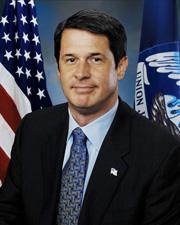 Sen. David Vitter (R-LA)
Legislative Activity
Stay on top of the latest movement without scrolling through every action
Senate amendment not agreed to: Amendment SA 1473 not agreed to in Senate by Yea-Nay Vote. 26 - 73. Record Vote Number: 213.
June 16, 2015
View full timeline
Senate amendment not agreed to: Amendment SA 1473 not agreed to in Senate by Yea-Nay Vote. 26 - 73. Record Vote Number: 213.
June 16, 2015
Roll call votes on amendments in Senate: Amendment SA 1473 not agreed to in Senate by Yea-Nay Vote. 26 - 73. Record Vote Number: 213.
June 16, 2015
Considered by Senate. (consideration: CR S4173, S4188-4189, S4192-4194; text as further modified: CR S4188-4189)
June 16, 2015
Amendment SA 1473 not agreed to in Senate by Yea-Nay Vote. 26 - 73. Record Vote Number: 213.
June 16, 2015
Considered by Senate. (consideration: CR S4073, S4075, S4078, S4083; text as modified: CR S4075)
June 11, 2015
Considered by Senate. (consideration: CR S3986, S3996, S3998-4000, S4016)
June 10, 2015
Considered by Senate. (consideration: CR S3898)
June 9, 2015
Considered by Senate. (consideration: CR S3850)
June 8, 2015
Senate amendment proposed (on the floor): Amendment SA 1473 proposed by Senator Vitter to Amendment SA 1463.(consideration: CR S3738-3739; text: CR S3739)
June 4, 2015
Amendment SA 1473 proposed by Senator Vitter to Amendment SA 1463. (consideration: CR S3738-3739; text: CR S3739) To limit the retirement of Army combat units, and to provide an offset.
June 4, 2015
Senate amendment submitted
June 2, 2015
Senate amendment submitted
June 2, 2015
Votes
1 roll call on this amendment
Amendments
1 amendmentOffered to this amendment
Amendments
1 amendmentOffered to this amendment
Text
Modified
NATIONAL DEFENSE AUTHORIZATION ACT FOR FISCAL YEAR 2016--Continued

Amendment No. 1549

The PRESIDING OFFICER. Under the previous order, there will be 2
minutes of debate equally divided prior to a vote on amendment No.
1549, offered

[[Page S4186]]

by the Senator from Arizona, Mr. McCain, for the Senator from Iowa,
Mrs. Ernst.
The Senator from Iowa.
Mrs. ERNST. Will the Chair notify me after 30 seconds?
The PRESIDING OFFICER. The Senator will be so notified.
Mrs. ERNST. I thank the Presiding Officer.
Colleagues, just a few brief points on this amendment.
We are just providing the administration the option to get arms
directly to the Kurds. The Kurds currently are providing refuge to over
1.6 million refugees from Iraq and Syria. Many of them are ethnic and
religious minorities, such as Christians.
The Peshmerga have shown the ability to be effective on the
battlefield against ISIS. This Ernst-Boxer amendment is a companion
bill to the one presented by Representatives Royce and Engel in the
House.
I urge my colleague to support this amendment.
The PRESIDING OFFICER. The Senator has used 30 seconds.
Mrs. ERNST. I yield to Senator Boxer.
The PRESIDING OFFICER. The Senator from California is recognized.
Mrs. BOXER. I thank the Presiding Officer.
Mr. President, I am very proud to team up with the good Senator
because this is a very modest amendment that just puts us in line with
our colleagues: the United Kingdom, Germany, Turkey, Canada, France,
Australia, and others who already are directly arming the Kurds.
Now, the President's policy that I absolutely support is we are going
to take this fight to ISIS, but we are not going to have combat boots
on the ground; we are going to help strategically with airstrikes.
These are the people who are taking it day after day--deaths and
blood and wounds. The least we can do is support this amendment.
The PRESIDING OFFICER. The Senator's time has expired.
The Senator from Rhode Island.
Mr. REED. Mr. President, I oppose the Ernst amendment. It would
undermine what has been the fundamental policy of the United States
going back into the last administration: a unified, sovereign Iraq.
This amendment would send a signal to the Iraqis that we are supporting
the Kurds directly, not supporting a unified, sovereign Iraq. That
would complicate our efforts against ISIL. It would complicate our
efforts in the region.
Also, it is the situation now where the effort is shifting into Anbar
Province in the Sunni areas. We are supporting the Kurds. In fact,
Prime Minister Barzani was here a few weeks ago and indicated that he
was at least accepting of the arrangements, which I think were
appropriate.
If this amendment passes, the perception will be that the United
States is now not trying to unify or help the Iraqis unify but put a
degree of separation between an autonomy, and that would be a mistake.
The PRESIDING OFFICER. The question occurs on agreeing to the
amendment.
Mrs. ERNST. I ask for the yeas and nays.
The PRESIDING OFFICER. Is there a sufficient second?
There appears to be a sufficient second.
The clerk will call the roll.
The senior assistant legislative clerk called the roll.
Mr. CORNYN. The following Senator is necessarily absent: the Senator
from Florida (Mr. Rubio).
The PRESIDING OFFICER. Are there any other Senators in the Chamber
desiring to vote?
The result was announced--yeas 54, nays 45, as follows:

[Rollcall Vote No. 210 Leg.]

YEAS--54

Ayotte
Barrasso
Blunt
Booker
Boozman
Boxer
Burr
Capito
Cassidy
Coats
Collins
Cornyn
Cotton
Crapo
Cruz
Daines
Enzi
Ernst
Fischer
Gardner
Graham
Grassley
Hatch
Heinrich
Heller
Hoeven
Inhofe
Isakson
Johnson
Kirk
Lankford
Lee
Manchin
McCain
McConnell
Moran
Murkowski
Paul
Peters
Portman
Risch
Roberts
Rounds
Sasse
Schatz
Scott
Shelby
Stabenow
Sullivan
Thune
Tillis
Toomey
Vitter
Wyden

NAYS--45

Alexander
Baldwin
Bennet
Blumenthal
Brown
Cantwell
Cardin
Carper
Casey
Cochran
Coons
Corker
Donnelly
Durbin
Feinstein
Flake
Franken
Gillibrand
Heitkamp
Hirono
Kaine
King
Klobuchar
Leahy
Markey
McCaskill
Menendez
Merkley
Mikulski
Murphy
Murray
Nelson
Perdue
Reed
Reid
Sanders
Schumer
Sessions
Shaheen
Tester
Udall
Warner
Warren
Whitehouse
Wicker

NOT VOTING--1

Rubio

The PRESIDING OFFICER. Under the previous order requiring 60 votes
for the adoption of this amendment, the amendment is rejected.

Amendment No. 1578

The PRESIDING OFFICER. Under the previous order, there will be 2
minutes of debate equally divided prior to a vote on amendment No.
1578, offered by the Senator from Rhode Island, Mr. Reed, for the
Senator from New York, Mrs. Gillibrand.
The Senator from New York.
Mrs. GILLIBRAND. Mr. President, I rise to urge my colleagues to vote
yes on this strongly bipartisan amendment. The central question is
simple--whether this Congress is doing everything we can to protect
members of our military. The metric of success is not how many reforms
we have passed; it is whether we have passed all of the reforms that
are necessary to make the difference. If you think the assault rate
that is exactly where it was in 2010 is unacceptable, then vote yes.
Some 20,000 sexual assaults, rapes, and unwanted sexual contact in 1
year alone is unacceptable. If you think an average of 52 cases every
single day is unacceptable, then vote yes. If you think it is
unacceptable that three out of four servicemembers still don't feel it
is worth the risk of reporting, then vote yes. If you think that zero
progress on retaliation isn't good enough, then vote yes. If you think
a sexual assault survivor being 12 times more likely to suffer
retaliation than see their offender get convicted for a sex offense,
then vote yes.
Let's do the right thing. Let's take action and stop the assaults,
stop the retaliation, and build trust and professionalize our military
justice system.
I yield the floor.
The PRESIDING OFFICER. The Senator from South Carolina.
Mr. GRAHAM. Mr. President, I strongly oppose this effort. If you care
about our military commanders, listen to them. Every one of them
opposes this. If my colleagues believe that the military legal
community knows what they are talking about, listen to them. Every JAG
of every service opposes this. A 29-percent decrease in sexual assault
incidents, a 70-percent increase in reporting. Senator McCaskill,
Senator Ayotte, Senator Fischer, and many others, along with Senator
Reed--we have reformed the military justice system in an appropriate
manner. But here is what we should never allow to happen:
Commander, last night there was an alleged rape in the barracks.
Oh, I don't care about that anymore; send that over to the lawyers.
Let's never let that happen. Never let a commander avoid
responsibility for what happens in their unit. It is their job to make
sure we have good order and discipline. Don't let them off the hook.
Reinforce good commanders and fire bad ones. Do not disenfranchise the
best military leadership in the history of the world. And that is
exactly what this does. We will solve the sexual assault problem. We
are not going to dismantle the infrastructure that has given us the
finest military in the history of mankind. That is why everybody who
knows what they are talking about opposes this.
Mr. WICKER. I ask for the yeas and nays.
The PRESIDING OFFICER. Is there a sufficient second?
There appears to be a sufficient second.
The clerk will call the roll.
The bill clerk called the roll.
Mr. CORNYN. The following Senator is necessarily absent: the Senator
from Florida (Mr. Rubio).
The PRESIDING OFFICER. Are there any other Senators in the Chamber
desiring to vote?

[[Page S4187]]

The result was announced--yeas 50, nays 49, as follows:

[Rollcall Vote No. 211 Leg.]

YEAS--50

Baldwin
Bennet
Blumenthal
Booker
Boxer
Brown
Cantwell
Cardin
Casey
Collins
Coons
Cruz
Daines
Donnelly
Durbin
Enzi
Feinstein
Franken
Gardner
Gillibrand
Grassley
Heinrich
Heitkamp
Heller
Hirono
Kirk
Klobuchar
Leahy
Markey
McConnell
Menendez
Merkley
Mikulski
Moran
Murkowski
Murphy
Murray
Paul
Peters
Reid
Sanders
Schatz
Schumer
Shaheen
Stabenow
Thune
Udall
Vitter
Warren
Wyden

NAYS--49

Alexander
Ayotte
Barrasso
Blunt
Boozman
Burr
Capito
Carper
Cassidy
Coats
Cochran
Corker
Cornyn
Cotton
Crapo
Ernst
Fischer
Flake
Graham
Hatch
Hoeven
Inhofe
Isakson
Johnson
Kaine
King
Lankford
Lee
Manchin
McCain
McCaskill
Nelson
Perdue
Portman
Reed
Risch
Roberts
Rounds
Sasse
Scott
Sessions
Shelby
Sullivan
Tester
Tillis
Toomey
Warner
Whitehouse
Wicker

NOT VOTING--1

Rubio

The PRESIDING OFFICER. Under the previous order requiring 60 votes
for the adoption of this amendment, the amendment is rejected.

Cloture Motion

Under the previous order, there will now be 2 minutes of debate
equally divided prior to a vote on the motion to invoke cloture on
amendment No. 1463, offered by the Senator from Arizona, Mr. McCain.
Mr. LEAHY. Mr. President, today, the Senate will vote on whether we
will accept the budget gimmicks used by the Senate majority to pay for
defense spending priorities, or reject those efforts in favor of a
meaningful budget deal that protects both defense and discretionary
spending. After more than 2 weeks of consideration, and votes on fewer
than a dozen of the over 550 amendments that have been filed, I am
disappointed by the majority leader's decision to vote to cut off
debate on the pending Defense authorization bill. This bill deserves
thorough consideration. It has not received that.
Even worse, little progress has been made in approving amendments
through managers' packages. Less than two dozen amendments have been
approved by unanimous consent. Even in years when this bill has been
most troubled, we have been able to clear noncontroversial amendments
on both sides in significantly greater numbers, to improve the
underlying authorization. But this year, that has not happened. So when
asked if we should cut off debate, my answer is a clear ``no.'' Debate
over what should or should not be in this bill is not yet close to
over.
It is too bad, because this bill includes many provisions that I
support to promote our national interests, provide support to our
military personnel, and reaffirm our commitment to partners abroad. As
the bill's managers have both noted time and again, this Defense
authorization bill increases readiness, keeps faith with servicemembers
and their families, and invests in game-changing technology.
As in past years, however, I am concerned that this year's Defense
authorization bill includes several ill-advised provisions that would
make it even harder to close the detention facility at Guantanamo Bay.
It imposes unnecessary new restrictions on transferring detainees to
foreign countries--despite the steep cost of holding detainees at
Guantanamo. And even though military commission proceedings still have
barely gotten off the ground--14 years after September 11--it provides
no realistic path for transferring detainees to the United States for
trial in Article III courts. As long as the detention facility at
Guantanamo remains open, it will continue to serve as a recruitment
tool for terrorists and tarnish America's role as a champion of human
rights. Closing Guantanamo is the morally and fiscally responsible
thing to do, and I strongly oppose the provisions in this bill that
needlessly restrict detainee transfers out of that facility.
But perhaps the biggest flaw of this bill is that it yet again relies
on and expands the Overseas Contingency Operations fund to avoid
sequestration caps. The intention of this fund, which I have repeatedly
stated should be done away with, has been severely distorted since its
inception. We cannot continue to put our national defense on a credit
card while asking working families to take responsibility for these
costs. I support eliminating sequestration and believe it never should
have been put in place, but simply ignoring its cap for defense
spending by putting it in this off-books account doesn't get us any
closer to that reality. We need a real solution to rid ourselves of
sequestration, not one that relies on gimmicks while leaving military
families, and low- and middle-class families, as well as our veterans,
behind.
The Senate needs to fully consider this bill. The annual Defense
authorization is an important bill. It is also a comprehensive bill
that authorizes over $\1/2\ trillion in defense spending, including pay
and benefits, acquisition programs, and initiatives to protect our
national security. It should be fully vetted before debate is ended. We
owe it to the American people. I will oppose cloture on this substitute
amendment.
Mr. McCAIN. Mr. President, I yield back the time.
Mr. REED. Mr. President, I yield back the time.
The PRESIDING OFFICER. All time is yielded back.
Under the previous order, pursuant to rule XXII, the Chair lays
before the Senate the pending cloture motion, which the clerk will
state.
The bill clerk read as follows:

Cloture Motion

We, the undersigned Senators, in accordance with the
provisions of rule XXII of the Standing Rules of the Senate,
do hereby move to bring to a close debate on the McCain
amendment No. 1463 to H.R. 1735, an act to authorize
appropriations for fiscal year 2016 for military activities
of the Department of Defense, for military construction, and
for defense activities of the Department of Energy, to
prescribe military personnel strengths for such fiscal year,
and for other purposes.
Mitch McConnell, John McCain, Richard C. Shelby, Jeff
Flake, John Barrasso, John Cornyn, Mike Rounds, Jeff
Sessions, Shelley Moore Capito, Lamar Alexander,
Lindsey Graham, Joni Ernst, John Hoeven, Roger F.
Wicker, Kelly Ayotte, Richard Burr, Thom Tillis.

The PRESIDING OFFICER. By unanimous consent, the mandatory quorum
call has been waived.
The question is, Is it the sense of the Senate that debate on
amendment No. 1463, offered by the Senator from Arizona, Mr. McCain, to
H.R. 1735, shall be brought to a close?
The yeas and nays are mandatory under the rule.
The clerk will call the roll.
The bill clerk called the roll.
Mr. CORNYN. The following Senator is necessarily absent: the Senator
from Florida (Mr. Rubio).
Mr. DURBIN. I announce that the Senator from Maryland (Ms. Mikulski)
is necessarily absent.
The PRESIDING OFFICER (Mr. Lankford). Are there any other Senators in
the Chamber desiring to vote?
The yeas and nays resulted--yeas 83, nays 15, as follows:

[Rollcall Vote No. 212 Leg.]

YEAS--83

Alexander
Ayotte
Barrasso
Bennet
Blumenthal
Blunt
Booker
Boozman
Boxer
Burr
Cantwell
Capito
Cardin
Carper
Cassidy
Coats
Cochran
Collins
Coons
Corker
Cornyn
Cotton
Crapo
Daines
Donnelly
Durbin
Enzi
Ernst
Feinstein
Fischer
Flake
Gardner
Graham
Grassley
Hatch
Heinrich
Heitkamp
Heller
Hirono
Hoeven
Inhofe
Isakson
Johnson
Kaine
King
Kirk
Klobuchar
Lankford
Lee
McCain
McCaskill
McConnell
Menendez
Moran
Murkowski
Murphy
Murray
Nelson
Perdue
Peters
Portman
Reed
Risch
Roberts
Rounds
Sasse
Schatz
Schumer
Scott
Sessions
Shaheen
Shelby
Stabenow
Sullivan
Tester
Thune
Tillis
Toomey
Udall
Vitter
Warner
Whitehouse
Wicker

NAYS--15

Baldwin
Brown
Casey
Cruz
Franken
Gillibrand
Leahy
Manchin
Markey
Merkley
Paul
Reid
Sanders
Warren
Wyden

NOT VOTING--2

Mikulski
Rubio

[[Page S4188]]

The PRESIDING OFFICER. On this vote, the yeas are 83, the nays are
15.
Three-fifths of the Senators duly chosen and sworn having voted in
the affirmative, the motion is agreed to.
The Senator from Arizona.

Amendment No. 1456

Mr. McCAIN. Mr. President, I call for the regular order with respect
to the McCain amendment No. 1456.
The PRESIDING OFFICER. The amendment is now pending.
Mr. McCAIN. I ask for the yeas and nays on the amendment.
The PRESIDING OFFICER. Is there a sufficient second?
There appears to be a sufficient second.
The yeas and nays were ordered.

Amendment No. 1911 to Amendment No. 1456

Mr. McCAIN. Mr. President, I call up the Hatch amendment No. 1911,
which is at the desk.
The PRESIDING OFFICER. The clerk will report.
The legislative clerk read as follows:

The Senator from Arizona [Mr. McCain], for Mr. Hatch,
proposes an amendment numbered 1911 to amendment No. 1456.

Mr. McCAIN. Mr. President, I ask unanimous consent that the reading
of the amendment be dispensed with.
The PRESIDING OFFICER. Without objection, it is so ordered.
The amendment is as follows:

(Purpose: To require a report on the Department of Defense definition
of and policy regarding software sustainment)

At the appropriate place, insert the following:

SEC. ___. REPORT ON DEPARTMENT OF DEFENSE DEFINITION OF AND
POLICY REGARDING SOFTWARE SUSTAINMENT.

(a) Report on Assessment of Definition and Policy.--Not
later than March 15, 2016, the Secretary of Defense shall
submit to the congressional defense committees and the
President pro tempore of the Senate a report setting forth an
assessment, obtained by the Secretary for purposes of the
report, on the definition used by the Department of Defense
for and the policy of the Department regarding software
maintenance, particularly with respect to the totality of the
term ``software sustainment'' in the definition of ``depot-
level maintenance and repair'' under section 2460 of title
10, United States Code.
(b) Independent Assessment.--The assessment obtained for
purposes of subsection (a) shall be conducted by a federally
funded research and development center (FFRDC), or another
appropriate independent entity with expertise in matters
described in subsection (a), selected by the Secretary for
purposes of the assessment.
(c) Elements.--
(1) In general.--The assessment obtained for purposes of
subsection (a) shall address, with respect to software and
weapon systems of the Department of Defense (including space
systems), each of the following:
(A) Fiscal ramifications of current programs with regard to
the size, scope, and cost of software to the program's
overall budget, including embedded and support software,
percentage of weapon systems' functionality controlled by
software, and reliance on proprietary data, processes, and
components.
(B) Legal status of the Department in regards to adhering
to section 2464(a)(1) of such title with respect to ensuring
a ready and controlled source of maintenance and sustainment
on software for its weapon systems.
(C) Operational risks and reduction to materiel readiness
of current Department weapon systems related to software
costs, delays, re-work, integration and functional testing,
defects, and documentation errors.
(D) Other matters as identified by the Secretary.
(2) Additional matters.--For each of subparagraphs (A)
through (C) of paragraph (1), the assessment obtained for
purposes of subsection (a) shall include review and analysis
regarding sole-source contracts, range of competition, rights
in technical data, public and private capabilities,
integration lab initial costs and sustaining operations, and
total obligation authority costs of software, disaggregated
by armed service, for the Department.
(d) Department of Defense Support.--The Secretary of
Defense shall provide the independent entity described in
subsection (b)with timely access to appropriate information,
data, resources, and analysis so that the entity may conduct
a thorough and independent assessment as required under such
subsection.

Amendment No. 1473, as Further Modified

Mr. McCAIN. Mr. President, I ask unanimous consent that the Vitter
amendment No. 1473 be further modified with the changes at the desk.
The PRESIDING OFFICER. Is there objection?
Without objection, it is so ordered.
The amendment, as further modified, is as follows:

(Purpose: To limit the retirement of Army combat units, and to provide
an offset)

On page 38, line 12, insert after ``fighter aircraft'' the
following: ``and army combat units''.

On page 43, between lines 3 and 4, insert the following:
(e) Minimum Number of Army Brigade Combat Teams.--Section
3062 of title 10, United States Code, is amended by adding at
the end the following new subsection:
``(e)(1) Effective October 1, 2015, the Secretary of the
Army shall maintain the following:
``(A) A total number of brigade combat teams for the
regular and reserve components of the Army of not fewer than
32 brigade combat teams.
``(B) A total number of brigade combat teams for the Army
National Guard of not fewer than 28 brigade combat teams.
``(2) In this subsection, the term `brigade combat team'
means any unit that consists of--
``(A) an arms branch maneuver brigade;
``(B) its assigned support units; and
``(C) its assigned fire teams''.
(f) Reduction of Army Brigade Combat Teams.--
(1) Preservation of teams.--The Secretary of the Army shall
give priority to maintaining 32 brigade combat teams for the
Army as required by subsection (e)(1) of section 3062 of
title 10 United States Code (as amended by subsection (e) of
this section), and shall carry out such priority as funding
or appropriations become available to maintain such war
fighting capability.
(2) Reduction.--Notwithstanding subsection (e)(1) of
section 3062 of title 10 United States Code (as so amended),
or paragraph (1) of this subsection, the Secretary may, after
October 1, 2015, reduce the number of brigade combat teams of
the Army to fewer than 32 brigade combat teams, or reduce the
number of brigade combat teams of the National Guard to fewer
than 28 brigade combat teams, upon the latest of the
following:
(A) The date that is 30 days after the date on which the
Secretary submits the report required by paragraph (3).
(B) The date that is 30 days after the date on which the
Secretary certifies to the congressional defense committees
that the reduction of Army brigade combat teams will not
increase the operational risk of meeting the National Defense
Strategy.
(C) The date that is 30 days after the date on which the
Secretary certifies to the congressional defense committees
that--
(i) in the case of a reduction in the number of brigade
combat teams of the Army to fewer than 32 brigade combat
teams, funding or appropriations are not adequate to sustain
32 brigade combat teams for the regular Army; or
(ii) in the case of a reduction in the number of brigade
combat teams of the Army National Guard to fewer than 28
brigade combat teams, funding or appropriations are not
adequate to sustain 28 brigade combat teams for the National
Guard.
(3) Report.--The Secretary shall submit to the
congressional defense committees a report setting forth the
following:
(A) The rationale for any proposed reduction of the total
strength of the Army, including the National Guard and
Reserves, below the strength provided in subsection (e) of
section 3062 of title 10, United States Code (as so amended),
and an operational analysis of the total strength of the Army
that demonstrates performance of the designated mission at an
equal or greater level of effectiveness as the personnel of
the Army so reduced.
(B) An assessment of the implications for the Army, the
Army National Guard of the United States, and the Army
Reserve of the force mix ratio of Army troop strengths and
combat units after such reduction.
(C) Such other matters relating to the reduction of the
total strength of the Army as the Secretary considers
appropriate.
(g) Additional Reports.--
(1) In general.--At least 90 days before the date on which
the total strength of the Army, including the National Guard
and Reserves, is reduced below the strength provided in
subsection (e) of section 3062 of title 10, United States
Code (as amended by subsection (e) of this section), the
Secretary of the Army, in consultation with (where
applicable) the Director of the Army National Guard or Chief
of the Army Reserve, shall submit to the congressional
defense committees a report on the reduction.
(2) Elements.--Each report submitted under paragraph (1)
shall include the following:
(A) A list of each major combat unit of the Army that will
remain after the reduction, organized by division and
enumerated down to the brigade combat team-level or its
equivalent, including for each such brigade combat team--
(i) the mission it is assigned to; and
(ii) the assigned unit and military installation where it
is based.
(B) A list of each brigade combat team proposed for
disestablishment, including for each such unit--
(i) the mission it is assigned to; and
(ii) the assigned unit and military installation where it
is based.
(C) A list of each unit affected by a proposed
disestablishment listed under subparagraph (B) and a
description of how such unit is affected.
(D) For each military installation and unit listed under
subparagraph (B)(ii), a description of changes, if any, to
the designed operational capability (DOC) statement of the

[[Page S4189]]

unit as a result of a proposed disestablishment.
(E) A description of any anticipated changes in manpower
authorizations as a result of a proposed disestablishment
listed under subparagraph (B).
(h) Report Manning of Brigade Combat Teams at Achievement
of Army Active End-strength.--Upon the achievement of the end
strength for active duty personnel of the Army specified in
section 401(1), the Secretary of the Army shall submit to the
congressional defense committees a report on the current
manning of each brigade combat team of the Army.
(i) Construction.--Nothing in this section should be
construed to supersede Army manning of brigade combat teams
at designated levels.
(j) Annual Pay Increases.--
(1) Sense of congress on pay increases.--It is the sense of
Congress that, if the President exercises the authority under
section 1009(e) of title 37, United States Code, with respect
to the rates of basic pay for members of the uniformed
services--
(A) the adjustment in the rates of basic pay for each
statutory pay system under section 5303 of title 5, United
States Code, should be 0.5 percentage points less than the
percentage adjustment in the rates of basic pay for members
of the uniformed services; and
(B) the President should not adjust, under the authority
under section 5303(b) of title 5, United States Code, the
rates of basic pay for a statutory pay system by a percentage
that is greater than the percentage described in subparagraph
(A).
(2) Adjustment to rates of pay for fiscal year 2016.--
(A) Statutory pay systems.--The adjustment in rates of
basic pay for employees under the statutory pay systems (as
defined in section 5302 of title 5, United States Code) that
takes effect in 2016 under section 5303 of title 5, United
States Code, shall be a decrease of 1.0 percent, and such
adjustments shall be effective as of the first day of the
first applicable pay period beginning on or after January 1,
2016.
(B) Prevailing rate employees.--The adjustment in rates of
basic pay for the statutory pay systems that take place in
2016 under sections 5344 and 5348 of title 5, United States
Code, shall be equal to the percentage decrease received by
employees in the same location whose rates of basic pay are
adjusted pursuant to the statutory pay systems under
subparagraph (A) of this paragraph and 5304 of title 5,
United States Code. Prevailing rate employees at locations
where there are no employees whose pay is decreased pursuant
to sections 5303 and 5304 of title 5, United States Code, and
prevailing rate employees described in section 5343(a)(5) of
title 5, United States Code, shall be considered to be
located in the pay locality designated as ``Rest of US''
pursuant to section 5304 of title 5, United States Code, for
purposes of this subparagraph.
(3) Adjustment to rates of pay for fiscal year 2017.--
(A) Statutory pay systems.--The adjustment in rates of
basic pay for employees under the statutory pay systems (as
defined in section 5302 of title 5, United States Code) that
takes effect in 2017 under section 5303 of title 5, United
States Code, shall be a decrease of 1.0 percent, and such
adjustments shall be effective as of the first day of the
first applicable pay period beginning on or after January 1,
2017.
(B) Prevailing rate employees.--The adjustment in rates of
basic pay for the statutory pay systems that take place in
2017 under sections 5344 and 5348 of title 5, United States
Code, shall be equal to the percentage decrease received by
employees in the same location whose rates of basic pay are
adjusted pursuant to the statutory pay systems under
subparagraph (A) of this paragraph and 5304 of title 5,
United States Code. Prevailing rate employees at locations
where there are no employees whose pay is decreased pursuant
to sections 5303 and 5304 of title 5, United States Code, and
prevailing rate employees described in section 5343(a)(5) of
title 5, United States Code, shall be considered to be
located in the pay locality designated as ``Rest of US''
pursuant to section 5304 of title 5, United States Code, for
purposes of this subparagraph.
(4) Sense of congress on use of funds available.--It is the
sense of Congress that amounts available to the Government by
reason of the reductions in adjustments to rates of pay for
fiscal years 2016 and 2017 by reason of paragraphs (2) and
(3) should be used to sustain a total number of brigade
combat teams for the regular and reserve components of the
Army of not fewer than 32 brigade combat teams, anda total
number of brigade combat teams for the Army National Guard of
not fewer than 28 brigade combat teams, during fiscal years
2016 and 2017 as required by subsection (e) of section 3062
of title 10, United States Code (as amended by subsection (e)
of this section).

Mr. McCAIN. Mr. President, I ask unanimous consent that the Senate
vote in relation to the Vitter amendment at 5 p.m., with the time
equally divided in the usual form and no second-degrees prior to the
vote. I further ask that Senator Lee or his designee be recognized to
withdraw his amendment No. 1687 prior to the vote on the Vitter
amendment.
The PRESIDING OFFICER. Is there objection?
Without objection, it is so ordered.
Mr. McCAIN. Mr. President, I suggest the absence of a quorum.
The PRESIDING OFFICER. The clerk will call the roll.
The legislative clerk proceeded to call the roll.
Mr. McCAIN. Mr. President, I ask unanimous consent that the order for
the quorum call be rescinded.
The PRESIDING OFFICER. Without objection, it is so ordered.

Amendment No. 1687

Mr. McCAIN. Mr. President, I ask unanimous consent that the Lee
amendment No. 1687 be withdrawn.
The PRESIDING OFFICER. Without objection, the amendment is withdrawn.
Mr. McCAIN. Mr. President, I suggest the absence of a quorum.
The PRESIDING OFFICER. The clerk will call the roll.
The legislative clerk proceeded to call the roll.
Mr. CORNYN. Mr. President, I ask unanimous consent that the order for
the quorum call be rescinded.
The PRESIDING OFFICER. Without objection, it is so ordered.
Mr. CORNYN. Mr. President, I ask unanimous consent to speak for up to
10 minutes.
The PRESIDING OFFICER. Without objection, it is so ordered.

Amendment No. 1889

Mr. CORNYN. Mr. President, this morning I voted against the
Feinstein-McCain amendment No. 1889 because I believe it represents
shortsighted national security policy.
The central provision of this amendment would limit the interrogation
of detainees by any U.S. Government employee or agent to techniques
that are listed in the publicly available Army Field Manual on human
intelligence collection (FM 2-22.3), essentially codifying a portion of
Executive Order No. 13491, issued by President Obama on January 22,
2009. Due to the wide public availability of this manual, this policy
enables our enemies to study and dissect the methods we use to try to
elicit sensitive information from them, giving them the opportunity to
train against these techniques and prepare for them.
Quite simply, the effect of this policy is to hand our entire
interrogation playbook to groups such as the self-declared Islamic
State of Iraq and the Levant, ``ISIL,'' Al Qaeda, and the Taliban,
which is a profound mistake. Moreover, this limitation is unnecessary,
because Congress has already taken action to prohibit interrogation or
other treatment of detainees that is ``cruel, inhuman, or degrading
treatment or punishment'' by enacting the Detainee Treatment Act of
2005.
In the past, other interrogation techniques that were not publicly
disclosed to our enemies, known as enhanced interrogation techniques,
proved their worth in numerous instances. In the wake of the terrorist
attacks of September 11, 2001, these enhanced techniques were deemed
necessary for use with certain hardened Al Qaeda leaders and operatives
who possessed valuable intelligence that could save American lives,
including knowledge of planned attacks against our Nation. There is
strong evidence to believe that EITs, in desperate situations, helped
protect our country from terrorist attacks. In addition, intelligence
obtained through these interrogations helped locate Osama bin Laden and
enabled the operation to kill or capture him in Abbottabad, Pakistan,
on May 2, 2011. The Obama administration cannot deny that intelligence
gleaned through the use of enhanced techniques played a role in
tracking down bin Laden.
In recent months, the threat of terrorism has been increasing in both
intensity and complexity. The rise of the terrorist army of ISIL makes
this a challenging time in the fight against terrorism. While it is
clear that President Obama has no intention of authorizing the use of
enhanced interrogation techniques while he is President, this amendment
would unwisely and tightly restrict the tools available to future
Presidents to protect this country. I cannot support such a policy.

Working Across The Aisle

Mr. President, for the past several weeks we have been debating the
National Defense Authorization Act, which performs one of our most
important and significant functions, which is to make sure the people
who fight our

[[Page S4190]]

Nation's wars have the resources they need in order to do the job and
to keep the American people safe.
This bill that started in the Armed Services Committee passed out
overwhelmingly, and that is because this is not or should not be a
partisan issue. Our duty to protect our troops so they can protect us
should be a no-brainer. You would think partisan politics would be the
furthest thing from this debate.
I am glad the Senate has now taken a big step forward to help move
this legislation along, but I have to admit there are some ominous
signs on the horizon. Initially, Senate Democrats on the Armed Services
Committee threatened to block this bill in the committee unless there
was some deal cut on spending. That is troubling, although I am
grateful that only four Democrats voted against this bill in the
committee. Then there is some suggestion from the President of the
United States that he might consider vetoing this legislation. Why?
Because he disagrees with some of the content of this legislation?
Well, no. The reason he threatened to veto it is because he said we
haven't agreed to his demands to increase spending--by the way,
spending money we don't have, adding to our national debt.
It concerns me a great deal when something that should enjoy broad
bipartisan support, such as our national defense, somehow becomes a
potential hostage to take in the spending wars here in Washington, DC.
Now we have learned that the strategy among our Democratic friends is
not to block this bill. Candidly, I think that is because they realized
they didn't have the votes to do it, and it would have been a momentous
decision if they had blocked it for some extraneous reason. But now we
are told that the next bill we turn to, which will probably be the
Defense appropriations bill--that our friends across the aisle are
threatening to block that in another continuing effort to do what they
call prepare for their filibuster summer.
The great thing about our friends across the aisle is that you don't
have to wonder necessarily what they are planning to do; all you have
to do is read the newspapers because they will tell you. There, Senator
Schumer, one of the senior Democrats in leadership, said they plan to
block every appropriations bill until they get a negotiated deal to
raise spending limits that have been in effect since 2011.
Well, I have to think this is why the minority leader, the Senator
from Nevada, initially when we were starting debate on this bill,
suggested it would be a waste of time. I can't think of any other
reason why he would say debating and voting on and passing the Defense
authorization bill would be a waste of time unless there was some
implicit threat there that it would never actually see the light of
day.
But there has been a casualty along the way. You will remember that
last Thursday we had a vote on a bill that would effect commonsense
improvements in our cyber security at a time when more and more
Americans are undergoing cyber attacks. Of course, these take different
forms, but many nation states have active cyber attack efforts against
our intellectual property--let's say the people who have labored long
and hard and make big investments in weapons systems and airplanes and
the like. Well, our adversaries are actively trying to steal the design
information so they can copy that, of course at a much cheaper cost,
and they can learn what the capabilities are of our weapons systems and
our airplanes.
But other cyber attacks are more straightforward. It is just crime.
It is stealing people's identity. It is stealing their money. It is
stealing their resources. There are criminal networks all around the
world that are actively engaged in trying to steal from the American
people online.
So you would have thought that this amendment, dealing as it did with
cyber security--that a good place to park this would have been on the
Defense authorization bill, as important a role as cyber security plays
in our national security. Of course, the purpose was to help the
government and private businesses work together to protect Americans'
personal information and their privacy, which is a pretty
straightforward goal. Protecting the personal information of the
American people is very important. And it was noncontroversial. This
particular bill that was offered as an amendment to the Defense
authorization bill passed out of the Senate Intelligence Committee 14
to 1. But since this is filibuster summer, the minority leader, Senator
Reid, decided the Democrats were going to vote as a group to block that
amendment.
Not even 24 hours later, though--their timing could not have been
worse--the need for this critical legislation became even more urgent.
On Friday--1 day after the Democratic leader urged his colleagues to
block this important cyber security measure--media reports began
confirming that hackers had accessed government networks and obtained
incredibly sensitive background information used for security
clearances in a second breach to the personnel management systems. This
information, which one former NSA official described as the crown
jewels and a gold mine for foreign intelligence services, was
reportedly stolen en masse and includes many personal details of job
applicants. As a matter of fact, the people who actually applied for a
security clearance, which is processed by the Office of Personnel
Management, the people who fill out these forms fill out extensive
background information, including birth dates, names, telephone
numbers, and the like, but it also includes things such as passport
information, Social Security numbers, private identification and
background details, extensive information about background places of
residence and addresses, and the names and contact information of close
friends and family members. So you can see why there would be concern
when state actors penetrate the network at the Office of Personnel
Management to steal information about that background and security
clearance process. This stolen information could be used not only
against our intelligence officers and military officials but also their
family and friends who may well now be exposed.
That same day, last Friday, it was reported that the first Office of
Personnel Management data breach--a breach that was initially reported
2 weeks ago--actually compromised the records of as many as 14 million
current and former government officials. That is more than three times
the original estimate.
While our Nation's public servants were having their sensitive
personal information stolen, the Democratic leader led nearly all of
his colleagues to block sensible, bipartisan legislation which was
focused on that specific threat and which would provide for greater
information sharing between the private sector and government in order
to address this very problem.
I am pleased to say that the minority leader was not able to convince
all Democrats to block this legislation. In fact, seven Democratic
members voted to promote security over partisanship. Good for them for
joining us in doing that.
As I said before, but it is worth noting again, the American people
have rejected this idea that the Senate and the Congress should do
nothing. They did that last November during the election. They made
crystal clear that they wanted their elected representatives, whether
the House or the Senate, to come here to Washington on their behalf and
to actually take steps to make their lives better and to work on their
behalf, not to use this Chamber for partisan political games.
We have heard the accusations in the past. The Democratic leader has
loudly and routinely criticized this side of the aisle for obstruction.
But threatening to block all funding bills unless you get 100 percent
of what you want, after spending money we don't have and while looking
at an escalating debt in the tens of trillions of dollars, is, to me,
the height of hypocrisy.
By pledging to filibuster upcoming appropriations bills, including
the Defense appropriations bill, he and his Democratic colleagues have
made their priorities very clear. They are willing to jeopardize the
paychecks and the security of our men and women in uniform so they can
give more taxpayer dollars to sprawling bureaucracies such as the IRS
and the EPA. Unfortunately, the leadership on the other side of the
aisle is using these very same troops who put their lives on the line
every day to score a few partisan

[[Page S4191]]

points and to leverage their insatiable appetite for tax dollars. There
is never enough. There is never enough.
I don't know that everyone on that side of the aisle is comfortable
with this strategy. I am somewhat encouraged in a strange sense of the
word by the fact that seven Democrats refused to follow the Democratic
leader down this path to blocking the cyber security legislation. To
their credit, they voted on the merits of the legislation. But,
unfortunately, not enough did in order for us to get it considered and
voted on.
In light of this almost contemporaneous occurrence at the Office of
Personnel Management and the recurring daily stories about how cyber
attacks are stealing personal property, represent an intelligence
threat, and are stealing the money of the American people, I hope our
colleagues will work with us to do what the American people elected us
to do, which is to work together to move forward sensible, bipartisan
legislation that is important to the country.
I hope our friends across the aisle will listen to the American
people instead of their misguided leadership. Over the past few months
under Republican majorities, this Chamber has demonstrated that we are
willing to work across the aisle to get the Senate functioning again
for the American people.
Do you know what? The irony is that our friends who are now in the
minority who used to be in the majority--I think they kind of like it
because they actually can offer amendments, they can get votes on
amendments, and they can represent their constituents in this body,
which they came here to do.
I hope we can keep the Senate working and avoid this filibuster
summer that was touted in one of the newspapers just last week. I know
the people of my State expect me to come up here and represent their
interests, and I know all of our constituents expect us to do better by
them.
Mr. President, I yield the floor.
The PRESIDING OFFICER. The Senator from New Hampshire.
Ms. AYOTTE. Mr. President, I come to the floor to talk about an
amendment I have to the Defense authorization legislation.
Americans who volunteer to defend our country deserve our utmost
support and great credit for their uniquely honorable, difficult, and
important service. We are a safe and free Nation because of their
bravery and sacrifice. However, as we honor our troops and veterans, we
have to remember they don't serve alone. Military families serve too.
They make serious career and personal sacrifices on behalf of their
loved ones so their loved ones can serve our country.
Anyone who has served in the military or has been married to a
servicemember or even attended a military retirement ceremony--I
actually come from a military family--understands that a successful
military career depends on the support and sacrifice of those you love
and those who are in your family. A career in the military frequently
involves frequent moves and long separations for your spouse, which
present unique challenges for military families.
The service and sacrifice of military families not only deserves
recognition and respect, but military families are also a critical
component of our military readiness. It is difficult for a mother,
father, husband or wife serving in the military to focus on defending
our Nation if they are worried about the well-being of their family at
home. Perhaps that is why, in March of this year, the Commandant of the
Marine Corps, Gen. Joseph Dunford, who has now been nominated to serve
as the Chairman of the Joint Chiefs of Staff, testified that ``a key
element in our overall readiness is family readiness. The family
members of our Marines are very much a part of the Marine Corps family.
Their sacrifices and support are not taken for granted.''
However, it has come to our attention that the current laws and
regulations fail to fully reflect the sacrifices of our military
families or the importance of this issue to military readiness.
I wish to talk about a specific problem; that is, when a member of
our military actually gets into criminal trouble. Yet their spouse and
children have to suffer as a result of it.
Current law forces military juries to sometimes confront the
undesirable dilemma of either supporting justice or supporting the
military family--but not both. In these rare and tragic cases, a jury
must choose either to impose a just sentence on a member of our
military--which of course these cases are rare--who commits a crime,
but if the jury imposes a just sentence, this could cause the
retirement benefits that the family of the military member is counting
on to be taken away, and so it leads to this choice of either giving a
just or strong sentence and also punish the family who is an innocent
bystander in all of this or give a weak and unjust sentence to spare
the innocent family--but not both.
When a jury chooses a just sentence, an innocent family can be left
with nothing, and that is wrong. Knowing this, some family members
choose not to report a crime out of fear that coming forward will risk
loss of benefits that a family member helped earn.
For these reasons, I am proud that the National Defense Authorization
Act, as passed by the committee, does include an amendment that I
introduced with Senator Gillibrand which could make transitional
benefits available to innocent military family members when their
retirement-eligible servicemember forfeits those benefits due to a
court-martial.
I am also pleased that the Defense authorization legislation contains
sense-of-Congress language that recognizes the valuable service of
military families and emphasizes the view of the committee that
military juries should not have to choose between a fair sentence and
protecting military families. However, this doesn't go far enough. Our
work isn't finished. We must do more to recognize the service of
military families and to ensure a strong and fair military justice
system.
I will briefly talk about the case of Rebecca Sinclair. Rebecca was
married to a career Army officer who served with distinction. She
married him early in his career and supported him as he rose through
the ranks to become General. She served alongside him for 27 years. He
was at home for a total of 5 years between 2001 and 2012. She had been
a single mother during those five combat deployments when he was
serving our country.
She moved 17 times in 27 years. Her oldest son went to six schools by
the time he was in sixth grade. Despite earning a bachelor's and
master's degree, Rebecca's career had been severely limited by the
constant moves.
She thought this sacrifice was worthy because she was doing it on
behalf of her Nation and her family. Because she wasn't able to achieve
her full earning potential, she was counting on the pay benefits and
retirement plan she helped her husband earn over 27 years. But then, in
2012, she watched helplessly as all of this sacrifice, all of this
effort, and all of this work hung in the balance. Unlike the vast
majority of servicemembers who serve their whole career with honor, her
husband was charged with 25 counts of misconduct, including: forcible
sodomy, sexual assault, indecent conduct, making fraudulent claims
against the government, and obstruction of justice.
Rebecca was totally innocent of this conduct. Her sons, who were 10
and 12 years old, were totally innocent. Yet her husband's actions
threatened to leave her with no benefits and no security after 27 years
of sacrifice, and if he were to be dismissed from the Army, Rebecca and
her sons would be left with nothing.
During his sentencing hearing, Rebecca's husband begged the court to
allow him to retire at a reduced rank so his family could collect the
benefits which, in his words, ``they have earned serving alongside me
all these years.''
Rebecca also made a plea to the court for a sentence that would spare
her family from being punished for her husband's actions. I think
Rebecca sums it up well in the piece she wrote for the Washington Post
in 2012:

For military wives, the options are bad and worse. Stay
with an unfaithful husband and keep your family intact; or
lose your husband, your family and the financial security
that comes with a military salary, pension, health care and
housing. Because we move so often, spouses lose years of
career advancement. Some of us spend every other year as
single parents. We are vulnerable emotionally and
financially. Many stay silent out of necessity, not natural
passivity.

[[Page S4192]]

It is time to fix these problems. Saying thank you to the military
families is not enough. We must ensure that our laws and regulations
reflect our gratitude to military families and the importance of what
they do. They serve our country, too, and they have earned the benefits
as well. It is not right for a military member to rely on his family to
help earn retirement benefits and then have that individual commit
misconduct and the family is punished too.
My amendment will fix this problem by recognizing that military
families serve, too, remove disincentives to report misconduct, and put
the sentencing process back in balance. Juries can choose a punishment
to fit the crime without worry that an innocent family member will
suffer as a result. My amendment has been endorsed by 10 veterans
service organizations.
I urge my colleagues to support this important amendment that allows
the military justice system to function properly and also makes sure
that innocent family members do not suffer and that their service is
recognized as well.
I yield the floor.
The PRESIDING OFFICER. The Senator from Oregon.

Protecting Internet Access From Taxation

Mr. WYDEN. Mr. President, I wish to address events from the last
several days, both of which have the potential to reshape the way the
American people use the Internet for communication and commerce.
The first came last week when the other body voted on a bipartisan
basis to permanently extend the Internet Tax Freedom Act. I wrote that
law, which is commonly known as ITFA, along with former Congressman
Chris Cox, in 1998. The Internet Tax Freedom Act is one of the most
popular tax policies in the country, and I believe it is past time for
the Senate to follow the House's lead and send a permanent extension to
the President's desk.
The second important matter came up yesterday, when a bill called the
Remote Transaction Parity Act was introduced in the other body. What
this proposal offers is a brand-new national sales tax managed by a
privatizing, tax-collecting bureaucracy that not a single voter in
America has approved. I see this online tax hike as a major threat to
the Internet that has flourished under the bipartisan Internet Tax
Freedom Act.
I want to address both of these issues briefly today, beginning with
the importance of the permanent Internet Tax Freedom law. Ever since
Congress passed it, it has been an essential tool in helping the
Internet grow unencumbered by discriminatory taxation. It prohibits the
kind of discriminatory taxes that some in Congress are too fond of; the
kind of taxes that I believe will hurt innovation and punish the
millions of citizens and businesses that use and depend on the Internet
each day.
The Internet Tax Freedom Act has saved families in Oregon and across
America hundreds of dollars a year. That is because without the law,
access to the Internet would likely be subject to the same level of
punishing taxation that is currently imposed on cigarettes and alcohol.
We already see that with wireless services not protected by the
Internet Tax Freedom Act, and this area does involve onerous taxes.
Inflicting those taxes on Internet access is a burden the Senate
absolutely should not heap on the American people.
Unfortunately, Congress has become too reliant on stop-and-go
governing, so the Internet Tax Freedom Act has been extended several
times on a temporary basis. Some Members in the Senate and House want
to tie the Internet Tax Freedom Act, which saves people money, to a
controversial proposal that will drive up the cost of using the
Internet the way Americans do today, and that is where the second issue
I would like to address comes in.
The House proposal, called the Remote Transaction Parity Act, has
taken a variety of different forms over the years. An older version
that died in Congress was called the Marketplace Fairness Act. The idea
used to be to turn every business that operated online--big or small--
into a tax collector for the thousands of tax jurisdictions across the
country. With every new version of this online tax hike bill, we would
see a new set of problems crop up. Now the proposal has become even
bigger and more unwieldy. The new proposal coming from the other body
would build an enormous, privatized, tax-collecting bureaucracy, and
that new bureaucracy would take a big cut of every online sale before a
single dime of sales tax gets distributed back to the States or local
communities.
I will take a minute and talk about how this hurts my home State. My
home State has no sales tax, but under this proposal, this murky tax-
collecting middle man is going to get involved anytime somebody in
Virginia, Michigan or California makes a purchase online from an Oregon
company. This proposal would unfairly siphon money away from Oregon.
Yet Oregonians will get nothing in return from these newly empowered
national tax collectors. In effect, there would be a new national sales
tax overseen by a privatized middle man, and that raises serious
questions about whether taxpayer dollars should be going to a for-
profit tax collector. It could put sensitive data about businesses and
their customers into the crosshairs of hackers and criminals. That
would be just about the biggest Federal intrusion into State commerce
in a long time.
The online tax bill also creates a major new hurdle for small
businesses that want to find consumers online. That would be a
particularly harsh blow to companies in rural America, rural Oregon,
and elsewhere. It would suddenly be a whole lot harder to compete with
a retailer in a crowded city when the cost of doing business online
takes a jump.
Finally, it takes a fundamentally tilted playing field against U.S.
employers, and, in effect, makes those employers pay a national sales
tax. It creates a fundamentally tilted playing field. The Internet
spans national borders, but sellers from China, Canada, and Europe will
not and cannot be subject to this tax, and under this approach, they
will profit at the expense of the American consumer and American
worker.
In my view, we have at hand now two radically different pieces of
legislation. The first has been on the books now for well over a decade
and has been hugely valuable in terms of innovation, choice, and
consumers. That is the permanent Internet Tax Freedom Act, in effect
taking what we have had for over a decade and making it permanent. With
the permanent approach, we lower costs for consumers and protect the
Internet as a bulwark for free speech and commerce, promoting American
companies and American ideals. So that is approach No. 1--making
permanent legislation that has worked since 1998.

The second approach is the Remote Transaction Parity Act, which would
raise costs for Americans, hurt small and rural businesses, and punish
States such as Oregon that have kept taxes low.
In my view, it would be legislative malpractice to tie these two
approaches together. The path forward for the U.S. Senate should be
very clear; that is, to take the permanent Internet Tax Freedom Act
that has sailed through the House and, with the ball in our court, pass
it here. I believe that a permanent law protecting Internet access from
taxation is long overdue, and the proposal for an online tax hike
should not get in the way.
So I urge my colleagues to join me now in working for a bipartisan,
permanent Internet Tax Freedom Act, unencumbered by the kind of
approach which has been introduced in the House and which creates a
national sales tax. Let's reject that and move to pass a permanent
Internet Tax Freedom Act as soon as possible.
With that, I yield the floor.
The PRESIDING OFFICER (Ms. Ayotte). The Senator from Rhode Island.

Amendment No. 1473, as Further Modified

Mr. REED. Madam President, at 5 p.m. we will be voting on an
amendment proposed by the Senator from Louisiana, Mr. Vitter. The
amendment would require the Secretary of the Army to maintain at least
32 brigade combat teams in the Regular and Reserve components of the
Army and 28 brigade combat teams in the Army National Guard.
Effectively and deliberately, this amendment would prevent the Army
from managing its own force structure, determining how many brigades it
needs, how they are disposed in terms of Active, Reserve, and Regular
forces. In addition, the way the amendment is

[[Page S4193]]

paid for, to maintain these additional brigades would be to mandate a
1-percent pay cut for all Federal civilian employees for 2016 and
2017--not a pay freeze, a pay cut.
The Army does not support this amendment. They need the flexibility
to manage their forces to respond to the threats as they perceive them
in the world, to determine where the forces are mechanized, whether
they are located in the National Guard or whether they are located in
the Regular force. As such, as the Army draws down--and it is on that
trajectory because of many issues, some of them budgetary--they would
have to totally reexamine their existing force structure and they would
indeed have to, I think, sacrifice what they think is the most optimal
force for a legislative mandate of an arbitrary number of brigades in
place. This will create readiness problems because it is one thing to
have brigades on paper; it is another to have brigades that are ready
to deploy, fully trained, fully equipped, fully manned. That would
complicate this process for the Army.
So for these reasons, when the amendment is presented at 5 p.m., I
will be opposing the amendment, and I urge my colleagues to join me in
that opposition. I think the Army is the most capable to determine its
force structure and not by legislative fiat.
With that, I suggest the absence of a quorum.
The PRESIDING OFFICER. The clerk will call the roll.
The senior assistant legislative clerk proceeded to call the roll.
Mr. McCAIN. Madam President, I ask unanimous consent that the order
for the quorum call be rescinded.
The PRESIDING OFFICER. Without objection, it is so ordered.
Mr. McCAIN. Madam President, the Vitter amendment tries to enforce a
minimum number of Army brigade combat teams. It seeks to direct the
U.S. Army to maintain not fewer than 32 brigade combat teams in the
Regular Army and 28 in the Army National Guard. The Secretary of the
Army could not reduce these until he reports to Congress and certifies
impacts on operational risk to the national defense strategy and
insufficient funds or appropriations. The Secretary of the Army must
also report rationale for any proposed reduction of total strength in
the Regular Army, National Guard, and Army Reserves. This includes an
operational analysis that shows continued mission performance given a
reduction and an assessment of force-mix ratio among all of those
organizations.
Additionally, the Secretary, with the Director of the Army, National
Guard, or Chief of Army Reserve, must report to Congress at least 90
days before any possible reductions. The report must list remaining
major combat units, missions, unit assignments by installation, and
proposed BCTs for disestablishment--on and on and on and on.
I say to the Senator from Louisiana, we don't do this. We don't tell
the Army or the National Guard that they can only have a minimum of
this or that and that they can't do certain things. The amendment
requires the Army to report manning levels. In principle, I agree with
the Senator from Louisiana. The world is less secure. We are facing
many threats. We need an Army capable of securing our interests around
the world. In fact, last week, decisions were made to deploy more
forces to Iraq.
The amendment is bad policy. The Congress shouldn't attempt to manage
forces. That is the job of the Secretary of the Army and the Chief of
Staff. Our job is to authorize and fund. The key is giving Army
leadership the flexibility to manage the total Army force given the
planned drawdown. In fiscal year 2016, the Army end strength is being
reduced and funding is planned to be adjusted accordingly.
The cost to maintain the total Army at 490,000 for 1 year is about
$2.4 billion. Of course, the Senator's amendment does not have any
indication where that $2.4 billion would come from.
If enacted, the amendment could result in a Regular Army of ``tiered
readiness.'' The Army would have a force of 490,000 with a budget for
475,000. We don't want a ``hollow Army'' as we had in the 1970s.
So I urge my colleague from Louisiana, the sponsor of this amendment,
to devote his energies and efforts to the repeal of sequestration. That
is what is forcing these decisions to be made by the Army, which, in my
view and the view of our military leaders, is putting the lives of the
men and women at greater risk.
Mr. VITTER. Will the Senator yield for a question?
Mr. McCAIN. I wish to finish my statement first, and I appreciate
that.
So I oppose the amendment on the fact that we do not have the funding
here to maintain the Army at the level that both he and I would prefer.
If we do repeal sequestration, then there will be sufficient funding
for maintaining the Army, the National Guard, and the Army Reserves at
the level the Senator from Louisiana strongly advocates and I also
advocate.
I will be glad to respond to a question from the Senator from
Louisiana.
Mr. VITTER. I thank the Senator for yielding. I would just ask
whether the underlying bill doesn't do exactly the same sort of thing
in other categories, such as minimum numbers of aircraft carriers in
the Navy, such as minimum numbers of certain key equipment in the Air
Force, which I agree with. But I don't see any difference between those
provisions of the underlying bill and what this provision would
constitute with regard to a key element of Army brigade combat teams.
That is the first question.
The second question is, Did the Senator know that in the resubmitted
version of the amendment, there is a noncontroversial sense-of-the-
Senate regarding an offset for this to be put forward?
Finally, I would certainly agree with the Senator about trying to fix
the top-line numbers and the top-line situation with regard to
sequestration, and, as I am sure he knows, I support that.
Mr. McCAIN. Madam President, I respond to my friend to say that what
we have authorized, as the Senator from Louisiana clearly described, is
what the services have said they need to do their mission--and based on
their requirements, not the view of what my requirements are. So I
think the Senator's proposal is very different from what he described.
Again, there is sufficient funding for everything we have authorized
in the bill. What this amendment is authorizing in the bill would
require an additional $2.4 billion to be authorized out of the budget
that was set by the Budget Committee, which would then mean reductions
in other areas, as I am sure the Senator appreciates, that we
authorized to the budget numbers as a result of the Budget Committee's
allocation for defense.
So I thank the Senator from Louisiana for his continued support of
the men and women in the military, especially the bases in Louisiana as
well as around the world. He is an advocate for the men and women who
are serving, and I appreciate his continued dedication to their welfare
and benefit. We just have an honest disagreement on whether this
amendment is appropriate in our management of the armed services.
I thank the Senator. We have a disagreement on the amendment. We will
vote on it, as he requested. He requested not having a tabling motion.
He asked if we could consider his amendment, if we could have it not be
a tabling motion, and I am glad to accommodate the Senator.
With that, I yield the floor, and I ask unanimous consent to start
the vote now.
The PRESIDING OFFICER. Without objection, all time is yielded back.
Under the previous order, the question is on agreeing to amendment
No. 1473, as further modified, offered by the Senator from Louisiana,
Mr. Vitter.
Mr. VITTER. I ask for the yeas and nays.
The PRESIDING OFFICER. Is there a sufficient second?
There appears to be a sufficient second.
The clerk will call the roll.
The legislative clerk called the roll.
Mr. CORNYN. The following Senator is necessarily absent: the Senator
from Florida (Mr. Rubio).
The PRESIDING OFFICER. Are there any other Senators in the Chamber
desiring to vote?
The result was announced--yeas 26, nays 73, as follows:

[[Page S4194]]

[Rollcall Vote No. 213 Leg.]

YEAS--26

Alexander
Blunt
Capito
Cassidy
Corker
Cornyn
Crapo
Cruz
Daines
Ernst
Gardner
Grassley
Heller
Hoeven
Isakson
Lankford
Lee
Moran
Paul
Perdue
Risch
Scott
Sullivan
Tillis
Toomey
Vitter

NAYS--73

Ayotte
Baldwin
Barrasso
Bennet
Blumenthal
Booker
Boozman
Boxer
Brown
Burr
Cantwell
Cardin
Carper
Casey
Coats
Cochran
Collins
Coons
Cotton
Donnelly
Durbin
Enzi
Feinstein
Fischer
Flake
Franken
Gillibrand
Graham
Hatch
Heinrich
Heitkamp
Hirono
Inhofe
Johnson
Kaine
King
Kirk
Klobuchar
Leahy
Manchin
Markey
McCain
McCaskill
McConnell
Menendez
Merkley
Mikulski
Murkowski
Murphy
Murray
Nelson
Peters
Portman
Reed
Reid
Roberts
Rounds
Sanders
Sasse
Schatz
Schumer
Sessions
Shaheen
Shelby
Stabenow
Tester
Thune
Udall
Warner
Warren
Whitehouse
Wicker
Wyden

NOT VOTING--1

Rubio

The amendment (No. 1473), as further modified, was rejected.
The PRESIDING OFFICER. The Senator from Massachusetts.
Mr. MARKEY. Madam President, I seek recognition to speak for up to--I
ask unanimous consent to withhold my motion at this time.
The PRESIDING OFFICER. Without objection, it is so ordered.
The Senator from Oklahoma.

____________________