To reform and improve personnel security, insider threat detection and prevention, and physical security.
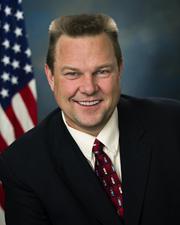 Sen. Jon Tester (D-MT)
Legislative Activity
Stay on top of the latest movement without scrolling through every action
Senate amendment proposed (on the floor): Amendment SA 1944 proposed by Senator Reed for Senator Tester to Amendment SA 1463.(consideration: CR S4263-4270)
June 18, 2015
View full timeline
Senate amendment proposed (on the floor): Amendment SA 1944 proposed by Senator Reed for Senator Tester to Amendment SA 1463.(consideration: CR S4263-4270)
June 18, 2015
Senate amendment agreed to: Amendment SA 1944 as modified agreed to in Senate by Unanimous Consent.(text as modified: CR S4266-4268)
June 18, 2015
Amendment SA 1944 proposed by Senator Reed for Senator Tester to Amendment SA 1463. (consideration: CR S4263-4270) To reform and improve personnel security, insider threat detection and prevention, and physical security.
June 18, 2015
Amendment SA 1944 as modified agreed to in Senate by Unanimous Consent. (text as modified: CR S4266-4268)
June 18, 2015
Senate amendment submitted
June 9, 2015
Senate amendment submitted
June 9, 2015
Text
Modified
NATIONAL DEFENSE AUTHORIZATION ACT FOR FISCAL YEAR 2016

The PRESIDING OFFICER. The clerk will report the pending business.
The senior assistant legislative clerk read as follows:

A bill (H.R. 1735) to authorize appropriations for fiscal
year 2016 for military activities of the Department of
Defense, for military construction, and for defense
activities of the Department of Energy, to prescribe military
personnel strengths for such fiscal year, and for other
purposes.

The PRESIDING OFFICER. The Senator from Arizona.
Mr. McCAIN. Mr. President, I hope we are in the final hours of a 2\1/
2\-week consideration of the Defense authorization bill. Not all
amendments were debated and not as many were reported yet. We still
have hopes that there could be a managers' package, which is composed
of agreed-upon amendments by both sides, equally divided by both sides
of the aisle, both Republican and Democratic. There are some important
amendments, so I hope we are able to get approval of at least some of
them prior to the votes that I believe will be scheduled for this
afternoon in order to conclude debate and consideration of the Defense
authorization act.
As we enter the final throes--and there are Members on the other side
of the aisle and maybe even on this side of the aisle who are deeply
concerned about the OCO funding for this authorization--I repeat again
to my colleagues, I don't like the use of OCO. I would like to follow
the advice of every one of our military leaders who say that continued
sequestration puts the lives of the men and women who are serving in
the military in greater danger. I am not sure we have a greater
obligation than to do everything possible to prevent the lives of our
men and women serving in uniform from being put in greater danger. To
get hung up on the method of funding, which many will use as a
rationale for opposing this bill, seems to me an upside down set of
priorities--badly upside down.
If we don't fund, if we don't authorize, if we don't make possible
for us to equip and train and retain the finest military force in the
world, why is it a higher priority to object to the method of funding?
As I said, in a perfect world, I would argue vigorously--and have
continued to--about the harmful effects of sequestration.
I am not talking about a political opinion. I am talking about the
view of the uniformed leaders of our Nation who have the respect and
admiration of all of us. They are telling us that if we continue
sequestration, which would be the effect of not including the
additional funding of the overseas contingency operations, then
obviously in this world that becomes more and more dangerous as we
speak--and I continue to quote probably the most respected man in
America, in many respects, Henry Kissinger, who testified before our
committee that he has never seen more crises around the world since
World War II, as is the case today.
I would entreat my colleagues who may be contemplating voting against
this legislation on the grounds that the funding is a disqualifying
factor--it is a troubling factor and it is troubling to me--but
shouldn't we care more about the men and women who are serving in the
military than the problem you might have with a certain process that
was followed in order to get there? I would think not.
If you look at the world in 2011, when the unthinkable happened; that
is, that sequestration automatically kicked in because both sides were
unable to agree on a process that would reduce the deficit and put us
on a path to a balanced budget. Everyone said sequestration will not
happen because they will come to an agreement. Obviously, sequestration
did happen. But if you look at the world in the year of 2011, when
sequestration kicked in, and the world today, I think--I think--there
is a compelling argument that national security and national defense is
far more important than it was then. Because of a series of events that
began in 2011--including an incredibly misguided decision by the
President of the United States to withdraw all forces from Iraq, which
then, inevitably, as some of us predicted, led to the situation as it
exists today--the world is now and the Middle East is now literally on
fire.
What are the results of the misguided policies and the commitment on
the

[[Page S4259]]

part of the President to get us out of wars? The President ignored one
reality; that is, that we may get Americans out of wars, but that
doesn't mean the wars are over. What we have seen is the spread of
ISIS. We have seen Iran on the move in nations throughout the region,
including the latest information we have that Iran is supplying weapons
to the Taliban in Afghanistan, not to mention Yemen, Syria, Iraq, and
Lebanon, where they are basically in control. Our Sunni Arab--Middle
Eastern Arab nations are now going their own way because they have no
confidence in the United States.
What has been the result? All you have to do is pick up this
morning's copy of the Washington Post. ``Refugee crisis hits tipping
point. U.N. ranks 2014 as worst year on record, cites dire need for
aid.''

London--The number of people uprooted from their homes by
war and persecution in 2014 was larger than in any year since
detailed record-keeping began, according to a comprehensive
report released early Thursday by the U.N. refugee agency
that will add to the evidence of a global exodus unlike any
in modern times.
Just a year after the number of refugees, asylum-seekers
and people forced to flee within their own countries
surpassed 50 million for the first time since World War II,
it surged to nearly 60 million in 2014--``a nation of the
displaced'' that is roughly equal to the population of the
United Kingdom.
The rapidly escalating figures reflect a world of renewed
conflict, with wars in the Middle East, Africa, Asia and
Europe driving families and individuals from their homes in
desperate flights for safety. But the systems for managing
those flows are breaking down, with countries and aid
agencies unable to handle the strain as an average of nearly
45,000 people a day join the ranks of the displaced.

I urge my colleagues to understand two things: One, a lot of these
things didn't have to happen. The absence of American leadership and
involvement is largely responsible for a great deal of this. Second of
all, it is of vital importance, in my view, given the situation
throughout the world, that we pass the Defense authorization bill,
reconcile our differences with the legislation with the House and the
administration, and take into account that this is probably the
greatest piece of reform legislation in recent history, perhaps in the
last 30 years, since the then-well-known Goldwater-Nichols Act was
passed.
In Reuters today, it says: ``World's displaced hits record high of 60
million, half of them children.''
Of the 60 million people who are displaced, half of them are
children. They are the ones who always suffer the most.
The article says:

. . . at the end of last year, the highest ever recorded
number, the U.N. refugee agency said on Thursday.
More than half the displaced from crises including Syria,
Afghanistan and Somalia were children, UNHCR said in its
Annual Global Trends Report.
In 2014, an average of 42,500 people became refugees,
asylum seekers, or internally displaced every day,
representing a four-fold increase in just four years.

In 4 years, there was a fourfold increase in the number of refugees.
Again, that is not an accident.

``We are witnessing a paradigm change, an unchecked slide
into an era in which the scale of global forced displacement
as well as the response required is now clearly dwarfing
anything seen before,'' said U.N. High Commissioner for
Refugees Antonio Guterres in a statement.
UNHCR said Syria, where conflict has raged since 2011, was
the world's biggest source of internally displaced people and
refugees.
There were 7.6 million displaced people in Syria by the end
of last year and almost 4 million Syrian refugees, mainly
living in the neighboring countries of Lebanon, Jordan and
Turkey.

For the information of my colleagues, there are now more Syrian
children in school in Lebanon than there are Lebanese children in
school in Lebanon.

UNHCR said there were 38.2 million displaced by conflict
within national borders, almost five million more than a year
before, with wars in Ukraine, South Sudan, Nigeria, Central
African Republic and the Democratic Republic of the Congo
swelling the figures.
It also noted that more than 1.6 million people sought
political asylum in a foreign country last year, a jump of
more than 50 percent compared to the previous year--largely
due to the 270,000 Ukrainians who submitted asylum claims in
Russia.
While many conflicts have erupted or reignited in the past
five years, few have been conclusively resolved. Just 126,800
refugees were able to return home in 2014, the lowest number
in 31 years, UNHCR said.

I say to my colleagues, I have been to refugee camps, and I have seen
the suffering and pain and the hopelessness there. I was taken around
by a teacher at a refugee camp where there were about 175,000 people,
as I recall, in Jordan, and there were a large number of children
around in this camp.
The teacher said to me: Senator McCain, do you see all of these
children here?
I said: Yes, I do.
She said: They believe you Americans have abandoned them, and when
they grow up, they are going to take revenge on you.
My friends, we are sowing the wind, and we will reap the whirlwind.
It is time that the United States assumed again a leadership role in
the world.
Now many of the critics who call me ``Defense Hawk'' McCain--I am not
sure why the opponents are not called ``Defense Doves,'' fill in the
blank--seem to believe I am advocating that a large number of American
troops be dispatched to the region. I am not, but I am saying we should
listen to the successful military leaders who succeeded in the surge in
Iraq and to a large degree succeeded in Afghanistan. I am speaking of
General Petraeus, General Keane, and Admiral McRaven. There are a
number of people, both military and civilian, we should listen to. Ryan
Crocker, to me, is the most respected member of the diplomatic corps I
have ever seen. Those people ought to be brought together and asked for
their views to see if we can develop a strategy--a strategy, by the
way, which the President of the United States just a few days ago
stated is nonexistent. They should be called, and we need to develop a
strategy. There is no strategy. If we had a strategy--and these numbers
of a record high of the world's displaced of 60 million people, half of
them children--perhaps we could turn this situation around.
No one believes we are winning in the struggle against ISIS. We are
at the negotiating table in various luxuriant hotels and resorts in
Europe, negotiating with the Iranians over a nuclear deal while they
are moving and controlling four nations, and the latest, of course, is
that they are supplying weapons to the Taliban.
We need to have a strategy that is inclusive, and we need to draw on
the experience and knowledge from some of the most respected men we
have in this country with a military, political, diplomatic, and
economic background and come up with a strategy.
I will tell my colleagues there is no good answer. There is the least
of bad options. But we have to exercise an option rather than run in
place for the next year and a half until we have a new President of the
United States.
This legislation is not going to solve those problems. This
legislation has certain policy implications. This legislation does not
achieve the goals I was just speaking about. But this legislation does
do the things we need to do--we, as the people's elected
representatives whose first obligation is the defense of this Nation.
This legislation addresses many issues that will make our defense
establishment more responsive, more responsible, more efficient, and
most of all will provide the equipment and the capabilities for the men
and women who are serving in the military, many of them still in harm's
way, so that they can defend this Nation. Anybody who believes ISIS
would be content to remain in the Middle East and not export that
terror to the United States of America has not listened to the Director
of the CIA, the head of the FBI, and every other military expert. ISIS
is bent on harming America.
When Mr. Baghdadi left Camp Bucca, where he spent 4 years--Mr.
Baghdadi, obviously, as we know, is the leader of ISIS. He spent 4
years at Camp Bucca in Iraq. When he left, he said: I will see you in
New York. Mr. Baghdadi wasn't kidding. ISIS is bent on attacking us.
Can they destroy us? No. But the ability of ISIS to be able to launch
some attacks on the United States of America grows every time there are
thousands of young men and some young women who go to Syria and Iraq
and are radicalized even more and return, sooner or later, to the
country from which they came.
I ask that my colleagues on both sides of the aisle put aside the
smaller

[[Page S4260]]

differences we have. And there are differences with my colleagues on
this side of the aisle concerning, for example, the sage-grouse and a
number of other provisions in this bill.
I urge my colleagues to put aside those differences--and in the view
of many, there are significant differences--and vote in favor of this
legislation and send a message that at least on the issue of defending
the Nation, we will provide the men and women who are putting their
lives on the line on our behalf the best possible capabilities we can
possibly provide for them.
Mr. President, I ask unanimous consent that the article entitled
``Refugee crisis hits tipping point'' in the Washington Post this
morning be printed in the Record.
There being no objection, the material was ordered to be printed in
the Record, as follows:

[From the Washington Post, June 18, 2015]

Refugee Crisis Hits Tipping Point

(By Griff Witte)

London.--The number of people uprooted from their homes by
war and persecution in 2014 was larger than in any year since
detailed record-keeping began, according to a comprehensive
report released early Thursday by the U.N. refugee agency
that will add to the evidence of a global exodus unlike any
in modern times.
Just a year after the number of refugees, asylum-seekers
and people forced to flee within their own countries
surpassed 50 million for the first time since World War II,
it surged to nearly 60 million in 2014--``a nation of the
displaced'' that is roughly equal to the population of the
United Kingdom.
The rapidly escalating figures reflect a world of renewed
conflict, with wars in the Middle East, Africa, Asia and
Europe driving families and individuals from their homes in
desperate flights for safety. But the systems for managing
those flows are breaking down, with countries and aid
agencies unable to handle the strain as an average of nearly
45,000 people a day join the ranks of those either on the
move or stranded far from home.
``We are witnessing a paradigm change, an unchecked slide
into an era in which the scale of global forced displacement
as well as the response required is now clearly dwarfing
anything seen before,'' U.N. High Commissioner for Refugees
Antonio Guterres said in a statement. ``It is terrifying that
on the one hand there is more and more impunity for those
starting conflicts, and on the other there is seeming utter
inability of the international community to work together to
stop wars and build and preserve peace.''
The annual report on global trends in displacement, issued
by the Office of the U.N. High Commissioner for Refugees, or
UNHCR, offers perhaps the most authoritative look at who is
being uprooted by conflict, where they come from and where
they go. The agency, created in 1950 to support Europeans
displaced by World War II, said the figures for 2014 were
higher than it has ever recorded.
The overall number, which does not include those displaced
by natural disasters or economic migrants in search of a
better life, had been relatively stable, at around 40
million, since the start of the 21st century.
But it abruptly shot up in 2013, and the pace accelerated
last year. Although the report does not cover 2015, there is
no indication that the trajectory has changed.
The four-year-old war in Syria has been the single biggest
driver of the surging numbers. Last year, 1 in 5 displaced
persons worldwide was Syrian. The country in 2014 became the
planet's largest source of refugees, displacing Afghanistan,
which had held that dubious distinction for three decades.
The impact of a Syrian population on the move has been felt
across the Middle East. Neighboring Turkey now hosts more
refugees than any other nation, knocking Pakistan to No. 2.
Lebanon has the world's highest concentration, at nearly a
quarter of those living in the tiny Mediterranean nation.
The vast majority of refugees last year were hosted by poor
countries that can least afford the added strain. Nearly 9
out of 10 refugees were living in the developing world--a
figure that hit a two-decade high.
Meanwhile, with nations across the developing world either
at war or in crisis, some of the world's wealthiest nations
have focused on how to beat back the rising tide of those
seeking escape.
France and Austria have stepped up police checks at
crossings with Italy, leaving migrants to camp out at train
stations in Rome and Milan. Hungary on Wednesday announced
plans to build a 12-foot fence along its border with Serbia.
Nations across Europe have balked at proposals to more
equitably share the burden of asylum-seekers while rushing to
approve plans to blow up smuggler ships in the Mediterranean.
The tough response has been largely due to political
pressure among populations hostile to the influx of migrants.
But it prompted Pope Francis on Wednesday to suggest that
those ``who close the door'' to migrants seeking protection
should ask forgiveness from God.
The UNHCR and other aid groups have pleaded for more
assistance to keep pace with the ever-growing numbers, but to
little avail.
``There's a real risk that we're seeing the unraveling of
the refugee regime that was created in the aftermath of the
Second World War on the basis of cooperation and
reciprocity,'' said Alexander Betts, director of the Refugee
Studies Center at Oxford University.
Betts said that unlike during other conflicts, including
those in Southeast Asia, the Balkans and Central America,
governments are not stepping up to offer assistance
commensurate with the scale of a problem that now touches
virtually every corner of the globe.
``This isn't a regional problem,'' he said. ``It's a global
challenge.''
The UNHCR's report identifies at least 15 wars across three
continents that have either erupted or reignited in the past
five years, and that together have forced millions to abandon
their homes. A total of 13.9 million people were displaced in
2014 alone.
About a third of those were in sub-Saharan Africa, where
wars in the Central African Republic, South Sudan, Somalia,
Nigeria and Congo all flared. Somalia alone is the source of
more than a million refugees, the world's third-highest
total.
Europe experienced the biggest proportional increase in
displaced persons last year, with a staggering 51 percent
increase over 2013.
While much of that was due to Syrian refugees streaming
into Turkey, it also reflected the 219,000 people who entered
the continent via the perilous journey across the
Mediterranean. And as Russian-backed rebels brought war back
to European soil, more than 800,000 people were left
internally displaced in Ukraine. About 200,000 Ukrainians
applied for asylum in Russia.
Worldwide, the number of internally displaced people vastly
outstripped the number of refugees. Once people fled their
home countries, they had little hope of returning. Just
126,800 refugees went back to their home countries in 2014
out of a global refugee population of 14.4 million. That
marked the lowest level of return since 1983.

Mr. McCAIN. I suggest the absence of a quorum.
The PRESIDING OFFICER. The clerk will call the roll.
The senior assistant legislative clerk proceeded to call the roll.
Mr. McCAIN. Mr. President, I ask unanimous consent that the order for
the quorum call be rescinded.
The PRESIDING OFFICER (Mr. Rubio). Without objection, it is so
ordered.
Mr. McCAIN. Mr. President, I would note for my colleagues the
presence of General Dunford, Commandant of the Marine Corps, a great
combat leader and leader of our military and considered to be the next
Chairman of the Joint Chiefs of Staff, a man we all admire a great
deal.
I suggest the absence of a quorum.
The PRESIDING OFFICER. The clerk will call the roll.
The legislative clerk proceeded to call the roll.
Mr. ROBERTS. Madam President, I ask unanimous consent that the order
for the quorum call be rescinded.
The PRESIDING OFFICER (Mrs. Fischer). Without objection, it is so
ordered.

Tragedy at Emanuel AME Church

Mr. ROBERTS. Madam President, like many have said here today, I would
like to express my deepest condolences to the victims of the shooting
at Emanuel African Methodist Episcopal Church in Charleston, SC, last
night. This was a senseless act of violence. My thoughts and prayers
are with the victims, their families, and all affected by this horrible
tragedy.
I know we all hope the perpetrator is swiftly brought to justice. I
pray for the safety of the entire Charleston community. This was an act
of senseless violence, to be sure. But as I understand it, the
perpetrator saved one woman and told her: ``I want you to tell everyone
what happened here.'' That is beyond sinister. That is evil. That evil
must be stopped and must be dealt with.

ObamaCare

What I would like to talk about now is the Supreme Court's critical
ruling on the most recent review of the Affordable Care Act--ObamaCare.
It is important to highlight many of the ways this law is negatively
impacting our health care system as a whole, my constituents in Kansas,
the Presiding Officer's constituents in her neighboring State of
Nebraska--all over the country.
Trying to list all of the problems with this law is nearly
impossible. Perhaps the best way is to review the promises of the
President of the United States. The crafting of this law was supposed
to follow his promise of being the most transparent administration in

[[Page S4261]]

history. The problem is that there has been a lack of transparency--not
to mention the oversight of this law since it was originally being
crafted and throughout its implementation.
Despite hearing the contrary from our docs and nurses about practices
and hospitals closing and premiums and copays increasing, the
administration continues to turn a blind eye. The administration
continually moves the goal posts to which they measure success and have
claimed victory.
In 2012, the Congressional Budget Office projected there would be 14
million people enrolled in exchange plans this year. Then late last
year, the administration back-pedaled on its projections for the second
year of enrollment, moving the goal posts. The most recent data out of
the Centers for Medicare and Medicaid Services, the infamous CMS, shows
that when you look at how many individuals had effectual coverage or
actually paid their first month's premium and continued to have an
active policy, that number is 10 million. Madam President, that is
nearly 30 percent below the 2012 enrollment projections--30 percent.
That is not transparency. That is not victory.

So why is this number lower? Why aren't folks signing up? First, we
had a Web site that crashed and that didn't work. Then Americans tried
to shop around and view the policies available to them. But as it turns
out, the law didn't lower premiums for the average family by $2,500--
remember that promise--as the President promised. This didn't happen.
Premiums are increasing.
The President also promised you could keep your same health care plan
and your doctor. We have known for some time that is just not true. It
didn't happen.
Yet just last week the President responded to questions regarding his
signature law--his legacy law, if you will--at a press conference
following the G-7 summit. He said: ``The thing is working.'' Now, one
might add that the ``thing'' is a pretty good term for the Affordable
Care Act.
The President also said: ``I mean, part of what's bizarre about this
whole thing is we haven't had a lot of conversation about the horrors
of ObamaCare because none of them have really come to pass.''
Really?
President Obama concluded: ``It hasn't had an adverse effect on
people who already had health insurance.''
Well, I am not sure what data has been presented to the President or
which American family he has been listening to, but it is certainly not
the reality that I have experienced and that Kansans are experiencing.
The real-life threats of this law we hear from Kansans back home have
not stopped. They are increasing.
A small business owner in Cummings, KS, called my office to inform me
his premium this year went up over $500 a month--more than double last
year's.
Eddy, in Spring Hill, says his premium has doubled and his deductible
has doubled. He is being forced to choose between running his company
and buying health insurance. He says he can't do both.
Let's go back to the President's comments about this ``thing'' having
no adverse effect. Just a couple of weeks ago his own administration
published the proposed double-digit--double-digit--premium increases
for 2016--next year. The plans on the list affect more than 6 million
people across the country and are seeking an average increase of 21
percent.
The Kansas Insurance Department tells us that premiums for some
individual and small group health care plans are likely to increase by
as much as 38 percent.
According to the administration's list, 14 insurance plans are
seeking premium increases above 10 percent for next year. That covers
100,000 Kansans. When you look at just two insurance plans, those two
insurance plans have increases of 28 and 38 percent. Perhaps the
President does not categorize these 100,000 Kansans as being adversely
affected by this ``thing.''
Simply put, premiums will continue to spiral upward if we do not act.
Facts and reality are really very stubborn things. Even ObamaCare's
chief architect, Jonathan Gruber--we all remember Jonathan Gruber--was
quoted last year as saying if ``you made it explicit that healthy
people pay in and sick people get money, it would not have passed. Lack
of transparency is a huge political advantage.'' So said Mr. Gruber.
Still quoting Mr. Gruber: ``And basically, call it the stupidity of
the American voter or whatever, but basically that really was really,
really critical for the thing to pass.'' That is his quote.
Those comments belittle the American people and try to rationalize
why, when you have an agenda, the government should not be transparent.
The President and proponents of ObamaCare all said publicly this was
the first step to nationalized health insurance. That certainly has
become transparent.
Now, not only are individuals adversely affected in terms of their
own insurance coverage, but also due to the law's mandate on employers,
many are seeing the law's negative repercussions at their jobs. The
law's employer mandate hinders job creation and growth. Its new
definition of full-time employment at 30 hours a week has been a real
problem. According to one estimate, 2.6 million workers--2.6 million
workers--could potentially have their hours and therefore their
paychecks reduced as a result of this provision.
Most concerning is that this new definition of full-time employment
hits low-wage earners who work in the service industries. Of the
individuals at risk, about half work in retail and half in restaurants.
If these folks were previously working the traditional 40 hours per
week, you are not just taking 10 hours from them, but you are reducing
their paycheck by 25 percent a week. That is why they work in two
different jobs. That is a very noticeable adverse effect.
The concerns I have outlined today are only a few of the many reasons
why we need to repeal this law, both the individual and employer
mandates. We need to fix health care. Everybody knows that. But we
don't need to fix ObamaCare. We need to give peace of mind to the
families hurt by ObamaCare.
Now, no one is saying go back to the system we had before. We need
reforms to our health care system every day. ObamaCare is costing
millions of dollars. But with this law--what the President has called
``this thing''--we may have mandated greater coverage for all but not
access to care and at a cost that is unaffordable. Let me repeat that.
We may have mandated greater coverage for all--if that was the goal of
my friends across the aisle--but not access to care and at a cost that
is unaffordable. That is not a health care plan.
Perhaps some can afford the rising premiums, but can you actually go
see your doctor and receive treatment or is your deductible too high?
And is your doctor still available to you? Will your doctor spend at
least 5 minutes with you--5 minutes with you--or more time filling out
forms or electronic medical records? And are those records secure?
Any day now the Supreme Court will hand down its decision in King v.
Burwell. This is the case that will determine the legality of the
administration's regulation extending health insurance subsidies to
people in States that use the Federal insurance exchange. And we will
see--we will see--if the Court decides that the law should be
implemented as written by this Congress--with all of us on this side of
the aisle voting no--or implemented as interpreted by the
administration.
This is similarly troubling for Kansas, where we have a federally
facilitated exchange. If these tax subsidies go away, 77,000 Kansans
and millions of Americans, will be affected. These individuals would be
confronted with ObamaCare's true cost--true cost--and would face much
higher premiums, with only the administration to blame for recklessly
offering tens of billions of dollars in subsidies they had no authority
to offer, if the Court rules that way.
A ruling against the administration would also free many of these
Kansans from the individual mandate penalty if that coverage is too
expensive for them and they, therefore, would qualify for an
affordability exemption.
The employer mandate penalties would also be unenforceable. Employers
can then add employees above the 50 threshold without fear of penalty
and increase workers' hours to more than 30 hours per week.

[[Page S4262]]

If the Court invalidates the subsidies, we will be ready. We will be
ready on this side of the aisle with our solutions to help mitigate the
pain for those individuals harmed by the administration and provide
States greater flexibility and build a bridge away from ObamaCare.
However the Court rules, I know that I and everybody on this side of
the aisle will continue fighting to repeal this harmful law and replace
it with true health care reforms that lower costs, lift the burden on
our job creators, and restore the all-important relationship between a
doctor and a patient.
The test to fix health care, not ObamaCare, is coming soon. Let's fix
health care.
I yield the floor.

Vote Explanation

Mr. RUBIO. Madam President, on June 4, I was not present to vote on
Senator Jeanne Shaheen's amendment to the National Defense
Authorization Act for FY 2016, amendment No. 1494 to H.R. 1735. I would
have voted against this measure.
Madam President, as well, had I been present for the vote on
amendment No. 1889, I would have voted no on this amendment. I do not
support telegraphing to the enemy what interrogation techniques we will
or won't use and denying future Commanders in Chief and intelligence
professionals important tools for protecting the American people and
the U.S. homeland.

Maritime Partner Capacity Building Efforts in the Asia-Pacific Region

Mr. CARDIN. Madam President, in the interests of moving the defense
bill forward I withdraw my amendments, Nos. 2038 and 2056.
These amendments were intended address a set of issues where I share
a concern with the chairman and ranking member of the Armed Services
Committee that the U.S. needs to make additional concerted effort and
provide additional focus to our maritime partner capacity building
efforts in the Asia-Pacific region. Indeed, the chairman included a
significant provision in this bill for a South China Sea initiative
which I support. My efforts were intended to compliment the work of the
chairman and assure that we have a fully articulated and whole-of-
government approach to this issue, with both the Department of Defense
and the Department of State fully and appropriately engaged.
The chairman and I have had some positive discussions on this issue
in recent days, and I have received his assurances that my concerns
will be addressed as this legislation moves forward. And I also intend
to make sure that other aspects of this issue are addressed in
legislation that the Foreign Relations Committee will take up, and
where I look to the chairman for his partnership and continued
leadership on this issue.
With those assurances--and given the deep and shared commitment the
chairman and I have on this issue--I do not see a need to press forward
for a vote on my amendments at this time.
Mr. McCAIN. I thank the Senator from Maryland for his consideration.
I can assure him that we share a common set of concerns and common set
of goals on this issue. We have discussed a pathway forward that
addresses the questions raised by his proposed amendments, and I look
forward to working with him going forward. And I very much look forward
to continuing to work with him on this issue.
The PRESIDING OFFICER. The Senator from Virginia
Mr. KAINE. Madam President, I rise today to thank colleagues on both
sides of the aisle for the debate and votes we will be casting today on
the National Defense Authorization Act. We have come together in a
bipartisan fashion, and we have spent significant time in committee and
now on the floor to deal with countless provisions. This act is nothing
if not detailed with countless provisions that are critical to the
defense of the Nation.
We have a long tradition of bipartisanship in this body on the NDAA.
The Senate passes an NDAA in one form or another every year, and that
can't be said about any other piece of legislation. I want to
congratulate the new chairman, Senator McCain, and the new ranking
member, Senator Reed, and I want to congratulate my colleagues who
serve together on the committee, including our Presiding Officer, and
also all of our staff, both our personal staff and committee staff--I
see some committee staff here--because this is a significant amount of
work.
There are many important provisions in the NDAA that affect our
national security, and my Commonwealth of Virginia is deeply connected
to the American military. In addition to grand items, the NDAA also
examines in some excruciating detail some very, very fine points.
Just to give a few examples, the NDAA includes a provision dealing
with storage facilities that are needed to help us combat rust on
military vehicles, the transmission systems that are used in some army
land vehicles, the reflective markings and lights that are used on
military air fields, one particular military barracks that has sewage,
mold, hot water, and rodent problems, and we even deal in the NDAA with
some details of West Point's football program--some of the athletic
programs at West Point.
But after all this minute analysis and debate and discussion over the
past weeks, both in committee and on the floor, I do notice something a
little bit strange. While Congress is very willing to debate and vote
on all things great and small concerning our military, there is one
thing we don't want to debate or vote on--whether the United States
should be at war, whether we should be at war with ISIL. We will vote
on shipbuilding, we will vote on military pensions, we will vote on
vehicle rust, and we will vote on barracks mold. But we don't want to
vote on whether the Nation should be at war.
I proposed an amendment to the NDAA with Senator Flake and Senator
Manchin expressing the sense of the Senate that we should have an
authorization debate about whether we should be at war with ISIL, and
the amendment that I proposed was ruled nongermane--so barracks mold,
yes; vehicle rust, yes; the athletic programs at West Point, yes;
whether we should be at war, nongermane to the Defense authorization
act.
Interestingly, we even took a vote on the floor of the Senate in the
NDAA about whether we should arm the Kurds in a war that Congress has
not authorized that we could debate and vote on; but whether we should
be at war we have not debated and voted upon.
So I went back and looked at article I of the Constitution. I found
that there is no requirement that Congress vote on barracks mold or
rust prevention or military airfield lighting. Certainly we can and
should take up those matters because each of those matters--even if
they just affect one barracks or one airfield--is about the safety of
our troops and military personnel. Of course we should take them up.
But there is nothing in the Constitution that requires that we take
them up and debate and vote on them. But we are required to debate and
vote to authorize war. Article I, section 8, clearly declares that
Congress shall have the power to declare war--not the President;
Congress. Yet, on this item, on this large item, on this largest of
items, we are unwilling to debate and vote.
The war against ISIL is now in its 11th month; more than 3,500 U.S.
airstrikes, more than 3,000 U.S. forces now in Iraq. U.S.
servicemembers and American hostages have lost their lives in the
battle against ISIL. The cost of the war to the American taxpayer is
now more than $2.5 billion--an average cost of $9 million a day. The
ISIL threat is spreading, the mission expanding.
In response to ISIL advances in the Anbar Province, the
administration recently announced that an additional 450 trainers would
be deployed to train and support Iraqi security forces.
So my question as a strong supporter of the NDAA is a simple one: How
much longer will we allow war to be waged without Congress even being
willing to have a debate about the strategy and scope of the mission?
How much longer will we keep asking servicemembers to risk their lives
without Congress doing the basic job of authorizing this war?
U.S. airstrikes started on August 8--313 days ago. Let me put this in
a historic perspective. The 1-year anniversary of this war is
approaching quickly. Congressional inaction on it is already of
historic proportions.

[[Page S4263]]

World War I: It took President Wilson 33 days to bring an
authorization to Congress. Congress acted in 4 days.
World War II: It took President Roosevelt 1 day to bring a request to
Congress. Congress acted on the same day.
The Gulf of Tonkin Resolution: President Johnson brought a resolution
to Congress within 3 days. Congress acted 5 days thereafter.
The invasion of Kuwait in gulf war 1: It took 160 days for the
President to bring an authorization to Congress, but Congress acted
within 4 days in approving an authorization.
The 9/11 attacks: President Bush came the same day to Congress. It
took 3 days for Congress to act.
In this war against ISIL, it took the President nearly 6 months to
bring an authorization to Congress, and it is now more than 4 months
since that happened--313 days--and Congress has said virtually nothing.
I appreciate that Chairman Corker and Ranking Member Cardin have made
a recent commitment to discuss an ISIL authorization in the Senate
Foreign Relations Committee, which is the committee of jurisdiction. I
understand that. Senator Flake and I have introduced a bipartisan
proposal to show that there is bipartisan support for this mission, and
we have been pushing to have the matter heard.
Yesterday, in a debate on the House floor, the chairman of the HASC
committee stated plainly that it is time that we ``ought to have a real
AUMF debate.''
So I am here to support the NDAA and the good work our chair and
ranking member and all the members have done. But I am here to point
out that on day 313, if we are willing to deal with important, narrow,
small issues, we should be finally willing to address the most
important issue we have before us. I challenge my colleagues to do this
and to bring the same amount of attention and bipartisanship to
debating whether we should send American troops to war as we are
willing to apply to barracks mold and vehicle rust.
With that, Madam President, I yield the floor.
Mr. McCAIN. Madam President, I suggest the absence of a quorum.
The PRESIDING OFFICER. The clerk will call the roll.
The bill clerk proceeded to call the roll.
Mr. CORNYN. Madam President, with the bill managers' permission, I
ask unanimous consent that the order for the quorum call be rescinded.
The PRESIDING OFFICER. Without objection, it is so ordered.
Mr. CORNYN. Madam President, I know the bill managers are working on
a final agreement, and I would defer to them at this point.
The PRESIDING OFFICER. The Senator from Arizona.

Amendments Nos. 1974, as Modified; 2030; 1472, as Modified; 1890; 1705;
1720; 1708; 1908; 1678; 1811; 1825; 2020; 2050, as Modified; 1474;
1901; 1902; 1563; 1703; 1944, as Modified; 1747; 2006; 1931; 2011; and
1916 to Amendment No. 1463

Mr. McCAIN. Madam President, the ranking member and I have a small
package of amendments that have been cleared by both sides.
Notwithstanding the provisions of rule XXII and adoption of the
McCain substitute, I ask unanimous consent that the following
amendments be called up and agreed to en bloc: McCain No. 1974, as
modified; Murkowski No. 2030; Vitter No. 1472, as modified; Daines No.
1890; Coats No. 1705; Flake No. 1720; Gardner No. 1708; Enzi No. 1908;
Paul No. 1678; Hatch No. 1811; Fischer No. 1825; King No. 2020;
Menendez No. 2050, as modified; Coons No. 1474; Murphy No. 1901; Warren
No. 1902; Blumenthal No. 1563; Durbin No. 1703; Tester No. 1944, as
modified; Casey No. 1747; Schatz No. 2006; Leahy No. 1931; Ayotte No.
2011; and Bennet No. 1916.
These have been agreed to by both sides, and I thank all Members for
the agreement of this package. I am sorry it is not larger, but it is
equally divided between both sides of the aisle.
The PRESIDING OFFICER. Is there objection?
Without objection, it is so ordered.
The amendments are called up and agreed to en bloc.
The amendments (Nos. 1974, as modified; 2030; 1472, as modified;
1890; 1705; 1720; 1708; 1908; 1678; 1811; 1825; 2020; 2050, as
modified; 1474; 1901; 1902; 1563; 1703; 1944, as modified; 1747; 2006;
1931; 2011; and 1916) agreed to en bloc are as follows:

amendment no. 1974, as modified

(Purpose: To express the sense of Congress on the security and
protection of Iranian dissidents living in Camp Liberty, Iraq)

At the end of subtitle B of title XII, add the following:

SEC. 1230. SENSE OF CONGRESS ON THE SECURITY AND PROTECTION
OF IRANIAN DISSIDENTS LIVING IN CAMP LIBERTY,
IRAQ.

(a) Findings.--Congress makes the following findings:
(1) The residents of Camp Liberty, Iraq, renounced violence
and unilaterally disarmed more than a decade ago.
(2) The United States recognized the residents of the
former Camp Ashraf who now reside in Camp Liberty as
``protected persons'' under the Fourth Geneva Convention and
committed itself to protect the residents.
(3) The deterioration in the overall security situation in
Iraq has increased the vulnerability of Camp Liberty
residents to attacks from proxies of the Iranian
Revolutionary Guards Corps and Sunni extremists associated
with the Islamic State of Iraq and the Levant (ISIL).
(4) The increased vulnerability underscores the need for an
expedited relocation process and that these Iranian
dissidents will neither be safe nor secure in Camp Liberty.
(b) Sense of Congress.--It is the sense of Congress that
the United States should--
(1) take prompt and appropriate steps in accordance with
international agreements to promote the physical security and
protection of Camp Liberty residents;
(2) urge the Government of Iraq to uphold its commitments
to the United States to ensure the safety and well-being of
those living in Camp Liberty;
(3) urge the Government of Iraq to ensure continued and
reliable access to food, clean water, medical assistance,
electricity and other energy needs, and any other equipment
and supplies necessary to sustain the residents during
periods of attack or siege by external forces;
(4) oppose the extradition of Camp Liberty residents to
Iran;
(5) implement a strategy to provide for the safe, secure,
and permanent relocation of Camp Liberty residents that
includes a relocation plan, including a detailed outline of
the steps that would need to be taken by recipient countries,
the United States, the United Nations High Commissioner for
Refugees (UNHCR), and Camp residents to relocate the
residents to other countries;
(6) encourage continued close cooperation between the
residents of Camp Liberty and the authorities in the
relocation process; and
(7) assist the United Nations High Commissioner for
Refugees in expediting the ongoing resettlement of all
residents of Camp Liberty to safe locations outside Iraq.

amendment no. 2030

(Purpose: To express the sense of Congress on the coordination of
hunting, fishing, and other recreational activities on military land)

At the end of subtitle B of title XXVIII, add the
following:

SEC. 2815. SENSE OF CONGRESS ON COORDINATION OF HUNTING,
FISHING, AND OTHER RECREATIONAL ACTIVITIES ON
MILITARY LAND.

It is the sense of Congress that, in situations where
military lands are open to public access for hunting,
fishing, and other recreational activities, the Department of
Defense should seek to ensure that coordination with State
fish and wildlife managers, tribes, and local governments
occurs sufficiently in advance of traditional hunting,
fishing, and recreational use seasons to facilitate
communication with hunting, fishing, and recreational user
groups.

amendment no. 1472, as modified

(Purpose: To exclude AbilityOne goods from the authority to acquire
goods and services manufactured in Afghanistan, central Asian states,
and Djibouti)

At the end of subtitle E of title VIII, add the following:

SEC. 884. EXCEPTION FOR ABILITYONE GOODS FROM AUTHORITY TO
ACQUIRE GOODS AND SERVICES MANUFACTURED IN
AFGHANISTAN AND CENTRAL ASIAN STATES.

(a) Exclusion of Certain Items Not Manufactured in
Afghanistan.--Section 886 of the National Defense
Authorization Act for Fiscal Year 2008 (10 U.S.C. 2302 note)
is amended--
(1) in subsection (a), by inserting ``and except as
provided in subsection (d),'' after ``subsection (b),''; and
(2) by adding at the end the following new subsection:
``(d) Exclusion of Items on the AbilityOne Procurement
Catalog.--The authority under subsection (a) of this section
shall not be available for the procurement of any good that
is contained in the procurement catalog described in section
8503(a) of title 41 in Afghanistan if such good can be
produced and delivered by a qualified nonprofit agency for
the blind or a nonprofit agency for other severely disabled
in a timely fashion to support mission requirements.''.
(b) Exclusion of Certain Items Not Manufactured in Central
Asian States.--Section 801 of the National Defense
Authorization Act for Fiscal Year 2010 (Public Law 111-84;
123 Stat. 2399) is amended--

[[Page S4264]]

(1) in subsection (a), by inserting ``and except as
provided in subsection (h),'' after ``subsection (b),''; and
(2) by adding at the end the following new subsection:
``(h) Exclusion of Items on the AbilityOne Procurement
Catalog.--The authority under subsection (a) shall not be
available for the procurement of any good that is contained
in the procurement catalog described in section 8503(a) of
title 41 if such good can be produced and delivered by a
qualified nonprofit agency for the blind or a nonprofit
agency for other severely disabled in a timely fashion to
support mission requirements.''.

amendment no. 1890

(Purpose: To modify the immediate applicability of basic allowance for
housing for married members assigned for duty within normal commuting
distance)

On page 213, between lines 9 and 10, insert the following:
(3) Preservation of current bah for certain other married
members.--Notwithstanding paragraph (1), the amount of basic
allowance for housing payable to a member of the uniformed
services under section 403 of title 37, United States Code,
as of September 30, 2015, shall not be reduced by reason of
the amendment made by subsection (a) unless--
(A) the member and the member's spouse undergo a permanent
change of station requiring a change of residence;
(B) the member and the member's spouse move into or
commence living in on-base housing; or

amendment no. 1705

(Purpose: To provide for military exchanges between senior officers and
officials of the United States and Taiwan)

At the end of subtitle E of title XII, add the following:

SEC. 1264. MILITARY EXCHANGES BETWEEN SENIOR OFFICERS AND
OFFICIALS OF THE UNITED STATES AND TAIWAN.

(a) In General.--The Secretary of Defense should carry out
a program of exchanges of senior military officers and senior
officials between the United States and Taiwan designed to
improve military to military relations between the United
States and Taiwan.
(b) Exchanges Described.--For the purposes of this section,
an exchange is an activity, exercise, event, or observation
opportunity between members of the Armed Forces and officials
of the Department of Defense, on the one hand, and armed
forces personnel and officials of Taiwan, on the other hand.
(c) Focus of Exchanges.--The exchanges under the program
carried out pursuant to subsection (a) shall include
exchanges focused on the following:
(1) Threat analysis.
(2) Military doctrine.
(3) Force planning.
(4) Logistical support.
(5) Intelligence collection and analysis.
(6) Operational tactics, techniques, and procedures.
(7) Humanitarian assistance and disaster relief.
(d) Civil-military Affairs.--The exchanges under the
program carried out pursuant to subsection (a) shall include
activities and exercises focused on civil-military relations,
including parliamentary relations.
(e) Location of Exchanges.--The exchanges under the program
carried out pursuant to subsection (a) shall be conducted in
both the United States and Taiwan.
(f) Definitions.--In this section:
(1) The term ``senior military officer'', with respect to
the Armed Forces, means a general or flag officer of the
Armed Forces on active duty.
(2) The term ``senior official'', with respect to the
Department of Defense, means a civilian official of the
Department of Defense at the level of Assistant Secretary of
Defense or above.

amendment no. 1720

(Purpose: To authorize transportation to transfer ceremonies for the
family and next of kin of members of the Armed Forces who die overseas
during humanitarian operations)

At the end of subtitle C of title VI, add the following:

SEC. 622. TRANSPORTATION TO TRANSFER CEREMONIES FOR FAMILY
AND NEXT OF KIN OF MEMBERS OF THE ARMED FORCES
WHO DIE OVERSEAS DURING HUMANITARIAN
OPERATIONS.

Section 481f(e)(1) of title 37, United States Code, is
amended by inserting ``(including during a humanitarian
relief operation)'' after ``located or serving overseas''.

amendment no. 1708

(Purpose: To require a strategy to promote United States interests in
the Indo-Asia-Pacific region)

At the end of subtitle E of title XII, add the following:

SEC. 1264. STRATEGY TO PROMOTE UNITED STATES INTERESTS IN THE
INDO-ASIA-PACIFIC REGION.

(a) Strategy.--Not later than 120 days after the date of
the enactment of this Act, the President shall develop an
overall strategy to promote United States interests in the
Indo-Asia-Pacific region. Such strategy shall be informed by
the following:
(1) The national security strategy of the United States for
2015 set forth in the national security strategy report
required under section 108(a)(3) of the National Security Act
of 1947 (50 U.S.C. 5043(a)(3)), as such strategy relates to
United States interests in the Indo-Asia-Pacific region.
(2) The 2014 Quadrennial Defense Review (QDR), as it
relates to United States interests in the Indo-Asia-Pacific
region.
(3) The 2015 Quadrennial Diplomacy and Development Review
(QDDR), as it relates to United States interests in the Indo-
Asia-Pacific region.
(4) The strategy to prioritize United States defense
interests in the Asia-Pacific region as contained in the
report required by section 1251(a) of the Carl Levin and
Howard P. ``Buck'' McKeon National Defense Authorization Act
for Fiscal Year 2015 (Public Law 113-291; 128 Stat. 3570).
(5) The integrated, multi-year planning and budget strategy
for a rebalancing of United States policy in Asia submitted
to Congress pursuant to section 7043(a) of the Department of
State, Foreign Operations, and Related Programs
Appropriations Act, 2014 (division K of the Consolidated
Appropriations Act, 2014 (Public Law 113-76)).
(b) Presidential Policy Directive.--The President shall
issue a Presidential Policy Directive to appropriate
departments and agencies of the United States Government that
contains the strategy developed under subsection (a) and
includes implementing guidance to such departments and
agencies.
(c) Relation to Agency Priority Goals and Annual Budget.--
(1) Agency priority goals.--In identifying agency priority
goals under section 1120(b) of title 31, United States Code,
for each appropriate department and agency of the United
States Government, the head of such department or agency, or
as otherwise determined by the Director of the Office of
Management and Budget, shall take into consideration the
strategy developed under subsection (a) and the Presidential
Policy Directive issued under subsection (b).
(2) Annual budget.--The President shall, acting through the
Director of the Office of Management and Budget, ensure that
the annual budget submitted to Congress under section 1105 of
title 31, United States Code, includes a separate section
that clearly highlights programs and projects that are being
funded in the annual budget that relate to the strategy
developed under subsection (a) and the Presidential Policy
Directive issued under subsection (b).

amendment no. 1908

(Purpose: To provide for a small business procurement ombudsman)

At the end of subtitle E of title VIII, add the following:

SEC. 884. SMALL BUSINESS PROCUREMENT OMBUDSMAN.

(a) In General.--The small business offices in the Office
of the Secretary of Defense and the military departments
shall serve as intermediaries between small businesses and
contracting officials prior to the award of contracts in
cases where a small business prospective contractor notifies
the small business office that it has reason to believe that
the contracting process has been modified to preclude a small
business from bidding on the contract or would give another
contractor an unfair competitive advantage.
(b) Rule of Construction.--Nothing in this section shall be
construed to preclude a contractor from exercising the right
to initiate a bid protest under a contract.

amendment no. 1678

(Purpose: To provide for the more accurate and complete enumeration of
members of the Armed Forces in any tabulation of total population by
the Secretary of Commerce)

At the appropriate place, insert the following:

SEC. ___. IMPROVED ENUMERATION OF MEMBERS OF THE ARMED FORCES
IN ANY TABULATION OF TOTAL POPULATION BY
SECRETARY OF COMMERCE.

(a) In General.--Section 141 of title 13, United States
Code, is amended--
(1) by redesignating subsection (g) as subsection (h); and
(2) by inserting after subsection (f) the following:
``(g) Effective beginning with the 2020 decennial census of
population, in taking any tabulation of total population by
States, the Secretary shall take appropriate measures to
ensure, to the maximum extent practicable, that all members
of the Armed Forces deployed abroad on the date of taking
such tabulation are--
``(1) fully and accurately counted; and
``(2) properly attributed to the State in which their
permanent duty station or homeport is located on such
date.''.
(b) Construction.--The amendments made by subsection (a)
shall not be construed to affect the residency status of any
member of the Armed Forces under any provision of law other
than title 13, United States Code.

amendment no. 1811

(Purpose: To provide for sustainment enhancement)

On page 375, line 4, insert ``, which includes a
sustainment strategy,'' after ``strategy''.
On page 377, line 13, strike ``(d) In this section'' and
insert the following:
``(9) A sustainment strategy which includes all aspects of
the total life cycle management of the weapon system,
including product support, logistics, product support
engineering, supply chain integration, maintenance,
acquisition logistics, and all aspects of software
sustainment.
``(d) Independent Cost Estimate.--The Director of Cost
Analysis and Program Evaluation shall perform an evaluation
of the

[[Page S4265]]

sustainment portion of the acquisition strategy required by
subsection (c)(9) prior to the Milestone B decision.
``(e) In this section
On page 410, after line 21, add the following:

SEC. 852. SUSTAINMENT ENHANCEMENT.

(a) Assessment Expansion of Functions of Assistant
Secretary of Defense for Logistics and Materiel Readiness to
Include Sustainment Functions.--Not later than 180 days after
the date of the enactment of this Act, the Secretary of
Defense shall submit to the congressional defense committees
a report setting forth an assessment of the feasibility and
advisability of--
(1) assigning to the Assistant Secretary of Defense for
Logistics and Materiel Readiness--
(A) functions relating to the sustainment strategy required
under section 2431a(c)(9) of Title 10, United States Code, as
added by section 841 of this Act; and
(B) functions relating to manufacturing and industrial base
policy currently being carried out within the Office of the
Secretary of Defense; and
(2) redesignating such Assistant Secretary (with such
functions so assigned and together with the current logistics
and material readiness functions of such Assistant Secretary)
as the Assistant Secretary of Defense for Sustainment.
(b) Sense of Congress.--It is the sense of Congress that--
(1) the Department of Defense does not place sufficient
emphasis on sustainment of a weapon system during the entire
acquisition process; and
(2) the Department of Defense should address this
deficiency and ensure that all aspect of weapon system
sustainment are carefully considered throughout the entire
Integrated Defense Acquisition, Technology, and Logistics
Life Cycle Management System.

Amendment No. 1825

(Purpose: To authorize appropriations for national security
aspects of the Merchant Marine for fiscal years 2016 and
2017, and for other purposes.)

(The amendment is printed in the Record of June 8, 2015, under ``Text
of Amendments.'')

amendment no. 2020

(Purpose: To demonstrate the effects of a method to facilitate the
disposal of excess Army property and management of underutilized and
unutilized property by providing an exemption from certain requirements
for off-site use and off-site removal only of non-mobile properties)

At the end of subtitle B of title XXVIII, add the
following:

SEC. 2815. EXEMPTION OF ARMY OFF-SITE USE AND OFF-SITE
REMOVAL ONLY NON-MOBILE PROPERTIES FROM CERTAIN
EXCESS PROPERTY DISPOSAL REQUIREMENTS.

(a) In General.--Excess or unutilized or underutilized non-
mobile property of the Army that is situated on non-excess
land shall be exempt from the requirements of title V of the
McKinney-Vento Homeless Assistance Act (42 U.S.C. 11411 et
seq.) upon a determination by the Secretary of the Army
that--
(1) the property is not feasible to relocate;
(2) the property is located in an area to which the general
public is denied access in the interest of national security;
and
(3) the exemption would facilitate the efficient disposal
of excess property or result in more efficient real property
management.
(b) Consultation.--Before making an initial determination
under the authority provided under subsection (a), and
periodically thereafter, the Secretary of the Army shall
consult with the Executive Director of the United States
Interagency Council on Homelessness on types of non-mobile
properties that may be feasible for relocation and suitable
to assist the homeless.
(b) Sunset.--The authority under subsection (a) shall
expire on September 30, 2017.

amendment no. 2050, as modified

(Purpose: To require a report on the security relationship between the
United States and the Republic of Cyprus)

At the end of subtitle F of title XII, add the following:

SEC. 1274. REPORT ON THE SECURITY RELATIONSHIP BETWEEN THE
UNITED STATES AND THE REPUBLIC OF CYPRUS.

(a) In General.--Not later than 120 days after the date of
the enactment of this Act, the Secretary of Defense and the
Secretary of State shall jointly submit to the appropriate
congressional committees a report on the security
relationship between the United States and the Republic of
Cyprus.
(b) Elements.--The report required under subsection (a)
shall include the following elements:
(1) A description of ongoing military and security
cooperation between the United States and the Republic of
Cyprus.
(2) A discussion of potential steps for enhancing the
bilateral security relationship between the United States and
Cyprus, including steps to enhance the military and security
capabilities of the Republic of Cyprus.
(3) An analysis of the effect on the bilateral security
relationship of the United States policy to deny applications
for licenses and other approvals for the export of defense
articles and defense services to the armed forces of Cyprus.
(4) An analysis of the extent to which such United States
policy is consistent with overall United States security and
policy objectives in the region.
(5) An assessment of the potential impact of lifting such
United States policy.
(c) Definition.--In this section, the term ``appropriate
congressional committees'' means--
(1) the congressional defense committees; and
(2) the Committee on Foreign Relations of the Senate and
the Committee on Foreign Affairs of the House of
Representatives.

amendment no. 1474

(Purpose: To propose an alternative to section 1204, relating to the
National Guard State Partnership Program)

Strike section 1204 and insert the following:

SEC. 1204. PERMANENCE AND MODIFICATION OF AUTHORITIES
RELATING TO NATIONAL GUARD STATE PARTNERSHIP
PROGRAM.

(a) Authority.--Subsection (a)(1) of section 1205 of the
National Defense Authorization Act for Fiscal Year 2014
(Public Law 113-66; 127 Stat. 897; 32 U.S.C. 107 note) is
amended by adding at the end before the period the following:
``to support the national interests and security cooperation
goals and objectives of the United States, including
applicable policy and guidelines for United States security
sector assistance''.
(b) Limitation.--Subsection (b) of such section is amended
by inserting ``that is not'' after ``an activity that the
Secretary of Defense determines is a matter''.
(c) Procedures.--Such section, as so amended, is further
amended--
(1) by redesignating subsections (c) through (g) as
subsections (d) through (h), respectively; and
(2) by inserting after subsection (b) the following:
``(c) Procedures.--
``(1) In general.--The Chief of the National Guard Bureau
shall--
``(A) establish, maintain, and update as appropriate a list
of core competencies to support each program established
under subsection (a), collectively and for each State and
territory, and shall submit for approval to the Secretary of
Defense the list of core competencies and additional
information needed to make use of such core competencies; and
``(B) designate a director for each State and territory who
shall be responsible for the coordination of activities under
a program established under subsection (a) for such State or
territory and reporting on activities under the program.
``(2) Military-to-civilian core competencies.--The
Secretary of Defense, with the concurrence of the Secretary
of State, may conduct an activity under a program established
under subsection (a) relating to military-to-civilian core
competencies.''.
(d) National Guard State Partnership Program Fund.--
Subsection (e) of such section (as redesignated) is amended
by adding at the end the following:
``(3) National guard state partnership program fund.--
``(A) Establishment.--
``(i) Books of dod.--Except as provided in clause (ii), the
Secretary of Defense shall establish on the books of the
Department of Defense a National Guard State Partnership
Program Fund.
``(ii) Books of treasury.--If not later than February 1,
2016, the Secretary determines and reports to the appropriate
congressional committees that in the opinion of the Secretary
a fund such as the Fund described in clause (i) should be
established on the books of the Department of the Treasury,
the Secretary of the Treasury shall establish on the books of
the Treasury on that date a Fund to be known as the National
Guard State Partnership Program Fund.
``(B) Credits.--In administering the Fund established under
subparagraph (A), the Secretary shall, to the extent the
Secretary determines it to be appropriate, provide for the
following amounts to be credited to the Fund:
``(i) Amounts authorized and appropriated to carry out
operations under this section.
``(ii) Amounts that the Secretary of Defense transfers, in
such amounts as provided in appropriations Acts, to the Fund
from amounts authorized and appropriated to the Department of
Defense, including amounts authorized to be appropriated for
the Army National Guard and the Air National Guard.
``(C) Inclusion in annual budget.--The President shall
include the Fund established under subparagraph (A) in the
budget that the President submits to Congress under section
1105(a) of title 31, United States Code, for each fiscal year
in which the authority under subsection (a) is in effect.''.
(e) Annual Report.--Paragraph (2)(B) of subsection (f) of
such section (as redesignated) is amended--
(1) in clause (iii), by inserting ``or other government
organizations'' after ``and security forces'';
(2) in clause (iv), by adding at the end before the period
the following: ``and country'';
(3) in clause (v), by striking ``training'' and inserting
``activities''; and
(4) by adding at the end the following:
``(vi) An assessment of the extent to which the activities
conducted during the previous year met the objectives
described in clause (v).
``(vii) The list of core competencies required by
subsection (c)(1) and any update to any changes to the list
of core competencies required by subsection (c)(1).''.

[[Page S4266]]

(f) Definitions.--Subsection (h) of such section (as
redesignated) is amended--
(1) in paragraph (1), by striking subparagraphs (A) and (B)
and inserting the following:
``(A) the congressional defense committees; and
``(B) the Committee on Foreign Relations of the Senate and
the Committee on Foreign Affairs of the House of
Representatives.'';
(2) by redesignating paragraph (2) as paragraph (3);
(3) by inserting after paragraph (1) (as amended) the
following:
``(2) Core competencies.--The term `core competencies'
means military-to-military and military-to-civilian skills
and capabilities of the National Guard, consistent with the
roles and missions of the Armed Forces as established by the
Secretary of Defense.''; and
(4) by adding at the end the following:
``(4) State.--The term `State' means each of the several
States and the District of Columbia.
``(5) Territory.--The term `territory' means the
Commonwealth of Puerto Rico, Guam, and the Virgin Islands.''.
(g) Permanent Authority.--Such section is further amended
by striking subsection (i).

Amendment No. 1901

(Purpose: To require reporting on foreign procurements)

At the end of subtitle E of title VIII, add the following:

SEC. 884. ANNUAL REPORT ON FOREIGN PROCUREMENTS.

(a) In General.--Chapter 137 of title 10, United States
Code, is amended by adding at the end the following new
section:

``Sec. 2338. Reporting on foreign purchases

``(a) In General.--Not later than 60 days after the end of
fiscal year 2016, and each fiscal year thereafter, the
Secretary of Defense shall submit to the appropriate
congressional defense committees a report listing specific
procurements by the Department of Defense in that fiscal year
of articles, materials, or supplies valued greater than
$5,000,000, indexed to inflation, using the exception under
section 8302(a)(2)(A) of title 41. This report may be
submitted as part of the report required under section 8305
of such title.
``(b) Appropriate Congressional Committees Defined.--In
this section, the term `appropriate congressional committees'
means the congressional defense committees, the Committee on
Homeland Security and Governmental Affairs of the Senate, and
the Committee on Oversight and Government Reform of the House
of Representatives.''.
(b) Clerical Amendment.--The table of sections at the
beginning of chapter 137 of title 10, United States Code, is
amended by inserting after the item relating to section 2337
the following new item:

``2338. Reporting on foreign purchases.''.

Amendment No. 1902

(Purpose: To require the Comptroller General of the United States to
conduct a study on problem gambling among members of the Armed Forces)

At the end of subtitle C of title VII, add the following:

SEC. 738. COMPTROLLER GENERAL STUDY ON GAMBLING AND PROBLEM
GAMBLING BEHAVIOR AMONG MEMBERS OF THE ARMED
FORCES.

(a) In General.--The Comptroller General of the United
States shall conduct a study on gaming facilities at military
installations and problem gambling among members of the Armed
Forces.
(b) Matters Included.--The study conducted under subsection
(a) shall include the following:
(1) With respect to gaming facilities at military
installations, disaggregated by each branch of the Armed
Forces--
(A) the number, type, and location of such gaming
facilities;
(B) the total amount of cash flow through such gaming
facilities; and
(C) the amount of revenue generated by such gaming
facilities for morale, welfare, and recreation programs of
the Department of Defense.
(2) An assessment of the prevalence of and particular risks
for problem gambling among members of the Armed Forces,
including such recommendations for policies and programs to
be carried out by the Department to address problem gambling
as the Secretary considers appropriate.
(3) An assessment of the ability and capacity of military
health care personnel to adequately diagnose and provide
dedicated treatment for problem gambling, including--
(A) a comparison of treatment programs of the Department
for alcohol abuse, illegal substance abuse, and tobacco
addiction with treatment programs of the Department for
problem gambling; and
(B) an assessment of whether additional training for
military health care personnel on providing treatment for
problem gambling would be beneficial.
(4) An assessment of the financial counseling and related
services that are available to members of the Armed Forces
and their dependents who are impacted by problem gambling.
(c) Report.--
(1) In general.--Not later than one year after the date of
the enactment of this Act, the Comptroller General shall
submit to the appropriate committees of Congress a report on
the results of the study conducted under subsection (a).
(2) Appropriate committees of congress defined.--In this
section, the term ``appropriate committees of Congress''
means--
(A) the Committee on Armed Services and the Committee on
Appropriations of the Senate; and
(B) the Committee on Armed Services and the Committee on
Appropriations of the House of Representatives.

amendment no. 1563

(Purpose: To require the Secretary of Defense and the Secretary of
Veterans Affairs to jointly submit to Congress a report on the
implementation of new or updated electronic health records in certain
environments)

At the end of subtitle C of title VII, add the following:

SEC. 738. REPORT ON IMPLEMENTATION OF DATA SECURITY AND
TRANSMISSION STANDARDS FOR ELECTRONIC HEALTH
RECORDS.

(a) In General.--Not later than June 1, 2016, the Secretary
of Defense and the Secretary of Veterans Affairs shall
jointly submit to Congress a report on the standards for
security and transmission of data to be implemented by the
Department of Defense and the Department of Veterans Affairs
in deploying the new or updated, as the case may be,
electronic health record system of each such Department
(required to be deployed by each such Department under
section 713 of the National Defense Authorization Act for
Fiscal Year 2014 (Public Law 113-66; 10 U.S.C. 1071 note)) at
military installations and in field environments.
(b) Transmission of Data.--The report required by
subsection (a) shall include information on standards for
transmission of data between the Department of Defense and
the Department of Veterans Affairs and standards for
transmission of data between each such Department and private
sector entities.

Amendment No. 1703

(Purpose: To authorize the provision of post-traumatic stress disorder
training to military and security forces of the Government of Ukraine)

On page 636, between lines 12 and 13, insert the following:
(10) Training and best practices to identify and treat
post-traumatic stress disorder among Ukrainian Armed Forces
and National Guard personnel.

amendment no. 1944, as Modified

(Purpose: To reform and improve personnel security, insider threat
detection and prevention, and physical security)

At the end of subtitle G of title X, add the following:

SEC. 1085. REFORM AND IMPROVEMENT OF PERSONNEL SECURITY,
INSIDER THREAT DETECTION AND PREVENTION, AND
PHYSICAL SECURITY.

(a) Personnel Security and Insider Threat Protection in
Department of Defense.--
(1) Plans and schedules.--Consistent with the Memorandum of
the Secretary of Defense dated March 18, 2014, regarding the
recommendations of the reviews of the Washington Navy Yard
shooting, the Secretary of Defense shall develop plans and
schedules--
(A) to implement a continuous evaluation capability for the
national security population for which clearance
adjudications are conducted by the Department of Defense
Central Adjudication Facility, in coordination with the
Suitability Executive Agent, the Security Executive Agent,
and the Director of the Office of Management and Budget;
(B) to produce a Department-wide insider threat strategy
and implementation plan, which includes--
(i) resourcing for the Defense Insider Threat Management
and Analysis Center (DITMAC) and component insider threat
programs, and
(ii) alignment of insider threat protection programs with
continuous evaluation capabilities and processes for
personnel security;
(C) to centralize the authority, accountability, and
programmatic integration responsibilities, including fiscal
control, for personnel security and insider threat protection
under the Under Secretary of Defense for Intelligence;
(D) to align the Department's consolidated Central
Adjudication Facility under the Under Secretary of Defense
for Intelligence;
(E) to develop a defense security enterprise reform
investment strategy to ensure a consistent, long-term focus
on funding to strengthen all of the Department's security and
insider threat programs, policies, functions, and information
technology capabilities, including detecting threat behaviors
conveyed in the cyber domain, in a manner that keeps pace
with evolving threats and risks;
(F) to resource and expedite deployment of the Identity
Management Enterprise Services Architecture (IMESA); and
(G) to implement the recommendations contained in the study
conducted by the Director of Cost Analysis and Program
Evaluation required by section 907 of the National Defense
Authorization Act for Fiscal Year 2014 (Public Law 113-66; 10
U.S.C. 1564 note), including, specifically, the
recommendations to centrally manage and regulate Department
of Defense requests for personnel security background
investigations.
(2) Reporting requirement.--Not later than 180 days after
the date of the enactment of this Act, the Secretary of
Defense shall submit to the appropriate committees of
Congress a report describing the plans and schedules required
under paragraph (1).

[[Page S4267]]

(b) Physical and Logical Access.--Not later than 270 days
after the date of the enactment of this Act--
(1) the Secretary of Defense shall define physical and
logical access standards, capabilities, and processes
applicable to all personnel with access to Department of
Defense installations and information technology systems,
including--
(A) periodic or regularized background or records checks
appropriate to the type of physical or logical access
involved, the security level, the category of individuals
authorized, and the level of access to be granted;
(B) standards and methods for verifying the identity of
individuals seeking access; and
(C) electronic attribute-based access controls that are
appropriate for the type of access and facility or
information technology system involved;
(2) the Director of the Office of Management and Budget and
the Chair of the Performance Accountability Council, in
coordination with the Secretary of Defense, and the
Administrator of General Services, and in consultation with
representatives from stakeholder organizations, shall design
a capability to share and apply electronic identity
information across the Government to enable real-time, risk-
managed physical and logical access decisions; and
(3) the Director of the Office of Management and Budget, in
conjunction with the Director of the Office of Personnel
Management and in consultation with representatives from
stakeholder organizations, shall establish investigative and
adjudicative standards for the periodic or regularized
reevaluation of the eligibility of an individual to retain
credentials issued pursuant to Homeland Security Presidential
Directive 12 (dated August 27, 2004), as appropriate, but not
less frequently than the authorization period of the issued
credentials.
(c) Security Enterprise Management.--Not later than 180
days after the date of enactment of this Act, the Director of
the Office of Management and Budget shall--
(1) formalize the Security, Suitability, and Credentialing
Line of Business;
(2) submit a report to the appropriate congressional
committee that describes plans--
(A) for oversight by the Office of Management and Budget of
activities of the executive branch of the Government for
personnel security, suitability, and credentialing;
(B) to designate enterprise shared services to optimize
investments;
(C) to define and implement data standards to support
common electronic access to critical Government records; and
(D) to reduce the burden placed on Government data
providers by centralizing requests for records access and
ensuring proper sharing of the data with appropriate
investigative and adjudicative elements.
(d) Reciprocity Management.--Not later than 2 years after
the date of enactment of this Act, the Chair of the
Performance Accountability Council shall ensure that--
(1) a centralized system is available to serve as the
reciprocity management system for the Federal Government; and
(2) the centralized system described in paragraph (1) is
aligned with, and incorporates results from, continuous
evaluation and other enterprise reform initiatives.
(e) Reporting Requirements Implementation.--Not later than
180 days after the date of enactment of this Act, the Chair
of the Performance Accountability Council, in coordination
with the Security Executive Agent, the Suitability Executive
Agent, and the Secretary of Defense, shall jointly develop a
plan to--
(1) implement the Security Executive Agent Directive on
common, standardized employee and contractor security
reporting requirements;
(2) establish and implement uniform reporting requirements
for employees and Federal contractors, according to risk,
relative to the safety of the workforce and protection of the
most sensitive information of the Government; and
(3) ensure that reported information is shared
appropriately.
(f) Access to Criminal History Records for National
Security and Other Purposes.--
(1) Definition.--Section 9101(a) of title 5, United States
Code, is amended by adding at the end the following:
``(7) The terms `Security Executive Agent' and `Suitability
Executive Agent' mean the Security Executive Agent and the
Suitability Executive Agent, respectively, established under
Executive Order 13467 (73 Fed. Reg. 38103), or any successor
thereto.''.
(2) Covered agencies.--Section 9101(a)(6) of title 5,
United States Code, is amended by adding at the end the
following:
``(G) The Department of Homeland Security.
``(H) The Office of the Director of National Intelligence.
``(I) An Executive agency that--
``(i) is authorized to conduct background investigations
under a Federal statute; or
``(ii) is delegated authority to conduct background
investigations in accordance with procedures established by
the Security Executive Agent or the Suitability Executive
Agent under subsection (b) or (c)(iv) of section 2.3 of
Executive Order 13467 (73 Fed. Reg. 38103), or any successor
thereto.
``(J) A contractor that conducts a background investigation
on behalf of an agency described in subparagraphs (A) through
(I).''.
(3) Applicable purposes of investigations.--Section
9101(b)(1) of title 5, United States Code, is amended--
(A) by redesignating subparagraphs (A) through (D) as
clauses (i) through (iv), respectively, and adjusting the
margins accordingly;
(B) in the matter preceding clause (i), as redesignated--
(i) by striking ``the head of'';
(ii) by inserting ``all'' before ``criminal history record
information''; and
(iii) by striking ``for the purpose of determining
eligibility for any of the following:'' and inserting ``, in
accordance with Federal Investigative Standards jointly
promulgated by the Suitability Executive Agent and Security
Executive Agent, for the purpose of--
``(A) determining eligibility for--'';
(C) in clause (i), as redesignated--
(i) by striking ``Access'' and inserting ``access''; and
(ii) by striking the period and inserting a semicolon;
(D) in clause (ii), as redesignated--
(i) by striking ``Assignment'' and inserting
``assignment''; and
(ii) by striking the period and inserting ``or
positions;'';
(E) in clause (iii), as redesignated--
(i) by striking ``Acceptance'' and inserting
``acceptance''; and
(ii) by striking the period and inserting ``; or'';
(F) in clause (iv), as redesignated--
(i) by striking ``Appointment'' and inserting
``appointment'';
(ii) by striking ``or a critical or sensitive position'';
and
(iii) by striking the period and inserting ``; or''; and
(G) by adding at the end the following:
``(B) conducting a basic suitability or fitness assessment
for Federal or contractor employees, using Federal
Investigative Standards jointly promulgated by the Security
Executive Agent and the Suitability Executive Agent in
accordance with--
``(i) Executive Order 13467 (73 Fed. Reg. 38103), or any
successor thereto; and
``(ii) the Office of Management and Budget Memorandum
`Assignment of Functions Relating to Coverage of Contractor
Employee Fitness in the Federal Investigative Standards',
dated December 6, 2012;
``(C) credentialing under the Homeland Security
Presidential Directive 12 (dated August 27, 2004); and
``(D) Federal Aviation Administration checks required
under--
``(i) the Federal Aviation Administration Drug Enforcement
Assistance Act of 1988 (subtitle E of title VII of Public Law
100-690; 102 Stat. 4424) and the amendments made by that Act;
or
``(ii) section 44710 of title 49.''.
(4) Biometric and biographic searches.--Section 9101(b)(2)
of title 5, United States Code, is amended to read as
follows:
``(2)(A) A State central criminal history record depository
shall allow a covered agency to conduct both biometric and
biographic searches of criminal history record information.
``(B) Nothing in subparagraph (A) shall be construed to
prohibit the Federal Bureau of Investigation from requiring a
request for criminal history record information to be
accompanied by the fingerprints of the individual who is the
subject of the request.''.
(5) Use of most cost-effective system.--Section 9101(e) of
title 5, United States Code, is amended by adding at the end
the following:
``(6) If a criminal justice agency is able to provide the
same information through more than 1 system described in
paragraph (1), a covered agency may request information under
subsection (b) from the criminal justice agency, and require
the criminal justice agency to provide the information, using
the system that is most cost-effective for the Federal
Government.''.
(6) Sealed or expunged records; juvenile records.--
(A) In general.--Section 9101(a)(2) of title 5, United
States Code, is amended--
(i) in the first sentence, by inserting before the period
the following: ``, and includes any analogous juvenile
records''; and
(ii) by striking the third sentence and inserting the
following: ``The term includes those records of a State or
locality sealed pursuant to law if such records are
accessible by State and local criminal justice agencies for
the purpose of conducting background checks.''.
(B) Sense of congress.--It is the sense of Congress that
the Federal Government should not uniformly reject applicants
for employment with the Federal Government or Federal
contractors based on--
(i) sealed or expunged criminal records; or
(ii) juvenile records.
(7) Interaction with law enforcement and intelligence
agencies abroad.--Section 9101 of title 5, United States
Code, is amended by adding at the end the following:
``(g) Upon request by a covered agency and in accordance
with the applicable provisions of this section, the Deputy
Assistant Secretary of State for Overseas Citizens Services
shall make available criminal history record information
collected by the Deputy Assistant Secretary with respect to
an individual who is under investigation by the covered
agency regarding any interaction of the individual with a law
enforcement agency or intelligence agency of a foreign
country.''.
(8) Clarification of security requirements for contractors
conducting background investigations.--Section 9101 of

[[Page S4268]]

title 5, United States Code, as amended by this subsection,
is amended by adding at the end the following:
``(h) If a contractor described in subsection (a)(6)(J)
uses an automated information delivery system to request
criminal history record information, the contractor shall
comply with any necessary security requirements for access to
that system.''.
(9) Clarification regarding adverse actions.--Section 7512
of title 5, United States Code, is amended--
(A) in subparagraph (D), by striking ``or'';
(B) in subparagraph (E), by striking the period and
inserting ``, or''; and
(C) by adding at the end the following:
``(F) a suitability action taken by the Office under
regulations prescribed by the Office, subject to the rules
prescribed by the President under this title for the
administration of the competitive service.''.
(10) Annual report by suitability and security clearance
performance accountability council.--Section 9101 of title 5,
United States Code, as amended by this subsection, is amended
by adding at the end the following:
``(i) The Suitability and Security Clearance Performance
Accountability Council established under Executive Order
13467 (73 Fed. Reg. 38103), or any successor thereto, shall
submit to the Committee on Armed Services, the Committee on
Homeland Security and Governmental Affairs, the Committee on
Appropriations, and the Select Committee on Intelligence of
the Senate, and the Committee on Armed Services, the
Committee on Oversight and Government Reform, the Committee
on Appropriations, and the Permanent Select Committee on
Intelligence of the House of Representatives, an annual
report that--
``(1) describes efforts of the Council to integrate
Federal, State, and local systems for sharing criminal
history record information;
``(2) analyzes the extent and effectiveness of Federal
education programs regarding criminal history record
information;
``(3) provides an update on the implementation of best
practices for sharing criminal history record information,
including ongoing limitations experienced by investigators
working for or on behalf of a covered agency with respect to
access to State and local criminal history record
information; and
``(4) provides a description of limitations on the sharing
of information relevant to a background investigation, other
than criminal history record information, between--
``(A) investigators working for or on behalf of a covered
agency; and
``(B) State and local law enforcement agencies.''.
(11) GAO report on enhancing interoperability and reducing
redundancy in federal critical infrastructure protection
access control, background check, and credentialing
standards.--
(A) In general.--Not later than 6 months after the date of
enactment of this Act, the Comptroller General of the United
States shall submit to the congressional defense committees,
the Committee on Homeland Security of the House of
Representatives, and the Committee on Homeland Security and
Governmental Affairs of the Senate a report on the background
check, access control, and credentialing requirements of
Federal programs for the protection of critical
infrastructure and key resources.
(B) Contents.--The Comptroller General shall include in the
report required under subparagraph (A)--
(i) a summary of the major characteristics of each such
Federal program, including the types of infrastructure and
resources covered;
(ii) a comparison of the requirements, whether mandatory or
voluntary in nature, for regulated entities under each such
program to--

(I) conduct background checks on employees, contractors,
and other individuals;
(II) adjudicate the results of a background check,
including the utilization of a standardized set of
disqualifying offenses or the consideration of minor, non-
violent, or juvenile offenses; and
(III) establish access control systems to deter
unauthorized access, or provide a security credential for any
level of access to a covered facility or resource;

(iii) a review of any efforts that the Screening
Coordination Office of the Department of Homeland Security
has undertaken or plans to undertake to harmonize or
standardize background check, access control, or
credentialing requirements for critical infrastructure and
key resource protection programs overseen by the Department;
and
(iv) recommendations, developed in consultation with
appropriate stakeholders, regarding--

(I) enhancing the interoperability of security credentials
across critical infrastructure and key resource protection
programs;
(II) eliminating the need for redundant background checks
or credentials across existing critical infrastructure and
key resource protection programs;
(III) harmonizing, where appropriate, the standards for
identifying potentially disqualifying criminal offenses and
the weight assigned to minor, nonviolent, or juvenile
offenses in adjudicating the results of a completed
background check; and
(IV) the development of common, risk-based standards with
respect to the background check, access control, and security
credentialing requirements for critical infrastructure and
key resource protection programs.

(g) Definitions.--In this section--
(1) the term ``appropriate committees of Congress'' means--
(A) the congressional defense committees;
(B) the Select Committee on Intelligence and the Committee
on Homeland Security and Governmental Affairs of the Senate;
and
(C) the Permanent Select Committee on Intelligence, the
Committee on Oversight and Government Reform, and the
Committee on Homeland Security of the House of
Representatives; and
(2) the term ``Performance Accountability Council'' means
the Suitability and Security Clearance Performance
Accountability Council established under Executive Order
13467 (73 Fed. Reg. 38103), or any successor thereto.

Amendment No. 1747

(Purpose: To require the Department of Defense to support the security
of Afghan women and girls during and after 2015)

At the end of subtitle A of title XII, add the following:

SEC. 1209. SUPPORT FOR SECURITY OF AFGHAN WOMEN AND GIRLS.

(a) Findings.--Congress makes the following findings:
(1) Through the sacrifice and dedication of members of the
Armed Forces, civilian personnel, and our Afghan partners as
well as the American people's generous investment, oppressive
Taliban rule has given way to a nascent democracy in
Afghanistan. It is in our national security interest to help
prevent Afghanistan from ever again becoming a safe haven and
training ground for international terrorism and to solidify
and preserve the gains our men and women in uniform fought so
hard to establish.
(2) The United States through its National Action Plan on
Women, Peace, and Security has made firm commitments to
support the human rights of the women and girls of
Afghanistan. The National Action Plan states that ``the
engagement and protection of women as agents of peace and
stability will be central to United States efforts to promote
security, prevent, respond to, and resolve conflict, and
rebuild societies''.
(3) As stated in the Department of Defense's October 2014
Report on Progress Toward Security and Stability in
Afghanistan, the Department of Defense and the International
Security Assistance Force (ISAF) ``maintain a robust program
dedicated to improving the recruitment, retention, and
treatment of women in the Afghan National Security Forces
(ANSF), and to improving the status of Afghan women in
general''.
(4) According to the Department of Defense's October 2014
Report on Progress Toward Security and Stability in
Afghanistan, the ``Afghan MoI showed significant support for
women in the MoI and is taking steps to protect and empower
female police and female MoI staff''. Although some positive
steps have been made, progress remains slow to reach the
MoI's goal of recruiting 10,000 women in the Afghan National
Police (ANP) in the next 10 years.
(5) According to Inclusive Security, women only make up
approximately 1 percent of the Afghan National Police. There
are about 2,200 women serving in the police force, fewer than
the goal of 5,000 women set by the Government of Afghanistan.
(6) According to the International Crisis Group, there are
not enough female police officers to staff all provincial
Family Response Units (FRUs). United Nations Assistance
Mission Afghanistan and the Office of the High Commissioner
for Refugees found that ``in the absence of Family Response
Units or visible women police officers, women victims almost
never approach police stations willingly, fearing they will
be arrested, their reputations stained or worse''.
(b) Sense of Congress on Promotion of Security of Afghan
Women.--It is the sense of Congress that--
(1) it is in the national security interests of the United
States to prevent Afghanistan from again becoming a safe
haven and training ground for international terrorism;
(2) as an important part of a strategy to achieve this
objective and to help Afghanistan achieve its full potential,
the United States Government should continue to regularly
press the Government of the Islamic Republic of Afghanistan
to commit to the meaningful inclusion of women in the
political, economic, and security transition process and to
ensure that women's concerns are fully reflected in relevant
negotiations;
(3) the United States Government and the Government of
Afghanistan should reaffirm their commitment to supporting
Afghan civil society, including women's organizations, as
agreed to during the meeting between the International
Community and the Government of Afghanistan on the Tokyo
Mutual Accountability Framework (TMAF) in July 2013;
(4) the United States Government should continue to support
and encourage efforts to recruit and retain women in the
Afghan National Security Forces, who are critical to the
success of NATO's Resolute Support Mission and future
Enduring Partnership mission; and
(5) the United States should bid on no less than one gender
advisor billet within the Resolute Support Mission Gender
Advisory Unit and continue to work with other countries to
ensure that the Resolute Support Mission Gender Advisory Unit
billets are fully staffed.
(c) Plan to Promote Security of Afghan Women.--

[[Page S4269]]

(1) Reporting requirement.--The Secretary of Defense, in
conjunction with the Secretary of State, shall include in the
report required under section 1225 of the Carl Levin and
Howard P. ``Buck'' McKeon National Defense Authorization Act
for Fiscal Year 2015 (Public Law 113-291; 128 Stat. 3550)--
(A) an assessment of the security of Afghan women and
girls, including information regarding efforts to increase
the recruitment and retention of women in the ANSF; and
(B) an assessment of the implementation of the plans for
the recruitment, integration, retention, training, treatment,
and provision of appropriate facilities and transportation
for women in the ANSF, including the challenges associated
with such implementation and the steps being taken to address
those challenges.
(2) Plan required.--
(A) In general.--The Secretary of Defense shall, in
coordination with the Secretary of State, to the extent
practicable, support the efforts of the Government of
Afghanistan to promote the security of Afghan women and girls
during and after the security transition process through the
development and implementation by the Government of
Afghanistan of an Afghan-led plan that should include the
elements described in this paragraph.
(B) Training.--The Secretary of Defense, working with the
NATO-led Resolute Support mission should encourage the
Government of Afghanistan to develop--
(i) measures for the evaluation of the effectiveness of
existing training for Afghan National Security Forces on this
issue;
(ii) a plan to increase the number of female security
officers specifically trained to address cases of gender-
based violence, including ensuring the Afghan National
Police's Family Response Units (FRUs) have the necessary
resources and are available to women across Afghanistan;
(iii) mechanisms to enhance the capacity for units of
National Police's Family Response Units to fulfill their
mandate as well as indicators measuring the operational
effectiveness of these units;
(iv) a plan to address the development of accountability
mechanisms for ANA and ANP personnel who violate codes of
conduct related to the human rights of women and girls,
including female members of the ANSF; and
(v) a plan to develop training for the ANA and the ANP to
increase awareness and responsiveness among ANA and ANP
personnel regarding the unique security challenges women
confront when serving in those forces.
(C) Enrollment and treatment.--The Secretary of Defense, in
cooperation with the Afghan Ministries of Defense and
Interior, shall seek to assist the Government of Afghanistan
in including as part of the plan developed under subparagraph
(A) the development and implementation of a plan to increase
the number of female members of the ANA and ANP and to
promote their equal treatment, including through such steps
as providing appropriate equipment, modifying facilities, and
ensuring literacy and gender awareness training for recruits.
(D) Allocation of funds.--
(i) In general.--Of the funds available to the Department
of Defense for the Afghan Security Forces Fund for Fiscal
Year 2016, no less than $10,000,000 should be used for the
recruitment, integration, retention, training, and treatment
of women in the ANSF as well as the recruitment, training,
and contracting of female security personnel for future
elections.
(ii) Types of programs and activities.--Such programs and
activities may include--

(I) efforts to recruit women into the ANSF, including the
special operations forces;
(II) programs and activities of the Afghan Ministry of
Defense Directorate of Human Rights and Gender Integration
and the Afghan Ministry of Interior Office of Human Rights,
Gender and Child Rights;
(III) development and dissemination of gender and human
rights educational and training materials and programs within
the Afghan Ministry of Defense and the Afghan Ministry of
Interior;
(IV) efforts to address harassment and violence against
women within the ANSF;
(V) improvements to infrastructure that address the
requirements of women serving in the ANSF, including
appropriate equipment for female security and police forces,
and transportation for policewomen to their station
(VI) support for ANP Family Response Units; and
(VII) security provisions for high-profile female police
and army officers.

amendment no. 2006

(Purpose: Relating to the policies of the Department of Defense on the
travel of next of kin to participate in the dignified transfer of
remains of members of the Armed Forces and civilian employees of the
Department of Defense who die overseas)

At the end of subtitle C of title VI , add the following:

SEC. 622. POLICIES OF THE DEPARTMENT OF DEFENSE ON TRAVEL OF
NEXT OF KIN TO PARTICIPATE IN THE DIGNIFIED
TRANSFER OF REMAINS OF MEMBERS OF THE ARMED
FORCES AND CIVILIAN EMPLOYEES OF THE DEPARTMENT
OF DEFENSE WHO DIE OVERSEAS.

(a) Review of Policies.--
(1) In general.--The Secretary of Defense shall carry out a
review of the current policies of the Department of Defense
on the travel for next of kin to participate in the dignified
transfer of remains of members of the Armed Forces and
civilian employees of the Department who die overseas.
(2) Elements.--The review required by this subsection shall
include the following:
(A) An assessment of the changes to Department instructions
and Federal regulations necessary to provide Government
funded travel to the next of kin to participate in the
dignified transfer of remains of members of the Armed Forces
and civilian employees of the Department who die overseas,
regardless whether the death occurred in a combat area or a
non-combat area.
(B) An action plan and timeline for making the changes
described in subparagraph (A).
(b) Modification of Policies.--
(1) In general.--Except as provided in paragraph (2), not
later than February 1, 2016, the Secretary of Defense shall
take appropriate actions to modify the policies of the
Department in order to provide Government funded travel for
the next of kin to participate in the dignified transfer of
remains of members of the Armed Forces and civilian employees
of the Department of Defense who die overseas, regardless
whether the death occurs in a combat area or a non-combat
area.
(2) Exception.--The Secretary is not required to modify the
policies of the Department as described in paragraph (1) if,
by not later than March, 1, 2016, the Secretary certifies, in
writing, to the congressional defense committees that such
action is not in the best interest of the United States. The
certification shall include the following:
(A) An assessment and reevaluation by the Secretary of the
rational for excluding the next of kin from Government funded
travel if the death of a member of the Armed Forces or
civilian employee of the Department overseas occurs in a non-
combat area.
(B) Recommendations for alternative plans to ensure that
the next of kin of members of the Armed Forces and civilian
employees of the Department who die overseas in a non-combat
area may participate in the dignified transfer of the remains
of the deceased at Dover Port Mortuary, including through the
actions of appropriate non-governmental organizations.

amendment no. 1931

(Purpose: To improve the annual reports of the Chief of the National
Guard Bureau on the ability of the National Guard to meets its mission)

At the end of subtitle F of title X, add the following:

SEC. 1065. ANNUAL REPORTS OF THE CHIEF OF THE NATIONAL GUARD
BUREAU ON THE ABILITY OF THE NATIONAL GUARD TO
MEETS ITS MISSIONS.

Section 10504(a) of title 10, United States Code, is
amended--
(1) by inserting ``(1)'' before ``The Chief of the National
Guard Bureau'';
(2) in paragraph (1), as so designated, by striking ``,
through the Secretaries of the Army and the Air Force,'';
(3) by striking the second sentence; and
(4) by adding at the end the following new paragraphs:
``(2) Each report shall include the following:
``(A) An assessment, prepared in conjunction with the
Secretaries of the Army and the Air Force, of the ability of
the National Guard to carry out its Federal missions.
``(B) An assessment, prepared in conjunction with the chief
executive officers of the States and territories, of the
ability of the National Guard to carry out emergency support
functions of the National Response Framework.
``(3) Each report may be submitted in classified and
unclassified versions.''.

amendment no. 2011

(Purpose: To provide for cooperation between the United States and
Israel on anti-tunnel capabilities)

Strike section 1272 and insert the following:

SEC. 1272. UNITED STATES-ISRAEL ANTI-TUNNEL COOPERATION.

(a) Findings.--Congress makes the following findings:
(1) Tunnels can be used for criminal purposes, such as
smuggling drugs, weapons, or humans, or for terrorist or
military purposes, such as launching surprise attacks or
detonating explosives underneath civilian or military
infrastructure.
(2) Tunnels have been a growing threat on the southern
border of the United States for years.
(3) In the conflict in Gaza in 2014, terrorists used
tunnels to conduct attacks against Israel.
(b) Sense of Congress.--It is the sense of Congress that--
(1) it is in the national security interests of the United
States to develop technology to detect and counter tunnels,
and the best way to do this is to partner with other affected
countries;
(2) the Administration should, on a joint basis with
Israel, carry out research, development, test, and evaluation
of anti-tunnel capabilities to detect, map, and neutralize
underground tunnels that threaten the United States or
Israel; and
(3) the Administration should use developed anti-tunnel
capabilities to better protect the United States and deployed
United States military personnel.
(c) Authority To Establish Anti-tunnel Capabilities Program
With Israel.--

[[Page S4270]]

(1) In general.--The Secretary of Defense, upon request of
the Ministry of Defense of Israel and in consultation with
the Secretary of State and the Director of National
Intelligence, is authorized to carry out research,
development, test, and evaluation, on a joint basis with
Israel, to establish anti-tunnel capabilities to detect, map,
and neutralize underground tunnels that threaten the United
States or Israel. Such authority includes authority to
construct facilities and install equipment necessary to carry
out research, development, test, and evaluation so
authorized. Any activities carried out pursuant to such
authority shall be conducted in a manner that appropriately
protects sensitive information and United States and Israel
national security interests.
(2) Report.--The activities described in paragraph (1) and
subsection (d) may be carried out after the Secretary of
Defense submits to the appropriate committees of Congress a
report setting forth the following:
(A) A memorandum of agreement between the United States and
Israel regarding sharing of research and development costs
for the capabilities described in paragraph (1), and any
supporting documents.
(B) A certification that the memorandum of agreement--
(i) requires sharing of costs of projects, including in-
kind support, between the United States and Israel;
(ii) establishes a framework to negotiate the rights to any
intellectual property developed under the memorandum of
agreement; and
(iii) requires the United States Government to receive
quarterly reports on expenditure of funds, if any, by the
Government of Israel, including a description of what the
funds have been used for, when funds were expended, and an
identification of entities that expended the funds.
(d) Assistance in Connection With Program.--
(1) In general.--The Secretary of Defense is authorized to
provide procurement, maintenance, and sustainment assistance
to Israel in support of the anti-tunnel capabilities
research, development, test, and evaluation activities
authorized in subsection (c)(1).
(2) Report.--Assistance may not be provided under paragraph
(1) until 15 days after the Secretary submits to the
appropriate committees of Congress a report setting forth a
detailed description of the assistance to be provided.
(3) Matching contribution.--Assistance may not be provided
under this subsection unless the Government of Israel
contributes an amount not less than the amount of assistance
to be so provided to the program, project, or activity for
which the assistance is to be so provided.
(e) Quarterly Reports.--The Secretary of Defense shall
submit to the appropriate committees of Congress on a
quarterly basis a report that contains a copy of the most
recent quarterly report provided by the Government of Israel
to the Department of Defense pursuant to subsection
(c)(2)(B)(iii).
(f) Appropriate Committees of Congress Defined.--In this
section, the term ``appropriate committees of Congress''
means--
(1) the Committee on Armed Services, the Committee on
Foreign Relations, the Committee on Homeland Security, and
the Committee on Appropriations of the Senate; and
(2) the Committee on Armed Services, the Committee on
Foreign Affairs, the Committee on Homeland Security, and the
Committee on Appropriations of the House of Representatives.
(g) Sunset.--The authority in this section to carry out
activities described in subsection (c), and to provide
assistance described in subsection (d), shall expire on the
date that is three years after the date of the enactment of
this Act.

amendment no. 1916

(Purpose: To require the Secretary of Veterans Affairs to designate a
construction agent for certain construction projects by the Department
of Veterans Affairs)

At the end of subtitle G of title X, add the following:

SEC. 1085. DESIGNATION OF CONSTRUCTION AGENT FOR CERTAIN
CONSTRUCTION PROJECTS BY DEPARTMENT OF VETERANS
AFFAIRS.

(a) In General.--The Secretary of Veterans Affairs shall
seek to enter into an agreement subject to subsections (b),
(c), and (e) of section 1535 of title 31, United States Code,
with the Army Corps of Engineers or another entity of the
Federal Government to serve, on a reimbursable basis, as the
construction agent on all construction projects of the
Department of Veterans Affairs specifically authorized by
Congress after the date of the enactment of this Act that
involve a total expenditure of more than $100,000,000,
excluding any acquisition by exchange.
(b) Agreement.--Under the agreement entered into under
subsection (a), the construction agent shall provide design,
procurement, and construction management services for the
construction, alteration, and acquisition of facilities of
the Department.

Mr. McCAIN. Madam President, I ask unanimous consent that all
postcloture time on H.R. 1735 expire at 1:45 p.m. today, with the time
equally divided between the managers or their designees for debate
only.
The PRESIDING OFFICER. Is there objection?
Without objection, it is so ordered.
Mr. McCAIN. Madam President, I have asked the members of the
committee to convene in the President's Room at 1:30 p.m., if they
would, because there is a portion of the bill, the annex, that needs to
be approved. We need a quorum for that so that we can move forward with
the final vote on the bill.
I also wish to thank all Members on both sides of the aisle for the
conduct of this debate in consideration of a very large and very
complex piece of legislation.
I especially thank my friend from Rhode Island, who has worked
diligently, along with his staff, to see that we arrive at this point.
We have a lot of other hurdles to go through, but without getting
through this one, we couldn't have been prepared for those that are
laid before us before the President puts his signature on this most
important piece of legislation.
I yield to my friend from Rhode Island.
The PRESIDING OFFICER. The Senator from Rhode Island.
Mr. REED. Madam President, I, too, want to commend the chairman and
his staff for extraordinarily diligent, cooperative, and careful work.
I am pleased to be here to support this block of amendments. As the
chairman noted, we are on the verge of passage of the legislation. Then
we will be able to move forward and address other issues.
I thank the chairman for his cooperation and his great leadership.
Mr. McCAIN. Madam President, I yield the floor.
The PRESIDING OFFICER. The Senator from Texas.

Defense Appropriations Bill

Mr. CORNYN. Madam President, I congratulate the chairman and ranking
member of the Armed Services Committee for this heroic effort, doing,
as the chairman said, the most important business we can do as part of
the Federal Government; that is, keeping America safe and making sure
we keep our commitments to those who volunteer to serve, many in harm's
way, to protect our liberties.
In a couple hours, we will vote to pass the Defense authorization
bill, and that is an important bipartisan accomplishment. It is just
another step in a new Congress which has acted in a bipartisan way to
deal with a number of challenges confronting the country.
I am more optimistic today than I have been in a long time that the
Senate is finally back to work and Congress is doing what the American
people who elected us sent us here to do, and that is to do their work
and to represent them to the best of our ability, which is one reason
why I have come to the floor to express some of my concerns at what we
have heard from the Democratic leadership about their intentions with
regard to the next piece of legislation we turn to--the Defense
appropriations bill. As we all know, the Democratic leader and some
Democrats in his caucus have threatened not to move forward on this
Defense appropriations bill.
I want to talk about the consequences in the real world of holding up
this Defense appropriations bill and particularly how it will affect my
home State of Texas.
Obviously, the Defense appropriations bill will provide the military
with resources necessary to meet the significant demands they face and
we face as a country around the world but most basically to defend our
country and to keep us safe.
This bill provides for training and readiness funds and makes sure
our troops are well prepared to carry out any mission that might be
assigned to them anywhere in the world.
The appropriations bill provides the money for critical modernization
of our aircraft, ships, ground vehicles, and other equipment so that
our troops can fight with the best cutting-edge weapons systems at our
disposal so they can accomplish their objective.
Perhaps most importantly, this legislation helps make sure our troops
and military families enjoy a good quality of life. We have an all-
volunteer military, and the family members of those who wear the
uniform serve no less than the ones who wear the uniform. So making
sure the families of our military members enjoy a good quality of life
is very important. We will never be able to repay our troops for all
they

[[Page S4271]]

have given us, but we can at least provide appropriate benefits to
their families to help make their lives a little easier.
This bill also includes funding to actually pay our troops their
salary and provides them a modest, well-deserved raise.
Like the Presiding Officer, I am proud of those who serve our Nation
and our military and our home States. Nearly 120,000 Texans are serving
on Active Duty today, as well as more than 55,000 Guardsmen and
Reservists. We have 15 major military installations in Texas, which
have more than 168,000 Active and Reserve component servicemembers
assigned to them. These world-class bases, posts, air stations, and
depots are critical facilities where our troops train for combat and
learn the skills they need in order to accomplish their mission and
where we maintain essential military equipment. So when I consider the
possibility that for a cynical political reason some might decide to
block this appropriations bill that actually literally pays the salary
of the troops, I am very disappointed. I hope they will reconsider.
These resources we will vote on--starting this afternoon, we will
start that process--go to places such as Fort Bliss and Fort Hood, TX,
homes to the finest heavy ground combat units in the world.
Fort Bliss in El Paso sits on more than 1 million acres. It is an
irreplaceable training range for our troops, and it is the Army's
second largest installation by size. It is the proud home of the Army's
famed 1st Armored Division. And Fort Hood, which serves as home to both
III Corps and the storied 1st Cavalry Division, has more Army brigades
than any Army installation in the country.
When I think about Members of the Senate actually considering the
possibility of blocking pay for our troops and support for our
military, I also think about bases such as Dyess Air Force Base in
Abilene, TX. This key base is home to units that have deployed time and
time again in recent years in support of combat missions in Iraq,
Afghanistan, and elsewhere, including the 317th Airlift Group. Dyess is
also home to the 7th Bomb Wing, one of only two B-1 strategic bomber
wings in the U.S. Air Force. The 7th has been the tip of the spear in
the fight against ISIL, conducting airstrikes against the terrorist
army in Iraq and in Syria.
We are also proud in my State to boast the Corpus Christi Army Depot,
the largest rotary wing repair facility in the world. When our Army
helicopters come back from battle, many of them are pretty beat up and
barely operable. They typically make a pit stop in Corpus Christi to
make sure our battle-tested warfighting equipment is ready for the next
challenge.
Between our naval air stations at Corpus Christi and Kingsville,
Texas provides the proving ground and crucible for more than 1,000 new
Navy and Marine aviators each year. Shortly after they leave Texas,
they find themselves in skies over Iraq or Syria or landing in rough
seas, in near-zero visibility, on aircraft carriers bordering hostile
shores around the globe. But these bases represent only a fraction of
the U.S. military presence in Texas. All of our military installations
are integral to making sure our military is prepared, trained, healthy,
and ready for action.

The Defense appropriations bill that some have threatened to
filibuster in order to extract a negotiation about more government
spending makes sure that the servicemembers assigned to those bases and
countless others across our Nation have what they need.
We ask a lot of our men and women in uniform. The very least we can
do is pass legislation that provides for the training and equipment
they need in order to accomplish their mission and to ensure them the
quality of life they and their families have so richly earned.
I find it very troubling and, indeed, dumbfounding that some of our
colleagues from across the aisle who have already voted overwhelmingly
to move forward on the Defense authorization bill would today talk
about blocking the necessary appropriations bill to actually carry out
that policy that we will pass shortly in the Defense authorization
bill.
I believe that to be consistent after such a big vote, as I
anticipate we will have on the Defense authorization bill, any notion
of blocking the appropriations bill that would actually pay for those
policies to be carried out should simply evaporate.
So I hope our colleagues across the aisle--many of whom have said
they actually support the policies behind this legislation--will defy
their party's leadership and their misguided advice about blocking this
legislation in order to extract a negotiation on more government
spending and will decide instead to move this legislation forward. The
brave men and women in Texas and throughout the country who are
fighting on our behalf deserve nothing less. And I hope our colleagues
who are even considering for a moment the idea of blocking the funding
that would actually help pay our troops will reconsider and cast their
vote in support of the troops and not cast their vote in favor of some
cynical political strategy which will undermine our support for our
troops.
Madam President, I yield the floor.
I suggest the absence of a quorum.
The PRESIDING OFFICER. The clerk will call the roll.
The bill clerk proceeded to call the roll.
Mr. HEINRICH. Madam President, I ask unanimous consent that the order
for the quorum call be rescinded.
The PRESIDING OFFICER. Without objection, it is so ordered.

3rd Anniversary of DACA Program

Mr. HEINRICH. Madam President, 3 years ago, President Obama announced
that DREAMers--young people who were brought to the United States as
children--would have the opportunity to apply for temporary protection
from deportation through the Deferred Action for Childhood Arrivals
Program or what has become known as DACA.
Today, more than 660,000 young people across this Nation have
benefitted from DACA, including more than 7,000 in my home State of New
Mexico. These are some of our brightest students and veterans who no
longer have to fear deportation. Not only do DREAMers want to earn an
education and work, they want to give back to their communities and
their country. In fact, I would suggest that DREAMers don't know how to
be anything but American.
We hear again and again of the remarkable stories of immigrants
overcoming very difficult challenges in the genuine pursuit of a better
life. Across the country, there are DREAMers working to become doctors,
scientists, lawyers, and engineers. They want to start businesses or
teach in classrooms. They want to contribute to America's success.
I had the privilege of meeting these twin sisters who are pictured
here, Jazmin and Yazmin, earlier this year. They immigrated to the
United States with their mother from Mexico when they were just 3 years
old.
As students at Del Norte High School in Albuquerque, Jazmin and
Yazmin worked hard to earn good grades, and as juniors and seniors,
they took dual credit courses at Central New Mexico Community College.
Jazmin will graduate magna cum laude from the University of New
Mexico with a bachelor of business administration, concentrating in
finance. She earned an interdisciplinary studies distinction from the
University of New Mexico Honors College, and her sister Yazmin would go
on to graduate magna cum laude from the University of New Mexico with a
bachelor of science in biology and Spanish, a minor in chemistry, and
completed the University Honors Program. She received departmental
summa cum laude honors.
These two young women are working tirelessly to ensure they have a
better future for themselves and their mother.
In August, Jazmin will begin her second year at the University of New
Mexico School of Law, and Yazmin will begin her first year at the
University of New Mexico School of Medicine.
Given their immigration status, the journey for Jazmin and Yazmin to
get to where they are today was anything but easy. They have overcome
many hardships, including homelessness and hunger.
After their mother--who is a single mom--suffered a stroke, it was up
to them to find work to support their family, cover her medical costs,
and pay for their education. To this day, there is another heavy burden
these young women carry with them; it is

[[Page S4272]]

living with the fear that at any moment their mother, whom they love
dearly, will be deported because of her immigration status. Under these
circumstances, you have to ask what drives these two bright young women
and what keeps them going, and it is simple: They want to give back to
their communities.
Jazmin, who is currently a summer law clerk at New Mexico's Center on
Law and Poverty, wants to be a lawyer to ensure that every person has
equal access to the law.
Yazmin, who is currently a medical assistant at the Casa de Salud
Medical Office in the South Valley, wants to be a primary care
physician so she can help families gain access to quality health care.
This is who DREAMers are, and I think their stories are absolutely
inspiring.
This young man's name is Cesar. He is 26 years old and a DACA
recipient.
Cesar and his family moved from Ciudad Juarez to Las Cruces, NM, when
he was in the fifth grade.
As a middle and high school student, he earned great grades, and
through local scholarships he enrolled at New Mexico State University.
He earned a bachelor degree in biology, microbiology, and Spanish, not
to mention minors in chemistry and biochemistry.
When he graduated from college in 2011, Cesar couldn't put his
degrees to work because of his immigration status. So instead of
working in the laboratory, he went to work as a landscaper.
When the President made his DACA announcement, Cesar immediately
applied and was approved for deferred action. Because of DACA, Cesar
was able to work and earn an income to help pay for graduate school.
This year, Cesar earned his master's degree in biology and a minor in
molecular biology from New Mexico State University, where he focused
his research on bioinformatics.
Cesar makes it a point to get involved in the local community. He has
volunteered at La Casa and helped with the biology graduate
organization. He said:

Once you start volunteering, you wish you had more time
because you love it so much. It can improve your outlook on
everything you're doing.

Cesar's dream is to become a doctor so he can work to help prevent
disease. Soon he will take a major step toward that goal. This coming
school year, Cesar will be a medical and Ph.D. student at Loyola
University in Chicago. ``DACA has changed my life,'' he said. ``Within
two to three years, I went from working in landscaping to becoming a
medical student.''
The stories of Cesar, Jazmin, and Yazmin represent what makes this
country great. They are inspiring, and there are hundreds of thousands
of DREAMers like them across this country.
Immigrants make the United States a more prosperous nation. In New
Mexico, our State's remarkable history is rooted in our diversity, our
history, and our culture, which has always been enriched by our
immigrant communities and their family members.
My own father is an immigrant who came to America from Nazi Germany
in the 1930s, and I am sure many of us in this Chamber have immigrant
roots in our own families which have contributed to America's success
story. We are not a country that kicks out our best and brightest
students, and we are not a nation that tears families apart.
The current DACA Program is only a temporary solution. DACA
recipients have to renew every 2 years in order to maintain their
deferred status, but that is no way to live. It is unfair for these
DREAMers to live their lives 2 years at a time. We desperately need
robust immigration reform.
Now, let's step back for a moment and remember that the Senate passed
a comprehensive, bipartisan immigration bill almost 2 years ago now.
That bill would have modernized our immigration system to meet the
needs of our economy, provided an accountable pathway to earned
citizenship for the undocumented workers currently living in the
shadows, including making the DREAM Act the law of the land, and it
would have dramatically strengthened security at our borders.
Accountable immigration reform received 68 votes in this body and
demonstrated the kind of legislation we can pass when we work together.
As a nation, we value the twin promises of freedom and opportunity.
Those ideals are important no matter where you were born. However, too
many of my Republican colleagues don't see it that way. Several of them
want to rescind or even defund DACA and roll back the progress we have
made over the past 3 years.
Why would we end such a successful program? What I would say to those
who do this is come back to the table and work with us to pass
immigration reform. We need pragmatic solutions to fix our broken
immigration laws, and we need them now. Let's make the dream a reality
after all.

Madam President, I suggest the absence of a quorum.
The PRESIDING OFFICER. The clerk will call the roll.
The bill clerk proceeded to call the roll.
Mr. McCONNELL. Madam President, I ask unanimous consent that the
order for the quorum call be rescinded.
The PRESIDING OFFICER. Without objection, it is so ordered.

Order of Procedure

Mr. McCONNELL. Madam President, I ask unanimous consent that the
mandatory quorum call under rule XXII of the Standing Rules of the
Senate be waived with respect to the cloture vote on the motion to
proceed to H.R. 2685.
The PRESIDING OFFICER. Without objection, it is so ordered.

Tragedy in Charleston

Mr. McCONNELL. Madam President, I come to the floor to speak about
the terrible news out of Charleston, which is a true tragedy. That an
event such as this could occur at a house of worship makes it even
worse.
It is always awful when one of these events takes place, but to have
it happen at a house of worship makes it even worse. Churches should be
a place of refuge, a place where people feel safe and secure, a place
of mercy, a place of compassion. The depth of loss these families must
be feeling is simply awful.
I want the American people to know the Senate is thinking of the
families today and the victims they loved. We are also thinking of the
entire congregation at this historic church. We will continue to do so
as more about this tragedy is learned in the hours and days to come.
Our hearts go out to the families who have been affected by this
awful tragedy.
I suggest the absence of a quorum.
The PRESIDING OFFICER. The clerk will call the roll.
The bill clerk proceeded to call the roll.
Mr. REED. Mr. President, I ask unanimous consent that the order for
the quorum call be rescinded.
The PRESIDING OFFICER (Mr. Perdue. Without objection, it is so
ordered.
Mr. REED. Mr. President, after almost 3 weeks, we are completing
consideration of the fiscal year 2016 National Defense Authorization
Act. Again, I want to thank Senator McCain for what has largely been a
bipartisan, serious consideration of issues important to the Department
of Defense and to the national security of the United States. He has
led the way, initially with a series of very thoughtful hearings with
foreign policy experts setting the context for our debate.
Then we listened to our uniformed military leaders and our Defense
Department officials. In the process of drafting the legislation,
before it went to the subcommittees, there was a collaboration that was
inspired by his commitment--which he has always demonstrated--to do
what he thought was in the best interest of the men and women who wear
the uniform of the United States. His presence and his leadership, has,
I think, brought us to this point where we are getting ready to
consider a major piece of legislation on behalf of the men and women of
the Armed Forces of the United States and of the country.
We have considered many issues. We were briefly sidetracked by the
cyber amendment. We all understand that the cyber bill is absolutely
critical. In fact, I think it has to be addressed as soon as possible.
That is probably the next piece of business we should take up in this
Senate. But it was brought up in a procedure--in an unexpected way, in
a way in which we could not give it the full consideration it deserves.
So, once again, I think we should commit ourselves as a Senate to

[[Page S4273]]

bringing up this bill as rapidly as possible--in fact, I would suggest
it as the next major piece of legislation.
In the process of considering this National Defense Authorization
Act, we brought a bill to the floor which had some very thoughtful and
important provisions. Six hundred amendments were filed. We were able
to consider many of them, both Republican and Democratic, either
through votes on the floor in a very open process or through managers'
packages which we put together and approved. We debated on very
important issues--interrogation techniques, sexual assault in our
military, and U.S. policies in Iraq and elsewhere. I think these
debates and votes ensured that this authorization bill is better than
it was when it left the committee.
There is, however, one overarching problem that remains with this
bill, and it is one that I have persistently pointed to and
persistently argued has to be corrected, and it is the fact that the
bill is funded through the OCO accounts in a significant way, using an
escape valve from the Budget Control Act, which OCO provides
exclusively for defense, with some minor deviations for other some
national security programs and other agencies, but essentially this is
the defense funding mechanism. As a result, what we are confronted with
is a bill that is over-reliant upon the overseas contingency account.
Ironically, it provides the same level of resources that the President
asked for, but instead of putting it in the base budget, it grows OCO
from roughly $50 billion to $90 billion, and that is all deficit
spending. So this is not a way in which we are improving our fiscal
situation; we are just adding $40 billion of deficit spending.
The other aspect of this that is so critical is that if we adhere to
the Budget Control Act, we will not adequately fund other agencies, and
many of these other agencies are as vital to our national security as
the Department of Defense--the FBI, Homeland Security, and the State
Department.
We have had speakers on floor talk about--rightfully so--this huge
refugee crisis we are seeing all through the Middle East because of the
instability in Iraq and Syria. Those refugees--when we try to help
them, that help is typically sent through the State Department, through
USAID, through those agencies, and they are still within the sequester
caps.
As a result, I was very pleased to offer both in the committee and on
the floor an amendment that would essentially say: Let's stop for a
second. We have this $39 billion of additional OCO spending that we are
giving to the Department of Defense because it is not subject to BCA.
Before we do that, let's put a fence around it, to put it in colloquial
terminology, let's just say that money is there because we recognize
that the needs of the Department of Defense are critical and they have
to be fulfilled, but it is going to stay there until we fix the
underlying issue, in my view, and that is the BCA, the sequestration
issues that affect the State Department and every other Department in
the government.
We had a very good debate. I am thankful to the chairman for
encouraging that debate, allowing it to take place, and for it coming
to a vote. We lost, 54 to 46. It had strong support on our side of the
aisle, but it was a fair and full debate and we lost. The result,
though, is that the problem remains. We are in a situation where, if we
continue down this pathway, we will see the OCO account as an escape
valve for defense while everyone else is subject to sequestration. I
don't think that is good. I don't think it is good for defense. I
certainly don't think it is good for these other agencies, and it is
not good for our overall national security.
There are many who say: Don't worry about that. This is just an
authorization bill. The appropriations bill is where we will have the
appropriate discussion and debate.
I think that is going to happen, but my view is that authorizations
and appropriations are so closely related that we couldn't ignore one
and we couldn't ignore this authorization.
So, again, I think we have to recognize that underpinning this
authorization, with all of its worthy programs, is this very difficult
issue of overreliance on OCO funding.
Then there are some who say: Well, even so, it is a 1-year fix.
Well, I don't think that is the case at all. I think if we use these
types of gimmicks--as some have called them--and accounting tricks
once, our tendency to use them again will be there. In fact, once we
use it once, it is easier to use it two, three, four, five times.
We have had this discussion on the floor, for example, interestingly
enough, about how medical research in the Department of Defense went
from $25 million or so in 1992 to $13 billion today. Well, the answer
is easy. Back then, because we had similar--not identical--arrangements
where we capped discretionary domestic spending but uncapped defense
spending, people went to where--the chairman referred to the Willie
Sutton approach--the money was. It was defense. And it has grown and it
has grown. I think that is what is going to happen again if we take
this trajectory, this pathway, using OCO.
I sense that if we make tough decisions today, it will benefit us in
the long run. One of those tough decisions--and one I make very
reluctantly--is to oppose this legislation. It is worthy legislation in
many respects. I think we have to fix this problem, and I think we have
to fix it now. I have tried in my efforts to focus the attention on the
need to correct the BCA, the need to get us on a sustainable pathway
where we do include within the base of the Department of Defense those
funds they need to operate and then OCO really is for overseas
contingency operations.
Let me conclude my comments by saying there has been tremendous
cooperation and support. It starts with the chairman. I particularly
want to thank his staff director, Chris Brose, for his great work.
I thank my colleagues on the Democratic side: Liz King, Gary Leeling,
Creighton Greene, Kirk McConnell, Bill Monahan, Mike Kuiken, John
Quirk, Jon Clark, Jonathan Epstein, Arun Seraphin, Carolyn Chuhta, Mike
Noblet, Ozge Guzelsu, Maggie McNamara, Jody Bennett, and, once again,
my staff director, Liz King.
I would like to thank the floor staff. I have come to appreciate more
than I ever knew how vital a role they play on both sides of the aisle,
and I thank them for what they have done.
Finally, this bill has some extraordinarily good provisions in it.
Many of them are tough, hard, path-breaking provisions that are there
because the chairman decided he was going to go all in on many
different aspects, from acquisition, to troop support efforts, to
incorporating provisions of the commission on pay and retirement, all
of those things, and I commend him for that. It is just that I think I
have to stand and say we have to fix this issue with respect to the
underpinning fundamental budget approach which says: We will let BCA
stand for every other agency, but we will be able to exploit, in a way,
this OCO exception, and we will use it. And I think that is not the
path we want to pursue.
With that, and again with my thanks to the chairman, I yield the
floor.
The PRESIDING OFFICER. The Senator from Arizona.
Mr. McCAIN. Mr. President, as we approach a final vote on the
National Defense Authorization Act, I take this opportunity to thank my
friend and colleague from Rhode Island, Senator Reed. Despite his lack
of substantive education somewhere on the Hudson River, he has been
thoughtful, bipartisan, and he has maintained that throughout the
consideration of this legislation.
We worked together through hundreds of amendments in markup and
hundreds more during the past 2 weeks, and obviously we have some
differences from time to time. Senator Reed has never stopped searching
for common ground and consensus, and so this legislation would not be
what it is without his leadership and his cooperation.
I would just remind my friend, however, that the title of this
legislation is ``to authorize appropriations''--not to appropriate but
to authorize appropriations. That is the task of the Appropriations
Committee. So the OCO issue, which he and I are largely in agreement
on, should have been repeal of sequestration. That is an issue which
should be addressed where the authority lies--in appropriations, not in
authorization. We can't increase or decrease a single penny of
authorization except what was given to us through the Budget Committee
process, which

[[Page S4274]]

was votes and decisions made on this floor on the budget.
So I say with respect and friendship, if there is a problem here, it
is not with the authorization. We don't spend a penny. We authorize the
expenditure of money. And that is an issue that my friend from Rhode
Island and I disagree on, but it did not prohibit him, me, our staffs,
and members of the committee on both sides of the aisle from working on
a piece of legislation that, in my view, which is clearly subjective,
is a reform bill--a reform bill, working together, that is almost
unprecedented, at least in the last 30 years when you look at the
extent and the nature of the reforms in this legislation.
I thank the majority leader, Senator McConnell, for his commitment to
resuming regular order. Under Senator McConnell's leadership, the
Senate has been able to take up this critical national security
legislation on time, allowing for thoughtful consideration of
amendments. This is how the Senate should operate--regular order, on
time, giving our military the certainty they need to plan and execute
their missions.
For 53 consecutive years, Congress has passed a National Defense
Authorization Act. That is testimony to the vital importance of this
legislation, which provides the necessary funding and authorities for
our military to defend the Nation.
But perhaps at no time in the last half century has this legislation
ever been so critical. Over the past few months, the Senate Armed
Services Committee has received testimony from many of America's most
respected statesmen, thinkers, and former military commanders. These
leaders had a common warning, and that warning is clear: America is
facing the most diverse and complex array of crises since the Second
World War.
I won't go into all the different events that have taken place that
authenticate that assertion by the most respected leaders who served
under both Republican and Democratic administrations.
We have faced challenges before. We marshalled our power--both soft
and hard power--to defend the rules-based national order that is the
foundation of our prosperity and security. We have deterred aggression,
defended allies, defeated adversaries, and built peace through
strength. As we look at our challenges today, the question being asked
all over the world by both friend and foe alike and the question we
must answer now is, Are we equal to those challenges again?
There is only so much one piece of legislation can do to answer that
question, but the National Defense Authorization Act before the Senate
today is a strong first step toward rising to the challenge of an
increasingly dangerous world. This is an ambitious piece of
legislation, but in the times we live, we cannot afford business as
usual in the Department of Defense. To prepare our military to confront
our present and future national security challenges, we must champion
the cause of defense reform, rigorously root out Pentagon waste, and
invest in modernization and next-generation technologies to maintain
our military technological advantage. That is what this legislation is
all about. It is a reform bill. It tackles acquisition reform,
headquarters and management reform, military retirement reform, and
personnel reform.
The bill authorizes every dollar of the President's budget request of
$612 billion but focuses these resources more directly on our
warfighters. The Committee on Armed Services identified $10 billion of
excess and unnecessary spending in the budget request, and we
reinvested those savings in the military capabilities our troops need
to succeed. We did all of this while upholding our commitments to our
servicemembers, retirees, and their families.

My friends, America's military technological advantage is eroding--
and eroding fast. One of the primary causes of this is a broken Defense
Acquisition System that takes too long, costs too much, and wastes
billions of dollars--often on weapons programs that never become
operational and with no one ever being held responsible. That is why
this legislation includes the most sweeping acquisition reforms in a
generation. We put the services back into the acquisition process,
create new mechanisms to ensure accountability for results, streamline
regulation, and open the defense acquisition process to our Nation's
innovators.
This bill advances unprecedented reforms to our military retirement
system. Under the current 70-year-old system, 83 percent of
servicemembers leave the service without any retirement assets. This
system excludes the vast majority of current servicemembers who will
not complete 20 years of uniformed service, including many veterans of
the wars in Afghanistan and Iraq. The NDAA creates a modernized
retirement system and extends retirement benefits to the vast majority
of servicemembers through a new plan, offering more value and choice.
Under this new plan, 75 percent of servicemembers would get retirement
benefits. This reform is estimated to save $15 billion a year in the
out years.
In addition to retirement reform, the NDAA focuses on improving the
quality of life of our military servicemembers, retirees, and their
families. It authorizes a 1.3-percent pay raise for members of the
uniformed services at the grade of O-6 and below. The bill authorizes
$30 million in support for schools serving military dependent children,
including those with severe disabilities. It includes many provisions
to improve the military health system and TRICARE. The NDAA allows a
TRICARE beneficiary up to four urgent care visits without making them
get a preauthorization and requires the Department of Defense to focus
more on health care quality, patient safety, and beneficiary
satisfaction by making them publish health outcome measures on their
Web sites.
The NDAA builds on military justice reforms of the past few years to
prevent and respond to military sexual assault. It contains a number of
provisions aimed at strengthening the authorities of Special Victims'
Counsel to provide services to victims of sexual assault. The
legislation also enhances confidential reporting options for victims of
sexual assault and increases access to timely disclosure of certain
materials and information in connection with the prosecution of
offenses.
On management reform, the NDAA ensures the Department of Defense and
the military services are using precious defense dollars to fulfill
their missions and defend the Nation, not expand their bloated staffs.
While staff at Army Headquarters increased 60 percent over the past
decade, the Army is now cutting brigade combat teams. The Air Force
evaded mandated cuts to Headquarters personnel by creating two new
Headquarters entities, while at the same time complaining it had
insufficient personnel to maintain combat aircraft. The NDAA directs
targeted reductions in Headquarters and administrative staff that would
generate $1.7 billion in savings in just the next fiscal year.
With these savings and billions more identified, this bill invests in
providing critical military capabilities for our warfighters and
meeting the unfunded priorities of our service chiefs and combatant
commanders.
Even as challenges to maritime security increase in the Middle East
and the Western Pacific and pressures on our shipbuilding budget
increase, the Navy remains well below its fleet size requirement of 306
ships. The NDAA directs savings identified in the budget request to
accelerate Navy modernization and shipbuilding, to mitigate impacts of
the Ohio-class ballistic missile submarine replacement, and to grow the
Navy to meet rising threats.
As adversaries seek to counter and thwart American military power,
the NDAA looks to the future and invests in the technologies that will
maintain America's military technological superiority. It provides $400
million in additional funding to support the so-called third offset
strategy to outpace our emerging adversaries.
The NDAA details robust assistance to our allies and partners as they
confront urgent challenges. The legislation authorizes nearly $3.8
billion in support of the Afghan National Security Forces.
After an overwhelming bipartisan vote on an amendment offered by
Senator Feinstein and myself, the NDAA reaffirms the prohibition on
torture and ensures that every U.S. Government agency always applies
the same effective, humane interrogation standards as the U.S.
military. Past interrogation policies compromised our values, stained
our national honor, and

[[Page S4275]]

did little practical good. This legislation provides greater assurances
that never again will the United States follow that dark path of
sacrificing our values for our short-term security needs. I thank
Senator Feinstein for her hard work on this vitally important issue.
Finally, this legislation contains a bipartisan compromise on how to
address the challenge of the detention facility of Guantanamo Bay.
President Obama has said from day one of his Presidency that he wants
to close Guantanamo. But 6\1/2\ years into his Presidency, the
administration has never provided a plan to do so. This legislation
requires the administration to submit that plan. We are simply asking
the executive branch to explain where it will hold those set for trial,
how it will continue to detain dangerous terrorists pursuant to the
laws of war, and how it will mitigate the risks of moving this
population.
If the administration can provide answers to these basic questions to
the satisfaction of the American people and their elected
representatives, then congressional restrictions on the movement of
these detainees will be lifted and the plan can be implemented. If the
Congress does not approve the plan, nothing would change. The ban on
domestic transfers would stay in force, and the certification standards
for foreign transfers included in the NDAA would remain.
My friends, America has reached a key inflection point. The rules-
based international order, which has been anchored by U.S. hard power
for seven decades, is being seriously stressed, and with it the
foundation of our security and prosperity. It does not have to be this
way. We can choose a better future for ourselves, make the right
decisions now, and set our Nation on a better course.
That is what this legislation is all about--living up to our
constitutional duty to provide for the common defense, increasing the
effectiveness of our military, and restoring America's global
leadership. This legislation is a small step towards accomplishing
these goals, but it is an important step we can take right now,
together. We owe the brave men and women in uniform nothing less.
I suggest the absence of a quorum.
The PRESIDING OFFICER. The clerk will call the roll.
The legislative clerk proceeded to call the roll.
Mr. DURBIN. Mr. President, I ask unanimous consent that the order for
the quorum call be rescinded.
The PRESIDING OFFICER. Without objection, it is so ordered.
Under the previous order, all postcloture time is expired.
The amendment was ordered to be engrossed, and the bill to be read a
third time.
The bill was read the third time.
The PRESIDING OFFICER. The bill having been read the third time, the
question is, Shall the bill pass?
Mr. DURBIN. I ask for the yeas and nays.
The PRESIDING OFFICER. Is there a sufficient second?
There appears to be a sufficient second.
The clerk will call the roll.
The legislative clerk called the roll.
Mr. CORNYN. The following Senators are necessarily absent: the
Senator from South Carolina (Mr. Graham), the Senator from Utah (Mr.
Lee), and the Senator from South Carolina (Mr. Scott).
Mr. DURBIN. I announce that the Senator from Missouri (Mrs.
McCaskill), is necessarily absent.
The PRESIDING OFFICER (Mr. Hoeven). Are there any other Senators in
the Chamber desiring to vote?
The result was announced--yeas 71, nays 25, as follows:

[Rollcall Vote No. 215 Leg.]

YEAS--71

Alexander
Ayotte
Barrasso
Bennet
Blumenthal
Blunt
Boozman
Burr
Cantwell
Capito
Carper
Casey
Cassidy
Coats
Cochran
Collins
Coons
Corker
Cornyn
Cotton
Crapo
Daines
Donnelly
Enzi
Ernst
Feinstein
Fischer
Flake
Gardner
Grassley
Hatch
Heinrich
Heitkamp
Heller
Hoeven
Inhofe
Isakson
Johnson
Kaine
King
Kirk
Klobuchar
Lankford
McCain
McConnell
Moran
Murkowski
Murphy
Murray
Perdue
Peters
Portman
Risch
Roberts
Rounds
Rubio
Sasse
Schatz
Sessions
Shaheen
Shelby
Stabenow
Sullivan
Tester
Thune
Tillis
Toomey
Udall
Vitter
Warner
Wicker

NAYS--25

Baldwin
Booker
Boxer
Brown
Cardin
Cruz
Durbin
Franken
Gillibrand
Hirono
Leahy
Manchin
Markey
Menendez
Merkley
Mikulski
Nelson
Paul
Reed
Reid
Sanders
Schumer
Warren
Whitehouse
Wyden

NOT VOTING--4

Graham
Lee
McCaskill
Scott
The bill (H.R. 1735), as amended, was passed.

____________________