In the nature of a substitute.
What it does: Replaces the bill's text with a full substitute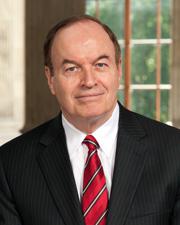 Sen. Richard C. Shelby (R-AL)
What it changes
1 change to H.R. 5602 · shown in the bill's text
Replaces the bill's text with a full substitute
Replaces the full textEverything after the enacting clauseIn H.R. 5602 · Referred in Senate
Inserted: TITLE I--ENHANCING ANTITERRORISM TOOLS OF THE DEPARTMENT OF THE TREASURY
[struck: SECTION 1][inserted: SEC. 101]. INCLUSION OF ALL FUNDS.(a) In General.--Section 5326 of title 31, United States Code, is amended--
(1) in the heading of such section, by striking "coin and currency";
5 unchanged paragraphsHide unchanged text
(2) in subsection (a)--
(A) by striking "subtitle and" and inserting "subtitle or to"; and
(B) in paragraph (1)(A), by striking "United States coins or currency (or such other monetary instruments as the Secretary may describe in such order)" and inserting "funds (as the Secretary may describe in such order),"; and
(3) in subsection (b)--
(A) in paragraph (1)(A), by striking "coins or currency (or monetary instruments)" and inserting "funds"; and
(B) in paragraph (2), by striking "coins or currency (or such other monetary instruments as the Secretary may describe in the regulation or order)" and inserting "funds (as the Secretary may describe in the regulation or order)".
(b) Clerical Amendment.--The table of contents for chapter 53 of title 31, United States Code, is amended in the item relating to section 5326 by striking "coin and currency".
Struck: Passed the House of Representatives July 11, 2016.
Inserted: SEC. 102. IMPROVING ANTITERROR FINANCE MONITORING OF FUNDS TRANSFERS.
Inserted: (a) Study.--
Inserted: (1) In general.--To improve the ability of the Department of the Treasury to better track cross-border fund transfers and identify potential financing of terrorist or other forms of illicit finance, the Secretary shall carry out a study to assess--
Inserted: (A) the potential efficacy of requiring banking regulators to establish a pilot program to provide technical assistance to depository institutions and credit unions that wish to provide account services to money services businesses serving individuals in Somalia;
Inserted: (B) whether such a pilot program could be a model for improving the ability of United States persons to make legitimate funds transfers through transparent and easily monitored channels while preserving strict compliance with the Bank Secrecy Act (Public Law 91-508; 84 Stat. 1114) and related controls aimed at stopping money laundering and the financing of terrorism; and
Inserted: (C) consistent with current legal requirements regarding confidential supervisory information, the potential impact of allowing money services businesses to share certain State examination information with depository institutions and credit unions, or whether another appropriate mechanism could be identified to allow a similar exchange of information to give the depository institutions and credit unions a better understanding of whether an individual money services business is adequately meeting its anti-money laundering and counter-terror financing obligations to combat money laundering, the financing of terror, or related illicit finance.
Inserted: (2) Public input.--The Secretary should solicit and consider public input as appropriate in developing this study.
Inserted: (b) Report.--Not later than 270 days after the date of the enactment of this Act, the Secretary shall submit to the Committee on Financial Services and the Committee on Foreign Affairs of the House of Representatives and the Committee on Banking, Housing, and Urban Affairs and the Committee on Foreign Relations of the Senate a report that contains all findings and determinations made in carrying out the study required under subsection (a).
Inserted: SEC. 103. SENSE OF CONGRESS ON INTERNATIONAL COOPERATION REGARDING TERRORIST FINANCING INTELLIGENCE.
Inserted: It is the sense of the Congress that the Secretary, acting through the Under Secretary for Terrorism and Financial Crimes, should intensify work with foreign partners to help the foreign partners develop intelligence analytic capacities, in a finance ministry or other appropriate agency, that are--
Inserted: (1) commensurate to the threats faced by the foreign partner; and
Inserted: (2) designed to better integrate intelligence efforts with the anti-money laundering and counter-terrorist financing regimes of the foreign partner.
Show 48 more inserted paragraphsShow less
Inserted: SEC. 104. EXAMINING THE COUNTER-TERROR FINANCING ROLE OF THE DEPARTMENT OF THE TREASURY IN EMBASSIES.
Inserted: Not later than 180 days after the enactment of this Act, the Secretary shall submit to the Committee on Financial Services and the Committee on Foreign Affairs of the House of Representatives and the Committee on Banking, Housing, and Urban Affairs and the Committee on Foreign Relations of the Senate a report that contains--
Inserted: (1) a list of the United States embassies in which a full-time Department of the Treasury financial attache is stationed and a description of how the interests of the Department of the Treasury relating to terrorist financing and money laundering are addressed (via regional attaches or otherwise) at US embassies where no such attaches are present;
Inserted: (2) a list of the United States embassies at which the Department of the Treasury has assigned a technical assistance advisor from the Office of Technical Assistance of the Department of the Treasury;
Inserted: (3) an overview of how Department of the Treasury financial attaches and technical assistance advisors assist in efforts to counter illicit finance, to include money laundering, terrorist financing, and proliferation financing; and
Inserted: (4) an overview of patterns, trends, or other issues identified by Department of the Treasury attaches and whether resources are sufficient to address these issues.
Inserted: TITLE II--NATIONAL STRATEGY FOR COMBATING TERRORIST AND OTHER ILLICIT FINANCING
Inserted: SEC. 201. DEVELOPMENT OF NATIONAL STRATEGY.
Inserted: (a) In General.--The President, acting through the Secretary shall, in consultation with the Attorney General, the Secretary of State, the Secretary of Homeland Security, the Director of National Intelligence, and the appropriate Federal banking agencies, develop a national strategy for combating the financing of terrorism and related forms of illicit finance.
Inserted: (b) Transmittal to Congress.--
Inserted: (1) In general.--Not later than January 31, 2018, the President shall submit to the appropriate congressional committees a comprehensive national strategy developed in accordance with subsection (a).
Inserted: (2) Updates.--Not later than January 31, 2020, and January 31, 2022, the President shall submit to the appropriate congressional committees updated versions of the national strategy submitted under paragraph (1).
Inserted: (c) Separate Presentation of Classified Material.--Any part of the national strategy that involves information that is properly classified under criteria established by the President shall be submitted to the Congress separately in a classified annex and, if requested by the chairman or ranking Member of one of the appropriate congressional committees, as a briefing at an appropriate level of security.
Inserted: SEC. 202. CONTENTS.
Inserted: (a) In General.--The strategy described in section 201 shall contain the following:
Inserted: (1) Evaluation of existing efforts.--An assessment of the effectiveness of and ways in which the United States is currently addressing the highest levels of risk of various forms of illicit finance, including those identified in the documents entitled "2015 National Money Laundering Risk Assessment" and "2015 National Terrorist Financing Risk Assessment", published by the Department of the Treasury and a description of how the strategy is integrated into, and supports, the broader counter terrorism strategy of the United States.
Inserted: (2) Goals, objectives, and priorities.--A comprehensive, research-based, long-range, quantifiable discussion of goals, objectives, and priorities for disrupting and preventing illicit finance activities within and transiting the financial system of the United States that outlines priorities to reduce the incidence, dollar value, and effects of illicit finance.
Inserted: (3) Threats.--An identification of the most significant illicit finance threats to the financial system of the United States.
Inserted: (4) Reviews and proposed changes.--Reviews of enforcement efforts, relevant regulations and relevant provisions of law and, if appropriate, discussions of proposed changes determined to be appropriate to ensure that the United States pursues coordinated and effective efforts at all levels of government, and with international partners of the United States, in the fight against illicit finance.
Inserted: (5) Detection and prosecution initiatives.--A description of efforts to improve detection and prosecution of illicit finance, including efforts to ensure that--
Inserted: (A) subject to legal restrictions, all appropriate data collected by the Federal Government that is relevant to the efforts described in this section be available in a timely fashion to--
Inserted: (i) all appropriate Federal departments and agencies; and
Inserted: (ii) as appropriate and consistent with section 314 of the International Money Laundering Abatement and Financial Anti-Terrorism Act of 2001 (31 U.S.C. 5311 note), to financial institutions to assist the financial institutions in efforts to comply with laws aimed at curbing illicit finance; and
Inserted: (B) appropriate efforts are undertaken to ensure that Federal departments and agencies charged with reducing and preventing illicit finance make thorough use of publicly available data in furtherance of this effort.
Inserted: (6) The role of the private financial sector in prevention of illicit finance.--A discussion of ways to enhance partnerships between the private financial sector and Federal departments and agencies with regard to the prevention and detection of illicit finance, including--
Inserted: (A) efforts to facilitate compliance with laws aimed at stopping such illicit finance while maintaining the effectiveness of such efforts; and
Inserted: (B) providing guidance to strengthen internal controls and to adopt on an industry-wide basis more effective policies.
Inserted: (7) Enhancement of intergovernmental cooperation.--A discussion of ways to combat illicit finance by enhancing--
Inserted: (A) cooperative efforts between and among Federal, State, and local officials, including State regulators, State and local prosecutors, and other law enforcement officials;
Inserted: (B) cooperative efforts with and between governments of countries and with and between multinational institutions, including the Financial Action Task Force, with expertise in fighting illicit finance.
Inserted: (8) Trend analysis of emerging illicit finance threats.--A discussion of and data regarding trends in illicit finance, including evolving forms of value transfer such as so-called cryptocurrencies, other methods that are computer, telecommunications, or Internet-based, cyber crime, or any other threats that the Secretary may choose to identify.
Inserted: (9) Budget priorities.--A multiyear budget plan that identifies sufficient resources needed to successfully execute the full range of missions called for in this section.
Inserted: (10) Technology enhancements.--An analysis of current and developing ways to leverage technology to improve the effectiveness of efforts to stop the financing of terrorism and other forms of illicit finance, including better integration of open-source data.
Inserted: TITLE III--DEFINITIONS
Inserted: SEC. 301. DEFINITIONS.
Inserted: In this Act--
Inserted: (1) the term "appropriate congressional committees" means--
Inserted: (A) the Committee on Financial Services, the Committee on Foreign Affairs, the Committee on Armed Services, the Committee on the Judiciary, Committee on Homeland Security, and the Permanent Select Committee on Intelligence of the House of Representatives; and
Inserted: (B) the Committee on Banking, Housing, and Urban Affairs, the Committee on Foreign Relations, Committee on Armed Services, Committee on the Judiciary, Committee on Homeland Security and Governmental Affairs, and the Select Committee on Intelligence of the Senate;
Inserted: (2) the term "appropriate Federal banking agencies" has the meaning given the term in section 3 of the Federal Deposit Insurance Act (12 U.S.C. 1813);
Inserted: (3) the term "Bank Secrecy Act" means--
Inserted: (A) section 21 of the Federal Deposit Insurance Act (12 U.S.C. 1829b);
Inserted: (B) chapter 2 of title I of Public Law 91-508 (12 U.S.C. 1951 et seq.); and
Inserted: (C) subchapter II of chapter 53 of title 31, United States Code;
Inserted: (4) the term "illicit finance" means the financing of terrorism, money laundering, or other forms of illicit financing domestically or internationally, as defined by the President;
Inserted: (5) the term "money services business" has the meaning given the term under section 1010.100 of title 31, Code of Federal Regulations;
Inserted: (6) the term "Secretary" means the Secretary of the Treasury; and
Inserted: (7) the term "State" means each of the several States, the District of Columbia, and each territory or possession of the United States.
Original wording
Strike all after the enacting clause and insert the following:
Read automatically from the Congressional Record. Check the original before relying on it.
As printed
SA 5127. Mr. McCONNELL (for Mr. Shelby (for himself and Mr. Brown)) proposed an amendment to the bill H.R. 5602, to amend title 31, United States Code, to authorize the Secretary of the Treasury to include all funds when issuing certain geographic targeting orders, and for other purposes; as follows:
Strike all after the enacting clause and insert the following:
TITLE I--ENHANCING ANTITERRORISM TOOLS OF THE DEPARTMENT OF THE TREASURY
SEC. 101. INCLUSION OF ALL FUNDS.
(a) In General.--Section 5326 of title 31, United States Code, is amended--
(1) in the heading of such section, by striking “coin and currency”;
(2) in subsection (a)--
(A) by striking “subtitle and” and inserting “subtitle or to”; and
(B) in paragraph (1)(A), by striking “United States coins or currency (or such other monetary instruments as the Secretary may describe in such order)” and inserting “funds (as the Secretary may describe in such order),”; and
(3) in subsection (b)--
(A) in paragraph (1)(A), by striking “coins or currency (or monetary instruments)” and inserting “funds”; and
(B) in paragraph (2), by striking “coins or currency (or such other monetary instruments as the Secretary may describe in the regulation or order)” and inserting “funds (as the Secretary may describe in the regulation or order)”.
(b) Clerical Amendment.--The table of contents for chapter 53 of title 31, United States Code, is amended in the item relating to section 5326 by striking “coin and currency”.
SEC. 102. IMPROVING ANTITERROR FINANCE MONITORING OF FUNDS TRANSFERS.
(a) Study.--
(1) In general.--To improve the ability of the Department of the Treasury to better track cross-border fund transfers and identify potential financing of terrorist or other forms of illicit finance, the Secretary shall carry out a study to assess--
(A) the potential efficacy of requiring banking regulators to establish a pilot program to provide technical assistance to depository institutions and credit unions that wish to provide account services to money services businesses serving individuals in Somalia;
(B) whether such a pilot program could be a model for improving the ability of United States persons to make legitimate funds transfers through transparent and easily monitored channels while preserving strict compliance with the Bank Secrecy Act (Public Law 91-508; 84 Stat. 1114) and related controls aimed at stopping money laundering and the financing of terrorism; and
(C) consistent with current legal requirements regarding confidential supervisory information, the potential impact of allowing money services businesses to share certain State examination information with depository institutions and credit unions, or whether another appropriate mechanism could be identified to allow a similar exchange of information to give the depository institutions and credit unions a better understanding of whether an individual money services business is adequately meeting its anti-money laundering and counter-terror financing obligations to combat money laundering, the financing of terror, or related illicit finance.
(2) Public input.--The Secretary should solicit and consider public input as appropriate in developing this study.
(b) Report.--Not later than 270 days after the date of the enactment of this Act, the Secretary shall submit to the Committee on Financial Services and the Committee on Foreign Affairs of the House of Representatives and the Committee on Banking, Housing, and Urban Affairs and the Committee on Foreign Relations of the Senate a report that contains all findings and determinations made in carrying out the study required under subsection (a).
SEC. 103. SENSE OF CONGRESS ON INTERNATIONAL COOPERATION REGARDING TERRORIST FINANCING INTELLIGENCE.
It is the sense of the Congress that the Secretary, acting through the Under Secretary for Terrorism and Financial Crimes, should intensify work with foreign partners to help the foreign partners develop intelligence analytic capacities, in a finance ministry or other appropriate agency, that are--
(1) commensurate to the threats faced by the foreign partner; and
(2) designed to better integrate intelligence efforts with the anti-money laundering and counter-terrorist financing regimes of the foreign partner.
SEC. 104. EXAMINING THE COUNTER-TERROR FINANCING ROLE OF THE DEPARTMENT OF THE TREASURY IN EMBASSIES.
Not later than 180 days after the enactment of this Act, the Secretary shall submit to the Committee on Financial Services and the Committee on Foreign Affairs of the House of Representatives and the Committee on Banking, Housing, and Urban Affairs and the Committee on Foreign Relations of the Senate a report that contains--
(1) a list of the United States embassies in which a full-time Department of the Treasury financial attache is stationed and a description of how the interests of the Department of the Treasury relating to terrorist financing and money laundering are addressed (via regional attaches or otherwise) at US embassies where no such attaches are present;
(2) a list of the United States embassies at which the Department of the Treasury has assigned a technical assistance advisor from the Office of Technical Assistance of the Department of the Treasury;
(3) an overview of how Department of the Treasury financial attaches and technical assistance advisors assist in efforts to counter illicit finance, to include money laundering, terrorist financing, and proliferation financing; and
(4) an overview of patterns, trends, or other issues identified by Department of the Treasury attaches and whether resources are sufficient to address these issues.
TITLE II--NATIONAL STRATEGY FOR COMBATING TERRORIST AND OTHER ILLICIT FINANCING
SEC. 201. DEVELOPMENT OF NATIONAL STRATEGY.
(a) In General.--The President, acting through the Secretary shall, in consultation with the Attorney General, the Secretary of State, the Secretary of Homeland Security, the Director of National Intelligence, and the appropriate Federal banking agencies, develop a national strategy for combating the financing of terrorism and related forms of illicit finance.
(b) Transmittal to Congress.--
(1) In general.--Not later than January 31, 2018, the President shall submit to the appropriate congressional committees a comprehensive national strategy developed in accordance with subsection (a).
(2) Updates.--Not later than January 31, 2020, and January 31, 2022, the President shall submit to the appropriate congressional committees updated versions of the national strategy submitted under paragraph (1).
(c) Separate Presentation of Classified Material.--Any part of the national strategy that involves information that is properly classified under criteria established by the President shall be submitted to the Congress separately in a classified annex and, if requested by the chairman or ranking Member of one of the appropriate congressional committees, as a briefing at an appropriate level of security.
SEC. 202. CONTENTS.
(a) In General.--The strategy described in section 201 shall contain the following:
(1) Evaluation of existing efforts.--An assessment of the effectiveness of and ways in which the United States is currently addressing the highest levels of risk of various forms of illicit finance, including those identified in the documents entitled “2015 National Money Laundering Risk Assessment” and “2015 National Terrorist Financing Risk Assessment”, published by the Department of the Treasury and a description of how the strategy is integrated into, and supports, the broader counter terrorism strategy of the United States.
(2) Goals, objectives, and priorities.--A comprehensive, research-based, long-range, quantifiable discussion of goals, objectives, and priorities for disrupting and preventing illicit finance activities within and transiting the financial system of the United States that outlines priorities to reduce the incidence, dollar value, and effects of illicit finance.
(3) Threats.--An identification of the most significant illicit finance threats to the financial system of the United States.
(4) Reviews and proposed changes.--Reviews of enforcement efforts, relevant regulations and relevant provisions of law and, if appropriate, discussions of proposed changes determined to be appropriate to ensure that the United States pursues coordinated and effective efforts at all levels of government, and with international partners of the United States, in the fight against illicit finance.
(5) Detection and prosecution initiatives.--A description of efforts to improve detection and prosecution of illicit finance, including efforts to ensure that--
(A) subject to legal restrictions, all appropriate data collected by the Federal Government that is relevant to the efforts described in this section be available in a timely fashion to--
(i) all appropriate Federal departments and agencies; and
(ii) as appropriate and consistent with section 314 of the International Money Laundering Abatement and Financial Anti-Terrorism Act of 2001 (31 U.S.C. 5311 note), to financial institutions to assist the financial institutions in efforts to comply with laws aimed at curbing illicit finance; and
(B) appropriate efforts are undertaken to ensure that Federal departments and agencies charged with reducing and preventing illicit finance make thorough use of publicly available data in furtherance of this effort.
(6) The role of the private financial sector in prevention of illicit finance.--A discussion of ways to enhance partnerships between the private financial sector and Federal departments and agencies with regard to the prevention and detection of illicit finance, including--
(A) efforts to facilitate compliance with laws aimed at stopping such illicit finance while maintaining the effectiveness of such efforts; and
(B) providing guidance to strengthen internal controls and to adopt on an industry-wide basis more effective policies.
(7) Enhancement of intergovernmental cooperation.--A discussion of ways to combat illicit finance by enhancing--
(A) cooperative efforts between and among Federal, State, and local officials, including State regulators, State and local prosecutors, and other law enforcement officials;
(B) cooperative efforts with and between governments of countries and with and between multinational institutions, including the Financial Action Task Force, with expertise in fighting illicit finance.
(8) Trend analysis of emerging illicit finance threats.--A discussion of and data regarding trends in illicit finance, including evolving forms of value transfer such as so-called cryptocurrencies, other methods that are computer, telecommunications, or Internet-based, cyber crime, or any other threats that the Secretary may choose to identify.
(9) Budget priorities.--A multiyear budget plan that identifies sufficient resources needed to successfully execute the full range of missions called for in this section.
(10) Technology enhancements.--An analysis of current and developing ways to leverage technology to improve the effectiveness of efforts to stop the financing of terrorism and other forms of illicit finance, including better integration of open-source data.
TITLE III--DEFINITIONS
SEC. 301. DEFINITIONS.
In this Act--
(1) the term “appropriate congressional committees” means--
(A) the Committee on Financial Services, the Committee on Foreign Affairs, the Committee on Armed Services, the Committee on the Judiciary, Committee on Homeland Security, and the Permanent Select Committee on Intelligence of the House of Representatives; and
(B) the Committee on Banking, Housing, and Urban Affairs, the Committee on Foreign Relations, Committee on Armed Services, Committee on the Judiciary, Committee on Homeland Security and Governmental Affairs, and the Select Committee on Intelligence of the Senate;
(2) the term “appropriate Federal banking agencies” has the meaning given the term in section 3 of the Federal Deposit Insurance Act (12 U.S.C. 1813);
(3) the term “Bank Secrecy Act” means--
(A) section 21 of the Federal Deposit Insurance Act (12 U.S.C. 1829b);
(B) chapter 2 of title I of Public Law 91-508 (12 U.S.C. 1951 et seq.); and
(C) subchapter II of chapter 53 of title 31, United States Code;
(4) the term “illicit finance” means the financing of terrorism, money laundering, or other forms of illicit financing domestically or internationally, as defined by the President;
(5) the term “money services business” has the meaning given the term under section 1010.100 of title 31, Code of Federal Regulations;
(6) the term “Secretary” means the Secretary of the Treasury; and
(7) the term “State” means each of the several States, the District of Columbia, and each territory or possession of the United States.
Legislative Activity
Stay on top of the latest movement without scrolling through every action
Senate amendment agreed to: Amendment SA 5127 agreed to in Senate by Unanimous Consent.
December 10, 2016
View full timeline
Senate amendment agreed to: Amendment SA 5127 agreed to in Senate by Unanimous Consent.
December 10, 2016
Senate amendment proposed (on the floor): Amendment SA 5127 proposed by Senator Boozman for Senator Shelby.
December 10, 2016
Amendment SA 5127 proposed by Senator Boozman for Senator Shelby. (consideration: CR S7103) In the nature of a substitute.
December 10, 2016
Amendment SA 5127 agreed to in Senate by Unanimous Consent.
December 10, 2016
Senate amendment submitted
December 5, 2016
Senate amendment agreed to: Amendment SA 5127 agreed to in Senate by Unanimous Consent.
December 5, 2016
Senate amendment submitted
December 5, 2016
Amendment SA 5127 proposed by Senator McConnell for Senator Shelby.
December 5, 2016
Amendment SA 5127 agreed to in Senate by Unanimous Consent.
December 5, 2016
Senate vitiated previous adoption of amendment SA 5127. (consideration: CR S6688, S6716)
December 5, 2016
Referred to the Committee on Banking, Housing, and Urban Affairs.
December 5, 2016