To impose sanctions with respect to the Russian Federation and to combat terrorism and illicit financing.
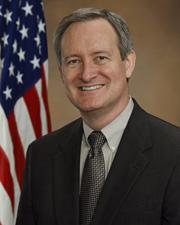 Sen. Mike Crapo (R-ID)
Legislative Activity
Stay on top of the latest movement without scrolling through every action
Roll call votes on amendments in Senate: Amendment SA 232 as modified agreed to in Senate by Yea-Nay Vote. 97 - 2. Record Vote Number: 144.(consideration: CR S3462-3474)
June 14, 2017
View full timeline
Roll call votes on amendments in Senate: Amendment SA 232 as modified agreed to in Senate by Yea-Nay Vote. 97 - 2. Record Vote Number: 144.(consideration: CR S3462-3474)
June 14, 2017
Senate amendment agreed to: Amendment SA 232 as modified agreed to in Senate by Yea-Nay Vote. 97 - 2. Record Vote Number: 144.(consideration: CR S3462-3474)
June 14, 2017
Considered by Senate. (consideration: CR S3462-3484)
June 14, 2017
Amendment SA 232 as modified agreed to in Senate by Yea-Nay Vote. 97 - 2. Record Vote Number: 144. (consideration: CR S3462-3474)
June 14, 2017
Cloture motion on amendment SA 232 withdrawn by unanimous consent in Senate. (consideration: CR S3428-3440; text as modified: CR S3429-3440)
June 13, 2017
Considered by Senate. (consideration: CR S3440-3448)
June 13, 2017
Senate amendment submitted
June 12, 2017
Senate amendment proposed (on the floor): Amendment SA 232 proposed by Senator McConnell for Senator Crapo.(consideration: CR S3393; text: CR S3399-3410)
June 12, 2017
Amendment SA 232 proposed by Senator McConnell for Senator Crapo. (consideration: CR S3393; text: CR S3399-3410) To impose sanctions with respect to the Russian Federation and to combat terrorism and illicit financing.
June 12, 2017
Cloture motion on amendment SA 232 presented in Senate. (CR S3393)
June 12, 2017
Votes
1 roll call on this amendment
Amendments
3 amendmentsOffered to this amendment
Amendments
3 amendmentsOffered to this amendment
No matches
To change the enactment date.
Proposed amendment SA 233 withdrawn in Senate. (consideration: CR S3428) · Sponsored by Mitch McConnell · Amends S.Amdt. 232
Sponsored by Mark R. Warner · Amends S.Amdt. 232
Sponsored by Cory Gardner · Amends S.Amdt. 232
Text
Submitted
SA 232. Mr. McCONNELL (for Mr. Crapo (for himself, Mr. Brown, Mr.
Corker, and Mr. Cardin)) proposed an amendment to the bill S. 722, to
impose sanctions with respect to Iran in relation to Iran's ballistic
missile program, support for acts of international terrorism, and
violations of human rights, and for other purposes; as follows:

On page 33, line 7, strike ``subsection (a)'' and insert
``subsection (b)''.

On page 33, line 15, strike ``subsection (a)'' and insert
``subsection (b)''.

On page 47, line 18, strike ``The President'' and insert
``Except as provided in subsection (b), the President''.

On page 47, line 22, insert ``(other than subsection (b))''
after ``this Act''.

At the end, add the following:

TITLE II--SANCTIONS WITH RESPECT TO THE RUSSIAN FEDERATION AND
COMBATING TERRORISM AND ILLICIT FINANCING

SEC. 201. SHORT TITLE.

This title may be cited as the ``Countering Russian
Influence in Europe and Eurasia Act of 2017''.

Subtitle A--Sanctions and Other Measures With Respect to the Russian
Federation

SEC. 211. FINDINGS.

Congress makes the following findings:
(1) On March 6, 2014, President Barack Obama issued
Executive Order 13660 (79 Fed. Reg. 13493; relating to
blocking property of certain persons contributing to the
situation in Ukraine), which authorizes the Secretary of the
Treasury, in consultation with the Secretary of State, to
impose sanctions on those determined to be undermining
democratic processes and institutions in Ukraine or
threatening the peace, security, stability, sovereignty, and
territorial integrity of Ukraine. President Obama
subsequently issued Executive Order 13661 (79 Fed. Reg.
15535; relating to blocking property of additional persons
contributing to the situation in Ukraine) and Executive Order
13662 (79 Fed. Reg. 16169; relating to blocking property of
additional persons contributing to the situation in Ukraine)
to expand sanctions on certain persons contributing to the
situation in Ukraine.
(2) On December 18, 2014, the Ukraine Freedom Support Act
of 2014 was enacted (Public Law 113-272; 22 U.S.C. 8921 et
seq.), which includes provisions directing the President to
impose sanctions on foreign persons that the President
determines to be entities owned or controlled by the
Government of the Russian Federation or nationals of the
Russian Federation that manufacture, sell, transfer, or
otherwise provide certain defense articles into Syria.
(3) On April 1, 2015, President Obama issued Executive
Order 13694 (80 Fed. Reg. 18077; relating to blocking the
property of certain persons engaging in significant malicious
cyber-enabled activities), which authorizes the Secretary of
the Treasury, in consultation with the Attorney General and
the Secretary of State, to impose sanctions on persons
determined to be engaged in malicious cyber-hacking.
(4) On July 26, 2016, President Obama approved a
Presidential Policy Directive on United States Cyber Incident
Coordination, which states, ``certain cyber incidents that
have significant impacts on an entity, our national security,
or the broader economy require a unique approach to response
efforts''.
(5) On December 29, 2016, President Obama issued an annex
to Executive Order 13694, which authorized sanctions on the
following entities and individuals:
(A) The Main Intelligence Directorate (also known as
Glavnoe Razvedyvatel'noe Upravlenie or the GRU) in Moscow,
Russian Federation.
(B) The Federal Security Service (also known as Federalnaya
Sluzhba Bezopasnosti or the FSB) in Moscow, Russian
Federation.
(C) The Special Technology Center (also known as STLC, Ltd.
Special Technology Center St. Petersburg) in St. Petersburg,
Russian Federation.
(D) Zorsecurity (also known as Esage Lab) in Moscow,
Russian Federation.
(E) The autonomous noncommercial organization known as the
Professional Association of Designers of Data Processing
Systems (also known as ANO PO KSI) in Moscow, Russian
Federation.
(F) Igor Valentinovich Korobov.
(G) Sergey Aleksandrovich Gizunov.
(H) Igor Olegovich Kostyukov.
(I) Vladimir Stepanovich Alexseyev.
(6) On January 6, 2017, an assessment of the United States
intelligence community entitled, ``Assessing Russian
Activities and Intentions in Recent U.S. Elections'' stated,
``Russian President Vladimir Putin ordered an influence
campaign in 2016 aimed at the United States presidential
election.'' The assessment warns that ``Moscow will apply
lessons learned from its Putin-ordered campaign aimed at the
U.S. Presidential election to future influence efforts
worldwide, including against U.S. allies and their election
processes''.

SEC. 212. SENSE OF CONGRESS.

It is the sense of Congress that the President--
(1) should engage to the fullest extent possible with
partner governments with regard to closing loopholes,
including the allowance of extended prepayment for the
delivery of goods and commodities and other loopholes, in
multilateral and unilateral restrictive

[[Page S3400]]

measures against the Russian Federation, with the aim of
maximizing alignment of those measures; and
(2) should increase efforts to vigorously enforce
compliance with sanctions in place as of the date of the
enactment of this Act with respect to the Russian Federation
in response to the crisis in eastern Ukraine, cyber
intrusions and attacks, and human rights violators in the
Russian Federation.

PART I--CONGRESSIONAL REVIEW OF SANCTIONS IMPOSED WITH RESPECT TO THE
RUSSIAN FEDERATION

SEC. 215. SHORT TITLE.

The part may be cited as the ``Russia Sanctions Review Act
of 2017''.

SEC. 216. CONGRESSIONAL REVIEW OF CERTAIN ACTIONS RELATING TO
SANCTIONS IMPOSED WITH RESPECT TO THE RUSSIAN
FEDERATION.

(a) Submission to Congress of Proposed Action.--
(1) In general.--Notwithstanding any other provision of
law, before taking any action described in paragraph (2), the
President shall submit to the appropriate congressional
committees and leadership a report that describes the
proposed action and the reasons for that action.
(2) Actions described.--
(A) In general.--An action described in this paragraph is--
(i) an action to terminate the application of any sanctions
described in subparagraph (B);
(ii) with respect to sanctions described in subparagraph
(B) imposed by the President with respect to a person, an
action to waive the application of those sanctions with
respect to that person; or
(iii) a licensing action that significantly alters United
States' foreign policy with regard to the Russia Federation.
(B) Sanctions described.--The sanctions described in this
subparagraph are--
(i) sanctions provided for under--

(I) this title or any provision of law amended by this
title, including the Executive Orders codified under section
222;
(II) the Support for the Sovereignty, Integrity, Democracy,
and Economic Stability of Ukraine Act of 2014 (22 U.S.C. 8901
et seq.); or
(III) the Ukraine Freedom Support Act of 2014 (22 U.S.C.
8921 et seq.); and

(ii) the prohibition on access to the properties of the
Government of the Russian Federation located in Maryland and
New York that the President ordered vacated on December 29,
2016.
(3) Description of type of action.--Each report submitted
under paragraph (1) with respect to an action described in
paragraph (2) shall include a description of whether the
action--
(A) is not intended to significantly alter United States'
foreign policy with regard to the Russian Federation; or
(B) is intended to significantly alter United States'
foreign policy with regard to the Russian Federation.
(4) Inclusion of additional matter.--
(A) In general.--Each report submitted under paragraph (1)
that relates to an action that is intended to achieve a
reciprocal diplomatic outcome shall include a description
of--
(i) the anticipated reciprocal diplomatic outcome;
(ii) the anticipated effect of the action on the national
security interests of the United States; and
(iii) the policy objectives for which the sanctions
affected by the action were initially imposed.
(B) Requests from banking and financial services
committees.--The Committee on Banking, Housing, and Urban
Affairs of the Senate or the Committee on Financial Services
of the House of Representatives may request the submission to
the Committee of the matter described in clauses (ii) and
(iii) of subparagraph (A) with respect to a report submitted
under paragraph (1) that relates to an action that is not
intended to achieve a reciprocal diplomatic outcome.
(b) Period for Review by Congress.--
(1) In general.--During the period of 30 calendar days
beginning on the date on which the President submits a report
under subsection (a)(1)--
(A) in the case of a report that relates to an action that
is not intended to achieve a reciprocal diplomatic outcome,
the Committee on Banking, Housing, and Urban Affairs of the
Senate and the Committee on Financial Services of the House
of Representatives should, as appropriate, hold hearings and
briefings and otherwise obtain information in order to fully
review the report; and
(B) in the case of a report that relates to an action that
is intended to achieve a reciprocal diplomatic outcome, the
Committee on Foreign Relations of the Senate and the
Committee on Foreign Affairs of the House of Representatives
should, as appropriate, hold hearings and briefings and
otherwise obtain information in order to fully review the
report.
(2) Exception.--The period for congressional review under
paragraph (1) of a report required to be submitted under
subsection (a)(1) shall be 60 calendar days if the report is
submitted on or after July 10 and on or before September 7 in
any calendar year.
(3) Limitation on actions during initial congressional
review period.--Notwithstanding any other provision of law,
during the period for congressional review provided for under
paragraph (1) of a report submitted under subsection (a)(1)
proposing an action described in subsection (a)(2), including
any additional period for such review as applicable under the
exception provided in paragraph (2), the President may not
take that action unless a joint resolution of approval with
respect to that action is enacted in accordance with
subsection (c).
(4) Limitation on actions during presidential consideration
of a joint resolution of disapproval.--Notwithstanding any
other provision of law, if a joint resolution of disapproval
relating to a report submitted under subsection (a)(1)
proposing an action described in subsection (a)(2) passes
both Houses of Congress in accordance with subsection (c),
the President may not take that action for a period of 12
calendar days after the date of passage of the joint
resolution of disapproval.
(5) Limitation on actions during congressional
reconsideration of a joint resolution of disapproval.--
Notwithstanding any other provision of law, if a joint
resolution of disapproval relating to a report submitted
under subsection (a)(1) proposing an action described in
subsection (a)(2) passes both Houses of Congress in
accordance with subsection (c), and the President vetoes the
joint resolution, the President may not take that action for
a period of 10 calendar days after the date of the
President's veto.
(6) Effect of enactment of a joint resolution of
disapproval.--Notwithstanding any other provision of law, if
a joint resolution of disapproval relating to a report
submitted under subsection (a)(1) proposing an action
described in subsection (a)(2) is enacted in accordance with
subsection (c), the President may not take that action.
(c) Joint Resolutions of Disapproval or Approval Defined.--
In this subsection:
(1) Joint resolution of approval.--The term ``joint
resolution of approval'' means only a joint resolution of
either House of Congress--
(A) the title of which is as follows: ``A joint resolution
approving the President's proposal to take an action relating
to the application of certain sanctions with respect to the
Russian Federation.''; and
(B) the sole matter after the resolving clause of which is
the following: ``Congress approves of the action relating to
the application of sanctions imposed with respect to the
Russian Federation proposed by the President in the report
submitted to Congress under section 216(a)(1) of the Russia
Sanctions Review Act of 2017 on _______