To terminate a rule relating to the definition of "waters of the United States".
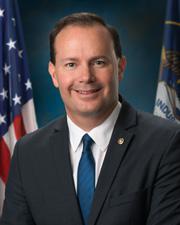 Sen. Mike Lee (R-UT)
Legislative Activity
Stay on top of the latest movement without scrolling through every action
Senate amendment proposed (on the floor): Amendment SA 3021 proposed by Senator McConnell for Senator Lee to Amendment SA 2911.(consideration: CR S4329; text: CR S4329)
June 21, 2018
View full timeline
Senate amendment proposed (on the floor): Amendment SA 3021 proposed by Senator McConnell for Senator Lee to Amendment SA 2911.(consideration: CR S4329; text: CR S4329)
June 21, 2018
Roll call votes on amendments in Senate: Motion to table amendment SA 3021, as modified, agreed to in Senate by Yea-Nay Vote. 62 - 34. Record Vote Number: 138.
June 21, 2018
Amendment SA 3021 proposed by Senator McConnell for Senator Lee to Amendment SA 2911. (consideration: CR S4329; text as modified: CR S4329) To terminate a rule relating to the definition of "waters of the United States".
June 21, 2018
Motion to table amendment SA 3021, as modified, agreed to in Senate by Yea-Nay Vote. 62 - 34. Record Vote Number: 138.
June 21, 2018
Senate amendment submitted
June 20, 2018
Votes
1 roll call on this amendment
Text
Modified
ENERGY AND WATER, LEGISLATIVE BRANCH, AND MILITARY CONSTRUCTION AND
VETERANS AFFAIRS APPROPRIATIONS ACT, 2019

The ACTING PRESIDENT pro tempore. Under the previous order, the
Senate will resume consideration of H.R. 5895, which the clerk will
report.
The legislative clerk read as follows:

A bill (H.R. 5895) making appropriations for energy and
water development and related agencies for the fiscal year
ending September 30, 2019, and for other purposes.

Pending:

Shelby amendment No. 2910, in the nature of a substitute.
Alexander amendment No. 2911 (to amendment No. 2910), to
make a technical correction.

Recognition of the Majority Leader

The PRESIDING OFFICER (Mrs. Hyde-Smith). The majority leader is
recognized.
Mr. McCONNELL. Madam President, this week, we have been considering a
regular appropriations package and voting on amendments.
Many of us have wanted this return to regular order in appropriations
for quite some time. It didn't happen overnight. We owe thanks to
Chairman Shelby and Ranking Member Leahy for the transparent,
bipartisan process that has produced this bill. Thanks to the
leadership of our colleagues at the subcommittee level, more bills will
be on their way to the floor for prompt consideration.
The package before us today will cross three important items off the
Senate's appropriations to-do list: funding for Energy and Water, for
Military Construction and the VA, and for the Legislative Branch.
As I have discussed on the floor this week, the first set of funding
measures attend to a number of major national priorities. The Energy
and Water title allocates critical resources for the safety, security,
and readiness of our Nation's nuclear arsenal. It delivers record
funding for cutting-edge scientific research, and it directs support
for mitigating flood damage, protecting shorelines, and upkeep for
America's inland waterways, like those that support 13,000 jobs in my
home State alone.
The Military Construction and VA title offers targeted resources to
causes that are near and dear to servicemembers and their families:
upgrades to military housing and school systems, improvements to
training facilities, reinforcement of overseas partnerships and
alliances, and maintenance of veterans' healthcare facilities.
There is so much important work contained in this package, and it is
just the first step in this year's regular appropriations process.
With additional cooperation today, we will be able to continue
processing amendments on both sides of the aisle and complete work on
these bills.

Tax Reform

Now, Madam President, on another matter, yesterday marked 6 months
since Congress passed our overhaul of America's Tax Code. Tomorrow is 6
months since the President signed it into law.

[[Page S4314]]

I remember debating the Tax Cuts and Jobs Act back in December. There
were two different philosophies on display. Republicans believed
working families should keep more of what they earn and send less to
the IRS. We believe you don't build a healthy society or a growing
economy by piling up money and power here in Washington, DC. We need to
leave more money and power in the hands of individuals, families, and
small businesses.
Our Democratic friends put forward a different view. They seem to
think government knows best, so higher taxes, more regulations, and
more restrictions on free enterprise are the way to go. As a result,
they stood in lockstep opposition to these historic tax cuts, and I
mean opposition.
The Democratic leader in the House said it was--and this is a direct
quote--``the worst bill in the history of the United States Congress.''
So Republican majorities in the House and Senate passed the tax cuts
with zero Democratic votes--not one.
Six months later, who was right? What has happened in America since
this major policy shift began taking effect?
Just ask the men and women this law is affecting.
Mark Guilbeau in Louisiana says this of his tax cuts:

It's bigger than crumbs like the politicians were saying. I
plan to pay down some credit card debt.

Try Brett Lancy in Ohio who has a 1-year-old son, Grayson. Brett
said:

Due to the extra takehome pay in my paycheck--it's about
$125 a month--we've been able to move him into one of the
better daycares in our area. And it's just fabulous.

In addition to the tax cuts themselves, the business side of tax
reform has helped employers raise pay and benefits for employees.
Chelsee Hatfield works at First Farmers Bank & Trust in Indiana. She
has been taking college courses online and says the raise and bonus she
received will help her pay tuition now and save for her kids to go to
college. She said: ``These steps taken as a result of tax reform are
specifically affecting me and small communities like my hometown.''
Bonnie Brazzeal from Missouri received a bonus too. She works in the
cafeteria at the College of the Ozarks and got to share the news with
President Trump when he visited the State earlier this year: ``I put
mine in savings for my retirement.''
Families are immediately benefiting from this law, but what about the
long-term impact?
We designed tax reform to lay the foundation for more investment,
business growth, job creation, and higher wages for decades to come.
It is already doing just that. In my home State of Kentucky, Novelis
is pushing ahead with a $300 million factory in Guthrie. They say their
decision was caused by this ``favorable economic environment,''
reinforced by ``the significant positive impact of tax reform.''
It is a national trend. Just yesterday, the National Association of
Manufacturers released data showing that optimism among many American
manufacturers is above 95 percent--the highest level ever recorded.
Small business owners agree. An industry survey shows that more of
them are looking to hire than at any time since the year 2000.
No wonder the job market is already better than it has been in
years. Unemployment is at an 18-year low. More than two-thirds of
Americans are saying it is a good time to find a quality job--the
highest in 17 years.

Here is a remarkable fact: There are now more job openings all across
this country than there are Americans looking for work. It is the first
time that has ever happened since we started tracking the relevant
data, and the optimism and prosperity unleashed by tax reform are part
of the reason why.
The worst legislation in history? Armageddon? Our friends across the
aisle should get their crystal balls checked.
Historically, tax reform had been a bipartisan priority. In 1986, the
last major tax reform passed the House by a 100-vote margin. It sailed
through the Senate. How times have changed.
Unlike in 1986, this time our historic proposal to let Americans keep
more of their own money faced complete partisan opposition--not one
Democratic vote, not one. Republicans had to go it alone.
But the people's Republican Senate, Republican House, and Republican
President got the job done for the families who were counting on us.
I suggest the absence of a quorum.
The PRESIDING OFFICER. The clerk will call the roll.
The senior assistant legislative clerk proceeded to call the roll.
Mr. SCHUMER. Madam President, I ask unanimous consent that the order
for the quorum call be rescinded.
The PRESIDING OFFICER. Without objection, it is so ordered.

Recognition of the Minority Leader

The Democratic leader is recognized.
Mr. SCHUMER. Madam President, first, as the Senate continues to
process appropriations bills on the floor, I thank Chairman Shelby and
Ranking Member Leahy for their hard work on the appropriations process.
The Republican leader and I have both committed to work through
appropriations in a bipartisan way, through regular order, which is
something the Senate hasn't achieved in some time. Chairman Shelby and
Ranking Member Leahy are leading the way. We want to continue along
this road in a bipartisan, cooperative way, wherein what we bring to
the floor basically has approval from both sides of the aisle.

Family Separation Policy

Madam President, on immigration, let me address the humanitarian
crisis at our southern border.
For a little over a month, President Trump's family separation policy
has resulted in more than 2,300 children being separated from their
families. Young children, toddlers, babies are being held alone. I have
seen the pictures of these tiny, little girls with forlorn looks on
their faces--it breaks your heart--and they are being placed into what
are being called tender age facilities. That is an Orwellian term if
there ever were one. Other minors have been flown, scattershot, to
different parts of the country to live in foster homes that are
hundreds of miles away from their parents. A 5-year-old is sent
hundreds of miles away from his or her parents? What kind of country
are we?
Yesterday the President signed an Executive order that made it 100-
percent clear that what the Democrats have been saying--that the
President can fix this problem on his own--has been correct. The
President vindicated everything we had been saying and undid everything
he had been saying when he said only Congress could fix this problem.
Of course, he made it partisan.
It is a relief that the President has reversed himself and recognized
the cruelty of his policy of separating children from their parents. I
would like to believe he found it in the goodness of his heart. We
certainly know there was a ton of pressure on him to do this and that
he didn't do it when he first looked at the problem.
After weeks of acting like his administration bore no responsibility
for this policy--contravening all fact and all reality--I hope this
represents a turning point with the President. I hope it means this
President will stop blaming others for problems he creates and will
start fixing them himself. I hope it means the President realizes, just
because he says something, it doesn't make it so. So often, more than
any other President many times over, what he says is just outright
false, made up. It pops into his head, and he says it. Yet this
Executive order raises several questions. That means the President must
continue to deal with these problems, which, again, he can do on his
own.
First, the way the Executive order was drafted means it will not go
into effect until a court rules on its legality. What is the
President's policy on family separation in the meantime? Will he
continue to insist that these heartbreaking separations continue?
Second, the Executive order allows for the indefinite detention of
families who are apprehended at the border. The U.S. Government cannot
be in the business of indefinitely detaining minors.
Third, the Executive order is silent on the more than 2,300 families
who have already been split apart. Will the President and his
administration work to reunite those families? We believe he must do
that immediately. What exactly is the President's plan to accomplish
this? Leader Pelosi and I are sending a letter to the President this

[[Page S4315]]

morning that will demand he use all the necessary resources to reunite
the separated families.
At his rally in Minnesota last night, which is the kind of red meat
thing the President likes--gathering 10,000 people together in a State
of 5, 6, 7, or 8 million so he is a hero with everyone, which is the
way he thinks--the President acted as if he had taken care of the
border crisis, as if all of the problems were in the rearview mirror.
He said: ``I signed an executive order keeping families together
because I think that's probably a very important thing to be doing.''
The only thing is, we in Congress and the American people have a
whole bunch of questions the President hasn't answered, questions which
are listed above that I will repeat. How many kids are in these
facilities now? What are their conditions? Why hasn't the media been
allowed to go in, see, and verify that the conditions are humane? The
Department of Defense has been asked whether it can house 20,000
unaccompanied children from now until the end of the year. How will
that work? Is it even feasible? How is the administration keeping track
of the families who have already been separated? What are the plans and
timetable for their being reunited?
President Trump hasn't taken care of the problem, not by any stretch
of the imagination, but he has certainly admitted that his
administration does have the power to take action. He, in a sense, by
what he did yesterday, increases the burden on himself to solve these
other problems. I urge him to continue to use his power to address
these serious, unresolved issues. Legislation in Congress remains
unlikely and far more difficult to achieve than the simple corrective
actions the President can take immediately and administratively.
Let us not forget that immigration has been the graveyard of
legislation for years in this Congress. Saying Congress can act and
getting Congress to act are two different things, particularly when, on
the House side, we have a group of Congress Members in the Freedom
Caucus--way out of the mainstream by any polling standard, by any real
standard on immigration--that insists that poison pills be added to
anything we do on immigration. Speaker Ryan, thus far, has shown no
ability or desire to resist them. So having Congress get it done is not
going to solve the problem, unfortunately, because immigration is such
a contentious and divisive issue. The President has to do it himself,
and let us hope he does.

Trade with China

Madam President, on our trade relationship with China, for too long,
China has taken advantage of America's unwillingness to strongly
confront its rapacious trade policies. For too long, China has dumped
artificially cheap products into our market, stolen the intellectual
property of startup and blue-chip American companies, and denied our
companies access to its markets. When companies have good products that
China wants to copy, it has denied our companies access to its markets
so China can steal the know-how of how to do it and then compete with
us. China alone, by its rapacious, unfair trade policies, has accounted
for the loss of millions of American jobs and the decline in pay of
millions of other American jobs.
So I am heartened that President Trump, after making a debacle of the
deal on ZTE, has taken a tougher approach to China in recent days. His
instincts to be tough on China are right on the money. As I said
before, on China, my views are closer to President Trump's than they
were to President Obama's or President Bush's, both of whose
administrations, anyway, let China get away with economic murder.
Now President Trump needs to stay strong. If he backs off at the
first sign of trouble, after the first company calls to complain or
after President Xi calls to complain, then China will know we are weak
and unserious. I am worried China already thinks that because of what
the President has done on ZTE. China is waiting to see if we are tough
enough to ride this out. We need to show China that America means
business because the stakes are too high. Business relocations to China
have cost too many American jobs. The theft of our intellectual
property has been called the greatest transfer of wealth in history by
former four-star general and Commander of the U.S. Cyber Command GEN
Keith Alexander.
The lifeblood of the American economy is on the line, so I urge
President Trump to stay strong on China. At the first sign of
complaint, if we turn, China will know it can push us over, and the
number of jobs we will lose--the amount of wealth we will lose--will
far exceed the kind of damage these tariffs might do.
Please don't mistake my support on this issue as a license for the
President to be reckless or as an endorsement of what the President is
doing to our allies. The tariffs leveled against Canada and our
European allies are misguided and poorly timed. We should be rallying
our allies to work with us against China, which is what they want to
do. Instead, we are poking them. China is our No. 1 economic trade
enemy, and I use the word ``enemy'' advisedly. We have to have the
whole world on our side, and these other actions are poorly timed at
best.

Republican Tax Bill

Madam President, 6 months ago, in the dead of night, the Republican
majority jammed through a partisan tax bill that lavished tax cuts on
big corporations and the wealthiest few--the old theory of trickle-down
that the Republican Party embraced. My friend from Pennsylvania is one
of the few who will actually say that is what he believes, which I
appreciate, even though I strongly disagree.
It is an appropriate time now to look back on how the tax bill is
faring. While the Republican leader, on a daily basis, celebrates vague
statistics about business confidence, here are some hard, cold facts.
Since the beginning of 2018, corporations have announced plans to
repurchase more than $475 billion in stock buybacks--a record pace. In
the past week, the Washington Post has reported ``wages aren't just
flat, they are falling'' for a strong majority of American workers.
According to a recent analysis by JUST Capital, only 7 percent of the
capital allocated by companies from the tax bill's savings has gone to
employees while 57 percent has gone to shareholders--just what we
Democrats predicted.
When the vast majority of the tax cuts goes to the very wealthy and
to the largest and most powerful corporations, the average worker sees
very little gain--trickle-down--certainly, a smaller proportion of the
gain than the cut. The kind of plan we would have advocated, which
would have helped the middle class predominantly, not the wealthy,
would have been far better for average workers.
Remember what President Trump promised the American people? He said
the Republican tax bill would give a $4,000 raise to the average
American family. In reality, American families are not seeing close to
that figure. A recent Washington Post headline sums it up best: ``The
Republican tax bill's promises of higher wages and more jobs haven't
materialized.''
The truth is that the tax law has failed to deliver for American
workers and American families, and the American people are realizing
it. The polling data shows it is becoming more unpopular. It started
out being very unpopular with all of those little publicity bonuses
that many of them arranged. In January, it was at about 50-50, but now
it is declining again. American families know they are getting the
short end of the stick in this tax bill. Corporations are reaping
record profits as a result of the tax bill, and they refuse to pass
much of those savings on to their workers.
Whatever benefits American families are getting from the tax bill, if
they are getting benefits at all, are starting to get wiped out by the
skyrocketing healthcare costs--the result of Republican sabotage, some
of which was in the tax bill itself. There are millions of American
families now whose tax breaks are far exceeded by the increases in
premiums they are paying for healthcare.
All in all, that is why today, just 6 months since its passage, the
Republicans' signature legislative accomplishment is so deeply
unpopular with the American people and why Republican pundits are
saying we had better go over to the area of immigration because this
tax bill thing isn't working for us.
I yield the floor.
The PRESIDING OFFICER (Mr. Sullivan). The Senator from Pennsylvania.

[[Page S4316]]

Tax Reform

Mr. TOOMEY. Mr. President, I appreciate the minority leader's teeing
up my comments today and introducing what I am going to be speaking
about, which is a topic he addressed briefly, and that is the 6-month
period of time since we passed tax reform. It was this week, 6 months
ago, that we had a historic vote--the biggest tax reform in over 30
years. We are beginning to get some data that is really worth
discussing and analyzing, and I would strongly disagree with the
characterization by the minority leader.
I was home in Pennsylvania recently, traveling around the State, as
we all do when we are not in this town. On one recent occasion, I was
talking to small business owners in Lock Haven, PA, and Bloomsburg, PA.
At one of the companies, the small business owner was there, and he was
really enthusiastic about how this tax reform is helping his small
business. It is actually a very typical story that I am hearing across
Pennsylvania. I mention him because, as it happens, his company is in
the carpet business, and they happen to make the very carpet that I am
standing on right now. They provide the carpeting for the floor of the
U.S. Senate.

He talked about the fact that, because our tax reform really totally
redid the rules--especially on the business side, but on the individual
side as well--it allows him to access new capital and purchase new
equipment. The equipment that he needs to expand his business is more
affordable under our tax rules now. So that is exactly what he is
doing. He is expanding his business, and he is very enthusiastic about
it.
This, of course, is not an anomaly and it is not specific to
Pennsylvania. It is across the country. Already we have had companies--
over 600 businesses employing over 4 million American workers--announce
that they will immediately start paying bonuses, increasing wages,
making larger pension contributions, but directly sharing their tax
savings with their workers. This started within days of passage of the
bill, and it has continued.
By the way, I am only counting the companies that specifically cited
tax reform as the reason they are able to do this and only companies
that are so big that they are picked up by the press when they make
these announcements. There are thousands and thousands of companies
that have done the same thing, but we will never hear about it because
the Washington Post and the New York Times doesn't report when Sal's
Pizza Shop makes a change in its compensation policy but, the fact is
that it is happening.
By the way, there is also another not very widely reported benefit
that Pennsylvania families are enjoying, and that is, again, directly
as a result of our tax reform and the lower tax burden that we now have
on our utilities. Electric and gas company rates have declined. There
has been a very significant rate reduction. In fact, it is $320 million
at an annual pace in Pennsylvania. That means that every family who has
to buy electricity as a way to heat their homes is experiencing this
savings as well.
Those are kind of anecdotal facts. But what is the big picture result
so far? The facts and the data are overwhelming. The economy is on
fire. That is what is going on right now. This economy is growing at a
tremendous pace, and it is really on fire by any meaningful measure.
One of the most important measures is with jobs. That is the whole
point of a booming economy--isn't it?--to really create opportunities
for individuals and families to earn a living and support themselves
and improve their standard of living.
The most recent jobs report that came out in May posted a 3.8-percent
unemployment rate. Unemployment is just 3.8 percent. That is the lowest
level we have had since April of 2000. It remains a mystery to me how
our Democratic colleagues and the Senate minority leader can somehow
think it is a bad thing when the unemployment rate is the lowest it has
been in more than 18 years.
It is not just the overall unemployment rate. The African-American
unemployment rate in May was 5.9 percent. That is the lowest rate ever
recorded since we started breaking out different ethnic groups in the
unemployment numbers. The Hispanic unemployment rate is very close to
an all-time low at 4.9 percent. Another amazing statistic that came out
in this May's jobs report is that we now have more job openings in
America--6.7 million--than all of the unemployed people. I am not sure
that this has ever happened before, and certainly not in decades, but
there are more job openings, more ``help wanted'' signs, and there are
more job possibilities than there are people seeking jobs. That is just
a fact of our economy right now.
What does that mean? That means there are a lot of opportunities for
people. If you are unemployed right now, there is a chance to go to
work today, because that is the amount of demand for workers that is
exactly what we said would happen if we would encourage the kind of
economic growth that we are seeing.
I must say, I don't know where our colleague from New York, the
minority leader, gets his data from. That is completely contrary to
what he said. All of the data consistently show that there are
increases in hourly earnings and wages. Wages are going up.
We have waited way too long for this to happen, but it is happening
now. There was a 2.7-percent increase in hourly earnings in May. This
is a wage increase of 2.8 percent for people who are in nonsupervisory
work. So wage earners who are working on an hourly basis in a
nonsupervisory capacity are seeing an even somewhat faster acceleration
in their wage growth. That means workers are going to have a better
standard of living. That is what it means.
When we passed our tax reform, we had two big goals. One was to lower
the tax burden on individual Americans. How well did we do on that?
Well, 93 percent of all the individuals and families filing owe less in
taxes this year than they would have if we hadn't reformed the Tax
Code--93 percent. For most of the 7 percent who don't have a savings,
it is because they are higher income people who live in jurisdictions
where they pay high State and local taxes, and we diminished the
ability to deduct that. So there are wealthy individuals--a handful--
who are paying a little bit more.

It is also a fact that the wealthier people pay a larger percentage
of the tax bill now as a result of our tax reform, because we made sure
that the folks at the low and medium end of the wage spectrum would get
the biggest percentage benefits, and they have. We also wanted to make
sure that we are making business competitive and encouraging investment
in the United States instead of somewhere else in the world.
One of the standard measures in how that is working is how our
economy is growing overall, what our GDP number looks like. Well, it
has been amazing. Year after year, we were happy if we could get to 2
percent growth, and our friends on the other side were suggesting:
Well, we may just have to accept the fact that America can't grow very
fast any more. The boom years are behind us, and now we just have to
accept that we have this secular stagnation.
There was this whole theory about how it was inevitable that America
would have slower and meager growth and few opportunities in the
future. Some of us said: That is nonsense. The reason we have slow
growth is because we don't have the policies that will allow the
natural entrepreneurial energy and spirit of Americans who invest in us
and encourage excellent growth. That was the debate. We said tax reform
will encourage that growth.
What has been happening? We are on track to have over 3 percent
growth this year. It will be more than 50 percent above the kind of
growth we have been getting. The Atlanta Fed GDP Tracker is projecting
that for this quarter, growth could be as high as 4.7 percent, which
would be absolutely stunning. The CBO is projecting that for the full
year, growth will be 3.3 percent. This is an economy that we were told
could never really manage to eke out better than 2 percent. We are
proving that wrong. The American people are proving that wrong.
Another aspect of our reform was that we said it didn't make sense to
create the dynamic where a company's overseas subsidiary, after they
earn a profit and pay taxes on that profit in the local jurisdiction in
which they are operating, if they return that money home, pay another
tax on it. We said

[[Page S4317]]

we have to get away from that system because nobody else in the world
punishes multinationals that way, and it discourages investment in the
United States. Companies will try to avoid that second layer of taxes
by leaving the money overseas. Well, the money sitting and piling up
overseas doesn't help to create American jobs. So we made new reforms
that we thought we should and, lo and behold, what is happening? The
foreign earnings that had been retained abroad are coming home.
It is already happening. There is now more money being shifted from
overseas subsidiaries of American-based multinational companies, coming
back into this country, than the money they are earning. It is because
not only are they shifting back home their profits, but they are taking
their past profits and they are sending that back home as well.
Dividends received from abroad, money taken from overseas and
invested back in America is $340 billion in the first quarter of this
year alone. That is an all-time record--a huge amount of money being
invested back into the United States.
Why is this happening? Why are we getting all of this economic growth
and this return of money? I would state that I can think of two big
categories that are contributing. One is just the overall optimism
about the business environment, the economy's strength. Why are
businesses making the decision now, today, in 2018 to invest more than
they did before, to hire more, to increase wages, and to bring back
this money? Well, it is because we lowered the cost of investing,
hiring, and bringing back this money. We have created an environment
that is just more conducive. There is optimism about our economy and
the belief that this is a good time to invest in America and to grow a
business. The numbers are off the charts.
In fact, the National Federation of Independent Business, a small
business organization across the country representing probably hundreds
of thousands, maybe millions, of businesses, including really small
mom-and-pop operations, but also more substantial businesses, measured
the confidence in our economy and our ability to continue to grow and
thrive. It is off the charts. The index of overall confidence in May
was 107.8. That is the second highest reading in 45 years. That is what
we are talking about. That is unprecedented optimism. We have an 18-
month streak now of what the NFIB, the National Federation of
Independent Business calls ``unprecedented optimism.''
We are at an all-time high of small business owners reporting
increasing wages for the people that work for them. There has never
been a time when there has been a higher number of small business
owners actually raising the wages of their workers.
As to sales trends, the growth in sales for small businesses is at
the highest level since 1995, 23 years ago.
The expansion plans--plans to build new factories, to open up new
facilities, and to increase the capacity that they have now--are the
most robust in the history of the survey. Never before have we seen
stronger numbers than this.
The top concern or the top worry that small business owners have used
to be the burden of taxes and regulation. It isn't anymore. Now it is
whether they will be able to find the workers they need to fill the
openings they have in their companies. Fifty-eight percent of firms are
actively trying to add workers right now. Right now, they are out
looking to employ more people--58 percent. It is really amazing.
By the way, this optimism isn't just from small businesses, it is
also consumers. Retail sales in May were up 5.9 percent above 1 year
ago. That is almost a 6-percent growth from a year to the next in
retail sales. That is consumer confidence. That is all of us going to
the store and buying whatever we buy.
The University of Michigan consumer confidence index was the highest
it has been in years in May, and March of this year was the only recent
time that it was even near this level. That is because workers are
seeing an increase in their paychecks. They are seeing less money
withheld, and they are seeing wage increases. They are feeling good
about their economic future, and that is really important.
So optimism is an important part of it, as well as an attitude that
government isn't hostile to business and that the regulatory
environment isn't in the ``gotcha'' mode but in a cooperative mode,
with a tax code that encourages investment. All of this clearly
contributes to optimism.
Let's drill down a little bit into one of the biggest drivers of this
economic growth, and that is business investment. When we decided to
make the reforms to our Tax Code on the business side, we said one of
the things we have to acknowledge is business investment--the
investment in new equipment, in capital. That had really dropped off
badly. Without new equipment and capital, workers don't become more
productive. If workers aren't more productive, they can't get higher
wages over time. We felt like that was the heart of what was holding
back our economy back in the Obama era and, to some degree, before. We
stated that we can lower the cost of investing more in your business,
investing more in equipment, and spending and deploying capital. We can
lower costs by treating it more rationally from a tax point of view,
specifically, by allowing full expensing in the year in which the
capital is deployed. Cap-ex spending has responded even better than I
actually had hoped. To be honest, I can't express how really thrilling
it is to see the kind of growth we are having.
Let's start with the broader measure of this. The broader measure of
this is business investment. This is a broader category that includes
things like equipment, but it also includes things like structures,
like a new building. It is really amazing.
CBO said that the first quarter of this year--they said that for the
first quarter of 2018--before tax reform, they said: Maybe you can get
to 4 percent. I think their estimate was 4.4 percent. After tax reform,
they said: Maybe you can get that up to 5.6 percent. The actual number
was 6.8 percent.
What is really amazing is the acceleration we have seen. These were
the quarter-over-quarter changes in business investment during the
latter part of the Obama years. That last year of the Obama
administration, 2016, is negative. That means that every quarter,
businesses were actually investing less than they were investing the
same quarter the previous year. Our capital pool was shrinking. The
amount of investment was going in the absolute wrong direction.
Look what happened. The tax reform wasn't passed in these first two
quarters. You might say: Well, why did it improve then? I think that
was because of confidence. I think that was because people realized
that we had a new government, a new administration, and that we were
going to work hard on trying to get tax reform done and that we were
going to begin lowering the regulatory burden. Look what happened. We
had a total turnaround from a lack of investment, a decline in capital
spending, to an increase. Then when we passed tax reform, look how much
higher it surged still. These are huge numbers. That is overall
business investment.
The second chart--we can drill down into what I think is the subset
of business investment, the category of business investment that is
probably most responsive to our changes in tax policy, and that is
equipment. That is where a small business owner or a big business can
really turn the dial. They can decide to buy a new piece of equipment,
buy another machine, buy another truck, buy the equipment that they
need to grow. That is an easier decision to make than building an
entirely new plant.
Let's look at this subset. These are tools, machines, technology,
trucks, computers. That is the on-the-ground spending of capital that
goes right into the hands of workers so that workers can become more
productive. What has happened to this?
Again, look at what was happening. The spending from one year to the
next in the latter part of the Obama administration was going down.
These are negative numbers because the capital being spent on business
equipment was actually declining.
Look at what has happened since. We changed the environment, changed
the regulatory environment, changed the mood, and it turned positive.
Then when the tax reform kicked in--and it is true that we didn't pass
the tax reform until the end of December, but we

[[Page S4318]]

wrote in from the beginning and we made it clear that we would make the
expensing provisions retroactive to earlier in the quarter. People saw
that, and this has taken off.
I think the picture illustrates extremely well the tremendous change,
the tremendous acceleration, the growth in equipment investment.
The reason I want to underscore this is because this is a very strong
indicator of future growth. This isn't some sugar high--that the
economy just got a lot of cash thrown on it, and so there is a little,
temporary blip. This is the kind of stuff that allows an economy to
continue to grow and create more because what we are doing is we are
expanding the productive capacity of our economy. We are building new
plants. We are deploying new equipment, new tools, new machines, new
software, new computers, new vehicles. All of those things allow us to
produce more goods and services. So not only do you get the surge from
when you actually build and put those items to work, but those items
continue to be used by workers for years. A new piece of equipment at a
factory is going to be there for many years to come. A new truck lasts
for a number of years before it has to be replaced.
This kind of growth is exactly the growth we were hoping for, and it
is really the powerful driver and the reason we can be optimistic. I
think this is the reason businesses and consumers are increasingly
optimistic about the future. They see a strong economy, and intuitively
they understand that this strength is real and that it is likely to be
enduring.
The important thing about this--and I can't stress this enough--is
that when a business decides to invest more in its business, to buy
more modern equipment, to buy new equipment, what happens is the
workforce becomes more productive. A company doesn't go out and invest
capital to make its workers less productive. That never happens. It
invests capital so that its workers can produce more.
It is the more productive workers who get higher wages. The example I
like to use is, if you ever go to a construction site and they are
digging the foundation for a building, you might very typically see
somebody who is operating a backhoe, and you might very typically see a
guy with a shovel. He is doing some of the work too. They are both
digging a hole in the ground. Who is getting paid more? It is always
the guy operating the backhoe because he is much more productive than
any human being can ever be swinging a shovel and he has a set of
skills that allow him to be productive. So when we are encouraging this
kind of investment, we are creating more opportunities for people to
earn more.
This is very encouraging news about the first 6 months of this year,
the first 6 months after the tax reform. I think it is going to
continue to get better.
By the way, there is good news on the Federal revenue side as well.
We have numbers through the end of May. June is not finished yet. For
the first 5 months of 2018, the tax revenue collected by the Federal
Government in the environment of our tax reform was $26 billion more
than the same period last year. So we lowered rates, we reformed the
Tax Code, and we are collecting more revenue than we were collecting
before we did the tax reform.
By the way, April was off the charts. April's numbers came in for the
actual tax revenue, and it was $30 to $40 billion more than what CBO
was projecting. It was the biggest surplus month in the history of the
country.
It is only June. We have to see how the rest of the year plays out.
But the fact is, we have wages growing, we have employment growing, we
have businesses growing, and that means that all of the above are
paying taxes, and they are going to be paying more. This is exactly
what we said to our colleagues. We said: If we can create the
incentives for stronger economic growth, we are going to have a bigger
economy. When there is a bigger economy, you can tax it at slightly
lower rates and still get more revenue because of the added size of the
economy. This, folks, looks to be exactly what is happening, and this
is what is so exciting.
For my constituents, it means that if you are out of work, you have
choices. There are more job openings today in America than there are
unemployed Americans. There are opportunities. If you have a job, wages
are probably moving up. That is what the data shows. Overall, wages are
rising at an accelerated pace. Businesses are as confident as they has
ever been. That means they are likely to continue to invest and
continue to create more opportunities.
I would just say that 6 months into this, our tax reform is working.
It is working for our constituents. It is working for our economy.
American business is more competitive. American workers are more
competitive. The benefits are widely shared. I am very enthusiastic
about this, and I am looking forward to the data that is continuing to
come in response to the most dramatic tax reform in over 31 years.
I yield the floor.
The PRESIDING OFFICER (Mrs. Fischer). The Senator from Alaska.

Tribute to Greg Brown

Mr. SULLIVAN. Madam President, it is Thursday, and it is one of the
best times of the week for me. I know the Parliamentarians and others
who work in the Senate know, and now the pages are going to learn this,
too, because it is the time every week when I get to talk about what I
call the Alaskan of the Week. I am referring to someone who has made a
difference in my State, someone who is doing a great job, and someone
who is oftentimes an unsung hero and doesn't get a lot of attention but
deserves it. That is what I do here.
As I like to say, Alaska is a very beautiful State. I think it is the
most beautiful State in the country, probably the most beautiful place
in the world. Now summer has arrived, and the Sun hardly ever sets. The
fish are running. The air is drenched in the energy of summer, so now
is the time to visit. Everybody who is watching or watching on TV, you
have to come visit. The Presiding Officer came a couple summers ago. We
had a great time. Her father was out there during World War II, which
was a great honor. So you will have the trip of a lifetime.

By the way, you will also have the best food in the world.
Interestingly enough, in the Senate on Thursdays, one Senator typically
hosts a lunch. Today, I am hosting. I think my colleagues will like
this. You can almost smell the aroma. Right now, we are making it in
the kitchen here--salmon, halibut, reindeer sausage. We are all going
to be treated to that in a little bit.
What is truly amazing about my State is the people who call it home--
smart, creative, energetic, caring people, folks helping each other.
Today, I want to talk about our Alaskan of the Week, Mr. Greg Brown.
He comes at the suggestion of quite a few members of my staff, who call
him Mr. Brown. The lobbying campaign in my office for Mr. Brown to be
the Alaskan of the Week has been intense.
Mr. Brown, as he is known far and wide among those who went to
Anchorage's Dimond High School, is a legend among his former students
at Dimond, where for 25 years he taught European and U.S. history, art
history, philosophy, and student government.
Many of us are fortunate enough to have had that teacher or person--
usually, it is a teacher--who really changed our lives and showed us
the pure joy of learning; as my director of constituent relations,
Rachel Bylsma, put it, that person ``that made history come alive,''
that person who made an ``indelible impact'' on someone's life or many
lives. For Rachel, Andrew--one of my interns, who is here with me on
the floor--and five members of my staff in DC and back home in Alaska,
that person is Mr. Brown. So let's talk a little bit about Mr. Brown.
Originally from Texas, when he was 15 years old, his family moved to
Alaska when his father, who was in the oil business, got transferred to
Alaska. A lot of Texans up in Alaska fall in love with it, as he did.
He moved back to Texas as a teenager, but Alaska stilled beckoned, and
it was never really out of his mind, so in 1989, when his father moved
back again, he went back--now with a master's degree and a few years of
teaching--and he never left. He was a substitute teacher for a while
and in 1993 got a full-time position at Dimond High, where he has
stayed, learned, taught, and where he has inspired thousands of
students--think about it: 25 years.
What makes a good teacher? According to Mr. Brown, it is vital that
you, the teacher, fall in love with the subject and also, just as
importantly, that

[[Page S4319]]

you listen sympathetically, and you should know how to reach your
students. Sometimes that is through books, Mr. Brown said, and
sometimes the most important thing you can do is just play a game of
chess with a student. I think that is what Andrew and Mr. Brown did.
According to his students, Mr. Brown did these kinds of things.
Mr. Brown was a demanding and exacting teacher. The papers they wrote
for him were graded hard--graduate school-quality. He demanded
excellence, which is another great attribute of a teacher. Because of
his passion for the subjects he taught and the way he treated the
students--he treated them like adults who were ready to learn and
deliver--he made a huge impact. And learn they did. They read the
classics--John Locke, Thomas Hobbes, Socrates, Plato, Machiavelli,
Marx. Martin Luther, Patrick Henry, Thomas Paine, and on and on. They
learned about the profound impact the Reformation had on Europe. They
learned about the ramifications of governmental authority. They learned
about how art can be a language that reflects the present. They learned
about how alliances are formed, how leaders are born, and how the
clashing of events can lead to devastating wars and world-altering
peace treaties. They learned about the roots of all different forms of
government. They learned to love--or at least appreciate and
understand--our own government and the importance of institutions like
the U.S. Senate.
This year was Mr. Brown's last year as a teacher. He is,
unfortunately, retiring. He bought a plot of land in Willow, AK, the
part of the Alaska we call the Mat-Su Valley. He is going to garden, he
is going to fish, he is going to read, and he is going to travel, but
he is still going to be with us, and he can do that in part because of
a gift he received from his students at his retirement party.
This is quite unusual. This party, which was thrown for him by his
students at his retirement, was quite amazing. Hundreds of his past
students showed up to pay tribute to Mr. Brown. Some of them gave
speeches. Many of them cried. At the end, they handed him a picture
that one of his students painted. It was a reinterpretation of the
School of Athens by the 16th-century artist Raphael, but it substituted
Mr. Brown for Plato in that very famous painting.
Then something really amazing happened at that party. The students
also handed Mr. Brown a voucher. They had individually raised $16,500
for him to travel the world. Think about that. Motivated and inspired
students, over 25 years, came together, threw a party, and raised money
for their beloved teacher just to show him their deep admiration and
abiding appreciation. That is very special for a special teacher.
What was his reaction to the gift? Mr. Brown said:

I wanted to go somewhere and gently weep. My students have
always given me more than I have given them.

Now, Mr. Brown, I am not sure that is true. You have given so much.
In fact, at the party, one of my staffers--I already mentioned Rachel--
in her speech about Mr. Brown said, ``Each student you taught . . .
carries a piece of the precious gift you gave, learning the contours of
history and the trends that have defined the course of humankind.''
Powerful stuff.
So, Mr. Brown, thank you for all you have done for our young people,
for our State--really, for the country--producing great Alaskans with a
sense of civic duty and history. Thank you for being such a great
teacher--and we have so many in our great State--and thank you, on your
retirement, for being our Alaskan of the Week.
I yield the floor.
The PRESIDING OFFICER. The majority whip.

Measures Placed on the Calendar--S. 3093 and S. 3100

Mr. CORNYN. Madam President, I understand there are two bills at the
desk due for a second reading en bloc.
The PRESIDING OFFICER. The Senator is correct.
The clerk will read the bills by title for the second time.
The bill clerk read as follows:

A bill (S. 3093) to amend the Immigration and Nationality
Act to address the protective custody of alien children
accompanied by parents, and for other purposes.
A bill (S. 3100) to establish the Mountains to Sound
Greenway National Heritage Area in the State of Washington.

Mr. CORNYN. In order to place the bills on the calendar under the
provisions of rule XIV, I object to further proceedings en bloc.
The PRESIDING OFFICER. Objection having been heard, the bills will be
placed on the calendar.

Rescissions Bill

Mr. CORNYN. Madam President, I wish to first address the vote we held
yesterday--one that unfortunately failed but I believe was important
nonetheless. It would have set in motion a series of spending
reductions--not on bills where we had appropriated money for programs
and we knew where it was going to be used, but these were essentially
surplus funds which were not being used for the intended purpose and
which I believe should have been used to reduce our annual deficits and
ultimately our national debt.
I want to express my gratitude to Senator Lee, the Senator from Utah,
who spearheaded the effort to take up a bill that the House had already
passed.
What we were attempting to do was rescind nearly $15 billion in
previously appropriated money that has gone unspent, as I said a moment
ago. This was just one small way to show the American people that we
are serious--as the majority leader put it yesterday--about tightening
our belts financially and taking small steps that hopefully would add
up to big steps to live within our collective means.
I voted for the rescissions package because I believe strongly that
the government should prioritize keeping its fiscal house in order, one
that constantly works to improve and implement fiscal discipline.
I am concerned now that as interest rates are starting to rise, we
are going to see more and more Federal spending go to pay debt service
or interest payments on bonds that have been issued to secure our
national debt.
So I hope we can come back to the table soon with new ideas, and I am
disappointed in the outcome of that particular vote.

Keep Families Together and Enforce the Law Act

Madam President, I have also been speaking this week about the
ongoing situation at the U.S.-Mexico border. Of course, this is my
backyard. I come from Texas, and Texas has a 1,200-mile common border
with Mexico. We know, because we have all seen in the news and been
moved by these scenes of people illegally crossing the border with
children or individuals they claim to be their children and being
separated as they have been processed, consistent with current law,
including laws Congress had passed, signed by the President--not
necessarily this President, in fact--consent decrees, and other court
judgments that necessitated that children be treated differently than
people who illegally enter the country as adults.
I will be traveling to the Rio Grande Valley tomorrow. Senator Cruz
and I both will be in Brownsville and McAllen so we can learn from the
people who are working on behalf of all of us to make sure everybody is
treated with dignity and compassion. But we also enforce our laws
against illegal immigration.
President Trump yesterday issued an Executive order, which I viewed
as an emergency measure, that does not substitute for congressional
action. In fact, I am confident that the Executive order will be the
target of lawsuits. I think the only thing that could really settle the
matter once and for all is legislation, which I know the Presiding
Officer and I and others have cosponsored, to keep families together
and to maintain enforcement of our laws.
Executive orders, of course, as I said, are always subject to legal
challenge, and I think we ought to view this as more of a belt-and-
suspenders. The President decided he wanted to do what he could on a
temporary basis, but it is just a temporary basis, and we need to make
sure, as I said, that this is finally settled so that no parent will be
separated from their child even if they enter the country illegally.
They will be treated both humanely and with compassion while they are
presented to a judge who will make a decision on whether they qualify
for a legal immigration benefit like asylum, for example.

[[Page S4320]]

The legislation I am referring to is led by the junior Senator from
North Carolina and is called the Keep Families Together and Enforce the
Law Act. As the title of the bill suggests, there are two parts:
treating families with compassion while allowing them to remain
together and enforcing the laws on the books. They don't have to be
mutually exclusive, and our bill would ensure that they are not. It
will allow children to stay with their families in a safe facility
while they await their court proceedings.
It will also set mandatory standards of care for family residential
centers where immigrant families are placed and keep children safe by
requiring that they are removed from the care of any individual who
poses a danger to them. Just as importantly, it will require more than
200 new immigration judges and require the Department of Homeland
Security to expedite the court proceedings for these children and
families.
Some have rightfully asked questions about the families who have
already been separated: What happens now to the children who have
already been separated from their parents?
I can tell you our bill requires the administration to take steps to
reunify as many families as possible who remain in the custody of
Immigration Customs Enforcement or Health and Human Services.
I have to tell you, this is an old movie in many respects. We have
seen this movie before, particularly in 2014, when we saw a flood of
unaccompanied children coming across the southwestern border. President
Obama, at the time, called it a humanitarian crisis, and I agree. We
simply weren't prepared for this flood of children from Central America
coming to our border and seeking refuge or asylum. We worked hard to
try to make sure they were treated compassionately and humanely, but
the law, similar to the law in effect now before the President's
Executive order and the law that would be modified by the new bill I
mentioned a moment ago--the current law requires those children to be
processed by the Border Patrol, to then be handed over to Health and
Human Services, and ultimately placed with a sponsor in the United
States pending their hearing on their immigration case. Because of the
huge backlog of cases, it could be literally months or years before
those cases are heard.
It shouldn't surprise anybody that the overwhelming majority of
individuals don't show up for their court hearing. That is why it is
important for us to move these cases to the head of the line, to
maintain a humane detention while they are awaiting their court
hearing--hopefully, in a matter of days or weeks, at most.
This is a huge problem that frankly was exposed, in part, by the New
York Times. It recently reported that based on the tens of thousands of
children who came across the border as unaccompanied minors who had
been placed with sponsors, in a check of where those children are now,
at least 1,500 of them are unaccounted for.
That should surprise no one because the sponsors were not required to
be citizens. They weren't required to be relatives. They weren't even
required to have a criminal background check. When the U.S. Government
places these children with sponsors in the United States with such
inadequate supervision and review, it should not surprise anyone that,
unfortunately, some of them will be unaccounted for; hopefully not
recruited into gangs, hopefully not trafficked for sex, hopefully still
alive. This is a huge humanitarian crisis, and the latest episode
having to do with separation of families is just the latest version of
that story.
Who benefits from status quo when we fail to correct our laws to make
sure that both individuals coming across the border are treated
humanely and that we enforce our immigration laws? Who benefits the
most? It is the transnational criminal organizations, the cartels,
which make money off the status quo. As one person called it the other
day, when they were referring to the situation, these organizations are
commodity agnostic. As long as they can make money, they will traffic
in people, drugs, weapons, and other contraband. They don't really care
as long as they make money.
Until Congress acts, as we must, these cartels, these criminal
organizations, will continue to exploit these gaps in American law, and
the people who will be hurt the most are these children and immigrants
who do have a case to make before the immigration courts.
I hope we will act. Frankly, our track record is not good when it
comes to fixing our broken immigration system, but I know Mrs.
Feinstein, the Senator from California, and Senator Tillis have been
talking, and a lot of us have been putting our heads together to figure
out how we can come up with a narrow bill that will keep families
together and allow us to enforce the laws of the land. I hope we keep
trying until we get it done and get it done right.
Other proposals have been made, including one by our friend the
senior Senator from California. She and I have worked together on many
issues, but on this one, I think her bill has a lot of problems. In
fact, there is a huge question about what sort of enforcement, if any,
would ever be permitted under her bill. In effect, her bill would make
it impossible to enforce the law against an adult illegally crossing
the border unless the child is able to go to jail with that adult. I
don't want a child to have to go to jail and be exposed to hard and
potentially violent criminals. This is a big problem with our friend's
bill, Senator Feinstein.
By the way, every single Democrat on that side of the aisle has
signed on to that bill. Did they intend this result? No, I don't think
they intended it, but it is a big problem with their bill. Children
should not go to a jail run by the Bureau of Prisons. No one, I would
think, would think that is a good idea. So that is essentially what the
bill results in.
Again, I am not saying this was their intention, but the result is to
reinstate this catch-and-release program, which has been a failure of
our immigration system for a long time. When there is nowhere for the
families to be detained and when they can't go to Department of Justice
facilities, basically, the authorities simply have to let them go and
say: Come on back in a few months, maybe a couple of years, when your
case comes up on the immigration court docket.
That is the result. As I said earlier, in the vast majority of cases,
people do not reappear because they understand, if they made it that
far, they are basically off scot-free. The cartels and the
transnational criminal organizations that traffic in people and
facilitate this sort of illegal immigration are the ones cashing in on
these vulnerabilities and on these gaps in American law. We need to fix
it.
Let me correct one other misconception from all of the emotional news
we have seen recently. Sometimes the facts get lost. If an immigrant
family crosses the border outside of a designated port of entry, they
have broken the law, unless they are authorized. If you release these
individuals without any consequences, you send a clear message that it
is acceptable to cross our borders illegally. Once you have sent the
message to the criminal organizations--to people in Central America and
elsewhere--that it is OK to break the law and you will be released
without any consequence, it should come as no surprise that a huge
percentage of illegal immigrants fail to show up at immigration court
hearings and that it is a magnet attracting more illegal immigration if
there are no consequences associated with it.
With all due respect to my friend, the senior Senator from
California, her bill has these unintended effects, and I think simply
will not do. I want to be clear, we want to work together to try to
address what she wants to accomplish and what we want to accomplish.
Let's keep families together, but let's not inadvertently or
unintentionally reinstate the broken catch-and-release policies, which
simply serve as a magnet for more illegal immigration.
Some commentators have pointed out the problem I have identified. It
is not just me. They have said Senator Feinstein's bill would present
law enforcement with a terrible choice of either keeping children with
parents or criminals in the middle of being prosecuted or not
prosecuting those violations of the law at all. That is not really a
choice. We know what the decision would be. Those cases would not be
prosecuted. There would not be enforcement. Then, again, the

[[Page S4321]]

transnational criminal organizations, the people who try to take
advantage of our laws, will have won.
With these and other shortcomings, I think the much better option
would be the bill introduced by Senator Tillis, which I, the Presiding
Officer, and others have cosponsored. It would achieve two important
goals: continued enforcement of our immigration laws and the
unification of families. Some of our friends on the left seem to want
one but not the other. They want to unify families, but they don't want
to enforce our immigration laws. They say they want to see zero
tolerance ended--zero tolerance for violating immigration laws, and, of
course, they cast a lot of aspersions on the President and the Attorney
General for implementing this policy, along with the Secretary of the
Department of Homeland Security.
Let's think about their criticism for a second. What does that really
mean? If you aren't happy with zero tolerance of violating our
immigration laws, that means you are happy with tolerating exemptions
for lawbreakers. You tolerate not enforcing immigration laws under
some, perhaps many, circumstances. We can all see where that leads us.
It encourages illegal immigration by sending a message by saying we
will not enforce our laws. We should not stand for that and neither
should the American people. It would be a big mistake.
Tomorrow Senator Cruz, my colleague from Texas, and I will be
traveling to Brownsville and Weslaco, once again, so we can get eyes on
the situation there and learn from the people who are charged with
making sure our policies are carried out.
As I mentioned, Texas has 1,200 miles of common border with Mexico,
and we are ground zero when it comes to the border security challenge.
I look forward to talking with our Federal and local officials about
the situation, along with faith-based organizations and other groups
who are trying to help out. We need their help and welcome their help.
Ultimately, I urge colleagues on both sides of the aisle to continue
talking urgently and to support the bill Senator Tillis and others have
introduced. We can come together, we can fix this problem swiftly, and
ensure these children are kept together with their families.
I yield the floor.
The PRESIDING OFFICER. The Senator from Florida.

Immigration

Mr. RUBIO. Madam President, few issues have bedeviled our country and
our political process more than immigration. It is well known by now
how difficult it is to get anything done on the topic. Later today, the
House will have a vote. I don't know how that will turn out, but we
have seen how difficult it is to even get to that point.
The reason it is a difficult issue is multifaceted. The first is, it
involves people. It is easy to throw around numbers--100,000, 1.1
million a year, 2,000, but these are human beings who, by and large,
want to come to America because it is the best country in the world.
That is one of the things that makes it difficult; we are talking about
human beings. It is not trade. It is not dollars. It is people. The
other reason it is difficult is because we are a nation in which few,
if any of us, are but a few generations removed at most from someone
who came here from somewhere else. The closer you are to that reality,
the more you identify with those who want to come here. I was blessed
to be born in the United States, but I didn't do anything to earn that.
I happen to have benefited from the fact that my parents lived 90 miles
away from the greatest Nation on Earth. They could have been born
somewhere else. They could have made a different decision in their
lives. I am not sure what would have happened, quite frankly, since my
parents had me in their forties, and I am not even sure I would have
been born. I am a beneficiary of that incredible blessing.
The flip side of it is, I am also a lawmaker, and I understand that
every Nation on this planet has immigration laws. Mexico has
immigration laws. Canada has immigration laws. Canada, earlier this
week, sent out a statement to TPS recipients in America that if your
TPS expires, don't come to Canada because we are not going to let you
in.
I have personally witnessed the immigration laws in places like
Honduras--one of the source countries of some of our migration. I was
there 2 years ago, and I visited a migration place. Basically,
Honduras's policy is this: We detain you, we feed you, and we give you
48 hours to get out of the country.
Every country in the world has immigration laws, and anytime those
laws are challenged by large numbers of people who want to enter
outside of those laws, it creates friction and problems. It has
throughout the history of this country, and it is doing it all over the
world right now. The governing coalition in Germany could collapse over
the issue. Multiple elections in Europe have been decided. In fact, the
very future of the EU itself is under duress over the issue of
migration and a common border.
So this is not just a difficult issue in America. It is a difficult
issue around the world. One of the reasons that it is so difficult here
is that we have long prided ourselves on being a nation of immigrants,
and we remain that. One of the things that isn't repeated enough--and
you will never get this if you listen to some of the ways this issue is
covered on either side of this debate--is that every single year, over
1 million human beings enter the United States legally, and many of
them, within 3 to 5 years, swear an oath to become American citizens. I
believe, with all of my heart, that that strengthens our country. With
all of this noise that you are hearing, just remember the baseline,
which is that every single year over 1 million people come to this
country legally. That has happened, and it will happen again this year.
I will tell you that no other nation on Earth even comes close to
extending that level of generosity.
The problem we have is that in our region there are countries of
incredible instability. This ebbs and flows. I live in South Florida, a
majority minority community that is deeply influenced by migration
waves of Cubans who have come in multiple waves to flee communism; of
Haitians who have come through during different periods of instability;
of people who fled instability in Nicaragua, for example, in the 1980s
and called this home; of Colombians who fled in the 1990s because of
violence there; or of Venezuelans who seek asylum now because of the
situation there. Every time there is a hemispheric problem, people in
these countries seek to go to the greatest Nation on Earth, which is
the closest to them, by the way. That is the United States.
So this is not new for us. Our challenge is how we can accommodate
that and accommodate our legacy as a nation of immigrants but also do
it through a system of law. There is nothing wrong with having ordered
compassion. We have safety net programs in America that provide people
who come upon tough times with healthcare and housing and money for
food, but there is a process by which to get it. There are
qualifications that you have to meet, there is an application that you
have to fill out, and there is a limit as to how long you can use it.
That is true with most charities as well. So you can be generous, and
you can be ordered. Yet every time there is any sort of instability in
a region, it places migratory pressure on the United States.
One of the ones that has arisen lately over the last few years is the
instability in Honduras, in Guatemala, and in El Salvador. You can
watch the documentaries. You can read the books and the articles. You
can interview the people.
I can tell you that I know people personally. I don't know them like
I met them at an event. I know them. I know their families, and I know
their stories because they live in South Florida. I know.
I know people who have left because some local gang, thug, or
organized crime group went to them and said: Unless you pay us 10
percent of what you make this month, we are going to kill your
daughter; we are going to kill your wife; and we are going to burn your
store. When people are told that, they leave. I know people who have
left because they can't feed their families. So they come because they
are going to work and send back money so that their kids can eat.
I ask everyone: If you are a parent and your children are hungry and
if you are fearful that your children or your wife or your family could
be

[[Page S4322]]

killed by a gang, would you not do almost anything to help them?
We understand that part. Yet that has to be balanced with the reality
that America is a country that is proud of its heritage of being a
nation of immigrants that continues to be generous in welcoming them
but that it also has to have a system. It can't be disordered because,
otherwise, it strains our capacity. It also overlooks another
obligation we have, and that is the obligation to our own people.
No nation on Earth, not even one as wealthy and as great as America,
can welcome every single human being on the planet who wants to come
here. That is not harsh. That is true. What other country does? Canada
doesn't do that. Mexico doesn't do that. No other nation on Earth,
including the ones that are criticizing us, has a policy like that, and
many are much more restrictive than the United States. In most of the
nations in Europe, you can go there, but they don't ever let you become
a citizen. Every country has its own set of rules, and our rules have
fluctuated. There have been times in our history when we have been much
more restrictive than now in terms of immigration.
So we have this situation. We have this incredible instability in
places like Honduras, El Salvador and Guatemala. One of the responses
to it, which I strongly support--we will fund it again this year--is
something called the Alliance for Prosperity. In the long term, it is
probably the best thing we can do to deal with the problem we have
right now. What that does is to build the capacities of the governments
in those countries to deal with those gangs that are threatening
people. It creates economic opportunities so people don't have to
leave.
By the way, this migration isn't good for those countries. If you are
the country of Honduras and your youngest, hardest working people are
leaving, how are you going to build your economy in the future? It
doesn't like it either. We need to help Honduras. We are trying to, and
we are doing that, but it takes time for it to work.
If you don't think that will work, then, I ask you: Why don't we have
migratory crises from Peru or Chile or Uruguay or Colombia or Brazil or
Argentina or Costa Rica or Panama? We don't have migratory crises from
those countries because, while they don't have America's wealth, you
can find a job and you are not being threatened every day by a gang.
The more we can do to help countries reach that point, the less
migratory pressure we will have. That is, by far, the most effective
border security measure we could take, if it works. We have to make
sure that it works.
So now we have this situation, and it is a difficult one. I hear
these people on television, and I have to tell you that I don't know
where some people get their information or even care about how they get
their information, but they just say things that aren't true, and they
make it sound like it is so simple.
Here is the bottom line. Imagine, for a moment, that a family arrives
unlawfully at the U.S. border, meaning that the family doesn't have a
permit to enter and it doesn't have a visa. The family just unlawfully
crosses the border. You are now apprehended. You have children with
you, and you are an adult.
The law says--something called the Flores settlement, which is
binding, which the White House is challenging with this Executive
order--that you can hold the children for 20 days. You can detain the
adults. They violated the law. It could be a misdemeanor. If it is a
repeated offense, it is a felony. It could even be a civil offense,
potentially. You can detain the adults if you need to, but you can't
detain the children.
This is the dilemma because, if you don't detain people, we know that
a substantial percentage--and I mean a very high percentage of people--
once apprehended and released, never shows up for the hearing. People
are scheduled for hearings before immigration judges, but it could take
a couple of years. When the hearings come, we don't even know where
they are to even notify them of the hearings. They just don't show up.
They don't show up at all. If you let them go, you will never see them
again. You are basically passing them through.
Yet you can't detain the kids they came with. So you are left with
this choice: I can't detain the kids; therefore, I can't detain the
family together. So either I let them all go and never hear from them
again or I detain the adults and separate them from their children.
That is the decision the administration made along with saying: We are
going to enforce every single one of these cases. Yet I already told
you that if you let them go, your chances of ever having them show up
again are virtually nil in many cases. That has led to the problem
because, even though we are a nation of laws, we are also a nation with
deep Judeo-Christian principles.
You are watching it on television, and you are seeing kids who are
crying. Forget about being a Senator now. You are a parent, and you are
thinking to yourself: This is horrifying that this is happening in
America. It has to end.
So the administration says: We are going to end it, and we are going
to detain them together, and someone is going to sue us under the
Flores settlement, which is why Congress must act.
I watched some of the speeches on the floor last night by some of my
colleagues on the other side of the aisle, and the best way I can
describe the argument is that I understood it, and, if I am wrong, then
somebody should tell me. I listened to the arguments carefully because
I was thinking that there has to be a way to deal with this because it
is a tough issue.
This was their argument: No. 1, do not detain the children at all.
Keep the Flores settlement in place, and don't detain the children.
No. 2, don't separate the families. That means, not only can you not
detain the children, but don't detain the parents. Let them go.
No. 3, if they don't show up for their hearings and you eventually
run into them, don't deport them either.
If we are not going to detain children and if we are not going to
detain parents and if they don't show up for the hearings and we are
not going to deport them unless they are violent criminals, then, the
de facto policy is this: If you come to the United States alone, you
will be detained and returned, but if you come to the United States
with children, you will be released and, potentially, never be
deported.
Now, this is not conjecture. I already told you that I know people. I
want to tell you the perception that that creates. People can argue
about whether dividing families is a deterrent or not. I don't even
want to make that argument because I don't think that is a deterrent
that we should use as a nation. It is not who we are. We should never
say that we are going to punish your kids in order to keep you from
doing something. Yet I can tell you that, whether or not it is a
deterrent, it is most definitely an incentive to have a policy that
says: If you come alone, you will be apprehended, detained, and
returned, but if you come with kids, we are going to let you in.
It is true that I find it cruel to separate these kids from their
parents. I want to tell you what else is cruel, and that is the journey
that people have to undertake in the hands of some of the most horrible
human beings on this planet who traffic human beings through Mexico and
across our border. Let me tell you how horrible it is. It is so
horrible that many of the young women who actually make that journey
ensure that they get on birth control before they go on the journey
because they expect to be sexually assaulted. That is how cruel it is.
It is cruel because children disappear on that journey. We don't know
what happens, but they vanish. It is cruel because families are often
robbed and beaten on that journey. It is one of the nastiest, most
cruel journeys anyone could imagine.
I will never forget being in Honduras a couple of years ago when we
were at a migrant center. Our U.S. Customs and Border Protection
people, who were embedded there alongside our Honduran partners, were
talking to this young man who happened to be from Cuba and who was on
his way to the United States. They warned him. They showed him. They
talked him through it. They said: Once you cross this border, you are
about to be in the hands of some of the worst human beings on the
planet, who make a habit of killing people, assaulting people,

[[Page S4323]]

trafficking people. This young man was determined.
To be honest with you, I don't know what happened to him. I gave him
my number. I told him that if he were to make it to the States, we
could be helpful, whatever it might be. We never heard from him again.
I imagine he made it or something else happened. I, personally, tried
to discourage him from making the journey.
So, yes, it is cruel to divide families. It is also cruel to have an
incentive for people to bring children on this journey, and that is
what this is.
To go back to the point, unless I am wrong, as I understand it, the
policy that we are being asked to support by some is this: Don't detain
the kids. Don't detain the parents in order not to separate the
families. When they don't show up for the hearings, don't deport them.
Well then, basically, your de facto law is that if you come to the
United States alone, you will be detained and returned. Yet if you come
with kids, you will get to stay. That is irresponsible. If that is, in
fact, the policy, then you should admit that this is our policy and
that this is what we think the law should be. You can't go around
saying you are for border security but then never say what you are for.
You can't go around saying that we should only enforce our immigration
laws on dangerous criminals. Everyone agrees with that one.
The bottom line is, if we want to continue to be a nation of
immigrants and of immigration, then we have to have an ordered system
of immigration. Otherwise, you have what we have now. You have what we
have now in America, and you have what we have now all over the world,
which is many people--a nation of immigrants--turning on immigration,
not because they don't believe in it but because they think what we
have now is unsustainable and wrong.
You will never hear me say that these people are animals or terrible
people. They are not. Look, any time you take thousands of people and
put them together, and, of course, there are going to be bad people
among them, but it is my experience and my deep belief that the
overwhelming majority of people are just looking for a better life.
People are looking to send money back to their families, to live in
safer places, and to reunite with loved ones who are already
here. Their motives are not wrong, but there has to be a process by
which to do it, and our laws put us in this position every single day.

I will never forget this. A handful of years ago, the home across the
street from ours was occupied by a family. I don't know what happened--
well, I know what happened, obviously. At some point, they didn't pay
their rent long enough, and the landlord evicted them, which requires
you to go to the courthouse and get a court ruling. The sheriff's
office comes and opens the door and takes out all your furniture and
puts it on the curb.
We drove by and saw that family sitting there on their couch. There
were three kids. The mom was on the cell phone calling somebody. All
their possessions were sitting in plastic bags on the curb because they
didn't pay their rent. They were evicted, and it was painful to watch.
We did what we could. We tried to talk and see whether there was
anything we could provide to make sure they had a place to stay that
evening. But no one suggested that what we should do is just not allow
landlords to evict people for not paying the rent. No one suggested
that because we realize that if we ever have a law like that, no one
will ever rent their property to people again. If we stopped enforcing
the right of a landlord to evict people from their homes, if we were to
stop enforcing that, then there would be no more landlords. Nobody
would ever put anything up for rent. We would have a housing crisis.
But that doesn't mean that it doesn't break our hearts to see the
images of what that means when we see that applied.
I know people who lost their homes in foreclosure. Their homes are
their dream. They came across difficult times and couldn't pay the
mortgage, and they were out of their homes. It breaks your heart, but I
haven't heard anyone suggest that we should make mortgages
unenforceable.
It is not the same thing, but my point is that our laws always put us
in this situation, but the answer can't be to not enforce the law.
Every single day, even as I speak to you now, somewhere in this
country, some adult is going to be arrested, and this adult is going to
go to jail--perhaps for many years--and their children are not going to
be able to see them.
I am not claiming that someone who commits a horrible crime in
America is the same as someone who crosses our border. My point is that
it happens every day, and no one should diminish it, but no one
suggests that we should no longer arrest anyone or apply the law to
people if it divides them from their families, because jails are full
of people who have been divided from their families.
I make these points not as comparison. I am not saying that being
evicted from your home and crossing the border are the same thing. I am
not saying that being convicted of a serious crime and spending years
in jail and crossing the border are the same thing. What I am saying is
that oftentimes the application of our law leads to results that
trouble our hearts, but we recognize that if we don't apply the law,
the alternative is as bad, if not worse. That is where we are.
The reason why a nation of immigrants has a significant percentage of
Americans who frankly want to see immigration significantly slashed is
not because they have forgotten where they came from but because they
think this thing is out of control. They are OK with 1 million people
or 800,000 people a year coming into the country legally; what they are
not OK with is anyone who wants to come, coming anytime they want, from
anywhere they want, and they react against it.
It is easy to hear these people on television say: Well, that is
something horrible that is going on in America. It is the President's
fault. It is this one's or that one's fault.
It is happening all over the world. It is happening in every country
in Europe. It is increasingly now putting pressure on Canada. It is
happening in Mexico, which a few years ago began to crack down on their
southern border.
So the best way forward is a bill that Senator Tillis and others
filed yesterday, and that is one that would allow us to house families
together while their hearing is pending. Some will qualify for asylum
and get to stay. Others will have to return together. Is it perfect?
No. The U.S. Government is not in the business of housing families. We
do have an obligation to ensure that we can expedite their hearings so
they are not there for a long time. We do have an obligation to say: If
you legitimately qualify for asylum, you should be given the
opportunity to apply for it. We do have an obligation to say that while
we retain families, we are going to provide them safe, sanitary
conditions, because that is who we are as a people, and that is who we
should be. We do have an obligation to do all of that, and that is why
this bill adds 200 new judges to help expedite and why it calls for
expediting cases that involve families with children.
I know this is a tough issue, but our law cannot be that if you come
here unlawfully with children, you get to stay and we are not going to
enforce it, because that creates a cruel incentive for more people to
do that. If we are basically saying: We have laws, but we refuse to
enforce them, then we don't have an immigration system, and people will
turn on immigration, and then we can't solve the problem.
I say to you in closing, as someone who is by no means an immigration
restrictionist--by no means--in fact, I support doing something
reasonable with the people who have been here for a long time and are
not dangerous criminals and are now part of our country. I support
extending TPS for the Haitian community, many of whom are now business
owners in Miami-Dade County, where I live. I support extending TPS for
the Honduran community who are here legally. TPS makes you legal. Some
of them own businesses, and some have graduated and are going to
medical school. I support all of that. I support doing something
responsible with people who were brought here as children through no
fault of their own and who have grown up here. Some of them don't speak
any language but English. I support their finding some permanency in
this country and a path to citizenship. I support all of that stuff.
I also support enforcing our immigration laws so that we can welcome
more

[[Page S4324]]

people in the future. But there has to be a process. Every sovereign
country in the world has laws and a process, and most of them enforce
their laws in ways that are much more stringent--in many cases, much
more barbaric--than anything that you will ever be accused of having
done in the United States. That is not what I am advocating, and I
don't know anyone who is.
So it has been a tough week on a tough issue. I hope we will act. I
know how appealing this is as a political issue. I know how much cable
news time people get on both sides talking about it. I hope we can make
progress at least on this one little piece and then move forward and do
the rest of it. But this one little piece--I hope we will deal with it.
I think we have a proposal before the Senate that doesn't make the
situation perfect, but it sure makes it a lot better than it is right
now; it sure is preferable to dividing families; and it sure is
preferable to a law that tells people: Bring your children on this very
dangerous journey because if you do, you will get to stay. It is my
hope that we will act and get something done.
I yield the floor.
The PRESIDING OFFICER. The Senator from South Dakota.
Mr. ROUNDS. Madam President, I rise today to discuss H.R. 5895, the
Energy and Water, Legislative Branch, and Military Construction and
Veterans Affairs Appropriations Act, 2019.
I couldn't help but listen to my colleague Senator Rubio and the very
fine way in which he has expressed the same thing that many Americans
feel, and that is a compassion for those individuals who find
themselves at our border and who simply want a better way of life for
their families, while at the same time expressing the frustration that
our laws are very, very clear that if you want to come into our
country, you have to follow the law. At the same time, there is the
compassion that has been shown by people across this entire country
with regard to these children who, through no fault of their own, find
themselves in this serious predicament in many communities along the
border.
I also want to express my appreciation to the President for the
Executive order he has put in place in an effort to at least in a very
short period of time address the situation for these young people and
try to unite--as many of us want--those families once again. The
compassion of the American people continues to shine through with
regard to assisting and recognizing those who simply are not in a
position to take care of themselves, regardless of which country they
are a citizen of today.
Madam President, I would like to refer to and discuss the
appropriations bill that is in front of us today. This appropriations
minibus combines three separate appropriations bills, each of which was
voted nearly unanimously out of the Senate Appropriations Committee
earlier this year. It expends about $147 billion, or they propose to
spend about $147 billion. This is significant because since coming to
the Senate 3\1/2\ years ago, this is only the second time we are
actually bringing smaller, separate appropriations bills to the floor
months before the deadline and also having a healthy, robust debate on
amendments to this legislation. It is a long-overdue step that is
getting us back to what we call regular order, which is the traditional
way of working appropriations bills through the Senate. It lets
everybody see what is in the bill. It is truly long overdue.
Let me go over some highlights of this particular appropriations
package of three bills, starting with the Energy and Water Development
section.
This section authorizes funding for the Department of the Interior,
the Department of Energy, and the Army Corps of Engineers, just to name
a few. It appropriates $42.8 billion to these agencies to improve our
water infrastructure and invests in critical national security needs
concerning nuclear energy.
It also provides additional resources to invest in science and
energy, including providing full funding for the Long-Baseline Neutrino
Facility and the Deep Underground Neutrino Experiment, which, at $145
million, is up from $95 million last year. This funding will allow the
scientists at the Sanford Underground Research Facility in Lead, SD--a
world-renown research facility in my home State--to continue their
important research on neutrinos and dark matter.
The report language of this section also encourages the Army Corps of
Engineers to finally implement the snowpack monitoring program in the
Upper Missouri River Basin. It does this by recommending that the
snowpack monitoring equipment be eligible for funding under the
operation and maintenance account. This is significant because the
implementation of the Upper Missouri River Basin snowpack monitoring
system will help mitigate the possibility of a major flood event for
those living or working along the Missouri River and the Mississippi
River.
It is time for the Army Corps to step up and finally implement this
much needed program, which was originally authorized under the 2014
water resources bill 4 years ago. This was in direct response to the
flood that occurred on the Missouri River and the Mississippi River in
2011. It is time to implement this monitoring process now.
The Military Construction and Veterans Affairs section of this bill,
which was supported unanimously when it was reported out of committee,
supports infrastructure investments to help ensure maximum readiness
for our troops, providing a total of $10.3 billion in funding for
military construction. This includes report language that appropriates
$15 million for a new National Guard readiness center in Rapid City,
SD.
This section will also provide funding for needed improvements and
renovations at the VA, including funding to prevent veteran suicide,
increase rural veterans' access to healthcare, and support mental
health care programs for our veterans.
In total, this bill provides $78.3 billion for the VA to help them
care for the approximately 9.3 million veterans enrolled for fiscal
year 2019.
Finally, the Legislative Branch and related agencies portion of this
omnibus includes funding and policy provisions to improve operations
and address heightened security requirements for those working in
Congress and those visiting the U.S. Capitol Complex.
It is important to point out that this is just 3 of basically 12
appropriations bills. This was also approved--this particular portion
of this legislation, this three-appropriations-bills package--
unanimously by the Senate Appropriations Committee earlier this year.
By tackling our appropriations bills in this fashion and by allowing
Members to offer and actually vote on these amendments to make these
bills better, we are taking a monumental step toward getting our
appropriations process back on track.
Staying committed to a regular appropriations process allows the
American people, through their elected representatives, to have a true,
meaningful voice in how their tax dollars are spent. It also prevents
us from having to rely on a series of continuing resolutions that have
a significant, harmful impact on our military readiness. Military
leaders have repeatedly warned of the dangers of these short-term,
stopgap spending bills and what they do to our ability to adequately
train, equip, and maintain a force. In particular, under continuing
resolutions, the Defense Department is restricted from starting new
programs, which is deeply concerning in today's rapidly changing threat
environment.
Since coming to the Senate, I have expressed my frustration with our
broken appropriations system, which really hasn't worked in 40 of the
last 44 years that the current budget process has been in place. While
our appropriations process is still in need of significant reforms to
truly get a handle on our budget crisis and begin to tackle our $21
trillion debt, taking accountability and actually managing the 31-
percent of the budget that we can vote on is a significant step toward
becoming more accountable to American taxpayers. Let me say that again.
We are talking about 3 of approximately 12 appropriations bills. We are
talking in this particular case about 11 percent of what we are
actually going to be talking about spending.
As an example, if you take the total amount of dollars in defense and
nondefense discretionary spending, we will propose to spend for this
coming year about $1.3 trillion. Of that $1.3 trillion, this group of
bills amounts to about

[[Page S4325]]

$147 billion. It is about 11 percent. But at the same time, if you look
at the $1.3 trillion that we are going to be voting on--if we do this
all successfully under the existing appropriations plan, the way the
laws are set out--we will be voting on $1.3 trillion, but the Federal
Government will actually spend about $4.2 trillion. The rest of it is
mandatory spending: Medicare, Medicaid, Social Security, and $316
billion in interest on our Federal debt. We don't vote on that. That is
simply on autopilot.
But in order to get to that part of the budget, we have to show that
we can actually manage and vote on the smaller part of the budget, the
$1.3 trillion that is before us in the next series of appropriations
bills.
Today we take up three of them, for $147 billion in spending. We are
spending this entire week doing it. Hopefully, as all of our colleagues
have the opportunity to look at, review, and make modifications by
amendments to them, we begin to have the confidence to understand that
we really should take responsibility for and, on the longer term,
actually start managing and voting on the entire Federal budget, which
today is, as I say, about $4.2 trillion.
I want to take this opportunity to thank Senate Appropriations
Chairman Richard Shelby, Ranking Member Leahy, Leader McConnell, and
all the others who worked to get this legislation to the full Senate
floor.
Responsible spending starts with a responsible appropriations
process. We owe it to every American to be responsible stewards of
their hard-earned dollars. I believe this is best achieved through a
regular appropriations process that brings about serious, thoughtful
debate as to how and where the money is spent.
This bill allows that debate to happen. It is a good bill that
invests in energy and infrastructure, provides our troops with
additional tools for maximum readiness, and funds the VA so they can do
a better job of taking care of our veterans.
I urge my colleagues not only to support these appropriations but
future appropriations bills that may come to the floor later this
summer, avoiding the last-minute continuing resolution or the usual
2,000-page omnibus bill in September or, unfortunately, even later.
I yield the floor.
I suggest the absence of a quorum.
The PRESIDING OFFICER. The clerk will call the roll.
The legislative clerk proceeded to call the roll.
Mr. ALEXANDER. Mr. President, I ask unanimous consent that the order
for the quorum call be rescinded.
The PRESIDING OFFICER (Mr. Sasse). Without objection, it is so
ordered.
The Senator from Tennessee.
Mr. ALEXANDER. Mr. President, I wish to thank Senators on both sides
of the aisle and staff members for working together to have a good
process this week on our first appropriations bills.
We have three of them that we made progress on. We had six recorded
votes in the last couple of days. We have about 20 other amendments--
most of them bipartisan--which we believe we could adopt by a voice
vote, but we have one or two recorded votes that we are going to need
to take this afternoon unless we have agreements otherwise.

Amendment No. 2983 to Amendment No. 2910

Mr. President, based on that, I ask unanimous consent to call up the
Bennet-Gardner amendment No. 2983. I further ask consent that at 2
p.m., the Senate vote in relation to the Bennet amendment, and that no
second-degree amendments be in order to the amendment prior to the
vote.
The PRESIDING OFFICER. Without objection, it is so ordered.
The clerk will report.
The legislative clerk read as follows:

The Senator from Tennessee [Mr. Alexander], for Mr. Bennet,
proposes an amendment numbered 2983 to amendment No. 2910.

Mr. ALEXANDER. Mr. President, I ask unanimous consent that the
reading of the amendment be dispensed with.
The PRESIDING OFFICER. Without objection, it is so ordered.
The amendment is as follows:

(Purpose: To increase employment for members of the Armed Forces in
emerging industries)

At the end of title III of division A, add the following:
Sec. 3__. (a) The Secretary of Energy, in consultation with
the Secretary of Defense, shall evaluate the military
installations at which it would be cost-effective to
establish a partnership with community colleges, institutions
of higher education, and the private sector to train veterans
and members of the Armed Forces transitioning to civilian
life to enter the cybersecurity, energy, and artificial
intelligence workforces.
(b) Not later than 120 days after the date of enactment of
this Act, the Secretary of Energy, in consultation with the
Secretary of Defense, shall submit to the congressional
defense and energy committees and make publicly available a
report describing the results of the evaluation conducted
under subsection (a).

Mr. ALEXANDER. What that means in plain English is that we will have
a vote at 2 p.m. If we secure agreement, we could quickly wrap up this
afternoon. If we don't, we will have further votes this afternoon.
I suggest the absence of a quorum.
The PRESIDING OFFICER. The clerk will call the roll.
The legislative clerk proceeded to call the roll.
Mr. COONS. Mr. President, I ask unanimous consent that the order for
the quorum call be rescinded.
The PRESIDING OFFICER. Without objection, it is so ordered.

Forced Family Separation

Mr. COONS. Mr. President, this morning, the hot Sun rose on a tent
city 20 miles outside El Paso, TX. That tent city stands as a makeshift
detention facility to house children who have crossed our border and
have been separated from their parents. This tent city, I would
suggest, is hopefully a temporary monument to modern-day American
cruelty.
Across South Texas, so-called tender age shelters have sprung up to
house very young children, even infants, who have been taken from their
parents in an act that pediatricians, psychologists, and frankly anyone
who has raised a child themselves know is the most traumatizing and
upsetting thing you can do to a young child, which is to take them away
from their parents by force, with no understanding of what is happening
or expectation of when they will be reunited.
This morning, thousands of children woke up to the voices of
strangers in strange places and started another day in
institutionalized, fenced-in confinement. This is happening in our
Nation.
I have heard from dozens--hundreds of Delawareans by every means they
could communicate with me, and I am sure my colleagues have also heard
from hundreds or thousands of their constituents, as we, as a nation,
have been haunted by the sounds and images of vulnerable children
crying out for help.
On one hand, I think this is a simple issue of right and wrong, but
on the other, this issue, like so many others that affect us in the
Senate, has been complicated by politics and by rhetoric and by
statements, frankly, meant to mislead.
The American people, though, I think deserve clarity about what has
been happening along our southern border in recent weeks and what its
impacts have been and may be to families, to children, and to parents
who have crossed our border. So let's be clear about what is happening.
President Trump and his administration created--created--a
humanitarian crisis by adopting a so-called zero tolerance policy to
compel prosecution of all who cross our southern border, many of whom
are people fleeing unspeakable violence in their home countries in
Central America. Then the President and leaders in his administration
excused or even misled people about this policy--this cruel policy--in
a variety of different, conflicting, and, frankly, at times, even
absurd ways in the past week.
Administration officials claim they didn't actually have this policy
or claimed they were compelled to do this by a nonexistent law or
claimed their policy was a deterrent to prevent people from seeking
asylum in the United States.
Regardless of the explanations given, the American people spoke
clearly and forcefully over the past week and said the President's
policy was unacceptable. They said this treatment of children was an
un-American tragedy that should not continue.

[[Page S4326]]

Under that sustained pressure from the American people, our President
relented and yesterday signed an Executive order, but even then he has
only created new problems with the Executive order he just issued.
As a Senator and as a person of faith, my own public service is
closely tied to the values taught to me by my Christian faith and by my
parents. I know many of my colleagues with whom I have spoken, on both
sides of the aisle, feel the same way. We have to ask ourselves as
parents, as people of faith: How can we stomach the human suffering of
a child being ripped from his mother's arms and that intentional,
willful child abuse being imposed to make that child a hostage or a
bargaining chip in our long-running and unresolved conflicts here about
immigration policy? How can we tolerate even one father being left in
torment, searching for his baby or child, not knowing where they are or
even if he will ever see them again, and having that torment imposed as
a tool of policy, and how can we stomach multiplying those individual
tragedies by 2,342?
By my count, since May, 2,342 children have been forcibly separated
from their parents after crossing our border. In just 6 weeks, 2,342
lives have been changed in ways that will have lasting consequences.
Now, the President has issued the Executive order that he claims will
end this separation of families, but that Executive order is seriously
flawed and will create as many problems and questions as it seeks to
address. Of course, it doesn't change the fact that this policy, this
zero tolerance policy, has already inflicted trauma and suffering for
thousands of families and children. I think it creates a new
humanitarian challenge, a new humanitarian crisis, because the
consequences of this new Executive order will be to detain entire
families in what may well prove to be ill-equipped tent cities.
This policy does nothing to clarify what will become of the more than
2,300 children already separated from their families, some of whom have
been lost track of by the agencies responsible for them.
We live in the world's most powerful and prosperous Nation, but I am
afraid we are watching, day after day, the way in which the
administration has chosen to treat children, through their indefinite
detention or separation from their parents, in a way that will have
lasting and negative consequences for our human rights record.

As a nation, we were founded as an idea, a place to which people came
fleeing persecution, fleeing countries in collapse or authoritarian
regimes, and seeking a brighter, newer future in this country. I think
we are being dishonest or shortsighted about our own family's history
if any one of us stands and says that none of our ancestors came here--
none of our ancestors came here seeking relief from oppression or
outside the legal mechanisms of the time. I think we are forgetting our
family's history if we say: Today we must close our border absolutely
and prevent anyone seeking asylum from coming to our country.
Frankly, I have struggled as leaders in this administration have
chosen to cite Scripture and to use their faith as an explanation or
justification for why this zero tolerance policy was required.
Our Attorney General, a former colleague of mine, someone whose
knowledge of Scripture I know to be thorough, cited Paul's Epistle to
the Romans to justify this policy. In fact, I think it is specifically
Romans 13:1 through 5.
He said Romans 13 requires us ``to obey the laws of the government
because God has ordained the government for His purposes.''
I, too, am somewhat familiar--in a passing way--with Scripture. I try
to read my Bible daily, and, with all due respect, I disagree with
Attorney General Sessions's reading.
In Paul's letter to the Romans, he says, just before Romans 13--in
Romans 12, and then just a little later in Romans 13--so if you just
read a few verses on either side, I think the message is clear: We are
urged to share with the Lord's people in need; we are urged to live in
harmony with one another, and we are reminded most pointedly later on
in Romans 13 that love is the fulfillment of the law and that ``love
thy neighbor'' is the greatest Commandment of all.
If there is one common theme, not just in this epistle but in the
Gospel, it is that Jesus radically opened His heart and His preaching
to those considered outcasts and ordinary and marginalized in His
society in His time. With whom did He spend His time? Outstanding
citizens? Respected leaders? No, with prostitutes, with tax collectors,
with lepers, with Samaritans, with the others, and with the outcasts.
I just ask those who heard what Attorney General Sessions had to say
and who thought it was the right answer to rethink whether this
strained and cramped reading of Paul's letter is truly a faithful
reading.
Romans 13 does, indeed, instruct us to follow the law and to respect
those in authority, but I will say this particular passage--and it is
being misquoted in order to support oppression--has a long and storied
history.
It was cited by Tories in this country who opposed those who stood up
for freedom in the American Revolution. It was cited by slaveholders
who opposed abolition in the runup to the Civil War. I heard it cited
by those who defended the Apartheid regime in South Africa.
Yes, it does teach us to obey the law and respect the law. It does
teach us that God ordains those in authority, but it does not mean we
should simply accept unjust and inhumane laws and the abuses that flow
from them. As a person of faith, I simply cannot accept the current
policies for the treatment of those who cross our borders seeking
asylum and refuge in our Nation.

In the last few days, as I have heard on my television and social
media, the sounds of crying children and the images of children being
kept in what certainly looked to me to be little more than cages, I
have been thinking about something written by one of America's most
famous former slaves, Frederick Douglass--a man who spent much of his
life in this very city and who wrote about the consequences on the
oppressor of cruelty.
In his book, ``My Bondage and My Freedom,'' he recounted his life as
a slave, and he wrote about the brutalizing impact of slavery on the
people of faith who tolerated it. I think his words bear briefly
repeating today. He said at one point in that book:

The mistress of the house was a model of affection and
tenderness. Her fervent piety and watchful uprightness made
it impossible to see her without thinking and feeling--``that
woman is a Christian.'' There was no sorrow nor suffering for
which she had not a tear, and there was no innocent joy for
which she had not a smile. She had bread for the hungry,
clothes for the naked, and comfort for every mourner that
came within her reach.

Frederick Douglass goes on to say:

Slavery soon proved its ability to divest her of these
excellent qualities, and [slavery soon proved its ability to
divest] her home of its early happiness. Conscience cannot
stand much violence. Once thoroughly broken down, who is he
that can repair the damage?

I think we should reflect, as people of conscience motivated to
public service, in many cases by a shared faith, about our
responsibility to speak up for the values upon which our Republic was
founded and through which it has been improved.
When we promote humanity, kindness, love, tolerance, and openness, we
advance our Nation. I have been heartened by the calls I have heard
from across my State and country by people of many different
backgrounds, many different faith traditions, many different political
views. I am reminded of that passage of Frederick Douglass of the harm
it causes us to be a part of a nation that imposes such a cruel and
thoughtless policy and turns away and fails to look at it and fails to
step forward and fails to change it. I am encouraged by what change
there has been so far, but I will remind those listening that we must
redouble our efforts.
Let me quote just a few. The U.S. Conference of Catholic Bishops
called forceful family separation ``immoral'' and ``contrary to our
Catholic values.'' The Holy Father, Pope Francis himself, expressed his
agreement with that opinion, saying he is on the side of the bishops
conference in this debate.
Rev. Franklin Graham, one of President Trump's most ardent defenders,
called this policy ``disgraceful'' and said: ``It's terrible to see
families ripped apart and I don't support that one bit.''

[[Page S4327]]

A personal friend of mine, Rev. Jim Wallis, of Sojourners, has worked
with a broad group from across faith leadership, from the evangelical
community to the Protestant community, to put together a group that
goes by reclaiming Jesus and to post online an important statement that
speaks to how across so many different faith traditions this practice,
this policy of forcibly separating children--and now a subsequent
policy of family detention--speaks ill of all of us.
Christians, Jews, Muslims, humanists, people of all traditions have
been calling on our President to end this treatment of fellow human
beings. I have heard from colleagues, Republicans and Democrats, from
all over this country, their voices of concern. So it is my hope that
we will refuse to tolerate this; that we as a body will take a stand;
and that we as a nation will urge our President and this administration
to adopt new, more humane policies for people crossing our border and
seeking refuge in this country; and that we will support bipartisan
legislation to fix our broken immigration laws. It is only by the
action and leadership of this administration that we have gotten into
this space; it is only by their action and leadership that we can get
out of it.
I pray it is not too late for us to restore this Nation's reputation
as a country that welcomes those seeking refuge from around the world.
I will continue to pray every day for our President, for our Senators,
for our Nation, for its values, and for our ability to stand up for the
treatment of children in distress.
Thank you.
I yield the floor.
I suggest the absence of a quorum.
The PRESIDING OFFICER. The clerk will call the roll.
The legislative clerk proceeded to call the roll.
Mr. HATCH. Mr. President, I ask unanimous consent that the order for
the quorum call be rescinded.
The PRESIDING OFFICER. Without objection, it is so ordered.

Tribute to Mark Prater

Mr. HATCH. Mr. President, I rise today to pay tribute to a man who
was a loyal and diligent staffer on the Senate Finance Committee for
nearly three decades--Mark Prater.
Mark began as a tax counsel with the committee in January of 1990.
During his 28-year tenure with the committee, Mark has been a shining
example of a bipartisan policy staffer. He is a proud Portlander, where
he graduated with his accounting degree from Portland State University.
He went on to receive his law degree from Willamette University and
then his LLM in taxation from the University of Florida.
After practicing law for a few years in Portland, Mark thought he
would take a 2-year break from practice to work in public service, but
after he started working for his home State Senator, Bob Packwood, Mark
became consumed by the work on the Finance Committee, which was easy to
do but especially for somebody like Mark.
This was a time when America had a Republican President and both the
Senate and House were controlled by Democrats. Yet the tax staff,
including a fresh-faced counsel from Oregon, found ways to get bills
across the finish line. Some of those bills included significant budget
and energy deals that helped jump-start the economy in the early 1990s.
After a few years, Mark was promoted to chief tax counsel in October
of 1993--a post that became synonymous with Mark Prater for nearly 25
years. In 2007, Mark was named deputy staff director of the Senate
Finance Committee.
For the next decade, Mark's legislative management and institutional
knowledge were crucial in virtually every bill that was passed out of
the Senate Finance Committee--and there have been a lot of them--but
Mark's impact in Congress did not end there. In 2011, Mark was
appointed as the staff director of the Joint Select Committee on
Deficit Reduction, or the Super Committee, as it was more commonly
known.
As many of us remember, September of 2011 was a trying time for
America and Washington. Just about any stray statement or suggestion
seemed to throw spark on the dry kindling of political frustrations.
The Super Committee was created to find a solution to America's debt
crisis but also to act as an example of bipartisan and bicameral
cooperation. The first step was selecting a director who would be able
to handle an immense workload while also dealing with unknown forces
and Members of Congress who were unfamiliar with those forces. Mark was
the man for the job and shepherded the committee through a process that
resulted in many work products that would be used over the next several
years.
But my personal work with Mark is when I really learned to trust and
appreciate him the most, although I trusted and appreciated him before.
From the moment I became the ranking member on the Senate Finance
Committee and even more so after I became chairman in 2015, I leaned on
Mark to help develop and negotiate a reform to our long outdated and
broken Tax Code. The result was the Tax Cuts and Jobs Act--the largest
and most comprehensive overhaul of the U.S. Tax Code in 36 years. In
the end, I think we can safely say this is one of the greatest
legislative achievements in recent memory, and it all happened in large
part due to Mark's efforts, influence, and expertise. I relied on him,
and I have to say my reliance was well-placed.
Perhaps more than anyone else, Mark can testify that the process for
tax reform was years in the making. Contrary to what Democrats may
tout, this was not a 6-month, 1 year, or even 2-year effort; tax reform
had been debated and individual pieces had been negotiated and proposed
in some form or another for years, with the Senate Finance Committee
producing bipartisan working papers and holding hearings on dozens of
occasions throughout the last decade.
Rather than a last-second rush job, I think the facts and history
indicate that the process actually began in earnest thanks to Mark's
work at the Super Committee. That was when several of the major
bipartisan conversations about improving innovation, returning to
normal GDP growth, and improving fairness while broadening the base
became earnest bipartisan conversations.
As we continued to develop tax reform, much of the work between
Senators, their staff, the Big 6, Treasury, constituents, and
stakeholders was at least in part facilitated by Mark Prater, who was
always there to listen and politely make suggestions and answer
questions. He did not always like what he heard, but he was willing to
negotiate and try to find common ground just to get the football
another inch down the field.
Tax reform had many bipartisan ideas: Provide relief for middle-class
families, broaden the base, bring the corporate rate down, and fix the
broken international tax regime. As anyone who has worked in tax before
knows, there are 1,000 levers to pull and knobs to twist to get to an
end result. But all of this has to happen while walking a difficult
political tightrope--a tightrope I am not sure we would have balanced
upon without Mark. His absolute mastery of the Tax Code, his
compassion, his patience, his sense of humor, and his creative
solutions to difficult problems were a key part of the process and the
substance of the final product. I am and will be forever grateful to
Mark for his sacrifices and commitments to making tax reform a reality.
I would be remiss not to also thank his wife Lori and his son James
for their support and sacrifice as well. He loves both of them, and
really, they are lucky to have him and his love. I am glad to see them
all here today, especially so that we can finally celebrate the Stanley
Cup coming to Washington. As most of us know, Mark is an avid hockey
fan, and his diligent support in that sphere has paid off as well.
In sum, losing Mark has been a terribly sad day for all of us here in
the Senate, but I am confident that his legacy, the tax reform that
owes much to him, and the example Mark set for all of us will be
remembered and cherished for years to come.
I have had hundreds of staff people work with me over the years, all
of whom I have regard for, revere our friendships, have learned from,
and have pushed and shoved as hard as I could. I have had some really
wonderful people with me, and they have all been dedicated. They have
all given of

[[Page S4328]]

themselves to help this country. But I have never had anybody any more
dedicated or giving than Mark Prater.
Mark Prater deserves the recognition that I am trying to give him
here today and much more. I have such a regard for him, such a regard
for what he stands for, what a decent, honorable, kind, and hard-
working young man he is. We have been very lucky to have him in the
Senate, on the Senate staff, and on the Finance Committee staff. His
efforts and his work are going to be around and understood by many of
us for many years to come.
I want to thank him personally for the work he has done, the
friendship he has given, and the hard work he has performed for all of
us here. I wish him and his family the very, very best. On top of all
that, I just want him to know that we love him and appreciate him.
Mr. President, I yield the floor.
The PRESIDING OFFICER. The Senator from Colorado.
Mr. BENNET. Mr. President, I ask unanimous consent that I be
recognized for 2 minutes and that my colleague from Colorado, Senator
Gardner, also have 2 minutes.
The PRESIDING OFFICER. Is there objection?
Without objection, it is so ordered.

Amendment No. 2983

Mr. BENNET. Mr. President, I ask unanimous consent to call up
amendment No. 2983.
The PRESIDING OFFICER. The amendment is pending.
Mr. BENNET. Mr. President, each year, 230,000 men and women leave
military service. Many enter the civilian workforce. I know everyone in
this Chamber believes we can do a better job connecting our veterans
and transitioning servicemembers with rewarding and high-paying jobs.
I also know people in this Chamber agree that these men and women are
ideal employees for American businesses. They are highly trained, many
in advanced technologies. They are experienced leaders. They are driven
and mission-oriented. As someone who used to work in the private
sector, these are all qualities I have looked for in employees.
As a Colorado Senator, I know our State has one of the highest
percentages of veterans in the country, and we have military bases with
transitioning servicemembers. Many veterans from all over the country
choose to live in Colorado and make it their home.
We also have top science and engineering programs in emerging energy
industries hungry for a highly skilled workforce. There is a natural
opportunity to connect these groups and strengthen the bridge between
our men and women in uniform and rewarding, high-paying jobs. That is
what this amendment seeks to achieve.
It directs our government to identify opportunities with the military
to partner with colleges, universities, and the private sector to train
our veterans and transition servicemembers for jobs in the growing
energy, cyber security, and artificial intelligence sectors.
I thank my colleagues for supporting the amendment and especially
Senators Gardner and Duckworth for joining me as cosponsors.
I yield the floor.
The PRESIDING OFFICER. The Senator from Colorado.
Mr. GARDNER. Mr. President, I thank my colleague Senator Bennet for
his work on this and the opportunity to work with him to make sure we
continue to honor our veterans and armed servicemembers.
Our veterans have served and our armed servicemembers proudly serve
this country in Active Duty. When they come home, though, one of the
obligations we have as a society and country to thank them for this
incredible service is to make sure they have the skills, education, and
training to integrate back into the civilian workforce. They obviously
have incredible skills which they have acquired during their military
service, and we can put them to use here at home.
This amendment simply says the Department of Defense and the
Secretary of Energy will evaluate military installations to determine
which ones are ripe for opportunities to work with community colleges,
institutions of higher education, and others so they can enter into
agreements to help train veterans--armed servicemembers, members of the
Armed Forces, to transition them into civilian life--to help work in
the cyber security fields, energy fields, artificial intelligence
workforce.
In Colorado alone, we have 13,000 job openings in cyber security--
13,000 job openings in cyber security alone. This gives us a chance to
continue our service in thanking our veterans for the work they have
done in service to our country.
I thank my colleague from Colorado, Senator Bennet.
I yield the floor and urge my colleagues to vote yes.
The PRESIDING OFFICER. The Senator from Tennessee.
Mr. ALEXANDER. Mr. President, I ask unanimous consent to speak for 2
minutes to inform Senators where we are.
The PRESIDING OFFICER. Without objection, it is so ordered.
Mr. ALEXANDER. I thank Senators on both sides of the aisle for
working well this week on the appropriations process. We are off to a
very good start.
We have voted on six amendments in the last couple of days. We have
about 20 others that we are close to agreement on and probably can
adopt by voice vote.
We have one amendment we are going to have to deal with. If it were
not offered, then this would be the last vote for the day. If it needs
to be dealt with, then we are going to have to deal with it following
this vote. So I wanted Members to know, unless we get agreement, we
will be having at least one more vote following this vote.

Vote on Amendment No. 2983

The PRESIDING OFFICER. The question occurs on agreeing to amendment
No. 2983.
Mr. INHOFE. I ask for the yeas and nays.
The PRESIDING OFFICER. Is there a sufficient second?
There appears to be a sufficient second.
The clerk will call the roll.
The bill clerk called the roll.
Mr. CORNYN. The following Senators are necessarily absent: the
Senator from Tennessee (Mr. Corker) and the Senator from Arizona (Mr.
McCain).
Mr. DURBIN. I announce that the Senator from Illinois (Ms. Duckworth)
and the Senator from New Hampshire (Mrs. Shaheen) are necessarily
absent.
The PRESIDING OFFICER (Mr. Hoeven). Are there any other Senators in
the Chamber desiring to vote?
The result was announced--yeas 96, nays 0, as follows:

[Rollcall Vote No. 137 Leg.]

YEAS--96

Alexander
Baldwin
Barrasso
Bennet
Blumenthal
Blunt
Booker
Boozman
Brown
Burr
Cantwell
Capito
Cardin
Carper
Casey
Cassidy
Collins
Coons
Cornyn
Cortez Masto
Cotton
Crapo
Cruz
Daines
Donnelly
Durbin
Enzi
Ernst
Feinstein
Fischer
Flake
Gardner
Gillibrand
Graham
Grassley
Harris
Hassan
Hatch
Heinrich
Heitkamp
Heller
Hirono
Hoeven
Hyde-Smith
Inhofe
Isakson
Johnson
Jones
Kaine
Kennedy
King
Klobuchar
Lankford
Leahy
Lee
Manchin
Markey
McCaskill
McConnell
Menendez
Merkley
Moran
Murkowski
Murphy
Murray
Nelson
Paul
Perdue
Peters
Portman
Reed
Risch
Roberts
Rounds
Rubio
Sanders
Sasse
Schatz
Schumer
Scott
Shelby
Smith
Stabenow
Sullivan
Tester
Thune
Tillis
Toomey
Udall
Van Hollen
Warner
Warren
Whitehouse
Wicker
Wyden
Young

NOT VOTING--4

Corker
Duckworth
McCain
Shaheen
The amendment (No. 2983) was agreed to.
The PRESIDING OFFICER. The Senator from Tennessee.
Mr. ALEXANDER. Mr. President, for the information of the Senators, we
are about to move to the consideration of the amendment by the Senator
from Utah. I want to take about 1 minute to talk about it. The leader
will speak, and then I will move to table the amendment. Depending on
the outcome of the amendment, there may be other votes this afternoon.
I thank Senators for working well together. We have had six votes. We
have had 20 that we think we can work out, more or less, in a managers'
package. The Senator from Utah, by the way, has been very helpful in
getting us to that point. Yet I am going to move to table his
amendment, and I want to explain why.

[[Page S4329]]

This is an authorizing amendment. It belongs on the authorizing bill.
This is an appropriations bill. We have worked very hard over the last
few weeks, under Chairman Shelby's leadership and Senator Leahy's
leadership, to try to keep such amendments off of our appropriations
bill so that we can get to a result.
It has been a long time since this body has done what it is supposed
to do under the appropriations process. This is the first week of that
process. If we table the amendment that is about to come up, we will be
able to complete our work, I believe, today or Monday and be off to a
good start with about two dozen amendments in a process that is of the
kind that we have been saying for weeks we want to see.
So, while I totally agree with the Senator's amendment and have voted
for it many, many times, this is not the place for it.
Mr. LEAHY. Will the Senator yield on that point?
Mr. ALEXANDER. Let me finish, if I may, because we are trying to get
to the vote. Well, yes, I yields.
Mr. LEAHY. Mr. President, I was simply going to add to what the
Senator from Tennessee was saying.
Senator Shelby and I have tried to keep things that are inappropriate
out of the appropriations bill so that we may actually pass some
appropriations bills. So I will join the Senator from Tennessee.
Mr. ALEXANDER. I thank the Senator for his support.
Mr. President, in addition to this, for those on this side of the
aisle who oppose the waters of the United States, remember that the
courts have enjoined it, and President Trump has rescinded it.
President Trump's EPA rewrote the rule and sent it to the OMB last
week. So there will be a new rule, but it is not now in effect.
Finally, a small part of the bill is dealt with in the Interior
appropriations bill.
I thank the Members for being here. I respect the Senator from Utah,
but following the leader's remarks, I am going to move to table his
amendment. I urge all Senators to do that. We want an appropriations
process. We do not want an Omnibus appropriations bill, and that is
what we will get if we offer amendments like this during the
appropriations process.
I yield the floor.
The PRESIDING OFFICER. The majority leader.
Mr. McCONNELL. Mr. President, look, this is a big test for the
Senate. There is broad bipartisan agreement that we need to quit doing
Omnibus appropriations bills. Chairman Shelby and Senator Leahy have
gotten not only the committee in a good place, but Senator Alexander
has handled this bill in such a way that we have had broad cooperation
in getting it across the floor so as to get it into conference and
actually make a law--the three appropriations bills.
There is no doubt about it--I can't find many people on this side of
the aisle who approve of the previous administration's waters of the
United States regulation. It is on its way to the ash heap of history
right now under this administration.
This is not about waters of the United States or about whether we are
for it or against it; this is about whether we want to get away from
annual Omnibus appropriations bills, and this is the first test here.
We have a minibus consisting of three bills, and we have had widespread
cooperation to get it across the floor. This amendment needs to be
tabled because this is not the right place to offer it.
I will be joining the senior Senator from Tennessee, the chairman of
the Energy and Water Development Subcommittee, in tabling this
amendment. Make no mistake about it--it is not because I support the
waters of the United States but because that is being taken care of,
and we want to have regular order and the passage of appropriations
bills this year.

Amendment No. 3021, as Modified, to Amendment No. 2911

Mr. McCONNELL. Mr. President, I call up Lee amendment No. 3021, as
modified, to Alexander amendment No. 2911.
The PRESIDING OFFICER. The clerk will report.
The senior assistant legislative clerk read as follows:

The Senator from Kentucky [Mr. McConnell], for Mr. Lee,
proposes an amendment numbered 3021, as modified, to
amendment No. 2911.

Mr. McCONNELL. I ask unanimous consent that the reading of the
amendment be dispensed with.
The PRESIDING OFFICER. Is there objection?
Without objection, it is so ordered.
The amendment, as modified, is as follows

(Purpose: To terminate a rule relating to the definition of ``waters of
the United States'')

At the end, add the following:
Sec. ___. (a) The final rule issued by the Administrator of
the Environmental Protection Agency and the Secretary of the
Army entitled ``Clean Water Rule: Definition of `Waters of
the United States' '' (80 Fed. Reg. 37054 (June 29, 2015)) is
void.
(b) Until such time as the Administrator of the
Environmental Protection Agency and the Secretary of the Army
issue a final rule after the date of enactment of this Act
defining the scope of waters protected under the Federal
Water Pollution Control Act (33 U.S.C. 1251 et seq.) and that
final rule goes into effect, any regulation or policy revised
under, or otherwise affected as a result of, the rule voided
by this section shall be applied as if the voided rule had
not been issued.
The PRESIDING OFFICER. The Democratic leader.
Mr. SCHUMER. Mr. President, I will be very brief.
I thank the Republican leader and the senior Senator from Tennessee--
the chair of one of the relevant subcommittees--for their comments.
We want to make this process work. It is going to take a little work
to bring it back to the way it used to be on both sides. This is an
outstanding start, and I appreciate that very much.
The PRESIDING OFFICER. The Senator from Tennessee.
Mr. ALEXANDER. Mr. President, I move to table Lee amendment No. 3021,
and ask for the yeas and nays.
The PRESIDING OFFICER. Is there a sufficient second?
There appears to be a sufficient second.
The yeas and nays were ordered.
The PRESIDING OFFICER. The Senator from Tennessee.
Mr. ALEXANDER. Mr. President, I ask unanimous consent that there be 2
minutes equally divided prior to the vote.
The PRESIDING OFFICER. Is there objection?
Without objection, it is so ordered.
The Senator from Utah.
Mr. LEE. Mr. President, it is not entirely unusual to have policy in
an appropriations bill. It happens with some regularity. In fact, it
happened in the corresponding House appropriations measure.
What we are talking about here is some of the worst kind of lawmaking
that occurs here in the swamp, in Washington, DC. Congress sets forth a
broad, vague standard, and an executive branch agency figures out the
rest, sometimes with disastrous consequences.
In 2015, the EPA and the U.S. Army Corps of Engineers came up with a
clean water rule, also known as the waters of the United States rule,
one that effectively dramatically expanded the jurisdiction of the
Federal Government over land in the United States, in some instances
saying that if a plot of land is wet some of the time, some of the
year, during any particular year, you can be subject to massive fines
totalling millions of dollars if you do anything on that land, subject
to the arbitrary determinations of Federal bureaucrats.
This is something that garnered bipartisan support in the 114th
Congress. We had 49 cosponsors and ended up having 53 people vote to
undo this under a Congressional Review Act resolution of disapproval.
That was Republicans and Democrats. Tragically, President Obama vetoed
that measure, and we were unable to secure the votes to override that
veto.
This particular measure is in the House appropriations bill that
corresponds to this one. I urge my colleagues to support it and to
oppose the motion to table.
Mr. ALEXANDER. I yield back.
The PRESIDING OFFICER. All time is yielded back.
The question is on agreeing to the motion to table amendment No.
3021, as modified.
The yeas and nays were previously ordered.
The clerk will call the roll.
The senior assistant legislative clerk called the roll.

[[Page S4330]]

Mr. CORNYN. The following Senators are necessarily absent: the
Senator from Tennessee (Mr. Corker) and the Senator from Arizona (Mr.
McCain).
Mr. DURBIN. I announce that the Senator from Illinois (Ms. Duckworth)
and the Senator from New Hampshire (Mrs. Shaheen) are necessarily
absent.
The PRESIDING OFFICER. (Mr. Cassidy). Are there any other Senators in
the Chamber desiring to vote?
The result was announced--yeas 62, nays 34, as follows:

[Rollcall Vote No. 138 Leg.]

YEAS--62

Alexander
Baldwin
Bennet
Blumenthal
Booker
Boozman
Brown
Burr
Cantwell
Cardin
Carper
Casey
Collins
Coons
Cornyn
Cortez Masto
Durbin
Feinstein
Gillibrand
Graham
Grassley
Harris
Hassan
Hatch
Heinrich
Hirono
Hoeven
Isakson
Kaine
King
Klobuchar
Leahy
Markey
McConnell
Menendez
Merkley
Moran
Murkowski
Murphy
Murray
Nelson
Peters
Portman
Reed
Roberts
Rounds
Sanders
Schatz
Schumer
Scott
Shelby
Smith
Stabenow
Tester
Thune
Tillis
Udall
Van Hollen
Warner
Warren
Whitehouse
Wyden

NAYS--34

Barrasso
Blunt
Capito
Cassidy
Cotton
Crapo
Cruz
Daines
Donnelly
Enzi
Ernst
Fischer
Flake
Gardner
Heitkamp
Heller
Hyde-Smith
Inhofe
Johnson
Jones
Kennedy
Lankford
Lee
Manchin
McCaskill
Paul
Perdue
Risch
Rubio
Sasse
Sullivan
Toomey
Wicker
Young

NOT VOTING--4

Corker
Duckworth
McCain
Shaheen
The motion was agreed to.
Mr. ALEXANDER. Mr. President, I suggest the absence of a quorum.
The PRESIDING OFFICER. The clerk will call the roll.
The legislative clerk proceeded to call the roll.
Mr. TILLIS. Mr. President, I ask unanimous consent that the order for
the quorum call be rescinded.
The PRESIDING OFFICER. Without objection, it is so ordered.

Calling for the Release of Pastor Andrew Brunson

Mr. TILLIS. Mr. President, I have, sadly, had to do this speech once
a week for the past couple of months. So I am back again to draw
attention to what I think is one of the saddest moments in the great
relationship and history that we have had with the country of Turkey.
For 622 days, counting today, we have had an American who spent 20
years as a missionary--a Presbyterian minister--in Turkey in prison.
For about 19 of the months he was in prison, he was held without
charges. A couple of months ago, he was finally charged and indicted,
and he was indicted on some of the most absurd charges you could
possibly hear. He was indicted with evidence that wouldn't keep
somebody in jail overnight in the United States.
The person I am talking about is Andrew Brunson. Andrew Brunson is a
little over 50 years old. He was imprisoned in October of 2016. Since
then, he has spent nearly 17 months in a prison cell that was designed
for 8 people and had 21 people in it. He has lost 50 pounds. He is
keeping good spirits, but you can tell his mental state has diminished.
The reason I know that is because I went to visit him.
After the indictment was laid out back in April, I heard through his
family that he thought the American people and the Congress were going
to read the indictment and believe it and turn their backs on him, so I
thought it was personally important for me to go to that prison in
Turkey and look him straight in the eye and tell him that he has the
U.S. Congress behind him. In fact, some 70 Senators signed on to a
letter expressing their concern, and I appreciate their support,
including almost 150 Members of the House.
I wanted to tell him that as long as I am a U.S. Senator, we will
never forget him, and we will never stop until he gets released.
Now, some people say: Well, what on Earth was Pastor Brunson doing in
Turkey? Well, he was providing missionary work. He was actually
providing aid and comfort to Syrian refugees who had to flee Syria into
Turkey. He has actually provided food.
He has a very small church in Izmir that some of the charges of the
Turkish court--and, by the way, after the prison visit, I went back to
Turkey, and I spent 12 hours in a Turkish courtroom hearing the
allegations myself.
They charged that this was a hotbed for terrorist plotting; that this
was where Pastor Brunson tried to conspire with others to facilitate
the coup--an illegal coup I completely disagree with--a couple of years
ago.
We actually even had one witness say he had to have been involved in
some nefarious activity because one night, in the middle of the night,
they saw a light on for 4 hours--that was the charge--and, therefore,
there must have been something bad going on. Well, No. 1, just because
somebody's light is on doesn't necessarily mean they are doing
something bad, but what makes it even more remarkable is the room they
are talking about is a room I visited when I was in Izmir. It doesn't
have a window. There was no way anybody could have possibly observed
it. So this witness, who is in prison himself, testifies to the fact
that a light was on, and therefore Pastor Brunson is a potential
terrorist or a coup plotter. I am not exaggerating that charge. As a
matter of fact, there is another charge that because his daughter
posted a picture of a meal she was enjoying on social media, and it
turns out that meal had been identified--a very common meal in Turkey--
at some bust of a suspected terrorist organization, the fact that she
ate the same food, a common dish in the Middle East and in Turkey, they
must also somehow be associated with plotting terrorist actions. These
are the nature of charges that have kept this man in jail for, as I
said earlier, 822 days.
Now, when I talk to the Turkish officials, some of the senior leaders
there--and I worked with the State Department--particularly when I talk
to the Turkish officials, they say: Well, we have a judicial process
that we must run through, so justice must take its course. Well, how do
you square that with the President of Turkey who suggests that if we
are prepared to trade a pastor who has been in Turkey for 20 years for
a religious leader in the United States who is legally present--that we
have told the Turkish Government, the Turkish authorities, that if they
can produce a valid extradition case that lives up to the standards of
the U.S. extradition system, then we will extradite him, but they are
not willing to do that.
So on the one hand they say we have to have the legal process take
its course, but on the other hand, the President of Turkey, President
Erdogan, says, well, we will do a trade. So which one is it? The day
that the Turkish President made this comment, I believe Pastor Brunson
can be legally classified as a political hostage.

What makes this all the more frustrating for me is that Turkey is a
NATO ally. Most people know about NATO, but let me tell you the
profound nature of the alliance once you are a member of NATO. When you
are a member of NATO, you as a country agree that you will come
together and deploy your men and women on foreign soil to protect the
sovereignty of that nation. So if Turkey were to be attacked by an
aggressor, the United States has a treaty obligation to deploy, put our
men and women in harm's way to defend the Turkish people and the
Turkish regime.
Yet, I have, for the first time in the history of the alliance--and
Turkey has been in the alliance since 1952--I have a political hostage,
someone being held unlawfully in a country where I have an obligation
to put American men and women in uniform at risk.
What is wrong with that picture? Well, there is a lot wrong with it,
not the least of which, it has never happened in the history of the
alliance. No NATO partner has ever treated another NATO ally this way.
That is why we have to continue to cast light on this unlawful
detention, this kangaroo court, and we have to take every step
necessary to make Turkey understand that we are not going to give up.
One of the things we are doing to make sure of that is we put a
provision in the national defense authorization that asks some serious
questions about the nature of our relationship with Turkey and whether
we should really continue that commitment that we make to our NATO
alliance.

[[Page S4331]]

Acquiring Russian missile defense systems. For the first time ever in
the history of the NATO alliance, we are going to have an ally that has
a potential missile defense system that comes from a would-be
adversary? A Joint Strike Fighter manufacturing supply chain that
relies heavily on Turkey for our F-35? If Turkey is going to behave
this way and they are not going to treat us with the respect I think
you should treat another NATO ally, then we have to really rethink the
relationship with Turkey.
So I hope next week is the first week I don't have to do this speech.
I hope next week is the week that we announce Pastor Brunson is going
to be released. But as long as Pastor Brunson is in prison, I guarantee
you I will be here and I will find everything I can do as a U.S.
Senator to make Turkey accountable for the unlawful detention of Pastor
Brunson.
I thank all of my colleagues on both sides of the aisle--70 of them--
who agree with me, who agree that Pastor Brunson should be set free.
Thank you, Mr. President.
I suggest the absence of a quorum.
The PRESIDING OFFICER. The clerk will call the roll.
The legislative clerk proceeded to call the roll.
Mr. PORTMAN. Mr. President, I ask unanimous consent that the order
for the quorum call be rescinded.
The PRESIDING OFFICER. Without objection, it is so ordered.

Keep Families Together and Enforce the Law Act

Mr. PORTMAN. Mr. President, today, I want to talk about an issue that
has gotten a lot of attention in Washington and around the country over
the past week or so, and that is the issue of children who cross our
border, both those who cross the border illegally with their parents
and those who come alone. Those who come alone are known as
unaccompanied children, or UACs.
First, I want to reiterate something I have said a number of times
over the past few weeks, and that is that I oppose the policy of
separating children from their parents. I think it is counter to our
American values. As we will talk about this afternoon, though, it is
also inconsistent with the infrastructure we have in place to be able
to deal with it.
I was pleased to see the administration agree that we should keep
families apprehended at the border together, and I was pleased to see
the Executive order the President issued to that effect yesterday.
I cosponsored legislation on this issue, which has now been
cosponsored by 32 of my Senate colleagues, I am told. It has the
support of almost one-third of this Chamber, which would, in effect,
take the Executive order and put that into law but also make some other
changes that are necessary to ensure that we can have a sustainable
policy with regard to children coming across the border.
I believe we can have strong border security without separating
families at the border. I believe we can enforce our Nation's laws, and
we should, while remaining true to our values. Children should be kept
in a safe, caring environment with their parents while immigration
officials quickly assess each family's individual immigration case.
That is the best solution.
Beyond the moral argument for holding this policy, by the way, the
logistics of separating families is just not practical. Let me talk
about what currently happens with unaccompanied children.
We talked earlier about two categories. One is children who come with
their parents, which has been the issue we have been discussing the
last week. But there is a bigger issue with regard to those children--
in the sense of the number of children who are in the system--and that
is those children who come on their own.
As chairman of the Permanent Subcommittee on Investigations, or PSI,
I have been investigating over the past couple of years the handling of
UACs. Again, these are kids who come unaccompanied. I have done this,
therefore, both during the Obama administration and during the Trump
administration. From the work we have done over the past 2 years, I can
tell you that the Department of Health and Human Services and the
Department of Homeland Security are not prepared to effectively deal
with even more children, unaccompanied minors or those who come in with
their parents.
There are two key issues that we need to address with unaccompanied
children who enter the United States. First, we need to ensure that if
our government takes charge of these children, they are not trafficked
or abused. These are children. They need to be treated as such.
Second, we need to uphold our rule of law and make sure that our
immigration system actually works. To do that, we need to make sure
that these children appear for their immigration court proceedings. I
am afraid we are failing on both counts now, and that is unacceptable.
Let me explain what I mean. I first got involved in this issue--very
deeply involved--in 2015, a few years ago, when reports came out that
there were eight unaccompanied minors from Guatemala who had come up to
our southern border and crossed over. A ring of human traffickers lured
them to the United States, by the way. The traffickers had gone to
Guatemala, talked to these kids' parents, and told them they would
provide these kids with an education in America. They actually got the
mortgages for some of the homes as payment to pay for the trafficking
and the smuggling debt. Also, the traffickers retained not just the
mortgages for these homes but, when they got the kids in their control,
they said they weren't going to let the kids go until these debts were
totally paid off.
They weren't interested in giving them an education. It turns out
they were just interested in trafficking these kids. Anyway, when the
kids crossed the border, they were apprehended. Their status, as
defined by Federal immigration law, was that of ``unaccompanied
child,'' or UAC. They were considered UACs. This means the Department
of Homeland Security was picking them up--Customs and Border
Protection. Following protocol, they were then transferred to the
Department of Health and Human Services, HHS.
One Federal Department picks them up. They take them to another
Federal Department, called the Department of Health and Human Services.
HHS, or Health and Human Services, is then supposed to keep these kids
for a short period of time, until they can be placed with sponsors.
That is how the system works. The sponsors are then supposed to
ensure that these kids stay safe and get them to their appropriate
immigration legal proceeding. Unfortunately, based on our
investigation, often that does not happen. It certainly didn't happen
in this case. What happened in this case is that our investigation was
able to reveal that these kids--who were brought in from Guatemala by
these traffickers--were taken into custody, had gone to HHS for a
short-term detention facility, and then they were sent to sponsors.
Guess who the sponsors were, who these kids were given to? The
traffickers. They were given to traffickers, not to family members or
friends or someone who could be trusted when you think of a surrogate
family or a foster family. They were put in the custody of the human
traffickers. They didn't vet these people. As a result, the traffickers
took these kids north, took them to my State of Ohio, which is again
how I got involved in this. They took them to an egg farm in Marion,
OH, where these kids lived in squalor conditions. They were required to
work 12 hours a day, 6 or 7 days a week. Their paychecks were often
confiscated by the traffickers. So they were basically getting room and
board. The traffickers threatened these kids and their families with
physical harm if the kids didn't perform these long hours and work
under these terrible conditions.

Fortunately, this trafficking ring was discovered, these kids were
rescued, and they have now been prosecuted. What our investigation
found out, when we tried to figure out how this could possibly have
happened, is that HHS didn't do the background checks on those
sponsors. They also didn't respond to a bunch of red flags that should
have alerted them to problems with these kids and with the sponsors.
For example, HHS missed that a group of sponsors were collecting
multiple kids. That should have been a red flag right there--not just
one child but multiple children. They missed a major red flag when a
social

[[Page S4332]]

worker working with HHS showed up to help one of these kids--or tried
to--and the sponsor turned the social worker away. This is somebody on
contract with HHS. That didn't raise a red flag.
We held a hearing in January 2016. At that hearing, HHS committed
that they were going to do better. This is a Federal agency. To have
this Federal agency give kids to traffickers and have this tragic
situation unfold is unacceptable.
That was during the Obama administration, by the way. Remember, this
is not a partisan issue. During previous administrations and during
this administration, this system has not worked. After that hearing,
HHS and DHS, the Department of Homeland Security, under which we have
the Border Patrol and Customs and Border Protection, committed to
clarifying their respective responsibilities for protecting these kids.
The one thing we found out is that nobody was accountable. So people
were pointing fingers at each other, and the kids were falling between
the cracks. HHS and DHS entered into a 3-page memorandum of agreement
that said that the agencies recognize that they should ensure that
these kids aren't abused or trafficked. The memorandum also said the
agencies would enter into a joint concept of operations, spelling out
their specific responsibilities within a year's time. That would be
done by February of 2017.
That is, of course, what I was looking for and what our committee was
looking for. How are you going to handle these kids? Who is responsible
for them? What is the handoff? Who is accountable?
That was supposed to be due in February of 2017. Today is June 2018.
That operations agreement between the agencies is still not completed.
They missed their own deadline by about a year and a half. They have
promised, by the way, based on a hearing we recently had with HHS, to
complete this agreement and to get it to us--this joint concept of
operations--by July 30. We are expecting it within 4 or 5 weeks. We are
very much looking forward to that.
This was based on a hearing we had in April of this year. We called
DHS and HHS back again to explain what is going on and why we hadn't
seen an agreement, despite virtually every couple of weeks telling us:
It is coming. It is coming.
We wanted to hear how they would work better together to ensure that
these kids were placed in safe environments and be sure they were
following up with these children to ensure that the kids actually went
to their immigration court proceedings.
It is not just about ensuring that they are not abused and
trafficked. Everyone, of course, agrees with that. Everyone should also
agree that they ought to go to their court hearing and make sure the
system works.
We made some progress since that 2016 hearing. For example, under the
Trump administration, HHS started making telephone calls to follow up,
which I think is a good idea. These were 30-day wellness check
telephone calls after they placed an unaccompanied minor with a
sponsor.
HHS testified at our April hearing that from October to December of
last year, they had the data now on the calls they had made. These are
the 30-day calls they were making after these kids go out with their
sponsors. Those calls revealed that about 1,500 children were
unaccounted for. In other words, they placed a call, talked to the
sponsor, and said: How is this child doing?
The sponsor wasn't responsive. They either said: We don't know how
the child is doing; or they couldn't find the sponsor, or they couldn't
find the child.
In some cases, the child had actually run away.
There were 1,500 kids unaccounted for. It doesn't mean they are not
with a family somewhere. It doesn't mean they are going to their court
case, but they couldn't find these kids. That is unacceptable. They are
now working on a bipartisan basis--Republicans and Democrats alike--
with new legislation that will be informed by this concept of
operations, which we hope to have in the next several weeks. That will
lay out how we ought to treat unaccompanied minors and hold someone
accountable--particularly, HHS, who has children in their custody, and
prior to that, DHS, or the Department of Homeland Security--to ensure
that these sorts of instances will not happen again and make sure that
we know where these kids are.
There are lots of experiences. Think about your home State and the
foster care system, which is probably overburdened right now because of
the opioid crisis, but you have a foster care system where foster
parents are actually screened. Part of our legislation, by the way, is
to tell the States where the kids are so the States can play a role in
this as well.
What this all highlights is the fact that the Federal Government is
not doing nearly enough to protect unaccompanied minors from
trafficking and other forms of abuse and not doing enough to ensure
that they get to their court date. Right?
We have a system, and we have these kids in the system. I don't care
what your views are on immigration policy. It doesn't matter whether
you believe that we should have a much more secure border and a wall or
whether you believe that there ought to be more of an open border and a
catch-and-release system. Nobody should want to have these kids treated
like this. Everyone should want to ensure that these kids are cared for
properly and get to their court date and ensure that we don't have the
kinds of tragic instances we had in my home State of Ohio.
I also think it is important not to conflate these two issues
together--the unaccompanied kids and the 1,500 who were unaccounted for
and what has happened over the last several weeks at the border with
separating families from children. We are talking about kids who come
unaccompanied.
Unfortunately, a lot of people have conflated, too. There was a New
York Times story about the fact that 1,500 kids have gone missing, and
somehow that got conflated with a lot of folks online and some folks
even in the Chamber, with this notion that this is about the separation
policy and the zero tolerance policy. It is not. It is something
different. What it says to me is, let's not add more children to a
system that is not working.

In other words, as I said earlier, at the start, we don't have the
infrastructure in place to deal with it. It is one reason I felt
strongly that separating kids from their families was not only the
wrong thing to do in terms of a moral policy but also in terms of our
government's ability to handle it. Even if there were a situation in
which it was important to get this kid away from a family because maybe
there was a sign of abuse or maybe the kid was being trafficked, we
have to have a better system in place to deal with these children who
are unaccompanied or with others who end up in the system.
What had happened under the so-called zero tolerance policy over the
last 6 weeks was that adults who had illegally crossed the border had
been arrested and put in detention facilities. Under what is called the
Flores settlement agreement, from a 1997 court decision, if the adults
had been traveling with children, those children would have had to have
been placed in what the court had said was the least restrictive
setting possible, and it would not have allowed them to often stay with
their moms or dads in detention.
That has been one of the arguments the Trump administration has been
making with the zero tolerance policy and the parents' having gone into
the criminal justice system. With their having gone into that kind of
detention, the kids could not have gone with them because of this court
decision.
It is an issue, there is no question about it. It is the primary
reason, they are saying, they put about 2,000 children into the care of
HHS and DHS and essentially turned them into unaccompanied minors.
Again, they put them into a system that, in my view, isn't working.
What we have seen over the past 2 years is that DHS and HHS have just
not been adequately prepared to keep track of these kids and ensure
that they are being placed in safe environments and getting to their
court hearings.
As soon as I understood what was going on with separating families, I
spoke out and said that this is bad, that we cannot allow this to
happen for both reasons--it is not the moral thing to do, and we don't
have the infrastructure.
On Tuesday, I sent a letter to Attorney General Jeff Sessions and
called on

[[Page S4333]]

him to stop this practice of separating kids from their families, to
give it a pause, so that we can have the opportunity to look at this
issue and develop the right legislation, which we have now introduced.
This letter, by the way, was led by my colleague, Senator Orrin Hatch,
and was signed by 11 of our colleagues.
Again, I commend the administration for the Executive order yesterday
that keeps families together who have been apprehended at the border.
That is a positive first step, but we have to go even further. Because
of this Flores decision we talked about earlier, which is, again, a
settlement agreement that was made back in 1997, Congress is going to
have to step in as well. I think it is likely that the Executive order
will be in litigation immediately because of the Flores decision.
The legislative solution that Congress enacts needs to address the
Flores settlement agreement as it applies to children who arrive with
their parents. In those cases, the settlement agreement currently
requires that these children be separated from their families and be
kept in the least restrictive setting possible instead of staying with
their families if their families are in detention.
The legislation we introduced yesterday, called Keep Families
Together and Enforce the Law Act, has almost a third of the Senate
signing on. It will provide that long-term solution to keep families
together and expedite these immigration cases.
Unlike other proposals which would, in my view, incentivize more
illegal immigration by essentially codifying past practices by which
people were apprehended but then released into the community, this
legislation will actually solve the problem by keeping families
together while ensuring the integrity of our immigration laws. Among
other things, it will override the Flores settlement agreement to
ensure that families will be kept together during their immigration
enforcement proceedings. Importantly, to me, it will also expedite
these proceedings. This is one of the problems that I have seen in the
immigration system. We have so many cases--there is such a backlog and
so much time required to get to a decision--that it creates a lot more
problems in terms of, what do you do with folks who come across the
border? This will expedite and prioritize these family cases.
It will also provide lots more immigration judges. To get a decision
on these people, you need to have more immigration judges and a better
process. More money, frankly, is going to be needed--increased
resources--to be sure that infrastructure is in place to deal with this
issue as quickly as possible and to get an appropriate decision as to
whether the person stays or leaves.
I hope more of my colleagues will sign on to this legislation. I hope
they will do it on a bipartisan basis. I think the Keep Families
Together and Enforce the Law Act is the right position that finds that
common ground between all of us here on the floor who believe we ought
to uphold our immigration laws but also think that families need to
stay together, that we need to have a compassionate approach to this.
There is a consensus now on not separating families--that is good--
but there is also a consensus that we need an immigration system that
works. So let's come together in both Chambers. Let's do the hard work.
Let's get this done. Of course, we need to do broader immigration
reform, as well, but this issue is staring us in the face. Let's keep
families together. Let's provide for an immigration system that works
over the long term, that provides compassionate care for those kids,
that is in line with our country's values and enforces the laws of our
country.
I yield the floor.
I suggest the absence of a quorum.
The PRESIDING OFFICER. The clerk will call the roll.
The assistant bill clerk proceeded to call the roll.
Mr. McCONNELL. Mr. President, I ask unanimous consent that the order
for the quorum call be rescinded.
The PRESIDING OFFICER (Mr. Hoeven). Without objection, it is so
ordered.
Mr. McCONNELL. Mr. President, I ask unanimous consent that
notwithstanding rule XXII, the cloture motions on the substitute
amendment No. 2910 and the bill be withdrawn. I further ask that the
managers' package, which is at the desk and has been cleared by both
sides, be agreed to, the motions to reconsider be considered made and
laid upon the table, amendment No. 2911 be agreed to, the substitute
amendment No. 2910, as amended, be agreed to; finally, that at 5:30
p.m. on Monday, June 25, the bill be read a third time, and the Senate
vote on passage of H.R. 5895, as amended.
The PRESIDING OFFICER. Without objection, it is so ordered.
The amendments (Nos. 2915, 2986, 3048, 2999, 3054, 2978, 3059, 2980,
2996, 3042, 2961, 2963, 2997, 2939, 3068, 2953, 3053, 3051, 3057, 3056,
2949, 2960, 2924, 2925, 2934, 3013, 3050, 2992, 2955, 3032, 3066, 2957,
and 3038) were agreed to, as follows:

amendment no. 2915

(Purpose: To make a technical correction)

On page 38, line 10, strike ``$89,000,000'' and insert
``$89,372,000''.

amendment no. 2986

(Purpose: To clarify coal to carbon fiber research and development
expenditures)

On page 24, line 16, insert ``That using funds made
available under this heading, the Secretary of Energy shall
continue to carry out external Department of Energy
activities for advanced coal processing research and
development, including by advancing early stage research for
converting coal pitch and coal to carbon fiber and other
value-added products for alternative uses of coal: Provided
further,'' before ``That of such amount''.

amendment no. 3048

(Purpose: To reauthorize Colorado River System pilot projects)

At the end of title II of division A, add the following:
Sec. 2__. (a) Section 206(c)(2) of the Energy and Water
Development and Related Agencies Appropriations Act, 2015 (43
U.S.C. 620 note; Public Law 113-235) is amended by striking
``2018.'' and inserting the following: ``2022: Provided, That
the Secretary shall not fund pilot projects in the Upper
Colorado River Basin without the participation of the Upper
Colorado River Division States, acting through the Upper
Colorado River Commission.''.
(b) Section 9504(e) of the Secure Water Act of 2009 (42
U.S.C. 10364(e)) is amended by striking ``$450,000,000'' and
inserting ``$480,000,000''.

amendment no. 2999

(Purpose: To prohibit the use of funds for certain releases or
discharges of water from Lake Okeechobee to the Caloosahatchee Estuary
or the Indian River Lagoon)

At the end of title I of division A, add the following:
Sec. 106.  None of the funds made available by this title
may be used by the Corps of Engineers to conduct a release or
discharge of water from Lake Okeechobee to the Caloosahatchee
Estuary or the Indian River Lagoon unless the discharge or
release--
(1) is conducted in pulses to minimize downstream impacts
from reduced water quality and harmful algal blooms to local
communities and wildlife habitat; or
(2) is necessary--
(A) to protect the integrity of the Herbert Hoover Dike;
and
(B) to minimize threats to lives and human health in the
communities surrounding Lake Okeechobee.

amendment no. 3054

(Purpose: To ensure the use of certain funds for projects relating to
deep-draft navigation)

On page 2, line 12, of the amendment, strike the period at
the end and insert ``of which not less than $100,000,000
shall be used for projects relating to deep-draft
navigation.''.

AMENDMENT NO. 2978

(Purpose: To provide funding for water infrastructure
projects.)

(The amendment is printed in the Record of June 19, 2018, under
``Text of Amendments.'')

AMENDMENT NO. 3059

(Purpose: To include certain provisions relating to Federal
Energy Regulatory Commission hydroelectric projects.)

(The amendment is printed in today's Record under ``Text of
Amendments.'')

amendment no. 2980

(Purpose: To clarify certain cost-sharing requirements applicable to
awards from the Energy Technology Commercialization Fund)

At the end of title III, add the following:
Sec. 3____.  In making awards from the Energy Technology
Commercialization Fund established under section 1001(e) of
the Energy Policy Act of 2005 (42 U.S.C. 16391(e)), the
requirements for matching funds shall be determined by the
Secretary of Energy in accordance with section 988 of that
Act (42 U.S.C. 16352).

[[Page S4334]]

amendment no. 2996

(Purpose: To provide that funds made available for the Office of the
Inspector General of the Department of Energy shall be used to fully
meet certain data transparency requirements)

On page 31, line 16, insert ``: Provided, That of such
amount, such amounts as are necessary shall be available to
ensure that the Office of the Inspector General fully meets
the requirements of the Federal Funding Accountability and
Transparency Act of 2006 (31 U.S.C. 6101 note; Public Law
109-292)'' before the period.

amendment no. 3042

(Purpose: To include a provision relating to transfers from the Upper
Colorado River Basin Fund)

At the end of title III of division A, add the following:
Sec. 30___.  Pursuant to section 1807 of the Grand Canyon
Protection Act of 1992 (Public Law 102-575; 106 Stat. 4672),
section 3(d)(1) of Public Law 106-392 (114 Stat. 1604),
section 601(b) of the Colorado River Basin Project Act (43
U.S.C. 1551(b)), and section 15 of the Act of April 11, 1956
(commonly known as the ``Colorado River Storage Project
Act'') (43 U.S.C. 620n) of the offsetting collections in the
Upper Colorado River Basin Fund of the Western Area Power
Administration for repayment of capital costs, $23,000,000
may be transferred to the Upper Colorado Basin Fund.

amendment no. 2961

(Purpose: To extend the authorization for the Fort Peck Rural Water
System)

At the appropriate place in division A, insert the
following:
Sec. ___.  Section 9 of the Fort Peck Reservation Rural
Water System Act of 2000 (Public Law 106-382; 114 Stat. 1457,
123 Stat. 2856, 128 Stat. 164) is amended by striking
``2020'' each place it appears in subsections (a)(1) and (b)
and inserting ``2026''.

amendment no. 2963

(Purpose: To set aside funds for the Regional Test Centers for Solar
Technologies of the Department of Energy)

On page 22, line 25, strike the period and insert the
following: ``: Provided further, That of the amounts
appropriated under this heading, $4,050,000 shall be made
available for the Photovoltaic Regional Test Centers for
Solar Technologies of the Department of Energy to ensure the
continued operation of each Regional Test Center for Solar
Technologies of the Department of Energy, as in existence on
the date of enactment of this Act.''.

amendment no. 2997

(Purpose: To support the development and deployment of high-efficiency
linear generator power plant technology)

On page 22, line 25, strike ``direction.'' and insert
``direction: Provided further, That of such amount, not less
than $1,000,000 shall be used to support the development and
deployment of high-efficiency linear generator power plant
technology, which, for purposes of stationary electric power
production, is equivalent to fuel cell power plant
technology.''.

amendment no. 2939

(Purpose: To require a report on Corps of Engineers activities relating
to inland and coastal projects)

At the end of title I of division A, add the following:
Sec. 1__.  Not later than 180 days after the date of
enactment of this Act, the Secretary of the Army shall submit
to Congress a report that--
(1) describes the history of Corps of Engineers funding
requests and actual appropriations for the last 10 fiscal
years preceding the date of enactment of this Act for the
flood and coastal storm damage reduction business line,
including a list of all requests for coastal and inland
investigations, construction, and operation and maintenance;
(2) provides a definition for the terms ``coastal project''
and ``inland project'' that the Corps of Engineers uses with
respect to those projects under the flood and coastal storm
damage reduction business line;
(3) provides an analysis of the changes in the comparative
funding for coastal projects and inland projects under that
business line;
(4) provides an explanation for the discrepancy in funding
between coastal projects and inland projects under that
business line; and
(5) includes recommendations on ways to correct the
discrepancy described in paragraph (4).

amendment no. 3068

(Purpose: To express the sense of the Senate that certain Corps of
Engineers projects should receive consideration for additional funding)

At the end of title I of division A, add the following:
Sec. 1__.  It is the sense of the Senate that--
(1) ongoing construction of projects that principally
benefit urban areas, including rainfall drainage systems that
address flood damages, should receive consideration for
additional funding;
(2) any additional funding described in paragraph (1) is in
addition to the budget request submitted to Congress by the
President; and
(3) the projects described in paragraph (1) should not be
excluded from consideration for being inconsistent with the
policy of the administration.

amendment no. 2953

(Purpose: To provide adequate funds for the Surplus Books Program of
the Library of Congress)

On page 85, line 18, insert ``: Provided further, That of
the total amount appropriated, $250,000 shall remain
available until expended for the Surplus Books Program to
promote the program and facilitate a greater number of
donations to eligible entities across the United States''
before the period.

amendment no. 3053

(Purpose: To provide funds to reduce or eliminate the use of plastic
straws in facilities under the care of the Architect of the Capitol)

On page 79, line 22, insert ``, and not more than $5,000
that shall be used by the Architect of the Capitol to work
with contractors to eliminate or reduce the use of plastic
straws in facilities of the legislative branch that are under
the care of the Architect of the Capitol'' before ``; for''.

amendment no. 3051

(Purpose: To appropriate funds for the Veterans History Project)

On page 85, line 18, insert ``: Provided further, That of
the total amount appropriated, $2,383,000 shall remain
available until expended for the Veterans History Project to
continue digitization efforts of already collected materials,
reach a greater number of veterans to record their stories,
and promote public access to the Project'' before the period
at the end.

amendment no. 3057

(Purpose: To require that funds made available for the Congressional
Budget Office be used to improve the tranparency of scoring and the
availability and replicability of models, economic assumptions, and
data to Members of Congress)

On page 79, line 7, insert ``: Provided, that the Director
shall use not less than $500,000 of the amount made available
under this heading for (1) improving technical systems,
processes, and models for the purpose of improving the
transparency of estimates of budgetary effects to Members of
Congress, employees of Members of Congress, and the public,
and (2) to increase the availability of models, economic
assumptions, and data for Members of Congress, employees of
Members of Congress, and the public'' before the period.

amendment no. 3056

(Purpose: To protect programs for homeless veterans)

At the appropriate place in title II, insert the following:
Sec. __.  None of the funds made available by this Act may
be used by the Secretary of Veterans Affairs to transfer
funds made available for the following programs:
(1) The Homeless Providers Grant and Per Diem program.
(2) The Domiciliary Care for Homeless Veterans program.
(3) The Supportive Services for Veteran Families program.
(4) The Department of Housing and Urban Development
Department of Veterans Affairs Supported Housing (HUD-VASH)
programs.
(5) The Health Care for Homeless Veterans program.

amendment no. 2949

(Purpose: To require the Secretary of Veterans Affairs to submit to
Congress a report on the program of support services for caregivers of
veterans of the Department of Veterans Affairs)

At the end of title II of division C, add the following:

SEC. 2__. REPORT ON CAREGIVER SUPPORT PROGRAM.

Not later than 90 days after the date of the enactment of
this Act, the Secretary of Veterans Affairs shall submit to
the Committee on Appropriations and the Committee on
Veterans' Affairs of the Senate and the Committee on
Appropriations and the Committee on Veterans' Affairs of the
House of Representatives a report that contains--
(1) the number of coordinators of caregiver support
services under the program of support services for caregivers
of veterans under section 1720G(b) of title 38, United States
Code, at each medical center of the Department of Veterans
Affairs;
(2) the number of staff assigned to appeals for such
program at each such medical center; and
(3) a determination by the Secretary of the appropriate
staff-to-participant ratio for such program.

amendment no. 2960

(Purpose: To direct the Secretaryof Veterans Affairs to establish
within the Department of Veterans Affairs a center of excellence in the
prevention, diagnosis, mitigation, treatment, and rehabilitation of
health conditiona relating to exposureto burn pits)

At the end of title II of division C, add the following:

SEC. 2__. ESTABLISHMENT OF CENTER OF EXCELLENCE IN
PREVENTION, DIAGNOSIS, MITIGATION, TREATMENT,
AND REHABILITATION OF HEALTH CONDITIONS
RELATING TO EXPOSURE TO BURN PITS AND OTHER
ENVIRONMENTAL EXPOSURES.

(a) In General.--Subchapter II of chapter 73 of title 38,
United States Code, is amended by adding at the end the
following new section:

[[Page S4335]]

``Sec. 7330D. Center of excellence in prevention, diagnosis,
mitigation, treatment, and rehabilitation of health
conditions relating to exposure to burn pits and other
environmental exposures

``(a) Establishment.--(1) The Secretary shall establish
within the Department a center of excellence in the
prevention, diagnosis, mitigation, treatment, and
rehabilitation of health conditions relating to exposure to
burn pits and other environmental exposures to carry out the
responsibilities specified in subsection (d).
``(2) The Secretary shall establish the center of
excellence under paragraph (1) through the use of--
``(A) the directives and policies of the Department in
effect as of the date of the enactment of this section;
``(B) the recommendations of the Comptroller General of the
United States and Inspector General of the Department in
effect as of such date; and
``(C) guidance issued by the Secretary of Defense under
section 313 of the National Defense Authorization Act for
Fiscal Year 2013 (Public Law 112-239; 10 U.S.C. 1074 note).
``(b) Selection of Site.--In selecting the site for the
center of excellence established under subsection (a), the
Secretary shall consider entities that--
``(1) are equipped with the specialized equipment needed to
study, diagnose, and treat health conditions relating to
exposure to burn pits and other environmental exposures;
``(2) have a track record of publishing information
relating to post-deployment health exposures among veterans
who served in the Armed Forces in support of Operation Iraqi
Freedom and Operation Enduring Freedom;
``(3) have access to animal models and in vitro models of
dust immunology and lung injury consistent with the injuries
of members of the Armed Forces who served in support of
Operation Iraqi Freedom and Operation Enduring Freedom; and
``(4) have expertise in allergy, immunology, and pulmonary
diseases.
``(c) Collaboration.--The Secretary shall ensure that the
center of excellence collaborates, to the maximum extent
practicable, with the Secretary of Defense, institutions of
higher education, and other appropriate public and private
entities (including international entities) to carry out the
responsibilities specified in subsection (d).
``(d) Responsibilities.--The center of excellence shall
have the following responsibilities:
``(1) To provide for the development, testing, and
dissemination within the Department of best practices for the
treatment of health conditions relating to exposure to burn
pits and other environmental exposures.
``(2) To provide guidance for the health systems of the
Department and the Department of Defense in determining the
personnel required to provide quality health care for members
of the Armed Forces and veterans with health conditions
relating to exposure to burn pits and other environmental
exposures.
``(3) To establish, implement, and oversee a comprehensive
program to train health professionals of the Department and
the Department of Defense in the treatment of health
conditions relating to exposure to burn pits and other
environmental exposures.
``(4) To facilitate advancements in the study of the short-
term and long-term effects of exposure to burn pits and other
environmental exposures.
``(5) To disseminate within medical facilities of the
Department best practices for training health professionals
with respect to health conditions relating to exposure to
burn pits and other environmental exposures.
``(6) To conduct basic science and translational research
on health conditions relating to exposure to burn pits and
other environmental exposures for the purposes of
understanding the etiology of such conditions and developing
preventive interventions and new treatments.
``(7) To provide medical treatment to veterans diagnosed
with medical conditions specific to exposure to burn pits and
other environmental exposures.
``(e) Use of Burn Pits Registry Data.--In carrying out its
responsibilities under subsection (d), the center of
excellence shall have access to and make use of the data
accumulated by the burn pits registry established under
section 201 of the Dignified Burial and Other Veterans'
Benefits Improvement Act of 2012 (Public Law 112-260; 38
U.S.C. 527 note).
``(f) Funding.--The Secretary shall carry out this section
using amounts appropriated to the Department for such
purpose.
``(g) Definitions.--In this section:
``(1) The term `burn pit' means an area of land located in
Afghanistan or Iraq that--
``(A) is designated by the Secretary of Defense to be used
for disposing solid waste by burning in the outdoor air; and
``(B) does not contain a commercially manufactured
incinerator or other equipment specifically designed and
manufactured for the burning of solid waste.
``(2) The term `other environmental exposures' means
exposure to environmental hazards, including burn pits, dust
or sand, hazardous materials, and waste at any site in
Afghanistan or Iraq that emits smoke containing pollutants
present in the environment or smoke from fires or
explosions.''.
(b) Clerical Amendment.--The table of sections at the
beginning of chapter 73 of such title is amended by inserting
after the item relating to section 7330C the following new
item:

``7330D. Center of excellence in prevention, diagnosis, mitigation,
treatment, and rehabilitation of health conditions
relating to exposure to burn pits and other environmental
exposures.''.

amendment no. 2924

(Purpose: To require the Secretary of Veterans Affairs to submit to
Congress a plan to avoid clinicial mistakes by employees of the
Department of Veterans Affairs that result in adverse events that
require certain disclosures)

At the end of title II of division C, add the following:

SEC. 2__. PLAN TO AVOID CLINICAL MISTAKES BY EMPLOYEES OF THE
DEPARTMENT OF VETERANS AFFAIRS THAT RESULT IN
ADVERSE EVENTS THAT REQUIRE CERTAIN
DISCLOSURES.

(a) Plan Required.--Not later than 90 days after the date
of the enactment of this Act, the Secretary of Veterans
Affairs shall submit to the appropriate committees of
Congress a plan to reduce the chances that clinical mistakes
by employees of the Department of Veterans Affairs will
result in adverse events that require institutional or
clinical disclosures and to prevent any unnecessary hardship
for patients and families impacted by such adverse events.
(b) Elements.--The plan required by subsection (a) shall
include the following:
(1) A description of a process for the timely
identification of individuals impacted by disclosures
described in subsection (a) and the process for contacting
those individuals or their next of kin.
(2) A description of procedures for expediting any remedial
or follow-up care required for those individuals.
(3) A detailed outline of proposed changes to the process
of the Department for clinical quality checks and oversight.
(4) A communication plan to ensure all facilities of the
Department are made aware of any requirements updated
pursuant to the plan.
(5) A timeline detailing the implementation of the plan.
(6) An identification of the senior executive of the
Department responsible for ensuring compliance with the plan.
(7) An identification of potential impacts of the plan on
timely diagnoses for patients.
(8) An identification of the processes and procedures for
employees of the Department to make leadership at the
facility and the Department aware of adverse events that are
concerning and that result in disclosures and to ensure that
the medical impact on veterans of such disclosures is
minimized.
(c) Appropriate Committees of Congress Defined.--In this
section, the term ``appropriate committees of Congress''
means--
(1) the Committee on Veterans' Affairs and the Subcommittee
on Military Construction, Veterans Affairs, and Related
Agencies of the Committee on Appropriations of the Senate;
and
(2) the Committee on Veterans' Affairs and the Subcommittee
on Military Construction, Veterans Affairs, and Related
Agencies of the Committee on Appropriations of the House of
Representatives.

amendment no. 2925

(Purpose: To make a technical correction to title III of division C)

On page 168, line 17, strike ``$15,000'' and insert
``$42,000''.

amendment no. 2934

(Purpose: To require the Secretary of Veterans Affairs to develop a
means to track and monitor information on debts of persons to the
United States by virtue of the persons' participation in a benefits
program administered by the Secretary of Veterans Affairs, including
because of an overpayment by the Department of Veterans Affairs)

At the appropriate place in title II, insert the following:

SEC. ___. TRACKING AND MONITORING INFORMATION ABOUT DEBTS TO
UNITED STATES INCURRED FROM OVERPAYMENT BY
DEPARTMENT OF VETERANS AFFAIRS OR FOR OTHER
REASONS.

(a) In General.--Not later than 180 days after the date of
the enactment of this Act, the Secretary of Veterans Affairs
shall develop a means to track and monitor information on--
(1) the age and amount of debts of persons to the United
States by virtue of the persons' participation in a benefits
program administered by the Secretary of Veterans Affairs;
(2) whether such debts may be the result of delays in
Department of Veterans Affairs processing of changes to
beneficiary status or other actions of the Department; and
(3) whether such debts are disputed by such persons.
(b) Report.--The Department should also be required to
submit a report to congress no later than 90 days after
development of the tracking means (so, 270 days after
enactment).

amendment no. 3013

(Purpose: To require the Secretary of Veterans Affairs to publish the
quality rating of each nursing home of the Department of Veterans
Affairs)

At the end of title II of division C, add the following:

[[Page S4336]]

SEC. 2__. PUBLICATION OF QUALITY RATING OF NURSING HOMES OF
THE DEPARTMENT OF VETERANS AFFAIRS.

(a) In General.--Not later than 90 days after the date of
the enactment of this Act, and not less frequently than
annually thereafter, the Secretary of Veterans Affairs shall
submit to the appropriate committees of Congress and publish
in the Federal Register and on a publicly available Internet
website of the Department of Veterans Affairs the rating
assigned by the Department to each nursing home of the
Department with respect to quality of care, including all
internal metrics and criteria used in determining such
rating.
(b) Appropriate Committees of Congress Defined.--In this
section, the term ``appropriate committees of Congress''
means--
(1) the Committee on Appropriations and the Committee on
Veterans' Affairs of the Senate; and
(2) the Committee on Appropriations and the Committee on
Veterans' Affairs of the House of Representatives.

amendment no. 3050

(Purpose: To require the Inspector General of the Department of
Veterans Affairs to conduct an investigation of all nursing homes of
the Department of Veterans Affairs with an overall one-star rating as
determined by the rating system of the Department)

At the end of title II of division C, add the following:
Sec. 2__.  The Inspector General of the Department of
Veterans Affairs shall conduct an investigation of all
nursing homes of the Department of Veterans Affairs that had
an overall one-star rating within the two full calendar years
prior to the year of enactment, as determined by the rating
system of the Department.

amendment no. 2992

(Purpose: To prohibit the use of funds made available under this Act in
a manner that would increase wait times for veterans who seek care at
medical facilities of the Department of Veterans Affairs)

At the end of title II of division C, add the following:
Sec. 2__.  None of the funds made available in this Act may
be used in a manner that would increase wait times for
veterans who seek care at medical facilities of the
Department of Veterans Affairs.

amendment no. 2955

(Purpose: To prevent the use of funds made available by this Act to
modernize or realign facilities of the Veterans Health Administration
in States in which the Department does not operate a full-service
medical facility unless the Secretary of Veterans Affairs certifies to
Congress that such modernization or realignment will not result in a
disruption or reduction of services for veterans)

At the end of title II of division C, add the following:
Sec. 2__.  None of the funds made available by this Act may
be used by the Department of Veterans Affairs for the
modernization or realignment of facilities of the Veterans
Health Administration in States in which the Department does
not operate a full-service medical facility pursuant to
recommendations by the Asset and Infrastructure Review
Commission under the VA Asset and Infrastructure Review Act
of 2018 (subtitle A of title II of Public Law 115-182) until
the Secretary of Veterans Affairs submits to the Committee on
Veterans' Affairs of the Senate, the Committee on Veterans'
Affairs of the House of Representatives, and the Commission a
report certifying that such modernization or realignment will
not result in a disruption or reduction of services for
veterans residing in those States.

amendment no. 3032

(Purpose: To limit the conversion of funds for the Department of
Veterans Affairs program to improve retention of housing by formerly
homeless veterans and veterans at risk of becoming homeless)

At the appropriate place in title II of division C, insert
the following:

SEC. ___. LIMITATION ON CONVERSION OF FUNDS FOR PROGRAM TO
IMPROVE RETENTION OF HOUSING BY FORMERLY
HOMELESS VETERANS AND VETERANS AT RISK OF
BECOMING HOMELESS.

The Secretary of Veterans Affairs may not convert any of
the amounts appropriated or otherwise made available in a
fiscal year to carry out section 2013 of title 38, United
States Code, from a specific purpose program to a general
purpose program unless the Secretary included a proposal to
do so in the budget justification materials submitted to
Congress in support of the Department of Veterans Affairs
budget for such fiscal year (as submitted with the budget of
the President for such fiscal year under section 1105(a) of
title 31, United States Code).

amendment no. 3066

(Purpose: To express the sense of Congress relating to the
Comprehensive Everglades Restoration Plan)

At the end of title I of division A, add the following:
Sec. 1__. (a) Congress finds that--
(1) the restoration of the Everglades, as described in the
Comprehensive Everglades Restoration Plan authorized by title
VI of the Water Resources Development Act of 2000 (Public Law
106-541; 114 Stat. 2680) (referred to in this section as the
``Plan''), is the most ambitious environmental restoration
program in history;
(2) the overarching objectives of the Plan are the
restoration, preservation, and protection of the south
Florida ecosystem, while providing for other water-related
needs of the region, including water supply and flood
protection;
(3) the Plan should continue to be implemented as
authorized--
(A) to ensure--
(i) the protection of water quality in the south Florida
ecosystem;
(ii) the reduction of the loss of fresh water from the
south Florida ecosystem; and
(iii) the improvement of the environment of the south
Florida ecosystem; and
(B) to achieve and maintain the benefits to the natural
system and human environment described in the Plan; and
(4) the equal partnership between the Federal Government
and the State of Florida remains essential to accomplishing
the objectives of the Plan.
(b) It is the sense of the Congress that--
(1) the discharge of excess water by the Corps of Engineers
from Lake Okeechobee to the Caloosahatchee Estuary and the
Indian River Lagoon represents a significant loss of fresh
water from the South Florida ecosystem;
(2) the diversion of those Lake Okeechobee discharges to
Plan projects or features like the Everglades Agricultural
Area Storage Reservoir, designed to store and treat water
prior to release into the Central Everglades, is an essential
source of fresh water for meeting the objectives of the Plan;
and
(3) the Plan authorizes a 50/50 Federal-State cost share
for all aspects of congressionally authorized restoration
projects, including water quality project features or
components.

amendment no. 2957

(Purpose: To require the Secretary of Energy to conduct a study on the
potential for natural gas demand response across energy sectors and
geographic regions)

At the end of title III of division A, add the following:
Sec. 3. (a) The Secretary of Energy (referred to in this
section as the ``Secretary'') shall conduct a study on the
potential for natural gas demand response across energy
sectors and geographic regions.
(b) Not later than 18 months after the date of enactment of
this Act, the Secretary shall submit to Congress a report on
the results of study conducted under subsection (a),
including--
(1) a description and quantification of--
(A) potential natural gas and energy savings and load
shifting; and
(B) the costs and benefits associated with those savings,
including avoided energy costs, reduced market price
volatility, improved electric and gas system reliability,
deferred or avoided pipeline or utility capital investment,
and air emissions reductions;
(2) an identification of geographic areas that would
benefit most from implementing demand response measures for
natural gas infrastructure; and
(3) a description of--
(A) existing and emerging technologies that can be used for
demand response in the natural gas sector; and
(B) best practices for developing a strategy for deployment
of those technologies in the natural gas sector.

amendment no. 3038

(Purpose: To require a report on cell site simulators detected near
facilities of the Department of Defense)

At the appropriate place in division C, insert the
following:

SEC. ___. REPORT ON CELL SITE SIMULATORS DETECTED NEAR
FACILITIES OF THE DEPARTMENT OF DEFENSE.

The Secretary of Defense shall submit to the congressional
defense committees a full accounting of cell site simulators
detected near facilities of the Department of Defense during
the three year period ending on the date of the enactment of
this Act and the actions taken by the Secretary to protect
personnel of the Department, their families, and facilities
of the Department from foreign powers using such technology
to conduct surveillance.

The amendment (No. 2911) was agreed to.
The amendment (No. 2910) in the nature of a substitute, as amended,
was agreed to.

____________________