To express the sense of Congress relating to the importance of long-distance passenger rail routes.
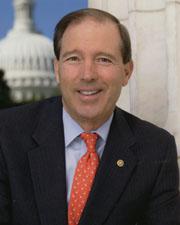 Sen. Tom Udall (D-NM)
Legislative Activity
Stay on top of the latest movement without scrolling through every action
Senate amendment proposed (on the floor): Amendment SA 3414 proposed by Senator Udall to Amendment SA 3399.(consideration: CR S5339-5340; text: CR S5339)
July 25, 2018
View full timeline
Senate amendment proposed (on the floor): Amendment SA 3414 proposed by Senator Udall to Amendment SA 3399.(consideration: CR S5339-5340; text: CR S5339)
July 25, 2018
Senate amendment agreed to: Amendment SA 3414 as modified agreed to in Senate by Yea-Nay Vote. 95 - 4. Record Vote Number: 169.
July 25, 2018
Roll call votes on amendments in Senate: Amendment SA 3414 as modified agreed to in Senate by Yea-Nay Vote. 95 - 4. Record Vote Number: 169.
July 25, 2018
Amendment SA 3414 proposed by Senator Udall to Amendment SA 3399. (consideration: CR S5339-5340; text as modified: CR S5339) To express the sense of Congress relating to the importance of long-distance passenger rail routes.
July 25, 2018
Amendment SA 3414 as modified agreed to in Senate by Yea-Nay Vote. 95 - 4. Record Vote Number: 169.
July 25, 2018
Senate amendment submitted
July 24, 2018
Votes
1 roll call on this amendment
Text
Modified
INTERIOR, ENVIRONMENT, FINANCIAL SERVICES, AND GENERAL GOVERNMENT
APPROPRIATIONS ACT, 2019--Continued

Ms. MURKOWSKI. Mr. President, I will just take a few moments as we
are waiting for greater discussion about our appropriations package
that is on the floor.

Tribute to Marge Mullen

Mr. President, the community of Soldotna, AK, in South Central
Alaska--what we call the Kenai Peninsula--is going to be celebrating
their Progress Days this weekend. On Friday, we have a homestead
community barbecue, where a very special individual will be recognized
as the first female homesteader in Soldotna.

[[Page S5321]]

Now, when most of us around here think about homesteading, we might
go back to when President Lincoln signed the 1862 Homesteading Act.
This enabled over 1.6 million people to stake their claim on Federal
lands. Perhaps, if you are an Alaskan, you recall that homesteading
became legal back in 1898. That was when President McKinley signed
legislation to extend homesteading to what at that time was still the
District of Alaska. It was not until decades later that we became a
State.
What most people do not realize is that while the days of the wild
West are certainly over here in the lower 48, the tradition of
homesteading is still very, very much alive, and certainly we see that
in Alaska.
So I would like to take just a couple of minutes this morning to
share the story of an Alaskan homesteading icon, Marge Mullen. Again,
it is Marge who will be recognized this weekend at Progress Days in
Soldotna. In fact, on July 27, she will be recognized by the mayor of
Soldotna, Mayor Anderson. July 27 will be recognized as ``Marge Mullen
Appreciation Day.''
Marge was born in Chicago in 1920. According to the Peninsula
Clarion, the local newspapers there on the Kenai Peninsula, Marge
claims that she remembers seeing an article on Alaskan homesteading in
the Chicago Daily News back in 1947. The idea must have seemed really
appealing to her because after she read that article, she and her
husband Frank, who was a pilot during World War II, bought a small
plane, and they headed north to plant their roots. That was quite a
trek back in the late 1940s, to fly in a small aircraft.
They landed in Alaska. They walked 65 miles through some pretty tough
terrain. They then settled their homestead on Soldotna Creek, making
Marge the first woman to live in Soldotna under the Homestead Act.
It wasn't too many years after they arrived in Alaska that, sadly,
Marge lost her husband Frank to polio. It certainly would have been
easier at the time for her to just pack up and head back to Chicago,
but Marge was a pretty independent, strong-headed woman, and she made
that brave choice to remain on her homestead.
Just to kind of paint a picture of what we are talking about back in
the early 1950s, to make sure everybody understands the significance of
a decision like that, you can either stay out there in some pretty open
and still very wild areas or you can go back to Chicago. Homesteading
has always been a lifestyle that is based on self-sufficiency. You have
to be able to handle things on your own. It is a difficult task
anywhere. It was difficult, as we saw, for the initial homesteaders
around the lower 48 States, but there are some additional challenges,
perhaps, in Alaska. There are some pretty tough winters that people go
through. Temperatures are somewhat unforgiving in the winter months, as
we know.
Marge faced a cost of living that was three to four times higher than
she knew down in the lower 48. When you are out there, you live every
day knowing that wildlife is just right outside your door, and that if
something goes wrong, there is not a lot of help. There is no aid in
the event of an emergency. So whether it is a bear that has threatened
you and your family or whether it is just the rigors of living on your
own with no assistance and no help, it can be a lonely life, but it can
be a very life-building experience, and Marge certainly developed that.
Marge learned to hunt on her own, to chop wood, carry water, and grow
food to safeguard the health, the warmth, and the safety of herself and
her four children.
Trust me when I say that Marge overcame challenges that many of us--
even some hearty Alaskans--could not imagine. But she overcame those
challenges in an Alaska that was far less modern than the Alaska our
visitors see today.
While Marge is widely known as a pioneer homesteader, she is also
known throughout the community of Soldotna for many other
contributions. She began the town's first roadside litter pickup
program. She was involved at a lot of different levels. She served as
the chair of the local planning commission. She helped to establish the
Kenai Peninsula Conservation Society. She eventually became its
president. In 2010, Marge was honored for her accomplishments when she
was rightly inducted into the Alaska Women's Hall of Fame.
Marge's contributions continue today. She is 98 years old. She is
revered as Soldotna's unofficial historian. She acts as the chair of
the local historical society. You have to figure that she knows
everything that went on in the region. She was part of everything that
went on in the region. She is really history in the flesh, bringing the
early days of Soldotna to life through her teachings and digital
lessons.
Again, as I mentioned, the Soldotna city mayor has proclaimed July 27
as ``Marge Mullen Appreciation Day.'' As the community of Soldotna
comes together to celebrate Marge's legacy, I think it is only
appropriate that we in the Senate should come to know a little bit of
her history as well and join in the recognition.
I offer my thanks and my best wishes to Marge Mullen as she continues
influencing her community and the State of Alaska.
I thank my colleagues for letting me share this tribute this morning.
I see that no Members are on the floor yet. Again, I would encourage
folks to take a look at the bills that we have in front of us--the
Interior, the Financial Services, the Agriculture, and the T-HUD. Let's
have an opportunity to consider the amendments that we can take up and
allow for the process to go forward in a fulsome and a constructive
way.
With that, I yield the floor.
I suggest the absence of a quorum.
The ACTING PRESIDENT pro tempore. The clerk will call the roll.
The senior assistant legislative clerk proceeded to call the roll.
Mr. REED. Mr. President, I ask unanimous consent that the order for
the quorum call be rescinded.
The PRESIDING OFFICER (Mr. Sullivan). Without objection, it is so
ordered.

Russian Election Interference

Mr. REED. Mr. President, as we consider the appropriations minibus
this week, I rise to emphasize once again the importance of
acknowledging and addressing the threat of interference in our election
systems. In particular, Congress must address the continuing threat of
Russian hybrid attacks against our democratic institutions.
It is difficult to overstate the need to shore up support for
democratic institutions here, and around the world, in light of
President Trump's recent foreign policy failures. In the last week or
so, the President has attempted to derail the NATO summit by insulting
our allies and demanding that they immediately double their
contributions, thrown a wrench into Brexit negotiations and seemingly
endorsed a new Prime Minister for the United Kingdom, and then embraced
Russian President Vladimir Putin in Helsinki.
President Trump stood shoulder to shoulder with President Putin,
while the world looked on, and chose to take the word of an autocrat
and KGB agent over the assessments of the American Intelligence
Community on Russia's interference in our elections. By indulging
President Putin's fabrications, he also gave credence to Putin's
propaganda on Crimea and Syria, Russia's use of chemical agents against
civilians, and its violations of its arms control obligations. This
failure to stand up for America's interests and those of our allies and
partners was a dereliction of the President's responsibilities that
will continue to undermine our national security.
President Trump's erratic and divisive actions are undermining that
which makes us strong. Our Nation, our allies, and our partners around
the world benefit from the world order that the United States created
after World War II. We draw strength from our allies and from
participation in international institutions. We are not weakened by
them; we are strengthened by them.
While the President later took low-energy steps to walk back and
obfuscate his words on Russian interference, he soon took to Twitter
again to aggressively attempt to discredit the investigations into
Russian election interference and into his own campaign.
Regardless of what President Trump may say or tweet, we must be
absolutely clear: The threat of Russian interference in our democracy
is not a ``hoax'' or a ``witch hunt,'' and Congress and the States must
act now to

[[Page S5322]]

address the real threat of another foreign intrusion into our
elections.
Indeed, the findings of the intelligence community's assessment were
clear, and I quote:

We assess Russian President Vladimir Putin ordered an
influence campaign in 2016 aimed at the US presidential
election. Russia's goals were to undermine public faith in
the US democratic process, denigrate Secretary Clinton, and
harm her electability and potential presidency.

This problem is not behind us. Indeed, President Trump should listen
to the national security officials whom he appointed and a Republican-
controlled Senate confirmed. The Director of National Intelligence,
former Republican Senator Dan Coats, issued multiple public warnings
this month, including stating that the warning signs about Russian
cyber attacks ahead of our midterm elections are, in his words,
``blinking red again,'' akin to before 9/11. Last week, FBI Director
Christopher Wray stated: ``Russia attempted to interfere with the last
election and . . . continues to engage in malign influence operations
to this day.'' When asked last week whether Russia is still targeting
the United States, Department of Homeland Security Secretary Kirstjen
Nielsen said: that the United States ``would be foolish to think [the
Russians] are not. They have the capability. They have the will. We've
got to be prepared.''
The private sector also validates these concerns. At last week's
Aspen Security Forum panel, Tom Burt, Microsoft's Vice President of
Customer Security and Trust, told an audience that Microsoft already
has detected cyber attacks against three candidates running for
Congress this fall. These attacks looked very much like those phishing
attacks that Russian agents used against Democrats in 2016.

This Chamber faces a stark choice: We can listen to the American
Intelligence Community and nonpartisan experts, acknowledge the
indictments and guilty pleas of 32 people and 3 companies by the
special counsel, and heed the ongoing warnings of Republican national
security official--all of whom agree that our democracy is under
attack. Or we can trust the words of Vladimir Putin, online trolls and
conspiracy theorists, and President Trump--who insist in the face of
evidence that Russia is not attacking our democracy. For my part, I
don't think that is a very difficult choice.
Securing our elections should not be a partisan issue. Election
security is national security, and the States need our help to defend
our elections against these attacks. The fiscal year 2018 omnibus
included $380 million in State election security grants, and all 55
eligible States and territories requested funding. To date, 100 percent
of the funds have been requested and 90 percent of the funds have been
disbursed. Yet concerns remain.
On Monday, 21 state attorneys general, including the Attorney General
of my home State of Rhode Island, wrote to the House and Senate to ask
for additional assistance to secure the 2018 midterm elections against
cyber attacks. I understand Senator Leahy intends to offer an amendment
to the Financial Services and General Government title of the minibus
legislation this week that would provide $250 million in additional
State election security grants. These grants could provide States
additional and much needed resources to update voting equipment and
secure election systems. I am a cosponsor of this amendment and believe
that Congress should pass it and continue to listen to the States and
take further steps to ensure that our foundational democratic
institutions are secure against foreign actors.
With that, Mr. President, I yield the floor.
I suggest the absence of a quorum.
The PRESIDING OFFICER. The clerk will call the roll.
The bill clerk proceeded to call the roll.
Mr. CORNYN. Mr. President, I ask unanimous consent that the order for
the quorum call be rescinded.
The PRESIDING OFFICER. Without objection, it is so ordered.

Nomination of Brett Kavanaugh

Mr. CORNYN. Mr. President, earlier this month, President Trump
announced his choice to fill the vacancy left by the retirement of
Justice Anthony Kennedy, and he told us that nominee would be Judge
Brett Kavanaugh of the DC Circuit Court of Appeals.
During this short period of time--just a little over 2 weeks--we have
seen some of our friends across the aisle attempt to tank Judge
Kavanaugh's confirmation before it really has a chance to get started,
certainly before they have a chance to meet him. Five of our colleagues
across the aisle announced their opposition to any Supreme Court
Justice President Trump might nominate--anybody; fill in the blank.
Then, once the President chose Judge Kavanaugh, 15 more fell into
lockstep with the first 5, so now we have 20 of our Democratic
colleagues, before they have even had a chance to meet the judge, who
have announced their implacable opposition.
I thought that would pretty much take the cake until I saw reported
this morning that one of our colleagues across the aisle said that to
support Judge Kavanaugh would make you complicit in evil. It is hard to
take statements like that seriously. To me, that is completely unhinged
and detached from any reality. This is the same judge who was confirmed
in 2006 by a substantial bipartisan vote to what many have called the
second most important court in the Nation. My advice to some of our
friends across the aisle who are engaged in this kind of super-heated
rhetoric is, get a grip. Get a grip.
The strategy we have seen on the other side hasn't worked too well.
They have targeted the nominee's character, but then they have had to
deal with the fact that this nominee is a standup guy and a good
father. Multiple fact-checkers debunked claims regarding his legal
views, as well as the timing of his confirmation, so it seems like our
colleagues have moved on.
Now it seems like it is all about the paper. It is all about
documents. We have heard from some of our colleagues requesting that
every email, every memo, every document that ever crossed Brett
Kavanaugh's desk be disgorged and produced in the course of this
confirmation proceeding. Ignore the fact for a minute that when he was
confirmed to the DC Circuit Court of Appeals, they didn't request any
of the documents from when he was Staff Secretary for the President of
the United States, but now, for some mysterious reason, they could well
be hiding the smoking gun they will use to derail his confirmation--or
at least so they are acting.
In the course of my legal career--I served for 13 years as a judge on
the trial court and appellate courts in Texas--I have seen phishing
expeditions before, and this is the very definition of a phishing
expedition.
I agree with our colleagues who say all relevant documents need to be
produced--and should be and will be produced in a perfectly normal part
of confirming a judicial nominee. But that is the key--the documents
need to be reasonably related to the confirmation process.
Our friend the minority leader from New York sees things differently.
There is no surprise there. Yesterday, he scolded me personally, as
well as other Republican colleagues. He said that we are guilty of
applying an enormous double standard when it comes to producing
documents in a judicial confirmation hearing. He compared the
confirmation of Justice Kagan to Judge Kavanaugh's.
Let's rewind the clock. It is true that Republicans wanted to see
Justice Kagan's documents and review them before holding a hearing on
her confirmation for the Supreme Court, but it wasn't the range of
documents we are talking about with Kavanaugh. Her situation was
dramatically different.
First, she had never served as a judge before, as Judge Kavanaugh
has. He has a vast judicial record--300 opinions, 12 years on the DC
Circuit Court of Appeals. He has a vast record when it comes to his
activities as a judge. You would think that would be a good place to
start. We thought it was important to review relevant records for
Justice Kagan at the White House because we didn't have judicial
opinions to review. For Justice Kagan, we needed materials to
understand her legal philosophy and style of reasoning, and we had to
use what actually existed at the time.
I will say that the Solicitor General files--she was Solicitor
General of the United States and represented the U.S.

[[Page S5323]]

Government in front of the Supreme Court. Virtually none of that was
touched. We recognize that those attorney-client communications should
be respected.
Second, for Justice Kagan's confirmation, Republicans and Democrats
alike agreed that not every single executive branch document was
relevant and important to her confirmation process. In that respect, I
will tell my friend the minority leader that is not a double standard;
that is the same standard. It should be the same standard.
Republicans and Democrats got together in the case of Justice Kagan
and agreed that records from her time at the Solicitor General's Office
were too sensitive and privileged and that they shouldn't be made
available to the Senate in connection with her confirmation. Instead,
the Senate decided it was more appropriate to focus on records from
Justice Kagan's time at the White House Counsel's Office and the Office
of Domestic Policy. So, too, we would say that Brett Kavanaugh's
documents that he authored, that he contributed to at the White House
Counsel's Office, subject to any privileges that might pertain, should
be fair game. So there is already well-worn precedent when it comes to
executive branch records--which should be on-limits and which should be
off-limits. We observed that in the case of Justice Kagan, and we would
argue that the same consideration should be applied to the Kavanaugh
nomination.
Third, in the past comment of mine Senator Schumer was referring to
yesterday, I was talking specifically about tens of thousands of
documents in reference to Justice Kagan. In the end, 173,000 documents
were produced on her behalf. By the way, that is nowhere close to the
``gazillion'' that the junior Senator from Alabama has alleged was
produced during the Kagan confirmation. It wasn't a gazillion; it was
173,000. It might have seemed that way because that is a lot of
documents. The stacks of paper were stacked high. But the truth is,
much fewer than a gazillion were produced--173,000. Compare that to the
document production for Justice Gorsuch when he was confirmed. That was
roughly 182,000 documents. That is a high number as well, but it pales
in comparison to what our Democratic friends are asking for in the case
of Judge Kavanaugh.
The truth is, our friends across the aisle are picking numbers out of
the air, talking about potentially millions of documents. The senior
Senator from California has named 1 million as her magic number, and
that is the minimum amount of documents she said she expects to be
produced.
As I said, we all know that Judge Kavanaugh, in addition to serving
as a judge on the DC Circuit Court of Appeals and in addition to
working in the White House Counsel's Office, served as Staff Secretary
to the President. Many documents crossed his desk while he worked in
that job. But the effort to insist on every document that he touched
from the time he was at the Bush White House as Staff Secretary is
ludicrous. It is ridiculous. It is nothing less than a phishing
expedition designed to delay his confirmation until after the Supreme
Court reconvenes in early October.
Do our colleagues really seriously need to see every piece of paper
that crossed his desk? Is what President Bush had for dinner 14 years
ago relevant to how Judge Kavanaugh will serve on the Court? I am sure
there is a copy of the White House mess menu as part of those
documents, but those aren't his documents in the sense that he didn't
create them, he didn't contribute to them. He was sort of a traffic
cop--a very important traffic cop--in terms of the documents that went
across the President's desk.

Our friend, the senior Senator from Connecticut, for example, seemed
to suggest that every piece of paper that crossed his desk is
important. He said he wants to see any documents that have Judge
Kavanaugh's name on them, whether he was a direct recipient or a sender
or he was copied.
If somebody sent a document to him, how is that relevant to Judge
Kavanaugh's qualifications, something sent to him by somebody else that
he didn't contribute to and he didn't author?
Well, based on that rationale, if Judge Kavanaugh were cc'd on an
email about somebody's birthday party down the hall, apparently some of
our friends across the aisle think that information is absolutely
crucial to this confirmation hearing. Well, that is just not right, and
it is ridiculous.
Just as the Judiciary Committee quickly processed Justice Kagan's
nomination in 2010--somebody who spent a number of years at the Clinton
White House--I am confident we could do the same if we got together and
worked at it in the case of Judge Kavanaugh.
Under Chairman Grassley's leadership, the Judiciary Committee will
work to produce hundreds of thousands of documents for Members to
conduct a thorough review. I am confident of that.
We met with the White House Counsel yesterday to talk about the
strategy for producing the documents that are relevant to the
confirmation process, but there is no better evidence of exactly what
kind of judge ``Justice Kavanaugh'' will be than the opinions he has
written on the DC Circuit Court of Appeals.
The committee will receive thousands of documents that are relevant
and important to the confirmation process. Senators and their staff
will be able to review them, and Senators will be able to ask
questions. I guarantee Chairman Grassley will hold a full and fair
hearing before the Judiciary Committee when we convene for the purposes
of the confirmation hearing.
We will be able to ask--all of us--on a bipartisan basis, the hard
questions everybody wants to ask, and at the end of the process, which
I am hopeful will take place this September, the Senate will act, and
Judge Kavanaugh will become Justice Kavanaugh.
Beyond the document production, there is another wrinkle in the
confirmation process that has emerged, and it hinges on the nominees's
views on Executive power. I spoke a little bit about that yesterday,
but there is just another thing to mention.
I am referring to a 1999 transcript of a panel discussion in which
Judge Kavanaugh discussed the case United States v. Nixon, which forced
then-President Nixon to turn over the Watergate tapes. It was a
significant event in our Nation's history.
My friend the minority leader has provocatively questioned whether
Kavanaugh would have let Nixon off the hook. Well, no, he wouldn't, and
neither did the Supreme Court of the United States--just the contrary.
That is what we expect from the courts: independent legal judgment,
whether it is the most humble among us or whether it is the President
of the United States.
In a speech in a law review article, Judge Kavanaugh praised the
unanimous ruling in the Nixon case. His views have been further
confirmed by those who have worked closely with him over the years.
They have said that to Judge Kavanaugh, Nixon was one of the most
significant cases in which the judiciary stood up to the President.
So enough already. Enough with all the distractions, the
hyperventilation, the fishing expeditions, and let's get to work. Let's
keep this process moving forward on a bipartisan basis. Let's roll up
our sleeves. Both Justices Sotomayor and Gorsuch were confirmed in 66
days. If you applied that standard to Judge Kavanaugh, that would mean
we would vote on his nomination on September 13, but we will have
plenty of time to vet this nominee and to review the relevant documents
that have some bearing on his qualifications and his experience and
fitness to serve as a member of the Supreme Court.
I hope our Democratic colleagues will take advantage of the
opportunity to meet with Judge Kavanaugh and to talk to him for
themselves and see that he is an accomplished jurist and, perhaps even
more importantly, an entirely decent human being. He is one who will
faithfully and fairly apply the laws written and uphold our
Constitution.
I know the senior Senator from West Virginia has agreed to do that,
and I express my personal appreciation to him for breaking up this
boycott, which has, I guess, been commanded by the highest
authorities--the Democratic leader--to not meet with the judge until we
get all the documents we are asking for.

[[Page S5324]]

Well, in addition to the Senator from West Virginia, the junior
Senator from Delaware has also said he will meet with the judge, as has
the senior Senator from Indiana, and I appreciate that. I think they
will find a lot of comfort in meeting with the judge, and they will be
able to get some answers to their questions.
I look forward to continuing our vetting process and voting to
confirm Judge Kavanaugh this fall.
I yield the floor.
I suggest the absence of a quorum.
The PRESIDING OFFICER. The clerk will call the roll.
The bill clerk proceeded to call the roll.
Mr. FLAKE. Mr. President, I ask unanimous consent that the order for
the quorum call be rescinded.
The PRESIDING OFFICER. Without objection, it is so ordered.

Tribute to Chandler Morse

Mr. FLAKE. Mr. President, in January of next year, when I cast my
final vote and look back on 18 years in the House and the Senate, one
of the things I will value most are the friendships made during my time
here.
I have been fortunate to have an incredible staff to work with for
every year that I have been here: from the interns who answer the phone
calls, not all of those phone calls pleasant, mind you, to the staff
assistants who make constituents and visitors feel welcome in my office
and in the Capitol; to office managers who make things run smoothly and
build comradery among the staff and the team; to legislative
correspondents who skillfully explain the nuances of bills and
resolutions I have sponsored or those I have avoided; to legislative
assistants who delve deep into the issues, much deeper than I have the
time or sometimes the inclination to dig into; to a press shop that
tries and often succeeds in making me look better and more thoughtful
than I am; to legislative directors who try to focus my attention on
issues where I might make a bit of a difference; to schedulers who
gently remind me, without judging, of family birthdays and
anniversaries and who keep me out of the middle seat more often than
not; to expert staff in Arizona who endure protests and provide skilled
outreach, sometimes to lonely posts across the State; to caseworkers
who work to solve Medicare, Social Security, veteran, and immigration
issues for constituents who later thank me in the grocery store for
tireless work that I scarcely knew was done.

Now, to keep this ship moving in the right direction, there has to be
a leader at the helm who is accomplished and skilled, equal parts firm
and kind. It has been my good fortune that Chandler Morse has filled
that role for many years. Chandler will be leaving for greener pastures
at the end of this month.
Chandler first came to my House office in 2005 as a legislative
assistant. I remember looking at his resume and wondering if his
background at the National Association of Homebuilders would lend
itself to working on a broader legislative agenda. But as soon as I met
Chandler, I knew that he had the intellect and the work ethic to do
whatever I asked of him. I have never been disappointed.
Chandler moved from legislative assistant to legislative director to
deputy chief of staff and, eventually, to chief of staff here in the
Senate. Along the way, he has handled natural resource issues, trade
issues, homeland security issues, U.S.-Cuba policy issues, and, perhaps
most difficult and vexing of all, immigration issues.
The Members and staff making up the Gang of 8 in 2013 relied heavily
on Chandler's work and expertise during months of negotiations that led
to the successful passage of a good bipartisan bill.
I would like to think that Chandler has enjoyed climbing aboard the
Marc train in Baltimore to come to work in Washington every day. I
would like to think that, but about this I am certain: He is much
happier climbing back on that train every night because he knows that
his beautiful wife Annie and his precious kids, Parker and Talie, are
waiting for him to come home.
I know that as much as he likes drafting good amendments, blocking
bad legislation, or crafting lame puns about earmarks or wasteful
spending, Chandler would prefer to be hiking or camping with his family
or taking in the outdoors in his beloved Maine. This speaks well for
his priorities.
When Chandler Morse takes his leave at the end of next week, this
institution will lose a loyal public servant. My Senate office will
lose a leader and a mentor, but as for me, I will retain a friend for
life, and for that I am grateful.
I yield the floor.
I suggest the absence of a quorum.
The PRESIDING OFFICER (Mrs. Ernst). The clerk will call the roll.
The bill clerk proceeded to call the roll.
Mrs. MURRAY. Madam President, I ask unanimous consent that the order
for the quorum call be rescinded.
The PRESIDING OFFICER. Without objection, it is so ordered.

Nomination of Brett Kavanaugh

Mrs. MURRAY. Madam President, I want to start today by sharing a
story that is very personal to me and that has informed my work and my
values ever since it happened. When I was in college, a friend of
mine--we were close and lived together in the dorm--went out on a date.
She was raped. She got pregnant. She didn't know where to get a safe
abortion, and she wasn't wealthy. So she knew she couldn't afford it,
either. The botched procedure she ended up having left her, at a very
young age, unable to bear children.
I saw my friend hurt and frightened, alone and unable to get the care
she needed because someone else's beliefs mattered more under our laws
than her health and her future. That impacted me a lot, and it has
stayed with me to this day.

Let me tell you a few other stories. This is the story of a woman I
met just a few weeks ago. When she was 23, fresh out of college, she
became pregnant while living paycheck to paycheck in what she described
as ``an extremely unhealthy and volatile relationship.''
She and her partner realized they were not ready to be parents and
couldn't afford to raise a child, so they drove to a Planned Parenthood
a few miles from her apartment. There, she was informed of her options.
She was treated with respect and kindness and got a safe, legal
abortion. Today, she is a writer and an editor and the mother of an
adorable little boy, with another child on the way.
Here is another story. This young woman became pregnant in her first
semester of college after a contraceptive failure. Having a baby would
not only have meant dropping out of college but returning to an abusive
home. She was grateful to be in New Jersey when this happened, where
she could get an abortion without a waiting period and where there are
a number of providers. She wrote that abortion access was ``critical in
allowing me to determine my life path'' and in escaping the abusive
household she had grown up in.
Finally, there is the story of a partner in a major law firm who was
already the mother of a 3-year-old child. She was thrilled to find out
she was pregnant with another child. But headed into the sixth month of
her pregnancy, she and her husband were told that because of a rare
heart defect, there was, in the best case scenario, just a 10-percent
chance of the pregnancy making it to term, and there was less than a 1-
percent chance of their baby making it to its first birthday--with no
hope of a reasonable quality of life.
There is no right answer when it comes to decisions like these. Some
women, some families choose one way; some, another. But this woman and
her husband made the decision to end the pregnancy. It was their
family, their future--her choice. She says she knows she did the right
thing for her and her family, as difficult as it was.
A year later, she gave birth to a healthy son. She wrote: ``I have
shared my story with my children and hope that should my daughter ever
find herself in a position similar to mine, she will enjoy the same
rights that were available to me.''
There are decades between my college friend's story and the three I
just told and the historic ruling in Roe v. Wade, which affirmed that
our Constitution protects a woman's right to control her own healthcare
decisions. Roe and the rulings that have upheld it make clear what
women across the country know at their core to be true--that
reproductive freedom is essential to a woman's ability to control her
future, plan her family, and contribute to

[[Page S5325]]

her community in all the ways she may choose to, as those three women
were able to.
Reproductive freedom means women are more able to participate equally
and fully in our country. And while I can't adequately express how
frustrating it is to have to assert this in the 21st Century, we are
stronger today because women in the United States are treated more
equally than we were in the 1970s. In fact, former Federal Reserve
Chair Janet Yellen--the only woman to hold this position in the
Reserve's 100-year history--has said that our country's economic growth
in the last half-century was in large part due to women joining the
labor force, and to continue the growth we have seen, we will need to
do more to ensure that more women have a level playing field in the
workplace and in society as a whole.
But the progress women have made--and the prospect of future
progress--truly hangs in the balance. Today, I want not only to
emphasize how real this threat is but also to paint a picture of how
much more unequal life would be for women in the United States of
America should Judge Kavanaugh be confirmed and add a fifth vote on the
Supreme Court for overturning Roe v. Wade and rolling back reproductive
rights women have had for more than four decades.
Let me say it again. The threat to women's reproductive rights is
frighteningly real. It is real because, unless Democrats and
Republicans come together, President Trump will follow through on his
promise to overturn Roe.
On the campaign trail, Candidate Trump assured extreme, anti-choice
special interest groups that he would implement their agenda if
elected. He established a litmus test for Supreme Court nominees and
released a list of potential picks, each of whom had demonstrated
opposition to a woman's right to choose.
He said that under his Presidency, Roe would be overturned
automatically once he had the opportunity to appoint Justices because
they would all be pro-life. He said that women should be punished for
having abortions. He chose a Vice President, Mike Pence, whose views on
women and women's health are about as antiquated as smelling salts--and
far more damaging.
Candidate Trump aligned himself unequivocally with those who want to
roll back women's rights. And while President Trump has broken promise
after promise to workers and families, he has never once wavered in
following through for those anti-choice special interests.
He has done virtually everything he can to chip away at women's
constitutionally protected reproductive rights from the Oval Office,
whether it is proposing a domestic gag rule that would allow the
government to interfere in provider-patient relationships, attempting
time and again to defund Planned Parenthood, or trying to allow
virtually any employer to decide to exclude birth control coverage from
their employer-sponsored coverage.
I could go on.
Anyone who says President Trump isn't applying an anti-choice litmus
test in this nomination or thinks it is unclear where President Trump's
allegiance lies when it comes to women's health should take a look at
what he has said and done. Unless they willfully ignore the facts, they
will quickly realize that the President, far beyond any modern
President, has championed the anti-choice cause and has found exactly
what he is looking for in Judge Kavanaugh--a fifth vote to overturn Roe
v. Wade.
The best evidence that Judge Kavanaugh would overturn Roe is that
extreme, anti-choice groups vetted his likelihood to do exactly that
and sent him straight to President Trump.
But I do want to address a few aspects of Judge Kavanaugh's records
that, to me, expose how unqualified he is to make decisions that will
impact women from all backgrounds for generations to come. When I
examine the record and history of a Supreme Court nominee, I hope to
see a breadth of life experience, the ability to walk in someone else's
shoes. Judge Kavanaugh has not demonstrated either of those qualities.
In expressing support for Justice Rehnquist's dissent in Roe--where
the Justice argued for allowing restrictions on women's reproductive
rights--Kavanaugh agreed with the idea that if a right is not
explicitly stated in the Constitution, it must be ``rooted in the
traditions and conscience of our people.'' But he made clear that he
does not believe a woman's right to choose is rooted in the traditions
or the conscience of our people.
I am deeply concerned about who Judge Kavanaugh thinks about and
trusts when he imagines the traditions and conscience of our people and
makes those decisions accordingly.
His opinions from the bench only heighten my concern. In one opinion,
Judge Kavanaugh ruled to allow the Trump administration to block a
pregnant 17-year-old who arrived alone at our borders from accessing an
abortion until the government could place her with a sponsor. He felt
she needed a ``support network'' around her before she was capable of
making that decision, even though she had been seeking an abortion for
months and had already met State level requirements.
In another opinion, he expressed the belief that if a woman's
employer doesn't believe in birth control, that employer shouldn't even
have to fill out a one-page form to allow the woman to get birth
control coverage directly from her own insurer.
The ``traditions'' and ``conscience'' Judge Kavanaugh referred to may
be, in his mind, that of historically powerful, very wealthy White
men--first in powdered wigs and then in suits--who never faced the
challenges women in these cases face. These women matter, too, and they
deserve a Justice who accounts for their rights and liberties in his or
her decisions.
Unfortunately, Judge Kavanaugh's opinions indicate he will not do so.
Instead, they display a fundamental lack of trust in women's abilities
to make their own healthcare decisions. They also show something more:
a very poor understanding of the unequal economic and social realities
women continue to face in our country, despite the progress we have
made, and the degree to which these differences make it all the more
important that women be trusted and treated equally under the law,
independently, and in their own right.
If an employer tries to deny his employee affordable birth control
because he thinks he knows better or if a politicized Federal agency is
detaining a young woman in hopes that it can impose its beliefs on her
or if a woman does not want to carry her rapist's child to term, our
Nation's laws must affirm her autonomy because our laws are her place
of last resort.
But under Judge Kavanaugh's vision for our country, based on his
assessment of traditions and conscience, women wouldn't have that last
resort. Instead, a woman's ability to get reproductive healthcare would
overwhelmingly depend, as it did before Roe, on whether she could
afford it and, therefore, disproportionately on her race and ZIP Code
as well.
Our country as a whole would see outcomes like those we are already
seeing in States like Texas and Mississippi, where abortion access is
heavily restricted under policies Judge Kavanaugh has referenced
approvingly. While women with resources have more options, women
without resources see the providers where they had received affordable
contraception and healthcare closed down because of anti-abortion
politics.
Reproductive healthcare--from sex education, to birth control, to
abortion--becomes a privilege for the wealthy, rather than the right of
every woman, regardless of who she is. That isn't fair. It is not
right, and it truly isn't what people in this country want.
President Trump said that Roe is a ``50-50'' issue in the United
States. He is wrong. People in our country--Democrats, Republicans,
women and men of all ages and backgrounds--overwhelmingly understand
that abortion is a deeply personal decision, one our laws should allow
women to make, just as every American's bodily autonomy should be their
own concern and not their government's. Despite what the White House
would have us believe, this is not a country that wants to follow
President Trump, Vice President Pence, and five male Supreme Court
Justices back to 1972.
The only way to stop this from happening is for people to take
action. I urge anyone who is concerned right

[[Page S5326]]

now--women or men--to make that clear, loudly and immediately. If you
have a story that shows why reproductive rights matter in our country,
share it. If you haven't signed up to vote--or told your friends to--do
it.
One year ago this week, three of my Republican colleagues stood with
Democrats and stopped President Trump's effort to enact TrumpCare,
which would have gutted protections for patients with preexisting
conditions, ended Medicaid as we know it, and more. That happened
because people across the country knew what was at stake and spoke up,
despite how long the odds seemed. That is what we need now. I am
confident we can succeed again if people who care show it.
The last story I will tell is one I hope women and men today will be
able to tell their daughters and their granddaughters decades from now,
should they ever need to hear it. It is that our country went through
an extremely frightening time when one of the many rights on the verge
of being taken away was a woman's right to choose. We thought about
them--our daughters and granddaughters--and how important it is that
each one of them be treated equally under our country's laws and have
the opportunity to achieve the goals they set out to achieve. We did
everything we could to fight back, and we didn't let it happen on our
watch. I hope we make that our story.

I yield the floor.
The PRESIDING OFFICER. The Senator from Massachusetts.

Opioid Epidemic

Ms. WARREN. Madam President, this week, we hit a milestone, but not
the kind of milestone you celebrate. Nearly 1 year ago, the Commission
appointed by President Trump to examine the opioid crisis recommended
that the President declare a national public health emergency to help
combat the epidemic.
The Commission, led by former Republican Governor Chris Christie,
said:

The first and most urgent recommendation of this Commission
is direct and completely within your control. Declare a
national emergency.

Yet the President dragged his feet. While he twiddled his thumbs,
thousands of Americans continued to die from drug overdoses--over 115
people a day. Finally, in October of 2017, the President formally
declared what we already knew--that the crisis was a public health
emergency worthy of Federal action.
The first declaration the President issued lasted for 90 days, but
during those 90 days, nothing changed. The President didn't take
action. Americans continued to suffer, and more people died day, after
day, after day. On January 24, 2018, the first emergency declaration
expired. So the President had his HHS Secretary sign a second one.
Then, before another 90 days ran out, on April 24, the administration
signed a third one.
Yesterday, another 90 days later, on July 24, 2018, we began the
fourth consecutive period of public health emergency due to the opioid
crisis--9 months since the original declaration, 9 months during which
more than 30,000 people have likely overdosed and died, all while the
President and his administration have given us a lot of talk but no
action.
Our communities are on the frontline of this epidemic, and they are
working hard to fight back, but they can't do it alone. They need
funding, support, and new tools. I have worked with my Democratic
colleagues to make sure that communities have what they need in this
fight.
Time and again, we have pressured congressional leadership for
additional funding to help States and local communities address this
epidemic, and the pressure has worked. I have secured millions of
dollars, not just for opioid addiction and prevention and treatment but
for increased mental health services, including the biggest increase in
funding for the community mental health services block grant in
history.
I have passed bipartisan legislation to reduce the number of unused
opioids that sit in medicine cabinets. Since that legislation has
become law, I have continued to work across the aisle, with Senator
Capito, to make sure it has actually been implemented, and we are still
working on that today.
I have also introduced legislation to send $100 billion in extra
resources to fight this epidemic--right to the communities and Tribes
that need the help the most.
I am in this fight because communities in Massachusetts and all
across this country deserve it. Yet President Trump is not in this
fight. The President has made a lot of promises about the opioid
crisis, but time and again, this President has broken his promises.
Take the first time he declared the crisis an emergency. The President
held a big event and talked a big game. Then he produced no tangible
plan and no new commitment of Federal money beyond meager funds that
were left over from responding to other public health emergencies and
disasters.
Declaring the crisis a national emergency was the top recommendation
of the President's opioid commission, but it was not the only
recommendation. The Commission's final report included 56
recommendations that it asked the administration and Congress to
implement as soon as possible. Nearly all of those recommendations
required the administration's involvement and leadership.
So what has come of those 56 recommendations?
Who knows. At best, maybe a few have been implemented. The majority
seems to have just been ignored.
Even members of the Commission itself have called out this
administration's shameful lack of action. Former Congressman Patrick
Kennedy stated that the Commission's work has been turned into a
``charade'' and a ``sham.''
Why is the Trump administration refusing to take this crisis
seriously? Why?
To start, it doesn't help that the administration has put people in
charge of addressing this emergency who lack the relevant experience in
public health or addiction. Apparently, Kellyanne Conway is running the
show, but she is also, apparently, running multiple other shows at the
same time. Not only is the opioid crisis not Ms. Conway's full-time
responsibility, but she has also reportedly pushed aside drug policy
experts and made comments about addiction that are not evidence-based.
James Carroll, President Trump's nominee to run the Office of National
Drug Control Policy, or ONDCP, also appears to have no experience in
public or behavioral health policy.
Let's not forget that the ONDCP is the agency that President Trump
has, essentially, proposed to eliminate by cutting 95 percent of its
funding. This is also the agency with such a high staff turnover that,
earlier this year, a 24-year-old with no public health experience was
promoted to Deputy Chief of Staff while the position of Chief of Staff
remained unfilled. This is also the agency that has not released its
required annual drug strategy for the last 2 years running.
That is a lot, but as if that is not enough, the Trump administration
has taken repeated steps to undermine the very programs that are
critical to fighting the opioid crisis.
The President has tried to slash the healthcare coverage for millions
of Americans who have preexisting conditions--conditions like addiction
issues. He has tried to cut hundreds of millions of dollars out of
Medicaid, which provides coverage for two out of every five non-elderly
adults who have opioid addictions. He has proposed slashing funding for
health workforce programs, for the Prevention and Public Health Fund,
and for mental health programs--all critical in addressing the
epidemic.
Time after time, I have asked the administration to explain the work
it is supposedly doing on this crisis. I have asked John Kelly for
clarification about Kellyanne Conway's role--no response. I have asked
Ms. Conway directly about her role--no response. I have asked the
administration about its progress on implementing the opioid
commission's recommendations--no response. To me, it looks like a whole
bunch of nothing--just empty words and broken promises.
While the President plugs his ears and closes his eyes, Americans are
dying. There were 42,000 people who died of drug overdoses in this
country in 2016. From July 2016 to September 2017, across the country,
emergency room visits for opioid overdoses, on average, jumped 30
percent, but only 1 in 10 individuals in need of specialty addiction
treatment is actually able to access it.

[[Page S5327]]

There is no shortage of steps we could take right now in tackling
this crisis. We have confronted large-scale public health crises
before, and we have made a difference.
Back in the 1980s, the death toll from a poorly understood and
stigmatized disease grew larger and larger. For years, the Federal
Government refused to act as Americans died. That disease was HIV/AIDS.
Yet activists and their loved ones demanded action, and in 1990 the
Federal Government finally made a meaningful investment by passing the
Ryan White Comprehensive AIDS Resources Emergency Act. The AIDS
epidemic isn't over, but HIV is no longer a death sentence. Thanks to
the Ryan White CARE Act, all who need treatment and support can get it
regardless of their ability to pay.
With Representative Elijah Cummings, I have introduced legislation
that is modeled on the very successful Ryan White CARE Act, and we will
apply it to fighting the opioid epidemic. The Comprehensive Addiction
Resources Emergency Act would invest $100 billion over the next 10
years to ensure that every single person who deals with addiction can
get the help they need, period.
If President Trump wanted to prioritize this problem and make a
difference in the opioid epidemic, he could do it. He has the power. He
could implement his own Commission's recommendations. He could send
meaningful budget requests to Congress. He could appoint qualified,
hard-working people to tackle the problem. Yet he will not do any of
those things as he is all talk, no action. While he keeps extending
meaningless emergency declarations, Americans are dying.
People with addictions--and their families--deserve more. Our
communities demand more. It is time to stop nibbling around the edges
and to get to work on this problem.
I yield the floor.
I suggest the absence of a quorum.
The PRESIDING OFFICER. The clerk will call the roll.
The senior assistant legislative clerk proceeded to call the roll.
Mr. DURBIN. Madam President, I ask unanimous consent that the order
for the quorum call be rescinded.
The PRESIDING OFFICER. Without objection, it is so ordered.
Mr. DURBIN. Madam President, it is time for the Senate and the U.S.
Department of Education to get serious about the student loan crisis in
America.
This is a crisis in Illinois. It is a crisis in Iowa, in Nevada. You
pick the State. Student loan debt is now a larger debt in the United
States than credit card debt. Add up all of the debt that Americans owe
on credit cards, and it will not reach the amount of student loan debt
that is carried by students and their families.
More than 44 million Americans have student loan debt. The total
amount is $1.5 trillion. As I mentioned, it is larger than America's
cumulative credit card debt--second only to the mortgages that we owe
on our homes across the United States.
An American who graduated from college in 2015, with a 4-year degree,
owed an average of $30,100. That debt is often much higher for many
Americans if they decide to go on to graduate school or if they are
unfortunate attendees at the for-profit colleges and universities.
Across the United States, there are many of these for-profit
institutions. You should remember them. It is 9 percent of young people
who come out of high school who end up at for-profit colleges and
universities, while 33 percent of all of the college students who
default on student loans come out of the same schools--for-profit
colleges. This is 9 percent and 33 percent. Why?
It is that they are so darned expensive--dramatically more expensive
than are community colleges or other universities. No. 2, they don't
care if you finish. They would just as soon you didn't. No. 3, if you
finish, you get a worthless diploma and can't find a job. So there you
are, stuck with your debt.
Yet this is about student loans in general, not just about for-profit
victims.
I hear from students, young and old, who have had to forgo
homeownership and hold off starting families because of their massive
student loan debts. Increasingly, I have been hearing from parents and
grandparents who, in gestures of goodwill and kindness, cosign on the
loans on behalf of those children or grandchildren who are
students. Guess what. Grandma and Mom are now trying to pay off that
student loan debt because the student can't.

Earlier this year, Chairman Jerome Powell of the Federal Reserve said
the student debt crisis absolutely could hold back economic growth in
America--the student loan crisis. We need to take action on it. We
rarely even try, but today I am going to try.
Earlier this year, in March, I tried to offer an amendment on the
Senate floor to help student borrowers. At that time, the Senate had a
bill up to provide regulatory relief--breaks--to banks. I thought it
was only fair that the Senate also consider taking a look at the
student debt crisis. I was blocked from getting a vote on my amendment.
I am not giving up.
I am filing an amendment today to the Financial Services and General
Government bill that is part of this appropriations package pending on
the floor of the Senate. My amendment deals with an important part of
the student loan problem--the treatment of student loans in bankruptcy.
If you borrow money for a vacation house, lose your job, and have no
money, you file bankruptcy, and your mortgage is discharged. If you
borrow money for a car, and you can't pay off the car--you lose your
job--you file for bankruptcy, and your auto loan is discharged. How
about a boat? If you take out a loan to buy a boat and file for
bankruptcy, it is discharged.
I will tell you that there are only a handful of things you can
borrow money for that you cannot discharge in bankruptcy no matter how
bad things get, and one of them is student loans. Currently, most types
of debts can be discharged in bankruptcy but not student loans.
Up until 1976, all student loans were fully discharged in bankruptcy,
but since then, the law has been changed. Now if you have student debt,
you are going to carry it to the grave. You cannot discharge it in
bankruptcy.
In 1998, Congress determined that Federal student loans would be
nondischargeable in bankruptcy unless the borrower could demonstrate
that he or she faced an ``undue hardship''--that is a quote, ``undue
hardship.'' But we didn't define it; we left it up to the courts. That
is a problem.
Most students don't even try to pursue the undue hardship exception
because of the difficulty and expense of meeting the standard of
proving undue hardship in bankruptcy court.
Listen to what the Wall Street Journal said last month. It found that
in 2017, only 473 student loan borrowers in the United States out of 44
million asked for relief from their student debt in bankruptcy--473 out
of 44 million. The Journal found only 16 bankruptcy cases that year
where a judge actually ruled on student loan debt--16 cases out of 44
million borrowers--and in only 3 of those cases did the judge cancel
the debt. What do you think your odds are in taking your student loan
debt to bankruptcy court when 3 out of 473--out of 44 million--actually
had their debt discharged?
A big reason the undue hardship path is difficult for student
borrowers is because the Department of Education contracts out the
collection of the debt to companies like Educational Credit Management
Corporation. This is a student loan guaranty agency that collects on
defaulted Federal student loans. This company is notorious for
aggressively challenging and appealing borrower claims of undue
hardship in bankruptcy court because it doesn't want to see the loans
discharged. So many students don't even try to fight them because they
know they are going to lose.
Here is what my amendment does. My amendment would bar the use of
Federal funds to pay contractors, such as the one I named, to contest
undue hardship claims in bankruptcy court when the claims are brought
by specific categories of borrowers who face severe undue hardship.
Let me tell you the categories I am trying to protect. These are
people who are deeply in debt with student loans and are coming to
court asking for relief from their student loans. You tell me whether
you think these Americans deserve a break when they go to bankruptcy
court on their student loans. The first category is veterans who have

[[Page S5328]]

been deemed unemployable because of a service-connected disability; No.
2, family caregivers of a veteran or an elderly or disabled family
member; No. 3, people who are receiving Social Security disability or
whose only income is Social Security; and No. 4, borrowers who have
finished school but have spent at least 5 years with an income of less
than $24,000 a year. Those are the four categories.
Wouldn't you agree that you would start with groups just like these
and say: Give them a break. This disabled veteran has reached a point
where he can't pay back this loan. Don't have these agencies hounding
this poor fellow for the rest of his life.
By stopping these Federal loan guaranty agencies from contesting and
litigating these undue hardship claims in bankruptcy court, we can at
least give these hard-hit student borrowers a chance to seek an undue
hardship discharge in bankruptcy.
My amendment also includes a provision preventing Federal funds from
being provided to a for-profit college if the college receives more
than 85 percent of its revenue from Federal sources, including the
Department of Veterans Affairs GI bill and Department of Defense
tuition assistance funds.
Currently, for-profit colleges are able to receive 90 percent of
their revenue from Federal sources--the most heavily subsidized,
private, for-profit companies in America. They can add the GI bill in
on top of it, to add insult to injury. It makes no sense. It
incentivizes for-profit colleges to aggressively recruit veterans and
servicemembers in order to get extra money from the Federal Government
and provide very little in return.
Not only would this provision help protect students, it would result
in long-term cost savings to the Federal Government.
I say to my colleagues, I bet you have all given a speech on student
loans. Haven't we all? When young people come in, burdened with debt,
and say ``I don't know what to do with myself. I can't pay off this
debt. I can't even buy a car. I am living in my parents' basement. I
thought I was supposed to be a college graduate with a big life ahead
of me. What are you going to do about it, Senator?'' if you say ``Well,
I wish there were something we could do,'' you will get your chance
today. There is something you can do. It is the amendment I am
offering.
This issue of student loan debt is challenging. Let's not run away
from it. Let's face it honestly. Let's give at least these four groups,
including disabled veterans and the caregivers who watch them, an
opportunity to get their student loans discharged so they can get on
with their lives.
I am going to keep at this and keep raising this issue until we get
the positive change the students and their families deserve.
I yield.
The PRESIDING OFFICER. The Senator from North Carolina.

Unanimous Consent Request--S. 3093

Mr. TILLIS. Madam President, I ask unanimous consent that the Senate
proceed to the immediate consideration of Calendar No. 477, S. 3093. I
ask unanimous consent that the bill be considered read a third time and
passed and that the motion to reconsider be considered made and laid
upon the table.
The PRESIDING OFFICER. Is there objection?
The Senator from Hawaii.
Ms. HIRONO. Madam President, reserving the right to object, this bill
being offered by my colleagues on the other side of the aisle is a
partisan, political stunt designed to distract the American people from
the crisis created by Donald Trump's zero tolerance policy.
Almost 3,000 children have been ripped from the arms of their parents
and traumatized by the President's cruelty. This bill would allow the
Trump administration to continue to traumatize children by forcing
them, possibly indefinitely, into so-called family detention centers.
By offering this proposal, our colleagues are calling for the
extended incarceration of children. This bill would invalidate the
Flores settlement, which has ensured the humane treatment of children
for decades. It offers no specifics on what constitutes adequate
detention conditions and no mechanism for monitoring them. The bill
says the families will be given ``suitable living accommodations'' and
``access to drinking water and food'' and that services will be offered
that are ``necessary for the adequate care of a minor child,'' but it
does not say who determines what is suitable, whether adequate
nutrition will be offered to the children, and who will decide what is
necessary. These so-called standards are not good enough when the
welfare of children is involved.
This bill would also authorize the Border Patrol to separate families
for the most minor offenses that have nothing to do with parenting or
the safety of the children. It puts form above substance and gives DHS
no discretion about when detention is most appropriate or when
alternative means, such as ankle bracelets or other monitoring
programs, might be better.
The so-called family unit residential centers in the bill are
essentially family jails.
We have heard from the American Academy of Pediatrics and other
experts about how these children will be traumatized for life. We
should be listening to these experts and stop giving the Trump
administration a free pass to harm immigrant children.
I look at the policies of this administration and at bills like this
one, and I wonder how my colleagues are able to stomach our government
treating families in these awful ways. And we have witnessed this kind
of treatment in America over the last several weeks.
The President refers to families of children fleeing war, gang
violence, and poverty as ``infesting'' our country. I hear echoes from
the darkest parts of America's past when African-American slaves were
depicted as monkeys, Chinese laborers in the 1870s were referred to as
``pouring forth'' from their ``Asiatic hive,'' and Japanese Americans
penned up like animals for the crime of their heritage during World War
II.
This mindset of viewing these immigrant families as subhuman does not
exist in a vacuum; it has a history and a context we cannot shy away
from. It is because of that history that I have continued to demand not
just an end to the detention of children and families but also to
demand accountability from Donald Trump's government.
Last week, the Judiciary Committee had a closed-door briefing with
officials from the Departments of Justice, Health and Human Services,
and Homeland Security. We didn't get straight answers to our
questions--mainly, why is this happening in our country in the first
place? Why were these children separated from their parents? Why do we
have ICE agents taunting these already traumatized children? Why? Why?
Why?
We need and indeed we should demand to hear from these officials in
public and under oath. I urged Chairman Grassley to have a public
oversight hearing on this issue with all of the relevant agencies. The
chairman has now scheduled this long-overdue hearing for July 31 with
representatives from the Department of Homeland Security, the
Department of Health and Human Services, and the Department of Justice.
It is critical that we hear from the witnesses because after
separating nearly 3,000 children from their families, they are now
chaotically scrambling to comply with judicial orders to reunite these
families. The administration would not be reuniting these families
without being forced to do so by the court. They continue on their
cruel path, undermining American values, and along this path, they have
traumatized thousands of children and their families, likely forever.
This administration needs no further tools to continue these cruel
policies. To continue to enable Donald Trump to pursue his anti-
immigrant agenda makes us all complicit in his cruelty and injustice.
For these reasons, I object.
The PRESIDING OFFICER. Objection is heard.
Ms. HIRONO. I yield to the Senator from Illinois.
Mr. DURBIN. Madam President, I would like to ask the Senator from
Hawaii a question through the Chair.
When the Senator is referring to the number of children who are
currently forcibly separated from their parents by our government, is
the Senator referring to the 2,551 children between the ages of 5 and
17 who were reported

[[Page S5329]]

by this administration as of this past Monday?
Ms. HIRONO. Yes, I am.
Mr. DURBIN. Is the Senator referring to the fact that 1,634 families
are possibly eligible for reunification, according to this
administration?
Ms. HIRONO. Yes, I am.
Mr. DURBIN. And that leaves 917 families with children forcibly
separated by our government from their parents, who, according to this
administration, may not be eligible for reunification?
Ms. HIRONO. That is correct.
Mr. DURBIN. We are also told there are some 463 parents who are ``not
in the United States''--children taken away from them, and they have
been sent out of the United States?
Ms. HIRONO. Yes.
Mr. DURBIN. Incidentally, the administration reported 37 children in
its custody who have not been matched with a parent?
Ms. HIRONO. Again, correct.
Mr. DURBIN. And we are being asked to reduce the standards of care
for these children by this unanimous consent request?
Ms. HIRONO. Exactly. It is a continuation of the cruelty and the
dehumanization of children.
Mr. DURBIN. I thank the Senator from Hawaii.
The PRESIDING OFFICER. The Senator from North Carolina.
Mr. TILLIS. Madam President, I ask unanimous consent that Senator
Heller and Senator Cornyn may join in a colloquy with myself.
Mr. DURBIN. I object.
The PRESIDING OFFICER. Objection is heard.
The Senator from North Carolina.
Mr. TILLIS. Madam President, I want to talk about my motivation for
offering this unanimous consent request.
The people listening to the debate may not understand, but we have a
courtesy in the Senate where we make colleagues on the other side of
the aisle aware of our intent.
Before I do that, I yield the floor to Senator Durbin.
The PRESIDING OFFICER. The Senator from Illinois.

Unanimous Consent Request--S. 3263

Mr. DURBIN. Madam President, I have a unanimous consent request.
The PRESIDING OFFICER. The Senator will state it.
Mr. DURBIN. Madam President, I am making clear to my friend from
North Carolina, as well as to the other Members on the floor, that I
would like to have this colloquy. I would like to make a formal
unanimous consent request, and then we can enter into debate or
colloquy, as the Chair would allow, if I may proceed.
I ask unanimous consent that the Senate proceed to the immediate
consideration of S. 3263 introduced earlier today; that the bill be
considered read a third time and passed, and the motion to reconsider
be considered made and laid upon the table with no intervening action
or debate.
This is a bill which embodies the Keep Families Together legislation
by Senator Feinstein, A Fair Day in Court for Kids Act by Senator
Hirono, and additional measures which I will then describe later when
we go to colloquy and debate.
The PRESIDING OFFICER. Is there objection?
The Senator from North Carolina.
Mr. TILLIS. Madam President, Reserving the right to object, I first
wish to acknowledge that Senator Durbin has worked hard to address the
DACA issue. I don't think there is a lot of daylight between Senator
Durbin and me on the need for a path to citizenship and having the DACA
legislation move forward. I think there are voices trying to come
together to try to come up with a just solution to a myriad of
immigration issues.
However, this particular unanimous consent request is in reference
to, I think, a bill that was introduced earlier today, and we have not
had an opportunity to study it. I think it is another positive step in
the process of maybe bridging the gap, but in the absence of being able
to analyze it and reconcile it against the bill I am actively involved
in that the Senator mentioned, I have to object.
The PRESIDING OFFICER. Objection is heard.
The Senator from North Carolina.
Mr. TILLIS. Madam President, I ask unanimous consent that Senator
Heller, Senator Cornyn, and I be allowed to enter into a colloquy.
The PRESIDING OFFICER. Is there objection?
The Senator from Illinois.
Mr. DURBIN. Madam President, reserving the right to object, I would
like there to be some exchange, something even perilously close to a
debate on the issue. I would be happy if the Senator would reframe his
unanimous consent request for that purpose, and I would be happy to
agree to it under those circumstances.
Mr. CORNYN. Madam President, is there an objection?
Mr. DURBIN. I object to the original unanimous consent request.
The PRESIDING OFFICER. Objection is heard.
The Senator from North Carolina.
Mr. TILLIS. Madam President, I was trying to explain to those who are
watching this what is going on. What is going on is, we actually have a
very collegial environment, where we come to the floor and ask
unanimous consent on something, and if somebody doesn't object, the
bill moves out of the Chamber. We don't surprise people. We inform them
so they are able to come to the floor and register their objection,
which is exactly what Senator Hirono did today. So you could ask
yourself, why would I come down here and offer up something I knew was
going to be objected to and not move forward? Because I think it is
pretty important for people to understand we are making progress, and
it is pretty important to keep this issue and this discussion active in
the U.S. Congress because Congress needs to act.
Regardless of where you are on the Trump administration's position,
it is Congress's job to set long-term clarity. It is our job to set
policy that can't move based on who happens to be in the White House.
It is our job to fix the immigration problem, not the President's. This
is the first step, in a number of things we need to do, to fix the
failed immigration system in this country and to fix what I think are
legitimately some injustices going on.
I have to disagree--I think it is interesting--and I look forward to
reading the measure Senator Durbin put forth for unanimous consent. In
his comments, he said a part of the baseline language came from a bill
I have been working on with Senator Feinstein, the Keep Families
Together and Enforce the Law Act.
What we are trying to do is figure out a reasonable, fair way to keep
families together, to have families prioritized so they can go before a
judge and determine whether they have a legitimate asylum claim, and to
move as expeditiously as possible.
So this bill--if you heard Senator Hirono, you would think it is some
heartless, uncaring--I think the words were ``partisan political
stunt.''
Let me just tell my colleagues briefly--and I know Senators Heller
and Cornyn will speak as well--this bill has agreement on most of the
provisions. We want to make absolutely certain that if the families
have to be kept together while they are going through the adjudication
process, that it is in proper facilities. We want to make sure that if
the parents want their children with them while they are being
detained--which is, on average, about 40 to 60 days before they get
their case cleared--then they can.
We also want that time period to be reduced, which is why we agree
that we need to add an aggregate of about 700 judges to draw the
backlog down, but until the backlog gets drawn down, parents with
children get to the front of the line. We want to make sure there are
an adequate number of attorneys--about two and one-half to every one
judge we are adding--so we don't get clogged up in the courts.
This discussion about indefinite detention is just simply patently
false. We are talking about a matter of 40 to 60 days. We want to draw
that backlog down even further. We want to make sure these images of
people being held in tent cities never occurs. We want to make sure we
have adequate family facilities while they are being detained going
through a legal process.
We want to also do the one thing I heard in Senator Hirono's
comments--I am not an attorney, I believe Senator Hirono is--but it is
false. The fact is, there is a court order that actually prevents
children from being detained

[[Page S5330]]

for more than 20 days. So now we have this catch-22, where you detain
the parents because they crossed the border illegally. They are being
detained to process their immigration case, and they happen to have
children, but you can't keep children for more than 20 days, so that is
why the separation is occurring.
We are not talking about eliminating the whole Flores agreement. What
we are saying is, we need to have very clear language that allows us to
keep these children with their parents who are being detained pending
court procedures. These are not unaccompanied children who would still
be subject to Flores and who would be placed in the community within
about 20 days, but there are other reasons--including some of the 2,500
or so whom Senator Durbin mentioned--we may need to keep them a little
bit longer.
For example, what if their parent or guardian has been convicted of
human trafficking or child abuse or some other charge, and we need to
make sure it is the right setting for that child to go to? We are
holding the same standards for these guardians or these parents that we
do for any American citizen when we are trying to determine whether
that child is going to be in a safe setting. Those are the sorts of
things we put into place within narrowly tailored language, which is,
my understanding right now, the only sticking point.
I came to the floor today to propound this unanimous consent request
so we can start having this discussion in front of the American people,
and we put pressure on ourselves to solve this problem.
This is not a problem for the President to fix. It is Congress's
problem for the President to fix, and then it is the administration's
responsibility to act on the will of Congress.
So I am going to continue to work with people on both sides of the
aisle to do everything I can to eliminate the partisanship, the
polarizing rhetoric, and fix this problem for these children who
deserve and must be--should be--with their parents and put them in a
setting that I think is respectful and safe.
I yield the floor to Senator Heller.
The PRESIDING OFFICER. The Senator from Nevada.
Mr. HELLER. Madam President, I begin by thanking Senator Tillis for
his leadership on this issue. I also thank him for bringing this to the
Senate floor so we can have this discussion, so we can bring to the
forefront this issue and try to solve it.
I also thank and acknowledge the leadership of the majority whip in
his efforts. I know being here today, the opportunity to have this
discussion, is based on his efforts and his concern for this very issue
also.
Let me begin by saying nobody wants to see children separated from
their families--period. I don't think there is anybody in this Chamber
who enjoys or does want to see that occur. So that is why I am joining
my colleagues to call up and pass the Keep Families Together and
Enforce the Law Act.
While America is a nation of laws, we are also a nation with heart,
and Nevadans have a lot of heart. I heard from over 3,500 of my
constituents from across the State sharing their concerns about these
families being separated. My constituents spoke to families split apart
at the border, and some were held in southern Nevada, and they were,
frankly, asking for help. So their being unified with their children is
a top priority.
As my colleagues probably know, I am a father, and I am also a
grandfather. I understand why parents want to be and should be with
their children. There is nothing more important than keeping a family
unit together.
Now I, like many of my colleagues who are on the floor today, support
border security as part of any type of immigration reform, but I also
strongly believe our country has a rich history because we have always
been a nation of immigrants. Our culture is rich because so many
families have come to the land of opportunity seeking a better life.
In fact, in my Washington, DC, office, I have two staffers who are
naturalized citizens, who came here as children with their families
seeking better opportunities. These individuals who immigrated to our
country came from parents who worked hard to provide their children
with opportunities. We are, after all, the land of opportunity.
While we are just, we are also fair. The Keep Families Together and
Enforce the Law Act ensures that families will not be separated at the
border. Specifically, the legislation allows the Department of Homeland
Security to keep accompanied children under the age of 18 with their
families in residential centers.
It also would prioritize family immigration cases and would add 225
new immigration judges to expedite proceedings for families who have
been apprehended at the border.
In addition to keeping children and their parents together, the
legislation ensures that any family who has been separated will be
reunified.
Unlike other proposals--which I believe risk making our current
immigration problem worse--this legislation actually solves the problem
by keeping families together, while also ensuring the integrity of our
immigration laws.
I look forward to this bill being signed into law to make permanent
the policy of keeping families together and reunifying these families,
while still ensuring that our immigration laws are enforced.
I yield the floor.
The PRESIDING OFFICER. The Senator from Texas.
Mr. CORNYN. Madam President, there is an important difference between
legal and illegal immigration, and they shouldn't be confused. We
should all, as Americans, celebrate legal immigration. In fact, the
United States is the most generous country in the world. We naturalize
almost 1 million new citizens each year, many of whom serve in the
military and otherwise serve their newly adopted country and are
rewarded, in part, by an expedited path toward legalization, toward
naturalization.
As a result of the deadlock in the U.S. Senate, the drug cartels that
traffic in illegal drugs and other contraband--they traffic in
migrants, they traffic in children--are celebrating today because we
have a big problem that apparently we are unable to solve, and the
status quo is simply unacceptable. It is dangerous, it is deadly, and
it is killing people--not only the people who attempt the perilous
journey from Central America up through Mexico and into the United
States but also the drugs that are sold by these same criminal
organizations that are, in the words of one expert, ``commodity
agnostic.''

This is part of their business model. This is how they make money,
and they are celebrating today because the very reasonable solution
that our colleague from North Carolina has proposed has been rejected
out of hand with no real alternative being suggested.
This is the same mentality, I fear, that calls for the abolition of
ICE. You might as well ask for the abolition of the Austin Police
Department or the Dallas Police Department or the San Antonio Police
Department. It is an invitation to lawlessness. Unfortunately, there
are some who believe that the status quo is better than the very
reasonable, rational solution offered by our colleague.
Let me explain why objecting to this commonsense legislation imperils
the life and well-being of children. Under the current law, unless this
very reasonable solution is embraced, children are sent across the
border unaccompanied by their parents because the traffickers know and
the parents know that if they pay thousands of dollars to these
criminal organizations, their child will be transported from Central
America across Mexico and into the United States, and if they make it
here under the current law, the Border Patrol needs to process this
child--some of whom are 17 years of age and older, and for all
practical purposes they are young men.
They need to be handed over to Health and Human Services for
placement with a sponsor here in the United States. Recently the New
York Times pointed out that the United States had lost track of 1500 of
the children that had been placed with sponsors. Nobody knows what
happened to them because, under the current law, the government doesn't
have to do a criminal background check. The sponsor with whom this
child is placed doesn't have to be a citizen, and there is simply no
infrastructure in place and no system in

[[Page S5331]]

place to monitor the status of these children in the hands of these
adult sponsors to make sure they appear at their subsequently noticed
immigration hearing so that they can present a legitimate claim, if
they have one, to asylum or some other immigration benefit.
All President Trump has said is that we are going to enforce our laws
against illegal immigration. So if you come into the country as a
parent with a child, the parent, being legally responsible, is going to
be prosecuted. That is what the law calls for as passed by Congress and
signed by the President.
The child will be protected under the law that I mentioned earlier.
They will be placed with a sponsor if the parent or the person who
claims to be a parent is going to be prosecuted. Part of what we have
been struggling with is the refusal on the part of some of our
colleagues to actually try to solve this problem, to keep those
families together so that they can be kept in a humane, clean family
detention facility pending a hearing in front of an immigration judge.
If they have legitimate claims, then those can be rewarded.
The status quo guarantees that the criminal organizations that profit
from transporting people, drugs, and other contraband across the border
win. That is guaranteed by the status quo. It is also that we don't fix
the problem associated with unaccompanied minors or minors who come
with somebody who claims to be their parent.
So let's say we put the families back together, which is our goal.
Everyone agrees with that goal. We don't have detention facilities for
those individuals to be detained pending a hearing in front of an
immigration judge, so they are released and told to come back for a
hearing months, maybe years, in the future. Well, it shouldn't surprise
anybody that the vast majority of people don't show up for their
hearings. They simply use this flaw in our immigration system and the
status quo in order to exploit gaps in our legal immigration system,
and it is dangerous.
I regret that rather than embracing a solution, there has been an
objection to this very reasonable proposal, which would add additional
immigration judges and move these families to the head of the line so
that they can present their case before the judge, rather than just
releasing them into the vast American landscape. Many of them will
never be heard from again. I think it is a terrible lost opportunity.
The PRESIDING OFFICER. The Democratic whip.
Mr. DURBIN. Madam President, let me try to give this some
perspective. Let me start with something I hope we all agree on. There
are three things about immigration that Democrats and Republicans can
agree on. Let's see if we can say those three things and all agree.
We need border security in the United States. We cannot have open
borders; we need border security.
No. 2, if someone coming into America is dangerous, we don't want
them here, and if there is someone undocumented in America who is
dangerous, we want them to leave. Those two things I think both parties
can agree on.
The third thing really gets to the heart of it. We need comprehensive
immigration reform. It is not a matter of solving the issue of the day;
it is a matter of looking at all of our immigration laws and making
them work.
The Senator from North Carolina has probably heard what I have heard
from our friends in agriculture. Whether it is ranching or dairy or
picking fruit, they need migrant labor. Americans are many not stepping
up to take that backbreaking work, and they need help. That is one
example.
We need comprehensive immigration reform. Let's take a look at the
whole package.
I spent 6 months with Senators John McCain, Chuck Schumer--four
Democrats, four Republicans. We wrote a comprehensive immigration
reform bill. From start to finish, it was a bipartisan bill. It passed
on the floor of the Senate with 68 votes 5 years ago, and the
Republicans refused to consider it in the House of Representatives.
We still need comprehensive immigration reform. We ought to be
working on that together. We ought to take that bill, reintroduce that
bill, and make that our starting point.
The last point I want to make is about the current issue we face.
Let's put this issue into perspective. First, I am sorry, but I
disagree with my friend from North Carolina and the Senator from Texas,
who say that this is our job to fix or, as the Senator from Texas said,
we created this problem in Congress. That is not true.
The zero-tolerance policy that has led us to this moment of debate
was created by President Trump, Attorney General Sessions, Stephen
Miller, and others. It went into effect in April. We decided then, as
official policy stated by the United States, that we would physically,
forcibly separate children from their parents.
We argued that they are all criminals if they show up at the border.
That is not the case. Some people legitimately come to our borders
seeking asylum status. They are not criminals, per se, and to treat
them as such and take their kids away is unwarranted. But that was our
policy.
So 3,000 children were forcibly removed from their parents starting
in April, and what happened next? These children were sent off into the
system. The parents were sometimes held, sometimes tried, sometimes
deported, and there was a furor that rose across the United States.
People said: What are we doing? Why did we take that nursing child away
from the mother? Why did we take that little toddler away from his
father? What are we doing here? What is our goal?
The opposition from both political parties--Republicans and
Democrats--got so intense that this President did something he almost
never does. He reversed his position. He said: We are not doing the
family separation policy anymore. That is the end of it.
But it wasn't soon enough. There were 3,000 kids at that point
separated from their parents and spread across the United States. There
was one I knew of in Chicago. A woman from the Congo was being held in
California. Her 6-year-old daughter had been sent to Chicago. That is
how I learned about the case. There are cases like that all over the
United States.
Then a Federal judge stepped in. We are here today because that
Federal judge said: Enough--we want these parents reunited with their
kids now.

He set some deadlines. Four weeks ago, he said: All kids under the
age of 5 need to be reunited with the parents they were taken away
from. He set that goal with a deadline of 2 weeks ago. Our government
identified only 103 out of the 3,000 who were under the age of 5, and
they reunited fewer than 60 of them. As for the rest of them, it is
uncertain what is going to happen to those kids under the age of 5 who
were separated from their parents.
Now there is a vast number beyond that; 2,500-plus kids are out
there, and this judge from San Diego stated that as of tomorrow, July
26, all of those kids are to be reunited with their parents too.
Guess what. We are in a position where that is not going to happen.
It physically can't happen. Our government can't do it. Here is the
heartbreaking secret that we now know: Our government separated these
children from their parents without any means of reuniting them,
without keeping information about where the parents were going to be,
where the children are going to be when the day would come that the
mother would get her baby back in her arms. We have no process for
that. That, to me, is inexcusable and disgraceful.
If you order a package on Amazon this afternoon, they give you a
tracking number. Tomorrow, if you want to know where it is, you go to
Amazon, put in the tracking number, and you will know where your
package is.
We sent infants, toddlers, and young kids all across the United
States without a tracking number, and now we are trying desperately to
reunite them. As I mentioned earlier to Senator Hirono, there are 37
kids out there about whom this government has admitted: We don't know
where the parents are. We can't put this back together again. What are
we going to do with these kids?
That is why we are on the floor to talk about this current crisis. It
wasn't a crisis created by Congress. It was created by the Trump
administration with

[[Page S5332]]

a zero tolerance policy. Attorney General Sessions and others were so
proud of it, as they took the kids away from the parents, and they
didn't keep records. They tossed these infants, toddlers, and children
out into the bureaucratic sea and said: Start swimming or sink.
I met some of these kids in Chicago. There were 10 of them. Kids will
be kids. They looked like regular kids sitting around the table. Two
little girls came in, and I thought at first they were twins because
their hair was identical and they were about the same size. When I
looked more closely, I saw that they weren't.
We asked in Spanish: Are you sisters? The little girl said: No,
amigas. No, we are friends. These two little girls had attached
themselves to one another. One was from Honduras and one was from
Chiapas, Mexico. They were holding on for dear life to one another's
hand as they walked around this place because that was their
connection; that was all they had to hang on to. They were taken away
from their parents. I don't know what happened to those two little
girls.
As a grandfather of 6-year-old twins, I looked at those little girls
and thought, I know kids just like them, and I love them to pieces. I
can't imagine being physically, forcibly separated away from those kids
by any government. That is what we have done.
So I say to the Senator from North Carolina, let's find some things
we can agree on. Let me suggest some things. Let's increase the number
of immigration judges. Let's do it on a merit basis so that we can get
professional people who know what they are doing--not political
appointments.
Secondly, let's say that every child who appears in an administrative
hearing is going to have an attorney next to them. It is embarrassing
to me as an American to think of a 6-year-old, 10-year-old, or 12-year-
old standing before an administrative judge with an interpreter, trying
to figure out what is about to happen to them. We are better than that
in America. We ought to make sure we are going to do much better than
that in America.
Beyond that, we have to talk about what we do that is humane--that
follows the Flores decision. Just wiping it away--there are no
standards for humane treatment for those kids. We have to have
standards. We have to make sure that they will be placed in areas we
can be proud of, that they will be treated fairly, humanely, in the
right way, which I am sure you want and I want too.
Those are things we can work on. Several weeks ago, we met and sent a
list of questions to the administration to start our bipartisan
conversation. They never got back to us. I think it has been a month
now. I think it is time.
If you want to rekindle this bipartisan conversation, count me in,
but let's do it with the information, and let's try to do it with a
common purpose.
The last point I will make is this. If you want to make sure that
somebody shows up at a hearing, 95 percent of those who are supposed to
show up for these hearings do show up if you do one of three things. If
you provide them with an attorney who gives them advice, they will come
back for the hearing. If you provide them with counseling services--for
example, programs that have been run by the Lutheran family services or
the Catholic family services--they will show up for the hearing. Or if
you provide, in some cases, an ankle monitor, they will come back for a
hearing. So it isn't a question of whether they are going to be lost in
the system. We know this works. Let's make use of it. It is a heck of a
lot more humane than separating families by thousands of miles.
I yield the floor.
The PRESIDING OFFICER (Mr. Heller). The Senator from Virginia.
Mr. WARNER. Mr. President, I rise today on another subject, but I
want to touch on the conversation that has been going on here on the
floor.
I agree with my colleague, my friend, the Senator from Illinois. Our
country is better than this.
I had an opportunity to visit one of the facilities in Virginia where
some of the children who had been separated were placed. It was a good
facility, and they were well cared for, but it still begged the
question of unaccompanied minors being separated from their families.
I saw on a news report today that some of the children have been
reunited, but for close to 1,400 of these kids, the determination has
been made that they should not be reunited with their parents. What
does it mean to those kids? What does it mean to those families? What
does it also mean, then, to our country's obligation to take care of
these kids since we are now saying that we are not going to reunite
them with their families? Not only from a moral sense, but does that
mean that we pick up a long-term obligation on these children? If there
had been a really thought-through policy, I think we would have had
some of these answers on the front end.

So I join my colleagues on both sides of the aisle who want to get to
a bipartisan solution set here. I think the images that have been
etched on so many Americans' minds when they saw the images of children
being separated from their moms and dads at such an early age actually
led to a moral gag reflex. Regardless of what party Americans support,
or even if they support the President, I think there was an
overwhelming sense that this is not who we are as a people.
I am willing to meet anyone halfway to make sure that these kids who
have been separated are reunited, but, more importantly, that our
country is never again put in this circumstance where we are, in a
sense, put on stage, not only for the American people but for the rest
of the world. This is not who we are as Americans.

Supporting Federal Employees

Mr. President, the reason I came to the floor today is on another
subject that I think is of extreme importance. I rise today with great
gratitude for the men and women all across our country who serve our
Federal Government.
Virginia is home to 178,000 of these public servants. Also in
Virginia we have over 90,000 Active-Duty members of our military. While
many of our Federal employees in Virginia live in the DMV, or in the
greater Capital region, the truth is that even in a State like ours,
the Commonwealth of Virginia, 79 percent of our Federal workers live
outside the beltway.
As someone who has spent longer in business and in management than I
have as a Senator, I know one of the things that any good business
leader does--or, for that matter, what I tried to do when I was
Governor of the State--is how you treat your workforce, and that
reflects in the quality of service that the workforce provides to its
customers. In this case, the customers of the Federal Government are
the American people.
The work of our Federal Government and the way our Federal Government
invests in its workforce--the way we manage and invest in human
capital--is not by any means a partisan matter. For that matter, coming
from the Commonwealth of Virginia, a State with so many Federal
workers, it is not by any means a parochial issue. This is an issue
that impacts all Americans--all Americans who pay taxes, who follow our
laws, and who expect the Federal Government to work for them and to
work well and in an efficient manner.
That is why I also rise today with great concern about recent efforts
by this administration to scapegoat and undermine the work of our
Federal employees.
It started with hiring freezes that threw a wrench into the day-to-
day operations of nearly every Federal agency. Frankly, this wrench was
thrown in with no apparent benefit to the taxpayers at large. It
continued with Executive orders undermining workforce protections for
Federal workers and their ability to organize as part of a union and to
have that collective voice heard in terms of representations with
management. It culminated last month with the Trump administration's
plan to freeze Federal employee pay and cut retirement benefits for 2.6
million Federal retirees and survivors--2.6 million Federal retirees
and survivors having their retirement benefits cut. This is the thanks
our Federal employees get for their service.
President Trump campaigned on a promise to drain the swamp, but the
great irony is that the most glaring instances of failure and
corruption at the Federal level in recent months have

[[Page S5333]]

not come from career Federal employees. They have come from appointees
installed by this administration.
Look no further than the EPA, where the American people saw some of
the most blatant examples of swamp-like behavior in the waste and abuse
from former EPA administrator Mr. Pruitt.
We also saw that, with few exceptions, those at the EPA with the
courage to stand up and say ``this is not OK'' were not appointees but
were career Federal employees. For some, that meant they were either
demoted or reassigned in retaliation, all because they had the courage
to speak up and do what was right. This is the thanks that our Federal
employees got for their service, for trying to protect taxpayer funds,
for their service of trying to prevent waste and fraud, and for their
service of trying to point out the swamp-like behavior of Mr. Trump and
his appointee Scott Pruitt.
Unfortunately, these issues don't appear to be confined to the walls
of one agency or one rogue administrator. We have seen disturbing
reports of Trump political appointees purging career employees at the
State Department and at the Veterans' Administration. These reports
should concern all of us--Republicans and Democrats alike--who believe
in good and honest government by and for the people.
Now, my hope is that we can stop this ongoing onslaught on our
Federal workforce. We will have differences, but as somebody who has
spent longer in business than I have in government, if you want your
workforce to do well, you need to reward those who do well and
challenge and penalize those who don't perform, but not take these
broad brushstrokes that unfortunately have come out of this
administration, frankly, undermining both the performance and the
morale of Federal employees who serve day in and day out without a lot
of recognition.
Before I close, I want to make another comment on this subject,
because there is one part of our Federal Government, in particular,
where naked partisanship threatens not only the functioning of the
government but really the rule of law itself. I am speaking, of course,
about the attacks--ad hominem, in most cases--against our Federal law
enforcement agencies and our intelligence community.
The intelligence community, as we know, was founded 71 years ago
tomorrow, when President Truman signed the National Security Act. That
date, July 26, also marks the 110th birthday of the FBI, as well as
Intelligence Professionals Day, a time to show our gratitude to those
brave men and women who keep us safe every day--if only this gratitude,
which I know is shared by people on both sides of the aisle, were
shared by our current Commander in Chief.
Unfortunately, in the months since Russia attacked the very
institutions of our democracy, we have seen some of the most bizarre
reactions from the President and his allies. Instead of uniting our
country behind the cause of defending democracy and bringing our
adversaries to justice, this President has led an all-out attack on the
credibility of the FBI, the Justice Department, and our intelligence
community, demeaning career FBI officials who have saved countless
American lives over their careers and impugning the motives of Special
Counsel Mueller, perhaps the most respected Federal lawman of this
generation.
Worst of all, we saw the President of the United States stand on
stage with Vladimir Putin last week and publicly side with Putin over
the career men and women of our intelligence community, many of whom
risk their lives on a daily basis in order to keep our country safe.
This is the thanks they get for their years of service, oftentimes--
particularly folks in the intelligence community--without any
recognition.
The men and women of the FBI, the Department of Justice, and the
intelligence community deserve better. All of our public servants
deserve better than what we have seen from this administration.
My advice for this President, if he is really serious about draining
the swamp, is to leave our Federal employees alone and to take a good
look at some of the folks he has appointed within his own
administration.
I yield the floor.
The PRESIDING OFFICER. The Senator from North Carolina.

Calling for the Release of Pastor Andrew Brunson

Mr. TILLIS. Mr. President, I am here again this week to fulfill a
promise I made after becoming deeply involved in a situation involving
a Presbyterian minister who has been held in prison since 2016 in the
country of Turkey.
I have traveled to Turkey a couple of times, and I have met Pastor
Brunson. He is from an area in Western North Carolina. He is actually a
part of a church affiliated with the Reverend Billy Graham. He has been
a missionary in Turkey for about 20 years. In October 2016, he was
incarcerated and accused of being a part of plotting the coup attempt--
an illegal act for which people who were involved should be held
accountable, but he was not one of them--and, also, suspected of
terrorist activities.
Back in the late winter, after almost 19 months in prison without
charges, after the indictment was issued, he was concerned that the
American people were going to look at this indictment and turn their
back on him. I felt like I needed to be able to look him in the eye and
tell him nothing could be further from the truth. So I traveled to
Turkey and met with him in a prison outside of Izmir to tell him that I
would continue to be his voice and that I spoke for a number of
Senators who are also concerned with this. More than 70 signed onto a
letter expressing their concern. This is not a partisan issue. This is
about the illegal incarceration of a Presbyterian minister in a NATO
ally, Turkey.
Pastor Brunson has been imprisoned 656 days, counting today. We just
got word this morning that the Turkish authorities have agreed to
release him on house arrest. So we are going to get him out of the
situation he has been in for about 16 or 17 months, in a cell designed
for 8 people that had 21 in it. Now he is at least going to be able to
be under house arrest and held outside of prison.
For as long as I am in the Senate, I will come to this floor every
week and advocate for Pastor Brunson and a number of other people who
are detained in Turkey for what I believe are inappropriate reasons--
reasons that wouldn't keep you in jail overnight in the United States.
Under the emergency authorities that President Erdogan had, they were
swept up and some have been convicted. We have a NASA scientist who
also has family in Turkey. He was arrested when he was over there,
apparently for being a conspirator in the coup attempt. We have State
Department staff and Turkish nationals who worked with our State
Department and our Embassy over there who are in prison. We have to
have a watchful eye on everybody.
I am glad that the Turkish Government is moving in the right
direction with Pastor Brunson, but he is still effectively detained.
Now it is under house arrest. So I will continue to work for Pastor
Brunson's release, but I also want to make sure that the other people
who are, in my opinion, illegally and inappropriately detained in the
Turkish prison system also have a voice here in the U.S. Senate.
Again, I appreciate the Turkish officials taking this step to release
Pastor Brunson and to put him on house arrest, but I will guarantee
that, for as long as I am a U.S. Senator and there is somebody detained
in Turkey, they will have a voice here in the U.S. Senate.
I hope that by next week or in the next couple of weeks Pastor
Brunson is back in the United States, and I hope I don't have a reason
to come to this floor and speak on his behalf and be his voice.
The PRESIDING OFFICER. The Senator from Iowa.

Nomination of Brett Kavanaugh

Mrs. ERNST. Mr. President, I rise today to voice my support for the
nomination of Brett Kavanaugh to the Supreme Court of the United
States.
As the final arbiter of the Constitution, the Supreme Court has a
sacred duty of ensuring equal justice under the law to the American
people. The Supreme Court wields the immense power of judicial review.
Alexis de Tocqueville described this power of the Supreme Court when he
called it ``a more imposing judicial power than was ever constituted by
any other people.''
As Members of the Senate, it is not often that we get the opportunity
to

[[Page S5334]]

give our advice and consent on the confirmation of Supreme Court
Justices. It is even rarer that we get the opportunity to confirm
someone as highly qualified and well-respected as Brett Kavanaugh.
I am especially impressed by Judge Kavanaugh's interpretation of the
Constitution as it applies to the ever-encroaching power of Federal
agencies. Even before the people of Iowa sent me to Washington, I was
horrified by the impact increasingly burdensome regulations imposed on
hard-working men, women, and businesses. This was imposed by unleashed
Federal bureaucrats.
An excellent example of this is the infamous waters of the United
States rule promulgated by the Obama EPA. The Obama administration's
bloated definition of the waters of the United States would have put 97
percent--97 percent--of Iowa under EPA jurisdiction. Even a tire track
filled with water on an Iowa farm would have been subject to Federal
regulation.
Federal agencies have been allowed to implement such destructive
regulations in part due to the Supreme Court giving them deference.
While a certain degree of deference is needed, I am concerned that a
too-broad deferential standard separates the people of the United
States from Washington bureaucrats. It fails to place an adequate check
on executive and administrative power.
Throughout his career as both a highly respected legal scholar and a
judge on the esteemed DC Circuit Court of Appeals, Judge Kavanaugh has
written critically of widening the scope of this already far-reaching
deferential standard. He wrote in part that this deference ``encourages
the Executive Branch to be extremely aggressive in seeking to squeeze
its policy goals into ill-fitting statutory authorizations and
restraints.'' This could not have been what the Founders intended when
they developed our Constitution and our government. I could not agree
more with Judge Kavanaugh's concerns. I look forward to the Judge's
levelheaded leadership and thinking on the Supreme Court.
In addition, I was proud to hear that Judge Kavanaugh has had the
chance to work with Iowans. State Representative Mary Ann Hanusa, who
represents the city of Council Bluffs, had the opportunity to work with
Judge Kavanaugh when he served as Staff Secretary in the White House.
Representative Hanusa describes Judge Kavanaugh as hard-working,
dedicated, and impartial in his duties--all traits that I require in a
Supreme Court Justice.
Under Chairman Grassley's leadership, I believe that we will have a
thorough, timely, and successful confirmation process, just as we did
with Neil Gorsuch. I urge my colleagues to put aside partisan gimmicks
and games and support the confirmation of Brett Kavanaugh.
Mr. President, I yield the floor.
The PRESIDING OFFICER. The Senator from Montana.

Supporting Federal Employees

Mr. TESTER. Mr. President, I want to thank a very dedicated group of
folks--the Federal employees working for us, the American people. As
Federal employees gather this week, I want to remind the country about
the vital work being done each and every day by these hard-working
public servants.
It is no secret that organized labor is under attack. The bargaining
rights, the hard-earned benefits, the safe working conditions, and the
fair pay of American workers are under attack from folks right here in
Washington, DC, and in State capitols around the country. We aren't
ones to run away from a fight. That is why, when the administration
proposed to freeze hiring across Federal agencies, I and others pushed
back. I knew that across-the-board freezes would hurt their ability to
serve the American people and do the job within government that the
American people expected. Then, when bad National Labor Relations Board
nominees came before the Senate, I voted no. I have been proud to stand
with our Federal workforce--our hard-working Federal workforce--as we
fight to protect those government employees.
As ranking member of the Senate Committee on Veterans' Affairs, I
have been working with them to address chronic workforce shortages that
are plaguing veterans' clinics across the United States. While building
capacity within the VA to ensure we uphold our commitment to those who
serve, we need to staff those very facilities.
I have also been honored to work with our friends in labor to address
disparities in Federal benefits and pay. Congress must make sure that
whether you are a Border Patrol agent or a TSA worker, you get the same
workforce protections as other members in our Federal forces.
I am committed to defending our workers, holding Washington
accountable, and fighting for a stronger Federal workforce each and
every day because that is what the American people expect.
With that, Mr. President, I yield the floor.
I suggest the absence of a quorum.
The PRESIDING OFFICER. The clerk will call the roll.
The legislative clerk proceeded to call the roll.
Mr. BARRASSO. Mr. President, I ask unanimous consent that the order
for the quorum call be rescinded.
The PRESIDING OFFICER. Without objection, it is so ordered.

Nomination of Brett Kavanaugh

Mr. BARRASSO. Mr. President, when President Trump nominated Brett
Kavanaugh to serve on the Supreme Court, I believe he made an excellent
choice. Judge Kavanaugh has served on the DC Circuit Court for 12
years. He has distinguished himself as a careful, independent, and very
intelligent judge.
This was a headline in the Wall Street Journal on July 10, 2018. They
took a look at his record, and this is what they predicted: ``Trump's
Nominee Will Be an Intellectual Leader On the Bench.'' I had a chance
to meet with him today, and that is exactly what I think. I think they
got it completely right. The newspaper pointed out that he has written
opinions that span nearly every significant constitutional issue.
Judge Kavanaugh has such a strong reputation that courts around the
country actually have relied on his opinions. When you look at his
whole record, he has written about 200 majority opinions for the DC
Circuit Court, on which he serves. He has only been reversed one time
by the Supreme Court. The Supreme Court has actually been much more
likely to agree with Judge Kavanaugh. In at least 13 different cases
over the dozen years he has served on the DC Circuit Court, they have
adopted his legal reasoning in their own Supreme Court rulings. To me,
that makes him a mainstream judge.
In one case involving the separation of powers, Judge Kavanaugh
disagreed with the opinion of two other circuit judges. He looked at
the text of the Constitution and at the original meaning of those
words, which is, to me, what a judge ought to be doing. He wrote that
the ``Framers of our Constitution took great care to ensure that power
in our system was separated into three branches.'' That is one of the
things he and I talked about today--the three branches of government
the Founding Fathers created to separate the powers within our system.
In that writing, Judge Kavanaugh went on to stress the importance of
the Constitution's checks and balances--the fundamental principles on
which our democracy was founded. The Supreme Court agreed with Judge
Kavanaugh's reasoning, and the Court cited his work several times in
reaching their own Supreme Court decision.
There was another case that dealt with a regulation that was written
by the Environmental Protection Agency. Judge Kavanaugh found that the
Agency exceeded its authority under the law when it wrote its
regulation. He wrote: ``It is not our job to make the policy choices
and set the statutory boundaries, but it is emphatically our job to
carefully but firmly enforce the statutory boundaries.'' What are the
boundaries? It is our job to enforce them, not to set them.
Again, the Supreme Court took a look at this, looked at his writings
from the DC Circuit Court, and they agreed with Judge Kavanaugh's
reasoning.
One constitutional scholar pointed out that ``Judge Kavanaugh
commands wide and deep respect among scholars, lawyers, judges, and
justices.'' Another legal scholar said that Judge

[[Page S5335]]

Kavanaugh is ``one of the most learned judges in America on a variety
of issues, ranging from theories of statutory interpretation to
separation of powers.'' A third law professor agreed. This professor
called Judge Kavanaugh ``a true intellectual--a leading thinker and
writer on the subjects of statutory interpretation and federal
courts.''
Here is what we know about Judge Kavanaugh. It is clear that he is a
person of strong character. We hear this from people who have known him
in the community and people who have worked with him for years in the
court. It is clear that Judge Kavanaugh has exactly the right approach,
in my opinion, to being a judge. He said it very plainly in a speech
last year. He said that a judge's job is to interpret the law, not to
make the law or make policy. That is what judges are supposed to do. I
think that is the standard Americans should be applying to anyone who
is nominated to this high position.
Then you look at the endorsements from legal scholars, and you look
at the number of times the Supreme Court has followed his opinions,
followed his reasoning, followed his thought pattern. It is clear that
Judge Kavanaugh has the incredibly strong intellect that we want in a
Supreme Court Justice. When we see someone who commands this kind of
respect from the experts, I think Senators need to take that into
consideration.
I met with Judge Kavanaugh, as I said, early this morning. I enjoyed
a long discussion on various topics relating to the law--the
Constitution, the separation of powers. I hope my Democratic colleagues
will meet with him as well.
I look forward to having a full and thoughtful confirmation process.
I appreciate the opportunity to discuss this topic.

150th Anniversary of the Wyoming Territory

Mr. President, I come to the floor today to commemorate the 150th
anniversary of the creation of the Wyoming Territory. On July 25, 1868,
Congress authorized the Territory that would become the State of
Wyoming. Thousands of people were headed West along the new rail lines
that were being built. In fact, the first territorial Governor noted
that it was the first time America had carved out a new Territory as a
result of the railroad coming through. People were eager to settle in
the new Territory and build new lives, seek their fortunes, and raise
their families.
What they found when they reached the Wyoming Territory was a place
of incomparable beauty. An observer at the time talked about the
fertile valley of rivers and streams. That continues today. This
observer at the time praised the gorges of its majestic mountains.
It wasn't just the natural beauty of Wyoming that drew people there,
however; it was the natural resources as well. When the Senate was
debating the creation of the Territory, one of the things they talked
about right here in this body, right here in this room, was the
potential future for the area. These natural resources would help power
America's expansion West. One Senator talked about the valuable springs
of petroleum and about the abundant coal deposits. That was 150 years
ago--valuable petroleum and abundant coal deposits.
These same natural resources still help power the American economy
today, 150 years later. Wyoming is America's largest producer of coal,
and we are one of the biggest in producing oil and natural gas. Over
the past century and a half, the people of Wyoming have provided
America with gold, diamonds, and uranium as well.
From the very beginning, from day one, scientists have flocked to
Wyoming to explore our natural resources. Some of the first government-
sponsored geological surveys took place in what is now Yellowstone
National Park. Today students and scholars come from around the world
to study at the University of Wyoming. Yellowstone is one of the
world's most treasured places to visit. More than 4 million people
visited there this past year.

Once Congress created the Wyoming Territory, we lost no time in
organizing and setting ourselves up as a model for the rest of the
country. One of the first acts of new territorial legislature was to
actually grant equal rights to women for the first time in American
history. That is why Wyoming today is still known as the Equality
State. Women served on juries. We had the first female justice of the
peace. We had the first woman elected Governor of any State.
We are a small State by population, but when you look at these things
that we have contributed throughout our history, you can see why we are
very proud to call Wyoming home. Wyoming has always been a place where
people are driven by hope and by optimism about the future. This
optimism is an essential part of who we are today.
The polling company Gallup found recently that Wyoming is the most
confident State in the country when it comes to America's economy.
People in Wyoming are cheerful, they are upbeat, and they are
optimistic.
One hundred fifty years ago, the Wyoming Territory was the frontier.
The people of Wyoming still have that same pioneering spirit today. We
are patriotic Americans. We work hard to care for our families, for our
neighbors, and for our communities. I congratulate all of the people in
the State of Wyoming today on this historic milestone. One hundred
fifty years ago today, Congress acted to create the Wyoming Territory.
That spirit of Wyoming and the culture of Wyoming have sustained us
this whole time, and they will continue for many years into the future.
I yield the floor.
The PRESIDING OFFICER. The Senator from Utah.

Nomination of Charles Rettig

Mr. HATCH. Mr. President, last week, the Finance Committee met to
consider the nomination of Charles Rettig to be the Commissioner of the
Internal Revenue Service. Charles Rettig is a highly qualified man whom
I have long believed had near universal support from the members of the
committee.
I suppose it should not be surprising, but my colleagues on the other
side of the aisle were finally able to find an excuse for why they
couldn't support this well-qualified practitioner. My friends on the
other side, including Ranking Member Wyden, announced a newfound
opposition to Mr. Rettig, based not on anything he has done, nor on
anything he hasn't done. Instead, they decided to broadly oppose Mr.
Rettig because of a recent regulatory change at the Treasury
Department.
Now, some of you may be scratching your heads wondering how, if he
hasn't been confirmed yet, does he have anything to do with this new
regulatory change? I know it is puzzling. When you get into the weeds,
it becomes clear that my friends have just been looking for an excuse
to keep this well-qualified practitioner from heading up the IRS when
our country needs him the most.
Democrats also raised extraneous news reports of a Russian person
allegedly infiltrating the NRA and potentially infusing domestic
organizations with so-called ``dark money.''
Interestingly, though, they seem not to be at all concerned with the
subsequent revelations that the very same person had meetings with at
least one Federal Reserve official and at least one high-level official
in the Treasury Department during the Obama administration. Evidently,
for Democrats, when it comes to activities that are quite concerning,
the concerns vanish when the activities involve officials in a
Democratic administration.
The point is, none of the Democrats' concerns or opposition have
anything to do with Mr. Rettig, and as his nomination moves forward, I
will continue to talk about his incredible qualifications to be our IRS
Commissioner as we move through his nomination process.
Today, I want to take a minute to address the Treasury Department's
actions. By way of background, the Treasury Department changed an
outdated Nixon administration rule that required certain tax-exempt
organizations to report the names and addresses of taxpayers who made
substantial donations. This requirement did not arise out of a current
statute, it isn't useful for tax administration, and it unnecessarily
puts taxpayer information at risk. Cognizant of these issues, the
Treasury Department changed that rule. Not such a dramatic change, but
to hear my Democratic colleagues react, you would think the Department
repealed the Bill of Rights or sold our democracy down the river.

[[Page S5336]]

That is why I think it is critical to note that, despite the rule
change, the IRS still has access to this information should the agency
need it. Of course, you would never know that when listening to my
friends on the other side of the aisle as they cherry-pick their facts,
but for the rest of us, I think we should all take a step back, take a
deep breath, and consider what has actually taken place.
Back in 1969, Congress amended the Internal Revenue Code requiring
501(c)(3) charities to file an annual return that includes the names
and addresses of substantial contributors. This rule makes perfect
sense. After all, taxpayers receive a tax deduction for these
donations, so the IRS needs to be able to verify that individual
taxpayer has actually donated what they said they did. It is a great
tax fraud prevention tool.
However, this taxpayer information is extremely sensitive and must be
safeguarded from a data breach or other improper revelation. That is
why Congress chose to prohibit public disclosure of this information.
Then, 2 years later, in 1971, President Nixon's Treasury Department
issued further regulations extending this requirement to contributions
made to 501(c)(4), (5), and (6) organizations.
For those who don't stay up late at night reading the Tax Code for
fun, these organizations include social welfare, labor, and
agricultural organizations, as well as chambers of commerce.
This regulation went beyond what is required by the statute and,
thus, beyond what Congress wrote when requiring noncharity, tax-exempt
organizations to disclose personally identifiable taxpayer information;
namely, the names, addresses and donations for anyone who contributed
$5,000 or more to that particular social welfare organization.
Remember, these contributions are not tax deductible, so the IRS has
less need for this information. It is key to remember that the law
generally requires the returns of tax-exempt organizations be made
publicly available.
Taken together, this means the IRS has been forcing the collection of
information it doesn't need that can easily get leaked out and cause
problems for the IRS, the organizations, the individual donors, and the
American people generally. As such, and in order to avoid these
important privacy issues, the IRS has had to spend very precious time
and resources redacting this information; again, information the agency
did not need to collect in the first place and that does no good in
helping thwart tax evasion or fraud. In the end, this process has
turned into a disproportionate amount of work and expense of taxpayer
dollars with few benefits in return.
All of that, while not the most exciting topic for a dinner
conversation, is what brings us to today. All of that is why the IRS
has been looking at changing this requirement during and since the
Obama administration.
The IRS has broadly noted three reasons for this change: First, as I
mentioned, the IRS doesn't need the personally identifiable information
of these donors to carry out its mission. While this information was
helpful to administering the gift tax in 2015, the Congress changed the
law on the application of the gift tax, so it is no longer relevant
here, and that change was broadly bipartisan.
Second, requiring the reporting of donor information consumes a lot
of time and money both at the IRS as well as the tax-exempt
organizations. This directly conflicts with our goal of making the IRS
more efficient and helpful for American taxpayers.
Third, schedule B returns with personally identifiable information of
donors have a tendency to leak. This poses a risk to taxpayer privacy,
it creates a liability for the IRS, and it erodes the trust of the
American people in our tax collection agency. This risk is very real.
Since 2010, the IRS is aware of at least 14 breaches that resulted in
the unauthorized disclosure of this type of information. Mind you,
those are cases we know of.
That is why, earlier this month, the Trump administration listened to
the agency's concerns, contemplated the facts, and did what any sane
government should do. It enacted changes that would help the IRS focus
on what is important instead of needlessly risking resources and
private taxpayer information.
The administration was wise enough to accept the idea that arose out
of the Obama administration. That is just good government. Yet, if you
have listened to my Democratic colleagues these past few days, you
would think democracy, as we know it, has been destroyed. You might
even think the IRS and the Trump administration have been bought and
paid for by this nebulous so-called dark money.
The truth is, these attacks are just a partisan stunt because even if
you believe in intricate weaving of a conspiracy theory, it ignores the
plain fact that the IRS actually still has access to donor information
if it wants it. Nothing is being deleted.
Instead, leaks of sensitive taxpayer information will be less common,
the IRS is less likely to become a political beach ball smacked back
and forth across the aisle, and this administration had the common
sense to take up a Democratic President's work to eliminate pointless
busy work for the IRS and tax-exempt organizations.
Honestly, if this isn't good government, I don't know what is. Let's
ignore this pointless obstruction and get back to work. After all,
there is a lot to do.
The PRESIDING OFFICER. The Senator from Missouri.
Mr. BLUNT. Mr. President, it is always an honor to follow the
President pro tempore of the Senate on the Senate floor.
I am here to talk about the work we are working through and what--for
decades would actually be an understatement--for a couple of centuries
was the principal work of the Congress, which was to set our priorities
by how we spend the money people have entrusted us with.
Today I want to talk specifically about the importance of
transportation, and the ag bill is in here, too--the agricultural bill.
Certainly, those things come together in a way that allows us to be
competitive or don't come together in a way that doesn't allow us to be
as competitive as we would like to be.
There is no question that our Nation's infrastructure is not what it
should be. The Interstate Highway System, built under the leadership of
President Eisenhower, some of it is now over seven decades old, a lot
of it over five decades old. It is not where it should be. It has
outlived the projected life, and that is a good thing. The construction
and repair are better than thought to be at the time, but they are not
the kinds of things that are going to last forever.
It has been reported that we have a backlog of at least $836 billion
in highway and bridge infrastructure, just that part of our
infrastructure.
I am the chairman of the Commerce Committee's Subcommittee on
Aviation. The Chair and I serve on that committee, and on that
committee, we believe there is at least $100 billion in airport
infrastructure projects. There are all kinds of airports all over the
world that you can fly into or fly out of, and as you come back into
the United States, you realize how far we are behind.
Location is important to us. In fact, Winston Churchill said at one
time, talking about the United States, that the United States of
America was the best located country in the world. We have the Pacific
Ocean on one side and the Atlantic Ocean on the other. We have
neighbors north and south whom we have learned to cooperate with and
live with. We could turn to the Pacific, if that is where the
opportunities were. We could turn to the Atlantic.

Winston Churchill pointed out that the Mississippi River, which runs
through the center of our country, is maybe the greatest waterway in
the world, in terms of the system that created transportation from the
very start. The Mississippi River and all the tributary valleys there
were incredibly well located.
But all of these things can benefit us if we make the most of them,
but it is possible to make the least of them. If you get to the water
or if you get to the river and you get on it and you can use it and it
becomes an avenue of commerce, it is an opportunity. If you get to the
water and you can't get on it, it is an obstacle.
That is sort of what all these things are when we talk about
transportation. Are we going to talk about obstacles or

[[Page S5337]]

opportunities? What are we going to do with inadequate and deficient
infrastructure that really does impact whether local communities can
compete or not?
Back to the thoughts about the map of America and where our State is
located, Missouri is really at the hub of where a lot of the natural
infrastructure of the country come together, and also the No. 2 and No.
3 biggest rail yards in America are in our State. No. 2 is in Kansas
City, and No. 3 is in St. Louis. The interstate highways come together
there.
Chairman Collins and her committee worked on this part of the bill--a
bill where all four committees have brought a product to the floor that
we can vote for and that we get a chance to amend. We get a chance to
talk about how this could have been made better and maybe find a way to
make it better or maybe find a way to realize that, now that I
understand the arguments, it is a better bill than I thought. That is
the importance of getting that to the floor.
The bill provides $1 billion for BUILD Grants. Those were previously
known as TIGER grants. At least 30 percent of that billion dollars is
to benefit rural areas. This is particularly the kind of program we had
benefited from. The program funded the Champ Clark Bridge over the
Mississippi River in Louisiana, MO, and the bridge over the Missouri
River at Washington, MO. They all benefited from TIGER Grants.
There is another $49.3 billion for critical highway infrastructure.
That is an increase of $3 billion over the authorized level. This
program will provide our State with $79 million more in Federal funding
increases for roads, bridges, and freight programs. Highways and roads
are generally still largely a State problem. This bill encourages
States to do things that they might not quite be able to do otherwise.
We have 3,000 bridges in our State deemed structurally deficient. I
think it is the highest number of bridges anywhere because we have more
than 3,000 bridges that are structurally deficient and there are
thousands of bridges more than that.
The bill provides $175 million in discretionary spending, combined
with $140 million in mandatory spending to support Essential Air
Service communities. Those communities can almost support their own
commercial system, but not quite, and still have an argument that they
need it. In Missouri, Joplin, Cape Girardeau, and Kirksville all
benefit from that Essential Air Service Program. The airport in
Columbia is benefiting right now with rehabilitating runways from that
program.
The bill provides some capital investment grants that allow some help
with transit projects.
As far as ag infrastructure is concerned, we have the chairman of the
Agriculture Appropriations Subcommittee on the floor right now. For ag
to work, you have to have an infrastructure that works. The world price
of grain is the world price of grain less what it costs you to get it
there. The way you win that competition is to have a transportation
network that works in a way that allows you to be more competitive than
anyone else. If you could arrive with a quality product and get it
there cheaper than anybody else can, you get that marketplace.
We don't want to forget broadband. As we think about rural America
today, broadband is as important as the telephone was 70 years ago. We
figured out how to get telephones to people that were a long way from
the nearest telephone, or until they got a telephone, a long way from
the nearest telephone pole. We figured that out, and we need to figure
out rural broadband just as well. If you can't get the high-speed
information you need, you may be doing something that you don't have to
go to an office to do, like commodity trading, but you do have to have
instantaneous information to do it effectively.
As for rural Missourians, we have 3 percent of the rural population
in our State, and half of that population doesn't have access to high-
speed internet. That is behind the rest of the country, and our State
is trying to catch up. If we can take advantage of these broadband
pilot grants that encourage everybody to catch up, we will catch up
faster than we would otherwise.
This bill provides distance learning and telemedicine grants as part
of our rural community development, and there are rural development
community facilities grants in here. We are benefiting from that, and
we hope to see that program continue. We received rural development
community facilities grants for things like police facilities, road
construction equipment, and healthcare facilities in Dent County,
Scotland County, Livingston County, Grundy County, and Schuyler County.
All of those kinds of things would still be out there to compete for if
we pass this bill.
It includes $1.25 billion for the Rural Development Water and Waste
Disposal Program to be developed in rural Missouri. We have eight
communities right now benefitting from that. Every level of
government--local, State, and Federal--as well as the private sector,
really has to continue to recognize the importance of infrastructure--
the infrastructure we see on top of the ground, the infrastructure we
don't see below the ground, and the broadband infrastructure that some
people have and other people don't. That is how we compete.

This bill largely is a bill about competition. Certainly, the
transportation and ag parts of this bill are about competition. We need
to do what we can to strengthen our overall infrastructure and our
transportation network, to boost economic growth, to create jobs, and
to be sure that we are more competitive where I live and where you live
and all over our country. That is what this bill is about.
I am really pleased that, for the first time in a long time, every
Member of the Senate has a right to come to the floor and say: Here is
how we can spend this money better. Our goal should be to take what we
have been entrusted with and spend it in the way that benefits the
country in the most effective way. I think this bill goes a long way in
the right direction to do that. I am certainly looking forward to
supporting it when it comes to final passage and looking carefully at
every amendment anybody offers to see if that is not a better idea than
those of us on the Appropriations Committee had.
I see that my friend from West Virginia is here.
I yield the floor.
The ACTING PRESIDENT pro tempore. The Senator from West Virginia.
Mrs. CAPITO. Mr. President, I am really pleased to be on the floor
today to join my fellow Senator from Missouri to talk about, as a
fellow member of the Appropriations Committee, what I think are the
real highlights and the good parts about the fact that the process is
moving but also what is contained within the process.
Senator Blunt did a great job, I think, of explaining some of the
more detailed areas that are important to the entire Country but also
to his area. I am going to do the same for my State of West Virginia.
I want to commend the committee leadership, both the committee chairs
and the ranking members, and our Senate leadership, both Senator
McConnell and Senator Schumer, for moving this process forward and for
making good on the promise that we are going to return the
appropriations process to regular order.
I tried it to explain it in a radio interview today. I found myself
saying: Well, of course, we would be doing this every year, because
appropriating money every year is one of the core missions of the
Congress. It kind of hasn't worked out that way. This progress that we
are making on these four bills and the three previous bills, I think,
are an indicator that we will have overwhelming bipartisan support.
Each of these bills was written under the budget agreement that we
passed and President Trump signed into law.
These bills address a broad range of national concerns and
priorities. They highlight areas that we found bipartisan agreement and
support on. I am also happy that many of these bills not only have
national priorities, but a lot of the national priorities are focused
toward different States--rural America, urban America, agriculture
America, highly technical jobs, et cetera.
Since my first days in the Senate, I have been committed to doing all
that I can to advance the issues that help the Mountain State,
including improving our economy and making room for

[[Page S5338]]

growth and development, fighting burdensome and overreaching
environmental regulations that have crippled our coal industry,
improving broadband access in our rural communities and across the
States, and fighting the opioid epidemic that has disproportionately
affected my State of West Virginia and is devastating so many families
and communities not only in our State but across the country.
The bills under consideration today include resources and directions
to address each of these priorities and many others.
In our Omnibus appropriations act of 2018, we made a significant
investment in a pilot project at the USDA to improve rural broadband in
unserved and underserved areas. The State of West Virginia is right in
there in terms of lack of broadband deployment in our most rural areas.
The Agriculture appropriations bill in this minibus builds on those
investments and provides an additional $400 million into that pilot
program.
Closing the digital divide has been one of my top priorities. I
started my Capito Connect plan to talk about the progress that can be
made. This pilot program will help us to build on that progress and
connect areas that previously lacked service, making that the highlight
of the bill for me.
We had a hearing today about 5G in the Commerce Committee and about
how much faster speeds and more advanced technology can improve the
economy and how it can be extrapolated to the numbers of jobs and the
numbers of dollars into the economy. I am a firm believer that
technology is going to drive this, but for those areas that are still
left behind or are still on the wrong side of the digital divide,
certainly, the program within the USDA is going to be a big boost.
I have already had several conversations with USDA to make sure they
understand the unique challenges that we face in West Virginia when it
comes to connectivity and so that they continue to keep these
challenges in mind as they move forward on the pilot programs.
Every Senator here could make an argument on what their particular
challenges are. One of the challenges that we face that some of our
midwesterners don't face as much is our terrain. We are not called the
Mountain State for nothing. It is hard to drive from one place to
another without being in a mountain. If you don't live on a hill, you
live in the valley. That creates challenges for connectivity that
technology is going to drive. I am very encouraged about this. I am
very encouraged, not just about the broadband part of agriculture but
the rural development, water, and electricity infrastructure and about
opposing cuts to several programs that have been very helpful to our
rural communities.
West Virginia, as does every State, also has challenges and
opportunities in the transportation sector. I see the chairman of the
Transportation Subcommittee here, Senator Collins. She has done great
work on the T-HUD appropriations bill. Some of these--certainly, the
Airport Improvement Program and the Contract Tower Program--are very
important to our smaller airports as well as to our cities, which
receive the CDBG funding. They provide ways to improve communities and
ways to move forward with the housing and development we need. Also,
just in a smaller sense, they help the rail service by ensuring we have
a ticket agent in Charleston for Amtrak. It sounds like a small thing,
but it is good for tourism and good for our city and good that our
Hinton Railroad days will be able to go on uninterrupted.

One thing that has been interrupted in the last several years is any
kind of sustained economic progress in our coal and energy sectors--the
result, I believe, of the previous administration's never-ending war on
coal. Thanks to the new administration, that war is over. This bill
will help us in making sure that what remains will give us a fair and
even playing field.
The Interior portion of this bill ensures that the EPA returns to its
core mission of environmental cleanup. The Interior bill, which, I
should note, passed the subcommittee by 31 to 0--everybody voted for it
in committee--also emphasizes the need to fund the deferred maintenance
of our national parks. This is something for which I have long
advocated. We are at a point at which we are really going to make a
significant difference here.
The Secretary of the Interior is really devoted to this, as is the
President. This is very much a bipartisan effort.
It restores proposed cuts to the Clean Water and Drinking Water State
Revolving Funds and grants programs that are tremendously helpful to
States and localities. Some of these grants are not very large, but
they make the difference of there being clean, drinkable water and
water systems as opposed to having to bring your water in, which, in
this day and age, in my opinion, in our country shouldn't be happening.
The bill also includes funding to continue a pilot program through
the Abandoned Mine Lands Funds to invest in projects that will
strengthen our local economies. Obviously, this has been very helpful
in West Virginia and in Pennsylvania. We have a lot of abandoned mine
land area that needs reclamation, that needs repurposing, and this
program is very helpful for that.
The final bill is the Financial Services and General Government bill.
I served as the chair of the FSGG bill in the last Congress, during the
fiscal year 2018 budget. I was pleased that the funding levels we
placed in fiscal year 2018 have remained and that some of the
priorities have remained in fiscal year 2019, including a historic
increase for the High Intensity Drug Trafficking Areas, called the
HIDTA Program. This is out of the White House's Office of National Drug
Control Policy, where you get a coordinated effort from your State,
local, and Federal law enforcement to stop the illegal flow of drugs
into our country, which is literally killing a generation and is
killing a lot of our communities.
We have an increase in there for drug-free communities, something
that is a ground-up program, where your communities get together and
ask: How do we solve this problem we have in our small communities?
This increase, I think, demonstrates a commitment to the Office of
National Drug Control Policy and a rejection of the proposed
elimination of the ONDCP.
In having been a Member who voted for the historic tax cuts and tax
relief we passed in December, I want to make sure the IRS can implement
this so we don't have a glitch or a hitch while people are getting more
money back when filing their new taxes. The IRS needs these resources.
It just so happens that a lot of those IRS workers actually live and
work in the State of West Virginia, so this will have a great impact, I
think, in my region.
As one can see, we are doing the people's business by taking up and
debating these appropriations bills. I think the committee is
functioning, and the Senate floor is already functioning with three
bills having gone out and there having been the opportunity for
everybody to have weighed in, yea or nay. That is kind of why we are
sent here, isn't it? We are sent here to express an opinion, to vote,
to make the thoughts of our constituents and our own thoughts known. I
am even proud that a lot of the resources we are going to be addressing
in these bills will help to address very important West Virginia
priorities.
I look forward to the continuing debate on amendments, to the
continuing openness of the process, and to the continuing cooperation
and dedication of spirit to do the work we have been sent to do--to
appropriate the money, to prioritize our tax dollars, and to show the
efficiency and care that every single one of our taxpayers deserves.
That is what we are doing today.
I yield the floor.
The ACTING PRESIDENT pro tempore. The Senator from New Mexico.
Mr. HEINRICH. Mr. President, I just want to take a moment and, in
particular, thank my colleagues from Kansas and Colorado, as well as my
colleague from New Mexico, Senator Udall, and especially Senator Moran
of Kansas, as well as Senator Roberts and Senator Gardner and Senator
Bennet, all for their efforts on behalf of the Southwest Chief line.
Long-distance passenger rail routes, like the Southwest Chief,
literally connect millions of Americans from across the country who
live in rural communities to the rest of the Nation. They do that
culturally, and they do that economically.

[[Page S5339]]

Each year, the Southwest Chief in New Mexico, for example, brings
thousands of Boy Scouts from all across our great Nation to the
Philmont Scout Ranch and generates economic activity in every community
along the way, whether it is in Las Vegas or Lamy or Albuquerque--you
name it. In many cases, long-distance routes provide the only
affordable transportation alternatives to highways for rural residents,
particularly the elderly and the disabled.
I thank all of my colleagues from these States for standing up for
long-distance passenger rail, for working to reject any proposals that
would suspend long-distance rail service and literally send rural
residents back to the back of the bus.
We have a disconnect in this country between the rural and the urban
economies, between the center of the heartland and the coasts in this
country, particularly economically. If we are going to combat this, we
have to invest in the transportation infrastructure and the information
infrastructure that can make a difference in rural communities.
This is not the time to be turning our backs on rural communities
with regard to passenger rail and transportation. That would be an
absolute travesty for small communities all through the heartland,
whether you are talking about Kansas or Colorado or New Mexico--or,
really, from one end of the Southwest Chief all the way to Chicago, to
the West Coast, in Arizona and California.
I thank all of my colleagues who have been fighting for this issue.
It is incredibly important to so many of my constituents in New Mexico.
I urge everyone to support the Moran-Udall amendment. It is absolutely
critical.
The ACTING PRESIDENT pro tempore. The Senator from New Mexico.

Amendment No. 3414, as Modified, to Amendment No. 3399

Mr. UDALL. Mr. President, I ask unanimous consent to call up
amendment No. 3414, as modified with the changes that are at the desk.
The ACTING PRESIDENT pro tempore. Is there objection?
Without objection, it is so ordered.
The clerk will report.
The senior assistant legislative clerk read as follows:

The Senator from New Mexico [Mr. Udall] proposes an
amendment numbered 3414, as modified, to amendment No. 3399.

Mr. UDALL. I ask unanimous consent that the reading of the amendment
be dispensed with.
The ACTING PRESIDENT pro tempore. Without objection, it is so
ordered.
The amendment, as modified, is as follows:

(Purpose: To express the sense of Congress relating to the importance
of long-distance passenger rail routes)

At the appropriate place in title I of division D, insert
the following:
Sec. 1__.  It is the sense of Congress that--
(1) long-distance passenger rail routes provide much-needed
transportation access for 4,700,000 riders in 325 communities
in 40 States and are particularly important in rural areas;
and
(2) long-distance passenger rail routes and services should
be sustained to ensure connectivity throughout the National
Network (as defined in section 24102 of title 49, United
States Code).

Mr. UDALL. Mr. President, I very much thank Senator Heinrich for
being down here and talking about what this really means. I know
Senator Moran is also on the floor.
Amtrak is designed to connect our communities. Whether we live in
Raton, NM, Dodge City, KS, or Los Angeles, CA, it connects our
communities. I am pleased to offer this amendment with my friends from
Kansas and Colorado because the Southwest Chief connects our
communities, and we will continue to work together to support this
national service.
There is no doubt we will have a strong bipartisan vote to support
our long-distance rail lines. If Amtrak thinks that replacing railcars
with buses will solve its problems, well, that is no way to run a
railroad. I hope Amtrak's leadership appreciates that we will not back
down in our support of our rail network and that we can work together
to find solutions to their problems.
I yield the floor.
The ACTING PRESIDENT pro tempore. The Senator from Maine.
Ms. COLLINS. Mr. President, I commend the Senators who are the
authors of this amendment. The Senator from Kansas, Mr. Moran, has
discussed this issue with me many times, as have the Senators from New
Mexico who feel very strongly about it as well. I know the Senators
from Colorado are also cosponsors.
As chairman of the subcommittee with jurisdiction over the funding
for Amtrak, I support this amendment. Amtrak's national network is
vital for the hundreds of communities across the country it serves,
particularly in the more rural areas of our country.
At a hearing I chaired this past May with the ranking member, Senator
Reed, Amtrak committed to not making service changes in advance of new
authorizing legislation. It also committed to consulting with the
communities it serves before making changes that would affect the
residents of those communities. We fully expect Amtrak to stand by the
commitments that were made at our May hearing.
This amendment conveys our longstanding support for long-distance
passenger rail service, and I encourage my colleagues to adopt it.
The ACTING PRESIDENT pro tempore. The Senator from Rhode Island.
Mr. REED. Mr. President, I rise in support of this amendment.
Amtrak's Long-Distance Routes serve as critical connections on our
national rail network in 39 States and the District of Columbia. In
fact, they are the only intercity trains in 24 States where Amtrak
operates. In many parts of the country, Amtrak is the only affordable
option for long-distance travel, particularly for the elderly and
people with disabilities.
Senator Collins and I have worked in a very bipartisan fashion to
fund Amtrak's National Network at record levels over the past 2 fiscal
years, and this bill provides $1.29 billion to continue those services.
Amtrak should use this funding to improve the quality and service of
Long-Distance Routes around the country. I urge my colleagues to
support this amendment.
The ACTING PRESIDENT pro tempore. The Senator from Kansas.

Amendment No. 3433 to Amendment No. 3399

Mr. MORAN. Mr. President, I call up amendment No. 3433.
The ACTING PRESIDENT pro tempore. The clerk will report.
The assistant bill clerk read as follows:

The Senator from Kansas [Mr. Moran] proposes an amendment
numbered 3433 to amendment No. 3399.

Mr. MORAN. I ask unanimous consent that the reading of the amendment
be dispensed with.
The ACTING PRESIDENT pro tempore. Without objection, it is so
ordered.
The amendment is as follows:

(Purpose: To prohibit the use of funds to revoke certain exceptions)

At the appropriate place in division C, insert the
following:
Sec. ___.  None of the funds made available by this Act may
be used to revoke an exception made--
(1) pursuant to the final rule of the Department of
Agriculture entitled ``Exceptions to Geographic Areas for
Official Agencies Under the USGSA'' (68 Fed. Reg. 19137
(April 18, 2003)); and
(2) on a date before April 14, 2017.

Amendment No. 3414, as Modified

Mr. MORAN. Mr. President, before I make remarks on this amendment, I
express my gratitude to my colleagues from New Mexico, to Senator Reed,
who is the ranking member, and to Senator Collins, the chair of the
appropriate Appropriations subcommittee, for working so closely with me
and my colleagues in regard to rail service, the Southwest Chief, from
Chicago to Los Angeles, which transports people through Kansas and
through Colorado and through New Mexico. We have had a bipartisan
effort from the Senators of those three States to make certain that
service continues into the future. I am very grateful for their
support.
I ask my colleagues, the other Senators, to support the Moran-Udall
amendment.

Amendment No. 3433

Mr. President, I rise to urge my colleagues to support my amendment
to force the USDA to continue honoring its existing agreement between
grain handling facilities and official inspection services.

[[Page S5340]]

Following the passage of legislation to reauthorize the U.S. Grain
Standards Act, the Department of Agriculture amended its regulations
and changed the treatment of grain facilities using inspection services
located outside their defined, designated geographic areas.
The USDA's decision to alter the way it had been doing business has
disrupted existing agreements and longstanding working relationships
between grain handlers and grain inspectors. Also, the change has
decreased the efficiency of inspections and reduced grain elevator
operators' flexibility to coordinate with inspection services.
This amendment would not allow the USDA to revoke any additional
agreements that are currently in place. To be clear, these grain
elevators are still using USDA-sanctioned, official inspection
agencies. The inspection agencies in question have agreed to perform
inspections outside of the designated geographic areas.
The question we will soon be voting on is whether USDA ought to honor
those exceptions already made to grain facilities and their inspectors.
This is a commonsense amendment to make certain USDA does so--honors
its commitments--and that grain facilities are afforded the best
possible service from the Department of Agriculture.
I urge my colleagues to support this amendment.
The ACTING PRESIDENT pro tempore. Under the previous order, the
question is on agreeing to the Moran amendment.
Ms. COLLINS. I ask for the yeas and nays.
The ACTING PRESIDENT pro tempore. Is there a sufficient second?
There appears to be a sufficient second.
The clerk will call the roll.
The assistant bill clerk called the roll.
Mr. CORNYN. The following Senator is necessarily absent: the Senator
from Arizona (Mr. McCain).
Mr. DURBIN. I announce that the Senator from Illinois (Ms. Duckworth)
is necessarily absent.
The ACTING PRESIDENT pro tempore. Are there any other Senators in the
Chamber desiring to vote?
The result was announced--yeas 98, nays 0, as follows:

[Rollcall Vote No. 168 Leg.]

YEAS--98

Alexander
Baldwin
Barrasso
Bennet
Blumenthal
Blunt
Booker
Boozman
Brown
Burr
Cantwell
Capito
Cardin
Carper
Casey
Cassidy
Collins
Coons
Corker
Cornyn
Cortez Masto
Cotton
Crapo
Cruz
Daines
Donnelly
Durbin
Enzi
Ernst
Feinstein
Fischer
Flake
Gardner
Gillibrand
Graham
Grassley
Harris
Hassan
Hatch
Heinrich
Heitkamp
Heller
Hirono
Hoeven
Hyde-Smith
Inhofe
Isakson
Johnson
Jones
Kaine
Kennedy
King
Klobuchar
Lankford
Leahy
Lee
Manchin
Markey
McCaskill
McConnell
Menendez
Merkley
Moran
Murkowski
Murphy
Murray
Nelson
Paul
Perdue
Peters
Portman
Reed
Risch
Roberts
Rounds
Rubio
Sanders
Sasse
Schatz
Schumer
Scott
Shaheen
Shelby
Smith
Stabenow
Sullivan
Tester
Thune
Tillis
Toomey
Udall
Van Hollen
Warner
Warren
Whitehouse
Wicker
Wyden
Young

NOT VOTING--2

Duckworth
McCain

The amendment (No. 3433) was agreed to.

Vote on Amendment No. 3414, as Modified

The ACTING PRESIDENT pro tempore. Under the previous order, the
question is on agreeing to the Udall amendment No. 3414, as modified.
Mr. KAINE. Mr. President, I ask for the yeas and nays.
The ACTING PRESIDENT pro tempore. Is there a sufficient second?
There appears to be a sufficient second.
The clerk will call the roll.
The senior assistant legislative clerk proceeded to call the roll.
Mr. CORNYN. The following Senator is necessarily absent: the Senator
from Arizona (Mr. McCain).
The PRESIDING OFFICER (Mr. Toomey). Are there any other Senators in
the Chamber desiring to vote?
The result was announced--yeas 95, nays 4, as follows:

[Rollcall Vote No. 169 Leg.]

YEAS--95

Alexander
Baldwin
Barrasso
Bennet
Blumenthal
Blunt
Booker
Boozman
Brown
Burr
Cantwell
Capito
Cardin
Carper
Casey
Cassidy
Collins
Coons
Corker
Cornyn
Cortez Masto
Cotton
Crapo
Cruz
Daines
Donnelly
Duckworth
Durbin
Enzi
Ernst
Feinstein
Fischer
Flake
Gardner
Gillibrand
Graham
Grassley
Harris
Hassan
Hatch
Heinrich
Heitkamp
Heller
Hirono
Hoeven
Hyde-Smith
Inhofe
Isakson
Johnson
Jones
Kaine
Kennedy
King
Klobuchar
Lankford
Leahy
Manchin
Markey
McCaskill
McConnell
Menendez
Merkley
Moran
Murkowski
Murphy
Murray
Nelson
Perdue
Peters
Portman
Reed
Risch
Roberts
Rounds
Rubio
Sanders
Schatz
Schumer
Scott
Shaheen
Shelby
Smith
Stabenow
Sullivan
Tester
Thune
Tillis
Udall
Van Hollen
Warner
Warren
Whitehouse
Wicker
Wyden
Young

NAYS--4

Lee
Paul
Sasse
Toomey

NOT VOTING--1

McCain

The amendment (No. 3414), as modified, was agreed to.
The PRESIDING OFFICER. The Senator from Maine.
Ms. COLLINS. Mr. President, we are continuing to make progress on
this package of appropriations bills. Speaking for the managers on this
side of the aisle--the Republican chairman of the subcommittee--I
request that our colleagues file amendments at the desk by 1 p.m.
tomorrow.
The PRESIDING OFFICER. The Senator from Rhode Island.
Mr. REED. Mr. President, I join my chairman, Senator Collins, in
requesting that all of our colleagues file their amendments by 1 p.m.
tomorrow afternoon so that we can continue to make progress on this
bill. Again, I thank the chairman for her great leadership.
With that, I yield the floor.
The PRESIDING OFFICER. The Senator from Alabama.
(The remarks of Mr. Jones and Mr. Alexander pertaining to the
introduction of S. 3266 are printed in today's Record under
``Statements on Introduced Bills and Joint Resolutions.'')
Mr. ALEXANDER. I yield the floor.
I suggest the absence of a quorum.
The PRESIDING OFFICER. The clerk will call the roll.
The bill clerk proceeded to call the roll.
Mr. BLUNT. Mr. President, I ask unanimous consent that the order for
the quorum call be rescinded.
The PRESIDING OFFICER (Mr. Gardner). Without objection, it is so
ordered.

Unanimous Consent Request--H.R. 772

Mr. BLUNT. Mr. President, I ask unanimous consent that the Senate
proceed to the immediate consideration of H.R. 772, which was received
from the House. I ask unanimous consent that the Blunt substitute
amendment at the desk be agreed to and that the bill, as amended, be
considered read a third time and passed and that the motion to
reconsider be considered made and laid upon the table.
The PRESIDING OFFICER. Is there objection?
The Senator from Washington.
Mrs. MURRAY. Mr. President, reserving the right to object to the
Senator's request, families should have access to simple,
straightforward information so they can make the food choices that are
right for them.
I was very glad to see that after 7 years of delays and foot-
dragging, 7 years of objections from Republicans who didn't want to
allow this commonsense law to be fully implemented, in May of this
year, we finally saw this law implemented--by a Republican
administration, no less. Yet, today, before us now is a proposal--
however well intended it may be--that would take us backward.
This bill would undermine nutrition labeling. It would punish
businesses along the way that have already fully implemented the law
and would carve out an entire category of businesses from providing
labeling in their stores. It would bar the FDA from conducting the
oversight we all count on it to do. It would weaken consumer
protections

[[Page S5341]]

as well as protections for States and localities.
Frankly, why? This is a solution in search of a problem. Restaurants
across this country are already providing labeling, and the FDA has
made it clear that it intends to work with, not against, businesses in
implementing the law. Furthermore, many States and localities have
required caloric labeling for years, and not one restaurant chain has
been sued.
So I am going to keep advocating for families being able to have
access to clear, transparent nutrition information.
I object.
The PRESIDING OFFICER. Objection is heard.
The Senator from Missouri.
Mr. BLUNT. Mr. President, in 2010, legislation passed that mandated
national calorie menu labeling standards for chain restaurants and
similar retail food locations, like grocery stores. Many of us know
that there are many different ways that foods are prepared and sold to
customers. We can see all kinds of examples by walking around the
Capitol Complex itself, let alone through one's neighborhood grocery
store. As a result, it would be almost impossible to have a one-size-
fits-all rule.
Before I mention what the Blunt-Alexander-King substitute amendment
would have done, to which the Senator from Washington State has
objected, let me, first of all, address the House-passed bipartisan
bill that has been pending on the Senate's calendar.
Senator King joined me in introducing the bipartisan Common Sense
Nutrition Disclosure Act here in the Senate--the same bill that has
already passed in the House. The bill is not just bicameral but
bipartisan, meaning Democrats and Republicans have sponsored
legislation in the Senate and Democrats and Republicans have passed the
same legislation in the House. My Democratic colleague from Missouri
cosponsored the initial bill.
The House-passed bill would not exempt pizza delivery and it wouldn't
exempt supermarkets or grocery stores or convenience stores or others
from menu labeling requirements.
There are always all kinds of things that are talked about here. What
the House bill and what the Blunt-Alexander-King bill would do, which
is pending in the Senate, is recognize that there are unique
differences in business types and product offerings to allow for more
flexibility in different kinds of business models providing their
customers with calorie information. This would still happen under our
bill, but it would happen in a more effective way so that it meets the
customers' needs. The goal here should be the customers' receiving the
information rather than exactly where the information is placed in a
one-size-fits-all or in a one-location-fits-all kind of format.
The campaign on this issue of misinformation has run pretty wild.
There is a group saying that what we are trying to do is exempt
restaurants and others from menu labeling. They clearly haven't read
the bill that Senator Alexander and I and Senator King have introduced.
I would like to go on record as saying what the amendment does.
First and foremost, it does not impact the delay of that menu
labeling final rule that went into effect this year. Again, it does not
impact the delay or stop the menu labeling final rule. The Blunt-
Alexander-King amendment provides those who have to implement the rule
with the regulatory flexibility to implement the rule and provide the
information to their customers in the most useful manner. The amendment
also provides protection against frivolous lawsuits. That is really all
it does. Those are two big things, but they are two not very
complicated things.
I have been working on this issue for a number of years. I am
disappointed that we have been unable to move a commonsense measure
here in the Senate.
I thank Senator King for working with me on this issue, and I thank
Senators McCaskill, Heitkamp, and Donnelly--all Democrats--along with
Senator King, for joining me as bipartisan cosponsors.
I also thank Chairman Alexander, who is the chair of the authorizing
committee, who has joined with me and others in finding a commonsense
path forward to ensure we provide the information to consumers in the
most effective way, while providing the flexibility in implementation
and protection from lawsuits, not only on the information but on some
highly technical piece of the rule that really wouldn't have an impact
if anybody were to have the information or not. Senator Alexander has
been a leader on this. I know he is as disappointed as I am that we
can't move forward with the House-passed bill, for I spent a lot of
time on it.
I turn now to my friend Senator Alexander, the chairman of the Senate
HELP Committee, to make whatever comments he wants to make.
The PRESIDING OFFICER. The Senator from Tennessee.
Mr. ALEXANDER. Mr. President, I thank Mr. Blunt, the Senator from
Missouri, for his leadership on these commonsense provisions that would
help literally hundreds of thousands of restaurants, grocery stores,
convenience stores, pizza stores, and other food retailers as they work
to comply with the Food and Drug Administration's menu labeling rule.
I am very disappointed that some Democrats have blocked Senator
Blunt's commonsense legislation. He has worked hard on it and has taken
a piece of legislation that had bipartisan support in the House of
Representatives. He has worked with Senator King of Maine in a
bipartisan way. Nevertheless, there have still been objections.
When Democrats passed the Affordable Care Act in 2010, they included
a provision that mandated nutrition labeling in restaurants and food
retailers that have over 20 stores nationwide. The proposed rule was
published in December 2014, and the final menu labeling rule went into
effect on May 7, 2018. The final rule required restaurants nationwide
to display calories on menus and menu boards and have additional
nutrition information available upon request. Senators Blunt and King
and I support consumers having access to nutrition information to make
healthier, more informed dietary choices for themselves and their
families.
While I commend the FDA for addressing concerns raised during the
process in the final rule, a few significant problems remain
unaddressed, including the following: employees being subject to
criminal penalties for inconsistencies in calorie information; a clear
amount of time for restaurants to correct violations before
enforcement; restaurants being subject to frivolous civil lawsuits for
minor violations; and flexibility for restaurants where a majority of
orders are placed online.
To address those concerns, Senators Blunt and King, here in the
Senate, and a bipartisan group in the House, as Senator Blunt has
outlined, introduced the bipartisan Common Sense Nutrition Disclosure
Act. The idea was to make the menu labeling rule more workable for
restaurants and to make access to information on nutrition easier for
customers.
The act, led by Representatives Cathy McMorris Rodgers and Loretta
Sanchez, passed the House twice--both times with strong bipartisan
votes and most recently in February with a vote of 266 to 157, with 152
Republicans and 32 Democrats in support.
However, after Senate Democrats raised concerns that the House bill
would further delay the implementation of the rule, Senator Blunt and I
worked out a targeted solution to help give restaurants the flexibility
and certainty they would need to comply with the rule without delaying
its implementation or enforcement.
Our substitute provisions include the following:
No. 1, they clarify legal liability.
For example, if I am a 21-year-old manager at the Chick-fil-A in
Chattanooga, I would be pretty hesitant to sign a statement, as is
currently required by the rule, that could subject me to criminal and
financial penalties if one of my employees were to put extra slices of
cheese on a sandwich. Today, the rule requires a restaurant manager to
certify that the restaurant makes menu items a certain way to meet the
posted nutritional values.
Our amendment changes that. It no longer puts an individual employee
on the hook for a meal item that doesn't match its posted calorie
count. Our amendment maintains the requirement for restaurant
headquarters to certify

[[Page S5342]]

that the nutrient analysis of menu items is complete and accurate.
It is nearly impossible for menu items to be prepared in precisely
the same way every time, and individuals should not be at risk of
criminal and financial penalties based on small differences in how menu
items are prepared.
No. 2, they establish a clear timeline for corrective actions.
If the FDA finds a violation of a sign being out of place or
discrepancies in the calorie content, it is reasonable for a store to
have a clear timeframe to fully correct the violation without being
subject to penalties. This provision would clarify that restaurants
have 30 days to correct violations, and if, after 30 days it is not
resolved, the FDA could move ahead with enforcement action.
No. 3, they protect restaurants from frivolous lawsuits for minor
violations.
This provision clarifies, let's say, if a consumer determines that a
chicken sandwich labeled as having 500 calories actually has 550
calories, the Federal, State, or local enforcement authorities could
take action, but prevents the consumer from suing the restaurant for
damages. This protects restaurants from facing frivolous lawsuits or
class action lawsuits that result in years of litigation and
settlements on minor discrepancies that rarely benefit the consumers.
No. 4, they allow access to nutrition information online.
If you are ordering a pizza for your family, there is a good chance
that you are placing that order online or on a mobile app and that it
is being delivered to your home. Restaurants with over 75 percent of
orders placed online should not have to invest in maintaining and
updating in-store menu boards only a small portion of customers will
ever use.

To summarize, the intent of the FDA menu labeling rule was about
increasing consumer access to nutrition information, not about finding
minor problems to trigger fines and penalties on local businesses.
These provisions are based on bipartisan legislation introduced in
both Chambers, passed twice in the House of Representatives, to
accommodate the diverse business models in the food industry and
provide certainty to restaurants and their employees.
These four provisions in the Blunt-King legislation were carefully
negotiated to address concerns of Democratic Members, to ensure
Americans will soon be able to access nutrition information, and will
not delay or stop FDA's ability to implement or enforce the menu
labeling requirements.
I am disappointed some of our Democratic colleagues rejected these
commonsense provisions that would have helped restaurants provide
calorie counts for Americans and that would have made it easier for
those Americans to obtain that information.
I yield the floor.
The PRESIDING OFFICER. The Senator from Delaware.
Mr. CARPER. Mr. President, while our colleagues from Tennessee and
Missouri are here, I just want to tell you that along with Lisa
Murkowski and Tom Harkin, I worked on this issue when we were debating
the Affordable Care Act.
As I recall, a provision on menu labeling was included not just in
the Finance Committee version of the bill but also in the version that
came through the Health, Education, Labor, and Pensions Committee. That
was adopted out when we did the Affordable Care Act--I want to say
around 2009, 2010, 2011--and it has taken a long time for the FDA and
other regulatory bodies to figure out how to actually implement our
legislation.
The reason we adopted legislation is that we spend a whole lot more
money on healthcare in this country than many other developed nations.
In the United States, we spend 18 percent of our GDP--18 percent. In
Japan, they spend 8 percent of their GDP. If you look at people in
Japan--I have lived there and worked there as a naval flight officer.
When you look at the people in Japan, compared to us, they are less
obese.
We have a huge problem. One out of three people in our country are
overweight or obese, including kids. Hence, we decided we weren't in
the business of telling people what they should eat or shouldn't eat,
but the idea of trying to inform people what they were eating and to
work with the restaurants and grocery stores and others to try to make
this happen is something that was close to my heart and certainly close
to Lisa Murkowski's heart and Tom Harkin's heart.
I am not one of the people who has objected to what I think Senator
Blunt is proposing, but I am still deeply interested in the issue and
would welcome a chance to be involved with my colleagues from
Mississippi and Tennessee going forward, if they would like, and I am
sure Senator Murkowski would feel the same way.
That is not why I came to the floor, but thank you very much and bon
appetit.
Mr. President, what I did come to the floor for was to talk about
something I think is important to almost all of us.
Back in the late sixties--actually early seventies--I served two
tours in Southeast Asia during the Vietnam war, and the highlight for
us every day was mail call. Every day, every week we looked forward to
what we would get from our families and friends back home. We even
welcomed getting credit card bills. Just having some connection to the
mainland was always welcomed then.
Today we have troops scattered around the world. They still get mail
call. It is not as important to them. It is not as meaningful to them.
They still get packages and that kind of thing--letters, birthday
cards, and so forth--but it is not as important to them as it was to
us.
We communicate a lot differently now. Folks who are deployed around
the world can use Skype. They can use the internet. They can use text
messaging and all kinds of ways to communicate with their families,
loved ones, and others.
Having said that, the Postal Service is still vital to an industry
that supports about 8 million jobs in America. It is a trillion-dollar
industry, and it is especially important in rural parts of our country.
We are a nation, where most of us live--I think something like 75
percent of Americans live within about 100 miles of one of our coasts.
Think about that. Seventy-five percent of Americans or so live within
100 miles of our coasts. That means we have a lot of rural areas in the
eastern part of our Nation, the central part of our Nation, and the
western part of our Nation. For a lot of those folks, they don't have
broadband--so they don't have internet connection--and so the mail is
especially important for them.
There are places like Alaska where they even get their food by the
mail, and there are places, I understand, in Maine, especially up along
the Canadian border, where the mail service is enormously important.
So as we look at not just reorganization of our government, but as we
look at the Postal Service, there are some people who are interested in
privatizing, and the President has talked a bit about privatizing.
There has been talk about that for years.
Senator Collins is on the floor. She and I have worked for a number
of years to try to make sure the Postal Service has what it has and
what it needs to be successful and vibrant, to be able to generate
enough money to meet their obligations, to modernize their vehicle
fleet--which on average is about 25 years old--and to be able to
modernize the mail processing centers that used to handle mostly first-
class mail. Now they handle just a lot of packages and parcels. We want
to make sure they have the infrastructure to meet that opportunity
today.
Today I am here to talk about an amendment that is important to the
American people, to rural and small towns, and to our economy. However,
apparently, some of our Republican friends will not allow a bipartisan
amendment to be considered for a vote.
The amendment was offered by Senator Heitkamp, Senator Moran, and
myself. The goal of our amendment is pretty simple, and that is to
protect American taxpayers from misguided efforts to privatize the
Postal Service.
Frankly, I think this amendment should be an easy vote for all of our
colleagues. Yet a couple of our Republican colleagues are reluctant to
tell their constituents that they support rural and small America
losing their postal services.
We know privatizing the Postal Service would be a disaster, maybe not
for

[[Page S5343]]

all American consumers but for a lot of them, especially in parts of
America that I talked to, where there are not too many people but a lot
of land, and people are separated by wide expanses in those States. But
privatizing the Postal Service would be a disaster for a number of
Americans, especially those in rural parts of America.
It would be a devastating blow to the trillion-dollar mailing
industry, which persists around this country, which was built around
this country, and which is built on the mailing industry.
It would put more than 8 million American jobs in jeopardy--not just
jobs in the Postal Service but jobs across our economy. The number of
people working in the U.S. Postal Service is down by at least one-third
over the last 10 years--by at least one-third. The number of mail
processing centers has been cut in half. The number of full-time post
offices that are operating 5 or 6 days a week, let's say, from 8 in the
morning to 5 in the afternoon, the number of those post offices that
will have full service full time is down by at least one-third. The
Postal Service has worked to rightsize their infrastructure and their
distribution network to meet the demand for their services today, but
you don't have to take my word for it because, for years, privatization
efforts have been overwhelmingly opposed by stakeholders across the
board. That is not just by the Postal Service, not just by people
working in the Postal Service but by industry that uses the Postal
Service, by small businesses--not just by big businesses but small
businesses--by unions, and by the American people as a whole.
The Trump administration has just put forward a government
reorganization plan that included a recommendation to privatize the
Postal Service. Since the founding of this country and the creation of
the Postal Service, we have maintained that every American should have
equal access to the mail, regardless of whether the Postal Service were
to be privatized. That will no longer be a promise we can make to
Americans who do not live in urban centers. Yet we have companies, such
as UPS and FedEx, that use the Postal Service to get to most homes in
America for the final stretch of delivery. For a lot of folks who get
service by UPS and FedEx, the folks who actually deliver the packages
and the parcels the last mile are with the Postal Service, and that is
a piece of their business. It is a constructive way for them to work
with these other businesses to get the job done, almost as partners.
If we do privatize the Postal Service, the only places where it will
be profitable will be where it retains mail delivery. Let me say that
again. If we were actually to privatize the Postal Service, the only
places where it will be profitable will be where it retains postal or
mail delivery.
If we allow the Postal Service to be privatized, I can't imagine we
will be able to maintain Alaska Bypass mail or delivery to Hawaii or to
rural mail routes around the Canadian border in Maine because, for a
private company, the costs would outweigh the profits, and they are in
business to make money.
We cannot let that happen. Everyone, regardless of location, age,
race, gender, should have equal access to what is an essential American
service.
For any colleague of mine--of ours--who wants to help rural
communities, who wants to protect the rights of American consumers, and
who wants to bolster our economy, this should be a no-brainer.
With that, I yield the floor.
I see the Senator from the State of Iowa--which has great mail
service--who knows of which I speak.
The PRESIDING OFFICER. The Senator from Iowa.

Nomination of Brett Kavanaugh

Mr. GRASSLEY. Mr. President, this morning I listened to the remarks
by Senator Schumer, the minority leader, and for a minute, while
listening to him, I was worried that Senator Harry Reid was back
disguised as Senator Schumer. After all, I used to hear a lot of false
comments about the Judiciary Committee's work from the misinformed
former minority leader.
This year, the minority leader first fretted that this Senator, as
chairman of the Judiciary Committee, would be ``twisted by leadership''
in the course of reviewing Judge Kavanaugh's nomination to the Supreme
Court. Of course, that is false, but it was strange to hear a complaint
about leadership intervening in committee business from a Democratic
leader who appears to be doing just that.
As far as his other comments on the Supreme Court confirmation
process, I would like to reiterate a few points I made over the last
couple of weeks.
The Senate Judiciary Committee will have a thorough, modern, and
efficient process for reviewing Judge Kavanaugh's qualifications. As I
explained yesterday, Senators already have access to Judge Kavanaugh's
307 opinions that he offered over a 12-year period of time when he was
a DC Circuit Court judge, the hundreds more opinions he joined, and of
course the 6,168 pages of materials he submitted as part of his Senate
Judiciary Committee questionnaire.
For the benefit of the public, if you want to get into the weeds on
this stuff, you can go to the Judiciary Committee's website and get all
of this information that I just mentioned. These materials are the most
relevant to assessing Judge Kavanaugh's legal thinking.
We expect to receive more than 1 million pages of documents from
Judge Kavanaugh's time in the White House Counsel's Office and the
Office of Independent Counsel. This will be the largest document
production in connection with a Supreme Court nominee ever. By
comparison, we received only about 170,000 pages of White House records
for Justice Kagan.
Democratic leaders want gratuitous and unnecessary paper from Judge
Kavanaugh's time as White House Staff Secretary. This is an
unreasonable request, and I think they know it.
Democratic leaders are already committed to opposing Judge Kavanaugh.
We have minority Leader Schumer himself saying he would fight Judge
Kavanaugh ``with everything he's got.''
Yesterday one colleague said that supporting Judge Kavanaugh is
``complicit'' and ``evil.'' That is quite an offensive statement. It
doesn't sound like they are interested in assessing Judge Kavanaugh's
qualifications in the way everybody ought to approach this--with an
open mind.
Their bloated demands are an obvious attempt to obstruct this
confirmation process.
It gets worse. The Democratic leaders are even demanding to search
each and every email from other White House staffers that even mentions
Judge Kavanaugh while he served in the White House. That is beyond
unreasonable. Such a request would not help us understand this
nominee's legal thinking. And shouldn't that be what we are
concentrating on? If you want to know what kind of a Justice a person
is going to be on the Supreme Court, that involves his approach to all
of the legal matters that he has to confront now and if he gets on the
Supreme Court.
The Obama administration, with Senate Democrats' strong backing,
refused to approve such records for Justice Kagan's confirmation. And
this stunning demand is clear evidence that the Democratic leaders
aren't interested in anything but obstruction.
Democratic leaders insist on all of these extra documents because the
Senate received Justice Kagan's relevant White House records in 2010.
But let me point out to my colleagues that there is a significant
difference between this nominee, who has served 12 years already on the
court and Justice Kagan, who was not a judge. Of course, with Justice
Kagan not being a judge, there was no judicial track record for us to
follow. She was an esteemed dean of the law school at Harvard
University. That is very prestigious and shows a lot of high
qualifications, but it is not the record of a judge for us to look to.
There was a higher need for additional information that might shed
light on her legal thinking then. Judge Kavanaugh, by contrast, has
offered more than 300 opinions and joined in hundreds more.
The Staff Secretary is undoubtedly an important and demanding
position, as Judge Kavanaugh himself and many others have said. But
Staff Secretary documents are not very useful in showing Judge
Kavanaugh's legal thinking. His primary job as Staff Secretary at the
White House was not to provide his own advice. Instead, he was
primarily

[[Page S5344]]

responsible for making sure that documents prepared by other executive
branch offices were presented to the President.
In addition to being the least relevant to assessing Judge
Kavanaugh's legal thinking, the Staff Secretary documents contain among
the most sensitive White House documents. They contain information and
advice sent directly to the President from a wide range of policy
advisers.
Democratic leaders now say they want to follow the so-called ``Kagan
standard,'' but they seem to forget how we approached that nomination.
Republicans and Democrats alike agreed to forgo a request for her
Solicitor General documents because of their sensitivity.
Senators Leahy and Sessions, because they were the ranking Republican
and chairman at the time, came to that agreement, even though Justice
Kagan had no judicial record to review. And they agreed to these terms
despite Justice Kagan's own statement that her tenure in the Solicitor
General's office would provide insight into the kind of Justice she
would be.
Obviously, with his long record on the DC Circuit, Judge Kavanaugh
doesn't have this problem. There is plenty of paper for people to
observe the kind of person we could expect him to be on the Supreme
Court.
The need for confidentiality is substantially higher for documents
passing through the Staff Secretary's office than the Solicitor
General's office. Under the precedent set by Justice Kagan, we
shouldn't expect access to Staff Secretary records. We already have
access to a voluminous judicial record, and we will have access to the
largest document production for a Supreme Court nominee ever.
The Democrats' demands for even more documents are unreasonable and
clearly intended to obstruct this confirmation process.
I yield the floor
I suggest the absence of a quorum.
The PRESIDING OFFICER (Mr. Rounds). The clerk will call the roll.
The senior assistant legislative clerk proceeded to call the roll.
Mr. NELSON. Mr. President, I ask unanimous consent that the order for
the quorum call be rescinded.
The PRESIDING OFFICER. Without objection, it is so ordered.

Plastic Guns

Mr. NELSON. Mr. President, if we didn't have enough to worry about,
as the Presiding Officer and this Senator have to worry about cyber
security in our capacity on the Armed Services Committee; if we didn't
have enough to worry about, with all that is happening where Americans
are being threatened to be exchanged--some of our diplomats--for
questioning, which, in effect, would be putting them outside of the
United States and suddenly subjected to being scooped up and kidnapped,
to be put into the Russian criminal situation; if we didn't have enough
to be worried about, with everything the American people are facing
every day, including a trade war that is starting to hurt the economies
of hard-working American families; if we didn't have enough to worry
about, wouldn't it be nice that we would only have to worry about that?
But now we have to worry about 3D printing--printing hard plastic guns
that cannot be detected by all the detectors at the airports that we
are frequently encountering as we go through TSA. And that is not even
speaking of all of the protections that are around this building, right
here, in trying to keep harm from being done to otherwise hard-working
Americans, a lot of them right here in this Capitol complex. But
replicate this throughout all of the governmental entities, including
courthouses, city halls, obviously airports, seaports, the entrances
into military bases, and it goes on. How about courtrooms--it goes on
and on.
Now there is the capability of 3D printing, and the blueprints for
putting together a 3D printed gun are now going to be allowed to go up
on the internet on August 1. I don't understand why that is being
allowed.
It is true that there are plans that are out there, because when
there is anything, it is going to get out there on the internet. But to
say as a matter of governmental policy that we are not going to try to
stop something that we try to stop every day in our activities, such as
going into an airport or a government building, and we are going to
suddenly put the plans out there so that people can go around and
manufacture, with hard plastic, a gun that looks like this or some
variant thereof. If you grab the handle here, you can see, there is the
trigger. If you do that, you suddenly have a lethal weapon that can't
be detected by a metal detector.
What are we coming to? It is hard to overstate how dangerous these
plastic guns can be. And you say: Well, maybe it is just like the Clint
Eastwood movie about 25 years ago that depicted the Secret Service
protecting the President. You say: Well, you could catch the bullet,
even though that bullet got through, disguised as a keychain.
Now you don't have to have metal bullets because you can create such
a hard plastic that it would serve the same purpose, and we are going
to put up on the internet plans on how to put this together and to
manufacture it.
It goes without saying that the metal detectors can't detect plastic,
which means that a person concealing a deadly weapon could sail through
security screenings without setting any alerts off.
So with everything we have invested in TSA--we have aviation as our
jurisdiction on the Commerce Committee, of which Senator Thune is the
chairman--people can walk onto airplanes with deadly plastic guns.
People could walk into schools.
What have we been doing since there have been all of these shootings
in schools? We have been talking about hardening schools. It wouldn't
do any good if people could walk into schools with deadly plastic guns.
We wouldn't know about it. Somebody could come into this building.
Somebody could be sitting right up there in that Senate Gallery, and we
wouldn't know about it.
Many of us have recognized this danger for years. It was prophetic in
that Clint Eastwood movie. In fact, we have a law on the books that
requires all firearms to be manufactured with a metal part recognized
by metal detectors. But there is a loophole in that law. Manufacturers
can skirt the rules by simply attaching a removable metal piece to a
plastic gun, and the consumer can remove that metal removable part.
So this Senator will file a bill that would close that loophole by
requiring at least one major component of the gun be made with enough
metal to be detectable by a standard airport security screener. That is
just common sense.
But that doesn't get to the greater problem of putting the plans out
on the internet. These plastic guns are a clear and present danger to
the security of our communities, and the Trump administration has just
acted to make it easier for people to manufacture these plastic guns in
private, endangering everybody.
Last week, the Justice Department and the State Department abruptly
settled a 3-year-long battle to prevent a self-proclaimed anarchist
from posting blueprints on how to make 3D printed guns, including an
AR-15 semiautomatic rifle, online for the public to access and
download.
Let me say what that was. The U.S. Department of Justice and the U.S.
State Department abruptly settled a legal battle to prevent that. The
administration's decision in that settlement paves the way for the man
to post his blueprints online on August 1. Once those blueprints go
live, we will never get them back. When the genie gets out of the
bottle, you can't stuff him back in.
The administration's decision is inexplicable, and it is dangerous.
That is why this Senator and, I suspect, some other Senators have
written to the Department of Justice demanding answers from the AG as
to why his lawyers capitulated, after years of winning in the courts,
to the deranged demands of plastic gun designers hell-bent on
fundamentally undermining American security. I can't say it any clearer
or any blunter.
That is why I am speaking out today, and that is why I am speaking
with the Administrator of TSA tomorrow to urge him to consider how in
the world he is going to catch these at the airports. That is why I am
filing a bill as soon as possible to severely restrict the

[[Page S5345]]

publication of detailed, technical schematics for these deadly 3D-
printed firearms. We already impose strict restrictions on posting bomb
instructions online. If you can't post bomb instructions, why in the
world should you be able to post instructions on how to manufacture
that?
So this Senator from Florida is here urging the Trump administration
to suspend that settlement immediately. Our colleagues are going to
fight tooth and nail to prevent these blueprints from getting
published, but the power to stop the blueprints before August 1 rests
squarely with the Trump administration.
I never thought I would have to come to the Senate floor to make a
speech like this, but this is no-fooling time, and the clock is
ticking. This is July 25, and the deadline for when those prints will
go up on the internet is August 1.
Mr. President, I yield the floor.
Ms. COLLINS. Mr. President, I suggest the absence of a quorum.
The PRESIDING OFFICER. The clerk will call the roll.
The assistant bill clerk proceeded to call the roll.
Mr. BROWN. Mr. President, I ask unanimous consent that the order for
the quorum call be rescinded.
The PRESIDING OFFICER. Without objection, it is so ordered.

Supporting Federal Employees

Mr. BROWN. Mr. President, first, I want to thank Senator Collins for
her generosity on time. I know we are trying to schedule a vote, and I
am appreciative of that.
I am joined on the floor by Senator Cardin, one of the best advocates
for people in this body and especially for Federal workers, who have
contributed so much, and we will talk about that. Senator Hirono, from
Hawaii, is also joining us. Senator Van Hollen, Senator Murray, Senator
Kaine, and Senator Cortez Masto will join us a little later in a
different venue, and Senators Tester and Warner spoke earlier today.
We stand here on behalf of dedicated public servants who get up every
day to work for the American taxpayers. They are men and women who
support our Armed Forces and support our veterans. They make sure that
Social Security checks go out and Medicare is taking care of seniors.
They ensure that our food, medicines, and drinking water are safe. They
protect our national security. They work in institutions like the NIH,
the CDC, and NIOSH, or the National Institute for Occupational Safety
and Health, in Cincinnati. They are in community-based outpatient
clinics. They are in VA centers. They are in Social Security offices in
most of our States.
These are American workers who have dedicated their lives to service.
They serve Republicans and Democrats. They serve Commanders in Chief,
regardless of party. Many of these workers are in Washington, but
millions more are in the 50 States.
We have 52,000 Federal workers in Ohio contributing to our State and
local communities. Nearly one-third of those workers are veterans. The
Federal Government makes special allowances to hire veterans,
especially at hospitals in Chillicothe, Dayton, Cincinnati, Columbus,
and Wade Park in Cleveland, and at the community-based outpatient
clinics in places like Mansfield, Springfield, Zanesville, Akron, and
Parma.
These are workers doing their jobs on behalf of the American people,
but, shamefully, these are public servants under attack from this
administration--as if Federal workers are not Americans, as if Federal
workers are not people, as if Federal workers are just a cost to be
minimized. The administration has issued Executive order after
Executive order to restrict those workers' freedoms to advocate for
themselves and for taxpayers in the workplace.
They made it easier for short-term political appointees to retaliate
against nonpartisan career public servants. Think about that. This
President has brought in lots of very ideologically charged political
appointees who have retaliated against nonpartisan career public
service--people who make sure that Social Security checks go out, who
serve veterans, who make sure we do public health the way we should as
a nation.
These decisions create an atmosphere where whistleblowers who report
fraud fear being punished and fear being fired for shining a light on
abuse. In the past, workers have had flexibility to use their time to
benefit taxpayers, but these Executive orders severely limit workers'
ability to discuss problems at the workplace, including ways of
improving efficiency in the workplace and including inefficiencies and
waste.
This is all part of a larger attack on workers in this country, a
larger attack on the labor movement. We know that the White House, more
and more, is looking like a retreat for corporate executives of some of
the largest companies in the country who center their attacks on
workers and the labor movement.
Corporate special interests have spent decades stripping workers of
their freedom to organize for fair wages and benefits they have earned.
My colleagues talk about freedom all the time. How about the freedom
to band together and speak as one stronger voice in the workplace to
get better treatment, better wages, and better benefits?
Make no mistake. An attack on public service unions is an attack on
all unions, and an attack on unions is an attack on all workers--and I
mean all workers. Whether you punch a timesheet or swipe a badge,
whether you make a salary or earn tips, whether you are on a payroll or
whether you are a contract worker, whether you are a temporary worker,
working behind a desk, on a factory floor, or behind a restaurant
counter, the fact is that all workers across this country are feeling
the squeeze, and hard work doesn't pay off.
For decades now, we have seen what happens when workers have no power
in the workplace. Corporations view American workers as a cost to be
minimized instead of as a valuable asset to invest in. We know that
workers are more productive than ever. We know that corporations are
making more profit than ever. We know that executive compensation has
exploded through the roof, but we know that workers' wages have
stagnated and workers' benefits have declined. We know that. The last
thing we should be doing is spreading that mindset--those attacks on
workers--to attacks on public servants.
Workers power our economy. They make the government work for
taxpayers. We need to stand up for the American workers--whether it is
a Federal worker, a restaurant private sector worker, somebody working
at NASA Glenn Research Center in Cleveland, somebody waiting tables in
Dayton, or somebody working in an office in Mansfield--not make it
harder for them to do their jobs.
I thank my colleagues for standing with these women and men who do
tough jobs on behalf of the American people.
I yield the floor for Senator Cardin from Maryland.
The PRESIDING OFFICER. The Senator from Maryland.
Mr. CARDIN. Mr. President, first, let me thank Senator Brown for his
extraordinary leadership on behalf of not just the Federal workers but
on behalf of all Americans. Our Federal workers are the frontline of
public service. I applaud their work. Our Federal workforce is the best
national public workforce in the world. They do their work more
professionally.
They are civil servants, which means that they are immune from the
politics, favoritism, or patronage, and they do their work with great
pride. I am very proud of the Federal workforce in my State of
Maryland. There are many reasons I am proud, along with Senator Van
Hollen, to represent the State of Maryland, but one of the reasons is
that we proudly represent almost 136,000 Federal workers who live in
the State of Maryland. They do incredible work.
They are the doctors at NIH, who are discovering how to deal with the
diseases of the world and how to make us healthier and safer. They are
the scientists at Goddard Space Flight Center, who are discovering the
mysteries of space and how we can use that not only to discover what is
happening in space but also to use that technology here at home. They
are the professionals at the Social Security Administration, who are
helping our seniors get the benefits they so much depend upon. They are
the professionals at the FBI, who are keeping us safe.

[[Page S5346]]

I can go through all of the different Federal agencies. There is the
FDA, which deals with food safety and drug safety, and the work being
done at EPA for cleaner air and cleaner water. These are the frontlines
that provide the services to the people of our Nation. They do it at
great sacrifice. It is not easy, as we all know, to serve in the public
sector today.
There has been an all-out assault by the Trump administration on our
Federal workforce. They are not only hurting our Federal workforce, but
they are hurting our country. The pay freezes, the hiring freezes, and
the proposed cuts to benefits say to those who want to serve their
Nation in public service: Maybe this is not the right field for you.
We are seeing a hollowing out of our Federal workforce. It is
becoming older. Let me point out that when you look at the Federal
workforce in Maryland, it looks like the demographics of the State of
Maryland. That is not true for all of our employers. The gender is
basically 50-50. Over 40 percent of the workforce are minority.
As Senator Brown pointed out, a much larger percentage of veterans
are in our Federal workforce than in the general workforce, and, yes,
they are providing services to our veterans, and it is public service
also. So it is a representative group.
We are finding that the President's policy is one of the most anti-
government policies that we have ever seen from any President. I went
through some of the specifics that concern us; that is, the fact that
our Federal workforce has already contributed greatly to the deficit in
tens of billions of dollars they have been asked to contribute. Even
though they did not cause the deficit, they have contributed to it.
They have had to go through sequestration and government shutdowns,
with the uncertainty that comes with those issues. Just recently, in
May, there were the President's Executive orders, and they need to be
brought out. They are absolutely outrageous--three Executive orders.
There was a court hearing today that was held, and I am hopeful the
courts will intervene. They deal with so-called official time,
collective bargaining rights, and the rights of our employees to some
form of due process, all of which are jeopardized.
As I said earlier to some of our Federal workers, this is not just
about trying to bust unions. This is about busting democracy. I say
that because the civil service laws were passed for a reason. We don't
want to see cronyism and corruption with patronage in our Federal
workforce. That is why we have a civil service law. In order for the
employees to be protected, they have the voluntary right to join
together in a union. Those unions don't have all the full rights you
would normally have in private sector employment, but they do have
rights. There are collective bargaining agreements.
Part of their responsibility, for example, is that their
representatives represent all of the employees, not just those who
choose to join the unions. That is why on official time, they can take
care of their responsibilities as it relates to the entire workforce,
but they are prohibited, as always, to use official time for union
activities.
What does President Trump do in his Executive order? He tries to
restrict the official time for official work. He tries to restrict the
ability for Federal workers to join unions. He tries to make it more
difficult to protect the rights of the workers. It not only violates
collective bargaining agreements, but it violates Federal law. We need
to speak out against that type of action.
I want to mention one other point, if I may. The administrative law
judges are one of our frontline defenses against abuses in our
agencies, where you can get an independent review of findings. One of
the major concerns that we see coming up is that there is a
politicizing of the ALJ judges by this administration, in that what
they are attempting to do is to influence the selection of ALJ judges
by the agency and that the removal can be done for political reasons.
This violates the basic protections that we have in our system.
Our Federal workforce is the frontline of public service in this
country. All of us are very proud of what we do as elected officials,
but the frontline is really the Federal workforce out there doing the
public work. As I said earlier, they are the best in the world at
providing governmental services. They deserve our thanks and support,
not the type of action that has been suggested by the Trump
administration.

I am proud to stand with my colleagues on the floor today to say
thank you to our Federal workforce. We are going to stand with them to
make sure they are treated fairly by the Federal Government.
I yield the floor.
The PRESIDING OFFICER (Mr. Cruz). The Senator from Hawaii.
Ms. HIRONO. Mr. President, I thank Senator Brown for his continued
leadership in the fight to protect our Federal workforce and for
organizing this time for us to speak on such an important issue.
Over the past year and a half, Donald Trump and his administration
have launched a concerted attack on Federal workers and the unions that
fight on their behalf. There appear to be no lengths to which Donald
Trump and the anti-union, moneyed interests who support him will not go
to attack and try to eviscerate protections for working people.
Here are some examples. In one of his first acts in office, Donald
Trump instituted an across-the-board Federal hiring freeze that
impacted the work of critical agencies such as the Veterans
Administration, the State Department, and the Department of Defense.
Then the President appointed Neil Gorsuch to join the anti-worker
majority on the Supreme Court. This decision paid off when Justice
Gorsuch provided the decisive vote intended to gut public sector unions
in Janus v. AFSCME.
As a side note, Mark Janus--the public employee who served as the
front man for the Koch brothers in the landmark Janus case--has left
his job with the Illinois Department of Healthcare and Family Services
and now works for the Koch brothers. Is that a coincidence? I think
not.
The administration has demoted or reassigned dozens of senior agency
leaders tasked with serving our veterans and protecting our
environment.
The President has left thousands of critical positions across the
government unfilled. He has presented a legislative program as well.
The President's fiscal year 2019 budget proposes to freeze Federal
workers' wages, slash their benefits, and undermine their rights in the
workplace.
In late May, as mentioned, the President issued three Executive
orders that weaken longstanding--longstanding--and hard-won rights and
protections for our Federal workers. Each of these actions is part of a
focused radical--radical--effort to shrink the Federal Government and
limit its ability to help hundreds of millions of people across our
country.
Donald Trump and the Republican Party obviously do not recognize the
service and commitment of our more than 2 million Federal workers, but
in Hawaii, and, indeed, across the Nation, we see the impact of their
hard work every single day.
In Hawaii, Federal workers provide critical healthcare for the tens
of thousands of veterans living in our State. Federal workers service
and repair our naval fleet at Pearl Harbor Naval Shipyard. Federal
workers stand watch at the Pacific Tsunami Warning Center. Hundreds of
Federal employees across 17 agencies are even now helping our Hawaii
Island community respond to and recover from the impact of the ongoing
volcanic activity at Kilauea on the Big Island.
In my visits to the Hawaii County Emergency Operations Center in Hilo
and the Disaster Recovery Center in Keaau, and to affected communities
across Puna, I have seen the impact these workers are having firsthand.
The Federal Emergency Management Agency is coordinating the overall
response and recovery with Federal, State, and county agencies. The
U.S. Geological Survey scientific experts are monitoring seismic
activities and providing realtime updates to affected residents. The
affected residents are in the thousands. The Department of the Interior
has provided technical assistance to protect Hawaii Island's natural
and cultural resources. The Environmental Protection Agency has
deployed experts to monitor air quality and provide timely alerts to
county residents. The Department of Agriculture and the Small Business
Administration are identifying resources and

[[Page S5347]]

assisting affected farmers and small business owners. The U.S. Coast
Guard is monitoring and patrolling areas where lava is flowing into the
ocean and enforcing safe perimeters for fishing and recreational
activity.
These dedicated public servants have been working around the clock
for months to support the Puna community. These workers deserve our
respect, appreciation, and unwavering support for their service. They
certainly don't deserve the contempt and animosity that Donald Trump
and his administration have directed at them.
The collective weight of this administration's anti-worker agenda is
taking a toll on our Federal workforce, needless to say, and the
Executive orders President Trump issued in May are already making
things worse by undermining workers' rights to fair representation in
the workplace.
The President's first order directs agencies to reopen existing--
these are existing already--bargaining agreements with the intent of
rushing through one-size-fits-all replacement agreements without an
opportunity for labor to provide input. The President's second order
severely restricts the ability of unions to protect workers from
managerial retaliation, workplace discrimination, and sexual
harassment. The President's third order undermines traditional civil
service protections intended to shield public servants from political
retribution by making firing workers easier.

Collectively, these Executive orders sabotage the hard-fought gains
Federal workers have achieved through decades of organizing and
collective bargaining at agencies throughout the Federal Government.
This sabotage has a purpose: to make life so miserable for our Federal
workforce that they either quit their jobs or retire.
The long-term damage that gutting our Federal workforce would cause
to our Nation, economy, and communities is serious. That is because, as
Teddy Roosevelt recognized when he pushed for the first major civil
service reform, a quality, professional civil service is a bulwark
against corruption and cronyism.
Public servants uphold the law and promote the public interests. That
includes holding big corporations accountable when they cheat consumers
and pollute our environment.
Is this why Donald Trump and his moneyed, anti-union allies have such
a fear of and disdain for our Federal workers--because they would
rather be left unfettered by any government or regulatory oversight? Is
that what is going on? How else can we explain the President's focus
and vicious attacks on Federal employees, which ignore the work they do
to protect the health, safety, and welfare of the people of our country
every single day?
These are not normal times. It is not normal for the President and
his allies to go after our Federal employees in this way. It is not
normal, and it is up to each of us to resist this administration's
coordinated attack on our Federal workforce and the institutions that
represent and protect them.
I call on all of my colleagues to join me in this fight. I just do
not understand what it is that motivates the President and his moneyed
allies to try and tear apart the very workforce in our country that
protects our health, safety, and welfare. I just don't get it.
I yield the floor.

Amendments Nos. 3553 and 3543 to Amendment No. 3399

Ms. COLLINS. Mr. President, I ask unanimous consent that the
following amendments be called up and reported by number: Senator
Manchin's amendment No. 3553, Senator Paul's amendment No. 3543. I
further ask consent that at 5:45 p.m. today, the Senate vote in
relation to the Manchin and Paul amendments in the order listed and
that there be no second-degree amendments in order to the amendments
prior to the votes. Finally, I ask that there be 10 minutes, equally
divided in the usual form, between the two votes.
The PRESIDING OFFICER. Is there objection?
Without objection, it is so ordered.
The clerk will report the amendments by number en bloc.
The legislative clerk read as follows:

The Senator from Maine [Ms. Collins], for others, proposes
amendments numbered 3553 and 3543 en bloc to amendment No.
3399.

The amendments are as follows:

AMENDMENT NO. 3553

(Purpose: To make an amount available for the Office of Terrorism and
Financial Intelligence of the Department of the Treasury to investigate
the illicit trade of synthetic opioids originating from the People's
Republic of China)

On page 145, line 16, strike ``2020.'' and insert ``2020:
Provided further, That of the amount appropriated under this
heading, not less than $1,000,000 shall be used to support
and augment new and ongoing investigations into the illicit
trade of synthetic opioids, particularly fentanyl and its
analogues, originating from the People's Republic of China:
Provided further, That not later than 180 days after the date
of the enactment of this Act, the Secretary of the Treasury,
in coordination with the Administrator of the Drug
Enforcement Administration and the heads of other Federal
agencies, as appropriate, shall submit a comprehensive report
(which shall be submitted in unclassified form, but may
include a classified annex) summarizing efforts by actors in
the People's Republic of China to subvert United States laws
and to supply illicit synthetic opioids to persons in the
United States, including up-to-date estimates of the scale of
illicit synthetic opioids flows from the People's Republic of
China, to the Committee on Appropriations, the Committee on
Homeland Security, and the Committee on Financial Services of
the House of Representatives and the Committee on
Appropriations, the Committee on Homeland Security and
Governmental Affairs, and the Committee on Banking, Housing,
and Urban Affairs of the Senate.''.

AMENDMENT NO. 3543

(Purpose: To reduce the amounts appropriated to comply with the
spending limits under the Budget Control Act of 2011)

On page 3, after line 2, add the following:

SEC. 4. REDUCTION TO COMPLY WITH BCA CAPS.

(a) Short Title.--This section may be cited as the
``Restoring Fiscal Responsibility by Returning to the BCA
Caps Act''.
(b) Reduction.--Each amount provided under division A, B,
C, or D of this Act is reduced by 11.39 percent.

The PRESIDING OFFICER. The Senator from Washington.

Supporting Federal Employees

Mrs. MURRAY. Mr. President, I come to the floor today with my
colleagues in defense of the millions of Federal workers around the
country who have been targeted by President Trump and his
administration, including tens of thousands of workers in my home State
of Washington.
Federal workers go to work every day, performing jobs that often go
unnoticed or unappreciated. They ensure that our grandparents receive
Social Security and Medicare benefits. They investigate claims of
unsafe working conditions or employers not paying workers what they are
owed. Federal workers are the nurses and the doctors who take care of
our veterans at VA hospitals and facilities. They are our first
responders when natural disasters devastate communities, including
thousands of men and women on the frontlines of the wildfires that
today are ravaging the West. They help protect our drinking water and
clean air as scientists at the Environmental Protection Agency. They
educate us about our Nation's landmarks at our national parks, and so
much more. They work tirelessly every day to make sure our lives are a
little bit better.
While it is the responsibility of government to ensure that every
worker is able to go to work without putting their health or safety at
risk, earn a living wage to support their families, and retire with
dignity, the Federal Government has even more direct responsibility for
its own workers and should be a model for treating workers fairly and
protecting their rights.
Unfortunately, since day one, President Trump has fought to roll back
those worker protections and undermine their rights. Now he has taken a
number of steps targeting Federal workers' right to join together and
collectively bargain for better working conditions.
Through a series of Executive orders, President Trump has made it
harder for workers to organize, for their unions to effectively
represent them when they have a dispute with management, and for
Federal agencies to bargain collectively with their employees in good
faith. These Executive orders target protections that were
painstakingly negotiated and agreed to by both parties to make sure
workers who are paid with our taxpayer dollars are treated fairly and
that workplace disputes in the Federal Government are resolved
efficiently and equitably.
Again, the Federal Government should be a model for employers,
demonstrating how to treat their workers fairly and with respect. By
treating

[[Page S5348]]

these Federal workers poorly, President Trump is sending a clear signal
that this administration doesn't care about workers and will do nothing
to intervene when corporate management mistreats their workers.
These series of Executive orders are not the only way President Trump
is making it harder for working families to succeed in this country.
Since day one, President Trump has undermined worker protections,
including the right to overtime pay and collective bargaining, and made
it harder for working families to become economically secure.
Now he has nominated another anti-worker, anti-union judge to our
Supreme Court. Last month's Supreme Court decision in Janus made it
clear that working families have to have a fair voice in the highest
Court in the land.
Judge Kavanaugh's record proves he wouldn't be a fair voice for
working families. Throughout his long career, Judge Kavanaugh has sided
with corporate special interests at the expense of their workers and
rights. He has argued against health and safety standards for workers--
a view not shared by other members of the circuit court. He has argued
against workers' rights to be paid fairly for the work they do and
repeatedly has been hostile toward workers' rights to organize and join
a union and speak up together for better wages and working conditions.
Judge Kavanaugh has used his power as a Federal judge to try to
create loopholes for corporations to avoid negotiating with unions and
has even argued that some immigrant workers don't have a right to
organize or collectively bargain.
Judge Kavanaugh's record is not one of someone who will be balanced
and who will listen to each case without bias. It is the record of
someone who has consistently sided with corporations and management,
and I fear he will do the same on our Nation's highest Court. I fear
that Judge Kavanaugh's pro-corporate, anti-worker record is exactly why
President Trump and Republicans in Congress are pushing so hard to get
him on the Supreme Court.

I am proud to join my colleagues on the floor today to stand for our
Federal workers and for their families.
I urge every worker who believes that our economy should work for
them, not just for corporations and special interests, to make their
voice heard. Call, write, and text your Senators, and urge them to
oppose this nomination. Our government, our economy, and our country
are strongest when workers are able to make their voices heard and are
part of this process.
I hope my colleagues across the aisle who care about the economic
security of our working families and the middle class will join us in
pushing back against President Trump's harmful Executive orders and
opposing this anti-worker Supreme Court nominee.
Thank you, Mr. President.
I yield the floor.
The PRESIDING OFFICER. The Senator from Virginia.
Mr. KAINE. Mr. President, I also rise to speak about our Federal
workforce.
In Virginia, there are about 170,000 Virginians who are Federal
employees. The density of Federal employees in our State is
significant. I follow the comments of my colleague from Washington.
They do all kinds of very important work. I think about the nurses at
the Wounded Warrior hospital at Fort Belvoir, who are DOD civilian
Federal employees. I think about folks who work in the Appalachian
Regional Commission trying to help the Appalachian part of our State
find economic strategies to move ahead. And there are so many others. I
rise on their behalf to speak with significant concern about what the
administration is doing.
The Executive orders the President issued are part of a concerted
effort to go after Federal employees, the majority of whom are hard-
working individuals driven by the pursuit of public service.
Under this administration, before these Executive orders, the
workforce had already been subject to hiring freezes, proposed pay
freezes, and cuts in their retirement. These additional Executive
orders severely restrict or eliminate longstanding workplace rights and
perpetuate less-than-optimal working conditions. They are being hastily
implemented by managers across executive branch agencies, many of whom
are political appointees who don't have history or expertise in working
with particular agencies. Existing collective bargaining agreements are
being torn up or ignored without good-faith negotiations.
Let me talk about the implications for hundreds of thousands of
Federal employees.
First, under the Executive order of the administration--and this may
be the one I am most concerned about--it will be easier to fire
employees without due process, which leaves employees open to
retaliation for personal or political reasons.
We have seen not just the administration but the President himself
fire notable Federal employees--the FBI Director, for example, and
others--and call others into question and challenge them publicly, in
public settings, for just doing their jobs. What most incites the
President to try to attack these Federal employees is if they take any
position that he views as disloyal to him. If they are doing an
investigation into ethical violations or other improprieties, then he
goes after them and even fires them.
Leaving employees open to being fired because the political leader
doesn't think they are loyal enough is not the system we should have or
allow. Making it easier to fire employees without due process--we have
seen how the President can use these authorities, and I don't think we
want to expand them.
The orders also severely eliminate collective bargaining between
agencies and employees. These agreements are relied on to ensure that
employees have fair representation in the workplace, and now they are
often being replaced with take-it-or-leave-it guidelines crafted by
political appointees who may not understand an agency's mission.
I will conclude and tell you what I am hearing from Virginia. We have
already heard firsthand accounts just since May 25 from Virginia and
other agencies about the effect of these Executive orders.
We have a Social Security Administration office in Falls Church. The
Social Security Administration is a pretty important agency because
people who rely on Social Security deeply need it. The agency deals
with all kinds of issues, from the processing of Social Security checks
to determinations about Social Security disability benefits.
At the SSA office in Falls Church, VA, the agency notified union
representatives that they are not allowed to use office space,
computers, or email--not even on personal devices or personal time--to
discuss personnel matters with employees. What kind of manager of
employees would prohibit discussion of employment matters in the
workplace or even on personal time or personal devices? What that means
is that union officials, who are subject to valid and protected
collective bargaining agreements, have to do all their representational
work at home in order to honor their members' rights, which are
guaranteed by law to be represented.
The HHS headquarters, where many Virginians are employed, is using
Executive orders to say that they don't need to bargain with unions
over grievance procedures, transit subsidies, and telework. At the HHS,
the agency recently sat down at the table for a discussion but then
only allowed the discussion to occur for a few hours before
unilaterally getting up, walking out, and declaring that it was over.
We should have strategies and policies that encourage cooperation
between management and employees, not pit them against one another, as
this administration is currently doing.
With that, Mr. President, I speak on behalf of all of these good
people in Virginia, particularly to raise the concern about weakening
protections so employees can get fired without any kind of due process.
I think that leaves them open to retaliation, firing for political
reasons--other than the merits of the work--and I rise to speak against
it.
Mr. President, I yield the floor.
The PRESIDING OFFICER. The Senator from Maryland.
Mr. VAN HOLLEN. Thank you, Mr. President.
I want to join my colleague from Virginia, Senator Kaine, and others
who

[[Page S5349]]

have come to this floor to talk about the important work that is done
every day on behalf of the country by our Federal civil servants. As my
colleagues have said, these are people who do the work for the American
people in Maryland, Virginia, and States in every part of this country.
They are the nurses and doctors taking care of our veterans at veterans
hospitals. They are the folks in our intelligence community who are the
eyes and ears for our country, detecting foreign threats so that we can
respond to them in time. They are the people at the Social Security
offices, whether in Virginia or the Social Security Administration in
Maryland or others around the country, who are making sure that people
who put in a full day's work and had a long career can get the Social
Security support they earned. They are the people at places like the
National Institutes of Health who are working every day to discover
cures and treatments for diseases that impact every American family.
Unfortunately, rather than treating these Federal civil servants with
the dignity and respect they deserve, the administration is taking
multiple steps to harm the ability of these men and women to do their
job for the American people. It is especially ironic in an
administration where we have seen people appointed to heads of Cabinet
agencies who have been documented to have wasted lots of taxpayer
dollars and abused the public trust--an administration that puts those
people in the highest offices at the same time they are undermining the
work of Federal employees who go to work every day.
I am pleased to join my colleagues today to stand up for these
Federal employees. I wish we didn't have to be here, but we have to be
here because the Trump administration issued a series of Executive
orders just a few months ago that go after Federal civil servants, just
as we have seen this administration attack workers' rights in the
private sector across the country.
The first Executive order that was issued short-circuits the
collective bargaining process. It imposes a new, rigid process under
which Federal agencies are allowed to impose workplace policies without
good-faith negotiations. Good-faith negotiations are required now, and
this would undermine that requirement.
The second order imposes arbitrary limits on the time that Federal
employees in a union can carry out their duties to represent their
fellow workers. No single case is the same, and Federal employee unions
are required not only to represent the people who sign up as members of
the unions but all Federal workers. So to arbitrarily dictate the
amount of time necessary to protect the rights of a Federal employee is
simply wrong and will undermine the justice within the system.
The third Executive order, which is especially egregious, as my
colleague from Virginia just said, is the one that eliminates the
opportunity for due process before someone is fired. That opens the
door to cronyism in our system--to favoritism and cronyism.
That is why 45 Senators sent a letter to the President a little while
back calling upon him to rescind these orders and take other actions.
Mr. President, I ask unanimous consent that that letter be printed in
the Record.
There being no objection, the material was ordered to be printed in
the Record, as follows:

U.S. Senate,

Washington, DC, June 19, 2018.
President Donald Trump,
The White House,
Washington, DC.
Dear President Trump: We write to express our serious
concerns about recent actions to undermine the foundations of
our civil service system. We respectfully request that you
reconsider and rescind Executive Orders 13836, 13837, and
13839, which undermine the lawful rights and protections
afforded to federal employees. At a minimum, we hope you will
ensure that managers at federal agencies do not use these
executive orders inappropriately to circumvent existing
collective bargaining agreements between agencies and federal
workers.
The approximately two million men and women in the federal
civil service are dedicated and hardworking professionals.
They safeguard our national security and food safety, perform
lifesaving medical procedures, deliver Social Security and
veterans' benefits, and fulfill countless other
responsibilities on behalf of our citizens.
The recent executive orders undermine the decades-old
rights of federal employees to fair representation in the
workplace. These orders significantly reduce the extent to
which federal agencies will negotiate collective bargaining
agreements with their workforce. Instead, federal agencies or
outside panels will impose workplace policies without good
faith negotiation.
Imposing arbitrary limits on the time that federal
employees can carry out statutory duties to represent fellow
employees--known as official time--makes it harder to resolve
workplace disputes and root out waste, fraud, and abuse. The
law already requires federal agencies and unions to negotiate
agreements that require official time to be ``reasonable,
necessary, and in the public interest'' (5 U.S.C. Sec. 7131)
and official time has helped prevent cover-ups of disease
outbreaks, address racial harassment, and expedite benefits
for veterans.
We support improving the performance of the federal
workforce, but these executive orders will do the opposite.
These executive orders discourage federal agencies from using
their discretion to create reasonable plans for federal
employees to improve their performance if they are at risk of
demotion or termination. Firing employees without due process
undermines the merit-based civil service system, and opens
the door for managers to satisfy their own personal vendettas
or political agendas.
Some federal agencies already appear to be abrogating
existing collective bargaining agreements by citing these
executive orders. We ask that you direct agency and
department heads to cease and desist from doing so.
It is time to stop the attacks on our federal workers.
These are also attacks on our veterans, who make up roughly
one-third of the federal civilian workforce. We need to keep
politics out of the civil service, and we urge you to
reconsider these executive orders.
Sincerely,
Chris Van Hollen, Tim Kaine, Sherrod Brown, Benjamin L.
Cardin, Mazie K. Hirono, Brian Schatz, Mark R. Warner,
Richard Blumenthal, Kirsten Gillibrand, Jeanne Shaheen,
Thomas R. Carper, Patty Murray, Edward J. Markey, Tammy
Duckworth, Maria Cantwell, Elizabeth Warren, Margaret
Wood Hassan, Kamala D. Harris, Sheldon Whitehouse, Gary
C. Peters, Angus S. King, Jr., Bernard Sanders, Tammy
Baldwin, Charles E. Schumer, Richard J. Durbin, Jack
Reed, Cory A. Booker, Tina Smith, Christopher A. Coons,
Robert P. Casey, Jr., Michael F. Bennet, Robert
Menendez, Tom Udall, Jeffrey A. Merkley, Joe Donnelly,
Ron Wyden, Catherine Cortez Masto, Dianne Feinstein,
Doug Jones, Bill Nelson, Debbie Stabenow, Martin
Heinrich, Patrick J. Leahy, Amy Klobuchar, Christopher
S. Murphy, U.S. Senators.

Mr. VAN HOLLEN. Mr. President, Federal law requires that agencies
bargain in good faith with their workers. That makes for a better
workplace, and that makes for better results for the American people.
The President cannot just repeal that law by Executive order. I hope
the courts will strike down these Executive orders as being an abuse of
process and violating the law.
With that, Mr. President, we got some good news on that front today.
Even before the President's Executive orders were in place, Secretary
DeVos over at the Department of Education had already launched her
attack on workers' rights. That attack she launched was reviewed by the
Federal Labor Relations Authority, and, as reported today in the New
York Times--the headline states: ``Education Dept. Illegally Curbed
Workers' Union Protections, Mediators Suggest.''
What we have seen is that this pattern the Trump administration has
tried to unilaterally put in place is getting some pushback from the
Labor Relations Authority.
As reported in the article--it says that ``the decisions could have
broad implications because the Education Department's actions mirror
Trump administration efforts throughout the Federal Government.'' They
mention the Social Security Administration, Department of Veterans
Affairs, and others.
I hope the courts will follow the lead of the mediators that found
President Trump's Executive orders to be illegal because, as has been
reported and as the Senator from Virginia just mentioned with respect
to Social Security in his State, we are also seeing efforts at the
Social Security Administration in Baltimore to undermine the rights of
Federal employees.
The leadership at SSA in Baltimore has already slashed official time
for union members to represent fellow employees. They plan to evict the
unions from their office space at the Social Security Administration
headquarters as early as next week. The result will

[[Page S5350]]

be that Social Security Administration workers will not have their
voices heard on issues important to their workplace. The Social
Security Administration had previously agreed to provide a certain
amount of official time and office space to its workers. Now they are
ripping apart those agreements.
Today, Senator Cardin and I sent letters to President Trump's
nominees for the Social Security Commissioner and Deputy Commissioner
to ask for their assurances that Federal workers will be treated more
fairly under their watch if the Senate confirms those nominations. We
have called upon the Social Security Administration's current
leadership to honor the existing collective bargaining agreements and
negotiate in good faith with the unions if they need to revise those
agreements.
Mr. President, I ask unanimous consent to have printed in the Record
the letters Senator Cardin and I sent to the nominees.
There being no objection, the material was ordered to be printed in
the Record, as follows:

U.S. Senate,

Washington, DC, July 25, 2018.
Nancy A. Berryhill,
Acting Commissioner,
Social Security Administration, Baltimore, MD.
Ralph A. Patinella,
Associate Commissioner, Labor-Management and Employee
Relations, Social Security Administration, Baltimore, MD.
Dear Ms. Berryhill and Mr. Patinella: We are deeply
concerned about the recent actions you have taken with regard
to the workforce of the Social Security Administration (SSA)
in your respective roles as the Acting Commissioner and the
official designated to implement Executive Order 13837 at
SSA. Social Security is the bedrock of economic security for
American families, providing retirement benefits, disability
insurance, and life insurance for surviving spouses and
dependents. The federal employees at SSA are responsible for
providing the fairness and efficiency that Americans expect
and deserve from Social Security.
On June 19, 2018, we signed a letter joined by 45 Senators
to urge President Trump to rescind three Executive Orders
regarding the federal workforce, and we have attached that
letter for your reference. We remain deeply concerned about
how these orders undermine lawful civil service protections
for federal employees throughout the government. Since
signing that letter, it has come to our attention that SSA
leadership has demonstrated particular hostility towards its
workforce in the way it is implementing the Executive Orders.
President Trump's Executive Orders regarding the federal
workforce currently face serious legal challenges, but SSA
leadership has exceeded even the dubious authority provided
by these orders. Executive Order 13837 makes clear that,
``Nothing in this order shall abrogate any collective
bargaining agreement in effect on the date of this order.''
It is our understanding that some workers at SSA are covered
by collective bargaining agreements that have not expired,
and that even expired agreements provide for the continuation
of key provisions until a new agreement is reached.
SSA leadership has abrogated its collective bargaining
agreements by slashing the official time available to unions
to fulfill their statutory duties for SSA workers. SSA
leadership has further abrogated these agreements by refusing
to provide agreed-upon reimbursement for union members to
travel for arbitrations and negotiations--even cancelling
existing reservations--and SSA leadership has moved to evict
unions from office space that SSA agreed to provide in
collective bargaining.
We understand that SSA cannot disregard these executive
orders, but we do not understand why SSA is implementing
these orders with more hostility towards its workforce than
the executive orders require (and possibly even more
hostility than they permit). Please explain to us what legal
or regulatory barriers prevent SSA from honoring its existing
collective bargaining agreements while negotiating new
agreements in good faith with the unions.
We are also concerned about protecting the independence of
Administrative Law Judges (ALJs), in light of President
Trump's more recent Executive Order removing these positions
from the competitive civil service. The integrity of Social
Security depends on a merit-based process for selecting and
managing ALJs that is free of political influence. We urge
you to continue to use a merit-based process for hiring and
managing ALJs that is not influenced by politics or pressure
from elsewhere in the Executive Branch.
Thank you for your attention to this matter. We look
forward to your reply.
Sincerely,
Chris Van Hollen,
United States Senator.
Benjamin L. Cardin,
U.S. Senator.
____

U.S. Senate,

Washington, DC, July 25, 2018.
Andrew M. Saul,
Social Security Administration,
Baltimore, MD.
Dear Mr. Saul: The Senate is currently considering your
nomination to be Commissioner of Social Security. Social
Security is the bedrock of economic security for American
families, providing retirement benefits, disability
insurance, and life insurance for surviving spouses and
dependents. The federal employees at the Social Security
Administration (SSA) are responsible for providing the
fairness and efficiency that Americans expect and deserve
from Social Security, which is why we strongly oppose recent
actions by SSA leadership to undermine SSA's workforce. We
are writing to ask for your assurance that if the Senate
confirms your nomination, that SSA will treat its workers and
their unions more fairly under your leadership.
On June 19, 2018, we signed a letter joined by 45 Senators
to urge President Trump to rescind three Executive Orders
regarding the federal workforce, and we have attached that
letter for your reference. We remain deeply concerned about
how these orders undermine lawful civil service protections
for federal employees throughout the government. Since
signing that letter, it has come to our attention that SSA
leadership has demonstrated particular hostility towards its
workforce in the way it is implementing the Executive Orders.
We are also concerned about protecting the independence of
Administrative Law Judges (ALJs), in light of President
Trump's more recent Executive Order removing these positions
from the competitive civil service. The integrity of Social
Security depends on a merit-based process for selecting and
managing ALJs that is free of political influence.
President Trump's Executive Orders regarding the federal
workforce currently face serious legal challenges, but SSA
leadership has exceeded even the dubious authority provided
by these orders. The Executive Order on official time
provided to unions makes clear that, ``Nothing in this order
shall abrogate any collective bargaining agreement in effect
on the date of this order.'' It is our understanding that
some workers at SSA are covered by collective bargaining
agreements that have not expired, and that even expired
agreements provide for the continuation of key provisions
until a new agreement is reached.
SSA leadership has abrogated its collective bargaining
agreements by slashing the official time available to unions
to fulfill their statutory duties for SSA workers. SSA
leadership has further abrogated these agreements by refusing
to provide agreed-upon reimbursement for union members to
travel for arbitrations and negotiations--even cancelling
existing reservations--and SSA leadership has moved to evict
unions from office space that SSA agreed to provide in
collective bargaining.
Federal law requires agencies to bargain in good faith with
the unions representing their workforce--an obligation that
President Trump cannot overturn by Executive Order (5 U.S.C.
7114). If confirmed, we expect you to follow the law.
Therefore, as the Senate considers your nomination, we
request the following assurances from you regarding how SSA
will function under your leadership:
1. SSA will honor its collective bargaining agreements by
rescinding the unilateral changes that SSA has already made,
and will not make further unilateral changes.
2. SSA will honor the terms of expired collective
bargaining agreements until reaching a new agreement, by
rescinding unilateral changes and not making further
unilateral changes.
3. If SSA and its workforce seek to negotiate a new
collective bargaining agreement, that you will bargain in
good faith with the unions representing SSA's workforce, and
do everything in your power to reach an agreement without
resorting to the Federal Service Impasses Panel to impose
terms.
4. SSA will continue to use a merit-based process for
hiring and managing ALJs that is not influenced by politics
or pressure from elsewhere in the Executive Branch.
Additionally, please describe the formal or informal role
you have played, if any, regarding the implementation of
these executive orders at SSA.
Thank you for your attention to this matter. We look
forward to your reply.
Sincerely,
Chris Van Hollen,
U.S. Senator.
Benjamin L. Cardin,
U.S. Senator.
____

U.S. Senate,

Washington, DC, July 25, 2018.
David Fabian Black,
Social Security Administration,
Baltimore, MD.
Dear Mr. Black: The Senate is currently considering your
nomination to be Deputy Commissioner of Social Security.
Social Security is the bedrock of economic security for
American families, providing retirement benefits, disability
insurance, and life insurance for surviving spouses and
dependents. The federal employees at the Social Security
Administration (SSA) are responsible for providing the
fairness and efficiency that Americans expect and deserve
from Social Security, which is why we strongly oppose recent
actions by SSA leadership to undermine SSA's workforce. We
are writing to ask for your assurance that if the Senate
confirms your nomination, that SSA will treat its workers and
their unions more fairly under your leadership.
On June 19, 2018, we signed a letter joined by 45 Senators
to urge President Trump to

[[Page S5351]]

rescind three Executive Orders regarding the federal
workforce, and we have attached that letter for your
reference. We remain deeply concerned about how these orders
undermine lawful civil service protections for federal
employees throughout the government. Since signing that
letter, it has come to our attention that SSA leadership has
demonstrated particular hostility towards its workforce in
the way it is implementing the Executive Orders.
We are also concerned about protecting the independence of
Administrative Law Judges (ALJs), in light of President
Trump's more recent Executive Order removing these positions
from the competitive civil service. The integrity of Social
Security depends on a merit-based process for selecting and
managing ALJs that is free of political influence.
President Trump's Executive Orders regarding the federal
workforce currently face serious legal challenges, but SSA
leadership has exceeded even the dubious authority provided
by these orders. The Executive Order on official time
provided to unions makes clear that, ``Nothing in this order
shall abrogate any collective bargaining agreement in effect
on the date of this order.'' It is our understanding that
some workers at SSA are covered by collective bargaining
agreements that have not expired, and that even expired
agreements provide for the continuation of key provisions
until a new agreement is reached.
SSA leadership has abrogated its collective bargaining
agreements by slashing the official time available to unions
to fulfill their statutory duties for SSA workers. SSA
leadership has further abrogated these agreements by refusing
to provide agreed-upon reimbursement for union members to
travel for arbitrations and negotiations--even cancelling
existing reservations--and SSA leadership has moved to evict
unions from office space that SSA agreed to provide in
collective bargaining.
Federal law requires agencies to bargain in good faith with
the unions representing their workforce--an obligation that
President Trump cannot overturn by Executive Order (5 U.S.C.
7114). If confirmed, we expect you to follow the law.
Therefore, as the Senate considers your nomination, we
request the following assurances from you regarding how SSA
will function under your leadership:
1. SSA will honor its collective bargaining agreements by
rescinding the unilateral changes that SSA has already made,
and will not make further unilateral changes.
2. SSA will honor the terms of expired collective
bargaining agreements until reaching a new agreement, by
rescinding unilateral changes and not making further
unilateral changes.
3. If SSA and its workforce seek to negotiate a new
collective bargaining agreement, that you will bargain in
good faith with the unions representing SSA's workforce, and
do everything in your power to reach an agreement without
resorting to the Federal Service Impasses Panel to impose
terms.
4. SSA will continue to use a merit-based process for
hiring and managing ALJs that is not influenced by politics
or pressure from elsewhere in the Executive Branch.
Additionally, please describe the formal or informal role
you have played, if any, regarding the implementation of
these executive orders at SSA.
Thank you for your attention to this matter. We look
forward to your reply.
Sincerely,
Chris Van Hollen,
U.S. Senator.
Benjamin L. Cardin,
U.S. Senator.

Mr. VAN HOLLEN. In closing, as our colleagues have said, it is very
important that we work together to protect the integrity of the Federal
civil service. We have had a system over time where folks have been
judged on their merits, not judged on their political favoritism or
whether they were really good at saying exactly what their boss might
want them to say. We want a civil service that values independent
thinking and also values merit. By taking these actions, unfortunately,
the Trump administration is undermining those efforts.
I hope the courts and I hope this body will join us in pushing back
on these efforts by the Trump administration to undermine the integrity
of our workforce and stand up for the hard-working Federal employees
who are doing the work of this country every day.
I thank the Presiding Officer.
The PRESIDING OFFICER. The Senator from West Virginia.
Mr. MANCHIN. Mr. President, I ask unanimous consent to speak for up
to 2 minutes.
The PRESIDING OFFICER. Without objection, it is so ordered.

Amendment No. 3553

Mr. MANCHIN. Mr. President, I rise today to offer an amendment that
would appropriate funding for the Office of Terrorism and Financial
Intelligence at the Department of Treasury to investigate the illicit
trade of synthetic opiates originating from the People's Republic of
China.
In 2016, synthetic opiates killed 19,413 Americans. That is more than
heroin, which killed 15,469, and prescription pain pills, which killed
14,487.

Between 2013 and 2016, deaths involving synthetic opioids increased
625 percent. Most illicit synthetic opioids found in street drugs
originate in China, with some shipped through Mexico, according to the
Drug Enforcement Administration and United Nations narcotics monitors.
China produces over 90 percent of the world's fentanyl and exports a
range of fentanyl products to the United States, including raw
fentanyl, fentanyl precursors, fentanyl analogues, and fentanyl-laced
counterfeit prescription drugs, like oxycodone and pill pressers.
Unlike previous epidemics where there are a few underground sources,
many manufacturers of fentanyl and fentanyl precursors in China are
legitimate companies legally producing and exporting legitimate drugs
and chemicals to the United States. According to the U.S.-China
Economic and Security Review Commission, ``the primary obstacles to
controlling fentanyl and NPS flows lie in China''--China itself.
Unfortunately, China has yet to meaningfully crack down on the
illicit production and export of these drugs and their derivatives,
despite the urgings of the President of the United States and all of
our officials. Just 2 milligrams of fentanyl will kill most people.
This amendment is simple. It dedicates $1 million for the Office of
Terrorism Financial Intelligence within the Department of Treasury to
study the illicit trade of synthetic opioids coming into our country
from China. This is consistent with the office's dual mission
safeguarding the financial system against illicit use and combating
rogue nations, terrorist facilitators, weapons of mass destruction,
money launderers, drug kingpins, and other national security threats.
I urge the adoption of this much needed amendment.
Thank you.
The PRESIDING OFFICER. The question now occurs on agreeing to Manchin
amendment No. 3553.
Mr. MANCHIN. I ask for the yeas and nays.
The PRESIDING OFFICER. Is there a sufficient second?
There appears to be a sufficient second.
The clerk will call the roll.
The bill clerk called the roll.
Mr. CORNYN. The following Senator is necessarily absent: the Senator
from Arizona (Mr. McCain).
The PRESIDING OFFICER (Mr. Tillis). Are there any other Senators in
the Chamber desiring to vote?
The result was announced--yeas 99, nays 0, as follows:

[Rollcall Vote No. 170 Leg.]

YEAS--99

Alexander
Baldwin
Barrasso
Bennet
Blumenthal
Blunt
Booker
Boozman
Brown
Burr
Cantwell
Capito
Cardin
Carper
Casey
Cassidy
Collins
Coons
Corker
Cornyn
Cortez Masto
Cotton
Crapo
Cruz
Daines
Donnelly
Duckworth
Durbin
Enzi
Ernst
Feinstein
Fischer
Flake
Gardner
Gillibrand
Graham
Grassley
Harris
Hassan
Hatch
Heinrich
Heitkamp
Heller
Hirono
Hoeven
Hyde-Smith
Inhofe
Isakson
Johnson
Jones
Kaine
Kennedy
King
Klobuchar
Lankford
Leahy
Lee
Manchin
Markey
McCaskill
McConnell
Menendez
Merkley
Moran
Murkowski
Murphy
Murray
Nelson
Paul
Perdue
Peters
Portman
Reed
Risch
Roberts
Rounds
Rubio
Sanders
Sasse
Schatz
Schumer
Scott
Shaheen
Shelby
Smith
Stabenow
Sullivan
Tester
Thune
Tillis
Toomey
Udall
Van Hollen
Warner
Warren
Whitehouse
Wicker
Wyden
Young

NOT VOTING--1

McCain

The amendment (No. 3553) was agreed to.

Amendment No. 3543

The PRESIDING OFFICER. There is now 10 minutes of debate, equally
divided, before the next vote.
The Senator from Kentucky.
Mr. PAUL. Mr. President, our national debt now exceeds $22 trillion.
We are borrowing about $1 million a minute--actually, more than $1
million. Many authorities, including Admiral Mullen, have said the
greatest threat to our national security is actually our debt.

[[Page S5352]]

The best way to do something about debt is to quit spending yourself
further into a hole. We had spending caps. We adhered to them for a
couple of years, and we actually were reducing the size of the deficit.
This year, though, the deficit will actually approach $1 trillion,
and next year it may exceed $1 trillion. This amendment would put the
spending caps back just on the spending we have before us in this bill.
I would advocate that if you are concerned about the debt, concerned
about the deficit, and concerned about the strength of our country,
that you vote to reinstitute the spending caps.
The PRESIDING OFFICER. The Senator from Alabama.
Mr. SHELBY. Mr. President, I rise to urge my colleagues to oppose the
Paul amendment.
While we all understand the desire to cut spending, the allocations
in this package before us are based on caps that were set in a
bipartisan budget agreement signed into law earlier this year. I think
we cannot go back on our word and our agreement and expect bipartisan
support.
We are working longer in the Appropriations Committee. I think we are
doing well at this point. We have a long way to go, but if we start
loading it up, the process will fall apart.
I urge you to vote no on the Paul amendment.
The PRESIDING OFFICER. The Senator from Maine.
Ms. COLLINS. Mr. President, I rise to urge my colleagues to oppose
the amendment offered by the Senator from Kentucky.
Make no mistake about what this amendment would do. It is an 11.4-
percent, across-the-board, indiscriminate, meat-ax cut in important
programs, and as the chairman of the Appropriations Committee has
pointed out, it would violate the bipartisan agreement we just reached
earlier this year.
In addition, let me give you just one example of what the impact of
Senator Paul's amendment would be. If you look at the section 8 housing
program, which helps some of our most vulnerable citizens, this
amendment's passage would mean that 275,000 low-income seniors,
disabled individuals, homeless veterans, and families with small
children would lose their housing assistance and become at risk of
homelessness. I don't think that is what we want.
Thank you.
The PRESIDING OFFICER. The Senator from Vermont.
Mr. LEAHY. Mr. President, I totally agree with both the Senator from
Alabama and the Senator from Maine.
First, as they said, this violates the bipartisan agreement this body
made and agreed with the President about the things we would do.
Seventy-three thousand jobs would be cut from the Federal Highway
Administration projects when we need them, including 800,000 low-income
women, infants, and children no longer receiving WIC.
Mr. President, the Paul amendment proposes an 11.39-percent cut in
each of the four bills under consideration. If adopted, it would undo
the bipartisan budget deal the Senate passed and the President signed
into law just a few months ago, and it would undo all of the work that
has gone into crafting the bipartisan bills we are considering today.
More importantly, an 11.39-percent across-the-board cut would have
devastating impacts on programs that are important to millions of
Americans and to our economy.
I would mean a loss of over 73,000 jobs that would otherwise be
created through Federal Highway Administration projects. An 11.3-
percent cut to our National Parks would cause steep reductions in
visitor services, law enforcement, and natural resource protection, all
at a time when our National Parks are seeing a dramatic increase in
visitors.
An 11.39-percent cut means 108,000 low-income families, the elderly,
and disabled will lose their HUD rental assistance and be at risk of
becoming homeless. It means 830,000 low-income women, infants, and
children would no longer receive WIC assistance.
These are just a few examples. I urge a no vote on the Paul
amendment.
The PRESIDING OFFICER. Is there further debate on the amendment?
If not, the question is on agreeing to Paul amendment No. 3543.
Mr. PAUL. I ask for the yeas and nays.
The PRESIDING OFFICER. Is there a sufficient second?
There appears to be a sufficient second.
The clerk will call the roll.
The senior assistant legislative clerk called the roll.
Mr. CORNYN. The following Senator is necessarily absent: the Senator
from Arizona (Mr. McCain).
The PRESIDING OFFICER. Are there any other Senators in the Chamber
desiring to vote?
The result was announced--yeas 25, nays 74, as follows:

[Rollcall Vote No. 171 Leg.]

YEAS--25

Barrasso
Burr
Cassidy
Corker
Cornyn
Cotton
Crapo
Cruz
Daines
Enzi
Ernst
Flake
Grassley
Inhofe
Johnson
Kennedy
Lankford
Lee
Paul
Perdue
Risch
Sasse
Scott
Thune
Toomey

NAYS--74

Alexander
Baldwin
Bennet
Blumenthal
Blunt
Booker
Boozman
Brown
Cantwell
Capito
Cardin
Carper
Casey
Collins
Coons
Cortez Masto
Donnelly
Duckworth
Durbin
Feinstein
Fischer
Gardner
Gillibrand
Graham
Harris
Hassan
Hatch
Heinrich
Heitkamp
Heller
Hirono
Hoeven
Hyde-Smith
Isakson
Jones
Kaine
King
Klobuchar
Leahy
Manchin
Markey
McCaskill
McConnell
Menendez
Merkley
Moran
Murkowski
Murphy
Murray
Nelson
Peters
Portman
Reed
Roberts
Rounds
Rubio
Sanders
Schatz
Schumer
Shaheen
Shelby
Smith
Stabenow
Sullivan
Tester
Tillis
Udall
Van Hollen
Warner
Warren
Whitehouse
Wicker
Wyden
Young

NOT VOTING--1

McCain

The amendment (No. 3543) was rejected.
The PRESIDING OFFICER. The Senator from Ohio.

Remembering Officer Jacob Chestnut and Detective John Gibson

Mr. PORTMAN. Mr. President, there are a few things I wish to talk
about today, but I would like to start by recognizing the service and
bravery of our Capitol Police officers.
This week is the 20th anniversary of a shooting which occurred in the
U.S. Capitol that claimed the lives of U.S. Capitol Police Officer
Jacob Chestnut and Detective John Gibson when a gunman forced his way
into this Capitol Building. They laid down their lives in defense of
others and made the ultimate sacrifice defending the U.S. Capitol, this
pillar of American democracy.
At the time, then-President Clinton said: ``The shooting at the
United States Capitol yesterday was a moment of savagery at the front
door of American civilization.'' He was right.
I was working in the Capitol that day, 20 years ago. I remember where
I was, as I am sure everybody does who was here. I remember hearing the
gunshots. I was on the telephone from my office in the House of
Representatives with a member of the leadership staff, and I heard the
chaos through the phone lines for the first time.
We are forever grateful for the sacrifice of those two police
officers and their families and for the continued service and
commitment of the U.S. Capitol Police every single day in the Capitol.
They are the ones who protect us every single day. This week, we are
reminded to thank everyone who puts on a uniform and steps into harm's
way to protect fellow Americans.

Strengthening Career and Technical Education for the 21st Century Act

Mr. President, I also wish to discuss important legislation the
Senate passed earlier this week and the House passed today to improve
skills training in our country at a time when it is so badly needed.
I am the cofounder and cochair of the Senate Career and Technical
Education Caucus. I have to tell you, I am excited about this
bipartisan legislation. It reauthorizes what is called the Perkins
Career and Technical Education, or CTE, Act. It is a Federal law
designed to help Americans get the education, training, and skills they
need to fill in-demand jobs. The President supports the legislation. I
know he is excited about signing it into law and helping

[[Page S5353]]

those who need the skills to fill those jobs that are out there.
CTE--at one time called vocational education--is just a great
opportunity for the students but also for our economy and for
employers. The bill that passed includes what is called the Educating
Tomorrow's Workforce Act, legislation my colleague Senator Tim Kaine
and I authored a few years ago to allow States and localities to use
Perkins grant funding for a number of purposes.
No. 1, we allow them to use it for CTE-focused academies. We also
encourage schools to incorporate key elements of high-quality CTE
programs from around the country and promote partnerships between local
businesses, regional industries, and other community stakeholders to
create work-based learning opportunities for students, like
apprenticeships and internships. We know they work. Getting that work
experience really helps to be able to land a job, so we are excited
about this legislation.
It also includes important accountability information for our most
vulnerable students to track how well CTE programs are performing so we
can ensure high-quality skills training.
When I travel around Ohio talking to employers of all sizes, they all
stress one thing to me, which is, yes, the economy is doing better, tax
reform has worked well for me, the regulatory relief is happening--that
is great--but we are having trouble finding workers.
In Ohio today, on our website OhioMeansJobs, you will probably see
145,000 jobs being advertised, and yet we have 200,000 people out of
work. A lot of that is the skills gap. I often hear the biggest
challenge employers have is they can't find enough skilled workers for
the positions they already have. We want to give these students the
chance to acquire that training needed for today's jobs. Again, this
legislation helps to ensure it regardless of someone's economic
standing.
It provides a route to good-paying jobs and a successful career for
students who might not have been interested in a typical formal STEM
education or maybe they can't easily spend the time and money involved
in going through a traditional college education.
It is not just about the students. It also helps those who are
further on in life who are trying to rebuild or start a new career.
This bill will also help those incumbent workers. Recently, I visited
Flying HIGH, a welding school in Youngstown, OH. It is a very
impressive program. It focuses on teaching people in recovery and
people who have recently been released from prison to learn a skill--in
this case, welding--which lets them transition back into the workplace.
I am really impressed by it. Their placement rate is about 100 percent.
They have taken people and helped provide them with the skills they
need, and then, in turn, their lives have been turned around. This
legislation will help enable places like this school to be more
successful.
There are so many opportunities out there. Whether it is welding,
whether it is coding, whether it is machining, whether it is healthcare
skills, or whether it is in commercial driving, where we need drivers
right away who have the CDL commercial license, we should encourage
more of that.
I wish to thank my colleague and cochair of the Senate CTE Caucus,
Tim Kaine, as well as Senator Lamar Alexander, who chairs the Senate
HELP Committee that passed the bill this last month, Mike Enzi, and all
my colleagues on the CTE Caucus, for their work on this issue over the
years.
Once signed into law, this legislation will help students get the
career and technical education they need, regardless of economic
standing, and help them have the opportunity they need to be able to
pursue whatever their American dream is

DATA Act Implementation

Mr. President, the last thing I want to talk about today is some bad
news we received this week. This is about our Federal Government and
the lack of information from Federal agencies as to how they are
spending our hard-earned tax dollars.
As many people know, our Federal Government has grown a lot in the
last half century or so. In 1961, President Kennedy entered office with
7 Cabinet positions and 451 career management positions. When President
Trump took office, we had gone about seven times higher in terms of the
number of people. The number of Cabinet posts have been doubled from 7
to 15.
The increased size of our Federal Government is intended, of course,
to provide a better structure to carry out important duties the
government has and help more Americans, but one result we have to be
cautious of is the increase in Federal spending that comes with it. As
the size of our government grows, transparency in how taxpayer money is
spent becomes increasingly important.
Most of the increase in funding we have seen over the last 20 years,
of course, is in programs that Congress does not appropriate every
year. This includes important entitlement programs like Medicaid,
Medicare, and Social Security. We need to address this unsustainable
growth in the so-called nondiscretionary spending. We need to save
these entitlement programs for the current and future generations of
Americans who rely on them, but we also need to ensure we rein in the
waste, fraud, and abuse in our departments and agencies, the so-called
discretionary spending that Congress spends every year on departments
and programs. That is why this legislation is so important--to be able
to require transparency and accountability with how Federal agencies
spend their taxpayer dollars.
While the White House and Congress tracks spending through the budget
and appropriations process, each Federal agency tracks its own spending
internally. They have their own metrics and measurement systems. As you
can imagine, it has made it hard to truly know where all of the funds
are going to various departments and agencies because each has their
own measurement. We recognized a need to address this.
In 2006, when I was Director of the Office of Management and Budget,
the Federal Funding Accountability and Transparency Act became law. I
personally endorsed that legislation by then-Senator Tom Coburn--who
some will remember was a key sponsor of that--when I was at OMB because
I knew we needed it badly. We went about putting all grants and
contracts online. That was a good thing. The goal of that law was to
standardize the way Federal departments and agencies report their
spending to have a more comprehensive and transparent account of where
taxpayer dollars are going.
It also created a public website to be managed by OMB called
USAspending.gov, where taxpayers and policymakers could go to get
accurate, accessible information about what these funds are used for.
Taxpayers should be able to see where their money goes, and Congress--
which is given the power of the purse in our Federal Government--needs
to know what the funds it allocates are being used for to make informed
decisions about spending.
In 2010, the GAO, Government Accountability Office, looked into how
this program was working. What they found was the usefulness of the
USAspending.gov website was impaired by the lack of guidance to
agencies on how to report their spending. So, in 2014, my colleague
Senator Mark Warner of Virginia and I authored what is called the
Digital Accountability and Transparency Act, the DATA Act. We followed
what the GAO had said, and we wrote this legislation to fix the law.
The goal of the DATA Act was to create a more consistent spending
system across government to improve the efficiency of USAspending.gov
and make tracking Federal spending more transparent and accessible.
That would ultimately provide the American public and policymakers, we
thought, with accurate, consistent, and reliable data on governmentwide
spending to eliminate unnecessary spending.
Being able to follow Federal dollars from appropriation to the
resulting grant or contract that actually occurs is incredibly helpful
in that effort. The DATA Act required Federal agencies to report
spending in real time down to the location by congressional district by
2017.
Now it is time to take stock of how that program is working and to
assess the transparency in our Federal spending. The Senate Permanent
Subcommittee on Investigations, which I chair, has taken this task on.
Along

[[Page S5354]]

with the ranking member, Senator Tom Carper, we have looked into the
implementation of the DATA Act and how accurately departments and
agencies report spending data. What our bipartisan report found was
troubling.
We reviewed inspectors general, or IG, reports of 25 Federal
agencies, making up more than 80 percent of all Federal spending from
the second quarter of 2017.
At least 55 percent of the spending data--equal to roughly $240
billion those agencies submitted to USAspending.gov--was found to be
incomplete, inaccurate, or both. Notably, the IG's report on the
Department of Defense and the Department of Energy determined that 100
percent of those Departments' spending data was not accurate.
According to the inspectors general, some agencies, such as the
Department of Education and the Agency for National Development, did
well. They reported accurate data.
Unbelievably, about 96 percent of the spending data the Treasury
Department submitted for its own Department was not accurate. So the
Treasury Department, which the DATA Act says is supposed to monitor
other Departments' spending data for accuracy, overwhelmingly submitted
inaccurate data itself--and we found that just last month, OMB and the
Department of Treasury have updated agency guidance that appears to
weaken some of these data standards, which could lead to less accurate
and not standardized DATA Act submissions in the future.
So we should be doing more to ensure this law is properly
implemented, to ensure accountability and accuracy in our finances.
We also found deficiencies with the USAspending.gov website itself.
The DATA Act requires the website to be user-friendly and accurate. Our
investigators found it to sometimes be neither.
It is important to remember that the DATA Act is still in its early
stages. It was fully implemented just a little over 1 year ago. So it
is not yet what we had hoped it would be when it became law in 2014,
but it is not too late to improve it. We know it has to be done. Our
PSI--Permanent Subcommittee Investigation--report includes
recommendations to do just that.
First, OMB and the Treasury Department should continue to update the
standards and guidelines for agencies to follow when making DATA Act
submissions to improve accuracy and accountability of spending. It is
really up to them to do it.
Second, OMB and the Treasury Department should establish clear
definitions for agencies and IGs to follow when conducting reviews of
DATA Act compliance to avoid any existing confusion and disparity,
which we found is out there today.
Finally, the Treasury Department should improve the overall quality
of USAspending.gov.
These are all reasonable steps, and they are going to help increase
accountability within the Federal Government and provide greater
transparency for taxpayers. As I mentioned, taxpayers deserve to be
able to access accurate information on where their money is going, and
lawmakers need to know how departments and agencies are actually
spending their resources to be able to conduct proper oversight, plan
future budgets, and eliminate waste, fraud, and abuse in our Federal
spending.
On the floor today, we were discussing appropriations bills. We will
pass another floor appropriations bill this week, I hope. That is good,
but part of this process is that we have to be sure we are doing the
oversight so that if we are passing spending bills--all 12 should be
passed by this Congress--we know where the money is going so we can
identify ways to improve the spending.

I recognize that a lot of hard work has gone into USAspending.gov to
date, and I am grateful for all the support and investments that many
outside groups--like the Data Coalition and the Project on Government
Oversight--have put into making this project successful. I also
appreciate those in the Federal Government who have taken this
seriously and have worked hard on this.
Although the executive branch has only implemented the law
selectively so far, it has already made our government more
transparent. If we continue to do the necessary followup to this
important law that passed 4 years ago, I am optimistic that it will
spur action to make our government spending more accountable, more
accurate, and more accessible. That is the goal.
Mr. President, I yield back my time.
The PRESIDING OFFICER (Mr. Perdue). The Senator from Florida.

National Flood Insurance Program

Mr. RUBIO. Mr. President, we were sitting in the cloakroom between
the last two votes that just happened in the Senate, and everybody's
phone started buzzing at the same time. That is because everyone
receives these alerts from the National Weather Service. The alert
said: Flash flood warning until 9:15 p.m. this evening.
I thought it was ironic because I was headed to the floor to speak
about flooding--and in particular flood insurance--which is a threat to
so many different States across the country. It was an ironic moment
that reminds us what that means to us here but also what it means to
people in the real world who are impacted by this.
Earlier today, the House passed an extension of the National Flood
Insurance Program, and it extends it for 4 months and will expire
November 30 of this year. I am here today to tell you how critical it
is that the Senate act on this as soon as possible because this program
will expire next Tuesday, July 31--6 days from today--if we do not take
action.
Let me preface everything I am about to say by telling you that this
program is badly broken. It is not financially stable. It is not
financially sustainable. It is a program that needs to be reformed. I
don't like the way it is designed one bit. I have been working for
years to try to reform it and to try to open up space for the private
sector to come in and compete with the program and provide more options
for people who need it.
I want everybody to understand that in many parts of Florida--I am
sure it is true in other parts of the country--you can't buy a house in
some places if you don't have flood insurance. They will not write it
because of the threat of damage to the property and the loss of value.
That is widespread throughout the State of Florida. There are many
places where that is a fact.
While I don't like the way the program is designed, and I desperately
want us to reform it to be consistent with market principles and
sustainable in the long term, the answer is not to let it expire. The
answer is not to let it expire because if we do, we are going to have
an economic catastrophe. If we allow flood insurance to expire, there
are real estate closings that will stop.
I will add one more point to it; that is, we would be allowing this
to expire in the middle of the hurricane season. We went through a
hurricane season last year that impacted Florida, Texas, and Puerto
Rico. The damage that it did, economic and otherwise, was extensive. We
don't know what this season holds, but we are right smack in the middle
of it. I can't think of anything worse than allowing it not just to
expire but to expire in the middle of the hurricane season. I would
have hoped the extension would have been for 6 months, the way we got
done in the Senate farm bill. I believe a 4-month extension is better
than none at all.
My biggest fear is that it is going to get lost here in all the other
issues we are dealing with. My hope--and I ask you here today--is that
the leadership of this Chamber bring this extension for a vote, perhaps
as early as Monday evening when we return, because to allow this to
drag into Tuesday, Tuesday midnight--I am telling you, it is going to
have a dramatic and negative impact on people in Florida and across the
country.
Let me go back to one of the reforms that need to happen. One of the
organizations that I agree with a lot was out there--what they do--key
scoring this vote in the House against it. They make great points about
how broken this program is. They are absolutely right about that. I
personally support reforms that will increase private market
involvement in this program. I want to go back to the practicality of
it.
While I want there to be reforms, I cannot hold hostage and we should
not hold hostage real people and families whose homes and lives will be
at risk

[[Page S5355]]

while Congress tries to figure this out. It has to be done. I don't
want to be in a cycle of perpetual extension. I am as frustrated about
it as anybody else. I wish we could find some permanence to this in a
way that didn't wipe everybody out by raising the rates but was also
sustainable in the long term. We have to continue to work through that.
As a Senator from Florida recognizing that over one-third of the
total policies nationwide are in the State that I represent, I have to
come here today with a strong sense of urgency and argue on behalf of
my neighbors and my constituents and my own family who depend on flood
insurance in order not to just protect their homes in the middle of a
hurricane cycle but to be able to transact real estate deals--selling a
home, buying one, even commercial buildings--all these things that
depend on this market being healthy.
In terms of the long-term reforms, affordability has to be a key part
of any one of those reforms. The last time we extended this for 5
years, in 2012, the premiums in the State of Florida skyrocketed. What
it did was it caused a massive exodus from this program, particularly
out of Florida. A bunch of people left the program.
That is a problem because the key to having a sustainable program is
having enough people in it. That is the whole purpose of insurance. You
need to have enough people so you can spread the risk. But if people
begin to migrate out of the program--and it usually is going to be the
safest properties that are going to leave because they are the ones
less willing to pay the higher premiums--you are going to be left with
adverse selection. We have heard that term used in health insurance
debates. If you don't have enough properties and enough safe properties
to spread the risk, it drives up the premiums even more, and it makes
the program even less healthy. That is why the key to any reforms has
to be a program that is affordable enough to have that sort of
participation, but we can't expect people to participate in a program
they can't afford.
I think the one component of flood insurance reform that everyone
should agree with is the importance of strong mitigation funding. FEMA
and numerous other groups have repeatedly cited statistics confirming
that every dollar we spend on mitigation--mitigation against flooding,
mitigation against sea level rise, mitigation against all these
things--results in $4 or more saved in future disaster recovery. Every
single year now, it seems like we are spending millions upon tens of
millions of dollars on storm recovery packages. Imagine if we could
prevent some of that at the front end by funding mitigation efforts in
concert with State and local governments.
Flood insurance reform is going to require a proactive approach to a
problem that has only been approached in a reactionary way up this
point. Simply raising rates without fundamentally changing what plagues
the program will only lead to more people, more individuals leaving the
program and an even larger disaster supplemental package when future
storms occur.
Floridians deserve a program that is transparent and that is
affordable. Right now, this program is neither. I believe the House and
Senate can come to an agreement on a law that will achieve these goals.
I think we need to do so in a way that is long term and sustainable.
That is why once we pass this 4-month extension--and I say ``once we
do'' because I cannot imagine not doing it. I cannot imagine leaving
next week at some point for a 1-week recess in early August and leaving
this thing lapsed. It can't happen. It is not an option. It has to be
dealt with.
Once we do that, then we truly need to work on enacting this before
November 30, when this extension will expire, and work on the
fundamental flaws of the program and allow the Flood Insurance Program
to move forward on a path that is responsible, affordable, and
sustainable, not one that continues to require the government to bail
it out. That is what I hope will happen.
In the strongest possible terms--I cannot emphasize this enough--I
truly hope we will bring this reauthorization for a vote as soon as
possible and that my colleagues will cooperate because Tuesday at
midnight next week, if we have not acted, there will be hundreds of
thousands, if not millions, of people across this country--many of them
in my home State--who are going to find that their property, in the
middle of a hurricane season, is not covered against water damage
because they cannot get flood insurance. That would be catastrophic for
our economy, and it would be catastrophic for Florida and the impacted
States.
I am here to repeat and urge as strongly as I can that the leadership
bring this up for a vote as soon as we are done dealing with the four
appropriations bills that are before us. There is no other option. We
cannot allow this to expire.
Mr. President, I yield the floor.
The PRESIDING OFFICER. The Senator from Kansas.

Trade and Tariffs

Mr. MORAN. Mr. President, I want to speak this evening for a few
moments about trade and tariffs. They certainly have been in the news
for a long time. They are in the news today. I want to highlight the
importance of trade and exports to Kansas, my constituents, and express
my concerns about tariffs and an escalating trade war.
A global trade war will raise the price of goods for American
consumers; result in retaliation against farmers, ranchers, and
manufacturers who depend upon exports; and weaken our ability to work
with our allies to challenge China's unfair trade practices.
Kansans are already feeling the effects of tariffs. Approximately
$361 million worth of Kansas exports are being targeted by the emerging
trade war, including soybeans and sorghum exports to China, aerospace
exports to Canada, and beef and corn exports to Mexico. Moving forward
with another $200 billion to $500 billion in tariffs against China or
new section 232 tariffs on automobiles for supposed national security
concerns will only increase the negative impact upon my folks at home.
With 95 percent of consumers living outside our country's border, the
ability for Kansas farmers and rancher to earn a living is directly
tied to our ability to sell food, fuel, and fiber. The food, fuel, and
fiber we grow in Kansas must be exported to people around the world.
Since March, uncertainty in trade has contributed to the price of
soybeans falling by $2 a bushel. A $2 drop in soybean prices equates to
Kansas farmers and grain handlers losing out about $378 million of
possible revenue solely on soybeans--one crop.
The significant harm the trade war is causing to farmers and ranchers
is no doubt the reason the administration is proposing $12 billion in
disaster relief for agriculture. Unfortunately, it is only a short-term
fix to a long-term problem and will not make up for the lost markets
for farmers.
China and Mexico, two of our largest markets in Kansas for
agriculture producers--Mexico is No. 1, and China is No. 2--have
already started to increase purchases of ag commodities from Brazil and
Argentina instead of from U.S. producers, including those in Kansas. I
am concerned that once we lose those markets, it will take years, if
ever, for us to regain those markets.
This hit could not come at a worse time for ag producers. Farm
revenue has already fallen by over 50 percent since 2013. Low commodity
prices have pushed many producers to limits of financial viability.
I wrote an op-ed this spring arguing that Kansas farmers and ranchers
can't afford a trade war. With fall harvest around the corner, many
farmers will be faced with the reality of selling grain at or below the
cost of production just to be able to pay off this year's operating
loans.
The impact of the downturn in the ag economy cannot be solely
quantified on a balance sheet. I am concerned that reduced economic
opportunity in agriculture will result in fewer young people returning
to rural America. One of my goals is to see that the sons and daughters
of farmers and ranchers in Kansas have the opportunity to continue
another generation of agriculture production in our State. When they
cannot reach a price that is profitable, when they cannot obtain a
price that is profitable, the likelihood of those young men and women
remaining or returning to Kansas farms and ranches disappears because
when agricultural struggles, so do our rural communities.
As the average age of a farmer nears 60 years old, it is critical
that our policies increase the likelihood that a

[[Page S5356]]

young person is able to return to take over the family farm or ranch. I
fear the trade war and tariffs will unfortunately have the opposite
effect. Fewer markets to sell meat and grain will make it more
difficult for the next generation to earn a living in rural America.
If farmers in Kansas are not producing a crop and selling it, then it
means their communities also suffer. The ability to keep a grocery
store in town or a grain elevator or a hardware store is diminished
when farm income is as it is today.

It is not just an agricultural issue. In fact, Kansas manufacturers
are also dealing with the negative impact of recently imposed tariffs.
Users of steel and aluminum are frequent in Kansas. Ours is an
automobile and aviation manufacturing State, and they are facing
increased costs of materials, regardless of whether they utilize
domestic or imported steel and aluminum.
Chanute Manufacturing in Chanute, KS, is an example of the steel and
aluminum tariffs harming a small company and its workers. The company,
which employs about 130 Kansans, is a domestic manufacturer of steel-
based components for the power generation market. Due to tariffs,
Chanute's cost for raw materials has increased by about 8 percent.
However, when the same powerplant equipment is manufactured overseas,
it can be imported here tariff-free. The actual unintended consequence
of the steel tariff has been to incentivize foreign manufacturing of
power equipment currently made in my home State.
Chanute Manufacturing has also missed opportunities to compete on
projects in other countries due to the tariffs. Last year, the company
built and shipped equipment they manufactured in Kansas to Morocco.
However, when a duplicate project came available in Morocco again this
year, Chanute wasn't even considered because the steel tariffs have
raised their production costs, making them less competitive than
cheaper foreign manufacturers.
China is important. The President is right to try to change the
behavior of China. Tariffs are not the only tool to make certain that
other countries follow international trade rules and treat American
exporters and workers fairly.
I support efforts to hold China accountable for unfair trade
practices and the theft of trade secrets and intellectual property
rights from American companies. I applauded the United States for
filing a challenge to China's domestic agricultural support levels at
the World Trade Organization. When China unfairly subsidizes its
producers or limits market access to U.S. wheat, corn, and rice, the
United States is right to contest them and to contest them strongly and
firmly. While I remain unconvinced that tariffs are the best tool to
change China's behavior, it does not mean we should not pursue strong
enforcement of global trade rules.
I am also concerned that picking a fight on trade with the rest of
the world reduces our ability to win the fight with China, the country
that is most deserving of strong trade actions by the United States. By
attempting to take the whole world on at once, the United States risks
spreading our resources thin and reducing our focus on changing China's
practices.
The United States is not the only country with complaints about
China's trade practices. Yet, instead of working with our allies to
influence China and change their behavior, we have forced
confrontations with other countries that ought to be by our side in
dealing with China.
I believe that by strengthening our trade and economic relations with
our allies, the United States will be better able to continue directing
sound trade policies on the global stage. This includes successfully
concluding a NAFTA renegotiation with Canada and Mexico and reengaging
in the Trans-Pacific Partnership--TPP--negotiations or pursuing
bilateral agreements with countries in the TPP, such as Japan.
This week, in fact tomorrow, Ambassador Lighthizer, the U.S. Trade
Representative, will be testifying before the Appropriations
subcommittee that I chair, the Subcommittee on Commerce, Justice, and
Science. That subcommittee oversees the funding for the Office of the
U.S. Trade Representative. The hearing will be an opportunity for the
subcommittee members to hear firsthand from Ambassador Lighthizer on
USTR's trade efforts and to express concerns about the impact the
tariffs have had and will continue to have on our constituents. I hope
to learn more about the USTR strategy and the end goal in threatening
more tariffs, progress to conclusion of NAFTA negotiations, and efforts
to fill the President's call for a new bilateral trade agreement.
Again, recently imposed tariffs are having immediate impacts upon
farmers and ranchers and manufacturers, but the long-term implications
of disrupting supply chains and losing market share that took decades
to build up is perhaps even more concerning. It is time to inject more
certainty into our trade policies. We ought to start by reaching an
agreement on a modernized NAFTA and ending the threat of an escalating
trade war.
I look forward to conversations with Ambassador Lighthizer this week
and making certain that the administration understands the importance
of getting trade policy right for Kansas and for America.

____________________