Amendment to provide school districts flexibility with their funds under the Student Support and Academic Enrichment Grants to carry out integration activities.
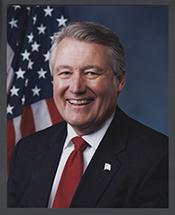 Rep. Rick W. Allen (R-GA)
Description
An amendment numbered 2 printed in Part B of House Report 116-502 to provide school districts flexibility with their funds under the Student Support and Academic Enrichment Grants to carry out integration activities.
Legislative Activity
Stay on top of the latest movement without scrolling through every action
Amendment failed by House: On agreeing to the Allen amendment (A003) Failed by the Yeas and Nays: 171 - 243 (Roll no. 187).
September 15, 2020 • 3:53 PM
View full timeline
Amendment failed by House: On agreeing to the Allen amendment (A003) Failed by the Yeas and Nays: 171 - 243 (Roll no. 187).
September 15, 2020 • 3:53 PM
House amendment not agreed to: On agreeing to the Allen amendment (A003) Failed by the Yeas and Nays: 171 - 243 (Roll no. 187).
September 15, 2020 • 3:53 PM
Roll call votes on amendments in House
September 15, 2020 • 3:53 PM
House amendment offered/reported by: Amendment (A003) offered by Mr. Allen.
September 15, 2020 • 2:13 PM
House amendment offered
September 15, 2020
Amendment (A003) offered by Mr. Allen. (consideration: CR H4408-4409, H4413-4414; text: CR H4408)
September 15, 2020 • 2:13 PM
The previous question was ordered on the amendment (A003) pursuant to the rule.
September 15, 2020 • 2:22 PM
On agreeing to the Allen amendment (A003) Failed by the Yeas and Nays: 171 - 243 (Roll no. 187).
September 15, 2020 • 3:53 PM
Votes
1 roll call on this amendment
Text
Offered
STRENGTH IN DIVERSITY ACT OF 2019

General Leave

Ms. FUDGE. Mr. Speaker, I ask unanimous consent that all Members have
5 legislative days in which to revise and extend their remarks and
insert extraneous material on H.R. 2639, the Strength in Diversity Act.
The SPEAKER pro tempore (Mr. Espaillat). Is there objection to the
request of the gentlewoman from Ohio?
There was no objection.
Ms. FUDGE. Mr. Speaker, pursuant to House Resolution 1107, I call up
the bill (H.R. 2639) to establish the Strength in Diversity Program,
and for other purposes, and ask for its immediate consideration in the
House.
The Clerk read the title of the bill.
The SPEAKER pro tempore. Pursuant to House Resolution 1107, in lieu
of the amendment in the nature of a substitute recommended by the
Committee on Education and Labor printed in the bill, an amendment in
the nature of a substitute consisting of the text of Rules Committee
Print 116-62, is adopted and the bill, as amended, is considered read.
The text of the bill, as amended, is as follows:

H.R. 2639

Be it enacted by the Senate and House of Representatives of
the United States of America in Congress assembled,

SECTION 1. SHORT TITLE.

This Act may be cited as the ``Strength in Diversity Act of
2020''.

SEC. 2. PURPOSE.

The purpose of this Act is to support the development,
implementation, and evaluation of comprehensive strategies to
address the effects of racial isolation or concentrated
poverty by increasing diversity, including racial diversity
and socioeconomic diversity, in covered schools.

SEC. 3. RESERVATION FOR NATIONAL ACTIVITIES.

The Secretary may reserve not more than 5 percent of the
amounts made available under section 10 for a fiscal year to
carry out activities of national significance relating to
this Act, which may include--
(1) research, development, data collection, monitoring,
technical assistance, evaluation, or dissemination
activities; and
(2) the development and maintenance of best practices for
recipients of grants under section 4 and other experts in the
field of school diversity.

SEC. 4. GRANT PROGRAM AUTHORIZED.

(a) Authorization.--
(1) In general.--From the amounts made available under
section 10 and not reserved under section 3 for a fiscal
year, the Secretary shall award grants in accordance with
subsection (b) to eligible entities to develop or implement
plans to improve diversity and reduce or eliminate racial or
socioeconomic isolation in covered schools.
(2) Types of grants.--The Secretary may, in any fiscal
year, award--
(A) planning grants to carry out the activities described
in section 6(a);
(B) implementation grants to carry out the activities
described in section 6(b); or
(C) both such planning grants and implementation grants.
(b) Award Basis.--
(1) Criteria for evaluating applications.--The Secretary
shall award grants under this section on a competitive basis,
based on--
(A) the quality of the application submitted by an eligible
entity under section 5; and
(B) the likelihood, as determined by the Secretary, that
the eligible entity will use the grant to improve student
outcomes or outcomes on other performance measures described
in section 7.
(2) Priority.--In awarding grants under this section, the
Secretary shall give priority to the following eligible
entities:
(A) First, to an eligible entity that proposes, in an
application submitted under section 5, to use the grant to
support a program that addresses racial isolation.
(B) Second, to an eligible entity that proposes, in an
application submitted under section 5, to use the grant to
support a program that extends beyond one local educational
agency, such as an inter-district or regional program.
(c) Duration of Grants.--
(1) Planning grant.--A planning grant awarded under this
section shall be for a period of not more than 1 year.
(2) Implementation grant.--An implementation grant awarded
under this section shall be for a period of not more than 3
years, except that the Secretary may extend an implementation
grant for an additional 2-year period if the eligible entity
receiving the grant demonstrates to the Secretary that the
eligible entity is making significant progress, as determined
by the Secretary, on the program performance measures
described in section 7.

SEC. 5. APPLICATIONS.

In order to receive a grant under section 4, an eligible
entity shall submit an application to the Secretary at such
time and in such manner as the Secretary may require. Such
application shall include--
(1) a description of the program for which the eligible
entity is seeking a grant, including--
(A) how the eligible entity proposes to use the grant to
improve the academic and life outcomes of students in racial
or socioeconomic isolation in covered schools by supporting
interventions that increase diversity in such covered
schools;
(B) in the case of an implementation grant, the
implementation grant plan described in section 6(b)(1); and
(C) evidence, or if such evidence is not available, a
rationale based on current research, regarding how the
program will increase diversity;
(2) in the case of an eligible entity proposing to use any
of the grant to benefit covered schools that are racially
isolated, a description of how the eligible entity will
identify and define racial isolation;
(3) in the case of an eligible entity proposing to use any
portion of the grant to benefit high-poverty covered schools,
a description of how the eligible entity will identify and
define income level and socioeconomic status;
(4) a description of the plan of the eligible entity for
continuing the program after the grant period ends;
(5) a description of how the eligible entity will assess,
monitor, and evaluate the impact of the activities funded
under the grant on student achievement and student enrollment
diversity;
(6) an assurance that the eligible entity has conducted, or
will conduct, robust parent and community engagement, while
planning for and implementing the program, such as through--

[[Page H4401]]

(A) consultation with appropriate officials from Indian
Tribes or Tribal organizations approved by the Tribes located
in the area served by the eligible entity;
(B) consultation with other community entities, including
local housing or transportation authorities;
(C) public hearings or other open forums to inform the
development of any formal strategy to increase diversity; and
(D) outreach to parents and students, in a language that
parents and students can understand, and consultation with
students and families in the targeted district or region that
is designed to ensure participation in the planning and
development of any formal strategy to increase diversity;
(7) an estimate of the number of students that the eligible
entity plans to serve under the program and the number of
students to be served through additional expansion of the
program after the grant period ends;
(8) an assurance that the eligible entity will--
(A) cooperate with the Secretary in evaluating the program,
including any evaluation that might require data and
information from multiple recipients of grants under section
4; and
(B) engage in the best practices developed under section
3(2);
(9) an assurance that, to the extent possible, the eligible
entity has considered the potential implications of the grant
activities on the demographics and student enrollment of
nearby covered schools not included in the activities of the
grant; and
(10) in the case of an eligible entity applying for an
implementation grant, a description of how the eligible
entity will--
(A) implement, replicate, or expand a strategy based on a
strong or moderate level of evidence (as described in
subclause (I) or (II) of section 8101(21)(A)(i) of the
Elementary and Secondary Education Act of 1965 (20 U.S.C.
7801(21)(A)(i))); or
(B) test a promising strategy to increase diversity in
covered schools.

SEC. 6. USES OF FUNDS.

(a) Planning Grants.--Each eligible entity that receives a
planning grant under section 4 shall use the grant to support
students in covered schools through the following activities:
(1) Completing a comprehensive assessment of, with respect
to the geographic area served by such eligible entity--
(A) the educational outcomes and racial and socioeconomic
stratification of children attending covered schools; and
(B) an analysis of the location and capacity of program and
school facilities and the adequacy of local or regional
transportation infrastructure.
(2) Developing and implementing a robust family, student,
and community engagement plan, including, where feasible,
public hearings or other open forums that would precede and
inform the development of a formal strategy to improve
diversity in covered schools.
(3) Developing options, including timelines and cost
estimates, for improving diversity in covered schools, such
as weighted lotteries, revised feeder patterns, school
boundary redesign, or regional coordination.
(4) Developing an implementation plan based on community
preferences among the options developed under paragraph (3).
(5) Building the capacity to collect and analyze data that
provide information for transparency, continuous improvement,
and evaluation.
(6) Developing an implementation plan to comply with a
court-ordered school desegregation plan.
(7) Engaging in best practices developed under section
3(2).
(b) Implementation Grants.--
(1) Implementation grant plan.--Each eligible entity that
receives an implementation grant under section 4 shall
implement a high-quality plan to support students in covered
schools that includes--
(A) a comprehensive set of strategies designed to improve
academic outcomes for all students, particularly students of
color and low-income students, by increasing diversity in
covered schools;
(B) evidence of strong family and community support for
such strategies, including evidence that the eligible entity
has engaged in meaningful family and community outreach
activities;
(C) goals to increase diversity in covered schools over the
course of the grant period;
(D) collection and analysis of data to provide transparency
and support continuous improvement throughout the grant
period; and
(E) a rigorous method of evaluation of the effectiveness of
the program.
(2) Implementation grant activities.--Each eligible entity
that receives an implementation grant under section 4 may use
the grant to carry out one or more of the following
activities:
(A) Recruiting, hiring, or training additional teachers,
administrators, and other instructional and support staff in
new, expanded, or restructured covered schools, or other
professional development activities for staff and
administrators.
(B) Investing in specialized academic programs or
facilities designed to encourage inter-district school
attendance patterns.
(C) Developing or initiating a transportation plan for
bringing students to and from covered schools, if such
transportation is sustainable beyond the grant period and
does not represent a significant portion of the grant
received by an eligible entity under section 4.
(D) Developing innovative and equitable school assignment
plans.
(E) Carrying out innovative activities designed to increase
racial and socioeconomic school diversity and engagement
between children from different racial, economic, and
cultural backgrounds.

SEC. 7. PERFORMANCE MEASURES.

The Secretary shall establish performance measures for the
programs and activities carried out through a grant under
section 4. These measures, at a minimum, shall track the
progress of each eligible entity in--
(1) improving academic and other developmental or
noncognitive outcomes for each subgroup described in section
1111(b)(2)(B)(xi) of the Elementary and Secondary Education
Act of 1965 (20 U.S.C. 6311(b)(2)(B)(xi)) that is served by
the eligible entity on measures, including, as applicable,
by--
(A) increasing school readiness;
(B) increasing student achievement and decreasing
achievement gaps;
(C) increasing high school graduation rates;
(D) increasing readiness for postsecondary education and
careers;
(E) reducing school discipline rates; and
(F) any other indicator the Secretary or eligible entity
may identify; and
(2) increasing diversity and decreasing racial or
socioeconomic isolation in covered schools.

SEC. 8. ANNUAL REPORTS.

An eligible entity that receives a grant under section 4
shall submit to the Secretary, at such time and in such
manner as the Secretary may require, an annual report that
includes--
(1) a description of the efforts of the eligible entity to
increase inclusivity;
(2) information on the progress of the eligible entity with
respect to the performance measures described in section 7;
and
(3) the data supporting such progress.

SEC. 9. APPLICABILITY.

Section 426 of the General Education Provisions Act (20
U.S.C. 1228) shall not apply with respect to activities
carried out under a grant under this Act.

SEC. 10. AUTHORIZATION OF APPROPRIATIONS.

There are authorized to be appropriated to carry out this
Act such sums as may be necessary for fiscal year 2020 and
each of the 5 succeeding fiscal years.

SEC. 11. DEFINITIONS.

In this Act:
(1) Covered school.--The term ``covered school'' means--
(A) a publicly-funded early childhood education program;
(B) a public elementary school; or
(C) a public secondary school.
(2) Eligible entity.--The term ``eligible entity'' means a
local educational agency, a consortium of such agencies, an
educational service agency, or regional educational agency
that at the time of the application of such eligible entity
has significant achievement gaps and socioeconomic or racial
segregation within or between the school districts served by
such entity.
(3) ESEA terms.--The terms ``educational service agency'',
``elementary school'', ``local educational agency'',
``secondary school'', and ``Secretary'' have the meanings
given such terms in section 8101 of the Elementary and
Secondary Education Act of 1965 (20 U.S.C. 7801).
(4) Publicly-funded early childhood education program.--The
term ``publicly-funded early childhood education program''
means an early childhood education program (as defined in
section 103(8) of the Higher Education Act of 1965 (20 U.S.C.
1003(8)) that receives State or Federal funds.

The SPEAKER pro tempore. The bill, as amended, is debatable for 1
hour equally divided and controlled by the chair and ranking minority
member of the Committee on Education and Labor.
The gentlewoman from Ohio (Ms. Fudge) and the gentlewoman from North
Carolina (Ms. Foxx) each will control 30 minutes.
The Chair recognizes the gentlewoman from Ohio.
Ms. FUDGE. Mr. Speaker, I yield myself such time as I may consume.
Mr. Speaker, racial segregation in public education has been illegal
for more than 66 years in the United States. Still, American public
schools are more segregated today than at any time since the 1960s. The
average African-American or Latino student attends schools with a
majority of children of their own race.
Most of these schools serve a high number of low-income students
forced to learn in old, broken-down buildings with fewer resources and
disproportionately high rates of discipline.
Segregated schools are inherently unequal, creating barriers for the
students who reside in underserved communities. It has been 66 years
since the landmark decision in Brown v. Board of Education, and the
promise of equal access to education has yet to be realized.
Today, public schools are not segregated because the law requires it,
they are segregated by their ZIP Codes.
Segregation exists due to the erosion of a middle-class tax base. An
erosion that has caused communities of color to become systemically
poor. Essential services and public education are continuously
underfunded.
These communities have been denied access to the intergenerational
wealth that comes from homeownership due to discriminatory housing
patterns and mortgage lending policies. This is particularly true for
Black communities.

[[Page H4402]]

When districts split schools between affluent and poor neighborhoods,
it draws a bright line between the haves and the have-nots. This type
of separation inflicts the same harm on students today as legalized
segregation did prior to 1954.
That is why I introduced H.R. 2639, the Strength in Diversity Act. It
directly addresses inequities in public education by authorizing
funding to support local education leaders in their efforts to lessen
racial and socioeconomic isolation in public schools.
The Strength in Diversity Act will ensure every student has equitable
access to a quality education. This is one step toward remedying the
issue of segregated schools.
The bill provides support for school districts that are developing,
expanding, or implementing school diversity initiatives.
Eligible school districts can devote funding to study the adverse
effects of segregation, provide equitable access to transportation,
create programs to attract children from neighboring communities, and
recruit new specialized teachers.
Studies show school integration benefits students of all races. Even
the conservative think tank, the Hoover Institution, agrees that
diverse learning environments help close the achievement gap and lead
to numerous academic, social and cognitive benefits. Research tells us
school integration results in cross-racial friendships and a decline in
stereotyping, allowing students to better navigate an increasingly
diverse society and preparing them for real world experiences.
Mr. Speaker, the Strength in Diversity Act is not new policy. It is
practically the same policy the Obama administration sought to pursue
in its 2016 Opening Doors, Expanding Opportunities program, which
provided $12 million to help school districts increase diversity.
Nearly 30 school districts from 22 States and the District of
Columbia applied for the Obama-era integration grant, but the program
was eliminated by the current administration in 2017 without
explanation. That decision came at a time when research clearly showed
a resurgence in segregated schools.
Totally ignoring this increase in separate educational facilities,
Education Secretary Betsy DeVos moved to rescind Federal guidance to
assist school districts in pursuit of racial diversity. When my
Education and Labor Committee colleague Representative Trone asked the
Secretary about this rescission, she said she was ``unfamiliar with the
guidance.'' That was 2 years ago. Since then, things have gotten worse,
not better.
Mr. Speaker, we are experiencing a racial reckoning in this country.
Despite efforts from 1600 Pennsylvania Avenue to sow racial division, I
remain hopeful.
Now is the time to enact the Strength in Diversity Act and provide
school districts with the support they need to tackle the task of true
integration.
This is hard work, but necessary work, and it is past time the
Federal Government support local leaders to fulfill the promise of
Brown.
Today, I urge my colleagues to make a commitment to put an end to
racial and socioeconomic isolation and segregation in our Nation's
public schools by voting in favor of the Strength in Diversity Act.
Mr. Speaker, I reserve the balance of my time.
Ms. FOXX of North Carolina. Mr. Speaker, I yield myself such time as
I may consume.
I rise today in opposition to H.R. 2639, the Strength in Diversity
Act.
Republicans and Democrats agree that discrimination and State-
sanctioned segregation are repugnant, illegal, and blatantly immoral.
Studies have shown that integrated schools promote greater
understanding, tolerance, and improved educational outcomes.
I don't disagree with the intentions behind this bill but have major
reservations about its efficacy. Will this bill stand the test of time?
Will these ideas have helped the ongoing effort to achieve greater
equality for children? Sadly, the answer is no.
The Education and Labor Committee has a long history of reaching
across the aisle and finding common ground to effect meaningful reform
for our Nation's schools and students.
The legislation before us today was another opportunity for committee
Republicans and Democrats to find bipartisan compromise. Unfortunately,
committee Democrats ignored commonsense approaches to this problem to
impose a top-down, Big Government mandate that would have the Federal
Government decide how best to address the issues of racial and
socioeconomic isolation in America's schools.

As we have seen many times before, additional government mandates and
burdensome red tape are not the answer. Congress has already set up the
Student Support and Academic Enrichment Grants, a block grant created
to give school districts flexibility to pursue local solutions to their
communities' educational challenges. Local and State leaders and those
with their feet on the ground know how best to combat these challenges,
not the Federal Government.
That is why Representative Allen will offer a Republican alternative
later today that will provide this House a bipartisan solution that
could easily garner an overwhelming majority of support in this Chamber
if every Member chose to focus on the importance of actually addressing
racial and socioeconomic isolation in schools. His amendment would
ensure that nearly every school district in the country would have the
flexibility with Federal funds they may need to tackle this problem.
This is how legislating for solutions, rather than legislating for
headlines can work.
Republicans want nothing more than to see all American children
prosper. That means expanding opportunities for marginalized students
to gain access to an education that prepares them for lifelong success.
It also means school districts taking action to reduce racial and
socioeconomic isolation in schools.
A bipartisan path forward to make that possible is achievable, but
Democrats would rather score political points than work with
Republicans on solutions that will make a significant difference in the
lives of our Nation's children.
Instead of building upon a program that has bipartisan, bicameral
support, Democrats' H.R. 2639 sets up a new grant program within the
Department of Education that will inevitably be underfunded, if it is
funded at all.
Creating more government programs that have to scramble for funding
in order to operate successfully is the last thing we need to foster
the best environment for all students to learn.
H.R. 2639 also ignores the biggest problem facing low-income students
and students of color--a lack of high-quality educational options.
Committee Republicans stand ready to work with our colleagues in the
majority to expand educational opportunities to all families. But
rather than bring a bill to the floor that would expand the
availability of charter schools or offer marginalized families the kind
of educational freedom that the wealthy exercise for themselves,
Democrats decided teachers unions are more important to them than real
families who are desperate for access to a better education for their
children.
My Republican colleagues and I believe that expanding opportunities
for students should be a priority. We know school choice gives families
the opportunity to break the cycle of poverty and enroll their children
in challenging environments that better develop their skills and
intellect, encouraging them to reach higher. In fact, studies show that
when students are given the freedom to attend school in a learning
environment best suited to their abilities, they pursue and complete
postsecondary opportunities at higher rates.
Access to opportunities, freedom to climb, these are aspects of a
student's education that must be equal for all children nationwide. No
one-size-fits-all structure can deliver on those essentials. Separate
was never equal, but equality cannot simply mean uniformity if that
uniformity doesn't prepare students for lifelong success. Equality is
affirming that all children are fundamentally the same in dignity,
importance, and worth but also understanding that not all children's
needs are the same.
Mr. Speaker, I reserve the balance of my time.
Ms. FUDGE. Mr. Speaker, I think that we all want commonsense
solutions, but as proven by Secretary

[[Page H4403]]

DeVos, common sense is not always common, Mr. Speaker.
Mr. Speaker, I yield 4\1/2\ minutes to the gentleman from Virginia
(Mr. Scott), the chair of the Committee on Education and Labor.
Mr. SCOTT of Virginia. Mr. Speaker, I rise in support of the Strength
in Diversity Act.
It has been 66 years since the Supreme Court unanimously struck down
public school segregation in the landmark case of Brown v. Board of
Education. In that case, the Court declared that public education where
the State has undertaken to provide it, is a right which must be made
available to all on equal terms.
The Court went on to say that, ``in the field of public education,
the doctrine of `separate but equal' has no place. Separate educational
facilities are inherently unequal.''
More than six decades later, we have failed to fulfill that promise.
According to the Government Accountability Office, our public schools
are more segregated today by race and class than at any time since the
1960s, and segregation is actually getting worse according to the
Government Accountability Office.

{time}  1330

School segregation has profound consequences for students. Today,
low-income students of color are more likely to attend schools with
fewer experienced teachers and resources. In fact, schools serving
predominantly students of color face a $23 billion funding gap compared
to schools serving predominantly White students.
Now, we know that integration works. Black students who attend
integrated schools have higher test scores and are more likely to
graduate from high school, complete college, and even earn higher wages
throughout their lives.
Communities across the country have recognized the importance of
school diversity for student success and have developed integrative
strategies to promote diversity in education.
In 2016, dozens of school districts applied for funding under the
Opening Doors, Expanding Opportunities grant program, which was
designed to help schools to pursue voluntary, community-driven school
integration strategies. Regrettably, one of Secretary Betsy DeVos'
first actions in office was to terminate that program before any money
was disbursed.
The Strength in Diversity Act corrects this action by providing
Federal support to help school districts develop, implement, or expand
efforts to integrate their local schools.
The legislation will also shield these resources from the whims of
changing administrations and allow communities to compile best
practices for tackling segregation.
This expertise is critical because of a series of Supreme Court
rulings that have been hostile to integration. Most recently, in the
Parents Involved case, the Court struck down two voluntary integration
plans, one in Louisville, Kentucky, and the other in Seattle,
Washington. The Court held that using race in desegregation plans is
constitutional, but only if the plan is narrowly tailored to address
the compelling interest of integrating the public schools.
Unfortunately, they ruled in those cases that the plans were not
narrowly tailored.
The Strength in Diversity Act will provide resources so that the
localities will be able to design plans that will be not only
effective, but also be able to withstand constitutional challenge.
Addressing America's legacy of racial discrimination is often
uncomfortable and complicated. However, we must confront, not ignore,
inequities in education if we are to reckon with this legacy and
overcome a global pandemic that threatens to worsen the achievement
gaps.
Our former colleague, Congressman John Lewis, once stated: ``When you
see something that is not right, not fair, not just, you have to speak
up. You have to say something. You have to do something.''
Let's follow his guidance and vote for the first time in more than
three decades to provide new resources that will help integrate our
public schools and fulfill the promise of equity in education.
Mr. Speaker, I encourage my colleagues to support the Strength in
Diversity Act. I thank the gentlewoman from Ohio (Ms. Fudge) for her
distinguished leadership in this legislation.
Ms. FOXX of North Carolina. Mr. Speaker, I reserve the balance of my
time.
Ms. FUDGE. Mr. Speaker, I yield 2 minutes to the gentlewoman from
California (Ms. Lee), my good friend.
Ms. LEE of California. Mr. Speaker, first, let me just thank the
gentlewoman from Ohio (Ms. Fudge) for yielding and for her tremendous
leadership on behalf of our children, but also for demonstrating what
strength in diversity means throughout her life's work. I thank her for
bringing this Strength in Diversity bill to the floor, H.R. 2639.
Let me just say a couple of things. First of all, this bill takes
action where Secretary DeVos and the administration have failed to act
to make sure that all of our children, no matter what color they are,
get the same opportunities to get an education and pursue their dreams.
We have had this discussion over and over and over again in the
Appropriations Committee with the Secretary.
Sixty years ago, Ruby Bridges was the first African-American student
to attend an integrated school in the South. Yes, as has been said by
our chair and also the gentlewoman authoring this bill, this is 66
years after Brown v. Board of Education.
We still have segregation in our school districts, and it is leading
to measurably unjust outcomes for Black and Brown students, robbing
them of their future.
Now, when I started school, mind you, schools were segregated. My
family in El Paso, Texas, fought to desegregate schools, especially my
beloved mother, Mildred Parish Massey, who was one of the first
students to integrate the University of Texas at El Paso.
In addition to the GAO report, a 2019 report out of Stanford
University also reviewed hundreds of millions of test scores from
students across the Nation. Their findings show that racial segregation
leaves Black and Brown students concentrated in high-poverty schools,
leading to a huge opportunity deficit even for high-performing
students.
In fact, they found large achievement gaps in every single school
district with just moderately high segregation. This fact remains. This
data is the same. Also, these schools have fewer resources, and the
students experience more disciplinary actions than in more diverse
schools.
The Strength in Diversity Act would help reverse this segregation by
promoting diversity, increasing student achievement and readiness, and
investing in our children.
The bill would authorize Federal funding to provide grants to support
new and existing local efforts to increase racial and socioeconomic
diversity in our schools.
It would further document segregation in our public schools,
implement programs to recruit and hire diverse teachers, and work to
ensure our students have equitable access to resources.
The SPEAKER pro tempore. The time of the gentlewoman has expired.
Ms. FUDGE. Mr. Speaker, I yield an additional 30 seconds to the
gentlewoman.
Ms. LEE of California. Mr. Speaker, I thank Congresswoman Fudge for
yielding the additional time.
Let me conclude by saying, in doing this, Congresswoman Fudge and
Chairman Scott have documented this, that by having equitable access to
resources, we actually found that racial prejudice is reduced by making
sure that our children are in diverse schools and classrooms.
All of our students should receive the best education regardless of
their race and ethnicity. That is what this bill is about.
Mr. Speaker, I thank Congresswoman Fudge, the gentlewoman from Ohio,
for putting forth this bill, because she more than most knows the
importance of diversity.
Ms. FOXX of North Carolina. Mr. Speaker, I reserve the balance of my
time.
Ms. FUDGE. Mr. Speaker, I yield 2 minutes to the gentleman from Texas
(Mr. Green).
Mr. GREEN of Texas. Mr. Speaker, I thank the gentlewoman, Ms. Fudge,

[[Page H4404]]

for allowing me the time. I acknowledge Mr. Scott for the outstanding
work that he has done on this legislation, among many other pieces of
legislation.
I have an amendment that speaks for itself. This amendment deals with
the entry exams that fail the diversity test at many elite schools--
elite schools, by the way, that are funded with tax dollars that come
from poor communities, elite schools that can accept tax dollars but
cannot accept the students who are from communities that are affording
the schools the tax dollars.
The amendment reads: If applicable--meaning if you haven't done it
already--develop an implementation plan to replace entrance exams or
other competitive application procedures with methods of student
assignments to promote racial and socioeconomic diversity.
This amendment does deal with minorities, but it also deals with
other persons who happen to be disadvantaged. Mr. Speaker, that is
another way of saying poor White people. They, too, suffer from
disadvantages associated with the elite tests that can fail even some
of the best that come from schools that have little resources.
I believe that if this amendment is passed, this amendment is going
to encourage schools to do what John Lewis would call the right thing,
the just thing, the fair thing.
Mr. Speaker, I support the amendment and beg that my colleagues would
support it as well.
Ms. FOXX of North Carolina. Mr. Speaker, I yield 2 minutes to the
gentleman from Georgia (Mr. Allen).
Mr. ALLEN. Mr. Speaker, I thank Congresswoman Foxx for yielding. I
appreciate the opportunity to address this issue today.
I rise in opposition to H.R. 2639, and I oppose it because I believe
every child should have access to a good education. I have long
advocated for the need to expand choice to each student so that they
have the opportunity to live out the American Dream regardless of their
ZIP Code or family resources. In fact, we talked about this very thing
on the steps of the Capitol this morning.
H.R. 2639 is a partisan proposal that would impose a top-down, Big
Government solution--that is the problem--allowing the Federal
Government to decide how best to address the issues of racial and
socioeconomic isolation in America's schools.
Unfortunately, this debate is not about equality for all children. If
it were, we would have ensured no State had the ability to trap
students in low-performing schools.
Rather than bring a bill to the House floor that would expand the
availability of charter schools or offer families educational freedom,
Democrats have decided the teachers unions are more important to them
than real families who are desperate for access to a better education
for their children.
Additionally, this partisan proposal would create another Federal
program while ignoring existing priorities.
During committee markup, I offered a substitute amendment to the bill
that would have expanded the Student Support and Academic Enrichment
Grants, or SSAEG, in the Every Student Succeeds Act to allow school
districts to use funds to reduce or eliminate racial or socioeconomic
isolation in schools.
The SSAEG were authorized on a bipartisan basis to give school
districts flexible funding to address local needs and receive $1.21
billion in fiscal year 2020 appropriated funds.
The SPEAKER pro tempore. The time of the gentleman has expired.
Ms. FOXX of North Carolina. Mr. Speaker, I yield an additional 30
seconds to the gentleman.
Mr. ALLEN. Mr. Speaker, unfortunately, committee Democrats rejected
my amendment and chose to push forward a partisan bill that would only
result in another broken promise from the Federal Government.
Instead of working in a bipartisan, bicameral fashion to implement a
commonsense solution, Democrats are once again choosing partisan
political messaging over sound policy.
It has been a tough year, especially on families who have had to
adapt to learning in the age of coronavirus. So, let's have a real
conversation on how we can best serve our students and families by
working to expand choice.
Mr. Speaker, I urge my colleagues to oppose this partisan bill before
it is too late.
Ms. FUDGE. Mr. Speaker, I have no idea what bill my colleagues are
reading. There is nothing in this bill about teachers unions or
anything else that they are talking about.
Mr. Speaker, I yield 3 minutes to the gentlewoman from North Carolina
(Ms. Adams), my colleague, who is also a member of the Education and
Labor Committee.

Ms. ADAMS. Mr. Speaker, I thank the gentlewoman from Ohio (Ms. Fudge)
for yielding and for her incredible leadership on this issue.
It has been 66 years since the Brown v. Board of Education decision
when this country took a step toward making amends for its legacy of
oppression and discrimination against African Americans. But
policymakers haven't always done the work necessary to make the
promises of Brown a reality.
After years of gains, the last three decades have been marked by
increased racial isolation for Black and Brown students.
Since 1988, the percentage of schools where less than 10 percent of
the student body is White has increased from 6 to 18 percent. More than
half of our Nation's schoolchildren are in districts where over 75
percent of students look just like them.
So, I am happy that today, after 30 years of backsliding, the House
will take a vote to live up to the legacy of Brown.
The Strength in Diversity Act is as good as its name. It will restore
the government's commitment to school desegregation and to ensuring
that every child receives equal opportunity because as Brown told us,
separate is inherently unequal.
Mr. Speaker, I urge my colleagues to help this Nation live up to
those ideals by voting in support of the Strength in Diversity Act. I
thank my colleague from Ohio for bringing this bill forward.

{time}  1345

Ms. FOXX of North Carolina. Mr. Speaker, I reserve the balance of my
time.
Ms. FUDGE. Mr. Speaker, I yield 2 minutes to the gentleman from
Michigan (Mr. Levin).
Mr. LEVIN of Michigan. Mr. Speaker, I rise in strong support of H.R.
2639, the Strength in Diversity Act. I thank this bill's sponsor,
Congresswoman Fudge, and Chairman Scott for shepherding this bill
through the Education and Labor Committee.
Nearly 20 years after Brown v. Board of Education, lesser-known
Supreme Court cases like Milliken v. Bradley determined that
segregation was allowed, if not considered an explicit policy, of each
school district.
This meant schools and communities were not held responsible for
desegregation. Busing policies meant to integrate city and suburban
schools were abandoned and the inequality created by racist redlining
and exclusionary housing policies continued, keeping Black Americans
out of the suburbs and trapped in underfunded schools to this day.
Today, the school system at the center of Milliken v. Bradley,
Detroit's, is more segregated than it was in 1974.
This bill will provide grants to improve racial and socioeconomic
diversity in public schools, an essential step toward fulfilling the
promise of Brown v. Board, ending the segregation that continues to
plague school districts across this country, including in my own
district, Michigan's Ninth.
Thurgood Marshall, the Supreme Court's first Black Justice, warned in
his dissent in Milliken v. Bradley, ``unless our children begin to
learn together, there is little hope that our people will ever learn to
live together and understand each other.''
As we reckon with our Nation's past and work to dismantle racist
institutions that have stood for far too long, let us not forget our
children.
I urge my colleagues to vote for this bill.
Ms. FOXX of North Carolina. Mr. Speaker, I yield myself such time as
I may consume.
Mr. Speaker, Democrats' approach in H.R. 2639 is wrong for our
Nation's schools and students if we hope to achieve greater equality
for children nationwide. Not only does this bill push another Democrat-
led, top-down, Big Government mandate, but it has

[[Page H4405]]

also been crafted to mirror a failed Obama administration program.
At the Rules Committee yesterday, and also referenced today, Chairman
Scott touted the fact that 30 school districts applied under the
Opening Doors, Expanding Opportunities program created during the Obama
administration. For the sake of debate, let's say that half of those
school districts had been awarded funding. That is only 15 school
districts nationwide that would have received Federal funding under
President Obama's program that this bill is modeled after.
In contrast to this failed approach, Representative Allen will offer
an amendment that would allow school districts to use funds from an
existing Federal grant program to accomplish the same goals as the
Democrats' bill.
About 12,000 school districts receive ESEA block grant funding every
year. By supporting Representative Allen's amendment, we can ensure
that nearly every school district in the country has the flexibility to
tackle this problem using taxpayer funds at the Federal level. This is
how legislating for solutions, rather than legislating for headlines,
can work.
A high-quality education is an indispensable tool, and America's
children deserve nothing less than an education that empowers them to
reach their greatest potential. This bill doesn't move us in that
direction.
Mr. Speaker, I reserve the balance of my time.
Ms. FUDGE. Mr. Speaker, I yield 2 minutes to the gentlewoman from
Florida (Ms. Shalala).
Ms. SHALALA. Mr. Speaker, I rise in strong support of H.R. 2639 and
congratulate my fellow Clevelander, Representative Fudge, and Chairman
Scott for their leadership, and all the members of the committee on
Education and Labor who have worked tirelessly to get us here today.
We know that modern school segregation is largely related to housing
and income segregation, with the worst cases concentrated in urban and
suburban areas.
Research shows that schools with a large proportion of middle-class
White students tend to have access to more resources. They benefit from
challenging, college-level courses, teachers and guidance counselors
who can help plan for college, and from wide-ranging extracurricular
activities in sports, the arts, and music, all of which greatly
contribute to a student's academic achievement.
The impact, however, goes well beyond academic opportunities.
Children who aren't regularly exposed to people from other backgrounds
are less likely to see racial and economic disparities as a problem.
Diversity, almost everyone agrees, is good; inclusion is good;
exposure to different cultures and ideas is good.
Mr. Speaker, I am proud to represent Miami, a city that values
diversity and multiculturalism as the backbone of our society.
Miami is the second largest minority-majority school district in the
Nation, where more than 92 percent of the students are Black or
Hispanic, students whose families often escaped political persecution
and extreme poverty. Yet the typical Black or Hispanic student attends
an underresourced school where more than 60 percent of other students
come from low-income families.
Similarly, schools with large Black enrollment don't excel in State
ratings, and Black students are woefully underrepresented in the
district's stellar magnet program.
The grants in H.R. 2639 would fund efforts to explore different
approaches to integration, recruit or train staff to better serve
minority students, and engage local communities on specialized academic
programs.
If we as policymakers say we have an interest in increasing the
academic success rate for Black and Hispanic youth, then we support
H.R. 2639.
Ms. FOXX of North Carolina. Mr. Speaker, I reserve the balance of my
time.

Ms. FUDGE. Mr. Speaker, I yield 2 minutes to the gentleman from Rhode
Island (Mr. Cicilline).
Mr. CICILLINE. Mr. Speaker, I rise today in support of H.R. 2639, the
Strength in Diversity Act.
I thank Congresswoman Marcia Fudge and Chairman  Bobby Scott for
their leadership and for affording me the opportunity to speak today,
and I am proud to support this important step toward addressing the
legacy of segregation in America's schools.
``Segregation distorts the soul,'' Martin Luther King, Jr. wrote in
1936 from a Birmingham jail. Yet 66 years after the Supreme Court
unanimously held in Brown v. Board of Education that racial segregation
of children in public schools is unconstitutional, segregation remains
a reality for many of America's children. It is a persistent stain on
the soul of our country.
The Strength in Diversity Act incentivizes inclusive educational
environments and promotes racial and socioeconomic diversity in schools
as instrumental to the education and development of every single child.
This act encourages school districts to study the effects of
segregation, evaluate their current policies, and implement evidence-
based solutions to deepen diversity in their schools through inclusive
policies.
We all wish that racism was a thing of the past. It is not. We must
actively confront our Nation's sins, past and present. We must confront
the fear and the hatred embedded in our institutions, embracing, once
and for all, the strength of our diversity.
America can do better for our children, and we must. And it is
important to remember, discrimination robs the victim of the ability to
become all that they can, of their full potential. But it also robs the
entire community of what that person could contribute and do, free of
the pernicious discrimination that is at the heart of this legislation.
So I urge all of my colleagues to vote in support of H.R. 2639.
I thank Congresswoman Fudge and Chairman Scott for their
extraordinary leadership.
I am really proud that this bill is on the floor today, and I hope my
Republican colleagues will embrace their responsibility to help end
racism in this country and in our schools and be sure that every child
in America has the same opportunity to realize their full potential.
Ms. FOXX of North Carolina. Mr. Speaker, I reserve the balance of my
time.
Ms. FUDGE. Mr. Speaker, I yield 2 minutes to the gentlewoman from
Ohio (Mrs. Beatty), my good friend.
Mrs. BEATTY. Mr. Speaker, I thank my good friend, Congresswoman
Marcia Fudge, for bringing this bill to this Chamber.
I stand here as the chair of the Subcommittee on Diversity and
Inclusion. I have probably spent more hours and time looking into the
difference diversity makes, whether it is a small business, whether it
is an educational system, whether it is a child.
I remind us to history. In 1960, a little Black girl by the name of
Ruby Bridges was denied the right to enter a school--against the
Supreme Court of this land--by a Governor.
I stand here on this floor and hear indictments about President
Obama. Mr. Speaker, let me say to my colleagues on the other side of
the aisle, anything that his educational Secretaries did was better
than what we have now with Secretary Betsy DeVos.
Let me just say that it is so important when we think about diversity
and inclusion and we think about those little children, Black children,
marginalized White children.
When I look at the votes for what my colleagues on the other side
have said about us--and they don't vote for budgets; they don't vote
for funding that can save lives--their arguments are weak. Their
arguments are unfounded.
This bill is about equal opportunity. This bill is about removing
systemic racism.
We already know that racism is a national crisis. So when I think of
housing, when I think about feeding a child, what kind of Member of
Congress would stand here against Congresswoman Fudge, Congressman
Bobby Scott, who is the chair of this committee and has done more in
his lifetime on education than anyone who has been to this microphone
on the other side?
Ms. FOXX of North Carolina. Mr. Speaker, I yield such time as he may
consume to the gentleman from North Carolina (Mr. Bishop).
Mr. BISHOP of North Carolina. Mr. Speaker, we all want to create the
maximum amount of opportunity for our children, regardless of their
background. That is why it is unfortunate

[[Page H4406]]

that this legislation fails to fix the most tragic inequity in our
education system: the absence of choice.
The right to a high-quality education is fundamental to the promise
of America, and no child should be denied that right because of income
or background. Thankfully, President Trump and Republicans in Congress
are working to provide that opportunity to all families.
I am proud to have introduced the CHOICE Act, which creates
opportunity grants that families can use for private school tuition,
microschools, learning pods, and homeschooling costs.
My bill ensures that all families--not just those with the means or
those lucky enough to live in a wealthy school district--have access to
the best possible education for their child. Giving families this
choice is the only way to furnish equal access to the American Dream.
Republicans are ready to take this step. If Democrats join us, we can
make it a reality.

{time}  1400

Ms. FUDGE. Mr. Speaker, may I inquire how much time remains.
The SPEAKER pro tempore. The gentlewoman from Ohio has 6\1/4\ minutes
remaining. The gentlewoman from North Carolina has 17\1/2\ minutes
remaining.
Ms. FUDGE. Mr. Speaker, I yield 2 minutes to the gentleman from
Maryland (Mr. Mfume).
Mr. MFUME. Mr. Speaker, this legislation, this bill, this movement,
and this purpose that we are debating today really found its genesis
long ago with a Supreme Court decision in Brown v. Board of Education
of Topeka, Kansas, when, on May 17, 1954, nine men robed in black
assembled not far from here to announce on the steps their unanimous
decision to end segregation in public education. On that day, among the
Nation's Black citizens, there was, indeed, a celebration, and it was a
celebration, indeed, by many of its Whites.
Many of us thought that this decision was the launching of the
threshold of a new era in life when education all across this Nation
would be treated the way it should be for all of its citizens. Many
people felt in the bowels of their being and in their very existence
that this Nation again at long last would find a way to launch itself
into a new era.
So this is the manifestation of that new era. This legislation
extends the guarantees, the protections, and the expectations of that
decision; and it is the expectations that we are talking about today:
to be able to provide the kind of education and the kind of treatment
of education that would extend to all people, to increase diversity,
and to do away with those things that have held us back for so many,
many years.
Mr. Speaker, I am proud of the sponsor of this bill. I urge my
colleagues to understand her intent and the expectations that it brings
with it so that we might do the right thing and pass it. I urge an
``aye'' vote, Mr. Speaker.
Ms. FOXX of North Carolina. Mr. Speaker, I yield myself the balance
of my time to close.
Mr. Speaker, Republicans and Democrats agree that discrimination and
State-sanctioned segregation are repugnant, illegal, and blatantly
immoral. Action must be taken to achieve greater equality for our
Nation's students and in our schools.
We continue to strive toward a future where all students, regardless
of race or color, have the chance to succeed. Education and hard work
are the paths out of poverty for millions, and education provides
students with the tools and skills they need to build a successful
life.
It is disappointing that a bipartisan path forward to address these
issues was possible but not attained because of political posturing
from Democrats. Apparently, political wins are more important than
building upon bipartisan, bicameral legislative solutions that will
help our Nation's children prosper.
Mr. Speaker, I urge a ``no'' vote on H.R. 2639 so that we can have
the opportunity to work on a bipartisan solution, and I yield back the
balance of my time.
Ms. FUDGE. Mr. Speaker, I yield myself the balance of my time.
Mr. Speaker, we started this out with the ranking member saying we
just wanted headlines. I absolutely want headlines to bring to the
attention of this country the poverty in our schools. I want headlines
about the crumbling schools my children go to school in. I do want
headlines about the disinvestment in public education that my
colleagues continue to do.
I want the headlines. So I admit it.
We also talked this afternoon about how equality cannot mean
uniformity, but it can also not mean doing nothing but giving lip
service to a problem, which is what my colleagues do. They talk and do
nothing. Not one solution comes from the other side of the aisle--not
one. I didn't hear one today.
Then we talk about this amendment that is coming to use another fund
to help us do some of these things. They don't tell you, Mr. Speaker,
that that fund is a fund that is used for mental health for children.
So they want us to choose between integrating schools and the mental
health of our children.
I think if that is the best they have got then I am so very, very
disappointed, Mr. Speaker, because at some point we have to reckon with
what is going on in this country today and deal with the racial
segregation of my children--and they are all my children.
Mr. Speaker, if we fail to begin to address this issue--and this is
only a beginning--then we can no longer say we agree that every child
should have access to a quality education, that every child should go
to a school that has the kind of equipment that they should have, that
every child has internet and broadband access, and that every child has
an opportunity to succeed. If we don't do this, we don't mean it.
Mr. Speaker, I yield back the balance of my time.
Ms. JOHNSON of Texas. Mr. Speaker, I rise in strong support of H.R.
2639, the Strength in Diversity Act. This landmark legislation would
allow our students to learn in an environment that is representative of
America, rather than being in a bubble with other students who look
like them or share the same backgrounds and experiences.
66 years ago, the Supreme Court opened the door to school integration
with their ruling in Brown vs. Board of Education. Soon after, schools
in my home state of Texas and other states across the south started the
process of integrating Black and White students so that one day there
would be a level playing field for students in the classroom.
However, since that period, we have slowly seen a creeping effect
where students have been divided into bubbles based strictly on the
neighborhoods where they live. Opposition to bussing, white flight to
the suburbs, and lingering systematic racism have all contributed to
the alarming situation we find ourselves in today as a country.
A GAO report published in 2016 found that 61 percent of all high-
poverty schools served majority Black and Hispanic students. This
separation by racial and socioeconomic lines prevents students in our
poorest neighborhoods from getting the same educational outcomes as
those in wealthier ones. Studies have shown that more diverse schools
lead to better grades and test results, higher rates of college
attendance, and lower dropout rates for students.
This bill helps to stem the tide and reverse the wrongs of the past
few decades by authorizing federal funding to provide grants to school
districts across the country to promote racial and socioeconomic
diversity. Specifically, this additional funding could be used by
school districts to study the impact of segregation in their schools,
create innovative programs like magnet schools to attract students from
outside the local community, and to train, hire, and retain high
quality teachers to support these diversified schools.
Mr. Speaker, North Texas is blessed to have such a diversified
community; however, I have seen how some neighborhoods in my district
have had better educational outcomes for students than others. It's
time that we level the playing field and give every student an
opportunity at success. I urge my colleagues to support this
legislation.
Ms. JACKSON LEE. Mr. Speaker, I rise in support of H.R. 2639, the
``Strength in Diversity Act.'' H.R. 2639, directs the Department of
Education (ED) to award grants to specified educational agencies, that
may include local educational agencies, to develop or implement plans
to improve diversity and reduce or eliminate racial or socioeconomic
isolation in publicly funded early childhood education programs, public
elementary schools, or public secondary schools. Specifically, ED may
award planning and implementation grants to specified educational
agencies.
A recipient of a planning grant must use the grant to support
students through certain activities, such as developing options to
improve

[[Page H4407]]

diversity in schools that might include weighted lotteries or school
boundary redesign. In addition, a recipient of an implementation grant
must implement a high-quality plan to support students. This plan must,
among other things, include a comprehensive set of strategies that are
designed to improve academic outcomes for all students, particularly
students of color and low-income students. A grant recipient may also
use the grant for certain activities such as recruiting additional
teachers and staff, investing in specialized academic programs, and
developing innovative and equitable school assignment plans.
This legislation will also allow ED to carry out national activities
under the grant program, such as developing best practices for grant
recipients and other experts in school diversity. The bill also
requires ED to establish performance measures for the program and its
related activities.
H.R. 2639 is needed because for far too often, for reasons of legacy
or policy, students of color or in low-income communities are shut out
of the opportunity to get a good education. Just as intolerance and
discrimination are learned behaviors, so are tolerance and inclusion
learned behaviors. As years of research have shown us, school
integration benefits students and communities. Research shows that
racial and socioeconomic diversity in the classroom can provide
students with a range of cognitive and social benefits. And school
policies around the country are beginning to catch up.
Today, over 4 million students in America are enrolled in school
districts or charter schools with socioeconomic integration policies--a
number that has more than doubled since 2007. Students in integrated
schools have higher average test scores. On the 2011 National
Assessment of Educational Progress (NAEP) given to fourth graders in
math, for example, low-income students attending more affluent schools
scored roughly two years of learning ahead of low-income students in
high-poverty schools.
Students in integrated schools are more likely to enroll in college,
when comparing students with similar socioeconomic backgrounds, those
students at more affluent schools are 68 percent more likely to enroll
at a four-year college than their peers at high-poverty schools.
Students in integrated schools are less likely to dropout, with dropout
rates that are significantly higher for students in segregated, high-
poverty schools than for students in integrated schools. Education
policy is contributing to systemic racism that exists in how education
is provided in the United States, which resists efforts to remove
barriers that would allow all children to succeed.
It has been well documented that integrated schools help to reduce
racial achievement gaps. In fact, the racial achievement gap in K
through 12 education closed more rapidly during the peak years of
school desegregation in the 1970s and 1980s than it has overall in the
decades that followed--when many desegregation policies were dismantled
through federal court decisions allowing discriminatory segregated
education to continue. Benefits are not limited to minority students,
but also extend to white students.
Integrated classrooms encourage critical thinking, problem solving,
and creativity. We know that diverse classrooms, in which students
learn cooperatively alongside those whose perspectives and backgrounds
are different from their own, are beneficial to all students--including
middle-class white students--because these environments promote
creativity, motivation, deeper learning, critical thinking, and
problem-solving skills.
This bill will help in this effort by providing grants to school
districts that want to increase diversity in schools. As many of you
know the school-age population in the United States is becoming more
racially and ethnically diverse. A National Center for Education
Statistics (NCES) report released in February 2019, on ``Status and
Trends in the Education of Racial and Ethnic Groups 2018,'' examined
how education experiences and outcomes vary among racial/ethnic groups.
The report contains 36 indicators that cover preprimary to
postsecondary education, as well as family background characteristics
and labor force outcomes.

Prior research shows that living in poverty during early childhood is
associated with lower-than-average academic performance that begins in
kindergarten and extends through high school, leading to lower-than-
average rates of school completion. In 2016, the percentages of
children living in poverty were highest for Black and American Indian/
Alaska Native children and lowest for White and Asian children.
One of the casualties of COVID-19 are the millions of children and
young people who have lost out on opportunities to learn and grow in
diverse school settings during the spring and fall of this year.
Between 2000 and 2017, the percentage of 5- to 17-year-olds who were
White decreased from 62 to 51 percent, while the percentage who were
Hispanic increased from 16 to 25 percent. The challenge of diversity in
education is not just limited to racial diversity in schools. Questions
of socioeconomic diversity combined with those of racial diversity are
important to consider in determining how far we have come in school
equality. This bill builds on the work already underway by schools and
school districts who are pursuing diversity to have additional
resources.
In 2019, approximately 56.6 million students attended elementary and
secondary school in the United States: 50.8 million students were in
public schools; 5.8 million students were in private schools. Among the
50.8 million students enrolled in elementary and secondary public
schools: 1.4 million were in prekindergarten; 3.7 million were in
kindergarten; 35.5 million attended elementary through middle school
(K-8th grade); 15.3 million attended high school (9-12th grade).
Through 2028, enrollment is projected to increase to 51.4 million.
In 2018, 3.3 million students graduated from high school, marking
nearly a 1 percent increase from 2017: 3.7 million were expected to
graduate in 2020; 3.3 million from public high schools; 0.4 million
from private schools. The average per-student expenditure in public
schools is $13,440.
In 2019, there are approximately 16,800 school districts in the
United States. Thirteen percent of all public school students were
served by the Individuals with Disabilities Act for the 2015-2016
school year.
Between 2000 and 2016, total public school enrollment increased for
32 states. The following saw increases of 15 percent or more: Florida,
Delaware, North Carolina, Idaho, Georgia, Colorado, Arizona, Texas,
Utah, and Nevada. The following states saw decreases of 10 percent or
more: Michigan, Maine, New Hampshire, and Vermont. In 2018, 7 million
or 13.7 percent of public school students received special education
services. In 2017, 9.6 percent of public school students were learning
English as a second language.
I ask my colleagues to join me in supporting H.R. 2639, Strength in
Diversity Act.
The SPEAKER pro tempore (Mr. Cuellar). All time for debate has
expired.
Each further amendment printed in part B of House Report 116-502 not
earlier considered as part of amendments en bloc pursuant to section 4
of House Resolution 1107, shall be considered only in the order printed
in the report, may be offered only by a Member designated in the
report, shall be considered as read, shall be debatable for the time
specified in the report equally divided and controlled by the proponent
and an opponent, may be withdrawn by the proponent at any time before
the question is put thereon, shall not be subject to amendment, and
shall not be subject to a demand for division of the question.
It shall be in order at any time for the chair of the Committee on
Education and Labor or his designee to offer amendments en bloc
consisting of further amendments printed in part B of House Report 116-
502, not earlier disposed of. Amendments en bloc shall be considered as
read, shall be debatable for 20 minutes equally divided and controlled
by the chair and ranking minority member of the Committee on Education
and Labor or their respective designees, shall not be subject to
amendment, and shall not be subject to a demand for division of the
question.

Amendment No. 1 Offered by Mrs. Torres of California

The SPEAKER pro tempore. It is now in order to consider amendment No.
1 printed in part B of House Report 116-502.
Mrs. TORRES of California. Mr. Speaker, I have an amendment at the
desk.
The SPEAKER pro tempore. The Clerk will designate the amendment.
The text of the amendment is as follows:

Page 3, line 2, strike ``and'' at the end.
Page 3, line 7, strike the period at the end and insert ``;
and''.
Page 3, after line 7, insert the following:
(C) the likelihood that the grant will lead to a meaningful
reduction in racial and economic isolation for children in
covered schools.
Page 3, after line 19, insert the following:
(C) Third, to an eligible entity that demonstrates
meaningful coordination with local housing agencies to
increase access to schools that have a disproportionately low
number of low-income students.

The SPEAKER pro tempore. Pursuant to House Resolution 1107, the
gentlewoman from California (Mrs. Torres) and a Member opposed each
will control 5 minutes.
The Chair recognizes the gentlewoman from California.

[[Page H4408]]

Mrs. TORRES of California. Mr. Speaker, in 1954, Brown v. Board of
Education unequivocally asserted that segregated schools are inherently
unequal. When Thurgood Marshall argued this landmark case before the
Supreme Court, he thought it would take just 5 years to integrate
schools nationwide. Sadly, 60 years later, schools are more segregated
now than any time since the early 1970s, and school segregation is
occurring at alarming rates nationwide.
In order to address increased school segregation, we must address one
of the root causes of the problem: residential segregation. Housing
segregation leads to school segregation. That is why I am taking an
initial step to address the link between housing and school segregation
by offering an amendment to the Strength in Diversity Act to prioritize
grant recipients that coordinate with local housing agencies to
integrate schools.
My amendment will make sure that all grants have a meaningful
reduction in racial and economic isolation for children in schools.
Segregation in schools is propagated by housing segregation, and my
amendment will work to address this underlying issue.
Mr. Speaker, I reserve the balance of my time.
Ms. FOXX of North Carolina. Mr. Speaker, I rise in opposition to the
amendment, although I am not opposed to the amendment and have great
affection for the introducer.
The SPEAKER pro tempore. Without objection, the gentlewoman from
North Carolina is recognized for 5 minutes.
There was no objection.
Ms. FOXX of North Carolina. Mr. Speaker, unfortunately, this
amendment does nothing to correct the flaws of the underlying bill, but
it doesn't make the bill any worse either. The amendment includes
language that would ensure applicants are judged on their ability to
meet the fundamental purposes of the bill, which should be done with
all grant applications and by anyone receiving taxpayer funding, and
that makes sense.
However, the amendment doesn't change the fundamentally flawed
approach this bill takes to tackle a problem we all agree that school
districts should address. But nothing in the amendment itself is
objectionable--in fact, it may be helpful--so I will support the
amendment.
Mr. Speaker, I yield back the balance of my time.
Mrs. TORRES of California. Mr. Speaker, no child should receive a
lesser education because of the color of their skin or the neighborhood
where they live, and I am proud that my amendment will address school
segregation holistically by supporting coordination between schools and
housing agencies.
Mr. Speaker, I urge my colleagues to join me in support of this
amendment and pass this legislation to fight discrimination and secure
the future for all American children, and I yield back the balance of
my time.
The SPEAKER pro tempore. Pursuant to House Resolution 1107, the
previous question is ordered on the amendment offered by the
gentlewoman from California (Mrs. Torres).
The question is on the amendment.
The amendment was agreed to.
A motion to reconsider was laid on the table.

Amendment No. 2 Offered by Mr. Allen

The SPEAKER pro tempore. It is now in order to consider amendment No.
2 printed in part B of House Report 116-502.
Mr. ALLEN. Mr. Speaker, I have an amendment at the desk.
The SPEAKER pro tempore. The Clerk will designate the amendment.
The text of the amendment is as follows:

Strike section 1 and all that follows through the end of
the bill and insert the following:

SECTION 1. SHORT TITLE.

This Act may be cited as the ``Strength in Diversity Act
of 2020''.

SEC. 2. PURPOSE.

The purpose of this Act is to support the development,
implementation, and evaluation of comprehensive strategies to
address the effects of racial isolation or concentrated
poverty by increasing diversity, including racial diversity
and socioeconomic diversity, in covered schools.

SEC. 3. ACTIVITIES TO IMPROVE DIVERSITY AND REDUCE OR
ELIMINATE RACIAL OR SOCIOECONOMIC ISOLATION.

(a) Local Uses of Funds.--A local educational agency, or
consortium of such agencies, that receives an allocation
under section 4105(a) of the Elementary and Secondary
Education Act of 1965 (20 U.S.C. 7115(a)) for a fiscal year
may use such funds to develop or implement comprehensive
strategies to improve diversity and reduce or eliminate
racial or socioeconomic isolation in covered schools.
(b) Local Educational Agency Applications.--A local
educational agency, or consortium of such agencies, that
intends to use an allocation under section 4105(a) of the
Elementary and Secondary Education Act of 1965 (20 U.S.C.
7115(a)) for the purposes described in subsection (a) shall
include in the application such local educational agency or
consortium submits under section 4106 of such Act (20 U.S.C.
7116) a description of--
(1) the comprehensive strategies to be carried out under
subsection (a);
(2) the robust parent, student, teacher, school leader, and
community engagement that has been conducted, or will be
conducted, in the planning and implementation of such
comprehensive strategies, such as through--
(A) consultation with appropriate officials of Indian
Tribes or Tribal organizations approved by the Tribes located
in the area served by such agency or consortium;
(B) consultation with other community entities, which may
include local housing or transportation authorities;
(C) public hearings or other open forums to inform the
development of such comprehensive strategies; and
(D) outreach to parents and students, in a language that
parents and students can understand, and consultation with
students and families within such agency or consortium that
is designed to ensure participation in the planning and
development of such comprehensive strategies; and
(3) how such projects or activities will comply with
Federal law.
(c) Special Rules.--
(1) Assurances.--A local educational agency, or consortium
of such agencies, that intends to use an allocation under
section 4105(a) of the Elementary and Secondary Education Act
of 1965 (20 U.S.C. 7115(a)) for the purposes described in
subsection (a) shall be required to provide only one of the
assurances described in subparagraphs (C), (D), and (E) of
section 4106(e)(2) of such Act (20 U.S.C. 7116(e)(2)).
(2) Transportation.--Notwithstanding section 426 of the
General Education Provisions Act (20 U.S.C. 1228), activities
carried out to meet the purposes of subsection (a) may
include transportation if such transportation--
(A) is sustainable after the allocation received under
section 4105(a) of the Elementary and Secondary Education Act
of 1965 (20 U.S.C. 7115(a)) expires; and
(B) does not represent a significant portion of such
allocation.
(d) Definitions.--In this Act:
(1) Covered school.--The term ``covered school'' means--
(A) a publicly-funded early childhood education program;
(B) a public elementary school; or
(C) a public secondary school.
(2) ESEA terms.--The terms ``elementary school'', ``local
educational agency'', ``school leader'', and ``secondary
school'' have the meanings given those terms in section 8101
of the Elementary and Secondary Education Act of 1965 (20
U.S.C. 7801).
(3) Publicly-funded early childhood education program.--The
term ``publicly-funded early childhood education program''
means an early childhood education program (as defined in
section 103(8) of the Higher Education Act of 1965 (20 U.S.C.
1003(8)) that receives State or Federal funds.

The SPEAKER pro tempore. Pursuant to House Resolution 1107, the
gentleman from Georgia (Mr. Allen) and a Member opposed each will
control 5 minutes.
The Chair recognizes the gentleman from Georgia.
Mr. ALLEN. Mr. Speaker, I have got to be frank for a minute. I find
it a shame that this amendment is even necessary.
When we replaced the No Child Left Behind Act with the Every Student
Succeeds Act, we created the Student Support and Academic Enrichment
Grants program on a bipartisan, bicameral basis. We did this to provide
school districts the flexibility they need to use Federal funds as they
see fit to meet local needs.
It is disappointing that my Democratic colleagues didn't invite
Republicans to the table to negotiate in good faith to build on that
consensus. Instead, Democrats once again ignored commonsense approaches
and impose a top-down, Big Government solution that will have the
Federal Government decide how best to address the issues of racial and
socioeconomic isolation in American schools.

{time}  1415

You know, we have heard story after story of the history of our
schools and how we got to this point. The question is, will we continue
with this top-down government approach or allow the

[[Page H4409]]

schools the flexibility to fix this problem.
My amendment, on the other hand, offers a commonsense solution that
could easily garner an overwhelming majority of votes in this body if
every Member chose to focus on the importance of actually addressing
racial and socioeconomic isolation in schools and not on scoring
political points.
This amendment would explicitly allow school districts to use funds
they receive from the Student Support and Academic Enrichment Grants
program under the Every Student Succeeds Act to develop or implement
comprehensive strategies to improve diversity and reduce or eliminate
racial or socioeconomic isolation in public early childhood programs
and public schools.
This is a real solution. The SSAEG block grant is currently receiving
just over $1 billion. The proposal before us today would have to fight
for funding with the multitude of other Federal programs that currently
exist.
This amendment also ensures that school districts are engaging with
their communities to design programs that comply with Federal law and
have the support of parents and other constituents. It also alters
requirements to distribute funds across multiple spending categories so
that districts will have sufficient funding to design effective
integration programs.
The amendment uses the same language as the Magnet Schools Assistance
Program under the Every School Succeeds Act to ensure that school
districts choosing to use funds for improving diversity can fund
transportation activities, if they see fit.
Mr. Speaker, I urge all my colleagues to support this amendment, and
I reserve the balance of my time.
Ms. FUDGE. Mr. Speaker, I claim the time in opposition.
The SPEAKER pro tempore. The gentlewoman from Ohio is recognized for
5 minutes.
Ms. FUDGE. Mr. Speaker, I yield such time as he may consume to the
gentleman from Virginia (Mr. Scott), the chairman.
Mr. SCOTT of Virginia. Mr. Speaker, I rise in opposition to this
amendment.
While I appreciate that the gentleman from Georgia acknowledges the
importance of providing resources to support school diversity,
encouraging the use of IV-A funds for this purpose is not a reasonable
solution.
Schools already rely on a very limited amount of IV-A funding for a
wide range of activities and programs, including mental health
resources, educational technology, STEM education, extracurricular
activities, and other critical needs.
This amendment would effectively force schools to choose between
addressing school segregation and providing mental health services.
Developing, implementing, and expanding school diversity initiatives is
costly and should not come at the expense of important programs already
being supported by title IV. We will not improve services for students,
parents, and communities by cutting the same size pie into even smaller
slices.
The purpose of the Strength in Diversity Act is to provide direct and
additional investments in education that helps communities integrate
their schools without undermining existing school programs and
services.
Mr. Speaker, I urge my colleagues to vote ``no'' on this amendment.
Mr. ALLEN. Mr. Speaker, I yield 1 minute to the gentlewoman from
North Carolina (Ms. Foxx).
Ms. FOXX of North Carolina. Mr. Speaker, I thank my colleague for
yielding.
Mr. Speaker, I rise in support of the gentleman's amendment and urge
my colleagues to support it.
I applaud the gentleman from Georgia for offering such an
alternative. As has been said, it builds on bipartisan, bicameral
agreements to ensure nearly every school district in the country has
Federal funds to pursue the goals of the underlying bill rather than
affording this opportunity to a select few school districts.
Mr. Speaker, I urge my colleagues to support the amendment.
Mr. ALLEN. Mr. Speaker, I yield myself the balance of my time.
Mr. Speaker, it is a shame that we even have to offer this amendment.
We have got a problem, but I can tell you, my community solved this
problem, which is the reason I ran for Congress.
The faith-based community created a school for kids who are branded
as losers in the public education system, and these moms don't have but
one choice, and that is to send these children to this school. And it
is amazing how kids who are branded as losers have become the most
outstanding students in Richmond County.
We keep talking about fixing these things and, like I said earlier,
we continue to offer solutions, but we continue with the same problem.
There is a way to fix this. This is a start. Rather than create a new
program we know will be underfunded that will benefit, at best, a small
handful of school districts, my amendment would ensure that nearly
every school district in this country would have Federal funds
available to improve diversity and reduce or eliminate racial or
socioeconomic isolation in schools.
I urge the majority to put the students and families and educators my
amendment would benefit before their political interest and take
``yes'' for an answer.
Mr. Speaker, I yield back the balance of my time.
Ms. FUDGE. Mr. Speaker, I just have to say that, once again, my
colleagues have put forth an amendment that does nothing to stop or to
help with integrating schools. Absolutely nothing. They have had time
after time after time to address this issue, even as recently as 2017
when Betsy DeVos decided to eliminate the program, as well as to start
to roll back the Civil Rights Division of the Department of Education.
So it is not like this just came up. I think part of the problem is
when you have never experienced this kind of racism, it is hard to deal
with it, but I am giving you an opportunity now to deal with it.
Mr. Speaker, I yield back the balance of my time.
The SPEAKER pro tempore. Pursuant to House Resolution 1107, the
previous question is ordered on the amendment offered by the gentleman
from Georgia (Mr. Allen).
The question is on the amendment.
The question was taken; and the Speaker pro tempore announced that
the noes appear to have it.
Mr. ALLEN. Mr. Speaker, on that I demand the yeas and nays.
The SPEAKER pro tempore. Pursuant to section 3 of House Resolution
965, the yeas and nays are ordered.
Pursuant to clause 8 of rule XX, further proceedings on this question
are postponed.

Amendments En Bloc Offered by Ms. Fudge of Ohio

Ms. FUDGE. Mr. Chair, pursuant to House Resolution 1107, I offer
amendments en bloc.
The SPEAKER pro tempore. The Clerk will designate the amendments en
bloc.
Amendments en bloc consisting of amendment Nos. 3, 4, 5, 7, 8, 10,
11, and 12, printed in part B of House Report 116-502, offered by Ms.
Fudge of Ohio:

Amendment No. 3 Offered by Mr. Brown of Maryland

Page 10, line 11, insert ``school counselors,'' after
``administrators,''.

Amendment No. 4 Offered by Mr. Brown of Maryland

Page 12, line 17, strike ``and'' at the end.
Page 12, line 18, strike the period at the end and insert
``; and''.
Page 12, after line 18, insert the following:
(4) a description of how the eligible entity will continue
to make improvements toward increasing diversity and
decreasing racial or socioeconomic isolation in covered
schools and sustaining inclusion.

Amendment No. 5 Offered by Mr. Cooper of Tennessee

Page 3, line 11, strike ``(A) First'' and insert ``(B)
Second''.
Page 3, after line 10, insert the following:
(A) First, to an eligible entity that submitted an
application for a grant under the Opening Doors, Expanding
Opportunities program described in the notice published by
the Department of Education in the Federal Register on
December 14, 2016 (81 Fed. Reg. 90343 et seq.).
Page 3, line 15, strike ``(B) Second'' and insert ``(C)
Third''.

Amendment No. 7 Offered by Ms. Escobar of Texas

Page 4, line 19, after ``diversity'' insert ``for
students''.
Page 7, line 9, strike ``and'' at the end.
Page 7, line 20, strike the period at the end and insert
``; and''.
Page 7, after line 20, insert the following:
(11) in the case of an application by a consortium of local
educational agencies, a specification of which agency is the
lead applicant, and how the grant funds will be divided among
the school districts served by such consortium.

[[Page H4410]]

Amendment No. 8 Offered by Mr. Green of Texas

Page 9, after line 7, insert the following:
(8) If applicable, developing an implementation plan to
replace entrance exams or other competitive application
procedures with methods of student assignment to promote
racial and socioeconomic diversity.

Amendment No. 10 Offered by Mr. Moulton of Massachusetts

Page 12, line 3, strike ``(E)'' and insert ``(F)''.
Page 12, after line 2, insert the following:
(E) improving access to mental health and social-emotional
learning;
Page 12, line 4, strike ``(F)'' and insert ``(G)''.

Amendment No. 11 Offered by Ms. Mucarsel-Powell of Florida

Page 8, line 6, strike ``and'' at the end.
Page 8, line 10, strike the period at the end and insert
``; and''.
Page 8, after line 10, insert the following:
(C) teacher diversity in covered schools, and plans for
expanding teacher diversity.

Amendment No. 12 Offered by Ms. Tlaib of Michigan

Page 12, line 17, strike ``and''.
Page 12, line 18, strike the period at the end and insert
``; and''.
Page 12, after line 18, insert the following:
(4) information on the progress of regional programs on
reducing racial and socioeconomic isolation in covered
schools, if applicable.

The SPEAKER pro tempore. Pursuant to House Resolution 1107, the
gentlewoman from Ohio (Ms. Fudge) and the gentlewoman from North
Carolina (Ms. Foxx) each will control 10 minutes.
The Chair recognizes the gentlewoman from Ohio.
Ms. FUDGE. Mr. Speaker, I yield 3 minutes to the gentleman from
Maryland (Mr. Brown).
Mr. BROWN of Maryland. Mr. Speaker, I first want to recognize not
just the hard work of my colleague from Ohio, Representative Marcia
Fudge, but really a lifelong commitment to improving the quality of
education for all of our children across this country, regardless of
your background and experience, regardless of your ZIP Code, and that
is what the Strength in Diversity Act does.
I thank Representative Fudge for her leadership and for giving me an
opportunity to present a portion of this en bloc amendment, the two
amendments that I sponsored and that are part of the en bloc.
Mr. Speaker, I rise, of course, in support of the Strength in
Diversity Act and my amendments to this legislation, which will ensure
that our reforms continue to have an impact well into the future. We
still have work to do to address persistent racial and socioeconomic
disparities that exist in our schools.
According to the 2016 GAO report, 61 percent of all high-poverty
schools were serving majority Black and Hispanic student populations.
The COVID-19 pandemic has further exasperated the racial and
socioeconomic isolation throughout our country and our school systems.
Without proper support, the learning loss will be greatest among low-
income Black and Hispanic students during the period of remote
learning. The Strength in Diversity Act will help create a level
playing field by authorizing grants to localities that have significant
achievement gaps and segregation in their schools.
These grants will allow school districts to recruit, hire, and train
additional teachers, administrators, and other instructional and
support staff, knowing that our educators are essential to creating the
world-class education that our children deserve.
My first amendment would allow education systems to use grant funds
to also recruit, hire, and train school counselors. School counselors
serve a vital role in maximizing students' success, working with
students individually and collectively to create an exclusive school
climate.
Numerous studies have shown the value of school counseling for
students in academic and social-emotional development, as well as
college and career readiness. Having the additional support of a school
counselor helps develop well-rounded and prepared students.
But hiring our best talent cannot be the end of our efforts. We need
accountability now and into the future.
The underlying bill requires grantees to submit an annual report to
the Department of Education on their efforts to increase diversity and
meet certain performance measures.
My second amendment requires the annual report to include a
description of how grantees will continue this important work following
the grant period to ensure schools are thinking ahead to the future and
creating sustainable strategies and programs to continue fostering
diversity, inclusion, and achievement.
We cannot task our schools to only address diversity and inclusion
for the duration of a grant. Longstanding issues require long-term,
community-driven solutions. School systems must readjust their
frameworks so that increasing diversity and inclusion is always part of
the conversation and curriculum.
Mr. Speaker, I strongly encourage my colleagues to support the en
bloc amendment and the underlying bill.
Ms. FOXX of North Carolina. Mr. Speaker, the majority of the
amendments are unobjectionable, though none of them address the
underlying problems with the bill.
However, I highlight two problematic amendments:
The amendment offered by Representative Cooper would give school
districts priority in this program if those districts had previously
submitted an application under an Obama-era predecessor to the program
in the underlying bill. This amendment is flawed for two reasons:
An application filed 4 years ago, may or may not still be adequate.
Automatically giving those districts priority would disadvantage school
districts who might have new and better ideas to propose.
Submitting an application 4 years ago is not the same as being funded
4 years ago. Applicants that never demonstrated their merit then should
start on equal footing with new applicants now.
Another amendment concealed within the en bloc is offered by
Representative Green of Texas, which forces grantees' hands on a
dilemma many are still considering for themselves. The amendment
requires that participating school districts that utilize entrance
exams and competitive application procedures must replace these
processes with other methods.
Republicans recognize that many school districts, as well as colleges
and universities, are wrestling with the role entrance exams and other
competitive application procedures have played in the admissions
decisions and should play in the future. Democrats would, apparently,
like to short-circuit that debate and make those determinations for
school districts themselves.
Ironically, entrance exams began as an earnest effort to combat
discrimination and prejudice by creating objective criteria that
weren't as easily manipulated by admissions personnel who were biased
against certain populations. Objective enrollment criteria can decrease
the potential for schools--especially highly competitive schools--to be
able to justify discrimination against students based on their
backgrounds or racial identities.
Today, there are legitimate arguments to be made on both sides of the
debate for keeping or eliminating this practice. But this amendment
would proclaim that the House of Representatives has decided against
the use of entrance exams, a conversation this body has never had.
These two amendments--one undermining the quality of the application
process, and the other unfairly deciding an outcome of an ongoing
debate--cause me great concern and I oppose them.
Ultimately, though, on balance, this en bloc consideration is worthy
of support, even if it doesn't ultimately redeem the underlying bill.
Mr. Speaker, I yield back the balance of my time.

{time}  1430

Ms. FUDGE. Mr. Speaker, I yield 2 minutes to the gentleman from
Tennessee (Mr. Cooper).
Mr. COOPER. Mr. Speaker, I thank the gentlewoman for her terrific
leadership in the Strength in Diversity Act.
I am afraid the gentlewoman from North Carolina completely
misunderstood my amendment. My amendment would allow the 30 school
districts that were prevented from applying for the Opening Doors,
Expanding Opportunities grant--it would just give them the

[[Page H4411]]

first shot at reapplying. It does not guarantee acceptance for these 30
school districts but, rather, gives them a first shot at correcting the
racial injustices in their districts.
It is very sad that Secretary DeVos' first action in office was to
cut this critical program, so this offers an opportunity to right that
wrong.
I want to commend, again, the gentlewoman from Ohio for her terrific
leadership on this bill. I would like to thank Chairman Scott,  Bobby
Scott, the head of the whole committee. I would also like to thank
Barbara Lee for her critical support of this amendment.
Ms. FUDGE. Mr. Speaker, I yield 2 minutes to the gentlewoman from
Florida (Ms. Mucarsel-Powell).
Ms. MUCARSEL-POWELL. Mr. Speaker, I rise today in support of my
amendment to the Strength in Diversity Act, and I am very grateful to
Representative Fudge for allowing me to introduce this amendment, a
critical piece of legislation to begin reversing decades of
resegregation in our schools.
In Florida, nearly 63 percent of students are from minority
communities, compared to only 30 percent of teachers. This disparity is
exacerbating racial and socioeconomic achievement gaps.
A teacher in my district, Sharon Rivers, emphasized the importance of
diversity in the classroom, saying: ``Culture diversity in the
classroom is essential in helping us recognize, respect, and welcome
the many differences across the district. It is imperative that we
allow our understanding of our differences to build a bridge of respect
for one another.''
I couldn't agree more, and my amendment would build upon that effort
by increasing the diversity of our teaching workforce. Teachers of
color can provide more culturally relevant education and better
understand the situations their students of color are facing, helping
develop stronger student-teacher relationships.
Our teachers should reflect our communities and our schools. Recent
studies show that increased teacher diversity results in better
achievement scores, lower levels of disciplinary action, and reduced
dropout rates. In fact, a Florida study showed that Black students had
higher reading and math scores when taught by Black teachers.
Unfortunately, in most States, as the proportion of students of color
grows, the number of minority teachers is not keeping pace. We must do
more to ensure that all students, regardless of their race or
background, are set up for success.
I urge everyone to vote to pass my amendment.
Ms. FUDGE. Mr. Speaker, I yield 2 minutes to the gentlewoman from
Michigan (Ms. Tlaib).
Ms. TLAIB. Mr. Speaker, I rise in support of my amendment to the
Strength in Diversity Act, which requires grantees to report on their
progress in reducing racial and socioeconomic segregation in our
schools.
In the year 2020, our schools are still separate and unequal. My home
district has some of the most racially segregated schools in the
country, and this is no coincidence. This was by design.
Forty-five years ago, rich White suburbs around my district decided
they didn't want to bus their children to desegregate schools, and the
highest court in our land agreed with them. The Supreme Court case of
Milliken v. Bradley made racial integration of schools nearly
impossible, and we are still seeing the negative impact of that
decision today.
We see it in our Detroit Public Schools, where students had to sue
the State of Michigan for the right to literacy. We see it in the lead
that poisons our school drinking fountains throughout my district. We
see it in having just $7,000 per pupil while the neighboring the Grosse
Pointe community, a largely White, affluent suburb, has nearly $14,000
per pupil.
I want to thank Representative Fudge for her tireless efforts in
leading this legislation, which is a critically important step toward
racial desegregation of our schools.
I also want to thank Chairman Scott and his incredible staff for
working with me on this amendment and for their leadership.
I urge strong support for this amendment and for this bill.
Ms. FUDGE. Mr. Speaker, I yield back the balance of my time.
The SPEAKER pro tempore. Pursuant to House Resolution 1107, the
previous question is ordered on the amendments en bloc offered by the
gentlewoman from Ohio (Ms. Fudge).
The question is on the amendments en bloc.
The en bloc amendments were agreed to.
A motion to reconsider was laid on the table.

Amendment No. 6 Offered by Ms. Dean

The SPEAKER pro tempore. It is now in order to consider amendment No.
6 printed in part B of House Report 116-502.
Ms. DEAN. Mr. Speaker, I have an amendment at the desk.
The SPEAKER pro tempore. The Clerk will designate the amendment.
The text of the amendment is as follows:

Page 1, line 10, insert ``AND STATE'' after ``national''.
Page 1, line 11, strike ``The Secretary'' and insert the
following:
(a) National Activities.--The Secretary
Page 2, after line 3, insert the following:
(b) State Activities.--The Secretary may reserve not more
than 10 percent of the amounts made available under section
10 for a fiscal year for planning grants and implementation
grants made to State educational agencies under section 4.
Page 7, line 9, strike ``and'' at the end.
Page 7, line 20, strike the period at the end and insert
``; and''.
Page 7, after line 20, insert the following:
(11) in the case of an application by a State education
agency, a demonstration that the agency has procedures in
place--
(A) to assess and prevent the redrawing of school district
lines in a manner that increases racial or socioeconomic
isolation;
(B) to assess the segregation impacts of new school
construction proposals and to prioritize school construction
funding that will foreseeably increase racial and economic
integration; and
(C) to include progress toward reduction of racial and
economic isolation as a factor in its State plan under
section 1111 of the Elementary and Secondary Education Act of
1965 (20 U.S.C. 6311).
Page 13, line 14, insert ``a State educational agency,''
after ``means''.
Page 13, beginning on line 23, strike ``and `Secretary' ''
and insert `` `Secretary', and `State educational agency' ''.

The SPEAKER pro tempore. Pursuant to House Resolution 1107, the
gentlewoman from Pennsylvania (Ms. Dean) and a Member opposed each will
control 5 minutes.
The Chair recognizes the gentlewoman from Pennsylvania.
Ms. DEAN. Mr. Speaker, I rise in support of my amendment No. 6 to
H.R. 2639, the Strength in Diversity Act. This amendment would allow
State education agencies to apply for the grants provided under this
bill and would require these agencies to have procedures in place to
assess and to prevent the redrawing of school district lines in a
manner that increases racial or socioeconomic isolation.
Specifically, agencies applying for grants will have to demonstrate
procedures to, number one, assess and prevent redrawing of school
district lines that increase isolation; number two, assess segregation
impacts of new school construction proposals and prioritize
construction funding that will increase integration; and, number three,
identify progress toward reduction of racial and economic isolation in
their State plans.
Mr. Speaker, diversity is our strength, and ensuring equity in our
education systems will benefit all students and school districts across
this Nation.
I am a parent, a grandparent, and a former teacher. I know that
access to a good education is the key to determining one's future, and
each child deserves equal opportunity to that promise. Yet, we are
reminded every day that we have a racial and economic divide in this
country that leaves too many children behind.
This amendment is about good government and about equitable
education, giving all children the opportunities they deserve while
also ensuring the prevention of school secessions, which usually create
wealthy White enclaves separated from more diverse communities.
Mr. Speaker, I reserve the balance of my time.
Ms. FOXX of North Carolina. Mr. Speaker, I claim the time in
opposition to the gentlewoman's amendment.
The SPEAKER pro tempore. The gentlewoman from North Carolina is
recognized for 5 minutes.

[[Page H4412]]

Ms. FOXX of North Carolina. Mr. Speaker, while I support the goals of
this amendment, I must reluctantly urge my colleagues to oppose it.
Hidden within this amendment is potentially a sweeping change to how
States evaluate their schools under the Elementary and Secondary
Education Act. The amendment requires States to include progress on
reducing racial and economic isolation in evaluating schools as a
factor under State's title I State plans.
I say this is a potentially sweeping change because the language is
unclear. However, I read it as intending to require States to consider
racial and economic isolation as a factor in the State-driven
accountability systems required under title I.
Mr. Speaker, I am not sure if such a change to how States evaluate
schools is a good or bad idea. But I am sure that such a significant
change should be debated as part of a proper reevaluation of title I,
not in the context of a standalone competitive grant program.
If this is not the gentlewoman's intent with this amendment, then
this just highlights the flaws in legislating without bipartisan
discussions. Perhaps there are steps we could agree States should take
in the context of title I to reduce racial and economic isolation, but
let's debate those changes in the proper context.
I urge my colleagues to oppose the amendment, and I reserve the
balance of my time.
Ms. DEAN. Mr. Speaker, I am a little puzzled by those remarks. After
all, the Allen amendment sought some rather drastic changes to ESEA,
but that didn't seem to generate that same comment.
We all know that equal educational opportunities enrich us all, and
they are the right of all and lead to better financial outcomes later
in life.
Though we need to collectively do better across this Nation in
increasing diversity in our educational systems, my home State of
Pennsylvania, in particular, demonstrates the need for greater action.
According to a 2015 report by the UCLA Civil Rights Project, the
amount of majority-minority and intensely segregated schools statewide
more than doubled, 21 percent and 11 percent, respectively, over two
decades.
In fact, 17 percent of Philadelphia schools have a student body that
is 99 percent to 100 percent minority students. Also, in the
Philadelphia metro area, a typical Black and Latino student attended a
school with, respectively, 71 percent or 68 percent low-income
students, while a typical White student attended a school with only 21
percent low-income students.
This is a problem. These inequities isolate and segregate students,
which in turn separate our communities, limit student growth, and hurt
the educational resources in highly segregated schools.
Our schools are meant to serve all students equally, no matter their
race, ethnicity, or socioeconomic status. Without adequate educational
resources, students do not have the necessary tools to perform to the
best of their abilities and to further their education. This not only
hurts students who are racially or socioeconomically isolated; it hurts
us all because America works best when we all succeed.
Despite Pennsylvania's need for further action to combat these
problems, there is promise and hope in the fact that my State has shown
real change can happen. From the early sixties to the late nineties,
there were intentional desegregation efforts that resulted in evidence-
based decreases in segregation. New, competitive grants to State
agencies would direct resources to States looking to advance and
support these efforts moving forward.
Mr. Speaker, I want to close by saying that I thank Chairman Scott
and Representative Fudge for their leadership.
I urge Members to support this amendment.
Mr. Speaker, I yield back the balance of my time.
Ms. FOXX of North Carolina. Mr. Speaker, I want to repeat something I
said earlier. Republicans and Democrats agree that discrimination and
State-sanctioned segregation are repugnant, illegal, and blatantly
immoral. Action should be taken to achieve greater equality for our
Nation's students and in our schools.
We believe we should strive toward a future where all students,
regardless of race or color, have the chance to succeed. Education and
hard work are the paths out of poverty for millions, and education
provides students with the tools and skills they need to build a
successful life.
My colleague mentioned that she didn't see the difference between her
amendment and Representative Allen's amendment. Well, Representative
Allen's amendment provides a way for all schools to achieve worthy
goals through grant programs. This goes to the fundamental way schools
are evaluated and would be a major change in policy.
I, again, urge my colleagues to vote ``no'' on this amendment. We
should be debating this issue when we are debating the issues related
to title I.
Mr. Speaker, I yield back the balance of my time.
The SPEAKER pro tempore. Pursuant to House Resolution 1107, the
previous question is ordered on the amendment offered by the
gentlewoman from Pennsylvania (Ms. Dean).
The question is on the amendment.
The amendment was agreed to.
A motion to reconsider was laid on the table.

{time}  1445

Amendment No. 9 Offered by Mr. Moulton

The SPEAKER pro tempore. It is now in order to consider amendment No.
9 printed in part B of House Report 116-502.
Mr. MOULTON. Mr. Speaker, I have an amendment at the desk.
The SPEAKER pro tempore. The Clerk will designate the amendment.
The text of the amendment is as follows:

Page 11, after line 7, insert the following:
(F) Creating or improving systems and partnerships to
create a one-stop enrollment process for students with
multiple public school options, including making school
information and data more accessible and easy to understand,
in order to ensure access to low poverty or high-performing
schools for low-income children and to promote racial and
socioeconomic diversity.

The SPEAKER pro tempore. Pursuant to House Resolution 1107, the
gentleman from Massachusetts (Mr. Moulton) and a Member opposed each
will control 5 minutes.
The Chair recognizes the gentleman from Massachusetts.
Mr. MOULTON. Mr. Speaker, school segregation is inseparable from
housing and the persistence of segregated communities, communities
segregated by race largely due to decades of purposeful law and policy
that supported White homeownership while denying people of color the
same subsidies, things like the ways that Black World War II veterans
were denied the use of GI Bill-guaranteed mortgages in suburban
neighborhoods; purposeful policies and restrictive covenants allowing
open and rampant discrimination in lending and homeownership; and
policies like redlining that robbed Black and Brown Americans of access
to public resources to grow wealth and opportunity--all of these things
embodied, I think most clearly, by the underfunding of neighborhood
schools serving communities of color that were on the wrong side of the
red line. These purposeful policies, housing policies, created
tremendous inequities in education.
Now, some of my colleagues across the aisle claim that the underlying
bill ignores the opportunity, the issue, of school choice. Well, my
amendment brings these two things together. This amendment makes it
clear that, where school choice supports diversity, it should be
encouraged. And, indeed, there are great examples of this across the
country.
Public school choice is the most effective means of achieving racial
and socioeconomic integration in K-12 education in diverse schools
across the country today, supporting parents to enroll their children
beyond their neighborhood schools.
Public school choice did not exist in 1954. It did not exist in 1968.
It did not exist at scale in the 1990s, but it does today. The problem
is just that, all too often, school choice policies ignore the pressing
issue of segregation by housing.
When school choice is not intentional, it can serve to exacerbate
inequity instead of remedying it. This has been confirmed by decades of
research here in the U.S. and across the world.

[[Page H4413]]

Many school choice systems are overly complex, parents aren't
supported, and, too often, only the wealthy and well-connected take
advantage of open enrollment policies.
My amendment would support school districts in using public school
choice to improve school diversity and, in turn, equity of opportunity.
This commonsense amendment would ensure that districts receiving grants
can use the funds to design or improve public school choice systems,
while prioritizing diversity in school assignment, and make them easier
for parents to navigate. These all should be bipartisan priorities.
We have more public school choice now than we ever had before, yet
our schools are more segregated by race and class than at any time
since the 1960s. But it doesn't have to be this way.
My amendment, a relatively small change, would make a big difference
because it would say that the use of public school choice policies,
like open enrollment across and between districts, that match parent
choice with purposeful diversity planning can be used successfully to
accomplish all of these goals.
It is time we support school districts in using responsible public
school choice as a tool to achieve equity of opportunity, a fundamental
right in our Constitution.
When public school choice controls for diversity in school
assignment, we see not only improved diversity of the student body, but
also resource equity among schools, higher parent and teacher
satisfaction, and increased achievement for all students.
I urge my colleagues to stand with me in supporting the use of public
school choice to decrease racial and socioeconomic school segregation,
and I urge a bipartisan ``yes'' vote on my amendment.
Mr. Speaker, I reserve the balance of my time.
Ms. FOXX of North Carolina. Mr. Speaker, I claim the time in
opposition to the amendment, although I am not opposed to the
amendment.
The SPEAKER pro tempore. Without objection, the gentlewoman from
North Carolina is recognized for 5 minutes.
There was no objection.
Ms. FOXX of North Carolina. Mr. Speaker, I mentioned in my opening
remarks that the underlying bill fails, in part, because it doesn't
address the biggest challenge facing low-income families and families
of color, namely, the lack of access to high-quality education options
that will prepare their children for lifelong success. Unfortunately,
this amendment doesn't directly address that problem either, but at
least it takes a small step in that direction.
As more and more communities embrace charter schools and other public
school options, one-stop enrollment processes are one way some
communities have made it easier for parents to understand and navigate
their options.
As charter school enrollment grew in Washington, D.C., to include
nearly half of the city's students, the city implemented an open
lottery system to provide parents a one-stop portal to apply to
multiple schools.
The system isn't perfect, but that is mostly because the open lottery
system doesn't address the fact that there are an insufficient number
of seats in high-performing schools to meet demand. I wish we were here
debating solutions to that problem today, Mr. Speaker.
But in the absence of a real effort to increase the availability of
the high-quality education options, I will settle for an effort to
facilitate easier selections of these options where they exist.
I applaud the gentleman for bucking the trend in his party of
opposing educational freedom for low-income families and families of
color, and I urge my colleagues to support the amendment.
Mr. Speaker, I reserve the balance of my time.
Mr. MOULTON. Mr. Speaker, I want to thank the gentlewoman from North
Carolina for her support and for understanding that, yes, this is not
perhaps the sweeping change that we would all like to see to fix these
truly historic inequities in our education system, but it is an
important step in the right direction.
And there are great examples across the county of school systems that
have been able to use public school choice in positive ways to improve
educational opportunities for all. It is simple common sense that
access to these programs should be simple, it should be easy to
navigate, and these programs should not effectively discriminate
against certain families that do not have access to all the information
or wealth or other opportunities to navigate them successfully.
Mr. Speaker, I thank my Republican colleagues for their support on
this amendment, and I particularly want to thank the leaders of this
committee, Chairman Scott and Representative Fudge, for continuing to
push to recognize the fundamental values of our country and our
education system. That opportunity should be equal for all, that
education should be the great equalizer because, if we can do that, we
will live up to our Founders' ideals.
Mr. Speaker, I yield back the balance of my time.
Ms. FOXX of North Carolina. Mr. Speaker, I appreciate my colleague's
comments, and, as I said, this is a very small step in the right
direction. I wish that there were more people in the gentleman's party
who wanted to see this. We have tremendous evidence that school choice
is the tide that lifts all boats in education. It does everywhere.
It breaks my heart when I see places like New York City where people
there--particularly, the mayor there, has done everything he can to
snuff out choice and to snuff out the opportunities that exist there,
such as Success Academy, which not only has provided extraordinarily
high-quality education to the students, but has really helped raise the
level in a very minor way in the other public schools there.
We have way too many situations in this country where the teachers
unions want to stop all opportunities for choice. And I will take a
tiny, tiny step as a good faith movement in the direction of providing
all students, particularly low-income students, with the opportunity
for choice, because we know where there is choice, the quality
increases.
Mr. Speaker, I yield back the balance of my time.
The SPEAKER pro tempore. Pursuant to House Resolution 1107, the
previous question is ordered on the amendment offered by the gentleman
from Massachusetts (Mr. Moulton).
The question is on the amendment.
The question was taken; and the Speaker pro tempore announced that
the ayes appear to have it.
Ms. FOXX of North Carolina. Mr. Speaker, on that I demand the yeas
and nays.
The SPEAKER pro tempore. Pursuant to section 3 of House Resolution
965, the yeas and nays are ordered.
Pursuant to clause 8 of rule XX, further proceedings on this question
are postponed.

Amendment No. 2 Offered by Mr. Allen

The SPEAKER pro tempore. Pursuant to clause 8 of rule XX, the
unfinished business is the question on amendment No. 2, printed in part
B of House Report 116-502, on which further proceedings were postponed
and on which the yeas and nays were ordered. The Clerk will redesignate
the amendment.
The Clerk redesignated the amendment.
The SPEAKER pro tempore. The question is on the amendment offered by
the gentleman from Georgia (Mr. Allen).
The vote was taken by electronic device, and there were--yeas 171,
nays 243, not voting 16, as follows:

[Roll No. 187]

YEAS--171

Aderholt
Allen
Amash
Amodei
Armstrong
Arrington
Babin
Bacon
Baird
Balderson
Banks
Barr
Bergman
Bilirakis
Bishop (NC)
Bishop (UT)
Bost
Brady
Brooks (AL)
Brooks (IN)
Buchanan
Bucshon
Burchett
Burgess
Byrne
Carter (GA)
Carter (TX)
Chabot
Cheney
Cline
Cole
Collins (GA)
Comer
Conaway
Cook
Crawford
Crenshaw
Curtis
Davis, Rodney
DesJarlais
Diaz-Balart
Duncan
Dunn
Emmer
Estes
Ferguson
Fleischmann
Flores
Fortenberry
Foxx (NC)
Fulcher
Gaetz
Gallagher
Garcia (CA)
Gianforte
Gibbs
Gohmert
Gonzalez (OH)
Gooden
Granger
Graves (LA)
Graves (MO)
Green (TN)
Griffith
Grothman
Guest
Guthrie
Hagedorn
Hartzler
Hern, Kevin
Herrera Beutler
Higgins (LA)

[[Page H4414]]

Hill (AR)
Holding
Hollingsworth
Hudson
Huizenga
Jacobs
Johnson (LA)
Johnson (OH)
Johnson (SD)
Jordan
Joyce (OH)
Joyce (PA)
Keller
Kelly (MS)
Kelly (PA)
King (IA)
King (NY)
Kinzinger
Kustoff (TN)
LaHood
LaMalfa
Lamborn
Latta
Lesko
Long
Loudermilk
Lucas
Luetkemeyer
Marchant
Marshall
Mast
McCarthy
McCaul
McClintock
McKinley
Meuser
Miller
Mitchell
Moolenaar
Mooney (WV)
Mullin
Murphy (NC)
Newhouse
Norman
Nunes
Olson
Palmer
Pence
Perry
Posey
Reed
Reschenthaler
Rice (SC)
Roby
Rodgers (WA)
Roe, David P.
Rogers (AL)
Rogers (KY)
Rose, John W.
Rouzer
Scalise
Schweikert
Scott, Austin
Sensenbrenner
Shimkus
Smith (MO)
Smith (NE)
Smucker
Spano
Stauber
Stefanik
Steil
Steube
Stewart
Stivers
Taylor
Thompson (PA)
Thornberry
Tiffany
Tipton
Turner
Upton
Van Drew
Wagner
Walberg
Walden
Walorski
Waltz
Watkins
Weber (TX)
Webster (FL)
Wenstrup
Westerman
Williams
Wilson (SC)
Wittman
Womack
Woodall
Zeldin

NAYS--243

Adams
Aguilar
Allred
Axne
Barragan
Bass
Beatty
Bera
Beyer
Biggs
Bishop (GA)
Blumenauer
Blunt Rochester
Bonamici
Boyle, Brendan F.
Brindisi
Brown (MD)
Brownley (CA)
Buck
Budd
Bustos
Butterfield
Carbajal
Cardenas
Carson (IN)
Cartwright
Case
Casten (IL)
Castor (FL)
Chu, Judy
Cicilline
Cisneros
Clark (MA)
Clarke (NY)
Clay
Cleaver
Cloud
Clyburn
Cohen
Connolly
Cooper
Correa
Costa
Courtney
Cox (CA)
Craig
Crist
Crow
Cuellar
Cunningham
Davids (KS)
Davidson (OH)
Davis (CA)
Davis, Danny K.
Dean
DeGette
DeLauro
DelBene
Delgado
Demings
DeSaulnier
Deutch
Dingell
Doggett
Doyle, Michael F.
Engel
Escobar
Eshoo
Espaillat
Evans
Finkenauer
Fitzpatrick
Fletcher
Foster
Frankel
Fudge
Gabbard
Gallego
Garamendi
Garcia (IL)
Garcia (TX)
Golden
Gomez
Gonzalez (TX)
Gosar
Gottheimer
Green, Al (TX)
Grijalva
Haaland
Harder (CA)
Harris
Hastings
Hayes
Heck
Hice (GA)
Higgins (NY)
Himes
Horn, Kendra S.
Horsford
Houlahan
Hoyer
Huffman
Hurd (TX)
Jackson Lee
Jayapal
Jeffries
Johnson (GA)
Johnson (TX)
Kaptur
Katko
Keating
Kelly (IL)
Kennedy
Khanna
Kildee
Kilmer
Kim
Kind
Kirkpatrick
Krishnamoorthi
Kuster (NH)
Lamb
Langevin
Larsen (WA)
Larson (CT)
Lawrence
Lawson (FL)
Lee (CA)
Lee (NV)
Levin (CA)
Levin (MI)
Lieu, Ted
Lipinski
Loebsack
Lofgren
Lowenthal
Lowey
Lujan
Luria
Lynch
Malinowski
Maloney, Carolyn B.
Maloney, Sean
Massie
Matsui
McAdams
McBath
McCollum
McEachin
McGovern
McNerney
Meeks
Meng
Mfume
Moore
Morelle
Moulton
Mucarsel-Powell
Murphy (FL)
Nadler
Napolitano
Neal
Neguse
Norcross
O'Halleran
Ocasio-Cortez
Omar
Pallone
Panetta
Pappas
Pascrell
Payne
Perlmutter
Peters
Peterson
Phillips
Pingree
Pocan
Porter
Pressley
Price (NC)
Raskin
Rice (NY)
Richmond
Rose (NY)
Rouda
Roy
Roybal-Allard
Ruiz
Ruppersberger
Rush
Rutherford
Ryan
Sanchez
Sarbanes
Scanlon
Schakowsky
Schiff
Schneider
Schrader
Schrier
Scott (VA)
Scott, David
Serrano
Sewell (AL)
Shalala
Sherman
Sherrill
Sires
Slotkin
Smith (NJ)
Smith (WA)
Spanberger
Speier
Stanton
Stevens
Suozzi
Swalwell (CA)
Takano
Thompson (CA)
Thompson (MS)
Titus
Tlaib
Tonko
Torres (CA)
Torres Small (NM)
Trahan
Trone
Underwood
Vargas
Veasey
Vela
Velazquez
Visclosky
Wasserman Schultz
Waters
Watson Coleman
Welch
Wexton
Wild
Wilson (FL)
Yarmuth
Yoho

NOT VOTING--16

Abraham
Calvert
Castro (TX)
DeFazio
Graves (GA)
McHenry
Palazzo
Quigley
Riggleman
Rooney (FL)
Simpson
Soto
Timmons
Walker
Wright
Young

{time}  1550

Mrs. WATSON COLEMAN, Mses. CASTOR of Florida, JOHNSON of Texas,
GABBARD, Messrs. ESPAILLAT, COHEN, McEACHIN, RUTHERFORD, GOSAR, and
HARRIS changed their vote from ``yea'' to ``nay.''
Messrs. BARR, SCHWEIKERT, GAETZ, and NUNES changed their vote from
``nay'' to ``yea.''
So the amendment was rejected.
The result of the vote was announced as above recorded.
A motion to reconsider was laid on the table.

MEMBERS RECORDED PURSUANT TO HOUSE RESOLUTION 965, 116TH CONGRESS

Barragan (Beyer)
Blumenauer (Beyer)
Butterfield (Kildee)
Chu, Judy (Takano)
Clay (Davids (KS))
Cohen (Beyer)
Davis, Danny K. (Underwood)
DeSaulnier (Matsui)
Frankel (Clark (MA))
Garcia (IL) (Raskin)
Grijalva (Raskin)
Hastings (Wasserman Schultz)
Jayapal (Raskin)
Khanna (Gomez)
Kirkpatrick (Gallego)
Langevin (Lynch)
Lawrence (Kildee)
Lawson (FL) (Evans)
Lieu, Ted (Beyer)
Lipinski (Cooper)
Lofgren (Jeffries)
Lowenthal (Beyer)
Lowey (Tonko)
Meng (Clark (MA))
Moore (Beyer)
Napolitano (Correa)
Payne (Wasserman Schultz)
Pingree (Clark (MA))
Pocan (Raskin)
Porter (Wexton)
Roybal-Allard (Aguilar)
Rush (Underwood)
Serrano (Jeffries)
Sewell (AL) (DelBene)
Thompson (MS) (Fudge)
Trahan (McGovern)
Watson Coleman (Pallone)
Welch (McGovern)
Wilson (FL) (Hayes)
The SPEAKER pro tempore. Pursuant to clause 1(c) of rule XIX, further
consideration of H.R. 2639 is postponed.

____________________