S.Amdt. 1577Senate117th Congress (2021-2023)2nd degree
S.Amdt. 1577
Sponsored by 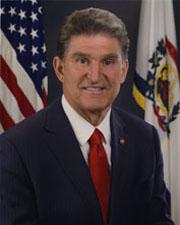 Sen. Joe Manchin III (D-WV)
Sen. Joe Manchin III (D-WV)Submitted May 19, 2021
Legislative Activity
Stay on top of the latest movement without scrolling through every action
Floor
Latest Action
Senate amendment submitted
May 19, 2021
Text
Submitted
SA 1577. Mr. MANCHIN submitted an amendment intended to be proposed
to amendment SA 1502 proposed by Mr. Schumer to the bill S. 1260, to
establish a new Directorate for Technology and Innovation in the
National Science Foundation, to establish a regional technology hub
program, to require a strategy and report on economic security,
science, research, innovation, manufacturing, and job creation, to
establish a critical supply chain resiliency program, and for other
purposes;

[[Page S3101]]

which was ordered to lie on the table; as follows:

Beginning on page 683, strike line 1 and all that follows
through ``as applicable'' on page 776, line 1, and insert the
following:
(1) the Committee on Foreign Relations, the Committee on
Appropriations, and the Committee on Energy and Natural
Resources of the Senate; and
(2) the Committee on Foreign Affairs, the Committee on
Appropriations, and the Committee on Energy and Commerce of
the House of Representatives.

SEC. 3112. SENSE OF CONGRESS ON INTERNATIONAL QUALITY
INFRASTRUCTURE INVESTMENT STANDARDS.

(a) Sense of Congress.--It is the sense of Congress that
the United States should initiate collaboration among
governments, the private sector, and civil society to
encourage the adoption of the standards for quality global
infrastructure development advanced by the G20 at Osaka in
2018, including with respect to the following issues:
(1) Respect for the sovereignty of countries in which
infrastructure investments are made.
(2) Anti-corruption.
(3) Rule of law.
(4) Human rights and labor rights.
(5) Fiscal and debt sustainability.
(6) Social and governance safeguards.
(7) Transparency.
(8) Environmental and energy standards.
(b) Sense of Congress.--It is the sense of Congress that
the United States should launch a series of fora around the
world showcasing the commitment of the United States and
partners of the United States to high-quality development
cooperation, including with respect to the issues described
in subsection (a).

SEC. 3113. UNITED STATES SUPPORT FOR INFRASTRUCTURE.

(a) Findings.--The Global Infrastructure Coordinating
Committee (GICC) was established to coordinate the efforts of
the Department of State, the Department of Commerce, the
Department of the Treasury, the Department of Energy, the
Department of Transportation, the United States Agency for
International Development, the United States Trade and
Development Agency, the Development Finance Corporation, the
Export-Import Bank of the United States, and other agencies
to catalyze private sector investments around the world and
to coordinate the deployment of United States Government
technical assistance and development finance tools, including
project preparation services and commercial advocacy.
(b) Sense of Congress.--It is the sense of Congress that--
(1) the world's infrastructure needs, including in the
transport, energy, and digital sectors, are vast and growing;
(2) total or partial ownership or acquisition of, or a
significant financial stake or physical presence in, certain
types of infrastructure, including ports, energy grids, 5G
telecommunications networks, and undersea cables, can provide
an advantage to countries that do not share the interests and
values of the United States and its allies and partners, and
could therefore be deleterious to the interests and values of
the United States and its allies and partners;
(3) the United States must continue to prioritize support
for infrastructure projects that are physically secure,
financially viable, economically sustainable, and socially
responsible;
(4) achieving the objective outlined in paragraph (3)
requires the coordination of all United States Government
economic tools across the interagency, so that such tools are
deployed in a way to maximize United States interests and
that of its allies and partners;
(5) the GICC represents an important and concrete step
towards better communication and coordination across the
United States Government of economic tools relevant to
supporting infrastructure that is physically secure,
financially viable, economically sustainable, and socially
responsible, and should be continued; and
(6) the executive branch and Congress should have
consistent consultations on United States support for
strategic infrastructure projects, including how Congress can
support such initiatives in the future.
(c) Reporting Requirement.--Not later than 180 days after
the date of the enactment of this Act, and semi-annually
thereafter for 5 years, the Secretary of State, in
coordination with other Federal agencies that participate in
the GICC, and, as appropriate, the Director of National
Intelligence, shall submit to the appropriate committees of
Congress a report that identifies--
(1) current, pending, and future infrastructure projects,
particularly in the transport, energy, and digital sectors,
that the United States is supporting or will support through
financing, foreign assistance, technical assistance, or other
means;
(2) a detailed explanation of the United States and partner
country interests served by the United States providing
support to such projects; and
(3) a detailed description of any support provided by other
United States allies and partners to such projects.
(d) Form of Report.--The report required by subsection (a)
shall be submitted in unclassified form but may include a
classified annex.

SEC. 3114. INFRASTRUCTURE TRANSACTION AND ASSISTANCE NETWORK.

(a) Authority.--The Secretary of State is authorized to
establish an initiative, to be known as the ``Infrastructure
Transaction and Assistance Network'', under which the
Secretary of State, in consultation with other relevant
Federal agencies, including those represented on the Global
Infrastructure Coordinating Committee, may carry out various
programs to advance the development of sustainable,
transparent, and high-quality infrastructure in the Indo-
Pacific region by--
(1) strengthening capacity-building programs to improve
project evaluation processes, regulatory and procurement
environments, and project preparation capacity of countries
that are partners of the United States in such development;
(2) providing transaction advisory services and project
preparation assistance to support sustainable infrastructure;
and
(3) coordinating the provision of United States assistance
for the development of infrastructure, including
infrastructure that utilizes United States-manufactured goods
and services, and catalyzing investment led by the private
sector.
(b) Transaction Advisory Fund.--As part of the
``Infrastructure Transaction and Assistance Network''
described under subsection (a), the Secretary of State is
authorized to provide support, including through the
Transaction Advisory Fund, for advisory services to help
boost the capacity of partner countries to evaluate contracts
and assess the financial and environmental impacts of
potential infrastructure projects, including through
providing services such as--
(1) legal services;
(2) project preparation and feasibility studies;
(3) debt sustainability analyses;
(4) bid or proposal evaluation; and
(5) other services relevant to advancing the development of
sustainable, transparent, and high-quality infrastructure.
(c) Strategic Infrastructure Fund.----
(1) In general.--As part of the ``Infrastructure
Transaction and Assistance Network'' described under
subsection (a), the Secretary of State is authorized to
provide support, including through the Strategic
Infrastructure Fund, for technical assistance, project
preparation, pipeline development, and other infrastructure
project support.
(2) Joint infrastructure projects.--Funds authorized for
the Strategic Infrastructure Fund should be used in
coordination with the Department of Defense, the
International Development Finance Corporation, like-minded
donor partners, and multilateral banks, as appropriate, to
support joint infrastructure projects in the Indo-Pacific
region.
(3) Strategic infrastructure projects.--Funds authorized
for the Strategic Infrastructure Fund should be used to
support strategic infrastructure projects that are in the
national security interest of the United States and
vulnerable to strategic competitors.
(d) Authorization of Appropriations.--There is authorized
to be appropriated, for each of fiscal years 2022 to 2026,
$75,000,000 to the Infrastructure Transaction and Assistance
Network, of which $20,000,000 is to be provided for the
Transaction Advisory Fund.

SEC. 3115. STRATEGY FOR ADVANCED AND RELIABLE ENERGY
INFRASTRUCTURE.

(a) In General.--The President shall direct a
comprehensive, multi-year, whole of government effort, in
consultation with the private sector, to counter predatory
lending and financing by the Government of the People's
Republic of China, including support to companies
incorporated in the PRC that engage in such activities, in
the energy sectors of developing countries.
(b) Policy.--It is the policy of the United States to--
(1) regularly evaluate current and forecasted energy needs
and capacities of developing countries, and analyze the
presence and involvement of PRC state-owned industries and
other companies incorporated in the PRC, Chinese nationals
providing labor, and financing of energy projects, including
direct financing by the PRC government, PRC financial
institutions, or direct state support to state-owned
enterprises and other companies incorporated in the PRC;
(2) pursue strategic support and investment opportunities,
and diplomatic engagement on power sector reforms, to expand
the development and deployment of advanced energy
technologies in developing countries;
(3) offer financing, loan guarantees, grants, and other
financial products on terms that advance domestic economic
and local employment opportunities, utilize advanced energy
technologies, encourage private sector growth, and, when
appropriate United States equity and sovereign lending
products as alternatives to the predatory lending tools
offered by Chinese financial institutions;
(4) pursue partnerships with likeminded international
financial and multilateral institutions to leverage
investment in advanced energy technologies in developing
countries; and
(5) pursue bilateral partnerships focused on the
cooperative development of advanced energy technologies with
countries of strategic significance, particularly in the
Indo-Pacific region, to address the effects of energy
engagement by the PRC through predatory lending or other
actions that negatively impact other countries.
(c) Advanced Energy Technologies Exports.--Not later than
180 days after the date of the enactment of this Act, and
annually thereafter for 5 years, the Secretary of

[[Page S3102]]

State and the Secretary of Energy, shall submit to the
appropriate congressional committees a United States
Government strategy to increase United States exports of
advanced energy technologies to--
(1) improve energy security in allied and developing
countries;
(2) create open, efficient, rules-based, and transparent
energy markets;
(3) improve free, fair, and reciprocal energy trading
relationships; and
(4) expand access to affordable, reliable energy.

SEC. 3116. REPORT ON THE PEOPLE'S REPUBLIC OF CHINA'S
INVESTMENTS IN FOREIGN ENERGY DEVELOPMENT.

(a) In General.--No later than 180 days after the date of
the enactment of this Act, and annually thereafter for five
years, the Administrator of the United States Agency for
International Development, in consultation with the Secretary
of State through the Assistant Secretary for Energy Resources
and the Assistant Secretary for the Office of International
Affairs of the Department of Energy, shall submit to the
appropriate congressional committees a report that--
(1) identifies priority countries for deepening United
States engagement on energy matters, in accordance with the
economic and national security interests of the United States
and where deeper energy partnerships are most achievable;
(2) describes the involvement of the PRC government and
companies incorporated in the PRC in the development,
operation, financing, or ownership of energy generation
facilities, transmission infrastructure, or energy resources
in the countries identified in paragraph (1);
(3) evaluates strategic or security concerns and
implications for United States national interests and the
interests of the countries identified in paragraph (1), with
respect to the PRC's involvement and influence in developing
country energy production or transmission; and
(4) outlines current and planned efforts by the United
States to partner with the countries identified in paragraph
(1) on energy matters that support shared interests between
the United States and such countries.
(b) Publication.--The assessment required in subsection (a)
shall be published on the United States Agency for
International Development's website.

Subtitle C--Digital Technology and Connectivity

SEC. 3121. SENSE OF CONGRESS ON DIGITAL TECHNOLOGY ISSUES.

(a) Leadership in International Standards Setting.--It is
the sense of Congress that the United States must lead in
international bodies that set the governance norms and rules
for critical digitally enabled technologies in order to
ensure that these technologies operate within a free, secure,
interoperable, and stable digital domain.
(b) Countering Digital Authoritarianism.--It is the sense
of Congress that the United States, along with allies and
partners, should lead an international effort that utilizes
all of the economic and diplomatic tools at its disposal to
combat the expanding use of information and communications
technology products and services to surveil, repress, and
manipulate populations (also known as ``digital
authoritarianism'').
(c) Negotiations for Digital Trade Agreements or
Arrangements.--It is the sense of Congress that the United
States Trade Representative should negotiate bilateral and
plurilateral agreements or arrangements relating to digital
goods with the European Union, Japan, Taiwan, the member
countries of the Five Eyes intelligence-sharing alliance, and
other nations, as appropriate.
(d) Freedom of Information in the Digital Age.--It is the
sense of Congress that the United States should lead a global
effort to ensure that freedom of information, including the
ability to safely consume or publish information without fear
of undue reprisals, is maintained as the digital domain
becomes an increasingly integral mechanism for communication.
(e) Efforts to Ensure Technological Development Does Not
Threaten Democratic Governance or Human Rights.--It is the
sense of Congress that the United States should lead a global
effort to develop and adopt a set of common principles and
standards for critical technologies to ensure that the use of
such technologies cannot be abused by malign actors, whether
they are governments or other entities, and that they do not
threaten democratic governance or human rights.
(f) Formation of Digital Technology Trade Alliance.--It is
the sense of Congress that the United States should examine
opportunities for diplomatic negotiations regarding the
formation of mutually beneficial alliances relating to
digitally-enabled technologies and services.

SEC. 3122. DIGITAL CONNECTIVITY AND CYBERSECURITY
PARTNERSHIP.

(a) Digital Connectivity and Cybersecurity Partnership.--
The Secretary of State is authorized to establish a program,
to be known as the ``Digital Connectivity and Cybersecurity
Partnership'' to help foreign countries--
(1) expand and increase secure Internet access and digital
infrastructure in emerging markets;
(2) protect technological assets, including data;
(3) adopt policies and regulatory positions that foster and
encourage open, interoperable, reliable, and secure internet,
the free flow of data, multi-stakeholder models of internet
governance, and pro-competitive and secure information and
communications technology (ICT) policies and regulations;
(4) promote exports of United States ICT goods and services
and increase United States company market share in target
markets;
(5) promote the diversification of ICT goods and supply
chain services to be less reliant on PRC imports; and
(6) build cybersecurity capacity, expand interoperability,
and promote best practices for a national approach to
cybersecurity.
(b) Implementation Plan.--Not later than 180 days after the
date of the enactment of this Act, the Secretary of State
shall submit to the appropriate committees of Congress an
implementation plan for the coming year to advance the goals
identified in subsection (a).
(c) Consultation.--In developing the action plan required
by subsection (b), the Secretary of State shall consult
with--
(1) the appropriate congressional committees;
(2) leaders of the United States industry;
(3) other relevant technology experts, including the Open
Technology Fund;
(4) representatives from relevant United States Government
agencies; and
(5) representatives from like-minded allies and partners.
(d) Semiannual Briefing Requirement.--Not later than 180
days after the date of the enactment of this Act, and
annually thereafter for 5 years, the Secretary of State shall
provide the appropriate congressional committees a briefing
on the implementation of the plan required by subsection (b).
(e) Authorization of Appropriations.--There is authorized
to be appropriated $100,000,000 for each of fiscal years 2022
through 2026 to carry out this section.

SEC. 3123. STRATEGY FOR DIGITAL INVESTMENT BY UNITED STATES
INTERNATIONAL DEVELOPMENT FINANCE CORPORATION.

(a) In General.--Not later than one year after the date of
the enactment of this Act, the United States International
Development Finance Corporation, in consultation with the
Administrator of the United States Agency for International
Development, shall submit to the appropriate congressional
committees a strategy for support of private sector digital
investment that--
(1) includes support for information-connectivity projects,
including projects relating to telecommunications equipment,
mobile payments, smart cities, and undersea cables;
(2) in providing such support, prioritizes private sector
projects--
(A) of strategic value to the United States;
(B) of mutual strategic value to the United States and
allies and partners of the United States; and
(C) that will advance broader development priorities of the
United States;
(3) helps to bridge the digital gap in less developed
countries and among women and minority communities within
those countries;
(4) facilitates coordination, where appropriate, with
multilateral development banks and development finance
institutions of other countries with respect to projects
described in paragraph (1), including through the provision
of co-financing and co-guarantees; and
(5) identifies the human and financial resources available
to dedicate to such projects and assesses any constraints to
implementing such projects.
(b) Limitation.--
(1) In general.--The Corporation may not provide support
for projects in which entities described in paragraph (2)
participate.
(2) Entities described.--An entity described in this
subparagraph is an entity based in, or owned or controlled by
the government of, a country, including the People's Republic
of China, that does not protect internet freedom of
expression and privacy.

Subtitle D--Countering Chinese Communist Party Malign Influence

SECTION 3131. SHORT TITLE.

This subtitle may be cited as the ``Countering Chinese
Communist Party Malign Influence Act''.

SEC. 3132. AUTHORIZATION OF APPROPRIATIONS FOR COUNTERING
CHINESE INFLUENCE FUND.

(a) Countering Chinese Influence Fund.--There is authorized
to be appropriated $300,000,000 for each of fiscal years 2022
through 2026 for the Countering Chinese Influence Fund to
counter the malign influence of the Chinese Communist Party
globally. Amounts appropriated pursuant to this authorization
are authorized to remain available until expended and shall
be in addition to amounts otherwise authorized to be
appropriated to counter such influence.
(b) Consultation Required.--The obligation of funds
appropriated or otherwise made available to counter the
malign influence of the Chinese Communist Party globally
shall be subject to prior consultation with, and consistent
with section 634A of the Foreign Assistance Act of 1961 (22
U.S.C. 2394-1), the regular notification procedures of--
(1) the Committee on Foreign Relations and the Committee on
Appropriations of the Senate; and
(2) the Committee on Foreign Affairs and the Committee on
Appropriations of the House of Representatives.

[[Page S3103]]

(c) Policy Guidance, Coordination, and Approval.--
(1) Coordinator.--The Secretary of State shall designate an
existing senior official of the Department at the rank of
Assistant Secretary or above to provide policy guidance,
coordination, and approval for the obligation of funds
authorized pursuant to subsection (a).
(2) Duties.--The senior official designated pursuant to
paragraph (1) shall be responsible for--
(A) on an annual basis, the identification of specific
strategic priorities for using the funds authorized to be
appropriated by subsection (a), such as geographic areas of
focus or functional categories of programming that funds are
to be concentrated within, consistent with the national
interests of the United States and the purposes of this
division;
(B) the coordination and approval of all programming
conducted using the funds authorized to be appropriated by
subsection (a), based on a determination that such
programming directly counters the malign influence of the
Chinese Communist Party, including specific activities or
policies advanced by the Chinese Communist Party, pursuant to
the strategic objectives of the United States, as established
in the 2017 National Security Strategy, the 2018 National
Defense Strategy, and other relevant national and regional
strategies as appropriate;
(C) ensuring that all programming approved bears a
sufficiently direct nexus to such acts by the Chinese
Communist Party described in subsection (d) and adheres to
the requirements outlined in subsection (e); and
(D) conducting oversight, monitoring, and evaluation of the
effectiveness of all programming conducted using the funds
authorized to be appropriated by subsection (a) to ensure
that it advances United States interests and degrades the
ability of the Chinese Communist Party, to advance activities
that align with subsection (d) of this section.
(3) Interagency coordination.--The senior official
designated pursuant to paragraph (1) shall, in coordinating
and approving programming pursuant to paragraph (2), seek
to--
(A) conduct appropriate interagency consultation; and
(B) ensure, to the maximum extent practicable, that all
approved programming functions in concert with other Federal
activities to counter the malign influence and activities of
the Chinese Communist Party.
(4) Assistant coordinator.--The Administrator of the United
States Agency for International Development shall designate a
senior official at the rank of Assistant Administrator or
above to assist and consult with the senior official
designated pursuant to paragraph (1).
(d) Malign Influence.--In this section, the term ``malign
influence'' with respect to the Chinese Communist Party
should be construed to include acts conducted by the Chinese
Communist Party or entities acting on its behalf that--
(1) undermine a free and open international order;
(2) advance an alternative, repressive international order
that bolsters the Chinese Communist Party's hegemonic
ambitions and is characterized by coercion and dependency;
(3) undermine the national security or sovereignty of the
United States or other countries; or
(4) undermine the economic security of the United States or
other countries, including by promoting corruption.
(e) Countering Malign Influence.--In this section,
countering malign influence through the use of funds
authorized to be appropriated by subsection (a) shall include
efforts to--
(1) promote transparency and accountability, and reduce
corruption, including in governance structures targeted by
the malign influence of the Chinese Communist Party;
(2) support civil society and independent media to raise
awareness of and increase transparency regarding the negative
impact of activities related to the Belt and Road Initiative
and associated initiatives;
(3) counter transnational criminal networks that benefit,
or benefit from, the malign influence of the Chinese
Communist Party;
(4) encourage economic development structures that help
protect against predatory lending schemes, including support
for market-based alternatives in key economic sectors, such
as digital economy, energy, and infrastructure;
(5) counter activities that provide undue influence to the
security forces of the People's Republic of China;
(6) expose misinformation and disinformation of the Chinese
Communist Party's propaganda, including through programs
carried out by the Global Engagement Center; and
(7) counter efforts by the Chinese Communist Party to
legitimize or promote authoritarian ideology and governance
models.

SEC. 3133. FINDINGS ON CHINESE INFORMATION WARFARE AND MALIGN
INFLUENCE OPERATIONS.

(a) Findings.--Congress makes the following findings:
(1) In the report to Congress required under section
1261(b) of the John S. McCain National Defense Authorization
Act for Fiscal Year 2019 (Public Law 115-232), the President
laid out a broad range of malign activities conducted by the
Government of the People's Republic of China and its agents
and entities, including--
(A) propaganda and disinformation, in which ``Beijing
communicates its narrative through state-run television,
print, radio, and online organizations whose presence is
proliferating in the United States and around the world'';
(B) malign political influence operations, particularly
``front organizations and agents which target businesses,
universities, think tanks, scholars, journalists, and local
state and Federal officials in the United States and around
the world, attempting to influence discourse''; and
(C) malign financial influence operations, characterized as
the ``misappropriation of technology and intellectual
property, failure to appropriately disclose relationships
with foreign government sponsored entities, breaches of
contract and confidentiality, and manipulation of processes
for fair and merit-based allocation of Federal research and
development funding''.
(2) Chinese information warfare and malign influence
operations are ongoing. In January 2019, then-Director of
National Intelligence, Dan Coats, stated, ``China will
continue to use legal, political, and economic levers--such
as the lure of Chinese markets--to shape the information
environment. It is also capable of using cyber attacks
against systems in the United States to censor or suppress
viewpoints it deems politically sensitive.''.
(3) In February 2020, then-Director of the Federal Bureau
of Investigation, Christopher Wray, testified to the
Committee on the Judiciary of the House of Representatives
that the People's Republic of China has ``very active
[malign] foreign influence efforts in this country,'' with
the goal of ``trying to shift our policy and our public
opinion to be more pro-China on a variety of issues''.
(4) The PRC's information warfare and malign influence
operations continue to adopt new tactics and evolve in
sophistication. In May 2020, then-Special Envoy and
Coordinator of the Global Engagement Center (GEC), Lea
Gabrielle, stated that there was a convergence of Russian and
Chinese narratives surrounding COVID-19 and that the GEC had
``uncovered a new network of inauthentic Twitter accounts''
that it assessed was ``created with the intent to amplify
Chinese propaganda and disinformation''. In June 2020, Google
reported that Chinese hackers attempted to access email
accounts of the campaign staff of a presidential candidate.
(5) Chinese information warfare and malign influence
operations are a threat to the national security, democracy,
and economic systems of the United States and its allies and
partners. In October 2018, Vice President Michael R. Pence
warned that ``Beijing is employing a whole-of-government
approach, using political, economic, and military tools, as
well as propaganda, to advance its influence and benefit its
interests in the United States.''.
(6) In February 2018, then-Director of the Federal Bureau
of Investigation, Christopher Wray, testified to the Select
Committee on Intelligence of the Senate that the People's
Republic of China is taking advantage of and exploiting the
open research and development environments of United States
institutions of higher education to utilize ``professors,
scientists and students'' as ``nontraditional collectors'' of
information.
(b) Presidential Duties.--The President shall--
(1) protect our democratic institutions and processes from
malign influence from the People's Republic of China and
other foreign adversaries; and
(2) consistent with the policy specified in paragraph (1),
direct the heads of the appropriate Federal departments and
agencies to implement Acts of Congress to counter and deter
PRC and other foreign information warfare and malign
influence operations without delay, including--
(A) section 1043 of the John S. McCain National Defense
Authorization Act for Fiscal Year 2019 (Public Law 115-232),
which authorizes a coordinator position within the National
Security Council for countering malign foreign influence
operations and campaigns;
(B) section 228 of the National Defense Authorization Act
for Fiscal Year 2020 (Public Law 116-92), which authorizes
additional research of foreign malign influence operations on
social media platforms;
(C) section 847 of such Act, which requires the Secretary
of Defense to modify contracting regulations regarding
vetting for foreign ownership, control and influence in order
to mitigate risks from malign foreign influence;
(D) section 1239 of such Act, which requires an update of
the comprehensive strategy to counter the threat of malign
influence to include the People's Republic of China;
(E) section 5323 of such Act, which authorizes the Director
of National Intelligence to facilitate the establishment of
Social Media Data and Threat Analysis Center to detect and
study information warfare and malign influence operations
across social media platforms; and
(F) section 119C of the National Security Act of 1947 (50
U.S.C. 3059), which authorizes the establishment of a Foreign
Malign Influence Response Center inside the Office of the
Director of National Intelligence.

[[Page S3104]]

SEC. 3134. AUTHORIZATION OF APPROPRIATIONS FOR THE FULBRIGHT-
HAYS PROGRAM.

There are authorized to be appropriated, for the 5-year
period beginning on October 1, 2021, $105,500,000, to promote
education, training, research, and foreign language skills
through the Fulbright-Hays Program, in accordance with
section 102(b) of the Mutual Educational and Cultural
Exchange Act of 1961 (22 U.S.C. 2452(b)).

SEC. 3135. SENSE OF CONGRESS CONDEMNING ANTI-ASIAN RACISM AND
DISCRIMINATION.

(a) Findings.--Congress makes the following findings:
(1) Since the onset of the COVID-19 pandemic, crimes and
discrimination against Asians and those of Asian descent have
risen dramatically worldwide. In May 2020, United Nations
Secretary-General Antonio Guterres said ``the pandemic
continues to unleash a tsunami of hate and xenophobia,
scapegoating and scare-mongering'' and urged governments to
``act now to strengthen the immunity of our societies against
the virus of hate''.
(2) Asian American and Pacific Island (AAPI) workers make
up a large portion of the essential workers on the frontlines
of the COVID-19 pandemic, making up 8.5 percent of all
essential healthcare workers in the United States. AAPI
workers also make up a large share--between 6 percent and 12
percent based on sector--of the biomedical field.
(3) The United States Census notes that Americans of Asian
descent alone made up nearly 5.9 percent of the United States
population in 2019, and that Asian Americans are the fastest-
growing racial group in the United States, projected to
represent 14 percent of the United States population by 2065.
(b) Sense of Congress.--It is the sense of Congress that--
(1) the reprehensible attacks on people of Asian descent
and concerning increase in anti-Asian sentiment and racism in
the United States and around the world have no place in a
peaceful, civilized, and tolerant world;
(2) the United States is a diverse nation with a proud
tradition of immigration, and the strength and vibrancy of
the United States is enhanced by the diverse ethnic
backgrounds and tolerance of its citizens, including Asian
Americans and Pacific Islanders;
(3) the United States Government should encourage other
foreign governments to use the official and scientific names
for the COVID-19 pandemic, as recommended by the World Health
Organization and the Centers for Disease Control and
Prevention; and
(4) the United States Government and other governments
around the world must actively oppose racism and intolerance,
and use all available and appropriate tools to combat the
spread of anti-Asian racism and discrimination.

SEC. 3136. SUPPORTING INDEPENDENT MEDIA AND COUNTERING
DISINFORMATION.

(a) Findings.--Congress makes the following findings:
(1) The PRC is increasing its spending on public diplomacy
including influence campaigns, advertising, and investments
into state-sponsored media publications outside of the PRC.
These include, for example, more than $10,000,000,000 in
foreign direct investment in communications infrastructure,
platforms, and properties, as well as bringing journalists to
the PRC for training programs.
(2) The PRC, through the Voice of China, the United Front
Work Department (UFWD), and UFWD's many affiliates and
proxies, has obtained unfettered access to radio, television,
and digital dissemination platforms in numerous languages
targeted at citizens in other regions where the PRC has an
interest in promoting public sentiment in support of the
Chinese Communist Party and expanding the reach of its
misleading narratives and propaganda.
(3) Even in Western democracies, the PRC spends extensively
on influence operations, such as a $500,000,000 advertising
campaign to attract cable viewers in Australia and a more
than $20,000,000 campaign to influence United States public
opinion via the China Daily newspaper supplement.
(4) Radio Free Asia (referred to in this subsection as
``RFA''), a private nonprofit multimedia news corporation,
which broadcasts in 9 East Asian languages including
Mandarin, Uyghur, Cantonese, and Tibetan, has succeeded in
its mission to reach audiences in China and in the Central
Asia region despite the Chinese Government's--
(A) efforts to practice ``media sovereignty,'' which
restricts access to the free press within China; and
(B) campaign to spread disinformation to countries abroad.
(5) In 2019, RFA's Uyghur Service alerted the world to the
human rights abuses of Uyghur and other ethnic minorities in
China's Xinjiang Uyghur Autonomous Region.
(6) Gulchehra Hoja, a Uyghur journalist for RFA, received
the International Women's Media Foundation's Courage in
Journalism Award and a 2019 Magnitsky Human Rights Award for
her coverage of Xinjiang, while the Chinese Government
detained and harassed Ms. Hoja's China-based family and the
families of 7 other RFA journalists in retaliation for their
role in exposing abuses.
(7) In 2019 and 2020, RFA provided widely disseminated
print and digital coverage of the decline in freedom in Hong
Kong and the student-led protests of the extradition law.
(8) In March 2020, RFA exposed efforts by the Chinese
Government to underreport the number of fatalities from the
novel coronavirus outbreak in Wuhan Province, China.
(b) The United States Agency for Global Media.--The United
States Agency for Global Media (USAGM) and affiliate Federal
and non-Federal entities shall undertake the following
actions to support independent journalism, counter
disinformation, and combat surveillance in countries where
the Chinese Communist Party and other malign actors are
promoting disinformation, propaganda, and manipulated media
markets:
(1) Radio Free Asia (RFA) shall expand domestic coverage
and digital programming for all RFA China services and other
affiliate language broadcasting services.
(2) USAGM shall increase funding for RFA's Mandarin,
Tibetan, Uyghur, and Cantonese language services.
(3) Voice of America shall establish a real-time
disinformation tracking tool similar to Polygraph for Russian
language propaganda and misinformation.
(4) USAGM shall expand existing training and partnership
programs that promote journalistic standards, investigative
reporting, cybersecurity, and digital analytics to help
expose and counter false CCP narratives.
(5) The Open Technology Fund shall continue and expand its
work to support tools and technology to circumvent censorship
and surveillance by the CCP, both inside the PRC as well as
abroad where the PRC has exported censorship technology, and
increase secure peer-to-peer connectivity and privacy tools.
(6) Voice of America shall continue and review
opportunities to expand its mission of providing timely,
accurate, and reliable news, programming, and content about
the United States, including news, culture, and values.
(7) The networks and grantees of the United States Agency
for Global Media shall continue their mission of providing
credible and timely news coverage inclusive of the People's
Republic of China's activities in Xinjiang, including China's
ongoing genocide and crimes against humanity with respect to
Uyghurs and other Turkic Muslims, including through strategic
amplification of Radio Free Asia's coverage, in its news
programming in majority-Muslim countries.
(c) Authorization of Appropriations.--There is authorized
to be appropriated, for each of fiscal years 2022 through
2026 for the United States Agency for Global Media,
$100,000,000 for ongoing and new programs to support local
media, build independent media, combat Chinese disinformation
inside and outside of China, invest in technology to subvert
censorship, and monitor and evaluate these programs, of
which--
(1) not less than $70,000,000 shall be directed to a grant
to Radio Free Asia language services;
(2) not less than $20,000,000 shall be used to serve
populations in China through Mandarin, Cantonese, Uyghur, and
Tibetan language services; and
(3) not less than $5,500,000 shall be used for digital
media services--
(A) to counter propaganda of non-Chinese populations in
foreign countries; and
(B) to counter propaganda of Chinese populations in China
through ``Global Mandarin'' programming.
(d) Reporting Requirement.--
(1) In general.--Not later than 180 days after the date of
the enactment of this Act, and annually thereafter for 5
years, the Chief Executive Office of the United States Agency
for Global Media, in consultation with the President of the
Open Technology Fund, shall submit a report to the
appropriate congressional committees that outlines--
(A) the amount of funding appropriated pursuant to
subsection (c) that was provided to the Open Technology Fund
for purposes of circumventing Chinese Communist Party
censorship of the internet within the borders of the People's
Republic of China;
(B) the progress that has been made in developing the
technology referred to in subparagraph (A), including an
assessment of whether the funding provided was sufficient to
achieve meaningful penetration of People's Republic of
China's censors; and
(C) the impact of Open Technology Fund tools on piercing
Chinese Communist Party internet censorship efforts,
including the metrics used to measure that impact and the
trajectory of that impact over the previous 5 years.
(2) Form of report.--The report required under paragraph
(1) shall be submitted in unclassified form, but may include
a classified annex.
(e) Support for Local Media.--The Secretary of State,
acting through the Assistant Secretary of State for
Democracy, Human Rights, and Labor and in coordination with
the Administrator of the United States Agency for
International Development, shall support and train
journalists on investigative techniques necessary to ensure
public accountability related to the Belt and Road
Initiative, the PRC's surveillance and digital export of
technology, and other influence operations abroad direct or
directly supported by the Communist Party or the Chinese
government.
(f) Internet Freedom Programs.--The Bureau of Democracy,
Human Rights, and Labor shall continue to support internet
freedom programs.
(f) Authorization of Appropriations.--There is authorized
to be appropriated to the

[[Page S3105]]

Department of State, for each of fiscal years 2022 through
2026, $170,000,000 for ongoing and new programs in support of
press freedom, training, and protection of journalists.

SEC. 3137. GLOBAL ENGAGEMENT CENTER.

(a) Finding.--Congress established the Global Engagement
Center to ``direct, lead, and coordinate efforts'' of the
Federal Government to ``recognize, understand, expose, and
counter foreign state and non-state propaganda and
disinformation globally''.
(b) Extension.--Section 1287(j) of the National Defense
Authorization Act for Fiscal Year 2017 (22 U.S.C. 2656 note)
is amended by striking ``the date that is 8 years after the
date of the enactment of this Act'' and inserting ``December
31, 2027''.
(c) Sense of Congress.--It is the sense of Congress that
the Global Engagement Center should expand its coordinating
capacity through the exchange of liaison officers with
Federal departments and agencies that manage aspects of
identifying and countering foreign disinformation, including
the National Counterterrorism Center at the Office of the
Director of National Intelligence and from combatant
commands.
(d) Hiring Authority.--Notwithstanding any other provision
of law, the Secretary of State, during the five year period
beginning on the date of the enactment of this Act and solely
to carry out functions of the Global Engagement Center, may--
(1) appoint employees without regard to the provisions of
title 5, United States Code, regarding appointments in the
competitive service; and
(2) fix the basic compensation of such employees without
regard to chapter 51 and subchapter III of chapter 53 of such
title regarding classification and General Schedule pay
rates.
(e) Authorization of Appropriations.--There is authorized
to be appropriated $150,000,000 for fiscal year 2022 for the
Global Engagement Center to counter foreign state and non-
state sponsored propaganda and disinformation.

SEC. 3138. REVIEW BY COMMITTEE ON FOREIGN INVESTMENT IN THE
UNITED STATES OF CERTAIN FOREIGN GIFTS TO AND
CONTRACTS WITH INSTITUTIONS OF HIGHER
EDUCATION.

(a) Amendments to Defense Production Act of 1950.--
(1) Definition of covered transaction.--Subsection (a)(4)
of section 721 of the Defense Production Act of 1950 (50
U.S.C. 4565) is amended--
(A) in subparagraph (A)--
(i) in clause (i), by striking ``; and'' and inserting a
semicolon;
(ii) in clause (ii), by striking the period at the end and
inserting ``; and''; and
(iii) by adding at the end the following:
``(iii) any transaction described in subparagraph (B)(vi)
proposed or pending after the date of the enactment of the
China Strategic Competition Act of 2021.'';
(B) in subparagraph (B), by adding at the end the
following:
``(vi) Any gift to an institution of higher education from
a foreign person, or the entry into a contract by such an
institution with a foreign person, if--

``(I)(aa) the value of the gift or contract equals or
exceeds $1,000,000; or
``(bb) the institution receives, directly or indirectly,
more than one gift from or enters into more than one
contract, directly or indirectly, with the same foreign
person for the same purpose the aggregate value of which,
during the period of 2 consecutive calendar years, equals or
exceeds $1,000,000; and
``(II) the gift or contract--

``(aa) relates to research, development, or production of
critical technologies and provides the foreign person
potential access to any material nonpublic technical
information (as defined in subparagraph (D)(ii)) in the
possession of the institution; or
``(bb) is a restricted or conditional gift or contract (as
defined in section 117(h) of the Higher Education Act of 1965
(20 U.S.C. 1011f(h))) that establishes control.''; and
(C) by adding at the end the following:
``(G) Foreign gifts to and contracts with institutions of
higher education.--For purposes of subparagraph (B)(vi):
``(i) Contract.--The term `contract' means any agreement
for the acquisition by purchase, lease, or barter of property
or services by a foreign person, for the direct benefit or
use of either of the parties.
``(ii) Gift.--The term `gift' means any gift of money or
property.
``(iii) Institution of higher education.--The term
`institution of higher education' means any institution,
public or private, or, if a multicampus institution, any
single campus of such institution, in any State--

``(I) that is legally authorized within such State to
provide a program of education beyond secondary school;
``(II) that provides a program for which the institution
awards a bachelor's degree (or provides not less than a 2-
year program which is acceptable for full credit toward such
a degree) or a more advanced degree;
``(III) that is accredited by a nationally recognized
accrediting agency or association; and
``(IV) to which the Federal Government extends Federal
financial assistance (directly or indirectly through another
entity or person), or that receives support from the
extension of Federal financial assistance to any of the
institution's subunits.''.

(2) Mandatory declarations.--Subsection
(b)(1)(C)(v)(IV)(aa) of such section is amended by adding at
the end the following: ``Such regulations shall require a
declaration under this subclause with respect to a covered
transaction described in subsection (a)(4)(B)(vi)(II)(aa).''.
(3) Factors to be considered.--Subsection (f) of such
section is amended--
(A) in paragraph (10), by striking ``; and'' and inserting
a semicolon;
(B) by redesignating paragraph (11) as paragraph (12); and
(C) by inserting after paragraph (10) the following:
``(11) as appropriate, and particularly with respect to
covered transactions described in subsection (a)(4)(B)(vi),
the importance of academic freedom at institutions of higher
education in the United States; and''.
(4) Membership of cfius.--Subsection (k) of such section is
amended--
(A) in paragraph (2)--
(i) by redesignating subparagraphs (H), (I), and (J) as
subparagraphs (I), (J), and (K), respectively; and
(ii) by inserting after subparagraph (G) the following:
``(H) In the case of a covered transaction involving an
institution of higher education (as defined in subsection
(a)(4)(G)), the Secretary of Education.''; and
(B) by adding at the end the following:
``(8) Inclusion of other agencies on committee.--In
considering including on the Committee under paragraph (2)(K)
the heads of other executive departments, agencies, or
offices, the President shall give due consideration to the
heads of relevant research and science agencies, departments,
and offices, including the Secretary of Health and Human
Services, the Director of the National Institutes of Health,
and the Director of the National Science Foundation.''.
(5) Contents of annual report relating to critical
technologies.--Subsection (m)(3) of such section is amended--
(A) in subparagraph (B), by striking ``; and'' and
inserting a semicolon;
(B) in subparagraph (C), by striking the period at the end
and inserting a semicolon; and
(C) by adding at the end the following:
``(D) an evaluation of whether there are foreign malign
influence or espionage activities directed or directly
assisted by foreign governments against institutions of
higher education (as defined in subsection (a)(4)(G)) aimed
at obtaining research and development methods or secrets
related to critical technologies; and
``(E) an evaluation of, and recommendation for any changes
to, reviews conducted under this section that relate to
institutions of higher education, based on an analysis of
disclosure reports submitted to the chairperson under section
117(a) of the Higher Education Act of 1965 (20 U.S.C.
1011f(a)).''.
(b) Inclusion of CFIUS in Reporting on Foreign Gifts Under
Higher Education Act of 1965.--Section 117 of the Higher
Education Act of 1965 (20 U.S.C. 1011f) is amended--
(1) in subsection (a), by inserting after ``the Secretary''
the following: ``and the Secretary of the Treasury (in the
capacity of the Secretary as the chairperson of the Committee
on Foreign Investment in the United States under section
721(k)(3) of the Defense Production Act of 1950 (50 U.S.C.
4565(k)(3)))''; and
(2) in subsection (d)--
(A) in paragraph (1)--
(i) by striking ``with the Secretary'' and inserting ``with
the Secretary and the Secretary of the Treasury''; and
(ii) by striking ``to the Secretary'' and inserting ``to
each such Secretary''; and
(B) in paragraph (2), by striking ``with the Secretary''
and inserting ``with the Secretary and the Secretary of the
Treasury''.
(c) Effective Date; Applicability.--The amendments made by
subsection (a) shall--
(1) take effect on the date of the enactment of this Act,
subject to the requirements of subsections (d) and (e); and
(2) apply with respect to any covered transaction the
review or investigation of which is initiated under section
721 of the Defense Production Act of 1950 on or after the
date that is 30 days after the publication in the Federal
Register of the notice required under subsection (e)(2).
(d) Regulations.--
(1) In general.--The Committee on Foreign Investment in the
United States (in this section referred to as the
``Committee''), which shall include the Secretary of
Education for purposes of this subsection, shall prescribe
regulations as necessary and appropriate to implement the
amendments made by subsection (a).
(2) Elements.--The regulations prescribed under paragraph
(1) shall include--
(A) regulations accounting for the burden on institutions
of higher education likely to result from compliance with the
amendments made by subsection (a), including structuring
penalties and filing fees to reduce such burdens, shortening
timelines for reviews and investigations, allowing for
simplified and streamlined declaration and notice
requirements, and implementing any procedures necessary to
protect academic freedom; and
(B) guidance with respect to--
(i) which gifts and contracts described in described in
clause (vi)(II)(aa) of subsection (a)(4)(B) of section 721 of
the Defense Production Act of 1950, as added by subsection
(a)(1), would be subject to filing mandatory declarations
under subsection (b)(1)(C)(v)(IV) of that section; and
(ii) the meaning of ``control'', as defined in subsection
(a) of that section, as that term applies to covered
transactions described in

[[Page S3106]]

clause (vi) of paragraph (4)(B) of that section, as added by
subsection (a)(1).
(3) Issuance of final rule.--The Committee shall issue a
final rule to carry out the amendments made by subsection (a)
after assessing the findings of the pilot program required by
subsection (e).
(e) Pilot Program.--
(1) In general.--Beginning on the date that is 30 days
after the publication in the Federal Register of the matter
required by paragraph (2) and ending on the date that is 570
days thereafter, the Committee shall conduct a pilot program
to assess methods for implementing the review of covered
transactions described in clause (vi) of section 721(a)(4)(B)
of the Defense Production Act of 1950, as added by subsection
(a)(1).
(2) Proposed determination.--Not later than 270 days after
the date of the enactment of this Act, the Committee shall,
in consultation with the Secretary of Education, publish in
the Federal Register--
(A) a proposed determination of the scope of and procedures
for the pilot program required by paragraph (1);
(B) an assessment of the burden on institutions of higher
education likely to result from compliance with the pilot
program;
(C) recommendations for addressing any such burdens,
including shortening timelines for reviews and
investigations, structuring penalties and filing fees, and
simplifying and streamlining declaration and notice
requirements to reduce such burdens; and
(D) any procedures necessary to ensure that the pilot
program does not infringe upon academic freedom.
(3) Report on findings.--Upon conclusion of the pilot
program required by paragraph (1), the Committee shall submit
to Congress a report on the findings of that pilot program
that includes--
(A) a summary of the reviews conducted by the Committee
under the pilot program and the outcome of such reviews;
(B) an assessment of any additional resources required by
the Committee to carry out this section or the amendments
made by subsection (a);
(C) findings regarding the additional burden on
institutions of higher education likely to result from
compliance with the amendments made by subsection (a) and any
additional recommended steps to reduce those burdens; and
(D) any recommendations for Congress to consider regarding
the scope or procedures described in this section or the
amendments made by subsection (a).

SEC. 3139. POST-EMPLOYMENT RESTRICTIONS ON SENATE-CONFIRMED
OFFICIALS AT THE DEPARTMENT OF STATE.

(a) Sense of Congress.--It is the sense of Congress that--
(1) Congress and the executive branch have recognized the
importance of preventing and mitigating the potential for
conflicts of interest following government service, including
with respect to senior United States officials working on
behalf of foreign governments; and
(2) Congress and the executive branch should jointly
evaluate the status and scope of post-employment
restrictions.
(b) Restrictions.--Section 841 of the State Department
Basic Authorities Act of 1956 (22 U.S.C. 2651a) is amended by
adding at the end the following new subsection:
``(i) Extended Post-employment Restrictions for Certain
Senate-confirmed Officials.--
``(1) Secretary of state and deputy secretary of state.--
With respect to a person serving as the Secretary of State or
Deputy Secretary of State, the restrictions described in
section 207(f)(1) of title 18, United States Code, shall
apply to representing, aiding, or advising a foreign
governmental entity before an officer or employee of the
executive branch of the United States at any time after the
termination of that person's service as Secretary or Deputy
Secretary.
``(2) Under secretaries, assistant secretaries, and
ambassadors.--With respect to a person serving as an Under
Secretary, Assistant Secretary, or Ambassador at the
Department of State or the United States Permanent
Representative to the United Nations, the restrictions
described in section 207(f)(1) of title 18, United States
Code, shall apply to representing, aiding, or advising a
foreign governmental entity before an officer or employee of
the executive branch of the United States for 3 years after
the termination of that person's service in a position
described in this paragraph, or the duration of the term or
terms of the President who appointed that person to their
position, whichever is longer.
``(3) Penalties and injunctions.--Any violations of the
restrictions in paragraphs (1) or (2) shall be subject to the
penalties and injunctions provided for under section 216 of
title 18, United States Code.
``(4) Definitions.--In this subsection:
`` ``(A) The term `foreign governmental entity' includes
any person employed by--
``(i) any department, agency, or other entity of a foreign
government at the national, regional, or local level;
``(ii) any governing party or coalition of a foreign
government at the national, regional, or local level; or
``(iii) any entity majority-owned or majority-controlled by
a foreign government at the national, regional, or local
level.
``(B) The term `representation' does not include
representation by an attorney, who is duly licensed and
authorized to provide legal advice in a United States
jurisdiction, of a person or entity in a legal capacity or
for the purposes of rendering legal advice.
``(5) Effective date.--The restrictions in this subsection
shall apply only to persons who are appointed by the
President to the positions referenced in this subsection on
or after 120 days after the date of the enactment of the
Strategic Competition Act of 2021.
``(6) Notice of restrictions.--Any person subject to the
restrictions of this subsection shall be provided notice of
these restrictions by the Department of State upon
appointment by the President, and subsequently upon
termination of service with the Department of State.''.

SEC. 3140. SENSE OF CONGRESS ON PRIORITIZING NOMINATION OF
QUALIFIED AMBASSADORS TO ENSURE PROPER
DIPLOMATIC POSITIONING TO COUNTER CHINESE
INFLUENCE.

It is the sense of Congress that it is critically important
for the President to nominate qualified ambassadors as
quickly as possible, especially for countries in Central and
South America, to ensure that the United States is
diplomatically positioned to counter Chinese influence
efforts in foreign countries.

SEC. 3141. CHINA CENSORSHIP MONITOR AND ACTION GROUP.

(a) Definitions.--In this section:
(1) Qualified research entity.--The term ``qualified
research entity'' means an entity that--
(A) is a nonpartisan research organization or a federally
funded research and development center;
(B) has appropriate expertise and analytical capability to
write the report required under subsection (c); and
(C) is free from any financial, commercial, or other
entanglements, which could undermine the independence of such
report or create a conflict of interest or the appearance of
a conflict of interest, with--
(i) the Government of the People's Republic of China;
(ii) the Chinese Communist Party;
(iii) any company incorporated in the People's Republic of
China or a subsidiary of such company; or
(iv) any company or entity incorporated outside of the
People's Republic of China that is believed to have a
substantial financial or commercial interest in the People's
Republic of China.
(2) United states person.--The term ``United States
person'' means--
(A) a United States citizen or an alien lawfully admitted
for permanent residence to the United States; or
(B) an entity organized under the laws of the United States
or any jurisdiction within the United States, including a
foreign branch of such an entity.
(b) China Censorship Monitor and Action Group.--
(1) In general.--The President shall establish an
interagency task force, which shall be known as the ``China
Censorship Monitor and Action Group'' (referred to in this
subsection as the ``Task Force'').
(2) Membership.--The President shall--
(A) appoint the chair of the Task Force from among the
staff of the National Security Council;
(B) appoint the vice chair of the Task Force from among the
staff of the National Economic Council; and
(C) direct the head of each of the following executive
branch agencies to appoint personnel to participate in the
Task Force:
(i) The Department of State.
(ii) The Department of Commerce.
(iii) The Department of the Treasury.
(iv) The Department of Justice.
(v) The Office of the United States Trade Representative.
(vi) The Office of the Director of National Intelligence,
and other appropriate elements of the intelligence community
(as defined in section 3 of the National Security Act of 1947
(50 U.S.C. 3003)).
(vii) The Federal Communications Commission.
(viii) The United States Agency for Global Media.
(ix) Other agencies designated by the President.
(3) Responsibilities.--The Task Force shall--
(A) oversee the development and execution of an integrated
Federal Government strategy to monitor and address the
impacts of efforts directed, or directly supported, by the
Government of the People's Republic of China to censor or
intimidate, in the United States or in any of its possessions
or territories, any United States person, including United
States companies that conduct business in the People's
Republic of China, which are exercising their right to
freedom of speech; and
(B) submit the strategy developed pursuant to subparagraph
(A) to the appropriate congressional committees not later
than 120 days after the date of the enactment of this Act.
(4) Meetings.--The Task Force shall meet not less
frequently than twice per year.
(5) Consultations.--The Task Force should regularly
consult, to the extent necessary and appropriate, with--
(A) Federal agencies that are not represented on the Task
Force;
(B) independent agencies of the United States Government
that are not represented on the Task Force;
(C) relevant stakeholders in the private sector and the
media; and

[[Page S3107]]

(D) relevant stakeholders among United States allies and
partners facing similar challenges related to censorship or
intimidation by the Government of the People's Republic of
China.
(6) Reporting requirements.--
(A) Annual report.--The Task Force shall submit an annual
report to the appropriate congressional committees that
describes, with respect to the reporting period--
(i) the strategic objectives and policies pursued by the
Task Force to address the challenges of censorship and
intimidation of United States persons while in the United
States or any of its possessions or territories, which is
directed or directly supported by the Government of the
People's Republic of China;
(ii) the activities conducted by the Task Force in support
of the strategic objectives and policies referred to in
clause (i); and
(iii) the results of the activities referred to in clause
(ii) and the impact of such activities on the national
interests of the United States.
(B) Form of report.--Each report submitted pursuant to
subparagraph (A) shall be unclassified, but may include a
classified annex.
(C) Congressional briefings.--Not later than 90 days after
the date of the enactment of this Act, and annually
thereafter, the Task Force shall provide briefings to the
appropriate congressional committees regarding the activities
of the Task Force to execute the strategy developed pursuant
to paragraph (3)(A).
(c) Report on Censorship and Intimidation of United States
Persons by the Government of the People's Republic of
China.--
(1) Report.--
(A) In general.--Not later than 90 days after the date of
the enactment of this Act, the Secretary of State shall
select and seek to enter into an agreement with a qualified
research entity that is independent of the Department of
State to write a report on censorship and intimidation in the
United States and its possessions and territories of United
States persons, including United States companies that
conduct business in the People's Republic of China, which is
directed or directly supported by the Government of the
People's Republic of China.
(B) Matters to be included.--The report required under
subparagraph (A) shall--
(i) assess major trends, patterns, and methods of the
Government of the People's Republic of China's efforts to
direct or directly support censorship and intimidation of
United States persons, including United States companies that
conduct business in the People's Republic of China, which are
exercising their right to freedom of speech;
(ii) assess, including through the use of illustrative
examples, as appropriate, the impact on and consequences for
United States persons, including United States companies that
conduct business in the People's Republic of China, that
criticize--

(I) the Chinese Communist Party;
(II) the Government of the People's Republic of China;
(III) the authoritarian model of government of the People's
Republic of China; or
(IV) a particular policy advanced by the Chinese Communist
Party or the Government of the People's Republic of China;

(iii) identify the implications for the United States of
the matters described in clauses (i) and (ii);
(iv) assess the methods and evaluate the efficacy of the
efforts by the Government of the People's Republic of China
to limit freedom of expression in the private sector,
including media, social media, film, education, travel,
financial services, sports and entertainment, technology,
telecommunication, and internet infrastructure interests;
(v) include policy recommendations for the United States
Government, including recommendations regarding collaboration
with United States allies and partners, to address censorship
and intimidation by the Government of the People's Republic
of China; and
(vi) include policy recommendations for United States
persons, including United States companies that conduct
business in China, to address censorship and intimidation by
the Government of the People's Republic of China.
(C) Applicability to united states allies and partners.--To
the extent practicable, the report required under
subparagraph (A) should identify implications and policy
recommendations that are relevant to United States allies and
partners facing censorship and intimidation directed or
directly supported by the Government of the People's Republic
of China.
(2) Submission of report.--
(A) In general.--Not later than 1 year after the date of
the enactment of this Act, the Secretary of State shall
submit the report written by the qualified research entity
selected pursuant to paragraph (1)(A) to the appropriate
congressional committees.
(B) Publication.--The report referred to in subparagraph
(A) shall be made accessible to the public online through
relevant United States Government websites.
(3) Federal government support.--The Secretary of State and
other Federal agencies selected by the President shall
provide the qualified research entity selected pursuant to
paragraph (1)(A) with timely access to appropriate
information, data, resources, and analyses necessary for such
entity to write the report described in paragraph (1)(A) in a
thorough and independent manner.
(d) Sunset.--This section shall terminate on the date that
is 5 years after the date of the enactment of this Act.

TITLE II--INVESTING IN ALLIANCES AND PARTNERSHIPS

Subtitle A--Strategic and Diplomatic Matters

SEC. 3201. APPROPRIATE COMMITTEES OF CONGRESS DEFINED.

In this subtitle, the term ``appropriate committees of
Congress'' means--
(1) the Committee on Foreign Relations and the Committee on
Appropriations of the Senate; and
(2) the Committee on Foreign Affairs and the Committee on
Appropriations of the House of Representatives.

SEC. 3202. UNITED STATES COMMITMENT AND SUPPORT FOR ALLIES
AND PARTNERS IN THE INDO-PACIFIC.

(a) Sense of Congress.--It is the sense of Congress that--
(1) the United States treaty alliances in the Indo-Pacific
provide a unique strategic advantage to the United States and
are among the Nation's most precious assets, enabling the
United States to advance its vital national interests, defend
its territory, expand its economy through international trade
and commerce, establish enduring cooperation among like-
minded countries, prevent the domination of the Indo-Pacific
and its surrounding maritime and air lanes by a hostile power
or powers, and deter potential aggressors;
(2) the Governments of the United States, Japan, the
Republic of Korea, Australia, the Philippines, and Thailand
are critical allies in advancing a free and open order in the
Indo-Pacific region and tackling challenges with unity of
purpose, and have collaborated to advance specific efforts of
shared interest in areas such as defense and security,
economic prosperity, infrastructure connectivity, and
fundamental freedoms;
(3) the United States greatly values other partnerships in
the Indo-Pacific region, including with India, Singapore,
Indonesia, Taiwan, New Zealand, and Vietnam as well as
regional architecture such as the Quad, the Association of
Southeast Asian Nations (ASEAN), and the Asia-Pacific
Economic Community (APEC), which are essential to further
shared interests;
(4) the security environment in the Indo-Pacific demands
consistent United States and allied commitment to
strengthening and advancing our alliances so that they are
postured to meet these challenges, and will require sustained
political will, concrete partnerships, economic, commercial,
and technological cooperation, consistent and tangible
commitments, high-level and extensive consultations on
matters of mutual interest, mutual and shared cooperation in
the acquisition of key capabilities important to allied
defenses, and unified mutual support in the face of
political, economic, or military coercion;
(5) fissures in the United States alliance relationships
and partnerships benefit United States adversaries and weaken
collective ability to advance shared interests;
(6) the United States must work with allies to prioritize
human rights throughout the Indo-Pacific region;
(7) as the report released in August 2020 by the Expert
Group of the International Military Council on Climate and
Security (IMCCS), titled ``Climate and Security in the Indo-
Asia Pacific'' noted, the Indo-Pacific region is one of the
regions most vulnerable to climate impacts and as former
Deputy Under Secretary of Defense for Installations and
Environment Sherri Goodman, Secretary General of IMCCS,
noted, climate shocks act as a threat multiplier in the Indo-
Pacific region, increasing humanitarian response costs and
impacting security throughout the region as sea levels rise,
fishing patterns shift, food insecurity rises, and storms
grow stronger and more frequent;
(8) the United State should continue to engage on and
deepen cooperation with allies and partners of the United
States in the Indo-Pacific region, as laid out in the Asia
Reassurance Initiative Act (Public Law 115-409), in the areas
of--
(A) forecasting environmental challenges;
(B) assisting with transnational cooperation on sustainable
uses of forest and water resources with the goal of
preserving biodiversity and access to safe drinking water;
(C) fisheries and marine resource conservation; and
(D) meeting environmental challenges and developing
resilience; and
(9) the Secretary of State, in coordination with the
Secretary of Defense and the Administrator of the United
States Agency for International Development, should
facilitate a robust interagency Indo-Pacific climate
resiliency and adaptation strategy focusing on internal and
external actions needed--
(A) to facilitate regional early recovery, risk reduction,
and resilience to weather-related impacts on strategic
interests of the United States and partners and allies of the
United States in the region; and
(B) to address humanitarian and food security impacts of
weather-related changes in the region.
(b) Statement of Policy.--It shall be the policy of the
United States--
(1) to deepen diplomatic, economic, and security
cooperation between and among the United States, Japan, the
Republic of Korea, Australia, the Philippines, and Thailand,
including through diplomatic engagement, regional
development, energy security and development, scientific and
health partnerships, educational and cultural exchanges,
missile defense, intelligence-sharing, space,

[[Page S3108]]

cyber, and other diplomatic and defense-related initiatives;
(2) to uphold our multilateral and bilateral treaty
obligations, including--
(A) defending Japan, including all areas under the
administration of Japan, under article V of the Treaty of
Mutual Cooperation and Security Between the United States of
America and Japan;
(B) defending the Republic of Korea under article III of
the Mutual Defense Treaty Between the United States and the
Republic of Korea;
(C) defending the Philippines under article IV of the
Mutual Defense Treaty Between the United States and the
Republic of the Philippines;
(D) defending Thailand under the 1954 Manila Pact and the
Thanat-Rusk communique of 1962; and
(E) defending Australia under article IV of the Australia,
New Zealand, United States Security Treaty;
(3) to strengthen and deepen the United States' bilateral
and regional partnerships, including with India, Taiwan,
ASEAN, and New Zealand;
(4) to cooperate with Japan, the Republic of Korea,
Australia, the Philippines, and Thailand to promote human
rights bilaterally and through regional and multilateral fora
and pacts; and
(5) to strengthen and advance diplomatic, economic, and
security cooperation with regional partners, such as Taiwan,
Vietnam, Malaysia, Singapore, Indonesia, and India.

SEC. 3203. SENSE OF CONGRESS ON COOPERATION WITH THE QUAD.

It is the sense of Congress that--
(1) the United States should reaffirm our commitment to
quadrilateral cooperation among Australia, India, Japan, and
the United States (the ``Quad'') to enhance and implement a
shared vision to meet shared regional challenges and to
promote a free, open, inclusive, resilient, and healthy Indo-
Pacific that is characterized by democracy, rule of law, and
market-driven economic growth, and is free from undue
influence and coercion;
(2) the United States should seek to expand sustained
dialogue and cooperation through the Quad with a range of
partners to support the rule of law, freedom of navigation
and overflight, peaceful resolution of disputes, democratic
values, and territorial integrity, and to uphold peace and
prosperity and strengthen democratic resilience;
(3) the United States should seek to expand avenues of
cooperation with the Quad, including more regular military-
to-military dialogues, joint exercises, and coordinated
policies related to shared interests such as protecting
cyberspace and advancing maritime security;
(4) the recent pledge from the first-ever Quad leaders
meeting on March 12, 2021, to respond to the economic and
health impacts of COVID-19, including expanding safe,
affordable, and effective vaccine production and equitable
access, and to address shared challenges, including in
cyberspace, critical technologies, counterterrorism, quality
infrastructure investment, and humanitarian assistance and
disaster relief, as well as maritime domains, further
advances the important cooperation among Quad nations that is
so critical to the Indo-Pacific region;
(5) building upon their partnership to help finance
1,000,000,000 or more COVID-19 vaccines by the end of 2022
for use in the Indo-Pacific region, the United States
International Development Finance Corporation, the Japan
International Cooperation Agency, and the Japan Bank for
International Cooperation, including through partnerships
with other multilateral development banks, should also
venture to finance development and infrastructure projects in
the Indo-Pacific region that are sustainable and offer a
viable alternative to the investments of the People's
Republic of China in that region under the Belt and Road
Initiative;
(6) in consultation with other Quad countries, the
President should establish clear deliverables for the 3 new
Quad Working Groups established on March 12, 2021, which
are--
(A) the Quad Vaccine Experts Working Group;
(B) the Quad Climate Working Group; and
(C) the Quad Critical and Emerging Technology Working
Group; and
(7) the formation of a Quad Intra-Parliamentary Working
Group could--
(A) sustain and deepen engagement between senior officials
of the Quad countries on a full spectrum of issues; and
(B) be modeled on the successful and long-standing
bilateral intra-parliamentary groups between the United
States and Mexico, Canada, and the United Kingdom, as well as
other formal and informal parliamentary exchanges.

SEC. 3204. ESTABLISHMENT OF QUAD INTRA-PARLIAMENTARY WORKING
GROUP.

(a) Establishment.--Not later than 30 days after the date
of the enactment of this Act, the Secretary of State shall
seek to enter into negotiations with the governments of
Japan, Australia, and India (collectively, with the United
States, known as the ``Quad'') with the goal of reaching a
written agreement to establish a Quad Intra-Parliamentary
Working Group for the purpose of acting on the
recommendations of the Quad Working Groups described in
section 203(6) and to facilitate closer cooperation on shared
interests and values.
(b) United States Group.--
(1) In general.--At such time as the governments of the
Quad countries enter into a written agreement described in
subsection (a), there shall be established a United States
Group, which shall represent the United States at the Quad
Intra-Parliamentary Working Group.
(2) Membership.--
(A) In general.--The United States Group shall be comprised
of not more than 24 Members of Congress.
(B) Appointment.--Of the Members of Congress appointed to
the United States Group under subparagraph (A)--
(i) half shall be appointed by the Speaker of the House of
Representatives from among Members of the House, not less
than 4 of whom shall be members of the Committee on Foreign
Affairs; and
(ii) half shall be appointed by the President Pro Tempore
of the Senate, based on recommendations of the majority
leader and minority leader of the Senate, from among Members
of the Senate, not less than 4 of whom shall be members of
the Committee on Foreign Relations (unless the majority
leader and minority leader determine otherwise).
(3) Meetings.--
(A) In general.--The United States Group shall seek to meet
not less frequently than annually with representatives and
appropriate staff of the legislatures of Japan, Australia,
and India, and any other country invited by mutual agreement
of the Quad countries.
(B) Limitation.--A meeting described in subparagraph (A)
may be held--
(i) in the United States;
(ii) in another Quad country during periods when Congress
is not in session; or
(iii) virtually.
(4) Chairperson and vice chairperson.--
(A) House delegation.--The Speaker of the House of
Representatives shall designate the chairperson or vice
chairperson of the delegation of the United States Group from
the House from among members of the Committee on Foreign
Affairs.
(B) Senate delegation.--The President Pro Tempore of the
Senate shall designate the chairperson or vice chairperson of
the delegation of the United States Group from the Senate
from among members of the Committee on Foreign Relations.
(5) Authorization of appropriations.--
(A) In general.--There is authorized to be appropriated
$1,000,000 for each of the fiscal years 2022 through 2025 for
the United States Group.
(B) Distribution of appropriations.--
(i) In general.--For each fiscal year for which an
appropriation is made for the United States Group, half of
the amount appropriated shall be available to the delegation
from the House of Representatives and half of the amount
shall be available to the delegation from the Senate.
(ii) Method of distribution.--The amounts available to the
delegations of the House of Representatives and the Senate
under clause (i) shall be disbursed on vouchers to be
approved by the chairperson of the delegation from the House
of Representatives and the chairperson of the delegation from
the Senate, respectively.
(6) Private sources.--The United States Group may accept
gifts or donations of services or property, subject to the
review and approval, as appropriate, of the Committee on
Ethics of the House of Representatives and the Committee on
Ethics of the Senate.
(7) Certification of expenditures.--The certificate of the
chairperson of the delegation from the House of
Representatives or the chairperson of the delegation from the
Senate of the United States Group shall be final and
conclusive upon the accounting officers in the auditing of
the accounts of the United States Group.
(8) Annual report.--The United States Group shall submit to
the Committee on Foreign Affairs of the House of
Representatives and the Committee on Foreign Relations of the
Senate a report for each fiscal year for which an
appropriation is made for the United States Group, which
shall include a description of its expenditures under such
appropriation.

SEC. 3205. STATEMENT OF POLICY ON COOPERATION WITH ASEAN.

It is the policy of the United States to--
(1) stand with the nations of the Association of Southeast
Asian Nations (ASEAN) as they respond to COVID-19 and support
greater cooperation in building capacity to prepare for and
respond to pandemics and other public health challenges;
(2) support high-level United States participation in the
annual ASEAN Summit held each year;
(3) reaffirm the importance of United States-ASEAN economic
engagement, including the elimination of barriers to cross-
border commerce, and support the ASEAN Economic Community's
(AEC) goals, including strong, inclusive, and sustainable
long-term economic growth and cooperation with the United
States that focuses on innovation and capacity-building
efforts in technology, education, disaster management, food
security, human rights, and trade facilitation, particularly
for ASEAN's poorest countries;
(4) urge ASEAN to continue its efforts to foster greater
integration and unity within the ASEAN community, as well as
to foster greater integration and unity with non-ASEAN
economic, political, and security partners, including Japan,
the Republic of Korea, Australia, the European Union, Taiwan,
and India;
(5) recognize the value of strategic economic initiatives
like United States-ASEAN Connect, which demonstrates a
commitment

[[Page S3109]]

to ASEAN and the AEC and builds upon economic relationships
in the region;
(6) support ASEAN nations in addressing maritime and
territorial disputes in a constructive manner and in pursuing
claims through peaceful, diplomatic, and, as necessary,
legitimate regional and international arbitration mechanisms,
consistent with international law, including through the
adoption of a code of conduct in the South China Sea that
represents the interests of all parties and promotes peace
and stability in the region;
(7) urge all parties involved in the maritime and
territorial disputes in the Indo-Pacific region, including
the Government of the People's Republic of China--
(A) to cease any current activities, and avoid undertaking
any actions in the future, that undermine stability, or
complicate or escalate disputes through the use of coercion,
intimidation, or military force;
(B) to demilitarize islands, reefs, shoals, and other
features, and refrain from new efforts to militarize,
including the construction of new garrisons and facilities
and the relocation of additional military personnel,
material, or equipment;
(C) to oppose actions by any country that prevent other
countries from exercising their sovereign rights to the
resources in their exclusive economic zones and continental
shelves by enforcing claims to those areas in the South China
Sea that lack support in international law; and
(D) to oppose unilateral declarations of administrative and
military districts in contested areas in the South China Sea;
(8) urge parties to refrain from unilateral actions that
cause permanent physical damage to the marine environment and
support the efforts of the National Oceanic and Atmospheric
Administration and ASEAN to implement guidelines to address
the illegal, unreported, and unregulated fishing in the
region;
(9) urge ASEAN member states to develop a common approach
to reaffirm the decision of the Permanent Court of
Arbitration's 2016 ruling in favor of the Republic of the
Philippines in the case against the People's Republic of
China's excessive maritime claims;
(10) reaffirm the commitment of the United States to
continue joint efforts with ASEAN to halt human smuggling and
trafficking in persons and urge ASEAN to create and
strengthen regional mechanisms to provide assistance and
support to refugees and migrants;
(11) support the Mekong-United States Partnership;
(12) support newly created initiatives with ASEAN
countries, including the United States-ASEAN Smart Cities
Partnership, the ASEAN Policy Implementation Project, the
United States-ASEAN Innovation Circle, and the United States-
ASEAN Health Futures;
(13) encourage the President to communicate to ASEAN
leaders the importance of promoting the rule of law and open
and transparent government, strengthening civil society, and
protecting human rights, including releasing political
prisoners, ceasing politically motivated prosecutions and
arbitrary killings, and safeguarding freedom of the press,
freedom of assembly, freedom of religion, and freedom of
speech and expression;
(14) support efforts by organizations in ASEAN that address
corruption in the public and private sectors, enhance anti-
bribery compliance, enforce bribery criminalization in the
private sector, and build beneficial ownership transparency
through the ASEAN-USAID PROSPECT project partnered with the
South East Asia Parties Against Corruption (SEA-PAC);
(15) support the Young Southeast Asian Leaders Initiative
as an example of a people-to-people partnership that provides
skills, networks, and leadership training to a new generation
that will create and fill jobs, foster cross-border
cooperation and partnerships, and rise to address the
regional and global challenges of the future;
(16) support the creation of initiatives similar to the
Young Southeast Asian Leaders Initiative for other parts of
the Indo-Pacific to foster people-to-people partnerships with
an emphasis on civil society leaders;
(17) acknowledge those ASEAN governments that have fully
upheld and implemented all United Nations Security Council
resolutions and international agreements with respect to the
Democratic People's Republic of Korea's nuclear and ballistic
missile programs and encourage all other ASEAN governments to
do the same; and
(18) allocate appropriate resources across the United
States Government to articulate and implement an Indo-Pacific
strategy that respects and supports ASEAN centrality and
supports ASEAN as a source of well-functioning and problem-
solving regional architecture in the Indo-Pacific community.

SEC. 3206. SENSE OF CONGRESS ON ENHANCING UNITED STATES-ASEAN
COOPERATION ON TECHNOLOGY ISSUES WITH RESPECT
TO THE PEOPLE'S REPUBLIC OF CHINA.

It is the sense of Congress that--
(1) the United States and ASEAN should complete a joint
analysis on risks of overreliance on Chinese equipment
critical to strategic technologies and critical
infrastructure;
(2) the United States and ASEAN should share information
about and collaborate on screening Chinese investments in
strategic technology sectors and critical infrastructure;
(3) the United States and ASEAN should work together on
appropriate import restriction regimes regarding Chinese
exports of surveillance technologies;
(4) the United States should urge ASEAN to adopt its March
2019 proposed sanctions regime targeting cyber attacks;
(5) the United States should urge ASEAN to commit to the
September 2019 principles signed by 28 countries regarding
``Advancing Responsible State Behavior in Cyberspace'', a set
of commitments that support the ``rules-based international
order, affirm the applicability of international law to
state-on-state behavior, adherence to voluntary norms of
responsible state behavior in peacetime, and the development
and implementation of practical confidence building measures
to help reduce the risk of conflict stemming from cyber
incidents''; and
(6) the United States and ASEAN should explore how Chinese
investments in critical technology, including artificial
intelligence, will impact Indo-Pacific security over the
coming decades.

SEC. 3207. REPORT ON CHINESE INFLUENCE IN INTERNATIONAL
ORGANIZATIONS.

(a) Report Required.--Not later than 180 days after the
date of the enactment of this Act, the Secretary of State, in
coordination with the Director of National Intelligence,
shall submit to the Committee on Foreign Relations and the
Select Committee on Intelligence of the Senate and the
Committee on Foreign Affairs and the Permanent Select
Committee on Intelligence of the House of Representatives a
report on the expanded influence of the Government of the
People's Republic of China and the Chinese Communist Party in
international organizations.
(b) Contents.--The report required by subsection (a) shall
include analysis of the following:
(1) The influence of the PRC and Chinese Communist Party in
international organizations and how that influence has
expanded over the last 10 years, including--
(A) tracking countries' voting patterns that align with
Chinese government voting patterns;
(B) the number of PRC nationals in leadership positions at
the D-1 level or higher;
(C) changes in PRC voluntary and mandatory funding by
organization;
(D) adoption of Chinese Communist Party phrases and
initiatives in international organization language and
programming;
(E) efforts by the PRC to secure legitimacy for its own
foreign policy initiatives, including the Belt and Road
Initiative;
(F) the number of Junior Professional Officers that the
Government of the People's Republic of China has funded by
organization;
(G) tactics used by the Government of the People's Republic
of China or the CCP to manipulate secret or otherwise non-
public voting measures, voting bodies, or votes;
(H) the extent to which technology companies incorporated
in the PRC, or which have PRC or CCP ownership interests,
provide equipment and services to international
organizations; and
(I) efforts by the PRC's United Nations Mission to generate
criticism of the United States in the United Nations,
including any efforts to highlight delayed United States
payments or to misrepresent total United States voluntary and
assessed financial contributions to the United Nations and
its specialized agencies and programs.
(2) The purpose and ultimate goals of the expanded
influence of the PRC government and the Chinese Communist
Party in international organizations, including an analysis
of PRC Government and Chinese Communist Party strategic
documents and rhetoric.
(3) The tactics and means employed by the PRC government
and the Chinese Communist Party to achieve expanded influence
in international organizations, including--
(A) incentive programs for PRC nationals to join and run
for leadership positions in international organizations;
(B) coercive economic and other practices against other
members in the organization; and
(C) economic or other incentives provided to international
organizations, including donations of technologies or goods.
(4) The successes and failures of the PRC government and
Chinese Communist Party influence efforts in international
organizations, especially those related to human rights,
``internet sovereignty'', the development of norms on
artificial intelligence, labor, international standards
setting, and freedom of navigation.
(c) Form.--The report submitted under subsection (a) shall
be submitted in unclassified form, but may include a
classified annex.
(d) Definition.--In this section, the term ``international
organizations'' includes the following:
(1) The African Development Bank.
(2) The Asian Development Bank.
(3) The Asia Pacific Economic Cooperation.
(4) The Bank of International Settlements.
(5) The Caribbean Development Bank.
(6) The Food and Agriculture Organization.
(7) The International Atomic Energy Agency.
(8) The International Bank for Reconstruction and
Development.
(9) The International Bureau of Weights and Measures.
(10) The International Chamber of Commerce.
(11) The International Civil Aviation Organization.
(12) The International Criminal Police Organization.

[[Page S3110]]

(13) The International Finance Corporation.
(14) The International Fund for Agricultural Development.
(15) The International Hydrographic Organization.
(16) The International Labor Organization.
(17) The International Maritime Organization.
(18) The International Monetary Fund.
(19) The International Olympic Committee.
(20) The International Organization for Migration.
(21) The International Organization for Standardization.
(22) The International Renewable Energy Agency.
(23) The International Telecommunications Union.
(24) The Organization for Economic Cooperation and
Development.
(25) The Organization for the Prohibition of Chemical
Weapons.
(26) The United Nations.
(27) The United Nations Conference on Trade and
Development.
(28) The United Nations Educational, Scientific, and
Cultural Organization.
(29) The United Nations Industrial Development
Organization.
(30) The United Nations Institute for Training and
Research.
(31) The United Nations Truce Supervision Organization.
(32) The Universal Postal Union.
(33) The World Customs Organization.
(34) The World Health Organization.
(35) The World Intellectual Property Organization.
(36) The World Meteorological Organization.
(37) The World Organization for Animal Health.
(38) The World Tourism Organization.
(39) The World Trade Organization.
(40) The World Bank Group.

SEC. 3208. REGULATORY EXCHANGES WITH ALLIES AND PARTNERS.

(a) In General.--The Secretary of State, in coordination
with the heads of other participating executive branch
agencies, shall establish and develop a program to facilitate
and encourage regular dialogues between United States
Government regulatory and technical agencies and their
counterpart organizations in allied and partner countries,
both bilaterally and in relevant multilateral institutions
and organizations--
(1) to promote best practices in regulatory formation and
implementation;
(2) to collaborate to achieve optimal regulatory outcomes
based on scientific, technical, and other relevant
principles;
(3) to seek better harmonization and alignment of
regulations and regulatory practices;
(4) to build consensus around industry and technical
standards in emerging sectors that will drive future global
economic growth and commerce; and
(5) to promote United States standards regarding
environmental, labor, and other relevant protections in
regulatory formation and implementation, in keeping with the
values of free and open societies, including the rule of law.
(b) Prioritization of Activities.--In facilitating expert
exchanges under subsection (a), the Secretary shall
prioritize--
(1) bilateral coordination and collaboration with countries
where greater regulatory coherence, harmonization of
standards, or communication and dialogue between technical
agencies is achievable and best advances the economic and
national security interests of the United States;
(2) multilateral coordination and collaboration where
greater regulatory coherence, harmonization of standards, or
dialogue on other relevant regulatory matters is achievable
and best advances the economic and national security
interests of the United States, including with--
(A) the European Union;
(B) the Asia-Pacific Economic Cooperation;
(C) the Association of Southeast Asian Nations (ASEAN);
(D) the Organization for Economic Cooperation and
Development (OECD); and
(E) multilateral development banks; and
(3) regulatory practices and standards-setting bodies
focused on key economic sectors and emerging technologies.
(c) Participation by Non-governmental Entities.--With
regard to the program described in subsection (a), the
Secretary of State may facilitate, including through the use
of amounts appropriated pursuant to subsection (e), the
participation of private sector representatives, and other
relevant organizations and individuals with relevant
expertise, as appropriate and to the extent that such
participation advances the goals of such program.
(d) Delegation of Authority by the Secretary.--The
Secretary of State is authorized to delegate the
responsibilities described in this section to the Under
Secretary of State for Economic Growth, Energy, and the
Environment.
(e) Authorization of Appropriations.--
(1) In general.--There is authorized to be appropriated
$2,500,000 for each of fiscal years 2022 through 2026 to
carry out this section.
(2) Use of funds.--The Secretary may make available amounts
appropriated pursuant to paragraph (1) in a manner that--
(A) facilitates participation by representatives from
technical agencies within the United States Government and
their counterparts; and
(B) complies with applicable procedural requirements under
the State Department Basic Authorities Act of 1956 (22 U.S.C.
2651a et seq.) and the Foreign Assistance Act of 1961 (22
U.S.C. 2151 et seq.).

SEC. 3209. TECHNOLOGY PARTNERSHIP OFFICE AT THE DEPARTMENT OF
STATE.

(a) Statement of Policy.--It shall be the policy of the
United States to lead new technology policy partnerships
focused on the shared interests of the world's technology-
leading democracies.
(b) Establishment.--The Secretary of State shall establish
an interagency-staffed Technology Partnership Office
(referred to in this section as the ``Office''), which shall
be housed in the Department of State.
(c) Leadership.--
(1) Ambassador-at-large.--The Office shall be headed by an
Ambassador-at-Large for Technology, who shall--
(A) be appointed by the President, by and with the advice
and consent of the Senate;
(B) have the rank and status of ambassador; and
(C) report to the Secretary of State, unless otherwise
directed.
(2) Office liaisons.--The Secretary of Commerce, the
Secretary of the Treasury, and the Secretary of Energy shall
each appoint, from within their respective departments at the
level of GS-14 or higher, liaisons between the Office and the
Department of Commerce, the Department of the Treasury, or
the Department of Energy, as applicable
______