In the nature of a substitute.
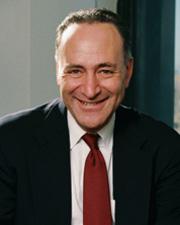 Sen. Charles E. Schumer (D-NY)
Legislative Activity
Stay on top of the latest movement without scrolling through every action
Roll call votes on amendments in Senate: Motion to waive all applicable budgetary discipline with respect to amendment SA 1502 agreed to in Senate by Yea-Nay Vote. 72 - 28. Record Vote Number: 224.
June 8, 2021
View full timeline
Roll call votes on amendments in Senate: Motion to waive all applicable budgetary discipline with respect to amendment SA 1502 agreed to in Senate by Yea-Nay Vote. 72 - 28. Record Vote Number: 224.
June 8, 2021
Roll call votes on amendments in Senate: Amendment SA 1502 agreed to in Senate by Yea-Nay Vote. 68 - 32. Record Vote Number: 225.
June 8, 2021
Senate amendment agreed to: Amendment SA 1502 agreed to in Senate by Yea-Nay Vote. 68 - 32. Record Vote Number: 225.
June 8, 2021
Considered by Senate. (consideration: CR S3976)
June 8, 2021
Point of order that the amendment violates section 4106 of H. Con. Res. 71, 115th Congress, raised in Senate with respect to amendment SA 1502.
June 8, 2021
Motion to waive all applicable budgetary discipline with respect to amendment SA 1502 agreed to in Senate by Yea-Nay Vote. 72 - 28. Record Vote Number: 224.
June 8, 2021
Amendment SA 1502 agreed to in Senate by Yea-Nay Vote. 68 - 32. Record Vote Number: 225.
June 8, 2021
Considered by Senate. (consideration: CR S3915)
May 28, 2021
Roll call votes on amendments in Senate: Cloture on amendment SA 1502 invoked in Senate by Yea-Nay Vote. 68 - 30. Record Vote Number: 214.
May 27, 2021
Considered by Senate. (consideration: CR S3549)
May 27, 2021
Cloture on amendment SA 1502 invoked in Senate by Yea-Nay Vote. 68 - 30. Record Vote Number: 214.
May 27, 2021
Considered by Senate. (consideration: CR S3470-3471, S3492-3496)
May 26, 2021
Considered by Senate. (consideration: CR S3401)
May 25, 2021
Cloture motion on amendment SA 1502 presented in Senate. (CR: S3416)
May 25, 2021
Considered by Senate. (consideration: CR S3318)
May 24, 2021
Considered by Senate. (consideration: CR S3175)
May 20, 2021
Considered by Senate. (consideration: CR S2752)
May 19, 2021
Senate amendment proposed (on the floor): Amendment SA 1502 proposed by Senator Schumer.
May 18, 2021
Senate amendment submitted
May 18, 2021
Amendment SA 1502 proposed by Senator Schumer. (consideration: CR S2568-2569; text: CR S2581-2734) In the nature of a substitute.
May 18, 2021
Votes
3 roll calls on this amendment
SENATE
Roll Call AvailableJune 8, 2021 at 5:13 PM
On the Amendment S.Amdt. 1502 to S. 1260 (Endless Frontier Act)
Majority required: 1/2 (50%)
68 - 32
SENATE
Roll Call AvailableJune 8, 2021 at 4:30 PM
On the Motion (Motion to Waive All Applicable Budgetary Discipline Re: Amdt. No. 1502 As Amended )
Majority required: 3/5 (60%)
72 - 28
SENATE
Roll Call AvailableMay 27, 2021 at 11:05 AM
On the Cloture Motion S.Amdt. 1502 to S. 1260 (Endless Frontier Act)
Majority required: 3/5 (60%)
68 - 30
Amendments
511 amendmentsOffered to this amendment
Amendments
511 amendmentsOffered to this amendment
No matches
To modify the semiconductor incentives program of the Department of Commerce.
Amendment SA 1858 not agreed to in Senate by Yea-Nay Vote. 42 - 58. Record Vote Number: 223. · Sponsored by John Cornyn · Amends S.Amdt. 1502
To ensure trade is conducted consistent with American values, to ensure resiliency in critical supply chains, to improve transparency and administration of trade programs and oversight and accountability of trade agencies, and to promote American competitiveness.
Amendment SA 1562 as modified, under the order of 5/27/21, having achieved 60 votes in the affirmative, was agreed to in Senate by Yea-Nay Vote. 91 - 4. Record Vote Number: 216. · Sponsored by Mike Crapo · Amends S.Amdt. 1502
To improve the bill.
Proposed amendment SA 1527 withdrawn in Senate. (consideration: CR S3864) · Sponsored by Maria Cantwell · Amends S.Amdt. 1502
To authorize appropriations for the Defense Advanced Research Projects Agency to conduct research and development in key technology focus areas.
Amendment SA 2023, under the order of 5/25/21, having achieved 60 votes in the affirmative, was agreed to in Senate by Yea-Nay Vote. 67 - 30. Record Vote Number: 213. · Sponsored by Ben Sasse · Amends S.Amdt. 1502
To express the sense of the Senate on the allocation of Special Drawing Rights by the International Monetary Fund to help other countries procure COVID-19 vaccines and protect against the economic instability caused by the COVID-19 pandemic.
Amendment SA 2014, under the order of 5/25/21, not having achieved 60 votes in the affirmative, was not agreed to in Senate by Yea-Nay Vote. 50 - 50. Record Vote Number: 208. · Sponsored by Richard J. Durbin · Amends S.Amdt. 1502
To express the sense of the Senate regarding the need to conduct a comprehensive investigation to determine the origins of COVID-19, and for other purposes.
Amendment SA 1973 as modified agreed to in Senate by Voice Vote. · Sponsored by Roger Marshall · Amends S.Amdt. 1502
To establish a task force for regulatory oversight and review.
Amendment SA 1929, under the order of 5/25/21, not having achieved 60 votes in the affirmative, was not agreed to in Senate by Yea-Nay Vote. 48 - 49. Record Vote Number: 211. · Sponsored by Mike Lee · Amends S.Amdt. 1502
To require institutions of higher education to submit attestations on freedom of speech.
Amendment SA 1911 not agreed to in Senate by Yea-Nay Vote. 49 - 51. Record Vote Number: 207. · Sponsored by Dan Sullivan · Amends S.Amdt. 1502
To amend title 18, United States Code, to prohibit certain types of human-animal chimeras.
Amendment SA 1771, under the order of 5/25/21, not having achieved 60 votes in the affirmative, was not agreed to in Senate by Yea-Nay Vote. 48 - 49. Record Vote Number: 212. · Sponsored by Mike Braun · Amends S.Amdt. 1502
To prohibit allocations of Special Drawing Rights at the International Monetary Fund for perpetrators of genocide and state sponsors of terrorism without congressional authorization.
Amendment SA 1710, under the order of 5/25/21, not having achieved 60 votes in the affirmative, was not agreed to in Senate by Yea-Nay Vote. 51 - 49. Record Vote Number: 209. · Sponsored by John Kennedy · Amends S.Amdt. 1502
To establish the Foundation for Energy Security and Innovation.
Amendment SA 1588, under the order of 5/25/21, having achieved 60 votes in the affirmative, was agreed to in Senate by Yea-Nay Vote. 83 - 14. Record Vote Number: 210. · Sponsored by Christopher A. Coons · Amends S.Amdt. 1502
To prohibit the National Institutes of Health and any other Federal agency from funding gain-of-function research conducted in China.
Amendment SA 2003 agreed to in Senate by Voice Vote. · Sponsored by Rand Paul · Amends S.Amdt. 1502
To set forth trade policy, negotiating objectives, and congressional oversight requirements relating to the response to the COVID-19 pandemic.
Amendment SA 1975, under the order of 5/25/21, not having achieved 60 votes in the affirmative, was not agreed to in Senate by Yea-Nay Vote. 50 - 49. Record Vote Number: 204. · Sponsored by Ron Wyden · Amends S.Amdt. 1502
To impose limitations on research.
Amendment SA 1891, under the order of 5/25/21, not having achieved 60 votes in the affirmative, was not agreed to in Senate by Yea-Nay Vote. 48 - 51. Record Vote Number: 206. · Sponsored by Mike Lee · Amends S.Amdt. 1502
To direct the President to enforce the intellectual property provisions of the Economic and Trade Agreement Between the Government of the United States of America and the Government of China.
Amendment SA 1787 agreed to in Senate by Voice Vote. · Sponsored by Steve Daines · Amends S.Amdt. 1502
To provide limitations on the authority of the President to modify trade agreements.
Amendment SA 1565, under the order of 5/25/21, not having achieved 60 votes in the affirmative, was not agreed to in Senate by Yea-Nay Vote. 53 - 46. Record Vote Number: 205. · Sponsored by Mike Crapo · Amends S.Amdt. 1502
To prohibit any Federal funding for the Wuhan Institute of Virology.
Amendment SA 1507 agreed to in Senate by Voice Vote. · Sponsored by Joni Ernst · Amends S.Amdt. 1502
To express the sense of the Senate and establish points of order to ensure the United States adequately funds national defense with a whole-of-government investment plan for strategic competition with the People's Republic of China.
Amendment SA 1523, under the order of 5/19/21, not having achieved 60 votes in the affirmative, was not agreed to in Senate by Yea-Nay Vote. 44 - 53. Record Vote Number: 198. · Sponsored by James M. Inhofe · Amends S.Amdt. 1502
To prohibit the cancellation of contracts for physical barriers and other border security measures for which funds already have been obligated and for which penalties will be incurred in the case of such cancellation and prohibiting the use of funds for payment of such penalties.
Amendment SA 1518, under the order of 5/19/21, not having achieved 60 votes in the affirmative, was not agreed to in Senate by Yea-Nay Vote. 46 - 48. Record Vote Number: 199. · Sponsored by Ron Johnson · Amends S.Amdt. 1502
To direct unobligated amounts made available under coronavirus relief legislation for purposes of carrying out this Act.
Amendment SA 1547, under the order of 5/19/21, not having achieved 60 votes in the affirmative, was not agreed to in Senate by Yea-Nay Vote. 47 - 50. Record Vote Number: 197. · Sponsored by Rick Scott · Amends S.Amdt. 1502
To amend chapter 11 of title 35, United States Code, to require the voluntary collection of demographic information for patent inventors, and for other purposes.
Amendment SA 1517, under the order of 5/19/21, having achieved 60 votes in the affirmative, was agreed to in Senate by Yea-Nay Vote. 71 - 27. Record Vote Number: 196. · Sponsored by Thom Tillis · Amends S.Amdt. 1502
Sponsored by Benjamin L. Cardin · Amends S.Amdt. 1502
Sponsored by John Cornyn · Amends S.Amdt. 1502
Sponsored by Gary C. Peters · Amends S.Amdt. 1502
Sponsored by Gary C. Peters · Amends S.Amdt. 1502
Sponsored by Marco Rubio · Amends S.Amdt. 1502
Sponsored by Jon Ossoff · Amends S.Amdt. 1502
Sponsored by Elizabeth Warren · Amends S.Amdt. 1502
Sponsored by Jeff Merkley · Amends S.Amdt. 1502
Sponsored by John Barrasso · Amends S.Amdt. 1502
Sponsored by Angus S. King Jr. · Amends S.Amdt. 1502
Sponsored by Jeff Merkley · Amends S.Amdt. 1502
Sponsored by Jacky Rosen · Amends S.Amdt. 1502
Sponsored by Patrick J. Leahy · Amends S.Amdt. 1502
Sponsored by Tim Kaine · Amends S.Amdt. 1502
Sponsored by Lisa Murkowski · Amends S.Amdt. 1502
Sponsored by Lisa Murkowski · Amends S.Amdt. 1502
Sponsored by Joni Ernst · Amends S.Amdt. 1502
Sponsored by Jerry Moran · Amends S.Amdt. 1502
Sponsored by Marsha Blackburn · Amends S.Amdt. 1502
Sponsored by Catherine Cortez Masto · Amends S.Amdt. 1502
Sponsored by Ben Ray Luján · Amends S.Amdt. 1502
Sponsored by Tammy Baldwin · Amends S.Amdt. 1502
Sponsored by Angus S. King Jr. · Amends S.Amdt. 1502
Sponsored by Sherrod Brown · Amends S.Amdt. 1502
Sponsored by Sherrod Brown · Amends S.Amdt. 1502
Sponsored by Sherrod Brown · Amends S.Amdt. 1502
Sponsored by Margaret Wood Hassan · Amends S.Amdt. 1502
Sponsored by Marsha Blackburn · Amends S.Amdt. 1502
Sponsored by Thom Tillis · Amends S.Amdt. 1502
Sponsored by Michael F. Bennet · Amends S.Amdt. 1502
Sponsored by Michael F. Bennet · Amends S.Amdt. 1502
Sponsored by Roger F. Wicker · Amends S.Amdt. 1502
Sponsored by Richard J. Durbin · Amends S.Amdt. 1502
Sponsored by Bill Hagerty · Amends S.Amdt. 1502
Sponsored by Tommy Tuberville · Amends S.Amdt. 1502
Sponsored by Ben Sasse · Amends S.Amdt. 1502
Sponsored by Ben Sasse · Amends S.Amdt. 1502
Sponsored by Angus S. King Jr. · Amends S.Amdt. 1502
Sponsored by Patrick J. Leahy · Amends S.Amdt. 1502
Sponsored by Alex Padilla · Amends S.Amdt. 1502
Sponsored by Bill Cassidy · Amends S.Amdt. 1502
Sponsored by Rand Paul · Amends S.Amdt. 1502
Sponsored by Rand Paul · Amends S.Amdt. 1502
Sponsored by Rob Portman · Amends S.Amdt. 1502
Sponsored by Ted Cruz · Amends S.Amdt. 1502
Sponsored by Joni Ernst · Amends S.Amdt. 1502
Sponsored by Mike Braun · Amends S.Amdt. 1502
Sponsored by James E. Risch · Amends S.Amdt. 1502
Sponsored by Ron Johnson · Amends S.Amdt. 1502
Sponsored by Ron Johnson · Amends S.Amdt. 1502
Sponsored by Marco Rubio · Amends S.Amdt. 1502
Sponsored by Christopher A. Coons · Amends S.Amdt. 1502
Sponsored by Lisa Murkowski · Amends S.Amdt. 1502
Sponsored by Lisa Murkowski · Amends S.Amdt. 1502
Sponsored by Lisa Murkowski · Amends S.Amdt. 1502
Sponsored by Lisa Murkowski · Amends S.Amdt. 1502
Sponsored by Mike Lee · Amends S.Amdt. 1502
Sponsored by James Lankford · Amends S.Amdt. 1502
Sponsored by Rob Portman · Amends S.Amdt. 1502
Sponsored by John Barrasso · Amends S.Amdt. 1502
Sponsored by Todd Young · Amends S.Amdt. 1502
Sponsored by Elizabeth Warren · Amends S.Amdt. 1502
Sponsored by Amy Klobuchar · Amends S.Amdt. 1502
Sponsored by Marsha Blackburn · Amends S.Amdt. 1502
Sponsored by Dan Sullivan · Amends S.Amdt. 1502
Sponsored by Dan Sullivan · Amends S.Amdt. 1502
Sponsored by Ron Johnson · Amends S.Amdt. 1502
Sponsored by Tammy Baldwin · Amends S.Amdt. 1502
Sponsored by Tammy Baldwin · Amends S.Amdt. 1502
Sponsored by Mitt Romney · Amends S.Amdt. 1502
Sponsored by Ben Sasse · Amends S.Amdt. 1502
Sponsored by Rob Portman · Amends S.Amdt. 1502
Sponsored by Rob Portman · Amends S.Amdt. 1502
Sponsored by Cory A. Booker · Amends S.Amdt. 1502
Sponsored by John Thune · Amends S.Amdt. 1502
Sponsored by John Thune · Amends S.Amdt. 1502
Sponsored by Bernard Sanders · Amends S.Amdt. 1502
Sponsored by Steve Daines · Amends S.Amdt. 1502
Sponsored by Jon Ossoff · Amends S.Amdt. 1502
Sponsored by Jon Ossoff · Amends S.Amdt. 1502
Sponsored by Bill Hagerty · Amends S.Amdt. 1502
Sponsored by Bill Hagerty · Amends S.Amdt. 1502
Sponsored by Bill Hagerty · Amends S.Amdt. 1502
Sponsored by Bill Hagerty · Amends S.Amdt. 1502
Sponsored by Bill Hagerty · Amends S.Amdt. 1502
Sponsored by Marsha Blackburn · Amends S.Amdt. 1502
Sponsored by Ben Sasse · Amends S.Amdt. 1502
Sponsored by Jacky Rosen · Amends S.Amdt. 1502
Sponsored by Rick Scott · Amends S.Amdt. 1502
Sponsored by Angus S. King Jr. · Amends S.Amdt. 1502
Sponsored by Chuck Grassley · Amends S.Amdt. 1502
Sponsored by Ron Wyden · Amends S.Amdt. 1502
Sponsored by Ron Wyden · Amends S.Amdt. 1502
Sponsored by Ron Wyden · Amends S.Amdt. 1502
Sponsored by Rand Paul · Amends S.Amdt. 1502
Sponsored by Ron Wyden · Amends S.Amdt. 1502
Sponsored by Ron Wyden · Amends S.Amdt. 1502
Sponsored by Ron Wyden · Amends S.Amdt. 1502
Sponsored by Jerry Moran · Amends S.Amdt. 1502
Sponsored by Roy Blunt · Amends S.Amdt. 1502
Sponsored by Rick Scott · Amends S.Amdt. 1502
Sponsored by John Barrasso · Amends S.Amdt. 1502
Sponsored by John Barrasso · Amends S.Amdt. 1502
Sponsored by Marco Rubio · Amends S.Amdt. 1502
Sponsored by Todd Young · Amends S.Amdt. 1502
Sponsored by Todd Young · Amends S.Amdt. 1502
Sponsored by Patty Murray · Amends S.Amdt. 1502
Sponsored by Raphael G. Warnock · Amends S.Amdt. 1502
Sponsored by Jeff Merkley · Amends S.Amdt. 1502
Sponsored by Jeff Merkley · Amends S.Amdt. 1502
Sponsored by Jeff Merkley · Amends S.Amdt. 1502
Sponsored by Jeff Merkley · Amends S.Amdt. 1502
Sponsored by Jeff Merkley · Amends S.Amdt. 1502
Sponsored by Benjamin L. Cardin · Amends S.Amdt. 1502
Sponsored by Joe Manchin III · Amends S.Amdt. 1502
Sponsored by John Cornyn · Amends S.Amdt. 1502
Sponsored by Bill Hagerty · Amends S.Amdt. 1502
Sponsored by Bill Hagerty · Amends S.Amdt. 1502
Sponsored by Mitt Romney · Amends S.Amdt. 1502
Sponsored by Tom Cotton · Amends S.Amdt. 1502
Sponsored by Mike Lee · Amends S.Amdt. 1502
Sponsored by Mitt Romney · Amends S.Amdt. 1502
Sponsored by Marco Rubio · Amends S.Amdt. 1502
Sponsored by Tom Cotton · Amends S.Amdt. 1502
Sponsored by Bill Hagerty · Amends S.Amdt. 1502
Sponsored by Joni Ernst · Amends S.Amdt. 1502
Sponsored by Bill Hagerty · Amends S.Amdt. 1502
Sponsored by Ron Johnson · Amends S.Amdt. 1502
Sponsored by Josh Hawley · Amends S.Amdt. 1502
Sponsored by Josh Hawley · Amends S.Amdt. 1502
Sponsored by Josh Hawley · Amends S.Amdt. 1502
Sponsored by Josh Hawley · Amends S.Amdt. 1502
Sponsored by Josh Hawley · Amends S.Amdt. 1502
Sponsored by Josh Hawley · Amends S.Amdt. 1502
Sponsored by Josh Hawley · Amends S.Amdt. 1502
Sponsored by Tammy Baldwin · Amends S.Amdt. 1502
Sponsored by Lindsey Graham · Amends S.Amdt. 1502
Sponsored by James Lankford · Amends S.Amdt. 1502
Sponsored by Marco Rubio · Amends S.Amdt. 1502
Sponsored by Roger F. Wicker · Amends S.Amdt. 1502
Sponsored by John Hoeven · Amends S.Amdt. 1502
Sponsored by Marco Rubio · Amends S.Amdt. 1502
Sponsored by Marco Rubio · Amends S.Amdt. 1502
Sponsored by Marco Rubio · Amends S.Amdt. 1502
Sponsored by Marco Rubio · Amends S.Amdt. 1502
Sponsored by Dan Sullivan · Amends S.Amdt. 1502
Sponsored by Gary C. Peters · Amends S.Amdt. 1502
Sponsored by Ron Johnson · Amends S.Amdt. 1502
Sponsored by Cindy Hyde-Smith · Amends S.Amdt. 1502
Sponsored by James M. Inhofe · Amends S.Amdt. 1502
Sponsored by Joe Manchin III · Amends S.Amdt. 1502
Sponsored by Joe Manchin III · Amends S.Amdt. 1502
Sponsored by Mitt Romney · Amends S.Amdt. 1502
Sponsored by Mitt Romney · Amends S.Amdt. 1502
Sponsored by James E. Risch · Amends S.Amdt. 1502
Sponsored by Bernard Sanders · Amends S.Amdt. 1502
Sponsored by Bernard Sanders · Amends S.Amdt. 1502
Sponsored by Maria Cantwell · Amends S.Amdt. 1502
Sponsored by Elizabeth Warren · Amends S.Amdt. 1502
Sponsored by John Barrasso · Amends S.Amdt. 1502
Sponsored by John Boozman · Amends S.Amdt. 1502
Sponsored by Dan Sullivan · Amends S.Amdt. 1502
Sponsored by Dan Sullivan · Amends S.Amdt. 1502
Sponsored by Marco Rubio · Amends S.Amdt. 1502
Sponsored by Marco Rubio · Amends S.Amdt. 1502
Sponsored by John W. Hickenlooper · Amends S.Amdt. 1502
Sponsored by Cory A. Booker · Amends S.Amdt. 1502
Sponsored by Ron Wyden · Amends S.Amdt. 1502
Sponsored by Cindy Hyde-Smith · Amends S.Amdt. 1502
Sponsored by Sherrod Brown · Amends S.Amdt. 1502
Sponsored by Jacky Rosen · Amends S.Amdt. 1502
Sponsored by Maria Cantwell · Amends S.Amdt. 1502
Sponsored by Mitt Romney · Amends S.Amdt. 1502
Sponsored by Mitt Romney · Amends S.Amdt. 1502
Sponsored by James M. Inhofe · Amends S.Amdt. 1502
Sponsored by Dan Sullivan · Amends S.Amdt. 1502
Sponsored by Ted Cruz · Amends S.Amdt. 1502
Sponsored by Robert Menendez · Amends S.Amdt. 1502
Sponsored by Joe Manchin III · Amends S.Amdt. 1502
Sponsored by Dianne Feinstein · Amends S.Amdt. 1502
Sponsored by Tim Kaine · Amends S.Amdt. 1502
Sponsored by John Cornyn · Amends S.Amdt. 1502
Sponsored by Roy Blunt · Amends S.Amdt. 1502
Sponsored by Bill Hagerty · Amends S.Amdt. 1502
Sponsored by Bill Hagerty · Amends S.Amdt. 1502
Sponsored by Bill Hagerty · Amends S.Amdt. 1502
Sponsored by Bill Hagerty · Amends S.Amdt. 1502
Sponsored by Bill Hagerty · Amends S.Amdt. 1502
Sponsored by Bill Hagerty · Amends S.Amdt. 1502
Sponsored by Ted Cruz · Amends S.Amdt. 1502
Sponsored by Ted Cruz · Amends S.Amdt. 1502
Sponsored by Ted Cruz · Amends S.Amdt. 1502
Sponsored by Gary C. Peters · Amends S.Amdt. 1502
Sponsored by Tammy Baldwin · Amends S.Amdt. 1502
Sponsored by Tammy Baldwin · Amends S.Amdt. 1502
Sponsored by Jeff Merkley · Amends S.Amdt. 1502
Sponsored by John Barrasso · Amends S.Amdt. 1502
Sponsored by Bernard Sanders · Amends S.Amdt. 1502
Sponsored by Bernard Sanders · Amends S.Amdt. 1502
Sponsored by Bernard Sanders · Amends S.Amdt. 1502
Sponsored by John Cornyn · Amends S.Amdt. 1502
Sponsored by John Cornyn · Amends S.Amdt. 1502
Sponsored by Marsha Blackburn · Amends S.Amdt. 1502
Sponsored by Marsha Blackburn · Amends S.Amdt. 1502
Sponsored by Sheldon Whitehouse · Amends S.Amdt. 1502
Sponsored by Sheldon Whitehouse · Amends S.Amdt. 1502
Sponsored by Christopher Murphy · Amends S.Amdt. 1502
Sponsored by Christopher Murphy · Amends S.Amdt. 1502
Sponsored by Ted Cruz · Amends S.Amdt. 1502
Sponsored by Ted Cruz · Amends S.Amdt. 1502
Sponsored by John Hoeven · Amends S.Amdt. 1502
Sponsored by John Hoeven · Amends S.Amdt. 1502
Sponsored by Ted Cruz · Amends S.Amdt. 1502
Sponsored by John Cornyn · Amends S.Amdt. 1502
Sponsored by Ted Cruz · Amends S.Amdt. 1502
Sponsored by Joe Manchin III · Amends S.Amdt. 1502
Sponsored by Joe Manchin III · Amends S.Amdt. 1502
Sponsored by Robert P. Casey Jr. · Amends S.Amdt. 1502
Sponsored by Marco Rubio · Amends S.Amdt. 1502
Sponsored by John Thune · Amends S.Amdt. 1502
Sponsored by Richard Blumenthal · Amends S.Amdt. 1502
Sponsored by Ben Sasse · Amends S.Amdt. 1502
Sponsored by Ben Sasse · Amends S.Amdt. 1502
Sponsored by Mike Lee · Amends S.Amdt. 1502
Sponsored by Mike Lee · Amends S.Amdt. 1502
Sponsored by Mike Lee · Amends S.Amdt. 1502
Sponsored by Mike Lee · Amends S.Amdt. 1502
Sponsored by Mike Lee · Amends S.Amdt. 1502
Sponsored by Mitt Romney · Amends S.Amdt. 1502
Sponsored by Cindy Hyde-Smith · Amends S.Amdt. 1502
Sponsored by John Thune · Amends S.Amdt. 1502
Sponsored by James E. Risch · Amends S.Amdt. 1502
Sponsored by James E. Risch · Amends S.Amdt. 1502
Sponsored by Raphael G. Warnock · Amends S.Amdt. 1502
Sponsored by Margaret Wood Hassan · Amends S.Amdt. 1502
Sponsored by Margaret Wood Hassan · Amends S.Amdt. 1502
Sponsored by Margaret Wood Hassan · Amends S.Amdt. 1502
Sponsored by Margaret Wood Hassan · Amends S.Amdt. 1502
Sponsored by Margaret Wood Hassan · Amends S.Amdt. 1502
Sponsored by Margaret Wood Hassan · Amends S.Amdt. 1502
Sponsored by Christopher A. Coons · Amends S.Amdt. 1502
Sponsored by Christopher A. Coons · Amends S.Amdt. 1502
Sponsored by Sheldon Whitehouse · Amends S.Amdt. 1502
Sponsored by Cory A. Booker · Amends S.Amdt. 1502
Sponsored by Cory A. Booker · Amends S.Amdt. 1502
Sponsored by Cory A. Booker · Amends S.Amdt. 1502
Sponsored by Alex Padilla · Amends S.Amdt. 1502
Sponsored by Jeff Merkley · Amends S.Amdt. 1502
Sponsored by Jeff Merkley · Amends S.Amdt. 1502
Sponsored by Roger Marshall · Amends S.Amdt. 1502
Sponsored by Rob Portman · Amends S.Amdt. 1502
Sponsored by Jack Reed · Amends S.Amdt. 1502
Sponsored by Jack Reed · Amends S.Amdt. 1502
Sponsored by Jack Reed · Amends S.Amdt. 1502
Sponsored by Jack Reed · Amends S.Amdt. 1502
Sponsored by Richard J. Durbin · Amends S.Amdt. 1502
Sponsored by Chuck Grassley · Amends S.Amdt. 1502
Sponsored by Joe Manchin III · Amends S.Amdt. 1502
Sponsored by Joe Manchin III · Amends S.Amdt. 1502
Sponsored by Brian Schatz · Amends S.Amdt. 1502
Sponsored by Dianne Feinstein · Amends S.Amdt. 1502
Sponsored by Dianne Feinstein · Amends S.Amdt. 1502
Sponsored by Richard J. Durbin · Amends S.Amdt. 1502
Sponsored by Roger F. Wicker · Amends S.Amdt. 1502
Sponsored by Elizabeth Warren · Amends S.Amdt. 1502
Sponsored by Catherine Cortez Masto · Amends S.Amdt. 1502
Sponsored by Richard J. Durbin · Amends S.Amdt. 1502
Sponsored by Steve Daines · Amends S.Amdt. 1502
Sponsored by Cynthia M. Lummis · Amends S.Amdt. 1502
Sponsored by Marsha Blackburn · Amends S.Amdt. 1502
Sponsored by Steve Daines · Amends S.Amdt. 1502
Sponsored by Steve Daines · Amends S.Amdt. 1502
Sponsored by Steve Daines · Amends S.Amdt. 1502
Sponsored by Steve Daines · Amends S.Amdt. 1502
Sponsored by Benjamin L. Cardin · Amends S.Amdt. 1502
Sponsored by Benjamin L. Cardin · Amends S.Amdt. 1502
Sponsored by Mike Lee · Amends S.Amdt. 1502
Sponsored by Marco Rubio · Amends S.Amdt. 1502
Sponsored by Marco Rubio · Amends S.Amdt. 1502
Sponsored by James Lankford · Amends S.Amdt. 1502
Sponsored by James Lankford · Amends S.Amdt. 1502
Sponsored by James Lankford · Amends S.Amdt. 1502
Sponsored by James Lankford · Amends S.Amdt. 1502
Sponsored by Joe Manchin III · Amends S.Amdt. 1502
Sponsored by Robert Menendez · Amends S.Amdt. 1502
Sponsored by Marco Rubio · Amends S.Amdt. 1502
Sponsored by Marsha Blackburn · Amends S.Amdt. 1502
Sponsored by Marsha Blackburn · Amends S.Amdt. 1502
Sponsored by Jeanne Shaheen · Amends S.Amdt. 1502
Sponsored by Catherine Cortez Masto · Amends S.Amdt. 1502
Sponsored by Patty Murray · Amends S.Amdt. 1502
Sponsored by Jeanne Shaheen · Amends S.Amdt. 1502
Sponsored by Catherine Cortez Masto · Amends S.Amdt. 1502
Sponsored by Catherine Cortez Masto · Amends S.Amdt. 1502
Sponsored by Marco Rubio · Amends S.Amdt. 1502
Sponsored by Marco Rubio · Amends S.Amdt. 1502
Sponsored by Marco Rubio · Amends S.Amdt. 1502
Sponsored by Marco Rubio · Amends S.Amdt. 1502
Sponsored by Marco Rubio · Amends S.Amdt. 1502
Sponsored by Joni Ernst · Amends S.Amdt. 1502
Sponsored by Mike Lee · Amends S.Amdt. 1502
Sponsored by Angus S. King Jr. · Amends S.Amdt. 1502
Sponsored by Ben Ray Luján · Amends S.Amdt. 1502
Sponsored by Jeanne Shaheen · Amends S.Amdt. 1502
Sponsored by Jeanne Shaheen · Amends S.Amdt. 1502
Sponsored by Alex Padilla · Amends S.Amdt. 1502
Sponsored by Mike Lee · Amends S.Amdt. 1502
Sponsored by Mike Lee · Amends S.Amdt. 1502
Sponsored by Mike Lee · Amends S.Amdt. 1502
Sponsored by Mike Lee · Amends S.Amdt. 1502
Sponsored by Mike Lee · Amends S.Amdt. 1502
Sponsored by Mike Lee · Amends S.Amdt. 1502
Sponsored by Mike Lee · Amends S.Amdt. 1502
Sponsored by Mike Lee · Amends S.Amdt. 1502
Sponsored by Mike Lee · Amends S.Amdt. 1502
Sponsored by Mike Lee · Amends S.Amdt. 1502
Sponsored by Mike Lee · Amends S.Amdt. 1502
Sponsored by Mike Lee · Amends S.Amdt. 1502
Sponsored by Mike Lee · Amends S.Amdt. 1502
Sponsored by Mike Lee · Amends S.Amdt. 1502
Sponsored by Mike Lee · Amends S.Amdt. 1502
Sponsored by Mike Lee · Amends S.Amdt. 1502
Sponsored by Mike Lee · Amends S.Amdt. 1502
Sponsored by Mike Lee · Amends S.Amdt. 1502
Sponsored by Mike Lee · Amends S.Amdt. 1502
Sponsored by Mike Lee · Amends S.Amdt. 1502
Sponsored by Mike Lee · Amends S.Amdt. 1502
Sponsored by Mike Lee · Amends S.Amdt. 1502
Sponsored by Mike Lee · Amends S.Amdt. 1502
Sponsored by Mike Lee · Amends S.Amdt. 1502
Sponsored by James E. Risch · Amends S.Amdt. 1502
Sponsored by John Kennedy · Amends S.Amdt. 1502
Sponsored by Tom Cotton · Amends S.Amdt. 1502
Sponsored by Tom Cotton · Amends S.Amdt. 1502
Sponsored by Roger Marshall · Amends S.Amdt. 1502
Sponsored by Amy Klobuchar · Amends S.Amdt. 1502
Sponsored by Alex Padilla · Amends S.Amdt. 1502
Sponsored by Ron Johnson · Amends S.Amdt. 1502
Sponsored by Mike Lee · Amends S.Amdt. 1502
Sponsored by Mike Lee · Amends S.Amdt. 1502
Sponsored by Mike Lee · Amends S.Amdt. 1502
Sponsored by Mike Lee · Amends S.Amdt. 1502
Sponsored by Mike Lee · Amends S.Amdt. 1502
Sponsored by Mike Lee · Amends S.Amdt. 1502
Sponsored by Mike Lee · Amends S.Amdt. 1502
Sponsored by Mike Lee · Amends S.Amdt. 1502
Sponsored by Mike Lee · Amends S.Amdt. 1502
Sponsored by Mike Lee · Amends S.Amdt. 1502
Sponsored by Mike Lee · Amends S.Amdt. 1502
Sponsored by Mike Lee · Amends S.Amdt. 1502
Sponsored by Mike Lee · Amends S.Amdt. 1502
Sponsored by Mike Lee · Amends S.Amdt. 1502
Sponsored by Mike Lee · Amends S.Amdt. 1502
Sponsored by Mike Lee · Amends S.Amdt. 1502
Sponsored by Mike Lee · Amends S.Amdt. 1502
Sponsored by Mike Lee · Amends S.Amdt. 1502
Sponsored by Mike Lee · Amends S.Amdt. 1502
Sponsored by Mike Lee · Amends S.Amdt. 1502
Sponsored by Mike Lee · Amends S.Amdt. 1502
Sponsored by Mike Lee · Amends S.Amdt. 1502
Sponsored by Sherrod Brown · Amends S.Amdt. 1502
Sponsored by Mike Lee · Amends S.Amdt. 1502
Sponsored by Tom Cotton · Amends S.Amdt. 1502
Sponsored by Susan M. Collins · Amends S.Amdt. 1502
Sponsored by Jacky Rosen · Amends S.Amdt. 1502
Sponsored by Mike Lee · Amends S.Amdt. 1502
Sponsored by Mike Lee · Amends S.Amdt. 1502
Sponsored by Mike Lee · Amends S.Amdt. 1502
Sponsored by Mike Lee · Amends S.Amdt. 1502
Sponsored by Mike Lee · Amends S.Amdt. 1502
Sponsored by Mike Lee · Amends S.Amdt. 1502
Sponsored by Mike Lee · Amends S.Amdt. 1502
Sponsored by Mike Lee · Amends S.Amdt. 1502
Sponsored by Mike Lee · Amends S.Amdt. 1502
Sponsored by Mike Lee · Amends S.Amdt. 1502
Sponsored by Mike Lee · Amends S.Amdt. 1502
Sponsored by Mike Lee · Amends S.Amdt. 1502
Sponsored by Mike Lee · Amends S.Amdt. 1502
Sponsored by Mike Lee · Amends S.Amdt. 1502
Sponsored by Mike Lee · Amends S.Amdt. 1502
Sponsored by Mike Lee · Amends S.Amdt. 1502
Sponsored by Mike Lee · Amends S.Amdt. 1502
Sponsored by Mike Lee · Amends S.Amdt. 1502
Sponsored by Mike Lee · Amends S.Amdt. 1502
Sponsored by Mike Lee · Amends S.Amdt. 1502
Sponsored by Mike Lee · Amends S.Amdt. 1502
Sponsored by Mike Lee · Amends S.Amdt. 1502
Sponsored by Mike Lee · Amends S.Amdt. 1502
Sponsored by Mike Lee · Amends S.Amdt. 1502
Sponsored by Mike Lee · Amends S.Amdt. 1502
Sponsored by Mike Lee · Amends S.Amdt. 1502
Sponsored by Mike Lee · Amends S.Amdt. 1502
Sponsored by Mike Lee · Amends S.Amdt. 1502
Sponsored by Mike Lee · Amends S.Amdt. 1502
Sponsored by Mike Lee · Amends S.Amdt. 1502
Sponsored by Mike Lee · Amends S.Amdt. 1502
Sponsored by Mike Lee · Amends S.Amdt. 1502
Sponsored by Mike Lee · Amends S.Amdt. 1502
Sponsored by Mike Lee · Amends S.Amdt. 1502
Sponsored by Deb Fischer · Amends S.Amdt. 1502
Sponsored by Elizabeth Warren · Amends S.Amdt. 1502
Sponsored by Elizabeth Warren · Amends S.Amdt. 1502
Sponsored by Elizabeth Warren · Amends S.Amdt. 1502
Sponsored by Elizabeth Warren · Amends S.Amdt. 1502
Sponsored by Rick Scott · Amends S.Amdt. 1502
Sponsored by Patrick J. Toomey · Amends S.Amdt. 1502
Sponsored by Patrick J. Toomey · Amends S.Amdt. 1502
Sponsored by Bill Cassidy · Amends S.Amdt. 1502
Sponsored by Richard J. Durbin · Amends S.Amdt. 1502
Sponsored by Ron Wyden · Amends S.Amdt. 1502
Sponsored by Robert Menendez · Amends S.Amdt. 1502
Sponsored by Susan M. Collins · Amends S.Amdt. 1502
Sponsored by Ron Johnson · Amends S.Amdt. 1502
Sponsored by Joni Ernst · Amends S.Amdt. 1502
Sponsored by Tommy Tuberville · Amends S.Amdt. 1502
Sponsored by Tom Cotton · Amends S.Amdt. 1502
Sponsored by Rick Scott · Amends S.Amdt. 1502
Sponsored by Rick Scott · Amends S.Amdt. 1502
Sponsored by Rick Scott · Amends S.Amdt. 1502
Sponsored by Rick Scott · Amends S.Amdt. 1502
Sponsored by Rick Scott · Amends S.Amdt. 1502
Sponsored by Rick Scott · Amends S.Amdt. 1502
Sponsored by Rick Scott · Amends S.Amdt. 1502
Sponsored by Rick Scott · Amends S.Amdt. 1502
Sponsored by Rick Scott · Amends S.Amdt. 1502
Sponsored by Rick Scott · Amends S.Amdt. 1502
Sponsored by Rick Scott · Amends S.Amdt. 1502
Sponsored by Rick Scott · Amends S.Amdt. 1502
Sponsored by Rick Scott · Amends S.Amdt. 1502
Sponsored by Rick Scott · Amends S.Amdt. 1502
Sponsored by Rick Scott · Amends S.Amdt. 1502
Sponsored by Rick Scott · Amends S.Amdt. 1502
Sponsored by Rick Scott · Amends S.Amdt. 1502
Sponsored by Rick Scott · Amends S.Amdt. 1502
Sponsored by Rick Scott · Amends S.Amdt. 1502
Sponsored by Rick Scott · Amends S.Amdt. 1502
Sponsored by Tom Cotton · Amends S.Amdt. 1502
Sponsored by Tom Cotton · Amends S.Amdt. 1502
Sponsored by Tom Cotton · Amends S.Amdt. 1502
Sponsored by Tom Cotton · Amends S.Amdt. 1502
Sponsored by Tom Cotton · Amends S.Amdt. 1502
Sponsored by Kirsten E. Gillibrand · Amends S.Amdt. 1502
Sponsored by Christopher A. Coons · Amends S.Amdt. 1502
Sponsored by Christopher A. Coons · Amends S.Amdt. 1502
Sponsored by Lindsey Graham · Amends S.Amdt. 1502
Sponsored by Lindsey Graham · Amends S.Amdt. 1502
Sponsored by Joe Manchin III · Amends S.Amdt. 1502
Sponsored by Joe Manchin III · Amends S.Amdt. 1502
Sponsored by Joe Manchin III · Amends S.Amdt. 1502
Sponsored by Joe Manchin III · Amends S.Amdt. 1502
Sponsored by Joe Manchin III · Amends S.Amdt. 1502
Sponsored by Joe Manchin III · Amends S.Amdt. 1502
Sponsored by Joe Manchin III · Amends S.Amdt. 1502
Sponsored by Bernard Sanders · Amends S.Amdt. 1502
Sponsored by Ben Sasse · Amends S.Amdt. 1502
Sponsored by Tommy Tuberville · Amends S.Amdt. 1502
Sponsored by Tommy Tuberville · Amends S.Amdt. 1502
Sponsored by Tommy Tuberville · Amends S.Amdt. 1502
Sponsored by Tommy Tuberville · Amends S.Amdt. 1502
Sponsored by Edward J. Markey · Amends S.Amdt. 1502
Sponsored by Roger F. Wicker · Amends S.Amdt. 1502
Sponsored by Roger F. Wicker · Amends S.Amdt. 1502
Sponsored by Roger F. Wicker · Amends S.Amdt. 1502
Sponsored by Roger F. Wicker · Amends S.Amdt. 1502
Sponsored by Jerry Moran · Amends S.Amdt. 1502
Sponsored by Edward J. Markey · Amends S.Amdt. 1502
Sponsored by Michael F. Bennet · Amends S.Amdt. 1502
Sponsored by Ben Ray Luján · Amends S.Amdt. 1502
Sponsored by Ron Johnson · Amends S.Amdt. 1502
Sponsored by Ron Johnson · Amends S.Amdt. 1502
Sponsored by Ron Johnson · Amends S.Amdt. 1502
Sponsored by Ron Johnson · Amends S.Amdt. 1502
Sponsored by Ron Johnson · Amends S.Amdt. 1502
Sponsored by John Barrasso · Amends S.Amdt. 1502
Sponsored by John Barrasso · Amends S.Amdt. 1502
Sponsored by John Barrasso · Amends S.Amdt. 1502
Sponsored by John Barrasso · Amends S.Amdt. 1502
Sponsored by John Barrasso · Amends S.Amdt. 1502
Sponsored by John Barrasso · Amends S.Amdt. 1502
Sponsored by John Barrasso · Amends S.Amdt. 1502
Sponsored by Michael F. Bennet · Amends S.Amdt. 1502
Sponsored by Michael F. Bennet · Amends S.Amdt. 1502
Sponsored by Maria Cantwell · Amends S.Amdt. 1502
Sponsored by John Barrasso · Amends S.Amdt. 1502
Sponsored by John Barrasso · Amends S.Amdt. 1502
Sponsored by John Barrasso · Amends S.Amdt. 1502
Sponsored by Jacky Rosen · Amends S.Amdt. 1502
Sponsored by Ron Wyden · Amends S.Amdt. 1502
Sponsored by Ron Johnson · Amends S.Amdt. 1502
Sponsored by Lisa Murkowski · Amends S.Amdt. 1502
Text
Submitted
SA 1502. Mr. SCHUMER proposed an amendment to the bill S. 1260, to
establish a new Directorate for Technology and Innovation in the
National Science Foundation, to establish a regional technology hub
program, to require a strategy and report on economic security,
science, research, innovation, manufacturing, and job creation, to
establish a critical supply chain resiliency program, and for other
purposes; as follows:

Strike all after the enacting clause and insert the
following:

SECTION 1. SHORT TITLE; TABLE OF CONTENTS.

(a) Short Title.--This Act may be cited as the ``United
States Innovation and Competition Act of 2021''.
(b) Table of Contents.--The table of contents for this Act
is as follows:

Sec. 1. Short title; table of contents.

DIVISION A--CHIPS AND O-RAN 5G EMERGENCY APPROPRIATIONS

Sec. 1001. Table of contents.
Sec. 1002. Creating Helpful Incentives to Produce Semiconductors
(CHIPS) for America Fund.
Sec. 1003. Appropriations for wireless supply chain innovation.

DIVISION B--ENDLESS FRONTIER ACT

Sec. 2001. Short title; table of contents.
Sec. 2002. Definitions.
Sec. 2003. Sense of Congress.
Sec. 2004. Interagency working group.
Sec. 2005. Key technology focus areas.

TITLE I--NSF TECHNOLOGY AND INNOVATION

Sec. 2101. Definitions.
Sec. 2102. Directorate establishment and purpose.
Sec. 2103. Personnel management.
Sec. 2104. Innovation centers.
Sec. 2105. Transition of NSF programs.
Sec. 2106. Providing scholarships, fellowships, and other student
support.
Sec. 2107. Research and development.
Sec. 2108. Test beds.
Sec. 2109. Academic technology transfer.
Sec. 2110. Capacity-building program for developing universities.
Sec. 2111. Technical assistance.
Sec. 2112. Coordination of activities.
Sec. 2113. Reporting requirements.
Sec. 2114. Hands-on learning program.
Sec. 2115. Intellectual property protection.
Sec. 2116. Authorization of appropriations for the Foundation.
Sec. 2117. Authorization of appropriations for the Department of
Energy.

TITLE II--NSF RESEARCH, STEM, AND GEOGRAPHIC DIVERSITY INITIATIVES

Sec. 2201. Chief Diversity Officer of the NSF.
Sec. 2202. Programs to address the STEM workforce.
Sec. 2203. Emerging research institution pilot program.
Sec. 2204. Personnel management authorities for the Foundation.
Sec. 2205. Advanced Technological Manufacturing Act.
Sec. 2206. Intramural emerging institutions pilot program.
Sec. 2207. Public-private partnerships.
Sec. 2208. AI Scholarship-for-Service Act.
Sec. 2209. Geographic diversity.
Sec. 2210. Rural STEM Education Act.
Sec. 2211. Quantum Network Infrastructure and Workforce Development
Act.
Sec. 2212. Supporting Early-Career Researchers Act.
Sec. 2213. Advancing Precision Agriculture Capabilities Act.
Sec. 2214. Critical minerals mining research.
Sec. 2215. Caregiver policies.
Sec. 2216. Presidential awards.
Sec. 2217. Bioeconomy Research and Development Act of 2021.
Sec. 2218. Microgravity utilization policy.

TITLE III--RESEARCH SECURITY

Sec. 2301. National Science Foundation research security.
Sec. 2302. Research security and integrity information sharing analysis
organization.
Sec. 2303. Foreign government talent recruitment program prohibition.
Sec. 2304. Additional requirements for Directorate research security.
Sec. 2305. Protecting research from cyber theft.
Sec. 2306. International standards development.
Sec. 2307. Research funds accounting.
Sec. 2308. Plan with respect to sensitive or controlled information and
background screening.

[[Page S2582]]

TITLE IV--REGIONAL INNOVATION CAPACITY

Sec. 2401. Regional technology hubs.
Sec. 2402. Manufacturing USA Program.
Sec. 2403. Establishment of expansion awards program in Hollings
Manufacturing Extension Partnership and authorization of
appropriations for the Partnership.
Sec. 2404. National Manufacturing Advisory Council.

TITLE V--MISCELLANEOUS

Sec. 2501. Strategy and report on economic security, science, research,
and innovation to support the national security strategy.
Sec. 2502. Person or entity of concern prohibition.
Sec. 2503. Study on emerging science and technology challenges faced by
the United States and recommendations to address them.
Sec. 2504. Report on global semiconductor shortage.
Sec. 2505. Supply chain resiliency program.
Sec. 2506. Semiconductor incentives.
Sec. 2507. Research Investment to Spark the Economy Act.
Sec. 2508. Office of Manufacturing and Industrial Innovation Policy.
Sec. 2509. Telecommunications Workforce Training Grant Program.
Sec. 2510. Country Of Origin Labeling Online Act.
Sec. 2511. Country of origin labeling for king crab and tanner crab.
Sec. 2512. Internet exchanges and submarine cables.
Sec. 2513. Study of sister city partnerships operating within the
United States involving foreign communities in countries
with significant public sector corruption.
Sec. 2514. Prohibition on transfer, assignment, or disposition of
construction permits and station licenses to entities
subject to undue influence by the Chinese Communist Party
or the Government of the People's Republic of China.
Sec. 2515. Limitation on nuclear cooperation with the People's Republic
of China.
Sec. 2516. Certification.
Sec. 2517. Fairness and due process in standards-setting bodies.
Sec. 2518. Shark fin sales elimination.
Sec. 2519. Sense of Congress on forced labor.
Sec. 2520. Open network architecture.
Sec. 2521. Combatting sexual harassment in science.
Sec. 2522. National Science Corps.
Sec. 2523. Annual report on foreign research.
Sec. 2524. Accelerating unmanned maritime systems research.
Sec. 2525. Foundation funding to institutions hosting or supporting
Confucius Institutes.
Sec. 2526. Supporting documents.
Sec. 2527. BASIC Research.

TITLE VI--SPACE MATTERS

Subtitle A--SPACE Act

Sec. 2601. Short title.
Sec. 2602. Sense of Congress.
Sec. 2603. Definitions.
Sec. 2604. Space situational awareness data, information, and services:
provision to non-United States Government entities.
Sec. 2605. Centers of Excellence for Space Situational Awareness.

Subtitle B--National Aeronautics and Space Administration Authorization
Act

Sec. 2611. Short title.
Sec. 2612. Definitions.

PART I--Authorization of Appropriations

Sec. 2613. Authorization of appropriations.

PART II--Human Spaceflight and Exploration

Sec. 2614. Competitiveness within the human landing system program.
Sec. 2615. Space launch system configurations.
Sec. 2616. Advanced spacesuits.
Sec. 2617. Acquisition of domestic space transportation and logistics
resupply services.
Sec. 2618. Rocket engine test infrastructure.
Sec. 2619. Pearl River maintenance.
Sec. 2620. Value of International Space Station and capabilities in
low-Earth orbit.
Sec. 2621. Extension and modification relating to International Space
Station.
Sec. 2622. Department of Defense activities on International Space
Station.
Sec. 2623. Commercial development in low-Earth orbit.
Sec. 2624. Maintaining a national laboratory in space.
Sec. 2625. International Space Station national laboratory; property
rights in inventions.
Sec. 2626. Data first produced during non-NASA scientific use of the
ISS national laboratory.
Sec. 2627. Payments received for commercial space-enabled production on
the ISS.
Sec. 2628. Stepping stone approach to exploration.
Sec. 2629. Technical amendments relating to Artemis missions.

PART III--Science

Sec. 2631. Science priorities.
Sec. 2632. Lunar discovery program.
Sec. 2633. Search for life.
Sec. 2634. James Webb Space Telescope.
Sec. 2635. Nancy Grace Roman Space Telescope.
Sec. 2636. Study on satellite servicing for science missions.
Sec. 2637. Earth science missions and programs.
Sec. 2638. Life science and physical science research.
Sec. 2639. Science missions to Mars.
Sec. 2640. Planetary Defense Coordination Office.
Sec. 2641. Suborbital science flights.
Sec. 2642. Earth science data and observations.
Sec. 2643. Sense of Congress on small satellite science.
Sec. 2644. Sense of Congress on commercial space services.
Sec. 2645. Procedures for identifying and addressing alleged violations
of scientific integrity policy.

PART IV--Aeronautics

Sec. 2646. Short title.
Sec. 2647. Definitions.
Sec. 2648. Experimental aircraft projects.
Sec. 2649. Unmanned aircraft systems.
Sec. 2650. 21st Century Aeronautics Capabilities Initiative.
Sec. 2651. Sense of Congress on on-demand air transportation.
Sec. 2652. Sense of Congress on hypersonic technology research.

PART V--Space Technology

Sec. 2653. Space Technology Mission Directorate.
Sec. 2654. Flight opportunities program.
Sec. 2655. Small Spacecraft Technology Program.
Sec. 2656. Nuclear propulsion technology.
Sec. 2657. Mars-forward technologies.
Sec. 2658. Prioritization of low-enriched uranium technology.
Sec. 2659. Sense of Congress on next-generation communications
technology.
Sec. 2660. Lunar surface technologies.

PART VI--STEM Engagement

Sec. 2661. Sense of Congress.
Sec. 2662. STEM education engagement activities.
Sec. 2663. Skilled technical education outreach program.

PART VII--Workforce and Industrial Base

Sec. 2665. Appointment and compensation pilot program.
Sec. 2666. Establishment of multi-institution consortia.
Sec. 2667. Expedited access to technical talent and expertise.
Sec. 2668. Report on industrial base for civil space missions and
operations.
Sec. 2669. Separations and retirement incentives.
Sec. 2670. Confidentiality of medical quality assurance records.

PART VIII--Miscellaneous Provisions

Sec. 2671. Contracting authority.
Sec. 2672. Authority for transaction prototype projects and follow-on
production contracts.
Sec. 2673. Protection of data and information from public disclosure.
Sec. 2674. Physical security modernization.
Sec. 2675. Lease of non-excess property.
Sec. 2676. Cybersecurity.
Sec. 2677. Limitation on cooperation with the People's Republic of
China.
Sec. 2678. Consideration of issues related to contracting with entities
receiving assistance from or affiliated with the People's
Republic of China.
Sec. 2679. Small satellite launch services program.
Sec. 2680. 21st century space launch infrastructure.
Sec. 2681. Missions of national need.
Sec. 2682. Drinking water well replacement for Chincoteague, Virginia.
Sec. 2683. Passenger carrier use.
Sec. 2684. Use of commercial near-space balloons.
Sec. 2685. President's Space Advisory Board.
Sec. 2686. Initiative on technologies for noise and emissions
reductions.
Sec. 2687. Remediation of sites contaminated with trichloroethylene.
Sec. 2688. Review on preference for domestic suppliers.
Sec. 2689. Report on use of commercial spaceports licensed by the
Federal Aviation Administration.
Sec. 2690. Active orbital debris mitigation.
Sec. 2691. Study on commercial communications services.

DIVISION C--STRATEGIC COMPETITION ACT OF 2021

Sec. 3001. Short title; table of contents.
Sec. 3002. Findings.
Sec. 3003. Definitions.
Sec. 3004. Statement of policy.
Sec. 3005. Sense of Congress.
Sec. 3006. Rules of construction.

TITLE I--INVESTING IN A COMPETITIVE FUTURE

Subtitle A--Science and Technology

Sec. 3101. Authorization to assist United States companies with global
supply chain diversification and management.

Subtitle B--Global Infrastructure and Energy Development

Sec. 3111. Appropriate committees of Congress defined.

[[Page S2583]]

Sec. 3112. Sense of Congress on international quality infrastructure
investment standards.
Sec. 3113. United States support for infrastructure.
Sec. 3114. Infrastructure Transaction and Assistance Network.
Sec. 3115. Strategy for advanced and reliable energy infrastructure.
Sec. 3116. Report on the People's Republic of China's investments in
foreign energy development.

Subtitle C--Digital Technology and Connectivity

Sec. 3121. Sense of Congress on digital technology issues.
Sec. 3122. Digital connectivity and cybersecurity partnership.
Sec. 3123. Strategy for digital investment by United States
International Development Finance Corporation.

Subtitle D--Countering Chinese Communist Party Malign Influence

Sec. 3131. Short title.
Sec. 3132. Authorization of appropriations for countering Chinese
Influence Fund.
Sec. 3133. Findings on Chinese information warfare and malign influence
operations.
Sec. 3134. Authorization of appropriations for the Fulbright-Hays
Program.
Sec. 3135. Sense of Congress condemning anti-Asian racism and
discrimination.
Sec. 3136. Supporting independent media and countering disinformation.
Sec. 3137. Global engagement center.
Sec. 3138. Review by Committee on Foreign Investment in the United
States of certain foreign gifts to and contracts with
institutions of higher education.
Sec. 3139. Post-employment restrictions on Senate-confirmed officials
at the Department of State.
Sec. 3140. Sense of Congress on prioritizing nomination of qualified
ambassadors to ensure proper diplomatic positioning to
counter Chinese influence.
Sec. 3141. China Censorship Monitor and Action Group.

TITLE II--INVESTING IN ALLIANCES AND PARTNERSHIPS

Subtitle A--Strategic and Diplomatic Matters

Sec. 3201. Appropriate committees of Congress defined.
Sec. 3202. United States commitment and support for allies and partners
in the Indo-Pacific.
Sec. 3203. Sense of Congress on cooperation with the Quad.
Sec. 3204. Establishment of Quad Intra-Parliamentary Working Group.
Sec. 3205. Statement of policy on cooperation with ASEAN.
Sec. 3206. Sense of Congress on enhancing United States-ASEAN
cooperation on technology issues with respect to the
People's Republic of China.
Sec. 3207. Report on Chinese influence in international organizations.
Sec. 3208. Regulatory exchanges with allies and partners.
Sec. 3209. Technology partnership office at the Department of State.
Sec. 3210. United States representation in standards-setting bodies.
Sec. 3211. Sense of Congress on centrality of sanctions and other
restrictions to strategic competition with China.
Sec. 3212. Sense of Congress on negotiations with G7 and G20 countries.
Sec. 3213. Enhancing the United States-Taiwan partnership.
Sec. 3214. Taiwan Fellowship Program.
Sec. 3215. Treatment of Taiwan government.
Sec. 3216. Taiwan symbols of sovereignty.
Sec. 3217. Report on origins of the COVID-19 pandemic.
Sec. 3218. Enhancement of diplomatic support and economic engagement
with Pacific island countries.
Sec. 3219. Increasing Department of State personnel and resources
devoted to the Indo-Pacific.
Sec. 3219A. Advancing United States leadership in the United Nations
System.
Sec. 3219B. Asia Reassurance Initiative Act of 2018.
Sec. 3219C. Statement of policy on need for reciprocity in the
relationship between the United States and the People's
Republic of China.
Sec. 3219D. Opposition to provision of assistance to People's Republic
of China by Asian Development Bank.
Sec. 3219E. Opposition to provision of assistance to People's Republic
of China by International Bank for Reconstruction and
Development.
Sec. 3219F. United States policy on Chinese and Russian government
efforts to undermine the United Nations Security Council
action on human rights.
Sec. 3219G. Deterring PRC use of force against Taiwan.
Sec. 3219H. Strategy to respond to sharp power operations targeting
Taiwan.
Sec. 3219I. Study and report on bilateral efforts to address Chinese
fentanyl trafficking.
Sec. 3219J. Investment, trade, and development in Africa and Latin
America and the Caribbean.
Sec. 3219K. Facilitation of increased equity investments under the
Better Utilization of Investments Leading to Development
Act of 2018.

Subtitle B--International Security Matters

Sec. 3221. Definitions.
Sec. 3222. Findings.
Sec. 3223. Sense of Congress regarding bolstering security partnerships
in the Indo-Pacific.
Sec. 3224. Statement of policy.
Sec. 3225. Foreign military financing in the Indo-Pacific and
authorization of appropriations for Southeast Asia
maritime security programs and diplomatic outreach
activities.
Sec. 3226. Foreign military financing compact pilot program in the
Indo-Pacific.
Sec. 3227. Additional funding for international military education and
training in the Indo-Pacific.
Sec. 3228. Prioritizing excess defense article transfers for the Indo-
Pacific.
Sec. 3229. Prioritizing excess naval vessel transfers for the Indo-
Pacific.
Sec. 3230. Statement of policy on maritime freedom of operations in
international waterways and airspace of the Indo-Pacific
and on artificial land features in the South China Sea.
Sec. 3231. Report on capability development of Indo-Pacific allies and
partners.
Sec. 3232. Report on national technology and industrial base.
Sec. 3233. Report on diplomatic outreach with respect to Chinese
military installations overseas.
Sec. 3234. Statement of policy regarding universal implementation of
United Nations sanctions on North Korea.
Sec. 3235. Limitation on assistance to countries hosting Chinese
military installations.

Subtitle C--Regional Strategies to Counter the People's Republic of
China

Sec. 3241. Statement of policy on cooperation with allies and partners
around the world with respect to the People's Republic of
China.

PART I--Western Hemisphere

Sec. 3245. Sense of Congress regarding United States-Canada relations.
Sec. 3246. Sense of Congress regarding the Government of the People's
Republic of China's arbitrary imprisonment of Canadian
citizens.
Sec. 3247. Strategy to enhance cooperation with Canada.
Sec. 3248. Strategy to strengthen economic competitiveness, governance,
human rights, and the rule of law in Latin America and
the Caribbean.
Sec. 3249. Engagement in international organizations and the defense
sector in Latin America and the Caribbean.
Sec. 3250. Addressing China's sovereign lending practices in Latin
America and the Caribbean.
Sec. 3251. Defense cooperation in Latin America and the Caribbean.
Sec. 3252. Engagement with civil society in Latin America and the
Caribbean regarding accountability, human rights, and the
risks of pervasive surveillance technologies.

PART II--Transatlantic Alliance

Sec. 3255. Sense of Congress on the Transatlantic alliance.
Sec. 3256. Strategy to enhance transatlantic cooperation with respect
to the People's Republic of China.
Sec. 3257. Enhancing Transatlantic cooperation on promoting private
sector finance.
Sec. 3258. Report and briefing on cooperation between China and Iran
and between China and Russia.
Sec. 3259. Promoting responsible development alternatives to the belt
and road initiative.

PART III--South and Central Asia

Sec. 3261. Sense of Congress on South and Central Asia.
Sec. 3262. Strategy to enhance cooperation with South and Central Asia.

PART IV--Africa

Sec. 3271. Assessment of political, economic, and security activity of
the People's Republic of China in Africa.
Sec. 3272. Increasing the competitiveness of the United States in
Africa.
Sec. 3273. Digital security cooperation with respect to Africa.
Sec. 3274. Increasing personnel in United States embassies in sub-
Saharan Africa focused on the People's Republic of China.
Sec. 3275. Support for Young African Leaders Initiative.
Sec. 3276. Africa broadcasting networks.

[[Page S2584]]

PART V--Middle East and North Africa

Sec. 3281. Strategy to counter Chinese influence in, and access to, the
Middle East and North Africa.
Sec. 3282. Sense of Congress on Middle East and North Africa
engagement.

PART VI--Arctic Region

Sec. 3285. Arctic diplomacy.

PART VII--Oceania

Sec. 3291. Statement of policy on United States engagement in Oceania.
Sec. 3292. Oceania strategic roadmap.
Sec. 3293. Review of USAID programming in Oceania.
Sec. 3294. Oceania Security Dialogue.
Sec. 3295. Report on countering illegal, unreported, and unregulated
fishing in Oceania.
Sec. 3296. Oceania Peace Corps partnerships.

TITLE III--INVESTING IN OUR VALUES

Sec. 3301. Authorization of appropriations for promotion of democracy
in Hong Kong.
Sec. 3302. Imposition of sanctions relating to forced labor in the
Xinjiang Uyghur Autonomous Region.
Sec. 3303. Imposition of sanctions with respect to systematic rape,
coercive abortion, forced sterilization, or involuntary
contraceptive implantation in the Xinjiang Uyghur
Autonomous Region.
Sec. 3304. Report on corrupt activities of senior officials of
Government of the People's Republic of China.
Sec. 3305. Removal of members of the United Nations Human Rights
Council that commit human rights abuses.
Sec. 3306. Policy with respect to Tibet.
Sec. 3307. United States policy and international engagement on the
succession or reincarnation of the Dalai Lama and
religious freedom of Tibetan Buddhists.
Sec. 3308. Sense of Congress on treatment of Uyghurs and other ethnic
minorities in the Xinjiang Uyghur Autonomous Region.
Sec. 3309. Development and deployment of internet freedom and Great
Firewall circumvention tools for the people of Hong Kong.
Sec. 3310. Enhancing transparency on international agreements and non-
binding instruments.
Sec. 3311. Authorization of appropriations for protecting human rights
in the People's Republic of China.
Sec. 3312. Diplomatic boycott of the XXIV Olympic Winter Games and the
XIII Paralympic Winter Games.
Sec. 3313. Repeal of sunset applicable to authority under Global
Magnitsky Human Rights Accountability Act.

TITLE IV--INVESTING IN OUR ECONOMIC STATECRAFT

Sec. 3401. Findings and sense of Congress regarding the PRC's
industrial policy.
Sec. 3402. Intellectual property violators list.
Sec. 3403. Government of the People's Republic of China subsidies list.
Sec. 3404. Countering foreign corrupt practices.
Sec. 3405. Debt relief for countries eligible for assistance from the
International Development Association.
Sec. 3406. Report on manner and extent to which the Government of the
People's Republic of China exploits Hong Kong to
circumvent United States laws and protections.
Sec. 3407. Annual review on the presence of Chinese companies in United
States capital markets.
Sec. 3408. Economic defense response teams.

TITLE V--ENSURING STRATEGIC SECURITY

Sec. 3501. Findings on strategic security and arms control.
Sec. 3502. Cooperation on a strategic nuclear dialogue.
Sec. 3503. Report on United States efforts to engage the People's
Republic of China on nuclear issues and ballistic missile
issues.
Sec. 3504. Countering the People's Republic of China's proliferation of
ballistic missiles and nuclear technology to the Middle
East.

DIVISION D--HOMELAND SECURITY AND GOVERNMENTAL AFFAIRS COMMITTEE
PROVISIONS

Sec. 4001. Short title; table of contents.

TITLE I--ENSURING DOMESTIC MANUFACTURING CAPABILITIES

Subtitle A--Build America, Buy America

Sec. 4101. Short title.

PART I--Buy America Sourcing Requirements

Sec. 4111. Findings.
Sec. 4112. Definitions.
Sec. 4113. Identification of deficient programs.
Sec. 4114. Application of Buy America preference.
Sec. 4115. OMB guidance and standards.
Sec. 4116. Technical assistance partnership and consultation supporting
Department of Transportation Buy America requirements.
Sec. 4117. Application.

PART II--Make It in America

Sec. 4121. Regulations relating to Buy American Act.
Sec. 4122. Amendments relating to Buy American Act.
Sec. 4123. Made in America Office.
Sec. 4124. Hollings Manufacturing Extension Partnership activities.
Sec. 4125. United States obligations under international agreements.
Sec. 4126. Definitions.
Sec. 4127. Prospective amendments to internal cross-references.

Subtitle B--BuyAmerican.gov

Sec. 4131. Short title.
Sec. 4132. Definitions.
Sec. 4133. Sense of Congress on buying American.
Sec. 4134. Assessment of impact of free trade agreements.
Sec. 4135. Judicious use of waivers.
Sec. 4136. Establishment of BuyAmerican.gov website.
Sec. 4137. Waiver Transparency and Streamlining for contracts.
Sec. 4138. Comptroller General report.
Sec. 4139. Rules of construction.
Sec. 4140. Consistency with international agreements.
Sec. 4141. Prospective amendments to internal cross-references.

Subtitle C--Make PPE in America

Sec. 4151. Short title.
Sec. 4152. Findings.
Sec. 4153. Requirement of long-term contracts for domestically
manufactured personal protective equipment.

TITLE II--CYBER AND ARTIFICIAL INTELLIGENCE

Subtitle A--Advancing American AI

Sec. 4201. Short title.
Sec. 4202. Purpose.
Sec. 4203. Definitions.
Sec. 4204. Principles and policies for use of artificial intelligence
in Government.
Sec. 4205. Agency inventories and artificial intelligence use cases.
Sec. 4206. Rapid pilot, deployment and scale of applied artificial
intelligence capabilities to demonstrate modernization
activities related to use cases.
Sec. 4207. Enabling entrepreneurs and agency missions.

Subtitle B--Cyber Response and Recovery

Sec. 4251. Short title.
Sec. 4252. Declaration of a significant incident.

TITLE III--PERSONNEL

Subtitle A--Facilitating Federal Employee Reskilling

Sec. 4301. Short title.
Sec. 4302. Reskilling Federal employees.

Subtitle B--Federal Rotational Cyber Workforce Program

Sec. 4351. Short title.
Sec. 4352. Definitions.
Sec. 4353. Rotational cyber workforce positions.
Sec. 4354. Rotational cyber workforce program.
Sec. 4355. Reporting by GAO.
Sec. 4356. Sunset.

TITLE IV--OTHER MATTERS

Subtitle A--Ensuring Security of Unmanned Aircraft Systems

Sec. 4401. Short title.
Sec. 4402. Definitions.
Sec. 4403. Prohibition on procurement of covered unmanned aircraft
systems from covered foreign entities.
Sec. 4404. Prohibition on operation of covered unmanned aircraft
systems from covered foreign entities.
Sec. 4405. Prohibition on use of Federal funds for purchases and
operation of covered unmanned aircraft systems from
covered foreign entities.
Sec. 4406. Prohibition on use of Government-issued Purchase Cards to
purchase covered unmanned aircraft systems from covered
foreign entities.
Sec. 4407. Management of existing inventories of covered unmanned
aircraft systems from covered foreign entities.
Sec. 4408. Comptroller General report.
Sec. 4409. Government-wide policy for procurement of unmanned aircraft
systems.
Sec. 4410. Study.
Sec. 4411. Sunset.

Subtitle B--No TikTok on Government Devices

Sec. 4431. Short title.
Sec. 4432. Prohibition on the use of TikTok.

Subtitle C--National Risk Management

Sec. 4461. Short title.
Sec. 4462. National risk management cycle.

Subtitle D--Safeguarding American Innovation

Sec. 4491. Short title.
Sec. 4492. Definitions.
Sec. 4493. Federal Research Security Council.

[[Page S2585]]

Sec. 4494. Federal grant application fraud.
Sec. 4495. Restricting the acquisition of emerging technologies by
certain aliens.
Sec. 4496. Machine readable visa documents.
Sec. 4497. Certifications regarding access to export controlled
technology in educational and cultural exchange programs.
Sec. 4498. Privacy and confidentiality.

DIVISION E--MEETING THE CHINA CHALLENGE ACT OF 2021

Sec. 5001. Short title; table of contents.

TITLE I--FINANCIAL SERVICES

Sec. 5101. Findings on transparency and disclosure; sense of Congress.
Sec. 5102. Establishment of interagency task force to address Chinese
market manipulation in the United States.
Sec. 5103. Expansion of study and strategy on money laundering by the
People's Republic of China to include risks of
contributing to corruption.
Sec. 5104. Statement of policy to encourage the development of a
corporate code of conduct for countering malign influence
in the private sector.

TITLE II--PROTECTING UNITED STATES NATIONAL SECURITY

Subtitle A--Sanctions With Respect to People's Republic of China

Sec. 5201. Definitions.
Sec. 5202. Use of sanctions authorities with respect to the People's
Republic of China.
Sec. 5203. Imposition of sanctions with respect to activities of the
People's Republic of China undermining cybersecurity,
including cyber attacks on United States Government or
private sector networks.
Sec. 5204. Imposition of sanctions with respect to theft of trade
secrets of United States persons.
Sec. 5205. Implementation; penalties.
Sec. 5206. Exceptions.

Subtitle B--Export Control Review And Other Matters

Sec. 5211. Review and controls on export of items with critical
capabilities to enable human rights abuses.
Sec. 5212. Prohibition on reviews by Committee on Foreign Investment in
the United States of certain foreign gifts to and
contracts with institutions of higher education.
Sec. 5213. Conforming amendments to Treasury positions established by
Foreign Investment Risk Review Modernization Act of 2018.

TITLE III--REPORTS

Sec. 5301. Review of the presence of Chinese entities in United States
capital markets.
Sec. 5302. Report on malign activity involving Chinese state-owned
enterprises.
Sec. 5303. Report on use and applicability of sanctions to Chinese
officials complicit in human rights violations and
violations of United States sanctions with respect to
Hong Kong.
Sec. 5304. Report on domestic shortfalls of industrial resources,
materials, and critical technology items essential to the
national defense.
Sec. 5305. Report on implementation of process for exchange of
information between Committee on Foreign Investment in
the United States and allies and partners.
Sec. 5306. Report on economic and national security implications of
changes to cross-border payment and financial messaging
systems.
Sec. 5307. Report on development and utilization of dual-use
technologies by the Government of the People's Republic
of China.
Sec. 5308. Report on currency issues with respect to the People's
Republic of China.
Sec. 5309. Report on exposure of the United States to the financial
system of the People's Republic of China.
Sec. 5310. Report on investment reciprocity between the United States
and the People's Republic of China.

DIVISION F--OTHER MATTERS

Sec. 6001. Table of contents.

TITLE I--COMPETITIVENESS AND SECURITY FOR EDUCATION AND MEDICAL
RESEARCH

Subtitle A--Department of Health and Human Services Programs

Sec. 6101. Foreign talent programs.
Sec. 6102. Securing identifiable, sensitive information.
Sec. 6103. Duties of the Director.
Sec. 6104. Protecting America's biomedical research enterprise.
Sec. 6105. GAO Study.
Sec. 6106. Report on progress to address undue foreign influence.

Subtitle B--Elementary and Secondary Education

Sec. 6111. Postsecondary stem pathways grants.
Sec. 6112. Improving access to elementary and secondary computer
science education.

Subtitle C--Higher Education

Sec. 6121. Reauthorization of international education programs under
title VI of the Higher Education Act of 1965.
Sec. 6122. Confucius Institutes.
Sec. 6123. Sustaining the Truman Foundation and the Madison Foundation.
Sec. 6124. Disclosures of foreign gifts and contracts at institutions
of higher education.

TITLE II--COMMITTEE ON THE JUDICIARY PROVISIONS

Sec. 6201. Short title.
Sec. 6202. Premerger notification filing fees.
Sec. 6203. Authorization of appropriations.

TITLE III--MISCELLANEOUS

Sec. 6301. Enhancing entrepreneurship for the 21st century.

DIVISION A--CHIPS AND O-RAN 5G EMERGENCY APPROPRIATIONS

SEC. 1001. TABLE OF CONTENTS.

The table of contents for this division is as follows:

DIVISION A--CHIPS AND O-RAN 5G EMERGENCY APPROPRIATIONS

Sec. 1001. Table of contents.
Sec. 1002. Creating Helpful Incentives to Produce Semiconductors
(CHIPS) for America Fund.
Sec. 1003. Appropriations for wireless supply chain innovation.

SEC. 1002. CREATING HELPFUL INCENTIVES TO PRODUCE
SEMICONDUCTORS (CHIPS) FOR AMERICA FUND.

(a) CHIPS for America Fund.--
(1) Establishment.--There is established in the Treasury of
the United States a fund to be known as the ``Creating
Helpful Incentives to Produce Semiconductors (CHIPS) for
America Fund'' (referred to in this subsection as the
``Fund'') for the Secretary of Commerce to carry out sections
9902 and 9906 of the William M. (Mac) Thornberry National
Defense Authorization Act for Fiscal Year 2021 (Public Law
116-283). Amounts in the Fund to carry out section 9906 of
Public Law 116-283 shall be transferred to and merged with ac
counts within the Department of Commerce to be used for such
purposes.
(2) Appropriation.--
(A) In addition to amounts otherwise available for such
purposes, there is appropriated to the Fund established in
subsection (a)(1), out of amounts in the Treasury not
otherwise appropriated--
(i) for fiscal year 2022, $24,000,000,000, to remain
available until expended, of which $19,000,000,000 shall be
for section 9902 of Public Law 116-283, $2,000,000,000 shall
be for subsection (c) of section 9906 of Public Law 116-283,
$2,500,000,000 shall be for subsection (d) of section 9906 of
Public Law 116-283, and $500,000,000 shall be for subsections
(e) and (f) of section 9906 of Public Law 116-283;
(ii) for fiscal year 2023, $7,000,000,000 to remain
available until expended, of which $5,000,000,000 shall be
for section 9902 of Public Law 116-283 and $2,000,000,000
shall be for subsections (c), (d), (e), and (f) of section
9906 of Public Law 116-283;
(iii) for fiscal year 2024, $6,300,000,000, to remain
available until expended, of which $5,000,000,000 shall be
for section 9902 of Public Law 116-283 and $1,300,000,000
shall be for subsections (c), (d), (e), and (f) of section
9906 of Public Law 116-283;
(iv) for fiscal year 2025, $6,100,000,000, to remain
available until expended, of which $5,000,000,000 shall be
for section 9902 of Public Law 116-283 and $1,100,000,000
shall be for subsections (c), (d), (e), and (f) of section
9906 of Public Law 116-283; and
(v) for fiscal year 2026, $6,800,000,000, to remain
available until expended, of which $5,000,000,000 shall be
for section 9902 of Public Law 116- 283 and $1,800,000,000
shall be for subsections (c), (d), (e), and (f) of section
9906 of Public Law 116-283.
(B) In carrying out this subsection, the Secretary of
Commerce may use up to 2 percent of the amounts made
available in each fiscal year for salaries and expenses,
administration, and oversight purposes, of which $5,000,000
in each of fiscal years 2022 through 2026 shall be
transferred to the Office of Inspector General of the
Department of Commerce to oversee expenditures from the Fund.
(3) Assistance for mature technology nodes.--
(A) Of the amount available in fiscal year 2022 to
implement section 9902 of Public Law 116-283, $2,000,000,000
shall be to provide Federal financial assistance to covered
entities to incentivize investment in facilities and
equipment in the United States for the fabrication, assembly,
testing, or advanced packaging of semiconductors at mature
technology nodes.
(B) In addition to the procedures, eligibility, and
considerations for review specified in subsection 9902(a)(2)
of Public Law 116-283, in order to for an entity to qualify
to receive Federal financial assistance under this paragraph,
the covered entity shall--
(i)(I) provide equipment or materials for the fabrication,
assembly, testing, or advanced packaging of semiconductors at
mature technology nodes in the United States; or
(II) fabricate, assemble using advanced packaging, or test
semiconductors at mature technology nodes in the United
States; and

[[Page S2586]]

(ii) commit to using any Federal financial assistance
received under this section to increase the production of
semiconductors at mature technology nodes.
(C) ln addition to the considerations described in
subsection 9902(a)(2)(C) of Public Law 116-283, in granting
Federal financial assistance under this paragraph, the
Secretary may consider whether a covered entity produces or
supplies equipment or materials used in the fabrication,
assembly, testing, or advanced packaging of semiconductors at
mature technology nodes that are necessary to support a
critical manufacturing industry.
(D) ln awarding Federal financial assistance to covered
entities under this paragraph, the Secretary shall give
priority to covered entities that support the resiliency of
semiconductor supply chains for critical manufacturing
industries in the United States.
(E) In this paragraph, the term ``critical manufacturing
industry''--
(i) means an industry that is assigned a North American
Industry Classification System code beginning with 31, 32, or
33, and for which the industry components that are assigned a
North American Industry Classification System code beginning
with the same 4 digits as the industry--

(I) manufacture primary products and parts, the sum of
which account for not less than 5 percent of the
manufacturing value added by industry gross domestic product
of the United States; and
(II) employ individuals for primary products and parts
manufacturing activities that, combined, account for not less
than 5 percent of manufacturing employment in the United
States; and

(ii) may include any other manufacturing industry
designated by the Secretary based on the relevance of the
manufacturing industry to the national and economic security
of the United States, including the impacts of job losses.
(F) In this paragraph, the term ``mature technology node''
has the meaning given the term by the Secretary of Commerce.
(4) Allocation authority.--
(A) Submission of cost estimates.--The President shall
submit to Congress detailed account, program, and project
allocations of the full amount made available under
subsection (a)(2)--
(i) for fiscal year 2022, not later than 90 days after the
date of enactment of this Act; and
(ii) for each fiscal year through 2026, as part of the
annual budget submission of the President under section
1105(a) of title 31, United States Code.
(B) Alternate allocation.--
(i) In general.--The Committees on Appropriations of the
House of Representatives and the Senate may provide for
alternate allocation of amounts made available under
subsection (a)(2), including by account, program, and
project.
(ii) Allocation by president.--

(I) No alternate allocations.--If Congress has not enacted
legislation establishing alternate allocations, including by
account, program, and project, by the date on which the Act
making full-year appropriations for the Department of
Commerce, Justice, Science, and Related Agencies for the
applicable fiscal year is enacted into law, only then shall
amounts made available under subsection (a)(2) be allocated
by the President or apportioned or allotted by account,
program, and project pursuant to title 31, United States
Code.
(II) Insufficient alternate allocation.--If Congress enacts
legislation establishing alternate allocations, including by
account, program, and project, for amounts made available
under subsection (a)(2) that are less than the full amount
appropriated under that subsection, the difference between
the amount appropriated and the alternate allocation shall be
allocated by the President and apportioned and allotted by
account, program, and project pursuant to title 31, United
States Code.

(b) Chips for America Defense Fund.--
(1) Establishment.--There is established in the Treasury of
the United States a fund to be known as the ``Creating
Helpful Incentives to Produce Semiconductors (CHIPS) for
America Defense Fund'' (referred to in this subsection as the
``Fund'') to provide for research, development, test and
evaluation, workforce development, and other requirements
that are unique to the Department of Defense and the
intelligence community, including those requirements that are
necessary to carry out section 9903(b) of the William M.
(Mac) Thornberry National Defense Authorization Act for
Fiscal Year 2021 (Public Law 116-283). Amounts in the Fund
shall be transferred to and merged with accounts within the
Department of Defense to be used for such purposes. Amounts
in the Fund or transferred to and merged with accounts within
the Department of Defense may not be used for construction of
facilities.
(2) Appropriation.--In addition to amounts otherwise
available for such purposes, there is appropriated to the
Fund established in subsection (b)(1), out of amounts in the
Treasury not otherwise appropriated--
(A) for fiscal year 2022, $400,000,000, to remain available
until September 30, 2022;
(B) for fiscal year 2023, $400,000,000, to remain available
until September 30, 2023;
(C) for fiscal year 2024, $400,000,000, to remain available
until September 30, 2024;
(D) for fiscal year 2025, $400,000,000, to remain available
until September 30, 2025; and
(E) for fiscal year 2026, $400,000,000, to remain available
until September 30, 2026.
(3) Allocation authority.--
(A) Submission of cost estimates.--The President shall
submit to Congress detailed account, program element, and
project allocations of the full amount made available under
subsection (b)(2)--
(i) for fiscal year 2022, not later than 90 days after the
date of enactment of this Act; and
(ii) for each fiscal year through 2026, as part of the
annual budget submission of the President under section
1105(a) of title 31, United States Code.
(B) Alternate allocation.--
(i) In general.--The Committees on Appropriations of the
House of Representatives and the Senate may provide for
alternate allocation of amounts made available under
subsection (b)(2), including by account, program element, and
project.
(ii) Allocation by president.--

(I) No alternate allocations.--If Congress has not enacted
legislation establishing alternate allocations, including by
account, program element, and project, by the date on which
the Act making full-year appropriations for the Department of
Defense for the applicable fiscal year is enacted into law,
only then shall amounts made available under subsection
(b)(2) be allocated by the President or apportioned or
allotted by account, program element, and project pursuant to
title 31, United States Code.
(II) Insufficient alternate allocation.--If Congress enacts
legislation establishing alternate allocations, including by
account, program element, and project, for amounts made
available under subsection (b)(2) that are less than the full
amount appropriated under that subsection, the difference
between the amount appropriated and the alternate allocation
shall be allocated by the President and apportioned and
allotted by account, program element, and project pursuant to
title 31, United States Code.

(c) Chips for America International Technology Security and
Innovation Fund.--
(1) Establishment.--There is established in the Treasury of
the United States a fund to be known as the ``Creating
Helpful Incentives to Produce Semiconductors (CHIPS) for
America International Technology Security and Innovation
Fund'' (referred to in this subsection as the ``Fund'') to
provide for international information and communications
technology security and semiconductor supply chain
activities, including to support the development and adoption
of secure and trusted telecommunications technologies, secure
semiconductors, secure semiconductors supply chains, and
other emerging technologies and to carry out sections 9905
and 9202(a)(2) of the William M. (Mac) Thornberry National
Defense Authorization Act for Fiscal Year 2021 (Public Law
116-283), as appropriate. Amounts in the Fund shall be
transferred by the Secretary of State to accounts within the
Department of State, the United States Agency for
International Development, the Export-Import Bank, and the
United States International Development Finance Corporation,
as appropriate, to be used for such purposes and under the
terms and conditions of the account to which transferred.
(2) Appropriation.--
(A) In addition to amounts otherwise available for such
purposes, there is appropriated to the Fund established in
subsection (c)(1), out of amounts in the Treasury not
otherwise appropriated--
(i) for fiscal year 2022, $100,000,000, to remain available
until September 30, 2026;
(ii) for fiscal year 2023, $100,000,000, to remain
available until September 30, 2027;
(iii) for fiscal year 2024, $100,000,000, to remain
available until September 30, 2028;
(iv) for fiscal year 2025, $100,000,000, to remain
available until September 30, 2029; and
(v) for fiscal year 2026, $100,000,000, to remain available
until September 30, 2030.
(B) In carrying out this subsection, the Secretary of State
may use up to $5,000,000 of the amounts made available in
each fiscal year for the Fund for salaries and expenses,
administration, and oversight purposes, of which $500,000 in
each of fiscal years 2022 through 2026 shall be transferred
to the Office of Inspector General of the Department of State
to oversee expenditures under the Fund.
(3) Allocation authority.--
(A) Submission of cost estimates.--The President shall
submit to Congress detailed account, program, project, and
activity allocations of the full amount made available under
subsection (c)(2)--
(i) for fiscal year 2022, not later than 90 days after the
date of enactment of this Act; and
(ii) for each fiscal year through 2026, as part of the
annual budget submission of the President under section
1105(a) of title 31, United States Code.
(B) Alternate allocation.--
(i) In general.--The Committees on Appropriations of the
House of Representatives and the Senate may provide for
alternate allocation of amounts made available under
subsection (c)(2), including by account, program, project,
and activity.
(ii) Allocation by president.--

(I) No alternate allocations.--If Congress has not enacted
legislation establishing alternate allocations, including by
account, program, project, and activity, by the date on which
the Act making full-year appropriations for the Department of
State, Foreign Operations, and Related Programs for the
applicable fiscal year is enacted into

[[Page S2587]]

law, only then shall amounts made available under subsection
(c)(2) be allocated by the President or apportioned or
allotted by account, program, project, and activity pursuant
to title 31, United States Code.
(II) Insufficient alternate allocation.--If Congress enacts
legislation establishing alternate allocations, including by
account, program, project, and activity, for amounts made
available under subsection (c)(2) that are less than the full
amount appropriated under that subsection, the difference
between the amount appropriated and the alternate allocation
shall be allocated by the President and apportioned and
allotted by account, program, project, and activity pursuant
to title 31, United States Code.

(d) Sequestration.--Section 255(g)(1)(A) of the Balanced
Budget and Emergency Deficit Control Act of 1985 (2 U.S.C.
905(g)(1)(A)) is amended by inserting after ``Continuing
Fund, Southwestern Power Administration (89-5649-0-2-271).''
the following:
``Creating Helpful Incentives to Produce Semiconductors
(CHIPS) for America Fund.
``Creating Helpful Incentives to Produce Semiconductors
(CHIPS) for America Defense Fund.
``Creating Helpful Incentives to Produce Semiconductors
(CHIPS) for America International Technology Security and
Innovation Fund.''.
(e) Emergency Designation.--
(1) In general.--The amounts provided under this section
are designated as an emergency requirement pursuant to
section 4(g) of the Statutory Pay-As-You-Go Act of 2010 (2
U.S.C. 933(g)).
(2) Designation in senate.--In the Senate, this section is
designated as an emergency requirement pursuant to section
4112(a) of H. Con. Res. 71 (115th Congress), the concurrent
resolution on the budget for fiscal year 2018.

SEC. 1003. APPROPRIATIONS FOR WIRELESS SUPPLY CHAIN
INNOVATION.

(a) Direct Appropriations.--In addition to amounts
otherwise available for such purposes, there is appropriated
to the Public Wireless Supply Chain Innovation Fund
established under section 9202(a)(1) of the William M. (Mac)
Thornberry National Defense Authorization Act for Fiscal Year
2021 (Public Law 116-283), out of amounts in the Treasury not
otherwise appropriated, $1,500,000,000 for fiscal year 2022,
to remain available through September 30, 2031.
(b) Use of Funds, Administration, and Oversight.--Of the
amounts made available under subsection (a)--
(1) not more than 5 percent of the amounts allocated
pursuant to subsection (c) in a given fiscal year may be used
by the Assistant Secretary of Commerce for Communications and
Information to administer the programs funded from the Public
Wireless Supply Chain Innovation Fund; and
(2) not less than $2,000,000 per fiscal year shall be
transferred to the Office of Inspector General of the
Department of Commerce for oversight related to activities
conducted using amounts provided under this section.
(c) Allocation Authority.--
(1) Submission of cost estimates.--The President shall
submit to Congress detailed account, program, and project
allocations of the amount recommended for allocation in a
fiscal year from amounts made available under subsection
(a)--
(A) for fiscal year 2022, not later than 90 days after the
date of enactment of this Act; and
(B) for each subsequent fiscal year through 2031, as part
of the annual budget submission of the President under
section 1105(a) of title 31, United States Code.
(2) Alternate allocation.--
(A) In general.--The Committees on Appropriations of the
House of Representatives and the Senate may provide for
alternate allocation of amounts recommended for allocation in
a given fiscal year from amounts made available under
subsection (a), including by account, program, and project.
(B) Allocation by president.--
(i) No alternate allocations.--If Congress has not enacted
legislation establishing alternate allocations, including by
account, program, and project, by the date on which the Act
making full-year appropriations for the Departments of
Commerce and Justice, Science, and Related Agencies for the
applicable fiscal year is enacted into law, only then shall
amounts recommended for allocation for that fiscal year from
amounts made available under subsection (a) be allocated by
the President or apportioned or allotted by account, program,
and project pursuant to title 31, United States Code.
(ii) Insufficient alternate allocation.--If Congress enacts
legislation establishing alternate allocations, including by
account, program, and project, for amounts recommended for
allocation in a given fiscal year from amounts made available
under subsection (a) that are less than the full amount
recommended for allocation for that fiscal year, the
difference between the amount recommended for allocation and
the alternate allocation shall be allocated by the President
and apportioned and allotted by account, program, and project
pursuant to title 31, United States Code.
(d) Sequestration.--Section 255(g)(1)(A) of the Balanced
Budget and Emergency Deficit Control Act of 1985 (2 U.S.C.
905(g)(1)(A)) is amended by inserting after ``Postal Service
Fund (18-4020-0-3-372).'' the following:
``Public Wireless Supply Chain Innovation Fund.''.
(e) Emergency Designation.--
(1) In general.--The amounts provided under this section
are designated as an emergency requirement pursuant to
section 4(g) of the Statutory Pay-As-You-Go Act of 2010 (2
U.S.C. 933(g)).
(2) Designation in senate.--In the Senate, this section is
designated as an emergency requirement pursuant to section
4112(a) of H. Con. Res. 71 (115th Congress), the concurrent
resolution on the budget for fiscal year 2018.

DIVISION B--ENDLESS FRONTIER ACT

SEC. 2001. SHORT TITLE; TABLE OF CONTENTS.

(a) Short Title.--This division may be cited as the
``Endless Frontier Act''.
(b) Table of Contents.--The table of contents of this
division is as follows:

DIVISION B--ENDLESS FRONTIER ACT

Sec. 2001. Short title; table of contents.
Sec. 2002. Definitions.
Sec. 2003. Sense of Congress.
Sec. 2004. Interagency working group.
Sec. 2005. Key technology focus areas.

TITLE I--NSF TECHNOLOGY AND INNOVATION

Sec. 2101. Definitions.
Sec. 2102. Directorate establishment and purpose.
Sec. 2103. Personnel management.
Sec. 2104. Innovation centers.
Sec. 2105. Transition of NSF programs.
Sec. 2106. Providing scholarships, fellowships, and other student
support.
Sec. 2107. Research and development.
Sec. 2108. Test beds.
Sec. 2109. Academic technology transfer.
Sec. 2110. Capacity-building program for developing universities.
Sec. 2111. Technical assistance.
Sec. 2112. Coordination of activities.
Sec. 2113. Reporting requirements.
Sec. 2114. Hands-on learning program.
Sec. 2115. Intellectual property protection.
Sec. 2116. Authorization of appropriations for the Foundation.
Sec. 2117. Authorization of appropriations for the Department of
Energy.

TITLE II--NSF RESEARCH, STEM, AND GEOGRAPHIC DIVERSITY INITIATIVES

Sec. 2201. Chief Diversity Officer of the NSF.
Sec. 2202. Programs to address the STEM workforce.
Sec. 2203. Emerging research institution pilot program.
Sec. 2204. Personnel management authorities for the Foundation.
Sec. 2205. Advanced Technological Manufacturing Act.
Sec. 2206. Intramural emerging institutions pilot program.
Sec. 2207. Public-private partnerships.
Sec. 2208. AI Scholarship-for-Service Act.
Sec. 2209. Geographic diversity.
Sec. 2210. Rural STEM Education Act.
Sec. 2211. Quantum Network Infrastructure and Workforce Development
Act.
Sec. 2212. Supporting Early-Career Researchers Act.
Sec. 2213. Advancing Precision Agriculture Capabilities Act.
Sec. 2214. Critical minerals mining research.
Sec. 2215. Caregiver policies.
Sec. 2216. Presidential awards.
Sec. 2217. Bioeconomy Research and Development Act of 2021.
Sec. 2218. Microgravity utilization policy.

TITLE III--RESEARCH SECURITY

Sec. 2301. National Science Foundation research security.
Sec. 2302. Research security and integrity information sharing analysis
organization.
Sec. 2303. Foreign government talent recruitment program prohibition.
Sec. 2304. Additional requirements for Directorate research security.
Sec. 2305. Protecting research from cyber theft.
Sec. 2306. International standards development.
Sec. 2307. Research funds accounting.
Sec. 2308. Plan with respect to sensitive or controlled information and
background screening.

TITLE IV--REGIONAL INNOVATION CAPACITY

Sec. 2401. Regional technology hubs.
Sec. 2402. Manufacturing USA Program.
Sec. 2403. Establishment of expansion awards program in Hollings
Manufacturing Extension Partnership and authorization of
appropriations for the Partnership.
Sec. 2404. National Manufacturing Advisory Council.

TITLE V--MISCELLANEOUS

Sec. 2501. Strategy and report on economic security, science, research,
and innovation to support the national security strategy.
Sec. 2502. Person or entity of concern prohibition.
Sec. 2503. Study on emerging science and technology challenges faced by
the United States and recommendations to address them.
Sec. 2504. Report on global semiconductor shortage.
Sec. 2505. Supply chain resiliency program.
Sec. 2506. Semiconductor incentives.
Sec. 2507. Research Investment to Spark the Economy Act.
Sec. 2508. Office of Manufacturing and Industrial Innovation Policy.
Sec. 2509. Telecommunications Workforce Training Grant Program.
Sec. 2510. Country Of Origin Labeling Online Act.
Sec. 2511. Country of origin labeling for king crab and tanner crab.

[[Page S2588]]

Sec. 2512. Internet exchanges and submarine cables.
Sec. 2513. Study of sister city partnerships operating within the
United States involving foreign communities in countries
with significant public sector corruption.
Sec. 2514. Prohibition on transfer, assignment, or disposition of
construction permits and station licenses to entities
subject to undue influence by the Chinese Communist Party
or the Government of the People's Republic of China.
Sec. 2515. Limitation on nuclear cooperation with the People's Republic
of China.
Sec. 2516. Certification.
Sec. 2517. Fairness and due process in standards-setting bodies.
Sec. 2518. Shark fin sales elimination.
Sec. 2519. Sense of Congress on forced labor.
Sec. 2520. Open network architecture.
Sec. 2521. Combatting sexual harassment in science.
Sec. 2522. National Science Corps.
Sec. 2523. Annual report on foreign research.
Sec. 2524. Accelerating Unmanned Maritime Systems Research.
Sec. 2525. Foundation funding to institutions hosting or supporting
confucius institutes.
Sec. 2526. Supporting documents.
Sec. 2527. BASIC Research.

TITLE VI--SPACE MATTERS

Subtitle A--SPACE Act

Sec. 2601. Short title.
Sec. 2602. Sense of Congress.
Sec. 2603. Definitions.
Sec. 2604. Space situational awareness data, information, and services:
provision to non-United States Government entities.
Sec. 2605. Centers of Excellence for Space Situational Awareness.

Subtitle B--National Aeronautics and Space Administration Authorization
Act

Sec. 2611. Short title.
Sec. 2612. Definitions.

PART I--Authorization of Appropriations

Sec. 2613. Authorization of appropriations.

PART II--Human Spaceflight and Exploration

Sec. 2614. Competitiveness within the human landing system program.
Sec. 2615. Space launch system configurations.
Sec. 2616. Advanced spacesuits.
Sec. 2617. Acquisition of domestic space transportation and logistics
resupply services.
Sec. 2618. Rocket engine test infrastructure.
Sec. 2619. Pearl River maintenance.
Sec. 2620. Value of International Space Station and capabilities in
low-Earth orbit.
Sec. 2621. Extension and modification relating to International Space
Station.
Sec. 2622. Department of Defense activities on International Space
Station.
Sec. 2623. Commercial development in low-Earth orbit.
Sec. 2624. Maintaining a national laboratory in space.
Sec. 2625. International Space Station national laboratory; property
rights in inventions.
Sec. 2626. Data first produced during non-NASA scientific use of the
ISS national laboratory.
Sec. 2627. Payments received for commercial space-enabled production on
the ISS.
Sec. 2628. Stepping stone approach to exploration.
Sec. 2629. Technical amendments relating to Artemis missions.

PART III--Science

Sec. 2631. Science priorities.
Sec. 2632. Lunar discovery program.
Sec. 2633. Search for life.
Sec. 2634. James Webb Space Telescope.
Sec. 2635. Nancy Grace Roman Space Telescope.
Sec. 2636. Study on satellite servicing for science missions.
Sec. 2637. Earth science missions and programs.
Sec. 2638. Life science and physical science research.
Sec. 2639. Science missions to Mars.
Sec. 2640. Planetary Defense Coordination Office.
Sec. 2641. Suborbital science flights.
Sec. 2642. Earth science data and observations.
Sec. 2643. Sense of Congress on small satellite science.
Sec. 2644. Sense of Congress on commercial space services.
Sec. 2645. Procedures for identifying and addressing alleged violations
of scientific integrity policy.

PART IV--Aeronautics

Sec. 2646. Short title.
Sec. 2647. Definitions.
Sec. 2648. Experimental aircraft projects.
Sec. 2649. Unmanned aircraft systems.
Sec. 2650. 21st Century Aeronautics Capabilities Initiative.
Sec. 2651. Sense of Congress on on-demand air transportation.
Sec. 2652. Sense of Congress on hypersonic technology research.

PART V--Space Technology

Sec. 2653. Space Technology Mission Directorate.
Sec. 2654. Flight opportunities program.
Sec. 2655. Small Spacecraft Technology Program.
Sec. 2656. Nuclear propulsion technology.
Sec. 2657. Mars-forward technologies.
Sec. 2658. Prioritization of low-enriched uranium technology.
Sec. 2659. Sense of Congress on next-generation communications
technology.
Sec. 2660. Lunar surface technologies.

PART VI--STEM Engagement

Sec. 2661. Sense of Congress.
Sec. 2662. STEM education engagement activities.
Sec. 2663. Skilled technical education outreach program.

PART VII--Workforce and Industrial Base

Sec. 2665. Appointment and compensation pilot program.
Sec. 2666. Establishment of multi-institution consortia.
Sec. 2667. Expedited access to technical talent and expertise.
Sec. 2668. Report on industrial base for civil space missions and
operations.
Sec. 2669. Separations and retirement incentives.
Sec. 2670. Confidentiality of medical quality assurance records.

PART VIII--Miscellaneous Provisions

Sec. 2671. Contracting authority.
Sec. 2672. Authority for transaction prototype projects and follow-on
production contracts.
Sec. 2673. Protection of data and information from public disclosure.
Sec. 2674. Physical security modernization.
Sec. 2675. Lease of non-excess property.
Sec. 2676. Cybersecurity.
Sec. 2677. Limitation on cooperation with the People's Republic of
China.
Sec. 2678. Consideration of issues related to contracting with entities
receiving assistance from or affiliated with the People's
Republic of China.
Sec. 2679. Small satellite launch services program.
Sec. 2680. 21st century space launch infrastructure.
Sec. 2681. Missions of national need.
Sec. 2682. Drinking water well replacement for Chincoteague, Virginia.
Sec. 2683. Passenger carrier use.
Sec. 2684. Use of commercial near-space balloons.
Sec. 2685. President's Space Advisory Board.
Sec. 2686. Initiative on technologies for noise and emissions
reductions.
Sec. 2687. Remediation of sites contaminated with trichloroethylene.
Sec. 2688. Review on preference for domestic suppliers.
Sec. 2689. Report on use of commercial spaceports licensed by the
Federal Aviation Administration.
Sec. 2690. Active orbital debris mitigation.
Sec. 2691. Study on commercial communications services.

SEC. 2002. DEFINITIONS.

Unless otherwise specified, in this division:
(1) Apprenticeship.--The term ``apprenticeship'' means an
apprenticeship registered under the Act of August 16, 1937
(commonly known as the ``National Apprenticeship Act''; 50
Stat. 664, chapter 663; 29 U.S.C. 50 et seq.) that meets the
standards of subpart A of part 29 and part 30 of title 29,
Code of Federal Regulations.
(2) Director.--The term ``Director'' means the Director of
the National Science Foundation.
(3) Directorate.--The term ``Directorate'' means the
Directorate for Technology and Innovation established under
section 2102.
(4) Emerging research institution.--The term ``emerging
research institution'' means an institution of higher
education with an established undergraduate or graduate
program that has, on average for the 3 years prior to an
application for an award under this division, received less
than $50,000,000 in Federal research funding.
(5) EPSCoR.--The term ``EPSCoR'' means the Established
Program to Stimulate Competitive Research under section 113
of the National Science Foundation Authorization Act of 1988
(42 U.S.C. 1862g).
(6) Foundation.--The term ``Foundation'' means the National
Science Foundation.
(7) Historically black college or university.--The term
``historically Black college or university'' has the meaning
given the term ``part B institution'' in section 322 of the
Higher Education Act of 1965 (20 U.S.C. 1061).
(8) Institution of higher education.--The term
``institution of higher education'' has the meaning given the
term in section 101 of the Higher Education Act of 1965 (20
U.S.C. 1001).
(9) Key technology focus areas.--The term ``key technology
focus areas'' means the areas included on the most recent
list under section 2005.
(10) Minority-serving institution.--The term ``minority-
serving institution'' means an institution described in
section 371(a) of the Higher Education Act of 1965 (20 U.S.C.
1067q(a)).
(11) National laboratory.--The term ``National
Laboratory'', without respect to capitalization, has the
meaning given the term in section 2 of the Energy Policy Act
of 2005 (42 U.S.C. 15801).
(12) STEM.--The term ``STEM'' means the academic and
professional disciplines of science, technology, engineering,
and mathematics, including computer science.

[[Page S2589]]

SEC. 2003. SENSE OF CONGRESS.

It is the sense of Congress that--
(1) the National Science Foundation, the Department of
Energy and its National Laboratories, and other key Federal
agencies have carried out vital work supporting basic and
applied research to create knowledge that is a key driver of
the economy of the United States and a critical component of
national security;
(2) openness to diverse perspectives and a focus on freedom
from censorship and political bias will continue to make
educational and research institutions in the United States
beacons to thousands of students from across the world;
(3) increasing research and technology transfer
investments, building regional capacity and reducing
geographic disparity, strengthening supply chains, and
increasing capabilities in key technology focus areas will
enhance the competitive advantage and leadership of the
United States in the global economy;
(4) the Federal Government must utilize the full talent and
potential of the entire Nation by avoiding undue geographic
concentration of research and education funding, encouraging
broader participation of populations underrepresented in
STEM, and collaborating with non-government partners to
ensure the leadership of the United States in technological
innovation; and
(5) authorization and funding for investments in research,
education, technology transfer, intellectual property,
manufacturing, and other core strengths of the United States
innovation ecosystem, including at the National Science
Foundation and the Department of Energy, should be done on a
bipartisan basis.

SEC. 2004. INTERAGENCY WORKING GROUP.

(a) Establishment.--The Director of the Office of Science
and Technology Policy, acting through the National Science
and Technology Council, shall establish or designate an
interagency working group to coordinate the activities
specified in subsection (c).
(b) Composition.--The interagency working group shall be
composed of the following members (or their designees), who
may be organized into subcommittees, as appropriate:
(1) The Secretary of Commerce.
(2) The Director of the National Science Foundation.
(3) The Secretary of Energy.
(4) The Secretary of Defense.
(5) The Director of the National Economic Council.
(6) The Director of the Office of Management and Budget.
(7) The Secretary of Health and Human Services.
(8) The Administrator of the National Aeronautics and Space
Administration.
(9) The Secretary of Agriculture.
(10) The Director of National Intelligence.
(11) The Director of the Federal Bureau of Investigation.
(12) Such other Federal officials as the Director of the
Office of Science and Technology Policy considers
appropriate, including members of the National Science and
Technology Council Committee on Technology.
(c) Coordination.--The interagency working group shall seek
to ensure that the activities of different Federal agencies
enhance and complement, but, as appropriate, do not
duplicate, efforts being carried out by another Federal
agency, with a focus on--
(1) the activities of the National Science Foundation
Technology and Innovation Directorate in the key technology
focus areas, such as within the innovation centers under
section 2104 and test beds under section 2108 under this
division;
(2) the activities of the Department of Commerce under this
division, including regional technology hubs under section 28
of the Stevenson-Wydler Act of 1980 (15 U.S.C. 13701 et
seq.), as added by section 2401 of this division, the
Manufacturing USA Program established under section 34(b)(1)
of the National Institute of Standards and Technology Act (15
U.S.C. 278s(b)(1)), and the Hollings Manufacturing Extension
Partnership;
(3) the activities of the Department of Energy in the key
technology focus areas, including at the national
laboratories, and at Federal laboratories, as defined in
section 4 of the Stevenson-Wydler Technology Innovation Act
of 1980 (15 U.S.C. 3703), and facilities and user facilities
operated in partnership with such national laboratories or
the Department of Energy; and
(4) any other program that the Director of the Office of
Science and Technology Policy determines involves research
and development with respect to the key technology focus
areas.
(d) Report.--The interagency working group shall--
(1) by not later than 180 days after the date of enactment
of this division--
(A) conduct an initial review of Federal programs and
resources with respect to the key technology focus areas
identified pursuant to section 2005(a), in order to--
(i) assess current level of efforts and characterize
existing research infrastructure, as of the date of the
review;
(ii) identify potential areas of overlap or duplication
with respect to the key technology focus areas; and
(iii) identify potential cross-agency collaborations and
joint funding opportunities; and
(B) submit a report regarding the review described in
subparagraph (A) to Congress; and
(C) seek stakeholder input and recommendations in the
course of such review; and
(2) shall carry out the annual reviews and updates required
under section 2005.
(e) Conflicts.--If any conflicts between Federal agencies
arise while carrying out the activities under this section,
the President shall make the final decision regarding
resolution of the conflict.

SEC. 2005. KEY TECHNOLOGY FOCUS AREAS.

(a) In General.--
(1) Initial list.--The initial key technology focus areas
are:
(A) Artificial intelligence, machine learning, autonomy,
and related advances.
(B) High performance computing, semiconductors, and
advanced computer hardware and software.
(C) Quantum information science and technology.
(D) Robotics, automation, and advanced manufacturing.
(E) Natural and anthropogenic disaster prevention or
mitigation.
(F) Advanced communications technology and immersive
technology.
(G) Biotechnology, medical technology, genomics, and
synthetic biology.
(H) Data storage, data management, distributed ledger
technologies, and cybersecurity, including biometrics.
(I) Advanced energy and industrial efficiency technologies,
such as batteries and advanced nuclear technologies,
including but not limited to for the purposes of electric
generation (consistent with section 15 of the National
Science Foundation Act of 1950 (42 U.S.C. 1874).
(J) Advanced materials science, including composites and 2D
materials.
(2) Review and updates.--The Director and the Secretary of
Energy, in coordination with the interagency working group
established under section 2004 and in consultation with the
Director of National Intelligence and the Director of the
Federal Bureau of Investigation, shall annually review, and
update as required, the list of key technology focus areas
for purposes of this division.
(b) Annual Review.--As part of the annual review and update
process required by section 2005(a)(2), the Director of the
National Science Foundation and the Secretary of Energy, in
coordination with the interagency working group established
under section 2004--
(1) shall consider input from relevant industries;
(2) may consider the challenges and recommendations
identified in the report required by section 2503 and in
other relevant reports, such as technology and global trend
reports from the defense and intelligence communities;
(3) shall consider the potential impact of the key
technology focus areas on addressing national challenges,
including competitive and security threats to the United
States and to United States industries, including
agriculture; and
(4) subject to the limitation under subsection (c), may add
or delete key technology focus areas in light of shifting
national needs or competitive threats to the United States
(including for reasons of the United States or other
countries having advanced or fallen behind in a technological
area).
(c) Limit on Key Technology Focus Areas.--Not more than 10
key technology focus areas shall be included on the list of
key technology focus areas at any time. Engineering and
exploration relevant to the other key technology focus areas
described in this section shall be considered part of the
relevant key technology focus area.
(d) Reporting.--At the conclusion of the annual review and
update process required by section 2005(a)(2), the Director
and the Secretary of Energy shall deliver a report to
Congress detailing--
(1) the key technology focus areas and rationale for their
selection;
(2) the role of the Foundation, the Department of Energy,
and other Federal entities, as relevant, in advancing the key
technology focus areas; and
(3) the impact, including to the academic research
community, of any changes to the key technology focus areas.
(e) Detailed Description.--The National Science Foundation
and the Department of Energy shall, in coordination with the
Office of Management and Budget, submit as part of their
annual budget requests to Congress, a detailed description of
the activities to be funded under this division, including an
explanation of how the requested funding is complementary and
not redundant of programs, efforts, and infrastructure
undertaken or supported by other relevant Federal agencies.
(f) National Academies.--Not later than 5 years after the
date of enactment of this division, the Director shall
contract with the National Academies of Sciences,
Engineering, and Medicine to conduct a review of the key
technology focus areas, including whether Federal investment
in the key technology focus areas have resulted in new
domestic manufacturing capacity and job creation.

TITLE I--NSF TECHNOLOGY AND INNOVATION

SEC. 2101. DEFINITIONS.

In this title:
(1) Designated country.--
(A) In general.--The term ``designated country''--
(i) except as provided in clause (ii), means--

[[Page S2590]]

(I) Australia;
(II) Canada;
(III) New Zealand;
(IV) the United Kingdom;
(V) the State of Israel;
(VI) Taiwan; and
(VII) any other country that has been approved and
designated in writing by the President for purposes of this
division, after providing--

(aa) not less than 30 days of advance notification and
explanation to the relevant congressional committees before
the designation; and
(bb) in-person briefings to such committees, if requested
during the 30-day advance notification period described in
item (aa); and
(ii) excludes any country that takes actions to boycott,
divest from, or sanction Israel.
(B) Actions to boycott, divest from, or sanction israel.--
For purposes of subparagraph (A)(ii), the term ``actions to
boycott, divest from, or sanction Israel'' has the meaning
given such term in section 102(b)(20)(B) of the Bipartisan
Congressional Trade Priorities and Accountability Act of 2015
(19 U.S.C. 4201(b)(20)(B)).
(2) Labor organization.--The term ``labor organization''
has the meaning given the term in section 2(5) of the
National Labor Relations Act (29 U.S.C. 152(5)), except that
such term shall also include--
(A) any organization composed of labor organizations, such
as a labor union federation or a State or municipal labor
body; and
(B) any organization which would be included in the
definition for such term under such section 2(5) but for the
fact that the organization represents--
(i) individuals employed by the United States, any wholly
owned Government corporation, any Federal Reserve Bank, or
any State or political subdivision thereof;
(ii) individuals employed by persons subject to the Railway
Labor Act (45 U.S.C. 151 et seq.); or
(iii) individuals employed as agricultural laborers.
(3) National laboratory.--The term ``National Laboratory''
has the meaning given the term in section 2 of the Energy
Policy Act of 2005 (42 U.S.C. 15801).
(4) Tribal college or university.--The term ``Tribal
College or University'' has the meaning given the term in
section 316(b)(3) of the Higher Education Act of 1965 (20
U.S.C. 1059c(b)(3)).

SEC. 2102. DIRECTORATE ESTABLISHMENT AND PURPOSE.

(a) Establishment of Directorate for Technology and
Innovation.--Subject to the availability of appropriations
and not later than 180 days after the date of enactment of
this division, the Director shall establish a Directorate for
Technology and Innovation in the Foundation.
(b) Purposes.--The Directorate shall further the following
purposes:
(1) Strengthening the leadership of the United States in
critical technologies, including as relevant to the critical
national needs described in section 7018 of the America
COMPETES Act (42 U.S.C. 1862o-5).
(2) Addressing and mitigating technology challenges
integral to the geostrategic position of the United States
through the activities authorized by this title.
(3) Enhancing the competitiveness of the United States by
improving education in the key technology focus areas and
attracting more students to such areas at all levels of
education.
(4) Accelerating the translation and development of
scientific advances in the key technology focus areas into
processes and products in the United States.
(5) Utilizing the full potential of the United States
workforce by avoiding undue geographic concentration of
research and development and education funding across the
United States, and encouraging broader participation in the
key technology focus areas by populations underrepresented in
STEM.
(6) Ensuring the programmatic work of the Directorate and
Foundation incorporates a workforce perspective from labor
organizations and workforce training organizations.
(c) Activities.--The Directorate--
(1) shall support basic and applied research, and
technology development of such research, including through
awards to individual researchers, entities, or consortia and
through diverse funding mechanisms and models;
(2) shall identify and develop opportunities to coordinate
and collaborate on research, development, and
commercialization--
(A) with other directorates and offices of the Foundation;
(B) with stakeholders in academia, the private sector, and
nonprofit entities; and
(C) with other Federal research agencies, as well as State
and local governments;
(3) shall provide awards for research and development
projects designed to achieve specific technology metrics or
objectives;
(4) may support research and technology development
infrastructure, including testbeds, to advance the
development, operation, integration, and deployment of
innovation;
(5) shall identify and develop opportunities to reduce
barriers for technology transfer, including intellectual
property frameworks between academia and industry, nonprofit
entities, and the venture capital communities;
(6) shall build capacity for research at institutions of
higher education across the United States;
(7) shall partner with other directorates and offices of
the Foundation for projects or research, including--
(A) to pursue basic questions about natural, human, and
physical phenomena that could enable advances in the key
technology focus areas;
(B) to study questions that could affect the design
(including human interfaces), safety, security, operation,
deployment, or the social and ethical consequences of
technologies in the key technology focus areas, including the
development of technologies that complement or enhance the
abilities of workers and impact of specific innovations on
domestic jobs and equitable opportunity; and
(C) to further the creation of a domestic workforce capable
of advancing, using, and adapting to key technology focus
areas and understanding and improving the impact of key
technology focus areas on STEM teaching and learning by
advancing the key technology focus areas, including engaging
relevant partners in research and innovation programs;
(8) may make awards under the SBIR and STTR programs (as
defined in section 9(e) of the Small Business Act (15 U.S.C.
638(e)); and
(9) may enter into and perform such contracts, make such
financial assistance awards, carry out such other
transactions, or make such other arrangements, or
modifications thereof, as may be necessary in the conduct of
the work of the Directorate and on such terms as the Director
considers appropriate, in furtherance of the purposes of this
title.
(d) Assistant Director.--
(1) Appointment.--The Director shall appoint an Assistant
Director for the Directorate, in the same manner as other
Assistant Directors of the Foundation are appointed.
(2) Qualifications.--Each Assistant Director for the
Directorate shall be an individual, who by reason of
professional background and experience, is specially
qualified to advise the Foundation on all matters pertaining
to research, development, and commercialization at the
Foundation, including partnerships with the private sector
and other users of Foundation funded research.
(e) Considerations.--After completion of the studies
regarding emerging technologies conducted by the Secretary of
Commerce under title XV of division FF of the Consolidated
Appropriations Act, 2021 (Public Law 116-260), the Director
shall consider the results of such studies in carrying out
the activities of the Directorate.

SEC. 2103. PERSONNEL MANAGEMENT.

(a) Personnel.--The Director shall establish and maintain
within the Directorate a staff with sufficient qualifications
and expertise to enable the Directorate to carry out its
responsibilities under this title.
(b) Program Directors.--
(1) Designation.--The Director may designate employees to
serve as program directors for the programs established
within the Directorate pursuant to the responsibilities
established under paragraph (2). The Director shall ensure
that program directors--
(A) have expertise in the key technology focus areas; and
(B) come from a variety of backgrounds, including industry,
and from a variety of institutions of higher education.
(2) Responsibilities.--A program director of a program of
the Directorate shall be responsible for--
(A) establishing research and development goals for the
program, including through the convening of workshops and
conferring with outside experts and by publicizing the goals
of the program to the public and private sectors;
(B) soliciting proposals from entities to conduct research
in areas of particular promise within key technology focus
areas, especially areas that the private sector or the
Federal Government are not likely to undertake alone;
(C) identifying areas for research and development;
(D) building research collaborations for carrying out the
program;
(E) reviewing applications for projects to be supported
under the program, and considering--
(i) the novelty and scientific and technical merit of the
proposed projects;
(ii) broader impacts criteria under section 526 of the
National Science Foundation Authorization Act of 2010 (42
U.S.C. 1862p-14);
(iii) the demonstrated capabilities of the applicants to
successfully carry out the proposed project;
(iv) the consideration by the applicant of future
commercial applications of the project, including the
feasibility of partnering with 1 or more commercial entities;
and
(v) such other criteria as are established by the Director;
and
(F) monitoring the progress of projects supported under the
program and recommending program restructure or termination,
as needed.
(3) Terms.--Program directors of the Directorate may be
appointed by the Director for a limited term, renewable at
the discretion of the Director.
(c) Selection Criteria and Report.--
(1) Peer review.--The Directorate may use a peer review
process to inform the selection of award recipients.
(2) Report.--Not later than 18 months after the
establishment of the Directorate,

[[Page S2591]]

the Director shall prepare and submit a report to Congress
regarding the use of alternative methods for the selection of
award recipients and the distribution of funding to
recipients, as compared to the traditional peer review
process.
(d) Rule of Construction.--Nothing in this section shall be
construed to modify the authority of the Director or the
National Science Board with respect to the selection of
recipients for funding from the Foundation.

SEC. 2104. INNOVATION CENTERS.

(a) University Technology Center Program.--
(1) In general.--From amounts made available to the
Directorate, the Director shall establish a program in the
Directorate to make awards, through a competitive selection
process, to eligible entities to establish university
technology centers.
(2) Purpose.--The purpose of the university technology
centers shall be to--
(A) conduct multi-disciplinary, collaborative basic and
applied research, relevant to at least one of the key
technology focus areas;
(B) leverage the expertise of multi-disciplinary and multi-
sector partners, including partners from private industry;
(C) further the development, deployment, and
commercialization of innovations, including inventions, in
the key technology focus areas, including those derived from
the activities of the university technology center; and
(D) support the development of scientific, innovation,
entrepreneurial, and educational capacity within the region
of the university technology center.
(3) Use of funds.--University technology centers
established under this subsection may use support provided--
(A) to carry out research to advance innovation in the key
technology focus areas;
(B) for technology development activities such as proof-of-
concept development, prototyping, design modification,
experimental development, and other actions to reduce the
cost, time, and risk of commercializing new technologies;
(C) for the costs of equipment and cyberinfrastructure;
(D) for the costs associated with technology transfer and
commercialization, including patenting and licensing; or
(E) for operations and staff.
(4) Selection process.--In selecting recipients under this
subsection, the Director shall consider, in addition to the
scientific and technical merit of the proposal--
(A) maximizing regional and geographic diversity of the
university technology centers, including by considering
rural-serving institutions of higher education (as defined in
section 861(b) of the Higher Education Act of 1965 (20 U.S.C.
1161a(b));
(B) the extent to which the applicant's proposal would
broaden participation by populations underrepresented in
STEM;
(C) the capacity of the applicant to engage industry,
labor, and other appropriate organizations and, where
applicable, contribute to growth in domestic manufacturing
capacity and job creation;
(D) in the case of a consortium, the extent to which the
proposal includes institutions listed in paragraph
(7)(C)(ii);
(E) the amount of funds from industry organizations
described in paragraph (5)(A)(ii) the applicant would use
towards establishing the university technology center;
(F) the plan and capability of the applicant to take
measures to prevent the inappropriate use of the research and
technology of the center, including research results, data,
and intellectual property, as appropriate and consistent with
the requirements of the relevant award; and
(G) the plan and capability of the applicant to support
proof-of-concept development and prototyping as well as
technology transfer and commercialization activities.
(5) Requirements.--
(A) In general.--The Director shall ensure that any
eligible entity receiving an award under this subsection
has--
(i) the capacity or the ability to acquire the capacity to
advance the purposes described in section 2102(b); and
(ii) secured contributions for establishing the university
technology center under this subsection from industry or
other non-Federal organizations in an amount not less than 10
percent of the total amount of the award the eligible entity
would receive under this subsection.
(B) Consortium eligibility.--To be eligible to receive an
award for the establishment and operation of a university
technology center, a consortium shall be composed of not
fewer than 2 entities as described in paragraph (7)(C) and
operate subject to a binding agreement, entered into by each
member of the consortium, that documents--
(i) the proposed partnership agreement, including the
governance and management structure of the university
technology center;
(ii) measures the consortium will undertake to enable cost-
effective implementation of activities under paragraph (3);
(iii) a proposed budget, including financial contributions
from non-Federal sources; and
(iv) the plan for ownership and use of any intellectual
property developed by the center.
(6) Support of regional technology hubs.--Each university
technology center established under this subsection may
support and participate in, as appropriate, the activities of
any regional technology hub designated under section 28 of
the Stevenson-Wydler Technology Innovation Act of 1980 (15
U.S.C. 3701 et seq.), as added by section 2401 of this
division.
(7) Eligible entity.--In this subsection, the term
``eligible entity'' means--
(A) an individual institution of higher education;
(B) a nonprofit entity; or
(C) a consortium that--
(i) shall include and be led by an institution of higher
education or by a nonprofit entity, designed to support
technology development;
(ii) shall include 1 or more institution that is--

(I) a historically Black college or university;
(II) a Tribal College or University;
(III) a minority-serving institution (or an institution of
higher education with an established STEM capacity building
program focused on traditionally underrepresented populations
in STEM, including Native Hawaiians, Alaska Natives, and
Indians);
(IV) an institution that participates in the Established
Program to Stimulate Competitive Research under section 113
of the National Science Foundation Authorization Act of 1988
(42 U.S.C. 1862g);
(V) an emerging research institution; or
(VI) a community college; and

(iii) may include 1 or more--

(I) additional entities described in subparagraph (A) or
(B);
(II) industry entities, including startups, small
businesses, and public-private partnerships;
(III) economic development organizations or venture
development organizations, as such terms are defined in
section 28(a) of the Stevenson-Wydler Technology Innovation
Act of 1980 (15 U.S.C. 13701 et seq.), as added by section
2401 of this division;
(IV) National Laboratories;
(V) Federal laboratories, as defined in section 4 of the
Stevenson-Wydler Technology Innovation Act of 1980 (15 U.S.C.
3703);
(VI) Federal research facilities;
(VII) labor organizations;
(VIII) entities described in subparagraph (A) or (B) from
allied or partner countries;
(IX) other entities if determined by the Director to be
vital to the success of the program;
(X) binational research and development foundations and
funds, excluding foreign entities of concern, as defined in
section 2307; and
(XI) Engineer Research and Development Center laboratories
of the Army Corps of Engineers.

(b) Innovation Institute.--
(1) In general.--The Director shall establish innovation
institutes to further the research, development, and
commercialization of innovation in the key technology focus
areas.
(2) Partnerships.--
(A) In general.--Each innovation institute shall be
comprised of a partnership including 2 or more of the
following entities:
(i) An institution of higher education.
(ii) A for-profit company.
(iii) A nonprofit organization.
(iv) A Federal agency.
(v) Another entity, if that entity is determined by the
Director to be vital to the success of the program.
(B) Co-equal.--Each entity comprising the institute shall,
to the extent practicable, work as co-equal partners in terms
of funding and research efforts in support of the institute.
(C) Institutional or organizational level.--The Director
shall work to ensure that such partnerships exist at the
institutional or organization level, rather than solely at
the principal investigator level.
(3) Cost share.--To the extent practicable, not less than
half of the funding for an institute shall be provided by
non-Federal entities.
(c) Number of Centers and Institutes Established.--The
Director shall endeavor to establish a balance in the number
of university technology centers and innovation institutes.

SEC. 2105. TRANSITION OF NSF PROGRAMS.

The Director may transition the management of existing
programs of the National Science Foundation that conduct
activities in addition to basic research to the Directorate,
including--
(1) Convergence Accelerator;
(2) Industry-University Cooperative Research Centers;
(3) National AI Research Institutes;
(4) Innovation Corps (I-Corps), as described in section 601
of the American Innovation and Competitiveness Act (42 U.S.C.
1862s-8); and
(5) any other programs that the Director considers
appropriate.

SEC. 2106. PROVIDING SCHOLARSHIPS, FELLOWSHIPS, AND OTHER
STUDENT SUPPORT.

(a) In General.--The Director, acting through the
Directorate, shall fund undergraduate scholarships (including
at community colleges), graduate fellowships and
traineeships, and postdoctoral awards in the key technology
focus areas.
(b) Implementation.--The Director may carry out subsection
(a) by making awards--
(1) directly to students; and
(2) to institutions of higher education or consortia of
institutions of higher education,

[[Page S2592]]

including those institutions or consortia involved in
operating university technology centers established under
section 2104(a).
(c) Broadening Participation.--In carrying out this
section, the Director shall take steps to increase the
participation of populations that are underrepresented in
STEM, which may include--
(1) establishing or augmenting programs targeted at
populations that are underrepresented in STEM;
(2) supporting traineeships or other relevant programs at
minority-serving institutions (or institutions of higher
education with an established STEM capacity building program
focused on traditionally underrepresented populations in
STEM, including Native Hawaiians, Alaska Natives, and
Indians);
(3) addressing current and expected gaps in the
availability or skills of the STEM workforce, or addressing
needs of the STEM workforce, including by increasing
educational capacity at institutions and by prioritizing
awards to United States citizens, permanent residents, and
individuals that will grow the domestic workforce; and
(4) addressing geographic diversity in the STEM workforce.
(d) Innovation.--In carrying out this section, the Director
shall encourage innovation in graduate education, including
through encouraging institutions of higher education to offer
graduate students opportunities to gain experience in
industry or Government as part of their graduate training,
and through support for students in professional masters
programs related to the key technology focus areas.
(e) Areas of Funding Support.--Subject to the availability
of funds to carry out this section, the Director shall--
(1) issue--
(A) postdoctoral awards,
(B) graduate fellowships and traineeships, inclusive of the
NSF Research Traineeships and fellowships awarded under the
Graduate Research Fellowship Program; and
(C) scholarships, including undergraduate scholarships,
research experiences, and internships, including--
(i) scholarships to attend community colleges; and
(ii) research experiences and internships under sections
513, 514, and 515 of the America COMPETES Reauthorization Act
of 2010 (42 U.S.C. 1862p-5; 1862p-6; 1862p-7);
(2) ensure that not less than 10 percent of the funds made
available to carry out this section are used to support
additional awards that focus on community college training,
education, and teaching programs that increase the
participation of populations that are underrepresented in
STEM, including technical programs through programs such as
the Advanced Technological Education program;
(3) ensure that not less than 20 percent of the funds made
available to carry out this section are used to support
institutions of higher education, and other institutions,
located in jurisdictions that participate in the program
under section 113 of the National Science Foundation
Authorization Act of 1988 (42 U.S.C. 1862g); and
(4) if funds remain after carrying out paragraphs (1), (2),
and (3), make awards to institutions of higher education to
enable the institutions to fund the development and
establishment of new or specialized programs of study for
graduate, undergraduate, or technical college students and
the evaluation of the effectiveness of those programs of
study.
(f) Existing Programs.--The Director may use or augment
existing STEM education programs of the Foundation and
leverage education or entrepreneurial partners to carry out
this section.

SEC. 2107. RESEARCH AND DEVELOPMENT.

(a) In General.--From amounts made available for the
Directorate, the Director shall make awards, on a competitive
basis, for research and technology development within the key
technology focus areas.
(b) Purpose.--The purpose of the awards under this section
shall be to demonstrate revolutionary technological advances
in the key technology focus areas, including advances that
expedite short-term technology deployment.
(c) Recipients.--Recipients of funds under this section may
include institutions of higher education, research
institutions, nonprofit entities, private sector entities,
consortia, or other entities as defined by the Director.
(d) Metrics.--The Director may set metrics, including goals
and deadlines, for development of such technology as
determined in the terms of the award, and may use such
metrics to determine whether an award recipient shall be
eligible for continued or follow-on funding. The Director
shall ensure that the length of the grants for applicants
seeking to demonstrate revolutionary technological advances
to expedite short-term technology deployment last no longer
than 24 months.
(e) Selection Criteria.--In selecting recipients for an
award under this section, the Director shall consider, at a
minimum--
(1) the relevance of the project to the key technology
focus areas;
(2) the current status of the technology, the limits of
current practice, and the likelihood of the private sector to
independently demonstrate a similar technological advance;
(3) the potential of the project to generate a
revolutionary technological advance, including advances that
can expedite short-term technology deployment;
(4) the potential impact of the project on the economic
security, national security, or technological competitiveness
of the United States;
(5) the likelihood of the project's success;
(6) the cost and time associated with the project;
(7) the appropriateness of quantitative goals and metrics
for evaluating the project and a plan for evaluating those
metrics; and
(8) the path for developing and, as appropriate
commercializing, the technology.

SEC. 2108. TEST BEDS.

(a) Program Authorized.--
(1) In general.--From amounts made available for the
Directorate, the Director, in coordination with the Director
of the National Institute of Standards and Technology, the
Secretary of Energy, and other Federal agencies, as
determined appropriate by the Director, shall establish a
program in the Directorate to make awards, on a competitive
basis, to institutions of higher education, nonprofit
organizations, or consortia (as defined in section
2104(a)(7)(C)) to establish and operate test beds, which may
include fabrication facilities and cyberinfrastructure, to
advance the development, operation, integration, deployment,
and, as appropriate, demonstration of new, innovative
technologies in the key technology focus areas, which may
include hardware or software.
(2) Coordination.--In establishing new test beds under this
section, the Director shall ensure coordination with other
test beds supported by the Foundation or other Federal
agencies to avoid duplication and maximize the use of Federal
resources.
(b) Proposals.--An applicant for an award under this
section shall submit a proposal to the Director, at such
time, in such manner, and containing such information as the
Director may reasonably require. The proposal shall, at a
minimum, describe--
(1)(A) the technology or technologies that will be the
focus of the test bed; and
(B) the goals of the work to be done at the test bed;
(2) how the applicant will assemble a workforce with the
skills needed to operate the test bed;
(3) how the applicant will ensure broad access to the test
bed;
(4) how the applicant will collaborate with firms in the
key technology focus areas, including through coordinated
research and development and funding, to ensure that work in
the test bed will contribute to the commercial viability of
any technologies and will include collaboration from industry
and labor organizations;
(5) how the applicant will encourage the participation of
inventors and entrepreneurs and the development of new
businesses;
(6) how the applicant will increase participation by
populations that are underrepresented in STEM;
(7) how the applicant will demonstrate that the commercial
viability of any new technologies will support the creation
of high-quality domestic jobs;
(8) how the test bed will operate after Federal funding has
ended;
(9) how the test bed will disseminate lessons and other
technical information to United States entities or allied or
partner country entities in the United States; and
(10) how the applicant plans to take measures to prevent
the inappropriate use of research results, data, and
intellectual property, as applicable and consistent with the
requirements of the award.
(c) Authorized Use of Funds.--A recipient of an award under
this section may, in order to achieve the purposes described
in subsection (a), use the award for the purchase of
equipment and for the support of students, faculty and staff,
and postdoctoral researchers.
(d) Priority.--In selecting award recipients under this
section, the Director shall give priority to applicants with
proposals that maximize the geographic diversity of test
beds.
(e) Interagency Annual Meetings.--The Director, the
Secretary of Commerce, the Secretary of Energy, and the heads
of other Federal departments and agencies, or their
designees, with test bed related equities shall hold an
annual meeting to coordinate their respective test bed
related investments, future plans, and other appropriate
matters, to avoid conflicts and duplication of efforts. Upon
request by Congress, Congress shall be briefed on the results
of the meetings.

SEC. 2109. ACADEMIC TECHNOLOGY TRANSFER.

(a) In General.--From amounts made available to the
Directorate, the Director, in coordination with the Director
of the National Institute of Standards and Technology and
other Federal agencies as determined appropriate by the
Director, shall make awards, on a competitive basis, to
eligible entities to advance the development and
commercialization of technologies, particularly those in the
key technology focus areas.
(b) Eligible Entities.--To be eligible to receive an award
under this section, an entity shall be--
(1) an institution of higher education, which may be a
community college;
(2) a nonprofit entity that is either affiliated with an
institution of higher education or designed to support
technology development or entrepreneurship; or

[[Page S2593]]

(3) a consortium that includes--
(A) an entity described in paragraph (1) or (2) as the lead
award recipient; and
(B) one or more additional individuals or entities, which
shall be--
(i) an economic development organization or similar entity
that is focused primarily on improving science, technology,
innovation, or entrepreneurship;
(ii) an industry organization or firm in a relevant
technology or innovation sector;
(iii) an industry-experienced executive with
entrepreneurship experience that is focused primarily on de-
risking technologies from both a scientific and a business
perspective; or
(iv) an individual or entity with industry- and startup-
experienced business expertise, including a mentor network,
across relevant technology or innovation sectors.
(c) Proposals.--An eligible entity desiring an award under
this section shall submit a proposal to the Director at such
time, in such manner, and containing such information as the
Director may require. The proposal shall include, at a
minimum, a description of--
(1) the steps the applicant will take to enable technology
transfer and to reduce the risks for commercialization for
new technologies and why such steps are likely to be
effective;
(2) how the applicant will encourage the training and
participation of students and potential entrepreneurs and the
transition of research results to practice, including the
development of new businesses;
(3) as relevant, potential steps to drive economic growth
in a particular region, by collaborating with industry,
venture capital entities, nonprofit entities, and State and
local governments within that region; and
(4) background information that the Director determines is
relevant to demonstrate the success of the innovation and
entrepreneurship support models proposed by the applicant to
commercialize technologies.
(d) Academic Technology Transfer Enhancement Program.--
(1) In general.--The Director, in coordination with the
Director of the National Institute of Standards and
Technology, shall make awards, on a competitive basis, to
support eligible entities in building sustainable technology
transfer capacity.
(2) Use of funds.--An eligible entity that receives an
award under this subsection shall use award funds to carry
out one or more of the following:
(A) Identifying academic research with the potential for
technology transfer and commercialization, particularly as
relevant to the key technology focus areas.
(B) Providing training and support to scientists,
engineers, and inventors on technology transfer,
commercialization, and research protection.
(C) Offsetting the costs of patenting and licensing
research products, both domestically and internationally.
(D) Revising institution policies, including policies
related to intellectual property and faculty
entrepreneurship, and taking other necessary steps to
implement relevant best practices for academic technology
transfer.
(E) Ensuring the availability of staff, including
technology transfer professionals, entrepreneurs in
residence, and other mentors as required to accomplish the
purpose of this subsection.
(F) Identifying and facilitating relationships among local
and national business leaders, including investors, and
potential entrepreneurs to encourage successful
commercialization.
(G) Creating and funding competitions to allow
entrepreneurial ideas to illustrate their commercialization
potential, including through venture funds of institutions of
higher education.
(H) Creating or supporting entities that could enable
researchers to further develop new technology, through
capital investment, advice, staff support, or other means.
(I) Building technology transfer capacity at institutions
of higher education.
(3) Limitations on funding.--In awarding funding under this
subsection, the Director shall--
(A) award not more than $1,000,000 per fiscal year to an
eligible entity;
(B) in determining the duration of funding, endeavor to
ensure the creation of sustainable technology transfer
practices at the eligible entity; and
(C) ensure that grants under this subsection shall not
support the development or operation of capital investment
funds.
(e) Collaborative Innovation Resource Center Program.--
(1) In general.--The Director shall make awards under this
subsection to eligible entities to establish collaborative
innovation resource centers that promote regional technology
transfer and technology development activities available to
more than one institution of higher education and to other
entities in a region.
(2) Collaboration priority.--In making awards under this
subsection, the Director shall give priority to eligible
entities that are consortia described in subsection (b)(3)
and that have a cost share, which may include an in-kind cost
share, from members of a consortium, at levels as required by
the Director.
(3) Use of funds.--An eligible entity that receives an
award under this subsection shall use award funds to carry
out one or more of the following activities, to the benefit
of the region in which the center is located:
(A) Providing start-ups and small business concerns (as
defined in section 3 of the Small Business Act (15 U.S.C.
632)) within the region with access to facilities, scientific
infrastructure, personnel, and other assets as required for
technology maturation.
(B) Supporting entrepreneurial training for start-up and
small business personnel.
(C) Providing engineering and entrepreneurial experiences
and hands-on training for students enrolled in participating
institutions of higher education.
(f) Reporting on Commercialization Based on Metrics.--The
Director shall establish--
(1) metrics related to commercialization for an award under
this section; and
(2) a reporting schedule for recipients of such awards that
takes into account both short- and long-term goals of the
programs under this section.
(g) Geographic Diversity.--The Director shall ensure
regional and geographic diversity in issuing awards under
this section.
(h) Supplement Not Supplant.--The Director shall ensure
that funds made available under this section shall be used to
create additional support for technology transfer activities
at eligible entities. For the duration of the awards,
recipients shall be required to maintain funding for such
activities at similar levels as the funding for those
activities for the 2 fiscal years preceding the award.

SEC. 2110. CAPACITY-BUILDING PROGRAM FOR DEVELOPING
UNIVERSITIES.

(a) In General.--The Director shall establish a program in
the Directorate to make awards, on a competitive basis, to
eligible institutions described in subsection (b) to support
the mission of the Directorate and to build institutional
research capacity at eligible institutions.
(b) Eligible Institution.--
(1) In general.--To be eligible to receive an award under
this section, an institution--
(A) shall be--
(i) a historically Black college or university;
(ii) a minority-serving institution; or
(iii) an institution of higher education with an
established STEM capacity building program focused on
traditionally underrepresented populations in STEM, including
Native Hawaiians, Alaska Natives, and Indians; and
(B) shall have not more than $50,000,000 in annual
federally-financed research and development expenditures for
science and engineering as reported through the National
Science Foundation Higher Education Research and Development
Survey.
(2) Partnerships.--An eligible institution receiving a
grant under this section may carry out the activities of the
grant through a partnership with other entities, including
other eligible institutions.
(c) Proposals.--To receive an award under this section, an
eligible institution shall submit an application to the
Director at such time, in such manner, and containing such
information as the Director may require, including a plan
that describes how the eligible institution will establish or
expand research office capacity and how such award would be
used to--
(1) conduct an assessment of capacity-building and research
infrastructure needs of an eligible institution;
(2) enhance institutional resources to provide
administrative research development support to faculty at an
eligible institution;
(3) bolster the institutional research competitiveness of
an eligible institution to support grants awarded by the
Directorate;
(4) support the acquisition of instrumentation necessary to
build research capacity at an eligible institution in
research areas directly associated with the Directorate;
(5) increase capability of an eligible institution to move
technology into the marketplace;
(6) increase engagement with industry to execute research
through the SBIR and STTR programs (as defined in section
9(e) of the Small Business Act (15 U.S.C. 638(e)) and direct
contracts at an eligible institution;
(7) provide student engagement and research training
opportunities at the undergraduate, graduate, and
postdoctoral levels at an eligible institution;
(8) further faculty development initiatives and strengthen
institutional research training infrastructure, capacity, and
competitiveness of an eligible institution; or
(9) address plans and prospects for long-term
sustainability of institutional enhancements at an eligible
institution resulting from the award including, if
applicable, how the award may be leveraged by an eligible
institution to build a broader base of support.
(d) Awards.--Awards made under this section shall be for
periods of 3 years, and may be extended for periods of not
more than 5 years.
(e) Funding.--From the amounts made available to carry out
section 2104 under section 2116 for each of fiscal years 2022
through 2026, the Director shall use $150,000,000 for each
such fiscal year to carry out this section.

SEC. 2111. TECHNICAL ASSISTANCE.

The Director may--
(1) coordinate with other Federal agencies to establish
interagency and multidisciplinary teams to provide technical
assistance to recipients of, and prospective applicants for,
awards under this title;
(2) by Federal interagency agreement and notwithstanding
any other provision of law, transfer funds available to carry
out this title to the head of another Federal agency

[[Page S2594]]

to facilitate and support the provision of such technical
assistance; and
(3) enter into contracts with third parties to provide such
technical assistance.

SEC. 2112. COORDINATION OF ACTIVITIES.

(a) In General.--In carrying out the activities of the
Directorate, the Director shall coordinate and work
cooperatively with the Secretary of Energy, the Director of
the National Institute of Standards and Technology, and the
heads of other Federal research agencies, as appropriate, to
further the goals of this title in the key technology focus
areas.
(b) Avoid Duplication.--The Director shall ensure, to the
greatest extent practicable, that activities carried out by
the Directorate are not duplicative of activities supported
by other parts of the Foundation or other relevant Federal
agencies. In carrying out the activities prescribed by this
division, the Director shall coordinate with the Interagency
Working Group and heads of other Federal research agencies to
ensure these activities enhance and complement, but do not
constitute unnecessary duplication of effort and to ensure
the responsible stewardship of funds.
(c) Comptroller General Report.--Not later than 3 years
after the date of enactment of this division, the Comptroller
General of the United States shall prepare and submit a
report to Congress, and shall simultaneously submit the
report to the Director, the Director of the Office of Science
and Technology Policy, and the Secretary of Energy describing
the interagency cooperation that occurred during the
preceding years pursuant to this section, including a list
of--
(1) any funds provided from the Directorate to other
directorates and offices of the Foundation; and
(2) any instances in which unnecessary duplication of
effort may have occurred.

SEC. 2113. REPORTING REQUIREMENTS.

(a) Reports.--Not later than 1 year after the date of
enactment of this division and annually thereafter, the
Director, in coordination with the heads of relevant Federal
agencies, shall prepare and submit to Congress--
(1) a strategic vision and spending plan for the next 5
years for the Directorate, including a description of how the
Foundation will increase funding for research and education
for populations underrepresented in STEM and geographic
areas;
(2) in coordination with the Secretary of State, a
description of any funds the Foundation may plan to receive
from--
(A) entities other than institutions of higher education;
and
(B) certain designated countries; and
(3) a description of the planned activities of the
Directorate to secure federally funded science and technology
pursuant to section 1746 of the National Defense
Authorization Act for Fiscal Year 2020 (Public Law 116-92; 42
U.S.C. 6601 note) and section 223 of William M. (Mac)
Thornberry National Defense Authorization Act for Fiscal Year
2021 (Public Law 116-283) and the requirements under title
III.
(b) Annual Briefing.--Each year, the Director and the
Secretary of Energy shall formally request a joint briefing
from the Secretary of Defense, the Secretary of Commerce, the
Director of the Federal Bureau of Investigation, the Director
of National Intelligence, and as appropriate the heads of
other Federal agencies regarding their efforts to preserve
the United States' advantages generated by the activity of
the Directorate.
(c) Providing Authority To Disseminate Information.--
Section 11 of the National Science Foundation Act of 1950 (42
U.S.C. 1870) is amended--
(1) in subsection (j), by striking ``and'' after the
semicolon;
(2) in subsection (k), by striking the period at the end
and inserting ``; and''; and
(3) by adding at the end the following:
``(l) to provide for the widest practicable and appropriate
dissemination of information within the United States
concerning the Foundation's activities and the results of
those activities.''.

SEC. 2114. HANDS-ON LEARNING PROGRAM.

(a) Findings.--Congress finds the following:
(1) Developing a robust, talented, and homegrown workforce,
particularly in the fields of STEM, is critical to the
success of the United States innovation economy.
(2) The United States educational system is not producing a
sufficient number of workers with the necessary STEM
expertise to meet the needs of the United States industry in
STEM fields.
(3) Hands-on and experiential learning opportunities
outside of the classroom are critical for student success in
STEM subjects and careers, stimulating students' interest,
increasing confidence, and creating motivation to pursue a
related career.
(4) Hands-on and experiential learning opportunities can be
particularly successful in inspiring interest in students who
traditionally have been underrepresented in STEM fields,
including girls, students of color, and students from
disadvantaged backgrounds.
(5) An expansion of hands-on and experiential learning
programs across the United States would expand the STEM
workforce pipeline, developing and training students for
careers in STEM fields.
(b) Definitions.--
(1) ESEA terms.--The terms ``elementary school'', ``high
school'', ``secondary school'', and ``State'' have the
meanings given the terms in section 8101 of the Elementary
and Secondary Education Act of 1965 (20 U.S.C. 7801).
(2) Eligible nonprofit program.--The term ``eligible
nonprofit program''--
(A) means a nonprofit program serving prekindergarten,
elementary school, or secondary school students; and
(B) includes a program described in subparagraph (A) that
covers the continuum of education from prekindergarten
through high school and is available in every State.
(c) Purposes.--The purposes of this section are to--
(1) provide effective, compelling, and engaging means for
teaching and reinforcing fundamental STEM concepts and
inspiring the youth of the United States to pursue careers in
STEM-related fields;
(2) expand the STEM workforce pipeline by developing and
training students for careers in United States STEM fields;
and
(3) broaden participation in the STEM workforce by
underrepresented population groups.
(d) Program Authorized.--
(1) In general.--Subject to the availability of
appropriations for such purposes, the Director shall--
(A) provide grants to eligible nonprofit programs for
supporting hands-on learning opportunities in STEM education,
including via after-school activities and innovative learning
opportunities such as robotics competitions; and
(B) evaluate the impact of such hands-on learning
opportunities on STEM learning and disseminate the results of
that evaluation.
(2) Priority.--In awarding grants under the program, the
Director shall give priority to eligible nonprofit programs
serving students that attend elementary, secondary, or high
schools that--
(A) are implementing comprehensive support and improvement
activities or targeted support and improvement activities
under paragraph (1) or (2) of section 1111(d) of the
Elementary and Secondary Education Act of 1965 (20 U.S.C.
6311(d)); or
(B) serve high percentages of students who are eligible for
a free or reduced price lunch under the Richard B. Russell
National School Lunch Act (42 U.S.C. 1751 et seq.) (which, in
the case of a high school, may be calculated using comparable
data from the schools that feed into the high school).
(e) Authorization of Appropriations.--From the amounts made
available to carry out section 2106 under section 2116 for
each of fiscal years 2022 through 2026, the Director shall
use $25,000,000 for each such fiscal year to carry out this
section.

SEC. 2115. INTELLECTUAL PROPERTY PROTECTION.

Consistent with the requirements for the award, all
intellectual property that is developed through the
Foundation, or any program that has received funding through
this division (or an amendment made by this division), shall
not be transferred to--
(1) any foreign entity of concern, as defined in section
2307(a);
(2) any United States subsidiary, division, or chapter of
such a foreign entity of concern; or
(3) any for-profit, or nonprofit, partnership that includes
such a foreign entity of concern in the partnership.

SEC. 2116. AUTHORIZATION OF APPROPRIATIONS FOR THE
FOUNDATION.

(a) Fiscal Year 2022.--
(1) Foundation.--There is authorized to be appropriated to
the Foundation $10,800,000,000 for fiscal year 2022.
(2) Specific nsf allocations.--Of the amount authorized
under paragraph (1)--
(A) $9,000,000,000 shall be made available to carry out the
activities of the Foundation outside of the Directorate, of
which $1,000,000,000 shall be for STEM education and related
activities, including workforce activities under section
2202; and
(B) $1,800,000,000 shall be made available to the
Directorate, of which--
(i) $594,000,000 shall be for the innovation centers under
section 2104;
(ii) $324,000,000 shall be for scholarships, fellowships,
and other activities under section 2106;
(iii) $252,000,000 shall be for academic technology
transfer under section 2109;
(iv) $180,000,000 shall be for test beds under section
2108;
(v) $270,000,000 shall be for research and development
activities under section 2107; and
(vi) an amount equal to 10 percent of the total made
available to the Directorate under this subparagraph shall be
transferred to the Foundation for collaboration with
directorates and offices of the Foundation outside of the
Directorate as described under section 2102(c)(7).
(b) Fiscal Year 2023.--
(1) Foundation.--There is authorized to be appropriated to
the Foundation $12,800,000,000 for fiscal year 2023.
(2) Specific nsf allocations.--Of the amount authorized
under paragraph (1)--
(A) $9,600,000,000 shall be made available to carry out the
activities of the Foundation outside of the Directorate, of
which $1,190,000,000 shall be for STEM education and related
activities, including workforce activities under section
2202; and
(B) $3,200,000,000 shall be made available to the
Directorate, of which--
(i) $1,056,000,000 shall be for the innovation centers
under section 2104;
(ii) $576,000,000 shall be for scholarships, fellowships,
and other activities under section 2106;

[[Page S2595]]

(iii) $448,000,000 shall be for academic technology
transfer under section 2109;
(iv) $320,000,000 shall be for test beds under section
2108;
(v) $480,000,000 shall be for research and development
activities under section 2107; and
(vi) an amount equal to 10 percent of the total made
available to the Directorate under this subparagraph shall be
transferred to the Foundation for collaboration with
directorates and offices of the Foundation outside of the
Directorate as described under section 2102(c)(7).
(c) Fiscal Year 2024.--
(1) Foundation.--There is authorized to be appropriated to
the Foundation $16,600,000,000 for fiscal year 2024.
(2) Specific nsf allocations.--Of the amount authorized
under paragraph (1)--
(A) $10,300,000,000 shall be made available to carry out
the activities of the Foundation outside of the Directorate,
of which $1,600,000,000 shall be for STEM education and
related activities, including workforce activities under
section 2202; and
(B) $6,300,000,000 shall be made available to the
Directorate, of which--
(i) $2,079,000,000 shall be for the innovation centers
under section 2104;
(ii) $1,134,000,000 shall be for scholarships, fellowships,
and other activities under section 2106;
(iii) $882,000,000 shall be for academic technology
transfer under section 2109;
(iv) $630,000,000 shall be for test beds under section
2108;
(v) $945,000,000 shall be for research and development
activities under section 2107; and
(vi) an amount equal to 10 percent of the total made
available to the Directorate under this subparagraph shall be
transferred to the Foundation for collaboration with
directorates and offices of the Foundation outside of the
Directorate as described under section 2102(c)(7).
(d) Fiscal Year 2025.--
(1) Foundation.--There is authorized to be appropriated to
the Foundation $19,500,000,000 for fiscal year 2025.
(2) Specific nsf allocations.--Of the amount authorized
under paragraph (1)--
(A) $11,100,000,000 shall be made available to carry out
the activities of the Foundation outside of the Directorate,
of which $2,100,000,000 shall be for STEM education and
related activities, including workforce activities under
section 2202; and
(B) $8,400,000,000 shall be made available to the
Directorate, of which--
(i) $2,772,000,000 shall be for the innovation centers
under section 2104;
(ii) $1,512,000,000 shall be for scholarships, fellowships,
and other activities under section 2106;
(iii) $1,176,000,000 shall be for academic technology
transfer under section 2109;
(iv) $840,000,000 shall be for test beds under section
2108;
(v) $1,260,000,000 shall be for research and development
activities under section 2107; and
(vi) an amount equal to 10 percent of the total made
available to the Directorate under this subparagraph shall be
transferred to the Foundation for collaboration with
directorates and offices of the Foundation outside of the
Directorate as described under section 2102(c)(7).
(e) Fiscal Year 2026.--
(1) Foundation.--There is authorized to be appropriated to
the Foundation $21,300,000,000 for fiscal year 2026.
(2) Specific nsf allocations.--Of the amount authorized
under paragraph (1)--
(A) $12,000,000,000 shall be made available to carry out
the activities of the Foundation outside of the Directorate,
of which $2,540,000,000 shall be for STEM education and
related activities, including workforce activities under
section 2202; and
(B) $9,300,000,000 shall be made available to the
Directorate, of which--
(i) $3,069,000,000 shall be for the innovation centers
under section 2104;
(ii) $1,674,000,000 shall be for scholarships, fellowships,
and other activities under section 2106;
(iii) $1,302,000,000 shall be for academic technology
transfer under section 2109;
(iv) $930,000,000 shall be for test beds under section
2108;
(v) $1,395,000,000 shall be for research and development
activities under section 2107; and
(vi) an amount equal to 10 percent of the total made
available to the Directorate under this subparagraph shall be
transferred to the Foundation for collaboration with
directorates and offices of the Foundation outside of the
Directorate as described under section 2102(c)(7).
(f) Allocation and Limitations.--
(1) Allocation for the office of inspector general.--From
any amounts appropriated for the Foundation for a fiscal
year, the Director shall allocate for necessary expenses of
the Office of Inspector General of the Foundation an amount
of not less than $33,000,000 in any fiscal year for oversight
of the programs and activities funded under this section in
accordance with the Inspector General Act of 1978 (5 U.S.C.
App.).
(2) Supplement and not supplant.--The amounts authorized to
be appropriated under this section shall supplement, and not
supplant, any other amounts previously appropriated to the
Office of the Inspector General of the Foundation.
(3) No new awards.--The Director shall not make any new
awards for the activities under the Directorate for any
fiscal year in which the total amount appropriated to the
Foundation (not including amounts appropriated for the
Directorate) is less than the total amount appropriated to
the Foundation (not including such amounts), adjusted by the
rate of inflation, for the previous fiscal year.
(4) No funds for construction.--No funds provided to the
Directorate under this section shall be used for
construction.

SEC. 2117. AUTHORIZATION OF APPROPRIATIONS FOR THE DEPARTMENT
OF ENERGY.

(a) Authorization of Appropriations.--
(1) Fiscal year 2022.--There is authorized to be
appropriated to the Department of Energy $1,000,000,000 for
fiscal year 2022 to carry out research and development and
address energy-related supply chain activities within the key
technology focus areas.
(2) Fiscal year 2023.--There is authorized to be
appropriated to the Department of Energy $1,800,000,000 for
fiscal year 2023 to carry out research and development and
address energy-related supply chain activities within the key
technology focus areas.
(3) Fiscal year 2024.--There is authorized to be
appropriated to the Department of Energy $3,700,000,000 for
fiscal year 2024 to carry out research and development and
address energy-related supply chain activities within the key
technology focus areas.
(4) Fiscal year 2025.--There is authorized to be
appropriated to the Department of Energy $4,900,000,000 for
fiscal year 2025 to carry out research and development and
address energy-related supply chain activities within the key
technology focus areas.
(5) Fiscal year 2026.--There is authorized to be
appropriated to the Department of Energy $5,500,000,000 for
fiscal year 2026 to carry out research and development and
address energy-related supply chain activities within the key
technology focus areas.
(b) Supplement and Not Supplant.--The amounts authorized to
be appropriated under this section shall supplement, and not
supplant, any other amounts previously authorized to be
appropriated to the Department of Energy.
(c) No Funds for Construction.--No funds provided to the
Department of Energy under this section shall be used for
construction.

TITLE II--NSF RESEARCH, STEM, AND GEOGRAPHIC DIVERSITY INITIATIVES

SEC. 2201. CHIEF DIVERSITY OFFICER OF THE NSF.

(a) Chief Diversity Officer.--
(1) Appointment.--The President shall appoint, by and with
the consent of the Senate, a Chief Diversity Officer of the
Foundation.
(2) Qualifications.--The Chief Diversity Officer shall have
significant experience, within the Federal Government and the
science community, with diversity- and inclusion-related
matters, including--
(A) civil rights compliance;
(B) harassment policy, reviews, and investigations;
(C) equal employment opportunity; and
(D) disability policy.
(3) Oversight.--The Chief Diversity Officer shall direct
the Office of Diversity and Inclusion of the Foundation and
report directly to the Director in the performance of the
duties of the Chief Diversity Officer under this section.
(b) Duties.--The Chief Diversity Officer is responsible for
providing advice on policy, oversight, guidance, and
coordination with respect to matters of the Foundation
related to diversity and inclusion, including ensuring the
geographic diversity of the Foundation programs. Other duties
may include--
(1) establishing and maintaining a strategic plan that
publicly states a diversity definition, vision, and goals for
the Foundation;
(2) defining a set of strategic metrics that are--
(A) directly linked to key organizational priorities and
goals;
(B) actionable; and
(C) actively used to implement the strategic plan under
paragraph (1);
(3) advising in the establishment of a strategic plan for
diverse participation by individuals and institutions of
higher education, including community colleges, historically
Black colleges and universities, Tribal colleges or
universities, minority-serving institutions, institutions of
higher education with an established STEM capacity building
program focused on traditionally underrepresented populations
in STEM, including Native Hawaiians, Alaska Natives, and
Indians, and institutions from jurisdictions eligible to
participate under section 113 of the National Science
Foundation Authorization Act of 1988 (42 U.S.C. 1862g);
(4) advising in the establishment of a strategic plan for
outreach to, and recruiting from, untapped locations and
underrepresented populations;
(5) advising on the application of the Foundation's broader
impacts review criterion; and
(6) performing such additional duties and exercise such
powers as the Director may prescribe.
(c) Funding.--From any amounts appropriated for the
Foundation for each of fiscal years 2022 through 2026, the
Director shall allocate $5,000,000 to carry out this section
for each such year.

SEC. 2202. PROGRAMS TO ADDRESS THE STEM WORKFORCE.

(a) In General.--The Director shall issue undergraduate
scholarships, including at community colleges, graduate
fellowships and traineeships, postdoctoral awards, and, as
appropriate, other awards.
(b) Implementation.--The Director may carry out subsection
(a) by making awards--

[[Page S2596]]

(1) directly to students; or
(2) to institutions of higher education or consortia of
institutions of higher education, including those
institutions or consortia involved in operating university
technology centers established under section 2104(a).
(c) Broadening Participation.--In carrying out this
section, the Director shall take steps to increase the
participation of populations that are underrepresented in
STEM, which may include--
(1) establishing or augmenting programs targeted at
populations that are underrepresented in STEM;
(2) supporting traineeships or other relevant programs at
minority-serving institutions (or institutions of higher
education with an established STEM capacity building program
focused on traditionally underrepresented populations in
STEM, including Native Hawaiians, Alaska Natives, and
Indians);
(3) addressing current and expected gaps in the
availability and skills of the STEM workforce, or addressing
the needs of the STEM workforce, including by prioritizing
awards to United States citizens, permanent residents, and
individuals that will grow the domestic workforce;
(4) addressing geographic diversity in the STEM workforce;
and
(5) awarding grants to institutions of higher education to
address STEM workforce gaps, including for programs that
recruit, retain, and progress students to a bachelor's degree
in a STEM discipline concurrent with a secondary school
diploma, such as through existing and new partnerships with
State educational agencies.
(d) Innovation.--
(1) Graduate education.--In carrying out this section, the
Director shall encourage innovation in graduate education,
and studying the impacts of such innovations, including
through encouraging institutions of higher education to offer
graduate students opportunities to gain experience in
industry or government as part of their graduate training,
and through support for students in professional masters
programs related to the key technology focus areas.
(2) Postdoctoral professional development.--In carrying out
this section, the Director shall encourage innovation in
postdoctoral professional development, support the
development and diversity of the STEM workforce, and study
the impacts of such innovation and support. To do so, the
Director may use postdoctoral awards established under
subsection (a) or leveraged under subsection (e)(1) for
fellowships or other temporary rotational postings of not
more than 2 years. Such fellowships or temporary rotational
postings shall be awarded--
(A) to qualified individuals who have a doctoral degree and
received such degree not earlier than 5 years before the date
that the fellowship or temporary rotational posting begins;
and
(B) to carry out research in the key technology focus areas
at Federal, State, local, and Tribal government research
facilities.
(3) Direct hire authority.--
(A) In general.--During fiscal year 2021 and any fiscal
year thereafter, the head of any Federal agency may appoint,
without regard to the provisions of subchapter I of chapter
33 of title 5, United States Code, other than sections 3303
and 3328 of that title, a qualified candidate described in
subparagraph (B) directly to a position in the competitive
service with the Federal agency for which the candidate meets
Office of Personnel Management qualification standards.
(B) Fellowship or temporary rotational posting.--
Subparagraph (A) applies with respect to a former recipient
of an award under this subsection who--
(i) earned a doctoral degree in a STEM field from an
institution of higher education; and
(ii) successfully fulfilled the requirements of the
fellowship or temporary rotational posting within a Federal
agency.
(C) Limitation.--The direct hire authority under this
paragraph shall be exercised with respect to a specific
qualified candidate not later than 2 years after the date
that the candidate completed the requirements related to the
fellowship or temporary rotational posting described under
this subsection.
(e) Existing Programs.--In carrying out this section, the
Director may leverage existing programs, including programs
that issue--
(1) postdoctoral awards;
(2) graduate fellowships and traineeships, inclusive of the
NSF Research Traineeships and fellowships awarded under the
Graduate Research Fellowship Program; and
(3) scholarships, research experiences, and internships,
including--
(A) scholarships to attend community colleges; and
(B) research experiences and internships under sections
513, 514, and 515 of the America COMPETES Reauthorization Act
of 2010 (42 U.S.C. 1862p-5; 1862p-6; 42 U.S.C. 1862p-7); and
(4) awards to institutions of higher education to enable
the institutions to fund innovation in undergraduate and
graduate education, increased educational capacity, and the
development and establishment of new or specialized programs
of study for graduate, undergraduate, or technical college
students, and the evaluation of the effectiveness of the
programs of study.
(f) Set Aside.--The Director shall ensure that not less
than 20 percent of the funds available to carry out this
section shall be used to support institutions of higher
education, and other institutions, located in jurisdictions
that participate in the program under section 113 of the
National Science Foundation Authorization Act of 1988 (42
U.S.C. 1862g).

SEC. 2203. EMERGING RESEARCH INSTITUTION PILOT PROGRAM.

(a) In General.--The Director shall establish a 5-year
pilot program for awarding grants to eligible partnerships,
led by 1 or more emerging research institutions, to build
research and education capacity at emerging research
institutions to enable such institutions to contribute to
programs run by the Directorate.
(b) Applications.--An eligible partnership seeking a grant
under this section shall submit an application to the
Director at such time, in such manner, and containing such
information as the Director may reasonably require, including
a statement of how the partnership will use the funds awarded
through the grant to achieve a lasting, sustainable increase
in the research and education capacity of each emerging
research institution included in the eligible partnership.
(c) Activities.--An eligible partnership receiving a grant
under this section may use the funds awarded through such
grant for increasing research, education, and innovation
capacity, including for--
(1) faculty training and resources, including joint
resources;
(2) research experiences for undergraduate and graduate
students; and
(3) maintenance and repair of research equipment and
instrumentation.
(d) Definition of Eligible Partnership.--In this section,
the term ``eligible partnership'' means a partnership of--
(1) at least 1 emerging research institution; and
(2) at least 1 institution that, on average for the 3 years
prior to an application for an award under this section,
received more than $100,000,000 in Federal research funding.

SEC. 2204. PERSONNEL MANAGEMENT AUTHORITIES FOR THE
FOUNDATION.

(a) Experts in Science and Engineering.--
(1) Program authorized.--The Foundation may carry out a
program of personnel management authority provided under
paragraph (2) in order to facilitate recruitment of eminent
experts in science or engineering for research and
development projects and to enhance the administration and
management of the Foundation.
(2) Personnel management authority.--Under the program
under paragraph (1), the Foundation may--
(A) without regard to any provision of title 5, United
States Code, governing the appointment of employees in the
civil service, appoint individuals to a total of not more
than 140 positions in the Foundation, of which not more than
5 such positions may be positions of administration or
management of the Foundation;
(B) notwithstanding any provision of title 5, United States
Code, governing the rates of pay or classification of
employees in the executive branch, prescribe the rates of
basic pay for positions to which employees are appointed
under subparagraph (A)--
(i) in the case of employees appointed pursuant to
subparagraph (A) to any of 5 positions designated by the
Foundation for purposes of this clause, at rates not in
excess of a rate equal to 150 percent of the maximum rate of
basic pay authorized for positions at level I of the
Executive Schedule under section 5312 of title 5, United
States Code; and
(ii) in the case of any other employee appointed pursuant
to subparagraph (A), at rates not in excess of the maximum
rate of basic pay authorized for senior-level positions under
section 5376 of title 5, United States Code; and
(C) pay any employee appointed under subparagraph (A),
other than an employee appointed to a position designated as
described in subparagraph (B)(i), payments in addition to
basic pay within the limit applicable to the employee under
paragraph (4).
(3) Limitation on term of appointment.--
(A) In general.--Except as provided in subparagraph (B),
the service of an employee under an appointment under
paragraph (2)(A) may not exceed 4 years.
(B) Extension.--The Director may, in the case of a
particular employee under the program under paragraph (1),
extend the period to which service is limited under
subparagraph (A) by up to 2 years if the Director determines
that such action is necessary to promote the efficiency of
the Foundation, as applicable.
(4) Maximum amount of additional payments payable.--
Notwithstanding any other provision of this subsection or
section 5307 of title 5, United States Code, no additional
payments may be paid to an employee under paragraph (2)(C) in
any calendar year if, or to the extent that, the employee's
total annual compensation in such calendar year will exceed
the maximum amount of total annual compensation payable at
the salary set in accordance with section 104 of title 3,
United States Code.
(b) Highly Qualified Experts in Needed Occupations.--
(1) In general.--The Foundation may carry out a program
using the authority provided in paragraph (2) in order to
attract highly qualified experts in needed occupations, as
determined by the Foundation. Individuals hired by the
Director through such

[[Page S2597]]

authority may include individuals with expertise in business
creativity, innovation management, design thinking,
entrepreneurship, venture capital, and related fields.
(2) Authority.--Under the program, the Foundation may--
(A) appoint personnel from outside the civil service and
uniformed services (as such terms are defined in section 2101
of title 5, United States Code) to positions in the
Foundation without regard to any provision of title 5, United
States Code, governing the appointment of employees to
positions in the Foundation;
(B) prescribe the rates of basic pay for positions to which
employees are appointed under subparagraph (A) at rates not
in excess of the maximum rate of basic pay authorized for
senior-level positions under section 5376 of title 5, United
States Code, as increased by locality-based comparability
payments under section 5304 of such title, notwithstanding
any provision of such title governing the rates of pay or
classification of employees in the executive branch; and
(C) pay any employee appointed under subparagraph (A)
payments in addition to basic pay within the limits
applicable to the employee under paragraph (4).
(3) Limitation on term of appointment.--
(A) In general.--Except as provided in subparagraph (B),
the service of an employee under an appointment made pursuant
to this subsection may not exceed 5 years.
(B) Extension.--The Foundation may, in the case of a
particular employee, extend the period to which service is
limited under subparagraph (A) by up to 1 additional year if
the Foundation determines that such action is necessary to
promote the Foundation's national security missions.
(4) Limitations on additional payments.--
(A) Total amount.--
(i) In general.--The total amount of the additional
payments paid to an employee under this subsection for any
12-month period may not exceed the lesser of the following
amounts:

(I) $50,000 in fiscal year 2021, which may be adjusted
annually thereafter by the Foundation, with a percentage
increase equal to one-half of 1 percentage point less than
the percentage by which the Employment Cost Index, published
quarterly by the Bureau of Labor Statistics, for the base
quarter of the year before the preceding calendar year
exceeds the Employment Cost Index for the base quarter of the
second year before the preceding calendar year.
(II) The amount equal to 50 percent of the employee's
annual rate of basic pay.

(ii) Definition of base quarter.-- For purposes of this
subparagraph, the term ``base quarter'' has the meaning given
such term by section 5302(3) of title 5, United States Code.
(B) Eligibility for payments.--An employee appointed under
this subsection is not eligible for any bonus, monetary
award, or other monetary incentive for service, except for
payments authorized under this subsection.
(C) Additional limitation.--Notwithstanding any other
provision of this paragraph or of section 5307 of title 5,
United States Code, no additional payments may be paid to an
employee under this subsection in any calendar year if, or to
the extent that, the employee's total annual compensation
will exceed the maximum amount of total annual compensation
payable at the salary set in accordance with section 104 of
title 3, United States Code.
(5) Limitation on number of highly qualified experts.--The
number of highly qualified experts appointed and retained by
the Foundation under paragraph (2)(A) shall not exceed 140 at
any time.
(6) Savings provisions.--In the event that the Foundation
terminates the program under this subsection, in the case of
an employee who, on the day before the termination of the
program, is serving in a position pursuant to an appointment
under this subsection--
(A) the termination of the program does not terminate the
employee's employment in that position before the expiration
of the lesser of--
(i) the period for which the employee was appointed; or
(ii) the period to which the employee's service is limited
under paragraph (3), including any extension made under this
subsection before the termination of the program; and
(B) the rate of basic pay prescribed for the position under
this subsection may not be reduced as long as the employee
continues to serve in the position without a break in
service.
(c) Additional Hiring Authority.--To the extent needed to
carry out the duties under subsection (a)(1), the Director is
authorized to utilize hiring authorities under section 3372
of title 5, United States Code, to staff the Foundation with
employees from other Federal agencies, State and local
governments, Indian Tribes and Tribal organizations,
institutions of higher education, and other organizations, as
described in that section, in the same manner and subject to
the same conditions, that apply to such individuals utilized
to accomplish other missions of the Foundation.
(d) National Academy of Public Administration.--
(1) Study.--Not later than 30 days after the date of
enactment of this division, the Director shall contract with
the National Academy of Public Administration to conduct a
study on the organizational and management structure of the
Foundation, to--
(A) evaluate and make recommendations to efficiently and
effectively implement the Directorate for Technology and
Innovation;
(B) evaluate and make recommendations to ensure
coordination of the Directorate for Technology and Innovation
with other directorates and offices of the Foundation and
other Federal agencies; and
(C) make recommendations for the management of the
Foundation's business and personnel practices, including
implementation of the new hiring authorities and program
director authorities provided in this section and section
2103.
(2) Review.--Upon completion of the study under paragraph
(1), the Foundation shall review the recommendations from the
National Academy of Public Administration and provide a
briefing to Congress on the plans of the Foundation to
implement any such recommendations.

SEC. 2205. ADVANCED TECHNOLOGICAL MANUFACTURING ACT.

(a) Findings and Purpose.--Section 2 of the Scientific and
Advanced-Technology Act of 1992 (42 U.S.C. 1862h) is
amended--
(1) in subsection (a)--
(A) in paragraph (3), by striking ``science, mathematics,
and technology'' and inserting ``science, technology,
engineering, and mathematics or STEM'';
(B) in paragraph (4), by inserting ``educated'' and before
``trained''; and
(C) in paragraph (5), by striking ``scientific and
technical education and training'' and inserting ``STEM
education and training''; and
(2) in subsection (b)--
(A) in paragraph (2), by striking ``mathematics and
science'' and inserting ``STEM fields''; and
(B) in paragraph (4), by striking ``mathematics and science
instruction'' and inserting ``STEM instruction''.
(b) Modernizing References to STEM.--Section 3 of the
Scientific and Advanced-Technology Act of 1992 (42 U.S.C.
1862i) is amended--
(1) in the section heading, by striking ``scientific and
technical education '' and inserting ``stem education'';
(2) in subsection (a)--
(A) in the subsection heading, by striking ``Scientific and
Technical Education '' and inserting ``STEM Education'';
(B) in the matter preceding paragraph (1)--
(i) by inserting ``and education to prepare the skilled
technical workforce to meet workforce demands'' before ``,
and to improve'';
(ii) by striking ``core education courses in science and
mathematics'' and inserting ``core education courses in STEM
fields'';
(iii) by inserting ``veterans and individuals engaged in''
before ``work in the home''; and
(iv) by inserting ``and on building a pathway from
secondary schools, to associate-degree-granting institutions,
to careers that require technical training'' before ``, and
shall be designed'';
(C) in paragraph (1)--
(i) by inserting ``and study'' after ``development''; and
(ii) by striking ``core science and mathematics courses''
and inserting ``core STEM courses'';
(D) in paragraph (2), by striking ``science, mathematics,
and advanced-technology fields'' and inserting ``STEM and
advanced-technology fields'';
(E) in paragraph (3)(A), by inserting ``to support the
advanced-technology industries that drive the competitiveness
of the United States in the global economy'' before the
semicolon at the end;
(F) in paragraph (4), by striking ``scientific and
advanced-technology fields'' and inserting ``STEM and
advanced-technology fields''; and
(G) in paragraph (5), by striking ``advanced scientific and
technical education'' and inserting ``advanced STEM and
advanced-technology'';
(3) in subsection (b)--
(A) by striking the subsection heading and inserting the
following: ``Centers of Scientific and Technical Education.--
'';
(B) in the matter preceding paragraph (1), by striking
``not to exceed 12 in number'' and inserting ``in advanced-
technology fields'';
(C) in paragraph (2), by striking ``education in
mathematics and science'' and inserting ``STEM education'';
and
(D) in the flush matter following paragraph (2), by
striking ``in the geographic region served by the center'';
(4) in subsection (c)--
(A) in paragraph (1)--
(i) in subparagraph (A)--

(I) in the matter preceding clause (i), by striking ``to
encourage'' and all that follows through ``such means as--''
and inserting ``to encourage the development of career and
educational pathways with multiple entry and exit points
leading to credentials and degrees, and to assist students
pursuing pathways in STEM fields to transition from
associate-degree-granting colleges to bachelor-degree-
granting institutions, through such means as--'';
(II) in clause (i), by striking ``to ensure'' and inserting
``to develop articulation agreements that ensure''; and
(III) in clause (ii), by striking ``courses at the
bachelor-degree-granting institution'' and inserting ``the
career and educational pathways supported by the articulation
agreements'';

(ii) in subparagraph (B)--

[[Page S2598]]

(I) in clause (i), by inserting ``veterans and individuals
engaged in'' before ``work in the home'';
(II) in clause (iii)--

(aa) by striking ``bachelor's-degree-granting
institutions'' and inserting ``institutions or work sites'';
and
(bb) by inserting ``or industry internships'' after
``summer programs''; and

(III) by striking the flush text following clause (iv); and

(iii) by striking subparagraph (C);
(B) in paragraph (2)--
(i) by striking ``mathematics and science programs'' and
inserting ``STEM programs'';
(ii) by inserting ``and, as appropriate, elementary
schools,'' after ``with secondary schools'';
(iii) by striking ``mathematics and science education'' and
inserting ``STEM education'';
(iv) by striking ``secondary school students'' and
inserting ``students at these schools'';
(v) by striking ``science and advanced-technology fields''
and inserting ``STEM and advanced-technology fields''; and
(vi) by striking ``agreements with local educational
agencies'' and inserting ``articulation agreements or dual
credit courses with local secondary schools, or other means
as the Director determines appropriate,''; and
(C) in paragraph (3)--
(i) by striking subparagraph (B);
(ii) by striking ``shall--''and all that follows through
``establish a'' and inserting ``shall establish a'';
(iii) by striking ``the fields of science, technology,
engineering, and mathematics'' and inserting ``STEM fields'';
and
(iv) by striking ``; and'' and inserting ``, including jobs
at Federal and academic laboratories.'';
(5) in subsection (d)(2)--
(A) in subparagraph (D), by striking ``and'' after the
semicolon;
(B) in subparagraph (E), by striking the period at the end
and inserting a semicolon; and
(C) by adding at the end the following:
``(F) as appropriate, applications that apply the best
practices for STEM education and technical skills education
through distance learning or in a simulated work environment,
as determined by research described in subsection (f); and'';
(6) in subsection (g), by striking the second sentence;
(7) in subsection (h)(1)--
(A) in subparagraph (A), by striking ``2022'' and inserting
``2026'';
(B) in subparagraph (B), by striking ``2022'' and inserting
``2026''; and
(C) in subparagraph (C)--
(i) by striking ``up to $2,500,000'' and inserting ``not
less than $3,000,000''; and
(ii) by striking ``2022'' and inserting ``2026'';
(8) in subsection (i)--
(A) by striking paragraph (3); and
(B) by redesignating paragraphs (4) and (5) as paragraphs
(3) and (4), respectively; and
(9) in subsection (j)--
(A) by striking paragraph (1) and inserting the following:
``(1) the term advanced-technology includes technological
fields such as advanced manufacturing, agricultural-,
biological- and chemical-technologies, energy and
environmental technologies, engineering technologies,
information technologies, micro and nano-technologies,
cybersecurity technologies, geospatial technologies, and new,
emerging technology areas;'';
(B) in paragraph (4), by striking ``separate bachelor-
degree-granting institutions'' and inserting ``other
entities'';
(C) by striking paragraph (7);
(D) by redesignating paragraphs (8) and (9) as paragraphs
(7) and (8), respectively;
(E) in paragraph (7), as redesignated by subparagraph (D),
by striking ``and'' after the semicolon;
(F) in paragraph (8), as redesignated by subparagraph (D)--
(i) by striking ``mathematics, science, engineering, or
technology'' and inserting ``science, technology,
engineering, or mathematics''; and
(ii) by striking the period at the end and inserting ``;
and''; and
(G) by adding at the end the following:
``(9) the term skilled technical workforce means workers--
``(A) in occupations that use significant levels of science
and engineering expertise and technical knowledge; and
``(B) whose level of educational attainment is less than a
bachelor degree.''.
(c) Authorization of Appropriations.--Section 5 of the
Scientific and Advanced-Technology Act of 1992 (42 U.S.C.
1862j) is amended to read as follows:

``SEC. 5. AUTHORIZATION OF APPROPRIATIONS.

``There are authorized to be appropriated to the Director
(from sums otherwise authorized to be appropriated for the
Foundation) for carrying out sections 2 through 4,
$150,000,000 for fiscal years 2022 through 2026.''.

SEC. 2206. INTRAMURAL EMERGING INSTITUTIONS PILOT PROGRAM.

(a) Establishment.--The Director shall conduct multiple
pilot programs within the Foundation to expand the number of
institutions of higher education (including such institutions
that are community colleges), and other eligible entities
that the Director determines appropriate, that are able to
successfully compete for Foundation grants.
(b) Components.--Each pilot program described in subsection
(a) shall include at least 1 of the following elements:
(1) A mentorship program.
(2) Grant writing technical assistance.
(3) Targeted outreach, including to a minority-serving
institution (including a historically Black college or
university, a Tribal college or university, or a Hispanic-
serving institution or an institution of higher education
with an established STEM capacity building program focused on
traditionally underrepresented populations in STEM, including
Native Hawaiians, Alaska Natives, and Indians).
(4) Programmatic support or solutions for institutions or
entities that do not have an experienced grant management
office.
(5) An increase in the number of grant reviewers from
institutions of higher education that have not traditionally
received funds from the Foundation.
(6) An increase of the term and funding, for a period of 3
years or less, as appropriate, to a principal investigator
that is a first-time grant awardee, when paired with regular
mentoring on the administrative aspects of grant management.
(c) Limitation.--As appropriate, each pilot program
described in subsection (a) shall work to reduce
administrative burdens.
(d) Agency-wide Programs.--Not later than 5 years after the
date of enactment of this division, the Director shall--
(1) review the results of the pilot programs described in
subsection (a); and
(2) develop agency-wide best practices from the pilot
programs for implementation across the Foundation, in order
to fulfill the requirement under section 3(e) of the National
Science Foundation Act of 1950 (42 U.S.C. 1862(e)).

SEC. 2207. PUBLIC-PRIVATE PARTNERSHIPS.

(a) In General.--The Director shall pursue partnerships
with private industry, private foundations, or other
appropriate private entities to--
(1) enhance the impact of the Foundation's investments and
contributions to the United States economic competitiveness
and security; and
(2) make available infrastructure, expertise, and financial
resources to the United States scientific and engineering
research and education enterprise.
(b) Merit Review.--Nothing in this section shall be
construed as altering any intellectual or broader impacts
criteria at the Foundation for evaluating grant applications.

SEC. 2208. AI SCHOLARSHIP-FOR-SERVICE ACT.

(a) Definitions.--In this section:
(1) Artificial intelligence.--The term ``artificial
intelligence'' or ``AI'' has the meaning given the term
``artificial intelligence'' in section 238(g) of the John S.
McCain National Defense Authorization Act for Fiscal Year
2019 (10 U.S.C. 2358 note).
(2) Executive agency.--The term ``executive agency'' has
the meaning given the term ``Executive agency'' in section
105 of title 5, United States Code.
(3) Registered internship.--The term ``registered
internship'' means a Federal Registered Internship Program
coordinated through the Department of Labor.
(b) In General.--The Director, in coordination with the
Director of the Office of Personnel Management, the Director
of the National Institute of Standards and Technology, and
the heads of other agencies with appropriate scientific
knowledge, shall establish a Federal artificial intelligence
scholarship-for-service program (referred to in this section
as the Federal AI Scholarship-for-Service Program) to recruit
and train artificial intelligence professionals to lead and
support the application of artificial intelligence to the
missions of Federal, State, local, and Tribal governments.
(c) Qualified Institution of Higher Education.--The
Director, in coordination with the heads of other agencies
with appropriate scientific knowledge, shall establish
criteria to designate qualified institutions of higher
education that shall be eligible to participate in the
Federal AI Scholarship-for-Service program. Such criteria
shall include--
(1) measures of the institution's demonstrated excellence
in the education of students in the field of artificial
intelligence; and
(2) measures of the institution's ability to attract and
retain a diverse and non-traditional student population in
the fields of science, technology, engineering, and
mathematics, which may include the ability to attract women,
minorities, and individuals with disabilities.
(d) Program Description and Components.--The Federal AI
Scholarship-for-Service Program shall--
(1) provide scholarships through qualified institutions of
higher education to students who are enrolled in programs of
study at institutions of higher education leading to degrees
or concentrations in or related to the artificial
intelligence field;
(2) provide the scholarship recipients with summer
internship opportunities, registered internships, or other
meaningful temporary appointments in the Federal workforce
focusing on AI projects or research;
(3) prioritize the employment placement of scholarship
recipients in executive agencies;
(4) identify opportunities to promote multi-disciplinary
programs of study that integrate basic or advanced AI
training with other fields of study, including those that
address the social, economic, legal, and ethical implications
of human interaction with AI systems; and

[[Page S2599]]

(5) support capacity-building education research programs
that will enable postsecondary educational institutions to
expand their ability to train the next-generation AI
workforce, including AI researchers and practitioners.
(e) Scholarship Amounts.--Each scholarship under subsection
(d) shall be in an amount that covers the student's tuition
and fees at the institution for not more than 3 years and
provides the student with an additional stipend.
(f) Post-award Employment Obligations.--Each scholarship
recipient, as a condition of receiving a scholarship under
the program, shall enter into an agreement under which the
recipient agrees to work for a period equal to the length of
the scholarship, following receipt of the student's degree,
in the AI mission of--
(1) an executive agency;
(2) Congress, including any agency, entity, office, or
commission established in the legislative branch;
(3) an interstate agency;
(4) a State, local, or Tribal government, which may include
instruction in AI-related skill sets in a public school
system; or
(5) a State, local, or Tribal government-affiliated
nonprofit entity that is considered to be critical
infrastructure (as defined in section 1016(e) of the USA
Patriot Act (42 U.S.C. 5195c(e))).
(g) Hiring Authority.--
(1) Appointment in excepted service.--Notwithstanding any
provision of chapter 33 of title 5, United States Code,
governing appointments in the competitive service, an
executive agency may appoint an individual who has completed
the eligible degree program for which a scholarship was
awarded to a position in the excepted service in the
executive agency.
(2) Noncompetitive conversion.--Except as provided in
paragraph (4), upon fulfillment of the service term, an
employee appointed under paragraph (1) may be converted
noncompetitively to term, career-conditional, or career
appointment.
(3) Timing of conversion.--An executive agency may
noncompetitively convert a term employee appointed under
paragraph (2) to a career-conditional or career appointment
before the term appointment expires.
(4) Authority to decline conversion.--An executive agency
may decline to make the noncompetitive conversion or
appointment under paragraph (2) for cause.
(h) Eligibility.--To be eligible to receive a scholarship
under this section, an individual shall--
(1) be a citizen or lawful permanent resident of the United
States;
(2) demonstrate a commitment to a career in advancing the
field of AI;
(3) be--
(A) a full-time student in an eligible degree program at a
qualified institution of higher education, as determined by
the Director;
(B) a student pursuing a degree on a less than full-time
basis, but not less than half-time basis; or
(C) an AI faculty member on sabbatical to advance knowledge
in the field; and
(4) accept the terms of a scholarship under this section.
(i) Conditions of Support.--
(1) In general.--As a condition of receiving a scholarship
under this section, a recipient shall agree to provide the
qualified institution of higher education with annual
verifiable documentation of post-award employment and up-to-
date contact information.
(2) Terms.--A scholarship recipient under this section
shall be liable to the United States as provided in
subsection (k) if the individual--
(A) fails to maintain an acceptable level of academic
standing at the applicable institution of higher education,
as determined by the Director;
(B) is dismissed from the applicable institution of higher
education for disciplinary reasons;
(C) withdraws from the eligible degree program before
completing the program;
(D) declares that the individual does not intend to fulfill
the post-award employment obligation under this section; or
(E) fails to fulfill the post-award employment obligation
of the individual under this section.
(j) Monitoring Compliance.--As a condition of participating
in the program, a qualified institution of higher education
shall--
(1) enter into an agreement with the Director to monitor
the compliance of scholarship recipients with respect to
their post-award employment obligations; and
(2) provide to the Director, on an annual basis, the post-
award employment documentation required under subsection (i)
for scholarship recipients through the completion of their
post-award employment obligations.
(k) Amount of Repayment.--
(1) Less than 1 year of service.--If a circumstance
described in subsection (i)(2) occurs before the completion
of 1 year of a post-award employment obligation under this
section, the total amount of scholarship awards received by
the individual under this section shall--
(A) be repaid; or
(B) be treated as a loan to be repaid in accordance with
subsection (l).
(2) 1 or more years of service.--If a circumstance
described in subparagraph (D) or (E) of subsection (i)(2)
occurs after the completion of 1 or more years of a post-
award employment obligation under this section, the total
amount of scholarship awards received by the individual under
this section, reduced by the ratio of the number of years of
service completed divided by the number of years of service
required, shall--
(A) be repaid; or
(B) be treated as a loan to be repaid in accordance with
subsection (l).
(l) Repayments.--A loan described in subsection (k) shall--
(1) be treated as a Federal Direct Unsubsidized Stafford
Loan under part D of title IV of the Higher Education Act of
1965 (20 U.S.C. 1087a et seq.); and
(2) be subject to repayment, together with interest thereon
accruing from the date of the scholarship award, in
accordance with terms and conditions specified by the
Director (in consultation with the Secretary of Education).
(m) Collection of Repayment.--
(1) In general.--In the event that a scholarship recipient
is required to repay the scholarship award under this
section, the qualified institution of higher education
providing the scholarship shall--
(A) determine the repayment amounts and notify the
recipient and the Director of the amounts owed; and
(B) collect the repayment amounts within a period of time
as determined by the Director, or the repayment amounts shall
be treated as a loan in accordance with subsection (l).
(2) Returned to treasury.--Except as provided in paragraph
(3), any repayment under this subsection shall be returned to
the Treasury of the United States.
(3) Retain percentage.--A qualified institution of higher
education may retain a percentage of any repayment the
institution collects under this subsection to defray
administrative costs associated with the collection. The
Director shall establish a fixed percentage that will apply
to all eligible entities, and may update this percentage as
needed, in the determination of the Director.
(n) Exceptions.--The Director may provide for the partial
or total waiver or suspension of any service or payment
obligation by an individual under this section whenever
compliance by the individual with the obligation is
impossible or would involve extreme hardship to the
individual, or if enforcement of such obligation with respect
to the individual would be unconscionable.
(o) Public Information.--
(1) Evaluation.--The Director, in coordination with the
Director of the Office of Personnel Management, shall
annually evaluate and make public, in a manner that protects
the personally identifiable information of scholarship
recipients, information on the success of recruiting
individuals for scholarships under this section and on hiring
and retaining those individuals in the public sector AI
workforce, including information on--
(A) placement rates;
(B) where students are placed, including job titles and
descriptions;
(C) salary ranges for students not released from
obligations under this section;
(D) how long after graduation students are placed;
(E) how long students stay in the positions they enter upon
graduation;
(F) how many students are released from obligations; and
(G) what, if any, remedial training is required.
(2) Reports.--The Director, in coordination with the Office
of Personnel Management, shall submit, not less frequently
than once every 3 years, to the Committee on Homeland
Security and Governmental Affairs of the Senate, the
Committee on Commerce, Science, and Transportation of the
Senate, the Committee on Science, Space, and Technology of
the House of Representatives, and the Committee on Oversight
and Reform of the House of Representatives a report,
including the results of the evaluation under paragraph (1)
and any recent statistics regarding the size, composition,
and educational requirements of the Federal AI workforce.
(3) Resources.--The Director, in coordination with the
Director of the Office of Personnel Management, shall provide
consolidated and user-friendly online resources for
prospective scholarship recipients, including, to the extent
practicable--
(A) searchable, up-to-date, and accurate information about
participating institutions of higher education and job
opportunities related to the AI field; and
(B) a modernized description of AI careers.
(p) Refresh.--Not less than once every 2 years, the
Director, in coordination with the Director of the Office of
Personnel Management, shall review and update the Federal AI
Scholarship-for-Service Program to reflect advances in
technology.

SEC. 2209. GEOGRAPHIC DIVERSITY.

(a) Directorate.--The Director shall use not less than 20
percent of the funds provided to the Directorate, for each
fiscal year, to carry out the program under section 113 of
the National Science Foundation Authorization Act of 1988 (42
U.S.C. 1862g) for the purposes of carrying out sections 2104,
2106, 2107, 2108, and 2109 of this Act.
(b) National Science Foundation.--The Director shall use
not less than 20 percent of the funds provided to the
Foundation, for each fiscal year, to carry out the program
under section 113 of the National Science Foundation
Authorization Act of 1988 (42 U.S.C. 1862g).
(c) Department of Energy.--The Secretary of Energy shall
use not less than 20

[[Page S2600]]

percent of the funds provided to the Department of Energy
under section 2117 for each fiscal year to carry out the
program under section 2203(b)(3) of the Energy Policy Act of
1992 (42 U.S.C. 13503(b)(3)).
(d) Consortia.--In the case of an award to a consortium
under this division, the Director may count the entire award
toward meeting the funding requirements of this section if
the lead entity of the consortium is located in a
jurisdiction that is eligible to participate in the program
under section 113 of the National Science Foundation
Authorization Act of 1988 (42 U.S.C. 1862g). In the case of
an award to a consortium under this division, the Secretary
may count the entire award toward meeting the funding
requirements of this section if the lead entity of the
consortium is located in a jurisdiction that is eligible to
participate in the program under section 2203(b)(3) of the
Energy Policy Act of 1992 (42 U.S.C. 13503(b)(3)).

SEC. 2210. RURAL STEM EDUCATION ACT.

(a) Definitions.--In this section:
(1) Federal laboratory.--The term ``Federal laboratory''
has the meaning given such term in section 4 of the
Stevenson-Wydler Technology Innovation Act of 1980 (15 U.S.C.
3703).
(2) Institution of higher education.--The term
``institution of higher education'' has the meaning given
such term in section 101(a) of the Higher Education Act of
1965 (20 U.S.C. 1001(a)).
(3) STEM.--The term ``STEM'' has the meaning given the term
in section 2 of the America COMPETES Reauthorization Act of
2010 (42 U.S.C. 6621 note).
(4) STEM education.--The term ``STEM education'' has the
meaning given the term in section 2 of the STEM Education Act
of 2015 (42 U.S.C. 6621 note).
(b) National Science Foundation Rural Stem Activities.--
(1) Preparing rural stem educators.--
(A) In general.--The Director shall provide grants on a
merit-reviewed, competitive basis to institutions of higher
education or nonprofit organizations (or a consortium
thereof) for research and development to advance innovative
approaches to support and sustain high-quality STEM teaching
in rural schools.
(B) Use of funds.--
(i) In general.--Grants awarded under this paragraph shall
be used for the research and development activities referred
to in subparagraph (A), which may include--

(I) engaging rural educators of students in prekindergarten
through grade 12 in professional learning opportunities to
enhance STEM knowledge, including computer science, and
develop best practices;
(II) supporting research on effective STEM teaching
practices in rural settings, including the use of rubrics and
mastery-based grading practices to assess student performance
when employing the transdisciplinary teaching approach for
STEM disciplines;
(III) designing and developing pre-service and in-service
training resources to assist such rural educators in adopting
transdisciplinary teaching practices across STEM courses;
(IV) coordinating with local partners to adapt STEM
teaching practices to leverage local, natural, and community
assets in order to support in-place learning in rural areas;
(V) providing hands-on training and research opportunities
for rural educators described in subclause (I) at Federal
laboratories or institutions of higher education, or in
industry;
(VI) developing training and best practices for educators
who teach multiple grade levels within a STEM discipline;
(VII) designing and implementing professional development
courses and experiences, including mentoring, for rural
educators described in subclause (I) that combine face-to-
face and online experiences; and
(VIII) any other activity the Director determines will
accomplish the goals of this paragraph.

(ii) Rural stem collaborative.--The Director shall
establish a pilot program of regional cohorts in rural areas
that will provide peer support, mentoring, and hands-on
research experiences for rural STEM educators of students in
prekindergarten through grade 12, in order to build an
ecosystem of cooperation among educators, researchers,
academia, and local industry.
(2) Broadening participation of rural students in stem.--
(A) In general.--The Director shall provide grants on a
merit-reviewed, competitive basis to institutions of higher
education or nonprofit organizations (or a consortium
thereof) for--
(i) research and development of programming to identify the
barriers rural students face in accessing high-quality STEM
education; and
(ii) development of innovative solutions to improve the
participation and advancement of rural students in
prekindergarten through grade 12 in STEM studies.
(B) Use of funds.--
(i) In general.--Grants awarded under this paragraph shall
be used for the research and development activities referred
to in subparagraph (A), which may include--

(I) developing partnerships with community colleges to
offer advanced STEM course work, including computer science,
to rural high school students;
(II) supporting research on effective STEM practices in
rural settings;
(III) implementing a school-wide STEM approach;
(IV) improving the Foundation's Advanced Technology
Education program's coordination and engagement with rural
communities;
(V) collaborating with existing community partners and
networks, such as the Cooperative Extension System services
and extramural research programs of the Department of
Agriculture and youth serving organizations like 4-H, after
school STEM programs, and summer STEM programs, to leverage
community resources and develop place-based programming;
(VI) connecting rural school districts and institutions of
higher education, to improve precollegiate STEM education and
engagement;
(VII) supporting partnerships that offer hands-on inquiry-
based science activities, including coding, and access to lab
resources for students studying STEM in prekindergarten
through grade 12 in a rural area;
(VIII) evaluating the role of broadband connectivity and
its associated impact on the STEM and technology literacy of
rural students;
(IX) building capacity to support extracurricular STEM
programs in rural schools, including mentor-led engagement
programs, STEM programs held during nonschool hours, STEM
networks, makerspaces, coding activities, and competitions;
and
(X) any other activity the Director determines will
accomplish the goals of this paragraph.

(3) Application.--An applicant seeking a grant under
paragraph (1) or (2) shall submit an application at such
time, in such manner, and containing such information as the
Director may require. The application may include the
following:
(A) A description of the target population to be served by
the research activity or activities for which such grant is
sought.
(B) A description of the process for recruitment and
selection of students, educators, or schools from rural areas
to participate in such activity or activities.
(C) A description of how such activity or activities may
inform efforts to promote the engagement and achievement of
rural students in prekindergarten through grade 12 in STEM
studies.
(D) In the case of a proposal consisting of a partnership
or partnerships with one or more rural schools and one or
more researchers, a plan for establishing a sustained
partnership that is jointly developed and managed, draws from
the capacities of each partner, and is mutually beneficial.
(4) Partnerships.--In awarding grants under paragraph (1)
or (2), the Director shall--
(A) encourage applicants which, for the purpose of the
activity or activities funded through the grant, include or
partner with a nonprofit organization or an institution of
higher education (or a consortium thereof) that has extensive
experience and expertise in increasing the participation of
rural students in prekindergarten through grade 12 in STEM;
and
(B) encourage applicants which, for the purpose of the
activity or activities funded through the grant, include or
partner with a consortium of rural schools or rural school
districts.
(5) Evaluations.--All proposals for grants under paragraphs
(1) and (2) shall include an evaluation plan that includes
the use of outcome-oriented measures to assess the impact and
efficacy of the grant. Each recipient of a grant under this
subsection shall include results from these evaluative
activities in annual and final projects.
(6) Accountability and dissemination.--
(A) Evaluation required.--The Director shall evaluate the
portfolio of grants awarded under paragraphs (1) and (2).
Such evaluation shall--
(i) assess the results of research conducted under such
grants and identify best practices; and
(ii) to the extent practicable, integrate the findings of
research resulting from the activity or activities funded
through such grants with the findings of other research on
rural students' pursuit of degrees or careers in STEM.
(B) Report on evaluations.--Not later than 180 days after
the completion of the evaluation under subparagraph (A), the
Director shall submit to Congress and make widely available
to the public a report that includes--
(i) the results of the evaluation; and
(ii) any recommendations for administrative and legislative
action that could optimize the effectiveness of the grants
awarded under this subsection.
(7) Report by committee on equal opportunities in science
and engineering.--As part of the first report required by
section 36(e) of the Science and Engineering Equal
Opportunities Act (42 U.S.C. 1885c(e)) transmitted to
Congress after the date of enactment of this division, the
Committee on Equal Opportunities in Science and Engineering
shall include--
(A) a description of past and present policies and
activities of the Foundation to encourage full participation
of students in rural communities in science, mathematics,
engineering, and computer science fields; and
(B) an assessment of the policies and activities of the
Foundation, along with proposals for new strategies or the
broadening

[[Page S2601]]

of existing successful strategies towards facilitating the
goal of increasing participation of rural students in
prekindergarten through grade 12 in Foundation activities.
(8) Coordination.--In carrying out this subsection, the
Director shall, for purposes of enhancing program
effectiveness and avoiding duplication of activities,
consult, cooperate, and coordinate with the programs and
policies of other relevant Federal agencies.
(c) Opportunities for Online Education.--
(1) In general.--The Director shall award competitive
grants to institutions of higher education or nonprofit
organizations (or a consortium thereof, which may include a
private sector partner) to conduct research on online STEM
education courses for rural communities.
(2) Research areas.--The research areas eligible for
funding under this subsection shall include--
(A) evaluating the learning and achievement of rural
students in prekindergarten through grade 12 in STEM
subjects;
(B) understanding how computer-based and online
professional development courses and mentor experiences can
be integrated to meet the needs of educators of rural
students in prekindergarten through grade 12;
(C) combining computer-based and online STEM education and
training with apprenticeships, mentoring, or other applied
learning arrangements;
(D) leveraging online programs to supplement STEM studies
for rural students that need physical and academic
accommodation; and
(E) any other activity the Director determines will
accomplish the goals of this subsection.
(3) Evaluations.--All proposals for grants under this
subsection shall include an evaluation plan that includes the
use of outcome-oriented measures to assess the impact and
efficacy of the grant. Each recipient of a grant under this
subsection shall include results from these evaluative
activities in annual and final projects.
(4) Accountability and dissemination.--
(A) Evaluation required.--The Director shall evaluate the
portfolio of grants awarded under this subsection. Such
evaluation shall--
(i) use a common set of benchmarks and tools to assess the
results of research conducted under such grants and identify
best practices; and
(ii) to the extent practicable, integrate findings from
activities carried out pursuant to research conducted under
this subsection, with respect to the pursuit of careers and
degrees in STEM, with those activities carried out pursuant
to other research on serving rural students and communities.
(B) Report on evaluations.--Not later than 180 days after
the completion of the evaluation under subparagraph (A), the
Director shall submit to Congress and make widely available
to the public a report that includes--
(i) the results of the evaluation; and
(ii) any recommendations for administrative and legislative
action that could optimize the effectiveness of the grants
awarded under this subsection.
(5) Coordination.--In carrying out this subsection, the
Director shall, for purposes of enhancing program
effectiveness and avoiding duplication of activities,
consult, cooperate, and coordinate with the programs and
policies of other relevant Federal agencies.
(d) National Academies of Sciences, Engineering, and
Medicine Evaluation.--
(1) Study.--Not later than 12 months after the date of
enactment of this division, the Director shall enter into an
agreement with the National Academies of Sciences,
Engineering, and Medicine under which the National Academies
agree to conduct an evaluation and assessment that--
(A) evaluates the quality and quantity of current Federal
programming and research directed at examining STEM education
for students in prekindergarten through grade 12 and
workforce development in rural areas;
(B) in coordination with the Federal Communications
Commission, assesses the impact that the scarcity of
broadband connectivity in rural communities, and the
affordability of broadband connectivity, have on STEM and
technical literacy for students in prekindergarten through
grade 12 in rural areas;
(C) assesses the core research and data needed to
understand the challenges rural areas are facing in providing
quality STEM education and workforce development;
(D) makes recommendations for action at the Federal, State,
and local levels for improving STEM education, including
online STEM education, for students in prekindergarten
through grade 12 and workforce development in rural areas;
and
(E) makes recommendations to inform the implementation of
programs in subsections (a), (b), and (c).
(2) Report to director.--The agreement entered into under
paragraph (1) shall require the National Academies of
Sciences, Engineering, and Medicine, not later than 24 months
after the date of enactment of this division, to submit to
the Director a report on the study conducted under such
paragraph, including the National Academies' findings and
recommendations.
(e) GAO Review.--Not later than 3 years after the date of
enactment of this division, the Comptroller General of the
United States shall conduct a study on the engagement of
rural populations in Federal STEM programs and submit to
Congress a report that includes--
(1) an assessment of how Federal STEM education programs
are serving rural populations;
(2) a description of initiatives carried out by Federal
agencies that are targeted at supporting STEM education in
rural areas;
(3) an assessment of what is known about the impact and
effectiveness of Federal investments in STEM education
programs that are targeted to rural areas; and
(4) an assessment of challenges that State and Federal STEM
education programs face in reaching rural population centers.
(f) Capacity Building Through EPSCoR.--Section 517(f)(2) of
the America COMPETES Reauthorization Act of 2010 (42 U.S.C.
1862p-9(f)(2)) is amended--
(1) in subparagraph (A), by striking ``and'' at the end;
and
(2) by adding at the end the following:
``(C) to increase the capacity of rural communities to
provide quality STEM education and STEM workforce development
programming to students and teachers; and''.
(g) NIST Engagement With Rural Communities.--
(1) MEP outreach.--Section 25 of the National Institute of
Standards and Technology Act (15 U.S.C. 278k) is amended--
(A) in subsection (c)--
(i) in paragraph (6), by striking ``community colleges and
area career and technical education schools'' and inserting
the following: ``secondary schools (as defined in section
8101 of the Elementary and Secondary Education Act of 1965
(20 U.S.C. 7801)), community colleges, and area career and
technical education schools, including those in underserved
and rural communities,''; and
(ii) in paragraph (7)--

(I) by striking ``and local colleges'' and inserting the
following: ``local high schools and local colleges, including
those in underserved and rural communities,''; and
(II) by inserting ``or other applied learning
opportunities'' after ``apprenticeships''; and

(B) in subsection (d)(3), by striking ``, community
colleges, and area career and technical education schools,''
and inserting the following: ``and local high schools,
community colleges, and area career and technical education
schools, including those in underserved and rural
communities,''.
(2) Rural connectivity prize competition.--
(A) Prize competition.--Pursuant to section 24 of the
Stevenson-Wydler Technology Innovation Act of 1980 (15 U.S.C.
3719), the Secretary of Commerce shall carry out a program to
award prizes competitively to stimulate research and
development of creative technologies to support the
deployment of affordable and reliable broadband connectivity
in rural communities, including unserved rural communities.
(B) Plan for deployment in rural communities.--Each
proposal submitted pursuant to subparagraph (A) shall include
a proposed plan for deployment of the technology that is the
subject of such proposal.
(C) Prize amount.--In carrying out the program under
subparagraph (A), the Secretary may award not more than a
total of $5,000,000 to one or more winners of the prize
competition.
(D) Report.--Not later than 60 days after the date on which
a prize is awarded under the prize competition, the Secretary
shall submit to the relevant committees of Congress a report
that describes the winning proposal of the prize competition.
(E) Consultation.--In carrying out the program under this
paragraph, the Secretary shall consult with the Federal
Communications Commission and the heads of relevant
departments and agencies of the Federal Government.

SEC. 2211. QUANTUM NETWORK INFRASTRUCTURE AND WORKFORCE
DEVELOPMENT ACT.

(a) Definitions.--In this section:
(1) ESEA definitions.--The terms ``elementary school'',
``high school'', ``local educational agency'', and
``secondary school'' have the meanings given those terms in
section 8101 of the Elementary and Secondary Education Act of
1965 (20 U.S.C. 7801).
(2) Appropriate committees of congress.--The term
``appropriate committees of Congress'' has the meaning given
such term in section 2 of the National Quantum Initiative Act
(15 U.S.C. 8801).
(3) Interagency working group.--The term ``Interagency
Working Group'' means the QIS Workforce Working Group under
the Subcommittee on Quantum Information Science of the
National Science and Technology Council.
(4) Q2work program.--The term ``Q2Work Program'' means the
Q2Work Program supported by the Foundation.
(5) Quantum information science.--The term ``quantum
information science'' has the meaning given such term in
section 2 of the National Quantum Initiative Act (15 U.S.C.
8801).
(6) STEM.--The term ``STEM'' has the meaning given the term
in section 2 of the America COMPETES Reauthorization Act of
2010 (42 U.S.C. 6621 note).
(b) Quantum Networking Working Group Report on Quantum
Networking and Communications.--
(1) Report.--Not later than 3 years after the date of the
enactment of this division, the Quantum Networking Working
Group within the Subcommittee on Quantum Information Science
of the National Science and

[[Page S2602]]

Technology Council shall submit to the appropriate committees
of Congress a report detailing a plan for the advancement of
quantum networking and communications technology in the
United States, building on A Strategic Vision for America's
Quantum Networks and A Coordinated Approach for Quantum
Networking Research.
(2) Requirements.--The report under paragraph (1) shall
include--
(A) a framework for interagency collaboration on the
advancement of quantum networking and communications
research;
(B) a plan for interagency collaboration on the development
and drafting of international standards for quantum
communications technology, including standards relating to--
(i) quantum cryptography and post-quantum classical
cryptography;
(ii) network security;
(iii) quantum network infrastructure;
(iv) transmission of quantum information through optical
fiber networks; and
(v) any other technologies considered appropriate by the
Working Group;
(C) a proposal for the protection of national security
interests relating to the advancement of quantum networking
and communications technology;
(D) recommendations to Congress for legislative action
relating to the framework, plan, and proposal set forth
pursuant to subparagraphs (A), (B), and (C), respectively;
and
(E) such other matters as the Working Group considers
necessary to advance the security of communications and
network infrastructure, remain at the forefront of scientific
discovery in the quantum information science domain, and
transition quantum information science research into the
emerging quantum technology economy.
(c) Quantum Networking and Communications Research.--
(1) Research.--The Under Secretary of Commerce for
Standards and Technology shall carry out research to
facilitate the development and standardization of quantum
networking and communications technologies and applications,
including research on the following:
(A) Quantum cryptography and post-quantum classical
cryptography.
(B) Quantum repeater technology.
(C) Quantum network traffic management.
(D) Quantum transduction.
(E) Long baseline entanglement and teleportation.
(F) Such other technologies, processes, or applications as
the Under Secretary considers appropriate.
(2) Implementation.--The Under Secretary shall carry out
the research required by paragraph (1) through such
divisions, laboratories, offices and programs of the National
Institute of Standards and Technology as the Under Secretary
considers appropriate and actively engaged in activities
relating to quantum information science.
(3) Development of standards.--For quantum technologies
deemed by the Under Secretary to be at a readiness level
sufficient for standardization, the Under Secretary shall
provide technical review and assistance to such other Federal
agencies as the Under Secretary considers appropriate for the
development of quantum network infrastructure standards.
(4) Authorization of appropriations.--
(A) In general.--There is authorized to be appropriated to
the Scientific and Technical Research and Services account of
the National Institute of Standards and Technology to carry
out this subsection $10,000,000 for each of fiscal years 2022
through 2026.
(B) Supplement, not supplant.--The amounts authorized to be
appropriated under subparagraph (A) shall supplement and not
supplant amounts already appropriated to the account
described in such subparagraph.
(d) Quantum Workforce Evaluation and Acceleration.--
(1) Identification of gaps.--The Foundation shall enter
into an agreement with the National Academies of Sciences,
Engineering, and Medicine to conduct a study of ways to
support the next generation of quantum leaders.
(2) Scope of study.--In carrying out the study described in
paragraph (1), the National Academies of Sciences,
Engineering, and Medicine shall identify--
(A) education gaps, including foundational courses in STEM
and areas in need of standardization, in elementary school,
middle school, high school, and higher education curricula,
that need to be rectified in order to prepare students to
participate in the quantum workforce;
(B) the skills and workforce needs of industry,
specifically identifying the cross-disciplinary academic
degrees or academic courses necessary--
(i) to qualify students for multiple career pathways in
quantum information sciences and related fields;
(ii) to ensure the United States is competitive in the
field of quantum information science while preserving
national security; and
(iii) to support the development of quantum applications;
and
(C) the resources and materials needed to train elementary,
middle, and high school educators to effectively teach
curricula relevant to the development of a quantum workforce.
(3) Reports.--
(A) Executive summary.--Not later than 2 years after the
date of enactment of this division, the National Academies of
Science, Engineering, and Medicine shall prepare and submit
to the Foundation, and programs or projects funded by the
Foundation, an executive summary of progress regarding the
study conducted under paragraph (1) that outlines the
findings of the Academies as of such date.
(B) Report.--Not later than 3 years after the date of
enactment of this division, the National Academies of
Science, Engineering, and Medicine shall prepare and submit a
report containing the results of the study conducted under
paragraph (1) to Congress, the Foundation, and programs or
projects funded by the Foundation that are relevant to the
acceleration of a quantum workforce.
(e) Incorporating QISE Into STEM Curriculum.--
(1) In general.--The Foundation shall, through programs
carried out or supported by the Foundation, prioritize the
better integration of quantum information science and
engineering (referred to in this subsection as QISE) into the
STEM curriculum for each grade level from kindergarten
through grade 12, and community colleges.
(2) Requirements.--The curriculum integration under
paragraph (1) shall include--
(A) methods to conceptualize QISE for elementary, middle,
and high school curricula;
(B) methods for strengthening foundational mathematics and
science curricula;
(C) age-appropriate materials that apply the principles of
quantum information science in STEM fields;
(D) recommendations for the standardization of key
concepts, definitions, and curriculum criteria across
government, academia, and industry; and
(E) materials that specifically address the findings and
outcomes of the study conducted under subsection (d) and
strategies to account for the skills and workforce needs
identified through the study.
(3) Coordination.--In carrying out this subsection, the
Foundation, including the STEM Education Advisory Panel and
the Advancing Informal STEM Learning program and through the
Foundation's role in the National Q-12 Education Partnership
and the programs such as the Q2Work Program, shall coordinate
with the Office of Science and Technology Policy, EPSCoR
eligible universities, and any Federal agencies or working
groups determined necessary by the Foundation.
(4) Review.--In implementing this subsection, the
Foundation shall support the community expansion of the
related report entitled Key Concepts for Future QIS Learners
(May 2020).
(f) Quantum Education Pilot Program.--
(1) In general.--The Foundation, through the Foundation's
role in the National Q-12 Education Partnership and programs
such as Q2Work Program, and in coordination with the
Directorate for Education and Human Resources, shall carry
out a pilot program, to be known as the Next Generation
Quantum Leaders Pilot Program, to provide funding for the
education and training of the next generation of students in
the fundamental principles of quantum mechanics.
(2) Requirements.--
(A) In general.--In carrying out the pilot program required
by paragraph (1), the Foundation shall--
(i) publish a call for applications through the National Q-
12 Education Partnership website (or similar website) for
participation in the pilot program from elementary schools,
secondary schools, and State educational agencies as
determined appropriate by the Foundation;
(ii) coordinate with educational service agencies,
associations that support STEM educators or local educational
agencies, and partnerships through the Q-12 Education
Partnership, to encourage elementary schools, secondary
schools, and State educational agencies to participate in the
program as determined appropriate by the Foundation;
(iii) accept applications in advance of the academic year
in which the program shall begin; and
(iv) select elementary schools, secondary schools, and
State educational agencies to participate in the program, as
determined appropriate by the Foundation, in accordance with
qualifications determined by the QIS Workforce Working Group,
in coordination with the National Q-12 Education Partnership.
(B) Prioritization.--In selecting program participants
under subparagraph (A)(iv), the Director of the Foundation
shall give priority to elementary schools, secondary schools,
and local educational agencies located in jurisdictions
eligible to participate in the Established Program to
Stimulate Competitive Research (commonly known as EPSCoR),
including Tribal and rural elementary, middle, and high
schools in such jurisdictions.
(3) Consultation.--The Foundation shall carry out this
subsection in consultation with the QIS Workforce Working
Group and the Advancing Informal STEM Learning Program.
(4) Reporting.--
(A) Report and selected participants.--Not later than 90
days following the closing of the application period under
paragraph (2)(A)(iii), the Director of the Foundation shall
submit to Congress a report on the educational institutions
selected to participate in the pilot program required under
paragraph (1), specifying the percentage from

[[Page S2603]]

nontraditional geographies, including Tribal or rural school
districts.
(B) Report on implementation of curriculum.--Not later than
2 years after the date of enactment of this division, the
Director of the Foundation shall submit to Congress a report
on implementation of the curricula and materials under the
pilot program, including the feasibility and advisability of
expanding such pilot program to include additional
educational institutions beyond those originally selected to
participate in the pilot program.
(5) Authorization of appropriations.--There is authorized
to be appropriated such funds as may be necessary to carry
out this subsection.
(6) Termination.--This subsection shall cease to have
effect on the date that is 3 years after the date of the
enactment of this division.
(g) Energy Sciences Network.--
(1) In general.--The Secretary of Energy (referred to in
this subsection as the Secretary), in coordination with the
National Science Foundation and the National Aeronautics and
Space Administration, shall supplement the Energy Sciences
Network User Facility (referred to in this subsection as the
Network) with dedicated quantum network infrastructure to
advance development of quantum networking and communications
technology.
(2) Purpose.--The purpose of paragraph (1) is to utilize
the Network to advance a broad range of testing and research,
including relating to--
(A) the establishment of stable, long-baseline quantum
entanglement and teleportation;
(B) quantum repeater technologies for long-baseline
communication purposes;
(C) quantum transduction;
(D) the coexistence of quantum and classical information;
(E) multiplexing, forward error correction, wavelength
routing algorithms, and other quantum networking
infrastructure; and
(F) any other technologies or applications determined
necessary by the Secretary.
(3) Authorization of appropriations.--There are authorized
to be appropriated to the Secretary to carry out this
subsection, $10,000,000 for each of fiscal years 2022 through
2026.

SEC. 2212. SUPPORTING EARLY-CAREER RESEARCHERS ACT.

(a) Short Title.--This section may be cited as the
``Supporting Early-Career Researchers Act''.
(b) In General.--The Director may establish a 2-year pilot
program to award grants to highly qualified early-career
investigators to carry out an independent research program at
the institution of higher education or participating Federal
research facility chosen by such investigator, to last for a
period not greater than 2 years.
(c) Priority for Broadening Participation.--In awarding
grants under this section, the Director shall give priority
to--
(1) early-career investigators who are from groups that are
underrepresented in science, technology, engineering, and
mathematics research;
(2) early-career investigators who choose to carry out
independent research at a minority-serving institution (or an
institution of higher education with an established STEM
capacity building program focused on traditionally
underrepresented populations in STEM, including Native
Hawaiians, Alaska Natives, and Indians); and
(3) early-career investigators in a jurisdiction eligible
to participate under section 113 of the National Science
Foundation Authorization Act of 1988 (42 U.S.C. 1862g).
(d) Reports From Grantees.--Not later than 180 days after
the end of the pilot program under this section, each early-
career investigator who receives a grant under the pilot
program shall submit a report to the Director that describes
how the early-career investigator used the grant funds.
(e) Report to Congress.--Not later than 180 days after the
deadline for the submission of the reports described in
subsection (d), the Director shall submit a report to the
Committee on Commerce, Science, and Transportation of the
Senate and the Committee on Science, Space, and Technology of
the House of Representatives that contains a summary of the
uses of grant funds under this section and the impact of the
pilot program under this section.

SEC. 2213. ADVANCING PRECISION AGRICULTURE CAPABILITIES ACT.

(a) Short Title.--This section may be cited as the
``Advancing IoT for Precision Agriculture Act of 2021''.
(b) Purpose.--It is the purpose of this section to promote
scientific research and development opportunities for
connected technologies that advance precision agriculture
capabilities.
(c) Foundation Directive on Agricultural Sensor Research.--
In awarding grants under the sensor systems and networked
systems programs of the Foundation, the Director shall
include in consideration of portfolio balance research and
development on sensor connectivity in environments of
intermittent connectivity and intermittent computation--
(1) to improve the reliable use of advance sensing systems
in rural and agricultural areas; and
(2) that considers--
(A) direct gateway access for locally stored data;
(B) attenuation of signal transmission;
(C) loss of signal transmission; and
(D) at-scale performance for wireless power.
(d) Updating Considerations for Precision Agriculture
Technology Within the NSF Advanced Technical Education
Program.--Section 3 of the Scientific and Advanced-Technology
Act of 1992 (42 U.S.C. 1862i), as amended by section 2205, is
further amended--
(1) in subsection (d)(2), by adding at the end the
following:
``(G) applications that incorporate distance learning tools
and approaches.''; and
(2) in subsection (e)(3)--
(A) in subparagraph (C), by striking ``and'' after the
semicolon;
(B) in subparagraph (D), by striking the period at the end
and inserting ``; and''; and
(C) by adding at the end the following:
``(E) applications that incorporate distance learning tools
and approaches.''.
(e) GAO Review.--Not later than 18 months after the date of
enactment of this section, the Comptroller General of the
United States shall provide--
(1) a technology assessment of precision agriculture
technologies, such as the existing use of--
(A) sensors, scanners, radio-frequency identification, and
related technologies that can monitor soil properties,
irrigation conditions, and plant physiology;
(B) sensors, scanners, radio-frequency identification, and
related technologies that can monitor livestock activity and
health;
(C) network connectivity and wireless communications that
can securely support digital agriculture technologies in
rural and remote areas;
(D) aerial imagery generated by satellites or unmanned
aerial vehicles;
(E) ground-based robotics;
(F) control systems design and connectivity, such as smart
irrigation control systems; and
(G) data management software and advanced analytics that
can assist decision making and improve agricultural outcomes;
and
(2) a review of Federal programs that provide support for
precision agriculture research, development, adoption,
education, or training, in existence on the date of enactment
of this section.

SEC. 2214. CRITICAL MINERALS MINING RESEARCH.

(a) Critical Minerals Mining Research and Development at
the Foundation.--
(1) In general.--In order to support supply chain
resiliency, the Director shall issue awards, on a competitive
basis, to institutions of higher education or nonprofit
organizations (or consortia of such institutions or
organizations) to support basic research that will accelerate
innovation to advance critical minerals mining strategies and
technologies for the purpose of making better use of domestic
resources and eliminating national reliance on minerals and
mineral materials that are subject to supply disruptions.
(2) Use of funds.--Activities funded by an award under this
section may include--
(A) advancing mining research and development activities to
develop new mapping and mining technologies and techniques,
including advanced critical mineral extraction and
production, to improve existing or to develop new supply
chains of critical minerals, and to yield more efficient,
economical, and environmentally benign mining practices;
(B) advancing critical mineral processing research
activities to improve separation, alloying, manufacturing, or
recycling techniques and technologies that can decrease the
energy intensity, waste, potential environmental impact, and
costs of those activities;
(C) conducting long-term earth observation of reclaimed
mine sites, including the study of the evolution of microbial
diversity at such sites;
(D) examining the application of artificial intelligence
for geological exploration of critical minerals, including
what size and diversity of data sets would be required;
(E) examining the application of machine learning for
detection and sorting of critical minerals, including what
size and diversity of data sets would be required;
(F) conducting detailed isotope studies of critical
minerals and the development of more refined geologic models;
or
(G) providing training and research opportunities to
undergraduate and graduate students to prepare the next
generation of mining engineers and researchers.
(b) Critical Minerals Interagency Subcommittee.--
(1) In general.--In order to support supply chain
resiliency, the Critical Minerals Subcommittee of the
National Science and Technology Council (referred to in this
subsection as the Subcommittee) shall coordinate Federal
science and technology efforts to ensure secure and reliable
supplies of critical minerals to the United States.
(2) Purposes.--The purposes of the Subcommittee shall be--
(A) to advise and assist the Committee on Homeland and
National Security and the National Science and Technology
Council on United States policies, procedures, and plans as
it relates to critical minerals, including--
(i) Federal research, development, and deployment efforts
to optimize methods for extractions, concentration,
separation, and purification of conventional, secondary, and
unconventional sources of critical minerals;

[[Page S2604]]

(ii) efficient use and reuse of critical minerals;
(iii) the critical minerals workforce of the United States;
and
(iv) United States private industry investments in
innovation and technology transfer from federally funded
science and technology;
(B) to identify emerging opportunities, stimulate
international cooperation, and foster the development of
secure and reliable supply chains of critical minerals;
(C) to ensure the transparency of information and data
related to critical minerals; and
(D) to provide recommendations on coordination and
collaboration among the research, development, and deployment
programs and activities of Federal agencies to promote a
secure and reliable supply of critical minerals necessary to
maintain national security, economic well-being, and
industrial production.
(3) Responsibilities.--In carrying out paragraphs (1) and
(2), the Subcommittee may, taking into account the findings
and recommendations of relevant advisory committees--
(A) provide recommendations on how Federal agencies may
improve the topographic, geologic, and geophysical mapping of
the United States and improve the discoverability,
accessibility, and usability of the resulting and existing
data, to the extent permitted by law and subject to
appropriate limitation for purposes of privacy and security;
(B) assess the progress toward developing critical minerals
recycling and reprocessing technologies, and technological
alternatives to critical minerals;
(C) examine options for accessing and developing critical
minerals through investment and trade with allies and
partners of the United States and provide recommendations;
(D) evaluate and provide recommendations to incentivize the
development and use of advances in science and technology in
the private industry;
(E) assess the need for and make recommendations to address
the challenges the United States critical minerals supply
chain workforce faces, including--
(i) aging and retiring personnel and faculty;
(ii) public perceptions about the nature of mining and
mineral processing; and
(iii) foreign competition for United States talent;
(F) develop, and update as necessary, a strategic plan to
guide Federal programs and activities to enhance--
(i) scientific and technical capabilities across critical
mineral supply chains, including a roadmap that identifies
key research and development needs and coordinates ongoing
activities for source diversification, more efficient use,
recycling, and substitution for critical minerals; and
(ii) cross-cutting mining science, data science techniques,
materials science, manufacturing science and engineering,
computational modeling, and environmental health and safety
research and development; and
(G) report to the appropriate committees of Congress on
activities and findings under this subsection.
(4) Mandatory responsibilities.--In carrying out paragraphs
(1) and (2), the Subcommittee shall, taking into account the
findings and recommendations of the relevant advisory
committees, identify and evaluate Federal policies and
regulations that restrict the mining of critical minerals.
(c) Grant Program for Development of Critical Minerals and
Metals.--
(1) Establishment.--The Secretary of Commerce, in
consultation with the Director and the Secretary of the
Interior, shall establish a grant program to finance pilot
projects for the development of critical minerals and metals
in the United States.
(2) Limitation on grant awards.--A grant awarded under
paragraph (1) may not exceed $10,000,000.
(3) Economic viability.--In awarding grants under paragraph
(1), the Secretary of Commerce shall give priority to
projects that the Secretary of Commerce determines are likely
to be economically viable over the long term.
(4) Secondary recovery.--In awarding grants under paragraph
(1), the Secretary of Commerce shall seek to award not less
than 30 percent of the total amount of grants awarded during
the fiscal year for projects relating to secondary recovery
of critical minerals and metals.
(5) Authorization of appropriations.--There is authorized
to be appropriated to the Secretary of Commerce $100,000,000
for each of fiscal years 2021 through 2024 to carry out the
grant program established under paragraph (1).
(d) Definitions.--In this section:
(1) Critical mineral; critical mineral or metal.--The terms
``critical mineral'' and ``critical mineral or metal''
include any host mineral of a critical mineral (within the
meaning of those terms in section 7002 of title VII of
division Z of the Consolidated Appropriations Act, 2021
(Public Law 116-260)).
(2) Secondary recovery.--The term ``secondary recovery''
means the recovery of critical minerals and metals from
discarded end-use products or from waste products produced
during the metal refining and manufacturing process,
including from mine waste piles, acid mine drainage sludge,
or byproducts produced through legacy mining and metallurgy
activities.

SEC. 2215. CAREGIVER POLICIES.

(a) OSTP Guidance.--Not later than 6 months after the date
of enactment of this division, the Director of the Office of
Science and Technology Policy, in consultation with relevant
agencies, shall provide guidance to each Federal science
agency to establish policies that--
(1) apply to all--
(A) research awards granted by such agency; and
(B) principal investigators of such research who have
caregiving responsibilities, including care for a newborn or
newly adopted child and care for an immediate family member
with a serious health condition; and
(2) offer, to the extent feasible--
(A) flexibility in timing for the initiation of approved
research awards granted by such agency;
(B) no-cost extensions of such research awards; and
(C) grant supplements, as appropriate, to research awards
to sustain research activities conducted under such awards.
(b) Uniformity of Guidance.--In providing guidance under
subsection (a), the Director of the Office of Science and
Technology Policy shall encourage, to the extent practicable,
uniformity and consistency in the policies established
pursuant to such guidance across all Federal science
agencies.
(c) Establishment of Policies.--To the extent practicable
and consistent with guidance issued under subsection (a),
Federal science agencies shall--
(1) maintain or develop and implement policies for
individuals described in paragraph (1)(B) of such subsection;
and
(2) broadly disseminate such policies to current and
potential awardees.
(d) Data on Usage.--Federal science agencies shall
consider--
(1) collecting data on the usage of the policies under
subsection (c), at both institutions of higher education and
Federal laboratories; and
(2) reporting such data on an annual basis to the Director
of the Office of Science and Technology Policy in such form
as required by the Director of the Office of Science and
Technology Policy.
(e) Savings.--
(1) Privacy.--This section shall be carried out in
accordance with all relevant privacy laws.
(2) Institutions.--This section shall not affect the
grantee institution's institutional policies.
(f) Definition of Federal Science Agency.--In this section,
the term ``Federal science agency'' means any Federal agency
with an annual extramural research expenditure of over
$100,000,000.

SEC. 2216. PRESIDENTIAL AWARDS.

(a) In General.--The President is authorized to make
Presidential Awards for Excellence in Technology and Science
Research to researchers in underrepresented populations,
including women and underrepresented minorities, who have
demonstrated outstanding achievements in technology or
science research.
(b) Number and Distribution of Award Recipients.--If the
President elects to make Presidential Awards for Excellence
in Technology and Science Research under subsection (a), the
President shall make no fewer than 104 Awards. In selecting
researchers for the Awards, the President shall select at
least 2 researchers--
(1) from each of the States;
(2) from the District of Columbia; and
(3) from the Commonwealth of Puerto Rico.
(c) Selection Procedures.--The President shall carry out
this section, including the establishment of the selection
procedures, after consultation with the Director of the
Office of Science and Technology Policy and other appropriate
officials of Federal agencies.

SEC. 2217. BIOECONOMY RESEARCH AND DEVELOPMENT ACT OF 2021.

(a) Short Title.--This section may be cited as the
``Bioeconomy Research and Development Act of 2021''.
(b) Findings.--The Congress makes the following findings:
(1) Cellular and molecular processes may be used, mimicked,
or redesigned to develop new products, processes, and systems
that improve societal well-being, strengthen national
security, and contribute to the economy.
(2) Engineering biology relies on a workforce with a
diverse and unique set of skills combining the biological,
physical, chemical, and information sciences and engineering.
(3) Long-term research and development is necessary to
create breakthroughs in engineering biology. Such research
and development requires government investment, as many of
the benefits are too distant or uncertain for industry to
support alone.
(4) Research is necessary to inform evidence-based
governance of engineering biology and to support the growth
of the engineering biology industry.
(5) The Federal Government has an obligation to ensure that
ethical, legal, environmental, safety, security, and societal
implications of its science and technology research and
investment follows policies of responsible innovation and
fosters public transparency.

[[Page S2605]]

(6) The Federal Government can play an important role by
facilitating the development of tools and technologies to
further advance engineering biology, including user
facilities, by facilitating public-private partnerships, by
supporting risk research, and by facilitating the commercial
application in the United States of research funded by the
Federal Government.
(7) The United States led the development of the science
and engineering techniques that created the field of
engineering biology, but due to increasing international
competition, the United States is at risk of losing its
competitive advantage if it does not strategically invest the
necessary resources.
(8) A National Engineering Biology Initiative can serve to
establish new research directions and technology goals,
improve interagency coordination and planning processes,
drive technology transfer to the private sector, and help
ensure optimal returns on the Federal investment.
(c) Definitions.--In this section:
(1) Biomanufacturing.--The term ``biomanufacturing'' means
the utilization of biological systems to develop new and
advance existing products, tools, and processes at commercial
scale.
(2) Engineering biology.--The term ``engineering biology''
means the application of engineering design principles and
practices to biological systems, including molecular and
cellular systems, to advance fundamental understanding of
complex natural systems and to enable novel or optimize
functions and capabilities.
(3) Initiative.--The term ``Initiative'' means the National
Engineering Biology Research and Development Initiative
established under subsection (d).
(4) Omics.--The term ``omics'' refers to the collective
technologies used to explore the roles, relationships, and
actions of the various types of molecules that make up the
cells of an organism.
(d) National Engineering Biology Research and Development
Initiative.--
(1) In general.--The President, acting through the Office
of Science and Technology Policy, shall implement a National
Engineering Biology Research and Development Initiative to
advance societal well-being, national security,
sustainability, and economic productivity and competitiveness
through--
(A) advancing areas of research at the intersection of the
biological, physical, chemical, data, and computational
sciences and engineering to accelerate scientific
understanding and technological innovation in engineering
biology;
(B) advancing areas of biomanufacturing research to
optimize, standardize, scale, and deliver new products and
solutions;
(C) supporting social and behavioral sciences and economics
research that advances the field of engineering biology and
contributes to the development and public understanding of
new products, processes, and technologies;
(D) improving the understanding of engineering biology of
the scientific and lay public and supporting greater
evidence-based public discourse about its benefits and risks;
(E) supporting research relating to the risks and benefits
of engineering biology, including under paragraph (4);
(F) supporting the development of novel tools and
technologies to accelerate scientific understanding and
technological innovation in engineering biology;
(G) expanding the number of researchers, educators, and
students and a retooled workforce with engineering biology
training, including from traditionally underrepresented and
underserved populations;
(H) accelerating the translation and commercialization of
engineering biology research and development by the private
sector; and
(I) improving the interagency planning and coordination of
Federal Government activities related to engineering biology.
(2) Initiative activities.--The activities of the
Initiative shall include--
(A) sustained support for engineering biology research and
development through--
(i) grants to fund the work of individual investigators and
teams of investigators, including interdisciplinary teams;
(ii) projects funded under joint solicitations by a
collaboration of no fewer than two agencies participating in
the Initiative; and
(iii) interdisciplinary research centers that are organized
to investigate basic research questions, carry out technology
development and demonstration activities, and increase
understanding of how to scale up engineering biology
processes, including biomanufacturing;
(B) sustained support for databases and related tools,
including--
(i) support for curated genomics, epigenomics, and other
relevant omics databases, including plant and microbial
databases, that are available to researchers to carry out
engineering biology research in a manner that does not
compromise national security or the privacy or security of
information within such databases;
(ii) development of standards for such databases, including
for curation, interoperability, and protection of privacy and
security;
(iii) support for the development of computational tools,
including artificial intelligence tools, that can accelerate
research and innovation using such databases; and
(iv) an inventory and assessment of all Federal government
omics databases to identify opportunities to improve the
utility of such databases, as appropriate and in a manner
that does not compromise national security or the privacy and
security of information within such databases, and inform
investment in such databases as critical infrastructure for
the engineering biology research enterprise;
(C) sustained support for the development, optimization,
and validation of novel tools and technologies to enable the
dynamic study of molecular processes in situ, including
through--
(i) research conducted at Federal laboratories;
(ii) grants to fund the work of investigators at
institutions of higher education and other nonprofit research
institutions;
(iii) incentivized development of retooled industrial sites
across the country that foster a pivot to modernized
engineering biology initiatives; and
(iv) awards under the Small Business Innovation Research
Program and the Small Business Technology Transfer Program,
as described in section 9 of the Small Business Act (15
U.S.C. 638);
(D) support for education and training of undergraduate and
graduate students in engineering biology, biomanufacturing,
bioprocess engineering, and computational science applied to
engineering biology and in the related ethical, legal,
environmental, safety, security, and other societal domains;
(E) activities to develop robust mechanisms for documenting
and quantifying the outputs and economic benefits of
engineering biology; and
(F) activities to accelerate the translation and
commercialization of new products, processes, and
technologies by--
(i) identifying precompetitive research opportunities;
(ii) facilitating public-private partnerships in
engineering biology research and development;
(iii) connecting researchers, graduate students, and
postdoctoral fellows with entrepreneurship education and
training opportunities; and
(iv) supporting proof of concept activities and the
formation of startup companies including through programs
such as the Small Business Innovation Research Program and
the Small Business Technology Transfer Program.
(3) Expanding participation.--The Initiative shall include,
to the maximum extent practicable, outreach to primarily
undergraduate and minority-serving institutions (and
institutions of higher education with an established STEM
capacity building program focused on traditionally
underrepresented populations in STEM, including Native
Hawaiians, Alaska Natives, and Indians) about Initiative
opportunities, and shall encourage the development of
research collaborations between research-intensive
universities and primarily undergraduate and minority-serving
institutions (and institutions of higher education with an
established STEM capacity building program focused on
traditionally underrepresented populations in STEM, including
Native Hawaiians, Alaska Natives, and Indians).
(4) Ethical, legal, environmental, safety, security, and
societal issues.--Initiative activities shall take into
account ethical, legal, environmental, safety, security, and
other appropriate societal issues by--
(A) supporting research, including in the social sciences,
and other activities addressing ethical, legal,
environmental, and other appropriate societal issues related
to engineering biology, including integrating research on
such topics with the research and development in engineering
biology, and encouraging the dissemination of the results of
such research, including through interdisciplinary
engineering biology research centers described in paragraph
(2)(A)(iii);
(B) supporting research and other activities related to the
safety and security implications of engineering biology,
including outreach to increase awareness among Federal
researchers and Federally-funded researchers at institutions
of higher education about potential safety and security
implications of engineering biology research, as appropriate;
(C) ensuring that input from Federal and non-Federal
experts on the ethical, legal, environmental, safety,
security, and other appropriate societal issues related to
engineering biology is integrated into the Initiative;
(D) ensuring, through the agencies and departments that
participate in the Initiative, that public input and outreach
are integrated into the Initiative by the convening of
regular and ongoing public discussions through mechanisms
such as workshops, consensus conferences, and educational
events, as appropriate; and
(E) complying with all applicable provisions of Federal
law.
(e) Initiative Coordination.--
(1) Interagency committee.--The President, acting through
the Office of Science and Technology Policy, shall designate
an interagency committee to coordinate activities of the
Initiative as appropriate, which shall be co-chaired by the
Office of Science and Technology Policy, and include
representatives from the Foundation, the Department of
Energy, the Department of Defense, the National Aeronautics
and Space Administration, the National Oceanic and
Atmospheric Administration, the National Institute of
Standards and Technology, the Environmental Protection
Agency, the Department of Agriculture, the Department of

[[Page S2606]]

Health and Human Services, the Bureau of Economic Analysis,
and any other agency that the President considers appropriate
(in this section referred to as the Interagency Committee).
The Director of the Office of Science and Technology Policy
shall select an additional co-chairperson from among the
members of the Interagency Committee. The Interagency
Committee shall oversee the planning, management, and
coordination of the Initiative. The Interagency Committee
shall--
(A) provide for interagency coordination of Federal
engineering biology research, development, and other
activities undertaken pursuant to the Initiative;
(B) establish and periodically update goals and priorities
for the Initiative;
(C) develop, not later than 12 months after the date of the
enactment of this division, and update every 3 years
thereafter, a strategic plan submitted to the Committee on
Science, Space, and Technology and the Committee on Energy
and Commerce of the House of Representatives and the
Committee on Commerce, Science, and Transportation and the
Committee on Health, Education, Labor, and Pensions of the
Senate that--
(i) guides the activities of the Initiative for purposes of
meeting the goals and priorities established under (and
updated pursuant to) subparagraph (B); and
(ii) describes--

(I) the Initiative's support for long-term funding for
interdisciplinary engineering biology research and
development;
(II) the Initiative's support for education and public
outreach activities;
(III) the Initiative's support for research and other
activities on ethical, legal, environmental, safety,
security, and other appropriate societal issues related to
engineering biology including--

(aa) an applied biorisk management research plan;
(bb) recommendations for integrating security into
biological data access and international reciprocity
agreements;
(cc) recommendations for manufacturing restructuring to
support engineering biology research, development, and
scaling-up initiatives; and
(dd) an evaluation of existing biosecurity governance
policies, guidance, and directives for the purposes of
creating an adaptable, evidence-based framework to respond to
emerging biosecurity challenges created by advances in
engineering biology;

(IV) how the Initiative will contribute to moving results
out of the laboratory and into application for the benefit of
society and United States competitiveness; and
(V) how the Initiative will measure and track the
contributions of engineering biology to United States
economic growth and other societal indicators;

(D) develop a national genomic sequencing strategy to
ensure engineering biology research fully leverages plant,
animal, and microbe biodiversity, as appropriate and in a
manner that does not compromise national security or the
privacy or security of human genetic information, to enhance
long-term innovation and competitiveness in engineering
biology in the United States;
(E) develop a plan to utilize Federal programs, such as the
Small Business Innovation Research Program and the Small
Business Technology Transfer Program as described in section
9 of the Small Business Act (15 U.S.C. 638), in support of
the activities described in subsection (d)(2)(C); and
(F) in carrying out this subsection, take into
consideration the recommendations of the advisory committee
established under subsection (f), the results of the workshop
convened under subsection (d)(4)(D), existing reports on
related topics, and the views of academic, State, industry,
and other appropriate groups.
(2) Triennial report.--Beginning with fiscal year 2022 and
ending in fiscal year 2028, not later than 90 days after
submission of the President's annual budget request and every
third fiscal year thereafter, the Interagency Committee shall
prepare and submit to the Committee on Science, Space, and
Technology of the House of Representatives and the Committee
on Commerce, Science, and Transportation of the Senate a
report that includes--
(A) a summarized agency budget in support of the Initiative
for the fiscal year to which such budget request applies, for
the following 2 fiscal years, for the then current fiscal
year, including a breakout of spending for each agency
participating in the Program, and for the development and
acquisition of any research facilities and instrumentation;
and
(B) an assessment of how Federal agencies are implementing
the plan described in paragraph (1)(C), including--
(i) a description of the amount and number of awards made
under the Small Business Innovation Research Program and the
Small Business Technology Transfer Program (as described in
section 9 of the Small Business Act (15 U.S.C. 638)) in
support of the Initiative;
(ii) a description of the amount and number of projects
funded under joint solicitations by a collaboration of no
fewer than 2 agencies participating in the Initiative; and
(iii) a description of the effect of the newly funded
projects by the Initiative.
(3) Initiative office.--
(A) In general.--The President shall establish an
Initiative Coordination Office, with a Director and full-time
staff, which shall--
(i) provide technical and administrative support to the
interagency committee and the advisory committee established
under subsection (f);
(ii) serve as the point of contact on Federal engineering
biology activities for government organizations, academia,
industry, professional societies, State governments,
interested citizen groups, and others to exchange technical
and programmatic information;
(iii) oversee interagency coordination of the Initiative,
including by encouraging and supporting joint agency
solicitation and selection of applications for funding of
activities under the Initiative, as appropriate;
(iv) conduct public outreach, including dissemination of
findings and recommendations of the advisory committee
established under subsection (f), as appropriate;
(v) serve as the coordinator of ethical, legal,
environmental, safety, security, and other appropriate
societal input; and
(vi) promote access to, and early application of, the
technologies, innovations, and expertise derived from
Initiative activities to agency missions and systems across
the Federal Government, and to United States industry,
including startup companies.
(B) Funding.--The Director of the Office of Science and
Technology Policy, in coordination with each participating
Federal department and agency, as appropriate, shall develop
and annually update an estimate of the funds necessary to
carry out the activities of the Initiative Coordination
Office and submit such estimate with an agreed summary of
contributions from each agency to Congress as part of the
President's annual budget request to Congress.
(C) Termination.--The Initiative Coordination Office
established under this paragraph shall terminate on the date
that is 10 years after the date of the enactment of this Act.
(4) Rule of construction.--Nothing in this subsection shall
be construed to alter the policies, processes, or practices
of individual Federal agencies in effect on the day before
the date of the enactment of this division relating to the
conduct of biomedical research and advanced development,
including the solicitation and review of extramural research
proposals.
(f) Advisory Committee.--
(1) In general.--The agency co-chair of the interagency
committee established in subsection (e) shall, in
consultation with the Office of Science and Technology
Policy, designate or establish an advisory committee on
engineering biology research and development (in this
subsection referred to as the advisory committee) to be
composed of not fewer than 12 members, including
representatives of research and academic institutions,
industry, and nongovernmental entities, who are qualified to
provide advice on the Initiative.
(2) Assessment.--The advisory committee shall assess--
(A) the current state of United States competitiveness in
engineering biology, including the scope and scale of United
States investments in engineering biology research and
development in the international context;
(B) current market barriers to commercialization of
engineering biology products, processes, and tools in the
United States;
(C) progress made in implementing the Initiative;
(D) the need to revise the Initiative;
(E) the balance of activities and funding across the
Initiative;
(F) whether the strategic plan developed or updated by the
interagency committee established under subsection (e) is
helping to maintain United States leadership in engineering
biology;
(G) the management, coordination, implementation, and
activities of the Initiative; and
(H) whether ethical, legal, environmental, safety,
security, and other appropriate societal issues are
adequately addressed by the Initiative.
(3) Reports.--Beginning not later than 2 years after the
date of enactment of this division, and not less frequently
than once every 3 years thereafter, the advisory committee
shall submit to the President, the Committee on Science,
Space, and Technology of the House of Representatives, and
the Committee on Commerce, Science, and Transportation of the
Senate, a report on--
(A) the findings of the advisory committee's assessment
under paragraph (2); and
(B) the advisory committee's recommendations for ways to
improve the Initiative.
(4) Application of federal advisory committee act.--Section
14 of the Federal Advisory Committee Act (5 U.S.C. App.)
shall not apply to the advisory committee.
(5) Termination.--The advisory committee established under
paragraph (1) shall terminate on the date that is 10 years
after the date of the enactment of this Act.
(g) External Review of Ethical, Legal, Environmental,
Safety, Security, and Societal Issues.--
(1) In general.--Not later than 6 months after the date of
enactment of this division, the Director shall seek to enter
into an agreement with the National Academies of Sciences,
Engineering, and Medicine to conduct a review, and make
recommendations with respect to, the ethical, legal,
environmental, safety, security, and other appropriate
societal issues related to engineering biology research and
development. The review shall include--
(A) an assessment of the current research on such issues;
(B) a description of the research gaps relating to such
issues;

[[Page S2607]]

(C) recommendations on how the Initiative can address the
research needs identified pursuant to subparagraph (B); and
(D) recommendations on how researchers engaged in
engineering biology can best incorporate considerations of
ethical, legal, environmental, safety, security, and other
societal issues into the development of research proposals
and the conduct of research.
(2) Report to congress.--The agreement entered into under
paragraph (1) shall require the National Academies of
Sciences, Engineering, and Medicine to, not later than 2
years after the date of the enactment of this division--
(A) submit to the Committee on Science, Space, and
Technology of the House of Representatives and the Committee
on Commerce, Science, and Transportation of the Senate a
report containing the findings and recommendations of the
review conducted under paragraph (1); and
(B) make a copy of such report available on a publicly
accessible website.
(h) Agency Activities.--
(1) National science foundation.--As part of the
Initiative, the Foundation shall--
(A) support basic research in engineering biology through
individual grants, collaborative grants, and through
interdisciplinary research centers;
(B) support research on the environmental, legal, ethical,
and social implications of engineering biology;
(C) provide support for research instrumentation for
engineering biology disciplines, including support for
research, development, optimization and validation of novel
technologies to enable the dynamic study of molecular
processes in situ;
(D) support curriculum development and research experiences
for secondary, undergraduate, and graduate students in
engineering biology and biomanufacturing; and
(E) award grants, on a competitive basis, to enable
institutions to support graduate students and postdoctoral
fellows who perform some of their engineering biology
research in an industry setting.
(2) Department of commerce.--
(A) National institute of standards and technology.--As
part of the Initiative, the Director of the National
Institute of Standards and Technology shall--
(i) establish a bioscience research program to advance the
development of standard reference materials and measurements
and to create new data tools, techniques, and processes
necessary to advance engineering biology and
biomanufacturing;
(ii) provide access to user facilities with advanced or
unique equipment, services, materials, and other resources to
industry, institutions of higher education, nonprofit
organizations, and government agencies to perform research
and testing; and
(iii) provide technical expertise to inform the potential
development of guidelines or safeguards for new products,
processes, and systems of engineering biology.
(B) National oceanic and atmospheric administration.--As
part of the initiative, the Administrator of the National
Oceanic and Atmospheric Administration shall--
(i) establish a program to conduct and support omics
research and associated bioinformatic sciences to increase
efficiency and promote a sustainable bioeconomy (blue
economy) to develop the next generation of tools and products
to improve ecosystem stewardship, monitoring, management,
assessments, and forecasts; and
(ii) collaborate with other agencies to understand
potential environmental threats and safeguards relating to
engineering biology.
(3) Department of energy.--As part of the Initiative, the
Secretary of Energy shall--
(A) conduct and support research, development,
demonstration, and commercial application activities in
engineering biology, including in the areas of synthetic
biology, advanced biofuel development, biobased materials,
and environmental remediation;
(B) support the development, optimization and validation of
novel, scalable tools and technologies to enable the dynamic
study of molecular processes in situ; and
(C) provide access to user facilities with advanced or
unique equipment, services, materials, and other resources,
including secure access to high-performance computing, as
appropriate, to industry, institutions of higher education,
nonprofit organizations, and government agencies to perform
research and testing.
(4) Department of defense.--As part of the Initiative, the
Secretary of Defense shall--
(A) conduct and support research and development in
engineering biology and associated data and information
sciences;
(B) support curriculum development and research experiences
in engineering biology and associated data and information
sciences across the military education system, to include
service academies, professional military education, and
military graduate education; and
(C) assess risks of potential national security and
economic security threats relating to engineering biology.
(5) National aeronautics and space administration.--As part
of the Initiative, the National Aeronautics and Space
Administration shall--
(A) conduct and support basic and applied research in
engineering biology, including in synthetic biology, and
related to Earth and space sciences, aeronautics, space
technology, and space exploration and experimentation,
consistent with the priorities established in the National
Academies' decadal surveys; and
(B) award grants, on a competitive basis, that enable
institutions to support graduate students and postdoctoral
fellows who perform some of their engineering biology
research in an industry setting.
(6) Department of agriculture.--As part of the Initiative,
the Secretary of Agriculture shall--
(A) support research and development in engineering
biology, including in synthetic biology and biomaterials;
(B) award grants through the National Institute of Food and
Agriculture; and
(C) support development conducted by the Agricultural
Research Service.
(7) Environmental protection agency.--As part of the
Initiative, the Environmental Protection Agency shall support
research on how products, processes, and systems of
engineering biology will affect or can protect the
environment.
(8) Department of health and human services.--As part of
the Initiative, the Secretary of Health and Human Services,
as appropriate and consistent with activities of the
Department of Health and Human Services in effect on the day
before the date of the enactment of this division, shall--
(A) support research and development to advance the
understanding and application of engineering biology for
human health;
(B) support relevant interdisciplinary research and
coordination; and
(C) support activities necessary to facilitate oversight of
relevant emerging biotechnologies.
(i) Rule of Construction.--Nothing in this section shall be
construed to require public disclosure of information that is
exempt from mandatory disclosure under section 552 of title
5, United States Code.

SEC. 2218. MICROGRAVITY UTILIZATION POLICY.

(a) Sense of Congress.--It is the sense of Congress that
space technology and the utilization of the microgravity
environment for science, engineering, and technology
development is critical to long-term competitiveness with
near-peer competitors, including China.
(b) Policy.--To the greatest extent appropriate, the
Foundation shall facilitate access to the microgravity
environment for awardees of funding from the Foundation,
including in private sector platforms, for the development of
science, engineering, and technology.
(c) Report.--Not later than 180 days after the date of
enactment of this division, the Director shall provide to the
appropriate committees of Congress a report on the
Foundation's plan for facilitating awardee access to the
microgravity environment.

TITLE III--RESEARCH SECURITY

SEC. 2301. NATIONAL SCIENCE FOUNDATION RESEARCH SECURITY.

(a) Research Security and Policy Office.--The Director
shall establish and maintain a research security and policy
office within the Office of the Director. The functions of
the research security and policy office shall be to
coordinate all research security policy issues across the
Foundation, including by--
(1) serving as a resource at the Foundation for all policy
issues related to the security and integrity of the conduct
of research supported by the Foundation;
(2) conducting outreach and education activities for
awardees on research policies and potential security risks;
(3) educating Foundation program managers and other staff
on evaluating Foundation awards and awardees for potential
security risks;
(4) communicating reporting and disclosure requirements to
awardees and applicants for funding;
(5) consulting and coordinating with the Foundation Office
of Inspector General and with other Federal science agencies,
as appropriate, and through the National Science and
Technology Council in accordance with the authority provided
under section 1746 of the National Defense Authorization Act
for Fiscal Year 2020 (Public Law 116-92; 42 U.S.C. 6601
note), to identify and address potential security risks that
threaten research integrity and other risks to the research
enterprise and to develop research security policy and best
practices;
(6) performing risk assessments, in consultation, as
appropriate, with other Federal agencies, of Foundation
proposals and awards using analytical tools to assess
nondisclosures of required information that could indicate
breaches of research integrity or potentially fraudulent
activity that would be referred to the Foundation Office of
Inspector General;
(7) establishing policies and procedures for safeguarding
sensitive research information and technology, working in
consultation, as appropriate, with other Federal agencies, to
ensure compliance with National Security Presidential
Memorandum-33 (relating to strengthening protections of
United States Government-supported research and development
against foreign government interference and exploitation) or
a successor policy document; and
(8) in accordance with relevant policies of the agency,
conducting due diligence with regard to applicants for grant
funding from the Foundation prior to awarding such funding.
(b) Chief of Research Security.--The Director shall appoint
a senior agency official within the Office of the Director as
a Chief of

[[Page S2608]]

Research Security, whose primary responsibility is to manage
the office established in subsection (a).
(c) Report to Congress.--Not later than 180 days after the
date of enactment of this division, the Director shall
provide a report on the resources and the number of full-time
employees needed to carry out the functions of the office
established in subsection (a) to the Committee on Commerce,
Science, and Transportation of the Senate, the Committee on
Appropriations of the Senate, the Committee on Science,
Space, and Technology of the House of Representatives, and
the Committee on Appropriations of the House of
Representatives.
(d) Online Resource.--The Director shall develop an online
resource hosted on the Foundation's publicly accessible
website containing up-to-date information, tailored for
institutions of higher education and individual researchers,
including--
(1) an explanation of Foundation research security
policies;
(2) unclassified guidance on potential security risks that
threaten research integrity and other risks to the research
enterprise;
(3) examples of beneficial international collaborations and
how such collaborations differ from foreign government
interference efforts that threaten research integrity;
(4) best practices for mitigating security risks that
threaten research integrity; and
(5) additional reference materials, including tools that
assist organizations seeking Foundation funding and awardees
in information disclosure to the Foundation.
(e) Research Grants.--The Director shall continue to award
grants, on a competitive basis, to institutions of higher
education or nonprofit organizations (or consortia of such
institutions or organizations) to support research on the
conduct of research and the research environment, including
research on research misconduct, breaches of research
integrity, and detrimental research practices.
(f) Responsible Conduct in Research Training.--Section 7009
of the America Creating Opportunities to Meaningfully Promote
Excellence in Technology, Education, and Science Act (42
U.S.C. 1862o-1) is amended--
(1) by striking ``and postdoctoral researchers'' and
inserting ``postdoctoral researchers, faculty, and other
senior personnel''; and
(2) by inserting before the period at the end the
following: ``, including training and mentorship to raise
awareness of potential security threats and of Federal export
control, disclosure, and reporting requirements''.
(g) Funding.--From any amounts appropriated for the
Foundation for each of fiscal years 2022 through 2026, the
Director shall allocate $5,000,000 to carry out this section
for each such year.

SEC. 2302. RESEARCH SECURITY AND INTEGRITY INFORMATION
SHARING ANALYSIS ORGANIZATION.

(a) Establishment.--The Director of the Office of Science
and Technology Policy shall enter into an agreement with a
qualified independent organization to establish a research
security and integrity information sharing analysis
organization (referred to in this section as the ``RSI-
ISAO''), which shall include members described in subsection
(d) and carry out the duties described in subsection (b).
(b) Duties.--The RSI-ISAO shall--
(1) serve as a clearinghouse for information to help enable
the members and other entities in the research community to
understand the context of their research and identify
improper or illegal efforts by foreign entities to obtain
research results, know how, materials, and intellectual
property;
(2) develop a set of standard risk assessment frameworks
and best practices, relevant to the research community, to
assess research security risks in different contexts;
(3) share information concerning security threats and
lessons learned from protection and response efforts through
forums and other forms of communication;
(4) provide timely reports on research security risks to
provide situational awareness tailored to the research and
education community;
(5) provide training and support, including through
webinars, for relevant faculty and staff employed by
institutions of higher education on topics relevant to
research security risks and response;
(6) enable standardized information gathering and data
compilation, storage, and analysis for compiled incident
reports;
(7) support analysis of patterns of risk and identification
of bad actors and enhance the ability of members to prevent
and respond to research security risks; and
(8) take other appropriate steps to enhance research
security.
(c) Funding.--The Foundation may provide initial funds
toward the RSI-ISAO, but shall seek to have the fees
authorized in subsection (d)(2) cover the costs of operations
at the earliest practicable time.
(d) Membership.--
(1) In general.--The RSI-ISAO shall serve and include
members representing institutions of higher education,
nonprofit research institutions, and small and medium-sized
businesses.
(2) Fees.--As soon as practicable, members of the RS-ISAO
shall be charged an annual rate to enable the RSI-ISAO to
cover its costs. Rates shall be set on a sliding scale based
on research and development spent to ensure that membership
is accessible to a diverse community of stakeholders and
ensure broad participation. The RS-ISAO shall develop a plan
to sustain the RS-ISAO without Federal funding, as
practicable.
(e) Board of Directors.--The RSI-ISAO may establish a board
of directors to provide guidance for policies, legal issues,
and plans and strategies of the entity's operations. The
board shall include a diverse group of stakeholders
representing the research community, including academia,
industry, and experienced research security administrators.
(f) Definition of Institution of Higher Education .--The
term ``institution of higher education'' has the meaning
given the term in section 101(a) of the Higher Education Act
of 1965 (20 U.S.C. 1001(a)).

SEC. 2303. FOREIGN GOVERNMENT TALENT RECRUITMENT PROGRAM
PROHIBITION.

(a) Guidance.--Not later than 180 days after the date of
enactment of this division, the Director of the Office of
Science and Technology Policy shall, in coordination with the
interagency working group established under section 1746 of
the National Defense Authorization Act for Fiscal Year 2020
(Public Law 116-92; 42 U.S.C. 6601 note), publish and widely
distribute a uniform set of policy guidelines for Federal
science agencies regarding foreign government talent
recruitment programs. These policy guidelines shall--
(1) prohibit all personnel of each Federal science agency,
including Federal employees, contract employees, independent
contractors, individuals serving under the Intergovernmental
Personnel Act of 1970 (42 U.S.C. 4701 et seq.), Visiting
Scientist Engineer and Educator appointments, and special
government employees, from participating in a foreign
government talent recruitment program;
(2) prohibit awards from being made for any proposal in
which the principal investigator, any individual listed on
the application for the award with direct involvement in the
proposal, or co-principal investigator is participating in a
foreign government talent recruitment program of the People's
Republic of China, the Democratic People's Republic of Korea,
the Russian Federation, or the Islamic Republic of Iran; and
(3) to the extent practicable, require institutions
receiving funding to prohibit awards from being used by any
individuals participating in a foreign government talent
recruitment program of the People's Republic of China, the
Democratic People's Republic of Korea, the Russian
Federation, or the Islamic Republic of Iran.
(b) Prohibition.--Not later than 1 year after the date of
enactment of this division, each Federal science agency shall
issue a policy, utilizing the policy guidelines developed
under subsection (a).
(c) Exemption.--The policy developed under subsection (b)
may include an exemption for participation in international
conferences or other international exchanges, partnerships,
or programs, as sanctioned or approved by the Federal science
agency. When such participation is authorized, the Federal
science agency shall ensure training is provided to the
participant on how to respond to overtures from individuals
associated with foreign government talent recruitment
programs.
(d) Report.--Not later than 2 years after the date of
enactment of this division, each Federal science agency shall
report to Congress on the steps it has taken to implement
this section.
(e) Foreign Government Talent Recruitment Programs.--In
addition to existing authorities for preventing waste, fraud,
abuse, and mismanagement of Federal funds, each Federal
science agency shall require, as a condition of an award,
that the senior personnel designated by the United States
institution applying for Federal funding submit foreign
government talent recruitment program contracts to the agency
if the principal investigator or a co-principal investigator
discloses membership in a foreign government talent
recruitment program other than a program of the People's
Republic of China, the Democratic People's Republic of Korea,
the Russian Federation, or the Islamic Republic of Iran. The
United States institution, as the award applicant, shall
ensure, to the maximum extent practicable, that the contract
conforms with the Federal science agency's guidance on
conflicts of interest, including those contained in relevant
contract proposal and award policies and procedures. Each
Federal science agency shall review the contract and may
prohibit funding to the awardee if the obligations in the
contract interfere with the capacity for activities receiving
support to be carried out, or create duplication with
Federally supported activities.
(f) Consistency.--The Director of the Office of Science and
Technology Policy shall ensure that the policies issued by
Federal science agencies under subsection (b) are consistent
to the greatest extent practicable.
(g) Definition.--For purposes of this section and section
2304, the term ``foreign government talent recruitment
program'' has the meaning given the term ``foreign
government-sponsored talent recruitment program'' in National
Security Presidential Memorandum-33 (relating to
strengthening protections of United States Government-
supported research and development against foreign government
interference and exploitation) or a successor policy
document.

SEC. 2304. ADDITIONAL REQUIREMENTS FOR DIRECTORATE RESEARCH
SECURITY.

(a) Initiative Required.--The Director shall, in
consultation with other appropriate

[[Page S2609]]

Federal agencies, establish an initiative to work with
institutions of higher education that perform research and
technology development activities under the Directorate--
(1) to support protection of intellectual property,
consistent with the controls relevant to the grant or award,
key personnel, and information about critical technologies
relevant to national security;
(2) to limit undue influence, including through foreign
government talent recruitment programs, by countries to
exploit United States technology within the Foundation
research, science and technology, and innovation enterprise,
including research funded by the Directorate; and
(3) to support efforts toward development of domestic
talent in relevant scientific and engineering fields.
(b) Coordination.--The initiative established under
subsection (a) shall be developed and executed to the maximum
extent practicable with academic research institutions and
other educational and research organizations.
(c) Requirements.--The initiative established under
subsection (a) shall include development of the following:
(1) Training developed and delivered in consultation with
institutions of higher education and appropriate Federal
agencies, and other support to institutions of higher
education, to promote security of controlled information, as
appropriate, including best practices for protection of
controlled information.
(2) The capacity of institutions of higher education to
assess whether individuals affiliated with Directorate
programs have participated in or are currently participating
in foreign government talent recruitment program programs.
(3) Opportunities to collaborate with Directorate awardees
to promote protection of controlled information as
appropriate and strengthen defense against foreign
intelligence services.
(4) As appropriate, regulations and procedures--
(A) for government and academic organizations and personnel
to support the goals of the initiative; and
(B) that are consistent with policies that protect open and
scientific exchange in fundamental research.
(5) Policies to limit or prohibit funding provided by the
Foundation for individual researchers who knowingly violate
regulations developed under the initiative, including
policies relating to foreign government talent recruitment
programs.
(6) Policies to limit or prohibit funding provided by the
Foundation for institutions that knowingly violate
regulations developed under the initiative, including
policies relating to foreign government talent recruitment
programs.
(d) Department of Defense Efforts.--In carrying out this
section, the Foundation shall consider the efforts undertaken
by the Department of Defense to secure defense research,
including as provided under section 1286 of the John S.
McCain National Defense Authorization Act for Fiscal Year
2019 (10 U.S.C. 2358 note).
(e) Annual Report.--
(1) In general.--Not later than 1 year after date of
enactment of this division, and annually thereafter, the
Director, shall submit to Congress a report on the activities
carried out under the initiative established under subsection
(a).
(2) Contents.--The report required by paragraph (1) shall
include the following:
(A) A description of the activities conducted and the
progress made under the initiative.
(B) The findings of the Director with respect to the
initiative.
(C) Such recommendations as the Director may have for
legislative or administrative action relating to the matters
described in subsection (a).
(D) Identification and discussion of the gaps in legal
authorities that need to be improved to enhance the security
of research institutions of higher education performing
Directorate research.
(E) Information on Foundation Inspector General cases, as
appropriate, relating to undue influence to security threats
to academic research activities funded by the Foundation,
including theft of property or intellectual property relating
to a project funded by the Department at an institution of
higher education.
(3) Form.--The report submitted under paragraph (1) shall
be submitted in both unclassified and classified formats, as
appropriate.

SEC. 2305. PROTECTING RESEARCH FROM CYBER THEFT.

(a) Improving Cybersecurity of Institutions of Higher
Education.--Section 2(e)(1)(A) of the National Institute of
Standards and Technology Act (15 U.S.C. 272(e)(1)(A)) is
amended--
(1) in clause (viii), by striking ``and'' after the
semicolon;
(2) by redesignating clause (ix) as clause (x); and
(3) by inserting after clause (viii) the following:
``(ix) consider institutions of higher education (as
defined in section 101 of the Higher Education Act of 1965
(20 U.S.C. 1001)); and''.
(b) Dissemination of Resources for Research Institutions.--
(1) In general.--Not later than 90 days after the date of
enactment of this division, the Director shall, using the
authorities of the Director under subsection (e)(1)(A)(ix) of
section 2 of the National Institute of Standards and
Technology Act (15 U.S.C. 272), as amended by subsection (a),
disseminate and make publicly available resources to help
research institutions and institutions of higher education
identify, protect the institution involved from, detect,
respond to, and recover to manage the cybersecurity risk of
the institution involved related to conducting research.
(2) Requirements.--The Director shall ensure that the
resources disseminated pursuant to paragraph (1)--
(A) are generally applicable and usable by a wide range of
research institutions and institutions of higher education;
(B) vary with the nature and size of the implementing
research institutions or institutions of higher education,
and the nature and sensitivity of the data collected or
stored on the information systems or devices of the
implementing research institutions or institutions of higher
education;
(C) include elements that promote awareness of simple,
basic controls, a workplace cybersecurity culture, and third-
party stakeholder relationships, to assist research
institutions or institutions of higher education in
mitigating common cybersecurity risks;
(D) include case studies of practical application;
(E) are technology-neutral and can be implemented using
technologies that are commercial and off-the-shelf; and
(F) to the extent practicable, are based on international
standards.
(3) National cybersecurity awareness and education
program.--The Director shall ensure that the resources
disseminated under paragraph (1) are consistent with the
efforts of the Director under section 303 of the
Cybersecurity Enhancement Act of 2014 (15 U.S.C. 7443).
(4) Updates.--The Director shall review periodically and
update the resources under paragraph (1) as the Director
determines appropriate.
(5) Voluntary resources.--The use of the resources
disseminated under paragraph (1) shall be considered
voluntary.
(6) Other federal cybersecurity requirements.--Nothing in
this section may be construed to supersede, alter, or
otherwise affect any cybersecurity requirements applicable to
Federal agencies.
(c) Definitions.--In this section:
(1) Director.--The term ``Director'' means the Director of
the National Institute of Standards and Technology.
(2) Resources.--The term ``resources'' means guidelines,
tools, best practices, standards, methodologies, and other
ways of providing information.
(3) Research institution.--The term ``research
institution''--
(A) means a nonprofit institution (as defined in section 4
of the Stevenson-Wydler Technology Innovation Act of 1980 (15
U.S.C. 3703)); and
(B) includes Federally funded research and development
centers, as identified by the National Science Foundation in
accordance with the Federal Acquisition Regulation issued in
accordance with section 1303(a)(1) of title 41 (or any
successor regulation).

SEC. 2306. INTERNATIONAL STANDARDS DEVELOPMENT.

(a) Findings.--Congress finds the following:
(1) Widespread use of standards facilitates technology
advancement by defining and establishing common foundations
for interoperability, product differentiation, technological
innovation, and other value-added services.
(2) Standards also promote an expanded, more interoperable,
and efficient marketplace.
(3) Global cooperation and coordination on standards for
emerging technologies will be critical for having a
consistent set of approaches to enable market competition,
preclude barriers to trade, and allow innovation to flourish.
(4) The People's Republic of China's Standardization Reform
Plan and Five-Year Plan for Standardization highlight its
high-level goals to establish China as a standards power by
2020, participate in at least half of all standards drafting
and revision efforts in recognized international standards
setting organizations, and strengthen China's participation
in the governance of international standards setting
organizations.
(5) As emerging technologies develop for global deployment,
it is critical that the United States and its allies continue
to participate in the development of standards that underpin
the technologies themselves, and the future international
governance of these technologies.
(6) The United States position on standardization in
emerging technologies will be critical to United States
economic competitiveness.
(7) The National Institute of Standards and Technology is
in a unique position to strengthen United States leadership
in standards development, particularly for emerging
technologies, to ensure continuing United States economic
competitiveness and national security.
(b) Sense of Congress.--It is the sense of Congress that--
(1) the principles of openness, transparency, due process,
and consensus in the development of international standards
are critical;
(2) voluntary consensus standards, developed through an
industry-led process, serve as the cornerstone of the United
States

[[Page S2610]]

standardization system and have become the basis of a sound
national economy and the key to global market access;
(3) strengthening the unique United States public-private
partnerships approach to standards development is critical to
United States economic competitiveness; and
(4) the United States Government should ensure cooperation
and coordination across Federal agencies to partner with and
support private sector stakeholders to continue to shape
international dialogues in regard to standards development
for emerging technologies.
(c) Activities and Engagement.--The Secretary of Commerce,
acting through the Director, and in consultation with the
Secretary of Energy as relevant, shall--
(1) build capacity and training opportunities to help
create a pipeline of talent and leadership in key standards
development positions;
(2) partner with private sector entities to support
strategic engagement and leadership in the development of
international standards for digital economy technologies,
including partnering with industry to assist private sector
partners to develop standards strategies and support
engagement and participation in the relevant standards
activities; and
(3) prioritize efforts on standards development for
emerging technologies, identify organizations to develop
these standards, identify leadership positions of interest to
the United States, and identify key contributors for
technical and leadership expertise in these areas.

SEC. 2307. RESEARCH FUNDS ACCOUNTING.

(a) Definitions.--In this section:
(1) Foreign entity of concern.--The term ``foreign entity
of concern'' means a foreign entity that is--
(A) designated as a foreign terrorist organization by the
Secretary of State under section 219(a) of the Immigration
and Nationality Act (8 U.S.C. 1189(a));
(B) included on the list of specially designated nationals
and blocked persons maintained by the Office of Foreign
Assets Control of the Department of the Treasury (commonly
known as the SDN list);
(C) owned by, controlled by, or subject to the jurisdiction
or direction of a government of a foreign country that is a
covered nation (as defined in section 2533c(d) of title 10,
United States Code);
(D) alleged by the Attorney General to have been involved
in activities for which a conviction was obtained under--
(i) chapter 37 of title 18, United States Code (commonly
known as the Espionage Act);
(ii) section 951 or 1030 of title 18, United States Code;
(iii) chapter 90 of title 18, United States Code (commonly
known as the Economic Espionage Act of 1996);
(iv) the Arms Export Control Act (22 U.S.C. 2751 et seq.);
(v) section 224, 225, 226, 227, or 236 of the Atomic Energy
Act of 1954 (42 U.S.C. 2274, 2275, 2276, 2277, and 2284);
(vi) the Export Control Reform Act of 2018 (50 U.S.C. 4801
et seq.); or
(vii) the International Emergency Economic Powers Act (50
U.S.C. 1701 et seq.); or
(E) determined by the Secretary of Commerce, in
consultation with the Secretary of Defense and the Director
of National Intelligence, to be engaged in unauthorized
conduct that is detrimental to the national security or
foreign policy of the United States.
(2) Study period.--The term ``study period'' means the 5-
year period ending on the date of enactment of this Act.
(b) Study.--The Comptroller General of the United States
shall conduct a study on Federal funding made available, to
foreign entities of concern for research, during the study
period.
(c) Matters to Be Included.--The study conducted under
subsection (b) shall include, to the extent practicable with
respect to the study period, an assessment of--
(1) the total amount of Federal funding made available to
foreign entities of concern for research;
(2) the total number and types of foreign entities of
concern to whom such funding was made available;
(3) the requirements relating to the awarding, tracking,
and monitoring of such funding;
(4) any other data available with respect to Federal
funding made available to foreign entities of concern for
research; and
(5) such other matters as the Comptroller General
determines appropriate.
(d) Briefing on Available Data.--Not later than 120 days
after the date of the enactment of this division, the
Comptroller General shall brief the Committee on Commerce,
Science, and Transportation and the Committee on Foreign
Relations of the Senate and the Committee on Science, Space,
and Technology and the Committee on Foreign Affairs of the
House of Representatives on the study conducted under
subsection (b) and on the data that is available with respect
to Federal funding made available to foreign entities of
concern for research.
(e) Report.--The Comptroller General shall submit to the
congressional committees specified in subsection (d), by a
date agreed upon by the Comptroller General and the
committees on the date of the briefing, a report on the
findings of the study conducted under subsection (b).

SEC. 2308. PLAN WITH RESPECT TO SENSITIVE OR CONTROLLED
INFORMATION AND BACKGROUND SCREENING.

Not later than 180 days after the enactment of this
division, the Director, in consultation with the Director of
National Intelligence and, as appropriate, other Federal
agencies, shall develop a plan to--
(1) identify research areas that may include sensitive or
controlled information, including in the key technology focus
areas; and
(2) provide for background screening, as appropriate, for
individuals working in such research areas who are employees
of the Foundation or recipients of funding from the
Foundation.

TITLE IV--REGIONAL INNOVATION CAPACITY

SEC. 2401. REGIONAL TECHNOLOGY HUBS.

(a) In General.--The Stevenson-Wydler Technology Innovation
Act of 1980 (Public Law 96-480; 15 U.S.C. 3701 et seq.) is
amended--
(1) by redesignating section 28 as section 29; and
(2) by inserting after section 27 the following:

``SEC. 28. REGIONAL TECHNOLOGY HUB PROGRAM.

``(a) Definitions.--In this section:
``(1) Appropriate committees of congress.--The term
`appropriate committees of Congress' means--
``(A) the Committee on Commerce, Science, and
Transportation, the Committee on Environment and Public
Works, and the Committee on Appropriations of the Senate; and
``(B) the Committee on Science, Space, and Technology, the
Committee on Transportation and Infrastructure, and the
Committee on Appropriations of the House of Representatives.
``(2) Cooperative extension.--The term `cooperative
extension' has the meaning given the term `extension' in
section 1404 of the Food and Agriculture Act of 1977 (7
U.S.C. 3103).
``(3) Key technology focus areas.--The term `key technology
focus areas' means the areas included on the most recent list
under section 2005 of the Endless Frontier Act.
``(4) Labor organization.--The term `labor organization'
has the meaning given such term in section 2101 of the
Endless Frontier Act.
``(5) Low population state.--The term `low population
State' means a State without an urbanized area with a
population greater than 200,000 as reported in the 2010
decennial census.
``(6) Manufacturing extension center.--The term
`manufacturing extension center' has the meaning given the
term `Center' in section 25(a) of the National Institute of
Standards and Technology Act (15 U.S.C. 278k(a)).
``(7) Manufacturing usa institute.--The term `Manufacturing
USA institute' means an Manufacturing USA institute described
in section 34(d) of the National Institute of Standards and
Technology Act (15 U.S.C. 278s(d)).
``(8) Site connectivity infrastructure.--The term `site
connectivity infrastructure' means localized driveways and
access roads to a facility as well as hookups to the new
facility for drinking water, waste water, broadband, and
other basic infrastructure services already present in the
area.
``(9) Small and rural communities.--The term `small and
rural community' means a noncore area, a micropolitan area,
or a small metropolitan statistical area with a population of
not more than 200,000.
``(10) Venture development organization.--The term `venture
development organization' has the meaning given such term in
section 27(a) of the Stevenson-Wydler Act of 1980 (15 U.S.C.
3722(a)).
``(b) Regional Technology Hub Program.--
``(1) In general.--Subject to the availability of
appropriations, the Secretary shall carry out a program--
``(A) to encourage new and constructive collaboration among
local, State, and Federal government entities, academia, the
private sector, economic development organizations, and labor
organizations;
``(B) to support eligible consortia in the creation of
regional innovation strategies;
``(C) to designate eligible consortia as regional
technology hubs and facilitate activities by consortia
designated as regional technology hubs in implementing their
regional innovation strategies, in order--
``(i) to enable United States leadership in technology and
innovation sectors critical to national and economic
security;
``(ii) to support regional economic development, including
in small cities and rural areas, and diffuse innovation
around the United States; and
``(iii) to support domestic job creation and broad-based
economic growth; and
``(D) to ensure that the regional technology hubs address
the intersection of emerging technologies and either local
and regional challenges or national challenges; and
``(E) to conduct ongoing research, evaluation, analysis,
and dissemination of best practices for regional development
and competitiveness in technology and innovation.
``(2) Awards.--The Secretary shall carry out the program
required by paragraph (1) through the award of the following:
``(A) Strategy development grants or cooperative agreements
to eligible consortia under subsection (e).

[[Page S2611]]

``(B) Strategy implementation grants or cooperative
agreements to regional technology hubs under subsection (f).
``(3) Administration.--The Secretary shall carry out this
section through the Assistant Secretary of Commerce for
Economic Development in coordination with the Under Secretary
of Commerce for Standards and Technology.
``(c) Eligible Consortia.--For purposes of this section, an
eligible consortium is a consortium that--
``(1) includes 1 or more--
``(A) institutions of higher education;
``(B) local or Tribal governments or other political
subdivisions of a State;
``(C) State governments represented by an agency designated
by the governor of the State or States that is representative
of the geographic area served by the consortia;
``(D) economic development organizations or similar
entities that are focused primarily on improving science,
technology, innovation, or entrepreneurship;
``(E) industry or firms in relevant technology or
innovation sectors;
``(F) labor organizations or workforce training
organizations, including State and local workforce
development boards as established under section 101 and 107
of the Workforce Investment and Opportunity Act (29 U.S.C.
3111; 3122); and
``(2) may include 1 or more--
``(A) nonprofit economic development entities with relevant
expertise, including a district organization (as defined in
section 300.3 of title 13, Code of Federal Regulations, or
successor regulation);
``(B) venture development organizations;
``(C) financial institutions and investment funds;
``(D) primary and secondary educational institutions,
including career and technical education schools;
``(E) National Laboratories (as defined in section 2 of the
Energy Policy Act of 2005 (42 U.S.C. 15801));
``(F) Federal laboratories;
``(G) Manufacturing extension centers;
``(H) Manufacturing USA institutes;
``(I) institutions receiving an award under section 2104 of
the Endless Frontier Act; and
``(J) a cooperative extension.
``(d) Designation of Regional Technology Hubs.--
``(1) In general.--In carrying out subsection (b)(1)(C),
the Secretary shall use a competitive process to designate
eligible consortia as regional technology hubs.
``(2) Geographic distribution.--In conducting the
competitive process under paragraph (1), the Secretary shall
ensure geographic distribution in the designation of regional
technology hubs by--
``(A) seeking to designate at least three technology hubs
in each region covered by a regional office of the Economic
Development Administration;
``(B) focusing on localities that are not leading
technology centers;
``(C) ensuring that not fewer than one-third of eligible
consortia designated as regional technology hubs
significantly benefit a small and rural community, which may
include a State described in subparagraph (D);
``(D) ensuring that not fewer than one-third of eligible
consortia designated as regional technology hubs include as a
member of the eligible consortia at least 1 member that is a
State that is eligible to receive funding from the
Established Program to Stimulate Competitive Research of the
National Science Foundation; and
``(E) ensuring that at least one eligible consortium
designated as a regional technology hub is headquartered in a
low population State that is eligible to receive funding from
the Established Program to Stimulate Competitive Research of
the National Science Foundation.
``(3) Relation to certain grant awards.--The Secretary
shall not require an eligible consortium to receive a grant
or cooperative agreement under subsection (e) in order to be
designated as a regional technology hub under paragraph (1)
of this subsection.
``(e) Strategy Development Grants and Cooperative
Agreements.--
``(1) In general.--The Secretary shall use a competitive
process to award grants or cooperative agreements to eligible
consortia for the development of regional innovation
strategies.
``(2) Number of recipients.--The Secretary shall award a
grant or cooperative agreement under paragraph (1) to not
fewer than 20 eligible consortia.
``(3) Geographic diversity and representation.--
``(A) In general.--The Secretary shall carry out paragraph
(1) in a manner that ensures geographic diversity and
representation from communities of differing populations.
``(B) Awards to small and rural communities.--In carrying
out paragraph (1), the Secretary shall--
``(i) award not fewer than one-third of the grants and
cooperative agreements under such paragraph to eligible
consortia that significantly benefit a small and rural
community, which may include a State described in clause
(ii); and
``(ii) award not fewer than one-third of the grants and
cooperative agreements under such paragraph to eligible
consortia that include as a member of the eligible consortia
at least 1 member that is a State that is eligible to receive
funding from the Established Program to Stimulate Competitive
Research of the National Science Foundation.
``(4) Use of funds.--The amount of a grant or cooperative
agreement awarded under paragraph (1) shall be as follows:
``(A) To coordinate locally defined planning processes,
across jurisdictions and agencies, relating to developing a
comprehensive regional technology strategy.
``(B) To identify regional partnerships for developing and
implementing a comprehensive regional technology strategy.
``(C) To conduct or update assessments to determine
regional needs.
``(D) To develop or update goals and strategies to
implement an existing comprehensive regional plan.
``(E) To identify or implement local zoning and other code
changes necessary to implement a comprehensive regional
technology strategy.
``(5) Federal share.--The Federal share of the cost of an
effort carried out using a grant or cooperative agreement
awarded under this subsection may not exceed 80 percent--
``(A) where in-kind contributions may be used for all or
part of the non-Federal share, but Federal funding from other
Government sources may not count towards the non-Federal
share;
``(B) except in the case of an eligible consortium that
represents all or part of a small and rural community, the
Federal share may be up to 90 percent of the total cost,
subject to subparagraph (A); and
``(C) except in the case of an eligible consortium that is
led by a Tribal government, the Federal share may be up to
100 percent of the total cost of the project.
``(f) Strategy Implementation Grants and Cooperative
Agreements.--
``(1) In general.--The Secretary shall use a competitive
process to award grants or cooperative agreements to regional
technology hubs for the implementation of regional innovation
strategies, including regional strategies for infrastructure
and site development, in support of the regional technology
hub's plans and programs.
``(2) Use of funds.--The amount of a grant or cooperative
agreement awarded under subparagraph (A) to a regional
technology hub may be used by the regional technology hub to
support any of the following activities, consistent with the
most current regional innovation strategy of the regional
technology hub:
``(A) Workforce development activities.--Workforce
development activities, including activities relating to the
following:
``(i) The creation of partnerships between industry,
workforce, and academic groups, which may include community
colleges, to create and align technical training and
educational programs.
``(ii) The design, development, and updating of educational
and training curriculum.
``(iii) The procurement of facilities and equipment, as
required to train a technical workforce.
``(iv) The development and execution of programs to rapidly
award certificates or credentials recognized by regional
industry groups.
``(v) The matching of regional employers with a potential
new entrant, underemployed, or incumbent workforce.
``(vi) The expansion of successful training programs at a
scale required by the region served by the regional
technology hub, including through the use of online
education.
``(B) Business and entrepreneur development activities.--
Business and entrepreneur development activities, including
activities relating to the following:
``(i) The development and growth of regional businesses and
the training of entrepreneurs.
``(ii) The support of technology commercialization,
including funding for activities relevant to the protection
of intellectual property.
``(iii) The development of networks for business and
entrepreneur mentorship.
``(C) Technology maturation activities.--Technology
maturation activities, including activities relating to the
following:
``(i) The development and deployment of technologies in
sectors critical to the region served by the regional
technology hub or to national and economic security,
including proof of concept, prototype development, and
testing.
``(ii) The provision of facilities for technology
maturation, including incubators for collaborative
development of technologies by private sector, academic, and
other entities.
``(iii) Activities to ensure access to capital for new
business formation and business expansion, including by
attracting new private, public, and philanthropic investment
and by establishing regional venture and loan funds.
``(iv) Activities determined appropriate by the Secretary
under section 27(c)(2) of this Act.
``(D) Infrastructure-related activities.--The building of
facilities and site connectivity infrastructure necessary to
carry out activities described in subparagraphs (A), (B), and
(C), including activities relating to the following:
``(i) Establishing a workforce training center with
required tools and instrumentation.
``(ii) Establishing a facility for technology development,
demonstration, and testing.
``(iii) Establishing collaborative incubators to support
technology commercialization and entrepreneur training.
``(3) Limitation on amount of awards.--The Secretary shall
ensure that no single regional technology hub receives more
than 10 percent of the aggregate amount of the grants and
cooperative agreements awarded under this subsection.

[[Page S2612]]

``(4) Term.--
``(A) In general.--The term of a grant or cooperative
agreement awarded under this subsection shall be for such
period as the Secretary considers appropriate.
``(B) Renewal.--The Secretary may renew a grant or
cooperative agreement awarded to a regional technology hub
under this subsection as the Secretary considers appropriate
if the Secretary determines that the performance of the
regional technology hub is satisfactory.
``(5) Matching required.--
``(A) In general.--Except in the case of a regional
technology hub described in subparagraph (B), the total
amount of all grants awarded to a regional technology hub
under this subsection in a given year shall not exceed
amounts as follows:
``(i) In the first year of the grant or cooperative
agreement, 90 percent of the total operating costs of the
regional technology hub in that year.
``(ii) In the second year of the grant or cooperative
agreement, 85 percent of the total operating costs of the
regional technology hub in that year.
``(iii) In the third year of the grant or cooperative
agreement, 80 percent of the total operating costs of the
regional technology hub in that year.
``(iv) In the fourth year of the grant or cooperative
agreement and each year thereafter, 75 percent of the total
operating costs of the regional technology hub in that year.
``(B) Small and rural communities and indian tribes.--
``(i) In general.--The total Federal financial assistance
awarded in a given year to a regional technology hub under
this subsection shall not exceed amounts as follows:

``(I) In the case of a regional technology hub that
represents a small and rural community, in a fiscal year, 90
percent of the total funding of the regional technology hub
in that fiscal year.
``(II) In the case of an regional technology hub that is
led by a Tribal government, in a fiscal year, 100 percent of
the total funding of the regional technology hub in that
fiscal year.

``(ii) Minimum threshold of rural representation.--For
purposes of clause (i)(I), the Secretary shall establish a
minimum threshold of rural representation in the regional
technology hub.
``(C) In-kind contributions.--For purposes of this
paragraph, in-kind contributions may be used for part of the
non-Federal share of the total funding of a regional
technology hub in a fiscal year.
``(6) Grants for infrastructure.--Any grant or cooperative
agreement awarded under this subsection to support the
construction of facilities and site connectivity
infrastructure shall be awarded pursuant to section 201 of
the Public Works and Economic Development Act of 1965 (42
U.S.C. 3141) and subject to the provisions of such Act,
except that subsection (b) of such section and sections 204
and 301 of such Act (42 U.S.C. 3144, 3161) shall not apply.
``(7) Relation to certain grant awards.--The Secretary
shall not require a regional technology hub to receive a
grant or cooperative agreement under subsection (e) in order
to receive a grant or cooperative agreement under this
subsection.
``(g) Applications.--An eligible consortium seeking
designation as a regional technology hub under subsection (d)
or a grant or cooperative agreement under subsection (e) or
(f) shall submit to the Secretary an application therefor at
such time, in such manner, and containing such information as
the Secretary may specify.
``(h) Considerations for Designation and Award of Strategy
Development Grants and Cooperative Agreements.--In selecting
an eligible consortium that submitted an application under
subsection (g) for designation under subsection (d) or for a
grant or cooperative agreement under subsection (f), the
Secretary shall consider, at a minimum, the following:
``(1) The potential of the eligible consortium to advance
the research, development, deployment, and domestic
manufacturing of technologies in a key technology focus area
or other technology or innovation sector critical to national
and economic security.
``(2) The likelihood of positive regional economic effect,
including increasing the number of high wage domestic jobs,
and creating new economic opportunities for economically
disadvantaged and underrepresented populations.
``(3) How the eligible consortium plans to integrate with
and leverage the resources of 1 or more federally funded
research and development centers, National Laboratories,
Federal laboratories, Manufacturing USA institutes, Hollings
Manufacturing Extension Partnership centers, university
technology centers established under section 2104 of the
Endless Frontier Act, the program established under section
2107 of the such Act, test beds established and operated
under section 2108 of such Act, or other Federal research
entities.
``(4) How the eligible consortium will engage with the
private sector, including small- and medium-sized businesses
to commercialize new technologies and improve the resiliency
of domestic supply chains in a key technology focus area or
other technology or innovation sector critical to national
and economic security.
``(5) How the eligible consortium will carry out workforce
development and skills acquisition programming, including
through partnerships with entities that include State and
local workforce development boards, institutions of higher
education, including community colleges, historically Black
colleges and universities, Tribal colleges and universities,
and minority serving institutions, labor organizations, and
workforce development programs, and other related activities
authorized by the Secretary, to support the development of a
key technology focus area or other technology or innovation
sector critical to national and economic security.
``(6) How the eligible consortium will improve science,
technology, engineering, and mathematics education programs
in the identified region in elementary and secondary school
and higher education institutions located in the identified
region to support the development of a key technology focus
area or other technology or innovation sector critical to
national and economic security.
``(7) How the eligible consortium plans to develop
partnerships with venture development organizations and
sources of private investment in support of private sector
activity, including launching new or expanding existing
companies, in a key technology focus area or other technology
or innovation sector critical to national and economic
security.
``(8) How the eligible consortium plans to organize the
activities of regional partners across sectors in support of
a regional technology hub.
``(9) How the eligible consortium will ensure that growth
in technology and innovation sectors produces broadly shared
opportunity across the identified region, including for
economic disadvantaged and underrepresented populations and
rural areas.
``(10) The likelihood efforts served by the consortium will
be sustained once Federal support ends.
``(11) How the eligible consortium will--
``(A) enhance the economic, environmental, and energy
security of the United States by promoting domestic
development, manufacture, and deployment of innovative clean
technologies and advanced manufacturing practices; and
``(B) support translational research, technology
development, manufacturing innovation, and commercialization
activities relating to clean technology.
``(i) Coordination and Collaboration.--
``(1) Coordination with regional innovation program.--The
Secretary shall work to ensure the activities under this
section do not duplicate activities or efforts under section
27, as the Secretary considers appropriate.
``(2) Coordination with programs of the national institute
of standards and technology.--The Secretary shall coordinate
the activities of regional technology hubs designated under
this section, the Hollings Manufacturing Extension
Partnership, and the Manufacturing USA Program, as the
Secretary considers appropriate, to maintain the
effectiveness of a manufacturing extension center or a
Manufacturing USA institute.
``(3) Coordination with department of energy programs.--The
Secretary shall, in collaboration with the Secretary of
Energy, coordinate the activities and selection of regional
technology hubs designated under this section, as the
Secretaries consider appropriate, to maintain the
effectiveness of activities at the Department of Energy and
the National Laboratories.
``(4) Interagency collaboration.--In designating regional
technology hubs under subsection (d) and awarding grants or
cooperative agreements under subsection (f), the Secretary--
``(A) shall collaborate, to the extent possible, with the
interagency working group established under section 2004 of
the Endless Frontier Act;
``(B) shall collaborate with Federal departments and
agencies whose missions contribute to the goals of the
regional technology hub;
``(C) shall consult with the Director of the National
Science Foundation for the purpose of ensuring that the
regional technology hubs are aligned with relevant science,
technology, and engineering expertise; and
``(D) may accept funds from other Federal agencies to
support grants, cooperative agreements, and activities under
this section.
``(j) Performance Measurement, Transparency, and
Accountability.--
``(1) Metrics, standards, and assessment.--For each grant
and cooperative agreement awarded under subsection (f) for a
regional technology hub, the Secretary shall--
``(A) develop metrics, which may include metrics relating
to domestic job creation, patent awards, and business
formation and expansion, to assess the effectiveness of the
activities funded in making progress toward the purposes set
forth under subsection (b)(1);
``(B) establish standards for the performance of the
regional technology hub that are based on the metrics
developed under subparagraph (A); and
``(C) 4 years after the initial award under subsection (f)
and every 2 years thereafter until Federal financial
assistance under this section for the regional technology hub
is discontinued, conduct an assessment of the regional
technology hub to confirm whether the performance of the
regional technology hub is meeting the standards for
performance established under subparagraph (B) of this
paragraph.

[[Page S2613]]

``(2) Final reports by recipients of strategy
implementation grants and cooperative agreements.--
``(A) In general.--The Secretary shall require each
eligible consortium that receives a grant or cooperative
agreement under subsection (f) for activities of a regional
technology hub, as a condition of receipt of such grant or
cooperative agreement, to submit to the Secretary, not later
than 120 days after the last day of the term of the grant or
cooperative agreement, a report on the activities of the
regional technology hub supported by the grant or cooperative
agreement.
``(B) Contents of report.--Each report submitted by an
eligible consortium under subparagraph (A) shall include the
following:
``(i) A detailed description of the activities carried out
by the regional technology hub using the grant or cooperative
agreement described in subparagraph (A), including the
following:

``(I) A description of each project the regional technology
hub completed using such grant or cooperative agreement.
``(II) An explanation of how each project described in
subclause (I) achieves a specific goal under this section in
the region of the regional technology hub with respect to--

``(aa) the resiliency of a supply chain;
``(bb) research, development, and deployment of a critical
technology;
``(cc) workforce training and development;
``(dd) domestic job creation; or
``(ee) entrepreneurship.
``(ii) A discussion of any obstacles encountered by the
regional technology hub in the implementation of the regional
technology hub and how the regional technology hub overcame
those obstacles.
``(iii) An evaluation of the success of the projects of the
regional technology hub using the performance standards and
measures established under paragraph (1), including an
evaluation of the planning process and how the project
contributes to carrying out the regional innovation strategy
of the regional technology hub.
``(iv) The effectiveness of the regional technology hub in
ensuring that, in the region of the regional technology hub,
growth in technology and innovation sectors produces broadly
shared opportunity across the region, including for economic
disadvantaged and underrepresented populations and rural
areas.
``(v) Information regarding such other matters as the
Secretary may require.
``(3) Interim reports by recipients of grants and
cooperative agreements.--In addition to requiring submittal
of final reports under paragraph (2)(A), the Secretary may
require a regional technology hub described in such paragraph
to submit to the Secretary such interim reports as the
Secretary considers appropriate.
``(4) Annual reports to congress.--Not less frequently than
once each year, the Secretary shall submit to the appropriate
committees of Congress an annual report on the results of the
assessments conducted by the Secretary under paragraph (1)(C)
during the period covered by the report.
``(k) Authorization of Appropriations.--There is authorized
to be appropriated to the Secretary, for the period of fiscal
years 2022 through 2026--
``(1) $9,425,000,000 to award grants and cooperative
agreements under subsection (f); and
``(2) $575,000,000 to award grants and cooperative
agreements under subsection (e).''.
(b) Initial Designations and Awards.--
(1) Competition required.--Not later than 180 days after
the date of the enactment of this division, the Secretary of
Commerce shall commence a competition under subsection (d)(1)
of section 28 of the Stevenson-Wydler Technology Innovation
Act of 1980 (Public Law 96-480), as added by subsection (a).
(2) Designation and award.--Not later than 1 year after the
date of the enactment of this division, if the Secretary has
received at least 1 application under subsection (g) of such
section from an eligible consortium whom the Secretary
considers suitable for designation under subsection (d)(1) of
such section, the Secretary shall--
(A) designate at least 1 regional technology hub under
subsection (d)(1) of such section; and
(B) award a grant or cooperative agreement under subsection
(f)(1) of such section to each regional technology hub
designated pursuant to subparagraph (A) of this paragraph.

SEC. 2402. MANUFACTURING USA PROGRAM.

(a) Definitions.--In this section:
(1) Historically black college or university.--The term
``historically Black college or university'' has the meaning
given the term ``part B institution'' in section 322 of the
Higher Education Act of 1965 (20 U.S.C. 1061)).
(2) Manufacturing usa institute.--The term ``Manufacturing
USA institute'' means an institute described in section 34(d)
of the National Institute of Standards and Technology Act (15
U.S.C. 278s(d)).
(3) Manufacturing usa network.--The term ``Manufacturing
USA Network'' means the network established under section
34(c) of the National Institute of Standards and Technology
Act (15 U.S.C. 278s(c)).
(4) Manufacturing usa program.--The term ``Manufacturing
USA Program'' means the program established under section
34(b)(1) of the National Institute of Standards and
Technology Act (15 U.S.C. 278s(b)(1)).
(5) Minority-serving institution.--The term ``minority-
serving institution'' means an eligible institution described
in section 371(a) of the Higher Education Act of 1965 (20
U.S.C. 1067q(a)).
(6) National program office.--The term ``National Program
Office'' means the National Program Office established under
section 34(h)(1) of the National Institute of Standards and
Technology Act (15 U.S.C. 278s(h)(1)).
(7) Tribal college or university.--The term ``Tribal
college or university'' has the meaning given the term in
section 316(b)(3) of the Higher Education Act of 1965 (20
U.S.C. 1059c(b)(3)).
(b) Authorization of Appropriations to Enhance and Expand
Manufacturing USA Program and Support Innovation and Growth
in Domestic Manufacturing.--There is authorized to be
appropriated $1,200,000,000 for the period of fiscal years
2022 through 2026 for the Secretary of Commerce, acting
through the Director of the National Institute of Standards
and Technology and in consultation with the Secretary of
Energy, the Secretary of Defense, and the heads of such other
Federal agencies as the Secretary of Commerce considers
relevant--
(1) to carry out the Manufacturing USA Program, including
by awarding financial assistance under section 34(e) of the
National Institute of Standards and Technology Act (15 U.S.C.
278s(e)) for Manufacturing USA institutes that were in effect
on the day before the date of the enactment of this division;
and
(2) to expand such program to support innovation and growth
in domestic manufacturing.
(c) Diversity Preferences.--Section 34(e) of the National
Institute of Standards and Technology Act (15 U.S.C. 278s(e))
is amended by adding at the end the following:
``(8) Diversity preferences.--In awarding financial
assistance under paragraph (1) for planning or establishing a
Manufacturing USA institute, an agency head shall prioritize
Manufacturing USA institutes that--
``(A) contribute to the geographical diversity of the
Manufacturing USA Program;
``(B) are located in an area with a low per capita income;
and
``(C) are located in an area with a high proportion of
socially disadvantaged residents.''.
(d) Coordination Between Manufacturing USA Program and
Hollings Manufacturing Extension Partnership.--The Secretary
shall facilitate the coordination of the activities of the
Manufacturing USA Program and the activities of Hollings
Manufacturing Extension Partnership with each other to the
degree that doing so does not diminish the effectiveness of
the ongoing activities of a Manufacturing USA institute or a
Center (as the term is defined in section 25(a) of the
National Institute of Standards and Technology Act (15 U.S.C.
278k(a)), including Manufacturing USA institutes entering
into agreements with a Center (as so defined) that the
Secretary considers appropriate to provide services relating
to the mission of the Hollings Manufacturing Extension
Partnership, including outreach, technical assistance,
workforce development, and technology transfer and adoption
assistance to small- and medium-sized manufacturers.
(e) Advice From the National Manufacturing Advisory
Council.--The Secretary shall seek advice from the National
Manufacturing Advisory Council on matters concerning
investment in and support of the manufacturing workforce
within the Manufacturing USA Program, including those matters
covered under section 2404(d)(7).
(f) Participation of Minority-serving Institutions,
Historically Black Colleges and Universities, and Tribal
Colleges and Universities.--
(1) In general.--The Secretary of Commerce, in consultation
with the Secretary of Energy, the Secretary of Defense, and
the heads of such other Federal agencies as the Secretary of
Commerce considers relevant, shall coordinate with existing
and new Manufacturing USA institutes to integrate covered
entities as active members of the Manufacturing USA
institutes, including through the development of preferences
in selection criteria for proposals to create new
Manufacturing USA institutes or renew existing Manufacturing
USA institutes that are led by a covered entity.
(2) Covered entities.--For purposes of this subsection, a
covered entity is--
(A) a minority-serving institution;
(B) an historically Black college or university;
(C) a Tribal college or university; or
(D) a minority business enterprise (as defined in section
1400.2 of title 15, Code of Federal Regulations, or successor
regulation).
(g) Department of Commerce Policies to Promote Domestic
Production of Technologies Developed Under Manufacturing USA
Program.--
(1) Policies.--
(A) In general.--Each agency head (as defined in section
34(a) of the National Institute of Standards and Technology
Act (15 U.S.C. 278s(a))) and the Secretary of Defense shall,
in consultation with the Secretary of Commerce, establish
policies to promote the domestic production of technologies
developed by the Manufacturing USA Network.
(B) Elements.--The policies developed under subparagraph
(A) shall include the following:
(i) Measures to partner domestic developers of goods,
services, or technologies by

[[Page S2614]]

Manufacturing USA Network activities with domestic
manufacturers and sources of financing.
(ii) Measures to develop and provide incentives to promote
transfer of intellectual property and goods, services, or
technologies developed by Manufacturing USA Network
activities to domestic manufacturers.
(iii) Measures to assist with supplier scouting and other
supply chain development, including the use of the Hollings
Manufacturing Extension Partnership to carry out such
measures.
(iv) A process to review and approve or deny membership in
a Manufacturing USA institute by foreign-owned companies,
especially from countries of concern, including the People's
Republic of China.
(v) Measures to prioritize Federal procurement of goods,
services, or technologies developed by the Manufacturing USA
Network activities from domestic sources, as appropriate.
(C) Processes for waivers.--The policies established under
this paragraph shall include processes to permit waivers, on
a case by case basis, for policies that promote domestic
production based on cost, availability, severity of technical
and mission requirements, emergency requirements, operational
needs, other legal or international treaty obligations, or
other factors deemed important to the success of the
Manufacturing USA Program.
(2) Prohibition.--
(A) Company defined.--In this paragraph, the term
``company'' has the meaning given such term in section 847(a)
of the National Defense Authorization Act for Fiscal Year
2020 (Public Law 116-92; 10 U.S.C. 2509 note).
(B) In general.--A company of the People's Republic of
China may not participate in the Manufacturing USA Program or
the Manufacturing USA Network without a waiver, as described
in paragraph (1)(C).
(h) Coordination of Manufacturing USA Institutes.--
(1) In general.--Section 34(h) of the National Institute of
Standards and Technology Act (15 U.S.C. 278s(h)) is amended
by adding at the end the following:
``(7) Council for coordination of institutes.--
``(A) Council.--The National Program Office shall establish
or designate a council of heads of any Manufacturing USA
institute receiving Federal funding at any given time to
foster collaboration between Manufacturing USA institutes.
``(B) Meetings.--The council established or designated
under subparagraph (A) shall meet not less frequently than
twice each year.
``(C) Duties of the council.--The council established under
subparagraph (A) shall assist the National Program Office in
carrying out the functions of the National Program Office
under paragraph (2).''.
(2) Report required.--Not later than 180 days after the
date on which the council is established under section
34(h)(7)(A) of the National Institute of Standards and
Technology Act, as added by paragraph (1), the council shall
submit to the National Program Office a report containing
recommendations for improving inter-network collaboration.
(3) Submittal to congress.--Not later than 30 days after
the date on which the report required by paragraph (2) is
submitted to the National Program Office, the Director of the
National Institute of Standards and Technology shall submit
such report to the Committee on Commerce, Science, and
Transportation, the Committee on Energy and Natural
Resources, and the Committee on Armed Services of the Senate
and the Committee on Science, Space, and Technology of the
House of Representatives.
(i) Requirement for National Program Office to Develop
Strategies for Retaining Domestic Public Benefit After Cease
of Federal Funding.--Section 34(h)(2)(C) of the National
Institute of Standards and Technology Act (15 U.S.C.
278s(h)(2)(C)) is amended by inserting ``, including a
strategy for retaining domestic public benefits from
Manufacturing USA institutes once Federal funding has been
discontinued'' after ``Program''.
(j) Modification of Functions of National Program Office to
Include Development of Industry Credentials.--Section
34(h)(2)(J) of the National Institute of Standards and
Technology Act (15 U.S.C. 278s(h)(2)(J)) is amended by
inserting ``, including the development of industry
credentials'' after ``activities''.

SEC. 2403. ESTABLISHMENT OF EXPANSION AWARDS PROGRAM IN
HOLLINGS MANUFACTURING EXTENSION PARTNERSHIP
AND AUTHORIZATION OF APPROPRIATIONS FOR THE
PARTNERSHIP.

(a) Establishment of Expansion Awards Program.--The
National Institute of Standards and Technology Act (15 U.S.C.
271 et seq.) is amended by inserting after section 25A (15
U.S.C. 278k-1) the following:

``SEC. 25B. EXPANSION AWARDS PROGRAM.

``(a) Definitions.--The terms used in this section have the
meanings given the terms in section 25.
``(b) Establishment.--The Director shall establish, subject
to the availability of appropriations, within the Hollings
Manufacturing Extension Partnership under sections 25 and 26
a program of expansion awards among participants described in
subsection (c) of this section for the purposes described in
subsection (d) of this section.
``(c) Participants.--Participants receiving awards under
this section shall be Centers, or a consortium of Centers.
``(d) Purpose of Awards.--An award under this section shall
be made for one or more of the following purposes:
``(1) To provide worker education, training, development,
and entrepreneurship training and to connect individuals or
business with such services offered in their community, which
may include employee ownership and workforce training,
connecting manufacturers with career and technical education
entities, institutions of higher education (including
community colleges), workforce development boards, State
government programs for advanced manufacturing, entities
(such as public-private partnerships) or a collection of
entities and individuals carrying out an advanced
manufacturing forum that would serve educationally
underrepresented individuals (such as underrepresented racial
and ethnic minorities), labor organizations, and nonprofit
job training providers to develop and support training and
job placement services, apprenticeship and online learning
platforms, for new and incumbent workers, programming to
prevent job losses when adopting new technologies and
processes, and development of employee ownership practices.
``(2) To mitigate vulnerabilities to cyberattacks,
including helping to offset the cost of cybersecurity
projects for small manufacturers.
``(3) To expand advanced technology services to small- and
medium-sized manufacturers, which may include--
``(A) developing technology demonstration laboratories;
``(B) services for the adoption of advanced technologies,
including smart manufacturing technologies and practices; and
``(C) establishing partnerships, for the development,
demonstration, and deployment of advanced technologies,
with--
``(i) national laboratories (as defined in section 2 of the
Energy Policy Act of 2005 (42 U.S.C. 15801));
``(ii) Federal laboratories;
``(iii) Manufacturing USA institutes (as described in
section 2402 of the Endless Frontiers Act); and
``(iv) institutions of higher education.
``(4) To build capabilities across the Hollings
Manufacturing Extension Partnership for domestic supply chain
resiliency and optimization, including--
``(A) assessment of domestic manufacturing capabilities,
expanded capacity for researching and deploying information
on supply chain risk, hidden costs of reliance on offshore
suppliers, and other relevant topics; and
``(B) expanded services to provide industry-wide support
that assists United States manufacturers with reshoring
manufacturing to strengthen the resiliency of domestic supply
chains, including in critical technology areas and
foundational manufacturing capabilities that are key to
domestic manufacturing competitiveness and resiliency,
including forming, casting, machining, joining, surface
treatment, tooling, and metal or chemical refining.
``(e) Reimbursement.--The Director may reimburse Centers
for costs incurred by the Centers under this section.
``(f) Program Contribution.--Recipients of awards under
this section shall not be required to provide a matching
contribution.''.
(b) Authorization of Appropriations.--
(1) In general.--There is authorized to be appropriated to
carry out the Hollings Manufacturing Extension Partnership
program under sections 25, 25A, and 26 of the National
Institute of Standards and Technology Act (15 U.S.C. 278k,
278k-1, and 278l), and section 25B of such Act, as added by
subsection (a), $480,000,000 for each of fiscal years 2022
through fiscal year 2026.
(2) Base funding.--Of the amounts appropriated pursuant to
the authorization in paragraph (1), $216,000,000 shall be
available in each fiscal year to carry out the Hollings
Manufacturing Extension Partnership under sections 25 and 25A
of such Act (15 U.S.C. 278k and 278k-1), of which $40,000,000
shall not be subject to cost share requirements under
subsection (e)(2) of such section: Provided, That the
authority made available pursuant to this section shall be
elective for any Manufacturing Extension Partnership Center
that also receives funding from a State that is conditioned
upon the application of a Federal cost sharing requirement.
(3) Expansion award program.--Of the amounts appropriated
pursuant to the authorization in paragraph (1), $264,000,000
shall be available each fiscal year to carry out section 25B
of such Act, as added by subsection (a).

SEC. 2404. NATIONAL MANUFACTURING ADVISORY COUNCIL.

(a) Definitions.--In this section:
(1) Advisory council.--The term ``Advisory Council'' means
the National Manufacturing Advisory Council established under
subsection (b)(1).
(2) Appropriate committees of congress.--The term
``appropriate committees of Congress'' means--
(A) the Committee on Health, Education, Labor, and
Pensions, the Committee on Commerce, Science, and
Transportation, the Committee on Energy and Natural
Resources, the Committee on Armed Services, and the Committee
on Appropriations of the Senate; and
(B) the Committee on Education and Labor, the Committee on
Science, Space, and Technology, the Committee on Energy and
Commerce, the Committee on Armed

[[Page S2615]]

Services, and the Committee on Appropriations of the House of
Representatives.
(3) Secretary.--The term ``Secretary'' means the Secretary
of Commerce.
(b) Establishment.--
(1) In general.--The Secretary, in consultation with the
Secretary of Labor, the Secretary of Defense, the Secretary
of Energy, and the Secretary of Education, shall establish
within the Department of Commerce the National Manufacturing
Advisory Council.
(2) Purpose.--The purpose of the Advisory Council shall be
to--
(A) provide worker education, training, development, and
entrepreneurship training;
(B) connect individuals and business with the services
described in subparagraph (A) that are offered in the
community of the individuals or businesses;
(C) coordinate services relating to employee engagement,
including employee ownership and workforce training;
(D) connect manufacturers with career and technical
education entities, institutions of higher education,
community colleges, workforce development boards, labor
organizations, and nonprofit job training providers to
develop and support training and job placement services and
apprenticeship and online learning platforms for new and
incumbent workers;
(E) develop programming to prevent job losses as entities
adopt new technologies and processes; and
(F) develop best practices for employee ownership.
(c) Mission.--The mission of the Advisory Council shall be
to--
(1) ensure regular communication between the Federal
Government and the manufacturing sector in the United States;
(2) advise the Federal Government regarding policies and
programs of the Federal Government that affect manufacturing
in the United States;
(3) provide a forum for discussing and proposing solutions
to problems relating to the manufacturing industry in the
United States; and
(4) ensure that the United States remains the preeminent
destination throughout the world for investment in
manufacturing.
(d) Duties.--The duties of the Advisory Council shall
include--
(1) meeting not less frequently than every 180 days to
provide independent advice and recommendations to the
Secretary regarding issues involving manufacturing in the
United States;
(2) completing specific tasks requested by the Secretary;
(3) conveying input from key industry, labor, academic,
defense, governmental, and other stakeholders to aid in the
development of a national strategic plan for manufacturing in
the United States;
(4) monitoring the status of technological developments,
critical production capacity, skill availability, investment
patterns, emerging defense needs, and other key indicators of
manufacturing competitiveness to provide foresight for
periodic updates to the national strategic plan for
manufacturing developed under paragraph (3);
(5) soliciting input from the public and private sectors
and academia relating to emerging trends in manufacturing,
the responsiveness of Federal programming with respect to
manufacturing, and suggestions for areas of increased Federal
attention with respect to manufacturing;
(6) monitoring global manufacturing trends and global
threats to manufacturing sectors in the United States;
(7) providing advice and recommendations to the Federal
Government on matters relating to investment in and support
of the manufacturing workforce relating to--
(A) worker participation, including through labor
organizations and through other methods determined by the
Advisory Council, in the planning for deployment of new
technologies across an industry and within workplaces;
(B) training and education priorities for the Federal
Government and for employers to assist workers in adapting
the skills and experiences of those workers to fit the
demands of the 21st century economy;
(C) innovative suggestions from workers on the development
of new technologies and processes and, as appropriate,
assessing the impact of those technologies and processes on
the workforce and economy of the United States;
(D) management practices that lead to worker employment,
job quality, worker protection, worker participation and
power in decision making, and investment in worker career
success;
(E) policies and procedures to prioritize diversity and
inclusion in the manufacturing and technology workforce by
expanding access to job, career advancement, and management
opportunities for underrepresented populations; and
(F) advice on how to improve access to demand-driven
education, training, and re-training for workers, including
community and technical colleges, higher education,
apprenticeships and work-based learning opportunities;
(8) with respect to the manufacturing.gov website, or any
successor thereto, providing input and improvements in order
to--
(A) make that website more user-friendly to enhance the
ability of that website to--
(i) provide information to manufacturers; and
(ii) receive feedback from manufacturers;
(B) assist that website in becoming the principal place of
interaction between manufacturers in the United States and
Federal programs relating to manufacturing; and
(C) enable that website to provide assistance to
manufacturers relating to--
(i) international trade and investment matters;
(ii) research and technology development opportunities;
(iii) workforce development and training programs and
opportunities;
(iv) small and medium manufacturer needs; and
(v) industrial commons and supply chain needs.
(e) Membership.--
(1) In general.--The Advisory Council shall--
(A) consist of individuals appointed by the Secretary with
a balance of backgrounds, experiences, and viewpoints; and
(B) include an equal proportion of individuals with
manufacturing experience who represent private industry,
academia, and labor organizations.
(2) Public participation.--The Secretary shall, to the
maximum extent practicable, accept recommendations from the
public regarding the appointment of individuals under
paragraph (1).
(3) Period of appointment; vacancies.--
(A) In general.--Each member of the Advisory Council shall
be appointed by the Secretary for a term of 3 years.
(B) Renewal.--The Secretary may renew an appointment made
under subparagraph (A) not more than 2 additional terms
(C) Stagger terms.--The Secretary may stagger the terms of
the members of the Advisory Council to ensure that the terms
of the members expire during different years.
(D) Vacancies.--Any member appointed to fill a vacancy on
the Advisory Council occurring before the expiration of the
term for which the member's predecessor was appointed shall
be appointed only for the remainder of that term. A member
may serve after the expiration of that term until a successor
has been appointed.
(f) Transfer of Functions.--
(1) In general.--All functions of the United States
Manufacturing Council of the International Trade
Administration of the Department of Commerce, including the
personnel, assets, and obligations of the United States
Manufacturing Council of the International Trade
Administration of the Department of Commerce, as in existence
on the day before the date of enactment of this division,
shall be transferred to the Advisory Council.
(2) Deeming of name.--Any reference in law, regulation,
document, paper, or other record of the United States to the
United States Manufacturing Council of the International
Trade Administration of the Department of Commerce shall be
deemed a reference to the Advisory Council.
(3) Unexpended balances.--Unexpended balances of
appropriations, authorization, allocations, or other funds
related to the United States Manufacturing Council of the
International Trade Administration of the Department of
Commerce shall be available for use by the Advisory Council
for the purpose for which the appropriations, authorizations,
allocations, or other funds were originally made available.
(g) Report.--Not later than 180 days after the date on
which the Advisory Council holds the initial meeting of the
Advisory Council and annually thereafter, the Advisory
Council shall submit to the appropriate committees of
Congress a report containing a detailed statement of the
advice and recommendations of the Advisory Council required
under subsection (d)(7).

TITLE V--MISCELLANEOUS

SEC. 2501. STRATEGY AND REPORT ON ECONOMIC SECURITY, SCIENCE,
RESEARCH, AND INNOVATION TO SUPPORT THE
NATIONAL SECURITY STRATEGY.

(a) National Security Strategy Defined.--In this section,
the term ``national security strategy'' means the national
security strategy required by section 108 of the National
Security Act of 1947 (50 U.S.C. 3043).
(b) Strategy and Report.--
(1) In general.--Not later than 90 days after the
transmission of each national security strategy under section
108(a) of the National Security Act of 1947 (50 U.S.C.
3043(a)), the Director of the Office of Science and
Technology Policy shall, in coordination with the National
Science and Technology Council, the Director of the National
Economic Council, and the heads of such other relevant
Federal agencies as the Director of the Office of Science and
Technology Policy considers appropriate and in consultation
with such nongovernmental partners as the Director of the
Office of Science and Technology Policy considers
appropriate--
(A) review such strategy, programs, and resources as the
Director of the Office of Science and Technology Policy
determines pertain to United States national competitiveness
in science, research, innovation, and technology transfer,
including patenting and licensing, to support the national
security strategy;
(B) develop or revise a national strategy to improve the
national competitiveness of the United States in science,
research, and innovation to support the national security
strategy; and
(C) submit to Congress--
(i) a report on the findings of the Director with respect
to the review conducted under subparagraph (A); and

[[Page S2616]]

(ii) the strategy developed or revised under subparagraph
(B).
(2) Termination.--The requirement of paragraph (1) shall
terminate on the date that is 5 years after the date of the
enactment of this Act.
(c) Elements.--
(1) Report.--Each report submitted under subsection
(b)(1)(C)(i) shall include the following:
(A) An assessment of public and private investment in
civilian and military science and technology and its
implications for the geostrategic position of the United
States.
(B) A description of the prioritized economic security
interests and objectives, including domestic job creation, of
the United States relating to science, research, and
innovation and an assessment of how investment in civilian
and military science and technology can advance those
objectives.
(C) An assessment of global trends in science and
technology, including potential threats to the leadership of
the United States in science and technology.
(D) An assessment of the national debt and its implications
for the economic and national security of the United States.
(E) An assessment of how regional efforts are contributing
and could contribute to the innovation capacity of the United
States, including programs run by State and local
governments.
(F) An assessment of--
(i) workforce needs for competitiveness in key technology
focus areas; and
(ii) any efforts needed--

(I) to expand pathways into key technology focus areas; and
(II) to improve workforce development and employment
systems, as well as programs and practices to upskill
incumbent workers.

(G) An assessment of barriers to competitiveness and
barriers to the development and evolution of start-ups, small
and mid-sized business entities, and industries.
(H) An assessment of the effectiveness of the Federal
Government, federally funded research and development
centers, and national labs in supporting and promoting
technology commercialization and technology transfer,
including an assessment of the adequacy of Federal research
and development funding in creating new domestic
manufacturing growth and job creation across sectors and
promoting competitiveness and the development of new
technologies.
(I) An assessment of manufacturing capacity, logistics, and
supply chain dynamics of major export sectors, including
access to a skilled workforce, physical infrastructure, and
broadband network infrastructure.
(J) An assessment of how the Federal Government is
increasing the participation of underrepresented populations
in science, research, innovation, and manufacturing.
(K) An assessment of public-private partnerships in
technology commercialization, including--
(i) the structure of current technology research and
commercialization arrangements with regard to public-private
partnerships; and
(ii) the extent to which intellectual property developed
with Federal funding--

(I) is being used to manufacture in the United States
rather than in other countries; and
(II) is being used by foreign business entities that are
majority owned or controlled (as defined in section 800.208
of title 31, Code of Federal Regulations, or a successor
regulation), or minority owned greater than 25 percent by--

(aa) any governmental organization of the People's Republic
of China; or
(bb) any other entity that is--
(AA) known to be owned or controlled by any governmental
organization of the People's Republic of China; or
(BB) organized under, or otherwise subject to, the laws of
the People's Republic of China.
(2) Strategy.--Each strategy submitted under subsection
(b)(1)(C)(ii) shall include the following:
(A) A plan to utilize available tools to address or
minimize the leading threats and challenges and to take
advantage of the leading opportunities, particularly in
regards to key technology focus areas central to
international competition, including the following:
(i) Specific objectives, tasks, metrics, and milestones for
each relevant Federal agency.
(ii) Strategic objectives and priorities necessary to
maintain the leadership of the United States in science and
technology, including near-term, medium-term, and long-term
research priorities.
(iii) Specific plans to safeguard research and technology
funded, as appropriate, in whole or in part, by the Federal
Government, including in the key technology focus areas, from
theft or exfiltration by foreign entities of concern.
(iv) Specific plans to support public and private sector
investment in research, technology development, education and
workforce development, and domestic manufacturing supportive
of the national economic competitiveness of the United States
and to foster the use of public-private partnerships.
(v) Specific plans to promote sustainability practices and
strategies for increasing jobs in the United States.
(vi) A description of--

(I) how the strategy submitted under subsection
(b)(1)(C)(ii) supports the national security strategy; and
(II) how the strategy submitted under such subsection is
integrated and coordinated with the most recent national
defense strategy under section 113(g) of title 10, United
States Code.

(vii) A plan to encourage the governments of countries that
are allies or partners of the United States to cooperate with
the execution of the strategy submitted under subsection
(b)(1)(C)(ii), where appropriate.
(viii) A plan for how the United States should develop
local and regional capacity for building innovation
ecosystems across the Nation by providing Federal support.
(ix) A plan for strengthening the industrial base of the
United States.
(x) A plan to remove or update overly burdensome or
outdated Federal regulations as appropriate.
(xi) A plan--

(I) to further incentivize industry participation in
public-private partnerships for the purposes of accelerating
technology research and commercialization, including
alternate ways of accounting for in-kind contributions and
value of partially manufactured products;
(II) to ensure that intellectual property developed with
Federal funding is commercialized in the United States; and
(III) to ensure, to the maximum appropriate extent, that
intellectual property developed with Federal funding is not
being used by foreign business entities that are majority
owned or controlled (as defined in section 800.208 of title
31, Code of Federal Regulations, or a successor regulation),
or minority owned greater than 25 percent by--

(aa) any governmental organization of the People's Republic
of China; or
(bb) any other entity that is--
(AA) known to be owned or controlled by any governmental
organization of the People's Republic of China; or
(BB) organized under, or otherwise subject to, the laws of
the People's Republic of China.
(xii) An identification of additional resources,
administrative action, or legislative action recommended to
assist with the implementation of such strategy.
(d) Research and Development Funding.--The Director of the
Office of Science and Technology Policy shall, as the
Director considers necessary, consult with the Director of
the Office of Management and Budget and with the heads of
such other elements of the Executive Office of the President
as the Director of the Office of Science and Technology
Policy considers appropriate to ensure that the
recommendations and priorities with respect to research and
development funding as expressed in the most recent report
and strategy submitted under subsection (b)(1)(C) are
incorporated into the development of annual budget requests
for Federal research agencies.
(e) Publication.--The Director of the Office of Science and
Technology Policy shall, consistent with the protection of
national security and other sensitive matters and otherwise
to the maximum extent practicable, make each report submitted
under subsection (b)(1)(C)(i) publicly available on an
internet website of the Office of Science and Technology
Policy. The report may include a classified annex if the
working group determines appropriate.

SEC. 2502. PERSON OR ENTITY OF CONCERN PROHIBITION.

No person published on the list under section 1237(b) of
the Strom Thurmond National Defense Authorization Act for
Fiscal Year 1999 (Public Law 105-261; 50 U.S.C. 1701 note) or
entity identified under section 1260H of the William M. (Mac)
Thornberry National Defense Authorization Act for Fiscal Year
2021 (Public Law 116-283) may receive or participate in any
grant, award, program, support, or other activity under--
(1) the Directorate established in section 2102;
(2) the supply chain resiliency program under section 2505;
(3) section 28(b)(1) of the Stevenson-Wydler Technology
Innovation Act of 1980 (15 U.S.C. 3701 et seq.), as added by
section 2401(a); or
(4) the Manufacturing USA Program, as improved and expanded
under section 2402.

SEC. 2503. STUDY ON EMERGING SCIENCE AND TECHNOLOGY
CHALLENGES FACED BY THE UNITED STATES AND
RECOMMENDATIONS TO ADDRESS THEM.

(a) Short Title.--This section may be cited as the
``National Strategy to Ensure American Leadership Act of
2021'' or the ``National SEAL Act of 2021''.
(b) Study.--
(1) In general.--The Secretary of Commerce shall seek to
enter into an agreement with the National Academies of
Sciences, Engineering, and Medicine to conduct a study--
(A) to identify the 10 most critical emerging science and
technology challenges facing the United States; and
(B) to develop recommendations for legislative or
administrative action to ensure United States leadership in
matters relating to such challenges.
(2) Elements.--The study conducted under paragraph (1)
shall include identification, review, and evaluation of the
following:
(A) Matters pertinent to identification of the challenges
described in paragraph (1)(A).
(B) Matters relating to the recommendations developed under
paragraph (1)(B), including with respect to education and
workforce development necessary to address each of the
challenges identified under paragraph (1)(A).
(C) Matters related to the review of key technology focus
areas by the Director of the

[[Page S2617]]

National Science Foundation under section 2005.
(D) An assessment of the current relative balance in
leadership in addressing the challenges identified in
paragraph (1)(A) between the United States, allies or key
partners of the United States, and the People's Republic of
China.
(3) Timeframe.--
(A) Agreement.--The Secretary of Commerce shall seek to
enter into the agreement required by paragraph (1) on or
before the date that is 60 days after the date of enactment
of this Act.
(B) Findings.--Under an agreement entered into under
paragraph (1), the National Academies of Sciences,
Engineering, and Medicine shall, not later than 1 year after
the date on which the Secretary of Commerce and the National
Academies enter into such agreement, transmit to the
Secretary of Commerce the findings of the National Academies
with respect to the study conducted pursuant to such
agreement.
(c) Report.--
(1) In general.--Not later than 30 days after the date on
which the Secretary of Commerce receives the findings of the
National Academies of Sciences, Engineering, and Medicine
with respect to the study conducted under subsection (b), the
Secretary of Commerce shall submit to Congress a ``Strategy
to Ensure American Leadership'' report on such study.
(2) Contents.--The report submitted under paragraph (1)
shall include the following:
(A) The findings of the National Academies of Sciences,
Engineering, and Medicine with respect to the study conducted
under subsection (b).
(B) The conclusions of the Secretary of Commerce with
respect to such findings.
(C) The recommendations developed under subsection
(b)(1)(B).
(D) Such other recommendations for legislative or
administrative action as the Secretary of Commerce may have
with respect to such findings and conclusions.
(3) Classified annex.--The report submitted under paragraph
(1) shall be submitted in unclassified form, but may include
a classified annex if the Secretary of Commerce determines
appropriate.
(d) Information From Federal Agencies.--
(1) In general.--The National Academies of Sciences,
Engineering, and Medicine may secure directly from a Federal
department or agency such information as the National
Academies of Sciences, Engineering, and Medicine consider
necessary to carry out the study under subsection (b).
(2) Furnishing information.--On request of the National
Academies of Sciences, Engineering, and Medicine for
information, the head of the department or agency shall
furnish such information to the National Academies of
Sciences, Engineering, and Medicine.
(e) Consultation.--The Secretary of Defense and the
Director of National Intelligence shall provide support upon
request from the Secretary of Commerce or the National
Academies to carry out this section.
(f) Non-duplication of Effort.--In carrying out subsection
(b), the Secretary of Commerce shall, to the degree
practicable, coordinate with the steering committee
established under section 236(a) of the William M. (Mac)
Thornberry National Defense Authorization Act for Fiscal Year
2021 (Public Law 116-283).

SEC. 2504. REPORT ON GLOBAL SEMICONDUCTOR SHORTAGE.

Not later than 1 year after the date of enactment of this
division, the Comptroller General of the United States shall
submit to Congress a report on the global semiconductor
supply shortage and the impact of that shortage on
manufacturing in the United States.

SEC. 2505. SUPPLY CHAIN RESILIENCY PROGRAM.

(a) Definitions.--In this section:
(1) Critical industry.--The term ``critical industry''
means an industry identified under subsection (f)(1)(A)(i).
(2) Critical infrastructure.--The term ``critical
infrastructure'' has the meaning given the term in the
Critical Infrastructures Protection Act of 2001 (42 U.S.C.
5195c).
(3) Labor organization.--The term ``labor organization''
has the meaning given the term in section 2101.
(4) Program.--The term ``program'' means the supply chain
resiliency and crisis response program established under
subsection (b).
(5) Resilient supply chain.--The term ``resilient supply
chain'' means a supply chain that--
(A) ensures that the United States can sustain critical
industry production, supply chains, services, and access to
critical goods and services during supply chain shocks,
including pandemic and biological threats, cyberattacks,
extreme weather events, terrorist and geopolitical attacks,
great power conflicts, and other threats to the national
security of the United States; and
(B) has key components of resilience that include--
(i) effective private sector risk management and mitigation
planning to sustain critical supply chains and supplier
networks during a supply chain shock;
(ii) minimized or managed exposure to supply chain shocks;
and
(iii) the financial and operational capacity to--

(I) sustain critical industry supply chains during shocks;
and
(II) recover from supply chain shocks.

(6) Relevant committees of congress.--The term ``relevant
committees of Congress'' means--
(A) the Committee on Commerce, Science, and Transportation
of the Senate;
(B) the Committee on Appropriations of the Senate;
(C) the Committee on Finance of the Senate;
(D) the Committee on Homeland Security and Governmental
Affairs of the Senate;
(E) the Committee on Armed Services of the Senate;
(F) the Committee on Energy and Natural Resources of the
Senate;
(G) the Select Committee on Intelligence of the Senate;
(H) the Committee on Science, Space, and Technology of the
House of Representatives;
(I) the Committee on Energy and Commerce of the House of
Representatives;
(J) the Committee on Appropriations of the House of
Representatives;
(K) the Committee on Ways and Means of the House of
Representatives;
(L) the Committee on Homeland Security of the House of
Representatives;
(M) the Committee on Armed Services of the House of
Representatives; and
(N) the Permanent Select Committee on Intelligence of the
House of Representatives.
(7) Secretary.--The term ``Secretary'' means the Secretary
of Commerce.
(8) Supply chain information.--The term ``supply chain
information'' means information that is not customarily in
the public domain and relating to--
(A) sustaining and adapting supply chains during a supply
chain shock, including pandemic and biological threats,
cyberattacks, extreme weather events, terrorist and
geopolitical attacks, great power conflict, and other threats
to national security;
(B) the development of supply chain risk mitigation and
recovery planning with respect to a supply chain shock,
including any planned or past assessment, projection, or
estimate of a vulnerability within the supply chain,
including testing, supplier network assessments, production
flexibility, risk evaluations thereto, risk management
planning, or risk audits; or
(C) operational best practices, planning, and supplier
partnerships that enable enhanced supply chain resilience
during a supply chain shock, including response, repair,
recovery, reconstruction, insurance, or continuity.
(b) Establishment.--The Secretary shall establish in the
Department of Commerce a supply chain resiliency and crisis
response program to carry out the activities described in
subsection (d).
(c) Mission.--The mission of the program shall be to--
(1) help to promote the leadership of the United States
with respect to critical industries that are essential to the
mid-term and long-term national security of the United
States; and
(2) encourage partnerships between the Federal Government
and industry, labor organizations, and State, local,
territorial, and Tribal governments in order to--
(A) promote resilient supply chains; and
(B) respond to critical industry supply chain shocks.
(d) Activities.--Under the program, the Secretary, acting
through 1 or more bureaus or other divisions of the
Department of Commerce as appropriate, shall carry out
activities--
(1) in coordination with the private sector, to--
(A) map and monitor critical industry supply chains; and
(B) identify high priority supply chain gaps and
vulnerabilities in critical industries that--
(i) exist as of the date of enactment of this division; or
(ii) are anticipated in the future;
(2) in coordination with the private sector and State,
local, territorial, and Tribal governments, and as
appropriate, in cooperation with the governments of countries
that are allies or key international partners of the United
States, to--
(A) identify opportunities to reduce supply chain gaps and
vulnerabilities in critical industries;
(B) encourage partnerships between the Federal Government
and industry, labor organizations, and State, local,
territorial, and Tribal governments to better respond to
supply chain shocks to critical industries and coordinate
response efforts;
(C) develop or identify opportunities to build the capacity
of the United States, or countries that are allies of the
United States, in critical industries; and
(D) develop contingency plans and coordination mechanisms
to improve critical industry supply chain response to supply
chain shocks; and
(3) acting within existing authorities of the Department of
Commerce and in coordination with the Secretary of State and
the United States Trade Representative, to--
(A) work with governments of countries that are allies or
partners of the United States to promote diversified and
resilient supply chains that ensure the supply of critical
goods to both the United States and companies of countries
that are allies of the United States; and
(B) coordinate with other divisions of the Department of
Commerce and other Federal agencies to leverage existing
authorities, as of the date of enactment of this division, to
encourage resilient supply chains.

[[Page S2618]]

(e) Coordination Group.--In carrying out the activities
under subsection (d), the Secretary may--
(1) establish a unified coordination group, which may
include private sector partners, as appropriate, to serve as
the primary method for coordinating between and among Federal
agencies to plan for supply chain shocks;
(2) establish subgroups of the unified coordination group
established under paragraph (1) led by the head of an
appropriate Federal agency;
(3) through the unified coordination group established
under paragraph (1)--
(A) acquire on a voluntary basis technical, engineering,
and operational supply chain information from the private
sector, in a manner that ensures any supply chain information
provided by the private sector is kept confidential and as
required under section 552 of title 5, United States Code
(commonly known as the ``Freedom of Information Act)'';
(B) study the supply chain information acquired under
subparagraph (A) to assess critical industry supply chain
resilience and inform planning;
(C) convene with relevant private sector entities to share
best practices, planning, and capabilities to response to
potential supply chain shocks; and
(D) develop contingency plans and coordination mechanisms
to ensure an effective and coordinated response to potential
supply chain shocks; and
(4) enter into agreements with governments of countries
that are allies or partners of the United States relating to
enhancing critical industry supply chain security and
resilience in response to supply chain shocks.
(f) Report on Supply Chain Resiliency and Domestic
Manufacturing.--
(1) In general.--Not later than 1 year after the date of
enactment of this division, and from time to time thereafter,
the Secretary, in coordination with relevant Federal agencies
and relevant private sector entities, labor organizations,
and State, local, territorial, and Tribal governments, shall
submit to the relevant committees of Congress a review that--
(A) identifies--
(i) industries that are critical for the national security
of the United States, considering the key technology focus
areas under this division and critical infrastructure; and
(ii) supplies that are critical to the crisis preparedness
of the United States;
(B) describes--
(i) the manufacturing base and supply chains for critical
industries in the United States as of the date of enactment
of this division, including the manufacturing base and supply
chains for--

(I) raw materials;
(II) production equipment; and
(III) other goods, including semiconductors, that are
essential to the production of technologies and supplies for
critical industries; and

(ii) the ability of the United States to--

(I) maintain readiness; and
(II) in response to a supply chain shock--

(aa) surge production in critical industries; and
(bb) maintain access to critical goods and services;
(C) identifies defense, intelligence, homeland, economic,
domestic labor supply, natural, geopolitical, or other
contingencies that may disrupt, strain, compromise, or
eliminate the supply chain for those critical industries;
(D) assesses--
(i) the resiliency and capacity of the manufacturing base,
supply chains, and workforce of the United States, the allies
of the United States, and the partners of the United States
that can sustain critical industries through a supply chain
shock; and
(ii) any single points of failure in the supply chains
described in clause (i);
(E) assesses the flexible manufacturing capacity and
capabilities available in the United States in the case of an
emergency;
(F) makes specific recommendations to improve the security
and resiliency of manufacturing capacity and supply chains
for critical industries by--
(i) developing long-term strategies;
(ii) increasing visibility into the networks and
capabilities of suppliers;
(iii) identifying industry best practices;
(iv) evaluating how diverse supplier networks, multi-
platform and multi-region production capabilities and
sources, and integrated global and regional supply chains can
enhance the resilience of--

(I) critical industries in the United States;
(II) jobs in the United States;
(III) capabilities of the United States; and
(IV) the support access of the United States to needed
goods and services during a supply chain shock;

(v) identifying and mitigating risks, including--

(I) the financial and operational risks of a supply chain
after a supply chain shock;
(II) significant vulnerabilities to extreme weather events,
cyberattacks, pandemic and biological threats, terrorist and
geopolitical attacks, and other emergencies; and
(III) exposure to gaps and vulnerabilities in--

(aa) domestic capacity or capabilities; and
(bb) sources of imports needed to sustain critical
industries;
(vi) identifying enterprise resource planning systems that
are--

(I) compatible across supply chain tiers; and
(II) affordable for small and medium-sized businesses;

(vii) understanding the total cost of ownership, total
value contribution, and other best practices that encourage
strategic partnerships throughout supply chains;
(viii) understanding Federal procurement opportunities to
increase resiliency of supply chains for goods and services
and fill gaps in domestic purchasing;
(ix) identifying policies that maximize job retention and
creation in the United States, including workforce
development programs;
(x) identifying opportunities to work with allies or key
partners of the United States in building more resilient
critical industry supply chains and mitigating risks;
(xi) identifying areas requiring further investment in
research and development or workforce education; and
(xii) identifying such other services as the Secretary
determines necessary;
(G) provides guidance to the Department of Commerce, the
National Science Foundation, and other relevant Federal
agencies with respect to technologies and supplies that
should be prioritized;
(H) with respect to countries that are allies or key
partners of the United States--
(i) reviews and, if appropriate, provides recommendations
for expanding the sourcing of goods associated with critical
industries from those countries; and
(ii) recommends coordination with those countries on--

(I) sourcing critical raw materials, inputs, and products;
and
(II) sustaining production and availability of critical
supplies during a supply chain shock;

(I) monitors and makes recommendations for strengthening
the financial and operational health of small and medium-
sized businesses in supply chains of the United States and
countries that are allies or partners of the United States to
mitigate risks and ensure diverse and competitive supplier
markets that are less vulnerable to single points of failure;
and
(J) assessment of policies, rules, and regulations that
impact domestic manufacturing operating costs and inhibit the
ability for domestic manufacturing to compete with global
competitors.
(2) Prohibition.--The report submitted under paragraph (1)
may not include--
(A) supply chain information that is not aggregated; or
(B) confidential business information of a private sector
entity.
(g) Semiconductor Incentives.--
(1) In general.--The Secretary shall carry out the program
established under section 9902 of the William M. (Mac)
Thornberry National Defense Authorization Act for Fiscal Year
2021 (Public Law 116-283) as part of the program.
(2) Technical and conforming amendment.--Section 9902(a)(1)
of the William M. (Mac) Thornberry National Defense
Authorization Act for Fiscal Year 2021 (Public Law 116-283)
is amended by striking ``in the Department of Commerce'' and
inserting ``as part of the program established under section
2505 of the Endless Frontier Act''.
(h) Report to Congress.--Concurrent with the annual
submission by the President of the budget under section 1105
of title 31, United States Code, the Secretary shall submit
to the relevant committees of Congress a report that contains
a summary of every activity carried out under this section
during the year covered by the report.
(i) Coordination.--
(1) In general.--In implementing the program, the Secretary
shall, as appropriate coordinate with--
(A) the heads of Federal agencies, including--
(i) the Secretary of State; and
(ii) the United States Trade Representative; and
(B) the Attorney General and the Federal Trade Commission
with respect to--
(i) advice on the design and activities of the unified
coordination group described in subsection (e)(1); and
(ii) ensuring compliance with Federal antitrust law.
(2) Specific coordination.--In implementing the program,
with respect to supply chains involving specific sectors, the
Secretary shall, as appropriate, coordinate with--
(A) the Secretary of Defense;
(B) the Secretary of Homeland Security;
(C) the Secretary of the Treasury;
(D) the Secretary of Energy;
(E) the Secretary of Transportation;
(F) the Secretary of Agriculture;
(G) the Director of National Intelligence; and
(H) the heads of other relevant agencies.
(j) Rule of Construction.--Nothing in this section shall be
construed to require any private entity--
(1) to share information with the Secretary;
(2) to request assistance from the Secretary; or
(3) that requests assistance from the Secretary to
implement any measure or recommendation suggested by the
Secretary.
(k) Protections.--
(1) In general.--
(A) Protections.--Subsections (a)(1), (b), (c), and (d) of
section 2224 of the Homeland Security Act of 2002 (6 U.S.C.
673) shall apply to the voluntary submission of supply chain
information by a private entity under this

[[Page S2619]]

section in the same manner as those provisions apply to
critical infrastructure information voluntarily submitted to
a covered agency for an other informational purpose under
that subsection if the voluntary submission is accompanied by
an express statement described in paragraph (2) of this
subsection; and
(B) References.--For the purpose of this subsection, with
respect to section 2224 of the Homeland Security Act of 2002
(6 U.S.C. 673)----
(i) the express statement described in subsection (a)(1) of
that section shall be deemed to refer to the express
statement described in paragraph (2) of this subsection;
(ii) references in the subsections described in
subparagraph (A) to ``this subtitle'' shall be deemed to
refer to this section;
(iii) the reference to ``protecting critical infrastructure
or protected systems'' in subsection (a)(1)(E)(iii) of that
section shall be deemed to refer to carrying out this
section; and
(iv) the reference to ``critical infrastructure
information'' in subsections (b) and (c) of that section
shall be deemed to refer to supply chain information.
(2) Express statement.--The express statement described in
this paragraph, with respect to information or records, is--
(A) in the case of written information or records, a
written marking on the information or records substantially
similar to the following: ``This information is voluntarily
submitted to the Federal Government in expectation of
protection from disclosure as provided by the provisions of
section 2505 of the Endless Frontier Act.''; or
(B) in the case of oral information, a written statement
similar to the statement described in subparagraph (A)
submitted within a reasonable period following the oral
communication.
(3) Inapplicability to semiconductor incentive program.--
This subsection shall not apply to the voluntary submission
of supply chain information by a private entity in an
application for Federal financial assistance under section
9902 of the William M. (Mac) Thornberry National Defense
Authorization Act for Fiscal Year 2021 (Public Law 116-283).
(l) Determination Related to Optical Transmission
Equipment.--
(1) Proceeding.--Not later than 45 days after the date of
enactment of this division , the Secretary of Commerce shall
commence a process to make a determination for purposes of
sect ion 2 of the Secure and Trusted Communications Networks
Act of 2019 (47 U.S.C. 1601) whether optical transmission
equipment manufactured, produced, or distributed by an entity
owned, controlled, or supported by the People's Republic of
China poses an unacceptable risk to the national security of
the United States or the security and safety of United States
persons.
(2) Communication of determination.--If the Secretary
determines pursuant to paragraph (1) that such optical
transmission equipment poses an unacceptable risk consistent
with that paragraph, the Secretary shall immediately transmit
that determination to the Federal Communications Commission
consistent with section 2 of the Secure and Trusted
Communications Networks Act of 2019 (47 U.S.C. 1601).

SEC. 2506. SEMICONDUCTOR INCENTIVES.

(a) Definitions.--Section 9901 of the William M. (Mac)
Thornberry National Defense Authorization Act for Fiscal Year
2021 (Public Law 116-283) is amended--
(1) by redesignating paragraphs (4), (5), (6), (7), (8),
and (9) as paragraphs (5), (6), (7), (8), (10), and (11),
respectively;
(2) by inserting after paragraph (3) the following:
``(4) The term `critical manufacturing industry'--
``(A) means an industry--
``(i) that is assigned a North American Industry
Classification System code beginning with 31, 32, or 33; and
``(ii) for which the industry components that are assigned
a North American Industry Classification System code
beginning with the same 4 digits as the industry--

``(I) manufacture primary products and parts, the sum of
which account for not less than 5 percent of the
manufacturing value added by industry gross domestic product
of the United States; and
``(II) employ individuals for primary products and parts
manufacturing activities that, combined, account for not less
than 5 percent of manufacturing employment in the United
States; and

``(B) may include any other manufacturing industry
designated by the Secretary based on the relevance of the
manufacturing industry to the national and economic security
of the United States, including the impacts of job losses.'';
(3) by inserting after paragraph (8), as so redesignated,
the following:
``(9) The term `mature technology node' has the meaning
given the term by the Secretary.''.
(b) Semiconductor Program.--Section 9902 of the William M.
(Mac) Thornberry National Defense Authorization Act for
Fiscal Year 2021 (Public Law 116-283) is amended--
(1) in subsection (a)(2)--
(A) in subparagraph (B)(ii)--
(i) in subclause (III), by striking ``and'' at the end;
(ii) in subclause (IV), by striking the period at the end
and inserting ``and''; and
(iii) by adding at the end the following:

``(V) determined--

``(aa) the type of semiconductor technology the covered
entity will produce at the facility described in clause (i);
and
``(bb) the customers to which the covered entity plans to
sell the semiconductor technology described in item (aa).'';
(B) in subparagraph (C)--
(i) in clause (i)--

(I) in subclause (II), by striking ``is in the interest of
the United States'' and inserting ``is in the economic and
national security interests of the United States''; and
(II) in subclause (III), by striking ``and'' at the end;

(ii) in clause (ii)(IV), by striking ``and'' at the end;
(iii) by redesignating clause (iii) as clause (iv); and
(iv) by inserting after clause (ii) the following:
``(iii) the Secretary shall consider the type of
semiconductor technology produced by the covered entity and
whether that semiconductor technology advances the economic
and national security interests of the United States; and'';
(C) by redesignating subparagraph (D) as subparagraph (E);
and
(D) by inserting after subparagraph (C) the following:
``(D) Priority.--In awarding Federal financial assistance
to covered entities under subsection (a), the Secretary shall
give priority to ensuring that a covered entity receiving
financial assistance will--
``(i) manufacture semiconductors necessary to address gaps
and vulnerabilities in the domestic supply chain across a
diverse range of technology and process nodes; and
``(ii) provide a secure supply of semiconductors necessary
for the national security, manufacturing, critical
infrastructure, and technology leadership of the United
States and other essential elements of the economy of the
United States.''; and
(2) by adding at the end the following:
``(d) Sense of Congress.--It is the sense of Congress that,
in carrying out subsection (a), the Secretary should allocate
funds in a manner that--
``(1) strengthens the security and resilience of the
semiconductor supply chain, including by mitigating gaps and
vulnerabilities;
``(2) provides a supply of secure semiconductors relevant
for national security;
``(3) strengthens the leadership of the United States in
semiconductor technology;
``(4) grows the economy of the United States and supports
job creation in the United States; and
``(5) improves the resiliency of the semiconductor supply
chains of critical manufacturing industries.
``(e) Additional Assistance for Mature Technology Nodes.--
``(1) In general.--The Secretary shall establish within the
program established under subsection (a) an additional
program that provides Federal financial assistance to covered
entities to incentivize investment in facilities and
equipment in the United States for the fabrication, assembly,
testing, or advanced packaging of semiconductors at mature
technology nodes.
``(2) Eligibility and requirements.--In order for an entity
to qualify to receive Federal financial assistance under this
subsection, the covered entity shall--
``(A) submit an application under subsection (a)(2)(A);
``(B) meet the eligibility requirements under subsection
(a)(2)(B);
``(C)(i) provide equipment or materials for the
fabrication, assembly, testing, or advanced packaging of
semiconductors at mature technology nodes in the United
States; or
``(ii) fabricate, assemble using advanced packaging, or
test semiconductors at mature technology nodes in the United
States;
``(D) commit to using any Federal financial assistance
received under this section to increase the production of
semiconductors at mature technology nodes; and
``(E) be subject to the considerations described in
subsection (a)(2)(C).
``(3) Procedures.--In granting Federal financial assistance
to covered entities under this subsection, the Secretary may
use the procedures established under subsection (a).
``(4) Considerations.--In addition to the considerations
described in subsection (a)(2)(C), in granting Federal
financial assistance under this section, the Secretary may
consider whether a covered entity produces or supplies
equipment or materials used in the fabrication, assembly,
testing, or advanced packaging of semiconductors at mature
technology nodes that are necessary to support a critical
manufacturing industry.
``(5) Priority.--In awarding Federal financial assistance
to covered entities under this subsection, the Secretary
shall give priority to covered entities that support the
resiliency of semiconductor supply chains for critical
manufacturing industries in the United States.
``(6) Authorization of appropriations.--There are
authorized to be appropriated to the Secretary to carry out
this subsection $2,000,000,000, which shall remain available
until expended.
``(f) Construction Projects.--Section 602 of the Public
Works and Economic Development Act of 1965 (42 U.S.C. 3212)
shall apply to a construction project that receives financial
assistance from the Secretary under this section.''.
(c) Advanced Microelectronics Research and Development.--
Section 9906 of the William M. (Mac) Thornberry National
Defense

[[Page S2620]]

Authorization Act for Fiscal Year 2021 (Public Law 116-283)
is amended by adding at the end the following:
``(h) Infrastructure Grants.--Section 602 of the Public
Works and Economic Development Act of 1965 (42 U.S.C. 3212)
shall apply to a construction project that receives financial
assistance from the Secretary under this section.''.

SEC. 2507. RESEARCH INVESTMENT TO SPARK THE ECONOMY ACT.

(a) Definitions.--In this section:
(1) Award.--The term ``award'' includes a grant,
cooperative agreement, or other financial assistance.
(2) Covid-19 public health emergency.--The term ``COVID-19
public health emergency'' means the public health emergency
declared by the Secretary of Health and Human Services under
section 319 of the Public Health Service Act (42 U.S.C. 247d)
on January 31, 2020, with respect to the Coronavirus Disease
2019 (COVID-19).
(3) Research institution.--The term ``research
institution'' means the following:
(A) An institution of higher education (as defined in
section 101(a) of the Higher Education Act of 1965 (20 U.S.C.
1001(a))).
(B) A Tribal College or University (as defined in section
316 of the Higher Education Act of 1965 (20 U.S.C. 1059c)).
(C) A nonprofit entity that conducts Federally funded
research.
(4) Research laboratory.--The term ``Research Laboratory''
means the following:
(A) A National Laboratory (as defined in section 2 of the
Energy Policy Act of 2005 (42 U.S.C. 15801)).
(B) A Federally Funded Research and Development Center for
purposes of section 35.017 of title 48, Code of Federal
Regulations, or a successor regulation.
(b) Award and Modification of Grants, Cooperative
Agreements and Other Financial Assistance for Institutions of
Higher Education, Research Laboratories, and Other Research
Institutions to Address Matters Relating to Disruption Caused
by Covid-19.--
(1) In general.--Each officer specified in paragraph (2)
may exercise the authorities described in paragraph (3).
(2) Officers.--The officers specified in this paragraph are
as follows:
(A) The Secretary of Commerce, acting through the
Administrator of the National Oceanic and Atmospheric
Administration and the Director of the National Institute of
Standards and Technology.
(B) The Secretary of Agriculture.
(C) The Secretary of Defense.
(D) The Secretary of Education.
(E) The Secretary of Energy, acting for the Department of
Energy (with respect to Energy Efficiency and Renewable
Energy, Nuclear Energy, and Fossil Research and Development)
and through the Office of Science, the Advanced Research
Projects Agency-Energy (ARPA-E), and the Office of
Electricity.
(F) The Secretary of Interior, acting through the Director
of the United States Geological Survey.
(G) The Secretary of Health and Human Services, acting
through the Director of the National Institutes of Health.
(H) The Secretary of Transportation.
(I) The Administrator of the National Aeronautics and Space
Administration.
(J) The Administrator of the Environmental Protection
Agency.
(K) The Director of the National Science Foundation.
(3) Authorities.--The officers specified in paragraph (2)
may--
(A) provide supplemental funding to extend the duration of
an award disrupted because of the COVID-19 public health
emergency to a research institution, Research Laboratory, or
individual that was awarded before the date of the enactment
of this division, or to expand the purposes of such an award,
in order to--
(i) enable a postsecondary student or post-doctoral
researcher to complete work;
(ii) enable research scientists, technical staff, research
associates, and principal investigators to complete work;
(iii) extend the training of a postsecondary student, or
the employment of a post-doctoral researcher, on an ongoing
research project for up to 2 years because of the disruption
of the job market;
(iv) create research opportunities for up to 2 years for
graduate students and post-doctoral researchers;
(v) replace, refurbish, or otherwise make usable laboratory
animals, reagents, equipment, or other items required for
research;
(vi) facilitate other research (including field work),
training, and ongoing construction activities, including at
institutions that are disproportionately affected by the
COVID-19 public health emergency (such as minority-serving
institutions and 2-year institutions of higher education);
(vii) enable experimental field campaigns and maintenance
of field infrastructure, including through replacement of
disrupted experimental data to enable completion of impacted
research; and
(viii) support training in online course delivery and
virtual research experiences that will improve quality and
access needed to continue undergraduate, graduate, and post-
doctoral training;
(B) issue awards to research institutions, Research
Laboratories, or other individuals to conduct research on the
effects of the Coronavirus Disease 2019 and future potential
pandemics, on the effects and effectiveness of responses to
such diseases, and on improving the prediction of the
possible courses of such pandemics; and
(C) provide flexibility on an award for funds made
available to an agency, by any prior or subsequent Act, by
modifying the terms and conditions of the award with a
research institution, Research Laboratory, or individual due
to facility closures or other limitations during the COVID-19
public health emergency.
(4) Modifications.--The modifications authorized by
paragraph (3)(C) include, but are not limited to--
(A) the provision of supplemental funding to extend the
duration of the award concerned; and
(B) flexibility on the allowable expenses under such award.
(c) Procedures.--The officers specified in subsection
(b)(2) shall each establish procedures to carry out
subsection (b).
(d) Expedited Awards.--Awards under subsection (b) shall be
issued as expeditiously as possible.

SEC. 2508. OFFICE OF MANUFACTURING AND INDUSTRIAL INNOVATION
POLICY.

(a) Findings.--Congress finds the following:
(1) The general welfare, security, and economic health and
stability of the United States require a long-term,
substantial, coordinated, and multidisciplinary strategy and
implementation of cohesive objectives to remain at the
forefront of industrial innovation.
(2) The large and complex innovative and technological
capabilities of global supply chains and manufacturing
economies, which influence the course of national and
international manufacturing and innovative relevance, require
appropriate attention, including long-range inclusive
planning and more immediate program development, to encourage
and support private manufacturing growth in the United States
and participation in the public decision-making process.
(3) The innovative and manufacturing capabilities of
business in the United States, when properly fostered,
applied, and supported, can effectively assist in improving
the quality of life for people in the United States, in
anticipating and addressing emerging international, national,
and local problems, and strengthening the international
economic engagement and pioneering leadership of the United
States.
(4) Just as Federal funding for science and technology
represents an investment in the future, strategically
addressing gaps in the innovation pipeline of the United
States would--
(A) contribute to converting research and development
investments into high-value, quality job-creating product
production and capture domestic and global markets; and
(B) strengthen the economic posture of the United States.
(5) The capabilities of the United States at both the
Federal and State levels need enhanced strategic planning and
influence over policy formulation for industrial innovation
and technology development, as well as a means to ensure an
adequate workforce.
(b) Sense of Congress.--
(1) Priority goals.--It is the sense of Congress that
manufacturing and industrial innovation should include
contributing to the following priority goals:
(A) Taking concrete national action to rebuild, restore,
and expand domestic manufacturing capabilities, skills, and
production capacity, including world-class infrastructure.
(B) Rebuilding the industrial innovation commons, including
common resources, technical knowledge, and entrepreneurial
opportunities associated with technical concepts.
(C) Supporting domestic supply chains.
(D) Expanding production capabilities, cooperation, and
knowledge.
(E) Revitalizing communities harmed by historical and
poorly conceived, implemented, and enforced regulatory and
trade policies.
(F) Developing a strategy for innovation and establishment
of manufacturing industries of the future, including adoption
and production of Industry 4.0 technology to support domestic
economic expansion, particularly manufacturers with fewer
than 800 employees, and in traditionally underserved
communities.
(G) Contributing to national health and security and
emergency readiness and resilience, including addressing
environmental concerns.
(H) Strengthening the economy of the United States and
promoting full employment in high-quality, high-wage jobs
through useful industrial and technological innovation.
(I) Cultivating, utilizing, and enhancing academic and
industrial thought-leadership with practical workforce
development and training to the fullest extent possible.
(J) Implementing a national strategy that identifies and
prioritizes high growth, high value-added industries,
products, and components of national importance to the long-
term economic, environmental, national security, and public
health of the United States.
(2) National policy.--In view of the findings under
subsection (a), it is the sense of Congress that the Federal
Government and public and private institutions in the United
States should pursue a national policy of manufacturing and
industrial innovation that includes the following principles:
(A) Ensuring global leadership in advanced manufacturing
technologies critical to the

[[Page S2621]]

long-term economic, environmental, and public health of the
United States, and to the long-term national security of the
United States.
(B) Restoring and strengthening the industrial commons of
the United States, including--
(i) essential engineering and production skills;
(ii) infrastructure for research and development,
standardization, and metrology;
(iii) process innovations and manufacturing know-how;
(iv) equipment; and
(v) suppliers that provide the foundation for the
innovativeness and competitiveness of all manufacturers in
the United States.
(C) Strengthening the technical, financial, and educational
commons and assets necessary to ensure that the United States
is the best positioned nation for the creation and production
of advanced technologies and products emerging from national
research and development investments.
(D) Capitalizing on the scientific and technological
advances produced by researchers and innovators in the United
States by developing capable and responsive institutions
focused on advancing the technology and manufacturing
readiness levels of those advances.
(E) Supporting the discovery, invention, start-up, ramp-up,
scale-up, and transition of new products and manufacturing
technologies to full-scale production in the United States.
(F) Addressing the evolving needs of manufacturers for a
diverse set of workers with the necessary skills, training,
and expertise as manufacturers in the United States increase
high-quality, high-wage employment opportunities.
(G) Improving and expanding manufacturing engineering and
technology offerings within institutions of higher education,
including 4-year engineering technology programs at
polytechnic institutes and secondary schools, to be more
closely aligned with the needs of manufacturers in the United
States and the goal of strengthening the long-term
competitiveness of such manufacturing.
(H) Working collaboratively with Federal agencies, State
and local governments, Tribal governments, regional
authorities, institutions of higher education, economic
development organizations, and labor organizations that
primarily represent workers in manufacturing to leverage
their knowledge, resources, applied research, experimental
development, and programs to foster manufacturing in the
United States so as to anticipate and prepare for emergencies
and global, national, and regional supply chain disruptions,
including disruptions brought on and exacerbated by changing
environmental and other circumstances.
(I) Recognizing that, as changing circumstances require the
periodic revision and adaptation of this section, Congress is
responsible for--
(i) identifying and interpreting the changes in those
circumstances as they occur; and
(ii) affecting subsequent changes to this section, as
appropriate.
(J) Reforming rules, regulations, and policy, which
negatively impact domestic manufacturing.
(3) Procedures.--It is the sense of Congress that, in order
to expedite and facilitate the implementation of the national
policy described in paragraph (2)--
(A) Federal procurement policy should--
(i) prioritize and encourage domestic manufacturing and
robust domestic supply chains;
(ii) support means of expanding domestic manufacturing job
creation;
(iii) enhance manufacturing workforce preparedness;
(iv) prioritize the development of means to support
diversity and inclusion throughout the manufacturing and
industrial sector;
(v) promote the consideration of, and support to, minority-
owned and women-owned manufacturing contractors of the
Federal Government; and
(vi) support the ingenuity and entrepreneurship of the
United States by providing enhanced attention to
manufacturing startups and small businesses in the United
States;
(B) Federal trade and monetary policies should--
(i) ensure that global competition in manufacturing is
free, open, and fair;
(ii) prioritize policies and investments that support
domestic manufacturing growth and innovation; and
(iii) not be utilized to offshore poor manufacturing
working conditions or destructive manufacturing environmental
practices;
(C) Federal policies and practices should reasonably
prioritize competitiveness for manufacturing and industrial
innovation efforts in the United States, but should not
sacrifice the quality of employment opportunities, including
the health and safety of workers, pay, and benefits;
(D) Federal manufacturing and industrial innovation
policies, practices, and priorities should reasonably improve
environmental sustainability within the manufacturing
industry, while minimizing economic impact;
(E) Federal patent policies should be developed, based on
uniform principles, which have as their objective to preserve
incentives for industrial technological innovation and the
application of procedures that will continue to assure the
full use of beneficial technology to serve the public;
(F) Federal efforts should promote and support a strong
system of intellectual property rights to include trade
secrets, through both protection of intellectual property
rights and enforcement against intellectual property theft,
and broad engagement to limit foreign efforts to illegally or
inappropriately utilize compromised intellectual property;
(G) closer relationships should be encouraged among
practitioners of scientific and technological research and
development and those who apply those foundations to domestic
commercial manufacturing;
(H) the full use of the contributions of manufacturing and
industrial innovation to support State and local government
goals should be encouraged;
(I) formal recognition should be accorded to those persons,
the manufacturing and industrial innovation achievements of
which contributed significantly to the national welfare; and
(J) departments, agencies, and instrumentalities of the
Federal Government should establish procedures to ensure
among them the systematic interchange of data, efforts, and
findings developed under their programs.
(K) policies, rules, and regulations that negatively impact
domestic manufacturing should be reformed.
(4) Implementation.--To implement the national policy
described in paragraph (2), it is the sense of Congress--
(A) that--
(i) the Federal Government should maintain integrated
policy planning elements in the executive branch that assist
agencies in such branch in--

(I) identifying problems and objectives that could be
addressed or enhanced by public policy;
(II) mobilizing industrial and innovative manufacturing
resources for national security and emergency response
purposes;
(III) securing appropriate funding for programs so
identified by the President or the Chief Manufacturing
Officer;
(IV) anticipating future concerns to which industrial and
innovative manufacturing can contribute and devise industrial
strategies for such purposes;
(V) reviewing systematically the manufacturing and
industrial innovation policy and programs of the Federal
Government and recommending legislative amendments to those
policies and programs when needed; and
(VI) reforming policies, rules, and regulations that harm
domestic manufacturing and inhibit domestic manufacturing
from competing with global competitors; and

(ii) the elements described in clause (i) should include a
data collection, analysis, and advisory mechanism within the
Executive Office of the President to provide the President
with independent, expert judgment and assessments of the
complex manufacturing and industrial features involved; and
(B) that it is the responsibility of the Federal Government
to--
(i) promote prompt, effective, reliable, and systematic
dissemination of manufacturing and industrial information--

(I) by such methods as may be appropriate; and
(II) through efforts conducted by nongovernmental
organizations, including industrial groups, technical
societies, and educational entities;

(ii) coordinate and develop a manufacturing industrial
strategy and facilitate the close coupling of this
manufacturing strategy with commercial manufacturing
application; and
(iii) enhance domestic development and utilization of such
industrial information by prioritization of efforts with
manufacturers, the production of which takes place in the
United States.
(c) Establishment.--
(1) In general.--The President shall appoint, by and with
the advice and consent of the Senate, a Chief Manufacturing
Officer to serve within the Executive Office of the
President.
(2) Office.--
(A) In general.--There is established in the Executive
Office of the President an Office of Manufacturing and
Industrial Innovation Policy (referred to in this section as
the ``Office'').
(B) Cmo.--The Chief Manufacturing Officer shall--
(i) head the Office; and
(ii) serve as a source of manufacturing and industrial
innovation analysis and judgment for the President and the
Director of the National Economic Council with respect to the
major policies, plans, and programs of the Federal Government
relating to manufacturing and industrial innovation.
(d) Chief Manufacturing Officer; Associate Manufacturing
Officers.--
(1) Chief manufacturing officer.--
(A) Functions.--
(i) Primary function.--To the extent consistent with law,
the Chief Manufacturing Officer shall report to the
President, and such agencies within the Executive Office of
the President and the Director of the National Economic
Council, as may be appropriate, on issues regarding and
impacting manufacturing and industrial innovation efforts of
the Federal Government, or of the private sector, that
require attention at the highest levels of the Federal
Government.
(ii) Other functions.--The Chief Manufacturing Officer
shall--

(I) advise the President on manufacturing and industrial
innovation considerations relating to areas of national
concern, including--

[[Page S2622]]

(aa) the economy of the United States;
(bb) national security;
(cc) public health;
(dd) the workforce of the United States;
(ee) education;
(ff) foreign relations (including trade and supply chain
issues);
(gg) the environment; and
(hh) technological innovation in the United States;

(II) convene stakeholders, including key industry
stakeholders, academic stakeholders, defense stakeholders,
governmental stakeholders, and stakeholders from nonprofit
organizations and labor organizations that primarily
represent workers in manufacturing, to develop the national
strategic plan required under subsection (f);
(III) evaluate the scale, quality, and effectiveness of the
effort of the Federal Government to support manufacturing and
industrial innovation by the Federal Government or by the
private sector, and advise on appropriate actions;
(IV) to the extent consistent with law, report to the
President, the Director of the National Economic Council, the
Director of the Office of Management Budget, and such
agencies within the Executive Office of the President as may
be appropriate, advise the President on the budgets,
regulations, and regulatory reforms of agencies of the
executive branch of the Federal Government with respect to
issues concerning manufacturing and industrial innovation;
(V) to the extent consistent with law, assist the President
and the Director of the National Economic Council in
providing general leadership and coordination of activities
and policies of the Federal Government relating to and
impacting manufacturing and industrial innovation; and
(VI) perform such other functions, duties, and activities
as the President and the Director of the National Economic
Council may assign.

(B) Authorities.--In carrying out the duties and functions
under this section, the Chief Manufacturing Officer may--
(i) appoint such officers and employees as may be
determined necessary to perform the functions vested in the
position and to prescribe the duties of such officers and
employees;
(ii) obtain services as authorized under section 3109 of
title 5, United States Code, at rates not to exceed the rate
prescribed for grade GS-15 of the General Schedule under
section 5332 of title 5, United States Code; and
(iii) enter into contracts and other arrangements for
studies, analysis, and other services with public agencies
and with private persons, organizations, or institutions, and
make such payments as determined necessary to carry out the
provisions of this section without legal consideration,
without performance bonds, and without regard to section 6101
of title 41, United States Code.
(2) Associate directors.--
(A) In general.--The Chief Manufacturing Officer may
appoint not more than 5 Associate Directors, to be known as
Associate Manufacturing Officers to carry out such functions
as may be prescribed by the Chief Manufacturing Officer.
(B) Compensation.--Each Associate Manufacturing Officer
shall be compensated at a rate not to exceed that provided
for level III of the Executive Schedule under section 5314
title 5, United States Code.
(e) Policy Planning, Analysis, and Advice.--
(1) In general.--In carrying out the provisions of this
section, the Chief Manufacturing Officer shall--
(A) monitor the status of technological developments,
critical production capacity, skill availability, investment
patterns, emerging defense needs, and other key indicators of
manufacturing competitiveness to--
(i) provide foresight for periodic updates to the national
strategic plan required under subsection (f); and
(ii) guide investment decisions;
(B) convene interagency and public-private working groups
to align Federal policies that drive implementation of the
national strategic plan required under subsection (f);
(C) initiate and support translation research in
engineering and manufacturing by entering into contracts or
making other arrangements (including grants, awards,
cooperative agreements, loans, and other forms of assistance)
to study that research and to assess the impact of that
research on the economic well-being, climate and
environmental impact, public health, and national security of
the United States;
(D) report to the President and the Director of the
National Economic Council on the extent to which the various
programs, policies, and activities of the Federal Government
are likely to affect the achievement of priority goals of the
United States described in subsection (b)(1);
(E) annually survey the nature and needs of the policies
relating to national manufacturing and industrial innovation
and make recommendations to the President and the Director of
the National Economic Council, for review and submission to
Congress, for the timely and appropriate revision of the
manufacturing and industrial innovation policies of the
Federal Government, including the reform of policies, rules,
and regulations that harm domestic manufacturing and inhibit
the ability for domestic manufacturing to compete with global
competitors;
(F) perform such other duties and functions and make and
furnish such studies and reports thereon, and recommendations
with respect to matters of policy and legislation as the
President and the Director of the National Economic Council
may request; and
(G) coordinate, as appropriate, Federal permitting with
respect to manufacturing and industrial innovation.
(2) Intergovernmental manufacturing and industrial
innovation panel.--
(A) Establishment.--The Chief Manufacturing Officer shall
establish an Intergovernmental Manufacturing and Industrial
Innovation Panel (referred to in this section as the
``Panel'') within the Office, the purpose of which shall be
to--
(i) identify instances in which the policies of the Federal
Government--

(I) with respect to manufacturing and industrial innovation
can help address problems at the State and local levels; and
(II) unnecessarily impede manufacturing and industrial
innovation;

(ii) make recommendations for addressing the problems
described in clause (i); and
(iii) advise and assist the Chief Manufacturing Officer in
identifying and fostering policies to facilitate the
application to and incorporation of federally funded research
and development into manufacturing and industrial innovation
in the United States, so as to maximize the application of
such research.
(B) Composition.--The Panel shall be composed of--
(i) the Chief Manufacturing Officer, or a representative of
the Chief Manufacturing Officer;
(ii) not fewer than 10 members representing the interests
of the States, appointed by the Chief Manufacturing Officer
after consultation with State officials;
(iii) the Director of the National Institute of Standards
and Technology;
(iv) the Deputy Assistant Secretary of Defense for
Manufacturing and Industrial Base Policy;
(v) the Assistant Secretary of Labor for Employment and
Training;
(vi) the Administrator of the Small Business
Administration; and
(vii) the Assistant Secretary of Energy for Energy
Efficiency and Renewable Energy.
(C) Chair.--The Chief Manufacturing Officer, or the
representative of the Chief Manufacturing Officer, shall
serve as Chair of the Panel.
(D) Meetings.--The Panel shall meet at the call of the
Chair.
(E) Compensation.--
(i) In general.--Each member of the Panel shall be entitled
to receive compensation at a rate not to exceed the daily
rate prescribed for GS-15 of the General Schedule under
section 5332 of title 5, United States Code, for each day
(including travel time) during which the member is engaged in
the performance of the duties of the Panel.
(ii) Travel expenses.--Each member of the Panel who is
serving away from the home or regular place of business of
the member in the performance of the duties of the Panel
shall be allowed travel expenses, including per diem in lieu
of subsistence, in the same manner as the expenses authorized
by section 5703(b) of title 5, United States Code, for
persons in government service employed intermittently.
(f) National Strategic Plan for Manufacturing and
Industrial Innovation.--
(1) Strategic plan.--
(A) In general.--Not later than 1 year after the date of
enactment of this division, the Chief Manufacturing Officer,
in coordination with the Director of the National Economic
Council, shall, to the extent practicable, in accordance with
subsection (d)(1)(A)(ii) and in consultation with other
agencies and private individuals as the Chief Manufacturing
Officer determines necessary, establish a national strategic
plan for manufacturing and industrial innovation that
identifies--
(i) short-term, medium-term, and long-term needs critical
to the economy, national security, public health, workforce
readiness, environmental concerns, and priorities of the
United States manufacturing sector, including emergency
readiness and resilience; and
(ii) situations and conditions that warrant special
attention by the Federal Government relating to--

(I) any problems, constraints, or opportunities of
manufacturing and industrial innovation that--

(aa) are of national significance;
(bb) will occur or may emerge during the 4-year period
beginning on the date on which the national strategic plan is
established; and
(cc) are identified through basic research;

(II) an evaluation of activities and accomplishments of all
agencies in the executive branch of the Federal Government
that are related to carrying out such plan;
(III) opportunities for, and constraints on, manufacturing
and industrial innovation that can make a significant
contribution to--

(aa) the resolution of problems identified under this
paragraph; or
(bb) the achievement of Federal program objectives or
priority goals, including those described in subsection
(b)(1); and

(IV) recommendations for proposals to carry out such plan.

(B) Revisions.--Not later than 4 years after the date on
which the national strategic plan is established under
subparagraph (A), and every 4 years thereafter, the Chief
Manufacturing Officer, in coordination with

[[Page S2623]]

the Director of the National Economic Council, shall revise
that plan so that the plan takes account of near- and long-
term problems, constraints, and opportunities and changing
national goals and circumstances.
(2) Consultation with other agencies.--The Chief
Manufacturing Officer shall consult, as necessary, with
officials of agencies in the executive branch of the Federal
Government that administer programs or have responsibilities
relating to the problems, constraints, and opportunities
identified in the national strategic plan under paragraph (1)
in order to--
(A) identify and evaluate actions that might be taken by
the Federal Government, State, and local governments, or the
private sector to deal with such problems, constraints, or
opportunities; and
(B) ensure to the extent possible that actions identified
under subparagraph (A) are considered by each agency of the
executive branch of the Federal Government in formulating
proposals of each such agency.
(3) Consultation with manufacturing stakeholders.--The
Chief Manufacturing Officer shall consult broadly with
representatives from stakeholder constituencies, including
from technology fields, engineering fields, manufacturing
fields, academic fields, worker training or credentialing
programs, industrial sectors, business sectors, consumer
sectors, defense sector, public interest sectors, and labor
organizations which primarily represent workers in
manufacturing to ensure information and perspectives from
such consultations are incorporated within the problems,
constraints, opportunities, and actions identified in the
national strategic plan under paragraph (1).
(4) Consultation with omb.--The Chief Manufacturing Officer
shall consult as necessary with officials of the Office of
Management and Budget and other appropriate elements of the
Executive Office of the President to ensure that the
problems, constraints, opportunities, and actions identified
under paragraph (1) are fully considered in the development
of legislative proposals and the President's budget.
(g) Additional Functions of the Chief Manufacturing
Officer; Administrative Provisions.--
(1) In general.--The Chief Manufacturing Officer, in
addition to the other duties and functions under this
section, shall serve--
(A) on the Federal Strategy and Coordinating Council on
Manufacturing and Industrial Innovation established under
subsection (j); and
(B) as a member of the Domestic Policy Council, the
National Economic Council, and the Office of Science and
Technology Policy Council.
(2) Advice to national security council.--For the purpose
of ensuring the optimal contribution of manufacturing and
industrial innovation to the national security of the United
States, the Chief Manufacturing Officer, at the request of
the President, shall advise the National Security Council in
such matters concerning manufacturing and industrial
innovation as may be related to national security.
(3) Coordination with other organizations.--
(A) In general.--In exercising the functions under this
section, the Chief Manufacturing Officer--
(i) shall--

(I) work in close consultation and cooperation with the
Director of the Domestic Policy Council, the National
Security Advisor, the Assistant to the President for Economic
Policy and Director of the National Economic Council, the
Director of the Office of Science and Technology Policy, the
Director of the Office of Management and Budget, and the
heads of other agencies in the executive branch of the
Federal Government;
(II) utilize the services of consultants, establish such
advisory panels, and, to the extent practicable, consult
with--

(aa) State and local government agencies;
(bb) appropriate professional groups;
(cc) representatives of industry, universities, consumers,
labor organizations that primarily represent workers in
manufacturing; and
(dd) such other public interest groups, organizations, and
individuals as may be necessary;

(III) hold such hearings in various parts of the United
States as necessary to determine the views of the agencies,
groups, and organizations described in subparagraph (B), and
of the general public, concerning national needs and trends
in manufacturing and industrial innovation; and
(IV) utilize, with the heads of public and private agencies
and organizes, to the fullest extent possible the services,
personnel, equipment, facilities, and information (including
statistical information) of public and private agencies and
organizations, and individuals, in order to avoid the
duplication of efforts and expenses; and

(ii) may transfer funds made available pursuant to this
section to other agencies in the executive branch of the
Federal Government as reimbursement for the utilization of
such personnel, services, facilities, equipment, and
information.
(B) Furnishment of information.--Each department, agency,
and instrumentality of the executive branch of the Federal
Government, including any independent agency, shall furnish
the Chief Manufacturing Officer such information as necessary
to carry out this section.
(h) Manufacturing and Industrial Innovation Report.--
(1) Report.--Not later than 3 years after the date of
enactment of this division, and every 4 years thereafter, the
Chief Manufacturing Officer, in consultation with the
Director of the National Economic Council, shall submit to
Congress a Manufacturing and Industrial Innovation Report
(referred to in this section as the ``report'') with
appropriate assistance from agencies in the executive branch
of the Federal Government and such consultants and
contractors as the Chief Manufacturing Officer determines
necessary.
(2) Contents of report.--Each report required under
paragraph (1) shall draw upon the most recent national
strategic plan established under subsection (f) and shall
include, to the extent practicable and within the limitations
of available knowledge and resources--
(A) a review of developments of national significance in
manufacturing and industrial innovation;
(B) the significant effects of trends at the time of the
submission of the report and projected trends in
manufacturing and industrial innovation on the economy,
workforce, and environmental, health and national security,
and other requirements of the United States;
(C) a review and appraisal of selected manufacturing and
industrial innovation related programs, policies, and
activities of the Federal Government, including procurement;
(D) an inventory and forecast of critical and emerging
national problems, the resolution of which might be
substantially assisted by manufacturing and industrial
innovation in the United States;
(E) the identification and assessment of manufacturing and
industrial innovation measures that can contribute to the
resolution of the problems described in subparagraph (D) in
light of the related economic, workforce, environmental,
public health, and national security considerations;
(F) at the time of the submission of the report, and as
projected, the manufacturing and industrial resources,
including specialized manpower, that could contribute to the
resolution of the problems described in subparagraph (D); and
(G) recommendations for legislation and regulatory changes
on manufacturing and industrial innovation-related programs
and policies that will contribute to the resolution of the
problems described in subparagraph (D).
(3) Preparation of report.--In preparing each report
required under paragraph (1), the Chief Manufacturing Officer
shall make maximum use of relevant data available from
agencies in the executive branch of the Federal Government.
(4) Public availability of report.--The Chief Manufacturing
Officer shall ensure that the report is made available to the
public.
(i) Comptroller General Report.--Not later than 3 years
after the date of enactment of this division, the Comptroller
General of the United States shall submit to the Committee on
Commerce, Science, and Transportation of the Senate, the
Committee on Appropriations of the Senate, the Committee on
Science, Space, and Technology of the House of
Representatives, the Committee on Energy and Commerce of the
House of Representatives, and the Committee on Appropriations
of the House of Representatives, and make available to the
public, a report--
(1) containing an assessment of the efforts of the Office
to implement or advance the priority goals described in
subsection (b)(1); and
(2) providing recommendations on how to improve the efforts
described in paragraph (1).
(j) Federal Strategy and Coordinating Council on
Manufacturing and Industrial Innovation.--There is
established in the executive branch of the Federal Government
the Federal Strategy and Coordinating Council on
Manufacturing and Industrial Innovation (referred to in this
section as the ``Council'').
(1) Membership.--
(A) In general.--The Council shall be composed of the
following:
(i) The President, who shall serve as Chair of the Council.
(ii) The Vice President.
(iii) The Secretary of Commerce.
(iv) The Secretary of Defense.
(v) The Secretary of Education.
(vi) The Secretary of Energy.
(vii) The Secretary of Health and Human Services.
(viii) The Secretary of Housing and Urban Development.
(ix) The Secretary of Labor.
(x) The Secretary of State.
(xi) The Secretary of Transportation.
(xii) The Secretary of the Treasury.
(xiii) The Secretary of Veterans Affairs.
(xiv) The Administrator of the Environmental Protection
Agency.
(xv) The Administrator of the National Aeronautics and
Space Administration.
(xvi) The Administrator of the Small Business
Administration.
(xvii) The Director of the National Science Foundation.
(xviii) The Director of the Office of Management and
Budget.
(xix) The Assistant to the President for Science and
Technology.
(xx) The United States Trade Representative.
(xxi) The National Security Advisor.

[[Page S2624]]

(xxii) The Assistant to the President for Economic Policy.
(xxiii) The Director of the Domestic Policy Council.
(xxiv) The Chair of the Council of Economic Advisers.
(xxv) The Chief Manufacturing Officer.
(B) Additional participants.--The President may, from time
to time and as necessary, appoint officials in the executive
branch of the Federal Government to serve as members of the
Council.
(2) Meetings of the council.--
(A) In general.--The President or the Chief Manufacturing
Officer may convene meetings of the Council.
(B) Presiding officer.--
(i) In general.--Subject to clause (ii), the President
shall preside over the meetings of the Council.
(ii) Exception.--If the President is not present at a
meeting of the Council, the Vice President (and if the Vice
President is not present at a meeting of the Council, the
Chief Manufacturing Officer) shall preside and be considered
the chair of the Council.
(k) Council on Manufacturing and Industrial Innovation
Functions.--
(1) In general.--The Council shall--
(A) consider problems and developments, including concerns
relating to the workforce of the United States, in
manufacturing and industrial innovation and related
activities of more than 1 agency in the executive branch of
the Federal Government;
(B) coordinate the manufacturing and industrial innovation
policy-making process;
(C) harmonize the Federal permitting process relating to
manufacturing and industrial innovation, as appropriate;
(D) ensure manufacturing and industrial innovation policy
decisions and programs are consistent with the priority goals
described in subsection (b)(1);
(E) help implement the priority goals described in
subsection (b)(1) across the Federal Government;
(F) ensure manufacturing and industrial innovation are
considered in the development and implementation of Federal
policies and programs;
(G) achieve more effective use of foundational aspects of
manufacturing and industrial innovation, particularly
scientific, engineering, and technological resources and
facilities of agencies in the executive branch of the Federal
Government, including the elimination of efforts that have
been unwarrantedly duplicated;
(H) identify--
(i) threats to, and vulnerabilities of, supply chains;
(ii) workforce skills;
(iii) aspects of supply chains and workforce skills
requiring additional emphasis; and
(iv) for reform policies, rules, and regulations that harm
domestic manufacturing and inhibit the ability for domestic
manufacturing to compete with global competitors; and
(I) further international cooperation on manufacturing and
industrial innovation policies that enhance the policies of
the United States and internationally agreed upon policies.
(2) Chief manufacturing officer.--The Chief Manufacturing
Officer may take such actions as may be necessary or
appropriate to implement the functions described in paragraph
(1).
(l) Coordination.--The head of each agency in the executive
branch of the Federal Government, without regard to whether
the head of the agency is a member of the Council, shall
coordinate manufacturing and industrial innovation policy
with the Council.
(m) Administration.--
(1) Coordination with national science and technology
council.--In carrying out the duties of the Council, the
Council shall consult with the National Science and
Technology Council, as necessary.
(2) Ad committees; tasks forces, interagency groups.--The
Council may function through established or ad hoc
committees, task forces, or interagency groups.
(3) Requirement to cooperate.--Each agency in the executive
branch of the Federal Government shall--
(A) cooperate with the Council; and
(B) provide assistance, information, and advice to the
Council, as the Council may request, to the extent permitted
by law.
(4) Assistance to council.--For the purpose of carrying out
the provisions of this section, the head of each agency that
is a member of the Council shall furnish necessary assistance
and resources to the Council, which may include--
(A) detailing employees of the agency to the Council to
perform such functions, consistent with the purposes of this
section, as the Chair of the Council may assign to those
detailees;
(B) providing office support and printing, as requested by
the Chair of the Council; and
(C) upon the request of the Chair of the Council, undertake
special studies for the Council that come within the
functions of the Council described in subsection (k).
(n) National Medal of Manufacturing and Industrial
Innovation.--
(1) Recommendations.--The President shall from time to time
award a medal, to be known as the ``National Medal of
Manufacturing and Industrial Innovation'', on the basis of
recommendations received from the National Academies of
Sciences, the Chief Manufacturing Officer, or on the basis of
such other information and evidence as the President
determines appropriate, to individuals who in the judgment of
the President are deserving of special recognition by reason
of outstanding contributions to knowledge in manufacturing
and industrial innovation.
(2) Number.--Not more than 20 individuals may be awarded a
medal under this section in any one calendar year.
(3) Citizenship.--An individual may not be awarded a medal
under this section unless at the time such award is made the
individual--
(A) is a citizen or other national of the United States; or
(B) is an individual lawfully admitted to the United States
for permanent residence who--
(i) has filed an application for petition for
naturalization in the manner prescribed by section 334(b) of
the Immigration and Nationality Act (8 U.S.C. 1445(b)); and
(ii) is not permanently ineligible to become a citizen of
the United States.
(4) Ceremonies.--The presentation of the award shall be
made by the President with such ceremonies as determined
proper, including attendance by appropriate Members of
Congress.
(o) Authorization of Appropriations.--There are authorized
to be appropriated for each of fiscal years 2022 through
2026--
(1) $5,000,000, for the purpose of carrying out subsections
(c) through (i); and
(2) $5,000,000, for the purpose of carrying out subsections
(j) through (m).

SEC. 2509. TELECOMMUNICATIONS WORKFORCE TRAINING GRANT
PROGRAM.

(a) Short Title.--This section may be cited as the
``Improving Minority Participation And Careers in
Telecommunications Act'' or the ``IMPACT Act''.
(b) Definitions.--In this section:
(1) Assistant secretary.--The term ``Assistant Secretary''
means the Assistant Secretary of Commerce for Communications
and Information.
(2) Covered grant.--The term ``covered grant'' means a
grant awarded under subsection (c).
(3) Eligible entity.--The term ``eligible entity'' means a
historically Black college or university, Tribal College or
University, or minority-serving institution, or a consortium
of such entities, that forms a partnership with 1 or more of
the following entities to carry out a training program:
(A) A member of the telecommunications industry, such as a
company or industry association.
(B) A labor or labor-management organization with
experience working in the telecommunications industry or a
similar industry.
(C) The Telecommunications Industry Registered
Apprenticeship Program.
(D) A nonprofit organization dedicated to helping
individuals gain employment in the telecommunications
industry.
(E) A community or technical college with experience in
providing workforce development for individuals seeking
employment in the telecommunications industry or a similar
industry.
(F) A Federal agency laboratory specializing in
telecommunications technology.
(4) Fund.--The term ``Fund'' means the Telecommunications
Workforce Training Grant Program Fund established under
subsection (d)(1).
(5) Grant program.--The term ``Grant Program'' means the
Telecommunications Workforce Training Grant Program
established under subsection (c).
(6) Historically black college or university.--The term
``historically Black college or university'' has the meaning
given the term ``part B institution'' in section 322 of the
Higher Education Act of 1965 (20 U.S.C. 1061).
(7) Industry field activities.--The term ``industry field
activities'' means activities at active telecommunications,
cable, and broadband network worksites, such as towers,
construction sites, and network management hubs.
(8) Industry partner.--The term ``industry partner'' means
an entity described in subparagraphs (A) through (F) of
paragraph (3) with which an eligible entity forms a
partnership to carry out a training program.
(9) Minority-serving institution.--The term ``minority-
serving institution'' means an institution described in
section 371(a) of the Higher Education Act of 1965 (20 U.S.C.
1067q(a)).
(10) Training program.--The term ``training program'' means
a credit or non-credit program developed by an eligible
entity, in partnership with an industry partner, that--
(A) is designed to educate and train students to
participate in the telecommunications workforce; and
(B) includes a curriculum and apprenticeship or internship
opportunities that can also be paired with--
(i) a degree program; or
(ii) stacked credentialing toward a degree.
(11) Tribal college or university.--The term ``Tribal
College or University'' has the meaning given the term in
section 316(b)(3) of the Higher Education Act of 1965 (20
U.S.C. 1059c(b)(3)).
(c) Program.--The Assistant Secretary, acting through the
Office of Minority Broadband Initiatives established under
section 902(b)(1) of division N of the Consolidated
Appropriations Act, 2021 (Public Law 116-260), shall
establish a program, to be known as the ``Telecommunications
Workforce Training Grant Program'', under which the Assistant
Secretary awards grants to eligible entities to develop
training programs.

[[Page S2625]]

(d) Fund.--
(1) Establishment.--There is established in the Treasury of
the United States a fund to be known as the
``Telecommunications Workforce Training Grant Program Fund''.
(2) Availability.--Amounts in the Fund shall be available
to the Assistant Secretary to carry out the Grant Program.
(e) Application.--
(1) In general.--An eligible entity desiring a covered
grant shall submit an application to the Assistant Secretary
at such time, in such manner, and containing such information
as the Assistant Secretary may require.
(2) Contents.--An eligible entity shall include in an
application under paragraph (1)--
(A) a commitment from the industry partner of the eligible
entity to collaborate with the eligible entity to develop a
training program, including curricula and internships or
apprenticeships;
(B) a description of how the eligible entity plans to use
the covered grant, including the type of training program the
eligible entity plans to develop;
(C) a plan for recruitment of students and potential
students to participate in the training program;
(D) a plan to increase female student participation in the
training program of the eligible entity; and
(E) a description of potential jobs to be secured through
the training program, including jobs in the communities
surrounding the eligible entity.
(f) Use of Funds.--An eligible entity may use a covered
grant, with respect to the training program of the eligible
entity, to--
(1) hire faculty members to teach courses in the training
program;
(2) train faculty members to prepare students for
employment in jobs related to the deployment of next-
generation wired and wireless communications networks,
including 5G networks, hybrid fiber-coaxial networks, and
fiber infrastructure, particularly in--
(A) broadband and wireless network engineering;
(B) network deployment, operation, and maintenance;
(C) industry field activities; and
(D) cloud networks, data centers, and cybersecurity;
(3) design and develop curricula and other components
necessary for degrees, courses, or programs of study,
including certificate programs and credentialing programs,
that comprise the training program;
(4) pay for costs associated with instruction under the
training program, including the costs of equipment,
telecommunications training towers, laboratory space,
classroom space, and instructional field activities;
(5) fund scholarships, student internships,
apprenticeships, and pre-apprenticeship opportunities;
(6) recruit students for the training program; and
(7) support the enrollment in the training program of
individuals working in the telecommunications industry in
order to advance professionally in the industry.
(g) Grant Awards.--
(1) Deadline.--Not later than 2 years after the date on
which amounts are appropriated to the Fund pursuant to
subsection (m), the Assistant Secretary shall award all
covered grants.
(2) Minimum allocation to certain entities.--The Assistant
Secretary shall award not less than--
(A) 30 percent of covered grant amounts to historically
Black colleges or universities; and
(B) 30 percent of covered grant amounts to Tribal Colleges
or Universities.
(3) Evaluation criteria.--As part of the final rules issued
under subsection (h), the Assistant Secretary shall develop
criteria for evaluating applications for covered grants.
(4) Coordination.--The Assistant Secretary shall ensure
that grant amounts awarded under paragraph (2) are
coordinated with, and do not duplicate the specific use of,
grant amounts provided under section 902 of division N of the
Consolidated Appropriations Act, 2021 (Public Law 116-260).
(5) Construction.--In awarding grants under this section
for training or education relating to construction, the
Assistant Secretary may prioritize applicants that partner
with apprenticeship programs, pre-apprenticeship programs, or
public two-year community or technical colleges that have a
written agreement with one or more apprenticeship programs.
(h) Rules.--Not later than 180 days after the date of
enactment of this division, after providing public notice and
an opportunity to comment, the Assistant Secretary, in
consultation with the Secretary of Labor and the Secretary of
Education, shall issue final rules governing the Grant
Program.
(i) Term.--The Assistant Secretary shall establish the term
of a covered grant, which may not be less than 5 years.
(j) Grantee Reports.--During the term of a covered grant
received by an eligible entity, the eligible entity shall
submit to the Assistant Secretary a semiannual report that,
with respect to the preceding 6-month period--
(1) describes how the eligible entity used the covered
grant amounts;
(2) describes the progress the eligible entity made in
developing and executing the training program of the eligible
entity;
(3) describes the number of faculty and students
participating in the training program of the eligible entity;
(4) describes the partnership with the industry partner of
the eligible entity, including--
(A) the commitments and in-kind contributions made by the
industry partner; and
(B) the role of the industry partner in curriculum
development, the degree program, and internships and
apprenticeships; and
(5) includes data on internship, apprenticeship, and
employment opportunities and placements.
(k) Oversight.--
(1) Audits.--The Inspector General of the Department of
Commerce shall audit the Grant Program in order to--
(A) ensure that eligible entities use covered grant amounts
in accordance with--
(i) the requirements of this section; and
(ii) the overall purpose of the Grant Program, as described
in subsection (c); and
(B) prevent waste, fraud, and abuse in the operation of the
Grant Program.
(2) Revocation of funds.--The Assistant Secretary shall
revoke a grant awarded to an eligible entity that is not in
compliance with the requirements of this section or the
overall purpose of the Grant Program, as described in
subsection (c).
(l) Annual Report to Congress.--Each year, until all
covered grants have expired, the Assistant Secretary shall
submit to Congress a report that--
(1) identifies each eligible entity that received a covered
grant and the amount of the covered grant;
(2) describes the progress each eligible entity described
in paragraph (1) has made toward accomplishing the overall
purpose of the Grant Program, as described in subsection (c);
(3) summarizes the job placement status or apprenticeship
opportunities of students who have participated in the
training program of the eligible entity; and
(4) includes the findings of any audits conducted by the
Inspector General of the Department of Commerce under
subsection (k)(1) that were not included in the previous
report submitted under this subsection.
(m) Authorization of Appropriations.--
(1) In general.--There is authorized to be appropriated to
the Fund a total of $100,000,000 for fiscal years 2022
through 2027, to remain available until expended.
(2) Administration.--The Assistant Secretary may use not
more than 2 percent of the amounts appropriated to the Fund
for the administration of the Grant Program.

SEC. 2510. COUNTRY OF ORIGIN LABELING ONLINE ACT.

(a) Mandatory Origin and Location Disclosure for Products
Offered for Sale on the Internet.--
(1) In general.--It shall be unlawful for a product that is
required to be marked under section 304 of the Tariff Act of
1930 (19 U.S.C. 1304) or its implementing regulations to be
introduced, sold, advertised, or offered for sale in commerce
on an internet website unless the internet website
description of the product--
(A)(i) indicates in a conspicuous place the country of
origin of the product, in a manner consistent with the
regulations prescribed under section 304 of the Tariff Act of
1930 (19 U.S.C. 1304) and the country of origin marking
regulations administered by U.S. Customs and Border
Protection; and
(ii) includes, in the case of--
(I) a new passenger motor vehicle (as defined in section
32304 of title 49, United States Code), the disclosure
required by such section;
(II) a textile fiber product (as defined in section 2 of
the Textile Fiber Products Identification Act (15 U.S.C.
70b)), the disclosure required by such Act;
(III) a wool product (as defined in section 2 of the Wool
Products Labeling Act of 1939 (15 U.S.C. 68)), the disclosure
required by such Act;
(IV) a fur product (as defined in section 2 of the Fur
Products Labeling Act (15 U.S.C. 69)), the disclosure
required by such Act; and
(V) a covered commodity (as defined in section 281 of the
Agricultural Marketing Act of 1946 (7 U.S.C. 1638)), the
country of origin information required by section 282 of such
Act (7 U.S.C. 1638a); and
(B) indicates in a conspicuous place the country in which
the seller of the product is located (and, if applicable, the
country in which any parent corporation of such seller is
located).
(2) Limitation.--The disclosure of a product's country of
origin required pursuant to paragraph (1)(A) shall not be
made in such a manner as to represent to a consumer that the
product is in whole, or part, of United States origin, unless
such disclosure is consistent with section 5 of the Federal
Trade Commission Act (15 U.S.C. 45(a)), provided that no
other Federal statute applies.
(3) Certain drug products.--It shall be unlawful for a drug
that is not subject to section 503(b)(1) of the Federal Food,
Drug, and Cosmetic Act (21 U.S.C. 353(b)(1)) and that is
required to be marked under section 304 of the Tariff Act of
1930 (19 U.S.C. 1304) to be offered for sale in commerce to
consumers on an internet website unless the internet website
description of the drug indicates in a conspicuous manner the
name and place of business of the manufacturer, packer, or
distributor that is required to appear on the label of the
drug in accordance with section 502(b) of the Federal Food,
Drug, and Cosmetic Act (21 U.S.C. 352(b)).
(b) Prohibition on False and Misleading Representation of
United States Origin on Products.--

[[Page S2626]]

(1) Unlawful activity.--Notwithstanding any other provision
of law, it shall be unlawful to make any false or deceptive
representation that a product or its parts or processing are
of United States origin in any labeling, advertising, or
other promotional materials, or any other form of marketing,
including marketing through digital or electronic means in
the United States.
(2) Deceptive representation.--For purposes of paragraph
(1), a representation that a product is in whole, or in part,
of United States origin is deceptive if, at the time the
representation is made, such claim is not consistent with
section 5 of the Federal Trade Commission Act (15 U.S.C.
45(a)), provided that no other Federal statute applies.
(c) Enforcement by Commission.--
(1) Unfair or deceptive acts or practices.--A violation of
subsection (a) or (b) shall be treated as a violation of a
rule under section 18(a)(1)(B) of the Federal Trade
Commission Act (15 U.S.C. 57a(a)(1)(B)).
(2) Powers of the commission.--
(A) In general.--The Commission shall enforce this section
in the same manner, by the same means, and with the same
jurisdiction, powers, and duties as though all applicable
terms and provisions of the Federal Trade Commission Act (15
U.S.C. 41 et seq.) were incorporated into and made a part of
this section.
(B) Privileges and immunities.--Any person that violates
subsection (a) or (b) shall be subject to the penalties and
entitled to the privileges and immunities provided in the
Federal Trade Commission Act (15 U.S.C. 41 et seq.) as though
all applicable terms and provisions of that Act were
incorporated and made part of this section.
(C) Authority preserved.--Nothing in this section may be
construed to limit the authority of the Commission under any
other provision of law.
(3) Interagency agreement.--Not later than 6 months after
the date of enactment of this division, the Commission and
U.S. Customs and Border Protection shall--
(A) enter into a Memorandum of Understanding or other
appropriate agreement for the purpose of providing consistent
implementation of this section; and
(B) publish such agreement to provide public guidance.
(4) Definition of commission.--In this subsection, the term
``Commission'' means the Federal Trade Commission.
(d) Effective Date.--This section shall take effect 9
months after the date of enactment of this division.

SEC. 2511. COUNTRY OF ORIGIN LABELING FOR KING CRAB AND
TANNER CRAB.

Section 281(7)(B) of the Agricultural Marketing Act of 1946
(7 U.S.C. 1638(7)(B)) is amended--
(1) by striking ``includes a fillet'' and inserting
``includes--
``(i) a fillet'';
(2) by striking the period at the end and inserting ``;
and''; and
(3) by adding at the end the following:
``(ii) whole cooked king crab and tanner crab and cooked
king crab and tanner crab sections.''.

SEC. 2512. INTERNET EXCHANGES AND SUBMARINE CABLES.

(a) Definitions.--In this section:
(1) Assistant secretary.--The term ``Assistant Secretary''
means the Assistant Secretary of Commerce for Communications
and Information.
(2) Core based statistical area.--The term ``core based
statistical area'' has the meaning given the term by the
Office of Management and Budget in the Notice of Decision
entitled ``2010 Standards for Delineating Metropolitan and
Micropolitan Statistical Areas'', published in the Federal
Register on June 28, 2010 (75 Fed. Reg. 37246), or any
successor to that Notice.
(3) Covered grant.--The term ``covered grant'' means a
grant awarded under subsection (b)(1).
(4) Indian tribe.--The term ``Indian Tribe''--
(A) has the meaning given the term in section 4 of the
Indian Self-Determination and Education Assistance Act (25
U.S.C. 5304); and
(B) includes a Native Hawaiian organization, as that term
is defined in section 6207 of the Native Hawaiian Education
Act (20 U.S.C. 7517).
(5) Internet exchange facility.--The term ``internet
exchange facility'' means physical infrastructure through
which internet service providers and content delivery
networks exchange internet traffic between their networks.
(6) State.--The term ``State'' has the meaning given the
term in section 3 of the Communications Act of 1934 (47
U.S.C. 153).
(7) Submarine cable landing station.--The term ``submarine
cable landing station'' means a cable landing station, as
that term is used in section 1.767(a)(5) of title 47, Code of
Federal Regulations (or any successor regulation), that can
be utilized to land a submarine cable by an entity that has
obtained a license under the first section of the Act
entitled ``An Act relating to the landing and operation of
submarine cables in the United States'', approved May 27,
1921 (47 U.S.C. 34) (commonly known as the ``Cable Landing
Licensing Act'').
(b) Internet Exchange Facility Grants.--
(1) Grants.--Not later than 1 year after the date on which
amounts are made available under subsection (e), the
Assistant Secretary shall award grants to entities to acquire
real property and necessary equipment to--
(A) establish a new internet exchange facility in a core
based statistical area in which, at the time the grant is
awarded, there are no existing internet exchange facilities;
or
(B) expand operations at an existing internet exchange
facility in a core based statistical area in which, at the
time the grant is awarded, there is only 1 internet exchange
facility.
(2) Eligibility.--To be eligible to receive a covered
grant, an entity shall--
(A) have sufficient interest from third party entities that
will use the internet exchange facility to be funded by the
grant once the facility is established or operations are
expanded, as applicable;
(B) have sovereign control over the land or building in
which the internet exchange facility is to be housed;
(C) provide evidence of direct conduit, duct, and manhole
access to public rights-of-way;
(D) have a plan to establish security protocols for the
internet exchange facility to prevent physical or electronic
intrusion from unauthorized users; and
(E) provide other information required by the Assistant
Secretary to protect against waste, fraud, or abuse.
(3) Federal share.--The Federal share of the total cost of
the establishment of, or expansion of operations at, an
internet exchange facility for which a covered grant is
awarded may not exceed 50 percent.
(4) Grant amount.--The amount of a covered grant may not
exceed $3,000,000.
(5) Applications.--
(A) Rules and timelines.--Not later than 1 year after the
date of enactment of this division, the Assistant Secretary
shall establish rules and timelines for applications for--
(i) covered grants; and
(ii) grants under subsection (c).
(B) Third party review.--To prevent fraud in the covered
grant program, the Assistant Secretary shall enter into a
contract with an independent third party under which the
third party reviews an application for a covered grant not
later than 60 days after the date on which the application is
submitted to ensure that only an entity that is eligible for
a covered grant receives a covered grant.
(6) Rule of construction.--Nothing in this subsection shall
be construed to authorize the Assistant Secretary to
regulate, issue guidance for, or otherwise interfere with the
activities at an internet exchange facility.
(c) Submarine Cable Landing Station Grants.--Not later than
1 year after the date on which amounts are made available
under subsection (e), and in accordance with the rules and
timelines established under subsection (b)(5)(A), the
Assistant Secretary shall award grants to States and Indian
Tribes to build infrastructure and acquire necessary
equipment to establish or expand an open-access, carrier-
neutral submarine cable landing station that serves a
military facility.
(d) Report.--Not later than 5 years after the date of
enactment of this division, and annually thereafter for 5
years, the Assistant Secretary shall submit a report on
outcomes of grants awarded under this section to--
(1) the Committee on Commerce, Science, and Transportation
of the Senate; and
(2) the Committee on Energy and Commerce of the House of
Representatives.
(e) Authorization of Appropriations.--
(1) In general.--There is authorized to be appropriated
$35,000,000 to carry out subsections (b) and (c).
(2) Limitation.--The Assistant Secretary may not use more
than 10 percent of the amounts made available under paragraph
(1) to administer and report on the outcomes of grants
awarded under this section.
(f) Return of Certain Grant Amounts.--The Assistant
Secretary may require a recipient of a grant awarded under
subsection (b) or (c) to return all or a portion of the grant
amount if there is evidence of waste, fraud, or abuse of
grant funds by the recipient.

SEC. 2513. STUDY OF SISTER CITY PARTNERSHIPS OPERATING WITHIN
THE UNITED STATES INVOLVING FOREIGN COMMUNITIES
IN COUNTRIES WITH SIGNIFICANT PUBLIC SECTOR
CORRUPTION.

(a) Short Title.--This section may be cited as the ``Sister
City Transparency Act''.
(b) Definitions.--In this section:
(1) Appropriate congressional committees.--The term
``appropriate congressional committees'' means--
(A) the Committee on Foreign Relations of the Senate;
(B) the Committee on Health, Education, Labor, and Pensions
of the Senate;
(C) the Committee on Armed Services of the Senate;
(D) the Committee on Foreign Affairs of the House of
Representatives;
(E) the Committee on Education and Labor of the House of
Representatives; and
(F) the Committee on Armed Services of the House of
Representatives.
(2) Foreign community.--The term ``foreign community''
means any subnational unit of government outside of the
United States.
(3) Sister city partnership.--The term ``sister city
partnership'' means a formal agreement between a United
States community and a foreign community that--
(A) is recognized by Sister Cities International; and
(B) is operating within the United States.

[[Page S2627]]

(4) United states community.--The term ``United States
community'' means a State, county, city, or other unit of
local government in the United States.
(c) Study of Sister City Partnerships Operating Within the
United States Involving Foreign Communities in Countries With
Significant Public Sector Corruption.--
(1) In general.--The Comptroller General of the United
States shall conduct a study of the activities of sister city
partnerships involving foreign communities in countries
receiving a score of 45 or less on Transparency
International's 2019 Corruption Perceptions Index.
(2) Elements of the study.--The study conducted under
paragraph (1) shall--
(A) identify--
(i) the criteria by which foreign communities identify
United States communities as candidates for sister city
partnerships, including themes with respect to the prominent
economic activities and demographics of such United States
communities;
(ii) the activities conducted within sister city
partnerships;
(iii) the economic and educational outcomes of such
activities;
(iv) the types of information that sister city partnerships
make publicly available, including information relating to
contracts and activities;
(v) the means by which United States communities safeguard
freedom of expression within sister city partnerships; and
(vi) the oversight practices that United States communities
implement to mitigate the risks of foreign espionage and
economic coercion within sister city partnerships;
(B) assess--
(i) the extent to which United States communities ensure
transparency regarding sister city partnership contracts and
activities;
(ii) the extent to which sister city partnerships involve
economic arrangements that make United States communities
vulnerable to malign market practices;
(iii) the extent to which sister city partnerships involve
educational arrangements that diminish the freedom of
expression;
(iv) the extent to which sister city partnerships allow
foreign nationals to access local commercial, educational,
and political institutions;
(v) the extent to which foreign communities could use
sister city partnerships to realize strategic objectives that
do not conduce to the economic and national security
interests of the United States;
(vi) the extent to which sister city partnerships could
enable or otherwise contribute to foreign communities' malign
activities globally, including activities relating to human
rights abuses and academic and industrial espionage; and
(vii) the extent to which United States communities seek to
mitigate foreign nationals' potentially inappropriate use of
visa programs to participate in activities relating to sister
city partnerships; and
(C) review--
(i) the range of activities conducted within sister city
partnerships, including activities relating to cultural
exchange and economic development;
(ii) how such activities differ between sister city
partnerships; and
(iii) best practices to ensure transparency regarding
sister city partnerships' agreements, activities, and
employees.
(3) Report.--
(A) In general.--Not later than 6 months after initiating
the study required under paragraph (1), the Comptroller
General shall submit a report to the appropriate
congressional committees that contains the results of such
study, including the findings, conclusions, and
recommendations (if any) of the study.
(B) Form.--The report required under subparagraph (A) may
include a classified annex, if necessary.

SEC. 2514. PROHIBITION ON TRANSFER, ASSIGNMENT, OR
DISPOSITION OF CONSTRUCTION PERMITS AND STATION
LICENSES TO ENTITIES SUBJECT TO UNDUE INFLUENCE
BY THE CHINESE COMMUNIST PARTY OR THE
GOVERNMENT OF THE PEOPLE'S REPUBLIC OF CHINA.

The Federal Communications Commission shall, pursuant to
section 310 of the Communications Act of 1934 (47 U.S.C.
310), prohibit the transfer, assignment, or disposition of
construction permits and station licenses to an entity that
is subject to undue influence by the Chinese Communist Party
or the Government of the People's Republic of China.

SEC. 2515. LIMITATION ON NUCLEAR COOPERATION WITH THE
PEOPLE'S REPUBLIC OF CHINA.

(a) In General.--The President shall not--
(1) develop, design, plan, promulgate, implement, or
execute a bilateral policy, program, order, or contract of
any kind to participate in, collaborate on, or coordinate
bilaterally in any manner with respect to nuclear cooperation
activities, or otherwise engage in nuclear cooperation,
with--
(A) the Government of the People's Republic of China; or
(B) any company--
(i) owned by the Government of the People's Republic of
China; or
(ii) incorporated under the laws of the People's Republic
of China; or
(2) allow any agency of the United States Government to
host official visitors at a facility belonging to the agency
if those visitors are--
(A) officials, corporate officers, or principal
shareholders of any entity described in subparagraph (A) or
(B) of paragraph (1); or
(B) individuals subject to undue influence by the
individuals described in subparagraph (A).
(b) Review of Prior Nuclear Cooperation and Associated
Impacts.--
(1) Agreement.--Not later than 60 days after the date of
enactment of this division, the Secretary of State shall seek
to enter into an agreement with the National Academy of
Public Administration (referred to in this section as the
``National Academy'') to carry out the review and assessment
described in paragraph (2) and submit the report described in
paragraph (3).
(2) Review and assessment.--
(A) In general.--Under the agreement described in paragraph
(1), the National Academy shall--
(i) conduct a review of nuclear cooperation during the 25-
year period ending on the date of enactment of this division
between the United States Government and the People's
Republic of China, including the role of the Department of
State in facilitating such cooperation; and
(ii) perform an assessment of the implications of the
cooperation described in clause (i) on the national security
of the United States.
(B) Elements.--In conducting the review and assessment
under subparagraph (A), the National Academy shall examine
all cooperative activities relating to nuclear cooperation
between the United States Government and the People's
Republic of China during the 25-year period ending on the
date of enactment of this division, including--
(i) all trips relating to nuclear cooperation taken by
officials of the Department of State to the People's Republic
of China;
(ii) all exchanges of goods, services, data, or information
between officials of the United States Government and an
entity described in subparagraph (A) or (B) of subsection
(a)(1); and
(C) all instances in which officials of the United States
Government hosted officials from, or significantly tied to,
an entity described in subparagraph (A) or (B) of subsection
(a)(1).
(3) Deadline and report.--Not later than 1 year after the
date on which the Secretary and the National Academy enter
into an agreement described in paragraph (1), the National
Academy shall--
(A) complete the review and assessment described in
paragraph (2); and
(B) submit a report containing the results of the review
and assessment, which shall be unclassified but, if
necessary, may contain a classified annex, to--
(i) the Secretary; and
(ii) the appropriate congressional committees.
(4) Publication.--Not later than 60 days after the date on
which the National Academy submits the report under paragraph
(3), the Secretary shall make the report publically available
in an easily accessible electronic format, with appropriate
redactions for information that, in the determination of the
Secretary, would be damaging to the national security of the
United States if disclosed.
(c) Waivers.--
(1) Waiver for counterterrorism; nonproliferation
activities; and the national interest.--The President may
waive the limitation under subsection (a)--
(A) to continue ongoing activities with the People's
Republic of China relating to nuclear and radiological
counterterrorism, nuclear and radiological
counterproliferation, and nuclear and radiological
nonproliferation; or
(B) if the President determines that such waiver is in the
national interests of the United States, provided the Federal
Bureau of Investigation certifies prior to such waiver that
the persons covered under such waiver--
(i) are not subject to undue influence by the Government of
the People's Republic of China or the Chinese Communist
Party, or by officials of the People's Republic of China or
the Chinese Communist Party; and
(ii) are not engaged in human rights abuses.
(2) Waiver to address emergencies.--Subject to receiving
appropriate licenses and other authorizations, the President
may waive the limitation under subsection (a) to allow
transfers of technology and equipment to address a nuclear or
radiological emergency.
(3) Notification requirement.--The President shall notify
Congress of any waiver issued under paragraph (1) or (2).
(d) Definitions.--In this section:
(1) Nuclear cooperation.--The term ``nuclear cooperation''
means cooperation with respect to nuclear activities,
including the development, use, or control of atomic energy,
including any activities involving the processing or
utilization of source material, byproduct material, or
special nuclear material (as those terms are defined in
section 11 of the Atomic Energy Act of 1954 (42 U.S.C.
2014)).
(2) Nuclear cooperation activities.--The term ``nuclear
cooperation activities'' means activities relating to nuclear
cooperation.
(e) Rule of Construction.-- Nothing in this division shall
be construed to prohibit--
(1) United States commercial activities, provided such
activities are consistent with the laws and regulations of
the United States; and
(2) limited diplomatic engagement or dialogue--

[[Page S2628]]

(A) including regarding protection of the intellectual
property and trade secrets of American persons; and
(B) except for any diplomatic engagement or dialogue
relating to or aimed at facilitating the transfer of nuclear
technology.

SEC. 2516. CERTIFICATION.

Section 1260I(a) of the National Defense Authorization Act
for Fiscal Year 2020 (Public Law 116-92; 113 Stat. 1687) is
amended--
(1) by inserting ``and'' at the end of paragraph (2); and
(2) by striking paragraphs (3) and (4) and inserting the
following:
``(3) Huawei does not pose an ongoing threat to the
critical infrastructure of the United States or its
allies.''.

SEC. 2517. FAIRNESS AND DUE PROCESS IN STANDARDS-SETTING
BODIES.

(a) Definitions.--In this section:
(1) Appropriate committees of congress.--The term
``appropriate committees of Congress'' means--
(A) the Committee on Commerce, Science, and Transportation
of the Senate;
(B) the Committee on Armed Services of the Senate;
(C) the Select Committee on Intelligence of the Senate;
(D) the Committee on Foreign Relations of the Senate;
(E) the Committee on Science, Space, and Technology of the
House of Representatives;
(F) the Committee on Armed Services of the House of
Representatives;
(G) the Permanent Select Committee on Intelligence of the
House of Representatives; and
(H) the Committee on Foreign Affairs of the House of
Representatives.
(2) Assistant secretary.--The term ``Assistant Secretary''
means the Assistant Secretary of Commerce for Communications
and Information.
(b) Study.--
(1) In general.--Not later than 270 days after the date of
enactment of this division, the Secretary of Commerce, acting
through the Assistant Secretary, shall submit to the
appropriate committees of Congress the results of a study
identifying opportunities for improved participation by
United States Government experts in the standardization
activities of the Telecommunication Standardization Sector of
the International Telecommunication Union.
(2) Consultations required.--In conducting the study
required under paragraph (1), the Assistant Secretary shall--
(A) consult with--
(i) the Under Secretary of State for Economic Growth,
Energy, and the Environment; and
(ii) the Chairman of the Federal Communications Commission;
(B) engage with the International Digital Economy and
Telecommunication Advisory Committee; and
(C) provide opportunities for all relevant stakeholders in
the United States to provide meaningful input with respect to
the conduct of the study.
(3) Contents.--The study required under paragraph (1) shall
include--
(A) the identification and assessment of factors that serve
as a barrier to the participation of United States Government
experts in the standards development activities of the
Telecommunication Standardization Sector of the International
Telecommunication Union, including--
(i) budgetary constraints;
(ii) lack of awareness regarding the strategic importance
of, and support for, participation in those activities;
(iii) limited knowledge about opportunities for, and means
of, participation with respect to those activities;
(iv) the extent to which there are opportunities for
cooperation with government experts from like-minded foreign
allies with respect to those activities; and
(v) any other barriers to effective participation in, and
representation with respect to, those activities; and
(B) recommendations regarding how the barriers to increased
and effective participation, as identified under subparagraph
(A), could be addressed, which may include--
(i) strategies and tactics to ensure long-term
participation;
(ii) means for improved information sharing and
coordination--

(I) among Federal Government participants;
(II) between the public and private sectors; and
(III) between the Federal Government and like-minded
foreign allies;

(iii) identification of suitable leadership opportunities
for Federal Government participants; and
(iv) any other recommendation that the Assistant Secretary
determines to be appropriate.

SEC. 2518. SHARK FIN SALES ELIMINATION.

(a) Short Title.--This section may be cited as the ``Shark
Fin Sales Elimination Act of 2021''.
(b) Prohibition on Sale of Shark Fins.--
(1) Prohibition.--Except as provided in subsection (c), no
person shall possess, transport, offer for sale, sell, or
purchase shark fins or products containing shark fins.
(2) Penalty.--A violation of paragraph (1) shall be treated
as an act prohibited by section 307 of the Magnuson-Stevens
Fishery Conservation and Management Act (16 U.S.C. 1857) and
shall be penalized pursuant to section 308(a) of that Act (16
U.S.C. 1858(a)), except that the maximum civil penalty for
each violation shall be $100,000, or the fair market value of
the shark fins involved, whichever is greater.
(c) Exceptions.--A person may possess a shark fin that was
taken lawfully under a State, territorial, or Federal license
or permit to take or land sharks, if the shark fin is
separated from the shark in a manner consistent with the
license or permit and is--
(1) destroyed or discarded upon separation;
(2) used for noncommercial subsistence purposes in
accordance with State or territorial law;
(3) used solely for display or research purposes by a
museum, college, or university, or other person under a State
or Federal permit to conduct noncommercial scientific
research; or
(4) retained by the license or permit holder for a
noncommercial purpose.
(d) Dogfish.--
(1) In general.--It shall not be a violation of subsection
(b) for any person to possess, transport, offer for sale,
sell, or purchase any fresh or frozen raw fin or tail from
any stock of the species Mustelus canis (smooth dogfish) or
Squalus acanthias (spiny dogfish).
(2) Report.--By not later than January 1, 2027, the
Secretary of Commerce shall review the exemption contained in
paragraph (1) and shall prepare and submit to Congress a
report that includes a recommendation on whether the
exemption contained in paragraph (1) should continue or be
terminated. In preparing such report and making such
recommendation, the Secretary shall analyze factors
including--
(A) the economic viability of dogfish fisheries with and
without the continuation of the exemption;
(B) the impact to ocean ecosystems of continuing or
terminating the exemption;
(C) the impact on enforcement of the ban contained in
subsection (b) caused by the exemption; and
(D) the impact of the exemption on shark conservation.
(e) Definition of Shark Fin.--In this section, the term
``shark fin'' means--
(1) the raw or dried or otherwise processed detached fin of
a shark; or
(2) the raw or dried or otherwise processed detached tail
of a shark.
(f) State Authority.--Nothing in this section may be
construed to preclude, deny, or limit any right of a State or
territory to adopt or enforce any regulation or standard that
is more stringent than a regulation or standard in effect
under this section.
(g) Severability.--If any provision of this section or its
application to any person or circumstance is held invalid,
the invalidity does not affect other provisions or
applications of this section which can be given effect
without the invalid provision or application, and to this end
the provisions of this section are severable.

SEC. 2519. SENSE OF CONGRESS ON FORCED LABOR.

It is the sense of Congress that the Federal Government
shall not engage in research, partnerships, contracts, or
other agreements with any entity (including any country or
institution of higher education) that has any affiliation
with a country that engages in forced labor.

SEC. 2520. OPEN NETWORK ARCHITECTURE.

(a) Open Network Architecture Testbed.--
(1) Definitions.--In this subsection--
(A) the term ``Applied Research Open-RAN testbed'' means
the testbed established under paragraph (2);
(B) the term ``Assistant Secretary'' means the Assistant
Secretary of Commerce for Communications and Information; and
(C) the term ``NTIA'' means the National Telecommunications
and Information Administration.
(2) Establishment.--The Assistant Secretary shall establish
an applied research open network architecture testbed at the
Institute for Telecommunication Sciences of the NTIA to
develop and demonstrate network architectures and
applications, equipment integration and interoperability at
scale, including--
(A) Open Radio Access Network (commonly known as ``Open-
RAN'') technology;
(B) Virtualized Radio Access Network (commonly known as
``vRAN'') technology; and
(C) cloud native technologies that replicate
telecommunications hardware as software-based virtual network
elements and functions.
(3) Focus; considerations.--In establishing the Applied
Research Open-RAN testbed pursuant to this section, the
Assistant Secretary shall ensure that such testbed evaluates
issues related to deployment and operation of open network
architectures in rural areas.
(4) Cooperative research and development agreements.--The
Assistant Secretary shall enter into cooperative research and
development agreements as appropriate to obtain equipment,
devices, and expertise for the Applied Research Open-RAN
testbed, in accordance with section 12 of the Stevenson-
Wydler Technology Innovation Act of 1980 (15 U.S.C. 3710a).
(5) Private sector contributions.--The Assistant Secretary
may accept private contributions to the Applied Research
Open-RAN testbed in the form of network equipment or devices
for testing purposes.
(6) Partnership with government entities.--

[[Page S2629]]

(A) Establishment.--In establishing the Applied Research
Open-RAN testbed, the Assistant Secretary shall--
(i) consult with the Federal Communications Commission,
including with respect to ongoing work by the Commission to
develop other testbeds, including private sector testbeds,
related to Open-RAN technologies; and
(ii) ensure that the work on the testbed is coordinated
with the responsibilities of the Assistant Secretary under
any relevant memorandum of understanding with the Federal
Communications Commission and the National Science Foundation
related to spectrum.
(B) Operations.--In operating the Applied Research Open-RAN
testbed, the Assistant Secretary shall, in consultation with
the Federal Communications Commission, partner with--
(i) the First Responder Network Authority of the NTIA (also
known as ``FirstNet'') and the Public Safety Communications
Research Division of the National Institute of Standards and
Technology to examine use cases and applications for Open-RAN
technologies in a public safety network;
(ii) other Federal agencies, as appropriate to examine use
cases and applications for Open-RAN technologies in other
areas of interest to such agencies; and
(iii) international partners, as appropriate.
(7) Stakeholder input.--The Assistant Secretary shall seek
input from stakeholders regarding the establishment and
operation of the Applied Research Open-RAN testbed.
(8) Implementation deadline.--Not later than 180 days after
the date of enactment of this division, the Assistant
Secretary shall--
(A) define metrics and parameters for the Applied Research
Open-RAN testbed, including functionality, project
configuration and capacity, performance, security
requirements, and quality assurance;
(B) adopt any rules as necessary, in consultation with the
Federal Communications Commission; and
(C) begin the development of the Applied Research Open-RAN
testbed, including seeking stakeholder input as required by
paragraph (7).
(9) Report.--Not later than 1 year after the date of
enactment of this division, the Assistant Secretary shall
submit to the Committee on Commerce, Science and
Transportation of the Senate and the Committee on Energy and
Commerce of the House of Representatives a report on the
findings of the testbed and any recommendations for
additional legislative or regulatory actions relating to the
work of the testbed.
(10) Authorization of appropriations.--
(A) In general.--There are authorized to be appropriated
for the administration of the Applied Research Open-RAN
testbed $20,000,000 for fiscal year 2022, to remain available
until expended.
(B) Rule of construction.--Nothing in paragraph (6) shall
be construed to obligate FirstNet or any other Federal entity
to pay for the cost of the Applied Research Open-RAN testbed
created under this section in the absence of the
appropriation of amounts under this paragraph.
(C) Authorization for voluntary support.--A Federal entity,
including FirstNet, may voluntarily enter into an agreement
with NTIA to provide monetary or nonmonetary support for the
Applied Research Open-RAN testbed.
(b) Participation in Standards-setting Bodies.--
(1) Definitions.--In this section--
(A) the term ``Assistant Secretary'' means the Assistant
Secretary of Commerce for Communications and Information;
(B) the term ``eligible standards-setting body''--
(i) means a standards-setting body, participation in which
may be funded by a grant awarded under paragraph (2), as
determined by the Assistant Secretary; and
(ii) includes--

(I) the 3rd Generation Partnership Project (commonly known
as ``3GPP'');
(II) the Alliance for Telecommunications Industry Solutions
(commonly known as ``ATIS'');
(III) the International Telecommunications Union (commonly
known as ``ITU'');
(IV) the Institute for Electrical and Electronics Engineers
(commonly known as ``IEEE'');
(V) the World Radiocommunications Conferences (commonly
known as the ``WRC'') of the ITU;
(VI) the Internet Engineering Task Force (commonly known as
the ``IETF'');
(VII) the International Organization for Standardization
(commonly known as the ``ISO'') and the International
Electrotechnical Commission (commonly known as the ``IEC'');
(VIII) the O-RAN Alliance;
(IX) the Telecommunications Industry Association (commonly
known as ``TIA''); and
(X) any other standards-setting body identified under
paragraph (4);

(C) the term ``Secretary'' means the Secretary of Commerce;
and
(D) the term ``standards-setting body'' means an
international body that develops the standards for open
network architecture technologies.
(2) Grant program.--
(A) In general.--The Secretary, in collaboration with the
Assistant Secretary, shall award grants to private sector
entities based in the United States to participate in
eligible standards-setting bodies.
(B) Prioritization.--The Secretary shall prioritize grants
awarded under this section to private sector entities that
would not otherwise be able to participate in eligible
standards-setting bodies without the grant.
(3) Grant criteria.--Not later than 180 days after the date
on which amounts are appropriated under paragraph (5), the
Secretary, in collaboration with the Assistant Secretary,
shall establish criteria for the grants awarded under
paragraph (2).
(4) Consultation with federal communications commission.--
The Secretary shall consult with the Federal Communications
Commission in--
(A) determining criteria for the grants awarded under
paragraph (2); and
(B) determining which standards-setting bodies, if any, in
addition to the standards-setting bodies listed in paragraph
(1)(B)(ii) are eligible standards-setting bodies.
(5) Authorization of appropriations.--
(A) In general.--There are authorized to be appropriated
for grants under paragraph (2) $30,000,000 in total for
fiscal years 2022 through 2025, to remain available until
expended.
(B) Administrative costs.--The Secretary may use not more
than 2 percent of any funds appropriated under this paragraph
for the administration of the grant program established under
this subsection.

SEC. 2521. COMBATTING SEXUAL HARASSMENT IN SCIENCE.

(a) Definitions.--This section may be cited as the
``Combating Sexual Harassment in Science Act of 2021''.
(b) Definitions.--In this section:
(1) Director.--The term ``Director'' means the Director of
the National Science Foundation.
(2) Federal science agency.--The term ``Federal science
agency'' means any Federal agency with an annual extramural
research expenditure of over $100,000,000.
(3) Grant personnel.--The term ``grant personnel'' means
principal investigators and co-principal investigators
supported by a grant award under Federal law and their
trainees.
(4) Institution of higher education.--The term
``institution of higher education'' has the meaning given
such term in section 101 of the Higher Education Act of 1965
(20 U.S.C. 1001).
(5) National academies.--The term ``National Academies''
means the National Academies of Sciences, Engineering, and
Medicine.
(6) Recipient.--The term ``recipient'' means an entity,
usually a non-Federal entity, that receives a Federal award
directly from a Federal awarding agency. The term
``recipient'' does not include entities that receive
subgrants or individuals that are the beneficiaries of the
award.
(7) Sexual harassment.--The term ``sexual harassment'' has
the meaning given such term in section 1604.11 of title 29,
Code of Federal Regulations (or any successor regulations).
(c) Research Grants.--
(1) In general.--The Director shall award grants, on a
competitive basis, to institutions of higher education or
nonprofit organizations (or consortia of such institutions or
organizations)--
(A) to expand research efforts to better understand the
factors contributing to, and consequences of, sexual
harassment affecting individuals in the scientific,
technical, engineering, and mathematics workforce, including
students and trainees; and
(B) to examine best practices to reduce the incidence and
negative consequences of such harassment.
(2) Use of funds.--Activities funded by a grant under this
subsection may include--
(A) research on the sexual harassment experiences of
individuals in underrepresented or vulnerable groups,
including communities of color, disabled individuals, foreign
nationals, sexual- and gender-minority individuals, and
others;
(B) development and assessment of policies, procedures,
trainings, and interventions, with respect to sexual
harassment, conflict management, and ways to foster
respectful and inclusive climates;
(C) research on approaches for remediating the negative
impacts and outcomes of such harassment on individuals
experiencing such harassment;
(D) support for institutions of higher education or
nonprofit organizations to develop, adapt, implement, and
assess the impact of innovative, evidence-based strategies,
policies, and approaches to policy implementation to prevent
and address sexual harassment;
(E) research on alternatives to the power dynamics and
hierarchical and dependent relationships in academia that
have been shown to create higher levels of risk for and lower
levels of reporting of sexual harassment; and
(F) research related to the ongoing compilation,
management, and analysis of organizational climate survey
data.
(d) Data Collection.--Not later than 180 days after the
date of enactment of this division, the Director, through the
National Center for Science and Engineering Statistics and
with guidance from the Office of Management and Budget given
their oversight of the Federal statistical agencies, shall
convene a working group composed of representatives of
Federal statistical agencies--
(1) to develop questions on sexual harassment in science,
technology, engineering,

[[Page S2630]]

and mathematics departments to gather national data on the
prevalence, nature, and implications of sexual harassment in
institutions of higher education that builds on the work
conducted by the National Center for Science and Engineering
Statistics in response to recommendations from the National
Academies to develop questions on harassment; and
(2) to include such questions as appropriate, with
sufficient protections of the privacy of respondents, in
relevant surveys conducted by the National Center for Science
and Engineering Statistics and other relevant entities.
(e) Responsible Conduct Guide.--
(1) In general.--Not later than 180 days after the date of
enactment of this division, the Director shall enter into an
agreement with the National Academies to update the report
entitled ``On Being a Scientist: A Guide to Responsible
Conduct in Research'' issued by the National Academies. The
report, as so updated, shall include--
(A) updated professional standards of conduct in research;
(B) standards of treatment individuals can expect to
receive under such updated standards of conduct;
(C) evidence-based practices for fostering a climate
intolerant of sexual harassment;
(D) methods, including bystander intervention, for
identifying and addressing incidents of sexual harassment;
(E) professional standards for mentorship and teaching with
an emphasis on power diffusion mechanisms and preventing
sexual harassment;
(F) recommended vetting and hiring practices scientific
research entities are urged to implement to eliminate serial
harassers; and
(G) other topics as the National Academies determines
appropriate.
(2) Recommendations.--In updating the report under
paragraph (1), the National Academies shall take into account
recommendations made in the report issued by the National
Academies in 2018 entitled ``Sexual Harassment of Women:
Climate, Culture, and Consequences in Academic Sciences,
Engineering, and Medicine'' and other relevant studies and
evidence.
(3) Report.--Not later than 18 months after the effective
date of the agreement under paragraph (1), the National
Academies, as part of such agreement, shall submit to the
Director and the Committee on Science, Space, and Technology
of the House of Representatives and the Committee on
Commerce, Science, and Transportation of the Senate the
report referred to in such subsection, as updated pursuant to
such subsection.
(f) Policy Guidelines.--
(1) Responsibilities of ostp.--The Director of the Office
of Science and Technology Policy, in coordination with the
working group on inclusion in STEM fields established under
section 308 of the American Innovation and Competitiveness
Act (42 U.S.C. 6626) and the Safe Inclusive Research
Environments Subcommittee of the National Science and
Technology Council, and in consultation with representatives
from each Federal science agency, the Department of
Education, and the Equal Employment Opportunity Commission,
shall--
(A) not later than 90 days after the date of the enactment
of this division, submit to the Committee on Science, Space,
and Technology of the House of Representatives and the
Committee on Commerce, Science, and Transportation of the
Senate an inventory of Federal science agency policies,
procedures, and resources dedicated to preventing and
responding to reports of sexual harassment;
(B) not later than 6 months after the date on which the
inventory is submitted under subparagraph (A)--
(i) in consultation with outside stakeholders, develop a
set of policy guidelines for Federal science agencies; and
(ii) submit a report to the committees referred to in
subparagraph (A) containing such guidelines;
(C) encourage Federal science agencies to develop or
maintain and implement policies based on the guidelines
developed under subparagraph (B);
(D) not later than 1 year after the date on which the
inventory under subparagraph (A) is submitted, and every 5
years thereafter, the Director of the Office of Science and
Technology Policy shall report to Congress on the
implementation by Federal science agencies of the policy
guidelines developed under subparagraph (B); and
(E) update such policy guidelines as needed.
(2) Requirements.--
(A) In general.--In developing policy guidelines under
paragraph (1)(B), the Director of the Office of Science and
Technology Policy shall consider guidelines that require, to
the extent practicable--
(i) recipients to submit to the Federal science agency or
agencies from which the recipients receive funding reports
relating to--

(I) any decision made to launch a formal investigation of
sexual harassment by, or of, grant personnel; and
(II) findings or determinations of sexual harassment by, or
of, grant personnel, including the final disposition of a
matter involving a violation of organizational policies and
processes, to include the exhaustion of permissible appeals,
or a conviction of a sexual offense in a criminal court of
law;

(ii) the updating and sharing of reports of sexual
harassment submitted under clause (i) with relevant Federal
science agencies by agency request; and
(iii) consistency among relevant Federal agencies with
regards to the policies and procedures for receiving reports
submitted pursuant to clause (i).
(B) FERPA.--The Director of the Office of Science and
Technology Policy shall ensure that such guidelines and
requirements are consistent with the requirements of section
444 of the General Education Provisions Act (20 U.S.C. 1232g)
(commonly referred to as the ``Family Educational Rights and
Privacy Act of 1974'').
(C) Privacy protections.--The Director of the Office of
Science and Technology Policy shall ensure that such
guidelines and requirements--
(i) do not infringe upon the privacy rights of individuals
associated with reports submitted to Federal science
agencies; and
(ii) do not require recipients to provide interim reports
to Federal science agencies.
(3) Considerations.--In developing policy guidelines under
paragraph (1)(B), the Director of the Office of Science and
Technology Policy shall consider protocols that require or
incent--
(A) recipients that receive funds from Federal science
agencies to periodically assess their organizational climate,
which may include the use of climate surveys, focus groups,
or exit interviews;
(B) recipients that receive funds from Federal science
agencies to publish on a publicly available internet website
the results of assessments conducted pursuant to paragraph
(1), disaggregated by gender and, if possible, race,
ethnicity, disability status, and sexual orientation, and in
a manner that does not include personally identifiable
information;
(C) recipients that receive funds from Federal science
agencies to make public on an annual basis the number of
determinations of sexual harassment at that institution or
organization;
(D) recipients that receive funds from Federal science
agencies to regularly assess and improve policies,
procedures, and interventions to reduce the prevalence of and
improve the reporting of sexual harassment;
(E) each entity applying for Federal assistance awards from
a Federal science agency to have a code of conduct for
maintaining a healthy and welcoming workplace for grant
personnel posted on their public website;
(F) each recipient that receives funds from Federal science
agencies to have in place mechanisms for the re-integration
of individuals who have experienced sexual harassment; and
(G) recipients that receive funds from Federal science
agencies to work to create a climate intolerant of sexual
harassment and that values and promotes diversity and
inclusion.
(4) Federal science agency implementation.--Each Federal
science agency shall--
(A) develop or maintain and implement policies with respect
to sexual harassment that are consistent with policy
guidelines under paragraph (1)(B) and that protect the
privacy of all parties involved in any report and
investigation of sexual harassment; and
(B) broadly disseminate such policies to current and
potential recipients of research grants awarded by such
agency.
(g) National Academies Assessment.--Not later than 3 years
after the date of enactment of this division, the Director
shall enter into an agreement with the National Academies to
undertake a study and issue a report on the influence of
sexual harassment in institutions of higher education on the
career advancement of individuals in the scientific,
engineering, technical, and mathematics workforce. The study
shall assess--
(1) the state of research on sexual harassment in such
workforce;
(2) whether research demonstrates a decrease in the
prevalence of sexual harassment in such workforce;
(3) the progress made with respect to implementing
recommendations promulgated in the National Academies
consensus study report entitled ``Sexual Harassment of Women:
Climate, Culture, and Consequences in Academic Sciences,
Engineering, and Medicine'';
(4) where to focus future efforts with respect to
decreasing sexual harassment in such institutions, including
specific recommendations; and
(5) other recommendations and issues, as the National
Academies determines appropriate.
(h) Government Accountability Office Study.--Not later than
3 years after the date of enactment of this division, the
Comptroller General of the United States shall--
(1) complete a study that assesses the degree to which
Federal science agencies have implemented the policy
guidelines developed under subsection (f)(1)(B) and the
effectiveness of that implementation; and
(2) submit a report to the Committee on Science, Space, and
Technology of the House of Representatives and the Committee
on Commerce, Science, and Transportation of the Senate on the
results of such study, including recommendations on potential
changes to practices and policies to improve those guidelines
and that implementation.
(i) Harassment on the Basis of Pregnancy Status.--The
Director of the Office of Science and Technology Policy, in
consultation with the Equal Employment Opportunity
Commission, shall develop a definition of ``harassment on the
basis of pregnancy status'' for the purposes of carrying out
this section.

[[Page S2631]]

SEC. 2522. NATIONAL SCIENCE CORPS.

(a) Purpose.--It is the purpose of this section to elevate
the profession of STEM teaching by establishing a National
Science Corps that identifies outstanding STEM teachers in
our Nation's classrooms, rewards them for their
accomplishments, elevates their public profile, and creates
rewarding career paths to which all STEM teachers can aspire,
both to prepare future STEM researchers and to create a
scientifically literate public.
(b) Definitions.--In this section:
(1) Administrator.--The term ``Administrator'' means the
Administrator of the National Science Corps.
(2) Eligible applicant.--The term ``eligible applicant''
means a STEM teacher who has not less than 2 years of STEM
teaching experience and is employed as a public school
classroom instructor on the date of selection.
(3) Eligible entity.--The term ``eligible entity'' means--
(A) an institution of higher education (as defined in
section 101(a) of the Higher Education Act of 1965 (20 U.S.C.
1001(a));
(B) a State educational agency (as defined in section 8101
of the Elementary and Secondary Education Act of 1965 (20
U.S.C. 7801));
(C) a local educational agency (as defined in section 8101
of the Elementary and Secondary Education Act of 1965 (20
U.S.C. 7801)); and
(D) a consortium composed of 1 or more of the entities
described in subparagraph (A), (B), or (C), or all 3, and 1
of the following entities:
(i) An education nonprofit association.
(ii) A cross sector STEM organization.
(iii) A private entity, including a STEM-related business.
(4) High-need school.--The term ``high-need school'' has
the meaning given the term in section 2211(b) of the
Elementary and Secondary Education Act of 1965 (20 U.S.C.
6631(b)).
(5) National science corps central entity.--The term
``National Science Corps central entity'' means an office of
the Foundation that--
(A) operates the National Science Corps in accordance with
the purposes of this section;
(B) serves as a national convener to improve STEM
instruction, including improving the diversity of students
participating in STEM education and STEM teachers;
(C) serves as standard-bearer and evaluator of regional
centers; and
(D) is headed by the Administrator, who reports to the
Director.
(6) Professional development.--The term ``professional
development'' has the meaning given the term in section 8101
of the Elementary and Secondary Education Act of 1965 (20
U.S.C. 7801).
(7) Regional center.--The term ``regional center'' means a
regional center of the National Science Corps.
(8) Stem.--The term ``STEM'' means science, technology,
engineering, and mathematics, including computer science.
(9) Stem education advisory board.--The term ``STEM
Education Advisory Board'' means the Advisory Board for the
National Science Corps established under subsection (e).
(c) Establishment of National Science Corps.--There is
established a National Science Corps 5-year pilot program to
be administered by the Administrator, who shall be appointed
by the Director, and overseen by the STEM Education Advisory
Board.
(d) Duties of the Administrator.--The Administrator shall--
(1) create a process and standards for selection of
eligible applicants to become members of the National Science
Corps, including--
(A) uniform selection criteria that includes--
(i) deep knowledge of STEM content and pedagogy;
(ii) a passion for STEM subjects and dedication to
teaching, evidence of leadership skills, and potential for
continued career growth as an educator; and
(iii) demonstrated experience increasing STEM student
achievement and STEM participation rates for all students,
particularly those from rural and high-need schools; and
(B) a uniform selection process, including a comprehensive
application that includes recommendations and other relevant
professional information;
(2) build an infrastructure to support the functions and
operations of the National Science Corps;
(3) promote the National Science Corps and elevate best
practices that emerge from the National Science Corps to a
national audience;
(4) evaluate the operation and effectiveness of the
regional centers; and
(5) evaluate the overall and long-term impact of the
National Science Corps by--
(A) documenting, monitoring, and assessing the program
outcomes or impact on the STEM careers of participants; and
(B) documenting, monitoring, and assessing the program
outcomes for the STEM education profession nationwide,
particularly for rural and high-need schools.
(e) STEM Education Advisory Board.--
(1) Establishment.--There is established a STEM Education
Advisory Board to oversee the operations of the National
Science Corps for the length of the pilot program.
(2) Composition.--
(A) In general.--The members of the STEM Education Advisory
Board shall comply with the following:
(i) Be appointed by the Director.
(ii) Include a representative from each of the following:

(I) School leaders.
(II) STEM researchers.
(III) STEM education researchers.
(IV) Business leaders.
(V) Kindergarten through grade 12 STEM educators.
(VI) Students pursuing a postsecondary STEM degree.

(B) Stem education advisory committee in existence.--The
Director may assign the duties of the STEM Education Advisory
Board, described in paragraph (3), to an advisory committee
of the Foundation in existence on the date of enactment of
this division.
(3) Duties of the stem education advisory board.--In
overseeing the operations of the National Science Corps, the
STEM Education Advisory Board shall--
(A) create a steering committee that is comprised of STEM
educators and researchers representing a variety of STEM
fields and representing geographic diversity, to help
establish the National Science Corps in its initial phases;
and
(B) provide a direct connection of the National Science
Corps to the existing research and education communities,
ensuring that the National Science Corps program is
consistent with the aspirations of both.
(f) Duties of the Regional Centers.--The Administrator
shall award not less than 10 and not more than 20 grants, on
a competitive basis, to establish regional centers at
eligible entities. Each regional center shall--
(1) engage local partners, which may include local
educational agencies, institutions of higher education, STEM
organizations, or education nonprofit organizations, to--
(A) develop and serve the community of National Science
Corps members within the region, in coordination local
partners to carry out day-to-day activities;
(B) coordinate professional development activities,
including activities led by National Science Corps members;
(C) connect National Science Corps members with existing
educator professional development programs and coordinate
members' involvement as cooperating teachers or mentors;
(D) seek opportunities to involve teachers who are not
members of the National Science Corps to participate in
National Science Corps activities; and
(E) build partnerships with existing education
organizations and other efforts by State educational agencies
and local educational agencies that operate programs relevant
to the National Science Corps and its activities;
(2) recruit eligible applicants, with a focus on recruiting
diverse STEM educators based on race, ethnicity, sex,
socioeconomic status, age, disability status, and language
ability;
(3) screen, interview, and select members of the National
Science Corps using procedures and standards provided by the
Administrator;
(4) coordinate the online network that supports all
National Science Corps members in the region;
(5) convene occasional meetings of National Science Corps
members in a region;
(6) create opportunities for the professional growth of
National Service Corps members, with a focus on increasing
STEM student achievement and STEM participation rates for all
students, particularly those from rural and high-need
schools; and
(7) support the retention and success of National Science
Corps members in the region.
(g) Duties of Members of the National Science Corps.--An
eligible applicant that is selected by a regional center to
be a member of the National Science Corps shall--
(1) serve a 4-year term with a possibility of
reappointment;
(2) receive an annual stipend in an amount of up to
$15,000; and
(3) have substantial responsibilities, including--
(A) working with other members of the National Science
Corps to develop and improve innovative teaching practices,
including practices such as inquiry-based learning;
(B) participating in professional development on innovative
teaching methodology and mentorship; and
(C) continuing to excel in teaching the member's own
students, with a focus on advancing equity by spending
additional time teaching and coaching underserved students to
increase STEM student achievement and STEM participation
rates for students from rural and high-need schools.
(h) Evaluations.--The Administrator shall evaluate the
activities of the regional centers every 2 years.
(i) Authorization of Appropriations.--Out of funds
authorized under section 2106, there are authorized to be
appropriated $100,000,000 in fiscal years 2022 through 2026
to carry out this section.

SEC. 2523. ANNUAL REPORT ON FOREIGN RESEARCH.

(a) In General.--Not later than 180 days after the date of
enactment of this division, and not less frequently than
every 2 years thereafter, the Director shall prepare and
submit a report to the relevant congressional committees
regarding the research funding from the National Science
Foundation provided to foreign entities.
(b) Contents.--The report submitted under subsection (a)
shall include the following:

[[Page S2632]]

(1) The total amount of National Science Foundation funds
provided to research institutions in foreign countries.
(2) A complete list of projects funded by the National
Science Foundation provided to foreign entities, including
for each project--
(A) a complete abstract;
(B) the previous fiscal year's funding amount;
(C) whether they have a connection to a foreign government
and to what extent the connection exists;
(D) the names of principal investigators; and
(E) a specific justification for funding the research
abroad instead of in the United States.

SEC. 2524. ACCELERATING UNMANNED MARITIME SYSTEMS RESEARCH.

(a) In General.--In order to support advances in marine
science and security at sea, the Director shall issue awards,
on a competitive basis, to institutions of higher education
or nonprofit organizations (or consortia of such institutions
or organizations) to support basic and applied research that
will accelerate innovation to advance unmanned maritime
systems for the purpose of providing greater maritime domain
awareness to the Nation.
(b) Partnerships.--In implementing this section, the
Director shall establish partnerships with other Federal
agencies, including those established under the Commercial
Engagement Through Ocean Technology Act of 2018 (Public Law
115-394).
(c) Use of Nsf Oceanographic Research Vessels.--The
Director may leverage the resources and capabilities of the
consortium operating the Directorate's regional class
research vessels to complement the research in unmanned
maritime systems.

SEC. 2525. FOUNDATION FUNDING TO INSTITUTIONS HOSTING OR
SUPPORTING CONFUCIUS INSTITUTES.

(a) Definitions.--In this section--
(1) the term ``Confucius Institute'' means a cultural
institute established as a partnership between a United
States institution of higher education and a Chinese
institution of higher education to promote and teach Chinese
language and culture that is funded, directly or indirectly,
by the Government of the People's Republic of China; and
(2) the term ``institution of higher education'' has the
meaning given the term in section 102 of the Higher Education
Act of 1965 (20 U.S.C. 1002).
(b) Restrictions of Confucius Institutes.--Except as
provided in subsection (d), none of the funds made available
to the Foundation under this Act, or an amendment made by
this Act, may be obligated or expended to an institution of
higher education that maintains a contract or agreement
between the institution and a Confucius Institute, unless the
Director, after consultation with the National Academies of
Science, Engineering, and Medicine, determines such a waiver
is appropriate in accordance with subsection (c).
(c) Waiver.--The Director, after consultation with the
National Academies of Science, Engineering, and Medicine, may
issue a waiver for an institution of higher education that
maintains a contract or agreement between the institution and
a Confucius Institute if such contract or agreement includes
clear provisions that--
(1) protect academic freedom at the institution;
(2) prohibit the application of any foreign law on any
campus of the institution;
(3) grant full managerial authority of the Confucius
Institute to the institution, including full control over
what is being taught, the activities carried out, the
research grants that are made, and who is employed at the
Confucius Institute; and
(4) prohibit co-location with the institution's Chinese
language, history, and cultural programs and require separate
promotional materials.
(d) Special Rule.--
(1) In general.--Notwithstanding any other provision of
this section, this section shall not apply to an institution
of higher education if that institution has fulfilled the
requirements--
(A) for a waiver from the Department of Defense as
described under section 1062 of the National Defense
Authorization Act for Fiscal Year 2021 (Public Law 116-283);
or
(B) under section 6122 with respect to funding the provided
under the Higher Education Act of 1965 (20 U.S.C. 1001 et
seq.), except funds provided under title IV of such Act.
(2) Exception.--Notwithstanding any other provision of this
section, the prohibition under subsection (b) shall not apply
to amounts provided to students as educational assistance.
(e) Effective Date.--The limitation under subsection (b)
shall apply with respect to the first fiscal year that begins
after the date that is 2 years after the date of enactment of
this Act and to any subsequent fiscal year subject to
subsection (f).
(f) Sunset.--This section shall cease to be effective on
the date that is 5 years after the date of enactment of this
Act.

SEC. 2526. SUPPORTING DOCUMENTS.

(a) In General.-- To ensure the security of research
products developed under this division, the Director shall,
on an annual basis, request from an institution of higher
education receiving an award made available by the National
Science Foundation Technology and Innovation Directorate
under this division--
(1) final copies of any contracts, agreements, or
documentation of financial transactions between the
institution, a foundation of the institution, or related
entities, and any educational, cultural, or language entity
that is directly or indirectly funded by the Government of
the People's Republic of China; and
(2) a detailed description of any financial contributions
from the Government of the People's Republic of China or its
affiliates to the institution, a foundation of the
institution, or related entities.
(b) Office of the Inspector General.--The Director may
request an investigation by the Office of the Inspector
General into the research security practices of an
institution of higher education and, as appropriate,
recommend revocation of funding for relevant grants, in the
case that--
(1) an institution of higher education fails to provide
information requested under subsection (a); or
(2) a review of the information under subsection (a) by the
Chief of Research Security indicates threats to research
security.

SEC. 2527. BASIC RESEARCH.

(a) Nondisclosure of Members of Grant Review Panel.--
Notwithstanding any other provision of law, each agency that
awards a Federal research grant shall not disclose, either
publicly or privately, to an applicant for such grant the
identity of any member of the grant review panel for such
applicant.
(b) Public Accessibility of Research Funded by Taxpayers.--
(1) Definition of federal agency.--In this section, the
term ``Federal agency'' means an Executive agency, as defined
under section 105 of title 5, United States Code.
(2) Federal research public access policy.--
(A) Requirement to develop policy.--
(i) In general.--Not later than 1 year after the date of
enactment of this section, each Federal agency with annual
extramural research expenditures of over $100,000,000 shall
develop an agency research public access policy that is
consistent with and advances the purposes of the Federal
agency.
(ii) Common procedures.--To the extent practicable, Federal
agencies required to develop a policy under clause (i) shall
follow common procedures for the collection and depositing of
research papers.
(B) Content.--Each Federal research public access policy
shall provide for--
(i) submission to a digital repository designated or
maintained by the Federal agency of an electronic version of
the author's final manuscript of original research papers
that have been accepted for publication in peer-reviewed
journals and that result from research supported, in whole or
in part, from funding by the Federal Government;
(ii) the incorporation of any changes resulting from the
peer review publication process in the manuscript described
under clause (i);
(iii) the replacement of the final manuscript with the
final published version if--

(I) the publisher consents to the replacement; and
(II) the goals of the Federal agency for functionality and
interoperability are retained;

(iv) free online public access to such final peer-reviewed
manuscripts or published versions within a time period that
is appropriate for each type of research conducted or
sponsored by the Federal agency, not later than 12 months
after publication in peer-reviewed journals, preferably
sooner, or as adjusted under established mechanisms;
(v) providing research papers as described in clause (iv)
in formats and under terms that enable productive reuse of
the research and computational analysis by state-of-the-art
technologies;
(vi) improving the ability of the public to locate and
access research papers made accessible under the Federal
research public access policy; and
(vii) long-term preservation of, and free public access to,
published research findings--

(I) in a stable digital repository maintained by the
Federal agency; or
(II) if consistent with the purposes of the Federal agency,
in any repository meeting conditions determined favorable by
the Federal agency, including free public access,
interoperability, and long-term preservation.

(C) Application of policy.--Each Federal research public
access policy shall--
(i) apply to--

(I) researchers employed by the Federal agency whose works
remain in the public domain; and
(II) researchers funded by the Federal agency;

(ii) provide that works described under clause (i)(I) shall
be--

(I) marked as being public domain material when published;
and
(II) made available at the same time such works are made
available under subparagraph (B)(iv); and

(iii) make effective use of any law or guidance relating to
the creation and reservation of a Government license that
provides for the reproduction, publication, release, or other
uses of a final manuscript for Federal purposes.
(D) Exclusions.--Each Federal research public access policy
shall not apply to--
(i) research progress reports presented at professional
meetings or conferences;
(ii) laboratory notes, preliminary data analyses, notes of
the author, phone logs, or other information used to produce
final manuscripts;
(iii) classified research, research resulting in works that
generate revenue or royalties

[[Page S2633]]

for authors (such as books) or patentable discoveries, to the
extent necessary to protect a copyright or patent; or
(iv) authors who do not submit their work to a journal or
works that are rejected by journals.
(3) Rule of construction regarding patent or copyright
law.--Nothing in this section shall be construed to affect
any right under the provisions of title 17 or 35, United
States Code.
(4) GAO report.--Not later than 3 years after the date of
enactment of this section, and every 5 years thereafter, the
Comptroller General of the United States shall submit to
Congress a report that--
(A) includes an analysis of the period between the date on
which each applicable paper becomes publicly available in a
journal and the date on which the paper is in the online
repository of the applicable Federal agency; and
(B) examines the effectiveness of the Federal research
public access policy in providing the public with free online
access to papers on research funded by each Federal agency
required to develop a policy under paragraph (2)(A),
including--
(i) whether the terms of use applicable to such research
papers in effect are effective in enabling productive reuse
of the research and computational analysis by state-of-the-
art technologies; and
(ii) whether such research papers should include a royalty-
free copyright license that is available to the public and
that permits the reuse of those research papers, on the
condition that attribution is given to the author or authors
of the research and any others designated by the copyright
owner.
(5) Downstream reporting.--Any person or institution
awarded a grant from a Federal research agency shall--
(A) notify and seek authorization from the relevant agency
for any funds derived from the grant made available through a
subgrant or subsequent grant (including to an employee or
subdivision of the grant recipient's organization); and
(B) ensure that each subgrant or subsequent grant award
(including to an employee or subdivision of the grant
recipient's organization) funded with funds derived from the
Federal grant is within the scope of the Federal grant award.
(6) Impartiality in funding scientific research.--
Notwithstanding any other provision of law, each Federal
agency, in awarding grants for scientific research, shall be
impartial and shall not seek to advance any political
position or fund a grant to reach a predetermined conclusion.

TITLE VI--SPACE MATTERS

Subtitle A--SPACE Act

SEC. 2601. SHORT TITLE.

This subtitle may be cited as the ``Space Preservation and
Conjunction Emergency Act of 2021'' or the ``SPACE Act of
2021''.

SEC. 2602. SENSE OF CONGRESS.

It is the sense of Congress that--
(1) the increasingly congested nature of the space
environment requires immediate action to address the threat
of collisions between spacecraft and orbital debris;
(2) such collisions threaten the billions of dollars of
existing United States and allied spacecraft, including the
International Space Station, and endanger the future
usability of space;
(3) the provision of accurate and timely notice to
commercial satellite operators with respect to potential
conjunctions enhances safety;
(4) a 2020 National Academies for Public Administration
study identified the Department of Commerce as the preferred
Federal agency to manage, process, and disseminate space
situational awareness data to commercial satellite operators;
and
(5) given the growing space economy, elevating the Office
of Space Commerce within the Department of Commerce may
enhance the ability of the Office of Space Commerce--
(A) to promote space safety through future space
situational awareness and space traffic management efforts;
and
(B) to coordinate with other Federal agencies and foreign
entities.

SEC. 2603. DEFINITIONS.

In this subtitle:
(1) Center.--The term ``Center'' means a Center of
Excellence for Space Situational Awareness established under
section 2605.
(2) Institution of higher education.--The term
``institution of higher education'' has the meaning given the
term in section 101 of the Higher Education Act of 1965 (20
U.S.C. 1001).
(3) Orbital debris.--The term ``orbital debris'' means any
space object that--
(A) remains in orbit; and
(B) no longer serves any useful function or purpose.
(4) Secretary.--The term ``Secretary'' means the Secretary
of Commerce.
(5) Space object.--The term ``space object'' means any
object launched into space or created in space by humans.
(6) Space situational awareness.--The term ``space
situational awareness'' means--
(A) the identification and characterization of space
objects and orbital debris; and
(B) the understanding of the manner in which space objects
and orbital debris behave in space.

SEC. 2604. SPACE SITUATIONAL AWARENESS DATA, INFORMATION, AND
SERVICES: PROVISION TO NON-UNITED STATES
GOVERNMENT ENTITIES.

(a) In General.--Chapter 507 of title 51, United States
Code, is amended by adding at the end the following:

``Sec. 50704. Space situational awareness data, information,
and services: provision to non-United States Government
entities

``(a) Space Situational Awareness Program.--
``(1) Requirement.--Pursuant to the authority provided in
section 50702, the Director of Space Commerce, in
coordination with appropriate entities within the Department
of Commerce and the heads of other relevant Federal
agencies--
``(A) shall carry out a program to improve the collection,
processing, and dissemination of space situational awareness
data, information, and services;
``(B) subject to paragraph (2), may provide such data,
information, and services to 1 or more eligible entities
described in subsection (b);
``(C) may obtain such data, information, and services from
1 or more such eligible entities; and
``(D) not later than 180 days after the date of the
enactment of this section, shall obtain data or services from
1 or more United States commercial entities, to be stored in
an open-architecture data repository that uses commercially
available cloud-based computing platforms and other analytic
or visualization capabilities.
``(2) Type of information provided.--
``(A) In general.--Data and information provided to
eligible entities under paragraph (1)(B) shall be safety-
related and unclassified.
``(B) National security.--The Secretary of Commerce, in
consultation with the Secretary of Defense and the heads of
other relevant Federal agencies, shall develop a policy to
determine the type of information that may be provided under
paragraph (1) without compromising the national security
interests of the United States.
``(b) Eligible Entity Described.--An eligible entity
described in this subsection is any non-United States
Government entity, including--
``(1) a State;
``(2) a political subdivision of a State;
``(3) a United States commercial entity;
``(4) the government of a foreign country; and
``(5) a foreign commercial entity.
``(c) Public Services.--
``(1) In general.--The Secretary of Commerce shall
designate a basic level of space situational awareness data,
information, and services to be provided at no charge to 1 or
more eligible entities described in subsection (b), which
shall include public services, free of charge, such as--
``(A) a public catalog of tracked space objects;
``(B) emergency conjunction notifications; and
``(C) any other data or services the Director of Space
Commerce considers appropriate.
``(2) Limitation.--The Secretary of Commerce may only
provide data or services under paragraph (1)(C) that compete
with products offered by United States commercial entities if
the provision of such data or services is required to address
a threat to space safety.
``(d) Advanced Services.--The Secretary of Commerce may
undertake activities to promote the development of advanced
space situational awareness data, information, and services
to foster the growth of a global space safety industry.
``(e) Procedures.--The Secretary of Commerce shall
establish procedures by which the authority under this
section shall be carried out.
``(f) Immunity.--The United States, any agency or
instrumentality thereof, and any individual, firm,
corporation, or other person acting for the United States
shall be immune from any suit in any court for any cause of
action arising from the provision or receipt of space
situational awareness data, information, or services, whether
or not provided in accordance with this section, or any
related action or omission.

``Sec. 50705. Authorization of appropriations

``There is authorized to be appropriated to the Secretary
of Commerce to carry out this chapter $15,000,000 for fiscal
year 2021.''.
(b) Technical and Conforming Amendment.--The table of
sections for chapter 507 of title 51, United States Code, is
amended by inserting after the item relating to section 50703
the following:

``50704. Space situational awareness data, information, and services:
provision to non-United States Government entities.
``50705. Authorization of appropriations.''.

SEC. 2605. CENTERS OF EXCELLENCE FOR SPACE SITUATIONAL
AWARENESS.

(a) In General.--Subject to appropriations, the Secretary
shall award grants to eligible entities to establish 1 or
more Centers of Excellence for Space Situational Awareness to
advance scientific, technological, transdisciplinary, and
policy research in space situational awareness.
(b) Purposes.--Each Center shall--
(1) conduct transdisciplinary research, development, and
demonstration projects related to detecting, tracking,
identifying, characterizing, modeling, and minimizing space
safety, security, and sustainability risks to improve--
(A) space situational awareness and the development of
open-architecture resources for improved space safety,
security, and sustainability;

[[Page S2634]]

(B) the unique identification, tracking, classification,
prediction, and modeling of orbital debris and space objects;
(C) the monitoring, quantification, assessment, modeling,
and prediction of space operations and environmental threats
and hazards, including in space collisions;
(D) peer exchange and documentation of evidence-based
practices, policies, laws, and regulations related to orbital
debris mitigation and remediation; and
(E) sharing, modeling, and curation of data related to
orbital debris, space objects, and the environment of orbital
debris and space objects;
(2) conduct policy research related to space safety,
security, and sustainability so as to improve sharing of
common data and legal standards related to orbital debris;
(3) leverage non-Federal sources of support to improve
space situational awareness and minimize space safety,
security, and sustainability risks; and
(4) draw on commercial capabilities and data, as
appropriate.
(c) Eligible Entities.--
(1) In general.--To be eligible for a grant under this
section, an entity shall be a consortium led by--
(A) an institution of higher education; or
(B) a nonprofit organization.
(2) Membership of consortium.--The consortium referred to
in paragraph (1) may include 1 or more--
(A) commercial entities;
(B) Federal laboratories, including Department of Defense
research laboratories; and
(C) other institutions of higher education or nonprofit
organizations.
(d) Considerations.--In awarding grants under this section,
the Secretary shall consider, at a minimum--
(1) the potential of a proposed Center--
(A) to improve the science and technology of space
situational awareness; and
(B) to reduce the amount of space safety, security, and
sustainability risks; and
(2) the commitment of financial support, advice,
participation, and other contributions from non-Federal
sources.
(e) Grant Period.--A grant awarded under this section shall
be awarded for a period of 5 years.
(f) Authorization of Appropriations.--There is authorized
to be appropriated to carry out this section $20,000,000.

Subtitle B--National Aeronautics and Space Administration Authorization
Act

SEC. 2611. SHORT TITLE.

This subtitle may be cited as the ``National Aeronautics
and Space Administration Authorization Act of 2021''.

SEC. 2612. DEFINITIONS.

In this subtitle:
(1) Administration.--The term ``Administration'' means the
National Aeronautics and Space Administration.
(2) Administrator.--The term ``Administrator'' means the
Administrator of the National Aeronautics and Space
Administration.
(3) Appropriate committees of congress.--Except as
otherwise expressly provided, the term ``appropriate
committees of Congress'' means--
(A) the Committee on Commerce, Science, and Transportation
of the Senate; and
(B) the Committee on Science, Space, and Technology of the
House of Representatives.
(4) Cislunar space.--The term ``cislunar space'' means the
region of space beyond low-Earth orbit out to and including
the region around the surface of the Moon.
(5) Deep space.--The term ``deep space'' means the region
of space beyond low-Earth orbit, including cislunar space.
(6) Development cost.--The term ``development cost'' has
the meaning given the term in section 30104 of title 51,
United States Code.
(7) ISS.--The term ``ISS'' means the International Space
Station.
(8) ISS management entity.--The term ``ISS management
entity'' means the organization with which the Administrator
has entered into a cooperative agreement under section 504(a)
of the National Aeronautics and Space Administration
Authorization Act of 2010 (42 U.S.C. 18354(a)).
(9) NASA.--The term ``NASA'' means the National Aeronautics
and Space Administration.
(10) Orion.--The term ``Orion'' means the multipurpose crew
vehicle described in section 303 of the National Aeronautics
and Space Administration Authorization Act of 2010 (42 U.S.C.
18323).
(11) OSTP.--The term ``OSTP'' means the Office of Science
and Technology Policy.
(12) Space launch system.--The term ``Space Launch System''
means the Space Launch System authorized under section 302 of
the National Aeronautics and Space Administration Act of 2010
(42 U.S.C. 18322).

PART I--AUTHORIZATION OF APPROPRIATIONS

SEC. 2613. AUTHORIZATION OF APPROPRIATIONS.

There are authorized to be appropriated to the
Administration for fiscal year 2021 $23,495,000,000 as
follows:
(1) For Exploration, $6,706,400,000.
(2) For Space Operations, $3,988,200,000.
(3) For Science, $7,274,700,000.
(4) For Aeronautics, $828,700,000.
(5) For Space Technology, $1,206,000,000.
(6) For Science, Technology, Engineering, and Mathematics
Engagement, $120,000,000.
(7) For Safety, Security, and Mission Services,
$2,936,500,000.
(8) For Construction and Environmental Compliance and
Restoration, $390,300,000.
(9) For Inspector General, $44,200,000.

PART II--HUMAN SPACEFLIGHT AND EXPLORATION

SEC. 2614. COMPETITIVENESS WITHIN THE HUMAN LANDING SYSTEM
PROGRAM.

(a) Sense of Congress.--It is the sense of Congress that--
(1) advances in space technology and space exploration
capabilities ensure the long-term technological preeminence,
economic competitiveness, STEM workforce development, and
national security of the United States;
(2) the development of technologies that enable human
exploration of the lunar surface and other celestial bodies
is critical to the space industrial base of the United
States;
(3) commercial entities in the United States have made
significant investment and progress toward the development of
human-class lunar landers;
(4) NASA developed the Artemis program--
(A) to fulfill the goal of landing United States
astronauts, including the first woman and the next man, on
the Moon; and
(B) to collaborate with commercial and international
partners to establish sustainable lunar exploration by 2028;
(5) in carrying out the Artemis program, the Administrator
should ensure that the entire Artemis program is inclusive
and representative of all people of the United States,
including women and minorities; and
(6) maintaining multiple technically credible providers
within NASA commercial programs is a best practice that
reduces programmatic risk.
(b) Statement of Policy.--It shall be the policy of the
United States--
(1) to bolster the domestic space technology industrial
base, using existing tools and authorities, particularly in
areas central to competition between the United States and
the People's Republic of China; and
(2) to mitigate threats and minimize challenges to the
superiority of the United States in space technology,
including lunar infrastructure and lander capabilities.
(c) Human Landing System Program.--
(1) In general.--Not later than 60 days after the date of
the enactment of this division, the Administrator shall
maintain competitiveness within the human landing system
program by funding design, development, testing, and
evaluation for not fewer than 2 entities.
(2) Requirements.--In carrying out the human landing system
program referred to in paragraph (1), the Administrator
shall, to the extent practicable--
(A) encourage reusability and sustainability of systems
developed; and
(B) offer existing capabilities and assets of NASA centers
to support such partnerships.
(3) Briefing.--Not later than 60 days after the date of the
enactment of this division, the Administrator shall provide
to the appropriate committees of Congress a briefing on the
implementation of paragraph (1).
(4) Authorization of appropriations.--In addition to
amounts otherwise appropriated for the Artemis program, for
fiscal years 2021 through 2025, there is authorized to be
appropriated $10,032,000,000 to NASA to carry out the human
landing system program.
(5) Savings.--The Administrator shall not, in order to
comply with the obligations referred to in paragraph (1),
modify, terminate, or rescind any selection decisions or
awards made under the human landing system program that were
announced prior to the date of enactment of this division.
(d) Appropriate Committees of Congress Defined.--In this
section, the term ``appropriate committees of Congress''
means--
(1) the Committee on Commerce, Science, and Transportation
and the Committee on Appropriations of the Senate; and
(2) the Committee on Science, Space, and Technology and the
Committee on Appropriations of the House of Representatives.

SEC. 2615. SPACE LAUNCH SYSTEM CONFIGURATIONS.

(a) Mobile Launch Platform.--The Administrator is
authorized to maintain 2 operational mobile launch platforms
to enable the launch of multiple configurations of the Space
Launch System.
(b) Exploration Upper Stage.--To meet the capability
requirements under section 302(c)(2) of the National
Aeronautics and Space Administration Authorization Act of
2010 (42 U.S.C. 18322(c)(2)), the Administrator shall
continue development of the Exploration Upper Stage for the
Space Launch System with a scheduled availability sufficient
for use on the third launch of the Space Launch System.
(c) Briefing.--Not later than 90 days after the date of the
enactment of this division, the Administrator shall brief the
appropriate committees of Congress on the development and
scheduled availability of the Exploration Upper Stage for the
third launch of the Space Launch System.
(d) Main Propulsion Test Article.--To meet the requirements
under section 302(c)(3) of the National Aeronautics and Space
Administration Authorization Act of 2010 (42 U.S.C.
18322(c)(3)), the Administrator shall--
(1) immediately on completion of the first full-duration
integrated core stage test of the Space Launch System,
initiate development of a main propulsion test article for
the integrated core stage propulsion elements of the Space
Launch System, consistent with cost and schedule constraints,
particularly for long-lead propulsion hardware needed for
flight;

[[Page S2635]]

(2) not later than 180 days after the date of the enactment
of this division, submit to the appropriate committees of
Congress a detailed plan for the development and operation of
such main propulsion test article; and
(3) use existing capabilities of NASA centers for the
design, manufacture, and operation of the main propulsion
test article.

SEC. 2616. ADVANCED SPACESUITS.

(a) Sense of Congress.--It is the sense of Congress that
next-generation advanced spacesuits are a critical technology
for human space exploration and use of low-Earth orbit,
cislunar space, the surface of the Moon, and Mars.
(b) Development Plan.--The Administrator shall establish a
detailed plan for the development and manufacture of advanced
spacesuits, consistent with the deep space exploration goals
and timetables of NASA.
(c) Diverse Astronaut Corps.--The Administrator shall
ensure that spacesuits developed and manufactured after the
date of the enactment of this division are capable of
accommodating a wide range of sizes of astronauts so as to
meet the needs of the diverse NASA astronaut corps.
(d) ISS Use.--Throughout the operational life of the ISS,
the Administrator should fully use the ISS for testing
advanced spacesuits.
(e) Prior Investments.--
(1) In general.--In developing an advanced spacesuit, the
Administrator shall, to the maximum extent practicable,
partner with industry-proven spacesuit design, development,
and manufacturing suppliers and leverage prior and existing
investments in advanced spacesuit technologies and existing
capabilities at NASA centers to maximize the benefits of such
investments and technologies.
(2) Agreements with private entities.--In carrying out this
subsection, the Administrator may enter into 1 or more
agreements with 1 or more private entities for the
manufacture of advanced spacesuits, as the Administrator
considers appropriate.
(f) Briefing.--Not later than 180 days after the date of
the enactment of this division, and semiannually thereafter
until NASA procures advanced spacesuits under this section,
the Administrator shall brief the appropriate committees of
Congress on the development plan in subsection (b).

SEC. 2617. ACQUISITION OF DOMESTIC SPACE TRANSPORTATION AND
LOGISTICS RESUPPLY SERVICES.

(a) In General.--Except as provided in subsection (b), the
Administrator shall not enter into any contract with a person
or entity that proposes to use, or will use, a foreign launch
provider for a commercial service to provide space
transportation or logistics resupply for--
(1) the ISS; or
(2) any Government-owned or Government-funded platform in
Earth orbit or cislunar space, on the lunar surface, or
elsewhere in space.
(b) Exception.--The Administrator may enter into a contract
with a person or an entity that proposes to use, or will use,
a foreign launch provider for a commercial service to carry
out an activity described in subsection (a) if--
(1) a domestic vehicle or service is unavailable; or
(2) the launch vehicle or service is a contribution by a
partner to an international no-exchange-of-funds
collaborative effort.
(c) Rule of Construction.--Nothing in this section shall be
construed to prohibit the Administrator from entering into 1
or more no-exchange-of-funds collaborative agreements with an
international partner in support of the deep space
exploration plan of NASA.

SEC. 2618. ROCKET ENGINE TEST INFRASTRUCTURE.

(a) In General.--The Administrator shall continue to carry
out a program to modernize rocket propulsion test
infrastructure at NASA facilities--
(1) to increase capabilities;
(2) to enhance safety;
(3) to support propulsion development and testing; and
(4) to foster the improvement of Government and commercial
space transportation and exploration.
(b) Projects.--Projects funded under the program described
in subsection (a) may include--
(1) infrastructure and other facilities and systems
relating to rocket propulsion test stands and rocket
propulsion testing;
(2) enhancements to test facility capacity and flexibility;
and
(3) such other projects as the Administrator considers
appropriate to meet the goals described in that subsection.
(c) Requirements.--In carrying out the program under
subsection (a), the Administrator shall--
(1) prioritize investments in projects that enhance test
and flight certification capabilities for large thrust-level
atmospheric and altitude engines and engine systems, and
multi-engine integrated test capabilities;
(2) continue to make underutilized test facilities
available for commercial use on a reimbursable basis; and
(3) ensure that no project carried out under this program
adversely impacts, delays, or defers testing or other
activities associated with facilities used for Government
programs, including--
(A) the Space Launch System and the Exploration Upper Stage
of the Space Launch System;
(B) in-space propulsion to support exploration missions; or
(C) nuclear propulsion testing.
(d) Rule of Construction.--Nothing in this section shall
preclude a NASA program, including the Space Launch System
and the Exploration Upper Stage of the Space Launch System,
from using the modernized test infrastructure developed under
this section.
(e) Working Capital Fund Study.--
(1) In general.--Not later than 180 days after the date of
the enactment of this division, the Administrator shall
submit to the appropriate committees of Congress a report on
the use of the authority under section 30102 of title 51,
United States Code, to promote increased use of NASA rocket
propulsion test infrastructure for research, development,
testing, and evaluation activities by other Federal agencies,
firms, associations, corporations, and educational
institutions.
(2) Matters to be included.--The report required by
paragraph (1) shall include the following:
(A) An assessment of prior use, if any, of the authority
under section 30102 of title 51, United States Code, to
improve testing infrastructure.
(B) An analysis of any barrier to implementation of such
authority for the purpose of promoting increased use of NASA
rocket propulsion test infrastructure.

SEC. 2619. PEARL RIVER MAINTENANCE.

(a) In General.--The Administrator shall coordinate with
the Chief of the Army Corps of Engineers to ensure the
continued navigability of the Pearl River and Little Lake
channels sufficient to support NASA barge operations
surrounding Stennis Space Center and the Michoud Assembly
Facility.
(b) Report to Congress.--Not later than 180 days after the
date of the enactment of this division, the Administrator
shall submit to the appropriate committees of Congress a
report on efforts under subsection (a).
(c) Appropriate Committees of Congress Defined.--In this
section, the term ``appropriate committees of Congress''
means--
(1) the Committee on Commerce, Science, and Transportation,
the Committee on Environment and Public Works, and the
Committee on Appropriations of the Senate; and
(2) the Committee on Science, Space, and Technology, the
Committee on Transportation and Infrastructure, and the
Committee on Appropriations of the House of Representatives.

SEC. 2620. VALUE OF INTERNATIONAL SPACE STATION AND
CAPABILITIES IN LOW-EARTH ORBIT.

(a) Sense of Congress.--It is the sense of Congress that--
(1) it is in the national and economic security interests
of the United States to maintain a continuous human presence
in low-Earth orbit;
(2) low-Earth orbit should be used as a test bed to advance
human space exploration and scientific discoveries; and
(3) the ISS is a critical component of economic,
commercial, and industrial development in low-Earth orbit.
(b) Human Presence Requirement.--The United States shall
continuously maintain the capability for a continuous human
presence in low-Earth orbit through and beyond the useful
life of the ISS.

SEC. 2621. EXTENSION AND MODIFICATION RELATING TO
INTERNATIONAL SPACE STATION.

(a) Policy.--Section 501(a) of the National Aeronautics and
Space Administration Authorization Act of 2010 (42 U.S.C.
18351(a)) is amended by striking ``2024'' and inserting
``2030''.
(b) Maintenance of United States Segment and Assurance of
Continued Operations.--Section 503(a) of the National
Aeronautics and Space Administration Authorization Act of
2010 (42 U.S.C. 18353(a)) is amended by striking ``September
30, 2024'' and inserting ``September 30, 2030''.
(c) Research Capacity Allocation and Integration of
Research Payloads.--Section 504(d) of the National
Aeronautics and Space Administration Authorization Act of
2010 (42 U.S.C. 18354(d)) is amended--
(1) in paragraph (1), in the first sentence--
(A) by striking ``As soon as practicable'' and all that
follows through ``2011,'' and inserting ``The''; and
(B) by striking ``September 30, 2024'' and inserting
``September 30, 2030''; and
(2) in paragraph (2), in the third sentence, by striking
``September 30, 2024'' and inserting ``September 30, 2030''.
(d) Maintenance of Use.--Section 70907 of title 51, United
States Code, is amended--
(1) in the section heading, by striking ``2024'' and
inserting ``2030'';
(2) in subsection (a), by striking ``September 30, 2024''
and inserting ``September 30, 2030''; and
(3) in subsection (b)(3), by striking ``September 30,
2024'' and inserting ``September 30, 2030''.
(e) Transition Plan Reports.--Section 50111(c)(2) of title
51, United States Code is amended--
(1) in the matter preceding subparagraph (A), by striking
``2023'' and inserting ``2028''; and
(2) in subparagraph (J), by striking ``2028'' and inserting
``2030''.
(f) Elimination of International Space Station National
Laboratory Advisory Committee.--Section 70906 of title 51,
United States Code, is repealed.
(g) Conforming Amendments.--Chapter 709 of title 51, United
States Code, is amended--

[[Page S2636]]

(1) by redesignating section 70907 as section 70906; and
(2) in the table of sections for the chapter, by striking
the items relating to sections 70906 and 70907 and inserting
the following:

``70906. Maintaining use through at least 2030.''.

SEC. 2622. DEPARTMENT OF DEFENSE ACTIVITIES ON INTERNATIONAL
SPACE STATION.

(a) In General.--Not later than 180 days after the date of
the enactment of this division, the Secretary of Defense
shall--
(1) identify and review each activity, program, and project
of the Department of Defense completed, being carried out, or
planned to be carried out on the ISS as of the date of the
review; and
(2) provide to the appropriate committees of Congress a
briefing that describes the results of the review.
(b) Appropriate Committees of Congress Defined.--In this
section, the term ``appropriate committees of Congress''
means--
(1) the Committee on Armed Services, the Committee on
Appropriations, and the Committee on Commerce, Science, and
Transportation of the Senate; and
(2) the Committee on Armed Services, the Committee on
Appropriations, and the Committee on Science, Space, and
Technology of the House of Representatives.

SEC. 2623. COMMERCIAL DEVELOPMENT IN LOW-EARTH ORBIT.

(a) Statement of Policy.--It is the policy of the United
States to encourage the development of a thriving and robust
United States commercial sector in low-Earth orbit.
(b) Preference for United States Commercial Products and
Services.--The Administrator shall continue to increase the
use of assets, products, and services of private entities in
the United States to fulfill the low-Earth orbit requirements
of the Administration.
(c) Noncompetition.--
(1) In general.--Except as provided in paragraph (2), the
Administrator may not offer to a foreign person or a foreign
government a spaceflight product or service relating to the
ISS, if a comparable spaceflight product or service, as
applicable, is offered by a private entity in the United
States.
(2) Exception.--The Administrator may offer a spaceflight
product or service relating to the ISS to the government of a
country that is a signatory to the Agreement Among the
Government of Canada, Governments of Member States of the
European Space Agency, the Government of Japan, the
Government of the Russian Federation, and the Government of
the United States of America Concerning Cooperation on the
Civil International Space Station, signed at Washington
January 29, 1998, and entered into force on March 27, 2001
(TIAS 12927), including an international partner astronaut
(as defined in section 50902 of title 51, United States Code)
that is sponsored by the government of such a country.
(d) Short-duration Commercial Missions.--To provide
opportunities for additional transport of astronauts to the
ISS and help establish a commercial market in low-Earth
orbit, the Administrator may permit short-duration missions
to the ISS for commercial passengers on a fully or partially
reimbursable basis.
(e) Program Authorization.--
(1) Establishment.--The Administrator shall establish a
low-Earth orbit commercial development program to encourage
the fullest commercial use and development of space by
private entities in the United States.
(2) Elements.--The program established under paragraph (1)
shall, to the maximum extent practicable, include
activities--
(A) to stimulate demand for--
(i) space-based commercial research, development, and
manufacturing;
(ii) spaceflight products and services; and
(iii) human spaceflight products and services in low-Earth
orbit;
(B) to improve the capability of the ISS to accommodate
commercial users; and
(C) subject to paragraph (3), to foster the development of
commercial space stations and habitats.
(3) Commercial space stations and habitats.--
(A) Priority.--With respect to an activity to develop a
commercial space station or habitat, the Administrator shall
give priority to an activity for which a private entity
provides a significant share of the cost to develop and
operate the activity.
(B) Report.--Not later than 30 days after the date that an
award or agreement is made to carry out an activity to
develop a commercial space station or habitat, the
Administrator shall submit to the appropriate committees of
Congress a report on the development of the commercial space
station or habitat, as applicable, that includes--
(i) a business plan that describes the manner in which the
project will--

(I) meet the future requirements of NASA for low-Earth
orbit human space-flight services; and
(II) fulfill the cost-share funding prioritization under
subparagraph (A); and

(ii) a review of the viability of the operational business
case, including--

(I) the level of expected Government participation;
(II) a list of anticipated nongovernmental an international
customers and associated contributions; and
(III) an assessment of long-term sustainability for the
nongovernmental customers, including an independent
assessment of the viability of the market for such commercial
services or products.

SEC. 2624. MAINTAINING A NATIONAL LABORATORY IN SPACE.

(a) Sense of Congress.--It is the sense of Congress that--
(1) the United States segment of the International Space
Station (as defined in section 70905 of title 51, United
States Code), which is designated as a national laboratory
under section 70905(b) of title 51, United States Code--
(A) benefits the scientific community and promotes commerce
in space;
(B) fosters stronger relationships among NASA and other
Federal agencies, the private sector, and research groups and
universities;
(C) advances science, technology, engineering, and
mathematics education through use of the unique microgravity
environment; and
(D) advances human knowledge and international cooperation;
(2) after the ISS is decommissioned, the United States
should maintain a national microgravity laboratory in space;
(3) in maintaining a national microgravity laboratory in
space, the United States should make appropriate
accommodations for different types of ownership and operation
arrangements for the ISS and future space stations;
(4) to the maximum extent practicable, a national
microgravity laboratory in space should be maintained in
cooperation with international space partners; and
(5) NASA should continue to support fundamental science
research on future platforms in low-Earth orbit and cislunar
space, orbital and suborbital flights, drop towers, and other
microgravity testing environments.
(b) Report.--The Administrator, in coordination with the
National Space Council and other Federal agencies as the
Administrator considers appropriate, shall issue a report
detailing the feasibility of establishing a microgravity
national laboratory federally funded research and development
center to carry out activities relating to the study and use
of in-space conditions.

SEC. 2625. INTERNATIONAL SPACE STATION NATIONAL LABORATORY;
PROPERTY RIGHTS IN INVENTIONS.

(a) In General.--Subchapter III of chapter 201 of title 51,
United States Code, is amended by adding at the end the
following:

``Sec. 20150. Property rights in designated inventions

``(a) Exclusive Property Rights.--Notwithstanding section
3710a of title 15, chapter 18 of title 35, section 20135, or
any other provision of law, a designated invention shall be
the exclusive property of a user, and shall not be subject to
a Government-purpose license, if--
``(1)(A) the Administration is reimbursed under the terms
of the contract for the full cost of a contribution by the
Federal Government of the use of Federal facilities,
equipment, materials, proprietary information of the Federal
Government, or services of a Federal employee during working
hours, including the cost for the Administration to carry out
its responsibilities under paragraphs (1) and (4) of section
504(d) of the National Aeronautics and Space Administration
Authorization Act of 2010 (42 U.S.C. 18354(d));
``(B) Federal funds are not transferred to the user under
the contract; and
``(C) the designated invention was made (as defined in
section 20135(a))--
``(i) solely by the user; or
``(ii)(I) by the user with the services of a Federal
employee under the terms of the contract; and
``(II) the Administration is reimbursed for such services
under subparagraph (B); or
``(2) the Administrator determines that the relevant field
of commercial endeavor is sufficiently immature that granting
exclusive property rights to the user is necessary to help
bolster demand for products and services produced on crewed
or crew-tended space stations.
``(b) Notification to Congress.--On completion of a
determination made under paragraph (2), the Administrator
shall submit to the appropriate committees of Congress a
notification of the determination that includes a written
justification.
``(c) Public Availability.--A determination or part of such
determination under paragraph (1) shall be made available to
the public on request, as required under section 552 of title
5, United States Code (commonly referred to as the `Freedom
of Information Act').
``(d) Rule of Construction.--Nothing in this section may be
construed to affect the rights of the Federal Government,
including property rights in inventions, under any contract,
except in the case of a written contract with the
Administration or the ISS management entity for the
performance of a designated activity.
``(e) Definitions.--In this section--
``(1) Contract.--The term `contract' has the meaning giving
the term in section 20135(a).
``(2) Designated activity.--The term `designated activity'
means any non-NASA scientific use of the ISS national
laboratory as described in section 504 of the National
Aeronautics and Space Administration Authorization Act of
2010 (42 U.S.C. 18354).
``(3) Designated invention.--The term `designated
invention' means any invention, product, or service conceived
or first reduced to practice by any person in the performance

[[Page S2637]]

of a designated activity under a written contract with the
Administration or the ISS management entity.
``(4) Full cost.--The term `full cost' means the cost of
transporting materials or passengers to and from the ISS,
including any power needs, the disposal of mass, crew member
time, stowage, power on the ISS, data downlink, crew
consumables, and life support.
``(5) Government-purpose license.--The term `Government-
purpose license' means the reservation by the Federal
Government of an irrevocable, nonexclusive, nontransferable,
royalty-free license for the use of an invention throughout
the world by or on behalf of the United States or any foreign
government pursuant to a treaty or agreement with the United
States.
``(6) ISS management entity.--The term `ISS management
entity' means the organization with which the Administrator
enters into a cooperative agreement under section 504(a) of
the National Aeronautics and Space Administration
Authorization Act of 2010 (42 U.S.C. 18354(a)).
``(7) User.--The term `user' means a person, including a
nonprofit organization or small business firm (as such terms
are defined in section 201 of title 35), or class of persons
that enters into a written contract with the Administration
or the ISS management entity for the performance of
designated activities.''.
(b) Conforming Amendment.--The table of sections for
chapter 201 of title 51, United States Code, is amended by
inserting after the item relating to section 20149 the
following:

``20150. Property rights in designated inventions.''.

SEC. 2626. DATA FIRST PRODUCED DURING NON-NASA SCIENTIFIC USE
OF THE ISS NATIONAL LABORATORY.

(a) Data Rights.--Subchapter III of chapter 201 of title
51, United States Code, as amended by section 2626, is
further amended by adding at the end the following:

``Sec. 20151. Data rights

``(a) Non-NASA Scientific Use of the ISS National
Laboratory.--The Federal Government may not use or reproduce,
or disclose outside of the Government, any data first
produced in the performance of a designated activity under a
written contract with the Administration or the ISS
management entity, unless--
``(1) otherwise agreed under the terms of the contract with
the Administration or the ISS management entity, as
applicable;
``(2) the designated activity is carried out with Federal
funds;
``(3) disclosure is required by law;
``(4) the Federal Government has rights in the data under
another Federal contract, grant, cooperative agreement, or
other transaction; or
``(5) the data is--
``(A) otherwise lawfully acquired or independently
developed by the Federal Government;
``(B) related to the health and safety of personnel on the
ISS; or
``(C) essential to the performance of work by the ISS
management entity or NASA personnel.
``(b) Definitions.--In this section:
``(1) Contract.--The term `contract' has the meaning given
the term under section 20135(a).
``(2) Data.--
``(A) In general.--The term `data' means recorded
information, regardless of form or the media on which it may
be recorded.
``(B) Inclusions.--The term `data' includes technical data
and computer software.
``(C) Exclusions.--The term `data' does not include
information incidental to contract administration, such as
financial, administrative, cost or pricing, or management
information.
``(3) Designated activity.--The term `designated activity'
has the meaning given the term in section 20150.
``(4) ISS management entity.--The term `ISS management
entity' has the meaning given the term in section 20150.''.
(b) Special Handling of Trade Secrets or Confidential
Information.--Section 20131(b)(2) of title 51, United States
Code, is amended to read as follows:
``(2) Information described.--
``(A) Activities under agreement.--Information referred to
in paragraph (1) is information that--
``(i) results from activities conducted under an agreement
entered into under subsections (e) and (f) of section 20113;
and
``(ii) would be a trade secret or commercial or financial
information that is privileged or confidential within the
meaning of section 552(b)(4) of title 5 if the information
had been obtained from a non-Federal party participating in
such an agreement.
``(B) Certain data.--Information referred to in paragraph
(1) includes data (as defined in section 20151) that--
``(i) was first produced by the Administration in the
performance of any designated activity (as defined in section
20150); and
``(ii) would be a trade secret or commercial or financial
information that is privileged or confidential within the
meaning of section 552(b)(4) of title 5 if the data had been
obtained from a non-Federal party.''.
(c) Conforming Amendment.--The table of sections for
chapter 201 of title 51, United States Code, as amended by
section 2626, is further amended by inserting after the item
relating to section 20150 the following:

``20151. Data rights.''.

SEC. 2627. PAYMENTS RECEIVED FOR COMMERCIAL SPACE-ENABLED
PRODUCTION ON THE ISS.

(a) Sense of Congress.--It is the sense of Congress that--
(1) the Administrator should determine a threshold for NASA
to recover the costs of supporting the commercial development
of products or services aboard the ISS, through the
negotiation of agreements, similar to agreements made by
other Federal agencies that support private sector
innovation; and
(2) the amount of such costs that to be recovered or
profits collected through such agreements should be applied
by the Administrator through a tiered process, taking into
consideration the relative maturity and profitability of the
applicable product or service.
(b) In General.--Subchapter III of chapter 201 of title 51,
United States Code, as amended by section 2627, is further
amended by adding at the end the following:

``Sec. 20152. Payments received for commercial space-enable
production

``(a) Annual Review.--
``(1) In general.--Not later than one year after the date
of the enactment of this section, and annually thereafter,
the Administrator shall review the profitability of any
partnership with a private entity under a contract in which
the Administrator--
``(A) permits the use of the ISS by such private entities
to produce a commercial product or service; and
``(B) provides the total unreimbursed cost of a
contribution by the Federal Government for the use of Federal
facilities, equipment, materials, proprietary information of
the Federal Government, or services of a Federal employee
during working hours, including the cost for the
Administration to carry out its responsibilities under
paragraphs (1) and (4) of section 504(d) of the National
Aeronautics and Space Administration Authorization Act of
2010 (42 U.S.C. 18354(d)).
``(2) Negotiation of reimbursements.--Subject to the review
described in paragraph (1), the Administrator shall seek to
enter into an agreement to negotiate reimbursements for
payments received, or portions of profits created, by any
mature, profitable private entity described in that
paragraph, as appropriate, through a tiered process that
reflects the profitability of the relevant product or
service.
``(3) Use of funds.--Amounts received by the Administrator
in accordance with an agreement under paragraph (2) shall be
used by the Administrator in the following order of priority:
``(A) To defray the operating cost of the ISS.
``(B) To develop, implement, or operate future low-Earth
orbit platforms or capabilities.
``(C) To develop, implement, or operate future human deep
space platforms or capabilities.
``(D) Any other costs the Administrator considers
appropriate.
``(4) Report.--On completion of the first annual review
under paragraph (1), and annually thereafter, the
Administrator shall submit to the appropriate committees of
Congress a report that includes a description of the results
of the annual review, any agreement entered into under this
section, and the amounts recouped or obtained under any such
agreement.
``(b) Licensing and Assignment of Inventions.--
Notwithstanding sections 3710a and 3710c of title 15 and any
other provision of law, after payment in accordance with
subsection (A)(i) of such section 3710c(a)(1)(A)(i) to the
inventors who have directly assigned to the Federal
Government their interests in an invention under a written
contract with the Administration or the ISS management entity
for the performance of a designated activity, the balance of
any royalty or other payment received by the Administrator or
the ISS management entity from licensing and assignment of
such invention shall be paid by the Administrator or the ISS
management entity, as applicable, to the Space Exploration
Fund.
``(c) Space Exploration Fund.--
``(1) Establishment.--There is established in the Treasury
of the United States a fund, to be known as the `Space
Exploration Fund' (referred to in this subsection as the
`Fund'), to be administered by the Administrator.
``(2) Use of fund.--The Fund shall be available to carry
out activities described in subsection (a)(3).
``(3) Deposits.--There shall be deposited in the Fund--
``(A) amounts appropriated to the Fund;
``(B) fees and royalties collected by the Administrator or
the ISS management entity under subsections (a) and (b); and
``(C) donations or contributions designated to support
authorized activities.
``(4) Rule of construction.--Amounts available to the
Administrator under this subsection shall be--
``(A) in addition to amounts otherwise made available for
the purpose described in paragraph (2); and
``(B) available for a period of 5 years, to the extent and
in the amounts provided in annual appropriation Acts.
``(d) Definitions.--
``(1) In general.--In this section, any term used in this
section that is also used in section 20150 shall have the
meaning given the term in that section.
``(2) Appropriate committees of congress.--The term
`appropriate committees of Congress' means--
``(A) the Committee on Commerce, Science, and
Transportation and the Committee on Appropriations of the
Senate; and

[[Page S2638]]

``(B) the Committee on Science, Space, and Technology and
the Committee on Appropriations of the House of
Representatives.''.
(c) Conforming Amendment.--The table of sections for
chapter 201 of title 51, United States Code, as amended by
section and 2626, is further amended by inserting after the
item relating to section 20151 the following:

``20152. Payments received for commercial space-enabled production.''.

SEC. 2628. STEPPING STONE APPROACH TO EXPLORATION.

(a) In General.--Section 70504 of title 51, United States
Code, is amended to read as follows:

``Sec. 70504. Stepping stone approach to exploration

``(a) In General.--The Administrator, in sustainable steps,
may conduct missions to intermediate destinations, such as
the Moon, in accordance with section 20302(b), and on a
timetable determined by the availability of funding, in order
to achieve the objective of human exploration of Mars
specified in section 202(b)(5) of the National Aeronautics
and Space Administration Authorization Act of 2010 (42 U.S.C.
18312(b)(5)), if the Administrator--
``(1) determines that each such mission demonstrates or
advances a technology or operational concept that will enable
human missions to Mars; and
``(2) incorporates each such mission into the human
exploration roadmap under section 432 of the National
Aeronautics and Space Administration Transition Authorization
Act of 2017 (Public Law 115-10; 51 U.S.C. 20302 note).
``(b) Cislunar Space Exploration Activities.--In conducting
a mission under subsection (a), the Administrator shall--
``(1) use a combination of launches of the Space Launch
System and space transportation services from United States
commercial providers, as appropriate, for the mission;
``(2) plan for not fewer than 1 Space Launch System launch
annually beginning after the first successful crewed launch
of Orion on the Space Launch System; and
``(3) establish an outpost in orbit around the Moon that--
``(A) demonstrates technologies, systems, and operational
concepts directly applicable to the space vehicle that will
be used to transport humans to Mars;
``(B) has the capability for periodic human habitation; and
``(C) can function as a point of departure, return, or
staging for Administration or nongovernmental or
international partner missions to multiple locations on the
lunar surface or other destinations.
``(c) Cost-effectiveness.--To maximize the cost-
effectiveness of the long-term space exploration and
utilization activities of the United States, the
Administrator shall take all necessary steps, including
engaging nongovernmental and international partners, to
ensure that activities in the Administration's human space
exploration program are balanced in order to help meet the
requirements of future exploration and utilization activities
leading to human habitation on the surface of Mars.
``(d) Completion.--Within budgetary considerations, once an
exploration-related project enters its development phase, the
Administrator shall seek, to the maximum extent practicable,
to complete that project without undue delay.
``(e) International Participation.--To achieve the goal of
successfully conducting a crewed mission to the surface of
Mars, the Administrator shall invite the partners in the ISS
program and other nations, as appropriate, to participate in
an international initiative under the leadership of the
United States.''.
(b) Definition of Cislunar Space.--Section 10101 of title
51, United States Code, is amended by adding at the end the
following:
``(3) Cislunar space.--The term `cislunar space' means the
region of space beyond low-Earth orbit out to and including
the region around the surface of the Moon.''.
(c) Technical and Conforming Amendments.--Section 3 of the
National Aeronautics and Space Administration Authorization
Act of 2010 (42 U.S.C. 18302) is amended by striking
paragraphs (2) and (3) and inserting the following:
``(2) Appropriate committees of congress.--The term
`appropriate committees of Congress' means--
``(A) the Committee on Commerce, Science, and
Transportation of the Senate; and
``(B) the Committee on Science, Space, and Technology of
the House of Representatives.
``(3) Cislunar space.--The term `cislunar space' means the
region of space beyond low-Earth orbit out to and including
the region around the surface of the Moon.''.

SEC. 2629. TECHNICAL AMENDMENTS RELATING TO ARTEMIS MISSIONS.

(a) Section 421 of the National Aeronautics and Space
Administration Authorization Act of 2017 (Public Law 115-10;
51 U.S.C. 20301 note) is amended--
(1) in subsection (c)(3)--
(A) by striking ``EM-1'' and inserting ``Artemis I'';
(B) by striking ``EM-2'' and inserting ``Artemis II''; and
(C) by striking ``EM-3'' and inserting ``Artemis III''; and
(2) in subsection (f)(3), by striking ``EM-3'' and
inserting ``Artemis III''.
(b) Section 432(b) of the National Aeronautics and Space
Administration Authorization Act of 2017 (Public Law 115-10;
51 U.S.C. 20302 note) is amended--
(1) in paragraph (3)(D)--
(A) by striking ``EM-1'' and inserting ``Artemis I''; and
(B) by striking ``EM-2'' and inserting ``Artemis II''; and
(2) in paragraph (4)(C), by striking ``EM-3'' and inserting
``Artemis III''.

PART III--SCIENCE

SEC. 2631. SCIENCE PRIORITIES.

(a) Sense of Congress on Science Portfolio.--Congress
reaffirms the sense of Congress that--
(1) a balanced and adequately funded set of activities,
consisting of research and analysis grant programs,
technology development, suborbital research activities, and
small, medium, and large space missions, contributes to a
robust and productive science program and serves as a
catalyst for innovation and discovery; and
(2) the Administrator should set science priorities by
following the guidance provided by the scientific community
through the decadal surveys of the National Academies of
Sciences, Engineering, and Medicine.
(b) National Academies Decadal Surveys.--Section 20305(c)
of title 51, United States Code, is amended--
(1) by striking ``The Administrator shall'' and inserting
the following:
``(1) Reexamination of priorities by national academies.--
The Administrator shall''; and
(2) by adding at the end the following:
``(2) Reexamination of priorities by administrator.--If the
Administrator decides to reexamine the applicability of the
priorities of the decadal surveys to the missions and
activities of the Administration due to scientific
discoveries or external factors, the Administrator shall
consult with the relevant committees of the National
Academies.''.

SEC. 2632. LUNAR DISCOVERY PROGRAM.

(a) In General.--The Administrator may carry out a program
to conduct lunar science research, including missions to the
surface of the Moon, that materially contributes to the
objective described in section 20102(d)(1) of title 51,
United States Code.
(b) Commercial Landers.--In carrying out the program under
subsection (a), the Administrator shall procure the services
of commercial landers developed primarily by United States
industry to land science payloads of all classes on the lunar
surface.
(c) Lunar Science Research.--The Administrator shall ensure
that lunar science research carried out under subsection (a)
is consistent with recommendations made by the National
Academies of Sciences, Engineering, and Medicine.
(d) Lunar Polar Volatiles.--In carrying out the program
under subsection (a), the Administrator shall, at the
earliest opportunity, consider mission proposals to evaluate
the potential of lunar polar volatiles to contribute to
sustainable lunar exploration.

SEC. 2633. SEARCH FOR LIFE.

(a) Sense of Congress.--It is the sense of Congress that--
(1) the report entitled ``An Astrobiology Strategy for the
Search for Life in the Universe'' published by the National
Academies of Sciences, Engineering, and Medicine outlines the
key scientific questions and methods for fulfilling the
objective of NASA to search for the origin, evolution,
distribution, and future of life in the universe; and
(2) the interaction of lifeforms with their environment, a
central focus of astrobiology research, is a topic of broad
significance to life sciences research in space and on Earth.
(b) Program Continuation.--
(1) In general.--The Administrator shall continue to
implement a collaborative, multidisciplinary science and
technology development program to search for proof of the
existence or historical existence of life beyond Earth in
support of the objective described in section 20102(d)(10) of
title 51, United States Code.
(2) Element.--The program under paragraph (1) shall include
activities relating to astronomy, biology, geology, and
planetary science.
(3) Coordination with life sciences program.--In carrying
out the program under paragraph (1), the Administrator shall
coordinate efforts with the life sciences program of the
Administration.
(4) Technosignatures.--In carrying out the program under
paragraph (1), the Administrator shall support activities to
search for and analyze technosignatures.
(5) Instrumentation and sensor technology.--In carrying out
the program under paragraph (1), the Administrator may
strategically invest in the development of new
instrumentation and sensor technology.

SEC. 2634. JAMES WEBB SPACE TELESCOPE.

(a) Sense of Congress.--It is the sense of Congress that--
(1) the James Webb Space Telescope will be the next premier
observatory in space and has great potential to further
scientific study and assist scientists in making new
discoveries in the field of astronomy;
(2) the James Webb Space Telescope was developed as an
ambitious project with a scope that was not fully defined at
inception and with risk that was not fully known or
understood;
(3) despite the major technology development and innovation
that was needed to construct the James Webb Space Telescope,
major negative impacts to the cost and schedule of the James
Webb Space Telescope

[[Page S2639]]

resulted from poor program management and poor contractor
performance;
(4) the Administrator should take into account the lessons
learned from the cost and schedule issues relating to the
development of the James Webb Space Telescope in making
decisions regarding the scope of and the technologies needed
for future scientific missions; and
(5) in selecting future scientific missions, the
Administrator should take into account the impact that large
programs that overrun cost and schedule estimates may have on
other NASA programs in earlier phases of development.
(b) Project Continuation.--The Administrator shall
continue--
(1) to closely track the cost and schedule performance of
the James Webb Space Telescope project; and
(2) to improve the reliability of cost estimates and
contractor performance data throughout the remaining
development of the James Webb Space Telescope.
(c) Revised Estimate.--Due to delays to the James Webb
Space Telescope project resulting from the COVID-19 pandemic,
the Administrator shall provide to Congress--
(1) an estimate of any increase to program development
costs, if such costs are anticipated to exceed
$8,802,700,000; and
(2) an estimate for a revised launch date.

SEC. 2635. NANCY GRACE ROMAN SPACE TELESCOPE.

(a) Sense of Congress.--It is the sense of Congress that--
(1) major growth in the cost of astrophysics flagship-class
missions has impacted the overall portfolio balance of the
Science Mission Directorate; and
(2) the Administrator should continue to develop the Nancy
Grace Roman Space Telescope with a development cost of not
more than $3,200,000,000.
(b) Project Continuation.--The Administrator shall continue
to develop the Nancy Grace Roman Space Telescope to meet the
objectives outlined in the 2010 decadal survey on astronomy
and astrophysics of the National Academies of Sciences,
Engineering, and Medicine in a manner that maximizes
scientific productivity based on the resources invested.

SEC. 2636. STUDY ON SATELLITE SERVICING FOR SCIENCE MISSIONS.

(a) In General.--The Administrator shall conduct a study on
the feasibility of using in-space robotic refueling, repair,
or refurbishment capabilities to extend the useful life of
telescopes and other science missions that are operational or
in development as of the date of the enactment of this Act.
(b) Elements.--The study conducted under subsection (a)
shall include the following:
(1) An identification of the technologies and in-space
testing required to demonstrate the in-space robotic
refueling, repair, or refurbishment capabilities described in
that subsection.
(2) The projected cost of using such capabilities,
including the cost of extended operations for science
missions described in that subsection.
(c) Briefing.--Not later than 1 year after the date of the
enactment of this division, the Administrator shall provide
to the appropriate committees of Congress a briefing on the
results of the study conducted under subsection (a).
(d) Public Availability.--Not later than 30 days after the
Administrator provides the briefing under subsection (c), the
Administrator shall make the study conducted under subsection
(a) available to the public.

SEC. 2637. EARTH SCIENCE MISSIONS AND PROGRAMS.

(a) Sense of Congress.--It is the sense of Congress that
the Earth Science Division of NASA plays an important role in
national efforts--
(1) to collect and use Earth observations in service to
society; and
(2) to understand global change.
(b) Earth Science Missions and Programs.--With respect to
the missions and programs of the Earth Science Division, the
Administrator shall, to the maximum extent practicable,
follow the recommendations and guidance provided by the
scientific community through the decadal survey for Earth
science and applications from space of the National Academies
of Sciences, Engineering, and Medicine, including--
(1) the science priorities described in such survey;
(2) the execution of the series of existing or previously
planned observations (commonly known as the ``program of
record''); and
(3) the development of a range of missions of all classes,
including opportunities for principal investigator-led,
competitively selected missions.

SEC. 2638. LIFE SCIENCE AND PHYSICAL SCIENCE RESEARCH.

(a) Sense of Congress.--It is the sense of Congress that--
(1) the 2011 decadal survey on biological and physical
sciences in space identifies--
(A) many areas in which fundamental scientific research is
needed to efficiently advance the range of human activities
in space, from the first stages of exploration to eventual
economic development; and
(B) many areas of basic and applied scientific research
that could use the microgravity, radiation, and other aspects
of the spaceflight environment to answer fundamental
scientific questions;
(2) given the central role of life science and physical
science research in developing the future of space
exploration, NASA should continue to invest strategically in
such research to maintain United States leadership in space
exploration; and
(3) such research remains important to the objectives of
NASA with respect to long-duration deep space human
exploration to the Moon and Mars.
(b) Program Continuation.--
(1) In general.--In support of the goals described in
section 20302 of title 51, United States Code, the
Administrator shall continue to implement a collaborative,
multidisciplinary life science and physical science
fundamental research program--
(A) to build a scientific foundation for the exploration
and development of space;
(B) to investigate the mechanisms of changes to biological
systems and physical systems, and the environments of those
systems in space, including the effects of long-duration
exposure to deep space-related environmental factors on those
systems;
(C) to understand the effects of combined deep space
radiation and altered gravity levels on biological systems so
as to inform the development and testing of potential
countermeasures;
(D) to understand physical phenomena in reduced gravity
that affect design and performance of enabling technologies
necessary for the space exploration program;
(E) to provide scientific opportunities to educate, train,
and develop the next generation of researchers and engineers;
and
(F) to provide state-of-the-art data repositories and
curation of large multi-data sets to enable comparative
research analyses.
(2) Elements.--The program under paragraph (1) shall--
(A) include fundamental research relating to life science,
space bioscience, and physical science; and
(B) maximize intra-agency and interagency partnerships to
advance space exploration, scientific knowledge, and benefits
to Earth.
(3) Use of facilities.--In carrying out the program under
paragraph (1), the Administrator may use ground-based, air-
based, and space-based facilities in low-Earth orbit and
beyond low-Earth orbit.

SEC. 2639. SCIENCE MISSIONS TO MARS.

(a) In General.--The Administrator shall conduct 1 or more
science missions to Mars to enable the selection of 1 or more
sites for human landing.
(b) Sample Program.--The Administrator may carry out a
program--
(1) to collect samples from the surface of Mars; and
(2) to return such samples to Earth for scientific
analysis.
(c) Use of Existing Capabilities and Assets.--In carrying
out this section, the Administrator shall, to the maximum
extent practicable, use existing capabilities and assets of
NASA centers.

SEC. 2640. PLANETARY DEFENSE COORDINATION OFFICE.

(a) Findings.--Congress makes the following findings:
(1) Near-Earth objects remain a threat to the United
States.
(2) Section 321(d)(1) of the National Aeronautics and Space
Administration Authorization Act of 2005 (Public Law 109-155;
119 Stat. 2922; 51 U.S.C. 71101 note prec.) established a
requirement that the Administrator plan, develop, and
implement a Near-Earth Object Survey program to detect,
track, catalogue, and characterize the physical
characteristics of near-Earth objects equal to or greater
than 140 meters in diameter in order to assess the threat of
such near-Earth objects to the Earth, with the goal of 90-
percent completion of the catalogue of such near-Earth
objects by December 30, 2020.
(3) The current planetary defense strategy of NASA
acknowledges that such goal will not be met.
(4) The report of the National Academies of Sciences,
Engineering, and Medicine entitled ``Finding Hazardous
Asteroids Using Infrared and Visible Wavelength Telescopes''
issued in 2019 states that--
(A) NASA cannot accomplish such goal with currently
available assets;
(B) NASA should develop and launch a dedicated space-based
infrared survey telescope to meet the requirements of section
321(d)(1) of the National Aeronautics and Space
Administration Authorization Act of 2005 (Public Law 109-155;
119 Stat. 2922; 51 U.S.C. 71101 note prec.); and
(C) the early detection of potentially hazardous near-Earth
objects enabled by a space-based infrared survey telescope is
important to enable deflection of a dangerous asteroid.
(b) Establishment of Planetary Defense Coordination
Office.--
(1) In general.--Not later than 90 days after the date of
the enactment of this division, the Administrator shall
establish an office within the Planetary Science Division of
the Science Mission Directorate, to be known as the
``Planetary Defense Coordination Office'', to plan, develop,
and implement a program to survey threats posed by near-Earth
objects equal to or greater than 140 meters in diameter, as
required by section 321(d)(1) of the National Aeronautics and
Space Administration Authorization Act of 2005 (Public Law
109-155; 119 Stat. 2922; 51 U.S.C. 71101 note prec.).
(2) Activities.--The Administrator shall--
(A) develop and, not later than September 30, 2025, launch
a space-based infrared survey telescope that is capable of
detecting near-Earth objects equal to or greater than 140
meters in diameter, with preference given to planetary
missions selected by the Administrator as of the date of the
enactment of this

[[Page S2640]]

division to pursue concept design studies relating to the
development of a space-based infrared survey telescope;
(B) identify, track, and characterize potentially hazardous
near-Earth objects and issue warnings of the effects of
potential impacts of such objects; and
(C) assist in coordinating Government planning for response
to a potential impact of a near-Earth object.
(c) Annual Report.--Section 321(f) of the National
Aeronautics and Space Administration Authorization Act of
2005 (Public Law 109-155; 119 Stat. 2922; 51 U.S.C. 71101
note prec.) is amended to read as follows:
``(f) Annual Report.--Not later than 180 days after the
date of the enactment of the National Aeronautics and Space
Administration Authorization Act of 2021, and annually
thereafter through 90-percent completion of the catalogue
required by subsection (d)(1), the Administrator shall submit
to the Committee on Commerce, Science, and Transportation of
the Senate and the Committee on Science, Space, and
Technology of the House of Representatives a report that
includes the following:
``(1) A summary of all activities carried out by the
Planetary Defense Coordination Office established under
section 2640(b)(1) of the National Aeronautics and Space
Administration Authorization Act of 2021 since the date of
enactment of that Act.
``(2) A description of the progress with respect to the
design, development, and launch of the space-based infrared
survey telescope required by section 2640 (b)(2)(A) of the
National Aeronautics and Space Administration Authorization
Act of 2021 .
``(3) An assessment of the progress toward meeting the
requirements of subsection (d)(1).
``(4) A description of the status of efforts to coordinate
planetary defense activities in response to a threat posed by
a near-Earth object with other Federal agencies since the
date of enactment of the National Aeronautics and Space
Administration Authorization Act of 2021 .
``(5) A description of the status of efforts to coordinate
and cooperate with other countries to discover hazardous
asteroids and comets, plan a mitigation strategy, and
implement that strategy in the event of the discovery of an
object on a likely collision course with Earth.
``(6) A summary of expenditures for all activities carried
out by the Planetary Defense Coordination Office since the
date of enactment of the National Aeronautics and Space
Administration Authorization Act of 2021.''.
(d) Limitation on Use of Funds.--None of the amounts
authorized to be appropriated by this subtitle for a fiscal
year may be obligated or expended for the Office of the
Administrator during the last 3 months of that fiscal year
unless the Administrator submits the report for that fiscal
year required by section 321(f) of the National Aeronautics
and Space Administration Authorization Act of 2005 (Public
Law 109-155; 119 Stat. 2922; 51 U.S.C. 71101 note prec.).
(e) Near-Earth Object Defined.--In this section, the term
``near-Earth object'' means an asteroid or comet with a
perihelion distance of less than 1.3 Astronomical Units from
the Sun.

SEC. 2641. SUBORBITAL SCIENCE FLIGHTS.

(a) Sense of Congress.--It is the sense of Congress that
commercially available suborbital flight platforms enable
low-cost access to a microgravity environment to advance
science and train scientists and engineers under the
Suborbital Research Program established under section 802(c)
of the National Aeronautics and Space Administration
Authorization Act of 2010 (42 U.S.C. 18382(c)).
(b) Report.--
(1) In general.--Not later than 270 days after the date of
the enactment of this division, the Administrator shall
submit to the appropriate committees of Congress a report
evaluating the manner in which suborbital flight platforms
can contribute to meeting the science objectives of NASA for
the Science Mission Directorate and the Human Exploration and
Operations Mission Directorate.
(2) Contents.--The report required by paragraph (1) shall
include the following:
(A) An assessment of the advantages of suborbital flight
platforms to meet science objectives.
(B) An evaluation of the challenges to greater use of
commercial suborbital flight platforms for science purposes.
(C) An analysis of whether commercial suborbital flight
platforms can provide low-cost flight opportunities to test
lunar and Mars science payloads.

SEC. 2642. EARTH SCIENCE DATA AND OBSERVATIONS.

(a) In General.--The Administrator shall to the maximum
extent practicable, make available to the public in an easily
accessible electronic database all data (including metadata,
documentation, models, data processing methods, images, and
research results) of the missions and programs of the Earth
Science Division of the Administration, or any successor
division.
(b) Open Data Program.--In carrying out subsection (a), the
Administrator shall establish and continue to operate an open
data program that--
(1) is consistent with the greatest degree of
interactivity, interoperability, and accessibility; and
(2) enables outside communities, including the research and
applications community, private industry, academia, and the
general public, to effectively collaborate in areas important
to--
(A) studying the Earth system and improving the prediction
of Earth system change; and
(B) improving model development, data assimilation
techniques, systems architecture integration, and
computational efficiencies; and
(3) meets basic end-user requirements for running on public
computers and networks located outside of secure
Administration information and technology systems.
(c) Hosting.--The program under subsection (b) shall use,
as appropriate and cost-effective, innovative strategies and
methods for hosting and management of part or all of the
program, including cloud-based computing capabilities.
(d) Rule of Construction.--Nothing in this section shall be
interpreted to require the Administrator to release
classified, proprietary, or otherwise restricted information
that would be harmful to the national security of the United
States.

SEC. 2643. SENSE OF CONGRESS ON SMALL SATELLITE SCIENCE.

It is the sense of Congress that--
(1) small satellites--
(A) are increasingly robust, effective, and affordable
platforms for carrying out space science missions;
(B) can work in tandem with or augment larger NASA
spacecraft to support high-priority science missions of NASA;
and
(C) are cost effective solutions that may allow NASA to
continue collecting legacy observations while developing
next-generation science missions; and
(2) NASA should continue to support small satellite
research, development, technologies, and programs, including
technologies for compact and lightweight instrumentation for
small satellites.

SEC. 2644. SENSE OF CONGRESS ON COMMERCIAL SPACE SERVICES.

It is the sense of Congress that--
(1) the Administration should explore partnerships with the
commercial space industry for space science missions in and
beyond Earth orbit, including partnerships relating to
payload and instrument hosting and commercially available
datasets; and
(2) such partnerships could result in increased mission
cadence, technology advancement, and cost savings for the
Administration.

SEC. 2645. PROCEDURES FOR IDENTIFYING AND ADDRESSING ALLEGED
VIOLATIONS OF SCIENTIFIC INTEGRITY POLICY.

Not later than 180 days after the date of the enactment of
this division, the Administrator shall develop and document
procedures for identifying and addressing alleged violations
of the scientific integrity policy of NASA.

PART IV--AERONAUTICS

SEC. 2646. SHORT TITLE.

This part may be cited as the ``Aeronautics Innovation
Act''.

SEC. 2647. DEFINITIONS.

In this part:
(1) Aeronautics strategic implementation plan.--The term
``Aeronautics Strategic Implementation Plan'' means the
Aeronautics Strategic Implementation Plan issued by the
Aeronautics Research Mission Directorate.
(2) Unmanned aircraft; unmanned aircraft system.--The terms
``unmanned aircraft'' and ``unmanned aircraft system'' have
the meanings given those terms in section 44801 of title 49,
United States Code.
(3) X-plane.--The term ``X-plane'' means an experimental
aircraft that is--
(A) used to test and evaluate a new technology or
aerodynamic concept; and
(B) operated by NASA or the Department of Defense.

SEC. 2648. EXPERIMENTAL AIRCRAFT PROJECTS.

(a) Sense of Congress.--It is the sense of Congress that--
(1) developing high-risk, precompetitive aerospace
technologies for which there is not yet a profit rationale is
a fundamental role of NASA;
(2) large-scale piloted flight test experimentation and
validation are necessary for--
(A) transitioning new technologies and materials, including
associated manufacturing processes, for general aviation,
commercial aviation, and military aeronautics use; and
(B) capturing the full extent of benefits from investments
made by the Aeronautics Research Mission Directorate in
priority programs called for in--
(i) the National Aeronautics Research and Development Plan
issued by the National Science and Technology Council in
February 2010;
(ii) the NASA 2014 Strategic Plan;
(iii) the Aeronautics Strategic Implementation Plan; and
(iv) any updates to the programs called for in the plans
described in clauses (i) through (iii);
(3) a level of funding that adequately supports large-scale
piloted flight test experimentation and validation, including
related infrastructure, should be ensured over a sustained
period of time to restore the capacity of NASA--
(A) to see legacy priority programs through to completion;
and
(B) to achieve national economic and security objectives;
and
(4) NASA should not be directly involved in the Type
Certification of aircraft for current and future scheduled
commercial air service

[[Page S2641]]

under part 121 or 135 of title 14, Code of Federal
Regulations, that would result in reductions in crew
augmentation or single pilot or autonomously operated
aircraft.
(b) Statement of Policy.--It is the policy of the United
States--
(1) to maintain world leadership in--
(A) military and civilian aeronautical science and
technology;
(B) global air power projection; and
(C) aerospace industrialization; and
(2) to maintain as a fundamental objective of NASA
aeronautics research the steady progression and expansion of
flight research and capabilities, including the science and
technology of critical underlying disciplines and
competencies, such as--
(A) computational-based analytical and predictive tools and
methodologies;
(B) aerothermodynamics;
(C) propulsion;
(D) advanced materials and manufacturing processes;
(E) high-temperature structures and materials; and
(F) guidance, navigation, and flight controls.
(c) Establishment and Continuation of X-plane Projects.--
(1) In general.--The Administrator shall establish or
continue to implement, in a manner that is consistent with
the roadmap for supersonic aeronautics research and
development required by section 604(b) of the National
Aeronautics and Space Administration Transition Authorization
Act of 2017 (Public Law 115-10; 131 Stat. 55), the following
projects:
(A) A low-boom supersonic aircraft project to demonstrate
supersonic aircraft designs and technologies that--
(i) reduce sonic boom noise; and
(ii) assist the Administrator of the Federal Aviation
Administration in enabling--

(I) the safe commercial deployment of civil supersonic
aircraft technology; and
(II) the safe and efficient operation of civil supersonic
aircraft.

(B) A subsonic flight demonstrator aircraft project to
advance high-aspect-ratio, thin-wing aircraft designs and to
integrate propulsion, composites, and other technologies that
enable significant increases in energy efficiency and reduced
life-cycle emissions in the aviation system while reducing
noise and emissions.
(C) A series of large-scale X-plane demonstrators that
are--
(i) developed sequentially or in parallel; and
(ii) each based on a set of new configuration concepts or
technologies determined by the Administrator to demonstrate--

(I) aircraft and propulsion concepts and technologies and
related advances in alternative propulsion and energy; and
(II) flight propulsion concepts and technologies.

(2) Elements.--For each project under paragraph (1), the
Administrator shall--
(A) include the development of X-planes and all necessary
supporting flight test assets;
(B) pursue a robust technology maturation and flight test
validation effort;
(C) improve necessary facilities, flight testing
capabilities, and computational tools to support the project;
(D) award any primary contracts for design, procurement,
and manufacturing to United States persons, consistent with
international obligations and commitments;
(E) coordinate research and flight test demonstration
activities with other Federal agencies and the United States
aviation community, as the Administrator considers
appropriate; and
(F) ensure that the project is aligned with the Aeronautics
Strategic Implementation Plan and any updates to the
Aeronautics Strategic Implementation Plan.
(3) United states person defined.--In this subsection, the
term ``United States person'' means--
(A) a United States citizen or an alien lawfully admitted
for permanent residence to the United States; or
(B) an entity organized under the laws of the United States
or of any jurisdiction within the United States, including a
foreign branch of such an entity.
(d) Advanced Materials and Manufacturing Technology
Program.--
(1) In general.--The Administrator may establish an
advanced materials and manufacturing technology program--
(A) to develop--
(i) new materials, including composite and high-temperature
materials, from base material formulation through full-scale
structural validation and manufacture;
(ii) advanced materials and manufacturing processes,
including additive manufacturing, to reduce the cost of
manufacturing scale-up and certification for use in general
aviation, commercial aviation, and military aeronautics; and
(iii) noninvasive or nondestructive techniques for testing
or evaluating aviation and aeronautics structures, including
for materials and manufacturing processes;
(B) to reduce the time it takes to design, industrialize,
and certify advanced materials and manufacturing processes;
(C) to provide education and training opportunities for the
aerospace workforce; and
(D) to address global cost and human capital
competitiveness for United States aeronautical industries and
technological leadership in advanced materials and
manufacturing technology.
(2) Elements.--In carrying out a program under paragraph
(1), the Administrator shall--
(A) build on work that was carried out by the Advanced
Composites Project of NASA;
(B) partner with the private and academic sectors, such as
members of the Advanced Composites Consortium of NASA, the
Joint Advanced Materials and Structures Center of Excellence
of the Federal Aviation Administration, the Manufacturing USA
institutes of the Department of Commerce, and national
laboratories, as the Administrator considers appropriate;
(C) provide a structure for managing intellectual property
generated by the program based on or consistent with the
structure established for the Advanced Composites Consortium
of NASA;
(D) ensure adequate Federal cost share for applicable
research; and
(E) coordinate with advanced manufacturing and composites
initiatives in other mission directorates of NASA, as the
Administrator considers appropriate.
(e) Research Partnerships.--In carrying out the projects
under subsection (c) and a program under subsection (d), the
Administrator may engage in cooperative research programs
with--
(1) academia; and
(2) commercial aviation and aerospace manufacturers.

SEC. 2649. UNMANNED AIRCRAFT SYSTEMS.

(a) Unmanned Aircraft Systems Operation Program.--The
Administrator shall--
(1) research and test capabilities and concepts, including
unmanned aircraft systems communications, for integrating
unmanned aircraft systems into the national airspace system;
(2) leverage the partnership NASA has with industry focused
on the advancement of technologies for future air traffic
management systems for unmanned aircraft systems; and
(3) continue to align the research and testing portfolio of
NASA to inform the integration of unmanned aircraft systems
into the national airspace system, consistent with public
safety and national security objectives.
(b) Sense of Congress on Coordination With Federal Aviation
Administration.--It is the sense of Congress that--
(1) NASA should continue--
(A) to coordinate with the Federal Aviation Administration
on research on air traffic management systems for unmanned
aircraft systems; and
(B) to assist the Federal Aviation Administration in the
integration of air traffic management systems for unmanned
aircraft systems into the national airspace system; and
(2) the test ranges (as defined in section 44801 of title
49, United States Code) should continue to be leveraged for
research on--
(A) air traffic management systems for unmanned aircraft
systems; and
(B) the integration of such systems into the national
airspace system.

SEC. 2650. 21ST CENTURY AERONAUTICS CAPABILITIES INITIATIVE.

(a) In General.--The Administrator may establish an
initiative, to be known as the ``21st Century Aeronautics
Capabilities Initiative'', within the Construction and
Environmental Compliance and Restoration Account, to ensure
that NASA possesses the infrastructure and capabilities
necessary to conduct proposed flight demonstration projects
across the range of NASA aeronautics interests.
(b) Activities.--In carrying out the 21st Century
Aeronautics Capabilities Initiative, the Administrator may
carry out the following activities:
(1) Any investments the Administrator considers necessary
to upgrade and create facilities for civil and national
security aeronautics research to support advancements in--
(A) long-term foundational science and technology;
(B) advanced aircraft systems;
(C) air traffic management systems;
(D) fuel efficiency;
(E) electric propulsion technologies;
(F) system-wide safety assurance;
(G) autonomous aviation; and
(H) supersonic and hypersonic aircraft design and
development.
(2) Any measures the Administrator considers necessary to
support flight testing activities, including--
(A) continuous refinement and development of free-flight
test techniques and methodologies;
(B) upgrades and improvements to real-time tracking and
data acquisition; and
(C) such other measures relating to aeronautics research
support and modernization as the Administrator considers
appropriate to carry out the scientific study of the problems
of flight, with a view to practical solutions for such
problems.

SEC. 2651. SENSE OF CONGRESS ON ON-DEMAND AIR TRANSPORTATION.

It is the sense of Congress that--
(1) greater use of high-speed air transportation, small
airports, helipads, vertical flight infrastructure, and other
aviation-related infrastructure can alleviate surface
transportation congestion and support economic growth within
cities;
(2) with respect to urban air mobility and related
concepts, NASA should continue--
(A) to conduct research focused on concepts, technologies,
and design tools; and

[[Page S2642]]

(B) to support the evaluation of advanced technologies and
operational concepts that can be leveraged by--
(i) industry to develop future vehicles and systems; and
(ii) the Federal Aviation Administration to support vehicle
safety and operational certification; and
(3) NASA should leverage ongoing efforts to develop
advanced technologies to actively support the research needed
for on-demand air transportation.

SEC. 2652. SENSE OF CONGRESS ON HYPERSONIC TECHNOLOGY
RESEARCH.

It is the sense of Congress that--
(1) hypersonic technology is critical to the development of
advanced high-speed aerospace vehicles for both civilian and
national security purposes;
(2) for hypersonic vehicles to be realized, research is
needed to overcome technical challenges, including in
propulsion, advanced materials, and flight performance in a
severe environment;
(3) NASA plays a critical role in supporting fundamental
hypersonic research focused on system design, analysis and
validation, and propulsion technologies;
(4) NASA research efforts in hypersonic technology should
complement research supported by the Department of Defense to
the maximum extent practicable, since contributions from both
agencies working in partnership with universities and
industry are necessary to overcome key technical challenges;
(5) previous coordinated research programs between NASA and
the Department of Defense enabled important progress on
hypersonic technology;
(6) the commercial sector could provide flight platforms
and other capabilities that are able to host and support NASA
hypersonic technology research projects; and
(7) in carrying out hypersonic technology research
projects, the Administrator should--
(A) focus research and development efforts on high-speed
propulsion systems, reusable vehicle technologies, high-
temperature materials, and systems analysis;
(B) coordinate with the Department of Defense to prevent
duplication of efforts and of investments;
(C) include partnerships with universities and industry to
accomplish research goals; and
(D) maximize public-private use of commercially available
platforms for hosting research and development flight
projects.

PART V--SPACE TECHNOLOGY

SEC. 2653. SPACE TECHNOLOGY MISSION DIRECTORATE.

(a) Sense of Congress.--It is the sense of Congress that an
independent Space Technology Mission Directorate is critical
to ensuring continued investments in the development of
technologies for missions across the portfolio of NASA,
including science, aeronautics, and human exploration.
(b) Space Technology Mission Directorate.--The
Administrator shall maintain a Space Technology Mission
Directorate consistent with section 702 of the National
Aeronautics and Space Administration Transition Authorization
Act of 2017 (51 U.S.C. 20301 note).

SEC. 2654. FLIGHT OPPORTUNITIES PROGRAM.

(a) Sense of Congress.--It is the sense of Congress that
the Administrator should provide flight opportunities for
payloads to microgravity environments and suborbital
altitudes as required by section 907(c) of the National
Aeronautics and Space Administration Authorization Act of
2010 (42 U.S.C. 18405(c)), as amended by subsection (b).
(b) Establishment.--Section 907(c) of the National
Aeronautics and Space Administration Authorization Act of
2010 (42 U.S.C. 18405(c)) is amended to read as follows:
``(c) Establishment.--
``(1) In general.--The Administrator shall establish a
Commercial Reusable Suborbital Research Program within the
Space Technology Mission Directorate to fund--
``(A) the development of payloads for scientific research,
technology development, and education;
``(B) flight opportunities for those payloads to
microgravity environments and suborbital altitudes; and
``(C) transition of those payloads to orbital
opportunities.
``(2) Commercial reusable vehicle flights.--In carrying out
the Commercial Reusable Suborbital Research Program, the
Administrator may fund engineering and integration
demonstrations, proofs of concept, and educational
experiments for flights of commercial reusable vehicles.
``(3) Commercial suborbital launch vehicles.--In carrying
out the Commercial Reusable Suborbital Research Program, the
Administrator may not fund the development of new commercial
suborbital launch vehicles.
``(4) Working with mission directorates.--In carrying out
the Commercial Reusable Suborbital Research Program, the
Administrator shall work with the mission directorates of
NASA to achieve the research, technology, and education goals
of NASA.''.
(c) Conforming Amendment.--Section 907(b) of the National
Aeronautics and Space Administration Authorization Act of
2010 (42 U.S.C. 18405(b)) is amended, in the first sentence,
by striking ``Commercial Reusable Suborbital Research Program
in'' and inserting ``Commercial Reusable Suborbital Research
Program established under subsection (c)(1) within''.

SEC. 2655. SMALL SPACECRAFT TECHNOLOGY PROGRAM.

(a) Sense of Congress.--It is the sense of Congress that
the Small Spacecraft Technology Program is important for
conducting science and technology validation for--
(1) short- and long-duration missions in low-Earth orbit;
(2) deep space missions; and
(3) deorbiting capabilities designed specifically for
smaller spacecraft.
(b) Accommodation of Certain Payloads.--In carrying out the
Small Spacecraft Technology Program, the Administrator shall,
as the mission risk posture and technology development
objectives allow, accommodate science payloads that further
the goal of long-term human exploration to the Moon and Mars.

SEC. 2656. NUCLEAR PROPULSION TECHNOLOGY.

(a) Sense of Congress.--It is the sense of Congress that
nuclear propulsion is critical to the development of advanced
spacecraft for civilian and national defense purposes.
(b) Development; Studies.--The Administrator shall, in
coordination with the Secretary of Energy and the Secretary
of Defense--
(1) continue to develop the fuel element design for NASA
nuclear propulsion technology;
(2) undertake the systems feasibility studies for such
technology; and
(3) partner with members of commercial industry to conduct
studies on such technology.
(c) Nuclear Propulsion Technology Demonstration.--
(1) Determination; report.--Not later than December 31,
2022, the Administrator shall--
(A) determine the correct approach for conducting a flight
demonstration of nuclear propulsion technology; and
(B) submit to Congress a report on a plan for such a
demonstration.
(2) Demonstration.--Not later than December 31, 2026, the
Administrator shall conduct the flight demonstration
described in paragraph (1).

SEC. 2657. MARS-FORWARD TECHNOLOGIES.

(a) Sense of Congress.--It is the sense of Congress that
the Administrator should pursue multiple technical paths for
entry, descent, and landing for Mars, including competitively
selected technology demonstration missions.
(b) Prioritization of Long-lead Technologies and Systems.--
The Administrator shall prioritize, within the Space
Technology Mission Directorate, research, testing, and
development of long-lead technologies and systems for Mars,
including technologies and systems relating to--
(1) entry, descent, and landing; and
(2) in-space propulsion, including nuclear propulsion,
cryogenic fluid management, in-situ large-scale additive
manufacturing, and electric propulsion (including solar
electric propulsion leveraging lessons learned from the power
and propulsion element of the lunar outpost) options.
(c) Technology Demonstration.--The Administrator may use
low-Earth orbit and cis-lunar missions, including missions to
the lunar surface, to demonstrate technologies for Mars.

SEC. 2658. PRIORITIZATION OF LOW-ENRICHED URANIUM TECHNOLOGY.

(a) Sense of Congress.--It is the sense of Congress that--
(1) space technology, including nuclear propulsion
technology and space surface power reactors, should be
developed in a manner consistent with broader United States
foreign policy, national defense, and space exploration and
commercialization priorities;
(2) highly enriched uranium presents security and nuclear
nonproliferation concerns;
(3) since 1977, based on the concerns associated with
highly enriched uranium, the United States has promoted the
use of low-enriched uranium over highly enriched uranium in
nonmilitary contexts, including research and commercial
applications;
(4) as part of United States efforts to limit international
use of highly enriched uranium, the United States has
actively pursued--
(A) since 1978, the conversion of domestic and foreign
research reactors that use highly enriched uranium fuel to
low-enriched uranium fuel and the avoidance of any new
research reactors that use highly enriched uranium fuel; and
(B) since 1994, the elimination of international commerce
in highly enriched uranium for civilian purposes; and
(5) the use of low-enriched uranium in place of highly
enriched uranium has security, nonproliferation, and economic
benefits, including for the national space program.
(b) Prioritization of Low-enriched Uranium Technology.--The
Administrator shall--
(1) establish, within the Space Technology Mission
Directorate, a program for the research, testing, and
development of in-space reactor designs, including a surface
power reactor, that uses low-enriched uranium fuel; and
(2) prioritize the research, demonstration, and deployment
of such designs over designs using highly enriched uranium
fuel.
(c) Report on Nuclear Technology Prioritization.--Not later
than 120 days after the date of the enactment of this
division, the Administrator shall submit to the appropriate
committees of Congress a report that--

[[Page S2643]]

(1) details the actions taken to implement subsection (b);
and
(2) identifies a plan and timeline under which such
subsection will be implemented.
(d) Definitions.--In this section:
(1) Highly enriched uranium.--The term ``highly enriched
uranium'' means uranium having an assay of 20 percent or
greater of the uranium-235 isotope.
(2) Low-enriched uranium.--The term ``low-enriched
uranium'' means uranium having an assay greater than the
assay for natural uranium but less than 20 percent of the
uranium-235 isotope.

SEC. 2659. SENSE OF CONGRESS ON NEXT-GENERATION
COMMUNICATIONS TECHNOLOGY.

It is the sense of Congress that--
(1) optical communications technologies--
(A) will be critical to the development of next-generation
space-based communications networks;
(B) have the potential to allow NASA to expand the volume
of data transmissions in low-Earth orbit and deep space; and
(C) may provide more secure and cost-effective solutions
than current radio frequency communications systems;
(2) quantum encryption technology has promising
implications for the security of the satellite and
terrestrial communications networks of the United States,
including optical communications networks, and further
research and development by NASA with respect to quantum
encryption is essential to maintaining the security of the
United States and United States leadership in space; and
(3) in order to provide NASA with more secure and reliable
space-based communications, the Space Communications and
Navigation program office of NASA should continue--
(A) to support research on and development of optical
communications; and
(B) to develop quantum encryption capabilities, especially
as those capabilities apply to optical communications
networks.

SEC. 2660. LUNAR SURFACE TECHNOLOGIES.

(a) Sense of Congress.--It is the sense of Congress that
the Administrator should--
(1) identify and develop the technologies needed to live on
and explore the lunar surface and prepare for future
operations on Mars;
(2) convene teams of experts from academia, industry, and
government to shape the technology development priorities of
the Administration for lunar surface exploration and
habitation; and
(3) establish partnerships with researchers, universities,
and the private sector to rapidly develop and deploy
technologies required for successful lunar surface
exploration.
(b) Development and Demonstration.--The Administrator shall
carry out a program, within the Space Technology Mission
Directorate, to conduct technology development and
demonstrations to enable human and robotic exploration on the
lunar surface.
(c) Research Consortium.--The Administrator shall establish
a consortium consisting of experts from academia, industry,
and government--
(1) to assist the Administrator in developing a cohesive,
executable strategy for the development and deployment of
technologies required for successful lunar surface
exploration; and
(2) to identify specific technologies relating to lunar
surface exploration that--
(A) should be developed to facilitate such exploration; or
(B) require future research and development.
(d) Research Awards.--
(1) In general.--The Administrator may task any member of
the research consortium established under subsection (c) with
conducting research and development with respect to a
technology identified under paragraph (2) of that subsection.
(2) Standard process for arrangements.--
(A) In general.--The Administrator shall develop a standard
process by which a consortium member tasked with research and
development under paragraph (1) may enter into a formal
arrangement with the Administrator to carry out such research
and development, such as an arrangement under section 2666 or
2667.
(B) Report.--Not later than 120 days after the date of the
enactment of this division, the Administrator shall submit to
the appropriate committees of Congress a report on the one or
more types of arrangement the Administrator intends to enter
into under this subsection.

PART VI--STEM ENGAGEMENT

SEC. 2661. SENSE OF CONGRESS.

It is the sense of Congress that--
(1) NASA serves as a source of inspiration to the people of
the United States; and
(2) NASA is uniquely positioned to help increase student
interest in science, technology, engineering, and math;
(3) engaging students, and providing hands-on experience at
an early age, in science, technology, engineering, and math
are important aspects of ensuring and promoting United States
leadership in innovation; and
(4) NASA should strive to leverage its unique position--
(A) to increase kindergarten through grade 12 involvement
in NASA projects;
(B) to enhance higher education in STEM fields in the
United States;
(C) to support individuals who are underrepresented in
science, technology, engineering, and math fields, such as
women, minorities, and individuals in rural areas; and
(D) to provide flight opportunities for student experiments
and investigations.

SEC. 2662. STEM EDUCATION ENGAGEMENT ACTIVITIES.

(a) In General.--The Administrator shall continue to
provide opportunities for formal and informal STEM education
engagement activities within the Office of NASA STEM
Engagement and other NASA directorates, including--
(1) the Established Program to Stimulate Competitive
Research;
(2) the Minority University Research and Education Project;
and
(3) the National Space Grant College and Fellowship
Program.
(b) Leveraging NASA National Programs to Promote STEM
Education.--The Administrator, in partnership with museums,
nonprofit organizations, and commercial entities, shall, to
the maximum extent practicable, leverage human spaceflight
missions, Deep Space Exploration Systems (including the Space
Launch System, Orion, and Exploration Ground Systems), and
NASA science programs to engage students at the kindergarten
through grade 12 and higher education levels to pursue
learning and career opportunities in STEM fields.
(c) Briefing.--Not later than 1 year after the date of the
enactment of this division, the Administrator shall brief the
appropriate committees of Congress on--
(1) the status of the programs described in subsection (a);
and
(2) the manner by which each NASA STEM education engagement
activity is organized and funded.
(d) STEM Education Defined.--In this section, the term
``STEM education'' has the meaning given the term in section
2 of the STEM Education Act of 2015 (Public Law 114-59; 42
U.S.C. 6621 note).

SEC. 2663. SKILLED TECHNICAL EDUCATION OUTREACH PROGRAM.

(a) Establishment.--The Administrator shall establish a
program to conduct outreach to secondary school students--
(1) to expose students to careers that require career and
technical education; and
(2) to encourage students to pursue careers that require
career and technical education.
(b) Outreach Plan.--Not later than 180 days after the date
of the enactment of this division, the Administrator shall
submit to the appropriate committees of Congress a report on
the outreach program under subsection (a) that includes--
(1) an implementation plan;
(2) a description of the resources needed to carry out the
program; and
(3) any recommendations on expanding outreach to secondary
school students interested in skilled technical occupations.
(c) Systems Observation.--
(1) In general.--The Administrator shall develop a program
and associated policies to allow students from accredited
educational institutions to view the manufacturing, assembly,
and testing of NASA-funded space and aeronautical systems, as
the Administrator considers appropriate.
(2) Considerations.--In developing the program and policies
under paragraph (1), the Administrator shall take into
consideration factors such as workplace safety, mission
needs, and the protection of sensitive and proprietary
technologies.

SEC. 2664. NATIONAL SPACE GRANT COLLEGE AND FELLOWSHIP
PROGRAM.--

(a) Purposes.--Section 40301 of title 51, United States
Code, is amended--
(1) in paragraph (3)--
(A) in subparagraph (B), by striking ``and'' at the end;
(B) in subparagraph (C), by adding ``and'' after the
semicolon at the end; and
(C) by adding at the end the following:
``(D) promote equally the State and regional STEM interests
of each space grant consortium;''; and
(2) in paragraph (4), by striking ``made up of university
and industry members, in order to advance'' and inserting
``comprised of members of universities in each State and
other entities, such as 2-year colleges, industries, science
learning centers, museums, and government entities, to
advance''.
(b) Definitions.--Section 40302 of title 51, United States
Code, is amended--
(1) by striking paragraph (3);
(2) by inserting after paragraph (2) the following:
``(3) Lead institution.--The term `lead institution' means
an entity in a State that--
``(A) was designated by the Administrator under section
40306, as in effect on the day before the date of the
enactment of the National Aeronautics and Space
Administration Authorization Act of 2021; or
``(B) is designated by the Administrator under section
40303(d)(3).'';
(3) in paragraph (4), by striking ``space grant college,
space grant regional consortium, institution of higher
education,'' and inserting ``lead institution, space grant
consortium,'';
(4) by striking paragraphs (6), (7), and (8);
(5) by inserting after paragraph (5) the following:
``(6) Space grant consortium.--The term `space grant
consortium' means a State-wide group, led by a lead
institution, that has established partnerships with other
academic institutions, industries, science learning centers,
museums, and government entities to promote a strong
educational base in the space and aeronautical sciences.'';

[[Page S2644]]

(6) by redesignating paragraph (9) as paragraph (7);
(7) in paragraph (7)(B), as so redesignated, by inserting
``and aeronautics'' after ``space'';
(8) by striking paragraph (10); and
(9) by adding at the end the following:
``(8) STEM.--The term `STEM' means science, technology,
engineering, and mathematics.''.
(c) Program Objective.--Section 40303 of title 51, United
States Code, is amended--
(1) by striking subsections (d) and (e);
(2) by redesignating subsection (c) as subsection (e); and
(3) by striking subsection (b) and inserting the following:
``(b) Program Objective.--
``(1) In general.--The Administrator shall carry out the
national space grant college and fellowship program with the
objective of providing hands-on research, training, and
education programs with measurable outcomes in each State,
including programs to provide--
``(A) internships, fellowships, and scholarships;
``(B) interdisciplinary hands-on mission programs and
design projects;
``(C) student internships with industry or university
researchers or at centers of the Administration;
``(D) faculty and curriculum development initiatives;
``(E) university-based research initiatives relating to the
Administration and the STEM workforce needs of each State; or
``(F) STEM engagement programs for kindergarten through
grade 12 teachers and students.
``(2) Program priorities.--In carrying out the objective
described in paragraph (1), the Administrator shall ensure
that each program carried out by a space grant consortium
under the national space grant college and fellowship program
balances the following priorities:
``(A) The space and aeronautics research needs of the
Administration, including the mission directorates.
``(B) The need to develop a national STEM workforce.
``(C) The STEM workforce needs of the State.
``(c) Program Administered Through Space Grant Consortia.--
The Administrator shall carry out the national space grant
college and fellowship program through the space grant
consortia.
``(d) Suspension; Termination; New Competition.--
``(1) Suspension.--The Administrator may, for cause and
after an opportunity for hearing, suspend a lead institution
that was designated by the Administrator under section 40306,
as in effect on the day before the date of the enactment of
the National Aeronautics and Space Administration
Authorization Act of 2021.
``(2) Termination.--If the issue resulting in a suspension
under paragraph (1) is not resolved within a period
determined by the Administrator, the Administrator may
terminate the designation of the entity as a lead
institution.
``(3) New competition.--If the Administrator terminates the
designation of an entity as a lead institution, the
Administrator may initiate a new competition in the
applicable State for the designation of a lead
institution.''.
(d) Grants.--Section 40304 of title 51, United States Code,
is amended to read as follows:

``Sec. 40304. Grants

``(a) Eligible Space Grant Consortium Defined.--In this
section, the term `eligible space grant consortium' means a
space grant consortium that the Administrator has
determined--
``(1) has the capability and objective to carry out not
fewer than 3 of the 6 programs under section 40303(b)(1);
``(2) will carry out programs that balance the priorities
described in section 40303(b)(2); and
``(3) is engaged in research, training, and education
relating to space and aeronautics.
``(b) Grants.--
``(1) In general.--The Administrator shall award grants to
the lead institutions of eligible space grant consortia to
carry out the programs under section 40303(b)(1).
``(2) Request for proposals.--
``(A) In general.--On the expiration of existing
cooperative agreements between the Administration and the
space grant consortia, the Administrator shall issue a
request for proposals from space grant consortia for the
award of grants under this section.
``(B) Applications.--A lead institution of a space grant
consortium that seeks a grant under this section shall
submit, on behalf of such space grant consortium, an
application to the Administrator at such time, in such
manner, and accompanied by such information as the
Administrator may require.
``(3) Grant awards.--The Administrator shall award 1 or
more 5-year grants, disbursed in annual installments, to the
lead institution of the eligible space grant consortium of--
``(A) each State;
``(B) the District of Columbia; and
``(C) the Commonwealth of Puerto Rico.
``(4) Use of funds.--A grant awarded under this section
shall be used by an eligible space grant consortium to carry
out not fewer than 3 of the 6 programs under section
40303(b)(1).
``(c) Allocation of Funding.--
``(1) Program implementation.--
``(A) In general.--To carry out the objective described in
section 40303(b)(1), of the funds made available each fiscal
year for the national space grant college and fellowship
program, the Administrator shall allocate not less than 85
percent as follows:
``(i) The 52 eligible space grant consortia shall each
receive an equal share.
``(ii) The territories of Guam and the United States Virgin
Islands shall each receive funds equal to approximately \1/5\
of the share for each eligible space grant consortia.
``(B) Matching requirement.--Each eligible space grant
consortium shall match the funds allocated under subparagraph
(A)(i) on a basis of not less than 1 non-Federal dollar for
every 1 Federal dollar, except that any program funded under
paragraph (3) or any program to carry out 1 or more
internships or fellowships shall not be subject to that
matching requirement.
``(2) Program administration.--
``(A) In general.--Of the funds made available each fiscal
year for the national space grant college and fellowship
program, the Administrator shall allocate not more than 10
percent for the administration of the program.
``(B) Costs covered.--The funds allocated under
subparagraph (A) shall cover all costs of the Administration
associated with the administration of the national space
grant college and fellowship program, including--
``(i) direct costs of the program, including costs relating
to support services and civil service salaries and benefits;
``(ii) indirect general and administrative costs of centers
and facilities of the Administration; and
``(iii) indirect general and administrative costs of the
Administration headquarters.
``(3) Special programs.--Of the funds made available each
fiscal year for the national space grant college and
fellowship program, the Administrator shall allocate not more
than 5 percent to the lead institutions of space grant
consortia established as of the date of the enactment of the
National Aeronautics and Space Administration Authorization
Act of 2021 for grants to carry out innovative approaches and
programs to further science and education relating to the
missions of the Administration and STEM disciplines.
``(d) Terms and Conditions.--
``(1) Limitations.--Amounts made available through a grant
under this section may not be applied to--
``(A) the purchase of land;
``(B) the purchase, construction, preservation, or repair
of a building; or
``(C) the purchase or construction of a launch facility or
launch vehicle.
``(2) Leases.--Notwithstanding paragraph (1), land,
buildings, launch facilities, and launch vehicles may be
leased under a grant on written approval by the
Administrator.
``(3) Records.--
``(A) In general.--Any person that receives or uses the
proceeds of a grant under this section shall keep such
records as the Administrator shall by regulation prescribe as
being necessary and appropriate to facilitate effective audit
and evaluation, including records that fully disclose the
amount and disposition by a recipient of such proceeds, the
total cost of the program or project in connection with which
such proceeds were used, and the amount, if any, of such cost
that was provided through other sources.
``(B) Maintenance of records.--Records under subparagraph
(A) shall be maintained for not less than 3 years after the
date of completion of such a program or project.
``(C) Access.--For the purpose of audit and evaluation, the
Administrator and the Comptroller General of the United
States shall have access to any books, documents, papers, and
records of receipts relating to a grant under this section,
as determined by the Administrator or Comptroller General.''.
(e) Program Streamlining.--Title 51, United States Code, is
amended--
(1) by striking sections 40305 through 40308, 40310, and
40311; and
(2) by redesignating section 40309 as section 40305.
(f) Conforming Amendment.--The table of sections at the
beginning of chapter 403 of title 51, United States Code, is
amended by striking the items relating to sections 40304
through 40311 and inserting the following:

``40304. Grants.
``40305. Availability of other Federal personnel and data.''.

PART VII--WORKFORCE AND INDUSTRIAL BASE

SEC. 2665. APPOINTMENT AND COMPENSATION PILOT PROGRAM.

(a) Definition of Covered Provisions.--In this section, the
term ``covered provisions'' means the provisions of title 5,
United States Code, other than--
(1) section 2301 of that title;
(2) section 2302 of that title;
(3) chapter 71 of that title;
(4) section 7204 of that title; and
(5) chapter 73 of that title.
(b) Establishment.--There is established a 3-year pilot
program under which, notwithstanding section 20113 of title
51, United States Code, the Administrator may, with respect
to not more than 3,000 designated personnel--
(1) appoint and manage such designated personnel of the
Administration, without regard to the covered provisions; and

[[Page S2645]]

(2) fix the compensation of such designated personnel of
the Administration, without regard to chapter 51 and
subchapter III of chapter 53 of title 5, United States Code,
at a rate that does not exceed the per annum rate of salary
of the Vice President of the United States under section 104
of title 3, United States Code.
(c) Administrator Responsibilities.--In carrying out the
pilot program established under subsection (b), the
Administrator shall ensure that the pilot program--
(1) uses--
(A) state-of-the-art recruitment techniques;
(B) simplified classification methods with respect to
personnel of the Administration; and
(C) broad banding; and
(2) offers--
(A) competitive compensation; and
(B) the opportunity for career mobility.

SEC. 2666. ESTABLISHMENT OF MULTI-INSTITUTION CONSORTIA.

(a) In General.--The Administrator, pursuant to section
2304(c)(3)(B) of title 10, United States Code, may--
(1) establish one or more multi-institution consortia to
facilitate access to essential engineering, research, and
development capabilities in support of NASA missions;
(2) use such a consortium to fund technical analyses and
other engineering support to address the acquisition,
technical, and operational needs of NASA centers; and
(3) ensure such a consortium--
(A) is held accountable for the technical quality of the
work product developed under this section; and
(B) convenes disparate groups to facilitate public-private
partnerships.
(b) Policies and Procedures.--The Administrator shall
develop and implement policies and procedures to govern, with
respect to the establishment of a consortium under subsection
(a)--
(1) the selection of participants;
(2) the award of cooperative agreements or other contracts;
(3) the appropriate use of competitive awards and sole
source awards; and
(4) technical capabilities required.
(c) Eligibility.--The following entities shall be eligible
to participate in a consortium established under subsection
(a):
(1) An institution of higher education (as defined in
section 102 of the Higher Education Act of 1965 (20 U.S.C.
1002)).
(2) An operator of a federally funded research and
development center.
(3) A nonprofit or not-for-profit research institution.
(4) A consortium composed of--
(A) an entity described in paragraph (1), (2), or (3); and
(B) one or more for-profit entities.

SEC. 2667. EXPEDITED ACCESS TO TECHNICAL TALENT AND
EXPERTISE.

(a) In General.--The Administrator may--
(1) establish one or more multi-institution task order
contracts, consortia, cooperative agreements, or other
arrangements to facilitate expedited access to eligible
entities in support of NASA missions; and
(2) use such a multi-institution task order contract,
consortium, cooperative agreement, or other arrangement to
fund technical analyses and other engineering support to
address the acquisition, technical, and operational needs of
NASA centers.
(b) Consultation With Other NASA-affiliated Entities.--To
ensure access to technical expertise and reduce costs and
duplicative efforts, a multi-institution task order contract,
consortium, cooperative agreement, or any other arrangement
established under subsection (a)(1) shall, to the maximum
extent practicable, be carried out in consultation with other
NASA-affiliated entities, including federally funded research
and development centers, university-affiliated research
centers, and NASA laboratories and test centers.
(c) Policies and Procedures.--The Administrator shall
develop and implement policies and procedures to govern, with
respect to the establishment of a multi-institution task
order contract, consortium, cooperative agreement, or any
other arrangement under subsection (a)(1)--
(1) the selection of participants;
(2) the award of task orders;
(3) the maximum award size for a task;
(4) the appropriate use of competitive awards and sole
source awards; and
(5) technical capabilities required.
(d) Eligible Entity Defined.--In this section, the term
``eligible entity'' means--
(1) an institution of higher education (as defined in
section 102 of the Higher Education Act of 1965 (20 U.S.C.
1002));
(2) an operator of a federally funded research and
development center;
(3) a nonprofit or not-for-profit research institution; and
(4) a consortium composed of--
(A) an entity described in paragraph (1), (2), or (3); and
(B) one or more for-profit entities.

SEC. 2668. REPORT ON INDUSTRIAL BASE FOR CIVIL SPACE MISSIONS
AND OPERATIONS.

(a) In General.--Not later than 1 year after the date of
the enactment of this division, and from time to time
thereafter, the Administrator shall submit to the appropriate
committees of Congress a report on the United States
industrial base for NASA civil space missions and operations.
(b) Elements.--The report required by subsection (a) shall
include the following:
(1) A comprehensive description of the current status of
the United States industrial base for NASA civil space
missions and operations.
(2) A description and assessment of the weaknesses in the
supply chain, skills, manufacturing capacity, raw materials,
key components, and other areas of the United States
industrial base for NASA civil space missions and operations
that could adversely impact such missions and operations if
unavailable.
(3) A description and assessment of various mechanisms to
address and mitigate the weaknesses described pursuant to
paragraph (2).
(4) A comprehensive list of the collaborative efforts,
including future and proposed collaborative efforts, between
NASA and the Manufacturing USA institutes of the Department
of Commerce.
(5) An assessment of--
(A) the defense and aerospace manufacturing supply chains
relevant to NASA in each region of the United States; and
(B) the feasibility and benefits of establishing a supply
chain center of excellence in a State in which NASA does not,
as of the date of the enactment of this division, have a
research center or test facility.
(6) Such other matters relating to the United States
industrial base for NASA civil space missions and operations
as the Administrator considers appropriate.

SEC. 2669. SEPARATIONS AND RETIREMENT INCENTIVES.

Section 20113 of title 51, United States Code, is amended
by adding at the end the following:
``(o) Provisions Related to Separation and Retirement
Incentives.--
``(1) Definition.--In this subsection, the term
`employee'--
``(A) means an employee of the Administration serving under
an appointment without time limitation; and
``(B) does not include--
``(i) a reemployed annuitant under subchapter III of
chapter 83 or chapter 84 of title 5 or any other retirement
system for employees of the Federal Government;
``(ii) an employee having a disability on the basis of
which such employee is or would be eligible for disability
retirement under any of the retirement systems referred to in
clause (i); or
``(iii) for purposes of eligibility for separation
incentives under this subsection, an employee who is in
receipt of a decision notice of involuntary separation for
misconduct or unacceptable performance.
``(2) Authority.--The Administrator may establish a program
under which employees may be eligible for early retirement,
offered separation incentive pay to separate from service
voluntarily, or both. This authority may be used to reduce
the number of personnel employed or to restructure the
workforce to meet mission objectives without reducing the
overall number of personnel. This authority is in addition
to, and notwithstanding, any other authorities established by
law or regulation for such programs.
``(3) Early retirement.--An employee who is at least 50
years of age and has completed 20 years of service, or has at
least 25 years of service, may, pursuant to regulations
promulgated under this subsection, apply and be retired from
the Administration and receive benefits in accordance with
subchapter III of chapter 83 or 84 of title 5 if the employee
has been employed continuously within the Administration for
more than 30 days before the date on which the determination
to conduct a reduction or restructuring within 1 or more
Administration centers is approved.
``(4) Separation pay.--
``(A) In general.--Separation pay shall be paid in a lump
sum or in installments and shall be equal to the lesser of--
``(i) an amount equal to the amount the employee would be
entitled to receive under section 5595(c) of title 5, if the
employee were entitled to payment under such section; or
``(ii) $40,000.
``(B) Limitations.--Separation pay shall not be a basis for
payment, and shall not be included in the computation, of any
other type of Government benefit. Separation pay shall not be
taken into account for the purpose of determining the amount
of any severance pay to which an individual may be entitled
under section 5595 of title 5, based on any other separation.
``(C) Installments.--Separation pay, if paid in
installments, shall cease to be paid upon the recipient's
acceptance of employment by the Federal Government, or
commencement of work under a personal services contract as
described in paragraph (5).
``(5) Limitations on reemployment.--
``(A) An employee who receives separation pay under such
program may not be reemployed by the Administration for a 12-
month period beginning on the effective date of the
employee's separation, unless this prohibition is waived by
the Administrator on a case-by-case basis.
``(B) An employee who receives separation pay under this
section on the basis of a separation and accepts employment
with the Government of the United States, or who commences
work through a personal services contract with the United
States within 5 years after the date of the separation on
which payment of the separation pay is based, shall be
required to repay the entire amount of the separation pay to
the Administration. If the employment is with an Executive
agency (as defined by section 105 of title 5) other than the
Administration, the

[[Page S2646]]

Administrator may, at the request of the head of that agency,
waive the repayment if the individual involved possesses
unique abilities and is the only qualified applicant
available for the position. If the employment is within the
Administration, the Administrator may waive the repayment if
the individual involved is the only qualified applicant
available for the position. If the employment is with an
entity in the legislative branch, the head of the entity or
the appointing official may waive the repayment if the
individual involved possesses unique abilities and is the
only qualified applicant available for the position. If the
employment is with the judicial branch, the Director of the
Administrative Office of the United States Courts may waive
the repayment if the individual involved possesses unique
abilities and is the only qualified applicant available for
the position.
``(6) Regulations.--Under the program established under
paragraph (2), early retirement and separation pay may be
offered only pursuant to regulations established by the
Administrator, subject to such limitations or conditions as
the Administrator may require.
``(7) Use of existing funds.--The Administrator shall carry
out this subsection using amounts otherwise made available to
the Administrator and no additional funds are authorized to
be appropriated to carry out this subsection.''.

SEC. 2670. CONFIDENTIALITY OF MEDICAL QUALITY ASSURANCE
RECORDS.

(a) In General.--Chapter 313 of title 51, United States
Code, is amended by adding at the end the following:

``Sec. 31303. Confidentiality of medical quality assurance
records

``(a) In General.--Except as provided in subsection
(b)(1)--
``(1) a medical quality assurance record, or any part of a
medical quality assurance record, may not be subject to
discovery or admitted into evidence in a judicial or
administrative proceeding; and
``(2) an individual who reviews or creates a medical
quality assurance record for the Administration, or
participates in any proceeding that reviews or creates a
medical quality assurance record, may not testify in a
judicial or administrative proceeding with respect to--
``(A) the medical quality assurance record; or
``(B) any finding, recommendation, evaluation, opinion, or
action taken by such individual or in accordance with such
proceeding with respect to the medical quality assurance
record.
``(b) Disclosure of Records.--
``(1) In general.--Notwithstanding subsection (a), a
medical quality assurance record may be disclosed to--
``(A) a Federal agency or private entity, if the medical
quality assurance record is necessary for the Federal agency
or private entity to carry out--
``(i) licensing or accreditation functions relating to
Administration healthcare facilities; or
``(ii) monitoring of Administration healthcare facilities
required by law;
``(B) a Federal agency or healthcare provider, if the
medical quality assurance record is required by the Federal
agency or healthcare provider to enable Administration
participation in a healthcare program of the Federal agency
or healthcare provider;
``(C) a criminal or civil law enforcement agency, or an
instrumentality authorized by law to protect the public
health or safety, on written request by a qualified
representative of such agency or instrumentality submitted to
the Administrator that includes a description of the lawful
purpose for which the medical quality assurance record is
requested;
``(D) an officer, an employee, or a contractor of the
Administration who requires the medical quality assurance
record to carry out an official duty associated with
healthcare;
``(E) healthcare personnel, to the extent necessary to
address a medical emergency affecting the health or safety of
an individual; and
``(F) any committee, panel, or board convened by the
Administration to review the healthcare-related policies and
practices of the Administration.
``(2) Subsequent disclosure prohibited.--An individual or
entity to whom a medical quality assurance record has been
disclosed under paragraph (1) may not make a subsequent
disclosure of the medical quality assurance record.
``(c) Personally Identifiable Information.--
``(1) In general.--Except as provided in paragraph (2), the
personally identifiable information contained in a medical
quality assurance record of a patient or an employee of the
Administration, or any other individual associated with the
Administration for purposes of a medical quality assurance
program, shall be removed before the disclosure of the
medical quality assurance record to an entity other than the
Administration.
``(2) Exception.-- Personally identifiable information
described in paragraph (1) may be released to an entity other
than the Administration if the Administrator makes a
determination that the release of such personally
identifiable information--
``(A) is in the best interests of the Administration; and
``(B) does not constitute an unwarranted invasion of
personal privacy.
``(d) Exclusion From FOIA.--A medical quality assurance
record may not be made available to any person under section
552 of title 5, United States Code (commonly referred to as
the `Freedom of Information Act'), and this section shall be
considered a statute described in subsection (b)(3)(B) of
such section 522.
``(e) Regulations.--Not later than one year after the date
of the enactment of this section, the Administrator shall
promulgate regulations to implement this section.
``(f) Rules of Construction.--Nothing in this section shall
be construed--
``(1) to withhold a medical quality assurance record from a
committee of the Senate or House of Representatives or a
joint committee of Congress if the medical quality assurance
record relates to a matter within the jurisdiction of such
committee or joint committee; or
``(2) to limit the use of a medical quality assurance
record within the Administration, including the use by a
contractor or consultant of the Administration.
``(g) Definitions.--In this section:
``(1) Medical quality assurance record.--The term `medical
quality assurance record' means any proceeding, discussion,
record, finding, recommendation, evaluation, opinion,
minutes, report, or other document or action that results
from a quality assurance committee, quality assurance
program, or quality assurance program activity.
``(2) Quality assurance program.--
``(A) In general.--The term `quality assurance program'
means a comprehensive program of the Administration--
``(i) to systematically review and improve the quality of
medical and behavioral health services provided by the
Administration to ensure the safety and security of
individuals receiving such health services; and
``(ii) to evaluate and improve the efficiency,
effectiveness, and use of staff and resources in the delivery
of such health services.
``(B) Inclusion.--The term `quality assurance program'
includes any activity carried out by or for the
Administration to assess the quality of medical care provided
by the Administration.''.
(b) Technical and Conforming Amendment.--The table of
sections for chapter 313 of title 51, United States Code, is
amended by adding at the end the following:

``31303. Confidentiality of medical quality assurance records.''.

PART VIII--MISCELLANEOUS PROVISIONS

SEC. 2671. CONTRACTING AUTHORITY.

Section 20113 of title 51, United States Code, is amended
by adding at the end the following:
``(o) Contracting Authority.--The Administration--
``(1) may enter into an agreement with a private,
commercial, or State government entity to provide the entity
with supplies, support, and services related to private,
commercial, or State government space activities carried out
at a property owned or operated by the Administration; and
``(2) upon the request of such an entity, may include such
supplies, support, and services in the requirements of the
Administration if--
``(A) the Administrator determines that the inclusion of
such supplies, support, or services in such requirements--
``(i) is in the best interest of the Federal Government;
``(ii) does not interfere with the requirements of the
Administration; and
``(iii) does not compete with the commercial space
activities of other such entities; and
``(B) the Administration has full reimbursable funding from
the entity that requested supplies, support, and services
prior to making any obligation for the delivery of such
supplies, support, or services under an Administration
procurement contract or any other agreement.''.

SEC. 2672. AUTHORITY FOR TRANSACTION PROTOTYPE PROJECTS AND
FOLLOW-ON PRODUCTION CONTRACTS.

Section 20113 of title 51, United States Code, as amended
by section 2671, is further amended by adding at the end the
following:
``(p) Transaction Prototype Projects and Follow-on
Production Contracts.--
``(1) In general.--The Administration may enter into a
transaction (other than a contract, cooperative agreement, or
grant) to carry out a prototype project that is directly
relevant to enhancing the mission effectiveness of the
Administration.
``(2) Subsequent award of follow-on production contract.--A
transaction entered into under this subsection for a
prototype project may provide for the subsequent award of a
follow-on production contract to participants in the
transaction.
``(3) Inclusion.--A transaction under this subsection
includes a project awarded to an individual participant and
to all individual projects awarded to a consortium of United
States industry and academic institutions.
``(4) Determination.--The authority of this section may be
exercised for a transaction for a prototype project and any
follow-on production contract, upon a determination by the
head of the contracting activity, in accordance with
Administration policies, that--
``(A) circumstances justify use of a transaction to provide
an innovative business arrangement that would not be feasible
or appropriate under a contract; and
``(B) the use of the authority of this section is essential
to promoting the success of the prototype project.

[[Page S2647]]

``(5) Competitive procedure.--
``(A) In general.--To the maximum extent practicable, the
Administrator shall use competitive procedures with respect
to entering into a transaction to carry out a prototype
project.
``(B) Exception.--Notwithstanding section 2304 of title 10,
United States Code, a follow-on production contract may be
awarded to the participants in the prototype transaction
without the use of competitive procedures, if--
``(i) competitive procedures were used for the selection of
parties for participation in the prototype transaction; and
``(ii) the participants in the transaction successfully
completed the prototype project provided for in the
transaction.
``(6) Cost share.--A transaction to carry out a prototype
project and a follow-on production contract may require that
part of the total cost of the transaction or contract be paid
by the participant or contractor from a source other than the
Federal Government.
``(7) Procurement ethics.--A transaction under this
authority shall be considered an agency procurement for
purposes of chapter 21 of title 41, United States Code, with
regard to procurement ethics.''.

SEC. 2673. PROTECTION OF DATA AND INFORMATION FROM PUBLIC
DISCLOSURE.

(a) Certain Technical Data.--Section 20131 of title 51,
United States Code, is amended--
(1) by redesignating subsection (c) as subsection (d);
(2) in subsection (a)(3), by striking ``subsection (b)''
and inserting ``subsection (b) or (c)'';
(3) by inserting after subsection (b) the following:
``(c) Special Handling of Certain Technical Data.--
``(1) In general.--The Administrator may provide
appropriate protections against the public dissemination of
certain technical data, including exemption from subchapter
II of chapter 5 of title 5.
``(2) Definitions.--In this subsection:
``(A) Certain technical data.--The term `certain technical
data' means technical data that may not be exported lawfully
outside the United States without approval, authorization, or
license under--
``(i) the Export Control Reform Act of 2018 (Public Law
115-232; 132 Stat. 2208); or
``(ii) the International Security Assistance and Arms
Export Control Act of 1976 (Public Law 94-329; 90 Stat. 729).
``(B) Technical data.--The term `technical data' means any
blueprint, drawing, photograph, plan, instruction, computer
software, or documentation, or any other technical
information.'';
(4) in subsection (d), as so redesignated, by inserting ``,
including any data,'' after ``information''; and
(5) by adding at the end the following:
``(e) Exclusion From FOIA.--This shall be considered a
statute described in subsection (b)(3)(B) of 552 of title 5
(commonly referred to as the `Freedom of Information
Act').''.
(b) Certain Voluntarily Provided Safety-related
Information.--
(1) In general.--The Administrator shall provide
appropriate safeguards against the public dissemination of
safety-related information collected as part of a mishap
investigation carried out under the NASA safety reporting
system or in conjunction with an organizational safety
assessment, if the Administrator makes a written
determination, including a justification of the
determination, that--
(A)(i) disclosure of the information would inhibit
individuals from voluntarily providing safety-related
information; and
(ii) the ability of NASA to collect such information
improves the safety of NASA programs and research relating to
aeronautics and space; or
(B) withholding such information from public disclosure
improves the safety of such NASA programs and research.
(2) Other federal agencies.--Notwithstanding any other
provision of law, if the Administrator provides to the head
of another Federal agency safety-related information with
respect to which the Administrator has made a determination
under paragraph (1), the head of the Federal agency shall
withhold the information from public disclosure.
(3) Public availability.--A determination or part of a
determination under paragraph (1) shall be made available to
the public on request, as required under 552 of title 5,
United States Code (commonly referred to as the ``Freedom of
Information Act'').
(4) Exclusion from foia.--This subsection shall be
considered a statute described in subsection (b)(3)(B) of
section 552 of title 5, United States Code.

SEC. 2674. PHYSICAL SECURITY MODERNIZATION.

Chapter 201 of title 51, United States Code, is amended--
(1) in section 20133(2), by striking ``property'' and all
that follows through ``to the United States,'' and inserting
``Administration personnel or of property owned or leased by,
or under the control of, the United States''; and
(2) in section 20134, in the second sentence--
(A) by inserting ``Administration personnel or any'' after
``protecting''; and
(B) by striking ``, at facilities owned or contracted to
the Administration''.

SEC. 2675. LEASE OF NON-EXCESS PROPERTY.

Section 20145 of title 51, United States Code, is amended--
(1) in subsection (b)(1)(B), by striking ``entered into for
the purpose of developing renewable energy production
facilities''; and
(2) in subsection (g), in the first sentence, by striking
``December 31, 2021'' and inserting ``December 31, 2025''.

SEC. 2676. CYBERSECURITY.

(a) In General.--Section 20301 of title 51, United States
Code, is amended by adding at the end the following:
``(c) Cybersecurity.--The Administrator shall update and
improve the cybersecurity of NASA space assets and supporting
infrastructure.''.
(b) Security Operations Center.--
(1) Establishment.--The Administrator shall maintain a
Security Operations Center, to identify and respond to
cybersecurity threats to NASA information technology systems,
including institutional systems and mission systems.
(2) Inspector general recommendations.--The Administrator
shall implement, to the maximum extent practicable, each of
the recommendations contained in the report of the Inspector
General of NASA entitled ``Audit of NASA's Security
Operations Center'', issued on May 23, 2018.
(c) Cyber Threat Hunt.--
(1) In general.--The Administrator, in coordination with
the Secretary of Homeland Security and the heads of other
relevant Federal agencies, may implement a cyber threat hunt
capability to proactively search NASA information systems for
advanced cyber threats that otherwise evade existing security
tools.
(2) Threat-hunting process.--In carrying out paragraph (1),
the Administrator shall develop and document a threat-hunting
process, including the roles and responsibilities of
individuals conducting a cyber threat hunt.
(d) GAO Priority Recommendations.--The Administrator shall
implement, to the maximum extent practicable, the
recommendations for NASA contained in the report of the
Comptroller General of the United States entitled
``Information Security: Agencies Need to Improve Controls
over Selected High-Impact Systems'', issued May 18, 2016,
including--
(1) re-evaluating security control assessments; and
(2) specifying metrics for the continuous monitoring
strategy of the Administration.

SEC. 2677. LIMITATION ON COOPERATION WITH THE PEOPLE'S
REPUBLIC OF CHINA.

(a) In General.--Except as provided by subsection (b), the
Administrator, the Director of the OSTP, and the Chair of the
National Space Council, shall not--
(1) develop, design, plan, promulgate, implement, or
execute a bilateral policy, program, order, or contract of
any kind to participate, collaborate, or coordinate
bilaterally in any manner with--
(A) the Government of the People's Republic of China; or
(B) any company--
(i) owned by the Government of the People's Republic of
China; or
(ii) incorporated under the laws of the People's Republic
of China; and
(2) host official visitors from the People's Republic of
China at a facility belonging to or used by NASA.
(b) Waiver.--
(1) In general.--The Administrator, the Director, or the
Chair may waive the limitation under subsection (a) with
respect to an activity described in that subsection only if
the Administrator, the Director, or the Chair, as applicable,
makes a determination that the activity--
(A) does not pose a risk of a transfer of technology, data,
or other information with national security or economic
security implications to an entity described in paragraph (1)
of such subsection; and
(B) does not involve knowing interactions with officials
who have been determined by the United States to have direct
involvement with violations of human rights.
(2) Certification to congress.--Not later than 30 days
after the date on which a waiver is granted under paragraph
(1), the Administrator, the Director, or the Chair, as
applicable, shall submit to the Committee on Commerce,
Science, and Transportation and the Committee on
Appropriations of the Senate and the Committee on Science,
Space, and Technology and the Committee on Appropriations of
the House of Representatives a written certification that the
activity complies with the requirements in subparagraphs (A)
and (B) of that paragraph.
(c) GAO Review.--
(1) In general.--The Comptroller General of the United
States shall conduct a review of NASA contracts that may
subject the Administration to unacceptable transfers of
intellectual property or technology to any entity--
(A) owned or controlled (in whole or in part) by, or
otherwise affiliated with, the Government of the People's
Republic of China; or
(B) organized under, or otherwise subject to, the laws of
the People's Republic of China.
(2) Elements.--The review required under paragraph (1)
shall assess--
(A) whether the Administrator is aware--
(i) of any NASA contractor that benefits from significant
financial assistance from--

(I) the Government of the People's Republic of China;
(II) any entity controlled by the Government of the
People's Republic of China; or

[[Page S2648]]

(III) any other governmental entity of the People's
Republic of China; and

(ii) that the Government of the People's Republic of China,
or an entity controlled by the Government of the People's
Republic of China, may be--

(I) leveraging United States companies that share ownership
with NASA contractors; or
(II) obtaining intellectual property or technology
illicitly or by other unacceptable means; and

(B) the steps the Administrator is taking to ensure that--
(i) NASA contractors are not being leveraged (directly or
indirectly) by the Government of the People's Republic of
China or by an entity controlled by the Government of the
People's Republic of China;
(ii) the intellectual property and technology of NASA
contractors are adequately protected; and
(iii) NASA flight-critical components are not sourced from
the People's Republic of China through any entity benefitting
from Chinese investments, loans, or other assistance.
(3) Recommendations.--The Comptroller General shall provide
to the Administrator recommendations for future NASA
contracting based on the results of the review.
(4) Plan.--Not later than 180 days after the date on which
the Comptroller General completes the review, the
Administrator shall--
(A) develop a plan to implement the recommendations of the
Comptroller General; and
(B) submit the plan to the appropriate committees of
Congress.
(d) Termination.--The limitation under subsection (a) shall
cease to have effect on the date that is 10 years after the
date of the enactment of this division.

SEC. 2678. CONSIDERATION OF ISSUES RELATED TO CONTRACTING
WITH ENTITIES RECEIVING ASSISTANCE FROM OR
AFFILIATED WITH THE PEOPLE'S REPUBLIC OF CHINA.

(a) In General.--With respect to a matter in response to a
request for proposal or a broad area announcement by the
Administrator, or award of any contract, agreement, or other
transaction with the Administrator, a commercial or
noncommercial entity shall certify that it is not majority
owned or controlled (as defined in section 800.208 of title
31, Code of Federal Regulations), or minority owned greater
than 25 percent, by--
(1) any governmental organization of the People's Republic
of China; or
(2) any other entity that is--
(A) known to be owned or controlled by any governmental
organization of the People's Republic of China; or
(B) organized under, or otherwise subject to, the laws of
the People's Republic of China.
(b) False Statements.--
(1) In general.--A false statement contained in a
certification under subsection (a) constitutes a false or
fraudulent claim for purposes of chapter 47 of title 18,
United States Code.
(2) Action under federal acquisition regulation.--Any party
convicted for making a false statement with respect to a
certification under subsection (a) shall be subject to
debarment from contracting with the Administrator for a
period of not less than 1 year, as determined by the
Administrator, in addition to other appropriate action in
accordance with the Federal Acquisition Regulation maintained
under section 1303(a)(1) of title 41, United States Code.
(c) Annual Report.--The Administrator shall submit to the
appropriate committees of Congress an annual report detailing
any violation of this section.

SEC. 2679. SMALL SATELLITE LAUNCH SERVICES PROGRAM.

(a) In General.--The Administrator shall continue to
procure dedicated launch services, including from small and
venture class launch providers, for small satellites,
including CubeSats, for the purpose of conducting science and
technology missions that further the goals of NASA.
(b) Requirements.--In carrying out the program under
subsection (a), the Administrator shall engage with the
academic community to maximize awareness and use of dedicated
small satellite launch opportunities.
(c) Rule of Construction.--Nothing in this section shall
prevent the Administrator from continuing to use a secondary
payload of procured launch services for CubeSats.

SEC. 2680. 21ST CENTURY SPACE LAUNCH INFRASTRUCTURE.

(a) In General.--The Administrator shall carry out a
program to modernize multi-user launch infrastructure at NASA
facilities--
(1) to enhance safety; and
(2) to advance Government and commercial space
transportation and exploration.
(b) Projects.--Projects funded under the program under
subsection (a) may include--
(1) infrastructure relating to commodities;
(2) standard interfaces to meet customer needs for multiple
payload processing and launch vehicle processing;
(3) enhancements to range capacity and flexibility; and
(4) such other projects as the Administrator considers
appropriate to meet the goals described in subsection (a).
(c) Requirements.--In carrying out the program under
subsection (a), the Administrator shall--
(1) identify and prioritize investments in projects that
can be used by multiple users and launch vehicles, including
non-NASA users and launch vehicles; and
(2) limit investments to projects that would not otherwise
be funded by a NASA program, such as an institutional or
programmatic infrastructure program.
(d) Rule of Construction.--Nothing in this section shall
preclude a NASA program, including the Space Launch System
and Orion, from using the launch infrastructure modernized
under this section.

SEC. 2681. MISSIONS OF NATIONAL NEED.

(a) Sense of Congress.--It is the Sense of Congress that--
(1) while certain space missions, such as asteroid
detection or space debris mitigation or removal missions, may
not provide the highest-value science, as determined by the
National Academies of Science, Engineering, and Medicine
decadal surveys, such missions provide tremendous value to
the United States and the world; and
(2) the current organizational and funding structure of
NASA has not prioritized the funding of missions of national
need.
(b) Study.--
(1) In general.--The Director of the OSTP shall conduct a
study on the manner in which NASA funds missions of national
need.
(2) Matters to be included.--The study conducted under
paragraph (1) shall include the following:
(A) An identification and assessment of the types of
missions or technology development programs that constitute
missions of national need.
(B) An assessment of the manner in which such missions are
currently funded and managed by NASA.
(C) An analysis of the options for funding missions of
national need, including--
(i) structural changes required to allow NASA to fund such
missions; and
(ii) an assessment of the capacity of other Federal
agencies to make funds available for such missions.
(c) Report to Congress.--Not later than 1 year after the
date of the enactment of this division, the Director of the
OSTP shall submit to the appropriate committees of Congress a
report on the results of the study conducted under subsection
(b), including recommendations for funding missions of
national need.

SEC. 2682. DRINKING WATER WELL REPLACEMENT FOR CHINCOTEAGUE,
VIRGINIA.

Notwithstanding any other provision of law, during the 5-
year period beginning on the date of the enactment of this
division, the Administrator may enter into 1 or more
agreements with the town of Chincoteague, Virginia, to
reimburse the town for costs that are directly associated
with--
(1) the removal of drinking water wells located on property
administered by the Administration; and
(2) the relocation of such wells to property under the
administrative control, through lease, ownership, or
easement, of the town.

SEC. 2683. PASSENGER CARRIER USE.

Section 1344(a)(2) of title 31, United States Code, is
amended--
(1) in subparagraph (A), by striking ``or'' at the end;
(2) in subparagraph (B), by inserting ``or'' after the
comma at the end; and
(3) by inserting after subparagraph (B) the following:
``(C) necessary for post-flight transportation of United
States Government astronauts, and other astronauts subject to
reimbursable arrangements, returning from space for the
performance of medical research, monitoring, diagnosis, or
treatment, or other official duties, prior to receiving post-
flight medical clearance to operate a motor vehicle,''.

SEC. 2684. USE OF COMMERCIAL NEAR-SPACE BALLOONS.

(a) Sense of Congress.--It is the sense of Congress that
the use of an array of capabilities, including the use of
commercially available near-space balloon assets, is in the
best interest of the United States.
(b) Use of Commercial Near-space Balloons.--The
Administrator shall use commercially available balloon assets
operating at near-space altitudes, to the maximum extent
practicable, as part of a diverse set of capabilities to
effectively and efficiently meet the goals of the
Administration.

SEC. 2685. PRESIDENT'S SPACE ADVISORY BOARD.

Section 121 of the National Aeronautics and Space
Administration Authorization Act, Fiscal Year 1991 (Public
Law 101-611; 51 U.S.C. 20111 note) is amended--
(1) in the section heading, by striking ``users' advisory
group'' and inserting ``president's space advisory board'';
and
(2) by striking ``Users' Advisory Group'' each place it
appears and inserting ``President's Space Advisory Board.''

SEC. 2686. INITIATIVE ON TECHNOLOGIES FOR NOISE AND EMISSIONS
REDUCTIONS.

(a) Initiative Required.--Section 40112 of title 51, United
States Code, is amended--
(1) by redesignating subsections (b) through (f) as
subsections (c) through (g), respectively; and
(2) by inserting after subsection (a) the following new
subsection (b):
``(b) Technologies for Noise and Emissions Reduction.--
``(1) Initiative required.--The Administrator shall
establish an initiative to build upon and accelerate previous
or ongoing work to develop and demonstrate new technologies,
including systems architecture, components, or integration of
systems and

[[Page S2649]]

airframe structures, in electric aircraft propulsion concepts
that are capable of substantially reducing both emissions and
noise from aircraft.
``(2) Approach.--In carrying out the initiative, the
Administrator shall do the following:
``(A) Continue and expand work of the Administration on
research, development, and demonstration of electric aircraft
concepts, and the integration of such concepts.
``(B) To the extent practicable, work with multiple
partners, including small businesses and new entrants, on
research and development activities related to transport
category aircraft.
``(C) Provide guidance to the Federal Aviation
Administration on technologies developed and tested pursuant
to the initiative.''.
(b) Reports.--Not later than 180 days after the date of the
enactment of this division, and annually thereafter as a part
of the Administration's budget submission, the Administrator
shall submit a report to the appropriate committee of
Congress on the progress of the work under the initiative
required by subsection (b) of section 40112 of title 51,
United States Code (as amended by subsection (a) of this
section), including an updated, anticipated timeframe for
aircraft entering into service that produce 50 percent less
noise and emissions than the highest performing aircraft in
service as of December 31, 2019.

SEC. 2687. REMEDIATION OF SITES CONTAMINATED WITH
TRICHLOROETHYLENE.

(a) Identification of Sites.--Not later than 180 days after
the date of the enactment of this division, the Administrator
shall identify sites of the Administration contaminated with
trichloroethylene.
(b) Report Required.--Not later than 1 year after the date
of the enactment of this division, the Administrator shall
submit to the appropriate committees of Congress a report
that includes--
(1) the recommendations of the Administrator for
remediating the sites identified under subsection (a) during
the 5-year period beginning on the date of the report; and
(2) an estimate of the financial resources necessary to
implement those recommendations.

SEC. 2688. REVIEW ON PREFERENCE FOR DOMESTIC SUPPLIERS.

(a) Sense of Congress.--It is the Sense of Congress that
the Administration should, to the maximum extent practicable
and with due consideration of foreign policy goals and
obligations under Federal law--
(1) use domestic suppliers of goods and services; and
(2) ensure compliance with the Federal acquisition
regulations, including subcontract flow-down provisions.
(b) Review.--
(1) In general.--Not later than 180 days after the date of
the enactment of this division, the Administrator shall
undertake a comprehensive review of the domestic supplier
preferences of the Administration and the obligations of the
Administration under the Federal acquisition regulations to
ensure compliance, particularly with respect to Federal
acquisition regulations provisions that apply to foreign-
based subcontractors.
(2) Elements.--The review under paragraph (1) shall
include--
(A) an assessment as to whether the Administration has
provided funding for infrastructure of a foreign-owned
company or State-sponsored entity in recent years; and
(B) a review of any impact such funding has had on domestic
service providers.
(c) Report.--The Administrator shall submit to the
appropriate committees of Congress a report on the results of
the review.

SEC. 2689. REPORT ON USE OF COMMERCIAL SPACEPORTS LICENSED BY
THE FEDERAL AVIATION ADMINISTRATION.

(a) In General.--Not later than 1 year after the date of
the enactment of this division, the Administrator shall
submit to the appropriate committees of Congress a report on
the benefits of increased use of commercial spaceports
licensed by the Federal Aviation Administration for NASA
civil space missions and operations.
(b) Elements.--The report required by subsection (a) shall
include the following:
(1) A description and assessment of current use of
commercial spaceports licensed by the Federal Aviation
Administration for NASA civil space missions and operations.
(2) A description and assessment of the benefits of
increased use of such spaceports for such missions and
operations.
(3) A description and assessment of the steps necessary to
achieve increased use of such spaceports for such missions
and operations.

SEC. 2690. ACTIVE ORBITAL DEBRIS MITIGATION.

(a) Sense of Congress.--It is the sense of Congress that--
(1) orbital debris, particularly in low-Earth orbit, poses
a hazard to NASA missions, particularly human spaceflight;
and
(2) progress has been made on the development of guidelines
for long-term space sustainability through the United Nations
Committee on the Peaceful Uses of Outer Space.
(b) Requirements.--The Administrator should--
(1) ensure the policies and standard practices of NASA meet
or exceed international guidelines for spaceflight safety;
and
(2) support the development of orbital debris mitigation
technologies through continued research and development of
concepts.
(c) Report to Congress.--Not later than 90 days after the
date of the enactment of this division, the Administrator
shall submit to the appropriate committees of Congress a
report on the status of implementing subsection (b).

SEC. 2691. STUDY ON COMMERCIAL COMMUNICATIONS SERVICES.

(a) Sense of Congress.--It is the sense of Congress that--
(1) enhancing the ability of researchers to conduct and
interact with experiments while in flight would make huge
advancements in the overall profitability of conducting
research on suborbit and low-Earth orbit payloads; and
(2) current NASA communications do not allow for real-time
data collection, observation, or transmission of information.
(b) Study.--The Administrator shall conduct a study on the
feasibility, impact, and cost of using commercial
communications programs services for suborbital flight
programs and low-Earth orbit research.
(c) Report.--Not later than 18 months after the date of the
enactment of this division, the Administrator shall submit to
Congress and make publicly available a report that describes
the results of the study conducted under subsection (b).

DIVISION C--STRATEGIC COMPETITION ACT OF 2021

SEC. 3001. SHORT TITLE; TABLE OF CONTENTS.

(a) Short Title.--This Act may be cited as the ``Strategic
Competition Act of 2021''.
(b) Table of Contents.--The table of contents for this
division is as follows:

DIVISION C--STRATEGIC COMPETITION ACT OF 2021

Sec. 3001. Short title; table of contents.
Sec. 3002. Findings.
Sec. 3003. Definitions.
Sec. 3004. Statement of policy.
Sec. 3005. Sense of Congress.
Sec. 3006. Rules of construction.

TITLE I--INVESTING IN A COMPETITIVE FUTURE

Subtitle A--Science and Technology

Sec. 3101. Authorization to assist United States companies with global
supply chain diversification and management.

Subtitle B--Global Infrastructure and Energy Development

Sec. 3111. Appropriate committees of Congress defined.
Sec. 3112. Sense of Congress on international quality infrastructure
investment standards.
Sec. 3113. United States support for infrastructure.
Sec. 3114. Infrastructure Transaction and Assistance Network.
Sec. 3115. Strategy for advanced and reliable energy infrastructure.
Sec. 3116. Report on the People's Republic of China's investments in
foreign energy development.

Subtitle C--Digital Technology and Connectivity

Sec. 3121. Sense of Congress on digital technology issues.
Sec. 3122. Digital connectivity and cybersecurity partnership.
Sec. 3123. Strategy for digital investment by United States
International Development Finance Corporation.

Subtitle D--Countering Chinese Communist Party Malign Influence

Sec. 3131. Short title.
Sec. 3132. Authorization of appropriations for countering Chinese
Influence Fund.
Sec. 3133. Findings on Chinese information warfare and malign influence
operations.
Sec. 3134. Authorization of appropriations for the Fulbright-Hays
Program.
Sec. 3135. Sense of Congress condemning anti-Asian racism and
discrimination.
Sec. 3136. Supporting independent media and countering disinformation.
Sec. 3137. Global engagement center.
Sec. 3138. Review by Committee on Foreign Investment in the United
States of certain foreign gifts to and contracts with
institutions of higher education.
Sec. 3139. Post-employment restrictions on Senate-confirmed officials
at the Department of State.
Sec. 3140. Sense of Congress on prioritizing nomination of qualified
ambassadors to ensure proper diplomatic positioning to
counter Chinese influence.
Sec. 3141. China Censorship Monitor and Action Group.

TITLE II--INVESTING IN ALLIANCES AND PARTNERSHIPS

Subtitle A--Strategic and Diplomatic Matters

Sec. 3201. Appropriate committees of Congress defined.
Sec. 3202. United States commitment and support for allies and partners
in the Indo-Pacific.
Sec. 3203. Sense of Congress on cooperation with the Quad.
Sec. 3204. Establishment of Quad Intra-Parliamentary Working Group.
Sec. 3205. Statement of policy on cooperation with ASEAN.
Sec. 3206. Sense of Congress on enhancing United States-ASEAN
cooperation on technology issues with respect to the
People's Republic of China.

[[Page S2650]]

Sec. 3207. Report on Chinese influence in international organizations.
Sec. 3208. Regulatory exchanges with allies and partners.
Sec. 3209. Technology partnership office at the Department of State.
Sec. 3210. United States representation in standards-setting bodies.
Sec. 3211. Sense of Congress on centrality of sanctions and other
restrictions to strategic competition with China.
Sec. 3212. Sense of Congress on negotiations with G7 and G20 countries.
Sec. 3213. Enhancing the United States-Taiwan partnership.
Sec. 3214. Taiwan Fellowship Program.
Sec. 3215. Treatment of Taiwan government.
Sec. 3216. Taiwan symbols of sovereignty.
Sec. 3217. Report on origins of the COVID-19 pandemic.
Sec. 3218. Enhancement of diplomatic support and economic engagement
with Pacific island countries.
Sec. 3219. Increasing Department of State personnel and resources
devoted to the Indo-Pacific.
Sec. 3219A. Advancing United States leadership in the United Nations
System.
Sec. 3219B. Asia Reassurance Initiative Act of 2018.
Sec. 3219C. Statement of policy on need for reciprocity in the
relationship between the United States and the People's
Republic of China.
Sec. 3219D. Opposition to provision of assistance to People's Republic
of China by Asian Development Bank.
Sec. 3219E. Opposition to provision of assistance to People's Republic
of China by International Bank for Reconstruction and
Development.
Sec. 3219F. United States policy on Chinese and Russian government
efforts to undermine the United Nations Security Council
action on human rights.
Sec. 3219G. Deterring PRC use of force against Taiwan.
Sec. 3219H. Strategy to respond to sharp power operations targeting
Taiwan.
Sec. 3219I. Study and report on bilateral efforts to address Chinese
fentanyl trafficking.
Sec. 3219J. Investment, trade, and development in Africa and Latin
America and the Caribbean.
Sec. 3219K. Facilitation of increased equity investments under the
Better Utilization of Investments Leading to Development
Act of 2018.

Subtitle B--International Security Matters

Sec. 3221. Definitions.
Sec. 3222. Findings.
Sec. 3223. Sense of Congress regarding bolstering security partnerships
in the Indo-Pacific.
Sec. 3224. Statement of policy.
Sec. 3225. Foreign military financing in the Indo-Pacific and
authorization of appropriations for Southeast Asia
maritime security programs and diplomatic outreach
activities.
Sec. 3226. Foreign military financing compact pilot program in the
Indo-Pacific.
Sec. 3227. Additional funding for international military education and
training in the Indo-Pacific.
Sec. 3228. Prioritizing excess defense article transfers for the Indo-
Pacific.
Sec. 3229. Prioritizing excess naval vessel transfers for the Indo-
Pacific.
Sec. 3230. Statement of policy on maritime freedom of operations in
international waterways and airspace of the Indo-Pacific
and on artificial land features in the South China Sea.
Sec. 3231. Report on capability development of Indo-Pacific allies and
partners.
Sec. 3232. Report on national technology and industrial base.
Sec. 3233. Report on diplomatic outreach with respect to Chinese
military installations overseas.
Sec. 3234. Statement of policy regarding universal implementation of
United Nations sanctions on North Korea.
Sec. 3235. Limitation on assistance to countries hosting Chinese
military installations.

Subtitle C--Regional Strategies to Counter the People's Republic of
China

Sec. 3241. Statement of policy on cooperation with allies and partners
around the world with respect to the People's Republic of
China.

PART I--Western Hemisphere

Sec. 3245. Sense of Congress regarding United States-Canada relations.
Sec. 3246. Sense of Congress regarding the Government of the People's
Republic of China's arbitrary imprisonment of Canadian
citizens.
Sec. 3247. Strategy to enhance cooperation with Canada.
Sec. 3248. Strategy to strengthen economic competitiveness, governance,
human rights, and the rule of law in Latin America and
the Caribbean.
Sec. 3249. Engagement in international organizations and the defense
sector in Latin America and the Caribbean.
Sec. 3250. Addressing China's sovereign lending practices in Latin
America and the Caribbean.
Sec. 3251. Defense cooperation in Latin America and the Caribbean.
Sec. 3252. Engagement with civil society in Latin America and the
Caribbean regarding accountability, human rights, and the
risks of pervasive surveillance technologies.

PART II--Transatlantic Alliance

Sec. 3255. Sense of Congress on the Transatlantic alliance.
Sec. 3256. Strategy to enhance transatlantic cooperation with respect
to the People's Republic of China.
Sec. 3257. Enhancing Transatlantic cooperation on promoting private
sector finance.
Sec. 3258. Report and briefing on cooperation between China and Iran
and between China and Russia.
Sec. 3259. Promoting responsible development alternatives to the belt
and road initiative.

PART III--South and Central Asia

Sec. 3261. Sense of Congress on South and Central Asia.
Sec. 3262. Strategy to enhance cooperation with South and Central Asia.

PART IV--Africa

Sec. 3271. Assessment of political, economic, and security activity of
the People's Republic of China in Africa.
Sec. 3272. Increasing the competitiveness of the United States in
Africa.
Sec. 3273. Digital security cooperation with respect to Africa.
Sec. 3274. Increasing personnel in United States embassies in sub-
Saharan Africa focused on the People's Republic of China.
Sec. 3275. Support for Young African Leaders Initiative.
Sec. 3276. Africa broadcasting networks.

PART V--Middle East and North Africa

Sec. 3281. Strategy to counter Chinese influence in, and access to, the
Middle East and North Africa.
Sec. 3282. Sense of Congress on Middle East and North Africa
engagement.

PART VI--Arctic Region

Sec. 3285. Arctic diplomacy.

PART VII--Oceania

Sec. 3291. Statement of policy on United States engagement in Oceania.
Sec. 3292. Oceania strategic roadmap.
Sec. 3293. Review of USAID programming in Oceania.
Sec. 3294. Oceania Security Dialogue.
Sec. 3295. Report on countering illegal, unreported, and unregulated
fishing in Oceania.
Sec. 3296. Oceania Peace Corps partnerships.

TITLE III--INVESTING IN OUR VALUES

Sec. 3301. Authorization of appropriations for promotion of democracy
in Hong Kong.
Sec. 3302. Imposition of sanctions relating to forced labor in the
Xinjiang Uyghur Autonomous Region.
Sec. 3303. Imposition of sanctions with respect to systematic rape,
coercive abortion, forced sterilization, or involuntary
contraceptive implantation in the Xinjiang Uyghur
Autonomous Region.
Sec. 3304. Report on corrupt activities of senior officials of
Government of the People's Republic of China.
Sec. 3305. Removal of members of the United Nations Human Rights
Council that commit human rights abuses.
Sec. 3306. Policy with respect to Tibet.
Sec. 3307. United States policy and international engagement on the
succession or reincarnation of the Dalai Lama and
religious freedom of Tibetan Buddhists.
Sec. 3308. Sense of Congress on treatment of Uyghurs and other ethnic
minorities in the Xinjiang Uyghur Autonomous Region.
Sec. 3309. Development and deployment of internet freedom and Great
Firewall circumvention tools for the people of Hong Kong.
Sec. 3310. Enhancing transparency on international agreements and non-
binding instruments.
Sec. 3311. Authorization of appropriations for protecting human rights
in the People's Republic of China.
Sec. 3312. Diplomatic boycott of the XXIV Olympic Winter Games and the
XIII Paralympic Winter Games.
Sec. 3313. Repeal of sunset applicable to authority under Global
Magnitsky Human Rights Accountability Act.

TITLE IV--INVESTING IN OUR ECONOMIC STATECRAFT

Sec. 3401. Findings and sense of Congress regarding the PRC's
industrial policy.
Sec. 3402. Intellectual property violators list.

[[Page S2651]]

Sec. 3403. Government of the People's Republic of China subsidies list.
Sec. 3404. Countering foreign corrupt practices.
Sec. 3405. Debt relief for countries eligible for assistance from the
International Development Association.
Sec. 3406. Report on manner and extent to which the Government of the
People's Republic of China exploits Hong Kong to
circumvent United States laws and protections.
Sec. 3407. Annual review on the presence of Chinese companies in United
States capital markets.
Sec. 3408. Economic defense response teams.

TITLE V--ENSURING STRATEGIC SECURITY

Sec. 3501. Findings on strategic security and arms control.
Sec. 3502. Cooperation on a strategic nuclear dialogue.
Sec. 3503. Report on United States efforts to engage the People's
Republic of China on nuclear issues and ballistic missile
issues.
Sec. 3504. Countering the People's Republic of China's proliferation of
ballistic missiles and nuclear technology to the Middle
East.

SEC. 3002. FINDINGS.

Congress makes the following findings:
(1) The People's Republic of China (PRC) is leveraging its
political, diplomatic, economic, military, technological, and
ideological power to become a strategic, near-peer, global
competitor of the United States. The policies increasingly
pursued by the PRC in these domains are contrary to the
interests and values of the United States, its partners, and
much of the rest of the world.
(2) The current policies being pursued by the PRC--
(A) threaten the future character of the international
order and are shaping the rules, norms, and institutions that
govern relations among states;
(B) will put at risk the ability of the United States to
secure its national interests; and
(C) will put at risk the future peace, prosperity, and
freedom of the international community in the coming decades.
(3) After normalizing diplomatic relations with the PRC in
1979, the United States actively worked to advance the PRC's
economic and social development to ensure that the PRC
participated in, and benefitted from, the free and open
international order. The United States pursued these goals
and contributed to the welfare of the Chinese people by--
(A) increasing the PRC's trade relations and access to
global capital markets;
(B) promoting the PRC's accession to the World Trade
Organization;
(C) providing development finance and technical assistance;
(D) promoting research collaboration;
(E) educating the PRC's top students;
(F) permitting transfers of cutting-edge technologies and
scientific knowledge; and
(G) providing intelligence and military assistance.
(4) It is now clear that the PRC has chosen to pursue
state-led, mercantilist economic policies, an increasingly
authoritarian governance model at home through increased
restrictions on personal freedoms, and an aggressive and
assertive foreign policy. These policies frequently and
deliberately undermine United States interests and are
contrary to core United States values and the values of other
nations, both in the Indo-Pacific and beyond. In response to
this strategic decision of the Chinese Communist Party (CCP),
the United States has been compelled to reexamine and revise
its strategy towards the PRC.
(5) The General Secretary of the CCP and the President of
the PRC, Xi Jinping, has elevated the ``Great Rejuvenation of
the Chinese Nation'' as central to the domestic and foreign
policy of the PRC. His program demands--
(A) strong, centralized CCP leadership;
(B) concentration of military power;
(C) a strong role for the CCP in the state and the economy;
(D) an aggressive foreign policy seeking control over
broadly asserted territorial claims; and
(E) the denial of any values and individual rights that are
deemed to threaten the CCP.
(6) The PRC views its Leninist model of governance,
``socialism with Chinese characteristics'', as superior to,
and at odds with, the constitutional models of the United
States and other democracies. This approach to governance is
lauded by the CCP as essential to securing the PRC's status
as a global leader, and to shaping the future of the world.
In a 2013 speech, President Xi said, ``We firmly believe that
as socialism with Chinese characteristics develops further .
. . it is . . . inevitable that the superiority of our
socialist system will be increasingly apparent . . . [and]
our country's road of development will have increasingly
greater influence on the world.''.
(7) The PRC's objectives are to first establish regional
hegemony over the Indo-Pacific and then to use that dominant
position to propel the PRC to become the ``leading world
power,'' shaping an international order that is conducive to
the CCP's interests. Achieving these objectives require
turning the PRC into a wealthy nation under strict CCP rule
and using a strong military and advanced technological
capability to pursue the PRC's objectives, regardless of
other countries' interests.
(8) The PRC is reshaping the current international order,
which is built upon the rule of law and free and open ideals
and principles, by conducting global information and
influence operations, seeking to redefine international laws
and norms to align with the objectives of the CCP, rejecting
the legitimacy of internationally recognized human rights,
and seeking to co-opt the leadership and agenda of
multinational organizations for the benefit of the PRC and
other authoritarian regimes at the expense of the interests
of the United States and the international community. In
December 2018, President Xi suggested that the CCP views its
``historic mission'' as not only to govern China, but also to
profoundly influence global governance to benefit the CCP.
(9) The PRC is encouraging other countries to follow its
model of ``socialism with Chinese characteristics''. During
the 19th Party Congress in 2017, President Xi said that the
PRC could serve as a model of development for other countries
by utilizing ``Chinese wisdom'' and a ``Chinese approach to
solving problems''.
(10) The PRC is promoting its governance model and
attempting to weaken other models of governance by--
(A) undermining democratic institutions;
(B) subverting financial institutions;
(C) coercing businesses to accommodate the policies of the
PRC; and
(D) using disinformation to disguise the nature of the
actions described in subparagraphs (A) through (C).
(11) The PRC is close to its goal of becoming the global
leader in science and technology. In May 2018, President Xi
said that for the PRC to reach ``prosperity and
rejuvenation'', it needs to ``endeavor to be a major world
center for science and innovation''. The PRC has invested the
equivalent of billions of dollars into education and research
and development, and has established joint scientific
research centers and science universities.
(12) The PRC's drive to become a ``manufacturing and
technological superpower'' and to promote ``innovation with
Chinese characteristics'' is coming at the expense of human
rights and longstanding international rules and norms with
respect to economic competition, and presents a challenge to
United States national security and the security of allies
and like-minded countries. In particular, the PRC advances
its illiberal political and social policies through mass
surveillance, social credit systems, and a significant role
of the state in internet governance. Through these means, the
PRC increases direct and indirect government control over its
citizens' everyday lives. Its national strategy of
``Military-Civil Fusion'' mandates that civil and commercial
research, which increasingly drives global innovation, is
leveraged to develop new military capabilities.
(13) The PRC and the CCP are committing crimes against
humanity and are engaged in an ongoing genocide, in violation
of the Convention on the Prevention and Punishment of the
Crime of Genocide, done at Paris December 9, 1948, against
the predominantly Muslim Uyghurs and other ethnic and
religious minority groups in the Xinjiang Uyghur Autonomous
Region, including through campaigns of imprisonment, torture,
rape, and coercive birth prevention policies.
(14) The PRC is using legal and illegal means to achieve
its objective of becoming a manufacturing and technological
superpower. The PRC uses state-directed industrial policies
in anticompetitive ways to ensure the dominance of PRC
companies. The CCP engages in and encourages actions that
actively undermine a free and open international market, such
as intellectual property theft, forced technology transfers,
regulatory and financial subsidies, and mandatory CCP access
to proprietary data as part of business and commercial
agreements between Chinese and foreign companies.
(15) The policies referred to in paragraph (14) are
designed to freeze United States and other foreign firms out
of the PRC market, while eroding competition in other
important markets. The heavy subsidization of Chinese
companies includes potential violation of its World Trade
Organization commitments. In May 2018, President Xi said that
the PRC aims to keep the ``initiatives of innovation and
development security . . . in [China's] own hands''.
(16) The PRC is advancing its global objectives through a
variety of avenues, including its signature initiative, the
Belt and Road Initiative (BRI), which is enshrined in the
Chinese Constitution and includes the Digital Silk Road and
Health Silk Road. The PRC describes BRI as a straightforward
and wholly beneficial plan for all countries. However, it
eventually seeks to advance an economic system with the PRC
at its center, making it the most concrete geographical
representation of the PRC's global ambitions. BRI increases
the economic influence of state-owned Chinese firms in global
markets, enhances the PRC's political leverage with
government leaders around the world, and provides greater
access to strategic nodes such as ports and railways. Through
BRI, the PRC seeks political deference through economic
dependence.
(17) The PRC is executing a plan to establish regional
hegemony over the Indo-Pacific and displace the United States
from the region. As a Pacific power, the United States

[[Page S2652]]

has built and supported enduring alliances and economic
partnerships that secure peace and prosperity and promote the
rule of law and political pluralism in a free and open Indo-
Pacific. In contrast, the PRC uses economic and military
coercion in the region to secure its own interests.
(18) The PRC's military strategy seeks to keep the United
States military from operating in the Western Pacific and to
erode United States security guarantees.
(19) The PRC is aggressively pursuing exclusive control of
critical land routes, sea lanes, and air space in the Indo-
Pacific in the hopes of eventually exercising greater
influence beyond the region. This includes lanes crucial to
commercial activity, energy exploration, transport, and the
exercise of security operations in areas permitted under
international law.
(20) The PRC seeks so-called ``reunification'' with Taiwan
through whatever means may ultimately be required. The CCP's
insistence that so-called ``reunification'' is Taiwan's only
option makes this goal inherently coercive. In January 2019,
President Xi stated that the PRC ``make[s] no promise to
renounce the use of force and reserve[s] the option of taking
all necessary means''. Taiwan's embodiment of democratic
values and economic liberalism challenges President Xi's goal
of achieving national rejuvenation. The PRC plans to exploit
Taiwan's dominant strategic position in the First Island
Chain and to project power into the Second Island Chain and
beyond.
(21) In the South China Sea, the PRC has executed an
illegal island-building campaign that threatens freedom of
navigation and the free-flow of commerce, damages the
environment, bolsters PLA power projection capabilities, and
coerces and intimidates other regional claimants in an effort
to advance its unlawful claims and control the waters around
neighboring countries. Despite President Xi's September 2015
speech, in which he said the PRC did not intend to militarize
the South China Sea, during the 2017 19th Party Congress,
President Xi announced that ``construction on islands and
reefs in the South China Sea have seen steady progress''.
(22) The PRC is rapidly modernizing the PLA to attain a
level of capacity and capability superior to the United
States in terms of equipment and conduct of modern military
operations by shifting its military doctrine from having a
force ``adequate [for] China's defensive needs'' to having a
force ``commensurate with China's international status''.
Ultimately, this transformation could enable China to impose
its will in the Indo-Pacific region through the threat of
military force. In 2017, President Xi established the
following developmental benchmarks for the advancement of the
PLA:
(A) A mechanized force with increased informatized and
strategic capabilities by 2020.
(B) The complete modernization of China's national defense
by 2035.
(C) The full transformation of the PLA into a world-class
force by 2050.
(23) The PRC's strategy and supporting policies described
in this section undermine United States interests, such as--
(A) upholding a free and open international order;
(B) maintaining the integrity of international institutions
with liberal norms and values;
(C) preserving a favorable balance of power in the Indo-
Pacific;
(D) ensuring the defense of its allies;
(E) preserving open sea and air lanes;
(F) fostering the free flow of commerce through open and
transparent markets; and
(G) promoting individual freedom and human rights.
(24) The global COVID-19 pandemic has intensified and
accelerated these trends in the PRC's behavior and therefore
increased the need for United States global leadership and a
competitive posture. The PRC has capitalized on the world's
focus on the COVID-19 pandemic by--
(A) moving rapidly to undermine Hong Kong's autonomy,
including imposing a so-called ``national security law'' on
Hong Kong;
(B) aggressively imposing its will in the East and South
China Seas;
(C) contributing to increased tensions with India; and
(D) engaging in a widespread and government-directed
disinformation campaign to obscure the PRC government's
efforts to cover up the seriousness of COVID-19, sow
confusion about the origination of the outbreak, and
discredit the United States, its allies, and global health
efforts.
(25) The CCP's disinformation campaign referred to in
paragraph (24)(D) has included--
(A) concerted efforts, in the early days of the pandemic,
to downplay the nature and scope of the outbreak in Wuhan in
the PRC, as well as cases of person-to-person transmission;
(B) claims that the virus originated in United States
biological defense research at Fort Detrick, Maryland;
(C) Chinese state media reports insinuating a possible link
between the virus and other United States biological
facilities; and
(D) efforts to block access to qualified international
infectious disease experts who might contradict the CCP's
narrative.
(26) In response to the PRC's strategy and policies, the
United States must adopt a policy of strategic competition
with the PRC to protect and promote our vital interests and
values.
(27) The United States' policy of strategic competition
with respect to the PRC is part of a broader strategic
approach to the Indo-Pacific and the world which centers
around cooperation with United States allies and partners to
advance shared values and interests and to preserve and
enhance a free, open, democratic, inclusive, rules-based,
stable, and diverse region.
(28) The Asia Reassurance Initiative Act of 2018 (Public
Law 115-409) contributed to a comprehensive framework for
promoting United State security interests, economic
interests, and values in the Indo-Pacific region, investing
$7,500,000,000 over 5 years--
(A) to support greater security and defense cooperation
between the United States and allies and partners in the
Indo-Pacific region;
(B) to advance democracy and the protection and promotion
of human rights in the Indo-Pacific region;
(C) to enhance cybersecurity cooperation between the United
States and partners in the Indo-Pacific;
(D) to deepen people-to-people engagement through programs
such as the Young Southeast Asian Leaders Initiative and the
ASEAN Youth Volunteers program; and
(E) to enhance energy cooperation and energy security in
the Indo-Pacific region.

SEC. 3003. DEFINITIONS.

In this division:
(1) Appropriate congressional committees.--The term
``appropriate congressional committees'' means--
(A) the Committee on Foreign Relations of the Senate; and
(B) the Committee on Foreign Affairs of the House of
Representatives.
(2) CCP.--The term ``CCP'' means the Chinese Communist
Party.
(3) Indo-pacific region.--The terms ``Indo-Pacific'' and
``Indo-Pacific region'' mean the 37 countries and the
surrounding waterways that are under the area of
responsibility of the U.S. Indo-Pacific Command. These
countries are: Australia, Bangladesh, Bhutan, Brunei, Burma,
Cambodia, China, Fiji, India, Indonesia, Japan, Kiribati,
Laos, Malaysia, Maldives, Marshall Islands, Micronesia,
Mongolia, Nauru, Nepal, New Zealand, North Korea, Palau,
Papua New Guinea, Philippines, Republic of Korea, Samoa,
Singapore, Solomon Islands, Sri Lanka, Taiwan, Thailand,
Timor-Leste, Tonga, Tuvalu, Vanuatu, and Vietnam.
(4) People's liberation army; pla.--The terms ``People's
Liberation Army'' and ``PLA'' mean the armed forces of the
People's Republic of China.
(5) PRC; china.--The terms ``PRC'' and ``China'' mean the
People's Republic of China.

SEC. 3004. STATEMENT OF POLICY.

(a) Objectives.--It is the policy of the United States, in
pursuing strategic competition with the PRC, to pursue the
following objectives:
(1) The United States global leadership role is sustained
and its political system and major foundations of national
power are postured for long-term political, economic,
technological, and military competition with the PRC.
(2) The balance of power in the Indo-Pacific remains
favorable to the United States and its allies. The United
States and its allies maintain unfettered access to the
region, including through freedom of navigation and the free
flow of commerce, consistent with international law and
practice, and the PRC neither dominates the region nor
coerces its neighbors.
(3) The allies and partners of the United States--
(A) maintain confidence in United States leadership and its
commitment to the Indo-Pacific region;
(B) can withstand and combat subversion and undue influence
by the PRC; and
(C) align themselves with the United States in setting
global rules, norms, and standards that benefit the
international community.
(4) The combined weight of the United States and its allies
and partners is strong enough to demonstrate to the PRC that
the risks of attempts to dominate other states outweigh the
potential benefits.
(5) The United States leads the free and open international
order, which is comprised of resilient states and
institutions that uphold and defend principles, such as
sovereignty, rule of law, individual freedom, and human
rights. The international order is strengthened to defeat
attempts at destabilization by illiberal and authoritarian
actors.
(6) The key rules, norms, and standards of international
engagement in the 21st century are maintained, including--
(A) the protection of human rights, commercial engagement
and investment, and technology; and
(B) that such rules, norms, and standards are in alignment
with the values and interests of the United States, its
allies and partners, and the free world.
(7) The United States assures that the CCP does not--
(A) subvert open and democratic societies;
(B) distort global markets;
(C) manipulate the international trade system;
(D) coerce other nations via economic and military means;
or
(E) use its technological advantages to undermine
individual freedoms or other states' national security
interests.

[[Page S2653]]

(8) The United States deters military confrontation with
the PRC and both nations work to reduce the risk of conflict.
(b) Policy.--It is the policy of the United States, in
pursuit of the objectives set forth in subsection (a)--
(1) to strengthen the United States domestic foundation by
reinvesting in market-based economic growth, education,
scientific and technological innovation, democratic
institutions, and other areas that improve the ability of the
United States to pursue its vital economic, foreign policy,
and national security interests;
(2) to pursue a strategy of strategic competition with the
PRC in the political, diplomatic, economic, development,
military, informational, and technological realms that
maximizes the United States' strengths and increases the
costs for the PRC of harming United States interests and the
values of United States allies and partners;
(3) to lead a free, open, and secure international system
characterized by freedom from coercion, rule of law, open
markets and the free flow of commerce, and a shared
commitment to security and peaceful resolution of disputes,
human rights, and good and transparent governance;
(4) to strengthen and deepen United States alliances and
partnerships, prioritizing the Indo-Pacific and Europe, by
pursuing greater bilateral and multilateral cooperative
initiatives that advance shared interests and values and
bolster partner countries' confidence that the United States
is and will remain a strong, committed, and constant partner;
(5) to encourage and collaborate with United States allies
and partners in boosting their own capabilities and
resiliency to pursue, defend, and protect shared interests
and values, free from coercion and external pressure;
(6) to pursue fair, reciprocal treatment and healthy
competition in United States-China economic relations by--
(A) advancing policies that harden the United States
economy against unfair and illegal commercial or trading
practices and the coercion of United States businesses; and
(B) tightening United States laws and regulations as
necessary to prevent the PRC's attempts to harm United States
economic competitiveness;
(7) to demonstrate the value of private sector-led growth
in emerging markets around the world, including through the
use of United States Government tools that--
(A) support greater private sector investment and advance
capacity-building initiatives that are grounded in the rule
of law;
(B) promote open markets;
(C) establish clear policy and regulatory frameworks;
(D) improve the management of key economic sectors;
(E) combat corruption; and
(F) foster and support greater collaboration with and among
partner countries and the United States private sector to
develop secure and sustainable infrastructure;
(8) to lead in the advancement of international rules and
norms that foster free and reciprocal trade and open and
integrated markets;
(9) to conduct vigorous commercial diplomacy in support of
United States companies and businesses in partner countries
that seek fair competition;
(10) to ensure that the United States leads in the
innovation of critical and emerging technologies, such as
next-generation telecommunications, artificial intelligence,
quantum computing, semiconductors, and biotechnology, by--
(A) providing necessary investment and concrete incentives
for the private sector to accelerate development of such
technologies;
(B) modernizing export controls and investment screening
regimes and associated policies and regulations;
(C) enhancing United States leadership in technical
standards-setting bodies and avenues for developing norms
regarding the use of emerging critical technologies;
(D) reducing United States barriers and increasing
incentives for collaboration with allies and partners on the
research and co-development of critical technologies;
(E) collaborating with allies and partners to protect
critical technologies by--
(i) crafting multilateral export control measures;
(ii) building capacity for defense technology security;
(iii) safeguarding chokepoints in supply chains; and
(iv) ensuring diversification; and
(F) designing major defense capabilities for export to
allies and partners;
(11) to enable the people of the United States, including
the private sector, civil society, universities and other
academic institutions, State and local legislators, and other
relevant actors to identify and remain vigilant to the risks
posed by undue influence of the CCP in the United States;
(12) to implement measures to mitigate the risks referred
to in paragraph (11), while still preserving opportunities
for economic engagement, academic research, and cooperation
in other areas where the United States and the PRC share
interests;
(13) to collaborate with advanced democracies and other
willing partners to promote ideals and principles that--
(A) advance a free and open international order;
(B) strengthen democratic institutions;
(C) protect and promote human rights; and
(D) uphold a free press and fact-based reporting;
(14) to develop comprehensive and holistic strategies and
policies to counter PRC disinformation campaigns;
(15) to demonstrate effective leadership at the United
Nations, its associated agencies, and other multilateral
organizations and defend the integrity of these organizations
against co-optation by illiberal and authoritarian nations;
(16) to prioritize the defense of fundamental freedoms and
human rights in the United States relationship with the PRC;
(17) to cooperate with allies, partners, and multilateral
organizations, leveraging their significant and growing
capabilities to build a network of like-minded states that
sustains and strengthens a free and open order and addresses
regional and global challenges to hold the Government of the
PRC accountable for--
(A) violations and abuses of human rights;
(B) restrictions on religious practices; and
(C) undermining and abrogating treaties, other
international agreements, and other international norms
related to human rights;
(18) to expose the PRC's use of corruption, repression,
coercion, and other malign behavior to attain unfair economic
advantages and to pressure other nations to defer to its
political and strategic objectives;
(19) to maintain United States access to the Western
Pacific, including by--
(A) increasing United States forward-deployed forces in the
Indo-Pacific region;
(B) modernizing the United States military through
investments in existing and new platforms, emerging
technologies, critical in-theater force structure and
enabling capabilities, joint operational concepts, and a
diverse, operationally resilient and politically sustainable
posture; and
(C) operating and conducting exercises with allies and
partners--
(i) to mitigate the PLA's ability to project power and
establish contested zones within the First and Second Island
Chains;
(ii) to diminish the ability of the PLA to coerce its
neighbors;
(iii) to maintain open sea and air lanes, particularly in
the Taiwan Strait, the East China Sea, and the South China
Sea; and
(iv) to project power from the United States and its allies
and partners to demonstrate the ability to conduct contested
logistics;
(20) to deter the PRC from--
(A) coercing Indo-Pacific nations, including by developing
more combat-credible forces that are integrated with allies
and partners in contact, blunt, and surge layers and able to
defeat any PRC theory of victory in the First or Second
Island Chains of the Western Pacific and beyond, as called
for in the 2018 National Defense Strategy;
(B) using grey-zone tactics below the level of armed
conflict; or
(C) initiating armed conflict;
(21) to strengthen United States-PRC military-to-military
communication and improve de-escalation procedures to de-
conflict operations and reduce the risk of unwanted conflict,
including through high-level visits and recurrent exchanges
between civilian and military officials and other measures,
in alignment with United States interests; and
(22) to cooperate with the PRC if interests align,
including through bilateral or multilateral means and at the
United Nations, as appropriate.

SEC. 3005. SENSE OF CONGRESS.

It is the sense of Congress that the execution of the
policy described in section 3004(b) requires the following
actions:
(1) Strategic competition with the PRC will require the
United States--
(A) to marshal sustained political will to protect its
vital interests, promote its values, and advance its economic
and national security objectives for decades to come; and
(B) to achieve this sustained political will, persuade the
American people and United States allies and partners of--
(i) the challenges posed by the PRC; and
(ii) the need for long-term competition to defend shared
interests and values.
(2) The United States must coordinate closely with allies
and partners to compete effectively with the PRC, including
to encourage allies and partners to assume, as appropriate,
greater roles in balancing and checking the aggressive and
assertive behavior of the PRC.
(3) The President of the United States must lead and direct
the entire executive branch to treat the People's Republic of
China as the greatest geopolitical and geoeconomic challenge
for United States foreign policy, increasing the
prioritization of strategic competition with the PRC and
broader United States interests in the Indo-Pacific region in
the conduct of foreign policy and assuring the allocation of
appropriate resources adequate to the challenge.
(4) The head of every Federal department and agency should
designate a senior official at the level of Under Secretary
or above to coordinate the department's or agency's policies
with respect to strategic competition with the PRC.
(5) The ability of the United States to execute a strategy
of strategic competition with the PRC will be undermined if
our attention is repeatedly diverted to challenges that are
not vital to United States economic and national security
interests.
(6) In the coming decades, the United States must prevent
the PRC from--
(A) establishing regional hegemony in the Indo-Pacific; and

[[Page S2654]]

(B) using that position to advance its assertive political,
economic, and foreign policy goals around the world.
(7) The United States must ensure that the Federal budget
is properly aligned with the strategic imperative to compete
with the PRC by--
(A) ensuring sufficient levels of funding to resource all
instruments of United States national power; and
(B) coherently prioritizing how such funds are used.
(8) Sustained prioritization of the challenge posed by the
PRC requires--
(A) bipartisan cooperation within Congress; and
(B) frequent, sustained, and meaningful collaboration and
consultation between the executive branch and Congress.
(9) The United States must ensure close integration among
economic and foreign policymakers, the private sector, civil
society, universities and academic institutions, and other
relevant actors in free and open societies affected by the
challenges posed by the PRC to enable such actors--
(A) to collaborate to advance common interests; and
(B) to identify appropriate policies--
(i) to strengthen the United States and its allies;
(ii) to promote a compelling vision of a free and open
order; and
(iii) to push back against detrimental policies pursued by
the CCP.
(10) The United States must ensure that all Federal
departments and agencies are organized to reflect the fact
that strategic competition with the PRC is the United States'
greatest geopolitical and geoeconomic challenge, including
through the assigned missions and location of United States
Government personnel, by--
(A) dedicating more personnel in the Indo-Pacific region,
at posts around the world, and in Washington DC, with
priorities directly relevant to advancing competition with
the People's Republic of China;
(B) placing greater numbers of foreign service officers,
international development professionals, members of the
foreign commercial service, intelligence professionals, and
other United States Government personnel in the Indo-Pacific
region; and
(C) ensuring that this workforce, both civilian and
military, has the training in language, technical skills, and
other competencies required to advance a successful
competitive strategy with the PRC.
(11) The United States must place renewed emphasis on
strengthening the nonmilitary instruments of national power,
including diplomacy, information, technology, economics,
foreign assistance and development finance, commerce,
intelligence, and law enforcement, which are crucial for
addressing the unique economic, political, and ideological
challenges posed by the PRC.
(12) The United States must sustain resourcing for a
Pacific Deterrence Initiative, which shall be aligned with
the overarching political and diplomatic objectives
articulated in the Asia Reassurance Initiative Act (Public
Law 115-409), and must prioritize the military investments
necessary to achieve United States political objectives in
the Indo-Pacific, including--
(A) promoting regional security in the Indo-Pacific;
(B) reassuring allies and partners while protecting them
from coercion; and
(C) deterring conflict with the PRC.
(13) Competition with the PRC requires the United States'
skillful adaptation to the information environment of the
21st century. United States public diplomacy and messaging
efforts must effectively--
(A) promote the value of partnership with the United
States;
(B) highlight the risks and costs of enmeshment with the
PRC; and
(C) counter CCP propaganda and disinformation.

SEC. 3006. RULES OF CONSTRUCTION.

(a) Applicability of Existing Restrictions on Assistance to
Foreign Security Forces.--Nothing in this division shall be
construed to diminish, supplant, supersede, or otherwise
restrict or prevent responsibilities of the United States
Government under section 620M of the Foreign Assistance Act
of 1961 (22 U.S.C. 2378d) or section 362 of title 10, United
States Code.
(b) No Authorization for the Use of Military Force.--
Nothing in this division may be construed as authorizing the
use of military force.

TITLE I--INVESTING IN A COMPETITIVE FUTURE

Subtitle A--Science and Technology

SEC. 3101. AUTHORIZATION TO ASSIST UNITED STATES COMPANIES
WITH GLOBAL SUPPLY CHAIN DIVERSIFICATION AND
MANAGEMENT.

(a) Authorization to Contract Services.--The Secretary of
State, in coordination with the Secretary of Commerce, is
authorized to establish a program to facilitate the
contracting by the Department of State for the professional
services of qualified experts, on a reimbursable fee for
service basis, to assist interested United States persons and
business entities with supply chain management issues related
to the PRC, including--
(1) exiting from the PRC market or relocating certain
production facilities to locations outside the PRC;
(2) diversifying sources of inputs, and other efforts to
diversify supply chains to locations outside of the PRC;
(3) navigating legal, regulatory, or other challenges in
the course of the activities described in paragraphs (1) and
(2); and
(4) identifying alternative markets for production or
sourcing outside of the PRC, including through providing
market intelligence, facilitating contact with reliable local
partners as appropriate, and other services.
(b) Chief of Mission Oversight.--The persons hired to
perform the services described in subsection (a) shall--
(1) be under the authority of the United States Chief of
Mission in the country in which they are hired, in accordance
with existing United States laws;
(2) coordinate with Department of State and Department of
Commerce officers; and
(3) coordinate with United States missions and relevant
local partners in other countries as needed to carry out the
services described in subsection (a).
(c) Prioritization of Micro-, Small-, and Medium-sized
Enterprises.--The services described in subsection (a) shall
be prioritized for assisting micro-, small-, and medium-sized
enterprises with regard to the matters described in
subsection (a).
(d) Authorization of Appropriations.--There is authorized
to be appropriated $15,000,000 for each of fiscal years 2022
through 2026 for the purposes of carrying out this section.
(e) Prohibition on Access to Assistance by Foreign
Adversaries.--None of the funds appropriated pursuant to this
section may be provided to an entity--
(1) under the foreign ownership, control, or influence of
the Government of the People's Republic of China or the
Chinese Communist Party, or other foreign adversary;
(2) determined to have beneficial ownership from foreign
individuals subject to the jurisdiction, direction, or
influence of foreign adversaries; and
(3) that has any contract in effect at the time of the
receipt of such funds, or has had a contract within the
previous one year that is no longer in effect, with--
(A) the Government of the People's Republic of China;
(B) the Chinese Communist Party;
(C) the Chinese military;
(D) an entity majority-owned, majority-controlled, or
majority-financed by the Government of the People's Republic
of China, the CCP, or the Chinese military; or
(E) a parent, subsidiary, or affiliate of an entity
described in subparagraph (D).
(f) Definitions.--The terms ``foreign ownership, control,
or influence'' and ``FOCI'' have the meanings given those
terms in the National Industrial Security Program Operating
Manual (DOD 5220.22-M), or a successor document.

Subtitle B--Global Infrastructure and Energy Development

SEC. 3111. APPROPRIATE COMMITTEES OF CONGRESS DEFINED.

In this subtitle, the term ``appropriate committees of
Congress'' means--
(1) the Committee on Foreign Relations and the Committee on
Appropriations of the Senate; and
(2) the Committee on Foreign Affairs and the Committee on
Appropriations of the House of Representatives.

SEC. 3112. SENSE OF CONGRESS ON INTERNATIONAL QUALITY
INFRASTRUCTURE INVESTMENT STANDARDS.

(a) Sense of Congress.--It is the sense of Congress that
the United States should initiate collaboration among
governments, the private sector, and civil society to
encourage the adoption of the standards for quality global
infrastructure development advanced by the G20 at Osaka in
2018, including with respect to the following issues:
(1) Respect for the sovereignty of countries in which
infrastructure investments are made.
(2) Anti-corruption.
(3) Rule of law.
(4) Human rights and labor rights.
(5) Fiscal and debt sustainability.
(6) Social and governance safeguards.
(7) Transparency.
(8) Environmental and energy standards.
(b) Sense of Congress.--It is the sense of Congress that
the United States should launch a series of fora around the
world showcasing the commitment of the United States and
partners of the United States to high-quality development
cooperation, including with respect to the issues described
in subsection (a).

SEC. 3113. UNITED STATES SUPPORT FOR INFRASTRUCTURE.

(a) Findings.--The Global Infrastructure Coordinating
Committee (GICC) was established to coordinate the efforts of
the Department of State, the Department of Commerce, the
Department of the Treasury, the Department of Energy, the
Department of Transportation, the United States Agency for
International Development, the United States Trade and
Development Agency, the Development Finance Corporation, the
Export-Import Bank of the United States, and other agencies
to catalyze private sector investments around the world and
to coordinate the deployment of United States Government
technical assistance and development finance tools, including
project preparation services and commercial advocacy.
(b) Sense of Congress.--It is the sense of Congress that--
(1) the world's infrastructure needs, including in the
transport, energy, and digital sectors, are vast and growing;

[[Page S2655]]

(2) total or partial ownership or acquisition of, or a
significant financial stake or physical presence in, certain
types of infrastructure, including ports, energy grids, 5G
telecommunications networks, and undersea cables, can provide
an advantage to countries that do not share the interests and
values of the United States and its allies and partners, and
could therefore be deleterious to the interests and values of
the United States and its allies and partners;
(3) the United States must continue to prioritize support
for infrastructure projects that are physically secure,
financially viable, economically sustainable, and socially
responsible;
(4) achieving the objective outlined in paragraph (3)
requires the coordination of all United States Government
economic tools across the interagency, so that such tools are
deployed in a way to maximize United States interests and
that of its allies and partners;
(5) the GICC represents an important and concrete step
towards better communication and coordination across the
United States Government of economic tools relevant to
supporting infrastructure that is physically secure,
financially viable, economically sustainable, and socially
responsible, and should be continued; and
(6) the executive branch and Congress should have
consistent consultations on United States support for
strategic infrastructure projects, including how Congress can
support such initiatives in the future.
(c) Reporting Requirement.--Not later than 180 days after
the date of the enactment of this Act, and semi-annually
thereafter for 5 years, the Secretary of State, in
coordination with other Federal agencies that participate in
the GICC, and, as appropriate, the Director of National
Intelligence, shall submit to the appropriate committees of
Congress a report that identifies--
(1) current, pending, and future infrastructure projects,
particularly in the transport, energy, and digital sectors,
that the United States is supporting or will support through
financing, foreign assistance, technical assistance, or other
means;
(2) a detailed explanation of the United States and partner
country interests served by the United States providing
support to such projects; and
(3) a detailed description of any support provided by other
United States allies and partners to such projects.
(d) Form of Report.--The report required by subsection (a)
shall be submitted in unclassified form but may include a
classified annex.

SEC. 3114. INFRASTRUCTURE TRANSACTION AND ASSISTANCE NETWORK.

(a) Authority.--The Secretary of State is authorized to
establish an initiative, to be known as the ``Infrastructure
Transaction and Assistance Network'', under which the
Secretary of State, in consultation with other relevant
Federal agencies, including those represented on the Global
Infrastructure Coordinating Committee, may carry out various
programs to advance the development of sustainable,
transparent, and high-quality infrastructure in the Indo-
Pacific region by--
(1) strengthening capacity-building programs to improve
project evaluation processes, regulatory and procurement
environments, and project preparation capacity of countries
that are partners of the United States in such development;
(2) providing transaction advisory services and project
preparation assistance to support sustainable infrastructure;
and
(3) coordinating the provision of United States assistance
for the development of infrastructure, including
infrastructure that utilizes United States-manufactured goods
and services, and catalyzing investment led by the private
sector.
(b) Transaction Advisory Fund.--As part of the
``Infrastructure Transaction and Assistance Network''
described under subsection (a), the Secretary of State is
authorized to provide support, including through the
Transaction Advisory Fund, for advisory services to help
boost the capacity of partner countries to evaluate contracts
and assess the financial and environmental impacts of
potential infrastructure projects, including through
providing services such as--
(1) legal services;
(2) project preparation and feasibility studies;
(3) debt sustainability analyses;
(4) bid or proposal evaluation; and
(5) other services relevant to advancing the development of
sustainable, transparent, and high-quality infrastructure.
(c) Strategic Infrastructure Fund.----
(1) In general.--As part of the ``Infrastructure
Transaction and Assistance Network'' described under
subsection (a), the Secretary of State is authorized to
provide support, including through the Strategic
Infrastructure Fund, for technical assistance, project
preparation, pipeline development, and other infrastructure
project support.
(2) Joint infrastructure projects.--Funds authorized for
the Strategic Infrastructure Fund should be used in
coordination with the Department of Defense, the
International Development Finance Corporation, like-minded
donor partners, and multilateral banks, as appropriate, to
support joint infrastructure projects in the Indo-Pacific
region.
(3) Strategic infrastructure projects.--Funds authorized
for the Strategic Infrastructure Fund should be used to
support strategic infrastructure projects that are in the
national security interest of the United States and
vulnerable to strategic competitors.
(d) Authorization of Appropriations.--There is authorized
to be appropriated, for each of fiscal years 2022 to 2026,
$75,000,000 to the Infrastructure Transaction and Assistance
Network, of which $20,000,000 is to be provided for the
Transaction Advisory Fund.

SEC. 3115. STRATEGY FOR ADVANCED AND RELIABLE ENERGY
INFRASTRUCTURE.

(a) In General.--The President shall direct a
comprehensive, multi-year, whole of government effort, in
consultation with the private sector, to counter predatory
lending and financing by the Government of the People's
Republic of China, including support to companies
incorporated in the PRC that engage in such activities, in
the energy sectors of developing countries.
(b) Policy.--It is the policy of the United States to--
(1) regularly evaluate current and forecasted energy needs
and capacities of developing countries, and analyze the
presence and involvement of PRC state-owned industries and
other companies incorporated in the PRC, Chinese nationals
providing labor, and financing of energy projects, including
direct financing by the PRC government, PRC financial
institutions, or direct state support to state-owned
enterprises and other companies incorporated in the PRC;
(2) pursue strategic support and investment opportunities,
and diplomatic engagement on power sector reforms, to expand
the development and deployment of advanced energy
technologies in developing countries;
(3) offer financing, loan guarantees, grants, and other
financial products on terms that advance domestic economic
and local employment opportunities, utilize advanced energy
technologies, encourage private sector growth, and, when
appropriate United States equity and sovereign lending
products as alternatives to the predatory lending tools
offered by Chinese financial institutions;
(4) pursue partnerships with likeminded international
financial and multilateral institutions to leverage
investment in advanced energy technologies in developing
countries; and
(5) pursue bilateral partnerships focused on the
cooperative development of advanced energy technologies with
countries of strategic significance, particularly in the
Indo-Pacific region, to address the effects of energy
engagement by the PRC through predatory lending or other
actions that negatively impact other countries.
(c) Advanced Energy Technologies Exports.--Not later than
180 days after the date of the enactment of this Act, and
annually thereafter for 5 years, the Secretary of State, in
consultation with the Secretary of Energy, shall submit to
the appropriate congressional committees a United States
Government strategy to increase United States exports of
advanced energy technologies to--
(1) improve energy security in allied and developing
countries;
(2) create open, efficient, rules-based, and transparent
energy markets;
(3) improve free, fair, and reciprocal energy trading
relationships; and
(4) expand access to affordable, reliable energy.

SEC. 3116. REPORT ON THE PEOPLE'S REPUBLIC OF CHINA'S
INVESTMENTS IN FOREIGN ENERGY DEVELOPMENT.

(a) In General.--No later than 180 days after the date of
the enactment of this Act, and annually thereafter for five
years, the Administrator of the United States Agency for
International Development, in consultation with the Secretary
of State through the Assistant Secretary for Energy
Resources, shall submit to the appropriate congressional
committees a report that--
(1) identifies priority countries for deepening United
States engagement on energy matters, in accordance with the
economic and national security interests of the United States
and where deeper energy partnerships are most achievable;
(2) describes the involvement of the PRC government and
companies incorporated in the PRC in the development,
operation, financing, or ownership of energy generation
facilities, transmission infrastructure, or energy resources
in the countries identified in paragraph (1);
(3) evaluates strategic or security concerns and
implications for United States national interests and the
interests of the countries identified in paragraph (1), with
respect to the PRC's involvement and influence in developing
country energy production or transmission; and
(4) outlines current and planned efforts by the United
States to partner with the countries identified in paragraph
(1) on energy matters that support shared interests between
the United States and such countries.
(b) Publication.--The assessment required in subsection (a)
shall be published on the United States Agency for
International Development's website.

Subtitle C--Digital Technology and Connectivity

SEC. 3121. SENSE OF CONGRESS ON DIGITAL TECHNOLOGY ISSUES.

(a) Leadership in International Standards Setting.--It is
the sense of Congress that the United States must lead in
international bodies that set the governance norms and rules
for critical digitally enabled technologies in order to
ensure that these technologies operate within a free, secure,
interoperable, and stable digital domain.

[[Page S2656]]

(b) Countering Digital Authoritarianism.--It is the sense
of Congress that the United States, along with allies and
partners, should lead an international effort that utilizes
all of the economic and diplomatic tools at its disposal to
combat the expanding use of information and communications
technology products and services to surveil, repress, and
manipulate populations (also known as ``digital
authoritarianism'').
(c) Negotiations for Digital Trade Agreements or
Arrangements.--It is the sense of Congress that the United
States Trade Representative should negotiate bilateral and
plurilateral agreements or arrangements relating to digital
goods with the European Union, Japan, Taiwan, the member
countries of the Five Eyes intelligence-sharing alliance, and
other nations, as appropriate.
(d) Freedom of Information in the Digital Age.--It is the
sense of Congress that the United States should lead a global
effort to ensure that freedom of information, including the
ability to safely consume or publish information without fear
of undue reprisals, is maintained as the digital domain
becomes an increasingly integral mechanism for communication.
(e) Efforts to Ensure Technological Development Does Not
Threaten Democratic Governance or Human Rights.--It is the
sense of Congress that the United States should lead a global
effort to develop and adopt a set of common principles and
standards for critical technologies to ensure that the use of
such technologies cannot be abused by malign actors, whether
they are governments or other entities, and that they do not
threaten democratic governance or human rights.
(f) Formation of Digital Technology Trade Alliance.--It is
the sense of Congress that the United States should examine
opportunities for diplomatic negotiations regarding the
formation of mutually beneficial alliances relating to
digitally-enabled technologies and services.

SEC. 3122. DIGITAL CONNECTIVITY AND CYBERSECURITY
PARTNERSHIP.

(a) Digital Connectivity and Cybersecurity Partnership.--
The Secretary of State is authorized to establish a program,
to be known as the ``Digital Connectivity and Cybersecurity
Partnership'' to help foreign countries--
(1) expand and increase secure Internet access and digital
infrastructure in emerging markets;
(2) protect technological assets, including data;
(3) adopt policies and regulatory positions that foster and
encourage open, interoperable, reliable, and secure internet,
the free flow of data, multi-stakeholder models of internet
governance, and pro-competitive and secure information and
communications technology (ICT) policies and regulations;
(4) promote exports of United States ICT goods and services
and increase United States company market share in target
markets;
(5) promote the diversification of ICT goods and supply
chain services to be less reliant on PRC imports; and
(6) build cybersecurity capacity, expand interoperability,
and promote best practices for a national approach to
cybersecurity.
(b) Implementation Plan.--Not later than 180 days after the
date of the enactment of this Act, the Secretary of State
shall submit to the appropriate committees of Congress an
implementation plan for the coming year to advance the goals
identified in subsection (a).
(c) Consultation.--In developing the action plan required
by subsection (b), the Secretary of State shall consult
with--
(1) the appropriate congressional committees;
(2) leaders of the United States industry;
(3) other relevant technology experts, including the Open
Technology Fund;
(4) representatives from relevant United States Government
agencies; and
(5) representatives from like-minded allies and partners.
(d) Semiannual Briefing Requirement.--Not later than 180
days after the date of the enactment of this Act, and
annually thereafter for 5 years, the Secretary of State shall
provide the appropriate congressional committees a briefing
on the implementation of the plan required by subsection (b).
(e) Authorization of Appropriations.--There is authorized
to be appropriated $100,000,000 for each of fiscal years 2022
through 2026 to carry out this section.

SEC. 3123. STRATEGY FOR DIGITAL INVESTMENT BY UNITED STATES
INTERNATIONAL DEVELOPMENT FINANCE CORPORATION.

(a) In General.--Not later than one year after the date of
the enactment of this Act, the United States International
Development Finance Corporation, in consultation with the
Administrator of the United States Agency for International
Development, shall submit to the appropriate congressional
committees a strategy for support of private sector digital
investment that--
(1) includes support for information-connectivity projects,
including projects relating to telecommunications equipment,
mobile payments, smart cities, and undersea cables;
(2) in providing such support, prioritizes private sector
projects--
(A) of strategic value to the United States;
(B) of mutual strategic value to the United States and
allies and partners of the United States; and
(C) that will advance broader development priorities of the
United States;
(3) helps to bridge the digital gap in less developed
countries and among women and minority communities within
those countries;
(4) facilitates coordination, where appropriate, with
multilateral development banks and development finance
institutions of other countries with respect to projects
described in paragraph (1), including through the provision
of co-financing and co-guarantees; and
(5) identifies the human and financial resources available
to dedicate to such projects and assesses any constraints to
implementing such projects.
(b) Limitation.--
(1) In general.--The Corporation may not provide support
for projects in which entities described in paragraph (2)
participate.
(2) Entities described.--An entity described in this
subparagraph is an entity based in, or owned or controlled by
the government of, a country, including the People's Republic
of China, that does not protect internet freedom of
expression and privacy.

Subtitle D--Countering Chinese Communist Party Malign Influence

SECTION 3131. SHORT TITLE.

This subtitle may be cited as the ``Countering Chinese
Communist Party Malign Influence Act''.

SEC. 3132. AUTHORIZATION OF APPROPRIATIONS FOR COUNTERING
CHINESE INFLUENCE FUND.

(a) Countering Chinese Influence Fund.--There is authorized
to be appropriated $300,000,000 for each of fiscal years 2022
through 2026 for the Countering Chinese Influence Fund to
counter the malign influence of the Chinese Communist Party
globally. Amounts appropriated pursuant to this authorization
are authorized to remain available until expended and shall
be in addition to amounts otherwise authorized to be
appropriated to counter such influence.
(b) Consultation Required.--The obligation of funds
appropriated or otherwise made available to counter the
malign influence of the Chinese Communist Party globally
shall be subject to prior consultation with, and consistent
with section 634A of the Foreign Assistance Act of 1961 (22
U.S.C. 2394-1), the regular notification procedures of--
(1) the Committee on Foreign Relations and the Committee on
Appropriations of the Senate; and
(2) the Committee on Foreign Affairs and the Committee on
Appropriations of the House of Representatives.
(c) Policy Guidance, Coordination, and Approval.--
(1) Coordinator.--The Secretary of State shall designate an
existing senior official of the Department at the rank of
Assistant Secretary or above to provide policy guidance,
coordination, and approval for the obligation of funds
authorized pursuant to subsection (a).
(2) Duties.--The senior official designated pursuant to
paragraph (1) shall be responsible for--
(A) on an annual basis, the identification of specific
strategic priorities for using the funds authorized to be
appropriated by subsection (a), such as geographic areas of
focus or functional categories of programming that funds are
to be concentrated within, consistent with the national
interests of the United States and the purposes of this
division;
(B) the coordination and approval of all programming
conducted using the funds authorized to be appropriated by
subsection (a), based on a determination that such
programming directly counters the malign influence of the
Chinese Communist Party, including specific activities or
policies advanced by the Chinese Communist Party, pursuant to
the strategic objectives of the United States, as established
in the 2017 National Security Strategy, the 2018 National
Defense Strategy, and other relevant national and regional
strategies as appropriate;
(C) ensuring that all programming approved bears a
sufficiently direct nexus to such acts by the Chinese
Communist Party described in subsection (d) and adheres to
the requirements outlined in subsection (e); and
(D) conducting oversight, monitoring, and evaluation of the
effectiveness of all programming conducted using the funds
authorized to be appropriated by subsection (a) to ensure
that it advances United States interests and degrades the
ability of the Chinese Communist Party, to advance activities
that align with subsection (d) of this section.
(3) Interagency coordination.--The senior official
designated pursuant to paragraph (1) shall, in coordinating
and approving programming pursuant to paragraph (2), seek
to--
(A) conduct appropriate interagency consultation; and
(B) ensure, to the maximum extent practicable, that all
approved programming functions in concert with other Federal
activities to counter the malign influence and activities of
the Chinese Communist Party.
(4) Assistant coordinator.--The Administrator of the United
States Agency for International Development shall designate a
senior official at the rank of Assistant Administrator or
above to assist and consult with the senior official
designated pursuant to paragraph (1).
(d) Malign Influence.--In this section, the term ``malign
influence'' with respect to the

[[Page S2657]]

Chinese Communist Party should be construed to include acts
conducted by the Chinese Communist Party or entities acting
on its behalf that--
(1) undermine a free and open international order;
(2) advance an alternative, repressive international order
that bolsters the Chinese Communist Party's hegemonic
ambitions and is characterized by coercion and dependency;
(3) undermine the national security or sovereignty of the
United States or other countries; or
(4) undermine the economic security of the United States or
other countries, including by promoting corruption.
(e) Countering Malign Influence.--In this section,
countering malign influence through the use of funds
authorized to be appropriated by subsection (a) shall include
efforts to--
(1) promote transparency and accountability, and reduce
corruption, including in governance structures targeted by
the malign influence of the Chinese Communist Party;
(2) support civil society and independent media to raise
awareness of and increase transparency regarding the negative
impact of activities related to the Belt and Road Initiative
and associated initiatives;
(3) counter transnational criminal networks that benefit,
or benefit from, the malign influence of the Chinese
Communist Party;
(4) encourage economic development structures that help
protect against predatory lending schemes, including support
for market-based alternatives in key economic sectors, such
as digital economy, energy, and infrastructure;
(5) counter activities that provide undue influence to the
security forces of the People's Republic of China;
(6) expose misinformation and disinformation of the Chinese
Communist Party's propaganda, including through programs
carried out by the Global Engagement Center; and
(7) counter efforts by the Chinese Communist Party to
legitimize or promote authoritarian ideology and governance
models.

SEC. 3133. FINDINGS ON CHINESE INFORMATION WARFARE AND MALIGN
INFLUENCE OPERATIONS.

(a) Findings.--Congress makes the following findings:
(1) In the report to Congress required under section
1261(b) of the John S. McCain National Defense Authorization
Act for Fiscal Year 2019 (Public Law 115-232), the President
laid out a broad range of malign activities conducted by the
Government of the People's Republic of China and its agents
and entities, including--
(A) propaganda and disinformation, in which ``Beijing
communicates its narrative through state-run television,
print, radio, and online organizations whose presence is
proliferating in the United States and around the world'';
(B) malign political influence operations, particularly
``front organizations and agents which target businesses,
universities, think tanks, scholars, journalists, and local
state and Federal officials in the United States and around
the world, attempting to influence discourse''; and
(C) malign financial influence operations, characterized as
the ``misappropriation of technology and intellectual
property, failure to appropriately disclose relationships
with foreign government sponsored entities, breaches of
contract and confidentiality, and manipulation of processes
for fair and merit-based allocation of Federal research and
development funding''.
(2) Chinese information warfare and malign influence
operations are ongoing. In January 2019, then-Director of
National Intelligence, Dan Coats, stated, ``China will
continue to use legal, political, and economic levers--such
as the lure of Chinese markets--to shape the information
environment. It is also capable of using cyber attacks
against systems in the United States to censor or suppress
viewpoints it deems politically sensitive.''.
(3) In February 2020, then-Director of the Federal Bureau
of Investigation, Christopher Wray, testified to the
Committee on the Judiciary of the House of Representatives
that the People's Republic of China has ``very active
[malign] foreign influence efforts in this country,'' with
the goal of ``trying to shift our policy and our public
opinion to be more pro-China on a variety of issues''.
(4) The PRC's information warfare and malign influence
operations continue to adopt new tactics and evolve in
sophistication. In May 2020, then-Special Envoy and
Coordinator of the Global Engagement Center (GEC), Lea
Gabrielle, stated that there was a convergence of Russian and
Chinese narratives surrounding COVID-19 and that the GEC had
``uncovered a new network of inauthentic Twitter accounts''
that it assessed was ``created with the intent to amplify
Chinese propaganda and disinformation''. In June 2020, Google
reported that Chinese hackers attempted to access email
accounts of the campaign staff of a presidential candidate.
(5) Chinese information warfare and malign influence
operations are a threat to the national security, democracy,
and economic systems of the United States and its allies and
partners. In October 2018, Vice President Michael R. Pence
warned that ``Beijing is employing a whole-of-government
approach, using political, economic, and military tools, as
well as propaganda, to advance its influence and benefit its
interests in the United States.''.
(6) In February 2018, then-Director of the Federal Bureau
of Investigation, Christopher Wray, testified to the Select
Committee on Intelligence of the Senate that the People's
Republic of China is taking advantage of and exploiting the
open research and development environments of United States
institutions of higher education to utilize ``professors,
scientists and students'' as ``nontraditional collectors'' of
information.
(b) Presidential Duties.--The President shall--
(1) protect our democratic institutions and processes from
malign influence from the People's Republic of China and
other foreign adversaries; and
(2) consistent with the policy specified in paragraph (1),
direct the heads of the appropriate Federal departments and
agencies to implement Acts of Congress to counter and deter
PRC and other foreign information warfare and malign
influence operations without delay, including--
(A) section 1043 of the John S. McCain National Defense
Authorization Act for Fiscal Year 2019 (Public Law 115-232),
which authorizes a coordinator position within the National
Security Council for countering malign foreign influence
operations and campaigns;
(B) section 228 of the National Defense Authorization Act
for Fiscal Year 2020 (Public Law 116-92), which authorizes
additional research of foreign malign influence operations on
social media platforms;
(C) section 847 of such Act, which requires the Secretary
of Defense to modify contracting regulations regarding
vetting for foreign ownership, control and influence in order
to mitigate risks from malign foreign influence;
(D) section 1239 of such Act, which requires an update of
the comprehensive strategy to counter the threat of malign
influence to include the People's Republic of China;
(E) section 5323 of such Act, which authorizes the Director
of National Intelligence to facilitate the establishment of
Social Media Data and Threat Analysis Center to detect and
study information warfare and malign influence operations
across social media platforms; and
(F) section 119C of the National Security Act of 1947 (50
U.S.C. 3059), which authorizes the establishment of a Foreign
Malign Influence Response Center inside the Office of the
Director of National Intelligence.

SEC. 3134. AUTHORIZATION OF APPROPRIATIONS FOR THE FULBRIGHT-
HAYS PROGRAM.

There are authorized to be appropriated, for the 5-year
period beginning on October 1, 2021, $105,500,000, to promote
education, training, research, and foreign language skills
through the Fulbright-Hays Program, in accordance with
section 102(b) of the Mutual Educational and Cultural
Exchange Act of 1961 (22 U.S.C. 2452(b)).

SEC. 3135. SENSE OF CONGRESS CONDEMNING ANTI-ASIAN RACISM AND
DISCRIMINATION.

(a) Findings.--Congress makes the following findings:
(1) Since the onset of the COVID-19 pandemic, crimes and
discrimination against Asians and those of Asian descent have
risen dramatically worldwide. In May 2020, United Nations
Secretary-General Antonio Guterres said ``the pandemic
continues to unleash a tsunami of hate and xenophobia,
scapegoating and scare-mongering'' and urged governments to
``act now to strengthen the immunity of our societies against
the virus of hate''.
(2) Asian American and Pacific Island (AAPI) workers make
up a large portion of the essential workers on the frontlines
of the COVID-19 pandemic, making up 8.5 percent of all
essential healthcare workers in the United States. AAPI
workers also make up a large share--between 6 percent and 12
percent based on sector--of the biomedical field.
(3) The United States Census notes that Americans of Asian
descent alone made up nearly 5.9 percent of the United States
population in 2019, and that Asian Americans are the fastest-
growing racial group in the United States, projected to
represent 14 percent of the United States population by 2065.
(b) Sense of Congress.--It is the sense of Congress that--
(1) the reprehensible attacks on people of Asian descent
and concerning increase in anti-Asian sentiment and racism in
the United States and around the world have no place in a
peaceful, civilized, and tolerant world;
(2) the United States is a diverse nation with a proud
tradition of immigration, and the strength and vibrancy of
the United States is enhanced by the diverse ethnic
backgrounds and tolerance of its citizens, including Asian
Americans and Pacific Islanders;
(3) the United States Government should encourage other
foreign governments to use the official and scientific names
for the COVID-19 pandemic, as recommended by the World Health
Organization and the Centers for Disease Control and
Prevention; and
(4) the United States Government and other governments
around the world must actively oppose racism and intolerance,
and use all available and appropriate tools to combat the
spread of anti-Asian racism and discrimination.

[[Page S2658]]

SEC. 3136. SUPPORTING INDEPENDENT MEDIA AND COUNTERING
DISINFORMATION.

(a) Findings.--Congress makes the following findings:
(1) The PRC is increasing its spending on public diplomacy
including influence campaigns, advertising, and investments
into state-sponsored media publications outside of the PRC.
These include, for example, more than $10,000,000,000 in
foreign direct investment in communications infrastructure,
platforms, and properties, as well as bringing journalists to
the PRC for training programs.
(2) The PRC, through the Voice of China, the United Front
Work Department (UFWD), and UFWD's many affiliates and
proxies, has obtained unfettered access to radio, television,
and digital dissemination platforms in numerous languages
targeted at citizens in other regions where the PRC has an
interest in promoting public sentiment in support of the
Chinese Communist Party and expanding the reach of its
misleading narratives and propaganda.
(3) Even in Western democracies, the PRC spends extensively
on influence operations, such as a $500,000,000 advertising
campaign to attract cable viewers in Australia and a more
than $20,000,000 campaign to influence United States public
opinion via the China Daily newspaper supplement.
(4) Radio Free Asia (referred to in this subsection as
``RFA''), a private nonprofit multimedia news corporation,
which broadcasts in 9 East Asian languages including
Mandarin, Uyghur, Cantonese, and Tibetan, has succeeded in
its mission to reach audiences in China and in the Central
Asia region despite the Chinese Government's--
(A) efforts to practice ``media sovereignty,'' which
restricts access to the free press within China; and
(B) campaign to spread disinformation to countries abroad.
(5) In 2019, RFA's Uyghur Service alerted the world to the
human rights abuses of Uyghur and other ethnic minorities in
China's Xinjiang Uyghur Autonomous Region.
(6) Gulchehra Hoja, a Uyghur journalist for RFA, received
the International Women's Media Foundation's Courage in
Journalism Award and a 2019 Magnitsky Human Rights Award for
her coverage of Xinjiang, while the Chinese Government
detained and harassed Ms. Hoja's China-based family and the
families of 7 other RFA journalists in retaliation for their
role in exposing abuses.
(7) In 2019 and 2020, RFA provided widely disseminated
print and digital coverage of the decline in freedom in Hong
Kong and the student-led protests of the extradition law.
(8) In March 2020, RFA exposed efforts by the Chinese
Government to underreport the number of fatalities from the
novel coronavirus outbreak in Wuhan Province, China.
(b) The United States Agency for Global Media.--The United
States Agency for Global Media (USAGM) and affiliate Federal
and non-Federal entities shall undertake the following
actions to support independent journalism, counter
disinformation, and combat surveillance in countries where
the Chinese Communist Party and other malign actors are
promoting disinformation, propaganda, and manipulated media
markets:
(1) Radio Free Asia (RFA) shall expand domestic coverage
and digital programming for all RFA China services and other
affiliate language broadcasting services.
(2) USAGM shall increase funding for RFA's Mandarin,
Tibetan, Uyghur, and Cantonese language services.
(3) Voice of America shall establish a real-time
disinformation tracking tool similar to Polygraph for Russian
language propaganda and misinformation.
(4) USAGM shall expand existing training and partnership
programs that promote journalistic standards, investigative
reporting, cybersecurity, and digital analytics to help
expose and counter false CCP narratives.
(5) The Open Technology Fund shall continue and expand its
work to support tools and technology to circumvent censorship
and surveillance by the CCP, both inside the PRC as well as
abroad where the PRC has exported censorship technology, and
increase secure peer-to-peer connectivity and privacy tools.
(6) Voice of America shall continue and review
opportunities to expand its mission of providing timely,
accurate, and reliable news, programming, and content about
the United States, including news, culture, and values.
(7) The networks and grantees of the United States Agency
for Global Media shall continue their mission of providing
credible and timely news coverage inclusive of the People's
Republic of China's activities in Xinjiang, including China's
ongoing genocide and crimes against humanity with respect to
Uyghurs and other Turkic Muslims, including through strategic
amplification of Radio Free Asia's coverage, in its news
programming in majority-Muslim countries.
(c) Authorization of Appropriations.--There is authorized
to be appropriated, for each of fiscal years 2022 through
2026 for the United States Agency for Global Media,
$100,000,000 for ongoing and new programs to support local
media, build independent media, combat Chinese disinformation
inside and outside of China, invest in technology to subvert
censorship, and monitor and evaluate these programs, of
which--
(1) not less than $70,000,000 shall be directed to a grant
to Radio Free Asia language services;
(2) not less than $20,000,000 shall be used to serve
populations in China through Mandarin, Cantonese, Uyghur, and
Tibetan language services; and
(3) not less than $5,500,000 shall be used for digital
media services--
(A) to counter propaganda of non-Chinese populations in
foreign countries; and
(B) to counter propaganda of Chinese populations in China
through ``Global Mandarin'' programming.
(d) Reporting Requirement.--
(1) In general.--Not later than 180 days after the date of
the enactment of this Act, and annually thereafter for 5
years, the Chief Executive Office of the United States Agency
for Global Media, in consultation with the President of the
Open Technology Fund, shall submit a report to the
appropriate congressional committees that outlines--
(A) the amount of funding appropriated pursuant to
subsection (c) that was provided to the Open Technology Fund
for purposes of circumventing Chinese Communist Party
censorship of the internet within the borders of the People's
Republic of China;
(B) the progress that has been made in developing the
technology referred to in subparagraph (A), including an
assessment of whether the funding provided was sufficient to
achieve meaningful penetration of People's Republic of
China's censors; and
(C) the impact of Open Technology Fund tools on piercing
Chinese Communist Party internet censorship efforts,
including the metrics used to measure that impact and the
trajectory of that impact over the previous 5 years.
(2) Form of report.--The report required under paragraph
(1) shall be submitted in unclassified form, but may include
a classified annex.
(e) Support for Local Media.--The Secretary of State,
acting through the Assistant Secretary of State for
Democracy, Human Rights, and Labor and in coordination with
the Administrator of the United States Agency for
International Development, shall support and train
journalists on investigative techniques necessary to ensure
public accountability related to the Belt and Road
Initiative, the PRC's surveillance and digital export of
technology, and other influence operations abroad direct or
directly supported by the Communist Party or the Chinese
government.
(f) Internet Freedom Programs.--The Bureau of Democracy,
Human Rights, and Labor shall continue to support internet
freedom programs.
(f) Authorization of Appropriations.--There is authorized
to be appropriated to the Department of State, for each of
fiscal years 2022 through 2026, $170,000,000 for ongoing and
new programs in support of press freedom, training, and
protection of journalists.

SEC. 3137. GLOBAL ENGAGEMENT CENTER.

(a) Finding.--Congress established the Global Engagement
Center to ``direct, lead, and coordinate efforts'' of the
Federal Government to ``recognize, understand, expose, and
counter foreign state and non-state propaganda and
disinformation globally''.
(b) Extension.--Section 1287(j) of the National Defense
Authorization Act for Fiscal Year 2017 (22 U.S.C. 2656 note)
is amended by striking ``the date that is 8 years after the
date of the enactment of this Act'' and inserting ``December
31, 2027''.
(c) Sense of Congress.--It is the sense of Congress that
the Global Engagement Center should expand its coordinating
capacity through the exchange of liaison officers with
Federal departments and agencies that manage aspects of
identifying and countering foreign disinformation, including
the National Counterterrorism Center at the Office of the
Director of National Intelligence and from combatant
commands.
(d) Hiring Authority.--Notwithstanding any other provision
of law, the Secretary of State, during the five year period
beginning on the date of the enactment of this Act and solely
to carry out functions of the Global Engagement Center, may--
(1) appoint employees without regard to the provisions of
title 5, United States Code, regarding appointments in the
competitive service; and
(2) fix the basic compensation of such employees without
regard to chapter 51 and subchapter III of chapter 53 of such
title regarding classification and General Schedule pay
rates.
(e) Authorization of Appropriations.--There is authorized
to be appropriated $150,000,000 for fiscal year 2022 for the
Global Engagement Center to counter foreign state and non-
state sponsored propaganda and disinformation.

SEC. 3138. REVIEW BY COMMITTEE ON FOREIGN INVESTMENT IN THE
UNITED STATES OF CERTAIN FOREIGN GIFTS TO AND
CONTRACTS WITH INSTITUTIONS OF HIGHER
EDUCATION.

(a) Amendments to Defense Production Act of 1950.--
(1) Definition of covered transaction.--Subsection (a)(4)
of section 721 of the Defense Production Act of 1950 (50
U.S.C. 4565) is amended--
(A) in subparagraph (A)--
(i) in clause (i), by striking ``; and'' and inserting a
semicolon;
(ii) in clause (ii), by striking the period at the end and
inserting ``; and''; and
(iii) by adding at the end the following:
``(iii) any transaction described in subparagraph (B)(vi)
proposed or pending after the date of the enactment of the
China Strategic Competition Act of 2021.'';

[[Page S2659]]

(B) in subparagraph (B), by adding at the end the
following:
``(vi) Any gift to an institution of higher education from
a foreign person, or the entry into a contract by such an
institution with a foreign person, if--

``(I)(aa) the value of the gift or contract equals or
exceeds $1,000,000; or
``(bb) the institution receives, directly or indirectly,
more than one gift from or enters into more than one
contract, directly or indirectly, with the same foreign
person for the same purpose the aggregate value of which,
during the period of 2 consecutive calendar years, equals or
exceeds $1,000,000; and
``(II) the gift or contract--

``(aa) relates to research, development, or production of
critical technologies and provides the foreign person
potential access to any material nonpublic technical
information (as defined in subparagraph (D)(ii)) in the
possession of the institution; or
``(bb) is a restricted or conditional gift or contract (as
defined in section 117(h) of the Higher Education Act of 1965
(20 U.S.C. 1011f(h))) that establishes control.''; and
(C) by adding at the end the following:
``(G) Foreign gifts to and contracts with institutions of
higher education.--For purposes of subparagraph (B)(vi):
``(i) Contract.--The term `contract' means any agreement
for the acquisition by purchase, lease, or barter of property
or services by a foreign person, for the direct benefit or
use of either of the parties.
``(ii) Gift.--The term `gift' means any gift of money or
property.
``(iii) Institution of higher education.--The term
`institution of higher education' means any institution,
public or private, or, if a multicampus institution, any
single campus of such institution, in any State--

``(I) that is legally authorized within such State to
provide a program of education beyond secondary school;
``(II) that provides a program for which the institution
awards a bachelor's degree (or provides not less than a 2-
year program which is acceptable for full credit toward such
a degree) or a more advanced degree;
``(III) that is accredited by a nationally recognized
accrediting agency or association; and
``(IV) to which the Federal Government extends Federal
financial assistance (directly or indirectly through another
entity or person), or that receives support from the
extension of Federal financial assistance to any of the
institution's subunits.''.

(2) Mandatory declarations.--Subsection
(b)(1)(C)(v)(IV)(aa) of such section is amended by adding at
the end the following: ``Such regulations shall require a
declaration under this subclause with respect to a covered
transaction described in subsection (a)(4)(B)(vi)(II)(aa).''.
(3) Factors to be considered.--Subsection (f) of such
section is amended--
(A) in paragraph (10), by striking ``; and'' and inserting
a semicolon;
(B) by redesignating paragraph (11) as paragraph (12); and
(C) by inserting after paragraph (10) the following:
``(11) as appropriate, and particularly with respect to
covered transactions described in subsection (a)(4)(B)(vi),
the importance of academic freedom at institutions of higher
education in the United States; and''.
(4) Membership of cfius.--Subsection (k) of such section is
amended--
(A) in paragraph (2)--
(i) by redesignating subparagraphs (H), (I), and (J) as
subparagraphs (I), (J), and (K), respectively; and
(ii) by inserting after subparagraph (G) the following:
``(H) In the case of a covered transaction involving an
institution of higher education (as defined in subsection
(a)(4)(G)), the Secretary of Education.''; and
(B) by adding at the end the following:
``(8) Inclusion of other agencies on committee.--In
considering including on the Committee under paragraph (2)(K)
the heads of other executive departments, agencies, or
offices, the President shall give due consideration to the
heads of relevant research and science agencies, departments,
and offices, including the Secretary of Health and Human
Services, the Director of the National Institutes of Health,
and the Director of the National Science Foundation.''.
(5) Contents of annual report relating to critical
technologies.--Subsection (m)(3) of such section is amended--
(A) in subparagraph (B), by striking ``; and'' and
inserting a semicolon;
(B) in subparagraph (C), by striking the period at the end
and inserting a semicolon; and
(C) by adding at the end the following:
``(D) an evaluation of whether there are foreign malign
influence or espionage activities directed or directly
assisted by foreign governments against institutions of
higher education (as defined in subsection (a)(4)(G)) aimed
at obtaining research and development methods or secrets
related to critical technologies; and
``(E) an evaluation of, and recommendation for any changes
to, reviews conducted under this section that relate to
institutions of higher education, based on an analysis of
disclosure reports submitted to the chairperson under section
117(a) of the Higher Education Act of 1965 (20 U.S.C.
1011f(a)).''.
(b) Inclusion of CFIUS in Reporting on Foreign Gifts Under
Higher Education Act of 1965.--Section 117 of the Higher
Education Act of 1965 (20 U.S.C. 1011f) is amended--
(1) in subsection (a), by inserting after ``the Secretary''
the following: ``and the Secretary of the Treasury (in the
capacity of the Secretary as the chairperson of the Committee
on Foreign Investment in the United States under section
721(k)(3) of the Defense Production Act of 1950 (50 U.S.C.
4565(k)(3)))''; and
(2) in subsection (d)--
(A) in paragraph (1)--
(i) by striking ``with the Secretary'' and inserting ``with
the Secretary and the Secretary of the Treasury''; and
(ii) by striking ``to the Secretary'' and inserting ``to
each such Secretary''; and
(B) in paragraph (2), by striking ``with the Secretary''
and inserting ``with the Secretary and the Secretary of the
Treasury''.
(c) Effective Date; Applicability.--The amendments made by
subsection (a) shall--
(1) take effect on the date of the enactment of this Act,
subject to the requirements of subsections (d) and (e); and
(2) apply with respect to any covered transaction the
review or investigation of which is initiated under section
721 of the Defense Production Act of 1950 on or after the
date that is 30 days after the publication in the Federal
Register of the notice required under subsection (e)(2).
(d) Regulations.--
(1) In general.--The Committee on Foreign Investment in the
United States (in this section referred to as the
``Committee''), which shall include the Secretary of
Education for purposes of this subsection, shall prescribe
regulations as necessary and appropriate to implement the
amendments made by subsection (a).
(2) Elements.--The regulations prescribed under paragraph
(1) shall include--
(A) regulations accounting for the burden on institutions
of higher education likely to result from compliance with the
amendments made by subsection (a), including structuring
penalties and filing fees to reduce such burdens, shortening
timelines for reviews and investigations, allowing for
simplified and streamlined declaration and notice
requirements, and implementing any procedures necessary to
protect academic freedom; and
(B) guidance with respect to--
(i) which gifts and contracts described in described in
clause (vi)(II)(aa) of subsection (a)(4)(B) of section 721 of
the Defense Production Act of 1950, as added by subsection
(a)(1), would be subject to filing mandatory declarations
under subsection (b)(1)(C)(v)(IV) of that section; and
(ii) the meaning of ``control'', as defined in subsection
(a) of that section, as that term applies to covered
transactions described in clause (vi) of paragraph (4)(B) of
that section, as added by subsection (a)(1).
(3) Issuance of final rule.--The Committee shall issue a
final rule to carry out the amendments made by subsection (a)
after assessing the findings of the pilot program required by
subsection (e).
(e) Pilot Program.--
(1) In general.--Beginning on the date that is 30 days
after the publication in the Federal Register of the matter
required by paragraph (2) and ending on the date that is 570
days thereafter, the Committee shall conduct a pilot program
to assess methods for implementing the review of covered
transactions described in clause (vi) of section 721(a)(4)(B)
of the Defense Production Act of 1950, as added by subsection
(a)(1).
(2) Proposed determination.--Not later than 270 days after
the date of the enactment of this Act, the Committee shall,
in consultation with the Secretary of Education, publish in
the Federal Register--
(A) a proposed determination of the scope of and procedures
for the pilot program required by paragraph (1);
(B) an assessment of the burden on institutions of higher
education likely to result from compliance with the pilot
program;
(C) recommendations for addressing any such burdens,
including shortening timelines for reviews and
investigations, structuring penalties and filing fees, and
simplifying and streamlining declaration and notice
requirements to reduce such burdens; and
(D) any procedures necessary to ensure that the pilot
program does not infringe upon academic freedom.
(3) Report on findings.--Upon conclusion of the pilot
program required by paragraph (1), the Committee shall submit
to Congress a report on the findings of that pilot program
that includes--
(A) a summary of the reviews conducted by the Committee
under the pilot program and the outcome of such reviews;
(B) an assessment of any additional resources required by
the Committee to carry out this section or the amendments
made by subsection (a);
(C) findings regarding the additional burden on
institutions of higher education likely to result from
compliance with the amendments made by subsection (a) and any
additional recommended steps to reduce those burdens; and
(D) any recommendations for Congress to consider regarding
the scope or procedures described in this section or the
amendments made by subsection (a).

SEC. 3139. POST-EMPLOYMENT RESTRICTIONS ON SENATE-CONFIRMED
OFFICIALS AT THE DEPARTMENT OF STATE.

(a) Sense of Congress.--It is the sense of Congress that--
(1) Congress and the executive branch have recognized the
importance of preventing and

[[Page S2660]]

mitigating the potential for conflicts of interest following
government service, including with respect to senior United
States officials working on behalf of foreign governments;
and
(2) Congress and the executive branch should jointly
evaluate the status and scope of post-employment
restrictions.
(b) Restrictions.--Section 841 of the State Department
Basic Authorities Act of 1956 (22 U.S.C. 2651a) is amended by
adding at the end the following new subsection:
``(i) Extended Post-employment Restrictions for Certain
Senate-confirmed Officials.--
``(1) Secretary of state and deputy secretary of state.--
With respect to a person serving as the Secretary of State or
Deputy Secretary of State, the restrictions described in
section 207(f)(1) of title 18, United States Code, shall
apply to representing, aiding, or advising a foreign
governmental entity before an officer or employee of the
executive branch of the United States at any time after the
termination of that person's service as Secretary or Deputy
Secretary.
``(2) Under secretaries, assistant secretaries, and
ambassadors.--With respect to a person serving as an Under
Secretary, Assistant Secretary, or Ambassador at the
Department of State or the United States Permanent
Representative to the United Nations, the restrictions
described in section 207(f)(1) of title 18, United States
Code, shall apply to representing, aiding, or advising a
foreign governmental entity before an officer or employee of
the executive branch of the United States for 3 years after
the termination of that person's service in a position
described in this paragraph, or the duration of the term or
terms of the President who appointed that person to their
position, whichever is longer.
``(3) Penalties and injunctions.--Any violations of the
restrictions in paragraphs (1) or (2) shall be subject to the
penalties and injunctions provided for under section 216 of
title 18, United States Code.
``(4) Definitions.--In this subsection:
`` ``(A) The term `foreign governmental entity' includes
any person employed by--
``(i) any department, agency, or other entity of a foreign
government at the national, regional, or local level;
``(ii) any governing party or coalition of a foreign
government at the national, regional, or local level; or
``(iii) any entity majority-owned or majority-controlled by
a foreign government at the national, regional, or local
level.
``(B) The term `representation' does not include
representation by an attorney, who is duly licensed and
authorized to provide legal advice in a United States
jurisdiction, of a person or entity in a legal capacity or
for the purposes of rendering legal advice.
``(5) Effective date.--The restrictions in this subsection
shall apply only to persons who are appointed by the
President to the positions referenced in this subsection on
or after 120 days after the date of the enactment of the
Strategic Competition Act of 2021.
``(6) Notice of restrictions.--Any person subject to the
restrictions of this subsection shall be provided notice of
these restrictions by the Department of State upon
appointment by the President, and subsequently upon
termination of service with the Department of State.''.

SEC. 3140. SENSE OF CONGRESS ON PRIORITIZING NOMINATION OF
QUALIFIED AMBASSADORS TO ENSURE PROPER
DIPLOMATIC POSITIONING TO COUNTER CHINESE
INFLUENCE.

It is the sense of Congress that it is critically important
for the President to nominate qualified ambassadors as
quickly as possible, especially for countries in Central and
South America, to ensure that the United States is
diplomatically positioned to counter Chinese influence
efforts in foreign countries.

SEC. 3141. CHINA CENSORSHIP MONITOR AND ACTION GROUP.

(a) Definitions.--In this section:
(1) Qualified research entity.--The term ``qualified
research entity'' means an entity that--
(A) is a nonpartisan research organization or a federally
funded research and development center;
(B) has appropriate expertise and analytical capability to
write the report required under subsection (c); and
(C) is free from any financial, commercial, or other
entanglements, which could undermine the independence of such
report or create a conflict of interest or the appearance of
a conflict of interest, with--
(i) the Government of the People's Republic of China;
(ii) the Chinese Communist Party;
(iii) any company incorporated in the People's Republic of
China or a subsidiary of such company; or
(iv) any company or entity incorporated outside of the
People's Republic of China that is believed to have a
substantial financial or commercial interest in the People's
Republic of China.
(2) United states person.--The term ``United States
person'' means--
(A) a United States citizen or an alien lawfully admitted
for permanent residence to the United States; or
(B) an entity organized under the laws of the United States
or any jurisdiction within the United States, including a
foreign branch of such an entity.
(b) China Censorship Monitor and Action Group.--
(1) In general.--The President shall establish an
interagency task force, which shall be known as the ``China
Censorship Monitor and Action Group'' (referred to in this
subsection as the ``Task Force'').
(2) Membership.--The President shall--
(A) appoint the chair of the Task Force from among the
staff of the National Security Council;
(B) appoint the vice chair of the Task Force from among the
staff of the National Economic Council; and
(C) direct the head of each of the following executive
branch agencies to appoint personnel to participate in the
Task Force:
(i) The Department of State.
(ii) The Department of Commerce.
(iii) The Department of the Treasury.
(iv) The Department of Justice.
(v) The Office of the United States Trade Representative.
(vi) The Office of the Director of National Intelligence,
and other appropriate elements of the intelligence community
(as defined in section 3 of the National Security Act of 1947
(50 U.S.C. 3003)).
(vii) The Federal Communications Commission.
(viii) The United States Agency for Global Media.
(ix) Other agencies designated by the President.
(3) Responsibilities.--The Task Force shall--
(A) oversee the development and execution of an integrated
Federal Government strategy to monitor and address the
impacts of efforts directed, or directly supported, by the
Government of the People's Republic of China to censor or
intimidate, in the United States or in any of its possessions
or territories, any United States person, including United
States companies that conduct business in the People's
Republic of China, which are exercising their right to
freedom of speech; and
(B) submit the strategy developed pursuant to subparagraph
(A) to the appropriate congressional committees not later
than 120 days after the date of the enactment of this Act.
(4) Meetings.--The Task Force shall meet not less
frequently than twice per year.
(5) Consultations.--The Task Force should regularly
consult, to the extent necessary and appropriate, with--
(A) Federal agencies that are not represented on the Task
Force;
(B) independent agencies of the United States Government
that are not represented on the Task Force;
(C) relevant stakeholders in the private sector and the
media; and
(D) relevant stakeholders among United States allies and
partners facing similar challenges related to censorship or
intimidation by the Government of the People's Republic of
China.
(6) Reporting requirements.--
(A) Annual report.--The Task Force shall submit an annual
report to the appropriate congressional committees that
describes, with respect to the reporting period--
(i) the strategic objectives and policies pursued by the
Task Force to address the challenges of censorship and
intimidation of United States persons while in the United
States or any of its possessions or territories, which is
directed or directly supported by the Government of the
People's Republic of China;
(ii) the activities conducted by the Task Force in support
of the strategic objectives and policies referred to in
clause (i); and
(iii) the results of the activities referred to in clause
(ii) and the impact of such activities on the national
interests of the United States.
(B) Form of report.--Each report submitted pursuant to
subparagraph (A) shall be unclassified, but may include a
classified annex.
(C) Congressional briefings.--Not later than 90 days after
the date of the enactment of this Act, and annually
thereafter, the Task Force shall provide briefings to the
appropriate congressional committees regarding the activities
of the Task Force to execute the strategy developed pursuant
to paragraph (3)(A).
(c) Report on Censorship and Intimidation of United States
Persons by the Government of the People's Republic of
China.--
(1) Report.--
(A) In general.--Not later than 90 days after the date of
the enactment of this Act, the Secretary of State shall
select and seek to enter into an agreement with a qualified
research entity that is independent of the Department of
State to write a report on censorship and intimidation in the
United States and its possessions and territories of United
States persons, including United States companies that
conduct business in the People's Republic of China, which is
directed or directly supported by the Government of the
People's Republic of China.
(B) Matters to be included.--The report required under
subparagraph (A) shall--
(i) assess major trends, patterns, and methods of the
Government of the People's Republic of China's efforts to
direct or directly support censorship and intimidation of
United States persons, including United States companies that
conduct business in the People's Republic of China, which are
exercising their right to freedom of speech;
(ii) assess, including through the use of illustrative
examples, as appropriate, the impact on and consequences for
United States

[[Page S2661]]

persons, including United States companies that conduct
business in the People's Republic of China, that criticize--

(I) the Chinese Communist Party;
(II) the Government of the People's Republic of China;
(III) the authoritarian model of government of the People's
Republic of China; or
(IV) a particular policy advanced by the Chinese Communist
Party or the Government of the People's Republic of China;

(iii) identify the implications for the United States of
the matters described in clauses (i) and (ii);
(iv) assess the methods and evaluate the efficacy of the
efforts by the Government of the People's Republic of China
to limit freedom of expression in the private sector,
including media, social media, film, education, travel,
financial services, sports and entertainment, technology,
telecommunication, and internet infrastructure interests;
(v) include policy recommendations for the United States
Government, including recommendations regarding collaboration
with United States allies and partners, to address censorship
and intimidation by the Government of the People's Republic
of China; and
(vi) include policy recommendations for United States
persons, including United States companies that conduct
business in China, to address censorship and intimidation by
the Government of the People's Republic of China.
(C) Applicability to united states allies and partners.--To
the extent practicable, the report required under
subparagraph (A) should identify implications and policy
recommendations that are relevant to United States allies and
partners facing censorship and intimidation directed or
directly supported by the Government of the People's Republic
of China.
(2) Submission of report.--
(A) In general.--Not later than 1 year after the date of
the enactment of this Act, the Secretary of State shall
submit the report written by the qualified research entity
selected pursuant to paragraph (1)(A) to the appropriate
congressional committees.
(B) Publication.--The report referred to in subparagraph
(A) shall be made accessible to the public online through
relevant United States Government websites.
(3) Federal government support.--The Secretary of State and
other Federal agencies selected by the President shall
provide the qualified research entity selected pursuant to
paragraph (1)(A) with timely access to appropriate
information, data, resources, and analyses necessary for such
entity to write the report described in paragraph (1)(A) in a
thorough and independent manner.
(d) Sunset.--This section shall terminate on the date that
is 5 years after the date of the enactment of this Act.

TITLE II--INVESTING IN ALLIANCES AND PARTNERSHIPS

Subtitle A--Strategic and Diplomatic Matters

SEC. 3201. APPROPRIATE COMMITTEES OF CONGRESS DEFINED.

In this subtitle, the term ``appropriate committees of
Congress'' means--
(1) the Committee on Foreign Relations and the Committee on
Appropriations of the Senate; and
(2) the Committee on Foreign Affairs and the Committee on
Appropriations of the House of Representatives.

SEC. 3202. UNITED STATES COMMITMENT AND SUPPORT FOR ALLIES
AND PARTNERS IN THE INDO-PACIFIC.

(a) Sense of Congress.--It is the sense of Congress that--
(1) the United States treaty alliances in the Indo-Pacific
provide a unique strategic advantage to the United States and
are among the Nation's most precious assets, enabling the
United States to advance its vital national interests, defend
its territory, expand its economy through international trade
and commerce, establish enduring cooperation among like-
minded countries, prevent the domination of the Indo-Pacific
and its surrounding maritime and air lanes by a hostile power
or powers, and deter potential aggressors;
(2) the Governments of the United States, Japan, the
Republic of Korea, Australia, the Philippines, and Thailand
are critical allies in advancing a free and open order in the
Indo-Pacific region and tackling challenges with unity of
purpose, and have collaborated to advance specific efforts of
shared interest in areas such as defense and security,
economic prosperity, infrastructure connectivity, and
fundamental freedoms;
(3) the United States greatly values other partnerships in
the Indo-Pacific region, including with India, Singapore,
Indonesia, Taiwan, New Zealand, and Vietnam as well as
regional architecture such as the Quad, the Association of
Southeast Asian Nations (ASEAN), and the Asia-Pacific
Economic Community (APEC), which are essential to further
shared interests;
(4) the security environment in the Indo-Pacific demands
consistent United States and allied commitment to
strengthening and advancing our alliances so that they are
postured to meet these challenges, and will require sustained
political will, concrete partnerships, economic, commercial,
and technological cooperation, consistent and tangible
commitments, high-level and extensive consultations on
matters of mutual interest, mutual and shared cooperation in
the acquisition of key capabilities important to allied
defenses, and unified mutual support in the face of
political, economic, or military coercion;
(5) fissures in the United States alliance relationships
and partnerships benefit United States adversaries and weaken
collective ability to advance shared interests;
(6) the United States must work with allies to prioritize
human rights throughout the Indo-Pacific region;
(7) as the report released in August 2020 by the Expert
Group of the International Military Council on Climate and
Security (IMCCS), titled ``Climate and Security in the Indo-
Asia Pacific'' noted, the Indo-Pacific region is one of the
regions most vulnerable to climate impacts and as former
Deputy Under Secretary of Defense for Installations and
Environment Sherri Goodman, Secretary General of IMCCS,
noted, climate shocks act as a threat multiplier in the Indo-
Pacific region, increasing humanitarian response costs and
impacting security throughout the region as sea levels rise,
fishing patterns shift, food insecurity rises, and storms
grow stronger and more frequent;
(8) the United State should continue to engage on and
deepen cooperation with allies and partners of the United
States in the Indo-Pacific region, as laid out in the Asia
Reassurance Initiative Act (Public Law 115-409), in the areas
of--
(A) forecasting environmental challenges;
(B) assisting with transnational cooperation on sustainable
uses of forest and water resources with the goal of
preserving biodiversity and access to safe drinking water;
(C) fisheries and marine resource conservation; and
(D) meeting environmental challenges and developing
resilience; and
(9) the Secretary of State, in coordination with the
Secretary of Defense and the Administrator of the United
States Agency for International Development, should
facilitate a robust interagency Indo-Pacific climate
resiliency and adaptation strategy focusing on internal and
external actions needed--
(A) to facilitate regional early recovery, risk reduction,
and resilience to weather-related impacts on strategic
interests of the United States and partners and allies of the
United States in the region; and
(B) to address humanitarian and food security impacts of
weather-related changes in the region.
(b) Statement of Policy.--It shall be the policy of the
United States--
(1) to deepen diplomatic, economic, and security
cooperation between and among the United States, Japan, the
Republic of Korea, Australia, the Philippines, and Thailand,
including through diplomatic engagement, regional
development, energy security and development, scientific and
health partnerships, educational and cultural exchanges,
missile defense, intelligence-sharing, space, cyber, and
other diplomatic and defense-related initiatives;
(2) to uphold our multilateral and bilateral treaty
obligations, including--
(A) defending Japan, including all areas under the
administration of Japan, under article V of the Treaty of
Mutual Cooperation and Security Between the United States of
America and Japan;
(B) defending the Republic of Korea under article III of
the Mutual Defense Treaty Between the United States and the
Republic of Korea;
(C) defending the Philippines under article IV of the
Mutual Defense Treaty Between the United States and the
Republic of the Philippines;
(D) defending Thailand under the 1954 Manila Pact and the
Thanat-Rusk communique of 1962; and
(E) defending Australia under article IV of the Australia,
New Zealand, United States Security Treaty;
(3) to strengthen and deepen the United States' bilateral
and regional partnerships, including with India, Taiwan,
ASEAN, and New Zealand;
(4) to cooperate with Japan, the Republic of Korea,
Australia, the Philippines, and Thailand to promote human
rights bilaterally and through regional and multilateral fora
and pacts; and
(5) to strengthen and advance diplomatic, economic, and
security cooperation with regional partners, such as Taiwan,
Vietnam, Malaysia, Singapore, Indonesia, and India.

SEC. 3203. SENSE OF CONGRESS ON COOPERATION WITH THE QUAD.

It is the sense of Congress that--
(1) the United States should reaffirm our commitment to
quadrilateral cooperation among Australia, India, Japan, and
the United States (the ``Quad'') to enhance and implement a
shared vision to meet shared regional challenges and to
promote a free, open, inclusive, resilient, and healthy Indo-
Pacific that is characterized by democracy, rule of law, and
market-driven economic growth, and is free from undue
influence and coercion;
(2) the United States should seek to expand sustained
dialogue and cooperation through the Quad with a range of
partners to support the rule of law, freedom of navigation
and overflight, peaceful resolution of disputes, democratic
values, and territorial integrity, and to uphold peace and
prosperity and strengthen democratic resilience;
(3) the United States should seek to expand avenues of
cooperation with the Quad, including more regular military-
to-military dialogues, joint exercises, and coordinated
policies related to shared interests such as protecting
cyberspace and advancing maritime security;
(4) the recent pledge from the first-ever Quad leaders
meeting on March 12, 2021, to

[[Page S2662]]

respond to the economic and health impacts of COVID-19,
including expanding safe, affordable, and effective vaccine
production and equitable access, and to address shared
challenges, including in cyberspace, critical technologies,
counterterrorism, quality infrastructure investment, and
humanitarian assistance and disaster relief, as well as
maritime domains, further advances the important cooperation
among Quad nations that is so critical to the Indo-Pacific
region;
(5) building upon their partnership to help finance
1,000,000,000 or more COVID-19 vaccines by the end of 2022
for use in the Indo-Pacific region, the United States
International Development Finance Corporation, the Japan
International Cooperation Agency, and the Japan Bank for
International Cooperation, including through partnerships
with other multilateral development banks, should also
venture to finance development and infrastructure projects in
the Indo-Pacific region that are sustainable and offer a
viable alternative to the investments of the People's
Republic of China in that region under the Belt and Road
Initiative;
(6) in consultation with other Quad countries, the
President should establish clear deliverables for the 3 new
Quad Working Groups established on March 12, 2021, which
are--
(A) the Quad Vaccine Experts Working Group;
(B) the Quad Climate Working Group; and
(C) the Quad Critical and Emerging Technology Working
Group; and
(7) the formation of a Quad Intra-Parliamentary Working
Group could--
(A) sustain and deepen engagement between senior officials
of the Quad countries on a full spectrum of issues; and
(B) be modeled on the successful and long-standing
bilateral intra-parliamentary groups between the United
States and Mexico, Canada, and the United Kingdom, as well as
other formal and informal parliamentary exchanges.

SEC. 3204. ESTABLISHMENT OF QUAD INTRA-PARLIAMENTARY WORKING
GROUP.

(a) Establishment.--Not later than 30 days after the date
of the enactment of this Act, the Secretary of State shall
seek to enter into negotiations with the governments of
Japan, Australia, and India (collectively, with the United
States, known as the ``Quad'') with the goal of reaching a
written agreement to establish a Quad Intra-Parliamentary
Working Group for the purpose of acting on the
recommendations of the Quad Working Groups described in
section 203(6) and to facilitate closer cooperation on shared
interests and values.
(b) United States Group.--
(1) In general.--At such time as the governments of the
Quad countries enter into a written agreement described in
subsection (a), there shall be established a United States
Group, which shall represent the United States at the Quad
Intra-Parliamentary Working Group.
(2) Membership.--
(A) In general.--The United States Group shall be comprised
of not more than 24 Members of Congress.
(B) Appointment.--Of the Members of Congress appointed to
the United States Group under subparagraph (A)--
(i) half shall be appointed by the Speaker of the House of
Representatives from among Members of the House, not less
than 4 of whom shall be members of the Committee on Foreign
Affairs; and
(ii) half shall be appointed by the President Pro Tempore
of the Senate, based on recommendations of the majority
leader and minority leader of the Senate, from among Members
of the Senate, not less than 4 of whom shall be members of
the Committee on Foreign Relations (unless the majority
leader and minority leader determine otherwise).
(3) Meetings.--
(A) In general.--The United States Group shall seek to meet
not less frequently than annually with representatives and
appropriate staff of the legislatures of Japan, Australia,
and India, and any other country invited by mutual agreement
of the Quad countries.
(B) Limitation.--A meeting described in subparagraph (A)
may be held--
(i) in the United States;
(ii) in another Quad country during periods when Congress
is not in session; or
(iii) virtually.
(4) Chairperson and vice chairperson.--
(A) House delegation.--The Speaker of the House of
Representatives shall designate the chairperson or vice
chairperson of the delegation of the United States Group from
the House from among members of the Committee on Foreign
Affairs.
(B) Senate delegation.--The President Pro Tempore of the
Senate shall designate the chairperson or vice chairperson of
the delegation of the United States Group from the Senate
from among members of the Committee on Foreign Relations.
(5) Authorization of appropriations.--
(A) In general.--There is authorized to be appropriated
$1,000,000 for each of the fiscal years 2022 through 2025 for
the United States Group.
(B) Distribution of appropriations.--
(i) In general.--For each fiscal year for which an
appropriation is made for the United States Group, half of
the amount appropriated shall be available to the delegation
from the House of Representatives and half of the amount
shall be available to the delegation from the Senate.
(ii) Method of distribution.--The amounts available to the
delegations of the House of Representatives and the Senate
under clause (i) shall be disbursed on vouchers to be
approved by the chairperson of the delegation from the House
of Representatives and the chairperson of the delegation from
the Senate, respectively.
(6) Private sources.--The United States Group may accept
gifts or donations of services or property, subject to the
review and approval, as appropriate, of the Committee on
Ethics of the House of Representatives and the Committee on
Ethics of the Senate.
(7) Certification of expenditures.--The certificate of the
chairperson of the delegation from the House of
Representatives or the chairperson of the delegation from the
Senate of the United States Group shall be final and
conclusive upon the accounting officers in the auditing of
the accounts of the United States Group.
(8) Annual report.--The United States Group shall submit to
the Committee on Foreign Affairs of the House of
Representatives and the Committee on Foreign Relations of the
Senate a report for each fiscal year for which an
appropriation is made for the United States Group, which
shall include a description of its expenditures under such
appropriation.

SEC. 3205. STATEMENT OF POLICY ON COOPERATION WITH ASEAN.

It is the policy of the United States to--
(1) stand with the nations of the Association of Southeast
Asian Nations (ASEAN) as they respond to COVID-19 and support
greater cooperation in building capacity to prepare for and
respond to pandemics and other public health challenges;
(2) support high-level United States participation in the
annual ASEAN Summit held each year;
(3) reaffirm the importance of United States-ASEAN economic
engagement, including the elimination of barriers to cross-
border commerce, and support the ASEAN Economic Community's
(AEC) goals, including strong, inclusive, and sustainable
long-term economic growth and cooperation with the United
States that focuses on innovation and capacity-building
efforts in technology, education, disaster management, food
security, human rights, and trade facilitation, particularly
for ASEAN's poorest countries;
(4) urge ASEAN to continue its efforts to foster greater
integration and unity within the ASEAN community, as well as
to foster greater integration and unity with non-ASEAN
economic, political, and security partners, including Japan,
the Republic of Korea, Australia, the European Union, Taiwan,
and India;
(5) recognize the value of strategic economic initiatives
like United States-ASEAN Connect, which demonstrates a
commitment to ASEAN and the AEC and builds upon economic
relationships in the region;
(6) support ASEAN nations in addressing maritime and
territorial disputes in a constructive manner and in pursuing
claims through peaceful, diplomatic, and, as necessary,
legitimate regional and international arbitration mechanisms,
consistent with international law, including through the
adoption of a code of conduct in the South China Sea that
represents the interests of all parties and promotes peace
and stability in the region;
(7) urge all parties involved in the maritime and
territorial disputes in the Indo-Pacific region, including
the Government of the People's Republic of China--
(A) to cease any current activities, and avoid undertaking
any actions in the future, that undermine stability, or
complicate or escalate disputes through the use of coercion,
intimidation, or military force;
(B) to demilitarize islands, reefs, shoals, and other
features, and refrain from new efforts to militarize,
including the construction of new garrisons and facilities
and the relocation of additional military personnel,
material, or equipment;
(C) to oppose actions by any country that prevent other
countries from exercising their sovereign rights to the
resources in their exclusive economic zones and continental
shelves by enforcing claims to those areas in the South China
Sea that lack support in international law; and
(D) to oppose unilateral declarations of administrative and
military districts in contested areas in the South China Sea;
(8) urge parties to refrain from unilateral actions that
cause permanent physical damage to the marine environment and
support the efforts of the National Oceanic and Atmospheric
Administration and ASEAN to implement guidelines to address
the illegal, unreported, and unregulated fishing in the
region;
(9) urge ASEAN member states to develop a common approach
to reaffirm the decision of the Permanent Court of
Arbitration's 2016 ruling in favor of the Republic of the
Philippines in the case against the People's Republic of
China's excessive maritime claims;
(10) reaffirm the commitment of the United States to
continue joint efforts with ASEAN to halt human smuggling and
trafficking in persons and urge ASEAN to create and
strengthen regional mechanisms to provide assistance and
support to refugees and migrants;
(11) support the Mekong-United States Partnership;
(12) support newly created initiatives with ASEAN
countries, including the United States-ASEAN Smart Cities
Partnership, the ASEAN Policy Implementation Project, the
United States-ASEAN Innovation Circle, and the United States-
ASEAN Health Futures;

[[Page S2663]]

(13) encourage the President to communicate to ASEAN
leaders the importance of promoting the rule of law and open
and transparent government, strengthening civil society, and
protecting human rights, including releasing political
prisoners, ceasing politically motivated prosecutions and
arbitrary killings, and safeguarding freedom of the press,
freedom of assembly, freedom of religion, and freedom of
speech and expression;
(14) support efforts by organizations in ASEAN that address
corruption in the public and private sectors, enhance anti-
bribery compliance, enforce bribery criminalization in the
private sector, and build beneficial ownership transparency
through the ASEAN-USAID PROSPECT project partnered with the
South East Asia Parties Against Corruption (SEA-PAC);
(15) support the Young Southeast Asian Leaders Initiative
as an example of a people-to-people partnership that provides
skills, networks, and leadership training to a new generation
that will create and fill jobs, foster cross-border
cooperation and partnerships, and rise to address the
regional and global challenges of the future;
(16) support the creation of initiatives similar to the
Young Southeast Asian Leaders Initiative for other parts of
the Indo-Pacific to foster people-to-people partnerships with
an emphasis on civil society leaders;
(17) acknowledge those ASEAN governments that have fully
upheld and implemented all United Nations Security Council
resolutions and international agreements with respect to the
Democratic People's Republic of Korea's nuclear and ballistic
missile programs and encourage all other ASEAN governments to
do the same; and
(18) allocate appropriate resources across the United
States Government to articulate and implement an Indo-Pacific
strategy that respects and supports ASEAN centrality and
supports ASEAN as a source of well-functioning and problem-
solving regional architecture in the Indo-Pacific community.

SEC. 3206. SENSE OF CONGRESS ON ENHANCING UNITED STATES-ASEAN
COOPERATION ON TECHNOLOGY ISSUES WITH RESPECT
TO THE PEOPLE'S REPUBLIC OF CHINA.

It is the sense of Congress that--
(1) the United States and ASEAN should complete a joint
analysis on risks of overreliance on Chinese equipment
critical to strategic technologies and critical
infrastructure;
(2) the United States and ASEAN should share information
about and collaborate on screening Chinese investments in
strategic technology sectors and critical infrastructure;
(3) the United States and ASEAN should work together on
appropriate import restriction regimes regarding Chinese
exports of surveillance technologies;
(4) the United States should urge ASEAN to adopt its March
2019 proposed sanctions regime targeting cyber attacks;
(5) the United States should urge ASEAN to commit to the
September 2019 principles signed by 28 countries regarding
``Advancing Responsible State Behavior in Cyberspace'', a set
of commitments that support the ``rules-based international
order, affirm the applicability of international law to
state-on-state behavior, adherence to voluntary norms of
responsible state behavior in peacetime, and the development
and implementation of practical confidence building measures
to help reduce the risk of conflict stemming from cyber
incidents''; and
(6) the United States and ASEAN should explore how Chinese
investments in critical technology, including artificial
intelligence, will impact Indo-Pacific security over the
coming decades.

SEC. 3207. REPORT ON CHINESE INFLUENCE IN INTERNATIONAL
ORGANIZATIONS.

(a) Report Required.--Not later than 180 days after the
date of the enactment of this Act, the Secretary of State, in
coordination with the Director of National Intelligence,
shall submit to the Committee on Foreign Relations and the
Select Committee on Intelligence of the Senate and the
Committee on Foreign Affairs and the Permanent Select
Committee on Intelligence of the House of Representatives a
report on the expanded influence of the Government of the
People's Republic of China and the Chinese Communist Party in
international organizations.
(b) Contents.--The report required by subsection (a) shall
include analysis of the following:
(1) The influence of the PRC and Chinese Communist Party in
international organizations and how that influence has
expanded over the last 10 years, including--
(A) tracking countries' voting patterns that align with
Chinese government voting patterns;
(B) the number of PRC nationals in leadership positions at
the D-1 level or higher;
(C) changes in PRC voluntary and mandatory funding by
organization;
(D) adoption of Chinese Communist Party phrases and
initiatives in international organization language and
programming;
(E) efforts by the PRC to secure legitimacy for its own
foreign policy initiatives, including the Belt and Road
Initiative;
(F) the number of Junior Professional Officers that the
Government of the People's Republic of China has funded by
organization;
(G) tactics used by the Government of the People's Republic
of China or the CCP to manipulate secret or otherwise non-
public voting measures, voting bodies, or votes;
(H) the extent to which technology companies incorporated
in the PRC, or which have PRC or CCP ownership interests,
provide equipment and services to international
organizations; and
(I) efforts by the PRC's United Nations Mission to generate
criticism of the United States in the United Nations,
including any efforts to highlight delayed United States
payments or to misrepresent total United States voluntary and
assessed financial contributions to the United Nations and
its specialized agencies and programs.
(2) The purpose and ultimate goals of the expanded
influence of the PRC government and the Chinese Communist
Party in international organizations, including an analysis
of PRC Government and Chinese Communist Party strategic
documents and rhetoric.
(3) The tactics and means employed by the PRC government
and the Chinese Communist Party to achieve expanded influence
in international organizations, including--
(A) incentive programs for PRC nationals to join and run
for leadership positions in international organizations;
(B) coercive economic and other practices against other
members in the organization; and
(C) economic or other incentives provided to international
organizations, including donations of technologies or goods.
(4) The successes and failures of the PRC government and
Chinese Communist Party influence efforts in international
organizations, especially those related to human rights,
``internet sovereignty'', the development of norms on
artificial intelligence, labor, international standards
setting, and freedom of navigation.
(c) Form.--The report submitted under subsection (a) shall
be submitted in unclassified form, but may include a
classified annex.
(d) Definition.--In this section, the term ``international
organizations'' includes the following:
(1) The African Development Bank.
(2) The Asian Development Bank.
(3) The Asia Pacific Economic Cooperation.
(4) The Bank of International Settlements.
(5) The Caribbean Development Bank.
(6) The Food and Agriculture Organization.
(7) The International Atomic Energy Agency.
(8) The International Bank for Reconstruction and
Development.
(9) The International Bureau of Weights and Measures.
(10) The International Chamber of Commerce.
(11) The International Civil Aviation Organization.
(12) The International Criminal Police Organization.
(13) The International Finance Corporation.
(14) The International Fund for Agricultural Development.
(15) The International Hydrographic Organization.
(16) The International Labor Organization.
(17) The International Maritime Organization.
(18) The International Monetary Fund.
(19) The International Olympic Committee.
(20) The International Organization for Migration.
(21) The International Organization for Standardization.
(22) The International Renewable Energy Agency.
(23) The International Telecommunications Union.
(24) The Organization for Economic Cooperation and
Development.
(25) The Organization for the Prohibition of Chemical
Weapons.
(26) The United Nations.
(27) The United Nations Conference on Trade and
Development.
(28) The United Nations Educational, Scientific, and
Cultural Organization.
(29) The United Nations Industrial Development
Organization.
(30) The United Nations Institute for Training and
Research.
(31) The United Nations Truce Supervision Organization.
(32) The Universal Postal Union.
(33) The World Customs Organization.
(34) The World Health Organization.
(35) The World Intellectual Property Organization.
(36) The World Meteorological Organization.
(37) The World Organization for Animal Health.
(38) The World Tourism Organization.
(39) The World Trade Organization.
(40) The World Bank Group.

SEC. 3208. REGULATORY EXCHANGES WITH ALLIES AND PARTNERS.

(a) In General.--The Secretary of State, in coordination
with the heads of other participating executive branch
agencies, shall establish and develop a program to facilitate
and encourage regular dialogues between United States
Government regulatory and technical agencies and their
counterpart organizations in allied and partner countries,
both bilaterally and in relevant multilateral institutions
and organizations--
(1) to promote best practices in regulatory formation and
implementation;
(2) to collaborate to achieve optimal regulatory outcomes
based on scientific, technical, and other relevant
principles;
(3) to seek better harmonization and alignment of
regulations and regulatory practices;

[[Page S2664]]

(4) to build consensus around industry and technical
standards in emerging sectors that will drive future global
economic growth and commerce; and
(5) to promote United States standards regarding
environmental, labor, and other relevant protections in
regulatory formation and implementation, in keeping with the
values of free and open societies, including the rule of law.
(b) Prioritization of Activities.--In facilitating expert
exchanges under subsection (a), the Secretary shall
prioritize--
(1) bilateral coordination and collaboration with countries
where greater regulatory coherence, harmonization of
standards, or communication and dialogue between technical
agencies is achievable and best advances the economic and
national security interests of the United States;
(2) multilateral coordination and collaboration where
greater regulatory coherence, harmonization of standards, or
dialogue on other relevant regulatory matters is achievable
and best advances the economic and national security
interests of the United States, including with--
(A) the European Union;
(B) the Asia-Pacific Economic Cooperation;
(C) the Association of Southeast Asian Nations (ASEAN);
(D) the Organization for Economic Cooperation and
Development (OECD); and
(E) multilateral development banks; and
(3) regulatory practices and standards-setting bodies
focused on key economic sectors and emerging technologies.
(c) Participation by Non-governmental Entities.--With
regard to the program described in subsection (a), the
Secretary of State may facilitate, including through the use
of amounts appropriated pursuant to subsection (e), the
participation of private sector representatives, and other
relevant organizations and individuals with relevant
expertise, as appropriate and to the extent that such
participation advances the goals of such program.
(d) Delegation of Authority by the Secretary.--The
Secretary of State is authorized to delegate the
responsibilities described in this section to the Under
Secretary of State for Economic Growth, Energy, and the
Environment.
(e) Authorization of Appropriations.--
(1) In general.--There is authorized to be appropriated
$2,500,000 for each of fiscal years 2022 through 2026 to
carry out this section.
(2) Use of funds.--The Secretary may make available amounts
appropriated pursuant to paragraph (1) in a manner that--
(A) facilitates participation by representatives from
technical agencies within the United States Government and
their counterparts; and
(B) complies with applicable procedural requirements under
the State Department Basic Authorities Act of 1956 (22 U.S.C.
2651a et seq.) and the Foreign Assistance Act of 1961 (22
U.S.C. 2151 et seq.).

SEC. 3209. TECHNOLOGY PARTNERSHIP OFFICE AT THE DEPARTMENT OF
STATE.

(a) Statement of Policy.--It shall be the policy of the
United States to lead new technology policy partnerships
focused on the shared interests of the world's technology-
leading democracies.
(b) Establishment.--The Secretary of State shall establish
an interagency-staffed Technology Partnership Office
(referred to in this section as the ``Office''), which shall
be housed in the Department of State.
(c) Leadership.--
(1) Ambassador-at-large.--The Office shall be headed by an
Ambassador-at-Large for Technology, who shall--
(A) be appointed by the President, by and with the advice
and consent of the Senate;
(B) have the rank and status of ambassador; and
(C) report to the Secretary of State, unless otherwise
directed.
(2) Office liaisons.--The Secretary of Commerce and the
Secretary of the Treasury shall each appoint, from within
their respective departments at the level of GS-14 or higher,
liaisons between the Office and the Department of Commerce or
the Department of the Treasury, as applicable, to perform the
following duties:
(A) Collaborate with the Department of State on relevant
technology initiatives and partnerships.
(B) Provide technical and other relevant expertise to the
Office, as appropriate.
(d) Membership.--In addition to the liaisons referred to in
subsection (c), the Office shall include a representative or
expert detailee from key Federal agencies, as determined by
the Ambassador-at-Large for Technology.
(e) Purposes.--The purposes of the Office shall include
responsibilities such as--
(1) creating, overseeing, and carrying out technology
partnerships with countries and relevant political and
economic unions that are committed to--
(A) the rule of law, freedom of speech, and respect for
human rights;
(B) the safe and responsible development and use of new and
emerging technologies and the establishment of related norms
and standards;
(C) a secure internet architecture governed by a multi-
stakeholder model instead of centralized government control;
(D) robust international cooperation to promote an open
internet and interoperable technological products and
services that are necessary to freedom, innovation,
transparency, and privacy; and
(E) multilateral coordination, including through diplomatic
initiatives, information sharing, and other activities, to
defend the principles described in subparagraphs (A) through
(D) against efforts by state and non-state actors to
undermine them;
(2) harmonizing technology governance regimes with
partners, coordinating on basic and pre-competitive research
and development initiatives, and collaborating to pursue such
opportunities in key technologies, including--
(A) artificial intelligence and machine learning;
(B) 5G telecommunications and other advanced wireless
networking technologies;
(C) semiconductor manufacturing;
(D) biotechnology;
(E) quantum computing;
(F) surveillance technologies, including facial recognition
technologies and censorship software; and
(G) fiber optic cables;
(3) coordinating with such countries regarding shared
technology strategies, including technology controls and
standards, as well as strategies with respect to the
development and acquisition of key technologies to provide
alternatives for those countries utilizing systems supported
by authoritarian regimes;
(4) supporting and expanding adherence to international
treaties and frameworks governing the responsible use of new
and emerging technologies;
(5) coordinating the adoption of shared data privacy, data
sharing, and data archiving standards among the United States
and partner countries and relevant economic and political
unions, including complementary data protection regulations;
(6) coordinating with other technology partners on export
control policies, including as appropriate through the
Wassenaar Arrangement On Export Controls for Conventional
Arms and Dual-Use Goods and Technologies, done at The Hague
December 1995, the Nuclear Suppliers Group, the Australia
Group, and the Missile Technology Control Regime; supply
chain security; and investment in or licensing of critical
infrastructure and dual-use technologies;
(7) coordinating with members of technology partnerships on
other policies regarding the use and control of emerging and
foundational technologies through appropriate restrictions,
investment screening, and appropriate measures with respect
to technology transfers;
(8) coordinating policies, in coordination with the
Department of Commerce, around the resiliency of supply
chains in critical technology areas, including possible
diversification of supply chain components to countries
involved in technology partnerships with the United States,
while also maintaining transparency surrounding subsidies and
product origins;
(9) sharing information regarding the technology transfer
threat posed by authoritarian governments and the ways in
which autocratic regimes are utilizing technology to erode
individual freedoms and other foundations of open, democratic
societies;
(10) administering the establishment of--
(A) the common funding mechanism for development and
adoption of measurably secure semiconductors and measurably
secure semiconductors supply chains created in and in
accordance with the requirements of section 9905 of the
William M. (Mac) Thornberry National Defense Authorization
Act for Fiscal Year 2021 (Public Law 116-283); and
(B) the multilateral telecommunications security fund
created in and in accordance with the requirements of section
9202 of such Act; and
(11) collaborating with private companies, trade
associations, and think tanks to realize the purposes of
paragraphs (1) through (10).
(f) Special Hiring Authorities.--The Secretary of State
may--
(1) appoint employees without regard to the provisions of
title 5, United States Code, regarding appointments in the
competitive service; and
(2) fix the basic compensation of such employees without
regard to chapter 51 and subchapter III of chapter 53 of such
title regarding classification and General Schedule pay
rates.
(g) Report.--Not later than one year after the date of the
enactment of this Act, and annually thereafter for the next 3
years, the Secretary of State, in coordination with the
Director for National Intelligence, shall submit an
unclassified report to the appropriate congressional
committees, with a classified index, if necessary,
regarding--
(1) the activities of the Office, including any cooperative
initiatives and partnerships pursued with United States
allies and partners, and the results of those activities,
initiatives, and partnerships; and
(2) the activities of the Government of the Peoples'
Republic of China, the Chinese Communist Party, and the
Russian Federation in key technology sectors and the threats
they pose to the United States, including--
(A) artificial intelligence and machine learning;
(B) 5G telecommunications and other advanced wireless
networking technologies;
(C) semiconductor manufacturing;
(D) biotechnology;
(E) quantum computing;
(F) surveillance technologies, including facial recognition
technologies and censorship software; and
(G) fiber optic cables.

[[Page S2665]]

(h) Sense of Congress on Establishing International
Technology Partnership.--It is the sense of Congress that the
Ambassador-at-Large for Technology should seek to establish
an International Technology Partnership for the purposes
described in this section with foreign countries that have--
(1) a democratic national government and a strong
commitment to democratic values, including an adherence to
the rule of law, freedom of speech, and respect for and
promotion of human rights;
(2) an economy with advanced technology sectors; and
(3) a demonstrated record of trust or an expressed interest
in international cooperation and coordination with the United
States on important defense and intelligence issues.

SEC. 3210. UNITED STATES REPRESENTATION IN STANDARDS-SETTING
BODIES.

(a) Short Title.--This section may be cited as the
``Promoting United States International Leadership in 5G Act
of 2021''.
(b) Sense of Congress.--It is the sense of Congress that--
(1) the United States and its allies and partners should
maintain participation and leadership at international
standards-setting bodies for 5th and future generation mobile
telecommunications systems and infrastructure;
(2) the United States should work with its allies and
partners to encourage and facilitate the development of
secure supply chains and networks for 5th and future
generation mobile telecommunications systems and
infrastructure; and
(3) the maintenance of a high standard of security in
telecommunications and cyberspace between the United States
and its allies and partners is a national security interest
of the United States.
(c) Enhancing Representation and Leadership of United
States at International Standards-setting Bodies.--
(1) In general.--The President shall--
(A) establish an interagency working group to provide
assistance and technical expertise to enhance the
representation and leadership of the United States at
international bodies that set standards for equipment,
systems, software, and virtually defined networks that
support 5th and future generation mobile telecommunications
systems and infrastructure, such as the International
Telecommunication Union and the 3rd Generation Partnership
Project; and
(B) work with allies, partners, and the private sector to
increase productive engagement.
(2) Interagency working group.--The interagency working
group described in paragraph (1)--
(A) shall be chaired by the Secretary of State or a
designee of the Secretary of State; and
(B) shall consist of the head (or designee) of each Federal
department or agency the President determines appropriate.
(3) Briefings.--
(A) In general.--Not later than 180 days after the date of
the enactment of this Act, and subsequently thereafter as
provided under subparagraph (B), the interagency working
group described in paragraph (1) shall provide a strategy to
the appropriate congressional committees that addresses--
(i) promotion of United States leadership at international
standards-setting bodies for equipment, systems, software,
and virtually defined networks relevant to 5th and future
generation mobile telecommunications systems and
infrastructure, taking into account the different processes
followed by the various international standard-setting
bodies;
(ii) diplomatic engagement with allies and partners to
share security risk information and findings pertaining to
equipment that supports or is used in 5th and future
generation mobile telecommunications systems and
infrastructure and cooperation on mitigating such risks;
(iii) China's presence and activities at international
standards-setting bodies relevant to 5th and future
generation mobile telecommunications systems and
infrastructure, including information on the differences in
the scope and scale of China's engagement at such bodies
compared to engagement by the United States or its allies and
partners and the security risks raised by Chinese proposals
in such standards-setting bodies; and
(iv) engagement with private sector communications and
information service providers, equipment developers,
academia, Federally funded research and development centers,
and other private-sector stakeholders to propose and develop
secure standards for equipment, systems, software, and
virtually defined networks that support 5th and future
generation mobile telecommunications systems and
infrastructure.
(B) Subsequent briefings.--Upon receiving a request from
the appropriate congressional committees, or as determined
appropriate by the chair of the interagency working group
established pursuant to paragraph (1), the interagency
working group shall provide such committees an updated
briefing that covers the matters described in clauses (i)
through (iv) of subparagraph (A).

SEC. 3211. SENSE OF CONGRESS ON CENTRALITY OF SANCTIONS AND
OTHER RESTRICTIONS TO STRATEGIC COMPETITION
WITH CHINA.

(a) Findings.--Congress makes the following findings:
(1) Sanctions and other restrictions, when used as part of
a coordinated and comprehensive strategy, are a powerful tool
to advance United States foreign policy and national security
interests.
(2) Congress has authorized and mandated a broad range of
sanctions and other restrictions to address malign behavior
and incentivize behavior change by individuals and entities
in the PRC.
(3) The sanctions and other restrictions authorized and
mandated by Congress address a range of malign PRC behavior,
including--
(A) intellectual property theft;
(B) cyber-related economic espionage;
(C) repression of ethnic minorities;
(D) other human rights abuses;
(E) abuses of the international trading system;
(F) illicit assistance to and trade with the Government of
the Democratic People's Republic of Korea; and
(G) drug trafficking, including trafficking in fentanyl and
other opioids;
(4) The sanctions and other restrictions described in this
section include the following:
(A) The Global Magnitsky Human Rights Accountability Act
(subtitle F of title XII of Public Law 114-328; 22 U.S.C.
2656 note).
(B) Section 1637 of the Carl Levin and Howard P. ``Buck''
McKeon National Defense Authorization Act for Fiscal Year
2015 (50 U.S.C. 1708).
(C) The Fentanyl Sanctions Act (21 U.S.C. 2301 et seq.).
(D) The Hong Kong Autonomy Act (Public Law 116-149; 22
U.S.C. 5701 note).
(E) Section 7 of the Hong Kong Human Rights and Democracy
Act of 2019 (Public Law 116-76; 22 U.S.C. 5701 note).
(F) Section 6 of the Uyghur Human Rights Policy Act of 2020
(Public Law 116-145; 22 U.S.C. 6901 note).
(G) The Export Control Reform Act of 2018 (50 U.S.C. 4801
et seq.).
(H) Export control measures required to be maintained with
respect to entities in the telecommunications sector of the
People's Republic of China, including under section 1260I of
the National Defense Authorization Act for Fiscal Year 2020
(Public Law 116-92).
(I) Section 311 of the Countering America's Adversaries
Through Sanctions Act of 2018 (Public Law 115-44; 131 Stat.
942).
(J) The prohibition on the export of covered munitions and
crime control items to the Hong Kong Police Force under the
Act entitled ``An Act to prohibit the commercial export of
covered munitions and crime control items to the Hong Kong
Police Force'', approved November 27, 2019 (Public Law 116-
77; 133 Stat. 1173), as amended by section 1252 of the
William M. (Mac) Thornberry National Defense Authorization
Act for Fiscal Year 2021 (Public Law 116-283).
(5) Full implementation of the authorities described in
paragraph (4) is required under the respective laws described
therein and pursuant to the Take Care Clause of the
Constitution (article II, section 3).
(b) Sense of Congress.--It is the sense of Congress that--
(1) the executive branch has not fully implemented the
sanctions and other restrictions described in subsection
(a)(4) despite the statutory and constitutional requirements
to do so; and
(2) the President's full implementation and execution of
the those authorities is a necessary and essential component
to the success of the United States in the strategic
competition with China.

SEC. 3212. SENSE OF CONGRESS ON NEGOTIATIONS WITH G7 AND G20
COUNTRIES.

(a) In General.--It is the sense of Congress that the
President, acting through the Secretary of State, should
initiate an agenda with G7 and G20 countries on matters
relevant to economic and democratic freedoms, including the
following:
(1) Trade and investment issues and enforcement.
(2) Building support for international infrastructure
standards, including those agreed to at the G20 summit in
Osaka in 2018.
(3) The erosion of democracy and human rights.
(4) The security of 5G telecommunications.
(5) Anti-competitive behavior, such as intellectual
property theft, massive subsidization of companies, and other
policies and practices.
(6) Predatory international sovereign lending that is
inconsistent with Organisation for Economic Cooperation and
Development (OECD) and Paris Club principles.
(7) International influence campaigns.
(8) Environmental standards.
(9) Coordination with like-minded regional partners that
are not in the G7 and G20.

SEC. 3213. ENHANCING THE UNITED STATES-TAIWAN PARTNERSHIP.

(a) Statement of Policy.--It is the policy of the United
States--
(1) to recognize Taiwan as a vital part of the United
States Indo-Pacific strategy;
(2) to advance the security of Taiwan and its democracy as
key elements for the continued peace and stability of the
greater Indo-Pacific region, and a vital national security
interest of the United States;
(3) to reinforce its commitments to Taiwan under the Taiwan
Relations Act (Public Law 96-8) and the ``Six Assurances'';
(4) to support Taiwan's implementation of its asymmetric
defense strategy, including the priorities identified in
Taiwan's Overall Defense Concept;
(5) to urge Taiwan to increase its defense spending in
order to fully resource its defense strategy;
(6) to conduct regular transfers of defense articles to
Taiwan in order to enhance Taiwan's self-defense
capabilities, particularly

[[Page S2666]]

its efforts to develop and integrate asymmetric capabilities,
including anti-ship, coastal defense, anti-armor, air
defense, undersea warfare, advanced command, control,
communications, computers, intelligence, surveillance, and
reconnaissance, and resilient command and control
capabilities, into its military forces;
(7) to advocate and actively advance Taiwan's meaningful
participation in the United Nations, the World Health
Assembly, the International Civil Aviation Organization, the
International Criminal Police Organization, and other
international bodies as appropriate;
(8) to advocate for information sharing with Taiwan in the
International Agency for Research on Cancer;
(9) to promote meaningful cooperation among the United
States, Taiwan, and other like-minded partners;
(10) to enhance bilateral trade, including potentially
through new agreements or resumption of talks related to a
possible Trade and Investment Framework Agreement;
(11) to actively engage in trade talks in pursuance of a
bilateral free trade agreement;
(12) to expand bilateral economic and technological
cooperation, including improving supply chain security;
(13) to support United States educational and exchange
programs with Taiwan, including by promoting the study of
Chinese language, culture, history, and politics in Taiwan;
and
(14) to expand people-to-people exchanges between the
United States and Taiwan.
(b) Supporting United States Educational and Exchange
Programs With Taiwan.--
(1) Establishment of the united states-taiwan cultural
exchange foundation.--The Secretary of State should consider
establishing an independent nonprofit that--
(A) is dedicated to deepening ties between the future
leaders of Taiwan and the United States; and
(B) works with State and local school districts and
educational institutions to send high school and university
students to Taiwan to study the Chinese language, culture,
history, politics, and other relevant subjects.
(2) Partner.--State and local school districts and
educational institutions, including public universities, are
encouraged to partner with the Taipei Economic and Cultural
Representative Office in the United States to establish
programs to promote an increase in educational and cultural
exchanges.

SEC. 3214. TAIWAN FELLOWSHIP PROGRAM.

(a) Short Title.--This section may be cited as the ``Taiwan
Fellowship Act''.
(b) Findings.--Congress finds the following:
(1) The Taiwan Relations Act (Public Law 96-8; 22 U.S.C.
3301 et seq.) affirmed United States policy ``to preserve and
promote extensive, close, and friendly commercial, cultural,
and other relations between the people of the United States
and the people on Taiwan, as well as the people on the China
mainland and all other peoples of the Western Pacific area''.
(2) Consistent with the Asia Reassurance Initiative Act of
2018 (Public Law 115-409), the United States has grown its
strategic partnership with Taiwan's vibrant democracy of
23,000,000 people.
(3) Despite a concerted campaign by the People's Republic
of China to isolate Taiwan from its diplomatic partners and
from international organizations, including the World Health
Organization, Taiwan has emerged as a global leader in the
coronavirus global pandemic response, including by donating
more than 2,000,000 surgical masks and other medical
equipment to the United States.
(4) The creation of a United States fellowship program with
Taiwan would support--
(A) a key priority of expanding people-to-people exchanges,
which was outlined in President Donald J. Trump's 2017
National Security Strategy;
(B) President Joseph R. Biden's commitment to Taiwan, ``a
leading democracy and a critical economic and security
partner,'' as expressed in his March 2021 Interim National
Security Strategic Guidance; and
(C) April 2021 guidance from the Department of State based
on a review required under the Taiwan Assurance Act of 2020
(subtitle B of title III of division FF of Public Law 116-
260) to ``encourage U.S. government engagement with Taiwan
that reflects our deepening unofficial relationship''.
(c) Purposes.--The purposes of this section are--
(1) to further strengthen the United States-Taiwan
strategic partnership and broaden understanding of the Indo-
Pacific region by temporarily assigning officials of agencies
of the United States Government to Taiwan for intensive study
in Mandarin and placement as Fellows with the governing
authorities on Taiwan or a Taiwanese civic institution;
(2) to provide for eligible United States personnel to
learn or strengthen Mandarin Chinese language skills and to
expand their understanding of the political economy of Taiwan
and the Indo-Pacific region; and
(3) to better position the United States to advance its
economic, security, and human rights interests and values in
the Indo-Pacific region.
(d) Definitions.--In this section:
(1) Agency head.--The term ``agency head'' means in the
case of the executive branch of United States Government, or
a legislative branch agency described in paragraph (2), the
head of the respective agency.
(2) Agency of the united states government.--The term
``agency of the United States Government'' includes the
Government Accountability Office, Congressional Budget
Office, or the Congressional Research Service of the
legislative branch as well as any agency of the executive
branch.
(3) Appropriate committees of congress.--The term
``appropriate committees of Congress'' means--
(A) the Committee on Appropriations of the Senate;
(B) the Committee on Foreign Relations of the Senate;
(C) the Committee on Appropriations of the House of
Representatives; and
(D) the Committee on Foreign Affairs of the House of
Representatives.
(4) Detailee.--The term ``detailee''--
(A) means an employee of a branch of the United States
Government on loan to the American Institute in Taiwan,
without a change of position from the agency at which he or
she is employed; and
(B) a legislative branch employee from the Government
Accountability Office, Congressional Budget Office, or the
Congressional Research Service.
(5) Implementing partner.--The term ``implementing
partner'' means any United States organization described in
501(c)(3) of the Internal Revenue Code of 1986 that--
(A) performs logistical, administrative, and other
functions, as determined by the Department of State and the
American Institute of Taiwan in support of the Taiwan
Fellowship Program; and
(B) enters into a cooperative agreement with the American
Institute in Taiwan to administer the Taiwan Fellowship
Program.
(e) Establishment of Taiwan Fellowship Program.--
(1) Establishment.--The Secretary of State shall establish
the ``Taiwan Fellowship Program'' (referred to in this
subsection as the ``Program'') to provide a fellowship
opportunity in Taiwan of up to 2 years for eligible United
States citizens. The Department of State, in consultation
with the American Institute in Taiwan and the implementing
partner, may modify the name of the Program.
(2) Cooperative agreement.--
(A) In general.--The American Institute in Taiwan should
use amounts appropriated pursuant to subsection (h)(1) to
enter into an annual or multi-year cooperative agreement with
an appropriate implementing partner.
(B) Fellowships.--The Department of State, in consultation
with the American Institute in Taiwan and, as appropriate,
the implementing partner, should award to eligible United
States citizens, subject to available funding--
(i) approximately 5 fellowships during the first 2 years of
the Program; and
(ii) approximately 10 fellowships during each of the
remaining years of the Program.
(3) International agreement; implementing partner.--Not
later than 30 days after the date of the enactment of this
Act, the American Institute in Taiwan, in consultation with
the Department of State, should--
(A) begin negotiations with the Taipei Economic and
Cultural Representative Office, or with another appropriate
entity, for the purpose of entering into an agreement to
facilitate the placement of fellows in an agency of the
governing authorities on Taiwan; and
(B) begin the process of selecting an implementing partner,
which--
(i) shall agree to meet all of the legal requirements
required to operate in Taiwan; and
(ii) shall be composed of staff who demonstrate significant
experience managing exchange programs in the Indo-Pacific
region.
(4) Curriculum.--
(A) First year.--During the first year of each fellowship
under this subsection, each fellow should study--
(i) the Mandarin Chinese language;
(ii) the people, history, and political climate on Taiwan;
and
(iii) the issues affecting the relationship between the
United States and the Indo-Pacific region.
(B) Second year.--During the second year of each fellowship
under this subsection, each fellow, subject to the approval
of the Department of State, the American Institute in Taiwan,
and the implementing partner, and in accordance with the
purposes of this section, should work in--
(i) a parliamentary office, ministry, or other agency of
the governing authorities on Taiwan; or
(ii) an organization outside of the governing authorities
on Taiwan, whose interests are associated with the interests
of the fellow and the agency of the United States Government
from which the fellow had been employed.
(5) Flexible fellowship duration.--Notwithstanding any
requirement under this subsection, the Secretary of State, in
consultation with the American Institute in Taiwan and, as
appropriate, the implementing partner, may award fellowships
that have a duration of less than two years, and may alter
the curriculum requirements under paragraph (4) for such
purposes.
(6) Sunset.--The fellowship program under this subsection
shall terminate 7 years after the date of the enactment of
this Act.
(f) Program Requirements.--
(1) Eligibility requirements.--A United States citizen is
eligible for a fellowship under subsection (e) if he or she--
(A) is an employee of the United States Government;

[[Page S2667]]

(B) has received at least one exemplary performance review
in his or her current United States Government role within at
least the last three years prior to beginning the fellowship;
(C) has at least 2 years of experience in any branch of the
United States Government;
(D) has a demonstrated professional or educational
background in the relationship between the United States and
countries in the Indo-Pacific region; and
(E) has demonstrated his or her commitment to further
service in the United States Government.
(2) Responsibilities of fellows.--Each recipient of a
fellowship under subsection (e) shall agree, as a condition
of such fellowship--
(A) to maintain satisfactory progress in language training
and appropriate behavior in Taiwan, as determined by the
Department of State, the American Institute in Taiwan and, as
appropriate, its implementing partner;
(B) to refrain from engaging in any intelligence or
intelligence-related activity on behalf of the United States
Government; and
(C) to continue Federal Government employment for a period
of not less than 4 years after the conclusion of the
fellowship or for not less than 2 years for a fellowship that
is 1 year or shorter.
(3) Responsibilities of implementing partner.--
(A) Selection of fellows.--The implementing partner, in
close coordination with the Department of State and the
American Institute in Taiwan, shall--
(i) make efforts to recruit fellowship candidates who
reflect the diversity of the United States;
(ii) select fellows for the Taiwan Fellowship Program based
solely on merit, with appropriate supervision from the
Department of State and the American Institute in Taiwan; and
(iii) prioritize the selection of candidates willing to
serve a fellowship lasting 1 year or longer.
(B) First year.--The implementing partner should provide
each fellow in the first year (or shorter duration, as
jointly determined by the Department of State and the
American Institute in Taiwan for those who are not serving a
2-year fellowship) with--
(i) intensive Mandarin Chinese language training; and
(ii) courses in the political economy of Taiwan, China, and
the broader Indo-Pacific.
(C) Waiver of required training.--The Department of State,
in coordination with the American Institute in Taiwan and, as
appropriate, the implementing partner, may waive any of the
training required under subparagraph (B) to the extent that a
fellow has Mandarin language skills, knowledge of the topic
described in subparagraph (B)(ii), or for other related
reasons approved by the Department of State and the American
Institute in Taiwan. If any of the training requirements are
waived for a fellow serving a 2-year fellowship, the training
portion of his or her fellowship may be shortened to the
extent appropriate.
(D) Office; staffing.--The implementing partner, in
consultation with the Department of State and the American
Institute in Taiwan, may maintain an office and at least 1
full-time staff member in Taiwan--
(i) to liaise with the American Institute in Taiwan and the
governing authorities on Taiwan; and
(ii) to serve as the primary in-country point of contact
for the recipients of fellowships under this section and
their dependents.
(E) Other functions.--The implementing partner may perform
other functions in association in support of the Taiwan
Fellowship Program, including logistical and administrative
functions, as prescribed by the Department of State and the
American Institute in Taiwan.
(4) Noncompliance.--
(A) In general.--Any fellow who fails to comply with the
requirements under this subsection shall reimburse the
American Institute in Taiwan for--
(i) the Federal funds expended for the fellow's
participation in the fellowship, as set forth in
subparagraphs (B) and (C); and
(ii) interest accrued on such funds (calculated at the
prevailing rate).
(B) Full reimbursement.--Any fellow who violates
subparagraph (A) or (B) of paragraph (2) shall reimburse the
American Institute in Taiwan in an amount equal to the sum
of--
(i) all of the Federal funds expended for the fellow's
participation in the fellowship; and
(ii) interest on the amount specified in clause (i), which
shall be calculated at the prevailing rate.
(C) Pro rata reimbursement.--Any fellow who violates
paragraph (2)(C) shall reimburse the American Institute in
Taiwan in an amount equal to the difference between--
(i) the amount specified in subparagraph (B); and
(ii) the product of--

(I) the amount the fellow received in compensation during
the final year of the fellowship, including the value of any
allowances and benefits received by the fellow; multiplied by
(II) the percentage of the period specified in paragraph
(2)(C) during which the fellow did not remain employed by the
Federal Government.

(5) Annual report.--Not later than 90 days after the
selection of the first class of fellows under this section,
and annually thereafter for 7 years, the Department of State
shall offer to brief the appropriate committees of Congress
regarding the following issues:
(A) An assessment of the performance of the implementing
partner in fulfilling the purposes of this section.
(B) The names and sponsoring agencies of the fellows
selected by the implementing partner and the extent to which
such fellows represent the diversity of the United States.
(C) The names of the parliamentary offices, ministries,
other agencies of the governing authorities on Taiwan, and
nongovernmental institutions to which each fellow was
assigned during the second year of the fellowship.
(D) Any recommendations, as appropriate, to improve the
implementation of the Taiwan Fellowship Program, including
added flexibilities in the administration of the program.
(E) An assessment of the Taiwan Fellowship Program's value
upon the relationship between the United States and Taiwan or
the United States and Asian countries.
(6) Annual financial audit.--
(A) In general.--The financial records of any implementing
partner shall be audited annually in accordance with
generally accepted auditing standards by independent
certified public accountants or independent licensed public
accountants who are certified or licensed by a regulatory
authority of a State or another political subdivision of the
United States.
(B) Location.--Each audit under subparagraph (A) shall be
conducted at the place or places where the financial records
of the implementing partner are normally kept.
(C) Access to documents.--The implementing partner shall
make available to the accountants conducting an audit under
subparagraph (A)--
(i) all books, financial records, files, other papers,
things, and property belonging to, or in use by, the
implementing partner that are necessary to facilitate the
audit; and
(ii) full facilities for verifying transactions with the
balances or securities held by depositories, fiscal agents,
and custodians.
(D) Report.--
(i) In general.--Not later than 6 months after the end of
each fiscal year, the implementing partner shall provide a
report of the audit conducted for such fiscal year under
subparagraph (A) to the Department of State and the American
Institute in Taiwan.
(ii) Contents.--Each audit report shall--

(I) set forth the scope of the audit;
(II) include such statements, along with the auditor's
opinion of those statements, as may be necessary to present
fairly the implementing partner's assets and liabilities,
surplus or deficit, with reasonable detail;
(III) include a statement of the implementing partner's
income and expenses during the year; and
(IV) include a schedule of--

(aa) all contracts and cooperative agreements requiring
payments greater than $5,000; and
(bb) any payments of compensation, salaries, or fees at a
rate greater than $5,000 per year.
(iii) Copies.--Each audit report shall be produced in
sufficient copies for distribution to the public.
(g) Taiwan Fellows on Detail From Government Service.--
(1) In general.--
(A) Detail authorized.--With the approval of the Secretary
of State, an agency head may detail, for a period of not more
than 2 years, an employee of the agency of the United States
Government who has been awarded a fellowship under this
section, to the American Institute in Taiwan for the purpose
of assignment to the governing authorities on Taiwan or an
organization described in subsection (e)(4)(B)(ii).
(B) Agreement.--Each detailee shall enter into a written
agreement with the Federal Government before receiving a
fellowship, in which the fellow shall agree--
(i) to continue in the service of the sponsoring agency at
the end of fellowship for a period of at least 4 years (or at
least 2 years if the fellowship duration is 1 year or
shorter) unless the detailee is involuntarily separated from
the service of such agency; and
(ii) to pay to the American Institute in Taiwan any
additional expenses incurred by the Federal Government in
connection with the fellowship if the detailee voluntarily
separates from service with the sponsoring agency before the
end of the period for which the detailee has agreed to
continue in the service of such agency.
(C) Exception.--The payment agreed to under subparagraph
(B)(ii) may not be required of a detailee who leaves the
service of the sponsoring agency to enter into the service of
another agency of the United States Government unless the
head of the sponsoring agency notifies the detailee before
the effective date of entry into the service of the other
agency that payment will be required under this subsection.
(2) Status as government employee.--A detailee--
(A) is deemed, for the purpose of preserving allowances,
privileges, rights, seniority, and other benefits, to be an
employee of the sponsoring agency;
(B) is entitled to pay, allowances, and benefits from funds
available to such agency, which is deemed to comply with
section 5536 of title 5, United States Code; and
(C) may be assigned to a position with an entity described
in section (f)(4)(B)(i) if acceptance of such position does
not involve--
(i) the taking of an oath of allegiance to another
government; or

[[Page S2668]]

(ii) the acceptance of compensation or other benefits from
any foreign government by such detailee.
(3) Responsibilities of sponsoring agency.--
(A) In general.--The Federal agency from which a detailee
is detailed should provide the fellow allowances and benefits
that are consistent with Department of State Standardized
Regulations or other applicable rules and regulations,
including--
(i) a living quarters allowance to cover the cost of
housing in Taiwan;
(ii) a cost of living allowance to cover any possible
higher costs of living in Taiwan;
(iii) a temporary quarters subsistence allowance for up to
7 days if the fellow is unable to find housing immediately
upon arriving in Taiwan;
(iv) an education allowance to assist parents in providing
the fellow's minor children with educational services
ordinarily provided without charge by public schools in the
United States;
(v) moving expenses to transport personal belongings of the
fellow and his or her family in their move to Taiwan, which
is comparable to the allowance given for American Institute
in Taiwan employees assigned to Taiwan; and
(vi) an economy-class airline ticket to and from Taiwan for
each fellow and the fellow's immediate family.
(B) Modification of benefits.--The American Institute in
Taiwan and its implementing partner, with the approval of the
Department of State, may modify the benefits set forth in
subparagraph (A) if such modification is warranted by fiscal
circumstances.
(4) No financial liability.--The American Institute in
Taiwan, the implementing partner, and any governing
authorities on Taiwan or nongovernmental entities in Taiwan
at which a fellow is detailed during the second year of the
fellowship may not be held responsible for the pay,
allowances, or any other benefit normally provided to the
detailee.
(5) Reimbursement.--Fellows may be detailed under paragraph
(1)(A) without reimbursement to the United States by the
American Institute in Taiwan.
(6) Allowances and benefits.--Detailees may be paid by the
American Institute in Taiwan for the allowances and benefits
listed in paragraph (3).
(h) Funding.--
(1) Authorization of appropriations.--There are authorized
to be appropriated to the American Institute in Taiwan--
(A) for fiscal year 2022, $2,900,000, of which--
(i) $500,000 shall be used to launch the Taiwan Fellowship
Program through a competitive cooperative agreement with an
appropriate implementing partner;
(ii) $2,300,000 shall be used to fund a cooperative
agreement with the appropriate implementing partner; and
(iii) $100,000 shall be used for management expenses of the
American Institute in Taiwan related to the management of the
Taiwan Fellowship Program; and
(B) for fiscal year 2023, and each succeeding fiscal year,
$2,400,000, of which--
(i) $2,300,000 shall be used to fund a cooperative
agreement with an appropriate implementing partner; and
(ii) $100,000 shall be used for management expenses of the
American Institute in Taiwan related to the management of the
Taiwan Fellowship Program.
(2) Private sources.--The implementing partner selected to
implement the Taiwan Fellowship Program may accept, use, and
dispose of gifts or donations of services or property in
carrying out such program, subject to the review and approval
of the American Institute in Taiwan.
(i) Study and Report.--Not later than one year prior to the
sunset of the fellowship program under subsection (e), the
Comptroller General of the United States shall conduct a
study and submit to the Committee on Foreign Relations of the
Senate and the Committee on Foreign Affairs of the House a
report that includes--

(A) an analysis of the United States Government
participants in this program, including the number of
applicants and the number of fellowships undertaken, the
place of employment, and as assessment of the costs and
benefits for participants and for the United States
Government of such fellowships;
(B) an analysis of the financial impact of the fellowship
on United States Government offices which have provided
Fellows to participate in the program; and
(C) recommendations, if any, on how to improve the
fellowship program.

SEC. 3215. TREATMENT OF TAIWAN GOVERNMENT.

(a) In General.--The Department of State and other United
States Government departments and agencies shall engage with
the democratically elected government of Taiwan as the
legitimate representative of the people of Taiwan and end the
outdated practice of referring to the government in Taiwan as
the ``Taiwan authorities''. Notwithstanding the continued
supporting role of the American Institute in Taiwan in
carrying out United States foreign policy and protecting
United States interests in Taiwan, the United States
Government shall not place any restrictions on the ability of
officials of the Department of State and other United States
Government departments and agencies to interact directly and
routinely with counterparts in the Taiwan government.
(b) Rule of Construction.--Nothing in this paragraph shall
be construed as entailing restoration of diplomatic relations
with the Republic of China (Taiwan) or altering the United
States Government's position on Taiwan's international
status.

SEC. 3216. TAIWAN SYMBOLS OF SOVEREIGNTY.

(a) In General.--Not later than 90 days after the date of
the enactment of this Act, the Secretary of State shall
rescind any contact guideline, internal restriction, section
of the Foreign Affairs Manual or Foreign Affairs Handbook,
related guidance, or related policies that, explicitly or
implicitly, including through restrictions or limitations on
activities of United States personnel, limits the ability of
members of the armed forces of the Republic of China
(Taiwan)and government representatives from the Taipei
Economic and Cultural Representative Office (TECRO) to
display for official purposes symbols of Republic of China
sovereignty, including--
(1) the flag of the Republic of China (Taiwan); and
(2) the corresponding emblems or insignia of military
units.
(b) Official Purposes Defined.--In this section, the term
``official purposes'' means--
(1) the wearing of official uniforms;
(2) conducting government-hosted ceremonies or functions;
and
(3) appearances on Department of State social media
accounts promoting engagements with Taiwan.
(c) Rule of Construction.--Nothing in this section shall be
construed as entailing restoration of diplomatic relations
with the Republic of China (Taiwan) or altering the United
States Government's position on Taiwan's international
status.

SEC. 3217. REPORT ON ORIGINS OF THE COVID-19 PANDEMIC.

(a) Sense of Congress.--It is the sense of Congress that--
(1) it is critical to understand the origins of the COVID-
19 pandemic so the United States can better prepare, prevent,
and respond to pandemic health threats in the future;
(2) given the impact of the COVID-19 pandemic on all
Americans, the American people deserve to know what
information the United States Government possesses about the
origins of COVID-19, as appropriate;
(3) Congress shares the concerns expressed by the United
States Government and 13 other foreign governments that the
international team of experts dispatched to the People's
Republic of China by the World Health Organization (WHO) to
study the origins of the SARS-CoV-2 virus was ``significantly
delayed and lacked access to complete, original data and
samples'';
(4) the March 30, 2021, statement by the Director-General
of the WHO, Dr. Tedros Adhanom Ghebreyesus, further affirms
that the investigative team had encountered ``difficulties''
in accessing necessary raw data, that ``we have not yet found
the source of the virus,'' and that ``all hypotheses remain
on the table''; and
(5) it is critical for independent experts to have full
access to all pertinent human, animal, and environmental
data, live virus samples, research, and personnel involved in
the early stages of the outbreak relevant to determining how
this pandemic emerged.
(b) Report Required.--Not later than 180 days after
enactment of this Act, the Director of National Intelligence,
in coordination with the Secretary of State, the Secretary of
Health and Human Services, the Secretary of Energy, and other
relevant executive departments, shall submit to the
appropriate committees of Congress a report consisting of--
(1) an assessment of the most likely source or origin of
the SARS-CoV-2 virus, including a detailed review of all
information the United States possesses that it has
identified as potentially relevant to the source or origin of
the SARS-CoV-2 virus, including zoonotic transmission and
spillover, the Wuhan Institute of Virology (WIV), or other
sources of origin, transmission, or spillover, based on the
information the United States Government has to date;
(2) an identification of the leading credible theories of
the etiology of the SARS-CoV-2 virus by the United States
Government, the steps the United States has taken to validate
those theories, and any variance in assessment or dissent
among or between United States intelligence agencies,
executive agencies, and executive offices of the most likely
source or origin of the SARS-CoV-2 virus, and the basis for
such variance or dissent;
(3) a description of all steps the United States Government
has taken to identify and investigate the source of the SARS-
CoV-2 virus, including a timeline of such efforts;
(4) a detailed description of the data to which the United
States and the WHO have requested and have access to in order
to determine the origin of the source of the SARS-CoV-2
virus;
(5) an account of efforts by the PRC to cooperate with,
impede, or obstruct any inquiry or investigation to determine
the source and transmission of SARS-CoV-2 virus, including
into a possible lab leak, or to create or spread
misinformation or disinformation regarding the source and
transmission of SARS-CoV-2 virus by the PRC or CCP, including
by national and local governmental and health entities;

[[Page S2669]]

(6) a detailed account of information known to the United
States Government regarding the WIV and associated
facilities, including research activities on coronaviruses
and gain-of-function research, any reported illnesses of
persons associated with the laboratory with symptoms
consistent with COVID-19 and the ultimate diagnosis, and a
timeline of research relevant to coronaviruses;
(7) a list of any known obligations on the PRC that require
disclosure and cooperation in the event of a viral outbreak
like SARS-CoV-2; and
(8) an overview of United States engagement with the PRC
with respect to coronaviruses that includes--
(A) a detailed accounting of United States engagement with
the WIV and similar labs in the PRC specific to
coronaviruses, including a detailed accounting of United
States Government-sponsored research and funding and
diplomatic engagements such as ``track 1.5'' and ``track 2''
engagements; and
(B) an assessment of any additional scrutiny of United
States Government funding to support gain-of-function
research in the PRC after the moratorium on such funding was
lifted in 2017, and whether United States Government funding
was used to support gain-of-function research in the PRC,
during the moratorium on gain-of-function research (2014-
2017).
(c) Form.--The report required by subsection (b) shall be
submitted in unclassified form but may include a classified
annex.
(d) Appropriate Committees of Congress Defined.--In this
section, the term ``appropriate committees of Congress''
means--
(1) the Committee on Foreign Relations of the Senate;
(2) the Select Committee on Intelligence of the Senate;
(3) the Committee on Health, Education, Labor, and Pensions
of the Senate;
(4) the Committee on Energy and Natural Resources of the
Senate;
(5) the Committee on Foreign Affairs of the House of
Representatives;
(6) the Permanent Select Committee on Intelligence of the
House of Representatives; and
(8) the Committee on Energy and Commerce of the House of
Representatives.

SEC. 3218. ENHANCEMENT OF DIPLOMATIC SUPPORT AND ECONOMIC
ENGAGEMENT WITH PACIFIC ISLAND COUNTRIES.

(a) Authority.--The Secretary of State and Secretary of
Commerce are authorized to hire Locally Employed Staff in
Pacific island countries for the purpose of providing
increased diplomatic support and promoting increased economic
and commercial engagement between the United States and
Pacific Island countries.
(b) Availability of Funds.--
(1) In general.--Of the amounts authorized to be
appropriated or otherwise made available to the Department of
State and the Department of Commerce for fiscal year 2022,
not more than $10,000,000, respectively, shall be available
to carry out the purposes of this section.
(2) Termination.--The availability of funds in paragraph
(1) shall expire on October 1, 2026.
(c) Report.--Not later than one year after the date of the
enactment of this Act, and annually thereafter for 5 years,
the Secretary of State and the Secretary of Commerce shall
provide to the appropriate committees of Congress a report on
the activities of the Department of State and Department of
Commerce Locally Employed Staff in Pacific island countries,
which shall include--
(1) a detailed description of the additional diplomatic,
economic, and commercial engagement and activities in the
Pacific island countries provided by Locally Employed Staff;
and
(2) an assessment of the impact of the activities with
respect to the diplomatic, economic, and security interests
of the United States.
(d) Exception for American Samoa.--The Secretary of State
may, as appropriate, treat the territory of American Samoa as
a foreign country for purposes of carrying out this section.
(e) Appropriate Committees of Congress Defined.--In this
section, the term ``appropriate committees of Congress''
means--
(1) the Committee on Foreign Relations, the Committee on
Commerce, Science, and Transportation, the Committee on
Energy and Natural Resources, and the Committee on
Appropriations of the Senate; and
(2) the Committee on Foreign Affairs, the Committee on
Energy and Commerce, the Committee on Natural Resources, and
the Committee on Appropriations of the House of
Representatives.

SEC. 3219. INCREASING DEPARTMENT OF STATE PERSONNEL AND
RESOURCES DEVOTED TO THE INDO-PACIFIC.

(a) Findings.--Congress makes the following findings:
(1) In fiscal year 2020, the Department of State allocated
$1,500,000,000 to the Indo-Pacific region in bilateral and
regional foreign assistance (FA) resources, including as
authorized by section 201(b) of the Asia Reassurance
Initiative Act of 2018 (Public Law 115-409; 132 Stat. 5391),
and $798,000,000 in the fiscal year 2020 diplomatic
engagement (DE) budget. These amounts represent only 5
percent of the DE budget and only 4 percent of the total
Department of State-USAID budget.
(2) Over the last 5 years the DE budget and personnel
levels in the Indo-Pacific averaged only 5 percent of the
total, while FA resources averaged only 4 percent of the
total.
(3) In 2020, the Department of State began a process to
realign certain positions at posts to ensure that its
personnel footprint matches the demands of great-power
competition, including in the Indo-Pacific.
(b) Sense of Congress.--It is the sense of Congress that--
(1) the size of the United States diplomatic corps must be
sufficient to meet the current and emerging challenges of the
21st century, including those posed by the PRC in the Indo-
Pacific region and elsewhere;
(2) the increase must be designed to meet the objectives of
an Indo-Pacific strategy focused on strengthening the good
governance and sovereignty of states that adhere to and
uphold the rules-based international order; and
(3) the increase must be implemented with a focus on
increased numbers of economic, political, and public
diplomacy officers, representing a cumulative increase of at
least 200 foreign service officer generalists, to--
(A) advance free, fair, and reciprocal trade and open
investment environments for United States companies, and
engaged in increased commercial diplomacy in key markets;
(B) better articulate and explain United States policies,
strengthen civil society and democratic principles, enhance
reporting on Chinese the PRC's global activities, promote
people-to-people exchanges, and advance United States
influence; and
(C) increase capacity at small- and medium-sized embassies
and consulates in the Indo-Pacific and other regions around
the world, as necessary.
(c) Statement of Policy.--
(1) It shall be the policy of the United States to ensure
Department of State funding levels and personnel footprint in
the Indo-Pacific reflect the region's high degree of
importance and significance to United States political,
economic, and security interests.
(2) It shall be the policy of the United States to increase
DE and FA funding and the quantity of personnel dedicated to
the Indo-Pacific region respective to the Department of
State's total budget.
(3) It shall be the policy of the United States to increase
the number of resident Defense attaches in the Indo-Pacific
region, particularly in locations where the People's Republic
of China has a resident military attache but the United
States does not, to assure coverage of all appropriate posts.
(d) Action Plan.--Not later than 180 days after the date of
the enactment of this Act, the Secretary of State shall
provide to the appropriate committees of Congress an action
plan with the following elements:
(1) Identification of requirements to advance United States
strategic objectives in the Indo-Pacific and the personnel
and budgetary resources needed to meet them, assuming an
unconstrained resource environment.
(2) A plan to increase the portion of the Department's
budget dedicated to the Indo-Pacific in terms of DE and FA
focused on development, economic, and security assistance.
(3) A plan to increase the number of positions at posts in
the Indo-Pacific region and bureaus with responsibility for
the Indo-Pacific region, including a description of increases
at each post or bureau, a breakdown of increases by cone, and
a description of how such increases in personnel will advance
United States strategic objectives in the Indo-Pacific
region.
(4) Defined concrete and annual benchmarks that the
Department will meet in implementing the action plan.
(5) A description of any barriers to implementing the
action plan.
(e) Updates to Report and Briefing.--Every 90 days after
the submission of the action plan described in subsection (c)
until September 30, 2030, the Secretary shall submit an
update and brief the appropriate committees of Congress on
the implementation of such action plan, with supporting data
and including a detailed assessment of benchmarks reached.
(f) Authorization of Appropriations.--There is authorized
to be appropriated, for fiscal year 2022, $2,000,000,000 in
bilateral and regional foreign assistance resources to carry
out the purposes of part 1 and chapter 4 of part II of the
Foreign Assistance Act of 1961 (22 U.S.C. 2151 et seq., 2346
et seq.) to the Indo-Pacific region and $1,250,000,000 in
diplomatic engagement resources to the Indo-Pacific region.
(g) Inclusion of Amounts Appropriated Pursuant to Asia
Reassurance Initiative Act of 2018.--Amounts authorized to be
appropriated under subsection (f) include funds authorized to
be appropriated pursuant to section 201(b) of the Asia
Reassurance Initiative Act of 2018 (Public Law 115-409).
(h) Secretary of State Certification.--Not later than 2
years after the date of the enactment of this Act, the
Secretary of State shall certify, to the appropriate
committees of Congress, whether or not the benchmarks
described in the action plan in subsection (c) have been met.
This certification is non-delegable.

SEC. 3219A. ADVANCING UNITED STATES LEADERSHIP IN THE UNITED
NATIONS SYSTEM.

(a) Establishment.--
(1) In general.--The Secretary of State shall establish,
within the Bureau of International Organization Affairs of
the Department of State, a Special Representative for
Advancing United States Leadership in the United Nations
(referred to in this section as

[[Page S2670]]

the ``Special Representative''). The Special Representative
shall serve concurrently as a Deputy Assistant Secretary in
the Bureau of International Organization Affairs of the
Department of State. The Special Representative shall report
directly to the Assistant Secretary for the Bureau of
International Organization Affairs, in coordination and
consultation with the Representative of the United States to
the United Nations.
(b) Responsibilities.--The Special Representative shall
assume responsibility for--
(1) promoting United States leadership and participation in
the United Nations system, with a focus on issue areas where
authoritarian nations are exercising increased influence in
and determining the agenda of the United Nations system;
(2) highlighting how investments in the United Nations
advance United States interests and enable stronger
coalitions to hold authoritarian regimes to account;
(3) ensuring United States emphasis on the need for United
Nations employees to uphold the principals of impartiality
enshrined in the United Nations charter, rules, and
regulations;
(4) monitoring and developing and implementing plans to
counter undue influence, especially by authoritarian nations,
within the United Nations system;
(5) assessing how United States decisions to withdraw from
United Nations bodies impacts United States influence at the
United Nations and multilateral global initiatives;
(6) promoting the participation and inclusion of Taiwan in
the United Nations system;
(7) monitoring the pipeline of United Nations jobs and
identifying qualified Americans and other qualified nationals
to promote for these positions;
(8) tracking leadership changes in United Nations
secretariat, funds, programs and agencies, and developing
strategies to ensure that coalitions of like-minded states
are assembled to ensure leadership races are not won by
countries that do not share United States interests;
(9) advancing other priorities deemed relevant by the
Secretary of State to ensuring the integrity of the United
Nations system;
(10) eliminating current barriers to the employment of
United States nationals in the United Nations Secretariat,
funds, programs, and agencies; and
(11) increasing the number of qualified United States
candidates for leadership and oversight positions at the
United Nations Secretariat, funds, programs, agencies, and at
other international organizations.
(c) Support.--The Secretary of State shall make any
necessary adjustments to the current structure of the Bureau
of International Organization Affairs, including the
respective roles and responsibilities of offices in that
Bureau, to ensure appropriate support for the mission and
work of the Special Representative.
(d) Authorization of Appropriations.--There is authorized
to be appropriated $5,000,000 for fiscal years 2022 through
2026 to carry out the responsibilities under subsection (b).

SEC. 3219B. ASIA REASSURANCE INITIATIVE ACT OF 2018.

(a) Sense of Congress.--It is the sense of Congress that--
(1) the Indo-Pacific region is home to many of the world's
most dynamic democracies, economic opportunities, as well as
many challenges to United States interests and values as a
result of the growth in authoritarian governance in the
region and by broad challenges posed by nuclear
proliferation, the changing environment, and deteriorating
adherence to human rights principles and obligations;
(2) the People's Republic of China poses a particular
threat as it repeatedly violates internationally recognized
human rights, engages in unfair economic and trade practices,
disregards international laws and norms, coerces its
neighbors, engages in malign influence operations, and
enables global digital authoritarianism;
(3) the Asia Reassurance Initiative Act of 2018 (referred
to in this section as ``ARIA'') enhances the United States'
commitment in the Indo-Pacific region by--
(A) expanding its defense cooperation with its allies and
partners;
(B) investing in democracy and the protection of human
rights;
(C) engaging in cybersecurity initiatives; and
(D) supporting people-to-people engagement and other shared
priorities; and
(4) the 2019 Department of Defense Indo-Pacific Strategy
Report concludes that ARIA ``enshrines a generational whole-
of-government policy framework that demonstrates U.S.
commitment to a free and open Indo-Pacific region''.
(b) Authorization of Appropriations.--The Asia Reassurance
Initiative Act of 2018 (Public Law 115-409) is amended--
(1) in section 201(b), by striking ``$1,500,000,000 for
each of the fiscal years 2019 through 2023'' and inserting
``$2,000,000,000 for each of the fiscal years 2022 through
2026'';
(2) in section 215(b), by striking ``2023'' and inserting
``2026'';
(3) in section 306(a)--
(A) in paragraph (1), by striking ``5 years'' and inserting
``8 years''; and
(B) in paragraph (2), by striking ``2023'' and inserting
``2026'';
(4) in section 409(a)(1), by striking ``2023'' and
inserting ``2026'';
(5) in section 410--
(A) in subsection (c), by striking ``2023'' and inserting
``2026''; and
(B) in subsection (d), in the matter preceding paragraph
(1), by striking ``2023'' and inserting ``2026''; and
(6) in section 411, by striking ``2023'' and inserting
``2026''.

SEC. 3219C. STATEMENT OF POLICY ON NEED FOR RECIPROCITY IN
THE RELATIONSHIP BETWEEN THE UNITED STATES AND
THE PEOPLE'S REPUBLIC OF CHINA.

(a) Statement of Policy.--It is the policy of the United
States--
(1) to clearly differentiate, in official statements, media
communications, and messaging, between the people of China
and the Communist Party of China;
(2) that any negotiations toward a trade agreement with the
People's Republic of China should be concluded in a manner
that addresses unfair trading practices by the People's
Republic of China;
(3) that such an agreement should, to the extent possible--
(A) ensure that the People's Republic of China commits to
structural changes in its trade and economic policies;
(B) hold the People's Republic of China accountable to
those commitments; and
(C) promote access to reciprocal direct investment; and
(4) to seek and develop a relationship with the People's
Republic of China that is founded on the principles of basic
reciprocity across sectors, including economic, diplomatic,
educational, and communications sectors.
(b) Report Required.--
(1) In general.--Not later than 180 days after the date of
the enactment of this Act, the Secretary of State, in
consultation with other relevant Federal departments and
agencies, shall submit to the appropriate congressional
committees a report on the manner in which the Government of
the People's Republic of China creates barriers to the work
of United States diplomats and other officials, journalists,
and businesses, and nongovernmental organizations based in
the United States, in the People's Republic of China.
(2) Elements.--The report required by paragraph (1) shall
include the following:
(A) A summary of obstacles that United States diplomats and
other officials, journalists, and businesses encounter in
carrying out their work in the People's Republic of China.
(B) A summary of the obstacles Chinese diplomats and other
officials, journalists, and businesses encounter while
working in the United States.
(C) A description of the efforts that officials of the
United States have made to rectify any differences in the
treatment of diplomats and other officials, journalists, and
businesses by the United States and by the People's Republic
of China, and the results of those efforts.
(D) An assessment of the adherence of the Government of the
People's Republic of China, in its treatment of United States
citizens, to the requirements of--
(i) the Convention on Consular Relations, done at Vienna
April 24, 1963, and entered into force March 19, 1967 (21
U.S.T. 77); and
(ii) the Consular Convention, signed at Washington
September 17, 1980, and entered into force February 19, 1982,
between the United States and the People's Republic of China.
(E) An assessment of any impacts of the People's Republic
of China's internet restrictions on reciprocity between the
United States and the People's Republic of China.
(F) A summary of other notable areas where the Government
of the People's Republic of China or entities affiliated with
that Government are able to conduct activities or investments
in the United States but that are denied to United States
entities in the People's Republic of China.
(G) Recommendations on efforts that the Government of the
United States could undertake to improve reciprocity in the
relationship between the United States and the People's
Republic of China.
(3) Form of report; availability.--
(A) Form.--The report required by paragraph (1) shall be
submitted in unclassified form, but may include a classified
index.
(B) Availability.--The unclassified portion of the report
required by paragraph (1) shall be posted on a publicly
available internet website of the Department of State.
(4) Appropriate congressional committees defined.--In this
subsection, the term ``appropriate congressional committees''
means the Committee on Foreign Relations of the Senate and
the Committee on Foreign Affairs of the House of
Representatives.
(c) Reciprocity Defined.--In this section, the term
``reciprocity'' means the mutual and equitable exchange of
privileges between governments, countries, businesses, or
individuals.

SEC. 3219D. OPPOSITION TO PROVISION OF ASSISTANCE TO PEOPLE'S
REPUBLIC OF CHINA BY ASIAN DEVELOPMENT BANK.

(a) Findings.--Congress makes the following findings:
(1) Through the Asian Development Bank, countries are
eligible to borrow from the Bank until they can manage long-
term development and access to capital markets without
financial resources from the Bank.
(2) The Bank uses the gross national income per capita
benchmark used by the International Bank for Reconstruction
and

[[Page S2671]]

Development to trigger the graduation process. For fiscal
year 2021, the graduation discussion income is a gross
national income per capita exceeding $7,065.
(3) The People's Republic of China exceeded the graduation
discussion income threshold in 2016.
(4) Since 2016, the Asian Development Bank has continued to
approve loans and technical assistance to the People's
Republic of China totaling $7,600,000,000. The Bank has also
approved non-sovereign commitments in the People's Republic
of China totaling $1,800,000,000 since 2016.
(5) The World Bank calculates the People's Republic of
China's most recent year (2019) gross national income per
capita as $10,390.
(b) Statement of Policy.--It is the policy of the United
States to oppose any additional lending from the Asian
Development Bank to the People's Republic of China as a
result of the People's Republic of China's successful
graduation from the eligibility requirements for assistance
from the Bank.
(c) Opposition to Lending to People's Republic of China.--
The Secretary of the Treasury shall instruct the United
States Executive Director of the Asian Development Bank to
use the voice, vote, and influence of the United States to
oppose any loan or extension of financial or technical
assistance by the Asian Development Bank to the People's
Republic of China.

SEC. 3219E. OPPOSITION TO PROVISION OF ASSISTANCE TO PEOPLE'S
REPUBLIC OF CHINA BY INTERNATIONAL BANK FOR
RECONSTRUCTION AND DEVELOPMENT.

(a) Findings.--Congress makes the following findings:
(1) The People's Republic of China is the world's second
largest economy and a major global lender.
(2) In February 2021, the People's Republic of China's
foreign exchange reserves totaled more than
$3,200,000,000,000.
(3) The World Bank classifies the People's Republic of
China as having an upper-middle-income economy.
(4) On February 25, 2021, President Xi Jinping announced
``complete victory'' over extreme poverty in the People's
Republic of China.
(5) The Government of the People's Republic of China
utilizes state resources to create and promote the Asian
Infrastructure Investment Bank, the New Development Bank, and
the Belt and Road Initiative.
(6) The People's Republic of China is the world's largest
official creditor.
(7) Through the International Bank for Reconstruction and
Development, countries are eligible to borrow from the Bank
until they can manage long-term development and access to
capital markets without financial resources from the Bank.
(8) The World Bank reviews the graduation of a country from
eligibility to borrow from the International Bank for
Reconstruction and Development once the country reaches the
graduation discussion income, which is equivalent to the
gross national income. For fiscal year 2021, the graduation
discussion income is a gross national income per capita
exceeding $7,065.
(9) The People's Republic of China exceeded the graduation
discussion income threshold in 2016.
(10) Since 2016, the International Bank for Reconstruction
and Development has approved projects totaling $8,930,000,000
to the People's Republic of China.
(11) The World Bank calculates the People's Republic of
China's most recent year (2019) gross national income per
capita as $10,390.
(b) Statement of Policy.--It is the policy of the United
States to oppose any additional lending from the
International Bank for Reconstruction and Development to the
People's Republic of China as a result of the People's
Republic of China's successful graduation from the
eligibility requirements for assistance from the Bank.
(c) Opposition to Lending to People's Republic of China.--
The Secretary of the Treasury shall instruct the United
States Executive Director of the International Bank for
Reconstruction and Development to use the voice, vote, and
influence of the United States--
(1) to oppose any loan or extension of financial or
technical assistance by the International Bank for
Reconstruction and Development to the People's Republic of
China; and
(2) to end lending and assistance to countries that exceed
the graduation discussion income of the Bank.
(d) Report Required.--Not later than one year after the
date of the enactment of this Act, and annually thereafter,
the Secretary of the Treasury shall submit to the Committee
on Foreign Relations of the Senate and the Committee on
Financial Services and the Committee on Foreign Affairs of
the House of Representatives a report that includes--
(1) an assessment of the status of borrowing by the
People's Republic of China from the World Bank;
(2) a list of countries that have exceeded the graduation
discussion income at the International Bank for
Reconstruction and Development;
(3) a list of countries that have graduated from
eligibility for assistance from the Bank; and
(4) a description of the efforts taken by the United States
to graduate countries from such eligibility once they exceed
the graduation discussion income.

SEC. 3219F. UNITED STATES POLICY ON CHINESE AND RUSSIAN
GOVERNMENT EFFORTS TO UNDERMINE THE UNITED
NATIONS SECURITY COUNCIL ACTION ON HUMAN
RIGHTS.

(a) Sense of Congress.--Congress--
(1) notes with growing concern that the People's Republic
of China and Russia have, at the United Nations, aligned with
one another in blocking Security Council action on Syria,
Myanmar, Zimbabwe, Venezuela, and other countries credibly
accused of committing human rights abuses;
(2) recognizes that it is not only the use of the veto on
the United Nations Security Council, but also the threat of
the use of a veto, that can prevent the Security Council from
taking actions aimed at protecting human rights;
(3) condemns efforts by China and Russia to undermine
United Nations Security Council actions aimed at censuring
governments credibly accused of committing or permitting the
commission of human rights violations; and
(4) denounces the tactical alignment between the People's
Republic of China and Russia within the United Nations
Security Council to challenge the protection of human rights
and the guarantee of humanitarian access.
(b) Statement of Policy.--It shall be the policy of the
United States to--
(1) reaffirm its commitment to maintain international peace
and security, develop friendly relations among nations, and
cooperate in solving international problems and promoting
respect for human rights;
(2) highlight efforts by the People's Republic of China and
Russia to undermine international peace and security, protect
human rights, and guarantee humanitarian access to those in
need;
(3) increase the role and presence of the United States at
the United Nations and its constituent bodies to advance
United States interests, including by counteracting malign
Chinese and Russian influence; and
(4) urge allies and like-minded partners to work together
with the United States to overcome Chinese and Russian
efforts to weaken the United Nations Security Council by
preventing it from carrying out its core mandate.

SEC. 3219G. DETERRING PRC USE OF FORCE AGAINST TAIWAN.

(a) Appropriate Committees of Congress Defined.--In this
section, the term ``appropriate committees of Congress''
means--
(1) the Committee on Foreign Relations, the Committee on
Armed Services, the Committee on Banking, Housing, and Urban
Affairs, the Committee on Commerce, Science, and
Transportation, and the Select Committee on Intelligence of
the Senate; and
(2) the Committee on Foreign Affairs, the Committee on
Armed Services, the Committee on Financial Services, the
Committee on Energy and Commerce, and the Permanent Select
Committee on Intelligence of the House of Representatives.
(b) Statement of Policy.--It shall be the policy of the
United States--
(1) to strenuously oppose any action by the People's
Republic of China to use force to change the status quo of
Taiwan; and
(2) that, in order to deter the use of force by the
People's Republic of China to change the status quo of
Taiwan, the United States should coordinate with allies and
partners to identify and develop significant economic,
diplomatic, and other measures to deter and impose costs on
any such action by the People's Republic of China, and to
bolster deterrence by articulating such policies publicly, as
appropriate and in alignment with United States interests.
(c) Whole-of-government Review.--Not later than 14 days
after the date of the enactment of this Act, the President
shall convene the heads of all relevant Federal departments
and agencies to conduct a whole-of-government review of all
available economic, diplomatic, and other measures to deter
the use of force by the People's Republic of China to change
the status quo of Taiwan.
(d) Briefing Required.--Not later than 90 days after the
date of the enactment of this Act, and every 90 days
thereafter for 5 years, the Secretary of State, the Secretary
of the Treasury, the Secretary of Defense, the Secretary of
Commerce, the Director of National Intelligence, and any
other relevant heads of Federal departments and agencies
shall brief the appropriate committees of Congress on all
available economic, diplomatic, and other strategic measures
to deter PRC use of force to change the status quo of Taiwan
and provide a detailed description and review of--
(1) efforts to date by the United States Government to
deter the use of force by the People's Republic of China to
change the status quo of Taiwan; and
(2) progress to date of all coordination efforts between
the United States Government and its allies and partners with
respect to deterring the use of force to change the status
quo of Taiwan.
(e) Coordinated Consequences With Allies and Partners.--The
Secretary of State shall coordinate with United States allies
and partners to identify and develop significant economic,
diplomatic, and other measures to deter the use of force by
the People's Republic of China to change the status quo of
Taiwan.

SEC. 3219H. STRATEGY TO RESPOND TO SHARP POWER OPERATIONS
TARGETING TAIWAN.

(a) In General.--Not later than 180 days after the date of
the enactment of this Act, the Secretary of State shall
develop and implement a strategy to respond to sharp

[[Page S2672]]

power operations and the united front campaign supported by
the Government of the People's Republic of China and the
Chinese Communist Party that are directed toward persons or
entities in Taiwan.
(b) Elements.--The strategy required under subsection (a)
shall include the following elements:
(1) Development of a response to PRC propaganda and
disinformation campaigns and cyber-intrusions targeting
Taiwan, including--
(A) assistance in building the capacity of the Taiwan
government and private-sector entities to document and expose
propaganda and disinformation supported by the Government of
the People's Republic of China, the Chinese Communist Party,
or affiliated entities;
(B) assistance to enhance the Taiwan government's ability
to develop a whole-of-government strategy to respond to sharp
power operations, including election interference; and
(C) media training for Taiwan officials and other Taiwan
entities targeted by disinformation campaigns.
(2) Development of a response to political influence
operations that includes an assessment of the extent of
influence exerted by the Government of the People's Republic
of China and the Chinese Communist Party in Taiwan on local
political parties, financial institutions, media
organizations, and other entities.
(3) Support for exchanges and other technical assistance to
strengthen the Taiwan legal system's ability to respond to
sharp power operations.
(4) Establishment of a coordinated partnership, through the
Global Cooperation and Training Framework, with like-minded
governments to share data and best practices with the
Government of Taiwan on ways to address sharp power
operations supported by the Government of the People's
Republic of China and the Chinese Communist Party.

SEC. 3219I. STUDY AND REPORT ON BILATERAL EFFORTS TO ADDRESS
CHINESE FENTANYL TRAFFICKING.

(a) Findings.--Congress finds the following:
(1) In January 2020, the DEA named China as the primary
source of United States-bound illicit fentanyl and synthetic
opioids.
(2) While in 2019 China instituted domestic controls on the
production and exportation of fentanyl, some of its variants,
and two precursors known as NPP and 4-ANPP, China has not yet
expanded its class scheduling to include many fentanyl
precursors such as 4-AP, which continue to be trafficked to
second countries in which they are used in the final
production of United States-bound fentanyl and other
synthetic opioids.
(3) The DEA currently maintains a presence in Beijing but
continues to seek Chinese approval to open offices in the
major shipping hubs of Guangzhou and Shanghai.
(b) Definitions.--In this section:
(1) Appropriate committees of congress.--The term
``appropriate committees of Congress'' means--
(A) the Committee on the Judiciary of the Senate;
(B) the Committee on Foreign Relations of the Senate;
(C) the Committee on the Judiciary of the House of
Representative; and
(D) the Committee on Foreign Affairs of the House of
Representatives.
(2) China.--The term ``China'' means the People's Republic
of China.
(3) DEA.--The term ``DEA'' means the Drug Enforcement
Administration.
(4) Precursors.--The term ``precursors'' means chemicals
used in the illicit production of fentanyl and related
synthetic opioid variants.
(c) China's Class Scheduling of Fentanyl and Synthetic
Opioid Precursors.--Not later than 180 days after the date of
the enactment of this Act, the Secretary of State and
Attorney General shall submit to the appropriate committees
of Congress a written report--
(1) detailing a description of United States Government
efforts to gain a commitment from the Chinese Government to
submit unregulated fentanyl precursors such as 4-AP to
controls; and
(2) a plan for future steps the United States Government
will take to urge China to combat illicit fentanyl production
and trafficking originating in China.
(d) Establishment of DEA Offices in China.--Not later than
180 days after enactment of this Act, the Secretary of State
and Attorney General shall provide to the appropriate
committees of Congress a classified briefing on--
(1) outreach and negotiations undertaken by the United
States Government with the Chinese Government aimed at
securing its approval for the establishment of DEA offices in
Shanghai and Guangzhou, China; and
(2) additional efforts to establish new partnerships with
provincial-level authorities to counter the illicit
trafficking of fentanyl, fentanyl analogues, and their
precursors.
(e) Form of Report.--The report required under subsection
(c) shall be unclassified with a classified annex.

SEC. 3219J. INVESTMENT, TRADE, AND DEVELOPMENT IN AFRICA AND
LATIN AMERICA AND THE CARIBBEAN.

(a) Strategy Required.--
(1) In general.--The President shall establish a
comprehensive United States strategy for public and private
investment, trade, and development in Africa and Latin
America and the Caribbean.
(2) Focus of strategy.--The strategy required by paragraph
(1) shall focus on increasing exports of United States goods
and services to Africa and Latin America and the Caribbean by
200 percent in real dollar value by the date that is 10 years
after the date of the enactment of this Act.
(3) Consultations.--In developing the strategy required by
paragraph (1), the President shall consult with--
(A) Congress;
(B) each agency that is a member of the Trade Promotion
Coordinating Committee;
(C) the relevant multilateral development banks, in
coordination with the Secretary of the Treasury and the
respective United States Executive Directors of such banks;
(D) each agency that participates in the Trade Policy Staff
Committee established;
(E) the President's Export Council;
(F) each of the development agencies;
(G) any other Federal agencies with responsibility for
export promotion or financing and development; and
(H) the private sector, including businesses,
nongovernmental organizations, and African and Latin American
and Caribbean diaspora groups.
(4) Submission to congress.--
(A) Strategy.--Not later than 180 days after the date of
the enactment of this Act, the President shall submit to
Congress the strategy required by subsection (a).
(B) Progress report.--Not later than 3 years after the date
of the enactment of this Act, the President shall submit to
Congress a report on the implementation of the strategy
required by paragraph (1).
(b) Special Africa and Latin America and the Caribbean
Export Strategy Coordinators.--The President shall designate
an individual to serve as Special Africa Export Strategy
Coordinator and an individual to serve as Special Latin
America and the Caribbean Export Strategy Coordinator--
(1) to oversee the development and implementation of the
strategy required by subsection (a); and
(2) to coordinate developing and implementing the strategy
with--
(A) the Trade Promotion Coordinating Committee;
(B) the Assistant United States Trade Representative for
African Affairs or the Assistant United States Trade
Representative for the Western Hemisphere, as appropriate;
(C) the Assistant Secretary of State for African Affairs or
the Assistant Secretary of State for Western Hemisphere
Affairs, as appropriate;
(D) the Export-Import Bank of the United States;
(E) the United States International Development Finance
Corporation; and
(F) the development agencies.
(c) Trade Missions to Africa and Latin America and the
Caribbean.--It is the sense of Congress that, not later than
one year after the date of the enactment of this Act, the
Secretary of Commerce and other high-level officials of the
United States Government with responsibility for export
promotion, financing, and development should conduct joint
trade missions to Africa and to Latin America and the
Caribbean.
(d) Training.--The President shall develop a plan--
(1) to standardize the training received by United States
and Foreign Commercial Service officers, economic officers of
the Department of State, and economic officers of the United
States Agency for International Development with respect to
the programs and procedures of the Export-Import Bank of the
United States, the United States International Development
Finance Corporation, the Small Business Administration, and
the United States Trade and Development Agency; and
(2) to ensure that, not later than one year after the date
of the enactment of this Act--
(A) all United States and Foreign Commercial Service
officers that are stationed overseas receive the training
described in paragraph (1); and
(B) in the case of a country to which no United States and
Foreign Commercial Service officer is assigned, any economic
officer of the Department of State stationed in that country
receives that training.
(e) Definitions.--In this section:
(1) Development agencies.--The term ``development
agencies'' means the United States Department of State, the
United States Agency for International Development, the
Millennium Challenge Corporation, the United States
International Development Finance Corporation, the United
States Trade and Development Agency, the United States
Department of Agriculture, and relevant multilateral
development banks.
(2) Multilateral development banks.--The term
``multilateral development banks'' has the meaning given that
term in section 1701(c)(4) of the International Financial
Institutions Act (22 U.S.C. 262r(c)(4)) and includes the
African Development Foundation.
(3) Trade policy staff committee.--The term ``Trade Policy
Staff Committee'' means the Trade Policy Staff Committee
established pursuant to section 2002.2 of title 15, Code of
Federal Regulations.
(4) Trade promotion coordinating committee.--The term
``Trade Promotion Coordinating Committee'' means the Trade
Promotion Coordinating Committee established under section
2312 of the Export Enhancement Act of 1988 (15 U.S.C. 4727).

[[Page S2673]]

(5) United states and foreign commercial service.--The term
``United States and Foreign Commercial Service'' means the
United States and Foreign Commercial Service established by
section 2301 of the Export Enhancement Act of 1988 (15 U.S.C.
4721).

SEC. 3219K. FACILITATION OF INCREASED EQUITY INVESTMENTS
UNDER THE BETTER UTILIZATION OF INVESTMENTS
LEADING TO DEVELOPMENT ACT OF 2018.

(a) Sense of Congress.--It is the sense of Congress that
support provided under section 1421(c)(1) of the Better
Utilization of Investments Leading to Development Act of 2018
(22 U.S.C. 9621(c)(1)) should be considered to be a Federal
credit program that is subject to the Federal Credit Reform
Act of 1990 (2 U.S.C. 661 et seq.) for purposes of applying
the requirements of such Act to such support.
(b) Maximum Contingent Liability.--Section 1433 of the
Better Utilization of Investments Leading to Development Act
of 2018 (22 U.S.C. 9633) is amended by striking
``$60,000,000,000'' and inserting ``$100,000,000,000''.

Subtitle B--International Security Matters

SEC. 3221. DEFINITIONS.

In this subtitle:
(1) Appropriate committees of congress.--The term
``appropriate committees of Congress'' means--
(A) the Committee on Foreign Relations, the Committee on
Armed Services, and the Committee on Appropriations of the
Senate; and
(B) the Committee on Foreign Affairs, the Committee on
Armed Services, and the Committee on Appropriations of the
House of Representatives.
(2) Company.--The term ``company'' means any corporation,
company, limited liability company, limited partnership,
business trust, business association, or other similar
entity.
(3) Other security forces.--The term ``other security
forces''--
(A) includes national security forces that conduct maritime
security; and
(B) does not include self-described militias or
paramilitary organizations.

SEC. 3222. FINDINGS.

Congress makes the following findings:
(1) The People's Republic of China aims to use its growing
military might in concert with other instruments of its
national power to displace the United States in the Indo-
Pacific and establish hegemony over the region.
(2) The military balance of power in the Indo-Pacific
region is growing increasingly unfavorable to the United
States because--
(A) the PRC is rapidly modernizing and expanding the
capabilities of the PLA to project power and create contested
areas across the entire Indo-Pacific region;
(B) PLA modernization has largely focused on areas where it
possesses operational advantages and can exploit weaknesses
in the United States suite of capabilities; and
(C) current United States force structure and presence do
not sufficiently counter threats in the Indo-Pacific, as
United States allies, bases, and forces at sea in the Indo-
Pacific region are concentrated in large bases that are
highly vulnerable to the PRC's strike capabilities.
(3) This shift in the regional military balance and erosion
of conventional and strategic deterrence in the Indo-Pacific
region--
(A) presents a substantial and imminent risk to the
security of the United States; and
(B) left unchecked, could--
(i) embolden the PRC to take actions, including the use of
military force, to change the status quo before the United
States can mount an effective response; and
(ii) alter the nuclear balance in the Indo-Pacific.
(4) The PRC sees an opportunity to diminish confidence
among United States allies and partners in the strength of
United States commitments, even to the extent that these
nations feel compelled to bandwagon with the PRC to protect
their interests. The PRC is closely monitoring the United
States reaction to PRC pressure and coercion of United States
allies, searching for indicators of United States resolve.
(5) Achieving so-called ``reunification'' of Taiwan to
mainland China is a key step for the PRC to achieve its
regional hegemonic ambitions. The PRC has increased the
frequency and scope of its exercises and operations targeting
Taiwan, such as amphibious assault and live-fire exercises in
the Taiwan Strait, PLA Air Force flights that encircle
Taiwan, and flights across the unofficial median line in the
Taiwan Strait. The Government of the PRC's full submission of
Hong Kong potentially accelerates the timeline of a Taiwan
scenario, and makes the defense of Taiwan an even more urgent
priority.
(6) The defense of Taiwan is critical to--
(A) defending the people of Taiwan;
(B) limiting the PLA's ability to project power beyond the
First Island Chain, including to United States territory,
such as Guam and Hawaii;
(C) defending the territorial integrity of Japan;
(D) preventing the PLA from diverting military planning,
resources, and personnel to broader military ambitions; and
(E) retaining the United States credibility as a defender
of the democratic values and free-market principles embodied
by Taiwan's people and government;
(7) The PRC capitalized on the world's attention to COVID-
19 to advance its military objectives in the South China Sea,
intensifying and accelerating trends already underway. The
PRC has sent militarized survey vessels into the Malaysian
Exclusive Economic Zone, announced the establishment of an
administrative district in the Spratly and Paracel Islands
under the Chinese local government of Sansha, aimed a fire
control radar at a Philippine navy ship, encroached on
Indonesia's fishing grounds, sunk a Vietnamese fishing boat,
announced new ``research stations'' on Fiery Cross Reef and
Subi Reef, landed special military aircraft on Fiery Cross
Reef to routinize such deployments, and sent a flotilla of
over 200 militia vessels to Whitsun Reef, a feature within
the exclusive economic zone of the Philippines.
(8) On July 13, 2020, the Department of State clarified
United States policy on the South China Sea and stated that
``Beijing's claims to offshore resources across most of the
South China Sea are completely unlawful''.
(9) These actions in the South China Sea enable the PLA to
exert influence and project power deeper into Oceania and the
Indian Ocean. As Admiral Phil Davidson, Commander of Indo-
Pacific Command, testified in 2019, ``In short, China is now
capable of controlling the South China Sea in all scenarios
short of war with the United States.''.
(10) The PLA also continues to advance its claims in the
East China Sea, including through a high number of surface
combatant patrols and frequent entry into the territorial
waters of the Senkaku Islands, over which the United States
recognizes Japan's administrative control. In April 2014,
President Barack Obama stated, ``Our commitment to Japan's
security is absolute and article five of the U.S.-Japan
security treaty covers all territory under Japan's
administration, including the Senkaku islands.''.
(11) On March 1, 2019, Secretary of State Michael R. Pompeo
stated, ``As the South China Sea is part of the Pacific, any
armed attack on Philippine forces, aircraft, or public
vessels in the South China Sea will trigger mutual defense
obligations under Article 4 of our Mutual Defense Treaty.''.
(12) The PLA also continues to advance its influence over
the Korean Peninsula, including through a series of joint air
exercises with the Russian Federation in the Republic of
Korea's Air Defense Identification Zone.
(13) The PLA is modernizing and gaining critical capability
in every branch and every domain, including--
(A) positioning the PLA Navy to become a great maritime
power or ``blue-water'' navy that can completely control all
activity within the First Island Chain and project power
beyond it with a fleet of 425 battle force ships by 2030;
(B) increasing the size and range of its strike
capabilities, including approximately 1,900 ground-launched
short- and intermediate-range missiles capable of targeting
United States allies and partners in the First and Second
Island chains, United States bases in the Indo-Pacific, and
United States forces at sea;
(C) boosting capabilities for air warfare, including with
Russian-origin Su-35 fighters and S-400 air defense systems,
new J-20 5th generation stealth fighters, advanced H-6 bomber
variants, a long-range stealth bomber, and Y-20 heavy lift
aircraft;
(D) making critical investments in new domains of warfare,
such as cyber warfare, electronic warfare, and space warfare;
and
(E) increasing the size of its nuclear stockpile and
delivery systems.
(14) The PRC is pursuing this modernization through all
means at its disposal, including its Military-Civil Fusion
initiative, which enlists the whole of PRC society in
developing and acquiring technology with military
applications to pursue technological advantage over the
United States in artificial intelligence, hypersonic glide
vehicles, directed energy weapons, electromagnetic railguns,
counter-space weapons, and other emerging capabilities.
(15) The United States lead in the development of science
and technology relevant to defense is eroding in the face of
competition from the PRC. United States research and
development spending on defense capabilities has declined
sharply as a share of global research and development. The
commercial sector's leading role in innovation presents
certain unique challenges to the Department of Defense's
reliance on technology for battlefield advantage.
(16) The PRC has vastly increased domestic research and
development expenditures, supported the growth of new
cutting-edge industries and tapped into a large workforce to
invest in fostering science and engineering talent.
(17) The PRC is increasing exports of defense and security
capabilities to build its defense technology and industrial
base and improve its own military capabilities, as well as
its influence with countries that purchase and become
dependent on its military systems.

SEC. 3223. SENSE OF CONGRESS REGARDING BOLSTERING SECURITY
PARTNERSHIPS IN THE INDO-PACIFIC.

It is the sense of Congress that steps to bolster United
States security partnerships in the Indo-Pacific must
include--
(1) supporting Japan in its development of long-range
precision fires, munitions, air and missile defense capacity,
interoperability across all domains, maritime security, and
intelligence, surveillance, and reconnaissance capabilities;
(2) launching a United States-Japan national security
innovation fund to solicit and support private sector
cooperation for new

[[Page S2674]]

technologies that could benefit the United States and Japan's
mutual security objectives;
(3) promoting a deeper defense relationship between Japan
and Australia, including supporting reciprocal access
agreements and trilateral United States-Japan-Australia
intelligence sharing;
(4) encouraging and facilitating Taiwan's accelerated
acquisition of asymmetric defense capabilities, which are
crucial to defending the islands of Taiwan from invasion,
including long-range precision fires, munitions, anti-ship
missiles, coastal defense, anti-armor, air defense, undersea
warfare, advanced command, control, communications,
computers, intelligence, surveillance and reconnaissance
(C4ISR), and resilient command and control capabilities, and
increasing the conduct of relevant and practical training and
exercises with Taiwan's defense forces; and
(5) prioritizing building the capacity of United States
allies and partners to protect defense technology.

SEC. 3224. STATEMENT OF POLICY.

It shall be the policy of the United States to--
(1) prioritize the Indo-Pacific region in United States
foreign policy, and prioritize resources for achieving United
States political and military objectives in the region;
(2) exercise freedom of operations in the international
waters and airspace in the Indo-Pacific maritime domains,
which are critical to the prosperity, stability, and security
of the Indo-Pacific region;
(3) maintain forward-deployed forces in the Indo-Pacific
region, including a rotational bomber presence, integrated
missile defense capabilities, long-range precision fires,
undersea warfare capabilities, and diversified and resilient
basing and rotational presence, including support for pre-
positioning strategies;
(4) strengthen and deepen the alliances and partnerships of
the United States to build capacity and capabilities,
increase multilateral partnerships, modernize communications
architecture, address anti-access and area denial challenges,
and increase joint exercises and security cooperation
efforts;
(5) reaffirm the commitment and support of the United
States for allies and partners in the Indo-Pacific region,
including longstanding United States policy regarding--
(A) Article V of the Treaty of Mutual Cooperation and
Security between the United States and Japan, signed at
Washington January 19, 1960;
(B) Article III of the Mutual Defense Treaty between the
United States and the Republic of Korea, signed at Washington
October 1, 1953;
(C) Article IV of the Mutual Defense Treaty between the
United States and the Republic of the Philippines, signed at
Washington August 30, 1951, including that, as the South
China Sea is part of the Pacific, any armed attack on
Philippine forces, aircraft or public vessels in the South
China Sea will trigger mutual defense obligations under
Article IV of our mutual defense treaty;
(D) Article IV of the Australia, New Zealand, United States
Security Treaty, done at San Francisco September 1, 1951; and
(E) the Southeast Asia Collective Defense Treaty, done at
Manila September 8, 1954, together with the Thanat-Rusk
Communique of 1962;
(6) collaborate with United States treaty allies in the
Indo-Pacific to foster greater multilateral security and
defense cooperation with other regional partners;
(7) ensure the continuity of operations by the United
States Armed Forces in the Indo-Pacific region, including, as
appropriate, in cooperation with partners and allies, in
order to reaffirm the principle of freedom of operations in
international waters and airspace in accordance with
established principles and practices of international law;
(8) sustain the Taiwan Relations Act (Public Law 96-8; 22
U.S.C. 3301 et seq.) and the ``Six Assurances'' provided by
the United States to Taiwan in July 1982 as the foundations
for United States-Taiwan relations, and to deepen, to the
fullest extent possible, the extensive, close, and friendly
relations of the United States and Taiwan, including
cooperation to support the development of capable, ready, and
modern forces necessary for the defense of Taiwan;
(9) enhance security partnerships with India, across
Southeast Asia, and with other nations of the Indo-Pacific;
(10) deter acts of aggression or coercion by the PRC
against United States and allies' interests, especially along
the First Island Chain and in the Western Pacific, by showing
PRC leaders that the United States can and is willing to deny
them the ability to achieve their objectives, including by--
(A) consistently demonstrating the political will of the
United States to deepening existing treaty alliances and
growing new partnerships as a durable, asymmetric, and
unmatched strategic advantage to the PRC's growing military
capabilities and reach;
(B) maintaining a system of forward-deployed bases in the
Indo-Pacific region as the most visible sign of United States
resolve and commitment to the region, and as platforms to
ensure United States operational readiness and advance
interoperability with allies and partners;
(C) adopting a more dispersed force posture throughout the
region, particularly the Western Pacific, and pursuing
maximum access for United States mobile and relocatable
launchers for long-range cruise, ballistic, and hypersonic
weapons throughout the Indo-Pacific region;
(D) fielding long-range, precision-strike networks to
United States and allied forces, including ground-launched
cruise missiles, undersea and naval capabilities, and
integrated air and missile defense in the First Island Chain
and the Second Island Chain, in order to deter and prevent
PRC coercion and aggression, and to maximize the United
States ability to operate;
(E) strengthening extended deterrence to ensure that
escalation against key United States interests would be
costly, risky, and self-defeating; and
(F) collaborating with allies and partners to accelerate
their roles in more equitably sharing the burdens of mutual
defense, including through the acquisition and fielding of
advanced capabilities and training that will better enable
them to repel PRC aggression or coercion; and
(11) maintain the capacity of the United States to impose
prohibitive diplomatic, economic, financial, reputational,
and military costs on the PRC for acts of coercion or
aggression, including to defend itself and its allies
regardless of the point of origin of attacks against them.

SEC. 3225. FOREIGN MILITARY FINANCING IN THE INDO-PACIFIC AND
AUTHORIZATION OF APPROPRIATIONS FOR SOUTHEAST
ASIA MARITIME SECURITY PROGRAMS AND DIPLOMATIC
OUTREACH ACTIVITIES.

(a) Foreign Military Financing Funding.--In addition to any
amount appropriated pursuant to section 23 of the Arms Export
Control Act (22 U.S.C. 2763) (relating to foreign military
financing assistance), there is authorized to be appropriated
for each of fiscal years 2022 through fiscal year 2026 for
activities in the Indo-Pacific region in accordance with this
section--
(1) $110,000,000 for fiscal year 2022;
(2) $125,000,000 for fiscal year 2023;
(3) $130,000,000 for fiscal year 2024;
(4) $140,000,000 for fiscal year 2025; and
(5) $150,000,000 for fiscal year 2026.
(b) Southeast Maritime Law Enforcement Initiative.--There
is authorized to be appropriated $10,000,000 for each of
fiscal years 2022 through 2026 for the Department of State
for International Narcotics Control and Law Enforcement
(INCLE) for the support of the Southeast Asia Maritime Law
Enforcement Initiative.
(c) Diplomatic Outreach Activities.--There is authorized to
be appropriated to the Department of State $1,000,000 for
each of fiscal years 2022 through 2026, which shall be used--
(1) to conduct, in coordination with the Department of
Defense, outreach activities, including conferences and
symposia, to familiarize partner countries, particularly in
the Indo-Pacific region, with the United States'
interpretation of international law relating to freedom of
the seas; and
(2) to work with allies and partners in the Indo-Pacific
region to better align respective interpretations of
international law relating to freedom of the seas, including
on the matters of operations by military ships in exclusive
economic zones, innocent passage through territorial seas,
and transits through international straits.
(d) Program Authorization and Purpose.--Using amounts
appropriated pursuant to subsection (a), the Secretary of
State, in coordination with the Secretary of Defense, is
authorized to provide assistance for the purpose of
increasing maritime security and domain awareness for
countries in the Indo-Pacific region--
(1) to provide assistance to national military or other
security forces of such countries that have maritime security
missions among their functional responsibilities;
(2) to provide training to ministry, agency, and
headquarters level organizations for such forces; and
(3) to provide assistance and training to other relevant
foreign affairs, maritime, or security-related ministries,
agencies, departments, or offices that manage and oversee
maritime activities and policy that the Secretary of State
may so designate.
(e) Designation of Assistance.--Assistance provided by the
Secretary of State under subsection (g) shall be known as the
``Indo-Pacific Maritime Security Initiative'' (in this
section referred to as the ``Initiative'').
(f) Program Objectives.--Assistance provided through the
Initiative may be used to accomplish the following
objectives:
(1) Retaining unhindered access to and use of international
waterways in the Indo-Pacific region that are critical to
ensuring the security and free flow of commerce and to
achieving United States national security objectives.
(2) Improving maritime domain awareness in the Indo-Pacific
region.
(3) Countering piracy in the Indo-Pacific region.
(4) Disrupting illicit maritime trafficking activities and
other forms of maritime trafficking activity in the Indo-
Pacific that directly benefit organizations that have been
determined to be a security threat to the United States.
(5) Enhancing the maritime capabilities of a country or
regional organization to respond to emerging threats to
maritime security in the Indo-Pacific region.
(6) Strengthening United States alliances and partnerships
in Southeast Asia and other parts of the Indo-Pacific region.
(g) Authorization of Appropriations.--
(1) In general.--Of the amount appropriated pursuant to
subsection (a) (relating

[[Page S2675]]

to foreign military financing assistance), there is
authorized to be appropriated to the Department of State for
the Indo-Pacific Maritime Security Initiative and other
related regional programs exactly--
(A) $70,000,000 for fiscal year 2022;
(B) $80,000,000 for fiscal year 2023;
(C) $90,000,000 for fiscal year 2024;
(D) $100,000,000 for fiscal year 2025; and
(E) $110,000,000 for fiscal year 2026.
(2) Rule of construction.--The ``Indo-Pacific Maritime
Security Initiative'' and funds authorized for the Initiative
shall include existing regional programs carried out by the
Department of State related to maritime security, including
the Southeast Asia Maritime Security Initiative.
(h) Eligibility and Priorities for Assistance.--
(1) In general.--The Secretary of State shall use the
following considerations when selecting which countries in
the Indo-Pacific region should receive assistance pursuant to
the Initiative:
(A) Assistance may be provided to a country in the Indo-
Pacific region to enhance the capabilities of that country
according to the objectives outlined in (f), or of a regional
organization that includes that country, to conduct--
(i) maritime intelligence, surveillance, and
reconnaissance;
(ii) littoral and port security;
(iii) Coast Guard operations;
(iv) command and control; and
(v) management and oversight of maritime activities.
(B) Priority shall be placed on assistance to enhance the
maritime security capabilities of the military or security
forces of countries in the Indo-Pacific region that have
maritime missions and the government agencies responsible for
such forces.
(2) Types of assistance and training.--
(A) Authorized elements of assistance.--Assistance provided
under paragraph (1)(A) may include the provision of
equipment, training, and small-scale military construction.
(B) Required elements of assistance and training.--
Assistance and training provided under subparagraph (A) shall
include elements that promote--
(i) the observance of and respect for human rights; and
(ii) respect for legitimate civilian authority within the
country to which the assistance is provided.

SEC. 3226. FOREIGN MILITARY FINANCING COMPACT PILOT PROGRAM
IN THE INDO-PACIFIC.

(a) Authorization of Appropriations.--There is authorized
to be appropriated $20,000,000 for each of fiscal years 2022
and 2023 for the creation of a pilot program for foreign
military financing (FMF) compacts.
(b) Assistance.--
(1) In general.--The Secretary of State is authorized to
create a pilot program, for a duration of two years, with an
assessment for any additional or permanent programming, to
provide assistance under this section for each country that
enters into an FMF Challenge Compact with the United States
pursuant to subsection (d) to support policies and programs
that advance the progress of the country in achieving lasting
security and civilian-military governance through respect for
human rights, good governance (including transparency and
free and fair elections), and cooperation with United States
and international counter-terrorism, anti-trafficking, and
counter-crime efforts and programs.
(2) Form of assistance.--Assistance under this subsection
may be provided in the form of grants, cooperative
agreements, contracts, or no-interest loans to the government
of an eligible country described in subsection (c).
(c) Eligible Countries.--
(1) In general.--A country shall be a candidate country for
purposes of eligibility for assistance for fiscal years 2022
and 2023 if--
(A) the country is classified as a lower middle income
country in the then-most recent edition of the World
Development Report for Reconstruction and Development
published by the International Bank for Reconstruction and
Development and has an income greater than the historical
ceiling for International Development Association eligibility
for the fiscal year involved; and
(B) the Secretary of State determines that the country is
committed to seeking just and democratic governance,
including with a demonstrated commitment to--
(i) the promotion of political pluralism, equality, and the
rule of law;
(ii) respect for human and civil rights;
(iii) protection of private property rights;
(iv) transparency and accountability of government;
(v) anti-corruption; and
(vi) the institution of effective civilian control,
professionalization, and respect for human rights by and the
accountability of the armed forces.
(2) Identification of eligible countries.--Not later than
90 days prior to the date on which the Secretary of State
determines eligible countries for an FMF Challenge Compact,
the Secretary--
(A) shall prepare and submit to the appropriate
congressional committees a report that contains a list of all
eligible countries identified that have met the requirements
under paragraph (1) for the fiscal year; and
(B) shall consult with the appropriate congressional
committees on the extent to which such countries meet the
criteria described in paragraph (1).
(d) FMF Challenge Compact.--
(1) Compact.--The Secretary of State may provide assistance
for an eligible country only if the country enters into an
agreement with the United States, to be known as an ``FMF
Challenge Compact'' (in this subsection referred to as a
``Compact'') that establishes a multi-year plan for achieving
shared security objectives in furtherance of the purposes of
this title.
(2) Elements.--The elements of the Compact shall be those
listed in subsection (c)(1)(B) for determining eligibility,
and be designed to significantly advance the performance of
those commitments during the period of the Compact.
(3) In general.--The Compact should take into account the
national strategy of the eligible country and shall include--
(A) the specific objectives that the country and the United
States expect to achieve during the term of the Compact,
including both how the foreign military financing under the
Compact will advance shared security interests and advance
partner capacity building efforts as well as to advance
national efforts towards just and democratic governance;
(B) the responsibilities of the country and the United
States in the achievement of such objectives;
(C) regular benchmarks to measure, where appropriate,
progress toward achieving such objectives; and
(D) the strategy of the eligible country to sustain
progress made toward achieving such objectives after
expiration of the Compact.
(e) Congressional Consultation Prior to Compact
Negotiations.--Not later than 15 days before commencing
negotiations of a Compact with an eligible country, the
Secretary of State shall consult with the appropriate
congressional committees with respect to the proposed Compact
negotiation and shall identify the objectives and mechanisms
to be used for the negotiation of the Compact.
(f) Assessment of Pilot Program and Recommendations.--Not
later than 90 days after the conclusion of the pilot program,
the Secretary of State shall provide a report to the
appropriate congressional committees with respect to the
pilot program, including an assessment of the success and
utility of the pilot program established under this
subsection in meeting United States objectives and a
recommendation with respect to whether to continue a further
foreign military financing compact program on a pilot or
permanent basis.

SEC. 3227. ADDITIONAL FUNDING FOR INTERNATIONAL MILITARY
EDUCATION AND TRAINING IN THE INDO-PACIFIC.

There is authorized to be appropriated for each of fiscal
years 2022 through fiscal year 2026 for the Department of
State, out of amounts appropriated or otherwise made
available for assistance under chapter 5 of part II of the
Foreign Assistance Act of 1961 (22 U.S.C. 2347 et seq.)
(relating to international military education and training
(IMET) assistance), $45,000,000 for activities in the Indo-
Pacific region in accordance with this division.

SEC. 3228. PRIORITIZING EXCESS DEFENSE ARTICLE TRANSFERS FOR
THE INDO-PACIFIC.

(a) Sense of Congress.--It is the sense of Congress that
the United States Government should prioritize the review of
excess defense article transfers to Indo-Pacific partners.
(b) Five-year Plan.--Not later than 90 days after the date
of the enactment of this Act, the President shall develop a
five-year plan to prioritize excess defense article transfers
to the Indo-Pacific and provide a report describing such plan
to the appropriate committees of Congress.
(c) Transfer Authority.--Section 516(c)(2) of the Foreign
Assistance Act of 1961 (22 U.S.C. 2321j(c)(2)) is amended by
inserting ``, Thailand, Indonesia, Vietnam, and Malaysia''
after ``and to the Philippines''.
(d) Required Coordination.--The United States Government
shall coordinate and align excess defense article transfers
with capacity building efforts of regional allies and
partners.
(e) Taiwan.--Taiwan shall receive the same benefits
conferred for the purposes of transfers pursuant to section
516(c)(2) of the Foreign Assistance Act of 1961 (22 U.S.C.
2321j(c)(2)).

SEC. 3229. PRIORITIZING EXCESS NAVAL VESSEL TRANSFERS FOR THE
INDO-PACIFIC.

(a) Authority.--The President is authorized to transfer to
a government of a country listed pursuant to the amendment
made under section 3228(c) two OLIVER HAZARD PERRY class
guided missile frigates on a grant basis under section 516 of
the Foreign Assistance Act of 1961 (22 U.S.C. 2321j).
(b) Grants Not Counted in Annual Total of Transferred
Excess Defense Articles.--The value of a vessel transferred
to another country on a grant basis pursuant to authority
provided by this section shall not be counted against the
aggregate value of excess defense articles transferred in any
fiscal year under section 516 of the Foreign Assistance Act
of 1961 (22 U.S.C. 2321j).
(c) Costs of Transfers.--Any expense incurred by the United
States in connection with a transfer authorized by this
section shall be charged to the recipient notwithstanding
section 516(e) of the Foreign Assistance Act of 1961 (22
U.S.C. 2321j(e)).
(d) Repair and Refurbishment in United States Shipyards.--
To the maximum extent practicable, the President shall
require, as a condition of the transfer of a vessel under
this subsection, that the recipient to which

[[Page S2676]]

the vessel is transferred have such repair or refurbishment
of the vessel as is needed, before the vessel joins the naval
forces of that recipient, performed at a shipyard located in
the United States.
(e) Expiration of Authority.--The authority to transfer a
vessel under this section shall expire at the end of the 3-
year period beginning on the date of the enactment of this
Act.

SEC. 3230. STATEMENT OF POLICY ON MARITIME FREEDOM OF
OPERATIONS IN INTERNATIONAL WATERWAYS AND
AIRSPACE OF THE INDO-PACIFIC AND ON ARTIFICIAL
LAND FEATURES IN THE SOUTH CHINA SEA.

(a) Sense of Congress.--Congress--
(1) condemns coercive and threatening actions or the use of
force to impede freedom of operations in international
airspace by military or civilian aircraft, to alter the
status quo, or to destabilize the Indo-Pacific region;
(2) urges the Government of the People's Republic of China
to refrain from implementing the declared East China Sea Air
Defense Identification Zone (ADIZ), or an ADIZ in the South
China Sea, which is contrary to freedom of overflight in
international airspace, and to refrain from taking similar
provocative actions elsewhere in the Indo-Pacific region;
(3) reaffirms that the 2016 Permanent Court of Arbitration
decision is final and legally binding on both parties and
that the People's Republic of China's claims to offshore
resources across most of the South China Sea are unlawful;
and
(4) condemns the People's Republic of China for failing to
abide by the 2016 Permanent Court of Arbitration ruling,
despite the PRC's obligations as a state party to the United
Nations Convention on the Law of the Sea.
(b) Statement of Policy.--It shall be the policy of the
United States to--
(1) reaffirm its commitment and support for allies and
partners in the Indo-Pacific region, including longstanding
United States policy regarding Article V of the United
States-Philippines Mutual Defense Treaty and reaffirm its
position that Article V of the United States-Japan Mutual
Defense Treaty applies to the Japanese-administered Senkaku
Islands;
(2) oppose claims that impinge on the rights, freedoms, and
lawful use of the sea, or the airspace above it, that belong
to all nations, and oppose the militarization of new and
reclaimed land features in the South China Sea;
(3) continue certain policies with respect to the PRC
claims in the South China Sea, namely--
(A) that PRC claims in the South China Sea, including to
offshore resources across most of the South China Sea, are
unlawful;
(B) that the PRC cannot lawfully assert a maritime claim
vis-a-vis the Philippines in areas that the Permanent Court
of Arbitration found to be in the Philippines' Exclusive
Economic Zone (EEZ) or on its continental shelf;
(C) to reject any PRC claim to waters beyond a 12 nautical
mile territorial sea derived from islands it claims in the
Spratly Islands; and
(D) that the PRC has no lawful territorial or maritime
claim to James Shoal;
(4) urge all parties to refrain from engaging in
destabilizing activities, including illegal occupation or
efforts to unlawfully assert administration over disputed
claims;
(5) ensure that disputes are managed without intimidation,
coercion, or force;
(6) call on all claimants to clarify or adjust claims in
accordance with international law;
(7) uphold the principle that territorial and maritime
claims, including territorial waters or territorial seas,
must be derived from land features and otherwise comport with
international law;
(8) oppose the imposition of new fishing regulations
covering disputed areas in the South China Sea, regulations
which have raised tensions in the region;
(9) support an effective Code of Conduct, if that Code of
Conduct reflects the interests of Southeast Asian claimant
states and does not serve as a vehicle for the People's
Republic of China to advance its unlawful maritime claims;
(10) reaffirm that an existing body of international rules
and guidelines, including the International Regulations for
Preventing Collisions at Sea, done at London October 12, 1972
(COLREGs), is sufficient to ensure the safety of navigation
between the United States Armed Forces and the forces of
other countries, including the People's Republic of China;
(11) support the development of regional institutions and
bodies, including the ASEAN Regional Forum, the ASEAN Defense
Minister's Meeting Plus, the East Asia Summit, and the
expanded ASEAN Maritime Forum, to build practical cooperation
in the region and reinforce the role of international law;
(12) encourage the deepening of partnerships with other
countries in the region for maritime domain awareness and
capacity building, as well as efforts by the United States
Government to explore the development of appropriate
multilateral mechanisms for a ``common operating picture'' in
the South China Sea among Southeast Asian countries that
would serve to help countries avoid destabilizing behavior
and deter risky and dangerous activities;
(13) oppose actions by any country to prevent any other
country from exercising its sovereign rights to the resources
of the exclusive economic zone (EEZ) and continental shelf by
making claims to those areas in the South China Sea that have
no support in international law; and
(14) assure the continuity of operations by the United
States in the Indo-Pacific region, including, when
appropriate, in cooperation with partners and allies, to
reaffirm the principle of freedom of operations in
international waters and airspace in accordance with
established principles and practices of international law.

SEC. 3231. REPORT ON CAPABILITY DEVELOPMENT OF INDO-PACIFIC
ALLIES AND PARTNERS.

(a) Sense of Congress.--It is the sense of Congress that--
(1) the Secretary of State should expand and strengthen
existing measures under the United States Conventional Arms
Transfer Policy to provide capabilities to allies and
partners consistent with agreed-on division of responsibility
for alliance roles, missions and capabilities, prioritizing
allies and partners in the Indo-Pacific region in accordance
with United States strategic imperatives;
(2) the United States should design for export to Indo-
Pacific allies and partners capabilities critical to
maintaining a favorable military balance in the region,
including long-range precision fires, air and missile defense
systems, anti-ship cruise missiles, land attack cruise
missiles, conventional hypersonic systems, intelligence,
surveillance, and reconnaissance capabilities, and command
and control systems;
(3) the United States should pursue, to the maximum extent
possible, anticipatory technology security and foreign
disclosure policy on the systems described in paragraph (2);
and
(4) the Secretary of State, in coordination with the
Secretary of Defense, should--
(A) urge allies and partners to invest in sufficient
quantities of munitions to meet contingency requirements and
avoid the need for accessing United States stocks in wartime;
and
(B) cooperate with allies to deliver such munitions, or
when necessary, to increase allies' capacity to produce such
munitions.
(b) Appropriate Committees of Congress.--In this section,
the term ``appropriate committees of Congress'' means--
(1) the Committee on Foreign Relations and the Committee on
Appropriations of the Senate; and
(2) the Committee on Foreign Affairs and the Committee on
Appropriations of the House of Representatives.
(c) Report.--
(1) In general.--Not later than 90 days after the date of
the enactment of this Act, the Secretary of State, in
coordination with the Secretary of Defense, shall submit to
the appropriate committees of Congress a report that
describes United States priorities for building more capable
security partners in the Indo-Pacific region.
(2) Matters to be included.--The report required under
paragraph (1) shall--
(A) provide a priority list of defense and military
capabilities that Indo-Pacific allies and partners must
possess for the United States to be able to achieve its
military objectives in the Indo-Pacific region;
(B) identify, from the list referred to in subparagraph
(A), the capabilities that are best provided, or can only be
provided, by the United States;
(C) identify--
(i) actions required to prioritize United States Government
resources and personnel to expedite fielding the capabilities
identified in subparagraph (B); and
(ii) steps needed to fully account for and a plan to
integrate all means of United States foreign military sales,
direct commercial sales, security assistance, and all
applicable authorities of the Department of State and the
Department of Defense;
(D) assess the requirements for United States security
assistance, including International Military Education and
Training, in the Indo-Pacific region, as a part of the means
to deliver critical partner capability requirements
identified in subparagraph (B);
(E) assess the resources necessary to meet the requirements
for United States security assistance, and identify resource
gaps;
(F) assess the major obstacles to fulfilling requirements
for United States security assistance in the Indo-Pacific
region, including resources and personnel limits, foreign
legislative and policy barriers, and factors related to
specific partner countries;
(G) identify limitations on the ability of the United
States to provide such capabilities, including those
identified under subparagraph (B), because of existing United
States treaty obligations, United States policies, or other
regulations;
(H) recommend improvements to the process for developing
requirements for United States partner capabilities; and
(I) identify required jointly agreed recommendations for
infrastructure and posture, based on any ongoing mutual
dialogues.
(3) Form.--The report required under this subsection shall
be unclassified, but may include a classified annex.

SEC. 3232. REPORT ON NATIONAL TECHNOLOGY AND INDUSTRIAL BASE.

(a) Sense of Congress.--It is the sense of Congress that--
(1) a more streamlined, shared, and coordinated approach,
which leverages economies of scale with major allies, is
necessary for the United States to retain its lead in defense
technology;

[[Page S2677]]

(2) allowing for the export, re-export, or transfer of
defense-related technologies and services to members of the
national technology and industrial base (as defined in
section 2500 of title 10, United States Code) would advance
United States security interests by helping to leverage the
defense-related technologies and skilled workforces of
trusted allies to reduce the dependence on other countries,
including countries that pose challenges to United States
interests around the world, for defense-related innovation
and investment; and
(3) it is in the interest of the United States to continue
to increase cooperation with Australia, Canada, and the
United Kingdom of Great Britain and Northern Ireland to
protect critical defense-related technology and services and
leverage the investments of like-minded, major ally nations
in order to maximize the strategic edge afforded by defense
technology innovation.
(b) Report.--
(1) In general.--Not later than 90 days after the date of
the enactment of this Act, the Secretary of State shall
submit a report to the appropriate congressional committees
that--
(A) describes the Department of State's efforts to
facilitate access among the national technology and
industrial base to defense articles and services subject to
the United States Munitions List under section 38(a)(1) of
the Arms Export Control Act (22 U.S.C. 2778(a)(1)); and
(B) identifies foreign legal and regulatory challenges, as
well as foreign policy or other challenges or considerations
that prevent or frustrate these efforts, to include any gaps
in the respective export control regimes implemented by
United Kingdom of Great Britain and Northern Ireland,
Australia, or Canada.
(2) Form.--This report required under paragraph (1) shall
be unclassified, but may include a classified annex.

SEC. 3233. REPORT ON DIPLOMATIC OUTREACH WITH RESPECT TO
CHINESE MILITARY INSTALLATIONS OVERSEAS.

(a) In General.--Not later than 180 days after the date of
the enactment of this Act, the Secretary of State, in
consultation with the Secretary of Defense, shall submit a
report to the appropriate committees of Congress regarding
United States diplomatic engagement with other nations that
host or are considering hosting any military installation of
the Government of the People's Republic of China.
(b) Matters to Be Included.--The report required under
subsection (a) shall include--
(1) a list of countries that currently host or are
considering hosting any military installation of the
Government of the People's Republic of China;
(2) a detailed description of United States diplomatic and
related efforts to engage countries that are considering
hosting a military installation of the Government of the
People's Republic of China, and the results of such efforts;
(3) an assessment of the adverse impact on United States
interests of the Government of the People's Republic of China
successfully establishing a military installation at any of
the locations it is currently considering;
(4) a description and list of any commercial ports outside
of the People's Republic of China that the United States
Government assesses could be used by the Government of the
People's Republic of China for military purposes, and any
diplomatic efforts to engage the governments of the countries
where such ports are located;
(5) the impact of the military installations of the
Government of the People's Republic of China on United States
interests; and
(6) lessons learned from the diplomatic experience of
addressing the PRC's first overseas base in Djibouti.
(c) Form of Report.--The report required under subsection
(a) shall be classified, but may include a unclassified
summary.

SEC. 3234. STATEMENT OF POLICY REGARDING UNIVERSAL
IMPLEMENTATION OF UNITED NATIONS SANCTIONS ON
NORTH KOREA.

It is the policy of the United States to sustain maximum
economic pressure on the Government of the Democratic
People's Republic of Korea (referred to in this section as
the ``DPRK'') until the regime undertakes complete,
verifiable, and irreversible actions toward denuclearization,
including by--
(1) pressing all nations, including the PRC, to implement
and enforce existing United Nations sanctions with regard to
the DPRK;
(2) pressing all nations, including the PRC, and in
accordance with United Nations Security Council resolutions,
to end the practice of hosting DPRK citizens as guest
workers, recognizing that such workers are demonstrated to
constitute an illicit source of revenue for the DPRK regime
and its nuclear ambitions;
(3) pressing all nations, including the PRC, to pursue
rigorous interdiction of shipments to and from the DPRK,
including ship-to-ship transfers, consistent with United
Nations Security Council resolutions;
(4) pressing the PRC and PRC entities--
(A) to cease business activities with United Nations-
designated entities and their affiliates in the DPRK; and
(B) to expel from the PRC individuals who enable the DPRK
to acquire materials for its nuclear and ballistic missile
programs; and
(5) enforcing United Nations Security Council resolutions
with respect to the DPRK and United States sanctions,
including those pursuant to the North Korea Sanctions and
Policy Enhancement Act of 2016 (Public Law 114-122), the
Countering America's Adversaries Through Sanctions Act
(Public Law 115-44), the Otto Warmbier North Korea Nuclear
Sanctions and Enforcement Act of 2019 (title LXXI of division
F of Public Law 116-92), and relevant United States executive
orders.

SEC. 3235. LIMITATION ON ASSISTANCE TO COUNTRIES HOSTING
CHINESE MILITARY INSTALLATIONS.

(a) Sense of Congress.--It is the sense of Congress that--
(1) although it casts the Belt and Road Initiative (BRI) as
a development initiative, the People's Republic of China is
also utilizing the BRI to advance its own security interests,
including to expand its power projection capabilities and
facilitate greater access for the People's Liberation Army
through overseas military installations; and
(2) the expansion of the People's Liberation Army globally
through overseas military installations will undermine the
medium- and long-term security of the United States and the
security and development of strategic partners in critical
regions around the world, which is at odds with United States
goals to promote peace, prosperity, and self-reliance among
partner nations, including through the Millennium Challenge
Corporation.
(b) Limitation on Assistance.--Except as provided in
subsection (c), for fiscal years 2022 through 2031, the
government of a country that is hosting on its territory a
military installation of the Government of the People's
Republic of China or facilitates the expansion of the
presence of the People's Liberation Army for purposes other
than participating in United Nations peacekeeping operations
or for temporary humanitarian, medical, and disaster relief
operations in such country shall not be eligible for
assistance under sections 609 or 616 of the Millennium
Challenge Act of 2003 (22 U.S.C. 7708, 7715).
(c) National Interest Waiver.--The President may, on a case
by case basis, waive the limitation in subsection (b) if the
President submits to the appropriate congressional
committees--
(1) a written determination that the waiver is important to
the national interests of the United States; and
(2) a detailed explanation of how the waiver is important
to those interests.

Subtitle C--Regional Strategies to Counter the People's Republic of
China

SEC. 3241. STATEMENT OF POLICY ON COOPERATION WITH ALLIES AND
PARTNERS AROUND THE WORLD WITH RESPECT TO THE
PEOPLE'S REPUBLIC OF CHINA.

It is the policy of the United States--
(1) to strengthen alliances and partnerships in Europe and
with like-minded countries around the globe to effectively
compete with the People's Republic of China; and
(2) to work in collaboration with such allies and
partners--
(A) to address significant diplomatic, economic, and
military challenges posed by the People's Republic of China;
(B) to deter the People's Republic of China from pursuing
military aggression;
(C) to promote the peaceful resolution of territorial
disputes in accordance with international law;
(D) to promote private sector-led long-term economic
development while countering efforts by the Government of the
People's Republic of China to leverage predatory economic
practices as a means of political and economic coercion in
the Indo-Pacific region and beyond;
(E) to promote the values of democracy and human rights,
including through efforts to end the repression by the
Chinese Communist Party of political dissidents, Uyghurs, and
other ethnic Muslim minorities, Tibetan Buddhists,
Christians, and other minorities;
(F) to respond to the crackdown by the Chinese Communist
Party, in contravention of the commitments made under the
Sino-British Joint Declaration of 1984 and the Basic Law of
Hong Kong, on the legitimate aspirations of the people of
Hong Kong; and
(G) to counter the Chinese Communist Party's efforts to
spread disinformation in the People's Republic of China and
beyond with respect to the response of the Chinese Communist
Party to COVID-19.

PART I--WESTERN HEMISPHERE

SEC. 3245. SENSE OF CONGRESS REGARDING UNITED STATES-CANADA
RELATIONS.

It is the sense of Congress that--
(1) the United States and Canada have a unique relationship
based on shared geography, extensive personal connections,
deep economic ties, mutual defense commitments, and a shared
vision to uphold democracy, human rights, and the rules based
international order established after World War II;
(2) the United States and Canada can better address the
People's Republic of China's economic, political, and
security influence through closer cooperation on
counternarcotics, environmental stewardship, transparent
practices in public procurement and infrastructure planning,
the Arctic, energy and connectivity issues, trade and
commercial relations, bilateral legal matters, and support
for democracy, good governance, and human rights;
(3) amidst the COVID-19 pandemic, the United States and
Canada should maintain joint initiatives to address border
management, commercial and trade relations and

[[Page S2678]]

infrastructure, a shared approach with respect to the
People's Republic of China, and transnational challenges,
including pandemics, energy security, and environmental
stewardship;
(4) the United States and Canada should enhance cooperation
to counter Chinese disinformation, influence operations,
economic espionage, and propaganda efforts;
(5) the People's Republic of China's infrastructure
investments, particularly in 5G telecommunications
technology, extraction of natural resources, and port
infrastructure, pose national security risks for the United
States and Canada;
(6) the United States should share, as appropriate,
intelligence gathered regarding--
(A) Huawei's 5G capabilities; and
(B) the PRC government's intentions with respect to 5G
expansion;
(7) the United States and Canada should continue to advance
collaborative initiatives to implement the January 9, 2020,
United States-Canada Joint Action Plan on Critical Minerals
Development Collaboration; and
(8) the United States and Canada must prioritize
cooperation on continental defense and in the Arctic,
including by modernizing the North American Aerospace Defense
Command (NORAD) to effectively defend the Northern Hemisphere
against the range of threats by peer competitors, including
long-range missiles and high-precision weapons.

SEC. 3246. SENSE OF CONGRESS REGARDING THE GOVERNMENT OF THE
PEOPLE'S REPUBLIC OF CHINA'S ARBITRARY
IMPRISONMENT OF CANADIAN CITIZENS.

It is the sense of Congress that--
(1) the Government of the People's Republic of China's
apparent arbitrary detention and abusive treatment of
Canadian nationals Michael Spavor and Michael Kovrig in
apparent retaliation for the Government of Canada's arrest of
Meng Wanzhou is deeply concerning;
(2) the Government of Canada has shown international
leadership by--
(A) upholding the rule of law and complying with its
international legal obligations, including those pursuant to
the Extradition Treaty Between the United States of America
and Canada, signed at Washington December 3, 1971; and
(B) launching the Declaration Against Arbitrary Detention
in State-to-State Relations, which has been endorsed by 57
countries and the European Union, and reaffirms well-
established prohibitions under international human rights
conventions against the arbitrary detention of foreign
nationals to be used as leverage in state-to-state relations;
and
(3) the United States continues to join the Government of
Canada in calling for the immediate release of Michael Spavor
and Michael Kovrig and for due process for Canadian national
Robert Schellenberg.

SEC. 3247. STRATEGY TO ENHANCE COOPERATION WITH CANADA.

(a) In General.--Not later than 90 days after the date of
the enactment of this Act, the President shall submit a
strategy to the appropriate congressional committees that
describes how the United States will enhance cooperation with
the Government of Canada in managing relations with the PRC
government.
(b) Elements.--The strategy required under subsection (a)
shall--
(1) identify key policy points of convergence and
divergence between the United States and Canada in managing
relations with the People's Republic of China in the areas of
technology, trade, economic practices, cyber security, secure
supply chains and critical minerals, and illicit narcotics;
(2) include a description of United States development and
coordination efforts with Canadian counterparts to enhance
the cooperation between the United States and Canada with
respect to--
(A) managing economic relations with the People's Republic
of China;
(B) democracy and human rights in the People's Republic of
China;
(C) technology issues involving the People's Republic of
China;
(D) defense issues involving the People's Republic of
China; and
(E) international law enforcement and transnational
organized crime issues.
(3) detail diplomatic efforts and future plans to work with
Canada to counter the PRC's projection of an authoritarian
governing model around the world;
(4) detail diplomatic, defense, and intelligence
cooperation to date and future plans to support Canadian
efforts to identify cost-effective alternatives to Huawei's
5G technology;
(5) detail diplomatic and defense collaboration--
(A) to advance joint United States-Canadian priorities for
responsible stewardship in the Arctic Region; and
(B) to counter the PRC's efforts to project political,
economic, and military influence into the Arctic Region; and
(6) detail diplomatic efforts to work with Canada to track
and counter the PRC's attempts to exert influence across the
multilateral system, including at the World Health
Organization.
(c) Form.--The strategy required under this section shall
be submitted in an unclassified form that can be made
available to the public, but may include a classified annex,
if necessary.
(d) Consultation.--Not later than 90 days after the date of
the enactment of this Act, and not less frequently than every
180 days thereafter for 5 years, the Secretary of State shall
consult with the appropriate congressional committees
regarding the development and implementation of the strategy
required under this section.

SEC. 3248. STRATEGY TO STRENGTHEN ECONOMIC COMPETITIVENESS,
GOVERNANCE, HUMAN RIGHTS, AND THE RULE OF LAW
IN LATIN AMERICA AND THE CARIBBEAN.

(a) In General.--Not later than 180 days after the date of
the enactment of this Act, the Secretary of State, in
consultation with the Secretary of the Treasury, the
Secretary of Commerce, the Attorney General, the United
States Trade Representative, and the Chief Executive Officer
of the United States International Development Finance
Corporation, shall submit a multi-year strategy for
increasing United States economic competitiveness and
promoting good governance, human rights, and the rule of law
in Latin American and Caribbean countries, particularly in
the areas of investment, equitable and sustainable
development, commercial relations, anti-corruption
activities, and infrastructure projects, to--
(1) the Committee on Foreign Relations of the Senate;
(2) the Committee on Finance of the Senate;
(3) the Committee on Appropriations of the Senate;
(4) the Committee on Foreign Affairs of the House of
Representatives;
(5) the Committee on Ways and Means of the House of
Representatives; and
(6) the Committee on Appropriations of the House of
Representatives.
(b) Additional Elements.--The strategy required under
subsection (a) shall include a plan of action, including
benchmarks to achieve measurable progress, to--
(1) enhance the technical capacity of countries in the
region to advance the sustainable development of equitable
economies;
(2) reduce trade and non-tariff barriers between the
countries of the Americas;
(3) facilitate a more open, transparent, and competitive
environment for United States businesses in the region;
(4) establish frameworks or mechanisms to review long term
financial sustainability and security implications of foreign
investments in strategic sectors or services, including
transportation, communications, natural resources, and
energy;
(5) establish competitive and transparent infrastructure
project selection and procurement processes that promote
transparency, open competition, financial sustainability,
adherence to robust global standards, and the employment of
the local workforce;
(6) strengthen legal structures critical to robust
democratic governance, fair competition, combatting
corruption, and ending impunity;
(7) identify and mitigate obstacles to private sector-led
economic growth in Latin America and the Caribbean; and
(8) maintain transparent and affordable access to the
internet and digital infrastructure in the Western
Hemisphere.
(c) Briefing Requirement.--Not later than 1 year after the
date of the enactment of this Act, and annually thereafter
for 5 years, the Secretary of State, after consultation with
the Secretary of the Treasury, the Secretary of Commerce, the
Attorney General, the United States Trade Representative, and
the leadership of the United States International Development
Finance Corporation, shall brief the congressional committees
listed in subsection (a) regarding the implementation of this
part, including examples of successes and challenges.

SEC. 3249. ENGAGEMENT IN INTERNATIONAL ORGANIZATIONS AND THE
DEFENSE SECTOR IN LATIN AMERICA AND THE
CARIBBEAN.

(a) Appropriate Committees of Congress Defined.--In this
section, the term ``appropriate committees of Congress''
means--
(1) the Committee on Foreign Relations of the Senate;
(2) the Select Committee on Intelligence of the Senate;
(3) the Committee on Appropriations of the Senate;
(4) the Committee on Foreign Affairs of the House of
Representatives;
(5) the Permanent Select Committee on Intelligence of the
House of Representatives; and
(6) the Committee on Appropriations of the House of
Representatives.
(b) Reporting Requirement.--
(1) In general.--Not later than 90 days after the date of
the enactment of this Act, the Secretary of State, working
through the Assistant Secretary of State for Intelligence and
Research, and in coordination with the Director of National
Intelligence and the Director of the Central Intelligence
Agency, shall submit a report to the appropriate
congressional committees that assesses the nature, intent,
and impact to United States strategic interests of Chinese
diplomatic activity aimed at influencing the decisions,
procedures, and programs of multilateral organizations in
Latin America and the Caribbean, including the World Bank,
International Monetary Fund, Organization of American States,
and Inter-American Development Bank.
(2) Defense sector.--The report required under paragraph
(1) shall include an assessment of the nature, intent, and
impact on United States strategic interests of Chinese
military activity in Latin America and the Caribbean,
including military education and training programs, weapons
sales, and space-related activities in the military or
civilian spheres, such as--

[[Page S2679]]

(A) the satellite and space control station the People's
Republic of China constructed in Argentina; and
(B) defense and security cooperation carried out by the
People's Republic of China in Latin America and the
Caribbean, including sales of surveillance and monitoring
technology to governments in the region such as Venezuela,
Cuba, Ecuador, and Colombia, and the potential use of such
technologies as tools of Chinese intelligence services.
(3) Form.--The report required under paragraph (1) shall be
submitted in unclassified form and shall include classified
annexes.

SEC. 3250. ADDRESSING CHINA'S SOVEREIGN LENDING PRACTICES IN
LATIN AMERICA AND THE CARIBBEAN.

(a) Sense of Congress.--It is the sense of Congress that--
(1) since 2005, the Government of the People's Republic of
China has expanded sovereign lending to governments in Latin
America and the Caribbean with loans that are repaid or
collateralized with natural resources or commodities;
(2) several countries in Latin American and the Caribbean
that have received a significant amount of sovereign lending
from the Government of the People's Republic of China face
challenges in repaying such loans;
(3) the Government of the People's Republic of China's
predatory economic practices and sovereign lending practices
in Latin America and the Caribbean negatively influence
United States national interests in the Western Hemisphere;
(4) the Inter-American Development Bank, the premier
multilateral development bank dedicated to the Western
Hemisphere, should play a significant role supporting the
countries of Latin America and the Caribbean in achieving
sustainable and serviceable debt structures; and
(5) a tenth general capital increase for the Inter-American
Development Bank would strengthen the Bank's ability to help
the countries of Latin America and the Caribbean achieve
sustainable and serviceable debt structures.
(b) Support for a General Capital Increase.--The President
shall take steps to support a tenth general capital increase
for the Inter-American Development Bank, including advancing
diplomatic engagement to build support among member countries
of the Bank for a tenth general capital increase for the
Bank.
(c) Tenth Capital Increase.--The Inter-American Development
Bank Act (22 U.S.C. 283 et seq.) is amended by adding at the
end the following:

``SEC. 42. TENTH CAPITAL INCREASE.

``(a) Vote Authorized.--The United States Governor of the
Bank is authorized to vote in favor of a resolution to
increase the capital stock of the Bank by $80,000,000,000
over a period not to exceed 5 years.
``(b) Subscription Authorized.--
``(1) In general.--The United States Governor of the Bank
may subscribe on behalf of the United States to 1,990,714
additional shares of the capital stock of the Bank.
``(2) Limitation.--Any subscription by the United States to
the capital stock of the Bank shall be effective only to such
extent and in such amounts as are provided in advance in
appropriations Acts.
``(c) Limitations on Authorization of Appropriations.--
``(1) In general.--In order to pay for the increase in the
United States subscription to the Bank under subsection (b),
there is authorized to be appropriated $24,014,857,191 for
payment by the Secretary of the Treasury.
``(2) Allocation of funds.--Of the amount authorized to be
appropriated under paragraph (1)--
``(A) $600,371,430 shall be for paid in shares of the Bank;
and
``(B) $23,414,485,761 shall be for callable shares of the
Bank.''.
(d) Addressing China's Sovereign Lending in the Americas.--
The Secretary of the Treasury and the United States Executive
Director to the Inter-American Development Bank shall use the
voice, vote, and influence of the United States--
(1) to advance efforts by the Bank to help countries
restructure debt resulting from sovereign lending by the
Government of the People's Republic of China in order to
achieve sustainable and serviceable debt structures; and
(2) to establish appropriate safeguards and transparency
and conditionality measures to protect debt-vulnerable member
countries of the Inter-American Development Bank that borrow
from the Bank for the purposes of restructuring Chinese
bilateral debt held by such countries and preventing such
countries from incurring subsequent Chinese bilateral debt.
(e) Briefings.--
(1) Implementation.--Not later than 90 days after the date
of the enactment of this Act, and every 90 days thereafter
for 6 years, the President shall provide to the Committee on
Foreign Relations of the Senate, the Committee on Finance of
the Senate, the Committee on Foreign Affairs of the House of
Representatives, and the Committee on Financial Services of
the House of Representatives a briefing detailing efforts to
carry out subsection (b) and (d) and the amendment made by
subsection (c).
(2) Progress in achieving sustainable and serviceable debt
structures.--Not later than 180 days after the successful
completion of a tenth general capital increase for the Inter-
American Development Bank, and every 180 days thereafter for
a period of 3 years, the President shall provide to the
Committee on Foreign Relations of the Senate, the Committee
on Finance of the Senate, the Committee on Foreign Affairs of
the House of Representatives, and the Committee on Financial
Services of the House of Representatives a briefing on
efforts by the Bank to support countries in Latin American
and the Caribbean in their efforts to achieve sustainable and
serviceable debt structures.

SEC. 3251. DEFENSE COOPERATION IN LATIN AMERICA AND THE
CARIBBEAN.

(a) In General.--There is authorized to be appropriated to
the Department of State $12,000,000 for the International
Military Education and Training Program for Latin America and
the Caribbean for each of fiscal years 2022 through 2026.
(b) Modernization.--The Secretary of State shall take steps
to modernize and strengthen the programs receiving funding
under subsection (a) to ensure that such programs are
vigorous, substantive, and the preeminent choice for
international military education and training for Latin
American and Caribbean partners.
(c) Required Elements.--The programs referred to in
subsection (a) shall--
(1) provide training and capacity-building opportunities to
Latin American and Caribbean security services;
(2) provide practical skills and frameworks for--
(A) improving the functioning and organization of security
services in Latin America and the Caribbean;
(B) creating a better understanding of the United States
and its values; and
(C) using technology for maximum efficiency and
organization; and
(3) promote and ensure that security services in Latin
America and the Caribbean respect civilian authority and
operate in compliance with international norms, standards,
and rules of engagement, including a respect for human
rights.
(d) Limitation.--Security assistance under this section is
subject to limitations as enshrined in the requirements of
section 620M of the Foreign Assistance Act of 1961 (22 U.S.C.
2378d).

SEC. 3252. ENGAGEMENT WITH CIVIL SOCIETY IN LATIN AMERICA AND
THE CARIBBEAN REGARDING ACCOUNTABILITY, HUMAN
RIGHTS, AND THE RISKS OF PERVASIVE SURVEILLANCE
TECHNOLOGIES.

(a) Sense of Congress.--It is the sense of Congress that--
(1) the Government of the People's Republic of China is
exporting its model for internal security and state control
of society through advanced technology and artificial
intelligence; and
(2) the inclusion of communication networks and
communications supply chains with equipment and services from
companies with close ties to or that are susceptible to
pressure from governments or security services without
reliable legal checks on governmental powers can lead to
breaches of citizens' private information, increased
censorship, violations of human rights, and harassment of
political opponents.
(b) Diplomatic Engagement.--The Secretary of State shall
conduct diplomatic engagement with governments and civil
society organizations in Latin America and the Caribbean to--
(1) help identify and mitigate the risks to civil liberties
posed by technologies and services described in subsection
(a); and
(2) offer recommendations on ways to mitigate such risks.
(c) Internet Freedom Programs.--The Chief Executive Officer
of the United States Agency for Global Media, working through
the Open Technology Fund, and the Secretary of State, working
through the Bureau of Democracy, Human Rights, and Labor's
Internet Freedom and Business and Human Rights Section, shall
expand and prioritize efforts to provide anti-censorship
technology and services to journalists in Latin America and
the Caribbean, in order to enhance their ability to safely
access or share digital news and information.
(d) Support for Civil Society.--The Secretary of State,
through the Assistant Secretary of State for Democracy, Human
Rights, and Labor, and in coordination with the Administrator
of the United States Agency for International Development,
shall work through nongovernmental organizations to--
(1) support and promote programs that support internet
freedom and the free flow of information online in Latin
America and the Caribbean;
(2) protect open, interoperable, secure, and reliable
access to internet in Latin America and the Caribbean;
(3) provide integrated support to civil society for
technology, digital safety, policy and advocacy, and applied
research programs in Latin America and the Caribbean;
(4) train journalists and civil society leaders in Latin
America and the Caribbean on investigative techniques
necessary to ensure public accountability and prevent
government overreach in the digital sphere;
(5) assist independent media outlets and journalists in
Latin America and the Caribbean to build their own capacity
and develop high-impact, in-depth news reports covering
governance and human rights topics;
(6) provide training for journalists and civil society
leaders on investigative techniques necessary to improve
transparency and accountability in government and the private
sector;

[[Page S2680]]

(7) provide training on investigative reporting of
incidents of corruption and unfair trade, business and
commercial practices related to the People's Republic of
China, including the role of the Government of the People's
Republic of China in such practices;
(8) assist nongovernmental organizations to strengthen
their capacity to monitor the activities described in
paragraph (7); and
(9) identify local resources to support the preponderance
of activities that would be carried out under this
subsection.
(e) Briefing Requirement.--Not more than 180 days after the
date of the enactment of this Act, and every 180 days
thereafter for 5 years, the Secretary of State, the
Administrator of the United States Agency for International
Development, and the Chief Executive Officer of the United
States Agency for Global Media shall provide a briefing
regarding the efforts described in subsections (c), (d), and
(e) to--
(1) the Committee on Foreign Relations of the Senate;
(2) the Committee on Appropriations of the Senate;
(3) the Committee on Foreign Affairs of the House of
Representatives; and
(4) the Committee on Appropriations of the House of
Representatives.

PART II--TRANSATLANTIC ALLIANCE

SEC. 3255. SENSE OF CONGRESS ON THE TRANSATLANTIC ALLIANCE.

It is the sense of Congress that--
(1) the United States, European Union, and European
countries are close partners, sharing values grounded in
democracy, human rights, transparency, and the rules-based
international order established after World War II;
(2) without a common approach by the United States,
European Union, and European countries on connectivity,
trade, transnational problems, and support for democracy and
human rights, the People's Republic of China will continue to
increase its economic, political, and security leverage in
Europe;
(3) the People's Republic of China's deployment of
assistance to European countries following the COVID-19
outbreak showcased a coercive approach to aid, but it also
highlighted Europe's deep economic ties to the People's
Republic of China;
(4) as European states seek to recover from the economic
toll of the COVID-19 outbreak, the United States must stand
in partnership with Europe to support our collective economic
recovery, reinforce our collective national security, and
defend shared values;
(5) the United States, European Union, and European
countries should coordinate on joint strategies to diversify
reliance on supply chains away from the People's Republic of
China, especially in the medical and pharmaceutical sectors;
(6) the United States, European Union, and European
countries should leverage their respective economic
innovation capabilities to support the global economic
recovery from the COVID-19 recession and draw a contrast with
the centralized economy of the People's Republic of China;
(7) the United States, United Kingdom, and European Union
should accelerate efforts to de-escalate their trade
disputes, including negotiating a United States-European
Union trade agreement that benefits workers and the broader
economy in both the United States and European Union;
(8) the United States, European Union, and Japan should
continue trilateral efforts to address economic challenges
posed by the People's Republic of China;
(9) the United States, European Union, and countries of
Europe should enhance cooperation to counter PRC
disinformation, influence operations, and propaganda efforts;
(10) the United States and European nations share serious
concerns with the repressions being supported and executed by
the Government of the People's Republic of China, and should
continue implementing measures to address the Government of
the People's Republic of China's specific abuses in Tibet,
Hong Kong, and Xinjiang, and should build joint mechanisms
and programs to prevent the export of China's authoritarian
governance model to countries around the world;
(11) the United States and European nations should remain
united in their shared values against attempts by the
Government of the People's Republic of China at the United
Nations and other multilateral organizations to promote
efforts that erode the Universal Declaration of Human Rights,
like the ``community of a shared future for mankind'' and
``democratization of international relations'';
(12) the People's Republic of China's infrastructure
investments around the world, particularly in 5G
telecommunications technology and port infrastructure, could
threaten democracy across Europe and the national security of
key countries;
(13) as appropriate, the United States should share
intelligence with European allies and partners on Huawei's 5G
capabilities and the intentions of the Government of the
People's Republic of China with respect to 5G expansion in
Europe;
(14) the European Union's Investment Screening Regulation,
which came into force in October 2020, is a welcome
development, and member states should closely scrutinize PRC
investments in their countries through their own national
investment screening measures;
(15) the President should actively engage the European
Union on the implementation of the Export Control Reform Act
regulations and to better harmonize United States and
European Union policies with respect to export controls;
(16) the President should strongly advocate for the listing
of more items and technologies to restrict dual use exports
controlled at the National Security and above level to the
People's Republic of China under the Wassenaar Arrangement;
(17) the United States should explore the value of
establishing a body akin to the Coordinating Committee for
Multilateral Export Controls (CoCom) that would specifically
coordinate United States and European Union export control
policies with respect to limiting exports of sensitive
technologies to the People's Republic of China; and
(18) the United States should work with counterparts in
Europe to--
(A) evaluate United States and European overreliance on
goods originating in the People's Republic of China,
including in the medical and pharmaceutical sectors, and
develop joint strategies to diversify supply chains;
(B) counter PRC efforts to use COVID-19-related assistance
as a coercive tool to pressure developing countries by
offering relevant United States and European expertise and
assistance; and
(C) leverage the United States and European private sectors
to advance the post-COVID-19 economic recovery.

SEC. 3256. STRATEGY TO ENHANCE TRANSATLANTIC COOPERATION WITH
RESPECT TO THE PEOPLE'S REPUBLIC OF CHINA.

(a) In General.--Not later than 90 days after the date of
the enactment of this Act, the President shall brief the
Committee on Foreign Relations and the Committee on Armed
Services of the Senate and the Committee on Foreign Affairs
and the Committee on Armed Services of the House of
Representatives on a strategy for how the United States will
enhance cooperation with the European Union, NATO, and
European partner countries with respect to the People's
Republic of China.
(b) Elements.--The briefing required by subsection (a)
shall do the following:
(1) Identify the senior Senate-confirmed Department of
State official that leads United States efforts to cooperate
with the European Union, NATO, and European partner countries
to advance a shared approach with respect to the People's
Republic of China.
(2) Identify key policy points of convergence and
divergence between the United States and European partners
with respect to the People's Republic of China in the areas
of technology, trade, and economic practices.
(3) Describe efforts to advance shared interests with
European counterparts on--
(A) economic challenges with respect to the People's
Republic of China;
(B) democracy and human rights challenges with respect to
the People's Republic of China;
(C) technology issues with respect to the People's Republic
of China;
(D) defense issues with respect to the People's Republic of
China; and
(E) developing a comprehensive strategy to respond to the
Belt and Road Initiative (BRI) established by the Government
of the People's Republic of China.
(4) Describe the coordination mechanisms among key regional
and functional bureaus within the Department of State and
Department of Defense tasked with engaging with European
partners on the People's Republic of China.
(5) Detail diplomatic efforts up to the date of the
briefing and future plans to work with European partners to
counter the Government of the People's Republic of China's
advancement of an authoritarian governance model around the
world.
(6) Detail the diplomatic efforts made up to the date of
the briefing and future plans to support European efforts to
identify cost-effective alternatives to Huawei's 5G
technology.
(7) Detail how United States public diplomacy tools,
including the Global Engagement Center of the Department of
State, will coordinate efforts with counterpart entities
within the European Union to counter Chinese propaganda.
(8) Describe the staffing and budget resources the
Department of State dedicates to engagement between the
United States and the European Union on the People's Republic
of China and provide an assessment of out-year resource needs
to execute the strategy.
(9) Detail diplomatic efforts to work with European
partners to track and counter Chinese attempts to exert
influence across multilateral fora, including at the World
Health Organization.
(c) Form.--The briefing required by section (a) shall be
classified.
(d) Consultation.--Not later than 90 days after the date of
the enactment of this Act, and every 180 days thereafter for
5 years, the Secretary of State shall consult with the
appropriate congressional committees regarding the
development and implementation of the elements described in
subsection (b).

SEC. 3257. ENHANCING TRANSATLANTIC COOPERATION ON PROMOTING
PRIVATE SECTOR FINANCE.

(a) In General.--The President should work with
transatlantic partners to build on the agreement among the
Development Finance Corporation, FinDev Canada, and the
European Development Finance Institutions (called the DFI
Alliance) to enhance coordination on shared objectives to
foster private

[[Page S2681]]

sector-led development and provide market-based alternatives
to state-directed financing in emerging markets, particularly
as related to the People's Republic of China's Belt and Road
Initiative (BRI), including by integrating efforts such as--
(1) the European Union Strategy on Connecting Europe and
Asia;
(2) the Three Seas Initiative and Three Seas Initiative
Fund;
(3) the Blue Dot Network among the United States, Japan,
and Australia; and
(4) a European Union-Japan initiative that has leveraged
$65,000,000,000 for infrastructure projects and emphasizes
transparency standards.
(b) Cooperation at the United Nations.--The United States,
European Union, and European countries should coordinate
efforts to address the Government of the People's Republic of
China's use of the United Nations to advance and legitimize
BRI as a global good, including the proliferation of
memoranda of understanding between the People's Republic of
China and United Nations funds and programs on BRI
implementation.
(c) Standards.--The United States and the European Union
should coordinate and develop a strategy to enhance
transatlantic cooperation with the OECD and the Paris Club on
ensuring the highest possible standards for Belt and Road
Initiative contracts and terms with developing countries.

SEC. 3258. REPORT AND BRIEFING ON COOPERATION BETWEEN CHINA
AND IRAN AND BETWEEN CHINA AND RUSSIA.

(a) Appropriate Committees of Congress Defined.--In this
section, the term ``appropriate committees of Congress''
means--
(1) the Committee on Foreign Relations, the Select
Committee on Intelligence, the Committee on Armed Services,
the Committee on Commerce, Science, and Transportation, the
Committee on Energy and Natural Resources, the Committee on
Banking, Housing, and Urban Affairs, the Committee on
Finance, and the Committee on Appropriations of the Senate;
and
(2) the Committee on Foreign Affairs, the Permanent Select
Committee on Intelligence, the Committee on Armed Services,
the Committee on Energy and Commerce, the Committee on
Financial Services, the Committee on Ways and Means, and the
Committee on Appropriations of the House of Representatives.
(b) Report and Briefing Required.--
(1) In general.--Not later than 180 days after the date of
the enactment of this Act, the Director of National
Intelligence shall, in coordination with the Secretary of
State, the Secretary of Defense, the Secretary of Commerce,
the Secretary of Energy, the Secretary of the Treasury, and
such other heads of Federal agencies as the Director
considers appropriate, submit to the appropriate committees
of Congress a report and brief the appropriate committees of
Congress on cooperation between the People's Republic of
China and the Islamic Republic of Iran and between the
People's Republic of China and the Russian Federation.
(2) Contents.--The report submitted under paragraph (1)
shall include the following elements:
(A) An identification of major areas of diplomatic, energy,
infrastructure, banking, financial, economic, military, and
space cooperation--
(i) between the People's Republic of China and the Islamic
Republic of Iran; and
(ii) between the People's Republic of China and the Russian
Federation.
(B) An assessment of the effect of the COVID-19 pandemic on
such cooperation.
(C) An assessment of the effect that United States
compliance with the Joint Comprehensive Plan of Action
(JCPOA) starting in January 14, 2016, and United States
withdrawal from the JCPOA on May 8, 2018, had on the
cooperation described in subparagraph (A)(i).
(D) An assessment of the effect on the cooperation
described in subparagraph (A)(i) that would be had by the
United States reentering compliance with the JCPOA or a
successor agreement and the effect of the United States not
reentering compliance with the JCPOA or reaching a successor
agreement.
(3) Form.--The report submitted under paragraph (1) shall
be submitted in unclassified form, but may include a
classified annex.
(c) Sense of Congress on Sharing With Allies and
Partners.--It is the sense of Congress that the Director of
National Intelligence and the heads of other appropriate
Federal departments and agencies should share the findings of
the report submitted under subsection (b) with important
allies and partners of the United States, as appropriate.

SEC. 3259. PROMOTING RESPONSIBLE DEVELOPMENT ALTERNATIVES TO
THE BELT AND ROAD INITIATIVE.

(a) In General.--The President should seek opportunities to
partner with multilateral development finance institutions to
develop financing tools based on shared development finance
criteria and mechanisms to support investments in developing
countries that--
(1) support low carbon economic development; and
(2) promote resiliency and adaptation to environmental
changes.
(b) Partnership Agreement.--The Chief Executive Officer of
the United States International Development Finance
Corporation should seek to partner with other multilateral
development finance institutions and development finance
institutions to leverage the respective available funds to
support low carbon economic development, which may include
nuclear energy projects, environmental adaptation, and
resilience activities in developing countries.
(c) Alternatives to the People's Republic of China's Belt
and Road Initiative.--The President shall work with European
counterparts to establish a formal United States-European
Commission Working Group to develop a comprehensive strategy
to develop alternatives to the Government of the People's
Republic of China's Belt and Road Initiative for development
finance. United States participants in the working group
shall seek to integrate existing efforts into the strategy,
including efforts to address the Government of the People's
Republic of China's use of the United Nations to advance the
Belt and Road Initiative, including the proliferation of
memoranda of understanding between the People's Republic of
China and United Nations funds and programs regarding the
implementation of the Belt and Road Initiative.
(d) Co-financing of Infrastructure Projects.--
(1) Authorization.--Subject to paragraph (2), the Secretary
of State, the Administrator of the United States Development
Agency, and other relevant agency heads are authorized to co-
finance infrastructure projects that advance the development
objectives of the United States overseas and provide viable
alternatives to projects that would otherwise be included
within the People's Republic of China's Belt and Road
Initiative.
(2) Conditions.--Co-financing arrangements authorized
pursuant to paragraph (1) may not be approved unless--
(A) the projects to be financed--
(i) promote the public good;
(ii) promote low carbon emissions, which may include
nuclear energy projects; and
(iii) will have substantially lower environmental impact
than the proposed Belt and Road Initiative alternative; and
(B) the Committee on Foreign Relations of the Senate and
the Committee on Foreign Affairs of the House of
Representatives are notified not later than 15 days in
advance of entering into such co-financing arrangements.

PART III--SOUTH AND CENTRAL ASIA

SEC. 3261. SENSE OF CONGRESS ON SOUTH AND CENTRAL ASIA.

It is the sense of Congress that--
(1) the United States should continue to stand with friends
and partners in South and Central Asia as they contend with
efforts by the Government of the People's Republic of China
to interfere in their respective political systems and
encroach upon their sovereign territory; and
(2) the United States should reaffirm its commitment to the
Comprehensive Global Strategic Partnership with India and
further deepen bilateral defense consultations and
collaboration with India commensurate with its status as a
major defense partner.

SEC. 3262. STRATEGY TO ENHANCE COOPERATION WITH SOUTH AND
CENTRAL ASIA.

(a) In General.--Not later than 90 days after the date of
the enactment of this Act, the President shall submit to the
Committee on Foreign Relations and the Committee on Armed
Services of the Senate and the Committee on Foreign Affairs
and the Committee on Armed Services of the House of
Representatives a strategy for how the United States will
engage with the countries of South and Central Asia,
including through the C5+1 mechanism, with respect to the
People's Republic of China.
(b) Elements.--The strategy required under subsection (a)
shall include the following elements:
(1) A detailed description of the security and economic
challenges that the People's Republic of China poses to the
countries of South and Central Asia, including border
disputes with South and Central Asian countries that border
the People's Republic of China, PRC investments in land and
sea ports, transportation infrastructure, and energy projects
across the region.
(2) A detailed description of United States efforts to
provide alternatives to PRC investment in infrastructure and
other sectors in South and Central Asia.
(3) A detailed description of bilateral and regional
efforts to work with countries in South Asia on strategies to
build resilience against PRC efforts to interfere in their
political systems and economies.
(4) A detailed description of United States diplomatic
efforts to work with the Government of Afghanistan on
addressing the challenges posed by PRC investment in the
Afghan mineral sector.
(5) A detailed description of United States diplomatic
efforts with the Government of Pakistan with respect to
matters relevant to the People's Republic of China, including
investments by the People's Republic of China in Pakistan
through the Belt and Road Initiative.
(6) In close consultation with the Government of India,
identification of areas where the United States Government
can provide diplomatic and other support as appropriate for
India's efforts to address economic and security challenges
posed by the People's Republic of China in the region.
(7) A description of the coordination mechanisms among key
regional and functional bureaus within the Department of
State and Department of Defense tasked with engaging

[[Page S2682]]

with the countries of South and Central Asia on issues
relating to the People's Republic of China.
(8) A description of the efforts being made by Federal
departments agencies, including the Department of State, the
United States Agency for International Development, the
Department of Commerce, the Department of Energy, and the
Office of the United States Trade Representative, to help the
nations of South and Central Asia develop trade and commerce
links that will help those nations diversify their trade away
from the People's Republic of China.
(9) A detailed description of United States diplomatic
efforts with Central Asian countries, Turkey, and any other
countries with significant populations of Uyghurs and other
ethnic minorities fleeing persecution in the People's
Republic of China to press those countries to refrain from
deporting ethnic minorities to the People's Republic of
China, protect ethnic minorities from intimidation by Chinese
government authorities, and protect the right to the freedoms
of assembly and expression.
(c) Form.--The strategy required under section (a) shall be
submitted in an unclassified form that can be made available
to the public, but may include a classified annex as
necessary.
(d) Consultation.--Not later than 120 days after the date
of the enactment of this Act, and not less than annually
thereafter for 5 years, the Secretary of State shall consult
with the Committee on Foreign Relations and the Committee on
Appropriations of the Senate and the Committee of Foreign
Affairs and the Committee on Appropriations of the House of
Representatives regarding the development and implementation
of the strategy required under subsection (a).

PART IV--AFRICA

SEC. 3271. ASSESSMENT OF POLITICAL, ECONOMIC, AND SECURITY
ACTIVITY OF THE PEOPLE'S REPUBLIC OF CHINA IN
AFRICA.

(a) Appropriate Committees of Congress Defined.--In this
section, the term ``appropriate committees of Congress''
means--
(1) the Committee on Foreign Relations, the Committee on
Armed Services, and the Select Committee on Intelligence of
the Senate; and
(2) the Committee on Foreign Affairs, the Committee on
Armed Services, and the Permanent Select Committee on
Intelligence of the House of Representatives.
(b) Intelligence Assessment.--Not later than 180 days after
the date of the enactment of this Act, the Secretary of State
shall, in coordination with the Director of National
Intelligence, submit to the appropriate committees of
Congress a report that assesses the nature and impact of the
People's Republic of China's political, economic, and
security sector activity in Africa, and its impact on United
States strategic interests, including--
(1) the amount and impact of direct investment, loans,
development financing, oil-for-loans deals, and other
preferential trading arrangements;
(2) the involvement of PRC state-owned enterprises in
Africa;
(3) the amount of African debt held by the People's
Republic of China;
(4) the involvement of PRC private security, technology and
media companies in Africa;
(5) the scale and impact of PRC arms sales to African
countries;
(6) the scope of Chinese investment in and control of
African energy resources and minerals critical for emerging
and foundational technologies;
(7) an analysis of the linkages between Beijing's aid and
assistance to African countries and African countries
supporting PRC geopolitical goals in international fora;
(8) the methods, tools, and tactics used to facilitate
illegal and corrupt activity, including trade in counterfeit
and illicit goods, to include smuggled extractive resources
and wildlife products, from Africa to the People's Republic
of China;
(9) the methods and techniques that the People's Republic
of China uses to exert undue influence on African governments
and facilitate corrupt activity in Africa, including through
the CCP's party-to-party training program, and to influence
African multilateral organizations; and
(10) an analysis of the soft power, cultural and
educational activities undertaken by the PRC and CCP to seek
to expand their influence in Africa.

SEC. 3272. INCREASING THE COMPETITIVENESS OF THE UNITED
STATES IN AFRICA.

(a) Appropriate Committees of Congress Defined.--In this
section, the term ``appropriate committees of Congress''
means--
(1) the Committee on Foreign Relations, the Committee on
Appropriations, and the Committee on Finance of the Senate;
and
(2) the Committee on Foreign Affairs, the Committee on
Appropriations, and the Committee on Ways and Means of the
House of Representatives.
(b) Strategy Requirement.--Not later than 180 days after
the date of the enactment of this Act, the Secretary of State
shall, in consultation with the Secretary of the Treasury,
the Secretary of Commerce, the Attorney General, the United
States Trade Representative, the Administrator of the United
States Agency for International Development, and the
leadership of the United States International Development
Finance Corporation, submit to the appropriate committees of
Congress a report setting forth a multi-year strategy for
increasing United States economic competitiveness and
promoting improvements in the investment climate in Africa,
including through support for democratic institutions, the
rule of law, including property rights, and for improved
transparency, anti-corruption and governance.
(c) Elements.--The strategy submitted pursuant to
subsection (a) shall include--
(1) a description and assessment of barriers to United
States investment in Africa for United States businesses,
including a clear identification of the different barriers
facing small-sized and medium-sized businesses, and an
assessment of whether existing programs effectively address
such barriers;
(2) a description and assessment of barriers to African
diaspora investment in Africa, and recommendations to
overcome such barriers;
(3) an identification of the economic sectors in the United
States that have a comparative advantage in African markets;
(4) a determination of priority African countries for
promoting two-way trade and investment and an assessment of
additional foreign assistance needs, including democracy and
governance and rule of law support, to promote a conducive
operating environment in priority countries;
(5) an identification of opportunities for strategic
cooperation with European allies on trade and investment in
Africa, and for establishing a dialogue on trade, security,
development, and environmental issues of mutual interest; and
(6) a plan to regularly host a United States-Africa Leaders
Summit to promote two-way trade and investment, strategic
engagement, and security in Africa
(d) Assessment of United States Government Human Resources
Capacity.--The Comptroller General of the United States
shall--
(1) conduct a review of the number of Foreign Commercial
Service Officers and Department of State Economic Officers at
United States embassies in sub-Saharan Africa; and
(2) develop and submit to the appropriate congressional
committees an assessment of whether human resource capacity
in such embassies is adequate to meet the goals of the
various trade and economic programs and initiatives in
Africa, including the African Growth and Opportunity Act and
Prosper Africa.

SEC. 3273. DIGITAL SECURITY COOPERATION WITH RESPECT TO
AFRICA.

(a) Appropriate Committees of Congress Defined.--In this
section, the term ``appropriate committees of Congress''
means--
(1) the Committee on Foreign Relations, the Committee on
Armed Services, and the Select Committee on Intelligence of
the Senate; and
(2) the Committee on Foreign Affairs, the Committee on
Armed Services, and the Permanent Select Committee on
Intelligence of the House of Representatives.
(b) Interagency Working Group to Counter PRC Cyber
Aggression in Africa.--
(1) In general.--The President shall establish an
interagency Working Group, which shall include
representatives of the Department of State, the Department of
Defense, the Office of the Director of National Intelligence,
and such other agencies of the United States Government as
the President considers appropriate, on means to counter PRC
cyber aggression with respect to Africa.
(2) Duties.--The Working Group established pursuant to this
subsection shall develop and submit to the appropriate
congressional committees a set of recommendations for--
(A) bolstering the capacity of governments in Africa to
ensure the integrity of their data networks and critical
infrastructure where applicable;
(B) providing alternatives to Huawei;
(C) an action plan for United States embassies in Africa to
offer to provide assistance to host-country governments with
respect to protecting their vital digital networks and
infrastructure from PRC espionage, including an assessment of
staffing resources needed to implement the action plan in
embassies in Africa;
(D) utilizing interagency resources to counter PRC
disinformation and propaganda in traditional and digital
media targeted to African audiences; and
(E) helping civil society in Africa counter digital
authoritarianism and identifying tools and assistance to
enhance and promote digital democracy.

SEC. 3274. INCREASING PERSONNEL IN UNITED STATES EMBASSIES IN
SUB-SAHARAN AFRICA FOCUSED ON THE PEOPLE'S
REPUBLIC OF CHINA.

The Secretary of State may station on a permanent basis
Department of State personnel at such United States embassies
in sub-Saharan Africa as the Secretary considers appropriate
focused on the activities, policies and investments of the
People's Republic of China in Africa.

SEC. 3275. SUPPORT FOR YOUNG AFRICAN LEADERS INITIATIVE.

(a) Finding.--Congress finds that youth in Africa can have
a positive impact on efforts to foster economic growth,
improve public sector transparency and governance, and
counter extremism, and should be an area of focus for United
States outreach on the continent.
(b) Policy.--It is the policy of the United States, in
cooperation and collaboration with private sector companies,
civic organizations, nongovernmental organizations, and

[[Page S2683]]

national and regional public sector entities, to commit
resources to enhancing the entrepreneurship and leadership
skills of African youth with the objective of enhancing their
ability to serve as leaders in the public and private sectors
in order to help them spur growth and prosperity, strengthen
democratic governance, and enhance peace and security in
their respective countries of origin and across Africa.
(c) Young African Leaders Initiative.--
(1) In general.--There is hereby established the Young
African Leaders Initiative, to be carried out by the
Secretary of State.
(2) Fellowships.--The Secretary is authorized to support
the participation in the Initiative established under this
paragraph, in the United States, of fellows from Africa each
year for such education and training in leadership and
professional development through the Department of State as
the Secretary of State considers appropriate. The Secretary
shall establish and publish criteria for eligibility for
participation as such a fellow, and for selection of fellows
among eligible applicants for a fellowship.
(3) Reciprocal exchanges.--Under the Initiative, United
States citizens may engage in such reciprocal exchanges in
connection with and collaboration on projects with fellows
under paragraph (1) as the Secretary considers appropriate.
(4) Regional centers and networks.--The Administrator of
the United States Agency for International Development shall
establish each of the following:
(A) Not fewer than four regional centers in Africa to
provide in-person and online training throughout the year in
business and entrepreneurship, civic leadership, and public
management.
(B) An online network that provides information and online
courses on, and connections with leaders in, the private and
public sectors in Africa.
(d) Sense of Congress.--It is the sense of Congress that
the Secretary of State should increase the number of fellows
from Africa participating in the Mandela Washington
Fellowship above the current 700 projected for fiscal year
2021.

SEC. 3276. AFRICA BROADCASTING NETWORKS.

Not later than 180 days after the date of the enactment of
this Act, the CEO of the United States Agency for Global
Media shall submit to the appropriate congressional
committees a report on the resources and timeline needed to
establish within the Agency an organization whose mission
shall be to promote democratic values and institutions in
Africa by providing objective, accurate, and relevant news
and information to the people of Africa and counter
disinformation from malign actors, especially in countries
where a free press is banned by the government or not fully
established, about the region, the world, and the United
States through uncensored news, responsible discussion, and
open debate.

PART V--MIDDLE EAST AND NORTH AFRICA

SEC. 3281. STRATEGY TO COUNTER CHINESE INFLUENCE IN, AND
ACCESS TO, THE MIDDLE EAST AND NORTH AFRICA.

(a) Sense of Congress.--It is the sense of Congress that--
(1) the economic influence of the People's Republic of
China through its oil and gas imports from the Middle East,
infrastructure investments, technology transfer, and arms
sales provides influence and leverage that runs counter to
United States interests in the region;
(2) the People's Republic of China seeks to erode United
States influence in the Middle East and North Africa through
the sale of Chinese arms, associated weapons technology, and
joint weapons research and development initiatives;
(3) the People's Republic of China seeks to establish
military or dual use facilities in geographically strategic
locations in the Middle East and North Africa to further the
Chinese Communist Party's Belt and Road Initiative at the
expense of United States national security interests; and
(4) the export of certain communications infrastructure
from the People's Republic of China degrades the security of
partner networks, exposes intellectual property to theft,
threatens the ability of the United States to conduct
security cooperation with compromised regional partners, and
furthers China's authoritarian surveillance model.
(b) Strategy Required.--
(1) In general.--Not later than 90 days after the date of
the enactment of this Act, the Secretary of State, in
consultation with the Administrator of the United States
Agency for International Development and the heads of other
appropriate Federal agencies, shall jointly develop and
submit to the appropriate congressional committees a strategy
for countering and limiting Chinese influence in, and access
to, the Middle East and North Africa.
(2) Elements.--The strategy required under paragraph (1)
shall include--
(A) an assessment of the People's Republic of China's
intent with regards to increased cooperation with Middle East
and North African countries and how these activities fit into
its broader global strategic objectives;
(B) an assessment of how governments across the region are
responding to the People's Republic of China's efforts to
increase its military presence in their countries;
(C) efforts to improve regional cooperation through foreign
military sales, financing, and efforts to build partner
capacity and increase interoperability with the United
States;
(D) an assessment of the People's Republic of China's joint
research and development with the Middle East and North
Africa, impacts on the United States' national security
interests, and recommended steps to mitigate the People's
Republic of China's influence in this area;
(E) an assessment of arms sales and weapons technology
transfers from the People's Republic of China to the Middle
East and North Africa, impacts on United States' national
security interests, and recommended steps to mitigate the
People's Republic of China's influence in this area;
(F) an assessment of the People's Republic of China's
military sales to the region including lethal and non-lethal
unmanned aerial systems;
(G) an assessment of People's Republic of China military
basing and dual-use facility initiatives across the Middle
East and North Africa, impacts on United States' national
security interests, and recommended steps to mitigate the
People's Republic of China's influence in this area;
(H) efforts to improve regional security cooperation with
United States allies and partners with a focus on--
(i) maritime security in the Arabian Gulf, the Red Sea, and
the Eastern Mediterranean;
(ii) integrated air and missile defense;
(iii) cyber security;
(iv) border security; and
(v) critical infrastructure security, to include energy
security;
(I) increased support for government-to-government
engagement on critical infrastructure development projects
including ports and water infrastructure;
(J) efforts to encourage United States private sector and
public-private partnerships in healthcare technology and
foreign direct investment in non-energy sectors;
(K) efforts to expand youth engagement and professional
education exchanges with key partner countries;
(L) specific steps to counter increased investment from the
People's Republic of China in telecommunications
infrastructure and diplomatic efforts to stress the
political, economic, and social benefits of a free and open
internet;
(M) efforts to promote United States private sector
engagement in and public-private partnerships on renewable
energy development;
(N) the expansion of public-private partnership efforts on
water, desalination, and irrigation projects; and
(O) efforts to warn United States partners in the Middle
East and North Africa of the risks associated with the
People's Republic of China's telecommunications
infrastructure and provide alternative ``clean paths'' to the
People's Republic of China's technology.

SEC. 3282. SENSE OF CONGRESS ON MIDDLE EAST AND NORTH AFRICA
ENGAGEMENT.

(a) Findings.--Congress makes the following findings:
(1) The United States and the international community have
long-term interests in the stability, security, and
prosperity of the people of the Middle East and North Africa.
(2) In addition to and apart from military and security
efforts, the United States should harness a whole of
government approach, including bilateral and multilateral
statecraft, economic lines of effort, and public diplomacy to
compete with and counter Chinese Communist Party influence.
(3) A clearly articulated positive narrative of United
States engagement, transparent governance structures, and
active civil society engagement help counter predatory
foreign investment and influence efforts.
(b) Statement of Policy.--It is the policy of the United
States that the United States and the international community
should continue diplomatic and economic efforts throughout
the Middle East and North Africa that support reform efforts
to--
(1) promote greater economic opportunity;
(2) foster private sector development;
(3) strengthen civil society; and
(4) promote transparent and democratic governance and the
rule of law.

PART VI--ARCTIC REGION

SEC. 3285. ARCTIC DIPLOMACY.

(a) Sense of Congress on Arctic Security.--It is the sense
of Congress that--
(1) the rapidly changing Arctic environment--
(A) creates new national and regional security challenges
due to increased military activity in the Arctic;
(B) heightens the risk of the Arctic emerging as a major
theater of conflict in ongoing strategic competition;
(C) threatens maritime safety as Arctic littoral nations
have inadequate capacity to patrol the increased vessel
traffic in this remote region, which is a result of
diminished annual levels of sea ice;
(D) impacts public safety due to increased human activity
in the Arctic region where search and rescue capacity remains
very limited; and
(E) threatens the health of the Arctic's fragile and
pristine environment and the unique and highly sensitive
species found in the Arctic's marine and terrestrial
ecosystems; and
(2) the United States should reduce the consequences
outlined in paragraph (1) by--
(A) carefully evaluating the wide variety and dynamic set
of security and safety risks unfolding in the Arctic;
(B) developing policies and making preparations to mitigate
and respond to threats

[[Page S2684]]

and risks in the Arctic, including by continuing to work with
allies and partners in the Arctic region to deter potential
aggressive activities and build Arctic competencies;
(C) adequately funding the National Earth System Prediction
Capability to substantively improve weather, ocean, and ice
predictions on the time scales necessary to ensure regional
security and trans-Arctic shipping;
(D) investing in resources, including a significantly
expanded icebreaker fleet, to ensure that the United States
has adequate capacity to prevent and respond to security
threats in the Arctic region;
(E) pursuing diplomatic engagements with all nations in the
Arctic region for--
(i) maintaining peace and stability in the Arctic region;
(ii) fostering cooperation on stewardship and safety
initiatives in the Arctic region;
(iii) ensuring safe and efficient management of commercial
maritime traffic in the Arctic;
(iv) promoting responsible natural resource management and
economic development; and
(v) countering China's Polar Silk Road initiative; and
(F) examining the possibility of reconvening the Arctic
Chiefs of Defense Forum.
(b) Statement of Policy.--It is the policy of the United
States--
(1) to recognize only the nations enumerated in subsection
(c)(1) as Arctic nations, and to reject all other claims to
this status; and
(2) that the militarization of the Arctic poses a serious
threat to Arctic peace and stability, and the interests of
United States allies and partners.
(c) Definitions.--In this section:
(1) Arctic nations.--The term ``Arctic nations'' means the
8 nations with territory or exclusive economic zones that
extend north of the 66.56083 parallel latitude north of the
equator, namely Russia, Canada, the United States, Norway,
Denmark (including Greenland), Finland, Sweden, and Iceland.
(2) Arctic region.--The term ``Arctic Region'' means the
geographic region north of the 66.56083 parallel latitude
north of the equator.
(d) Designation.--The Assistant Secretary of State for
Oceans and International Environmental and Scientific Affairs
(OES) shall designate a deputy assistant secretary serving
within the Bureau of Oceans and International Environmental
and Scientific Affairs as ``Deputy Assistant Secretary for
Arctic Affairs'', who shall be responsible for OES affairs in
the Arctic Region.
(e) Duties.--The Deputy Assistant Secretary for Arctic
Affairs shall--
(1) facilitate the development and coordination of United
States foreign policy in the Arctic Region relating to--
(A) strengthening institutions for cooperation among the
Arctic nations;
(B) enhancing scientific monitoring and research on local,
regional, and global environmental issues;
(C) protecting the Arctic environment and conserving its
biological resources;
(D) promoting responsible natural resource management and
economic development; and
(E) involving Arctic indigenous people in decisions that
affect them.
(2) coordinate the diplomatic objectives with respect to
the activities described in paragraph (1), and, as
appropriate, represent the United States within multilateral
fora that address international cooperation and foreign
policy matters in the Arctic Region;
(3) help inform, in coordination with the Bureau of
Economic and Business Affairs, transnational commerce and
commercial maritime transit in the Arctic Region;
(4) coordinate the integration of scientific data on the
current and projected effects of emerging environmental
changes on the Arctic Region and ensure that such data is
applied to the development of security strategies for the
Arctic Region;
(5) make available the methods and approaches on the
integration of environmental science and data to other
regional security planning programs in the Department of
State to better ensure that broader decision making processes
may more adequately account for the changing environment;
(6) assist with the development of, and facilitate the
implementation of, an Arctic Region Security Policy in
accordance with subsection (f);
(7) use the voice, vote, and influence of the United States
to encourage other countries and international multilateral
organizations to support the principles of the Arctic Region
Security Policy implemented pursuant to subsection (f); and
(8) perform such other duties and exercise such powers as
the Assistant Secretary of State for Oceans and International
Environmental and Scientific Affairs shall prescribe.
(f) Rank and Status.--The President shall appoint the
Deputy Assistant Secretary for Arctic Affairs designated
under subsection (d) to Special Representative or Special
Envoy with the rank of Ambassador by and with the consent of
the Senate.
(g) Arctic Region Security Policy.--The Bureau of European
and Eurasian Affairs shall be the lead bureau for developing
and implementing the United States' Arctic Region Security
Policy, in coordination with the Bureau of Oceans and
International Environmental and Scientific Affairs, the
Bureau of Political-Military Affairs, embassies, other
regional bureaus, and relevant offices to advance United
States national security interests, including through
conflict prevention efforts, security assistance,
humanitarian disaster response and prevention, and economic
and other relevant assistance programs. The Arctic Region
Security Policy shall assess, develop, budget for, and
implement plans, policies, and actions--
(1) to bolster the diplomatic presence of the United States
in Arctic nations, including through enhancements to
diplomatic missions and facilities, participation in regional
and bilateral dialogues related to Arctic security, and
coordination of United States initiatives and assistance
programs across agencies to protect the national security of
the United States and its allies and partners;
(2) to enhance the resilience capacities of Arctic nations
to the effects of environmental change and increased civilian
and military activity by Arctic nations and other nations
that may result from increased accessibility of the Arctic
Region;
(3) to assess specific added risks to the Arctic Region and
Arctic nations that--
(A) are vulnerable to the changing Arctic environment; and
(B) are strategically significant to the United States;
(4) to coordinate the integration of environmental change
and national security risk and vulnerability assessments into
the decision making process on foreign assistance awards to
Greenland;
(5) to advance principles of good governance by encouraging
and cooperating with Arctic nations on collaborative
approaches--
(A) to responsibly manage natural resources in the Arctic
Region;
(B) to share the burden of ensuring maritime safety in the
Arctic Region;
(C) to prevent the escalation of security tensions by
mitigating against the militarization of the Arctic Region;
(D) to develop mutually agreed upon multilateral policies
among Arctic nations on the management of maritime transit
routes through the Arctic Region and work cooperatively on
the transit policies for access to and transit in the Arctic
Region by non-Arctic nations; and
(E) to facilitate the development of Arctic Region Security
Action Plans to ensure stability and public safety in
disaster situations in a humane and responsible fashion; and
(6) to evaluate the vulnerability, security, survivability,
and resiliency of United States interests and non-defense
assets in the Arctic Region.

PART VII--OCEANIA

SEC. 3291. STATEMENT OF POLICY ON UNITED STATES ENGAGEMENT IN
OCEANIA.

It shall be the policy of the United States--
(1) to elevate the countries of Oceania as a strategic
national security and economic priority of the United States
Government;
(2) to promote civil society, the rule of law, and
democratic governance across Oceania as part of a free and
open Indo-Pacific region;
(3) to broaden and deepen relationships with the Freely
Associated States of the Republic of Palau, the Republic of
the Marshall Islands, and the Federated States of Micronesia
through robust defense, diplomatic, economic, and development
exchanges that promote the goals of individual states and the
entire region;
(4) to work with the governments of Australia, New Zealand,
and Japan to advance shared alliance goals of the Oceania
region concerning health, environmental protection, disaster
resilience and preparedness, illegal, unreported and
unregulated fishing, maritime security, and economic
development;
(5) to participate, wherever possible and appropriate, in
existing regional organizations and international structures
to promote the national security and economic goals of the
United States and countries of the Oceania region;
(6) to invest in a whole-of-government United States
strategy that will enhance youth engagement and advance long-
term growth and development throughout the region, especially
as it relates to protecting marine resources that are
critical to livelihoods and strengthening the resilience of
the countries of the Oceania region against current and
future threats resulting from extreme weather and severe
changes in the environment;
(7) to deter and combat acts of malign foreign influence
and corruption aimed at undermining the political,
environmental, social, and economic stability of the people
and governments of the countries of Oceania;
(8) to improve the local capacity of the countries of
Oceania to address public health challenges and improve
global health security;
(9) to help the countries of Oceania access market-based
private sector investments that adhere to best practices
regarding transparency, debt sustainability, and
environmental and social safeguards as an alternative to
state-directed investments by authoritarian governments;
(10) to ensure the people and communities of Oceania remain
safe from the risks of old and degrading munitions hazards
and other debris that threaten health and livelihoods;
(11) to cooperate with Taiwan by offering United States
support for maintaining Taiwan's diplomatic partners in
Oceania; and
(12) to work cooperatively with all governments in Oceania
to promote the dignified

[[Page S2685]]

return of the remains of members of the United States Armed
Forces that are missing in action from previous conflicts in
the Indo-Pacific region.

SEC. 3292. OCEANIA STRATEGIC ROADMAP.

(a) Oceania Strategic Roadmap.--Not later than 180 days
after the date of the enactment of this Act, the Secretary of
State shall submit to the appropriate congressional
committees a strategic roadmap for strengthening United
States engagement with the countries of Oceania, including an
analysis of opportunities to cooperate with Australia, New
Zealand, and Japan, to address shared concerns and promote
shared goals in pursuit of security and resiliency in the
countries of Oceania.
(b) Elements.--The strategic roadmap required by subsection
(a) shall include the following:
(1) A description of United States regional goals and
concerns with respect to Oceania and increasing engagement
with the countries of Oceania.
(2) An assessment, based on paragraph (1), of United States
regional goals and concerns that are shared by Australia, New
Zealand, and Japan, including a review of issues related to
anticorruption, maritime and other security issues,
environmental protection, fisheries management, economic
growth and development, and disaster resilience and
preparedness.
(3) A review of ongoing programs and initiatives by the
governments of the United States, Australia, New Zealand, and
Japan in pursuit of those shared regional goals and concerns,
including with respect to the issues described in paragraph
(1).
(4) A review of ongoing programs and initiatives by
regional organizations and other related intergovernmental
structures aimed at addressing the issues described in
paragraph (1).
(5) A plan for aligning United States programs and
resources in pursuit of those shared regional goals and
concerns, as appropriate.
(6) Recommendations for additional United States
authorities, personnel, programs, or resources necessary to
execute the strategic roadmap.
(7) Any other elements the Secretary considers appropriate.

SEC. 3293. REVIEW OF USAID PROGRAMMING IN OCEANIA.

(a) In General.--The Secretary of State, in coordination
with the Administrator of the United States Agency for
International Development (in this section referred to as
``USAID''), should include the Indo-Pacific countries of
Oceania in existing strategic planning and multi-sector
program evaluation processes, including the Department of
State's Integrated Country Strategies and USAID's Country
Development Cooperation Strategies, the Joint Strategic Plan,
and the Journey to Self-Reliance Country Roadmaps.
(b) Programmatic Considerations.--Evaluations and
considerations for Indo-Pacific countries of Oceania in the
program planning and strategic development processes under
subsection (a) should include--
(1) descriptions of the diplomatic and development
challenges of the Indo-Pacific countries of Oceania as those
challenges relate to the strategic, economic, and
humanitarian interests of the United States;
(2) reviews of existing Department of State and USAID
programs to address the diplomatic and development challenges
of those countries evaluated under paragraph (1);
(3) descriptions of the barriers, if any, to increasing
Department of State and USAID programming to Indo-Pacific
countries of Oceania, including--
(A) the relative income level of the Indo-Pacific countries
of Oceania relative to other regions where there is high
demand for United States foreign assistance to support
development needs;
(B) the relative capacity of the Indo-Pacific countries of
Oceania to absorb United States foreign assistance for
diplomatic and development needs through partner governments
and civil society institutions; and
(C) any other factor that the Secretary or Administrator
determines may constitute a barrier to deploying or
increasing United States foreign assistance to the Indo-
Pacific countries of Oceania;
(4) assessments of the presence of, degree of international
development by, partner country indebtedness to, and
political influence of malign foreign governments, such as
the Government of the People's Republic of China, and non-
state actors;
(5) assessments of new foreign economic assistance
modalities that could assist in strengthening United States
foreign assistance in the Indo-Pacific countries of Oceania,
including the deployment of technical assistance and asset
recovery tools to partner governments and civil society
institutions to help develop the capacity and expertise
necessary to achieve self-sufficiency;
(6) an evaluation of the existing budget and resource
management processes for the Department of State's and
USAID's mission and work with respect to its programming in
the Indo-Pacific countries of Oceania;
(7) an explanation of how the Secretary and the
Administrator will use existing programming processes,
including those with respect to development of an Integrated
Country Strategy, Country Development Cooperation Strategy,
the Joint Strategic Plan, and the Journey to Self-Reliance
Country Roadmaps, to advance the long-term growth,
governance, economic development, and resilience of the Indo-
Pacific countries of Oceania; and
(8) any recommendations about appropriate budgetary,
resource management, and programmatic changes necessary to
assist in strengthening United States foreign assistance
programming in the Indo-Pacific countries of Oceania.

SEC. 3294. OCEANIA SECURITY DIALOGUE.

(a) In General.--Not later than one year after the date of
the enactment of this Act, the Secretary of State shall brief
the appropriate committees of Congress on the feasibility and
advisability of establishing a United States-based public-
private sponsored security dialogue (to be known as the
``Oceania Security Dialogue'') among the countries of Oceania
for the purposes of jointly exploring and discussing issues
affecting the economic, diplomatic, and national security of
the Indo-Pacific countries of Oceania.
(b) Report Required.--The briefing required by subsection
(a) shall, at a minimum, include the following:
(1) A review of the ability of the Department of State to
participate in a public-private sponsored security dialogue.
(2) An assessment of the potential locations for conducting
an Oceania Security Dialogue in the jurisdiction of the
United States.
(3) Consideration of dates for conducting an Oceania
Security Dialogue that would maximize participation of
representatives from the Indo-Pacific countries of Oceania.
(4) A review of the funding modalities available to the
Department of State to help finance an Oceania Security
Dialogue, including grant-making authorities available to the
Department of State.
(5) An assessment of any administrative, statutory, or
other legal limitations that would prevent the establishment
of an Oceania Security Dialogue with participation and
support of the Department of State as described in subsection
(a).
(6) An analysis of how an Oceania Security Dialogue could
help to advance the Boe Declaration on Regional Security,
including its emphasis on the changing environment as the
greatest existential threat to countries of Oceania.
(7) An evaluation of how an Oceania Security Dialogue could
help amplify the issues and work of existing regional
structures and organizations dedicated to the security of the
Oceania region, such as the Pacific Island Forum and Pacific
Environmental Security Forum.
(8) An analysis of how an Oceania Security Dialogue would
help with implementation of the strategic roadmap required by
section 292 and advance the National Security Strategy of the
United States.
(c) Interagency Consultation.--To the extent practicable,
the Secretary of State may consult with the Secretary of
Defense and, where appropriate, evaluate the lessons learned
of the Regional Centers for Security Studies of the
Department of Defense to determine the feasibility and
advisability of establishing the Oceania Security Dialogue.

SEC. 3295. REPORT ON COUNTERING ILLEGAL, UNREPORTED, AND
UNREGULATED FISHING IN OCEANIA.

(a) Sense of Congress.--It is the sense of Congress that--
(1) many countries of the Oceania region depend on
commercial tuna fisheries as a critical component of their
economies;
(2) the Government of the People's Republic of China has
used its licensed fishing fleet to exert greater influence in
Oceania, but at the same time, its licensed fishing fleet is
also a major contributor to illegal, unreported, and
unregulated fishing (in this section referred to as ``IUU
fishing'') activities;
(3) the sustainability of Oceania's fisheries is threatened
by IUU fishing, which depletes both commercially important
fish stocks and non-targeted species that help maintain the
integrity of the ocean ecosystem;
(4) in addition, IUU fishing puts pressure on protected
species of marine mammals, sea turtles, and sea birds, which
also jeopardizes the integrity of the ocean ecosystem;
(5) further, because IUU fishing goes unrecorded, the loss
of biomass compromises scientists' work to assess and model
fishery stocks and advise managers on sustainable catch
levels;
(6) beyond the damage to living marine resources, IUU
fishing also contributes directly to illegal activity in the
Oceania region, such as food fraud, smuggling, and human
trafficking;
(7) current approaches to IUU fishing enforcement rely on
established methods, such as vessel monitoring systems,
logbooks maintained by government fisheries enforcement
authorities to record the catches landed by fishing vessels,
and corroborating data on catches hand-collected by human
observer programs;
(8) such established methods are imperfect because--
(A) vessels can turn off monitoring systems and unlicensed
vessels do not use them; and
(B) observer coverage is thin and subject to human error
and corruption;
(9) maritime domain awareness technology solutions for
vessel monitoring have gained credibility in recent years and
include systems such as observing instruments deployed on
satellites, crewed and uncrewed air and surface systems,
aircraft, and surface vessels, as well as electronic
monitoring systems on fishing vessels;
(10) maritime domain awareness technologies hold the
promise of significantly augmenting the current IUU fishing
enforcement capacities; and

[[Page S2686]]

(11) maritime domain awareness technologies offer an avenue
for addressing key United States national interests,
including those interests related to--
(A) increasing bilateral diplomatic ties with key allies
and partners in the Oceania region;
(B) countering illicit trafficking in arms, narcotics, and
human beings associated with IUU fishing;
(C) advancing security, long-term growth, and development
in the Oceania region;
(D) supporting ocean conservation objectives;
(E) reducing food insecurity; and
(F) countering attempts by the Government of the People's
Republic of China to grow its influence in the Oceania
region.
(b) Report Required.--
(1) In general.--Not later than 180 days after the date of
the enactment of this Act, the Secretary of State, in
consultation with the Administrator of the National Oceanic
and Atmospheric Administration, the Commandant of the Coast
Guard, and the Secretary of Defense, shall submit to the
appropriate congressional committees a report assessing the
use of advanced maritime domain awareness technology systems
to combat IUU fishing in Oceania.
(2) Elements.--The report required by paragraph (1) shall
include--
(A) a review of the effectiveness of existing monitoring
technologies, including electronic monitoring systems, to
combat IUU fishing;
(B) recommendations for effectively integrating effective
monitoring technologies into a Oceania-wide strategy for IUU
fishing enforcement;
(C) an assessment and recommendations for the secure and
reliable processing of data from such monitoring
technologies, including the security and verification issues;
(D) the technical and financial capacity of countries of
the Oceania region to deploy and maintain large-scale use of
maritime domain awareness technological systems for the
purposes of combating IUU fishing and supporting fisheries
resource management;
(E) a review of the technical and financial capacity of
regional organizations and international structures to
support countries of the Oceania region in the deployment and
maintenance of large-scale use of maritime domain awareness
technology systems for the purposes of combating IUU fishing
and supporting fisheries resource management;
(F) an evaluation of the utility of using foreign
assistance, security assistance, and development assistance
provided by the United States to countries of the Oceania
region to support the large-scale deployment and operations
of maritime domain awareness systems to increase maritime
security across the region; and
(G) an assessment of the role of large-scale deployment and
operations of maritime domain awareness systems throughout
Oceania to supporting United States economic and national
security interests in the Oceania region, including efforts
related to countering IUU fishing, improving maritime
security, and countering malign foreign influence.

SEC. 3296. OCEANIA PEACE CORPS PARTNERSHIPS.

(a) In General.--Not later than one year after the date of
the enactment of this Act, the Director of the Peace Corps
shall submit to Congress a report on strategies to reasonably
and safely expand the number of Peace Corps volunteers in
Oceania, with the goals of--
(1) expanding the presence of the Peace Corps to all
currently feasible locations in Oceania; and
(2) working with regional and international partners of the
United States to expand the presence of Peace Corps
volunteers in low-income Oceania communities in support of
climate resilience initiatives.
(b) Elements.--The report required by subsection (a)
shall--
(1) assess the factors contributing to the current absence
of the Peace Corps and its volunteers in Oceania;
(2) examine potential remedies that include working with
United States Government agencies and regional governments,
including governments of United States allies--
(A) to increase the health infrastructure and medical
evacuation capabilities of the countries of Oceania to better
support the safety of Peace Corps volunteers while in those
countries;
(B) to address physical safety concerns that have decreased
the ability of the Peace Corps to operate in Oceania; and
(C) to increase transportation infrastructure in the
countries of Oceania to better support the travel of Peace
Corps volunteers and their access to necessary facilities;
(3) evaluate the potential to expand the deployment of
Peace Corps Response volunteers to help the countries of
Oceania address social, economic, and development needs of
their communities that require specific professional
expertise; and
(4) explore potential new operational models to address
safety and security needs of Peace Corps volunteers in the
countries of Oceania, including--
(A) changes to volunteer deployment durations; and
(B) scheduled redeployment of volunteers to regional or
United States-based healthcare facilities for routine
physical and behavioral health evaluation.
(c) Volunteers in Low-income Oceania Communities.--
(1) In general.--In examining the potential to expand the
presence of Peace Corps volunteers in low-income Oceania
communities under subsection (a)(2), the Director of the
Peace Corps shall consider the development of initiatives
described in paragraph (2).
(2) Initiatives described.--Initiatives described in this
paragraph are volunteer initiatives that help the countries
of Oceania address social, economic, and development needs of
their communities, including by--
(A) addressing, through appropriate resilience-based
interventions, the vulnerability that communities in Oceania
face as result of extreme weather, severe environmental
change, and other climate related trends; and
(B) improving, through smart infrastructure principles,
access to transportation and connectivity infrastructure that
will help address the economic and social challenges that
communities in Oceania confront as a result of poor or
nonexistent infrastructure.
(d) Oceania Defined.--In this section, the term ``Oceania''
includes the following:
(1) Easter Island of Chile.
(2) Fiji.
(3) French Polynesia of France.
(4) Kiribati.
(5) New Caledonia of France.
(6) Nieu of New Zealand.
(7) Papua New Guinea.
(8) Samoa.
(9) Vanuatu.
(10) The Ashmore and Cartier Islands of Australia.
(11) The Cook Islands of New Zealand.
(12) The Coral Islands of Australia.
(13) The Federated States of Micronesia.
(14) The Norfolk Island of Australia.
(15) The Pitcairn Islands of the United Kingdom.
(16) The Republic of the Marshal Islands.
(17) The Republic of Palau.
(18) The Solomon Islands.
(19) Tokelau of New Zealand.
(20) Tonga.
(21) Tuvalu.
(22) Wallis and Futuna of France.

TITLE III--INVESTING IN OUR VALUES

SEC. 3301. AUTHORIZATION OF APPROPRIATIONS FOR PROMOTION OF
DEMOCRACY IN HONG KONG.

(a) Authorization of Appropriations.--There is authorized
to be appropriated $10,000,000 for fiscal year 2022 for the
Bureau of Democracy, Human Rights, and Labor of the
Department of State to promote democracy in Hong Kong.
(b) Administration.--The Secretary of State shall designate
an office within the Department of State to administer and
coordinate the provision of such funds described in
subsection (a) within the Department of State and across the
United States Government.

SEC. 3302. IMPOSITION OF SANCTIONS RELATING TO FORCED LABOR
IN THE XINJIANG UYGHUR AUTONOMOUS REGION.

(a) In General.--Section 6(a)(1) of the Uyghur Human Rights
Policy Act of 2020 (Public Law 116-145; 22 U.S.C. 6901 note)
is amended--
(1) by redesignating subparagraph (E) as subparagraph (F);
and
(2) by inserting after subparagraph (D) the following:
``(E) Serious human rights abuses in connection with forced
labor.''.
(b) Effective Date; Applicability.--The amendment made by
subsection (a)--
(1) takes effect on the date of the enactment of this Act;
and
(2) applies with respect to the first report required by
section 6(a)(1) of the Uyghur Human Rights Policy Act of 2020
submitted after such date of enactment.

SEC. 3303. IMPOSITION OF SANCTIONS WITH RESPECT TO SYSTEMATIC
RAPE, COERCIVE ABORTION, FORCED STERILIZATION,
OR INVOLUNTARY CONTRACEPTIVE IMPLANTATION IN
THE XINJIANG UYGHUR AUTONOMOUS REGION.

(a) In General.--Section 6(a)(1) of the Uyghur Human Rights
Policy Act of 2020 (Public Law 116-145; 22 U.S.C. 6901 note),
as amended by section 302, is further amended--
(1) by redesignating subparagraphs (F) as subparagraph (G);
and
(2) by inserting after subparagraph (E) the following:
``(F) Systematic rape, coercive abortion, forced
sterilization, or involuntary contraceptive implantation
policies and practices.''.
(b) Effective Date; Applicability.--The amendment made by
subsection (a)--
(1) takes effect on the date of the enactment of this Act;
and
(2) applies with respect to the first report required by
section 6(a)(1) of the Uyghur Human Rights Policy Act of 2020
submitted after such date of enactment.

SEC. 3304. REPORT ON CORRUPT ACTIVITIES OF SENIOR OFFICIALS
OF GOVERNMENT OF THE PEOPLE'S REPUBLIC OF
CHINA.

(a) Appropriate Committees of Congress Defined.--In this
section, the term ``appropriate committees of Congress''
means--
(1) the Committee on Foreign Relations, the Committee on
Banking, Housing, and Urban Affairs, and the Select Committee
on Intelligence of the Senate; and
(2) the Committee on Foreign Affairs, the Committee on
Financial Services, and the Permanent Select Committee on
Intelligence of the House of Representatives.
(b) Annual Report Required.--
(1) In general.--Not later than 180 days after the date of
the enactment of this Act,

[[Page S2687]]

and annually thereafter through 2026, the Director of the
Central Intelligence Agency, in coordination with the
Secretary of State, the Secretary of Treasury, and any other
relevant United States Government official, shall submit to
the appropriate committees of Congress a report on the
corruption and corrupt activities of senior officials of the
Government of the People's Republic of China.
(2) Elements.--
(A) In general.--Each report under paragraph (1) shall
include the following elements:
(i) A description of the wealth and sources of wealth of
senior officials of the Government of the People's Republic
of China.
(ii) A description of corrupt activities, including
activities taking place outside of China, engaged in by
senior officials of the Government of the People's Republic
of China.
(iii) A description of any gaps in the ability of the
intelligence community to collect information covered in
clauses (i) and (ii).
(B) Scope of reports.--The first report under paragraph (1)
shall include comprehensive information on the matters
described in subparagraph (A). Any succeeding report under
paragraph (1) may consist of an update or supplement to the
preceding report under that subsection.
(3) Form.--Each report under paragraph (1) shall include an
unclassified executive summary of the elements described in
clauses (i) and (ii) of paragraph (2)(A), and may include a
classified annex.
(c) Sense of Congress.--It is the sense of Congress that
the United States should undertake every effort and pursue
every opportunity to expose the corruption and related
practices of senior officials of the Government of the
People's Republic of China, including President Xi Jinping.

SEC. 3305. REMOVAL OF MEMBERS OF THE UNITED NATIONS HUMAN
RIGHTS COUNCIL THAT COMMIT HUMAN RIGHTS ABUSES.

The President shall direct the Permanent Representative of
the United States to the United Nations to use the voice,
vote, and influence of the United States to--
(1) reform the process for removing members of the United
Nations Human Rights Council that commit gross and systemic
violations of human rights, including--
(A) lowering the threshold vote at the United Nations
General Assembly for removal to a simple majority;
(B) ensuring information detailing the member country's
human rights record is publicly available before the vote on
removal; and
(C) making the vote of each country on the removal from the
United Nations Human Rights Council publicly available;
(2) reform the rules on electing members to the United
Nations Human Rights Council to ensure United Nations members
that have committed gross and systemic violations of human
rights are not elected to the Human Rights Council; and
(3) oppose the election to the Human Rights Council of any
United Nations member--
(A) currently designated as a country engaged in a
consistent pattern of gross violations of internationally
recognized human rights pursuant to section 116 or section
502B of the Foreign Assistance Act of 1961 (22 U.S.C. 2151n,
2304);
(B) currently designated as a state sponsor of terrorism;
(C) currently designated as a Tier 3 country under the
Trafficking Victims Protection Act of 2000 (22 U.S.C. 7101 et
seq.);
(D) the government of which is identified on the list
published by the Secretary of State pursuant to section
404(b) of the Child Soldiers Prevention Act of 2008 (22
U.S.C. 2370c-1(b)) as a government that recruits and uses
child soldiers; or
(E) the government of which the United States determines to
have committed genocide or crimes against humanity.

SEC. 3306. POLICY WITH RESPECT TO TIBET.

(a) Rank of United States Special Coordinator for Tibetan
Issues.--Section 621 of the Tibetan Policy Act of 2002 (22
U.S.C. 6901 note) is amended--
(1) by redesignating subsections (b), (c), and (d), as
subsections (c), (d), and (e), respectively; and
(2) by inserting after subsection (a) the following:
``(b) Rank.--The Special Coordinator shall either be
appointed by the President, with the advice and consent of
the Senate, or shall be an individual holding the rank of
Under Secretary of State or higher.''.
(b) Tibet Unit at United States Embassy in Beijing.--
(1) In general.--The Secretary of State shall establish a
Tibet Unit in the Political Section of the United States
Embassy in Beijing, People's Republic of China.
(2) Operation.--The Tibet Unit established under paragraph
(1) shall operate until such time as the Government of the
People's Republic of China permits--
(A) the United States Consulate General in Chengdu,
People's Republic of China, to reopen; or
(B) a United States Consulate General in Lhasa, Tibet, to
open.
(3) Staff.--
(A) In general.--The Secretary shall--
(i) assign not fewer than 2 United States direct-hire
personnel to the Tibet Unit established under paragraph (1);
and
(ii) hire not fewer than 1 locally engaged staff member for
such unit.
(B) Language training.--The Secretary shall make Tibetan
language training available to the personnel assigned under
subparagraph (A), consistent with the Tibetan Policy Act of
2002 (22 U.S.C. 6901 note).

SEC. 3307. UNITED STATES POLICY AND INTERNATIONAL ENGAGEMENT
ON THE SUCCESSION OR REINCARNATION OF THE DALAI
LAMA AND RELIGIOUS FREEDOM OF TIBETAN
BUDDHISTS.

(a) Reaffirmation of Policy.--It is the policy of the
United States, as provided under section 342(b) of division
FF of the Consolidated Appropriations Act, 2021 (Public Law
116-260), that any ``interference by the Government of the
People's Republic of China or any other government in the
process of recognizing a successor or reincarnation of the
14th Dalai Lama and any future Dalai Lamas would represent a
clear abuse of the right to religious freedom of Tibetan
Buddhists and the Tibetan people''.
(b) International Efforts to Protect Religious Freedom of
Tibetan Buddhists.--The Secretary of State should engage with
United States allies and partners to--
(1) support Tibetan Buddhist religious leaders' sole
religious authority to identify and install the 15th Dalai
Lama;
(2) oppose claims by the Government of the People's
Republic of China that the PRC has the authority to decide
for Tibetan Buddhists the 15th Dalai Lama; and
(3) reject interference by the Government of the People's
Republic of China in the religious freedom of Tibetan
Buddhists.

SEC. 3308. SENSE OF CONGRESS ON TREATMENT OF UYGHURS AND
OTHER ETHNIC MINORITIES IN THE XINJIANG UYGHUR
AUTONOMOUS REGION.

(a) Findings.--Congress makes the following findings:
(1) The Uyghurs are one of several predominantly Muslim
Turkic groups living in the Xinjiang Uyghur Autonomous Region
(XUAR) in the northwest of the People's Republic of China
(PRC).
(2) Following Uyghur demonstrations and unrest in 2009 and
clashes with government security personnel and other violent
incidents in subsequent years, PRC leaders sought to
``stabilize'' the XUAR through large-scale arrests and
extreme security measures, under the pretext of combatting
alleged terrorism, religious extremism, and ethnic
separatism.
(3) In May 2014, the PRC launched its ``Strike Hard Against
Violent Extremism'' campaign, which placed further
restrictions on and facilitated additional human rights
violations against minorities in the XUAR under the pretext
of fighting terrorism.
(4) In August 2016, Chinese Communist Party (CCP) Politburo
member Chen Quanguo, former Tibet Autonomous Region (TAR)
Party Secretary, known for overseeing intensifying security
operations and human rights abuses in the TAR, was appointed
as Party Secretary of the XUAR.
(5) Beginning in 2017, XUAR authorities have sought to
forcibly ``assimilate'' Uyghurs and other Turkic minorities
into Chinese society through a policy of cultural erasure
known as ``Sinicization''.
(6) Since 2018, credible reporting including from the BBC,
France24, and the New York Times has shown that the
Government of the PRC has built mass internment camps in the
XUAR, which it calls ``vocational training'' centers, and
detained Uyghurs and other groups in them and other
facilities.
(7) Since 2015, XUAR authorities have arbitrarily detained
an estimated 1,500,000 Uyghurs--12.5 percent of the XUAR's
official Uyghur population of 12,000,000--and a smaller
number of other ethnic minorities in the ``vocational
training'' centers and other detention and pre-detention
facilities.
(8) In 2017, the XUAR accounted for less than two percent
of the PRC's total population but 21 percent of all arrests
in China.
(9) The Atlantic, Radio Free Asia, and other sources have
revealed that detainees are forced to renounce many of their
Islamic beliefs and customs and repudiate Uyghur culture,
language, and identity.
(10) Investigations by Human Rights Watch and other human
rights organizations have documented how detainees are
subject to political indoctrination, forced labor, crowded
and unsanitary conditions, involuntary biometric data
collection, both medical neglect and intrusive medical
interventions, food and water deprivation, beatings, sexual
violence, and torture.
(11) Research by the Australian Strategic Policy Institute
suggests that, since late 2019, many detainees have been
placed in higher security facilities and convicted of formal
crimes.
(12) Human Rights Watch has reported that the PRC uses data
collection programs, including facial recognition technology,
to surveil Uyghurs in the XUAR and to identify individuals
whom authorities may detain.
(13) PRC authorities have placed countless children whose
parents are detained or in exile in state-run institutions
and boarding schools without the consent of their parents.
(14) New York Times reporting revealed that numerous local
PRC officials who did not agree with the policies carried out
in XUAR have been fired and imprisoned.
(15) Associated Press reporting documented widespread and
systemic efforts by PRC authorities to force Uyghur women to
take contraceptives or to subject them to sterilization or
abortion, threatening to detain those who do not comply.
(16) PRC authorities prohibit family members and advocates
inside and outside China from having regular communications
with

[[Page S2688]]

relatives and friends imprisoned in the XUAR, such as
journalist and entrepreneur Ekpar Asat.
(17) PRC authorities have imposed pervasive restrictions on
the peaceful practice of Islam in the XUAR, to the extent
that Human Rights Watch asserts the PRC ``has effectively
outlawed the practice of Islam''.
(18) Individuals who are not detained in camps have been
forced to attend political indoctrination sessions, subjected
to movement restrictions, mass surveillance systems,
involuntary biometric data collection, and other human rights
abuses.
(19) International media, nongovernmental organizations,
scholars, families, and survivors have reported on the
systemic nature of many of these abuses.
(20) On June 26, 2020, a group of 50 independent United
Nations experts jointly expressed alarm over China's
deteriorating human rights record, including its repression
in Xinjiang, and called on the international community ``to
act collectively and decisively to ensure China respects
human rights and abides by its international obligations''.
(21) On October 6, 2020, 39 United Nations member countries
issued a public statement condemning human rights violations
by PRC authorities and calling on the PRC to allow the United
Nations High Commissioner for Human Rights unfettered access
to Xinjiang.
(22) The United States Congress passed the Uyghur Human
Rights Policy Act of 2020 (Public Law 116-145).
(23) The United States Congress passed the Global Magnitsky
Human Rights Accountability Act (subtitle F of title XII of
Public Law 114-328; 22 U.S.C. 2656 note), which has been used
to sanction PRC officials and entities for their activities
in the XUAR.
(24) The United States Government has implemented
additional targeted restrictions on trade with Xinjiang and
imposed visa and economic sanctions on PRC officials and
entities for their activities in the XUAR.
(25) The United States Government has documented human
rights abuses and violations of individual freedoms in the
XUAR, including in the 2019 Department of State Report on
International Religious Freedom.
(26) On January 19, 2021, then-Secretary of State Michael
Pompeo ``determined that the PRC, under the direction and
control of the CCP, has committed genocide against the
predominantly Muslim Uyghurs and other ethnic and religious
minority groups in Xinjiang''.
(27) On January 19, 2021, during his confirmation hearing,
Secretary of State Antony Blinken testified that ``forcing
men, women, and children into concentration camps, trying to
in effect reeducate them to be adherents to the Chinese
Communist Party--all of that speaks to an effort to commit
genocide''.
(28) On January 19, 2021, Secretary of the Treasury Janet
L. Yellen, during her confirmation hearing, publicly stated
that China is guilty of ``horrendous human rights abuses''.
(29) On January 27, 2021, in response to a question from
the press regarding the Uyghurs, Secretary Blinken stated
that his ``judgement remains that genocide was committed
against the Uyghurs''.
(30) On March 10, 2021, in response to a question on
Xinjiang during his testimony before the Committee on Foreign
Affairs of the House of Representatives, Secretary Blinken
reiterated, ``We've been clear, and I've been clear, that I
see it as genocide, other egregious abuses of human rights,
and we'll continue to make that clear.''.
(31) The 2020 Department of State Country Reports on Human
Rights Practices: China states that ``[g]enocide and crimes
against humanity occurred during the year against the
predominantly Muslim Uyghurs and other ethnic and religious
minority groups in Xinjiang''.
(b) Sense of Congress.--It is the sense of Congress that--
(1) the atrocities committed by the CCP against Uyghurs and
other predominantly Muslim Turkic groups in Xinjiang,
including forced labor, sexual violence, the internment of
over 1,000,000 individuals, and other horrific abuses must be
condemned;
(2) the President, the Secretary of State, and the United
States Ambassador to the United Nations should speak publicly
about the ongoing human rights abuses in the XUAR, including
in formal speeches at the United Nations and other
international fora;
(3) the President, the Secretary of State, and the United
States Ambassador to the United Nations should appeal to the
United Nations Secretary-General to take a more proactive and
public stance on the situation in the XUAR, including by
supporting calls for an investigation and accountability for
individuals and entities involved in abuses against the
people of the XUAR;
(4) the United States should continue to use targeted
sanctions and all diplomatic tools available to hold those
responsible for the atrocities in Xinjiang to account;
(5) United States agencies engaged with China on trade,
climate, defense, or other bilateral issues should include
human rights abuses in the XUAR as a consideration in
developing United States policy;
(6) the United States supports Radio Free Asia Uyghur, the
only Uyghur-language news service in the world independent of
Chinese government influence; and
(7) the United States recognizes the repeated requests from
the United Nations High Commissioner for Human Rights for
unfettered access to the XUAR and the PRC's refusal to
comply, and therefore--
(A) PRC authorities must allow unfettered access by the
United Nations Office of the High Commissioner for Human
Rights to the XUAR;
(B) the United States should urge collaborative action
between the United States Government and international
partners to pressure PRC authorities to allow unfettered
access to the XUAR;
(C) the President, the Secretary of State, and the United
States Ambassador to the United Nations should simultaneously
outline a strategy to investigate the human rights abuses and
crimes that have taken place in the XUAR, collect evidence,
and transfer the evidence to a competent court; and
(D) United States partners and allies should undertake
similar strategies in an effort to build an international
investigation outside of the PRC if PRC authorities do not
comply with a United Nations investigation in the XUAR.

SEC. 3309. DEVELOPMENT AND DEPLOYMENT OF INTERNET FREEDOM AND
GREAT FIREWALL CIRCUMVENTION TOOLS FOR THE
PEOPLE OF HONG KONG.

(a) Findings.--Congress makes the following findings:
(1) The People's Republic of China has repeatedly violated
its obligations under the Joint Declaration by suppressing
the basic rights and freedoms of Hong Kongers.
(2) On June 30, 2020, the National People's Congress passed
a ``National Security Law'' that further erodes Hong Kong's
autonomy and enables authorities to suppress dissent.
(3) The Government of the People's Republic of China
continues to utilize the National Security Law to undermine
the fundamental rights of the people of Hong Kong through
suppression of the freedom of speech, assembly, religion, and
the press.
(4) Article 9 of the National Security Law authorizes
unprecedented regulation and supervision of internet activity
in Hong Kong, including expanded police powers to force
internet service providers to censor content, hand over user
information, and block access to platforms.
(5) On January 13, 2021, the Hong Kong Broadband Network
blocked public access to HK Chronicles, a website promoting
pro-democracy viewpoints, under the authorities of the
National Security Law.
(6) On February 12, 2021, internet service providers
blocked access to the Taiwan Transitional Justice Commission
website in Hong Kong.
(7) Major tech companies including Facebook, Twitter,
WhatsApp and Google have stopped reviewing requests for user
data from Hong Kong authorities.
(8) On February 28, 2021, 47 pro-democracy activists in
Hong Kong were arrested and charged under the National
Security Law on the charge of ``conspiracy to commit
subversion''.
(b) Sense of Congress.--It is the sense of Congress that
the United States should--
(1) support the ability of the people of Hong Kong to
maintain their freedom to access information online; and
(2) focus on investments in technologies that facilitate
the unhindered exchange of information in Hong Kong in
advance of any future efforts by the Chinese Communist
Party--
(A) to suppress internet access;
(B) to increase online censorship; or
(C) to inhibit online communication and content-sharing by
the people of Hong Kong.
(c) Definitions.--In this section:
(1) Appropriate committees of congress.--The term
``appropriate committees of Congress'' means--
(A) the Committee on Foreign Relations of the Senate;
(B) the Committee on Appropriations of the Senate;
(C) the Select Committee on Intelligence of the Senate;
(D) the Committee on Foreign Affairs of the House of
Representatives;
(E) the Committee on Appropriations of the House of
Representatives; and
(F) the Permanent Select Committee on Intelligence of the
House of Representatives.
(2) Working group.--The term ``working group'' means--
(A) the Under Secretary of State for Civilian Security,
Democracy, and Human Rights;
(B) the Assistant Secretary of State for East Asian and
Pacific Affairs;
(C) the Chief Executive Officer of the United States Agency
for Global Media and the President of the Open Technology
Fund; and
(D) the Administrator of the United States Agency for
International Development.
(3) Joint declaration.--The term ``Joint Declaration''
means the Joint Declaration of the Government of the United
Kingdom of Great Britain and Northern Ireland and the
Government of the People's Republic of China on the Question
of Hong Kong, done at Beijing on December 19, 1984.
(d) Hong Kong Internet Freedom Program.--
(1) In general.--The Secretary of State is authorized to
establish a working group to develop a strategy to bolster
internet resiliency and online access in Hong Kong. The
Secretary shall establish a Hong Kong Internet Freedom
Program in the Bureau of Democracy, Human Rights, and Labor
at the Department of State. Additionally, the President of
the Technology Fund is authorized to establish a Hong Kong
Internet Freedom Program. These programs shall operate

[[Page S2689]]

independently, but in strategic coordination with other
entities in the working group. The Open Technology Fund shall
remain independent from Department of State direction in its
implementation of this, and any other Internet Freedom
Programs.
(2) Independence.--During the period beginning on the date
of the enactment of this Act and ending on September 30,
2023, the Program shall be carried out independent from the
mainland China internet freedom portfolios in order to focus
on supporting liberties presently enjoyed by the people of
Hong Kong.
(3) Consolidation of department of state program.--
Beginning on October 1, 2023, the Secretary of State may--
(A) consolidate the Program with the mainland China
initiatives in the Bureau of Democracy, Human Rights, and
Labor; or
(B) continue to carry out the Program in accordance with
paragraph (2).
(4) Consolidation of open technology fund program.--
Beginning on October 1, 2023, the President of the Open
Technology Fund may--
(A) consolidate the Program with the mainland China
initiatives in the Open Technology Fund; or
(B) continue to carry out the Program in accordance with
paragraph (2).
(e) Support for Internet Freedom Technology Programs.--
(1) Grants authorized.--
(A) In general.--The Secretary of State, working through
the Bureau of Democracy, Human Rights, and Labor, and the
Open Technology Fund, separately and independently from the
Secretary of State, are authorized to award grants and
contracts to private organizations to support and develop
programs in Hong Kong that promote or expand--
(i) open, interoperable, reliable and secure internet; and
(ii) the online exercise of human rights and fundamental
freedoms of individual citizens, activists, human rights
defenders, independent journalists, civil society
organizations, and marginalized populations in Hong Kong.
(B) Goals.--The goals of the programs developed with grants
authorized under subparagraph (A) should be--
(i) to make the internet available in Hong Kong;
(ii) to increase the number of the tools in the technology
portfolio;
(iii) to promote the availability of such technologies and
tools in Hong Kong;
(iv) to encourage the adoption of such technologies and
tools by the people of Hong Kong;
(v) to scale up the distribution of such technologies and
tools throughout Hong Kong;
(vi) to prioritize the development of tools, components,
code, and technologies that are fully open-source, to the
extent practicable;
(vii) to conduct research on repressive tactics that
undermine internet freedom in Hong Kong;
(viii) to ensure digital safety guidance and support is
available to repressed individual citizens, human rights
defenders, independent journalists, civil society
organizations and marginalized populations in Hong Kong; and
(ix) to engage American private industry, including e-
commerce firms and social networking companies, on the
importance of preserving internet access in Hong Kong.
(C) Grant recipients.--Grants authorized under this
paragraph shall be distributed to multiple vendors and
suppliers through an open, fair, competitive, and evidence-
based decision process--
(i) to diversify the technical base; and
(ii) to reduce the risk of misuse by bad actors.
(D) Security audits.--New technologies developed using
grants from this paragraph shall undergo comprehensive
security audits to ensure that such technologies are secure
and have not been compromised in a manner detrimental to the
interests of the United States or to individuals or
organizations benefitting from programs supported by the Open
Technology Fund.
(2) Funding source.--The Secretary of State is authorized
to expend funds from the Human Rights and Democracy Fund of
the Bureau of Democracy, Human Rights, and Labor of the
Department of State during fiscal year 2020 for grants
authorized under paragraph (1) at any entity in the working
group.
(3) Authorization of appropriations.--
(A) Open technology fund.--In addition to the funds
authorized to be expended pursuant to paragraph (2), there
are authorized to be appropriated to the Open Technology Fund
$5,000,000 for each of fiscal years 2022 and 2023 to carry
out this subsection. This funding is in addition to the funds
authorized for the Open Technology Fund through the National
Defense Authorization Act for Fiscal Year 2021 (Public Law
116-92).
(B) Bureau of democracy, human rights, and labor.--In
addition to the funds authorized to be expended pursuant to
paragraph (2), there are authorized to be appropriated to the
Office of Internet Freedom Programs in the Bureau of
Democracy, Human Rights, and Labor of the Department of State
$10,000,000 for each of fiscal years 2022 and 2023 to carry
out this section.
(C) Availability.--Amounts appropriated pursuant to
subparagraphs (A) and (B) shall remain available until
expended.
(f) Strategic Planning Report.--Not later than 120 days
after the date of the enactment of this Act, the Secretary of
State and the working group shall submit a classified report
to the appropriate committees of Congress that--
(1) describes the Federal Government's plan to bolster and
increase the availability of Great Firewall circumvention and
internet freedom technology in Hong Kong during fiscal year
2022;
(2) outlines a plan for--
(A) supporting the preservation of an open, interoperable,
reliable, and secure internet in Hong Kong;
(B) increasing the supply of the technology referred to in
paragraph (1);
(C) accelerating the dissemination of such technology;
(D) promoting the availability of internet freedom in Hong
Kong;
(E) utilizing presently-available tools in the existing
relevant portfolios for further use in the unique context of
Hong Kong;
(F) expanding the portfolio of tools in order to diversify
and strengthen the effectiveness and resiliency of the
circumvention efforts;
(G) providing training for high-risk groups and individuals
in Hong Kong; and
(H) detecting analyzing, and responding to new and evolving
censorship threats;
(3) includes a detailed description of the technical and
fiscal steps necessary to safely implement the plans referred
to in paragraphs (1) and (2), including an analysis of the
market conditions in Hong Kong;
(4) describes the Federal Government's plans for awarding
grants to private organizations for the purposes described in
subsection (e)(1)(A);
(5) outlines the working group's consultations regarding
the implementation of this section to ensure that all Federal
efforts are aligned and well coordinated; and
(6) outlines the Department of State's strategy to
influence global internet legal standards at international
organizations and multilateral fora.

SEC. 3310. ENHANCING TRANSPARENCY ON INTERNATIONAL AGREEMENTS
AND NON-BINDING INSTRUMENTS.

(a) In General.--Section 112b of title 1, United States
Code, is amended--
(1) in the section heading, by striking ``transmission to
Congress'' and inserting ``transparency provisions'';
(2) in subsection (a)--
(A) by striking ``The Secretary'' and all that follows
through ``notice from the President.''; and
(B) by striking ``any international agreement on behalf of
the United States shall transmit'' and all that follows
through the period at the end and inserting the following:
``any international agreement or qualifying non-binding
instrument on behalf of itself or the United States shall--
``(1) provide to the Secretary the text of each
international agreement not later than 30 calendar days after
the date on which such agreement is signed;
``(2) provide to the Secretary the text of each qualifying
non-binding instrument not later than 30 calendar days after
the date of the written communication described in subsection
(m)(3)(A)(ii); and
``(3) on an ongoing basis, provide any implementing
material to the Secretary for transmittal to the appropriate
congressional committees as needed to satisfy the
requirements described in subsection (c).'';
(3) by striking subsection (b);
(4) by redesignating subsections (a), (c), (d), (f), and
(g) as subsections (d), (g), (j), (k), and (l), respectively;
(5) by inserting before subsection (d), as redesignated by
paragraph (4), the following:
``(a)(1) Not less frequently than once each month, the
Secretary, through the Legal Adviser of the Department of
State, shall provide to the appropriate congressional
committees the following:
``(A)(i) A list of all international agreements and
qualifying non-binding instruments approved for negotiation
by the Secretary or another Department of State officer at
the Assistant Secretary level or higher during the prior
month.
``(ii) A description of the intended subject matter and
parties to or participants for each international agreement
and qualifying non-binding instrument listed pursuant to
clause (i).
``(B)(i) A list of all international agreements and
qualifying non-binding instruments signed, concluded, or
otherwise finalized with a foreign party or participant
during the prior month.
``(ii) The text of all international agreements and
qualifying non-binding instruments described in clause (i).
``(iii) A description of the primary legal authority that,
in the view of the Secretary, provides authorization for all
international agreements and qualifying non-binding
instruments provided under clause (ii) to become operative.
If multiple authorities are relied upon, the Secretary shall
cite all such authorities and identify a primary authority.
All citations to a treaty or statute shall include the
specific article or section and subsection reference whenever
available and, if not available, shall be as specific as
possible. If the primary authority relied upon is article II
of the Constitution of the United States, the Secretary shall
explain the basis for that reliance.
``(C)(i) A list of all international agreements that
entered into force and qualifying non-binding instruments
that became operative for the United States during the prior
month.

[[Page S2690]]

``(ii) The text of all international agreements and
qualifying non-binding instruments described in clause (i).
``(iii) A statement describing any new or amended statutory
or regulatory authority anticipated to be required to fully
implement each proposed international agreement and
qualifying non-binding instrument included in the list
described in clause (i).
``(iv) A statement of whether there were any opportunities
for public comment on the international agreement or
qualifying non-binding instrument prior to the conclusion of
such agreement or instrument.
``(2) The Secretary may provide any of the information or
texts of international agreements and qualifying non-binding
instruments required under paragraph (1) in classified form
if providing such information in unclassified form could
reasonably be expected to cause damage to the foreign
relations or foreign activities of the United States.
``(3) In the case of a general authorization issued for the
negotiation or conclusion of a series of agreements of the
same general type, the requirements of this subsection may be
satisfied by the provision of--
``(A) a single notification containing all the information
required by this subsection; and
``(B) a list, to the extent described in such general
authorization, of the countries with which such agreements
are contemplated.
``(4)(A) The President may, on a case-by-case basis, waive
the requirements of this subsection with respect to a
specific international agreement or qualifying non-binding
instrument if the President certifies to the appropriate
congressional committees that--
``(i) exercising the waiver authority is vital to the
negotiation of a particular international agreement or
qualifying non-binding instrument that is itself vital to the
national security interests of the United States; and
``(ii) not later than 60 calendar days after the date on
which the President exercises the waiver authority, the
President or the President's designee will brief the Majority
Leader and the Minority Leader of the Senate, the Speaker and
the Minority Leader of the House of Representatives, and the
Chairs and Ranking Members of the appropriate congressional
committees on the scope and status of the negotiation that is
the subject of the waiver.
``(B) Not later than 60 calendar days after the date on
which the President exercises the waiver authority under
subparagraph (A), the President or the President's designee
shall brief the Majority Leader and the Minority Leader of
the Senate, the Speaker and the Minority Leader of the House
of Representatives, and the Chairs and Ranking Members of the
appropriate congressional committees on the scope and status
of the negotiation that is the subject of the waiver.
``(C) The certification required by subparagraph (A) may be
provided in classified form.
``(D) The President shall not delegate the waiver authority
or certification requirements under subparagraph (A).
``(b)(1) Not less frequently than once each month, the
Secretary shall make the text of all international agreements
that entered into force and qualifying non-binding
instruments that became operative during the prior month, and
the information required by subparagraphs (B)(iii) and
clauses (iii) and (iv) of subsection (a)(1)(C), available to
the public on the website of the Department of State.
``(2) The requirement under paragraph (1)--
``(A) shall not apply to any information, including the
text of an international agreement or qualifying non-binding
instrument, that is classified; and
``(B) shall apply to any information, including the text of
an international agreement or qualifying non-binding
instrument, that is unclassified, except that the information
required by subparagraphs (B)(iii) and clauses (iii) and (iv)
of subsection (a)(1)(C) shall not be subject to the
requirement under paragraph (1) if the international
agreement or qualifying non-binding instrument to which it
relates is classified.
``(3)(A) Not less frequently than once every 3 months, for
all non-binding instruments that become operative and in
which Department of State personnel or resources, including
personnel or resources subject to chief of mission authority,
were involved in the negotiation of such instruments, the
Secretary shall--
``(i) make the text of all such unclassified non-binding
instruments available to the public on the website of the
Department of State; and
``(ii) transmit the text of all such classified non-binding
instruments to the appropriate congressional committees.
``(B) The requirements under subparagraph (A) shall not
apply to a non-binding instrument if the Secretary determines
that such instrument is a minor undertaking. The Secretary
shall submit any such determination to the appropriate
congressional committees not later than 30 calendar days
after the date on which such instrument is signed or approved
and provide in such submission the name of the instrument and
a description of the instrument's scope, substance, and
participants. The Secretary may provide such determination in
classified form if providing such information in unclassified
form could reasonably be expected to cause damage to the
foreign relations or foreign activities of the United States.
``(C) The requirements under subparagraph (A) shall not
apply to any non-binding instruments that become operative
pursuant to the authorities provided in title 10 or the
authorities provided to the agencies described in section
3(4) of the National Security Act of 1947 (50 U.S.C.
3003(4)).
``(c) For any international agreement or qualifying non-
binding arrangement, not later than 30 calendar days after
the date on which the Secretary receives a written
communication from the Chair or Ranking Member of either of
the appropriate congressional committees requesting copies of
any implementing agreements or arrangements, whether binding
or non-binding, the Secretary shall submit such implementing
agreements or arrangements to the appropriate congressional
committees.'';
(6) by striking subsection (e) and inserting the following:
``(e)(1) Each department or agency of the United States
Government that enters into any international agreement or
qualifying non-binding instrument on behalf of itself or the
United States shall designate a Chief International
Agreements Officer, who shall--
``(A) be selected from among employees of such department
or agency;
``(B) serve concurrently as the Chief International
Agreements Officer; and
``(C) subject to the authority of the head of such
department or agency, have department- or agency-wide
responsibility for efficient and appropriate compliance with
this section.
``(2) The Chief International Agreements Officer of the
Department of State shall serve in the Office of the Legal
Adviser with the title of International Agreements Compliance
Officer.
``(f) Texts of oral international agreements and qualifying
non-binding instruments shall be reduced to writing and
subject to the requirements of subsection (a).'';
(7) in subsection (g), as redesignated by paragraph (4), by
striking ``of State'';
(8) by inserting after subsection (g), as so redesignated,
the following:
``(h)(1) Notwithstanding any other provision of law, no
amounts appropriated to the Department of State under any law
shall be available for obligation or expenditure to conclude
or implement or to support the conclusion or implementation
of (including through the use of personnel or resources
subject to the authority of a chief of mission) a particular
international agreement, other than to facilitate compliance
with this section, until the Secretary satisfies the
substantive requirements in subsection (a) with respect to
that particular international agreement.
``(2) Paragraph (1) shall take effect on October 1, 2022.
``(i)(1) Not later than 3 years after the date of the
enactment of this Act, and not less frequently than once
every 2 years thereafter, the Comptroller General of the
United States shall conduct an audit of the compliance of the
Secretary with the requirements of this section.
``(2) In any instance in which a failure by the Secretary
to comply with such requirements is determined by the
Comptroller General to have been due to the failure or
refusal of another agency to provide information or material
to the Department of State, or the failure to do so in a
timely manner, the Comptroller General shall engage such
other agency to determine--
``(A) the cause and scope of such failure or refusal;
``(B) the specific office or offices responsible for such
failure or refusal; and
``(C) penalties or other recommendations for measures to
ensure compliance with statutory requirements.
``(3) The Comptroller General shall submit to the
appropriate congressional committees the results of each
audit required by paragraph (1).
``(4) The Comptroller General and the Secretary shall make
the results of each audit required by paragraph (1) publicly
available on the websites of the Government Accountability
Office and the Department of State, respectively.'';
(9) in subsection (j), as redesignated by paragraph (4)--
(A) in paragraph (1)--
(i) by striking ``The Secretary of State shall annually
submit to Congress'' and inserting ``Not later than February
1 of each year, the Secretary shall submit to the appropriate
congressional committees''; and
(ii) by striking ``an index of'' and all that follows
through the period at the end and inserting the following:
``a list of--
``(A) all international agreements and qualifying non-
binding instruments that were signed or otherwise concluded,
entered into force or otherwise became operative, or that
were modified or otherwise amended during the preceding
calendar year; and
``(B) for each agreement and instrument included in the
list under subparagraph (A)--
``(i) the dates of any action described in such
subparagraph;
``(ii) the title of the agreement or instrument; and
``(iii) a summary of the agreement or instrument (including
a description of the duration of activities under the
agreement or instrument and a description of the agreement or
instrument).'';
(B) in paragraph (2), by striking ``may be submitted in
classified form'' and inserting ``shall be submitted in
unclassified form, but may include a classified annex''; and
(C) by adding at the end the following:

[[Page S2691]]

``(3)(A) The Secretary should make the report, except for
any classified annex, available to the public on the website
of the Department of State.
``(B) Not later than February 1 of each year, the Secretary
shall make available to the public on the website of the
Department of State each part of the report involving an
international agreement or qualifying non-binding instrument
that entered into force or became operative during the
preceding calendar year, except for any classified annex or
information contained therein.
``(4) Not less frequently than once every 3 months, the
Secretary shall brief the appropriate congressional
committees on developments with regard to non-binding
instruments that have an important effect on the foreign
relations of the United States.''; and
(10) in subsection (l), as redesignated by paragraph (4)--
(A) by striking ``or executive agreement'' and inserting
``, executive agreement''; and
(B) by inserting ``, or non-binding instrument'' after
``agreement''; and
(11) by adding after subsection (l), as redesignated by
paragraph (4), the following:
``(m) In this section:
``(1) The term `appropriate congressional committees'
means--
``(A) the Committee on Foreign Relations of the Senate; and
``(B) the Committee on Foreign Affairs of the House of
Representatives.
``(2) The term `international agreement' includes--
``(A) treaties that require the advice and consent of the
Senate, pursuant to article II of the Constitution of the
United States; and
``(B) other international agreements to which the United
States is a party and which are not subject to the advice and
consent of the Senate.
``(3)(A) The term `qualifying non-binding instrument' means
a non-binding instrument that--
``(i) is signed or otherwise becomes operative with one or
more foreign governments, international organizations, or
foreign entities, including non-state actors; and
``(ii) is the subject of a written communication from the
Chair or Ranking Member of either of the appropriate
congressional committees to the Secretary.
``(B) The term `qualifying non-binding instrument' does not
include any non-binding instrument that is signed or
otherwise becomes operative pursuant to the authorities
provided in title 10 or the authorities provided to the
agencies described in section 3(4) of the National Security
Act of 1947 (50 U.S.C. 3003(4)).
``(4) The term `Secretary' means the Secretary of State.
``(5)(A) The term `text of the international agreement or
qualifying non-binding instrument' includes--
``(i) any annex, appendix, codicil, side agreement, side
letter, or any document of similar purpose or function to the
aforementioned regardless of the title of the document; or
``(ii) any related agreement or non-binding instrument,
including implementing agreements and arrangements, whether
entered into contemporaneously and in conjunction with the
international agreement or qualifying non-binding instrument.
``(B) Under subparagraph (A)(ii), the term
`contemporaneously and in conjunction with' shall be
construed liberally and shall not be interpreted to mean
simultaneously or on the same day.''.
(b) Clerical Amendment.--The table of sections at the
beginning of chapter 2 of title 1, United States Code, is
amended by striking the item relating to section 112b and
inserting the following:

``112b. United States international agreements; transparency
provisions.''.
(c) Conforming Amendment.--Section 317(h)(2) of the
Homeland Security Act of 2002 (6 U.S.C. 195c(h)(2)) is
amended by striking ``Section 112b(c)'' and inserting
``Section 112b(g)''.
(d) Authorization of Appropriations.--There is authorized
to be appropriated to the Department of State $1,000,000 for
each of fiscal years 2022 through 2026 for purposes of
implementing the requirements of section 112b of title 1,
United States Code, as amended by this section.
(e) Rules and Regulations.--Not later than six months from
the date of the enactment of this Act, the President shall,
through the Secretary of State, promulgate such rules and
regulations as may be necessary to carry section 112b of
title 1, United States Code, as amended by this section.

SEC. 3311. AUTHORIZATION OF APPROPRIATIONS FOR PROTECTING
HUMAN RIGHTS IN THE PEOPLE'S REPUBLIC OF CHINA.

(a) In General.--Amounts authorized to be appropriated or
otherwise made available to carry out section 409 of the Asia
Reassurance Initiative (Public Law 115-409) include programs
that prioritize the protection and advancement of the
freedoms of association, assembly, religion, and expression
for women, human rights activists, and ethnic and religious
minorities in the People's Republic of China.
(b) Use of Funds.--Amounts appropriated pursuant to
subsection (a) may be used to fund nongovernmental agencies
within the Indo-Pacific region that are focused on the issues
described in subsection (a).
(c) Consultation Requirement.--In carrying out this
section, the Assistant Secretary of Democracy, Human Rights
and Labor shall consult with the appropriate congressional
committees and representatives of civil society regarding--
(1) strengthening the capacity of the organizations
referred to in subsection (b);
(2) protecting members of the groups referred to in
subsection (a) who have been targeted for arrest, harassment,
forced sterilizations, coercive abortions, forced labor, or
intimidation, including members residing outside of the
People's Republic of China; and
(3) messaging efforts to reach the broadest possible
audiences within the People's Republic of China about United
States Government efforts to protect freedom of association,
expression, assembly, and the rights of ethnic minorities.

SEC. 3312. DIPLOMATIC BOYCOTT OF THE XXIV OLYMPIC WINTER
GAMES AND THE XIII PARALYMPIC WINTER GAMES.

(a) Statement of Policy.--It shall be the policy of the
United States--
(1) to implement a diplomatic boycott of the XXIV Olympic
Winter Games and the XIII Paralympic Winter Games in the PRC;
and
(2) to call for an end to the Chinese Communist Party's
ongoing human rights abuses, including the Uyghur genocide.
(b) Funding Prohibition.--
(1) In general.--Notwithstanding any other provision of
law, the Secretary of State may not obligate or expend any
Federal funds to support or facilitate the attendance of the
XXIV Olympic Winter Games or the XIII Paralympic Winter Games
by any employee of the United States Government.
(2) Exception.--Paragraph (1) shall not apply to the
obligation or expenditure of Federal funds necessary--
(A) to support--
(i) the United States Olympic and Paralympic Committee;
(ii) the national governing bodies of amateur sports; or
(iii) athletes, employees, or contractors of the Olympic
and Paralympic Committee or such national governing bodies;
or
(B) to provide consular services or security to, or
otherwise protect the health, safety, and welfare of, United
States persons, employees, contractors, and their families.
(3) Waiver.--The Secretary of State may waive the
applicability of paragraph (1) in a circumstance in which the
Secretary determines a waiver is the national interest.

SEC. 3313. REPEAL OF SUNSET APPLICABLE TO AUTHORITY UNDER
GLOBAL MAGNITSKY HUMAN RIGHTS ACCOUNTABILITY
ACT.

Section 1265 of the Global Magnitsky Human Rights
Accountability Act (Subtitle F of title XII of Public Law
114-328; 22 U.S.C. 2656 note) is repealed.

TITLE IV--INVESTING IN OUR ECONOMIC STATECRAFT

SEC. 3401. FINDINGS AND SENSE OF CONGRESS REGARDING THE PRC'S
INDUSTRIAL POLICY.

(a) Findings.--Congress makes the following findings:
(1) The People's Republic of China, at the direction of the
Chinese Communist Party, is advancing an ecosystem of
anticompetitive economic and industrial policies that--
(A) distort global markets;
(B) limit innovation;
(C) unfairly advantage PRC firms at the expense of the
United States and other foreign firms; and
(D) unfairly and harmfully prejudice consumer choice.
(2) Of the extensive and systemic economic and industrial
policies pursued by the PRC, the mass subsidization of PRC
firms, intellectual property theft, and forced technology
transfer are among the most damaging to the global economy.
(3) Through regulatory interventions and direct financial
subsidies, the CCP, for the purposes of advancing national
political and economic objectives, directs, coerces, and
influences in anti-competitive ways the commercial activities
of firms that are directed, financed, influenced, or
otherwise controlled by the state, including state-owned
enterprises, and ostensibly independent and private Chinese
companies, such as technology firms in strategic sectors.
(4) The PRC Government, at the national and subnational
levels, grants special privileges or status to certain PRC
firms in key sectors designated as strategic, such as
telecommunications, oil, power, aviation, banking, and
semiconductors. Enterprises receive special state preferences
in the form of favorable loans, tax exemptions, and
preferential land access from the CCP.
(5) The subsidization of PRC companies, as described in
paragraphs (3) and (4)--
(A) enables these companies to sell goods below market
prices, allowing them to outbid and crowd out market-based
competitors and thereby pursue global dominance of key
sectors;
(B) distorts the global market economy by undermining
longstanding and generally accepted market-based principles
of fair competition, leading to barriers to entry and forced
exit from the market for foreign or private firms, not only
in the PRC, but in markets around the world;
(C) creates government-sponsored or supported de facto
monopolies, cartels, and other anti-market arrangements in
key sectors, limiting or removing opportunities for other
firms; and
(D) leads to, as a result of the issues described in
paragraphs (A) through (C), declines in profits and revenue
needed by foreign and private firms for research and
development.

[[Page S2692]]

(6) The CCP incentivizes and empowers PRC actors to steal
critical technologies and trade secrets from private and
foreign competitors operating in the PRC and around the
world, particularly in areas that the CCP has identified as
critical to advancing PRC objectives. The PRC, as directed by
the CCP, also continues to implement anti-competitive
regulations, policies, and practices that coerce the handover
of technology and other propriety or sensitive data from
foreign enterprises to domestic firms in exchange for access
to the PRC market.
(7) Companies in the United States and in foreign countries
compete with state-subsidized PRC companies that enjoy the
protection and power of the state in third-country markets
around the world. The advantages granted to PRC firms,
combined with significant restrictions to accessing the PRC
market itself, severely hamper the ability of United States
and foreign firms to compete, innovate, and pursue the
provision of best value to customers. The result is an
unbalanced playing field. Such an unsustainable course, if
not checked, will over time lead to depressed competition
around the world, reduced opportunity, and harm to both
producers and consumers.
(8) As stated in the United States Trade Representative's
investigation of the PRC's trade practices under section 301
of the Trade Act of 1974 (19 U.S.C. 2411), conducted in March
2018, ``When U.S. companies are deprived of fair returns on
their investment in IP, they are unable to achieve the growth
necessary to reinvest in innovation. In this sense, China's
technology transfer regime directly burdens the innovation
ecosystem that is an engine of economic growth in the United
States and similarly-situated economies.''.
(9) In addition to forced technology transfers described in
this subsection, the United States Trade Representative's
investigation of the PRC under section 301 of the Trade Act
of 1974 (19 U.S.C. 2411) also identified requirements that
foreign firms license products at less than market value,
government-directed and government-subsidized acquisition of
sensitive technology for strategic purposes, and cyber theft
as other key PRC technology and industrial policies that are
unreasonable and discriminatory. These policies place at risk
United States intellectual property rights, innovation and
technological development, and jobs in dozens of industries.
(10) Other elements of the PRC's ecosystem of industrial
policies that harm innovation and distort global markets
include--
(A) advancement of policies that encourage local production
over imports;
(B) continuation of policies that favor unique technical
standards in use by PRC firms rather than globally accepted
standards, which often force foreign firms to alter their
products and manufacturing chains to compete;
(C) requirements that foreign companies disclose
proprietary information to qualify for the adoption of their
standards for use in the PRC domestic market; and
(D) maintenance of closed procurement processes, which
limit participation by foreign firms, including by setting
terms that require such firms to use domestic suppliers,
transfer know-how to firms in the PRC, and disclose
proprietary information.
(11) The Belt and Road Initiative (BRI) and associated
industry-specific efforts under this initiative, such as the
Digital Silk Road, are key vectors to advance the PRC's
mercantilist policies and practices globally. The resulting
challenges do not only affect United States firms. As the
European Chamber of Commerce reported in a January 2020
report, the combination of concessional lending to PRC state-
owned enterprises, nontransparent procurement and bidding
processes, closed digital standards, and other factors
severely limit European and other participation in BRI and
make ``competition [with PRC companies] in third-country
markets extremely challenging''. This underscores a key
objective of BRI, which is to ensure the reliance of
infrastructure, digital technologies, and other important
goods on PRC supply chains and technical standards.
(12) On January 9, 2021, the Ministry of Commerce of the
PRC issued Order No. 1 of 2021, entitled ``Rules on
Counteracting Unjustified Extraterritorial Application of
Foreign Legislation and other Measures'', which establishes a
blocking regime in response to foreign sanctions on Chinese
individuals and entities. That order allows the Government of
the PRC to designate specific foreign laws as ``unjustified
extraterritorial application of foreign legislation'' and to
prohibit compliance with such foreign laws.
(b) Sense of Congress.--It is the sense of Congress that--
(1) the challenges presented by a nonmarket economy like
the PRC's economy, which has captured such a large share of
global economic exchange, are in many ways unprecedented and
require sufficiently elevated and sustained long-term focus
and engagement;
(2) in order to truly address the most detrimental aspects
of CCP-directed mercantilist economic strategy, the United
States must adopt policies that--
(A) expose the full scope and scale of intellectual
property theft and mass subsidization of Chinese firms, and
the resulting harm to the United States, foreign markets, and
the global economy;
(B) ensure that PRC companies face costs and consequences
for anticompetitive behavior;
(C) provide options for affected United States persons to
address and respond to unreasonable and discriminatory CCP-
directed industrial policies; and
(D) strengthen the protection of critical technology and
sensitive data, while still fostering an environment that
provides incentives for innovation and competition;
(3) the United States must work with its allies and
partners through the Organization for Economic Cooperation
and Development (OECD), the World Trade Organization, and
other venues and fora--
(A) to reinforce long-standing generally accepted
principles of fair competition and market behavior and
address the PRC's anticompetitive economic and industrial
policies that undermine decades of global growth and
innovation;
(B) to ensure that the PRC is not granted the same
treatment as that of a free-market economy until it ceases
the implementation of laws, regulations, policies, and
practices that provide unfair advantage to PRC firms in
furtherance of national objectives and impose unreasonable,
discriminatory, and illegal burdens on market-based
international commerce; and
(C) to align policies with respect to curbing state-
directed subsidization of the private sector, such as
advocating for global rules related to transparency and
adherence to notification requirements, including through the
efforts currently being advanced by the United States, Japan,
and the European Union;
(4) the United States and its allies and partners must
collaborate to provide incentives to their respective
companies to cooperate in areas such as--
(A) advocating for protection of intellectual property
rights in markets around the world;
(B) fostering open technical standards; and
(C) increasing joint investments in overseas markets; and
(5) the United States should develop policies that--
(A) insulate United States entities from PRC pressure
against complying with United States laws;
(B) counter the potential impact of the blocking regime of
the PRC described in subsection (a)(12), including by working
with allies and partners of the United States and
multilateral institutions; and
(C) plan for future actions that the Government of the PRC
may take to undermine the lawful application of United States
legal authorities, including with respect to the use of
sanctions.

SEC. 3402. INTELLECTUAL PROPERTY VIOLATORS LIST.

(a) In General.--Not later than one year after the date of
the enactment of this Act, and not less frequently than
annually thereafter for 5 years, the Secretary of State, in
coordination with the Secretary of Commerce, the Attorney
General, the United States Trade Representative, and the
Director of National Intelligence, shall create a list
(referred to in this section as the ``intellectual property
violators list'') that identifies--
(1) all centrally administered state-owned enterprises
incorporated in the People's Republic of China that have
benefitted from--
(A) a significant act or series of acts of intellectual
property theft that subjected a United States economic sector
or particular company incorporated in the United States to
harm; or
(B) an act or government policy of involuntary or coerced
technology transfer of intellectual property ultimately owned
by a company incorporated in the United States; and
(2) any corporate officer of, or principal shareholder with
controlling interests in, an entity described in paragraph
(1).
(b) Rules for Identification.--To determine whether there
is a credible basis for determining that a company should be
included on the intellectual property violators list, the
Secretary of State, in coordination with the Secretary of
Commerce, the United States Trade Representative, and the
Director of National Intelligence, shall consider--
(1) any finding by a United States court that the company
has violated relevant United States laws intended to protect
intellectual property rights; or
(2) substantial and credible information received from any
entity described in subsection (c) or other interested
persons.
(c) Consultation.--In carrying out this section, the
Secretary of State, in coordination with the Secretary of
Commerce, the United States Trade Representative, and the
Director of National Intelligence, may consult, as necessary
and appropriate, with--
(1) other Federal agencies, including independent agencies;
(2) the private sector;
(3) civil society organizations with relevant expertise;
and
(4) the Governments of Australia, Canada, the European
Union, Japan, New Zealand, South Korea, and the United
Kingdom.
(d) Report.--
(1) In general.--The Secretary of State shall publish, in
the Federal Register, an annual report that--
(A) lists the companies engaged in the activities described
in subsection (a)(1); and
(B) describes the circumstances surrounding actions
described in subsection (a)(2), including any role of the PRC
government;
(C) assesses, to the extent practicable, the economic
advantage derived by the companies engaged in the activities
described in subsection (a)(1); and

[[Page S2693]]

(D) assesses whether each company engaged in the activities
described in subsection (a)(1) is using or has used the
stolen intellectual property in commercial activity in
Australia, Canada, the European Union, Japan, New Zealand,
South Korea, the United Kingdom, or the United States.
(2) Form.--The report published under paragraph (1) shall
be unclassified, but may include a classified annex.
(e) Declassification and Release.--The Director of National
Intelligence may authorize the declassification of
information, as appropriate, to inform the contents of the
report published pursuant to subsection (d).
(f) Requirement to Protect Business-confidential
Information.--
(1) In general.--The Secretary of State and the heads of
all other Federal agencies involved in the production of the
intellectual property violators list shall protect from
disclosure any proprietary information submitted by a private
sector participant and marked as business-confidential
information, unless the party submitting the confidential
business information--
(A) had notice, at the time of submission, that such
information would be released by the Secretary; or
(B) subsequently consents to the release of such
information.
(2) Nonconfidential version of report.--If confidential
business information is provided by a private sector
participant, a nonconfidential version of the report under
subsection (d) shall be published in the Federal Register
that summarizes or deletes, if necessary, the confidential
business information.
(3) Treatment as trade secrets.--Proprietary information
submitted by a private party under this section--
(A) shall be considered to be trade secrets and commercial
or financial information (as defined under section 552(b)(4)
of title 5, United States Code); and
(B) shall be exempt from disclosure without the express
approval of the private party.

SEC. 3403. GOVERNMENT OF THE PEOPLE'S REPUBLIC OF CHINA
SUBSIDIES LIST.

(a) Report.--Not later than one year after the date of the
enactment of this Act, and annually thereafter for 5 years,
the Secretary of State, in coordination with the United
States Trade Representative and the Secretary of Commerce,
shall publish an unclassified report in the Federal Register
that identifies--
(1) subsidies provided by the PRC government to enterprises
in the PRC; and
(2) discriminatory treatment favoring enterprises in the
PRC over foreign market participants.
(b) Subsidies and Discriminatory Treatment Described.--In
compiling the report under subsection (a), the Secretary of
State shall consider--
(1) regulatory and other policies enacted or promoted by
the PRC government that--
(A) discriminate in favor of enterprises in the PRC at the
expense of foreign market participants;
(B) shield centrally administered, state-owned enterprises
from competition; or
(C) otherwise suppress market-based competition;
(2) financial subsidies, including favorable lending terms,
from or promoted by the PRC government or centrally
administered, state-owned enterprises that materially benefit
PRC enterprises over foreign market participants in
contravention of generally accepted market principles; and
(3) any subsidy that meets the definition of subsidy under
article 1 of the Agreement on Subsidies and Countervailing
Measures referred to in section 101(d)(12) of the Uruguay
Round Agreements Act (19 U.S.C. 3511(d)(12)).
(c) Consultation.--The Secretary of State, in coordination
with the Secretary of Commerce and the United States Trade
Representative, may, as necessary and appropriate, consult
with--
(1) other Federal agencies, including independent agencies;
(2) the private sector; and
(3) civil society organizations with relevant expertise.

SEC. 3404. COUNTERING FOREIGN CORRUPT PRACTICES.

(a) In General.--The Secretary of State, in coordination
with the Attorney General, shall offer to provide technical
assistance to establish legislative and regulatory frameworks
to combat the bribery of foreign public officials consistent
with the principles of the OECD Convention on Combating
Bribery of Foreign Public Officials in International Business
Transactions to the governments of countries--
(1) that are partners of the United States;
(2) that have demonstrated a will to combat foreign corrupt
practices responsibly; and
(3) for which technical assistance will have the greatest
opportunity to achieve measurable results.
(b) Strategy Requirement.--Not later than 90 days after the
date of enactment of this Act, the Secretary of State shall
submit a strategy for carrying out the activities described
in subsections (a) to the appropriate congressional
committees.
(c) Coordination.--In formulating the strategy described in
subsection (b), the Secretary of State shall coordinate with
the Attorney General.
(d) Semiannual Briefing Requirement.--Not later than 180
days after the date of enactment of this Act, and every 180
days thereafter for five years, the Secretary of State shall
provide a briefing regarding the activities described in
subsection (a) and the strategy submitted under subsection
(b) to the appropriate congressional committees.

SEC. 3405. DEBT RELIEF FOR COUNTRIES ELIGIBLE FOR ASSISTANCE
FROM THE INTERNATIONAL DEVELOPMENT ASSOCIATION.

(a) Policy Statement.--It is the policy of the United
States to coordinate with the international community to
provide debt relief for debt that is held by countries
eligible for assistance from the International Development
Association that request forbearance to respond to the COVID-
19 pandemic.
(b) Debt Relief.--The Secretary of the Treasury, in
consultation with the Secretary of State, shall engage with
international financial institutions and other bilateral
official creditors to advance policy discussions on
restructuring, rescheduling, or canceling the sovereign debt
of countries eligible for assistance from the International
Development Association, as necessary, to respond to the
COVID-19 pandemic.
(c) Reporting Requirement.--Not later than 45 days after
the date of the enactment of this Act, and every 90 days
thereafter until the end of the COVID-19 pandemic, as
determined by the World Health Organization, or until two
years after the date of the enactment of this Act, whichever
is earlier, the Secretary of the Treasury, in coordination
with the Secretary of State, shall submit to the committees
specified in subsection (d) a report that describes--
(1) actions that have been taken to advance debt relief for
countries eligible for assistance from the International
Development Association that request forbearance to respond
to the COVID-19 pandemic in coordination with international
financial institutions, the Group of 7 (G7), the Group of 20
(G20), Paris Club members, and the Institute of International
Finance;
(2) mechanisms that have been utilized and mechanisms that
are under consideration to provide the debt relief described
in paragraph (1);
(3) any United States policy concerns regarding debt relief
to specific countries;
(4) the balance and status of repayments on all loans from
the People's Republic of China to countries eligible for
assistance from the International Development Association,
including--
(A) loans provided as part of the Belt and Road Initiative
of the People's Republic of China;
(B) loans made by the Export-Import Bank of China;
(C) loans made by the China Development Bank; and
(D) loans made by the Asian Infrastructure Investment Bank;
and
(5) the transparency measures established or proposed to
ensure that funds saved through the debt relief described in
paragraph (1) will be used for activities--
(A) that respond to the health, economic, and social
consequences of the COVID-19 pandemic; and
(B) that are consistent with the interests and values of
the United States.
(d) Committees Specified.--The committees specified in this
subsection are--
(1) the Committee on Foreign Relations, the Committee on
Appropriations, and the Committee on Banking, Housing, and
Urban Affairs of the Senate; and
(2) the Committee on Foreign Affairs, the Committee on
Appropriations, and the Committee on Financial Services of
the House of Representatives.

SEC. 3406. REPORT ON MANNER AND EXTENT TO WHICH THE
GOVERNMENT OF THE PEOPLE'S REPUBLIC OF CHINA
EXPLOITS HONG KONG TO CIRCUMVENT UNITED STATES
LAWS AND PROTECTIONS.

Title III of the United States-Hong Kong Policy Act of 1992
(22 U.S.C. 5731 et seq.) is amended by adding at the end the
following:

``SEC. 303. REPORT ON MANNER AND EXTENT TO WHICH THE
GOVERNMENT OF THE PEOPLE'S REPUBLIC OF CHINA
EXPLOITS HONG KONG TO CIRCUMVENT UNITED STATES
LAWS AND PROTECTIONS.

``(a) In General.--Not later than 180 days after the date
of the enactment of this section, the Secretary of State
shall submit to the appropriate congressional committees a
report on the manner and extent to which the Government of
the People's Republic of China uses the status of Hong Kong
to circumvent the laws and protections of the United States.
``(b) Elements.--The report required by subsection (a)
shall include the following:
``(1) In consultation with the Secretary of Commerce, the
Secretary of Homeland Security, and the Director of National
Intelligence--
``(A) an assessment of how the Government of the People's
Republic of China uses Hong Kong to circumvent United States
export controls; and
``(B) a list of all significant incidents in which the
Government of the People's Republic of China used Hong Kong
to circumvent such controls during the reporting period.
``(2) In consultation with the Secretary of the Treasury
and the Secretary of Commerce--
``(A) an assessment of how the Government of the People's
Republic of China uses Hong Kong to circumvent duties on
merchandise exported to the United States from the People's
Republic of China; and

[[Page S2694]]

``(B) a list of all significant incidents in which the
Government of the People's Republic of China used Hong Kong
to circumvent such duties during the reporting period.
``(3) In consultation with the Secretary of the Treasury,
the Secretary of Homeland Security, and the Director of
National Intelligence--
``(A) an assessment of how the Government of the People's
Republic of China uses Hong Kong to circumvent sanctions
imposed by the United States or pursuant to multilateral
regimes; and
``(B) a list of all significant incidents in which the
Government of the People's Republic of China used Hong Kong
to circumvent such sanctions during the reporting period.
``(4) In consultation with the Secretary of Homeland
Security and the Director of National Intelligence, an
assessment of how the Government of the People's Republic of
China uses formal or informal means to extradite or
coercively move individuals, including United States persons,
from Hong Kong to the People's Republic of China.
``(5) In consultation with the Secretary of Defense, the
Director of National Intelligence, and the Director of
Homeland Security--
``(A) an assessment of how the intelligence, security, and
law enforcement agencies of the Government of the People's
Republic of China, including the Ministry of State Security,
the Ministry of Public Security, and the People's Armed
Police, use the Hong Kong Security Bureau and other security
agencies in Hong Kong to conduct espionage on foreign
nationals, including United States persons, conduct influence
operations, or violate civil liberties guaranteed under the
laws of Hong Kong; and
``(B) a list of all significant incidents of such
espionage, influence operations, or violations of civil
liberties during the reporting period.
``(c) Form of Report; Availability.--
``(1) Form.--The report required by subsection (a) shall be
submitted in unclassified form, but may include a classified
index.
``(2) Availability.--The unclassified portion of the report
required by subsection (a) shall be posted on a publicly
available internet website of the Department of State.
``(d) Definitions.--In this section:
``(1) Appropriate congressional committees.--The term
`appropriate congressional committees' means--
``(A) the Committee on Foreign Relations, the Committee on
Banking, Housing, and Urban Affairs, the Committee on
Finance, and the Select Committee on Intelligence of the
Senate; and
``(B) the Committee on Foreign Affairs, the Committee on
Financial Services, the Permanent Select Committee on
Intelligence, and the Committee on Ways and Means of the
House of Representatives.
``(2) Foreign national.--The term `foreign national' means
a person that is neither--
``(A) an individual who is a citizen or national of the
People's Republic of China; or
``(B) an entity organized under the laws of the People's
Republic of China or of a jurisdiction within the People's
Republic of China.
``(3) Reporting period.--The term `reporting period' means
the 5-year period preceding submission of the report required
by subsection (a).
``(4) United states person.--The term `United States
person' means--
``(A) a United States citizen or an alien lawfully admitted
for permanent residence to the United States; or
``(B) an entity organized under the laws of the United
States or of any jurisdiction within the United States,
including a foreign branch of such an entity.''.

SEC. 3407. ANNUAL REVIEW ON THE PRESENCE OF CHINESE COMPANIES
IN UNITED STATES CAPITAL MARKETS.

(a) Appropriate Committees of Congress.--In this section,
the term ``appropriate committees of Congress'' means--
(1) the Committee on Foreign Relations of the Senate;
(2) the Select Committee on Intelligence of the Senate;
(3) the Committee on Banking, Housing, and Urban Affairs of
the Senate;
(4) the Committee on Foreign Affairs of the House of
Representatives;
(5) the Permanent Select Committee on Intelligence of the
House of Representatives; and
(6) the Committee on Financial Services of the House of
Representatives.
(b) Report.--
(1) In general.--Not later than 180 days after the date of
the enactment of this Act, and annually thereafter for the
following 5 years, the Secretary of State, in consultation
with the Director of National Intelligence and the Secretary
of the Treasury, shall submit an unclassified report to the
appropriate committees of Congress that describes the risks
posed to the United States by the presence in United States
capital markets of companies incorporated in the PRC.
(2) Matters to be included.--The report required under
paragraph (1) shall--
(A) identify companies incorporated in the PRC that--
(i) are listed or traded on one or several stock exchanges
within the United States, including over-the-counter market
and ``A Shares'' added to indexes and exchange-traded funds
out of mainland exchanges in the PRC; and
(ii) based on the factors for consideration described in
paragraph (3), have knowingly and materially contributed to--

(I) activities that undermine United States national
security;
(II) serious abuses of internationally recognized human
rights; or
(III) a substantially increased financial risk exposure for
United States-based investors;

(B) describe the activities of the companies identified
pursuant to subparagraph (A), and their implications for the
United States; and
(C) develop policy recommendations for the United States
Government, State governments, United States financial
institutions, United States equity and debt exchanges, and
other relevant stakeholders to address the risks posed by the
presence in United States capital markets of the companies
identified pursuant to subparagraph (A).
(3) Factors for consideration.--In completing the report
under paragraph (1), the President shall consider whether a
company identified pursuant to paragraph (2)(A)--
(A) has materially contributed to the development or
manufacture, or sold or facilitated procurement by the PLA,
of lethal military equipment or component parts of such
equipment;
(B) has contributed to the construction and militarization
of features in the South China Sea;
(C) has been sanctioned by the United States or has been
determined to have conducted business with sanctioned
entities;
(D) has engaged in an act or a series of acts of
intellectual property theft;
(E) has engaged in corporate or economic espionage;
(F) has contributed to the proliferation of nuclear or
missile technology in violation of United Nations Security
Council resolutions or United States sanctions;
(G) has contributed to the repression of religious and
ethnic minorities within the PRC, including in Xinjiang
Uyghur Autonomous Region or Tibet Autonomous Region;
(H) has contributed to the development of technologies that
enable censorship directed or directly supported by the PRC
government;
(I) has failed to comply fully with Federal securities laws
(including required audits by the Public Company Accounting
Oversight Board) and ``material risk'' disclosure
requirements of the Securities and Exchange Commission; or
(J) has contributed to other activities or behavior
determined to be relevant by the President.
(c) Report Form.--The report required under subsection
(b)(1) shall be submitted in unclassified form, but may
include a classified annex.
(d) Publication.--The unclassified portion of the report
under subsection (b)(1) shall be made accessible to the
public online through relevant United States Government
websites.

SEC. 3408. ECONOMIC DEFENSE RESPONSE TEAMS.

(a) Pilot Program.--Not later than 180 days after the date
of the enactment of this Act, the President, acting through
the Secretary of State, shall develop and implement a pilot
program for the creation of deployable economic defense
response teams to help provide emergency technical assistance
and support to a country subjected to the threat or use of
coercive economic measures and to play a liaison role between
the legitimate government of that country and the United
States Government. Such assistance and support may include
the following activities:
(1) Reducing the partner country's vulnerability to
coercive economic measures.
(2) Minimizing the damage that such measures by an
adversary could cause to that country.
(3) Implementing any bilateral or multilateral contingency
plans that may exist for responding to the threat or use of
such measures.
(4) In coordination with the partner country, developing or
improving plans and strategies by the country for reducing
vulnerabilities and improving responses to such measures in
the future.
(5) Assisting the partner country in dealing with foreign
sovereign investment in infrastructure or related projects
that may undermine the partner country's sovereignty.
(6) Assisting the partner country in responding to specific
efforts from an adversary attempting to employ economic
coercion that undermines the partner country's sovereignty,
including efforts in the cyber domain, such as efforts that
undermine cybersecurity or digital security of the partner
country or initiatives that introduce digital technologies in
a manner that undermines freedom, security, and sovereignty
of the partner country.
(7) Otherwise providing direct and relevant short-to-medium
term economic or other assistance from the United States and
marshalling other resources in support of effective responses
to such measures.
(b) Institutional Support.--The pilot program required by
subsection (a) should include the following elements:
(1) Identification and designation of relevant personnel
within the United States Government with expertise relevant
to the objectives specified in subsection (a), including
personnel in--
(A) the Department of State, for overseeing the economic
defense response team's activities, engaging with the partner
country government and other stakeholders, and

[[Page S2695]]

other purposes relevant to advancing the success of the
mission of the economic defense response team;
(B) the United States Agency for International Development,
for the purposes of providing technical, humanitarian, and
other assistance, generally;
(C) the Department of the Treasury, for the purposes of
providing advisory support and assistance on all financial
matters and fiscal implications of the crisis at hand;
(D) the Department of Commerce, for the purposes of
providing economic analysis and assistance in market
development relevant to the partner country's response to the
crisis at hand, technology security as appropriate, and other
matters that may be relevant;
(E) the Department of Energy, for the purposes of providing
advisory services and technical assistance with respect to
energy needs as affected by the crisis at hand;
(F) the Department of Homeland Security, for the purposes
of providing assistance with respect to digital and
cybersecurity matters, and assisting in the development of
any contingency plans referred to in paragraphs (3) and (6)
of subsection (a) as appropriate;
(G) the Department of Agriculture, for providing advisory
and other assistance with respect to responding to coercive
measures such as arbitrary market closures that affect the
partner country's agricultural sector;
(H) the Office of the United States Trade Representative
with respect to providing support and guidance on trade and
investment matters; and
(I) other Federal departments and agencies as determined by
the President.
(2) Negotiation of memoranda of understanding, where
appropriate, with other United States Government components
for the provision of any relevant participating or detailed
non-Department of State personnel identified under paragraph
(1).
(3) Negotiation of contracts, as appropriate, with private
sector representatives or other individuals with relevant
expertise to advance the objectives specified in subsection
(a).
(4) Development within the United States Government of--
(A) appropriate training curricula for relevant experts
identified under paragraph (1) and for United States
diplomatic personnel in a country actually or potentially
threatened by coercive economic measures;
(B) operational procedures and appropriate protocols for
the rapid assembly of such experts into one or more teams for
deployment to a country actually or potentially threatened by
coercive economic measures; and
(C) procedures for ensuring appropriate support for such
teams when serving in a country actually or potentially
threatened by coercive economic measures, including, as
applicable, logistical assistance, office space, information
support, and communications.
(5) Negotiation with relevant potential host countries of
procedures and methods for ensuring the rapid and effective
deployment of such teams, and the establishment of
appropriate liaison relationships with local public and
private sector officials and entities.
(c) Reports Required .--
(1) Report on establishment.--Upon establishment of the
pilot program required by subsection (a), the Secretary of
State shall provide the appropriate committees of Congress
with a detailed report and briefing describing the pilot
program, the major elements of the program, the personnel and
institutions involved, and the degree to which the program
incorporates the elements described in subsection (a).
(2) Follow-up report.--Not later than one year after the
report required by paragraph (1), the Secretary of State
shall provide the appropriate committees of Congress with a
detailed report and briefing describing the operations over
the previous year of the pilot program established pursuant
to subsection (a), as well as the Secretary's assessment of
its performance and suitability for becoming a permanent
program.
(3) Form.--Each report required under this subsection shall
be submitted in unclassified form, but may include a
classified annex.
(d) Declaration of an Economic Crisis Required.--
(1) Notification.--The President may activate an economic
defense response team for a period of 180 days under the
authorities of this section to assist a partner country in
responding to an unusual and extraordinary economic coercive
threat by an adversary of the United States upon the
declaration of a coercive economic emergency, together with
notification to the Committee on Foreign Relations of the
Senate and the Committee on Foreign Affairs of the House of
Representatives.
(2) Extension authority.--The President may activate the
response team for an additional 180 days upon the submission
of a detailed analysis to the committees described in
paragraph (1) justifying why the continued deployment of the
economic defense response team in response to the economic
emergency is in the national security interest of the United
States.
(e) Sunset.--The authorities provided under this section
shall expire on December 31, 2026.
(f) Rule of Construction.--Neither the authority to declare
an economic crisis provided for in subsection (d), nor the
declaration of an economic crisis pursuant to subsection (d),
shall confer or be construed to confer any authority, power,
duty, or responsibility to the President other than the
authority to activate an economic defense response team as
described in this section.
(g) Appropriate Committees of Congress Defined.--In this
section, the term ``appropriate committees of Congress''
means--
(1) the Committee on Foreign Relations, the Committee on
Banking, Housing, and Urban Affairs, the Committee on
Commerce, Science, and Transportation, the Committee on
Energy and Natural Resources, the Committee on Agriculture,
Nutrition, and Forestry, and the Committee on Finance of the
Senate; and
(2) the Committee on Foreign Affairs, the Committee on
Financial Services, the Committee on Energy and Commerce, the
Committee on Agriculture, and the Committee on Ways and Means
of the House of Representatives.

TITLE V--ENSURING STRATEGIC SECURITY

SEC. 3501. FINDINGS ON STRATEGIC SECURITY AND ARMS CONTROL.

Congress makes the following findings:
(1) The United States and the PRC have both made
commitments to advancing strategic security through
enforceable arms control and non-proliferation agreements as
states parties to the Treaty on the Non-Proliferation of
Nuclear Weapons, done at Washington, London, and Moscow July
1, 1968.
(2) The United States has long taken tangible steps to seek
effective, verifiable, and enforceable arms control and non-
proliferation agreements that support United States and
allied security by--
(A) controlling the spread of nuclear materials and
technology;
(B) placing limits on the production, stockpiling, and
deployment of nuclear weapons;
(C) decreasing misperception and miscalculation; and
(D) avoiding destabilizing nuclear arms competition.
(3) In May 2019, Director of the Defense Intelligence
Agency Lieutenant General Robert Ashley stated, ``China is
likely to at least double the size of its nuclear stockpile
in the course of implementing the most rapid expansion and
diversification of its nuclear arsenal in China's history.''.
The PLA is building a full triad of modernized fixed and
mobile ground-based launchers and new capabilities for
nuclear-armed bombers and submarine-launched ballistic
missiles.
(4) In June 2020, the Department of State raised concerns
in its annual ``Adherence to and Compliance with Arms
Control, Nonproliferation, and Disarmament Agreements and
Commitments'' report to Congress that the PRC is not
complying with the ``zero-yield'' nuclear testing ban and
accused the PRC of ``blocking the flow of data from the
monitoring stations'' in China.
(5) The Department of Defense 2020 Report on Military and
Security Developments Involving the People's Republic of
China states that the PRC ``intends to increase peacetime
readiness of its nuclear forces by moving to a launch on
warning posture with an expanded silo-based force''.
(6) The Department of Defense report also states that, over
the next decade, the PRC's nuclear stockpile--currently
estimated in the low 200s--is projected to least double in
size as the PRC expands and modernizes its nuclear force.
(7) The PRC is conducting research on its first potential
early warning radar, with technical cooperation from Russia.
This radar could indicate that the PRC is moving to a launch-
on warning posture.
(8) The PRC plans to use its increasingly capable space,
cyber, and electronic warfare capabilities against United
States early warning systems and critical infrastructure in a
crisis scenario. This poses great risk to strategic security,
as it could lead to inadvertent escalation.
(9) The PRC's nuclear expansion comes as a part of a
massive modernization of the PLA which, combined with the
PLA's aggressive actions, has increasingly destabilized the
Indo-Pacific region.
(10) The PLA Rocket Force (PLARF), which was elevated in
2015 to become a separate branch within the PLA, has formed
11 new missile brigades since May 2017, some of which are
capable of both conventional and nuclear strikes. Unlike the
United States, which separates its conventional strike and
nuclear capabilities, the PLARF appears to not only co-locate
conventional and nuclear forces, including dual-use missiles
like the DF-26, but to task the same unit with both nuclear
and conventional missions. Such intermingling could lead to
inadvertent escalation in a crisis. The United States Defense
Intelligence Agency determined in March 2020 that the PLA
tested more ballistic missiles than the rest of the world
combined in 2019.
(11) A January 2021 report from the Institute for Defense
Analysis found that many United States and international
observers viewed China's no first-use policy with skepticism,
especially in the wake of the expansion and modernization of
its nuclear capabilities.
(12) The long-planned United States nuclear modernization
program will not increase the United States nuclear weapons
stockpile, predates China's conventional military and nuclear
expansion, and is not an arms race against China.
(13) The United States extended nuclear deterrence--
(A) provides critical strategic security around the world;

[[Page S2696]]

(B) is an essential element of United States military
alliances; and
(C) serves a vital non-proliferation function.
(14) As a signatory to the Treaty on the Non-Proliferation
of Nuclear Weapons, done at Washington, London, and Moscow
July 1, 1968, the PRC is obligated under Article Six of the
treaty to pursue arms control negotiations in good faith.
(15) The United States has, on numerous occasions, called
on the PRC to participate in strategic arms control
negotiations, but the PRC has thus far declined.
(16) The Governments of Japan, the United Kingdom, Poland,
Slovenia, Denmark, Norway, Latvia, Lithuania, Estonia, the
Netherlands, Romania, Austria, Montenegro, Ukraine, Slovakia,
Spain, North Macedonia, Sweden, the Czech Republic, Croatia,
and Albania, as well as the Deputy Secretary General of the
North Atlantic Treaty Organization, have all encouraged the
PRC to join arms control discussions.

SEC. 3502. COOPERATION ON A STRATEGIC NUCLEAR DIALOGUE.

(a) Statement of Policy.--It is the policy of the United
States--
(1) to pursue, in coordination with United States allies,
arms control negotiations and sustained and regular
engagement with the PRC--
(A) to enhance understanding of each other's respective
nuclear policies, doctrine, and capabilities;
(B) to improve transparency; and
(C) to help manage the risks of miscalculation and
misperception;
(2) to formulate a strategy to engage the Government of the
People's Republic of China on relevant bilateral issues that
lays the groundwork for bringing the People's Republic of
China into an arms control framework, including--
(A) fostering bilateral dialogue on arms control leading to
the convening of bilateral strategic security talks;
(B) negotiating norms for outer space;
(C) developing pre-launch notification regimes aimed at
reducing nuclear miscalculation; and
(D) expanding lines of communication between both
governments for the purposes of reducing the risks of
conventional war and increasing transparency;
(3) to pursue relevant capabilities in coordination with
our allies and partners to ensure the security of United
States and allied interests in the face of the PRC's military
modernization and expansion, including--
(A) ground-launched cruise and ballistic missiles;
(B) integrated air and missile defense;
(C) hypersonic missiles;
(D) intelligence, surveillance, and reconnaissance;
(E) space-based capabilities;
(F) cyber capabilities; and
(G) command, control, and communications;
(4) to maintain sufficient force structure, posture, and
capabilities to provide extended nuclear deterrence to United
States allies and partners;
(5) to maintain appropriate missile defense capabilities to
protect against threats to the United States homeland and our
forces across the theater from rogue intercontinental
ballistic missiles from the Indo-Pacific region; and
(6) to ensure that the United States declaratory policy
reflects the requirements of extended deterrence, to both
assure allies and to preserve its non-proliferation benefits.
(b) Sense of Congress.--It is the sense of Congress that--
(1) in the midst of growing competition between the United
States and the PRC, it is in the interest of both nations to
cooperate in reducing risks of conventional and nuclear
escalation;
(2) a physical, cyber, electronic, or any other PLA attack
on United States early warning satellites, other portions of
the nuclear command and control enterprise, or critical
infrastructure poses a high risk to inadvertent but rapid
escalation;
(3) the United States and its allies should promote
international norms on military operations in space, the
employment of cyber capabilities, and the military use of
artificial intelligence, as an element of risk reduction
regarding nuclear command and control; and
(4) United States allies and partners should share the
burden of promoting and protecting such norms by voting
against the PRC's proposals regarding the weaponization of
space, highlighting unsafe behavior by the PRC that violates
international norms, such as in rendezvous and proximity
operations, and promoting responsible behavior in space and
all other domains.

SEC. 3503. REPORT ON UNITED STATES EFFORTS TO ENGAGE THE
PEOPLE'S REPUBLIC OF CHINA ON NUCLEAR ISSUES
AND BALLISTIC MISSILE ISSUES.

(a) Report on the Future of United States-China Arms
Control.--Not later than 180 days after the date of the
enactment of this Act, the Secretary of State, in
coordination with the Secretary of Defense and the Secretary
of Energy, shall submit to the appropriate committees of
Congress a report, and if necessary a separate classified
annex, that examines the approaches and strategic effects of
engaging the Government of the People's Republic of China on
arms control and risk reduction, including--
(1) areas of potential dialogue between the Governments of
the United States and the People's Republic of China,
including on ballistic, hypersonic glide, and cruise
missiles, conventional forces, nuclear, space, and cyberspace
issues, as well as other new strategic domains, which could
reduce the likelihood of war, limit escalation if a conflict
were to occur, and constrain a destabilizing arms race in the
Indo-Pacific;
(2) how the United States Government can incentivize the
Government of the People's Republic of China to engage in a
constructive arms control dialogue;
(3) identifying strategic military capabilities of the
People's Republic of China that the United States Government
is most concerned about and how limiting these capabilities
may benefit United States and allied security interests;
(4) mechanisms to avoid, manage, or control nuclear,
conventional, and unconventional military escalation between
the United States and the People's Republic of China;
(5) the personnel and expertise required to effectively
engage the People's Republic of China in strategic stability
and arms control dialogues; and
(6) opportunities and methods to encourage transparency
from the People's Republic of China.
(b) Report on Arms Control Talks With the Russian
Federation and the People's Republic of China.--Not later
than 180 days after the date of the enactment of this Act,
the Secretary of State, in consultation with the Secretary of
Defense and the Secretary of Energy, shall submit to the
appropriate committees of Congress a report that describes--
(1) a concrete plan for arms control talks that includes
both the People's Republic of China and the Russian
Federation;
(2) if a trilateral arms control dialogue does not arise,
what alternative plans the Department of State envisages for
ensuring the security of the United States and its allies
security from Russian and Chinese nuclear weapons;
(3) effects on the credibility of United States extended
deterrence assurances to allies and partners if the United
States is faced with two nuclear-armed peer competitors and
any likely corresponding implications for regional security
architectures;
(4) efforts at engaging the People's Republic of China to
join arms control talks, whether on a bilateral or
multilateral basis; and
(5) the interest level of the Government of the People's
Republic of China in joining arms control talks, whether on a
bilateral or multilateral basis.
(c) Appropriate Committees of Congress Defined.--In this
section, the term ``appropriate committees of Congress''
means--
(1) the Committee on Foreign Relations, the Committee on
Armed Services, and the Committee on Energy and Natural
Resources of the Senate; and
(2) the Committee on Foreign Affairs, the Committee on
Armed Services, and the Committee on Energy and Commerce of
the House of Representatives.

SEC. 3504. COUNTERING THE PEOPLE'S REPUBLIC OF CHINA'S
PROLIFERATION OF BALLISTIC MISSILES AND NUCLEAR
TECHNOLOGY TO THE MIDDLE EAST.

(a) Findings.--Congress makes the following findings:
(1) The People's Republic of China became a full
participant of the Nuclear Suppliers Group in 2004,
committing it to apply a strong presumption of denial in
exporting nuclear-related items that a foreign country could
divert to a nuclear weapons program.
(2) The People's Republic of China also committed to the
United States, in November 2000, to abide by the foundational
principles of the 1987 Missile Technology Control Regime
(MTCR) to not ``assist, in any way, any country in the
development of ballistic missiles that can be used to deliver
nuclear weapons (i.e., missiles capable of delivering a
payload of at least 500 kilograms to a distance of at least
300 kilometers)''.
(3) The 2020 Department of State Report on the Adherence to
and Compliance with Arms Control, Nonproliferation, and
Disarmament Agreements and Commitments found that the
People's Republic of China ``continued to supply MTCR-
controlled goods to missile programs of proliferation concern
in 2019'' and that the United States imposed sanctions on
nine Chinese entities for covered missile transfers to Iran.
(4) A June 5, 2019, press report indicated that the
People's Republic of China allegedly provided assistance to
Saudi Arabia in the development of a ballistic missile
facility, which if confirmed, would violate the purpose of
the MTCR and run contrary to the longstanding United States
policy priority to prevent weapons of mass destruction
proliferation in the Middle East.
(5) The Arms Export and Control Act of 1976 (Public Law 93-
329) requires the President to sanction any foreign person or
government who knowingly ``exports, transfers, or otherwise
engages in the trade of any MTCR equipment or technology'' to
a country that does not adhere to the MTCR.
(6) The People's Republic of China concluded two nuclear
cooperation agreements with Saudi Arabia in 2012 and 2017,
respectively, which may facilitate the People's Republic of
China's bid to build two reactors in Saudi Arabia to generate
2.9 Gigawatt-electric (GWe) of electricity.
(7) On August 4, 2020, a press report revealed the alleged
existence of a previously

[[Page S2697]]

undisclosed uranium yellowcake extraction facility in Saudi
Arabia allegedly constructed with the assistance of the
People's Republic of China, which if confirmed, would
indicate significant progress by Saudi Arabia in developing
the early stages of the nuclear fuel cycle that precede
uranium enrichment.
(8) Saudi Arabia's outdated Small Quantities Protocol and
its lack of an in-force Additional Protocol to its
International Atomic Energy Agency (IAEA) Comprehensive
Safeguards Agreement severely curtails IAEA inspections,
which has led the Agency to call upon Saudi Arabia to either
rescind or update its Small Quantities Protocol.
(b) MTCR Transfers.--Not later than 30 days after the date
of the enactment of this Act, the President shall submit to
the appropriate committees of Congress a written
determination, and any documentation to support that
determination detailing--
(1) whether any foreign person in the People's Republic of
China knowingly exported, transferred, or engaged in trade of
any item designated under Category I of the MTCR Annex to any
foreign person in the previous three fiscal years; and
(2) the sanctions the President has imposed or intends to
impose pursuant to section 11B(b) of the Export
Administration Act of 1979 (50 U.S.C. 4612(b)) against any
foreign person who knowingly engaged in the export, transfer,
or trade of that item or items.
(c) The People's Republic of China's Nuclear Fuel Cycle
Cooperation.--Not later than 30 days after the date of the
enactment of this Act, the President shall submit to the
appropriate committees of Congress a report detailing--
(1) whether any foreign person in the People's Republic of
China engaged in cooperation with any other foreign person in
the previous three fiscal years in the construction of any
nuclear-related fuel cycle facility or activity that has not
been notified to the IAEA and would be subject to
complementary access if an Additional Protocol was in force;
and
(2) the policy options required to prevent and respond to
any future effort by the People's Republic of China to export
to any foreign person an item classified as ``plants for the
separation of isotopes of uranium'' or ``plants for the
reprocessing of irradiated nuclear reactor fuel elements''
under Part 110 of the Nuclear Regulatory Commission export
licensing authority.
(d) Form of Report.--The determination required under
subsection (b) and the report required under subsection (c)
shall be unclassified with a classified annex.
(e) Definitions.--In this section:
(1) The term ``appropriate committees of Congress'' means--
(A) the Select Committee on Intelligence of the Senate;
(B) the Committee on Foreign Relations of the Senate;
(C) the Select Committee on Intelligence of the House of
Representatives; and
(D) the Committee on Foreign Affairs of the House of
Representatives.
(2) Foreign person; person.--The terms ``foreign person''
and ``person'' mean--
(A) a natural person that is an alien;
(B) a corporation, business association, partnership,
society, trust, or any other nongovernmental entity,
organization, or group, that is organized under the laws of a
foreign country or has its principal place of business in a
foreign country;
(C) any foreign governmental entity operating as a business
enterprise; and
(D) any successor, subunit, or subsidiary of any entity
described in subparagraph (B) or (C).

DIVISION D--HOMELAND SECURITY AND GOVERNMENTAL AFFAIRS COMMITTEE
PROVISIONS

SEC. 4001. SHORT TITLE; TABLE OF CONTENTS.

(a) Short Title.--This division may be cited as the
``Securing America's Future Act''.
(b) Table of Contents.--The table of contents for this
division is as follows:

DIVISION D--HOMELAND SECURITY AND GOVERNMENTAL AFFAIRS COMMITTEE
PROVISIONS

Sec. 4001. Short title; table of contents.

TITLE I--ENSURING DOMESTIC MANUFACTURING CAPABILITIES

Subtitle A--Build America, Buy America

Sec. 4101. Short title.

PART I--Buy America Sourcing Requirements

Sec. 4111. Findings.
Sec. 4112. Definitions.
Sec. 4113. Identification of deficient programs.
Sec. 4114. Application of Buy America preference.
Sec. 4115. OMB guidance and standards.
Sec. 4116. Technical assistance partnership and consultation supporting
Department of Transportation Buy America requirements.
Sec. 4117. Application.

PART II--Make It in America

Sec. 4121. Regulations relating to Buy American Act.
Sec. 4122. Amendments relating to Buy American Act.
Sec. 4123. Made in America Office.
Sec. 4124. Hollings Manufacturing Extension Partnership activities.
Sec. 4125. United States obligations under international agreements.
Sec. 4126. Definitions.
Sec. 4127. Prospective amendments to internal cross-references.

Subtitle B--BuyAmerican.gov

Sec. 4131. Short title.
Sec. 4132. Definitions.
Sec. 4133. Sense of Congress on buying American.
Sec. 4134. Assessment of impact of free trade agreements.
Sec. 4135. Judicious use of waivers.
Sec. 4136. Establishment of BuyAmerican.gov website.
Sec. 4137. Waiver Transparency and Streamlining for contracts.
Sec. 4138. Comptroller General report.
Sec. 4139. Rules of construction.
Sec. 4140. Consistency with international agreements.
Sec. 4141. Prospective amendments to internal cross-references.

Subtitle C--Make PPE in America

Sec. 4151. Short title.
Sec. 4152. Findings.
Sec. 4153. Requirement of long-term contracts for domestically
manufactured personal protective equipment.

TITLE II--CYBER AND ARTIFICIAL INTELLIGENCE

Subtitle A--Advancing American AI

Sec. 4201. Short title.
Sec. 4202. Purpose.
Sec. 4203. Definitions.
Sec. 4204. Principles and policies for use of artificial intelligence
in Government.
Sec. 4205. Agency inventories and artificial intelligence use cases.
Sec. 4206. Rapid pilot, deployment and scale of applied artificial
intelligence capabilities to demonstrate modernization
activities related to use cases.
Sec. 4207. Enabling entrepreneurs and agency missions.

Subtitle B--Cyber Response and Recovery

Sec. 4251. Short title.
Sec. 4252. Declaration of a significant incident.

TITLE III--PERSONNEL

Subtitle A--Facilitating Federal Employee Reskilling

Sec. 4301. Short title.
Sec. 4302. Reskilling Federal employees.

Subtitle B--Federal Rotational Cyber Workforce Program

Sec. 4351. Short title.
Sec. 4352. Definitions.
Sec. 4353. Rotational cyber workforce positions.
Sec. 4354. Rotational cyber workforce program.
Sec. 4355. Reporting by GAO.
Sec. 4356. Sunset.

TITLE IV--OTHER MATTERS

Subtitle A--Ensuring Security of Unmanned Aircraft Systems

Sec. 4401. Short title.
Sec. 4402. Definitions.
Sec. 4403. Prohibition on procurement of covered unmanned aircraft
systems from covered foreign entities.
Sec. 4404. Prohibition on operation of covered unmanned aircraft
systems from covered foreign entities.
Sec. 4405. Prohibition on use of Federal funds for purchases and
operation of covered unmanned aircraft systems from
covered foreign entities.
Sec. 4406. Prohibition on use of Government-issued Purchase Cards to
purchase covered unmanned aircraft systems from covered
foreign entities.
Sec. 4407. Management of existing inventories of covered unmanned
aircraft systems from covered foreign entities.
Sec. 4408. Comptroller General report.
Sec. 4409. Government-wide policy for procurement of unmanned aircraft
systems.
Sec. 4410. Study.
Sec. 4411. Sunset.

Subtitle B--No TikTok on Government Devices

Sec. 4431. Short title.
Sec. 4432. Prohibition on the use of TikTok.

Subtitle C--National Risk Management

Sec. 4461. Short title.
Sec. 4462. National risk management cycle.

Subtitle D--Safeguarding American Innovation

Sec. 4491. Short title.
Sec. 4492. Definitions.
Sec. 4493. Federal Research Security Council.
Sec. 4494. Federal grant application fraud.
Sec. 4495. Restricting the acquisition of emerging technologies by
certain aliens.
Sec. 4496. Machine readable visa documents.
Sec. 4497. Certifications regarding access to export controlled
technology in educational and cultural exchange programs.
Sec. 4498. Privacy and confidentiality.

TITLE I--ENSURING DOMESTIC MANUFACTURING CAPABILITIES

Subtitle A--Build America, Buy America

SEC. 4101. SHORT TITLE.

This subtitle may be cited as the ``Build America, Buy
America Act''.

[[Page S2698]]

PART I--BUY AMERICA SOURCING REQUIREMENTS

SEC. 4111. FINDINGS.

Congress finds that--
(1) the United States must make significant investments to
install, upgrade, or replace the public works infrastructure
of the United States;
(2) with respect to investments in the infrastructure of
the United States, taxpayers expect that their public works
infrastructure will be produced in the United States by
American workers;
(3) United States taxpayer dollars invested in public
infrastructure should not be used to reward companies that
have moved their operations, investment dollars, and jobs to
foreign countries or foreign factories, particularly those
that do not share or openly flout the commitments of the
United States to environmental, worker, and workplace safety
protections;
(4) in procuring materials for public works projects,
entities using taxpayer-financed Federal assistance should
give a commonsense procurement preference for the materials
and products produced by companies and workers in the United
States in accordance with the high ideals embodied in the
environmental, worker, workplace safety, and other regulatory
requirements of the United States;
(5) common construction materials used in public works
infrastructure projects, including steel, iron, manufactured
products, non-ferrous metals, plastic and polymer-based
products (including polyvinylchloride, composite building
materials, and polymers used in fiber optic cables), concrete
and other aggregates, glass (including optic glass), lumber,
and drywall are not adequately covered by a domestic content
procurement preference, thus limiting the impact of taxpayer
purchases to enhance supply chains in the United States;
(6) the benefits of domestic content procurement
preferences extend beyond economics;
(7) by incentivizing domestic manufacturing, domestic
content procurement preferences reinvest tax dollars in
companies and processes using the highest labor and
environmental standards in the world;
(8) strong domestic content procurement preference policies
act to prevent shifts in production to countries that rely on
production practices that are significantly less energy
efficient and far more polluting than those in the United
States;
(9) for over 75 years, Buy America and other domestic
content procurement preference laws have been part of the
United States procurement policy, ensuring that the United
States can build and rebuild the infrastructure of the United
States with high-quality American-made materials;
(10) before the date of enactment of this Act, a domestic
content procurement preference requirement may not apply, may
apply only to a narrow scope of products and materials, or
may be limited by waiver with respect to many infrastructure
programs, which necessitates a review of such programs,
including programs for roads, highways, and bridges, public
transportation, dams, ports, harbors, and other maritime
facilities, intercity passenger and freight railroads,
freight and intermodal facilities, airports, water systems,
including drinking water and wastewater systems, electrical
transmission facilities and systems, utilities, broadband
infrastructure, and buildings and real property;
(11) Buy America laws create demand for domestically
produced goods, helping to sustain and grow domestic
manufacturing and the millions of jobs domestic manufacturing
supports throughout product supply chains;
(12) as of the date of enactment of this Act, domestic
content procurement preference policies apply to all Federal
Government procurement and to various Federal-aid
infrastructure programs;
(13) a robust domestic manufacturing sector is a vital
component of the national security of the United States;
(14) as more manufacturing operations of the United States
have moved offshore, the strength and readiness of the
defense industrial base of the United States has been
diminished; and
(15) domestic content procurement preference laws--
(A) are fully consistent with the international obligations
of the United States; and
(B) together with the government procurements to which the
laws apply, are important levers for ensuring that United
States manufacturers can access the government procurement
markets of the trading partners of the United States.

SEC. 4112. DEFINITIONS.

In this part:
(1) Deficient program.--The term ``deficient program''
means a program identified by the head of a Federal agency
under section 4113(c).
(2) Domestic content procurement preference.--The term
``domestic content procurement preference'' means a
requirement that no amounts made available through a program
for Federal financial assistance may be obligated for a
project unless--
(A) all iron and steel used in the project are produced in
the United States;
(B) the manufactured products used in the project are
produced in the United States; or
(C) the construction materials used in the project are
produced in the United States.
(3) Federal agency.--The term ``Federal agency'' means any
authority of the United States that is an ``agency'' (as
defined in section 3502 of title 44, United States Code),
other than an independent regulatory agency (as defined in
that section).
(4) Federal financial assistance.--
(A) In general.--The term ``Federal financial assistance''
has the meaning given the term in section 200.1 of title 2,
Code of Federal Regulations (or successor regulations).
(B) Inclusion.--The term ``Federal financial assistance''
includes all expenditures by a Federal agency to a non-
Federal entity for an infrastructure project, except that it
does not include expenditures for assistance authorized under
section 402, 403, 404, 406, 408, or 502 of the Robert T.
Stafford Disaster Relief and Emergency Assistance Act (42
U.S.C. 5170a, 5170b, 5170c, 5172, 5174, or 5192) relating to
a major disaster or emergency declared by the President under
section 401 or 501, respectively, of such Act (42 U.S.C.
5170, 5191) or pre and post disaster or emergency response
expenditures.
(5) Infrastructure.--The term ``infrastructure'' includes,
at a minimum, the structures, facilities, and equipment for,
in the United States--
(A) roads, highways, and bridges;
(B) public transportation;
(C) dams, ports, harbors, and other maritime facilities;
(D) intercity passenger and freight railroads;
(E) freight and intermodal facilities;
(F) airports;
(G) water systems, including drinking water and wastewater
systems;
(H) electrical transmission facilities and systems;
(I) utilities;
(J) broadband infrastructure; and
(K) buildings and real property.
(6) Produced in the united states.--The term ``produced in
the United States'' means--
(A) in the case of iron or steel products, that all
manufacturing processes, from the initial melting stage
through the application of coatings, occurred in the United
States;
(B) in the case of manufactured products, that--
(i) the manufactured product was manufactured in the United
States; and
(ii) the cost of the components of the manufactured product
that are mined, produced, or manufactured in the United
States is greater than 55 percent of the total cost of all
components of the manufactured product, unless another
standard for determining the minimum amount of domestic
content of the manufactured product has been established
under applicable law or regulation; and
(C) in the case of construction materials, that all
manufacturing processes for the construction material
occurred in the United States.
(7) Project.--The term ``project'' means the construction,
alteration, maintenance, or repair of infrastructure in the
United States.

SEC. 4113. IDENTIFICATION OF DEFICIENT PROGRAMS.

(a) In General.--Not later than 60 days after the date of
enactment of this Act, the head of each Federal agency
shall--
(1) submit to the Office of Management and Budget and to
Congress, including a separate notice to each appropriate
congressional committee, a report that identifies each
Federal financial assistance program for infrastructure
administered by the Federal agency; and
(2) publish in the Federal Register the report under
paragraph (1).
(b) Requirements.--In the report under subsection (a), the
head of each Federal agency shall, for each Federal financial
assistance program--
(1) identify all domestic content procurement preferences
applicable to the Federal financial assistance;
(2) assess the applicability of the domestic content
procurement preference requirements, including--
(A) section 313 of title 23, United States Code;
(B) section 5323(j) of title 49, United States Code;
(C) section 22905(a) of title 49, United States Code;
(D) section 50101 of title 49, United States Code;
(E) section 603 of the Federal Water Pollution Control Act
(33 U.S.C. 1388);
(F) section 1452(a)(4) of the Safe Drinking Water Act (42
U.S.C. 300j-12(a)(4));
(G) section 5035 of the Water Infrastructure Finance and
Innovation Act of 2014 (33 U.S.C. 3914);
(H) any domestic content procurement preference included in
an appropriations Act; and
(I) any other domestic content procurement preference in
Federal law (including regulations);
(3) provide details on any applicable domestic content
procurement preference requirement, including the purpose,
scope, applicability, and any exceptions and waivers issued
under the requirement; and
(4) include a description of the type of infrastructure
projects that receive funding under the program, including
information relating to--
(A) the number of entities that are participating in the
program;
(B) the amount of Federal funds that are made available for
the program for each fiscal year; and

[[Page S2699]]

(C) any other information the head of the Federal agency
determines to be relevant.
(c) List of Deficient Programs.--In the report under
subsection (a), the head of each Federal agency shall include
a list of Federal financial assistance programs for
infrastructure identified under that subsection for which a
domestic content procurement preference requirement--
(1) does not apply in a manner consistent with section
4114; or
(2) is subject to a waiver of general applicability not
limited to the use of specific products for use in a specific
project.

SEC. 4114. APPLICATION OF BUY AMERICA PREFERENCE.

(a) In General.--Not later than 180 days after the date of
enactment of this Act, the head of each Federal agency shall
ensure that none of the funds made available for a Federal
financial assistance program for infrastructure, including
each deficient program, may be obligated for a project unless
all of the iron, steel, manufactured products, and
construction materials used in the project are produced in
the United States.
(b) Waiver.--The head of a Federal agency that applies a
domestic content procurement preference under this section
may waive the application of that preference in any case in
which the head of the Federal agency finds that--
(1) applying the domestic content procurement preference
would be inconsistent with the public interest;
(2) types of iron, steel, manufactured products, or
construction materials are not produced in the United States
in sufficient and reasonably available quantities or of a
satisfactory quality; or
(3) the inclusion of iron, steel, manufactured products, or
construction materials produced in the United States will
increase the cost of the overall project by more than 25
percent.
(c) Written Justification.--Before issuing a waiver under
subsection (b), the head of the Federal agency shall--
(1) make publicly available in an easily accessible
location on a website designated by the Office of Management
and Budget and on the website of the Federal agency a
detailed written explanation for the proposed determination
to issue the waiver; and
(2) provide a period of not less than 15 days for public
comment on the proposed waiver.
(d) Automatic Sunset on Waivers of General Applicability.--
(1) In general.--A general applicability waiver issued
under subsection (b) shall expire not later than 2 years
after the date on which the waiver is issued.
(2) Reissuance.--The head of a Federal agency may reissue a
general applicability waiver only after--
(A) publishing in the Federal Register a notice that--
(i) describes the justification for reissuing a general
applicability waiver; and
(ii) requests public comments for a period of not less than
30 days; and
(B) publishing in the Federal Register a second notice
that--
(i) responds to the public comments received in response to
the first notice; and
(ii) provides the final decision on whether the general
applicability waiver will be reissued.
(e) Consistency With International Agreements.--This
section shall be applied in a manner consistent with United
States obligations under international agreements.

SEC. 4115. OMB GUIDANCE AND STANDARDS.

(a) Guidance.--The Director of the Office of Management and
Budget shall--
(1) issue guidance to the head of each Federal agency--
(A) to assist in identifying deficient programs under
section 4113(c); and
(B) to assist in applying new domestic content procurement
preferences under section 4114; and
(2) if necessary, amend subtitle A of title 2, Code of
Federal Regulations (or successor regulations), to ensure
that domestic content procurement preference requirements
required by this part or other Federal law are imposed
through the terms and conditions of awards of Federal
financial assistance.
(b) Standards for Construction Materials.--
(1) In general.--Not later than 180 days after the date of
enactment of this Act, the Director of the Office of
Management and Budget shall issue standards that define the
term ``all manufacturing processes'' in the case of
construction materials.
(2) Considerations.--In issuing standards under paragraph
(1), the Director shall--
(A) ensure that the standards require that each
manufacturing process required for the manufacture of the
construction material and the inputs of the construction
material occurs in the United States; and
(B) take into consideration and seek to maximize the direct
and indirect jobs benefited or created in the production of
the construction material.

SEC. 4116. TECHNICAL ASSISTANCE PARTNERSHIP AND CONSULTATION
SUPPORTING DEPARTMENT OF TRANSPORTATION BUY
AMERICA REQUIREMENTS.

(a) Definitions.--In this section:
(1) Buy america law.--The term ``Buy America law'' means--
(A) section 313 of title 23, United States Code;
(B) section 5323(j) of title 49, United States Code;
(C) section 22905(a) of title 49, United States Code;
(D) section 50101 of title 49, United States Code; and
(E) any other domestic content procurement preference for
an infrastructure project under the jurisdiction of the
Secretary.
(2) Secretary.--The term ``Secretary'' means the Secretary
of Transportation.
(b) Technical Assistance Partnership.--Not later than 90
days after the date of the enactment of this Act, the
Secretary shall enter into a technical assistance partnership
with the Secretary of Commerce, acting through the Director
of the National Institute of Standards and Technology--
(1) to ensure the development of a domestic supply base to
support intermodal transportation in the United States, such
as intercity high speed rail transportation, public
transportation systems, highway construction or
reconstruction, airport improvement projects, and other
infrastructure projects under the jurisdiction of the
Secretary;
(2) to ensure compliance with Buy America laws that apply
to a project that receives assistance from the Federal
Highway Administration, the Federal Transit Administration,
the Federal Railroad Administration, the Federal Aviation
Administration, or another office or modal administration of
the Secretary of Transportation;
(3) to encourage technologies developed with the support of
and resources from the Secretary to be transitioned into
commercial market and applications; and
(4) to establish procedures for consultation under
subsection (c).
(c) Consultation.--Before granting a written waiver under a
Buy America law, the Secretary shall consult with the
Director of the Hollings Manufacturing Extension Partnership
regarding whether there is a domestic entity that could
provide the iron, steel, manufactured product, or
construction material that is the subject of the proposed
waiver.
(d) Annual Report.--Not later than 1 year after the date of
enactment of this Act, and annually thereafter, the Secretary
shall submit to the Committee on Commerce, Science, and
Transportation, the Committee on Banking, Housing, and Urban
Affairs, the Committee on Environment and Public Works, and
the Committee on Homeland Security and Governmental Affairs
of the Senate and the Committee on Transportation and
Infrastructure and the Committee on Oversight and Reform of
the House of Representatives a report that includes--
(1) a detailed description of the consultation procedures
developed under subsection (b)(4);
(2) a detailed description of each waiver requested under a
Buy America law in the preceding year that was subject to
consultation under subsection (c), and the results of the
consultation;
(3) a detailed description of each waiver granted under a
Buy America law in the preceding year, including the type of
waiver and the reasoning for granting the waiver; and
(4) an update on challenges and gaps in the domestic supply
base identified in carrying out subsection (b)(1), including
a list of actions and policy changes the Secretary recommends
be taken to address those challenges and gaps.

SEC. 4117. APPLICATION.

(a) In General.--This part shall apply to a Federal
financial assistance program for infrastructure only to the
extent that a domestic content procurement preference as
described in section 4114 does not already apply to iron,
steel, manufactured products, and construction materials.
(b) Savings Provision.--Nothing in this part affects a
domestic content procurement preference for a Federal
financial assistance program for infrastructure that is in
effect and that meets the requirements of section 4114.

PART II--MAKE IT IN AMERICA

SEC. 4121. REGULATIONS RELATING TO BUY AMERICAN ACT.

(a) In General.--Not later than 1 year after the date of
the enactment of this Act, the Director of the Office of
Management and Budget (``Director''), acting through the
Administrator for Federal Procurement Policy and, in
consultation with the Federal Acquisition Regulatory Council,
shall promulgate final regulations or other policy or
management guidance, as appropriate, to standardize and
simplify how Federal agencies comply with, report on, and
enforce the Buy American Act. The regulations or other policy
or management guidance shall include, at a minimum, the
following:
(1) Guidelines for Federal agencies to determine, for the
purposes of applying sections 8302(a) and 8303(b)(3) of title
41, United States Code, the circumstances under which the
acquisition of articles, materials, or supplies mined,
produced, or manufactured in the United States is
inconsistent with the public interest.
(2) Guidelines to ensure Federal agencies base
determinations of non-availability on appropriate
considerations, including anticipated project delays and lack
of substitutable articles, materials, and supplies mined,
produced, or manufactured in the United States, when making
determinations of non-availability under section 8302(a)(1)
of title 41, United States Code.
(3)(A) Uniform procedures for each Federal agency to make
publicly available, in an easily identifiable location on the
website of the agency, and within the following time periods,
the following information:

[[Page S2700]]

(i) A written description of the circumstances in which the
head of the agency may waive the requirements of the Buy
American Act.
(ii) Each waiver made by the head of the agency within 30
days after making such waiver, including a justification with
sufficient detail to explain the basis for the waiver.
(B) The procedures established under this paragraph shall
ensure that the head of an agency, in consultation with the
head of the Made in America Office established under section
4123(a), may limit the publication of classified information,
trade secrets, or other information that could damage the
United States.
(4) Guidelines for Federal agencies to ensure that a
project is not disaggregated for purposes of avoiding the
applicability of the requirements under the Buy American Act.
(5) An increase to the price preferences for domestic end
products and domestic construction materials.
(6) Amending the definitions of ``domestic end product''
and ``domestic construction material'' to ensure that iron
and steel products are, to the greatest extent possible, made
with domestic components.
(b) Guidelines Relating to Waivers.--
(1) Inconsistency with public interest.--
(A) In general.--With respect to the guidelines developed
under subsection (a)(1), the Administrator shall seek to
minimize waivers related to contract awards that--
(i) result in a decrease in employment in the United
States, including employment among entities that manufacture
the articles, materials, or supplies; or
(ii) result in awarding a contract that would decrease
domestic employment.
(B) Covered employment.--For purposes of subparagraph (A),
employment refers to positions directly involved in the
manufacture of articles, materials, or supplies, and does not
include positions related to management, research and
development, or engineering and design.
(2) Assessment on use of dumped or subsidized foreign
products.--
(A) In general.--To the extent otherwise permitted by law,
before granting a waiver in the public interest to the
guidelines developed under subsection (a)(1) with respect to
a product sourced from a foreign country, a Federal agency
shall assess whether a significant portion of the cost
advantage of the product is the result of the use of dumped
steel, iron, or manufactured goods or the use of injuriously
subsidized steel, iron, or manufactured goods.
(B) Consultation.--The Federal agency conducting the
assessment under subparagraph (A) shall consult with the
International Trade Administration in making the assessment
if the agency considers such consultation to be helpful.
(C) Use of findings.--The Federal agency conducting the
assessment under subparagraph (A) shall integrate any
findings from the assessment into its waiver determination.
(c) Sense of Congress on Increasing Domestic Content
Requirements.--It is the sense of Congress that the Federal
Acquisition Regulatory Council should amend the Federal
Acquisition Regulation to increase the domestic content
requirements for domestic end products and domestic
construction material to 75 percent, or, in the event of no
qualifying offers, 60 percent.
(d) Definition of End Product Manufactured in the United
States.--Not later than 1 year after the date of the
enactment of this Act, the Federal Acquisition Regulatory
Council shall amend part 25 of the Federal Acquisition
Regulation to provide a definition for ``end product
manufactured in the United States,'' including guidelines to
ensure that manufacturing processes involved in production of
the end product occur domestically.

SEC. 4122. AMENDMENTS RELATING TO BUY AMERICAN ACT.

(a) Special Rules Relating to American Materials Required
for Public Use.--Section 8302 of title 41, United States
Code, is amended by adding at the end the following new
subsection:
``(c) Special Rules.--The following rules apply in carrying
out the provisions of subsection (a):
``(1) Iron and steel manufactured in the united states.--
For purposes of this section, manufactured articles,
materials, and supplies of iron and steel are deemed
manufactured in the United States only if all manufacturing
processes involved in the production of such iron and steel,
from the initial melting stage through the application of
coatings, occurs in the United States.
``(2) Limitation on exception for commercially available
off-the-shelf items.--Notwithstanding any law or regulation
to the contrary, including section 1907 of this title and the
Federal Acquisition Regulation, the requirements of this
section apply to all iron and steel articles, materials, and
supplies.''.
(b) Production of Iron and Steel for Purposes of Contracts
for Public Works.--Section 8303 of title 41, United States
Code, is amended--
(1) by redesignating subsection (c) as subsection (d); and
(2) by inserting after subsection (b) the following new
subsection:
``(c) Special Rules.--
``(1) Production of iron and steel.--For purposes of this
section, manufactured articles, materials, and supplies of
iron and steel are deemed manufactured in the United States
only if all manufacturing processes involved in the
production of such iron and steel, from the initial melting
stage through the application of coatings, occurs in the
United States.
``(2) Limitation on exception for commercially available
off-the-shelf items.--Notwithstanding any law or regulation
to the contrary, including section 1907 of this title and the
Federal Acquisition Regulation, the requirements of this
section apply to all iron and steel articles, materials, and
supplies used in contracts described in subsection (a).''.
(c) Annual Report.--Subsection (b) of section 8302 of title
41, United States Code, is amended to read as follows:
``(b) Reports.--
``(1) In general.--Not later than 180 days after the end of
the fiscal year during which the Build America, Buy America
Act is enacted, and annually thereafter for 4 years, the
Director of the Office of Management and Budget, in
consultation with the Administrator of General Services,
shall submit to the Committee on Homeland Security and
Governmental Affairs of the Senate and the Committee on
Oversight and Reform of the House of Representatives a report
on the total amount of acquisitions made by Federal agencies
in the relevant fiscal year of articles, materials, or
supplies acquired from entities that mine, produce, or
manufacture the articles, materials, or supplies outside the
United States.
``(2) Exception for intelligence community.--This
subsection does not apply to acquisitions made by an agency,
or component of an agency, that is an element of the
intelligence community as specified in, or designated under,
section 3 of the National Security Act of 1947 (50 U.S.C.
3003).''.
(d) Definition.--Section 8301 of title 41, United States
Code, is amended by adding at the end the following new
paragraph:
``(3) Federal agency.--The term `Federal agency' has the
meaning given the term `executive agency' in section 133 of
this title.''.
(e) Conforming Amendments.--Title 41, United States Code,
is amended--
(1) in section 8302(a)--
(A) in paragraph (1)--
(i) by striking ``department or independent establishment''
and inserting ``Federal agency''; and
(ii) by striking ``their acquisition to be inconsistent
with the public interest or their cost to be unreasonable''
and inserting ``their acquisition to be inconsistent with the
public interest, their cost to be unreasonable, or that the
articles, materials, or supplies of the class or kind to be
used, or the articles, materials, or supplies from which they
are manufactured, are not mined, produced, or manufactured in
the United States in sufficient and reasonably available
commercial quantities and of a satisfactory quality''; and
(B) in paragraph (2), by amending subparagraph (B) to read
as follows:
``(B) to any articles, materials, or supplies procured
pursuant to a reciprocal defense procurement memorandum of
understanding (as described in section 8304 of this title),
or a trade agreement or least developed country designation
described in subpart 25.400 of the Federal Acquisition
Regulation; and''; and
(2) in section 8303--
(A) in subsection (b)--
(i) by striking ``department or independent establishment''
each place it appears and inserting ``Federal agency'';
(ii) by amending subparagraph (B) of paragraph (1) to read
as follows:
``(B) to any articles, materials, or supplies procured
pursuant to a reciprocal defense procurement memorandum of
understanding (as described in section 8304), or a trade
agreement or least developed country designation described in
subpart 25.400 of the Federal Acquisition Regulation; and'';
and
(iii) in paragraph (3)--

(I) in the heading, by striking ``Inconsistent with public
interest'' and inserting ``Waiver authority''; and
(II) by striking ``their purchase to be inconsistent with
the public interest or their cost to be unreasonable'' and
inserting ``their acquisition to be inconsistent with the
public interest, their cost to be unreasonable, or that the
articles, materials, or supplies of the class or kind to be
used, or the articles, materials, or supplies from which they
are manufactured, are not mined, produced, or manufactured in
the United States in sufficient and reasonably available
commercial quantities and of a satisfactory quality''; and

(B) in subsection (d), as redesignated by subsection (b)(1)
of this section, by striking ``department, bureau, agency, or
independent establishment'' each place it appears and
inserting ``Federal agency''.
(f) Exclusion From Inflation Adjustment of Acquisition-
Related Dollar Thresholds.--Subparagraph (A) of section
1908(b)(2) of title 41, United States Code, is amended by
striking ``chapter 67'' and inserting ``chapters 67 and 83''.

SEC. 4123. MADE IN AMERICA OFFICE.

(a) Establishment.--The Director of the Office of
Management and Budget shall establish within the Office of
Management and Budget an office to be known as the ``Made in
America Office''. The head of the office shall be appointed
by the Director of the Office of Management and Budget (in
this section referred to as the ``Made in America
Director'').
(b) Duties.--The Made in America Director shall have the
following duties:
(1) Maximize and enforce compliance with domestic
preference statutes.

[[Page S2701]]

(2) Develop and implement procedures to review waiver
requests or inapplicability requests related to domestic
preference statutes.
(3) Prepare the reports required under subsections (c) and
(e).
(4) Ensure that Federal contracting personnel, financial
assistance personnel, and non-Federal recipients are
regularly trained on obligations under the Buy American Act
and other agency-specific domestic preference statutes.
(5) Conduct the review of reciprocal defense agreements
required under subsection (d).
(6) Ensure that Federal agencies, Federal financial
assistance recipients, and the Hollings Manufacturing
Extension Partnership partner with each other to promote
compliance with domestic preference statutes.
(7) Support executive branch efforts to develop and sustain
a domestic supply base to meet Federal procurement
requirements.
(c) Office of Management and Budget Report.--Not later than
1 year after the date of the enactment of this Act, the
Director of the Office of Management and Budget, working
through the Made in America Director, shall report to the
relevant congressional committees on the extent to which, in
each of the three fiscal years prior to the date of enactment
of this Act, articles, materials, or supplies acquired by the
Federal Government were mined, produced, or manufactured
outside the United States. Such report shall include for each
Federal agency the following:
(1) A summary of total procurement funds expended on
articles, materials, and supplies mined, produced, or
manufactured--
(A) inside the United States;
(B) outside the United States; and
(C) outside the United States--
(i) under each category of waiver under the Buy American
Act;
(ii) under each category of exception under such chapter;
and
(iii) for each country that mined, produced, or
manufactured such articles, materials, and supplies.
(2) For each fiscal year covered by the report--
(A) the dollar value of any articles, materials, or
supplies that were mined, produced, or manufactured outside
the United States, in the aggregate and by country;
(B) an itemized list of all waivers made under the Buy
American Act with respect to articles, materials, or
supplies, where available, and the country where such
articles, materials, or supplies were mined, produced, or
manufactured;
(C) if any articles, materials, or supplies were acquired
from entities that mine, produce, or manufacture such
articles, materials, or supplies outside the United States
due to an exception (that is not the micro-purchase threshold
exception described under section 8302(a)(2)(C) of title 41,
United States Code), the specific exception that was used to
purchase such articles, materials, or supplies; and
(D) if any articles, materials, or supplies were acquired
from entities that mine, produce, or manufacture such
articles, materials, or supplies outside the United States
pursuant to a reciprocal defense procurement memorandum of
understanding (as described in section 8304 of title 41,
United States Code), or a trade agreement or least developed
country designation described in subpart 25.400 of the
Federal Acquisition Regulation, a citation to such memorandum
of understanding, trade agreement, or designation.
(3) A description of the methods used by each Federal
agency to calculate the percentage domestic content of
articles, materials, and supplies mined, produced, or
manufactured in the United States.
(d) Review of Reciprocal Defense Agreements.--
(1) Review of process.--Not later than 180 days after the
date of the enactment of this Act, the Made in America
Director shall review the Department of Defense's use of
reciprocal defense agreements to determine if domestic
entities have equal and proportional access and report the
findings of the review to the Director of the Office of
Management and Budget, the Secretary of Defense, and the
Secretary of State.
(2) Review of reciprocal procurement memoranda of
understanding.--The Made in America Director shall review
reciprocal procurement memoranda of understanding entered
into after the date of the enactment of this Act between the
Department of Defense and its counterparts in foreign
governments to assess whether domestic entities will have
equal and proportional access under the memoranda of
understanding and report the findings of the review to the
Director of the Office of Management and Budget, the
Secretary of Defense, and the Secretary of State.
(e) Report on Use of Made in America Laws.--The Made in
America Director shall submit to the relevant congressional
committees a summary of each report on the use of Made in
America Laws received by the Made in America Director
pursuant to section 11 of Executive Order 14005, dated
January 25, 2021 (relating to ensuring the future is made in
all of America by all of America's workers) not later than 90
days after the date of the enactment of this Act or receipt
of the reports required under section 11 of such Executive
Order, whichever is later.
(f) Domestic Preference Statute Defined.--In this section,
the term ``domestic preference statute'' means any of the
following:
(1) the Buy American Act;
(2) a Buy America law (as that term is defined in section
4116(a));
(3) the Berry Amendment;
(4) section 604 of the American Recovery and Reinvestment
Act of 2009 (6 U.S.C. 453b) (commonly referred to as the
``Kissell amendment'');
(5) section 2533b of title 10 (commonly referred to as the
``specialty metals clause'');
(6) laws requiring domestic preference for maritime
transport, including the Merchant Marine Act, 1920 (Public
Law 66-261), commonly known as the ``Jones Act''; and
(7) any other law, regulation, rule, or executive order
relating to Federal financial assistance awards or Federal
procurement, that requires, or provides a preference for, the
purchase or acquisition of goods, products, or materials
produced in the United States, including iron, steel,
construction material, and manufactured goods offered in the
United States.

SEC. 4124. HOLLINGS MANUFACTURING EXTENSION PARTNERSHIP
ACTIVITIES.

(a) Use of Hollings Manufacturing Extension Partnership to
Refer New Businesses to Contracting Opportunities.--The head
of each Federal agency shall work with the Director of the
Hollings Manufacturing Extension Partnership, as necessary,
to ensure businesses participating in this Partnership are
aware of their contracting opportunities.
(b) Automatic Enrollment in GSA Advantage!.--The
Administrator of the General Services Administration and the
Secretary of Commerce, acting through the Under Secretary of
Commerce for Standards and Technology, shall jointly ensure
that each business that participates in the Hollings
Manufacturing Extension Partnership is automatically enrolled
in General Services Administration Advantage!.

SEC. 4125. UNITED STATES OBLIGATIONS UNDER INTERNATIONAL
AGREEMENTS.

This part, and the amendments made by this part, shall be
applied in a manner consistent with United States obligations
under international agreements.

SEC. 4126. DEFINITIONS.

In this part:
(1) Berry amendment.--The term ``Berry Amendment'' means
section 2533a of title 10, United States Code.
(2) Buy american act.--The term ``Buy American Act'' means
chapter 83 of title 41, United States Code.
(3) Federal agency.--The term ``Federal agency'' has the
meaning given the term ``executive agency'' in section 133 of
title 41, United States Code.
(4) Relevant congressional committees.--The term ``relevant
congressional committees'' means--
(A) the Committee on Homeland Security and Governmental
Affairs, the Committee on Commerce, Science, and
Transportation, the Committee on Environment and Public
Works, the Committee on Banking, Housing, and Urban Affairs,
and the Committee on Armed Services of the Senate; and
(B) the Committee on Oversight and Reform, the Committee on
Armed Services, and the Committee on Transportation and
Infrastructure of the House of Representatives.
(5) Waiver.--The term ``waiver'', with respect to the
acquisition of an article, material, or supply for public
use, means the inapplicability of chapter 83 of title 41,
United States Code, to the acquisition by reason of any of
the following determinations under section 8302(a)(1) or
8303(b) of such title:
(A) A determination by the head of the Federal agency
concerned that the acquisition is inconsistent with the
public interest.
(B) A determination by the head of the Federal agency
concerned that the cost of the acquisition is unreasonable.
(C) A determination by the head of the Federal agency
concerned that the article, material, or supply is not mined,
produced, or manufactured in the United States in sufficient
and reasonably available commercial quantities of a
satisfactory quality.

SEC. 4127. PROSPECTIVE AMENDMENTS TO INTERNAL CROSS-
REFERENCES.

(a) Specialty Metals Clause Reference.--Section 4123(f)(5)
is amended by striking ``section 2533b'' and inserting
``section 4863''.
(b) Berry Amendment Reference.--Section 4126(1) is amended
by striking ``section 2533a'' and inserting ``section 4862''.
(c) Effective Date.--The amendments made by this section
shall take effect on January 1, 2022.

Subtitle B--BuyAmerican.gov

SEC. 4131. SHORT TITLE.

This subtitle may be cited as the ``BuyAmerican.gov Act of
2021''.

SEC. 4132. DEFINITIONS.

In this subtitle:
(1) Buy american law.--The term ``Buy American law'' means
any law, regulation, Executive order, or rule relating to
Federal contracts, grants, or financial assistance that
requires or provides a preference for the purchase or use of
goods, products, or materials mined, produced, or
manufactured in the United States, including--
(A) chapter 83 of title 41, United States Code (commonly
referred to as the ``Buy American Act'');
(B) section 5323(j) of title 49, United States Code;
(C) section 313 of title 23, United States Code;
(D) section 50101 of title 49, United States Code;
(E) section 24405 of title 49, United States Code;

[[Page S2702]]

(F) section 608 of the Federal Water Pollution Control Act
(33 U.S.C. 1388);
(G) section 1452(a)(4) of the Safe Drinking Water Act (42
U.S.C. 300j-12(a)(4));
(H) section 5035 of the Water Resources Reform and
Development Act of 2014 (33 U.S.C. 3914);
(I) section 2533a of title 10, United States Code (commonly
referred to as the ``Berry Amendment''); and
(J) section 2533b of title 10, United States Code.
(2) Executive agency.--The term ``executive agency'' has
the meaning given the term ``agency'' in paragraph (1) of
section 3502 of title 44, United States Code, except that it
does not include an independent regulatory agency, as that
term is defined in paragraph (5) of such section.
(3) Buy american waiver.--The term ``Buy American waiver''
refers to an exception to or waiver of any Buy American law,
or the terms and conditions used by an agency in granting an
exception to or waiver from Buy American laws.

SEC. 4133. SENSE OF CONGRESS ON BUYING AMERICAN.

It is the sense of Congress that--
(1) every executive agency should maximize, through terms
and conditions of Federal financial assistance awards and
Federal procurements, the use of goods, products, and
materials produced in the United States and contracts for
outsourced government service contracts to be performed by
United States nationals;
(2) every executive agency should scrupulously monitor,
enforce, and comply with Buy American laws, to the extent
they apply, and minimize the use of waivers; and
(3) every executive agency should use available data to
routinely audit its compliance with Buy American laws.

SEC. 4134. ASSESSMENT OF IMPACT OF FREE TRADE AGREEMENTS.

Not later than 150 days after the date of the enactment of
this Act, the Secretary of Commerce, the United States Trade
Representative, and the Director of the Office of Management
and Budget shall assess the impacts in a publicly available
report of all United States free trade agreements, the World
Trade Organization Agreement on Government Procurement, and
Federal permitting processes on the operation of Buy American
laws, including their impacts on the implementation of
domestic procurement preferences.

SEC. 4135. JUDICIOUS USE OF WAIVERS.

(a) In General.--To the extent permitted by law, a Buy
American waiver that is determined by an agency head or other
relevant official to be in the public interest shall be
construed to ensure the maximum utilization of goods,
products, and materials produced in the United States.
(b) Public Interest Waiver Determinations.--To the extent
permitted by law, determination of public interest waivers
shall be made by the head of the agency with the authority
over the Federal financial assistance award or Federal
procurement under consideration.

SEC. 4136. ESTABLISHMENT OF BUYAMERICAN.GOV WEBSITE.

(a) In General.--Not later than one year after the date of
the enactment of this Act, the Administrator of General
Services shall establish an Internet website with the address
BuyAmerican.gov that will be publicly available and free to
access. The website shall include information on all waivers
of and exceptions to Buy American laws since the date of the
enactment of this Act that have been requested, are under
consideration, or have been granted by executive agencies and
be designed to enable manufacturers and other interested
parties to easily identify waivers. The website shall also
include the results of routine audits to determine data
errors and Buy American law violations after the award of a
contract. The website shall provide publicly available
contact information for the relevant contracting agencies.
(b) Utilization of Existing Website.--The requirements of
subsection (a) may be met by utilizing an existing website,
provided that the address of that website is BuyAmerican.gov.

SEC. 4137. WAIVER TRANSPARENCY AND STREAMLINING FOR
CONTRACTS.

(a) Collection of Information.--The Administrator of
General Services, in consultation with the heads of relevant
agencies, shall develop a mechanism to collect information on
requests to invoke a Buy American waiver for a Federal
contract, utilizing existing reporting requirements whenever
possible, for purposes of providing early notice of possible
waivers via the website established under section 4136.
(b) Waiver Transparency and Streamlining.--
(1) Requirement.--Prior to granting a request to waive a
Buy American law, the head of an executive agency shall
submit a request to invoke a Buy American waiver to the
Administrator of General Services, and the Administrator of
General Services shall make the request available on or
through the public website established under section 4136 for
public comment for not less than 15 days.
(2) Exception.--The requirement under paragraph (1) does
not apply to a request for a Buy American waiver to satisfy
an urgent contracting need in an unforeseen and exigent
circumstance.
(c) Information Available to the Executive Agency
Concerning the Request.--
(1) Requirement.--No Buy American waiver for purposes of
awarding a contract may be granted if, in contravention of
subsection (b)--
(A) information about the waiver was not made available on
the website under section 4136; or
(B) no opportunity for public comment concerning the
request was granted.
(2) Scope.--Information made available to the public
concerning the request included on the website described in
section 4136 shall properly and adequately document and
justify the statutory basis cited for the requested waiver.
Such information shall include--
(A) a detailed justification for the use of goods,
products, or materials mined, produced, or manufactured
outside the United States;
(B) for requests citing unreasonable cost as the statutory
basis of the waiver, a comparison of the cost of the domestic
product to the cost of the foreign product or a comparison of
the overall cost of the project with domestic products to the
overall cost of the project with foreign-origin products or
services, pursuant to the requirements of the applicable Buy
American law, except that publicly available cost comparison
data may be provided in lieu of proprietary pricing
information;
(C) for requests citing the public interest as the
statutory basis for the waiver, a detailed written statement,
which shall include all appropriate factors, such as
potential obligations under international agreements,
justifying why the requested waiver is in the public
interest; and
(D) a certification that the procurement official or
assistance recipient made a good faith effort to solicit bids
for domestic products supported by terms included in requests
for proposals, contracts, and nonproprietary communications
with the prime contractor.
(d) Nonavailability Waivers.--
(1) In general.--Except as provided under paragraph (2),
for a request citing nonavailability as the statutory basis
for a Buy American waiver, an executive agency shall provide
an explanation of the procurement official's efforts to
procure a product from a domestic source and the reasons why
a domestic product was not available from a domestic source.
Those explanations shall be made available on BuyAmerican.gov
prior to the issuance of the waiver, and the agency shall
consider public comments regarding the availability of the
product before making a final determination.
(2) Exception.--An explanation under paragraph (1) is not
required for a product the nonavailability of which is
established by law or regulation.

SEC. 4138. COMPTROLLER GENERAL REPORT.

Not later than two years after the date of the enactment of
this Act, the Comptroller General of the United States shall
submit to Congress a report describing the implementation of
this subtitle, including recommendations for any legislation
to improve the collection and reporting of information
regarding waivers of and exceptions to Buy American laws.

SEC. 4139. RULES OF CONSTRUCTION.

(a) Disclosure Requirements.--Nothing in this subtitle
shall be construed as preempting, superseding, or otherwise
affecting the application of any disclosure requirement or
requirements otherwise provided by law or regulation.
(b) Establishment of Successor Information Systems.--
Nothing in this subtitle shall be construed as preventing or
otherwise limiting the ability of the Administrator of
General Services to move the data required to be included on
the website established under subsection (a) to a successor
information system. Any such information system shall include
a reference to BuyAmerican.gov.

SEC. 4140. CONSISTENCY WITH INTERNATIONAL AGREEMENTS.

This subtitle shall be applied in a manner consistent with
United States obligations under international agreements.

SEC. 4141. PROSPECTIVE AMENDMENTS TO INTERNAL CROSS-
REFERENCES.

(a) In General.--Section 4132(1) is amended--
(1) in subparagraph (I), by striking ``section 2533a'' and
inserting ``section 4862''; and
(2) in subparagraph (J), by striking ``section 2533b'' and
inserting ``section 4863''.
(b) Effective Date.--The amendments made by subsection (a)
shall take effect on January 1, 2022.

Subtitle C--Make PPE in America

SEC. 4151. SHORT TITLE.

This subtitle may be cited as the ``Make PPE in America
Act''.

SEC. 4152. FINDINGS.

Congress makes the following findings:
(1) The COVID-19 pandemic has exposed the vulnerability of
the United States supply chains for, and lack of domestic
production of, personal protective equipment (PPE).
(2) The United States requires a robust, secure, and wholly
domestic PPE supply chain to safeguard public health and
national security.
(3) Issuing a strategy that provides the government's
anticipated needs over the next three years will enable
suppliers to assess what changes, if any, are needed in their
manufacturing capacity to meet expected demands.
(4) In order to foster a domestic PPE supply chain, United
States industry needs a

[[Page S2703]]

strong and consistent demand signal from the Federal
Government providing the necessary certainty to expand
production capacity investment in the United States.
(5) In order to effectively incentivize investment in the
United States and the re-shoring of manufacturing, long-term
contracts must be no shorter than three years in duration.
(6) To accomplish this aim, the United States should seek
to ensure compliance with its international obligations, such
as its commitments under the World Trade Organization's
Agreement on Government Procurement and its free trade
agreements, including by invoking any relevant exceptions to
those agreements, especially those related to national
security and public health.
(7) The United States needs a long-term investment strategy
for the domestic production of PPE items critical to the
United States national response to a public health crisis,
including the COVID-19 pandemic.

SEC. 4153. REQUIREMENT OF LONG-TERM CONTRACTS FOR
DOMESTICALLY MANUFACTURED PERSONAL PROTECTIVE
EQUIPMENT.

(a) Definitions.--In this section:
(1) Appropriate congressional committees.--The term
``appropriate congressional committees'' means--
(A) the Committee on Homeland Security and Governmental
Affairs, the Committee on Health, Education, Labor, and
Pensions, the Committee on Finance, and the Committee on
Veterans' Affairs of the Senate; and
(B) the Committee on Homeland Security, the Committee on
Oversight and Reform, the Committee on Energy and Commerce,
the Committee on Ways and Means, and the Committee on
Veterans' Affairs of the House of Representatives.
(2) Covered secretary.--The term ``covered Secretary''
means the Secretary of Homeland Security, the Secretary of
Health and Human Services, and the Secretary of Veterans
Affairs.
(3) Personal protective equipment.--The term ``personal
protective equipment'' means surgical masks, respirator masks
and powered air purifying respirators and required filters,
face shields and protective eyewear, gloves, disposable and
reusable surgical and isolation gowns, head and foot
coverings, and other gear or clothing used to protect an
individual from the transmission of disease.
(4) United states.--The term ``United States'' means the 50
States, the District of Columbia, and the possessions of the
United States.
(b) Contract Requirements for Domestic Production.--
Beginning 90 days after the date of the enactment of this
Act, in order to ensure the sustainment and expansion of
personal protective equipment manufacturing in the United
States and meet the needs of the current pandemic response,
any contract for the procurement of personal protective
equipment entered into by a covered Secretary, or a covered
Secretary's designee, shall--
(1) be issued for a duration of at least 2 years, plus all
option periods necessary, to incentivize investment in the
production of personal protective equipment and the materials
and components thereof in the United States; and
(2) be for personal protective equipment, including the
materials and components thereof, that is grown, reprocessed,
reused, or produced in the United States.
(c) Alternatives to Domestic Production.--The requirement
under subsection (b) shall not apply to an item of personal
protective equipment, or component or material thereof if,
after maximizing to the extent feasible sources consistent
with subsection (b), the covered Secretary--
(1) maximizes sources for personal protective equipment
that is assembled outside the United States containing only
materials and components that are grown, reprocessed, reused,
or produced in the United States; and
(2) certifies every 120 days that it is necessary to
procure personal protective equipment under alternative
procedures to respond to the immediate needs of a public
health emergency.
(d) Availability Exception.--
(1) In general.--Subsections (b) and (c) shall not apply to
an item of personal protective equipment, or component or
material thereof--
(A) that is, or that includes, a material listed in section
25.104 of the Federal Acquisition Regulation as one for which
a non-availability determination has been made; or
(B) as to which the covered Secretary determines that a
sufficient quantity of a satisfactory quality that is grown,
reprocessed, reused, or produced in the United States cannot
be procured as, and when, needed at United States market
prices.
(2) Certification requirement.--The covered Secretary shall
certify every 120 days that the exception under paragraph (1)
is necessary to meet the immediate needs of a public health
emergency.
(e) Report.--
(1) In general.--Not later than 180 days after the date of
the enactment of this Act, the Director of the Office of
Management and Budget, in consultation with the covered
Secretaries, shall submit to the chairs and ranking members
of the appropriate congressional committees a report on the
procurement of personal protective equipment.
(2) Elements.--The report required under paragraph (1)
shall include the following elements:
(A) The United States long-term domestic procurement
strategy for PPE produced in the United States, including
strategies to incentivize investment in and maintain United
States supply chains for all PPE sufficient to meet the needs
of the United States during a public health emergency.
(B) An estimate of long-term demand quantities for all PPE
items procured by the United States.
(C) Recommendations for congressional action required to
implement the United States Government's procurement
strategy.
(D) A determination whether all notifications, amendments,
and other necessary actions have been completed to bring the
United States existing international obligations into
conformity with the statutory requirements of this subtitle.
(f) Authorization of Transfer of Equipment.--
(1) In general.--A covered Secretary may transfer to the
Strategic National Stockpile established under section 319F-2
of the Public Health Service Act (42 U.S.C. 247d-6b) any
excess personal protective equipment acquired under a
contract executed pursuant to subsection (b).
(2) Transfer of equipment during a public health
emergency.--
(A) Amendment.--Title V of the Homeland Security Act of
2002 (6 U.S.C. 311 et seq.) is amended by adding at the end
the following:

``SEC. 529. TRANSFER OF EQUIPMENT DURING A PUBLIC HEALTH
EMERGENCY.

``(a) Authorization of Transfer of Equipment.--During a
public health emergency declared by the Secretary of Health
and Human Services under section 319(a) of the Public Health
Service Act (42 U.S.C. 247d(a)), the Secretary, at the
request of the Secretary of Health and Human Services, may
transfer to the Department of Health and Human Services, on a
reimbursable basis, excess personal protective equipment or
medically necessary equipment in the possession of the
Department.
``(b) Determination by Secretaries.--
``(1) In general.--In carrying out this section--
``(A) before requesting a transfer under subsection (a),
the Secretary of Health and Human Services shall determine
whether the personal protective equipment or medically
necessary equipment is otherwise available; and
``(B) before initiating a transfer under subsection (a),
the Secretary, in consultation with the heads of each
component within the Department, shall--
``(i) determine whether the personal protective equipment
or medically necessary equipment requested to be transferred
under subsection (a) is excess equipment; and
``(ii) certify that the transfer of the personal protective
equipment or medically necessary equipment will not adversely
impact the health or safety of officers, employees, or
contractors of the Department.
``(2) Notification.--The Secretary of Health and Human
Services and the Secretary shall each submit to Congress a
notification explaining the determination made under
subparagraphs (A) and (B), respectively, of paragraph (1).
``(3) Required inventory.--
``(A) In general.--The Secretary shall--
``(i) acting through the Chief Medical Officer of the
Department, maintain an inventory of all personal protective
equipment and medically necessary equipment in the possession
of the Department; and
``(ii) make the inventory required under clause (i)
available, on a continual basis, to--

``(I) the Secretary of Health and Human Services; and
``(II) the Committee on Appropriations and the Committee on
Homeland Security and Governmental Affairs of the Senate and
the Committee on Appropriations and the Committee on Homeland
Security of the House of Representatives.

``(B) Form.--Each inventory required to be made available
under subparagraph (A) shall be submitted in unclassified
form, but may include a classified annex.''.
(B) Table of contents amendment.--The table of contents in
section 1(b) of the Homeland Security Act of 2002 (Public Law
107-296; 116 Stat. 2135) is amended by inserting after the
item relating to section 528 the following:

``Sec. 529. Transfer of equipment during a public health emergency.''.
(3) Strategic national stockpile.--Section 319F-2(a) of the
Public Health Service Act (42 U.S.C. 247d-6b(a)) is amended
by adding at the end the following:
``(6) Transfers of items.--The Secretary, in coordination
with the Secretary of Homeland Security, may sell drugs,
vaccines and other biological products, medical devices, or
other supplies maintained in the stockpile under paragraph
(1) to a Federal agency or private, nonprofit, State, local,
tribal, or territorial entity for immediate use and
distribution, provided that any such items being sold are--
``(A) within 1 year of their expiration date; or
``(B) determined by the Secretary to no longer be needed in
the stockpile due to advances in medical or technical
capabilities.''.
(g) Compliance With International Agreements.--The
President or the President's designee shall take all
necessary steps, including invoking the rights of the United
States under Article III of the World Trade Organization's
Agreement on Government Procurement and the relevant
exceptions of other relevant agreements to which the United
States is a party, to ensure that

[[Page S2704]]

the international obligations of the United States are
consistent with the provisions of this subtitle.

TITLE II--CYBER AND ARTIFICIAL INTELLIGENCE

Subtitle A--Advancing American AI

SEC. 4201. SHORT TITLE.

This subtitle may be cited as the ``Advancing American AI
Act''.

SEC. 4202. PURPOSE.

The purposes of this subtitle are to--
(1) encourage agency artificial intelligence-related
programs and initiatives that enhance the competitiveness of
the United States and foster an approach to artificial
intelligence that builds on the strengths of the United
States in innovation and entrepreneurialism;
(2) enhance the ability of the Federal Government to
translate research advances into artificial intelligence
applications to modernize systems and assist agency leaders
in fulfilling their missions;
(3) promote adoption of modernized business practices and
advanced technologies across the Federal Government that
align with the values of the United States, including the
protection of privacy, civil rights, and civil liberties; and
(4) test and harness applied artificial intelligence to
enhance mission effectiveness and business practice
efficiency.

SEC. 4203. DEFINITIONS.

In this subtitle:
(1) Agency.--The term ``agency'' has the meaning given the
term in section 3502 of title 44, United States Code.
(2) Appropriate congressional committees.--The term
``appropriate congressional committees'' means--
(A) the Committee on Homeland Security and Governmental
Affairs of the Senate; and
(B) the Committee on Oversight and Reform of the House of
Representatives.
(3) Artificial intelligence.--The term ``artificial
intelligence'' has the meaning given the term in section
238(g) of the John S. McCain National Defense Authorization
Act for Fiscal Year 2019 (10 U.S.C. 2358 note).
(4) Artificial intelligence system.--The term ``artificial
intelligence system''--
(A) means any data system, software, application, tool, or
utility that operates in whole or in part using dynamic or
static machine learning algorithms or other forms of
artificial intelligence, whether--
(i) the data system, software, application, tool, or
utility is established primarily for the purpose of
researching, developing, or implementing artificial
intelligence technology; or
(ii) artificial intelligence capability is integrated into
another system or agency business process, operational
activity, or technology system; and
(B) does not include any common commercial product within
which artificial intelligence is embedded, such as a word
processor or map navigation system.
(5) Department.--The term ``Department'' means the
Department of Homeland Security.
(6) Director.--The term ``Director'' means the Director of
the Office of Management and Budget.

SEC. 4204. PRINCIPLES AND POLICIES FOR USE OF ARTIFICIAL
INTELLIGENCE IN GOVERNMENT.

(a) Guidance.--The Director shall, when developing the
guidance required under section 104(a) of the AI in
Government Act of 2020 (title I of division U of Public Law
116-260), consider--
(1) the considerations and recommended practices identified
by the National Security Commission on Artificial
Intelligence in the report entitled ``Key Considerations for
the Responsible Development and Fielding of AI'', as updated
in April 2021;
(2) the principles articulated in Executive Order 13960 (85
Fed. Reg. 78939; relating to promoting the use of trustworthy
artificial intelligence in Government); and
(3) the input of--
(A) the Privacy and Civil Liberties Oversight Board;
(B) relevant interagency councils, such as the Federal
Privacy Council, the Chief Information Officers Council, and
the Chief Data Officers Council;
(C) other governmental and nongovernmental privacy, civil
rights, and civil liberties experts; and
(D) any other individual or entity the Director determines
to be appropriate.
(b) Department Policies and Processes for Procurement and
Use of Artificial Intelligence-enabled Systems.--Not later
than 180 days after the date of enactment of this Act--
(1) the Secretary of Homeland Security, with the
participation of the Chief Procurement Officer, the Chief
Information Officer, the Chief Privacy Officer, and the
Officer for Civil Rights and Civil Liberties of the
Department and any other person determined to be relevant by
the Secretary of Homeland Security, shall issue policies and
procedures for the Department related to--
(A) the acquisition and use of artificial intelligence; and
(B) considerations for the risks and impacts related to
artificial intelligence-enabled systems, including associated
data of machine learning systems, to ensure that full
consideration is given to--
(i) the privacy, civil rights, and civil liberties impacts
of artificial intelligence-enabled systems; and
(ii) security against misuse, degradation, or rending
inoperable of artificial intelligence-enabled systems; and
(2) the Chief Privacy Officer and the Officer for Civil
Rights and Civil Liberties of the Department shall report to
Congress on any additional staffing or funding resources that
may be required to carry out the requirements of this
subsection.
(c) Inspector General.--Not later than 180 days after the
date of enactment of this Act, the Inspector General of the
Department shall identify any training and investments needed
to enable employees of the Office of the Inspector General to
continually advance their understanding of--
(1) artificial intelligence systems;
(2) best practices for governance, oversight, and audits of
the use of artificial intelligence systems; and
(3) how the Office of the Inspector General is using
artificial intelligence to enhance audit and investigative
capabilities, including actions to--
(A) ensure the integrity of audit and investigative
results; and
(B) guard against bias in the selection and conduct of
audits and investigations.
(d) Artificial Intelligence Hygiene and Protection of
Government Information, Privacy, Civil Rights, and Civil
Liberties.--
(1) Establishment.--Not later than 1 year after the date of
enactment of this Act, the Director, in consultation with a
working group consisting of members selected by the Director
from appropriate interagency councils, shall develop an
initial means by which to--
(A) ensure that contracts for the acquisition of an
artificial intelligence system or service--
(i) align with the guidance issued to the head of each
agency under section 104(a) of the AI in Government Act of
2020 (title I of division U of Public Law 116-260);
(ii) address protection of privacy, civil rights, and civil
liberties;
(iii) address the ownership and security of data and other
information created, used, processed, stored, maintained,
disseminated, disclosed, or disposed of by a contractor or
subcontractor on behalf of the Federal Government; and
(iv) include considerations for securing the training data,
algorithms, and other components of any artificial
intelligence system against misuse, unauthorized alteration,
degradation, or rendering inoperable; and
(B) address any other issue or concern determined to be
relevant by the Director to ensure appropriate use and
protection of privacy and Government data and other
information.
(2) Consultation.--In developing the considerations under
paragraph (1)(A)(iv), the Director shall consult with the
Secretary of Homeland Security, the Director of the National
Institute of Standards and Technology, and the Director of
National Intelligence.
(3) Review.--The Director--
(A) should continuously update the means developed under
paragraph (1); and
(B) not later than 2 years after the date of enactment of
this Act and not less frequently than every 2 years
thereafter, shall update the means developed under paragraph
(1).
(4) Briefing.--The Director shall brief the appropriate
congressional committees--
(A) not later than 90 days after the date of enactment of
this Act and thereafter on a quarterly basis until the
Director first implements the means developed under paragraph
(1); and
(B) annually thereafter on the implementation of this
subsection.
(5) Sunset.--This subsection shall cease to be effective on
the date that is 5 years after the date of enactment of this
Act.

SEC. 4205. AGENCY INVENTORIES AND ARTIFICIAL INTELLIGENCE USE
CASES.

(a) Inventory.--Not later than 60 days after the date of
enactment of this Act, and continuously thereafter for a
period of 5 years, the Director, in consultation with the
Chief Information Officers Council, the Chief Data Officers
Council, and other interagency bodies as determined to be
appropriate by the Director, shall require the head of each
agency to--
(1) prepare and maintain an inventory of the artificial
intelligence use cases of the agency, including current and
planned uses;
(2) share agency inventories with other agencies, to the
extent practicable and consistent with applicable law and
policy, including those concerning protection of privacy and
of sensitive law enforcement, national security, and other
protected information; and
(3) make agency inventories available to the public, in a
manner determined by the Director, and to the extent
practicable and in accordance with applicable law and policy,
including those concerning the protection of privacy and of
sensitive law enforcement, national security, and other
protected information.
(b) Central Inventory.--The Director is encouraged to
designate a host entity and ensure the creation and
maintenance of an online public directory to--
(1) make agency artificial intelligence use case
information available to the public and those wishing to do
business with the Federal Government; and
(2) identify common use cases across agencies.
(c) Sharing.--The sharing of agency inventories described
in subsection (a)(2) may be

[[Page S2705]]

coordinated through the Chief Information Officers Council,
the Chief Data Officers Council, the Chief Financial Officers
Council, the Chief Acquisition Officers Council, or other
interagency bodies to improve interagency coordination and
information sharing for common use cases.

SEC. 4206. RAPID PILOT, DEPLOYMENT AND SCALE OF APPLIED
ARTIFICIAL INTELLIGENCE CAPABILITIES TO
DEMONSTRATE MODERNIZATION ACTIVITIES RELATED TO
USE CASES.

(a) Identification of Use Cases.--Not later than 270 days
after the date of enactment of this Act, the Director, in
consultation with the Chief Information Officers Council, the
Chief Data Officers Council, and other interagency bodies as
determined to be appropriate by the Director, shall identify
4 new use cases for the application of artificial
intelligence-enabled systems to support interagency or intra-
agency modernization initiatives that require linking
multiple siloed internal and external data sources,
consistent with applicable laws and policies, including those
relating to the protection of privacy and of sensitive law
enforcement, national security, and other protected
information.
(b) Pilot Program.--
(1) Purposes.--The purposes of the pilot program under this
subsection include--
(A) to enable agencies to operate across organizational
boundaries, coordinating between existing established
programs and silos to improve delivery of the agency mission;
and
(B) to demonstrate the circumstances under which artificial
intelligence can be used to modernize or assist in
modernizing legacy agency systems.
(2) Deployment and pilot.--Not later than 1 year after the
date of enactment of this Act, the Director, in coordination
with the heads of relevant agencies and other officials as
the Director determines to be appropriate, shall ensure the
initiation of the piloting of the 4 new artificial
intelligence use case applications identified under
subsection (a), leveraging commercially available
technologies and systems to demonstrate scalable artificial
intelligence-enabled capabilities to support the use cases
identified under subsection (a).
(3) Risk evaluation and mitigation plan.--In carrying out
paragraph (2), the Director shall require the heads of
agencies to--
(A) evaluate risks in utilizing artificial intelligence
systems; and
(B) develop a risk mitigation plan to address those risks,
including consideration of--
(i) the artificial intelligence system not performing as
expected;
(ii) the lack of sufficient or quality training data; and
(iii) the vulnerability of a utilized artificial
intelligence system to unauthorized manipulation or misuse.
(4) Prioritization.--In carrying out paragraph (2), the
Director shall prioritize modernization projects that--
(A) would benefit from commercially available privacy-
preserving techniques, such as use of differential privacy,
federated learning, and secure multiparty computing; and
(B) otherwise take into account considerations of civil
rights and civil liberties.
(5) Use case modernization application areas.--Use case
modernization application areas described in paragraph (2)
shall include not less than 1 from each of the following
categories:
(A) Applied artificial intelligence to drive agency
productivity efficiencies in predictive supply chain and
logistics, such as--
(i) predictive food demand and optimized supply;
(ii) predictive medical supplies and equipment demand and
optimized supply; or
(iii) predictive logistics to accelerate disaster
preparedness, response, and recovery.
(B) Applied artificial intelligence to accelerate agency
investment return and address mission-oriented challenges,
such as--
(i) applied artificial intelligence portfolio management
for agencies;
(ii) workforce development and upskilling;
(iii) redundant and laborious analyses;
(iv) determining compliance with Government requirements,
such as with grants management; or
(v) outcomes measurement to measure economic and social
benefits.
(6) Requirements.--Not later than 3 years after the date of
enactment of this Act, the Director, in coordination with the
heads of relevant agencies and other officials as the
Director determines to be appropriate, shall establish an
artificial intelligence capability within each of the 4 use
case pilots under this subsection that--
(A) solves data access and usability issues with automated
technology and eliminates or minimizes the need for manual
data cleansing and harmonization efforts;
(B) continuously and automatically ingests data and updates
domain models in near real-time to help identify new patterns
and predict trends, to the extent possible, to help agency
personnel to make better decisions and take faster actions;
(C) organizes data for meaningful data visualization and
analysis so the Government has predictive transparency for
situational awareness to improve use case outcomes;
(D) is rapidly configurable to support multiple
applications and automatically adapts to dynamic conditions
and evolving use case requirements, to the extent possible;
(E) enables knowledge transfer and collaboration across
agencies; and
(F) preserves intellectual property rights to the data and
output for benefit of the Federal Government and agencies.
(c) Briefing.--Not earlier than 270 days but not later than
1 year after the date of enactment of this Act, and annually
thereafter for 4 years, the Director shall brief the
appropriate congressional committees on the activities
carried out under this section and results of those
activities.
(d) Sunset.--The section shall cease to be effective on the
date that is 5 years after the date of enactment of this Act.

SEC. 4207. ENABLING ENTREPRENEURS AND AGENCY MISSIONS.

(a) Innovative Commercial Items.--Section 880 of the
National Defense Authorization Act for Fiscal Year 2017 (41
U.S.C. 3301 note) is amended--
(1) in subsection (c), by striking $10,000,000'' and
inserting ``$25,000,000'';
(2) by amending subsection (f) to read as follows:
``(f) Definitions.--In this section--
``(1) the term `commercial product'--
``(A) has the meaning given the term `commercial item' in
section 2.101 of the Federal Acquisition Regulation; and
``(B) includes a commercial product or a commercial
service, as defined in sections 103 and 103a, respectively,
of title 41, United States Code; and
``(2) the term `innovative' means--
``(A) any new technology, process, or method, including
research and development; or
``(B) any new application of an existing technology,
process, or method.''; and
(3) in subsection (g), by striking ``2022'' and insert
``2027''.
(b) DHS Other Transaction Authority.--Section 831 of the
Homeland Security Act of 2002 (6 U.S.C. 391) is amended--
(1) in subsection (a)--
(A) in the matter preceding paragraph (1), by striking
``September 30, 2017'' and inserting ``September 30, 2024'';
and
(B) by amending paragraph (2) to read as follows:
``(2) Prototype projects.--The Secretary--
``(A) may, under the authority of paragraph (1), carry out
prototype projects under section 2371b of title 10, United
States Code; and
``(B) in applying the authorities of such section 2371b,
the Secretary shall perform the functions of the Secretary of
Defense as prescribed in such section.'';
(2) in subsection (c)(1), by striking ``September 30,
2017'' and inserting ``September 30, 2024''; and
(3) in subsection (d), by striking ``section 845(e)'' and
all that follows and inserting ``section 2371b(e) of title
10, United States Code.''.
(c) Commercial Off the Shelf Supply Chain Risk Management
Tools.--The General Services Administration is encouraged to
pilot commercial off the shelf supply chain risk management
tools to improve the ability of the Federal Government to
characterize, monitor, predict, and respond to specific
supply chain threats and vulnerabilities that could inhibit
future Federal acquisition operations.

Subtitle B--Cyber Response and Recovery

SEC. 4251. SHORT TITLE.

This subtitle may be cited as the ``Cyber Response and
Recovery Act''.

SEC. 4252. DECLARATION OF A SIGNIFICANT INCIDENT.

(a) In General.--Title XXII of the Homeland Security Act of
2002 (6 U.S.C. 651 et seq.) is amended by adding at the end
the following:

``Subtitle C--Declaration of a Significant Incident

``SEC. 2231. SENSE OF CONGRESS.

``It is the sense of Congress that--
``(1) the purpose of this subtitle is to authorize the
Secretary to declare that a significant incident has occurred
and to establish the authorities that are provided under the
declaration to respond to and recover from the significant
incident; and
``(2) the authorities established under this subtitle are
intended to enable the Secretary to provide voluntary
assistance to non-Federal entities impacted by a significant
incident.

``SEC. 2232. DEFINITIONS.

``For the purposes of this subtitle:
``(1) Asset response activity.--The term `asset response
activity' means an activity to support an entity impacted by
an incident with the response to, remediation of, or recovery
from, the incident, including--
``(A) furnishing technical and advisory assistance to the
entity to protect the assets of the entity, mitigate
vulnerabilities, and reduce the related impacts;
``(B) assessing potential risks to the critical
infrastructure sector or geographic region impacted by the
incident, including potential cascading effects of the
incident on other critical infrastructure sectors or
geographic regions;
``(C) developing courses of action to mitigate the risks
assessed under subparagraph (B);
``(D) facilitating information sharing and operational
coordination with entities performing threat response
activities; and
``(E) providing guidance on how best to use Federal
resources and capabilities in a timely, effective manner to
speed recovery from the incident.
``(2) Declaration.--The term `declaration' means a
declaration of the Secretary under section 2233(a)(1).

[[Page S2706]]

``(3) Director.--The term `Director' means the Director of
the Cybersecurity and Infrastructure Security Agency.
``(4) Federal agency.--The term `Federal agency' has the
meaning given the term `agency' in section 3502 of title 44,
United States Code.
``(5) Fund.--The term `Fund' means the Cyber Response and
Recovery Fund established under section 2234(a).
``(6) Incident.--The term `incident' has the meaning given
the term in section 3552 of title 44, United States Code.
``(7) Renewal.--The term `renewal' means a renewal of a
declaration under section 2233(d).
``(8) Significant incident.--The term `significant
incident'--
``(A) means an incident or a group of related incidents
that results, or is likely to result, in demonstrable harm
to--
``(i) the national security interests, foreign relations,
or economy of the United States; or
``(ii) the public confidence, civil liberties, or public
health and safety of the people of the United States; and
``(B) does not include an incident or a portion of a group
of related incidents that occurs on--
``(i) a national security system (as defined in section
3552 of title 44, United States Code); or
``(ii) an information system described in paragraph (2) or
(3) of section 3553(e) of title 44, United States Code.

``SEC. 2233. DECLARATION.

``(a) In General.--
``(1) Declaration.--The Secretary, in consultation with the
National Cyber Director, may make a declaration of a
significant incident in accordance with this section for the
purpose of enabling the activities described in this subtitle
if the Secretary determines that--
``(A) a specific significant incident--
``(i) has occurred; or
``(ii) is likely to occur imminently; and
``(B) otherwise available resources, other than the Fund,
are likely insufficient to respond effectively to, or to
mitigate effectively, the specific significant incident
described in subparagraph (A).
``(2) Prohibition on delegation.--The Secretary may not
delegate the authority provided to the Secretary under
paragraph (1).
``(b) Asset Response Activities.--Upon a declaration, the
Director shall coordinate--
``(1) the asset response activities of each Federal agency
in response to the specific significant incident associated
with the declaration; and
``(2) with appropriate entities, which may include--
``(A) public and private entities and State and local
governments with respect to the asset response activities of
those entities and governments; and
``(B) Federal, State, local, and Tribal law enforcement
agencies with respect to investigations and threat response
activities of those law enforcement agencies; and
``(3) Federal, State, local, and Tribal emergency
management and response agencies.
``(c) Duration.--Subject to subsection (d), a declaration
shall terminate upon the earlier of--
``(1) a determination by the Secretary that the declaration
is no longer necessary; or
``(2) the expiration of the 120-day period beginning on the
date on which the Secretary makes the declaration.
``(d) Renewal.--The Secretary, without delegation, may
renew a declaration as necessary.
``(e) Publication.--
``(1) In general.--Not later than 72 hours after a
declaration or a renewal, the Secretary shall publish the
declaration or renewal in the Federal Register.
``(2) Prohibition.--A declaration or renewal published
under paragraph (1) may not include the name of any affected
individual or private company.
``(f) Advance Actions.--
``(1) In general.--The Secretary--
``(A) shall assess the resources available to respond to a
potential declaration; and
``(B) may take actions before and while a declaration is in
effect to arrange or procure additional resources for asset
response activities or technical assistance the Secretary
determines necessary, which may include entering into standby
contracts with private entities for cybersecurity services or
incident responders in the event of a declaration.
``(2) Expenditure of funds.--Any expenditure from the Fund
for the purpose of paragraph (1)(B) shall be made from
amounts available in the Fund, and amounts available in the
Fund shall be in addition to any other appropriations
available to the Cybersecurity and Infrastructure Security
Agency for such purpose.

``SEC. 2234. CYBER RESPONSE AND RECOVERY FUND.

``(a) In General.--There is established a Cyber Response
and Recovery Fund, which shall be available for--
``(1) the coordination of activities described in section
2233(b);
``(2) response and recovery support for the specific
significant incident associated with a declaration to
Federal, State, local, and Tribal, entities and public and
private entities on a reimbursable or non-reimbursable basis,
including through asset response activities and technical
assistance, such as--
``(A) vulnerability assessments and mitigation;
``(B) technical incident mitigation;
``(C) malware analysis;
``(D) analytic support;
``(E) threat detection and hunting; and
``(F) network protections;
``(3) as the Director determines appropriate, grants for,
or cooperative agreements with, Federal, State, local, and
Tribal public and private entities to respond to, and recover
from, the specific significant incident associated with a
declaration, such as--
``(A) hardware or software to replace, update, improve,
harden, or enhance the functionality of existing hardware,
software, or systems; and
``(B) technical contract personnel support; and
``(4) advance actions taken by the Secretary under section
2233(f)(1)(B).
``(b) Deposits and Expenditures.--
``(1) In general.--Amounts shall be deposited into the Fund
from--
``(A) appropriations to the Fund for activities of the
Fund; and
``(B) reimbursement from Federal agencies for the
activities described in paragraphs (1), (2), and (4) of
subsection (a), which shall only be from amounts made
available in advance in appropriations Acts for such
reimbursement.
``(2) Expenditures.--Any expenditure from the Fund for the
purposes of this subtitle shall be made from amounts
available in the Fund from a deposit described in paragraph
(1), and amounts available in the Fund shall be in addition
to any other appropriations available to the Cybersecurity
and Infrastructure Security Agency for such purposes.
``(c) Supplement Not Supplant.--Amounts in the Fund shall
be used to supplement, not supplant, other Federal, State,
local, or Tribal funding for activities in response to a
declaration.
``(d) Reporting.--The Secretary shall require an entity
that receives amounts from the Fund to submit a report to the
Secretary that details the specific use of the amounts.

``SEC. 2235. NOTIFICATION AND REPORTING.

``(a) Notification.--Upon a declaration or renewal, the
Secretary shall immediately notify the National Cyber
Director and appropriate congressional committees and include
in the notification--
``(1) an estimation of the planned duration of the
declaration;
``(2) with respect to a notification of a declaration, the
reason for the declaration, including information relating to
the specific significant incident or imminent specific
significant incident, including--
``(A) the operational or mission impact or anticipated
impact of the specific significant incident on Federal and
non-Federal entities;
``(B) if known, the perpetrator of the specific significant
incident; and
``(C) the scope of the Federal and non-Federal entities
impacted or anticipated to be impacted by the specific
significant incident;
``(3) with respect to a notification of a renewal, the
reason for the renewal;
``(4) justification as to why available resources, other
than the Fund, are insufficient to respond to or mitigate the
specific significant incident; and
``(5) a description of the coordination activities
described in section 2233(b) that the Secretary anticipates
the Director to perform.
``(b) Report to Congress.--Not later than 180 days after
the date of a declaration or renewal, the Secretary shall
submit to the appropriate congressional committees a report
that includes--
``(1) the reason for the declaration or renewal, including
information and intelligence relating to the specific
significant incident that led to the declaration or renewal;
``(2) the use of any funds from the Fund for the purpose of
responding to the incident or threat described in paragraph
(1);
``(3) a description of the actions, initiatives, and
projects undertaken by the Department and State and local
governments and public and private entities in responding to
and recovering from the specific significant incident
described in paragraph (1);
``(4) an accounting of the specific obligations and outlays
of the Fund; and
``(5) an analysis of--
``(A) the impact of the specific significant incident
described in paragraph (1) on Federal and non-Federal
entities;
``(B) the impact of the declaration or renewal on the
response to, and recovery from, the specific significant
incident described in paragraph (1); and
``(C) the impact of the funds made available from the Fund
as a result of the declaration or renewal on the recovery
from, and response to, the specific significant incident
described in paragraph (1).
``(c) Classification.--Each notification made under
subsection (a) and each report submitted under subsection
(b)--
``(1) shall be in an unclassified form with appropriate
markings to indicate information that is exempt from
disclosure under section 552 of title 5, United States Code
(commonly known as the `Freedom of Information Act'); and
``(2) may include a classified annex.
``(d) Consolidated Report.--The Secretary shall not be
required to submit multiple reports under subsection (b) for
multiple declarations or renewals if the Secretary determines
that the declarations or renewals substantively relate to the
same specific significant incident.
``(e) Exemption.--The requirements of subchapter I of
chapter 35 of title 44 (commonly known as the `Paperwork
Reduction Act')

[[Page S2707]]

shall not apply to the voluntary collection of information by
the Department during an investigation of, a response to, or
an immediate post-response review of, the specific
significant incident leading to a declaration or renewal.

``SEC. 2236. RULE OF CONSTRUCTION.

``Nothing in this subtitle shall be construed to impair or
limit the ability of the Director to carry out the authorized
activities of the Cybersecurity and Infrastructure Security
Agency.

``SEC. 2237. AUTHORIZATION OF APPROPRIATIONS.

``There are authorized to be appropriated to the Fund
$20,000,000 for fiscal year 2022, which shall remain
available until September 30, 2028.

``SEC. 2238. SUNSET.

``The authorities granted to the Secretary or the Director
under this subtitle shall expire on the date that is 7 years
after the date of enactment of this subtitle.''.
(b) Clerical Amendment.--The table of contents in section
1(b) of the Homeland Security Act of 2002 (Public Law 107-
296; 116 Stat. 2135) is amended by adding at the end the
following:

``Subtitle C--Declaration of a Significant Incident

``Sec. 2231. Sense of Congress.
``Sec. 2232. Definitions.
``Sec. 2233. Declaration.
``Sec. 2234. Cyber response and recovery fund.
``Sec. 2235. Notification and reporting.
``Sec. 2236. Rule of construction.
``Sec. 2237. Authorization of appropriations.
``Sec. 2238. Sunset.''.

TITLE III--PERSONNEL

Subtitle A--Facilitating Federal Employee Reskilling

SEC. 4301. SHORT TITLE.

This subtitle may be cited as the ``Facilitating Federal
Employee Reskilling Act''.

SEC. 4302. RESKILLING FEDERAL EMPLOYEES.

(a) Definitions.--In this section:
(1) Agency.--The term ``agency'' has the meaning given the
term ``Executive agency'' in section 105 of title 5, United
States Code.
(2) Appropriate committees of congress.--The term
``appropriate committees of Congress'' means--
(A) the Committee on Homeland Security and Governmental
Affairs of the Senate; and
(B) the Committee on Oversight and Reform of the House of
Representatives.
(3) Competitive service.--The term ``competitive service''
has the meaning given the term in section 2102 of title 5,
United States Code.
(4) Director.--The term ``Director'' means the Director of
the Office of Personnel Management.
(5) Employee.--The term ``employee'' means an employee
serving in a position in the competitive service or the
excepted service.
(6) Excepted service.--The term ``excepted service'' has
the meaning given the term in section 2103 of title 5, United
States Code.
(7) Federal reskilling program.--The term ``Federal
reskilling program'' means a program established by the head
of an agency or the Director to provide employees with the
technical skill or expertise that would qualify the employees
to serve in a different position in the competitive service
or the excepted service that requires such technical skill or
expertise.
(b) Requirements.--With respect to a Federal reskilling
program established by the head of an agency or by the
Director before, on, or after the date of enactment of this
Act, the agency head or the Director, as applicable, shall
ensure that the Federal reskilling program--
(1) is implemented in a manner that is in accordance with
the bar on prohibited personnel practices under section 2302
of title 5, United States Code, and consistent with the merit
system principles under section 2301 of title 5, United
States Code, including by using merit-based selection
procedures for participation by employees in the Federal
reskilling program;
(2) includes appropriate limitations or restrictions
associated with implementing the Federal reskilling program,
which shall be consistent with any regulations prescribed by
the Director under subsection (e);
(3) provides that any new position to which an employee who
participates in the Federal reskilling program is transferred
will utilize the technical skill or expertise that the
employee acquired by participating in the Federal reskilling
program;
(4) includes the option for an employee participating in
the Federal reskilling program to return to the original
position of the employee, or a similar position, particularly
if the employee is unsuccessful in the position to which the
employee transfers after completing the Federal reskilling
program;
(5) provides that an employee who successfully completes
the Federal reskilling program and transfers to a position
that requires the technical skill or expertise provided
through the Federal reskilling program shall be entitled to
have the grade of the position held immediately before the
transfer in a manner in accordance with section 5362 of title
5, United States Code;
(6) provides that an employee serving in a position in the
excepted service may not transfer to a position in the
competitive service solely by reason of the completion of the
Federal reskilling program by the employee; and
(7) includes a mechanism to track outcomes of the Federal
reskilling program in accordance with the metrics established
under subsection (c).
(c) Reporting and Metrics.--Not later than 1 year after the
date of enactment of this Act, the Director shall establish
reporting requirements for, and standardized metrics and
procedures for agencies to track outcomes of, Federal
reskilling programs, which shall include, with respect to
each Federal reskilling program--
(1) providing a summary of the Federal reskilling program;
(2) collecting and reporting demographic and employment
data with respect to employees who have applied for,
participated in, or completed the Federal reskilling program;
(3) attrition of employees who have completed the Federal
reskilling program; and
(4) any other measures or outcomes that the Director
determines to be relevant.
(d) GAO Report.--Not later than 3 years after the date of
enactment of this Act, the Comptroller General of the United
States shall conduct a comprehensive study of, and submit to
Congress a report on, Federal reskilling programs that
includes--
(1) a summary of each Federal reskilling program and
methods by which each Federal reskilling program recruits,
selects, and retrains employees;
(2) an analysis of the accessibility of each Federal
reskilling program for a diverse set of candidates;
(3) an evaluation of the effectiveness, costs, and benefits
of the Federal reskilling programs; and
(4) recommendations to improve Federal reskilling programs
to accomplish the goal of reskilling the Federal workforce.
(e) Regulations.--The Director--
(1) not later than 1 year after the date of enactment of
this Act, shall prescribe regulations for the reporting
requirements and metrics and procedures under subsection (c);
(2) may prescribe additional regulations, as the Director
determines necessary, to provide for requirements with
respect to, and the implementation of, Federal reskilling
programs; and
(3) with respect to any regulation prescribed under this
subsection, shall brief the appropriate committees of
Congress with respect to the regulation not later than 30
days before the date on which the final version of the
regulation is published.
(f) Rule of Construction.--Nothing in this section may be
construed to require the head of an agency or the Director to
establish a Federal reskilling program.
(g) Use of Funds.--Any Federal reskilling program
established by the head of an agency or the Director shall be
carried out using amounts otherwise made available to that
agency head or the Director, as applicable.

Subtitle B--Federal Rotational Cyber Workforce Program

SEC. 4351. SHORT TITLE.

This subtitle may be cited as the ``Federal Rotational
Cyber Workforce Program Act of 2021''.

SEC. 4352. DEFINITIONS.

In this subtitle:
(1) Agency.--The term ``agency'' has the meaning given the
term ``Executive agency'' in section 105 of title 5, United
States Code, except that the term does not include the
Government Accountability Office.
(2) Competitive service.--The term ``competitive service''
has the meaning given that term in section 2102 of title 5,
United States Code.
(3) Councils.--The term ``Councils'' means--
(A) the Chief Human Capital Officers Council established
under section 1303 of the Chief Human Capital Officers Act of
2002 (5 U.S.C. 1401 note); and
(B) the Chief Information Officers Council established
under section 3603 of title 44, United States Code.
(4) Cyber workforce position.--The term ``cyber workforce
position'' means a position identified as having information
technology, cybersecurity, or other cyber-related functions
under section 303 of the Federal Cybersecurity Workforce
Assessment Act of 2015 (5 U.S.C. 301 note).
(5) Director.--The term ``Director'' means the Director of
the Office of Personnel Management.
(6) Employee.--The term ``employee'' has the meaning given
the term in section 2105 of title 5, United States Code.
(7) Employing agency.--The term ``employing agency'' means
the agency from which an employee is detailed to a rotational
cyber workforce position.
(8) Excepted service.--The term ``excepted service'' has
the meaning given that term in section 2103 of title 5,
United States Code.
(9) Rotational cyber workforce position.--The term
``rotational cyber workforce position'' means a cyber
workforce position with respect to which a determination has
been made under section 4353(a)(1).
(10) Rotational cyber workforce program.--The term
``rotational cyber workforce program'' means the program for
the detail of employees among rotational cyber workforce
positions at agencies.
(11) Secretary.--The term ``Secretary'' means the Secretary
of Homeland Security.

SEC. 4353. ROTATIONAL CYBER WORKFORCE POSITIONS.

(a) Determination With Respect to Rotational Service.--

[[Page S2708]]

(1) In general.--The head of each agency may determine that
a cyber workforce position in that agency is eligible for the
rotational cyber workforce program, which shall not be
construed to modify the requirement under section 4354(b)(3)
that participation in the rotational cyber workforce program
by an employee shall be voluntary.
(2) Notice provided.--The head of an agency shall submit to
the Director--
(A) notice regarding any determination made by the head of
the agency under paragraph (1); and
(B) for each position with respect to which the head of the
agency makes a determination under paragraph (1), the
information required under subsection (b)(1).
(b) Preparation of List.--The Director, with assistance
from the Councils and the Secretary, shall develop a list of
rotational cyber workforce positions that--
(1) with respect to each such position, to the extent that
the information does not disclose sensitive national security
information, includes--
(A) the title of the position;
(B) the occupational series with respect to the position;
(C) the grade level or work level with respect to the
position;
(D) the agency in which the position is located;
(E) the duty location with respect to the position; and
(F) the major duties and functions of the position; and
(2) shall be used to support the rotational cyber workforce
program.
(c) Distribution of List.--Not less frequently than
annually, the Director shall distribute an updated list
developed under subsection (b) to the head of each agency and
other appropriate entities.

SEC. 4354. ROTATIONAL CYBER WORKFORCE PROGRAM.

(a) Operation Plan.--
(1) In general.--Not later than 270 days after the date of
enactment of this Act, and in consultation with the Councils,
the Secretary, representatives of other agencies, and any
other entity as the Director determines appropriate, the
Director shall develop and issue a Federal Rotational Cyber
Workforce Program operation plan providing policies,
processes, and procedures for a program for the detailing of
employees among rotational cyber workforce positions at
agencies, which may be incorporated into and implemented
through mechanisms in existence on the date of enactment of
this Act.
(2) Updating.--The Director may, in consultation with the
Councils, the Secretary, and other entities as the Director
determines appropriate, periodically update the operation
plan developed and issued under paragraph (1).
(b) Requirements.--The operation plan developed and issued
under subsection (a) shall, at a minimum--
(1) identify agencies for participation in the rotational
cyber workforce program;
(2) establish procedures for the rotational cyber workforce
program, including--
(A) any training, education, or career development
requirements associated with participation in the rotational
cyber workforce program;
(B) any prerequisites or requirements for participation in
the rotational cyber workforce program; and
(C) appropriate rotational cyber workforce program
performance measures, reporting requirements, employee exit
surveys, and other accountability devices for the evaluation
of the program;
(3) provide that participation in the rotational cyber
workforce program by an employee shall be voluntary;
(4) provide that an employee shall be eligible to
participate in the rotational cyber workforce program if the
head of the employing agency of the employee, or a designee
of the head of the employing agency of the employee, approves
of the participation of the employee;
(5) provide that the detail of an employee to a rotational
cyber workforce position under the rotational cyber workforce
program shall be on a nonreimbursable basis;
(6) provide that agencies may agree to partner to ensure
that the employing agency of an employee who participates in
the rotational cyber workforce program is able to fill the
position vacated by the employee;
(7) require that an employee detailed to a rotational cyber
workforce position under the rotational cyber workforce
program, upon the end of the period of service with respect
to the detail, shall be entitled to return to the position
held by the employee, or an equivalent position, in the
employing agency of the employee without loss of pay,
seniority, or other rights or benefits to which the employee
would have been entitled had the employee not been detailed;
(8) provide that discretion with respect to the assignment
of an employee under the rotational cyber workforce program
shall remain with the employing agency of the employee;
(9) require that an employee detailed to a rotational cyber
workforce position under the rotational cyber workforce
program in an agency that is not the employing agency of the
employee shall have all the rights that would be available to
the employee if the employee were detailed under a provision
of law other than this subtitle from the employing agency to
the agency in which the rotational cyber workforce position
is located;
(10) provide that participation by an employee in the
rotational cyber workforce program shall not constitute a
change in the conditions of the employment of the employee;
and
(11) provide that an employee participating in the
rotational cyber workforce program shall receive performance
evaluations relating to service in the rotational cyber
workforce program in a participating agency that are--
(A) prepared by an appropriate officer, supervisor, or
management official of the employing agency, acting in
coordination with the supervisor at the agency in which the
employee is performing service in the rotational cyber
workforce position;
(B) based on objectives identified in the operation plan
with respect to the employee; and
(C) based in whole or in part on the contribution of the
employee to the agency in which the employee performed such
service, as communicated from that agency to the employing
agency of the employee.
(c) Program Requirements for Rotational Service.--
(1) In general.--An employee serving in a cyber workforce
position in an agency may, with the approval of the head of
the agency, submit an application for detail to a rotational
cyber workforce position that appears on the list developed
under section 4353(b).
(2) OPM approval for certain positions.--An employee
serving in a position in the excepted service may only be
selected for a rotational cyber workforce position that is in
the competitive service with the prior approval of the Office
of Personnel Management, in accordance with section 300.301
of title 5, Code of Federal Regulations, or any successor
thereto.
(3) Selection and term.--
(A) Selection.--The head of an agency shall select an
employee for a rotational cyber workforce position under the
rotational cyber workforce program in a manner that is
consistent with the merit system principles under section
2301(b) of title 5, United States Code.
(B) Term.--Except as provided in subparagraph (C), and
notwithstanding section 3341(b) of title 5, United States
Code, a detail to a rotational cyber workforce position shall
be for a period of not less than 180 days and not more than 1
year.
(C) Extension.--The Chief Human Capital Officer of the
agency to which an employee is detailed under the rotational
cyber workforce program may extend the period of a detail
described in subparagraph (B) for a period of 60 days unless
the Chief Human Capital Officer of the employing agency of
the employee objects to that extension.
(4) Written service agreements.--
(A) In general.--The detail of an employee to a rotational
cyber workforce position shall be contingent upon the
employee entering into a written service agreement with the
employing agency under which the employee is required to
complete a period of employment with the employing agency
following the conclusion of the detail that is equal in
length to the period of the detail.
(B) Other agreements and obligations.--A written service
agreement under subparagraph (A) shall not supersede or
modify the terms or conditions of any other service agreement
entered into by the employee under any other authority or
relieve the obligations between the employee and the
employing agency under such a service agreement. Nothing in
this subparagraph prevents an employing agency from
terminating a service agreement entered into under any other
authority under the terms of such agreement or as required by
law or regulation.

SEC. 4355. REPORTING BY GAO.

Not later than the end of the third fiscal year after the
fiscal year in which the operation plan under section 4354(a)
is issued, the Comptroller General of the United States shall
submit to Congress a report assessing the operation and
effectiveness of the rotational cyber workforce program,
which shall address, at a minimum--
(1) the extent to which agencies have participated in the
rotational cyber workforce program, including whether the
head of each such participating agency has--
(A) identified positions within the agency that are
rotational cyber workforce positions;
(B) had employees from other participating agencies serve
in positions described in subparagraph (A); and
(C) had employees of the agency request to serve in
rotational cyber workforce positions under the rotational
cyber workforce program in participating agencies, including
a description of how many such requests were approved; and
(2) the experiences of employees serving in rotational
cyber workforce positions under the rotational cyber
workforce program, including an assessment of--
(A) the period of service;
(B) the positions (including grade level and occupational
series or work level) held by employees before completing
service in a rotational cyber workforce position under the
rotational cyber workforce program;
(C) the extent to which each employee who completed service
in a rotational cyber workforce position under the rotational
cyber workforce program achieved a higher skill level, or
attained a skill level in a different area, with respect to
information technology, cybersecurity, or other cyber-related
functions; and
(D) the extent to which service in rotational cyber
workforce positions has affected

[[Page S2709]]

intra-agency and interagency integration and coordination of
cyber practices, functions, and personnel management.

SEC. 4356. SUNSET.

Effective 5 years after the date of enactment of this Act,
this subtitle is repealed.

TITLE IV--OTHER MATTERS

Subtitle A--Ensuring Security of Unmanned Aircraft Systems

SEC. 4401. SHORT TITLE.

This subtitle may be cited as the ``American Security Drone
Act of 2021''.

SEC. 4402. DEFINITIONS.

In this subtitle:
(1) Covered foreign entity.--The term ``covered foreign
entity'' means an entity included on a list developed and
maintained by the Federal Acquisition Security Council. This
list will include entities in the following categories:
(A) An entity included on the Consolidated Screening List.
(B) Any entity that is subject to extrajudicial direction
from a foreign government, as determined by the Secretary of
Homeland Security.
(C) Any entity the Secretary of Homeland Security, in
coordination with the Director of National Intelligence and
the Secretary of Defense, determines poses a national
security risk.
(D) Any entity domiciled in the People's Republic of China
or subject to influence or control by the Government of the
People's Republic of China or the Communist Party of the
People's Republic of China, as determined by the Secretary of
Homeland Security.
(E) Any subsidiary or affiliate of an entity described in
subparagraphs (A) through (D).
(2) Covered unmanned aircraft system.--The term ``covered
unmanned aircraft system'' has the meaning given the term
``unmanned aircraft system'' in section 44801 of title 49,
United States Code.

SEC. 4403. PROHIBITION ON PROCUREMENT OF COVERED UNMANNED
AIRCRAFT SYSTEMS FROM COVERED FOREIGN ENTITIES.

(a) In General.--Except as provided under subsections (b)
though (f), the head of an executive agency may not procure
any covered unmanned aircraft system that are manufactured or
assembled by a covered foreign entity, which includes
associated elements (consisting of communication links and
the components that control the unmanned aircraft) that are
required for the operator to operate safely and efficiently
in the national airspace system. The Federal Acquisition
Security Council, in coordination with the Secretary of
Transportation, shall develop and update a list of associated
elements.
(b) Exemption.--The Secretary of Homeland Security, the
Secretary of Defense, and the Attorney General are exempt
from the restriction under subsection (a) if the operation or
procurement--
(1) is for the sole purposes of research, evaluation,
training, testing, or analysis for--
(A) electronic warfare;
(B) information warfare operations;
(C) development of UAS or counter-UAS technology;
(D) counterterrorism or counterintelligence activities; or
(E) Federal criminal or national security investigations,
including forensic examinations; and
(2) is required in the national interest of the United
States.
(c) Federal Aviation Administration Center of Excellence
for Unmanned Aircraft Systems Exemption.--The Secretary of
Transportation, in consultation with the Secretary of
Homeland Security, is exempt from the restriction under
subsection (a) if the operation or procurement is for the
sole purposes of research, evaluation, training, testing, or
analysis for the Federal Aviation Administration's Alliance
for System Safety of UAS through Research Excellence (ASSURE)
Center of Excellence (COE) for Unmanned Aircraft Systems.
(d) National Transportation Safety Board Exemption.--The
National Transportation Safety Board (NTSB), in consultation
with the Secretary of Homeland Security, is exempt from the
restriction under subsection (a) if the operation or
procurement is necessary for the sole purpose of conducting
safety investigations.
(e) National Oceanic Atmospheric Administration
Exemption.--The Administrator of the National Oceanic
Atmospheric Administration (NOAA), in consultation with the
Secretary of Homeland Security, is exempt from the
restriction under subsection (a) if the operation or
procurement is necessary for the sole purpose of marine or
atmospheric science or management.
(f) Waiver.--The head of an executive agency may waive the
prohibition under subsection (a) on a case-by-case basis--
(1) with the approval of the Secretary of Homeland Security
or the Secretary of Defense; and
(2) upon notification to Congress.

SEC. 4404. PROHIBITION ON OPERATION OF COVERED UNMANNED
AIRCRAFT SYSTEMS FROM COVERED FOREIGN ENTITIES.

(a) Prohibition.--
(1) In general.--Beginning on the date that is 2 years
after the date of the enactment of this Act, no Federal
department or agency may operate a covered unmanned aircraft
system manufactured or assembled by a covered foreign entity.
(2) Applicability to contracted services.--The prohibition
under paragraph (1) applies to any covered unmanned aircraft
systems that are being used by any executive agency through
the method of contracting for the services of covered
unmanned aircraft systems.
(b) Exemption.--The Secretary of Homeland Security, the
Secretary of Defense, and the Attorney General are exempt
from the restriction under subsection (a) if the operation or
procurement--
(1) is for the sole purposes of research, evaluation,
training, testing, or analysis for--
(A) electronic warfare;
(B) information warfare operations;
(C) development of UAS or counter-UAS technology;
(D) counterterrorism or counterintelligence activities; or
(E) Federal criminal or national security investigations,
including forensic examinations; and
(2) is required in the national interest of the United
States.
(c) Federal Aviation Administration Center of Excellence
for Unmanned Aircraft Systems Exemption.--The Secretary of
Transportation, in consultation with the Secretary of
Homeland Security, is exempt from the restriction under
subsection (a) if the operation or procurement is for the
sole purposes of research, evaluation, training, testing, or
analysis for the Federal Aviation Administration's Alliance
for System Safety of UAE through Research Excellence (ASSURE)
Center of Excellence (COE) for Unmanned Aircraft Systems.
(d) National Transportation Safety Board Exemption.--The
National Transportation Safety Board (NTSB), in consultation
with the Secretary of Homeland Security, is exempt from the
restriction under subsection (a) if the operation or
procurement is necessary for the sole purpose of conducting
safety investigations.
(e) National Oceanic Atmospheric Administration
Exemption.--The Administrator of the National Oceanic
Atmospheric Administration (NOAA), in consultation with the
Secretary of Homeland Security, is exempt from the
restriction under subsection (a) if the operation or
procurement is necessary for the sole purpose of marine or
atmospheric science or management.
(f) Waiver.--The head of an executive agency may waive the
prohibition under subsection (a) on a case-by-case basis--
(1) with the approval of the Secretary of Homeland Security
or the Secretary of Defense; and
(2) upon notification to Congress.
(g) Regulations and Guidance.--Not later than 180 days
after the date of the enactment of this Act, the Secretary of
Homeland Security shall prescribe regulations or guidance to
implement this section.

SEC. 4405. PROHIBITION ON USE OF FEDERAL FUNDS FOR PURCHASES
AND OPERATION OF COVERED UNMANNED AIRCRAFT
SYSTEMS FROM COVERED FOREIGN ENTITIES.

(a) In General.--Beginning on the date that is 2 years
after the date of the enactment of this Act, except as
provided in subsection (b), no Federal funds awarded through
a contract, grant, or cooperative agreement, or otherwise
made available may be used--
(1) to purchase a covered unmanned aircraft system, or a
system to counter unmanned aircraft systems, that is
manufactured or assembled by a covered foreign entity; or
(2) in connection with the operation of such a drone or
unmanned aircraft system.
(b) Exemption.--A Federal department or agency is exempt
from the restriction under subsection (a) if--
(1) the contract, grant, or cooperative agreement was
awarded prior to the date of the enactment of this Act; or
(2) the operation or procurement is for the sole purposes
of research, evaluation, training, testing, or analysis, as
determined by the Secretary of Homeland Security, the
Secretary of Defense, or the Attorney General, for--
(A) electronic warfare;
(B) information warfare operations;
(C) development of UAS or counter-UAS technology;
(D) counterterrorism or counterintelligence activities; or
(E) Federal criminal or national security investigations,
including forensic examinations; or
(F) the safe integration of UAS in the national airspace
(as determined in consultation with the Secretary of
Transportation); and
(3) is required in the national interest of the United
States.
(c) Waiver.--The head of an executive agency may waive the
prohibition under subsection (a) on a case-by-case basis--
(1) with the approval of the Secretary of Homeland Security
or the Secretary of Defense; and
(2) upon notification to Congress.
(d) Regulations.--Not later than 180 days after the date of
the enactment of this Act, the Federal Acquisition Regulatory
Council shall prescribe regulations or guidance, as
necessary, to implement the requirements of this section
pertaining to Federal contracts.

SEC. 4406. PROHIBITION ON USE OF GOVERNMENT-ISSUED PURCHASE
CARDS TO PURCHASE COVERED UNMANNED AIRCRAFT
SYSTEMS FROM COVERED FOREIGN ENTITIES.

Effective immediately, Government-issued Purchase Cards may
not be used to procure

[[Page S2710]]

any covered unmanned aircraft system from a covered foreign
entity.

SEC. 4407. MANAGEMENT OF EXISTING INVENTORIES OF COVERED
UNMANNED AIRCRAFT SYSTEMS FROM COVERED FOREIGN
ENTITIES.

(a) In General.--Effective immediately, all executive
agencies must account for existing inventories of covered
unmanned aircraft systems manufactured or assembled by a
covered foreign entity in their personal property accounting
systems, regardless of the original procurement cost, or the
purpose of procurement due to the special monitoring and
accounting measures necessary to track the items'
capabilities.
(b) Classified Tracking.--Due to the sensitive nature of
missions and operations conducted by the United States
Government, inventory data related to covered unmanned
aircraft systems manufactured or assembled by a covered
foreign entity may be tracked at a classified level.
(c) Exceptions.--The Department of Defense and Department
of Homeland Security may exclude from the full inventory
process, covered unmanned aircraft systems that are deemed
expendable due to mission risk such as recovery issues or
that are one-time-use covered unmanned aircraft due to
requirements and low cost.

SEC. 4408. COMPTROLLER GENERAL REPORT.

Not later than 275 days after the date of the enactment of
this Act, the Comptroller General of the United States shall
submit to Congress a report on the amount of commercial off-
the-shelf drones and covered unmanned aircraft systems
procured by Federal departments and agencies from covered
foreign entities.

SEC. 4409. GOVERNMENT-WIDE POLICY FOR PROCUREMENT OF UNMANNED
AIRCRAFT SYSTEMS.

(a) In General.--Not later than 180 days after the date of
the enactment of this Act, the Director of the Office of
Management and Budget, in coordination with the Department of
Homeland Security, Department of Transportation, the
Department of Justice, and other Departments as determined by
the Director of the Office of Management and Budget, and in
consultation with the National Institute of Standards and
Technology, shall establish a government-wide policy for the
procurement of UAS--
(1) for non-Department of Defense and non-intelligence
community operations; and
(2) through grants and cooperative agreements entered into
with non-Federal entities.
(b) Information Security.--The policy developed under
subsection (a) shall include the following specifications,
which to the extent practicable, shall be based on industry
standards and technical guidance from the National Institute
of Standards and Technology, to address the risks associated
with processing, storing and transmitting Federal information
in a UAS:
(1) Protections to ensure controlled access of UAS.
(2) Protecting software, firmware, and hardware by ensuring
changes to UAS are properly managed, including by ensuring
UAS can be updated using a secure, controlled, and
configurable mechanism.
(3) Cryptographically securing sensitive collected, stored,
and transmitted data, including proper handling of privacy
data and other controlled unclassified information.
(4) Appropriate safeguards necessary to protect sensitive
information, including during and after use of UAS.
(5) Appropriate data security to ensure that data is not
transmitted to or stored in non-approved locations.
(6) The ability to opt out of the uploading, downloading,
or transmitting of data that is not required by law or
regulation and an ability to choose with whom and where
information is shared when it is required.
(c) Requirement.--The policy developed under subsection (a)
shall reflect an appropriate risk-based approach to
information security related to use of UAS.
(d) Revision of Acquisition Regulations.--Not later than
180 days after the date on which the policy required under
subsection (a) is issued--
(1) the Federal Acquisition Regulatory Council shall revise
the Federal Acquisition Regulation, as necessary, to
implement the policy; and
(2) any Federal department or agency or other Federal
entity not subject to, or not subject solely to, the Federal
Acquisition Regulation shall revise applicable policy,
guidance, or regulations, as necessary, to implement the
policy.
(e) Exemption.--In developing the policy required under
subsection (a), the Director of the Office of Management and
Budget shall incorporate an exemption to the policy for the
following reasons:
(1) In the case of procurement for the purposes of
training, testing, or analysis for--
(A) electronic warfare; or
(B) information warfare operations.
(2) In the case of researching UAS technology, including
testing, evaluation, research, or development of technology
to counter UAS.
(3) In the case of a head of the procuring department or
agency determining, in writing, that no product that complies
with the information security requirements described in
subsection (b) is capable of fulfilling mission critical
performance requirements, and such determination--
(A) may not be delegated below the level of the Deputy
Secretary of the procuring department or agency;
(B) shall specify--
(i) the quantity of end items to which the waiver applies,
the procurement value of which may not exceed $50,000 per
waiver; and
(ii) the time period over which the waiver applies, which
shall not exceed 3 years;
(C) shall be reported to the Office of Management and
Budget following issuance of such a determination; and
(D) not later than 30 days after the date on which the
determination is made, shall be provided to the Committee on
Homeland Security and Governmental Affairs of the Senate and
the Committee on Oversight and Reform of the House of
Representatives.

SEC. 4410. STUDY.

(a) Independent Study.--Not later than 3 years after the
date of the enactment of this Act, the Director of the Office
of Management and Budget shall seek to enter into a contract
with a federally funded research and development center under
which the center will conduct a study of--
(1) the current and future unmanned aircraft system global
and domestic market;
(2) the ability of the unmanned aircraft system domestic
market to keep pace with technological advancements across
the industry;
(3) the ability of domestically made unmanned aircraft
systems to meet the network security and data protection
requirements of the national security enterprise;
(4) the extent to which unmanned aircraft system component
parts, such as the parts described in section 4403, are made
domestically; and
(5) an assessment of the economic impact, including cost,
of excluding the use of foreign-made UAS for use across the
Federal Government.
(b) Submission to OMB.--Upon completion of the study in
subsection (a), the federally funded research and development
center shall submit the study to the Director of the Office
of Management and Budget.
(c) Submission to Congress.--Not later than 30 days after
the date on which the Director of the Office of Management
and Budget receives the study under subsection (b), the
Director shall submit the study to--
(1) the Committee on Homeland Security and Governmental
Affairs and the Select Committee on Intelligence of the
Senate; and
(2) the Committee on Homeland Security and the Committee on
Oversight and Reform and the Permanent Select Committee on
Intelligence of the House of Representatives.

SEC. 4411. SUNSET.

Sections 4403, 4404, and 4405 shall cease to have effect on
the date that is 5 years after the date of the enactment of
this Act.

Subtitle B--No TikTok on Government Devices

SEC. 4431. SHORT TITLE.

This subtitle may be cited as the ``No TikTok on Government
Devices Act''.

SEC. 4432. PROHIBITION ON THE USE OF TIKTOK.

(a) Definitions.--In this section--
(1) the term ``covered application'' means the social
networking service TikTok or any successor application or
service developed or provided by ByteDance Limited or an
entity owned by ByteDance Limited;
(2) the term ``executive agency'' has the meaning given
that term in section 133 of title 41, United States Code; and
(3) the term ``information technology'' has the meaning
given that term in section 11101 of title 40, United States
Code.
(b) Prohibition on the Use of TikTok.--
(1) In general.--Not later than 60 days after the date of
the enactment of this Act, the Director of the Office of
Management and Budget, in consultation with the Administrator
of General Services, the Director of the Cybersecurity and
Infrastructure Security Agency, the Director of National
Intelligence, and the Secretary of Defense, and consistent
with the information security requirements under subchapter
II of chapter 35 of title 44, United States Code, shall
develop standards and guidelines for executive agencies
requiring the removal of any covered application from
information technology.
(2) National security and research exceptions.--The
standards and guidelines developed under paragraph (1) shall
include--
(A) exceptions for law enforcement activities, national
security interests and activities, and security researchers;
and
(B) for any authorized use of a covered application under
an exception, requirements for executive agencies to develop
and document risk mitigation actions for such use.

Subtitle C--National Risk Management

SEC. 4461. SHORT TITLE.

This subtitle may be cited as the ``National Risk
Management Act of 2021''.

SEC. 4462. NATIONAL RISK MANAGEMENT CYCLE.

(a) In General.--Subtitle A of title XXII of the Homeland
Security Act of 2002 (6 U.S.C. 651 et seq.) is amended by
adding at the end the following:

``SEC. 2218. NATIONAL RISK MANAGEMENT CYCLE.

``(a) National Critical Functions Defined.--In this
section, the term `national critical functions' means the
functions of government and the private sector so vital to
the United States that their disruption, corruption, or
dysfunction would have a debilitating effect on security,
national economic security, national public health or safety,
or any combination thereof.
``(b) National Risk Management Cycle.--
``(1) Risk identification and assessment.--

[[Page S2711]]

``(A) In general.--The Secretary, acting through the
Director, shall establish a recurring process by which to
identify, assess, and prioritize risks to critical
infrastructure, considering both cyber and physical threats,
the associated likelihoods, vulnerabilities, and
consequences, and the resources necessary to address them.
``(B) Consultation.--In establishing the process required
under subparagraph (A), the Secretary shall consult with, and
request and collect information to support analysis from,
Sector Risk Management Agencies, critical infrastructure
owners and operators, the Assistant to the President for
National Security Affairs, the Assistant to the President for
Homeland Security, and the National Cyber Director.
``(C) Publication.--Not later than 180 days after the date
of enactment of this section, the Secretary shall publish in
the Federal Register procedures for the process established
under subparagraph (A), subject to any redactions the
Secretary determines are necessary to protect classified or
other sensitive information.
``(D) Report.--The Secretary shall submit to the President,
the Committee on Homeland Security and Governmental Affairs
of the Senate, and the Committee on Homeland Security of the
House of Representatives a report on the risks identified by
the process established under subparagraph (A)--
``(i) not later than 1 year after the date of enactment of
this section; and
``(ii) not later than 1 year after the date on which the
Secretary submits a periodic evaluation described in section
9002(b)(2) of title XC of division H of the William M. (Mac)
Thornberry National Defense Authorization Act for Fiscal Year
2021 (Public Law 116-283).
``(2) National critical infrastructure resilience
strategy.--
``(A) In general.--Not later than 1 year after the date on
which the Secretary delivers each report required under
paragraph (1), the President shall deliver to majority and
minority leaders of the Senate, the Speaker and minority
leader of the House of Representatives, the Committee on
Homeland Security and Governmental Affairs of the Senate, and
the Committee on Homeland Security of the House of
Representatives a national critical infrastructure resilience
strategy designed to address the risks identified by the
Secretary.
``(B) Elements.--Each strategy delivered under subparagraph
(A) shall--
``(i) identify, assess, and prioritize areas of risk to
critical infrastructure that would compromise or disrupt
national critical functions impacting national security,
economic security, or public health and safety;
``(ii) assess the implementation of the previous national
critical infrastructure resilience strategy, as applicable;
``(iii) identify and outline current and proposed national-
level actions, programs, and efforts to be taken to address
the risks identified;
``(iv) identify the Federal departments or agencies
responsible for leading each national-level action, program,
or effort and the relevant critical infrastructure sectors
for each; and
``(v) request any additional authorities necessary to
successfully execute the strategy.
``(C) Form.--Each strategy delivered under subparagraph (A)
shall be unclassified, but may contain a classified annex.
``(3) Congressional briefing.--Not later than 1 year after
the date on which the President delivers the first strategy
required under paragraph (2)(A), and every year thereafter,
the Secretary, in coordination with Sector Risk Management
Agencies, shall brief the appropriate congressional
committees on--
``(A) the national risk management cycle activities
undertaken pursuant to the strategy; and
``(B) the amounts and timeline for funding that the
Secretary has determined would be necessary to address risks
and successfully execute the full range of activities
proposed by the strategy.''.
(b) Technical and Conforming Amendment.--The table of
contents in section 1(b) of the Homeland Security Act of 2002
(Public Law 107-296; 116 Stat. 2135) is amended by inserting
after the item relating to section 2217 the following:

``Sec. 2218. National risk management cycle.''.

Subtitle D--Safeguarding American Innovation

SEC. 4491. SHORT TITLE.

This subtitle may be cited as the ``Safeguarding American
Innovation Act''.

SEC. 4492. DEFINITIONS.

In this subtitle:
(1) Federal science agency.--The term ``Federal science
agency'' means any Federal department or agency to which more
than $100,000,000 in basic and applied research and
development funds were appropriated for the previous fiscal
year.
(2) Research and development.--
(A) In general.--The term ``research and development''
means all research activities, both basic and applied, and
all development activities.
(B) Development.--The term ``development'' means
experimental development.
(C) Experimental development.--The term ``experimental
development'' means creative and systematic work, drawing
upon knowledge gained from research and practical experience,
which--
(i) is directed toward the production of new products or
processes or improving existing products or processes; and
(ii) like research, will result in gaining additional
knowledge.
(D) Research.--The term ``research''--
(i) means a systematic study directed toward fuller
scientific knowledge or understanding of the subject studied;
and
(ii) includes activities involving the training of
individuals in research techniques if such activities--

(I) utilize the same facilities as other research and
development activities; and
(II) are not included in the instruction function.

SEC. 4493. FEDERAL RESEARCH SECURITY COUNCIL.

(a) In General.--Subtitle V of title 31, United States
Code, is amended by adding at the end the following:

``CHAPTER 79--FEDERAL RESEARCH SECURITY COUNCIL

``Sec.
``7901. Definitions.
``7902. Federal Research Security Council establishment and membership.
``7903. Functions and authorities.
``7904. Strategic plan.
``7905. Annual report.
``7906. Requirements for Executive agencies.

``Sec. 7901. Definitions

``In this chapter:
``(1) Appropriate congressional committees.--The term
`appropriate congressional committees' means--
``(A) the Committee on Homeland Security and Governmental
Affairs of the Senate;
``(B) the Committee on Commerce, Science, and
Transportation of the Senate;
``(C) the Select Committee on Intelligence of the Senate;
``(D) the Committee on Foreign Relations of the Senate;
``(E) the Committee on Armed Services of the Senate;
``(F) the Committee on Health, Education, Labor, and
Pensions of the Senate;
``(G) the Committee on Oversight and Reform of the House of
Representatives;
``(H) the Committee on Homeland Security of the House of
Representatives;
``(I) the Committee on Energy and Commerce of the House of
Representatives;
``(J) the Permanent Select Committee on Intelligence of the
House of Representatives;
``(K) the Committee on Foreign Affairs of the House of
Representatives;
``(L) the Committee on Armed Services of the House of
Representatives; and
``(M) the Committee on Education and Labor of the House of
Representatives.
``(2) Council.--The term `Council' means the Federal
Research Security Council established under section 7902(a).
``(3) Executive agency.--The term `Executive agency' has
the meaning given that term in section 105 of title 5.
``(4) Federal research security risk.--The term `Federal
research security risk' means the risk posed by malign state
actors and other persons to the security and integrity of
research and development conducted using research and
development funds awarded by Executive agencies.
``(5) Insider.--The term `insider' means any person with
authorized access to any United States Government resource,
including personnel, facilities, information, research,
equipment, networks, or systems.
``(6) Insider threat.--The term `insider threat' means the
threat that an insider will use his or her authorized access
(wittingly or unwittingly) to harm the national and economic
security of the United States or negatively affect the
integrity of a Federal agency's normal processes, including
damaging the United States through espionage, sabotage,
terrorism, unauthorized disclosure of national security
information or nonpublic information, a destructive act
(which may include physical harm to another in the
workplace), or through the loss or degradation of
departmental resources, capabilities, and functions.
``(7) Research and development.--
``(A) In general.--The term `research and development'
means all research activities, both basic and applied, and
all development activities.
``(B) Development.--The term `development' means
experimental development.
``(C) Experimental development.--The term `experimental
development' means creative and systematic work, drawing upon
knowledge gained from research and practical experience,
which--
``(i) is directed toward the production of new products or
processes or improving existing products or processes; and
``(ii) like research, will result in gaining additional
knowledge.
``(D) Research.--The term `research'--
``(i) means a systematic study directed toward fuller
scientific knowledge or understanding of the subject studied;
and
``(ii) includes activities involving the training of
individuals in research techniques if such activities--

``(I) utilize the same facilities as other research and
development activities; and
``(II) are not included in the instruction function.

``(8) United states research community.--The term `United
States research community' means--
``(A) research and development centers of Executive
agencies;

[[Page S2712]]

``(B) private research and development centers in the
United States, including for profit and nonprofit research
institutes;
``(C) research and development centers at institutions of
higher education (as defined in section 101(a) of the Higher
Education Act of 1965 (20 U.S.C. 1001(a)));
``(D) research and development centers of States, United
States territories, Indian tribes, and municipalities;
``(E) government-owned, contractor-operated United States
Government research and development centers; and
``(F) any person conducting federally funded research or
receiving Federal research grant funding.

``Sec. 7902. Federal Research Security Council establishment
and membership

``(a) Establishment.--There is established, in the Office
of Management and Budget, a Federal Research Security
Council, which shall develop federally funded research and
development grant making policy and management guidance to
protect the national and economic security interests of the
United States.
``(b) Membership.--
``(1) In general.--The following agencies shall be
represented on the Council:
``(A) The Office of Management and Budget.
``(B) The Office of Science and Technology Policy.
``(C) The Department of Defense.
``(D) The Department of Homeland Security.
``(E) The Office of the Director of National Intelligence.
``(F) The Department of Justice.
``(G) The Department of Energy.
``(H) The Department of Commerce.
``(I) The Department of Health and Human Services.
``(J) The Department of State.
``(K) The Department of Transportation.
``(L) The National Aeronautics and Space Administration.
``(M) The National Science Foundation.
``(N) The Department of Education.
``(O) The Small Business Administration.
``(P) The Council of Inspectors General on Integrity and
Efficiency.
``(Q) Other Executive agencies, as determined by the
Chairperson of the Council.
``(2) Lead representatives.--
``(A) Designation.--Not later than 45 days after the date
of the enactment of the Safeguarding American Innovation Act,
the head of each agency represented on the Council shall
designate a representative of that agency as the lead
representative of the agency on the Council.
``(B) Functions.--The lead representative of an agency
designated under subparagraph (A) shall ensure that
appropriate personnel, including leadership and subject
matter experts of the agency, are aware of the business of
the Council.
``(c) Chairperson.--
``(1) Designation.--Not later than 45 days after the date
of the enactment of the Safeguarding American Innovation Act,
the Director of the Office of Management and Budget shall
designate a senior level official from the Office of
Management and Budget to serve as the Chairperson of the
Council.
``(2) Functions.--The Chairperson shall perform functions
that include--
``(A) subject to subsection (d), developing a schedule for
meetings of the Council;
``(B) designating Executive agencies to be represented on
the Council under subsection (b)(1)(Q);
``(C) in consultation with the lead representative of each
agency represented on the Council, developing a charter for
the Council; and
``(D) not later than 7 days after completion of the
charter, submitting the charter to the appropriate
congressional committees.
``(3) Lead science advisor.--The Director of the Office of
Science and Technology Policy shall designate a senior level
official to be the lead science advisor to the Council for
purposes of this chapter.
``(4) Lead security advisor.--The Director of the National
Counterintelligence and Security Center shall designate a
senior level official from the National Counterintelligence
and Security Center to be the lead security advisor to the
Council for purposes of this chapter.
``(d) Meetings.--The Council shall meet not later than 60
days after the date of the enactment of the Safeguarding
American Innovation Act and not less frequently than
quarterly thereafter.

``Sec. 7903. Functions and authorities

``(a) Definitions.--In this section:
``(1) Implementing.--The term `implementing' means working
with the relevant Federal agencies, through existing
processes and procedures, to enable those agencies to put in
place and enforce the measures described in this section.
``(2) Uniform application process.--The term `uniform
application process' means a process employed by Federal
science agencies to maximize the collection of information
regarding applicants and applications, as determined by the
Council.
``(b) In General.--The Chairperson of the Council shall
consider the missions and responsibilities of Council members
in determining the lead agencies for Council functions. The
Council shall perform the following functions:
``(1) Developing and implementing, across all Executive
agencies that award research and development grants, awards,
and contracts, a uniform application process for grants in
accordance with subsection (c).
``(2) Developing and implementing policies and providing
guidance to prevent malign foreign interference from unduly
influencing the peer review process for federally funded
research and development.
``(3) Identifying or developing criteria for sharing among
Executive agencies and with law enforcement and other
agencies, as appropriate, information regarding individuals
who violate disclosure policies and other policies related to
research security.
``(4) Identifying an appropriate Executive agency--
``(A) to accept and protect information submitted by
Executive agencies and non-Federal entities based on the
process established pursuant to paragraph (1); and
``(B) to facilitate the sharing of information received
under subparagraph (A) to support, consistent with Federal
law--
``(i) the oversight of federally funded research and
development;
``(ii) criminal and civil investigations of misappropriated
Federal funds, resources, and information; and
``(iii) counterintelligence investigations.
``(5) Identifying, as appropriate, Executive agencies to
provide--
``(A) shared services, such as support for conducting
Federal research security risk assessments, activities to
mitigate such risks, and oversight and investigations with
respect to grants awarded by Executive agencies; and
``(B) common contract solutions to support the verification
of the identities of persons participating in federally
funded research and development.
``(6) Identifying and issuing guidance, in accordance with
subsection (e) and in coordination with the National Insider
Threat Task Force established by Executive Order 13587 (50
U.S.C. 3161 note) for expanding the scope of Executive agency
insider threat programs, including the safeguarding of
research and development from exploitation, compromise, or
other unauthorized disclosure, taking into account risk
levels and the distinct needs, missions, and systems of each
such agency.
``(7) Identifying and issuing guidance for developing
compliance and oversight programs for Executive agencies to
ensure that research and development grant recipients
accurately report conflicts of interest and conflicts of
commitment in accordance with subsection (c)(1). Such
programs shall include an assessment of--
``(A) a grantee's support from foreign sources and
affiliations, appointments, or participation in talent
programs with foreign funding institutions or laboratories;
and
``(B) the impact of such support and affiliations,
appointments, or participation in talent programs on United
States national security and economic interests.
``(8) Providing guidance to Executive agencies regarding
appropriate application of consequences for violations of
disclosure requirements.
``(9) Developing and implementing a cross-agency policy and
providing guidance related to the use of digital persistent
identifiers for individual researchers supported by, or
working on, any Federal research grant with the goal to
enhance transparency and security, while reducing
administrative burden for researchers and research
institutions.
``(10) Engaging with the United States research community
in conjunction with the National Science and Technology
Council and the National Academies Science, Technology and
Security Roundtable created under section 1746 of the
National Defense Authorization Act for Fiscal Year 2020
(Public Law 116-92; 42 U.S.C. 6601 note) in performing the
functions described in paragraphs (1), (2), and (3) and with
respect to issues relating to Federal research security
risks.
``(11) Carrying out such other functions, consistent with
Federal law, that are necessary to reduce Federal research
security risks.
``(c) Requirements for Uniform Grant Application Process.--
In developing the uniform application process for Federal
research and development grants required under subsection
(b)(1), the Council shall--
``(1) ensure that the process--
``(A) requires principal investigators, co-principal
investigators, and key personnel associated with the proposed
Federal research or development grant project--
``(i) to disclose biographical information, all
affiliations, including any foreign military, foreign
government-related organizations, and foreign-funded
institutions, and all current and pending support, including
from foreign institutions, foreign governments, or foreign
laboratories, and all support received from foreign sources;
and
``(ii) to certify the accuracy of the required disclosures
under penalty of perjury; and
``(B) uses a machine-readable application form to assist in
identifying fraud and ensuring the eligibility of applicants;
``(2) design the process--
``(A) to reduce the administrative burden on persons
applying for Federal research and development funding; and
``(B) to promote information sharing across the United
States research community, while safeguarding sensitive
information; and
``(3) complete the process not later than 1 year after the
date of the enactment of the Safeguarding American Innovation
Act.
``(d) Requirements for Information Sharing Criteria.--In
identifying or developing

[[Page S2713]]

criteria and procedures for sharing information with respect
to Federal research security risks under subsection (b)(3),
the Council shall ensure that such criteria address, at a
minimum--
``(1) the information to be shared;
``(2) the circumstances under which sharing is mandated or
voluntary;
``(3) the circumstances under which it is appropriate for
an Executive agency to rely on information made available
through such sharing in exercising the responsibilities and
authorities of the agency under applicable laws relating to
the award of grants;
``(4) the procedures for protecting intellectual capital
that may be present in such information; and
``(5) appropriate privacy protections for persons involved
in Federal research and development.
``(e) Requirements for Insider Threat Program Guidance.--In
identifying or developing guidance with respect to insider
threat programs under subsection (b)(6), the Council shall
ensure that such guidance provides for, at a minimum--
``(1) such programs--
``(A) to deter, detect, and mitigate insider threats; and
``(B) to leverage counterintelligence, security,
information assurance, and other relevant functions and
resources to identify and counter insider threats; and
``(2) the development of an integrated capability to
monitor and audit information for the detection and
mitigation of insider threats, including through--
``(A) monitoring user activity on computer networks
controlled by Executive agencies;
``(B) providing employees of Executive agencies with
awareness training with respect to insider threats and the
responsibilities of employees to report such threats;
``(C) gathering information for a centralized analysis,
reporting, and response capability; and
``(D) information sharing to aid in tracking the risk
individuals may pose while moving across programs and
affiliations;
``(3) the development and implementation of policies and
procedures under which the insider threat program of an
Executive agency accesses, shares, and integrates information
and data derived from offices within the agency and shares
insider threat information with the executive agency research
sponsors;
``(4) the designation of senior officials with authority to
provide management, accountability, and oversight of the
insider threat program of an Executive agency and to make
resource recommendations to the appropriate officials; and
``(5) such additional guidance as is necessary to reflect
the distinct needs, missions, and systems of each Executive
agency.
``(f) Issuance of Warnings Relating to Risks and
Vulnerabilities in International Scientific Cooperation.--
``(1) In general.--The Council, in conjunction with the
lead security advisor designated under section 7902(c)(4),
shall establish a process for informing members of the United
States research community and the public, through the
issuance of warnings described in paragraph (2), of potential
risks and vulnerabilities in international scientific
cooperation that may undermine the integrity and security of
the United States research community or place at risk any
federally funded research and development.
``(2) Content.--A warning described in this paragraph shall
include, to the extent the Council considers appropriate, a
description of--
``(A) activities by the national government, local
governments, research institutions, or universities of a
foreign country--
``(i) to exploit, interfere, or undermine research and
development by the United States research community; or
``(ii) to misappropriate scientific knowledge resulting
from federally funded research and development;
``(B) efforts by strategic competitors to exploit the
research enterprise of a foreign country that may place at
risk--
``(i) the science and technology of that foreign country;
or
``(ii) federally funded research and development; and
``(C) practices within the research enterprise of a foreign
country that do not adhere to the United States scientific
values of openness, transparency, reciprocity, integrity, and
merit-based competition.
``(g) Exclusion Orders.--To reduce Federal research
security risk, the Interagency Suspension and Debarment
Committee shall provide quarterly reports to the Director of
the Office of Management and Budget and the Director of the
Office of Science and Technology Policy that detail--
``(1) the number of ongoing investigations by Council
Members related to Federal research security that may result,
or have resulted, in agency pre-notice letters, suspensions,
proposed debarments, and debarments;
``(2) Federal agencies' performance and compliance with
interagency suspensions and debarments;
``(3) efforts by the Interagency Suspension and Debarment
Committee to mitigate Federal research security risk;
``(4) proposals for developing a unified Federal policy on
suspensions and debarments; and
``(5) other current suspension and debarment related
issues.
``(h) Savings Provision.--Nothing in this section may be
construed--
``(1) to alter or diminish the authority of any Federal
agency; or
``(2) to alter any procedural requirements or remedies that
were in place before the date of the enactment of the
Safeguarding American Innovation Act.

``Sec. 7904. Annual report

``Not later than November 15 of each year, the Chairperson
of the Council shall submit a report to the appropriate
congressional committees that describes the activities of the
Council during the preceding fiscal year.

``Sec. 7905. Requirements for Executive agencies

``(a) In General.--The head of each Executive agency on the
Council shall be responsible for--
``(1) assessing Federal research security risks posed by
persons participating in federally funded research and
development;
``(2) avoiding or mitigating such risks, as appropriate and
consistent with the standards, guidelines, requirements, and
practices identified by the Council under section 7903(b);
``(3) prioritizing Federal research security risk
assessments conducted under paragraph (1) based on the
applicability and relevance of the research and development
to the national security and economic competitiveness of the
United States; and
``(4) ensuring that initiatives impacting Federally funded
research grant making policy and management to protect the
national and economic security interests of the United States
are integrated with the activities of the Council.
``(b) Inclusions.--The responsibility of the head of an
Executive agency for assessing Federal research security risk
described in subsection (a) includes--
``(1) developing an overall Federal research security risk
management strategy and implementation plan and policies and
processes to guide and govern Federal research security risk
management activities by the Executive agency;
``(2) integrating Federal research security risk management
practices throughout the lifecycle of the grant programs of
the Executive agency;
``(3) sharing relevant information with other Executive
agencies, as determined appropriate by the Council in a
manner consistent with section 7903; and
``(4) reporting on the effectiveness of the Federal
research security risk management strategy of the Executive
agency consistent with guidance issued by the Office of
Management and Budget and the Council.''.
(b) Clerical Amendment.--The table of chapters at the
beginning of title 31, United States Code, is amended by
inserting after the item relating to chapter 77 the
following:

``79. Federal Research Security Council....................7901.''.....

SEC. 4494. FEDERAL GRANT APPLICATION FRAUD.

(a) In General.--Chapter 47 of title 18, United States
Code, is amended by adding at the end the following:

``Sec. 1041. Federal grant application fraud

``(a) Definitions.--In this section:
``(1) Federal agency.--The term `Federal agency' has the
meaning given the term `agency' in section 551 of title 5,
United States Code.
``(2) Federal grant.--The term `Federal grant'--
``(A) means a grant awarded by a Federal agency;
``(B) includes a subgrant awarded by a non-Federal entity
to carry out a Federal grant program; and
``(C) does not include--
``(i) direct United States Government cash assistance to an
individual;
``(ii) a subsidy;
``(iii) a loan;
``(iv) a loan guarantee; or
``(v) insurance.
``(3) Federal grant application.--The term `Federal grant
application' means an application for a Federal grant.
``(4) Foreign compensation.--The term `foreign
compensation' means a title, monetary compensation, access to
a laboratory or other resource, or other benefit received
from--
``(A) a foreign government;
``(B) a foreign government institution; or
``(C) a foreign public enterprise.
``(5) Foreign government.--The term `foreign government'
includes a person acting or purporting to act on behalf of--
``(A) a faction, party, department, agency, bureau,
subnational administrative entity, or military of a foreign
country; or
``(B) a foreign government or a person purporting to act as
a foreign government, regardless of whether the United States
recognizes the government.
``(6) Foreign government institution.--The term `foreign
government institution' means a foreign entity owned by,
subject to the control of, or subject to regulation by a
foreign government.
``(7) Foreign public enterprise.--The term `foreign public
enterprise' means an enterprise over which a foreign
government directly or indirectly exercises a dominant
influence.
``(8) Law enforcement agency.--The term `law enforcement
agency'--
``(A) means a Federal, State, local, or Tribal law
enforcement agency; and
``(B) includes--
``(i) the Office of Inspector General of an establishment
(as defined in section 12 of the Inspector General Act of
1978 (5 U.S.C. App.)) or a designated Federal entity (as
defined in section 8G(a) of the Inspector General Act of 1978
(5 U.S.C. App.)); and

[[Page S2714]]

``(ii) the Office of Inspector General, or similar office,
of a State or unit of local government.
``(9) Outside compensation.--The term `outside
compensation' means any compensation, resource, or support
(regardless of monetary value) made available to the
applicant in support of, or related to, any research
endeavor, including a title, research grant, cooperative
agreement, contract, institutional award, access to a
laboratory, or other resource, including materials, travel
compensation, or work incentives.
``(b) Prohibition.--It shall be unlawful for any individual
to knowingly--
``(1) prepare or submit a Federal grant application that
fails to disclose the receipt of any outside compensation,
including foreign compensation, by the individual;
``(2) forge, counterfeit, or otherwise falsify a document
for the purpose of obtaining a Federal grant; or
``(3) prepare, submit, or assist in the preparation or
submission of a Federal grant application or document in
connection with a Federal grant application that--
``(A) contains a false statement;
``(B) contains a material misrepresentation;
``(C) has no basis in law or fact; or
``(D) fails to disclose a material fact.
``(c) Exception.--Subsection (b) does not apply to an
activity--
``(1) carried out in connection with a lawfully authorized
investigative, protective, or intelligence activity of--
``(A) a law enforcement agency; or
``(B) a Federal intelligence agency; or
``(2) authorized under chapter 224.
``(d) Penalty.--Any individual who violates subsection
(b)--
``(1) shall be fined in accordance with this title,
imprisoned for not more than 5 years, or both; and
``(2) shall be prohibited from receiving a Federal grant
during the 5-year period beginning on the date on which a
sentence is imposed on the individual under paragraph (1).''.
(b) Clerical Amendment.--The analysis for chapter 47 of
title 18, United States Code, is amended by adding at the end
the following:

``1041. Federal grant application fraud.''.

SEC. 4495. RESTRICTING THE ACQUISITION OF EMERGING
TECHNOLOGIES BY CERTAIN ALIENS.

(a) Grounds of Inadmissibility.--The Secretary of State may
determine that an alien is inadmissible if the Secretary
determines such alien is seeking to enter the United States
to knowingly acquire sensitive or emerging technologies to
undermine national security interests of the United States by
benefitting an adversarial foreign government's security or
strategic capabilities.
(b) Relevant Factors.--To determine if an alien is
inadmissible under subsection (a), the Secretary of State
shall--
(1) take account of information and analyses relevant to
implementing subsection (a) from the Office of the Director
of National Intelligence, the Department of Health and Human
Services, the Department of Defense, the Department of
Homeland Security, the Department of Energy, the Department
of Commerce, and other appropriate Federal agencies;
(2) take account of the continual expert assessments of
evolving sensitive or emerging technologies that foreign
adversaries are targeting;
(3) take account of relevant information concerning the
foreign person's employment or collaboration, to the extent
known, with--
(A) foreign military and security related organizations
that are adversarial to the United States;
(B) foreign institutions involved in the theft of United
States research;
(C) entities involved in export control violations or the
theft of intellectual property;
(D) a government that seeks to undermine the integrity and
security of the United States research community; or
(E) other associations or collaborations that pose a
national security threat based on intelligence assessments;
and
(4) weigh the proportionality of risks and the factors
listed in paragraphs (1) through (3).
(c) Reporting Requirement.--Not later than 180 days after
the date of the enactment of this Act, and semi-annually
thereafter until the sunset date set forth in subsection (e),
the Secretary of State, in coordination with the Director of
National Intelligence, the Director of the Office of Science
and Technology Policy, the Secretary of Homeland Security,
the Secretary of Defense, the Secretary of Energy, the
Secretary of Commerce, and the heads of other appropriate
Federal agencies, shall submit a report to the Committee on
the Judiciary of the Senate, the Committee on Foreign
Relations of the Senate, the Committee on Homeland Security
and Governmental Affairs of the Senate, the Committee on the
Judiciary of the House of Representatives, the Committee on
Foreign Affairs of the House of Representatives, and the
Committee on Oversight and Reform of the House of
Representatives that identifies--
(1) any criteria, if relevant used to describe the aliens
to which the grounds of inadmissibility described in
subsection (a) may apply;
(2) the number of individuals determined to be inadmissible
under subsection (a), including the nationality of each such
individual and the reasons for each determination of
inadmissibility; and
(3) the number of days from the date of the consular
interview until a final decision is issued for each
application for a visa considered under this section, listed
by applicants' country of citizenship and relevant consulate.
(d) Classification of Report.--Each report required under
subsection (c) shall be submitted, to the extent practicable,
in an unclassified form, but may be accompanied by a
classified annex.
(e) Sunset.--This section shall cease to be effective on
the date that is 2 years after the date of the enactment of
this Act.

SEC. 4496. MACHINE READABLE VISA DOCUMENTS.

(a) Machine-readable Documents.--Not later than 1 year
after the date of the enactment of this Act, the Secretary of
State shall--
(1) use a machine-readable visa application form; and
(2) make available documents submitted in support of a visa
application in a machine readable format to assist in--
(A) identifying fraud;
(B) conducting lawful law enforcement activities; and
(C) determining the eligibility of applicants for a visa
under the Immigration and Nationality Act (8 U.S.C. 1101 et
seq.).
(b) Waiver.--The Secretary of State may waive the
requirement under subsection (a) by providing to Congress,
not later than 30 days before such waiver takes effect--
(1) a detailed explanation for why the waiver is being
issued; and
(2) a timeframe for the implementation of the requirement
under subsection (a).
(c) Report.--Not later than 45 days after date of the
enactment of this Act, the Secretary of State shall submit a
report to the Committee on Homeland Security and Governmental
Affairs of the Senate, the Committee on Commerce, Science,
and Transportation of the Senate, the Select Committee on
Intelligence of the Senate, the Committee on Foreign
Relations of the Senate; the Committee on Oversight and
Reform of the House of Representatives, the Committee on
Homeland Security of the House of Representatives, the
Committee on Energy and Commerce of the House of
Representatives, the Permanent Select Committee on
Intelligence of the House of Representatives, and the
Committee on Foreign Affairs of the House of Representatives
that--
(1) describes how supplementary documents provided by a
visa applicant in support of a visa application are stored
and shared by the Department of State with authorized Federal
agencies;
(2) identifies the sections of a visa application that are
machine-readable and the sections that are not machine-
readable;
(3) provides cost estimates, including personnel costs and
a cost-benefit analysis for adopting different technologies,
including optical character recognition, for--
(A) making every element of a visa application, and
documents submitted in support of a visa application,
machine-readable; and
(B) ensuring that such system--
(i) protects personally-identifiable information; and
(ii) permits the sharing of visa information with Federal
agencies in accordance with existing law; and
(4) includes an estimated timeline for completing the
implementation of subsection (a).

SEC. 4497. CERTIFICATIONS REGARDING ACCESS TO EXPORT
CONTROLLED TECHNOLOGY IN EDUCATIONAL AND
CULTURAL EXCHANGE PROGRAMS.

Section 102(b)(5) of the Mutual Educational and Cultural
Exchange Act of 1961 (22 U.S.C. 2452(b)(5)) is amended to
read as follows:
``(5) promoting and supporting medical, scientific,
cultural, and educational research and development by
developing exchange programs for foreign researchers and
scientists, while protecting technologies regulated by export
control laws important to the national security and economic
interests of the United States, by requiring--
``(A) the sponsor to certify to the Department of State
that the sponsor, after reviewing all regulations related to
the Export Controls Act of 2018 (50 U.S.C. 4811 et seq.) and
the Arms Export Control Act (22 U.S.C. 2751 et seq.), has
determined that--
``(i) a license is not required from the Department of
Commerce or the Department of State to release such
technology or technical data to the exchange visitor; or
``(ii)(I) a license is required from the Department of
Commerce or the Department of State to release such
technology or technical data to the exchange visitor; and
``(II) the sponsor will prevent access to the controlled
technology or technical data by the exchange visitor until
the sponsor--

``(aa) has received the required license or other
authorization to release it to the visitor; and
``(bb) has provided a copy of such license or authorization
to the Department of State; and

``(B) if the sponsor maintains export controlled technology
or technical data, the sponsor to submit to the Department of
State the sponsor's plan to prevent unauthorized export or
transfer of any controlled items, materials, information, or
technology at the sponsor organization or entities associated
with a sponsor's administration of the exchange visitor
program.''.

SEC. 4498. PRIVACY AND CONFIDENTIALITY.

Nothing in this subtitle may be construed as affecting the
rights and requirements provided in section 552a of title 5,
United States Code (commonly known as the ``Privacy Act

[[Page S2715]]

of 1974'') or subchapter III of chapter 35 of title 44,
United States Code (commonly known as the ``Confidential
Information Protection and Statistical Efficiency Act of
2018'').

DIVISION E--MEETING THE CHINA CHALLENGE ACT OF 2021

SEC. 5001. SHORT TITLE; TABLE OF CONTENTS.

(a) Short Title.--This division may be cited as the
``Meeting the China Challenge Act of 2021''.
(b) Table of Contents.--The table of contents for this
division is as follows:

Sec. 5001. Short title; table of contents.

TITLE I--FINANCIAL SERVICES

Sec. 5101. Findings on transparency and disclosure; sense of Congress.
Sec. 5102. Establishment of interagency task force to address Chinese
market manipulation in the United States.
Sec. 5103. Expansion of study and strategy on money laundering by the
People's Republic of China to include risks of
contributing to corruption.
Sec. 5104. Statement of policy to encourage the development of a
corporate code of conduct for countering malign influence
in the private sector.

TITLE II--PROTECTING UNITED STATES NATIONAL SECURITY

Subtitle A--Sanctions With Respect to People's Republic of China

Sec. 5201. Definitions.
Sec. 5202. Use of sanctions authorities with respect to the People's
Republic of China.
Sec. 5203. Imposition of sanctions with respect to activities of the
People's Republic of China undermining cybersecurity,
including cyber attacks on United States Government or
private sector networks.
Sec. 5204. Imposition of sanctions with respect to theft of trade
secrets of United States persons.
Sec. 5205. Implementation; penalties.
Sec. 5206. Exceptions.

Subtitle B--Export Control Review And Other Matters

Sec. 5211. Review and controls on export of items with critical
capabilities to enable human rights abuses.
Sec. 5212. Prohibition on reviews by Committee on Foreign Investment in
the United States of certain foreign gifts to and
contracts with institutions of higher education.
Sec. 5213. Conforming amendments to Treasury positions established by
Foreign Investment Risk Review Modernization Act of 2018.

TITLE III--REPORTS

Sec. 5301. Review of the presence of Chinese entities in United States
capital markets.
Sec. 5302. Report on malign activity involving Chinese state-owned
enterprises.
Sec. 5303. Report on use and applicability of sanctions to Chinese
officials complicit in human rights violations and
violations of United States sanctions with respect to
Hong Kong.
Sec. 5304. Report on domestic shortfalls of industrial resources,
materials, and critical technology items essential to the
national defense.
Sec. 5305. Report on implementation of process for exchange of
information between Committee on Foreign Investment in
the United States and allies and partners.
Sec. 5306. Report on economic and national security implications of
changes to cross-border payment and financial messaging
systems.
Sec. 5307. Report on development and utilization of dual-use
technologies by the Government of the People's Republic
of China.
Sec. 5308. Report on currency issues with respect to the People's
Republic of China.
Sec. 5309. Report on exposure of the United States to the financial
system of the People's Republic of China.
Sec. 5310. Report on investment reciprocity between the United States
and the People's Republic of China.

TITLE I--FINANCIAL SERVICES

SEC. 5101. FINDINGS ON TRANSPARENCY AND DISCLOSURE; SENSE OF
CONGRESS.

(a) Findings.--Congress finds the following:
(1) More than 2,000,000 corporations, limited liability
companies, and other similar entities are formed under the
laws of the States each year and some of those 2,000,000
entities are formed by persons outside of the United States,
including by persons in the People's Republic of China.
(2) Most or all States do not require information about the
beneficial owners of the corporations, limited liability
companies, or other similar entities formed under the laws of
the State.
(3) Malign actors seek to conceal their ownership of
corporations, limited liability companies, or other similar
entities in the United States to facilitate illicit activity,
including money laundering, the financing of terrorism,
proliferation financing, serious tax fraud, human and drug
trafficking, counterfeiting, piracy, securities fraud,
financial fraud, economic espionage, theft of intellectual
property, and acts of foreign corruption, which harm the
national security interests of the United States and allies
of the United States.
(4) National security, intelligence, and law enforcement
investigations have consistently been impeded by an inability
to reliably and promptly obtain information identifying the
persons that ultimately own corporations, limited liability
companies, or other similar entities suspected of engaging in
illicit activity, as documented in reports and testimony by
officials from the Department of Justice, the Department of
Homeland Security, the Department of the Treasury, the
Government Accountability Office, and other agencies.
(5) In the National Strategy for Combating Terrorist and
Other Illicit Financing, issued in 2020, the Department of
the Treasury found the following: ``Misuse of legal entities
to hide a criminal beneficial owner or illegal source of
funds continues to be a common, if not the dominant, feature
of illicit finance schemes, especially those involving money
laundering, predicate offences, tax evasion, and
proliferation financing.''.
(6) Federal legislation, including the Anti-Money
Laundering Act of 2020 (division F of Public Law 116-283) and
the Corporate Transparency Act (title LXIV of division F of
Public Law 116-283), combating the crime of money laundering
and providing for the collection of beneficial ownership
information by the Financial Crimes Enforcement Network of
the Department of the Treasury (referred to in this section
as ``FinCEN'') with respect to corporations, limited
liability companies, or other similar entities formed under
the laws of the States has recently been enacted to--
(A) set a clear Federal standard for incorporation
practices;
(B) better enable critical national security, intelligence,
and law enforcement efforts to identify and counter money
laundering, the financing of terrorism, and other illicit
activity; and
(C) bring the United States into compliance with
international standards with respect to anti-money laundering
and countering the financing of terrorism.
(7) Providing beneficial ownership information to FinCEN is
especially important in cases in which foreign firms,
including those in the People's Republic of China or subject
to the jurisdiction of the People's Republic of China, seek
to acquire United States firms and the valuable intellectual
property of those firms in a manner that poses a threat to
the national security of the United States.
(b) Sense of Congress.--It is the sense of Congress that
the Secretary of the Treasury should implement the Anti-Money
Laundering Act of 2020 (division F of Public Law 116-283),
including the Corporate Transparency Act (title LXIV of
division F of Public Law 116-283), within the timelines
required under those Acts, including the elements of those
Acts designed to enhance the ability of financial services
providers to adopt and implement anti-money laundering best
practices, mitigate burdens on small businesses, ensure the
security of beneficial ownership information as provided for
by those Acts, and address specific concerns relating to
abuses of anonymous shell companies by Chinese entities and
the Government of the People's Republic of China.

SEC. 5102. ESTABLISHMENT OF INTERAGENCY TASK FORCE TO ADDRESS
CHINESE MARKET MANIPULATION IN THE UNITED
STATES.

(a) In General.--The Department of Justice, the Federal
Trade Commission, the Department of the Treasury, and such
other Federal agencies as the President determines
appropriate shall establish a joint interagency task force to
investigate allegations of systemic market manipulation and
other potential violations of antitrust and competition laws
in the United States by companies established in the People's
Republic of China, including allegations of efforts to
illegally capture market share, fix or manipulate prices, and
control the supply of goods in critical industries of the
United States, including--
(1) the pharmaceutical and medical devices industry;
(2) the renewable energy industry;
(3) the steel and aluminum industries; and
(4) such other industries as the task force considers
appropriate.
(b) Report.--Not later than 180 days after the date of
enactment of this Act, the President shall provide to the
appropriate congressional committees--
(1) a briefing on the progress of the interagency task
force and its findings as described in subsection (a); and
(2) recommendations to the committees on potential
amendments to antitrust and competition laws in the United
States that would strengthen the ability of United States
antitrust enforcement agencies to bring actions against
anticompetitive business practices by Chinese companies.
(c) Appropriate Congressional Committees Defined.--In this
section, the term ``appropriate congressional committees''
means--
(1) the Committee on Banking, Housing, and Urban Affairs,
the Committee on Foreign Relations, the Committee on Finance,

[[Page S2716]]

the Committee on the Judiciary, and the Committee on
Commerce, Science, and Transportation of the Senate; and
(2) the Committee on Financial Services, the Committee on
Foreign Affairs, the Committee on Ways and Means, the
Committee on the Judiciary, and the Committee on Energy and
Commerce of the House of Representatives.

SEC. 5103. EXPANSION OF STUDY AND STRATEGY ON MONEY
LAUNDERING BY THE PEOPLE'S REPUBLIC OF CHINA TO
INCLUDE RISKS OF CONTRIBUTING TO CORRUPTION.

(a) In General.--Section 6507 of the Anti-Money Laundering
Act of 2020 (division F of Public Law 116-283) is amended--
(1) in subsection (a)--
(A) in paragraph (3), by striking ``; and'' and inserting a
semicolon;
(B) in paragraph (4), by striking the period at the end and
inserting ``; and''; and
(C) by adding at the end the following:
``(5) the ways in which such increased illicit finance
risks may contribute to corruption involving Chinese firms
and a strategy to combat such corruption.''; and
(2) in subsection (b), by inserting ``and corruption''
after ``activities''.
(b) Effective Date.--The amendments made by subsection (a)
shall take effect as if included in the enactment of the
Anti-Money Laundering Act of 2020 (division F of Public Law
116-283).

SEC. 5104. STATEMENT OF POLICY TO ENCOURAGE THE DEVELOPMENT
OF A CORPORATE CODE OF CONDUCT FOR COUNTERING
MALIGN INFLUENCE IN THE PRIVATE SECTOR.

It is the policy of the United States--
(1) to support business practices that are open,
transparent, respect workers' rights, and are environmentally
conscious;
(2) to reaffirm the commitment of the United States to
economic freedom, which is the bedrock of the United States
economy and enables anyone in the United States to freely
conduct business and pursue the American dream;
(3) to support freedom of expression for all people;
(4) to promote the security of United States supply chains
and United States businesses against malign foreign
influence;
(5) to welcome and commit to supporting business people
from the People's Republic of China who are in the United
States to pursue the American dream, free from restrictions
and surveillance, including freedom of inquiry and freedom of
expression, that may be proscribed or restricted in the
People's Republic of China;
(6) to condemn and oppose xenophobia and racial
discrimination in any form, including against Chinese
businesspeople, entrepreneurs, and visitors in the United
States;
(7) to recognize the threats posed to economic freedom and
freedom of expression by the Government of the People's
Republic of China, which are seeking to influence and
interfere with United States businesses and distort United
States markets for the gain of the People's Republic of
China, either directly or indirectly;
(8) to condemn the practice by the Government of the
People's Republic of China of--
(A) direct and indirect surveillance and censorship and
acts of retaliation by officials of that Government or their
agents against businesspeople, entrepreneurs, and Chinese
students and scholars; or
(B) harassment of their family members in the People's
Republic of China;
(9) to encourage United States businesses that conduct
substantial business with or in the People's Republic of
China to collectively develop and commit to using best
practices to ensure that their business in or with the
People's Republic of China is consistent with the policies of
the United States; and
(10) to specifically encourage United States businesses to
develop and agree to a code of conduct for business with or
in the People's Republic of China, pursuant to which a United
States business would commit--
(A) to protect the free speech rights of its employees to,
in their personal capacities, express views on global issues
without fear that pressure from the Government of the
People's Republic of China would result in them being
retaliated against by the business;
(B) to ensure that products and services made by the
business and sold in the People's Republic of China do not
enable the Government of the People's Republic of China to
undermine fundamental rights and freedoms, for example by
facilitating repression and censorship;
(C) to maintain robust due diligence programs to ensure
that the business is not engaging in business with--
(i) the military of the People's Republic of China;
(ii) any Chinese entity subject to United States export
controls without a required license; or
(iii) any other Chinese actor that engages in conduct
prohibited by the law of the United States;
(D) to disclose publicly any funding or support received
from Chinese diplomatic missions or other entities linked to
the Government of the People's Republic of China;
(E) to help mentor and support businesspeople and
entrepreneurs from the People's Republic of China to ensure
that they can enjoy full economic freedom;
(F) to ensure that employees of the business in the
People's Republic of China are not subject to undue influence
by the Government of the People's Republic of China at their
workplace; and
(G) to ensure that agreements and practices of the business
in the People's Republic of China ensure the protection of
intellectual property.

TITLE II--PROTECTING UNITED STATES NATIONAL SECURITY

Subtitle A--Sanctions With Respect to People's Republic of China

SEC. 5201. DEFINITIONS.

In this subtitle:
(1) Admission; admitted; alien; lawfully admitted for
permanent residence.--The terms ``admission'', ``admitted'',
``alien'', and ``lawfully admitted for permanent residence''
have the meanings given those terms in section 101 of the
Immigration and Nationality Act (8 U.S.C. 1101).
(2) Appropriate congressional committees.--The term
``appropriate congressional committees'' means--
(A) the Committee on Banking, Housing, and Urban Affairs
and the Committee on Foreign Relations of the Senate; and
(B) the Committee on Financial Services and the Committee
on Foreign Affairs of the House of Representatives.
(3) Chinese entity.--The term ``Chinese entity'' means an
entity organized under the laws of or otherwise subject to
the jurisdiction of the People's Republic of China.
(4) Entity.--The term ``entity'' means a partnership,
association, trust, joint venture, corporation, group,
subgroup, or other organization.
(5) Foreign person.--The term ``foreign person'' means any
person that is not a United States person.
(6) Knowingly.--The term ``knowingly'', with respect to
conduct, a circumstance, or a result, means that a person has
actual knowledge, or should have known, of the conduct, the
circumstance, or the result.
(7) Person.--The term ``person'' means an individual or
entity.
(8) United states person.--The term ``United States
person'' means--
(A) a United States citizen or an alien lawfully admitted
for permanent residence to the United States;
(B) an entity organized under the laws of the United States
or of any jurisdiction within the United States, including a
foreign branch of such an entity; or
(C) any person in the United States.

SEC. 5202. USE OF SANCTIONS AUTHORITIES WITH RESPECT TO THE
PEOPLE'S REPUBLIC OF CHINA.

(a) Findings.--Congress makes the following findings:
(1) Congress has provided the President with a broad range
of tough authorities to impose sanctions to address malign
behavior by the Government of the People's Republic of China
and individuals and entities in the People's Republic of
China, including individuals and entities engaging in--
(A) intellectual property theft;
(B) cyber-related economic espionage;
(C) repression of ethnic minorities;
(D) the use of forced labor and other human rights abuses;
(E) abuses of the international trading system;
(F) illicit assistance to and trade with the Government of
North Korea; and
(G) drug trafficking, including trafficking in fentanyl and
other opioids.
(2) Congress has in many cases mandated the imposition of
sanctions and other measures with respect to individuals and
entities identified as responsible for such behavior.
(b) Recommendation to Use Authorities.--
(1) In general.--The President should use the full range of
authorities available to the President, including the
authorities described in paragraph (2) to impose sanctions
and other measures to combat malign behavior by the
Government of the People's Republic of China, entities owned
or controlled by that Government, and other Chinese
individuals and entities responsible for such behavior.
(2) Authorities described.--The authorities described in
this paragraph include the following:
(A) The Global Magnitsky Human Rights Accountability Act
(subtitle F of title XII of Public Law 114-328; 22 U.S.C.
2656 note).
(B) Section 1637 of the Carl Levin and Howard P. ``Buck''
McKeon National Defense Authorization Act for Fiscal Year
2015 (50 U.S.C. 1708) (relating to addressing economic and
industrial espionage in cyberspace).
(C) The Fentanyl Sanctions Act (21 U.S.C. 2301 et seq.).
(D) The Hong Kong Autonomy Act (Public Law 116-149; 22
U.S.C. 5701 note) (relating to the imposition of sanctions
with respect to the erosion of certain obligations of the
People's Republic of China with respect to Hong Kong).
(E) Section 7 of the Hong Kong Human Rights and Democracy
Act of 2019 (Public Law 116-76; 22 U.S.C. 5701 note)
(relating to the imposition of sanctions relating to
undermining fundamental freedoms and autonomy in Hong Kong).
(F) Section 6 of the Uyghur Human Rights Policy Act of 2020
(Public Law 116-145; 22 U.S.C. 6901 note) (relating to the
imposition of sanctions with respect to violations of human
rights of minority groups in the Xinjiang Uyghur Autonomous
Region).
(G) The Export Control Reform Act of 2018 (50 U.S.C. 4801
et seq.) (relating to the imposition of new export controls).

[[Page S2717]]

(H) Export control measures required to be maintained with
respect to entities in the telecommunications sector of the
People's Republic of China, including under section 1260I of
the National Defense Authorization Act for Fiscal Year 2020
(Public Law 116-92; 133 Stat. 1687) (relating to limiting the
removal of Huawei Technologies Co. Ltd. from the entity list
of the Bureau of Industry and Security).
(I) Section 889(a)(1)(B) of the John S. McCain National
Defense Authorization Act for Fiscal Year 2019 (Public Law
115-232; 41 U.S.C. 3901 note prec.) (relating to a
prohibition on Federal Government contracts with entities
that use telecommunications equipment or services produced by
certain Chinese entities).
(J) The North Korea Sanctions and Policy Enhancement Act of
2016 (22 U.S.C. 9201 et seq.), including the amendments made
to that Act by the Otto Warmbier North Korea Nuclear
Sanctions and Enforcement Act of 2019 (title LXXI of Public
Law 116-92; 22 U.S.C. 9201 note).
(K) Section 73 of the Bretton Woods Agreements Act (22
U.S.C. 286yy), as added by section 7124 of the Otto Warmbier
North Korea Nuclear Sanctions and Enforcement Act of 2019
(title LXXI of Public Law 116-92; 22 U.S.C. 9201 note).

SEC. 5203. IMPOSITION OF SANCTIONS WITH RESPECT TO ACTIVITIES
OF THE PEOPLE'S REPUBLIC OF CHINA UNDERMINING
CYBERSECURITY, INCLUDING CYBER ATTACKS ON
UNITED STATES GOVERNMENT OR PRIVATE SECTOR
NETWORKS.

(a) In General.--On and after the date that is 180 days
after the date of the enactment of this Act, and not less
frequently than annually thereafter, the President shall--
(1) identify each foreign person that the President
determines--
(A) knowingly engages in significant activities undermining
cybersecurity against any person, including a democratic
institution, or governmental entity on behalf of the
Government of the People's Republic of China;
(B) is owned or controlled by, or acts or purports to act
for or on behalf of, directly or indirectly, a person
described in subparagraph (A); or
(C) knowingly materially assists, sponsors, or provides
financial, material, or technological support for, or goods
or services in support of--
(i) an activity described in subparagraph (A); or
(ii) a person described in subparagraph (A) or (B) the
property and interests in property of which are blocked
pursuant to this section;
(2) impose the sanctions described in subsection (b) with
respect to each individual identified under paragraph (1);
and
(3) impose 5 or more of the sanctions described in
subsection (c) with respect to each entity identified under
paragraph (1).
(b) Sanctions for Engaging in Significant Activities
Undermining Cybersecurity.--The sanctions to be imposed under
subsection (a)(2) with respect to an individual are the
following:
(1) Blocking of property.--The exercise of all powers
granted to the President by the International Emergency
Economic Powers Act (50 U.S.C. 1701 et seq.) to the extent
necessary to block and prohibit all transactions in all
property and interests in property of the individual if such
property and interests in property are in the United States,
come within the United States, or are or come within the
possession or control of a United States person.
(2) Ineligibility for visas, admission, or parole.--
(A) Visas, admission, or parole.--An alien described in
subsection (a)(1) is--
(i) inadmissible to the United States;
(ii) ineligible to receive a visa or other documentation to
enter the United States; and
(iii) otherwise ineligible to be admitted or paroled into
the United States or to receive any other benefit under the
Immigration and Nationality Act (8 U.S.C. 1101 et seq.).
(B) Current visas revoked.--
(i) In general.--An alien described in subsection (a)(1) is
subject to revocation of any visa or other entry
documentation regardless of when the visa or other entry
documentation is or was issued.
(ii) Immediate effect.--A revocation under clause (i)
shall--

(I) take effect pursuant to section 221(i) of the
Immigration and Nationality Act (8 U.S.C. 1201(i)); and
(II) cancel any other valid visa or entry documentation
that is in the alien's possession.

(c) Sanctions for Entities Engaging or Assisting
Significant Activities Undermining Cybersecurity.--The
sanctions to be imposed under subsection (a)(3) with respect
to an entity are the following:
(1) Export-import bank assistance for exports to sanctioned
persons.--The President may direct the Export-Import Bank of
the United States not to give approval to the issuance of any
guarantee, insurance, extension of credit, or participation
in the extension of credit in connection with the export of
any goods or services to the entity.
(2) Export sanction.--The President may order the United
States Government not to issue any specific license and not
to grant any other specific permission or authority to export
any goods or technology to the entity under--
(A) the Export Control Reform Act of 2018 (50 U.S.C. 4801
et seq.);
(B) the Arms Export Control Act (22 U.S.C. 2751 et seq.);
(C) the Atomic Energy Act of 1954 (42 U.S.C. 2011 et seq.);
or
(D) any other statute that requires the prior review and
approval of the United States Government as a condition for
the export or reexport of goods or services.
(3) Loans from united states financial institutions.--The
President may prohibit any United States financial
institution from making loans or providing credits to the
entity totaling more than $10,000,000 in any 12-month period
unless the person is engaged in activities to relieve human
suffering and the loans or credits are provided for such
activities.
(4) Loans from international financial institutions.--The
President may direct the United States executive director to
each international financial institution to use the voice and
vote of the United States to oppose any loan from the
international financial institution that would benefit the
entity.
(5) Prohibitions on financial institutions.--The following
prohibitions may be imposed against the entity if the entity
is a financial institution:
(A) Prohibition on designation as primary dealer.--Neither
the Board of Governors of the Federal Reserve System nor the
Federal Reserve Bank of New York may designate, or permit the
continuation of any prior designation of, the financial
institution as a primary dealer in United States Government
debt instruments.
(B) Prohibition on service as a repository of government
funds.--The financial institution may not serve as agent of
the United States Government or serve as repository for
United States Government funds.
The imposition of either sanction under subparagraph (A) or
(B) shall be treated as one sanction for purposes of
subsection (a)(3), and the imposition of both such sanctions
shall be treated as 2 sanctions for purposes of subsection
(a)(3).
(6) Procurement sanction.--The United States Government may
not procure, or enter into any contract for the procurement
of, any goods or services from the entity.
(7) Foreign exchange.--The President may, pursuant to such
regulations as the President may prescribe, prohibit any
transactions in foreign exchange that are subject to the
jurisdiction of the United States and in which the entity has
any interest.
(8) Banking transactions.--The President may, pursuant to
such regulations as the President may prescribe, prohibit any
transfers of credit or payments between financial
institutions or by, through, or to any financial institution,
to the extent that such transfers or payments are subject to
the jurisdiction of the United States and involve any
interest of the entity.
(9) Property transactions.--The President may, pursuant to
such regulations as the President may prescribe, prohibit any
person from--
(A) acquiring, holding, withholding, using, transferring,
withdrawing, transporting, or exporting any property that is
subject to the jurisdiction of the United States and with
respect to which the entity has any interest;
(B) dealing in or exercising any right, power, or privilege
with respect to such property; or
(C) conducting any transaction involving such property.
(10) Ban on investment in equity or debt of sanctioned
person.--The President may, pursuant to such regulations or
guidelines as the President may prescribe, prohibit any
United States person from investing in or purchasing
significant amounts of equity or debt instruments of the
entity.
(11) Exclusion of corporate officers.--The President may
direct the Secretary of State to deny a visa to, and the
Secretary of Homeland Security to exclude from the United
States, any alien that the President determines is a
corporate officer or principal of, or a shareholder with a
controlling interest in, the entity.
(12) Sanctions on principal executive officers.--The
President may impose on the principal executive officer or
officers of the entity, or on persons performing similar
functions and with similar authorities as such officer or
officers, any of the sanctions under this subsection.
(d) National Security Waiver.--The President may waive the
imposition of sanctions under this section with respect to a
foreign person if the President--
(1) determines that such a waiver is in the national
security interests of the United States; and
(2) not more than 15 days after issuing the waiver, submits
to the appropriate congressional committees a notification of
the waiver and the reasons for the waiver.
(e) Significant Activities Undermining Cybersecurity
Defined.--In this section, the term ``significant activities
undermining cybersecurity'' includes--
(1) significant efforts--
(A) to deny access to or degrade, compromise, disrupt, or
destroy an information and communications technology system
or network; or
(B) to exfiltrate, degrade, corrupt, destroy, or release
information from such a system or network without
authorization for purposes of--
(i) conducting influence operations; or
(ii) causing a significant misappropriation of funds,
economic resources, trade secrets, personal identifications,
or financial information for commercial or competitive
advantage or private financial gain;

[[Page S2718]]

(2) significant destructive malware attacks; or
(3) significant denial of service activities.

SEC. 5204. IMPOSITION OF SANCTIONS WITH RESPECT TO THEFT OF
TRADE SECRETS OF UNITED STATES PERSONS.

(a) Report Required.--
(1) In general.--Not later than 180 days after the date of
the enactment of this Act, and not less frequently than
annually thereafter, the President shall submit to the
appropriate congressional committees a report--
(A) identifying any foreign person the President
determines, during the period specified in paragraph (2)--
(i) has knowingly engaged in, or benefitted from,
significant theft of trade secrets of United States persons,
if the theft of such trade secrets occurred on or after such
date of enactment and is reasonably likely to result in, or
has materially contributed to, a significant threat to the
national security, foreign policy, or economic health or
financial stability of the United States;
(ii) has provided significant financial, material, or
technological support for, or goods or services in support of
or to benefit significantly from, such theft;
(iii) is an entity that is owned or controlled by, or that
has acted or purported to act for or on behalf of, directly
or indirectly, any foreign person identified under clause (i)
or (ii); or
(iv) is a chief executive officer or member of the board of
directors of any foreign entity identified under clause (i)
or (ii);
(B) describing the nature, objective, and outcome of the
theft of trade secrets each foreign person described in
subparagraph (A)(i) engaged in or benefitted from; and
(C) assessing whether any chief executive officer or member
of the board of directors described in clause (iv) of
subparagraph (A) engaged in, or benefitted from, activity
described in clause (i) or (ii) of that subparagraph.
(2) Period specified.--The period specified in this
paragraph is--
(A) in the case of the first report required by paragraph
(1), the period beginning on the date of the enactment of
this Act and ending on the date on which the report is
required to be submitted; and
(B) in the case of each subsequent report required by
paragraph (1), the one-year period preceding the date on
which the report is required to be submitted.
(3) Form of report.--Each report required by paragraph (1)
shall be submitted in unclassified form but may include a
classified annex.
(b) Authority to Impose Sanctions.--
(1) Sanctions applicable to entities.--In the case of a
foreign entity identified under subparagraph (A) of
subsection (a)(1) in the most recent report submitted under
that subsection, the President shall impose not less than 5
of the following:
(A) Blocking of property.--The President may, pursuant to
the International Emergency Economic Powers Act (50 U.S.C.
1701 et seq.), block and prohibit all transactions in all
property and interests in property of the entity if such
property and interests in property are in the United States,
come within the United States, or are or come within the
possession or control of a United States person.
(B) Inclusion on entity list.--The President may include
the entity on the entity list maintained by the Bureau of
Industry and Security of the Department of Commerce and set
forth in Supplement No. 4 to part 744 of the Export
Administration Regulations, for activities contrary to the
national security or foreign policy interests of the United
States.
(C) Export-import bank assistance for exports to sanctioned
persons.--The President may direct the Export-Import Bank of
the United States not to give approval to the issuance of any
guarantee, insurance, extension of credit, or participation
in the extension of credit in connection with the export of
any goods or services to the entity.
(D) Loans from united states financial institutions.--The
President may prohibit any United States financial
institution from making loans or providing credits to the
entity totaling more than $10,000,000 in any 12-month period
unless the person is engaged in activities to relieve human
suffering and the loans or credits are provided for such
activities.
(E) Loans from international financial institutions.--The
President may direct the United States executive director to
each international financial institution to use the voice and
vote of the United States to oppose any loan from the
international financial institution that would benefit the
entity.
(F) Prohibitions on financial institutions.--The following
prohibitions may be imposed against the entity if the entity
is a financial institution:
(i) Prohibition on designation as primary dealer.--Neither
the Board of Governors of the Federal Reserve System nor the
Federal Reserve Bank of New York may designate, or permit the
continuation of any prior designation of, the financial
institution as a primary dealer in United States Government
debt instruments.
(ii) Prohibition on service as a repository of government
funds.--The financial institution may not serve as agent of
the United States Government or serve as repository for
United States Government funds.
The imposition of either sanction under clause (i) or (ii)
shall be treated as one sanction for purposes of this
subsection, and the imposition of both such sanctions shall
be treated as 2 sanctions for purposes of this subsection.
(G) Procurement sanction.--The United States Government may
not procure, or enter into any contract for the procurement
of, any goods or services from the entity.
(H) Foreign exchange.--The President may, pursuant to such
regulations as the President may prescribe, prohibit any
transactions in foreign exchange that are subject to the
jurisdiction of the United States and in which the entity has
any interest.
(I) Banking transactions.--The President may, pursuant to
such regulations as the President may prescribe, prohibit any
transfers of credit or payments between financial
institutions or by, through, or to any financial institution,
to the extent that such transfers or payments are subject to
the jurisdiction of the United States and involve any
interest of the entity.
(J) Ban on investment in equity or debt of sanctioned
person.--The President may, pursuant to such regulations or
guidelines as the President may prescribe, prohibit any
United States person from investing in or purchasing
significant amounts of equity or debt instruments of the
entity.
(K) Exclusion of corporate officers.--The President may
direct the Secretary of State to deny a visa to, and the
Secretary of Homeland Security to exclude from the United
States, any alien that the President determines is a
corporate officer or principal of, or a shareholder with a
controlling interest in, the entity.
(L) Sanctions on principal executive officers.--The
President may impose on the principal executive officer or
officers of the entity, or on individuals performing similar
functions and with similar authorities as such officer or
officers, any of the sanctions under this paragraph.
(2) Sanctions applicable to individuals.--In the case of an
alien identified under subparagraph (A) of subsection (a)(1)
in the most recent report submitted under that subsection,
the following shall apply:
(A) Blocking of property.--The President shall, pursuant to
the International Emergency Economic Powers Act (50 U.S.C.
1701 et seq.), block and prohibit all transactions in all
property and interests in property of the alien if such
property and interests in property are in the United States,
come within the United States, or are or come within the
possession or control of a United States person.
(B) Ineligibility for visas, admission, or parole.--
(i) Visas, admission, or parole.--An alien described in
subparagraph (A) of subsection (a)(1) is--

(I) inadmissible to the United States;
(II) ineligible to receive a visa or other documentation to
enter the United States; and
(III) otherwise ineligible to be admitted or paroled into
the United States or to receive any other benefit under the
Immigration and Nationality Act (8 U.S.C. 1101 et seq.).

(ii) Current visas revoked.--

(I) In general.--An alien described in subparagraph (A) of
subsection (a)(1) is subject to revocation of any visa or
other entry documentation regardless of when the visa or
other entry documentation is or was issued.
(II) Immediate effect.--A revocation under subclause (I)
shall--

(aa) take effect pursuant to section 221(i) of the
Immigration and Nationality Act (8 U.S.C. 1201(i)); and
(bb) cancel any other valid visa or entry documentation
that is in the alien's possession.
(c) National Interest Waiver.--The President may waive the
imposition of sanctions under subsection (b) with respect to
a person if the President--
(1) determines that such a waiver is in the national
interests of the United States; and
(2) not more than 15 days after issuing the waiver, submits
to the appropriate congressional committees a notification of
the waiver and the reasons for the waiver.
(d) Termination of Sanctions.--Sanctions imposed under
subsection (b) with respect to a foreign person identified in
a report submitted under subsection (a) shall terminate if
the President certifies to the appropriate congressional
committees, before the termination takes effect, that the
person is no longer engaged in the activity identified in the
report.
(e) Definitions.--In this section:
(1) Export administration regulations.--The term ``Export
Administration Regulations'' means subchapter C of chapter
VII of title 15, Code of Federal Regulations.
(2) Foreign entity.--The term ``foreign entity'' means an
entity that is not a United States person.
(3) Trade secret.--The term ``trade secret'' has the
meaning given that term in section 1839 of title 18, United
States Code.

SEC. 5205. IMPLEMENTATION; PENALTIES.

(a) Implementation.--The President may exercise all
authorities provided under sections 203 and 205 of the
International Emergency Economic Powers Act (50 U.S.C. 1702
and 1704) to carry out this subtitle.
(b) Penalties.--A person that violates, attempts to
violate, conspires to violate, or causes a violation of this
subtitle or any regulation, license, or order issued to carry
out this subtitle shall be subject to the penalties set forth
in subsections (b) and (c) of section 206 of the
International Emergency Economic Powers Act (50 U.S.C. 1705)
to the

[[Page S2719]]

same extent as a person that commits an unlawful act
described in subsection (a) of that section.

SEC. 5206. EXCEPTIONS.

(a) Intelligence Activities.--This subtitle shall not apply
with respect to activities subject to the reporting
requirements under title V of the National Security Act of
1947 (50 U.S.C. 3091 et seq.) or any authorized intelligence
activities of the United States.
(b) Law Enforcement Activities.--Sanctions under this
subtitle shall not apply with respect to any authorized law
enforcement activities of the United States.
(c) Exception to Comply With International Agreements.--
Sanctions under this subtitle shall not apply with respect to
the admission of an alien to the United States if such
admission is necessary to comply with the obligations of the
United States under the Agreement regarding the Headquarters
of the United Nations, signed at Lake Success June 26, 1947,
and entered into force November 21, 1947, between the United
Nations and the United States, or the Convention on Consular
Relations, done at Vienna April 24, 1963, and entered into
force March 19, 1967, or other international obligations.
(d) Exception Relating to Importation of Goods.--
(1) In general.--The authority or a requirement to impose
sanctions under this subtitle shall not include the authority
or a requirement to impose sanctions on the importation of
goods.
(2) Good defined.--In this subsection, the term ``good''
means any article, natural or manmade substance, material,
supply, or manufactured product, including inspection and
test equipment, and excluding technical data.

Subtitle B--Export Control Review And Other Matters

SEC. 5211. REVIEW AND CONTROLS ON EXPORT OF ITEMS WITH
CRITICAL CAPABILITIES TO ENABLE HUMAN RIGHTS
ABUSES.

(a) Statement of Policy.--It is the policy of the United
States to use export controls to the extent necessary to
further the protection of internationally recognized human
rights.
(b) Review of Items With Critical Capabilities To Enable
Human Rights Abuses.--Not later than 180 days after the date
of the enactment of this Act, and as appropriate thereafter,
the Secretary, in coordination with the Secretary of State,
the Director of National Intelligence, and the heads of other
Federal agencies as appropriate, shall conduct a review of
items subject to controls for crime control reasons pursuant
to section 742.7 of the Export Administration Regulations.
(c) Controls.--In furtherance of the policy set forth in
subsection (a), not later than 60 days after completing the
review required by subsection (b), the Secretary, in
coordination with the heads of other Federal agencies as
appropriate, shall determine whether additional export
controls are needed to protect human rights, including
whether--
(1) controls for crime control reasons pursuant to section
742.7 of the Export Administration Regulations should be
imposed on additional items, including items with critical
capabilities to enable human rights abuses involving--
(A) censorship or social control;
(B) surveillance, interception, or restriction of
communications;
(C) monitoring or restricting access to or use of the
internet;
(D) identification of individuals through facial or voice
recognition or biometric indicators; or
(E) DNA sequencing; or
(2) end-use and end-user controls should be imposed on the
export, reexport, or in-country transfer of certain items
with critical capabilities to enable human rights abuses that
are subject to the Export Administration Regulations if the
person seeking to export, reexport, or transfer the item has
knowledge, or the Secretary determines and so informs that
person, that the end-user or ultimate consignee will use the
item to enable human rights abuses.
(d) Cooperation of Other Agencies.--Upon request from the
Secretary, the head of a Federal agency shall provide full
support and cooperation to the Secretary in carrying out this
section.
(e) International Coordination on Controls To Protect Human
Rights.--It shall be the policy of the United States to seek
to secure the cooperation of other governments to impose
export controls that are consistent, to the extent possible,
with the controls imposed under this section.
(f) Conforming Amendment.--Section 1752(2)(A) of the Export
Control Reform Act of 2018 (50 U.S.C. 4811(2)(A)) is
amended--
(1) in clause (iv), by striking ``; or'' and inserting a
semicolon;
(2) in clause (v), by striking the period and inserting ``;
or''; and
(3) by adding at the end the following:
``(vi) serious human rights abuses.''.
(g) Definitions.--In this section:
(1) End-user; knowledge; ultimate consignee.--The terms
``end-user'', ``knowledge'', and ``ultimate consignee'' have
the meanings given those terms in section 772.1 of the Export
Administration Regulations.
(2) Export; export administration regulations; in-country
transfer; item; reexport.--The terms ``export'', ``Export
Administration Regulations'', ``in-country transfer'',
``item'', and ``reexport'' have the meanings given those
terms in section 1742 of the Export Control Reform Act of
2018 (50 U.S.C. 4801).
(3) Secretary.--The term ``Secretary'' means the Secretary
of Commerce.

SEC. 5212. PROHIBITION ON REVIEWS BY COMMITTEE ON FOREIGN
INVESTMENT IN THE UNITED STATES OF CERTAIN
FOREIGN GIFTS TO AND CONTRACTS WITH
INSTITUTIONS OF HIGHER EDUCATION.

(a) In General.--Notwithstanding any other provision of
law, the Committee on Foreign Investment in the United States
may not review or investigate a gift to an institution of
higher education from a foreign person, or the entry into a
contract by such an institution with a foreign person, that
is not a covered transaction as defined in section 721(a)(4)
of the Defense Production Act of 1950 (50 U.S.C. 4565(a)(4)),
as in effect on the day before the date of the enactment of
this Act.
(b) Prohibition on Use of Funds.--Notwithstanding any other
provision of law, none of the funds authorized to be
appropriated or otherwise made available for fiscal year 2021
or any fiscal year thereafter may be obligated or expended by
the Committee on Foreign Investment in the United States to
review or investigate a gift or contract described in
subsection (a).

SEC. 5213. CONFORMING AMENDMENTS TO TREASURY POSITIONS
ESTABLISHED BY FOREIGN INVESTMENT RISK REVIEW
MODERNIZATION ACT OF 2018.

(a) Title 31.--Section 301(e) of title 31, United States
Code, is amended in the first sentence by striking ``8'' and
inserting ``9''.
(b) Title 5.--Section 5315 of title 5, United States Code,
is amended by striking ``Assistant Secretaries of the
Treasury (10).'' and inserting ``Assistant Secretaries of the
Treasury (11).''.

TITLE III--REPORTS

SEC. 5301. REVIEW OF THE PRESENCE OF CHINESE ENTITIES IN
UNITED STATES CAPITAL MARKETS.

(a) Report Required.--
(1) In general.--Not later than 180 days after the date of
the enactment of this Act, 3 years after such date of
enactment, and 5 years after such date of enactment, the
Secretary of the Treasury, in consultation with the Director
of National Intelligence, the Secretary of State, and the
Chairman of the Securities and Exchange Commission, shall
submit to the appropriate congressional committees an
unclassified report that describes the risks posed to the
United States by the presence in United States capital
markets of entities incorporated in the People's Republic of
China.
(2) Matters to be included.--Each report required under
paragraph (1) shall--
(A) identify entities incorporated in the People's Republic
of China--
(i)(I) the securities (including American depositary
receipts) of which are listed or traded on one or several
national securities exchanges, or traded through any process
commonly referred to as the ``over-the-counter'' method of
trading, within the United States; or
(II) that have ``A Shares'' listed or traded on mainland
exchanges in the People's Republic of China that are included
in index-based, exchange-traded funds purchased or sold
within the United States; and
(ii) that, based on the factors for consideration described
in paragraph (3), have knowingly and materially contributed
to--

(I) activities that undermine United States national
security;
(II) serious abuses of internationally recognized human
rights; or
(III) a substantially increased financial risk exposure for
United States-based investors;

(B) describe the activities of the entities identified
pursuant to subparagraph (A) and their implications for the
United States; and
(C) develop policy recommendations for the United States
Government, United States financial institutions, national
securities exchanges, and other relevant stakeholders to
address any risks posed by the presence in United States
capital markets of the entities identified pursuant to
subparagraph (A).
(3) Factors for consideration.--In completing each report
under paragraph (1), the Secretary of the Treasury shall
consider whether an entity identified pursuant to paragraph
(2)(A)--
(A) has materially contributed to the development or
manufacture, or sold or facilitated procurement by the
People's Liberation Army, of lethal military equipment or
component parts of such equipment;
(B) has contributed to the construction and militarization
of features in the South China Sea;
(C) has been sanctioned by the United States or has been
determined to have conducted business with sanctioned
entities;
(D) has engaged in an act or a series of acts of
intellectual property theft;
(E) has engaged in corporate or economic espionage;
(F) has contributed to the proliferation of nuclear or
missile technology in violation of United Nations Security
Council resolutions or United States sanctions;
(G) has contributed to the repression of religious and
ethnic minorities within the People's Republic of China,
including in the Xinjiang Uyghur Autonomous Region or the
Tibet Autonomous Region;
(H) has contributed to the development of technologies that
enable censorship directed

[[Page S2720]]

or directly supported by the Government of the People's
Republic of China;
(I) has failed to comply fully with Federal securities laws
(including required audits by the Public Company Accounting
Oversight Board) and ``material risk'' disclosure
requirements of the Securities and Exchange Commission; or
(J) has contributed to other activities or behavior
determined to be relevant by the Secretary of the Treasury.
(b) Report Form.--Each report required under subsection
(a)(1) shall be submitted in unclassified form but may
include a classified annex.
(c) Publication.--The unclassified portion of a report
under subsection (a)(1) shall be made accessible to the
public online through relevant United States Government
websites.
(d) Definitions.--In this section:
(1) Appropriate congressional committees.--The term
``appropriate congressional committees'' means--
(A) the Committee on Banking, Housing, and Urban Affairs,
the Committee on Foreign Relations, and the Select Committee
on Intelligence of the Senate; and
(B) the Committee on Financial Services, the Committee on
Foreign Affairs, and the Permanent Select Committee on
Intelligence of the House of Representatives.
(2) National securities exchange.--The term ``national
securities exchange'' means an exchange registered as a
national securities exchange in accordance with section 6 of
the Securities Exchange Act of 1934 (15 U.S.C. 78f).

SEC. 5302. REPORT ON MALIGN ACTIVITY INVOLVING CHINESE STATE-
OWNED ENTERPRISES.

(a) In General.--Not later than one year after the date of
the enactment of this Act, the President shall submit to the
appropriate congressional committees a report that--
(1) assesses whether and to what extent state-owned
enterprises in the People's Republic of China are engaged in
or knowingly facilitating--
(A) the commission of serious human rights abuses,
including toward religious or ethnic minorities in the
People's Republic of China, including in the Xinjiang Uyghur
Autonomous Region;
(B) the use of forced or child labor, including forced or
child labor involving ethnic minorities in the People's
Republic of China; or
(C) any actions that erode or undermine the autonomy of
Hong Kong from the People's Republic of China, as established
in the Basic Law of Hong Kong and the Joint Declaration, and
as further described in the Hong Kong Autonomy Act (Public
Law 116-149; 22 U.S.C. 5701 note);
(2) identifies--
(A) any state-owned enterprises in the People's Republic of
China that are engaged in or knowingly facilitating any
activities described in paragraph (1);
(B) any Communist Chinese military companies identified
under section 1237(b) of the Strom Thurmond National Defense
Authorization Act for Fiscal Year 1999 (Public Law 105-261;
50 U.S.C. 1701 note); and
(C) any majority-owned subsidiaries of such enterprises or
companies with a market capitalization of $5,000,000,000 or
more;
(3)(A) assesses whether each enterprise, company, or
subsidiary identified under paragraph (2) received, during
the 5-year period preceding submission of the report, any
financial assistance from the United States Government; and
(B) in the case of any such enterprise, company, or
subsidiary that received financial assistance from an agency
of the United States Government during that period,
identifies the amount of such assistance received by the
enterprise, company, or subsidiary; and
(4) includes recommendations for any legislative or
administrative action to address matters identified in the
report, including any recommendations with respect to
additional limitations on United States financial assistance
provided to enterprises, companies, and subsidiaries
identified under paragraph (2).
(b) Form of Report.--The report required by subsection (a)
shall be submitted in unclassified form but may include a
classified annex.
(c) Definitions.--In this section:
(1) Appropriate congressional committees.--The term
``appropriate congressional committees'' means--
(A) the Committee on Banking, Housing, and Urban Affairs
and the Committee on Foreign Relations of the Senate; and
(B) the Committee on Financial Services and the Committee
on Foreign Affairs of the House of Representatives.
(2) Joint declaration.--The term ``Joint Declaration''
means the Joint Declaration of the Government of the United
Kingdom of Great Britain and Northern Ireland and the
Government of the People's Republic of China on the Question
of Hong Kong, done at Beijing December 19, 1984.

SEC. 5303. REPORT ON USE AND APPLICABILITY OF SANCTIONS TO
CHINESE OFFICIALS COMPLICIT IN HUMAN RIGHTS
VIOLATIONS AND VIOLATIONS OF UNITED STATES
SANCTIONS WITH RESPECT TO HONG KONG.

(a) In General.--Not later than 180 days after the date of
the enactment of this Act, the Secretary of State, in
consultation with the Secretary of the Treasury, shall submit
to the appropriate congressional committees a report on the
use and applicability of sanctions, including financial
sanctions and the denial of visas to enter the United States,
with respect to officials of the Government of the People's
Republic of China complicit in--
(1) human rights violations, including severe religious
freedom restrictions and human trafficking; or
(2) violations of sanctions imposed by the United States
with respect to Hong Kong.
(b) Elements.--The report required by subsection (a) shall
include--
(1) a list of all relevant authorities under statutes or
Executive orders for imposing sanctions described in
subsection (a);
(2) an assessment of where, if at all, such authorities may
conflict, overlap, or otherwise require clarification;
(3) a list of all instances in which designations for the
imposition of sanctions described in subsection (a) were made
during the one-year period preceding submission of the
report; and
(4) an assessment of the effectiveness of those
designations in changing desired behavior and recommendations
for increasing the effectiveness of such designations.
(c) Form of Report.--The report required by subsection (a)
shall be submitted in unclassified form but may include a
classified annex.
(d) Appropriate Congressional Committees Defined.--In this
section, the term ``appropriate congressional committees''
means--
(1) the Committee on Banking, Housing, and Urban Affairs
and the Committee on Foreign Relations of the Senate; and
(2) the Committee on Financial Services and the Committee
on Foreign Affairs of the House of Representatives.

SEC. 5304. REPORT ON DOMESTIC SHORTFALLS OF INDUSTRIAL
RESOURCES, MATERIALS, AND CRITICAL TECHNOLOGY
ITEMS ESSENTIAL TO THE NATIONAL DEFENSE.

(a) In General.--Not later than 180 days after the date of
the enactment of this Act, the President shall submit to the
Committee on Banking, Housing, and Urban Affairs of the
Senate and the Committee on Financial Services of the House
of Representatives a report that--
(1) identifies current or projected domestic shortfalls of
industrial resources, materials, or critical technology items
essential to the national defense;
(2) assesses strategic and critical materials for which the
United States relies on the People's Republic of China as the
sole or primary source; and
(3) includes recommendations relating to the use of
authorities under the Defense Production Act of 1950 (50
U.S.C. 4501 et seq.) to make investments to reduce the
reliance of the United States on the People's Republic of
China for strategic and critical materials.
(b) Form of Report.--The report required by subsection (a)
shall be submitted in unclassified form but may include a
classified annex.
(c) Definitions.--In this section, the terms ``industrial
resources'', ``materials'', ``critical technology item'', and
``national defense'' have the meanings given those terms in
section 702 of the Defense Production Act of 1950 (50 U.S.C.
4552).

SEC. 5305. REPORT ON IMPLEMENTATION OF PROCESS FOR EXCHANGE
OF INFORMATION BETWEEN COMMITTEE ON FOREIGN
INVESTMENT IN THE UNITED STATES AND ALLIES AND
PARTNERS.

(a) In General.--Not later than 180 days after the date of
the enactment of this Act, the chairperson of the Committee
on Foreign Investment in the United States shall submit to
the Committee on Banking, Housing, and Urban Affairs of the
Senate and the Committee on Financial Services of the House
of Representatives a report on the implementation of the
formal process for the exchange of information with
governments of countries that are allies or partners of the
United States described in section 721(c)(3) of the Defense
Production Act of 1950 (50 U.S.C. 4565(c)(3)).
(b) Form of Report.--The report required by subsection (a)
shall be submitted in unclassified form but may include a
classified annex.

SEC. 5306. REPORT ON ECONOMIC AND NATIONAL SECURITY
IMPLICATIONS OF CHANGES TO CROSS-BORDER PAYMENT
AND FINANCIAL MESSAGING SYSTEMS.

(a) In General.--Not later than 180 days after the date of
the enactment of this Act, the Secretary of the Treasury, in
collaboration with the Secretary of State and the Board of
Governors of the Federal Reserve System, shall submit to the
appropriate congressional committees a report on the economic
and national security implications of material changes to the
infrastructure or ecosystem of cross-border payment and
financial messaging systems, including alternative systems
being developed by other countries.
(b) Elements.--The report required by subsection (a) shall
include--
(1) an assessment of the impact of--
(A) how changes to the infrastructure or ecosystem of
cross-border payment and financial messaging systems,
including emerging systems that enable cross-border payments,
will affect United States national security interests,
including enforcement of United States and international
anti-money laundering, countering the financing of terrorism,
and sanctions standards designed to

[[Page S2721]]

safeguard the international financial system; and
(B) other relevant national security implications of such
changes;
(2) an assessment of the implications of any ongoing
collaborations of international financial messaging systems
with emerging cross-border payment or financial messaging
systems;
(3) an assessment of the economic and national security
implications for the United States of changes in
participation by banks and state actors in alternative cross-
border payment and financial messaging systems; and
(4) recommendations for actions--
(A) to bolster and protect the status of existing strong
and reliable financial messaging systems for cross-border
payments; and
(B) to ensure that the national security interests of the
United States, including those related to enforcement of
international anti-money laundering, countering the financing
of terrorism, and sanctions standards, are protected.
(c) Form of Report.--The report required by subsection (a)
shall be submitted in unclassified form but may include a
classified annex.
(d) Appropriate Congressional Committees Defined.--In this
section, the term ``appropriate congressional committees''
means--
(1) the Committee on Banking, Housing, and Urban Affairs,
the Committee on Foreign Relations, and the Select Committee
on Intelligence of the Senate; and
(2) the Committee on Financial Services, the Committee on
Foreign Affairs, and the Permanent Select Committee on
Intelligence of the House of Representatives.

SEC. 5307. REPORT ON DEVELOPMENT AND UTILIZATION OF DUAL-USE
TECHNOLOGIES BY THE GOVERNMENT OF THE PEOPLE'S
REPUBLIC OF CHINA.

(a) In General.--Not later than 180 days after the date of
the enactment of this Act, the Secretary of State, in
coordination with the Secretary of Defense, the Secretary of
Commerce, the Secretary of Energy, and the Secretary of the
Treasury, shall submit to the appropriate congressional
committees a report that--
(1) assesses the Government of the People's Republic of
China's development and utilization of dual-use technologies
(including robotics, artificial intelligence and autonomous
systems, facial recognition systems, quantum computing,
cryptography, space systems and satellites, 5G
telecommunications, and other digitally enabled technologies
and services) and the effects of such technologies on the
national security interests of the United States and allies
of the United States;
(2) assesses the Government of the People's Republic of
China's use of global supply chains and other international
mechanisms to access foreign technology sources to aid in the
development of its domestic dual-use technologies,
including--
(A) the use of United States-sourced software and hardware
in Chinese manufactured technologies;
(B) the use of European-sourced software and hardware in
Chinese manufactured technologies; and
(C) the use of the Belt and Road Initiative to secure
resources, knowledge, and other components needed to develop
critical dual-use technologies;
(3) assesses the Government of the People's Republic of
China's industrial policy and monetary investments, including
their effect on the development of Chinese-made dual-use
technologies;
(4) assesses the Government of the People's Republic of
China's cyber espionage and the extent to which such
espionage has aided in China's development of dual-use
technologies;
(5) describes the policies the United States Government is
adopting to protect the interests of the United States with
respect to dual-use technologies; and
(6) recommends additional actions the United States
Government should take to enhance the protection of such
interests.
(b) Appropriate Congressional Committees Defined.--In this
section, the term ``appropriate congressional committees''
means--
(1) the Committee on Banking, Housing, and Urban Affairs
and the Committee on Foreign Relations of the Senate; and
(2) the Committee on Financial Services and the Committee
on Foreign Affairs of the House of Representatives.

SEC. 5308. REPORT ON CURRENCY ISSUES WITH RESPECT TO THE
PEOPLE'S REPUBLIC OF CHINA.

The Secretary of the Treasury shall submit to Congress a
report analyzing the economic effects of the People's
Republic of China's movement toward a free floating currency,
including the effects on United States exports and economic
growth and job creation in the United States--
(1) not later than 180 days after the date of enactment of
this Act; and
(2) not later than 30 days after the submission to Congress
of each report on the macroeconomic and currency exchange
rate policies of countries that are major trading partners of
the United States required to be submitted under section 701
of the Trade Facilitation and Trade Enforcement Act of 2015
(19 U.S.C. 4421) after the date specified in paragraph (1).

SEC. 5309. REPORT ON EXPOSURE OF THE UNITED STATES TO THE
FINANCIAL SYSTEM OF THE PEOPLE'S REPUBLIC OF
CHINA.

Not later than one year after the date of the enactment of
this Act, the Secretary of the Treasury, in consultation with
the Chairman of the Board of Governors of the Federal Reserve
System, the Chairman of the Securities and Exchange
Commission, and the Chairman of the Commodity Futures Trading
Commission, shall submit to Congress a report on the exposure
of the United States to the financial sector of the People's
Republic of China that includes--
(1) an assessment of the effects of reforms to the
financial sector of the People's Republic of China on the
United States and global financial systems;
(2) a description of the policies the United States
Government is adopting to protect the interests of the United
States while the financial sector of the People's Republic of
China undergoes such reforms; and
(3) recommendations for additional actions the United
States Government should take to protect such interests.

SEC. 5310. REPORT ON INVESTMENT RECIPROCITY BETWEEN THE
UNITED STATES AND THE PEOPLE'S REPUBLIC OF
CHINA.

Not later than 180 days after the date of the enactment of
this Act, the Secretary of the Treasury, in consultation with
the Chairman of the Securities and Exchange Commission, shall
submit to Congress a report on investment reciprocity between
the United States and the People's Republic of China that
includes--
(1) an identification of restrictions imposed by the
Government of the People's Republic of China on United States
investment in the People's Republic of China that are not
comparable to restrictions imposed by the United States on
Chinese investment in the United States; and
(2) recommendations for legislative or administrative
action that would be necessary to ensure that, on a
reciprocal, sector-by-sector basis, there is an equivalent
level of market access for United States investors to the
market of the People's Republic of China as there is for
Chinese investors to the market of the United States.

DIVISION F--OTHER MATTERS

SEC. 6001. TABLE OF CONTENTS.

The table of contents for this division is as follows:

DIVISION F--OTHER MATTERS

Sec. 6001. Table of contents.

TITLE I--COMPETITIVENESS AND SECURITY FOR EDUCATION AND MEDICAL
RESEARCH

Subtitle A--Department of Health and Human Services Programs

Sec. 6101. Foreign talent programs.
Sec. 6102. Securing identifiable, sensitive information.
Sec. 6103. Duties of the Director.
Sec. 6104. Protecting America's biomedical research enterprise.
Sec. 6105. GAO Study.
Sec. 6106. Report on progress to address undue foreign influence.

Subtitle B--Elementary and Secondary Education

Sec. 6111. Postsecondary stem pathways grants.
Sec. 6112. Improving access to elementary and secondary computer
science education.

Subtitle C--Higher Education

Sec. 6121. Reauthorization of international education programs under
title VI of the Higher Education Act of 1965.
Sec. 6122. Confucius Institutes.
Sec. 6123. Sustaining the Truman Foundation and the Madison Foundation.
Sec. 6124. Disclosures of foreign gifts and contracts at institutions
of higher education.

TITLE II--COMMITTEE ON THE JUDICIARY PROVISIONS

Sec. 6201. Short title.
Sec. 6202. Premerger notification filing fees.
Sec. 6203. Authorization of appropriations.

TITLE III--MISCELLANEOUS

Sec. 6301. Enhancing entrepreneurship for the 21st century.

TITLE I--COMPETITIVENESS AND SECURITY FOR EDUCATION AND MEDICAL
RESEARCH

Subtitle A--Department of Health and Human Services Programs

SEC. 6101. FOREIGN TALENT PROGRAMS.

The Secretary of Health and Human Services shall require
disclosure of participation in foreign talent programs,
consistent with section 2303, including the provision of
copies of all grants, contracts, or other agreements related
to such programs, and other supporting documentation related
to such programs, as a condition of receipt of Federal
extramural biomedical research funding awarded through the
Department of Health and Human Services.

SEC. 6102. SECURING IDENTIFIABLE, SENSITIVE INFORMATION.

(a) In General.--The Secretary of Health and Human Services
(referred to in this section as the ``Secretary''), in
consultation with the Director of National Intelligence, the
Secretary of State, the Secretary of Defense, and other
national security experts, as

[[Page S2722]]

appropriate, shall ensure that biomedical research supported
or conducted by the National Institutes of Health and other
relevant agencies and offices within the Department of Health
and Human Services involving the sequencing of human genomic
information, and collection, analysis, or storage of
identifiable, sensitive information, as defined in section
301(d)(4) of the Public Health Service Act (42 U.S.C.
241(d)(4)), is conducted in a manner that appropriately
considers national security risks, including national
security implications related to potential misuse of such
data. Not later than 1 year after the date of enactment of
this Act, the Secretary shall ensure that the National
Institutes of Health and other relevant agencies and offices
within the Department of Health and Human Services, working
with the heads of agencies and national security experts,
including the Office of the National Security within the
Department of Health and Human Services--
(1) develop a comprehensive framework for assessing and
managing such national security risks that includes--
(A) criteria for how and when to conduct risk assessments
for projects that may have national security implications;
(B) security controls and training for researchers or
entities, including peer reviewers, that manage or have
access to such data; and
(C) methods to incorporate risk-reduction in the process
for funding such projects that may have national security
implications;
(2) not later than 1 year after the risk framework is
developed under paragraph (1), develop and implement controls
to--
(A) ensure that researchers or entities that manage or have
access to such data have complied with the requirements of
paragraph (1) and ongoing requirements with such paragraph;
and
(B) ensure that data access committees reviewing data
access requests for projects that may have national security
risks, as appropriate, include members with expertise in
current and emerging national security threats, in order to
make appropriate decisions related to access to such
identifiable, sensitive information; and
(3) not later than 2 years after the risk framework is
developed under paragraph (1), update data access and sharing
policies related to human genomic data, as appropriate, based
on current and emerging national security threats.
(b) Congressional Briefing.--Not later than 1 year after
the date of enactment of this Act, the Secretary shall
provide a briefing to the Committee on Health, Education,
Labor, and Pensions and the Select Committee on Intelligence
of the Senate and the Committee on Energy and Commerce and
the Permanent Select Committee on Intelligence of the House
of Representatives on the activities required under
subsection (a).

SEC. 6103. DUTIES OF THE DIRECTOR.

Section 402(b) in the Public Health Service Act (42 U.S.C.
282(b)) is amended--
(1) in paragraph (24), by striking ``; and'' and inserting
a semicolon;
(2) in paragraph (25)(B), by striking the period and
inserting a semicolon; and
(3) by inserting after paragraph (25) the following:
``(26) shall consult with the Director of the Office of
National Security within the Department of Health and Human
Services, the Assistant Secretary for Preparedness and
Response, the Director of National Intelligence, the Director
of the Federal Bureau of Investigation, and the heads of
other appropriate agencies on a regular basis, regarding
biomedical research conducted or supported by the National
Institutes of Health that may affect or be affected by
matters of national security; and
``(27) shall ensure that recipients of awards from the
National Institutes of Health, and, as appropriate and
practicable, entities collaborating with such recipients,
have in place and are adhering to appropriate technology
practices and policies for the security of identifiable,
sensitive information, including information collected,
stored, or analyzed by domestic and non-domestic entities.''.

SEC. 6104. PROTECTING AMERICA'S BIOMEDICAL RESEARCH
ENTERPRISE.

(a) In General.--The Secretary of Health and Human Services
(referred to in this section as the ``Secretary''), in
collaboration with Assistant to the President for National
Security Affairs, the Director of National Intelligence, the
Director of the Federal Bureau of Investigation, and the
heads of other relevant departments and agencies, and in
consultation with research institutions and research advocacy
organizations or other relevant experts, as appropriate,
shall--
(1) identify ways to improve the protection of intellectual
property and other proprietary information, as well as
identifiable, sensitive information of participants in
biomedical research and development, from national security
risks and other applicable threats, including the
identification of gaps in policies and procedures in such
areas related to biomedical research and development
supported by the Department of Health and Human Services and
biomedical research supported by other agencies as
applicable, and make recommendations to institutions of
higher education or other entities that have traditionally
received Federal funding for biomedical research to protect
such information;
(2) identify or develop strategies to prevent, mitigate,
and address national security threats in biomedical research
and development supported by the Federal Government,
including such threats associated with foreign talent
programs, by countries seeking to exploit United States
technology and other proprietary information as it relates to
such biomedical research and development;
(3) identify national security risks and potential misuse
of proprietary information, and identifiable, sensitive
information of biomedical research participants and other
applicable risks, including with respect to peer review, and
make recommendations for additional policies and procedures
to protect such information;
(4) develop a framework to identify areas of biomedical
research and development supported by the Federal Government
that are emerging areas of interest for state actors and
would compromise national security if they were to be
subjected to undue foreign influence; and
(5) regularly review recommendations or policies developed
under this section and make additional recommendations or
updates, as appropriate.
(b) Report to President and to Congress.--Not later than 1
year after the date of enactment of this Act, the Secretary
shall prepare and submit, in a manner that does not
compromise national security, to the President and the
Committee on Health, Education, Labor, and Pensions and the
Select Committee on Intelligence of the Senate, the Committee
on Energy and Commerce and the Permanent Select Committee on
Intelligence of the House of Representatives, and other
congressional committees as appropriate, a report on the
findings and recommendations pursuant to subsection (a).

SEC. 6105. GAO STUDY.

(a) In General.--The Comptroller General of the United
States (referred to in this section as the ``Comptroller
General'') shall conduct a study to assess the extent to
which the Department of Health and Human Services (referred
to in this section as the ``Department'') utilizes or
provides funding to entities that utilize such funds for
human genomic sequencing services or genetic services (as
such term is defined in section 201(6) of the Genetic
Information Nondiscrimination Act of 2008 (42 U.S.C.
2000ff(6))) provided by entities, or subsidiaries of such
entities, organized under the laws of a country or countries
of concern, in the estimation of the Director of National
Intelligence or the head of another Federal department or
agency, as appropriate.
(b) Considerations.--In carrying out the study under this
section, the Comptroller General shall--
(1) consider--
(A) the extent to which the country or countries of concern
could obtain human genomic information of citizens and
residents of the United States from such entities that
sequence, analyze, collect, or store human genomic
information and which the Director of National Intelligence
or the head of another Federal department or agency
reasonably anticipates may use such information in a manner
inconsistent with the national security interests of the
United States;
(B) whether the Department or recipient of such funds from
the Department sought to provide funding to, or to use,
domestic entities with no such ties to the country or
countries of concern for such purposes and any barriers to
the use of domestic entities; and
(C) whether data use agreements, data security measures,
and other such measures taken by the Department or recipient
of such funds from the Department are sufficient to protect
the identifiable, sensitive information of the people of the
United States and the national security interests of the
United States; and
(2) make recommendations to address any vulnerabilities to
the United States national security identified, as
appropriate.
(c) Estimation.--In conducting the study under this
section, the Comptroller General may, as appropriate and
necessary to complete such study, investigate specific
instances of such utilization of genetic sequencing services
or genetic services, as described in subsection (a), to
produce estimates of the potential prevalence of such
utilization among entities in receipt of Departmental funds.
(d) Report.--Not later than 2 years after the date of
enactment of this Act, the Comptroller General shall submit a
report on the study under this section, in a manner that does
not compromise national security, to the Committee on Health,
Education, Labor, and Pensions and the Select Committee on
Intelligence of the Senate, and the Committee on Energy and
Commerce and the Permanent Select Committee on Intelligence
of the House of Representatives. The report shall be
submitted in unclassified form, to the extent practicable,
but may include a classified annex.

SEC. 6106. REPORT ON PROGRESS TO ADDRESS UNDUE FOREIGN
INFLUENCE.

Not later than 1 year after the date of enactment of this
Act and annually thereafter, the Secretary of Health and
Human Services shall prepare and submit to the Committee on
Health, Education, Labor, and Pensions of the Senate and the
Committee on Energy and Commerce in the House of
Representatives, in a manner that does not compromise
national security, a report on actions taken by such
Secretary--

[[Page S2723]]

(1) to address cases of noncompliance with disclosure
requirements or other policies established under section 2303
or research misconduct related to foreign influence,
including--
(A) the number of potential noncompliance cases
investigated by the National Institutes of Health or reported
to the National Institutes of Health by a research
institution, including relating to undisclosed research
support, undisclosed conflicts of interest or other conflicts
of commitment, and peer review violations;
(B) the number of cases referred to the Office of Inspector
General of the Department of Health and Human Services, the
Office of National Security of the Department of Health and
Human Services, the Federal Bureau of Investigation, or other
law enforcement agencies;
(C) a description of enforcement actions taken for
noncompliance related to undue foreign influence; and
(D) any other relevant information; and
(2) to prevent, address, and mitigate instances of
noncompliance with disclosure requirements or other policies
established under section 2303 or research misconduct related
to foreign influence.

Subtitle B--Elementary and Secondary Education

SEC. 6111. POSTSECONDARY STEM PATHWAYS GRANTS.

(a) Purpose.--The purpose of this section is to support
equitable access to postsecondary STEM pathways to increase
the number of students exposed to high-quality STEM advanced
coursework, support students in reducing college costs, and
improve postsecondary credit transfers.
(b) Definitions.--In this section:
(1) Advanced coursework.--The term ``advanced coursework''
means coursework designed for students to earn postsecondary
credit upon its successful completion while still in high
school, including coursework or assessments associated with
Advanced Placement, International Baccalaureate, a dual or
concurrent enrollment program, or an early college high
school program.
(2) Eligible entity.--The term ``eligible entity'' means a
partnership that--
(A) shall include--
(i) the State educational agency;
(ii) one or more local educational agencies located in the
State, which may include an educational service agency; and
(iii) either--

(I) the State public higher education system inclusive of
all 2-year and 4-year public institutions of higher education
in the State; or
(II) a consortium of the State's public higher education
institutions or systems that, together, is inclusive of all
2-year and 4-year public institutions of higher education in
the State; and

(B) may include 1 or more businesses, associations, or
nonprofit organizations representing businesses, private
nonprofit institutions of higher education, nonprofit
organizations, a State workforce agency, or a State workforce
development board established under section 101 of the
Workforce Innovation and Opportunity Act (29 U.S.C. 3111).
(3) Esea definitions.--The terms ``dual or concurrent
enrollment program'', ``early college high school'',
``educational service agency'' ``elementary school'',
``English learner'', ``evidence-based'', ``high school'',
``institution of higher education'', ``local educational
agency'', ``middle grades'', ``other staff'', ``professional
development'', ``regular high school diploma'',
``Secretary'', ``State'', ``State educational agency'', and
``technology'' shall have the meaning given the terms in
section 8101 of the Elementary and Secondary Education Act of
1965 (20 U.S.C. 7801).
(4) Governor.--The term ``Governor'' means the chief
executive officer of a State.
(5) Perkins definitions.--The terms ``career and technical
education'' and ``work-based learning'' have the meaning
given the terms in section 3 of the Carl D. Perkins Career
and Technical Education Act of 2006 (20 U.S.C. 2302).
(6) Postsecondary stem pathway.--The term ``postsecondary
STEM pathway'' means a sequence of courses focused on STEM
education, including advanced coursework approved by the
eligible entity taken at any point during high school that--
(A) when taken together, provide at least 12 credit hours
or the equivalent coursework toward an associate degree or
baccalaureate degree, or, in the case of postsecondary credit
in career and technical education earned through such
sequence of courses, credit toward a recognized postsecondary
credential for a high-skill, high-wage, or in-demand industry
sector or occupation; and
(B) if completed successfully, results in credit that--
(i) satisfies requirements for the State's regular high
school diploma; and
(ii) is a part of the statewide articulation agreement
described in subsection (d)(2)(B); and
(C) may include work-based learning in a STEM field aligned
with the academic coursework offered in a postsecondary STEM
pathway.
(7) Stem education.--The term ``STEM education'' means
courses, activities, high-quality instruction, and learning
in the subjects of science, technology, engineering, or
mathematics, including computer science.
(8) Subgroup of students.--The term ``subgroup of
students'' means--
(A) students from a family with a low income;
(B) students of color;
(C) children with disabilities, as defined in section
602(3) of the Individuals with Disabilities Education Act (20
U.S.C. 1401(3));
(D) English learners;
(E) migratory children, as described in section 1309(3) of
the Elementary and Secondary Education Act of 1965 (20 U.S.C.
6399(3));
(F) homeless children and youths, as defined in section 725
of the McKinney-Vento Homeless Assistance Act (42 U.S.C.
11434a);
(G) students who are in foster care or are aging out of the
foster care system; and
(H) first-generation college students.
(9) Wioa definitions.--The terms ``in-demand industry
sector or occupation'' and ``recognized postsecondary
credential'' have the meanings given the terms in section 3
of the Workforce Innovation and Opportunity Act (29 U.S.C.
3102).
(10) Student from a families with a low income.--The term
``students from a family with a low income'' includes any
student who is identified by any of the measures described in
section 1113(a)(5) of the Elementary and Secondary Education
Act (20 U.S.C. 6313(a)(5)).
(11) First-generation college student.--The term ``first-
generation college student'' has the meaning given the term
in section 402A(h) of the Higher Education Act of 1965 (20
U.S.C. 1070a-11(h)).
(c) Authorization of Grants.--
(1) In general.--From the amounts appropriated under
subsection (i) and not reserved under paragraph (2), the
Secretary shall award grants, on a competitive basis, to
eligible entities to enable those eligible entities to
implement activities described under subsection (e).
(2) Reservations.--From the total amount appropriated under
subsection (i) for a fiscal year, the Secretary shall
reserve--
(A) 1 percent for the Bureau of Indian Education to improve
access to postsecondary STEM pathways;
(B) 2 percent to conduct the evaluation described under
subsection (g); and
(C) 2 percent for technical assistance and dissemination,
which may include--
(i) providing, directly or through grants, contracts, or
cooperative agreements, technical assistance on using
evidence-based practices to improve the outcomes of
activities funded under this section; and
(ii) disseminating information on evidence-based practices
that are successful in improving the quality of activities
funded under this section.
(3) Duration.--A grant awarded under this section shall be
for a period of not more than 5 years.
(4) Renewal.--The Secretary may renew a grant awarded under
this section for 1 additional 2-year period for programs that
meet the goals specified in subsection (d)(4)(B) of the
initial grant.
(5) Diversity of projects.--In awarding grants under this
section, the Secretary shall ensure that, to the extent
practicable, grants are distributed among eligible entities
that will serve geographically diverse areas, including
urban, suburban, and rural areas.
(6) Sufficient size and scope.--Each grant awarded under
this section shall be of sufficient size and scope to allow
the eligible entity to carry out the purposes of this
section.
(7) Priorities.--In awarding grants under this section, the
Secretary shall give priority to applications that--
(A) provide postsecondary STEM pathways to a high
proportion of the State's students enrolled in high schools
operated by local educational agencies;
(B) prioritize evidence-based strategies to ensure
subgroups of students have equitable access to postsecondary
STEM pathways; and
(C) are submitted by eligible entities that include local
educational agencies who are in the highest quartile of local
educational agencies, in a ranking of all qualified local
educational agencies in the State, ranked in descending order
by the number or percentage of children in each agency
counted under section 1124(c) of the Elementary and Secondary
Education Act of 1965 (20 U.S.C. 6333(c)).
(d) Eligible Entity Application.--In order to receive a
grant under subsection (c)(1), the eligible entity shall
submit an application to the Secretary, at such time, in such
manner, and containing such information as the Secretary may
reasonably require. Such application shall include, at a
minimum--
(1) signatures from the Governor, chief State school
officer, and State higher education executive officer
verifying the eligible entity shall meet the requirements
described in paragraph (2) within the specified timeframe;
(2) a description of how the eligible entity will, not
later than 2 years after the date of the initial receipt of
funds under this section--
(A) ensure STEM postsecondary pathways are aligned with
entrance requirements for credit-bearing coursework at the
State's public institutions of higher education; and
(B) develop a formal, universal statewide articulation
agreement among all public institutions of higher education
or systems in the State--
(i) to guarantee that--

(I) all advanced coursework successfully completed as part
of a postsecondary STEM pathway results in credit that--

[[Page S2724]]

(aa) counts as credit for a regular high school diploma;
(bb) fully transfers to, and is credited by, all public
institutions of higher education in the State, and that such
credits will count toward meeting related degree or
certificate requirements; and
(cc) is transferable to any private nonprofit institution
of higher education or public institution of higher education
located in another State that chooses to participate in the
articulation agreement; and

(II) if a student earns an associate degree (including an
associate degree in applied science) as part of a
postsecondary STEM pathway, such associate degree, awarded by
a participating institution of higher education in the State,
shall be fully acceptable in transfer and credited as the
first 2 years of a related baccalaureate program at a public
institution of higher education in such State; and

(ii) to facilitate the seamless transfer of credit earned
in the postsecondary STEM pathway among such institutions of
higher education, including between 2-year and 4-year public
institutions of higher education and private nonprofit
institutions of higher education (if such private nonprofit
institutions of higher education choose to participate in the
articulation agreement), by using methods such as--

(I) common course numbering;
(II) a general education core curriculum; and
(III) management systems regarding course equivalency,
transfer of credit, and articulation;

(3) a description of how the eligible entity will
disseminate information to subgroups of students in the
middle grades and high school served by the eligible entity,
including their families, about the opportunity to
participate in a postsecondary STEM pathway and the benefits
of participation;
(4) a description of how the eligible entity will implement
postsecondary STEM pathways in all local educational agencies
participating in the eligible entity, including--
(A) the timeline and plan to provide, by the end of the
grant period, a substantial number of students in the State
the opportunity to participate in a postsecondary STEM
pathway; and
(B) annual goals for participation in advanced coursework
and postsecondary STEM pathways among subgroups of students
such that, if the goals are met--
(i) significant progress will be made toward improving
equity in access to advanced coursework and postsecondary
STEM pathways across the local educational agencies within
the eligible entity in the State; and
(ii) the demographics of students participating in advanced
coursework and postsecondary STEM pathways will be similar to
the demographics of total student enrollment in the State the
eligible entity is located in by the end of the grant period;
(5) a description of how the eligible entity has, or will,
ensure that postsecondary STEM pathways are aligned with in-
demand industries or occupations and provide students with
opportunities for work-based learning;
(6) a description of how the eligible entity consulted with
stakeholders in development of its application and how the
eligible entity will continue to engage, collaborate, and
solicit feedback with stakeholders to improve implementation
of the application requirements described in this subsection
and uses of funds described in subsection (e), including--
(A) the State board of education (if the State has a State
board of education);
(B) the State higher education governing or coordinating
entity (if the State has such an entity);
(C) a State board or local board, as defined in section 3
of the Workforce Innovation and Opportunity Act (29 U.S.C.
3102)
(D) the State agency responsible for the administration of
career and technical education in the State or for the
supervision of the administration of career and technical
education in the State (if the State has such an entity);
(E) institutions of higher education in the State;
(F) local educational agencies, including those located in
rural areas and with the highest enrollments of students from
low income families, as described in subsection (c)(7)(C);
(G) representatives of Indian Tribes located in the State;
(H) charter school leaders (if the State has charter
schools);
(I) civil rights organizations in the State;
(J) business leaders or their representatives in the State;
(K) teachers, principals, and other school leaders; and
(L) parents and students;
(7) an assurance that the eligible entity will provide
postsecondary STEM pathways at no cost to students and
families, including that students and their parents shall not
be required to pay the cost of tuition, fees (including
examination fees associated with Advanced Placement,
International Baccalaureate, and similar examinations),
books, and supplies necessary to successfully complete
postsecondary STEM pathways;
(8) an assurance that not less than half of grant funds
received by the eligible entity will be used to support
subgroups of students in accessing and completing
postsecondary STEM pathways; and
(9) an assurance that the State will comply with the
supplement, not supplant requirement described under
subsection (h).
(e) Uses of Funds.--
(1) Required uses.--An eligible entity receiving a grant
under this section shall use grant funds to carry out the
following:
(A) Activities to implement the alignment requirements
pursuant to subsection (d)(2) for a period of time not to
exceed the first 2 fiscal years for which the grant is
provided.
(B) Supporting the development and implementation of
postsecondary STEM pathways consistent with the timeline,
plan, and goals specified in subsection (d)(4) in order to
increase the number of students accessing and completing
postsecondary STEM pathways in the State, including--
(i) expanding advanced coursework offered to students
served by the eligible entity to increase the availability of
postsecondary STEM pathways;
(ii) covering tuition, fees (including examination fees
associated with Advanced Placement, International
Baccalaureate, and similar examinations), books, and supplies
for students participating in postsecondary STEM pathways, in
accordance with subsection (d)(7); and
(iii) covering transportation costs necessary for full
participation in postsecondary STEM pathways for students
from a family with a low income.
(C) Implementing programs and activities to improve student
preparation for, and participation in postsecondary STEM
pathways, with a priority for students enrolled in local
educational agencies described in subsection (c)(7)(C) and
subgroups of students, which may include--
(i) using data from evidence-based early warning indicator
systems;
(ii) providing supplemental advising or counseling
activities that are voluntary to students, including
information on choosing postsecondary options, applying for
financial aid, completing applications to institutions of
higher education, and career counseling and advising,
beginning as early as the middle grades; and
(iii) other evidence-based activities to support the
successful implementation of postsecondary STEM pathways and
students' transition from high school to postsecondary
education.
(D) Conducting outreach and communicating with subgroups of
students, including their families, to build awareness about
the opportunity to participate in a postsecondary STEM
pathway and the benefits of participation.
(2) Permitted uses.--An eligible entity receiving a grant
under this section may also use grant funds to--
(A) provide training, professional development, or
recruitment for educators employed by the local educational
agencies within the eligible entity and for faculty who teach
courses that are included in a postsecondary STEM pathway,
including increasing the number of educators qualified to
teach dual or concurrent enrollment programs in STEM courses,
to improve access and completion of such pathways,
particularly for subgroups of students; and
(B) carry out capacity-building efforts to improve the
coordination between the elementary and secondary education
system and the higher education system, including through
stakeholder engagement and monitoring.
(3) Transportation cap.--An eligible entity shall not use
more than 25 percent of grant funds to cover transportation
costs authorized under paragraph (1)(B)(iii).
(f) Reporting Requirements.--
(1) Eligible entity reporting.--Not later than 1 year after
the enactment of this section and every year thereafter, the
eligible entity shall provide a report to the Secretary
containing such information as the Secretary may require,
including, at a minimum--
(A) information on the progress of the eligible entity in
establishing the policies and completing the required
activities as specified in subsection (d)(2);
(B) the number and percentage of local educational agencies
and institutions of higher education in the State offering a
postsecondary STEM pathway, including changes year-over-year,
and the extent to which the eligible entity was meeting its
timeline, plan, and goals specified in subsection (d)(4);
(C) the eligible entity's progress in meeting the goals
established by the eligible entity for the participation of
subgroups of students in postsecondary STEM pathways as
specified in subsection (d)(4);
(D) evidence demonstrating how the eligible entity
certified each such pathway meets all the requirements of
this section;
(E) the number and percentage of students in the State,
including disaggregated by each subgroup of students, and by
sex, who--
(i) participate in a postsecondary STEM pathway; and
(ii) participate in a postsecondary STEM pathway and--

(I) successfully complete a postsecondary STEM pathway;
(II) enroll in an institution of higher education and
received credit, in accordance with the alignment
requirements described in subsection (d)(2);
(III) receive credit toward a recognized postsecondary
credential for a high-skill, high-wage, or in-demand industry
sector or occupation; and
(IV) earn a postsecondary credential; and

(F) any additional information as the Secretary may
reasonably require to ensure

[[Page S2725]]

compliance with the requirements of this section and to
effectively evaluate, monitor, and improve grant
implementation.
(2) Secretary's report.--Not later than 6 month after
receiving the initial report described in paragraph (1) and
annually thereafter, the Secretary shall submit a report to
the Committee on Health, Education, Labor, and Pensions of
the Senate and the Committee on Education and Labor of the
House of Representatives that includes a summary of reports
submitted by eligible entities and identifies best practices
related to improving access to STEM education and
postsecondary education, particularly for subgroups of
students, through the implementation of postsecondary STEM
pathways.
(g) Evaluation.--The Secretary, acting through the Director
of the Institute of Education Sciences, shall conduct an
independent evaluation after the initial award of grants
under this section, of the policies and services provided
under this section, including at a minimum, the impact of
such policies and services on outcomes for all students,
particularly for subgroups of students, with regard to each
of the following:
(1) Enrollment in and completion of advanced coursework
during high school, including the number of courses students
take and the number of credits students earn.
(2) Postsecondary enrollment, remediation, first-year
credit attainment, persistence, and completion including the
number of students who enrolled in a STEM field, and the
number of students who received a credential in a STEM field.
(3) The rate at which credits earned through postsecondary
STEM pathways are recognized for credit by public
institutions of higher education institutions.
(4) Postsecondary degree attainment, including completion
of an associate degree, baccalaureate degree, or recognized
postsecondary credential, and the time it takes students to
earn a degree.
(5) Changes in access and rigor of STEM education offered
to students served by local educational agencies in eligible
entities.
(6) To the extent practicable, analysis of student outcomes
described in paragraphs (1) through (5) by STEM field.
(h) Supplement, Not Supplant.--Federal funds provided under
this section shall be used to supplement, not supplant, other
Federal, State, or local funds available to carry out
activities described in this section.
(i) Authorization of Appropriations.--For the purpose of
carrying out this section, there are authorized to be
appropriated such sums as may be necessary for each of fiscal
years 2022 through 2026.

SEC. 6112. IMPROVING ACCESS TO ELEMENTARY AND SECONDARY
COMPUTER SCIENCE EDUCATION.

(a) Purpose.--The purpose of this section is to improve the
United States' global competitiveness by improving access to
computer science education and computational thinking skills
for students enrolled in elementary schools and secondary
schools operated by local educational agencies, particularly
for students facing systemic barriers.
(b) Definitions.--In this section:
(1) ESEA definitions.--The terms ``dual or concurrent
enrollment program'', ``elementary school'', ``educational
service agency'', ``English learner'', ``evidence-based'',
``local educational agency'', ``middle grades'',
``professional development'', ``secondary school'',
``Secretary'', ``State'', ``State educational agency'', and
``technology'' have the meanings given the terms in section
8101 of the Elementary and Secondary Education Act of 1965
(20 U.S.C. 7801).
(2) Computer science education.--The term ``computer
science education'' means instruction or learning regarding
the study of computers and algorithmic processes and the
study of computing principles and theories, as defined by a
State, and may include instruction or learning on--
(A) computer programming or coding as a tool to--
(i) create software, such as applications, games, and
websites; and
(ii) process, manage, analyze, or manipulate data;
(B) development and management of computer hardware related
to sharing, processing, representing, securing, and using
digital information; and
(C) computational thinking skills and interdisciplinary
problem-solving to equip students with the skills and
abilities necessary to apply computational thinking in the
digital world.
(3) Computational thinking skills.--The term
``computational thinking skills'' means critical thinking
skills that include--
(A) knowledge of how problems and solutions can be
expressed in such a way that allow them to be modeled or
solved using a computer or machine;
(B) the use of strategies related to problem decomposition,
pattern matching, abstractions, modularity, and algorithm
design; and
(C) that involve creative problem solving skills and are
applicable across a wide-range of disciplines and careers.
(4) State's computer science education standards.--The term
``State's computer science education standards'' means
academic standards established by a State regarding computer
science education and computational thinking skills.
(5) Students facing systemic barriers.--The term ``students
facing systemic barriers'' means students who are
underrepresented in the computer science field, including
through enrollment in computer science education courses in
elementary and secondary education, enrollment and completion
of computer science associates', bachelors', and graduate
degrees, and participation in computer science careers, which
includes female students, students from families with low
incomes, Black and Latino students, Native American and
Alaskan Native students, Native Hawaiian and Pacific Islander
students, students with disabilities, English learners,
students in rural areas, migrant students, students
experiencing homelessness, and children and youth in foster
care.
(6) Technology infrastructure.--The term ``technology
infrastructure'' means computer devices and internet
connectivity.
(c) Authorization of Grants.--
(1) In general.--From the amounts appropriated under
subsection (k), after making the reservations described in
paragraph (2), the Secretary shall award computer science
education program grants, on a competitive basis, to State
educational agencies (which may include consortia of State
educational agencies) that have submitted applications
described in subsection (d) to increase access to computer
science education and increase the development of
computational thinking skills in elementary and secondary
education, particularly for students facing systemic
barriers, in order to increase American competitiveness, in
accordance with this section.
(2) Reservations.--From the total amount appropriated under
subsection (k) for a fiscal year, the Secretary shall
reserve--
(A) not less than 1 percent for the Bureau of Indian
Education for the purpose of this section;
(B) not less than 2 percent for technical assistance and
administration; and
(C) not less than 2 percent for evaluation, in accordance
with subsection (h).
(3) State grants.--
(A) In general.--A State educational agency receiving a
grant under paragraph (1) shall use not less than 90 percent
of the grant funds to award competitive subgrants to local
educational agencies and educational service agencies.
(B) State reservations.--A State educational agency
receiving a grant under paragraph (1) shall reserve not more
than 10 percent of the total grant amount received by the
State for State level activities described in subsection
(f)(1), of which not more than 2 percent of the total grant
amount received by the State shall be used to provide
technical assistance or for administrative purposes.
(C) Sufficient size and scope.--Grants awarded by the
Secretary under this section shall be of sufficient size and
scope to allow State educational agencies to carry out the
purpose of this section.
(D) Duration; renewal.--A grant awarded under this section
shall be for a period of not more than 5 years. The Secretary
may renew a grant awarded under this section for 1 additional
2-year period for programs that meet the outcomes described
in the data-driven plan required under subsection (d)(1).
(4) Coordination.--The Secretary shall coordinate with the
Director of the National Science Foundation to identify and
disseminate best practices to expand access to computer
science education and the development of computational
thinking skills for all students, particularly students
facing systemic barriers, and to support the effective
implementation of the grant program under this section.
(d) State Application.--In order to receive a grant under
this section, a State educational agency shall submit an
application to the Secretary at such time, in such manner,
and including such information as the Secretary may
reasonably require, including the following:
(1) A description of the State educational agency's data-
driven plan to provide equitable access to computer science
education and improve the development of computational
thinking skills for all students, particularly students
facing systemic barriers, including how the State educational
agency will--
(A) measure equity gaps across the State, across and within
local educational agencies, and across and within schools
served by such agencies, in access and enrollment in computer
science coursework for students facing systemic barriers;
(B) use data collected under subparagraph (A) to target
State-level investments or supports to close identified
equity gaps; and
(C) ensure that local educational agencies and educational
service agencies receiving a subgrant under this section
develop and implement a data-driven approach to meet such
agency's goals described in subsection (f)(2)(A), including
through the measurement and collection of local data aligned
with the State educational agency's data-driven plan.
(2) A description of the factors the State educational
agency will take into account when reviewing applications
submitted by agencies under subsection (e) and making
subgrants under this section, including how such State
educational agency shall--
(A) take into consideration the need among agencies,
including the number of students served by such agencies who
are from families with low incomes, in accordance with
paragraph (3)(A)(i); and
(B) consider the agency's capacity and commitment,
including the agencies' previous work to address achievement
gaps, to--
(i) close equity gaps in access to and enrollment in
computer science education coursework, particularly for
students facing systemic barriers; and

[[Page S2726]]

(ii) provide access to high-quality instruction to improve
the development of computational thinking skills in
elementary and secondary education, particularly for students
in elementary school and in the middle grades.
(3) An assurance that the State educational agency--
(A) shall give priority in subgrant awards to local
educational agencies that--
(i) are in the highest quartile of local educational
agencies, in a ranking of all local educational agencies in
the State, ranked in descending order by the number or
percentage of children in each agency counted under section
1124(c) of the Elementary and Secondary Education Act of 1965
(20 U.S.C. 6333(c)); or
(ii) will partner or collaborate with a Historically Black
College or University (within the meaning of the term ``part
B institution'' under section 322 of the Higher Education Act
of 1965 (20 U.S.C. 1061)) or other institution described in
section 371(a) of the Higher Education Act of 1965 (20 U.S.C.
1067q(a)), that is located within the State, to carry out
activities under the subgrant, in accordance with subsection
(f)(2);
(B) will distribute subgrant awards among geographically
diverse areas, including urban, suburban, and rural areas;
and
(C) in operating the local competitive subgrant process
described in subsection (c)(3)(A), shall conduct outreach to
local educational agencies described in subparagraph (A)(i)
to make the agencies aware of the subgrant availability under
this section, and provide technical assistance and support to
such agencies in submitting an application under subsection
(e).
(4) A description of the State educational agency's
strategy to increase the number of educators prepared to
teach computer science education, including by--
(A) recruiting educators or individuals with backgrounds in
computer science to teach computer science, diversifying the
computer science educator pipeline, providing evidence-based
professional development for current educators, or providing
evidence-based training for current educators seeking to
transition from other content areas to computer science; and
(B) working with public institutions of higher education in
the State to examine the State's policies regarding educator
preparation and licensure to support increased access and
enrollment for candidates enrolled in educator preparation
programs and current educators in computer science education.
(5) A description of the policies and practices of the
State educational agency intended to support increased access
and enrollment in computer science and support the
development of computational thinking skills for elementary
school and secondary school students, including--
(A) the State educational agency's efforts to encourage,
incentivize, or require school districts to--
(i) offer computer science education in secondary schools,
including Advanced Placement or International Baccalaureate
computer science courses, computer science courses in dual or
concurrent enrollment programs, in-demand industry
credentials, or high-quality distance education, particularly
for students facing systemic barriers across the State; and
(ii) support the development of opportunities for youth to
access extracurricular opportunities, career exploration and
exposure activities, career information and advising, and
high-quality work-based learning opportunities (such as
internships) to increase exposure to computer science
education and career pathways, and support the development of
computational thinking skills, particularly for students
facing systemic barriers;
(B) how the State's elementary school and secondary school
curriculum supports rigorous instruction in computer science
education and the development of computational thinking
skills, particularly for students enrolled in elementary
school or in the middle grades; and
(C) how the State's data-driven plan described in paragraph
(1) and grant funds provided under subsection (c) will be
used to inform and change such policies and practices to
increase access to instruction in computer science education
and the development of computational thinking skills for all
students, particularly students facing systemic barriers
across the State.
(e) Subgrant Applications.--
(1) In general.--In order to receive a subgrant under this
section, a local educational agency (which may include a
consortium of local educational agencies) or an educational
service agency shall submit an application to the State
educational agency at such time, in such manner, and
including such information as the State educational agency
may reasonably require. At a minimum, such application shall
include the following:
(A) A description of how the local educational agency or
educational service agency will--
(i) develop and implement a plan to address equity gaps in
enrollment and access to computer science education,
including the development of computational thinking skills,
for students facing systemic barriers and align such plan
with the State educational agency's data-driven plan
described in subsection (d)(1); and
(ii) diversify and support its computer science educators,
including through recruitment and retention activities,
analyzing disparities among its educators by race, ethnicity,
sex, socioeconomic status, age, disability status, and
language ability, and addressing such disparities, in
alignment with the State's strategy described in subsection
(d)(4).
(B) A description of the existing computer science
education coursework offered in secondary schools operated by
the local educational agency or educational service agency,
including the number of students who enroll and complete such
courses and the demographics of such students.
(C) A description of how the local educational agency or
educational service agency will use subgrant funds to
implement evidence-based practices to improve the quality of
instruction in computer science and the development of
computational thinking skills, including--
(i) providing evidence-based professional development for
current educators in computer science education, or evidence-
based training for current educators seeking to transition
from other subjects to computer science; and
(ii) improving instruction in the development of
computational thinking skills for students in elementary
schools and secondary schools, particularly for students in
elementary schools and middle grades.
(D) A description regarding whether and how the local
educational agency or educational service agency may partner
or collaborate, to carry out activities with the subgrant, in
accordance with subsection (f)(2), with 1 of the following
entities, to the extent practicable if such entities are
located within the State:
(i) A Historically Black College or University (within the
meaning of the term ``part B institution'' under section 322
of the Higher Education Act of 1965 (20 U.S.C. 1061)) or
other institution described in section 371(a) of the Higher
Education Act of 1965 (20 U.S.C. 1067q(a))
(ii) A computer science industry, institution of higher
education, nonprofit organization, community learning center
(as defined in section 4201(b) of the Elementary and
Secondary Education Act of 1965 (20 U.S.C. 7171(b))), State
workforce agency, or a State workforce development board
established under section 101 of the Workforce Innovation and
Opportunity Act (29 U.S.C. 3111).
(E) An assurance that the local educational agency or
educational service agency will meet the requirements under
paragraph (2).
(2) Targeting of funds to high-needs schools.--
(A) In general.--A local educational agency or educational
service agency that receives a subgrant under this section
shall use not less than 50 percent of such funds to support
elementary schools and secondary schools that meet one of the
following criteria:
(i) Using any of the measures of poverty in section
1113(a)(5) of the Elementary and Secondary Education Act of
1965 (20 U.S.C. 6313(a)(5)), elementary schools and secondary
schools that have a higher percentage of students from
families with low incomes than the average of the percentage
of students from families with low incomes across all
elementary schools and secondary schools served by the local
educational agency or educational service agency .
(ii) Using any of the measures of poverty in section
1113(a)(5) of the Elementary and Secondary Education Act of
1965 (20 U.S.C. 6313(a)(5)), elementary schools and secondary
schools by grade-span grouping that have a higher percentage
of students from families with low incomes than the average
of the percentage of students from families with low incomes
across all elementary schools and secondary schools serving
students in such grade-span grouping in the local educational
agency or educational service agency.
(B) Secondary schools.--In identifying schools under
subparagraph (A), percentages of students from families with
low incomes in secondary schools may be calculated using
comparable data from the schools that feed into such
secondary school.
(f) Uses of Funds.--
(1) State use of funds.--A State educational agency shall
use amounts reserved under subsection (c)(3)(B) for 1 or more
of the following:
(A) Implementing the data-driven plan described in
subsection (d)(1), including through the provision of
technical assistance, data collection and analysis, and
capacity building supports to all local educational agencies
within the State, to expand access to rigorous computer
science education and increase the development of
computational thinking skills for elementary school and
secondary school students facing systemic barriers.
(B) Implementing the State educational agency's strategy to
support computer science educators described in subsection
(d)(4) by diversifying and increasing the number of educators
adequately prepared to deliver rigorous instruction in
computer science, through recruitment, evidence-based
professional development for educators, or evidence-based
training for current educators seeking to transition from
other subjects to computer science.
(C) Identifying and supporting the implementation and
scaling of evidence-based instructional strategies in
computer science education and instruction on how to develop
computational thinking skills in students

[[Page S2727]]

that are supported by strong or moderate evidence.
(D) Supporting the development of opportunities for youth
to access extracurricular opportunities, career exploration
and exposure activities, career information and advising, and
high-quality work-based learning opportunities (such as
internships), to develop computational thinking skills and
increase exposure to computer science education and career
pathways, particularly for students facing systemic barriers.
(2) Local educational agency's use of funds.--A local
educational agency or educational service agency that
receives a subgrant under this section shall comply with the
following:
(A) Develop and implement a plan (in alignment with the
State educational agency's data-driven plan described in
subsection (d)(1)) that--
(i) regularly measures, analyzes, and addresses disparities
in access to and enrollment in computer science education and
in the development of computational thinking skills for
students facing systemic barriers;
(ii) is in alignment with the State's computer science
education standards (if the local educational agency or
educational service agency is located in a State who has
adopted such standards);
(iii) establishes goals and specifies activities supported
by subgrant funds to meet those goals by--

(I) increasing access to computer science education
coursework in elementary schools and secondary schools that
do not offer such courses;
(II) addressing challenges faced by students facing
systemic barriers in enrolling and succeeding in computer
science education coursework in elementary schools and
secondary schools that do offer such courses; and
(III) providing high-quality instruction to support the
development of computational thinking skills for students in
elementary schools and secondary schools, particularly for
students in elementary schools and middle grades; and

(iv) prioritizes using subgrant funds to support schools
with significant enrollments of students from families with
low incomes as described in subsection (e)(2).
(B) Carry out 1 or more of the following:
(i) Expand access to rigorous computer science education
and improve the development of computational thinking skills
for all students, especially students facing systemic
barriers, including through--

(I) increasing access to computer science education in
elementary schools and secondary schools, including through
expanded course offerings such as Advanced Placement or
International Baccalaureate courses, dual or concurrent
enrollment programs, in-demand industry recognized
credentials, or high-quality distance education; and
(II) improving the development of computational thinking
skills for students in elementary schools and secondary
schools, particularly elementary schools and in the middle
grades, including through investments in high-quality
instructional materials, technology infrastructure, high-
quality curriculum, and evidence-based professional
development, with the goal of more effectively preparing such
students for success in computer science education, such as
enrollment in computer science education coursework in
secondary school, receiving a postsecondary degree or
credential in computer science, and attaining a career in
computer science or a related field.

(ii) Diversify, support, and increase the number of
educators adequately prepared to deliver rigorous instruction
in computer science education, by--

(I) providing evidence-based professional development for
current computer science education educators, or evidence-
based training for current educators seeking to transition
from other subjects to computer science;
(II) recruiting and retaining educators described in
subclause (I); and
(III) analyzing disparities amongst computer science
educators by race, ethnicity, sex, socioeconomic status, age,
disability status, and language ability, and addressing such
disparities.

(iii) Implement evidence-based practices to improve the
quality of instruction regarding computer science and the
development of computational thinking skills.
(iv) Support student mastery of the development of problem-
solving skills and other key prerequisites for computer
science education coursework, including algebra and
statistics, to promote success in computer science education
coursework.
(v) Establish robust regional collaborations with relevant
local entities to improve work-based learning opportunities
and career exploration and exposure in computer science, for
elementary school and secondary school students, that may
include collaborating with computer science industry,
institutions of higher education, nonprofit organizations,
community learning centers (as defined in section 4201(b) of
the Elementary and Secondary Education Act of 1965 (20 U.S.C.
7171(b)), a State workforce agency, or a State workforce
development board established under section 101 of the
Workforce Innovation and Opportunity Act (29 U.S.C. 3111).
(vi) Support the development of opportunities for youth to
access extracurricular opportunities, career exploration and
exposure activities, career information and advising, and
high-quality work-based learning opportunities (such as
internships), to develop computational thinking skills and
increase exposure to computer science education and career
pathways.
(3) Restriction.--A local educational agency or educational
service agency that receive a subgrant under this section
shall not use more than 15 percent of subgrant funds for
purchasing technology infrastructure as described in
paragraph (2)(B)(i)(II).
(g) Reporting Requirements.--
(1) Local reporting.--Each local educational agency and
educational service agency that receives a subgrant under
this section shall submit a report to the State educational
agency on an annual basis that contains any information
required by the State educational agency and, at a minimum,
the following:
(A) The number of students enrolled in computer science
education coursework in the schools served by such local
educational agency or educational service agency, and an
update on the progress in meeting the goals established under
the agency's plan to address equity gaps in enrollment and
access to computer science education for students facing
systemic barriers, as required under subsection (f)(2).
(B) A description of actions and changes in policies and
practice by the local educational agency or educational
service agency to improve access and increase enrollment and
success in computer science education and increase the
development of computational thinking skills for elementary
school and secondary school students, particularly for
students in elementary schools and middle grades.
(C) Data on the number and diversity of educators providing
high-quality instruction in computer science education.
(2) State reporting.--Not later than 1 year after the date
of enactment of this section and annually thereafter, a State
educational agency that receives a grant under this section
shall provide a report to the Secretary containing the
information the Secretary requires, including, at a minimum--
(A) a summary of the reports received by the State
educational agency under paragraph (1);
(B) a description of changes in State policy to improve
access and increase enrollment in computer science education
and the development of computational thinking skills in the
State's curriculum for elementary school and secondary school
students;
(C) an update of the State educational agency's
implementation of its data-driven plan described in
subsection (d)(1) to improve access and increase enrollment
in computer science education and increase the development of
computational thinking skills for students facing systemic
barriers; and
(D) an update of the State educational agency's
implementation of its strategy to support computer science
educators described in subsection (d)(4), including data on
diversifying and increasing the number of educators
adequately prepared to deliver rigorous instruction in
computer science education
(h) Evaluation.--
(1) In general.--The Secretary, acting through the Director
of the Institute of Education Sciences, shall carry out an
independent evaluation to measure the effectiveness of the
program funded under this section and disseminate best
practices to expand access to computer science education and
the development of computational thinking skills for all
students, particularly students facing systemic barriers.
(2) Contents.--The evaluation under paragraph (1) shall
measure--
(A) the effectiveness of the program in expanding access to
computer science education and the development of
computational thinking skills for all students, particularly
students facing systemic barriers;
(B) the extent to which the program improved the
development of computational thinking skills for elementary
schools and secondary school students, particularly in
elementary schools and middle grades; and
(C) the effectiveness of the program in diversifying,
supporting, and increasing the number of educators adequately
prepared to deliver rigorous instruction in computer science
education and how to develop computational thinking skills in
students.
(i) Rule of Construction.--The Secretary shall comply with
requirements of section 8526A of the Elementary and Secondary
Education Act of 1965 (20 U.S.C. 7906a) in carrying out
activities under this section.
(j) Supplement Not Supplant.--Federal funds provided under
this section shall be used to supplement, and not supplant,
other Federal, State, or local funds available to carry out
the activities described in this section.
(k) Authorization of Appropriations.--There are authorized
to be appropriated to carry out this section such sums as may
be necessary for each of fiscal years 2022 through 2026.

Subtitle C--Higher Education

SEC. 6121. REAUTHORIZATION OF INTERNATIONAL EDUCATION
PROGRAMS UNDER TITLE VI OF THE HIGHER EDUCATION
ACT OF 1965.

(a) Graduate and Undergraduate Language and Area Centers
and Programs.--Section 602(b)(2)(B)(ii) of the Higher
Education Act of 1965 (20 U.S.C. 1122(b)(2)(B)(ii)) is
amended--
(1) in subclause (III), by striking ``or'';
(2) in subclause (IV), by striking the period at the end
and inserting ``; or''; and

[[Page S2728]]

(3) by adding at the end the following:
``(V) the beginning, intermediate, or advanced study of a
foreign language related to the area of specialization.''.
(b) International Research and Innovation.--Section 605 of
the Higher Education Act of 1965 (20 U.S.C. 1125) is amended
to read as follows:

``SEC. 605. INTERNATIONAL RESEARCH AND INNOVATION.

``(a) Purpose.--It is the purpose of this section to
support essential international and foreign language
education research and innovation projects with the goal of
assessing and strengthening international education capacity,
coordination, delivery, and outcomes to meet national needs.
``(b) Authority.--
``(1) In general.--From the amount provided to carry out
this section, the Secretary shall carry out the following
activities:
``(A) Conduct research and studies that contribute to the
purpose described in subsection (a) and include research to
provide a systematic understanding of the United States'
international and foreign language education capacity,
structures, and effectiveness in meeting growing demands by
education, government, and the private sector (including
business and other professions).
``(B) Create innovative paradigms or enhance or scale up
proven strategies and practices that address systemic
challenges to developing and delivering international and
foreign language education resources and expertise across
educational disciplines and institutions, and for employers
and other stakeholders.
``(C) Develop and manage a national standardized database
that includes the strengths, gaps, and trends in the
international and foreign language education capacity of the
United States, and document the outcomes of programs funded
under this title for every grant cycle.
``(2) Grants or contracts.--The Secretary shall carry out
activities to achieve the outcomes described in paragraph
(1)--
``(A) directly; or
``(B) through grants awarded under subsection (d) or (e).
``(c) Eligible Entities Defined.--In this section, the term
`eligible entity' means--
``(1) an institution of higher education;
``(2) a public or private nonprofit library;
``(3) a nonprofit educational organization;
``(4) an entity that--
``(A) received a grant under this title for a preceding
fiscal year; or
``(B) as of the date of application for a grant under this
section is receiving a grant under this title; or
``(5) a partnership of two or more entities described in
paragraphs (1) through (4).
``(d) Research Grants.--
``(1) Program authorized.--For any fiscal year for which
the Secretary carries out activities to achieve the outcomes
described in subsection (b)(1) through research grants under
this subsection, the Secretary shall award such grants, on a
competitive basis, to eligible entities.
``(2) Required activities.--An eligible entity that
receives a grant under this subsection shall use the grant
funds to pay for the Federal share of the costs of the
systematic development, collection, analysis, publication,
and dissemination of data, and other information resources,
in a manner that--
``(A) is easily understandable, made publicly available,
and contributes to achieving the purpose of subsection (a);
and
``(B) achieves at least 1 of the outcomes described in
subsection (b)(1).
``(3) Discretionary activities.--An eligible entity that
receives a grant under this subsection may use the grant to
carry out any of the following activities:
``(A) Assess and document international and foreign
language education capacity and supply through studies or
surveys that--
``(i) determine the number of foreign language courses,
programs, and enrollments at all levels of education and in
all languages, including a determination of gaps in those
languages deemed critical to the national interest;
``(ii) measure the number and types of degrees or
certificates awarded in area studies, global studies, foreign
language studies, and international business and professional
studies, including identification of gaps in those studies
deemed critical to the national interest;
``(iii) measure the number of foreign language or area or
international studies faculty, including international
business faculty, and elementary school and secondary school
foreign language teachers by language, degree, and world
area; or
``(iv) measure the number of undergraduate and graduate
students engaging in long- or short-term education or
internship abroad programs as part of their curriculum,
including countries of destination.
``(B) Assess the demands for, and outcomes of,
international and foreign language education and their
alignment, through studies, surveys, and conferences to--
``(i) determine demands for increased or improved
instruction in foreign language, area or global studies, or
other international fields, and the demand for employees with
such skills and knowledge in the education, government, and
private sectors (including business and other professions);
``(ii) assess the employment or utilization of graduates of
programs supported under this title by educational,
governmental, and private sector organizations (including
business and other professions); or
``(iii) assess standardized outcomes and effectiveness and
benchmarking of programs supported under this title.
``(C) Develop and publish specialized materials for use in
foreign language, area, global, or other international
studies, including in international business or other
professional education or technical training, as appropriate.
``(D) Conduct studies or surveys that identify and document
systemic challenges and changes needed in higher education
and elementary school and secondary school systems to make
international and foreign language education available to all
students as part of the basic curriculum, including
challenges in current evaluation standards, entrance and
graduation requirements, program accreditation, student
degree requirements, or teacher and faculty legal workplace
barriers to education and research abroad.
``(E) With respect to underrepresented institutions of
higher education (including minority-serving institutions or
community colleges), carry out studies or surveys that
identify and document--
``(i) systemic challenges and changes and incentives and
partnerships needed to comprehensively and sustainably
internationalize educational programming; or
``(ii) short- and long-term outcomes of successful
internationalization strategies and funding models.
``(F) Evaluate the extent to which programs assisted under
this title reflect diverse perspectives and a wide range of
views and generate debate on world regions and international
affairs.
``(e) Innovation Grants.--
``(1) Program authorized.--For any fiscal year for which
the Secretary carries out activities to achieve the outcomes
described in subsection (b)(1) through innovation grants
under this subsection, the Secretary shall award such grants,
on a competitive basis, to eligible entities.
``(2) Uses of funds.--An eligible entity that receives an
innovation grant under this subsection shall use the grant
funds to pay the Federal share of projects consistent with
the purpose described in subsection (a) that establish and
conduct innovative strategies, or scale up proven strategies,
and that achieve at least 1 of the outcomes described in
subsection (b)(1). Such projects may include one or more of
the following:
``(A) Innovative paradigms to improve communication,
sharing, and delivery of resources that further the purpose
described in subsection (a), including the following:
``(i) Networking structures and systems to more effectively
match graduates with international and foreign language
education skills with employment needs.
``(ii) Sharing international specialist expertise across
institutions of higher education or in the workforce to
pursue specialization or learning opportunities not available
at any single institution of higher education, such as shared
courses for studying less commonly taught languages, world
areas or regions, international business or other
professional areas, or specialized research topics of
national strategic interest.
``(iii) Producing, collecting, organizing, preserving, and
widely disseminating international and foreign language
education expertise, resources, courses, and other
information through the use of electronic technologies and
other techniques.
``(iv) Collaborative initiatives to identify, capture, and
provide consistent access to, and creation of, digital global
library resources that are beyond the capacity of any single
eligible entity receiving a grant under this section or any
single institution of higher education, including the
professional development of library staff.
``(v) Utilization of technology to create open-source
resources in international, area, global, and foreign
language studies that are adaptable to multiple educational
settings and promote interdisciplinary partnerships between
technologists, curriculum designers, international and
foreign language education experts, language teachers, and
librarians.
``(B) Innovative curriculum, teaching, and learning
strategies, including the following:
``(i) New initiatives for collaborations of disciplinary
programs with foreign language, area, global, and
international studies, and education abroad programs that
address the internationalization of such disciplinary studies
with the purpose of producing globally competent graduates.
``(ii) Innovative collaborations between established
centers of international and foreign language education
excellence and underrepresented institutions and populations
seeking to further their goals for strengthening
international, area, global, and foreign language studies,
including at minority-serving institutions or community
colleges.
``(iii) Teaching and learning collaborations among foreign
language, area, global, or other international studies with
diaspora communities, including heritage students.
``(iv) New approaches and methods to teaching emerging
global issues, cross-regional interactions, and
underrepresented regions or countries, such as project- and
team-based learning.
``(C) Innovative assessment and outcome tools and
techniques that further the purpose described in subsection
(a), including the following:
``(i) International and foreign language education
assessment techniques that are

[[Page S2729]]

coupled with outcome-focused training modules, such as
certificates or badges, immersion learning, or e-portfolio
systems.
``(ii) Effective and easily accessible methods of assessing
professionally useful levels of proficiency in foreign
languages or competencies in area, culture, and global
knowledge or other international fields in programs under
this title, which may include use of open access online and
other cost-effective tools for students and educators at all
educational levels and in the workplace.
``(f) Application.--Each eligible entity desiring a grant
under this section shall submit to the Secretary an
application at such time, in such manner, and containing such
information as the Secretary shall require, including--
``(1) a description of each proposed project the eligible
entity plans to carry out under this section and how such
project meets the purpose described in subsection (a);
``(2) if applicable, a demonstration of why the entity
needs a waiver or reduction of the matching requirement under
subsection (g); and
``(3) an assurance that each such proposed project will be
self-sustainable after the project is completed.
``(g) Matching Requirement.--
``(1) In general.--The Federal share of the total cost for
carrying out a project supported by a grant under this
section shall be not more than 66.66 percent.
``(2) Non-federal share contributions.--The non-Federal
share of such cost shall be no less than 33.34 percent and
may be provided either in-kind or in cash, from institutional
and non-institutional funds, including contributions from
State or private sector corporations, nonprofit entities, or
foundations.
``(3) Special rule.--Notwithstanding paragraphs (1) and
(2), the Secretary may waive or reduce the non-Federal share
required under paragraph (2) for eligible entities that--
``(A) are minority-serving institutions or are community
colleges; or
``(B) have submitted a grant application as required by
subsection (f) that demonstrates a need for such a waiver or
reduction.
``(h) Database and Reporting.--The Secretary shall
directly, or through grants or contracts with an eligible
grant recipient--
``(1) establish, curate, maintain, and update at least
every grant cycle a web-based site which shall showcase the
results of this section and serve as a user-friendly
repository of the information, resources, and best practices
generated through activities conducted under this section;
and
``(2) prepare, publish, and disseminate to Congress and the
public at least once every 5 years, a report that summarizes
key findings and policy issues from the activities conducted
under this section, especially as such activities relate to
international and foreign language education and outcomes.''.
(c) Discontinuation of Foreign Information Access
Program.--Part A of title VI of the Higher Education Act of
1965 (20 U.S.C. 1121 et seq.) is further amended--
(1) by striking sections 606 and 610; and
(2) redesignating sections 607, 608, and 609 as sections
606, 607, and 608, respectively.
(d) Findings and Purpose for Global Business and
Professional Education Programs.--Section 611 of the Higher
Education Act of 1965 (20 U.S.C. 1130) is amended--
(1) in subsection (a)--
(A) by amending paragraph (1) to read as follows:
``(1) the future welfare of the United States will depend
substantially on increasing international and global skills
in business, educational, and other professional communities
and creating an awareness among the American public of the
internationalization of our economy and numerous other
professional areas important to the national interest in the
21st century;'';
(B) by amending paragraph (2) to read as follows:
``(2) concerted efforts are necessary to engage business
and other professional education and technical training
programs, language, area, and global study programs,
professional international affairs education programs, public
and private sector organizations, and United States business
in a mutually productive relationship which benefits the
Nation's future economic and security interests;'';
(C) in paragraph (3), by striking ``and the international''
and inserting ``and other professional fields and the
international and global''; and
(D) in paragraph (4)--
(i) by inserting ``, as well as other professional
organizations,'' after ``departments of commerce''; and
(ii) by inserting ``or other professions'' after
``business''; and
(2) in subsection (b)--
(A) in paragraph (1)--
(i) by striking ``and economic enterprise'' and inserting
``, economic enterprise, and security''; and
(ii) by inserting ``and other professional'' before
``personnel''; and
(B) in paragraph (2), by striking ``to prosper in an
international'' and inserting ``and other professional fields
to prosper in a global''.
(e) Professional and Technical Education for Global
Competitiveness.--Section 613 of the Higher Education Act of
1965 (20 U.S.C. 1130a) is amended to read as follows:

``SEC. 613. PROFESSIONAL AND TECHNICAL EDUCATION FOR GLOBAL
COMPETITIVENESS.

``(a) Purpose.--The purpose of this section is to support
innovative strategies that provide undergraduate and graduate
students with the global professional competencies,
perspectives, and skills needed to strengthen and enrich
global engagement and competitiveness in a wide variety of
professional and technical fields important to the national
interest in the 21st century.
``(b) Program Authorized.--The Secretary shall make grants
to, or enter into contracts with, eligible entities to pay
the Federal share of the cost of programs designed to--
``(1) establish an interdisciplinary global focus in the
undergraduate and graduate curricula of business, science,
technology, engineering, and other professional education and
technical training programs to be determined by the Secretary
based on national needs;
``(2) produce graduates with proficiencies in both the
global aspects of their professional education or technical
training fields and international, cross-cultural, and
foreign language skills; and
``(3) provide appropriate services to or partnerships with
the corporate, government, and nonprofit communities in order
to expand knowledge and capacity for global engagement and
competitiveness and provide internship or employment
opportunities for students and graduates with international
skills.
``(c) Mandatory Activities.--An eligible entity that
receives a grant or contract under this section shall use the
grant or contract to carry out the following:
``(1) With respect to undergraduate or graduate
professional education and technical training curricula,
incorporating--
``(A) foreign language programs that lead to proficiency,
including immersion opportunities;
``(B) international, area, or global studies programs;
``(C) education, internships, or other innovative or
technological linkages abroad; and
``(D) global business, economic, and trade studies, where
appropriate.
``(2) Innovating and improving international, global, and
foreign language education curricula to serve the needs of
business and other professional and nonprofit communities,
including development of new programs for nontraditional,
mid-career, or part-time students.
``(3) Establishing education or internship abroad programs,
domestic globally-focused internships, or other innovative
approaches to enable undergraduate or graduate students in
professional education or technical training to develop
foreign language skills and knowledge of foreign cultures,
societies, and global dimensions of their professional
fields.
``(4) Developing collaborations between institutions of
higher education and corporations or non-profit organizations
in order to strengthen engagement and competitiveness in
global business, trade, or other global professional
activities.
``(d) Discretionary Activities.--An eligible entity that
receives a grant or contract under this section may use the
grant or contract to carry out the following:
``(1) Developing specialized teaching materials and
courses, including foreign language and area or global
studies materials, and innovative technological delivery
systems appropriate for professionally-oriented students.
``(2) Establishing student fellowships or other innovative
support opportunities, including for underrepresented
populations, first generation college students (defined in
section 402A), and heritage learners, for education and
training in global professional development activities.
``(3) Developing opportunities or fellowships for faculty
or junior faculty of professional education or technical
training (including the faculty of minority-serving
institutions or community colleges) to acquire or strengthen
international and global skills and perspectives.
``(4) Creating institutes that take place over academic
breaks, like the summer, including through technological
means, and cover foreign language, world area, global, or
other international studies in learning areas of global
business, science, technology, engineering, or other
professional education and training fields.
``(5) Internationalizing curricula at minority-serving
institutions or community colleges to further the purpose of
this section.
``(6) Establishing international linkages or partnerships
with institutions of higher education, corporations, or
organizations that contribute to the objectives of this
section.
``(7) Developing programs to inform the public of
increasing global interdependence in professional education
and technical training fields.
``(8) Establishing trade education programs through
agreements with regional, national, global, bilateral, or
multilateral trade centers, councils, or associations.
``(e) Application.--Each eligible entity desiring a grant
or contract under this section shall submit an application to
the Secretary at such time, in such manner, and including
such information as the Secretary may reasonably require,
including assurances that--
``(1) each proposed project have reasonable and
demonstrable plans for sustainability and replicability upon
completion of the project;
``(2) the institution of higher education will use the
assistance provided under this section to supplement and not
supplant

[[Page S2730]]

other activities described in subsection (b) that are
conducted by the institution of higher education as of the
day before the date of the grant or contract;
``(3) in the case of eligible entities that are consortia
of institutions of higher education, or partnership described
in subsection (g)(1)(C), a copy of their partnership
agreement that demonstrates compliance with subsection (b)
will be provided to the Secretary;
``(4) the activities funded by the grant or contract will
reflect diverse perspectives and a wide range of views of
world regions and international affairs where applicable; and
``(5) if applicable, a demonstration of why the eligible
entity needs a waiver or reduction of the matching
requirement under subsection (f).
``(f) Matching Requirement.--
``(1) In general.--The Federal share of the total cost for
carrying out a program supported by a grant under this
section shall be not more than 50 percent.
``(2) Non-federal share contributions.--The non-Federal
share of such cost shall be not less than 50 percent and may
be provided either in-kind or in cash, from institutional and
non-institutional funds, including contributions from State
and private sector corporations, nonprofit entities, or
foundations.
``(3) Special rule.--Notwithstanding paragraphs (1) and
(2), the Secretary may waive or reduce the non-Federal share
required under paragraph (2) for eligible entities that--
``(A) are minority-serving institutions or are community
colleges; or
``(B) have submitted a grant application as required by
subsection (e) that demonstrates a need for such a waiver or
reduction.
``(g) Definitions.--In this section:
``(1) Eligible entity.--The term `eligible entity' means--
``(A) an institution of higher education;
``(B) a consortia of such institutions; or
``(C) a partnership between--
``(i) an institution of higher education or a consortia of
such institutions; and
``(ii) at least one corporate or nonprofit entity.
``(2) Professional education and technical training.--The
term `professional education and technical training' means a
program at an institution of higher education that offers
undergraduate, graduate, or post-graduate level education in
a professional or technical field that is determined by the
Secretary as meeting a national need for global or
international competency (which may include business,
science, technology, engineering, law, health, energy,
environment, agriculture, transportation, or education).
``(h) Funding Rule.--Notwithstanding any other provision of
this title, funds made available to the Secretary for a
fiscal year may not be obligated or expended to carry out
this section unless the funds appropriated for such fiscal
year to carry out this title exceed $69,353,000.''.
(f) Discontinuation of Certain Authorizations of
Appropriations.--Part B of title VI of the Higher Education
Act of 1965 (20 U.S.C. 1130 et seq.) is further amended by
striking section 614.
(g) Repeal of Institute for International Public Policy.--
Title VI of the Higher Education Act of 1965 (20 U.S.C. 1131
et seq.) is amended--
(1) by striking part C; and
(2) by redesignating part D as part C.
(h) Definitions.--Section 631(a) of the Higher Education
Act of 1965 (20 U.S.C. 1132(a)) is amended--
(1) in paragraph (9), by striking ``and'' at the end;
(2) in paragraph (10), by striking the period at the end
and inserting a semicolon; and
(3) by adding at the end the following:
``(11) the term `community college' means a public
institution of higher education at which the highest degree
that is predominantly awarded to students is an associate
degree, including a 2-year Tribal College or University (as
defined in section 316);
``(12) the term `heritage student' means a postsecondary
student who--
``(A) was born in the United States to immigrant parents or
immigrated to the United States at an early age;
``(B) is proficient in English, but raised in a family
primarily speaking 1 or more languages of the country of
origin; and
``(C) maintains a close affinity with the family's culture
and language of origin; and
``(13) the term `minority-serving institution' means an
institution of higher education that is eligible to receive a
grant under part A or B of title III or title V.''.
(i) Priority to Minority-serving Institutions.--Part C of
title VI of the Higher Education Act of 1965 (20 U.S.C. 1132
et seq.), as redesignated by subsection (g)(2), is further
amended--
(1) by striking sections 637 and 638; and
(2) by adding at the end the following:

``SEC. 637. PRIORITY TO MINORITY-SERVING INSTITUTIONS.

``(a) Priority.--In seeking applications and awarding
grants under this title, the Secretary, may give priority
to--
``(1) minority-serving institutions; or
``(2) institutions of higher education that apply for such
grants that propose significant and sustained collaborative
activities with one or more minority-serving institutions.
``(b) Technical Assistance.--The Secretary shall provide
technical assistance to minority-serving institutions to
ensure maximum distribution of grants to eligible minority-
serving institutions and among each category of such
institutions.''.
(j) Authorization of Appropriations for International
Education Programs.--Part C of title VI of the Higher
Education Act of 1965 (20 U.S.C. 1132 et seq.), as
redesignated by subsection (g)(2), is further amended by
adding at the end the following:

``SEC. 638. AUTHORIZATION OF APPROPRIATIONS.

``(a) In General.--There are authorized to be appropriated
to carry out this title $208,059,000 for fiscal year 2022 and
such sums as may be necessary for each of the 5 succeeding
fiscal years.''.

SEC. 6122. CONFUCIUS INSTITUTES.

(a) Definitions.--In this section--
(1) the term ``Confucius Institute'' means a cultural
institute established as a partnership between a United
States institution of higher education and a Chinese
institution of higher education to promote and teach Chinese
language and culture that is funded, directly or indirectly,
by the Government of the People's Republic of China; and
(2) the term ``institution of higher education'' has the
meaning given that term in section 102 of the Higher
Education Act of 1965 (20 U.S.C. 1002).
(b) Restrictions of Confucius Institutes.--Except as
provided in subsection (e), an institution of higher
education that maintains a contract or agreement between the
institution and a Confucius Institute shall not be eligible
to receive Federal funds provided under the Higher Education
Act of 1965 (20 U.S.C. 1001 et seq.), except funds provided
under title IV of such Act, unless the institution satisfies
the requirements and conditions of subsection (c) or (d).
(c) Evaluation of Confucius Institute Contracts or
Agreements.--
(1) In general.--The Secretary of Education, in
consultation with the National Academies of Science,
Engineering, and Medicine, shall evaluate any contract or
agreement between an institution of higher education and a
Confucius Institute, and publish such evaluation on the
website of the Department of Education, to confirm that any
such contract or agreement includes clear provisions that--
(A) protect academic freedom at the institution;
(B) prohibit the application of any foreign law on any
campus of the institution; and
(C) grant full managerial authority of the Confucius
Institute to the institution, including full control over
what is being taught, the activities carried out, the
research grants that are made, and who is employed at the
Confucius Institute.
(2) Failure to satisfy conditions.--If the Secretary of
Education, in consultation with the National Academies of
Science, Engineering, and Medicine, cannot confirm that the
contract or agreement includes the clear provisions in
accordance with paragraph (1), the conditions under such
paragraph shall not be considered to be satisfied for the
purposes of subsection (b).
(d) Public Inspection Requirement.--The Secretary of
Education shall ensure that each institution of higher
education that maintains a contract or agreement between the
institution and a Confucius Institute makes available for
public inspection--
(1) a true copy of the contract or agreement between the
institution and the Confucius Institute; and
(2) a translation in English of the contract or agreement
between the institution and the Confucius Institute that is
certified by a third party translator.
(e) Special Rule.--Notwithstanding any other provision of
this section, this section shall not apply to an institution
of higher education if that institution has fulfilled the
requirements for a waiver from the Department of Defense as
described under section 1062 of the National Defense
Authorization Act for Fiscal Year 2021 (Public Law 116-283)
and made the documents available for public inspection in
accordance with subsection (d).
(f) Sunset.--This section shall cease to be effective on
September 30, 2027.

SEC. 6123. SUSTAINING THE TRUMAN FOUNDATION AND THE MADISON
FOUNDATION.

(a) Truman Memorial Scholarship Fund.--
(1) In general.--Section 10(b) of Public Law 93-642 (20
U.S.C. 2001 et seq.) is amended to read as follows:
``(b)(1) It shall be the duty of the Secretary of the
Treasury to invest in full the amounts appropriated to the
fund.
``(2) Investments of amounts appropriated to the fund shall
be made in public debt securities of the United States with
maturities suitable to the fund. For such purpose, such
obligations may be acquired--
``(A) on original issue at the issue price; or
``(B) by purchase of outstanding obligations at the market
price.
``(3) The purposes for which obligations of the United
States may be issued under chapter 31 of title 31, United
States Code, are hereby extended to authorize the issuance at
par of special obligations exclusively to the fund. Such
special obligations shall bear interest at a rate equal to
the average rate of interest, computed as to the end of the
calendar month next preceding the date of such issue, borne
by all marketable interest-bearing obligations of the United
States then forming a part of the public debt, except that
where such average rate is not a multiple of \1/8\ of 1
percent, the rate of interest of such special obligations
shall be the multiple of \1/8\ of 1 percent next lower than
such average rate. Such special obligations shall be issued
only if the Secretary determines that the

[[Page S2731]]

purchases of other interest-bearing obligations of the United
States, or of obligations guaranteed as to both principal and
interest by the United States or original issue or at the
market price, is not in the public interest.''.
(2) Authorization of appropriations.--Section 14 of Public
Law 93-642 (20 U.S.C. 2013) is amended by striking
``$30,000,000 to the fund'' and inserting ``to the Harry S.
Truman Memorial Scholarship Trust Fund such sums as may be
necessary for fiscal year 2022 and each succeeding fiscal
year.''.
(b) James Madison Memorial Fellowship Trust Fund.--
(1) In general.--Subsection (b) of section 811 of the James
Madison Memorial Fellowship Act (20 U.S.C. 4510) is amended
to read as follows:
``(b)(1) It shall be the duty of the Secretary of the
Treasury to invest in full the amounts appropriated to the
fund.
``(2) Subject to paragraph (3), investments of amounts
appropriated to the fund shall be made in public debt
securities of the United States with maturities suitable to
the fund. For such purpose, such obligations may be
acquired--
``(A) on original issue at the issue price; or
``(B) by purchase of outstanding obligations at the market
price. The purposes for which obligations of the United
States may be issued under chapter 31 of title 31, United
States Code, are hereby extended to authorize the issuance at
par of special obligations exclusively to the fund. Such
special obligations shall bear interest at a rate equal to
the average rate of interest, computed as to the end of the
calendar month next preceding the date of such issue, borne
by all marketable interest-bearing obligations of the United
States then forming a part of the public debt, except that
where such average rate is not a multiple of \1/8\ of 1
percent, the rate of interest of such special obligations
shall be the multiple of \1/8\ of 1 percent next lower than
such average rate. Such special obligations shall be issued
only if the Secretary determines that the purchases of other
interest-bearing obligations of the United States, or of
obligations guaranteed as to both principal and interest by
the United States or original issue or at the market price,
is not in the public interest.
``(3)(A) Notwithstanding paragraph (2), upon receiving a
determination of the Board described in subparagraph (B), the
Secretary shall invest up to 40 percent of the fund's assets
in securities other than public debt securities of the United
States, provided that the securities are traded in
established United States markets.
``(B) A determination described in this subparagraph is a
determination by the Board that investments as described in
subparagraph (A) are necessary to enable the Foundation to
carry out the purposes of this title without any diminution
of the number of fellowships provided under section 804.
``(C) Nothing in this paragraph shall be construed to limit
the authority of the Board to increase the number of
fellowships provided under section 804, or to increase the
amount of the fellowship authorized by section 809, as the
Board considers appropriate and is otherwise consistent with
the requirements of this title.''.
(2) Authorization of appropriations.--Section 816 of the
James Madison Memorial Fellowship Act (20 U.S.C. 4515) is
amended to read as follows:

``SEC. 816. AUTHORIZATION OF APPROPRIATIONS.

``There are authorized to be appropriated to the James
Madison Memorial Trust Fund such sums as may be necessary to
carry out the provisions of this title for fiscal year 2022
and each succeeding fiscal year.''.

SEC. 6124. DISCLOSURES OF FOREIGN GIFTS AND CONTRACTS AT
INSTITUTIONS OF HIGHER EDUCATION.

(a) Disclosures of Foreign Gifts.--Section 117 of the
Higher Education Act of 1965 (20 U.S.C. 1011f) is amended to
read as follows:

``SEC. 117. DISCLOSURES OF FOREIGN GIFTS.

``(a) Disclosure Reports.--
``(1) Aggregate gifts and contract disclosures.--An
institution shall file a disclosure report described in
subsection (b) with the Secretary not later than March 31
immediately following any calendar year in which the
institution receives a gift from, or enters into a contract
with, a foreign source, the value of which is $50,000 or
more, considered alone or in combination with all other gifts
from, or contracts with, that foreign source within the
calendar year.
``(2) Disclosure of contracts with undetermined monetary
value.--An institution shall file a disclosure report
described in subsection (b) with the Secretary not later than
March 31 immediately following any calendar year in which the
institution enters into a contract with a foreign source that
has an undetermined monetary value.
``(3) Foreign source ownership or control disclosures.--In
the case of an institution that is owned or controlled by a
foreign source, the institution shall file a disclosure
report described in subsection (b) with the Secretary not
later than March 31 of every year.
``(b) Contents of Report.--Each report to the Secretary
required by subsection (a) shall contain the following:
``(1)(A) In the case of an institution required to file a
report under paragraph (1) or (2) of subsection (a)--
``(i) for gifts received from or contracts entered into
with a foreign government, the aggregate amount of such gifts
and contracts received from each foreign government; and
``(ii) for gifts received from or contracts entered into
with a foreign source other than a foreign government, the
aggregate dollar amount of such gifts and contracts
attributable to a particular country and the legal or formal
name of the foreign source.
``(B) For purposes of this paragraph, the country to which
a gift is attributable is--
``(i) the country of citizenship, or if unknown, the
principal residence, for a foreign source who is a natural
person; or
``(ii) the country of incorporation, or if unknown, the
principal place of business, for a foreign source which is a
legal entity.
``(2) In the case of an institution required to file a
report under subsection (a)(3)--
``(A) the information described in paragraph (1)(A)
(without regard to any gift or contract threshold described
in subsection (a)(1));
``(B) the identity of the foreign source that owns or
controls the institution;
``(C) the date on which the foreign source assumed
ownership or control; and
``(D) any changes in program or structure resulting from
the change in ownership or control.
``(3) An assurance that the institution will maintain a
true copy of each gift or contract agreement subject to the
disclosure requirements under this section, until the latest
of--
``(A) the date that is 4 years after the date of the
agreement;
``(B) the date on which the agreement terminates; or
``(C) the last day of any period that applicable State
public record law requires a true copy of such agreement to
be maintained.
``(4) An assurance that the institution will produce true
copies of gift and contract agreements subject to the
disclosure requirements under this section upon request of
the Secretary during a compliance audit or other
institutional investigation and shall ensure all gifts and
contracts from the foreign source are translated into English
by a third party unaffiliated with the foreign source or
institution for this purpose.
``(c) Additional Disclosures for Restricted and Conditional
Gifts and Contracts.--Notwithstanding the provisions of
subsection (b), whenever any institution receives a
restricted or conditional gift or contract from a foreign
source, the institution shall disclose the following to the
Department translated into English by a third party
unaffiliated with the foreign source or institution:
``(1) For such gifts received from or contracts entered
into with a foreign source other than a foreign government,
the amount, the date, and a description of such conditions or
restrictions. The report shall also disclose the country of
citizenship, or if unknown, the principal residence for a
foreign source which is a natural person, and the country of
incorporation, or if unknown, the principal place of business
for a foreign source which is a legal entity.
``(2) For gifts received from or contracts entered into
with a foreign government, the amount, the date, a
description of such conditions or restrictions, and the name
of the foreign government.
``(d) Relation to Other Reporting Requirements.--
``(1) State requirements.--If an institution that is
required to file a disclosure report under subsection (a) is
within a State which has enacted requirements for public
disclosure of gifts from or contracts with a foreign source
that includes all information required under this section for
the same or an equivalent time period, a copy of the
disclosure report filed with the State may be filed with the
Secretary in lieu of the report required under such
subsection. The State in which the institution is located
shall provide to the Secretary such assurances as the
Secretary may require to establish that the institution has
met the requirements for public disclosure under State law if
the State report is filed.
``(2) Use of other federal reports.--If an institution
receives a gift from, or enters into a contract with, a
foreign source, where any other department, agency, or bureau
of the executive branch requires a report containing all the
information required under this section for the same or an
equivalent time period, a copy of the report may be filed
with the Secretary in lieu of a report required under
subsection (a).
``(e) Public Disclosure and Modification of Reports.--
``(1) In general.--Not later than 30 days after receiving a
disclosure report under this section, the Secretary shall
make such report electronically available to the public for
downloading on a searchable database under which institutions
can be individually identified and compared.
``(2) Modifications.--The Secretary shall incorporate a
process permitting institutions to revise and update
previously filed disclosure reports under this section to
ensure accuracy, compliance, and ability to cure.
``(f) Sanctions for Noncompliance.--
``(1) In general.--As a sanction for noncompliance with the
requirements under this section, the Secretary may impose a
fine on an institution that in any year knowingly or
willfully violates this section, that is--
``(A) in the case of a failure to disclose a gift or
contract with a foreign source as required under this section
or to comply with the requirements of subsection (b)(4), in
an amount that is not less than $250 but not more than the
amount of the gift or contract with the foreign source; or

[[Page S2732]]

``(B) in the case of any violation of the requirements of
subsection (a)(3), in an amount that is not more than 25
percent of the total amount of funding received by the
institution under this Act.
``(2) Repeated failures.--
``(A) Knowing and willful failures.--In addition to a fine
for a violation in any year in accordance with paragraph (1)
and subject to subsection (e)(2), the Secretary shall impose
a fine on an institution that knowingly and willfully fails
in 3 consecutive years to comply with the requirements of
this section, that is--
``(i) in the case of a failure to disclose a gift or
contract with a foreign source as required under this section
or to comply with the requirements of subsection (b)(4), in
an amount that is not less than $100,000 but not more than
twice the amount of the gift or contract with the foreign
source; or
``(ii) in the case of any violation of the requirements of
subsection (a)(3), in an amount that is not more than 25
percent of the total amount of funding received by the
institution under this Act.
``(B) Administrative failures.--The Secretary shall impose
a fine on an institution that fails to comply with the
requirements of this section in 3 consecutive years, in an
amount that is not less than $250 but not more than the
amount of the gift or contract with the foreign source.
``(C) Compliance plan requirement.--An institution that
fails to file a disclosure report for a receipt of a gift
from or contract with a foreign source in 2 consecutive
years, shall be required to submit a compliance plan to
Secretary.
``(g) Compliance Officer.--Any institution that is required
to report a gift or contract under this section shall
designate and maintain a compliance officer who--
``(1) shall be a current employee or legally authorized
agent of such institution; and
``(2) shall be responsible, on behalf of the institution,
for compliance with the foreign gift reporting requirement
under this section and section 124, if applicable.
``(h) Single Point of Contact.--The Secretary shall
maintain a single point of contact to--
``(1) receive and respond to inquiries and requests for
technical assistance from institutions of higher education
regarding compliance with the requirements of this section;
and
``(2) coordinate the disclosure of information on the
searchable database, and process for modifications of
disclosures and ability to cure, as described in subsection
(e).
``(i) Treatment of Certain Payments and Gifts.--
``(1) Exclusions.--The following shall not be considered a
gift from a foreign source under this section:
``(A) Any payment of one or more elements of a student's
cost of attendance (as defined in section 472) to an
institution by, or scholarship from, a foreign source who is
a natural person, acting in their individual capacity and not
as an agent for, at the request or direction of, or on behalf
of, any person or entity (except the student), made on behalf
of no more than 15 students that is not made under contract
with such foreign source, except for the agreement between
the institution and such student covering one or more
elements of such student's cost of attendance.
``(B) Assignment or license of registered industrial and
intellectual property rights, such as patents, utility
models, trademarks, or copyrights, or technical assistance,
that are not identified as being associated with a national
security risk or concern by the Federal Research Security
Council as described under section 7902 of title 31, United
States Code, as added by section 4493 of the Securing
America's Future Act.
``(2) Inclusions.--Any gift to, or contract with, an entity
or organization, such as a research foundation, that operates
substantially for the benefit or under the auspices of an
institution shall be considered a gift to or with
respectively, such institution.
``(j) Definitions.--In this section--
``(1) the term `contract'--
``(A) means any--
``(i) agreement for the acquisition by purchase, lease, or
barter of property or services by the foreign source, for the
direct benefit or use of either of the parties, except as
provided in subparagraph (B); or
``(ii) affiliation, agreement, or similar transaction with
a foreign source and is based on the use or exchange of an
institution's name, likeness, time, services, or resources,
except as provided in subparagraph (B); and
``(B) does not include any agreement made by an institution
located in the United States for the acquisition, by
purchase, lease, or barter, of property or services from a
foreign source;
``(2) the term `foreign source' means--
``(A) a foreign government, including an agency of a
foreign government;
``(B) a legal entity, governmental or otherwise, created
under the laws of a foreign state or states;
``(C) an individual who is not a citizen or a national of
the United States or a trust territory or protectorate
thereof; and
``(D) an agent, including a subsidiary or affiliate of a
foreign legal entity, acting on behalf of a foreign source;
``(3) the term `gift' means any gift of money, property,
resources, staff, or services;
``(4) the term `institution' means an institution of higher
education, as defined in section 102, or, if a multicampus
institution, any single campus of such institution, in any
State; and
``(5) the term `restricted or conditional gift or contract'
means any endowment, gift, grant, contract, award, present,
or property of any kind which includes provisions regarding--
``(A) the employment, assignment, or termination of
faculty;
``(B) the establishment of departments, centers,
institutes, instructional programs, research or lecture
programs, or new faculty positions;
``(C) the selection or admission of students; or
``(D) the award of grants, loans, scholarships,
fellowships, or other forms of financial aid restricted to
students of a specified country, religion, sex, ethnic
origin, or political opinion.''.
(b) Policy Regarding Conflicts of Interest From Foreign
Gifts and Contracts.--Part B of title I of the Higher
Education Act of 1965 (20 U.S.C. 1011 et seq.) is amended by
adding at the end the following:

``SEC. 124. INSTITUTIONAL POLICY REGARDING FOREIGN GIFTS AND
CONTRACTS TO FACULTY AND STAFF.

``(a) Requirement to Maintain Policy and Database.--Each
institution of higher education described in subsection (b)
shall--
``(1) maintain a policy requiring faculty, professional
staff, and other staff engaged in research and development
(as determined by the institution) employed at such
institution to disclose to such institution any gifts
received from, or contracts entered into with, a foreign
source;
``(2) maintain a searchable database of information
disclosed in paragraph (1) for the previous five years,
except an institution shall not be required to include in the
database gifts or contracts received or entered into before
the date of enactment of the Securing America's Future Act;
and
``(3) maintain a plan to effectively identify and manage
potential information gathering by foreign sources through
espionage targeting faculty, professional staff, and other
staff engaged in research and development (as determined by
the institution) that may arise from gifts received from, or
contracts entered into with, a foreign source, including
through the use of periodic communications and enforcement of
the policy described in paragraph (1).
``(b) Institutions.--An institution of higher education
shall be subject to the requirements of this section if such
institution--
``(1) is an institution of higher education as defined
under section 102; and
``(2) had more than $5,000,000 in research and development
expenditures in any of the previous five years.
``(c) Sanctions for Noncompliance.--
``(1) In general.--As a sanction for noncompliance with the
requirements under this section, the Secretary may impose a
fine on an institution that in any year knowingly or
willfully violates this section, in an amount that is not
less than $250 but not more than $1,000.
``(2) Second failure.--In addition to a fine for a
violation in accordance with paragraph (1), the Secretary
shall impose a fine on an institution that knowingly,
willfully, and repeatedly fails to comply with the
requirements of this section in a second consecutive year in
an amount that is not less than $1,000 but not more than
$25,000.
``(3) Third and additional failures.--In addition to a fine
for a violation in accordance with paragraph (1) or (2), the
Secretary shall impose a fine on an institution that
knowingly, willfully, and repeatedly fails to comply with the
requirements of this section in a third consecutive year, or
any consecutive year thereafter, in an amount that is not
less than $25,000 but not more than $50,000.
``(4) Administrative failures.--The Secretary shall impose
a fine on an institution that fails in 3 consecutive years to
comply with the requirements of this section in an amount
that is not less than $250 but not more than $25,000.
``(5) Compliance plan requirement.--An institution that
fails to comply with the requirements under this section for
2 consecutive years shall be required to submit a compliance
plan to the Secretary.
``(d) Definitions.--In this section--
``(1) the terms `foreign source' and `gift' have the
meaning given the terms in section 117;
``(2) the term `contract' means any--
``(A) agreement for the acquisition by purchase, lease, or
barter of property or services by the foreign source, for the
direct benefit or use of either of the parties; or
``(B) affiliation, agreement, or similar transaction with a
foreign source based on the use or exchange of the name,
likeness, time, services, or resources of faculty,
professional staff, and other staff engaged in research and
development (as determined by the institution); and
``(3) the term `professional staff' means professional
employees, as defined in section 3 of the Fair Labor
Standards Act of 1938 (29 U.S.C. 203).''.
(c) Regulations.--
(1) In general.--Not later than 1 year after the date of
enactment of this Act, the Secretary of Education shall begin
the negotiated rulemaking process under section 492 of the
Higher Education Act of 1965 (20 U.S.C. 1098a) to carry out
the amendments made by subsections (a) and (b).
(2) Issues.--Regulations issued pursuant to paragraph (1)
to carry out the amendment

[[Page S2733]]

made by subsection (a) shall, at a minimum, address the
following issues:
(A) Instructions on reporting structured gifts and
contracts.
(B) The inclusion in institutional reports of gifts
received from, and contracts entered into with, foreign
sources by entities and organizations, such as research
foundations, that operate substantially for the benefit or
under the auspices of the institution.
(C) Procedures to protect confidential or proprietary
information included in gifts and contracts.
(D) The alignment of such regulations with the reporting
and disclosure of foreign gifts or contracts required by
other Federal agencies.
(E) The treatment of foreign gifts or contracts involving
research or technologies identified as being associated with
a national security risk or concern by the Federal Research
Security Council as described under section 7902 of title 31,
United States Code, as added by section 4493 of this Act.
(3) Effective date.--The amendments made by subsections (a)
and (b) shall take effect on the date on which the
regulations issued under paragraph (1) take effect.

TITLE II--COMMITTEE ON THE JUDICIARY PROVISIONS

SEC. 6201. SHORT TITLE.

This title may be cited as the ``Merger Filing Fee
Modernization Act of 2021''.

SEC. 6202. PREMERGER NOTIFICATION FILING FEES.

Section 605 of Public Law 101-162 (15 U.S.C. 18a note) is
amended--
(1) in subsection (b)--
(A) in paragraph (1)--
(i) by striking ``$45,000'' and inserting ``$30,000'';
(ii) by striking ``$100,000,000'' and inserting
``$161,500,000'';
(iii) by striking ``2004'' and inserting ``2022''; and
(iv) by striking ``2003'' and inserting ``2021'';
(B) in paragraph (2)--
(i) by striking ``$125,000'' and inserting ``$100,000'';
(ii) by striking ``$100,000,000'' and inserting
``$161,500,000'';
(iii) by striking ``but less'' and inserting ``but is
less''; and
(iv) by striking ``and'' at the end;
(C) in paragraph (3)--
(i) by striking ``$280,000'' and inserting ``$250,000'';
and
(ii) by striking the period at the end and inserting ``but
is less than $1,000,000,000 (as so adjusted and
published);''; and
(D) by adding at the end the following:
``(4) $400,000 if the aggregate total amount determined
under section 7A(a)(2) of the Clayton Act (15 U.S.C.
18a(a)(2)) is not less than $1,000,000,000 (as so adjusted
and published) but is less than $2,000,000,000 (as so
adjusted and published);
``(5) $800,000 if the aggregate total amount determined
under section 7A(a)(2) of the Clayton Act (15 U.S.C.
18a(a)(2)) is not less than $2,000,000,000 (as so adjusted
and published) but is less than $5,000,000,000 (as so
adjusted and published); and
``(6) $2,250,000 if the aggregate total amount determined
under section 7A(a)(2) of the Clayton Act (15 U.S.C.
18a(a)(2)) is not less than $5,000,000,000 (as so adjusted
and published).''; and
(2) by adding at the end the following:
``(c)(1) For each fiscal year commencing after September
30, 2022, the filing fees in this section shall be increased
each year by an amount equal to the percentage increase, if
any, in the Consumer Price Index, as determined by the
Department of Labor or its successor, for the year then ended
over the level so established for the year ending September
30, 2021.
``(2) As soon as practicable, but not later than January 31
of each year, the Federal Trade Commission shall publish the
adjusted amounts required by paragraph (1).
``(3) The Federal Trade Commission shall not adjust amounts
required by paragraph (1) if the percentage increase
described in paragraph (1) is less than 1 percent.
``(4) An amount adjusted under this section shall be
rounded to the nearest multiple of $5,000.''.

SEC. 6203. AUTHORIZATION OF APPROPRIATIONS.

There is authorized to be appropriated for fiscal year
2022--
(1) $252,000,000 for the Antitrust Division of the
Department of Justice; and
(2) $418,000,000 for the Federal Trade Commission.

TITLE III--MISCELLANEOUS

SEC. 6301. ENHANCING ENTREPRENEURSHIP FOR THE 21ST CENTURY.

(a) Definitions.--In this section:
(1) Appropriate committees of congress.--The term
``appropriate committees of Congress'' means--
(A) the Committee on Commerce, Science, and Transportation
of the Senate; and
(B) the Committee on Energy and Commerce of the House of
Representatives.
(2) Entrepreneur.--The term ``entrepreneur'' means an
individual who founded, or is a member of a group that
founded, a United States business.
(3) Secretary.--The term ``Secretary'' means the Secretary
of Commerce.
(4) United states business.--The term ``United States
business'' means a corporation, partnership, association,
joint-stock company, business trust, unincorporated
organization, or sole proprietorship that--
(A) has its principal place of business in the United
States; or
(B) is organized under the laws of a State of the United
States or a territory, possession, or commonwealth of the
United States.
(b) Findings.--Congress finds the following:
(1) Recent research has demonstrated that--
(A) new businesses (commonly referred to as ``startups'')--
(i) are disproportionately responsible for the innovations
that drive economic growth; and
(ii) account for virtually all net new job creation;
(B) the rate of formation of United States businesses has
fallen significantly in recent years; and
(C) as determined by widely cited research, the decline in
the rate described in subparagraph (B) is occurring in all 50
States, in all but a handful of 360 metro areas examined, and
across a broad range of industry sectors.
(2) Before policymakers can identify ways in which the
decline in the rate described in paragraph (1)(B) may be
counteracted, the underlying causes of the decline must be
identified.
(3) Economists have identified several factors that may
explain the decline in the rate described in paragraph
(1)(B), including--
(A) demographic changes caused by an aging workforce and
slowing population growth;
(B) increased industry concentration that may make it more
difficult for new market entrants to compete with established
companies;
(C) increased risk-aversion following the financial crisis
and recession that occurred in 2008 and 2009 and
deterioration of household balance sheets;
(D) difficulties relating to access to capital,
particularly difficulties encountered by underserved
populations, women, and members of minority groups;
(E) the concentration of venture capital in only a few
cities;
(F) record levels of student debt; and
(G) inefficiencies or other difficulties relating to the
commercialization of federally funded research and
innovation.
(c) Assessment and Analysis.--
(1) Assessment and analysis required.--Not later than 2
years after the date of enactment of this Act, the Secretary,
in consultation with the Director of the Bureau of the Census
and the Director of the Bureau of Economic Analysis of the
Department of Commerce, shall conduct an assessment and
analysis regarding the reasons for the state of the formation
of new United States businesses during a period--
(A) that the Secretary determines appropriate based on the
data described in paragraph (2)(A)(i); and
(B) ending on the date on which the assessment and analysis
is conducted.
(2) Considerations and consultation.--
(A) In general.--In conducting the assessment and analysis
required under paragraph (1), the Secretary shall--
(i) notwithstanding any other provision of Federal law, and
subject to subparagraph (B), review data collected and
maintained by--

(I) the Bureau of the Census;
(II) the Bureau of Economic Analysis;
(III) the Bureau of Labor Statistics;
(IV) the Small Business Administration;
(V) the Department of the Treasury;
(VI) the Board of Governors of the Federal Reserve System;
and
(VII) any other Federal or State agency, or public or
private sector organization, that the Secretary determines
appropriate;

(ii) with respect to the formation of new United States
businesses, consider the impact of--

(I) demographic changes caused by an aging workforce and
slowing population growth;
(II) increased industry concentration and whether such
concentration may make it more difficult for new market
entrants to compete with established companies;
(III) increased risk-aversion following the financial
crisis and recession that occurred in 2008 and 2009 and
deterioration of household balance sheets;
(IV) difficulties relating to access to capital,
particularly difficulties encountered by underserved
populations, women, and members of minority groups;
(V) the concentration of venture capital in only a few
cities;
(VI) record levels of student debt;
(VII) inefficiencies or other difficulties relating to the
commercialization of federally funded research and
innovation;
(VIII) the use of federally funded research and innovation
in the commercial market;
(IX) regulatory burden, overlap, complexity, and
uncertainty at the Federal and State levels;
(X) aspects of the Internal Revenue Code of 1986 that
penalize, obstruct, or otherwise disadvantage new businesses,
or investors in new businesses, relative to incumbent
businesses, or investors in incumbent businesses,
respectively;
(XI) foreign-born entrepreneurs and the impact of those
entrepreneurs on job creation; and
(XII) any other factor that the Secretary determines
appropriate; and

(iii) consult with--

(I) the heads of any agencies and offices of the Federal
Government that the Secretary determines appropriate,
including--

(aa) the Secretary of the Treasury;
(bb) the Secretary of Labor;

[[Page S2734]]

(cc) the Administrator of the Small Business
Administration;
(dd) the Chief Counsel of the Office of Advocacy of the
Small Business Administration; and
(ee) the Board of Governors of the Federal Reserve System;

(II) entrepreneurs, including entrepreneurs who are women
or members of minority groups, and especially entrepreneurs
who founded United States businesses that experienced rapid
growth; and
(III) representatives from consumer, community, and
entrepreneurship advocacy organizations.

(B) Confidentiality.--With respect to data reviewed by the
Secretary under subparagraph (A)(i), the Secretary shall
ensure that the data is subject to the same confidentiality
requirements and protections as the confidentiality
requirements and protections of the agency or entity, as
applicable, providing the data.
(3) Report.--The Secretary shall submit to the appropriate
committees of Congress a report regarding the findings of the
Secretary with respect to the assessment and analysis
conducted under paragraph (1).
______