S.Amdt. 1807Senate117th Congress (2021-2023)2nd degree
S.Amdt. 1807
Sponsored by 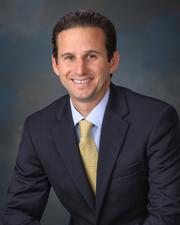 Sen. Brian Schatz (D-HI)
Sen. Brian Schatz (D-HI)Submitted May 20, 2021
Legislative Activity
Stay on top of the latest movement without scrolling through every action
Floor
Latest Action
Senate amendment submitted
May 20, 2021
Text
Submitted
SA 1807. Mr. SCHATZ submitted an amendment intended to be proposed to
amendment SA 1502 proposed by Mr. Schumer to the bill S. 1260, to
establish a new Directorate for Technology and Innovation in the
National Science Foundation, to establish a regional technology hub
program, to require a strategy and report on economic security,
science, research, innovation, manufacturing, and job creation, to
establish a critical supply chain resiliency program, and for other
purposes; which was ordered to lie on the table; as follows:

Strike subsection (a) of section 2104 and insert the
following:
(a) University Technology Center Program.--
(1) In general.--From amounts made available to the
Directorate, the Director shall establish a program in the
Directorate to make awards, through a competitive selection
process, to eligible entities to establish university
technology centers.
(2) Purpose.--The purpose of the university technology
centers shall be to--
(A) conduct multi-disciplinary, collaborative basic and
applied research, relevant to at least one of the key
technology focus areas;
(B) leverage the expertise of multi-disciplinary and multi-
sector partners, including partners from private industry;
(C) further the development, deployment, and
commercialization of innovations, including inventions, in
the key technology focus areas, including those derived from
the activities of the university technology center;
(D) support the development of scientific, innovation,
entrepreneurial, and educational capacity within the region
of the university technology center; and
(E) support graduate students and postdoctoral researchers
with training and professional mentoring towards their future
employment in STEM fields.
(3) Use of funds.--University technology centers
established under this subsection may use support provided--
(A) to carry out research to advance innovation in the key
technology focus areas;
(B) for technology development activities such as proof-of-
concept development, prototyping, design modification,
experimental development, and other actions to reduce the
cost, time, and risk of commercializing new technologies;
(C) for the costs of equipment and cyber infrastructure;
(D) for the costs associated with technology transfer and
commercialization, including patenting and licensing;
(E) for operations and staff; or
(F) for trainee development pilot programs, as described in
paragraph (8).
(4) Selection process.--In selecting recipients under this
subsection, the Director shall consider, in addition to the
scientific and technical merit of the proposal--
(A) maximizing regional and geographic diversity of the
university technology centers, including by considering
rural-serving institutions of higher education (as defined in
section 861(b) of the Higher Education Act of 1965 (20 U.S.C.
1161a(b));
(B) the extent to which the applicant's proposal would
broaden participation by populations underrepresented in
STEM;
(C) the capacity of the applicant to engage industry,
labor, and other appropriate organizations and, where
applicable, contribute to growth in domestic manufacturing
capacity and job creation;
(D) in the case of a consortium, the extent to which the
proposal includes institutions listed in paragraph
(7)(C)(ii);
(E) the amount of funds from industry organizations
described in paragraph (5)(A)(ii) the applicant would use
towards establishing the university technology center;
(F) the plan and capability of the applicant to take
measures to prevent the inappropriate use of the research and
technology of the center, including research results, data,
and intellectual property, as appropriate and consistent with
the requirements of the relevant award; and
(G) the plan and capability of the applicant to support
proof-of-concept development and prototyping as well as
technology transfer and commercialization activities.
(5) Requirements.--
(A) In general.--The Director shall ensure that any
eligible entity receiving an award under this subsection
has--
(i) the capacity or the ability to acquire the capacity to
advance the purposes described in section 2102(b); and
(ii) secured contributions for establishing the university
technology center under this subsection from industry or
other non-Federal organizations in an amount not less than 10
percent of the total amount of the award the eligible entity
would receive under this subsection.
(B) Consortium eligibility.--To be eligible to receive an
award for the establishment and operation of a university
technology center, a consortium shall be composed of not
fewer than 2 entities as described in paragraph (7)(C) and
operate subject to a binding agreement, entered into by each
member of the consortium, that documents--
(i) the proposed partnership agreement, including the
governance and management structure of the university
technology center;
(ii) measures the consortium will undertake to enable cost-
effective implementation of activities under paragraph (3);
(iii) a proposed budget, including financial contributions
from non-Federal sources; and
(iv) the plan for ownership and use of any intellectual
property developed by the center.
(6) Support of regional technology hubs.--Each university
technology center established under this subsection may
support and participate in, as appropriate, the activities of
any regional technology hub designated under section 28 of
the Stevenson-Wydler Technology Innovation Act of 1980 (15
U.S.C. 3701 et seq.), as amended by section 2401 of this Act.
(7) Eligible entity.--In this subsection, the term
``eligible entity'' means--

[[Page S3253]]

(A) an individual institution of higher education;
(B) a nonprofit entity; or
(C) a consortium that--
(i) shall include and be led by an institution of higher
education or by a nonprofit entity, designed to support
technology development;
(ii) shall include 1 or more institution that is--

(I) a historically Black college or university;
(II) a Tribal College or University;
(III) a minority-serving institution (or an institution of
higher education with an established STEM capacity building
program focused on traditionally underrepresented populations
in STEM, including Native Hawaiians, Alaska Natives, and
other Indians);
(IV) an institution that participates in the Established
Program to Stimulate Competitive Research under section 113
of the National Science Foundation Authorization Act of 1988
(42 U.S.C. 1862g);
(V) an emerging research institution; or
(VI) a community college; and

(iii) may include 1 or more--

(I) additional entities described in subparagraph (A) or
(B);
(II) industry entities, including startups, small
businesses, and public private partnerships;
(III) economic development organizations or venture
development organizations, as such terms are defined in
section 28(a) of the Stevenson-Wydler Technology Innovation
Act of 1980 (15 U.S.C. 13701 et seq.), as amended by section
2401 of this Act;
(IV) National Laboratories;
(V) Federal laboratories, as defined in section 4 of the
Stevenson-Wydler Technology Innovation Act of 1980 (15 U.S.C.
3703);
(VI) Federal research facilities;
(VII) labor organizations;
(VIII) entities described in subparagraph (A) or (B) from
allied or partner countries;
(IX) other entities if determined by the Director to be
vital to the success of the program; and
(X) binational research and development foundations and
funds, excluding foreign entities of concern, as defined in
section 2307.

(8) Trainee development pilot program.--
(A) Establishment of pilot program.--At not more than 3
university technology centers that are consortia under
paragraph (7)(C), the Director may include support for
trainee development under the leadership of a member of the
consortium that is an institution described under paragraph
(7)(C)(ii). Such programs shall be selected to ensure
geographical diversity and service to populations
underrepresented in STEM fields, and shall perform the
following activities:
(i) Training and technical assistance for graduate students
and postdoctoral researchers on--

(I) researching and assessing available grant and
fellowship opportunities;
(II) preparing and submitting grants and fellowship
applications that leverage their research and experience; and
(III) administering grant funding, and leveraging grants
and fellowships into longer term employment opportunities.

(ii) Establishing professional mentoring networks that
include Federal, State, local, and Tribal government agencies
and the private sector, as well as members of the regional
technology hubs established under section 28(b)(1)(A) of the
Stevenson-Wydler Technology Innovation Act of 1980 (Public
Law 96-480; 15 U.S.C. 3701 et seq.).
(iii) Other support determined to be necessary or advisable
by the Director to achieve the purposes of this title.
(B) Assessment.--Not later than 5 years after the date of
enactment of this Act, the Foundation shall assess the
impacts of the trainee development programs established under
this paragraph and report its findings to Congress. Such
assessment shall include perspectives from participating
graduate students and postdoctoral researchers.
______