S.Amdt. 1739Senate117th Congress (2021-2023)2nd degree
S.Amdt. 1739
Sponsored by 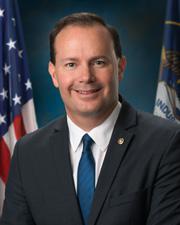 Sen. Mike Lee (R-UT)
Sen. Mike Lee (R-UT)Submitted May 20, 2021
Legislative Activity
Stay on top of the latest movement without scrolling through every action
Floor
Latest Action
Senate amendment submitted
May 20, 2021
Text
Submitted
SA 1739. Mr. LEE submitted an amendment intended to be proposed to
amendment SA 1502 proposed by Mr. Schumer to the bill S. 1260, to
establish a new Directorate for Technology and Innovation in the
National Science Foundation, to establish a regional technology hub
program, to require a strategy and report on economic security,
science, research, innovation, manufacturing, and job creation, to
establish a critical supply chain resiliency program, and for other
purposes; which was ordered to lie on the table; as follows:

In section 3209, strike subsections (c) through (h) and
insert the following:
(c) Office Liaisons.--The Secretary of Commerce and the
Secretary of the Treasury shall each appoint, from within
their respective departments at the level of GS-14 or higher,
liaisons between the Office and the Department of Commerce or
the Department of the Treasury, as applicable, to perform the
following duties:
(1) Collaborate with the Department of State on relevant
technology initiatives and partnerships.
(2) Provide technical and other relevant expertise to the
Office, as appropriate.
(d) Membership.--In addition to the liaisons referred to in
subsection (c), the Office shall include a representative or
expert detailee from key Federal agencies, as determined by
the Secretary of State.
(e) Purposes.--The purposes of the Office shall include
responsibilities such as--
(1) creating, overseeing, and carrying out technology
partnerships with countries and relevant political and
economic unions that are committed to--
(A) the rule of law, freedom of speech, and respect for
human rights;
(B) the safe and responsible development and use of new and
emerging technologies and the establishment of related norms
and standards;
(C) a secure internet architecture governed by a multi-
stakeholder model instead of centralized government control;
(D) robust international cooperation to promote an open
internet and interoperable technological products and
services that are necessary to freedom, innovation,
transparency, and privacy; and
(E) multilateral coordination, including through diplomatic
initiatives, information sharing, and other activities, to
defend the principles described in subparagraphs (A) through
(D) against efforts by state and non-state actors to
undermine them;
(2) harmonizing technology governance regimes with
partners, coordinating on basic and pre-competitive research
and development initiatives, and collaborating to pursue such
opportunities in key technologies, including--
(A) artificial intelligence and machine learning;
(B) 5G telecommunications and other advanced wireless
networking technologies;
(C) semiconductor manufacturing;
(D) biotechnology;
(E) quantum computing;
(F) surveillance technologies, including facial recognition
technologies and censorship software; and
(G) fiber optic cables;
(3) coordinating with such countries regarding shared
technology strategies, including technology controls and
standards, as well as strategies with respect to the
development and acquisition of key technologies to provide
alternatives for those countries utilizing systems supported
by authoritarian regimes;
(4) coordinating the adoption of shared data privacy, data
sharing, and data archiving standards among the United States
and partner countries and relevant economic and political
unions, including complementary data protection regulations;
(5) coordinating with other technology partners on export
control policies, including as appropriate through the
Wassenaar Arrangement On Export Controls for Conventional
Arms and Dual-Use Goods and Technologies, done at The Hague
December 1995, the Nuclear Suppliers Group, the Australia
Group, and the Missile Technology Control Regime; supply
chain security; and investment in or licensing of critical
infrastructure and dual-use technologies;
(6) coordinating with members of technology partnerships on
other policies regarding the use and control of emerging and
foundational technologies through appropriate restrictions,
investment screening, and appropriate measures with respect
to technology transfers;
(7) coordinating policies, in coordination with the
Department of Commerce, around the resiliency of supply
chains in critical technology areas, including possible
diversification of supply chain components to countries
involved in technology partnerships with the United States,
while also maintaining transparency surrounding subsidies and
product origins;
(8) sharing information regarding the technology transfer
threat posed by authoritarian governments and the ways in
which autocratic regimes are utilizing technology to erode
individual freedoms and other foundations of open, democratic
societies;
(9) administering the establishment of--
(A) the common funding mechanism for development and
adoption of measurably secure semiconductors and measurably
secure semiconductors supply chains created in and in
accordance with the requirements of section 9905 of the
William M. (Mac) Thornberry National Defense Authorization
Act for Fiscal Year 2021 (Public Law 116-283); and
(B) the multilateral telecommunications security fund
created in and in accordance with the requirements of section
9202 of such Act; and
(10) collaborating with private companies, trade
associations, and think tanks to realize the purposes of
paragraphs (1) through (9).
(f) Report.--Not later than one year after the date of the
enactment of this Act, and annually thereafter for the next 3
years, the Secretary of State, in coordination with the
Director for National Intelligence, shall submit an
unclassified report to the appropriate congressional
committees, with a classified index, if necessary,
regarding--
(1) the activities of the Office, including any cooperative
initiatives and partnerships pursued with United States
allies and partners, and the results of those activities,
initiatives, and partnerships; and
(2) the activities of the Government of the Peoples'
Republic of China, the Chinese Communist Party, and the
Russian Federation in key technology sectors and the threats
they pose to the United States, including--
(A) artificial intelligence and machine learning;
(B) 5G telecommunications and other advanced wireless
networking technologies;
(C) semiconductor manufacturing;
(D) biotechnology;
(E) quantum computing;
(F) surveillance technologies, including facial recognition
technologies and censorship software; and
(G) fiber optic cables.
(g) Sense of Congress on Establishing International
Technology Partnership.--It is the sense of Congress that the
Secretary of State should seek to establish an International
Technology Partnership for the purposes described in this
section with foreign countries that have--
(1) a democratic national government and a strong
commitment to democratic values, including an adherence to
the rule of law, freedom of speech, and respect for and
promotion of human rights;
(2) an economy with advanced technology sectors; and
(3) a demonstrated record of trust or an expressed interest
in international cooperation and coordination with the United
States on important defense and intelligence issues.
(h) Contribution Requirement.--Any agreement formed with
one or more countries on a bilateral or multilateral basis
under this section shall require, at minimum, that the other
country or countries collectively share at least 50 percent
of the costs associated with the partnership.

[[Page S3213]]

(i) Treaty Requirement.--Any agreement to form a
partnership under this section shall be formalized as a
treaty subject to the advice and consent of the Senate.

______