S.Amdt. 1928Senate117th Congress (2021-2023)2nd degree
S.Amdt. 1928
Sponsored by 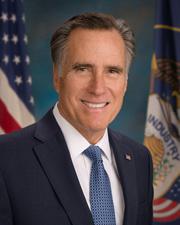 Sen. Mitt Romney (R-UT)
Sen. Mitt Romney (R-UT)Submitted May 24, 2021
Legislative Activity
Stay on top of the latest movement without scrolling through every action
Floor
Latest Action
Senate amendment submitted
May 24, 2021
Text
Submitted
SA 1928. Mr. ROMNEY (for himself and Mr. Rubio) submitted an
amendment intended to be proposed to amendment SA 1502 proposed by Mr.
Schumer to the bill S. 1260, to establish a new Directorate for
Technology and Innovation in the National Science Foundation, to
establish a regional technology hub program, to require a strategy and
report on economic security, science, research, innovation,
manufacturing, and job creation, to establish a critical supply chain
resiliency program, and for other purposes; which was ordered to lie on
the table; as follows:

In subtitle A of title II of division C, insert after
section 3217 the following:

SEC. 3218. REPORT AND SANCTIONS WITH RESPECT TO EFFORTS BY
GOVERNMENT OF THE PEOPLE'S REPUBLIC OF CHINA TO
CENSOR INFORMATION REGARDING THE PANDEMIC
CAUSED BY SARS-COV-2.

(a) Report Required.--
(1) In general.--Not later than 180 days after the date of
the enactment of this Act, the Director of National
Intelligence, in coordination with the Secretary of State,
the Secretary of Health and Human Services, and the heads of
such other Federal agencies as the Director considers
appropriate, shall submit to the appropriate committees of
Congress a report on actions taken by the Government of the
People's Republic of China to censor information regarding
the pandemic caused by the SARS-CoV-2 virus.
(2) Contents.--The report required by paragraph (1) shall
include the following:
(A) A review of the response, including any arbitrary
detentions, forced disappearances, other retaliation, or
suppression of freedom of expression, of the Government of
the People's Republic of China to individuals who provided or
attempted to provide accurate epidemiological information
related to SARS-CoV-2 or warn of the potential seriousness or
impact of SARS-CoV-2, including Li Wenliang and other
doctors, journalists, other citizens of the People's Republic
of China, and other relevant persons.
(B) An identification of keywords banned by the internet
firewall system of the Government of the People's Republic of
China (known as the ``Great Firewall'') during the quarantine
in Wuhan or thereafter relevant to the pandemic caused by
SARS-CoV-2.
(C) Any other elements that the Secretary considers
relevant.
(3) Form.--The report required by paragraph (1) shall be
submitted in unclassified form but may include a classified
annex.
(4) Public availability.--The Director shall make available
to the public the unclassified portion of the report
submitted under paragraph (1).
(b) List of Government Officials.--Not later than 180 days
after the date of the enactment of this Act, the Secretary of
State, in consultation with the Director of National
Intelligence, the Secretary of the Treasury, the Secretary of
Health and Human Services, and the heads of such other
Federal agencies as the Secretary of State considers
appropriate, shall submit to the appropriate committees of
Congress a list identifying officials of the Government of
the People's Republic of China responsible for any of the
following actions with respect to individuals who provided or
attempted to provide accurate epidemiological information
related to SARS-CoV-2 or warn of the potential seriousness or
impact of SARS-CoV-2:
(1) Arbitrary detention.
(2) Forced disappearance.
(3) Other retaliation.
(4) Suppression of freedom of expression.
(c) Imposition of Sanctions.--The President shall impose
the following sanctions with respect to each person on the
list required by subsection (b):
(1) Blocking of property.--The exercise of all powers
granted to the President by the International Emergency
Economic Powers Act (50 U.S.C. 1701 et seq.) to the extent
necessary to block and prohibit all transactions in all
property and interests in property of the person if such
property and interests in property are in the United States,
come within the United States, or are or come within the
possession or control of a United States person.
(2) Ineligibility for visas, admission, or parole.--
(A) Visas, admission, or parole.--In the case of a person
that is an alien, the alien is--
(i) inadmissible to the United States;
(ii) ineligible to receive a visa or other documentation to
enter the United States; and
(iii) otherwise ineligible to be admitted or paroled into
the United States or to receive any other benefit under the
Immigration and Nationality Act (8 U.S.C. 1101 et seq.).
(B) Current visas revoked.--
(i) In general.--An alien described in subparagraph (A) is
subject to revocation of any visa or other entry
documentation regardless of when the visa or other entry
documentation is or was issued.
(ii) Immediate effect.--A revocation under clause (i)
shall--

(I) take effect immediately; and
(II) automatically cancel any other valid visa or entry
documentation that is in the alien's possession.

(d) Implementation; Penalties.--
(1) Implementation.--The President may exercise all
authorities provided under sections 203 and 205 of the
International Emergency Economic Powers Act (50 U.S.C. 1702
and 1704) to carry out this section.
(2) Penalties.--A person that violates, attempts to
violate, conspires to violate, or causes a violation of
subsection (c)(1) or any regulation, license, or order issued
to carry out that subsection shall be subject to the
penalties set forth in subsections (b) and (c) of section 206
of the International Emergency Economic Powers Act (50 U.S.C.
1705) to the same extent as a person that commits an unlawful
act described in subsection (a) of that section.
(e) National Interest Waiver.--The President may waive the
imposition of sanctions under subsection (c) with respect to
a person if the President--
(1) determines that such a waiver is in the national
interests of the United States; and
(2) submits to the appropriate committees of Congress a
notification of the waiver and the reasons for the waiver.
(f) Exceptions.--
(1) Intelligence activities.--This section shall not apply
with respect to activities subject to the reporting
requirements under title V of the National Security Act of
1947 (50 U.S.C. 3091 et seq.) or any authorized intelligence
activities of the United States.
(2) Law enforcement activities.--Sanctions under this
section shall not apply with respect to any authorized law
enforcement activities of the United States.
(3) Exception to comply with international agreements.--
Subsection (c)(2)(B) shall not apply with respect to the
admission of an alien to the United States if such admission
is necessary to comply with the obligations of the United
States under the Agreement regarding the Headquarters of the
United Nations, signed at Lake Success June 26, 1947, and
entered into force November 21, 1947, between the United
Nations and the United States, under the Convention on
Consular Relations, done at Vienna April 24, 1963, and
entered into force March 19, 1967, or under other
international agreements.
(4) Exception relating to importation of goods.--
(A) In general.--The authority or a requirement to impose
sanctions under this section shall not include the authority
or a requirement to impose sanctions on the importation of
goods.
(B) Good defined.--In this paragraph, the term ``good''
means any article, natural or manmade substance, material,
supply, or manufactured product, including inspection

[[Page S3343]]

and test equipment, and excluding technical data.
(g) Definitions.--In this section:
(1) Admission; admitted; alien.--The terms ``admission'',
``admitted'', and ``alien'' have the meanings given those
terms in section 101 of the Immigration and Nationality Act
(8 U.S.C. 1101).
(2) Appropriate committees of congress.--The term
``appropriate committees of Congress'' means--
(A) the Committee on Foreign Relations, the Committee on
Banking, Housing, and Urban Affairs, and the Select Committee
on Intelligence of the Senate; and
(B) the Committee on Foreign Affairs, the Committee on
Financial Services, and the Permanent Select Committee on
Intelligence of the House of Representatives.
(3) United states person.--The term ``United States
person'' means--
(A) a United States citizen or an alien lawfully admitted
to the United States for permanent residence; or
(B) an entity organized under the laws of the United States
or any jurisdiction within the United States.
______