S.Amdt. 1632Senate117th Congress (2021-2023)2nd degree
S.Amdt. 1632
Sponsored by 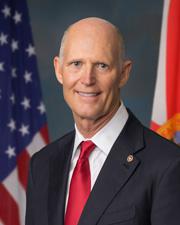 Sen. Rick Scott (R-FL)
Sen. Rick Scott (R-FL)Submitted May 19, 2021
Legislative Activity
Stay on top of the latest movement without scrolling through every action
Floor
Latest Action
Senate amendment submitted
May 19, 2021
Text
Submitted
SA 1632. Mr. SCOTT of Florida submitted an amendment intended to be
proposed to amendment SA 1502 proposed by Mr. Schumer to the bill S.
1260, to establish a new Directorate for Technology and Innovation in
the National Science Foundation, to establish a regional technology hub
program, to require a strategy and report on economic security,
science, research, innovation, manufacturing, and job creation, to
establish a critical supply chain resiliency program, and for other
purposes; which was ordered to lie on the table; as follows:

At the end of subtitle B of title II of division C, add
the following:

SEC. 3236. SUFFICIENT RESOURCES FOR THE UNITED STATES
MILITARY.

(a) Findings.--Congress finds the following:
(1) The United States faces numerous national security
threats from around the world, including from the People's
Republic of China, the Russian Federation, the Islamic
Republic of Iran, the Democratic Republic of Korea, and
international terrorist and crime networks aided by United
States enemies, such as the Republic of Cuba and the
Bolivarian Republic of Venezuela.
(2) The United States is engaged in a new Cold War with the
People's Republic of China, which is--
(A) building up its military to defeat the United States;
(B) stealing United States intellectual property and jobs;
(C) harassing neighboring Asian countries and United States
allies and partners;
(D) committing genocide against the Uyghurs; and
(E) denying basic rights to the people of Hong Kong.
(3) The People's Republic of China is focused on world
domination through oppression and communist rule.
(4) According to prominent research institutions, including
the Center for Strategic and International Studies and the
Stockholm International Peace Research Institute, the Chinese
Communist Party has increased its defense spending more than
700 percent during the last decade, with an additional 6.8
percent increase anticipated in this fiscal year.
(5) Security and foreign policy experts widely acknowledge
that--
(A) the People's Republic of China is not forthcoming or
transparent with information related to military spending;
and
(B) China's military spending may be considerably higher
than its reported figures.
(6) The National Defense Strategy Commission, in its
report, Providing for the Common Defense: The Assessment and
Recommendation of the States, recommended that ``Congress
increase the base defense budget at an average rate of three
to five percent above inflation through the Future Years
Defense Program and perhaps beyond''.
(7) When considering the inflation crisis he has created,
President Biden's proposed defense budget would represent a
cut to spending, despite--
(A) new and mounting threats to United States national
security and to our allies; and
(B) the need for sufficient military support to deter our
enemies and maintain the most lethal fighting force in the
world.
(8) President Biden's proposed budget request includes
$715,000,000,000 for the Department of Defense, which is well
below the funding needed to keep pace with inflation, while
the President's nondefense discretionary spending request is
$769,400,000,000, which represents an increase of 15.9
percent compared to the current fiscal year.
(9) In the Department of Defense's fiscal year 2021 Future
Years Defense Program, the projected request for the
Department of Defense in fiscal year 2022 was targeted at
$722,000,000,000, which is $7,000,000,000 higher than
President Biden's actual defense budget request for fiscal
year 2022.
(b) Sense of Congress.--It is the sense of Congress that--
(1) President Biden's defense budget--
(A) does not provide adequate resources to deter or defeat
United States enemies;
(B) does not even keep up with inflation; and
(C) does not restore our military readiness that was
diminished by budget cuts and the sequester under President
Barack Obama, which arbitrarily reduced defense spending
across the board;
(2) the lack of sufficient funding will require the
Department of Defense to choose between--
(A) providing for United States servicemembers'
compensation and benefits;
(B) providing for United States forces' modernization and
readiness needs; and
(C) any other priorities that the Biden Administration
chooses to pursue;
(3) President Biden's decision to reduce defense spending--
(A) harms the United States's long-term strategic
competition against the People's Republic of China and other
adversaries; and
(B) weakens our standing on the global stage; and
(4) the Biden Administration should work with Congress to
ensure that the United States military has all the necessary
resources to build and sustain the overwhelming military
might that the United States expects and deserves.
______