S.Amdt. 1530Senate117th Congress (2021-2023)2nd degree
S.Amdt. 1530
Sponsored by 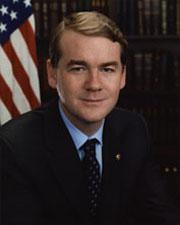 Sen. Michael F. Bennet (D-CO)
Sen. Michael F. Bennet (D-CO)Submitted May 19, 2021
Legislative Activity
Stay on top of the latest movement without scrolling through every action
Floor
Latest Action
Senate amendment submitted
May 19, 2021
Text
Submitted
SA 1530. Mr. BENNET (for himself and Mr. Sasse) submitted an
amendment intended to be proposed to amendment SA 1502 proposed by Mr.
Schumer to the bill S. 1260, to establish a new Directorate for
Technology and Innovation in the National Science Foundation, to
establish a regional technology hub program, to require a strategy and
report on economic security, science, research, innovation,
manufacturing, and job creation, to establish a critical supply chain
resiliency program, and for other purposes; which was ordered to lie on
the table; as follows:

At the end of title V of division B, add the following:

SEC. 25_. TASK FORCE ON ORGANIZATIONAL STRUCTURE FOR
ARTIFICIAL INTELLIGENCE GOVERNANCE AND
OVERSIGHT.

(a) Establishment.--Not later than 90 days after the date
of the enactment of this Act, the President shall appoint a
task force to assess the privacy, civil rights, and civil
liberties implications of artificial intelligence (referred
to in this section as the ``AI Task Force'').
(b) Membership of Task Force.--
(1) In general.--The AI Task Force shall include--
(A) the Attorney General or his or her designee;
(B) the Director of the Office of Management and Budget or
his or her designee;
(C) the Director of the National Institute of Standards and
Technology or his or her designee;
(D) the Director of the Office of Science and Technology
Policy or his or her designee;
(E) the Deputy Director for Technology at the National
Science and Technology Foundation;
(F) the Comptroller General or his or her designee;
(G) the Inspectors General for the following agencies--
(i) the Department of State;
(ii) the Department of the Treasury;
(iii) the Department of Defense;
(iv) the Department of Justice;
(v) the Department of Health and Human Services;
(vi) the Department of Homeland Security;
(vii) the Department of Commerce;
(viii) the Department of Labor;
(ix) the Department of Education; and
(x) the Office of the Director of National Intelligence;
(H) the chief privacy and civil liberties officers of each
agency described in subparagraph (G);
(I) the Chair of the Privacy and Civil Liberties Oversight
Board;

[[Page S2792]]

(J) the Chair of the National Artificial Intelligence
Advisory Committee's Subcommittee on Artificial Intelligence
and Law Enforcement; and
(K) representatives from civil society, including
organizational leaders with expertise in technology, privacy,
civil liberties, and civil rights, representatives from
industry, and representatives from academia, as appointed by
the President.
(2) Task force chair and vice chair.--The President shall
designate a Chair and Vice Chair of the AI Task Force from
among its members.
(c) Duties.--The AI Task Force shall carry out the
following duties:
(1) Identifying policy and legal gaps and making
recommendations to ensure that uses of artificial
intelligence (referred to in this section as ``AI'') and
associated data in United States Government operations
comport with freedom of expression, equal protection,
privacy, and due process.
(2) Assessing existing policy and legal gaps for current AI
applications and making recommendations for--
(A) legislative and regulatory reforms on the development
and fielding of AI; and
(B) institutional changes to ensure sustained assessment
and recurring guidance on privacy and civil liberties
implications of AI applications.
(3) Conducting an assessment and making recommendations to
Congress and to the President to ensure that the development
and fielding of artificial intelligence by the Federal
Government provides protections for the privacy, civil
liberties, and civil rights of individuals in the United
States in a manner that is appropriately balanced against
critical law enforcement and national security needs.
(4) Recommending baseline standards for Federal Government
use of biometric identification technologies, including
facial recognition, voiceprint, gait recognition, and
keyboard entry technologies.
(5) Recommending baseline standards for the protection and
integrity of data in the custody of the Federal Government.
(6) Recommending proposals to address any gaps in Federal
law or regulation with respect to facial recognition
technologies in order to enhance protections of privacy,
civil liberties, and civil rights of individuals in the
United States.
(7) Recommending best practices and contractual
requirements to strengthen protections for privacy,
information security, fairness, nondiscrimination,
auditability, and accountability in artificial intelligence
systems and technologies and associated data procured by the
Federal Government.
(8) Considering updates to and reforms of Government data
privacy and retention requirements to address implications to
privacy, civil liberties, and civil rights.
(9) Assessing ongoing efforts to regulate commercial
development and fielding of artificial intelligence and
associated data in light of privacy, civil liberties, and
civil rights implications, and as appropriate, considering
and recommending institutional or organizational changes to
facilitate applicable regulation.
(10) Assessing the utility of establishing a new
organization within the Federal Government to provide ongoing
governance for and oversight over the fielding of artificial
intelligence technologies by Federal agencies as
technological capabilities evolve over time.
(d) Organizational Considerations.--In conducting the
assessments required by paragraphs (2) and (3) of subsection
(c), the AI Task Force shall consider--
(1) the organizational placement, structure, composition,
authorities, and resources that a new organization would
require to provide ongoing guidance and baseline standards
for--
(A) the Federal Government's development, acquisition, and
fielding of artificial intelligence systems to ensure they
comport with privacy, civil liberties, and civil rights and
civil liberties law, including guardrails for their use; and
(B) providing transparency to oversight entities and the
public regarding the Federal Government's use of artificial
systems and the performance of those systems;
(2) the existing interagency and intra-agency efforts to
address AI oversight;
(3) the need for and scope of national security carve outs,
and any limitations or protections that should be built into
any such carve outs; and
(4) the research, development, and application of new
technologies to mitigate privacy and civil liberties risks
inherent in artificial intelligence systems.
(e) Reporting.--
(1) Interim report to congress.--Not later than 1 year
after the establishment of the AI Task Force, the AI Task
Force shall prepare and submit an interim report to Congress
and the President containing the AI Task Force's legislative
and regulatory recommendations.
(2) Updates.--The AI Task Force shall provide periodic
updates to the President and to Congress.
(3) Final report.--Not later than 18 months after the
establishment of the AI Task Force, the AI Task Force shall
prepare and submit a final report to the President and to
Congress containing its assessment on organizational
considerations, to include any recommendations for
organizational changes.
(f) Other Emerging Technologies.--At any time before the
submission of the final report under subsection (e)(3), the
AI Task Force may recommend to Congress the creation of a
similar task force focused on another emerging technology.
(g) Sunset.--The AI Task Force shall terminate on the date
that is 18 months after the establishment of the Task Force.
______