S.Amdt. 1827Senate117th Congress (2021-2023)2nd degree
S.Amdt. 1827
Sponsored by 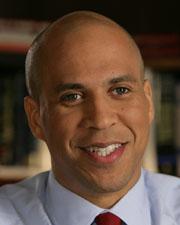 Sen. Cory A. Booker (D-NJ)
Sen. Cory A. Booker (D-NJ)Submitted May 20, 2021
Legislative Activity
Stay on top of the latest movement without scrolling through every action
Floor
Latest Action
Senate amendment submitted
May 20, 2021
Text
Submitted
SA 1827. Mr. BOOKER submitted an amendment intended to be proposed to
amendment SA 1502 proposed by Mr. Schumer to the bill S. 1260, to
establish a new Directorate for Technology and Innovation in the
National Science Foundation, to establish a regional technology hub
program, to require a strategy and report on economic security,
science, research, innovation, manufacturing, and job creation, to
establish a critical supply chain resiliency program, and for other
purposes; which was ordered to lie on the table; as follows:

At the end of part II of subtitle A of title I of division
D, add the following:

SEC. 4128. SECURING UNITED STATES SUPPLY CHAINS OF STRATEGIC
METALS AND MINERALS.

(a) Findings.--Congress makes the following findings:
(1) Underpinned by huge demand from the battery sector,
competition for control over global cobalt feedstock supply
chains has intensified in recent years. The People's Republic
of China's increasing control over cobalt (and other mineral)
resources in the Democratic Republic of the Congo (in this
section referred to as the ``DRC'') could pose a threat to
United States entities seeking to secure supply chains for
these minerals. The DRC hosts more than 51 percent of the
global cobalt reserves and produces nearly 70 percent of the
total cobalt feedstock globally.
(2) In early January 2021, the Government of the People's
Republic of China announced it would cancel an estimated
$28,000,000 of loans to the DRC, repayment of which were due
by the end of 2020, and provide $17,000,000 in other
financial support to help the DRC overcome the crisis caused
by the COVID-19 pandemic. During a visit to the DRC, Chinese
Foreign Minister Wang Yi signed an memorandum of
understanding with the DRC on cooperation under the Belt and
Road Initiative, with the DRC now becoming the People's
Republic of China's 45th partner under that Initiative in
Africa. Prior to the announcement, Chinese entities already
controlled more than 40 percent of the cobalt mining capacity
in the DRC as a result of decades-long investment and
development in the DRC, with several resource-for-
infrastructure deals having been signed and implemented since
the 1990s.
(3) The People's Republic of China is also the world's
leading importer of copper, iron ore, chromium, manganese,
tantalum, niobium, platinum-group metals, and lithium. Long-
term contracts have been established for some imports, but
for others, Chinese entities have made equity investments or
entered joint ventures in order to secure needed resources.
(b) Sense of Congress.--It is the Sense of Congress that--
(1) the current United States mineral policy of promoting
an adequate, stable, and reliable supply of materials for
United States national security, economic well-being, and
industrial production is inadequate to ensure that United
States entities have a secure supply chain for certain
strategic metals and minerals;
(2) United States mineral policy emphasizes developing
domestic supplies of critical materials and encourages the
private sector in the United States to produce and process
those materials, but some raw materials do not exist in
economic quantities in the United States, and processing,
manufacturing, and other downstream ventures in the United
States may not be cost competitive with facilities in other
regions of the world;
(3) to counter Chinese dominance in the market for those
minerals, the United States Government should--
(A) support more responsible trade missions and United
States commercial delegations to mineral-producing countries
and assist smaller and less-developed countries to improve
the transparency of their minerals trade, including strong
support for implementation of the Extractive Industries
Transparency Initiative, beneficial ownership transparency,
and the formalization of the artisanal mining sector;
(B) the Department of Commerce should work with the
Department of the Treasury and the Department of State to
leverage resources to investigate networks of corrupt Chinese
practices in the DRC and elsewhere and coordinate with the
Department of

[[Page S3261]]

Labor and U.S. Customs and Border Protection to ensure that
minerals supply chains do not include products benefitting
from forced and child labor;
(C) the Department of Commerce, in cooperation with other
United States Government agencies, should facilitate
accessible de-risking for United States entities seeking to
invest in countries such as the DRC; and
(D) the Department of State, in cooperation with other
United States Government agencies, should provide to Congress
an annual report on corruption in the cobalt sector in the
DRC.
(c) Statement of Policy.--It shall be the policy of the
United States--
(1) to promote an adequate, stable, transparent, and
reliable supply of materials for United States national
security, economic well-being, and industrial production,
including by developing international supply chain options
that do not rely primarily or exclusively on the domestic
private sector or corrupt sources abroad to produce and
process those materials;
(2) to counter Chinese dominance in the production of
certain metals and minerals, including cobalt, by
facilitating the competitiveness of United States entities to
work in markets currently dominated by the People's Republic
of China; and
(3) to promote a responsible minerals supply chain that
counters corruption by the People's Republic of China and all
actors and, to that end, the Department of the Treasury
should focus on tools, including network sanctions, anti-
money laundering measures, and other actions to counter
kleptocratic and illicit actors in global mineral supply
chains.
______