To direct the President to enforce the intellectual property provisions of the Economic and Trade Agreement Between the Government of the United States of America and the Government of China.
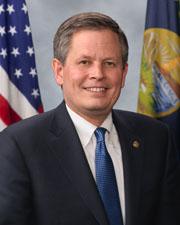 Sen. Steve Daines (R-MT)
Legislative Activity
Stay on top of the latest movement without scrolling through every action
Senate amendment proposed (on the floor): Amendment SA 1787 proposed by Senator Cantwell for Senator Daines to Amendment SA 1502.
May 25, 2021
View full timeline
Senate amendment proposed (on the floor): Amendment SA 1787 proposed by Senator Cantwell for Senator Daines to Amendment SA 1502.
May 25, 2021
Senate amendment agreed to: Amendment SA 1787 agreed to in Senate by Voice Vote.
May 25, 2021
Amendment SA 1787 proposed by Senator Cantwell for Senator Daines to Amendment SA 1502. (consideration: CR S3409; text: CR S3402-3403) To direct the President to enforce the intellectual property provisions of the Economic and Trade Agreement Between the Government of the United States of America and the Government of China.
May 25, 2021
Amendment SA 1787 agreed to in Senate by Voice Vote.
May 25, 2021
Senate amendment submitted
May 20, 2021
Text
Submitted
SA 1787. Mr. DAINES (for himself and Ms. Cortez Masto) submitted an
amendment intended to be proposed to amendment SA 1502 proposed by Mr.
Schumer to the bill S. 1260, to establish a new Directorate for
Technology and Innovation in the National Science Foundation, to
establish a regional technology hub program, to require a strategy and
report on economic security, science, research, innovation,

[[Page S3245]]

manufacturing, and job creation, to establish a critical supply chain
resiliency program, and for other purposes; which was ordered to lie on
the table; as follows:

At the end of title III of division F, add the following:

SEC. 6302. ENFORCEMENT OF INTELLECTUAL PROPERTY PROVISIONS OF
ECONOMIC AND TRADE AGREEMENT BETWEEN THE
GOVERNMENT OF THE UNITED STATES OF AMERICA AND
THE GOVERNMENT OF CHINA.

(a) Sense of Congress.--It is the sense of Congress that--
(1) the Agreement includes significant mandates for the
People's Republic of China related to its domestic
intellectual property regime, including with respect to
copyrights, trademarks, trade secrets, and patents;
(2) the changes included in the Agreement, if implemented
effectively, should improve the domestic intellectual
property framework of the People's Republic of China, which
has historically proven to harm the innovation and creative
communities in the United States;
(3) despite commitments made by the Government of the
People's Republic of China under the Agreement, ongoing
market access barriers, uneven enforcement, measures
requiring forced technology transfer, and serious
deficiencies in the rule of law continue to make the business
environment in the People's Republic of China highly
challenging for rights holders in the United States;
(4) as reflected in the 2021 report by the United States
Trade Representative required under section 182(h) of the
Trade Act of 1974 (19 U.S.C. 2242(h)) (commonly referred to
as the ``Special 301 Report''), the People's Republic of
China has consistently been listed in that annual report
since 1989 as a trading partner of the United States that
``fails to provide adequate and effective IP protection and
enforcement for U.S. inventors, creators, brands,
manufacturers, and service providers, which, in turn, harm
American workers''; and
(5) Congress encourages the United States Trade
Representative, the Attorney General, the Secretary of State,
the Secretary of Homeland Security, the Secretary of
Commerce, and the Director of the United States Patent and
Trademark Office--
(A) to use all available tools to ensure that the People's
Republic of China fully implements its commitments under the
Agreement; and
(B) to actively consider additional means to require the
People's Republic of China to address unfair market access
barriers, forced technology transfer requirements, and
broader intellectual property theft concerns, including
through future trade agreements and working with partners in
multilateral organizations, such as the Group of 7 (G7), the
Group of 20 (G20), and the World Trade Organization.
(b) Enforcement of Agreement.--The President, acting
through the United States Trade Representative, shall
coordinate with the heads of such Federal agencies as the
President considers appropriate to enforce the actions
related to intellectual property laid out in the Agreement
including--
(1) the civil, administrative, and criminal procedures and
deterrent-level civil and criminal penalties provided in the
Agreement; and
(2) by using the full enforcement authority of the
President, including any enforcement authority in connection
with the identification and reporting process under section
182 of the Trade Act of 1974 (19 U.S.C. 2242).
(c) Report on Status of Implementation of Certain
Obligations.--
(1) In general.--Not later than 180 days after the date of
the enactment of this Act, and every 180 days thereafter, the
United States Trade Representative shall submit to the
appropriate committees of Congress a report on the status of
the implementation by the People's Republic of China of its
obligations under Chapter 1 of the Agreement.
(2) Information in report.--Each report required by
paragraph (1) shall contain information sufficient to enable
the appropriate committees of Congress to assess the extent
of the compliance by the People's Republic of China with the
Agreement, including appropriate quantitative metrics.
(d) Definitions.--In this section:
(1) Agreement.--The term ``Agreement'' means the Economic
and Trade Agreement Between the Government of the United
States of America and the Government of China, dated January
15, 2020.
(2) Appropriate committees of congress.--The term
``appropriate committees of Congress'' means the Committee on
Finance of the Senate and the Committee on Ways and Means of
the House of Representatives.
______