S.Amdt. 1965Senate117th Congress (2021-2023)2nd degree
S.Amdt. 1965
Sponsored by 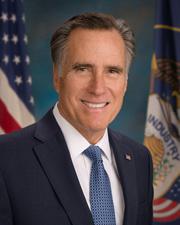 Sen. Mitt Romney (R-UT)
Sen. Mitt Romney (R-UT)Submitted May 24, 2021
Legislative Activity
Stay on top of the latest movement without scrolling through every action
Floor
Latest Action
Senate amendment submitted
May 24, 2021
Text
Submitted
SA 1965. Mr. ROMNEY submitted an amendment intended to be proposed to
amendment SA 1502 proposed by Mr. Schumer to the bill S. 1260, to
establish a new Directorate for Technology and Innovation in the
National Science Foundation, to establish a regional technology hub
program, to require a strategy and report on economic security,
science, research, innovation, manufacturing, and job creation, to
establish a critical supply chain resiliency program, and for other
purposes; which was ordered to lie on the table; as follows:

At the appropriate place, insert the following:

SEC. ____. CHINA GRAND STRATEGY.

(a) Findings; Sense of Congress.--
(1) Findings.--Congress finds the following:
(A) The United States is in a geostrategic competition with
the People's Republic of China, a great power that is
challenging the United States in the diplomatic, economic,
military, technological, and informational domains.
(B) During the geostrategic competition with the Soviet
Union, the United States articulated and refined its strategy
to ensure ultimate success.
(C) President Eisenhower utilized experts from both within
and outside the United States Government during Project
Solarium to produce NSC 162/2, a ``Statement of Policy by the
National Security Council on Basic National Security Policy''
in order to ``meet the Soviet Threat to U.S. security'' and
guide United States national security policy.
(D) President Ford authorized the Team B project to draw in
experts from outside the United States Government to question
and strengthen the analysis of the Central Intelligence
Agency.
(E) A model for United States strategy on a great power
competitor is the January 17, 1983, National Security
Decision Directive Number 75, approved by President Reagan,
to organize United States strategy toward the Soviet Union in
order to clarify and orient United States policies towards
specific objectives vis a vis the Soviet Union.
(2) Sense of congress.--It is the sense of Congress that
the United States should draw upon previous successful models
of grand strategy to articulate a strategy that appropriately
addresses the evolving challenges and contours of the current
geostrategic competition with the People's Republic of China.
(b) China Grand Strategy.--
(1) In general.--Not later than 30 days after the date on
which the President first submits to Congress a national
security strategy under section 108 of the National Security
Act of 1947 (50 U.S.C. 3043) after the date of the enactment
of this Act, the President shall commence developing a
comprehensive report that articulates the strategy of the
United States with respect to the People's Republic of China
(in this section referred to as the ``China Grand Strategy'')
that builds on the work of such national security strategy.
(2) Submittal.--Not later than 270 days after the date on
which the President first submits to Congress a national
security strategy under section 108 of the National Security
Act of 1947 (50 U.S.C. 3043) after the date of the enactment
of this Act, the President shall submit to Congress the China
Grand Strategy developed under paragraph (1).
(3) Form.--The China Grand Strategy shall be submitted in
classified form and shall include an unclassified summary.
(c) Contents.--The China Grand Strategy developed under
subsection (b) shall set forth the national security strategy
of the United States with respect to the People's Republic of
China and shall include a comprehensive description and
discussion of the following:
(1) The worldwide interests, goals, and objectives of the
United States, including national security interests, within
the context of the competition with the People's Republic of
China.
(2) The foreign and economic policy, worldwide commitments,
and national defense capabilities of the United States
necessary to deter aggression and to implement the national
security strategy of the United States within the context of
the competition with the People's Republic of China.
(3) How the United States will exercise the political,
economic, military, diplomatic, and other elements of its
national power to protect or advance its interests and
achieve the goals and objectives referred to in paragraph
(1).
(4) The adequacy of the capabilities of the United States
Government to carry out the national security strategy of the
United States within the context of the competition with the
People's Republic of China, including an evaluation--
(A) of the balance among the capabilities of all elements
of national power of the United States; and
(B) the balance of all United States elements of national
power in comparison to equivalent elements of national power
of the People's Republic of China.
(5) The assumptions and end-state or end-states of the
strategy of the United States with respect to the People's
Republic of China.
(6) Such other information as the President considers
necessary to help inform Congress on matters relating to the
national security strategy of the United States with respect
to the People's Republic of China.
(d) Advisory Board on China Grand Strategy.--
(1) Establishment.--There is hereby established in the
executive branch a commission to be known as the ``Advisory
Board on China Grand Strategy'' (in this section referred to
as the ``Board'').
(2) Purpose.--The purpose of the Board is to convene
outside experts to advise the President on development of the
China Grand Strategy.
(3) Duties.--
(A) Review.--The Board shall review the current national
security strategy of the United States with respect to the
People's Republic of China, including assumptions, strategy,
and end-state or end-states.
(B) Assessment and recommendations.--The Board shall
analyze the United States national security strategy with
respect to the People's Republic of China, including
challenging its assumptions and approach, and make
recommendations to the President for the China Grand
Strategy.
(4) Composition.--
(A) Recommendations.--Not later than 30 days after the date
on which the President first submits to Congress a national
security strategy under section 108 of the National Security
Act of 1947 (50 U.S.C. 3043) after the date of the enactment
of this Act, the majority leader of the Senate, the minority
leader of the Senate, the Speaker of the House of
Representatives, and the minority leader of the House of
Representatives shall each provide to the President a list of
at not fewer than 6 candidates for membership on the Board,
at least 3 of whom shall be individuals in the private sector
and 3 of whom shall be individuals in academia or employed by
a nonprofit research institution.
(B) Membership.--The Board shall be composed of 8 members
appointed by the President as follows:
(i) Four shall be selected from among individuals in the
private sector.
(ii) Four shall be selected from among individuals in
academia or employed by a nonprofit research institution.
(iii) Two members should be selected from among individuals
included in the list submitted by the majority leader of the
Senate under subparagraph (A), of whom--

(I) one should be selected from among individuals in the
private sector; and
(II) one should be selected from among individuals in
academia or employed by a nonprofit research institution.

(iv) Two members should be selected from among individuals
included in the list submitted by the minority leader of the
Senate under subparagraph (A), of whom--

(I) one should be selected from among individuals in the
private sector; and
(II) one should be selected from among individuals in
academia or employed by a nonprofit research institution.

[[Page S3372]]

(v) Two members should be selected from among individuals
included in the list submitted by the Speaker of the House of
Representatives under subparagraph (A), or whom--

(I) one should be selected from among individuals in the
private sector; and
(II) one should be selected from among individuals in
academia or employed by a nonprofit research institution.

(vi) Two members should be selected from among individuals
included in the list submitted by the minority leader of the
House of Representatives under subparagraph (A), of whom--

(I) one should be selected from among individuals in the
private sector; and
(II) one should be selected from among individuals in
academia or employed by a nonprofit research institution.

(C) Nongovernmental membership; period of appointment;
vacancies.--
(i) Nongovernmental membership.--An individual appointed to
the Board may not be an officer or employee of an
instrumentality of government.
(ii) Period of appointment.--Members shall be appointed for
the life of the Board.
(iii) Vacancies.--Any vacancy in the Board shall be filled
in the same manner as the original appointment.
(5) Deadline for appointment.--Not later than 60 days after
the date on which the President first submits to Congress a
national security strategy under section 108 of the National
Security Act of 1947 (50 U.S.C. 3043) after the date of the
enactment of this Act, the President shall--
(A) appoint the members of the Board pursuant to paragraph
(4); and
(B) submit to Congress a list of the members so appointed.
(6) Experts and consultants.--The Board is authorized to
procure temporary and intermittent services under section
3109 of title 5, United States Code, but at rates for
individuals not to exceed the daily equivalent of the maximum
annual rate of basic pay under level IV of the Executive
Schedule under section 5315 of title 5, United States Code.
(7) Security clearances.--The appropriate Federal
departments or agencies shall cooperate with the Board in
expeditiously providing to the Board members and experts and
consultants appropriate security clearances to the extent
possible pursuant to existing procedures and requirements,
except that no person may be provided with access to
classified information under this Act without the appropriate
security clearances.
(8) Receipt, handling, storage, and dissemination.--
Information shall only be received, handled, stored, and
disseminated by members of the Board and any experts and
consultants consistent with all applicable statutes,
regulations, and Executive orders.
(9) Nonapplicability of certain requirements.--The Federal
Advisory Committee Act (5 U.S.C. App.) and section 552b of
title 5, United States Code (commonly known as the
``Government in the Sunshine Act''), shall not apply to the
Board.
(10) Uncompensated service.--Members of the Board shall
serve without compensation.
(11) Cooperation from government.--In carrying out its
duties, the Board shall receive the full and timely
cooperation of the heads of relevant Federal departments and
agencies in providing the Board with analysis, briefings, and
other information necessary for the fulfillment of its
responsibilities.
(12) Authorization of appropriations.--There are authorized
to be appropriated to carry out this section $2,000,000 for
the period of fiscal years 2022 and 2023.
(13) Termination.--The Board shall terminate on the date
that is 60 days after the date on which the President submits
the China Grand Strategy to Congress under subsection (b)(2).
______