To improve the bill.
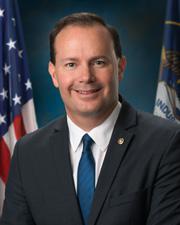 Sen. Mike Lee (R-UT)
Legislative Activity
Stay on top of the latest movement without scrolling through every action
Roll call votes on amendments in Senate: Amendment SA 6482 under the order of 11/28/2022, not having achieved 60 votes in the affirmative, was not agreed to in Senate by Yea-Nay Vote. 48 - 49. Record Vote Number: 359.
November 29, 2022
View full timeline
Roll call votes on amendments in Senate: Amendment SA 6482 under the order of 11/28/2022, not having achieved 60 votes in the affirmative, was not agreed to in Senate by Yea-Nay Vote. 48 - 49. Record Vote Number: 359.
November 29, 2022
Senate amendment not agreed to: Amendment SA 6482 under the order of 11/28/2022, not having achieved 60 votes in the affirmative, was not agreed to in Senate by Yea-Nay Vote. 48 - 49. Record Vote Number: 359.
November 29, 2022
Senate amendment proposed (on the floor): Amendment SA 6482 proposed by Senator Lee to Amendment SA 6487.
November 29, 2022
Amendment SA 6482 proposed by Senator Lee to Amendment SA 6487. (consideration: CR S6834-6837, S6841-6844 ; text: CR S6834-6835) To improve the bill.
November 29, 2022
Amendment SA 6482 under the order of 11/28/2022, not having achieved 60 votes in the affirmative, was not agreed to in Senate by Yea-Nay Vote. 48 - 49. Record Vote Number: 359.
November 29, 2022
Senate amendment submitted
November 16, 2022
Votes
1 roll call on this amendment
Amendments
1 amendmentOffered to this amendment
Amendments
1 amendmentOffered to this amendment
Text
Submitted
SA 6482. Mr. LEE (for himself, Mr. Crapo, Mr. Cruz, Mr. Graham, Mr.
Hawley, Mr. Marshall, Mr. Paul, Mr. Sasse, Mr. Thune, Mr. Wicker, Mr.
Risch, Mr. Braun, Mr. Johnson, and Mr. Scott of Florida) submitted an
amendment intended to be proposed by him to the bill H.R. 8404, to
repeal the Defense of Marriage Act and ensure respect for State
regulation of marriage, and for other purposes; which was ordered to
lie on the table; as follows:

At the end, insert the following:

TITLE II--RELIGIOUS BELIEFS AND MORAL CONVICTIONS

SEC. 201. PROTECTION OF THE FREE EXERCISE OF RELIGIOUS
BELIEFS AND MORAL CONVICTIONS.

(a) In General.--Notwithstanding section 7 of title 1,
United States Code, section 1738C of title 28, United States
Code, or any other provision of law, the Federal Government
shall not take any discriminatory action against a person,
wholly or partially on the basis that such person speaks, or
acts, in accordance with a sincerely held religious belief,
or moral conviction, that marriage is or should be recognized
as a union of--
(1) one man and one woman; or
(2) two individuals as recognized under Federal law.
(b) Discriminatory Action Defined.--As used in subsection
(a), a discriminatory action means any action taken by the
Federal Government to--
(1) alter in any way the Federal tax treatment of, or cause
any tax, penalty, or payment to be assessed against, or deny,
delay, or revoke an exemption from taxation under section
501(a) of the Internal Revenue Code of 1986 of, any person
referred to in subsection (a);
(2) disallow a deduction for Federal tax purposes of any
charitable contribution made to or by such person;

[[Page S6746]]

(3) withhold, reduce the amount or funding for, exclude,
terminate, or otherwise make unavailable or deny, any Federal
grant, contract, subcontract, cooperative agreement,
guarantee, loan, scholarship, license, certification,
accreditation, employment, or other similar position or
status from or to such person;
(4) withhold, reduce, exclude, terminate, or otherwise make
unavailable or deny, any entitlement or benefit under a
Federal benefit program, including admission to, equal
treatment in, or eligibility for a degree from an educational
program, from or to such person; or
(5) withhold, reduce, exclude, terminate, or otherwise make
unavailable or deny, access or an entitlement to Federal
property, facilities, educational institutions, speech fora
(including traditional, limited, and nonpublic fora), or
charitable fundraising campaigns from or to such person.
(c) Accreditation; Licensure; Certification.--The Federal
Government shall consider accredited, licensed, or certified
for purposes of Federal law any person that would be
accredited, licensed, or certified, respectively, for such
purposes but for a determination against such person wholly
or partially on the basis that the person speaks, or acts, in
accordance with a sincerely held religious belief or moral
conviction described in subsection (a).

SEC. 202. JUDICIAL RELIEF.

(a) Cause of Action.--A person may assert an actual or
threatened violation of this title as a claim or defense in a
judicial or administrative proceeding and obtain compensatory
damages, injunctive relief, declaratory relief, or any other
appropriate relief against the Federal Government. Standing
to assert a claim or defense under this section shall be
governed by the general rules of standing under article III
of the Constitution.
(b) Administrative Remedies Not Required.--Notwithstanding
any other provision of law, an action under this section may
be commenced, and relief may be granted, in a district court
of the United States without regard to whether the person
commencing the action has sought or exhausted available
administrative remedies.
(c) Attorneys' Fees.--Section 722(b) of the Revised
Statutes (42 U.S.C. 1988(b)) is amended by inserting ``title
II of the Respect for Marriage Act,'' after ``the Religious
Land Use and Institutionalized Persons Act of 2000,''.
(d) Authority of United States To Enforce This Title.--The
Attorney General may bring an action for injunctive or
declaratory relief against an independent establishment
described in section 104(1) of title 5, United States Code,
or an officer or employee of that independent establishment,
to enforce compliance with this title. Nothing in this
subsection shall be construed to deny, impair, or otherwise
affect any right or authority of the Attorney General, the
United States, or any agency, officer, or employee of the
United States, acting under any law other than this
subsection, to institute or intervene in any proceeding.

SEC. 203. RULES OF CONSTRUCTION.

(a) No Preemption, Repeal, or Narrow Construction.--Nothing
in this title shall be construed to preempt State law, or
repeal Federal law, that is equally or more protective of
free exercise of religious beliefs and moral convictions.
Nothing in this title shall be construed to narrow the
meaning or application of any State or Federal law protecting
free exercise of religious beliefs and moral convictions.
(b) No Prevention of Providing Benefits or Services.--
Nothing in this title shall be construed to prevent the
Federal Government from providing, either directly or through
a person not seeking protection under this title, any benefit
or service authorized under Federal law.
(c) No Affirmation or Endorsement of Views.--Nothing in
this title shall be construed to affirm or otherwise endorse
a person's belief, speech, or action about marriage.
(d) Severability.--If any provision of this title or any
application of such provision to any person or circumstance
is held to be unconstitutional, the remainder of this title
and the application of the provision to any other person or
circumstance shall not be affected.

SEC. 204. DEFINITIONS.

In this title:
(1) Federal benefit program.--The term ``Federal benefit
program'' has the meaning given that term in section 552a of
title 5, United States Code.
(2) Federal; federal government.--The terms ``Federal'' and
``Federal Government'' relate to and include--
(A) any department, commission, board, or other agency of
the Federal Government;
(B) any officer, employee, or agent of the Federal
Government; and
(C) the District of Columbia and all Federal territories
and possessions.
(3) Person.--The term ``person'' means a person as defined
in section 1 of title 1, United States Code, except that such
term shall not include--
(A) publicly traded for-profit entities;
(B) Federal employees acting within the scope of their
employment;
(C) Federal for-profit contractors acting within the scope
of their contract; or
(D) hospitals, clinics, hospices, nursing homes, or other
medical or residential custodial facilities with respect to
visitation, recognition of a designated representative for
health care decisionmaking, or refusal to provide medical
treatment necessary to cure an illness or injury.

____________________