To improve the bill.
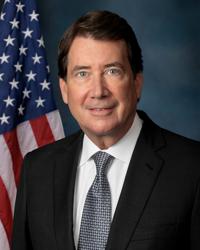 Sen. Bill Hagerty (R-TN)
Legislative Activity
Stay on top of the latest movement without scrolling through every action
Senate amendment not agreed to: Amendment SA 72, as modified, under the order of 4/18/2023, not having achieved 60 votes in the affirmative, was not agreed to in Senate by Yea-Nay Vote. 45 - 54. Record Vote Number: 89.
April 19, 2023
View full timeline
Senate amendment not agreed to: Amendment SA 72, as modified, under the order of 4/18/2023, not having achieved 60 votes in the affirmative, was not agreed to in Senate by Yea-Nay Vote. 45 - 54. Record Vote Number: 89.
April 19, 2023
Roll call votes on amendments in Senate: Amendment SA 72, as modified, under the order of 4/18/2023, not having achieved 60 votes in the affirmative, was not agreed to in Senate by Yea-Nay Vote. 45 - 54. Record Vote Number: 89.
April 19, 2023
Senate amendment proposed (on the floor): Amendment SA 72 proposed by Senator Hagerty.
April 19, 2023
Amendment SA 72 proposed by Senator Hagerty. (consideration: CR S1226-1227)
April 19, 2023
Amendment SA 72, as modified, under the order of 4/18/2023, not having achieved 60 votes in the affirmative, was not agreed to in Senate by Yea-Nay Vote. 45 - 54. Record Vote Number: 89.
April 19, 2023
Senate amendment submitted
April 17, 2023
Senate amendment submitted
April 17, 2023
Votes
1 roll call on this amendment
Text
Modified
LEGISLATIVE SESSION

______

FIRE GRANTS AND SAFETY ACT--Resumed

The ACTING PRESIDENT pro tempore. Under the previous order, the
Senate will resume consideration of S. 870, which the clerk will
report.
The senior assistant legislative clerk read as follows:

A bill (S. 870) to amend the Federal Fire Prevention and
Control Act of 1974 to authorize appropriations for the
United States Fire Administration and firefighter assistance
grant programs.

Pending:

Schumer amendment No. 58, to add an effective date.

Recognition of the Majority Leader

The ACTING PRESIDENT pro tempore. The majority leader is recognized.

Debt Ceiling

Mr. SCHUMER. Mr. President, let me begin with a quote:

I can't imagine anybody ever even thinking of using the
debt ceiling as a negotiating wedge.

These words are not mine. They are not even the words of a Democrat.
They come from former President Donald Trump.
For all of his terrible flaws--in this case, I would say a broken
clock is right twice a day--even Donald Trump understood what House
Republicans today do not: The full faith and credit of the United
States must never be taken hostage.
Again, to quote former President Trump:

I can't imagine anybody ever even thinking of using the
debt ceiling as a negotiating wedge.

Time is ticking before the United States enters into a first-ever
default on the national debt if things don't change.
Yesterday, Speaker McCarthy met with House Republicans in the hopes
of uniting his party around a single framework of cuts, albeit one that
will never become law. Speaker McCarthy's meeting, from all reports,
did not go well, to put it lightly.
One GOP Member said yesterday:

I am still a no.
Another from Florida:

I think that they should go further. . . . I am in favor of
very aggressive cuts.

Another from South Carolina:

I'm not there yet.

We could go on and on with these quotes.
Even now, Speaker McCarthy--this is months and months after he
proposed making deep cuts as a condition, as brinksmanship, as hostage-
taking, to just simply make sure that we avoid default--even now, he is
still very short of the support he needs to pass a debt ceiling bill
because the chasm is too big between moderates and the hard-right
extremists who are glad to see the economy taken hostage in exchange
for their priorities.
As the Washington Post wrote this weekend:

Many GOP lawmakers and aides admit it is not even clear
whether their emerging plan can actually attract 218 votes.

[[Page S1220]]

And now the clock is ticking. We are getting closer and closer to
when we have to act to avoid default.
So for all the speeches, for all the letters, for all the wish lists
and meetings with this family or that family, the underlying facts
haven't changed: At this point, Speaker McCarthy does not have a plan
for avoiding a catastrophic default on the debt.
I quoted one former Republican President, let me quote another,
Ronald Reagan. Ronald Reagan said:

[Debt ceiling] brinksmanship threatens the holders of
government bonds and those who rely on Social Security and
veterans benefits.

And:

The United States has a special responsibility to itself
and to the world to meet its obligations.

When Ronald Reagan and Donald Trump say that the Republican strategy
led by Speaker McCarthy is folly, you know how far right the whole MAGA
Republican House has gone. Things that were accepted a few years ago,
by very conservative Republican Presidents--Reagan, Trump--now seem to
be discarded in a headlong rush to make the kind of deep cuts that
Americans will never support and to tie it to the debt ceiling, which
could head us crashing into default.
The solution to this entire mess is staring Republicans right in the
face: Do what we did three times under Donald Trump and twice under
President Biden and work with Democrats to avoid default without
brinksmanship, without blackmail, and without hostage-taking. If
Republicans drop their hostage-taking and approach Democrats in good
faith, the default crisis could be resolved. But if Speaker McCarthy
does not change course, he--he--will be leading America into default of
not paying our debts for the first time.

FOX News

Mr. President, on FOX News, yesterday, FOX News agreed to pay nearly
$800 million to end a defamation suit brought by Dominion Voting
Systems after FOX spent months lying about the 2020 election. It is one
of the largest settlements ever in a defamation case.
Trial or no trial, the world sees that FOX News knowingly and
intentionally lied to the country about the 2020 election. The amazing
thing is that FOX knew that these were lies, and they still put that
propaganda on the air. And it is not just trivial lies; it is lies that
go to the essence of our democracy. To think that the leaders of FOX
News, Rupert Murdoch, don't give a hoot about democracy and still would
put these lies on for political or mercenary purposes is just galling,
appalling, and, frankly, downright against what America stands for and
has stood for for hundreds of years.
FOX commentators spread conspiracy theories and passed them off as
news. They spread distrust in our democracy and claimed it was a
legitimate concern. So FOX News's legacy and Rupert Murdoch's legacy is
forever sealed as the network that sought to undermine American
democracy one prime-time segment at a time. FOX News's legacy is sealed
as the network that has minuscule reward for the truth and would
knowingly lie to achieve political and mercenary goals.
Even without a single witness taking the stand, what we do know about
this case is shocking. Under oath, Rupert Murdoch the owners of FOX
News, admitted his hosts were spreading the narrative of the Big Lie.
We are not just throwing rhetoric around here; these are facts. Here is
what Murdoch said: ``Maybe Sean [Hannity] and Laura [Ingraham] went too
far,'' he admitted in one email. That is certainly a way to put it.
Asked if he could have stopped the lies, Mr. Murdoch admitted:

I could have . . . but I didn't.

Amazing. Amazing.
So settlement or not, there is no question that FOX News lied. Sadly,
too much damage has already been done. A significant segment of
voters--by some measures as much as 30 percent of the electorate--still
do not believe the 2020 election was legitimate. And when people start
doubting that elections are legitimate, that is the beginning of the
end of a democracy. It is just galling.

Again, this is not lying about some trivial thing; this is lying that
undermines the essence of what America has been all about.
And 2 years after the Presidential election, FOX News still lies
about what happened in 2020. Not 2 months ago, Tucker Carlson claimed
January 6 was not an insurrection, using manipulated security footage
provided to him exclusively by Speaker McCarthy. FOX News has not shown
any remorse--any remorse--for undermining our democracy and blatantly
lying.
Again, Rupert Murdoch's legacy and FOX News's legacy is sealed. They
will forever be remembered as the ones who sought to break American
democracy from within by lying about it.
For their own sake--even more importantly, for the sake of our great
country--Mr. Murdoch and FOX News leadership should put a halt to the
spread of the Big Lie on their network because when enough people
believe elections are not on the level, that is the beginning death
knell of a democracy.

Abortion

Mr. President, now on the abortion issue and military holds, for the
last 10 months, the American people have made clear they reject the
hard right's war on women. After many ballot initiatives, special
elections, and one disastrous midterm for the GOP, there is no denying
that the MAGA obsession with attacking women's freedom of choice has
been a disaster. And yet, the more Americans reject MAGA extremism,
particularly on the issue of choice, the more MAGA Republicans double
down. Now, through the actions of one Senator, even military families
have been taken hostage by the hard right.
We are talking about women veterans. We are talking about women who
volunteer and risk their lives oftentimes for us. And now this hard-
right group is telling them they don't have the right to decide what to
do when it comes to their bodies and their healthcare--it is
outrageous. The same people on the other side who praise our military
and our soldiers are treating women as second-class citizens. That is
outrageous.
It is outrageous when they do it to all women, but particularly
outrageous when they do it to women veterans, women who serve because
they, again, are our heroes and risk their lives for us.
And now, through the actions of one Senator, even military families
have been taken hostage by the hard right. Today, the Senator from
Alabama will push legislation that would take away reproductive care
for hundreds of thousands of veterans and their families. It is the
extreme kind of proposal millions of Americans strongly oppose and one
which, if passed, would gravely harm the health of women, particularly
our veterans.
Senator Tuberville's legislation is bad on its own, but he has made
it even worse because he continues threatening our national security by
blocking over 180 military promotions. The Secretary of Defense himself
and so many of our leading military figures, past and present, have
warned us that this delay is dangerous to the security of America.
What is equally disappointing as the Senator from Alabama's reckless
action, it is disappointing to see that more of my colleagues on the
other side have not yet called out the Senator's reckless stunts. I
thank those who, indeed, have raised their voice, but we need more.
Republicans who claim to be such supporters of our military all of a
sudden have gone mum, silent, when the Senator from Alabama risks
military security because he believes passionately in something. Every
one of us could do this. No one has chosen to do it the way the Senator
has.
It is a new chapter, a sad chapter. We hope it will end soon, that,
whether publicly or privately, our Republican colleagues go to him and
say this is just dead wrong, no matter how passionately he feels.
And why is Senator Tuberville doing this? Because he wants to make
the healthcare decisions for the women of our military. He wants to
decide that. The military shouldn't decide it. The country shouldn't
decide it. The women shouldn't decide it. He wants to make that
decision. What arrogance.
He is threatening to permanently inject politics into the
confirmation of routine military promotions so he can

[[Page S1221]]

push the MAGA hardline on blocking women's choice.
This is the MAGA hard right in a nutshell: Eliminate women's choice
at all costs, even at the cost of our national defense.
I urge my colleagues sincerely, passionately, as passionately as he
is, maybe even more so, to drop his hold, and I will certainly oppose
this measure later today.
I yield the floor.

Recognition of the Minority Leader

The ACTING PRESIDENT pro tempore. The Republican leader is
recognized.

Energy

Mr. McCONNELL. Mr. President, we are 2 years into the latest chapter
of Washington Democrats' war against our own domestic energy. America
spent decades working toward affordable, reliable energy independence,
and Democrats have tried to reverse it all, turned it all around: less
exploration for American oil and gas, more dependence on immoral
Chinese supply chains. Even as the left wants Big Government to gamble
our whole grid on less reliable new technologies, they don't even want
to let us mine here in America on our own soil for the rare earth
minerals those technologies actually require.
The Democrats have fundamentally misunderstood both the economics and
the geopolitics of American energy. So the result is going to be fewer
jobs for our workers, bigger bills for our families, less security for
our country, and more vulnerability to foreign actors who don't like
us.
Just last week, the Biden EPA announced it will try to slap a radical
and unprecedented new mandate on our country regarding electric
vehicles. The same people who can't handle inflation and can't secure
our border want to stick their noses into Americans' garages and our
driveways. The administration's radical plan would cut down the
marketplace of affordable and reliable vehicles that most Americans
actually want to drive. It would massively increase demand on already
highly taxed electrical grids with no workable plan to grow capacity,
and it would force rich liberals' lifestyle choices onto the whole
country.
Good luck--good luck farmers, ranchers, rural Americans. California
wants to dictate what you drive. See, California is the proving ground
for these bad ideas. They have already set their own punitive targets
for electric vehicle sales, and--surprise--the math actually doesn't
work. At the same time Governor Newsom is mandating his citizens buy
electric vehicles, he is telling people not to plug them in--don't plug
them in--for fear of blackouts.
California expects to see 15 times more electric vehicles on the
roads and on their electrical grid by 2035--the same California that
already had to spend last summer begging citizens to turn down their
air-conditioning because their grid can barely survive as it is right
now.
Democrats want less American energy, less production, and, of course,
less reliability. Republicans want more, more, and more--more
production, more independence, more affordability, and more security.
The House Republican majority's landmark H.R. 1 goes right at this
very issue. It would be a huge shot in the arm for American energy. But
here in the Senate, the Democratic leader controls the floor, and he
has declared the bill ``dead on arrival''--dead on arrival here in the
Senate.
It is the clearest possible contrast. Republicans are fighting for
cheaper and more reliable power, stronger supply chains, and a stronger
America on the world stage; and Democrats, they are actually fighting
us.
I suggest the absence of a quorum.
The ACTING PRESIDENT pro tempore. The clerk will call the roll.
The senior assistant legislative clerk proceeded to call the roll.
Mr. LANKFORD. Mr. President, I ask unanimous consent that the order
for the quorum call be rescinded.
The ACTING PRESIDENT pro tempore. Without objection, it is so
ordered.

28-Year Anniversary of the Oklahoma City Bombing

Mr. LANKFORD. Mr. President, we remember, at 9:02 a.m. on April 19,
1995, 168 people were tragically murdered in the worst act of homegrown
domestic violence and terrorism in our Nation's history. That was in
Oklahoma City.
The bombing of the Alfred P. Murrah Federal Building in Oklahoma City
destroyed nine floors, where they collapsed in on each other. The
physical impact to the building and of the bombing itself was felt 55
miles away, and the force of the blast damaged 324 surrounding
buildings.
The emotional impact was felt around the world as, literally, the
world stopped and stared at their televisions 28 years ago today, and
the Nation felt the pain of those who were killed and of the survivors
and of the family members who remained.
The victims included 19 children, many who attended the daycare in
the building called America's Kids. A total of 219 children lost a
parent that day, and 30 children were orphaned that day. It is
estimated that 360,000 Oklahomans knew someone personally who worked in
the Murrah Building.
The 16-day rescue-and-recovery effort took a toll on our first
responders and our family members who held onto hope that their loved
one was still alive. The events of April 19, 1995, changed my State and
changed our country forever. There are incredible stories about
survivors of the bombings who helped their coworkers escape the rubble
and exit the building to safety.
In the midst of immense grief, we introduced what we now know as the
Oklahoma Standard: the way Oklahomans immediately stepped forward to
offer help, showed compassion to their neighbors in pain, donated
blood, donated even their shoes that day to rescue workers and other
individuals who needed help. Out of the terrible tragedy was
demonstrated tremendous love.
By 3:30 p.m. on April 19, 1995, a family assistance center called the
Compassion Center was set up at the First Christian Church in downtown
Oklahoma City. The center was supported by the American Red Cross,
hundreds of local clergy, chaplains, and mental health professionals.
Donations for victims and rescue workers poured in from fellow
Oklahomans and Americans. Fourteen million dollars was donated to the
Oklahoma City Disaster Relief Fund, and the Oklahoma Legislature
created the Murrah Fund that pooled public and private dollars to
assist victims with lost wages, grief counseling, funerals, and burial
costs.
There is a lot to be said about the aftermath of the Alfred P. Murrah
bombing. One notable piece that is often overlooked is the remarkable
work of law enforcement that day.
See, law enforcement was called in from all over to able to assist,
but one State trooper who was responding to it was actually turned
around and was told to ``stay in your area. We do need to keep coverage
across the State.'' So this State trooper, Charlie Hanger, stayed in
his area way north of Oklahoma City on I-35.
On that day, in his normal duties that he was doing, he saw a yellow
Mercury that had no license tag on it, and he pulled them over. He was
just doing his job. The person he pulled over was the person who had
actually committed the murders. Just a great cop doing his job.
The FBI came in from all over the country to come help. U.S.
attorneys came to be able to help. Employees helped the FBI put
together a drawing of the person. When they found out the truck that
was actually used for the bombing was rented, they helped develop this,
as the FBI worked, and they figured out that the person Charlie Hanger
had pulled over was actually the person they were looking for at the
same time and were able to speedily make an arrest.
My city and my State are very grateful to the FBI for the work they
did that day, local law enforcement, U.S. attorneys, first responders,
everyday Oklahomans who literally ran toward that moment, some staying
literally for weeks and months going through the debris. You can't
imagine the pain and the difficulty of digging through rubble and
identifying people. What those first responders did and what those
individuals who stayed on the pile did will never be forgotten by our
State.
One resounding message from the survivors of the Oklahoma City
bombing is that life can be forever altered in a single moment.
Oklahomans who lost their lives that day simply woke up,

[[Page S1222]]

went to work, dropped off their child at America's Kids daycare,
thinking they would all come home that night.
There is a lot we can learn from those events. It reminds us that
time with our family and loved ones is precious and should never be
taken for granted. But we should also remember that the Oklahoma City
bombing was driven by anti-American hatred. Single individuals with
misguided government beliefs and hatred for people in government
literally drove a truck bomb in front of a building full of people
serving their Nation that day in a Federal building and chose to kill
them just because of their hatred for government.
We can never allow our Nation to rise up with that kind of anger and
hatred against fellow Americans. We are a nation that has
disagreements, and we solve those by talking to each other as fellow
Americans.
The Oklahoma City bombing memorial museum, which sits next to the
memorial itself, continues to tell the story every single day, as they
are today, of what it means to be able to have one person talking to
another person to solve our problems and to work out our differences.
On the 28th anniversary of the Oklahoma City bombing, we still feel
the sharp pain and loss in Oklahoma. While some in the Nation look back
on it and think that was a long time ago, we remember.
We thank the first responders and the law enforcement officers for
their invaluable service. We remember the lives of the victims lost,
and we continue to pray for their families and for the survivors who
are still gathering together just to check on each other as families.
Most importantly, we will continue to tell the story of what happens
when rage and hatred for fellow Americans spill over into the
destruction of life. We remember.
And I would ask this body to do what we are doing in Oklahoma City
today. We are pausing for 168 seconds to remember the 168 victims whom
we lost that day. So would this body pause with me for 168 seconds?
(Moment of silence.)
Today, we honor those who were killed, those who survived, and those
who were changed forever.
I yield the floor.
The ACTING PRESIDENT pro tempore. The Senator from Connecticut.

Gun Violence

Mr. MURPHY. Mr. President, late on the night of November 2, 2012,
Theodore Wafer was woken up by a loud sound. Somebody was knocking on
his door--pounding on his door. He looked for his phone to call the
police but couldn't find it. So, instead, he picked up his shotgun and
went to the door. He saw on the other side a figure. He thought the
person, maybe, was trying to break into his house, and so he fired a
shotgun blast through the screen door to his porch.
A couple of hours before that, Renisha McBride had gotten into a car
accident not far away from Theodore Wafer's house. She was intoxicated.
She was disoriented after the crash. She wandered around the
neighborhood, late at night, looking for help. She couldn't find any,
and she found herself knocking on the door of Mr. Wafer's home, looking
for assistance. The shotgun blast hit her in the face, and she died.
Jordan Davis was in Jacksonville, FL, a teenager out with his
friends. They pulled into a gas station. As a lot of teenagers do, they
were playing loud music. Michael Dunn was at the gas station as well.
He didn't like the fact that the teenagers were playing their music too
loud. He asked them to turn it down. There was an argument that took
place. Michael Dunn said: I am not going to let anybody talk to me like
that. And he pulled a handgun out of the glove compartment of his car,
and he started shooting at Jordan Davis and his friends. Jordan Davis
died as his friends sped away, trying to get away from the killing
scene. Michael Dunn continued to shoot at the fleeing car.
His girlfriend came out of the convenience store. She didn't know
what had happened. Michael Dunn didn't tell her. They went to the hotel
they were staying in, and they ordered a pizza. That happened 1 year
before the death of Renisha McBride.
This week, this country is convulsed by a series of horrific
shootings where mistakes and minor slights are being met by gunfire.
You know these stories by now. Ralph Yarl, 16 years old, went to go
pick up his siblings, went to the wrong house, and Andrew Lester fired
at him. Ralph Yarl is now clinging for life right now.
Kaylin Gillis, 20 years old, and her friend pulled into the wrong
driveway--just pulled into the wrong driveway--and Kevin Monahan fired
his gun at them, killing Kaylin Gillis.
And, just this morning, we are hearing news of another stunningly
similar incident in Austin, TX, where a cheerleader, by accident, got
into the wrong car after cheerleading practice and apparently that
slight was so serious that the man in the car fired a gun at this
cheerleader and her friend. One of those young women is critically
injured.
My friends, there is a toxic mixture in this country today of hate,
of anger, and a population that is increasingly armed to the teeth with
deadly weapons, many of them with no training, many of them with
criminal records. This mixture is leading to our neighborhoods becoming
a killing field. Minor slights and indiscretions, small arguments, even
simple wrong turns are becoming potentially deadly.
We are becoming a heavily armed nation, so fearful and angry and
hair-trigger anxious that gun murders are now just the way in which we
work out our frustrations.
This is a dystopia. I am here to tell you that it is a dystopia that
we have chosen for ourselves.
And before I challenge my colleagues to do better, I just want to
tell you a quick short story of how we got here, because this
combination of anger and fear and guns is actually not new. It is worse
now. Our rage is bigger. The number of guns on the street today is
dizzying compared to just a few decades ago. But I have to be honest
with you. The underlying problem of this combination is actually not
new.
In our early years, after our founding, America actually wasn't a
fundamentally more violent place than our European neighbors. But a few
things happened, about 50 years into the American story, that set
America on a very different course--a course that, beginning in about
1840, made America an outlier of global violence, and we have never
come back down to Earth.
I think it is just interesting to sort of talk for a minute about
those three things because they are relevant to today's discussion.
First is the creation of America as a true melting pot. Waves of
immigrants came to America beginning in the early to mid-1800s, looking
for jobs and living space and partners. The competition amongst those
groups, combined with demagogues and provocateurs who would pry on this
friction, became explosive. People began to think that they needed to
be suspicious of people who were different from them--a different race
or ethnicity or religion. And, over time, if you look at American
history, it is when these big waves of new immigration come to this
country that we tend to have spikes in violence because those
demagogues or those provocateurs tell us that we should be fearful of
each other, and, all of a sudden, violence increases.

The second thing that happens in that period of time is the invention
of the cotton gin. Why is that important? America was a slave nation at
our founding. In 1800, we only had about 850,000 slaves. The cotton gin
explodes the need for slaves. In 40 years, we go from 850,000 slaves to
2.4 million slaves, and the amount of violence that is necessary to
keep that number of people in bondage is extraordinary. And the
country--you can imagine this--just becomes anesthetized to violence.
So, all of a sudden, violence rates go up amongst all Americans--not
just White-on-Black violence, but White-on-White violence goes up,
because violence is part of how we keep our economy running.
Then, third, in the same period of time, the early to mid-1800s, we
see the invention of the modern mass-produced handgun. The cotton gin
is a Connecticut invention, and so is the modern mass-produced handgun.
Now, other nations figured out how dangerous this was--the ability to
slip into your coat pocket the means of lethal violence. Other nations
decided to regulate the access that their citizens had to this
instrument, but not in the United States.

[[Page S1223]]

So, quickly, shortly after the explosion of access to the handgun,
violence rates began to increase. And given this history I talked about
prior--our history of racial and ethnic violence--the decision not to
regulate handgun access in any meaningful form was kind of like
throwing gasoline on this raging fire.
I am saying all of this because we have known for 200 years that this
combination of violence between ethnic groups, violence as a means of
subjugation, all supercharged by unlimited access to guns, is a
uniquely American problem.
Throughout our history--and this is the most important part--we have
assiduously and purposefully, as a nation, tried to turn the dials of
laws and norms and customs to have less hatred; to have less animosity
toward each other; to have less oppression and less access to guns, at
least for people who shouldn't have them.
It is not a coincidence that the rates of violence in this Nation
spike when we have waves of new immigrants, but then it settles out; it
flattens. It often decreases as time goes on, and we learn how to live
with each other. We change our norms and our customs. It is also not a
coincidence that the biggest drops in lethal violence in this country
tend to happen right after we make major adjustments to our Nation's
firearms laws.
What I am saying is that America is definitely set up to be a place
more violent than other nations. We shouldn't expect that we are going
to, with any set of changes, become as violent as European or Asian
countries.
But it doesn't have to be like this. Cheerleaders don't need to be
shot when they walk into the wrong car. Teenagers don't need to be
murdered because their music is too loud. Kids shouldn't fear for their
life when they go to school or when they pick up their siblings from a
house in the neighborhood. We can do better. We can adjust the dials in
order to decide not to live in this dystopia.
Everybody here knows what I feel about American gun laws. I am not
going to litigate that question again here today. I think we can do
better. I think we can just make it a little bit harder for
irresponsible people, people with criminal records, people with serious
mental illness to get their hands on deadly weapons.
I want universal background checks. I want bans on the weapons that
were designed for the military. But we also need to have a more
apolitical discussion about the level of fear and hatred and mistrust
in our society today that puts so many people on the edge, ready to
fire a gun at somebody over the smallest threat or insult. There is
just a collective anxiety in this country that we need to deal with
and, frankly, doesn't require us to have debates that fall on easy
political or partisan lines.
Everybody in this body has an obligation to take steps so that
today's demagogues and provocateurs--the same ones that convinced
people in the 1840s that they should be fearful of new immigrants--have
less air time and less influence. We shouldn't elevate political
leaders who lead with messages of hate and division. That is part of
what is driving America to fear everybody, to fear their neighbors.
But we should also pass laws that incentivize our national dialogue
to just be kinder and less hateful. Social media companies are making
money off of hate and polarization, and we don't need to accept this.
Holding them accountable for the ways that they have pit us against
each other, that is not an impossible task and, frankly, not one we
necessarily need to fight about along partisan lines.
I will leave you with this. We also just need to ask some deeper
questions about why people in America are just so unhappy and so alone
that they would resort to violence this regularly and this casually.

A detective in Bridgeport, CT, told me the other day he barely ever
responds to fistfights any longer. Everything, every beef ends up in
gunfire.
We have lost so many pathways in this country to positive meaning and
positive identity and fulfilling connection to each other. People have
less opportunity today to build healthy, economically secure, and
personally fulfilling lives. We need to talk about why this is and what
government can do to spiritually jump-start this Nation. It is not all
about the gun laws. I think the gun laws should change, but there is
also an anxiety of fearfulness in this Nation that we can have a
collective conversation about.
I get it. It is a big, huge, weighty conversation, but something
stinks out there right now. We shouldn't accept this shoot-first
culture--at kids, at cheerleaders, at students, at people shopping at
grocery stores--as our new reality. It is a choice.
America has always been a more violent place. That is true. But the
degree of that violence has always been up to us. We have always had
dials that we can turn. We should realize this, and we should do
something about it.
I yield the floor.
The PRESIDING OFFICER (Mr. Hickenlooper). The Republican whip.

TikTok

Mr. THUNE. Mr. President, there has been a lot of discussion lately,
here in Congress, about the national security concerns posed by TikTok,
whose parent company is Chinese-owned ByteDance.
Chinese law requires social media technology companies to provide
information, including individually identifiable personal information,
to the Chinese Government, when asked.
This obviously has implications for Americans' personal security and
privacy and raises troubling questions about how the Chinese Communist
Party could use TikTok for its own ends, whether that is using personal
data to develop sources for espionage or manipulating content to
advance the Communist Party's agenda. The Director of the CIA, the FBI
Director, and the Director of National Intelligence have all outlined
national security concerns with TikTok, and Members of Congress are
currently discussing various ways of addressing these concerns.
In March, Senator Mark Warner, chairman of the Senate Intelligence
Committee, and I introduced bipartisan legislation called the
Restricting the Emergence of Security Threats that Risk Information and
Communications Technology Act--or the RESTRICT Act, the acronym--to
address the national security concerns posed not just by TikTok but by
other technologies from foreign adversary countries.
I am pleased that our bill, which is cosponsored by a full quarter of
the U.S. Senate, has received a lot of attention in the media,
attention that I hope will ensure our legislation receives a full
hearing in the Commerce Committee and a vote on the Senate floor, but
along with the attention our bill has received has come a lot of
misrepresentation about the bill's content. And I want to take just a
moment today to set the record straight on some misconceptions about
the RESTRICT Act.
First of all, many critics of the bill seem to be unaware of the fact
that the bill is closely modeled after a 2019 Executive order by
President Trump as well as a subsequent rule by the Trump Commerce
Department. So I wanted to underscore that the RESTRICT Act seeks to
codify a policy that was put in place by President Trump. Unlike some
of the other TikTok bills out there, our bill is not exclusively
focused on TikTok and would instead create a framework for reviewing
not only TikTok but any technology from a foreign adversary nation that
poses an undue national security risk.
This has led to some claims that our bill is too broad or gives the
Federal Government too much power, but nothing could be further from
the truth.
Our bill is, in fact, narrowly tailored, and it is designed not to
expand the Federal Government's power but to update authorities the
Federal Government already has to account for the digital age.
Both Democrat and Republican administrations have taken Executive
action to counter the threat posed by technology from foreign adversary
countries, but they have been limited by the fact that current law was
written before the age of the internet and is not always easily applied
to digital threats.
Our legislation, which, again, codifies an Executive order issued by
President Trump as well as a subsequent rule by the Trump Commerce
Department, would fill in the gaps in current law and ensure that it is
possible to address not just traditional risks from foreign-owned
companies but the specific

[[Page S1224]]

threats posed by foreign-owned digital technology.
I imagine some claims that our bill is too broad have arisen because
our bill is not limited to TikTok, but there is a reason for that.
First, there is reason to believe that legislation targeted solely at
TikTok would be overturned by the courts because of the Constitution's
prohibition on bills of attainder. Second, our bill would apply a way
to address more than just TikTok because this is not the first time
technology from a hostile nation has posed a serious national security
concern, and it probably won't be the last.
Before there was TikTok, we had to engage in a protracted effort to
remove technology from Chinese companies Huawei and ZTE from our
telecommunications networks--after U.S. security officials raised
concerns that much of Huawei and ZTE's equipment was built with
backdoors, giving the Chinese Communist Party access to global
communications networks.
And before Huawei and ZTE, there was Russia's Kaspersky, which
threatened the security of government-owned digital devices, and that
is just looking backward in time.
Looking forward, we are also confronting risky platforms like WeChat,
a Chinese app that has 19 million users in the United States. By many
accounts, WeChat is even worse than TikTok in terms of the Chinese
Communist Party being able to steal data, censor information, and
propagandize Americans.
No other bipartisan bill introduced in Congress does anything to
address the risks posed by this platform or other dangerous apps or
technologies. Only the RESTRICT Act contains the necessary authorities
for the Federal Government to do something about not only TikTok but
other technologies that present a potential national security risk.
Instead of trying to play catchup and find a way to individually
address each threat after it emerges, as has happened in the past, we
need a process in place to provide for an orderly and transparent
review of technologies from foreign adversary countries, and that is
what our bill would provide.

Under our bill, the Department of Commerce, in both Republican and
Democrat administrations, would review any information and
communications technology product from a foreign adversary company that
is deemed to present a potential security threat, with an emphasis on
products used in critical telecommunications infrastructure or with
serious national security implications.
And the Secretary of Commerce would be required to develop a range of
measures to mitigate the danger posed by these products, up to and
including a ban on the product in question.
Importantly, our bill would ensure transparency by requiring the
Commerce Secretary to coordinate with the Director of National
Intelligence to provide declassified information on why any measure
against technology products from foreign adversary countries were
taken.
I have mentioned that our bill is narrowly tailored. That is true
about the process created by the bill, which is designed not to expand
government but to fill a hole in current law. But it is true about the
countries whose technology is targeted for review by this bill.
The RESTRICT Act would provide for the review of technology from just
six foreign adversary countries: China, Russia, North Korea, Iran,
Venezuela, and Cuba. The Secretary of Commerce would be allowed to add
countries to this list if it became necessary, but Congress would have
the authority to reject any addition.
And contrary to claims that the act would exclude judicial review,
the RESTRICT Act specifically provides that any challenges to the act
be considered at the U.S. Court of Appeals for the District of Columbia
Circuit.
Other charges that have been leveled against the RESTRICT Act are
about the impact the bill would supposedly have on individual
Americans. Opponents of the bill have suggested that the RESTRICT Act
would somehow infringe on Americans' First Amendment rights or target
individual Americans. Again, nothing could be further from the truth.
The RESTRICT Act would do nothing--nothing--to restrict the content
Americans can post online. Now, let me just repeat that because this is
very important: The RESTRICT Act would do nothing to restrict the
content Americans can post online.
If the RESTRICT Act becomes law, Americans will be free to post
exactly the same online content that they are posting right now.
Nothing in the bill would in any way censor what Americans can put on
the internet. And the bill would not allow the Federal Government to
surveil Americans' online content or give the government authority to
access any American's personal communications device.
Nor would the bill target individual Americans in any way. No
individual user would be prosecuted for using something like a private
VPN network to get around a potential ban on an entity like TikTok.
This legislation would simply allow for the possibility of banning
certain technologies from foreign adversary countries that pose a
threat to national security.
And the only entities that would possibly be subject to prosecution
under this legislation would be companies that deliberately violated a
prohibition on technologies that had been determined to be dangerous
enough to trigger a ban.
The digital age has provided us with enormous benefits, but
inevitably it has also come with its own unique risks and threats--not
least the risk of a hostile foreign government exploiting
communications technology for nefarious purposes.
And those threats increase substantially when we are talking about
technology produced by companies in hostile nations and affiliated with
hostile governments.
We need a process to address those threats, a narrowly targeted way
to mitigate the dangers of digital technologies from foreign adversary
countries while protecting the rights and liberties of American
citizens.
That is exactly what the RESTRICT Act would provide. I am proud of
the legislation that we have developed, and I look forward to working
with colleagues of both parties to further improve this legislation and
advance it here in the U.S. Senate.
I yield the floor.
The PRESIDING OFFICER. The Senator from Minnesota.
Ms. KLOBUCHAR. Mr. President, I am here to talk about the Fire Grants
and Safety Act.
I do appreciate the words of my colleague. It was good to hear his
concerns, and I think we all share concerns about Americans being spied
on and their data.
I also note that as we look at dealing with platforms and social
media and the like at the same time we pursue this, we must pursue the
bills that have been out there for well over a year now and passed
through the Judiciary Committee last year and will do so again. And
those are bills related to monopoly power; bills related to the
incredible imbalance in power with two of the platforms, Google and
Facebook, when it comes to dealing with small newspapers and radio
stations and TV and their content, a bill that was nearly passed at the
end of last year; another bill that Senator Grassley and I have that
speaks to the fact that other countries in the world are now putting
forth regulations and rules about self-preferencing and the unfairness
to our small businesses; and then, of course, other bills, some of
which are in the Commerce Committee, on privacy and children's issues
and the like.
All of these bills must be considered on this floor because, as noted
by my colleague, we have not passed any rules when it comes to not only
the issues he was addressing but also when it comes to a competition
tech policy since the advent of the internet.
I think we know a lot more than we knew when Facebook was in a
garage. We know a lot more, and it is time for us to get up to speed
and to actually pass some rules and stop talking about it.

S. 870

So I rise today in support of the Fire Grants and Safety Act. I would
like to thank Senators Peters, Collins, Carper, and Murkowski for their
leadership. Our communities are strongest and safest when local fire
departments have the funding that they need to hire firefighters and
pay for equipment.
We all know that firefighters do lifesaving work. They are there for
us during house fires, car crashes, medical

[[Page S1225]]

emergencies, and so much more, and I am committed to being there for
them.
Over the past several months, I have visited fire halls across my
State. I have heard from local departments in both cities and rural
communities about how important the Assistance for Firefighters Grant
and the SAFER Grant Programs are to them.
That is why we must pass the bipartisan Fire Grants and Safety Act to
ensure that we continue providing Federal funding for these critical
programs.
Local fire departments in Minnesota and across the country rely on
these programs to invest in training and purchasing critically needed
equipment. I have seen some of these firetrucks in small communities,
like in Houston, MN, firetrucks that are outdated, things that need to
be changed. Fires burn just as strong and are just as dangerous in
small rural communities as they are in a big city. Yet they don't have
the equipment that some of the larger communities have.
We also must support fire departments' efforts to hire and retain
trained firefighters so they can keep our communities safe. Because of
a SAFER grant, for instance, the Minneapolis Fire Department was able
to hire 15 additional firefighters, which means an additional 5
firefighters on every shift, and it helped the department to reduce
reliance on overtime shifts, which in the end saves money.
Thanks to another of these grants, Bloomington, MN--the home of the
Mall of America for those listening today who are looking for a great
place to visit--which has been facing a serious shortage of staff in
the fire department there, was able to add 18 full-time firefighters
and will now have firetrucks available 24 hours a day. That is one of
the biggest cities in my State.
As a result of an assistance for firefighters grant, the Duluth Fire
Department sent 40 firefighters to a training program to reduce
emergency response time and increase safety for firefighters. And let
me tell you, in Duluth, they don't just fight fires; they have people
stranded on icefloes in the middle of Lake Superior.
They have all kinds of disasters that maybe some of our warmer States
do not experience that they must respond to each and every day,
including how to get to fire hydrants when they are surrounded by six
feet of snow. In the town of Proctor, which has a population of just
over 3,100, because of one of these grants, the local fire department
there was able to purchase 20 air packs, including five with thermal
imaging cameras, and get a new set of cutting-edge rescue tools. I
think many of my colleagues have similar stories about how important
these resources are to fire departments.

One of the things that I learned in my last few years of visiting
with our firefighters and chiefs is that, in fact, one of the major
problems facing them is not always discussed. And that is similar to
what so many of our veterans have faced when they were stationed next
to burn pits, and that is what is happening with a number of our
firefighters getting cancer and, sadly, perishing from cancer at very
young ages.
Cancer is the leading cause of death among firefighters. Firefighters
can be exposed to hundreds of potential carcinogens when responding to
fires. It is only right that we treat cancer caused by on-the-job
exposure the same way we treat other physical injuries.
Two solutions here: One is, with these fire grants, helping,
especially, smaller departments that didn't have them to get up-to-date
washing machines, up-to-date dryers that do a much better job and
quicker job in terms of cleaning off this equipment, because the stuff
that is burning in these buildings--just as what has happened with our
veterans--that wasn't being burnt 20, 30, 50, 100 years ago. We know
that is what part of the problem is.
The second is to make sure we take care of them, not just in our
words as well as speaking from the Senate floor, but in what we
actually do to have the backs of their families. To truly do right by
our firefighters, we have to look out for those who tragically get
cancer as a result of their service. That is why Senator Kevin Cramer
of North Dakota and I have joined forces and introduced a bill to do
just that. This, for me, goes back to 2018, when I championed the bill
to create a national firefighter cancer registry, along with Senator
Menendez and others.
Senator Cramer's and my bill is called Honoring Our Fallen Heroes
Act, and it would make sure that firefighters who become disabled or
die from cancer as a result of their service get the benefits that they
deserve.
We must make sure that our firefighters have everything they need to
do their job. It is the least we can do for our heroes who sacrifice so
much to keep us safe.
I am excited to support this bill, and I see Senator Peters is here
and has been such a great leader on this issue.
Mr. President, I yield the floor.
The PRESIDING OFFICER. The Senator from Kentucky.
Mr. PAUL. Mr. President, I ask unanimous consent to speak for up to
10 minutes prior to the scheduled rollcall vote on my amendment No. 79.
The PRESIDING OFFICER. Is there objection?
Without objection, it is so ordered.

Amendment No. 79

Mr. PAUL. Firefighting and emergency medical services are some of the
most important and most inherently local services that people rely on.
The men and women who show up when the call for help goes out are
everyday heroes in communities across America.
City governments have predominantly decided to provide fire services
at taxpayer expense with local taxes, while in rural areas, volunteer
fire departments are still prevalent. Many localities have decided to
provide medical services as well. Although hospitals still are the
primary EMS providers in a lot of locations, private companies are
playing an increasing role in this space as well. But no matter who
provides the services--government employees, volunteers, or private
entities, these are local needs best met by local providers and best
paid for with local taxes.
For the first 225 years of our country's history, this is just what
happened, until 2000, when the Federal Government had its first budget
surplus in almost 50 years--a surplus that disappeared the very next
year, by the way. Congress, in the year 2000, decided to spend a bit of
that surplus to create a new subsidy for local firefighters.
This first year, the program was authorized at a total of $110
million for government and volunteer fire departments; however, the
bill before us today now authorizes $2.3 billion per year for these
subsidies. That's right, in the 30 years for this program, Federal
subsidies for these important, but inherently local, programs have
increased 18-fold.
In that same time, our government has gone from an annual surplus of
about $86 billion to perpetual deficits of over $1 trillion a year. The
national debt has grown from less than $6 trillion to over $32
trillion.
Despite the reality of our fiscal condition, this bill makes no
reforms. It doesn't limit the grants to departments that can't raise
money on their own. It doesn't ask local governments to invest more of
their own funds. The only thing this bill accomplishes, really, is to
increase spending by 25 percent.
The unsustainable increases in spending with no attempt to rein-in
future costs or make offsetting cuts elsewhere in the budget is
concerning. I am glad to see we have an amendment, though, to pay for
the bill by reallocating unspent COVID funds that are still in
existence and haven't already been allocated and could be used for this
program. So we will have an amendment to pay for this program. We will
see if anyone on the other side is actually interested in paying for a
program.
The other major problem with this bill is it rewards governments--
local governments that chose to trample on the freedom of firefighters
and medics to speak their own minds and make their own medical
decisions. One purpose of the grant in this bill is to increase
staffing for fire departments. Over the last few years, even as these
grants were awarded, firefighters around the country found themselves
with a choice: submit to COVID vaccine mandates or lose your
livelihood.
This was no idle threat. In New York, L.A., and Seattle, among other
places, firefighters lost their jobs simply because they insisted upon
living according to their own conscience.

[[Page S1226]]

One of those firefighters who was terminated is Joseph Kimball, who
served in Salt River, AZ, and has six children. His wife is a stay-at-
home mom, but this didn't stop local officials from firing him for not
getting a COVID vaccine.
It seems bizarre and contradictory to provide financial support to
increase fire department staffing to departments that are firing people
for not being vaccinated--firefighters that were trained and effective
and there was no good reason to fire them, particularly when we had
shortages of firefighters as reported throughout the country.
Firefighters tend to be young and fit. They are the very people who
have the least to worry about with COVID-19. They also tend to be male,
and young males are the group most likely to suffer the vaccine-related
injury of myocarditis. Firemen and EMTs who chose not to be vaccinated
were never a threat to anyone, never a threat to their communities. On
the contrary, these firefighters served their communities bravely and
made their neighbors safe. They served throughout an entire year when
there was no vaccine. Many of these firefighters contracted COVID and
have naturally acquired immunity.
What was being done to them? What was done to them through firing
them for making their own medical decisions, what was done to the
police and to doctors and to nurses, what was done to first responders
was shameful. And we should stand together to make sure it never
happens again.
To that end, I offer an amendment that will restore sanity and
compassion to this government program. My amendment would make grants
provided for by this bill unavailable to fire departments that
dismissed firefighters for not getting a vaccine. This would bring some
sense of justice to this program. And fire departments would only be
eligible for these grants if they reinstated the firefighters. So this
amendment would actually serve to allow some of the firefighters that
were unfairly dismissed to get their jobs back.
It turns out--and we all know this now--the vaccine didn't protect
anybody from getting infected. It showed some efficacy of increasing
your immunity to resist infection, but there was never any medical
reason to mandate people to be vaccinated. And no one ever offered to
these firefighters: Well, you can be tested. If you have had COVID and
we know you have immunity, you don't have to be vaccinated. There was
never any alternatives. Many of them weren't even given religious or
philosophical or medical alternatives to being forced to be vaccinated.
So if you want to support firefighters, if you want to support your
communities, if you want to support safety, you should support my
amendment that says that fire departments are eligible only if they
reinstate the firefighters they unfairly dismissed.
Mr. President, I call up my amendment No. 79 and ask that it be
reported by number.
The PRESIDING OFFICER. The clerk will report.
The legislative clerk read as follows:

The Senator from Kentucky [Mr. Paul] proposes an amendment
numbered 79.

The amendment is as follows:

(Purpose: To improve the bill)

At the appropriate place, insert the following:

SEC. __. PROHIBITION ON AWARD OF FEDERAL FUNDS.

(a) In General.--A fire service shall be ineligible to
receive any Federal funds made available under this Act and
the amendments made by this Act if the fire service dismissed
or discharged from employment any individual based solely
on--
(1) the failure of the individual to obey an order to
receive a vaccine for COVID-19; or
(2) the exercise by the individual of any rights protected
under the First Amendment to the Constitution of the United
States to speak against the implementation of any mandate to
receive a vaccine for COVID-19.
(b) Exception.--The prohibition in subsection (a) shall not
apply if the fire service has offered reinstatement to all
individuals dismissed or discharged based solely on a reason
described in paragraph (1) or (2) of that subsection to the
position and rank held by the individual on the date of the
dismissal or discharge with full back pay calculated from the
date of the dismissal or discharge.
(c) Fire Service Defined.--The term ``fire service'' has
the meaning given that term in section 4 of the Federal Fire
Prevention and Control Act of 1974 (15 U.S.C. 2203).

The PRESIDING OFFICER. The Senator from Michigan.
Mr. PETERS. Mr. President, firefighters are on the front lines of
safeguarding our communities, often providing emergency care and
interacting with high-risk populations. Firefighters themselves may
also be at risk of COVID-19 infections. Vaccines are the safest and
most effective way to make sure an individual doesn't get severely ill
or spread COVID-19 to others.
This amendment would interfere with State and local governments'
ability to determine health policies for their own employees and how to
best keep their communities safe. This amendment would also require
FEMA to evaluate local and State government vaccination policies--
something well beyond the scope and responsibility to determine
eligibility for grants.
I would urge my colleagues to oppose the amendment to ensure that
local communities can continue counting on these resources that these
programs provide.
Mr. PAUL. Mr. President.
The PRESIDING OFFICER. The Senator from Kentucky.
Mr. PAUL. There is a longstanding tradition in our country when we
dispense Federal money to localities to have rules. We don't let you
discriminate based on your sex or race or ethnicity. We also should not
let localities discriminate against people who refuse to be vaccinated,
particularly people who have already had COVID.
There is no science behind saying you need to be vaccinated if you
already had it. In fact, the studies show this: They show that if had
you had the disease you are 57 times less likely to contract it again,
whereas the vaccine makes you about 19 times less. So infection does
work and it should be part of the criteria, and we should restrict
funds to any agency that fired people unfairly for not getting a
vaccine.

Vote on Amendment No. 79

The PRESIDING OFFICER. The question is on agreeing to the amendment.
Mr. PAUL. I ask for the yeas and nays.
The PRESIDING OFFICER. Is there a sufficient second?
There is a sufficient second.
The clerk will call the roll.
The bill clerk proceeded to call the roll.
Mr. DURBIN. I announce that the Senator from California (Mrs.
Feinstein, is necessarily absent.
The result was announced--yeas 45, nays 54, as follows:

[Rollcall Vote No. 88 Leg.]

YEAS--45

Barrasso
Blackburn
Boozman
Braun
Britt
Budd
Capito
Cassidy
Cornyn
Cotton
Cramer
Crapo
Cruz
Daines
Ernst
Fischer
Graham
Grassley
Hagerty
Hawley
Hoeven
Hyde-Smith
Johnson
Kennedy
Lankford
Lee
Lummis
Marshall
McConnell
Moran
Mullin
Paul
Ricketts
Risch
Rubio
Schmitt
Scott (FL)
Scott (SC)
Sullivan
Thune
Tillis
Tuberville
Vance
Wicker
Young

NAYS--54

Baldwin
Bennet
Blumenthal
Booker
Brown
Cantwell
Cardin
Carper
Casey
Collins
Coons
Cortez Masto
Duckworth
Durbin
Fetterman
Gillibrand
Hassan
Heinrich
Hickenlooper
Hirono
Kaine
Kelly
King
Klobuchar
Lujan
Manchin
Markey
Menendez
Merkley
Murkowski
Murphy
Murray
Ossoff
Padilla
Peters
Reed
Romney
Rosen
Rounds
Sanders
Schatz
Schumer
Shaheen
Sinema
Smith
Stabenow
Tester
Van Hollen
Warner
Warnock
Warren
Welch
Whitehouse
Wyden

NOT VOTING--1

Feinstein

The PRESIDING OFFICER. On this vote, the yeas are 45 and the nays are
54.
The amendment (No. 79) is rejected.
The Senator from Tennessee.

Amendment No. 72, As Modified

Mr. HAGERTY. Mr. President, I call up my amendment No. 72, as
modified, and ask that it be reported by number.
The senior assistant legislative clerk read as follows:

The Senator from Tennessee [Mr. Hagerty] proposes an
amendment numbered 72, as modified.

The amendment is as follows:

(Purpose: To improve the bill)

At the appropriate place, insert the following:

[[Page S1227]]

SEC. ___. EMERGENCY FOOD AND SHELTER PROGRAM REORGANIZATION.

(a) Emergency Food and Shelter Program National Board.--
(1) In general.--Section 301 of the McKinney-Vento Homeless
Assistance Act (42 U.S.C. 11331) is amended--
(A) by striking subsection (b) and inserting the following:
``(b) Members.--
``(1) In general.--The National Board shall consist of--
``(A) the Director;
``(B) 2 members appointed by the Director in accordance
with paragraph (2);
``(C) 1 member appointed by the Secretary of Homeland
Security;
``(D) 1 member appointed by the Secretary of Housing and
Urban Development;
``(E) 1 member appointed by the Secretary of Agriculture;
and
``(F) 1 member appointed by the Director of the Office of
Management and Budget.
``(2) Application for membership.--
``(A) In general.--In appointing the members described in
paragraph (1)(B), the Director shall select from applications
of individuals seeking to serve as a member on the National
Board.
``(B) Criteria.--In selecting applications of individuals
under subparagraph (A), the Director shall select the 2 most
qualified individuals who--
``(i) have not less than 10 years of experience working on
public policy relating to housing and homelessness; and
``(ii) are not from the same geographic region of the
United States.
``(3) Conflicts of interest.--An individual may not serve
as a member of the National Board if, during the 5-year
period preceding the first day of service on the National
Board, the individual was an employee of an organization, or
an affiliate of an organization, that, during the preceding 5
fiscal years, received funding under this title.
``(4) Revolving door.--During the 2-year period following
the final day of service of an individual as a member of the
National Board, the individual may not serve as an employee
of an organization, or an affiliate of an organization, that,
during a fiscal year during which the individual served as a
member of the National Board, received funding under this
title.
``(5) Term limit.--An individual may not serve as a member
of the National Board for a period of more than 2 years.'';
and
(B) by striking subsection (e).
(2) Current national board members.--With respect to an
individual serving as a member of the Emergency Food and
Shelter Program National Board established under section 301
of the McKinney-Vento Homeless Assistance Act (42 U.S.C.
11331) as of the date of enactment of this Act, for the
purpose of section 301(b) of the McKinney-Vento Homeless
Assistance Act of that Act, as amended by this Act, the
individual shall be deemed to have begun service on the Board
on the date of enactment of this Act.
(b) Local Boards.--Section 302 of the McKinney-Vento
Homeless Assistance Act (42 U.S.C. 11332) is amended by
striking subsection (a) and inserting the following:
``(a) Establishment.--
``(1) In general.--Each locality designated by the National
Board shall constitute a local board for the purpose of
determining how program funds allotted to the locality will
be distributed. The local board shall consist, to the extent
practicable, of--
``(A) agencies of State and local governments that serve
functions similar to the functions of the Department of
Homeland Security, the Department of Housing and Urban
Development, the Department of Agriculture, and the Office of
Management and Budget;
``(B) the mayor or other appropriate heads of government;
and
``(C) representatives of nonprofit organizations that aid
individuals and families who are experiencing, or are at risk
of experiencing, hunger or homelessness.
``(2) Program funds for reservations.--Each local board
administering program funds for a locality within which is
located a reservation (as such term is defined in section 3
of the Indian Financing Act of 1974 (25 U.S.C. 1452), or a
portion thereof, shall include a board member who is a member
of an Indian tribe (as such term is defined in section 102(a)
of the Housing and Community Development Act of 1974 (42
U.S.C. 5302(a)). The chairperson of the local board shall be
elected by a majority of the members of the local board.
Local boards are encouraged to expand participation of other
private nonprofit organizations on the local board.''.

The PRESIDING OFFICER. There are now 2 minutes of debate, equally
divided.
Mr. HAGERTY. Mr. President, in the last fiscal year alone,
appropriations to FEMA's Emergency Food and Shelter Program have
increased by more than 5 times, totaling approximately $1 billion in
the last 2 years alone. Currently, hundreds of millions of taxpayer
dollars appropriated to this program are doled out annually by a
national board comprised of the very same organizations that receive
those funds. This amendment in no way impugns the integrity of the
organizations involved. Rather, it helps them avoid the reputational
risks that can occur when the pitcher is also the umpire.
My amendment is simple and common sense. It will restructure the
Emergency Food and Shelter Program to ensure that the individuals
sitting on that board do not have this obvious conflict of interest.
Instead, the national board composition would be shifted to include
qualified individuals who do not work for the organizations that seek
funding from the board.
At a minimum, Congress must resolve this blatant conflict of interest
within the Emergency Food and Shelter Program, especially given its
dramatic increase in funding in recent years. That is what this
amendment does.
I yield back.
The PRESIDING OFFICER. The Senator from Michigan.
Mr. PETERS. Mr. President, this amendment is intended to make changes
to an entirely unrelated program that is completely outside of the
scope of this bill. The Emergency Food and Shelter Program is an
important resource that provides aid to those who are at risk of
experiencing hunger. And any changes certainly must be thoroughly
considered. And I look forward to having an opportunity to work with a
sponsor on this amendment in some other manner. However, the bill
before us extends programs that firefighters are counting on to
purchase lifesaving equipment or receive important cancer screenings.
We should not jeopardize the enactment of this incredibly important
bill by putting in completely unrelated matters.

I urge my colleagues to oppose the amendment.

Vote on Amendment No. 72, As Modified

The PRESIDING OFFICER. Time has expired.
The question is on agreeing to the amendment.
Mr. HAGERTY. I ask for the yeas and nays.
The PRESIDING OFFICER. Is there a sufficient second?
There appears to be a sufficient second.
The clerk will call the roll.
The senior assistant legislative clerk called the roll.
Mr. DURBIN. I announce that the Senator from California (Mrs.
Feinstein) is necessarily absent.
The result was announced--yeas 45, nays 54, as follows:

[Rollcall Vote No. 89 Leg.]

YEAS--45

Barrasso
Blackburn
Boozman
Braun
Britt
Budd
Capito
Cassidy
Cornyn
Cotton
Cramer
Crapo
Cruz
Daines
Ernst
Fischer
Graham
Grassley
Hagerty
Hoeven
Hyde-Smith
Johnson
Kennedy
Lankford
Lee
Lummis
Marshall
McConnell
Moran
Mullin
Paul
Ricketts
Risch
Romney
Rubio
Schmitt
Scott (FL)
Scott (SC)
Sullivan
Thune
Tillis
Tuberville
Vance
Wicker
Young

NAYS--54

Baldwin
Bennet
Blumenthal
Booker
Brown
Cantwell
Cardin
Carper
Casey
Collins
Coons
Cortez Masto
Duckworth
Durbin
Fetterman
Gillibrand
Hassan
Hawley
Heinrich
Hickenlooper
Hirono
Kaine
Kelly
King
Klobuchar
Lujan
Manchin
Markey
Menendez
Merkley
Murkowski
Murphy
Murray
Ossoff
Padilla
Peters
Reed
Rosen
Rounds
Sanders
Schatz
Schumer
Shaheen
Sinema
Smith
Stabenow
Tester
Van Hollen
Warner
Warnock
Warren
Welch
Whitehouse
Wyden

NOT VOTING--1

Feinstein

The PRESIDING OFFICER (Mr. Lujan). On this vote, the yeas are 45, the
nays are 54.
Under the previous order requiring 60 votes for the adoption of this
amendment, the amendment is not agreed to.
The amendment (No. 72) was rejected.
The PRESIDING OFFICER. The Senator from Alabama.

____________________