Supporting National Men's Health Week.
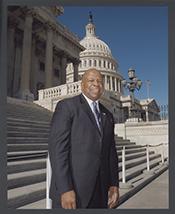 Rep. Elijah E. Cummings (D-MD)
Legislative Activity
Stay on top of the latest movement without scrolling through every action
Received in the Senate and referred to the Committee on Health, Education, Labor, and Pensions.
July 17, 2003
View full timeline
Introduced in House
June 5, 2003
Referred to the House Committee on Government Reform.
June 5, 2003
Referred to the Subcommittee on Civil Service and Agency Organization.
June 12, 2003
Subcommittee on Civil Service and Agency Organization Discharged.
June 19, 2003
Committee Consideration and Mark-up Session Held.
June 19, 2003
Ordered to be Reported by Voice Vote.
June 19, 2003
Considered under suspension of the rules. (consideration: CR H6883-6886)
July 16, 2003 • 11:20 AM
DEBATE - The House proceeded with forty minutes of debate on H. Con. Res. 208.
July 16, 2003 • 11:20 AM
Mr. Ose moved to suspend the rules and agree to the resolution.
July 16, 2003 • 11:20 AM
Passed/agreed to in House: On motion to suspend the rules and agree to the resolution Agreed to by voice vote.(text: CR H6883-6884)
July 16, 2003 • 11:29 AM
On motion to suspend the rules and agree to the resolution Agreed to by voice vote. (text: CR H6883-6884)
July 16, 2003 • 11:29 AM
Motion to reconsider laid on the table Agreed to without objection.
July 16, 2003 • 11:29 AM
Received in the Senate and referred to the Committee on Health, Education, Labor, and Pensions.
July 17, 2003
Floor Debate
5 membersWhat members said about H.Con.Res. 208 on the floor

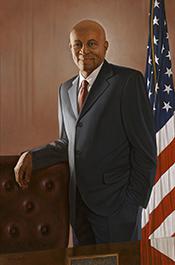
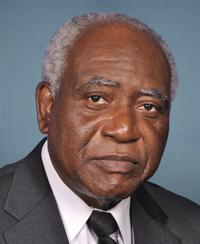
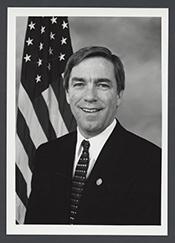
Floor Debate
5 membersWhat members said about H.Con.Res. 208 on the floor
Mr. Speaker, I rise today in support of my Congressional Black Causus colleague Representative Cummings on H. Con. Res. 208 which supports National Men's Health Week. This resolution requests that…
Mr. Speaker, I want to thank the gentleman from Virginia (Mr. Tom Davis), the gentleman from California (Mr. Waxman), and the gentleman from Illinois (Mr. Davis) for moving this legislation through…
Mr. Speaker, I rise in strong support of H. Con. Res. 208, which recognizes National Men's Health Week. It has been well documented in health-related research that despite numerous advances in…
Mr. Speaker, I yield myself such time as I may consume. Mr. Speaker, National Men's Health Week is celebrated each year as the week leading up to and including Father's Day. The National Men's Health…
Mr. Speaker, I move to suspend the rules and agree to the concurrent resolution (H. Con. Res. 208) supporting National Men's Health Week. Mr. Speaker, I ask unanimous consent that all Members may…
Bill Text
3 versions available
        [Congressional Bills 108th Congress]
[From the U.S. Government Publishing Office]
[H. Con. Res. 208 Referred in Senate (RFS)]

1st Session
H. CON. RES. 208

_______________________________________________________________________

IN THE SENATE OF THE UNITED STATES

July 17, 2003

Received and referred to the Committee on Health, Education, Labor, and
Pensions

_______________________________________________________________________

CONCURRENT RESOLUTION

Supporting National Men's Health Week.

Whereas, despite the advances in medical technology and research, men continue
to live an average of six years less than women, and African-American
men have the lowest life expectancy;
Whereas all ten of the ten leading causes of death, as defined by the Centers
for Disease Control and Prevention, affect men more than women;
Whereas between ages 45-54, men are three times more likely than women to die of
heart attacks;
Whereas men die of heart disease at almost twice the rate of women;
Whereas men die of cancer at almost one and a half times the rate of women;
Whereas testicular cancer is one of the most common cancers in men aged 15-34,
and when detected early, has an 87 percent survival rate;
Whereas the number of cases of colon cancer among men will reach over 72,000 in
2003, and over one-third will die from the disease;
Whereas the likelihood that a man will develop prostate cancer is 1 in 6;
Whereas the number of men contracting prostate cancer will reach over 220,000 in
2003, and almost 29,000 will die from the disease;
Whereas African-American men in the United States have the highest incidence in
the world of prostate cancer;
Whereas significant numbers of male-related health problems, such as prostate
cancer, testicular cancer, infertility, and colon cancer, could be
detected and treated if men's awareness of these problems was more
pervasive;
Whereas more than one-half the elderly widows now living in poverty were not
poor before the death of their husbands, and by age 100 women outnumber
men 8 to 1;
Whereas educating both the public and health care providers about the importance
of early detection of male health problems will result in reducing rates
of mortality for these diseases;
Whereas appropriate use of tests such as Prostate Specific Antigen (PSA) exams,
blood pressure screens, and cholesterol screens, in conjunction with
clinical examination and self-testing for problems such as testicular
cancer, can result in the detection of many of these problems in their
early stages and increases in the survival rates to nearly 100 percent;
Whereas women are 100 percent more likely to visit the doctor for annual
examinations and preventive services than men;
Whereas many men are reluctant to visit their health center or physician for
regular screening examinations of male related problems for a variety of
reasons including fear, lack of health insurance, lack of information,
and cost factors;
Whereas National Men's Health Week was established by Congress in and first
celebrated in 1994 and urged men and their families to engage in
appropriate health behaviors, and the resulting increased awareness has
improved health-related education and helped prevent illness;
Whereas the Governors of over 45 States issue proclamations declaring Men's
Health Week in their States;
Whereas, since 1994, National Men's Health Week has been celebrated each June by
dozens of corporations, public health departments, health care entities,
churches, and community organizations, as well as many States, cities,
and localities throughout the Nation, that promote health awareness
events focused on men and family;
Whereas the National Men's Health Week web site has been established at
www.menshealthweek.org and features Governors' proclamations and
National Men's Health Week events;
Whereas men who are educated about the value that preventive health can play in
prolonging their lifespans and their role as productive family members
will be more likely to participate in health screenings;
Whereas men and their families are encouraged to increase their awareness of the
importance of a healthy lifestyle, regular exercise, and medical check-
ups; and
Whereas June 9 through 15, 2003, is National Men's Health Week, which has the
purpose of heightening the awareness of preventable health problems and
encouraging early detection and treatment of disease among men and boys:
Now, therefore, be it
Resolved by the House of Representatives (the Senate concurring),
That--
(1) the Congress supports National Men's Health Week; and
(2) requests that the President issue a proclamation
calling upon the people of the United States and interested
groups to observe National Men's Health Week with appropriate
ceremonies and activities.

Passed the House of Representatives July 16, 2003.

Attest:

JEFF TRANDAHL,

Clerk.