Mr. Speaker, I move to suspend the rules and agree to the concurrent resolution (H. Con. Res. 22) honoring Czech Republic President Vaclav Havel. Mr. Speaker, I ask unanimous consent that all Members…
Mr. Speaker, I move to suspend the rules and agree to the concurrent resolution (H. Con. Res. 22) honoring Czech Republic President Vaclav Havel.
Mr. Speaker, I ask unanimous consent that all Members may have 5 legislative days to revise and extend their remarks and to include extraneous material on H. Con. Res. 22, the resolution under consideration.
Mr. Speaker, I yield myself such time as I may consume.
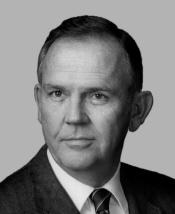
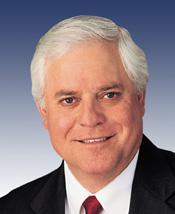
This Member rises today in strong support of H. Con. Res. 22, a resolution honoring Czech Republic President Vaclav Havel. The resolution was introduced by the distinguished gentleman from Wisconsin (Mr. Kind), and this Member is pleased to be an original cosponsor. This resolution seeks to recognize, congratulate, and honor President Havel for a combination of 13 years of extraordinary service, first as President of Czechoslovakia and second, since 1993, as President of the Czech Republic. The Constitution of the Czech Republic allows a president to serve only two consecutive 5-year terms, and the United States House of Representatives would like, therefore, to honor President Havel upon the occasion of the end of his term of service on February 2 of this year.
Nearly 13 years ago, on February 21, 1990, President Vaclav Havel addressed a joint session of the United States Congress in this very room. This occasion was less than 4 months after his last arrest by what he characterized as ``the most conservative Communist government in Europe,'' and less than 2 months after Vaclav Havel had been elected President of Czechoslovakia, in December 1989, by a parliament still dominated by members of the Communist party.
During his inspirational speech to the joint session of Congress, President Havel said many things that made many Members of Congress realize they were not listening to just another political leader of a foreign country. President Havel, in his speech, was discussing what his country, and all the countries of Central and Eastern Europe that had suffered throughout the Cold War, could learn from the United States. He also suggested that perhaps his country could offer something to the United States. In his speech, he stated ``We too can offer something to you: our experience and the knowledge that has come from it. This is a subject for books, many of which have already been written and many of which have yet to be written. I shall therefore limit myself to a single idea. The experience I'm talking about has given me one great certainty: Consciousness precedes being, and not the other way around, as Marxists claim.''
In explaining that axiom, Havel went on in his speech to explain that: ``The only genuine backbone of all of our actions, if they are to be moral, is responsibility. Responsibility is something higher than our family, my country, my company, my success. Responsibility to the order of being where all of our actions are indelibly recorded and only where they will be improperly judged. The interpreter or mediator between us and this higher authority is what is traditionally referred to as human conscience. If I subordinate my political behavior to this imperative mediated to me by my conscience, I can't go far wrong.''
He went on to say that it is this responsibility dictated by his conscience which caused him to ultimately decide, after resisting for a long time, to accept the burden of political responsibility. In other words, he saw it as a responsibility to accept the presidency of Czechoslovakia. In a related noteworthy admonition to intellectuals in every country he reminded that ``If the hope of the world lies in human consciousness, then it is obvious that intellectuals can't go on forever avoiding their share of the responsibility for the world and hiding their distaste for politics under an alleged need for independence.''
As a playwright and essayist, Vaclav Havel was a leading figure of the dissident movement against the totalitarian system of the Communist regime in Czechoslovakia. He was a founder of Charter 77, the underground movement seeking freedom of expression and association, and the basic protection of civic and human rights. He wrote the essay, ``The Power of the Powerless,'' in which he called upon ordinary citizens to live in truth against a totalitarian regime. For his various civic reform efforts, he received multiple prison sentences and served a total of almost 5 years imprisoned by the Communist regime.
During the events of November-December 1989, which have come to be known as the Velvet Revolution, Vaclav Havel helped form the Civic Forum, a broad coalition of dissident groups, which was the first legal opposition movement in Communist Czechoslovakia. By the end of that year, through a ``bloodless revolution,'' 41 years of Communist dictatorship peacefully came to an end when Vaclav Havel was elected President.
Now, Mr. Speaker, I count it a great personal privilege and honor to represent perhaps more Czech-Americans than any Member of Congress. Most of them came to the rolling prairies of Nebraska and the prairie States in the 1870s and 1880s to own their own land and to farm the soil. Other Czechs and Slovaks came to the larger cities of the Midwest, places like Omaha, during the first two decades of the 20th century.
While their Americanization had occurred several generations ago, these Czech-Americans continued to follow closely, and I would say with great anguish, the totalitarian conditions of people in their old homelands of the past. It was, therefore, a particular pleasure for me to watch these Czech-Americans gather in the public meeting places, the restaurants, the bars, and in their homes to watch with amazement and great pride on television the rapid and peaceful Velvet Revolution, which finally ended the Communist stranglehold, to reclaim the democracy that Czechoslovakia had enjoyed only for the brief period between two World Wars.
Vaclav Havel epitomized this return to Czech democracy for both his countrymen and the Americans who watched and marveled at the success of the Velvet Revolution and Havel's leadership, which demonstrated the very best in intellectual and humane leadership.
Since then, President Havel has been an extraordinary politician, leading his country and the countries of Eastern Europe into a future of freedom, democracy, and security. He was probably the foremost proponent in Europe of allowing the former countries of the Warsaw Pact to join NATO. On March 12, 1999, his vision was made a reality when the Czech Republic, Poland, and Hungary became members of the Alliance. And just last November, his country was honored by hosting the first NATO Summit held behind the former Iron Curtain in Prague, where seven additional countries of Eastern Europe were invited to join the Alliance.
Because parliamentarians from the 19 NATO countries have honored me with the leadership in the NATO Parliamentary Assembly, I was privileged to be present at the NATO Prague Summit in November of last year. I think it was noteworthy that President Havel, in his host capacity as the dean of all the
NATO heads of state and heads of government in length of service, was accorded an auspicious degree of affection and respect by his peers and other leaders of the Free World. That acclaim reflected not just his leadership for the Czech Republic but also recognized the moral leadership he has provided for all of the countries of Eastern and Central Europe that emerged from communism and, indeed, for the NATO Alliance as a whole.
On January 30 of this year, just 2 days before he was to step down after 13 years as President, he was one of eight European heads of state or government from NATO countries to sign a letter expressing continued solidarity and support with and to the United States in the international fight against terrorism and for possible action against Iraq. The importance of that letter really cannot be overestimated, since it stood in mark contrast to the dissenting positions of four countries, France, Germany, Belgium and Luxembourg.
Two sentences sum up the essence of that letter and what is most essential in the transatlantic relationship. The statement said: ``The real bond between the U.S. and Europe is the values we share: democracy, individual freedom, human rights, and the rule of law. Today, more than ever, the transatlantic bond is a guarantee of our freedom.''
Vaclav Havel has been called an artist, an intellectual, the poet of democracy, and an international icon of integrity, wisdom and moral seriousness, and even ``the most extraordinary statesman who emerged from the struggle to overthrow communism in Eastern Europe.'' President Havel likes to say that in November 1989 when he was first told that he had been nominated as a candidate for the office of President of Czechoslovakia, he thought it was a joke. He thought who was he to be President of this new democracy.
This Member is here today to thank President Havel for saying yes and accepting the office of President, including the challenge of politics and public service. By simply choosing to continue to fight for the ideals he fought for during the Cold War, democracy, freedom, human rights and the rule of law, by working tirelessly to include the new central and eastern European democracies into Europe and the alliance, and through his efforts directed toward reconciliation with the old enemies, he has elevated politics and public service, for his country, for Europe, for the trans-Atlantic alliance, and for the world.
Mr. Speaker, this Member will quote from President Havel's first New Year's address to his nation, the newly free Czechoslovakia, on January 1, 1990. President Havel spoke to his fellow citizens about the legacy of over 40 years of the Communist totalitarian system. He said, ``It would be quite unreasonable to understand the sad legacy of the last 40 years as something alien, something bequeathed to us by some distant relative. On the contrary, we must accept this legacy as a sin we committed against ourselves. If we accept it as such, we will understand that it is up to us all, and up to us alone, to do something about it. We cannot blame the previous rulers for everything, not only because it would be untrue but also because it could blunt the duty each of us faces today, that is, the obligation to act independently, freely, reasonably, and quickly. Let us make no mistake: the best government in the world, the best parliament and the best president in the world cannot achieve much on their own. And it would also be wrong to expect a general remedy to come from them alone. Freedom and democracy require participation and therefore responsible action from us all.''
Mr. Speaker, this Member joins his colleagues in paying tribute to Vaclav Havel for the vital, moral leadership and idealism he has brought to his service for the Czech Republic and to the community of Western democracies. For his countrymen and all of us in democratic nations, this leadership and focus on participatory democracy is in the best traditions of those heroes of the American democracy that we honor in this great capital city, Jefferson, Madison and others among our Founding Fathers. I urge support for the resolution.
Mr. Speaker, I reserve the balance of my time.
Mr. Speaker, I yield myself such time as I may consume.
I want to join in commending the gentleman from Wisconsin (Mr. Kind) for his articulate statement and his initiative. This matter would have been taken up last week if it had not been for the schedule change because of the Columbia disaster.
I urge strong support by all the Members for this resolution.
Mr. Speaker, I yield back the balance of my time.
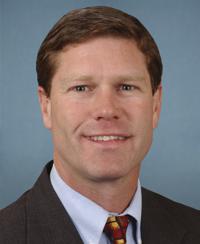 Rep. Ron Kind (D-WI)
 +2
+2