Addressing the decision by OPEC countries to decrease oil production.
Legislative Activity
Stay on top of the latest movement without scrolling through every action
Referred to the House Committee on International Relations.
October 2, 2003
View full timeline
Introduced in House
October 2, 2003
Referred to the House Committee on International Relations.
October 2, 2003
Floor Debate
24 membersWhat members said about H.Con.Res. 294 on the floor
 NJR
NJR TL
TL DAC
DAC MS
MS JDD+19
Floor Debate
24 membersWhat members said about H.Con.Res. 294 on the floor
Mr. Speaker, is the gentleman from California (Mr. Lantos) opposed to the resolution? Mr. Speaker, I yield myself such time as I may consume. Mr. Speaker, I deplore the bus bombings and other acts of…
Mr. Speaker, is the gentleman from California (Mr. Lantos) opposed to the resolution?
Mr. Speaker, I yield myself such time as I may consume.
Mr. Speaker, I deplore the bus bombings and other acts of terrorism against innocent civilians wherever heinous acts of violence occur. The violence must stop. President Bush's vision of a two-state solution, two states living side by side in the Holy Land, must be implemented. I support the road map whole heartily.
Mr. Speaker, it was just a very short time ago this year that this body passed a resolution commending Israel and condemning the Palestinian Authority and calling upon the Palestinians to elect new leadership. Now the Palestinians have done just that. They have elected their new prime minister, Mahmoud Abbas. He has been in office for less than 2 months now, and now this body all of a sudden expects him to stop the violence that has raged out of hand for close to 3 years in such a short time. Prime Minister Abbas is trying very hard to negotiate an understanding among the militant groups that will end all acts of violence against Israelis. And as we speak, as we speak, a cease-fire appears to be taking hold. There appears to be such an agreement.
This process going on in the Middle East as we speak certainly needs no help from this body with this type of one-sided, inflammatory resolution for which this body is so well noted. Prime Minister Abbas must be given the time, he must be given the space, he must be given the opportunity to assert his authority and that of his new security chief Mohammad Dakhlan, with whom our own CIA and Israeli security forces have worked very well in the past, and can do so again.
Let us attempt some objectivity here, Mr. Speaker, if we are to remain the responsible super power that we are. The single most important step that the Israelis could undertake is to stop its policy of political assassinations of Palestinians unless they are proven to be ticking time bombs. Tom Friedman said in a recent column that both sides have crossed the line where self-defense has turned into self- destruction.
Is Israel better off or worse off after carrying out these assassinations? The day after it tried unsuccessfully to kill a senior Hamas leader, a suicide bomber killed 17 innocent people aboard a bus in Jerusalem, these acts occurring since the Aqaba Summit. The bomber said this act was in retaliation for the assassination attempt the previous week. Clearly the people of Israel are questioning this policy. In a poll last week by a leading Israeli newspaper, 58 percent of the Israelis polled supported ending this type of assassination policy and cooperating with the new Palestinian government to end all violence.
The fact is, the only time the Israelis have enjoyed extended periods of peace in the last decade is when the Palestinian Security Service, under Mr. Dakhlan, have cooperated with Israel and both sides spent their energy, successfully, I might note, in preventing acts of violence.
We are right today to call upon Prime Minister Abbas and his government to make greater and more efficient efforts to control the militant groups and end violence, but we also have a responsibility in order to be objective and even-handed, to ask the government of Prime Minister Sharon in this same resolution whether these policies are making Mr. Abbas's tasks easier or harder.
The people of Israel is asking this question, so should the Congress of the United States. Let us have a little balance here. Let us have a little balance
here. Let us call on the Palestinian Authority to make greater and more effective efforts against terrorists; but also, let us call on the Israeli Government to stop making Mr. Abbas's tasks more difficult. It is also time for Israel to reassess and hopefully end this process of political assassinations. We cannot allow the extremists on either side to sabotage the peace process. We cannot allow terrorists to torpedo the peace process. Let us look at some objectivity before we pass, once again, another resolution of this nature.
Mr. Speaker, I reserve the balance of my time.
Mr. Speaker, I yield such time as he may consume to the distinguished dean of the House the gentleman from Michigan (Mr. Dingell).
(Mr. DINGELL asked and was given permission to revise and extend his remarks.)
Mr. Speaker, I yield 2 minutes to the gentlewoman from California (Mrs. Capps).
Mr. Speaker, reserving the right to object, do I understand the gentleman correctly that it would be split as it was originally split, 10 minutes and 10 minutes on his side?
Mr. Speaker, I withdraw my reservation of objection.
Mr. Speaker, will the gentleman yield on his reservation?
I think for once the gentleman from California (Mr. Lantos) and I totally agree on this particular issue. I agree with what he just said about the importance of it. I agree to the extension of time as he has requested.
Mr. Speaker, I yield 2 minutes to the gentleman from North Carolina (Mr. Price).
(Mr. PRICE of North Carolina asked and was given permission to revise and extend his remarks.)
Mr. Speaker, I yield 3 minutes to the gentleman from Wisconsin (Mr. Kleczka).
Mr. Speaker, I yield myself such time as I may consume.
Mr. Speaker, let me correct something in which I may have misspoke earlier when we were talking about an extension of time on all sides and I said that perhaps that was the only area in which the gentleman from California (Mr. Lantos), my good friend, and I agreed. That is not the case. It was a misstatement on my part, and I do correct it, because as he has stated and as we have discussed on numerous occasions throughout our careers in this body, we perhaps see eye-to-eye on 95 percent of the issues involved in this particular area and in the Middle East. We certainly agree on the need to stop the violence. We agree on the need to end the terrorism. We agree on the strong Israeli- U.S. relationship that must always be maintained. And we certainly agree on the need for peace for all people in the region.
I must respond to some comments that were made by the gentleman from Texas (Mr. DeLay), the majority whip of the House. He spoke quite eloquently about all of the Israeli deaths, as does this resolution refer to those numbers as well. But I never once heard the gentleman from Texas (Mr. DeLay) mention any type of sympathy for the innocent Palestinian deaths that have occurred since the Aqaba summit alone. The resolution mentions the 22 Israelis killed, but fails to mention the 55 Palestinians killed, the 258 Palestinians injured just since the Aqaba summit.
Five ambulances have been destroyed; 33 houses have been demolished and 236 damaged; 7,116 trees uprooted; 328,000 meters of cultivated land have been destroyed; 500,000 meters of land confiscated for illegal settlement; 67 private businesses destroyed; water and irrigation pipes destroyed; homes demolished; people detained, as we saw in this morning's press.
All of these actions have occurred since the Aqaba Summit against innocent Palestinians, so it is that perspective that this resolution so much fails to mention.
I would say as well in calling upon both sides to agree with what they set upon at the Aqaba Summit, yes, there have been some illegal outposts, perhaps a flag here or a pole here that has been dismantled by the Israelis. But according to Israeli sources and journalists, 12 new outposts have been constructed since the Aqaba Summit, and there are rumored to have been five additional ones yet to be discovered. This has happened since the Aqaba Summit.
I would remind the gentleman from Texas (Mr. DeLay) that a recent poll of Christian conservatives here in the United States found that 78 percent of the Christian conservatives in this country support President Bush's vision for Middle East peace.
So, Mr. Speaker, there are a lot of areas in which all the speakers today have agreed. And certainly that makes some points of this resolution commendable.
But, again, in looking at its totality, the resolution lacks in its objectivity. It lacks, Mr. Speaker, in what I term the United States' best interest first. A lot of parallels have been draw today between the Israeli responses to terrorism and Israel's right to defend itself and the United States' global war against terrorism and our fight against al Qaeda. I would say the main question that needs to be asked here is does the Israeli assassination policy, when there is no proven link that those assassinated are ticking time bombs, where there has been nothing judicial pending against them, there has been nothing but allegations of terrorist activity, in those type of assassinations, is that fairness? Does it promote what is justice in the region. Does it promote the United States' best interest in fairness when it is done with what is perceived to be United States approval?
Maybe there are some in the Sharon government that compare this to our fight against al Qaeda. But those educated and those that will profess some sense of fairness will view this in a different light and see that that comparison is disingenuous to say the least. Certainly, Israel has the right to defend itself against those ticking time bombs and to prevent terrorist attacks from occurring. The United States has that right to fight the global war on terrorism, to fight al Qaeda whenever and wherever we can.
But to make the comparisons between what is happening in the West Bank and Gaza by these Islamic militant groups, to compare them with al Qaeda is stretching it a bit in this gentleman's estimation. We must realize what are the true roots of the al Qaeda and the true roots of why they hate us in the Arab world. Let us look at that response before we determine if we can compare the Israeli fight against terrorism with the United States' fight against al Qaeda.
There are many countries in the world that help us in the fight against the true terrorists, which is the al Qaeda network; and it is those countries that we will continue to need their help in our coalition fight against al Qaeda.
Mr. Speaker, I do say to all those who are participating in this debate, it has been healthy. It has been what we have needed in this Congress for some time, and I hope that we will have the opportunity to debate this issue many more times. I have demonstrated during this debate the question that many Israelis have about the policies of their government in regard to fighting terrorism, and I think it is just as worthy a debate here in this country as it is in the country of Israel. We have that right in our democratic system. We also have the responsibility in this country to look at actions that we take as Members of Congress and resolutions we pass, to ask first and foremost what is in the best interest of the United States of America.
I referred earlier to the cease-fire that has just been announced today and appears to have taken hold. While this resolution does not have the force of law, we must, and we know as Members of this body that every word we utter and every resolution we pass has profound impact across this world. Whether they are actually the words of the law or not, they do send a message. I think this is the wrong message that the United States should be sending at this particular time, this precarious time in the Middle East. Some say this cease-fire is only temporary and it would give the militant a chance to rearm during a 3- month cease-fire. This is the time that the new prime minister with whom the United States has built a relationship, with whom the Israelis have built a relationship, for the newly installed Prime Minister Abu Mazen, who has been in office for less than 2 months, this is the time he needs to gain the political credibility, to gain the support among his own people, to further crack down on the militants without creating a civil war among the Palestinians.
Now, perhaps that is the goal of some on the other side, but that is not the goal of the United States; and it should not be the goal of the United States. But, rather, we should give the newly created prime minister, the newly installed prime minister in the Palestinian territories the time, the space, and the opportunity he needs to gather the support he needs to crack down and, indeed, make this cease-fire, however temporary in nature, of a permanent nature.
Mr. Speaker, I urge that my colleagues look carefully and hard at this resolution before making up their minds and cast their votes in what in their good conscience they deem to be in the United States' best interest and in the interest of peace in the Middle East.
Mr. Speaker, I yield back the balance of my time.
Mr. Speaker, I ask unanimous consent to reclaim the time I yielded back.
Mr. Speaker, I do that in keeping with what I said earlier was an important debate and I believe that all Members who wish to speak on this should be heard.
Mr. Speaker, I yield half of my time to the gentleman from California (Mr. Lantos).
Mr. Speaker, I yield myself such time as I may consume.
This has been a good debate, a very healthy debate. There is no doubt that security cooperation needs to be restored between the Palestinians and Israelis. It has worked in the past. The road map now is the way to do it. Several of the speakers today have risen in support of the road map, and they will support this resolution. I cannot even find the word ``road map'' mentioned in this resolution, and that is a major, major problem with it.
The economies of both Israelis and the Palestinians are in dire shape. There is no question about it, and this road map, for which I have already commended and continue to salute the President for presenting it, is the way out.
Confidence building measures by both sides, coupled with stability and economic development, must occur, and it will help bring back the necessary hope that both sides so desperately need and the trust in one another that is so lacking at the current time.
There are obligations of both parties under the road map. This resolution, unfortunately, points only to obligations of Palestinians and insinuates they are not fulfilling those obligations. There are obligations by the Israelis as well that are very clear. Yet they are not stated in this resolution.
We must give Prime Minister Abu Mazen, a good friend with whom I have met, the help he needs to fight terrorism and we must not allow civil war among Palestinians to occur. The road map is the way to do that. It will take time.
I salute President Bush for his personal involvement, for Secretary of State Powell's involvement, for Condoleezza Rice's involvement via her trip to the region any day now, and I salute our security people, the United States security people, our CIA and others that are on the scene in an effort to help the Palestinians restore security. That takes time. That takes patience and that takes an opportunity, that we must give and Israelis must give the Palestinians to create that security that is so vital to bring peace to this area.
I am not going to urge my colleagues to vote one way or another on this resolution. They can make up their own minds, but each colleague I would say has to look in his or her conscience and has to determine in their best opinion what is in the United States' best interests in promoting the road map to peace in the Middle East.
Mr. Speaker, I yield back my time.
Mr. Speaker, it is my resolution; and I strongly support it. Mr. Speaker, I yield myself such time as I may consume. Mr. Speaker, I rise in strong support of this resolution which condemns the recent…
Mr. Speaker, it is my resolution; and I strongly support it.
Mr. Speaker, I yield myself such time as I may consume.
Mr. Speaker, I rise in strong support of this resolution which condemns the recent wave of terrorism inflicted on Israel and expresses solidarity with the people of Israel in their heroic fight against terrorism.
First, Mr. Speaker, I thank the gentleman from Illinois (Mr. Hyde) for the gentleman's cooperation in bringing this resolution to the floor. I also want to express my appreciation to the gentleman from Texas (Mr. DeLay), the Republican leader, for his principled support, and to the gentlewoman from California (Ms. Pelosi), the minority leader, for her valued cosponsorship. The fact that these three leaders of the House have cosponsored my resolution is a powerful indication that it has strong bipartisan support.
Mr. Speaker, I introduced this resolution with one basic conviction, that Israel has as much right to fight against suicide bombers and ruthless terrorists as any other free and democratic nation. At the recent Aqaba Summit, the Prime Minister of Israel, Mr. Sharon, made some extraordinary and historic statements. He called for a democratic state living at peace with Israel with mutual respect and shared prosperity.
In less than a week of the Prime Minister's landmark speech, 22 innocent Israeli men, women and children fell victim to suicide bombings and over 100 were wounded. Israel's response to this unprovoked carnage was the only response a self-respecting democratic state could offer. When Israel responds with counterterrorist operations against suicide bombers, some criticize it for provoking a cycle of violence.
This is an absurd and sinister argument. Let us be clear about one thing. As our resolution states, Israel would not conduct counterterrorist operations if Palestinian counterterrorism would cease. The bloodshed, the violence, the tragedy would end.
The term ``cycle of violence'' must be permanently retired from the lexicon of Middle East politics since it preposterously implies moral equivalence between suicide bombers and the justified response of a free and democratic nation.
Based on comparative populations, the 22 Israelis who were murdered in the days following the Aqaba Summit are the equivalent of 1,100 Americans. Were al Qaeda again to murder over a thousand Americans, we would demand that our government take strong measures to eliminate the threat they pose. None of us would tolerate our government waiting while someone pleads with the terrorists for a temporary cease-fire.
In my recent meeting with Palestinian Authority Prime Minister Abu Mazen in Ramallah, he told me that he is opposed to terrorism. Subsequently he repeated his statement to President Bush and many others, but Abu Mazen's effectiveness as a leader will not be judged by his words, but by his deeds. Abu Mazen's political situation is unquestionably complex; but if he continues to refuse to use force against murderous terrorists, he will soon become irrelevant and his political demise will be sure to follow.
But should he choose to take bold action against terrorism, he will deserve and he will receive the support of this body and the American people.
Mr. Speaker, my resolution underscores the obvious. Israel's fight against terrorism is one of the front lines of the global war against terrorism. Israel's enemies are motivated by a hate-filled, sick, totalitarian ideology, as are our terrorist foes. Israel's enemies are ruthless and bloodthirsty, just like ours. If the Palestinian Authority will not or cannot destroy and defeat Palestinian terrorist groups, Israel has no choice but to take matters into its own hands. We are fighting our enemies relentlessly. Israel, under infinitely less favorable circumstances, can do nothing less.
Mr. Speaker, it is universally accepted that it is the right of all states, including the democratic state of Israel, to make the defense of its citizens its number one priority. This is the bedrock of my resolution. I urge all of my colleagues to join me in voting for it.
Mr. Speaker, I reserve the balance of my time.
Mr. Speaker, I am very pleased to yield 2 minutes to the gentleman from Maryland (Mr. Hoyer), the distinguished Democratic whip.
Mr. Speaker, I yield 2 minutes to the distinguished gentleman from New York (Mr. Ackerman), the ranking Democrat on the Middle East and Central Asia Subcommittee.
Mr. Speaker, since there are colleagues on various sides of this issue who wish to speak and, given the time limits, they no longer would have the opportunity, I ask unanimous consent that each side be given an additional 20 minutes.
Mr. Speaker, if the gentleman will yield, the gentleman is correct.
Mr. Speaker, will the gentleman yield?
Mr. Speaker, I think this is an important debate. A good number of colleagues wish to speak on it. We waste so much time in this body on so many unimportant issues, I think an additional 20 minutes for each side is not an unreasonable request.
Mr. Speaker, will the gentleman consult with the leadership while we take up the next 10 minutes to see if they agree to an additional 10 minutes?
Mr. Speaker, I am making the request that each side be given 10 minutes.
Mr. Speaker, I yield such time as she may consume to the gentlewoman from New York (Mrs. Maloney).
(Mrs. MALONEY asked and was given permission to revise and extend her remarks.)
Mr. Speaker, I am delighted to yield 1 minute to the gentleman from California (Mr. Berman), my friend, the distinguished senior member of the Committee on International Relations.
Mr. Speaker, I am delighted to yield 30 seconds to the gentleman from New York (Mr. Crowley), a distinguished member of the Committee on International Relations.
(Mr. CROWLEY asked and was given permission to revise and extend his remarks.)
Mr. Speaker, I yield such time as she may consume to the gentlewoman from Nevada (Ms. Berkley) of the Committee on International Relations.
(Ms. BERKLEY asked and was given permission to revise and extend her remarks.)
Mr. Speaker, I yield 30 seconds to the gentlewoman from Georgia (Ms. Majette).
(Ms. MAJETTE asked and was given permission to revise and extend her remarks.)
Mr. Speaker, I yield such time as he may consume to the gentleman from New York (Mr. Engel), a distinguished member of the Committee on International Relations.
(Mr. ENGEL asked and was given permission to revise and extend his remarks.)
Mr. Speaker, I yield 30 seconds to the gentlewoman from California (Ms. Harman), the ranking Democrat on the Permanent Select Committee on Intelligence.
(Ms. HARMAN asked and was given permission to revise and extend her remarks.)
Mr. Speaker, I yield 30 seconds to the gentleman from Texas (Mr. Bell), a distinguished member of the Committee on International Relations.
(Mr. BELL asked and was given permission to revise and extend his remarks.)
Mr. Speaker, I yield 30 seconds to the distinguished gentleman from Rhode Island (Mr. Langevin).
(Mr. LANGEVIN asked and was given permission to revise and extend his remarks.)
Mr. Speaker, I yield 30 seconds to the gentleman from California (Mr. Cardoza).
(Mr. CARDOZA asked and was given permission to revise and extend his remarks.)
Mr. Speaker, I yield 30 seconds to the gentleman from Texas (Mr. Sandlin).
(Mr. SANDLIN asked and was given permission to revise and extend his remarks.)
Mr. Speaker, I yield 30 seconds to the gentlewoman from Texas (Ms. Jackson-Lee).
(Ms. JACKSON-LEE of Texas asked and was given permission to revise and extend her remarks.)
Mr. Speaker, I am very pleased to yield 30 seconds to the gentleman from Florida (Mr. Wexler), a distinguished member of the Committee on International Relations, my good friend.
Mr. Speaker, I am delighted to yield 30 seconds to the gentleman from New York (Mr. Nadler), my friend and distinguished colleague.
May I inquire, Mr. Speaker, how much time we have left?
Mr. Speaker, I yield myself 1\3/4\ minutes.
Mr. Speaker, all of us in this House are passionately committed to peace, and all of us in this House are passionately committed to justice. The Palestinian people are certainly entitled to an infinitely better life than what they have had for many years. The blame clearly lies with the surrounding Arab states which failed to allow them to establish civilized communities or to absorb them.
Other societies have done that. The Greeks of Cyprus absorbed the Greeks from northern Cyprus, and the people of Israel absorbed millions of their fellow nationals from all over the world.
There was a cynical attempt to perpetuate the misery of the Palestinians in refugee camps. Hopefully, with the President's vision, we will now see an end to this long, painful, tragic, misery-filled process.
To embark on that road, we must see the end of terrorism. There is no road map unless terrorism ceases, and if it does, the road map, in fact, will be implemented.
I congratulate the President for having the vision of recognizing that two states can live side by side in peace, with mutual respect and prosperity, but only if terrorism ends.
Abu Mazen, the new Prime Minister, has repeatedly indicated his opposition to terrorism. We have to help him to put an end to terrorism. He must gain control of the territory in Gaza, first in the north, then in central Gaza, then in southern Gaza and then on the West Bank, town by town, and as he does so, we will move towards peace, and the Israeli and the Palestinian people at long last will live in a civilized region.
I urge all of my colleagues to vote for the resolution.
Mr. Speaker, on that I demand the yeas and nays.
Mr. Speaker, I rise today in support of this resolution. Mr. Speaker, on June 24 of last year, President Bush unveiled a new vision for bringing peace in the Middle East. I support that vision. But…
Mr. Speaker, I rise today in support of this resolution.
Mr. Speaker, on June 24 of last year, President Bush unveiled a new vision for bringing peace in the Middle East. I support that vision. But that vision is one that we must support through a fairness situation where we do not make equivalency between what has happened by Mr. Sharon going to the Temple Mount and the death and destruction that have been wrapped upon Israel with the terrorist threat. I support the Lantos resolution.
Mr. Speaker, I rise today in support of this resolution, which condemns recent terrorist attacks against Israel and expresses solidarity with the citizens of Israel during this turbulent time.
On June 24 of last year, President Bush unveiled a new vision for bringing peace to the Middle East. He stated that the Palestinians must develop a new leadership, which must be committed to peace with Israel and to destroying the terrorist infrastructure. Only then would the United States consider recognition of a Palestinian state.
Since that time, the Palestinians have taken steps to establish a new leadership structure. Abu Mazen was appointed the first Palestinian Prime Minister following a bitter struggle with Yasser Arafat.
And I'm pleased to hear that--just this morning--Hamas, Islamic Jihad and Al Asqa have agreed to 3-month cessation of attacks against Israelis. That's a very positive step. But we've heard positive talk many times before. The proof will be borne out over time through deeds. Just this morning, the Israeli Defense Force disabled a large bomb in northern Israel. Clearly, the vigil for peace and security will have to be maintained.
I believe the key to the ``Road Map'' or any other effort to achieve lasting peace is to stay true to the principles outlined by the President last June; particularly, the necessity of combating terrorism as the first of a sequence of events.
And I believe the U.S. must remain supportive of Israel in its fight against terror until the Palestinian Authority is willing and able to carry out this responsibility.
Like my colleagues here today, I welcome the positive steps the Palestinians have taken, but we must also see decisive action to dismantle the terrorist infrastructure.
As Americans, we understand the fight against those who seek our destruction. We
stand shoulder to shoulder with Israel in their fight against those who oppose their existence.
The citizens of Israel are our allies, and we will continue to support their fight against terrorism and their government's efforts to provide safety and stability for its people.
Mr. Speaker, I rise today in support of this resolution, which condemns recent terrorist attacks against Israel and expresses solidarity with the citizens of Israel during this turbulent time.
On June 24 of last year, President Bush unveiled a new vision for bringing peace to the Middle East. He stated that the Palestinians must develop a new leadership, which must be committed to peace with Israel and to destroying the terrorist infrastructure. Only then would the United States consider recognition of a Palestinian state.
Since that time, the Palestinians have taken steps to establish a new leadership structure. Abu Mazen was appointed the first Palestinian Prime Minister following a bitter struggle with Yasser Arafat. Since assuming office, Abu Mazen has refused, however, to take concrete steps to rein in the terrorists in any way. And despite the change in leadership, Yasser Arafat maintains a high degree of control, including authority over major elements of the Palestinian security apparatus.
And I am pleased to hear that, just this morning Hamas, Islamic Jihad and Al Asqa have agreed to 3-month cessation of attacks against Israelis. That is a very positive step. But as we have seen many times before, the proof will be borne out over time. Also just this morning, the Israeli Defense Force disabled a large bomb in northern Israel. So clearly, the vigilance for peace and security will continue.
I believe the key to the ``Road Map'' or any other effort to achieve lasting peace is to stay true to the principles outlined by the President last June, particularly the necessity of combating terrorism as the first of a sequence of events.
Since the Aqaba summit earlier this month, 22 Israeli civilians have been killed and many others have been injured in three separate suicide bombings. Like every other sovereign nation, Israel has the right to self-defense. Israel must act against terrorism if the Palestinian Authority does not. As long as Palestinian leaders do not aggressively go after the terrorist infrastructure, the Israeli government has a responsibility to protect its citizens against further terrorist attacks. I believe U.S. policy must be supportive of Israel in its fight against terror until the Palestinian Authority is willing and able to assume this responsibility.
We must also wholly reject the concept of a ``cycle of violence.'' Use of that term implies a moral equivalence between those who commit terrorist acts and their victims. Israel's targeting of terrorist leaders is not the moral equivalent of targeting of innocent civilians, including women and children.
Like my colleagues here this morning, I welcome the positive steps the Palestinians have taken, but we must also see decisive action to dismantle the terrorist infrastructure. Without such action, the Road Map or any other effort, however well intentioned, will fail.
The Palestinian people deserve a leadership that looks beyond the narrow goal of nationalism and works toward bettering the lives of its people. Regrettably, the current leadership has shown no signs of embracing those goals. As Americans, we understand the fight against those who seek our destruction. We stand should to shoulder with Israel in their fight against those who oppose their existence.
The citizens of Israel are our allies, and we will continue to support their fight against terrorism and their government's efforts to provide safety and stability for its people.
Mr. Speaker, on June 24 of last year,President Bush stated that the Palestinians must develop a new leadership not tainted by support for terror. The new leadership must be committed to peace with…
Mr. Speaker, on June 24 of last year,President Bush stated that the Palestinians must develop a new leadership not tainted by support for terror. The new leadership must be committed to peace with Israel and to destroying the terrorist infrastructure. Only then would the United States consider recognition of a Palestinian state. Israel is fulfilling its commitment by dismantling unauthorized outposts, releasing Palestinian prisoners, allowing Palestinians to work in Israel, and releasing funds out of the treasury.
They cannot be expected to give up counterterror measures so long as Palestinians fail to comply with their road map obligation to stop terror. Like every other sovereign nation, Israel has the right to self-defense. As long as Palestinian leaders do not aggressively go after the terrorist infrastructure, the Israeli government has the responsibility to protect its citizens against further terrorist attacks.
Merely negotiating a cease-fire is not enough. Terrorism must end. Peace demands it.
Mr. Speaker, I rise today to express my firm commitment to the safety and security of Israel and the Israeli people. One year ago, President Bush called upon the Palestinian people to put in place leadership not tainted by support for terrorism. Terrorism is the great scourge of our age, and there is little doubt that it represents an insurmountable threat to peace throughout the world, but most particularly in Israel and in the Middle East.
In order for peace to be realized, terrorist groups like Hamas and Islamic Jihad must be contained. The Palestinian leadership--with support from the rest of the Arab world--must take a firm stand against the blight of violence and death that terrorists spread wherever they commit their atrocities. The destruction of the terrorist infrastructure that threatens innocent Israelis everyday is a necessary precondition to the success of the peace process and the recognition of a Palestinian state.
While I am encouraged that the Bush administration appears to be re- engaged in the peace process, the fact that 22 innocent Israelis have been killed and many more injured in a serious of suicide bombings since the summit in Aqaba, Jordan, demonstrates clearly the difficult and treacherous road to peace that lies ahead.
The sad fact is that we as a nation have too often overlooked or considered route the terror that daily threatens the peace and security of Israel. So, I ask you to consider a situation that would be better understood in our country. Think about a shopping mall or a busy street in New York, Dallas, Los Angeles, Chicago or New Orleans; and think about the people who might be on the bus on their way to school or to work; people going about their daily business, shopping for groceries or picking up that last-minute necessity. Now imagine that someone came along with a bomb in one of those cities, or right here in Washington, DC, and created an explosion that killed 7 or 70 or 700 in one fiery blast.
What would the response be in America? We would call out the Army, the Navy, the Marines, the FBI, the police, every agency that could retaliate, whether to capture or kill the responsible person and the leaders of an organization that would seduce a young person to sacrifice his or her life for such a heinous purpose.
Yet, when Israel responded to the murder of 17 innocent Israelis by launching an attack on the leadership of Hamas, the Bush administration criticized the attack as heavy-handed and an unnecessary complication to the peace process.
We would not stand by five minutes and accept such attacks on American civilians. And we should not expect Israel to stand by five minutes and accept it either. We cannot look at the violence on both sides as though it is comparable. It simply is not the same.
Israel's attacks are always in retaliation for violence that radical terrorists--murderers or killers, to use the President's terms--have brought down upon them. Hamas, Islamic Jihad, and the al-Aqsa Martyrs Brigades, among others, delight in taking responsibility for a suicide bomber who walks into a cafe or disco and takes 8, 10, 20 or more innocent lives.
Like every other sovereign nation, Israel has the right to defend itself against the cowardly acts of terrorists. The United States must not be caught in the trap of thinking of Israel's response to terrorism on its soil as the equivalent of the terrorism itself. There is no doubting the difference.
Mr. Speaker, I rise in strong support of this resolution expressing our solidarity with Israel. Just as we have when the terrorist attacks were on our soil or against our national interests, we must roundly condemn the acts of terrorists in Israel, and we must continue to exert pressure on Palestinian Prime Minister Abu Mazen to use very resource at his disposal, including force, to root out terrorism and remove it as an obstacle to peace. Moreover, we must be unwavering in our support for Israel's right to defend and secure herself against such senseless violence.
If the peace process is to succeed, rather than criticizing Israel for its efforts to combat terrorism, we must offer our full support and take whatever action is necessary to ensure that Israel is free from the scourge of terrorism.
Only then will the Israeli and Palestinian people realize the promise of peace embodied in the ``road map.''
I have no doubt that the Israeli and Palestinian people can live side-by-side in peace and prosperity, as so many do even today throughout Israel. Yet that goal will likely never be realized unless and until terrorist organizations like Hamas, Hizbollah, Islamic Jihad, and others are removed from the equation.
Mr. Speaker, I urge all members of the House to express their full support for Israel and their continuing commitment to the eradication of terrorism wherever it rears it violent and ugly head and to vote for this important demonstration of our commitment to peace.
Mr. Speaker, I rise in strong opposition to violence, killing and to the senseless murders which have been taking place in the Middle East. I also rise in support of peace. I also rise in support of…
Mr. Speaker, I rise in strong opposition to violence, killing and to the senseless murders which have been taking place in the Middle East. I also rise in support of peace. I also rise in support of the road map for Middle East peace in the hope that it will be implemented and that the United States will provide the leadership that is needed. I also rise with still some hope in my heart that we could achieve the purposes which we thought were beginning with the summit at the Gulf of Aqaba and to express the hope that we will be able to see a time coming when Israeli, Muslim, Jew, Christian and the Palestinian people can know that there is peace in the Mideast. I also look forward to the leadership of the United States in moving towards achieving the real goal of this Nation, which is peace in the Middle East so that all persons, Israelis, Palestinians and everyone else who is concerned with that area can know that there will be peace there and so that the threat to the United States and the rest of the world of terrorism will suffer a real setback of the kind all of us here hope will be achieved.
George Santayana said something that I thought was very important. He said, ``He who does not learn from history is doomed to repeat it.'' I see that the hope that we had is being diminished both by the killings and by the fact that we are now moving away from what I had hoped would be the role of the United States in the Middle East, and that is the role of an honest broker, of a nation who could appeal to both sides to bring the killing to an end and to achieve a lasting peace negotiated by and between the parties. The Oslo process has collapsed. Eight hundred Israelis have died; 2,000 Palestinians have been killed. Twenty-two Israelis have been killed since the Aqaba summit, but about double that number of Palestinians. This is hardly the basis upon which peace can be achieved. It is also hardly the basis upon which we can say that the United States is providing the strong, the determined and the forceful leadership which is necessary to assure that both
parties do the things that are needed to achieve a real and a lasting peace to the area.
I would point out that if we do not listen to George Santayana, we have the possibility of repeating the mistakes of the past. What is it that we should be directing our attention to? Forceful, forcible, vigorous, strong efforts to achieve peace, to bring the parties together, to see to it that they talk, and to achieve the reputation amongst them of an honest, impartial broker, of a nation that is interested in seeing to it that both parties not only work together but achieve the best result of their negotiation that is possible to achieve. I do not see that in this resolution and that is the vice of this resolution. This resolution takes sides.
I am not prepared to quarrel with any of my colleagues as to who is at fault over in the Mideast. That is not the function of an honest broker. I am prepared to say that our efforts today and that our efforts as a Nation should be directed at one thing, and that is achieving peace on the basis of a reputation of honesty, decency and fairness and upon the basis of the trust of the parties in the area. I do not see this document as stimulating that kind of response. This document is one-sided. It condemns violence on one side. I hear nothing about the need for the United States to, in fact, lead toward peace or that the United States wants a termination of violence by all parties. That is clearly lacking here, but it is desperately needed. Our problem if we seek to be seekers of and builders of peace is to assure that we make possible the trust of all parties, Israelis and of Palestinians, so that we can get them to the table, a difficult task, to talk about peace, about building a peace which will last, which will give justice, equality, comfort and solace to all, men, women, children and also Israelis and Palestinians. That is absent in this resolution. It is something which must not only be in the resolutions of the Congress but it must be in the policies of the United States.
I say that I took great comfort and pleasure and pride when I saw that President Bush was getting the parties together and that he was really going to lead in this undertaking. I urge him to continue that undertaking, because in that is not only the interest of the Palestinians and of the Israelis but also of the United States. And a failure for this country to take a position which achieves the trust, the respect and the support of both parties for the negotiation is assurance that we will not have the success that we want and that we need. It also is assurance that we will not have the kind of security against terrorism which finds its seeds and which finds its roots in the kind of injustice that the people of the Mideast on both sides feel exists.
I urge us, then, to be honest brokers. I urge us, then, to strive for peace and for the trust of all persons over there who seek that peace. And I urge us to take the steps that are necessary. This resolution is not one of those steps. I urge my colleagues to reject it.
Show 8 more

Mr. Speaker, I yield 1 minute to the distinguished gentlewoman from Michigan (Mrs. Miller). (Mrs. MILLER of Michigan asked and was given permission to revise and extend her remarks.) Mr. Speaker, I…
Mr. Speaker, I yield 1 minute to the distinguished gentlewoman from Michigan (Mrs. Miller).
(Mrs. MILLER of Michigan asked and was given permission to revise and extend her remarks.)
Mr. Speaker, I yield such time as he may consume to the gentleman from Texas (Mr. DeLay), the distinguished majority leader of the House.
Mr. Speaker, reserving the right to object, it is my understanding the leadership concurred with the notion of an additional 20 minutes to be split 10 minutes for and 10 minutes against.
Further reserving the right to object, I yield to the gentleman from California.
Mr. Speaker, speaking personally, I am in full concurrence. My problem, reserving the right to object, is that I have been informed that leadership is very concerned about the bill to follow and would like to stick with what I understood was an agreement of 20 minutes total, 10 minutes to be divided between each side. And based on that, I would be constrained to object to 20, but I am very pleased to assert 20 minutes to divide it 10 and 10.
I yield to the gentleman from West Virginia.
Again, I am personally in full agreement, but I am informed
that this is a leadership decision and therefore would be constrained to object.
Yes. I think that is very reasonable.
Mr. Speaker, I withdraw my reservation of objection.
Mr. Speaker, I am delighted to yield one-half of my time to the gentleman from California (Mr. Lantos).
Mr. Speaker, I yield myself such time as I may consume.
Mr. Speaker, the thrust of this resolution is four-fold:
A, it reflects America's concern for terrorism as an instrument to advance political advantage.
B, it expresses sympathy to the families of both innocent Israelis and Palestinians who have lost lives in this struggle.
C, it commends the President for his vision of two states, Israel and Palestine, living side-by-side and, thus, implicitly affirms the peace process that the President has so wisely helped precipitate.
D, it is implicitly designed to empower the new government of the Palestinian Authority. The goal is to strengthen those who have the best chance of negotiating a long-term resolution to the Palestinian- Israeli issue.
Here let me note that at the Aqaba summit, King Abdullah of Jordan turned to the Israeli and Palestinian Prime Ministers and said, ``Prime Minister Sharon, Prime Minister Abbas, I urge you today to end the designs of those who seek destruction, annihilation, and to have the will to begin to realize our dreams of peace, prosperity, and coexistence.''
This sentiment is what we ask the international community to follow. This direction is where our President, as well as the king of Jordan, is leading, and this is the direction we want this Congress also to go in.
Speaking personally, I would like to stress full support for the President's road map, for peace, but I would underscore that the road has been traversed before, but proved full of cavernous holes and multiple detours. The end is in sight. Everyone knows it will relate to a resolution along the lines of Camp David and subsequent talks at Tabba. But the slower the process, the more likely terrorists will be empowered.
The issue is speed. Three weeks or 3 months are vastly preferable to 3 years or 3 decades. The violence may not end with a political resolution, but it has no chance of ending without it.
Therefore, I think it should be the goal of this Congress to stress that violence is an evil in and of itself, but a resolution of this particular circumstance in international affairs, which is the most difficult, possibly, in the history of man, is an imperative. All of us identify with all reasonable people who are attempting all reasonable techniques to bring a resolution to this issue.
Mr. Speaker, I reserve the balance of my time.
Mr. Speaker, I yield 2 minutes to the distinguished gentleman from California (Mr. Rohrabacher).
Mr. Speaker, I yield myself the remaining time.
In conclusion, Mr. Speaker, this resolution is about two subjects-- violence and peace.
On point one, the Congress cannot be equivocal in condemning terrorism. On point two, this resolution unequivocally commends the President for a vision of two states, Israel and Palestine, living side by side in peace and security.
This is the first President to assert legitimacy of a Palestinian state, and this resolution not only implicitly endorses the President's road map for peace but breaks affirmative ground in a congressional resolution on the Palestinian legitimacy issue.
Peace is the goal. Diplomacy, not violence, must be the means. On this basis, I urge this resolution's passage.
Mr. Speaker, I yield back the balance of my time.
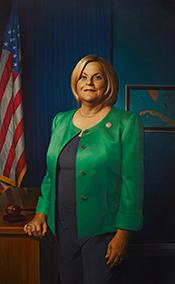
Mr. Speaker, I move to suspend the rules and agree to the resolution (H. Res. 294) condemning the terrorism inflicted on Israel since the Aqaba Summit and expressing solidarity with the Israeli…
Mr. Speaker, I move to suspend the rules and agree to the resolution (H. Res. 294) condemning the terrorism inflicted on Israel since the Aqaba Summit and expressing solidarity with the Israeli people in their fight against terrorism.
Mr. Speaker, I ask unanimous consent to yield half of my time to the gentleman from California (Mr. Lantos) and that he may control that time.
Mr. Speaker, I ask unanimous consent that all Members may have 5 legislative days within which to revise and extend their remarks and include extraneous material on H. Res. 294.
Mr. Speaker, I yield myself such time as I may consume.
Mr. Speaker, yesterday we marked the 1-year anniversary of the President's seminal address on the Middle East, where he underscored that ``it is untenable for Israeli citizens to live in terror,'' and President Bush clearly outlined, ``The United States will not support the establishment of a Palestinian state until its leaders engage in a sustained fight against the terrorists and dismantle their infrastructure.''
At the recent summit in Aqaba, Jordan, it appeared that the vision articulated by President Bush, a vision that is embraced by Israeli Prime Minister Ariel Sharon and accepted by the Palestinian prime minister, would finally be translated into a reality. However, over the past few weeks, we have seen history repeat itself as Palestinian terrorists have conducted a series of bloody bombings and road shootings against innocent Israelis.
These acts of terrorism must be condemned in no uncertain terms. We must send a message to the terrorists that such behavior will not be tolerated, that we view such attacks through the prism of the global war against terrorism, and as such within the parameters established by the President when he underscored ``you are either with us or you are with the terrorists.''
The choice for the new Palestinian leadership is a simple one: end the terror. Ending the terror, however, must go beyond mere words. The resolution before us clearly acknowledges Palestinian Prime Minister Abu Mazen's reiteration at the Aqaba Summit of a ``complete end to violence and terrorism.''
However, such a renunciation of terror must be accompanied by concrete, verifiable steps to confront, combat, and destroy the terrorists. As long as Israeli citizens continue to be victimized by terrorists, Israel will continue to defend herself. Thus, only the full implementation of a comprehensive Palestinian anti-terrorism plan aimed at destroying the terrorist organizations will serve as a true catalyst for peace. The focus should not and must not be on a cease-fire, which history has shown us is simply a respite to rearm. The end to terror must be unconditional, and it must be complete.
The new Palestinian leadership must arrest and hold the terrorists, not release them soon afterwards. Palestinian jails must not continue to be revolving doors from which the terrorists escape. The international community must work together to support these objectives, and a critical component of this effort is to sever all ties with any and all who cavort with terror. Specifically, if Europe is committed to the road map process, as a sponsoring party, the EU must do its part to implement it. Inherent in those responsibilities is the necessity to bypass and marginalize Arafat.
Nations must end political and material support for any Palestinian terrorist group and, in turn, divert those resources to assisting the new Palestinian leadership in fighting terror and in building ``a practicing democracy, based on tolerance and liberty,'' as President Bush has emphasized.
These concerns, the hopes that we all hold, our obligations and the cooperation we demand of our allies, and perhaps most importantly, the friendship and solidarity we feel toward Israel, are set forth in this important and comprehensive resolution.
This resolution serves as a warning to terrorists to beware. The current peace process is not business as usual. I commend the gentleman from Texas (Mr. DeLay) for his leadership on this issue, along with the gentleman from Illinois (Mr. Hyde) and especially our ranking member, the gentleman from California (Mr. Lantos), and the gentlewoman from California (Ms. Pelosi) for their commitment. I ask my colleagues to vote ``yes'' on the resolution.
Mr. Speaker, I ask unanimous consent to yield the balance of my time to the gentleman from Iowa (Mr. Leach) and that he may control that time.
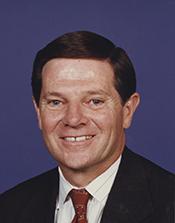
I thank the gentleman for yielding me this time. Mr. Speaker, no man knows the battle between good and evil like the gentleman from California (Mr. Lantos). It is an honor to once again have worked…
I thank the gentleman for yielding me this time.
Mr. Speaker, no man knows the battle between good and evil like the gentleman from California (Mr. Lantos). It is an honor to once again have worked with him on this resolution. I am proud to call the gentleman from California my colleague and my friend.
Mr. Speaker, today Israelis will wake up and go to work. They may drive their children to day care or have lunch with their friends. Israeli children will go to school and play with their classmates. We do not know which ones and we do not know where, but soon some of them will probably die. A bright light will flash, a terrifying concussion will bloom through the air, and in an instant fear, blood, panic, pain and death. And somewhere in Gaza, violent men will laugh. If this is not evil, nothing is.
However unfashionable this so-called ``simplistic'' vocabulary is among the diplomatic elite, it is honest. It is the vocabulary of the American people and their President whose moral clarity has led our Nation in our ongoing war on terror. Individuals, nations, and organizations who equivocate, who see the savagery of terrorists and the self-defense of free states as two sides of the same coin, as a cycle of action and counteraction, undermine that clarity.
Those who say Israel's self-defense is an impediment to progress completely miss the point. The destruction of Palestinian terrorism is not an impediment to progress. It is the definition of progress. Offers of temporary cease-fires by Hamas and other terrorist groups are not the solution to the problem. The point of the war on terror is not just to defeat terror, but to destroy terrorists. Murderers who take 3-month vacations are still murderers. They are still enemies of the civilized world and must be hunted and targeted as such.
Mr. Speaker, Israel's fight is our fight. Israel's liberation from Palestinian terrorism is an essential component of the global war against terror, and in that war there is no moral equivalence between aggrieved parties engaging in a so-called cycle of violence. There is only the cold-blooded murderer and the soldier sworn to defend his nation. This resolution makes that distinction and affirms American solidarity with the people of Israel and their war against terror. It makes clear that the American people acknowledge Israel's fundamental right to defend herself and that her fight against terror is our fight, and it calls on the Palestinian leadership at long last to act in the interest of their suffering people and stop the terrorists.
No more empty promises, no more games, no more points of effort. There is a war on and the terrorists are going
to lose that war. Now the only question is whether Palestinian leaders will stand with the civilized world in defiance of evil or whether they will fail like their predecessors have failed. We must not allow the Palestinian people who have been so long robbed of hope by corrupt and hateful leaders to be used as pawns to undermine this President's vision for peace.
The ascension of Palestinian Prime Minister Abbas gives us some reason to hope, but Israel and the United States must adopt a policy of trust but verify, and the only way to verify the destruction of Palestinian terrorism is the end of Palestinian terrorism, period. When the violence stops, the peace process can move forward; and until it does, Israel must defend itself. And either way, she will not stand alone because the people of the United States will never abandon their brothers and sisters in Israel or any nation that is threatened by terror.
A vote for this resolution reaffirms the House's commitment to Israel and to the moral clarity of our war on terror. So I just urge all Members to cast that vote and join Israel's heroic stand against evil.

Mr. Speaker, this peace belongs to the American people. This peace belongs to President William Jefferson Clinton as well the present administration. This peace belongs to all of us who have worked…
Mr. Speaker, this peace belongs to the American people. This peace belongs to President William Jefferson Clinton as well the present administration. This peace belongs to all of us who have worked to ensure a just and sustainable peace. The road map must be supported.
I rise, Mr. Speaker, to indicate to my colleagues that I spent 2 weekends ago in Oslo, Norway, working with women from Palestine and from Israel discussing the issue of peace.
I believe we can move forward. I am going to vote for this resolution. I believe that we can move forward, but I believe as well as we move forward we must accept the view and the understanding that as we abolish and get rid of terrorism we all believe and support an independent Palestinian State, and so I am going to associate myself with the women that I had the pleasure of being with in Oslo, Norway and will be writing a resolution to increase the number of women in the mideast peace process as we fight to secure a just and sustainable peace.
I rise today in support of House Resolution 294, condemning the terrorism inflicted on Israel since the Aqaba summit and expressing support for the Israeli people.
The Aqaba summit took place on June 4, 2003. Newly elected Palestinian Prime Minister Mahmoud Abbas proclaimed, ``our goal is clear, and we will implement it firmly and without compromise: a complete end to violence and terrorism.'' This is a laudable statement, and we are happy to see the Palestinian government taking such strides towards democracy and stability for their nation.
Prime Minister Abbas pledged at the Aqaba summit to establish a system based on rule of law and a single political authority. His intentions are the beginning steps needed for the Middle East Roadmap to Peace.
The roadmap begins with the assertion that ``a two state solution to the Israeli Palestinian conflict will only be achieved through an end to violence and terrorism.'' Prime Minister Abbas' leadership will be tested through these turbulent times, as terrorism is still rampant in the Middle East, and more people are suffering at the hands of violence.
Since that June 4 summit, less than three weeks have gone by, and already 22 Israelis are dead and scores more wounded. There have been three separate suicide bombings. When compared with our population, the death toll for the Israeli population would be equivalent to the loss of 1,100 American lives.
Palestinians are also victims of this violence as terrorists continue their attempts to undermine prospects for a lasting peace in the region. I was recently at a conference in Norway where Palestinian and Israeli women were joined by other leaders from around the world to seek a greater understanding of what must be done to secure peace in the region. Some
progress was made but I realize that there is much that remains to be done.
Peace will continue to be undermined as long as these terror attacks persist. Sadly, anti-Israeli and anti-Semitic groups are driving a wedge into the process to peace that many Palestinians and Israelis are trying so hard to build.
This is why I condemn in the harshest terms the recent terrorist acts, and express support for a peaceful and secure Israel and Palestine. I also offer my sympathy to the families of both the Israelis an Palestinians whose lives have been lost.
The roadmap to peace is a vision, not just for our generation, but for the future of Middle East stability. This vision can only be realized once terrorism is defeated, so that a new state may be created based on rule of law and respect for human rights.
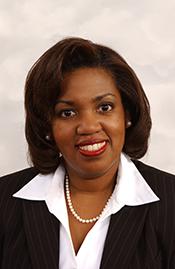
Mr. Speaker, I rise today to express my sorrow for the victims who continue to suffer the peril of deadly attacks of terror in Israel. I also rise in solidarity alongside the Israeli people in a…
Mr. Speaker, I rise today to express my sorrow for the victims who continue to suffer the peril of deadly attacks of terror in Israel. I also rise in solidarity alongside the Israeli people in a stance against terrorists attempting to inhibit the progress of a successful peace process. I further rise in support of the cause of democracy and freedom in the Middle East.
In order to further a road map for peace, there must be an immediate dismantling of Hamas, Islamic jihad, and all other terrorist organizations that actively threaten the lives of those who seek to dwell peacefully in this region.
Mr. Speaker, I urge the House to support this important resolution to send a message to those who would willfully threaten the peace process.
Mr. Speaker, I rise today to express my sorrow for the victims who continue to suffer the peril of deadly acts of terror in Israel. I also rise in solidarity alongside the Israeli people in a stance against the terrorists attempting to inhibit the progress of a successful peace process. Most importantly, I rise in support of the cause of democracy and freedom in the Middle East.
A year ago, in President Bush's speech in the Rose Garden, two criteria were outlined as necessary predicates for a successful agreement: First, a change in leadership of the Palestinian people, which has already taken place, and second, changes in conditions, which have not yet been accomplished. Steps are being taken on both sides to begin to implement the ``Road Map,'' but so much must be done. There has still been no end to the ongoing violence in the region.
At the June 4th Summit in Aqaba, the new Palestinian Prime Minister pledged to end the violence and terrorism in this region ``without compromise.'' Since that time, there have been twenty-two innocent Israelis murdered and many others injured in three separate suicide attacks. More must be done to stop this violence now.
Mere promises are not enough. While it is promising that the radical groups Hamas, the Al Aqsa Martyrs Brigades and Islamic Jihad today offered to suspend attacks against Israelis for three months, I would note that Hamas members in Gaza have already raised
doubts about the deal. In order to further a ``roadmap for peace,'' there must be an immediate dismantling of Hamas, Islamic Jihad, and all other terrorist organizations that actively threaten the lives of those who seek to dwell peacefully in this region.
I urge the House to support this important resolution to seen a message to those who willfully threaten the peace process.
We will not tolerate violence nor yield to its demands.
We will continue to fully support the democratic state of Israel.
We support democracy and statehood for the Palestinian people.
Mr. Speaker, I would also note that what other democratic nations are doing also sends a message to the world community and to terrorists. For instance, I am deeply concerned about the plight of the Iranian opposition being detained in France today. I am concerned that the wrong message is being sent to the opponents of democracy and freedom when democratic nations punish supporters of democracy.
For these reasons, I urge my colleagues to support the measure before us, to stand up and speak loudly for democracy and freedom in the Middle East.
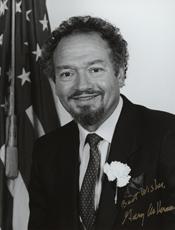
Mr. Speaker, I am reminded of the old vaudeville act where the guy goes to a doctor and he says ``Doctor, Doctor it hurts when I do this. What should I do? And the doctor says, `Do not do that.' ''…
Mr. Speaker, I am reminded of the old vaudeville act where the guy goes to a doctor and he says ``Doctor, Doctor it hurts when I do this. What should I do? And the doctor says, `Do not do that.' ''
Every action has a reaction. And people who perpetrate violence and commit acts of violence provoke responses.
I rise in strong support of the resolution. I want to commend the gentleman from California (Mr. Lantos), the author, for bringing it to us. The resolution brings something critical to our discussion about the future of the Israeli/Palestinian peace process, and that is moral clarity. We should be absolutely clear about this. Neither the Israeli soldier nor the American soldier who defends his nation by preemptively eliminating terrorists can with any decency be compared to the terrorist who intentionally sets out to murder innocent women and children on a bus or in a disco or in a pizzeria or in a shopping mall or in a supermarket or going to work in the Twin Towers in New York. Terrorism and the defense against terrorism are not a cycle of violence. Active defense against terrorism including strikes against terrorists and terrorist leaders and those who harbor them is a moral obligation of a free and democratic society. We do it because it is right, and Israel does it for the same reason.
Tempting as it may be, peace cannot be achieved through delusion, pretending that all parties to this conflict are of equal goodwill or everyone shares the belief that the two-state solution is a recipe for failure. Hamas and Islamic jihad engage in terrorism not to create the state of Palestine, but to destroy the State of Israel. Their victims are Jews not by coincidence of citizenship, but by active design. These are not just misguided militants or eager extremists, as our newspapers might label them. They are fanatical haters, murderous zealots committed to destroying both Israel and the Palestinian Authority, driving out both Jews and Christians and building an Islamic state on the ashes.
Mr. Speaker, peace may be possible; but it is not automatic. It is almost certainly impossible until these hate groups are crushed. The Palestinian Authority cannot succeed. It cannot fulfill its mandate as the single voice of the Palestinian people. It cannot perform its historic role as the agent of Palestinian statehood as long as these groups are allowed to exist. In the words of a former Israeli prime minister, we must pursue the peace process as if there were no terrorists, and we must pursue terrorists as if there were no peace process.

I thank the distinguished gentleman from California for yielding me this time. Mr. Speaker, I rise in strong support of this resolution which condemns the unconscionable terrorist attacks directed at…
I thank the distinguished gentleman from California for yielding me this time.
Mr. Speaker, I rise in strong support of this resolution which condemns the unconscionable terrorist attacks directed at the state of Israel since the Aqaba summit earlier this month and which expresses our solidarity with the Israeli people in the fight against terrorism. I might add that we ought to have solidarity with those Palestinians who join in the fight against terrorism.
Let me add, too, I am very proud to have joined the gentleman from California as well as the chairman of the Committee on International Relations and the majority whip in circulating a letter that was signed by more than 300 Members of this House that urges President Bush to adhere to the principles he articulated a year ago concerning the Israeli-Palestinian crisis. That letter and this resolution share this nonnegotiable demand: Any road map for peace must require the Palestinian side to unconditionally cease its campaign of terror and violence against Israel. Like the Dean of the House, my good friend, I desire to be an honest broker. But in that honesty, I need to observe what each side does. We must require the Palestinian side to unconditionally cease its campaign of terror and violence against Israel.
There are some who believe the United States and other nations must demonstrate more evenhandedness on the Palestinian question. However, Mr. Speaker, we must guard against making muddled parallelisms between justified actions by Israel and terrorist tactics that are designed only to inflame and destroy and undermine, I might say, the Prime Minister of Palestine from accomplishing the objectives articulated at Aqaba. As this resolution states, we must reject the concept of a cycle of violence as the gentleman from California has so powerfully said, because it implies a moral equivalence between terrorist and victim where no such parallelism exists. The state of Israel like every other nation on Earth has the right of self-defense and this resolution expresses American solidarity with Israel as it acts to maintain and secure its independence as a free and sovereign nation.
Mr. Speaker, we must continue to work to bring peace to this savaged region of the globe and achieve justice for Israel as well as justice for the Palestinian people, so many of whom have toiled under despots who only preach death and destruction.
I urge my colleagues to adopt this resolution.
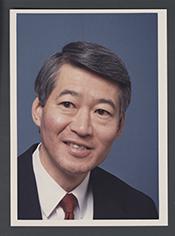
Mr. Speaker, I rise today in support of H. Res. 294. I am deeply saddened by the loss of lives at the hands of terrorists, and it is of great disappointment to me that the terror has escalated since…
Mr. Speaker, I rise today in support of H. Res. 294. I am deeply saddened by the loss of lives at the hands of terrorists, and it is of great disappointment to me that the terror has escalated since the Aqaba summit. As the violence continues, even in the face of efforts by all sides to bring peace to the region, the United States must show nothing short of steadfast support for Israel as it continues to bear the entire burden of ending the violence.
The U.S. and Israel both agree that Prime Minister Abbas is the legitimate alternative to Yassir Arafat as leader of the Palestinian people. We welcome his statements acknowledging the need to stop terror both on moral and political grounds. However, the terrorist infrastructure is committed to the undermining of Prime Minister Abbas and the peace process.
Earlier this month, 22 innocent Israelis were killed and many others have been injured in continuous suicide bombings. Among the obligations in the roadmap is the responsibility of the Palestinians to stop all terror and violence against Israel. Merely negotiating a cease-fire with the terrorist groups is not sufficient. Terrorist groups can simply use this time to rearm and plan future attacks against innocent civilians. Militants must be arrested and arms collected to dismantle the terrorist infrastructure.
As long as Palestinian leaders do not aggressively go after the terrorist infrastructure, the Israeli government has the sole responsibility of protecting its citizens against further terrorist attacks. Israel has an obligation to safeguard its citizens and like every other sovereign nation, Israel has the same right to self- defense. If the Palestinian Authority does not act against terrorism, Israel must.
U.S. policy needs to be supportive of Israel in its fight against terror. Just as the U.S. has the right to send soldiers around the world to fight terrorists, Israel has the same right to fight terrorism in its own neighborhood and its own capitol.
The people of Israel are confronted with the grim realities of terrorism on a daily basis. Yet the darker reality is that were it not for the successful actions Israel takes in defense of its people, terrorism against them would increase tenfold. As Israel embarks on the difficult path to peace, it is essential that her efforts to quell acts of senseless terror have the full support of the United States.
Show 11 more

Mr. Speaker, I rise in support of the resolution. The Aqaba Summit presented one of the most promising moments in years of conflict between Israelis and Palestinians. At that summit, Prime Minister…
Mr. Speaker, I rise in support of the resolution.
The Aqaba Summit presented one of the most promising moments in years of conflict between Israelis and Palestinians. At that summit, Prime Minister Abbas pledged his commitment to a complete end to the violence and terrorism that has devastated the region. Prime Minister Abbas and Israeli Prime Minister Sharon also took the first bold step on the Roadmap to Peace by recognizing the right of one another to exist in peace.
Mr. Abbas and Sharon had just returned from Aqaba, however, when violence once again flared. There is no way the peace process can continue while terrorist organization such as Hamas continue to act with impunity in the West Bank and Gaza.
Prime Minister Abbas maintains that terror can only be stopped on moral and political grounds. He remains unwilling to use force to dismantle terrorist organizations. Under current circumstances, however, Mr. Abbas doesn't have the ability to forcefully dismantle such organizations. It is critically important that the United States, Europe, Russia, the United Nations and the Arab League renew their commitment to cut terrorism at its roots, and provide Mr. Abbas the support he needs.
International support means denying the flow of dollars to Hamas. I am a cosponsor of House Resolution 285, which urges the European Union to classify all of Hamas as a terrorist organization, and not just its military wing. I find it astonishing that a distinction would be made between the political and armed divisions of a terrorist organization.
The Arab League must also commit itself to peace in Israel by denying Yasser Arafat the funding and support he needs to maintain control over security forces in the Palestinian territories.
I continue to support an active U.S. role in the Middle East peace process because the suffering of people--destined to live on the same piece of land--is too great, and the stakes for them too high.
I support this resolution's condemnation of the recent terrorist violence that victimized innocent Israelis, as well as its expression of sympathy to the families of both Israelis and Palestinians who have lost their lives. I urge its adoption and thank the gentleman from California, Mr. Lantos, for bringing it to the floor.

Mr. Speaker, today the House will vote on H. Res. 294, a measure expressing solidarity with the people of Israel and condemning the terrorist attacks inflicted on them since the Aqaba Summit. The…
Mr. Speaker, today the House will vote on H. Res. 294, a measure expressing solidarity with the people of Israel and condemning the terrorist attacks inflicted on them since the Aqaba Summit. The timing could not be any more ironic. Today as we consider this one- sided resolution on the Mideast, there are reports of a ceasefire taking hold that underlines the need for America to find a way to condemn violence in a way that does not favor one set of innocent victims over another. Unfortunately, this resolution does not meet this standard. Instead, this resolution, in its present form, will do more to take us away from peace than to bring us closer to an agreement that serves the needs and desires of all people in the Middle East.
That is not to say that I disagree with the text of this resolution: I condemn, in the strongest terms, all terrorist attacks against Israelis and remain committed to Israel's security and the well-being of Israeli citizens. Brutal attacks against civilians are always unacceptable and as a sovereign nation, Israel has the right to defend itself from these kinds of attacks. But, this resolution, which does not address the losses on both sides, sends the wrong message to Israelis, Palestinians, and the world community.
My concern is also that this resolution does not endorse the ``roadmap'' for peace, nor does it recognize the commitments and obligations that Israel must implement for the peace process to move forward. Furthermore,, it does not recognize the terrible pain and suffering that Israeli occupation and crackdown has caused in the disputed territories. We need to condemn Palestinian terrorists, but acknowledge the honorable goals of peace-loving Palestinians that want nothing more than a better life. This Congress should recognize the pain of every mother that has lost an innocent child because of violence in the Mideast, not only Israeli mothers.
Mr. Speaker I share the anger and sadness of my colleagues who have brought this resolution regarding the Mideast to the floor. But, I am convinced that this resolution will not advance the prospects for the lasting peace that we all want, which, is why I will vote against it.
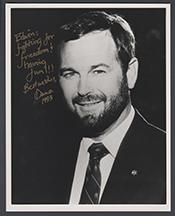
Mr. Speaker, I rise to discuss this resolution, although I have not yet determined how I shall vote on it. The resolution has ``resolved'' clauses that speak for themselves and are reasonable. In the…
Mr. Speaker, I rise to discuss this resolution, although I have not yet determined how I shall vote on it.
The resolution has ``resolved'' clauses that speak for themselves and are reasonable. In the ``resolved'' clauses we do see a recognition of expression of sentiment about both the Palestinian as well as the Israeli innocent people who have been killed. Also, it recognizes the Roadmap and talks about some of the goals that we all agree on.
I do have some reservations as to the ``whereas'' clauses which seem to be one-sided. The clause most disconcerting to me happens to be the one that people seem to be the most frantic in trying to get across today, and that is the claim that in some way, by saying that this is a cycle of violence that is going on, as it says in the ``whereas'' clause, that this implies a moral equivalency. It does not. The cycle of violence could well have been started, and I do believe there is a cycle of violence going on; it could be that both sides have made mistakes. That does not mean they are both morally equivalent. Who is judging the morality of it? We are judging the reality of it.
The fact is, Israel may have made some mistakes. Certainly the Palestinians have made horrible immoral decisions in terms of suicide bombings and other types of acts of terrorism. But Israel may have made some mistakes. Was Sharon's visit to the Temple Mount, in retrospect, was that not a mistake? How about the Israeli settlement policy for these last few years? I think in retrospect these things have not furthered the cause of peace; these things have created a cycle of violence, if you will.
It is our job to try to come to grips with what is going on there and end this conflict, and quit trying to say that all of the blame is on one side. Both sides have made mistakes. Let us try to be an honest broker.
Now, I will probably be voting for the resolution, because the ``resolved'' clauses are things that I agree with. But I would hope that we would be honest with ourselves and try to discuss this in a way that will further the cause of peace and not just simply be one-sided.

Mr. Speaker, as we are hearing all too frequently about continued violence in Israel, I rise in support of H. Con. Res. 294, expressing solidarity with Israel. For me, terrorism has hit close to home…
Mr. Speaker, as we are hearing all too frequently about continued violence in Israel, I rise in support of H. Con. Res. 294, expressing solidarity with Israel.
For me, terrorism has hit close to home on too many occasions. Just last Friday, Eugene and Lorraine Goldstein, an elderly couple from Plainview, which is on Long Island, were visiting their son in Israel. It was supposed to be a time of joy for the family, but became a matter of grief.
Eugene and Lorraine Goldstein, and their son and daughter-in-law were on their way to a wedding dinner for a grandson at the Holyland Hotel, and also celebrating their son and daughter-in-law's 27th wedding anniversary. The family was traveling along Route 60, a West Bank highway.
During the drive, the Goldstein's happy day was shattered by the bullets of terrorists. The Goldsteins were shot in an attack that the Palestinian group Hamas has admitted carrying out. Within minutes Eugene and Lorraine's son was dead, their daughter-in-law was injured, and they were severely wounded, taken to a Jerusalem hospital.
Eugene Goldstein is a watch salesman at the Fortunoff store in Westbury, also in my district. Fortunoff calls Eugene a ``superstar with a big wave and a big grin,'' and their family, friends and neighbors know the Goldsteins as good people. The family is in great shock, just one more family with lives destroyed from terrorism. I am praying that the Goldsteins recover quickly and fully, and my condolences go to their family for their loss.
Today, Israel finds herself in an unbearable situation. Despite Israeli trust, Yasser Arafat has allowed terrorism to pervade Israeli society. Prime Minister ``MA-MOOD'' Abbas must keep his pledge for a ``complete end to violence and terrorism.'' Until that happens, Israel has every right to enter Palestinian cities and refugee camps to root out terror. We cannot expect Israel to sit by and watch her country crumble, and her people be murdered in groups of 20 while they ride buses.
As a Member of Congress, I will support Israel's decisions regarding security and self-defense in any way possible.

Mr. Speaker, I join my colleagues in expressing outrage at terrorism perpetrated by Palestinian extremists since the Aqaba Summit. The people of the United States continue to stand in solidarity with…
Mr. Speaker, I join my colleagues in expressing outrage at terrorism perpetrated by Palestinian extremists since the Aqaba Summit. The people of the United States continue to stand in solidarity with the people of Israel. But I regret this resolution is not as complete or constructive as it might be. We mourn the 22 innocent Israelis that have been killed since the summit, but over twice that number of innocent civilian Palestinians have also died as a result of military strikes from Israel. Their loss should also be explicitly recognized in such a resolution.
I sincerely wish the House had used this opportunity to offer its clear support for the President's road map to Middle East peace. This road map is not perfect, but it is currently the only legitimate way to stop terrorism and get the parties back to the path of peace. Under the road map the Palestinian Authority must crack down on terrorism, and Israel must dismantle illegal settlements and begin an end to occupation. Abandoning the road map in the wake of the recent terrorism would not help Israel. In contrast, it would reward the terrorists.
I object to the resolution's condemnation of the phrase ``cycle of violence'' because it is a fact for the past 2\1/2\ years we have witnessed a heartbreaking and endless cycle of terrorist attacks, assassinations, reprisals and retaliations. Since the peace process collapsed, 800 Israelis and 2,100 Palestinians have been killed. The Israeli economy has collapsed. The humanitarian crisis in the West Bank and in Gaza has intensified. Therefore, it is imperative that under the road map security cooperation would resume. This is critical because it is clear that neither prime minister, Abu Mazen nor Sharon, neither of these can stop terrorism without the other. This conflict will never end without a comprehensive political solution; and we, the United States, must lead both parties to that agreement. Otherwise Israelis and Palestinians may be doomed to a life of violence and suffering forever. It is not what these people deserve, and it is surely not what America can afford.
Mr. Speaker, there is no doubt in any of our minds of this country's strong support for the State of Israel. We have shown that time and time again. But as my colleague, the gentleman from California…
Mr. Speaker, there is no doubt in any of our minds of this country's strong support for the State of Israel. We have shown that time and time again. But as my colleague, the gentleman from California just indicated, neither side is totally innocent of all of the violence that has occurred over the years.
But as I look at and read this resolution, I think the question all of us have to answer, the only question that we have to answer is: Will passing this resolution further the peace process? And the answer is clearly no.
A reading of the resolution will find it lacking in one major regard and that is, there is no endorsement in this resolution of the Roadmap, the Roadmap which President Bush has worked so hard to promote to both sides; the Roadmap which was a subject of the Aqaba summit. Yes, there has been a flare-up in the hostilities since the summit. But now the House comes with a resolution which is one-sided. And again, I ask: will this resolution enhance the peace process? And I say to my colleagues, the answer is no.
Only yesterday, the Palestinian Authority agreed to a 3-month truce from any further hostilities. Many of us will say, 3 months! We want it permanent. How about 6 months? Mr. Speaker, how about taking some progress when we can get it? If this 3-month truce moves along the peace process, let us take it. And then fight for another 3 months, and another 3 months. It has to be done in small steps.
Our offices just received communications from two pro-peace Jewish groups. The first group was Americans For Peace Now, a premier Jewish organization working to enhance Israel's security through the peace process, and the second group that is questioning the wisdom of this resolution is the Israel Policy Forum, which supports American efforts at resolving the conflict between Israel and its Arab neighbors.
So I say to my colleagues, let us all answer the question together when the vote comes, and that is will a vote for this resolution enhance the Roadmap, and will it further peace in the region? And again, the conclusion I draw is that the answer is no.
Mr. Speaker, I rise to raise concerns with House Resolution 294, Condemning The Terrorism Inflicted On Israel And Expressing Solidarity With The Israeli People. I am greatly troubled by the violence…
Mr. Speaker, I rise to raise concerns with House Resolution 294, Condemning The Terrorism Inflicted On Israel And Expressing Solidarity With The Israeli People.
I am greatly troubled by the violence between Palestinians and Israelis over the last two weeks. It poses a great threat to the road map toward peace before it has had a chance to progress. I am outraged by extremists on both sides who continue to frustrate and delay the peace process. For the sake of the Israeli and Palestinian people, this process must be allowed to succeed.
While I join my colleagues in denouncing all acts of terrorism, this resolution unfairly places blame on one side in the ongoing cycle of violence between the Israelis and Palestinians. The United States should always act as a fair and impartial broker in the peace process. This resolution violates that responsibility.
Let me be clear. I condemn the recent bus bombings and other acts of terrorism carried out by Hamas just as I believe Israel must halt its policy of assassinations. The day after Israel attempted to kill a senior Hamas leader, a suicide bomber killed seventeen innocent people aboard a bus in Jerusalem. The cycle of violence being perpetuated by both sides must end, but this resolution does nothing constructive to further that goal.
It is only right that Congress call upon the new government of Prime Minister Abbas to
take more effective measures in controlling Hamas and ending violence. But we should also ask the government of Prime Minister Sharon to do the same. We should sponsor impartial legislation supporting continued dialogue to end the violence in the Middle East--protecting the human rights of the innocent involved in the cross fire. We must balance our demands on both of these governments.
Both sides have crossed the line--it is time to get back to the negotiating table. We are not aiding this already volatile situation by giving our weighted support to one side in this conflict. For that reason, I must abstain on this resolution.
Mr. Speaker, I rise in opposition to this measure. Of course we all deplore terrorism and violence that any innocents are forced to suffer. There is, sadly, plenty of this in the world today. But…
Mr. Speaker, I rise in opposition to this measure. Of course we all deplore terrorism and violence that any innocents are forced to suffer. There is, sadly, plenty of this in the world today. But there is more to this resolution than just condemning the violence in the Middle East. I have a problem with most resolutions like this because they have the appearance of taking one side or the other in a
conflict that has nothing to do with the United States. Our responsibility is to the American people and to the Constitution, not to adjudicate age-old conflicts half-way around the world.
When we take sides in these far off conflicts, we serve to antagonize the people affected and end up no closer to peace than when we started. This bill makes reference to the need to have solidarity with Israel. Elsewhere people say we should have solidarity with the Palestinians and the Arabs. So, as I have said before when bills such as this are on the floor, it is sort of a contest: Should we be pro-Israel or pro- Arab, or anti-Israel or anti-Arab, and how are we perceived in doing this? It is pretty important.
But I still believe, through all these bills attempting to intervene in the Middle East, that there is a third option to this that we so often forget about. Why can we not be pro-American? What is in the best interests of the United States? We do not hear much talk of that, unfortunately.
As I keep saying when votes such as this come to the floor, the best foreign policy for the United States is noninterventionism. It is a policy American interests first, costs must less money, and is in keeping with a long American tradition so eloquently described by our Founders.
I hope the peoples of the Middle East are able to resolve their differences, but because whether they decide or not is not our business I urge a no vote on this resolution.
Mr. Speaker, I rise today in support of H. Res. 294, condemning the terrorism inflicted on Israel, expressing solidarity with the Israeli people, and calling on the Palestinian Authority to take…
Mr. Speaker, I rise today in support of H. Res. 294, condemning the terrorism inflicted on Israel, expressing solidarity with the Israeli people, and calling on the Palestinian Authority to take immediate and effective steps to dismantle the terrorist infrastructure on the West Bank and Gaza. I also rise today to express my solidarity with all those who support the efforts towards peace between Israelis and Palestinians.
Mr. Speaker, I wish to associate myself with the comments of the gentlewoman from California, Representative Capps. I wish to echo her reservations about this bill. The introduction of this resolution should have provided us the opportunity to restate the United States' commitment to peace, and our commitment to the President's roadmap, which lays out responsibilities for both the Israelis and the Palestinians in the pursuit of peace. The roadmap, like any negotiated plan, is imperfect. But it is supported by the President, it is supported by Israel, it is supported by the Palestinian Authority. It is the best plan that we have right now.
Having said that, I am pleased that this resolution recognizes the plight of innocent Palestinians who have been caught in a cycle of terrorist attacks and government reprisals. It also recognizes the aspiration of Palestinians to create their own state, which will live in peace and prosperity with its neighbor Israel.
I look forward to working with my colleagues here in Congress, with the Administration and with the communities in the Middle East to foster a true and lasting peace in the Middle East. I believe that peace must be the ultimate goal of the United States policy towards the region. Peace is in the national interest of Israel, the future security of a Palestinian state, and in the national security interest of the American government and its people.
Mr. Speaker, I rise today in strong support of security for Israel and in utter condemnation of terrorism. I cannot, however, vote for a resolution that I believe fails to advance the Middle East…
Mr. Speaker, I rise today in strong support of security for Israel and in utter condemnation of terrorism. I cannot, however, vote for a resolution that I believe fails to advance the Middle East peace process, and it undermines hope for the Roadmap.
On May 8, 2003, I wrote President Bush commending him for his efforts to help the parties find a way out of their ongoing tragedy. This letter read in part: ``I wanted to take this opportunity to applaud your efforts to reinvigorate the Israeli-Palestinian peace process. The
`Roadmap to Peace,' presented by the Quartet to the Israeli Government and Palestinian Authority, represents a welcome and desperately needed opportunity to work toward a lasting two-state solution that offers the prospect for an ordinary peace between current adversaries and with that peace, the promise of stability for the region. Such a solution is very much in our own national interest as well.''
I believe the principles laid out in the Roadmap, including its emphasis on reciprocity, must continue to guide us. Ending terror is imperative, and I absolutely agree with the sentiments in this resolution decrying terror and expressing sympathy for the loss of so many lives, Israeli and Palestinian, in this conflict. However, at this critical juncture, the resolution I wish that we were voting on was one that expressed those principles while at the same time voicing solidarity toward Israel by endorsing the Roadmap as our best chance to reach the much desired destination of peace and security. This resolution fails to reflect the reciprocity that is the hallmark of the Roadmap.
Mr. Speaker, even though I agree in principle on the intent of the resolution, I believe it could have been drafted differently. I intend to vote ``yes'' on H. Res. 294. All of us who support Middle…
Mr. Speaker, even though I agree in principle on the intent of the resolution, I believe it could have been drafted differently. I intend to vote ``yes'' on H. Res. 294.
All of us who support Middle East peace process are aware of the fragile relationship between Israelis and Palestinians. I believe that future progress toward peace will require a real commitment on the part of Israel and the Palestinians, and the active participation of the United States.
Mr. Speaker, I strongly support Israel, but I also strongly support efforts to bring about peace in the region, which will allow the Israeli and Palestinian people to live together side by side without having to endure this type of violence.
All sides of this conflict have responsibilities. Israel must take tangible steps now to ease the suffering of Palestinians and to show respect for their dignity. As progress is made toward peace, Israel must stop settlement activity in the occupied territories. Arab nations must fight terror in all forms, and recognize and state the obvious once and for all: Israel has a right to exist as a Jewish state at peace with its neighbors.
There is no excuse for terrorist acts. I want to save the lives of Israelis, and I want to save the lives of Palestinians. Both are equally precious, both deserve to live in peace and security.
It is in that spirit, and with that faith, that I will continue to work with the Administration to ensure the United States remains firm in its commitment to the principles necessary to guarantee the success of the Arab-Israeli peace process.
Bill Text
Latest available legislative text
        [Congressional Bills 108th Congress]
[From the U.S. Government Publishing Office]
[H. Con. Res. 294 Introduced in House (IH)]

108th CONGRESS
1st Session
H. CON. RES. 294

Addressing the decision by OPEC countries to decrease oil production.

_______________________________________________________________________

IN THE HOUSE OF REPRESENTATIVES

October 2, 2003

Mr. Deutsch submitted the following concurrent resolution; which was
referred to the Committee on International Relations

_______________________________________________________________________

CONCURRENT RESOLUTION

Addressing the decision by OPEC countries to decrease oil production.

Whereas OPEC (the Organization of Petroleum Exporting Countries) has recently
decided to decrease production by 900,000 barrels a day;
Whereas this decrease includes a 300,000 barrels per day cut by Saudi Arabia,
the largest OPEC supplier;
Whereas the executive branch has recently reaffirmed the belief that oil prices
should be determined by market forces so that adequate supplies can be
ensured;
Whereas the production decrease by OPEC will have the intended effect of
increased oil prices and revenue only if oil-producing countries that
are not members of OPEC take no action to offset the production decrease
by OPEC;
Whereas at least 45 percent of oil imported into the United States originates in
OPEC countries, according to the Energy Information Administration at
the Department of Energy;
Whereas since the United States imports more than 9,000,000,000 barrels of oil
each year, the $1.11 price-per-barrel increase that followed the
announcement of tighter OPEC supply restrictions would result in more
than $10,000,000,000 per year added to the cost of oil imported into the
United States;
Whereas the increase in oil import revenues to Saudi Arabia would go directly to
the Saudi treasury, and numerous reports indicate that Saudi Arabia
continues to make financial contributions to terrorist organizations
such as Hamas; and
Whereas the dependency of the United States on oil from OPEC countries is having
a detrimental effect on the national security, economy, and foreign
policy of the United States: Now, therefore, be it
Resolved by the House of Representatives (the Senate concurring),
That--
(1) the Congress urges oil-producing countries that are not
members of OPEC, including Russia, Mexico, and Norway, to
increase their production of oil in order to offset efforts by
OPEC to increase oil prices and the revenue of OPEC countries;
and
(2) the Congress recognizes that all the people of the
United States, including elected officials in Congress and the
executive branch, need to address the serious issue of oil
consumption by the United States by considering such issues
as--
(A) the amount of money that the United States
spends on foreign oil;
(B) the purposes for which the money is used by its
recipients; and
(C) the dependence of the United States on oil, and
specifically on oil from OPEC countries and its effect
on the national security of the United States.
<all>