Recognizing the contributions of people of Indian origin to the United States and the benefits of working together with India towards promoting peace, prosperity, and freedom among all countries of the world.
Legislative Activity
Stay on top of the latest movement without scrolling through every action
Received in the Senate and referred to the Committee on Foreign Relations.
May 13, 2004
View full timeline
Introduced in House
January 28, 2004
Referred to the House Committee on International Relations.
January 28, 2004
Committee Agreed to Seek Consideration Under Suspension of the Rules, by Voice Vote.
March 31, 2004
Mr. Bereuter moved to suspend the rules and agree to the resolution.
May 11, 2004 • 3:53 PM
Considered under suspension of the rules. (consideration: CR H2755-2757)
May 11, 2004 • 3:53 PM
DEBATE - The House proceeded with forty minutes of debate on H. Con. Res. 352.
May 11, 2004 • 3:53 PM
At the conclusion of debate, the Yeas and Nays were demanded and ordered. Pursuant to the provisions of clause 8, rule XX, the Chair announced that further proceedings on the motion would be postponed.
May 11, 2004 • 4:06 PM
Considered as unfinished business. (consideration: CR H2853)
May 12, 2004 • 3:52 PM
Passed/agreed to in House: On motion to suspend the rules and agree to the resolution Agreed to by the Yeas and Nays: (2/3 required): 415 - 2, 2 Present (Roll no. 164).(text as passed House: CR 5/11/2004 H2755)
May 12, 2004 • 4:03 PM
On motion to suspend the rules and agree to the resolution Agreed to by the Yeas and Nays: (2/3 required): 415 - 2, 2 Present (Roll no. 164). (text as passed House: CR 5/11/2004 H2755)
May 12, 2004 • 4:03 PM
Motion to reconsider laid on the table Agreed to without objection.
May 12, 2004 • 4:03 PM
Received in the Senate and referred to the Committee on Foreign Relations.
May 13, 2004
Voting History
1 vote recorded • Roll call available
Floor Debate
24 membersWhat members said about H.Con.Res. 352 on the floor
 FPS
FPS JM
JM RENJM
RENJM XB+19
XB+19
Floor Debate
24 membersWhat members said about H.Con.Res. 352 on the floor
Mr. Speaker, I yield myself such time as I may consume. I stand here in just abject wonder at having 2 hours and 10 minutes to debate this bill over which there is very little controversy, a few…
Mr. Speaker, I yield myself such time as I may consume.
I stand here in just abject wonder at having 2 hours and 10 minutes to debate this bill over which there is very little controversy, a few dollars here and there; and I was going to ask the gentleman from Louisiana if he might accept a unanimous consent request that we cut the time in half, spend the first hour on this bill and spend the second hour debating whether or not Rumsfeld ordered the torture of prisoners in Iraq, and then we might have some more fun at least in the 2 hours we have got.
Does the gentleman agree?
Mr. Speaker, it is kind of sad that this bill was not worked out in committee because the differences, which I will describe shortly, are simple and there could have been a compromise, it appears to me, and certainly we have a substitute which will come up and we, I think, have to discuss both.
Let us start out by suggesting that I would like to agree with the distinguished gentleman from Louisiana that it is probably a good idea to not encourage people to spend foolishly, to buy two extra pair of eyeglasses or go out for an extra shot of Botox or something at the end of the year just to use up the money in their flexible spending account.
The problem, and where we would disagree, is that the gentleman's bill is not paid for, and this does push us further into debt; and our bill and the differences, and we have some, is paid for. If the gentleman wanted to say let us compromise right now and pay for half of it, we could get this done in 15 minutes. I am easy. But that is basically our difference. The Republican bill creates more of a deficit, and it does discourage people from spending foolishly at the end of the year and it costs, what, 8 billion bucks over 10.
Therein is the major difference. I would like to discuss one minor difference which is complex and which our substitute drops. The gentleman from Louisiana, the Republican bill, allows members of a flexible spending account to transfer money into a health savings account. The only problem with that is that, insofar as the regulations appear now, one cannot have a flexible spending account and a health savings account at the same time, so that to transfer the money from the flexible spending account into the health savings account, they have to drop their flexible spending account, and then the next year they would not have 500 bucks to transfer.
I mean, it is a way to encourage, or perhaps force, people into dropping a flexible spending account and move into a health savings account. I am not sure that was his intention, but that is the reality. And there is almost no one who would qualify to transfer money, the $500, say, from the flexible spending account into a health savings account. As a matter of fact, it is scored at 20 million bucks over 10 years; so if it is $20 at maybe 1 million people who would use it, and if our purpose is to encourage health savings accounts, I would suggest to the gentleman that that is a separate debate and perhaps not really pertinent to the question of whether we should allow people this carryover and repeal the use-it-or-lose-it provision. Had we had a chance to mark this up in committee and work it out in some detail, I think we could have worked out a system, perhaps brought two bills to the floor.
The bill, I know, and I hate to be critical, but I know it is introduced as a centerpiece of the week for the uninsured, and I am afraid that this bill does nothing for the uninsured. We cannot have a flexible spending account and not have access to insurance. So we really are not dealing with the uninsured here. People who have flexible spending accounts, as a matter of fact, probably have very generous and good health insurance coverage. So it is somewhat disingenuous, and that is the harshest thing I can think of, to suggest that this is going to have any effect or impact in Cover the Uninsured Week.
So if I could summarize just for a moment, there is a part of the bill which would help people and prevent them from frivolous spending from their flexible spending accounts. We concur in that, and our substitute includes that. Our major difference is, and we could have a vote, is it worth increasing the deficit by $8.5 billion. We have some simple ways to pay for that. For instance, not letting corporations reincorporate offshore and avoid Federal income tax on their corporate income, a theory that has some bipartisan support.
There are some egregious loopholes that were dreamed up mostly by the Enron Corporation, which we also closed. I do not think anybody would suggest that those loopholes ought to continue. So in a minimal way, we changed the Tax Code to make this, and it is a principle, we ought to pay for things that we are providing, and that is it. We would leave the health savings account portion out. We would allow people to transfer the $500 and carry it forward so they would not have a use-it- or-lose-it, and we would pay for it. Other than that I do not know what we could find to disagree about for the next 2 hours, but in my inimitable way I will be just as disagreeable as the gentleman from Louisiana would like me to be.
Mr. Speaker, I reserve the balance of my time.
Mr. Speaker, will the gentleman yield?
Mr. Speaker, if I were to stipulate to the gentleman from Louisiana that we keep the HSA portion, would the gentleman agree to pay for it or some of it here, and we will have a compromise right now?
Mr. Speaker, I thank the gentleman.
Mr. Speaker, I am pleased to yield 6 minutes to the distinguished gentleman from California (Mr. Becerra).
Mr. Speaker, I yield myself such time as I may consume.
Mr. Speaker, I would like to inquire of the gentleman from Louisiana, it is my understanding that you could use a flexible savings account to, for example, pay for abortion if your employer's health care plan did not provide that benefit. Is that not true?
I yield to the gentleman from Louisiana.
Mr. Speaker, reclaiming my time, there is nothing in this bill that would prohibit a woman from using the benefits of the flexible savings account for an abortion; is that correct?
Mr. Speaker, I yield 3 minutes to the gentlewoman from Texas (Ms. Jackson-Lee).
(Ms. JACKSON-LEE of Texas asked and was given permission to revise and extend her remarks.)
Mr. Speaker, if the gentleman will yield, I will then reserve my time and precede his closing and try and warm up the audience for what I know will be eloquent remarks.
Mr. Speaker, I yield 6 minutes to the gentleman from Washington (Mr. McDERMOTT), as we are blessed with his late arrival.
(Mr. McDERMOTT asked and was given permission to revise and extend his remarks.)
Mr. Speaker, I yield myself such time as I may consume. I thank the gentleman for his comments and I would close just briefly.
I believe that the Enron employee would not have insurance. He would have some money in that health savings account, but when Enron folded up, the insurance went along with Enron. He could go into the private market and try and buy something.
I would just like to repeat, if I may, that this really does nothing to cover the uninsured. So, if this is Cover the Uninsured Week, we are burning up a couple of valuable hours that we could be discussing how to cover the uninsured with this bill.
The principal disagreement that we had with the bill is that it is not paid for, and we will offer, subsequently to closing this debate, a substitute where we pay for it in very patriotic and simple ways. It is not a lot of money but it is a principle that we Democrats have long adhered to, and that is, that we ought to pay for the wonderful things that are available to us in this country and not put the burden on our children and grandchildren.
So, having said that, and without fear of contradiction that I probably have more children and grandchildren than the combined audience here, I can qualify, if the Speaker will allow me,
as an expert in that area. And maybe I am a little touchy about it, but will conclude our debate on this and I appreciate the gentleman from Louisiana. Next time I hope we can resolve these differences in our committee and come to the floor, as we did in the good old days, with a unified approach to Medicare and health insurance problems.
Mr. Speaker, I yield back the balance of my time.
Mr. Speaker, I offer an amendment in the nature of a substitute.
I am.
Mr. Speaker, I yield myself such time as I may consume.
Our Democratic substitute addresses a real issue of concern with respect to flexible spending accounts in the use-it-or-lose-it rule.
We agree with the author of this legislation that it is unwise to create an incentive for people to spend foolishly or frivolously for a benefit that they might lose, and we have the Washington Business Group and 50 major corporate members are clear on the issue. They want the changes and they want the money carried over into FSAs. The position is shared by their employees. There is some question, and nobody really has raised it previously, as to putting this money into health savings accounts, but because that is such a minor issue it could be overlooked.
The real question here is whether we should pay for this. And it will be expensive. It is $8 billion. That is money that could be used in many programs, education programs, environmental programs, health programs, and it is a principle to which we are dedicated, and that is that we would like to expand health care in this country, but we have never offered a plan that we
will not pay for. And I find it sometimes difficult when my opponents across the aisle will not even give us a plan that costs nothing.
My Republican friends are opposed to expanding COBRA benefits. They are very expensive for people, but some 40 million people have used them since we wrote that bill on a bipartisan basis to expand COBRA benefits until a person gets another job or until they mature into Medicare. Costs zip, nothing, nada. It costs the employer nothing. Why do we object to expanding COBRA benefits? Just because it is a government plan and obviously people on the other side of the aisle do not like the government helping people unless they are very rich, of course.
So here we have just another example of not a bad piece of legislation. It could use some improvement, but it is a freebie and will predominantly benefit people in good jobs, with good health insurance and expand another tax loophole.
It is a modest one, but it is a principle. Left unchecked, we would soon have almost no tax revenue in this country at all, a position which the Club For Growth would applaud, but I am sure that those of us who are on the Federal salary or those people who are defending us now in Iraq would object to.
So I hope that we could reverse this disastrous rush to the bottom of debt and begin to be responsible in how we legislate by paying for these provisions. We will hear more later from my colleagues on the really very useful ways that it will help our economy if, in fact, we did pay for this bill under the provisions of our Democratic substitute.
Mr. Speaker, I reserve the balance of my time.
Mr. Speaker, I yield myself such time as I may consume, before I recognize the distinguished gentleman from Massachusetts, to remind my good friend from Louisiana that the tax provisions in our substitute were recommended by the bipartisan, bicameral Joint Committee on Taxation; and these provisions have already passed on a bipartisan basis in the other body.
Mr. Speaker, I yield 4 minutes to the distinguished gentleman from Massachusetts (Mr. Neal) 2 minutes for economic logic and 2 minutes for righteous indignation, for a total of 4 minutes.
(Mr. NEAL of Massachusetts asked and was given permission to revise and extend his remarks.)
Mr. Speaker, I yield 5 minutes to the gentleman from Texas (Mr. Doggett).
Mr. Speaker, I yield 3 minutes to the gentleman from Michigan (Mr. Levin).
(Mr. LEVIN asked and was given permission to revise and extend his remarks.)
Mr. Speaker, I yield myself such time as I may consume.
Mr. Speaker, I would like to suggest to the gentleman from Wisconsin (Mr. Ryan) that we do not on this side have any objection to the rollover. We think it is a good idea, and all we would suggest is that we have to pay for it. That is the only difference.
I yield to the gentleman from Wisconsin.
Actually, I am opposed to it in general, but I offer to the gentleman from Louisiana (Mr. McCrery) that we would accept that if he would pay for half of the bill. That is compromise.
It only denies the HSA, which they think is going to be a small number. There is still time to negotiate.
Mr. Speaker, I yield 4 minutes to the gentlewoman from Connecticut (Ms. DeLauro).
Mr. Speaker, I yield myself such time as I may consume.
Mr. Speaker, I would like to close the debate on our side for our substitute. My belief is these two tax provisions, modest as they are, regardless of the underlying bill, are good tax policy and ought to be considered if for no other reason than that they correct some serious inequities in our Tax Code which have been described by previous speakers.
We are very close to a compromise with our friends on the other side of the aisle. Our substitute would eliminate the health savings account issue. But as I said, it is possible to reinstate that in conference, and if the gentleman would like to support our substitute, we could do the patriotic thing, we could provide good tax policy, we could pay for a very good idea, and we could walk out, arm in arm, saying we have helped a few people, we have paid for it, and we have brought patriotism and corporate responsibility to some of our recalcitrant corporate friends who are not doing their share.
I would urge that this substitute does no harm to the underlying philosophy of the bill of the gentleman from Louisiana (Mr. McCrery). It does add to the coffers of our Nation when it is so desperately needed. This money is contributed by those corporations whose actions are I believe indefensible, and particularly at this time of grave national emergency.
I would not want to suggest that anybody who votes against our substitute is unpatriotic, but I would suggest that it certainly is helpful for our troops and the American economy to support the Rangel substitute.
Mr. Speaker, I yield back the balance of my time.
Mr. Speaker, I demand a recorded vote.
Mr. Speaker, I offer a motion to recommit.
I am, Mr. Speaker, in its present form.
Mr. Speaker, during the past several hours we have had a good debate on this bill, and I think we have agreed to some of the basic principles that the flexible savings accounts should allow a reduction of the use-it-or-lose-it rule. We had attempted to offer a compromise to get our Republican colleagues to just pay for half of the bill, which was turned down. And the bill has, indeed, many supporters.
But what we have seen during the course of this current administration is indirectly a complete raid on the Social Security and Medicare Trust
Funds. Basically, the Republicans have spent all of the surplus in Social Security and Medicare, and that, in my opinion, is indefensible. Whether we agree about flexible savings accounts or medical savings accounts is not the issue. This bill directly, specifically, transfers out of the trust funds $3.4 billion. The Republicans are raiding the Social Security and Medicare Trust Funds.
Now, that may not sound like a lot to my colleagues across the aisle, but to the people who depend on Social Security and Medicare, the idea that they are stealing money out of the Medicare and Social Security Trust Funds blatantly, I think they will find offensive.
This reduction in receipts should not be permitted to occur. It will not harm this bill. The bill will go forward exactly as the distinguished gentleman from Louisiana has outlined it and has prevailed. The only difference is our motion to recommit asks us all to stand up and take the pledge to protect Social Security and Medicare and its trust funds for all of those who depend on their benefits in this country.
This bill takes care of well-employed, well-insured individuals. This does not help any uninsured people at all. It gives an additional benefit to people with first-class medical insurance. Why then should we spoil an otherwise decent bill by taking the first step to destroy Medicare and Social Security for people who are unable to get health insurance? That is wrong.
We have all committed to protect Social Security and Medicare. You cannot oppose this motion to recommit and say you are protecting it. You are stealing almost $3.5 billion over the next 10 years out of these trust funds.
To support our motion to recommit would merely say find it someplace else; take it out of general revenues, take it out of trade, take it out of anything, but do not take it out of the hard-earned benefits that our senior citizens are entitled to. This could be the first step toward destroying the financial viability of Medicare and Social Security.
If you vote for our motion to recommit, you are standing up and suggesting that you will protect the trust funds that underlie Social Security and Medicare. If you vote against it, you are saying, ``We don't care. Take the seniors' money. What the heck. We can spend it. We have spent everybody else's money. We have spent our grandkids' money.''
I ask you, out of compassion, those of us who are seniors might not be able to get a job anyplace else if I am not reelected. My Social Security, please do not steal it. Do not make my little children go out and get an extra paper route to take care of me in my dotage. We need this. Our parents need it. We must protect our children.
So, to repeat, the bill will go through exactly as the Republicans have crafted it; but if you vote for our motion to recommit, you get the added benefit of saying to every senior in your district, I stood up and protected your Social Security and Medicare benefits by protecting the trust funds to which this money would go.
Mr. Speaker, I urge support for the motion to recommit.
Mr. Speaker, pursuant to House Resolution 638, I call up the bill (H.R. 4279) to amend the Internal Revenue Code of 1986 to provide for the disposition of unused health benefits in cafeteria plans…
Mr. Speaker, pursuant to House Resolution 638, I call up the bill (H.R. 4279) to amend the Internal Revenue Code of 1986 to provide for the disposition of unused health benefits in cafeteria plans and flexible spending arrangements, and ask for its immediate consideration.
Mr. Speaker, I yield myself such time as I may consume.
I rise in support of H.R. 4279, a bill that would update flexible spending arrangements, known as FSAs, to allow up to $500 of unused health benefits to be carried forward to next year's FSA or transferred to a health savings account. Flexible spending arrangements allow employees to set aside money in an employer-established benefit plan that can be used on a tax-free basis to meet their out-of-pocket health care expenses during the year. However, under current law, any money remaining in the FSA at the end of the year must be returned to the employer.
Nearly 37 million private sector employees have access to an FSA. However, only 18 percent of eligible employees take advantage of the pretax health care spending provided by flexible spending arrangements. Many employees cite the fear of forfeiting unused funds as the primary reason why they elect not to participate in an FSA. Those employees who do participate in an FSA often underfund their account rather than risk losing the funds at the end of the year.
Let me expound on that for just a minute because what happens in most flexible spending arrangements is that the employee chooses to take part of his monthly income, set it aside into one of these flexible spending arrangements, and that income that he removes from his paycheck is basically tax-free income, and that is a good thing. The employee likes that. However, it is still his income. And if he is afraid that he will lose some of that income at the end of the year because he has not used it for the specified purpose in the account, then of course that employee is going to be very reluctant to set aside that money.
This use-it-or-lose-it rule does more, though, than discourage widespread participation. It can also lead to perverse incentives such as encouraging people to spend money on health care products and services that they do not necessarily need. In other words, at the end of the year, if there is money left in the account, the employee's incentive is to go out and get an extra pair of sunglasses or whatever it is and spend that money, and that in turn drives up demand, drives up the price of health care for everybody.
H.R. 4279 provides greater flexibility and consumer choice. The bill would allow up to $500 of unused funds at the end of the year to be carried forward in that flexible spending arrangement for use in the next year, or that employee could begin a new HSA, a health savings account, and put up to $500 into that health savings account.
I believe this bill will encourage greater participation in flexible spending arrangements and, to a lesser extent, participation in health savings account benefit plans because people will not be afraid of losing their hard-earned money. The Joint Committee on Taxation estimates that approximately 76 percent of current FSA participants will take advantage of the rollover option each year.
Through this legislation, we can expand access to health care for millions of Americans by making it easier for them to save for their health care costs. This bill would also reduce end-of-the-year excess spending and overuse of health care services, allowing FSA participants to benefit from the prudent use of their health care resources.
Mr. Speaker, I should point out that a nearly identical FSA rollover option was approved by the Committee on Ways and Means as part of H.R. 2351 on June 19, 2003. The provision passed this House last year as part of the Medicare Modernization Act.
Reducing health costs and increasing access to health care are worthy goals that every Member of Congress should support. H.R. 4279 takes an important step in that direction; so I encourage my colleagues to support this legislation.
Mr. Speaker, I reserve the balance of my time.
I object, Mr. Speaker.
Mr. Speaker, I yield myself such time as I may consume.
Mr. Speaker, I thank the gentleman for his complimentary remarks about expanding, making more versatile the flexible spending arrangements. And I would not disagree with him on his comments about HSAs to the extent that I would agree that this legislation is not designed to encourage HSAs. That is not the intent of this legislation, at least not my intent as the author. My intent is, though, to make it convenient for employees who just may be in a firm that decides to create HSAs, give them kind of a head start on funding their HSA. I agree with the gentleman there will not be many instances of that in the near future; but in those few instances that there may be and an employee has $500 left over in his account, I see no reason why he should not be able to take advantage of using that money, transferring it to the employer's new choice of health insurance for his employees, an HSA.
I yield to the gentleman from California.
Mr. Speaker, I believe we will state our objections to the substitute during the appropriate debate time on the substitute. So I would regretfully reject the gentleman's kind offer at this time.
Mr. Speaker, I yield 3 minutes to the gentleman from California (Mr. Royce).
Mr. Speaker, I yield 4 minutes to the gentleman from Minnesota (Mr. Ramstad), a distinguished member of the Committee on Ways and Means.
Mr. Speaker, will the gentleman yield?
Mr. Speaker, a flexible spending account, health flexible spending accounts can be used for any health care expenses incurred by the employee.
Yes, sir.
Mr. Speaker, I would inform the gentleman from California that I now have two speakers that request time on my side, in addition to my closing. So I just wanted to let him know.
Mr. Speaker, I yield 3 minutes to the gentlewoman from Pennsylvania (Ms. Hart).
Mr. Speaker, I yield 3 minutes to the distinguished gentleman from Iowa (Mr. King).
Mr. Speaker, I yield myself such time as I may consume.
I want to commend the last speaker, the gentleman from Washington, for his efforts year after year in trying to solve the problems in our health care system. I disagree with him occasionally on how we should do that, but I think he is well-intentioned and certainly deserves credit for his efforts.
However, his comments about the Enron employees, I cannot help but stand up and point out to him that had those employees had HSAs, instead of Enron providing first-dollar coverage insurance, they would still have insurance today. They would have their HSAs because they are fully portable and an employee can take an HSA from job to job. If he loses his job, he can use what is in his HSA to pay premiums on a new health insurance policy. So I just wanted to point out to the gentleman that those employees would have been a lot better off if they had HSAs rather than the Enron-provided health insurance.
Mr. Speaker, I reserve the balance of my time.
Mr. Speaker, I yield myself such time as I may consume.
The bill before us today is a very simple bill. It will provide employees, whose employers give them the opportunity to participate in flexible spending arrangements, more flexibility to utilize those arrangements and, indeed, encourage employees to do just that, and if they have money left in their account at the end of the year, under the bill, up to $500 can be rolled over into their next year's flexible spending arrangements or rolled into a new health savings account, thereby avoiding the discouraging factor in the law today of use it or lose it.
Right now, today, if there is money left over at the end of the year, the money goes back to the employer. That is why employees do not want to participate because they do not want to lose part of their income, and that is understandable. It is kind of silly that Federal law would dictate that.
We are trying to correct that today. It is very simple. I urge the Members to vote in favor of this good bill today.
Mr. Speaker, I yield back the balance of my time.
Mr. Speaker, I rise to claim the time in opposition, and I yield myself such time as I may consume.
Before I get into the specifics of objections to the ``pay fors'' on the Democratic substitute, I would point out to the gentleman from California that it was under the leadership of this committee and on a bipartisan basis 2 years ago to, in fact, expand COBRA in the Trade Adjustment Assistance Act whereby we, the government, now will pay up to I believe 65 percent of the premium for someone's COBRA benefits when they are unemployed due to trade adjustments. So, in fact, I agree with the gentleman that we should indeed encourage people to continue their health insurance when they become unemployed, and we have endeavored to do that with taxpayer dollars.
With respect to the bill at hand and the substitute offered by the gentleman from California, it is true that most of the cost of the bill is paid for; not all the cost of the bill, but most of the cost of the bill is paid for by the minority's substitute, but the manner they choose to pay for this health care benefit I think is quite objectionable.
About half, in fact, maybe a little over half, of the revenue that would be produced by the Democratic substitute is produced by a retroactive application of a change in the law which would affect companies that made a determination which was legal 30 or 40 years ago. And I do not know of anyone who thinks that that is a fair result, to impose suddenly a penalty on a company that in good faith operated under a law 30 or 40 years ago and have been operating that way ever since. So I would hope that this body would not suddenly choose to use a punitive, retroactive change in the law to penalize companies operating in good faith for decades under the United States Tax Code.
So that is the most objectionable part of their ``pay for.'' The other parts simply amount to a tax increase on business in this country. Those changes, in fact, could result, and it has been estimated by Treasury and testified to by Treasury officials, that these changes in the Democratic substitute would actually encourage foreign takeover of United States companies, and I do not think that is the result we want in this body for the American people or for American companies.
So, Mr. Speaker, while I may have some sympathy for the minority's desire to pay for legislation, I think the manner they have chosen to pay for this particular bill is ill-advised, and I would hope that this House would reject the substitute and pass the underlying bill.
Mr. Speaker, I reserve the balance of my time.
Mr. Speaker, I yield 3 minutes to the distinguished gentleman from Pennsylvania (Mr. English), a member of the Committee on Ways and Means.
Mr. Speaker, I yield 3 minutes to the gentleman from Wisconsin (Mr. Ryan), a distinguished member of the Committee on Ways and Means.
Mr. Speaker, I yield myself such time as I may consume.
Mr. Speaker, while I would relish the opportunity to walk out of the Chamber arm in arm with the gentleman from California (Mr. Stark) in complete agreement on a compromise on this legislation, I am afraid that the ill-advised tax changes contained in the gentleman's substitute would likely result in increased takeover of American corporations by foreign companies, so I will not be able to do that; but perhaps another day.
This substitute admits that the underlying policy in the bill under consideration is appropriate, that is allowing employees to roll over up to $500 at the end of the year into next year's flexible spending arrangement. They do object to rolling money over into a health savings account, but the other part of the substitute which makes dramatic changes in tax policy in this country I think are indeed ill-advised, and I would urge this House to reject that.
I just want to go over a couple of things that have been mentioned by previous speakers, one of whom said we are now experiencing the largest deficit in the history of the country. Of course, he is speaking in nominal terms, not in real terms. In fact, the appropriate measurement of a deficit is against the national income; what percent of our national income is the deficit. And the deficit we are running now is not even close to the largest deficit in history measured in those terms.
He also said the economy is in the ditch, or something like that. No, the economy was in the ditch in 2000, but we have succeeded in dragging the economy out of the ditch thanks to the three tax cuts that another gentleman mentioned earlier. We now have a very vibrant, growing economy. We now see jobs being created at a remarkable clip for the last 2 months, so I would disagree with the gentleman's characterization of the economy being in the ditch. In fact, it is very much alive, and we hope it will continue that way.
The subject of American companies moving offshore is indeed a delicate one and one that we would like to address. In fact, we do address that unfortunate phenomenon in a bill that passed the Committee on Ways and Means back in 2002 and a different version was just passed yesterday by the Senate, and we will have another opportunity to address it here in the House. Since we introduced that bill
and passed it through the Committee on Ways and Means in 2002, there has not been a single company that has gone offshore. So the remedy that we prescribed for this deplorable action by some American companies we believe to be the correct remedy, the good tax policy remedy, and it is already working even though we have not even passed it. We just passed it through the Committee on Ways and Means. I would urge this House to reject the ill-advised course of action in the substitute and instead look forward to voting on a much more progressive treatment of that problem which will not encourage foreign takeover of American companies.
Mr. Speaker, while again I commend the minority on supporting the major provision of the underlying bill, I am afraid we must ask for a rejection of their substitute.
Mr. Speaker, I yield back the balance of my time.
Mr. Speaker, on that I demand the yeas and nays.
Mr. Speaker, I thank the gentleman from California (Mr. Stark) for yielding me this time. One of the problems here in having a dialogue is that sometimes the facts do not square with the dialogue.…
Mr. Speaker, I thank the gentleman from California (Mr. Stark) for yielding me this time.
One of the problems here in having a dialogue is that sometimes the facts do not square with the dialogue. Now, the gentleman from Louisiana (Mr. McCrery) is one of the better people in this House; a good Member of the Congress and a very nice guy to work with. But where is the sympathy for those companies that stayed here? What about those companies that pay their taxes every day? What about those who did not attempt to escape in the dark of night to Bermuda for the purpose of avoiding American corporate taxes? Where is the sympathy for them? Their competitors can go offshore with a phony post office box for $27,000 a year, and then they avoid any share of the burden that the rest of the American taxpayers face for financing small things like Social Security and Medicare and paying for this war in Iraq and Afghanistan.
I would like to put this issue in front of those 134,000 troops in Iraq for a vote and see where we go on that issue. We hear about these companies that have been gone for 30 or 40 years. Let us get something straight, Tyco has been gone since 1997, Ma and Pa Tyco, that avoid paying $400 million a year in corporate taxes. Tell that to the parents of those men and women and wives and husbands of those men and women in Iraq and Afghanistan.
We make it sound as though these companies are under great duress when they avoid paying corporate taxes. I would ask this for the listening audience today as well. What do you think the IRS would do to you on Monday if you got up and said as an individual that you were going to Bermuda for the purpose of denying American citizenship, but only for the real purpose of avoiding your share of taxes in America? That is what we are asking today.
This is a decent proposal that is before us. All we are saying on our side is let us discuss how you pay for it. That is the important reminder for all of us.
The Rangel substitute with flexible spending accounts is not only a popular employee benefit because it allows pretax dollars to be used for dependent care expenses or medical expenditures not covered by insurance, but in fact, except for the staff of this Republican-run House, most of the employees of the Federal Government have had the opportunity to indeed utilize FSAs.
But today we could be debating whether FSAs might even be more flexible, allowing employees to roll over unused funds from one year to the next. But the leadership has decided that once again we are going to come to the aid of their favorite constituency, the healthy and the wealthy. We never have time in this institution to take up anything that might be of benefit to middle-income taxpayers, to the working poor of this country every day who do not have any health benefits; but we find plenty of time for the purpose of cutting taxes for the wealthiest Americans.
And let me just go back to this subject again, and I hope people are paying attention in this sense: we are now fighting two wars, and the answer of this Congress to two wars: three tax cuts. We are going to come in with a $25 billion request now because we all know what the real cost of that incursion into Iraq is going to be, not only in terms of human life but, just as importantly, in terms of the financial
burden it will be to the American people. So we roll it out in small increments.
We should begin to pay for some of these initiatives that come through this House. By the way, that used to be the historic position the Republican Party adopted. Today, it is borrow and spend.
The Rangel substitute would allow workers to roll over their FSA money from one year to the next without any budget impact that is negative. But because this benefit costs money, the Rangel substitute would pay for it by closing down a loophole.
All I ask is this, Mr. Speaker. If the position that I have adopted on these companies that go to Bermuda is so bad, why is it that almost 2\1/2\ years later the majority will not give me an up-or-down vote in this institution? Put this in front of the body here. Square it with those men and women in Iraq. Close down this Bermuda loophole, and let everybody pay what they are supposed to pay.
Mr. Speaker, I rise today in support of the Rangel substitute. Flexible Spending Accounts have proven to be a popular employee benefit, allowing pre-tax collars to be used for dependent care expenses or medical expenditures not covered by insurance. In fact, except for the staff of this Republican-run House, most of the employees of the federal government have had the opportunity to utilize FSA's. Today, we could have been debating whether FSA's should be even more flexible--allowing employees to roll-over unused funds from one year to the next. However, the leadership has decided to instead to once again prop-up its favorite tax shelter for healthy workers.
The Rangel substitute would allow workers to roll over FSA money from one year to the next and would do so without any negative budget impact.
Because this tax benefit costs money, the Rangel substitute would pay for this worker benefit by closing the loophole allowing former American companies to move their headquarters offshore for tax avoidance.
Corporate expatriation accounts for $5 billion in lost taxpayer revenue over the next decade. Today, we debate a substitute that shows us exactly what we could be doing with that money: providing greater employee benefits. Why should the workers of America be supporting corporate tax dodgers? Consider that in 1997, Tyco renounced its corporate citizenship and changed its mailing address to Bermuda to avoid paying nearly $400 million a year in U.S. taxes.
While many in the House have expressed outrage since this loophole was first exposed two years ago, the Leadership has done nothing but cement the loophole with legislation protecting Tyco and those that have already left.
Since I first filed the bipartisan Corporate Patriot Enforcement Act to end this tax subsidy, these corporate expatriates have enjoyed almost one billion dollars in U.S. federal government contracts annually, 70 percent of which are defense or homeland security related. Our colleagues in the Senate have passed as recently as yesterday legislation to close this loophole affecting those that are considering the island tax havens and those that are already exploiting this loophole. But in this Congress, we wait.
For those that profess to care about the exploding budget deficit, for those that claim to hear Chairman Greenspan's warning about the harm this historical budget deficit is doing to our economy, you must at some point decide that bills that pile on more federal debt are wrong. I urge my colleagues to support the fiscally responsible Rangel substitute, which makes the corporate tax cheats and those that forsake America in a time of war pay for improving benefits for American workers.
Mr. Speaker, I come to the House floor tonight to speak on House Concurrent Resolution 352, legislation that I am proud to have introduced which gives much deserved recognition to the many invaluable…
Mr. Speaker, I come to the House floor tonight to speak on House Concurrent Resolution 352, legislation that I am proud to have introduced which gives much deserved recognition to the many invaluable contributions made by the people of Indian origin to the United States. Since the earliest days of our Republic, citizens of Indian origin have emigrated to our Nation in the pursuit of freedom and prosperity for themselves and their families. As American citizens, they have integrated into American society, and they have made extraordinary contributions to the United States, helping to make our Nation a more efficient and prosperous country.
Indian Americans greatly value education and have made many significant contributions in the fields of law,
science, technology, business development, public service, literature, and the arts, just to name a few. They are our doctors; over 35,000 of them practice medicine in the United States. And they are our astronauts, professors, and business leaders.
There are over 2 million Indian Americans today who proudly call America their home, and they have become woven into the economic growth and social fabric of our Nation.
This resolution also honors the long history of democracy in India, the most populous democracy in the world; and it reaffirms our Nation's commitment to working with India towards our mutual interest of global peace, prosperity, and freedom. India and its 1 billion citizens greatly value the close relationship that exists between the United States and their country, and they continue to strengthen their ties with us based on their shared value and shared security concerns.
The United States and India are strategic partners; and as the Speaker knows, India was one of the first countries to offer the United States its support following the tragic September 11 attacks. And today India remains one of our closest allies in the war on terrorism.
We must continue to increase trade and cooperative economic efforts with India and together strive to increase prosperity among all nations of the world. As two democracies working together, we can make dreams become a reality.
I also want to recognize the efforts of Dr. Krishna Reddy, president of the Indian American Friendship Council, for his efforts in building and promoting strong bonds of friendship between Indian Americans and all Americans.
Finally, this resolution acknowledges the benefits of working together with India towards promoting global peace, prosperity, and freedom. Once again, I am proud to have introduced this resolution, and I am very pleased that the House of Representatives has passed it overwhelmingly today. I thank my colleagues for that. Doing so sends a clear message to both the United States and India that we share common values, honor contributions from both sides, and treasure our mutual friendship.
H. Con. Res. 352
Whereas India is the largest democratic country in the
world and enjoys a close and mutual friendship with the
United States based on common values and common interests;
Whereas people of Indian origin who have for decades
immigrated to the United States have made extraordinary
contributions to the United States, helping to make the
United States a more efficient and prosperous country;
Whereas these contributions have spanned disciplines
ranging from science, technology, business development, and
public service, to social justice, philanthropy, literature,
and the arts;
Whereas generations of doctors and nurses of Indian origin
have attended to the sick in large cities as well as in rural
regions of the United States that are otherwise underserved;
Whereas people of Indian origin have designed defense
systems that protect United States naval ships while at sea,
and have contributed to engineering, designing, and
participating in the United States space shuttle program, at
great personal sacrifice;
Whereas people of Indian origin have invented many of the
technologies that power the computer and the internet, have
created and directed laboratories that produced significant
breakthroughs in modern medicine, and have taught at, and are
leaders of, many United States institutions of higher
learning;
Whereas people of Indian origin have made invaluable
contributions to the vitality and viability of the United
States economy through creative entrepreneurship and
leadership in both large and small businesses;
Whereas people of Indian origin have shared and integrated
their rich culture into the fabric of American daily life;
Whereas trade with India integrates a democratic country of
more than one billion people into the flow of commerce,
offering the United States a large and rapidly growing market
and unlocking vast reservoirs of talent;
Whereas the United States is India's largest trading
partner and a major source of foreign direct investment and
foreign institutional investment in India;
Whereas United States exports to India are growing at 25
percent, making India one of the fastest growing foreign
markets for United States goods and services;
Whereas India's industrial tariffs have fallen from 150
percent in 1988 to a peak rate of 20 percent today;
Whereas United States exports to India will accelerate as
India continues reducing tariffs and instituting
liberalization measures in its trade and investment regime,
thereby expanding the trade relationship of the two countries
and bringing mutual benefits;
Whereas India has been a key partner in the war against
terrorism;
Whereas India and the United States have agreed to increase
cooperation in the areas of nuclear activities, civilian
space programs, high-technology trade, and missile defense;
Whereas multi-faceted cooperation between India and the
United States will strengthen the bonds of friendship and
commerce between the two countries, lead to the peaceful use
of space technology, and increase global stability and
security; and
Whereas United States efforts, whether in combating global
HIV/AIDS, pursuing nuclear non-proliferation, promoting
democracy, enhancing stability of the world economy,
eliminating poverty, fighting terrorism, and expanding and
strengthening global trade, will be more effective and
successful with India as a strategic partner: Now therefore,
be it
Resolved by the House of Representatives (the Senate
concurring), That Congress--
(1) honors the contributions of people of Indian origin to
the Untied States, and
(2) is committed to working together with India towards
promoting peace, prosperity, and freedom among all countries
of the world.
Mr. Speaker, I thank my colleague and friend from California for yielding me time. Mr. Speaker, let us make sure that we do not confuse our colleagues or anyone who might be watching this on what we…
Mr. Speaker, I thank my colleague and friend from California for yielding me time.
Mr. Speaker, let us make sure that we do not confuse our colleagues or anyone who might be watching this on what we are talking about.
First, flexible spending accounts, most people who have insurance, health insurance through an employer, are eligible to, pretax, ahead of time, declare how much they think they are going to spend out of pocket that will not be reimbursed by their employer's health plan. That way, you are using money that has not yet been taxed to pay for some of these services, a copayment that you may have for a service that you receive, or vision or dental benefits that are not covered completely under your health care plan where you pay out of pocket.
Those out-of-pocket costs, if you have a flexible spending account and you bank money in that account at the beginning, you can then use that money, you can bring down the account, and use that money, pre- tax, to pay for your out-of-pocket costs for your health services that are not covered by your employer's health care plan. A great idea, pretax dollars to pay for health care services. That is fine.
Then the notion under the current law, that if you have money in that account and you do not spend it down through your out-of-pocket expenditures to reimburse yourself for those out-of-pocket expenditures, by the end of the year anything left over you lose. So you have to calculate how much you think you are going to end up spending out of pocket beyond what your employer's health care plan would provide, and then hope you spend it all.
Some folks find themselves in a position where they still have money left over in this flexible spending account at the end of the year, and they lose that. That is a calculated risk.
This proposal to try to allow some flexibility in that use-it-or- lose-it rule says you could carry over a certain sum, I think it is about $500, into the next year. So let us say you used up all but $200 in your flexible spending account; rather than lose it at the end of this year, you would get to carry that over into next year's flexible spending account. So then you would be able to go ahead and budget based on what you think your needs will be next year.
A great idea. What is the problem? There are two.
First, you got to ask the question, why complicate such a simple, straightforward, and sensible idea to allow us to carry forward a portion of that flexible spending account money to the next year and to modify that use-it-or-lose-it rule? Why then complicate it by saying, by the way, which are going to let you send it over to what are called HSAs, these health savings accounts which are principally accounts which help wealthy folks or healthy folks when it comes to getting access to health care, because these HSAs give you money you can use later on to buy these catastrophic care plans for health care, which, for the most part, the only folks who can afford to do that, whether healthwise afford or monetarily afford, are people who are very wealthy or very healthy, because they do not have to worry about trying to find a health care plan, because they figure they are 25 years old, they are not going to die, or they have so much money they can pay for whatever services they need, or they have enough health care through other types of plans or insurance.
HSAs do not help the bulk of Americans. So why complicate this issue on a practical idea on giving us some flexibility on the spending accounts, the flexible spending accounts.
The second problem, there are 8.4 billion reasons in the second problem. $8.4 billion is the cost this bill. The reason those $8.4 billion are 8.4 billion reasons there is a problem with this is we are $400 billion-plus in deficit this year for the Federal budget.
So it is something different if you are talking about a Federal budget that is balanced and saying we are going to spend $8.4 billion more, because this bill does not tell us how we are going to pay for it.
So this is not a case where we are saying, well, the budget is balanced at the Federal level. We are taking care of all of our expenses. We are taking care of the needs of the soldiers in Iraq, which, by the way, the President just told us he needs another $25 billion as a down payment. That is not saying that is going to cover the cost. That is a down payment.
We are being told in the education committees they are cutting the amounts of money we are spending for our kids in schools.
We are told the that the President's budget proposes cuts in veterans services, for people who have served in our Armed Forces and are now veterans.
We are told in health care, believe it or not, the proposal in the House is to cut Medicaid spending for aged, blind, and disabled individuals in this country more than $2 billion.
So were we talking about a balanced Federal budget, a proposal that costs $8.4 billion and does not tell us how it is going to pay for itself, you may want to think about whether we should do that or not. But when you are $400 billion in debt, the largest Federal deficit we have ever seen in the history of this country, to talk about not paying for this is crazy. Especially when it comes to education, veterans services, other health care programs, this Congress is requiring that there be a pay-for for any proposal that costs money.
One more time: If I want to increase health care services to aged individuals, poor seniors in this country, I have to find a way to pay for that proposal before it can get through this House. If I want to increase spending for our schools and all the children that go to our schools today, I have to find something to pay for that proposal before it can get through this House. But this proposal, as sensible as it might sound, does not need that. Especially when you add the part about sending money off to these HSAs, to these health savings accounts, which help wealthy and healthy individuals, it makes very little sense.
So a good idea, complicated by bad ideas within it, makes it very tough. That has sort of marked this whole session of Congress, and I hope we find a way to be more sensible about moving forward with ideas. The Democratic substitute addresses this, and I hope that we can vote for the Democratic substitute.
Show 8 more
Mr. Speaker, it is always good to come out here and talk about an important issue. We have had a wartime President who has wanted to talk about war: I am a wartime President, I am doing this, I am…
Mr. Speaker, it is always good to come out here and talk about an important issue. We have had a wartime President who has wanted to talk about war: I am a wartime President, I am doing this, I am doing that. I wish we had a domestic President who would occasionally think about what needs to be done on the domestic scene.
This particular little bill is what they are going to hold out for their evidence that they care about domestic health problems in this country.
Now, I do not know; it would be laughable if it was not so sad that this is the only bill that they can come up with. I know my good friend, the gentleman from Louisiana, knows, he and I share the desire for everyone to be covered in this country, and the only thing that separates us is how to do it. And for this to be offered as one of the ways that we are going to make it easier is simply, well, they will have to say they have passed something. I think it is called the flexible savings and health savings account rollover. That will be a title that will certainly sound like they did something.
The idea of health savings accounts goes against the basic issue here in how we ought to be dealing with health care. We do not have any problem in thinking that we should do fire departments collectively. We do not call them socialistic or whatever. They do not look to Canada for how to run a fire department. We started that in 1754, and police departments and roads and schools, all of those issues we deal with together. But in health care we say, hey, baby, you are on your own. You and you and you and you and you, you are on your own.
Now, if you have a job that takes care of you, oh, well, you are lucky; you have the plastic, you are in good shape in the lottery. I have a piece of plastic in my pocket. Everybody has one in their pocket or in their purse, and that plastic keeps you in the game. But God forbid that you do not have a piece of plastic.
Now, the answer for those 40 million people in this country who do not have plastic is, well, why do you not have a health savings account? Yes, that is a good idea. You can take your money, and you can put it in that health savings account and buy yourself a $10,000 deductible program and everything that comes up you can use the money out of the health savings account to pay for it, and it will work wonderfully.
The problem with this whole thing is the idea that people have $4,500, or whatever the number is, to put into their health savings account is nonsense, and it puts people on their own.
The idea of putting people on their own works very well for some people in this society, people who are rich. I mean, golly, if you are the head of Enron, you have a few extra dollars, you can just throw it into a health savings account; and if you happen to have a little problem that takes your life in some direction that costs a lot of money, well, you can take it out of your pocket. But all of those employees that were working for Enron that suddenly got dumped out in the street because crooks were running the business, they do not have anything. They could have their health savings account. Maybe it would cover, maybe it would not, but where are they going after that? Enron is not coming back, so after the first year, okay, where are you going to go?
How do you cover yourself in a situation when you are out there alone? The individual market in this country is a mess. No one can afford it because they can look at each one of you and say, well, you look to me like you have the possibility of X, Y and Z and we are going to charge you $1,000 a month.
The average person has trouble taking that kind of insurance. So having this savings account, I put that $4,500 in I did not have, I put that in there and then I get sick.
I had a friend who went in the hospital with a heart attack. He was in the hospital 2 days, and the hospital bill alone was $10,000. So it could happen to anybody. Any Member of the Congress, anybody on the street can end up in the hospital and spend that deductible just like that. Where do they have the money to pay for it? I do not know how they are going to get some of it out of this health savings account.
Now, this bill is predicated on the idea that they will never get sick and that at the end of the year they are going to have some money left. The idea is at the end of the year you have not been sick so you have got this money laying in your account so you can roll it over into the next year. Well, that is a nice idea. It would probably help maybe 15, 20 people in this country, maybe even 1,000, but it does absolutely nothing for 40 million people out there with no health insurance, and this is why this is a joke.
We will pass it, of course. Nobody is going to vote against it. Well, I do not know, some might, but the fact is that it is not dealing with the problem that faces us, and if our war President would pay a little more attention to the domestic and not cut taxes everywhere in sight, we would have some money.
Part of the problem is what is happening at the State now, because even Medicaid is going away, lots of States do not even put senior citizens into their Medicaid program. Only 34 States have a Medicaid spend-down for seniors.
This country is in a mess, and this bill does not do anything.
Mr. Speaker, I visited with a group of small business people from Texas this morning who came to discuss, among other things, their concerns about being able to provide health coverage for themselves…
Mr. Speaker, I visited with a group of small business people from Texas this morning who came to discuss, among other things, their concerns about being able to provide health coverage for themselves and for their employees. Their stories were very similar to ones I have heard while visiting with small retailers in Phaw and in Mission, Texas, and in talking with musicians in Austin, Texas--that we have a growing crisis in this country in trying to ensure that working Americans can get the health protection and the health insurance access that they need.
As I talked with them, one of the concerns that I raised was this need versus another one that is also the tragic result of the misleadership of this administration and this Republican Congress. They are driving our country into an economic ditch with the largest deficit in the history of America last year, to be surpassed this year, and to be exceeded in the future under a broken economic scheme.
In fact, the deficits are rising at such a rate that our Republican colleagues are continually coming to ask for an increase in the debt ceiling. They will have to do it again in the very near future. I think they probably need to keep an extension ladder in this House so that they can continue raising the ceiling upward, up to what will become $10 trillion or $11 trillion. That is trillion with a ``T'' that they will be raising the debt ceiling to as a result of their misguided economic policies and their willingness to give tax break after tax break to those at the top of the economic ladder without paying for it. They get it for free.
Today, we have another example of that. We have an example of an unwillingness to consider the cost and the burden on future generations of Americans and the adverse effect on our economy of continuing to incur more and more debt, as has been true in the past, by adding more and more tax breaks.
So we have come forward with a substitute and said that if you are going to make these changes--even though this is probably not the most efficient way to deliver health care and there are much preferable approaches--but if you are going to do this, at least pay
for it. Do not add more and more to the national debt.
And we have done it in very reasonable ways. One is to deal with something that Republicans in this House would like to forget about as just ancient history: the scandal called Enron, the scandal that led to so much trouble for our economy and to a reduction in the public's confidence in our economic marketplace.
Enron manipulated our tax laws. In fact, as The Washington Post reported last year, Enron was turning its tax department into a profit center. Its senior executives, along with leading accounting, banking, and legal advisers were seeking to manipulate tax laws through complex concealed transactions. These were transactions that involved things like synthetic leases. These were transactions that, as one of their people reported, were so intentionally complicated it would take a year or more to construct a single deal.
Well, we have adopted in this substitute very modest proposals, recommended by the Joint Committee on Taxation and approved overwhelmingly in the United States Senate, to do something about those Enron tax abuses. What has the House of Representatives done in the two years since these abuses were disclosed? Absolutely nothing. The Senate was willing to look at the tax returns of Enron to see how these manipulations occurred, but the House Committee on Ways and Means was afraid to look under that rock because it knew the scandal it would find. They have been unwilling to address this problem.
The same is true of the unpatriotic corporations that retreat to Bermuda or Barbados, who basically say that they do not want to pay their fair share of our homeland security and defense. Oh, yes, they are proud of our flag when they want our fighting men and women defending their position. They are so proud of our flag when they are being defended by our Armed Forces. They are so proud of our flag when they want to do business with the United States Government.
Some of these same unpatriotic corporations come and ask for hundreds of millions of tax dollars in government contracts. In fact, one contracts with the Internal Revenue Service. Another one contracts with the Department of Homeland Security. On the one hand they will not pay their fair share of taxes, but they sure want all the tax money they can get in contracts with the government.
We have a proposal to pay for health care through reforms to prevent another Enron scandal and through reforms that simply ask for a level playing field. Those corporations that want the protection of the American flag ought to be willing to pay their fair share.
The Committee on Ways and Means and the Republican leadership in the House will never make these needed changes unless they are forced to do it through proposals just like this. They feel so comfortable with the Enron philosophy that a tax department is a profit center that they will continue to defend these abuses.
I ask your support for the substitute.
Mr. Speaker, I would like to begin by commending Congresswoman Millender-McDonald for introducing this bipartisan bill. H. Con. Res. 352 recognizes the contributions of people of Indian origin to the…
Mr. Speaker, I would like to begin by commending Congresswoman Millender-McDonald for introducing this bipartisan bill. H. Con. Res. 352 recognizes the contributions of people of Indian origin to the United States and the benefits of working together with India towards promoting peace, prosperity, and freedom among all countries of the world.
As the world's 2nd most populous nation and the largest democracy in the world, India and the United States have forged a long-lasting friendship. For the past month, peoples from all over the country of India went to the polls and marked their choice for Parliament. This act of citizenship shows India's neighbors, and nations across the world, that democracy works. Reports indicate that over 50 percent of the population voted in this year's elections.
India shows us that the commitment to democracy is strong and that the ties between India and the United States are even stronger. The everlasting bond that is forged by the 1.7 million Indian-Americans living in the United States is a shinning example of our commitment to one another. Indian-Americans lead thriving lives in communities throughout the U.S.--the contributions to our society demonstrate the resilience and fervor of the Indian-American spirit. It is that spirit that holds the future between our two nations together.
Mr. Speaker, following the September 11th cowardly and evil terrorist attacks on the United States, Indian Prime Minister Vajpayee offered to cooperate with the Bush Administration ``in the investigation of this crime and to strengthen our partnership.'' The following day, the Indian Cabinet Committee on Security voted unanimously to offer the United States the use of Indian facilities for any U.S. military operation in pursuit of the perpetrators of the terrorist attacks.
Secretary of Defense Rumsfeld states that, ``the United States and India share important interests in fighting terrorism. . . .''
In the past two years, the United States and India have held numerous joint exercises involving all military branches. Last September U.S. and Indian special forces soldiers held a two-week joint exercise in Ladakh near the India-China border, and the largest-ever ``Malabar 2003'' joint naval exercises off the southern coast of India that included an American nuclear submarine.
In the 2002 report of the National Security Strategy of the United States, the White House made the following statement: ``The United States has undertaken a transformation in this bilateral relationship with India based on a conviction that U.S. interests require a strong relationship with India. We are the two largest democracies, committed to political freedom protected by representative government. India is moving towards greater economic freedom as well. We have a common interest in the free flow of commerce, including through the vital sea- lanes of the Indian Ocean. Finally, we share an interest in fighting terrorism and in creating a strategically stable Asia.'' I could not agree more.
Another great example of this fruitful bond is the fact that trade between India and the United States has shown a healthy growth in recent years. Last year, U.S. exports and imports from India totaled $5.0 billion and $13.1 billion, making India the 24th largest U.S. export market and the 18th largest supplier of U.S. imports. With a GDP of $390 billion and an annual growth rate of 6.8 percent, India is not only an important ally in defense, but also a key ally in international trade. Bilateral trade now stands at around $15 billion, with software exports at another $3 billion--emphasizing the true relationship between our two countries.
As the world comes together and joins forces to help its people, I am positive that the strong ties between India and the United States will serve as an example of fruitful and positive bilateral relations.
Mr. Speaker, H. Con Res. 352 is truly fitting. I stand here and pay special recognition to the proud and resilient people of Indian origin in the United States. Their devotion and hard work have brought great prosperity to countless communities in the United States. I am proud to be cosponsor of this bill and proudly congratulate all peoples of Indian origin for their perseverance.

Mr. Speaker, I yield myself such time as I may consume. Mr. Speaker, I rise in strong support of this resolution and thank the gentleman from Nebraska (Mr. Bereuter); the chairman of the…
Mr. Speaker, I yield myself such time as I may consume.
Mr. Speaker, I rise in strong support of this resolution and thank the gentleman from Nebraska (Mr. Bereuter); the chairman of the subcommittee, the gentleman from Iowa (Mr. Leach); the gentleman from American Samoa (Mr. Faleomavaega), the ranking member; and the gentleman from Illinois (Chairman Hyde) for bringing this important
resolution before us. And I particularly want to commend my neighbor and colleague, the gentlewoman from California (Ms. Millender- McDonald), for introducing this very important resolution. She has been a true leader on Indian-Americas issues, and we are all grateful to her.
Mr. Speaker, America is a Nation of immigrants and is the world's preeminent power because of the diversity of its people and the strength each ethnic group has brought to our Nation. It is hard to think of an ethnic group that has made such an enormous contribution to our Nation in such a short period of time as America's more than a million and a half citizens of Indian descent. In business, in science, in academia, in medicine, Indian Americans have assumed leadership roles; and they have given back to the communities in which they live.
In the field of medicine alone, our Nation is blessed to have over 35,000 Indian-American physicians, many of whom work with residents of rural and inner city communities. Another 10,000 Indian-Americans are currently in medical school or are working as interns. Indian-Americans have also made enormous contributions to the economy of our country, and to my district in particular. Technology firms in Silicon Valley depend heavily on the brain power of our Indian-Americans. Over 300,000 Indian-Americans are working in cutting-edge technology firms, and they play a critical role in generating new start-up companies.
In academia, more than 5,000 Indian-Americans today serve as faculty members at institutions of higher learning. Two Americans of Indian ancestry have been awarded the Nobel Prize, one in medicine, one in physics.
In the cultural world, millions of Americans have relied upon self- help books and spiritual teachings of men like Deepak Chopra or enjoyed the cinematic productions of M. Night Shyamalam.
Of course, Mr. Speaker, we all remember the unique contribution and sacrifice made by Dr. Kalpana Chawla, the first Indian American to fly in the U.S. space shuttle. While Dr. Chawla perished in the horrendous Columbia shuttle disaster, we must never forget her enormous contributions to science and to our space program.
Indian Americans have also worked to further develop the political, economic and security ties between the United States and India. These ties between our nations are unbreakable. After all, the world's largest democracy and the world's oldest have much in common. India has become a vital American ally in the fight against global terrorism. In the same manner that the United States and India have forged strong economic and commercial links, so too have we strengthened our partnership for peace and our collaboration to battle terrorist groups who wish to destroy freedom and democracy both in India and the United States.
Mr. Speaker, we currently have over 75,000 Indians studying at our institutions of higher learning. I have no doubt that these young Indian men and women will be the next generation of leadership in India's political, economic and cultural worlds. Their experience in the United States will ensure positive relations between our two great nations for generations to come.
Mr. Speaker, I urge all of our colleagues to support H. Con. Res. 352.
Mr. Speaker, I am very pleased to yield 3 minutes to the distinguished gentleman from New Jersey (Mr. Pallone).
Mr. Speaker, I am very pleased to yield 2 minutes to the distinguished gentleman from New York (Mr. Crowley), a member of the Committee on International Relations.
Mr. Speaker, I have no further requests for time, and I yield back the balance of my time.
Mr. Speaker, on that I demand the yeas and nays.
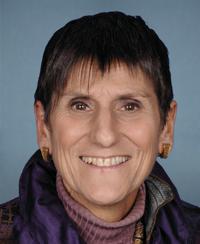
Mr. Speaker, I rise in support of the Rangel substitute. Like the underlying bill, the substitute permits up to $500 of unused benefits in the employee's health flexible spending arrangement to be…
Mr. Speaker, I rise in support of the Rangel substitute. Like the underlying bill, the substitute permits up to $500 of unused benefits in the employee's health flexible spending arrangement to be carried forward to the employee's FSA account for the next plan year. However, this substitute does not permit unused benefits to be contributed to an employee's health savings account, which in fact we know to be a tax shelter for the healthy and for the wealthy.
This substitute is paid for, which is the principal reason why we have this substitute and why we are opposed to the underlying amendment, not by driving us deeper into debt. How do we pay for it? We eliminate the tax benefits that corporations receive when they reincorporate overseas for the express purposes of avoiding U.S. income taxes. They do not want to pay taxes to the United States of America. These so-called corporate expatriates, they enjoy all of the benefits of corporate citizenship in America. They look like U.S. companies, their stock is principally traded in the United States, and their physical assets are protected by our Armed Forces. They just refuse to pay for the benefits as every other American citizen or other companies do.
Countless companies engage in this practice: PriceWaterhouse Coopers Consulting, Accenture, Tyco, Foster Wheeler, the list goes on and on. These companies go to Bermuda, Barbados, the Cayman Islands. These are great vacation spots, particularly for companies who want to live tax free.
Many of us have worked for years to end this practice only to be turned back again and again by the Republican leadership which has time and again given their approval to corporations who continue to avoid living up to their obligations as citizens. Two years ago, this House voted overwhelmingly, 318 to 110, to pass an amendment that I offered to the Homeland Security Act that would have prohibited corporate expatriates from receiving Federal contracts from the Department of Homeland Security. The other body followed suit; unanimously, I may add. Even the President spoke out in favor of ending this practice. But in the dark of night, this Republican leadership gutted the amendment, a bipartisan amendment, defying the will of the President and both Chambers of the Congress. Now that contracting ban is, for all intents and purposes, meaningless.
What happens is we have a company that goes offshore, pays no taxes, takes jobs and technology with them, and then what they want to do is to be considered for millions and billions of dollars in taxpayer dollars from the Department of Energy, the Department of Defense, the Department of Homeland Security; that is what is happening, but they pay no taxes in the United States of America.
With this substitute we say, no more. At a time when we have brave men and women putting their lives on the line across the world, we will put patriotism before profit. And some of those companies that we are talking about are reaping the benefits today in Iraq while our young men and women are dying in Iraq. At a time when we have seen the greatest fiscal reversal in this country, a $5.6 trillion surplus has become a $3 trillion deficit, we are saying with this amendment that we have a moral obligation to pay our bills and not pass them on to our children and our children's children.
Mr. Speaker, I support this substitute. It is the right thing to do. It is the responsible thing to do. Support the Rangel substitute.
Mr. Speaker, I thank the gentleman for yielding me this time and for bringing attention to this issue. I want to make three points. Number one, we are hearing all of this hue and cry against allowing…
Mr. Speaker, I thank the gentleman for yielding me this time and for bringing attention to this issue.
I want to make three points. Number one, we are hearing all of this hue and cry against allowing people to roll their flexible spending accounts $500 a year over into the next year. There is a reason why it is important to allow a person to roll their money over from one year to the next: We are not getting the kind of consumer activity and consumer reforms we want in health care when we deny an employee the ability to keep the money in their account from one year to the next. What ends up happening with the flexible spending account is when there is a balance at the end of the year, the employee goes and buys a couple pairs of eyeglasses, gets their teeth cleaned a couple of times, more money is spent and it props up health care inflation.
What this reform does, it lets the employee know this is their money. More importantly, what this bill does and what the Rangel substitute denies is the ability to roll over $500 from their flexible spending account into a health savings account. They say this health savings account is a new tax shelter.
Mr. Speaker, what a health savings account does is it lets people spend money on health care tax free. We can deduct the cost of health insurance on corporate tax rates when corporations pay for health care for their employees; why cannot employees and individuals deduct the cost of their health care expenditures on their income taxes? That is what HSAs do.
Take a look at what health savings accounts have already produced, only having been in law since January 1; 37 percent of all health savings accounts sold went to people who previously were uninsured; 18 percent of those people had preexisting conditions, people who had sicker risk profiles. And 47 years old was the median age of a person who bought health savings accounts.
So to the critics that said only wealthy, only young, only insured people would be buying HSAs, all of that is being proven untrue with the results that are taking place today in the marketplace. But more importantly is the fact that the Mercer Study just did a survey and they noted that 73 percent of all firms in America who offer their employees health insurance are considering giving an additional option of health insurance through a health savings account by 2006. By denying your employees the ability to take the money that is in their flexible spending account, which is controlled by the employer, and put it in their own account, which goes to the employee, is simply saying you are not going to let the employers give this money to the employee and be part of the employee's property.
It is very important that we allow the employees to keep this money and use this money for their own health insurance and to do so tax free so we end the bias in the Tax Code right now that is against giving people the ability to spend money on health care on a tax-free basis. This is how we get the employee and the consumer back into the business of buying health care.
I urge rejection of the Rangel substitute and adoption of the base bill.
Mr. Speaker, will the gentleman yield?
Is the gentleman opposed to rolling over the FSA money into an HSA?
The vote we are faced with, the Rangel substitute, is denying people the ability to keep this money. It denies people the ability to put their FSA money into an HSA.
Mr. Speaker, I rise in opposition to the motion to recommit. Mr. Speaker, I hope you all enjoyed that ride through very dark woods. Now let me explain what is really going on. Return with me to 1945.…
Mr. Speaker, I rise in opposition to the motion to recommit.
Mr. Speaker, I hope you all enjoyed that ride through very dark woods. Now let me explain what is really going on.
Return with me to 1945. We were in the middle of a war and a decision was made which affects us profoundly today. There was a choice of increasing wages or there was an idea that we can snooker workers not to ask for more wages if we create a procedure in which employers offer fringe benefits for which they will get a tax break.
Today, a dollar in wages competes against a dollar in fringe benefits. A dollar in wages is taxed 100 percent. A dollar in fringe benefits does not affect the worker or the employer. We created a system that puts a premium on going for fringe benefits over wages.
The argument the gentleman from California just made is based on that concept. He has a letter from Joint Tax that says if you create this fringe benefit, flexible spending accounts, in which up to $500 of the employee's tax deferred structure is allowed to roll over in the employee-controlled structure as an incentive to keep down the fringe benefit costs, there is a possibility that these will be successful.
What happens if they are successful? The dollar in wages is not paid, the dollar in fringe benefits is paid, and the payroll tax, which otherwise would have gone into the Social Security Trust Fund from the wages foregone, is what he is talking about; not enough to modify the trust fund one iota over the year in terms of true impact on the Social Security Trust Fund.
It happens with every decision we make in here in choosing either wages or fringe benefits. This is worse than a red herring. What it does is commit you to say that any change that would save dollars in the larger picture, for example incorporating individuals' own decision-making in health care where they actually have an investment, rather than having $5,000 worth of fringe benefits in which they are taking care of themselves, do not get any benefit out of it, and at the end of the year they go get eyeglass frames because they are trying to get money back out of the fringe benefits; the system we have constructed today, that if in fact this is successful and you save total money because somebody decides they want to make a prudent decision and a couple of hundred dollars roll over into the flexible savings account, Joint Tax has said that couple of hundred dollars that is in the flexible spending account may have been paid out in wages, which means you then lose the payroll taxes in terms of the difference between the two.
The overall cost to the economy, the society, and the taxpayers is less. It is a minor accounting procedure which you can not even see. And that is the black wood he took you through to buy the concept that anytime you want to make an improvement in the overall structure of society, taxes and Social Security, you have taken the pledge not to have anything happen.
Do not take this pledge. Understand what they are trying to do to you. Reject this gimmick and simply say, look at the larger overall society benefit, and do not put on the green eyeshade and do not let them tell you that somehow this is going to impact the Social Security Trust Fund. In the long run, people helping make their own decisions saves money, it does not cost money.
Vote no on the motion to recommit.
Mr. Speaker, I thank the chairman for yielding me time, and I rise as a strong supporter and cosponsor of this important legislation. Mr. Speaker, it only makes common sense to allow workers to carry…
Mr. Speaker, I thank the chairman for yielding me time, and I rise as a strong supporter and cosponsor of this important legislation.
Mr. Speaker, it only makes common sense to allow workers to carry forward unspent funds in their flexible spending accounts to the following year or to allow workers to roll the funds into a new health savings account.
This change is really long overdue. Flexible spending accounts are an important vehicle to help workers and their families save pretax dollars for medical expenses. Because of the tax savings, families can actually save up to 30 percent of the cost of out-of-pocket health care expenses by setting aside a portion of their income in a flexible spending account.
American families, families back home in Minnesota, know only too well that out-of-pocket expenses for health care have been rising at an astonishing rate. In fact, the cost for the average worker and their family has spiked over 100 percent since 1998, with no end in sight.
In spite of the skyrocketing health care costs and the significant tax savings associated with the FSAs, relatively few workers choose to take advantage of this vehicle to save for health care costs. The reason for that is simple: This stupid, arcane, absurd use-it-or-lose- it rule. This rule, this use-it-or-lose-it rule, makes absolutely no sense at all.
As absurd as it is, Mr. Speaker, workers are required to forfeit all unspent funds remaining in their FSA accounts at the end of the plan year. This use-it-or-lose-it rule is totally counterproductive, and it is a huge gamble to families, especially low- and middle-income families who can least afford to guess wrong and lose the unspent funds.
So what is happening is rather than facing that loss, many families with these FSAs rush to spend money at the end of the year, as my colleague previously expressed, often on high-cost medical items. How can we tolerate such a bizarre rule that actually discourages prudent spending on health care? It is time to end the use-it-or-lose-it rule.
Mr. Speaker, Ceridian Corporation, which is the leading administrator of FSAs for employers and is based in my district in Bloomington, Minnesota, estimates that while some 25 million, listen to this, 25 million American workers and their families are eligible to participate in health care FSAs, fewer than 20 percent actually choose to participate. It is obvious why. People do not want to take this gamble, and they are not impressed; in fact, they are discouraged by the use- it-or-lose-it rule.
This bill, which I applaud the gentleman from Louisiana (Chairman McCrery) for bringing to the floor today, is very similar to legislation I introduced over 3 years ago, and thanks to the leadership of the gentleman from Louisiana (Mr. McCrery), it is finally here today.
So it is high time, Mr. Speaker, that we address this important, unfinished business. It is time to help millions of workers and their families better afford rising medical costs. It is also time to prevent the wasteful end-of-year spending the use-it-or-lose-it rule now promotes.
I urge my colleagues to support this sensible and balanced reform. We have got to pass this legislation here today, and encourage the other body to follow suit.
Again, I thank the gentleman from Louisiana (Chairman McCrery).
Show 11 more
Mr. Speaker, I thank the gentleman for yielding me this time. I appreciate the opportunity to say a few words about this issue of H.R. 4279. I am a former employer. I started a business in 1975; and…
Mr. Speaker, I thank the gentleman for yielding me this time. I appreciate the opportunity to say a few words about this issue of H.R. 4279.
I am a former employer. I started a business in 1975; and I met payroll for 28 years, 1,400-and-some consecutive weeks. I was one of the first employers in my industry to provide health insurance for my employees. It was a difficult thing to do because of all of the Federal constraints that made it difficult for a small business to compete with large business. This is rooted back in World War II when there were wage and price controls, and employers that tried to find a way to offer additional benefits or wages to their employees were able to deduct health insurance benefits for them as an expense and then offer that as a quasi-raise or in the form of a benefit, an increase in compensation for their employees.
The legacy of that remains today in Federal law. We have legislation that continually makes it difficult to have the flexibility necessary for businesses to work with their employees so that they can have a legitimate health care plan. We have had to find ways around Federal regulation to do that. H.R. 4279 helps us so that we do not have to jump around that one or find another way to get things done.
I remember a Congressman coming into my district in the early 1980s making a pitch for a national health care act. And I remember in that room of about 80 people, in the end I was the only one of the employers in the room that provided health insurance for my employees, and I remember fighting off that effort of going for a national health care because we need more individual responsibility so that we have more individual decisions made, in the vision of Adam Smith and the invisible hand.
We have today evolved into a health care system that has more and more HMOs, fewer and fewer entities making decisions about more and more people, to the point where the patients now have gotten the mindset more of sheep of submitting themselves to the process rather than making decisions on their health insurance and on their health care. H.R. 4279, again, short-circuits some of that, gives us a little more freedom and puts flexibility into the process.
I remember when the previous President was elected in 1992 and the First Lady came out with a plan that many of us have described as the Hillary Care Plan. I have that flow chart on my wall in my office in Iowa that scares me half to death as an employer looking at a national health care act versus individual flexibility. We have two choices here, and the people that are against this bill are the ones that are preserving what they can of the opportunity to build a Federal health care Canadian-style plan.
Mr. Speaker, H.R. 4279 helps us get more decisions in the hands of more
people so that they make their individual decisions in an efficient fashion, the way that the gentlewoman from Pennsylvania (Ms. Hart) described. It gets rid of that perverse incentive of spending the money at the end of the year because you cannot roll those dollars over.
So I applaud the authors of this bill, the people who worked so hard on it. I appreciate the opportunity to speak in favor of H.R. 4279.
Mr. Speaker, I rise in support of the flexible spending arrangements. I am often baffled in this House when I have the opportunity to listen to the debate. We are talking about policy that will be…
Mr. Speaker, I rise in support of the flexible spending arrangements. I am often baffled in this House when I have the opportunity to listen to the debate. We are talking about policy that will be far-reaching. Flexible spending accounts, flexible arrangements, medical savings accounts, health savings accounts are all plans that give flexibility and discretion to employers and employees. They give power, economic power, to employers and employees.
This is a much larger issue than how much this may cost this year because, ultimately, it will save the government money. Ultimately, it will save individuals money. And, ultimately, it will save employers money which, in the long run, will mean that more people will be likely to access health care through their employer. That will, by the way, save the government some money.
One of the first things I heard about as a candidate for Congress was from one of the employers in one of the communities I represent. And he said to me, I want you to pay close attention to the law around medical savings accounts, flexible spending arrangements, the kinds of things that are supposed to be flexible for benefits for employees to give them economic power, but are not, because there are too many limits on them.
Today's bill removes one of those limits, or at least significantly reduces it, and that is this perverse incentive to quickly spend any of the unused money in the flexible spending arrangement, the use-it-or- lose-it rule. We change that today; and we say to the employee, if you do not need to use that health care right now, you do not need to. You do not need to waste the money. You can roll that over to next year; and if something happens next year that you need it, you can use it. And if you do not need it next year, you can roll it over. Does that not just make sense? Should we not in Congress be the ones who are providing the flexibility and the options to the employee, not putting crazy limits on them?
This is a great bill, and we should go even farther than this and allow employers and employees to work together to provide more options for them to provide health care for their families, not fewer. Fewer limits, more options and, ultimately, more opportunity for employers to provide health care. Ultimately, it will provide opportunity for us to put downward pressure on the costs of health care, also downward pressure on the costs of health insurance, because there will be more competition, more flexibility, more opportunity, and more coverage. More coverage is ultimately what we want, and this bill will help us get there.
Mr. Speaker, I commend the gentleman from Louisiana (Chairman McCrery); I commend the members of the Committee on Ways and Means for moving this forward. Because that employer back home, he is not by himself. He wants to continue to provide good and flexible health benefits for his employees. They are like family to him. Most of the employers in my district are small employers. They want to provide health care. It has become so expensive in what people traditionally thought of, they cannot afford it. With flexible arrangements they can, and they can continue to provide it into the future.
Mr. Speaker, I thank the gentleman for yielding me this time. I have been trying for some years now to push this concept, a bill that I introduced a number of years ago. With the knowledge that we…
Mr. Speaker, I thank the gentleman for yielding me this time.
I have been trying for some years now to push this concept, a bill that I introduced a number of years ago. With the knowledge that we have got, I do not know, maybe 37 million Americans who do have access to these flexible spending accounts, and I think many of us here probably know someone who does, maybe a spouse, if he or she is employed in the private sector, but the problem is that over half of these individuals do not utilize their access to FSAs because of this use-it-or-lose-it provision that we are trying to eliminate through this measure here today. And as we know, currently, the employer and the employee can set aside money before taxes into this flexible spending account and then that money can be used just like cash to pay for out-of-pocket medical expenses and insurance copayments and doctors' visits and even child care. The downside is that if they do not spend their money at the end of the year, they lose it, and it goes back to their employer.
I originally introduced this bill as a consequence of a conversation I had 4 years ago with my wife, who came home with yet another pair of glasses, and Marie said she purchased them not because she needed them necessarily. She liked them, but she said she did not want to lose the money in her FSA and her employer said that if she does not spend it, this money will revert back to the company.
So the rules governing FSAs force workers who have put in money to match the money put in by their employer to scurry around at the end of the year and wastefully spend their health care dollars, just so they do not have to forfeit it.
I do not know how many of you have seen the TV ads that run each December talking up medical procedures, reminding people to spend their unused FSA dollars. Now, that is a wasteful procedure. What is worse here is over half of the employees who are eligible do not sign up in the first place because they do not want to lose their
money. So this use-it-or-lose-it is the worst type of economic incentive. It discourages savings and, instead, encourages frivolous, needless spending.
So this initiative that I have introduced and has been picked up by the committee will allow workers to roll over up to $500 of their own money back into their FSA at the end of the year, or, as mentioned, put it into a recently created Health Savings Account. I think it is a commonsense solution that will give peace of mind and let employees save for future expenses.
I encourage the Senate to take immediate action on this important legislation. We have pushed this for some years. We need to get it through the process, because FSAs are a commonsense, free market approach that allows people to take more control over their health care dollars. The use-it-or-lose-it provision must go.
Mr. Speaker, it has been fascinating to appear several times on the floor during recent weeks to hear the debate on tax bills that seem to lurch in the direction of Iraq and wander all over the…
Mr. Speaker, it has been fascinating to appear several times on the floor during recent weeks to hear the debate on tax bills that seem to lurch in the direction of Iraq and wander all over the public policy landscape. I would like to bring the debate today back to the core issue of the bill that is before us and whether the substitute is actually an improvement on it, and I would argue that it is not.
Mr. Speaker, the underlying bill that we have before us today would provide increased medical security, not as my friend, the gentleman from Massachusetts, has suggested, for the wealthiest Americans, but for many American workers. When flexible spending accounts are offered by an employer, their tax-preferred nature offers a powerful incentive for workers to contribute to and grow these accounts. Unfortunately, current law perversely influences these incentives by pushing workers who have built up an FSA to spend the money in the account if they have not used it by the end of the year.
This use-it-or-lose-it policy defeats the positive benefits of an FSA, which is why many eligible workers have chosen not to open FSAs. When workers use the hard-earned dollars they have contributed themselves or earned from their employers, they will ask more questions, further inform themselves, and become better consumers, for example, of health care products. If they lose these dollars at the end of the year by simply not having the necessity for them instead of becoming better health care consumers, they become, in a sense, over- users of health care.
Through allocating $500 of unused FSA funds to be carried forward or rolled over into a health savings account, FSAs and HSAs can thrive and become the practical vehicles they were intended to be for working families who want to manage their own health care.
It is important to point out that the substitute, unlike the underlying bill, does not allow the unused funds to be transferred to the new HSAs. This is an essential component of the legislation because it encourages the HSAs, which embody similar pro-consumer and pro- worker principles as the FSAs.
Employers are just beginning to offer HSAs, so now is not the time to discourage a health savings account, but to promote it. Let us not take a step backwards by passing the substitute. It is bad policy, it is poorly thought through, and I think that we ought to be looking at how we can provide workers with more opportunities to have these kinds of accounts, not fewer.
These are not the wealthiest people in America. These are people who want the opportunity to manage their own health care, to manage their own resources; and we are giving them an opportunity to accumulate more of those resources in this bill.
Mr. Speaker, it is my honor to rise today to join my colleagues in recognizing the many contributions made by people of Indian descent and in celebrating the strong allegiance we share with the…
Mr. Speaker, it is my honor to rise today to join my colleagues in recognizing the many contributions made by people of Indian descent and in celebrating the strong allegiance we share with the nation of India. In Northwest Indiana, like the rest of the Nation, Indian-Americans have shown themselves to be leaders in every field and in every endeavor. It is my pleasure to join today in expressing my admiration and gratitude to these Americans, as well as my hopes that our relationship with India remains strong and productive.
As a proud member of the Congressional Caucus on India and Indian Americans, I am well aware of the importance of our nation's commitment to cooperation. It is the strength of this commitment that will lead us both toward our mutual goals of peace, prosperity, and freedom among all countries of the world. We stand shoulder to shoulder with the government of India in combating the challenges facing the international community.
While the nation of India has been a trusted friend in international affairs, people of Indian descent who have chosen to immigrate to this Nation have consistently contributed to our prosperity at home. Through their participation in the U.S. space shuttle program, their technological contributions that power the computer and the Internet, and their significant breakthroughs in modern medicine, Indian Americans have helped to make the United States the world leader in countless fields. Furthermore, Indian-Americans teach at, and are leaders of, many U.S. institutions of higher learning, thus passing on their legacy to our future world leaders.
In my home district of Northwest Indiana the contributions of the Indian-American community are no less great. I would like to name but a few of the outstanding leaders, educators, and citizens who help to make the Indiana First such wonderful place. Doctors Bharat Barai, Panna Barai, Vijay Gupta, Padma Neelaveni, Vijay Dave, Shaun Kondamuri, Avtar Dhindsa, Beno Sikand, Harish Shah, Vidya Kora, Jagdish Patel, Kalpna Patel, Ravi Kanakamedela and Sandhya Kanakamedela have given tirelessly of their selves to serve our community and improve the health and well-being of my constituents.
Mr. Speaker, at this time, I ask you and my other distinguished colleagues to join me in recognizing and paying tribute to India and Indian-Americans. Again, I express my hopes for continued cooperation between our nations, and my gratitude for the role that Indian- Americans have played in making this Nation great.
Mr. Speaker, I appreciate the opportunity to be here this afternoon, and I want to especially thank my good friend, the gentlewoman from California (Ms. Millender- McDonald) for her work in bringing…
Mr. Speaker, I appreciate the opportunity to be here this afternoon, and I want to especially thank my good friend, the gentlewoman from California (Ms. Millender- McDonald) for her work in bringing us together here to recognize the contributions of people of Indian origin to the United States and the benefits of working together with India.
Mr. Speaker, there are vital Indian-American communities in Texas. In fact, Texas's Indian-American community is one of the leading ethnic groups in my home State, and its members have made important contributions to the local economy and culture.
As the largest immigrant group other than Mexicans, Indians account for 4.3 percent of North Texas's foreign-born population. Indian immigrants in this area come from all over the subcontinent, but especially the western Gujarat province.
Many of Texas' Indian-Americans are professionals who play key roles in sectors like the technology industry and the field of medicine. Many others are business owners.
About 1 million Indian-Americans live in the United States. Many Americans assume that Indian-Americans, because they are often well- educated, do not face the same problems as other minorities. They are wrong. In many parts of this country Indian-Americans are victims of hate crimes and racial harassment. They are victims of discrimination in business and in education. We in Congress cannot allow people who come to this country seeking out the American Dream to be victimized or subjected to bigotry.
Indian-Americans are proud of the tremendous strides their homeland has made. By the year 2050 India will be the most populous democratic country in the world. India and the United States today represent the greatest democracies on the face of the earth: the oldest and the largest.
The United States is also one of India's largest trading partners. India's economy has been advancing rapidly, with a large stock market and strong high-tech enterprises like aircraft, a computer industry, and its own space program. We must promote greater understanding between the United States and India, particularly in the economic, political and cultural areas.
Mr. Speaker, again I would like to take this opportunity to express my gratitude and appreciation to the Indian-American community. I know my colleagues join us in recognizing the profound contributions Indian- Americans have made to American society and their descendants throughout the world.
Mr. Speaker, I rise today in support of H. Con. Res. 352 and to recognize the great contributions of people of Indian origin to the United States and to strengthen our bilateral relationship with the…
Mr. Speaker, I rise today in support of H. Con. Res. 352 and to recognize the great contributions of people of Indian origin to the United States and to strengthen our bilateral relationship with the people of India.
For decades, people of Indian origin have immigrated to the United States. They have made extraordinary contributions to our Nation, from advancements in science and technology to business development, philanthropy, literature and the arts. Their contributions have helped make the United States a more diverse and prosperous country.
In Minnesota, people of Indian origin have made their presence felt throughout our communities and neighborhoods. Small and large Indian businesses have flourished in Minnesota. Groups like the India Association of Minnesota, the Asian Pacific Policy Roundtable and CAIR Minnesota have worked very hard to promote a strong, bilateral relationship between India and the United States, raising greater awareness toward human rights and regional reform. Other organizations, like the Indo-American Association of Minnesota, have taken the lead in promoting arts, cultural, spiritual and classical music as well as entertainment. Our colleges and universities have also expanded educational exchanges and opportunities between Minnesota and India, fostering new relationships and promoting greater cooperation between our two countries.
Minnesota has also seen a rise in new and exciting Indian-American leaders, including State Senator Satveer Chaudhry, elected in 2000 and representing Senate District 50 in my Congressional District. Senator Chaudhry is the highest-ranking Indian-American elected official in the country. As a friend and a former colleague, Senator Chaudhry's leadership has ensured that Indian-American families in Minnesota, as well as all the families in his district, are well represented.
Again, I support H. Con. Res. 352 and I urge passage of this important legislation. Minnesota has benefited greatly from its Indian- American community and I look forward to strengthening our relationship with our Indian friends and neighbors in the future.
Mr. Speaker, I thank the gentleman from California for yielding me this time. I rise in strong support of this resolution honoring the contributions of Indian Americans in the United States and…
Mr. Speaker, I thank the gentleman from California for yielding me this time. I rise in strong support of this resolution honoring the contributions of Indian Americans in the United States and honoring our strong U.S.-India relations. As a cosponsor of this bill, I urge all of my colleagues to support this much-needed and well- deserved legislation.
As the founder and former cochair of the Congressional Caucus on India and Indian Americans, I have for a number of years advocated on behalf of my Indian American constituents and worked toward creating stronger U.S.-India policies.
India is the largest democracy in the world and shares common ideologies with the United States which has led to our natural relationship as allies. India has also been an important ally in the war against terrorism and has historically served as the key stabilizing force in the volatile south Asia region. Our economic, political, and defense relations with India are now more important than ever and I am pleased that our cooperation in the areas of nuclear activities, civilian space programs, high-technology trade, and missile defense continue to grow.
In addition, people of Indian origin who have emigrated to the U.S. serve as an outstanding community within American society. 1.8 million strong, their contributions are tremendous and span fields such as engineering, technology, business development, health and medical care, public service, social justice, education, philanthropy, literature and the arts. Whether it is combating domestic and global HIV/AIDS, pursuing nuclear nonproliferation, promoting democracy, advocating for health and education rights, enhancing stability of the world economy, eliminating poverty, fighting terrorism or expanding and strengthening global trade, Indian Americans are on the forefront and these goals can be achieved by maintaining India as a strategic partner.
Again, I urge my colleagues to vote ``yes'' on H. Con. Res. 352 in an effort to honor the contributions of the Indian Americans and to commit to working together with India in promoting global peace and prosperity.
Mr. Speaker, I strongly support much of what H. Con. Res. 352 has to say about the valuable contributions people of Indian origin have made to the United States. As the resolution notes, people of…
Mr. Speaker, I strongly support much of what H. Con. Res. 352 has to say about the valuable contributions people of Indian origin have made to the United States. As the resolution notes, people of Indian origin have made contributions in a wide variety of disciplines, including science, technology, the arts and public service.
However, I am concerned that H. Con. Res. 352 presents a uniformly positive view of U.S. trade relations with India that is unjustified. While the resolution mentions the export of U.S. goods to India, it fails to acknowledge the rampant export of American jobs to India.
U.S. trade policies, including our policies toward India, have failed American workers. The U.S. has lost millions of high-paying manufacturing jobs. Now, service sector jobs are increasingly shifting overseas. Around 400,000 service jobs, including 27,000 technology jobs, were siphoned off to India, China and other low-wage havens last year.
Morgan Stanley estimates the number of U.S. jobs exported to India will double to about 150,000 in the next three years. A University of California-Berkeley study found U.S. firms exported 30,000 service sector jobs to India while eliminating 226,000 jobs in the U.S.
It's not hard to see why: computer programming jobs in the U.S. that pay $60,000-$80,000 a year go for as little as $8,952 in China, $5,880 in India, or $5,000 in Russia.
The U.S. economy will never be on sound footing, and workers will never enjoy job security, as long as Congress and the Administration perpetuate the discredited dogma of ``free'' trade. The Bush Administration argues in its latest Economic Report of the President that, ``When a good or service is produced more cheaply abroad, it makes more sense to import it than make or provide it domestically.'' I disagree with the Bush Administration's argument that ``it makes more sense'' to flood the U.S. market with goods and services from low-wage havens like India just because it's cheaper.
I am disappointed that H. Con. Res. 352 does not present a more balanced view of U.S. trade relations with India.
Mr. Speaker, I thank the gentleman from California (Mr. Lantos) for yielding me this time. I rise in support of H. Con. Res. 352. As the cochair of the Caucus on India and Indian Americans and the…
Mr. Speaker, I thank the gentleman from California (Mr. Lantos) for yielding me this time. I rise in support of H. Con. Res. 352. As the cochair of the Caucus on India and Indian Americans and the representative of the second largest concentration of Indian Americans in the United States, I would like to speak in strong support of the gentlewoman from California's resolution recognizing the contributions of people of Indian origin to the United States and the benefits of working together with India. I know firsthand the contributions that Indian Americans are making to the United States because of my close relationship with my constituents and the Indian-American community across the country.
One Indian American that many Members may not know is the first and only Indian American ever elected to Congress. His name was Dalip Singh Saund. Congressman Saund first came to the United States to study at the University of California where he received his master's and Ph.D. Even with Congressman Saund's high level of education, he had little job opportunity because of the prejudice that existed against Asians at that time. Despite the prejudice that existed, Congressman Saund went on to become politically active, to give something back to his community and was influential in working with Congress to pass the Luce-Cellar Act which was signed into law by President Truman in 1946. This act gave Asian Indians the right to become naturalized citizens.
Congressman Saund was elected to the House of Representatives in 1952, just 6 years after his work to secure citizenship for Indian Americans. He served as a distinguished Congressman from California for three terms before he suffered a stroke during his campaign for a fourth term in the House. This is just one Indian American that has made a major contribution to the United States.
I would like to thank the gentlewoman from California (Ms. Millender- McDonald) for introducing this resolution. I am proud to be supportive of it and an original sponsor of it.
Mr. Speaker, today I rise in strong support of H. Con. Res. 352, honoring the contributions of Indian-Americans and the people of India to the United States. This important resolution recognizes the…
Mr. Speaker, today I rise in strong support of H. Con. Res. 352, honoring the contributions of Indian-Americans and the people of India to the United States. This important resolution recognizes the benefits of our two nations working together towards our common goals of promoting peace, prosperity, and freedom among all countries of the world.
I am proud to count among my friends and neighbors many people of Indian origin, and I have seen first-hand the contributions they have made to the well-being and prosperity of our community. Indeed, the Fifth District of Illinois is enriched by the presence of longtime residents and recent immigrants from India, who have contributed their talents and energy to small business development, health care, science and the fine arts. Through their hard work and commitment to public service, our Indian neighbors have proven that America is made stronger by the contribution of its immigrant communities.
I am also pleased to recognize the continuing and growing friendship between the nations of India and the United States. India is the most populous democratic country in the world and has historically been a steadfast ally and loyal friend of the United States. We have benefited from our close and mutual friendship with India, through cooperation on security, trade and technological advancements which improve lives in both countries and help promote safety throughout the world.
With this bipartisan resolution, the American people recognize that we will be more effective and successful with India as a strategic partner in achieving our mutual objectives to promote democracy, combat terrorism, pursue nuclear non-proliferation, strengthen the global economy and trade, and slow the spread of HIV/AIDS.
Mr. Speaker, I thank the gentlelady from California for introducing this concurrent resolution, and I urge my colleagues to support it, as well as to continue all of our efforts to promote peace and cooperation between these two great nations.
Bill Text
3 versions available
        [Congressional Bills 108th Congress]
[From the U.S. Government Publishing Office]
[H. Con. Res. 352 Referred in Senate (RFS)]

2d Session
H. CON. RES. 352

_______________________________________________________________________

IN THE SENATE OF THE UNITED STATES

May 13, 2004

Received and referred to the Committee on Foreign Relations

_______________________________________________________________________

CONCURRENT RESOLUTION

Recognizing the contributions of people of Indian origin to the United
States and the benefits of working together with India towards
promoting peace, prosperity, and freedom among all countries of the
world.

Whereas India is the largest democratic country in the world and enjoys a close
and mutual friendship with the United States based on common values and
common interests;
Whereas people of Indian origin who have for decades immigrated to the United
States have made extraordinary contributions to the United States,
helping to make the United States a more efficient and prosperous
country;
Whereas these contributions have spanned disciplines ranging from science,
technology, business development, and public service, to social justice,
philanthropy, literature, and the arts;
Whereas generations of doctors and nurses of Indian origin have attended to the
sick in large cities as well as in rural regions of the United States
that are otherwise underserved;
Whereas people of Indian origin have designed defense systems that protect
United States naval ships while at sea, and have contributed to
engineering, designing, and participating in the United States space
shuttle program, at great personal sacrifice;
Whereas people of Indian origin have invented many of the technologies that
power the computer and the internet, have created and directed
laboratories that produced significant breakthroughs in modern medicine,
and have taught at, and are leaders of, many United States institutions
of higher learning;
Whereas people of Indian origin have made invaluable contributions to the
vitality and viability of the United States economy through creative
entrepreneurship and leadership in both large and small businesses;
Whereas people of Indian origin have shared and integrated their rich culture
into the fabric of American daily life;
Whereas trade with India integrates a democratic country of more than one
billion people into the flow of commerce, offering the United States a
large and rapidly growing market and unlocking vast reservoirs of
talent;
Whereas the United States is India's largest trading partner and a major source
of foreign direct investment and foreign institutional investment in
India;
Whereas United States exports to India are growing at 25 percent, making India
one of the fastest growing foreign markets for United States goods and
services;
Whereas India's industrial tariffs have fallen from 150 percent in 1988 to a
peak rate of 20 percent today;
Whereas United States exports to India will accelerate as India continues
reducing tariffs and instituting liberalization measures in its trade
and investment regime, thereby expanding the trade relationship of the
two countries and bringing mutual benefits;
Whereas India has been a key partner in the war against terrorism;
Whereas India and the United States have agreed to increase cooperation in the
areas of nuclear activities, civilian space programs, high-technology
trade, and missile defense;
Whereas multi-faceted cooperation between India and the United States will
strengthen the bonds of friendship and commerce between the two
countries, lead to the peaceful use of space technology, and increase
global stability and security; and
Whereas United States efforts, whether in combating global HIV/AIDS, pursuing
nuclear non-proliferation, promoting democracy, enhancing stability of
the world economy, eliminating poverty, fighting terrorism, and
expanding and strengthening global trade, will be more effective and
successful with India as a strategic partner: Now, therefore, be it
Resolved by the House of Representatives (the Senate concurring), That
Congress--
(1) honors the contributions of people of Indian origin to the
United States, and
(2) is committed to working together with India towards promoting
peace, prosperity, and freedom among all countries of the world.

Passed the House of Representatives May 12, 2004.

Attest:

JEFF TRANDAHL,

Clerk.