Calling on the Government of the Socialist Republic of Vietnam to immediately and unconditionally release Father Thaddeus Nguyen Van Ly, and for other purposes.

Legislative Activity
Stay on top of the latest movement without scrolling through every action
Received in the Senate and referred to the Committee on Foreign Relations.
May 13, 2004
View full timeline
Introduced in House
March 4, 2004
Referred to the House Committee on International Relations.
March 4, 2004
Committee Agreed to Seek Consideration Under Suspension of the Rules, by Voice Vote.
March 31, 2004
Mr. Smith (NJ) moved to suspend the rules and agree to the resolution, as amended.
May 11, 2004 • 4:24 PM
Considered under suspension of the rules. (consideration: CR H2761-2765)
May 11, 2004 • 4:25 PM
DEBATE - The House proceeded with forty minutes of debate on H. Con. Res. 378.
May 11, 2004 • 4:25 PM
At the conclusion of debate, the Yeas and Nays were demanded and ordered. Pursuant to the provisions of clause 8, rule XX, the Chair announced that further proceedings on the motion would be postponed.
May 11, 2004 • 4:51 PM
Considered as unfinished business. (consideration: CR H2874-2875)
May 12, 2004 • 6:00 PM
Passed/agreed to in House: On motion to suspend the rules and agree to the resolution, as amended Agreed to by the Yeas and Nays: (2/3 required): 424 - 1 (Roll no. 167).(text as passed House: CR 5/11/2004 H2761)
May 12, 2004 • 6:07 PM
On motion to suspend the rules and agree to the resolution, as amended Agreed to by the Yeas and Nays: (2/3 required): 424 - 1 (Roll no. 167). (text as passed House: CR 5/11/2004 H2761)
May 12, 2004 • 6:07 PM
Motion to reconsider laid on the table Agreed to without objection.
May 12, 2004 • 6:07 PM
Received in the Senate and referred to the Committee on Foreign Relations.
May 13, 2004
Voting History
1 vote recorded • Roll call available
Floor Debate
22 membersWhat members said about H.Con.Res. 378 on the floor
CHS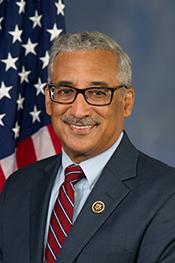 RC"
RC" FJS
FJS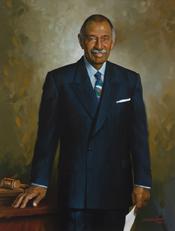 JCJ
JCJ MS+17
MS+17
Floor Debate
22 membersWhat members said about H.Con.Res. 378 on the floor
Mr. Speaker, I move to suspend the rules and agree to the concurrent resolution (H. Con. Res. 378) calling on the Government of the Socialist Republic of Vietnam to immediately and unconditionally…
Mr. Speaker, I move to suspend the rules and agree to the concurrent resolution (H. Con. Res. 378) calling on the Government of the Socialist Republic of Vietnam to immediately and unconditionally release Father Thaddeus Nguyen Van Ly, and for other purposes, as amended.
Mr. Speaker, I yield myself such time as I may consume.
Mr. Speaker, the Government of Vietnam likes to say that Vietnam is a country, not a war. It is a catchy little self-evident phrase that some Members of Congress picked up during the bilateral trade agreement debate, as if to suggest that the debate was somehow about the Vietnam War, which it was not, instead of Vietnam's shameful present-day human rights record, which it was.
Of course Vietnam is a country, to which I respond: behave like an honorable country. Live up to their word as a signatory to numerous human rights covenants, including the international covenant on political and civil rights. Stop bringing dishonor and shame to their government by abusing their own people.
Mr. Speaker, according to the U.S. State Department report, the ``Report on Human Rights Practices for 2003'': ``The Government's human rights record remained poor, and it continued to commit serious abuses.'' Rather than repress and jail, harass, intimidate, and torture, the government should recognize and reflect the innate goodness of the Vietnamese people, a kind, gentle, compassionate people who deserve better, much better.
Take the case of Father Ly. In February 2001, Father Thaddeus Nguyen Van Ly submitted written testimony to the United States Commission on International Religious Freedom for a hearing at which he was invited to testify. He was not able to testify in person, but submitted written testimony which I will include in its entirety in the Record.
Because this brave Catholic priest told the truth, spoke the truth to power, the Government of Vietnam persecuted and cruelly mistreated him;
and he is now serving a 10-year prison sentence, and he has been in prison for 3 of those years. Amnesty International calls Father Ly a prisoner of conscience, and even the U.N. Working Group on Arbitrary Detention has condemned his detention.
I think it is worth focusing just for a moment on his testimony, which was incisive and compelling; and I quote it in part: ``Since their victory of April 30, 1975,'' Father Ly wrote, ``the Vietnamese Communists have extended its oppressive policy toward the different religions of South Vietnam. Laws and decrees have been promulgated to confine, restrict, or ban religious activities. The government has falsely accused clergy members and lay people as a pretext to detain and imprison those who protest its oppressive policy, or those who teach catechism, lead a church choir, or join a seminary. They have been banished to concentration camps for years. This policy has been ongoing,'' he writes, ``for nearly 50 years.
``The government has used many ruses,'' he continues to write, ``to divide and politicize the Cao Dai, Catholic and Protestant Churches; to split the Buddhist Church in two, the Unified Buddhist Church of Vietnam and the Buddhist Church of Vietnam; and to set up the puppet Hoa Hao Buddhist Committee of Representatives, which consists of mainly Communist cadres, to claim leadership over 5 million Hoa Hao Buddhists. The government has requisitioned for its arbitrary use numerous facilities and properties belonging to different Churches.''
Father Ly continues to write: ``With regard to the Catholic Church, the Communists have severely restricted her fundamental rights,'' and he points out and lays out some 10 different instances, including the fact that the government still keeps many priests, clergy members, and lay people in prison or under house arrest.
Father Ly continues to say: ``Faced with this extremely cruel policy of the Vietnamese Communist Government to strangle religions, the Churches in Vietnam have unceasingly demanded religious freedom. Their nonviolent and persistent campaign will continue until the Vietnamese people have full religious freedom, which anyone else in the civilized world has.''
This campaign has, as he points out, the following objectives. This is number one. This is Father Ly's testimony:
``Number one: the government must fully respect the right of all citizens to true religious freedom and the right of churches to select, train and appoint their own priests, clergy members and dignitaries. The government must stop its practice of listing the religious affiliation of citizens on their identity cards and personal documents so that no citizen be discriminated against and be able to freely practice his or her faith.
``Number two,'' Father Ly writes: ``The government must return all facilities and properties it has confiscated or requisitioned from the churches, even when the documentary evidence of ownership was lost in the war if local people can confirm the rightful ownership of these facilities.
``Number three: the government must abandon the ruses and schemes it has used to oppress and destroy religions. Its interference in church affairs must cease. Committees created by the government but dressed up as religious institutions in order to serve the government's anti- religion policy must be disbanded.
``Number four: the government must unconditionally release all clergy members, priests, officials and dignitaries of the churches and lay people who are currently in prison or under administrative detention because of their faith.
``Number five: the government must fully respect every and each article of the International Covenant on Civil and Political Rights, of which the Vietnamese Communist Government became a signatory on September 24, 1982.''
Finally, Father Ly writes, ``However, for as long as the Vietnamese Communists keep their dogmatic and totalitarian rule and disregard the fundamental freedoms of the people as I have presented above,'' he goes on to say, ``by trading with Vietnam the U.S. and other countries only strengthen the Communists' grips on power.''
Again, I would like his full statement read by Members, because it is a very strong and compelling bit of testimony.
These are the words of Father Ly. He is now in prison 3 years of a 10-year prison term.
The resolution we are considering today, Mr. Speaker, has over 100 cosponsors and I believe, we believe, will send a strong message to the leaders of Hanoi to free Father Ly and that the ongoing systematic abuses of human rights must cease and that they will not be tolerated.
H. Con. Res. 378 also condemns, and this amendment we are offering with the language today, the brutal crackdown against the Montagnard. Largely ignored by the American press, Vietnam crushed thousands of Montagnard in the Central Highlands on April 10 and 11. In classic dictatorship style and brutality, many Montagnard, who were protesting the confiscation of tribal lands and ongoing restrictions on religious activities, were beaten and there are reports that some were killed. This comes on the heels of another brutal crackdown against the Montagnard in December of 2001 that has resulted in the closing of over 400 churches.
I would just point out to my colleagues that there are also attempts to coerce people to renounce their faith, renunciation of faith. According to Ambassador John Hanford, our Ambassador At Large For Religious Freedom, there are approximately 100,000 Montagnards who were pressured to renounce their faith. I am happy to say that most resisted, but 100,000 within the last few months and years have been pressured to say ``no'' to their faith in Christ.
H. Con. Res. 378 also urges the government of Vietnam to allow unfettered access to the Central Highlands, where all of this is going on, by foreign diplomats, the international press and nongovernmental organizations, and condemns the extent of the violence used against, as I said, the Montagnard protestors.
Mr. Speaker, finally, human rights have gotten worse, not better, since the Bilateral Trade Agreement with Vietnam of 2001. We must not remain silent while the government of Vietnam continues to persecute religious and political dissidents and ethnic minorities. As a matter of fact, I believe strongly that Vietnam should be branded a Country of Particular Concern, a CPC country, pursuant to the provisions of the International Religious Freedom Act.
We care deeply, Democrats and Republicans, Mr. Speaker. We care deeply about the people of Vietnam and respect and honor their legitimate aspirations to be free. Why does not Hanoi?
Mr. Speaker, I include for the Record the written testimony of Reverend Thaddeus Nguyen Van Ly before the U.S. Commission on International Religious Freedom.
Testimony of Rev. Thaddeus Nguyen Van Ly
Ladies and gentlemen, it is a great honor to be perhaps the
first Vietnamese Roman Catholic priest living under a
communist regime to testify before your Commission at a
location that represents the ideals of democracy. I would
like to send my greetings of the New Millennium to you and to
the people of the United States.
In the opening statement of the Declaration of Independence
of the Democratic Republic of Vietnam on September 2, 1945,
Ho Chi Minh tried to win your nation's support by solemnly
quoting the second paragraph of Declaration of Independence
of the United States: ``All men are created equal. They are
endowed by their Creator with certain unalienable rights,
that among these are life, liberty, and the pursuit of
happiness.''
In less than 250 years since her independence, your country
has become the shining example of freedom and independence--
anyone who wants to know what freedom and independence are
only needs to visit your country and her people.
As an eyewitness living in Communist Vietnam for more than
25 years, I would like to boldly and frankly present my ideas
on three issues as your invitation letter has suggested.
i. the realities of the religions in vietnam in the new millennium
In order to achieve independence, liberty and happiness for
the Vietnamese people, Ho Chi Minh chose Communism. This is a
fundamental contradiction because Communism calls for a
dictatorial regime that does not tolerate the concept of true
liberty. Freedom of religion will be absent for as long as
the Vietnamese government hangs on to its Communist ideology.
Since their victory of April 30, 1975, the Vietnamese
Communists have extended its oppressive policy toward the
different religions
to South Vietnam. Laws and decrees have been promulgated to
confine, restrict, or ban religious activities. The
government has falsely accused clergy members and lay people
as a pretext to detain and imprison those who protest its
oppressive policy, or those who teach catechism, lead a
church choir, or join a seminary. They are banished to
concentration camps for years. This policy has been on-going
for nearly 50 years (from 1954 to 2001).
The government has used many ruses to divide and politicize
the Cao Dai, Catholic and Protestant Churches; to split the
Buddhist Church in two--the United Buddhist Church of Vietnam
(UBCV) and the Buddhist Church of Vietnam (BCV); and to set
up the puppet Hoa Hao Buddhist Committee of Representatives,
which consists of mainly Communist cadres, to claim
leadership over five million Hoa Hoa Buddhists. The
government has requisitioned for its arbitrary use numerous
facilities and properties belonging to the different
Churches.
With regard to the Catholic Church, the communists have
severely restricted her fundamental rights. The many
petitions issued by the Catholic Bishops Conference of
Vietnam (CBCV) since 1980 have unmasked the Government's
policy. This I have analyzed in my Ten-Point Proclamation
released on November 24, 1994 and the follow-up proclamation
dated November 24, 2000, which I have sent to your
Commission. Following is the summary of the points made in
those two statements.
1. The Vietnamese Communists have brutally interfered with
CBCV's authority to organize its annual Pastoral Assembly:
the Bishops must apply for permission to organize and the
Assembly's agenda must be pre-examined by the Government.
After the Assembly, the minutes must be submitted to the
Government. All reports from the Assembly must be vetted by
the Government before they can be released to the Catholic
community and the public.
2. The Vietnamese communists have brutally interfered with
CBCV's authority to appoint bishops and ordain of priests.
The Holy See had to negotiate with the Vietnamese Government
for years on each bishop appointment. The Government often
rejects candidates selected by the Church and only accepts
those they are pleased with. The Government counts on The
Vatican having to yield eventually so as to prevent excessive
harm to dioceses facing extended absence of a bishop. The
dioceses of Hung Hoa, Hai Phong, and Bui Chu . . . have not
had a bishop for more than eight years and The Vatican is not
allowed to appoint any.
Anyone intending to join a seminary of any candidate for
priesthood elected by the Church must have the approval of
and their background examined by the Public Security Police.
These candidates must prove their docility and show no sign
of resisting the regime. The police give special preference
to those agreeing to serve as informants for the Government
within the seminary. An applicant's chance would increase if
he can afford to bribe the authorities. Applicants having
family members who worked for defunct Republic of Vietnam or
holding nonconformist views stand no chance of being approved
for admission into a seminary or priesthood regardless of
their qualifications and moral virtues and regardless of the
Church's support. I know many young men who have repeatedly
passed the Church-administered entrance exam with top scores
but have not been approved for admission into any seminary.
Any bishop intending to ordain a seminarian into priesthood
or to assign a priest to a mission must ask for permission
and negotiate with the Government in a protracted process,
which in some cases has taken nearly 20 years without
results. The approval criteria imposed by the Government has
nothing to do with the moral quality that the Church requires
of candidates for priesthood. As a result, the number of
newly ordained priests has drastically decreased and is
currently insufficient to meet the Church's pastoral needs.
Aging priests die or retire without successors. Many priests
in rural regions have to minister more than ten parishes, all
distant from each other. There is hardly normal religious
life in these parishes. It is very difficult for priests to
change their residence for new assignments.
3. Groups of faithful in new economic zones or in remote
areas are anxious to have mass for Christmas and Easter each
year but their most basic spiritual need is rarely met. The
atheist Government wants these people not to think of
religion, which it considers harmful and dangerous.
4. A Mass that brings together the faithful from different
places and priests desiring to say mass in places other than
their usual assigned location must have prior government
permission.
5. The Government still keeps many priests, clergy members,
and lay people in prison or under house arrest. (Committee
for Religious Freedom in Vietnam has made this list available
to your Commission.)
6. The Government brutally violates the Church's freedom of
the press. No local or national publication of the Church is
allowed. As a result, The Church cannot fulfill
its evangelical duties. Before 1975, there were more than
a dozen Catholic newspapers and magazines in South
Vietnam. Today there are only two weekly magazines, Cong
Giao & Dan Toc (The Catholics & The People) and Nguoi Cong
Giao Viet Nam (The Vietnamese Catholics), which are
created and financed by the Government. CBCV's only
publication is the newsletter Ban Tin Hiep Thong (The
Communion News), of which the first six issues were
``illegal.'' The Government gave the Church temporary
permission to publish issues 7-9 from February to
September 2000. In October 2000, the government rescinded
its permission and discontinued this only publication of
The Church. There is no freedom of speech in my country.
Churches of course have none. This kind of statement that
I am presenting to you cannot be circulated in Vietnam
because no photocopying store or printing shop would dare
to reproduce it. Nobody dares to keep it, fearing for his
own life and the safety of his family. Those who dare must
be prepared for martyrdom. In fact, on February 7 the
public security police searched two of my assistants and
found a floppy disk containing a draft of this statement.
These two brave young men were detained overnight at the
police station for extensive questioning.
7. The Government forces all students from all grades and
in college to study and love Socialism while in fact nobody
likes to teach or study it. Only the three million communist
party members and the five million members of the Communist
League of Youth should study this ideology if they still
believe in it. Forcing the entire Vietnamese nation to study
a bankrupt ideology that has caused them so much suffering is
outright unconscionable.
8. The Communist Government has, since 1954 in North
Vietnam and since 1975 in South Vietnam, seized or
requisitioned thousands upon thousands of Church facilities
used for education, charity, and medical service.
Consequently the Church has no means to train seminarians,
providing education and human services to the poor, the sick,
the handicapped and the orphans, and it is extremely
difficult for Church members to deliver service in a
government facility. For example, the Pius X Papal Institute
in Da Lat, run by the Jesuits, had been an outstanding
college for priesthood formation until its confiscation in
1976 by the Government, which turned it into a training
school for Communist cadres. The Hoan Thien Minor Seminary at
11 Dong Da, Hue, offering high school-level training to
seminarians, was taken by force by the Government in December
1979; all three priests teaching at the seminary and more
than 80 seminarians were evicted. These are but a few
examples.
Faced with this extremely cruel policy of the Vietnamese
Communist Government to strangle religions, the Churches in
Vietnam have unceasingly demanded religious freedom. Their
non-violent and persistent campaign will continue until the
Vietnamese people have full religious freedom, which anyone
else in the civilized world has. This campaign has the
following objectives.
1. The Government must fully respect the right of all
citizens to true religious freedom and the right of Churches
to select, train, and appoint their own priests, clergy
members and dignitaries. The Government must stop its
practice of listing the religious affiliation of citizens on
their identity cards and personal documents so that no
citizen will be discriminated against and be able to freely
practice his or her faith.
2. The Government must return all facilities and properties
it has confiscated or requisitioned from the Churches, even
when documentary evidence of ownership was lost in the war if
local people can confirm the rightful owner of these
facilities and properties.
3. The Government must abandon the ruses and schemes it has
used to oppress and destroy religions. Its interference in
Church affairs must cease. Committees created by the
government but dressed up as religious institutions in order
to serve the Government's antireligion policy must be
disbanded.
4. The Government must unconditionally release all clergy
members, priests, officials and dignitaries of the Churches
and lay people who are currently in prison or under
administrative detention because of their faith.
5. The Government must fully respect every and each article
of the International Covenant on Civil and Political Rights,
of which the Vietnamese Communist Government became a
signatory on September 24, 1982.
ii. effects of the bilateral trade agreement on human rights and
religious freedom in vietnam
I am only a priest, not a specialist in economics and
politics. I speak as a Vietnamese citizen with a deep love
for my country and my people.
Vietnam needs the Bilateral Trade Agreement (BTA) for her
economic development. In principle I dearly want my country
to have the trust of other countries, among them the United
States, so that my country may achieve prosperity and my
people may have a better life and fully realize their
potentials.
However, for as long as the Vietnamese Communists keep
their dogmatic and totalitarian rule and disregard the
fundamental freedoms of the people as I have presented above,
by trading with Vietnam the United States and other countries
would only strengthen the Communists' grips on power; the BTA
may end up benefiting only the governing minority while
prolonging the suffering of the entire people; the vast
majority of the common people like us may at best receive
small crumbs trickling down from the top but in return must
endure our fate of the exploited and disenfranchised for so
much longer.
In regard to the ratification of the BTA, I urgently warn
the US Congress not to trust
the Vietnamese Communists' promise of good faith. The United
States and many other countries have had bitter experiences
dealing with their broken promises in the past.
The Vietnamese Communists have signed many international
accords and agreements on human rights but have never
intended to respect them. Their intention is to deceive the
international community. For example, Vietnam became
signatory to the International Covenant on Civil and
Political Rights in 1982 but does not abide by Articles 18
and 19 of this covenant which call for the respect for the
freedoms of thought, speech, and religion. If international
human rights institutions allow themselves to fall victim to
such deception, they will contribute to the following dire
consequences: (1) the Vietnamese Government will exploit
their signing the document to falsely claim that there are
human rights in Vietnam; (2) these international
institutions will lose their credibility as they prove to
be so easily deceived; and (3) these institutions
unknowingly prolong the Communist oppression of the
Vietnamese people--this in fact constitutes a major crime
against my people.
Therefore, if the United States and other countries truly
sympathize with my ill-fated people and truly care about
human rights, especially the right to religious freedom, of
the Vietnamese people, you must not help the Communist
Government prolong its totalitarian rule. Instead, the United
States and other countries should suspend all agreements
harmful to the Vietnamese people and do everything in your
capacity to put pressure on the Vietnamese Government to
allow freedom and democracy to dawn on our country.
iii. what can be done to help improve freedom of religion in Vietnam in
the near term, and in the long term?
The Vietnamese Communists have idolized Ho Chi Minh,
turning him into a ``god'' and creating a new religion
revolving around him. The Communist Government wants to
suppress all other religions and replace them with this new
religion in order to unify the Vietnamese people behind it.
In fact, Ho Chi Minh had made significant contributions to
our national struggle for independence but at the same time
had committed serious crimes against the Vietnamese people.
One basic endeavor that the international community needs to
undertake is to unravel the harmful myths woven by the
Communists around this historical figure.
In the short term, the United States and other countries
should help the Churches in Vietnam achieve greater
independence from the government, should show by example how
freedom of religion is respected in the free world, and
should expose the oppression that the Vietnamese Government
has imposed on the Churches. At first, the Vietnamese
Communists may feel that such independence would clash with
its totalitarian power but with time it may realize that the
power to control and interfere with Church affairs, such as
the appointment of priests, should have never been theirs to
start with.
The Vietnamese people will not enjoy religious freedom for
as long as the Communist regime remains in place. Therefore
if the United States and other countries truly desire to see
the return of religious freedom to the Vietnamese people,
they will need to create favorable conditions for the early
demise of the Communist regime.
Ladies and gentlemen,
This is a precious opportunity to speak on behalf of my
people, of the different Churches, and of the Catholic Church
in particular. I would like to extend my gratitude to you, to
the U.S. Congress, and the American people, including some
two million Vietnamese-Americans, for having given me such an
opportunity.
May God bless you, your families, your colleagues, the
American people, and your beautiful country. Thank you.
Mr. Speaker, I reserve the balance of my time.
Mr. Speaker, I yield such time as he may consume to the distinguished gentleman from California (Mr. Cox), the chairman of the Select Committee on Homeland Security.
Mr. Speaker, I yield such time as he may consume to the gentleman from Missouri (Mr. Akin), and I thank him for his support on human rights in general and human rights in Vietnam in particular.
Mr. Speaker, I yield back the balance of my time.
Mr. Speaker, I yield 30 seconds to the gentleman from Michigan (Mr. Conyers), the ranking member of the Committee on the Judiciary. Mr. Speaker, I yield 1 minute to the gentleman from Florida (Mr.…
Mr. Speaker, I yield 30 seconds to the gentleman from Michigan (Mr. Conyers), the ranking member of the Committee on the Judiciary.
Mr. Speaker, I yield 1 minute to the gentleman from Florida (Mr. Wexler).
Mr. Speaker, I yield myself 6 minutes.
Mr. Speaker, this bill does nothing to improve the system. It does nothing to deal with the insurance rates and the increases in premiums, but it does deny victims compensation when they are victims of malpractice. I think it may be helpful to go a little section by section to see what is actually in the bill to see how it actually does what some of the people are talking about.
Section 3, for example, is entitled ``Encouraging Speedy Resolution of Claims.'' Mr. Speaker, injured parties do not need encouragement to get a speedy resolution of the claim. This section only invalidates bona fide claims that are filed after a set deadline. It also creates a confusing matrix because some State deadlines are preempted. Others are not. And so you have that confusing matrix of deadlines and may even miss the deadline by mistake.
Section 4 is called ``Compensating Patient Injury.'' Actually, that is the section which limits compensation to innocent victims. It also has what is called the ``fair share rule.'' I think most States, but at least Virginia and many States, allow a victim to collect all of the damages from one defendant. That defendant can then seek contribution from others involved. In practice, that contribution is worked out in advance by who pays for what insurance.
This so-called fair share requires the victim not only to prove a separate case against each and every defendant who may be involved but it also requires the plaintiff to decide and prove what percentage each one owes. Often the plaintiff does not know what happened. All they know is they are a victim of malpractice. This provision will require the plaintiff to have a separate case and pay for the expenses of separate cases against each and every person. Otherwise they may be afflicted with the ``empty chair defense'' where everybody in the courtroom starts pointing to an empty chair and says somebody else had 10 percent or 20 percent.
Section 5 is ``Maximizing Patient Recovery.'' Actually, that is a provision that limits attorneys' fees making it likely that a plaintiff will not even be able to hire a lawyer. You do not hear any victims groups clamoring for limitation on attorneys' fees. The defendants are not affected by the plaintiff attorneys' fees. They do not pay the plaintiff attorneys' fees. If the award is $100,000 and the plaintiff's attorney charges 50 percent, the defendant pays $100,000. If the lawyer charges 25 percent, still $100,000. If the lawyer does not charge anything at all, just the same, $100,000. The only way that this will help malpractice premiums is if the plaintiff cannot bring the bona fide case at all, cannot bring the case because they cannot hire a lawyer with the fees. That is not fair. It is even more likely when you have this fair share thing where the lawyer has to have five and six cases in the same case.
There is another provision called ``Additional Health Benefits.'' That is a provision that says if the victim has health insurance, the benefit of that health insurance goes to the one who committed the malpractice. In Virginia and many other States, if you have health insurance, you benefit. In other States, the health insurance company can get its money back after the case is settled because the malpractice recovery will pay the health expenses. Presumably under that case, the premiums will be lower. But in this bill, the benefit goes to the one who committed the malpractice. This bill is so bizarre that if you are working for a self-insured employer who is obligated to pay the health expenses of an employee and that employee is a victim of malpractice and runs up a $50,000 hospital bill, the business has to pay that $50,000 bill even though the one committing the malpractice is fully insured and could have paid. I cannot
wait for some small businesses to come to us and ask why they had to pay the bill as a result of malpractice.
Mr. Speaker, there is another provision under ``Punitive Damages.'' This bill provides that if a jury finds by the preponderance of the evidence that the doctor acted with malicious intent to intentionally injure a patient, not just recklessly negligent, acted with malicious intent to injure, that is not enough under the bill, because the evidence does not have to be just by the preponderance of the evidence; it has to be by clear and convincing evidence.
Mr. Speaker, this bill will not help injured victims of malpractice, and it is unlikely to reduce premiums. A chart of States in order of the costs of malpractice premiums shows some States at the top with caps, some with caps at the bottom, some with caps in the middle. There is no pattern to the chart. They are all over the place. The caps apparently did not make any difference at all.
We have heard a lot about the doctor shortage. This is not limited to doctors. This tort reform bill affects the health care provider, a health care organization, an HMO, manufacturer, distributor, supplier, marketer, promoter, a seller of a medical product regardless of the theory of liability on which the claim is based. This does not help victims. It probably will not even reduce premiums.
Mr. Speaker, I would hope that we would defeat the bill so that it will not be enacted. That has been the judgment of the United States Congress for the last 14 months. I hope it is still the judgment of the United States Congress.
Mr. Speaker, I reserve the balance of my time.
Mr. Speaker, I yield 1 minute to the gentlewoman from Colorado (Ms. DeGette).
Mr. Speaker, I yield myself such time as I may consume.
I will enter into the Record an article from the Morning Call newspaper in Pennsylvania, and I will just read the first sentence. April 23, 2004, ``The chairman of the Pennsylvania Medical Society acknowledged Thursday to State lawmakers that the doctors group lacks statistical evidence to support its 3-year claim that doctors are leaving the State in large numbers.''
The whole article will be introduced.
I have the GAO study that was cited June, 2003; and let me just read a couple of points out of it:
``Multiple factors have contributed to the recent increases in medical malpractice premiums in seven States we analyzed. First, since 1998 insurers' losses on medical malpractice claims have increased rapidly in some States,'' and they ``found that the increased losses appeared to be the greatest contributor to increased premium rates, but a lack of comprehensive data at the national and State levels on insurers' medical malpractice claims and the associated losses prevented us from fully analyzing the composition and causes of those losses.
``Second, from 1998 through 2001, medical malpractice insurers experienced decreases in their investment income as interest rates fell on the bonds that generally make up around 80 percent of these insurers' investment portfolios.
`` . . . a decrease in investment income meant that income from insurance premiums had to cover a larger share of insurers' costs. Third, during the 1990s, insurers competed vigorously for medical malpractice business, and several factors, including high investment returns, permitted them to offer prices that in hindsight, for some insurers, did not completely cover their ultimate losses on that business. As a result of this, some companies became insolvent or voluntarily left the market, reducing the downward competitive pressure on premium rates that had existed through the 1990s.''
I say that to say that there are a number of factors that have caused the premiums to go up that have nothing to do with the medical malpractice situation or the laws in medical malpractice and that this bill may or may not have anything to do with future premiums.
[From the Morning Call, April 23, 2004]
Doctors Can't Prove Thinning Ranks
(By John M.R. Bull)
Harrisburg.--The chairman of the Pennsylvania Medical
Society acknowledged Thursday to state lawmakers that the
doctors group lacks statistical evidence to support its
three-year claim that doctors are leaving the state in large
numbers.
``Some data sources show an 800-doctor gain,'' internist
Daniel Glunk of Williamsport testified before the House
Insurance Committee. ``The problem is no one has definitive
numbers . . . and that there is conflicting data.''
That number includes 1,000 medical residents. If those
aren't counted, he said, there would be a net loss of 200
doctors out of 35,500 since 2002.
``How can the medical society, if you can't agree on the
numbers, continue to tout that doctors are leaving'' said
Rep. Thomas Tangretti, D-Westmoreland, his voice rising in
apparent anger. ``You've run ads saying will the last doctor
please turn off the X-ray machine.''
``You've been frightening people, particularly senior
citizens, and now we find it was all probably wrong-headed
and disingenuous,'' Tangretti said, getting louder. ``Before
you continue to frighten people about access to health care,
you better get your numbers right. It's an outrage.''
Other lawmakers voiced irritation at his testimony,
delivered four days after The Morning Call published new and
previously undisclosed figures--some of them from the medical
society itself--that make clear doctors are not leaving in
large numbers.
For three years, the doctors lobby has insisted that
doctors, particularly specialists who perform high-risk
procedures, are leaving the state in droves, putting patient
care in jeopardy.
Among other tactics, the medical society has promoted a
list of 1,700 ``disappearing doctors'' as proof there are
fewer physicians in Pennsylvania.
The Morning Call revealed Sunday that new state Insurance
Department numbers show doctors have not left the state in
waves. There were 35,474 doctors in 2002, as determined by
the number who paid their state-mandated supplemental
insurance. Now the figure is at least 34,997.
The newest number includes doctors who have applied to the
Insurance Department for a piece of $230 million in state tax
dollars recently appropriated to offset their rising
malpractice premiums, along with a separate list of doctors
who had primary insurance coverage at the end of last year
but who haven't yet applied for state money.
That total doesn't include doctors who might have moved to
Pennsylvania in the last year, might not be in Insurance
Department records yet, and who might not know the state has
money set aside for them.
In one of several criticisms of The Morning Call's work,
the medical society has contended it might be misleading to
compare 2002 figures to a list of individual doctors who
recently applied for state money and others known to have
malpractice insurance at the end of last year. But society
officials have not publicly explained why that could be the
case.
The new Insurance Department figures show no appreciable
reduction in the number of high-risk specialists, a maximum
reduction of 56 out of 4,700 since 2002. The medical society
has admitted it has separate statistics that show a reduction
of only 16 specialists--defined as neurosurgeons, general
surgeons, orthopedic surgeons and ob-gyns--during that time
frame.
``This a matter of credibility,'' Rep. Nick Micozzie, R-
Delaware, chairman of the House Insurance Committee, said
after the hearing. ``We've been hearing for three years now
that doctors are leaving in large numbers and there is a
shortage.''
``I go into my doctor's office and there's a sign that says
``Call Nick Micozzie to Save Our Doctors,'' he said. ``Well,
saving our doctors is a different issue than claiming doctors
are leaving in large numbers.''
In reference to the three-year campaign, Glunk told the
committee that anecdotal evidence indicates there aren't
enough of some kind of specialists in some parts of the
state, and that not enough young doctors are choosing to move
to Pennsylvania.
For three years, the medical society and its associated
group, Politically Active Physicians Association, have waged
an intensive public relations and lobbying campaign to
convince legislators and their constituents that doctors are
fleeing the state en masse.
The effort was triggered by medical malpractice premiums
that started soaring in 2001 and continue to climb. Rather
than pay prices that doubled seemingly overnight, some
doctors did indeed depart, others altered their practices to
avoid high-risk procedures.
As a result, lawmakers have enacted a series of court
reforms sought by doctors as a way to drive down the rising
premiums. A new cigarette tax raises roughly $230 million a
year to help doctors afford malpractice premiums.
Applications for that money are being processed now.
Doctors continue to demand a cap on jury awards on pain and
suffering damages in malpractice lawsuits and have threatened
to leave the state if they don't get them.
On Thursday, Glunk told the panel of lawmakers that the
disappearing doctors list is not actually a list of doctors
who disappeared. It is more of a list of doctors who might
have been impacted by rising malpractice rates and who might
have retired, moved, or curtailed their practices as a
result, he explained.
The list makes no mention of doctors who have relocated to
Pennsylvania since 2002, lawmakers noted.
``Naturally people leave their profession. You don't count
doctors coming in,'' said Rep. Tony DeLuca, D-Pittsburgh told
Glunk. ``If you don't have accurate statistics on the number
of doctors, how can we tell? How can we make policy like
that?''
Lawmakers from both parties say the list--created and
maintained by Donna Rovito, the wife of an Allentown
physician--has been used extensively as a lobbying tool to
support doctor claims.
Democratic House leaders Thursday called for a moratorium
on any more medical malpractice reforms until lawmakers
ascertain
whether doctors are leaving the sate in large numbers, and
whether the medical society deliberately misled lawmakers.
``The data they repeatedly cite, and which served as the
basis for legislative action in the last two years, appears
to be seriously inaccurate and part of a deceptive
campaign,'' said Rep. Mike Veon, D-Beaver, the House Minority
Whip. ``We want the real numbers and there should be no
further action until the deficiencies of the data are
corrected and we know the truth.''
Mr. Speaker, I reserve the balance of my time.
Mr. Speaker, I yield myself 30 seconds.
During the debate, we have talked about how much debate is going on. I just point out that this debate is on a closed rule so that we cannot offer amendments to the bill. We have to take it or leave it. There are a lot of improvements that could be made if we have a full and open debate. That is not happening today because the majority passed a closed rule prohibiting any amendments to the bill.
Mr. Speaker, I reserve the balance of my time.
Mr. Speaker, I yield the balance of my time to the gentlewoman from Texas (Ms. Jackson-Lee).
Mr. Speaker, pursuant to House Resolution 638, I call up the bill (H.R. 4280) to improve patient access to health care services and provide improved medical care by reducing the excessive burden the…
Mr. Speaker, pursuant to House Resolution 638, I call up the bill (H.R. 4280) to improve patient access to health care services and provide improved medical care by reducing the excessive burden the liability system places on the health care delivery system, and ask for its immediate consideration.
Mr. Speaker, I ask unanimous consent that all Members may have 5 legislative days within which to revise and extend their remarks and to include extraneous material on H.R. 4280, currently under consideration.
Mr. Speaker, I yield myself such time as I may consume.
Mr. Speaker, the national medical insurance crisis, driven by unlimited lawsuits, is devastating our Nation's health care system to the detriment of patients everywhere. Medical professional liability insurance rates have soared, causing major insurers to either drop coverage or raise premiums to unaffordable levels. Doctors are being forced to abandon patients and practices or to retire early, particularly in high-risk specialties, such as emergency medicine, brain surgery, and obstetrics and gynecology. Women are particularly hard hit, as are low-income and rural neighborhoods.
H.R. 4280, the HEALTH Act, is modeled after California's highly successful health care litigation reforms enacted in 1975 and known under the acronym MICRA. California's reforms, which are included in the HEALTH Act, include reasonable limits on unquantifiable damages, limits on the contingency fees lawyers can charge, and authorization for defendants to introduce evidence to prevent double recoveries. The HEALTH Act also includes provisions creating a fair share rule, by which damages are allocated fairly in direct proportion to fault; reasonable guidelines on the award of punitive damages; and a safe harbor from punitive damages for products that meet applicable FDA safety requirements.
Information provided by the National Association of Insurance Commissioners shows that since 1975, premiums paid outside of California increased at five times the rate they increased in California. The Congressional Budget Office has concluded ``under the HEALTH Act, premiums for medical malpractice insurance ultimately would be an average of 25 percent to 35 percent below what they would be under current law.'' If California's legal reforms were implemented nationwide, we could spend billions of dollars more annually on patient care, meaning helping sick people get better.
We all recognize that injured victims should be adequately compensated for their injuries, but too often in this debate we lose sight of the larger health care picture. This country is blessed with the finest health care technology in the world. It is blessed with the finest doctors in the world. People are smuggled into this country for a chance at life and healing, the best chance that they have in the world. The Department of Health and Human Services issued a report recently that includes the following amazing statistics: during the past half century, death rates among children and adults up to age 24 were cut in half, and the infant mortality rate plummeted 75 percent. Mortality among adults between the ages of 25 and 64 fell nearly as much, and dropped among those 65 years and older by a third. In 2000, Americans enjoyed the longest life expectancy in our history, almost 77 years.
These amazing statistics just did not happen. There are faces behind the statistics, and they are our doctors. These statistics happen because America produces the best health care technology and the best doctors to use it. But now there are fewer and fewer doctors to use that miraculous technology or to use that technology where their patients are. We have the best brain scanning and best brain operation devices in history and fewer and fewer neurosurgeons to use them.
Unlimited lawsuits are driving doctors out of the healing profession. They are making us all less safe, all in the name of unlimited lawsuits and the personal injury lawyers' lust for their cut of unlimited awards for unquantifiable damages. But when someone gets sick or is bringing a child into the world, and we cannot call the doctor, who will we call? When you pick up the phone and call the hospital because someone you love has suffered a brain injury, and you are told, sorry, lawsuits made it too expensive for brain surgeons to practice here, who will save your loved one? You cannot call a lawyer. A lawyer cannot perform brain surgery.
We all need doctors. And we, as our Nation's representatives, have to choose, right here and today. Do we want the abstract ability to sue a doctor for unlimited, unquantifiable jackpot damage awards when doing so means that there will be no doctors to treat ourselves and our loved ones in the first place? Of course not. So on behalf of all 287 million Americans, all of whom are patients, let us pass this bill.
Mr. Speaker, I reserve the balance of my time.
Mr. Speaker, I yield 1\1/2\ minutes to the gentlewoman from Tennessee (Mrs. Blackburn).
Mr. Speaker, I yield 1 minute to the gentleman from California (Mr. Cox).
Mr. Speaker, I yield 1\1/2\ minutes to the gentleman from Iowa (Mr. King).
Mr. Speaker, I yield myself 1 minute.
Mr. Speaker, what the gentlewoman from Colorado did not tell us is what is not getting media attention, and that is that doctors are closing up their practices. When the Committee on the Judiciary heard testimony on this issue, the wife of a man named Tony Dyess came and spoke. Mr. Dyess was involved in an automobile accident. He had a spinal cord injury, and because there were no neurosurgeons left in southern Mississippi, it took 6 hours to airlift him to a hospital in Louisiana that has some better medical liability laws, and the golden hour for neurosurgery had passed; and as a result Tony Dyess is a quadriplegic simply because malpractice insurance costs chased the neurosurgeons out of southern Mississippi.
This is an issue of access to health care, and we cannot have liability insurance costs force doctors to close their practices and not have access to people who need doctors and need them desperately.
Mr. Speaker, I yield 1 minute to the gentleman from Pennsylvania (Mr. Shuster).
Mr. Speaker, I yield 1 minute to the gentleman from Arizona (Mr. Shadegg).
Mr. Speaker, I yield 1 minute to the gentleman from Illinois (Mr. Crane).
Mr. Speaker, I yield 1 minute to the gentleman from Pennsylvania (Mr. Greenwood).
Mr. Speaker, I yield 1 minute to the gentleman from Texas (Mr. Burgess).
Mr. Speaker, I yield 1 minute to the gentleman from Pennsylvania.
Mr. Speaker, I yield myself the balance of my time.
Mr. Speaker, during the course of the debate we have heard a string of red herrings from people who do not wish this bill to pass. I would like to rebut those from the study that the General Accounting Office made on the whole topic of our medical liability crisis.
First, as the gentleman from Pennsylvania (Mr. Greenwood) has eloquently stated, patient access to care is being harmed. He recounted the case of a pregnant woman who went to at least two OB/GYN practices to get a doctor to deliver her baby and was told that as a result of the medical liability crisis, they were shutting down the doors to their practice.
The GAO confirmed instances in the five States selected for study where actions taken by physicians in response to malpractice pressures have reduced
access to services affecting emergency surgery and newborn deliveries. When the baby comes, you cannot wait. When someone has an accident and needs emergency surgery, you cannot wait. And if the malpractice insurance crisis closes down those practices, people are going to be harmed, and they will die, and this bill will stop that.
Secondly, doctors do practice defensive medicine. The GAO report found that in response to rising premiums, ``the fear of litigation research indicates that physicians practice defensive medicine in certain clinical situations, thereby contributing to health care costs.''
The gentleman from Texas (Mr. Burgess) said that if unnecessary defensive medicine does not have to be practiced by reforming our liability laws, Medicare alone will save $50 billion a year, which is more than enough to pay for the prescription drug benefit, whether it is by the GAO study or the OMB study.
Third, insurers are not to blame for skyrocketing premiums. The gentleman from Ohio (Mr. Brown) seemed to think they are.
But the GAO found that insurers are not to blame. The report states that insurer ``profits are not increasing, indicating that insurers are not charging and profiting from excessively high premium rates,'' and that ``in most States the insurance regulators have the authority to deny premium rate increases they deem excessive.''
Fourth, rising litigation awards are the problem, not insurer investments. What did the GAO say? The GAO found that losses on medical malpractice claims which make up the largest part of insurers' costs appear to be the primary driver of rate increases in the long run.
``Since 1998, insurers' losses on medical malpractice claims have increased rapidly in some States. However, none of the studied companies experienced a net loss on investments, at least through 2001, the most recent year such data were available. Additionally, almost no medical malpractice insurers overall experienced net investment losses from 1997 to 2001.'' So much for that red herring.
Finally, liability reform does have a real impact. The GAO concludes that data indicate that rates of growth in malpractice premiums and claims payments have been slower on average in States that enacted certain caps on damages for pain and suffering, referred to as noneconomic damage caps, than in States with more limited reforms and that average per capita payments for malpractice claims against all physicians tended to be lower on average in States with noneconomic damage caps than in States with limited reforms.
This bill is a good one, and it ought to be passed.
Mr. Speaker, I yield back the balance of my time.
I do, Mr. Speaker.
Mr. Speaker, yes, it is time for a change, and it is time for a real change. This motion to recommit does not provide a real change, and it should be defeated. It should be defeated because it contains zero legal protections for doctors beyond current law.
Legal reforms are essential to solving the current crisis in the medical professional liability insurance area and increasing access of health care to all. Here is what the president of the National Association of Insurance Commissioners said: ``To date, insurance regulators have not seen evidence that suggests medical malpractice insurers have engaged or are engaging in price-fixing, bid-rigging, or market allocation. The evidence points to rising loss costs and defense costs associated with litigation as the principal drivers of medical malpractice rates.''
The underlying bill, and not the motion to recommit, is the only proven legislative solution to the current crisis. According to the CBO, under H.R. 4280 ``premiums for medical malpractice insurance ultimately would be an average of 25 to 30 percent below what they would be under current law.''
The motion to recommit, on the other hand, besides including zero legal protections for doctors beyond current law, sets up an advisory commission to study a problem that is already patently obvious to the most casual observer and to report back sometime in the future when even more patients will have lost access to essential medical care.
Opponents of the bill claim there is no enforcement mechanism to make sure that medical professional liability rates go down. That is completely false. An enforcement mechanism already exists throughout all 50 States, namely, State insurance commissioners who are required by State law
to turn down rates that are excessive, unfairly discriminatory, or otherwise unjustified. On the other hand, the motion to recommit creates a system of price controls linked to savings that without the legal protections in this bill will be nonexistent. Without legal reforms, there will be no cost savings, and the motion to recommit contains zero legal protections beyond the current law.
Along with creating a commission to further study a problem that is obvious, the motion simply throws more Federal money at it. H.R. 4280, on the other hand, contains solid legal reforms that have been proven successful over 28 years in California and will save billions of dollars in taxpayers' funds, according to the CBO. The choice is clear: oppose the motion to recommit, support H.R. 4280, and let us make sure that doctors are there to care for the 287 million Americans.
Mr. Speaker, I urge defeat of this motion and passage of the bill.
Mr. Speaker, Easter is usually a joyous time for Christians throughout the world. Unfortunately, that was not the case this year for many Montagnards Christians, ethnic minorities in Vietnam's…
Mr. Speaker, Easter is usually a joyous time for Christians throughout the world. Unfortunately, that was not the case this year for many Montagnards Christians, ethnic minorities in Vietnam's Central Highlands. On Saturday April 10, more than a thousand ethnic minority Christians assembled in the streets of Buon Ma Thuot to protest ongoing religious repression and confiscation of tribal lands.
Their peaceful protests were met with brutal force by the Vietnamese police, who attacked and arrested the protesters and sealed off the area to foreigners--much like the Chinese Tiananmen Square massacre in 1989.
Numerous reports state that hundreds may be dead with many others arrested, injured, and or in hiding. This follows years of ongoing persecution and a brutal crackdown in December of 2001, when the government also forcibly suppressed mass protests in the region, after which the Vietnamese government closed hundreds of Christian Churches.
Religious persecution in Vietnam against Catholics, Christians, members of the Unified Buddhist Church, and members of Vietnam's indigenous religious groups has been well documented in the State Department's Country Reports on Human Rights and International Religious Freedom.
Last year, the Commission on International Religious Freedom recommended Vietnam should be designated as a Country of Particular Concern for ``systematic, egregious, and ongoing'' religious freedom abuses. As if there was any doubt, the Easter crackdown confirms the fact that Vietnam should be designated as a Country of Particular Concern for violations in religious freedom. Protections and
assistance for Montagnard asylum seekers should be provided also be provided by the Cambodian government and the UN High Commissioner for Refugees.
Congress will continue to keep up the pressure on the regime in Hanoi. We will work to pass H. Con. Res. 378, a resolution calling for the release of Father Nguyen Van Ly, a prominent and outspoken Catholic priest, that was reported out of the House International Relations Committee and has nearly 90 cosponsors.
And we will also work to pass H.R. 1587, ``The Vietnam Human Rights Act,'' which calls for careful monitoring of human rights in Vietnam. Similar legislation cleared the House 410-1 in the 107th Congress but stalled in the Senate.
Mr. Speaker, I would like to submit the following articles by Human Rights Watch detailing the events of the Easter crackdown, to the Congressional Record.
The United States and the world cannot turn a blind eye to this Easter crackdown and continual persecution of Montagnards and religious groups in Vietnam. We must take a stand.
[Article from Human Rights Watch]
Vietnam: Open Central Highlands to International Observers Reported
Killings of Montagnard Protesters Must Be Investigated Immediately
(New York, April 22, 2004)--Vietnamese security forces
appear to have coordinated with armed men in civilian
clothing to savagely attack Montagnard protesters at more
than a dozen mass demonstrations during Easter weekend, Human
Rights Watch said today.
``The international community must act now and insist that
Vietnam allow independent observers into the highlands to
conduct a thorough and impartial investigation,'' said Dinah
PoKempner, General Counsel for Human Rights Watch. ``We've
received alarming reports that scores of protesters were
wounded during the demonstrations, and that some protesters
were beaten to death.''
Large-scale unrest involving between 10,000 and 30,000
indigenous minority Montagnards occurred in the Central
Highland provinces of Dak Lak, Gia Lai, and Dak Nong on April
10 and 11, according to Vietnam's state media and independent
accounts. Montagnard activists in Vietnam and abroad say that
their movement seeks to peacefully press for religious
freedom and return of ancestral lands in the Central
Highlands. The Vietnamese government has charged that ``anti-
government'' and ``counter-revolutionary'' elements are
inciting the Montagnards to seek a separatist state.
Human Rights Watch has received firsthand reports that
security forces and men in civilian clothing, armed with
metal bars, shovels, clubs with nails attached to them,
machetes, and chains, confronted Montagnard protesters at
more than a dozen locations leading into Buon Ma Thuot, the
capital of Dak Lak province, on the morning of April 10.
According to witnesses, the demonstrators were not armed,
although some defended themselves when attacked by throwing
stones at the police.
In twelve eyewitness accounts obtained by Human Rights
Watch, sources from seven different locations in Dak Lak, Gia
Lai and Dak Nong provinces described seeing Vietnamese
police, and civilians working with the police, beating
protesters. Vietnam's state-controlled media reported that
two protesters were killed--one from rocks thrown by other
protesters and another who was run over by a tractor driven
by Montagnards. While it is impossible to confirm the numbers
of casualties because the government is barring outside
observers from the region, to date Human Rights Watch has
received credible eyewitness accounts that at least ten
Montagnards were killed--one from a gunshot wound to the head
and the others from beatings and hundreds were wounded.
Clashes broke out at more than a dozen locations when
security forces and ethnic Vietnamese in civilian clothes
blocked demonstrators on roadways leading into Buon Ma Thuot,
including Phan Chu Trinh Road northwest of the city; at Ea
Knir Bridge on the road from Ea Kao commune, which lies east
of the city; and at three locations along the road leading to
Krong Pak district town, which lies northeast of the city,
including the Ea Pak and Krong Ana bridges. Particularly hard
hit at Phan Chu Trinh Road were 3,000 protesters from several
villages in Cu Mgar district, northwest of Buon Ma Thuot.
``The security forces were well prepared for the
protesters,'' said PoKempner. ``They had set up ambushes at
key places such as bridges and the main roads into the city,
and assembled people dressed as civilians holding crude
weapons to block the roads and attack the protestors.''
Security officials confiscated and burned hundreds of the
farm tractors and makeshift trailers that many Montagnards
were traveling on, which had been packed with food and
supplies in preparation for several days of protests.
In Gia Lai province, Vietnamese state media reported that
demonstrators from Ayun Pa, Cu Se, Dak Doa, Duc Co and Chu
Prong districts gathered at the provincial administrative
offices in Pleiku provincial town on April 10. on April 11,
Montagnards gathered to demonstrate in numerous communes in
Ayun Pa, Cu Se, and Dak Doa districts of Gia Lai. Human
Rights Watch has received reports of clashes in at least
seventeen locations in Gia Lai, with the fiercest incidents
occurring in Ha Bau, A'Dok and Glar communes of Dak Doa
district and Ia Tiem commune of Cu Se district.
State media reported that the provincial hospital in Pleiku
received fifty-two injured people. The provincial hospital in
Dak Lak reported forty injured people on the night of April
10. Prior to a government-imposed news blackout on hospital
personnel, staff at Pleiku hospital told reporters that they
had received scores of wounded people on Sunday night, many
with deep gashes and head injuries, and that at least two
demonstrators died that night. Many other wounded
demonstrators, fearing arrest, have not gone to the hospitals
despite being in need of medical attention, Human Rights
Watch said.
Witnesses said authorities quickly collected wounded people
and dead bodies from the Phan Chu Trinh area, and that within
days, the blood on the roadway had been washed away.
Human Rights Watch stressed the urgency of an independent
investigation. ``We fear that a huge cover-up operation has
likely already taken place,'' said PoKempner. ``The
Vietnamese government needs to account for the large numbers
of people who never returned to their villages after the
demonstrations and are now feared to be dead or detained at
unknown locations.''
Hundreds of Montagnards have fled their villages and gone
into hiding, Human Rights Watch said. In violation of
Cambodia's obligations under international law, Cambodian
security forces have been instructed to deport any
Montagnards who try to cross the border.
Testimony: The Killings on Phan Chu Trinh Road
A twenty-six year old Ede woman described a deadly incident
she witnessed on Saturday morning, April 10 when several
thousand Montagnard protesters, some riding on their farm
tractors, arrived at Phan Chu Trinh road, an industrial area
of machine shops and welding supply stores on the outskirts
of Buon Ma Thuot. Police had lined up students and ethnic
Vietnamese men in civilian clothing holding metal bars,
shovels, and machetes along the roadway, she said.
``They suddenly rushed at the unarmed crowd, beating the
demonstrators until many were lying in the streets,'' she
said. ``They chased demonstrators who tried to flee,
including children and women.''
She and many other demonstrators fled to the coffee fields
behind the shops lining the roadway, chased by security
forces. She described what happened:
``A thousand people tried to get away from the slaughter by
the police and civilians. They were beating us with metal
bars and sticks. People were bleeding from their throats,
noses, mouths, and eyes. The villagers were crying as they
tried to get away from the slaughter by the police and
civilians. We were running helter-skelter. Those who tried to
hide in the coffee plantation were caught, beaten and killed
on the spot. Police, students, and Vietnamese threw rocks at
us. Many of us were bleeding from being hit on our heads with
rocks. Many people were injured and bleeding. We didn't have
any first-aid for their wounds. They were bleeding from their
throats, noses, mouths, and eyes. A blind woman sitting on
the farm tractor was killed on the road by a dozen Vietnamese
people, including police. They asked her to get down from the
tractor but she could not because she was blind. They rushed
at her and beat her until she fell from the tractor and died.
The police and Vietnamese civilians smashed and stepped on
our food, clothing and blankets we had prepared for a long-
term peaceful demonstration asking for freedom and the end to
harassment of our religion and our Montagnard life.''
Mr. Speaker, I yield myself such time as I may consume. My colleagues, it is slightly incredible that with all the pressing legislative challenges facing us today, we have nothing better to do than…
Mr. Speaker, I yield myself such time as I may consume.
My colleagues, it is slightly incredible that with all the pressing legislative challenges facing us today, we have nothing better to do than redebate and revote the same tired medical malpractice proposals that have been brought forward by a conservative Congress over the last decade. This is the fifth time in 14 months that we have had this bill before the House of Representatives. Sooner or later somebody is going to get it, that this bill is not likely ever to go anywhere because it insults the commonsense health care needs of the American people.
Now, how can you put so many bad things in one bill? Let me explain how devious this thing can get. The bill before us would first supersede the law in every State in the Union, and these are states- righters over here, to cap noneconomic damages, to cap punitive damages, to cap attorneys' fees for those lawyers that would represent the poor, to reduce the statute of limitations, to eliminate joint and several liability and eliminate the collateral source rule. All in one bill. Six incredible things.
Embarrassed? No, I do not think they are. Rather than helping, when this Nation faces a national health care system crisis of growing proportions, instead of helping Americans that seek health care remedies and remedies for bad medical practice, and to help the medical profession itself, the bill before us does none of that; but it does enrich the insurance companies of America, the HMOs of this country, and the manufacturers and distributors of medical products, which sometimes are defective, as well as the pharmaceuticals that might be involved, too.
In other words, all the bad, unpleasant negative parts of our health care system are being protected. And who do we do it at the expense of? The innocent victims of medical malpractice, particularly women and children and the elderly poor.
I am embarrassed that this measure is on the floor for the sixth time in 14 months.
It's amazing to me that with all of the pressing problems facing us today, the Majority has nothing better to do than redebate and revote the same tired old medical malpractice proposals they have been pushing for the last ten years. In fact, this is the fifth time the Congress has voted on this bill in the past 14 months.
The bill before us today would supersede the law in all 50 states to cap non-economic damages, cap and limit punitive damages, cap attorney's fees for poor victims, shorten the statute of limitations, eliminate joint and several liability, and eliminate collateral source.
Rather than helping doctors and victims, the bill before us pads the pockets of insurance companies, HMOs, and the manufacturers and distributors of defective medical products and pharmaceuticals. And it does so at the expense of innocent victims, particularly women, children, the elderly and the poor.
We need to cut the charades and get to the heart of the problem. The insurance industry is a good place to start. We have seen in the past that the insurance industry goes through boom and bust cycles, with premiums ebbing and flowing as companies enter and exit the market and investment income rises and falls. We also know from past experience that the insurance industry--which is exempt from the antitrust laws-- is not immune from collusion, price fixing and other anticompetitive problems.
It is also clear that the legislative solution largely focused on limiting victims rights available under our state tort system will do little other than increase the incidence of medical malpractice-- already the third leading cause of preventable death in our nation. In other words, by limiting liability, we will increase incentives for misconduct.
Under this proposal, Congress would be saying to the American people that we don't care if you lose your ability to bear children, we don't care if you are forced to live in excruciating pain for the remainder of your life, and we don't care if you are permanently disfigured or crippled. The majority in this bill would limit recovery in tens of thousands of these cases, regardless of their merits.
The proposed new statue of limitations takes absolutely no account of the fact that many injuries caused by malpractice or faulty drugs take years or even decades to manifest themselves. Under the proposal, a patient who is negligently inflicted with HIV-infected blood and develops AIDS six years later would be forever barred from filing a liability claim.
The so-called periodic payment provisions are nothing less than a federal installment plan for HMO's. The bill would allow insurance companies teetering on the verge of bankruptcy to delay and then completely avoid future financial obligations. And they would have no obligation to pay interest on amounts they owe their victims.
And guess who else gets a sweetheart deal under this legislation? The drug companies. The producers of killer devices like the Dalkon Shield, the Cooper-7 IUD, high absorbency tampons linked to toxic shock syndrome, and silicone gel implants all would have completely avoided billions of dollars in damages had this bill been law.
Nearly 100,000 people die in this country each and every year from medical malpractice. At a time when 5 percent of the health care professionals cause 54 percent of all medical malpractice injuries, the last thing we need to do is exacerbate this problem while ignoring the true causes of the medical malpractice crisis in America. I urge my colleagues to reject this anti-patient, anti-victim legislation.
Mr. Speaker, I reserve the balance of my time.
Mr. Speaker, I ask unanimous consent to yield the balance of my time to the gentleman from Virginia (Mr. Scott) from the Committee on the Judiciary, and that he may control that time.
Mr. Speaker, I appreciate the comments of the gentleman from Texas (Mr. Barton), the chairman of the Committee on Energy and Commerce, who explains to us why this keeps coming up, and he refers charitably to the other body.
The other body for the last 10 years has been controlled by the gentleman's party. The last 10 years. The present head of the Senate is not only a Member of the gentleman's party, but he is a medical doctor.
I ask the gentleman, what could he and I do together to help the other body get the message here?
Mr. Speaker, I thank the gentleman for yielding me this time.
I yield to the gentleman from Texas.
I would be interested; and is the gentleman interested in the six points that I just raised that make this bill problematic? We cannot work together on two different bills.
Mr. Speaker, it is my experience in conferences the lights frequently go out and measures get substituted and all kinds of weird things go on. Let us do this in broad daylight, with everybody looking and listening. Conferences have not been the way the democratic process has been enhanced in my career in Congress, sir.
Mr. Speaker, could I recommend that the gentleman and I and my chairman, the gentleman from Wisconsin (Mr. Sensenbrenner), perhaps we can enter into an informal colloquy with some of the leaders in the other body and see if we can end this constant repetition of what is going on here in the House today.
Mr. Speaker, I offer a motion to recommit.
Yes, I am.
Mr. Speaker, this motion is being offered by me and the dean of the Congress, the gentleman from Michigan (Mr. Dingell). We are offering this motion to recommit to attack the heart of the medical malpractice crisis. Rather than limiting the rights of legitimate malpractice victims, as the bill before us would do, our motion would logically and directly address the problems of frivolous lawsuits and insurance industry abuses.
Title I addresses the problem of frivolous lawsuits. It would require that both an attorney and a health care specialist submit an affidavit that the claim is warranted before malpractice action can be brought and imposes strict sanctions for attorneys who make frivolous pleadings. But it provides also for mandatory mediation, a uniform statute of limitations, and a narrowing of the requirements for punitive damage claims. Finally, insurers would be required to dedicate at least 50 percent of any savings resulting from the litigation reforms to reduce the premiums that medical professionals pay.
Unlike the majority's bill before us, this motion is limited to licensed physicians and health professionals for malpractice cases only. It does not include lawsuits against HMOs, insurance companies, nursing homes, and drug and device manufacturers.
The second part of this motion to recommit, title II, establishes a national commission to evaluate the rising insurance premiums and the causes for why that is occurring. The commission would consider, among other things, whether the McCarran-Ferguson Antitrust exemption for medical malpractice insurers should be reconsidered and possibly repealed and study the potential benefits of providing a Federal medical malpractice insurance program where insurance was unavailable or unaffordable.
This same commission, 15-person commission appointed by the Comptroller General, would also consider government-sponsored grant programs to give direct assistance to areas facing a shortage of health care providers, as well as to send physicians to trauma centers that are in danger of closing because of rising premiums. Finally, it would consider alternative means of reducing medical errors and increasing patient safety.
So support this motion to recommit. It is good policy. It changes the whole line of unbelievably reactionary legislation that has come out of this House on this subject before now. It is time for a change. We want to limit frivolous lawsuits, and this would give us an opportunity to examine the real causes of the medical malpractice insurance crisis.
Mr. Speaker, I object to the vote on the ground that a quorum is not present and make the point of order that a quorum is not present.
Show 8 more
Mr. Speaker, I rise today just as I did almost exactly 14 months ago in strong opposition to the so-called HEALTH Act. Of course, today, we are spending the valuable time and limited resources of the…
Mr. Speaker, I rise today just as I did almost exactly 14 months ago in strong opposition to the so-called HEALTH Act. Of course, today, we are spending the valuable time and limited resources of the American people debating the HEALTH Act of 2004, which, ironically, is precisely the same--virtually word-for-word--as the HEALTH Act of 2003, legislation this House already passed.
Mr. Speaker, it is as if the leadership of this House is being guided by the wisdom of that great American philosopher, Yogi Berra, who once said, ``It's deja vu all over again.'' Apparently, the Republican leadership of the House is at a loss as to how to fix the very real problems our nation is facing, so we find ourselves here in the People's House deliberating legislation that we have already considered and passed.
I don't know about the rest of the Members of this House, but I am pretty confident that my constituents in East Texas would consider our action on this flawed legislation to be a profound waste of time and money even in the best of times.
However, Mr. Speaker, these are not the best of times for our Nation. The fact is the United States is facing difficult times at home and abroad. Today, as a Nation, we have 135,000 military personnel on the ground in Iraq fighting a shadowy and lethal insurgency and struggling to bring stability to a troubled part of the globe. The United States remains in serious danger of terrorist attacks at home with vulnerabilities in our ports and other infrastructure in desperate need of improved security. Many of our first responders--the very front line of defense for our hometowns--lack interoperable communications and other resources critical to their success.
Mr. Speaker, today, almost 9 million Americans are unemployed, including almost 3 million manufacturing jobs that have been lost during the past three years. Our Nation has accumulated a national debt of over $7 trillion--more and more of which is owned to foreign nations, including China. Despite our burgeoning debt, the House Republican leadership refuses even to acknowledge a problem, refuses to adopt sensible ``pay-as-you-go'' rules that recognize the very real cost of both spending increases and tax cuts, and insists on budgets with larger and larger deficits, including a deficit in excess of $360 billion in FY 2005 alone.
Mr. Speaker, as we complete our work during ``Cover the Uninsured Week,'' almost 44 million Americans--15 percent of all Americans--have no health insurance. That number includes almost 8 million children. Almost 44 million Americans have no health insurance, despite the fact that the vast majority of them have full-time jobs.
So, Mr. Speaker, we have a health care crisis in this country that demands a solution. Nevertheless, to paraphrase President Reagan, ``here we go again.'' Instead of working on real solutions to cover the uninsured and to solve the many other very real and immediate problems the country faces, today, we are spending the People's time and money to consider again legislation we have already passed.
Mr. Speaker, our nation's health care providers--our doctors, our nurses, our hospitals and nursing homes--are confronting skyrocketing medical malpractice insurance premiums. They need relief now. What they don't need is the warmed over illusory promise of relief that the HEALTH Act represents.
The HEALTH Act will not provide the relief American physicians, hospitals and other health care providers need. It didn't do anything to reduce escalating medical liability insurance premiums when we passed it last March; legislation like it has not done anything to reduce premiums in the many states that already have enacted damage caps; and it will not magically result in reduced premiums if it passes the House again today.
The simple fact is that claims from the Republican leadership that limiting liability for medical negligence will cure the healthcare cost crisis are without merit. Focusing solely on limiting malpractice liability, without insurance reform, does nothing to reduce the ever increasing costs of medical malpractice insurance. Damage caps such as those in H.R. 4280 do accomplish one thing: they boost insurers' profits. With damage caps, malpractice insurers win at the expense of physicians, nurses, hospitals and other health care providers.
Mr. Speaker, last year, after we last considered the HEALTH Act, my home state of Texas enacted comprehensive tort ``reform'' legislation strikingly similar to the HEALTH Act we considered and passed in March 2003 and that we consider again today. During the long debate on that legislation, proponents of the damage cap legislation repeatedly assured opponents that imposition of liability limitations would lead to dramatic medical liability insurance premium decreases.
Not surprisingly, however, the imposition of damage caps did not have the predicted effect. To the contrary, all but one medical malpractice insurance carriers in Texas proposed increases in physician premiums. Consequently, malpractice insurance premiums for physicians are reported to have risen an average of 12 percent statewide despite the damage caps. For Texas hospitals and nursing homes, the news was even worse--an average proposed increase of 20 percent. Moreover, the only carrier reported to offer reduced premiums provided a rate reduction that fell far short of even recapturing the dramatic premium increases it imposed on physicians during the past three years.
In Texas, as in other states with caps, the evidence does not support the rhetoric; those who suggest the HEALTH Act or its ilk as a panacea simply fail to make their case. Clearly, old line thinking and the ``reform'' embodied in the HEALTH Act will not cure what ails the system and will not reduce premiums.
Mr. Speaker, 14 months ago, I stood on the floor of this House and called on my colleagues to stand up for the doctors and stand up for the hospitals. Because the House Republican leadership has seen fit to conduct debate on that same legislation, I suppose I am on solid ground reiterating what I said then.
Mr. Speaker, malpractice premiums are choking America's physicians, and H.R. 4280 is nothing but a sham because H.R. 4280 does not mention one time, from front to back, soup to nuts, does not ever even mention malpractice premiums. We need to do something about those premiums for the doctors. We need to do it now. We need to do it today. H.R. 4280 will not do it.
And how about frivolous lawsuits? Frivolous lawsuits need to be stopped. If a suit is filed with no basis in law or in fact, it should be dismissed at the cost of the plaintiff, and he plaintiff should be sanctioned. But what does H.R. 4280 say about frivolous lawsuits? It does not say one thing. That is a shame. That is outrageous.
We are only talking about benefits for insurance companies. We are talking about caps. The only people protected are insurance carriers. The only people celebrating today are executives in tall buildings owned by insurance companies.
H.R. 4280 is not good for doctors; it is not good for hospitals; it is not good for patients. Let us stand up for them. Let us do the right thing.
Mr. Speaker, the HEALTH Act was not progress in March 2003, and it's not progress now.
Apparently, the House Republican leadership wants to prove that Yogi Berra was wrong when he said, ``The future ain't what it used to be.'' In the U.S. House of Representatives, the future appears to be exactly what it used to be. And that's a real shame and a tragic disservice to the People who sent us to this great House.
I urge my colleagues to vote ``no'' on H.R. 4280.
Mr. Speaker, I rise in strong opposition to H.R. 4280, legislation that would undermine the right of patients and their families to seek appropriate compensation and penalties when they, or a loved…
Mr. Speaker, I rise in strong opposition to H.R. 4280, legislation that would undermine the right of patients and their families to seek appropriate compensation and penalties when they, or a loved one, are harmed or even killed by an incompetent health care provider.
At best, this bill is a wrong-headed approach to the problem of rising malpractice health insurance costs. At worst, it is designed to protect bad doctors, HMOs, and other health care providers from being held accountable for their actions. Either way, this bill is harmful to consumers and should be defeated.
The most ludicrous aspect of this debate today is the fact that it is completely unnecessary. The House already passed this exact same legislation last March and there is no need for us to be here debating it again.
The only reason that Republicans are bringing up this bill today is that it is ``Cover the Uninsured Week'' and they have no real proposals to help cover the uninsured. So, they are trotting out medical malpractice reform so they can have another vote that doctors appreciate and they can again blame the Senate for not taking action on the legislation. It is political showmanship pure and simple--it has no other meaning.
This bill is identical to H.R. 5 which was passed last year, so if my comments look familiar, it is because I am raising the exact same points in opposition.
The Republican Leadership has once again brought forth a bill that favors their special interests at the expense of patients and quality health care. Doctors, hospitals, HMOs, health insurance companies, nursing homes, and other health care providers would all love to see their liability risk reduced. Unfortunately, this bill attempts to achieve that goal solely on the backs of America's patients. I said, ``attempts to achieve that goal'' intentionally.
Despite the rhetoric from the other side, there is absolutely nothing in H.R. 4280 that guarantees a reduction in medical malpractice premiums. There is not one line to require that
the medical malpractice insurance industry--in exchange for capping their liability--return those savings to doctors and other providers they insure through lower malpractice premiums. To quote one of many economists on this matter, Frank A. Sloan, an economics professor from Duke, recently said, ``If anyone thinks caps on pain and suffering are going to work miracles overnight, they're wrong.'' In fact, the outcome of this bill could have zero impact on lowering malpractice premiums and instead go into the pocketbooks of the for-profit medical malpractice industry. Of course, the bill's proponents avoid mentioning that very real possibility.
Proponents of this bill also like to say that they are taking California's successful medical malpractice laws and putting them into effect for the Nation. This is also hyperbole. California did not simply institute a $250,000 cap on medical malpractice awards. The much more important thing California did was to institute unprecedented regulation of the medical malpractice insurance industry. This regulation limits annual increases in premiums and provides the Insurance Commissioner with the power and the tools to disapprove increases proposed by the insurance industry. It is this insurance regulation that has maintained lower medical malpractice premiums. Yet, the bill before us does absolutely nothing to regulate the insurance industry at all.
Supporters of this bill would have you believe that medical malpractice lawsuits are driving health care costs through the roof. In fact, for every $100 spent on medical care in 2000, only 56 cents can be attributed to medical malpractice costs--that's one half of one percent. In addition, a recent report by the Congressional Budget Office highlights the same fact. Specifically the report states, ``Malpractice costs amounted to an estimated $24 billion in 2002, but that figure represents less than 2 percent of overall health care spending. Thus, even a reduction of 25 percent to 30 percent in malpractice costs would lower health care costs by only about 0.4 top 0.5 percent, and the likely effect on health insurance premiums would be comparably small.'' So, supporters are spreading false hope that capping medical malpractice awards will reduce the costs of health care in our country by any measurable amount. It won't.
What supporters of this bill really do not want you to understand is how bad this bill would be for consumers. The provisions of this bill would prohibit juries and courts from providing awards they believe reasonably compensate victims for the harm that has been done to them.
H.R. 4280 caps non-economic damages. By setting an arbitrary $250,000 cap on this portion of an award, the table is tilted against seniors, women, children, and people with disabilities. Medical malpractice awards break down into several categories. Economic damages are awarded based on how one's future income is impacted by the harm caused by medical malpractice. There are no caps on this part of the award. But, by capping non-economic damages, this bill would artificially and arbitrarily lower awards for those without tremendous earning potential. This means that a housewife or a senior would get less than a young, successful businessman for identical injuries. Is that fair? I don't think so.
The limits on punitive damages are severe. Punitive damages are seldom awarded in malpractice cases, but their threat is an important deterrent. And, in cases of reckless conduct that cause severe harm, it is irresponsible to forbid such awards.
The issue of rising malpractice insurance costs is a real concern. I support efforts by Congress to address that problem. That is why I would have voted for the Democratic alternative legislation that Reps. Conyers and Dingell brought to the Rules Committee last night. Unlike H.R. 4280, the Dingell/Conyers alternative would not benefit the malpractice insurance industry at the expense of America's patients. Instead, it addresses the need for medical malpractice insurance reform--learning from the experience of California--to rein in increasing medical malpractice premiums. Rather than enforcing an arbitrary $250,000 cap, the bill makes reasonable tort reforms that address the problems in the malpractice arena--penalties for frivolous lawsuits and enacting mandatory mediation to attempt to resolve cases before they go to court. It also requires the insurance industry to project the savings from these reforms and to dedicate these savings to reduced medical malpractice premiums for providers. The Dingell/Conyers bill (H.R. 1219) is a real medical malpractice reform bill that works for doctors and patients alike.
The Democratic alternative bill is such a good bill that the Republican leadership refused to let it be considered on the House floor today. They were afraid that if Members were given a choice between these two bills, they would have voted for the Democratic bill. Once again the House Republican leadership has used their power to control the rules to stymie democratic debate.
Medical malpractice costs are an easy target. My Republican colleagues like to simplify it as a fight between America's doctors and our Nation's trial lawyers. That is a false portrayal. Our medical malpractice system provides vital patient protection.
The bill before us drastically weakens the effectiveness of our Nation's medical malpractice laws. I urge my colleagues to join me in voting against this wrong-headed and harmful approach to reducing the cost of malpractice premiums. It is the wrong solution for America's patients and their families.
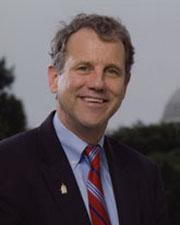
Mr. Speaker, I yield myself such time as I may consume. Mr. Speaker, I share the consternation of the gentleman from Michigan (Mr. Conyers). In this country we are facing problems in Iraq, yet this…
Mr. Speaker, I yield myself such time as I may consume.
Mr. Speaker, I share the consternation of the gentleman from Michigan (Mr. Conyers). In this country we are facing problems in Iraq, yet this House does nothing. We are listening to seniors say please fix the Medicare discount card program bill; this House does nothing. We are hearing from people in my State of Ohio that we have lost 200 jobs every day in the Bush administration; we are doing nothing about that. We will not extend unemployment benefits or anything else. We are hearing people talk about drug prices being one-half and one-third in Canada what they are here; we are not doing anything about that. We have lost so much manufacturing in this country, 1 out of 7 manufacturing jobs has simply disappeared since George Bush took office.
Yet for the fifth time in 14 months, as the gentleman from Michigan said, we are debating a medical malpractice bill that does not do anything about medical malpractice. I support malpractice reform, as most Members of this body do, but I oppose this bill.
The Republicans lay the blame for rising medical malpractice premiums on the victims of medical malpractice. The bill does not have one provision acknowledging the insurance industry's accountability for skyrocketing premiums, not one provision to keep the insurance industry accountable.
Insurers have tripled their investment in the stock market over the past 10 years, now they are trying to recoup their losses from doctors and premiums from hospitals and other medical providers, and from patients. Insurers low-
balled their rates to attract new customers, and then they went overboard and depleted their reserves. That is not our fault, that is not the patients' fault or doctors' fault. Rates have to exceed costs to stabilize those reserves, and the recklessness on the part of insurers is clearly a factor in the recent rate spikes.
Democrats have repeatedly tried to negotiate with the Republican majority on this issue. We asked the majority to consider insurance reforms; they absolutely refused even to talk about it. We asked the majority to subpoena insurance company records so we really could understand and get to the bottom of the rate spikes and so we could be sure we were solving the real problems; the Republicans refused to even talk about it.
There were avenues we could take to stabilize medical malpractice premiums: reinsurance pools, rate bands, loss ratio requirements, reserve requirements, and improved transparency, but the insurance industry opposes these changes. The insurance industry gives a lot of money to President Bush and the Republican leadership, so the Republican leadership does not even consider these insurance company issues. This bill assumes the insurance industry's business decisions play no role in setting premiums. It is always the patient's fault.
In the Committee on Energy and Commerce and in the Subcommittee on Health, I had an amendment that said whatever money we save from the caps has to go towards lower premiums for doctors and hospitals. Because the insurance industry gives a lot of money to Republicans, it was voted down on behalf of the insurance industry on a party-line vote.
This bill is doomed to fail, even if it would become law, and the proof is in California. California has had damage caps since the 1970s. It now has the most stringent caps in the country; but caps alone did nothing. They were a colossal failure in California. Premiums for medical malpractice were higher than the national average. They were growing faster than the national average.
Eventually, California recognized its mistake and implemented a set of malpractice insurance reforms. Since then, premiums have moderated. But this bill does not emulate California's successes. It only imitates California's mistakes.
It is bad enough the bill ignores the failure of a cap-only approach. It takes another swipe at patients with a cap system that says the same injury causes more harm in dollar terms if it happens to a CEO than it does if it happens to his gardener. Like its predecessor, this bill contains provisions wholly unrelated to the medical malpractice issue. It says HMOs that deny patients needed medical care cannot be held accountable, yet HMOs continue to post robust profits, earning $6 billion in the first 9 months of 2003, a 52 percent increase over last year.
This bill says drug companies who sell medicine with toxic side effects are not responsible. Yet they are protecting the drug industry which has been the most profitable industry in America for 20 years running. And the bill says manufacturers of defective medical equipment get a free pass. They are doing all right, too.
In this bill, businesses are never at fault, patients are greedy, the U.S. Congress knows better than a jury of your peers in your community, and State laws are just cast aside without a second thought. If my friends in this body really wanted malpractice reform, if they really wanted to help doctors deal with these outrageous premiums they are paying, they would not use this bill to help their drug company contributors, they would not use this bill to help their insurance company contributors, they would not use this bill to help their HMO contributors. That is what this bill is all about.
At a time when the public is calling for greater corporate accountability, this bill turns on the public itself and says injured patients, not the system that is designed to protect them, are at fault. This is not reform. It is callous injustice.
Mr. Speaker, I reserve the balance of my time.
Mr. Speaker, I yield 2 minutes to the gentleman from Texas (Mr. Green).
Mr. Speaker, I yield the balance of my time to the gentlewoman from Colorado (Ms. DeGette).

Mr. Speaker, I yield myself such time as I may consume. Mr. Speaker, let me say before I give my prepared statement that I too am embarrassed that this issue is on the floor for the sixth time in so…
Mr. Speaker, I yield myself such time as I may consume.
Mr. Speaker, let me say before I give my prepared statement that I too am embarrassed that this issue is on the floor for the sixth time in so many months because the other body is yet to do anything about it. It is past time that we should have passed this and the other body should have passed it, and we should have all attended a signing ceremony with the President of the United States so we can bring some medical malpractice reform to the health care providers of our country.
We are facing a crisis in this country, and I do not use that term lightly, that dramatically affects our efforts to improve access to high-quality, affordable health care. Doctors in at least 19 States are facing astronomical increases in their medical malpractice insurance premiums. They have had their premiums doubled, and in some cases tripled. A hostile liability environment has forced doctors to stop performing certain procedures. In my own congressional district, I know of doctors who have retired because they cannot afford the medical malpractice insurance to continue their practices.
This means as there are fewer doctors to provide health care, patients are going to be left with fewer treatment options. Fewer OB- GYNs means less preventive health care for women. It means less regular screenings for reproductive cancers, high blood pressure, infections and other health risks, and less preventive care means higher health care costs down the road.
As insurance premiums continue to skyrocket, doctors will look to cut back on or eliminate care for higher-risk patients such as the uninsured.
This will also affect how we recruit new doctors. Our country already has a difficult time providing access to high-quality health care in many underserved areas. We already lack a true health care marketplace where patients can shop freely for health care services and have a direct say about which doctor they will see. We do not need to make these problems worse, we need to fix them.
The bill before us would begin the effort to fix them. The medical liability crisis is driving doctors out of the practice of medicine. Even if you have health insurance, what is it worth if there is no doctor available to treat you? It is not right that our courts have become a legal lotto system rather than a fair system that judges meritorious claims.
We all agree if a patient is injured through malpractice or negligence, that patient should be compensated fairly for his injuries; but that is not happening today. Injured patients have to wait on average 5 years before a medical injury case is complete. Adding insult to injury, patients lose on average almost 60 percent of their compensation to attorneys and the courts.
Even though 60 percent of medical malpractice claims against doctors are dropped or dismissed, we all pay the price. According to HHS, the direct cost of malpractice insurance and the indirect cost from defensive medicine raises the Federal Government's health care share of the cost by at least $28 billion a year.
H.R. 4280 will help all Americans. It speeds recovery for injured patients who truly deserve compensation. It removes the perverse incentives in our current medical liability system that force doctors to look at patients as potential lawsuits. It will encourage employers to increase the scope of their health insurance benefits, and it will allow for greater investment in lifesaving technologies which help make America's health care system the best in the world.
This legislation encompasses the best policy that can actually fix the medical malpractice crisis. It is high time for this legislation to become law.
Again, I share the concerns of the gentleman from Michigan (Mr. Conyers) that we have had to vote on this a number of times on the House floor. The problem is not that the House is continuing to vote on it, the problem is that the other body will not bring it up for a vote. I hope that we can pass it today and get the other body to bring it up and we can go to a signing ceremony with the President of the United States.
Mr. Speaker, I reserve the balance of my time.
Mr. Speaker, how much time remains for each side?
Mr. Speaker, I yield 2 minutes to the gentleman from Michigan (Mr. Conyers) to engage in a colloquy.
Mr. Speaker, will the gentleman yield?
Mr. Speaker, I share the frustration that the gentleman has with the other body. If we could work together to get Members from the other body on both sides of the aisle to vote for cloture, and as the gentleman well knows, regardless of who controls the other body, it takes 60 votes to agree to limit debate, and a fair number of Members of the gentleman's party in the other body have failed to vote for cloture on this issue. I would be happy to work with the gentleman to work for cloture to bring the bill up.
Mr. Speaker, if the gentleman would continue to yield, if we can at least let some bill come up for a vote, we can solve this in conference. The policy difference can be worked out in conference, but unless there is a conference with the other body, there is not going to be anything to work out.
Mr. Speaker, if the gentleman would continue to yield, the conference mechanism may not be as perfect as it should be, but it is a mechanism where policy differences can be worked on.
Mr. Speaker, I am interested in doing that.
Announcement by the Speaker Pro Tempore
Mr. Speaker, I ask unanimous consent that the gentleman from Pennsylvania (Mr. Greenwood) control the balance of my time.
Mr. Speaker, I yield 1 minute to the gentleman from California (Mr. Cox), the coauthor of this bill. Mr. Speaker, I yield myself 2 minutes. This bill is on the floor for one reason and one reason…
Mr. Speaker, I yield 1 minute to the gentleman from California (Mr. Cox), the coauthor of this bill.
Mr. Speaker, I yield myself 2 minutes.
This bill is on the floor for one reason and one reason alone. That reason is that across this country there is a crisis. The crisis is that the cost of medical malpractice insurance is so expensive that trauma centers have to close, that obstetricians cannot deliver babies anymore, that neurosurgeons cannot preserve lives, that orthopedic surgeons cannot do what they are supposed to do. It is a crisis. It also so happens that if this bill is passed, it will, according to the CBO, reduce the cost of medical malpractice insurance by 25 percent which will go a long way to solving that crisis.
It also has some side benefits. By making the cost of medical malpractice insurance less expensive, it makes the cost of health care less expensive which means that more employers can offer more of their employees insurance.
In fact, according to the CBO, 3.9 million Americans who do not have health care today would get health care just because we passed this bill. We ought to do it. Another side benefit, according to the CBO, is that because these costs are built into the costs of Medicaid and Medicare, we would save $15 million in those programs over the next 10 years, which we could apply to real important health care needs.
The gentleman from Michigan (Mr. Conyers) has said we are passing this bill on the floor, it is never going to pass in the Senate. This bill went to the Senate and Majority Leader Frist made a motion to consider the bill, and the Democrats objected to the consideration of the bill, to even having the debate. And then when it came time to vote on whether to have that debate, the Democrats voted no, we do not want to even debate this bill. So one can debate the fine points. One can say I have a better way to solve this problem or another Senator can say I do not like the cap here or I do not like this aspect of it. The most deliberative body on the face of the Earth is supposed to come to the floor of the Senate with their ideas, with their amendments, and engage in a debate. Instead, all that they have done is obstruct.
Announcement by the Speaker Pro Tempore
I yield to the gentleman from Arizona.
Mr. Speaker, I yield myself the balance of my time.
Mr. Speaker, I would like to read from two letters. The first is from Engel, Smith & Associates, an obstetrics and gynecology practice, a letter written to their patients.
``It is with great sadness that we are writing to inform you of the plan to close in its present configuration the Engle, Smith & Associates obstetrics and gynecology practice. We have diligently tried over the past several months to find an alternative solution as we struggle with this decision. Unfortunately, the practice environment for physicians in our specialty has become so difficult that we have no choice but to dramatically change the way in which we provide care.
``We, like many of our colleagues in high-risk specialties such as obstetrics, have a crisis situation because our malpractice insurance premiums have more than doubled in the past 2 years. These increases are being driven primarily by skyrocketing jury awards in Pennsylvania, which have been forcing both insurance companies and physicians out of business.''
Here is the impact on patients, a letter to me.
``I am a Pennsylvania native. I was born and raised in the Philadelphia area, an area that used to be known for excellent medical care. Eight months ago, I again found a wonderful OB-GYN office. The doctors are wonderful, respectful and well-educated and overall just great. They delivered my beautiful baby girl for me, and I could not have been happier with their care. I referred my sister, who is currently pregnant and due in a few short weeks. She too, is satisfied with them.
``Two weeks ago we were outraged to discover that they were closing the doors at the end of May 2002. My sister, who has been going to their office for all her prenatal care visits, cannot even have her after-delivery exam by the doctor who delivers her first child. I will not be able to return to them for subsequent health care or even normal GYN care.
``This is an outrage. It is also the second physician's office I have been to in the last couple of years that has been forced to close due to medical liability costs. Another office that I was aware of closed as well for the same reason. I cannot even switch to see them, because they no longer exist within our State. I do not know who I can go to even now. No other OB-GYN physicians practice in my area anymore.''
Mr. Speaker, this is the face of the medical malpractice crisis. This is the bill that will resolve that crisis. We believe that this legislation will solve the crisis in the near term for malpractice insurers, for doctors and for patients, and, in the long run, for 3.9 million Americans, give them health care that they do not have today.
Mr. Speaker, I demand a recorded vote.

Mr. Speaker, I rise today in opposition to out-of- control medical malpractice premiums but also in opposition to H.R. 4280. Once again, we are being asked to vote on a bill that claims to be a…
Mr. Speaker, I rise today in opposition to out-of- control medical malpractice premiums but also in opposition to H.R. 4280. Once again, we are being asked to vote on a bill that claims to be a solution to a very real problem but which will simply not do the job of lowering premiums. Once again, we are being asked to vote on legislation that ignores the major component in the medical malpractice insurance crisis--insurance.
A study of the medical malpractice situation in my State of Illinois found last year that there was little, if any, correlation between medical sea -HMOOsmalpractice payments and medical malpractice premiums. The Americans for Insurance Reform report found that the amount of jury awards and settlements has actually declined since 1991, below the rate of medical inflation. In constant dollars, the amount of medical malpractice jury awards and settlements per doctor has decreased over the past decade in Illinois.
As providers in my State know all too well, their medical malpractice premiums are going in the opposite direction. Instead of tracking payouts, they are tracking economic conditions and insurance company investment decisions. Imposing arbitrary caps on non-economic damages-- which would especially limit potential payments to injured infants and senior citizens--is not the answer when the problem is poor investment choices by insurance companies and economic conditions.
As a member of the Energy and Commerce Committee, I had the opportunity to participate in hearings on H.R. 5, last year's medical malpractice bill. We never heard a medical malpractice insurer testify that passage of that bill would lower premiums or that the Federal government should even be allowed to track the effects on medical malpractice premiums if H.R. 5 were to pass. That failure was no surprise given multiple statements made by medical malpractice insurance company officials before State legislatures around the country, that tort reform will not lower rates. Even Sherman Joyce, president of the American Tort Reform Association, has said that ``We wouldn't tell you or anyone that the reason to pass tort reform would be to reduce insurance rates.'' Victor Schwartz, general counsel of ATRA, has said, ``(M)any tort reform advocates do not contend that restricting litigation will lower insurance rates, and ``I've never said that in 30 years.''
Caps won't make medical malpractice premiums affordable but there are other proposals that would make a real difference in providing affordable coverage. As a member of the House Medical Malpractice Crisis Task Force, I had hoped that we would take the opportunity to explore those opportunities instead of being presented with the same bill that we voted on last year, the same bill that the insurance industry itself says won't lower premiums.
Here are many ideas that I believe are worthy of consideration but that, unfortunately, are not included in H.R. 4280. We know that insurance reform in California requiring a premium rollback and improving review had a positive impact in lowering medical malpractice premiums--after tort reform did not. We could have created a Commission on Medical Malpractice Insurance to investigate the real causes for premium increases and consider solutions such as mandatory loss-ratio requirements, experience rating, and a Federal reinsurance mechanism. We could have established a certification mechanism to make sure that cases are meritorious, expand Rule 11 sanctions for anyone who falsifies information as part of that process, and encourage arbitration while requiring that savings are passed through by insurers in the form of lower premiums. We could have repealed the McCarran- Ferguson Act that shields medical malpractice insurers from Federal antitrust laws. We could have provided a tax deduction to help health care providers and professionals faced with sharp premium increases.
Instead of considering those initiatives, we are being asked to once again pass legislation that restricts the rights of injured patients and their families to seek legal remedies, not just against doctors, but against HMOs and other insurers, nursing homes, medical labs, drug companies, medical device manufacturers and others. For the first time, the Federal government would intrude on what has always been a State authority to take away consumer rights. Yet, the insurance industry itself refuses to say whether doing so will have the effect of lowering rates. It is the wrong answer to a very real problem.
In the future, I hope that we will be given the chance to look at ways to address insurances industry practices and reduce the incidences of medial malpractice by improving health care quality. In the meantime, we should reject this bill.

Mr. Speaker, I thank the chairman for yielding me time. Mr. Speaker, we are here on the floor to demand of the communist government of Vietnam that Father Ly immediately be released, unconditionally.…
Mr. Speaker, I thank the chairman for yielding me time.
Mr. Speaker, we are here on the floor to demand of the communist government of Vietnam that Father Ly immediately be released, unconditionally. Father Ly's only offense is that he is a Catholic priest who sought to minister to the spiritual needs of his countrymen and countrywomen in Vietnam. For this offense, he has been in prison for the last 3 years, and the communist government of Vietnam expects that he will serve the full decade of his sentence.
This is, of course, an affront to human rights. It is also an affront to the United States, because it was the U.S. Commission on International Religious Freedom that solicited Father Ly's testimony. They asked that Father Ly testify in person. He was willing to do so; but, of course, the communist government of Vietnam forbade him from doing so. So Father Ly then submitted written testimony, and it is on the basis of that written testimony that he was convicted. That is why he is now in jail.
Never has there been a clearer path from freedom to imprisonment than in this case. We can read the entirety of his offense. What he said, in response to questions from the United States, is that there is not religious freedom in Vietnam. He said that the government of Vietnam had stripped all churches of their independence and freedom. For speaking this truth, Father Ly is now expected to spend a decade in a communist prison.
It was 1 month after he wrote this testimony and sent it to the United States that he was arrested. Indeed, he was arrested while he was saying mass. He was on the alter before a congregation. Six hundred policemen of the Vietnamese communist government surrounded the church, stormed it, and dragged him off. Of course, the Vietnamese Government provided him no legal representation, no consultation whatsoever; and not surprisingly, on October 19 of that same year, Father Thaddeus Nguyen Van Ly was sentenced to this seemingly indefinite time in prison, 15 years originally. He has already spent 3 years. Now he is going to get a 10-year sentence.
Father Ly is no stranger to repression at the hands of the Vietnamese
dictatorship. Since 1977, the government has repeatedly harassed him, repeatedly arrested him, and repeatedly jailed him for his advocacy of religious freedom.
So the Congress today calls for the immediate and unconditional release of Father Ly. But we also recognize that he is not alone. He represents the struggle of all of those citizens of Vietnam who are fighting for freedom and for democracy.
Another piece of legislation to address that struggle is the Vietnam Human Rights Act, H.R. 1587, which I hope the House will soon consider. This legislation will prohibit nonhumanitarian assistance to the government of Vietnam, it will support the efforts of human rights and democracy advocates there, and it will help us work to overcome the government's jamming of Radio Free Asia and their Vietnamese broadcast. It will help resettle refugees and require an annual State Department report on the progress towards freedom and democracy in Vietnam, or the lack of it.
This resolution that is before us today, of which I am an initial cosponsor, is, therefore, a call to action. It is a call, of course, upon the Vietnamese Government to act; but it is also our call to action. The Vietnamese Government and other dictatorships around the globe must come to realize that oppression does not go unnoticed, that the Congress and the President will continue to fight for those like Father Ly who seek meaningful change in their country.
Mr. Speaker, I am very, very proud to join the gentleman from New Jersey (Chairman Smith) and the gentleman from California (Mr. Lantos) in supporting this resolution, and I am very proud of the stands for human rights that this Congress will soon take.

Mr. Speaker, I thank the gentlewoman for yielding me this time, and I rise today to support H. Res. 613, recognizing and honoring the tenth anniversary of Vietnam Human Rights Day. Vietnam Human…
Mr. Speaker, I thank the gentlewoman for yielding me this time, and I rise today to support H. Res. 613, recognizing and honoring the tenth anniversary of Vietnam Human Rights Day.
Vietnam Human Rights Day serves as an important commemoration of the extensive struggle the Vietnamese people have endured for many years in their ongoing fight for basic human rights and freedom.
Ten years ago, the United States ended its trade embargo with Vietnam and normalized relations with Hanoi. While the U.S. continues to open diplomatic relations with Vietnam, we must remember that many issues remain unresolved, including human rights violations, lack of religious freedom, and government corruption.
I traveled to Vietnam in 1998 to learn about these issues firsthand, as well as to raise these concerns with high-level officials. In addition, the large Vietnamese-American community in the 11th district, which I represent, continues to update me on continuing concerns.
As a member of the Vietnam Caucus, I am dedicated to promoting awareness and public policy debates among the U.S. Congress, the American public, and the international community about the greater need for fundamental human rights in the Socialist Republic of Vietnam.
House Resolution 613 recognizes the important contributions made by Nguyen Dan Que, the author of the Manifesto of the Non-Violent Movement for Human Rights, and uncounted numbers of innocent Vietnamese for their nonviolent struggles for freedom and human rights.
Dr. Que is one of the most vocal advocates for freedom, democracy, and human rights in Vietnam. Since 1975, Dr. Que has refused to leave Vietnam, and he has turned down an offer to resettle in the United States or to live in exile. He has consciously chosen to stay in Vietnam to speak out and defend human dignity and the rights of all Vietnamese people. He is a profile of courage.
The Vietnamese Communist government has arrested Dr. Que three times for his unrelenting pursuit of human
dignity and freedom. He has been imprisoned off and on for nearly 20 years, beginning in 1978 through the present. During Dr. Que's captivity, he was imprisoned without trial, tortured, beaten, and put into solitary confinement in chains, accused of trying to overthrow the government, charged with espionage, and is now being held in strict incommunicado.
Undaunted, during his time he remained the strongest voice inside Vietnam for equality and dignity. On May 11, 1990, Dr. Que founded the Nonviolent Movement For Human Rights, issuing a manifesto that appealed to individuals and groups inside Vietnam and throughout the world for support of his moderate, nonviolent struggle to establish human rights for all Vietnamese people.
The arrests of Dr. Que, along with many others, demonstrate the ongoing human rights abuses and lack of religious freedom in Vietnam. We must continue to bring attention to these issues, generate pressure on Vietnamese officials, and hold the Vietnamese Government accountable.
It is only through the hard work and effort of individuals such as Dr. Que and the support of the international community that we can bring an end to human rights abuses and religious persecution in Vietnam. My resolution urges all Americans to share in the commemoration of Vietnam Human Rights Day and to have a greater appreciation of the role it has played in helping to defend and further the liberties and freedom of all Vietnamese people.
I am hopeful H. Res. 613 will serve as a small stepping stone towards the ultimate liberation and freedom of the Vietnamese people. However, at the least, I believe it will bring much needed additional awareness to the atrocities committed by the Socialist Republic of Vietnam every day on its own citizens. I urge my colleagues to join me in the passage of this important resolution.
Show 11 more
Mr. Speaker, I thank the gentleman for yielding me this time. Mr. Speaker, I rise today in support of House Resolution 613, the resolution which recognizes the 10th anniversary of Vietnam Human…
Mr. Speaker, I thank the gentleman for yielding me this time.
Mr. Speaker, I rise today in support of House Resolution 613, the resolution which recognizes the 10th anniversary of Vietnam Human Rights Day, which is today, May 11. I thank the gentleman from Virginia (Mr. Tom Davis) for sponsoring this resolution and allowing me to be an original cosponsor; and I am proud to share with the gentleman membership in the Vietnam Caucus, along with the gentlewoman from California (Ms. Lofgren) and the gentleman from New Jersey (Mr. Smith). The initiatives of the caucus, including this bill, are examples of what we can accomplish when we decide to work together in a bipartisan manner.
Mr. Speaker, I represent the largest Vietnamese community in the world outside of Vietnam in Orange County, California. It is fitting then to speak on the House floor about this anniversary of Vietnam Human Rights Day. More importantly, it is the 14-year anniversary of the Manifesto of the Nonviolent Movement For Human Rights. This was written by a courageous and bright man, Dr. Nguyen Dan Que. I have had the pleasure of meeting Dr. Que. In fact, I went to his home in 1998 when I was in Vietnam. As we were meeting, his home all locked up, the military police came to the home to try to get me out of there. Of course we had locked up the house, and we continued our conversation.
One of the things that Dr. Que said to me was that it was important for America and Americans to continue to push for human rights in Vietnam. What type of human rights are we talking about here? Well, the right to assemble as we do here today, that is not allowed in Vietnam. The right to choose your own God and the way you want to worship that God, that is not allowed. You have to only do it through the official church or churches that the state of Vietnam approves. The right to free press. Every piece of paper written to be distributed must be done by the state in Vietnam. In fact, when I was meeting with the cardinal of the Catholic Church of Vietnam, he said one of the things that he cannot do is to hand out a newsletter to people that come to church on Sunday. The right to collectively bargain one's labor for decent wages and a decent place to work.
All of these things are not allowed in Vietnam, and this is what Dr. Que speaks to. He speaks to the human rights issues within Vietnam. I guess the most important thing that Dr. Que said to me that day in 1998 was that the reason we need to keep pushing for human rights in Vietnam is that it inspires and it gives hope and it gives courage to those within Vietnam who are fighting for basic human rights. Religious leaders like the Venerable Tic Kwzug Doh; a geologist like Gizug; and General Do, whom I had an opportunity to meet with, who had been a former communist and understood what was going on in the country and decided he would speak out; and, yes, Dr. Que.
Mr. Speaker, these are just a few of the dissidents within Vietnam who speak every day; and yet each and every one has been imprisoned, either taken away without charges or with false charges, or imprisoned in house arrest.
I hope today we will vote this unanimously to send a strong message that human rights are important in every country, and in particular for those who have not seen them for a long time.
Mr. Speaker, every so often in this body, I think it is important to talk about facts. Instead of legislating by an anecdote, I would like to actually look at some facts today. Those on the other…
Mr. Speaker, every so often in this body, I think it is important to talk about facts. Instead of legislating by an anecdote, I would like to actually look at some facts today.
Those on the other side would have us believe that limiting patients' access to the courts will relieve high malpractice insurance premiums. But the fact is there has been no increase in the rate of malpractice claims filed in recent years, and the fact is the average payout has remained steady for a decade. The fact is that California, the State that has been most successful in curbing malpractice costs, only did so after passing a voter initiative that also reformed the insurance system.
Despite this evidence, proponents of this bill continue to represent it as relief for physicians. In reality, it is a bald effort by the insurance industry to pass off their costs on already suffering patients. This bill will disproportionately affect women, low-income individuals, and children because the caps on noneconomic damages will affect them. Since they do not make a lot of money, they will not have a lot of economic damages to be awarded by the courts.
Real people will suffer a second injustice under this legislation, people like Heather Lewinski, who came before our committee and testified, a 17-year-old girl who suffered permanent facial disfigurement at the hands of a plastic surgeon who lied to her and her family. And this young woman came before us and said her greatest fear was she would never have a date. People like Linda McDougal. This is Linda McDougal in this poster right here. Linda McDougal's breasts were amputated after she had been misdiagnosed with cancer, and here she is today. She was completely fine. And the family of Jesica Santillan, a little girl who died because the hospital failed to ensure that the heart and lungs she was about to receive would be compatible with her blood type. Her family will be denied just compensation for her suffering.
If we really wanted to fix the crisis that is plaguing our Nation's doctors, we should take a good look at the insurance industries, as we heard from my colleague from Ohio. Instead, we are considering a bill that is akin to curing a headache by amputating an arm. Arbitrarily limiting patients' rights is not fair, and it will not solve the problem.
Let me talk for a minute about some of the anecdotes upon which we are basing this legislation. We heard that obstetrics wards were closing down because of liability insurance premiums. The example given by the AMA said that Pennsylvania's Jefferson Health System closed its obstetrics ward because of this reason, but 2 years later this obstetrics ward is still up and running and accepting new patients. In May, 2003, the AMA said that a group of 10 neurosurgeons in Washington State had been dropped by their malpractice insurer. As of 2004, the group is doing just fine and taking new patients. Finally, in January 2004, just a few months ago, President Bush said there was a doctor in Arkansas who stopped delivering babies because of rising insurance costs. That turned out to be completely untrue.
If there is a problem here, let us let the States fix it. Let us not put it on people like Linda McDougal.
Mr. Speaker, I thank the gentleman for yielding me this time. I rise in strong support of the underlying legislation. I want to compliment both the chairman of the Committee on the Judiciary, and the…
Mr. Speaker, I thank the gentleman for yielding me this time.
I rise in strong support of the underlying legislation. I want to compliment both the chairman of the Committee on the Judiciary, and the Committee on the Judiciary itself, as well as the chairman of the Committee on Energy and Commerce, and the Committee on Energy and Commerce itself, for bringing this legislation forward. This is critically needed legislation.
We face a crisis in this country in health care because of a runaway tort system. But the specific point I want to make goes to the next step in this process. Under current law, a law called EMTALA, passed by this Congress in 1986, millions of dollars' worth of free health care is provided at our Nation's emergency rooms across the country. It is provided because we have decided that someone who presents himself to an emergency room should not be denied that care, and so they must be screened and they must be initially treated and they must be stabilized. And I think that is a fair and balanced social policy which says that we in this country do not want anyone to go without health care; and clearly that is an important, appropriate policy that we have adopted.
But I think there is an unintended consequence of that law. The law says that this care must be provided by doctors and hospitals for free of these emergency rooms, but it does not provide that they have to provide their own malpractice insurance to cover that, and yet the current law says if they are sued for malpractice in such circumstances, they must pay the damages.
Mr. Speaker, will the gentleman yield?
Mr. Speaker, I thank the gentleman for yielding. I apologize for the rather disjointed nature of this presentation.
Mr. Speaker, the point I wanted to make is we under EMTALA require doctors and hospitals to provide free health care in our emergency rooms. That may be appropriate as public policy, but the unfair context is that while forcing them to provide this free care, if they in fact are alleged to have committed malpractice, either the hospital or the doctor while providing free health care, they are on the hook for that alleged malpractice.
It seems to me only fair that if we are going to force doctors and hospitals to provide free health care to anyone who presents at an emergency room, then we should either cover the cost of their medical liability arising out of that, which I have proposed in an amendment and in separate legislation, providing that free EMTALA care would come under the Federal Torts Claims Act or we should grant immunity.
It seems to me to add insult to injury to say to a doctor at a hospital, you must provide free health care to anyone who presents at your emergency room and you must pay for the substantive cost of that health care, but that in addition to that, you must cover the medical liability that arises out of it.
That is in fact driving doctors away from emergency rooms and imposing unfair costs on both emergency rooms and emergency room doctors, and I hope the Congress will consider that legislation in the near future.

Mr. Speaker, I yield myself such time as I may consume. Mr. Speaker, I rise in strong support of this resolution. Mr. Speaker, first I want to commend my good friend, the gentleman from New Jersey…
Mr. Speaker, I yield myself such time as I may consume.
Mr. Speaker, I rise in strong support of this resolution.
Mr. Speaker, first I want to commend my good friend, the gentleman from New Jersey (Mr. Smith), for his leadership on Vietnam human rights issues and, indeed, on being the most indefatigable and passionate advocate of human rights in this body.
As the political security and economic relationship between the United States and Vietnam become increasingly complex, we must never forget the continued absence of internationally recognized human rights in Vietnam.
Mr. Speaker, Father Ly, the subject of this resolution, is a Vietnamese Catholic priest. Three years ago, he was invited by the International Religious Freedom Commission to give testimony related to religious freedom in Vietnam. Since the Vietnamese Government denied Father Ly permission to leave his country, he submitted written testimony for the record. In this testimony, Father Ly outlined the lack of religious freedom in Vietnam and urged his fellow Vietnamese citizens to continue to struggle, nonviolently, for their rights.
He was subsequently sentenced to 15 years in prison after a 1-day closed trial in which he was denied adequate legal counsel. Father Ly was convicted of slandering the Communist Party and distorting the religious policy of the government of Vietnam.
Subsequently, Mr. Speaker, the United Nations Working Group stated that Father Ly was arrested and detained only for his opinions, and the deprivation of the liberty of Father Ly is arbitrary and contravenes the Universal Declaration of Human Rights and the International Covenant on Civil and Political Rights.
Mr. Speaker, as we meet here today, Father Ly continues to remain in prison because he had the courage of his convictions and he refused to whitewash the continued lack of religious freedom in Vietnam. Our resolution urges his immediate release from prison, a call for justice long overdue.
It is my strong hope that the Vietnamese Government will receive this wake-up call through the passage of our resolution. While large numbers of Vietnamese Catholics continue to attend services each Sunday, the Vietnamese Government prohibits the church from training enough priests to meet the growing demand for clerics. The Vietnamese Government has also refused to compensate the church fully for expropriated church property, and it prohibits the church from expanding its activities to help the poor in Vietnam.
Mr. Speaker, I urge all of my colleagues to show their concern about the continued unjust imprisonment of Father Ly and the lack of religious freedom in Vietnam by supporting strongly our resolution.
Mr. Speaker, I reserve the balance of my time.
Mr. Speaker, I am very pleased to yield 2 minutes to my good friend and distinguished colleague, the gentlewoman from California (Ms. Loretta Sanchez), a champion of human rights.
Mr. Speaker, we have no additional requests for time, and I yield back the balance of our time.
Mr. Speaker, on that I demand the yeas and nays.
Mr. Speaker, during the month of May, we celebrate Asian Pacific American Heritage to commemorate the contributions Asian Pacific Americans have made to the fabric of our communities and to this…
Mr. Speaker, during the month of May, we celebrate Asian Pacific American Heritage to commemorate the contributions Asian Pacific Americans have made to the fabric of our communities and to this nation as a whole. I could easily spend this month, and longer, describing the tremendous accomplishments of Asian Pacific Americans.
However, today is the tenth anniversary of Vietnam Human Rights Day and we sadly must recognize that Vietnam has not come far enough in respecting the human rights of its citizens.
Just one month ago, on Easter Week, Human Rights Watch reported that peaceful protests by indigenous minority Christian Montagnards turned violent when police used tear gas, electric truncheons, and water cannons on protestors. Reports indicate that police arrested several individuals, many whose whereabouts are currently unknown. Worse yet are reports of torture, police beatings, and deaths associated with this crackdown on the Montagnards.
Today, my colleagues, Congressman Chris Smith, Tom Davis, Loretta Sanchez and I
are introducing a Congressional resolution recognizing the countless number of innocent Vietnamese ``who have been tortured, imprisoned, or held under house arrest by the Socialist Republic of Vietnam.''
Also today, Congressman Smith is leading an effort, with over 100 cosponsors, to pass House Concurrent Resolution 378 to call on Vietnam to immediately release Father Thaddeus Nguyen Van Ly and condemn the ``violations of freedom of speech, religion, movement, association, and the lack of due process afforded to individuals in Vietnam.''
Ten years ago, the Congress and the Senate passed a resolution designating today, May 11th, as Vietnam Human Rights Day, recognizing that ``the United States, as the leader of the free world, has a special responsibility to safeguard freedom and promote the protection of human rights throughout the world.''
Unfortunately, President Bush and his Administration have not heeded that responsibility to safeguard human rights. Although this Administration tells me they are ``deeply troubled by the restrictions that the government of Vietnam places on its citizens' freedom of expression, as well as other human rights,'' this Administration has been initiating a new friendly relationship with the communist regime in Vietnam without demanding protection of human rights as a condition of our friendship.
The Bush Administration's hypocrisy and apathetic attitude towards human rights is unacceptable. As long as the people of Vietnam are oppressed, abused, and imprisoned, our President should first demand protection of human rights before getting friendly with a communist regime that oppresses its people.
On this 10th Anniversary of Vietnam Human Rights Day, I urge our President to condemn the Socialist Republic of Vietnam for violating human rights and I call on the Vietnamese government to protect the human rights of its citizens.
Mr. Speaker, I rise in strong support of H.R. 4280. Health care costs have been increasing dramatically over the past decade, while insurance has become prohibitively expensive for over 40 million…
Mr. Speaker, I rise in strong support of H.R. 4280. Health care costs have been increasing dramatically over the past decade, while insurance has become prohibitively expensive for over 40 million Americans.
There are a number of factors which have contributed to the skyrocketing cost of health care, and the costs associated with medical malpractice are one factor.
This Country's tort system encourages litigation and large awards in medical malpractice suits, which has led to high malpractice insurance rates and increased health care costs through the practice of defensive medicine.
Last year, my state of Texas enacted reforms of our medical malpractice system in order to avert a growing health crisis in the Texas health-care system. Too many lawsuits against health-care providers were driving up the cost of practicing medicine, resulting in reduced access to affordable health care.
There are early signs that the reforms enacted in Texas have helped improve access to
affordable health care. Essentially, every doctor in Texas is either paying less malpractice premiums today or avoiding scheduled increase in premiums.
The bill before us today contains the same proven reforms that will translate directly into increased access to affordable health care for all Americans.
Without Federal legislation, the exodus of physicians from the practice of medicine will continue, especially in high-risk specialties, and patients across the country will find it increasingly difficult to obtain affordable health care.
In rural areas, we are particularly sensitive to the impact malpractice insurance costs have in discouraging physicians from locating in rural communities, leaving residents without health care.
Here in Washington, if an obstetrician decides to stop delivering babies because the malpractice insurance costs are too great, the yellow pages will still list hundreds of other choices of physician care for expectant parents. In rural communities, the same physician decision may well mean that young couples must entirely uproot and relocate to urban centers just so they can have a family.
The ultimate result of this legislation will be greater protections for quality health care, keeping precious health care dollars in direct care rather than feeding our legal system, and buttressing access to care for all Americans.
Medical malpractice reform isn't a magic bullet that will solve the problems of skyrocketing health care costs by itself, but it is one part of the larger process of reforming our health care system to control costs and improve access to health care.

Mr. Speaker, it is a pleasure to be able to join my colleagues today and to add my support for House Concurrent Resolution 378 calling for the immediate and unconditional release of father Thadeus…
Mr. Speaker, it is a pleasure to be able to join my colleagues today and to add my support for House Concurrent Resolution 378 calling for the immediate and unconditional release of father Thadeus Nguyen Van Ly.
Father Ly has peacefully campaigned for more than 30 years for religious freedom in his country, and he has called on the officials of that nation of Vietnam to allow churches to appoint their own leadership and to stop listing people's religious affiliation on their I.D. card, and to return property that was confiscated from the churches to those particular denominations and faiths.
Now, recently, Father Ly, as we have heard, has been sentenced to 15 years of solitary confinement, a very serious sentence, for merely advocating people having the right for free religious expression. That sentence has been mitigated by 5 years, still a 10-year sentence. In the brief time that he had to speak to his own family, he made the following statement: ``My duty and my conscience required me to fight for the freedom of our church. If I had realized those terrifying situations for our church and had not done anything, I would have been guilty before God. Now I think I have accomplished my duty, I do not feel sorry for myself.''
Father Ly, though he lives on the other side of the world, is in a sense a brother of each of ours. This is a personal affront that the Government of Vietnam has stood against those people who have the courage to allow people to express their own personal consciences.
It is particularly appropriate in this Chamber and at this time for us to recall the words of Madison on the subject of property. When property was discussed by our founders, they did not think so much of a piece of land or even of possession, but they thought of the property first and foremost and closest to the heart of all true lovers of freedom: It was the property of our own convictions, the property of our own soul, the property to be able to express our opinion and our devotion to whichever God it is that we would worship. And it is this fundamental, fundamental, heartfelt core of American belief which binds us to freedom-fighters all over the world and which calls us to strong condemnation of the Government of Vietnam, that they would trample people's right to worship and freedom under their feet with total disregard, and would lock a champion of freedom like this away for 10 years, away from his family, and harassing his family.
So I strongly add my support to the gentleman and his resolution, H. Con. Res. 378.
Mr. Speaker, my home State of Wisconsin has sensible medical malpractice laws that make the State attractive to doctors and safe for patients. The components of this successful law include a cap on…
Mr. Speaker, my home State of Wisconsin has sensible medical malpractice laws that make the State attractive to doctors and safe for patients. The components of this successful law include a cap on non-economic damages of $442,000, which is indexed annually for inflation; a requirement that all providers carry malpractice insurance; and a victims' compensation fund.
The victims' compensation fund is a unique entity that has served both patients and health care providers well. The fund operates by collecting contributions from Wisconsin health care providers and paying the victims once an award has been determined. The physicians are liable only for the first $1 million in an award. If the award exceeds $1 million, the compensation fund will pay the remainder of the award. For several years now, this system has served the State well. Like many of my colleagues, I believe that we need sensible malpractice reform, and were the bill before us today similar to Wisconsin's system, I would be proud to support it.
Unfortunately, H.R. 4280 is vastly different from Wisconsin law and goes too far in defending negligence and not far enough in protecting patients. The legislation goes beyond medical malpractice law by including provisions regarding pharmaceutical and medical devices and completely exempts from liability medical device makers and distributors as well as pharmaceutical companies, as long as the product complies with FDA standards. These provisions would have no effect on medical malpractice insurance rates. Instead, they would leave victims with little recourse and render them unable to hold pharmaceutical companies and the makers of defective medical products accountable for faulty or unsafe products.
Another problem with H.R. 4280 is that it overrides some State laws. While the bill would not override Wisconsin's own cap on non-economic damages, it would supersede our State laws regarding statute of limitations, attorney's fees, and the criteria for punitive damages. This bill is a one-size-fits-all solution that is not right for Wisconsin.
The successful components of Wisconsin's medical malpractice laws could be the basis for a much better bill. Wisconsin law protects patients and keeps physicians in business. These laws are threatened, however, by the current proposal. Therefore, I oppose H.R. 4280 and ask my colleagues to defeat the bill, revisit the issue, and create a more sensible plan that will protect patients and help doctors.
Mr. Speaker, I move to suspend the rules and agree to resolution (H. Res. 613) recognizing and honoring the tenth anniversary of Vietnam Human Rights Day. Mr. Speaker, I ask unanimous consent that…
Mr. Speaker, I move to suspend the rules and agree to resolution (H. Res. 613)
recognizing and honoring the tenth anniversary of Vietnam Human Rights Day.
Mr. Speaker, I ask unanimous consent that all Members may have 5 legislative days in which to revise and extend their remarks and to include extraneous material on H. Res. 613, the resolution under consideration.
Mr. Speaker, I yield myself such time as I may consume.
Mr. Speaker, 10 years ago, the Congress designated May 11, 1994, as Vietnam Human Rights Day through a joint resolution that became Public Law 103-258. The resolution was introduced in response to the issuance of the Manifesto of the Nonviolent Movement For Human Rights in Vietnam. That manifesto, written by the great human rights leader Dr. Nguyen Dan Que, intended to push pressure on the Socialist regime in Hanoi to respect the human rights of all Vietnamese citizens.
This is the tenth anniversary of the Vietnam Human Rights Day, which is the focus of House Resolution 622, before us today. The distinguished chairman of the Committee on Government Reform, the gentleman from Virginia (Mr. Tom Davis), brought forth this important resolution, and I commend him for introducing this important measure.
Mr. Speaker, while progress has been made in the fight for a free and democratic Vietnam, the regime there continues to imprison, to attack, torture, kill, and otherwise persecute many of those who publicly express their views. This resolution aims to generate valuable awareness to Hanoi's uncivilized treatment of political dissidents, and I am pleased the House is considering it this afternoon.
Mr. Speaker, it is easy to take for granted our Nation's priceless freedoms of speech and expression and, conversely, to lose track of the reality that countless people around the world in fact pay a great price to express their view. On its tenth anniversary, the principles of Vietnam Human Rights Day continue to act as an important defense of the liberties and freedoms of the Vietnamese people.
Mr. Speaker, I reserve the balance of my time.
Mr. Speaker, I am pleased to yield such time as he may consume to the gentleman from Virginia (Mr. Tom Davis), the distinguished chairman of the Committee on Government Reform.
Mr. Speaker, I have no further requests for time, and I yield back the balance of my time.
Mr. Speaker, what we are witnessing today is a sorry spectacle. We are voting on the same bill the House already voted on a little over a year ago. The one difference is that there is a new bill…
Mr. Speaker, what we are witnessing today is a sorry spectacle. We are voting on the same bill the House already voted on a little over a year ago. The one difference is that there is a new bill number. And, in those 14 months that have passed, our Republican colleagues have not changed one line in their bill to respond to the problems of increasing insurance costs to the doctors while protecting injured patients.
Instead, they are sticking with the same legislation, legislation they know will not pass the Senate. A bill they know will trample on the rights of legitimate patients, and will provide unprecedented protections to HMOs, the real beneficiaries of this legislation. This legislation is the exact opposite of the Patients' Bill of Rights, which would have provided real protections to doctors and patients alike in the struggle against cookie-cutter medicine foisted upon them by HMOs, if the Republicans had not successfully defeated it.
Let's be clear, this Republican bill does nothing to end frivolous lawsuits, just responsible ones. The bill limits awards for honest claims. It imposes new hurdles on aggrieved patients. And the bill does nothing to address the real problem--skyrocketing insurance premiums sending profits directly into the coffers of those companies.
I would like to point out that this bill is brought up during ``Cover the Uninsured Week.'' To say that shielding HMOs from lawsuits will help cover the uninsured is a huge stretch for even the most vivid imagination.
If the Republican leadership was really interested in helping those without healthcare insurance, they would take up legislation like the bills democrats introduced today--the FamilyCare Act and the Medicare Early Buy-in--and build upon existing successful insurance programs to give families dependable, affordable coverage. And they would take up the Small Business Health Insurance Promotion Act which targets small businesses with real subsidies to purchase solid insurance products.
Democratic proposals take us forward, providing meaningful coverage without trampling the rights of consumers, eroding protections, or causing millions to lose their existing coverage. The Republican bill, and the other bills we will see this week, pay lip service to helping consumers, while richly rewarding the health insurance company allies.
Mr. Speaker, this is Cover the Uninsured Week, organized by patients, physicians and hospitals to promote access to care to all Americans. They are calling on Congress to act. We are here to answer…
Mr. Speaker, this is Cover the Uninsured Week, organized by patients, physicians and hospitals to promote access to care to all Americans. They are calling on Congress to act. We are here to answer that call. We are here today because patients are losing. They are losing their access to care. Many have already lost it. The General Accounting Office has confirmed it. In at least 10 percent of these United States, sky-high medical liability costs are preventing patients from getting emergency surgery. They are preventing expectant mothers from having access to doctors to deliver their babies.
It has been 10 years since I first wrote this legislation that is now the Greenwood-Cox bill before us today. In that time, the number of medical lawsuits has risen 25 percent. The median damage award for medical lawsuits against hospitals, physicians and nurses right now is rising 43 percent per year. In some States, liability insurance premiums are rising 100 percent or more for so-called high-risk specialties, high risk because of the lawsuits, not because of the medical procedures involved, such as general surgery, 130 percent; internal medicine 130 percent; and obstetrics, OB-GYN, 165 percent. The money for these lawsuits comes directly from our health care system. Doctors and hospitals now
spend more on liability insurance than they do on medical equipment.
The bill before the House today will ensure that patients have access to the medical care that they need. It is based on our law in California where I come from that was enacted by a Democratic legislature and signed by a Democratic Governor, and it works.
In our State since these reforms have taken place, California's health liability insurance premiums in constant dollars have fallen by 40 percent. This while we are having crises in other States. Injured patients in California receive more compensation and receive it more quickly than in the United States as a whole. They receive a greater share of the recoveries in these lawsuits. California does not suffer from the flight of doctors or the closure of emergency rooms because we have the reforms in this bill. This bill balances the interests of billionaire lawyers and middle-class patients. It is time that patients have access to the care that they need.
Bill Text
3 versions available
        [Congressional Bills 108th Congress]
[From the U.S. Government Publishing Office]
[H. Con. Res. 378 Referred in Senate (RFS)]

2d Session
H. CON. RES. 378

_______________________________________________________________________

IN THE SENATE OF THE UNITED STATES

May 13, 2004

Received and referred to the Committee on Foreign Relations

_______________________________________________________________________

CONCURRENT RESOLUTION

Calling on the Government of the Socialist Republic of Vietnam to
immediately and unconditionally release Father Thaddeus Nguyen Van Ly,
and for other purposes.

Whereas in February 2001, Father Thaddeus Nguyen Van Ly, a Roman Catholic priest
was formally invited to testify before the United States Commission on
International Religious Freedom but was denied permission to leave the
Socialist Republic of Vietnam and thus, instead, submitted written
testimony critical of Vietnam which

was read into the Commission record on February 13, 2001;

Whereas Father Ly's testimony before the Commission documents numerous specific
actions of the Government of Vietnam against religious freedom which he
classified as collectively being ``extremely cruel'' and requiring a
``non-violent and persistent campaign'' to achieve full religious
freedom for all people in Vietnam;
Whereas Father Ly has been detained by the Government of Vietnam since February
2001, when it placed Father Ly under administrative detention--as a
direct response to his testimony, branding him a traitor for
``slandering'' the Communist party and ``distorting'' the religious
policy of the Government of Vietnam;
Whereas the Government of Vietnam issued a second decree suspending Father Ly's
ability to ``carry on any religious responsibility and functions'' and
later formally removed Father Ly from his church, detained him, and
denied him access to adequate legal counsel;
Whereas on October 19, 2001, the Thua Thien Hue Provincial People's Court
convicted Father Ly of all charges after a one day, closed trial,
without the benefit of counsel and sentenced him to two years in prison
for violating the terms of his administrative detention, thirteen years
in prison for ``damaging the Government's unity policy'', and 5 years of
administrative probation upon release from prison;
Whereas after pleas from United States Government officials and the world
community Father Ly's sentence was reduced by 5 years;
Whereas in June 2001, Father Ly's nephews Nguyen Vu Viet, age 27, and Nguyen
Truc Cuong, age 36, and his niece Nguyen Thi Hoa, age 44, were arrested
for allegedly being in contact and receiving support from organizations
in the United States concerning the religious situation in Vietnam and
disseminating information concerning the detention of Father Ly;
Whereas after their cases generated much concern in Congress, Nguyen Thi Hoa,
Nguyen Vu Viet and Nguyen Truc Cuong all have been or are expected to be
released shortly;
Whereas on November 27, 2003, the United Nations Working Group on Arbitrary
Detention issued Opinion No. 20/2003 stating ``the Group is convinced
that [Father Ly] has been arrested and detained only for his opinions .
. . [and] the deprivation of the liberty of Father Thaddeus Nguyen Van
Ly is arbitrary, as being in contravention of Article 19 of the
Universal Declaration of Human Rights and of Article 19 of the
International Covenant on Civil and Political Rights'';
Whereas Father Ly has been deprived of his basic human rights by being denied
his ability to exercise freedom of opinion and expression;
Whereas the arbitrary imprisonment and the violation of the human rights of
citizens of Vietnam are sources of continuing, grave concern to
Congress;
Whereas continuing concerns regarding human rights in Vietnam were recently
highlighted by large demonstrations in the Central Highlands on April 10
and 11, 2004, in which thousands of Montagnards gathered on Easter
weekend to protest their treatment by the Government of Vietnam,
including the confiscation of tribal lands and ongoing restrictions on
religious activities; and
Whereas although the Government of Vietnam has attempted to control information
about the April 2004 protests and access to the Central Highlands,
reputable human rights organizations have reported that the protests
were met with a violent response and that many demonstrators were
arrested, injured, or are in hiding, and that others were killed: Now,
therefore, be it
Resolved by the House of Representatives (the Senate concurring),
That--
(1) Congress--
(A) condemns and deplores the arbitrary detention
of Father Thaddeus Nguyen Van Ly by the Government of
the Socialist Republic of Vietnam and calls for his
immediate and unconditional release;
(B) condemns and deplores the violations of freedom
of speech, religion, movement, association, and the
lack of due process afforded to individuals in Vietnam;
(C) strongly urges the Government of Vietnam to
consider the implications of its actions for the
broader relationship between the United States and the
Socialist Republic of Vietnam, including the impact on
trade relations;
(D) urges the Government of Vietnam to allow
unfettered access to the Central Highlands by foreign
diplomats, the international press, and nongovernmental
organizations; and
(E) condemns the extent of the violence used
against Montagnard protesters on April 10 and 11, 2004,
and the use of any violence against peaceful protests
and demonstrations; and
(2) it is the sense of Congress that the United States--
(A) should make the immediate release of Father Ly
a top concern;
(B) should continue to urge the Government of
Vietnam to comply with internationally recognized
standards for basic freedoms and human rights;
(C) should make it clear to the Government of
Vietnam that the detention of Father Ly and other
persons and the infliction of human rights violations
on these individuals are not in the interest of Vietnam
because they create obstacles to improved bilateral
relations and cooperation with the United States; and
(D) should reiterate the deep concern of the United
States regarding the continued imprisonment of Father
Ly, and other persons whose human rights are being
violated, and discuss their legal status and immediate
humanitarian needs with the Government of Vietnam.

Passed the House of Representatives May 12, 2004.

Attest:

JEFF TRANDAHL,

Clerk.