A concurrent resolution expressing the concern of Congress over Iran's development of the means to produce nuclear weapons.
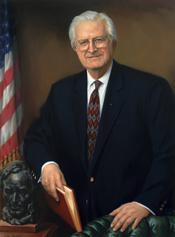 Rep. Henry J. Hyde (R-IL)
Legislative Activity
Stay on top of the latest movement without scrolling through every action
Message on Senate action sent to the House.
September 7, 2004
View full timeline
Introduced in House
March 25, 2004
Referred to the House Committee on International Relations.
March 25, 2004
Committee Agreed to Seek Consideration Under Suspension of the Rules, by Voice Vote.
March 31, 2004
Mr. Burton (IN) moved to suspend the rules and agree to the resolution.
May 5, 2004 • 6:28 PM
Considered under suspension of the rules. (consideration: CR H2617-2623)
May 5, 2004 • 6:29 PM
DEBATE - The House proceeded forty minutes of debate on H. Con. Res. 398.
May 5, 2004 • 6:29 PM
At the conclusion of debate, the Yeas and Nays were demanded and ordered. Pursuant to the provisions of clause 8, rule XX, the Chair announced that further proceedings on the motion would be postponed.
May 5, 2004 • 7:05 PM
Considered as unfinished business. (consideration: CR H2699)
May 6, 2004 • 3:15 PM
Passed/agreed to in House: On motion to suspend the rules and agree to the resolution Agreed to by the Yeas and Nays: (2/3 required): 376 - 3, 14 Present (Roll no. 152).(text: CR 5/5/2004 H2617-2619)
May 6, 2004 • 3:20 PM
On motion to suspend the rules and agree to the resolution Agreed to by the Yeas and Nays: (2/3 required): 376 - 3, 14 Present (Roll no. 152). (text: CR 5/5/2004 H2617-2619)
May 6, 2004 • 3:20 PM
Motion to reconsider laid on the table Agreed to without objection.
May 6, 2004 • 3:20 PM
Received in the Senate and referred to the Committee on Foreign Relations.
May 6, 2004
Senate Committee on Foreign Relations discharged by Unanimous Consent.
July 22, 2004
Measure laid before Senate by unanimous consent. (consideration: CR S8798-8799)
July 22, 2004
Resolution agreed to in Senate with an amendment and an amendment to the Title and an amended preamble by Unanimous Consent.
July 22, 2004
Message on Senate action sent to the House.
September 7, 2004
Voting History
1 vote recorded • Roll call available
Floor Debate
23 membersWhat members said about H.Con.Res. 398 on the floor


 +18
+18
Floor Debate
23 membersWhat members said about H.Con.Res. 398 on the floor
Mr. Chairman, I yield myself such time as I may consume. I am pleased to present to the House today the funding recommendations of the Committee on Appropriations for fiscal year 2005 for foreign…
Mr. Speaker, I move to suspend the rules and agree to the concurrent resolution (H. Con. Res. 398) expressing the concern of Congress over Iran's development of the means to produce nuclear weapons.…
Mr. Chairman, there is no doubt that this must be the most popular appropriations subcommittee, because so many of us have come to the chairman and the ranking member on many of our issues. Really,…
Mr. President, when historians look back on American foreign policy in the early 21st century, they will ask a few basic questions. One will be whether we used our immense military strength wisely.…
Mr. Chairman, I yield myself such time as I may consume. Mr. Chairman, I rise in strong support of this bill. I want to begin by thanking the gentleman from Arizona (Chairman Kolbe) for the close…
Show 8 more

Mr. President, I rise today to speak about the fires that are burning in my State of Alaska. To date, there are 117 active fires in Alaska that have burned over 3.8 million acres. That is larger than…

Mr. Speaker, I speak as the ranking Democrat on the subcommittee that deals with terrorism and proliferation of weapons of mass destruction. I want to clarify of the backgrounds that we face with…
Mr. Chairman, I offer an amendment. Mr. Chairman, I yield myself 3 minutes. I introduced this amendment on behalf of myself and the gentlewoman from Florida (Ms. Ros-Lehtinen). The gentlewoman is the…

Mr. Speaker, I rise in strong support of this important resolution, and I yield myself such time as I may consume. Mr. Speaker, I want to pay tribute to the chairman of our committee, the gentleman…
Mr. Chairman, I rise to commend Chairman Jim Kolbe, Ranking Member Nita Lowey, the other members of the Foreign Operations Appropriations Subcommittee and the majority and minority staffs for the…
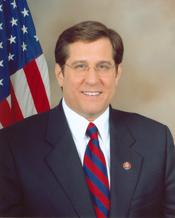
Mr. Chairman, I thank the gentlewoman from New York for yielding me the time. Allow me, Mr. Chairman, to first thank the gentleman from Arizona (Mr. Wicker) for all of his cooperation and that of his…

Mr. Chairman, I thank Mr. Kolbe for those words. I want to begin by agreeing with the gentlewoman from Michigan who just spoke about the bipartisan nature of this subcommittee and the product that we…

Mr. Speaker, I rise today to condemn Iran's continued pursuit of nuclear weapons and its failure to disclose nuclear enrichment projects to the international atomic energy agency. Surely the United…
Show 11 more

Mr. Chairman, I rise today to speak out against H.R. 4818, this year's Foreign Operations Appropriation Bill. I want to state my apprehension about what has been this Nation's philosophy toward…
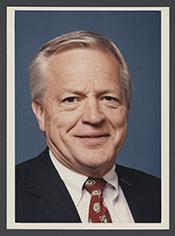
Mr. Chairman, I rise in strong support of this bill and encourage all of my colleagues to vote in favor of it today. I want to thank the gentleman from Arizona (Chairman Kolbe) and the gentlewoman…
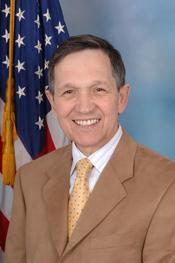
Mr. Speaker, I wanted to thank the gentleman from California (Mr. Sherman). And to the gentleman from Indiana (Mr. Burton), I salute your concern about Iraq's nuclear activities. I join you in…

Mr. Chairman, I thank my friend, my distinguished colleague from California, for the time, and I rise in strong support of the Sherman/Ros-Lehtinen amendment and ask my colleagues to render their…

Mr. Chairman, I rise in very strong support of this bill and the work of the gentleman from Arizona (Mr. Kolbe) and the gentlewoman from New York (Mrs. Lowey), our chair and ranking minority member.…
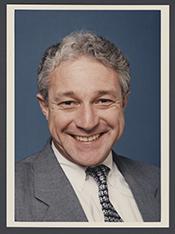
Mr. Chairman, today, as the House considers the Foreign Operations Appropriations Act of 2005, I respectfully submit the following statement into the record in order to raise awareness of an issue…

Mr. Speaker, I thank the gentleman for yielding me this time. I just want to add my support to this endeavor and this resolution. Certainly, the gentleman from California (Mr. Lantos), the author of…

Mr. Speaker, the resolution we are considering today directly confronts what may become a clear and present threat to American security. For 18 years, the government of Iran has hidden information on…
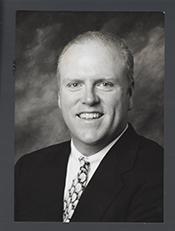
Mr. Chairman, I rise today in strong support of this bipartisan legislation crafted by Mr. Kolbe and my good friend from New York, Ms. Lowey. Representing one of the most diverse Congressional…
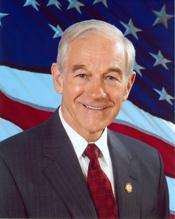
Mr. Speaker, I rise in strong opposition to this ill- conceived and ill-timed legislation. Let's not fool ourselves: this concurrent resolution leads us down the road to war against Iran. It creates…
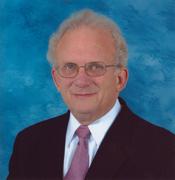
Mr. Speaker, Iran has repeatedly denied that it is trying to develop nuclear weapons. But it is increasingly difficult to conceive of any other plausible explanation for its efforts to enrich uranium…
Bill Text
4 versions available
        [Congressional Bills 108th Congress]
[From the U.S. Government Publishing Office]
[H. Con. Res. 398 Engrossed Amendment Senate (EAS)]

In the Senate of the United States,

July 22, 2004.
Resolved, That the resolution from the House of Representatives (H.
Con. Res. 398) entitled ``Concurrent resolution expressing the concern
of Congress over Iran's development of the means to produce nuclear
weapons.'', do pass with the following

AMENDMENTS:

(1)Page 1, strike out the preamble and insert:
Whereas it is the policy of the United States to oppose, and urgently to seek
the agreement of other nations also to oppose, any transfer to Iran of
any goods or technology, including dual-use goods or technology,
wherever that transfer could contribute to its acquiring chemical,
biological, or nuclear weapons;
Whereas the United Nations Security Council decided, in United Nations Security
Council Resolution 1540, that ``all States shall refrain from providing
any form of support to non-State actors that attempt to develop,
acquire, manufacture, possess, transport, transfer or use nuclear,
chemical, or biological weapons and their means of delivery'';
Whereas the United States has imposed sanctions numerous times on persons and
entities transferring equipment and technical data to Iran to assist its
weapons of mass destruction programs;
Whereas on January 1, 1968, Iran signed the Treaty on the Non-Proliferation of
Nuclear Weapons, done at Washington, London, and Moscow July 1, 1968,
and entered into force March 5, 1970 (the ``Nuclear Non-Proliferation
Treaty'');
Whereas Iran, as a party to the Nuclear Non-Proliferation Treaty as a non-
nuclear weapons state, is obligated never to develop or acquire nuclear
weapons;
Whereas Iran did not declare to the International Atomic Energy Agency (IAEA)
the existence of the Natanz Pilot Fuel Enrichment Plant and the
production-scale Fuel Enrichment Facility under construction at Natanz
until February 2003, after the existence of the plant and facility was
revealed by an opposition group;
Whereas it is estimated that the Natanz Pilot Fuel Enrichment Plant could
produce enough highly enriched uranium for a nuclear weapon every year-
and-a-half to two years;
Whereas it is estimated that the Natanz Fuel Enrichment Facility could, when
completed, produce enough highly enriched uranium for as many as 25 to
30 nuclear weapons per year;
Whereas in his report of June 6, 2003, the Director General of the IAEA stated
that Iran had failed to meet its obligations under its Safeguards
Agreement with the IAEA to report all nuclear material imported into
Iran--specifically, the importation of uranium hexafluoride, uranium
tetrafluoride and uranium dioxide in 1991--the processing and use of
that material, and the facilities involved in the use and processing of
the material;
Whereas the IAEA Director General stated in the same report that Iran had
produced uranium metal and was building a uranium metal processing
facility, despite the fact that neither its light water reactors nor its
planned heavy water reactors require uranium metal for fuel;
Whereas the IAEA Board of Governors urged Iran in June 2003 to promptly rectify
its failures to meet its obligations under its Safeguards Agreement, not
to introduce nuclear material into the Natanz Pilot Fuel Enrichment
Plant, and to cooperate fully with the Agency in resolving questions
about its nuclear activities;
Whereas the IAEA Director General reported to the Board of Governors of the IAEA
in August 2003 that Iran had failed to disclose additional nuclear
activities as required by its Safeguards Agreement and continued to fail
to resolve questions about its undeclared uranium enrichment activities,
including those raised by the detection of two types of highly enriched
uranium particles at the Natanz Pilot Fuel Enrichment Plant;
Whereas on August 19, 2003, after earlier denials, Iran admitted in a letter
that it had carried out uranium conversion experiments in the early
1990's, experiments that included bench scale preparation of uranium
compounds and that should have been disclosed to the IAEA in accordance
with its obligations under its Safeguards Agreement;
Whereas the IAEA Board of Governors on September 12, 2003, called on Iran to
suspend all further uranium enrichment and any plutonium reprocessing
activities, disclose all its nuclear activities, and cooperate fully
with the IAEA, and to sign, ratify, and fully implement the Additional
Protocol between Iran and the IAEA for the application of safeguards
(the ``Additional Protocol'') to strengthen investigation of all nuclear
activities within Iran, and requested all third countries to cooperate
closely and fully with the IAEA in resolving questions about Iran's
nuclear program;
Whereas IAEA inspectors and officials continued to confront Iran with
discrepancies in its explanations of its nuclear activities;
Whereas on October 21, 2003, Iran and the Foreign Ministers of France, Germany,
and the United Kingdom issued a joint statement in which Iran indicated
that it had decided to suspend all uranium enrichment and reprocessing
activities as defined by the IAEA;
Whereas the Governments of France, Germany, and the United Kingdom promised a
dialogue with Iran to ease Iran's access to modern technologies and
supplies in a range of areas once certain international concerns
regarding Iran are fully resolved;
Whereas in a subsequent letter on October 23, 2003, Iran further admitted that
it had tested uranium enrichment centrifuges at the Kalaye Electric
Company between 1998 and 2002 using its previously undeclared imported
uranium hexafluoride;
Whereas in that same letter, Iran admitted that it had a laser uranium
enrichment program, in which it used 30 kilograms of uranium not
previously declared to the IAEA, another violation of its Safeguards
Agreement;
Whereas Iran indicated initially that its laser enrichment program had achieved
uranium enrichment levels of slightly more than 3 percent, but the
Director General's report of June 1, 2004, states that the IAEA later
learned that Iran ``had been able to achieve average enrichment levels
of 8 percent to 9 percent, with some samples of up to approximately 15
percent'';
Whereas the June 1, 2004, report states also that Iran's declaration of October
21, 2003, failed to include information that should have been provided,
including the fact that ``some samples from'' the laser uranium
enrichment project ``had been sent for assessment to the supplier's
laboratory'';
Whereas in its letter of October 23, 2003, Iran also admitted that it had
irradiated 7 kilograms of uranium dioxide targets and reprocessed them
to extract plutonium, another violation of its legal obligation to
disclose such activities under its Safeguards Agreement;
Whereas Iran told the IAEA on November 10, 2003, that it would sign and ratify
the Additional Protocol and would act in accordance with the Additional
Protocol pending its entry-into-force;
Whereas on November 10, 2003, Iran further informed the IAEA Director General
that it had decided to suspend all enrichment and reprocessing
activities in Iran, not to produce feed material for enrichment
processes, and not to import enrichment related items;
Whereas the IAEA, through its investigative and forensic activities in Iran and
elsewhere, has uncovered and confronted Iran about numerous lies
concerning its nuclear activities;
Whereas the Director General of the IAEA reported to the IAEA Board of Governors
on November 10, 2003, that Iran has concealed many aspects of its
nuclear activities from the IAEA, in breach of its obligations under its
Safeguards Agreement;
Whereas despite Iran's subsequent pledge to, once again, fully disclose all of
its nuclear activities to the IAEA, the Director General of the IAEA, in
a February 24, 2004, report, found that Iran continued to engage in
deception regarding its nuclear activities, including failing to
disclose a more sophisticated enrichment program using more advanced
enrichment centrifuge technology imported from foreign sources, and
providing incomplete and unsupported explanations about experiments to
create a highly toxic isotope of polonium that outside experts say is
useful as a neutron initiator in nuclear weapons;
Whereas the Director General's reports of February 24, 2001, and June 1, 2004,
stated that environmental samples from one room at the Kalaye Electric
Company workshop and from equipment that had been present in that
workshop showed more than trace quantities of uranium enriched to 36
percent U-235, despite finding only negligible traces of this on
imported centrifuge components, and that the types of uranium
contamination at that workshop differed from those found at Natanz,
which would appear to contradict Iran's assertion that the source of
contamination at both sites is imported centrifuge components and
perhaps also its assertion that it has not enriched uranium to more than
1.2 percent U-235 using centrifuge technology;
Whereas the Director General stated in the June 1, 2004, report, that ``the
contamination is different on domestic and imported centrifuges,'' that
``it is unlikely'' that the 36 percent U-235 contamination was due to
components acquired from Iran's principal supplier country, and that
``important information about the P-2 centrifuge programme has
frequently required repeated requests, and in some cases continues to
involve changing or contradictory information'';
Whereas these deceptions by Iran are continuing violations of Iran's Safeguards
Agreement and of Iran's previous assurances to the IAEA and the
international community of full transparency;
Whereas despite Iran's commitment to the IAEA and to France, Germany, and the
United Kingdom that it would suspend uranium enrichment activities, it
has repeatedly emphasized that this suspension is temporary and
continued to manufacture and, until April 2004, to import, uranium
enrichment centrifuge parts and equipment, allowing it to resume and
expand its uranium enrichment activities whenever it chooses;
Whereas the statements on February 25, 2004, of Hassan Rowhani, Secretary of the
Supreme National Security Council of Iran, that Iran was not required to
reveal to the IAEA its research into more sophisticated ``P2'' uranium
enrichment centrifuges, and that Iran has other projects which it has no
intention of declaring to the IAEA, are contrary to--
(1) Iran's commitment to the IAEA in an October 16, 2003, letter
from the Vice President of Iran and the President of Iran's Atomic
Energy Organization that Iran would present a ``full picture of its
nuclear activities'' and ``full transparency'';
(2) Iran's commitment to the foreign ministers of the United
Kingdom, France, and Germany of October 21, 2003, to full transparency
and to resolve all outstanding issues; and
(3) its statement to the IAEA's Board of Governors of September 12,
2003, of its commitment to full transparency and to ``leave no stone
unturned'' to assure the IAEA of its peaceful objectives;
Whereas Libya received enrichment equipment and technology, and a nuclear
weapons design, from the same nuclear black market that Iran has used,
raising the question of whether Iran, as well, received a nuclear weapon
design that it has refused to reveal to international inspectors;
Whereas the Russian Federation has announced that it will soon conclude an
agreement to supply Iran with enriched nuclear fuel for the Bushehr
nuclear power reactor, which, if implemented, would undercut the
international effort to persuade Iran to cease its nuclear weapons
development program;
Whereas the IAEA Board of Governors' resolution of March 13, 2004, which was
adopted unanimously, noted with ``serious concern that the declarations
made by Iran in October 2003 did not amount to the complete and final
picture of Iran's past and present nuclear programme considered
essential by the Board's November 2003 resolution,'' and also noted that
the IAEA has discovered that Iran had hidden more advanced centrifuge
associated research, manufacturing, and testing activities, two mass
spectrometers used in the laser enrichment program, and designs for hot
cells to handle highly radioactive materials;
Whereas the same resolution also noted ``with equal concern that Iran has not
resolved all questions regarding the development of its enrichment
technology to its current extent, and that a number of other questions
remain unresolved, including the sources of all HEU contamination in
Iran; the location, extent and nature of work undertaken on the basis of
the advanced centrifuge design; the nature, extent, and purpose of
activities involving the planned heavy-water reactor; and evidence to
support claims regarding the purpose of polonium-210 experiments'';
Whereas Hassan Rowhani on March 13, 2004, declared that IAEA inspections would
be indefinitely suspended as a protest against the IAEA Board of
Governors' resolution of March 13, 2004, and while Iran subsequently
agreed to readmit inspectors to one site by March 29, 2004, and to
others in mid-April, 2004, including four workshops belonging to the
Defence Industries Organization, this suspension calls into serious
question Iran's commitment to full transparency about its nuclear
activities;
Whereas Iran informed the IAEA on April 29, 2004, of its intent to produce
uranium hexafluoride in amounts that the IAEA concluded would constitute
production of feed material for uranium centrifuges and wrote in a
letter of May 18, 2004, that its suspension of all uranium enrichment
activities ``does not include suspension of production of UF6,'' which
contradicted assurances provided in its letter of November 10, 2003;
Whereas the IAEA Board of Governors' resolution of June 18, 2004, which was also
adopted unanimously, ``deplores'' the fact that ``Iran's cooperation has
not been as full, timely and proactive as it should have been'' and
``underlines that, with the passage of time, it is becoming ever more
important that Iran work proactively to enable the Agency to gain a full
understanding of Iran's enrichment programme by providing all relevant
information, as well as by providing prompt access to all relevant
places, data and persons'';
Whereas the same resolution also expresses regret that Iran's suspension
``commitments have not been comprehensively implemented and calls on
Iran immediately to correct all remaining shortcomings'';
Whereas the same resolution also calls on Iran, as further confidence-building
measures, voluntarily to reconsider its decision to begin production
testing at the Uranium Conversion Facility and its decision to start
construction of a research reactor moderated by heavy water, as the
reversal of those decisions would make it easier for Iran to restore
international confidence undermined by past reports of undeclared
nuclear activities in Iran;
Whereas Iran then announced its decision to resume production of centrifuge
components, notwithstanding both the IAEA Board of Governors resolution
of September 12, 2003, which called on Iran ``to suspend all further
uranium enrichment-related activities,'' and Iran's voluntary suspension
of all uranium enrichment activities pursuant to its agreement of
October 21, 2003, with the foreign ministers of the United Kingdom,
France, and Germany;
Whereas Iran's pattern of deception and concealment in dealing with the IAEA,
the Foreign Ministers of France, Germany, and the United Kingdom, and
the international community, its receipt from other countries of the
means to enrich uranium, its use of sources who provided a nuclear
weapon design to another country, its production of centrifuge
components at Defence Industries Organization workshops, and its
repeated breaches of its Safeguards Agreement suggest strongly that Iran
has also violated its legal obligation under article II of the Nuclear
Non-Proliferation Treaty not to acquire or seek assistance in acquiring
nuclear weapons; and
Whereas the maintenance or construction by Iran of unsafeguarded nuclear
facilities or uranium enrichment or reprocessing facilities will
continue to endanger the maintenance of international peace and security
and threaten United States national interests: Now, therefore, be it
Resolved by the House of Representatives (the Senate concurring),
(2)Page 8, line 2, strike out all after the resolving clause and
insert:
That Congress--
(1) condemns--
(A) the failure of the Government of Iran for
nearly two decades to report material, facilities, and
activities to the International Atomic Energy Agency
(IAEA) in contravention of its obligations under its
Safeguards Agreement; and
(B) Iran's continuing deceptions and falsehoods to
the IAEA and the international community about its
nuclear programs and activities;
(2) concurs with the conclusion reached in the Department
of State's Annual Report on Adherence to and Compliance with
Arms Control and Non-Proliferation Agreements and Commitments
that Iran is pursuing a program to develop nuclear weapons;
(3) urges the President to provide to the IAEA whatever
financial, material, or intelligence resources are necessary to
enable the IAEA it to fully investigate Iran's nuclear
activities;
(4) calls upon all states party to the Treaty on the Non-
Proliferation of Nuclear Weapons, done at Washington, London,
and Moscow July 1, 1968, and entered into force March 5, 1970
(hereafter in this resolution referred to as the ``Nuclear Non-
Proliferation Treaty''), including the United States, to use
appropriate means to prevent Iran from acquiring nuclear
weapons, including the suspension of all nuclear and other
cooperation with Iran, including the provision of dual use
items, until Iran fully implements the Additional Protocol to
its Safeguards Agreement with the IAEA (hereafter in this
resolution referred to as the ``Additional Protocol'') and is
clearly in compliance with its obligations under the Nuclear
Non-Proliferation Treaty;
(5) declares that Iran, through its many breaches during
the past 18 years of its Safeguards Agreement with the IAEA,
has forfeited the right to be trusted with the development of a
full nuclear fuel cycle, especially with uranium conversion and
enrichment and plutonium reprocessing technology, equipment,
and facilities;
(6) declares that the revelations of Iran's nondisclosure
of additional enrichment and nuclear-weapons-applicable
research activities, as detailed in the reports of February 24,
2004, and June 1, 2004, by the Director General of the IAEA,
together with the statement by the Government of Iran that it
will not disclose other research programs, constitute ample
evidence of Iran's continuing policy of noncompliance with the
letter and spirit of its obligations under its Safeguards
Agreement and the Additional Protocol;
(7) recognizes, in contrast with Iran's behavior, the
positive example of Libya's decision to renounce and dismantle
its nuclear weapons program and to provide full, complete, and
transparent disclosure of all its nuclear activities, which has
enabled the IAEA to rapidly understand and verify with high
confidence the extent and scope of Libya's program and has led
to the establishment of direct diplomatic relations with Libya,
the gradual lifting of U.S. sanctions, and the establishment of
cooperative programs between the United States and Libya;
(8) foresees a similar future for Iran, once that country
renounces and dismantles its weapons of mass destruction and
long-range ballistic missile programs and renounces its support
for international terrorist organizations;
(9) notes the assistance that the United States has
provided to southeastern Iran since the Bam earthquake on
December 26, 2003;
(10) calls upon Iran to immediately and permanently cease
all efforts to acquire sensitive nuclear fuel cycle
capabilities, in particular all uranium enrichment activities,
including importing, manufacturing, and testing of related
equipment;
(11) urges Iran to comply with its international
commitments and to rescind its decisions--
(A) to manufacture and construct centrifuges;
(B) to produce feed material that could be used in
those centrifuges; and
(C) to construct a heavy-water moderated reactor
that could be used for plutonium production;
(12) calls upon Iran to honor its stated commitments and
legal obligations--
(A) to grant IAEA inspectors prompt, full and
unrestricted access;
(B) to cooperate fully with the investigation of
its nuclear activities; and
(C) to demonstrate a new openness and honesty about
all its nuclear programs;
(13) welcomes the June 26, 2004, declaration at the United
States-E.U. Summit in Shannon, Ireland, in which the European
Union and the United States pledged to implement United Nations
Security Council Resolution 1540, which identifies actions
states should take--
(A) to stop the proliferation of weapons of mass
destruction;
(B) to establish new measures in accordance with
the G8 Action Plan on Non-Proliferation, announced June
9, 2004, at the G8 Summit in Sea Island, Georgia; and
(C) to preserve the integrity of the Nuclear Non-
Proliferation Treaty;
(14) urges close cooperation between the United States and
the European Union in accordance with the reaffirmation in
their June 26, 2004, declaration of ``the IAEA Board of
Governors' Iran resolutions, which deplore Iran's insufficient
cooperation and call on Iran, inter alia, to cooperate fully
and in a timely and proactive manner, with IAEA investigation
of its nuclear programme and suspend all enrichment-related and
reprocessing activities'';
(15) calls upon the members of the European Union not to
resume discussions with Iran on multilateral trade agreements
until the IAEA Director General reports that Iran has suspended
all nuclear weapons development activity, and not to implement
such trade agreements until Iran has verifiably and permanently
ceased all nuclear weapons development activity, including a
permanent cessation of uranium conversion and enrichment and
plutonium reprocessing activities;
(16) further calls upon the members of the European Union
to undertake such additional measures, including imposing
sanctions and sponsoring an IAEA Board of Governors report on
non-compliance pursuant to Article XII of the IAEA Statute, as
may be necessary to persuade Iran to cease all nuclear weapons
development activity and to fulfill its obligations and
commitments to the IAEA;
(17) in light of ongoing revelations of the noncompliance
of the Government of Iran regarding its obligations under the
Nuclear Non-Proliferation Treaty and pledges to the IAEA, and
in light of the consequent and ongoing questions and concerns
of the IAEA, the United States, and the international community
regarding Iran's nuclear activities--
(A) urges Japan to ensure that Japanese commercial
entities not proceed with the development of Iran's
Azadegan oil field;
(B) urges France and Malaysia to ensure that French
and Malaysian commercial entities not proceed with
their agreement for further cooperation in expanding
Iran's liquid natural gas production field;
(C) calls on all countries to intercede with their
commercial entities to ensure that these entities
refrain from or suspend all investment and investment-
related activities that support Iran's energy industry;
and
(D) calls on Member States of the United Nations to
prevent the Government of Iran from continuing to
pursue and develop programs or facilities that could be
used in a nuclear weapons program and to end all
nuclear cooperation with Iran, including the provision
of dual use items, until Iran complies fully with its
Safeguards Agreement with the IAEA and its obligations
under the Nuclear Non-Proliferation Treaty;
(18) deplores any effort by any country to provide nuclear
power-related assistance to Iran at this time, and calls upon
Russia--
(A) to use all appropriate means to urge Iran to
meet fully its obligations and commitments to the IAEA;
and
(B) to suspend nuclear cooperation with Iran and
not conclude a nuclear fuel supply agreement for the
Bushehr reactor that would enter into force before Iran
has verifiably and permanently ceased all nuclear
weapons development activity, including a permanent
cessation of uranium conversion and enrichment and
plutonium reprocessing activities;
(19) calls upon the governments of the countries whose
nationals and corporations are implicated in assisting Iranian
nuclear activities, including Pakistan, Malaysia, the United
Arab Emirates, and Germany--
(A) to fully investigate such assistance;
(B) to grant the IAEA all necessary access to
individuals, sites, and information related to the
investigations;
(C) to take all appropriate action against such
nationals and corporations under the laws of those
countries; and
(D) to immediately review and rectify their export
control laws, regulations, and practices in order to
prevent further assistance to countries pursuing
nuclear programs that could support the development of
nuclear weapons;
(20) urges the IAEA Board of Governors, in accordance with
Article XII of the IAEA Statute--
(A) to report to the United Nations Security
Council that Iran has been in noncompliance with its
agreements with the IAEA; and
(B) as appropriate, to specify areas in which Iran
continues to be in noncompliance with its agreements
with the IAEA or with the Nuclear Non-Proliferation
Treaty, or in which its compliance is uncertain;
(21) urges the United Nations Security Council, bearing in
mind its decision in Resolution 1540 that the ``proliferation
of nuclear, chemical and biological weapons, as well as their
means of delivery, constitutes a threat to international peace
and security,'' to consider measures necessary--
(A) to support the inspection efforts by the IAEA;
and
(B) to prevent Iran from further engaging in
clandestine nuclear activities;
(22) further urges the United Nations Security Council,
immediately upon receiving any report from the IAEA regarding
the continuing non-compliance of Iran with its obligations, to
address the threat to international peace and security posed by
Iran's nuclear weapons program and take such action as may be
necessary under Article 39, Article 40, and Article 41 of the
Charter of the United Nations;
(23) urges the United Nations Security Council, the Nuclear
Suppliers Group, the Zangger Committee, and other relevant
international entities to declare that non-nuclear-weapon
states under the Nuclear Non-Proliferation Treaty that commit
significant violations of their safeguards agreements regarding
uranium enrichment or plutonium reprocessing or engage in
activities intended to support a military nuclear program
thereby forfeit their right under the Nuclear Non-Proliferation
Treaty to engage in nuclear fuel-cycle activities;
(24) further urges the United Nations Security Council, the
Nuclear Suppliers Group, the Zangger Committee, the
International Atomic Energy Agency, other relevant
international entities, and all states party to the Nuclear
Non-Proliferation Treaty, including the United States, to seek
consensus, no later than the 2005 Nuclear Non-Proliferation
Treaty Review Conference in Geneva, Switzerland, on the best
and most equitable means to limit the right of non-nuclear
weapons states to engage in those nuclear fuel cycle activities
that could contribute to the development of nuclear weapons,
while providing those states assured and affordable access to--
(A) nuclear reactor fuel and other materials used
in peaceful nuclear activities; and
(B) spent fuel management; and
(25) urges the President to keep Congress fully and
currently informed concerning the matters addressed in this
resolution.
Amend the title so as to read: ``Concurrent resolution
expressing the concern of Congress over Iran's development of
the means to produce nuclear weapons.''.

Attest:

Secretary.
108th CONGRESS

2d Session

H. CON. RES. 398

_______________________________________________________________________

AMENDMENTS