Condemning the Government of the Republic of the Sudan for its attacks against innocent civilians in the impoverished Darfur region of western Sudan.
Legislative Activity
Stay on top of the latest movement without scrolling through every action
Received in the Senate and referred to the Committee on Foreign Relations.
May 18, 2004
View full timeline
Introduced in House
April 1, 2004
Referred to the House Committee on International Relations. (text of measure as introduced: CR 5/02/2004 E518-519)
April 1, 2004
Sponsor introductory remarks on measure. (CR E518)
April 2, 2004
Committee Agreed to Seek Consideration Under Suspension of the Rules, (Amended) by Voice Vote.
May 6, 2004
Mr. Green (WI) moved to suspend the rules and agree to the resolution, as amended.
May 17, 2004 • 3:49 PM
Considered under suspension of the rules. (consideration: CR H3044-3049)
May 17, 2004 • 3:49 PM
DEBATE - The House proceeded with forty minutes of debate on H. Con. Res. 403.
May 17, 2004 • 3:49 PM
At the conclusion of debate, the Yeas and Nays were demanded and ordered. Pursuant to the provisions of clause 8, rule XX, the Chair announced that further proceedings on the motion would be postponed.
May 17, 2004 • 4:11 PM
Considered as unfinished business. (consideration: CR H3054)
May 17, 2004 • 7:03 PM
Passed/agreed to in House: On motion to suspend the rules and agree to the resolution, as amended Agreed to by the Yeas and Nays: (2/3 required): 360 - 1 (Roll no. 179).(text as passed House: CR H3044)
May 17, 2004 • 7:19 PM
On motion to suspend the rules and agree to the resolution, as amended Agreed to by the Yeas and Nays: (2/3 required): 360 - 1 (Roll no. 179). (text as passed House: CR H3044)
May 17, 2004 • 7:19 PM
Motion to reconsider laid on the table Agreed to without objection.
May 17, 2004 • 7:20 PM
Received in the Senate and referred to the Committee on Foreign Relations.
May 18, 2004
Voting History
1 vote recorded • Roll call available
Floor Debate
19 membersWhat members said about H.Con.Res. 403 on the floor
FRW CHS
CHS SB
SB DMP
DMP TL+14
TL+14
Floor Debate
19 membersWhat members said about H.Con.Res. 403 on the floor
Mr. Speaker, I commend the House, Chairman Hyde and International Relations Committee for bringing H. Con. Res. 403 to the floor quickly and I urge a unanimous vote for this important resolution. The…
Mr. Speaker, I commend the House, Chairman Hyde and International Relations Committee for bringing H. Con. Res. 403 to the floor quickly and I urge a unanimous vote for this important resolution.
The conflict in Sudan began early last year when the Government of Sudan began arming the Janjaweed militia to suppress local rebel groups. The Janjaweed, with the support of government troops began their reign of terror on the people of Darfur.
The result--ethnic cleansing and the death of thousands of innocent civilians. One million people are now displaced. Village after village attacked, looted and burned. The survivors bear scars of mutilation and rape. Schools filled with students have been attacked and the girls raped.
Thousands of survivors walk days, weeks and sometimes months in the unrelenting sun to seek safety in Chad. They are pursued by Janjaweed and often bombed as they languish on the border.
Hundreds of thousands of civilians are trapped in camps inside Darfur. Surrounded by militia and unable to leave to seek water or firewood. Families are forced to make life or death decisions on which family member will go to gather food and risk certain death.
People are living on top of each other in crowed camps. Disease and malnutrition are rampant. USAID now estimates that by fall the world will see catastrophic mortality rates from disease and starvation.
The world has finally found its voice as reports are trickling out describing the reality of Darfur. The headlines in major U.S. newspapers have read like a horror film:
``Sudan militiamen on horses uproot a million'';
``Sudan's hellish humanitarian crisis'';
``Sudan's Darfur is calm because there are no more villages to burn''.
``Sudan starving Darfur refuges''
I would like to read an excerpt from the May 15 Economist:
Her story is typical. . . . An air raid caught her
unawares: as bombs fell, she ran around in confusion. When
the bombers had completed their return pass, the horizon
filled with dust, the ground shuddered, and a host of mounted
militiamen charged through the village, killing all the young
men they could find . . . her 18-month baby . . . killed by
shrapnel.
Two weeks later her oldest son, 15, was made to kneel in
line with other young men before being shot in the back of
the head. Her husband disappeared the same day.
But words are not enough. The international community has been reluctant to act.
Secretary General Kofi Annan should go to Darfur and stand with the persecuted.
I introduced this resolution so Members of Congress would have the opportunity to voice their support for the innocent people in Darfur.
This resolution strongly condemns the Government of Sudan and government-supported militia groups for attacks against innocent civilians, in violation of the Geneva Convention.
The Government of Sudan should immediately disarm the militia, and allow full unconditional humanitarian access to Darfur. The civilians who are languishing in camps should be provided immediate protection.
Why is the world slow to respond when atrocities are taking place before our eyes?
The world has said never again over and over again, yet when it is put to the test and charged with protecting humanity it continues to fail.
Why has the international community become content with the slaughter of innocent human beings?
When will the death of innocent human beings be too much for the world to bear?
We need to be bold and willing to condemn and shame countries that commit atrocities against their own citizens.
It is our moral responsibility to protect humanity and not sit idly by in the face of horror. Those of us in public office have the unique responsibility and the power of our voices to confront evil.
The world is a safer place when the world sides with the opposed.
Today, let our voices be raised for the innocent people of Darfur.
Mr. Speaker, I submit for the Record the full Economist story. I urge every Member to read the graphic detail of Khartoums destruction of innocent lives.
[From the Economist, May 15, 2004]
Fleeing the Horsemen Who Kill for Khartoum
Her children's bodies were rotting in the village wells,
where Arab militiamen had thrown them to poison the water
supply. But Kaltuma Hasala Adan did not flee her home.
Leaving her crops and livestock would condemn the rest of the
family to death, she reasoned. So she stayed put for four
months, despite her government's strenuous efforts to
terrorize her into flight.
Her story is typical of western Sudan's black Africans. Her
village was first attacked in January. An air raid caught her
unawares: as the bombs fell, she ran around
in confusion. When the bombers had completed their return
pass, the horizon filled with dust, the ground shuddered, and
a host of mounted militiamen charged through the village,
killing all the young men they could find. During that first
attack, Kaltuma's 18-month baby, Ali, was killed by shrapnel.
Two weeks later, her oldest son, Issa, 15, was made to kneel
in line with other young men before being shot in the back of
the head. Her husband disappeared the same day.
For four wretched months, Kaltuma lived with both ears
strained for the faint drone of bombers, poised to dash with
her three surviving children to a hiding place in a dry river
bed. Then the janjaweed--an Arab militia that kills for the
Sudanese government--rode up to finish the job. They razed
her village entirely. She fled from the embers of her hut and
trekked for four days through the desert. Across the border
in Chad, she found sanctuary in the town of Tine. Thousands
of her neighbours were already there when she arrived.
The UN's humanitarian co-ordinator for Sudan, Mukesh
Kapila, described what is going on in Darfur, an arid region
of western Sudan, as ``the worst humanitarian crisis in the
world''. Human Rights Watch, a lobby group, has accused
Sudan's Arab-dominated government of crimes against humanity.
The government is seeking to purge Darfur of black Africans,
using methods as cruel as they are effective. Perhaps a
million people have fled their homes. Officials deny ethnic
cleansing, of course, but the refugees say they lie.
As Kaltuma tells her story, a crowd gathers to corroborate
it. Osman Nurrudin Sadr says his whole family was killed.
Khadija Yacob Abdallah, a pretty 17-year-old, watched her
parents die and was then gang-raped. All the refugees offer
the same explanation. ``They want to kill us because we are
black,'' says one.
It is a little more complicated than that. Sudan, Africa's
largest country, is the scene of two separate but related
civil wars. One, between the north and south, pits the Arab,
Islamist government against rebels who are mostly black
African and non-Muslim. This war has been raging
intermittently for half a century, but has come tantalizingly
close to resolution in the past year: partly because of
foreign pressure, especially from America, and partly because
both sides, exhausted, wish to stop fighting and share
Sudan's new-found oil wealth.
The other war, between the government and two rebel groups
in Darfur, pits Muslim against Muslim. The divide in Darfur
is ethnic, between Arabs and black Africans. This war flared
up only last year. It was seen at first as a mere sideshow,
but is now too vast and vile to be ignored.
centuries of suffering
The south has been marginalized for centuries. Arab slavers
used it as a hunting-ground for human booty, despite Anglo-
Egyptian attempts to crush the trade in the 19th century.
When independence came in 1956, southerners demanded
autonomy. They were ignored, so they rebelled.
The war paused between 1972 and 1983, but then resumed. The
government used scorched-earth tactics against the main rebel
group, the Sudan People's Liberation Army (SPLA), bombing
villages suspected of rebel sympathies, and arming and
encouraging militias to kill and pillage in rebel-held areas.
Slave raids continued, checked only by the absence of tarmac
roads in the south.
Largely because it involved Muslims enslaving Christians,
the war gripped the imagination of America's influential
Christian lobby. In fact, only a minority of southern
Sudanese are Christians; the rest are cheerfully polytheistic
or animist. Nonetheless, America took an interest, which
increased when the radical Islamist regime in Khartoum hosted
Osama bin Laden in the early 1900s. In retaliation for al-
Qaeda'a attacks on American embassies in Kenya and Tanzania
in 1998, President Bill Clinton bombed a Sudanese factory he
said was producing nerve gas, but which may have been making
aspirin. The regime was already distancing itself from its
international terrorist associates, a process swiftly
accelerated by the American invasions of Afghanistan and
Iraq.
Sudan's rulers rounded up terrorist suspects, shared
intelligence and froze Mr. bin Laden's assets in Sudan,
including a cannabis farm worked by child slaves who had
apparently been brought from a Ugandan rebel group for one
Kalashnikov each.
At the same time, the Sudanese government started to yield
to American pressure to seek peace with the south.
Negotiations have been tortuous, but Vice-President Ali Osman
Taha keeps talking to John Garang, the SPLA leader. If the
government shows bad faith, America threatens to choke it
with sanctions and to bankroll the SPLA.
Since 2001 the two sides have hammered out a series of
agreements that are supposed to culminate in a comprehensive
peace. Last September they signed a security accord, mapping
out how Khartoum will withdraw most of its troops from the
south. This year has seen a written agreement on how to split
the revenues from the oil that lies under Sudanese sand, and
verbal agreements on power-sharing and the future of three
contested areas. Some of these are on the northern side of
the line (see map), but their inhabitants consider themselves
southern.
For an interim period of six years, Sudan is to remain one
country, with Omar al-Bashir, the current president,
remaining in office, and with Mr. Garang, the rebel leader,
as his deputy. Then there is to be a referendum in which
southerners will be offered the choice of staying or
seceding.
the west burns
The trouble with this plan for a new Sudan is that it
involves only the two main belligerents. Peaceful opposition
groups have been left out. Since neither the government nor
the SPLA is remotely democratic, many Sudanese seethe at the
prospect of them divvying up the petrodollars. In Darfur,
that rage has sparked mayhem.
Darfur has seen sporadic fighting for generations. As the
desert has expanded, camel- and cattle-herding Arab nomads
have bickered with black African farmers over dwindling
supplies of water and pasture. Darfur's black tribes complain
that, since the 1980s, they have been pushed out of
government jobs in favor of Arabs. And the region has been
flooded with weapons. Khartoum first armed the janjaweed so
they could ride south and pillage SPLA territory. Arms from a
long-running conflict between Chad and Libya seeped across
the border into Darfur.
Last year, a new rebel group, the Sudan Liberation Army
(SLA) appeared in Darfur and won a string of victories. Soon
after, a second group sprang up, the Justice and Equality
Movement (JEM). The government in Kartoum felt vulnerable. It
was terrified that rebel successes in Darfur might inspire
other marginalised groups in the north and east, especially
since the SLA has links with a rebel group in the east.
The government struck back, not only against the rebels,
but also against their ethnic kin. It unleashed the
janjaweed. To swell the militia's ranks, Arab criminals were
released from jail and given horses, $100 each and carte
blanche to loot. (These ex-prisoners are labeled ta'ibeen,
``those who have repented''.)
The janjaweed have clattered into village after African
village, torching the straw roofs of conical huts, killing
young men who might join the rebels, raping women who might
feed them, and stealing everything they can carry off.
Sometimes they brand the hands of the women they rape, to
make the stigma permanent. They have also torched dozens of
mosques and torn up and defecated on copies of the Koran.
Whatever inspires them, it is not Islam.
Their victims have no doubt that the janjaweed enjoy the
state's blessing. When asked what gives them the right to
stop blacks at road blocks, the militiamen reply: ``We are
the government.'' When pillaging, they are often supported
by the air force and by the regular army. ``First the
planes come, then the janjaweed and finally government
soldiers,'' says a refugee. ``They are brothers united on
a mission to kill.''
It was a long time before the outside world took notice. At
first, both America and the UN hesitated to make a fuss about
Darfur for fear of derailing the north-south peace process.
But in March, the UN's man on the spot started making
comparisons with the Rwandan genocide of 1994. That was an
exaggeration, but it prompted Washington to lean on Khartoum
to end the ethnic cleansing. A ceasefire followed on April
8th, supposedly to help aid workers do their job, but was
quickly broken.
Fighting and pillage continue, making it hard to feed the
displaced. The UN does not want to get too close to the
border--the janjaweed do not respect international
boundaries--so it has moved 35,000 refugees deep into Chad.
Tens of thousands remain stranded near the border. Those
unfortunate enough to wind up in camps in Darfur have been
deliberately starved by the janjaweed, according to the UN.
Brave charities such as Medecins Sans Frontieres have
ignored the occasional air raid to dole out medical supplies,
feed the hungriest and vaccinate against a meningitis
outbreak. Most refugees in Chad have depended on food and
water from the locals who, though poor, are startlingly
generous. Supplies are running out, however, and the UN
mission is short of cash.
The rainy season is almost here, when the valleys will fill
with water and it will be impossible to get the refugees into
the half-empty camps that await them. UN lorries lie stranded
because there is no money for fuel and the drivers, unpaid
for six weeks, have gone on strike.
Over 10,000 newly arrived refugees around Bahai, north of
Tine, have been dismissed as ``combatants''--though most are
women, children or old men. For the UN, admitting that they
are refugees would mean being obligated to look after them.
``I'm trying to think of something the UN has done right
here, but I'm struggling,'' says one aid worker with a sigh.
spears and ploughshares
There is more to cheer about in southern Sudan. After years
of enduring the same abuses now being lavished on Darfur, the
south is relatively calm. In Rumbek, the largest town under
SPLA control, where abandoned armoured cars rust outside
buildings gutted by shelling, hardly any shrapnel has flown
for two years.
Half-forgotten tribal traditions are being rediscovered. On
a dusty football pitch known as Freedom Square, thousands of
young Dinka men, coated with ash and clad in glamorous
calfskin skirts, gather to elect a sub-chief. Not long ago
such affairs were subdued, forced indoors by the fear of
aerial bombardment. Now they are gleefully raucous.
War has left the south shattered. Most of the young
warriors queuing behind their chosen candidates have known
nothing else. There is no electricity or running water in the
south, an area the size of France and Germany combined, and
precious few schools, either. Southern children used to join
either the rebels or government-backed militias. They grew up
knowing how to march long distances on empty stomachs, but
not how to read.
Peace, if it lasts, will offer southerners a chance to grow
less poor. In one village, your correspondent saw a group of
SPLA soldiers melting bullets to fashion spearheads for
hunting gazelles. The same men were baffled, however, by a
consignment of ploughshares, kindly donated by a western aid
agency. Unsure what these strange objects were for, they beat
them down to make stools.
Elsewhere, workers can be seen hacking through thorny
scrub. They are clearing a path for a road, heading for a
large rock in the wilderness known as Ramciel, or ``the place
where the rhinos meet''. More accurately, it should be
``where rhinos used to meet'', as they were poached out of
existence some time ago. It is here that the SPLA is thinking
of building the south's principal city. Charles Deng, the
assistant foreman, has big dreams for the place. ``First we
will finish the road,'' he says. ``Then we will build
skyscrapers and ponds, better than London or maybe even as
good as Nairobi.''
Not everyone welcomes progress. An SPLA commander in nearby
Yirol murmured into his beer that he hoped the capital would
be built elsewhere. ``If they build it here then they will
also build schools and our girls will be sent to those
schools,'' he said. ``You know what the means? Their bride
price will fall. My daughters will be worthless to me.''
The end of the war, or of Sudan?
A formal deal ending the war is expected in the next few
weeks, possibly sooner. Since President George Bush is widely
seen as the architect of peace, he is perhaps more popular in
southern Sudan than anywhere else on earth. At the Rumbek
sub-chief's election one young warrior called Thuapon leaps
frenetically in the air, proudly waving a white Barbie-doll
in a pink dress. ``This is a new wife for President Bush. May
God grant him many fertile women with firm bodies and an
election victory without problems in Florida.''
The main outstanding issue concerns the religious status of
Khartoum. The government wants it to remain under sharia
(Islamic law); the SPLA does not. Some fudge is surely
possible. Observers are confident that a deal will be signed.
``If Khartoum were to renege at this point, it would signal
that this whole process was a charade from the beginning,''
says John Prendergast of the International Crisis Group, a
campaigning think-tank.
The difficulty will lie in how the deal is implemented.
Unsurprisingly, southerners do not trust the government.
``They just want time to re-arm,'' says James Thucdong, an
aspiring teacher in Rumbek. ``We know this is just a peace of
one or two years. They will never let us become
independent.'' Mr. Thucdong could well be right. There is no
provision yet for what will happen to revenues from Sudan's
oilfields, which lie mostly in the south, should voters
choose secession.
The two sides are unwilling to discuss this issue, but
Khartoum would presumably never let the south go if that
meant losing the petrodollars, too. ``When preparations begin
for the independence referendum, we are going to see major
meddling by elements in Khartoum, aimed at creating chaos in
the south and delaying [the] plebiscite,'' predicts Mr.
Prendergast.
Another worry is that southerners are squabblesome. During
the war, they spent as much time fighting each other as the
government. Mr. Garang may still be the south's key leader,
but his support for a united Sudan will irk secessionists,
who are probably a majority in the south. Other ethnic groups
resent the politically dominant Dinka people, and even the
Dinka are divided.
Once a peace deal is signed, many of the 4m southerners
living in squatter camps around the main cities of the north
will probably decide to pick their way through minefields and
make the long journey home. Tension over scarce natural
resources seems likely. As if to confound the optimists,
there has been a serious outbreak of fighting in the
ancient Shilluk kingdom since March. At least 70,000
people have been driven from their homes after battles
between militias loyal to Khartoum and the SPLA. As usual
in Sudan, most of the casualties were civilians.
many voices, many fears
In Khartoum, the mood is apprehensive. The political elite
is genuinely alarmed at what capitulation to southern demands
might encourage. Says Ghazi Attabani, a former presidential
adviser: ``If the south were to secede, it would be
catastrophic both for Sudan and for Africa. Secession would
not be peaceful. Internal differences in the south would
cause rifts which would make Rwanda seem like a picnic.''
Because of stringent censorship and the physical difficulty
of visiting Sudan's more troubled areas, ordinary northerners
have only a rough idea of what is going on in their own
country. Some are optimistic. ``Of course the people can live
together,'' says Ahmed Omar Othman, a shopkeeper. ``Just look
around Khartoum, we do already. Here, you will find a church
next to a mosque--surely that [proves it]? The real problem
is whether the politicians can work together.''
The record of Sudanese politicians in this are is not good.
Their preferred technique for holding this huge and
multifarious country together--barbaric force--has been shown
not to work. In Darfur, as Mr. Attabani admits, ``There is no
military solution.'' Arming gangsters such as the Janjaweek
is easy; reining them in again may prove much harder. Says
Sharif Harir, chief negotiator for the SLA rebels: ``Even if
Khartoum had the will to stop them, it probably doesnt' have
the power.''
Mr. Speaker, everyone should read Mark Lacey's piece in today's New York Times titled, ``In Sudan, Militiamen on Horses Uproot a Million.'' The article says, ``The men on horses killed my parents,''…
Mr. Speaker, everyone should read Mark Lacey's piece in today's New York Times titled, ``In Sudan, Militiamen on Horses Uproot a Million.'' The article says, ``The men on horses killed my parents,'' referring to the militia who have been armed by the Government of Sudan. ``Then the planes came,'' referring to aerial bombardment by the Government of Sudan. Marc Lacey writes, ``Human rights groups and international officials charge that the militia has been used as a tool of the government to pursue a radical policy resembling ethnic cleansing.''
The militia knows no rules of war. ``They ride camels and horses and use automatic weapons against those they come across. They ride into the villages en masse and shoot anyone in sight. As the militiamen torch and loot, the villagers grab what they can and run.''
One young woman did not have time to get away. She was in bed when the Janjaweed moved in. Two men entered her hut, and raped her in front of her family. Raping, then branding the survivors is common practice in this forgotten land. Refugee after refugee tells the same story. Men on horseback, air raids, soldiers sweep into villages. As this crisis rages on, 1 million people are now internally displaced, and 100,000 refugees were forced into Chad. Unknown numbers have been murdered, and the world does little.
With the rainy season just weeks away, the window for getting humanitarian assistance is closing. The international community has 6 weeks left. USAID has warned that by fall, the mortality rate will be 5 times the threshold for a major catastrophic event.
Why is the aid not getting there? The Government of Sudan continues to stall in the issuing visas for aid workers and is preventing full humanitarian access to the region. The international community has just 6 weeks to act on their behalf.
Where are the voices of outrage? Remember Rwanda 10 years ago? Remember all of the celebrations with regard to remember Rwanda and never let it happen again. Where are the voices? Is the international community going to fail the people of Darfur, Sudan? What will the world tell those who survive? Why is the United Nations and the international community not doing more?
Mr. Speaker, I want to commend the Bush administration and the United States for taking the lead on this issue. Ambassador Richard Williamson gave a moving presentation in Geneva at the 60th session of the United Nations Commission on Human Rights 2 weeks ago. He laid out the facts that show that ethnic cleansing is occurring in Sudan, and what did the United Nations Commission on Human Rights do, the lone body responsible? Zero, zip. Other than the United States, very few people would even speak out on this issue.
The world must do more. We must speak out. I call on this Congress to speak out. Members who care about human rights should do all they can to help the people of Darfur in Sudan. This week the House Committee on International Relations will mark up H. Con. Res. 403, condemning the Government of Sudan for their complicity for what is happening in Darfur, and calling the international community to do the same, and urging immediate humanitarian access to the region.
In closing, Mr. Speaker, The New York Times writes about rape, pillaging, and murder on its front page. We cannot say we did not know it is happening. If we fail to act, in another 10 years Darfur will be today's Rwanda and some Member of Congress will be standing here on the floor asking those in the body at that time to remember the genocide that took place in Darfur. Is that what this world wants?
In Sudan, Militiamen on Horses Uproot a Million
(By Marc Lacey)
Nyala, Sudan, May 2.--Hawa Muhammad, 15, lost just about
everything when the men on horseback came. They took her
family's horses, donkeys and small herd of goats and sheep.
They took her cooking pots and her clothing. They took her
mother and her father, too.
``The men on horses killed my parents,'' she said,
referring to the Janjaweed, loose bands of Arab fighters.
``Then the planes came.''
Now it is she to whom her six younger sisters turn when
their bellies rumble. She recounted her tale as if in a
trance.
Hawa left her village on the run and settled with thousands
of others at the camp in Kalma, outside Nyala, part of a tide
of a million people that the United Nations and others say
has been displaced in this vast region of western Sudan. The
government in Khartoum has closed the region to outsiders for
much of the last year.
Hawa's account of how the attack unfolded is the same as
those heard in camp after camp across Darfur, as well as the
settlements across the border in the desert of eastern Chad,
where the United Nations estimates another 100,000 villagers
have streamed.
Many were driven away by the Janjaweed, a few thousand
uniformed militia men who have worked with government
soldiers and aerial bombardments to purge villages of their
darker-skinned black African inhabitants.
The government denies any relationship to the Janjaweed,
but ousted villagers say the links are strong, and their
accounts are backed by numerous aid workers and outside
experts.
Human rights groups and international officials charge that
the Janjaweed have been used as a tool of the government to
pursue a radical policy resembling ethnic cleansing.
The conflict has pitted Arab nomads and herders against
settled black African farmers. The tensions have been
worsened by droughts in the north and the slow creep of the
desert southward.
For 20 years rebels in southern Sudan have sought to topple
the Arab-dominated government in the north. Two million
people died in that larger conflict, and a peace agreement is
considered near.
But since early 2003 two rebel groups in Darfur, the Sudan
Liberation Army and the Justice and Equality Movement,
initiated a separate rebellion, complaining that the region's
people, especially the black Africans, were being
marginalized.
Sudan's decades-old civil war was much about religion--the
north is mostly Muslim, the south animist and Christian.
Darfur's conflict is over ethnicity and resources; it pits
Muslim against Muslim.
The rebels here scored some early victories, and the
government responded with a fury, angering countries that
thought it was finally taking the country toward peace after
decades of civil war.
The army has used helicopter gunships and old Russian-made
Antonov plane, loaded with bombs. But the Arab-African
rivalry has long festered here, and the most ruthless weapon
has been the mounted Janjaweed fighters, who know no rules of
war.
The Janjaweed ride camels and horses and use automatic
weapons against those they come across. They ride into
villages en masse and shoot anyone in sight. As the
militiamen torch and loot, the villagers grab what they can
and run.
An empty village is an eerie place. There are no babies
crying, no goats bleating, no women pounding grain into mush.
The only sound comes from the wind as it whips over the huts
that used to house families but now lie toppled and torched.
Today there are many such villages in the vast Darfur
region. Eleven ghost villages line the main road just
northwest of here. Each stands frozen, just as it was when it
was overrun.
Some were cleared months ago. Others were attacked as
recently as last week. In each it is clear that life came to
a sudden halt. Beds are overturned, and pots lie on their
sides. In front of one hut is a child's sandal, but no child
anywhere.
Fatima Ishag Sulieman, 25, did not have time to get away.
She was in bed when the Janjaweed moved in. Two men entered
her hut. They hit her, then they raped her in front of her
family.
``I screamed, and they ran away,'' she said in Arabic.
Ms. Sulieman and others uprooted from their homes end up in
camps, some of them organized settlements and others squalid
outposts. She now lives under a tree at a secondary school
in Kas, in southern Darfur. All
around the schoolyard are other villagers, most of them
women and children. Many of them, she says, experienced
what she did.
Others suffer in different ways.
Adam Hassan, a weathered man in an equally weathered robe,
described a dual attack. First it was Arab men on horseback,
he said, who swooped down on his village, outside Kaliek.
Then, he said, soldiers moved in.
In Mr. Hassan's case it was his two sons, ages 7 and 10,
who were killed.
Mr. Hassan now stays with his wife and two surviving
daughters at the Kas schoolyard. He wants desperately to
return to his land and pick up again where he left off.
Like so many of the uprooted villagers, Mr. Hassan is a
farmer. He relies on the heavy rains that come in June and
add some life to the dusty earth. His sorghum and ground nuts
keep his family alive.
But he and hundreds of thousands of other farmers in Darfur
will miss this year's planning season. It is too unsafe for
them to farm. That reality has aid agencies gearing up for
what will be more and more hunger in the days ahead.
``I may have to stay here forever,'' he said at his
campsite, looking glum. ``There are too many Janjaweed.''
The United Nations, which conducted its own tour of Darfur
last week, said the crisis in western Sudan would last
another 18 months--if the government managed to disarm the
men on horseback soon.
But it remains to be seen whether the lawlessness will be
tamed. On one recent day, men on camelback still lurked on
the outskirts of an empty village outside Kas. They took off
when visitors arrived.
Farther down a dirt track, a man on the back of a donkey
approached another destroyed village, an assault weapon
balanced on his lap.
His name was Ismael Abbakar, and he said he knew how the
village had been emptied--he took, part, in fact--although he
claimed to be protecting the villagers, not driving them
away.
Last year, when the chaos in Drafur began spinning out of
control, he was raising cattle for a living. Now, though, he
is a government soldier who patrols alone with his
government-issued weapon. He pulled out an identification to
prove his affiliation.
In Darfur the distinction between soldier and outlaw has
grown murky.
Ahmed Angabo Ahmed, the commissioner of the Kas region,
acknowledged enlisting some armed robbers in the police and
army to hunt down the rebels. He said his new recruits were
on the side of the law now and were not Janjaweed.
``The Janjaweed are outlaws,'' he said.
Mr. Speaker, I move to suspend the rules and concur in the Senate concurrent resolution (S. Con. Res. 137) calling for the suspension of Sudan's membership on the United Nations Commission on Human…
Mr. Speaker, I move to suspend the rules and concur in the Senate concurrent resolution (S. Con. Res. 137) calling for the suspension of Sudan's membership on the United Nations Commission on Human Rights.
Mr. Speaker, I yield myself such time as I may consume.
In April of 2004, Mr. Speaker, at the same time as world leaders were gathered in Kigali, Rwanda, to remember the Rwandan genocide of 10 years earlier, a humanitarian cease-fire was signed between the government of Sudan, the Sudan Liberation Movement/Army, and the Sudan Justice and Equality Movement to end the atrocities and reverse the humanitarian crisis in Darfur. The agreement was facilitated by the U.S., European Union, the African Union and the United Nations. All parties agreed to take immediate steps to stop the violence and atrocities being perpetrated by the Janjaweed militias.
Sadly, the agreement was not worth the paper it was written on, and the violence continued. The U.N. Humanitarian Coordinator for Sudan later said, ``The only difference between Rwanda and Darfur now is the numbers involved.'' President Bush confirmed this conclusion on September 9 by declaring ``The United States is appalled by the violence in Darfur, Sudan. The world cannot ignore the suffering of more than 1 million people.''
Mr. Speaker, despite the best efforts of the U.S. Government, including the extraordinary efforts of Ambassador Williamson at the U.N. Conference in Geneva, and I was there and I saw it up close and personal, he did an extraordinary job; Sudan was given nothing more than a half-hearted slap on the wrist during the sixtieth session of the U.S. Commission on Human Rights which concluded its work in May. Like I said, I was there in Geneva, and I was appalled when Sudan was reelected to serve on the commission for another 2 years. The hypocrisy of the election of Sudan, one of the worst violators of human rights on the planet, to serve on the U.N. Commission For Human Rights should not be lost on anyone. It is utterly outrageous.
Sudan now, as it has in the past, uses its clout on the Human Rights Panel to thwart scrutiny of its policies and to water down resolutions of condemnation. Sudan uses its seat on the committee to network and to collude with other rogue nations to run interference for the dictatorships. And again, I saw that firsthand as they were walking the halls in Geneva and working the room to try to water down resolutions.
Finally, let me just say, Mr. Speaker, the atrocities committed in Darfur have all been well documented. An estimated 50,000 people have been killed and another 300,000 face imminent death in the coming months. Over a million have been displaced, and some 200,000 others have been forced to flee to neighboring Chad. This atrocity must come to an end. This resolution again puts us on record in trying to mitigate and, hopefully, end this crisis.
Mr. Speaker, in April 2004, at the same time as world leaders were gathered in Kigali, Rwanda to remember the Rwandan genocide of 10 years earlier, a humanitarian cease-fire was signed between the government of Sudan, the Sudan Liberation Movement/Army, and the Sudan Justice and Equality Movement to end the atrocities and reverse the humanitarian crisis in Darfur. The agreement was facilitated by the United States Government, the European Union, the African Union, and the United Nations. All parties agreed to take immediate steps to stop the violence and atrocities being perpetrated by the Janjaweed militias.
Sadly, the agreement wasn't worth the paper it was written on and the violence continued. The U.N. Humanitarian Coordinator for Sudan later said, ``The only difference between Rwanda and Darfur now is the numbers involved.'' President Bush affirmed this conclusion on September 9 by declaring, ``The United States is appalled by the violence in Darfur, Sudan . . . The world cannot ignore the suffering of more than one million people.''
Despite the best efforts by the United States Government, including the extraordinary efforts of Ambassador Williamson, Sudan was given nothing more than a half-hearted slap on the wrist during the 60th Session of the U.N. Commission on Human Rights, which concluded its work in May. I was there in Geneva and was appalled when Sudan was reelected to serve on the Commission for another two years. The hyprocacy of the election of Sudan--one of the worst violators of human rights on the planet--to serve on the U.N. Commission for Human Rights should not been lost on anyone. It is utterly outrageous.
Sudan uses its clout on the Human Rights Panel to thwart scrutiny of its policies and to water down resolutions of condemnation. Sudan uses its seat on the Committee to network and collude with other rogue nations to run interference for dictatorships.
Mr. Speaker, this is the third time in the past 4 months that this House has considered resolutions which have shed light on the crisis in the Darfur region. The first resolution, House Concurrent Resolution 403, condemned the Government of Sudan for its attacks against civilians in Darfur. The second, House Concurrent Resolution 467, declared that the atrocities taking place in Darfur constitute genocide. This declaration of genocide was affirmed by President Bush and Secretary of State Powell. Senate Concurrent Resolution 137, which lies before you now, represents a logical next step.
Senate Concurrent Resolution 137 endorses the Secretary of State's call for an investigation into violations of international humanitarian law and human rights law that have occurred in Darfur, and calls for Sudan's suspension from the Commission on Human Rights until that investigation has been completed. Should the investigation lead to a determination by the United Nations that genocide has occurred or is occurring in Darfur, the resolution calls for the removal of Sudan from the Human Rights Commission. Finally, the resolution calls upon the Member States of the Human Rights commission to convene an immediate special session to consider suspension of Sudan's membership.
The atrocities committed in Darfur have been well documented. An estimated 50,000 people have been killed, another 300,000 face certain death in the coming months, over a million have been internally displaced and some 200,000 others have been forced to flee to neighboring Chad. Attacks show a systematic pattern and include murder, rape, gender-based violence, and other scorched earth tactics. Despite the existence of a cease-fire, African Union monitors have confirmed government support for and participation in attacks against civilians in Darfur as recently as August 26, 2004. Human Rights Watch reports that the Sudanese Government has allowed the Janjaweed to maintain military camps in all Darfur states--several of which they share with the Sudanese Army--and that many Janjaweed have been incorporated into the army or police.
On July 22, 2004 the House voted unanimously to declare that the atrocities in Sudan constituted genocide. On September 9, 2004, the State Department followed suit, releasing a report which outlines these atrocities and concludes that the Sudanese Government has ``promoted systematic killings based on race and ethnic origin,'' and that these acts constitute genocide.
It is unconscionable that a government which has perpetrated genocide would be welcome to sit on the U.N. Commission on Human Rights--the very body charged with the protection of human rights around the globe. Sudan should be in the dock--being held accountable for crimes against humanity. Sudan's flagrant disregard for the principles enshrined in the Universal Declaration of Human Rights makes a mockery of the Human Rights Commission's work, and tangibly undermines that work. Its continued presence on that Commission degrades the United Nations system as a whole.
The preamble to the Universal Declaration of Human Rights places great importance on each member country having a common understanding of human rights and freedoms. One must wonder if the Government of Sudan, which has demonstrated such a flagrant disregard for these principles, has ever read that document. If they have, surely they have not taken it to heart.
Mr. Speaker, I welcome the recent adoption of United Nations Security Council Resolution 1565, which establishes the International Commission of Inquiry called for by both this body and by President Bush. But in light of the evidence already before us, I believe it would be extraordinarily difficult to make an argument against suspending Sudan's membership from the U.N. Commission on Human Rights. This resolution is timely, it is logical, and I urge your support.
Mr. Speaker, I ask unanimous consent that the gentleman from New York (Mr. McHugh) control the remaining time on our side.
Mr. Speaker, I reserve the balance of my time.
Mr. Speaker, I thank the gentleman for yielding me time. I too want to commend the gentleman from New Jersey (Mr. Payne). As the gentleman knows, I have been a member of this Congress since 1992; and…
Mr. Speaker, I thank the gentleman for yielding me time.
I too want to commend the gentleman from New Jersey (Mr. Payne). As the gentleman knows, I have been a member of this Congress since 1992; and it seems like ever since I have been a member of this Congress, we have been hearing about Sudan. We first heard about Sudan when the Secretary of State declared Sudan a state sponsor of terrorism and determined that they had been since 1993.
We may recall that Osama bin Laden, who many of us were unaware of who he was and what he was until 9/11, but he in fact had his base of operations in Sudan. He was sponsored by the government of Khartoum. It is the same Sudan that we are here today talking about. The gentleman from New Jersey (Mr. Payne), the gentleman from Virginia (Mr. Wolf), Senator Brownback, many have traveled to Sudan. We have talked to refugees. We have talked to survivors from Southern Sudan, people who have witnessed their families being killed.
At that time we suspected that religion may be the root cause because many of those in Southern Sudan were Christians. The Khartoum government was a Muslim government. All was a factor. But whatever the factors, we spoke out and as this House sponsored a sanction, a similar sanction to what the U.N. is considering now against the oil. The Sudanese government duly pulled back at that time, and we passed with only two dissenting votes. It was a strong sanction. It went over to the Senate, and it died there.
Since that time, the one difference in the sanctions that are being considered now and the sanctions that were being considered then is that 2 million Sudanese have died. Action is too late for them. Their bones have long since been buried in Sudan where there are too many graves.
This latest action by Sudan, and all this time they were members of a select group, the United Nations Commission on Human Rights, a country where we have witnessed the worst human rights violations and the worst humanitarian violations known to the world, has sat this entire time on the U.N. body that is designed to take action against. What a travesty. What an embarrassment. What a blight on our international community and on the U.N.
This resolution is a start; but, I would say, and the gentleman from Virginia (Mr. Wolf) and I had thought maybe he might do it today, he introduced back on September 9 ``Documenting Atrocities in Darfur.'' And what we are now witnessing in Western Sudan, for a while in Southern Sudan it was hidden, and there were explanations given by the Sudanese government. There is no explanation. There is no justification. There is no, there are simply no grounds for what is happening in Western Sudan today.
It follows a pattern. And the Sudanese government says we cannot control these Arab militia, Janjaweed. We cannot control them. They say this is a historic thing between nomadic Arab tribesmen and black farmers, and it is just something that has gone on for hundreds of years.
What has gone on for hundreds of years is they have lived peacefully together for hundreds of years. What is going on today is not an Arab militia out of control. It is, in fact, the government of Khartoum.
Thirteen hundred survivors were interviewed, and 25 percent of them said it was not Arab militia. It was government bombers and aircraft and helicopters who flew over our villages, strafed our villages, killed our people. It was not Arab militia because the Arab militia did not have aircraft. They did not have helicopters. This was the government of Khartoum.
Of those interviewed, half of the survivors say that government troops participated in these raids and in these attacks. Read, if you will, what some of these refugees said. Here is what one said. He said, ``Slaves run. Leave the country. You don't belong here. Why are you not leaving this area? This area is for Arab cattle to go graze, not yours.''
A Sudanese tribesman was told by a man in a brown uniform and a hundred of his followers, ``This place belongs to Arab tribes. Blacks must leave.''
Look, if you will. I would ask every Member to read ``Documenting Atrocities in Darfur.'' It is only five pages long.
First, the government aircraft comes in and strafes the village, and then the Janjaweed or government soldiers come in. They burn the village. They kill the livestock, they drop them down the wells to poison the wells, but then they began shouting racial epithets at the survivors. They rape women in front of their husbands and children. They kill any young man that is of military age between the ages of 18 and 25 and then they drive the rest off.
Today, as a result of all this, what do we find? We find that 1.25 million Sudanese are living in refugee camps. Those are the fortunate ones that have survived, but they are not fortunate by any other terms because they are at this time permanently displaced.
Let me say this. This is what we should always be mindful of. We need a permanent solution. What the Sudanese Government has done is, they have allowed humanitarian aid to come in on occasion to feed these people in these refugee camps. They have talked to some of the leaders of the opposition. They have engaged in talks, and they have allowed government troops from other areas to come in and protect the refugee camps. But all of this time, they have not gone after the Arab militia.
They have not controlled them. They are continuing to arm them, and they go out in the villages and destroy villages, this month, last month. And their design is to never let these people return home, never to let them go home, to allow them to stay in these refugee camps, a permanently displaced population of millions of people, and let international forces feed those people. That simply will not do.
Those people need to return to their villages. They need to be protected. These Arab militia and their leaders need to be brought to justice, and we can at least start this process.
The last time we voted sanctions on Sudan, 3 years ago and a million deaths ago, two Members of this body voted against it. Today, I hope, as God is our witness, that this is a unanimous vote and that it is not the end of things, it is only the beginning of things.
I second everything that the gentleman from Maryland (Mr. Hoyer) and the gentleman from Virginia (Mr. Wolf) said about the United Nations. This is genocide in every sense of the word. It is ethnic cleansing in every sense of the word. And for it to be permitted, sanctioned by the United Nations is a travesty and an atrocity in and of itself.
Analysis of the refugee interviews points to a pattern of
abuse against members of Darfur's non-Arab communities,
including murder, rape, beatings, ethnic humiliation, and
destruction of property and basic necessities. Many of the
reports detailing attacks on villages refer to government and
militia forces, preceded by aerial bombardment, acting
together to commit atrocities. Respondents said government
and militia forces wore khaki or brown military uniforms.
Roughly one-half of the respondents noted GOS forces had
joined Jingaweit irregulars in attacking their villages.
Approximately one-quarter of the respondents said GOS forces
had acted alone; another 14 percent said the Jingaweit has
acted alone. Two-thirds of the respondents reported aerial
bombings against their villages; four-fifths said they had
witnessed the complete destruction of their villages. Sixty-
one percent reported witnessing the killing of a family
member. About one-third of the respondents reported hearing
racial epithets while under attack; one-quarter witnessed
beatings. Large numbers reported the looting of personal
property (47 percent) and the theft of livestock (80
percent).
Most reports followed a similar pattern:
1. GOS aircraft or helicopters bomb villages.
2. GOS soldiers arrive in trucks, followed closely by
Jingaweit militia riding horses or camels.
3. GOS soldiers and militia surround and then enter
villages, under cover of gunfire.
4. Fleeing villagers are targets in aerial bombing.
5. The Jingaweit and GOS soldiers loot the village after
most citizens have fled, often using trucks to remove
belongings.
6. Villages often experience multiple attacks over a
prolonged period before they are destroyed by burning or
bombing.
Mr. Speaker, I rise in strong support of this resolution, and I yield myself such time as I may consume. Mr. Speaker, I would first like to commend our colleagues in the Senate for passing this…
Mr. Speaker, I rise in strong support of this resolution, and I yield myself such time as I may consume.
Mr. Speaker, I would first like to commend our colleagues in the Senate for passing this critically important resolution. The passage was in the spirit of a bipartisan, bicameral coalition that has worked together over the last few years and few months, in particular, on the problem in Darfur, to bring peace and justice there. I commend the gentleman from New Jersey (Mr. Smith) on his statement and all of those who have worked so diligently, including the gentleman from Colorado (Mr. Tancredo), the gentleman from Virginia (Mr. Wolf), the gentleman from Maryland (Mr. Cummings) of the Black Caucus, who have all come together to support the terrible actions of the government of Sudan.
Mr. Speaker, this past May, the United Nations Economic and Social Council voted on candidate states for 14 open seats on the Human Rights Commission, the monitoring watchdog of the United Nations. To the dismay of the international community, Sudan was nominated from the Africa group.
Just one month later, the commission censured Sudan over its severe human rights violations in the country's western Darfur region. Sudan was charged with systematically destroying whole villages, executing civilians, raping women and displacing hundreds of thousands of people. I went to that region, to Chad and went 30 miles from the border of Sudan and talked to the refugees there and heard firsthand the horrible stories that they told us about rapes and beatings of children, boys being forced into huts and the huts being burned, just horrible, horrible stories.
Mr. Speaker, this is the same government that gave sanctuary to Osama bin Laden from 1991 to 1996, allowing him to build his terror network worldwide. In fact, I would argue that al Qaeda was conceived and created in Sudan in the early 1990s. Other terrorist acts also link current officials directly to a number of the terrorist acts, and they still sit in the government of Sudan.
Mr. Speaker, in the north-south conflict, more than 2 million people perished, and an estimated 5 million people have been displaced over the last decade. It is the same government that terrorized, enslaved and killed innocent civilians in southern Sudan and the Nuba that is now yet again engaged in the terror campaign that we see in Darfur in western Sudan. We cannot stand idly by, silent and allow Sudan a seat on that body while it is responsible for the ongoing genocide against the people of Darfur.
Before the House and Senate adjourned for summer recess, both chambers took a historic step in passing a resolution declaring that genocide is occurring in Darfur. The Congress has never declared genocide while it was occurring. So this was a giant step forward.
Finally, the administration came to the same conclusion following its own independent investigation, that the Sudanese government was sponsoring genocide by the Janjaweed militia against the ethnic Africans in Darfur.
This past Saturday, the U.N. Security Council approved a U.S.- sponsored resolution asking U.N. Secretary Kofi Annan to set up an investigative commission. This Commission would determine whether the violence in Darfur amounts to genocide. The resolution also threatens oil and other targeted sanctions against Sudan if atrocities continue in Darfur.
We were disappointed by the weak nature of this resolution and for its limited effects. The reaction from Khartoum that ``it could have been a lot worse'' shows us how far we are from a strong resolution on Darfur. While it passed by 11 votes, I must express extreme disappointment with China, Algeria, Russia and Pakistan, the four nations that abstained from supporting this resolution. As a matter of fact, China had declared that it may veto it, and therefore, the resolution was really diluted, and they still abstained.
We, as the United States, need to rethink our relationships with these nations. One suggestion could be that we revoke Normal Trade Relations status with the People's Republic of China. How would they like it if we said, no longer do you have normal trade relations or, as we used to call it, preferential treatment. I think it would perhaps make them sit up and listen.
Pakistan, called a friend by the administration for its partnership in the war on terrorism, is promoting the terrorist government of Sudan by abstaining on the vote. In a statement today, Khartoum called these nations its ``true friends.''
While the government of Sudan grudgingly accepted the resolution, as we speak its surrogate militias continue their gruesome assault on innocent men, women, and children in Darfur. Further, in response for calls to international civilian protection forces, Khartoum's leaders threatened to open the ``five gates of hell'' against such protection.
In a cynical attempt to pretend it has taken action to protect its civilians, Khartoum has recycled Janjaweed militia killers to the Sudan police force and is now using them to guard the camps for the displaced.
Mr. Speaker, how can we expect killers to protect those who they seek to kill? It is an unconceivable notion. How can we stand by and allow this murderous regime to sit on the U.N. Human Rights Commission?
Mr. Speaker, with more than as many as 50,000 civilians slaughtered and over 1 million driven off their lands into unprotected camps, we cannot allow Khartoum to degrade the purposes of the Human Rights Commission by its presence. It is incumbent that the United States Government continue to lead the world on this matter of genocide and do everything possible to have Sudan suspended from the Commission.
The African Union should be recognized for what they are doing in sending 300 monitors to Darfur, but this is definitely not enough. The AU has been sponsoring negotiations between the parties in Abuja, Nigeria, since August 23. The combination of international pressure and facilitation by the AU hopefully will help move Darfur out of this crisis and on to the road of peace.
Mr. Speaker, I commend Secretary of State Colin Powell for finally calling the Darfur genocide by its rightful name. I also want to say that we must, as Secretary Powell has stated, support the AU. It is our responsibility as members of the international community and the United States in particular, as the world's wealthiest Nation, to work along with the African Union and not leave the formidable Darfur crisis to fall on their shoulders alone. They need our support.
So, therefore, I would like to also urge all of our colleagues in the House to support H.R. 5061, introduced by the gentleman from Colorado (Mr. Tancredo) and myself to provide assistance for the current crisis in the Darfur region of Sudan and to facilitate a comprehensive peace plan in Sudan. I urge my colleagues to support S. Con. Res. 137.
Mr. Speaker, I reserve the balance of my time.
General Leave
Mr. Speaker, let me thank the gentleman who has really done an outstanding job in this area for a decade, and I certainly would like to associate myself with his remarks.
Mr. Speaker, I yield such time as he may consume to the gentleman from Maryland (Mr. Hoyer).
I thank the gentleman from Alabama for his very passionate remarks and all of his support for
many years, even in the capital market sanctions. I really commend him for that.
Mr. Speaker, I yield 1\1/2\ minutes to the gentleman from New York (Mr. Meeks).
(Mr. MEEKS of New York asked and was given permission to revise and extend his remarks.)
Mr. Speaker, I have no further requests for time, and I yield back the balance of my time.
Show 8 more
Mr. Speaker, Raphael Lemkin in his book Axis Rule in Occupied Europe coined the word ``genocide.'' Greek word ``genos'' (race), Latin word ``cide'' (killing). Genocide means ``the deliberate and…
Mr. Speaker, Raphael Lemkin in his book Axis Rule in Occupied Europe coined the word ``genocide.'' Greek word ``genos'' (race), Latin word ``cide'' (killing). Genocide means ``the deliberate and systematic destruction of a racial, political, or cultural group.''
It has been said the way we behave is really an indicator of what we truly believe, and belief drives behavior. It will be 59 years this April that Dietrich Bonhoeffer was marched from his prison cell at the Flossenburg concentration camp in Germany and was hung. Bonhoeffer was a Protestant minister who opposed Hitler. He refused to keep silent about the discrimination and persecution of Jews. He spoke out repeatedly and fearlessly until the Nazis executed him.
``Never again''--words that were uttered, beliefs that were expressed by many in the West after the full-scale horror of the Holocaust became known. And yet, genocide has happened again and again this century, while world leaders and governments have been slow or hesitant to respond.
This is the theme of the excellent book on genocide in the 20th century--A Problem from Hell, by Harvard University instructor Samantha Power. More than ever, Ms. Power's book reminds all of us, especially those in public service, of the unique power and responsibility of our voice in confronting evil and our moral responsibility to speak out.
Is genocide happening again? As the world waits and watches, the people of the Darfur region in Sudan are being wiped out. This crisis began in February 2003 when two rebel groups in Darfur state began to fight government security forces. In early February 2004, the government launched a major military offensive against the rebel forces. The result has been brutal attacks by ground and air forces against innocent civilians and undefended villages. Thousands have been killed. Millions more remain beyond the reach of aid.
The United Nations resident coordinator to Sudan recently described the situation in Darfur as the world's greatest humanitarian crisis and possibly its greatest humanitarian catastrophe. Richard S. Williamson, the U.S. representative to the Commission on Human Rights, said on March 25: ``the U.S. views with grave concern the deepening crisis in the Darfur region of western Sudan. A lack of civil order and the refusal of local as well as national authorities to permit unrestricted access for humanitarian workers have put as many as one million people at imminent risk of life and livelihood.''
Below is the text of H. Con. Res. 403, a sense of Congress resolution I introduced April 1, condemning the Government of the Republic of the Sudan for its reported involvement in the attacks against innocent civilians and calls on the president to direct the United States representative to the United Nations to seek an official investigation by the UN to determine if crimes against humanity have been committed. I fear it is happening again and it is only going to get worse.
I urge the House to pass this resolution and go on the record to speak out against what is happening in Darfur.
House Concurrent Resolution 403
Whereas, since early 2003 a conflict between forces of the
Government of the Republic of the Sudan and rebel forces in
the impoverished Darfur region of western Sudan has resulted
in attacks by Sudanese Government ground and air forces
against innocent civilians and undefended villages in the
region;
Whereas, Sudanese Government forces have also engaged in
the use of rape as a weapon of war, the abduction of
children, the destruction of food and water sources, and the
deliberate and systematic manipulation
and denial of humanitarian assistance for the people of the
Darfur region;
Whereas, United Nations officials and nongovernmental
organizations have indicated that the humanitarian situation
in the Darfur region is extremely urgent, particularly in
light of restrictions by the Government of Sudan on the
delivery of humanitarian assistance for the people of the
region;
Whereas, on December 18, 2003, United Nations
Undersecretary General for Humanitarian Affairs, Jan Egeland,
declared that the Darfur region was probably ``the world's
worst humanitarian catastrophe'';
Whereas, on February 17, 2004, Amnesty International
reported that the organization ``continues to receive details
of horrifying attacks against civilians in villages by gov
ernment warplanes, soldiers and pro-government militia'';
Whereas, on February 18, 2004, United Nations Special Envoy
for Humanitarian Affairs in Sudan, Tom Eric Vraalsen,
declared following a trip to the Darfur region that ``aid
workers are unable to reach the vast majority [of the
displaced]'';
Whereas, Doctors Without Borders, the Nobel Peace
Prizewinning medical humanitarian relief organization and one
of the few aid groups on the ground in the Darfur region,
reported that the region is the scene of ``catastrophic
mortality rates''; and
Whereas, nearly 3,000,000 people affected by the conflict
in the Darfur region have remained beyond the reach of aid
agencies trying to provide essential humanitarian assistance
and United Nations aid agencies estimate that they have been
able to reach only 15 percent of people in need and that more
than 700,000 people have been internally displaced in the
past year: Now, therefore, be it
Resolved by the House of Representatives, the Senate
concurring: That Congress--
(1) strongly condemns the Government of the Republic of the
Sudan for its attacks against innocent civilians in the
impoverished Darfur region of western Sudan and demands that
the Government of Sudan immediately cease these attacks;
(2) calls on the international community to strongly
condemn the Government of Sudan for these attacks and to
demand that they cease;
(3) urges the Government of Sudan to allow the delivery of
humanitarian assistance for the people in the Darfur region;
and
(4) urges the President to direct the United States
representative to the United Nations to seek an official
investigation by the United Nations to determine if crimes
against humanity have been committed by the Government of
Sudan in the Darfur region.
Mr. Speaker, I yield myself such time as I may consume. Mr. Speaker, I rise in strong support of this resolution. Mr. Speaker, I first would like to commend my good friend and cochairman of the…
Mr. Speaker, I yield myself such time as I may consume.
Mr. Speaker, I rise in strong support of this resolution.
Mr. Speaker, I first would like to commend my good friend and cochairman of the Congressional Human Rights Caucus, the gentleman from Virginia (Mr. Wolf), for introducing this critically important legislation. We are all deeply indebted to the gentleman from Virginia (Mr. Wolf) for speaking out for human rights in Sudan and, in fact, for human rights around the globe.
Mr. Speaker, just 2 weeks ago, we solemnly remembered the 10th anniversary of the Rwanda genocide, where the world stood by and allowed the slaughter of 1 million innocent people in 100 days. In the aftermath of that horror, the international community again pledged never again to stand by and allow an atrocity to emerge without taking preventive action.
Yet, as we speak, the Sudanese Government has mobilized its military forces and Arab militias, called the Janjaweed, to carry out a scorched earth policy of indiscriminate killing and the removal of non-Arab African civilians from their homes in Darfur in western Sudan. Both USAID and the United Nations have described these atrocities as ethnic cleansing, and the Committee on Conscience of our own Holocaust Memorial Museum has issued a genocide warning for Darfur.
Mr. Speaker, Khartoum and its brutal militias are systematically torturing, raping and killing thousands of innocent civilians, based solely on their identity. The Janjaweed, the Arab terrorists, have looted and burned villages and depopulated entire areas with impunity, in direct violation of international law.
We estimate that as many as 30,000 civilians may have been slaughtered and over 1 million driven off their land into unprotected camps for the internally displaced and refugee camps across the border in Chad. If we allow Khartoum to continue this mayhem, probably over 100,000 will die by the end of the year.
We cannot allow this to happen. Khartoum must be stopped. I am convinced, Mr. Speaker, that the only thing Bashir and his cronies understand and respond to is strength and the resolve of the international community, led by our own government.
Bashir and those responsible in his government, including his vice president, Ali Taha, are masters at manipulating the international community by holding hostage the prospects of humanitarian access in Darfur and the peace process in Kenya, while conducting a vicious campaign of terror against innocent civilians.
Khartoum has even treated with contempt our own government's efforts to bring humanitarian relief to the suffering people in Darfur by delaying visas to American disaster workers. Cynically and arrogantly, Khartoum stalls while innocent men, women and children suffer.
Mr. Speaker, in response to widespread global criticism, Bashir now has issued a presidential decree appointing a committee to investigate the egregious human rights violations carried out in Darfur by his own government and their Arab allies.
First, Khartoum deliberately designed a strategy to drive thousands of black Africans from their homes. In the process, Arab militias were directed to commit unspeakably horrible acts. Then, when the international community expresses outrage, the government that committed the crimes appoints a committee to investigate itself.
I find it ludicrous and absurd for us to continue to play along with Khartoum's game and to accept this blatant attempt to disavow knowledge of well-documented atrocities that Bashir and his people directed their armed forces and the Arab militias to commit.
Mr. Speaker, as we debate this resolution, Arab terrorists of the Janjaweed are killing men, kidnapping children, raping women and burning villages.
There must be an urgency about our work in addressing this crisis; and Darfur, therefore, must assume the highest priority.
I challenge President Bush's Secretary of State Colin Powell and Kofi Anan, the Secretary General of the United Nations, to exercise their leadership and to stop this nightmare from continuing. I also challenge the European Union and the African Union. Appallingly, African nations recently ensured Sudan a seat on the U.N. Human Rights Commission in spite of its attack on the people of Darfur, motivated exclusively by sickening racism.
Mr. Speaker, I call upon President Bush to withhold any normalization of relations with the Sudan. We must demand of Khartoum an immediate cessation of violence in Darfur and the disarming of Arab terrorists according to the cease fire agreement they signed. Khartoum must allow protective units and humanitarian agencies full and immediate access to Darfur.
Khartoum also must address the legitimate grievances of those living under the tyranny of this regime. The United Nations Human Rights Commission must convene immediately on this crisis to shed light on the atrocities and to galvanize international support for the victims of Darfur.
In conclusion, Mr. Speaker, we must do what is necessary to end this conflict in Sudan and to bring security to the long suffering people of Darfur. If Khartoum continues its intransigence, the President should consider target sanctions against those responsible for these atrocities and undertake extraordinary measures to get food, medicine, clothing, and shelter to those in desperate need. Our credibility and our reputation as a humane Nation depend on this. We do not have the luxury of failure.
Mr. Speaker, I reserve the balance of my time.
Mr. Speaker, I yield 3 minutes to the gentleman from Illinois (Mr. Davis), my good friend and our distinguished colleague.
Mr. Speaker, I have no further requests for time, and I yield back the balance of my time.
Mr. Speaker, on that I demand the yeas and nays.
Mr. Speaker, I move to suspend the rules and agree to the concurrent resolution (H. Con. Res. 403) condemning the Government of the Republic of the Sudan for its attacks against innocent civilians in…
Mr. Speaker, I move to suspend the rules and agree to the concurrent resolution (H. Con. Res. 403) condemning the Government of the Republic of the Sudan for its attacks against innocent civilians in the impoverished Darfur region of western Sudan, as amended.
Mr. Speaker, I ask unanimous consent that all Members may have 5 legislative days within which to revise and extend their remarks and include extraneous material on H. Con. Res. 403, as amended.
Mr. Speaker, I yield myself such time as I may consume.
Mr. Speaker, I would like to thank the gentleman from Virginia (Mr. Wolf) for bringing House Concurrent Resolution 403, condemning the Government of Sudan for its attacks against innocent civilians in the impoverished Darfur region of western Sudan, before us today.
The crisis in Darfur has been described as one of the worst humanitarian catastrophes on the planet. Nearly 1 million people have been displaced, and anywhere between 10,000 and 30,000 people have been killed. The United States Agency for International Development estimates that another 350,000 civilians could die in the next 9 months as a result of the unfolding humanitarian crisis.
Backed by the Sudanese Government, Arabic-speaking militias, collectively known as the Janjaweed, have murdered, raped and pillaged with impunity. Hundreds of villages have been burned to the ground, crops have been razed and vital irrigation systems have been destroyed.
It is feared that the situation will only get worse. The rainy season has now arrived, making transport of food aid more difficult and more costly. If the refugees cannot return to their homes to plant crops soon, they will be completely dependent on food aid for the next 18 months. Outrageously, the Sudanese Government continues to frustrate efforts to deliver humanitarian assistance to the region.
Following a Security Council briefing earlier this month, the acting U.N. High Commissioner for Human Rights summarized the situation in Darfur by stating: ``One, there is a reign of terror in this area. Two, there is a scorched earth policy. Three, there are repeated
war crimes and crimes against humanity. And four, this is taking place before our very eyes.''
Despite these facts and despite the best efforts by the administration, Sudan was given nothing more than a half-hearted slap on the wrist during the recently concluded 60th session of the U.N. Commission on Human Rights.
Adding insult to injury, Sudan was then reelected to serve on the Commission for another 2 years. The irony of the election of Sudan, one of the worst violators of human rights on the planet, to serve on the U.N. Commission for Human Rights, that irony should not be lost on anyone.
House Concurrent Resolution 403 strongly condemns the attack against innocent civilians by the Government of Sudan and government-supported militia groups. The resolution calls on the Government of Sudan to grant full and unconditional humanitarian access to the region and urges the government to disarm and disband the Janjaweed forces.
H. Con. Res. 403 recognizes the efforts of the United States delegation to the 60th session of the U.N. Human Rights Commission to address the crisis in Darfur, and deplores the inaction of other members.
The resolution also urges the United States Government to take specific steps to aid the refugees and to hold accountable those in the Government of Sudan who are responsible for these atrocities. Included among those recommended measures are an asset freeze and a travel ban for those who are responsible for what the administration and the U.N. have described as ``ethnic cleansing.''
Mr. Speaker, the Committee on Conscience of the U.S. Holocaust Memorial Museum has issued a ``Genocide Alert'' for Darfur. This crisis is the direct result of actions taken by the Government of Sudan. It is incumbent upon the Congress to condemn these actions and to urge the administration to take steps to aid the victims and punish those responsible for the atrocities.
Mr. Speaker, this is a bipartisan resolution which has been given full consideration during a hearing and markup by the Committee on International Relations on May 6 of this year, and I urge Members' support.
Mr. Speaker, I reserve the balance of my time.
Mr. Speaker, I yield such time as he may consume to the gentleman from California (Mr. Royce), the distinguished chairman of the Subcommittee on Africa, who is a strong voice on this subject.
Mr. Speaker, I yield myself such time as I may consume.
Mr. Speaker, as others have noted, we recently marked the anniversary of a terrible chapter in world history, the Rwandan genocide. The fact that we are here today speaking on Sudan really calls into question whether or not we have learned anything at all, whether the world has learned anything at all. These atrocities of which we speak are occurring now, before our eyes. There is no question; there is no doubt. We are all on notice. It was terrible enough that we did little then through the days of the Rwandan genocide. It will be all the worse if the world fails to act now.
Mr. Speaker, I have no further requests for time, and I yield back the balance of my time.
Mr. Speaker, let me just say thanks to the gentleman from New Jersey (Mr. Payne), to the gentleman from Virginia (Mr. Wolf) and the gentleman from New York (Mr. McHugh) for the fine work that they…
Mr. Speaker, let me just say thanks to the gentleman from New Jersey (Mr. Payne), to the gentleman from Virginia (Mr. Wolf) and the gentleman from New York (Mr. McHugh) for the fine work that they have done in bringing this resolution to the floor.
We are here to speak about, why is it that the world is not doing more to stop the Sudanese Government troops and their allied military, the Janjaweed? Together, they have raped, tortured, maimed and burned entire villages to cleanse the area of African Muslims resulting in close to 50,000 deaths.
Another 1.5 million persons have been forced from their homes into camps where they remain vulnerable to attacks by the Janjaweed, who are among the police guarding the camps. The world cannot continue to condone this genocide.
We can also not continue to condone the presence of human rights abusers on a commission that is charged with protecting human rights because it is ridiculous and unconscionable to think that the very perpetrator of a genocide could also be the enforcer of human rights. But that is exactly what is happening by allowing Sudan to continue to serve on the United Nations Human Rights Commission.
That is why I stand behind this bill to suspend the Sudan from the U.N. Commission on Human Rights and for the U.N. to launch a formal inquiry into its acts of genocide in Sudan.
Let us hope the world will begin to work harder to end the atrocities by, first, suspending Sudan from a commission it fails to respect, and second, by standing behind the efforts of the African Union to stop these atrocities.
We are here today to simply speak about why it is that the world is not doing more to stop Sudanese government troops and their allied militia, the Janjaweed. Together they have raped, tortured, maimed, and burned entire villages to cleanse African Muslims from the area-- resulting in close to 50,000 deaths. Another 1.5 million persons have been forced from their homes and into camps, where they remain vulnerable to attacks by the Janjaweed, who have been hired as police to guard the camps. The world cannot continue to condone this genocide.
We can also not continue to condone the presence of human rights abusers on a Commission that is charged with protecting Human Rights. It is simply unconscionable to think that the very perpetrators of genocide could also be the enforcers of human rights. But that is exactly what is happening by allowing Sudan to continue to serve on the United Nations Human Rights Commission.
Numerous reports provide evidence of the Sudanese government's involvement in actively committing atrocities in Darfur. However, the Sudanese government continues to deny any connection to the atrocities carried out by the Janjaweed and simultaneously, has done little to stop them. By insisting that no genocide is taking place and repeatedly denying any responsibility for protecting their own people, the Sudanese government has demonstrated that it is not fit to serve on the United Nations Human Rights Commission.
What is needed now is action from the international community. First, Sudan's membership on the United Nations Human Rights Commission must be suspended. The universal declaration on human rights states that, ``everyone has the right to life, liberty and security of person'' and that no ``state, group or person has any right to engage in any activity or to perform any act aimed at the destruction of any of the rights and freedoms.'' The Sudanese government, through its involvement in perpetrating the genocide in Darfur, and its inaction in doing anything to resolve the humanitarian crisis, is in violation of the basic principles of the United Nations Human Rights Commission. It, therefore, cannot remain a member.
Second, the international community must offer increased support to the African Union, which has been a leader in attempting to resolve the conflict in Sudan. In addition to leading peace talks, the African Union has led a small contingency of troops to Darfur to monitor the cease-fire and serve as observers. The African Union must be congratulated on these efforts. Additionally, support for their efforts must be increased. It is essential that the African Union's force be enlarged and allotted a robust mandate to protect Darfur's civilians from new attacks.
We can no longer sit on the sidelines and pretend that nothing is going on while the Sudanese government commits crime after crime against humanity. Murder, rape, forced displacement--these are clearly not the tools of human rights supporters. That is why I stand behind this bill to suspend Sudan from the U.N. Commission on Human Rights and for the U.N. to launch a formal inquiry into the acts of genocide in Sudan.
Mr. Speaker, I thank the gentleman for yielding me this time, and I thank the gentleman from New Jersey (Mr. Payne) for his faithfulness and his leadership on this issue. I share his statement, and I…
Mr. Speaker, I thank the gentleman for yielding me this time, and I thank the gentleman from New Jersey (Mr. Payne) for his faithfulness and his leadership on this issue. I share his statement, and I am a supporter of his bill and the gentleman from Colorado (Mr. Tancredo), and I urge all
Members on both sides to cosponsor his bill.
Mr. Speaker, I rise in strong support of S. Con. Res. 137 calling for the suspension of Sudan's membership on the United Nations Commission on Human Rights. I want to commend Majority Leader Frist and the gentleman from Illinois (Speaker Hastert) for moving this important resolution very quickly through the Congress, and also the gentleman from Illinois (Mr. Hyde) and the gentleman from California (Mr. Lantos).
On September 9, Secretary of State Colin Powell declared that genocide is occurring in Darfur, and we all owe Secretary Powell a debt of gratitude, because that took a tremendous amount of courage, and he did it.
Sudan is accused of the most heinous crime which can be inflicted on an entire group of people. The gravity of what is occurring must not be lost on anyone, not the United States, not the international community and certainly not the United Nations.
On July 30, the United Nations Security Council unanimously adopted Security Council Resolution 1556, calling on the government of Sudan to fulfill immediately its obligation to facilitate humanitarian relief efforts and disarm the Janjaweed militia, bring those responsible for atrocities in Darfur to justice and to cooperate with U.N.-sponsored human rights monitors.
To date, the government of Sudan has failed, has failed to comply with that U.N. resolution.
The Janjaweed is still attacking innocent civilians with support from the government of Sudan, and as recently as late August, credible reports point to direct attacks on villages by the government of Sudan. Just last week, the U.N. Security Council passed a new resolution, as the gentleman from New Jersey said, stating that the government has failed to meet the requirements under the previous resolution and calling on Sudan to cease attacks and cooperate fully with the expanded African Union force or face economic sanctions.
It may come as a surprise to some that Sudan, the country that is committing genocide, the country that is allowing people to go on to kill men, rape women, abduct children and burn villages, sits on the United Nations Human Rights Commission, the lone body responsible for promoting respect for and observance of human rights and fundamental freedoms.
I call on the United Nations to seek the immediate suspension of Sudan from the United Nations Commission on Human Rights. And if the United Nations determines that genocide has occurred in Darfur, to see that Sudan is permanently banned from the commission. This is a test for the United Nations. More importantly in some respects, this is a test for Kofi Annan. Kofi Annan is a good man, decent, honest. But Kofi Annan was the head of the U.N. Peacekeeping Forces in 1994 when the genocide swept through Rwanda and 800,000 Tutsis died. The fact that he was in at that time when genocide took place in Rwanda and is now the head of the whole organization when genocide is taking place in Darfur gives him a tremendous burden and responsibility and that responsibility is to immediately seek the suspension of Sudan from the Commission of Human Rights. It is a slap in the face to the pursuit of universal human rights and a direct affront to the United Nations and all countries which respect the God-given rights of their citizens to have Sudan sit in judgment of others as a member of that commission.
I urge every Member to vote in favor of this resolution. I thank the chairman. I want to particularly thank the gentleman from New Jersey (Mr. Payne). He has been there from the very, very beginning as many others have, the Black Caucus has, the gentleman from Colorado (Mr. Tancredo), Senator Brownback, Senator Frist and many others. I think eventually we will be successful, but I want to thank the gentleman.
Mr. Speaker, I thank my friend, the gentleman from New Jersey (Mr. Payne), for yielding me time. I want to join the gentleman from Virginia (Mr. Wolf) and the gentleman from New York (Mr. McHugh) and…
Mr. Speaker, I thank my friend, the gentleman from New Jersey (Mr. Payne), for yielding me time.
I want to join the gentleman from Virginia (Mr. Wolf) and the gentleman from New York (Mr. McHugh) and others in congratulating the gentleman from New Jersey (Mr. Payne) for his leadership, his tenacious, unwavering leadership on this issue, calling the Congress's attention, calling America's attention, indeed, focusing the international community's attention on the genocide that is occurring before our eyes.
Mr. Speaker, the international community can no longer avert its eyes from the humanitarian and human rights catastrophe that is occurring in the Darfur region of Sudan today. Secretary of State Powell has labeled the killings in Darfur as genocide, pointing out that the attacks on innocent men, women, and children by the Sudanese government and the Arab militia group called the Janjaweed are part of a ``coordinated effort, not just random violence.'' This is an intentional, considered act of murder.
The United Nations calls the situation the ``world's worst humanitarian crisis.'' An estimated 30,000 civilians have been murdered. More than 400 villages have been destroyed. One million people have been displaced, and 130,000 have fled to neighboring Chad. And still, and still the international community stands on the sidelines.
Mr. Speaker, inaction in the face of genocide must not be an option. The international community and the United States must be prepared to act to end the armed conflict at the heart of this crisis. Regrettably, the U.N.'s record of responding to crises of this type and magnitude, notably in Rwanda and the Balkans, has been shameful, shameful. The United Nations talks about it, but it does not walk. The United Nations rings its hands but does not raise its hands to stop the killing.
I watched with grief as the United Nations blue helmets were on the ground in Bosnia, watching genocide be perpetrated, and they did nothing to stop it. We watched as the world, ourselves included, lamented what was happening in Rwanda and 800,000 defenseless, innocent souls perished because the mighty stood by and watched. History will not judge us well for that negligence.
Did the slaughter of hundreds of thousands 10 years ago not teach us anything? Does the painful memory of our inaction then not compel a different response today? The answer is muted at best.
We pass resolutions in this body. We talk in New York and people die. We continue to talk in New York and people are displaced. We continue to talk in New York and women are raped. We continue to talk in New York and children starve. Talk is cheap. Talk does not stop killing. Talk does not stop genocide.
It is time for the world to act. This resolution by itself will not diffuse the crisis or stop the bloodshed, but it is nevertheless a siren call to the world that we can no longer ignore the genocide, we can no longer rationalize those who commit it. We ought not to treat as citizens of the world and the United Nations nations who commit genocide.
This resolution is an explicit recognition that is not only a perverse, but a grotesque, situation that Sudan is allowed to retain its membership on the United Nations Commission on Human Rights. What kind of world do we live in where the perpetrator of genocide is included on the nations of the world's Commission on Human Rights? Is there no intellectual honesty in the international community?
This resolution would urge our Nation's representatives at the U.N. to seek the immediate suspension of Sudan from the commission. I would go further than that. I would suggest the immediate suspension of Sudan from membership in the United Nations until this genocide stops. But this resolution is appropriate. It is not enough, but it is a step; and I support it.
I thank my friend from New Jersey (Mr. Payne) for his leadership and for his yielding me time.
Mr. Speaker, I thank the gentleman for yielding me time. I would like to begin by seconding the remarks by the ranking member of the Committee on International Relations, the gentleman from…
Mr. Speaker, I thank the gentleman for yielding me time.
I would like to begin by seconding the remarks by the ranking member of
the Committee on International Relations, the gentleman from California (Mr. Lantos). I believe, as he does, that the killing in western Sudan demands the world's attention. This resolution of which we are co- sponsors condemns Sudan's government for attacks against civilians in the Darfur region. As explained, the numbers here are very grim. Because the government's Scorched Earth policies have killed tens of thousands of people, have displaced as of today over one million human beings, many of them forced into neighboring Chad, hundreds of villages have been burned to the ground, those irrigation systems have been destroyed, and government-backed militias have committed widespread rapes; but beyond that, beyond that the victims of these rapes are often branded on the forehead, which is a rather unique proof of the intent of ethnic cleansing that is going on in these communities.
Denied access to this region by the government, I think we can only imagine the full extent of this relentless campaign which has the look of genocide against the people of Darfur. I believe the administration deserves credit for its sustained commitment to bringing peace to Sudan. Congress has backed its effort, including the Sudan Peace Act. The Subcommittee on Africa, which I chair, has closely followed negotiations between Khartoum and the SPLM.
But after several years, it is less and less likely that those negotiations will succeed. The administration's Sudan Peace Act, the report on that peace act of last month noted that, the bottom line, these talks had become stagnant. We need to keep in mind too that any agreement reached would face major challenges being implemented. Africa has seen many failed peace agreements. So Khartoum's true colors, I am afraid, are being shown in Darfur. At this point, for my part I would have little faith in any peace agreements it signs.
If we remain engaged in this peace process, though, Darfur must not be discounted. Darfur must be addressed. Last month, the Subcommittee on Africa held a hearing looking back on the Rwandan genocide. During the run-up to the killing of a million people, the United States and others were dulled to its warning signs because of the commitment to a doomed peace process. And I am afraid that that may be part of what we are witnessing here.
In Rwanda, like in Sudan today, the government denied its support for militias carrying out ethnic cleansing. It was very familiar to these, very close akin to this same circumstance we face here. Khartoum should know that peace agreement or not, there will be no normal relations with the United States as long as it is committing atrocities in Darfur. The administration brought Darfur to the world's attention at the United Nations Commission on Human Rights' annual session in Geneva. That its proposal to censure the Sudanese Government was widely rejected is yet more evidence that the commission is a very troubled institution. It also makes it harder to believe that other countries have much of a commitment to peace in Sudan.
Moving ahead, our assumption on Sudan that the international community will provide material support and be an honest broker if a peace agreement is signed should be rethought. I support this resolution; I urge its passage. And I would also like to commend the gentleman from Virginia (Mr. Wolf) for his dedication to this issue.
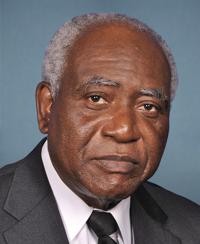
Mr. Speaker, I want to thank the ranking member of the Committee on International Relations for yielding me time and also for his strong and eloquent statement in support of this resolution. Mr.…
Mr. Speaker, I want to thank the ranking member of the Committee on International Relations for yielding me time and also for his strong and eloquent statement in support of this resolution.
Mr. Speaker, I rise in strong support of H. Con. Res. 403. This bill sounds the alarm once again on genocide in Sudan. Since 1983, more than 2 million black civilians died during the civil war in the south of Sudan. That struggle was especially brutal for the civilian population: slave raids resulting in the enslavement of women and children, gang rape, ethnic cleansing, and the imposition of famine conditions for hundreds of thousands.
The people of Sudan are facing the same catastrophic situation once again. Since early 2003, conflict between the forces of the government of the Republic of Sudan and rebel forces in the impoverished Darfur region of western Sudan has resulted in attacks by Sudanese Government ground and air forces against innocent civilians and undefended villages in the region. This has led to the Sudanese Government forces engaging in the use of rape as a weapon of war, the abduction of children, the destruction of food and water sources, and the deliberate and systematic manipulation and denial of humanitarian assistance for the people of the Darfur region.
The United Nations and other aid agencies trying to provide essential humanitarian assistance have been able to reach only 15 percent of the people in need, denying nearly 3 million people in need. More than 100,000 Sudanese have fled the region and are now refugees in neighboring Chad.
These acts are clear violations of the Genocide Convention and are grave crimes against humanity. We cannot sit back and do nothing. We must speak out and act against these actions. We cannot afford to repeat the mistakes of the genocide in Rwanda where more than 800,000 Rwandans died while we along with the world watched and did little or nothing.
Mr. Speaker, we need to act now. The more time wasted by doing nothing, the more Sudanese people in the Darfur region will suffer, die, and be displaced from their homes.
I commend the gentleman from Virginia (Mr. Wolf) for introducing this resolution. I urge my colleagues to support it.
Show 10 more
Mr. Speaker, I rise in support of H. Con. Res. 403. As one of the architects of the Sudan Peace Act signed by President Bush in October 2002, I am completely dismayed at the continuation and the…
Mr. Speaker, I rise in support of H. Con. Res. 403. As one of the architects of the Sudan Peace Act signed by President Bush in October 2002, I am completely dismayed at the continuation and the possible repeat of another civil war in Sudan. Previously, countless Christians have been killed or starved to death simply because of their ethnicity and religious beliefs. Now in Dafur in the West, an area roughly the size of France, unlike the situation in the South, this is not Christian versus Muslims. It is genocide of black Africans by the Arabic government and Jangaweed (nomadic Arab tribesmen).
Today, the current humanitarian crisis in Sudan is considered one of the worst in decades. According to the World Food Program (WFP), the Sudanese, ``are facing serious food and water shortages due to the combined disruptions of civil war and drought.'' In the West, hundreds of thousands of malnourished villagers, having been burned out of their homes in a systematic campaign of terror, are starving to death.
Foreign correspondents from major newspapers have reported at least 700,000 Dafur residents are living in camps or have fled to villages to stay with families or friends. Women, girls, students, and teachers are systematically beaten and gang-raped. One villager, as quoted this week in a London newspaper, gave this simple explanation, ``We got harassed on a daily basis by people in uniform.'' Furthermore he said, ``they (Jangaweed) used to be herders, we know who they are, but the government had guns and uniforms and told them to hurt the blacks.'' Despite millions of dollars of humanitarian aid from the United States, the Sudanese, particularly the black Africans in Dafur, continue to suffer.
The conflict between the government of Khartoum/Jangaweed and the black Africans in Dafur must be stopped. While I am pleased with the announcement that the State Department will be sending American aid experts to inspect the humanitarian needs, what we really need to be done is for the Administration to stop this genocide and begin negotiations as soon as possible to end this long-standing humanitarian crisis.
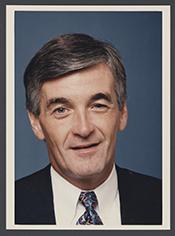
Mr. Speaker, I ask unanimous consent that all Members may have 5 legislative days within which to revise and extend their remarks and include extraneous material on the Senate concurrent resolution…
Mr. Speaker, I ask unanimous consent that all Members may have 5 legislative days within which to revise and extend their remarks and include extraneous material on the Senate concurrent resolution now under consideration.
Mr. Speaker, it is my honor now to yield such time as he may consume to the gentleman from Virginia (Mr. Wolf), a gentleman who is certainly no stranger to humanitarian causes and who has traveled the world over in support of the oppressed wherever they may be found and no stranger to this region and the good people of this Congress.
(Mr. WOLF asked and was given permission to revise and extend his remarks.)
Mr. Speaker, I yield such time as he may consume to the gentleman from Alabama (Mr. Bachus) who also has a great interest in this resolution and is a member of this cause.
(Mr. BACHUS asked and was given permission to revise and extend his remarks, and include extraneous material.)
Mr. Speaker, I yield myself such time as I may consume.
Very briefly, I thank all of the Members on both sides, certainly the gentleman from New Jersey (Mr. Payne). And my compliments to the gentleman from New Jersey for his leadership not only on this issue but on so many involving human rights. And the gentleman from Maryland (Mr. Hoyer), my colleague, the gentleman from New York (Mr. Meeks), of course, and my two colleagues on our side of the aisle, the gentleman from Virginia (Mr. Wolf) and the gentleman from Alabama (Mr. Bachus) have summed up the horror of this situation and the incredible circumstances which surround it.
I join with the gentleman from Alabama's (Mr. Bachus) closing comments that certainly all of us hope and pray that we will have resounding support for this very necessary, unfortunately very necessary resolution, and one that in no way exceeds the dire circumstances in which the Sudan, the Darfur region, finds itself.
Mr. Speaker, I yield back the balance of my time.
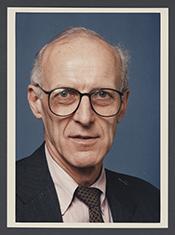
Mr. Speaker, I rise today in support of H. Con. Res. 403. Sudan, geographically the largest country in Africa, has been ravaged by civil war for four decades. An estimated two million people have…
Mr. Speaker, I rise today in support of H. Con. Res. 403.
Sudan, geographically the largest country in Africa, has been ravaged by civil war for four decades. An estimated two million people have died over the past two decades due to war-related causes and famine, and millions have been displaced from their homes. According to the United Nations, an estimated three million people are in need of emergency food aid. Recently, violence has escalated in the Darfur region of the Western Sudan, where government-sponsored militias have been ruthlessly targeting various ethnic groups. Approximately one million civilians have been forced to flee their homes and are now either internally displaced or seeking refuge in neighboring Chad.
Sudanese government forces have overseen and directly participated in massacres, summary executions of civilians, burning of towns and villages, and the forcible depopulation of wide swathes of land long inhabited by the Fur, Masalit and Zaghawa ethnic groups.
For months, the Sudanese government has restricted international media access to Darfur and has limited reporting about the conflict in the national press. Recently, the government has allowed minimal access to the region for international humanitarian agencies but has still failed to provide the necessary protection and assistance to prevent a full-blown humanitarian crisis.
There can be no doubt about the Sudanese government's culpability in crimes against humanity in Darfur. With this resolution, Congress demands that the Sudanese government take immediate steps to reverse ethnic cleansing in Darfur before the situation there worsens and engulfs the entire region in conflict.
The gentleman from Virginia, Mr. Wolf, should be commended for keeping the events in Sudan on Congress' agenda and I urge Members to support his resolution.
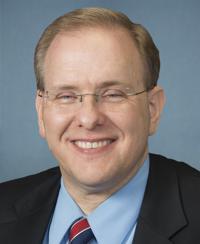
Mr. Speaker, as a member of the Congressional Human Rights Caucus, I am pleased to support the resolution before us today and to add my voice to those speaking out against the brutality the world is…
Mr. Speaker, as a member of the Congressional Human Rights Caucus, I am pleased to support the resolution before us today and to add my voice to those speaking out against the brutality the world is witnessing in Sudan. This Congress has repeatedly condemned both the atrocities committed by the Janjaweed militia and the Sudanese government's insufficient response to such horrendous acts. Since violence began in the Darfur region in February 2003, tens of thousands of people have been killed and more than a million have been displaced from their homes. Sadly, despite repeated calls from the international community, the Sudanese government has not reined in the militia groups, and the killing continues. The World Health Organization now estimates that between 6,000 and 10,000 are dying every month from violence and disease.
It is unfortunate that we must again come to the floor to express our collective outrage about the situation in Sudan. I was pleased that the U.N. Security Council adopted a resolution last week that establishes an inquiry into the violence in the Darfur region to determine whether it constitutes genocide. The resolution also threatens sanctions against Sudan, a tool we must seriously consider if we do not witness rapid improvements. However, the strong sentiments expressed in the U.N. Security Council Resolution are undermined by the fact that Sudan still holds a seat on the U.N. Human Rights Commission--even while its government betrays the very principles on which the Commission was founded. The resolution before us today is a clear condemnation of this glaring inconsistency and will place greater pressure on the Sudanese government to act responsibly and protect its citizens from harm. I urge my colleagues to support S. Con. Res 137.
Mr. Speaker, personal reasons prevent me from being present for legislative business scheduled for today, Monday, May 17, 2004. Had I been present, I would have voted ``yea'' on H. Con. Res. 420, a…
Mr. Speaker, personal reasons prevent me from being present for legislative business scheduled for today, Monday, May 17, 2004. Had I been present, I
would have voted ``yea'' on H. Con. Res. 420, a resolution applauding the men and women who keep America moving and recognizing National Transportation Week (Rollcall No. 177); ``yea'' on H. Con. Res. 423, a resolution authorizing the use of the Capitol Grounds for activities associated with the dedication of the National World War II Memorial (Rollcall No. 178); and ``yea'' on H. Con. Res. 403, a resolution condemning the Government of the Republic of the Sudan for its attacks against innocent civilians in the impoverished Darfur region of western Sudan (Rollcall No. 179).
Mr. Speaker, on Monday, May 17, 2004, I traveled to Topeka, Kansas, to celebrate the 50th anniversary of the historic Brown v. Board of Education ruling in which the United States Supreme Court…
Mr. Speaker, on Monday, May 17, 2004, I traveled to Topeka, Kansas, to celebrate the 50th anniversary of the historic Brown v. Board of Education ruling in which the United States Supreme Court determined that separating students by race was inherently unequal and unconstitutional.
During my absence, the House of Representatives considered H. Con. Res. 420, a Resolution recognizing National Transportation Week, H. Con. Res. 423, a Resolution authorizing use of the Capitol Grounds for the dedication of the World War II Memorial, and H. Con. Res. 403, a Resolution condemning the Sudan for civilian attacks in the Darfur region.
Had I been present, I would have voted ``yes'' on all three of the above referenced bills.
Mr. Speaker, unfortunately, I missed three votes in the House of Representatives on May 17, 2004 due to my attendance at events marking the 50th anniversary of the Brown vs. Board of Education…
Mr. Speaker, unfortunately, I missed three votes in the House of Representatives on May 17, 2004 due to my attendance at events marking the 50th anniversary of the Brown vs. Board of Education decision. Had I been in attendance I would have made the following votes:
Vote on Passage of H. Con. Res. 420--Recognizing National Transportation Week. Had I been in attendance, I would have voted ``yea.''
Vote on Passage of H. Con. Res. 423--Authorizing Capitol Grounds for the Dedication of WWII Memorial. Had I been in attendance, I would have voted ``yea.''
Vote on Passage of H. Con. Res. 403--Condemning the Sudan for civilian attacks in
the Darfur region. Had I been in attendance, I would have voted ``yea.''
Mr. Speaker, on Monday, May 17, 2004, I was unable to cast my floor vote on rollcall Nos. 177, 178, and 179. The votes I missed include rollcall vote 177 on the Motion to Suspend the Rules and Agree…
Mr. Speaker, on Monday, May 17, 2004, I was unable to cast my floor vote on rollcall Nos. 177, 178, and 179. The votes I missed include rollcall vote 177 on the Motion to Suspend the Rules and Agree to H. Con. Res. 420, Recognizing National Transportation Week; rollcall vote 178 on the Motion to Suspend the Rules and Agree to H. Con. Res. 423, Authorizing the use of the Capitol Grounds; and rollcall vote 179, on the Motion to Suspend the Rules and Agree, as Amended to H. Con. Res. 403, Condemning the Government of the Republic of Sudan for Its Attacks Against Innocent Civilians.
Had I been present for the votes, I would have voted ``aye'' on rollcall votes 177, 178, and 179.
Mr. Speaker, on May 17, 2003, I was unable to be present for rollcall votes 177 on H. Con. Res. 420, recognizing National Transportation Week, 178 on H. Con. Res. 423, authorizing Capitol Grounds for…
Mr. Speaker, on May 17, 2003, I was unable to be present for rollcall votes 177 on H. Con. Res. 420, recognizing National Transportation Week, 178 on H. Con. Res. 423, authorizing Capitol Grounds for the dedication of World War II Memorial, and 179 on H. Con Res. 403 condemning the Sudan for civilian attacks in the Darfur region, due to transportation problems in getting to Washington, DC. Had I been present I would have voted ``aye'' on all three resolutions.
Mr. Speaker, on the legislative day of Monday, May 17, 2004, the House had votes on H. Con. Res. 420, H. Con. Res. 423 and H. Con. Res. 403. On House roll call votes #177, #178 and #179, I was…
Mr. Speaker, on the legislative day of Monday, May 17, 2004, the House had votes on H. Con. Res. 420, H. Con. Res. 423 and H. Con. Res. 403. On House roll call votes #177, #178 and #179, I was unavoidably detained at the airport. Had I been present, I would have voted ``yea'' on each.
Bill Text
3 versions available
        [Congressional Bills 108th Congress]
[From the U.S. Government Publishing Office]
[H. Con. Res. 403 Referred in Senate (RFS)]

2d Session
H. CON. RES. 403

_______________________________________________________________________

IN THE SENATE OF THE UNITED STATES

May 18, 2004

Received and referred to the Committee on Foreign Relations

_______________________________________________________________________

CONCURRENT RESOLUTION

Condemning the Government of the Republic of the Sudan for its attacks
against innocent civilians in the impoverished Darfur region of western
Sudan.

Whereas, since early 2003, a conflict between forces of the Government of the
Republic of the Sudan, including militia forces backed by the
Government, and rebel forces in the impoverished Darfur region of
western Sudan has resulted in attacks by ground and air forces of the
Government of Sudan against innocent civilians and undefended villages
in the region;
Whereas Sudanese Government forces and government supported militia forces have
also engaged in the use of rape as a weapon of war, the abduction of
children, the destruction of food and water sources, and the deliberate
and systematic manipulation and denial of humanitarian assistance for
the people of the Darfur region;
Whereas, on December 18, 2003, United Nations Undersecretary General for
Humanitarian Affairs Jan Egeland declared that the Darfur region was
probably ``the world's worst humanitarian catastrophe'', and in April
2004 reported to the United Nations Security Council that in Darfur, ``a
sequence of deliberate actions has been observed that seem aimed at
achieving a specific objective: the forcible and long-term displacement
of the targeted communities which may also be termed `ethnic
cleansing''';
Whereas, on February 17, 2004, Amnesty International reported that it
``continues to receive details of horrifying attacks against civilians
in villages by government warplanes, soldiers, and pro-government
militia'';
Whereas, on February 18, 2004, United Nations Special Envoy for Humanitarian
Affairs in Sudan Tom Eric Vraalsen declared, following a trip to the
Darfur region, that ``aid workers are unable to reach the vast majority
[of the displaced]'';
Whereas Doctors Without Borders, the Nobel Peace Prize-winning medical
humanitarian relief organization and one of the few aid groups on the
ground in the Darfur region, reported that the region is the scene of
``catastrophic mortality rates'';
Whereas, on April 20, the United Nations Office of the High Commissioner for
Human Rights delayed the release of a report citing gross human rights
abuses, crimes against humanity, and war crimes committed in Darfur in a
bid to gain access to Sudan for investigators;
Whereas the Government of Sudan continues to deny humanitarian assistance for
the people of the Darfur region by denying them unrestricted access to
humanitarian aid organizations;
Whereas attacks on civilians in Darfur continue despite an April 8, 2004,
temporary cease-fire agreement;
Whereas nearly 3,000,000 people affected by the conflict in the Darfur region
have remained beyond the reach of aid agencies trying to provide
essential humanitarian assistance, and United Nations aid agencies
estimate that they have been able to reach only 15 percent of people in
need and that more than 700,000 people have been displaced within Sudan
in the past year; and
Whereas the United States delegation to the 60th Session of the United Nations
Commission on Human Rights sponsored a resolution condemning the
Government of Sudan for grave violations of human rights and
humanitarian law occurring in the Darfur region: Now, therefore, be it
Resolved by the House of Representatives (the Senate concurring),
That Congress--
(1) strongly condemns the Government of the Republic of the
Sudan and militia groups supported by the Government of Sudan
for attacks against innocent civilians in the impoverished
Darfur region of western Sudan, in violation of Article 3 of
the Geneva Conventions, done at Geneva August 12, 1949, and
entered into force October 21, 1950, which specifically
prohibit attacks on civilians, and demands that the Government
of Sudan immediately take actions to cease these attacks;
(2) urges the Government of Sudan to immediately disarm and
disband government supported militia groups;
(3) urges the Government of Sudan and all parties to honor
commitments made in the cease-fire agreement of April 8, 2004;
(4) calls on the Government of Sudan to grant full,
unconditional, and immediate access to Darfur to humanitarian
aid organizations, the human rights investigation and
humanitarian teams of the United Nations, including protection
officers, and an international monitoring team in compliance
with the temporary cease-fire agreement that is based in Darfur
and has the support of the United States and the European
Union;
(5) encourages the Administrator of the United States
Agency for International Development to work with donors to
immediately deliver humanitarian assistance to Darfur,
including the delivery of food by air if necessary;
(6) calls on the Secretary of State to develop a plan for
further bilateral and multilateral action in the event the
Government of Sudan fails to immediately undertake the actions
called for in paragraph (3), including a plan to seek a
Security Council resolution addressing the Darfur situation;
(7) deplores the inaction of some member states of the
United Nations and the failure of the United Nations Human
Rights Commission to take strong action with respect to the
crisis in Darfur;
(8) urges the President to direct the United States
Representative to the United Nations to--
(A) seek an official investigation by the United
Nations to determine if crimes against humanity have
been committed by the Government of Sudan and
government-supported militia groups in the Darfur
region; and
(B) work with the international community to ensure
that the individuals responsible for crimes against
humanity in Darfur are held accountable for their
actions; and
(9) strongly urges the President to impose targeted
sanctions, including a ban on travel to the United States and
freezing of personal assets, against officials and other
individuals of the Government of Sudan, as well as Janjaweed
militia commanders, who are responsible for war crimes and
crimes against humanity in the Darfur region.

Passed the House of Representatives May 17, 2004.

Attest:

JEFF TRANDAHL,

Clerk.