Expressing the sense of the Congress that, as Congress recognizes the 50th anniversary of the Brown v. Board of Education decision, all Americans are encouraged to observe this anniversary with a commitment to continuing and building on the legacy of Brown.

Legislative Activity
Stay on top of the latest movement without scrolling through every action
Message on Senate action sent to the House.
May 20, 2004
View full timeline
Introduced in House
May 4, 2004
Sponsor introductory remarks on measure. (CR E745)
May 4, 2004
Reported by the Committee on Judiciary. H. Rept. 108-485.
May 12, 2004
Placed on the House Calendar, Calendar No. 176.
May 12, 2004
Consideration initiated pursuant to a previous order.
May 13, 2004 • 10:28 AM
Considered pursuant to a previous order. (consideration: CR H2925-2933)
May 13, 2004 • 10:29 AM
DEBATE - Pursuant to a previous order, the House proceeded with 30 minutes of debate on H. Con. Res. 414.
May 13, 2004 • 10:29 AM
The previous question was ordered pursuant to a previous order of the House.
May 13, 2004 • 10:56 AM
POSTPONED PROCEEDINGS - At the conclusion of debate on H. Con. Res. 414, the Chair put the question on adoption of the resolution and by voice vote, announced that the ayes had prevailed. Mr. Sensenbrenner demanded the Yeas and Nays and pursuant to clause 8, Rule XX, the Chair postponed further proceedings on the question of adoption of the concurrent resolution until later in the legislative day.
May 13, 2004 • 10:57 AM
Considered as unfinished business. (consideration: CR 5/14/2004 H2987-2988)
May 13, 2004 • 4:35 PM
Passed/agreed to in House: On agreeing to the resolution Agreed to by the Yeas and Nays: 406 - 1 (Roll no. 176).(text: CR H2995)
May 13, 2004 • 4:40 PM
On agreeing to the resolution Agreed to by the Yeas and Nays: 406 - 1 (Roll no. 176). (text: CR H2995)
May 13, 2004 • 4:40 PM
Motion to reconsider laid on the table Agreed to without objection.
May 13, 2004 • 4:40 PM
Received in the Senate and Read twice and referred to the Committee on the Judiciary.
May 17, 2004
Senate Committee on the Judiciary discharged by Unanimous Consent.(consideration: CR S5848)
May 19, 2004
Senate Committee on the Judiciary discharged by Unanimous Consent. (consideration: CR S5848)
May 19, 2004
Resolution agreed to in Senate without amendment and with a preamble by Unanimous Consent.
May 19, 2004
Message on Senate action sent to the House.
May 20, 2004
Voting History
1 vote recorded • Roll call available
Floor Debate
23 membersWhat members said about H.Con.Res. 414 on the floor
 JAB
JAB REA
REA RK
RK RC"
RC" STJ+18
Floor Debate
23 membersWhat members said about H.Con.Res. 414 on the floor
Mr. Speaker, I am pleased to yield 2 minutes to the gentlewoman from West Virginia (Mrs. Capito). Mr. Speaker, I yield 3 minutes to the gentleman from Maryland (Mr. Wynn). Mr. Speaker, I yield myself…
Mr. Speaker, I am pleased to yield 2 minutes to the gentlewoman from West Virginia (Mrs. Capito).
Mr. Speaker, I yield 3 minutes to the gentleman from Maryland (Mr. Wynn).
Mr. Speaker, I yield myself such time as I may consume.
Let me remind all of my colleagues that we are talking about 44 million Americans who have no health insurance. They get to the doctor, albeit very late, they get to the hospitals, albeit very late, they die sooner, and they have higher health care costs that we all who have health insurance pay for. It all ends up in the size of our bill.
But the bigger disgrace is that there are 44 million Americans who have no health insurance, no preventive care; and we are attempting to do something about it. The gentleman from Ohio (Mr. Brown) denigrated these interstate plans as scams that could go corrupt. Let me see. If I recall, we have companies like General Electric which have employees in virtually every State. They have a plan under the Employee Retirement Income Security Act. How about the Teamsters? I would say the Teamsters have plans that cover virtually every State.
Why would we not allow small employers that belong to the NFIB, belong to the U.S. Chamber of Commerce, belong to the Electrical Contractors Association, why would we not let them come together to form the same kinds of health insurance plans that large companies and unions offer from coast to coast? What do we have to fear? What do we have to fear in trying to help 44 million Americans have a chance at good health insurance?
I yield to the gentleman from New Jersey.
Mr. Speaker, reclaiming my time, those regulatory requirements are not on the GEs that we talked about, they are not on the Teamsters, they are not on other big employer or union plans. They are governed under a Federal statute called ERISA that has worked very well to insure and provide the basis for health insurance in America, and we ought to trust small businesses that would join these associations and give them the same rights that big companies and unions have.
Mr. Speaker, I yield 2 minutes to the gentleman from Georgia (Mr. Kingston).
Mr. Speaker, I yield myself such time as I may consume.
I remind my colleagues one more time that we are talking about trying to assist 44 million Americans who have no health insurance. This may not be the perfect product, it may not be the perfect package, but for the life of me, I cannot understand why people do not want to come to the plate and try to do something to help these Americans who do not have access to affordable health insurance.
Maybe the answer is what we just heard from my good friend and colleague, a member of the committee from the other end of the great State of Ohio who wants a single-payer national health plan. I think most Americans looked up in the mid-1990s when this idea was floating around and said, Oh, no. No, no, I like my health insurance. I like going to the doctor I choose. I do not need the government running my health insurance plan.
Mr. Speaker, I yield 1 minute to the gentleman from Illinois (Mr. Crane).
Mr. Speaker, I yield myself such time as I may consume.
With all due respect to my good friend from North Dakota who is one of the real experts on insurance and pension matters in the House, he is a former State insurance regulator, we have heard this claim that Governors, State insurance regulators and attorneys general are opposed to this bill. Of course they are. Every State, we know what they want to do. They want to regulate, regulate, regulate, regulate.
Let us go back to the example. The Procter & Gambles, the GEs, the Teamsters, they are not regulating those plans. They have got some of the best benefits that they offer to their employees. Let us go back to your example of the dry cleaner. The dry cleaner does not have the actuary. He has got the regulator, the attorney general. What if all those dry cleaners in a State, the State of North Dakota, or all those dry cleaners from around the country in their national association came together and formed an association health care plan? Those employees at that local dry cleaner would have better benefits at more competitive prices than they could ever get in a State insurance risk pool.
What do we have to fear from giving those small employers and, more importantly, their employees the chance to come together to have the same kind of a plan that big companies and unions have today?
Mr. Speaker, I reserve the balance of my time.
Mr. Speaker, I yield myself the balance of my time.
We often have debates here in Congress about public policy and how to change public policy. Many times the debates, once they get here, the perfect becomes the enemy of the good. We do not claim that the underlying bill is going to cover all of the uninsured and eliminate that problem, but we do think it is a giant step forward in helping the uninsured get access to high-quality health insurance at affordable prices.
Even the flawed study that my colleague has pointed to on a number of occasions, the CBO study which was flawed in a number of areas, says that 330,000 of the uninsured will in fact get health insurance. I think the number is far, far higher than that. I think we are talking about millions of Americans will have a chance at good health insurance. But let us say it is only 330,000, 330,000 families that would get coverage under this bill. I think that is a good step in the right direction.
Let me take an example of how this would work. Let us take a Realtor. We all know Realtors work all over the country. They are independent contractors. They have their own business. In many cases they are not employees of the firm that they work for, but they have to go buy an individual policy or family policy in a State insurance pool, the most expensive way to buy health insurance in America. In the case of Realtors, you could take the Ohio Association of Realtors, New Jersey Association of Realtors, maybe the National Association of Realtors, could put together a plan of maybe 5 or 6 choices, maybe 10 choices for their members all over the country. I will guarantee that those Realtors would have much better health insurance policies than they have today and the cost of that policy will be far more competitive than what they are paying in these State insurance pools.
This is a very good opportunity to help many small employers and their employees all across the country. We should not miss this opportunity.
Mr. Speaker, I yield 2 minutes to the gentleman from Nebraska (Mr. Osborne), one of the active members of our committee.
Mr. Speaker, I yield 2 minutes to the gentleman from Oklahoma (Mr. Sullivan).
Mr. Speaker, I yield myself such time as I may consume.
I believe that the underlying bill does, in fact, address the needs of many of our uninsured, and I am concerned about the substitute that we have before us. And I know that the gentleman from Wisconsin (Mr. Kind) and the gentleman from New Jersey (Mr. Andrews), my good friends from the committee, have worked hard on this. But I have to take issue with the comment that was just said that this commits the Congress to spend money. It does not.
There is a $50 billion price tag on the substitute that we have before us, and all we do here is authorize it. It still has to go through the entire appropriation process, no guarantee that it is going to be appropriated; but even more troubling is that the substitute that is being offered would allow the Secretary of Labor to set up this national risk pool, but they would still be subject to every state- mandated benefit in each of the States, over 1,500 state-mandated benefits from one coast to the next. And on top of that, even if the Congress were to appropriate the money and the Secretary were to set up the plan, employers would still have to pay 50 percent of the premium cost, and they would have to cover every employee who was there as little as 3 months.
If we begin to look at how this plan would work, I think that the Members will find that it would actually be cheaper for those companies to get health insurance in their own States without this national bureaucracy.
But even more disturbingly, when we look at this substitute, it will not cover any of the self-employed individuals across the country, and whether they be Realtors, whether they be salesmen of some sort, small business people who operate by themselves, the self-employed, no coverage under this plan. Unlike under the underlying plan where if these self-employed people belong to some association, some State association, national association, local association, they would, in fact, be able to work through their associations to get high-quality coverage at competitive prices.
There has been a lot said about who is supporting the underlying bill and who is opposing the underlying bill. I have got pages and pages here of national associations and State associations that are supporting the underlying bipartisan bill. And I would remind my colleagues that this is the fourth time we have had this bill on the floor in the last 8 years, still waiting for the other body to deal with it. All three times previously that this bill has been on the floor, it has passed with broad bipartisan majorities, and I would suspect today we will see the same benefit.
Mr. Speaker, I include in the Record the list of companies and associations that are supporting the underlying bill.
groups supporting AHPs
Adhesive and Sealant Council
Air Conditioning Contractors of America
American Alliance of Service Providers
American Association of Advertising Agencies
American Association of Engineering Societies
American Association of Small Property Owners
American Composites Manufacturers Association
American Concrete Pumping Association
American Council of Engineering Companies
American Disc Jockey Association
American Electronics Association
American Furniture Manufacturers Association
American Institute of Chemical Engineers
American International Automobile Dealers Association
American Hotel and Lodging Association
American Lighting Association
American Nursery and Landscape Association
American Rental Association
American Road and Transportation Builders Association
American Small Businesses Association
American Society of Association Executives
American Society of Civil Engineers
American Society of Home Inspectors
American Society of Mechanical Engineers, Board on Member
Interests & Development
American Textile Machinery Association
American Veterinary Medical Association
American Wholesale Marketers Association
Mr. Speaker, I am pleased to yield 3 minutes to the gentleman from Pennsylvania (Mr. Peterson).
Mr. Speaker, I yield myself such time as I may consume.
Mr. Speaker, I have great respect for my two committee colleagues, the gentleman from Wisconsin (Mr. Kind) and the gentleman from New Jersey (Mr. Andrews), and their thoughtful approach to bringing their substitute to the floor.
As the gentleman from Wisconsin (Mr. Kind) pointed out, there are some similarities here. We both create large pools of small employers in order to increase their purchasing power so that they can go into the marketplace like a large company or union and get as good a quality plan at a competitive price. But once you get beyond the big picture, that we are creating large pools in both the substitute and the underlying bill, there are a few differences.
The first difference I would say is that the underlying bill allows the private sector to create those large pools. Whether they be State associations, national associations, whatever, they will in fact create their own pools, while the substitute offered by the gentleman from Wisconsin (Mr. Kind) and the gentleman from New Jersey (Mr. Andrews) has the government creating this large pool.
Now, we all know when the government gets involved, it is just a matter of time before the government begins to believe, well, we have this large pool, we have got employers signed up in it, maybe we ought to require them to do X or Y or Z. I do not think anyone wants to take that risk.
Secondly, I would point out that the substitute pool will cost $50 billion of taxpayer funds in order to set up and to provide subsidies, while the underlying bill has no Federal taxpayer money involved in it in any way, shape, or form.
I am a big believer that we need to do something to reach out to help the uninsured gain better access to high-quality, affordable health insurance. I
think the underlying bill does it. It has passed on a broad bipartisan basis on a number of occasions here in the House. I urge my colleagues here today to reject the Kind-Andrews substitute and support the underlying bill.
Mr. Speaker, I yield back the balance of my time.
Mr. Speaker, I rise in opposition to the motion to recommit.
Mr. Speaker, AHPs that would self-insure are exempted from State insurance mandates exactly like large company plans and union plans all over the country. We all know that health insurance mandates drive up the cost of health insurance. When the cost of health insurance goes up for small employers, it is their employees who lose coverage.
The underlying bill attempts to help the 44 million Americans who do not have health insurance have a better chance of getting health insurance. And small employers, just because of their size, should not be denied the right to group together to get a better-quality product at a more competitive price for their employees.
I urge my colleagues to reject the motion to recommit, the same motion to recommit this House rejected last year, and to support the underlying bill.
Mr. Speaker, I yield back the balance of my time.
Mr. Speaker, I yield 2 minutes to the gentlewoman from New York (Ms. Velazquez), for whom I have the most profound respect, the ranking Democrat member of the Committee on Small Business. Mr.…
Mr. Speaker, I yield 2 minutes to the gentlewoman from New York (Ms. Velazquez), for whom I have the most profound respect, the ranking Democrat member of the Committee on Small Business.
Mr. Speaker, may I inquire as to how much time is remaining on our side?
Mr. Speaker, I yield myself 30 seconds.
My friend from Maryland, whom I respect very much, when they talk about the number of people who would gain insurance with AHPs, the Congressional Budget Office drew the conclusion that the vast majority of members of AHPs would not be newly-insured people. They would be people shifted from existing plans into the AHPs.
I think the better authority is that one million people, net, one million more people would be uninsured as a result of this bill.
Mr. Speaker, I yield 2 minutes to the gentleman from Ohio (Mr. Brown) a member of the Committee on Energy and Commerce.
Mr. Speaker, will the gentleman yield?
Mr. Speaker, I assume the gentleman's question was not rhetorical. What we have to fear, we should listen to the advice of attorneys general and Governors and insurance commissioners from around the country who say we have to fear this: we have to fear a poorly regulated or unregulated structure that is not properly accountable under fiduciary standards and has no experience in running insurance companies, which is why they oppose the bill.
Mr. Speaker, I yield 2 minutes to the gentleman from Ohio (Mr. Kucinich), another voice who joins the coalition of AFL-CIO, 66 chambers of commerce and the National Governors Association, a gentleman who has brought great honor to this House during his Presidential campaign.
Mr. Speaker, I yield myself 10 seconds.
Mr. Speaker, we certainly take up the challenge to present a better idea, which the gentleman from Wisconsin (Mr. Kind) and I will be doing in a few minutes under the alternative. We understand that the American Academy of Actuaries, a group with no vested interest in this debate, has concluded that 1 million people will be added to the roles of the uninsured by this bill.
Mr. Speaker, I yield 2 minutes to the gentleman from Illinois (Mr. Emanuel).
Mr. Speaker, I yield 3 minutes to the gentleman from North Dakota (Mr. Pomeroy), who had a career in State government in insurance regulation and, frankly, I think knows more about this subject than any other Member of the House.
Mr. Speaker I yield myself the balance of my time.
I agree completely with the chairman that the number one issue on the health care agenda of this country is finding insurance for the 43, 44 million uninsured. I agree with him completely that it is a worthy project for this House to pursue. Long overdue. Usually it does not persuade me when you submit a list of people who are against a bill or for a bill, because I think each one of us has the obligation to make our own judgment about these matters, as each one of us should here.
At this point in the Record, by the way, I include the Mercer study to which I referred, the actuarial study to which I referred, and the letter from the Congressional Budget Office to which I referred.
[Prepared for: National Small Business United, June 2003]
Impact of Association Health Plan Legislation on Premiums and Coverage
for Small Employers
(By Beth Fritchen, FSA, MAAA; and Karen Bender, FCA, ASA, MAAA, Mercer
Risk, Finance & Insurance)
executive summary
National Small Business United (NSBU) engaged Mercer Risk,
Finance & Insurance (Mercer) to analyze the ``Small Business
Health Fairness Act of 2003'' (H.R. 660 and S. 545). This
legislation would encourage the formation of federally
certified Association Health Plans (AHPs) by exempting these
plans from various state laws that govern health insurance
sold to small employers today.
Proponents of H.R. 660 and S. 545 argue that federally
certified AHPs would expand access to affordable health
insurance for small employers and reduce the number of
uninsured. Opponents believe the legislation would have the
exact opposite effect--that is, it would cause premiums to
rise and the number of uninsured to increase.
Mercer developed an actuarial model to assess how this
legislation would affect premiums for small firms that
purchase state-regulated coverage and firms that enroll in
AHPs over a four year period as well as the impact on the
number of uninsured.
The analysis concludes that federal AHP legislation would
not alleviate the health insurance cost pressures faced by
small employers. Rather, the proposed AHP legislation would
have a detrimental impact on small employer premiums,
especially for firms with high-cost workers, and would cause
a significant number of small employers to drop coverage,
thereby increasing the nation's uninsured population.
In brief, we found that once federal AHP legislation was
fully implemented:
Health insurance costs would increase significantly for
small businesses in the state-regulated insurance market.
Health insurance premiums would increase by 23% for small
employers that continued to purchase state-regulated coverage
This increase would result from AHPs' ability to attract
healthier-than-average firms out of the state-regulated
market. AHPs' exemption from mandated benefits would allow
them to tailor products attractive to healthier populations.
Moreover, exemption from sate limits on premiums and
marketing standards would allow AHPs to enroll healthier-
than-average groups and encourage firms with high cost
workers to switch back to the state-regulated market.
As AHPs attract small employers whose perceived health
status is good, firms with greater expected health care
utilization would remain in the state-regulated market, where
they have the protection of mandated benefits and other
requirements. The resulting outflow of low-cost groups from
the state-regulated market and the remaining concentration of
high-cost groups would start an adverse selection spiral that
would accelerate premium increases for employers in the
state-regulated market.
AHP legislation would increase, not decrease, the number of
uninsured. The number of uninsured would increase by over 1
million as a result of coverage losses among workers in small
firms and their dependents. As premiums for small employers
in the sate-regulated market increased, some firms would drop
coverage and not switch to an AHP. Coverage declines would
also result when groups covered by AHPs drop their coverage
when their rates increase because someone in the group gets
sick. While some of these groups would switch back to the
state-regulated market, others would drop coverage entirely.
Federal AHPs would gain a pricing advantage through risk-
selection, not greater administrative efficiency. The
modeling predicts that after four years premiums for AHPs
would average 10% below that of the existing small group
market. However, we expect these price reductions to result
from favorable risk selection and exclusion of benefits
rather than improved purchasing efficiency or lower
administrative costs. AHPs could use a variety of techniques
to select healthier-than-average firms--techniques available
to AHPs because the legislation preempts key provisions of
state law designed to prevent risk selection.
Specifically, under H.R. 660 and S. 545 AHPs could: charge
firms with high-cost workers much higher premiums than
permitted under state law; experience rate each association
based on the risk of only their members; and offer pared-down
products without benefits that would be needed or desired by
higher-risk small employers. Together, these strategies would
allow AHPs to offer the most attractive rates to healthy
groups and avoid the cross-subsidies that state small
employer health insurance reforms require.
Federal AHPs would insure the healthiest small employers.
The modeling estimates that the average morbidity (a measure
of whether a firm is ``sick'' or ``healthy'') of firms
enrolling in AHPs would be 21% lower than the average
morbidity of small employers in the market today. Further, as
higher-cost small employers dropped coverage in response to
rate increases resulting from the movement of healthy
employers out of the state-regulated market, the average
morbidity of the uninsured population would increase by
12.3%. AHPs would appeal most to firms with younger workers
given the close correlation between age and health status.
Small employers would face higher premiums overall. Average
small employer premiums (considering both cost increases for
the state-regulated market and premium reductions for AHPs)
would increase by 6%. Average premiums would increase because
the size of the average premium increase for the population
remaining in the state-regulated market (23%) would outweigh
the smaller average premium decrease for those covered by
AHPs (10%).
These results indicate that AHP legislation is not a
solution to rising health care costs for small employers.
While some firms obtaining coverage through AHPs may see
lower premiums, firms with higher-cost employees would see
their premiums increase. Overall, small employers would pay
higher premiums and the uninsured population would increase
if this legislation were enacted.
Mr. Speaker, I would like to begin by thanking my coauthor, the gentleman from Wisconsin (Mr. Kind), for what has now been more than a year of hard work on this effort, a very practical, commonsense solution that would not have been possible without him; and I thank him for his effort.
It is important to understand how this proposal works. If a small employer, and we define that as an employer with 100 or fewer employees, chooses, only if he or she chooses, they may enroll their employees in a plan that would operate similarly to the Federal Employees Health Benefit Plan. It would create the largest purchasing pool of small businesses ever in the history of the country. It would achieve the economies of scale that the majority attempts to achieve in the underlying bill. But there are some important differences.
The first difference is that we believe our plan would in fact save money for that employer. In my home State, a small business pays about $12,000 or $13,000 a year to insure an employee and his or her family. The average cost under the Federal Employees Health Benefit Plan is slightly over $9,000. We believe a similar price reduction would occur by the option of joining this plan.
Secondly, under our plan, for very small employers, those with 25 and under, they would receive a 5 percent premium discount. That is to say, their premium would only be 95 percent of the premium paid by the others in the pool.
Thirdly, very small employers with a lot of low-income employees, those who are most likely to be uninsured, are offered additional subsidies that are drawn from the budget resolution passed by the majority. This fits within the majority's budget resolution.
So the first important difference is our version, our plan, would add to the rolls of the insured rather than subtracting from it the way the majority's plan would.
Second, under our plan, none of the protections that people enjoy, the right to a mammogram, the right to women's health services, the right to mental health services, guaranteed under State laws around the country, none of those rights would be lost or forfeited under our plan.
Third, the risks of insolvency, unpaid creditors, uninsured insurers that the majority's plan proposes, would be avoided here, because you would have a large plan under the regulatory jurisdiction of the Federal Government that would be solvent and would be prepared to meet its obligations because it is properly regulated.
This is a commonsense idea. We believe in pooling as well. Frankly, I think that the majority has half of a good idea. The idea of permitting small employers to pool their employees to get a better deal from the health insurance marketplace is a very good idea. The problem is that the majority's plan also includes the repeal and forfeiture of protections like mammogram coverage, like diabetic care, like women's health services; and that is both unnecessary and undesirable.
Second, the majority's plan does not include any subsidies or special incentives for small business. A lot of small businesses in my State, even if you dropped the price of the coverage from $12,000 to $11,000 or $10,000, could still not afford it. It does not do them any good.
Our plan, unlike the majority plan, puts some subsidy into this in the form of premium discounts for very small employers and even deeper discounts for small employers who hire many, many lower-compensated employees.
We have said a lot of critical things about the majority's plan because we believe they are right; but we also understand, Mr. Speaker, it is our responsibility to put forward a positive alternative. The work that the gentleman from Wisconsin (Mr. Kind) has done, that I am proud to join in, is such a positive alternative. It would offer real benefits in a meaningful way for the small business community of the country.
I would urge my colleagues to vote for its adoption.
Mr. Speaker, I offer an amendment in the nature of a substitute. Mr. Speaker, I yield myself such time as I may consume. Mr. Speaker, first of all I want to recognize the gentleman from New Jersey…
Mr. Speaker, I offer an amendment in the nature of a substitute.
Mr. Speaker, I yield myself such time as I may consume.
Mr. Speaker, first of all I want to recognize the gentleman from New Jersey for the fine work and the leadership that he has shown on such an important issue. This is an important issue.
It has been said that the definition of insanity is doing the same thing over and over again without any change in the result. Yet that is what we have been having this week in Congress, bills that have already been debated and deliberated upon and voted upon last year coming back again for another kick at the can, which is fine. In an issue as important as this, I think it is important for the Congress to take a moment and start talking about the plight of small businesses and family farmers across the country who are suffering under rising health care costs and fearful of the inability of being able to provide coverage for their families or their employees because of the cost of insurance today.
This is such a fundamental and crucial issue if we want to be serious about economic growth, if we want to be concerned about the 43-million- plus uninsured that exist in this country. As I travel through my congressional district in western Wisconsin meeting with small business owners and their employees, meeting with family farmers, the number one, chief concern that they continuously raise is the expensive health care and accessing the quality system that exists in this country right now on an affordable basis.
It is a travesty that 20 percent of my dairy farmers in Wisconsin have no health coverage at all for themselves or their families, one of the more dangerous occupations in the entire country. It is a travesty that as I talk to small business owners who would like nothing better than to provide some health coverage for their employees, tell me that they cannot because they cannot afford it. In a country as great and as powerful and as wealthy as ours, we have got to do better and we have to get serious.
What we are about to talk about in the remaining minutes of the duration of this debate is there is a better way. The gentleman from New Jersey and I have drafted a substitute to what is being offered before the House today. It is one based in common sense, in reality in regards to what will work and what will not, what will extend coverage to the uninsured and what will not; what will bring more affordability to the health care system, to these small business owners, their employees and to our family farmers, and what will not.
Our bill is very simple. It is based on the Federal Employee Health Plan. It does establish national purchasing pools but it goes through State-licensed insurers so we do not have Federal preemption of State law over such crucial areas as cancer screening, whether it is mammograms, breast cancer, cervical cancer screenings, whether it is emergency care or maternity care, issues that the States have wrestled with with themselves and found it important enough to pass law on a State-to-State basis to provide coverage for these important services. And also to cover autism health care. I am proud that the State of Wisconsin is one of 17 that does mandate the coverage of autism health care for our citizens in the State, one that is exploding right now and very expensive for society. Health care experts and those affected by autism, those families of autistic children, realize that the key to effective treatment is early identification. If we allow this AHP plan to pass, which preempts State law, that says, hey, insurers, you don't have to provide coverage even though the State of Wisconsin says this is the right policy to do, it is only going to exacerbate the system in this country in regard to effective autistic treatment for children in our communities.
That is what this debate is all about. It is a very simple, commonsense approach to dealing with what is a national crisis and, I view, a national emergency.
Rather than offering a piece of legislation where the American Academy of Actuaries, where Mercer has released a study indicating that it would increase rather than decrease the rolls of the uninsured by 1 million people, our substitute version that provides national purchasing options, that provides subsidy payments to employers with 50 or fewer employees in order to keep those health care premiums down and our ability to potentially extend health care coverage to the 43 million uninsured to an additional 33 million Americans, we think this is the best approach to take. This is not an issue about who supports small business or family farmers more or who is more concerned about the plight of the uninsured. This is about what will work and what will not work. That is why we have the National Governors Association, the Republican and Democratic Governors Association, the National Association of Attorneys General and Insurance Commissioners, over 1,000 organizations including 66 chambers of commerce who are saying that the majority AHP plan will not work. Not because they desire some power grab and to maintain their own State regulations, but because it is based on reality and an independent and objective study of what will and what will not work.
That is why I would hope that my colleagues, before they ultimately make up their mind and cast their vote today, that they have a chance to quickly look at the actuary study, to quickly look at the Mercer study and to pause before we embark upon a road that could potentially lead to another million uninsured in our society. Enough is enough.
We need to be going in the opposite direction rather than where I fear the AHP bill would go. The substitute that the gentleman from New Jersey (Mr. Andrews) and I are offering offers that hope and that potential to achieve that, and I would encourage my colleagues to support the substitute, vote ``no'' on the AHP bill, and let us move forward together on something that has the potential of working very well for small businesses and family farmers throughout the country.
Mr. Speaker, I reserve the balance of my time.
Mr. Speaker, I yield 3 minutes to the gentlewoman from the Virgin Islands (Mrs. Christensen), a true champion of small business owners and their employees.
Mr. Speaker, I yield 3 minutes to the gentleman from Arkansas (Mr. Ross), an expert in the health care field and one who does not want to embark upon a course of adding an additional 1 million people to the uninsured ranks.
Mr. Speaker, I yield myself 30 seconds.
With all due respect to the chairman of our committee, and I have great respect and admiration for him and I think he is well motivated with this underlying bill, but our bill does, in fact, cover self- employed. Under the definition of what constitutes an employer, an individual who is self-employed would also be covered. So I just wanted to clarify the record in that regard.
Mr. Speaker, I yield such time as he may consume to the gentleman from New Jersey (Mr. Andrews), the co-author of our substitute bill before us.
(Mr. ANDREWS asked and was given permission to revise and extend his remarks.)
Mr. Speaker, I yield myself such time as I may consume.
Mr. Speaker, again, this debate really is about two very distinct and different options: one that, again, through independent analysis and review, indicates could lead to an increase of 1 million more uninsured in this country, as opposed to the substitute that the gentleman from New Jersey (Mr. Andrews) and I are offering today; one that is based on reality and supported by a host of organizations throughout the Nation, including the Governors Association, the Attorneys General, and the insurance commissioners, those who work with this on a day-to-day basis and see the real impact it is having on real people in their individual States.
Our plan is simple. It also talks about establishing a national purchasing pool, but one working with state-licensed insurers, so we do not preempt State law and the judgment being made by State legislatures and local decisionmakers on what is or is not appropriate health care coverage in that particular State.
I am proud of many of the coverages that the State of Wisconsin has chosen to include under the State regulations. I am also proud of the fact that the State legislature and Governor are signing into law and setting up model programs of this purchasing pool concept in Wisconsin, allowing small business owners and family farmers to join cooperatives with a menu of health options, but under State regulation, not exempting them and not preempting what the State has already done.
I have a feeling that that is going to work, and work very well, if the demand that exists from back home is any indication of the desire to enter into these pilot programs.
That is the identical version that the gentleman from New Jersey (Mr. Andrews) and I are offering and talking about today, allowing this purchasing pool concept to go forward under State law, so that important health care services and screening does not get preempted and lead to a diminution in the quality of care that citizens in States have come to expect and desire.
Why is this important? 44 million uninsured is a travesty and a blemish on our national character. It gets to the real root and basis of us and what we are all about as a Nation. Being able to access quality and affordable health care is something that affects all of us, from businesses large and small, from individuals to small business owners, to farmers, to us here in Congress; and the fear we see in constituents' eyes back home when they know they do not have health coverage for their families and their children, it is real.
And when they do not have coverage and they do get sick or they do get hurt, they still are able to access the health care system, just through more expensive means, typically through the emergency door. And those costs then are shifted on to private plans that do have coverage, which contributes to the rising premium expenses that are sweeping the Nation today.
So I think it is in our fundamental national interest to do what we can to make sure that the 43 million or 44 million currently uninsured receive coverage, so we have better preventive care up front, so the children of our Nation have a way to access the health care system, which can save us money and pay dividends in the long run.
I think this is an objective that we share in a bipartisan fashion, but it is one that I think can better be achieved through the Kind- Andrews substitute.
It is paid for within the budget resolution that the majority party has passed in this session of Congress. It does offer premium support payments to employees with 50 or fewer employees, because the gentleman from New Jersey (Mr. Andrews) is correct, even if we have some savings in premium expenses, your average small business employer probably is still prohibited from being able to access an insurance pool and being able to pick up the expense and providing coverage for their employees.
We are saying we can do better by offering them some of this premium price assistance to make it more affordable and to create the incentives so we have small business owners who I believe want desperately to be able to provide coverage, to be in a position to better afford that type of coverage.
This is what we need to try to achieve. This should be a dream we all hold in this Congress. Because unless and until we fix this fundamental flaw in the health care system in our country, we are not going to see the robust job growth that we desperately need today. We are not going to see businesses, either large or small, anxious for additional hires for fear of incurring the additional health care expense. I think it is one of the reasons why we have not seen the explosion of job growth over the last couple of years, even though the administration has been fond of pointing to expanding economic conditions in this country. It is the health care system, and it needs to be addressed.
I think we desperately need to do it, and I think we have the opportunity today to make a significant step in that direction.
I would encourage my colleagues to vote ``no'' on the majority Associated Health Plan and support a real plan that can work for real Americans, the Kind-Andrews substitute.
Mr. Speaker, I yield back the balance of my time.
Mr. Speaker, on that I demand the yeas and nays.
Mr. Speaker, as the Representative for Virginia's Third Congressional District, and the state's first and only Black Congressional Representative since Reconstruction, I take personal pride in…
Mr. Speaker, as the Representative for Virginia's Third Congressional District, and the state's first and only Black Congressional Representative since Reconstruction, I take personal pride in celebrating the 50th Anniversary of the landmark decision in Brown v. Board of Education. Virginia played a prominent role in the case. The Davis v. Prince Edward County Public Schools case, one of the cases decided with Brown, was a Virginia case. Also, two of the nation's premier constitutional lawyers in the Brown case came from Virginia. Attorney Oliver Hill, who continues to fight for equal justice for all, and the late Judge Spottswood Robinson, argued the case on behalf of the student plaintiffs in the Davis case.
In the Brown decision, the United States Supreme Court unanimously struck down the legal and moral footing of racially segregated public education in this country. The decision overturned Plessy v. Ferguson, an 1896 case which held that a state could maintain ``separate but equal'' public accommodations based on race. When Homer Adolph Plessy, who was one-eighth Black, entered a railroad car reserved by law for whites, he was arrested. He challenged the constitutionality of the law, but the Supreme Court, by a vote of seven to one, found it valid. Although Plessy concerned public accommodations, the policy rationale was applicable to public education, as well. Indeed, the court opined on that point as follows:
[W]e cannot say that a law which authorizes or even
requires the separation of the two races in public
conveyances is unreasonable, or more obnoxious to the
fourteenth amendment than the acts of congress (sic)
requiring separate schools for colored children in the
District of Columbia, the constitutionality of which does not
seem to have been questioned . . .
Justice John Marshall Harlan was the lone dissenter in the 7 to 1 decision. He wrote an opinion containing the following:
The destinies of the two races in this country are
indissolubly linked together, and the interests of both
require that the common government of all shall not permit
the seeds of race hate to be planted under the sanction of
law. What can more certainly arouse race hate, what more
certainly create and perpetuate a feeling of distrust between
these races, than state enactments which in fact proceed on
the ground that colored citizens are so inferior and degraded
that they cannot be allowed to sit in public coaches occupied
by white citizens? That, as all will admit, is the real
meaning of such legislation as was enacted in Louisiana . . .
The thin disguise of ``equal'' accommodations for passengers
in railroad coaches will not misled anyone, or atone for the
wrong this day done.
In overturning Plessy, the Brown Court not only confirmed Justice Harlan's ``thin disguise'' dissenting opinion in Plessy, but also held that even if the tangible features of a segregated public education system were equal, a constitutional violation would still exist. The reasoning of the Court then is still valid today:
Today, education is perhaps the most important function of
state and local governments. Compulsory school attendance
laws and the great expenditures for education both
demonstrate our recognition of the importance of education to
our democratic society. It is required in the performance of
our most basic public responsibilities, even service in the
armed forces. It is the very foundation of good citizenship.
Today it is a principle instrument in awakening the child to
cultural values, in preparing him for later professional
training, and in helping him to adjust normally to his
environment. In these days, it is doubtful that any child may
reasonably be expected to succeed in life if he is denied the
opportunity of an education. Such an opportunity, where the
state has undertaken to provide it, is a right which must be
made available to all on equal terms.
We come then to the question presented: Does segregation of
children in public schools solely on the basis of race, even
though the physical facilities and other ``tangible'' factors
may be equal, deprive the children of the minority group of
equal educational opportunities? We believe that it does.
The Court then discussed the impact segregation has on minority children:
To separate them from others of similar age and
qualifications solely because of their race generates a
feeling of inferiority as to their status in the community
that may affect their heart and minds in a way unlikely ever
to be undone. The effect of this separation on their
educational opportunities was well stated by a finding in the
Kansas case by a court which nevertheless felt compelled to
rule against the Negro plaintiffs: ``Segregation of white and
colored children in public schools has a detrimental effect
upon the colored children. The impact is greater when it has
the sanction of the law; for the policy of separating the
races is usually interpreted as denoting the inferiority of
the negro (sic) group. A sense of inferiority affects the
motivation of a child to learn. Segregation with the sanction
of law, therefore, has a tendency to retard the educational
and mental development of negro (sic) children and to deprive
them of some of the benefits they would receive in a
[racially] integrated school system.''
Unfortunately, Virginia led the resistance to the Brown decision. Ironically Virginia used language in the Brown decision as legal grounds for its resistance actions:
Such an opportunity, where the state has undertaken to
provide it, is a right which must be made available to all on
equal terms.
Virginia reasoned that it could avoid integrating its schools by not having any schools at all. As a result, Prince Edward County closed its schools for several years, Norfolk, Front Royal and Charlottesville also closed some of their schools.
We overcame ``massive resistance'' and, today, Prince Edward County has one of the most integrated public school systems anywhere. Yet, five decades after Brown, a recent study by the Harvard Civil Rights Project revealed that many students in this country still attend schools and classes that are virtually segregated. So, while we have desegregated public schools, we have not achieved the integration that Dr. Martin Luther King, Jr., envisioned when he dreamed of the day ``little black boys and girls will be able to join hands with little white boys and white girls and walk together as sisters and brothers''. In fact, the Harvard study data indicates that 70 percent of African American children attend schools that are predominately African American, about the same level as in 1968 when Dr. King died.
So, the struggle for equal educational opportunity continues. The promise of equal educational opportunity envisioned by the Brown decision remains unfulfilled. For example, equal educational opportunity does not occur when one jurisdiction spends substantially more per student than an adjacent jurisdiction because of the relative differences in wealth between the two. Unequal funding resources also results in unequal educational opportunity when you consider studies that show that one half of low income students who are qualified to attend college do not attend because they can't afford to. Another example of the educational inequality is the current debate over publicly financed school vouchers which will provide educational opportunities to a privileged handful, but deprive public schools of desperately needed resources. Also in this vein is the inappropriate use of ``high stakes'' tests, many of which are culturally biased and, therefore, diminish opportunities for some students based on their ethnicity.
A final important equal opportunity issue in education is the current attack on civil rights in the Head Start program. A slim majority of the members of the U.S. House of Representatives recently voted to weaken the 40-year ban on discrimination in hiring in the Head Start program.
Obviously, we have work to do to complete the promise of the Brown decision and Dr. King's dream for our nation. The upcoming celebration of the 50th anniversary of the decision offers us an opportunity to rededicate ourselves to achieving these lofty ideals.
Mr. Speaker, I rise today to celebrate the upcoming 50th anniversary of Brown v. Board of Education. It was 50 years ago that the Supreme Court unanimously decreed segregated public schools…
Mr. Speaker, I rise today to celebrate the upcoming 50th anniversary of Brown v. Board of Education. It was 50 years ago that the Supreme Court unanimously decreed segregated public schools unconstitutional. The effects of that decision live on in myriad ways, and yet, in much of America, equality and integration remain ideals rather than realities.
In 1954 the U.S. Supreme Court stated that separate is inherently unequal. The Court concluded, ``that in the field of public education, the doctrine of `separate but equal' has no place. Separate educational facilities are inherently unequal.'' The Court found that the evils of racial segregation affected students' motivation and retarded educational and mental development.
Education is a right, not a privilege. The Court wrote: ``. . . it is doubtful that any child may reasonably be expected to succeed in life if he (or she) is denied the opportunity of an education. Such an opportunity, where the state has undertaken to provide it, is a right which must be made available to all on equal terms.''
In the 11th Congressional District of Ohio, Barbara Byrd-Bennett, CEO of the Cleveland Municipal School District continues this legacy Brown v. Board of Education, championing the rights of our young people and working to ensure that they are afforded the best education possible. Six years ago, in 1998, the Cleveland Municipal School District ranked last among Ohio school systems, and was placed in academic emergency status. Under the direction of Ms. Byrd-Bennett the Cleveland Municipal School District now stands as one of Ohio's ``most improved school districts.''
Under Ms. Byrd-Bennett's leadership academic successes are clear:
Reading scores have increased by more than 30 percent;
Children have breakfast and lunch at school at no cost, and over 93 percent are immunized;
Graduation rates have increased by 10 percent and 74 percent of last year's graduates went on to college;
Suspensions are down nearly 45 percent, expulsions are down 9 percent and assaults on students are down 13 percent;
Fourth and 6th grade reading results were up 19 percent and 28 percent, respectively, in 1 academic year; and
Only 22 percent of 4th grade students passed the State reading test in 1998 compared to 59 percent passed, in 2003, an increase of 37 percent from 5 years ago. Reading performance at the 6th grade has improved by 32 percent.
I believe that education is the key to success. I am working on behalf of all the constituents of the 11th Congressional District in Ohio to make sure that public education remains the number one issue in America. I want for those who have a desire to go to college to be prepared and equipped with the tools necessary for success.
While highlighting successes and recognizing achievements, we must also focus on current realities to further aid us in shaping national education priorities. According to the National Education Association:
Poor and minority children risk doing poorly in school. Contributing factors include: rigorous curriculum, teacher preparation/experience/ attendance, class size, technology-assisted instruction, school safety, parent participation, student mobility, birth weight, lead poisoning, and nutrition;
In 1994, 31 percent of black, 24 percent of Hispanic, and 35 percent of American Indian high school graduates took remedial courses, compared to 15 percent of whites and Asians;
Few minorities have access to or are enrolled in Advanced Placement courses,
Student achievement gap still wide; and
Only 5 percent of African American 4th grade students and 4 percent of 8th grade students met national proficiency standards in 1996.
In addition, under the Bush budget $9.4 billion less for education than was promised in the No Child Left Behind Act; this means that 2.4 million children will not get the help with reading and math they were promised. Under the Bush budget 56,000 teachers won't get trained and 1.3 million children won't get the after school programs they were promised.
According to the National Education Association, the budget eliminates funds for 38 programs, including dropout prevention and gifted and talented education, and once again fails to increase Pell Grants for our Nation's poorest college students. Yet, incredibly, the President wants $50 million for a national experiment with school vouchers, which take away much needed resources from public schools, and trillions more in tax cuts continue to flow to the wealthy.
According to Barbara Bowman, professor of early childhood education at the Erikson Institute, ``We're still quite a long way from a concerted national effort. What Brown did was make for a concerted national effort, but it required people to change. We haven't gotten that kind of centering of interest right now.''
America's public schools are dealing with a level of linguistic and cultural diversity unknown 50 years ago, when the Supreme Court outlawed school segregation in its Brown v. Board of Education decision of May 17, 1954.
Today, public schools struggling to fulfill the spirit of the Brown decision, equal access to educational opportunity for all now we have a task made more complex and difficult by an ever-growing number of students who aren't even native English speakers.
In this information-based economy, the stakes are increasingly high for those who don't get the education they need--potentially hundreds of thousands of dollars in earning power over the course of a lifetime, middle class vs. minimum wage.
According to the National Center for Education Statistics, more than 3.7 million public school students were offered English language learner services in the 2001-2002 academic year.
Segregated housing patterns make racially mixed schools a rarity. New York City schools, for example, have grown more segregated over the last decades. And with de facto segregation comes separate and unequal education.
Cheryl Brown Henderson, one of the children who helped desegregate public schools, brought her message to Cleveland earlier this month. Brown says over the years she's watched schools become more integrated but feels we're not there yet. ``The country is far more inclusive than it has ever been and obviously we have some unfinished business to do because not all of our schools are functioning as they should be; not all our communities are as open and inviting as they should be.''
We have come a long way; however, we still have a long way to go.
Today I rise to celebrate the anniversary of Brown v. Board of Education. I am proud to be an American. I saluted African Americans like Barbara Byrd-Bennett who believed in the fight for justice, believed in their dreams for equality and continue to pave the way for a better tomorrow.
Show 8 more
Mr. Speaker, I rise today to oppose H.R. 4281, the ``Small Business Health Fairness Act of 2004.'' This bill would hurt small businesses and patients by increasing the costs of health insurance and…
Mr. Speaker, I rise today to oppose H.R. 4281, the ``Small Business Health Fairness Act of 2004.'' This bill would hurt small businesses and patients by increasing the costs of health insurance and the number of uninsured.
If my comments today sound familiar, it is because they are almost exactly the same arguments I made last June, when this exact same bill passed the House. It was a bad idea then, and it is an even worse idea today. During this ``Cover the Uninsured Week'' the Republicans suggest association health plans can cover millions of uninsured Americans. In reality H.R. 4281 would actually add to the nearly 44 million uninsured in this country. This warmed over re-vote is a waste of time and taxpayer resources, and has nothing to do with providing affordable healthcare options to our citizens.
According to recent studies, association health plans would actually increase costs for most small businesses and their employees. Our own Congressional Budget Office has estimated that over 80 percent of small businesses would see increased premium costs under H.R. 4281. Those small employers that currently offer traditional, state-regulated health insurance would see their premiums increase by 23 percent on average. Premiums will increase because AHPs will offer only bare-bones coverage, attracting the healthiest individuals, leaving traditional health insurance plans with the sickest and most expensive patients. This shift would penalize businesses with sicker employees, and make health insurance even more unaffordable for those who need it most.
I am glad to see my Republican friends are concerned about the 43.6 million people in this country who lack health insurance. However, AHPs are not a real solution, and will actually add 1 million people to the continuously growing number of uninsured. As traditional health insurance becomes increasingly expensive, more and more businesses would have no choice but to drop health insurance for their employees, leaving these individuals with little or no opportunity to purchase health coverage.
Not only will this bill increase the number of uninsured, it will blatantly discriminate against small businesses with sicker employees-- often those businesses with lower-income and minority workers. Because H.R. 4281 would allow AHPs to avoid state laws against cherry picking, these plans would only offer insurance to small businesses with the healthiest employees. Any premium reductions touted by the bill sponsors--at most a modest 10 percent reduction--would be a direct result of cherry-picking and reduced benefits, not greater efficiency. As healthy people move into AHP's skeletal coverage, sicker people are left without health insurance, increasing the morbidity of the uninsured population by over 12 percent.
Small businesses will not be able to provide more affordable health insurance to their employees under this bill. Although proponents claim that AHPs would give small-employers bargaining power to purchase affordable health insurance, most states already have laws in place that allow for group purchasing arrangements. This bill would harm existing State laws and usurp the traditional role of States to regulate small-employer health insurance.
This bill would also preempt key State provisions that protect millions of insured Americans. For example, many States regulate insurance premiums to prevent insurers from discriminating against the sick. But under this
bill, AHPs could offer extremely-low ``teasers'' rates, and then rapidly increase premiums if the enrollee becomes sick. Many small businesses would find these high rates unaffordable, and would be forced to drop coverage. Furthermore, nearly all States have enacted external review laws, which allow patients to have an independent doctor review a claim that has been denied by the insurer. Patients who join AFPs would lose this right.
Additionally, this legislation would be a setback to government efforts to reign in fraud and abuse. Association health plan exemptions in this bill are nearly identical to those Congress grated to multiple employer welfare arrangements (MEWAs) in the 1970s, which led to widespread fraud and abuse. These exemptions allowed MEWAs to rack up $123 million in unpaid healthcare bills, and prompted the Department of Labor to open 90 fraud and abuse investigations. Congress recognized and corrected this problem, but now my Republican colleagues are ignoring the lessons of the past and are headed right back down the same dangerous road with AHPs.
Finally, this bill would exempt AHPs from state-required benefits, which have helped to ensure that millions of Americans get access to necessary healthcare services. These benefits include mammography screenings, maternity care, well-child care, and prompt payment rules. In my State, California, employees who join AHPs could also lose access to certain emergency services, direct access to OB/GYNs, mental health parity, and other important benefits.
The Democratic substitute offered today by Representatives Andrews and Kind is a real solution for providing small-businesses access to affordable health insurance. Using the $50 billion President Bush included in his FY04 budget for the uninsured, this proposal would allow small businesses to buy-into a small employer health benefits plan (SEHBP). Republicans have been stammering for years about giving people the same insurance options as members of Congress and this substitute would do just that. The SEHBP would be substantially similar to the Federal Employers Health Benefits Plan (FEHBP) and millions of uninsured would finally have the same options we have as Members of Congress.
This association health plan bill is bad for patients, bad for small businesses, and bad for states. It is opposed by over 1,000 organizations, including the National Governors Association, local Chambers of Commerce, small business associations, physician organizations, labor unions, and healthcare coalitions. H.R. 4281 would increase premiums, increase the number of uninsured, lead to massive fraud, and remove key state patient protections. I urge my colleagues to reject this legislation.

Mr. Speaker, pursuant to the previous order of the House, I call up the concurrent resolution (H. Con. Res. 414) expressing the sense of the Congress that, as Congress recognizes the 50th anniversary…
Mr. Speaker, pursuant to the previous order of the House, I call up the concurrent resolution (H. Con. Res. 414) expressing the sense of the Congress that, as Congress recognizes the 50th anniversary of the Brown v. Board of Education decision, all Americans are encouraged to observe this anniversary with a commitment to continuing and building on the legacy of Brown, and ask for its immediate consideration.
Mr. Speaker, I ask unanimous consent that all Members may have 5 legislative days within which to revise and extend their remarks and include extraneous material on House Concurrent Resolution 414, currently under consideration.
Mr. Speaker, I yield myself such time as I may consume.
Mr. Speaker, I rise in support today of House Concurrent Resolution 414, which recognizes the 50th anniversary of the U.S. Supreme Court's decision in Brown v. Board of Education and calls on Americans to observe this anniversary with a commitment to continuing and building on the legacy of Brown.
In 1896, the Supreme Court decided Plessy v. Ferguson, which held that separate but equal public facilities were lawful. This decision paved the way for the systematic segregation of America based on race. In the wake of that decision, State legislatures felt vindicated passing a number of laws, including the infamous Jim Crow laws, which ensured that the right to equal protection of the laws was a right in name only for African Americans and other minorities.
Many fought for years to try and reverse this pattern of discrimination. Some met with limited success, such as Gonzalo and Felicitas Mendez, who in 1947 prevailed in their efforts to allow students of Mexican ancestry to attend the same California public elementary schools as attended by white children, but it was not until Oliver Brown and his brave fellow plaintiffs from Kansas, Virginia, South Carolina, and Delaware successfully challenged the school segregation policies in those States that this pattern of inequality began to change for all persons.
As Chief Justice Earl Warren, who had recently been appointed to the Supreme Court by President Eisenhower, stated for a unanimous majority, ``We conclude that in the field of public education the doctrine of `separate but equal' has no place.''
In the 50 years since the Brown decision, much has changed in this country. Brown provided the spark for the Eisenhower administration to push through the 1957 and 1960 Civil Rights Acts. These acts, in turn, provided the blueprint for the passage of the Civil Rights Act of 1964, the Voting Rights Act of 1965, and the Fair Housing Act of 1968.
All of these acts served to further dismantle the barriers to equality that African Americans and other members of minority groups had faced in the decades after Plessy. It is for this reason that Congress, and indeed, all Americans, should celebrate the anniversary of Brown and take this opportunity to reflect anew on the importance of equality in society.
I would like to commend the gentleman from Michigan (Ranking Member Conyers) for introducing this resolution and would also like to thank the gentleman from New Jersey (Mr. Payne), the gentleman from Kansas (Mr. Ryun), the gentlewoman from California (Ms. Loretta Sanchez), and the gentleman from California (Mr. Cox) for their own resolution which helped inform the measure we have before us today. I am pleased to note that most of the leadership of both parties have signed on as cosponsors of this resolution, and I urge all my colleagues to join me in supporting it.
Mr. Speaker, I reserve the balance of my time.
Mr. Speaker, I yield such time as he may consume to the gentleman from Kansas (Mr. Ryun), who represents Topeka, Kansas, that led the way to get the Brown decision decided by the Supreme Court.
Mr. Speaker, I yield 1 minute to the gentlewoman from the District of Columbia (Ms. Norton).
Mr. Speaker, I yield myself the balance of my time.
Mr. Speaker, if one looks back at the history of the consideration of civil rights bills in the Congress, the Civil Rights Act of 1957, the Civil Rights Act of 1960, the Civil Rights Act of 1964, the Voting Rights Act 1 year later, and the Fair Housing Act of 1968, these were all passed due to bipartisan support on the floor of the House and the Senate and bipartisan cooperation with whichever administration was in office at the time, the Eisenhower administration, the Kennedy administration, or the Johnson administration.
This resolution is in the spirit of bipartisanship because there is no difference between Republicans and
Democrats, historically, as well as today, in their commitment to equal rights for all Americans.
The Constitution is color-blind. We should not discriminate based upon race, creed, color, national origin, gender or disability, and those are the types of protections that this Congress, through bipartisan effort, was able to enact into law, but more importantly to get the American public, even those who held out almost to the bitter end, to support today.
And that is why America is so much different than countries in the rest of the world, because we faced up to our discriminatory history, and we were able to overcome that first legally, but the hearts of America followed the law in this case.
Yes, there is more work to do. Nobody argues that point. But the framework that provided the tremendous progress that has been made in the last 50 years since the landmark decision of Brown v. Board of Education has been because people of differing political ideologies and people of differing political party affiliations have gotten together.
We can make that progress in the next 50 years, like we did in the last, if that type of bipartisan cooperation continues. This is a bipartisan resolution, and I am happy, on behalf of the majority party on the Committee on the Judiciary, to bring this resolution to the floor, a resolution that has been offered by our ranking minority party member. It is a good resolution, and it ought to be approved unanimously.
Mr. Speaker, I yield back the balance of my time.
Mr. Speaker, on that I demand the yeas and nays.

Mr. President, I rise today to mark a bittersweet anniversary in our Nation's history. Fifty years ago today, the U.S. Supreme Court handed down the most important Court decision of the 20th century…
Mr. President, I rise today to mark a bittersweet anniversary in our Nation's history. Fifty years ago today, the U.S. Supreme Court handed down the most important Court decision of the 20th century and perhaps of all time: Brown v. Board of Education.
Fifty years ago today, on May 17, 1954, the Supreme Court unanimously ruled that ``in the field of public education the doctrine of `separate but equal' has no place. Separate educational facilities are inherently unequal.''
The Brown decision struck down laws that permitted racially segregated schools in 17 states and the District of Columbia. The Supreme Court said that such laws violate the fourteenth amendment of the U.S. Constitution--the amendment that was passed after the Civil War to guarantee ``equal protection of the laws.''
The day after Brown was handed down, the Chicago Daily Tribune wrote that the idea of educational equality ``may appear dangerously novel to some citizens, but the Supreme Court didn't invent it. Indeed, they can be said to have borrowed it from a distinguished Virginian named Thomas Jefferson.''
A May 19, 1954 editorial in the New York Times stated: ``The Supreme Court's historic decision in the school desegregation cases brings the United States back into the mainstream of its own best traditions. Segregation is a hangover of slavery, and its ugliest manifestation has been in the schools.''
The Brown decision was a victory for equality and a victory for America. But many African Americans had a muted reaction to the decision because it was so long overdue. As Richard Kluger wrote in the classic book Simple Justice:
Too many proclamations of white America's good intentions
had reached African Americans' ears in the past to permit
premature celebration now. There was added hesitation, no
doubt in expressing open glee lest it be taken as a sign of
gratitude and thereby provide whites the emotional
satisfaction over a deed well done. For, upon analysis, all
the Supreme Court had truly and at long last granted to the
black man was simple justice.
The impact of the Brown decision occurred mainly in the South, but the Chicago Daily Sun-Times offered a prescient observation. In a May 19, 1954 editorial the Sun-Times wrote: ``We of the North would do well to apply ourselves with equal diligence and sincerity to our own unsolved problems of racial discrimination and prejudice.''
Indeed, there were segregated schools in my home State of Illinois in 1954--the Land of Lincoln. My State had a law that banned racial segregation in our public schools, but there was inadequate enforcement.
Although we have made great strides over the past century in Illinois and in our Nation, we continue to have severe racial disparities in our public school systems--50 years after Brown v. Board of Education.
For that reason, the 50th anniversary is bittersweet. In 2004, we see that the racism has not been alleviated. Equal opportunity has not been assured.
Our schools are not fully integrated. In Illinois, 92 percent of white children attend majority white schools, and 68 percent of Black children attend majority Black schools. School segregation for our rapidly growing Latino population is on the rise.
And our schools are not equal. In Illinois a Black child is about 40 times more likely to attend a school that has failed to meet State standards for 4 consecutive years, a so-called ``academic watch list'' school. A Latino student is 20 times more likely. But less than 1 percent of the White children in Illinois are enrolled at a school on the academic watch list.
The Supreme Court in Brown v. Board of Education stated that equal access to education is a civil right of every citizen. And what a promise that was. We believed racial disparities in education would eventually be erased.
In 2001, we realized that this promise had not been realized. We enacted No Child Left Behind to try and tackle the enduring problem of racial inequality in our public schools. No Child Left Behind requires schools to break out test scores by racial and economic categories to show that each segment of a school's population is succeeding.
Many of us worked in concert with the more conservative champions of the effort because we believed the law would provide more resources and more opportunities for minority children in public schools.
Today schools are struggling to implement the law without the promised resources. We have not lived up to the promise of No Child Left Behind. And we have not lived up to the promise of Brown v. Board of Education.
Many of our schools today are separate and unequal. This commemoration is bittersweet, but we have the means to make it less bitter and more sweet.
We can live up to the promise of the Brown decision by investing in our public schools rather than giving up on them. Giving vouchers to a handful of lucky families only leaves the have-nots in an increasingly hopeless situation.
We can live up to the promise of Brown by adopting the Student's Bill of Rights--requiring an equitable apportionment of funds and qualified teachers and small class sizes.
We can live up to the promise of Brown by fully funding the Individuals with Disabilities Education Act, ensuring that students with disabilities can exercise their right to a public education.
We can live up to the promise of Brown by funding No Child Left Behind as promised, making it possible for struggling schools to improve the quality of education for all its students.
Let us honor the legacy of the Supreme Court's historic decision in Brown v. Board of Education by making the appropriate investments in public education and working to ensure equality of opportunity.

Mr. Speaker, with nearly 44 million Americans lacking basic health care coverage, it is time to take action. Today, in a disingenuous public attempt to respond to the crisis of the uninsured, the…
Mr. Speaker, with nearly 44 million Americans lacking basic health care coverage, it is time to take action. Today, in a disingenuous public attempt to respond to the crisis of the uninsured, the Republican leadership has decided to spend the valuable time and limited resources of the American taxpayers debating Association Health Plan (AHP) legislation that has already been voted on in the 108th Congress.
The absolute irony, of course, is that instead of strengthening the health of our nation, AHPs will increase the ranks of the uninsured, increase the health insurance costs for small businesses that don't participate in AHPs and destroy consumer protections currently safeguarded by state regulations. Clearly, this is not sound policy.
Why are AHPs so bad? The creation of Association Health Plans will destabilize health insurance markets by forcing the state-regulated market and national AHP market to compete with each other. Few will benefit and most will suffer from this damaging division. Small businesses who choose to stay in the safer, state-regulated health insurance market will see their health insurance premiums skyrocket by 23 percent. The reality is that AHPs can offer lower premiums mainly because they offer fewer benefits--which is attractive to people in good health. With the AHPs siphoning off healther people into their market, state-regulated insurers will be responsible for covering a larger proportion of people with higher health care costs. Rather than risk being spread out and absorbed by many, it is divided, thereby threatening the solvency and accessibility of the state-regulated insurance businesses.
Mr. Speaker, it is clear that Association Health Plans hurt American workers and their families. The lower costs available to small businesses opting into AHPs are simply not worth it when you consider the damaging strings attached. This legislation allows AHPs to pre-empt over 1,000 important state laws that States enacted to protect the basic health care needs of our communities. These laws include critically necessary benefits like mammographies, diabetes care, well- child visits, mental health services, and direct access to OB/GYN and pediatricians. Pre-empting state laws also allows AHPs to redline and re-underwrite insurance for higher risk people, allowing discrimination against consumers and causing insurance premiums to rise.
Employees will be further compromised by the lack of rights afforded to them under their AHP policies. If consumers are denied important healthcare treatment, they will not be allowed an independent external review and/or Consumer Ombudsmen program as state consumer-protection laws regulate. Further, there are very weak protections against insolvency under the AHP program which means small employers, American workers and their families may be burdened with millions of dollars of unpaid claims, which is exactly what health insurance is supposed to insure against.
Finally, Mr. Speaker, it is worth noting that a recent study by Mercer and the National Small Business Association concluded that AHPs would swell the ranks of the uninsured to rise by more than one million people--an increase of 8.5 percent. This is because as premiums for small business employers in the state-regulated market increase, some firms would drop coverage. Further, businesses covered by AHPs might have to drop coverage if they are forced to pay new, higher premiums if someone in their group gets sick.
Mr. Speaker, it's hard to imagine why anyone would vote for such a flawed piece of legislation that would be devastating to American families. Sadly, the answer is clear: The Wall Street Journal recently said that a major business trade organization stands to reap more than $100 million of annual revenue by selling AHP policies if H.R. 4281 is passed. Mr. Speaker, our constituents deserve better than this.
The fact is that there are clear alternatives. Yesterday, I introduced H.R. 4356, the Small Business Health Insurance Promotion Act. This legislation will provide immediate, concrete relief by securing affordable health insurance coverage for millions of self- insured individuals and employees of small businesses.
Mr. Speaker, as an incentive to provide coverage, the Small Business Health Insurance Promotion Act would make small businesses or self- employed individuals eligible to receive a 50 percent tax credit for four years to defray the cost of health insurance. The bill would also authorize funding to create state and national multi-insurer pools to provide comprehensive and affordable health insurance choices to small employers and the self-employed. Regardless of whether a business elected to enter the state or national pool consumers would be guaranteed quality coverage--coverage in each pool must be substantially similar to health benefits coverage offered in any of the four largest health plans in the Federal Employees Health Benefit Program (FEHBP). In this legislation, unlike in AHPs, important consumer protections would be safeguarded, the same coverage available to Members of Congress and other federal employees.
Forget the gimmick. Rather than offering up stale legislation which will hurt--not help--the health of our nation, let's take real action and pass sound coverage policies. Pass the Kind substitute, and take up the Small Business Health Insurance Promotion Act, as well as other new Democratic initiatives like the FamilyCare Act and the Medicare Early Access Act. Together these initiatives could provide health coverage to more than one-half of the 44 million uninsured Americans. Our American families deserve no less.
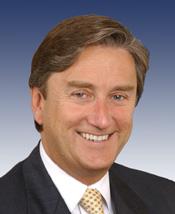
Mr. Speaker, I yield myself 3\1/2\ minutes. Mr. Speaker, the so-called Small Business Health Fairness Act is a bill that is attractive to a few but it is sufficient for none, and it seems to be…
Mr. Speaker, I yield myself 3\1/2\ minutes.
Mr. Speaker, the so-called Small Business Health Fairness Act is a bill that is attractive to a few but it is sufficient for none, and it seems to be harmful for everyone else. While there are employers, workers and family members who do depend on health insurance, what they really need is solutions that are going to work for everybody and not just some empty promises.
The Congressional Budget Office did an estimate on this proposed bill and estimated that approximately 4.6 million people might obtain some coverage through these proposed associated health plans but only about 330,000 of those people would be new customers.
The fact of the matter is that there is not going to be the dramatic savings that is proposed here. That simply will not materialize. The Congressional Budget Office found that these AHP
premiums would only be marginally less than the traditional health care plans. In fact, the Mercer Consulting STUDY that was done for the National Small Business Association found that premiums would increase by 23 percent for those outside the AHP market. It also found there would be an increase in the number of uninsured workers in small firms, an increase of a million people, as a result of this being implemented.
The fact of the matter is that Americans would also lose their right to vital medical coverage, like OB-GYN and pediatrician services, cervical, colon, mammography and prostrate cancer screening, maternity benefits, well-care child services, and diabetes treatment.
When we had witnesses testifying at the committee hearing, Mr. Speaker, we specifically asked the small business witness whether that is what she wanted to have happen to her company. And her testimony indicated clearly she did not, and she did not understand that was going to be the result of this bill passing.
This bill is going to disallow a lot of State protections, and almost all the States have in protections for people under this bill. This House voted for a Federal Patients' Bill of Rights that would have recognized States' protections that are in place for insurance programs. Almost every single Member on both sides of the aisle voted for that legislation; yet this piece of legislation, the AHP bill, would peel that away and take away the State protections for all those things that people in small business want.
As a person in a small business and representing a number of small businesses for over 22 years, I can tell you small business employers do not want an inferior policy for their employees.
With respect to the question one of our colleagues on the other side raised about the distrust of the private sector, we are all very much in favor of the private sector, but most people are in favor of it being a balanced situation in this country. We understand unless there is some reasonable regulation, some private industries will go too far in one direction, as has happened in the past with programs similar to this, the so-called MEWAs that existed at one time that were replete with fraud, corruption, and solvency problems.
This is a situation that has to be corrected. We cannot allow it to happen again here, and there is evidence in recent times that that is exactly what would happen with this bill.
Mr. Speaker, small business owners and their employees deserve protections. They deserve to go to the emergency room. Women small business owners deserve to go to gynecologists without referral from another doctor. Why should we treat small business owners and employees like second-class citizens by giving them second-class health care? Instead of extending the patient protections to all Americans, this bill would roll back the limited protections that exist today.
I think if we speak plainly, Mr. Speaker, this bill eliminates the State regulation of AHPs and is in fact an anti-patients' bill of rights. For this reason and the other reasons I have mentioned, and others have said, and the fact that over a thousand different organizations oppose this bill, including the National Governors Association, the Republican Governors Association, 41 State attorneys general, the National Small Business Administration, the National Association of Insurance Commissioners, as well as a dozen other groups of labor business and consumer groups, I believe this is not a good bill for small business, it is not a good bill for the employees of small businesses. We can do better and we should.
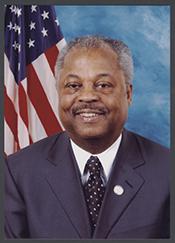
Yes, I do, Mr. Speaker. Mr. Speaker, I yield myself such time as I may consume. (Mr. PAYNE asked and was given permission to revise and extend his remarks.) Mr. Speaker, let me commend the gentleman…
Yes, I do, Mr. Speaker.
Mr. Speaker, I yield myself such time as I may consume.
(Mr. PAYNE asked and was given permission to revise and extend his remarks.)
Mr. Speaker, let me commend the gentleman from Wisconsin (Mr. Sensenbrenner) for bringing this resolution and certainly the gentleman from Michigan (Ranking Member Conyers), who is a living history of what is great about this country with his own history in the House of Representatives, being the second-longest-serving Member here.
Mr. Speaker, I rise today to express my strong support for H. Con. Res. 414, a resolution which urges Congress to renew its commitment to continuing and building on the legacy of Brown v. the Board of Education.
This month marks the 50th anniversary of the landmark Brown v. the Board of Education decision, declaring segregation of public schools unconstitutional. The chain of events began in Topeka, Kansas, where an African American third grader by the name of Linda Brown had to walk 1 mile through a railroad switchyard to get to her segregated elementary school, even though a white school was only seven blocks away.
Linda's father, Oliver Brown, tried to enroll her in the white elementary school, but the principal refused to admit her. Mr. Brown, along with other parents, went to the Topeka NAACP, filing a request for an injunction that would forbid the segregation of Topeka's public schools. In the initial trial, the court sided with the Board of Education saying that the precedent of Plessy v. Ferguson, passed in 1896, allowed separate but equal school systems.
Led by Thurgood Marshall, who later, of course, became the first African American to serve on the United States Supreme Court, the case was brought before the Nation's highest Court. At first, in 1952, the Supreme Court sent the case back to a lower court. The case came back to the High Court in 1953 and was heard along with others from South Carolina, Virginia, Delaware, and the District of Columbia.
Interestingly, in September of 1953, with the courts seemingly split, and the cases sent back down, the cases were in jeopardy; but what happened was that Chief Justice Fred Vinson died in his sleep. President Eisenhower, therefore, nominated a new Supreme Court Justice, the Republican Governor of California, Earl Warren. It was under Earl Warren's leadership that he brought the Court together; and he persuaded the Court, after the persuasive arguments of Brown v. the Board of Education, to have a unanimous decision. He wanted no dissent, and a unanimous decision was given by the Supreme Court under the leadership of Earl Warren. It surprised many Americans, but he lived up to that great title.
So separate but equal was thrown out, and Thurgood Marshall's argument that the 14th amendment equal protection clause precluded States from imposing distinctions based on race had prevailed.
So I conclude, I believe that Brown v. the Board of Education was one of the
most significant cases regarding segregation. The Brown case provided momentum for increased civil rights advocacy and legislation, opening equal opportunity to education to all in our society and then to other public accommodations.
However, we should remember that Brown was neither the beginning nor the end of the struggle for justice and equality. Today, equal education opportunities for all children are still a dream for many. In both the North and South, segregation has been thrown into reverse gear with 70 percent of the Nation's African American students in predominantly minority schools, and so I urge my colleagues to support H. Con. Res. 414, which commemorates the historic Brown v. the Board of Education decision and encourage Congress to continue to build on the legacy of Brown.
Mr. Speaker, I yield 2 minutes to the gentlewoman from Texas (Ms. Jackson-Lee).
(Ms. JACKSON-LEE of Texas asked and was given permission to revise and extend her remarks.)
Mr. Speaker, I yield 2 minutes to the gentlewoman from California (Ms. Waters).
Mr. Speaker, I yield 2 minutes to the gentlewoman from California (Ms. Loretta Sanchez).
Mr. Speaker, I yield 3 minutes to the gentlewoman from the District of Columbia (Ms. Norton).

Mr. Speaker, I am pleased today to support this resolution encouraging all Americans to observe the anniversary of Brown v. Board of Education with a commitment to continuing and building on its…
Mr. Speaker, I am pleased today to support this resolution encouraging all Americans to observe the anniversary of Brown v. Board of Education with a commitment to continuing and building on its legacy.
Brown v. Board of Education is one of the most important decisions our Supreme Court has ever made. It's important to celebrate the progress that has been made over the past 50 years in eliminating discrimination and inferior education for low-income and minority children--but it's also important to take a good, hard look at how far we still have to go.
Sadly, we are still light years away from providing the equal education envisioned by Thurgood Marshall and Earl Warren. Today, as in 1954, the quality of a child's education is still all too often linked to the color of his or her skin.
Just as the United States has the best health care in the world for those who can afford it, we have one of the best public education systems in the world if you happen to grow up in a predominantly white or wealthy community. But what if you don't?
If you are one of the millions of children who attend predominantly minority schools, our society continues to fail you. And that shortchanges not only the children, but the future of this nation.
It is shameful that poor and minority children are often assigned to less-challenging classes and less qualified teachers. The best teachers are often across town, a virtual world away from the students who need them desperately.
Black students are assigned disproportionately to special education, and low-income students are less than half as likely to be assigned to ``college prep'' courses. Overcrowded classrooms and dilapidated school buildings also send a powerful message to poor and minority students about what is expected of them.
Just yesterday, a judge with a sense of history in Kansas reminded us of the importance of school equity by ordering schools closed for not adequately serving the needs of poor, minority, disabled and non- English speaking children.
This lack of access to an equal education affects academic achievement. Seventy-four percent of white 4th graders read well, nearly twice the rate of the black classmates; and their Latino and Native American classmates are only slightly better. It is a national shame that half a century after this Nation committed itself to equality in education, fewer than half of minority children can read proficiently.
And that failure plays out in high school graduations. When millions of students get their diplomas a few weeks from now, only about half the minority children who began high school will graduate. That is an unacceptable rate of failure that in most cases, dooms those young people to a life of second class opportunities. That was not the lesson of Brown v. Board of Education.
It was to end that two-class education system once and for all that we passed No Child Left Behind three years ago, to end the racial and economic disparities that divide our schools and divide our country.
The No Child Left Behind law--if fully funded--would put a qualified teacher in every classroom. If all students were assigned highly qualified teachers for 5 years, evidence shows that test-score gaps separating poor and middle-class students would disappear. Not just narrow, but disappear.
But the President has turned his back on this law and underfunded it by nearly $27 billion. And our children are paying the price for yet another dream deferred.
The foundation of the civil rights struggle of 2004--as in 1954--is in the classroom. Civil rights pioneer Dr. Dorothy Height said it well: ``The surest path to success is through education.''
Like Dr. Height, we must keep fighting and keep fighting so that 50 years from now--when our grandchildren celebrate the 100th anniversary of Brown--they will be able to point with pride to an education system that lives up to the ideals of Brown v. Board of Education once and for all.
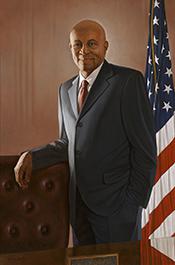
Mr. Speaker, I rise today to acknowledge the 50th Anniversary of the Supreme Court's courageous decision in Brown vs. the Board of Education. I want to take this opportunity to pay tribute to the…
Mr. Speaker, I rise today to acknowledge the 50th Anniversary of the Supreme Court's courageous decision in Brown vs. the Board of Education.
I want to take this opportunity to pay tribute to the team of lawyers from the NAACP Legal Defense Fund, led by Thurgood Marshall who had the courage to pursue this case. I want to thank the legal scholars and strategists at Howard University School of Law, led by Charles Hamilton Houston, who had the intellect to map out this winning strategy. I want to thank the sociologists and psychologists, led by Kenneth and Mamie Clark who undertook the challenge of gathering evidence of the harm done to African American children when society branded them with a mark of inferiority. And I want to thank the parents and students who risked homes, livelihoods, and underwent physical threats and harassment to be a part of this lawsuit. Fifty years after Brown, this country owes a debt of gratitude to each of these people who played a part in bringing about the end of legal segregation based on race. In the face of violence, intimidation and governmental resistance, they pressed forward to move this country closer to the realization of its stated creed--freedom, equality and justice for all.
Yet 50 years later, we know that the work they started is not finished. We must remember that their goal was not only to end legal segregation of the public schools, but to assure that a quality public education is available for all children. We are still involved in that struggle. On this anniversary of Brown, many will point to the fact that many schools are still segregated and are rapidly re-segregating. I join them in these concerns.
As people talk about the Brown decision, many will talk about the meaning of the decision and others will talk about the promise the decision represented. The theoretical underpinning of Brown was that public schools must be supported adequately. The lawyers in Brown wanted to dismantle segregation for many worthwhile reasons. But they also wanted to emphasize that as practiced, separate was inherently unequal. While we have legally abolished the separateness required before Brown, we have not yet addressed the problem of equality of funding.
We are still operating state-based educational systems in which schools attended by racial minorities receive less money that those located in primarily white areas. This inequality in funding must be abolished to complete the mission of Brown. We must focus on the perpetual under-funding of inner-city schools. We must recognized that the achievement gap is inextricably linked to the economic gap. Low- performing schools are almost always situated in communities that are pockets of poverty. We must realize the importance of teacher and administration accountability but not forget that Congressional accountability requires that we make school funding a priority. Congress must assure that there is adequate money for school construction to reduce class size and purchase educational materials. We must ensure that teachers are paid for the professional and important job that they do. And finally, we must provide funding which allows local communities to build a supportive infrastructure that values the role of education in the community.
To me, the message of the Brown decision was simple--education is a vehicle of upward mobility. If we have heard Brown's message, we must fulfill its promise--that every child can succeed, if given the opportunity of a quality public education. We still have not fulfilled the promise. Therefore, Mr. Speaker, I suggest that we in this House dedicate ourselves to hear the message of Brown and fulfill its promise by working to provide the opportunity for a quality public education for all of America's children.
Show 11 more
Mr. Speaker, I rise today to commemorate the 50th anniversary of the U.S. Supreme Court's Brown v. Board of Education decision and to draw a parallel from this historic ruling to the landmark No…
Mr. Speaker, I rise today to commemorate the 50th anniversary of the U.S. Supreme Court's Brown v. Board of Education decision and to draw a parallel from this historic ruling to the landmark No Child Left Behind education reform law.
The words penned by Chief Justice Earl Warren on May 17, 1954 still ring true today and provide a clear roadmap for improving America's public education system in the future. Fifty years ago, Mr. Warren wrote:
In these days, it is doubtful that any child may reasonably
be expected to succeed in life if he is denied the
opportunity of an education. Such an opportunity, where the
state has undertaken to provide it, is a right which must be
made available to all on equal terms.
By striking down the doctrine of ``separate but equal'' as unconstitutional, the Brown decision flung open wide the doors of public education for all children, regardless of their color or back ground. It ensured every child a seat in an integrated classroom. It guaranteed access to an equal education for everyone. No longer could students be refused an opportunity to receive a quality education simply because the color of their skin.
Two years ago, Congress--in a bipartisan vote--enacted that No Child Left Behind Act as the logical step to improving education for all students. We promised to increase federal education funding while demanding high standards and accountability for all students. As a result of the law, parents are receiving more information than ever before about the quality of their local schools and are realizing new opportunities to improve their children's education.
What was once an unattainable dream for so many parents stuck on the wrong side of the tracks has now become a reality. Parents with children trapped in underperforming schools may now transfer them to better performing schools.
A report released yesterday by the Citizens' Commission on Civil Rights found that the No Child Left Behind Act is already creating new educational opportunities for minority students. According to the Commission's report, at least 70,000 students in 47 states are benefiting for the law's school choice provision.
The Commission understands--just as Congress did--the importance of providing parents new options to improve their children's education. They also understand how added school choice options will help the whole education system get better, not worse.
The Commission's findings are fortified by a recent Chicago Sun-Times analysis showing that of the students who were allowed to transfer to a better performing school under NCLB made greater strides on state- designed reading and math tests than students in their former school. The paper also determined that other students' scores did not drop as a result of the incoming students, as many education reform opponents predicted would happen.
However, these are not the only signs of No Child Left Behind's early success. Students are showing considerable improvement in the nation's largest urban schools. A recent report by the Council of Great City Schools attributed much of this improvement to the No Child Left Behind Act.
Earlier this week, Florida and Michigan reported decreases in the achievement gap between African-American students and their Caucasian peers.
There is still much work to do before America fully realizes the dream of the Brown v. Board of Education decision, but we are on the right track. By holding the line against education reform opponents and allowing states and school districts to implement the full scope of No Child Left Behind's reforms, we will ensure a higher level of student academic performance than we have ever achieved.
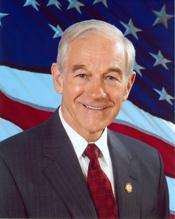
Mr. Speaker, I rise to explain my objection to H. Con. Res. 414, the resolution commending the anniversary of the decision in Brown v. Board of Education and related cases. While I certainly agree…
Mr. Speaker, I rise to explain my objection to H. Con. Res. 414, the resolution commending the anniversary of the decision in Brown v. Board of Education and related cases. While I certainly agree with the expression of abhorrence at the very idea of forced segregation I cannot, without reservation, simply support the content in the resolution.
The ``whereas clauses'' of this resolution venture far beyond the basis of Brown and praise various federal legislative acts such as the Fair Housing Act of 1968, the Civil Rights Act of 1964 and the Voting Rights Act of 1965. This final Act was particularly pernicious because it was not applied across the board, but targeted only at certain areas of the country. As such, it violates the spirit of the very equal protection it claims to promote. Moreover, we certainly should ask what constitutional authority lies behind the passage of such legislation.
The history of racism, segregation and inferior facilities that led to Brown cannot be ignored, and should not pass from our condemnation. Still, thinking people must consider the old adage that ``two wrongs do not make a right.'' Simply, the affects of Brown have been, at best, mixed. As this anniversary has approached there have been a large number of events and articles in the media to celebrate the decision and analyze its impact. Most people, regardless of their opinion of the decision, seem to be aware that it has not achieved its goals.
In many places in our country the public school system continues to fail many American children, particularly those in the inner city. Research shows that our schools are more segregated than at any point from the 1960s. Some of this is undoubtedly due to the affects of the Brown decision. Do we really mean to celebrate the failures of forced busing? Forced integration largely led to white flight from the cities, thus making society even more segregated. Where children used to go to different schools but meet each other at the little league field, after Brown these people would now live in different cities or different counties. Thus, forced integration led only to even more segregation. A recent Washington Post article about McKinley High School makes this very point. Worse still, prior to this re-segregation racial violence was often prevalent.
We need also to think about whether sacrificing quality education on the altar of equality is not a terrible mistake, especially as it applies to the opportunities available to those who are historically and economically disadvantaged. For example, research has shown that separating children on the basis of gender enhances academic performance. Attempts to have such schools have been struck down by the courts on the basis of Brown. Just last night Fox News reported the academic successes at schools separating children based on gender, as approved by this body is the so-called ``No Child Left Behind Act.'' Yet the National Organization of Women continues to oppose this policy on the basis of Brown's ``separate is inherently not equal'' edict, despite the statistically evident positive impact this policy has had on the achievement of female students in mathematics and science classes.
Mr. Speaker, in short forced integration and enforced equality are inimical to liberty; while they may be less abhorrent than forced segregation they are nonetheless as likely to lead to resentment and are demonstrably as unworkable and hence ineffective.
While I completely celebrate the end of forced segregation that Brown helped to bring about, I cannot unreservedly support this resolution as currently worded.
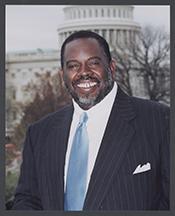
Mr. Speaker, I thank the gentleman for yielding me this time. It is interesting to note the gentleman just said, why should small businesses be treated as second class citizens. The fact of the…
Mr. Speaker, I thank the gentleman for yielding me this time.
It is interesting to note the gentleman just said, why should small businesses be treated as second class citizens. The fact of the matter is, they are already treated as second-class citizens because they do not have and cannot afford to have health insurance for their employees. Sixty percent of the 44 million uninsured people in America work in small businesses.
Now, there is something very interesting happening in this debate, and I want to lay it on the line. All the people who are against this bill have health insurance. Yes, the unions and the governors, be they Democrat or Republican, and all the other folks who are saying this is a bad bill, have health insurance. On the other side, the folks who want this bill, are small business owners, 12 million of them, who cannot afford to provide health insurance for their employees. Why should they not have an opportunity to pool together to gain the leverage that would enable them to provide affordable health insurance?
Now, you hear people saying the benefits are too skimpy and you do not have the State mandated benefits and all these other things. Those benefits are fine, and I have supported them. But the fact of the matter is if you do not have any health insurance, then the benefits and the protections and the consumerism and all that does not mean a thing because you do not have any health insurance.
Number one, why not let the employees make the decision? If the benefits are too skimpy, the employees will not buy them. On the other hand, if a basic plan enables you to see a doctor or save money on going to a doctor, that is a good thing and people will buy it.
The second item I might mention, large corporations that self-insure and unions that cross States lines do not have to adhere to these mandates that people are saying is so important. So what is the difference? It seems to me that if we do not want to treat folks as second-class citizens, let small businesses have the same benefits that big corporations and unions currently enjoy.
Now, the other item you will hear about is cherrypicking. There are provisions in this bill to prevent cherrypicking. You will hear about solvency problems. There are provisions in the bill to ensure that the solvency is the same as the solvency for other insurance companies.
Now, who gets insured? You have heard, well, people will lose insurance, insurance rates will rise. CONSAD Research Institute conducted a study that concluded that 8.5 million more Americans, uninsured workers, would have access to insurance under this bill.
Now, this bill is not a panacea. It is not perfect. But it is a step forward that will enable us to insure the group of people who do not have insurance. Instead of listening to all the thousands and hundreds of groups that they are saying are against this bill, but who for some reason have insurance, let us provide a benefit to the uninsured small businessperson, give them the opportunity to have associated health plans and move towards insuring the uninsured.
This is National Insure the Uninsured Week, not National Let Us Talk About Insuring the Uninsured Week. The thing that we can do that would do the most good is to pass this bill and move toward insuring the uninsured.
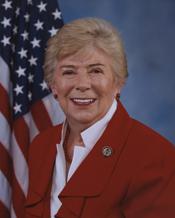
Mr. Speaker, I offer a motion to recommit. Yes, I am, Mr. Speaker. Mr. Speaker, this motion to recommit is very simple. The motion ensures that the bill does not preempt State regulations regarding…
Mr. Speaker, I offer a motion to recommit.
Yes, I am, Mr. Speaker.
Mr. Speaker, this motion to recommit is very simple. The motion ensures that the bill does not preempt State regulations regarding coverage for breast cancer, pregnancy and childbirth, and well-child OB/GYN services.
Mr. Speaker, this bill, the National Republican Governors Association, the Democratic Governors Association, they are all against it. Forty-one State Attorneys General are against it. There is a reason for that, going back many years ago, when the insurance companies were not giving health care insurance to those that would carry it.
Mr. Speaker, this bill undermines health care legislation in 48 States, including New York. As patients and advocates across the Nation quickly discovered that their basic health care needs were not being served by their insurance companies, they demanded the State step in and protect them.
Mr. Speaker, 48 States responded overwhelmingly and gave basic health care to their citizens. Today, we are undermining the State's efforts. Today, we are saying that basic health care does not matter.
As a nurse, my policy is ``first do no harm.'' Mr. Speaker, this bill does harm to millions of patients across the country. Mr. Speaker, a reduction in health insurance in any form is a reduction in health care. It is just that simple.
Almost every State has recognized the need to cut down the cost of health care and still provide basic health care to their citizens. The States know that without guaranteeing basic health care patients will not get the health care they desperately need. They will only seek help when they are very sick, thus requiring much more expensive medical care for their diseases, putting their lives and the lives of their children at risk.
Let us just look at what it would mean for breast cancer, which is so high in New York State.
According to the American Cancer Society, over 211,000 new cases of breast cancer will be diagnosed in the United States this year. In my State of New York, there will be 2,000 new cases of breast cancer diagnosed alone. Breast cancer is a fatal, but eminently treatable, disease. However, early detection is the key to proper treatment of the disease.
Mammogram screenings are essential for the early detection of cancer. Timely screening can prevent approximately 15 to 30 percent of all deaths from breast cancer among women over the age of 40. Currently, New York and 48 States require insurance companies to cover mammogram screenings. However, under this bill associated health plans would be exempt from having to provide this critical benefit. This amendment would at least prevent a reduction of health care services to those who already have this benefit.
Preserving the coverage of mammogram screenings will help save the lives of our wives, our mothers, and
their daughters. I urge all of my colleagues to vote ``no,'' and as I said earlier, the National Association of Governors, Democratic Governors, Republican Governors are against this legislation.
Mr. Speaker, I yield the balance of my time to my colleague, the gentlewoman from Wisconsin (Ms. McCollum).
Mr. Speaker, I demand a recorded vote.
Mr. Speaker, I thank the gentleman for yielding me this time and commend the gentleman as well as the chairman for what is a very interesting debate with some technical sophistication on the business…
Mr. Speaker, I thank the gentleman for yielding me this time and commend the gentleman as well as the chairman for what is a very interesting debate with some technical sophistication on the business of how we expand health insurance in the small business environment.
Let me begin by explaining briefly how purchase decisions work in a small business, unlike General Electric. General Electric has a human resources department. They have actuaries on contract. They can thoroughly do due diligence on any health insurance program they are evaluating for their employees.
Our Own Hardware store in Valley City, North Dakota, my hometown, is quite different. There is one business proprietor, may a half a dozen or a dozen employees, and when he sits down to visit with a person promoting a health insurance program, he does not have an ability to evaluate the rating scheme. He does not have an ability to assess the adequacy of the fairness of the medical underwriting. That Our Own Hardware store does not have the ability to determine whether the company is solvent and reserving adequately to pay future claims, the Our Own Hardware does not have to do that because when they sell health insurance now, it is regulated. We have a State insurance department that does that. That used to be my job. And the State insurance commissioners across this country are in their offices every day making certain that the presentations to the Our Own Hardware stores represents a product that is going to be there when they need it.
When we buy insurance, we pay premiums today with the hope of getting the claim paid tomorrow, and that means we have to have a reliable entity on the other end. That is what regulation brings us.
The bill before us would depart from that. They would basically substantially do away with State solvency checks, with the State regulation on underwriting criteria, with the assessment of whether or not the rating is fair. I believe there would be very, very damaging results. In order to bring the cost of insurance down, we have seen self-regulated companies like the AHPs try to cheat on the business of paying claims. They do not have the capital to pay the claims when the claims come due. In fact, the most recent version of the AHPs that have been out there, these MEWAs, the insurance commissioners tell us they left more than 400,000 people holding the bag with medical claims but no insurance company to pay them.
The majority talks a lot about trying to get coverage to those who do not have it. You sure do not want to give people the illusion of coverage that is not real because they count on that company in paying the claim. And what we see with these self-regulated
outfits, when you need them, they are not there. They have taken your money and they have left. So not only does it fail in a meaningful way to get coverage to those who need it, it undercuts the coverage of those who already have insurance. In fact, the estimate from the actuarial firm that a million would lose their coverage is yet another solid reason why we should not take this path and adopt the AHPs.
Vote ``no'' on this measure.
I thank the gentleman for yielding me this time. Mr. Speaker, this is Insure the Uninsured Week, and for me as a physician and Chair of the Health Brain Trust of the Congressional Black Caucus,…
I thank the gentleman for yielding me this time.
Mr. Speaker, this is Insure the Uninsured Week, and for me as a physician and Chair of the Health Brain Trust of the Congressional Black Caucus, ensuring health coverage to everyone is a priority every day.
And so I want to be very clear that I rise in strong support of providing small businesses and their employees access to high-quality health insurance that is truly affordable. That is why I oppose H.R. 4281, the Association Health Plan bill, and support the Kind-Andrews substitute.
We in the minority caucuses have spent a great deal of time looking at the issue of insurance, of how we can allow small business associations to come together to pool their purchasing power to buy quality health coverage at the lowest possible cost. We examined the AHPs. I did not originally sign on to the bill, but after a closer look at what it would do and as a physician who understands how important it is to do no harm, I removed my name from what I consider a harmful bill.
In H.R. 4281, the base bill, AHPs would be exempt from State insurance regulations and consumer protections. They would increase health care costs for most small business employees, cause premiums to rise for those outside of the AHP market, and eventually not lower, but increase, the number of uninsured in small business firms.
While AHP supporters will insist that this will not happen, by removing these important protections, the major harm this bill can do is too great a risk to take. We are talking about workers' health; we are talking about their lives. There is a better way to provide this insurance which will not harm, and that is the Kind-Andrews substitute. It would establish an employer health benefit plan similar to the Federal employees' health benefits, which would contract with state- licensed health insurers to offer an insurance package for employees of businesses of fewer than 100 employees.
Unlike the underlying bill, this better Democratic substitute will keep these small employer plans subject to State health insurance and consumer regulations and protections. It would provide small businesses and their employees access to high-quality health coverage; and by ensuring that the risk is spread, that everyone is included, not keeping sicker employees out, it keeps it truly affordable.
As a member of the Committee on Small Business since coming to this Congress, I am for helping small businesses. This substitute does that. H.R. 4281 will not.
I urge my colleagues to join the more than 150 organizations, including all of the prominent civil rights organizations, in opposing H.R. 4281. Instead, I urge them to vote for the Kind-Andrews substitute. Let us make sure we cover this important group who are over 60 percent of all the uninsured; and above all, let us do no harm.
Mr. Speaker, as an original cosponsor of H. Con. Res. 414, it gives me great pleasure to support this important resolution today. On Monday we celebrate the 50th anniversary of Brown v. Board of…
Mr. Speaker, as an original cosponsor of H. Con. Res. 414, it gives me great pleasure to support this important resolution today.
On Monday we celebrate the 50th anniversary of Brown v. Board of Education, which found that, ``in the field of education, the doctrine of `separate but equal' has no place,'' thus guaranteeing every American student a seat in the classroom. Truly a landmark decision, Brown did not end in the classroom. It helped pave the way for the enactment of the Civil Rights Act of 1964, the Voting Rights Act of 1965, and the Fair Housing Act of 1968.
Enactment of the No Child Left Behind Act, built upon the educational progress made in Brown by ensuring every student will not only have access, but will also receive a quality education. While progress has been made since the Brown decision, a huge gap still remains when it comes to ensuring all children actually learn. Significant academic achievement gaps between disadvantaged students and their more affluent peers still exist in key subjects such as reading and math. In effect, we have allowed a two-tiered educational system--one with low expectations for poor or minority students and high expectations for others.
Nationally, the achievement gap between African-American and Caucasian fourth-graders in reading is 28 percentage points. The achievement gap between Hispanic and Caucasian fourth-graders is 29 percentage points. We have allowed ourselves to believe that some children are simply beyond our reach, and, as a result, this Nation has suffered.
Not unlike Brown, No Child Left Behind is rooted in the belief that all students--regardless of race, background, income, geography, or disability--can learn, and must be given the chance to do so.
No Child Left Behind has its skeptics, and change is never easy. Despite complaints, all parties involved are answering to the requirements of No Child Left Behind. States, school districts, teachers, parents and without doubt the students are meeting the rigors of the law. This response shows that we all are dedicated and believe in the goals of the law.
We are already seeing positive results. According to a 2004 study by the Council of Great City Schools, the achievement gap is narrowing in both reading and math between African-American and Caucasian and Hispanic and Caucasian students in our Nation's inner-city schools--and they attribute the positive change in part to No Child Left Behind.
I am honored to be a cosponsor of this resolution, encourage us all to celebrate the anniversary of Brown, and reflect on how far we have come in ensuring educational access. We must also recognize that the job is not done; we must see to it that all children are learning. No Child Left Behind is a step in this direction and we must stay the course.
Mr. Speaker, I thank the chairman for yielding me time. Mr. Speaker, let us put some competition into the marketplace. We just have a proposal now that says we will have a government-subsidized…
Mr. Speaker, I thank the chairman for yielding me time.
Mr. Speaker, let us put some competition into the marketplace. We just have a proposal now that says we will have a government-subsidized program, and we all know where that will take us. The taxpayers will pay and pay.
Here is the problem: 50 percent of America has one insurer. That means you have a monopoly, and that is where we are getting 20, 30, and 40 percent increases annually, and businesses are straining. But when you only have one insurer, the new pharmacy plan, we have guaranteed everybody two. But in health care, over half of America have one.
Associated Health Plans would, I think, change the marketplace dramatically, because you would bring lots of competition to the marketplace. The monopolies would no longer rule. A lot of other companies that are not monopolies do not want health care either. Why? It is going to be competition. Whenever America is successful, we bring competition into the marketplace.
Yes, those monopolies are leaving community rating; yes, they are cherry-picking today. And State mandates are part of the problem, because 50 States have different mandates and we guarantee everybody gets a Cadillac plan. That means a lot of people cannot afford a plan at all, because you only can deliver a Cadillac plan. That is the system we have.
In rural areas, where monopolies exist, businesses, individuals and governments pay measurably more for
health insurance than neighboring counties. In my district, I have school districts and counties who will pay $650 for a family plan. Two counties away they pay $1,100 for the same insurance coverage under the current system. Why? Because there is no competition there.
Now, the hospitals, the doctors and providers under these monopolies get paid less too, because they have no bargaining power with the big insurance giants that are the monopolies.
The current system will change dramatically with Associated Health Plans, because, for the first time, all parts of America will have many people who they can purchase insurance from. Yes, maybe if I am a restaurateur, I will be part of a national restaurant association who has a plan tailored for restaurants.
I was a supermarket operator for 26 years. I probably, if I were back in that business, would have a plan that works well for super markets. But when you put them all in the same box, you put all kinds of employers in the same box, as we currently do with State mandates.
Let us give our businesses and our government service agencies choices. Let us give them Associated Health Plans, not another government-subsidized program. But let us turn the competitiveness of American ingenuity, and we will solve the uninsured problem in this country.
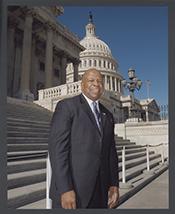
Mr. Speaker, I rise in support of H. Con. Res. 414, a resolution celebrating the 50th anniversary of the Brown. v. Board of Education Supreme Court decision, brought to the floor by my very good…
Mr. Speaker, I rise in support of H. Con. Res. 414, a resolution celebrating the 50th anniversary of the Brown. v. Board of Education Supreme Court decision, brought to the floor by my very good friend; a pioneer for civil rights in this House and the ranking member of the House Judiciary Committee, Representative John Conyers. Mr. Conyers, I thank you for your continued leadership on issues that affect the center of people's lives.
May 17, 2004 marks the 50th anniversary of the U.S. Supreme Court decision that unanimously held that racial segregation of public schools violated the 14th amendment. The legacy of the Brown decision lives on throughout the Nation, and I, as well as million of Americans throughout the country, are the direct beneficiaries of this monumental court decision.
In the early 1950's, racial segregation in public schools was the norm across America. But in 1954, the United States Supreme Court affirmed that separate facilities are indeed inherently unequal. The court determined that the segregation in public schools based solely upon race deprives minority children of equal
opportunity. As such, the Court concluded that in the field of public education, the doctrine of ``separate but equal'' has no place.
Mr. Speaker, as we celebrate the 50th anniversary of this historic groundbreaking case it is incumbent upon us to reflect and assess where we stand today. As students of history know, we study the past in order to learn about the present and build a better future.
However, for many Americans Brown's promises to seem unfulfilled. America's schools remain imperiled by segregation. Poor children living in disadvantaged urban communities of color overwhelmingly attend re- segregated schools, as more affluent white families have departed for the suburbs. Methods of school funding virtually assure that wealthy district will offer superior educational opportunities. In addition, the one compelling pledge that this administration has made to raise standards in our schools, the No Child Left Behind Act, remains under funded to the tune of $9 billion.
Mr. Speaker, we must not allow this nation to return to a time before Brown. The lesson of Brown is that segregation clearly does not work. I encourage my colleagues to use this opportunity to renew their commitment to eradicating all vestiges of segregation by voicing their support for H. Con. Res. 414.
Furthermore, I call upon my colleagues and the administration to fully fund the No Child Left Behind Act. Unless we ensure that every child in this nation receives an equitable and quality education, this Nation's children will be suffocated once again by the legacy that segregation has left behind in our schools.
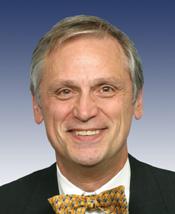
Mr. Speaker, one of the most frustrating aspects of the way we run Congress today is an interest in scoring political points as opposed to solving problems. Nowhere is that more in evidence than the…
Mr. Speaker, one of the most frustrating aspects of the way we run Congress today is an interest in scoring political points as opposed to solving problems. Nowhere is that more in evidence than the symbolic political acts surrounding healthcare this week in the House of Representatives.
We are in the midst of a healthcare crisis for the uninsured, for small businesses, and for practitioners. There is a complicated, interconnected fabric that provides healthcare in this country that includes insurance companies, HMO's, public agencies, Federal Government programs and the institutions that represent and train medical professionals. Advocacy groups, legal experts and consumers all have legitimate interests and something to say.
Sadly, the Republican leadership in the House of Representatives continues to be more interested in scoring political points than solving problems. Simply recycling the same flawed legislation, is clearly far less than our best effort and stands little likelihood of passage to the Senate, where similar legislation continues to languish.
These bills would undermine our efforts by insuring only the healthiest and wealthiest, leaving 511,00 uninsured Oregonians and tens of millions of Americans behind. Furthermore, the Association Health Plans proposals would exempt state solvency requirements, leaving the consumers at a significant risk.
If we were able to openly debate these proposals on the floor I know that the healthcare community would be well served because the majority of Congress does not want to short change it or our citizens. Most in Congress do not want to artificially restrict payments and are sincerely interested in making sure that Federal policy does not create or enhance abusive or distorted behaviors.
The most dramatic example would be fixing flawed funding. There is a gusher of money going to items far less important, far less essential to the American public, such as the unaffordable, unnecessary additional tax benefits to those who need help the least. It is time for the vast array of interests represented by the healthcare community and the people vitally dependent upon it to insist that the Republican Leadership stop the games. Everyone should commit to full, fair, honest debate in a more open legislative process. This is the only way we will enact cost effective legislation, and stop the funding abuses. We must stop holding legislation hostage, to another political agenda. I will continue to work with my healthcare community at home along with national groups and organizations to produce the type of process, discussion and legislation Americans critically deserve.

Mr. Speaker, I rise today in support of three important initiatives we took this week to meet the uninsured crisis head-on and to address the rising costs of health care. We have a crisis on our…
Mr. Speaker, I rise today in support of three important initiatives we took this week to meet the uninsured crisis head-on and to address the rising costs of health care.
We have a crisis on our hands--over 40 million Americans are without health insurance. In addition, it is becoming increasingly difficult to not only obtain affordable health coverage, but to keep it--especially for America's small businesses.
According to the Associated Builders and Contractors, over 60 percent of the Nation's uninsured are small business employees. Small businesses are the backbone of our economy. We must ensure that we create an environment that allows these businesses access to affordable health care. If we do not address the issue, we will see more and more small businesses stop growing or close their doors. It is imperative, therefore, that we pass legislation creating Association Health Plans and legislation that allows families to roll-over money year-to-year from their Flexible Spending Accounts or into new Health Savings Accounts.
These two pieces of legislation will dramatically improve our Nation's health care climate, especially for small businesses. More individuals and their employers will be able to afford health care; and in turn, we will see the health of Americans improve and the costs of health care decline.
The third piece of legislation addresses America's medical liability crisis. Physicians in Virginia and across the country are being forced to close their doors due to the astronomically rising costs of medical malpractice premiums.
On February 4, 2004, as many as 1,500 physicians from all over my State marched on the Virginia Capitol to make the case for common-sense medical liability from reform in the State legislature. Led by the Medical Society of Virginia, Virginia's White Coat Day march on Richmond was designed to educate state lawmakers on how doctors' skyrocketing malpractice insurance is limiting patients' access to medical care. Outrageous runaway jury awards are causing malpractice premiums to rise uncontrollably,and many doctors are being forced to raise prices or shut their doors. These higher costs are then passed on to working families and small businesses.
Not only should the Virginia legislature address this issue, but we as a Congress need to do the same. We need to take President Bush's lead in ending the jackpot payouts that our legal system encourages.
Mr. Speaker, we must pass these common sense reforms into law in order to help our Nation's uninsured and address the rising costs of health care. These are issues we cannot afford to ignore.
Bill Text
5 versions available
        [Congressional Bills 108th Congress]
[From the U.S. Government Publishing Office]
[H. Con. Res. 414 Enrolled Bill (ENR)]

H.Con.Res.414
Agreed to May 19, 2004

One Hundred Eighth Congress

of the

United States of America

AT THE SECOND SESSION

Begun and held at the City of Washington on Tuesday,
the twentieth day of January, two thousand and four

Concurrent Resolution

Whereas on May 17, 1954, the United States Supreme Court announced in
Brown v. Board of Education (347 U.S. 483) that, ``in the field of
education, the doctrine of `separate but equal' has no place'';

Whereas the Brown decision overturned the precedent set in 1896 in
Plessy v. Ferguson (163 U.S. 537), which had declared ``separate but
equal facilities'' constitutional and allowed the continued
segregation of public schools in the United States on the basis of
race;

Whereas the Brown decision recognized as a matter of law that the
segregation of public schools deprived students of the equal
protection of the laws under the Fourteenth Amendment to the
Constitution of the United States;

Whereas the Brown decision stood as a victory for plaintiff Linda
Brown, an African American third grader who had been denied admission
to an all white public school in Topeka, Kansas;

Whereas the Brown decision stood as a victory for those plaintiffs
similarly situated to Linda Brown in the cases that were consolidated
with Brown, which included Briggs v. Elliot (103 F. Supp. 920), Davis
v. County School Board (103 F. Supp. 337), and Gephardt v. Belton (91
A.2d 137);

Whereas the Brown decision stood as a victory for those that had
successfully dismantled school segregation years before Brown through
legal challenges such as Westminster School District v. Mendez (161
F.2d 774), which ended segregation in schools in Orange County,
California;

Whereas the Brown decision stands among all civil rights cases as a
symbol of the Federal Government's commitment to fulfill the promise
of equality;

Whereas the Brown decision helped lead to the repeal of ``Jim Crow''
laws and the elimination of many of the severe restrictions placed on
the freedom of African Americans;

Whereas the Brown decision helped lead to the enactment of the Civil
Rights Act of 1964, which prohibits discrimination on the basis of
race, religion, or national origin in workplaces and public
establishments that have a connection to interstate commerce or are
supported by the State;

Whereas the Brown decision helped lead to the enactment of the Voting
Rights Act of 1965 which promotes every American's right to
participate in the political process;

Whereas the Brown decision helped lead to the enactment of the Fair
Housing Act of 1968 that prohibits discrimination in the sale,
rental, and financing of dwellings, and in other housing-relating
transactions, on the basis of race, color, national origin, religion,
sex, familial status, or disability; and

Whereas in 2004, the year marking the 50th anniversary of the Brown
decision, inequalities evidenced at the time of such decision have
not been completely eradicated: Now, therefore, be it

Resolved by the House of Representatives (the Senate concurring),
That the Congress--
(1) recognizes and celebrates the 50th anniversary of the Brown
v. Board of Education decision;
(2) encourages all Americans to recognize and celebrate the
50th anniversary of the Brown v. Board of Education decision; and
(3) renews its commitment to continuing and building on the
legacy of Brown with a pledge to acknowledge and address the modern
day disparities that remain.
Attest:

Clerk of the House of Representatives.

Attest:

Secretary of the Senate.