Regarding the security of Israel and the principles of peace in the Middle East.

Legislative Activity
Stay on top of the latest movement without scrolling through every action
Received in the Senate and referred to the Committee on Foreign Relations.
June 24, 2004
View full timeline
Introduced in House
June 22, 2004
Referred to the House Committee on International Relations.
June 22, 2004
Ms. Ros-Lehtinen moved to suspend the rules and agree to the resolution.
June 23, 2004 • 12:21 PM
Considered under suspension of the rules. (consideration: CR H4789-4802)
June 23, 2004 • 12:21 PM
DEBATE - The House proceeded with forty minutes of debate on H. Con. Res. 460.
June 23, 2004 • 12:21 PM
DEBATE - By unanimous consent, the House proceeded with an additional 20 minutes of debate on H. Con. Res. 460.
June 23, 2004 • 12:56 PM
At the conclusion of debate, the Yeas and Nays were demanded and ordered. Pursuant to the provisions of clause 8, rule XX, the Chair announced that further proceedings on the motion would be postponed.
June 23, 2004 • 1:37 PM
Considered as unfinished business. (consideration: CR H4823-4824)
June 23, 2004 • 4:29 PM
Passed/agreed to in House: On motion to suspend the rules and agree to the resolution Agreed to by the Yeas and Nays: (2/3 required): 407 - 9, 3 Present (Roll no. 290).(text: CR H4789)
June 23, 2004 • 4:38 PM
On motion to suspend the rules and agree to the resolution Agreed to by the Yeas and Nays: (2/3 required): 407 - 9, 3 Present (Roll no. 290). (text: CR H4789)
June 23, 2004 • 4:38 PM
Motion to reconsider laid on the table Agreed to without objection.
June 23, 2004 • 4:38 PM
Received in the Senate and referred to the Committee on Foreign Relations.
June 24, 2004
Voting History
1 vote recorded • Roll call available
Floor Debate
24 membersWhat members said about H.Con.Res. 460 on the floor
 TL
TL IR
IR EJM
EJM NJR
NJR RTM+19
Floor Debate
24 membersWhat members said about H.Con.Res. 460 on the floor
Mr. Speaker, I yield such time as he may consume to the gentleman from Maryland (Mr. Hoyer), the distinguished Democratic whip, who played a critical role in the drafting of this important…
Mr. Speaker, I yield such time as he may consume to the gentleman from Maryland (Mr. Hoyer), the distinguished Democratic whip, who played a critical role in the drafting of this important resolution.
Mr. Speaker, I yield myself such time as I may consume.
I want to thank the distinguished Democratic whip for his powerful and eloquent statement.
I rise in strong support of this historic resolution, Mr. Speaker. Our resolution represents a unique, bipartisan effort to demonstrate congressional support for the State of Israel and for Middle East peace by endorsing Prime Minister Sharon's bold disengagement plan.
Even before this resolution was introduced, expressions of bipartisan resolve regarding its core principles were already well on their way. President Bush warmly welcomed Prime Minister Sharon's plan and reaffirmed this Nation's strong support for Israel and for Middle East peace in his letter of April 14. Senator John Kerry, the Democratic nominee for President, in turn endorsed both Prime Minister Sharon's proposal and the content of the President's letter.
In setting out some of the principles of peace such as those relating to territory and refugees, the President was clearly inspired by ideas presented during the Camp David negotiations in the summer of 2000 and by President Clinton's so-called ``Parameters'' of December, 2000. Thus like President Bush's April 14 letter, the resolution now before us distills the ideas of some of our Nation's most respected figures in both the Democratic and Republican parties.
Many of the principles in the resolution have been endorsed previously, some of them repeatedly by the Congress. All of them are crucial to achieving Middle East peace.
Mr. Speaker, Prime Minister Sharon has taken a bold risk and shown great courage in pursuing his plan for unilateral withdrawal from all of Gaza and parts of the West Bank. He did so because he believed it was the only way to break a deadlock in the peace process and to forge a historic path towards the separation of the Palestinian and Israeli peoples which is the prerequisite for a two-state solution. The prime minister decided that Middle East peace could no longer be held hostage to the failure of Palestinian leadership.
Prime Minister Sharon has pursued his plan despite repeated political obstacles. The Israeli people as a whole overwhelmingly embrace his initiative, but many of his traditional allies do not. In fact, Mr. Sharon's plan was defeated in a referendum of his own Likud parties membership. He has been forced to fire some members of his cabinet in order to assure cabinet support for the plan. Other ministers have resigned in protest. Mr. Sharon has lost his once formidable parliamentary majority and now leads a minority government. Perhaps most painfully for him, he has parted ways with a settlement movement that he once unofficially led. As one senior U.S. official recently expressed it to me, ``A year ago we would have been shocked and pleased if Sharon had decided to dismantle one single settlement. Now he insists on dismantling two dozen.''
Mr. Speaker, I met with Prime Minister Sharon in his office in Jerusalem a month ago. As critics were pronouncing his plan finished, he was buoyantly optimistic and firmly committed to overcoming opposition to his plan. He told me he would prevail in the cabinet, and now he has. There are more steps required before implementation, but Mr. Sharon is committed to the battle, and, in my view, he is fully up to the task.
Mr. Speaker, the Israeli people have endured considerable heartbreak in the peace process. They were stunned and many still are, as are we, that an inexcusable Palestinian intifada erupted 4 years ago in the wake of an incredibly generous Israeli peace offer. That intifada, with its repeated suicide bombings, has claimed nearly 1,000 innocent Israeli lives. Proportional to the U.S. population, that would be 50,000 lives lost at the hands of domestic terrorism.
Nevertheless, another Israeli leader has embarked on yet another bold and politically precarious peace initiative. That initiative deserves the support of the Congress. So does the vast majority of the Israeli people who, polls show, support the Sharon plan. And the Palestinian people deserve this body's support. They have endured all kinds of hardships, including incompetent, cynical, and violent leadership that has led them to the edge of the abyss.
Mr. Speaker, what we will do here today will reverberate throughout the Middle East. By strongly supporting Israeli security and this new initiative, we will embolden Israeli leaders to take further key and courageous steps toward the Middle East peace all sides desire, even in the face of spirited domestic opposition. And hopefully moderate Palestinians will be encouraged to push aside their failed authoritarian leadership and take control of their own lives.
Mr. Speaker, for the sake of a secure Israel, increased hope for Palestinians, and the all-important peace in the Middle East, I urge all of my colleagues to join me in supporting this resolution.
Mr. Speaker, I yield 2 minutes to the gentlewoman from Nevada (Ms. Berkley), a distinguished member of the committee.
Mr. Speaker, let me first commend my friend from Indiana for his powerful and eloquent statement, and let me yield 3 minutes to my distinguished colleague, the gentleman from New Jersey (Mr. Pascrell).
(Mr. PASCRELL asked and was given permission to revise and extend his remarks.)
Mr. Speaker, I am delighted to yield to the gentleman from California (Mr. Matsui), one of our great Democratic leaders.
Mr. Speaker, I ask unanimous consent that the time for debate on this resolution be extended for 20 minutes, to be equally divided between the two sides.
Mr. Speaker, I yield 2 minutes to my good friend and fellow Californian, the gentlewoman from California (Mrs. Capps).
Mr. Speaker, before recognizing my friend from New York, I would like to express my deep appreciation to the Republican leader for his extraordinary efforts on behalf of this resolution.
Mr. Speaker, I am pleased to yield 2 minutes to the gentleman from New York (Mr. Crowley), my good friend and a distinguished member of the Committee on International Relations.
Mr. Speaker, I want to thank my good friend, the gentlewoman from Florida (Ms. Ros-Lehtinen), for her usual courtesy.
Mr. Speaker, I am delighted to yield 5 minutes to my good friend, the gentleman from West Virginia (Mr. Rahall).
Mr. Speaker, before yielding time, I yield myself such time as I may consume, because I would just would like to remind my colleague, the gentleman from West Virginia, that there may not have been any successful suicide attempts in some time; there are weekly suicide attempts which are thwarted by the vigilance of the Israeli Defense Force. So the fact that suicide bombers do not succeed in blowing up additional groups of innocent civilians is not an indication that the attempts at suicide bombings have come to an end.
Secondly, may I remind my friend that innocent civilians are killed in ways other than through suicide bombing. A pregnant mother and four of her young daughters were killed in cold blood just this past month. A pregnant woman with four small daughters in her car, all six of them were killed just this past month.
So I do not think it is accurate to portray a picture which would indicate that the attempts at extremist violent terrorism is over. The attempts are less successful than they were at a time when Israel was less prepared to deal with it.
I yield to the gentleman from West Virginia.
Mr. Speaker, I yield 2 minutes to the distinguished gentleman from Virginia (Mr. Moran).
Mr. Speaker, I thank my friend from Florida.
Mr. Speaker, I yield 1 minute to the distinguished Democratic leader, the gentlewoman from California (Ms. Pelosi), my dear friend and good colleague.
Mr. Speaker, I want to thank the distinguished Democratic Leader for her powerful and eloquent statement.
Mr. Speaker, I yield 2 minutes to the gentleman from Illinois (Mr. Emanuel), my good friend.
Mr. Speaker, I yield 2 minutes to the gentleman from Alabama (Mr. Davis) who, in this very brief time with us has made a notable contributions to the work of his body.
Mr. Speaker, I yield 1 minute to my colleague, the gentleman from Washington (Mr. Baird).
Mr. Speaker, I yield 1 minute to the gentleman from Texas (Mr. Green), my good friend.
(Mr. GREEN asked and was given permission to revise and extend his remarks.)
Mr. Speaker, I am very pleased to yield a minute to my good friend, the gentleman from Washington (Mr. Inslee).
(Mr. INSLEE asked and was given permission to revise and extend his remarks.)
Mr. Speaker, I yield 1 minute to the gentleman from Georgia (Mr. Scott.)
Mr. Speaker, I want to thank the gentlewoman from Florida (Ms. Ros-Lehtinen) for yielding me this time.
Mr. Speaker, this is a historic resolution. It recognizes the security needs of the State of Israel. It holds out the hope for peaceful negotiations once a negotiating partner is found on the Palestinian side, and it underscores bipartisan American support for peace, tranquility, progress, and security in the region.
I am delighted that we are endorsing both the President's position and Senator Kerry's position, which on this issue are identical. I urge all of my colleagues to support this resolution.
Mr. Speaker, I reserve the balance of my time.
Mr. Speaker, I yield myself such time as I may consume.
If I might be permitted, I would like to express our appreciation to the gentleman from Illinois (Chairman Hyde) for his extraordinary work in bringing this resolution before the body.
Mr. Speaker, on that I demand the yeas and nays.
Mr. Speaker, I move to suspend the rules and agree to the concurrent resolution (H. Con. Res. 460) regarding the security of Israel and the principles of peace in the Middle East. Mr. Speaker, I ask…
Mr. Speaker, I move to suspend the rules and agree to the concurrent resolution (H. Con. Res. 460) regarding the security of Israel and the principles of peace in the Middle East.
Mr. Speaker, I ask unanimous consent that all Members may have 5 legislative days to revise and extend their remarks and include extraneous material on the concurrent resolution under consideration.
Mr. Speaker, I yield myself such time as I may consume, and I rise in strong support of House Concurrent Resolution 460, regarding the security of Israel and the principles of Middle East peace.
I want to thank the gentleman from Texas, our majority leader, for his unwavering commitment to the State of Israel and stability in the region, and commend him, as well as the gentleman from Maryland, the Democratic whip, for their efforts in drafting this measure. It is a resolution that supports the principles outlined in the President's April 14 letter, and in doing so it articulates our own vision of the path toward a lasting peace. It has long been our enduring hope that Israel's neighbors would see the wisdom of laying down their arms and negotiating in earnest, instead of killing. Egypt and Jordan arrived at this point and have found peace with Israel. There are others, however, who murder and employ terror against innocent civilians to achieve their political ends.
The people of Israel have done their part toward peace and have made terrible sacrifices in human and material terms for this effort, yet they continue in their search for closure to this long battle. Yasser Arafat, on the other hand, lacks the will to fulfill the commitments required of Palestinian officials. Arafat seems more intent on enriching himself and his cronies and in accommodating Hamas than he is in achieving peace with Israel so that his own people can reap the political and economic benefits that would come from that peace.
As the President noted in his recent letter, the United States stands ready to lead efforts to help achieve the goal of peace between Israel and the Palestinians, working with Egypt and Jordan to build the capacity and the will of Palestinian institutions to fight terrorism and bring a permanent end to such violence.
However, we have been down this road before. Arafat promises, but Arafat never delivers. The suicide bombings continue, and the death toll rises without so much as a modicum of effort from Arafat- controlled security forces to prevent it. He promises to disarm the radicals, to arrest them; but he does neither. Instead, he has acted as a revolving door for the terrorists that he pretends to arrest. He swore to end terrorism only to carry out a massive campaign of murder against innocent Israelis riding on school buses, shopping in open-air malls, and simply going about their daily lives. He has failed completely in his commitments, and he has brought only misery to a people seeking a peaceful existence.
As underscored in this resolution and articulated by the President, Israel has a sovereign and undeniable right to protect herself and her people, including taking actions against terrorist organizations. In the same vein, we remain strongly committed to Israel's security and well-being as a Jewish state.
The President has clearly laid out his vision and has pursued it on multiple fronts. Through this resolution, we again declare our support for Israel for the great sacrifices she has made, and we congratulate the President for recognizing those sacrifices and the importance of Israel's commitment to peace.
We also call on the Palestinians to help build a peace that is mutual and lasting and not one of fleeting adherence and rhetorical assurances to score political points. Their adherence to peace must be real, and it must be enduring. For the welfare and security of the people of the State of Israel and for the future of the Palestinian people, Arafat and the Palestinian leadership must come to the realization that it is in their best interests to build the institutions necessary to fight and defeat terrorism in order to live side by side in peace together with Israel.
Mr. Speaker, this resolution expresses our support for principles that are crucial to Middle East peace, and it reflects the current reality on the ground. These principles are consistent with U.S. policy priorities, and I ask my colleagues to render their strong support for this resolution.
Mr. Speaker, I reserve the balance of my time.
Mr. Speaker, I yield such time as he may consume to the gentleman from Indiana (Mr. Pence).
(Mr. PENCE asked and was given permission to revise and extend his remarks.)
Mr. Speaker, I yield 2 minutes to my good friend, the gentleman from Virginia (Mr. Cantor).
Mr. Speaker, I am proud to yield 1 minute to the gentleman from Texas (Mr. DeLay), our distinguished majority leader and the author and prime sponsor of this legislation.
Mr. Speaker, I yield 10 minutes of my time to the gentleman from California (Mr. Lantos), and I ask unanimous consent that he may be permitted to control that time.
Mr. Speaker, I yield an additional minute from our time to the gentleman from California (Mr. Lantos) so that he can control it.
Mr. Speaker, I yield an additional minute to the gentleman from California (Mr. Lantos) from our time.
Mr. Speaker, I would like to close with the remainder of the time that I have.
Mr. Speaker, in closing I would like to congratulate the gentleman from California (Mr. Lantos) for always being a leader on the human rights front and always being a strong supporter of peace in the Middle East, and I would like to highlight some of the more critical principles that are outlined in the resolution that is before us.
I want to read just four of the ``whereas'' clauses. It says, ``Whereas in the April 14, 2004, letter the President stated that in light of new realities on the ground in Israel, including already existing major Israeli population centers, it is unrealistic to expect that the outcome of final status negotiations between Israel and the
Palestinians will be a full and complete return to the armistice lines of 1949, but realistic to expect that any final status agreement will only be achieved on the basis of mutually agreed changes that reflect these realities.''
Furthermore, it says, ``Whereas, the President acknowledged that any agreed, just, fair and realistic framework for a solution to the Palestinian refugee issue as part of any final status agreement will need to be found through the establishment of a permanent alternative and the settling of Palestinian refugees there rather than in Israel.''
And, ``Whereas, the principles expressed in President Bush's letter will enhance the security of Israel and advance the cause of peace in the Middle East.''
Whereas, there will be no security for Israelis or Palestinians until Israel and the Palestinians, and all countries in the region and throughout the world, join together to fight terrorism and dismantle terrorist organizations.''
And, ``Whereas, the United States remains committed to the security of Israel, including secure, recognized and defensible borders, and to preserving and strengthening the capability of Israel to deter enemies and defend itself against any threat.''
And I think that on that wording, we can all come to agreement, because this resolution is in keeping with our national and international antiterrorism goals, our hopes for a lasting and profound peace and for a region of freedom-loving nations based on the rule of law, respect for human rights, and fundamental freedoms; and it shows a unity of purpose.
It sends a message to the world that the policies relating to Israel's security and existence as a Jewish state, relating to peace for Israel and the Palestinians and relating to combating terrorism are not just the President's policies or the position of the U.S. Congress but of the United States Government as a whole.
The path outlined in this resolution is clear. And what awaits us at the end of the road? Peace and stability. So let us join together and vote overwhelmingly for this measure.
Mr. Speaker, I have no further requests for time, and I yield back the balance of my time.
Mr. Speaker, I rise in support of House Concurrent Resolution 460, which endorses President Bush's April 14, 2004 letter embracing the disengagement plan proposed by Israeli Prime Minister Ariel…
Mr. Speaker, I rise in support of House Concurrent Resolution 460, which endorses President Bush's April 14, 2004 letter embracing the disengagement plan proposed by Israeli Prime Minister Ariel Sharon to unilaterally withdraw from Gaza and parts of the West Bank.
Critics have expressed concern that President Bush's letter prejudges the final outcome of negotiations on sensitive issues like borders
and refugees. However, the President and Secretary of State have indicated that it does not undermine the fundamental requirement that all issues be mutually agreed upon in final status negotiations.
The problem right now is that Israel has no reliable Palestinian partner capable of negotiating a final status agreement. Israel's disengagement plan responds to the void left by the failure of the current Palestinian leadership to lead. I would also suggest that the Israeli disengagement initiative is in the interests of Israelis and Palestinians alike. It will help Palestinians to take concrete moves to establish a democratic state, and it will help preserve both the Jewish and democratic character of Israel over the long term while contributing to its security.
It is also important to remember that policy articulated in the President's letter is consistent with the peace negotiations initiated by President Clinton at Camp David. Those negotiations took into account the fact that the Palestinian claim to an open-ended right of return would be demographically untenable for Israel's future as a Jewish state. The Clinton negotiations also operated on the premise that the final settlement negotiated in accordance with UN Resolutions 242 and 338 would involve mutually agreed-upon adjustments to the 1949 armistice lines to provide Israel with secure, recognized, and defensible borders that reflect demographic realities and to provide the Palestinians with territory for their own state.
By passing this resolution today and expressing its support for the April 14 letter and the disengagement plan, I believe Congress can help show its support for an enduring and sustainable peace settlement in the Middle East.
Months of cooperation and shuttle diplomacy between Washington and Jerusalem led to a White House meeting on April 14th, 2004 and an historic agreement between President Bush and Prime Minister Sharon on some of the most important issues in the conflict. That agreement was included in a letter the President sent to Prime Minister Sharon, enunciating a number of principles that are specifically referenced in the resolution before this House today, among them: The need for Israel to have defensible borders that reflect demographic realities; the need for Palestinian refugees to understand that they will not be returning to Israel; the need for Palestinians to end their campaign of terror and for Israel to have the ability to defend itself against that terror.
H. Con. Res. 460 strongly endorses the principles articulated in the April 14th letter and sends a strong, bipartisan show of support for that agreement.
These principles are clearly framed as subject to future negotiations between the parties. They lay out basic parameters that reflect the reality of the Middle East today and, as such, could play a useful role in helping promote realistic peace negotiations.
The resolution also expresses support for ``efforts to continue working with others in the international community to build the capacity and will of the Palestinian institutions to fight terrorism, dismantle terrorist organizations, and prevent the areas from which Israel has withdrawn from posing a threat to the security of Israel.''
Such efforts are desperately needed, as it will not be possible to reach a comprehensive solution to the conflict in the Middle East until the Palestinians renounce the use of terror and return to the negotiating table. Today, for example, we know that Palestinian terrorists are continuing to smuggle guns and explosives from Egypt into Gaza. Recent press reports indicated that the terrorists are now using an elaborate network of tunnels to carry out such smuggling. For example, a May 16, 2004 article that appeared in the Jerusalem Post reported that:
A short list of items smuggled via the tunnels to
terrorists in the Gaza Strip includes Katyusha rockets,
mortars, shoulder-mounted anti-aircraft missiles, antitank
grenades, large amounts of explosives, ammunition, and
rifles. The arms come from Egypt, Iraq, Sudan, and Libya. The
underground smuggling is necessary because the navy has
successfully blocked attempts by Palestinians to smuggle
weapons into Gaza via the sea.
The army frequently conducts operations along the
Philadelphi Route and in the outskirts of Rafah in an attempt
to uncover and destroy the tunnels. One of the painstaking
tasks is similar to that in which the five soldiers died on
Wednesday evening: boring holes meters under the ground,
placing explosives to blow up tunnels.
The IDF has uncovered and destroyed 11 tunnels this year--
and close to 100 during the past three and a half years.
As Israel proceeds to withdraw from Gaza, the Bush Administration needs to put pressure on the Egyptian government to shut down these terrorist smuggling tunnels. Egypt is a substantial recipient of U.S. economic aid and an ally of the U.S., and it has a responsibility to ensure that its borders are not being used by terrorist organizations seeking to smuggle weapons into Gaza for use in terrorist attacks against Israel. The President and Secretary of State Colin Powell need to take forceful action now to convince Egypt to shut down all of these smuggling tunnels at once.
In closing, I believe that this resolution reflects the strong bipartisan support which exists in the Congress for Israel's security, and for the conclusion of a Middle East Peace agreement that is consistent with the protection of Israel's security and self determination for the Palestinian people, including a Palestinian state.
I urge adoption of the resolution.
Mr. Speaker, I thank the distinguished gentleman from California for obtaining the extra time, as well as the gentlewoman from Florida for yielding that extra time to this side. Mr. Speaker, I do…
Mr. Speaker, I thank the distinguished gentleman from California for obtaining the extra time, as well as the gentlewoman from Florida for yielding that extra time to this side.
Mr. Speaker, I do want to state in the beginning, as one who has rather regularly opposed what in the past have traditionally been grossly one-sided resolutions, inappropriate, in this gentleman's opinion, for U.S. best interests in the Middle East, I do find the current resolution a minute, itsy bitsy, tiny bit headed in the right direction. And I do say that, taking into perspective what I view is in America's best interests in this region.
Mr. Speaker, it has well been documented, and many in this body have always pointed out, how U.S. credibility and morality across the world is at an all-time low today. I do not think there are many countries that would doubt that statement; and it is due to many, many factors: our go-it-alone approach to the war in Iraq, unprovoked attacks, an in- your-face type of attitude to our allies, many of whom we badly need at this point in time. There were no weapons of mass destruction found, false reliance upon the neoconservatives, bosom buddy, Ahmed Chalabi who gave us shabby information; an insurgency in Iraq that was more vigorous than even the neo-cons in the Pentagon could ever imagine, far from the statement that Americans would be greeted as liberators. We found no direct involvement of Saddam Hussein on 9/11, and I could go on and on.
But there is one particular false perception we were lead to believe that is tied directly into this resolution today. We were told by the administration that the victory over Saddam Hussein would lead to a peaceful resolution of the Israeli-Palestinian conflict. We are still looking for that statement to be proven correct. And, indeed, the Israeli-Palestinian conflict is linked to our actions in Iraq, linked to the view of Americans around the world, linked to our morality and credibility. It is all linked together.
Peace on the Palestinian-Israeli front I hope and pray is near; and perhaps in secret channels that may be the case. We have not had any suicide attacks, for example, in the last 3 or 4 months. There has not been, thank God, in this period an Israeli to lose his or her life in these horrendous, condemnable suicidal bombs that go off.
So now we come forth with this resolution from the U.S. Congress: ``Regarding the Security of Israel and the Principles For Peace in the Middle East.'' I agree. Except I would add one word in that title, and that is Regarding the Security of Israel ``and Palestinians'' and the Principles of Peace in the Middle East.
The resolution goes on to state: ``whereas, President Bush and Prime Minister Sharon have subsequently engaged in dialogue with respect to this initiative.'' My question would be, where were the Palestinians in this dialogue? Is it not their future at stake as well? Where were the Palestinians in this dialogue?
The response will come back, of course, that there is no credible Palestinian with whom to negotiate. There are credible Palestinians and moderate Palestinians and those who condemn suicidal bombings and terrorism as much as me and any other Member of this body. And they are the ones we should be reaching out to involve in these negotiations.
Continuing further to quote from the resolution, on the second page, second whereas clause: ``but realistic to expect that any final status agreement will only be achieved on the basis of mutually agreed changes that reflect these realities.'' Again I ask, where are the Palestinians in discussions about these ``mutually agreed upon'' efforts?
The very next paragraph: ``any final status agreement will need to be found through the establishment of a permanent alternative and settlement of Palestinian refugees there rather than in Israel.'' True. I would not dispute that. But where is that permanent alternative? Again, where are the Palestinians involved in discussions upon the no- return issue? Is their future not at stake here? Should they not be involved in the negotiations?
Mr. Speaker, I certainly agree with paragraphs in this resolution. On page 3, the second and third paragraphs, yes: two states, Israel and Palestine, living side by side in peace and security; and in the next paragraph, yes: all Arab states must oppose terrorism, support the emergence of a peaceful and democratic Palestine.
But there is a disconnect between those whereas clauses and the first paragraph of the resolved clause: stating the security and well being of the State of Israel, and again I would say the words ``and Palestine'' should be inserted therein.
Mr. Speaker, will the gentleman yield?
Mr. Speaker, I appreciate the gentleman yielding. I would respond to the gentleman that I condemn those attacks as well, and I would say that there have been attempts thwarted by the Israeli security forces.
Mr. Speaker, the Israelis have not done that alone, they have had a great deal of information submitted to them from a lot of other countries, and from moderate Palestinians, working within whatever security apparatus they have left. The Palestinians who truly want to see peace and recognize how horrendous these actions are want to help stop terrorism.
In addition, let us not forget innocent Palestinians. I am sure the gentleman would agree there have been a number of those that have lost their lives since the Intifada and many other skirmishes.
I would say to the gentleman as well, I am sure he recognizes that under this administration, there have been over 900 Israelis and foreigners who have lost their lives during the last 3 or 4 years, which is 10 times more than the number of Israelis and foreigners that lost their lives under the Clinton administration.
So let us help this President take advantage of the opportunities that are presented to him to achieve a breakthrough in the region. I hope and pray to God such may be on the table today being worked through back channels.
Mr. Speaker, I thank the gentleman from California, the ranking member of the Committee on International Relations, for yielding me time. I want to commend the gentlewoman from Florida, obviously the…
Mr. Speaker, I thank the gentleman from California, the ranking member of the Committee on International Relations, for yielding me time.
I want to commend the gentlewoman from Florida, obviously the gentleman from California, the gentleman from Maryland (Mr. Hoyer), and certainly the gentleman from Texas (Mr. DeLay) for bringing this resolution before the floor of the House at this particular time.
I have to say that, first, I think all of us acknowledge, particularly with what has been going on today in the Middle East, and Iraq in particular, that the whole issue of Israel's importance to the United States could not be more clear. Israel is important for the strategic defense of the United States in the free world. Given, as I said, the fact that it is the only democracy in that region, it is absolutely critical that Americans understand and this country understands the importance of Israel from our strategic perspective.
Secondly, there is no question that Israel has the absolute right to defend itself from terrorist activities, and this resolution will go a long way in fulfilling those two principles.
Certainly the negotiation process has broken down. When Prime Minister Barak was negotiating with Mr. Arafat with the help of Mr. Clinton, it was obvious Mr. Arafat was not able or willing to actually engage in an actual agreement. That being the case, the Palestinian Authority at this time has no one in charge to negotiate, and that is why the whole issue of the disengagement policy is the correct policy.
Our resolution today, with great support from both Democrats and Republicans on a bipartisan basis in the House of Representatives, would go a long way in at least trying to find some leader in the Palestinian Authority to stand up and say let us begin to talk, to negotiate, because obviously the status quo is unacceptable.
This resolution, to a large extent, just basically puts together what is a reality. It puts together the point of the fact that obviously the whole issue of the Palestinian refugee situation will be actually resolved once there is a Palestinian state. So I urge the adoption of this resolution.
Mr. Speaker, this resolution affirms Congress's bipartisan support for the principles outlined by President Bush and Prime Minister Sharon regarding Israel's proposed disengagement plan. Congressional support for the disengagement from Gaza and removal of settlements is a positive step toward reducing tensions with the Palestinians and could help revitalize the stalled Mideast peace process.
Our nation's support for Israel is of the utmost importance and could not be clearer. We stand firmly in support of Israel in the fight against terrorism. We must acknowledge the strategic importance of Israel as the only democracy in the region and, above all, Israel's absolute right of self-defense. We will continue to offer our steadfast support as Israel faces the ongoing threat of terrorism.
In 2000, then Israeli Prime Minister Barak and Palestinian Authority Chairman Arafat were close to forging an accord on final status issues, but Arafat walked away. There is no doubt that Arafat is not capable of negotiating a peace agreement. At this time, Israel lacks a viable Palestinian partner to negotiate a peace agreement, yet the people of Israel continue to face the daily threat of suicide bombers. This status quo is unacceptable. The framework laid out by Prime Minister Sharon and President Bush provides a sound basis for Israelis to live their lives with a decreased threat of terror until a viable Palestinian partner emerges.
This resolution goes a long way toward acknowledging the realities on the ground today and the impact they will have on final status negotiations. It recognizes that the Palestinian claim to a right of return beyond the borders of a future Palestinian state is demographically untenable for Israel's future as a Jewish state. As such, negotiations must ensure that Israel can live as an independent state within secure, recognized and defensible borders that reflect this reality. At the same time, we recognize the importance and support the establishment of a separate Palestinian state that can live in peace with its neighbor, Israel.
Recently, Israel has been waging a significant campaign to eliminate the terrorist threat, resulting in a three-month period of calm despite terrorist groups' intent to continue violent
attacks on Israelis. This period of calm combined with the steps taken in Sharon's disengagement plan could provide an opportunity to reassess of the status of peace negotiations and get the discussions back on track.
It is our hope that the Israeli and Palestinian people ultimately live as independent nations in peace and security. I sincerely hope these new efforts will revitalize the stalled Mideast peace process and bring all parties back to the negotiating table. Until those negotiations restart, the agreement reached by the President and Prime Minister Sharon will promote Israel's continuing efforts to defend itself from terrorism, and Congress fully supports this agreement.
Show 8 more
Mr. Speaker, I thank the gentlewoman for yielding me this time. I thank her for her extraordinary leadership on the Middle East and Central Asia Subcommittee. She is a great champion for that about…
Mr. Speaker, I thank the gentlewoman for yielding me this time. I thank her for her extraordinary leadership on the Middle East and Central Asia Subcommittee. She is a great champion for that about which this resolution attends today, that strong and historic alliance between the United States of America and Israel.
I also speak in commendation of the gentleman from Texas (Mr. DeLay), majority leader; and the gentleman from Maryland (Mr. Hoyer), minority whip, who have brought forward this House concurrent resolution regarding the security of Israel and the principles of Middle East peace. And I also congratulate the gentleman from California (Mr. Lantos), my friend and mentor on these issues, a great leader on the world stage on behalf of human rights and Israel.
When I met Prime Minister Sharon during January of this year during my first journey to Israel, he asked me if I had ever been to that historic land, and I replied reflexively ``Only in my dreams.'' And the truth is that for many millions of American Christians, Israel is just that. It is a dream. And it is a dream, make no mistake about it, Mr. Speaker, that American Christians cherish with a fervor and the fire of American members of the Jewish community. It was a dream that was made real by the leadership of the United States of America in 1948, and it is a dream the reality of which the American people, even the people across the heartland district that I serve, are dedicated to.
It was my passion for Israel that led me, after my return from Israel this year, to draft a resolution, along with the gentlewoman from Nevada (Ms. Berkley), who just spoke. We authored the Pence-Berkley resolution that was able to endorse Israel's right of self-defense openly as this resolution does and condemn the adjudication of Israel before the civil court of justice at the Hague. We were both, I think, pleasantly surprised to see over 160 Democrats and Republicans support that resolution.
So it was with special pride that I learned that the leadership of this Congress and the leadership of the House Committee on International Relations have come together in a bipartisan way to make an affirmative statement about Israel's right of self-defense.
The relationship between the United States and Israel is truly unique and precious. It is forged in the best values and hopes of the peoples of both nations, and it is forged in the uniqueness that at no other time in human history has one people so committed themselves to the reestablishment of another people in their historic homeland.
I see our relationship with Israel as one of stewardship. Until such a time that Israel has developed both the economic and military capability to stand on its own, the United States, as we are doing today, must stand with Israel as a protector, a friend, and a partner.
As a protector, this commitment begins with defending the territorial integrity of Israel through military aid and means if necessary. As a friend, this commitment includes foreign aid by the United States of America. And as partner, it means partnering in a process for peace in the Middle East, but recognizes that the role of the United States of America in that Middle East process is not one of an honest broker, but it is one of a partner on one side of the table, honestly dealing on behalf of peace.
I am specifically pleased to see this resolution endorsing Israel's right of self-defense. During my tour of Israel, we, along with Israeli defense forces, toured a large section of the security fence. Mr. Speaker, during the 2 hours that my wife and I toured that fence with military personnel, they received three separate calls for attempted terrorist incursions along the fence line.
When we arrived at their post, I asked the commander who had accompanied us, Havi, I said, ``Is this a pretty busy day?'' And he smiled the way that Israelis tend to do in the face of unthinkable threats and terror, and said, ``Pretty typical day, Congressman.'' Three attempted terrorist incursions along the fence line.
It is that reality that sent me home to go to work here in Congress on behalf of the statement that we will
make today in deafening and bipartisan terms. It is the firsthand reality of daily terror that the people of Israel face that makes it imperative that the United States of America, in bipartisan and deafening terms, be heard in this place and on this day.
I pray for the peace of Jerusalem, Mr. Speaker; and I close by saying that like millions of Americans, Republican and Democrat, as we see witness here today, liberal and conservative, as we see here today, I stand for the dream that is Israel. But I stand even more firmly for making that dream a reality; not just past, not just present, but a permanent and truly eternal reality of the Nation of Israel, with Jerusalem as her capital.
I thank the gentlewoman for yielding me time, I thank our leadership for their extraordinary effort on behalf of our great partner and ally.
Mr. Speaker, I rise in strong support of H. Con. Res. 460, and I thank the leadership on both sides of the aisle for their efforts in bringing this important statement of Congressional support for…
Mr. Speaker, I rise in strong support of H. Con. Res. 460, and I thank the leadership on both sides of the aisle for their efforts in bringing this important statement of Congressional support for Israel to the floor. Few causes unite our political system as much as support for our beleaguered ally, our fellow democracy, the State of Israel, which long before September 11th was fighting daily against radical Islamist terrorism.
American support for Israel has been a key element of our foreign policy ever since President Harry Truman defied his advisors and chose to make the United States the first nation to recognize the new Jewish state in Palestine. That historic decision put the United States firmly in the camp of those who support the return of the Jewish people to Zion, with full sovereignty over their affairs, and perfect legitimacy in their right to live as a free and independent people in their own homeland.
In the sixties and seventies, when the rest of the world turned its back on Israel, during those years when the Arab states swore to destroy Israel and drive the Jews into the sea, it was the United States that sold Israel the arms it needed to defend itself. During the eighties and nineties, as the threat of armed conflict began to fade with the supply of U.S. military equipment to the Israel Defense Forces, and diplomacy began to displace the threat of war, it was the United States that led the world toward a peaceful resolution of the Arab-Israeli conflict. And so it is today.
Though many are now willing to grudgingly accept Israel's right to exist, they continue to resist its right to define its own identity as a democratic Jewish state. In this resolution we make perfectly clear our ironclad support for this principle.
Though many are now willing to grudgingly acknowledge that Israelis have the right to live in peace, they continue to shrink from recognizing Israel's right to self-defense. In this resolution we make perfectly clear our strong support for that right, particularly in Israel's decision to take the fight against terrorism directly to those responsible for the violence.
Though many are now willing to concede that Prime Minister Sharon's plan for disengagement from Gaza is an important step forward, they continue to resist accepting this step as a demonstration of Israel's genuine willingness to make sacrifices for peace. In this resolution we make perfectly clear our appreciation for the real courage and powerful leadership this step represents.
Guileful advocates complain about Palestinian refugee rights and speak innocently of their so-called ``right of return.'' We know this is no more than a call for Israel's elimination by demographic means. Shrewd propagandists blandly describe the Palestinian campaign of terror, of bus-bombings and mass-murder in pizzerias and discos as an ``uprising'' and even have the nerve to complain of its cost to Palestinian civilians. We know the terrorists come from among the Palestinian people and it is incumbent on the Palestinian people to stop them without reward. Naive diplomats urge Israel to once again shake hands with terrorist thugs whose promises are worthless and whose intentions are only of Israel's ultimate demise. We know that political reform in the Palestinian Authority is an absolute prerequisite to achieving peace. Outrage and bile are spent in unlimited quantities over Israeli settlements, as if building a house and bombing a bus were somehow equivalent or even related. We know that Israel has already offered to make concessions for peace and that secure and recognized borders are essential for any final status agreement to hold. And we know too that ultimately, all the contentious issues between Israelis and Palestinians, over security, borders, refugees, water, Jerusalem and many others, will have to be decided not on a battlefield, but at a bargaining table; not by suicide bombers but by negotiators.
Mr. Speaker, Israel is engaged, as it has been since its first days as a sovereign state, in a fight for its life. Israel's enemies can fulminate and dispense their vitriol. We know, and we make clear today in this resolution that a safe, secure Israel is the fundamental requirement on which Arab-Israeli peace can, one day we hope, be made. I again thank the leaders of the House for bringing this important resolution to the floor and I urge all Members to join me in voting in support of it.

Mr. Speaker, I rise in reluctant opposition to this resolution. Like my colleagues, I support a strong and stable State of Israel. Like my colleagues, I support the peace process and fervently hope…
Mr. Speaker, I rise in reluctant opposition to this resolution. Like my colleagues, I support a strong and stable State of Israel. Like my colleagues, I support the peace process and fervently hope that peace will someday come to this troubled land. This resolution, however, does not advance that process in any helpful or meaningful way.
This resolution does not call on both Israelis and Palestinians to work together to find a peaceful solution to this conflict. In order to reach peace, all parties in the process must work together. This resolution does not make that clear.
I am disappointed that the House Leadership brought this resolution to the floor instead of House Resolution 479, of which I am a cosponsor. House Resolution 479 applauds Israelis and Palestinians who are working together to conceive pragmatic, serious plans for achieving peace and encourages both Israeli and Palestinian leaders to capitalize on the opportunity offered by these peace initiatives. I'm enclosing, for the record, a copy of that resolution.
Ultimately, Middle East peace can only be achieved with all parties working together to find a solution. To play a constructive role, the United States must be perceived by all parties as an honest, objective broker. This resolution frustrates that goal.
H. Res. 479
Whereas ending the violence and terror that have devastated
Israel, the West Bank, and Gaza since September 2000 is in
the vital interests of the United States, Israel, and the
Palestinians;
Whereas ongoing Israeli-Palestinian conflict strengthens
extremists and opponents of peace throughout the region,
including those who seek to undermine efforts by the United
States to stabilize Iraq and those who want to see conflict
spread to other nations in the region;
Whereas more than 3 years of violence, terror, and
escalating military engagement have demonstrated that
military means alone will not solve the Israeli-Palestinian
conflict;
Whereas despite mutual mistrust, anger, and pain,
courageous and credible Israelis and Palestinians have come
together in a private capacity to develop serious model peace
initiatives, like the People's Voice Initiative, One Voice,
and the Geneva Accord;
Whereas those initiatives, and other similar private
efforts, are founded on the determination of Israelis and
Palestinians to put an end to decades of confrontation and
conflict and to live in peaceful coexistence, mutual dignity,
and security, based on a just, lasting, and comprehensive
peace and achieving historic reconciliation;
Whereas those initiatives demonstrate that both Israelis
and Palestinians have a partner for peace, that both peoples
want to end the current vicious stalemate, and that both
peoples are prepared to make necessary compromises in order
to achieve peace;
Whereas each of the private initiatives addresses the
fundamental requirements of both peoples, including
preservation of the Jewish, democratic nature of Israel with
secure and defensible borders and the creation of a viable
Palestinian state; and
Whereas such peace initiatives demonstrate that there are
solutions to the conflict and present precious opportunities
to end the violence and restart fruitful peace negotiations:
Now, therefore, be it
Resolved, That the House of Representatives--
(1) applauds the courage and vision of Israelis and
Palestinians who are working together to conceive pragmatic,
serious plans for achieving peace;
(2) calls on Israeli and Palestinian leaders to capitalize
on the opportunity offered by these peace initiatives; and
(3) urges the President of the United States to encourage
and embrace all serious efforts to move away from violent
military stalemate toward achieving Israeli-Palestinian
peace.

I thank the gentleman from California, the ranking member of the committee, for yielding time; and I thank the gentlewoman from Florida for her statement. Mr. Speaker, I urge all of my colleagues to…
I thank the gentleman from California, the ranking member of the committee, for yielding time; and I thank the gentlewoman from Florida for her statement.
Mr. Speaker, I urge all of my colleagues to support this important bipartisan resolution, which the majority leader (Mr. DeLay) and I have offered along with the chairman and ranking member of the Committee on International Relations, the gentleman from Illinois (Mr. Hyde) and the gentleman from California (Mr. Lantos).
This is a balanced resolution, Mr. Speaker, that will further the cause of peace in the Middle East, enhance the security of our staunch ally, the democratic State of Israel, and move the Palestinian people closer to the realization of a homeland of their own. In short, this resolution does two things. First, it strongly endorses the principles for Middle East peace articulated by President Bush in his April 14 letter to Prime Minister Sharon.
The Members may recall that the President's letter welcomed Prime Minister Sharon's disengagement plan calling for the withdrawal of military installations and settlements from Gaza and the West Bank. The President believes that this plan will make a real contribution towards peace, and so do I. This plan in my view is a bold, historic opportunity to break the deadlock in Israeli-Palestinian relations. In addition, the President, among other things, reaffirmed the United States' commitment to the implementation of the road map to Middle East peace; reiterated in the strongest terms our commitment to Israel's security; insisted that the Palestinian side immediately cease all acts of violence and terror against Israel and her citizens; expressed our support for the establishment of a Palestinian state that is viable, contiguous, sovereign, and independent; recognized that in light of the reality, on the ground it is unrealistic to expect that the outcome of final status negotiations will be a full and complete return to the armistice lines of 1949; and in addition indicated that any final status will need to include the establishment of a Palestinian state and the settling of Palestinian refugees there rather than in Israel.
Secondly, Mr. Speaker, this resolution supports continuing efforts by the international community to build the capacity and will of Palestinian institutions to fight terrorism, dismantle terrorist organizations, and prevent the areas from which Israel has withdrawn from posing a threat to the security of Israel.
Mr. Speaker, the plight of the Palestinian people must concern all of us. Their cause has been diminished by depraved and corrupt leaders, led by Yasser Arafat, who employ the tactic of terror, insight their people to hate, and refuse to seek peace, thereby tragically relegating their own people to poverty and severe insecurity. In fact, it is this absence of leadership on the Palestinian side, the absence of a sincere negotiating partner, that spurred Prime Minister Sharon to propose his recent disengagement plan, which is supported not only by President Bush, but also by John Kerry and Members on both sides of the aisle here.
Thus again, Mr. Speaker, Israel has stepped up and shown its willingness to take risks for peace and security. And let no one be mistaken about the special relationship that has existed between our two nations since the State of Israel was founded. Ours is a relationship of principle and conscience, of shared values and common aspirations, of peace and opportunity, and of a mutual commitment to freedom and democracy.
This resolution, Mr. Speaker, is an important statement by this House. I urge all of my colleagues to support it.
Mr. Speaker, I rise in strong support of the pending resolution. The resolution gives us the opportunity to express our support for the President's statements about the Israeli government's plans to…
Mr. Speaker, I rise in strong support of the pending resolution. The resolution gives us the opportunity to express our support for the President's statements about the Israeli government's plans to withdraw from its settlements from Gaza, and about other key matters related to the dispute between Israel and the Palestinians.
Our debate today also gives us an opportunity to look at the larger picture. It is critical that we continue to support President Bush's performance-based, goal-driven roadmap to a final and comprehensive settlement of the Israel-Palestinian conflict. Congress should join President Bush in pressing all parties to take necessary steps toward peace, as provided in the roadmap and in President Bush's statement of April 14, 2004.
According to the roadmap, during Phase I, the Palestinians should, among other things, reiterate their commitment to a two-state solution, immediately undertake a cessation of violence against Israelis and end official incitement, and reform their institutions. Israel should begin with affirming its commitment to a two-state solution, ending official incitement, and resuming security cooperation with the Palestinians; it should also freeze settlement activity, immediately dismantle unauthorized settlement outposts erected since March 2001, and improve the humanitarian situation by lifting curfews and easing restrictions on the movement of persons and goods.
Despite the great political risks involved, it is essential not only for the United States, but also for other governments in the region, to demonstrate their leadership by assisting the Palestinians and Israelis in fulfilling their responsibilities. Such actions will create an environment conducive to real achievements on the ground, allowing for a true peace to take root. I commend the leadership Egypt and Jordan have shown in this area, and welcome their continued efforts, which are alluded to in the Resolution under consideration.
As the House affirmed when it passed H.R. 1950,
The United States has a vital national security interest in
a Middle East in which two states, Israel and Palestine, will
live side by side in peace and security, based on the terms
of United Nations Security Council Resolutions 242 and 338. A
stable and peaceful Palestinian state is necessary to achieve
the security that Israel longs for. The Palestinian
leadership and Israel should take concrete steps to support
the emergence of a viable, credible Palestinian state.
I express full support for President Bush when he said the following on April 14, 2004:
I welcome the disengagement plan prepared by the Government
of Israel, under which Israel would withdraw certain military
installations and all settlements from Gaza, and withdraw
certain military installations and settlements in the West
Bank. These steps will mark real progress toward realizing
the vision I set forth in June of 2002 of two states living
side by side in peace and security, and make a real
contribution toward peace.
Even as we support Israel in the ways discussed in the Resolution, we also need to keep in mind Israel's commitments to the President and the American people that were part of the April 15 package.
I will vote for this resolution for the reasons I have stated. It should not need to be said, but our support for Israel, or the Palestinians, does not imply support for actions that violate human rights standards or the expectations established by the roadmap. Our credibility requires that we do not undermine our most important policies in any of our actions or statements.
Mr. Speaker, I wish to commend and thank the distinguished ranking member of the Committee on International Relations, the gentleman from California (Mr. Lantos), for his great leadership on this…
Mr. Speaker, I wish to commend and thank the distinguished ranking member of the Committee on International Relations, the gentleman from California (Mr. Lantos), for his great leadership on this issue and for bringing this resolution to the floor. He has been a champion supporter for a strong national defense for our country and knows that it is in our interest to have a secure and safe Israel.
I also want to commend the gentlewoman from Florida (Ms. Ros- Lehtinen) for her leadership and consistent leadership on this issue as well. I commend also the makers of the motion, the majority leader the gentleman from Texas (Mr. DeLay) and the gentleman from Maryland (Mr. Hoyer), our distinguished whip, for putting before us a resolution that I think we should all support. I think it gets right to the point, right to the point of what we need which is a negotiated settlement between the parties. This resolution preserves that right for those parties.
Mr. Speaker, we can never say it enough, America's commitment to the safety and security of the State of Israel is unwavering. There are unbreakable bonds of friendship between the United States of America and the State of Israel. That is for sure. The United States stands with Israel because of our common interest, our fundamental from in the most basic of all rights, the right to exist, the right to live free from fear, the right to put our children on a school bus in the morning knowing that they will come home safely in the afternoon.
Let there be no doubt the United States of America stands with the State of Israel because of those bonds of friendship but really first, and more fundamentally, because it is in our national interest to stand with the State of Israel. I view this resolution as an endorsement of a fresh start.
I listened intently to what my colleagues have said about concerns they have about the plight of the Palestinians in the region and I share them. This resolution preserves the right for final negotiations between the parties for those parties to resolve their differences. It recognizes that for Israel to be secure and safe, it is important and necessary for there to be a Palestinian state.
So when the Prime Minister of Israel Sharon announced withdrawal from Gaza, and we do not know the extent yet from the West Bank, I viewed it as a new, fresh opportunity for peace in the Middle East, which is in the national interest of our country and the international interest of the world and, certainly, the regional interest of those involved directly.
By passing this resolution, the House of Representatives will affirm the support of the United States already confirmed by President Bush for Prime Minister Sharon's withdrawal plan. The principles endorsed by the resolution are consistent with the framework for peace previously outlined by President Clinton and intended to facilitate the implementation for the road map for peace.
The road map remains the best chance for a comprehensive solution for the differences between Israelis and Palestinians. It is time for all parties to the road map to use the opportunities presented by the Sharon plan to bring an end to the violence and achieve lasting peace in the Middle East.
Mr. Speaker, I too want to express my thanks to the gentleman from California (Mr. Lantos) for his incredible work on this issue and his cooperation and his friendship. I also want to thank the…
Mr. Speaker, I too want to express my thanks to the gentleman from California (Mr. Lantos) for his incredible work on this issue and his cooperation and his friendship. I also want to thank the gentleman from Maryland (Mr. Hoyer), the minority whip, for his cooperation in developing this resolution and for his help in bringing it to the floor today.
It is really important for two reasons for the record to note that this legislation is bipartisan. In the first place, it is always valuable in times of national conflict, and especially during election campaigns, to show that for all of our differences, we can all rise above our partisan allegiances and come together as Americans behind our President. Secondly, it shows not only to the country, but to the world, that one of those issues that we can unite behind is our national commitment to the people of Israel.
That commitment was reaffirmed on April 14 of this year when the President wrote a letter to Israeli Prime Minister Sharon expressing his support for Israel's right to self-defense in a war against Palestinian terror. In this letter, the President established two fundamental principles that, in light of the repeated and willful failure of the Palestinian Authority to dismantle the terrorist elements within it, have become unavoidable.
This resolution expresses the House's affirmation of those principles, specifically, that ``it is unrealistic to expect that the outcome of final status negotiations will be a full and complete return to the Armistice lines of 1949.'' And that ``any agreed, just, fair, and realistic framework for a solution to the Palestinian refugee issue will need to be found through the establishment of a permanent alternative and the settling of Palestinian refugees there, rather than in Israel.''
Put simply, Mr. Speaker, Israel must not retreat behind its 1949 borders, and there is no so-called ``right of return.''
The people of Israel are at war, and it is our responsibility to help them win it. As long as the Palestinian Authority refuses to take the necessary steps to end terrorism within its ranks, we must stand with Israel.
We must stand by the commonsense principles established in the President's April 14 letter and stand against the voices of violence and appeasement that would sacrifice Israel's security.
Peace cannot be negotiated with unpeaceful men. Peace must be won. We must stand with Israel as they work every day towards its winning.
The alliance between the United States and Israel is not merely one of shared strategic goals and common interests, though it is that too. No, Mr. Speaker, the alliance between the United States and Israel is one of shared values and a common destiny. From Israel we have learned the need for an iron will in the face of terrorist evil; and from us, Israel has learned the value of steadfast friendship in good times and in bad times.
Today, both the United States and Israel are fighting a war on terror; and one day soon, we both will win it.
So I urge all of our Members to support this resolution before us today,
which, once again, reaffirms the unbreakable bonds of freedom our two nations share.

Mr. Speaker, I rise in opposition to this legislation. As I have argued so many times in the past when legislation like this is brought to the Floor of Congress, the resolution before us is in…
Mr. Speaker, I rise in opposition to this legislation. As I have argued so many times in the past when legislation like this is brought to the Floor of Congress, the resolution before us is in actuality an endorsement of our failed policy of foreign interventionism. It attempts to create an illusion of our success when the truth is rather different. It seeks not peace in the Middle East, but rather to justify our continued meddling in the affairs of Israel and the Palestinians. As recent history should make clear, our sustained involvement in that part of the world has cost the American taxpayer billions of dollars yet has delivered no results. On the contrary, despite our continued intervention and promises that the invasion of Iraq would solve the Israeli/Palestinian problem the conflict appears as intractable as ever.
Mr. Speaker, this resolution in several places asserts that the United States is ``strongly committed'' to the security of Israel. I find no provision in the Constitution that allows the United States Government to confiscate money from its own citizens and send it overseas for the defense of a foreign country. Further, this legislation promises that the United States ``remains committed to . . . Israel, including secure, recognized, and defensible borders.'' So we are pledging to defend Israel's borders while we are not even able to control our own borders. Shouldn't we be concentrating on fulfilling our constitutional obligations in our own country first, before we
go crusading around the world to protect foreign borders?
I do agree with one of the statements in this legislation, though it is hardly necessary for us to affirm that which is self-evident: ``. . . Israel has the right to defend itself against terrorism, including the right to take actions against terrorist organizations that threaten the citizens of Israel.'' Yes, they do. But do the Israelis really need the U.S. Congress to tell them they are free to defend themselves?
I also must object to the one-sidedness of this legislation. Like so many that have come before it, this resolution takes sides in a conflict that has nothing to do with us. Among other things, it affirms Israel as a ``Jewish state.'' Is it really our business to endorse a state church in a foreign country? What message does this send from the United States to Israeli citizens who are not Jewish?
Like my colleagues who have come to the floor to endorse this legislation, I would very much like to see peace in the Middle East-- and elsewhere in this troubled world. But this is not the way to achieve that peace. As our Founders recognized, the best way for the United States to have peaceful relations with others is for Americans to trade freely with them. The best way to sow resentment and discontent among the other nations of the world is for the United States to become entangled in alliances with one power against another power, to meddle in the affairs of other nations. One-sided legislation such as this in reality just fuels the worst fears of the Muslim world about the intentions of the United States. Is this wise?
Show 11 more

Mr. Speaker, I rise in strong support of H. Con. Res. 460 and Prime Minister Ariel Sharon's proposed disengagement plan to remove settlements and certain military outposts from Gaza and areas of the…
Mr. Speaker, I rise in strong support of H. Con. Res. 460 and Prime Minister Ariel Sharon's proposed disengagement plan to remove settlements and certain military outposts from Gaza and areas of the West Bank.
This initiative gives hope for the future of the peace process and the effort to end the suffering of the Israeli and Palestinian people.
Since putting forth a bold peace initiative at Camp David in 2000, the Israeli side has endured years of terrorist attacks that have taken the lives of nearly 1,000 civilians. Israeli troops are now reengaged in Palestinian areas they once hoped they had left for good.
Among Palestinians there is also despair. Instead of taking the measures to pursue statehood and independence, the Palestinian leadership has recruited their children for suicide attacks, and weakened their economy with corruption and the siphoning of funds for terrorist activities.
The disengagement plan presents a much needed opportunity to reduce tensions, make Israel more secure, and give the Palestinian people an opportunity for self-governance. The proposal will also set the stage for future negotiations by putting pressure on the Palestinian leadership to undertake the internal economic and political reforms necessary to improve quality of life and build the institutions for statehood.
I believe it is equally important that in endorsing the Sharon initiative on April 14, the President also underscored two fundamental realities to be taken into consideration once final status negotiations ultimately resume. First, that the open-ended Palestinian claim to a right of return for refugees is demographically untenable for Israel's future as a Jewish state. And second that existing demographics need to be taken into account in future negotiations to provide Israel with secure, recognized, and defensible borders and provide the territory for a Palestinian state.
Some say a clear U.S. position on these issues prejudges the outcome of the negotiations, but these realities are the very same principles that guided the peace effort initiated by President Clinton at Camp David. Those negotiations failed not because of the U.S. position, but because Yasser Arafat responded to Israel's offer with terrorism and violence instead of full-faith negotiations.
The Israeli and Palestinian people deserve a better future. I urge my colleagues to support his resolution and the commitment of the United States to remain engaged and stand prepared to broker a final status agreement when a credible and willing Palestinian leadership prepared to embrace peace emerges.

Mr. Speaker, I thank the gentlewoman from Florida for yielding me time, and I want to congratulate her and thank her for her leadership on this and many other issues, and also the gentleman from…
Mr. Speaker, I thank the gentlewoman from Florida for yielding me time, and I want to congratulate her and thank her for her
leadership on this and many other issues, and also the gentleman from California (Mr. Lantos) for his steadfast support of human rights across the globe, and as well thank the gentleman from Maryland (Mr. Hoyer) and the majority leader, the gentleman from Texas (Mr. DeLay), for bringing this resolution to the floor.
I rise in support of H. Con. Res. 460 because I think it recognizes the tremendous accomplishments of the Bush administration, in particular President Bush, as far as the U.S.-Israel relationship is concerned. Make no mistake about it: this President, more than any other, has done more to strengthen that U.S.-Israel relationship, to recognize the importance of our relationship with our democrat ally in the Middle East, the State of Israel and its people. It is his policies under the Bush doctrine that I think reflect a very strong moral courage that again transcends into a moral clarity as he begins and as he continues to implement his foreign policy.
I think across the country what we see are Americans who now understand the fact that Israel has been fighting the same war against the terrorists that we are fighting today, and Israel has been doing it for decades. The bombings on the streets of Tel Aviv are no different than the bombings that occurred on September 11 in New York or here in Washington or in Pennsylvania. The absolute scale of a suicide bomber on a bus may be different than those planes running into those towers on September 11; but make no mistake about it, they were morally equivalent.
This resolution recognizes that this President and this House will never, ever accept terrorism under any, any situation and for any reason whatsoever.
In this resolution, we also keep the onus where it belongs, and that is on the Palestinian people and their leadership. We have for too long seen that they have failed to live up to the obligations that we continue to set forth in the road map for peace and other instances where we ask that they stop the terrorist attacks, that they dismantle the terrorist infrastructure and they institute political reform so they can ultimately achieve what their dream is, a state living alongside the Jewish State of Israel.
But it is not until we reach the point that we see the Palestinians recognizing Israel's right to exist as a Jewish state that this Congress or this President will ever allow Israel to go without secure borders and the ability to secure its population.

Mr. Speaker, I rise today on behalf of the people of the 4th Congressional District to express my support of the Hoyer-DeLay Israel Resolution, which intends to seek a peaceful resolution to the…
Mr. Speaker, I rise today on behalf of the people of the 4th Congressional District to express my support of the Hoyer-DeLay Israel Resolution, which intends to seek a peaceful resolution to the Israeli-Palestinian conflict.
I have always been a strong supporter of Israel and I believe the people of Israel have a fundamental right to defend themselves against terrorism and those trying to destroy the freedoms and rights of Israel. As a member of the U.S.-Israel Security Caucus, I believe the United States must assist Israel in its fight against terrorism because it is the only democracy in the Middle East and has proven to be a reliable ally.
The Hoyer-DeLay Israel Resolution begins the process of disengaging from the Gaza Strip and parts of the West Bank and is a positive step towards peace. I commend Prime Minister Ariel Sharon's plan to begin this process regardless of the absence of a viable Palestinian peace partner with whom to negotiate. The process will only be successful if backed by a democratic ally, the United States. I recognize this resolution as an important initiative that will hopefully reduce tensions with the Palestinians, perhaps revitalizing the seemingly stalled peace process.
The Hoyer-DeLay agreement enunciates a number of principles, which must be appropriately addressed before a lasting peace settlement can be reached. The resolution recognizes the need for Israel to have defensible borders reflecting demographic realities. It also appropriately recognizes the need for Palestinian refuges to understand they will not be returning to Israel and the need for Palestinians to end their campaign of terror. These intentions leave me hopeful in finding a way forward toward a resolution of the dispute.
I have voiced my concerns on numerous occasions that the United States must not dictate Israeli policy, but must encourage Israel to do what it believes is right to protect its people and prevent more Israeli deaths. I am pleased that the work of my colleagues and I is ensuring a steadfast commitment to Israel's security, which includes intentions of securing defensible borders and preserving and strengthening Israel's capacity to defend itself against any threat or possible combination of threats.
Israel and Palestine living side by side in peace and extended security is only a vision that can be fully achieved if terrorism is fully defeated. I have always been a strong supporter of Israel and will continue to support efforts of this government to fight for the security of Israel and the best interest of its people.
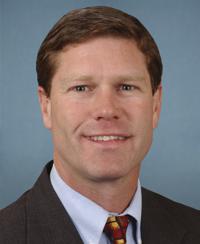
Mr. Speaker, United States leadership in pursuit of peace in the Middle East is essential if we are to help bring about an equitable and fair peace accord between Israel and the Palestinians and end…
Mr. Speaker, United States leadership in pursuit of peace in the Middle East is essential if we are to help bring about an equitable and fair peace accord between Israel and the Palestinians and end the bloodshed. The situation in the Middle East is a dominant issue on the minds of people in the region and throughout the world, and we cannot lose sight of the fact that stability in this region is tied directly to our own national security.
I applauded the United States leadership in crafting the ``Roadmap'' to Middle East peace coauthored by the European Union, Russia, and the United Nations. This promising commitment has suffered at the hands of continued bloodshed and disagreement. However, I believe we must push for follow-through on the principles embodied in the Roadmap as a building block for a viable Palestinian State and secure Israel.
Given the lack of progress in tandem by Israel and the Palestinian Authority, the region has suffered from the violence continuing to engulf the region. The need to break the deadlock is greatly apparent, and Prime Minister Sharon's proposal for Israel to unilaterally withdraw certain military installations and settlements from the Gaza Strip and West Bank is an opportunity for progress toward peace. Involvement by regional governments such as Egypt in pressuring reforms from the Palestinian Authority also hold promise that progress can be made. With continued involvement, we maintain the hope the next steps will be done through successful negotiation and compromise.
The resolution before us supports the concepts included in President Bush's letter to Prime Minister Sharon dated April 14, 2004, regarding recent actions taken by Israel and the United States commitment to the peace process. It includes a reaffirmation of America's commitment to Israel's security and reinforces that Israelis and Palestinians, and all states in the region and beyond, must work together to fight terrorism. It also highlights highly sensitive issues including future refugee resettlement and border lines based on negotiations, which have been part of peace talks started under President Clinton.
While I would prefer the language in this resolution to more closely focus on the international commitment to Middle East peace and the obligations of the parties involved, I believe the intention of the resolution is consistent with the Roadmap for Peace, and I will support it. We must stay engaged in this matter and constantly work toward peace and security for Israel and the Palestinian people.
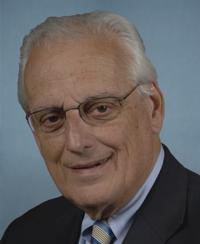
Mr. Speaker, I thank the gentleman from California for yielding me time. Mr. Speaker, I must remind my brother from Indiana that the Mideast is in reality a dream for Jews, Christians, and Muslims;…
Mr. Speaker, I thank the gentleman from California for yielding me time.
Mr. Speaker, I must remind my brother from Indiana that the Mideast is in reality a dream for Jews, Christians, and Muslims; and that is the approach. I am going to vote for this resolution probably, but I would like to take the opportunity to speak about what people in my area, my district, and abroad should take from the resolution.
The conflict in Israel is the axis on which much of Middle East politics spins. Let us not forget that what we do and say here has major implications all across the globe.
The United States is strongly committed to the security of Israel as a Jewish state. That is not debatable. There is no question that our friend and ally has every right to defend itself against terrorists who oppose freedom and democracy. This resolution takes a strong stand on that issue.
But equally important, this resolution stands in favor of a peaceful two-state solution to the Israeli-Palestinian conflict. Read it carefully.
A vital first step to a peaceful solution is the proposed withdrawal from Gaza, as the Prime Minister has planned and President Bush has endorsed. But we must not forget that this withdrawal should be a precursor to the restart of negotiations.
By passing a resolution that endorses the road map to peace and discusses what should be done during final status negotiations, the House is recognizing the importance of negotiations led by the United States and the quartet. We lost valuable time in the first 8 months of this administration when we did nothing. We separated ourselves from the issue.
On a parallel track, the Congress should be looking at ways to spur economic development throughout Israel, including the West Bank and Gaza.
Let us use this resolution as an opportunity to get back on track. We must work to get the two sides negotiating for an agreed-upon solution, rather than imposing one which will not have the legitimacy that is needed. The United States must use its leadership to get the Israelis and Palestinians and neighboring nations in the Middle East to the table and start the talks, so that when we look to the future, we will see Israeli and Palestinian children living in peace. This is what we want; and as committed as we are to Israel, that must be our commitment as well.

Mr. Speaker, today this House passed a resolution expressing support for Israel's right to exist as a Jewish state, expressing support for a two-state solution to the Israeli-Palestinian conflict,…
Mr. Speaker, today this House passed a resolution expressing support for Israel's right to exist as a Jewish state, expressing support for a two-state solution to the Israeli-Palestinian conflict, and insisting that the Palestinians and all Arab states create and utilize the capacity to dismantle terrorist organizations and fight terrorism. These are all things we should and must support.
But once again, this House has missed an opportunity to express support not only for Israel's withdrawal from settlements in the Palestinian territories, but also support for the rebuilding of infrastructure in a future democratic Palestine.
This conflict isn't about who has the stronger military, and it's not about lines in the sand. It's about people's lives, and it's about the notion that we humans are better than all the death and destruction that's become so commonplace. There are channels in place to achieve peace; we must utilize them. I oppose unilateral action in peace just as I oppose unilateral action during war. Unilateralism may work in the short term, but it is unsustainable in the long term. That's why the U.S., the world's largest democracy, must provide leadership to both the Israelis and the Palestinians to take steps towards peace.
In 2002, President Bush established what he called the ``Road Map'' to Peace in the Middle East. This Road Map established bilateral, incremental steps that Israel and the Palestinians must take to attain peace. The Quartet--composed of the U.N., the U.S., the EU, and Russia--was intended to be the group overseeing this process. But the Bush Administration has chosen rhetoric over action, letters over deeds, meetings over negotiations.
President Bush's letter to Ariel Sharon--the principles of which this resolution endorses--is not suitable compensation for neglecting to sit down with leaders on both sides to work out a peaceful resolution of this long-standing crisis.
This House must stop passing strongly-worded resolutions on behalf of a President who is unwilling to fully support those statements through diplomatic means in the Middle East. To achieve a real and lasting peace, we must instead engage in balanced efforts to re-establish trust, respect and cooperation between Israelis and Palestinians.

Mr. Speaker, I want to thank the gentleman from California (Mr. Lantos), ranking member of the Committee on International Relations; the gentlewoman from Florida (Ms. Ros- Lehtinen); the gentleman…
Mr. Speaker, I want to thank the gentleman from California (Mr. Lantos), ranking member of the Committee on International Relations; the gentlewoman from Florida (Ms. Ros- Lehtinen); the gentleman from Maryland (Mr. Hoyer); and the gentleman from Texas (Mr. DeLay) for their leadership on this very important and urgent issue.
I rise today in strong support of this resolution, in support of America's closest ally in the Middle East, and I rise with the hope that a peaceful solution to the Israeli-Palestinian conflict can be achieved.
No country in the world is more familiar with what Americans experienced on September 11 than Israel. Since Yasser Arafat turned his back on peace with Israel and fled Camp David to oversee the latest wave of violence, there have been over 130 suicide bombings responsible for the death of over 500 Israelis. Thousands more have been injured, and little progress has been made in forging a lasting peace between the Palestinians and the Israelis.
This resolution sends a strong, bipartisan message of support for strengthening the security and well-being of Israel.
The peace process is dead because the Palestinian Authority continues to refuse to fulfill its most basic obligations under the roadmap. It refuses to stop the terrorist attacks against Israel, dismantle the terrorist infrastructure, and begin a process of political reform.
It is time for the Palestinian leadership to express their desire for a Palestinian state living side by side peacefully with Israel rather than a Palestinian state in place of Israel.
Israel has the right to secure and defensible borders that reflect the demographic realities. The time is long past for the Palestinian people to reject terrorism and violence. America will never condone terrorist acts. America will never support those that perpetrate them, and America will stand side by side with Israel in its struggle against terrorism.
This resolution, once again, sends a clear message to the supporters of terrorism and the enemies of Israel. America will always side with democratic and peace-loving people. America should and does stand side by side with the people of the State of Israel. I urge my colleagues to vote for this resolution.
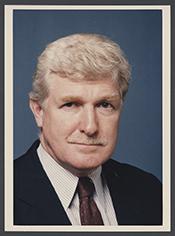
Mr. Speaker, the principles that were articulated by President Bush in his April letter to Mr. Sharon can be seen as a first step in finding a resolution to the Israeli Palestinian dispute. This…
Mr. Speaker, the principles that were articulated by President Bush in his April letter to Mr. Sharon can be seen as a first step
in finding a resolution to the Israeli Palestinian dispute.
This resolution demonstrates that Congress's position is consistent with the majority of Israelis who endorse the evacuation of settlers from the Gaza Strip, and at least parts of the West Bank. This disengagement plan is a reflection of Israel's basic interests and a major recognition that settlements hurt Israel's security, economic prosperity, and demographic future. Disengagement will also help moderate Palestinian leaders to make concrete moves to finally establish a true democratic state.
By implementing this initiative, tensions between Israels and Palestinians should diminish, thus paving the way for more renewed and more constructive peace negotiations.
But disengagement should not be seen as a substitute for negotiation. Good faith negotiations are essential to any long-term reconciliation. The evacuation of Gaza must be seen as a first step but not the last in a comprehensive peace process. Simply on its own, withdrawal of Gaza will not result in peace or security for Israel. The end goal must be mutually agreed-upon, negotiated solutions by all parties involved that must address a host of other key and sensitive issues. Only then will long-term peace and stability be achievable.
Finally, Mr. Speaker, let us not forget our diplomatic and our moral obligation as well as our vital interest in halting the cycle of violence and in resolving this protracted conflict. Our failure to actively engage in the Middle East peace process has damaged our international credibility and it has hurt our ability to promote democracy in the region.
As we consider this resolution today we must urge the administration to bring both Israelis and Palestinians back to the negotiating table, encourage both sides to live up to previous commitments, and to have all parties rededicate themselves to the principles laid out in the so- called road map and the quest for security and peace in the Middle East. I believe that this resolution can represent a good starting point for long-term stability and peace in the region.

Mr. Speaker, I rise today with regret and oppose the resolution on the floor. My opposition to this resolution does not stem from favoring one side over another, but rather because I favor peace…
Mr. Speaker, I rise today with regret and oppose the resolution on the floor.
My opposition to this resolution does not stem from favoring one side over another, but rather because I favor peace above all else; and like previous resolutions passed by this institution will not help to bring about peace, security, and prosperity to the suffering on both sides of this conflict.
This resolution, like past resolutions, allows this Congress to emote, nothing more. It allows members--who take little real notice of the dreadful situation facing Israelis and Palestinians--to feel good about ``doing something.''
But in reality, what we are voting on makes no commitment about peace. It makes no effort to find common ground. It doesn't really hold terrorists accountable for the maelstrom of destruction and tragedy they have caused. It doesn't remove any illegal settlements. It doesn't invigorate legitimate Palestinian democracy. And most of all, it doesn't force our aggravatingly lethargic and timid peace initiatives to the importance it deserves.
The withdrawal of Israeli troops and settlements from the Gaza is a good step. No one can possibly deny it. But imposing a solution on the Palestinians will land their problems not just on the doorstep of Israel, but on the doorstep of the United States as well.
This withdrawal demands that it be followed by strong American action. I am afraid that this Congress and the current administration are unprepared to deal with a post-withdrawal Palestinian entity.
I am pleased that the resolution makes clear that this body supports a two state solution. I am also pleased that it encourages a continuation of dialogue between the parties.
The commitments of finding peace do not begin and end with one side. All sides, from the parties on the ground, to those orchestrating the negotiations have responsibilities that go far beyond what is on the floor today.
I am voting against this resolution not because of what it contains-- although I do find some of the word choices problematic--I am voting against it because what it does not contain. That is, simply, a way to find peace in the bleakness following the collapse of Oslo.

Mr. Speaker, I thank my friend, the gentleman from California, for yielding me this time, and I want to thank the gentleman from Texas (Mr. DeLay), and the minority whip, the gentleman from Maryland…
Mr. Speaker, I thank my friend, the gentleman from California, for yielding me this time, and I want to thank the gentleman from Texas (Mr. DeLay), and the minority whip, the gentleman from Maryland (Mr. Hoyer), for introducing this resolution.
I rise in strong support of this resolution, and I ask my colleagues to support it.
This bipartisan resolution shows the United States Congress is united in our support for our democratic ally in the Middle East, Israel. The United States must not only continue to support Israel because of our shared common values, but because we know the terrible repercussions of terrorist attacks on our own population.
The decision taken by Israeli Prime Minister Ariel Sharon on unilateral disengagement was necessary for the security of Israel and her people.
This bold initiative has received international support and needs the support of all governments to ensure it can be implemented to remove the fear of terrorist strikes within Israel.
This unilateral step has to be taken because the Palestinian Authority is currently not a viable partner in peace.
For too long, the Palestinian Authority has allowed terrorists to operate in the territory under their control and done little, if anything, to stop them from attacking civilians in Israel. In fact, in my opinion, they have been complicit in those attacks.
The terrorism against Israel and her people continues without a sign of it stopping. Over the past few weeks, I have seen countless reports of the Israeli Defense Force preventing terrorist plots to kill innocent Israeli civilians.
While I applaud the strength of the Israeli Defense Force, the people of Israel cannot and should not have to live like that. The United States must take a firm stance and continue its support of Israel without wavering when faced with criticism from the Arab world.
If the peace process is to continue to move forward, the United States must increase its engagement and stick with a consistent message as we continue positive support for a lasting and peaceful solution in the Middle East.
Once again, I want to thank the sponsor of this legislation and for bringing it forward today.
Mr. Speaker, I thank my good friend from California for his commitment and the power of his example on this issue. Mr. Speaker, I did not want this debate to end without adding my voice to it and my…
Mr. Speaker, I thank my good friend from California for his commitment and the power of his example on this issue.
Mr. Speaker, I did not want this debate to end without adding my voice to it and my strong endorsement of this resolution. It follows a very long, very enduring bipartisan tradition, one that says that we are two lonely defenders of freedom, the United States and Israel. We are two lonely defenders in a very difficult neighborhood in this world and we do have a common obligation.
And that is something else that should be said from this side of the aisle, and our leader alluded to it very well. A lot of us on this side of the aisle have profound disagreements with the administration over policy in Iraq. A lot of us on this side of the aisle have profound disagreements with this administration over the skill with which
it has gone about building a new course for Iraq and whether we should have gone in the first place. But none of that should obscure that the value behind that policy, if it is one of promoting democracy, if it is one of expanding the frontier of freedom, that is a value that we all share.
And when we think of Abu Ghraib and we think of all the mistakes that have been made in the last year and a half, the fact that those values may not have been defended so well does not diminish the power of those values.
And I would simply close on this observation: Whenever we think of our friends in Israel, their lonely struggle, we should recall the words of an old union general who came back to Gettysburg, an old Union soldier who came back to Gettysburg on the 50th anniversary of that fight, he reminded his daughter in a letter that when we talk about the cause of the Civil War, he said, ``The men who won that day will always be right; the men who lost that day will always be wrong.''
So it is when it comes to freedom. Those of us who believe in it, those of us who promote the frontier of democracy shall always be right and those who stand for oppression, authoritarianism, and who do not respect the dignity of men and women shall always be wrong. I am proud to support this resolution.
Bill Text
3 versions available
        [Congressional Bills 108th Congress]
[From the U.S. Government Publishing Office]
[H. Con. Res. 460 Referred in Senate (RFS)]

2d Session
H. CON. RES. 460

_______________________________________________________________________

IN THE SENATE OF THE UNITED STATES

June 24, 2004

Received and referred to the Committee on Foreign Relations

_______________________________________________________________________

CONCURRENT RESOLUTION

Regarding the security of Israel and the principles of peace in the
Middle East.

Whereas the United States is hopeful that a peaceful resolution of the Israeli-
Palestinian conflict can be achieved;
Whereas the United States is strongly committed to the security of Israel and
its well-being as a Jewish state;
Whereas Israeli Prime Minister Ariel Sharon has proposed an initiative intended
to enhance the security of Israel and further the cause of peace in the
Middle East;
Whereas President George W. Bush and Prime Minister Sharon have subsequently
engaged in a dialogue with respect to this initiative;
Whereas President Bush, as part of that dialogue, expressed the support of the
United States for Prime Minister Sharon's initiative in a letter dated
April 14, 2004;
Whereas in the April 14, 2004, letter the President stated that in light of new
realities on the ground in Israel, including already existing major
Israeli population centers, it is unrealistic to expect that the outcome
of final status negotiations between Israel and the Palestinians will be
a full and complete return to the armistice lines of 1949, but realistic
to expect that any final status agreement will only be achieved on the
basis of mutually agreed changes that reflect these realities;
Whereas the President acknowledged that any agreed, just, fair, and realistic
framework for a solution to the Palestinian refugee issue as part of any
final status agreement will need to be found through the establishment
of a permanent alternative and the settling of Palestinian refugees
there rather than in Israel;
Whereas the principles expressed in President Bush's letter will enhance the
security of Israel and advance the cause of peace in the Middle East;
Whereas there will be no security for Israelis or Palestinians until Israel and
the Palestinians, and all countries in the region and throughout the
world, join together to fight terrorism and dismantle terrorist
organizations;
Whereas the United States remains committed to the security of Israel, including
secure, recognized, and defensible borders, and to preserving and
strengthening the capability of Israel to deter enemies and defend
itself against any threat;
Whereas Israel has the right to defend itself against terrorism, including the
right to take actions against terrorist organizations that threaten the
citizens of Israel;
Whereas the President stated on June 24, 2002, his vision of two states, Israel
and Palestine, living side-by-side in peace and security and that vision
can only be fully realized when terrorism is defeated, so that a new
state may be created based on rule of law and respect for human rights;
and
Whereas President Bush announced on March 14, 2003, that in order to promote a
lasting peace, all Arab states must oppose terrorism, support the
emergence of a peaceful and democratic Palestine, and state clearly that
they will live in peace with Israel: Now, therefore, be it
Resolved by the House of Representatives (the Senate concurring),
That Congress--
(1) strongly endorses the principles articulated by
President Bush in his letter dated April 14, 2004, to Israeli
Prime Minister Ariel Sharon which will strengthen the security
and well-being of the State of Israel; and
(2) supports continuing efforts with others in the
international community to build the capacity and will of
Palestinian institutions to fight terrorism, dismantle
terrorist organizations, and prevent the areas from which
Israel has withdrawn from posing a threat to the security of
Israel.

Passed the House of Representatives June 23, 2004.

Attest:

JEFF TRANDAHL,

Clerk.